Paper Cups Wholesale Guide for Cafes in the United States
For cafes, coffee chains, smoothie shops, food trucks, distributors, and private label beverage brands in the United States, the best paper cups wholesale strategy is not simply finding the lowest unit cost. It is choosing the right cup construction, dependable supply, food-safe materials, accurate lid fit, and a supplier that can support both branding and scale. Buyers in markets such as New York, Los Angeles, Chicago, Houston, Miami, Seattle, and Atlanta usually need consistent quality, stable lead times, and cup formats that work across hot coffee, iced drinks, tea, desserts, and delivery service.
In the current U.S. market, strong wholesale options usually include single wall cups for standard hot drinks, double wall or ripple wall cups for premium heat insulation, cold cups for iced beverages, and custom printed cups for growing retail and franchise brands. Reliable factory-direct sourcing can also help importers and wholesalers control costs, especially when product planning includes MOQ, print method, freight timing, customs clearance, and compliance documents from the start.
If you are comparing domestic stocking versus importing, the decision often depends on volume. Small local runs may suit regional suppliers near Dallas, New Jersey, or Southern California warehouses. Larger repeat programs often benefit from direct production with an experienced manufacturer that can manage cup forming, printing, quality inspection, and export logistics in one system. That is where a specialist producer such as Fude Packaging can be relevant for U.S. buyers looking for scalable food-grade paper cup supply with custom development.
Quick Answer: Best Paper Cups Wholesale Options for Cafes and Drink Brands

The best wholesale paper cup options for U.S. cafes and drink brands usually fall into five categories: standard single wall hot cups, insulated double wall cups, ripple wall premium cups, cold drink paper cups, and custom branded paper cups with matching lids. The right choice depends on beverage temperature, price position, serving style, and customer experience.
| Wholesale Option | Best For | Main Advantage | Typical U.S. Use | Branding Potential | Cost Level |
|---|---|---|---|---|---|
| Single wall paper cups | Hot coffee, tea, espresso drinks | Lowest cost per unit | Office coffee, quick service counters | High with custom print | Low |
| Double wall paper cups | Premium hot beverages | Better insulation without sleeve | Specialty coffee shops | High | Medium |
| Ripple wall paper cups | Very hot drinks and takeaway | Strong grip and upscale feel | Urban cafe chains, airport kiosks | Medium to high | Medium to high |
| Cold drink paper cups | Iced coffee, soda, juice | Designed for chilled service | Food courts, stadiums, dessert shops | High | Low to medium |
| Custom printed cups | Private label and franchise brands | Brand visibility | Regional chains and delivery brands | Very high | Depends on volume |
| Compostable coated cups | Sustainability-focused programs | Alternative material positioning | College towns, eco-conscious markets | High | Medium to high |
This comparison shows that “best” does not mean one universal cup. For a busy cafe in Seattle serving hot drip coffee all morning, single wall cups with sleeves may be economical. For a premium chain in Boston or San Francisco, double wall cups can improve customer comfort and visual appeal. For a beverage startup selling through Whole Foods-style grab-and-go channels or local events in Austin, custom printed cups may be the stronger marketing asset.
In broad U.S. market terms, demand has continued shifting toward better insulation, cleaner print quality, improved lid compatibility, and packaging claims that align with retailer and consumer expectations.
Single Wall vs Double Wall Paper Cups Wholesale

Single wall and double wall paper cups serve different operational goals. Single wall cups are the standard wholesale choice for many cafes because they are lighter, cheaper, and easy to store in high volumes. They work well for beverages that are warm rather than extremely hot, or where sleeves are already part of service.
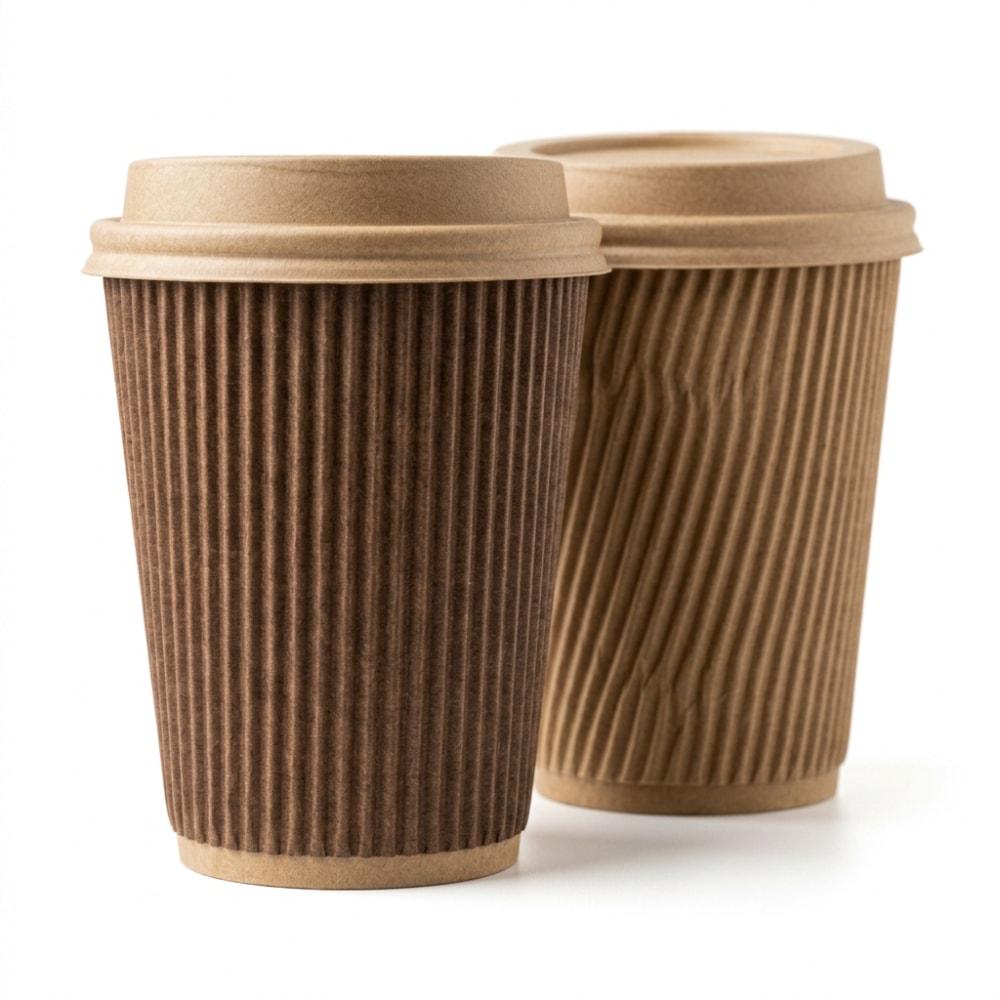
Double wall paper cups use an extra paper layer for insulation. This reduces heat transfer and often removes the need for a sleeve, improving the appearance of the drink at the counter. They are common in higher-end coffee service, train station kiosks, and takeaway programs where customers carry drinks over longer distances.
| Feature | Single Wall | Double Wall | Ripple Wall | Operational Impact | Typical Buyer |
|---|---|---|---|---|---|
| Insulation | Basic | Good | Very good | Affects hand comfort | Cafes, chains |
| Need for sleeve | Often yes | Often no | Usually no | Changes packing cost | Takeaway counters |
| Unit cost | Lowest | Higher | Highest among the three | Impacts margin | All segments |
| Print surface | Excellent | Excellent | More textured look | Brand presentation differs | Brand owners |
| Stacking efficiency | High | Moderate | Moderate | Affects warehousing | Distributors |
| Best beverage range | Tea, Americano, water | Latte, cappuccino, hot chocolate | Extra hot takeaway drinks | Better fit by menu | Specialty coffee |
The table makes the main tradeoff clear: single wall is cost efficient, while double wall adds comfort and perceived quality. If your business ships to colder U.S. regions like Minneapolis, Denver, or the Northeast in winter-heavy months, insulated cups often generate fewer complaints about hot handling. If your menu is mostly mild beverages and refill coffee, single wall can remain the smarter wholesale format.
How to Choose a Reliable Paper Cups Wholesale Supplier

A reliable paper cups wholesale supplier should be judged on consistency, compliance, communication, production capability, and export support. Many buyers focus first on price, but late delivery, unstable quality, or missing food-contact documents can create far greater cost than a few cents saved per carton.
For U.S. importers and growing beverage brands, a dependable supplier should provide:
- Food-grade material specifications and coating details
- FDA-related compliance support and relevant test reports
- Consistent cup dimensions and lid compatibility
- Stable print registration and color control
- Transparent MOQ and production lead time
- Clear packaging, pallet, and loading information
- Responsive after-sales communication
It also helps when the supplier is a true manufacturer rather than only a trading intermediary. A direct factory usually has better control over paper sourcing, printing, cup forming, and quality inspection. On the manufacturing side, Fude Packaging operates a modern facility of about 30,000 square meters, with automated cup production, forming equipment, die-cutting, printing processes, in-house testing, and warehousing systems that support stable export programs for buyers in North America and other regions.
On the technology side, buyers should ask whether the supplier has process control for flexographic printing, dimensional accuracy, leakage testing, compression resistance, and storage conditions. Those capabilities matter when you need clean logo reproduction, leak resistance, and repeatable cup shape at scale. You can review broader packaging categories and production range on the company’s product pages.
| Supplier Checkpoint | What to Ask | Why It Matters | Risk if Missing | Ideal Answer | Buyer Priority |
|---|---|---|---|---|---|
| Factory status | Are you the manufacturer? | Improves control and traceability | Higher inconsistency | Yes, with production photos and audit data | High |
| Certifications | What standards do you meet? | Supports compliance | Import and retail issues | FDA-related, FSC, ISO, EU food-contact as needed | High |
| MOQ | What is the minimum by size and print? | Matches budget and launch plan | Overbuying | Flexible by item type | High |
| Lead time | How long after artwork approval? | Supports inventory planning | Stockouts | Clear schedule with peak-season advice | High |
| Sampling | Can you provide plain or printed samples? | Verifies fit and print | Wrong cup/lid match | Yes, before mass production | Medium |
| Export service | Can you support shipment coordination? | Simplifies import process | Delays at port | Yes, with packing list and logistics support | Medium |
Service capability is often overlooked. For U.S. buyers who need artwork review, sample confirmation, and shipping coordination, it is valuable to work with a supplier that can guide each stage rather than just issue a quotation. Fude’s packaging service model includes requirement review, pre-production design coordination, sampling, and delivery support, which is especially useful for private label programs or first-time importers.
Paper Cups Wholesale Pricing: MOQ, Printing, and Size Factors
Wholesale pricing for paper cups depends on more than cup size. In the United States market, the biggest cost drivers are material structure, paper weight, coating type, print coverage, order quantity, lid requirements, and freight. A 12oz single wall generic cup sourced in large volumes can cost dramatically less than a 16oz double wall custom printed cup with matching black lids and premium carton packing.
| Pricing Factor | Lower Cost Scenario | Higher Cost Scenario | Effect on Budget | Planning Tip | Typical Impact Level |
|---|---|---|---|---|---|
| MOQ | Large repeat order | Small custom batch | Lower or higher unit price | Combine SKUs where possible | High |
| Wall construction | Single wall | Double or ripple wall | Material cost rises | Match cup to menu, not trend | High |
| Printing | 1-color simple logo | Multi-color full coverage | Plate and production cost increase | Use efficient artwork layout | Medium |
| Size | 8oz or 12oz | 20oz or 24oz | More paper and shipping space | Forecast real sales mix | Medium |
| Coating material | Standard PE | PLA or specialty lining | Changes raw material cost | Confirm disposal claims carefully | Medium |
| Lids and accessories | No lid or standard lid | Custom lid or bundled sleeve | Adds total landed cost | Quote as full set | Medium |
MOQs vary by manufacturer, but custom printed programs generally require a higher minimum than plain stock cups because of plate setup and production efficiency. For U.S. buyers, pricing should always be evaluated as landed cost, not ex-factory cost alone. Ocean freight to Long Beach, Los Angeles, New York/New Jersey, Savannah, Houston, or Seattle/Tacoma can shift your final numbers significantly, especially during peak shipping periods.
One practical buying method is to separate the order into high-volume core sizes and low-volume specialty sizes. For example, a cafe chain might order 12oz and 16oz in custom print, while using a simpler stock option for 4oz sampling cups or 20oz seasonal cold drinks. This keeps branding strong where sales volume is highest while controlling total inventory value.
Custom Printed Paper Cups for Private Label Drink Brands
Custom printed paper cups are especially important for private label drink brands, franchise systems, boutique coffee roasters, and fast-growing dessert concepts. In crowded retail zones like Manhattan, downtown Chicago, Santa Monica, or Miami Beach, the cup itself becomes a moving advertisement. A well-printed cup can increase recall, support social media sharing, and make a smaller brand look established.
Key points for custom cup design include logo placement, color consistency, contrast for readability, wrap area, print registration, and whether the design needs to work across multiple sizes. Simple branding often scales better in wholesale production than artwork with extremely fine details or heavy gradients.
From a technological standpoint, manufacturers with flexo printing capability and controlled forming lines usually deliver cleaner repeat results across long runs. That matters if your private label coffee brand wants the same logo appearance on 8oz, 12oz, 16oz, and 20oz cups sold across several states.
For U.S. brands entering chains, convenience retail, or regional distribution, custom programs should also consider secondary packaging. Carton labeling, barcode placement, and count-per-case affect warehouse handling in logistics centers from New Jersey to Inland Empire distribution hubs in California.
For brands that want to move from concept to production quickly, the most useful suppliers are those that can advise on artwork setup, produce samples, and then move smoothly into manufacturing. Buyers who need help with design readiness or custom development can review available support services on the service page.
Common Cup Sizes and Lid Fits for Coffee and Cold Drinks
Standard sizing is essential in paper cups wholesale because the wrong diameter or lid fit creates operational waste. U.S. cafes usually work with common beverage sizes such as 4oz, 8oz, 10oz, 12oz, 16oz, 20oz, 22oz, and 24oz, although exact top diameters vary by manufacturer. Buyers should never assume cross-compatibility between all suppliers without testing samples.
| Cup Size | Typical Use | Common Format | Suggested Lid Type | U.S. Business Example | Buying Note |
|---|---|---|---|---|---|
| 4oz | Espresso, tasting, medicine cup use | Single wall | Sip lid optional | Roasters and demos | Often low-volume SKU |
| 8oz | Small coffee, cappuccino | Single or double wall | Hot sip lid | Urban cafes | Popular in premium coffee |
| 10oz | Regular tea or coffee | Single wall | Hot sip lid | Office coffee service | Useful for value menus |
| 12oz | Standard latte or drip coffee | Single or double wall | Hot sip lid | Most coffee chains | Core volume size |
| 16oz | Large coffee or iced drink | Double wall or cold cup | Hot or cold dome/flat lid | Takeaway-focused shops | Check fit carefully |
| 20oz+ | Extra large coffee, soda, smoothie | Cold cup or heavy hot cup | Flat or dome lid | Food courts and cinemas | Needs stronger structure |
The explanation behind this table is straightforward: size planning should start from your actual menu and sales mix, not supplier convenience. Many wholesale buyers over-purchase slow-moving sizes and under-buy the two main sizes that drive most revenue. For coffee shops, 12oz and 16oz are often the highest-volume units. For dessert and smoothie brands, larger cold drink sizes may dominate instead.
Lid fit is equally important. Ask for precise top diameter data, compatible lid material options, and sample testing before approving a large run. This is particularly critical if your operation uses mobile delivery through DoorDash, Uber Eats, or local courier systems where vibration and tilt increase the risk of leakage.
Food-Grade Coatings, FSC, and Factory Compliance Requirements
U.S. buyers should pay close attention to cup coating, paper sourcing, and factory compliance because food-contact packaging is under increasing scrutiny from both regulators and brand customers. Most paper cups use PE lining for liquid resistance, while some programs request PLA or other alternative materials depending on sustainability goals and disposal conditions.
| Requirement | What It Covers | Why U.S. Buyers Care | Typical Proof | Best Use | Priority Level |
|---|---|---|---|---|---|
| Food-grade coating | Liquid barrier safety | Protects beverage integrity | Material specification sheet | All hot and cold cups | High |
| FDA-related compliance | Food-contact suitability | Supports import and customer review | Test reports or declarations | U.S. market supply | High |
| FSC certification | Responsible paper sourcing | Supports sustainability claims | Certificate copy | Retail and brand programs | Medium to high |
| ISO 9001 | Quality management system | Indicates process discipline | Certification record | Stable wholesale supply | Medium |
| EU EC 1935/2004 | Food-contact framework | Useful for broader export credibility | Compliance documents | Global multi-market brands | Medium |
| Compostability claims | End-of-life performance | Must match actual disposal path | BPI or OK Compost evidence | Specific sustainability programs | Medium |
The main lesson is that compliance should be verified, not assumed. If your brand sells in supermarket chains, universities, airports, or healthcare environments, documentation becomes even more important. Fude Packaging’s broader compliance profile includes food-contact standards, FSC sourcing support, and quality management practices relevant to importers who need traceable manufacturing.
For 2026 and beyond, sustainability policy and procurement standards are likely to become more demanding. More U.S. cities and institutional buyers may ask clearer questions about material sourcing, recyclability, compostability conditions, and plastic reduction. That means cups should be selected not only for today’s function, but for future policy fit.
Importing Paper Cups Wholesale From China: Lead Time and Shipping
Importing paper cups wholesale from China remains common for U.S. distributors, packaging importers, and large foodservice buyers because it can provide better scale economics and broader customization. However, planning is essential. Lead time includes sample approval, production, packing, vessel booking, ocean transit, customs clearance, and inland delivery.
| Stage | Typical Time | What Happens | Possible Delay Risk | Buyer Action | Notes for U.S. Importers |
|---|---|---|---|---|---|
| Specification confirmation | 1 to 3 days | Size, print, lid, coating confirmed | Unclear artwork | Finalize details early | Avoid repeated revisions |
| Sample making | 3 to 7 days | Plain or printed samples prepared | Approval lag | Review quickly | Test fit with actual lids |
| Mass production | 7 to 15 days | Cup printing and forming | Peak season congestion | Book in advance | Longer near holiday periods |
| Packing and loading | 2 to 4 days | Cartoning, palletizing, container loading | Truck scheduling | Confirm markings | Useful for warehouse receiving |
| Ocean freight | 18 to 35 days | Transit to U.S. port | Port congestion | Track vessel regularly | West Coast usually faster |
| Customs and inland delivery | 3 to 10 days | Release and trucking | Document errors | Use experienced broker | Plan buffer stock |
This timeline explains why many U.S. buyers forecast cup demand at least two to three months ahead. If your distribution network serves the East Coast from New Jersey or Savannah, or the West Coast from Los Angeles/Long Beach, Oakland, or Seattle/Tacoma, freight decisions should align with where your customers are located. Inland freight to Chicago, Phoenix, or Memphis can be significant and should be included in total cost calculations.
When evaluating China sourcing, it is wise to ask suppliers about climate-controlled storage, export packing discipline, and damage prevention. Packaging that arrives compressed or damp can erase any savings. Buyers needing direct consultation for a project can reach out through the contact page for specific cup formats, production schedules, and shipping support.
Top Paper Cup Features Cafes and Beverage Brands Should Prioritize
Not every product feature adds equal value. U.S. cafes and beverage brands should prioritize the features that most directly affect operations, customer experience, and brand consistency. In practice, the top priorities are leak resistance, heat insulation, lid fit, stackability, print quality, material safety, and supply reliability.
| Feature | Why It Matters | Best For | Business Benefit | How to Verify | Priority |
|---|---|---|---|---|---|
| Leak resistance | Prevents complaints and waste | Hot and cold drinks | Lower loss rate | Liquid hold testing | Very high |
| Lid compatibility | Avoids spills in transit | Delivery and takeaway | Better customer satisfaction | Sample fit test | Very high |
| Heat insulation | Improves carrying comfort | Hot coffee programs | Premium feel | Compare wall structures | High |
| Print clarity | Supports branding | Private label cups | More professional image | Printed sample approval | High |
| Structural strength | Prevents deformation | Large sizes, delivery | Better handling | Compression checks | High |
| Sustainability profile | Aligns with policy and buyer expectations | Institutions and eco-led brands | Procurement advantage | Certification review | Medium to high |
The explanation here is practical: a cup that looks attractive but leaks under real use is not a good wholesale choice. Likewise, a sustainable claim that cannot be supported with documents may cause retail problems. The best wholesale cup balances function, compliance, and brand value.
In terms of future trends for 2026, buyers should expect three major shifts. First, more data-driven purchasing, where chains compare supplier defect rates and fill performance rather than only quoted price. Second, stronger demand for sustainable material options and responsible paper sourcing. Third, increased need for suppliers with flexible development capability, because beverage menus keep changing with cold brew, protein shakes, bubble tea, seasonal drinks, and hybrid dessert formats.
FAQ: Paper Cups Wholesale for Cafes and Beverage Brands
What is the best wholesale cup type for a small U.S. cafe?
For many small cafes, 8oz, 12oz, and 16oz single wall or double wall cups cover most hot beverage needs. If customer comfort and premium presentation are important, double wall cups are usually worth the extra cost.
Can I order custom printed paper cups at a low MOQ?
It depends on the supplier and cup size. Custom printing generally requires a higher MOQ than plain stock cups, but some manufacturers offer flexible minimums for trial runs or developing brands.
Are paper cups from China suitable for the U.S. market?
Yes, if the supplier provides proper food-grade documentation, quality control, and export support. Many U.S. distributors and brands import successfully through ports such as Long Beach, New York/New Jersey, and Savannah.
How long does wholesale production usually take?
Sample approval can take a few days, while mass production often takes about 7 to 15 days for standard programs. Ocean transit and customs add more time, so total lead time should be planned well in advance.
Do I need sleeves if I use double wall cups?
Often no. That is one of the main reasons buyers choose double wall cups. However, extra-hot drink programs should still test real usage conditions.
What certifications should I request?
At minimum, ask for food-contact and material compliance support relevant to the U.S. market. FSC, ISO 9001, and compostability documentation may also be important depending on your customers and sustainability positioning.
Which cup sizes sell most for coffee?
In many U.S. cafe settings, 12oz and 16oz are core sizes. Espresso bars may also use 4oz and 8oz, while chains with broad menus may add 20oz or larger options.
How should I compare suppliers?
Compare not just unit price, but also sample quality, lead time, print control, lid fit, carton strength, compliance documents, communication speed, and freight planning support.
For buyers that want a one-stop partner rather than only a seller, it helps to work with a company that combines technology, manufacturing, and service capability in one program. Fude Packaging supports foodservice packaging development with automated production, custom cup manufacturing, printing control, quality labs, warehousing, and export-oriented coordination. That makes it relevant for U.S. cafes, wholesalers, and beverage brands that need repeatable supply and room to scale.
Whether you are sourcing for one coffee bar in Portland, a regional tea brand in Florida, a distributor serving Texas, or a multi-state private label beverage program, the smartest paper cups wholesale decision is the one that aligns cup structure, compliance, branding, and logistics from the start. Buyers who plan around real beverage use, true landed cost, and future sustainability requirements usually achieve better margins and fewer operational problems over time.

About the Author
Fude Packaging is a professional flexible packaging manufacturer serving global food brands, wholesalers, and distributors. Our team shares practical insights on custom packaging, printing technology, food-safe materials, and industry trends to help businesses build better packaging solutions.
Share
Product Category
Start Your Project With Fude Today
Related Post
-

Global Food Packaging Prototype Guide for B2B Buyers
A food packaging prototype manufacturer should manage every custom project through a documented approval sequence: buyer brief, structural dieline, artwork preflight, unprinted structural sample, printed proof, production standard, and retained reference sample. For Global market buyers, this process reduces the risk of leakage, poor lid fit, incorrect capacity, color variation, print misregistration, compliance gaps, and costly rework after shipment.The central rule is simple: approval criteria must be measurable. “Looks good” is not a production standard. A buyer should specify dimensions in millimetres, capacity in millilitres, paperboard weight in gsm, color targets by Pantone or approved digital values, registration tolerance in millimetres, coating type, acceptable finish variation, packing configuration, and inspection level. These details allow the factory, buyer, third-party inspector, and distributor to evaluate the same product against the same standard.For food-service packaging, prototypes are not merely marketing samples. They are functional verification tools. A paper cup prototype should be tested for hot-fill performance, seam integrity, lid compatibility, odor, deformation, and print quality. A lunch box should be checked for folding accuracy, grease resistance, closure retention, stacking strength, and suitability for the intended food. A salad bowl needs confirmation of rim diameter, lid fit, cold-food condensation behavior, and coating compatibility.Workflow StageBuyer Approval FocusMeasurable RequirementTypical OutputProject briefFood use and market requirementsFood type, serving temperature, destination countryApproved specification sheetDieline reviewStructure and fold geometryCut, crease, bleed, glue and safe zonesControlled dieline PDFArtwork preflightBrand and print readinessFonts outlined, images linked, color mode verifiedPreflight reportWhite sampleFit and functional structureDimensions, capacity, closure and lid fitUnprinted prototypePrinted proofColor, registration and finishPantone target, print position and finish limitsSigned printed sampleMass-production standardBatch consistencyInspection points and defect limitsGolden sample and QC checklistThis table shows why prototype approval should be sequential. If a buyer approves artwork before confirming the correct structure, the project may require repeated proofs after the dieline changes. If a buyer approves a printed sample without recording coating, substrate, and printing method, a later reorder can look different even when the artwork file is unchanged.A detailed buyer brief gives a food packaging prototype manufacturer the information required to recommend the correct material, shape, coating, print method, and inspection plan. For Global market sourcing, the brief should also state the destination region because food-contact documentation, recycling expectations, labeling rules, and logistics conditions can differ between the European Union, the United States, the Middle East, Oceania, Southeast Asia, and Latin America.Start with the food application. State whether the pack will hold hot noodles, fried chicken, burgers, salads, rice meals, sauces, bakery goods, frozen products, or cold beverages. Include temperature at filling, expected holding time, oil level, moisture level, delivery distance, stacking height, and whether the packaging will be used for dine-in, takeaway, delivery, retail display, or catering. These facts affect paper grade, coating selection, seam design, ventilation, and container stiffness.Commercial details matter as much as technical details. Confirm the estimated annual demand, launch date, country of delivery, preferred Incoterm, loading method, pallet requirements, carton markings, and whether product assortments will be consolidated in one container. Buyers shipping through Shanghai, Qingdao, Ningbo, Shenzhen, Rotterdam, Hamburg, Los Angeles, Dubai, Singapore, or Sydney should also consider transit duration and humidity exposure when selecting carton and pallet specifications.Brief ItemInformation to ProvideWhy It MattersBuyer ExampleProduct typeCup, bowl, tray, lunch box or burger boxDefines base structure750 ml salad bowl with lidFood conditionHot, cold, oily, wet or frozenDetermines barrier performanceHot curry held for 35 minutesCapacityNominal fill volume and headspacePrevents underfilling or spills1,000 ml usable capacityMaterial requestKraft, white board, bamboo pulp or coated paperAffects appearance and complianceFSC-certified kraft paperBrand artworkLogo, colors, copy and required languagesSupports print preflightCMYK artwork plus Pantone orangeDestinationCountry, port and sales channelGuides documents and packingDelivered to Rotterdam for EU distributionOrder forecastPrototype, first order and annual volumeHelps select print process50,000 units first orderA strong brief should identify non-negotiable requirements and flexible preferences separately. For example, leak resistance for a soup bowl may be mandatory, while a specific matte texture may be preferred but negotiable. This distinction helps the supplier protect functional performance when a requested finish conflicts with production efficiency or food-contact suitability.The dieline is the manufacturing map for a packaging prototype. It identifies cutting lines, crease lines, glue areas, fold direction, bleed areas, safe zones, windows, handles, vents, and areas that cannot receive important text. An experienced food packaging prototype manufacturer should review the file before making a printed sample, especially for structures with multiple folds, locking tabs, compartments, or lid interfaces.Buyers should submit editable artwork in AI, PDF, EPS, or other agreed production-ready formats. Text should be converted to outlines where appropriate, linked images should have adequate resolution, and the artwork should include a clear layer structure. The supplier should confirm whether colors will be printed as CMYK, Pantone spot colors, or a combination. Metallic, fluorescent, white ink, varnish, embossing, and foil effects require separate production consideration.Artwork approval should consider the assembled package rather than only the flat file. A logo that looks centered on a flat carton may appear offset after folding. Nutritional panels, recycling marks, legal claims, QR codes, batch coding zones, and barcode areas must remain readable after the carton is formed. For bowls and cups, seam placement should avoid critical brand graphics whenever possible.var ctx = document.getElementById('lineChart').getContext('2d');new Chart(ctx, {type: 'line',data: {labels: ['2022', '2023', '2024', '2025', '2026', '2027'],datasets: [{label: 'Indexed Global Demand for Custom Food Packaging Prototypes',data: [100, 108, 118, 129, 141, 154],borderColor: 'rgb(35, 113, 178)',backgroundColor: 'rgba(35, 113, 178, 0.12)',fill: false,tension: 0.25}]},options: {responsive: false, maintainAspectRatio: false}});The planning trend above illustrates why buyers increasingly need controlled prototype records. As food delivery, private-label retail, multi-location restaurant concepts, and sustainable packaging programs expand, small artwork or dimensional mistakes can be repeated across larger order volumes. A disciplined preflight procedure is a practical risk-control tool, not an administrative delay.The appropriate print method depends on order quantity, graphic complexity, material, repeat frequency, color expectations, and budget. Digital printing is useful for short runs, design testing, seasonal campaigns, and rapid prototype review. Flexographic printing is widely used for repeatable high-volume paper packaging. Offset printing can support detailed graphics on suitable paperboard before conversion, while gravure may be considered for selected long-run applications depending on product construction and supplier capability.A prototype printed digitally may not match a flexographic mass-production run exactly. Ink laydown, screening, substrate absorption, varnish response, and color gamut differ by process. Therefore, buyers should distinguish between a marketing mock-up and a production-representative proof. If color-critical packaging will be produced by flexography, the approved standard should be produced with the same or closely representative ink, substrate, coating, and print conditions.Print MethodBest UsePrototype StrengthProduction ConsiderationDigital printingShort runs and rapid trialsFast artwork reviewMay differ from flexographic color outputFlexographic printingMedium to high volume ordersRepresentative production processRequires plates and setupOffset printingDetailed carton graphicsStrong image detailRequires converting after printingSpot-color printingBrand-critical colorsImproves color controlMay increase ink and setup costWater-based varnishBasic surface protectionProvides finish referenceGloss level can vary by substrateMatte or specialty finishPremium retail presentationSupports tactile evaluationNeeds documented finish acceptance rangeThe comparison explains why “same artwork” does not always mean “same visual result.” Buyers should ask which print process will be used for sampling and which process will be used for production. This is especially important for large solid-color areas, fine reverse text, pale colors, black panels, gradients, and branding that uses a signature Pantone color.Sample approval should begin with the white structural sample. Before investing in print plates or production tooling, confirm overall dimensions, internal dimensions, capacity, folding sequence, closure function, lid compatibility, leak resistance, stacking behavior, and ergonomics. Test the sample using the actual food product where possible. A rice bowl may pass a water test yet fail with hot oily food after thirty minutes; a burger box may close correctly when empty but deform under steam and product weight.After structural approval, move to the printed proof. The buyer should inspect logo placement, text content, barcode scanning, color appearance, print density, registration, coating coverage, odor, scuff resistance, and assembly. The approval record should identify the sample version, date, material, coating, print method, revision number, and reviewer. A signed approval is strongest when accompanied by photos and a retained physical reference.For international projects, a buyer can authorize an independent inspection company to review pre-production samples, in-process output, or final packed goods. This is useful when the purchasing office is in London, Toronto, Dubai, Melbourne, São Paulo, or New York while production is in China. Inspection should follow the approved specification rather than subjective comparison against memory or unverified online images.Sample TestTypical Test MethodAcceptance ExampleRisk ControlledDimension checkCaliper or template measurementWithin agreed mm tolerancePoor stacking or fillingCapacity testWater fill to defined lineMeets stated usable volumeUnder-serving complaintsLeak testTimed hold with intended liquidNo visible leakage after test periodDelivery failureGrease testHot oily food contact simulationNo unacceptable soak-throughWeak packaging appearanceLid-fit testRepeated application and removalSecure fit without crackingSpills and customer dissatisfactionStacking testLoaded packs under defined weightNo collapse or severe distortionTransport damagePrint-rub testControlled friction assessmentNo critical logo loss or smearingBrand damageThe table should be adapted to the actual product. For example, a noodle box requires closure and liquid-resistance testing, while a cold-drink cup needs rim consistency, lid retention, and condensation assessment. A multi-compartment meal box also requires verification that food portions remain separated during handling.Color and finish limits convert visual expectations into production criteria. Buyers should specify a Pantone reference when applicable, identify whether the color is a spot ink or a process-color build, and approve a physical sample under a defined viewing condition. Color should be reviewed under neutral lighting because warehouse light, daylight, mobile-phone cameras, and computer screens can create different impressions.Registration tolerance should be defined in millimetres. Small text, borders, color traps, and graphic edges need suitable tolerances based on the packaging structure and print method. A practical specification can state, for example, that critical logo registration must remain within the agreed production limit, while non-critical background areas may accept a broader variation. Avoid placing narrow frames around die-cut edges, since normal die-cut and print movement can make them appear uneven.Finish criteria should address gloss or matte appearance, varnish coverage, coating streaks, scuff marks, fiber show-through, pinholes, odor, and acceptable substrate shade variation. Natural kraft paper can vary more than coated white board. Rather than rejecting normal material character, define which natural variation is acceptable and which defects are not.var ctx = document.getElementById('areaChart').getContext('2d');new Chart(ctx, {type: 'line',data: {labels: ['2022', '2023', '2024', '2025', '2026', '2027'],datasets: [{label: 'Share of Buyers Requesting Lower-Impact Material Options (%)',data: [28, 35, 43, 51, 59, 66],borderColor: 'rgb(62, 143, 82)',backgroundColor: 'rgba(62, 143, 82, 0.28)',fill: true,tension: 0.25}]},options: {responsive: false, maintainAspectRatio: false}});The trend reflects a shift toward material transparency, fiber-based alternatives, compostability options where suitable, reduced-plastic designs, and clearer disposal communication. In 2026 and beyond, sustainable packaging decisions will increasingly require proof of performance as well as environmental claims. Buyers should ensure claims are appropriate for their destination market and supported by relevant material documentation.Minimum order quantity and setup cost depend on structure, size, material, printing method, number of colors, tooling, coating, packing method, and the degree of customization. A stock-size food container with one-color flexographic printing generally has a lower setup burden than a completely new multi-compartment carton with custom die-cutting, multiple Pantone colors, inside printing, and specialty finish.Prototype costs should be evaluated against the risk avoided. A low-cost sample that does not represent production materials or printing can create false confidence. Conversely, a carefully controlled production-representative proof may reduce the likelihood of a large-scale color, fit, or performance dispute. Buyers should ask for separate cost lines for sample making, printing plates, cutting dies, tooling, development, unit price, export packing, and freight.For restaurant chains and distributors, order planning can improve cost efficiency. Combining paper cups, paper bowls, burger boxes, meal boxes, trays, and salad containers with one manufacturer can simplify supplier coordination and improve container utilization. It also allows a unified quality standard across packaging categories.Cost ElementWhat Drives CostHow Buyers Can Manage ItReorder EffectStructural developmentNew shape or compartment designUse proven formats where suitableOften reduced after approvalCutting dieSize, complexity and materialFreeze dieline before toolingReusable if design is unchangedPrinting platesColor count and print methodLimit unnecessary spot colorsReusable subject to storage conditionSample productionMaterial, labor and courier methodApprove in stages to avoid repeatsUsually not repeated for stable reordersMaterial gradePaper weight and barrier coatingMatch performance to real food useMay vary with market priceExport packingCarton strength and pallet configurationSpecify loading and warehousing needsCan be standardizedFreightVolume, route and delivery timingPlan sea freight and consolidated loadsDepends on market conditionsThis cost framework helps buyers compare quotations fairly. The lowest unit price may exclude tooling, testing, export-grade cartons, certification support, or quality controls. A total-cost comparison should include expected waste, claims risk, inventory efficiency, freight utilization, and the operational cost of managing multiple suppliers.A reorder standard preserves the approved package after the initial launch. It should include the final artwork file, dieline, material specification, coating description, ink references, print method, production photos where useful, signed proof, golden sample, inspection checklist, carton markings, pallet pattern, and revision history. All files should have controlled names so a buyer can identify the exact version used in each order.A new proof or sample is recommended when any material, coating, paper weight, print method, supplier component, size, capacity, die-cut line, fold line, color formula, finish, food application, or destination-market requirement changes. Even a small adjustment can affect functionality. Changing board thickness may alter lid fit; changing coating can affect ink appearance; moving a logo can affect registration risk; changing a carton size can affect freight loading.var ctx = document.getElementById('barChart').getContext('2d');new Chart(ctx, {type: 'bar',data: {labels: ['Quick-Service Restaurants', 'Coffee Chains', 'Meal Delivery', 'Retail Food', 'Catering', 'Distributors'],datasets: [{label: 'Prototype Demand Index',data: [88, 76, 94, 71, 58, 83],backgroundColor: ['#2d7fb8', '#4ca6a8', '#ef9b45', '#7e9f54', '#9c77b9', '#d76161']}]},options: {responsive: false, maintainAspectRatio: false}});Industry demand differs because each channel has distinct packaging priorities. Meal-delivery operators focus on leak prevention, temperature retention, stacking, and tamper-evident presentation. Coffee chains prioritize cup insulation, lid compatibility, sleeve fit, and color consistency. Retail food brands often require shelf appearance, barcode readability, clear labeling zones, and consistent carton dimensions for case packing.Fude Packaging supports overseas buyers with prototype development and scalable production for paper food packaging. Its technological capabilities include artwork and dieline review, Pantone color matching, material and coating recommendations, prototype development, functional evaluation, and in-house laboratory support for quality and performance testing. Buyers can request white samples, printed samples, or application-focused functional prototypes before moving into mass production.Its manufacturing capabilities are based on more than 20 years of packaging experience, a self-owned 30,000 m² factory in Shandong, automated production lines, and direct control of material selection, printing, die-cutting, forming, inspection, packing, and shipment. Daily output capability can reach up to 120,000 units, depending on product mix and specification. Product categories include paper cups, paper bowls, kraft lunch boxes, burger boxes, salad containers, noodle boxes, food trays, and compartment meal boxes.For buyers developing takeaway meal packaging, Fude Packaging can support projects such as custom printed two-compartment takeaway boxes and OEM four-compartment bento lunch boxes. Buyers can also review a broader range of food container packaging options when building a consolidated sourcing program.Service capabilities include OEM and ODM project support, multilingual communication, sample coordination, production planning, export-ready packing, third-party inspection cooperation, and shipping support for sea freight, air freight, full-container, less-than-container, and express samples. Fude Packaging has experience serving customers in more than 50 countries across six continents and can assist with practical documentation needs related to food-contact requirements, FSC materials, ISO 9001 systems, and selected compostability options.var ctx = document.getElementById('comparisonChart').getContext('2d');new Chart(ctx, {type: 'bar',data: {labels: ['Prototype Support', 'In-House Production Control', 'Multi-Category Supply', 'Export Coordination', 'Quality Verification', 'Reorder Documentation'],datasets: [{label: 'Integrated Manufacturer Model',data: [92, 95, 90, 88, 91, 94],backgroundColor: 'rgb(73, 117, 181)'},{label: 'Fragmented Supplier Model',data: [62, 55, 48, 58, 60, 52],backgroundColor: 'rgb(180, 180, 180)'}]},options: {responsive: false, maintainAspectRatio: false}});The comparison illustrates why a single integrated manufacturer can be valuable for complex global programs. When prototype, printing, forming, inspection, and export coordination are managed through one controlled workflow, buyers can reduce handover errors and maintain clearer accountability. This is particularly useful for importers, chain restaurants, distributors, food brands, and retailers managing multiple SKUs.Provide the product type, food application, capacity, dimensions, serving temperature, holding time, leakage and grease-resistance needs, artwork, logo colors, destination market, expected order quantity, delivery date, and preferred shipping terms. If the pack must fit an existing lid, cup holder, bag, vending system, or delivery crate, provide physical samples or accurate drawings of those interfaces.Approve the unprinted structural sample first. It confirms size, capacity, folding, closure, lid fit, stacking, and food-use performance before print costs are incurred. Once the structure is approved, review a printed proof that represents the intended material, coating, print method, and finish as closely as possible.Define the target color by Pantone reference, approved physical sample, or agreed process-color value. State the print method and substrate because both affect final appearance. Registration should be stated as an agreed millimetre tolerance, with stricter limits around logos, text, borders, and critical graphic elements. Include acceptable limits for shade variation, gloss, scuffing, and substrate variation.Archive the final editable artwork, print-ready PDF, approved dieline, material and coating specification, color information, plate or tooling details, signed proof, golden sample record, carton artwork, packing instructions, pallet pattern, inspection checklist, and revision log. These records should identify the approval date and product code.A new proof or sample is advisable for changes to structure, dimensions, material, paper weight, coating, lid specification, print method, ink system, color formula, finish, artwork, legal text, barcode, destination market, packing method, or intended food use. New food applications should always be reviewed because heat, oil, moisture, acidity, and delivery time can change performance requirements.For Global market buyers, the most reliable sourcing approach is to treat the prototype as a controlled production milestone rather than a one-time visual sample. A complete brief, approved dieline, documented artwork preflight, functional sample, printed proof, measurable tolerances, and retained golden sample create a clear foundation for stable mass production and confident reorders. -

Fresh Salad Packaging Solutions in Canada: Buyer Guide
Fresh salad packaging in Canada needs to do more than simply hold cold food. It must protect texture, prevent sogginess, keep dressings secure, present ingredients attractively, meet food-contact rules, and support the growing demand for sustainable takeout. Whether you sell grab-and-go Caesar salads in Toronto, meal-prep bowls in Vancouver, deli salads in Montreal, or catered lunch boxes in Calgary, the right packaging choice directly affects food quality, customer satisfaction, and brand perception. This guide explains how to choose practical salad containers for the Canadian market, what features matter most, and how to compare suppliers for retail, foodservice, and delivery operations.The best fresh salad food packaging solution for Canada is usually a food-grade paper or paper-plastic hybrid container with a secure clear lid, strong leak resistance, balanced ventilation or moisture control, and recyclable or compostable material options that align with local waste expectations. For cold salads, buyers should focus on structural strength, lid fit, condensation management, safe coatings, and reliable customization. Restaurants, supermarket delis, meal-prep brands, and delivery platforms often prefer bowls, rectangular deli boxes, kraft lunch boxes, and compartment containers depending on whether the salad includes greens only, grains, protein, fruit, or separate dressing cups.In practical terms, a good Canadian salad package should meet six tests: it should look fresh in refrigerated display, survive short- and medium-distance transport, resist oil and acidic ingredients, maintain leaf crispness, carry clear branding, and fit local disposal systems. In cities such as Toronto and Mississauga, retailers prioritize shelf appeal and stackability. In Vancouver and Victoria, sustainable packaging claims influence purchasing decisions more strongly. In Montreal and Quebec City, bilingual labeling space can also matter. Across major logistics corridors linked to the Port of Vancouver, Prince Rupert, Halifax, and inland hubs near Brampton and Calgary, dependable supply continuity is another major buying factor.Packaging NeedRecommended SolutionWhy It Matters for SaladBest Use CaseCanadian Market RelevanceBuying PriorityHigh visual appealPaper bowl with PET clear lidShows colours, toppings, and freshnessRetail deli, grab-and-goStrong in supermarket chilled displaysVery highSeparate wet and dry ingredientsCompartment containerPrevents soggy greensMeal prep, premium saladsUseful for urban lunch marketsHighDelivery protectionLeak-resistant kraft boxReduces spills during transitTakeout and deliveryImportant in dense metro zonesVery highEco positioningFSC paper with compostable optionSupports sustainable brandingCafes, campusesImportant in BC and OntarioHighCold-chain displayRigid salad bowl with snap lidMaintains shape in refrigerationConvenience retailGood for national chainsMedium highPortion controlStandardized volume sizesImproves food cost managementQSR, cateringUseful across all provincesHighThe table above shows that there is no one-size-fits-all salad container. Buyers in Canada should match packaging format to sales channel, transport conditions, and sustainability goals rather than choosing only by unit price.Fresh salad consumption continues to expand through office lunch programs, grocery convenience meals, airport catering, university food halls, fitness-oriented meal subscriptions, and quick service chains introducing healthier menus. Demand is strongest in large urban regions such as the Greater Toronto Area, Metro Vancouver, Montreal, Ottawa, Edmonton, and Calgary, where busy consumers favour ready-to-eat cold meals. The rise of app-based delivery has also changed expectations: customers now judge packaging not only by appearance at pickup but by condition after 20 to 45 minutes in transit.At the same time, Canadian buyers face increasing scrutiny around waste reduction. Provincial and municipal waste policies, EPR trends, and consumer awareness mean that procurement teams ask more detailed questions about coatings, recyclability, compostability claims, and fiber sourcing. For importers and distributors, lead time reliability is equally important, especially when seasonal salad promotions or private-label launches require stable supply into ports and inland distribution centres.var ctx1 = document.getElementById('lineChartCanadaSalad').getContext('2d');var chart1 = new Chart(ctx1, { type: 'line', data: { labels: ['2021', '2022', '2023', '2024', '2025', '2026'], datasets: [{ label: 'Estimated Growth of Salad Packaging Demand in Canada (%)', data: [4.2, 5.1, 6.4, 7.3, 8.1, 9.0], borderColor: 'rgb(54, 162, 235)', backgroundColor: 'rgba(54, 162, 235, 0.15)', fill: false, tension: 0.3 }] }, options: { responsive: true, maintainAspectRatio: false }});Container type is the starting point for salad packaging performance. Different salad formats place different stresses on the package. A simple side salad needs less depth and less structural load than a grain-and-chicken bowl with avocado, boiled egg, and dressing. Canadian buyers should compare bowl depth, base width, stacking geometry, rim strength, lid compatibility, and ability to hold chilled food without losing shape.Round paper bowls are among the most versatile options because they support layered presentation and easy eating. They work especially well for mixed greens, poke-style salads, noodle salads, quinoa bowls, and fruit salads. Rectangular deli containers suit sandwiches-and-salad combos, supermarket chill cabinets, and shelf-facing retail layouts. Clamshell lunch boxes provide a wider presentation surface and are often chosen for composed salads or premium takeaway. Multi-compartment containers are ideal when operators want to keep croutons, nuts, proteins, or dressings separate until consumption.For buyers seeking a broader range of structural options, Custom Paper Food Container products can support takeaway, delivery, and grab-and-go requirements with formats suitable for salads, cold meals, and mixed menu programs.Container TypeTypical CapacityBest Salad StyleKey StrengthMain LimitationBest Sales ChannelRound paper bowl500ml to 1300mlMixed greens, grain bowlsEasy eating and attractive layeringUses more shelf depthTakeout, delivery, retailRectangular deli box500ml to 1000mlPasta salad, coleslaw, fruit mixEfficient shelf arrangementLess dramatic presentationSupermarket deliKraft lunch box700ml to 1500mlComposed salads with toppingsStrong walls and wide openingCan trap moisture if poorly ventedTakeaway and cateringCompartment box800ml to 1400mlProtein salads, meal prepSeparates wet and dry ingredientsHigher unit costMeal subscription, premium retailShallow tray with lid400ml to 900mlSide salads and retail assortmentsGood visibility in chillersLess volume for tall ingredientsConvenience storesWindow-lid box600ml to 1200mlSignature deli saladsBrandable paper body with visible topWindow material must match disposal goalSpecialty retailThis comparison shows why format selection must follow product architecture. If your salad includes crispy toppings or a separate sauce cup, a simple bowl may not be enough. If your retail shelf needs front-facing packs that line up neatly, rectangular formats can outperform round bowls.In colder months, hot indoor air meeting chilled products often creates condensation in refrigerated stores. Package geometry should therefore account for both visibility and moisture movement. Rim design must hold the lid tightly even after repeated opening by inspection staff. Base stiffness matters during transport through snowy or wet environments, especially when bags are set down on slushy sidewalks in cities such as Winnipeg, Ottawa, or Montreal. Stackability is also crucial for commissary kitchens and national chains shipping from regional distribution centres.Operators that also sell soups or warm menu items may prefer to standardize across product lines using compatible bowl families. In those cases, exploring Custom Paper Bowl products can simplify procurement by using similar diameters and lid systems across salad, noodle, and cold side offerings.var ctx2 = document.getElementById('barChartIndustryDemand').getContext('2d');var chart2 = new Chart(ctx2, { type: 'bar', data: { labels: ['Supermarkets', 'QSR Chains', 'Meal Prep', 'Cafes', 'Catering', 'Airports'], datasets: [{ label: 'Estimated Salad Packaging Demand Index in Canada', data: [92, 78, 84, 69, 57, 48], backgroundColor: [ 'rgba(255, 99, 132, 0.7)', 'rgba(54, 162, 235, 0.7)', 'rgba(255, 206, 86, 0.7)', 'rgba(75, 192, 192, 0.7)', 'rgba(153, 102, 255, 0.7)', 'rgba(255, 159, 64, 0.7)' ] }] }, options: { responsive: true, maintainAspectRatio: false }});Fresh salad is highly visual. Customers buy with their eyes first, especially when comparing multiple chilled items in a grab-and-go cabinet. Clear lids help communicate ingredient freshness, color contrast, premium toppings, and portion size. In Canada’s retail and foodservice market, visual presentation can strongly influence repeat purchases because salads are often positioned as healthier, fresher, and higher-value alternatives to heavier meals.The most common clear-lid materials include PET and other transparent plastics designed for cold applications. These lids are popular because they create a polished look and make leafy greens, tomatoes, berries, grains, and proteins visible without opening the pack. Domed lids offer extra headspace for taller salads and protect delicate toppings. Flat lids improve stackability and are often preferred in refrigerated merchandisers.Lid OptionVisual EffectFunctional BenefitIdeal ProductShelf ImpactTrade-OffFlat clear lidClean and modernEasy stackingDeli salads, side saladsHighLess room for tall toppingsDomed clear lidPremium and full appearanceProtects layered toppingsChef salads, grain bowlsVery highUses more shelf spaceWindow lid on paper boxNatural plus visibleGood branding balanceOrganic or artisan saladsHighWindow area is limitedAnti-fog clear lidConsistent visibilityReduces condensation blurRefrigerated retail itemsVery highUsually higher costTamper-evident clear lidTrusted and professionalImproves safety perceptionAirport and delivery saladsMedium highMay slow opening convenienceSnap-fit transparent lidNeat product framingSecure closureTakeout bowlsHighFit accuracy is criticalThe best clear-lid choice depends on sales environment. In grocery fridges, anti-fog performance and stackability usually matter most. In premium cafes or salad bars, lid profile and product visibility may matter more than compactness.Visual appeal should not come at the expense of branding. A clear top works best when paired with a clean paper body, label space, or custom print area that reinforces your brand identity. This is especially useful for chains expanding across Toronto, Vancouver, Edmonton, and Halifax, where consistent packaging appearance supports recognition across multiple branches. If your menu includes cold beverages that must share a coordinated design language with salads, Custom Paper Cup products can help unify the full takeaway presentation.Some buyers in Canada also use clear lids strategically for premium pricing. When avocado slices, smoked salmon, colorful vegetables, or superfood toppings are visible, customers more easily justify a higher shelf price. Clear lids therefore influence not only aesthetics but also perceived freshness and margin potential.Moisture control is one of the most overlooked elements in salad packaging. Excess condensation can flatten leafy greens, soften croutons, damage labels, and make fresh food appear old. Yet too much ventilation can dry ingredients out or weaken temperature retention. Good salad container design aims for balance: keeping the contents fresh while managing moisture created by washed produce, chilled storage, and rapid temperature changes.Leafy salads, especially those with romaine, baby spinach, iceberg, cabbage, or mixed greens, release moisture over time. Fruit salads can create even more condensation. Grain bowls with warm proteins added before cooling also generate internal humidity. In Canada, this challenge grows during winter when products move between refrigerated prep rooms, store chillers, delivery vehicles, and heated indoor spaces.Effective solutions include micro-venting, absorbent layering choices, compatible lid fit, and the separation of dressing from greens. Some packages incorporate subtle air pathways rather than obvious holes, which helps regulate humidity without compromising containment. Operators can also reduce moisture by fully cooling ingredients before packing and by using inserts or compartments for wet toppings.Moisture IssueLikely CausePackaging FeatureOperational FixBest Container TypeExpected ResultFogged lidTemperature differenceAnti-fog lid or micro-ventingPre-chill product before sealingRetail bowlBetter visibilitySoggy lettuceTrapped humidityBalanced vent designSpin-dry greens thoroughlySalad bowl or compartment boxLonger crispnessSoft toppingsWet ingredients touching dry onesDivider or topping cupPack toppings separatelyCompartment boxTexture preservedLabel peelingCondensation on exteriorStable lid fit and dry-fill processPack in controlled room conditionsDeli boxCleaner shelf appearanceExcess water poolingPoorly drained produceStructured base and fit-for-use coatingImprove wash and drain cycleKraft lunch boxLess product breakdownShort shelf lifeCombined moisture and airflow issuesOptimized ventilation profileTest multiple prototypesAll formatsHigher consistencyThis table shows that packaging alone cannot solve freshness problems. The best results come from matching package design with strong kitchen procedures such as washing, drying, cooling, portioning, and sealing practices.var ctx3 = document.getElementById('areaChartTrendShift').getContext('2d');var chart3 = new Chart(ctx3, { type: 'line', data: { labels: ['2021', '2022', '2023', '2024', '2025', '2026'], datasets: [{ label: 'Shift Toward Moisture-Managed Salad Packaging (%)', data: [28, 35, 44, 55, 66, 74], fill: true, backgroundColor: 'rgba(75, 192, 192, 0.25)', borderColor: 'rgb(75, 192, 192)', tension: 0.3 }] }, options: { responsive: true, maintainAspectRatio: false }});Supermarket delis need strong moisture control because products may sit for hours or days under refrigeration. Delivery-first salad brands need packaging that resists movement and condensation in sealed carry bags. Corporate caterers often prioritize broad opening angles and attractive presentation for plated-style boxed lunches. Universities and hospitals care about hygiene, standardization, and cost control. Each industry should test real service conditions rather than relying only on empty-container samples.Leak resistance is critical for any salad package containing dressing, marinated ingredients, juicy tomatoes, cucumbers, pickled onions, fruit, or protein with sauce. A beautiful package loses value immediately if dressing escapes into the delivery bag, onto adjacent menu items, or onto the customer’s clothing. In Canada’s delivery and takeaway market, leak complaints can damage ratings, lead to refunds, and reduce consumer trust.Leak-proof design depends on the interaction of material, folds, coating, sealing quality, and lid accuracy. Paper containers should have food-safe barrier properties appropriate for cold, acidic, and oily ingredients. The rim and lid must lock consistently across production batches. Corners, seams, and folded edges are common weak points, especially in rectangular packs.Many operators get better results by packing dressing separately. This protects lettuce texture and lowers leak risk. For grab-and-go retail where dressing is included inside the container, small lidded sauce cups fixed in a compartment are often preferable. If dressing is poured directly over ingredients before sale, then the package must tolerate oil, vinegar, yogurt, tahini, and creamy sauces without softening.Leak Risk AreaTypical FailureRequired Design FeatureSuggested TestSuitable UseRisk Level if IgnoredLid rimPop-off during transportPrecision snap-fit closureShake and tilt testDelivery bowlsVery highBottom seamSlow seepageStrong forming and coating integrity2-hour liquid hold testDeli saladsHighBox cornersLeak at folded edgesReinforced corner structureCompression plus liquid testRectangular containersHighDressing cup lidInternal spillDedicated mini-lid sealDrop test inside containerMeal-prep saladsMedium highPaper softeningBarrier breakdownGrease and moisture resistant liningAcidic dressing compatibility testPrepared saladsHighTransport vibrationLid loosening in courier bagStable geometry and secure nestingRoad simulation testLonger urban deliveryVery highFor buyers, the lesson is clear: ask for application-specific testing. A leak-resistant dry salad container may not be suitable for salads with marinades or direct dressing fill. Real-world validation is essential.A downtown Toronto lunch concept selling kale Caesar bowls may prefer a deep round bowl with a separate dressing cup because couriers navigate elevators, traffic, and bike lanes. A Vancouver organic retailer may use a flatter visible pack for refrigerated display because product turnover is fast and delivery exposure is lower. A Calgary meal-prep brand may prioritize compartment trays to separate protein, grains, and sauce through multi-day chilled storage. The correct leak-proof strategy is always tied to selling model.Cold salad containers must be safe for direct food contact and appropriate for ingredients with varying acidity, moisture, and fat content. Buyers in Canada should choose packaging from suppliers that can demonstrate compliance with relevant food-contact regulations and quality systems. The goal is not just formal certification, but consistent, traceable manufacturing that supports importer confidence and customer safety.Important benchmarks commonly referenced in international trade include FDA-related food-contact compliance, EU EC 1935/2004 for materials intended to come into contact with food, ISO 9001 quality management, and FSC for responsibly sourced paper where applicable. For compostable programs, buyers may also consider BPI or OK Compost claims where relevant to the product line and disposal pathway.Procurement teams should ask for declarations of compliance, migration-related documentation when applicable, coating details, ink safety information for printed areas, and production traceability. Cold food packaging often looks simple, but the materials must still perform safely with acidic dressings, oil-based sauces, and wet produce. Odour neutrality is another important quality marker for salads because customers notice off-smells immediately.Operators should also review whether the package is intended only for cold food or has additional suitability such as refrigeration, short heat exposure, or microwave use. Misusing a container outside its design parameters can affect structure and food safety. This matters for commissary kitchens and mixed-menu operators who may repurpose inventory across several menu categories.Safety CheckpointWhy It MattersWhat to RequestBest ForCommon Buyer MistakeResult of Good ControlFood-contact complianceProtects consumersFormal compliance statementAll salad packagingAssuming all paper is food-safeLower regulatory riskCoating specificationAffects moisture and oil resistanceMaterial data sheetDressed saladsIgnoring acidic food exposureBetter performance fitInk and print safetyImportant for branded packsPrinting process detailsCustom ordersFocusing only on artwork qualitySafer branded packagingOdour controlFresh salads are smell-sensitiveQuality assurance notesRetail chilled itemsSkipping product sensory checksBetter customer perceptionTraceabilitySupports recalls and auditsLot tracking capabilityChains and importersNo batch recordsStronger supplier reliabilityStorage suitabilityPrevents misuseTemperature use guidanceMulti-site operatorsUsing one pack for all foodsConsistent operational safetyThe practical takeaway is that safety documentation should be reviewed as seriously as price or design. This is especially important for Canadian importers serving national retail programs and public institutions.Customization turns a container into a marketing tool. In the salad category, branding matters because the product is often displayed front-facing in fridges, carried through office buildings, or shared on social media by health-conscious consumers. A well-branded package can communicate freshness, premium ingredients, calorie transparency, sustainability, and convenience in seconds.Common customization options include logo printing, brand colours, size adjustments, coating choices, window placement, lid matching, seasonal graphics, QR codes, and bilingual labeling layouts for Canada. Retailers may also request private-label packaging that aligns with in-house standards. Chains often value repeatable print accuracy across multiple SKUs so salads, wraps, soup bowls, and drinks all present a coordinated visual identity.Start with the sales environment. If the package will sit in a refrigerated case, prioritize clear product naming, ingredient visibility, and date coding area. If it is mainly for delivery, strong logo presence and handling instructions may be more useful. If the product is premium or organic, minimalist kraft aesthetics may work better than heavy graphics. Urban markets such as Toronto, Vancouver, and Montreal often reward clean, modern visual systems that support a healthy lifestyle positioning.Customization should also preserve function. Too much dark ink near moisture-prone areas can reduce visual cleanliness if condensation appears. Labels should not cover vent features. Printing must not interfere with stacking lines or sealing tolerances. This is where integrated design support is valuable, especially for businesses launching new SKUs quickly.Businesses seeking structured development support can benefit from Custom and Wholesale food Paper packaging, which helps connect packaging selection, artwork preparation, sampling, and production planning.Salad packaging customization serves many sectors: supermarket private label programs, cafe chains, health-food franchises, event catering, airlines, campus dining, and meal subscriptions. A meal-prep company may use clear macro labeling panels and colour-coded lid stickers. A deli chain may want elegant kraft branding with visible toppings. A convenience retailer may need packaging that works under fluorescent chiller lighting and remains readable at a glance.var ctx4 = document.getElementById('comparisonChartSuppliers').getContext('2d');var chart4 = new Chart(ctx4, { type: 'bar', data: { labels: ['Visual Appeal', 'Leak Resistance', 'Customization', 'Eco Options', 'Lead Time', 'Cost Stability'], datasets: [{ label: 'Imported Factory-Direct Program', data: [90, 88, 94, 86, 79, 85], backgroundColor: 'rgba(153, 102, 255, 0.7)' }, { label: 'Generic Local Stock Program', data: [68, 72, 40, 61, 92, 63], backgroundColor: 'rgba(99, 255, 132, 0.7)' }] }, options: { responsive: true, maintainAspectRatio: false }});Sustainability is no longer optional in much of the Canadian foodservice market. Buyers increasingly want packaging that supports waste reduction goals, responsible sourcing, and transparent environmental communication. However, sustainable packaging decisions must be practical. A pack that is marketed as eco-friendly but fails in transport or causes food waste is not a true improvement.Paper-based salad containers are popular because they align with the market’s preference for renewable-looking materials and provide strong branding surfaces. FSC-certified paper can support responsible sourcing claims. Some products use PE coatings for moisture resistance, while others use PLA or other compostable structures depending on end-use and disposal expectations. Clear lids may still be required for visibility, so buyers should consider the entire packaging system rather than judging only the paper base.Canadian waste systems vary by municipality and province. What is accepted in one city may not be accepted in another. For this reason, sustainability claims should be specific and honest. If a container is recyclable only when clean and separated from the lid, say so. If a compostable format requires industrial composting infrastructure, that should be communicated clearly. National brands often need different disposal messaging for different regions.In British Columbia, sustainability communication tends to receive especially close consumer attention. In Ontario and Quebec, large urban waste systems and retail programs often require practical, scalable solutions rather than niche claims. For foodservice operators, reducing material weight, avoiding over-packaging, and optimizing case packing can also support sustainability by lowering freight and storage impact.Material OptionSustainability BenefitPerformance StrengthPossible LimitationBest Fit in CanadaBuyer NoteFSC paperboardSupports responsible fiber sourcingStrong branding surfaceNeeds barrier for wet saladsRetail and takeawayGood baseline optionPE-lined paperReduces food leakageStrong moisture resistanceRecycling depends on local systemBroad practical useBalance function and disposalPLA-coated paperCan support compostable programsSuitable for cold-use eco positioningNeeds proper composting routeEco-focused brandsCheck municipal infrastructurePET clear lidCan be recyclable in some streamsHigh visibility and toughnessSystem acceptance variesRetail displaysConfirm local sorting rulesWindow kraft boxLower plastic appearanceGood shelf storytellingMixed materials affect recoveryOrganic and artisan brandsUse clear disposal guidanceLightweight optimized designLess material useFreight efficiencyMust still pass strength testsLarge chain programsBest for scale savingsThe right sustainability choice depends on local disposal systems, customer expectations, and food performance needs. In many Canadian use cases, the most responsible option is a well-designed package that minimizes food waste, uses responsibly sourced fiber, and clearly communicates disposal instructions.By 2026, the Canadian salad packaging market is likely to move further toward smarter material selection, clearer environmental labeling, and packaging systems designed for operational efficiency. Three trends stand out. First, packaging development will increasingly use performance testing around condensation, transport vibration, and shelf-life optimization rather than relying on generic stock specs. Second, policy pressure and EPR expansion will push brands to document material choices more carefully and avoid vague green claims. Third, hybrid solutions will grow: paper-forward containers with improved clear-lid compatibility, lighter structures, and coatings chosen for real disposal pathways instead of purely promotional language.Digital printing, shorter-run customization, and SKU flexibility will also become more important as chains test regional menus or seasonal healthy offerings. Buyers should look for suppliers that can adapt to policy shifts and offer transparent technical guidance, not only catalogue products.For Canadian buyers looking for a reliable long-term partner, supplier capability matters as much as the container itself. Shandong Fude Packaging Co., Ltd. supports foodservice and retail packaging programs with a practical mix of technology, manufacturing depth, and service coordination that is well suited to salad container sourcing for importers, distributors, and brand owners.Fude has built its packaging expertise through more than two decades of focus on food-grade paper and plastic packaging. Its operation includes product development support, flexographic printing, die-cutting, forming processes, and quality inspection systems that help maintain stable performance across customized salad packaging formats. For Canadian buyers, this matters when a project needs clear branding, leak-resistant structures, consistent lid fit, and dependable repeat production. The company’s familiarity with food-contact materials, coatings, and clear-window or clear-lid combinations helps customers select options that balance appearance with real functionality.The company operates from a modern 30,000 square meter factory in Shandong with automated production lines and organized warehousing conditions that support volume orders as well as private-label programs. Its manufacturing range covers food containers, bowls, cups, trays, boxes, and specialty takeaway formats, making it easier for buyers to align salad packaging with broader menu packaging needs. This is especially useful for distributors in Canada serving mixed accounts such as cafes, delis, catering firms, and restaurant groups. Stable production planning and quality control are key advantages when supplying programs linked to major logistics corridors through Vancouver, Prince Rupert, Halifax, or inland warehouse hubs near Toronto and Calgary.Fude’s service approach is designed to simplify packaging development. Customers can receive support with packaging selection, artwork preparation, sampling, and production coordination. The workflow typically moves from requirement review to design and sample confirmation, then into production and delivery. This is useful for Canadian importers or brands that need to compare several bowl sizes, test leak resistance, confirm print layout, and launch within a practical lead time. Flexible order planning can support both trial runs and larger wholesale programs, which is helpful for growing salad brands, regional distributors, and national chain buyers.For companies evaluating partner background and broader product capability, more information can be found at about Fude. Buyers exploring complete packaging portfolios can also combine salad containers with bowls, cups, and takeaway systems for stronger category consistency.Canadian buyers often compare local stock suppliers with factory-direct overseas manufacturers. Local suppliers can offer faster access to generic products and lower complexity for urgent replenishment. However, factory-direct programs may provide stronger customization, broader structural choice, and better consistency for private label or chain expansion. The best sourcing model depends on your volume, forecast accuracy, launch schedule, and brand needs.A practical approach used by many Canadian distributors is dual sourcing: local stock for emergency continuity and customized factory-direct supply for core programs. This can be especially effective for retailers serving fast-moving urban centres such as Toronto, Vancouver, and Montreal while maintaining regional deliveries to Ottawa, Edmonton, Saskatoon, and Halifax.Round paper bowls with secure clear lids are often the best choice because they present greens attractively, support easy eating, and work well for grab-and-go or delivery. If the salad includes separate toppings or dressing, a compartment solution may perform better.In most cases, yes. Separate dressing improves texture, reduces leak risk, and extends shelf appeal. It is especially useful for delivery, meal prep, and retail programs with longer refrigerated holding times.Not always, but they are highly recommended for retail and premium takeaway because they improve product visibility and freshness perception. Flat lids are better for stacking, while domed lids suit taller salads with toppings.Request food-contact compliance documentation, coating specifications, printing safety details for custom orders, and quality system information such as ISO-related controls or traceability support. These help reduce regulatory and operational risk.Not automatically. The best option is the one that matches your local disposal system, protects the food effectively, and minimizes both packaging waste and food waste. Honest claims and proper disposal guidance matter more than broad marketing terms.Choose based on urgency, customization needs, order size, and cost structure. Local suppliers are useful for quick stock replenishment. Overseas manufacturers are often better for private-label programs, broader format choice, and factory-direct pricing at scale.Common sizes range from 500ml for side salads to 1300ml for meal-sized bowls. Deli boxes from 500ml to 1000ml are also popular for retail salads, fruit mixes, pasta salads, and prepared cold foods.It is extremely important. Without proper moisture management, greens can wilt, lids can fog, labels can fail, and the product may look older than it is. Packaging and kitchen handling procedures must work together.Yes, many operators standardize diameters, lid systems, and branding across multiple categories. This can simplify purchasing and storage, but each product must still be tested for actual use conditions such as cold storage, moisture, or transport stress.Watch for stronger sustainability verification, more specific disposal labeling, lighter but stronger structures, better anti-condensation design, and increased demand for customized short-run packaging as healthy menu programs expand across Canada.Choosing the right fresh salad packaging solution in Canada is ultimately a balance of product protection, visual merchandising, sustainability, and sourcing reliability. Buyers who test real service conditions, verify material safety, and align packaging with sales channel needs will gain the best results in shelf life, customer satisfaction, and brand value. -
Packaging Total Cost of Ownership Guide for Canada
Packaging total cost of ownership is the complete cost of buying, receiving, storing, using, replacing, and disposing of food packaging—not simply the supplier’s quoted unit price. For Canadian restaurant chains, distributors, meal-prep companies, retailers, and food manufacturers, a low per-unit quote can create a higher real cost when freight, warehouse space, damage, leakage, production downtime, obsolete stock, or compliance issues are added.A practical total cost of ownership model includes fixed setup expenses, variable unit costs, one-time development charges, inbound freight, customs and brokerage, storage, handling, waste, defects, customer complaints, replacement orders, and inventory obsolescence. It should also reflect the packaging’s impact on meals and customer orders. For example, a bowl that costs two cents less but leaks during delivery may create refunds, remakes, lost repeat orders, and reputational damage that outweigh the initial saving.Canadian procurement leaders should confirm each packaging specification through white samples, printed pre-production samples, measurable acceptance criteria, and a documented approval process. The objective is not to purchase the lowest-priced cup, bowl, tray, or takeout box. It is to secure the lowest reliable cost per successfully delivered meal or customer order.Cost CategoryWhat It IncludesTypical Canadian Buying ImpactUnit purchase pricePrice per cup, bowl, box, lid, tray, or sleeveVisible in the quotation but incomplete by itselfSetup and toolingPrinting plates, dies, artwork preparation, mould adjustmentsHigher impact on limited custom runsFreight and import costsOcean freight, inland transport, customs clearance, duties, brokerageChanges by port, lane, fuel pricing, and shipment sizeStorage and handlingWarehouse rent, pallet movement, insurance, labour, inventory systemsImportant in Toronto, Vancouver, Montréal, and Calgary distribution hubsWaste and defectsDamaged packaging, print errors, leaks, deformation, rejected casesIncreases effective usable-unit costObsolescence riskUnused branded inventory, menu changes, regulation changes, seasonal stockCan be substantial for custom-printed packagingThe table shows why a purchase-price comparison alone can be misleading. A procurement team should calculate the delivered and usable cost of each packaging option, then compare the cost per pack, per meal, and per customer order.Start by defining the scope before comparing suppliers. A narrow model may stop at the delivered warehouse price. A more accurate food packaging total cost model follows the package from supplier quotation to final customer use. It includes the commercial, operational, quality, logistics, and customer-service consequences of a packaging decision.For businesses serving Canada, the scope should reflect where packaging is used and where it enters the country. Imports arriving through Vancouver may serve Western Canada efficiently, while shipments routed through Montréal may be appropriate for Quebec and Atlantic distribution. Toronto-area buyers may use the Port of Toronto, nearby rail terminals, or intermodal facilities connected to major North American freight corridors. Each route has different transport, lead-time, inventory, and risk implications.Product type also changes the model. Paper cups need lid compatibility, insulation, seam quality, and print durability. Salad bowls require moisture resistance and secure lids. Burger boxes need compression strength and grease resistance. Multi-compartment meal trays require reliable closure, compartment separation, and stacking performance. A lower-cost item that fails during delivery can cost more than a stronger alternative with a slightly higher purchase price.Packaging TypePrimary Performance RiskCost Driver to IncludeHot drink cupsHeat transfer, seam leakage, lid mismatchRemakes, sleeve consumption, customer complaintsCold beverage cupsCracking, condensation, print durabilityWaste, replacement inventory, branding lossPaper bowlsLeakage from sauces or soupsRefunds, meal replacement, delivery-platform creditsBurger boxesGrease penetration and structural collapseFood quality loss and customer-service labourSalad containersLid fit and moisture exposureFood waste, damaged delivery ordersMulti-compartment traysCompartment failure and stack compressionOperational disruption and return claimsEvery buyer should identify which costs are controllable by the packaging supplier and which are internal. Supplier-controlled factors may include material consistency, carton design, print accuracy, production quality, batch traceability, and shipping readiness. Internal factors may include order planning, safety-stock policy, warehouse layout, receiving procedures, and forecast accuracy. The most useful total cost model separates these responsibilities while still capturing their financial impact.var ctxMarketGrowth = document.getElementById('marketGrowthChart').getContext('2d');new Chart(ctxMarketGrowth, {type: 'line',data: {labels: ['2022', '2023', '2024', '2025', '2026', '2027'],datasets: [{label: 'Indexed Canadian Demand for Foodservice Packaging',data: [100, 105, 111, 117, 124, 132],borderColor: 'rgb(34, 110, 70)',backgroundColor: 'rgba(34, 110, 70, 0.12)',fill: false,tension: 0.25}]},options: {responsive: true, maintainAspectRatio: false}});This illustrative market-growth trend reflects continued demand from takeout, delivery, convenience food, meal preparation, coffee service, and multi-location foodservice. As demand grows, procurement teams that understand ownership cost are better positioned to negotiate capacity, lead times, safety stock, and supplier quality commitments.Separating costs by behaviour makes the model more useful. Fixed costs remain broadly stable within a defined period or project. Variable costs rise as purchase volume increases. One-time costs are incurred for a particular launch, artwork revision, custom size, or development program and should be allocated over the expected usable volume.Fixed costs may include annual supplier qualification work, warehouse administration, regular quality audits, and minimum inventory-system overhead. Variable costs include unit purchase price, freight per shipment, handling per pallet, customs charges linked to imports, and disposal of damaged stock. One-time costs often include artwork setup, printing plates, structural development, sampling, test runs, packaging validation, and initial compliance-document review.Cost TypeExamplesAllocation MethodFixed costSupplier audit, annual warehouse administrationAllocate by annual expected volume or revenueVariable material costPaperboard, coating, lid, printing, cartonDirect cost per purchased unitVariable logistics costFreight, pallet handling, local deliveryShipment cost divided by delivered unitsOne-time artwork costArtwork adaptation, proof preparation, print platesDivide by forecast usable units for the design lifeOne-time tooling costDie cutting, custom structural tooling, mould changesAmortize over approved production quantityFailure allowanceDefects, warehouse damage, leakage, reworkApply expected loss percentage to usable-unit costSuppose a restaurant chain orders 500,000 custom bowls for a new menu. If tooling, pre-production proofing, and design setup cost CAD 5,000, the one-time cost is CAD 0.01 per bowl when spread across the full order. If the same project only uses 100,000 bowls before a menu change, that setup cost becomes CAD 0.05 per bowl. This is why forecast discipline and packaging flexibility matter.One-time costs should never be ignored merely because they are not printed in the unit-price field. They should be visible as a separate line in the business case. This gives procurement, finance, operations, and marketing a shared basis for approving custom packaging programs.The most relevant metric depends on the operating model. A distributor may focus on cost per case or pallet. A restaurant chain may focus on cost per meal. A delivery-first brand may focus on total cost per customer order. A coffee chain may compare the total packaging system cost for each beverage transaction, including cup, lid, sleeve, carrier, and napkin.A basic calculation is:Usable packaging cost per unit = Total landed packaging cost ÷ Number of usable units.For meal-level analysis:Packaging cost per meal = Sum of all packaging components used for one meal.For order-level analysis:Packaging cost per customer order = Total packaging cost for the order + expected failure and replacement cost.Example Cost ElementAmount in CADBasisPrinted bowl purchase price0.184Per purchased bowlMatching lid0.071Per purchased lidFreight and import allocation0.018Per delivered setWarehouse and handling allocation0.007Per delivered setSetup amortization0.006Per forecast usable setWaste and defect allowance0.012Per usable setTotal usable packaging cost0.298Per bowl-and-lid meal packIn this example, quoting only the bowl at CAD 0.184 would understate the actual cost. The decision should instead consider CAD 0.298 per successfully usable bowl-and-lid set. If the meal sells for CAD 14.99, packaging represents approximately 2.0% of sales before other delivery materials are included. That percentage helps management decide whether a packaging upgrade is financially justified by lower failure rates or better customer perception.For Canadian quick-service restaurants, meal-prep operators, grocery prepared-food teams, and delivery kitchens, this calculation should be tested by menu type. Soup, curry, poutine, noodles, salads, sandwiches, fried food, and baked goods all require different packaging performance. The same container may be economical for one application and expensive for another when real failure rates are measured.Freight is often the largest non-product component of imported packaging total cost of ownership. It should include origin transport, export documentation, ocean or air freight, marine insurance where applicable, customs clearance, brokerage, duties or taxes where relevant, destination port charges, rail or truck movement, and final delivery to the warehouse.Freight should be allocated per usable unit, not simply per carton. A supplier that improves carton dimensions, nesting efficiency, pallet stability, and container utilization can reduce total logistics cost even when the quoted product price is not the lowest. Packaging buyers should compare cubic utilization, units per carton, cartons per pallet, pallets per container, and damage performance during transit.Storage must also be calculated realistically. Bulky, low-density packaging consumes warehouse space. A high-volume cup program may require significant pallet capacity, especially when seasonal demand or long transit times create larger safety-stock requirements. In cities such as Mississauga, Brampton, Surrey, Burnaby, Montréal, and Calgary, warehouse costs and available space can materially affect the decision.var ctxIndustryDemand = document.getElementById('industryDemandChart').getContext('2d');new Chart(ctxIndustryDemand, {type: 'bar',data: {labels: ['Coffee Shops', 'Quick Service', 'Meal Prep', 'Grocery Prepared Food', 'Catering', 'Universities'],datasets: [{label: 'Relative Packaging Demand Index',data: [92, 100, 78, 84, 65, 59],backgroundColor: ['#8b5e3c', '#d97706', '#2f855a', '#2563eb', '#9333ea', '#dc2626']}]},options: {responsive: true, maintainAspectRatio: false}});The chart illustrates how demand intensity varies by industry. High-volume coffee and quick-service operations generally benefit from strong replenishment planning and standardized specifications. Catering, campus foodservice, and seasonal events may have greater obsolescence risk, making shorter production runs or less design-specific stock more attractive.Waste allowances should reflect measured performance, not guesses. Record incoming defects, warehouse damage, line losses, incorrect lid fit, leakage incidents, print failures, and customer-reported failures. If 2% of packaging is unusable before service and another 1% leads to meal replacement, the cost model should include both forms of loss. A 3% total failure allowance is not just a packaging expense; it also represents food, labour, delivery, and customer-service exposure.The clearest reason to use total cost of ownership is that a cheaper quote can be financially worse. Consider two imported paper bowl suppliers. Supplier A offers a lower unit price but has lower carton utilization, higher defect exposure, longer lead times, and inconsistent lid fit. Supplier B has a slightly higher unit price but ships more efficiently, has stronger batch control, and produces fewer meal failures. The purchase-price comparison favours Supplier A; the usable-cost comparison may favour Supplier B.Cost Factor per Usable Bowl SetSupplier A: Lower QuoteSupplier B: Higher QuoteQuoted product costCAD 0.245CAD 0.258Freight and import allocationCAD 0.028CAD 0.022Storage and handlingCAD 0.010CAD 0.007Waste and defect allowanceCAD 0.018CAD 0.007Order-failure allowanceCAD 0.015CAD 0.005Setup and approval allocationCAD 0.008CAD 0.008Total cost of ownershipCAD 0.324CAD 0.307Although Supplier A begins with a CAD 0.013 lower quoted product cost, its total ownership cost is CAD 0.017 higher per usable set. At 2 million units annually, that difference equals CAD 34,000 before considering the harder-to-measure effects of lost customer confidence and operational disruption.For this reason, procurement leaders should require a common evaluation sheet for all suppliers. It should use consistent assumptions for freight, storage, waste, inventory holding, quality failures, and demand forecasts. Suppliers should also be assessed on their ability to provide samples, technical data, documented specifications, and corrective-action support.A useful total cost model runs multiple scenarios rather than relying on a single forecast. At minimum, compare low, expected, and high-volume demand. Then test specification options such as standard versus custom printing, one colour versus full colour, standard size versus custom size, conventional coating versus an alternative material solution, and regional inventory versus centralized inventory.Scenario modelling is especially important for Canadian businesses with seasonal demand. Summer beverage programs, holiday catering, university campus activity, sports events, and tourism-driven foodservice can cause large volume swings. A package that is economical at 5 million annual units may be expensive at 500,000 units when setup charges and minimum-order quantities are spread across fewer usable units.var ctxTrendShift = document.getElementById('trendShiftChart').getContext('2d');new Chart(ctxTrendShift, {type: 'line',data: {labels: ['2022', '2023', '2024', '2025', '2026', '2027'],datasets: [{label: 'Standardized Packaging Share',data: [46, 49, 52, 55, 58, 61],borderColor: 'rgb(37, 99, 235)',backgroundColor: 'rgba(37, 99, 235, 0.22)',fill: true,tension: 0.25},{label: 'Highly Custom Seasonal Packaging Share',data: [31, 30, 28, 27, 25, 23],borderColor: 'rgb(217, 119, 6)',backgroundColor: 'rgba(217, 119, 6, 0.12)',fill: true,tension: 0.25}]},options: {responsive: true, maintainAspectRatio: false}});The trend shift shown above reflects a practical purchasing direction: more companies are standardizing core packaging while reserving extensive customization for strategic products, promotions, or flagship locations. Standardization can lower obsolescence risk, simplify replenishment, improve container utilization, and reduce the number of packaging specifications that operations teams must manage.Future planning for 2026 and beyond should consider three major forces. First, foodservice operators will increase use of digital demand forecasting, inventory dashboards, and supplier production planning to reduce emergency freight and excess stock. Second, Canadian buyers will continue to evaluate sustainability claims more carefully, seeking material documentation, responsible sourcing records, recyclability or compostability guidance, and practical end-of-life suitability. Third, policy changes and regional waste-reduction expectations may alter preferred packaging formats, making adaptable specifications and controlled inventory more valuable.The output of a total cost of ownership model should become a negotiation tool, not just a finance exercise. Once the cost drivers are visible, buyers can focus discussions on the items that create the greatest savings: improved container utilization, reduced minimum order quantities, more efficient carton packing, scheduled production, shorter lead times, stronger quality controls, fewer print revisions, and better inventory planning.For example, a buyer may discover that reducing defects from 2.5% to 1.0% is worth more than reducing product price by 1%. Another business may find that changing from quarterly to scheduled replenishment lowers warehouse and obsolescence costs. A national foodservice chain may benefit from consolidating cups, bowls, burger boxes, salad containers, trays, and meal boxes with one capable manufacturer, reducing supplier-management complexity and improving brand consistency.Negotiation PriorityQuestion to AskExpected TCO BenefitContainer utilizationHow many more units can fit safely in each shipment?Lower freight cost per unitCarton engineeringCan cartons improve stacking and reduce transit damage?Lower damage and handling costsScheduled ordersCan production be reserved and released against forecasts?Lower stockout and excess-inventory riskQuality targetsWhat defect level and inspection method are agreed?Lower waste and meal-failure costSampling processCan functional samples be approved before mass production?Lower specification and print-error riskProduct consolidationCan multiple packaging categories come from one supplier?Lower administrative and logistics complexityBudget planning should include a base case, an adverse case, and a growth case. The base case uses expected volume and normal freight. The adverse case tests delayed arrivals, increased storage needs, higher waste, or lower-than-forecast usage. The growth case tests whether supplier capacity and logistics can support expansion without high-cost rush orders. Management should approve the supplier strategy that remains commercially sound across these scenarios.Fude Packaging supports overseas B2B buyers with an ownership-cost approach that combines manufacturing control, quality verification, customization, and international project support. For Canadian importers and foodservice organizations, this helps move the conversation beyond a simple ex-factory price toward the costs that affect successful operations after shipment.Technological capabilities: Fude Packaging operates an in-house laboratory and applies quality checks across incoming materials, production monitoring, final inspection, and batch verification. Product development can include material recommendations, structural development, artwork and dieline review, Pantone colour matching, functional testing, and options for digital proofs, white samples, and printed pre-production proofs. These steps help buyers validate capacity, strength, heat resistance, grease resistance, leakage protection, lid fit, and print quality before approving mass production.Manufacturing capabilities: With more than 20 years of packaging experience, a self-owned 30,000 m² production base, and automated capacity of up to 120,000 units per day, Fude Packaging manufactures key foodservice formats in-house. The range includes paper cups, bowls, burger boxes, kraft lunch boxes, salad containers, noodle boxes, food trays, and multi-compartment meal packaging. Centralized manufacturing can help buyers consolidate categories, maintain more consistent brand presentation, and simplify supplier quality management. Explore available formats through the food packaging product range.Service capabilities: Fude Packaging supports OEM and ODM projects from sampling through export-ready packing. Its team can coordinate product selection, technical clarification, scheduled orders, shipping options, documentation, and quality-claim handling. For Canada-bound projects, buyers can discuss sea freight, less-than-container shipments, full-container programs, air shipments for urgent needs, and export documentation. Learn more about custom packaging and export support or contact the team through the Canadian buyer inquiry channel.Documentation support may include food-contact and quality-related information relevant to buyer requirements, such as FSC, ISO 9001, FDA-related documentation, LFGB-related documentation, and other project-specific records. Canadian buyers should still confirm the suitability of each product, material, and claim for its intended application, provincial requirements, and customer commitments before placing a final production order.var ctxSupplierComparison = document.getElementById('supplierComparisonChart').getContext('2d');new Chart(ctxSupplierComparison, {type: 'bar',data: {labels: ['Production Control', 'Sampling Support', 'Category Coverage', 'Traceability', 'Scheduled Supply', 'Export Readiness'],datasets: [{label: 'Integrated Manufacturer Score',data: [92, 90, 88, 91, 86, 89],backgroundColor: 'rgba(22, 101, 52, 0.75)'},{label: 'Typical Fragmented Sourcing Score',data: [65, 58, 52, 60, 55, 63],backgroundColor: 'rgba(107, 114, 128, 0.65)'}]},options: {responsive: true, maintainAspectRatio: false}});This comparison illustrates why supplier evaluation should include more than purchase price. A manufacturer with controlled production, documented sampling, traceability, broad product coverage, and planned replenishment support may reduce the hidden risks that raise total packaging cost.1. Which costs belong in packaging total cost of ownership?Include unit purchase price, tooling, setup, samples, freight, customs-related charges, insurance, local delivery, storage, handling, inventory carrying cost, defects, waste, leakage failures, replacement orders, customer-service time, and obsolete inventory. The exact categories depend on the packaging type and buying model.2. How are one-time costs allocated?Divide one-time development, artwork, tooling, and approval costs by the expected number of usable units during the program life. If demand is uncertain, calculate low, expected, and high-volume allocations. This prevents a custom packaging project from appearing cheaper than it will be at actual usage levels.3. How should freight and storage be converted to a per-unit amount?Divide total freight or storage cost by the number of usable units received or consumed. Use realistic container fill, warehouse occupancy, pallet handling, and damage assumptions. When comparing suppliers, use the same Canadian destination, route, and receiving location for both options.4. How are waste and defects included?Measure defects and losses by category, such as incoming damage, warehouse damage, line loss, poor fit, leakage, or printing failure. Multiply the estimated failure rate by the cost of the package and the associated meal, labour, refund, or replacement cost where applicable.5. Which scenarios should management compare?Compare expected volume, low volume, high volume, freight increase, delayed shipment, higher defect rate, menu change, and alternative specification scenarios. Canadian buyers should also consider whether inventory will serve one region or be redistributed across Vancouver, Toronto, Montréal, Calgary, and other operating locations.For organizations reviewing a supplier program, Fude Packaging can help structure a conversation around product specifications, sampling, expected volumes, freight planning, and quality requirements. More background on the manufacturer is available on the Fude Packaging company profile.