-
Canada Wholesale Paper Bowl Buying Guide and Supplier Tips
For buyers in Canada, wholesale paper bowl programs are no longer only about purchasing packaging at a lower unit price. They are now tied to sustainability expectations, delivery performance, menu fit, branding, food safety compliance, and predictable inventory planning. Restaurants in Toronto, quick-service chains in Vancouver, caterers in Calgary, meal-prep brands in Montreal, and distributors serving Atlantic Canada all need bowl supply solutions that can support growth without creating stock risk or quality inconsistency.When companies evaluate paper bowl wholesalers, they usually compare more than price. They look at bowl sizes, leak resistance, lid compatibility, print quality, coating choices, compostable options, order flexibility, lead times, and whether the supplier can support long-term procurement planning. In a market shaped by takeout, third-party delivery, and growing consumer interest in responsible packaging, the right wholesale paper bowl supplier can improve both operations and brand perception.This guide explains how bulk paper bowl orders work for the Canadian market, where the major cost advantages come from, how quality is maintained across large production runs, what inventory and logistics support buyers should expect, and how strong supplier relationships reduce total landed cost over time. It also covers product types, buying advice, applications, industries, practical case examples, and future 2026 trends in policy, technology, and sustainability.Bulk paper bowl ordering in Canada is most beneficial when a buyer needs stable supply, better unit pricing, consistent food-safe quality, and the ability to match packaging to specific menu applications such as soups, noodles, grain bowls, salads, desserts, and takeaway meals. The strongest wholesale programs combine volume pricing, reliable manufacturing control, customization, shipping efficiency, and after-order support rather than competing on price alone.For Canadian importers, distributors, food chains, and growing restaurant groups, the best paper bowl wholesaler is one that can deliver repeatable quality across large orders, offer practical minimum order quantities, provide branding options, and coordinate shipping into hubs such as Vancouver, Prince Rupert, Montreal, Halifax, and Toronto-area warehouses. Buyers should also check food-contact compliance, coating material, lid fit, stacking stability, temperature performance, and the supplier’s ability to handle seasonal demand peaks.In practical terms, paper bowl wholesale programs work best when the supplier understands the end use. A ramen concept in Richmond, British Columbia may prioritize heat retention and anti-leak seams. A salad chain in Mississauga may care more about grease resistance, PET lid clarity, and display presentation. A distributor in Edmonton may need mixed SKUs, pallet optimization, and schedule-based replenishment. The right program is therefore built around usage, not just carton count.Many Canadian buyers also ask about environmental claims. Where compostability or sustainable sourcing matters, businesses should verify whether the bowls use approved materials and whether claims align with local waste-management realities. Packaging that performs well in food service still needs to satisfy customer expectations on disposal, brand image, and municipal rules.The biggest reason buyers shift from spot purchasing to bulk paper bowl orders is cost control. On paper, lower unit pricing is the obvious benefit. In reality, the full savings come from several layers: reduced per-piece manufacturing cost, better shipping efficiency, lower emergency replenishment risk, standardized SKUs, and fewer operational disruptions.When production is scheduled in larger runs, suppliers can optimize raw material usage, machine setup, print alignment, and carton packing. That improves efficiency and allows part of the savings to be passed to the buyer. For Canadian businesses importing containers from overseas, larger orders can also reduce freight cost per thousand bowls, especially when container utilization is planned well.Another major saving comes from avoiding fragmented procurement. If a chain in Ottawa places several small urgent orders throughout the year, it often pays more in freight, warehouse handling, and administrative cost than if it placed a quarterly or seasonal order with forecasted replenishment. A structured wholesale program reduces this friction.There is also a branding economy of scale. Custom printing plates, color setup, and sampling become more cost-effective when spread across larger order volumes. For companies building consistent storefront and delivery branding across multiple provinces, this is often a stronger value driver than the basic unit price discount.Order VolumeTypical Buyer TypeCost EffectFreight EfficiencyPrint EconomicsBest Use Case10,000 to 30,000 bowlsSingle-location restaurantLimited unit savingsLower container efficiencyBasic or shared print runsTesting new menu packaging30,000 to 80,000 bowlsSmall chain or local distributorModerate cost reductionBetter carton planningMore viable custom brandingRegional supply programs80,000 to 150,000 bowlsMulti-store food groupStrong unit-price improvementEfficient LCL or partial FCL planningStable brand consistencyQuarterly procurement150,000 to 300,000 bowlsNational distributorVery competitive pricingHigh freight efficiencyLower setup cost per unitCross-provincial distribution300,000 to 600,000 bowlsMajor chain or importerExcellent landed-cost controlFull container optimizationPremium custom print valueSeasonal or annual contracts600,000+ bowlsLarge wholesale networkBest long-term savings potentialMaximum shipping utilizationHighly efficient private label programsNationwide standardizationThe table above shows why cost savings increase with order scale, but it also highlights that volume alone does not solve everything. Buyers need the right SKU mix and realistic demand forecasting. Overstocked bowls tie up working capital; under-ordering leads to costly rush shipments. The most successful buyers balance price breaks with inventory movement speed.var ctx1 = document.getElementById('lineChartGrowth').getContext('2d');var chart1 = new Chart(ctx1, {type: 'line',data: {labels: ['2022', '2023', '2024', '2025', '2026'],datasets: [{label: 'Estimated Canada Paper Bowl Wholesale Market Growth (CAD millions)',data: [118, 132, 149, 168, 191],borderColor: 'rgb(75, 192, 192)',backgroundColor: 'rgba(75, 192, 192, 0.15)',fill: false,tension: 0.25}]},options: {responsive: true,maintainAspectRatio: false}});The growth trend shown above reflects the wider shift in Canada toward takeaway, meal delivery, grab-and-go retail, and sustainability-driven packaging changes. Buyers who lock in strong wholesale arrangements early generally gain better continuity and pricing leverage than businesses that continue buying on a reactive basis.Quality consistency is one of the most important issues in paper bowl wholesale. In Canada, packaging buyers need each batch to behave the same way whether the bowls are used for poutine, ramen broth, chili, poke bowls, frozen desserts, oatmeal, or deli salads. If one shipment has weaker rim strength, poor lid fit, color inconsistency, or seam leakage, it can disrupt service and damage customer trust.Large order consistency depends on controlled raw materials, process discipline, production inspection, and packaging standards. Buyers should ask how the supplier manages paperboard sourcing, coating application, forming pressure, print registration, dimension tolerance, and drop or leak testing. It is also useful to request production photos, test reports, and retention samples for repeat orders.For Canadian distributors serving multiple customer segments, consistency matters because one failed lot can affect many downstream accounts. A wholesaler selling into Winnipeg, Saskatoon, and Regina may have to support noodle shops, cafeterias, and supermarket deli counters at the same time. The bowl must perform in all those settings, so factory-level quality control is not optional.Good wholesale suppliers maintain standard operating procedures and quality checkpoints throughout production instead of relying only on final inspection. That means checking paper thickness, rim curl quality, sidewall forming, coating adhesion, printing precision, and carton labeling during manufacturing. Repeatability is especially important for custom-printed orders because brand colors and graphics need to stay stable across shipments.Quality FactorWhy It MattersCommon Test or CheckRisk if IgnoredRelevant Canadian Use CaseBuyer Question to AskLeak resistancePrevents broth or sauce seepageHot liquid hold testCustomer complaints and food lossSoup bars in MontrealHow long can the bowl hold hot liquids?Grease resistanceStops oil migrationOil exposure checkWeak bowl structure and stainsPoutine outlets in Quebec CityWhich coating performs best for fried foods?Rim strengthImproves lid fit and carryingCompression and stacking testLid pop-off during deliveryDelivery kitchens in TorontoWhat is the rim tolerance range?Print consistencyProtects brand appearanceColor and registration inspectionOff-brand presentationNational franchise programsHow do you control print matching?Size accuracyEnsures portion controlDimension measurementMenu cost distortionMeal-prep companies in CalgaryWhat are the size tolerances?Lid compatibilitySupports safe transportFit and shake testSpills in transitFood delivery platforms in VancouverCan you provide matching lid samples?The quality table shows that bowl performance is tied directly to real food-service operations. In other words, a bowl is not “good” in general terms; it is only good if it performs reliably in the exact application for which it is purchased.Buyers in Canada should also pay attention to certification and compliance language. Food-contact safety documentation, sustainable paper sourcing, and compostability claims can all be important depending on province, city, and end customer expectations. For example, a campus dining account in British Columbia may ask about compostable options, while a retail deli account in Ontario may focus more on leak resistance and print quality. Good suppliers provide clear technical information rather than vague environmental claims.Inventory management is often undervalued when buyers compare suppliers. Yet for many Canadian businesses, supply reliability is just as valuable as price. Demand for paper bowls can shift quickly due to weather, tourism, sports events, delivery campaigns, or menu changes. A sudden cold spell in Edmonton can increase soup sales. Festival season in Toronto can raise takeaway demand. Student return periods in Halifax and Waterloo can change bowl consumption patterns.Strong wholesale suppliers help buyers forecast demand, recommend sensible SKU consolidation, and plan replenishment windows. This support reduces dead stock and cuts the risk of emergency air freight or local substitute purchases. In wholesale distribution, the right inventory strategy often decides whether a program stays profitable.Some buyers need scheduled releases rather than one-time large arrivals. Others prefer production reservations tied to monthly call-offs. For importers serving retailers across Canada, staggered shipping and warehouse planning may be more useful than simply ordering the largest possible quantity.Inventory ModelHow It WorksAdvantagesChallengesIdeal BuyerPractical ExampleSingle bulk seasonal orderLarge order shipped for one seasonBest unit-cost opportunityHigher storage needLarge chainSummer salad campaign in OntarioQuarterly replenishmentOrders placed every three monthsBalanced cash flow and stockNeeds good forecastingRegional distributorPrairie foodservice distributorMonthly call-off planProduction reserved, shipments released monthlyBetter stock controlRequires reliable communicationMeal-prep brandMontreal healthy bowl conceptMixed SKU containerSeveral bowl sizes in one shipmentSupports menu varietyMore planning complexityImporter and wholesalerBC distributor serving ramen and dessert shopsSafety stock programExtra buffer stock maintainedReduces stockout riskTies up capitalFast-growing chainNational delivery-first restaurant groupTrial-to-scale programSmall first run followed by larger repeatLimits launch riskLess initial price advantageNew brandStartup in Ottawa testing custom bowlsThe best inventory approach depends on business maturity. A local operator with one or two stores may need flexibility more than maximum volume discounts. A distributor with hundreds of downstream customers may prioritize SKU stability and reorder rhythm. In both cases, a supplier that understands planning can become more valuable than a cheaper supplier that only ships when asked.Buyers looking for broader packaging category support often benefit from working with a supplier that can align bowls with other takeaway formats. For example, businesses sourcing bowls may also need Custom Paper Food Container products for meal boxes and side dishes, or Custom Paper Cup products for beverage service. Combining categories can simplify forecasting and standardize branding.Customization has become a central part of paper bowl procurement in Canada. It is no longer limited to adding a logo. Buyers now request specific bowl capacities, kraft or white finishes, vented or clear lid combinations, bilingual label-ready designs, seasonal graphics, stackability requirements, and menu-based structure choices.For delivery-oriented brands, custom packaging helps reinforce recognition after the food leaves the store. For distributors, private-label paper bowls can create margin differentiation. For restaurant groups, consistent print and color quality support customer trust across provinces and locations.Most custom wholesale paper bowl programs can be designed around several variables: size, paper type, coating, wall structure, graphic design, and accessory compatibility. In Canada, where operators often balance sustainability messaging with high-performance food delivery needs, it is important to choose customization options that support both brand story and operational reality.Customization OptionDescriptionBrand BenefitOperational BenefitBest ForCanadian ExampleCustom logo printingSingle or multi-color brandingHigher visibilityClear product identityRestaurant chainsToronto urban lunch brandKraft or white paper finishNatural or clean premium lookSupports brand positioningMatches menu styleSalad and wellness conceptsVancouver health food storesCustom bowl sizesPortion-specific capacitiesConsistent presentationMenu cost controlMeal-prep operatorsCalgary subscription meal serviceCoating selectionPE or compostable alternativesEnvironmental messagingBetter food compatibilityInstitutions and eco-led brandsCampus dining in BCMatching lid systemsPET, PP, or paper-compatible lidsImproved takeaway lookSafer transitDelivery kitchensMississauga noodle delivery operatorSeasonal campaign graphicsLimited-time promotional designsMarketing impactSKU differentiationRetail and franchise groupsHoliday menu in MontrealCustomization should always be tied to use. A beautifully printed bowl that fails during delivery creates more damage than benefit. Buyers should therefore begin by defining the application first, then the visual goals second. Sample testing with real menu items is especially useful before approving larger private-label runs.For businesses comparing category options, dedicated Custom Paper Bowl products can be reviewed alongside matching lids and related takeaway items to ensure the program works as a complete system rather than as separate components.var ctx2 = document.getElementById('barChartDemand').getContext('2d');var chart2 = new Chart(ctx2, {type: 'bar',data: {labels: ['QSR Chains', 'Asian Restaurants', 'Meal Prep', 'Caterers', 'Deli Retail', 'Campus Foodservice'],datasets: [{label: 'Estimated Annual Demand Share for Paper Bowls in Canada (%)',data: [26, 22, 15, 11, 14, 12],backgroundColor: ['rgb(255, 99, 132)','rgb(54, 162, 235)','rgb(255, 206, 86)','rgb(75, 192, 192)','rgb(153, 102, 255)','rgb(255, 159, 64)']}]},options: {responsive: true,maintainAspectRatio: false}});The demand comparison above shows why customization matters. Different sectors use bowls in different ways. Asian takeout may prioritize deep bowls with lid security; deli retail may focus on presentation; campus and corporate foodservice may emphasize policy compliance and sustainability messaging.Logistics performance has a direct effect on landed cost, service continuity, and customer satisfaction. For Canada, shipping strategy is especially important because inventory may enter through West Coast or East Coast ports and then move long distances inland. Importers may use Vancouver or Prince Rupert for Western Canada, Montreal or Halifax for Eastern Canada, and then route goods toward Toronto, Mississauga, Winnipeg, Calgary, or other distribution centers.Because paper bowls are lightweight but volumetric, freight planning is not only about weight. Carton dimensions, nesting efficiency, pallet build, and container loading patterns all affect shipping economics. Suppliers that understand packaging density can help buyers use container space more effectively.Transit reliability also matters. If a distributor plans promotions around a new bowl launch and the goods arrive late, lost sales can exceed any nominal savings achieved on product price. That is why strong suppliers provide realistic lead times, production scheduling transparency, and document accuracy for customs clearance.Logistics FactorWhy It MattersBuyer ImpactBest PracticeCanadian Reference PointRisk if Poorly ManagedPort selectionInfluences inland cost and speedLower total landed costMatch import route to customer geographyVancouver, Montreal, HalifaxHigher trucking expenseContainer utilizationImproves freight efficiencyLower per-unit shipping costOptimize carton size and SKU mixNational import programsWasted cubic spaceLead-time visibilitySupports planning accuracyReduces stockoutsUse milestone updatesToronto-area distributionUrgent replacement buyingCustoms documentationPrevents clearance delaysFaster releaseCheck HS codes and product detailsCBSA clearance processesPort storage chargesPallet and warehouse formatAffects receiving efficiencyLower handling costAlign with warehouse systemMississauga 3PL operationsSlower put-away and damageDelivery schedulingHelps downstream serviceBetter allocation planningCoordinate with promotions and seasonalityRestaurant chains across AlbertaStock imbalance between sitesThe table above shows why logistics should be evaluated as part of the product itself. A bowl with a good ex-factory price can become expensive if it is shipped inefficiently or arrives unpredictably. Buyers should therefore request landed-cost thinking, not only product quotation.Many importers also prefer suppliers that can support broader packaging coordination under one service structure. Access to Custom and Wholesale food Paper packaging support can simplify artwork preparation, sampling, packing confirmation, and shipment coordination when multiple SKUs are involved.Payment structure has a major influence on purchasing confidence, especially for Canadian buyers managing exchange rates, seasonality, and warehouse investment. The right terms depend on order scale, relationship maturity, customization level, and production complexity.For first orders, many suppliers require deposits before production. For repeat orders with proven volume, more flexible arrangements may become possible, such as balance against shipping documents or short credit windows after dispatch. Large distributors may negotiate framework agreements tied to forecast commitments, while smaller restaurant groups may prioritize lower initial exposure with trial orders.Buyers should assess payment options in terms of total business health, not just immediate cash preservation. A slightly larger deposit on a well-controlled custom order can be safer than a looser arrangement with a poorly managed supplier. Predictability matters more than headline flexibility.Payment ModelHow It WorksBest ForAdvantagesLimitationsTypical Buyer SituationDeposit plus balance before shipmentPartial prepayment, remainder before dispatchNew custom ordersClear production commitmentHigher upfront cash needFirst private-label bowl orderDeposit plus balance against documentsFinal payment after shipping paperworkEstablished importersBetter cash timingNeeds trust and process disciplineRegional Canadian wholesalerRepeat-order short creditPayment after shipment on agreed termsLong-term customersSupports working capitalUsually volume dependentMulti-provincial distributorAnnual contract pricingVolume commitment over set periodLarge chainsBudget stabilityLess flexibility for sudden SKU changesNational foodservice groupTrial order modelSmaller first batch with limited riskNew brandsEasy testingHigher unit priceStartup soup concept in OttawaMixed-category procurement termsTerms across bowls, cups, and containersBroad packaging buyersStreamlined accounts payableRequires larger scopeChain buying integrated packagingCanadian buyers should also account for currency movement when evaluating payment terms. A good supplier relationship often includes proactive quote validity windows and production timing advice that helps the buyer manage exchange exposure. This is particularly important for companies that place large seasonal orders tied to back-to-school, winter soup promotions, or summer cold-food campaigns.The strongest savings in wholesale packaging usually appear over time, not on the first order. When a supplier learns a buyer’s menu, forecast rhythm, quality standards, warehouse format, and branding priorities, the relationship becomes more efficient. Lead times improve, samples become more accurate, and product recommendations become more useful.Long-term partnerships are particularly valuable in Canada because the market is geographically spread out and buyer requirements vary by region. A supplier that supports noodle concepts in Vancouver, premium deli programs in Montreal, and broadline distribution into Manitoba and Saskatchewan will gradually understand how product details influence sell-through and customer satisfaction.Partnership value shows up in several ways: faster new-item development, more practical MOQ planning, better documentation support, and stronger response during seasonal peaks. It also helps when policy or sustainability expectations change, because the supplier already understands the buyer’s market position and can suggest suitable material or design adjustments.Case example one: a regional distributor in British Columbia originally bought generic bowls from multiple sources, leading to inconsistent lid fit and uneven stock levels. After consolidating with one wholesale supplier and aligning three core sizes for soup, noodle, and salad applications, the distributor reduced SKU confusion, improved reorder timing, and lowered emergency freight incidents during winter demand surges.Case example two: an Ontario restaurant group with locations in Toronto, Hamilton, and London moved from plain stock bowls to custom-branded takeaway packaging. Instead of customizing every size at once, the company began with its two highest-volume bowl formats. That phased approach reduced cost risk, simplified launch control, and improved customer recognition across delivery platforms.Case example three: a Quebec food retailer needed bowls that balanced presentation and moisture resistance for deli-ready meals. By testing samples with actual refrigerated items before production approval, the buyer avoided a costly mismatch between lid clarity expectations and condensation performance. This is a good example of how partnership thinking prevents downstream problems.var ctx3 = document.getElementById('areaChartTrend').getContext('2d');var chart3 = new Chart(ctx3, {type: 'line',data: {labels: ['2023', '2024', '2025', '2026'],datasets: [{label: 'Shift Toward Sustainable and Customized Bowl Programs (%)',data: [38, 47, 56, 68],borderColor: 'rgb(75, 192, 192)',backgroundColor: 'rgba(75, 192, 192, 0.25)',fill: true,tension: 0.3}]},options: {responsive: true,maintainAspectRatio: false}});The area trend illustrates what many buyers already see: the market is moving beyond generic packaging toward programs that combine sustainability claims, application fit, and stronger visual branding. Wholesale suppliers that can support this shift are more likely to become long-term partners rather than one-time vendors.Shandong Fude Packaging Co., Ltd. serves global food-service buyers as a factory-based packaging partner focused on practical, brand-ready, and environmentally responsible disposable food packaging. For Canadian buyers seeking stable paper bowl sourcing, the company’s value lies in its combination of technology, manufacturing discipline, and service coordination rather than in single-product pricing alone.On the technology side, Fude uses integrated production systems that support flexographic printing, die-cutting, forming, and quality inspection for food-grade paper packaging. These capabilities are useful for Canadian buyers that require clean print results, repeatable dimensions, and consistent bowl performance across reorder cycles. The company’s technical approach also supports custom structures, coating choices, and design adjustments for specific use cases such as soup, noodles, salad, or dessert packaging.On the manufacturing side, Fude operates a modern large-scale facility with automated production lines, organized workflow, and warehousing controls that support stable output for wholesale programs. This manufacturing base helps buyers who need repeat orders with dependable lead times, from smaller trial runs to large export volumes. In addition to bowls, the company can support related packaging categories, including Custom Paper Food Container products and Custom Paper Cup products, which can be useful for Canadian distributors and restaurant groups aiming to standardize their takeaway packaging portfolio.On the service side, Fude supports customers through requirement review, artwork preparation, sample confirmation, production follow-up, and delivery coordination. That service model is especially important for overseas buyers who need clear communication, practical customization advice, and manageable lead times. Businesses exploring broader category development can review the company background to understand its export experience, while buyers seeking end-to-end support for branding and order setup can use its Custom and Wholesale food Paper packaging services.For Canada, the company’s relevance is strongest for importers, wholesalers, restaurant chains, takeaway platforms, and emerging food brands that need an organized supply partner capable of combining cost efficiency with customization and quality control. Buyers looking for dependable Custom Paper Bowl products across multiple sizes and applications may find that a factory-direct relationship offers better visibility than fragmented spot buying.Capability AreaWhat It IncludesBuyer BenefitWhy It Matters in CanadaBest Fit CustomerPractical OutcomeTechnological capabilitiesPrinting, forming, die-cutting, quality checksStable product consistencySupports branded repeat ordersRestaurant chainsUniform bowl appearance across locationsManufacturing capabilitiesLarge facility and automated linesReliable outputHelps seasonal planningImporters and distributorsBetter supply continuityService capabilitiesSampling, artwork, coordinationSmoother project executionUseful for overseas sourcingPrivate-label buyersFewer launch errorsCustomization supportSize, print, coating, structure optionsBrand and menu alignmentImproves differentiationFood startupsPackaging that matches concept identityMulti-category packagingBowls, cups, containersConsolidated sourcingSimplifies procurementMulti-unit operatorsCoordinated packaging systemsExport experienceGlobal client serviceBetter documentation and process flowImportant for Canadian import handlingWholesale buyersReduced communication frictionThe summary above explains why many buyers prefer suppliers that combine factory strength with service support. In packaging procurement, a supplier’s real value is measured by execution reliability after the order is placed, not just the quote attached to the first email.1. What should a Canadian buyer look for first when ordering wholesale paper bowls?Start with the actual food application: hot soup, noodle broth, salad, rice bowl, dessert, or deli use. Then check leak resistance, coating, lid fit, print needs, and order quantity. After that, compare landed cost, not only unit price.2. Are bulk paper bowl orders always cheaper?Usually yes on a per-unit basis, but the real savings depend on forecasting and inventory turnover. Buying too much can reduce cash efficiency, while buying too little can trigger rush freight or stockouts.3. Which Canadian regions have the highest demand for wholesale paper bowls?Demand is strongest in major urban and distribution hubs such as Toronto, Mississauga, Vancouver, Montreal, Calgary, and Edmonton. However, growth is also strong in secondary markets where takeaway and deli retail are expanding.4. Can wholesale paper bowls be customized for restaurant branding?Yes. Common options include logo printing, custom colors, kraft or white finishes, size selection, and coordinated lids. Buyers should test samples with real menu items before approving production.5. How long does a custom wholesale bowl order usually take?Lead time varies by design complexity, quantity, and shipping plan. Sample approval, production scheduling, and freight route all influence the final timeline. Buyers should always build in extra time for first orders.6. Do I need different bowls for hot and cold foods?Often yes. Hot soups and oily foods may need stronger leak and grease resistance, while cold deli or salad applications may prioritize presentation and lid clarity. One universal bowl is rarely the most efficient solution.7. How can I reduce logistics cost when importing into Canada?Use the port and inland route that best match your warehouse network, optimize container loading, consolidate SKUs carefully, and plan replenishment before peak demand periods. Late planning usually costs more than product price differences.8. What industries buy wholesale paper bowls most often?Quick-service restaurants, Asian takeout, meal-prep brands, campus dining, caterers, supermarket delis, food trucks, and distribution wholesalers are among the most frequent buyers.9. Are compostable or eco-focused bowl options important in Canada?They are increasingly important, especially for institutions, urban food brands, and customers with sustainability goals. However, buyers should verify how the material performs in actual operations and whether disposal claims align with local waste systems.10. What trends will shape the Canadian paper bowl market in 2026?Three major trends are likely to dominate: tighter sustainability and packaging policy expectations, wider use of customized private-label takeaway packaging, and greater demand for planning tools that combine production visibility with inventory efficiency. Buyers will also expect better data on material sourcing, food-safe performance, and end-of-life positioning.11. How should a buyer compare two wholesale paper bowl suppliers?Use a full comparison: quality consistency, sample accuracy, communication speed, shipping reliability, customization depth, compliance documentation, and total landed cost. The cheapest offer is not always the lowest-cost outcome.12. Is it better to source bowls alone or combine them with other packaging products?If your business uses multiple takeaway formats, combined sourcing can improve branding consistency, simplify procurement, and help with shipping efficiency. This is especially useful for chains and distributors managing several product categories.var ctx4 = document.getElementById('comparisonChartSuppliers').getContext('2d');var chart4 = new Chart(ctx4, {type: 'bar',data: {labels: ['Unit Cost', 'Quality Stability', 'Customization', 'Lead-Time Visibility', 'Logistics Support', 'Service Responsiveness'],datasets: [{label: 'High-Value Wholesale Supplier Score',data: [84, 92, 90, 88, 86, 91],backgroundColor: 'rgb(153, 102, 255)'},{label: 'Low-Service Commodity Supplier Score',data: [88, 65, 42, 51, 47, 54],backgroundColor: 'rgb(201, 203, 207)'}]},options: {responsive: true,maintainAspectRatio: false}});The comparison chart makes a final point: a supplier can appear competitive on unit price but still create higher total cost if quality, customization, logistics, or communication are weak. For Canada’s diverse and geographically broad food-service market, buyers generally perform best with wholesale partners that support planning, consistency, and long-term category development.As the market moves toward 2026, paper bowl wholesale buying in Canada will continue shifting from simple transactional purchasing toward structured supply partnerships. Businesses that define their product needs clearly, test samples carefully, calculate landed cost accurately, and choose a supplier with proven manufacturing and service capabilities will be in the strongest position to control cost, protect quality, and grow with confidence. -

Canada Guide to Fair Food Packaging Supplier Quotations
Supplier quotations should not be compared as isolated unit prices. For Canadian food-service buyers, importers, restaurant groups, distributors and retail brands, a fair quotation process is a documented cross-functional workflow that defines the required specification, commercial assumptions, owners, approval gates, price thresholds and records to retain.The practical objective is to ensure that every supplier is quoting the same scope. A paper cup quotation is not comparable if one supplier includes a suitable coating, matched lid, export cartons, food-contact documentation and freight-ready packing while another quotation only covers an unprinted cup shell. The lower number may appear attractive but may create higher total cost, delayed launches, product failures or unplanned compliance work.A robust process for supplier quotations in Canada should include technical validation, commercial comparison, sample approval, total landed-cost assessment and a documented award decision. It should also be tested on a live packaging project, especially where a low quote reveals missing scope, omitted tooling, thinner material, incomplete delivery terms or unavailable regulatory documents.Quotation ControlWhy It MattersRequired EvidencePrimary OwnerProduct specificationPrevents suppliers from quoting different constructionsApproved drawing, dimensions and material detailsProduct or packaging teamFood-contact requirementsSupports Canadian market readinessDeclarations, test records and material informationQuality and compliance teamSample approvalConfirms fit, strength, print and food performanceSigned sample approval recordOperations and qualityCommercial comparisonShows price differences beyond unit costComparison sheet and IncotermsProcurementSupply risk reviewIdentifies lead-time, capacity and delivery exposureProduction plan and shipment scheduleSupply chainAward authorizationCreates accountable decision-makingApproval memo and exception recordAuthorized managementThe table above should become part of a repeatable sourcing template. It allows Toronto, Vancouver, Montreal, Calgary and Halifax buyers to compare domestic, North American and overseas suppliers on a common basis rather than relying on a headline price.Start by mapping the process from request to purchase order. The workflow should be simple enough for daily buying activity but controlled enough to protect food safety, brand consistency and delivery reliability. A quotation request should begin only after the package requirement is clear enough for all suppliers to respond to the same technical and commercial brief.Create a quotation pack with a request-for-quotation form, approved specification, artwork status, annual demand estimate, order pattern, delivery location, target launch date and mandatory compliance documents. For imported packaging, identify the preferred shipping term, destination port, customs requirements, container-loading expectations and whether the quoted price includes pallets, export cartons, moisture protection or inspection support.Canadian buyers frequently import through Vancouver for Western Canada, Montreal for Quebec and Eastern Canada, Halifax for Atlantic distribution, and Toronto-area logistics hubs for national warehousing. Those locations affect inland freight, port lead times, inventory buffers and the best order quantity. Therefore, quotation evaluation should reflect the actual delivery route rather than a generic factory-gate price.Quotation Pack ItemMinimum DetailCommon Risk if MissingDecision ImpactProduct name and useFood type, temperature and service durationUnsuitable coating or weak structureHighDimensions and capacityDiameter, height, volume and tolerancesLid or machine-fit failureHighMaterial constructionPaper grade, coating and board weightMisleading low-price comparisonHighPrint requirementsArtwork, Pantone references and print coverageUnexpected plate or colour costMediumOrder volumeTrial order, forecast and annual demandIncorrect price tier or capacity planHighDelivery termsIncoterm, destination and requested dateUnbudgeted freight and clearance costHighDocumentation needsFood-contact, FSC or sustainability evidenceCompliance delay or claim exposureHighBefore sending the request, hold a short alignment meeting with procurement, operations, quality, marketing and finance. The purpose is not to create bureaucracy; it is to confirm that the supplier receives one approved version of the requirement. Changes after quotations arrive should be logged and shared with every bidder.Buyers can also use a controlled supplier shortlist. This may include a local supplier for urgent replenishment, an established overseas producer for high-volume custom packaging, and a secondary qualified supplier for continuity planning. Reviewing product options through Fude Packaging’s food packaging range can help buyers structure categories such as cups, bowls, burger boxes, trays, lunch boxes and compartment meal packaging before issuing requests.A quotation process should begin with a measurable business objective. Examples include reducing landed packaging cost by 8%, improving leak resistance for hot soups, replacing multiple vendors with one qualified packaging partner, supporting a new quick-service restaurant launch, or moving to packaging with stronger sustainability documentation.Success criteria should be ranked. A national coffee chain may prioritize lid compatibility, heat performance, print consistency and scheduled replenishment. A meal-prep company may prioritize grease resistance, stackability and compartment integrity. A distributor may focus on container utilization, predictable lead time, broad product coverage and warehouse-ready cartons.Do not define success as “lowest price.” Define it as the best qualified total-cost outcome. This includes the unit price, tooling, printing, sampling, freight, duty or clearance exposure, inventory carrying cost, rejection risk, delivery reliability and expected service level.var ctx = document.getElementById('lineChart').getContext('2d');new Chart(ctx, { type: 'line', data: { labels: ['2022', '2023', '2024', '2025', '2026', '2027'], datasets: [{ label: 'Illustrative indexed demand for food-service packaging in Canada', data: [100, 106, 113, 120, 128, 137], borderColor: 'rgb(30, 119, 180)', backgroundColor: 'rgba(30, 119, 180, 0.12)', fill: false, tension: 0.25, borderWidth: 3 }] }, options: { responsive: true, maintainAspectRatio: false, scales: { y: { beginAtZero: false, title: { display: true, text: 'Demand index' } } } }});This illustrative market-growth chart shows why quotation discipline matters. As demand grows, packaging teams often source more frequently, add new formats and manage higher order values. A consistent framework helps prevent rushed decisions during seasonal peaks, restaurant openings and promotional campaigns.Success CriterionExample MeasurementSuggested WeightApproval GateProduct performancePass rate for leak, compression and heat tests25%Sample validationTotal landed costCost per usable unit delivered to warehouse25%Commercial reviewFood-contact documentationComplete, current and product-specific records15%Compliance reviewProduction reliabilityConfirmed lead time and available capacity15%Supply reviewPrint and brand accuracyApproved proof against artwork standard10%Pre-production approvalService responsivenessQuotation quality, communication and corrective action10%Supplier assessmentThe weighting should reflect the project. For standard kraft takeout boxes, cost and lead time may carry greater weight. For branded hot beverage cups, technical performance and print control may deserve higher scores. The important point is to agree on the weighting before reviewing supplier prices.Technical inputs determine whether a product works in real food-service conditions. Specify food type, serving temperature, filling time, expected holding time, moisture exposure, grease exposure, stacking requirement, lid requirement, freezer or microwave expectation where relevant, and disposal or sustainability objective.Commercial inputs should include quantity breaks, forecast volumes, minimum order quantity, pricing currency, payment terms, tooling charges, sampling charges, quote validity, production lead time, shipping term, carton count, pallet configuration and warranty or claim process. For imported items, request packing dimensions and gross weight so logistics teams can calculate container utilization and landed cost accurately.Where a product carries a sustainability claim, the claim must be tied to the actual construction, coating and target end-of-life pathway. A generic statement about recyclable or compostable materials is not a substitute for product-specific documentation. Canadian buyers should ask how the packaging is intended to be used, collected and managed in the relevant municipal or provincial context.var ctx = document.getElementById('barChart').getContext('2d');new Chart(ctx, { type: 'bar', data: { labels: ['Coffee shops', 'Quick service', 'Meal delivery', 'Retail deli', 'Institutional dining', 'Catering'], datasets: [{ label: 'Illustrative packaging demand index in Canada', data: [86, 100, 92, 71, 63, 58], backgroundColor: ['#2f6f9f', '#3b8d77', '#d58b37', '#7d6aa5', '#4f8cba', '#ba5b5b'] }] }, options: { responsive: true, maintainAspectRatio: false, scales: { y: { beginAtZero: true, title: { display: true, text: 'Demand index' } } } }});The industry-demand comparison above is illustrative, but it highlights why procurement teams should tailor specifications to the end use. A coffee shop may require cup rigidity and lid fit; a meal-delivery operator may require strong closure, ventilation and resistance to sauces; institutional dining may require efficient bulk packing and consistent supply.Packaging TypeTechnical Inputs to ConfirmCommercial Inputs to CompareTypical ApplicationPaper hot cupsCapacity, rim, coating, insulation and lid fitPrint plates, sleeve requirement and MOQCafés and beverage chainsPaper bowlsLeak resistance, lid fit and hot-food performanceCarton quantity and freight cubeSoups, salads and noodlesBurger boxesBoard stiffness, grease resistance and closureDie-cut tooling and print coverageQuick-service restaurantsKraft lunch boxesLoad capacity, handle design and moisture resistanceAssembly style and packing efficiencyTakeout and bakery ordersFood traysStack strength, coating and food-contact surfaceSize range and mixed-container loadingRetail and concession serviceMeal boxesCompartment depth, closure and sauce resistanceTooling amortization and lead timeMeal preparation and deliverySamples are essential. A digital proof verifies artwork direction, but it does not prove structural performance. A white sample verifies dimensions, folding and fit. A printed pre-production proof verifies colour, registration and construction before mass production. For food packaging, use a repeatable approval record that identifies sample date, product code, evaluator, tested conditions, result and approval status.Unclear ownership is one of the main reasons supplier quotation projects drift. Procurement should coordinate the request and commercial negotiation, but it should not independently approve food-contact suitability, artwork quality or operational performance. Assign an accountable owner to each decision point.For example, quality should approve documentation and testing requirements; operations should validate packing, handling and line compatibility; marketing should approve artwork; finance should confirm payment and total-cost assumptions; and senior management should approve material exceptions, unusually high tooling investments or awards outside the established score threshold.Use a simple responsibility matrix. Include deadlines for quotation collection, technical review, sample testing, price negotiation, final approval and purchase order release. If a deadline changes, log the reason and the impact on launch timing.Process StepResponsible TeamApproverTarget TimingIssue quotation requestProcurementProcurement managerDay 1Confirm specificationPackaging and operationsQuality managerDays 1–3Review supplier documentsQuality and complianceCompliance leadDays 4–7Evaluate samplesOperations and marketingProject ownerDays 8–14Compare landed costProcurement and financeFinance managerDays 10–15Approve supplier awardCross-functional teamAuthorized executiveDays 15–18For custom food packaging projects, the supplier should also identify its project contact, artwork contact, sampling contact and shipment coordinator. Buyers seeking structured project support can review Fude Packaging’s customization and export services before setting their responsibility matrix.A low quotation must be treated as an exception when it omits a required element. The buyer should not simply assume the supplier can add the item later at a reasonable cost. Missing scope often appears in board weight, coating type, lid compatibility, print plates, sample cost, export cartons, palletization, freight terms, inspection, compliance documentation or delivery timing.Set written thresholds before selecting the preferred supplier. For example, a quotation may be rejected from price ranking if it lacks a mandatory food-contact document, fails a functional sample, cannot meet the launch date, excludes a required lid, or uses a material construction outside the approved specification. A lower quote may remain eligible only after the gap is corrected in writing and re-priced on the same terms.var ctx = document.getElementById('areaChart').getContext('2d');new Chart(ctx, { type: 'line', data: { labels: ['2022', '2023', '2024', '2025', '2026', '2027'], datasets: [{ label: 'Illustrative share of evaluations using total-cost scoring', data: [34, 42, 51, 61, 69, 76], borderColor: 'rgb(51, 132, 112)', backgroundColor: 'rgba(51, 132, 112, 0.28)', fill: true, tension: 0.25, borderWidth: 3 }] }, options: { responsive: true, maintainAspectRatio: false, scales: { y: { beginAtZero: true, max: 100, title: { display: true, text: 'Percentage of sourcing decisions' } } } }});This trend-shift chart illustrates a move away from unit-price-only buying toward total-cost comparison. In 2026 and beyond, buyers are expected to place more value on traceability, automated quality records, digital artwork approval, risk scoring, sustainable-material evidence and dependable replenishment planning.When an exception is proposed, require a written risk assessment. It should show the cost difference, scope difference, corrective action, responsible owner, deadline and final approval authority. This process protects the buyer from being pressured to select the apparent low bid without understanding what is absent.The best way to validate a quotation framework is to use it on a real purchase. Choose a project with enough complexity to reveal weaknesses, such as printed soup bowls with lids, branded double-wall cups, multi-compartment meal boxes or grease-resistant burger boxes for a restaurant launch.For example, a Canadian meal-delivery operator may request 850 ml printed bowls for distribution in Greater Toronto and Montreal. Supplier A offers the lowest unit price but excludes lids and uses a lighter board. Supplier B has a higher unit price but includes matched lids, approved construction, export packing and a confirmed production schedule. Supplier C has the highest price but can provide short local replenishment.The correct decision is not automatically Supplier B. The team should score all three options using the agreed criteria, test samples with actual food, calculate landed cost to the warehouse, verify documents and assess supply continuity. If Supplier A can correct its scope and still meet the product requirement, it may become competitive. If not, its initial quote should be excluded as non-comparable.var ctx = document.getElementById('comparisonChart').getContext('2d');new Chart(ctx, { type: 'bar', data: { labels: ['Specification match', 'Landed-cost value', 'Documentation', 'Lead-time reliability', 'Sample performance', 'Service support'], datasets: [ { label: 'Supplier A: low quote with exclusions', data: [58, 84, 52, 63, 61, 56], backgroundColor: 'rgba(205, 86, 86, 0.75)' }, { label: 'Supplier B: qualified overseas supplier', data: [91, 81, 90, 85, 92, 88], backgroundColor: 'rgba(52, 126, 177, 0.75)' }, { label: 'Supplier C: local rapid-replenishment supplier', data: [84, 68, 86, 94, 85, 89], backgroundColor: 'rgba(65, 151, 108, 0.75)' } ] }, options: { responsive: true, maintainAspectRatio: false, scales: { y: { beginAtZero: true, max: 100, title: { display: true, text: 'Evaluation score out of 100' } } } }});The comparison chart is an illustrative example of how the evaluation record can make trade-offs visible. It is particularly useful when procurement, finance and operations have different priorities. A transparent scorecard does not replace commercial judgment, but it makes the decision easier to explain, review and audit.After the first live project, conduct a short review. Ask whether every supplier understood the requirement, whether samples matched the quoted construction, whether the landed-cost calculation was accurate, whether approval gates were placed at the right time and whether any low-price exception exposed a missing control.Update the framework when a gap appears. If a supplier excluded lids, add a mandatory accessory line to the request form. If colour variation caused a delay, add a printed proof gate. If freight costs changed the award decision, require carton dimensions and weight before commercial comparison. If a late document delayed shipment, move documentation review earlier in the workflow.Retain records for quotations, specifications, samples, technical documents, scorecards, exception approvals, purchase orders, inspection outcomes and supplier corrective actions. These records support future negotiations and help teams identify repeat patterns, such as recurring defects, unstable lead times or incomplete quotations.Future-ready quotation frameworks will increasingly use digital approval trails, cloud-based document control, production traceability, supplier performance dashboards and environmental-data requests. Canadian buyers should also monitor evolving packaging policy expectations, provincial extended producer responsibility programs, waste-reduction initiatives and customer demand for more transparent material choices.Fude Packaging supports B2B food-packaging projects with more than 20 years of packaging experience and a self-owned production base of approximately 30,000 m² in Shandong. Its manufacturing capabilities include automated production capacity of up to 120,000 units per day, enabling scalable supply for food-service distributors, restaurant groups, retailers and brand owners.From a technological and quality-control perspective, Fude Packaging manages material selection, printing, die-cutting, forming, inspection, packing and shipment coordination. An in-house laboratory supports product and performance testing, while full-batch traceability helps customers track production records. Food-contact and quality documentation can be prepared according to project needs, including FSC, ISO 9001, FDA-related, LFGB and BRC-related documentation where applicable.For customized packaging, buyers may request digital proofs, white samples and printed pre-production proofs. These steps help verify dimensions, capacity, print accuracy, lid compatibility, folding quality, heat resistance, grease resistance and leak prevention before mass production. Learn more about the company’s production background through Fude Packaging’s company profile.Its service capabilities include OEM and ODM support, artwork checking, Pantone colour matching, structural recommendations, export packing, scheduled-order coordination and support for sea freight, air freight, full-container, less-than-container and express sample shipments. With experience serving more than 500 business clients, Fude Packaging can help Canadian buyers consolidate cups, bowls, boxes, trays and multi-compartment meal packaging under one manufacturing partner.For buyers importing through Vancouver, Montreal, Halifax or Toronto-area distribution networks, a complete quotation should identify production lead time, packing details, shipment terms and the approval steps required before production. To discuss a specific quotation request, buyers can contact Fude Packaging’s international team with product drawings, usage conditions, order volumes and destination details.The purpose is to obtain comparable commercial offers for the same approved packaging requirement. A good quotation process helps buyers select the best qualified supplier based on product performance, compliance, service, delivery reliability and total landed cost rather than unit price alone.Procurement, quality, operations, finance, marketing and supply chain should participate where relevant. Required inputs typically include product specifications, artwork, samples, food-use conditions, compliance needs, forecast quantity, delivery location, shipping term, target timing and budget assumptions.Place approval gates after specification confirmation, document review, sample validation, landed-cost comparison, pre-production proof approval and final supplier award. High-risk projects may also require an incoming-inspection or first-production approval gate.It establishes mandatory requirements and exception thresholds. A low quote that omits required scope cannot be ranked as equivalent until the supplier corrects the quotation in writing. Any decision to accept a gap should include documented risk, cost impact, corrective action and authorized approval.Retain the request-for-quotation package, supplier quotations, specifications, drawings, sample records, certificates, test results, commercial scorecards, landed-cost calculations, exception approvals, purchase orders, inspections, shipment records and supplier-performance reviews.Re-evaluate key suppliers at least annually and after major product changes, recurring quality issues, significant price changes, compliance updates or delivery disruptions. Strategic suppliers may require quarterly scorecard reviews.Not always. Local suppliers can offer short lead times and rapid replenishment, while qualified overseas manufacturers may offer stronger customization, broader product consolidation and competitive high-volume cost. The right decision depends on total landed cost, inventory strategy, quality requirements and supply risk.Prepare one clear specification and request samples before committing to volume production. Include food application, dimensions, materials, artwork status, expected annual volume, delivery destination and required compliance documentation in the initial request. -
Global Custom Paper Cup Planning: MOQ, Cost and Delivery
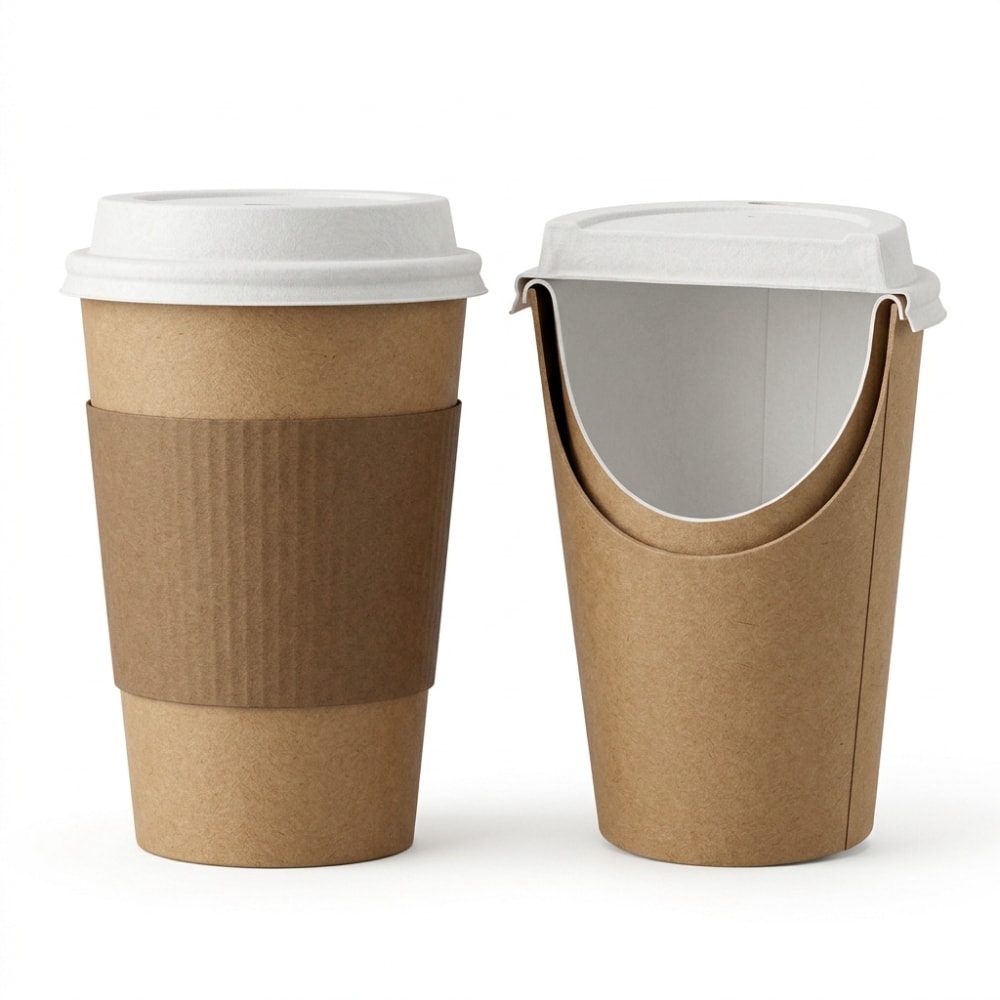
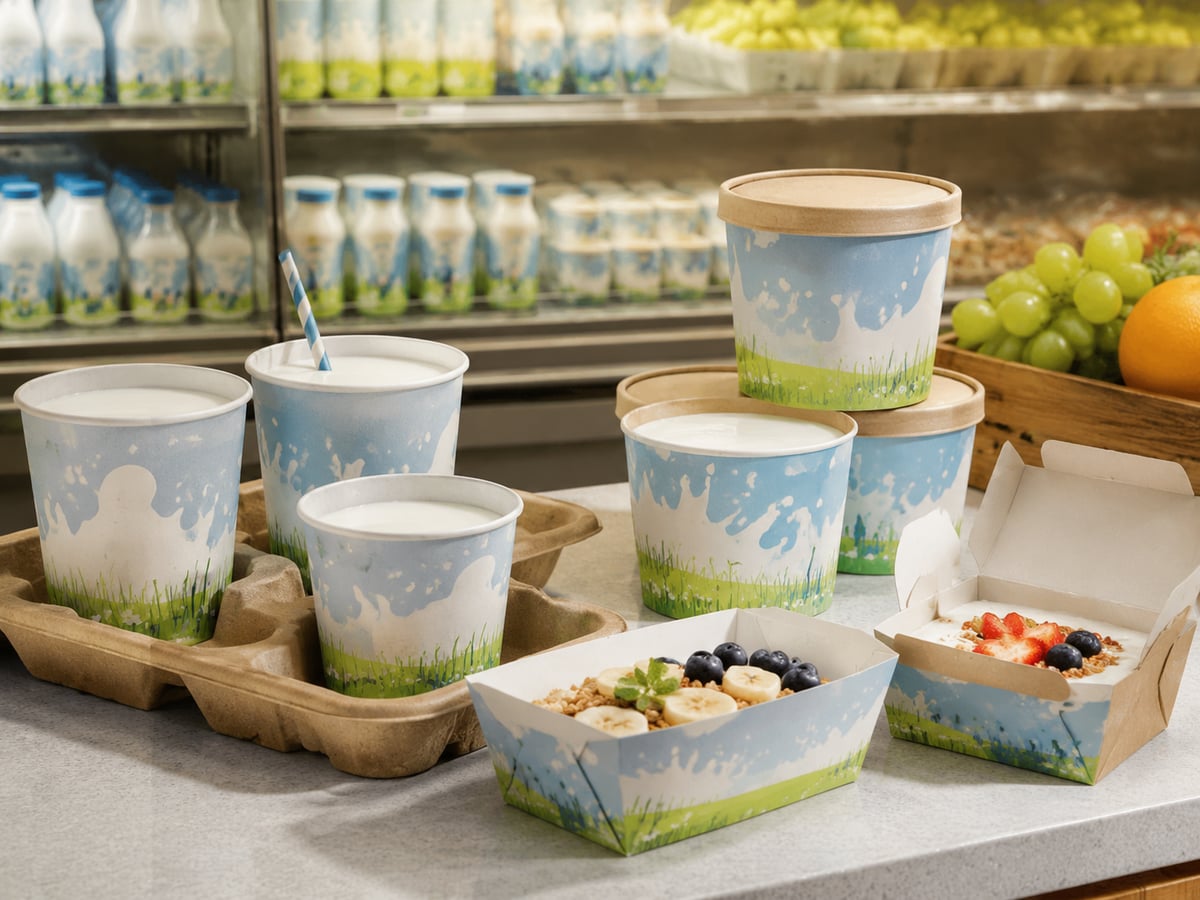
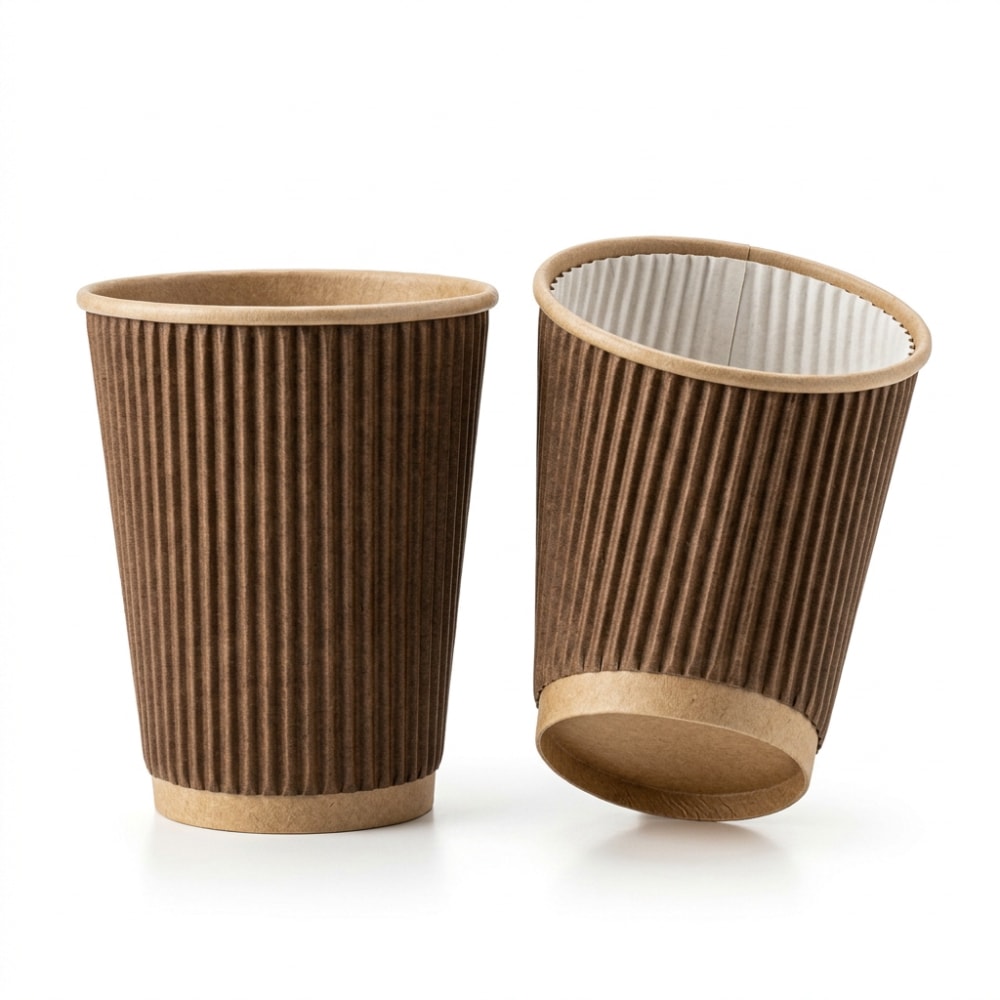
Low-MOQ custom printed paper cups should be purchased according to total landed cost, SKU-level minimum order quantity, carton utilization, production capacity, delivery timing, and reorder risk—not only the quoted unit price. For buyers serving the Global market, a low unit price can become expensive when printing setup charges, inefficient carton cube, expedited freight, customs fees, poor lid compatibility, or stock-outs are ignored.Enterprise buyers should request comparable quotations based on the same cup size, paper weight, coating, print coverage, color process, packing method, Incoterm, destination, inspection standard, and delivery date. A 12 oz single-wall hot cup shipped to Rotterdam under FOB terms is not directly comparable with a similar-looking cup quoted DDP to Los Angeles or CIF to Dubai. The commercial basis must be aligned before selecting a supplier.Low MOQ is particularly useful for restaurant pilots, seasonal promotions, market-entry testing, regional franchises, event catering, beverage brands, and distributors expanding a private-label portfolio. However, a smaller order generally carries more setup cost per cup and creates a higher frequency of replenishment. The objective is not simply to buy the smallest quantity possible; it is to buy the smallest practical quantity that protects cash flow, brand consistency, service levels, and freight efficiency.Cost ElementWhy It MattersTypical Low-MOQ RiskBuyer Control ActionCup unit priceShows factory conversion and material costAppears low but excludes setup or packingCompare identical specificationsPrinting setupIncludes plate, cylinder, color adjustment, and wasteHigh cost spread across a small runRequest itemized setup chargesTooling or dieline costApplies to new shapes, sleeves, or special structuresUnexpected one-time chargeConfirm ownership and reuse termsOcean or air freightPaper cups are volume-sensitive productsFreight exceeds savings from unit priceCalculate carton cube before orderingDuty and clearanceDepends on destination and import classificationBudget shortfall at arrivalConfirm importer responsibilitiesInspection and claimsProtects print, leak resistance, quantity, and packingQuality dispute after cargo departureSet AQL and evidence requirementsThe table shows why a sourcing decision should use a landed-cost worksheet. The correct comparison is the delivered cost per usable cup, including expected waste, inspection, inland delivery, and the financial impact of holding inventory. For multinational buyers, a standardized quotation template also makes it easier to compare factories in China, Southeast Asia, Europe, and regional converting markets.MOQ should be calculated separately for every SKU, because cup capacity, rim diameter, paperboard grade, coating type, sleeve construction, artwork coverage, and packing configuration can change the production requirement. A 4 oz espresso cup may run on a different forming tool from an 8 oz cold drink cup, while a 16 oz ripple-wall cup may need an additional outer-wall process. One artwork does not automatically mean one MOQ when several cup sizes are involved.For practical sourcing, define a SKU as the combination of cup size, structure, coating, print artwork, color version, and pack count. For example, a 12 oz PE-coated cup with a two-color coffee-chain logo is a different SKU from a 12 oz water-based coated cup using the same logo. Buyers should also distinguish between “per artwork MOQ” and “combined MOQ across shared artwork,” because suppliers may allow a common design to be split only when production conditions remain compatible.Typical Cup SKUCommon Low-MOQ RangeMOQ DriverBest Use Case4 oz espresso cup10,000–30,000 piecesSmall forming size and print setupCafés and tasting counters8 oz hot beverage cup10,000–50,000 piecesPaper stock and print colorsIndependent coffee brands12 oz single-wall cup20,000–50,000 piecesHigh-demand standard toolingRestaurant and beverage chains16 oz cold drink cup20,000–50,000 piecesCoating, height, and lid fitJuice bars and takeaway stores12 oz double-wall cup30,000–60,000 piecesInner cup plus outer wrap processPremium hot-drink programsRipple-wall branded cup30,000–80,000 piecesTextured sleeve and assembly speedSpecialty coffee and hospitalityThese ranges are planning references, not universal promises. Actual MOQ depends on artwork complexity, seasonal production loading, raw-material availability, and whether the supplier has existing compatible tooling. Buyers seeking insulated options can review custom ripple-wall hot beverage cups when evaluating higher-value cup structures.To reduce MOQ without sacrificing brand control, use one core logo across multiple sizes, retain common Pantone colors, avoid frequent limited-edition designs, and reserve special graphics for sleeves, stickers, or outer cartons. This approach keeps the food-contact cup body standardized while allowing local campaigns to change more flexibly.Setup cost is usually the main economic challenge in low-volume printed cup projects. It may include flexographic plates, color calibration, ink preparation, machine cleaning, paper roll changeover, production waste, die adjustment, and operator time. Special cup profiles may also require forming molds, bottom-paper adjustments, or compatible lid testing. Buyers should ask whether each fee is one-time, recurring, refundable against annual volume, or transferable to future repeat orders.For standard cup sizes, the most efficient option is typically to use proven factory tooling and customize the print only. For a new shape, a non-standard height, a unique rim, or an unusual cup-bottom geometry, tooling can be justified only if annual demand supports the investment. Before approval, request a technical drawing, a tooling quotation, expected service life, and a written statement on who owns the tool.Setup ItemWhen It AppliesCost Recovery MethodProcurement QuestionPrinting platesNew artwork or changed colorsOne-time or amortizedWill plates be stored for repeats?Pantone matchingStrict brand-color requirementIncluded or separate laboratory chargeWhat color tolerance is accepted?Forming moldNew diameter, height, or profileBuyer-funded capital costWho owns and maintains it?Dieline developmentNew sleeve or packaging layoutDesign fee or waived with volumeIs the final file approved in writing?Machine changeoverShort runs and mixed SKUsBuilt into MOQ pricingCan similar SKUs run together?Trial production wasteNew material or complex printAllocated across first orderWhat yield is included in the quote?The table is useful when negotiating a first order. A supplier that quotes a higher cup price but provides plate storage, reliable color control, and free repeat setup may be more competitive over a 12-month program than a supplier offering an artificially low first quote with unclear recurring charges.For products used in dairy, milk tea, and chilled beverages, coating selection and print durability should be verified together. Buyers can explore custom printed milk cups for private-label dairy programs when comparing applications that may require specific moisture, temperature, and lid-fit performance.An annual volume plan converts uncertain demand into a practical production and replenishment schedule. Instead of placing twelve unrelated low-MOQ orders, buyers should estimate monthly consumption by SKU, launch dates, promotional peaks, market growth, desired safety stock, and expected lead time. This gives suppliers enough visibility to reserve material, schedule printing, and offer more stable commercial terms.For the Global market, demand may be uneven across regions. Summer consumption can increase cold-drink cup requirements in Sydney, Dubai, Miami, Singapore, and Barcelona, while hot beverage demand may rise during winter in Toronto, London, Berlin, and Seoul. A global buyer should not treat yearly demand as evenly distributed if its customers are concentrated in different climates and holiday calendars.var ctx = document.getElementById('lineChart').getContext('2d');new Chart(ctx, {type: 'line',data: {labels: ['2022', '2023', '2024', '2025', '2026 Forecast', '2027 Forecast'],datasets: [{label: 'Indexed Global Demand for Custom Paper Cups',data: [100, 108, 117, 126, 136, 148],borderColor: 'rgb(31, 119, 180)',backgroundColor: 'rgba(31, 119, 180, 0.12)',fill: false,tension: 0.25}]},options: {responsive: false, maintainAspectRatio: false, scales: {y: {beginAtZero: false}}}});The line chart illustrates an indexed planning scenario rather than a guarantee of market performance. It highlights why buyers should secure repeat-production capacity early. A growing program can become operationally difficult if the original supplier has no capacity reservation, the buyer changes artwork repeatedly, or freight planning starts only after goods are finished.Planning InputExample CalculationProcurement ValueReview FrequencyMonthly demand180,000 cups per monthSets baseline production needMonthlySeasonal uplift+30% during summer campaignPrevents promotional stock-outsQuarterlyProduction lead time7–15 days after approvalDefines factory timingPer purchase orderOcean transit25–40 days by routeDefines pipeline inventoryPer shipping laneSafety stock4–8 weeks of demandAbsorbs delays and demand swingsMonthlyReorder coverageLead time plus safety stockSets purchase-order triggerWeekly for fast moversAnnual commitments do not need to mean one large shipment. Buyers can negotiate an annual forecast with scheduled releases, material reservations, or staged deliveries. This often improves unit economics while keeping warehouse exposure lower. It is especially useful for distributors shipping into ports such as Hamburg, Rotterdam, Jebel Ali, Long Beach, Melbourne, and Singapore.A sample order should reduce technical and commercial uncertainty before a full production run. White samples verify dimensions, cup capacity, rim quality, bottom formation, lid compatibility, and hand feel. Printed samples verify logo placement, color appearance, registration, artwork readability, and surface finish. Functional samples test leakage, hot-liquid resistance, cold-drink performance, stacking, nesting, and transport durability.For a first project, buyers should not approve mass production only from a digital artwork file. Screen colors differ from printed colors, and a visually attractive design may wrap poorly around a tapered cup. Fine text near the seam, QR codes, metallic effects, and large solid-color areas deserve particular attention. The buyer should approve a physical retained sample or a signed production standard before the factory begins the full run.Sample StagePrimary PurposeRecommended CheckApproval OutputDigital dieline reviewConfirm artwork dimensionsBleed, seam area, barcode locationApproved artwork PDFWhite cup sampleVerify physical structureCapacity, rim, height, lid fitStructural confirmationPrinted color sampleVerify brand appearancePantone match and registrationSigned color standardHot-fill testCheck heat and leak resistanceFill temperature and holding timeTest result recordCold-drink testCheck condensation performanceCoating and cup stiffnessApplication approvalCarton-drop reviewProtect cargo in transitCarton strength and inner packingPackaging confirmationThe sampling sequence is particularly important for buyers with multi-country operations. A product approved for a café in Paris may need a separate practical review for humid conditions in Jakarta or high-volume delivery routes in Mexico City. Sample testing should reflect the actual beverage, fill temperature, storage time, lid, and customer-use conditions.SKU consolidation is one of the strongest ways to lower total cost without reducing brand presence. Many food-service groups carry too many cup sizes, seasonal graphics, sleeve formats, and packing variations. Each variation creates separate artwork approval, stock management, production planning, and minimum-order requirements. By standardizing a limited core range, buyers can improve purchasing leverage and reduce obsolete inventory.A practical global program might use 8 oz, 12 oz, and 16 oz hot cups; 12 oz and 16 oz cold cups; one shared lid family where possible; and a common design system. Local language information, seasonal promotion, or market-specific compliance messages can be placed on sleeves, labels, cup carriers, or outer cartons instead of creating entirely new cup bodies.var ctx = document.getElementById('areaChart').getContext('2d');new Chart(ctx, {type: 'line',data: {labels: ['Jan', 'Feb', 'Mar', 'Apr', 'May', 'Jun', 'Jul', 'Aug'],datasets: [{label: 'Share of Orders Using Consolidated Core SKUs (%)',data: [42, 47, 53, 58, 64, 68, 72, 76],borderColor: 'rgb(44, 160, 44)',backgroundColor: 'rgba(44, 160, 44, 0.28)',fill: true,tension: 0.25}]},options: {responsive: false, maintainAspectRatio: false, scales: {y: {beginAtZero: true, max: 100}}}});The area chart shows how consolidation can gradually shift purchasing toward a more manageable core assortment. The benefit is not merely lower MOQ. It also improves forecast accuracy, allows faster repeat runs, increases carton consistency, and simplifies store-level replenishment.When building a core range, buyers can review a broader paper cup product range to identify sizes and structures that can share artwork logic, lids, cartons, and operating procedures.The reorder point should be based on average demand during the complete replenishment cycle, plus safety stock. The complete cycle includes forecast review, purchase-order approval, artwork confirmation, production, inspection, port handling, international transit, customs clearance, inland transport, and warehouse receiving. For an importer in the United States, this cycle may be materially different from a buyer receiving containers through Felixstowe, Rotterdam, or Jebel Ali.A simple formula is: reorder point = average daily usage × total replenishment lead time in days + safety stock. If a customer uses 8,000 cups per day, has a 55-day replenishment cycle, and holds 160,000 cups of safety stock, the reorder point is 600,000 cups. The calculation should be reviewed whenever consumption, transit time, port congestion, or supplier production load changes.Demand ConditionSuggested Safety StockReorder DisciplineReasonStable local demand2–4 weeksMonthly reviewLow demand variabilityMulti-store restaurant chain4–6 weeksWeekly dashboardStore ordering changes quicklySeasonal beverage brand6–10 weeks before peakPre-book productionPromotional demand is concentratedLong ocean-freight lane6–8 weeksTrack vessel milestonesTransit and port delays are possibleNew product launch4–8 weeksReview sell-through weeklyForecast is unprovenSingle-source critical SKU8–12 weeksMaintain contingency planSupply disruption has high impactThe table provides a planning framework, not a universal inventory rule. Safety stock should be higher where service interruption is costly, such as airport food service, national coffee chains, stadium concessions, healthcare catering, and high-volume delivery platforms. It should be lower for slow-moving test designs that carry obsolescence risk.Effective negotiation should focus on total program value rather than pushing for a lower nominal price. Buyers should negotiate MOQ tiers, annual forecast support, setup-cost treatment, approved material specifications, inspection arrangements, carton configuration, payment terms, shipping schedule, and claim procedures. A supplier that can deliver consistent repeatability is often more valuable than one offering the lowest first-order price.To make quotations comparable, use one agreed Incoterm and destination. FOB is often suitable when the buyer controls freight forwarding and consolidates cargo from several suppliers. CIF can be useful for a buyer wanting port delivery but still managing import clearance. DDP may simplify early-stage projects but should be reviewed carefully because it can reduce visibility into duty, customs, and inland logistics costs. The right term depends on the buyer’s import capability, not on a universal preference.var ctx = document.getElementById('barChart').getContext('2d');new Chart(ctx, {type: 'bar',data: {labels: ['Coffee Shops', 'Quick-Service Restaurants', 'Food Delivery', 'Hotels', 'Events', 'Retail Private Label'],datasets: [{label: 'Relative Demand Index for Printed Cups',data: [88, 82, 76, 61, 54, 68],backgroundColor: ['#1f77b4', '#ff7f0e', '#2ca02c', '#d62728', '#9467bd', '#8c564b']}]},options: {responsive: false, maintainAspectRatio: false, scales: {y: {beginAtZero: true, max: 100}}}});The bar chart demonstrates why demand patterns differ by industry. Coffee shops often need strong color consistency and hot-cup performance; quick-service restaurants may prioritize scalable supply and carton efficiency; event operators may place compressed, deadline-sensitive orders. A supplier negotiation should therefore reflect the buyer’s operating model.Useful negotiation questions include: Can similar designs be combined into one production run? Can printing plates be retained for a defined period? Is a call-off order possible against an annual plan? What happens if carton counts vary? Which quality defects trigger replacement or credit? Can a third-party inspection company attend before shipment? Clear answers reduce avoidable disagreement after the order is placed.Fude Packaging supports overseas B2B buyers seeking custom printed paper cups with a balance of commercial flexibility, manufacturing control, export readiness, and scalable supply. Rather than treating low MOQ as only a pricing issue, our team helps buyers align cup structure, print requirements, carton loading, delivery route, compliance expectations, and repeat-order planning.Our technical process covers artwork and dieline checking, Pantone-oriented color matching, material recommendations, prototype preparation, and application-focused testing. We help buyers select suitable cup formats for hot beverages, cold drinks, dairy beverages, takeaway service, and promotional use. In-house quality and performance testing supports checks for cup integrity, printing appearance, leak prevention, dimensional consistency, and functional performance before shipment.With more than 20 years of industry experience and a self-owned 30,000 m² factory in Shandong, Fude Packaging manages paper cup production from material selection and printing through die-cutting, forming, inspection, packing, and shipment preparation. Automated lines can produce up to 120,000 units per day, subject to specification and production scheduling. This direct manufacturing control supports stable batch management for standard and customized cup programs.Our international team supports OEM and ODM projects with white samples, printed samples, functional prototypes, export packing, documentation assistance, and coordinated replenishment planning. Buyers can discuss FDA-related food-contact expectations, EC 1935/2004 considerations, FSC-certified material options, ISO 9001 quality-management practices, and compostability alternatives such as BPI or OK Compost according to destination-market requirements. We also support T/T and L/C arrangements, third-party inspection, sea freight, air freight, LCL, FCL, and express sample deliveries.var ctx = document.getElementById('comparisonChart').getContext('2d');new Chart(ctx, {type: 'bar',data: {labels: ['Customization Support', 'Factory Process Control', 'Export Documentation', 'Multi-SKU Consolidation', 'Inspection Flexibility', 'Reorder Planning'],datasets: [{label: 'Integrated Manufacturing Partner',data: [92, 94, 90, 88, 91, 93],backgroundColor: 'rgba(75, 192, 192, 0.75)'},{label: 'Fragmented Spot-Buying Model',data: [62, 58, 55, 49, 57, 46],backgroundColor: 'rgba(255, 159, 64, 0.75)'}]},options: {responsive: false, maintainAspectRatio: false, scales: {y: {beginAtZero: true, max: 100}}}});The comparison chart illustrates the operational value of an integrated sourcing approach. Buyers managing several food-packaging categories can potentially consolidate paper cups, bowls, lunch boxes, trays, salad containers, and meal boxes with fewer supplier interfaces, helping improve container utilization, visual consistency, and purchasing coordination.By 2026 and beyond, paper-cup purchasing will increasingly be influenced by traceability expectations, fiber-source documentation, water-based or alternative barrier technologies, reduced-plastic policy pressure, recyclable or compostable material options, digital artwork approval, and more data-driven inventory management. Buyers should confirm actual market acceptance and disposal infrastructure before making environmental claims, since requirements vary significantly between the European Union, North America, the Middle East, Oceania, and Asian markets.Include unit price, print setup, tooling, sample charges, packing, inspection, freight, insurance, duty, customs clearance, inland transport, warehouse handling, expected wastage, and inventory carrying cost. Compare all suppliers using the same cup specification, Incoterm, destination, and quality requirement. The relevant number is delivered cost per usable cup, not the factory price alone.Calculate MOQ for each unique combination of size, structure, coating, artwork, color version, and pack configuration. Ask whether a common design can be split across compatible sizes, but do not assume this is possible. Standard cup tooling, fewer colors, shared artwork, and consolidated annual demand usually make lower MOQ more feasible.Use the same Incoterm and named destination for every quote. FOB is often effective for experienced importers controlling freight. CIF can suit buyers managing customs clearance at the arrival port. DDP can be convenient for smaller or new import programs, but the buyer should understand what customs, duty, and delivery charges are included.Many enterprise buyers hold approximately four to eight weeks of safety stock for imported paper cups, increasing this level before seasonal peaks or on long shipping lanes. The right level depends on demand volatility, production lead time, transit duration, port reliability, warehouse capacity, and the operational cost of a stock-out.Review on-time-in-full delivery, production lead time, vessel departure reliability, transit variance, customs clearance duration, carton damage rate, quantity variance, warehouse receiving discrepancies, stock-out frequency, obsolete inventory, freight cost per thousand cups, and forecast accuracy. These indicators show whether the sourcing program is improving total cost and service performance. -

Canada Guide to Buying Paper Packaging from China Safely
For Canadian importers, restaurant groups, distributors, food service brands, and takeaway operators, sourcing paper food packaging from China can be a highly practical way to control cost, expand product options, and improve supply stability. The key is not simply finding a low quote. The real advantage comes from selecting a factory that understands food-contact safety, export documentation, printing consistency, coating choices, lead times, and Canadian market expectations. Whether you are importing cups for cafés in Toronto, soup bowls for Vancouver delivery kitchens, or meal boxes for wholesalers serving Montréal, Calgary, Edmonton, Ottawa, Halifax, or Winnipeg, a well-managed China sourcing program can deliver both economic and operational value.This guide explains what Canadian buyers should know before placing orders for paper cups, bowls, lunch boxes, deli packs, noodle containers, and related food packaging. It covers cost structure, certifications, communication, shipping, customs, quality control, and future trends through 2026. It also highlights how to compare supplier types, manage minimum order quantities, and reduce risk when purchasing factory-direct packaging from China.If you are in Canada and need food-grade paper packaging at competitive prices, sourcing from a qualified Chinese factory is often the best option when you want a balance of customization, scale, and cost efficiency. Chinese manufacturers typically offer broader product ranges, flexible printing, multiple coating options such as PE and PLA, and stronger economies of scale than many small local converters. However, successful importing depends on checking certifications, confirming food-contact compliance, reviewing samples, auditing quality systems, aligning specifications in writing, and preparing customs documents properly.For most Canadian buyers, the best sourcing model is factory-direct procurement supported by pre-production sampling, clear artwork approval, third-party or in-house quality control, and a logistics plan through major gateways such as Vancouver, Prince Rupert, Montréal, Toronto, and Halifax. This approach is especially effective for chains, wholesalers, distributors, food delivery suppliers, and fast-growing brands that need consistent packaging across locations.The strongest categories for Canada include custom takeaway boxes, soup bowls, salad bowls, hot and cold beverage cups, dessert containers, deli boxes, fries cups, compartment meal packs, and kraft food trays. Buyers should compare coating type, wall thickness, lid fit, grease resistance, print quality, carton packing method, and pallet optimization before placing a volume order. Quick buying priorities for Canadian importers Priority Why it matters Typical check Risk if ignored Food-contact compliance Protects end users and import legality FDA, EU framework, material test reports Product rejection or liability Coating selection Affects leak resistance and sustainability claims PE or PLA performance review Leaks or inaccurate marketing MOQ fit Controls inventory and cash flow Factory minimum by size and print design Excess stock Printing approval Brand consistency is essential Artwork proof and production sample Off-brand packaging Export packing Reduces freight damage Master carton strength and pallet plan Transit loss QC process Prevents large-scale defects In-line checks and final inspection Claims and delays Customs paperwork Speeds release into Canada Invoice, packing list, bill of lading, HS code Border hold The table above shows the core screening points. A low unit price alone is never enough. A dependable supplier is one that combines price, compliance, manufacturing discipline, and export support in one package.var ctxLine = document.getElementById('lineChartGrowth').getContext('2d');var lineChartGrowth = new Chart(ctxLine, { type: 'line', data: { labels: ['2021', '2022', '2023', '2024', '2025', '2026'], datasets: [{ label: 'Estimated Canada demand index for imported paper food packaging', data: [82, 89, 97, 108, 118, 129], borderColor: 'rgb(75, 192, 192)', backgroundColor: 'rgba(75, 192, 192, 0.15)', fill: false, tension: 0.3 }] }, options: { responsive: true, maintainAspectRatio: false }});The market growth pattern shown above reflects how Canadian demand has been pushed by food delivery, grab-and-go meals, convenience retail, independent cafés, and sustainability-focused brand repositioning. Even where local sourcing remains valuable, imported packaging often fills the gap for custom printing, niche formats, and high-volume requirements.Chinese packaging factories remain attractive to Canadian buyers for several structural reasons. First, industrial clustering is strong. In mature manufacturing regions, paper conversion, coating, printing, lid forming, carton making, and accessory sourcing are often located within efficient supply networks. This shortens procurement cycles and lowers input costs. Second, factories that focus on export packaging usually understand the needs of overseas buyers better than purely domestic plants. They are more likely to provide layered quality checks, carton labeling, OEM support, and container-loading plans.Another advantage is product breadth. Canadian businesses often need more than one SKU. A distributor may require hot cups, cold cups, soup bowls, salad bowls, kraft meal boxes, window-lid boxes, fries cups, and deli containers in matching brand graphics. Buying from a capable Chinese factory reduces supplier fragmentation. Instead of placing separate orders with multiple vendors, buyers can consolidate categories and simplify logistics.Customization is also a major benefit. Many Canadian brands want packaging that supports premium positioning or social media visibility. That may include matte kraft finishes, bleached white boards, double-wall cup structures, ripple textures, PET window lids, compartment designs, or custom dimensions for meal prep and delivery. A supplier that handles OEM development can support these requirements more efficiently than a trader with limited factory control.Cost remains important, but its real value is seen in landed economics, not factory price alone. When a plant uses automated forming, efficient flexo printing, disciplined material control, and climate-managed warehousing, the result is usually lower total cost per usable unit. Waste, defects, print mismatch, and leakage claims can be much more expensive than a small difference in purchase price.For Canadian importers supplying urban food service centers such as Toronto, Vancouver, Montréal, Mississauga, Brampton, Surrey, Richmond, and Markham, consistency across repeated orders is especially important. Standardized dimensions and fit are essential when the same lids, sleeves, and cup carriers are used across multiple locations. This is where a factory-direct relationship offers long-term value. Main benefits of sourcing from Chinese packaging factories Benefit What Canadian buyers gain Best for Notes Lower production cost Improved margin or retail competitiveness Wholesalers and chains Best when freight is planned efficiently Wide SKU range One-source purchasing across categories Distributors Reduces vendor complexity Custom printing Stronger brand presentation Cafés, QSR, meal brands Requires artwork proof approval Flexible materials Choice of kraft, white board, PE, PLA Eco-focused brands Claims should match certification Scalable output Reliable supply during seasonal peaks Large accounts Important before holiday rushes OEM development Custom sizes and structures Private label importers Useful for premium concepts Factory-direct communication Faster resolution of technical questions Professional buyers Reduces trader markup risk In practical terms, these benefits matter most when the supplier has actual manufacturing depth. Canadian buyers should ask not only for pricing, but also for machine capacity, coating options, print methods, sample support, and defect-handling policies. Businesses selling Custom Paper Food Container products, Custom Paper Bowl products, and Custom Paper Cup products often achieve better results when the same factory can coordinate matching packaging formats under one quality system.var ctxBar = document.getElementById('barChartIndustry').getContext('2d');var barChartIndustry = new Chart(ctxBar, { type: 'bar', data: { labels: ['Coffee Shops', 'QSR Chains', 'Food Delivery', 'Wholesalers', 'Caterers', 'Grocery Ready Meals', 'Dessert Brands'], datasets: [{ label: 'Estimated Canada demand score', data: [88, 94, 97, 91, 72, 79, 76], backgroundColor: [ 'rgb(255, 99, 132)', 'rgb(54, 162, 235)', 'rgb(255, 206, 86)', 'rgb(75, 192, 192)', 'rgb(153, 102, 255)', 'rgb(255, 159, 64)', 'rgb(99, 255, 132)' ] }] }, options: { responsive: true, maintainAspectRatio: false }});The bar chart shows where demand intensity is strongest. Food delivery and QSR remain the biggest drivers because they need dependable leak resistance, stackability, and high-volume replenishment. Coffee shop groups also continue to expand branded cup programs, especially in major commuter and university markets.Canadian buyers should treat certification review as a core part of sourcing, not a final paperwork step. For paper food packaging, the most relevant standards often include general food-contact compliance, quality management certification, sustainable paper sourcing, and where applicable, compostability documentation. A good supplier should explain clearly which certification applies to the factory, which applies to the material, and which applies to the finished product.Many buyers ask whether FDA or EU compliance matters when the target market is Canada. In practice, these standards are frequently used as recognized reference points in international trade. They can help buyers evaluate material safety, migration limits, and supply professionalism. However, documentation should be specific, current, and linked to the product structure being purchased. For example, a kraft bowl with PE lining and a PLA-coated cold cup may require different technical evidence.Important certification categories include ISO 9001 for quality management, FSC for responsibly sourced paper, and compostability certifications such as BPI or OK Compost where relevant. Buyers should also request product test reports for oil resistance, leakage, rim strength, compression resistance, and where needed, temperature tolerance for hot-fill or microwave use.A reliable supplier will be transparent about the difference between eco-friendly marketing and verifiable claims. Not every paper package is compostable, and not every PLA item suits hot applications. Likewise, PE-coated packaging can perform extremely well for liquids and greasy foods, but should be marketed accurately. Canadian importers should ensure all labeling and customer-facing descriptions match the tested performance and certification status. Common certifications and documents to request Document or standard Purpose Useful for Canadian buyers What to verify ISO 9001 Quality management system Shows process discipline Certificate validity and scope FDA food-contact compliance Material safety reference Useful benchmark in export trade Applies to the exact material used EU EC 1935/2004 Food-contact framework Additional compliance confidence Recent report and product match FSC Responsible forestry chain Supports sustainability positioning Chain of custody details BPI Compostability verification Useful for compostable lines Scope and approved structure OK Compost Compostability certification Helpful for premium eco programs Industrial vs home compost claims Migration or lab test reports Material performance and safety Supports due diligence Lab date, item code, result range The explanation behind this table is simple: each document answers a different risk question. ISO 9001 addresses management systems; FSC addresses paper sourcing; FDA and EU references address food-contact safety; compostability certificates address environmental claims; and lab reports address measurable performance. Canadian buyers should collect and store these documents before launch, especially if supplying retailers, institutional clients, or chain accounts with formal vendor approval requirements.For importers serving schools, hospitals, airports, food courts, and franchise groups, supplier documentation is often part of tender qualification. Strong documentation can help win contracts, not just clear shipments.Good communication is one of the biggest predictors of sourcing success. Language ability matters, but process clarity matters even more. The most effective Canadian buyers reduce ambiguity by using specification sheets, dielines, approved Pantone references, carton mark details, quantity breakdowns, and written acceptance standards. Short messages such as “make the bowl stronger” or “improve the print” are not precise enough for manufacturing.Time zone management is also important. Canada and China often have a 12 to 13 hour difference depending on season and province. Teams in Toronto or Montréal may prefer end-of-day updates so that the factory can respond during its morning shift. Buyers in Vancouver may find late afternoon communication easier. Weekly milestone tracking works well for sample approval, plate making, production start, inspection, and booking.Artwork discussions deserve special care. Confirm dimensions in millimeters, file formats, print coverage, barcode placement, legal text, and color expectations. If the package includes bilingual labeling for English and French, which is often relevant in Canada, text placement should be reviewed early. This is especially important for Québec-bound products or national retail distribution.It is also wise to define what counts as a defect. For example, acceptable variation in cup seam appearance, minor carton scuffing, print registration, rim curl, or lid fit should be discussed before production. The more precise the quality language, the fewer surprises at destination.Finally, communication should include application details. A supplier needs to know whether the item will hold poutine, ramen, gravy, salad with dressing, hot coffee, smoothies, frozen desserts, or baked goods. The intended use influences board weight, coating choice, vent design, and structural strength.Minimum order quantity, or MOQ, is often the first commercial question Canadian buyers ask. The answer depends on whether the packaging is plain stock, simple private label, or fully custom with new tooling or special dimensions. Factories usually offer the best pricing when production can be scheduled efficiently around machine width, print plate setup, and carton packing patterns. For this reason, custom printed products tend to have higher MOQs than neutral stock items.Buying direct from a factory generally improves pricing in three ways. First, it reduces trader margins. Second, it gives the buyer access to more accurate material options and production recommendations. Third, it makes it easier to optimize the order mix across containers, bowls, and cups, which can improve container utilization and landed cost per piece.Canadian small businesses should not assume that factory-direct automatically means huge volumes only. Many export-oriented manufacturers now support trial orders, mixed-size runs, and phased launch planning. This is especially useful for emerging café brands, regional distributors, and meal-prep startups testing new locations in cities like Toronto, Vancouver, Calgary, or Montréal.Still, buyers should think beyond the unit price. The true cost model includes sample charges, printing plate costs, export cartons, freight, duties, customs brokerage, inland transport, and storage in Canada. A slightly higher factory quote can be a better deal if it reduces damage, improves nesting efficiency, or speeds order turnaround. Typical MOQ and cost considerations by packaging type Product type Common MOQ tendency Cost driver Buying advice Single wall paper cups Medium Print plate and cup size Combine sizes with same artwork family Double wall or ripple cups Medium to high Extra material and assembly Best for premium hot drink programs Soup and salad bowls Medium Lid compatibility and coating type Check leak tests before volume order Kraft lunch boxes Low to medium Board weight and die-cut shape Good entry category for trial imports Compartment meal boxes Medium to high Structure complexity Confirm stacking and sealing performance Deli boxes with windows Medium Window film and lid detail Ideal for grab-and-go retail Fries cups and trays Low Board yield and print area Often suitable for promotional runs The explanation here is that MOQ should be evaluated by category, not as a single supplier trait. Simple trays may be easy to trial at lower volumes, while custom cups and specialty structures often require more volume to achieve efficient setup. Canadian buyers can often lower risk by launching with a few core SKUs first, then expanding the range after demand is validated.Businesses looking for Custom and Wholesale food Paper packaging should ask suppliers for two quote models: a trial-order scenario and a container-load scenario. This reveals how pricing improves with scale and helps forecast margin as the business grows.var ctxArea = document.getElementById('areaChartTrend').getContext('2d');var areaChartTrend = new Chart(ctxArea, { type: 'line', data: { labels: ['2021', '2022', '2023', '2024', '2025', '2026'], datasets: [{ label: 'Shift from plain stock to custom sustainable formats', data: [34, 40, 49, 58, 66, 74], fill: true, backgroundColor: 'rgba(54, 162, 235, 0.25)', borderColor: 'rgb(54, 162, 235)', tension: 0.35 }] }, options: { responsive: true, maintainAspectRatio: false }});The area chart illustrates a clear trend: more Canadian buyers are moving from generic stock packaging toward custom-branded and sustainability-linked formats. This shift is expected to continue through 2026, especially as restaurants compete on customer experience and environmental positioning.Shipping planning is where many sourcing programs either become efficient or become expensive. Paper packaging is light but volumetric, which means freight cost depends heavily on carton size, nesting efficiency, palletization, and whether the shipment moves by full container load or less-than-container load. For Canadian buyers, ocean freight is usually the most economical mode for regular replenishment, while air freight is generally reserved for urgent shortages, launch deadlines, or samples.Common ocean routes connect Chinese ports such as Qingdao, Shanghai, Ningbo, and Shenzhen to Canadian gateways including Vancouver, Prince Rupert, Montréal, and Halifax. Vancouver and Prince Rupert often serve Western Canada and inland rail movements, while Montréal and Halifax can support Eastern Canada depending on route and season. Transit times vary with sailing schedules, congestion, weather, customs processing, and inland delivery destination.For example, a shipment headed to Toronto may arrive through Vancouver and move by rail, or it may enter through Montréal depending on service, season, and total cost. Importers should compare all-in lead time, not just port-to-port transit. If inventory planning is tight, a slightly higher freight option with a more stable schedule may be the better choice.Packing method also matters. Carton bursting strength, moisture protection, pallet stretch wrapping, and clear outer labeling all reduce damage risk. Since paper packaging can absorb moisture, good warehouse and container-loading practices are especially important during humid seasons and long sea voyages. Typical shipping modes for Canada-bound packaging orders Mode Best use Typical transit profile Cost level Ocean FCL Large recurring orders Most stable for volume planning Lowest per unit Ocean LCL Smaller mixed orders Flexible but may add consolidation time Moderate to high Air freight Urgent replenishment Fastest international movement Highest Air express samples Pre-production approval Very fast for small cartons High per carton Sea-air combination Balanced urgency and budget Case-by-case Between ocean and air Rail via third-country routing Special cases only Less common for Canada imports Variable Direct container to 3PL warehouse Distributor restocking Efficient after customs release Good total-cost control This table shows that shipping should match business purpose. A restaurant chain launching a national cup design may use air freight for initial marketing quantities, then switch to ocean FCL for ongoing supply. A distributor testing new bowl sizes may begin with LCL, then consolidate into FCL once demand stabilizes.Canadian importers should build lead time buffers around Lunar New Year, peak shipping season, and weather disruptions. A common planning approach is to hold safety stock in a domestic 3PL warehouse near major demand centers such as the Greater Toronto Area, Metro Vancouver, or Montréal.Importing packaging into Canada requires organization, but the process is manageable when documents are prepared correctly. At minimum, buyers usually need a commercial invoice, packing list, bill of lading or airway bill, and the correct HS classification. Depending on product type and customer requirements, supporting compliance documents may also be useful or necessary.The commercial invoice should clearly describe the product, material structure, quantity, unit price, total value, country of origin, and seller and buyer information. The packing list should match carton counts, dimensions, gross and net weights, and pallet information if applicable. Accuracy matters because discrepancies can slow customs processing and create warehouse issues after arrival.Canadian buyers often work with a customs broker to manage release, duty assessment, tax processing, and recordkeeping. This is especially helpful for first-time importers or businesses with multiple SKUs. Brokers can also advise on classification questions, release timelines, and port-specific handling.Importers should keep all supporting documents organized in case retailers, auditors, or downstream customers request them later. This includes food-contact documents, test reports, and proof of origin. Businesses serving public-sector clients or large grocery accounts may need to produce supplier files on short notice.Another practical point is carton labeling. Labels should include item code, quantity, carton number, gross weight, destination, and where required, country of origin. Warehouse teams in Canada benefit greatly from consistent labeling, particularly when receiving mixed SKUs into busy fulfillment environments. Core customs and import documents for Canada Document Main purpose Who prepares it Common issue to avoid Commercial invoice Declares product and value Supplier Vague product descriptions Packing list Confirms shipment details Supplier Incorrect carton counts Bill of lading Transport and release document Carrier or forwarder Name mismatch HS code classification Determines customs treatment Importer with broker support Using an incorrect code Certificate or test report set Supports compliance review Supplier or lab Expired reports Arrival notice Coordinates release and pickup Forwarder Delayed warehouse response Broker entry documents Completes border processing Customs broker Late submission The purpose of this table is to show that customs is not just about one form. It is a chain of coordinated documents. The smoother that chain is, the lower the risk of demurrage, delayed delivery, or misrouted stock. For Canadian businesses shipping into multiple provinces, disciplined document control also improves internal accounting and inventory traceability.Quality control should be designed before the order is placed. The best factories use a layered process that begins with raw material inspection, continues through printing and forming, and ends with finished-goods inspection before shipment. Canadian buyers should ask how the supplier checks board thickness, coating application, print registration, seal integrity, leakage resistance, odor, and carton packing accuracy.Factory audits are equally important, especially for larger programs. An audit can review production flow, hygiene control, traceability, machine maintenance, laboratory capability, warehouse conditions, and complaint-handling procedures. Some buyers perform on-site visits themselves, while others use third-party inspection firms. Even a remote audit supported by live video can reveal useful operational details if conducted carefully.Pre-production samples should be signed off formally. For custom printed items, many buyers approve a digital proof first, then a physical sample, then a pilot production sample. This staged process helps catch problems early. During mass production, in-line checks are useful for identifying drift in print color, cup seam alignment, bowl curl, and lid fit.Final random inspection before shipment remains one of the most effective safeguards. Inspectors typically review quantity, workmanship, dimensions, printing, functionality, carton marks, and packaging condition based on agreed acceptance levels. For paper food packaging, practical use tests matter as much as visual inspection. A soup bowl that looks good but leaks after 20 minutes is not acceptable.Canadian buyers supplying institutional catering, retail foodservice distributors, and restaurant chains should also evaluate complaint responsiveness. When a problem occurs, the supplier should be able to trace batch data, investigate root cause, and implement corrective action quickly. Recommended quality control checkpoints QC stage Main check Why it matters Typical action Raw material inspection Board, coating, odor, thickness Prevents hidden defects Reject nonconforming input Artwork confirmation Text, color, layout, barcode Protects brand accuracy Approve final proof only in writing In-line printing check Registration and color drift Maintains visual consistency Adjust machine during run Forming inspection Seam quality and shape accuracy Affects performance and stacking Stop line if defects rise Functional test Leak, grease, heat, lid fit Confirms real use suitability Retest batch before packing Final random inspection Quantity and workmanship Last gate before shipment Approve or hold shipment Container loading check Carton condition and loading plan Reduces damage in transit Document photos and seal number The explanation behind these checkpoints is that defects become more expensive the later they are found. Catching a wrong board grade before production costs far less than discovering leaks after the shipment reaches Calgary or Montréal. Canadian buyers should build QC into the purchasing agreement rather than treating it as optional.var ctxComp = document.getElementById('comparisonChartSupplier').getContext('2d');var comparisonChartSupplier = new Chart(ctxComp, { type: 'bar', data: { labels: ['Price', 'Customization', 'QC Visibility', 'Lead Time Control', 'Documentation', 'Scalability'], datasets: [{ label: 'Factory-direct sourcing score', data: [92, 95, 90, 88, 91, 94], backgroundColor: 'rgb(153, 102, 255)' },{ label: 'Trader-managed sourcing score', data: [78, 74, 67, 72, 76, 70], backgroundColor: 'rgb(201, 203, 207)' }] }, options: { responsive: true, maintainAspectRatio: false }});The comparison chart shows why many experienced Canadian importers prefer factory-direct sourcing for strategic packaging categories. Traders may still be useful for small opportunistic buys, but direct factory relationships usually offer stronger control over customization, lead time planning, documentation flow, and problem resolution.From a 2026 outlook, quality systems are expected to become more data-driven. More factories are adopting digital production tracking, batch-level traceability, moisture-controlled storage, AI-assisted print inspection, and sustainability-linked material monitoring. At the policy level, Canadian buyers should also watch evolving rules around packaging claims, waste reduction, recycling frameworks, and compostability communication. The factories best positioned for the future will be those that combine automation, documented compliance, and credible environmental reporting.For Canadian buyers seeking a practical manufacturing partner, our company brings together technology, production capacity, and export service in one integrated model. Shandong Fude Packaging Co., Ltd. has focused on food-grade disposable packaging since 2004 and serves customers across North America, Europe, Southeast Asia, the Middle East, Oceania, and other international markets. Rather than approaching packaging as a low-value commodity, the company emphasizes responsible food service packaging that is safe, functional, brand-friendly, and increasingly aligned with sustainability expectations.Technological capabilities: the factory uses modern converting and forming systems supported by flexographic printing, die-cutting, forming equipment, in-house quality testing, and controlled storage conditions. This technical base helps maintain consistency in structure, print registration, leak resistance, and carton readiness for export. The company supports multiple material and coating options, including food-grade PE and compostable alternatives such as PLA where application fit is appropriate. This is important for Canadian importers comparing performance and environmental positioning across hot drinks, cold beverages, soups, salads, noodles, desserts, and meal packaging.Manufacturing capabilities: the production base spans a large modern facility in Shandong Province with automated output designed for steady wholesale supply. Its product coverage includes paper cups, paper bowls, kraft and white food containers, boat trays, deli packs, fries cups, compartment boxes, and custom structures for takeaway and retail food presentation. Capacity planning is built to support both trial programs and larger recurring orders, with practical lead times that suit import cycles for distributors, restaurant groups, and private label buyers in Canada.Service capabilities: the company supports customers from packaging selection through artwork preparation, sample review, production confirmation, and delivery coordination. This service model is especially useful for Canadian businesses that need a one-stop supplier rather than separate design, production, and export intermediaries. Whether the requirement is plain stock, OEM customization, or a multi-SKU wholesale plan, the process is designed to be direct and manageable.Canadian buyers that want to learn more about the factory background can visit our company profile. Businesses comparing product formats can also review the available ranges in food containers, bowls, and cups, then discuss custom requirements such as logo printing, dimensions, coating type, lid options, and carton configuration.A practical example would be a Canadian regional distributor supplying independent restaurants in Ontario and British Columbia. The distributor may begin with a mixed order of kraft lunch boxes, PE-lined soup bowls, and custom hot cups. After verifying sales velocity and customer feedback, the program can expand into branded dessert bowls, deli window boxes, and multi-compartment meal packs. This staged sourcing model often reduces risk while preserving the long-term cost advantage of factory-direct supply.Another example is a growing takeaway chain launching across Toronto, Mississauga, and Ottawa. The chain may need consistent bowl diameters, matching lids, and unified cup graphics across all locations. A capable manufacturing partner can help standardize those details, reducing operational confusion while strengthening the customer-facing brand image.1. Is sourcing paper food packaging from China suitable for small Canadian businesses?Yes, especially if the supplier offers flexible MOQs or trial orders. Start with a few core SKUs and expand once demand is proven.2. Which products are most commonly imported by Canadian food businesses?Paper cups, soup bowls, salad bowls, kraft takeaway boxes, deli containers, fries trays, dessert bowls, and meal boxes are among the most common imported categories.3. What should I choose between PE and PLA coating?PE is widely used for strong moisture and grease resistance and usually performs well for many hot and liquid food applications. PLA is chosen more often when compostable positioning is important, but suitability depends on temperature, use case, and certification. Always match the coating to the food application and the environmental claim you plan to make in Canada.4. How long does it usually take to receive an order in Canada?Production may take around one to two weeks for standard export-ready runs, but total lead time depends on customization, season, shipping mode, destination port, customs clearance, and inland delivery. Ocean freight should always be planned with buffer time.5. Do I need a customs broker in Canada?It is strongly recommended, especially for first-time importers. A broker can help with classification, release procedures, tax handling, and document review.6. Can I order custom printed packaging with my logo?Yes. Most export-focused factories support private label printing, but you should confirm artwork format, color references, approval process, and MOQ before production.7. What quality checks should I request before shipment?At minimum, request raw material verification, print approval, functional leak testing, final random inspection, and loading photos. For larger orders, consider a formal third-party inspection.8. Are Chinese factories able to meet sustainability expectations in the Canadian market?Many are, provided they have the right certification, responsible paper sourcing, and transparent material descriptions. Ask for FSC, compostability documents where relevant, and accurate product specifications rather than relying on generic eco claims.9. What is the biggest mistake Canadian buyers make?Focusing only on unit price. The best decision comes from evaluating landed cost, compliance, printing quality, packaging performance, and communication reliability together.10. What trends should Canadian buyers watch through 2026?Expect more demand for customized branding, stronger scrutiny of environmental claims, wider use of automation and digital QC in factories, and increasing interest in packaging systems that balance performance with sustainability. -
Canada Food Packaging RFQ Process for Procurement Teams
A food packaging RFQ works best when it is treated as a controlled, cross-functional procurement process rather than a request for unit prices. For Canadian procurement teams, a reliable RFQ should define the business objective, technical specification, commercial assumptions, responsible owners, approval thresholds, supplier response format, sample-testing process, and retained decision records.The central purpose is comparability. If one supplier quotes a 320 gsm paperboard burger box with water-based coating, another quotes a lighter board with PE coating, and a third excludes freight, tooling, or printed setup, the prices are not directly comparable. The RFQ must therefore state exactly what suppliers should price and require deviations to be declared separately.A practical food packaging RFQ checklist should include:Product type, dimensions, capacity, artwork, print colours, and packaging configuration. Food-contact requirements for the Canadian market, including applicable documentation and material declarations. Functional requirements such as heat tolerance, grease resistance, leak resistance, lid fit, stacking strength, and freezer or microwave suitability where relevant. Forecast annual volume, order frequency, minimum order quantity, delivery location, and expected lead time. Pricing assumptions, currency, Incoterms, freight basis, tooling charges, payment terms, and validity period. Sample approval, pre-production proof approval, inspection requirements, and release authority. A written comparison matrix that records all deviations before supplier selection. For projects serving Toronto, Vancouver, Montréal, Calgary, Halifax, or national restaurant networks, procurement teams should also evaluate warehouse strategy, port routing, inland transport, bilingual labelling needs, and provincial sustainability requirements. A packaging RFQ is not complete until the final production specification matches the tested sample and the purchase order.RFQ Control AreaRequired DecisionTypical OwnerEvidence to RetainBusiness objectiveCost, performance, sustainability, or launch targetProcurement managerApproved project briefProduct specificationSize, board grade, coating, print, packingPackaging engineerTechnical drawing and specification sheetFood-contact complianceRequired declarations and testing documentsQuality or regulatory teamCompliance document registerCommercial modelIncoterm, currency, volume tiers, payment termsProcurement and financeRFQ commercial scheduleSample approvalFunctional and visual acceptanceOperations and brand teamSigned sample approval recordSupplier awardSelection and risk acceptanceAuthorized approverSupplier comparison and award memoThis table shows why procurement should not rely on a quotation alone. Each control area has a different owner and proof requirement. A low price cannot compensate for missing food-contact documents, an untested lid fit, unclear freight assumptions, or an unsigned artwork proof.Start by creating one standard RFQ template that can be reused for cups, bowls, clamshells, salad containers, meal trays, noodle boxes, bakery packaging, and takeaway cartons. The template should be detailed enough to make supplier quotes comparable but flexible enough to accommodate custom structures and new product development.First, identify whether the project is a replacement purchase, a cost-reduction exercise, a sustainability conversion, a private-label launch, or a new food-service format. These objectives create different priorities. A quick-service restaurant replacing an existing hot-food box may prioritize line compatibility and nationwide supply continuity. A premium café chain in Vancouver may give more weight to print finish, fibre sourcing, and cup-lid performance. A distributor supplying independent restaurants in Ontario may focus on assortment breadth, pallet efficiency, and stable replenishment.Second, prepare a supplier response schedule. Instead of accepting quotations by email in different formats, request a uniform spreadsheet or form covering every mandatory item. Suppliers should separately show product price, tooling, plates, sample cost, export packing, inspection, shipping assumptions, customs-related documents, and optional material upgrades.Third, establish mandatory and desirable requirements. Mandatory requirements are pass-or-fail conditions, such as food-contact documentation, approved dimensions, maximum leakage rate, required capacity, or specified delivery date. Desirable requirements may include lower carton weight, improved nesting efficiency, compostability options, or shorter replenishment lead time.RFQ SectionWhat to RequestWhy It MattersApproval GateProduct identitySKU name, photos, drawing, use casePrevents supplier interpretation errorsTechnical reviewMaterial constructionPaper grade, coating, thickness, additivesControls strength and food performanceQuality reviewArtworkDieline, colour standard, print locationControls brand consistencyMarketing approvalPackaging formatUnits per sleeve, carton, pallet, containerControls logistics cost and handlingOperations approvalCommercial pricingTier prices, tooling, freight, payment termsEnables total-cost comparisonProcurement reviewQuality planSample, pre-production proof, inspection levelReduces launch and claims riskFinal releaseThe table should be attached to every RFQ package. It creates a repeatable buying process and helps Canadian teams compare domestic stock suppliers, North American converters, and overseas manufacturers on an equivalent basis.When sourcing internationally, specify the requested Incoterm clearly. For example, FOB port pricing allows the buyer to control ocean freight and destination handling, while CIF pricing may simplify initial comparisons but can conceal different freight allowances. For container shipments to Vancouver, Prince Rupert, Montréal, or Halifax, the RFQ should identify the preferred routing and required arrival window. For LCL shipments, require suppliers to state export packing dimensions, total cubic metres, and expected readiness date.Every RFQ should open with a concise project statement. This statement explains what success looks like and prevents departments from applying conflicting selection criteria after suppliers have quoted. A project may target a 5% landed-cost reduction, a transition away from a legacy plastic format, improved grease resistance for fried foods, better stacking strength for delivery operations, or the launch of a new branded meal box.Success criteria should be measurable. “High quality” is not a procurement requirement. “No visible print misregistration greater than the approved sample,” “no leakage after 30 minutes with 85°C soup,” “lid removal force within the approved range,” and “cartons able to withstand normal warehouse stacking” are measurable requirements that suppliers can understand and quality teams can inspect.Canadian food-service buyers should also define destination-specific conditions. Winter delivery routes in Edmonton, Winnipeg, and Ottawa may affect board stiffness, moisture exposure, and warehouse handling. A seafood takeaway operator in Halifax may need stronger leak resistance. A food court supplier in downtown Toronto may prioritize nesting efficiency because storage space is limited. A chain with Québec locations may require artwork and pack information suitable for its bilingual commercial needs.var ctx = document.getElementById('marketGrowthChart').getContext('2d');new Chart(ctx, {type: 'line',data: {labels: ['2022', '2023', '2024', '2025', '2026', '2027'],datasets: [{label: 'Indexed Canadian Foodservice Packaging Demand',data: [100, 105, 111, 117, 124, 131],borderColor: 'rgb(38, 119, 85)',backgroundColor: 'rgba(38, 119, 85, 0.12)',borderWidth: 3,fill: false,tension: 0.3}]},options: {responsive: true, maintainAspectRatio: false}});The line chart illustrates a planning index for Canadian food-service packaging demand rather than a guarantee of market results. Procurement teams can use a demand index to structure volume forecasts, reserve manufacturing capacity, and plan safety stock for seasonal periods.Business ObjectiveExample Success MeasurePriority LevelDecision OwnerLower landed costReduce annual spend by at least 5%HighProcurement directorImprove food performanceNo oil penetration during approved testHighQuality managerSupport sustainability planApproved fibre and end-of-life optionHighSustainability leadAccelerate launchProduction-ready before target opening dateMediumProject managerEnhance brand presentationColour and artwork match approved proofMediumBrand managerReduce supply riskDocumented capacity and contingency planHighSupply chain managerThe weighting of these objectives should be agreed before quotations arrive. Otherwise, teams may select a supplier based on price and later discover that the chosen format fails the operational or marketing requirement.Technical inputs must describe both the packaging itself and the food application. For a paper bowl, capacity alone is insufficient. The RFQ should identify whether the bowl holds soup, curry, grain bowls, salads, sauces, frozen food, or dry snacks. It should identify serving temperature, fill weight, hold time, transport time, oil content, liquid content, lid type, and whether customers will reheat the food.Commercial inputs should explain how the supplier must price the project. Include forecast quantity by month or quarter, annual volume, order size, required minimum order quantity, price-break volumes, delivery destination, preferred currency, payment terms, Incoterm, and quote-validity period. If the buyer wants tooling amortized into the unit price, state this directly. If tooling must be quoted separately, require a separate line item.Common packaging RFQ gaps include missing carton dimensions, unclear print coverage, unconfirmed pantone references, absent pallet requirements, and no definition of acceptable manufacturing tolerances. Each gap can lead to different assumptions and misleading price comparisons.Input CategoryInformation RequiredExample for a Hot Food BoxRisk if MissingDimensionsLength, width, height, tolerance180 × 120 × 65 mmIncorrect portion fitBoard and coatingMaterial weight and barrier typeKraft board with grease-resistant barrierSoftening or oil penetrationFood useFood type, temperature, hold timeHot fried chicken for 25 minutesFunctional failurePrintingColours, coverage, finish, artworkTwo-colour exterior printUnexpected print chargesPack-outSleeve, carton, pallet specification50 per sleeve, 300 per cartonWarehouse inefficiencyComplianceRequired declarations and certificatesFood-contact documentation packageRegulatory delayDeliveryDestination and requested dateMississauga distribution centreFreight mismatchUse a formal specification code for each item. For example, “BOWL-850-KRAFT-PP-2C-500” is easier to trace than “large soup bowl.” The code can connect drawings, sample records, quotations, purchase orders, inspection reports, and customer complaints to the same approved product version.For customized packaging, digital proofs should be reviewed before printed samples are ordered. A white sample confirms structure, dimensions, folding, stacking, and lid compatibility. A printed pre-production proof confirms colour, artwork placement, text, and production appearance. The RFQ should define which proof is mandatory and who has authority to approve it.Procurement managers should build a simple responsibility matrix. The buyer may own supplier communication and pricing analysis, but should not independently approve food-contact suitability, artwork, operational fit, or brand presentation. Cross-functional ownership protects the organization from rushed decisions and undocumented changes.A practical process normally has five gates: brief approval, RFQ release, quotation normalization, sample approval, and final production release. Each gate should have a named approver and a deadline. Where the project involves high spend, a new supplier, custom tooling, or a material change, senior approval thresholds should apply.Process GateRequired InputApproverEscalation TriggerProject briefObjective and forecast volumeBusiness sponsorBudget exceeds planRFQ releaseComplete technical specificationPackaging engineerKey specification missingQuote comparisonNormalized supplier pricingProcurement managerVariance above thresholdSample acceptanceFunctional and visual test resultsQuality and operationsAny test failureArtwork approvalFinal digital or printed proofBrand ownerText or colour changeProduction releaseApproved final specificationAuthorized signatoryNew tool or supplier riskThis governance model is especially useful when a Canadian importer has multiple stakeholders: a procurement office in Toronto, a marketing group in Montréal, a distribution centre in Brampton, and restaurant operations across several provinces. A shared approval record ensures that decisions remain visible even when project participants change.Set response deadlines realistically. Suppliers need enough time to review custom drawings, material availability, print requirements, and production loading. A rushed RFQ may attract incomplete quotations or force suppliers to build risk premiums into pricing. At the same time, the RFQ should state that late or incomplete responses may not be evaluated.Suppliers often price different assumptions because the RFQ is incomplete or because they propose alternatives. This is not automatically a problem, provided deviations are transparent. The problem occurs when an alternative specification is hidden inside a low price.Create a deviation register. Every supplier should declare any difference involving material grade, coating, thickness, printing process, carton quantity, tooling, freight, lead time, compliance document, payment term, or quality plan. Procurement should normalize the quotes to a common basis before ranking suppliers.For example, a supplier quoting CAD 0.18 per box may appear lower than a supplier quoting CAD 0.20. However, the lower quote may exclude printing plates, use fewer units per master carton, assume a larger order quantity, or offer a lighter material. A total-cost analysis may show that the CAD 0.20 supplier has the lower landed annual cost and lower operational risk.var ctx = document.getElementById('industryDemandChart').getContext('2d');new Chart(ctx, {type: 'bar',data: {labels: ['Quick Service', 'Coffee Shops', 'Meal Delivery', 'Retail Ready Meals', 'Catering', 'Institutions'],datasets: [{label: 'Relative Packaging RFQ Demand Index',data: [92, 78, 88, 74, 61, 67],backgroundColor: ['#1f6f8b', '#4e9f3d', '#d97706', '#8b5cf6', '#dc2626', '#64748b']}]},options: {responsive: true, maintainAspectRatio: false}});The bar chart provides an illustrative relative demand profile by buying sector. It helps procurement teams identify where standardization, supplier capacity reservations, and product testing may produce the greatest operational value.Comparison ThresholdRecommended ControlAction RequiredExampleUnit price variance above 8%Mandatory price breakdownConfirm material and pack-out assumptionsTwo bowl quotes differ by CAD 0.03Material changeTechnical reviewRe-test sample before approvalDifferent coating proposedMOQ above forecastCommercial escalationAssess inventory and cash impactSupplier requires 500,000 unitsLead time above targetSupply-chain reviewEvaluate safety stock or alternative routeProduction plus shipping exceeds 10 weeksFreight excludedLanded-cost calculationAdd comparable transport estimateFOB versus delivered quoteCompliance gapPass-or-fail holdDo not award until resolvedMissing food-contact declarationThe objective is not to eliminate alternatives. A supplier may offer a better design, stronger board, reduced carton cube, or more efficient tooling approach. The RFQ process should allow innovation, but alternatives must be separately priced, tested, and approved rather than silently substituted.Before rolling out a new RFQ framework across all packaging categories, test it on one live project. Select a project with moderate complexity: for example, a branded 750 ml salad bowl, a paper coffee cup with a matching lid, or a compartment meal tray for a regional food-service chain. Avoid using a very simple stock item because it may not expose the process weaknesses that matter in customized purchasing.During the pilot, measure how long it takes to collect inputs, how many clarification questions suppliers ask, whether quotes are actually comparable, whether samples reflect the written specification, and where approvals are delayed. Record all changes made after RFQ release. If suppliers repeatedly ask for the same missing detail, add it to the template.A useful pilot may involve a Canadian distributor receiving product through Vancouver and delivering to British Columbia and Alberta. The team can test whether the RFQ captures container loading, moisture-protection requirements, pallet dimensions, storage conditions, and replenishment timing. Another pilot may involve a Québec restaurant group and test approval controls for branded printed food boxes.var ctx = document.getElementById('trendShiftChart').getContext('2d');new Chart(ctx, {type: 'line',data: {labels: ['2022', '2023', '2024', '2025', '2026', '2027'],datasets: [{label: 'Standard Commodity RFQs',data: [72, 66, 60, 55, 49, 44],borderColor: '#64748b',backgroundColor: 'rgba(100,116,139,0.20)',fill: true,tension: 0.3},{label: 'Performance and Sustainability-Led RFQs',data: [28, 34, 40, 45, 51, 56],borderColor: '#15803d',backgroundColor: 'rgba(21,128,61,0.20)',fill: true,tension: 0.3}]},options: {responsive: true, maintainAspectRatio: false}});The area chart illustrates a planning trend: buyers increasingly assess performance, regulatory readiness, traceability, and sustainability alongside unit price. For 2026 and beyond, RFQs should include material transparency, recovery or compostability claims where applicable, and evidence supporting environmental statements.The pilot should finish with a retrospective meeting. Invite procurement, quality, operations, finance, marketing, and the selected supplier. Review what worked, what created delay, which requirements were ambiguous, and whether the chosen approval thresholds were practical.An RFQ framework should be reviewed after every major project and formally updated at least annually. Food packaging changes quickly due to new barrier materials, print technologies, regulations, consumer expectations, supply-chain disruptions, and evolving waste-management policies. A template that was effective two years ago may not capture current requirements.For Canadian buyers, future-focused RFQs should consider fibre sourcing, recycled-content claims where suitable, PFAS-related material controls where relevant, compostability claim substantiation, extended producer responsibility developments, and provincial requirements that may affect packaging choices. Procurement teams should avoid broad environmental claims unless the supplier can provide relevant, product-specific documentation.Technology will also improve RFQ control. Digital artwork workflows, specification databases, batch traceability systems, automated inspection records, and supplier scorecards can reduce manual mistakes. A well-managed supplier portal can capture quotation versions, approved samples, corrective actions, certificates, and production milestones in one searchable location.var ctx = document.getElementById('supplierComparisonChart').getContext('2d');new Chart(ctx, {type: 'bar',data: {labels: ['Price Transparency', 'Sample Control', 'Capacity Evidence', 'Compliance Files', 'Traceability', 'Service Response'],datasets: [{label: 'Supplier A',data: [82, 76, 88, 79, 74, 81],backgroundColor: 'rgba(30, 64, 175, 0.75)'},{label: 'Supplier B',data: [71, 84, 73, 87, 82, 75],backgroundColor: 'rgba(22, 163, 74, 0.75)'}]},options: {responsive: true, maintainAspectRatio: false}});The comparison chart demonstrates why weighted supplier selection is stronger than a unit-price-only decision. A supplier may rank second on price but first on traceability, compliance readiness, sample control, and capacity confidence. The appropriate weighting depends on the project risk and business objective.Post-RFQ Review QuestionWhat to MeasureImprovement ActionReview FrequencyWere supplier quotes comparable?Number of material deviationsClarify pricing scheduleEvery projectDid samples match production?Sample-to-production varianceStrengthen pre-production releaseEvery projectWere approvals timely?Days delayed by each functionAdjust ownership and deadlinesQuarterlyWas landed cost accurate?Quote versus invoice varianceImprove freight assumptionsEvery shipment cycleWere claims or defects recorded?Defect rate and claim closure timeUpdate acceptance criteriaMonthlyDid compliance needs change?New document or policy requirementRevise mandatory RFQ checklistAnnual reviewFude Packaging supports overseas B2B buyers seeking a structured packaging sourcing partner for paper cups, bowls, boxes, trays, salad containers, noodle boxes, burger boxes, kraft lunch boxes, and multi-compartment meal packaging. For Canadian procurement teams, the company can contribute practical input during the RFQ stage by reviewing product applications, artwork, dimensions, pack-out, performance requirements, and production feasibility.From a manufacturing perspective, Fude Packaging has more than 20 years of packaging experience, a self-owned 30,000 m² production base in Shandong, and automated capacity of up to 120,000 units per day. In-house production control covers key processes such as material selection, printing, die-cutting, forming, inspection, packing, and shipment preparation. This integrated approach helps buyers consolidate several paper food-packaging categories under one supplier.From a technological capability perspective, the company provides digital proofs, white samples, printed samples, and printed pre-production proofs for customized projects. Its in-house laboratory supports quality and performance evaluation, while full-batch traceability helps connect raw materials, production records, inspection findings, and shipment information. Buyers can define sample tests for capacity, dimensions, leak resistance, grease resistance, heat performance, stacking strength, print quality, and lid compatibility.From a service capability perspective, Fude Packaging assists with OEM and ODM development, dieline checks, artwork review, Pantone matching, product selection, material recommendations, scheduled orders, export packing, and shipment documentation. Its international service team can coordinate T/T or L/C payment arrangements, sample shipments, full-container or less-than-container options, and shipping support for Canadian destinations through ports such as Vancouver, Prince Rupert, Montréal, and Halifax.For procurement teams that want to compare product options, explore the food packaging product range. Buyers planning a custom project can review available custom packaging services while evaluating sample and production requirements. Additional background on manufacturing operations is available through Fude Packaging’s company profile.Fude Packaging’s documented systems can support buyer requests for BRC, FSC, ISO 9001, LFGB, FDA-related, and other applicable packaging documentation based on product type and destination requirements. Procurement teams should identify the specific documentation required in their RFQ instead of assuming that one certificate covers every finished product, material construction, and end use.A packaging RFQ creates a controlled basis for suppliers to quote the same requirement. It helps buyers compare product performance, compliance readiness, tooling, freight assumptions, lead times, commercial terms, and total landed cost rather than comparing unit prices alone.Typical participants include procurement, quality, packaging engineering, operations, finance, marketing or brand, sustainability, and logistics. Required inputs include product drawings, food application details, material requirements, artwork, volume forecast, delivery location, compliance needs, acceptance criteria, and commercial terms.Place approval gates before RFQ release, after quotation normalization, after sample testing, after artwork proofing, and before mass production. Additional approval is recommended when there is a new supplier, custom tooling, a material change, or a spend level above internal authority thresholds.Use a mandatory pricing schedule and a deviation register. Require suppliers to declare changes in material, coating, thickness, printing, packing, freight basis, minimum order quantity, lead time, or payment terms. Normalize all quotes to the same specification and landed-cost basis before selection.Keep the RFQ version, supplier quotations, deviation register, technical drawings, compliance documents, sample test results, approved artwork, approved pre-production proof, inspection reports, purchase order, shipping documents, and final supplier award record. These documents support traceability and faster investigation if quality or delivery issues occur.Prepare product dimensions, food type, serving temperature, anticipated volume, artwork status, destination city, desired delivery date, and required documentation. Then contact Fude Packaging’s international packaging team to discuss samples, specifications, production planning, and quotation assumptions. -
Paper Cup Leak Testing Guide for Global Market Buyers
A dependable paper cup leak-test procedure gives Global market buyers a repeatable way to verify whether cups can safely hold their intended beverage or food application without seam leakage, bottom leakage, coating failure, softening, or loss of shape. The method should define the cup type, sample quantity, liquid or food simulant, fill level, liquid temperature, holding time, external load, inspection interval, and pass/fail criteria before production approval.For procurement teams, a leak test is not simply a factory quality check. It is a risk-control tool that protects restaurant operations, consumer experience, delivery performance, brand reputation, and product liability exposure. A cup that passes with room-temperature water may still fail when filled with hot coffee, iced beverages, milk tea, soup, acidic juice, or greasy food. Therefore, the test conditions must match the real application and the destination market’s regulatory expectations.A practical qualification process usually includes pre-production samples, first-article verification, in-process monitoring, final inspection, and incoming checks at the buyer’s warehouse. The approved test record should be incorporated into the purchase specification, supplier quality agreement, and incoming inspection plan. For high-volume chains, the same method should be used at multiple sites so a result from Shanghai, Rotterdam, Los Angeles, Dubai, or Sydney can be compared objectively.Control ElementRecommended RequirementWhy It MattersSample sourceRandomly select finished cups from packed cartonsPrevents suppliers from submitting hand-picked samplesLiquid typeWater, coffee, acidic drink, oil-containing simulant, or actual beverageCoating performance differs by product chemistryFill levelNominal capacity or designated service fill lineReplicates real hydrostatic pressure on seamsTemperatureAmbient, chilled, and maximum intended serving temperatureHeat can weaken adhesive, paperboard, and barrier layersDuration30 minutes to 24 hours depending on use caseSeparates immediate defects from delayed seepageInspection resultDry exterior, no visible seepage, no softened base, no structural collapseCreates a clear and auditable acceptance decisionThe table above provides a baseline. Buyers should increase the severity for delivery drinks, oversized cups, double-wall cups, cold-drink cups exposed to condensation, and products used in hot climates. A coffee cup used for 10 minutes in a café needs a different protocol from a soup cup held for 45 minutes in a courier bag.Leak failures can occur at the side seam, bottom curl, paperboard pinhole, coating discontinuity, rim area, lid interface, or printed and converted area. The immediate cost may appear small, but a single failure can trigger beverage spills, customer complaints, food-delivery refunds, damaged bags, contaminated products, cleaning costs, and negative online reviews. For distributors, inconsistent cup performance can also create disputes over whether the issue arose in manufacturing, storage, transport, filling conditions, or misuse.Global buyers should identify the worst credible operating condition. For example, a 16 oz hot cup used by a coffee chain in London may be filled at 85°C and carried for 20 minutes. A 22 oz cold cup in Singapore may experience high humidity and condensation. A noodle cup shipped through Jebel Ali may remain in container storage under elevated temperatures before being used for oily soup. Each condition affects the risk profile.var ctxLine=document.getElementById('lineChart').getContext('2d');new Chart(ctxLine,{type:'line',data:{labels:['2022','2023','2024','2025','2026','2027'],datasets:[{label:'Indexed demand for verified leak-tested paper cups',data:[100,108,119,132,147,163],borderColor:'rgb(32,117,88)',backgroundColor:'rgba(32,117,88,0.12)',borderWidth:3,fill:false,tension:0.3}]},options:{responsive:true,maintainAspectRatio:false,plugins:{title:{display:true,text:'Global Buyer Demand for Documented Leak-Test Controls'}}}});The chart illustrates an indexed planning trend rather than a universal market forecast. Demand for documented performance testing is increasing because food-service businesses are using more delivery packaging, more customized cup formats, more sustainable materials, and more complex beverage menus. Buyers should treat leak-test documentation as a commercial requirement, not an optional technical attachment.Sample size should reflect order volume, product risk, supplier history, and whether the order is a new development or an established repeat item. A small sample may identify obvious defects but cannot demonstrate stable production. For routine orders, a practical plan combines carton-level sampling with targeted functional testing. For new molds, new coatings, new printing designs, or a switch from PE to water-based or compostable barrier systems, use an expanded qualification sample.Order or Project TypeSuggested Leak-Test SampleSampling ApproachBuyer ActionPrototype development30 cups per designAcross all prototype variantsApprove only after full test completionFirst production order80–125 cupsMultiple time periods and packing cartonsUse heightened inspection and retain samplesRepeat order under 100,000 cups50–80 cupsRandom cartons from start, middle, and endCompare with approved reference sampleOrder of 100,000–500,000 cups80–125 cupsMinimum five cartons across productionReview batch test report before shipmentOrder above 500,000 cups125–200 cupsMultiple lots, shifts, and pallet positionsConsider independent inspectionHigh-risk hot or oily application100–200 cupsInclude worst-case temperature conditionRequire enhanced retention and traceabilityThe suggested sample quantities are commercial guidance, not a replacement for a mutually agreed statistical sampling standard. Buyers that use an AQL system should connect leak testing to the relevant inspection level, but functional testing should not be reduced to a simple visual AQL check. A cup can look perfect while having a tiny seam channel that only becomes visible after heat and time exposure.Equipment does not need to be complex, but it must be consistent. A calibrated thermometer, timer, fill-volume gauge, stable test surface, electronic balance, absorbent indicator paper, visual inspection lighting, and test-record form are usually sufficient for standard tests. More advanced operations may use temperature-controlled water baths, compression fixtures, leak-detection dyes, digital imaging, and environmental chambers.Absorbent white paper placed beneath each cup is a simple and effective method for identifying slow leakage. Weighing cups before filling and after the hold period can add measurable evidence, especially where trace seepage is difficult to see. When a buyer evaluates lid-and-cup compatibility, the test should also include inversion, gentle side load, vibration simulation, and transport handling where appropriate.EquipmentPrimary UseRecommended ControlCalibrated thermometerVerify beverage or simulant temperatureRecord before and after fillingTimerControl holding durationUse defined inspection pointsGraduated vesselControl fill volumeUse the same fill level for every sampleDigital scaleConfirm mass loss or absorption trendUse consistent weighing accuracyAbsorbent indicator paperReveal drops and seepageReplace between samples to avoid false resultsFlat level test benchPrevent artificial distortionKeep dry, clean, and stableInspection light and cameraDocument seam, base, and coating conditionUse fixed lighting for comparable photographsFor a supplier located far from the buyer, photographic evidence alone is not enough. The report should identify the instruments used, calibration status where applicable, operator, date, product code, production batch, test liquid, temperature, and result for each group of samples.Test conditions should be based on actual food-service use. Water is useful for routine screening, but it may not challenge barrier performance sufficiently. Coffee, tea, milk drinks, fruit juices, carbonated beverages, broths, sauces, and oily liquids behave differently. Acidic or fat-containing products can reveal weaknesses that are not visible in a plain-water test.A practical protocol often uses two stages. Stage one is a standard condition for routine batch comparison, such as water at 23°C for two hours. Stage two is an application-specific challenge, such as hot coffee at 85°C for 30 minutes, iced beverage exposure with external condensation, or oily soup at 75°C for 45 minutes. The severe condition should simulate foreseeable use without becoming unrealistic.ApplicationSuggested Test LiquidTemperatureHold TimeAdditional ConditionHot coffee cupWater or coffee beverage80–90°C30–60 minutesFit compatible lid and inspect seamTea and milk tea cupTea or milk-containing beverage60–85°C45–90 minutesCheck rim softness and bottom integrityCold beverage cupChilled water or beverage4–10°C60–120 minutesAssess condensation and external moistureJuice cupAcidic juice simulant or actual juice20–25°C2–4 hoursCheck coating continuity and stainingSoup or noodle cupHot broth with moderate oil content70–85°C45–90 minutesApply normal handling loadDelivery beverage cupActual intended drinkService temperature30–45 minutesInclude lid, carrier, tilt, and vibrationBuyers serving multiple regions should not rely on one universal condition. Products shipped to humid tropical cities such as Jakarta or Manila may need stronger resistance to moisture exposure. Products supplied to winter delivery operations in Toronto or Berlin may face thermal cycling between indoor filling and outdoor transport. Container loading through Qingdao, Ningbo, Hamburg, Long Beach, and Melbourne also requires packaging that protects cups from deformation and moisture before use.Pass/fail limits must be concise enough for purchasing teams to enforce and detailed enough for technical teams to interpret. For many food-service cups, a strict requirement is zero visible leakage, zero wetting on the indicator sheet caused by cup failure, no bottom seepage, no side-seam opening, and no collapse during the specified test period. Any failed cup should be segregated by defect type and traced to the manufacturing lot.Some buyers also set a measurable mass-loss threshold to detect micro-leaks. Where such a limit is used, it should be validated against the cup size, evaporation behavior, test temperature, and test duration. Do not treat weight loss from hot-liquid evaporation as a leak without an appropriate control method.var ctxBar=document.getElementById('barChart').getContext('2d');new Chart(ctxBar,{type:'bar',data:{labels:['Coffee chains','Quick-service restaurants','Delivery platforms','Convenience retail','Airline catering','Events and venues'],datasets:[{label:'Relative demand for documented cup leak testing',data:[92,84,89,73,77,69],backgroundColor:['#4d8c70','#5da27f','#377d61','#7eb496','#669e81','#94c5a8']}]},options:{responsive:true,maintainAspectRatio:false,scales:{y:{beginAtZero:true,max:100}},plugins:{title:{display:true,text:'Relative Functional-Test Demand by Buying Sector'}}}});The industry comparison shows why pass/fail limits should be linked to the end use. Coffee chains and delivery platforms normally have a low tolerance for leakage because the cup is handled in public, transported, and often used with a lid. Event catering may need rapid filling and stacking performance, while airline catering may prioritize controlled handling, storage stability, and compact packaging.A supplier test report should make it possible for a buyer to reproduce the result. It should not consist only of a statement such as “passed inspection.” A complete record identifies the supplier name, factory address, cup description, dimensions, paperboard grade, coating or barrier type, printing version, lot number, production date, carton number, sample quantity, test condition, failures, corrective action status, and release decision.The report should include photographs of the test setup and close-up images of any defect. If the buyer requires independent verification, the supplier should provide retained samples and support inspection companies at the factory or port-side consolidation warehouse. This is especially important for mixed-container orders that combine cups, bowls, lunch boxes, trays, and lids.Report FieldMinimum Information RequiredBuyer BenefitProduct identificationSKU, size, artwork version, material constructionPrevents confusion between similar productsBatch traceabilityProduction date, shift, lot, carton or pallet codeSupports investigation and targeted claimsSample detailsQuantity, source cartons, selection methodShows whether sampling was representativeTest methodLiquid, fill level, temperature, duration, loadAllows result replicationObservationsLeak location, timing, count, photographsDistinguishes minor and critical defectsRelease conclusionPass, conditional release, hold, or rejectProvides a clear procurement decisionApprovalsInspector, quality manager, buyer acknowledgementCreates accountability across partiesWhen leakage is detected, buyers should avoid accepting vague explanations such as “worker carelessness” or “random issue.” The supplier should identify the failure location, affected quantity, probable root cause, containment action, corrective action, and verification result. Common causes include insufficient side-seam bonding, inaccurate bottom-knurling settings, coating damage, low paperboard stiffness, poor storage conditions, incorrect material substitution, forming-machine variation, or lid mismatch.Corrective action should include immediate containment of affected stock, expanded sorting where needed, adjustment of machine settings, verification by a repeat leak test, and documented confirmation that the issue has not reappeared. For serious defects, the buyer may require rework, replacement production, credit, shipment hold, or third-party inspection before release.var ctxArea=document.getElementById('areaChart').getContext('2d');new Chart(ctxArea,{type:'line',data:{labels:['2022','2023','2024','2025','2026','2027'],datasets:[{label:'Share of buyer specifications requiring application-specific test conditions (%)',data:[36,43,51,60,68,75],borderColor:'rgb(52,137,176)',backgroundColor:'rgba(52,137,176,0.25)',fill:true,borderWidth:3,tension:0.3}]},options:{responsive:true,maintainAspectRatio:false,scales:{y:{beginAtZero:true,max:100}},plugins:{title:{display:true,text:'Shift Toward Application-Specific Leak-Test Specifications'}}}});The trend shift reflects a broader procurement change: buyers are moving from generic “no leakage” statements toward defined performance conditions. By 2026 and beyond, product specifications are expected to include more digital batch traceability, image-based defect records, real-use transport simulation, material-transition validation, and sustainability-related performance checks.Fude Packaging supports overseas B2B buyers with paper cup development, production, functional verification, and export coordination. Our technical capability includes material and coating recommendations, paperboard selection, structural development, lid compatibility review, print and dieline checking, prototype testing, and in-house laboratory inspection. This allows buyers to evaluate whether a cup design is suitable for hot drinks, cold drinks, takeaway service, branded promotions, or specialized food applications before mass production.Our manufacturing capability is based on more than 20 years of industry experience, a self-owned 30,000 m² factory in Shandong, automated production lines, and direct control over material selection, printing, die-cutting, forming, inspection, packing, and shipment. With capacity reaching up to 120,000 units per day, we can support scalable programs while maintaining batch controls. Buyers can explore our paper cup product range for standard and customized options, including applications requiring defined leak-resistance performance.For branded beverage programs, our service capability includes OEM and ODM consultation, artwork review, Pantone matching, rapid sampling, functional prototypes, export-ready packing, and documentation support. Our custom printed paper cups help food brands align visual identity with functional testing requirements. For cafés seeking improved thermal handling, buyers can also review ripple-wall coffee cup options designed for customized sizes, colors, and hot-drink use.Fude Packaging has supplied customers in more than 50 countries across six continents. Our international service team helps clarify food type, serving temperature, destination requirements, order volume, storage conditions, shipping plan, and inspection expectations. We can support buyer-appointed third-party inspections and provide practical evidence for pre-shipment approval. Our objective is to reduce total procurement risk, not merely offer a low unit price.var ctxComparison=document.getElementById('comparisonChart').getContext('2d');new Chart(ctxComparison,{type:'bar',data:{labels:['Traceable testing','Customization support','Factory process control','Export documentation','Third-party inspection support','Multi-category sourcing'],datasets:[{label:'Fude Packaging capability score',data:[92,90,94,88,86,91],backgroundColor:'rgba(103,78,167,0.78)'},{label:'Typical fragmented sourcing model',data:[58,64,61,60,52,45],backgroundColor:'rgba(162,162,162,0.70)'}]},options:{responsive:true,maintainAspectRatio:false,scales:{y:{beginAtZero:true,max:100}},plugins:{title:{display:true,text:'Supplier Capability Comparison for Buyer Risk Control'}}}});This comparison is a practical framework for supplier assessment rather than a certification ranking. Buyers should validate actual performance through samples, reports, factory audits, independent inspections, and contractual specifications.It measures whether the cup can contain the intended beverage or food without leakage, seepage, seam opening, bottom failure, coating weakness, or structural softening during defined use conditions. It can also reveal lid-fit and transport-related failure when those variables are included in the method.Use randomly selected finished cups from different cartons and production periods. Test with the actual beverage where possible, or a suitable liquid simulant. Define the fill level, temperature, hold time, cup orientation, lid condition, and handling load. The worst normal use condition should be included for qualification.Record the product code, batch, carton source, sample count, liquid, temperature, fill volume, start time, inspection intervals, individual failures, failure location, photographs, and final decision. Use absorbent indicator paper and, where appropriate, weight measurements to support visual observations.For most food-service applications, set zero visible liquid leakage, zero wetting caused by cup failure, no seam separation, no base seepage, and no collapse during the specified holding period. Any acceptable exception must be clearly defined in writing and validated against real operating conditions.Repeat testing for prototypes, first production, material changes, artwork changes that affect converting, machine or factory changes, coating changes, complaint investigations, and routine production lots. Established suppliers may use a defined batch frequency, while high-risk applications should receive more frequent verification.In 2026, buyers should monitor the transition toward lower-plastic and compostable barrier systems, digital lot traceability, automated visual inspection, food-contact compliance documentation, recyclable-material design, and real-world delivery simulation. Sustainability claims should never replace functional validation; every new material construction must still demonstrate reliable leak resistance under intended use conditions. -

Choosing a Reliable Paper Cup Manufacturer in Canada
For Canadian importers, distributors, cafés, restaurant groups, and food service brands, choosing the right disposable paper cup manufacturer is not just about price. It affects product safety, brand image, delivery reliability, sustainability claims, and long-term operating cost. Whether you are sourcing hot drink cups for coffee shops in Toronto, cold beverage cups for food courts in Vancouver, or branded takeaway cups for chains expanding across Montréal, Calgary, Ottawa, or Halifax, the manufacturer behind the product matters as much as the cup itself.The Canadian market is highly quality-sensitive. Buyers must consider climate conditions, bilingual packaging expectations in some regions, food-contact compliance, freight routes through Vancouver, Prince Rupert, Montréal, and Toronto-area logistics hubs, and the rising demand for recyclable, compostable, and brand-customized food service packaging. A good supplier can support these priorities with strong engineering, consistent forming quality, clear testing data, and dependable production planning.This guide explains what a disposable paper cup manufacturer does, what capabilities to verify, how to assess factories remotely or in person, and how to compare suppliers for Canadian wholesale programs. It also covers product categories, industry applications, local sourcing considerations, and the 2026 trends shaping paper cup procurement.A disposable paper cup manufacturer is a factory that designs, prints, forms, tests, and supplies single-use beverage cups for hot, cold, and dessert applications. For Canadian buyers, the best manufacturing partner should demonstrate stable raw material sourcing, food-grade compliance, consistent production output, reliable lead times, custom branding support, and quality control systems that reduce leakage, odour, print defects, and shipment risk.If you are buying for Canada, prioritize six points immediately:Food-contact compliance aligned with major international standards and customer audit expectations. Capacity that matches your seasonal peaks, especially winter coffee demand and summer cold drink programs. Customization support for cup size, wall structure, coating, print design, and matching lids. Documented testing for sealing, compression strength, leak resistance, ink adhesion, and carton performance. Export experience with North American labeling, palletization, and ocean freight coordination. Clear communication, sample approval discipline, and after-sales responsiveness. For many Canadian wholesalers and brand owners, a factory-direct partner offers better control over cost, quality consistency, and product development than buying through multiple trading layers. That is especially important for branded programs, chain rollouts, and private label packaging.Buying PriorityWhy It Matters in CanadaWhat to Ask the SupplierRisk if IgnoredFood safetyEssential for restaurant chains and import complianceCan you share test reports and certification scope?Rejected shipments or customer complaintsCapacityWinter beverage demand can spike quicklyWhat is your daily output by cup size?Stockouts during peak seasonPrint qualityBrand visibility is critical in takeaway cultureHow do you control colour and registration?Weak shelf presence and branding inconsistencyCustomizationDifferent channels need different cup formatsCan you support OEM, lids, sleeves, and cartons?Operational mismatchLead timePort schedules and inland freight affect inventory planningWhat are standard and rush lead times?Missed promotions or launch delaysSustainabilityCustomers increasingly prefer eco-focused packagingWhat FSC or compostable options are available?Lost tenders or weaker market appealThe table above shows why procurement decisions for cups should be treated as a strategic packaging decision rather than a simple commodity purchase.A disposable paper cup manufacturer converts paperboard and food-contact materials into finished cups used for coffee, tea, juice, soda, smoothies, desserts, and sampling. Depending on the factory, the process may include paper selection, barrier coating choice, printing, die-cutting, cup forming, curling, leak testing, packing, and export handling. Some manufacturers focus only on standard generic cups, while others support advanced OEM and private label production for distributors, chains, and food brands.In the Canadian market, the choice of partner matters because cup performance affects the full service chain. A poorly made cup may soften too quickly in hot beverage service, leak at the bottom seam during delivery, lose shape during stacking, or create customer discomfort if insulation is inadequate. In contrast, a well-manufactured single wall, double wall, or ripple wall cup improves user experience, protects beverages, supports clean branding, and lowers waste rates.Partner quality also affects logistics. Importers serving Ontario, British Columbia, Alberta, and Québec often need predictable lead times tied to warehouse cycles and retail promotions. If the supplier misses carton counts, loads pallets inconsistently, or changes materials without approval, downstream problems spread quickly. Good manufacturers provide repeatability, not just production.Canadian buyers typically source several structures:Single wall cups for water, juice, and quick-service cold drinks. Double wall cups for hot coffee and tea where extra insulation is needed. Ripple wall cups for premium takeaway presentation and improved grip. Ice cream and dessert cups for retail and food delivery. Soup-compatible paper cups or bowls for convenience channels. Lid-compatible cups for takeaway, mobile ordering, and delivery apps. Many buyers also purchase related items alongside cups. For a more complete packaging program, brands often combine cups with Custom Paper Food Container products, Custom Paper Bowl products, and Custom Paper Cup products to standardize sourcing across beverage and meal categories.Manufacturer TypeMain StrengthBest ForCommon LimitationStandard cup factoryLow-cost mass productionGeneric wholesaleLimited customizationOEM-focused factoryBrand-specific designs and sizesChains and distributorsMore approval stepsEco-specialist factoryStrong sustainable material optionsGreen procurement programsPotentially higher unit costIntegrated packaging factoryMulti-category sourcing convenienceFood service groupsNot all lines equally deepTrading companyFlexible supplier mixSmall order varietyLess production controlFactory-direct exporterPrice and quality visibilityImporters and private label buyersRequires stronger buyer evaluationThis comparison helps Canadian buyers decide whether they need a simple source of stock cups or a strategic manufacturing partner capable of supporting long-term growth.var ctx1 = document.getElementById('lineChartCanadaMarket').getContext('2d');var chart1 = new Chart(ctx1, { type: 'line', data: { labels: ['2021', '2022', '2023', '2024', '2025', '2026'], datasets: [{ label: 'Estimated Canadian Paper Cup Demand Growth Index', data: [88, 94, 101, 108, 116, 125], borderColor: 'rgb(54, 162, 235)', backgroundColor: 'rgba(54, 162, 235, 0.15)', fill: false, tension: 0.3 }] }, options: { responsive: true, maintainAspectRatio: false }});The line chart above illustrates a realistic upward demand trend for paper cup sourcing linked to takeaway culture, coffee consumption, convenience retail, and the shift toward more standardized food service packaging programs in Canada.Every serious paper cup manufacturer should be able to prove capability in three areas: technological capability, manufacturing capability, and service capability.Technological capability refers to how well the factory understands materials, structure, print behaviour, cup forming tolerance, and application performance. This includes knowledge of food-grade board, PE and PLA coating choices, wall construction, heat insulation, and matching cup geometry with lids. A technologically capable supplier can explain why one cup works better for espresso, another for fountain drinks, and another for soup-like applications. They can also advise whether to use single wall, double wall, or ripple wall construction for a Canadian café rollout.Manufacturing capability refers to equipment reliability, process control, and production repeatability. It is not enough to own machines. A capable plant manages forming speed, die-cut accuracy, seam sealing, print consistency, pack counts, and warehouse discipline. Stable output matters when a buyer is supplying multiple locations across the Greater Toronto Area, Edmonton, Winnipeg, or distribution networks that feed regional restaurant chains.Service capability is what turns a producer into a partner. This includes speed of quotation, sample development, artwork support, transparent problem solving, flexible MOQ options, lead time planning, and shipment coordination. For Canadian customers managing import windows and inland logistics, communication quality often determines whether sourcing feels easy or risky.When comparing suppliers, ask for evidence rather than promises. Useful proof includes production photos, equipment lists, process videos, daily output by size, quality records, sample reports, carton specifications, pallet photos, and references from export markets.Capability AreaWhat Strong Suppliers ShowBuyer BenefitVerification MethodMaterial expertiseClear advice on board GSM and coatingsBetter cup performanceTechnical datasheetsPrint controlStable colour and clean registrationStronger brandingPrinted sample reviewForming precisionConsistent rim and bottom sealingLower leakage riskLeak tests and finished samplesProduction planningDefined lead time by SKUBetter inventory planningCapacity schedule discussionExport handlingStrong carton and pallet standardsLess transit damagePacking photos and shipment recordsCustomer supportFast revisions and clear approvalsSmoother orderingEmail responsiveness and SOP reviewThe best suppliers usually perform well across all six areas, not just one or two. A low price cannot compensate for weak forming quality or poor communication once orders scale up.Factory size does not automatically guarantee quality, but it is an important signal when evaluating supply security. A larger, organized plant generally offers more stable workflow, better zoning for raw materials and finished goods, stronger hygiene management, and more capacity flexibility during peak periods.For Canadian wholesale buyers, capacity analysis should focus on practical output. Ask how many cups per day the factory can make by size and wall type, how many active forming lines it operates, how many printing units it uses, and what percentage of capacity is normally reserved. The goal is to know whether the supplier can absorb your demand without delaying existing customers.As an example of manufacturing capability, Shandong Fude Packaging operates a modern 30,000 square meter production base with automated lines supporting daily output of roughly 120,000 paper cups, along with integrated printing, die-cutting, forming, and warehousing functions. For a buyer in Canada, that kind of setup indicates better production visibility than a fragmented workshop model.Capacity matters most in three situations:Seasonal coffee programs before winter or holiday promotions. Chain expansions requiring repeat orders within short intervals. Multi-SKU projects with different cup sizes, lids, and printed artworks. Equipment scale should also be read together with maintenance discipline. Ten machines with inconsistent calibration may perform worse than six well-maintained lines with disciplined process control.Assessment PointSmall FactoryMid-Scale FactoryLarge Integrated FactoryProduction flexibilityLimitedModerateHighPeak season resilienceLowerModerateStrongerMOQ optionsSometimes flexibleBalancedDepends on line planningQuality process depthOften basicImprovingUsually more structuredWarehousing abilityLimitedAdequateBetter stock and dispatch controlExport documentation readinessVariableBetterUsually strongerThis table shows why size should be interpreted as part of a larger operational picture. Canadian importers often prefer factories that combine decent scale with disciplined process management.For inbound logistics to Canada, buyers should ask whether shipments normally move through Qingdao or other export ports, and how the supplier handles container loading plans for Vancouver, Prince Rupert, or East Coast routing toward Montréal and Halifax. Transit planning is part of capacity planning because production without shipping coordination still creates delays.var ctx2 = document.getElementById('barChartIndustryDemand').getContext('2d');var chart2 = new Chart(ctx2, { type: 'bar', data: { labels: ['Coffee Chains', 'Independent Cafés', 'QSR', 'Food Delivery', 'Catering', 'Retail Desserts'], datasets: [{ label: 'Estimated Cup Demand by Canadian Channel (Index)', data: [92, 68, 84, 76, 41, 53], backgroundColor: [ 'rgb(255, 99, 132)', 'rgb(255, 159, 64)', 'rgb(255, 205, 86)', 'rgb(75, 192, 192)', 'rgb(54, 162, 235)', 'rgb(153, 102, 255)' ] }] }, options: { responsive: true, maintainAspectRatio: false }});The bar chart highlights where demand is strongest in Canada. Coffee chains and quick-service formats are major drivers, but food delivery and dessert concepts also keep specialized cup formats relevant.Quality control is one of the clearest differences between a serious manufacturer and a risky one. A proper paper cup factory should inspect raw materials, monitor in-process forming, test finished goods, and record results consistently. Canadian buyers should not accept vague claims like “our quality is stable.” They should ask exactly how stability is measured.Core quality checks for disposable paper cups typically include:Paperboard basis weight and appearance inspection. Barrier layer evaluation for coating consistency. Print registration, colour variation, and ink adhesion checks. Bottom sealing and side seam leak tests. Compression or stacking strength tests. Rim curling consistency for lid fit and drinking comfort. Carton drop or transport simulation checks. Warehouse condition controls for moisture and cleanliness. Factories with in-house labs can usually respond faster when a customer requests a performance adjustment. This is especially useful when a Canadian buyer wants to move from a generic hot cup to a more insulated format, or when carton configuration needs to improve for warehouse stacking.Shandong Fude Packaging integrates quality labs into its production workflow, allowing inspection across printing, forming, and finished packing stages. Combined with climate-conscious warehousing practices, that supports more consistent export shipments and helps reduce defects that can become expensive once products arrive in Canada.Quality TestPurposeFrequency RecommendationWhy Canadian Buyers CareLeak testChecks seam and bottom integrityEvery batchPrevents in-use failuresCompression testMeasures structural stabilityDaily or per shiftSupports stacking and transportInk adhesion testConfirms print durabilityPer artwork runProtects brand imageDimension testVerifies size toleranceStart-up and routine checksEnsures lid compatibilityOdour inspectionDetects contamination riskPer material lotImportant for hot drinksCarton inspectionConfirms pack integrityBefore loadingReduces shipping damageThe explanation above shows that quality systems should extend beyond the cup itself. Reliable outer cartons and storage conditions are also critical for Canada-bound shipments, especially where products may cross long inland freight routes after arriving at port.Buyers can strengthen inspection further by requesting pre-production approval samples, in-line photos, final random inspection data, and pallet-loading images before shipment release.Customization is now a standard requirement in the Canadian food service market. Even small café groups want branded takeaway cups. Distributors often need private label cup programs. Franchise operators want consistent print across multiple regions. That is why OEM capability should be evaluated early, not treated as an optional add-on.Strong OEM and private label support includes artwork review, dieline confirmation, print proofing, material selection advice, cup structure recommendations, carton customization, and labeling coordination. It should also include communication about MOQ, cylinder or plate requirements, colour tolerance, and sample lead time.Good suppliers help buyers choose practical specifications. For example:4oz to 8oz for espresso bars and sample drinks. 8oz to 12oz for standard café coffee. 12oz to 16oz for takeaway hot drinks and delivery use. 16oz to 22oz for iced beverages and fountain service. Double wall for customer comfort in winter-heavy coffee markets. Ripple wall for premium branding and no-sleeve convenience. Shandong Fude Packaging supports OEM and private label manufacturing across logos, materials, sizes, coatings, and structural requirements. This is valuable for Canadian wholesalers serving diverse end users, from independent restaurants to national takeaway platforms. The company also supports a broader packaging range, allowing buyers to align beverage packaging with bowls and meal containers through Custom and Wholesale food Paper packaging services.From a service capability perspective, efficient customization usually follows a three-step model: requirement review, design and sample confirmation, then production and delivery. This reduces misunderstanding and shortens revision cycles.Customization OptionTypical BenefitIdeal Customer TypeKey CheckpointLogo printingBrand recognitionCafés and chainsColour approvalCustom sizeMenu fitSpecialty beverage brandsLid compatibilityWall structure choiceBetter insulation or cost controlHot drink operatorsHeat performanceCoating selectionApplication matchingEco-focused buyersEnd-use testingPrivate label cartonsDistributor brandingImporters and wholesalersBarcode and label accuracyMixed SKU programOne-source convenienceRestaurant groupsProduction schedulingThis table shows that customization is not only about appearance. It also affects handling, service experience, and warehouse efficiency.var ctx3 = document.getElementById('areaChartTrendShift').getContext('2d');var chart3 = new Chart(ctx3, { type: 'line', data: { labels: ['2021', '2022', '2023', '2024', '2025', '2026'], datasets: [{ label: 'Shift Toward Customized and Eco-Focused Cup Programs', data: [28, 35, 43, 52, 61, 71], fill: true, backgroundColor: 'rgba(75, 192, 192, 0.25)', borderColor: 'rgb(75, 192, 192)', tension: 0.3 }] }, options: { responsive: true, maintainAspectRatio: false }});The area chart reflects a realistic trend shift: Canadian buyers are increasingly moving away from purely generic purchasing toward custom-branded and sustainability-linked packaging programs.Certifications do not replace performance testing, but they remain a key trust factor in export packaging. Canadian buyers often need evidence that paper cups are made from food-grade materials and under managed quality systems. Common standards and certifications relevant to international procurement include FDA-aligned food contact expectations, EU EC 1935/2004 references, ISO 9001 quality management, FSC chain-of-custody for responsible paper sourcing, and compostability certifications where applicable.Not every customer in Canada will request the same documents, but larger distributors, chain accounts, and institutional buyers often do. If you plan to bid for higher-value contracts, compliance readiness becomes a competitive advantage.Shandong Fude Packaging states compliance across major international frameworks including FDA, EU EC 1935/2004, ISO 9001, FSC, and biodegradable options supported by certifications such as BPI or OK Compost on relevant materials. For buyers targeting sustainability-led channels in Canada, that broad compliance profile can help support both procurement reviews and marketing claims, provided the specific product ordered matches the certified material scope.Always confirm whether the certification applies to the exact cup structure you are purchasing. A supplier may offer both conventional PE-lined cups and PLA or compostable variants, each with different documentation and disposal implications.Standard or CertificationWhat It CoversWhy It Helps in CanadaBuyer ActionISO 9001Quality management systemsSupports process confidenceRequest current certificateFSCResponsible paper sourcingSupports sustainability positioningVerify certificate scopeFDA-related complianceFood-contact suitabilityCommon expectation in export packagingAsk for material declarationsEU EC 1935/2004Food-contact frameworkAdds international credibilityReview relevant reportsBPICompostability certificationUseful for eco product linesConfirm product-specific applicabilityOK CompostCompostability claimsHelps in sustainability discussionsCheck material and end-use matchThe explanation here is simple: compliance should support your selling strategy. If you are supplying premium cafés in Vancouver or institutional buyers in Ontario, documentation quality can influence account approval as much as pricing.Canadian buyers do not always have the time or budget to visit overseas factories in person. A site visit is valuable, but remote assessment can also be highly effective when structured properly. The best approach depends on order value, customization complexity, and long-term sourcing plans.A physical factory visit is ideal when you are building a strategic supply relationship, launching private label programs, or consolidating packaging purchases into a single factory. During the visit, focus on cleanliness, material storage, machine condition, process flow, sample library, testing records, worker organization, and finished goods warehousing.Remote supplier assessment is practical for initial screening. Request a live video tour, not just edited marketing footage. Ask the supplier to show raw material areas, printing stations, cup-forming lines, testing procedures, cartons, pallet wrapping, and container-loading examples. Also ask for time-stamped sample photos and recent export references.A useful hybrid method is to start with sample evaluation and video audit, then use a third-party inspection before first shipment. This works well for Canadian importers testing new suppliers for regional distribution in cities such as Toronto, Surrey, Mississauga, or Laval.Assessment MethodMain AdvantageMain LimitationBest Use CaseIn-person factory visitDeep operational visibilityHigher time and travel costStrategic long-term sourcingLive video auditFast and affordableLimited sensory verificationEarly-stage screeningThird-party inspectionIndependent shipment checkSnapshot onlyFirst or high-risk ordersSample-first reviewDirect product evidenceDoes not show full system qualityArtwork and fit validationDocument reviewConfirms compliance claimsMay not reflect actual operationsCertification screeningHybrid assessmentBalanced risk controlRequires coordinationMost Canadian import programsBelow is a practical comparison chart that many buyers use when scoring suppliers before committing to volume.var ctx4 = document.getElementById('comparisonChartSuppliers').getContext('2d');var chart4 = new Chart(ctx4, { type: 'bar', data: { labels: ['Quality Control', 'Customization', 'Capacity', 'Export Experience', 'Documentation', 'Communication'], datasets: [{ label: 'Supplier Evaluation Score Example', data: [91, 88, 86, 90, 87, 93], backgroundColor: 'rgb(153, 102, 255)' }] }, options: { responsive: true, maintainAspectRatio: false }});This comparison model is useful because it prevents decisions based only on quoted price. In many Canadian sourcing projects, communication speed and export readiness are almost as important as unit cost.For local supplier comparison, Canadian buyers should also evaluate whether to source domestically, from North America, or directly from Asia. Domestic suppliers may offer faster replenishment and simpler communication, but direct factory imports can offer stronger customization value and better pricing for container-level orders. The right model depends on order size, lead-time tolerance, and warehouse strategy.Case example one: a coffee distributor in Ontario may buy stock cups domestically for emergency demand while running custom annual programs with an overseas factory. Case example two: a food delivery packaging wholesaler in British Columbia may consolidate cups, bowls, and containers with one export manufacturer to reduce total landed cost. Case example three: a café chain in Alberta may shift from single wall plus sleeve to double wall custom cups to improve customer comfort and simplify store operations.Looking ahead to 2026, supplier assessment will increasingly include digital traceability, stronger environmental reporting, more recyclable and compostable material options, and closer scrutiny of packaging claims. Canadian buyers should expect policy pressure around waste reduction, demand for transparent sourcing, and technology upgrades such as smarter print control, automated inspection cameras, and production data sharing.Shandong Fude Packaging Co., Ltd. is a factory-direct packaging manufacturer established in 2004, serving global food service customers with a strong focus on food-grade and eco-conscious paper packaging. For Canadian buyers, the company’s value lies in the combination of technological depth, manufacturing scale, and service support rather than in a single product line.From a technological capability standpoint, Fude develops paper cups for hot, cold, and dessert beverage use in single wall, double wall, and ripple wall structures, with matching lid compatibility and custom printing support. The company also works across related categories, giving buyers access to integrated packaging solutions beyond cups.From a manufacturing capability standpoint, Fude operates a modern 30,000 square meter facility in Shandong with automated production lines, flexographic printing, die-cutting, cup forming, quality lab functions, and controlled warehousing. This supports consistent output, repeatable product quality, and more dependable order handling for distributors and brand owners.From a service capability standpoint, Fude supports packaging selection, artwork preparation, sampling, OEM development, delivery coordination, and flexible order planning. Typical lead times are designed to support both trial orders and volume wholesale projects. That makes the company suitable for importers, restaurant groups, wholesalers, and new food brands seeking a practical one-stop supplier.Its broader range also helps customers unify categories such as takeaway boxes, trays, bowls, and deli solutions with beverage packaging. Buyers looking to build a full menu-packaging program can explore the company background and product categories for food containers, bowls, and cups.For Canadian businesses, this kind of integrated partner can simplify sourcing across multiple SKUs while maintaining branding consistency and quality control under one relationship.For hot coffee and tea, double wall and ripple wall cups are often the best choice because they improve insulation and customer comfort. Single wall cups can still work for lower-cost programs if sleeves are used.Compare quality systems, daily capacity, export experience, customization ability, certifications, lead times, communication speed, and sample quality. Total landed value matters more than unit price alone.Common sizes include 4oz, 8oz, 12oz, 16oz, and 22oz, depending on beverage type. Canadian cafés often use 8oz to 16oz for coffee service and larger formats for iced drinks.Not always. The best option depends on local disposal infrastructure, customer expectations, and application needs. Some programs prioritize FSC paper and reduced waste, while others need certified compostable structures.Lead times vary by season, artwork complexity, and order quantity. Many factory-direct orders fall within roughly 7 to 15 days for production after approvals, plus ocean transit time to Canada.If the order is strategic or high value, a visit is useful. If travel is not practical, use a live video audit, review samples, inspect documents, and arrange third-party pre-shipment inspection.Yes. Many buyers prefer an integrated packaging supplier that can provide cups, bowls, and takeaway containers together. This can reduce coordination time and improve brand consistency.Main industries include coffee chains, quick-service restaurants, bakeries, food delivery platforms, catering services, cinemas, dessert retailers, convenience stores, schools, and event operators.Expect more demand for eco-materials, tighter sustainability claims, increased automation in inspection, more data-driven procurement, and stronger expectations for end-to-end packaging programs rather than single-SKU buying.Start with a sample review, document verification, and a smaller pilot order. Confirm print quality, leak performance, packing details, and communication speed before scaling to larger container orders.In summary, the best disposable paper cup manufacturer for Canada is one that can combine technical understanding, dependable production, transparent quality control, and strong OEM service. Whether you are sourcing for a café chain in Toronto, a food delivery distributor in Vancouver, or a wholesaler expanding across Western Canada, the right partner will help you lower risk, protect your brand, and build a more scalable packaging program. -
Global Market Guide to Paper Bowl Hot-Fill Testing
A reliable paper bowl hot-fill test requires a repeatable procedure with controlled samples, a defined food product or simulant, verified fill temperature, holding duration, filling volume, external load, and written pass/fail limits. For Global Market buyers, the purpose is not simply to confirm whether a bowl leaks during one informal trial. The purpose is to determine whether the bowl will remain safe, stable, presentable, and functional through realistic operations such as hot filling, takeaway transport, stacking, delivery handling, and consumer use.A practical approval test should simulate the buyer’s actual menu. A noodle shop serving 85°C soup needs different conditions from a salad chain placing 60°C rice bowls into insulated delivery bags. Procurement teams should document bowl size, paperboard grade, coating type, lid type, food category, filling temperature, fill level, holding time, stacking load, and observed performance. The approved result should then become part of the purchase specification, pre-shipment inspection standard, and incoming inspection plan.For most food-service applications, the hot-fill test should check leakage, base softening, rim deformation, sidewall collapse, coating blistering, odor transfer, lid fit, print damage, and loss of stiffness after exposure. A buyer should approve a bowl only when the tested construction matches the intended production construction, including paper weight, coating, printing coverage, glue system, forming process, and lid configuration.Control ItemRecommended RequirementWhy It MattersBuyer RecordBowl modelState size, shape, capacity, and material structureDifferent bowl formats react differently to heat and moistureSKU code and drawing revisionFood or simulantUse the real menu item or documented simulantOil, salt, acidity, and starch can change performanceRecipe or simulant descriptionFill temperatureMeasure at the moment of fillingActual temperature is more meaningful than nominal kitchen settingsCalibrated thermometer readingFill volumeUse the maximum intended service volumeOverfilling increases stress at the rim and sidewallMillilitres and headspaceHolding timeMatch kitchen, takeaway, and delivery useFailures may occur after moisture penetration over timeObservation intervalsExternal loadApply realistic stacking or bag pressureTransport loading can trigger failures not seen on a benchLoad in kilogramsAcceptance limitDefine zero-leak and deformation thresholdsObjective limits reduce arguments with suppliersApproved specification referenceThe table above provides the minimum framework for a controlled paper bowl hot-fill evaluation. Buyers should avoid approving a product based only on an empty-bowl inspection, because many paper containers appear strong when dry but weaken after exposure to hot liquid, oil, steam, or condensation.The main buyer risk is a mismatch between the paper bowl’s claimed performance and the real food-service environment. Leakage can damage delivery bags, contaminate other meals, cause customer complaints, and generate refund costs. Structural failure can create safety concerns when hot soup, porridge, curry, ramen, or stew escapes during transport. Even when there is no visible leak, a soft base, warped rim, or loosened lid can reduce consumer confidence and damage a restaurant brand.Global Market importers should also consider supply-chain risk. Containers may travel through humid ports, warehouses, and long distribution channels before use. For example, shipments moving through Qingdao, Shanghai, Rotterdam, Hamburg, Los Angeles, Dubai, Singapore, or Sydney may experience different storage temperatures and humidity levels. A bowl that performs adequately immediately after production may require additional moisture-resistance controls when it will be stored for months in a tropical or coastal distribution environment.Hot-fill testing is particularly important for restaurant chains, meal-prep brands, cloud kitchens, distributors, convenience-food suppliers, airport caterers, supermarkets, and delivery platforms. These users often operate at speed, and staff may fill bowls above the ideal line, close lids quickly, stack finished orders, and place containers into insulated bags. The approved test should account for predictable operational variation rather than assuming perfect handling.var ctx=document.getElementById('lineChart').getContext('2d');new Chart(ctx,{type:'line',data:{labels:['2022','2023','2024','2025','2026','2027'],datasets:[{label:'Indexed demand for hot-food paper bowls',data:[100,108,117,128,141,155],borderColor:'rgb(35,112,164)',backgroundColor:'rgba(35,112,164,0.12)',fill:false,tension:0.25}]},options:{responsive:false,maintainAspectRatio:false,plugins:{legend:{display:true}},scales:{y:{beginAtZero:false,title:{display:true,text:'Demand index'}}}}});This indexed chart illustrates why hot-fill performance is becoming a larger purchasing issue. Demand for takeaway-ready hot-food packaging continues to rise with delivery, convenience meals, urban food halls, and chain-store expansion. As bowl usage grows, the cost of a small defect rate can become substantial across thousands or millions of units.Sample size should be large enough to reveal variation between production positions, forming tools, paper rolls, and packing lots. For initial supplier approval, buyers commonly test at least 20 bowls per SKU, preferably sampled from more than one carton and more than one production period. For higher-risk products, such as large soup bowls or bowls used for oily, acidic, or near-boiling food, 32 to 50 units provide stronger confidence.Product construction must be identified before testing. Single-wall PE-coated bowls, aqueous-coated bowls, PLA-lined bowls, kraft bowls, double-wall insulated bowls, rolled-rim bowls, folded-rim bowls, and bowls with paper or plastic lids may show very different results. A buyer sourcing kraft paper salad bowls with leak-resistant PE coating should test both cold and hot applications if the same SKU will be used for warm grain bowls, soups, or prepared meals.For poke, rice, curry, noodles, and mixed hot-and-cold menus, the bowl should be tested against the most demanding intended use. A product sold as a bulk poke bowl paper container may need testing with warm rice, sauce, protein oil, and a fitted lid, because these conditions can be more demanding than a dry salad application.ApplicationSuggested Sample QuantityTypical Simulant or FoodPrimary RiskHot soup bowl32–50 units80–95°C salted water or actual soupSeam leakage and base softeningNoodle bowl32 units80–90°C broth with noodlesSteam, long holding time, rim distortionRice or curry bowl20–32 units70–85°C rice with oily sauceOil migration and sidewall loss of stiffnessSalad bowl used warm20 units60–75°C grains and dressingLid fit and coating stressPorridge bowl32–50 units80–90°C thick porridgeWeight loading and moisture exposureMeal-prep bowl20–32 units65–80°C mixed food componentsStacking pressure and lid retentionDry snack bowl13–20 unitsWarm dry productPrint scuffing and rim stabilityThis sample plan separates lower-risk dry applications from demanding liquid and semi-liquid uses. The buyer should retain tested samples, photographs, and test records during the supplier qualification stage, especially for customized sizes or printed packaging.The equipment required for a useful hot-fill evaluation is straightforward, but it should be controlled and calibrated. At minimum, use a calibrated digital thermometer, timer, laboratory scale, graduated container, flat test surface, absorbent paper, inspection lighting, camera, and a load device or weighted plates. A temperature-controlled water bath, hot plate, or commercial kitchen kettle can be used where appropriate, provided the actual fill temperature is measured and recorded.For larger procurement programs, a supplier laboratory can add compression equipment, moisture conditioning chambers, leak-detection trays, lid pull-force tools, drop-test fixtures, and digital calipers. The objective is not to make the procedure unnecessarily complex; it is to create comparable results that can be repeated by the buyer, supplier, or third-party inspector.EquipmentUse in the TestControl PointRecommended RecordDigital thermometerMeasures actual filling temperatureCheck calibration regularlyTemperature before every test groupTimerControls holding and observation intervalsUse the same intervals for every lot0, 15, 30, 60, and 120 minutesDigital scaleConfirms fill weight and applied loadUse stable, level placementFood weight and stack loadGraduated jugControls fill volumeUse defined headspaceVolume in millilitresAbsorbent test paperReveals small leaksReplace between samplesLeak stain location and timeLoad plates or weightsSimulates stacking and bag pressureApply evenly across lid or rimKilograms and durationCamera or mobile deviceDocuments deformation and leakageUse consistent angles and lightingSample ID photo logThe equipment table helps buyers create a practical test station at a factory, distribution center, restaurant test kitchen, or independent inspection location. Consistency matters more than expensive equipment when the purpose is routine supplier approval and incoming quality verification.Test conditions should reflect the most severe normal-use scenario, not an unrealistic extreme and not a favorable laboratory shortcut. Define the food type, fill temperature, fill volume, headspace, room condition, holding time, lid use, stacking load, and transport simulation. If a bowl will be packed with a lid and placed in a delivery bag, test it that way. If a customer may consume the meal after 45 minutes, a five-minute observation is inadequate.A typical soup-bowl test may use 90°C salted water at 95% of nominal capacity, a fitted lid, 60 minutes of standing, and 3 kilograms of evenly distributed load for 15 minutes after the initial holding period. A rice bowl may need an oily food simulant, while a tomato-based meal may require an acidic condition. Purchasers should agree with suppliers on the exact procedure before samples are approved.Testing should also include a post-conditioning review. After the bowl cools, inspectors should examine the bottom seam, side seam, rolled rim, coating surface, external print, and lid engagement. Some defects become easier to identify after the bowl has been exposed to steam and then cooled.var ctx=document.getElementById('barChart').getContext('2d');new Chart(ctx,{type:'bar',data:{labels:['Noodle delivery','Soup service','Rice meals','Meal prep','Salad chains','Bakery snacks'],datasets:[{label:'Relative hot-fill test priority',data:[95,92,82,76,48,28],backgroundColor:['#1f77b4','#2f8ac4','#469cd0','#62acd8','#84bddf','#a8cde6']}]},options:{responsive:false,maintainAspectRatio:false,plugins:{legend:{display:true}},scales:{y:{beginAtZero:true,max:100,title:{display:true,text:'Priority score'}}}}});The bar chart compares relative hot-fill testing priority by application. Noodle and soup operations have the highest requirement because they combine high temperature, liquid pressure, steam, handling, and extended delivery time. Salad and bakery applications may still need hot-fill validation when warm ingredients, sauces, or heated toppings are included.Pass/fail limits must be measurable. “Looks acceptable” is not a procurement standard. Buyers should specify whether any leakage is permitted, how much permanent deformation is acceptable, what degree of rim ovality affects lid fit, and whether visible coating separation, odor, staining, or print damage is allowed. For hot soup and saucy meal applications, the normal acceptance target should be zero visible leakage during the specified test period.Set limits according to the intended product. A lightweight bowl for dry snacks should not be evaluated in the same way as a 1,000 ml noodle bowl. At the same time, suppliers should not use capacity alone as a reason to avoid performance requirements. Bowl geometry, paper basis weight, coating technology, seam quality, and packing controls must work together.Inspection ItemTypical Acceptance LimitInspection MethodAction if FailedLiquid leakageZero visible drops or wet-throughAbsorbent paper and visual inspectionReject test group and investigate seamBase deformationNo instability preventing upright placementFlat-surface stability checkReview paper weight and forming pressureSidewall collapseNo collapse under defined food loadVisual check under filled conditionReview board stiffness and geometryRim distortionLid must close and remain engagedLid-fit check after hot holdingReview rim forming and lid toleranceCoating conditionNo blistering, delamination, or exposureVisual inspection under lightReview coating adhesion and curingExternal printNo unacceptable smearing or color transferDry rub and visual checkReview ink and varnish systemOdor transferNo abnormal material odor affecting food useSensory assessment after coolingQuarantine material and check inputsThe limits above should be adapted to the buyer’s risk level and included in the technical agreement. A procurement team may also specify an AQL-based visual inspection plan for shipment release, but functional hot-fill tests should remain a separate controlled check because they measure performance rather than only appearance.A supplier test report should allow another qualified person to understand and repeat the test. It should identify the factory, production date, sample source, product code, material construction, printing version, coating type, capacity, lid specification, test food or simulant, fill temperature, fill volume, holding time, external load, environmental condition, test observations, pass/fail conclusion, tester, reviewer, and supporting photographs.For Global Market buyers, reports are especially valuable when goods are shipped internationally and approved by teams in different locations. A distributor in London, a purchasing office in Dubai, a restaurant operator in Toronto, and a factory team in Shandong should all be able to review the same evidence. A report with only a statement such as “no problem” does not provide sufficient traceability.Where a product is customized, the report should confirm the approved artwork and construction revision. A change in paper supplier, coating thickness, forming mold, lid source, or paperboard basis weight may affect performance. Buyers should require written notification and requalification before material or process changes are introduced.var ctx=document.getElementById('areaChart').getContext('2d');new Chart(ctx,{type:'line',data:{labels:['2022','2023','2024','2025','2026','2027'],datasets:[{label:'Share of buyers requesting documented functional tests',data:[34,41,49,57,66,74],borderColor:'rgb(34,139,94)',backgroundColor:'rgba(34,139,94,0.28)',fill:true,tension:0.25}]},options:{responsive:false,maintainAspectRatio:false,plugins:{legend:{display:true}},scales:{y:{beginAtZero:true,max:100,title:{display:true,text:'Buyer adoption (%)'}}}}});This area chart illustrates the market shift toward documented functional verification. Food-service brands increasingly require evidence before approving packaging, particularly when products are used for delivery, exported across borders, or associated with sustainability claims and food-contact compliance requirements.When a paper bowl fails a hot-fill test, the correct response is not simply to retest another sample until a pass is obtained. The supplier should isolate the affected lot, confirm the failure mode, identify the probable root cause, implement corrective action, and conduct verification testing. The buyer should receive a clear corrective-action summary before accepting replacement production.Common causes include insufficient paperboard stiffness, uneven PE or water-based barrier coating, poor side-seam sealing, incorrect bottom knurling, unsuitable glue performance, rim-forming variation, excessive moisture in paperboard, unsuitable lid tolerance, or damage caused by compression during packing and transport. Food characteristics can also be relevant: oil-rich, salty, acidic, and starch-heavy foods may challenge a bowl differently from plain hot water.Observed FailureLikely CauseCorrective ActionVerification StepBottom seam leakWeak knurling or forming inconsistencyAdjust forming pressure and inspect toolingRepeat hot-fill test on new production samplesSide seam seepageInadequate overlap or coating integrityReview seam design and material alignmentConduct leak test at maximum fill volumeSoft bowl baseLow paper stiffness or moisture uptakeIncrease suitable board specification or barrier controlCheck stability after full holding timeLid looseningRim ovality or tolerance mismatchCorrect rim tooling or lid dimensionsRepeat lid fit and stacking testCoating blisteringPoor adhesion or unsuitable thermal performanceReview coating process and curing settingsInspect after heat exposure and coolingPrint scuffingInk or varnish resistance is insufficientImprove print protection or curingPerform rub and condensation testCarton-related deformationExcessive packing pressure or poor stackingRevise packing arrangement and carton strengthTest after compression simulationThe corrective-action table gives procurement teams a structured way to evaluate supplier responses. A successful corrective action should address the mechanism of failure, not merely replace a few defective bowls. For critical customers, retain a reference sample from the approved corrective batch.Fude Packaging supports overseas B2B buyers with paper-bowl development, functional testing, customization, and export-oriented quality control. Our technological capability includes in-house quality and performance testing, material selection support, coating recommendations, prototype evaluation, print verification, leak-resistance review, lid-compatibility checks, and hot-fill test planning based on the customer’s food application. Buyers can evaluate white samples, printed samples, or functional prototypes before approving mass production.Our manufacturing capability is built on more than 20 years of industry experience, a self-owned 30,000 m² factory in Shandong, automated production lines, and direct control over material selection, printing, die-cutting, forming, inspection, packing, and shipment. This integrated process helps control product consistency for paper bowls, paper cups, food trays, lunch boxes, salad containers, noodle boxes, and other food-service packaging. Buyers looking for a broader product range can also review our paper bowl product category when comparing capacities, shapes, materials, and application options.Our service capability focuses on practical international purchasing support. We help customers clarify food type, serving temperature, order volume, destination requirements, branding needs, transport method, and delivery schedule. Fude Packaging has experience serving customers in more than 50 countries across six continents and can support documentation, samples, third-party inspection coordination, export packing, sea freight, air freight, and responsive claim handling. For buyers operating through major trade hubs such as Rotterdam, Jebel Ali, Singapore, Melbourne, Vancouver, or Los Angeles, packaging performance and shipment protection can be reviewed together as part of the project plan.var ctx=document.getElementById('comparisonChart').getContext('2d');new Chart(ctx,{type:'bar',data:{labels:['Hot-fill validation','Customization control','Export documentation','Multi-category sourcing','Inspection support','Response coordination'],datasets:[{label:'Integrated manufacturer capability score',data:[92,94,88,91,89,93],backgroundColor:'rgba(91,63,163,0.78)'},{label:'Typical fragmented sourcing score',data:[58,62,55,48,57,60],backgroundColor:'rgba(160,160,160,0.72)'}]},options:{responsive:false,maintainAspectRatio:false,plugins:{legend:{display:true}},scales:{y:{beginAtZero:true,max:100,title:{display:true,text:'Capability score'}}}}});The comparison chart shows why many importers prefer an integrated packaging manufacturer when hot-fill reliability is important. Coordinated material selection, forming control, testing, documentation, and export service can reduce the risk of receiving visually acceptable bowls that do not perform consistently in actual food-service use.A paper bowl hot-fill test measures whether the container can safely hold hot food or liquid without leaking, softening excessively, losing shape, separating at the seam, damaging the coating, or losing lid fit. It also helps identify problems caused by heat, steam, moisture, food weight, oil, acidity, stacking, and transport handling.Use production-representative bowls from the intended SKU, including the correct paperboard, barrier coating, printing, forming process, and lid. Test with the real food product whenever possible. If that is not practical, use a documented simulant that reflects temperature, salt, oil, acidity, viscosity, and weight. Fill to the maximum normal volume and hold for the longest expected operational period.Record sample identification, production lot, bowl construction, food or simulant, fill temperature, fill volume, holding time, external load, test environment, observations at fixed time intervals, photographs, defects, and final pass/fail status. Use measurable requirements such as zero visible leakage, stable base placement, and confirmed lid engagement after testing.For liquid and saucy hot-food applications, set a zero-visible-leakage requirement during the specified test duration. The bowl should remain upright, maintain functional shape, retain lid fit where applicable, and show no unacceptable coating separation or food-contact concern. Limits should be matched to the menu, bowl capacity, and expected delivery conditions.Repeat hot-fill testing during initial product approval, after any material or process change, before first mass production, and at planned intervals for ongoing supply. High-risk soup, noodle, and delivery applications may justify lot-based checks or periodic verification by a third-party inspection company. Repeat testing is also recommended after a complaint, storage incident, or significant change in food recipe or operating temperature.Looking toward 2026 and beyond, paper bowl hot-fill testing will increasingly be shaped by three market trends: improved water-based barrier technologies, stronger documentation requirements for food-contact and sustainability claims, and demand for packaging that performs reliably in delivery systems. Buyers will need to balance recyclability, compostability options, heat resistance, grease resistance, cost, and real-world functionality. The strongest procurement programs will treat hot-fill performance as a defined product requirement rather than an informal supplier promise. -
Canada Kraft Takeout Container Supplier Buying Guide
For foodservice operators in Canada, choosing the right kraft takeout container supplier is no longer only about unit cost. Restaurants, ghost kitchens, deli counters, cafés, grocery prepared-food teams, and distributors now need packaging that is leak resistant, practical for delivery, brand ready, compliant for food contact, and efficient to import into markets such as Toronto, Vancouver, Montreal, Calgary, Edmonton, Ottawa, Winnipeg, and Halifax. The best buying decision usually balances coating performance, portion fit, print quality, minimum order quantity, lead time reliability, and consistency across repeat orders.If you need a fast decision, the best kraft takeout container supplier for a Canadian food business is one that can provide a broad size range, verified food-grade coating options, dependable leak resistance, flexible customization, stable export scheduling, and repeatable quality records. For most buyers in Canada, especially restaurant chains, wholesalers, and delivery-focused brands, the safest approach is to shortlist suppliers that can support both standard stock runs and OEM packaging while clearly documenting material specifications, production tolerances, carton packing, and shipping lead times to major Canadian ports and inland hubs.Kraft takeout containers are widely used because they combine natural shelf appeal with practical performance for salads, rice meals, noodles, poutine variants, fried foods, baked items, and hot or cold grab-and-go applications. In the Canadian market, demand is especially strong among urban operators who serve delivery orders through Uber Eats, DoorDash, and Skip, as well as institutional foodservice teams looking for dependable takeaway formats. Buyers should focus on six screening points: Food-contact compliance for coatings, inks, and paperboard. Real leak and grease resistance under hot, cold, and sauced conditions. Portion-matched sizes that reduce overpacking and food cost drift. Print capability for logos, seasonal campaigns, and chain consistency. MOQ and pricing structures suitable for either trials or scale purchasing. Lead-time control from factory scheduling to delivery into Canada. For buyers comparing packaging categories, it often helps to review related formats such as Custom Paper Food Container products, Custom Paper Bowl products, and Custom Paper Cup products so menu packaging can be standardized across meal, beverage, and dessert lines. Fast Supplier Evaluation Checklist for Canadian Buyers Criteria Why It Matters What to Ask Risk if Ignored Paper material Affects rigidity and eco positioning What paper weight and source do you use? Container collapse or weak stackability Coating type Controls leak and grease resistance PE, PLA, water-based, or dual-side coating? Soaking, seepage, customer complaints Capacity range Matches menu portions What sizes are standard and custom? Food waste or underfilled presentation MOQ Impacts cash flow and storage Can MOQ vary by print design and size? Excess inventory Lead time Affects launch and replenishment How many days for sample and mass production? Stockouts during peak periods QC process Ensures repeat consistency What lab, audit, and inspection steps are used? Variable quality between batches The table above shows why supplier selection should be operational rather than purely price driven. A lower quote may become more expensive if leakage, print inconsistency, or delayed shipments disrupt service in high-cost Canadian cities where replacement inventory is not easy to source at short notice.var ctxLine = document.getElementById('lineChartCanada').getContext('2d');var chartLine = new Chart(ctxLine, { type: 'line', data: { labels: ['2021', '2022', '2023', '2024', '2025', '2026'], datasets: [{ label: 'Estimated Canada Demand Index for Kraft Takeout Containers', data: [72, 81, 90, 102, 114, 128], borderColor: 'rgb(75, 192, 192)', backgroundColor: 'rgba(75, 192, 192, 0.15)', fill: false, tension: 0.25 }] }, options: { responsive: true, maintainAspectRatio: false }});The line chart highlights a realistic demand growth pattern for kraft takeaway packaging in Canada, driven by food delivery, urban convenience dining, and stronger interest in responsible packaging. Growth is notable in metro corridors connected to Vancouver port logistics, the Greater Toronto Area, and Montreal distribution networks.Supplier selection begins with business model alignment. An independent burger shop in Mississauga needs different packaging support than a national salad chain shipping to British Columbia, Alberta, Ontario, and Quebec. Foodservice buyers in Canada typically fall into four groups: independent operators, multi-unit chains, wholesalers/distributors, and private-label importers. Each group should evaluate suppliers differently.Independent restaurants often prioritize lower MOQ, mixed-size ordering, and artwork support. Chains prioritize color consistency, supply continuity, and duplicate production control across runs. Distributors need carton efficiency, broader SKU coverage, and reliable documentation. Importers need export discipline, labeling accuracy, and logistics coordination from origin factory to destination warehouse.When screening a supplier, request detailed product specifications, not just a brochure. The quotation should identify paper gsm, wall construction, coating type, lid fit, temperature suitability, tolerance range, print method, packing quantity, carton dimensions, and estimated loading capacity per 20GP or 40HQ container. This allows true landed-cost comparison into Canadian locations such as Surrey, Brampton, Laval, and Calgary. Supplier Type Comparison for Foodservice Buyers in Canada Supplier Type Strength Weakness Best For Local reseller Fast availability Limited customization and higher cost Emergency replenishment Canadian importer Domestic communication and inventory Less control over factory specs Mid-size chains Factory-direct overseas supplier Better pricing and OEM flexibility Longer planning cycle required Wholesalers and growth brands Trading company Multiple product categories Variable production visibility Mixed sourcing projects Specialized paper packaging factory Better process knowledge May have narrower material range Takeout-focused buyers Integrated packaging manufacturer Consistent production and QA Requires structured forecasting Long-term programs This comparison shows why many Canadian businesses use a dual sourcing strategy: a local backup source for urgent demand and a factory-direct strategic supplier for scale, print programs, and margin improvement.Case studies from the market make this practical. A noodle concept in Vancouver may require deep kraft bowls and vented lids for broth-heavy orders, while a deli program in Montreal may need window-lid lunch boxes for visual merchandising. A poutine and fried chicken chain in Ontario likely needs stronger grease resistance and rigid bases to maintain presentation after 25 to 40 minutes of delivery transit. The supplier must understand the meal journey, not just the container dimension.Another important point is localization. Canadian weather and geography matter. Winter transport in Alberta and Manitoba can expose food to longer holding times and temperature swings. Coastal freight into Vancouver can differ from East Coast routing through Halifax or Montreal. Suppliers who understand transit realities can recommend stronger carton packing, pallet wrapping, and moisture-management methods.var ctxBar = document.getElementById('barChartDemand').getContext('2d');var chartBar = new Chart(ctxBar, { type: 'bar', data: { labels: ['QSR', 'Casual Dining', 'Ghost Kitchens', 'Catering', 'Grocery Prepared Foods', 'Distributors'], datasets: [{ label: 'Estimated Demand Share in Canada (%)', data: [28, 17, 16, 11, 14, 14], backgroundColor: ['#ff6384','#36a2eb','#ffcd56','#4bc0c0','#9966ff','#ff9f40'] }] }, options: { responsive: true, maintainAspectRatio: false }});The bar chart indicates where supplier opportunities are strongest. Quick-service restaurants and delivery-heavy operators lead demand, but grocery prepared-food departments and distributors remain important growth channels, especially in dense population corridors.Coating selection is one of the most technical and commercially important parts of buying kraft takeout containers. Canadian food businesses often use “kraft” as a broad term, but the actual performance comes from the paperboard, coating system, seam structure, fold design, and lid compatibility. A container that looks sustainable on the shelf can still fail if it is not engineered for oily fries, curry sauces, soup condensation, or acidic dressings.The most common options include single-side PE coating, double-side PE coating, PLA coating, and selected water-based barrier approaches. PE remains popular for strong moisture and grease control. PLA is often chosen when compostability alignment is a market requirement, though actual disposal infrastructure should always be considered locally. For high-risk foods such as ramen, saucy rice bowls, butter chicken, mapo tofu, or gravy-heavy dishes, buyers should ask not only for “leak-proof” claims but for specific hold-time performance data. Coating and Barrier Options for Kraft Takeout Containers Coating Type Main Benefit Typical Use Buyer Consideration Single PE lining Solid moisture resistance Dry to moderately moist foods Cost-effective for many menus Double PE lining Improved leak and soak resistance Saucy meals, soups, oily foods Higher cost but safer for delivery PLA lining Supports compostable positioning Eco-focused foodservice concepts Verify actual end-of-life route in Canada Water-based barrier Emerging sustainability option Selected dry or light-moisture uses Needs application-specific testing Grease-resistant treatment Reduces oil migration Fries, fried chicken, pastries Ask for time-based performance evidence Combined barrier structure Balanced strength and sealing Premium meal boxes Best for complex menu portfolios The table demonstrates that there is no single “best” coating; the right choice depends on menu type, hold time, delivery distance, and budget. A salad concept in Ottawa may use lighter barrier structures, while a noodle chain in Richmond or Markham may require reinforced leak control.Leak resistance technology includes rolled edges, thermal sealing quality, corner lock precision, fold geometry, and lid design. For rectangular lunch boxes, corner integrity is especially important. For round bowls, rim strength and lid snap fit matter more. Ask suppliers whether they test containers with hot water, oil, or actual food simulation at 30-minute, 60-minute, and 120-minute intervals. This gives a better picture of real use than generic statements.As Canada moves toward 2026, barrier technology will increasingly be shaped by policy pressure, material innovation, and customer expectations. Buyers should expect more development in low-plastic barrier systems, printable coatings with lower migration risk, and performance improvements that support both branding and sustainability claims. The practical lesson is to test before scaling. Always run a menu trial with actual sauces, refrigeration, reheating, and delivery conditions.One of the most expensive mistakes in takeout packaging is choosing container sizes by assumption instead of portion engineering. If a box is too large, the product appears underfilled and heat retention drops. If it is too small, lids bow, sauces spill, and presentation suffers. Canadian food businesses can improve both packaging efficiency and food cost control by matching capacity tiers to menu categories.Common kraft container capacities include snack formats under 500 ml, standard lunch formats from 500 ml to 750 ml, entrée formats from 750 ml to 1000 ml, and family or sharing formats above 1000 ml. Round bowl ranges are especially useful for rice bowls, soups, poke, ramen, salads, and pasta. Rectangular or clamshell structures suit burgers, wraps, combo meals, deli items, and bakery packs. Recommended Capacity Tiers and Menu Pairing Capacity Tier Approx. Volume Best Menu Fit Operational Note Snack 300-500 ml Sides, fries, desserts, samples Useful for upsell items Light meal 500-650 ml Salads, breakfast bowls, deli meals Good for grab-and-go shelves Standard entrée 650-850 ml Rice dishes, noodles, pasta Most common takeout size Large entrée 850-1000 ml Combo meals, saucy mains Better for delivery holding time Family pack 1000-1500 ml Shared dishes, platters Need stronger board and lid fit Compartment meal box Varies Portion-separated sets Controls mixing and presentation Portion matching also affects stacking, secondary packing, and courier handling. Delivery-first businesses in Toronto and Vancouver often benefit from standardizing around three core sizes rather than carrying too many SKUs. This simplifies purchasing, inventory control, and employee training. A smart specification sheet should include top dimensions, bottom dimensions, height, brimful capacity, recommended fill capacity, lid compatibility, and packing quantity per carton.Applications vary by industry. Cafés may use small boxes for baked goods and salad portions. Food trucks often prefer compact multiuse containers that save storage space. Corporate caterers may need larger rectangular meal boxes with premium presentation. Grocery prepared-food teams in cities like Calgary and Montreal may prioritize shelf appearance and label placement. In every case, selecting the right capacity supports a cleaner brand experience.In Canadian foodservice, packaging is now part of marketing. A customer ordering on a delivery app may only see the package after payment, so the box becomes the first physical brand touchpoint. Custom kraft takeout containers can reinforce quality, improve social media visibility, and create a more premium perception without changing the food itself.Customization normally includes logo printing, full-surface graphics, one-color or multi-color flexo printing, QR codes, product naming, bilingual text where required, and special structural features such as windows or compartments. Buyers should decide whether they want an understated natural kraft look, a bold chain-brand identity, or a seasonal campaign design. For many operators in Canada, a two-color kraft print offers a practical balance between cost and shelf impact.Artwork preparation matters. Good suppliers usually review dielines, bleed, registration tolerances, line thickness, color coverage, and panel position before production starts. This reduces the risk of distorted logos, weak barcode readability, or ink placement over fold seams. Food brands targeting retail-ready presentation should also think about label space, nutrition sticker placement, and tamper-evident add-ons.Customization works best when it is tied to applications. For example, a sushi and poke brand in Burnaby may benefit from minimalist natural kraft plus a sharp black logo for a clean premium effect. A family fried chicken business in Brampton may want stronger red accents and bold product icons for fast recognition. A healthy meal-prep brand in downtown Toronto may prefer soft earth tones, ingredient stories, and sustainability claims.Operators that need broader packaging system development can explore Custom and Wholesale food Paper packaging solutions to align bowls, boxes, and cups under one visual identity rather than sourcing each item separately from unrelated vendors.var ctxArea = document.getElementById('areaChartTrend').getContext('2d');var chartArea = new Chart(ctxArea, { type: 'line', data: { labels: ['2021', '2022', '2023', '2024', '2025', '2026'], datasets: [{ label: 'Shift from Plain Stock to Custom Printed Kraft Packaging (%)', data: [34, 39, 45, 52, 59, 67], fill: true, borderColor: 'rgb(54, 162, 235)', backgroundColor: 'rgba(54, 162, 235, 0.25)', tension: 0.25 }] }, options: { responsive: true, maintainAspectRatio: false }});The area chart reflects an industry trend already visible across Canadian delivery markets: more businesses are moving from plain stock containers to customized kraft packaging as competition increases and takeaway presentation becomes a larger part of customer retention.MOQ is one of the first practical barriers for Canadian buyers, especially new brands and regional chains. The right MOQ depends on whether the order is plain stock, simple logo print, or fully customized. Printed items generally require higher minimums because of plate setup, material scheduling, and production efficiency. However, buyers should not look at MOQ in isolation. Carton quantities, mixed-size flexibility, warehouse capacity, and cash flow are equally important.Pricing structures usually include tooling or plate charges, unit price by quantity tier, carton packing configuration, and shipping terms such as EXW, FOB, CIF, or delivered arrangements. For Canadian importers, the relevant decision is landed cost per usable unit, not ex-factory price alone. Freight into Vancouver, Montreal, or Halifax can materially change the total cost picture, as can inland transport to warehouses in Ontario or Alberta. MOQ and Price Negotiation Framework Negotiation Item What to Request Why It Helps Best For Mixed SKU order One container load with several sizes Reduces inventory concentration Distributors Trial MOQ Lower first-run minimum Supports market testing Emerging brands Annual volume commitment Price based on forecasted total demand Unlocks lower tier pricing Chains Shared print plates Use common layout across SKUs Lowers setup costs Multi-size programs Packaging optimization Adjust carton counts or dimensions Improves freight efficiency Importers Reorder terms Reduced tooling charges on repeat runs Improves long-term margin All stable buyers The table shows that negotiation is not simply about asking for a lower price. Smart buyers negotiate structure. For example, if a distributor in Quebec can commit to quarterly forecasts, a supplier may improve pricing through better production planning. If a restaurant group in Ontario standardizes artwork across several capacities, plate and setup costs can be spread more efficiently.Case studies often reveal savings. A Canadian salad chain that originally bought four separate printed SKUs may reduce unit cost by harmonizing branding layout and consolidating annual purchasing. A food truck network may choose plain stock lids with printed kraft bowls to simplify inventory while keeping brand visibility. Volume discount discussions should always be paired with forecast reliability, because suppliers can price more aggressively when machine scheduling becomes more predictable.Lead time management is a critical buying factor for kraft takeout containers, especially when goods are imported for use in multiple Canadian provinces. Production lead times are shaped by artwork approval, raw material readiness, printing complexity, order quantity, and factory loading. Transport lead times then depend on shipping mode, port congestion, customs processing, rail availability, and final-mile delivery.As a practical benchmark, sample development may take several days, while mass production can often fall within a two-week window for standard programs, depending on factory load and customization depth. But for Canadian buyers, the real timeline should start from forecast confirmation and end at warehouse receipt. Planning only around factory lead time creates risk.Buyers should ask for a full timeline map: artwork confirmation date, plate preparation, material procurement, printing, forming, packing, inspection, booking, vessel departure, destination arrival, customs release, and inland delivery. This is especially important when servicing peak periods such as summer tourism, year-end catering, or back-to-school meal traffic. Lead Time Planning Stages for Shipments to Canada Stage Typical Focus Buyer Action Main Risk Requirement review Specs and forecast alignment Confirm SKU list and demand Late design changes Artwork approval Print and dieline signoff Check text, color, dimensions Rework and schedule slip Material preparation Paper and coating allocation Confirm material grade Substitution risk Production Printing, die-cutting, forming Track progress milestone Capacity bottlenecks Inspection and packing QC and carton verification Approve reports Packing inconsistency Freight and delivery Export and import handling Book early and buffer stock Port or inland delay The table illustrates why robust scheduling matters more than a single quoted production number. For buyers shipping into Vancouver or Prince Rupert and then inland to Alberta or Ontario, transit planning may look different from East Coast routing into Montreal or Halifax.By 2026, digital production scheduling, better demand forecasting, and closer integration between suppliers and importers are likely to become standard. Buyers should expect stronger use of reorder calendars, batch tracking, and shipment visibility tools. In a market where delivery service levels shape customer reviews, packaging inventory discipline is a competitive advantage.Quality assurance is where professional suppliers separate themselves from opportunistic vendors. Canadian buyers need more than a sample that looks good. They need proof that every repeat order will match the approved standard. A proper QA system includes raw material checks, in-process monitoring, finished goods inspection, print registration control, seal integrity checks, carton verification, and retained sample management.For kraft takeout containers, consistency issues usually appear in five areas: paper stiffness, coating coverage, leakage at corners or seams, print color drift, and dimensional variance that affects lid fit. That is why third-party audits, production photos, AQL-based inspections, and random finished-product testing can be valuable, especially for import programs serving multiple Canadian accounts.Foodservice distributors should also verify documentation. This may include food-contact declarations, relevant certification records, internal test reports, batch traceability, and material source statements. Even when the final customer does not request these documents immediately, having them ready reduces commercial risk.var ctxComp = document.getElementById('comparisonChartSupplier').getContext('2d');var chartComp = new Chart(ctxComp, { type: 'bar', data: { labels: ['Leak Resistance', 'Print Consistency', 'MOQ Flexibility', 'Lead-Time Reliability', 'QA Documentation', 'Customization Depth'], datasets: [{ label: 'Specialized Factory-Direct Supplier Score', data: [92, 90, 78, 86, 94, 91], backgroundColor: '#9966ff' },{ label: 'Generic Low-Cost Supplier Score', data: [68, 63, 82, 59, 55, 61], backgroundColor: '#c9cbcf' }] }, options: { responsive: true, maintainAspectRatio: false }});The comparison chart shows a realistic trade-off in the market. Generic low-cost vendors may appear flexible on MOQ, but specialized packaging factories often outperform on leak resistance, documentation, print consistency, and repeat reliability, all of which are essential for scaling in Canada.Consistency verification should not end after the first order. Smart buyers create an approved golden sample, define acceptance criteria, review production photos on reorder runs, and periodically audit delivered cartons. Some distributors in Canada even maintain a quarterly scorecard covering defect rate, on-time delivery, communication speed, and claims response. This turns quality from a reactive issue into a managed commercial system.For Canadian buyers looking for a factory-based partner rather than a simple reseller, Shandong Fude Packaging Co., Ltd. offers relevant strengths in technology, manufacturing, and service. Instead of treating takeaway packaging as a commodity, the company approaches it as a functional brand tool for restaurants, chains, wholesalers, and food delivery businesses.Technological capabilities: Fude has developed broad expertise in food-grade paper packaging design, flexographic printing, die-cutting, forming, and barrier application across containers, bowls, trays, and cups. This technical base supports practical decisions on coating selection, print execution, structural fit, and leak-control performance. For buyers serving diverse menus, that means it is easier to align kraft boxes, noodle bowls, and beverage cups within a coordinated packaging system. Businesses comparing formats can review Custom Paper Food Container products, Custom Paper Bowl products, and Custom Paper Cup products as part of a single sourcing strategy.Manufacturing capabilities: The company operates a modern 30,000 square meter production base in Shandong with automated lines, integrated printing and forming processes, quality testing support, and climate-conscious warehousing practices designed to protect product stability before export. With more than 20 years of experience and a large global customer base, its production structure is suited to both repeat wholesale programs and custom private-label projects. That matters to Canadian importers that need consistency across multiple shipments rather than one-off trial success.Service capabilities: Fude supports clients through requirement review, artwork preparation, sample confirmation, production scheduling, and delivery coordination. This is especially useful for Canadian buyers who need help turning a menu idea into production-ready packaging with realistic lead times and manageable MOQs. The service model is designed to support trial orders, distributor programs, and chain development projects through one coordinated workflow. Buyers who want broader project support can explore Custom and Wholesale food Paper packaging to streamline packaging development and procurement.For more background on the business and factory approach, Canadian importers and foodservice operators can also visit our company profile. The overall fit is strongest for businesses that want factory-direct communication, structured customization, and long-term packaging consistency.In practical terms, this kind of supplier relationship suits several Canadian scenarios: a distributor building a private-label food packaging range in Ontario, a western Canada restaurant group standardizing takeaway formats, or a grocery prepared-food supplier needing multiple kraft formats with coherent branding. The value is not only in making containers, but in reducing sourcing friction from design through delivery.1. What is the best kraft takeout container for hot and saucy foods in Canada?For hot and saucy foods, buyers usually prefer containers with stronger moisture barriers, reinforced seam design, and reliable lid fit. Double-coated or higher-barrier options are often safer for noodle, curry, gravy, or rice bowl applications. Always test with real menu items and delivery times.2. How do I choose between kraft boxes and paper bowls?Use kraft boxes for foods that benefit from flat bases, compartment control, or easy stacking, such as combo meals, deli items, and bakery products. Use bowls for soups, salads, noodles, poke, and rice meals. Many Canadian operators use both to cover different dayparts and menu categories.3. What MOQ should a small restaurant in Canada expect?MOQ depends on whether the product is plain stock or custom printed. Smaller trial orders may be possible for standard items, while printed items generally require more volume. Ask whether the supplier allows shared production runs or mixed-SKU orders to reduce inventory pressure.4. Are custom logos worth the added cost?Usually yes, especially for delivery-focused brands in competitive cities such as Toronto, Vancouver, and Montreal. Custom printing improves customer recall, supports premium pricing, and creates a more professional unboxing experience. The cost impact is often reasonable when spread across higher volumes.5. How should Canadian buyers compare supplier prices?Compare landed cost, not just ex-factory pricing. Include tooling, carton configuration, freight, customs-related handling, wastage risk, and defect risk. A slightly higher unit price may be more profitable if quality and delivery are more dependable.6. What lead-time buffer is sensible for imported kraft containers?Many buyers maintain safety stock of several weeks depending on sales volatility and shipping mode. This is important during peak seasons and when serving multiple provinces. Reorder points should be based on average sales plus transit variability.7. How can I verify leak resistance before ordering in bulk?Request samples and run practical tests with hot, oily, acidic, and refrigerated foods. Check for seam seepage, bottom softening, lid distortion, and print scuffing after holding and delivery simulation. Testing with your actual menu is more reliable than generic claims.8. Are sustainability trends changing kraft packaging choices in Canada?Yes. Buyers increasingly consider renewable materials, lower-plastic barriers, source transparency, and end-of-life expectations. Through 2026, expect greater pressure for practical sustainability backed by performance, documentation, and realistic waste-stream compatibility rather than superficial green claims.9. Which industries use kraft takeout containers the most?Quick-service restaurants, casual dining takeaway programs, ghost kitchens, grocery prepared foods, caterers, bakeries, delis, university foodservice, hospital foodservice, and wholesale distributors all use them extensively. Each segment values slightly different features.10. What should I ask a supplier before confirming a first order?Ask for specifications, coating details, food-contact compliance, size tolerances, packing method, sample lead time, production lead time, inspection process, shipping terms, and repeat-order controls. Also request photos or videos of production and packed cartons if the order is being imported into Canada.For Canadian foodservice businesses, the strongest buying strategy is to combine market awareness with technical specification discipline. A kraft takeout container should support operations, protect the food, strengthen the brand, and arrive on time. When those factors are aligned, packaging becomes a growth asset instead of a recurring problem.