-
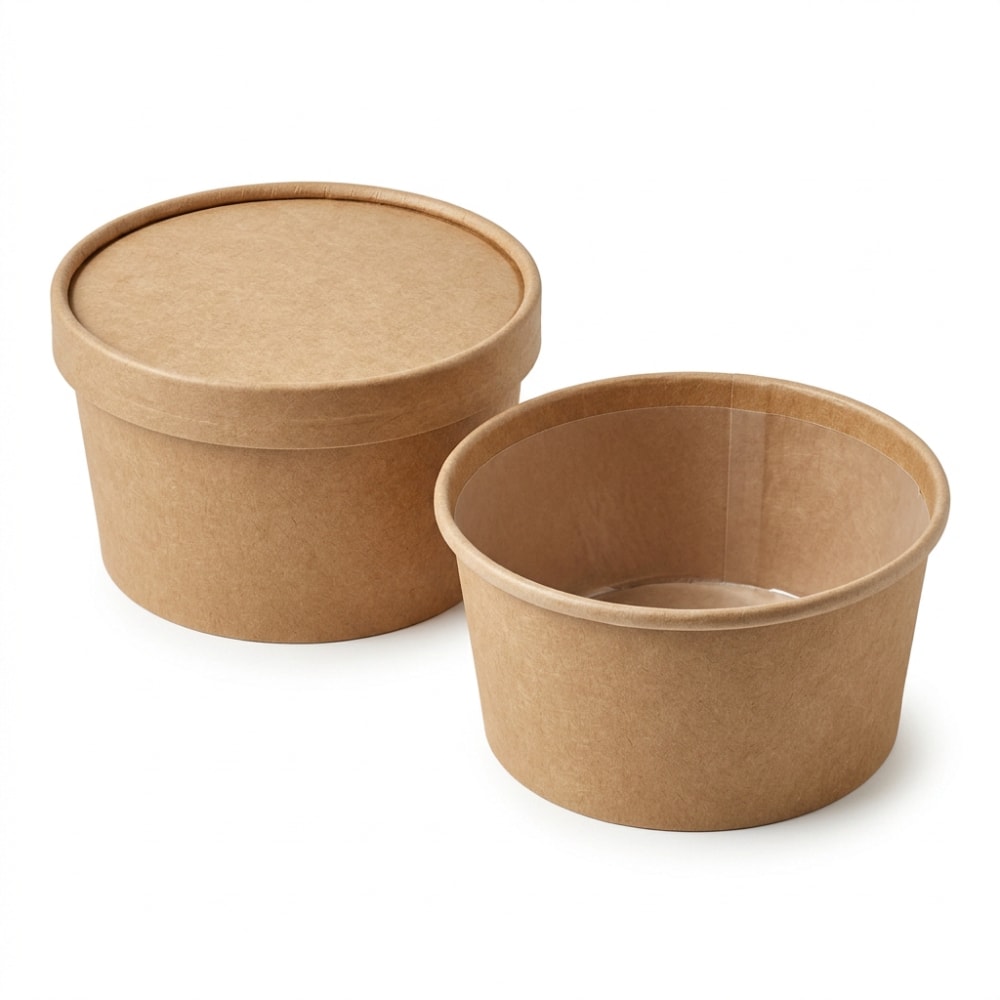
Canada Guide to Pricing Large Kraft Poke Bowls in Bulk
Large kraft poke bowl containers are priced according to the full specification, not just the advertised bowl size. For Canadian buyers, the largest pricing variables are paperboard grade and weight, barrier coating, capacity, rim design, lid compatibility, forming difficulty, print coverage, minimum order quantity, carton configuration, and freight cube. A lower per-unit quote can become more expensive after tooling, samples, inland delivery, ocean freight, warehousing, damaged lids, or product failures are included.For most food-service buyers in Canada, a practical purchasing decision starts with a clear use case: cold poke bowls, grain bowls, salads, noodles, prepared meals, or mixed hot-and-cold menu items. A bowl that holds marinated salmon, rice, avocado, sauce, edamame, and toppings requires dependable grease resistance, moisture resistance, rim strength, stackability, and a lid that remains secure during courier delivery. The target is not simply the lowest bowl price; it is the lowest total delivered cost for a container that performs consistently.As an indicative planning range, plain large kraft paper bowls purchased in bulk may cost less per piece than custom printed options, but actual factory pricing depends on size, material, coating, order quantity, and packing method. Imported custom bowls may have additional design, plate, sampling, inspection, freight, duties, and local warehousing costs. Canadian restaurant groups should compare landed cost per usable bowl rather than factory cost per bowl.Cost ElementWhat It CoversImpact on BudgetBuyer CheckPaperboardKraft paper grade, GSM, fibre qualityHighConfirm food-contact suitability and thicknessBarrier coatingPE, water-based, PLA or other coatingHighTest against sauce, oil and condensationFormingWall shape, rolled rim, bottom sealingMedium to highInspect bowl rigidity and nesting qualityPrintingInk coverage, colours, plates and finishingMediumApprove artwork and colour standardLid systemPET, PP, paper or fibre lid compatibilityHighPerform compression and leak testsFreight cubeCarton volume and container utilizationHighCompare landed cost by carton and palletThe table shows why a bowl price should never be evaluated in isolation. A strong large kraft poke bowl container can protect ingredients and reduce replacement orders, customer complaints, refunds, and brand damage. This is especially important for high-volume delivery operators in Toronto, Vancouver, Calgary, Montréal, Ottawa, and Halifax.The price of a large kraft poke bowl is built from materials, conversion, decoration, packing, and commercial terms. Capacity matters because a 1,000 ml or 1,300 ml bowl requires more board area than a 500 ml snack bowl. A deeper bowl with a wide top diameter may also need a stronger rim to prevent distortion under a fitted lid. Bowl dimensions must be measured with the intended food weight, not only liquid capacity.Material choices strongly influence the quote. Natural kraft board may support a rustic brand appearance, while white kraft or coated paperboard can provide a different print result. Higher paper weight can improve compression resistance, though performance also depends on fibre composition, coating uniformity, seam quality, and the geometry of the bowl. For cold poke applications, moisture from chilled ingredients and condensation from refrigerated storage should be part of the test method.Canadian buyers should request a complete written specification covering nominal volume, top diameter, bottom diameter, height, board weight, coating type, lid model, acceptable print tolerance, carton quantity, and storage conditions. Asking only for “large kraft bowls” leaves too much room for suppliers to quote different constructions.Specification ChangeTypical Effect on CostPerformance BenefitRecommended for Poke?Heavier paperboardRaises material costBetter stiffness and stack strengthYes for delivery-heavy menusImproved moisture barrierRaises coating costHelps prevent softeningYesWide rolled rimRaises forming complexityImproves lid engagementUsually yesClear PET lidAdds component costShows toppings and supports merchandisingYes for premium presentationPaper or fibre lidVaries by constructionSupports fibre-forward positioningTest carefully before useFull-colour exterior printRaises setup and print costStrengthens brand visibilityBest at higher volumesCost changes should be considered alongside menu pricing. A premium salmon poke bowl can justify a container with a stronger lid and better presentation. A value-focused lunch promotion may require a simpler plain kraft format. The right answer depends on whether packaging is used as a cost-control item, a marketing surface, or a critical delivery-protection component.Paper weight, coating, and forming complexity are often the most technical cost drivers. Paperboard is typically specified in grams per square metre, but GSM alone does not guarantee performance. Buyers should also evaluate stiffness, odour, food-contact documentation, coating adhesion, bottom seal integrity, and rim shape. A heavier board may be valuable for bowls loaded with rice, proteins, sauces, and wet vegetables, especially when bowls are stacked for dispatch.For Canada, temperature swings are relevant. A bowl may leave a warm restaurant kitchen, sit in a courier bag during a winter delivery in Winnipeg, or travel through humid summer conditions in Montréal. The structure should remain stable under realistic use. For chilled poke, the barrier should be checked after 30, 60, and 90 minutes with actual ingredients, dressing, and condensation exposure.Forming complexity also changes the manufacturing cost. Deep bowls, flared walls, reinforced rims, embossed features, special bases, and tight-tolerance lid fit require carefully controlled tooling and production. These details can improve user experience but may slow the converting process or increase scrap rates. A supplier should state whether a standard mould is available or whether new tooling is required.var ctx=document.getElementById('lineChart').getContext('2d');new Chart(ctx,{type:'line',data:{labels:['2022','2023','2024','2025','2026','2027'],datasets:[{label:'Estimated Canadian demand index for premium paper food bowls',data:[100,109,119,130,142,155],borderColor:'rgb(64,125,92)',backgroundColor:'rgba(64,125,92,0.12)',fill:false,tension:0.3}]},options:{responsive:false,maintainAspectRatio:false,plugins:{legend:{display:true}},scales:{y:{beginAtZero:false}}}});The line chart is a planning illustration of rising demand for premium paper-based food bowls in Canadian urban food-service channels. Growth is supported by delivery demand, visual merchandising, convenience meals, and food businesses looking for packaging that supports both operational performance and sustainability objectives.Plain bowls are usually the fastest and simplest purchasing option because they avoid print plates, extended artwork approval, colour matching, and production scheduling for a custom run. They can work well for independent poke shops, temporary pop-ups, caterers, and early-stage brands that need flexibility. A plain kraft bowl can still be branded with a label, sleeve, stamp, or tamper-evident seal.Custom printing becomes more attractive when ordering at a scale that spreads artwork, setup, and production preparation over more units. Full-surface graphics, multiple Pantone colours, dark ink coverage, fine text, metallic effects, and special finishes can increase cost. Buyers should also account for the risk of obsolete printed inventory if menu identity, legal claims, or campaign artwork changes.OptionUpfront CostUnit Cost at Low VolumeUnit Cost at Higher VolumeBrand FlexibilityPlain kraft bowlLowLowLowHighPlain bowl with labelLow to mediumMediumMediumVery highOne-colour printMediumMedium to highCompetitiveMediumTwo-colour printMediumHighCompetitiveMediumFull-colour custom printHighHighCompetitive at scaleLower after productionSeasonal printed artworkHighHighDepends on run lengthLow unless planned carefullyThe best approach for many Canadian brands is to use standard bowls during validation, then move to custom printing after menu volume, store count, and demand forecasts are reliable. Printed prototypes should be reviewed under normal lighting, filled with food, photographed for delivery-platform listings, and checked for colour consistency before mass production.MOQ, or minimum order quantity, is a major reason two buyers receive very different prices for similar bowls. Production lines require setup time, material preparation, print adjustment, quality checks, packing preparation, and line cleaning. When these fixed costs are allocated over a small run, the unit cost rises. As volume increases, setup cost is spread over more units and material purchasing may become more efficient.However, the lowest production quote is not always the best procurement choice. A Canadian importer that orders too much custom inventory may pay for storage, handling, insurance, and potential obsolescence. For a business serving a few locations in Edmonton or Québec City, a smaller scheduled order may produce better cash flow than a container-load purchase.Buyers should request tiered quotations. Ask for the same specification at several quantities, such as 10,000, 30,000, 50,000, 100,000, and full-container quantities. Request the same Incoterm for every quote, such as FOB, CIF, or DDP where appropriate, and make sure lids are included or clearly separated. A bowl quote without the correct lid cannot be treated as a complete packaging cost.var ctx=document.getElementById('barChart').getContext('2d');new Chart(ctx,{type:'bar',data:{labels:['Poke restaurants','Salad concepts','Meal prep','University food service','Grocery prepared foods','Catering'],datasets:[{label:'Relative demand for large bowl formats in Canada',data:[88,82,74,67,79,61],backgroundColor:['#4d7c64','#5d9975','#76ad87','#8ebd99','#3f6653','#a3cbae']}]},options:{responsive:false,maintainAspectRatio:false,plugins:{legend:{display:true}},scales:{y:{beginAtZero:true,max:100}}}});The bar chart compares representative demand intensity across common Canadian end-use sectors. Poke, salad, grocery prepared-food, and meal-prep operators usually place greater emphasis on large bowl capacity, presentation, and delivery resilience than businesses serving only dry foods.Freight cube is one of the most overlooked costs in importing large kraft poke bowl containers. Bowls are lightweight but bulky. A carton that protects bowl rims and lids may occupy significant space, and inefficient nesting can increase shipping cost per usable unit. This is particularly important for shipments entering through Vancouver, Prince Rupert, Montréal, Halifax, or moving inland to Toronto, Brampton, Mississauga, Calgary, and Surrey.Carton quantity must be balanced carefully. Overpacked cartons can create rim deformation, crushed lids, or bowl ovality. Underfilled cartons can increase corrugate use, warehouse space, and freight volume. Ask suppliers for carton dimensions, gross weight, net weight, cubic metres, pallet pattern, container loading quantity, and photos of packed goods before approving production.Packing FactorPotential ProblemBusiness ConsequenceRecommended ControlExcessive nesting pressureBowls become difficult to separateSlower restaurant serviceCheck pull-apart force in samplesWeak carton boardCarton collapse in transitDamaged inventorySpecify export-grade outer cartonsLoose lid packingScratches or warped lidsReduced presentation qualityUse dividers or sealed inner packsInaccurate carton countShort shipment claimsStock disruptionRequire batch count verificationPoor palletizationUnstable warehouse loadsHandling and safety riskApprove pallet layoutLarge freight cubeHigher transport costHigher landed cost per bowlCompare cubic metres per thousand unitsA buyer should calculate the landed cost as: product price plus printing setup plus tooling amortization plus samples plus inspection plus freight plus customs-related charges plus local drayage plus storage plus expected waste. A bowl that costs less ex-factory but takes substantially more warehouse space can be less economical than a better-nested alternative.Supplier quotations are comparable only when every line item uses the same specifications and trade terms. Before selecting a supplier, create a comparison sheet covering bowl size, material, coating, lid, print, quantity, inner pack, carton pack, quality standard, lead time, shipping term, payment term, testing documents, and warranty process. This makes hidden differences visible.For example, one supplier may quote a 1,000 ml bowl with a thin barrier and no lid, while another may quote a stronger 1,100 ml bowl with a clear lid and reinforced rim. The first quote may appear cheaper, but it is not a comparable product. Similarly, a quotation from a local Canadian distributor may include warehousing and domestic delivery, while an overseas factory quotation may require freight and import coordination.Quote Comparison ItemSupplier ASupplier BWhat to ConfirmBowl capacityNominal volumeNominal volumeFilled usable capacity with foodPaper specificationGSM stated or unstatedGSM stated or unstatedPaper grade and food-contact statusCoating systemGeneral descriptionGeneral descriptionBarrier type and intended applicationLid inclusionIncluded or excludedIncluded or excludedExact lid model and fitShipping termEXW, FOB, CIF or DDPEXW, FOB, CIF or DDPWhich costs remain with buyerQuality claim processGeneral promiseDocumented procedureEvidence, replacement and credit methodNormalize every quote to Canadian dollars and cost per delivered, usable set. A usable set means one bowl plus its compatible lid, after allowing for agreed inspection standards and anticipated transit loss. This approach helps purchasing teams make decisions based on operational value rather than headline price.A first order should include more than the factory invoice. New buyers often budget for bowls and lids but overlook artwork work, samples, test shipments, tooling, freight fluctuations, import clearance, warehouse receiving, and safety stock. For custom projects, it is prudent to reserve a contingency for adjustments after prototype review.Start by deciding whether the first order is a market test, a brand launch, a multi-store rollout, or a recurring replenishment program. A test order should prioritize flexibility and learning. A chain rollout should prioritize repeatability, documented quality requirements, and stock continuity. If product demand is seasonal, divide orders into scheduled releases rather than storing a full year of printed packaging.var ctx=document.getElementById('areaChart').getContext('2d');new Chart(ctx,{type:'line',data:{labels:['2022','2023','2024','2025','2026','2027'],datasets:[{label:'Fibre-forward and lower-plastic packaging preference index',data:[42,49,57,65,73,80],borderColor:'rgb(114,150,78)',backgroundColor:'rgba(114,150,78,0.28)',fill:true,tension:0.3}]},options:{responsive:false,maintainAspectRatio:false,plugins:{legend:{display:true}},scales:{y:{beginAtZero:true,max:100}}}});The area chart illustrates the direction of packaging preference among many food-service buyers: increased attention to fibre-based materials, efficient resource use, clearer environmental claims, and packaging designs that reduce unnecessary components. Sustainability claims should always be verified against the actual material structure, local collection conditions, and applicable Canadian requirements.Future purchasing decisions will increasingly be shaped by 2026 trends. These include digital artwork approval, automated visual inspection, better batch traceability, more water-based barrier technologies, demand forecasting tied to restaurant ordering systems, and closer scrutiny of packaging sustainability communications. Buyers should avoid broad environmental claims unless supporting documentation and local disposal realities are clear.Fude Packaging supports buyers seeking a structured overseas sourcing option for paper bowls, cups, boxes, trays, and meal packaging. Its manufacturing capabilities include more than 20 years of packaging experience, a self-owned 30,000 m² production base in Shandong, automated capacity of up to 120,000 units per day, and in-house control over material selection, printing, die-cutting, forming, inspection, packing, and export preparation.From a technological capabilities perspective, Fude Packaging uses process controls and an in-house laboratory to support material evaluation, functional testing, print verification, and batch consistency. Food-service customers can review digital proofs, white samples, printed samples, and pre-production proofs before committing to mass production. This is useful for validating capacity, lid engagement, colour appearance, grease resistance, leak resistance, and transport durability for poke and fresh-food applications.Its manufacturing capabilities are designed for repeatable supply. Full-batch traceability, production monitoring, incoming-material checks, final inspection, and export-grade packing help reduce variation between orders. Documentation support can include BRC, FSC, ISO 9001, LFGB, and FDA-related materials where relevant to the product and market requirements. Buyers should confirm the documentation needed for their own Canadian use case and product configuration.Its service capabilities include OEM and ODM support, artwork and dieline checking, Pantone matching, rapid sampling, scheduled-order planning, export documents, and coordination for sea freight, air freight, LCL, FCL, and express samples. For Canadian importers, this can support shipments routed through major ports and onward distribution to restaurant networks and distributors. Explore the available paper bowl packaging range when comparing suitable formats for poke, salads, rice bowls, and meal-prep programs.var ctx=document.getElementById('comparisonChart').getContext('2d');new Chart(ctx,{type:'bar',data:{labels:['Customization','Batch traceability','Multi-category sourcing','Sample options','Export packing','Scheduled orders'],datasets:[{label:'Integrated manufacturer capability score',data:[92,90,88,94,89,86],backgroundColor:'rgba(75,104,150,0.8)'},{label:'Typical basic trading quote score',data:[62,48,55,60,58,42],backgroundColor:'rgba(176,187,204,0.8)'}]},options:{responsive:false,maintainAspectRatio:false,plugins:{legend:{display:true}},scales:{y:{beginAtZero:true,max:100}}}});The comparison chart highlights why buyers should evaluate supplier capability beyond price. A manufacturer with sampling, traceability, consolidated product categories, and scheduled supply support can reduce procurement risk for growing Canadian food-service operations.Before approving a large kraft poke bowl, conduct a practical application test. Fill the bowl with actual rice, fish or plant protein, sauce, wet vegetables, fruit, and crunchy toppings. Close the intended lid, stack several units, place them in a delivery bag, and test after 30, 60, and 90 minutes. Record leakage, rim distortion, lid release, oil staining, bowl softening, and visual quality.Define measurable acceptance criteria. Examples include no visible leakage, no lid release after a specified handling test, no bowl collapse under a defined stacked load, acceptable print alignment, carton count tolerance, and a maximum allowable defect rate. Keep approved samples signed, dated, photographed, and linked to the final specification. This approval record helps prevent misunderstanding during repeat orders.Canadian operators should also consider the local supply model. Local suppliers may offer rapid delivery and lower inventory risk, while direct import can offer stronger customization and scale economics. A blended strategy can work well: hold standard emergency stock locally while importing custom printed bowls on a scheduled program. Learn more about custom project support through Fude Packaging’s packaging development services.The total cost includes paperboard, coating, forming, lids, printing, cartons, samples, tooling where required, inspection, freight, customs-related costs, warehousing, and expected loss. Compare quotes using landed cost per complete bowl-and-lid set.Paper weight, barrier coating, bowl size, rim design, lid type, custom printing, carton density, and order quantity normally have the greatest effect. Performance features that reduce leaks and lid failures may be worth the higher initial cost.Lower quantities carry a larger share of setup, artwork, tooling, and preparation costs. Higher volumes typically reduce the factory unit price, but buyers should balance that saving against storage, working capital, and printed-inventory obsolescence.Common exclusions include lids, plates, mould charges, artwork work, samples, inspection, freight, customs clearance, local delivery, pallets, storage, and taxes. Ask for a written itemized quote and the applicable shipping term.Use a standard bowl size and lid, simplify print coverage, consolidate product categories, improve carton utilization, order on a planned schedule, and test standard tooling before developing a unique shape. Do not reduce barrier performance or lid security without conducting real food trials.For buyers in Canada seeking to compare large kraft poke bowl containers, Fude Packaging can help clarify material options, sample routes, manufacturing lead times, and export-ready packaging requirements. Read more about Fude Packaging’s production approach or contact the packaging team to request a specification-based quotation. -

Global Market Guide to Paper Cup-Lid Fit and Leak Control
A reliable paper cup lid compatibility guide begins with one principle: purchase the cup and lid as a matched system, not as separate commodity items. A lid may have the same nominal diameter as a cup, yet still leak, pop off, deform, or create poor drinking performance if the cup rim curl, rim thickness, lid resin, vent layout, and closure force are not aligned.For Global Market buyers, the correct combination must be approved under actual service conditions. Test the final cup, coating, lid, beverage temperature, filling level, transport method, and expected delivery time before mass production. This is especially important for importers shipping through Shanghai, Ningbo, Qingdao, Rotterdam, Los Angeles, Dubai, Singapore, and Melbourne, where seasonal temperatures and long container transit can influence packaging performance.A cup-and-lid system should be evaluated for four essentials: retention, leak resistance, drinkability, and temperature stability. For hot beverages, the lid must resist softening while managing steam and splash. For cold beverages, it must stay secure under condensation, ice movement, carbonation, and straw insertion. A good unit price is not valuable if a poorly matched lid causes customer complaints, wasted beverages, delivery refunds, or damage to branded packaging.Compatibility ElementWhat Must MatchMain Risk If IncorrectRecommended Buyer ActionRim diameterActual measured cup opening and lid inner diameterLoose fit or excessive application forceMeasure samples with calibrated toolsCurl profileRim roll height, width, stiffness, and shapeLid may not lock evenly around the rimApprove cross-section samplesLid resinPS, PP, PET, CPLA, fiber, or molded pulp suitabilityWarpage, cracking, or poor heat resistanceMatch resin to beverage temperatureClosure forcePush-on force and removal forceUnsafe lid release during deliverySet measurable acceptance limitsVentingSteam vent size and drinking aperture designPressure buildup, splashing, or poor flowTest with actual beverage recipesCoating and moisturePE, PLA, water-based, or barrier coating behaviorRim swelling or reduced lid retentionRun hot and cold hold testsThe table shows why a nominal size alone cannot guarantee fit. Buyers should document the approved cup-lid combination using a specification sheet, retained physical samples, production photographs, and test records. This reduces confusion when replenishment orders are produced months later or when different factories participate in the supply chain.Rim diameter is the starting point of cup-lid matching, but it is not the complete specification. The marketplace commonly describes cups as 80 mm, 90 mm, or 98 mm, yet the usable sealing area can differ due to tooling design, top curl dimensions, material thickness, and manufacturing tolerance. Two “90 mm” cups can look similar while one requires a tighter lid family than the other.Buyers should request the actual cup top diameter, lid internal locking diameter, cup curl outer diameter, rim roll height, and tolerance range. A practical inspection approach is to measure multiple cups and lids from different cartons rather than evaluating one perfect sample. This helps identify batch variation before a chain launch or distributor purchase.Common shared-lid programs use a single rim family across multiple cup capacities. For example, 8 oz, 12 oz, and 16 oz hot cups can often share one lid if their top diameters and rim profiles are identical. However, a taller cup can generate greater internal pressure during transport, so the same lid still needs verification on every cup height and beverage application.Nominal Rim FamilyTypical Cup ApplicationsCommon Lid FormatsKey Verification Point62 mmEspresso and tasting cupsSmall sip lid or flat lidSmall curl is easily distorted73 mmSmall hot drinksSip-through hot lidCheck drinking aperture alignment80 mm8 oz coffee and tea cupsHot beverage sip lidConfirm secure snap around full rim90 mm12 oz to 20 oz drinksHot lid, cold flat lid, dome lidVerify lid by beverage category95 mmSoup and specialty beverage cupsVented or sealed coverAssess temperature and steam release98 mmSmoothies, milk tea, cold drinksFlat straw lid or dome lidTest straw hole and ice movementUse a cup rim gauge, caliper, and functional fit test together. A numerical measurement identifies dimensions, but the physical test reveals deformation, inconsistent molding, and the real closure sensation experienced by café staff. For businesses selling premium coffee, branded ripple-wall paper coffee cups should be tested with their intended hot lid before artwork approval and production scheduling.Lid material influences heat stability, stiffness, tactile quality, odor, transparency, recycling pathway, and closure consistency. There is no universally best resin; the correct choice depends on drink temperature, serving style, local regulations, customer expectations, and end-of-life goals.Polystyrene lids are traditionally used for hot drinks because they are rigid and economical, but market expectations and local restrictions may affect their suitability. Polypropylene offers stronger heat resistance and good toughness. PET lids are popular for cold beverages because of clarity, although they are not generally suitable for high-temperature drinks. CPLA and fiber-based alternatives can support sustainability goals, but performance must be confirmed at the target temperature and during real delivery conditions.Lid MaterialBest Temperature RangeTypical ApplicationCompatibility ConsiderationPSWarm to hot drinksTakeaway coffee and teaConfirm destination-market restrictionsPPHot and warm drinksTea, coffee, soup beveragesGood heat resistance; test closure stiffnessPETCold drinksJuice, iced coffee, smoothiesAvoid high-temperature fillingrPETCold drinksCold beverage programsVerify food-contact documentationCPLAModerate heat applicationsCompostable hot drink programsCheck warpage under actual heat loadMolded fiberWarm to hot drinksPlastic-reduction initiativesCheck fit, moisture response, and ventingThe material selected for the cup also matters. Single-wall cups, double-wall cups, ripple-wall cups, and insulated cups may use different rim constructions even when the declared top diameter is the same. Coating selection affects rim rigidity after exposure to steam, condensation, and prolonged beverage contact. Buyers should therefore avoid approving a lid only on an empty cup.Closure tolerance defines how much dimensional variation the cup and lid can accommodate while still remaining safe and usable. A lid that is too loose can detach when a courier accelerates, brakes, or turns. A lid that is too tight can slow service, damage the cup rim, cause employee fatigue, or lead staff to apply uneven pressure that creates a partial seal.The most useful approach is to establish an approved application force and removal force range. These values should be tested on cups drawn from early, middle, and late production periods. Buyers should also inspect whether the lid locks evenly through 360 degrees around the rim. A lid seated on only part of the circumference is not acceptable, even if it appears secure from above.For beverage chains, closure performance should be assessed by employees wearing gloves, working quickly, and using real filling equipment. The perfect laboratory fit may not be the most practical fit at a busy counter in London, Toronto, Jakarta, Riyadh, or New York.Test ConditionSuggested EvaluationPass IndicatorFailure SignalLid applicationApply by hand at normal service speedEven snap without rim damageExcessive force or incomplete seatingManual removalLift from designated tab or edgeControlled removal without tearing cupLid falls off too easilyInverted holdFill cup and invert brieflyNo rim leakageLiquid escapes at closure edgeSide compressionLightly squeeze filled cupLid remains engagedSeal opens under normal handlingStack pressurePlace filled cup under moderate loadNo distortion or loss of fitRim ovality causes leakageTemperature exposureHold at intended drink temperatureRetention remains stableWarping, softening, or crackingClosure tolerance should appear in the supplier’s technical agreement. It is also advisable to define an acceptable quality level for damaged rims, warped lids, and poor snap fit. This creates a practical basis for pre-shipment inspection and post-delivery claim management.Hot and cold drinks challenge packaging differently. Hot coffee can produce steam pressure and heat-related softening. Cold drinks generate condensation, ice impacts, and often more vigorous movement during delivery. Carbonated beverages can create internal pressure, while thick drinks such as milk tea or protein shakes may require larger drinking openings and stronger lids.Run tests using the real product formula, including sugar, milk, oil, foam, ice, toppings, and carbonation where applicable. Water-only tests are useful for initial screening but cannot replace application testing. Test immediately after filling and after the expected consumption or delivery period.var ctx=document.getElementById('lineChart').getContext('2d');new Chart(ctx,{type:'line',data:{labels:['2022','2023','2024','2025','2026','2027'],datasets:[{label:'Global demand index for tested cup-lid systems',data:[100,108,117,127,139,153],borderColor:'rgb(42,112,170)',backgroundColor:'rgba(42,112,170,0.12)',fill:false,tension:0.25}]},options:{responsive:false,maintainAspectRatio:false}});The line chart illustrates an estimated demand index for better-tested beverage packaging systems. Growth is supported by delivery services, premium coffee consumption, sustainable packaging transitions, and the need for consistent performance across international restaurant and café operations.Lid cost should be analyzed as part of total packaging cost rather than as an isolated unit price. A low-cost lid that causes only a small percentage of delivery failures can create much higher costs through beverage replacement, platform refunds, lost consumer confidence, and additional labor. Conversely, using one proven lid family across several cup capacities may reduce inventory complexity and purchasing risk.Minimum order quantity is often influenced by resin type, mold availability, color, printing, packaging configuration, and whether the lid is a standard or customized item. Standard black, white, or clear lids may offer lower MOQs and shorter lead times. Custom colors, embossed branding, unique vents, or proprietary molds usually require greater commitment.Cost FactorEffect on Purchase PriceEffect on Total CostBuyer StrategyStandard lid moldUsually lowerFaster market entryUse proven shared-lid familiesCustom colorMay increase material and setup costImproves brand recognitionMatch color only for high-volume programsCustom moldHigher initial investmentCan create differentiationProtect tooling ownership in writingLow MOQ orderHigher unit costReduces inventory exposureUse for trials and new launchesMixed container loadingMay add handling complexityImproves container utilizationCombine compatible packaging categoriesLeak-related claimsNot visible in unit costPotentially expensivePrioritize performance validationGlobal buyers importing through Hamburg, Antwerp, Jebel Ali, Long Beach, or Sydney should calculate landed cost, not merely factory price. Include lid carton volume, cup nesting efficiency, container utilization, destination duties, inspection costs, and likely replenishment frequency.Shared lid SKUs are valuable when they simplify operations without compromising performance. A restaurant group may use one 80 mm hot lid for 8 oz and 12 oz coffee cups, and one 98 mm cold lid for several sizes of juice, iced coffee, and milk tea cups. This reduces warehouse locations, order lines, staff errors, and obsolete stock.However, one shared lid should never be assumed compatible simply because the cup rim diameter is printed the same. Verify all cups in the intended family, including different wall constructions, coatings, print coverage, and production lots. For dairy and cold beverage brands, custom private-label milk cups should be paired with lids that remain secure under cold-chain condensation and transportation vibration.var ctx=document.getElementById('barChart').getContext('2d');new Chart(ctx,{type:'bar',data:{labels:['Coffee shops','Quick-service restaurants','Bubble tea','Convenience retail','Delivery kitchens','Corporate catering'],datasets:[{label:'Estimated importance of lid-fit control (%)',data:[92,86,95,74,97,79],backgroundColor:['#2f6f8f','#3f8f72','#d18c31','#7451a7','#c55b47','#4c7299']}]},options:{responsive:false,maintainAspectRatio:false}});The bar chart highlights industries where lid compatibility is especially critical. Delivery kitchens and bubble tea operators face demanding movement, liquid weight, ice loading, and extended holding times. Coffee shops require reliable hot-drink venting and easy application during peak service periods.A capable supplier should provide more than a catalog size. Ask for measured specifications, material declarations, food-contact documents relevant to the destination market, sample plans, lid-fit records, and clear approval procedures. The supplier should also explain whether the lid has been tested with the proposed cup construction or only with a visually similar product.Before issuing a purchase order, request white samples, printed samples if relevant, and functional prototypes. Confirm that the approved sample is identified by cup code, lid code, material, coating, rim family, artwork version, and production date. Keep one approved reference set at both buyer and factory locations.Supplier Checklist ItemWhy It MattersEvidence to RequestCup and lid technical drawingsPrevents ambiguity in nominal dimensionsDimensioned drawings and tolerance notesMaterial declarationSupports food-contact and sustainability reviewResin and coating specificationFunctional sample approvalConfirms real-world compatibilitySigned sample recordLeak and retention testsReduces delivery failure riskTest method and result sheetBatch traceabilitySupports claims investigationLot number and carton codingPre-shipment inspection optionVerifies product before exportInspection plan and acceptance criteriavar ctx=document.getElementById('areaChart').getContext('2d');new Chart(ctx,{type:'line',data:{labels:['2022','2023','2024','2025','2026','2027'],datasets:[{label:'Share of buyers requesting recyclable or compostable lid options (%)',data:[34,41,49,57,65,72],borderColor:'rgb(54,139,102)',backgroundColor:'rgba(54,139,102,0.25)',fill:true,tension:0.25}]},options:{responsive:false,maintainAspectRatio:false}});The area chart reflects the ongoing shift toward sustainability-led purchasing. By 2026 and beyond, buyers will increasingly request fiber-based lids, recycled-content options, compostable solutions, and clearer material documentation. Sustainable claims must still be balanced with heat resistance, leak control, local waste-stream realities, and legal labeling rules.Fude Packaging supports Global Market buyers who need practical compatibility control across paper cups, lids, bowls, food containers, and related takeaway packaging. Our technical capability includes material selection guidance, structural assessment, prototype development, print and dieline checking, rim-fit review, leak testing, and inspection planning. Our in-house laboratory helps evaluate performance before a customer moves into mass production.Our manufacturing capability is supported by more than 20 years of packaging experience, a self-owned 30,000 m² factory in Shandong, automated production equipment, and integrated control over material selection, printing, die-cutting, forming, inspection, packing, and shipment. This supports more consistent cup rim construction and better coordination when buyers require several packaging categories from one supplier. Explore our broader paper cup range when planning compatible cup families for hot and cold beverage programs.Our service capability includes OEM and ODM support, rapid sampling, export-ready packing, third-party inspection coordination, and assistance with common international documentation. We work with distributors, coffee chains, food-service businesses, retailers, and brand owners in more than 50 countries. For projects involving multiple ports, changing demand, or staged launches, our team can help buyers coordinate specifications, production schedules, container loading, and replenishment plans.var ctx=document.getElementById('comparisonChart').getContext('2d');new Chart(ctx,{type:'bar',data:{labels:['Rim-fit verification','Customization support','Multi-category supply','Export documentation','Pre-shipment controls','Responsive sampling'],datasets:[{label:'Integrated manufacturing partner score',data:[94,91,89,92,88,90],backgroundColor:'#7252a8'},{label:'Uncoordinated commodity sourcing score',data:[58,45,39,52,41,50],backgroundColor:'#b8b8b8'}]},options:{responsive:false,maintainAspectRatio:false}});The comparison chart demonstrates why buyers often benefit from an integrated supplier relationship. The goal is not simply to purchase a cup and lid at the lowest quoted price; it is to reduce compatibility uncertainty, fragmented sourcing, avoidable claims, and delays caused by unclear responsibility between suppliers.1. How is the correct lid matched to a paper cup?Match the actual rim dimensions, curl profile, lid locking geometry, material, intended drink temperature, and closure force. Approve the physical cup-and-lid combination through functional testing before production.2. Why can nominally equal rim sizes fit differently?Nominal diameters do not describe every dimensional detail. Curl height, rim thickness, paperboard stiffness, coating, molding tolerance, and lid inner profile can all change the actual fit.3. Should hot and cold drinks use the same lid?Not automatically. Hot drinks need controlled venting and heat-stable material. Cold drinks often need straw holes, clarity, condensation resistance, and security against ice movement. A shared lid is possible only after testing.4. How is lid retention tested during delivery?Use filled cups in simulated transport conditions such as inversion, side pressure, vibration, stacking, temperature exposure, and vehicle movement. Test at the expected beverage temperature and filling level.5. Can several cup sizes share one lid family?Yes, when all cups use the same verified rim family. Test every capacity individually because cup height, beverage weight, foam, and delivery handling can affect overall performance.For 2026 purchasing plans, build a formal approval process around cup-lid compatibility. Future packaging programs will increasingly combine measured fit specifications, automated inspection, sustainable material evaluation, traceable batch coding, and delivery-focused leak testing. This approach protects beverage quality, supports brand consistency, and gives Global Market buyers a more dependable foundation for long-term sourcing. -

United States Guide to Wholesale Custom Paper Containers
For restaurant groups, delivery kitchens, distributors, and emerging food brands in the United States, buying custom paper food containers wholesale is no longer just a packaging decision. It affects delivery performance, grease resistance, shelf appeal, sustainability claims, operating cost, and repeat orders. In markets such as New York, Los Angeles, Chicago, Houston, Miami, Atlanta, Seattle, and Dallas, food businesses need containers that travel well, stack efficiently, print cleanly, and comply with food-contact standards.The most effective wholesale strategy is to match container structure, coating, print method, order volume, and lead time to the actual use case. A salad concept may need wide-mouth bowls with secure lids. A fried chicken chain may need grease-resistant kraft trays. A meal prep company often needs compartment boxes sized for calorie-controlled menus. A deli wholesaler may prioritize window-lid boxes for refrigerated display. For these reasons, buyers in the United States increasingly prefer suppliers that can support material advice, sample development, custom printing, compliance documentation, and production consistency in one process.This guide covers the direct answer, 2026 market opportunity, OEM versus ODM, design workflow, a launch case example, branding methods, IP and quality protection, MOQ and cost planning, supplier evaluation, industries served, and practical FAQ. Where relevant, it also explains how a factory-direct partner such as Shandong Fude Packaging can support U.S. importers, distributors, restaurant brands, and food service operators with scalable paper packaging programs.If you need the short answer: custom paper food containers wholesale is a strong buying category for the United States because food delivery, takeout, grab-and-go retail, and sustainability-driven packaging replacement are all expanding. The best wholesale approach is to choose a supplier that offers FDA-compliant materials, stable forming quality, low-lework printing approval, sampling before mass production, and realistic MOQs for pilot launches.For most U.S. buyers, the winning formula includes:Kraft or white paper containers matched to food type and temperature PE-lined or PLA-based options depending performance and environmental goals Leak-proof, oil-resistant, and stackable designs for delivery Clear branding through flexo or other production-ready print methods Sampling based on actual menu items before final order approval Port and transit planning for East Coast, West Coast, and Gulf logistics Businesses importing into Long Beach, Los Angeles, Oakland, Seattle-Tacoma, Houston, Savannah, New York/New Jersey, and Miami should also plan around shipping seasonality, warehousing, and reorder timing. A good container is not only attractive; it must also arrive on time and perform the same way in every batch.Buying GoalBest Container DirectionWhy It WorksTypical U.S. Use CaseReduce leakagePE-lined bowls or lunch boxes with tight lidsImproves soup, noodle, and saucy meal transportDelivery apps in Chicago and BostonShowcase food visuallyWindow-lid deli boxes or PET-lid paper bowlsSupports retail display and impulse purchaseGrab-and-go counters in New YorkStrengthen eco positioningFSC paper with compostable options where suitableSupports sustainability messagingCalifornia health-focused brandsBuild private label identityCustom logo printing and structural sizingImproves recognition and consistencyRegional chains and distributorsControl freight costStackable geometry and optimized carton packingBetter cube efficiency per shipmentMulti-state wholesalersTest a new product lineFlexible MOQ with sample approvalLowers launch riskMeal prep startups in TexasThe table above shows why wholesale paper food container sourcing should begin with the business objective rather than with color or shape alone. When the container is aligned with actual operational needs, costs and customer complaints tend to fall together.The United States market opportunity for 2026 is supported by three overlapping drivers: continued reliance on off-premise dining, tighter attention to packaging waste, and stronger brand competition in prepared foods. Consumers increasingly judge a meal not just by taste, but by whether the package arrives intact, keeps food appetizing, and aligns with environmental expectations.In large metro areas like Los Angeles, San Francisco, Seattle, Austin, Miami, and Washington, D.C., municipal policy and consumer sentiment both favor reduced plastic dependence and better material selection. At the same time, supermarkets and deli operators are expanding premium ready-to-eat sections, creating demand for high-clarity presentation combined with food-safe paper structures. Delivery-only kitchen brands and meal subscription businesses are also driving repeat orders for compartment boxes and bowls with dependable stackability.By 2026, buyers should expect more requests for traceable paper sourcing, optimized coatings, lower-ink branding systems, and packaging SKUs designed around courier delivery rather than in-store eating. U.S. importers and distributors that lock in supply with experienced factories early will have an advantage when demand spikes before holiday catering seasons, back-to-school cycles, and sports event peaks.var ctxLine = document.getElementById('lineChartMarket').getContext('2d');var chartLine = new Chart(ctxLine, {type: 'line',data: {labels: ['2022', '2023', '2024', '2025', '2026'],datasets: [{label: 'U.S. Demand Index for Custom Paper Food Containers',data: [100, 113, 127, 142, 160],borderColor: 'rgb(75, 192, 192)',backgroundColor: 'rgba(75, 192, 192, 0.15)',fill: false,tension: 0.25}]},options: {responsive: true,maintainAspectRatio: false}});The line chart illustrates a realistic demand growth pattern based on the expansion of delivery, prepared meals, and private-label food packaging. It does not imply every segment grows equally, but it does show why 2026 sourcing plans should be prepared in advance.Growth DriverWhat Is Changing in the U.S.Impact on Wholesale Buyers2026 OutlookMeal delivery growthMore orders need stable transport packagingHigher demand for leak-proof bowls and meal boxesStrong in urban and suburban marketsPrepared food retailSupermarkets expand fresh convenience mealsNeed for display-friendly paper containersRising in Northeast and West CoastSustainability pressureConsumers compare paper vs plastic visiblyMore requests for renewable and certified materialsVery strong in California and Pacific NorthwestBrand differentiationPackaging acts as a marketing assetCustom printing becomes standard, not optionalGrowing across chain and franchise systemsPolicy and complianceStates and cities scrutinize packaging claimsDocumentation and material accuracy matter moreHigher supplier screening levelsCourier handling demandsPackages face stacking, shaking, and delaysStructural testing becomes more importantCritical for national delivery brandsAnother important shift is that U.S. buyers are becoming more data-driven. Instead of ordering generic stock sizes, they increasingly compare fill volume, lid fit, compression resistance, print registration, and case-pack efficiency. This rewards suppliers that can discuss the technical side of packaging, not just quote a price.When ordering custom paper food containers wholesale, U.S. buyers usually choose between OEM and ODM. The right model depends on how much control you want over structure, artwork, tooling, speed to market, and exclusivity.OEM means you provide your own specifications, artwork, dimensions, or structural requirements, and the factory manufactures accordingly. This model is best for established brands, restaurant groups, and distributors that already know what their customer base needs.ODM means the factory provides an existing design platform that can be adapted with your branding, sizing, or light modifications. This is faster and often cheaper for startups, test markets, and buyers entering a new segment.FactorOEMODMBest FitDesign ownershipBuyer-ledFactory-led base designOEM for unique brand formatsTime to launchLongerFasterODM for quick entryTooling complexityHigher if structure is newLowerODM for budget-conscious testsCustomization depthHighModerate to highOEM for chains with exact specsUnit cost riskMay rise on small volumesUsually more efficient initiallyODM for lower-volume pilotsBrand exclusivityStronger potentialDepends on agreementOEM for proprietary packagingThe practical buying advice is simple. If you are a U.S. distributor serving many restaurant clients, ODM can help you launch faster and stock proven sizes. If you are a national poke, salad, noodle, or meal prep brand, OEM usually gives better long-term value because your packaging becomes part of your operating system and visual identity.Factories with broad experience can support both routes. For example, by working through a structured development process via custom packaging services, buyers can start with an existing format, then gradually move toward a more exclusive OEM structure once order volume and menu performance justify it.The design process for custom paper food containers wholesale should never begin with artwork alone. It should begin with food. In the U.S. market, the same 26-ounce bowl may work well for a quinoa salad but fail for a ramen concept if steam retention, lid fit, and broth movement are not considered. That is why the best design workflow moves from menu mapping to sample testing.A typical design path includes:Define food type, serving temperature, hold time, and delivery distance Select paper grade, coating, wall strength, and lid option Confirm volume, top diameter, base diameter, and stackability Prepare dieline and print area for logo, color blocks, text, and compliance marks Make blank or printed samples Test for leakage, grease migration, compression, stacking, and fit Approve final sample before bulk production For buyers in the United States, it is helpful to test with real menu items during lunch rush and courier handoff. Many failures appear only after 20 to 40 minutes of heat, motion, and condensation. A box that looks excellent in a showroom can underperform on a delivery bike in Manhattan or in a car-based suburban route around Phoenix.Development StageMain DecisionCommon MistakeBetter PracticeMenu reviewChoose correct structureUsing one box for all menu itemsSplit SKUs by food categoryMaterial selectionPaper and coating matchChoosing eco claim over performanceBalance sustainability with actual useDimension settingVolume and fitEstimating size from photosUse fill tests by weight and portionArtwork preparationPrintable layoutTiny details that blur in mass printUse production-friendly graphicsSamplingReal-use verificationApproving without food testingTest heat, grease, and transitProduction approvalLocking final specChanging details after confirmationFreeze version before mass runThis table matters because many wholesale issues originate during specification, not manufacturing. A reliable factory can reduce these errors by reviewing usage requirements before converting the artwork into a production sample.On the technology side, experienced suppliers add value through in-house printing alignment, die-cutting precision, forming consistency, and lab-based checks. In practical terms, this means the final sample is more likely to match the bulk order. These capabilities are especially important when serving U.S. distributors that reorder identical SKUs across multiple seasons.Consider a realistic U.S. case: a fast-growing meal delivery brand in Atlanta wants to launch custom paper bowls and three-compartment lunch boxes across Georgia, Florida, and the Carolinas. The brand currently uses generic packaging, but customer reviews mention leakage and a weak brand image. The company decides to shift to custom paper food containers wholesale with improved print quality and better transport performance.Here is a sample launch timeline that reflects common factory-direct practice:WeekActionOwnerExpected OutputWeek 1Requirement review and SKU listBuyer + supplierContainer shortlist and technical briefWeek 2Artwork setup and dieline confirmationBuyer design team + supplierPrint-ready filesWeek 3Sampling and functional testingSupplier + buyer operations teamSample approval notesWeek 4Revision and final confirmationBoth partiesLocked production specificationWeek 5-6Mass productionSupplier factoryCompleted finished goodsWeek 7-8Shipping and customs coordinationForwarder + importerArrival planning for U.S. warehouseThe company launches first in Atlanta and Orlando, then expands to Charlotte and Tampa after 60 days. Customer reviews improve because bowls arrive cleaner and hotter, and the printed packaging photographs well for social media. Repeat order rates rise because store managers prefer using one approved system instead of mixing multiple stock packs.Factories that can support requirement review, samples, production, and delivery coordination in one workflow are often easier for U.S. buyers to manage. This is especially true when launch teams are small and every revision affects opening dates or regional rollouts.var ctxBar = document.getElementById('barChartIndustry').getContext('2d');var chartBar = new Chart(ctxBar, {type: 'bar',data: {labels: ['Quick Service', 'Meal Prep', 'Supermarket Deli', 'Catering', 'Food Trucks', 'Dessert & Cafe'],datasets: [{label: 'Estimated U.S. Demand Share for Custom Paper Containers (%)',data: [28, 18, 20, 12, 10, 12],backgroundColor: ['rgb(255, 99, 132)','rgb(54, 162, 235)','rgb(255, 206, 86)','rgb(75, 192, 192)','rgb(153, 102, 255)','rgb(255, 159, 64)']}]},options: {responsive: true,maintainAspectRatio: false}});The bar chart highlights where purchasing demand is concentrated. Quick service restaurants and supermarket deli programs lead because they order frequently, need consistent branding, and serve a high volume of off-premise meals.For U.S. buyers, printing is not just a decoration layer. It is part of product recognition, social media visibility, shelf impact, and customer trust. Effective branding on paper food containers must survive grease, heat, condensation, stacking, and transit. It also needs to remain clear when viewed under restaurant lighting, refrigerated display cases, and smartphone cameras.In wholesale practice, the most common branding elements include logo placement, one-color or multi-color wraps, product identifiers, reheating icons, sustainability marks, QR codes, and short brand messages. Good print design keeps these elements legible without overcrowding the container.U.S. restaurant and retail buyers should also think operationally. If staff need to distinguish vegan, spicy, gluten-free, kid meal, and family meal packs quickly, color banding or structured text zones can improve packing speed. Packaging graphics can reduce errors as much as they improve appearance.Branding ElementBest UseOperational BenefitRisk to AvoidFront logoCore brand recognitionVisible in delivery photosToo small to noticeColor bandSKU differentiationFaster kitchen packingLow contrast shadesShort messageBrand toneHumanizes packagingToo much textQR codeLoyalty or menu linkDrives repeat engagementPoor placement on curvesCompliance iconsUsage guidanceSupports safe handlingUnverified claimsWindow featureFood visibilityBoosts retail presentationWeak fit or fogging issuesFactories with integrated flexo printing and forming control can help reduce registration issues and color drift in mass production. This matters when a U.S. chain wants the same visual identity in Dallas, Denver, and Philadelphia. Consistent printing protects brand equity and avoids awkward mismatches across store locations.Buyers looking for printed bowls, lunch boxes, trays, deli packs, and cups can review available packaging categories through the supplier’s product range and then request the print format that best matches order scale and design complexity.Any serious U.S. wholesale buyer should discuss intellectual property, quality assurance, and claim language before placing a mass order. This is particularly important for private-label distributors, regional chain restaurants, and food startups with growing recognition.The core areas to define include:Who owns custom artwork and structural modifications Whether a tooling design is exclusive or open What quality checkpoints apply before shipment What certifications and food-contact documents are provided What tolerance levels are accepted for print, forming, and packing How defects, replacements, and claims are handled For the U.S. market, quality agreements should reference practical concerns: rim sealing, lid fit, leak resistance, carton count accuracy, print clarity, odor control, and moisture performance after storage. Importers receiving cargo through New York/New Jersey or Long Beach often work with third-party inspections, but even then, the purchase order and approved sample must clearly define the acceptance standard.It is also important to align environmental claims with evidence. Terms like compostable, biodegradable, or responsibly sourced should never be used loosely. Buyers should ask for supporting certification and evaluate whether the claim matches the intended use environment in the United States.var ctxArea = document.getElementById('areaChartTrend').getContext('2d');var chartArea = new Chart(ctxArea, {type: 'line',data: {labels: ['2022', '2023', '2024', '2025', '2026'],datasets: [{label: 'Shift from Generic to Custom Branded Paper Packaging (%)',data: [35, 42, 50, 58, 67],borderColor: 'rgb(75, 192, 192)',backgroundColor: 'rgba(75, 192, 192, 0.25)',fill: true,tension: 0.25}]},options: {responsive: true,maintainAspectRatio: false}});The area chart reflects a broad trend: more buyers are moving away from generic stock packaging toward branded, specification-based paper containers. This shift is especially visible among delivery-first concepts and retailers upgrading their prepared food image.From a quality perspective, suppliers with internal labs, process inspection, and climate-aware storage are often better positioned to maintain consistency across long production runs. This is not a luxury feature; it directly affects U.S. buyers that reorder quarterly and expect one batch to match the next.One of the most common questions around custom paper food containers wholesale is cost. The true answer depends on structure, size, coating, print coverage, quantity, lid pairing, packing method, and shipping route. The unit price alone can be misleading if the container fails in use or ships inefficiently.For U.S. buyers, MOQs often vary by product type and print complexity. A plain stock-based custom print run may have a lower threshold than a fully new structure or unusual dimension. Buyers should ask for total landed cost scenarios, not just ex-factory quotes.Cost FactorWhat Raises CostWhat Can Control CostBuyer TipMaterialHeavier paper or specialty coatingUse only the performance level neededMatch material to food categoryPrintingLarge ink coverage and many colorsSimplify design zonesAsk if artwork can be optimizedToolingNew structure developmentAdapt proven sizes firstTest market before full custom toolingMOQVery low quantitiesCombine SKUs where practicalForecast 2 to 3 reorder cyclesPackingInefficient carton dimensionsImprove stack and carton utilizationCheck pallet and warehouse fitFreightPeak-season shipping and long dwell timesBook early and plan buffer stockUse port strategy by regionHere is how many U.S. buyers think about MOQ:Startup pilot: choose ODM-style formats with simpler printing Regional expansion: lock a few high-volume SKUs first National chain: negotiate annual forecast pricing and batch scheduling Distributor model: buy core generic dimensions with selective private label options Cost planning should include compliance review, sample cost, tooling if any, mass production lead time, freight season, duty considerations, inland trucking, and warehouse storage. Importers serving both East Coast and West Coast customers may split arrivals based on network economics.Suppliers that offer flexible MOQs and 7 to 15 day typical production windows for many standard customization programs can be especially useful for buyers needing speed without sacrificing print quality or structural reliability.The United States market for wholesale paper food containers is diverse. Demand comes not only from restaurants, but also from food delivery platforms, supermarkets, caterers, wholesalers, institutional feeders, event vendors, and emerging specialty food brands.Quick service chains often buy bowls, fries cups, trays, lunch boxes, and beverage cups in recurring volumes. Meal prep companies focus on portion control, stacking, and reheating suitability. Deli retailers need compact boxes with display appeal. Dessert operators want paper bowls paired with secure lids. Fresh produce brands look for moisture-resistant presentation formats. Caterers seek reliable transport packs for high-volume events.The most resilient categories in 2026 are likely to be those that combine convenience with premium positioning. Consumers increasingly want food that is fast, portable, and visually clean. That makes paper packaging not just a compliance choice, but part of the product experience.IndustryPriority Container TypeMain Performance NeedBrand OpportunityQuick service restaurantsLunch boxes, fries cups, traysSpeed and grease resistanceHigh-volume logo visibilityMeal prep brandsCompartment boxesPortion control and stackingSubscription consistencySupermarket deliWindow-lid boxes, bowlsDisplay and freshnessPremium shelf presentationNoodle and soup shopsLeak-resistant paper bowlsHeat and liquid handlingTakeout identityDessert and cafeBowls, cups, deli packsAttractive serving formatSocial media appealCatering and eventsTrays and larger meal boxesBulk packing stabilityCorporate brandingThis table shows why a one-size-fits-all packaging strategy rarely works. Each industry values paper packaging differently, and the right supplier should understand those operational differences.var ctxCompare = document.getElementById('comparisonChartSupplier').getContext('2d');var chartCompare = new Chart(ctxCompare, {type: 'bar',data: {labels: ['Customization Depth', 'Lead Time Control', 'Print Consistency', 'Material Options', 'QA Documentation', 'Service Support'],datasets: [{label: 'Factory-Direct Program Score',data: [92, 85, 90, 88, 91, 89],backgroundColor: 'rgb(153, 102, 255)'},{label: 'Generic Trading Model Score',data: [65, 58, 62, 54, 60, 57],backgroundColor: 'rgb(201, 203, 207)'}]},options: {responsive: true,maintainAspectRatio: false}});The comparison chart explains why many U.S. buyers move toward factory-direct or tightly managed wholesale programs. Product consistency and service visibility become much more important as order frequency increases.U.S. buyers generally evaluate three supplier paths: local distributors, domestic converters, and overseas factories. Each path has value, but they offer different trade-offs in cost, customization flexibility, inventory speed, and scale.Local distributors are useful for urgent replenishment and mixed-SKU ordering, especially in markets like New Jersey, Southern California, and Illinois where food service supply networks are dense. The trade-off is usually less structural customization and higher unit cost.Domestic converters may offer stronger local communication and shorter transport time, but not every converter supports the same depth of product range or international cost competitiveness.Overseas factory-direct suppliers often provide wider paper packaging selection, flexible OEM/ODM support, and stronger unit economics for larger runs. The key is managing lead time, quality control, and logistics carefully.For importers, port strategy matters. Long Beach and Los Angeles remain central for West Coast flows. Savannah and Houston support Southern distribution efficiently. New York/New Jersey remains a major entry point for East Coast customers. Buyers serving multiple regions may reduce cost by splitting warehouse arrivals rather than inland hauling from one coast to the other.Before choosing a supplier, ask these questions:Can the supplier show experience with U.S. food service buyers? Do they offer FDA and other relevant food-contact documentation? Can they produce samples quickly and revise them accurately? Do they control printing, forming, and inspection in-house? Can they support both pilot volume and larger repeat orders? How do they handle complaints, replacements, and quality claims? These questions matter more than a headline price. For wholesale programs, reliability is part of cost. Late delivery, poor printing, or leaking containers often cost more than a slightly higher quote from a stronger manufacturing partner.For U.S. buyers seeking a dependable source of custom paper food containers wholesale, Shandong Fude Packaging Co., Ltd. offers a practical factory-direct model built around food service packaging. Rather than treating paper containers as generic commodities, the company focuses on safe, brand-ready, and environmentally conscious solutions for restaurants, chains, distributors, and takeaway operators worldwide.Technological capabilities: Fude supports packaging development with integrated research and process knowledge across food-grade paper containers, bowls, trays, lunch boxes, cups, and specialty packs. Its production environment includes flexo printing, die-cutting, forming systems, and quality lab functions that help maintain print clarity, structural consistency, and food-contact reliability. This technical base is useful for U.S. buyers that need dependable repeat production across multiple custom SKUs.Manufacturing capabilities: The company operates a large modern factory in Shandong with automated lines, organized warehousing, and export-oriented production management. That scale supports both recurring standard formats and private-label programs for wholesalers and restaurant brands. Its portfolio includes kraft and white paper meal boxes, paper bowls for soups and salads, dessert containers, fries cups, noodle boxes, deli boxes, fruit packs, and multi-compartment meal packaging. For the United States market, this breadth helps buyers consolidate sourcing instead of managing several smaller vendors.Service capabilities: Fude’s service approach is designed around requirement review, artwork preparation, sample confirmation, production, and delivery coordination. This is especially valuable for U.S. importers that need a supplier to communicate clearly on design details, MOQ planning, and shipment timing. Flexible order structures and practical lead times can support both test launches and larger wholesale replenishment cycles. Buyers ready to discuss specifications, samples, or logistics can reach the team through the contact page.In short, the company’s strength is not only manufacturing volume. It is the ability to combine product range, customization support, compliance awareness, and scalable export service for food businesses that care about both branding and operational performance.1. What types of custom paper food containers are most popular in the United States?The most common categories are lunch boxes, kraft trays, paper bowls, noodle containers, deli boxes with windows, compartment meal boxes, fries cups, dessert bowls, and hot or cold beverage cups. The strongest sellers usually match delivery and grab-and-go use.2. How do I choose between kraft and white paper?Kraft often supports a natural or eco-forward brand image, while white paper can make colors pop more strongly and suit premium printed graphics. The right option depends on your visual identity, food type, and print needs.3. Is OEM or ODM better for a new U.S. brand?For first launches, ODM is often faster and lower risk because it uses proven structures. Once demand is stable, many buyers move into OEM for tighter control over dimensions, functionality, and brand exclusivity.4. What is a reasonable MOQ for custom paper food containers wholesale?MOQ varies by product and printing complexity. Standard structures with custom printing usually have more flexible thresholds than completely new designs. Ask for MOQ by SKU and also ask whether multiple related items can be grouped efficiently.5. How long does production usually take?For many standard custom programs, lead times can be around 7 to 15 days after sample and artwork approval, though final timing depends on quantity, season, and shipping arrangements.6. Which certifications matter for the U.S. market?Food-contact safety documentation is essential. Depending on product and marketing claim, buyers may also look for standards related to quality management, sustainable paper sourcing, and compostability. Always verify that claims are backed by current documents.7. Can paper containers really handle oily or wet foods?Yes, if the structure and coating are selected properly. Soups, noodles, curries, salads with dressing, fried foods, and meal boxes all require different performance balances. Real menu testing is critical before bulk purchase.8. How important is sample testing?It is essential. Test with actual food, actual holding times, actual delivery routes, and real kitchen handling. Samples should be evaluated for leakage, lid fit, stackability, branding visibility, and user comfort.9. Should I buy from a local supplier or import directly?If you need immediate stock and small mixed quantities, local channels can help. If you need deeper customization, larger volume, and stronger price efficiency, factory-direct imports are often more attractive. Many U.S. buyers use both strategies together.10. What 2026 trends should I watch?Watch for stronger sustainability scrutiny, better barrier technology, more branded delivery packaging, improved paper-based alternatives, smarter SKU reduction, and increased demand for documentation around sourcing and claims.11. What product features are becoming more important for U.S. buyers in 2026?Leak resistance, secure lid fit, stackability, courier-friendly structure, compostable or responsibly sourced material options, and print designs that support both retail display and delivery branding are all gaining importance.12. How can I lower my total packaging cost without hurting quality?Standardize high-volume sizes, simplify print coverage, forecast demand more accurately, improve carton efficiency, test materials against actual use instead of over-specifying, and work with a supplier that can advise on design-for-production.The bottom line for the United States is clear: the market for custom paper food containers wholesale is growing because convenience, presentation, and sustainability now meet in the same package. Buyers that plan early, test correctly, and source through a capable partner are best positioned to win in 2026 and beyond. -
Large Kraft Poke Bowl Sizes for Canada Food Brands
The right large kraft poke bowl container is not simply the bowl with the highest stated capacity. It is the smallest practical format that comfortably holds the finished meal: layered rice or grains, protein, vegetables, toppings, sauce and garnish, while retaining enough clearance for the lid. For Canadian poke brands, salad concepts, grocery prepared-food counters and delivery kitchens, a bowl that is too small can crush avocado, seaweed, herbs and crisp vegetables. A bowl that is too large can make portions look undersized, increase material use, take up more freight space and reduce stability during delivery.As a practical starting point, many standard poke meals fit within the 750–1,000 mL range, while premium, double-protein, family or high-topping meals often require 1,000–1,300 mL. However, nominal volume alone is not a reliable buying standard. A tall bowl and a wide bowl may carry the same stated capacity but create very different food presentation, topping separation and lid clearance. Buyers should validate capacity using actual menu builds, not water-fill tests alone.For a standardization decision, test a representative meal at its maximum approved portion weight, add the intended sauce cup or sauce amount, apply the final lid and simulate stacking, carrying and delivery movement. Record the filled weight, fill height, remaining headspace, lid fit, leakage result and visible ingredient damage. This approval record becomes the specification that purchasing, operations and the packaging supplier can repeat.Canadian poke menus vary significantly by city and customer profile. In Vancouver and Richmond, bowls may include substantial rice portions, salmon, tuna, edamame, seaweed salad and multiple toppings. In Toronto, Mississauga and Markham, operators often offer build-your-own combinations that create higher variability in volume. In Montréal, Ottawa, Calgary and Edmonton, delivery-focused kitchens may need extra headspace because a sealed bowl travels longer between preparation and consumption.For this reason, select size according to the tallest realistic menu build rather than the average bowl. Include the most demanding combination: base grain, double protein, avocado, cucumber, mango, pickled vegetables, crunchy toppings and sauce. If that bowl closes without touching delicate toppings and still looks properly filled, the format is usually suitable for the full menu.Typical Menu FormatRecommended Bowl CapacityTypical Filled WeightSuitable Base PortionBest UseKey CautionLight poke or snack bowl500–650 mL280–420 g120–160 g riceSmall lunch, side mealLimited room for tall toppingsRegular poke bowl650–750 mL400–520 g160–200 g riceStandard quick-service menuTest avocado and seaweed clearanceGenerous single-protein bowl750–900 mL500–650 g180–240 g riceMost full-size poke mealsConfirm lid fit with crunchy garnishPremium poke bowl900–1,000 mL620–780 g220–280 g riceExtra vegetables or premium toppingsAvoid oversized diameter where possibleDouble-protein bowl1,000–1,200 mL750–950 g250–320 g riceHigh-value and athlete-oriented mealsCheck sidewall strength when filledLarge shared or family bowl1,200–1,500 mL900–1,250 g300–420 g riceSharing, catering, meal bundlesUse a secure, transport-tested lidThe table provides a planning range, not a substitute for testing. A 900 mL kraft poke bowl may be ideal for one brand’s premium bowl but excessive for another brand that uses less rice and more low-density greens. Bowl geometry, ingredient density and the lid’s internal profile determine the real usable capacity.Nominal capacity is generally measured to the rim and may not reflect usable operating capacity. A food-service bowl should not be filled to the rim because the lid requires space and customers need room to mix ingredients. Begin with the actual recipe weight in grams. Weigh each ingredient separately, then weigh the finished meal after assembly. Run this exercise for every bowl size, protein option and promotional configuration.For example, a Canadian salmon poke bowl may include 220 g cooked rice, 100 g salmon, 70 g vegetables, 55 g fruit and toppings, and 35 g sauce. The final weight could approach 480 g before allowing for variation by staff. A double-protein version can rise quickly above 700 g. Weight matters because it affects bowl stiffness, bottom deflection, carrying comfort, lid retention and freight planning.Use a portion-control tolerance in the test. If staff are permitted a 10 g variation on rice, a 10 g variation on protein and a generous hand on vegetables, the largest likely meal—not the perfect training sample—should fit. This approach prevents an approved container from failing during busy lunch periods.Ingredient GroupTypical Portion RangeVolume BehaviourEffect on Bowl SelectionOperational TestRecommended AllowanceCooked rice or quinoa150–320 gDense and compactRaises weight more than visible heightCheck base strengthAllow recipe toleranceRaw fish or tofu80–200 gModerate densityNeeds clean presentation areaCheck topping separationAllow double-protein optionLeafy vegetables40–120 gLow density, high heightUses headspace quicklyClose lid without compression15–25 mm clearanceAvocado and mango40–100 gSoft and easily markedNeeds a smooth lid profileInspect after lid removalKeep below lid lineCrunchy toppings15–50 gIrregular and tallCan interfere with lid sealPerform shake testReserve top clearanceSauce or dressing20–60 gFluid movementIncreases leak riskTest tilted transportUse compatible lidA reliable specification should state more than “1,000 mL bowl.” It should include the internal top diameter, bottom diameter, total height, approved fill line, compatible lid type, target filled weight, maximum tested filled weight and the exact menu application. These details help prevent a supplier from offering a similar-looking bowl with different practical performance.Headspace is the vertical distance between the highest normal food point and the internal surface of the closed lid. In layered poke bowls, sufficient headspace is essential for food appearance and delivery integrity. A practical operating target is usually 15–25 mm for relatively level meals and 25–35 mm for bowls with leafy greens, crispy onions, tortilla strips, sprouts or other irregular toppings.The required clearance also depends on lid design. Flat PET lids can provide excellent product visibility but may offer minimal internal clearance. Raised anti-fog lids can better protect decorative toppings. Paper lids may support an all-fibre appearance but must be evaluated for condensation, fit and sauce resistance. For cold poke in Canada, transparent lids are common because they improve counter display and let delivery customers identify their meal immediately.Food Build ConditionSuggested HeadspacePreferred Lid ProfileMain Risk if Too FullAcceptance CheckCommon ApplicationLevel rice and protein build15–20 mmLow-profile clear lidSauce transfer to lidClean lid after closureRegular poke bowlVegetable-heavy build20–25 mmMedium dome lidCompressed greensNo visible crushingSalad-poke hybridCrunchy garnish finish25–30 mmDome lidLid displacementLid remains fully engagedSignature menu itemDouble-protein premium bowl20–30 mmMedium or dome lidUneven stackingStable on flat surfaceHigh-value mealSauce-heavy meal20–25 mmLeak-resistant fitted lidSpillage during transportNo leak after tilt testDelivery menuMeal with separate sauce cup25–35 mmHigh dome lidCup contacts food or lidCup stays in positionBuild-your-own conceptMarking an internal fill line can help staff build consistent meals. The line may be a printed guide, an embossed feature, an approved visual reference or a defined distance below the rim. It should be simple enough for staff to follow during rush periods. A fill line also protects food cost by reducing accidental over-portioning.Water testing is useful for confirming nominal capacity, but it does not simulate real poke ingredients. A proper real-food fit test should use chilled meals prepared by normal staff under typical operating conditions. Include a standard build, the largest menu build and at least one bowl prepared at the upper end of portion tolerance.Close each bowl with the intended lid, inspect the rim engagement around the full circumference, then run handling tests. Carry the bowl by hand, place it in a delivery bag, stack it with another order, tilt it at approximately 45 degrees and simulate short vehicle movement. For chains serving downtown Toronto, Vancouver, Montréal or Calgary, delivery testing matters because orders may move through elevators, bicycles, cars, transit hubs and winter weather before opening.Test StepMethodWhat to RecordPass StandardFailure SignalCorrective ActionAssembly testBuild meals using normal toolsFill height and weightBelow approved fill lineFood reaches rimIncrease bowl size or reduce buildLid closure testApply lid around full rimClosure effort and fitEven, secure engagementLoose area or lid poppingConfirm compatible lid systemVisual compression testOpen immediately after closureMarks on toppingsNo crushed garnish or avocadoFood stuck to lidAdd headspace or dome lidTilt testTilt sealed bowl for 30 secondsLeakage and lid movementNo liquid escapeSauce at rim or seepageReview fill line and lidShake testControlled short movementIngredient displacementMeal remains presentableMixed, spilled or collapsed foodImprove fit or packing methodDelivery hold testHold packed meal for 30–45 minutesCondensation and stiffnessBowl remains stable and cleanSoft rim, soggy wall, leakEvaluate coating and lid designDocument photographs before closure, after closure and after delivery simulation. This creates an objective internal reference for buyers, restaurant operators and quality teams. When purchasing from overseas, samples should be approved before bulk production, and the approved sample should be identified by SKU, material, dimensions, lid code and artwork revision.Oversizing appears harmless because it reduces the chance of overfilling. In practice, it can create several hidden costs. A bowl with excessive empty space may make a full-priced meal look poor value, particularly when customers order through delivery platforms where the first impression occurs after opening. Larger bowls also consume more board material, require larger lids, occupy more carton volume and reduce the number of units that can fit into a shipment.For importers receiving packaging through Vancouver, Prince Rupert, Montréal or Halifax, cubic volume is a commercial issue. A small difference in top diameter or bowl height can affect carton count, pallet configuration and container utilization. Freight costs fluctuate, so improving pack efficiency is often as valuable as reducing unit price.var ctx=document.getElementById('lineChart').getContext('2d');new Chart(ctx,{type:'line',data:{labels:['2022','2023','2024','2025','2026','2027'],datasets:[{label:'Estimated Canadian cold prepared-food packaging demand index',data:[100,108,117,126,136,147],borderColor:'rgb(40,120,85)',backgroundColor:'rgba(40,120,85,0.12)',fill:false,tension:0.3}]},options:{responsive:false,maintainAspectRatio:false}});The chart illustrates a realistic planning view: demand for convenient, cold prepared-food packaging is expected to continue rising as delivery, grocery ready-to-eat programs and health-oriented meal concepts expand. This does not mean every buyer should increase bowl size. It means buyers should use efficient specifications that can scale with demand while protecting presentation and transport performance.Most growing poke brands do not need a separate container for every menu variation. Too many bowl sizes complicate procurement, staff training, inventory storage, lid matching and forecasting. A practical system often uses two or three bowl sizes supported by a common lid diameter where possible.A basic format can cover regular meals, a larger format can cover premium and double-protein bowls, and a smaller format can serve snacks, sides or children’s meals. Brands with high catering volume may add a fourth shared-meal bowl. The goal is controlled flexibility: enough sizes to present meals correctly, but few enough to improve purchasing leverage and reduce operational mistakes.var ctx=document.getElementById('barChart').getContext('2d');new Chart(ctx,{type:'bar',data:{labels:['Poke restaurants','Salad chains','Grocery prepared foods','Ghost kitchens','Campus dining','Corporate catering'],datasets:[{label:'Relative demand for large cold-food bowls',data:[86,78,74,69,55,62],backgroundColor:['#4e8c6b','#5ca17d','#6bb58f','#78c59e','#8bd0ae','#9bdbbc']}]},options:{responsive:false,maintainAspectRatio:false,scales:{y:{beginAtZero:true,max:100}}}});The demand pattern above helps explain why multiple industries use kraft poke bowls. Poke restaurants generally need the greatest combination of product visibility, sauce resistance and portion flexibility. Salad brands may require greater headspace for greens. Grocery programs often prioritize stackability, barcode area and reliable refrigerated display. Ghost kitchens focus strongly on lid retention and delivery performance.Before approving bulk production, create a concise but measurable specification. The approval should identify the bowl and lid as one system, because a bowl that performs well with one lid may fail with another. For branded packaging, also approve the print file, colour standard, logo position, barcode zone and any recycling or disposal statement required for the Canadian market.Approval ItemWhat to ConfirmMeasurement or EvidenceOwnerApproval StandardWhy It MattersBowl dimensionsTop, bottom and heightCaliper measurementPurchasing and QAWithin agreed toleranceProtects lid compatibilityUsable capacityFood capacity below rimReal-food fill testOperationsAll approved meals fitPrevents overfillHeadspaceDistance from food to lidMillimetre measurementOperations and QAMeets menu targetProtects presentationLid engagementFit around rimClosure and tilt testQANo pop-off or leakageSupports delivery useFilled weightMaximum operating weightScale readingKitchen teamBowl remains rigidPrevents bottom failureArtwork and traceabilityPrint, batch code and SKUPre-production sampleMarketing and purchasingMatches approved proofMaintains brand controlFor bulk orders, retain one signed sample, one electronic approval file and one internal test report. This repeatable record is especially useful when a business adds locations across provinces or works with distributors in Ontario, British Columbia, Alberta, Quebec and Atlantic Canada.Canada’s fresh-food packaging market is shaped by convenience, urban delivery demand and customer expectations for responsible material choices. Consumers in cities such as Vancouver, Toronto, Montréal and Calgary increasingly expect meals to arrive intact, visually appealing and easy to handle. At the same time, food-service operators are evaluating fibre content, recycling pathways, compostability claims, coatings and local municipal requirements.For 2026 and beyond, the most relevant trends are likely to include improved water- and grease-resistant barrier technologies, lighter structures with maintained rigidity, better lid compatibility, digital batch traceability and more precise portion-management systems. Packaging choices will increasingly be reviewed together with food waste, delivery efficiency and compliance documentation rather than on unit cost alone.var ctx=document.getElementById('areaChart').getContext('2d');new Chart(ctx,{type:'line',data:{labels:['2022','2023','2024','2025','2026','2027'],datasets:[{label:'Share of buyers prioritizing fibre-based bowl formats (%)',data:[42,48,54,60,66,71],borderColor:'rgb(164,112,52)',backgroundColor:'rgba(164,112,52,0.28)',fill:true,tension:0.3}]},options:{responsive:false,maintainAspectRatio:false,scales:{y:{beginAtZero:true,max:100}}}});This trend shift suggests that buyers should request clear material specifications rather than relying on general environmental language. The correct question is not simply whether a bowl is “eco-friendly.” Buyers should ask what paperboard is used, what barrier system is applied, what food-contact documentation is available, whether the product is accepted within relevant local waste streams, and how the chosen material performs with chilled sauces and condensation.Large kraft poke bowl containers are used well beyond traditional poke restaurants. They support sushi-rice bowls, grain bowls, salad meals, bibimbap-inspired dishes, burrito bowls, chilled noodle meals, fruit bowls and grocery prepared-food programs. Each application needs a different balance of diameter, height, barrier performance and lid visibility.Wide bowls support attractive ingredient separation and easy eating. Taller bowls can reduce footprint and improve carton efficiency, but may make layered food less visible. For counter-service locations, a wider bowl can improve display value. For ghost kitchens and food-delivery operators, a slightly taller bowl with a secure fitted lid may be more practical.Industry or ApplicationPreferred Bowl FeatureRecommended Capacity RangePrimary Performance NeedTypical Canadian Location TypeBuying PriorityPoke restaurantWide opening and clear lid750–1,000 mLIngredient presentationUrban retail districtsHeadspace and appearanceSalad chainHigh wall or dome lid900–1,200 mLProtection for greensMalls and business centresLid clearanceGrocery prepared foodsStackable, label-ready bowl650–1,000 mLRefrigerated displaySupermarkets and specialty storesConsistency and shelf appearanceGhost kitchenSecure fitted lid750–1,200 mLDelivery stabilityDense metropolitan areasLeak resistanceCampus diningSimple standardized format650–900 mLFast serviceUniversities and collegesOperational simplicityCorporate cateringPremium print and stacking900–1,300 mLPresentation and handlingOffice districtsBranding and strengthVancouver delivery-focused poke operator: A concept offering regular and premium salmon bowls initially used one oversized 1,200 mL container. Testing showed that regular bowls appeared underfilled and shifted during bicycle delivery. The operator moved regular meals to a 900 mL bowl and retained the 1,200 mL format only for double-protein bowls. The result was a more consistent visual presentation and better packaging efficiency.Toronto build-your-own bowl brand: This brand faced lid compression because customers regularly selected extra greens, avocado and crunchy toppings. The nominal 1,000 mL capacity was sufficient by volume, but the flat lid compressed the top layer. A raised clear lid and a defined 25 mm headspace rule solved the issue without changing the bowl body.Calgary grocery prepared-food program: The buyer needed a kraft-look bowl that could perform under refrigerated display conditions and carry a product label. The team selected a stackable medium-depth format, tested it with sauces and held samples at refrigerated conditions before launch. Label placement and consistent lid fit were included in the final acceptance record.Canadian buyers can source from local distributors, regional converters or direct manufacturers. Local suppliers may offer convenient small-lot purchasing and shorter domestic replenishment for standard products. Direct manufacturing can offer broader customization, consolidated product categories and more control over dimensions, printing and large-volume production. The best option depends on annual volume, storage capacity, launch timing, required customization and risk tolerance.var ctx=document.getElementById('comparisonChart').getContext('2d');new Chart(ctx,{type:'bar',data:{labels:['Small-order access','Custom sizing','Custom printing','Multi-category consolidation','Domestic replenishment','Batch traceability'],datasets:[{label:'Local stock supplier',data:[92,35,42,38,90,58],backgroundColor:'rgba(78,140,107,0.75)'},{label:'Direct manufacturing program',data:[48,88,92,94,55,90],backgroundColor:'rgba(164,112,52,0.75)'}]},options:{responsive:false,maintainAspectRatio:false,scales:{y:{beginAtZero:true,max:100}}}});The comparison is intended as a planning guide rather than a universal ranking. Many Canadian brands use a blended approach: domestic stock for immediate needs and a direct-manufacturing program for branded, high-volume or specialized items. When importing, buyers should plan shipping through suitable Canadian ports and allow adequate lead time for customs clearance, warehousing and regional distribution.Fude Packaging supports international food-service buyers with a practical development process for paper bowls, lids and related meal packaging. From a technology perspective, the company uses in-house testing and controlled production processes to evaluate relevant performance factors such as dimensions, lid compatibility, rigidity, food-contact suitability, print accuracy and functional performance. Buyers can explore suitable formats through the paper bowl collection before defining a custom project.From a manufacturing perspective, Fude Packaging has more than 20 years of packaging experience, a self-owned 30,000 m² production base and automated capacity of up to 120,000 units per day. The factory produces bowls, cups, boxes, trays and multi-compartment meal packaging, allowing importers and restaurant groups to consolidate related packaging categories under one supplier. Materials and production controls can be aligned with documentation needs including FSC, ISO 9001 and applicable food-contact requirements.From a service perspective, the team supports OEM and ODM work from structural selection through artwork review, digital proofing, white samples, printed pre-production samples and export-ready packing. For Canada-focused buyers, this helps make it easier to test a bowl and lid system before confirming a larger order. Learn more about available custom packaging services, review the company’s manufacturing background on the Fude Packaging profile, or contact the packaging team to request samples and specification support.1. How do I measure the correct large kraft poke bowl container size?Measure the actual finished meal, not only the ingredient list. Record the final portion weight, food height, bowl fill line, remaining lid clearance and performance during a transport test. Evaluate the largest approved menu build and include normal staff portion variation.2. How much headspace should be allowed?Allow approximately 15–25 mm for level meals and 25–35 mm for bowls with greens, crunchy toppings, a sauce cup or a high visual build. The final requirement depends on lid geometry and the vulnerability of the ingredients.3. Can several menu items share one size?Yes. Most growing brands can use two or three standardized sizes. A regular bowl, a premium bowl and an optional small bowl often cover the majority of menu requirements. Confirm that the largest meal assigned to each size passes the lid and transport tests.4. When is a custom size justified?A custom bowl can be justified when standard formats create excessive empty space, cause frequent lid compression, fail to support a distinctive brand presentation or cannot meet a high annual purchasing volume efficiently. It is most valuable when the same issue affects many locations or a major menu category.5. Which sample test confirms final capacity?The best confirmation is a real-food fit test using the final bowl, lid, recipe, serving tools and packing process. Include a maximum-portion bowl, lid closure inspection, tilt test, movement test and 30–45 minute delivery hold. Approve the format only when food remains attractive, the lid stays secure and the bowl remains stable. -
Global Market Paper Cup Lids: Fit and Leak Control
A paper cup lid supplier should be evaluated as a system partner, not only as a source of inexpensive lids. The cup rim diameter, rolled curl profile, lid resin, plug or sip opening, vent position, closure force, beverage temperature, filling level, transport method, and user handling all affect final performance. A lid that fits one 90 mm cup may leak or pop off another nominally identical 90 mm cup because the cup’s rim curl, wall thickness, coating, taper, and manufacturing tolerance differ.For Global Market buyers, the most reliable purchasing method is to approve the actual cup-and-lid combination before mass production. Request plain samples and branded prototypes, fill them with the intended beverage, test them at serving temperature, simulate delivery handling, and record fit results by production batch. This reduces costly complaints involving spills, scalding, damaged delivery bags, weak brand presentation, and rejected shipments.For hot coffee, tea, soup, and cocoa, the lid must retain securely while allowing controlled venting. For iced drinks, milk tea, juice, smoothies, and cold brew, condensation, straw opening design, and splash resistance become more important. The right lid protects the beverage, supports convenience, and improves confidence for cafés, restaurants, distributors, and takeaway brands operating across different climates and delivery conditions.System FactorWhy It MattersBuyer Verification MethodRim diameterDetermines the basic engagement between cup and lid.Measure actual outside rim diameter with calibrated callipers.Curl profileChanges the locking point and closure pressure.Compare rim cross-sections from the approved cup batch.Lid resinAffects stiffness, flexibility, heat tolerance, and odor.Review material declaration and test at beverage temperature.Closure forceToo loose leaks; too tight frustrates staff and consumers.Conduct repeated fitting and removal trials.Vent designControls steam release and drinking flow for hot beverages.Fill, seal, sip, tip, and transport-test hot samples.Delivery exposureVibration and side pressure can reveal hidden fit problems.Run packed-bag shaking and vehicle simulation tests.The table shows why a nominal size alone cannot define compatibility. A purchasing specification should include cup supplier, cup model, rim drawing, lid code, beverage category, serving temperature, target fill line, and approved test criteria. This creates a practical reference for quality teams in Shanghai, Dubai, Rotterdam, Los Angeles, Singapore, Sydney, and other international food-service trade hubs.Rim diameter is the starting point for selecting a paper cup lid supplier, but it is not the complete fit specification. Common paper cup lid families are associated with sizes such as 62 mm, 73 mm, 80 mm, 90 mm, and larger soup or specialty beverage formats. However, suppliers may state a nominal diameter based on different reference points: the lid’s inner locking channel, the cup’s top outside diameter, or a general market category. Buyers should always request the measurement definition.The cup rim is a formed curl, not a perfectly flat circle. Small variations in curl height, curl width, paperboard thickness, PE or PLA coating thickness, and cup forming pressure can affect how deeply the lid snaps into place. This is especially relevant when sourcing cups and lids from different factories. A lid that appears secure on a single sample can become inconsistent across high-volume cup production.Nominal Lid FamilyTypical Beverage UseFit Risk to ReviewRecommended Approval Step62 mmSmall espresso and tasting cupsLimited engagement areaCheck removal force and lip clearance.73 mmSmall hot coffee and tea cupsDifferent curl depths among cup makersApprove with the exact cup supplier.80 mmMedium coffee and beverage cupsClosure can vary after cup nestingTest stacked cups after storage.90 mmLarge coffee, cold drinks, milk teaWide range of lid styles and tolerancesTest sip, straw, dome, and flat options separately.95 mmSpecialty cold drinks and dessertsSidewall pressure during deliveryPerform bag transport testing.Custom sizesBrand-specific or functional packagingTooling and replacement supply riskConfirm mold ownership and spare production plan.This size guide is useful for early sourcing, but it should not replace physical qualification. When a distributor consolidates inventory, a shared-lid strategy may reduce stock complexity. Yet every cup within that family must pass a documented fit test. A single mismatched rim can turn an otherwise efficient SKU program into a customer-service problem.Paper cup lids are commonly produced from food-contact polypropylene (PP), polystyrene (PS), polyethylene terephthalate (PET), recycled PET where suitable, or molded fiber alternatives. Material choice affects heat resistance, rigidity, transparency, recyclability pathways, cost, surface finish, and the force required to lock onto the cup rim. The correct resin depends on the drink, destination market, applicable food-contact rules, and the customer’s sustainability policy.PP is often selected for hot beverage lids because it provides practical heat resistance and balanced flexibility. PET is frequently used for clear cold drink lids, including flat lids and dome lids for iced coffee, fruit tea, smoothies, and desserts. Molded fiber lids may support a fiber-forward brand position but require careful review of fit, moisture behavior, tactile finish, and compostability claims in the intended market.Lid MaterialBest-Fit ApplicationsKey StrengthImportant LimitationPPHot coffee, tea, cocoa, soupGood heat performance and flexible closure.Verify local recycling acceptance.PSSelected hot or cold beverage programsRigid, lightweight, consistent molding.Market restrictions may apply in some regions.PETIced drinks, juice, dessertsClear appearance and strong shelf appeal.Not designed for high-temperature filling.rPETCold beverage programsSupports recycled-content objectives.Confirm food-contact documentation and color clarity.Molded fiberHot drinks and sustainability-led conceptsNatural appearance and reduced plastic perception.Needs thorough leak and retention validation.Custom resin blendSpecial performance requirementsCan balance stiffness and closure behavior.May require higher MOQ and longer development.The material table highlights a procurement principle: sustainability claims must remain connected to actual product performance and market infrastructure. Buyers should ask for relevant food-contact declarations, material specifications, and available environmental documentation rather than relying on generic terms such as “eco-friendly.” In 2026 and beyond, more buyers will request traceability, recycled-content evidence, fiber certification, and clearer disposal instructions adapted to the destination market.Closure tolerance is the acceptable dimensional range that still gives a safe, usable seal. It includes the lid’s internal channel dimensions, locking bead shape, cup rim outside diameter, curl height, and the elastic behavior of the lid material. Excessive tolerance can create loose lids that detach during delivery. Overly tight tolerance can slow beverage service, deform the cup rim, or make lids difficult for consumers to remove.A professional paper cup lid supplier should define lot-control procedures and use samples from normal production, not only hand-selected development pieces. The buyer should establish acceptable closure criteria such as full seating around the complete circumference, no visible gap, no spontaneous release after fitting, no significant leakage after tilting, and acceptable removal force for the intended user group.var ctx=document.getElementById('lineChart').getContext('2d');new Chart(ctx,{type:'line',data:{labels:['2022','2023','2024','2025','2026','2027'],datasets:[{label:'Indexed Global Demand for Secure Beverage Lid Systems',data:[100,108,117,126,136,147],borderColor:'rgb(35,118,180)',backgroundColor:'rgba(35,118,180,0.12)',fill:false,tension:0.25}]},options:{responsive:true,maintainAspectRatio:false,scales:{y:{beginAtZero:false}}}});The line chart provides an illustrative index of rising demand for secure beverage lid systems. Growth is supported by takeaway coffee, food-delivery platforms, convenience retail, branded beverage chains, and increased attention to spill prevention. For procurement teams, this trend means capacity planning and quality consistency deserve as much attention as lid unit price.Hot and cold beverages should not be tested in the same way. Heat can soften some polymers, create steam pressure, increase drinking-hole flow, and change the shape of a paper cup rim. Cold drinks can generate condensation, encourage straw use, and expose lids to lateral movement inside delivery bags. A complete test plan evaluates the product in realistic conditions rather than using water at room temperature only.For hot drinks, fill cups to the intended operational level with coffee, tea, or water at the expected serving temperature. Apply the lid, wait for stabilization, tilt the cup through controlled angles, simulate sipping, and inspect the seam, vent, and drinking opening. For cold drinks, include ice where relevant, use a straw or plug where applicable, and test after condensation has formed. Repeated opening and reclosing may also be relevant for consumers who add sugar, milk, or toppings.TestSuggested ConditionPass IndicatorOperational ValueHot static hold80–90°C beverage for 15 minutesNo seam seepage or lid distortion.Checks serving stability.Hot tilt testFilled cup tilted to 45 degreesNo uncontrolled flow around rim.Checks consumer handling.Steam vent testHot cup sealed immediately after fillingLid stays seated; flow remains controlled.Checks pressure management.Cold ice testIced beverage held for 20 minutesNo loosening from moisture or condensation.Checks cold-service fit.Shake testClosed cup shaken in a delivery bagNo pop-off, splash, or major leakage.Checks transport resistance.Stack compression testMultiple packed cups under light loadLids remain engaged and cups upright.Checks courier and retail conditions.These tests should be documented with the cup code, lid code, beverage temperature, fill level, test time, operator, and batch number. When launching across humid tropical markets, dry continental regions, or long-distance delivery networks, buyers may need additional checks for storage temperature and bag pressure. A practical approval process is more valuable than an attractive sample alone.Minimum order quantity and lid cost should be evaluated through total procurement cost. A low unit price may be offset by poor nesting efficiency, high carton volume, inconsistent fit, emergency air freight, excessive SKU count, or beverage loss during delivery. Lids are lightweight, but they are also bulky; packaging configuration and container utilization materially affect landed cost.Standard black, white, clear, and commonly sized lids typically support lower MOQs than special colors, custom embossing, unique apertures, branded pull tabs, or proprietary molds. Buyers should distinguish between initial MOQ, repeat-order MOQ, color MOQ, and mold-related commitment. Ask whether cartons can be mixed across compatible standard products and whether the supplier can coordinate cup-and-lid shipments in the same container.var ctx=document.getElementById('barChart').getContext('2d');new Chart(ctx,{type:'bar',data:{labels:['Coffee Shops','Quick-Service Restaurants','Delivery Kitchens','Convenience Retail','Bubble Tea','Corporate Catering'],datasets:[{label:'Relative Lid Demand Index',data:[92,84,78,66,88,57],backgroundColor:['#2563eb','#0f766e','#f59e0b','#7c3aed','#db2777','#64748b']}]},options:{responsive:true,maintainAspectRatio:false,scales:{y:{beginAtZero:true,max:100}}}});The bar chart illustrates how demand differs by industry. Coffee shops and bubble tea operators often require multiple lid styles and frequent replenishment, while quick-service restaurants and delivery kitchens prioritize secure packing performance. Buyers can use this kind of segmentation to forecast inventory and avoid applying one lid solution to every beverage format.Shared lid SKUs can reduce purchasing complexity, warehouse space, and training errors. For example, a café may use one compatible lid family across several cup capacities if the cups share the same verified rim profile. This approach can simplify ordering for distributors serving multiple stores and can improve container loading when cups, lids, sleeves, and food packaging are consolidated.However, shared-lid programs must be built around functional compatibility, not only a stated diameter. A 12 oz, 16 oz, and 20 oz cup may use one lid family when they have the same rim specification. A tall cup with a similar nominal size but different curl geometry should be tested independently. For cold drink programs, dome lids, flat lids, straw-slot lids, and sealing film options may require separate inventory logic.var ctx=document.getElementById('areaChart').getContext('2d');new Chart(ctx,{type:'line',data:{labels:['2023','2024','2025','2026','2027','2028'],datasets:[{label:'Share of Buyers Seeking Shared-Lid SKU Programs (%)',data:[34,39,45,51,57,62],borderColor:'rgb(16,133,91)',backgroundColor:'rgba(16,133,91,0.24)',fill:true,tension:0.3}]},options:{responsive:true,maintainAspectRatio:false,scales:{y:{beginAtZero:true,max:70}}}});The area chart reflects an illustrative shift toward rationalized lid inventories. The trend is driven by multi-site food-service brands, distributors seeking lower handling costs, and companies aiming to reduce obsolete stock. The right strategy is to standardize only after each cup-and-lid pairing has passed technical and operational tests.Before selecting a paper cup lid supplier, buyers should verify product fit, manufacturing controls, documentation, logistics capability, communication speed, and claim-handling procedures. A supplier that can quote quickly but cannot explain rim tolerance or provide testing support may create avoidable long-term risk.Checklist ItemQuestions for the SupplierEvidence to RequestCompatibilityWhich cup models have been tested with this lid?Fit records, drawings, physical samples.Material safetyWhat resin and food-contact documentation apply?Material declaration and market-relevant documents.Quality controlHow are dimensions and appearance checked?Inspection plan and batch-control process.Leak testingCan the supplier test hot and cold combinations?Test protocol, photos, and sample results.MOQ and lead timeWhat applies to standard and custom products?Written quotation and production schedule.Export serviceCan shipment documents and inspections be supported?Packing list, commercial invoice, inspection options.This checklist should be used by procurement, quality, operations, and logistics teams together. A lid affects beverage safety and user experience, so the decision should not be isolated within purchasing. For Global Market importers, it is also useful to confirm carton labeling, pallet requirements, container loading plans, and delivery routes through major ports such as Qingdao, Ningbo, Shenzhen, Rotterdam, Jebel Ali, and Long Beach.Fude Packaging supports overseas buyers seeking coordinated paper cups, compatible lids, and related food-service packaging from one manufacturing partner. Rather than treating lids as an independent commodity, our team helps customers evaluate cup rim dimensions, intended beverage temperature, lid style, branding needs, order volume, and destination-market requirements before confirming a solution.Our technological capabilities include automated production equipment, in-house quality and performance testing, product development support, artwork checking, Pantone-oriented color matching, prototyping, and functional evaluation. For custom projects, we can help assess material and coating options, cup structure, print layout, lid compatibility, and practical packaging performance before a mass-production commitment.Our manufacturing capabilities are supported by more than 20 years of industry experience, a self-owned 30,000 m² factory in Shandong, and automated lines with capacity reaching up to 120,000 units per day across relevant production programs. In addition to paper cups, Fude Packaging manufactures paper bowls, burger boxes, kraft lunch boxes, salad containers, noodle boxes, food trays, and compartment meal boxes. This broader range helps buyers consolidate packaging categories, maintain visual consistency, and improve container utilization.For beverage programs, buyers can explore our custom ripple-wall coffee cups for hot-drink service, or review our private-label milk cup solutions for dairy and cold beverage applications. Our wider paper cup product range can support compatibility planning across multiple capacities and beverage formats.Our service capabilities include responsive multilingual communication, OEM and ODM support, rapid sampling, export-ready packing, coordination for sea freight, air freight, FCL, LCL, and express samples, plus assistance with standard commercial and customs documents. We have served customers in more than 50 countries and can support third-party inspection arrangements before shipment. Standard orders may be completed in approximately 7–15 days, depending on specifications and volume.var ctx=document.getElementById('comparisonChart').getContext('2d');new Chart(ctx,{type:'bar',data:{labels:['Cup-Lid Fit Support','Customization','Multi-Category Supply','Export Coordination','Batch Verification','Cost Control'],datasets:[{label:'Integrated Manufacturing Partner',data:[94,91,96,89,92,90],backgroundColor:'rgba(37,99,235,0.78)'},{label:'Single-Item Trading Model',data:[62,58,35,66,54,71],backgroundColor:'rgba(148,163,184,0.78)'}]},options:{responsive:true,maintainAspectRatio:false,scales:{y:{beginAtZero:true,max:100}}}});The comparison chart is an illustrative procurement comparison rather than a universal scorecard. It demonstrates why buyers should assess integrated capability alongside price. A supplier that can coordinate cups, lids, printed packaging, testing, and export arrangements may reduce interface risk and shorten problem-solving time when a product needs adjustment.The correct lid is matched by testing the exact lid on the exact cup model. Confirm the cup’s actual rim diameter, curl profile, coating, wall structure, and production tolerance. Then perform fit, retention, hot leak, cold leak, and delivery simulations. The nominal diameter is useful for shortlisting but is not final proof of compatibility.Two cups described as 80 mm or 90 mm may have different outside rim measurements, curl height, rim thickness, forming pressure, and coating build-up. Lids also differ in locking-channel depth and flexibility. These small differences can cause a lid to feel loose, overly tight, or unevenly seated despite matching nominal dimensions.Sometimes they can, but only when the lid material and design are approved for both uses. Hot drinks often need heat resistance and controlled venting, while cold drinks may need a straw slot, a plug feature, clear visibility, or dome capacity for toppings. Separate lid designs usually provide better user experience when beverage formats are substantially different.Use fully filled cups with the approved lid, place them in the intended carrier or delivery bag, and simulate vibration, short drops, turns, side pressure, and stacking. Inspect for lid pop-off, rim leakage, splash from the sip opening, cup deformation, and leakage onto neighboring products. Testing should include the actual beverage temperature and ice level where relevant.Yes, if those cups use the same tested rim profile. Many beverage brands use one lid family for multiple capacities to simplify replenishment and reduce SKU count. Every size should still be validated independently because taller or wider cups can behave differently during transport and consumer use.As food-service packaging evolves through 2026, buyers will increasingly prioritize leak-resistant delivery designs, lower-material solutions, recycled or fiber-based options, better traceability, and packaging systems that meet changing policy expectations without sacrificing usability. The strongest paper cup lid supplier relationship is built on documented compatibility, clear communication, repeatable quality, and a shared focus on real-world beverage performance. -

United States Ice Cream Paper Bowl Factory Guide 2026
The United States dessert packaging market is changing fast. Ice cream shops, frozen yogurt chains, delivery brands, stadium vendors, supermarkets, and private label food businesses all need bowls that are safe, attractive, leak-resistant, and reliable at scale. For buyers in the United States, working with an experienced ice cream paper bowl factory is often a better long-term choice than buying through traders alone, especially when custom printing, repeat quality, food-contact compliance, and predictable lead times matter.This guide explains how to evaluate an ice cream paper bowl manufacturer, what 2026 demand looks like in the United States, how production lines operate, which certifications matter, and how OEM or private label programs can support brand growth. It also includes practical buying advice for importers, restaurant groups, wholesalers, and dessert brands sourcing through major trade hubs such as Los Angeles, Long Beach, New York, Savannah, Houston, and Chicago.If you need dependable dessert packaging for the United States, the best choice is usually a factory-direct ice cream paper bowl supplier that can control materials, printing, forming, inspection, and export coordination in one system. A real factory typically offers stronger quality consistency, better customization, clearer compliance records, and more stable pricing than a trader that outsources production to multiple workshops.For U.S. buyers, a good ice cream paper bowl factory should provide:Food-grade paperboard and safe barrier options such as PE or PLA lining Sizes commonly used for gelato, frozen yogurt, soft serve, and premium desserts Compatible lids for takeout and delivery Custom branding with flexo or other suitable printing methods Documentation aligned with FDA and relevant export standards Reliable production scheduling for seasonal peaks Clear communication on sampling, MOQs, packaging, and shipment terms Buyers serving New York dessert bars may prioritize premium print quality and matching lids. Buyers shipping to California chains may focus more on sustainability claims and material options. Operators in Texas, Florida, Illinois, and Georgia may care most about cost control, stackability, and fast replenishment through port and inland logistics networks. The right supplier is the one that fits your product, compliance needs, and replenishment model.To compare available packaging categories, many buyers first review a full paper food packaging product range and then narrow down the bowl structure, capacity, coating, and printing style that best suits their menu and distribution channel.Buyer TypeMain NeedTypical Bowl SizePreferred FeatureRisk If Poorly SourcedBest Buying ApproachIce cream chainsBrand consistency4 oz to 12 ozCustom print, stackingColor variation between batchesDirect factory contractFrozen yogurt shopsHigh daily volume8 oz to 16 ozStrong rim, leak resistanceDeformation during servingVolume-based annual order planDelivery dessert brandsLid security6 oz to 16 ozTight lid fit, transport stabilitySpillage and customer complaintsSample transport testingWholesalersBroad SKU mixMultiple sizesFlexible MOQSlow inventory turnoverMixed container sourcingSupermarket dessert packersRetail appearance5 oz to 10 ozClean print and neat sealingPoor shelf presentationPrivate label developmentEvent and stadium vendorsFast service6 oz to 9 ozEasy stacking, low storage volumeOperational delaysStandardized repeated orderThe table above shows why there is no one-size-fits-all bowl. Product selection depends on channel, menu, branding, and logistics. A specialized factory helps match these details before volume production begins.By 2026, demand for paper dessert bowls in the United States is expected to remain strong, supported by three linked trends: continued growth of takeout and app-based dessert ordering, pressure to reduce plastic-heavy packaging, and rising investment in branded presentation across food service chains. Ice cream is a visual product, and packaging now plays a major role in customer perception, social media appearance, and delivery performance.Large metro areas such as Los Angeles, New York City, Chicago, Dallas, Houston, Atlanta, Miami, Seattle, and San Francisco continue to drive premium dessert consumption. At the same time, suburban franchise expansion and regional convenience formats are increasing demand for standardized, lower-cost bowl formats. This creates room for both premium printed bowls and volume-driven generic supply.Seasonality still matters in the United States, with stronger consumption from spring through late summer, but year-round frozen dessert demand has expanded due to indoor retail formats, food courts, meal delivery, and grocery-linked dessert concepts. Because of that, importers are increasingly moving from spot purchases to rolling forecasts and quarterly procurement programs.Expected 2026 demand drivers include:More dessert-first brands and specialty frozen concepts Growth in regional chains needing unified packaging identity Stronger retailer interest in private label dessert packs Sustainability messaging influencing material choices Improved cold-chain and last-mile delivery systems Increased demand for lids, combo sets, and stackable formats var ctx1 = document.getElementById('marketGrowthChart').getContext('2d');var marketGrowthChart = new Chart(ctx1, {type: 'line',data: {labels: ['2021', '2022', '2023', '2024', '2025', '2026'],datasets: [{label: 'U.S. Dessert Paper Bowl Demand Index',data: [78, 84, 91, 99, 108, 118],borderColor: 'rgb(75, 192, 192)',backgroundColor: 'rgba(75, 192, 192, 0.15)',fill: false,tension: 0.3}]},options: {responsive: true,maintainAspectRatio: false}});The line chart indicates a realistic upward demand curve rather than explosive growth. For procurement teams, this means competition is likely to increase during peak seasons, especially for custom orders requiring print plate preparation and production scheduling.Market Factor2024 Situation2025 Direction2026 OutlookImpact on Bowl DemandBuyer ResponseTakeout dessertsStrong in major citiesGrowing in suburbsStable expansionHigher lid demandSource bowl-lid setsPrivate label retailSelective growthBroader adoptionMore store-brand launchesNeed for printed bowlsDevelop OEM packagingSustainability policyMixed by stateTighter reviewsMore buyer scrutinyPreference for certified paperRequest FSC and compliance filesFood delivery appsMature in metrosMenu diversificationHigher dessert attach ratesMore leak-proof formatsTest transport durabilityImport planningOften reactiveMore forecast-drivenLonger contract cyclesStable factory schedulingBook capacity earlyBrand competitionHighHigherVery high in premium segmentPackaging becomes a differentiatorInvest in print qualityThis table shows how demand is not driven by one single trend. It is the combination of convenience, branding, and sustainability that pushes paper bowl sourcing decisions in 2026.var ctx2 = document.getElementById('industryDemandChart').getContext('2d');var industryDemandChart = new Chart(ctx2, {type: 'bar',data: {labels: ['Ice Cream Chains', 'Frozen Yogurt', 'Gelato Shops', 'Food Delivery Brands', 'Supermarkets', 'Event Catering'],datasets: [{label: 'Estimated 2026 U.S. Demand Share',data: [28, 17, 11, 19, 15, 10],backgroundColor: ['#ff6384','#36a2eb','#ffcd56','#4bc0c0','#9966ff','#ff9f40']}]},options: {responsive: true,maintainAspectRatio: false}});The bar chart highlights where sourcing pressure may be strongest. Ice cream chains and delivery-focused dessert brands are likely to remain the largest buyers, especially in high-density commercial regions near New Jersey distribution corridors, Southern California fulfillment zones, and Midwest logistics centers around Chicago.Many U.S. buyers first enter the market through traders because the process feels simple. Traders can be useful for mixed small-volume orders, language support, and access to many products. However, when you need consistent quality over time, a true ice cream paper bowl factory usually delivers more control.The biggest difference is visibility. A factory owns or directly manages core production processes such as paper sourcing, coating selection, printing, die-cutting, bowl forming, quality inspection, packing, and shipment planning. A trader may source from several unrelated factories, which can create variation between orders, even if samples looked acceptable.Key advantages of buying from a factory include:Better batch consistency Direct communication about materials and structure Faster technical feedback on artwork and tooling More transparent production lead times Greater control over custom packaging development Easier quality issue tracing if a problem occurs That does not mean every factory is automatically better. Some small factories have limited export experience, weak documentation, or poor service. The ideal partner combines manufacturing depth with international account management. When reviewing a supplier, buyers should ask whether the company can show its production line, inspection steps, warehouse system, and export workflow. A trustworthy manufacturer should be able to explain each stage clearly.CriteriaFactory-Direct SupplierTraderWhy It Matters in the U.S.Best ForRisk LevelPrice transparencyUsually clearerMargin layered inImpacts annual procurement costChains, importersLower with factoryProduction controlDirectIndirectCritical for repeat ordersPrivate label projectsLower with factoryCustomization speedFaster technical responseDepends on third partyImportant for launchesBrand ownersMedium with traderQuality traceabilityHigherVariableNeeded for claim handlingFood service groupsLower with factoryMixed small ordersSometimes less flexibleOften easierHelpful for trial buyingNew importersMedium with bothCompliance documentationMore direct accessMay be delayedImportant for audits and customer filesWholesalers, distributorsLower with factoryThe table above makes one thing clear: traders are not always the wrong choice, but a factory is usually better for scale, consistency, and branding. In the United States, where distributor contracts and food safety expectations are strict, those differences become commercially significant.var ctx3 = document.getElementById('comparisonChart').getContext('2d');var comparisonChart = new Chart(ctx3, {type: 'bar',data: {labels: ['Price Stability', 'Quality Control', 'Customization', 'Traceability', 'Lead Time Visibility', 'Technical Support'],datasets: [{label: 'Factory-Direct Score',data: [88, 94, 92, 93, 89, 90],backgroundColor: 'rgba(54, 162, 235, 0.8)'},{label: 'Trader Score',data: [72, 68, 70, 62, 66, 71],backgroundColor: 'rgba(255, 159, 64, 0.8)'}]},options: {responsive: true,maintainAspectRatio: false}});The comparison chart reflects common sourcing experience in North America. Factory-direct procurement typically performs better on quality and traceability, while traders may remain useful for small, mixed, or exploratory purchases.Factory scale matters because dessert packaging demand can swing sharply. A supplier that handles your pilot order well may struggle with a 40-foot container during summer, holiday promotions, or franchise expansion. Buyers in the United States should therefore review not only sample quality but also whether the manufacturer has stable capacity, enough floor space, quality checkpoints, and warehousing support.In practice, strong capacity means more than just a large daily output number. It means the factory can coordinate paper feeding, printing, die-cutting, forming, counting, packing, and pre-shipment inspection without creating bottlenecks. It also means the warehouse can protect finished packaging from moisture, dust, and deformation before export.As an example of what buyers should look for, Shandong Fude Packaging Co., Ltd. operates a modern manufacturing site of about 30,000 square meters and has over 20 years of experience in disposable food-grade packaging. Its setup includes automated production lines, printing and die-cutting capabilities, forming equipment, quality labs, and climate-controlled warehousing. For international buyers, this kind of integrated footprint is usually a positive sign because it suggests the supplier can manage both routine volume and custom production with more discipline.Capacity also affects lead times. If a supplier is too small, your custom bowl project may be delayed behind larger local orders. If a supplier is too large but poorly coordinated, your order may still suffer from communication gaps. The goal is balanced capacity with proven export workflow.Capacity IndicatorSmall WorkshopMid-Scale FactoryIntegrated Export FactoryWhat U.S. Buyers Should AskRecommended StandardProduction spaceLimitedModerateLarge organized layoutTotal area and workflow designEnough for separate production and storageDaily outputLowStableHigh and scheduledPeak daily bowl capacityDocumented production planningPrinting equipmentBasicAdequateAdvanced flexo or equivalentPrint registration controlConsistent logo reproductionQuality labRarePartialStructured testingLeak, compression, migration checksWritten QC processWarehouse conditionsOpen storageBasic coverClimate-controlled or protectedHumidity and cleanliness controlSecure finished-goods storageExport supportWeakSome experienceRoutine multi-country exportPorts, documents, packaging normsProven U.S.-bound shipmentsThe table shows that factory scale is closely tied to reliability. A large and organized manufacturer is usually better positioned to support large chains, importers, and wholesale distributors serving multiple U.S. states.For businesses exploring supplier background in more detail, a company overview can often help validate manufacturing depth and export history. Buyers can review the company background and capabilities before moving into sampling or quoting.Understanding the production line helps buyers ask better questions. A standard ice cream paper bowl production process typically begins with food-grade paperboard selection. The board may use PE lining for moisture resistance or PLA for buyers pursuing compostable positioning where applicable. The exact structure depends on the dessert type, serving temperature, storage time, and lid requirement.After material selection, the production flow usually includes printing, die-cutting, forming, inspection, and packing.Paperboard preparation: the correct GSM, coating, and print surface are chosen. Printing: logos, product names, color blocks, and compliance text are applied. Die-cutting: flat blanks are cut to precise bowl patterns. Forming: machines shape side walls and base joints into final bowls. Rim curling: the top edge is curled for strength, handling comfort, and lid compatibility. Leak and visual checks: samples are tested for seam integrity and print accuracy. Counting and packing: bowls are stacked, sleeved, boxed, and palletized. What matters to U.S. buyers is process stability. A bowl that looks attractive but lacks proper seam integrity may fail when filled with melting dessert, syrup, fruit, or whipped toppings. Similarly, a bowl with weak rim curling may collapse under stacking pressure in a busy shop.Well-managed factories control several variables: humidity in storage, print alignment, heat settings during forming, adhesive or sealing performance, nesting tolerance, and carton packing accuracy. These details affect whether bowls open cleanly, stack smoothly, and survive transport from the port of Long Beach to a warehouse in Nevada, or from Savannah to a distribution center in Atlanta.Production StageMain PurposeQuality RiskInspection MethodEffect on End UserBuyer QuestionPaper selectionStrength and barrierSoft wall or seepageMaterial spec checkLeakage or poor feelWhat paper and lining are used?PrintingBrand appearanceColor shiftVisual comparisonWeak brand imageHow is print consistency monitored?Die-cuttingDimensional accuracyIrregular blanksSize measurementPoor forming resultsWhat tolerance is maintained?FormingBowl structureWeak seamsLeak and pressure testCustomer complaintsHow are seams tested?Rim curlingStrength and lid fitMisshaped rimFit checkLid pops offAre lids tested with bowls?PackingClean transportCompression damageCarton inspectionDeformed stock on arrivalHow are export cartons configured?The table explains why production line knowledge matters. Every stage directly affects business outcomes, from shelf presentation to transport claims and customer satisfaction.var ctx4 = document.getElementById('trendShiftChart').getContext('2d');var trendShiftChart = new Chart(ctx4, {type: 'line',data: {labels: ['2021', '2022', '2023', '2024', '2025', '2026'],datasets: [{label: 'Standard Generic Bowls',data: [64, 62, 59, 55, 51, 47],fill: true,backgroundColor: 'rgba(255, 99, 132, 0.18)',borderColor: 'rgb(255, 99, 132)',tension: 0.3},{label: 'Custom and Certified Bowls',data: [36, 38, 41, 45, 49, 53],fill: true,backgroundColor: 'rgba(54, 162, 235, 0.18)',borderColor: 'rgb(54, 162, 235)',tension: 0.3}]},options: {responsive: true,maintainAspectRatio: false}});The area chart shows a realistic shift in purchasing preference. Generic bowls remain important, but custom and certified options are taking a larger share as brands compete on presentation, sustainability, and compliance transparency.Consider a mid-sized dessert chain in the United States expanding from 18 to 43 stores across California, Arizona, and Texas. Initially, the company purchased generic bowls from domestic distributors and placed logo stickers on takeaway packaging. That approach worked for local operations but created problems during expansion: color inconsistency, mismatched bowl sizes, weak lid fit, and limited ability to present a unified brand image across stores and delivery channels.After switching to a factory-direct sourcing model, the brand developed a coordinated ice cream paper bowl program with three printed sizes, one premium seasonal design, and matching lids. The manufacturer produced pre-shipment samples, adjusted the rim profile for better stacking, and optimized the carton count to fit the chain’s third-party logistics warehouse requirements near Dallas and Los Angeles.Within twelve months, the chain reported several practical improvements:Lower per-unit packaging cost compared with branded relabeling Cleaner store presentation and more recognizable packaging in social media photos Fewer customer service claims linked to leaking or lid separation Better inventory planning using forecast-based production Higher confidence when entering supermarket dessert kiosks This type of growth story is common because packaging is not just a container. It is part of operational efficiency, brand identity, and customer retention. For food concepts trying to scale in competitive U.S. markets, direct collaboration with a capable manufacturer often creates long-term value beyond simple unit price.Business MetricBefore Factory ProgramAfter Factory ProgramOperational EffectBrand EffectFinancial ResultSKU consistencyLowHighEasier store replenishmentUniform appearanceLess wasteLeak complaintsFrequentReducedBetter delivery performanceImproved trustLower claim costPackaging cost controlVariableMore stableImproved forecastingSupports expansion planningBetter margin visibilityLaunch speedSlowFasterSeasonal campaigns easierFresher market imageHigher promo efficiencyWarehouse fitUnoptimized cartonsPlanned configurationBetter pallet useProfessional supply chainReduced handling costCustomer perceptionAveragePremiumMore repeat purchasesStronger brand memorySupports price positioningThe lesson from this case is that buying from a true ice cream paper bowl factory can support more than procurement. It can strengthen logistics, marketing, and expansion strategy at the same time.In the United States, food-contact packaging buyers increasingly request formal documentation before approving a supplier. For ice cream paper bowls, the most important issues are food safety, material traceability, responsible paper sourcing, and system-based quality management.Three certification areas often stand out:ISO 9001: shows the factory follows a structured quality management system FSC: supports responsible forest-based sourcing for paper materials Food-contact compliance: supports the suitability of materials for food packaging, often linked to FDA and other destination-market requirements Additional sustainability credentials such as compostability claims may also matter, but buyers should verify what exactly is certified, under which standard, and for which material structure. Not every paper bowl marketed as eco-friendly has the same end-of-life profile. Some are PE-lined, some PLA-lined, and some are positioned around recyclable or compostable goals depending on local infrastructure and use conditions.Shandong Fude Packaging integrates compliance into its export packaging business through certifications and controlled material selection. Its broader product range for bowls, cups, and food containers is designed around food-grade applications, with options that can align with FDA, EU food-contact expectations, FSC sourcing goals, and selected compostability pathways where specified. For U.S. buyers, that combination is important because national distributors, chain restaurants, and retail channels usually require documentation support before final onboarding.When auditing suppliers, buyers should ask for:Certification copies with validity dates Material specifications for paperboard and lining Migration or food-contact test reports where relevant Internal quality inspection procedures Traceability controls for raw materials and finished lots Storage and hygiene management procedures These points matter whether your goods enter through the Port of New York and New Jersey, the Port of Houston, or West Coast gateways. Documentation gaps can delay commercial approvals even when the product itself looks acceptable.OEM and private label programs are now central to packaging growth in the United States. Many dessert brands want packaging that does more than carry the product. They want it to communicate flavor identity, support seasonal campaigns, match store interiors, and improve photo appeal on social platforms and delivery apps.An experienced ice cream paper bowl factory can usually customize several elements:Bowl size and capacity Paper weight and structure PE or PLA barrier options Exterior color scheme and logo placement Surface finish and print layout Matching lids and related dessert packaging items Master carton marking for warehouse management For wholesalers in the United States, private label can create higher margin and customer loyalty. For restaurant groups, OEM helps align packaging across locations. For new dessert concepts, even a modest print design can make a business look far more established in front of consumers.The most successful projects usually begin with a clear brief covering usage scenario, target size range, artwork files, expected annual volume, and launch schedule. Factories then prepare samples, adjust technical details, and move to mass production after confirmation. Buyers that need support with requirement review, artwork checks, sampling, and shipping coordination can benefit from a full-service packaging partner. Many importers evaluate available custom packaging and OEM services before starting formal development.Typical OEM advice for U.S. buyers includes:Use darker external colors carefully, as they can reveal print inconsistency more easily Test lids with frozen product, toppings, and transport movement rather than dry empty bowls only Align carton counts with warehouse pick-and-pack practices Plan summer volume early, especially for chains and distributors Leave time for sample review before the main season Customization ItemStandard OptionAdvanced OptionBest Use CaseLead Time ImpactCommercial BenefitLogo printingSingle-color markMulti-color branded wrapRetail and chain storesLow to mediumHigher recognitionSize rangeCommon stock sizesCustom capacitiesSpecial menu conceptsMediumBetter portion controlLining choicePEPLA or specific requestSustainability-focused buyersMediumBetter market positioningLid matchingBasic fitOptimized transport fitDelivery brandsMediumReduced spill riskCarton labelingGenericWarehouse-specific coding3PL and distributorsLowFaster inventory handlingSeasonal designNo seasonal changesLimited-edition print setsPromotional campaignsMedium to highHigher engagementThis table shows that OEM is not only about aesthetics. It also improves operations, product fit, and channel performance.Shandong Fude Packaging Co., Ltd. serves global food service customers with a factory-direct model built around responsible food packaging. For U.S. buyers looking for an ice cream paper bowl factory, the company’s strengths can be understood in three practical areas: technological capabilities, manufacturing capabilities, and service capabilities.Technological capabilities: Fude combines product development know-how with automated converting processes suited to food-grade paper packaging. The company works across paper bowls, cups, lunch boxes, trays, and related takeaway items, which gives it broader technical understanding of coatings, leak resistance, print presentation, and structure matching for different food categories. Flexographic printing, die-cutting control, forming systems, and quality testing support repeatable output for customized dessert bowls.Manufacturing capabilities: The factory is based in Shandong and operates from a modern site of about 30,000 square meters. With over two decades of packaging experience and automated lines capable of producing large daily volumes, the company supports both recurring wholesale programs and customized production runs. Quality labs and climate-managed storage help reduce risk before export. This is especially relevant for customers supplying U.S. chains, distributors, and restaurant groups that need stable product quality across multiple shipments.Service capabilities: Fude supports buyers from requirement review through artwork confirmation, sampling, production, and delivery coordination. Flexible minimums and production lead times commonly ranging from about 7 to 15 days help customers manage both pilot and volume orders. The company also works with OEM and private label requirements for logos, sizes, coatings, and structures, making it suitable for importers, wholesalers, restaurant brands, and food delivery operators seeking dependable packaging development rather than one-off trading.Its experience across North America and other international markets is useful for customers that need a practical export partner rather than only a manufacturing source. Buyers interested in discussing bowl specifications, sampling, or custom programs can contact the packaging team directly for project review.1. What is the best bowl size for ice cream shops in the United States?The most commonly requested sizes are usually between 4 oz and 12 oz, though frozen yogurt and mixed dessert concepts may also use 16 oz. The right size depends on serving style, toppings, and menu price point.2. Are paper ice cream bowls suitable for delivery?Yes, if the bowl structure, lining, and lid fit are designed for transport. Delivery brands should test with real product weight, melting conditions, and ride movement, not just empty samples.3. What certifications should I request from a supplier?Ask for ISO 9001, FSC where relevant, and food-contact compliance documentation appropriate for the United States market. If sustainability claims are important, request supporting proof for the exact material offered.4. Is factory-direct buying always cheaper than using a trader?Not always on very small orders, but usually more competitive for repeat business, custom printing, and container-level shipments. The total value often comes from better consistency and lower problem rates.5. How long does custom production usually take?Lead time varies by specification and season, but many projects can move within roughly 7 to 15 days after design and sample confirmation, plus shipping time.6. Can one supplier provide matching dessert packaging beyond bowls?Yes. Many integrated manufacturers also offer paper cups, lids, takeaway containers, and other food service packaging so that brands can standardize appearance across multiple products.7. What should wholesalers in the United States look for first?Focus on stable quality, broad size options, compliance documents, packing efficiency, and a supplier that can handle repeat shipments into ports and inland distribution hubs without frequent variation.8. Are compostable options available?Some factories offer PLA-based or other eco-focused structures, but claims should always be matched to actual certification scope and to the disposal infrastructure available in your target sales region.9. How do I compare suppliers effectively?Compare material specifications, sample consistency, factory visibility, QC process, lead time reliability, carton packing, documentation support, and communication speed. Unit price alone is not enough.10. Why does factory scale matter so much?Because summer demand spikes can stress weak suppliers. A well-organized factory with printing, forming, inspection, and warehousing support is more likely to deliver on time during peak season.For the United States market in 2026, the most successful buyers will be those that treat ice cream paper bowls as a strategic packaging category rather than a commodity. The right factory partner can support demand forecasting, product safety, sustainability positioning, customization, and cost control at the same time. That is especially important in a dessert market where branding, convenience, and customer experience now shape repeat purchase behavior as much as the product itself. -

Canada Guide to Custom Salad Bowl Quality Control
For branded round salad bowls, quality should be agreed before bulk production through measurable specifications rather than general descriptions such as “good print,” “strong bowl,” or “no leaks.” Canadian restaurant chains, food-service distributors, poke brands, salad concepts, university cafeterias, grocery deli programs, and delivery kitchens need packaging that performs consistently from filling line to customer delivery.A complete quality checklist for custom printed salad bowls should define bowl dimensions, usable capacity, paperboard weight, coating type and coverage, rim finish, lid compatibility, print colour tolerance, registration accuracy, ink rub resistance, odour, leakage limits, grease resistance, heat tolerance, compression strength, carton packing, and batch traceability. The customer-approved sample should become the physical reference for production, inspection, shipment release, and any future claim review.For Canadian buyers importing through Vancouver, Prince Rupert, Montreal, Halifax, Toronto-area distribution hubs, or Calgary food-service warehouses, the most practical approach is to approve a written specification alongside a white sample, printed pre-production sample, and functional food test. This reduces risk when bowls move through long ocean transit, cold storage, restaurant back rooms, delivery bags, and busy takeaway counters.Fude Packaging supports this process with custom bowl development, digital proofs, white samples, printed samples, in-house quality testing, documented inspection records, and batch-level traceability. Buyers can review the available paper bowl range before selecting capacity, shape, paperboard, coating, and lid system for their Canadian food application.Quality ItemRecommended Measurable RequirementWhy It Matters in CanadaTop diameterWithin ±1.0 mm of approved drawingProtects lid fit and stackabilityOverall heightWithin ±1.5 mm of approved sampleMaintains capacity and display consistencyPaperboard basis weightWithin agreed GSM toleranceSupports bowl rigidity during deliveryCoating coverageContinuous food-contact barrier without pinholesReduces leaks from dressings and saucesPrint registrationTypically within ±0.5 mm where practicalProtects logos and brand alignmentColour matchApproved proof or agreed colour toleranceImproves chain-wide brand consistencyLeak performanceNo leak after defined filled-bowl testLimits delivery claims and food wasteThe table above should be adapted to the selected bowl format. A 500 ml snack bowl, 750 ml salad bowl, 1,000 ml poke bowl, and 1,300 ml family meal bowl do not need identical compression or filling requirements. Larger bowls carrying hot grains, sauces, protein, and toppings usually need more rigid paperboard and a more demanding sealing review.Critical quality points are the features that can create food-safety, functional, commercial, or brand-image failure. For a custom printed bowl, the highest-risk areas are normally food-contact materials, coating integrity, side seam or bottom seal performance, rim shape, lid engagement, bowl strength, print quality, and carton protection.For premium salads and poke meals, a bowl may contain quinoa, rice, avocado, chicken, salmon, dressing, pickled vegetables, warm grains, cold ingredients, and oil-rich sauces at the same time. A bowl that looks acceptable when empty can fail after 30 minutes in a delivery bag. Therefore, purchasing teams should require real-use testing based on the actual menu, not only water testing.Critical PointInspection MethodAcceptance PrincipleFood-contact complianceDocument review and material confirmationMaterials match destination-market requirementsRim roundnessGauge or lid-fit testLid seats evenly around full circumferenceBottom formingVisual and pressure inspectionNo open channel, crease crack, or weak sealInternal coatingVisual inspection and liquid-hold testNo exposed fibre or coating voidsSidewall strengthHand compression or lab compression testNo collapse during normal handlingOdourControlled sensory evaluationNo unusual ink, adhesive, or material odourCarton conditionFinal packing inspectionCartons protect bowls through shipment and handlingCanadian buyers should identify which criteria are “critical,” “major,” and “minor” before ordering. A food-contact material mismatch, a leaking bowl, mould contamination, sharp edge, incorrect printed allergen statement, or lid incompatibility should normally be classified as critical. A visible logo shift, severe colour variation, crushed bowl, or print rub may be major. Small cosmetic marks that do not affect function can be minor, subject to the approved quality standard.When importing from overseas, it is useful to include the exact approved bowl code, artwork revision, coating code, production date, and carton lot number in the purchase order. That record links the bowl received in a restaurant in Ottawa or a distributor warehouse in Mississauga to the production batch and inspection report.“Colours should look good” is not a sufficient instruction for branded packaging. Colour expectations should be tied to an approved printed proof, Pantone reference where applicable, artwork version, and viewing conditions. For restaurant chains, even modest colour drift can make a national campaign look inconsistent across locations in Vancouver, Edmonton, Toronto, Montreal, and Halifax.Print quality should be reviewed for colour density, logo position, text legibility, registration, streaking, ghosting, scratches, smudges, missing print, contamination, and rub resistance. Where detailed colour measurement is required, buyers may specify Delta E targets against an approved standard. The practical tolerance depends on substrate, ink system, artwork design, and the visibility of brand colours.Print DefectSuggested Measurement or CheckTypical SeverityLogo misregistrationMeasure deviation from artwork positionMajor if visually obviousColour driftCompare with approved proof or colour standardMajor for key brand coloursPrint rubDry-rub and handling simulationMajor if branding becomes unclearInk smearVisual review under standard lightingMajor if transferred or highly visibleText blurReadability check at normal viewing distanceMajor for legal or promotional textSmall speckCount and assess visible areaMinor if outside logo areaMissing print areaVisual comparison with approved artworkMajor or critical for required informationThe table creates a practical inspection language for both buyer and supplier. For example, a minor isolated dot outside the logo may be acceptable within the agreed AQL level, while a missing brand name, unreadable recycling instruction, or heavily rubbed campaign graphic may require rejection. The approved printed sample should be retained by both parties in labelled protective storage.For matte and natural kraft finishes, buyers should accept that the substrate can influence colour appearance. For glossy or highly saturated designs, colour and rub requirements may need tighter process controls. Fude Packaging can review artwork, printing zones, surface finish, and practical colour expectations through its custom packaging services before production begins.Quality begins before bowls are formed. Incoming paperboard, barrier coating, inks, adhesives, and packaging materials should be checked against the approved bill of materials. The inspection should confirm material identity, supplier batch, basis weight, moisture condition, surface condition, food-contact documentation, and visible damage.Paperboard that is too light may reduce compression strength. Paperboard with high moisture variation can affect forming and roundness. A coating inconsistency can lead to slow leakage, grease staining, or wet-out at the base. Inks and adhesives should be managed to prevent unwanted odour, poor print adhesion, or incomplete curing.Incoming MaterialKey CheckControl RecordPaperboard rollGSM, width, surface quality, moistureSupplier lot and inspection reportBarrier-coated paperCoating continuity and specified structureMaterial specification confirmationPrinting inkColour, lot number, suitability for useInk batch recordAdhesiveLot number, shelf life, bond performanceAdhesive receipt and usage recordPlastic or fibre lidFit with approved bowl rimCompatibility test recordOuter cartonSize, print, strength, drynessPackaging material inspectionInner bagCleanliness, thickness, seal qualityIncoming packaging verificationFor Canada-bound orders, buyers should also discuss seasonal transport conditions. A shipment arriving in Montreal during winter or moving through humid summer conditions near Vancouver can experience temperature and moisture changes. Proper polybag sealing, dry cartons, pallet protection, and container loading practices help preserve bowl shape and print appearance.Real-use tests should reflect the menu and service conditions. Water alone is useful for detecting obvious leaks, but it does not fully simulate vinaigrette, sesame oil, hot rice, creamy sauces, or prolonged takeaway delivery. A strong approval plan includes laboratory checks and practical meal tests.A typical leakage test fills the bowl to the declared usable line with water or a selected food simulant, closes it with the intended lid, and holds it for a defined period. For delivery applications, the bowl can then be tilted, inverted briefly where suitable, and placed in a delivery bag. Grease resistance should be tested with oil-rich food or a representative sauce. Heat testing should use the highest expected filling temperature, not only room-temperature liquid.var ctxMarket = document.getElementById('marketGrowthChart').getContext('2d');new Chart(ctxMarket, {type: 'line',data: {labels: ['2022', '2023', '2024', '2025', '2026', '2027'],datasets: [{label: 'Canadian Demand Index for Premium Takeaway Bowls',data: [100, 108, 117, 126, 136, 148],borderColor: 'rgb(34, 122, 84)',backgroundColor: 'rgba(34, 122, 84, 0.12)',fill: false,tension: 0.25,borderWidth: 3}]},options: {responsive: true, maintainAspectRatio: false}});The market-growth chart illustrates a realistic planning index rather than a guaranteed forecast. Demand for premium takeaway bowls is influenced by restaurant delivery, ready-to-eat retail meals, workplace catering, health-focused menus, and sustainability requirements. Canadian buyers should use their own sales forecasts when deciding stock safety levels and scheduled-order volumes.TestExample MethodExpected ResultCold leak testFill with water and hold for 30 minutesNo visible leak or wet baseHot fill testFill with hot food or liquid at agreed temperatureNo deformation, odour, or leakageGrease testHold oil-rich food or dressingNo grease penetration or stainingLid fit testApply intended lid around full rimEven engagement without popping offCompression testStack or apply defined vertical loadNo collapse beyond agreed limitDelivery simulationPack, tilt, carry, and transportFood remains contained and bowl remains presentableRefrigerated holdStore filled bowl under chilled conditionsNo softening or moisture failureFor a poke concept, testing should include chilled rice, fish, sauce cups, avocado, and dressing. For a hot grain bowl, testing should include freshly cooked rice or quinoa and a hot sauce. For salads, test acidic dressing and oil-containing toppings. Each menu may produce different moisture and grease behaviour, so the best test food is the food actually sold.Pre-shipment inspection should use a written sampling plan instead of random informal checking. The plan may follow an agreed AQL approach, customer-specific carton sampling, or third-party inspection protocol. The method should define the lot size, number of cartons selected, number of bowls checked, defect classification, acceptance number, rejection number, and re-inspection procedure.For export orders shipped to Canadian ports, cartons should be selected across the beginning, middle, and end of the production run. Inspection should also cover cartons from different pallets. This prevents a result that reflects only one favourable section of production.var ctxDemand = document.getElementById('industryDemandChart').getContext('2d');new Chart(ctxDemand, {type: 'bar',data: {labels: ['Salad Chains', 'Poke Concepts', 'Grocery Deli', 'Corporate Catering', 'Universities', 'Meal Delivery'],datasets: [{label: 'Estimated Quality-Critical Bowl Demand Index',data: [88, 82, 91, 67, 62, 85],backgroundColor: ['#2e8b57', '#3fa7d6', '#f4a261', '#7a5195', '#bc5090', '#ef5675']}]},options: {responsive: true, maintainAspectRatio: false}});The chart compares the relative importance of dependable bowl performance across common Canadian food-service channels. Grocery deli and salad programs often require long hold times and strong shelf presentation, while meal delivery and poke concepts place greater emphasis on lid fit, leak resistance, and movement during transport.As a starting point, buyers may inspect more cartons for high-volume orders, printed campaigns, first production runs, changed materials, new moulds, or orders with a history of claims. Independent inspection agencies may also be appointed before loading, especially for chain-store programs and container shipments.A defect record should contain more than a count. It should identify the production lot, carton number, bowl size, artwork version, inspection location, date, inspector, defect description, photographs where useful, severity, quantity checked, quantity defective, and disposition decision. Clear defect records help prevent disagreement between the supplier, importer, distributor, and restaurant operator.Critical defects create safety, legal, or complete functional risk. Major defects materially reduce usability or brand presentation. Minor defects are limited cosmetic issues that do not affect food contact, sealing, capacity, safety, or normal use. Severity should be agreed before mass production rather than debated after arrival.var ctxShift = document.getElementById('trendShiftChart').getContext('2d');new Chart(ctxShift, {type: 'line',data: {labels: ['2022', '2023', '2024', '2025', '2026', '2027'],datasets: [{label: 'Demand for Documented Quality and Sustainable Materials',data: [42, 50, 59, 68, 77, 85],borderColor: 'rgb(31, 119, 180)',backgroundColor: 'rgba(31, 119, 180, 0.25)',fill: true,tension: 0.3,borderWidth: 3}]},options: {responsive: true, maintainAspectRatio: false}});The area chart highlights a continuing shift toward documented quality control, traceability, fibre sourcing, material transparency, and reduced packaging risk. By 2026 and beyond, Canadian buyers are expected to place greater emphasis on supplier documentation, packaging-design efficiency, recyclable or compostable pathways where locally appropriate, and verification that sustainability claims match the actual material structure and disposal environment.When a batch fails inspection, the remedy should already be stated in the purchase agreement. Depending on the failure, the remedy may include sorting, rework, replacement production, credit, partial claim settlement, third-party verification, or rejection before shipment. Critical defects should trigger immediate containment, root-cause analysis, and a documented corrective action plan.Traceability should link finished bowls to material lots, printing records, forming dates, operators or production lines where applicable, inspection records, packing records, and shipment documents. This helps isolate the affected quantity rather than treating every shipment as uncertain.var ctxComparison = document.getElementById('supplierComparisonChart').getContext('2d');new Chart(ctxComparison, {type: 'bar',data: {labels: ['Sampling Support', 'Batch Traceability', 'Functional Testing', 'Custom Print Control', 'Export Documentation', 'Production Capacity'],datasets: [{label: 'Structured Manufacturing Program',data: [92, 94, 90, 91, 88, 93],backgroundColor: 'rgb(45, 130, 87)'},{label: 'Basic Transactional Supply Model',data: [58, 48, 52, 62, 55, 60],backgroundColor: 'rgb(160, 160, 160)'}]},options: {responsive: true, maintainAspectRatio: false}});This comparison chart shows why buyers should compare suppliers on process capability rather than unit price alone. A lower purchase price can become costly if there are print inconsistencies, leaking bowls, missing records, delayed replacements, or incomplete export documents. For national restaurant and retail programs, repeatable approval records are often more valuable than a small initial price difference.A corrective action report should state the issue, containment action, root cause, immediate correction, permanent preventive action, responsible person, due date, verification method, and affected batch numbers. If a shipment is destined for a Canadian distributor, the report should also identify whether goods have left the factory, been loaded, arrived at port, cleared customs, or entered distribution.Fude Packaging combines technological, manufacturing, and service capabilities for overseas B2B buyers requiring custom paper food packaging. Its 30,000 m² self-owned production base in Shandong supports controlled production from material selection and printing through die-cutting, forming, inspection, packing, and export preparation. Automated capacity of up to 120,000 units per day supports scheduled orders and scalable restaurant, distributor, and retail programs.Technological capability includes in-house quality and performance testing, artwork and dieline review, Pantone-oriented colour matching, white samples, digital proofs, printed pre-production proofs, functional prototypes, and material recommendations based on food type, serving temperature, grease exposure, and destination-market requirements. This process helps Canadian buyers verify the bowl before committing to large-scale production.Manufacturing capability includes a broad product range covering paper cups, round bowls, food trays, lunch boxes, burger boxes, noodle boxes, salad containers, and multi-compartment meal packaging. Buyers can consolidate related packaging categories with one supplier, improving visual consistency and simplifying order coordination. Learn more about the company’s production background on the Fude Packaging profile page.Service capability includes support for OEM and ODM projects, export packing, inspection documents, shipping coordination, scheduled replenishment, and claim handling. Fude Packaging has experience serving more than 500 business clients and supports documentation relating to BRC, FSC, ISO 9001, LFGB, FDA-related requirements, and other customer-requested compliance materials where applicable. Buyers can request project consultation through the contact team.For Canadian food-service businesses, the recommended approval sequence is: confirm menu and bowl capacity; select material and coating; approve dieline and artwork; review white sample; approve printed sample; conduct food-use testing; confirm inspection plan; authorize bulk production; complete pre-shipment inspection; and retain the final approval record for future reorders.Critical defects normally include leakage, unsafe or incorrect food-contact materials, sharp edges, severe structural failure, mould or contamination, missing mandatory printed information, incorrect bowl specification, and a lid system that cannot securely fit the approved bowl. These issues should require containment and corrective action.The number depends on order quantity, risk level, product history, and the agreed sampling standard. For first orders, high-value branded campaigns, or large container shipments to Canada, buyers should increase carton coverage and select cartons from multiple production stages and pallet positions.Use the actual menu whenever possible. Test cold salad with dressing, poke with chilled rice and sauce, hot grain bowls, oil-rich toppings, and delivery movement. Include the intended lid, filling level, refrigeration period, handling, and delivery-bag simulation.The approved sample should be labelled with product code, size, paperboard specification, coating, artwork revision, colour reference, lid code, approval date, and customer name. Production and final inspection should compare against this retained reference.The remedy should be set in writing before production. Options may include rework, sorting, replacement, credit, rejection, or third-party reinspection. Critical defects should trigger a corrective action report and batch traceability review before shipment release.For Canadian buyers seeking reliable branded round salad bowls for salads, poke, prepared meals, catering, and delivery programs, the strongest purchasing decision is based on measurable specifications, tested samples, documented acceptance criteria, and a repeatable supplier approval process. -
Global Cold Paper Cup Wholesale Buying and Quality Guide
The best custom cold paper cups wholesale program for the Global market combines beverage-specific cup construction, compatible lids, repeatable printing, efficient carton design, compliance documentation, and dependable replenishment capacity. Buyers should qualify the complete cup-and-lid system rather than compare the price of an empty cup alone.A cold beverage cup may appear simple, but its performance depends on details that affect customer experience and landed cost: paperboard stiffness, barrier selection, rim diameter, lid engagement, print registration, nesting depth, carton count, pallet stability, and order consistency. A cup that is inexpensive at factory level can become costly if it leaks during delivery, nests poorly, uses oversized cartons, causes lid mismatch, or arrives with inconsistent print colors.For distributors, café groups, dairy brands, juice chains, quick-service restaurants, and event caterers, an effective sourcing process begins with the beverage. Confirm whether the cup will hold iced coffee, milk tea, fruit juice, smoothies, soda, frozen drinks, yogurt beverages, or dairy products. Then define temperature, ice load, filling method, transport duration, lid type, decoration method, expected annual demand, destination regulations, and shipping mode.Global buyers increasingly request custom cold drink paper cups with clear specifications instead of generic quotations. This approach helps purchasing teams compare equivalent products and prevents disputes after shipment. It also supports brand consistency across cities such as Dubai, Singapore, London, Los Angeles, Sydney, Rotterdam, and São Paulo, where consumer expectations, waste policies, and logistics conditions can differ significantly.Cold paper cups are usually formed from food-contact paperboard with a moisture-resistant barrier. The body blank is printed, die-cut, curled at the rim, side-seamed, bottom-seamed, and inspected before packing. For cold beverages, the main design objective is maintaining rigidity and leak resistance despite condensation, ice movement, hand pressure, and prolonged holding time.The cup’s sidewall must be strong enough to resist softening when exposed to chilled beverages. A weak structure can deform when customers grip the cup, especially when it contains large ice cubes or a dense beverage such as a smoothie. Bottom construction is equally important because liquid pressure and handling shocks concentrate stress around the base seam.Common product types include single-wall cold cups, heavy-board cold cups, double-wall promotional cups, ripple-texture cups, and paper cups designed for specialty dairy or milk tea applications. Single-wall cups remain common for water, soda, juice, and short-dwell takeaway service. Heavier board or enhanced structural specifications are more suitable for iced coffee, milk tea, fruit drinks, and delivery-focused beverage programs.For branded dairy and beverage projects, buyers can also review custom printed milk cups for private-label beverage programs when comparing cold-cup formats, dairy-contact requirements, and promotional print options.Cold Beverage ApplicationRecommended Cup TypeKey Construction PriorityTypical Lid NeedBuying ConsiderationIced coffeeSingle-wall or heavy-board cupRim strength and condensation resistanceFlat or sip lidCheck hand feel during long takeaway useMilk teaHeavy-board cold cupSidewall stiffness and bottom seamSealed straw lidTest with pearls, ice, and shakingFresh juiceStandard coated paper cupLiquid barrier integrityFlat dome or straw lidVerify acid-resistant beverage performanceSmoothieHeavy-board cupCompression resistanceDome lidConfirm lid clearance for thick drinksCarbonated drinkRigid cold cupRim fit and pressure stabilitySecure flat lidTest after filling and transport vibrationYogurt beverageDairy-grade printed cupFood-contact complianceSealed or overcap systemSpecify filling process and shelf handlingThe table shows why beverage type should drive construction. A cup intended for water at a stadium may not be suitable for a delivery milk tea brand. Buyers should avoid using one generic cup specification for all drink categories unless testing confirms acceptable performance in each application.Capacity is only one part of a cold cup specification. Two cups described as “16 oz” may have different top diameters, bottom diameters, heights, fill lines, nesting profiles, paperboard weights, and lid systems. A 16 oz cup paired with the wrong lid is not a functional packaging solution, even if both products are individually acceptable.Popular cold drink sizes often include 4 oz, 6 oz, 8 oz, 12 oz, 16 oz, 20 oz, 22 oz, and 24 oz. However, brands should specify nominal capacity and usable fill capacity separately. The actual beverage fill level may need headspace for ice, foam, fruit pieces, sealing film, or transport movement. A smoothie program may need more clearance than a simple iced tea program.Rim diameter is the primary compatibility point for lids. Buyers should document the rim size in millimeters and request that cup and lid samples be supplied from the intended production combination. Do not approve a cup with one supplier’s lid and assume a second supplier’s lid will fit. Minor dimensional variation can cause loose lids, cracked rims, or difficult application on automated filling lines.Nominal SizeCommon UseTypical Rim RangeRecommended HeadspaceSampling Requirement4 ozTasters and children’s drinks62–75 mm5–8 mmRim and small-lid snap test6 ozJuice samples and mini beverages70–75 mm6–10 mmFill-volume confirmation8 ozJuice, soda, iced coffee75–80 mm8–12 mmLeak test with ice12 ozIced coffee and milk tea80–90 mm10–15 mmLid retention and shake test16 ozLarge cold beverages90–98 mm12–18 mmCompression and transport test20–24 ozSmoothies and large soft drinks90–98 mm15–25 mmDome-lid clearance verificationThis size guide is an initial sourcing reference, not a substitute for a technical drawing. Final specifications should include top diameter, bottom diameter, height, rim curl details, capacity tolerance, fill line, and approved lid code. For international programs, include both metric dimensions and the internal item number used on purchase orders, cartons, and inspection reports.var ctx = document.getElementById('lineChart').getContext('2d');new Chart(ctx, { type: 'line', data: { labels: ['2022', '2023', '2024', '2025', '2026 Forecast', '2027 Forecast'], datasets: [{ label: 'Indexed Global Demand for Custom Cold Paper Cups', data: [100, 108, 117, 127, 139, 151], borderColor: 'rgb(34, 139, 34)', backgroundColor: 'rgba(34, 139, 34, 0.12)', borderWidth: 3, tension: 0.3, fill: false }] }, options: { responsive: true, maintainAspectRatio: false, plugins: { legend: { display: true } }, scales: { y: { beginAtZero: false, title: { display: true, text: 'Demand Index' } } } }});The growth illustration reflects the continued expansion of branded takeaway beverages, convenience retail, delivery platforms, and private-label drink programs. Demand does not increase evenly in every region, but importers commonly see seasonal peaks before summer, major sporting events, festival periods, and promotional launches.Paperboard and barrier selection should match beverage temperature, contact duration, destination-market requirements, sustainability objectives, and end-of-life claims. The board supplies shape and compression strength. The barrier limits liquid absorption and helps protect seams. Buyers should request a clear material description rather than simply asking for “eco-friendly” cups.Traditional polyethylene-lined paper cups are widely used because they offer reliable liquid resistance and established production performance. Water-based dispersion coatings and compostability-oriented material systems may be appropriate for markets where recycling, plastic-reduction policy, or certified compostability goals influence purchasing decisions. The best choice depends on local infrastructure and the claim that can be substantiated in the sales market.For example, a buyer supplying cafes in Berlin, Amsterdam, or Copenhagen may prioritize documented material choices and carefully worded sustainability claims. A distributor serving humid tropical locations such as Manila, Jakarta, or Bangkok may give additional priority to storage conditions, carton protection, and barrier durability. Export specifications should identify the intended market and the required food-contact documentation before production begins.Material ElementPrimary FunctionBest Suited ForRisk if UnderspecifiedDocument to RequestVirgin food-grade paperboardRigidity and print surfaceMost branded beverage cupsSoft sidewalls and poor print appearanceMaterial declarationPE barrierLiquid resistanceHigh-volume conventional cold cupsLeaks and moisture absorptionFood-contact statementWater-based barrierAlternative coating approachSelected sustainability programsMismatch with use conditionsPerformance and compliance dataPLA-related structureCompostability-oriented optionApproved composting pathwaysUnsupported disposal claimsApplicable certification recordFSC-certified board optionResponsible sourcing supportBrand sustainability policiesUnverified chain-of-custody claimsCertificate scope confirmationHigher paperboard basis weightImproved stiffnessLarge iced drinks and deliveryCrushing and deformationBoard weight specificationThe table clarifies that sustainability and performance must be evaluated together. A material program should not be selected only because it has an attractive marketing description. Confirm the product’s actual use conditions, disposal route, certification scope, printing inks, and regional labeling obligations.A cold paper cup and its lid should be approved as one system. Lids may be flat, dome-shaped, sip-through, straw-slot, plug-compatible, or sealing-film compatible. Their performance depends on rim geometry, resin flexibility, lid thickness, cup tolerances, beverage viscosity, ice size, and handling method.Sampling should include production-representative cups and matching lids in the colors, materials, and molds intended for mass supply. Evaluate lid application force, removal force, visible engagement around the rim, leak resistance after inversion, and performance after shaking. If cups are used for courier delivery, simulate real conditions by placing filled samples in drink carriers and exposing them to vibration or short road transport.Important tests include a standing leak test, an inverted leak test, a side-pressure test, a rim retention test, a stacking or compression test, and a temperature-conditioning test. For milk tea, include toppings and wide straws. For smoothies, test dome-lid clearance. For carbonated drinks, confirm that the lid remains secure after filling and normal movement.TestSuggested MethodWhat It RevealsPass IndicatorWhen It Matters MostStanding leak testFilled cup held for 2–4 hoursBottom and side-seam integrityNo visible liquid seepageAll cold drink programsInversion testFilled and lidded cup inverted brieflyLid-to-rim seal qualityNo meaningful leakageDelivery and takeawayShake testManual repeated shakingMovement-related spillsLid stays engagedMilk tea and iced coffeeCompression testControlled hand or fixture pressureSidewall deformationNo collapse or seam failureLarge-format cupsCold conditioningFilled sample held chilledCondensation and board resilienceStable wall and seamsLong-dwell refrigerated useTransport simulationCarrier movement or vibrationReal delivery performanceNo spill under normal motionCourier-focused brandsTest results should be recorded with sample date, cup code, lid code, beverage type, fill level, temperature, test duration, and observations. This record becomes especially valuable when a buyer changes lid suppliers, introduces a new print design, adjusts board grade, or launches in a new country.Minimum order quantity and unit price are influenced by size, board grade, barrier, print coverage, number of colors, finishing, carton configuration, lid requirements, and whether new tooling is needed. Buyers should request tiered pricing based on realistic order volumes rather than selecting a supplier only from a very low quote tied to an impractical quantity.For custom printing, artwork setup and production changeovers create fixed costs. Larger volumes usually reduce the unit price, but overbuying can increase warehouse risk, working capital exposure, and the likelihood that a rebrand leaves inventory obsolete. The best purchase quantity balances price, storage, forecast accuracy, container utilization, and reorder lead time.Request an all-in quotation that separates cup price, lid price, printing or plate charges if applicable, carton specifications, palletization, sample costs, inspection costs, and shipping terms. Buyers shipping through Ningbo, Qingdao, Shanghai, Shenzhen, Rotterdam, Jebel Ali, or Los Angeles should compare the complete landed cost for the selected Incoterm, not merely factory unit cost.var ctx = document.getElementById('barChart').getContext('2d');new Chart(ctx, { type: 'bar', data: { labels: ['Coffee Shops', 'Milk Tea Chains', 'QSR', 'Juice Bars', 'Events', 'Retail Private Label'], datasets: [{ label: 'Estimated Relative Demand for Custom Cold Cups', data: [78, 92, 74, 68, 55, 71], backgroundColor: ['#2f855a', '#3182ce', '#dd6b20', '#805ad5', '#d53f8c', '#4a5568'] }] }, options: { responsive: true, maintainAspectRatio: false, plugins: { legend: { display: true } }, scales: { y: { beginAtZero: true, max: 100, title: { display: true, text: 'Demand Score' } } } }});Milk tea and coffee categories often produce high customization demand because these businesses depend heavily on visual differentiation, seasonal campaigns, and social-media visibility. Quick-service restaurants may prioritize cost stability, speed of supply, and standardized lid compatibility across multiple locations.Carton count and nesting efficiency directly affect landed cost. Cups are lightweight but bulky, so transport cost frequently depends more on cubic volume than gross weight. Deep nesting reduces carton volume, but overly tight nesting can create separation problems, rim damage, or difficulty for fast-paced store teams.Buyers should specify pieces per sleeve, sleeves per carton, cartons per pallet, carton dimensions, gross weight, net weight, and maximum stacking conditions. Cartons should protect rims from deformation and remain stable during container loading, warehouse storage, and local delivery. In humid climates or during long sea freight, outer carton strength and moisture protection are particularly important.Packaging FactorWhy It MattersWhat to SpecifyCost EffectOperational EffectPieces per sleeveStore handling and hygiene25, 50, or 100 piecesMinor packing cost variationControls dispensing convenienceSleeves per cartonWarehouse countingFixed labeled quantityReduces counting errorsImproves inventory accuracyNesting depthCarton volume efficiencyApproved nesting profileCan reduce freight volumeMust still allow easy separationCarton dimensionsContainer and pallet loadingLength, width, heightStrong impact on freightSupports storage planningCarton compression strengthStacking protectionBoard grade and load targetPrevents damage claimsProtects rims and printPallet patternDistribution efficiencyCartons per layer and heightImproves handling economicsReduces warehouse disruptionA carton should be assessed as part of the product system. A buyer receiving cups into a regional warehouse in Hamburg or Melbourne may optimize pallet dimensions differently from a buyer sending mixed cartons directly to small stores in Nairobi or Mexico City. The right pack-out depends on the distribution model.var ctx = document.getElementById('areaChart').getContext('2d');new Chart(ctx, { type: 'line', data: { labels: ['2022', '2023', '2024', '2025', '2026 Forecast', '2027 Forecast'], datasets: [{ label: 'Share of Orders Requesting Documented Sustainable Materials', data: [31, 38, 46, 54, 63, 69], borderColor: 'rgb(0, 128, 128)', backgroundColor: 'rgba(0, 128, 128, 0.25)', borderWidth: 3, tension: 0.35, fill: true }] }, options: { responsive: true, maintainAspectRatio: false, plugins: { legend: { display: true } }, scales: { y: { beginAtZero: true, max: 100, title: { display: true, text: 'Order Share (%)' } } } }});This trend shift indicates why procurement teams should build flexibility into specifications. A brand may begin with a conventional barrier system and later need a documented alternative material option due to packaging policies, retailer requirements, or customer commitments. Early supplier discussions can reduce the cost and delay of future conversion.Supplier approval should examine technical ability, manufacturing control, compliance readiness, communication quality, and repeat-order reliability. A supplier may produce attractive samples but still struggle with color consistency, lid supply, carton labeling, lead-time management, or export documentation during larger runs.Start with a written product specification and sample request. Then approve pre-production samples, print proofs, and cup-lid combinations before mass production. For larger orders, buyers may use pre-shipment inspection, carton-count verification, random leak tests, visual checks, and pallet audits. Independent inspectors can be appointed when required.Supplier qualification should also consider the ability to support seasonal demand. A café chain may need a campaign cup delivered before summer, while a distributor may need recurring container loads at fixed intervals. Reorder capacity and production scheduling are often more valuable than an initial price difference of a fraction of a cent.Approval AreaKey QuestionEvidence to ReviewCommon RiskControl MethodProduct specificationAre dimensions and materials defined?Technical drawing and sampleAmbiguous product scopeSigned specification sheetPrint qualityCan colors repeat by batch?Press proof and Pantone targetBrand inconsistencyApproved color standardLid compatibilityAre cup and lid matched?Joint functional samplesLeaks or loose fittingSystem-level test reportComplianceAre destination requirements supported?Relevant declarations and recordsCustoms or retail rejectionDocument review before orderProduction capacityCan repeat demand be supported?Factory and scheduling informationLate replenishmentForecast and production bookingExport packingWill cartons survive transit?Carton specification and photosCrushed or contaminated cupsPre-shipment inspectionThe approval matrix demonstrates that sourcing is a risk-management process. A buyer should score suppliers across quality, delivery, documentation, communication, and cost. This makes internal purchasing decisions clearer and creates an objective basis for supplier development.var ctx = document.getElementById('comparisonChart').getContext('2d');new Chart(ctx, { type: 'bar', data: { labels: ['Cup-Lid Matching', 'Print Repeatability', 'Carton Efficiency', 'Compliance Support', 'Reorder Capacity', 'Inspection Readiness'], datasets: [ { label: 'Qualified Full-System Supplier', data: [92, 88, 85, 90, 87, 91], backgroundColor: 'rgba(49, 130, 206, 0.75)' }, { label: 'Empty-Cup Price-Only Supplier', data: [62, 58, 60, 54, 57, 49], backgroundColor: 'rgba(221, 107, 32, 0.75)' } ] }, options: { responsive: true, maintainAspectRatio: false, plugins: { legend: { display: true } }, scales: { y: { beginAtZero: true, max: 100, title: { display: true, text: 'Supplier Capability Score' } } } }});Fude Packaging supports overseas B2B buyers with custom cold paper cup solutions that combine practical manufacturing economics with quality control and export coordination. Rather than offering a generic cup quotation, the team reviews beverage type, size, lid system, print requirements, compliance expectations, destination, shipping route, and expected reorder pattern.From a technological perspective, Fude Packaging uses automated paper-cup production processes and in-house quality and performance testing to monitor material selection, forming accuracy, printing, sealing, and finished-product consistency. Samples can be supplied as plain white cups, printed samples, or functional prototypes so buyers can validate capacity, structural performance, lid fit, leakage resistance, and brand presentation before mass production.From a manufacturing perspective, the company operates from a self-owned 30,000 m² factory in Shandong, China, within an established paper packaging supply region. With more than 20 years of industry experience and automated lines capable of producing up to 120,000 units per day, Fude Packaging can support cold paper cup programs alongside related packaging categories. Buyers seeking a broader assortment can explore the paper cup product range for food-service packaging while consolidating sourcing and container planning.From a service perspective, Fude Packaging assists global customers with OEM and ODM development, custom dimensions, artwork and dieline checks, Pantone color matching, packaging advice, export-ready documentation, inspection coordination, and shipment planning. The company has served customers in more than 50 countries and can support sea freight, air freight, LCL, FCL, and express sample shipments. Standard production can often be arranged within approximately 7–15 days, subject to specifications and order volume.For buyers serving restaurant groups, beverage chains, retailers, and distributors, this integrated approach helps reduce risks linked to fragmented suppliers, mismatched cup-lid programs, delayed artwork approval, inconsistent cartons, incomplete documentation, and uncontrolled replenishment.In 2026, cold paper cup sourcing will increasingly be shaped by automation, policy development, traceability, and sustainability verification. Buyers will request more precise batch records, clearer food-contact documentation, documented material origins, and packaging claims that can be supported in each destination market.Digital print management and improved color-control workflows will support shorter promotional runs, localized campaign graphics, and faster design changes. However, global brands will still need disciplined approval systems to prevent shade variation between factories, regions, and reorders. QR-linked batch codes and digital artwork version control will become more common in organized procurement programs.Policy pressure on single-use packaging will continue to vary by city and country. Businesses should avoid assuming that one material or one environmental claim works everywhere. Instead, build a product matrix with conventional, recycled-content where appropriate, FSC-certified board options, water-based barrier options, and compostability-oriented structures where local collection infrastructure and certification requirements support them.Operationally, buyers will also favor carton optimization and mixed-SKU consolidation. Shipping multiple food-service items from one manufacturer can improve container utilization and simplify inbound management. This is particularly useful for distributors building stock for regional trade hubs such as Singapore, Dubai, Rotterdam, Durban, and Long Beach.A complete specification should include cup capacity, usable fill capacity, top and bottom diameter, height, rim diameter, paperboard grade, barrier type, cup weight, print artwork, color standard, finish, lid code, packing quantity, carton dimensions, pallet requirement, destination market, food-contact documentation requirement, test criteria, and shipping terms. It should also state the beverage type, serving temperature, ice level, expected holding time, and delivery use. These application details determine the appropriate construction.Request cups and lids from the intended production combination. Test multiple samples with the actual beverage, ice, straw, toppings, and expected fill level. Check application force, lid engagement, inversion leakage, shake resistance, removal force, and visual appearance. If a third-party lid will be used, send that lid to the cup manufacturer or arrange joint sampling before production approval.The most useful checks are standing leak tests, inverted lid tests, shake tests, sidewall compression tests, chilled-condition tests, and transport simulations. For delivery programs, test cups in the same carrier format used by couriers. For large cold drinks, assess whether the cup remains rigid when held with one hand. For milk tea and smoothies, test with real inclusions and dome or straw lids.Carton count affects warehouse handling, store replenishment, and inventory accuracy. Nesting depth and carton dimensions affect cubic volume, which strongly influences sea freight and warehouse space. Efficient nesting can reduce freight cost, but cups must still separate easily and avoid rim damage. Request a loading calculation for the preferred carton format and compare cost per delivered usable cup, not just cost per factory piece.Before reordering, verify the previous order’s cup code, approved artwork version, Pantone target, board and barrier specification, lid code, carton marking, defect history, test results, delivery performance, and current destination-market requirements. Review sales forecasts and seasonal demand early enough to reserve production capacity. If any variable changes—especially lid supplier, material, print design, or shipping route—conduct a controlled sample review before releasing the full reorder.For Global market buyers, custom cold paper cup wholesale success comes from repeatable specifications, verified cup-lid performance, carton efficiency, compliance readiness, and a supplier that can support growth after the first shipment. A disciplined qualification process protects beverage quality, brand perception, and total procurement cost across every market served. -
United States Guide to Custom Paper Salad Bowl Makers
For foodservice buyers in the United States, choosing the right paper salad bowls manufacturer is no longer only about unit price. Restaurants, salad chains, meal-prep brands, grocery deli counters, delivery kitchens, and wholesale importers now need packaging that is leak-resistant, brand-ready, compliant, scalable, and aligned with sustainability goals. In a market shaped by delivery growth, consumer scrutiny, and rising state-level packaging policies, reliable factory partners matter more than ever.This guide explains how to evaluate a salad bowl factory, what 2026 demand may look like in the United States, how production lines work, what certifications buyers should request, and how OEM and private label programs help brands differentiate. It also explains why direct manufacturing partners often outperform traders when consistency, speed, and cost control are priorities.If you need a fast answer, a strong paper salad bowls manufacturer for the United States market should offer food-grade raw materials, stable bowl forming quality, grease and leak resistance, custom printing, documented compliance, repeatable lead times, and the capacity to serve both pilot orders and multi-container replenishment. The best partners do more than sell bowls. They support lid matching, artwork development, material selection, freight planning, carton optimization, and production traceability.For American buyers, the right supplier should also understand practical operational needs: bowls that stack well in high-volume kitchens, lids that remain secure during third-party delivery, coatings matched to cold salads and mixed hot-cold use cases, and print registration that keeps branding clean on every order cycle. Buyers sourcing through Los Angeles, Long Beach, New York/New Jersey, Savannah, Houston, Seattle, or inland distribution hubs like Chicago and Dallas should prioritize factories with export experience and established quality routines.A dependable factory partner typically provides:RequirementWhy It Matters in the United StatesWhat to VerifyFood-contact complianceProtects import safety and customer trustFDA-related material documentation and test recordsLeak resistanceEssential for salads with dressing, grain bowls, and poke-style mealsCoating type, seam strength, soak testsCustom printingImproves shelf impact and delivery brand recognitionFlexo or similar print capability, color consistencyStable capacityPrevents stockouts during promotions or seasonal spikesDaily output, line count, warehouse readinessMatching lidsImportant for delivery and grab-and-go retailPET, PP, paper, venting, fit accuracyExport supportReduces delays at U.S. entry pointsPacking lists, labeling, shipment coordinationOEM flexibilityHelps brands launch exclusive packagingMOQ, mold development, artwork supportThe table above shows that a supplier decision should be based on operational fit, not just quotation comparisons. A low-price source can become expensive if lids pop off, printing drifts, or replenishment timing fails.Buyers who want to review broad disposable packaging options can explore food packaging product categories to compare bowl styles, lunch boxes, cups, and matching structures before narrowing specifications.The U.S. market for paper salad bowls is expected to remain strong through 2026 because several demand engines continue to expand at the same time: healthy fast casual dining, grocery prepared meals, meal-prep subscriptions, campus dining, airport concessions, and app-based delivery. Salad bowls are no longer used only for leafy greens. They now serve grain bowls, fruit bowls, noodle salads, protein bowls, poke, burrito bowls, and warm-cold hybrid meals. That wider application base supports sustained packaging demand.Three forces are shaping procurement in the United States. First, operators want packaging that improves brand image without slowing service. Second, distributors want fewer SKU failures and stronger shelf reliability. Third, many cities and states are applying stronger pressure around recyclable, compostable, or responsibly sourced materials. This does not mean one material wins everywhere, but it does mean buyers are asking better questions.Demand also varies by region. Coastal metros such as New York City, Los Angeles, San Francisco, Seattle, Miami, and Boston often move faster on sustainability preferences and branded presentation. Inland hubs such as Chicago, Atlanta, Dallas, Phoenix, and Denver often focus heavily on value, delivery durability, and warehousing efficiency. National chains, meanwhile, want consistency across all regions.U.S. Demand Segment2024 Index2025 Index2026 Forecast IndexMain Growth DriverSalad chains100110121Healthy quick-service expansionGrocery deli and prepared foods100108116Grab-and-go mealsMeal-prep brands100112126Subscription and fitness eatingDelivery-only kitchens100106113Digital orderingCorporate and campus catering100104111Convenient single-serve mealsWholesale distributors100107115Broader independent restaurant demandThis forecast table does not claim an official market total. Instead, it presents a realistic demand index model that helps buyers understand where purchase volumes are likely to accelerate. The fastest relative growth tends to come from meal-prep, branded fast casual, and supermarket fresh food programs.var ctx1 = document.getElementById('lineChartMarket').getContext('2d');var chart1 = new Chart(ctx1, {type: 'line',data: {labels: ['2022', '2023', '2024', '2025', '2026'],datasets: [{label: 'Estimated U.S. Paper Salad Bowl Demand Index',data: [82, 91, 100, 109, 119],borderColor: 'rgb(75, 192, 192)',backgroundColor: 'rgba(75, 192, 192, 0.15)',fill: false,tension: 0.25}]},options: {responsive: true,maintainAspectRatio: false}});The line chart above illustrates a steady upward trend in U.S. demand. Buyers planning 2026 sourcing should reserve production windows earlier, especially before spring healthy-eating campaigns, summer fresh menu launches, and January wellness promotions, all of which can tighten capacity.In addition, freight timing still affects landed cost planning. Importers serving East Coast customers may compare routes through Savannah or New York/New Jersey, while West Coast importers commonly consider Los Angeles or Long Beach. Businesses distributing nationally often stage inventory through Southern California, Texas, or Chicago warehouses to shorten last-mile delivery times.Many U.S. buyers receive quotations from both factories and trading companies. The difference is important. A trader may offer convenience by aggregating products from multiple sources, but a real paper salad bowls manufacturer controls production variables that determine long-term success: material purchasing, coating settings, die-cut accuracy, forming consistency, print registration, inspection routines, and scheduling. When your business depends on repeatability, factory control matters.Traders can still be useful for mixed low-volume purchases, but for branded salad bowl programs, direct manufacturing usually provides stronger visibility into quality and timing. If a bowl wall collapses under heavier toppings or a lid fit changes between batches, the factory can inspect root causes directly. A trader often must relay questions to another party, which slows corrective action.FactorDirect ManufacturerTraderPrice structureUsually more transparent at scaleMay include layered marginsQuality control accessDirect access to production and inspectionIndirect, depending on source factoryCustomization depthBetter for OEM structures and print controlOften limited to standard optionsLead time reliabilityProduction scheduling managed internallyDependent on third-party coordinationProblem resolutionFaster root-cause analysisSlower multi-party communicationCapacity planningMore accurate line and output visibilityOften estimated rather than controlledSample-to-mass consistencyGenerally strongerCan vary by sourceThe comparison table makes a practical point: for U.S. brands seeking repeat orders, a manufacturer usually provides better process control. This is especially relevant when selling through regional grocery chains, franchise systems, or multi-state delivery networks where packaging complaints can quickly spread.A true manufacturer should also be able to explain technical details such as:Paperboard gram weight and stiffness PE or PLA lining choices Cold-use versus mixed-temperature performance Lid material compatibility Compression strength for stacked transport Print area limitations and color tolerance Buyers can learn more about a factory’s background and export orientation by visiting the company overview page, where production history and market focus are easier to assess than from a simple quotation sheet.Capacity is often misunderstood. A supplier may claim large output, but buyers should ask whether that capacity applies to paper cups only, or whether it includes bowl-specific lines, lid matching, printing bandwidth, and packing throughput. The U.S. market needs more than quantity. It needs schedule confidence.Shandong Fude Packaging Co., Ltd., founded in 2004, operates from a modern 30,000 square meter facility in Shandong, China. For American buyers, the relevance is not just factory size. It is the integrated setup: automated production equipment, flexographic printing, die-cutting, forming, inspection routines, and warehousing that support stable export execution. With over two decades in disposable food-grade packaging and service to hundreds of clients across six continents, the company is positioned to handle both standard and customized programs.Factory scale affects your business in four ways. First, larger and better-organized facilities usually support more consistent raw material flow. Second, dedicated forming and printing equipment reduces bottlenecks. Third, in-house quality labs improve compliance confidence. Fourth, climate-aware storage helps keep packaging stable before shipment.Capacity CheckpointWhy It MattersWhat a Buyer Should AskFactory areaIndicates room for line layout, warehousing, and expansionHow many square meters are operational?Automation levelImproves consistency and lowers manual variationWhich processes are automated?Daily outputSupports replenishment planningWhat is daily output by item type?Printing capacityAffects branded order schedulingHow many colors and what print method?Storage conditionsProtects paper products before shippingIs warehousing climate-controlled?QC lab capabilityStrengthens inspection and lot controlWhat in-house tests are performed?Export handlingReduces shipping disruptionHow are loading, labeling, and documentation managed?This table shows that “big factory” is not enough as a buying criterion. U.S. importers need operational details that connect directly to service levels and inventory risk.Fude’s manufacturing capability is relevant here. Its automated lines, forming systems, printing process, and organized warehouse setup support large-volume food packaging programs, while flexible order handling and 7 to 15 day lead times on typical runs help both trial projects and repeat wholesale supply. That matters for importers managing rolling replenishment to New Jersey, Georgia, California, and Texas distribution points.var ctx2 = document.getElementById('barChartIndustry').getContext('2d');var chart2 = new Chart(ctx2, {type: 'bar',data: {labels: ['Salad Chains', 'Meal Prep', 'Grocery Deli', 'Food Trucks', 'Campus Dining', 'Catering'],datasets: [{label: 'Estimated 2026 U.S. Demand by Segment (%)',data: [24, 19, 22, 10, 11, 14],backgroundColor: ['#4dc9f6','#f67019','#f53794','#537bc4','#acc236','#166a8f']}]},options: {responsive: true,maintainAspectRatio: false}});The bar chart highlights how demand is spread across multiple channels, reducing reliance on a single sector. This is why bowl manufacturers with flexible size ranges and lid systems are especially attractive to U.S. distributors.Understanding the production line helps buyers judge quality claims. Paper salad bowls may look simple, but high-performing bowls require controlled manufacturing at several stages. A typical production flow begins with food-grade paperboard selection, followed by coating or lamination, printing, die-cutting, sidewall forming, bottom sealing, rim curling, inspection, packing, and palletization.The first stage is material choice. Kraft and white paperboard are common. Some buyers prefer natural kraft for an eco-forward look, while others prefer white stock for stronger print contrast. The lining may use PE for dependable moisture resistance or PLA for selected compostable programs, depending on use case and market positioning.The second stage is print execution. For custom U.S. branding, flexographic printing remains a practical option for large-volume bowl production because it balances efficiency and visual impact. Consistent print registration is important for chain stores and grocery shelf presentation.The third stage is converting and forming. Die-cut blanks are shaped and fed into forming machines that create the bowl body, attach and seal the base, and finish the rolled rim. Machine calibration directly affects leak resistance and dimensional stability. Poor forming increases the chance of lid mismatch and seam failure.The fourth stage is quality control. Strong factories inspect visual print quality, dimensions, seam integrity, resistance to leakage, carton packing, and quantity accuracy. Some also check compression or stacking performance for transportation safety.Production StageMain FunctionRisk if Poorly ControlledPaper selectionDetermines stiffness and food safety baseWeak structure or unsuitable contact performanceCoating applicationProvides moisture and grease resistanceLeaks, softening, or delaminationPrintingCreates brand identity and SKU distinctionBlurred logos, color inconsistencyDie-cuttingShapes accurate blanksMisfit during forming and lid mismatchForming and sealingCreates the final bowl bodySeam weakness, poor roundnessInspectionFinds defects before shipmentCustomer complaints and returnsPacking and warehousingProtects products during exportCrushing, moisture exposure, count errorsThe table shows why factory process visibility matters. A bowl is only as reliable as the weakest step in the line. For U.S. foodservice operators, the consequences of weak process control include soaked bags, customer refunds, bad reviews, and wasted labor in-store.Technology capability is especially valuable in this section. Fude integrates printing, die-cutting, forming, inspection, and warehousing in one system rather than scattering control across unrelated subcontractors. That integrated approach helps maintain consistency for branded programs and repeated export orders.Beyond the line itself, buyers should ask about sample validation. A capable supplier should provide pre-production samples so operators can test dressing resistance, lid fit, refrigerated use, delivery movement, and branding appearance under real conditions before confirming mass production.Consider a realistic U.S. growth scenario. A regional healthy bowl brand operating in Austin, Dallas, and Houston launches a new line of protein salads and grain bowls. The business starts with generic clear containers from domestic wholesale channels, but experiences weak brand recognition, inconsistent stock availability, and customer feedback that warm proteins create condensation and soften the package appearance. The company decides to move to custom paper salad bowls with fitted lids.During the sourcing process, the brand identifies key requirements: a 750ml and 1000ml bowl range, strong print visibility, secure lids for third-party delivery, moisture resistance for dressings, and a lead time that supports monthly replenishment into a Texas warehouse. Instead of buying through an intermediary, the company works directly with a factory capable of design review, sample confirmation, and volume scheduling.After three sample rounds, the business selects a kraft-look exterior with one-color logo printing and matching transparent lids. It also adjusts carton quantities to fit warehouse rack logic and store-level allocation. Within six months, store teams report better stackability and easier SKU control, marketing reports stronger logo visibility on social media images, and customer complaints related to packaging leakage decline.Case MetricBefore Custom Factory ProgramAfter 6 MonthsPackaging complaint rate3.8%1.4%Average reorder forecasting accuracyModerateHighBrand visibility on packageLowStrongDelivery lid securityInconsistentStableStore staff packing speedAverageImprovedUnit landed costVariable from domestic spot buyingMore predictable under planned importsMenu expansion readinessLimitedEasy with matched sizesThe results table explains the business case for direct manufacturing. The biggest gains often come not from the headline price alone, but from lower complaint rates, improved brand coherence, and less operational friction.For U.S. brands growing from one region to multi-state distribution, packaging consistency becomes part of the customer experience. A good bowl manufacturer helps protect that experience by making every unit function the same whether it is packed in Phoenix, Tampa, Philadelphia, or Minneapolis.var ctx3 = document.getElementById('areaChartTrend').getContext('2d');var chart3 = new Chart(ctx3, {type: 'line',data: {labels: ['2022', '2023', '2024', '2025', '2026'],datasets: [{label: 'Shift Toward Branded and Sustainable Bowl Programs (%)',data: [28, 34, 41, 49, 58],borderColor: 'rgb(54, 162, 235)',backgroundColor: 'rgba(54, 162, 235, 0.25)',fill: true,tension: 0.3}]},options: {responsive: true,maintainAspectRatio: false}});The area chart illustrates a broader purchasing shift in the United States: more buyers are moving from plain commodity packaging toward branded and sustainability-aware programs. This trend is expected to continue through 2026.Certification is one of the most misunderstood parts of sourcing. Buyers often ask for “all certificates” without connecting them to actual business needs. For paper salad bowls sold into the United States, the most useful approach is to separate quality management, sourcing responsibility, food-contact safety, and compostability or environmental claims.ISO 9001 signals a structured quality management system. It does not by itself prove food-contact suitability, but it indicates that the manufacturer follows documented procedures and continuous improvement methods. FSC certification is relevant when buyers want paper sourced from responsibly managed forests. FDA-related compliance and material testing are essential for food-contact confidence. Depending on the product and claims, BPI or OK Compost may matter for compostable lines, especially when serving buyers in environmentally proactive urban markets.State and municipal policy trends may become more influential in 2026. Cities on the West Coast and Northeast often move faster on sustainability purchasing requirements. Corporate buyers are also setting internal supplier standards that go beyond legal minimums. Because of this, documentation quality is becoming part of the sales process.Certification or StandardPurposeWhy U.S. Buyers CareISO 9001Quality management systemSupports process consistency and corrective actionFSCResponsible paper sourcingUseful for sustainability reporting and brand claimsFDA-related material complianceFood-contact suitabilityCritical for import and end-user confidenceEU EC 1935/2004Food-contact frameworkShows broader export compliance disciplineBPICompostability verificationUseful where compostable programs are requestedOK CompostAdditional compostability recognitionHelps support market claims in selected channelsIn-house QA testingOperational inspection practiceReduces defect risk between certificate renewalsThe explanation behind this table is simple: certifications should support actual procurement goals. If your channel is grocery retail, print quality and food safety documentation may be more important than compostability claims. If your customers are universities or eco-focused cities, FSC and compostable options may become commercial necessities.Fude’s service capabilities are relevant here because the company supports product selection advice, sample review, artwork preparation, and delivery coordination, helping buyers choose the right compliance and material pathway instead of overspecifying unnecessary features. That reduces confusion and can protect budget.For importers building a vendor approval workflow, it helps to create a checklist covering certificate validity, lot traceability, test reports, packaging labels, and shipment documentation. This is especially useful when products are flowing through compliance-sensitive retail channels or large foodservice contracts.OEM and private label programs are among the strongest reasons U.S. buyers work directly with a factory. Generic bowls can fill a short-term need, but they rarely create brand memory. A well-designed custom bowl reinforces identity every time a customer picks up a meal, takes a photo, or stores leftovers in the refrigerator.Common private label options include bowl size, paper color, coating type, lid type, logo printing, pattern design, carton labels, bundle quantity, and structural optimization for specific food types. For example, a salad brand may want a wide opening for visual presentation, while a meal-prep company may prioritize lid security and compact pallet efficiency.MOQ often determines whether custom work is commercially feasible. For trial launches, some manufacturers offer flexible minimums compared with large global packaging conglomerates. That can be helpful for emerging U.S. brands rolling out first in cities like Nashville, Charlotte, Portland, or San Diego before scaling nationally.OEM ElementCustomization OptionsBusiness ValueBowl size500ml, 750ml, 1000ml, 1300ml and moreMatches menu portions and food cost controlPaper appearanceKraft, white, custom print baseSupports brand positioningLiningPE, PLA, other food-grade barrier optionsAligns with moisture resistance and sustainability goalsLid stylePET, PP, paper, window lidChanges display, transport, and temperature usePrintingLogo, multi-color graphics, SKU codingImproves recognition and operational clarityCarton packingCase count, labels, pallet planSupports warehouse efficiencyExclusive structureCustom dimensions or bowl profileDifferentiates brand from commodity packagingThis table shows that private label is not only about design. It also affects logistics, menu management, labor efficiency, and product storytelling.American buyers who need support with the full OEM process, from requirement review to artwork confirmation and shipment coordination, can review custom packaging service details before requesting samples. That kind of structured service is especially helpful for companies moving from concept stage to retail or multi-unit launch.In 2026, OEM demand is likely to be shaped by three future trends:More digital-first food brands wanting packaging that photographs well for social media and delivery apps More corporate procurement teams requesting documented sustainable sourcing and packaging reduction More operators asking for bowl systems compatible with multiple menu lines to reduce SKU complexity Shandong Fude Packaging Co., Ltd. is not positioned as a generic middleman. It is a manufacturing-based packaging partner with more than 20 years of experience serving the global foodservice market. For U.S. buyers, the company’s value comes from a combination of technological capability, manufacturing capability, and service capability rather than from a single product alone.On the technology side, Fude integrates automated production processes with flexographic printing, die-cutting, forming equipment, inspection routines, and quality lab support. This matters for brands that need reliable print appearance, leak resistance, and batch-to-batch consistency. The company’s packaging development experience also helps when customers need to compare kraft versus white board, PE versus PLA, or different lid solutions for salads, soups, noodles, or dessert applications.On the manufacturing side, Fude operates a modern 30,000 square meter facility and serves customers across more than 35 countries. Its organized production workflow, warehousing conditions, and export handling experience support both standard inventory-style items and customized orders. The business supplies not only paper salad bowls, but also lunch boxes, trays, cups, deli boxes, fruit boxes, fries cups, and meal containers, which can help U.S. distributors consolidate sourcing categories.On the service side, Fude supports requirement review, artwork preparation, sampling, production scheduling, and delivery coordination. Flexible MOQs and common lead times of about 7 to 15 days for many order types help growing brands test the market before increasing volume. That service structure is useful for independent restaurants, chains, wholesalers, food trucks, caterers, importers, and delivery platform suppliers.The company’s philosophy is relevant as well: responsible packaging rather than simple disposables. That positioning fits current U.S. market expectations, where buyers increasingly want food packaging that is safe, visually appealing, and more thoughtful in material use.If you are evaluating supplier fit for the United States and want a direct discussion on bowl specifications, custom print, or export planning, the fastest step is to contact the packaging team with your target size, estimated monthly volume, lid preference, and destination port.var ctx4 = document.getElementById('comparisonChartSupplier').getContext('2d');var chart4 = new Chart(ctx4, {type: 'bar',data: {labels: ['Customization', 'QC Visibility', 'Lead Time Control', 'Cost Transparency', 'Issue Resolution', 'Capacity Planning'],datasets: [{label: 'Direct Manufacturer Advantage Score',data: [92, 95, 90, 88, 93, 91],backgroundColor: 'rgb(153, 102, 255)'},{label: 'Trader Model Score',data: [68, 60, 64, 62, 58, 65],backgroundColor: 'rgb(255, 159, 64)'}]},options: {responsive: true,maintainAspectRatio: false}});The comparison chart summarizes why direct manufacturing partnerships often perform better for serious U.S. bowl programs. The biggest gaps are usually in quality visibility, issue resolution, and customization depth.1. What sizes are most common for the United States market?Popular sizes often include 500ml, 750ml, 1000ml, and 1300ml. Smaller bowls suit side salads and fruit; larger bowls fit entrée salads, grain bowls, and meal-prep applications.2. Are paper salad bowls suitable for both cold and warm foods?Yes, many are designed for cold salads and mixed-use meals. However, the correct paperboard and lining should be chosen based on moisture level, oil content, and whether warm proteins or grains are included.3. What lid options do U.S. buyers usually request?Transparent PET lids remain common for presentation and grab-and-go display. PP lids may be chosen for selected operational needs, while some buyers request paper or window-lid alternatives for branding or sustainability positioning.4. How can I tell if a supplier is a real manufacturer?Ask for factory photos, production line details, quality control steps, customization capability, certificate copies, and order workflow explanations. A true factory can usually discuss material, forming, printing, and output specifics in detail.5. What certifications should I request first?Start with food-contact compliance documentation, ISO 9001 for quality management, and FSC if responsible forest sourcing matters to your program. Compostability certifications should be requested when relevant to your market claims or customer requirements.6. What is a reasonable lead time?It depends on specification and quantity, but many standard custom programs work within a roughly 7 to 15 day production window before shipping, provided artwork and samples are approved efficiently.7. Is OEM worth it for a smaller U.S. brand?Often yes. Even modest custom printing can improve recognition and help your product look more professional in delivery photos, office catering setups, and refrigerated retail displays.8. How should I compare quotations?Compare not only unit price, but also coating type, paper weight, lid inclusion, print colors, carton count, defect policy, lead time, and shipping assumptions. Low unit price can hide higher total cost.9. What applications beyond salads use these bowls?They are widely used for grain bowls, poke, fruit, pasta salads, noodle dishes, soups, deli items, dessert bowls, and premium takeaway meals. Multi-use packaging often improves inventory efficiency.10. Which industries buy from paper salad bowl factories?Restaurants, salad chains, grocery delis, caterers, campus dining providers, convenience retailers, food trucks, wholesalers, distributors, delivery kitchens, and meal-prep brands all use them.11. What should I prepare before contacting a supplier?Have your desired size, expected monthly quantity, target price range, preferred lid type, print artwork status, destination port, and launch timeline ready. This makes quotations more accurate and speeds sampling.12. What trends should buyers watch in 2026?Expect stronger demand for responsible sourcing, more pressure for material efficiency, wider use of branded custom packaging, and more technical questions around recyclability, compostability, and documented compliance. Automation and data-driven quality control will also become more valuable as brands seek stable replenishment.In summary, the best paper salad bowls manufacturer for the United States is a partner that combines process control, export readiness, customization, documented safety, and practical service. In a market where packaging affects brand perception, freight planning, and customer retention, choosing the right factory is a strategic decision, not just a purchasing task.