-
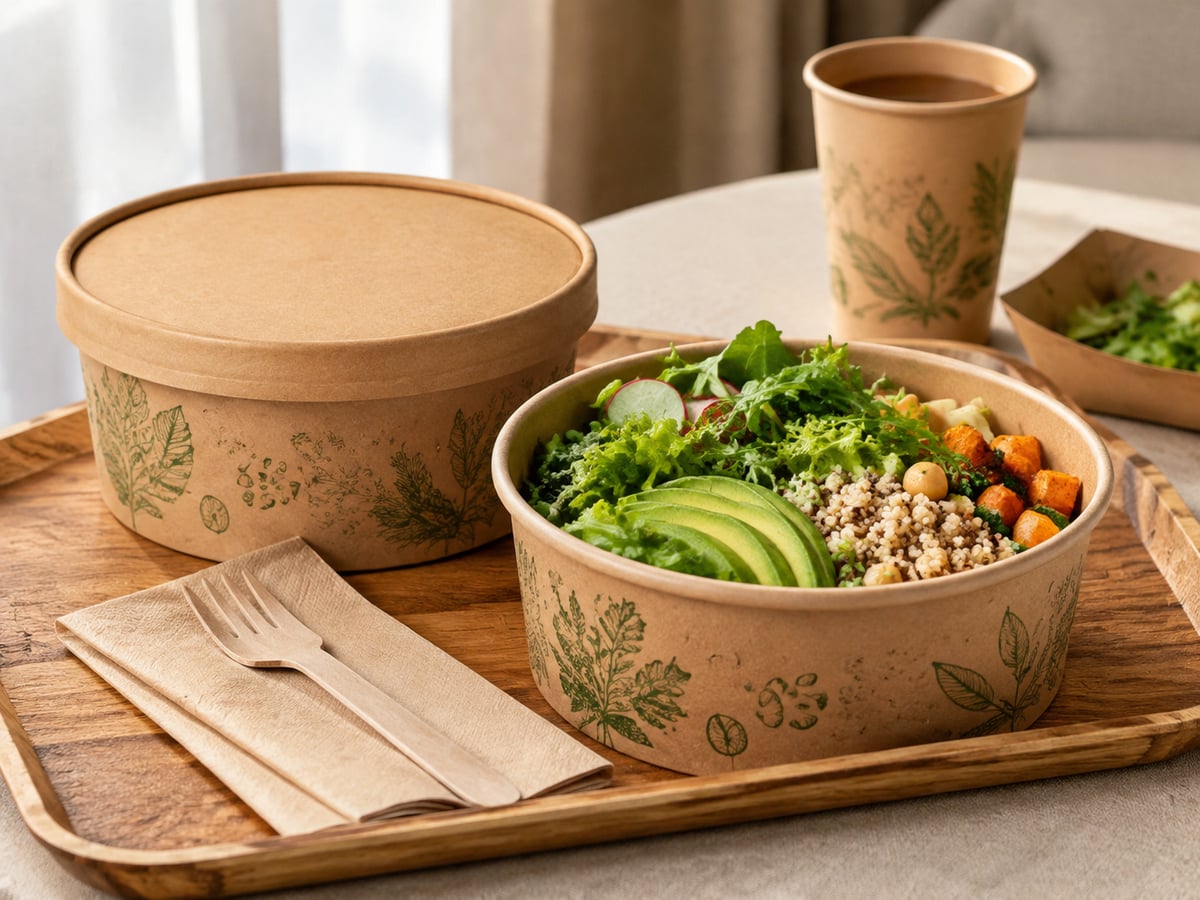
Canada Guide to Custom Salad Bowl Quality Control
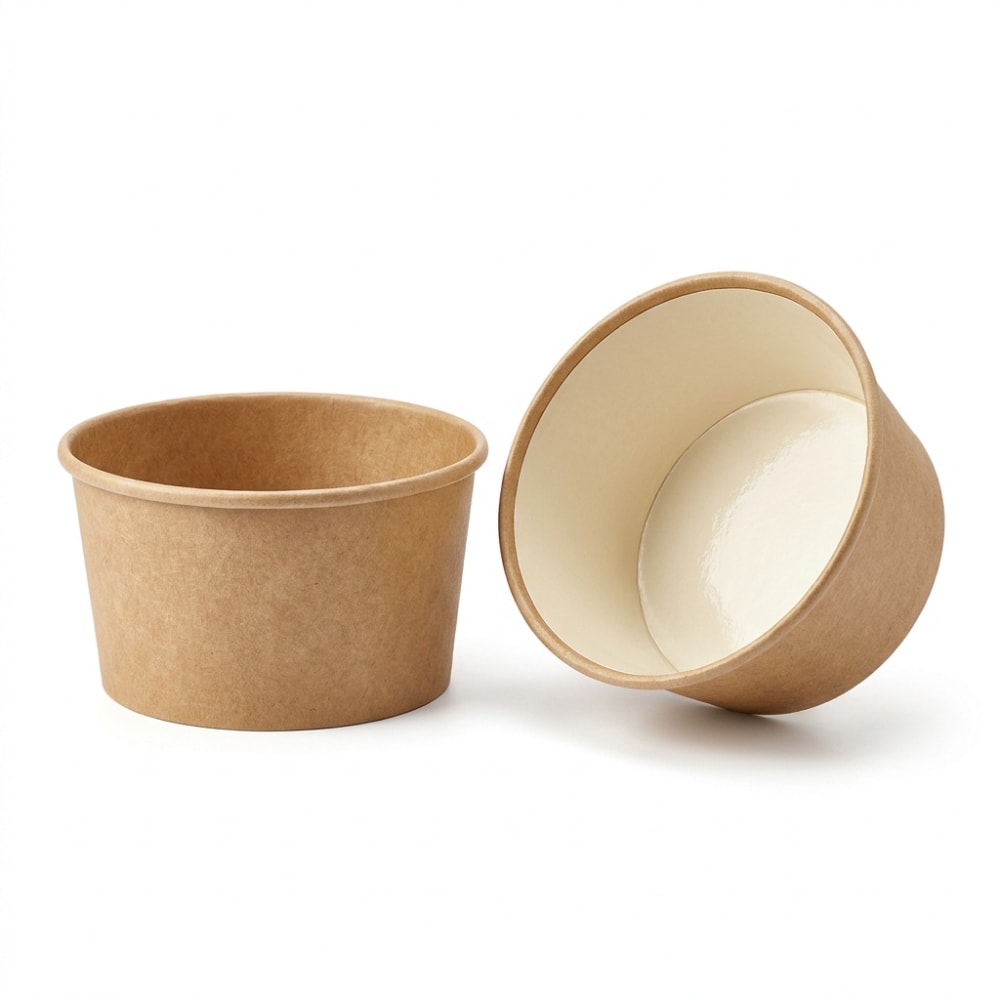
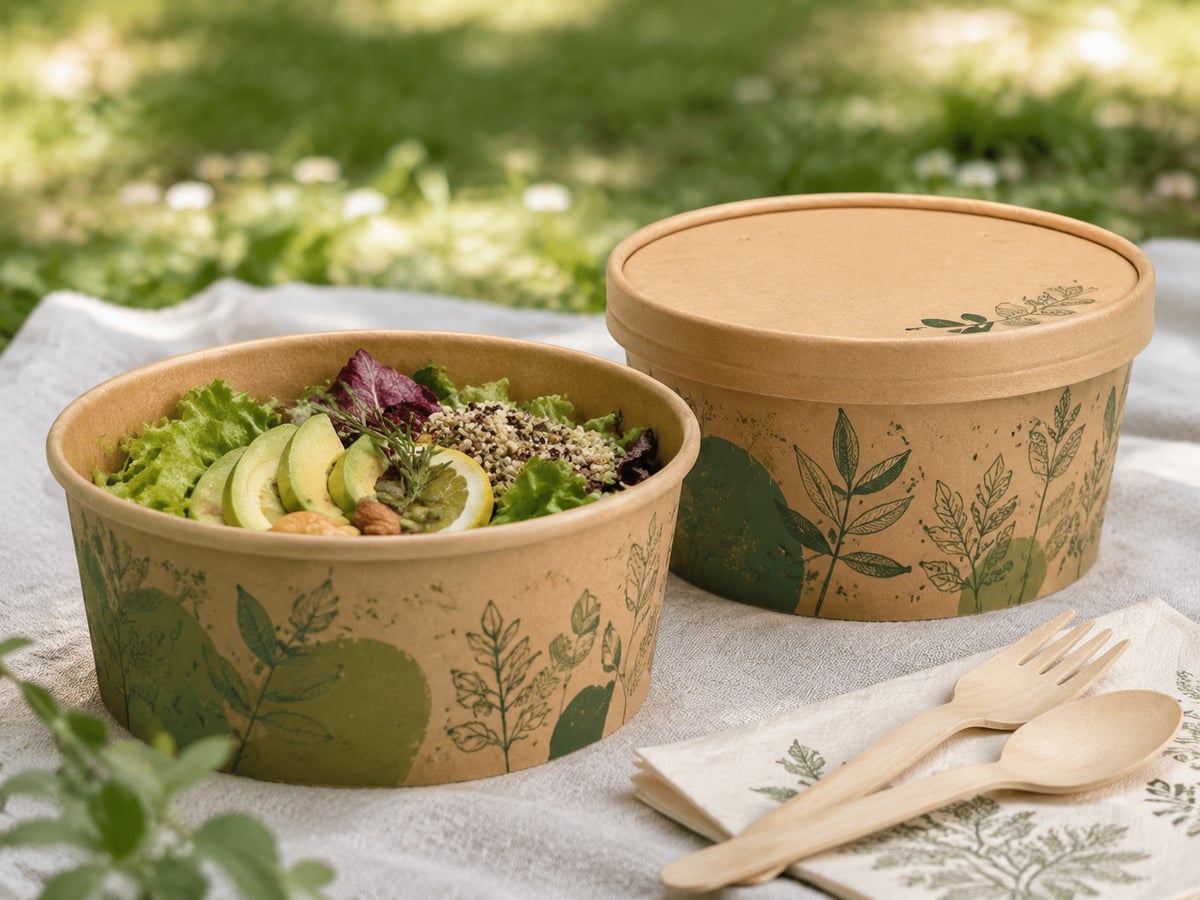
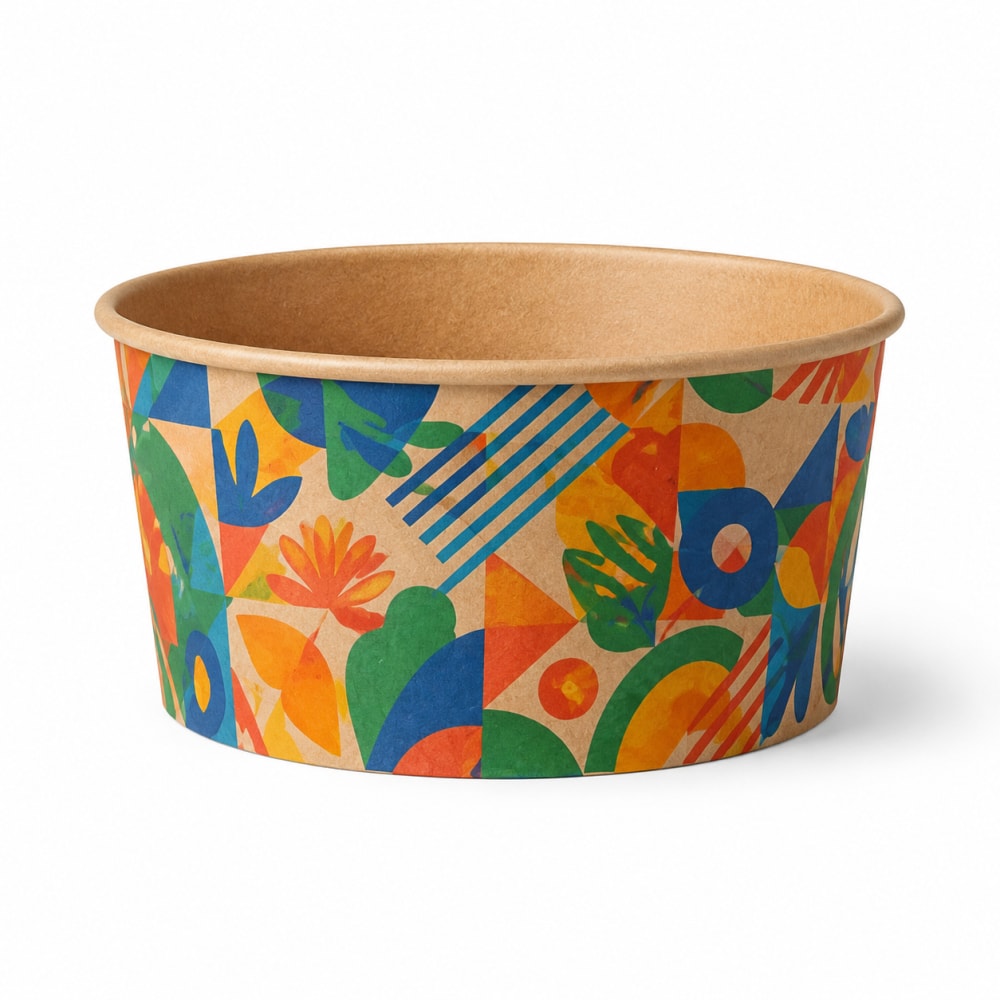
For branded round salad bowls, quality should be agreed before bulk production through measurable specifications rather than general descriptions such as “good print,” “strong bowl,” or “no leaks.” Canadian restaurant chains, food-service distributors, poke brands, salad concepts, university cafeterias, grocery deli programs, and delivery kitchens need packaging that performs consistently from filling line to customer delivery.A complete quality checklist for custom printed salad bowls should define bowl dimensions, usable capacity, paperboard weight, coating type and coverage, rim finish, lid compatibility, print colour tolerance, registration accuracy, ink rub resistance, odour, leakage limits, grease resistance, heat tolerance, compression strength, carton packing, and batch traceability. The customer-approved sample should become the physical reference for production, inspection, shipment release, and any future claim review.For Canadian buyers importing through Vancouver, Prince Rupert, Montreal, Halifax, Toronto-area distribution hubs, or Calgary food-service warehouses, the most practical approach is to approve a written specification alongside a white sample, printed pre-production sample, and functional food test. This reduces risk when bowls move through long ocean transit, cold storage, restaurant back rooms, delivery bags, and busy takeaway counters.Fude Packaging supports this process with custom bowl development, digital proofs, white samples, printed samples, in-house quality testing, documented inspection records, and batch-level traceability. Buyers can review the available paper bowl range before selecting capacity, shape, paperboard, coating, and lid system for their Canadian food application.Quality ItemRecommended Measurable RequirementWhy It Matters in CanadaTop diameterWithin ±1.0 mm of approved drawingProtects lid fit and stackabilityOverall heightWithin ±1.5 mm of approved sampleMaintains capacity and display consistencyPaperboard basis weightWithin agreed GSM toleranceSupports bowl rigidity during deliveryCoating coverageContinuous food-contact barrier without pinholesReduces leaks from dressings and saucesPrint registrationTypically within ±0.5 mm where practicalProtects logos and brand alignmentColour matchApproved proof or agreed colour toleranceImproves chain-wide brand consistencyLeak performanceNo leak after defined filled-bowl testLimits delivery claims and food wasteThe table above should be adapted to the selected bowl format. A 500 ml snack bowl, 750 ml salad bowl, 1,000 ml poke bowl, and 1,300 ml family meal bowl do not need identical compression or filling requirements. Larger bowls carrying hot grains, sauces, protein, and toppings usually need more rigid paperboard and a more demanding sealing review.Critical quality points are the features that can create food-safety, functional, commercial, or brand-image failure. For a custom printed bowl, the highest-risk areas are normally food-contact materials, coating integrity, side seam or bottom seal performance, rim shape, lid engagement, bowl strength, print quality, and carton protection.For premium salads and poke meals, a bowl may contain quinoa, rice, avocado, chicken, salmon, dressing, pickled vegetables, warm grains, cold ingredients, and oil-rich sauces at the same time. A bowl that looks acceptable when empty can fail after 30 minutes in a delivery bag. Therefore, purchasing teams should require real-use testing based on the actual menu, not only water testing.Critical PointInspection MethodAcceptance PrincipleFood-contact complianceDocument review and material confirmationMaterials match destination-market requirementsRim roundnessGauge or lid-fit testLid seats evenly around full circumferenceBottom formingVisual and pressure inspectionNo open channel, crease crack, or weak sealInternal coatingVisual inspection and liquid-hold testNo exposed fibre or coating voidsSidewall strengthHand compression or lab compression testNo collapse during normal handlingOdourControlled sensory evaluationNo unusual ink, adhesive, or material odourCarton conditionFinal packing inspectionCartons protect bowls through shipment and handlingCanadian buyers should identify which criteria are “critical,” “major,” and “minor” before ordering. A food-contact material mismatch, a leaking bowl, mould contamination, sharp edge, incorrect printed allergen statement, or lid incompatibility should normally be classified as critical. A visible logo shift, severe colour variation, crushed bowl, or print rub may be major. Small cosmetic marks that do not affect function can be minor, subject to the approved quality standard.When importing from overseas, it is useful to include the exact approved bowl code, artwork revision, coating code, production date, and carton lot number in the purchase order. That record links the bowl received in a restaurant in Ottawa or a distributor warehouse in Mississauga to the production batch and inspection report.“Colours should look good” is not a sufficient instruction for branded packaging. Colour expectations should be tied to an approved printed proof, Pantone reference where applicable, artwork version, and viewing conditions. For restaurant chains, even modest colour drift can make a national campaign look inconsistent across locations in Vancouver, Edmonton, Toronto, Montreal, and Halifax.Print quality should be reviewed for colour density, logo position, text legibility, registration, streaking, ghosting, scratches, smudges, missing print, contamination, and rub resistance. Where detailed colour measurement is required, buyers may specify Delta E targets against an approved standard. The practical tolerance depends on substrate, ink system, artwork design, and the visibility of brand colours.Print DefectSuggested Measurement or CheckTypical SeverityLogo misregistrationMeasure deviation from artwork positionMajor if visually obviousColour driftCompare with approved proof or colour standardMajor for key brand coloursPrint rubDry-rub and handling simulationMajor if branding becomes unclearInk smearVisual review under standard lightingMajor if transferred or highly visibleText blurReadability check at normal viewing distanceMajor for legal or promotional textSmall speckCount and assess visible areaMinor if outside logo areaMissing print areaVisual comparison with approved artworkMajor or critical for required informationThe table creates a practical inspection language for both buyer and supplier. For example, a minor isolated dot outside the logo may be acceptable within the agreed AQL level, while a missing brand name, unreadable recycling instruction, or heavily rubbed campaign graphic may require rejection. The approved printed sample should be retained by both parties in labelled protective storage.For matte and natural kraft finishes, buyers should accept that the substrate can influence colour appearance. For glossy or highly saturated designs, colour and rub requirements may need tighter process controls. Fude Packaging can review artwork, printing zones, surface finish, and practical colour expectations through its custom packaging services before production begins.Quality begins before bowls are formed. Incoming paperboard, barrier coating, inks, adhesives, and packaging materials should be checked against the approved bill of materials. The inspection should confirm material identity, supplier batch, basis weight, moisture condition, surface condition, food-contact documentation, and visible damage.Paperboard that is too light may reduce compression strength. Paperboard with high moisture variation can affect forming and roundness. A coating inconsistency can lead to slow leakage, grease staining, or wet-out at the base. Inks and adhesives should be managed to prevent unwanted odour, poor print adhesion, or incomplete curing.Incoming MaterialKey CheckControl RecordPaperboard rollGSM, width, surface quality, moistureSupplier lot and inspection reportBarrier-coated paperCoating continuity and specified structureMaterial specification confirmationPrinting inkColour, lot number, suitability for useInk batch recordAdhesiveLot number, shelf life, bond performanceAdhesive receipt and usage recordPlastic or fibre lidFit with approved bowl rimCompatibility test recordOuter cartonSize, print, strength, drynessPackaging material inspectionInner bagCleanliness, thickness, seal qualityIncoming packaging verificationFor Canada-bound orders, buyers should also discuss seasonal transport conditions. A shipment arriving in Montreal during winter or moving through humid summer conditions near Vancouver can experience temperature and moisture changes. Proper polybag sealing, dry cartons, pallet protection, and container loading practices help preserve bowl shape and print appearance.Real-use tests should reflect the menu and service conditions. Water alone is useful for detecting obvious leaks, but it does not fully simulate vinaigrette, sesame oil, hot rice, creamy sauces, or prolonged takeaway delivery. A strong approval plan includes laboratory checks and practical meal tests.A typical leakage test fills the bowl to the declared usable line with water or a selected food simulant, closes it with the intended lid, and holds it for a defined period. For delivery applications, the bowl can then be tilted, inverted briefly where suitable, and placed in a delivery bag. Grease resistance should be tested with oil-rich food or a representative sauce. Heat testing should use the highest expected filling temperature, not only room-temperature liquid.var ctxMarket = document.getElementById('marketGrowthChart').getContext('2d');new Chart(ctxMarket, {type: 'line',data: {labels: ['2022', '2023', '2024', '2025', '2026', '2027'],datasets: [{label: 'Canadian Demand Index for Premium Takeaway Bowls',data: [100, 108, 117, 126, 136, 148],borderColor: 'rgb(34, 122, 84)',backgroundColor: 'rgba(34, 122, 84, 0.12)',fill: false,tension: 0.25,borderWidth: 3}]},options: {responsive: true, maintainAspectRatio: false}});The market-growth chart illustrates a realistic planning index rather than a guaranteed forecast. Demand for premium takeaway bowls is influenced by restaurant delivery, ready-to-eat retail meals, workplace catering, health-focused menus, and sustainability requirements. Canadian buyers should use their own sales forecasts when deciding stock safety levels and scheduled-order volumes.TestExample MethodExpected ResultCold leak testFill with water and hold for 30 minutesNo visible leak or wet baseHot fill testFill with hot food or liquid at agreed temperatureNo deformation, odour, or leakageGrease testHold oil-rich food or dressingNo grease penetration or stainingLid fit testApply intended lid around full rimEven engagement without popping offCompression testStack or apply defined vertical loadNo collapse beyond agreed limitDelivery simulationPack, tilt, carry, and transportFood remains contained and bowl remains presentableRefrigerated holdStore filled bowl under chilled conditionsNo softening or moisture failureFor a poke concept, testing should include chilled rice, fish, sauce cups, avocado, and dressing. For a hot grain bowl, testing should include freshly cooked rice or quinoa and a hot sauce. For salads, test acidic dressing and oil-containing toppings. Each menu may produce different moisture and grease behaviour, so the best test food is the food actually sold.Pre-shipment inspection should use a written sampling plan instead of random informal checking. The plan may follow an agreed AQL approach, customer-specific carton sampling, or third-party inspection protocol. The method should define the lot size, number of cartons selected, number of bowls checked, defect classification, acceptance number, rejection number, and re-inspection procedure.For export orders shipped to Canadian ports, cartons should be selected across the beginning, middle, and end of the production run. Inspection should also cover cartons from different pallets. This prevents a result that reflects only one favourable section of production.var ctxDemand = document.getElementById('industryDemandChart').getContext('2d');new Chart(ctxDemand, {type: 'bar',data: {labels: ['Salad Chains', 'Poke Concepts', 'Grocery Deli', 'Corporate Catering', 'Universities', 'Meal Delivery'],datasets: [{label: 'Estimated Quality-Critical Bowl Demand Index',data: [88, 82, 91, 67, 62, 85],backgroundColor: ['#2e8b57', '#3fa7d6', '#f4a261', '#7a5195', '#bc5090', '#ef5675']}]},options: {responsive: true, maintainAspectRatio: false}});The chart compares the relative importance of dependable bowl performance across common Canadian food-service channels. Grocery deli and salad programs often require long hold times and strong shelf presentation, while meal delivery and poke concepts place greater emphasis on lid fit, leak resistance, and movement during transport.As a starting point, buyers may inspect more cartons for high-volume orders, printed campaigns, first production runs, changed materials, new moulds, or orders with a history of claims. Independent inspection agencies may also be appointed before loading, especially for chain-store programs and container shipments.A defect record should contain more than a count. It should identify the production lot, carton number, bowl size, artwork version, inspection location, date, inspector, defect description, photographs where useful, severity, quantity checked, quantity defective, and disposition decision. Clear defect records help prevent disagreement between the supplier, importer, distributor, and restaurant operator.Critical defects create safety, legal, or complete functional risk. Major defects materially reduce usability or brand presentation. Minor defects are limited cosmetic issues that do not affect food contact, sealing, capacity, safety, or normal use. Severity should be agreed before mass production rather than debated after arrival.var ctxShift = document.getElementById('trendShiftChart').getContext('2d');new Chart(ctxShift, {type: 'line',data: {labels: ['2022', '2023', '2024', '2025', '2026', '2027'],datasets: [{label: 'Demand for Documented Quality and Sustainable Materials',data: [42, 50, 59, 68, 77, 85],borderColor: 'rgb(31, 119, 180)',backgroundColor: 'rgba(31, 119, 180, 0.25)',fill: true,tension: 0.3,borderWidth: 3}]},options: {responsive: true, maintainAspectRatio: false}});The area chart highlights a continuing shift toward documented quality control, traceability, fibre sourcing, material transparency, and reduced packaging risk. By 2026 and beyond, Canadian buyers are expected to place greater emphasis on supplier documentation, packaging-design efficiency, recyclable or compostable pathways where locally appropriate, and verification that sustainability claims match the actual material structure and disposal environment.When a batch fails inspection, the remedy should already be stated in the purchase agreement. Depending on the failure, the remedy may include sorting, rework, replacement production, credit, partial claim settlement, third-party verification, or rejection before shipment. Critical defects should trigger immediate containment, root-cause analysis, and a documented corrective action plan.Traceability should link finished bowls to material lots, printing records, forming dates, operators or production lines where applicable, inspection records, packing records, and shipment documents. This helps isolate the affected quantity rather than treating every shipment as uncertain.var ctxComparison = document.getElementById('supplierComparisonChart').getContext('2d');new Chart(ctxComparison, {type: 'bar',data: {labels: ['Sampling Support', 'Batch Traceability', 'Functional Testing', 'Custom Print Control', 'Export Documentation', 'Production Capacity'],datasets: [{label: 'Structured Manufacturing Program',data: [92, 94, 90, 91, 88, 93],backgroundColor: 'rgb(45, 130, 87)'},{label: 'Basic Transactional Supply Model',data: [58, 48, 52, 62, 55, 60],backgroundColor: 'rgb(160, 160, 160)'}]},options: {responsive: true, maintainAspectRatio: false}});This comparison chart shows why buyers should compare suppliers on process capability rather than unit price alone. A lower purchase price can become costly if there are print inconsistencies, leaking bowls, missing records, delayed replacements, or incomplete export documents. For national restaurant and retail programs, repeatable approval records are often more valuable than a small initial price difference.A corrective action report should state the issue, containment action, root cause, immediate correction, permanent preventive action, responsible person, due date, verification method, and affected batch numbers. If a shipment is destined for a Canadian distributor, the report should also identify whether goods have left the factory, been loaded, arrived at port, cleared customs, or entered distribution.Fude Packaging combines technological, manufacturing, and service capabilities for overseas B2B buyers requiring custom paper food packaging. Its 30,000 m² self-owned production base in Shandong supports controlled production from material selection and printing through die-cutting, forming, inspection, packing, and export preparation. Automated capacity of up to 120,000 units per day supports scheduled orders and scalable restaurant, distributor, and retail programs.Technological capability includes in-house quality and performance testing, artwork and dieline review, Pantone-oriented colour matching, white samples, digital proofs, printed pre-production proofs, functional prototypes, and material recommendations based on food type, serving temperature, grease exposure, and destination-market requirements. This process helps Canadian buyers verify the bowl before committing to large-scale production.Manufacturing capability includes a broad product range covering paper cups, round bowls, food trays, lunch boxes, burger boxes, noodle boxes, salad containers, and multi-compartment meal packaging. Buyers can consolidate related packaging categories with one supplier, improving visual consistency and simplifying order coordination. Learn more about the company’s production background on the Fude Packaging profile page.Service capability includes support for OEM and ODM projects, export packing, inspection documents, shipping coordination, scheduled replenishment, and claim handling. Fude Packaging has experience serving more than 500 business clients and supports documentation relating to BRC, FSC, ISO 9001, LFGB, FDA-related requirements, and other customer-requested compliance materials where applicable. Buyers can request project consultation through the contact team.For Canadian food-service businesses, the recommended approval sequence is: confirm menu and bowl capacity; select material and coating; approve dieline and artwork; review white sample; approve printed sample; conduct food-use testing; confirm inspection plan; authorize bulk production; complete pre-shipment inspection; and retain the final approval record for future reorders.Critical defects normally include leakage, unsafe or incorrect food-contact materials, sharp edges, severe structural failure, mould or contamination, missing mandatory printed information, incorrect bowl specification, and a lid system that cannot securely fit the approved bowl. These issues should require containment and corrective action.The number depends on order quantity, risk level, product history, and the agreed sampling standard. For first orders, high-value branded campaigns, or large container shipments to Canada, buyers should increase carton coverage and select cartons from multiple production stages and pallet positions.Use the actual menu whenever possible. Test cold salad with dressing, poke with chilled rice and sauce, hot grain bowls, oil-rich toppings, and delivery movement. Include the intended lid, filling level, refrigeration period, handling, and delivery-bag simulation.The approved sample should be labelled with product code, size, paperboard specification, coating, artwork revision, colour reference, lid code, approval date, and customer name. Production and final inspection should compare against this retained reference.The remedy should be set in writing before production. Options may include rework, sorting, replacement, credit, rejection, or third-party reinspection. Critical defects should trigger a corrective action report and batch traceability review before shipment release.For Canadian buyers seeking reliable branded round salad bowls for salads, poke, prepared meals, catering, and delivery programs, the strongest purchasing decision is based on measurable specifications, tested samples, documented acceptance criteria, and a repeatable supplier approval process. -

Global Cold Paper Cup Wholesale Buying and Quality Guide
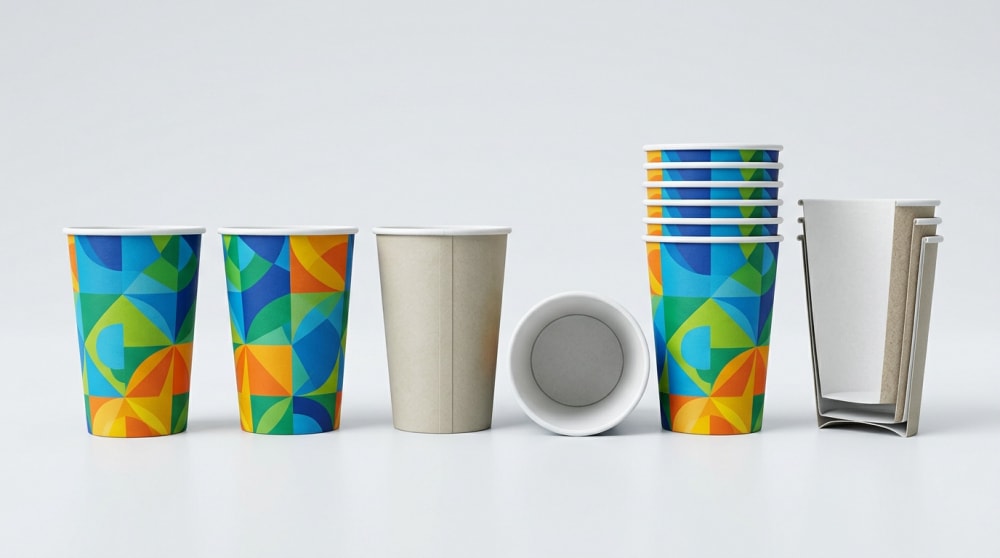
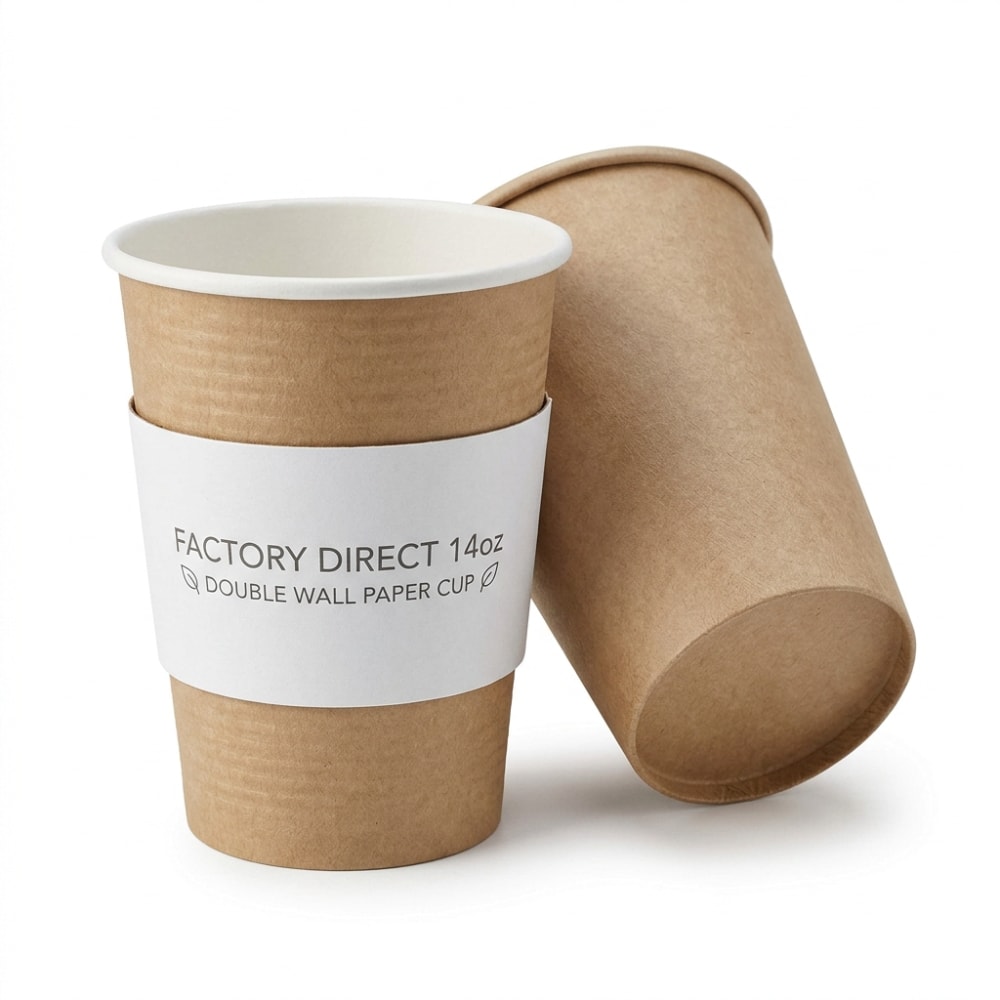
The best custom cold paper cups wholesale program for the Global market combines beverage-specific cup construction, compatible lids, repeatable printing, efficient carton design, compliance documentation, and dependable replenishment capacity. Buyers should qualify the complete cup-and-lid system rather than compare the price of an empty cup alone.A cold beverage cup may appear simple, but its performance depends on details that affect customer experience and landed cost: paperboard stiffness, barrier selection, rim diameter, lid engagement, print registration, nesting depth, carton count, pallet stability, and order consistency. A cup that is inexpensive at factory level can become costly if it leaks during delivery, nests poorly, uses oversized cartons, causes lid mismatch, or arrives with inconsistent print colors.For distributors, café groups, dairy brands, juice chains, quick-service restaurants, and event caterers, an effective sourcing process begins with the beverage. Confirm whether the cup will hold iced coffee, milk tea, fruit juice, smoothies, soda, frozen drinks, yogurt beverages, or dairy products. Then define temperature, ice load, filling method, transport duration, lid type, decoration method, expected annual demand, destination regulations, and shipping mode.Global buyers increasingly request custom cold drink paper cups with clear specifications instead of generic quotations. This approach helps purchasing teams compare equivalent products and prevents disputes after shipment. It also supports brand consistency across cities such as Dubai, Singapore, London, Los Angeles, Sydney, Rotterdam, and São Paulo, where consumer expectations, waste policies, and logistics conditions can differ significantly.Cold paper cups are usually formed from food-contact paperboard with a moisture-resistant barrier. The body blank is printed, die-cut, curled at the rim, side-seamed, bottom-seamed, and inspected before packing. For cold beverages, the main design objective is maintaining rigidity and leak resistance despite condensation, ice movement, hand pressure, and prolonged holding time.The cup’s sidewall must be strong enough to resist softening when exposed to chilled beverages. A weak structure can deform when customers grip the cup, especially when it contains large ice cubes or a dense beverage such as a smoothie. Bottom construction is equally important because liquid pressure and handling shocks concentrate stress around the base seam.Common product types include single-wall cold cups, heavy-board cold cups, double-wall promotional cups, ripple-texture cups, and paper cups designed for specialty dairy or milk tea applications. Single-wall cups remain common for water, soda, juice, and short-dwell takeaway service. Heavier board or enhanced structural specifications are more suitable for iced coffee, milk tea, fruit drinks, and delivery-focused beverage programs.For branded dairy and beverage projects, buyers can also review custom printed milk cups for private-label beverage programs when comparing cold-cup formats, dairy-contact requirements, and promotional print options.Cold Beverage ApplicationRecommended Cup TypeKey Construction PriorityTypical Lid NeedBuying ConsiderationIced coffeeSingle-wall or heavy-board cupRim strength and condensation resistanceFlat or sip lidCheck hand feel during long takeaway useMilk teaHeavy-board cold cupSidewall stiffness and bottom seamSealed straw lidTest with pearls, ice, and shakingFresh juiceStandard coated paper cupLiquid barrier integrityFlat dome or straw lidVerify acid-resistant beverage performanceSmoothieHeavy-board cupCompression resistanceDome lidConfirm lid clearance for thick drinksCarbonated drinkRigid cold cupRim fit and pressure stabilitySecure flat lidTest after filling and transport vibrationYogurt beverageDairy-grade printed cupFood-contact complianceSealed or overcap systemSpecify filling process and shelf handlingThe table shows why beverage type should drive construction. A cup intended for water at a stadium may not be suitable for a delivery milk tea brand. Buyers should avoid using one generic cup specification for all drink categories unless testing confirms acceptable performance in each application.Capacity is only one part of a cold cup specification. Two cups described as “16 oz” may have different top diameters, bottom diameters, heights, fill lines, nesting profiles, paperboard weights, and lid systems. A 16 oz cup paired with the wrong lid is not a functional packaging solution, even if both products are individually acceptable.Popular cold drink sizes often include 4 oz, 6 oz, 8 oz, 12 oz, 16 oz, 20 oz, 22 oz, and 24 oz. However, brands should specify nominal capacity and usable fill capacity separately. The actual beverage fill level may need headspace for ice, foam, fruit pieces, sealing film, or transport movement. A smoothie program may need more clearance than a simple iced tea program.Rim diameter is the primary compatibility point for lids. Buyers should document the rim size in millimeters and request that cup and lid samples be supplied from the intended production combination. Do not approve a cup with one supplier’s lid and assume a second supplier’s lid will fit. Minor dimensional variation can cause loose lids, cracked rims, or difficult application on automated filling lines.Nominal SizeCommon UseTypical Rim RangeRecommended HeadspaceSampling Requirement4 ozTasters and children’s drinks62–75 mm5–8 mmRim and small-lid snap test6 ozJuice samples and mini beverages70–75 mm6–10 mmFill-volume confirmation8 ozJuice, soda, iced coffee75–80 mm8–12 mmLeak test with ice12 ozIced coffee and milk tea80–90 mm10–15 mmLid retention and shake test16 ozLarge cold beverages90–98 mm12–18 mmCompression and transport test20–24 ozSmoothies and large soft drinks90–98 mm15–25 mmDome-lid clearance verificationThis size guide is an initial sourcing reference, not a substitute for a technical drawing. Final specifications should include top diameter, bottom diameter, height, rim curl details, capacity tolerance, fill line, and approved lid code. For international programs, include both metric dimensions and the internal item number used on purchase orders, cartons, and inspection reports.var ctx = document.getElementById('lineChart').getContext('2d');new Chart(ctx, { type: 'line', data: { labels: ['2022', '2023', '2024', '2025', '2026 Forecast', '2027 Forecast'], datasets: [{ label: 'Indexed Global Demand for Custom Cold Paper Cups', data: [100, 108, 117, 127, 139, 151], borderColor: 'rgb(34, 139, 34)', backgroundColor: 'rgba(34, 139, 34, 0.12)', borderWidth: 3, tension: 0.3, fill: false }] }, options: { responsive: true, maintainAspectRatio: false, plugins: { legend: { display: true } }, scales: { y: { beginAtZero: false, title: { display: true, text: 'Demand Index' } } } }});The growth illustration reflects the continued expansion of branded takeaway beverages, convenience retail, delivery platforms, and private-label drink programs. Demand does not increase evenly in every region, but importers commonly see seasonal peaks before summer, major sporting events, festival periods, and promotional launches.Paperboard and barrier selection should match beverage temperature, contact duration, destination-market requirements, sustainability objectives, and end-of-life claims. The board supplies shape and compression strength. The barrier limits liquid absorption and helps protect seams. Buyers should request a clear material description rather than simply asking for “eco-friendly” cups.Traditional polyethylene-lined paper cups are widely used because they offer reliable liquid resistance and established production performance. Water-based dispersion coatings and compostability-oriented material systems may be appropriate for markets where recycling, plastic-reduction policy, or certified compostability goals influence purchasing decisions. The best choice depends on local infrastructure and the claim that can be substantiated in the sales market.For example, a buyer supplying cafes in Berlin, Amsterdam, or Copenhagen may prioritize documented material choices and carefully worded sustainability claims. A distributor serving humid tropical locations such as Manila, Jakarta, or Bangkok may give additional priority to storage conditions, carton protection, and barrier durability. Export specifications should identify the intended market and the required food-contact documentation before production begins.Material ElementPrimary FunctionBest Suited ForRisk if UnderspecifiedDocument to RequestVirgin food-grade paperboardRigidity and print surfaceMost branded beverage cupsSoft sidewalls and poor print appearanceMaterial declarationPE barrierLiquid resistanceHigh-volume conventional cold cupsLeaks and moisture absorptionFood-contact statementWater-based barrierAlternative coating approachSelected sustainability programsMismatch with use conditionsPerformance and compliance dataPLA-related structureCompostability-oriented optionApproved composting pathwaysUnsupported disposal claimsApplicable certification recordFSC-certified board optionResponsible sourcing supportBrand sustainability policiesUnverified chain-of-custody claimsCertificate scope confirmationHigher paperboard basis weightImproved stiffnessLarge iced drinks and deliveryCrushing and deformationBoard weight specificationThe table clarifies that sustainability and performance must be evaluated together. A material program should not be selected only because it has an attractive marketing description. Confirm the product’s actual use conditions, disposal route, certification scope, printing inks, and regional labeling obligations.A cold paper cup and its lid should be approved as one system. Lids may be flat, dome-shaped, sip-through, straw-slot, plug-compatible, or sealing-film compatible. Their performance depends on rim geometry, resin flexibility, lid thickness, cup tolerances, beverage viscosity, ice size, and handling method.Sampling should include production-representative cups and matching lids in the colors, materials, and molds intended for mass supply. Evaluate lid application force, removal force, visible engagement around the rim, leak resistance after inversion, and performance after shaking. If cups are used for courier delivery, simulate real conditions by placing filled samples in drink carriers and exposing them to vibration or short road transport.Important tests include a standing leak test, an inverted leak test, a side-pressure test, a rim retention test, a stacking or compression test, and a temperature-conditioning test. For milk tea, include toppings and wide straws. For smoothies, test dome-lid clearance. For carbonated drinks, confirm that the lid remains secure after filling and normal movement.TestSuggested MethodWhat It RevealsPass IndicatorWhen It Matters MostStanding leak testFilled cup held for 2–4 hoursBottom and side-seam integrityNo visible liquid seepageAll cold drink programsInversion testFilled and lidded cup inverted brieflyLid-to-rim seal qualityNo meaningful leakageDelivery and takeawayShake testManual repeated shakingMovement-related spillsLid stays engagedMilk tea and iced coffeeCompression testControlled hand or fixture pressureSidewall deformationNo collapse or seam failureLarge-format cupsCold conditioningFilled sample held chilledCondensation and board resilienceStable wall and seamsLong-dwell refrigerated useTransport simulationCarrier movement or vibrationReal delivery performanceNo spill under normal motionCourier-focused brandsTest results should be recorded with sample date, cup code, lid code, beverage type, fill level, temperature, test duration, and observations. This record becomes especially valuable when a buyer changes lid suppliers, introduces a new print design, adjusts board grade, or launches in a new country.Minimum order quantity and unit price are influenced by size, board grade, barrier, print coverage, number of colors, finishing, carton configuration, lid requirements, and whether new tooling is needed. Buyers should request tiered pricing based on realistic order volumes rather than selecting a supplier only from a very low quote tied to an impractical quantity.For custom printing, artwork setup and production changeovers create fixed costs. Larger volumes usually reduce the unit price, but overbuying can increase warehouse risk, working capital exposure, and the likelihood that a rebrand leaves inventory obsolete. The best purchase quantity balances price, storage, forecast accuracy, container utilization, and reorder lead time.Request an all-in quotation that separates cup price, lid price, printing or plate charges if applicable, carton specifications, palletization, sample costs, inspection costs, and shipping terms. Buyers shipping through Ningbo, Qingdao, Shanghai, Shenzhen, Rotterdam, Jebel Ali, or Los Angeles should compare the complete landed cost for the selected Incoterm, not merely factory unit cost.var ctx = document.getElementById('barChart').getContext('2d');new Chart(ctx, { type: 'bar', data: { labels: ['Coffee Shops', 'Milk Tea Chains', 'QSR', 'Juice Bars', 'Events', 'Retail Private Label'], datasets: [{ label: 'Estimated Relative Demand for Custom Cold Cups', data: [78, 92, 74, 68, 55, 71], backgroundColor: ['#2f855a', '#3182ce', '#dd6b20', '#805ad5', '#d53f8c', '#4a5568'] }] }, options: { responsive: true, maintainAspectRatio: false, plugins: { legend: { display: true } }, scales: { y: { beginAtZero: true, max: 100, title: { display: true, text: 'Demand Score' } } } }});Milk tea and coffee categories often produce high customization demand because these businesses depend heavily on visual differentiation, seasonal campaigns, and social-media visibility. Quick-service restaurants may prioritize cost stability, speed of supply, and standardized lid compatibility across multiple locations.Carton count and nesting efficiency directly affect landed cost. Cups are lightweight but bulky, so transport cost frequently depends more on cubic volume than gross weight. Deep nesting reduces carton volume, but overly tight nesting can create separation problems, rim damage, or difficulty for fast-paced store teams.Buyers should specify pieces per sleeve, sleeves per carton, cartons per pallet, carton dimensions, gross weight, net weight, and maximum stacking conditions. Cartons should protect rims from deformation and remain stable during container loading, warehouse storage, and local delivery. In humid climates or during long sea freight, outer carton strength and moisture protection are particularly important.Packaging FactorWhy It MattersWhat to SpecifyCost EffectOperational EffectPieces per sleeveStore handling and hygiene25, 50, or 100 piecesMinor packing cost variationControls dispensing convenienceSleeves per cartonWarehouse countingFixed labeled quantityReduces counting errorsImproves inventory accuracyNesting depthCarton volume efficiencyApproved nesting profileCan reduce freight volumeMust still allow easy separationCarton dimensionsContainer and pallet loadingLength, width, heightStrong impact on freightSupports storage planningCarton compression strengthStacking protectionBoard grade and load targetPrevents damage claimsProtects rims and printPallet patternDistribution efficiencyCartons per layer and heightImproves handling economicsReduces warehouse disruptionA carton should be assessed as part of the product system. A buyer receiving cups into a regional warehouse in Hamburg or Melbourne may optimize pallet dimensions differently from a buyer sending mixed cartons directly to small stores in Nairobi or Mexico City. The right pack-out depends on the distribution model.var ctx = document.getElementById('areaChart').getContext('2d');new Chart(ctx, { type: 'line', data: { labels: ['2022', '2023', '2024', '2025', '2026 Forecast', '2027 Forecast'], datasets: [{ label: 'Share of Orders Requesting Documented Sustainable Materials', data: [31, 38, 46, 54, 63, 69], borderColor: 'rgb(0, 128, 128)', backgroundColor: 'rgba(0, 128, 128, 0.25)', borderWidth: 3, tension: 0.35, fill: true }] }, options: { responsive: true, maintainAspectRatio: false, plugins: { legend: { display: true } }, scales: { y: { beginAtZero: true, max: 100, title: { display: true, text: 'Order Share (%)' } } } }});This trend shift indicates why procurement teams should build flexibility into specifications. A brand may begin with a conventional barrier system and later need a documented alternative material option due to packaging policies, retailer requirements, or customer commitments. Early supplier discussions can reduce the cost and delay of future conversion.Supplier approval should examine technical ability, manufacturing control, compliance readiness, communication quality, and repeat-order reliability. A supplier may produce attractive samples but still struggle with color consistency, lid supply, carton labeling, lead-time management, or export documentation during larger runs.Start with a written product specification and sample request. Then approve pre-production samples, print proofs, and cup-lid combinations before mass production. For larger orders, buyers may use pre-shipment inspection, carton-count verification, random leak tests, visual checks, and pallet audits. Independent inspectors can be appointed when required.Supplier qualification should also consider the ability to support seasonal demand. A café chain may need a campaign cup delivered before summer, while a distributor may need recurring container loads at fixed intervals. Reorder capacity and production scheduling are often more valuable than an initial price difference of a fraction of a cent.Approval AreaKey QuestionEvidence to ReviewCommon RiskControl MethodProduct specificationAre dimensions and materials defined?Technical drawing and sampleAmbiguous product scopeSigned specification sheetPrint qualityCan colors repeat by batch?Press proof and Pantone targetBrand inconsistencyApproved color standardLid compatibilityAre cup and lid matched?Joint functional samplesLeaks or loose fittingSystem-level test reportComplianceAre destination requirements supported?Relevant declarations and recordsCustoms or retail rejectionDocument review before orderProduction capacityCan repeat demand be supported?Factory and scheduling informationLate replenishmentForecast and production bookingExport packingWill cartons survive transit?Carton specification and photosCrushed or contaminated cupsPre-shipment inspectionThe approval matrix demonstrates that sourcing is a risk-management process. A buyer should score suppliers across quality, delivery, documentation, communication, and cost. This makes internal purchasing decisions clearer and creates an objective basis for supplier development.var ctx = document.getElementById('comparisonChart').getContext('2d');new Chart(ctx, { type: 'bar', data: { labels: ['Cup-Lid Matching', 'Print Repeatability', 'Carton Efficiency', 'Compliance Support', 'Reorder Capacity', 'Inspection Readiness'], datasets: [ { label: 'Qualified Full-System Supplier', data: [92, 88, 85, 90, 87, 91], backgroundColor: 'rgba(49, 130, 206, 0.75)' }, { label: 'Empty-Cup Price-Only Supplier', data: [62, 58, 60, 54, 57, 49], backgroundColor: 'rgba(221, 107, 32, 0.75)' } ] }, options: { responsive: true, maintainAspectRatio: false, plugins: { legend: { display: true } }, scales: { y: { beginAtZero: true, max: 100, title: { display: true, text: 'Supplier Capability Score' } } } }});Fude Packaging supports overseas B2B buyers with custom cold paper cup solutions that combine practical manufacturing economics with quality control and export coordination. Rather than offering a generic cup quotation, the team reviews beverage type, size, lid system, print requirements, compliance expectations, destination, shipping route, and expected reorder pattern.From a technological perspective, Fude Packaging uses automated paper-cup production processes and in-house quality and performance testing to monitor material selection, forming accuracy, printing, sealing, and finished-product consistency. Samples can be supplied as plain white cups, printed samples, or functional prototypes so buyers can validate capacity, structural performance, lid fit, leakage resistance, and brand presentation before mass production.From a manufacturing perspective, the company operates from a self-owned 30,000 m² factory in Shandong, China, within an established paper packaging supply region. With more than 20 years of industry experience and automated lines capable of producing up to 120,000 units per day, Fude Packaging can support cold paper cup programs alongside related packaging categories. Buyers seeking a broader assortment can explore the paper cup product range for food-service packaging while consolidating sourcing and container planning.From a service perspective, Fude Packaging assists global customers with OEM and ODM development, custom dimensions, artwork and dieline checks, Pantone color matching, packaging advice, export-ready documentation, inspection coordination, and shipment planning. The company has served customers in more than 50 countries and can support sea freight, air freight, LCL, FCL, and express sample shipments. Standard production can often be arranged within approximately 7–15 days, subject to specifications and order volume.For buyers serving restaurant groups, beverage chains, retailers, and distributors, this integrated approach helps reduce risks linked to fragmented suppliers, mismatched cup-lid programs, delayed artwork approval, inconsistent cartons, incomplete documentation, and uncontrolled replenishment.In 2026, cold paper cup sourcing will increasingly be shaped by automation, policy development, traceability, and sustainability verification. Buyers will request more precise batch records, clearer food-contact documentation, documented material origins, and packaging claims that can be supported in each destination market.Digital print management and improved color-control workflows will support shorter promotional runs, localized campaign graphics, and faster design changes. However, global brands will still need disciplined approval systems to prevent shade variation between factories, regions, and reorders. QR-linked batch codes and digital artwork version control will become more common in organized procurement programs.Policy pressure on single-use packaging will continue to vary by city and country. Businesses should avoid assuming that one material or one environmental claim works everywhere. Instead, build a product matrix with conventional, recycled-content where appropriate, FSC-certified board options, water-based barrier options, and compostability-oriented structures where local collection infrastructure and certification requirements support them.Operationally, buyers will also favor carton optimization and mixed-SKU consolidation. Shipping multiple food-service items from one manufacturer can improve container utilization and simplify inbound management. This is particularly useful for distributors building stock for regional trade hubs such as Singapore, Dubai, Rotterdam, Durban, and Long Beach.A complete specification should include cup capacity, usable fill capacity, top and bottom diameter, height, rim diameter, paperboard grade, barrier type, cup weight, print artwork, color standard, finish, lid code, packing quantity, carton dimensions, pallet requirement, destination market, food-contact documentation requirement, test criteria, and shipping terms. It should also state the beverage type, serving temperature, ice level, expected holding time, and delivery use. These application details determine the appropriate construction.Request cups and lids from the intended production combination. Test multiple samples with the actual beverage, ice, straw, toppings, and expected fill level. Check application force, lid engagement, inversion leakage, shake resistance, removal force, and visual appearance. If a third-party lid will be used, send that lid to the cup manufacturer or arrange joint sampling before production approval.The most useful checks are standing leak tests, inverted lid tests, shake tests, sidewall compression tests, chilled-condition tests, and transport simulations. For delivery programs, test cups in the same carrier format used by couriers. For large cold drinks, assess whether the cup remains rigid when held with one hand. For milk tea and smoothies, test with real inclusions and dome or straw lids.Carton count affects warehouse handling, store replenishment, and inventory accuracy. Nesting depth and carton dimensions affect cubic volume, which strongly influences sea freight and warehouse space. Efficient nesting can reduce freight cost, but cups must still separate easily and avoid rim damage. Request a loading calculation for the preferred carton format and compare cost per delivered usable cup, not just cost per factory piece.Before reordering, verify the previous order’s cup code, approved artwork version, Pantone target, board and barrier specification, lid code, carton marking, defect history, test results, delivery performance, and current destination-market requirements. Review sales forecasts and seasonal demand early enough to reserve production capacity. If any variable changes—especially lid supplier, material, print design, or shipping route—conduct a controlled sample review before releasing the full reorder.For Global market buyers, custom cold paper cup wholesale success comes from repeatable specifications, verified cup-lid performance, carton efficiency, compliance readiness, and a supplier that can support growth after the first shipment. A disciplined qualification process protects beverage quality, brand perception, and total procurement cost across every market served. -

United States Guide to Custom Paper Salad Bowl Makers
For foodservice buyers in the United States, choosing the right paper salad bowls manufacturer is no longer only about unit price. Restaurants, salad chains, meal-prep brands, grocery deli counters, delivery kitchens, and wholesale importers now need packaging that is leak-resistant, brand-ready, compliant, scalable, and aligned with sustainability goals. In a market shaped by delivery growth, consumer scrutiny, and rising state-level packaging policies, reliable factory partners matter more than ever.This guide explains how to evaluate a salad bowl factory, what 2026 demand may look like in the United States, how production lines work, what certifications buyers should request, and how OEM and private label programs help brands differentiate. It also explains why direct manufacturing partners often outperform traders when consistency, speed, and cost control are priorities.If you need a fast answer, a strong paper salad bowls manufacturer for the United States market should offer food-grade raw materials, stable bowl forming quality, grease and leak resistance, custom printing, documented compliance, repeatable lead times, and the capacity to serve both pilot orders and multi-container replenishment. The best partners do more than sell bowls. They support lid matching, artwork development, material selection, freight planning, carton optimization, and production traceability.For American buyers, the right supplier should also understand practical operational needs: bowls that stack well in high-volume kitchens, lids that remain secure during third-party delivery, coatings matched to cold salads and mixed hot-cold use cases, and print registration that keeps branding clean on every order cycle. Buyers sourcing through Los Angeles, Long Beach, New York/New Jersey, Savannah, Houston, Seattle, or inland distribution hubs like Chicago and Dallas should prioritize factories with export experience and established quality routines.A dependable factory partner typically provides:RequirementWhy It Matters in the United StatesWhat to VerifyFood-contact complianceProtects import safety and customer trustFDA-related material documentation and test recordsLeak resistanceEssential for salads with dressing, grain bowls, and poke-style mealsCoating type, seam strength, soak testsCustom printingImproves shelf impact and delivery brand recognitionFlexo or similar print capability, color consistencyStable capacityPrevents stockouts during promotions or seasonal spikesDaily output, line count, warehouse readinessMatching lidsImportant for delivery and grab-and-go retailPET, PP, paper, venting, fit accuracyExport supportReduces delays at U.S. entry pointsPacking lists, labeling, shipment coordinationOEM flexibilityHelps brands launch exclusive packagingMOQ, mold development, artwork supportThe table above shows that a supplier decision should be based on operational fit, not just quotation comparisons. A low-price source can become expensive if lids pop off, printing drifts, or replenishment timing fails.Buyers who want to review broad disposable packaging options can explore food packaging product categories to compare bowl styles, lunch boxes, cups, and matching structures before narrowing specifications.The U.S. market for paper salad bowls is expected to remain strong through 2026 because several demand engines continue to expand at the same time: healthy fast casual dining, grocery prepared meals, meal-prep subscriptions, campus dining, airport concessions, and app-based delivery. Salad bowls are no longer used only for leafy greens. They now serve grain bowls, fruit bowls, noodle salads, protein bowls, poke, burrito bowls, and warm-cold hybrid meals. That wider application base supports sustained packaging demand.Three forces are shaping procurement in the United States. First, operators want packaging that improves brand image without slowing service. Second, distributors want fewer SKU failures and stronger shelf reliability. Third, many cities and states are applying stronger pressure around recyclable, compostable, or responsibly sourced materials. This does not mean one material wins everywhere, but it does mean buyers are asking better questions.Demand also varies by region. Coastal metros such as New York City, Los Angeles, San Francisco, Seattle, Miami, and Boston often move faster on sustainability preferences and branded presentation. Inland hubs such as Chicago, Atlanta, Dallas, Phoenix, and Denver often focus heavily on value, delivery durability, and warehousing efficiency. National chains, meanwhile, want consistency across all regions.U.S. Demand Segment2024 Index2025 Index2026 Forecast IndexMain Growth DriverSalad chains100110121Healthy quick-service expansionGrocery deli and prepared foods100108116Grab-and-go mealsMeal-prep brands100112126Subscription and fitness eatingDelivery-only kitchens100106113Digital orderingCorporate and campus catering100104111Convenient single-serve mealsWholesale distributors100107115Broader independent restaurant demandThis forecast table does not claim an official market total. Instead, it presents a realistic demand index model that helps buyers understand where purchase volumes are likely to accelerate. The fastest relative growth tends to come from meal-prep, branded fast casual, and supermarket fresh food programs.var ctx1 = document.getElementById('lineChartMarket').getContext('2d');var chart1 = new Chart(ctx1, {type: 'line',data: {labels: ['2022', '2023', '2024', '2025', '2026'],datasets: [{label: 'Estimated U.S. Paper Salad Bowl Demand Index',data: [82, 91, 100, 109, 119],borderColor: 'rgb(75, 192, 192)',backgroundColor: 'rgba(75, 192, 192, 0.15)',fill: false,tension: 0.25}]},options: {responsive: true,maintainAspectRatio: false}});The line chart above illustrates a steady upward trend in U.S. demand. Buyers planning 2026 sourcing should reserve production windows earlier, especially before spring healthy-eating campaigns, summer fresh menu launches, and January wellness promotions, all of which can tighten capacity.In addition, freight timing still affects landed cost planning. Importers serving East Coast customers may compare routes through Savannah or New York/New Jersey, while West Coast importers commonly consider Los Angeles or Long Beach. Businesses distributing nationally often stage inventory through Southern California, Texas, or Chicago warehouses to shorten last-mile delivery times.Many U.S. buyers receive quotations from both factories and trading companies. The difference is important. A trader may offer convenience by aggregating products from multiple sources, but a real paper salad bowls manufacturer controls production variables that determine long-term success: material purchasing, coating settings, die-cut accuracy, forming consistency, print registration, inspection routines, and scheduling. When your business depends on repeatability, factory control matters.Traders can still be useful for mixed low-volume purchases, but for branded salad bowl programs, direct manufacturing usually provides stronger visibility into quality and timing. If a bowl wall collapses under heavier toppings or a lid fit changes between batches, the factory can inspect root causes directly. A trader often must relay questions to another party, which slows corrective action.FactorDirect ManufacturerTraderPrice structureUsually more transparent at scaleMay include layered marginsQuality control accessDirect access to production and inspectionIndirect, depending on source factoryCustomization depthBetter for OEM structures and print controlOften limited to standard optionsLead time reliabilityProduction scheduling managed internallyDependent on third-party coordinationProblem resolutionFaster root-cause analysisSlower multi-party communicationCapacity planningMore accurate line and output visibilityOften estimated rather than controlledSample-to-mass consistencyGenerally strongerCan vary by sourceThe comparison table makes a practical point: for U.S. brands seeking repeat orders, a manufacturer usually provides better process control. This is especially relevant when selling through regional grocery chains, franchise systems, or multi-state delivery networks where packaging complaints can quickly spread.A true manufacturer should also be able to explain technical details such as:Paperboard gram weight and stiffness PE or PLA lining choices Cold-use versus mixed-temperature performance Lid material compatibility Compression strength for stacked transport Print area limitations and color tolerance Buyers can learn more about a factory’s background and export orientation by visiting the company overview page, where production history and market focus are easier to assess than from a simple quotation sheet.Capacity is often misunderstood. A supplier may claim large output, but buyers should ask whether that capacity applies to paper cups only, or whether it includes bowl-specific lines, lid matching, printing bandwidth, and packing throughput. The U.S. market needs more than quantity. It needs schedule confidence.Shandong Fude Packaging Co., Ltd., founded in 2004, operates from a modern 30,000 square meter facility in Shandong, China. For American buyers, the relevance is not just factory size. It is the integrated setup: automated production equipment, flexographic printing, die-cutting, forming, inspection routines, and warehousing that support stable export execution. With over two decades in disposable food-grade packaging and service to hundreds of clients across six continents, the company is positioned to handle both standard and customized programs.Factory scale affects your business in four ways. First, larger and better-organized facilities usually support more consistent raw material flow. Second, dedicated forming and printing equipment reduces bottlenecks. Third, in-house quality labs improve compliance confidence. Fourth, climate-aware storage helps keep packaging stable before shipment.Capacity CheckpointWhy It MattersWhat a Buyer Should AskFactory areaIndicates room for line layout, warehousing, and expansionHow many square meters are operational?Automation levelImproves consistency and lowers manual variationWhich processes are automated?Daily outputSupports replenishment planningWhat is daily output by item type?Printing capacityAffects branded order schedulingHow many colors and what print method?Storage conditionsProtects paper products before shippingIs warehousing climate-controlled?QC lab capabilityStrengthens inspection and lot controlWhat in-house tests are performed?Export handlingReduces shipping disruptionHow are loading, labeling, and documentation managed?This table shows that “big factory” is not enough as a buying criterion. U.S. importers need operational details that connect directly to service levels and inventory risk.Fude’s manufacturing capability is relevant here. Its automated lines, forming systems, printing process, and organized warehouse setup support large-volume food packaging programs, while flexible order handling and 7 to 15 day lead times on typical runs help both trial projects and repeat wholesale supply. That matters for importers managing rolling replenishment to New Jersey, Georgia, California, and Texas distribution points.var ctx2 = document.getElementById('barChartIndustry').getContext('2d');var chart2 = new Chart(ctx2, {type: 'bar',data: {labels: ['Salad Chains', 'Meal Prep', 'Grocery Deli', 'Food Trucks', 'Campus Dining', 'Catering'],datasets: [{label: 'Estimated 2026 U.S. Demand by Segment (%)',data: [24, 19, 22, 10, 11, 14],backgroundColor: ['#4dc9f6','#f67019','#f53794','#537bc4','#acc236','#166a8f']}]},options: {responsive: true,maintainAspectRatio: false}});The bar chart highlights how demand is spread across multiple channels, reducing reliance on a single sector. This is why bowl manufacturers with flexible size ranges and lid systems are especially attractive to U.S. distributors.Understanding the production line helps buyers judge quality claims. Paper salad bowls may look simple, but high-performing bowls require controlled manufacturing at several stages. A typical production flow begins with food-grade paperboard selection, followed by coating or lamination, printing, die-cutting, sidewall forming, bottom sealing, rim curling, inspection, packing, and palletization.The first stage is material choice. Kraft and white paperboard are common. Some buyers prefer natural kraft for an eco-forward look, while others prefer white stock for stronger print contrast. The lining may use PE for dependable moisture resistance or PLA for selected compostable programs, depending on use case and market positioning.The second stage is print execution. For custom U.S. branding, flexographic printing remains a practical option for large-volume bowl production because it balances efficiency and visual impact. Consistent print registration is important for chain stores and grocery shelf presentation.The third stage is converting and forming. Die-cut blanks are shaped and fed into forming machines that create the bowl body, attach and seal the base, and finish the rolled rim. Machine calibration directly affects leak resistance and dimensional stability. Poor forming increases the chance of lid mismatch and seam failure.The fourth stage is quality control. Strong factories inspect visual print quality, dimensions, seam integrity, resistance to leakage, carton packing, and quantity accuracy. Some also check compression or stacking performance for transportation safety.Production StageMain FunctionRisk if Poorly ControlledPaper selectionDetermines stiffness and food safety baseWeak structure or unsuitable contact performanceCoating applicationProvides moisture and grease resistanceLeaks, softening, or delaminationPrintingCreates brand identity and SKU distinctionBlurred logos, color inconsistencyDie-cuttingShapes accurate blanksMisfit during forming and lid mismatchForming and sealingCreates the final bowl bodySeam weakness, poor roundnessInspectionFinds defects before shipmentCustomer complaints and returnsPacking and warehousingProtects products during exportCrushing, moisture exposure, count errorsThe table shows why factory process visibility matters. A bowl is only as reliable as the weakest step in the line. For U.S. foodservice operators, the consequences of weak process control include soaked bags, customer refunds, bad reviews, and wasted labor in-store.Technology capability is especially valuable in this section. Fude integrates printing, die-cutting, forming, inspection, and warehousing in one system rather than scattering control across unrelated subcontractors. That integrated approach helps maintain consistency for branded programs and repeated export orders.Beyond the line itself, buyers should ask about sample validation. A capable supplier should provide pre-production samples so operators can test dressing resistance, lid fit, refrigerated use, delivery movement, and branding appearance under real conditions before confirming mass production.Consider a realistic U.S. growth scenario. A regional healthy bowl brand operating in Austin, Dallas, and Houston launches a new line of protein salads and grain bowls. The business starts with generic clear containers from domestic wholesale channels, but experiences weak brand recognition, inconsistent stock availability, and customer feedback that warm proteins create condensation and soften the package appearance. The company decides to move to custom paper salad bowls with fitted lids.During the sourcing process, the brand identifies key requirements: a 750ml and 1000ml bowl range, strong print visibility, secure lids for third-party delivery, moisture resistance for dressings, and a lead time that supports monthly replenishment into a Texas warehouse. Instead of buying through an intermediary, the company works directly with a factory capable of design review, sample confirmation, and volume scheduling.After three sample rounds, the business selects a kraft-look exterior with one-color logo printing and matching transparent lids. It also adjusts carton quantities to fit warehouse rack logic and store-level allocation. Within six months, store teams report better stackability and easier SKU control, marketing reports stronger logo visibility on social media images, and customer complaints related to packaging leakage decline.Case MetricBefore Custom Factory ProgramAfter 6 MonthsPackaging complaint rate3.8%1.4%Average reorder forecasting accuracyModerateHighBrand visibility on packageLowStrongDelivery lid securityInconsistentStableStore staff packing speedAverageImprovedUnit landed costVariable from domestic spot buyingMore predictable under planned importsMenu expansion readinessLimitedEasy with matched sizesThe results table explains the business case for direct manufacturing. The biggest gains often come not from the headline price alone, but from lower complaint rates, improved brand coherence, and less operational friction.For U.S. brands growing from one region to multi-state distribution, packaging consistency becomes part of the customer experience. A good bowl manufacturer helps protect that experience by making every unit function the same whether it is packed in Phoenix, Tampa, Philadelphia, or Minneapolis.var ctx3 = document.getElementById('areaChartTrend').getContext('2d');var chart3 = new Chart(ctx3, {type: 'line',data: {labels: ['2022', '2023', '2024', '2025', '2026'],datasets: [{label: 'Shift Toward Branded and Sustainable Bowl Programs (%)',data: [28, 34, 41, 49, 58],borderColor: 'rgb(54, 162, 235)',backgroundColor: 'rgba(54, 162, 235, 0.25)',fill: true,tension: 0.3}]},options: {responsive: true,maintainAspectRatio: false}});The area chart illustrates a broader purchasing shift in the United States: more buyers are moving from plain commodity packaging toward branded and sustainability-aware programs. This trend is expected to continue through 2026.Certification is one of the most misunderstood parts of sourcing. Buyers often ask for “all certificates” without connecting them to actual business needs. For paper salad bowls sold into the United States, the most useful approach is to separate quality management, sourcing responsibility, food-contact safety, and compostability or environmental claims.ISO 9001 signals a structured quality management system. It does not by itself prove food-contact suitability, but it indicates that the manufacturer follows documented procedures and continuous improvement methods. FSC certification is relevant when buyers want paper sourced from responsibly managed forests. FDA-related compliance and material testing are essential for food-contact confidence. Depending on the product and claims, BPI or OK Compost may matter for compostable lines, especially when serving buyers in environmentally proactive urban markets.State and municipal policy trends may become more influential in 2026. Cities on the West Coast and Northeast often move faster on sustainability purchasing requirements. Corporate buyers are also setting internal supplier standards that go beyond legal minimums. Because of this, documentation quality is becoming part of the sales process.Certification or StandardPurposeWhy U.S. Buyers CareISO 9001Quality management systemSupports process consistency and corrective actionFSCResponsible paper sourcingUseful for sustainability reporting and brand claimsFDA-related material complianceFood-contact suitabilityCritical for import and end-user confidenceEU EC 1935/2004Food-contact frameworkShows broader export compliance disciplineBPICompostability verificationUseful where compostable programs are requestedOK CompostAdditional compostability recognitionHelps support market claims in selected channelsIn-house QA testingOperational inspection practiceReduces defect risk between certificate renewalsThe explanation behind this table is simple: certifications should support actual procurement goals. If your channel is grocery retail, print quality and food safety documentation may be more important than compostability claims. If your customers are universities or eco-focused cities, FSC and compostable options may become commercial necessities.Fude’s service capabilities are relevant here because the company supports product selection advice, sample review, artwork preparation, and delivery coordination, helping buyers choose the right compliance and material pathway instead of overspecifying unnecessary features. That reduces confusion and can protect budget.For importers building a vendor approval workflow, it helps to create a checklist covering certificate validity, lot traceability, test reports, packaging labels, and shipment documentation. This is especially useful when products are flowing through compliance-sensitive retail channels or large foodservice contracts.OEM and private label programs are among the strongest reasons U.S. buyers work directly with a factory. Generic bowls can fill a short-term need, but they rarely create brand memory. A well-designed custom bowl reinforces identity every time a customer picks up a meal, takes a photo, or stores leftovers in the refrigerator.Common private label options include bowl size, paper color, coating type, lid type, logo printing, pattern design, carton labels, bundle quantity, and structural optimization for specific food types. For example, a salad brand may want a wide opening for visual presentation, while a meal-prep company may prioritize lid security and compact pallet efficiency.MOQ often determines whether custom work is commercially feasible. For trial launches, some manufacturers offer flexible minimums compared with large global packaging conglomerates. That can be helpful for emerging U.S. brands rolling out first in cities like Nashville, Charlotte, Portland, or San Diego before scaling nationally.OEM ElementCustomization OptionsBusiness ValueBowl size500ml, 750ml, 1000ml, 1300ml and moreMatches menu portions and food cost controlPaper appearanceKraft, white, custom print baseSupports brand positioningLiningPE, PLA, other food-grade barrier optionsAligns with moisture resistance and sustainability goalsLid stylePET, PP, paper, window lidChanges display, transport, and temperature usePrintingLogo, multi-color graphics, SKU codingImproves recognition and operational clarityCarton packingCase count, labels, pallet planSupports warehouse efficiencyExclusive structureCustom dimensions or bowl profileDifferentiates brand from commodity packagingThis table shows that private label is not only about design. It also affects logistics, menu management, labor efficiency, and product storytelling.American buyers who need support with the full OEM process, from requirement review to artwork confirmation and shipment coordination, can review custom packaging service details before requesting samples. That kind of structured service is especially helpful for companies moving from concept stage to retail or multi-unit launch.In 2026, OEM demand is likely to be shaped by three future trends:More digital-first food brands wanting packaging that photographs well for social media and delivery apps More corporate procurement teams requesting documented sustainable sourcing and packaging reduction More operators asking for bowl systems compatible with multiple menu lines to reduce SKU complexity Shandong Fude Packaging Co., Ltd. is not positioned as a generic middleman. It is a manufacturing-based packaging partner with more than 20 years of experience serving the global foodservice market. For U.S. buyers, the company’s value comes from a combination of technological capability, manufacturing capability, and service capability rather than from a single product alone.On the technology side, Fude integrates automated production processes with flexographic printing, die-cutting, forming equipment, inspection routines, and quality lab support. This matters for brands that need reliable print appearance, leak resistance, and batch-to-batch consistency. The company’s packaging development experience also helps when customers need to compare kraft versus white board, PE versus PLA, or different lid solutions for salads, soups, noodles, or dessert applications.On the manufacturing side, Fude operates a modern 30,000 square meter facility and serves customers across more than 35 countries. Its organized production workflow, warehousing conditions, and export handling experience support both standard inventory-style items and customized orders. The business supplies not only paper salad bowls, but also lunch boxes, trays, cups, deli boxes, fruit boxes, fries cups, and meal containers, which can help U.S. distributors consolidate sourcing categories.On the service side, Fude supports requirement review, artwork preparation, sampling, production scheduling, and delivery coordination. Flexible MOQs and common lead times of about 7 to 15 days for many order types help growing brands test the market before increasing volume. That service structure is useful for independent restaurants, chains, wholesalers, food trucks, caterers, importers, and delivery platform suppliers.The company’s philosophy is relevant as well: responsible packaging rather than simple disposables. That positioning fits current U.S. market expectations, where buyers increasingly want food packaging that is safe, visually appealing, and more thoughtful in material use.If you are evaluating supplier fit for the United States and want a direct discussion on bowl specifications, custom print, or export planning, the fastest step is to contact the packaging team with your target size, estimated monthly volume, lid preference, and destination port.var ctx4 = document.getElementById('comparisonChartSupplier').getContext('2d');var chart4 = new Chart(ctx4, {type: 'bar',data: {labels: ['Customization', 'QC Visibility', 'Lead Time Control', 'Cost Transparency', 'Issue Resolution', 'Capacity Planning'],datasets: [{label: 'Direct Manufacturer Advantage Score',data: [92, 95, 90, 88, 93, 91],backgroundColor: 'rgb(153, 102, 255)'},{label: 'Trader Model Score',data: [68, 60, 64, 62, 58, 65],backgroundColor: 'rgb(255, 159, 64)'}]},options: {responsive: true,maintainAspectRatio: false}});The comparison chart summarizes why direct manufacturing partnerships often perform better for serious U.S. bowl programs. The biggest gaps are usually in quality visibility, issue resolution, and customization depth.1. What sizes are most common for the United States market?Popular sizes often include 500ml, 750ml, 1000ml, and 1300ml. Smaller bowls suit side salads and fruit; larger bowls fit entrée salads, grain bowls, and meal-prep applications.2. Are paper salad bowls suitable for both cold and warm foods?Yes, many are designed for cold salads and mixed-use meals. However, the correct paperboard and lining should be chosen based on moisture level, oil content, and whether warm proteins or grains are included.3. What lid options do U.S. buyers usually request?Transparent PET lids remain common for presentation and grab-and-go display. PP lids may be chosen for selected operational needs, while some buyers request paper or window-lid alternatives for branding or sustainability positioning.4. How can I tell if a supplier is a real manufacturer?Ask for factory photos, production line details, quality control steps, customization capability, certificate copies, and order workflow explanations. A true factory can usually discuss material, forming, printing, and output specifics in detail.5. What certifications should I request first?Start with food-contact compliance documentation, ISO 9001 for quality management, and FSC if responsible forest sourcing matters to your program. Compostability certifications should be requested when relevant to your market claims or customer requirements.6. What is a reasonable lead time?It depends on specification and quantity, but many standard custom programs work within a roughly 7 to 15 day production window before shipping, provided artwork and samples are approved efficiently.7. Is OEM worth it for a smaller U.S. brand?Often yes. Even modest custom printing can improve recognition and help your product look more professional in delivery photos, office catering setups, and refrigerated retail displays.8. How should I compare quotations?Compare not only unit price, but also coating type, paper weight, lid inclusion, print colors, carton count, defect policy, lead time, and shipping assumptions. Low unit price can hide higher total cost.9. What applications beyond salads use these bowls?They are widely used for grain bowls, poke, fruit, pasta salads, noodle dishes, soups, deli items, dessert bowls, and premium takeaway meals. Multi-use packaging often improves inventory efficiency.10. Which industries buy from paper salad bowl factories?Restaurants, salad chains, grocery delis, caterers, campus dining providers, convenience retailers, food trucks, wholesalers, distributors, delivery kitchens, and meal-prep brands all use them.11. What should I prepare before contacting a supplier?Have your desired size, expected monthly quantity, target price range, preferred lid type, print artwork status, destination port, and launch timeline ready. This makes quotations more accurate and speeds sampling.12. What trends should buyers watch in 2026?Expect stronger demand for responsible sourcing, more pressure for material efficiency, wider use of branded custom packaging, and more technical questions around recyclability, compostability, and documented compliance. Automation and data-driven quality control will also become more valuable as brands seek stable replenishment.In summary, the best paper salad bowls manufacturer for the United States is a partner that combines process control, export readiness, customization, documented safety, and practical service. In a market where packaging affects brand perception, freight planning, and customer retention, choosing the right factory is a strategic decision, not just a purchasing task. -
Canada Guide to Quality Checks for Five-Section Catering Trays
For Canadian caterers, institutional kitchens, meal-prep operators and food-service distributors, quality for five-compartment paper catering trays should never be defined only as “good quality” or “food grade.” A practical specification should state measurable tray dimensions, paperboard basis weight, coating type and consistency, divider height, sealing quality, print tolerance, nesting performance, packing method and functional performance with real meals.The most reliable approach is to approve a physical reference sample before production, then convert the sample into a documented inspection plan. That plan should identify which measurements are checked, how many pieces are sampled, what defects are critical, and what corrective action applies if the lot fails. This is especially important for five-section meal trays because a weak divider, poor corner seal or excessive tray flex can affect several menu items at once.For a Canadian buyer, the purchase specification should also confirm the intended food application: cold salads, hot entrée service, poutine, rice dishes, sauced proteins, vegetables, bakery items or mixed institutional meals. A tray suitable for room-temperature sandwiches may not be suitable for a hot, greasy, high-moisture meal held for 45 minutes before service.Fude Packaging can support buyers with white samples, printed pre-production proofs, functional prototypes and documented batch controls for custom tray projects. Buyers may also review the company’s broader food container range when consolidating trays, bowls, boxes and takeaway packaging under one supply program.The critical quality points for a five-compartment tray are structural integrity, food-contact material consistency, separation between compartments, resistance to grease and moisture, heat performance, accurate printing and packing cleanliness. Each point should have an acceptance limit. In Canada, this level of control is valuable for operators serving schools, hospitals, long-term care facilities, airlines, universities and corporate cafeterias, where meal consistency and safe handling are closely monitored.Start with the approved construction. Specify board grade, target paper weight, coating system, tray depth, overall footprint, compartment volumes and divider geometry. If a lid is used, the lid fit should be measured with the exact tray version rather than an earlier sample with a different paperboard thickness or rim profile.Quality pointWhat to measureTypical acceptance criterionWhy it mattersOverall dimensionsLength, width and depthWithin agreed drawing tolerance, often ±1.5 mmSupports stacking, meal line equipment and lid fitDivider heightHeight from base to divider topNo compartment below approved minimumHelps prevent food migrationPaperboard weightGrams per square metreWithin agreed supplier toleranceControls rigidity and forming stabilityCoating coverageVisual and functional coverageNo exposed fibre in food-contact areaProtects against grease and liquid penetrationCorner and seam bondVisual inspection and pull checkNo open seam, split corner or delaminationPrevents leakage and structural failurePrint registrationArtwork position and colour matchWithin approved proof toleranceMaintains brand consistencyNesting and releaseSeparate trays from stackNo tearing or excessive stickingImproves speed on serving linesThis table provides a starting point rather than a universal standard. The final criteria should reflect tray size, material construction, food type, holding time and customer handling process. For example, a 900 mL five-compartment tray for a Vancouver university meal plan may need more compression resistance than a smaller tray used for dry snack assortments.Canadian importers should request that the supplier retain a signed or digitally approved “golden sample.” The record should include photographs, dimensions, board and coating details, artwork version, carton label format and approval date. Every later production lot should be compared against that record.“The tray feels weak” is difficult to inspect consistently. A better specification turns tray flex and divider failure into numerical pass/fail criteria. This allows production teams, third-party inspectors and Canadian receiving teams to evaluate the same product using the same method.Tray flex can be assessed by placing the formed tray on two supports at defined points, applying a specified load at the centre and measuring deflection. Divider performance can be tested by applying a controlled side load against each divider, then examining whether the divider cracks, folds, separates from the base or falls below the required height.Test itemSuggested test methodExample acceptance limitDefect severity if failedBase flexApply 1.5 kg distributed load for 60 secondsDeflection not above 8 mm; no crackingMajorFull-meal carry testLoad all compartments and carry 10 metresNo collapse, tear or meal spillCriticalDivider side loadApply 300 g lateral force for 10 secondsNo permanent divider lean above 3 mmMajorDivider bond checkManual pressure at divider-base jointNo separation or visible fibre breakCriticalStack compressionStack filled trays for planned delivery heightLower tray remains functional and stableMajorDrop simulationControlled short drop in packed delivery conditionNo open seam or complete tray fractureMajorRim stabilityGrip tray at opposite rim pointsNo rim split or deformation affecting lid fitMajorFor complete meals, the loaded test should use foods that represent the actual operating risk. A useful meal simulation could include gravy-coated chicken, steamed vegetables, rice, pasta with sauce and a chilled dessert. The total food mass, food temperature and hold period should be recorded. If a tray will be transported in insulated bags through downtown Toronto, Montréal or Calgary, vibration and compression conditions should be included in validation.var ctx = document.getElementById('lineChart').getContext('2d');new Chart(ctx, { type: 'line', data: { labels: ['2022', '2023', '2024', '2025', '2026 Forecast', '2027 Forecast'], datasets: [{ label: 'Indexed Canadian demand for compartment meal trays', data: [100, 108, 117, 126, 137, 149], borderColor: 'rgb(40, 117, 94)', backgroundColor: 'rgba(40, 117, 94, 0.12)', borderWidth: 3, fill: false, tension: 0.25 }] }, options: { responsive: true, maintainAspectRatio: false, plugins: { title: { display: true, text: 'Canadian Food-Service Tray Demand Index' } }, scales: { y: { beginAtZero: false } } }});The demand index above is an illustrative planning view, not a market forecast. It reflects the continuing importance of portioned meals, prepared-food delivery, institutional food service and packaging standardization. Buyers should use their own sales history and contract pipeline when forecasting requirements.Quality control begins before the trays are formed. Incoming paperboard, water-based coating, film or barrier layer, inks, adhesives and packing materials should be checked against the approved material specification. If raw materials vary, the forming process may produce trays with inconsistent stiffness, sealing or print appearance even when machine settings are unchanged.For food-contact packaging supplied to Canada, buyers should confirm that relevant food-contact documentation is available for the selected materials and intended use. Requirements differ according to coating choice, food type, temperature and destination-market obligations. Documentation should be verified for the actual product construction, not simply a generic statement for a different item.Incoming materialKey inspectionControl recordRisk preventedPaperboard rolls or sheetsBasis weight, moisture, surface defectsSupplier lot number and test resultWeak walls, warping and uneven formingBarrier coatingCoverage, adhesion and visual uniformityCoating batch and application recordGrease strike-through and liquid penetrationFood-contact inkColour, batch identity and curing suitabilityInk batch and artwork referenceColour variation and print defectsAdhesive or heat-seal materialBonding performance and expiry statusMaterial receipt and line release recordOpen seams and divider separationDie-cut blanksCut accuracy, score location and fibre tearingFirst-piece approval sheetMisformed corners and incorrect dimensionsOuter cartonsStrength, print and moisture conditionCarton inspection checklistTransit damage and wrong identificationPolybag or inner wrapCleanliness, seal and countPacking material lot recordContamination and quantity discrepanciesA structured supplier should place materials in a controlled status until incoming inspection is complete. At Fude Packaging, the manufacturing process can be managed from material selection and printing through die-cutting, forming, inspection, packing and shipment. This direct process control is useful for importers that require one accountable partner rather than separate printers, converters and assembly suppliers.Material checks are also where sustainability claims should be verified. If a Canadian buyer specifies FSC-certified material, compostability documentation or a particular fibre source, the exact material lot and claim wording should be reviewed before printing and mass production. Environmental claims should be specific, supportable and suitable for the buyer’s Canadian sales channel.Laboratory-style testing is important, but real-use testing is more valuable when five-compartment trays will carry complete meals. The test plan should simulate the highest-risk food, maximum fill level, service temperature, holding time and logistics condition expected in normal operations.For example, a tray used by a healthcare meal program in Ottawa may need to hold hot food for a defined period before distribution. A tray used by a catering company serving events in Halifax may face stacked transport, uneven handling and extended buffet service. A tray used for prepared meals in Surrey may need resistance to oily sauces and condensation inside a closed delivery bag.Performance testExample conditionPass conditionRecommended frequencyCold liquid resistanceWater-based food simulant for 60 minutesNo visible leak, softening or wet outer surfaceFirst article and each production lotHot food hold80°C food load for 30 minutesNo loss of shape or seam openingFirst article and periodic verificationGrease resistanceOily food or oil-based simulantNo unacceptable strike-throughEach material or coating changeMicrowave suitabilityOnly when specifically requestedNo ignition, collapse or unsafe deformationProduct validation stageCompression resistancePlanned stack load for 30 minutesNo functional failure of bottom trayPer shift or agreed frequencyHeat-and-humidity holdHot meal in closed bag or humid chamberTray stays stable and compartments remain separatePre-production and design changeOdour and cleanliness checkOpen random samples before packingNo foreign odour, debris or visible contaminationEach lotResults should record the date, operator, tray code, material lot, test condition, measured temperature, hold duration and final outcome. Photos are useful for failures such as corner softening, divider collapse or grease migration. If the customer uses a unique menu item, such as butter chicken, gravy-heavy roast meals or poutine, the customer’s real food should be included during approval.var ctx = document.getElementById('barChart').getContext('2d');new Chart(ctx, { type: 'bar', data: { labels: ['Hospitals', 'Schools', 'Corporate Dining', 'Event Catering', 'Meal Delivery', 'Airline Catering'], datasets: [{ label: 'Relative demand for compartment trays', data: [82, 76, 58, 69, 91, 47], backgroundColor: ['#2f6f8f', '#4d9d79', '#d99a3d', '#b55d60', '#6c79b8', '#7d8790'] }] }, options: { responsive: true, maintainAspectRatio: false, plugins: { title: { display: true, text: 'Relative Demand by Canadian Food-Service Application' } }, scales: { y: { beginAtZero: true, max: 100 } } }});The chart illustrates why performance requirements differ by industry. Meal delivery typically places the greatest demand on leak resistance and compression performance, while schools may prioritize cost control, portion separation, easy handling and dependable supply continuity.Pre-shipment inspection should be planned before production begins. The buyer and supplier should agree on inspection level, sample size, acceptance quality limits, carton-selection method and final release process. Sampling cannot guarantee that every unit is inspected, but a repeatable sampling plan greatly reduces uncertainty and creates a clear basis for accepting or rejecting a shipment.Cartons should be selected across the lot: early, middle and late production; different pallets; and top, middle and bottom carton positions. If production runs over multiple shifts, samples should represent every shift. This approach is stronger than inspecting only a few cartons presented near the loading area.Lot sizeSuggested carton coverageSuggested unit sampleInspection focusUp to 10,000 traysAt least 5 cartons80–125 traysDimensions, forming, cleanliness and count10,001–35,000 traysAt least 8 cartons125–200 traysAdd functional checks and print review35,001–75,000 traysAt least 13 cartons200–315 traysInclude multiple pallet positions75,001–150,000 traysAt least 20 cartons315–500 traysInclude lot and shift traceability review150,001–300,000 traysAt least 32 cartons500–800 traysIncrease functional and carton testsMore than 300,000 traysRisk-based plan across all production periods800+ trays or agreed AQL planFull process audit and retained samplesThese figures are practical guidance, not a substitute for a customer’s contractual AQL plan. High-risk programs, including healthcare or national meal distribution, may require tighter inspection. Buyers can appoint an independent inspection company, request remote video inspection, or conduct a final check at a warehouse near the Port of Vancouver, Port of Montréal or a distribution hub in Mississauga.The pre-shipment report should identify product code, purchase order, production date, lot number, quantity, sampled cartons, defects found, test results, photos and release decision. It should also state whether cartons were opened and resealed correctly after inspection.A defect classification system prevents disagreements after shipment. It distinguishes safety or functional failures from cosmetic variation. The supplier, importer and final food-service operator should use the same definitions. A critical defect is normally unacceptable because it can create a food-safety concern, loss of containment or inability to use the tray. A major defect affects practical use or customer presentation. A minor defect does not materially affect function but may affect appearance.Defect exampleSeverityReason for classificationRequired actionOpen seam causing leakageCriticalFood can escape and tray cannot perform its intended functionHold lot and investigate immediatelyDivider detached from baseCriticalCompartment separation fails during serviceReject affected production and verify wider lotForeign material in food-contact areaCriticalPotential hygiene and safety concernStop packing, trace and contain batchTray collapse under specified food loadMajorMay cause spills or unreliable handlingCorrect process and re-testIncorrect tray dimensionsMajorCan affect lid fit, stacking and meal portionsSegregate and assess usabilityPrint colour outside approved toleranceMajorCan damage brand presentationReview against signed proofSmall non-food-contact scuff markMinorAppearance issue without functional impactMonitor and improve handlingSlight carton print misalignmentMinorDoes not affect product identity or protectionRecord in final inspection reportDefect records should include defect code, quantity, location, carton number, photo, severity, containment action and disposition. This makes trend analysis possible. For instance, if corner splits occur mostly in trays produced after a certain die-cutting adjustment, the factory can identify the cause faster than if reports simply say “some trays were damaged.”var ctx = document.getElementById('areaChart').getContext('2d');new Chart(ctx, { type: 'line', data: { labels: ['2022', '2023', '2024', '2025', '2026 Forecast', '2027 Forecast'], datasets: [{ label: 'Share of buyers requesting documented functional testing (%)', data: [34, 42, 51, 60, 68, 74], borderColor: 'rgb(202, 121, 38)', backgroundColor: 'rgba(202, 121, 38, 0.28)', borderWidth: 3, fill: true, tension: 0.25 }] }, options: { responsive: true, maintainAspectRatio: false, plugins: { title: { display: true, text: 'Trend Toward Documented Tray Performance Testing' } }, scales: { y: { beginAtZero: true, max: 100 } } }});The trend shown is a practical procurement signal: buyers increasingly request documented tests instead of relying only on visual approval. This is expected to continue as food-service groups strengthen supplier qualification, sustainability documentation and traceability requirements.A failed lot should trigger a documented corrective-action process rather than an informal promise to “improve next time.” The first step is containment: identify and isolate affected pallets, cartons and production time periods. The next step is root-cause analysis, which may examine raw materials, tooling, machine temperature, forming pressure, operator settings, packing method or handling conditions.Each carton should be traceable to a production date, shift, product code and batch or lot number. Where practical, records should connect the finished product lot to incoming paperboard, coating, ink and packaging material batches. Full-batch traceability allows a supplier to limit the scope of a recall, replacement or re-inspection if an issue is discovered after shipment.A corrective-action report should state the nonconformity, affected quantity, immediate containment, root cause, correction, preventive measure, responsible person and effectiveness check. If a Canadian buyer receives a shipment through Vancouver, Prince Rupert, Montréal or Halifax, traceability records can support faster decisions before inventory is distributed nationally.Appropriate remedies should be stated in the purchase agreement. Depending on the severity and evidence, remedies can include sorting, replacement stock, credit, partial refund, rework where hygienically and technically appropriate, expedited replenishment or a jointly agreed claim settlement. Critical food-contact or functional failures should not be released on the basis of a price discount alone.var ctx = document.getElementById('comparisonChart').getContext('2d');new Chart(ctx, { type: 'bar', data: { labels: ['Material Traceability', 'Functional Testing', 'Custom Print Control', 'Export Packing Review', 'Pre-Production Samples', 'Corrective Action Records'], datasets: [ { label: 'Basic transactional sourcing', data: [45, 40, 55, 48, 50, 35], backgroundColor: 'rgba(145, 150, 158, 0.75)' }, { label: 'Controlled manufacturing program', data: [90, 88, 92, 85, 94, 89], backgroundColor: 'rgba(51, 112, 162, 0.78)' } ] }, options: { responsive: true, maintainAspectRatio: false, plugins: { title: { display: true, text: 'Supplier Program Comparison: Control Coverage Score' } }, scales: { y: { beginAtZero: true, max: 100 } } }});The comparison chart demonstrates the difference between buying a standard commodity tray and establishing a controlled packaging program. For repeat institutional orders, the second approach generally reduces the total cost of quality failures, claims and emergency replacement purchases.Fude Packaging supports overseas B2B customers with more than 20 years of paper-packaging experience and a self-owned 30,000 m² manufacturing base in Shandong. The factory’s automated capacity can reach approximately 120,000 units per day, helping buyers plan stable supply for regional distributors, restaurant groups, caterers and multi-site meal programs.Technological capabilities: The company can support product selection, material and barrier recommendations, structural development, custom dimensions, artwork review, dieline checking, Pantone-oriented colour matching, prototype production and functional testing. In-house laboratory capabilities help evaluate practical performance such as strength, heat behaviour, grease resistance, leak prevention and printed appearance. Customers may request a digital proof, a plain white sample or a printed pre-production proof before mass production.Manufacturing capabilities: Direct control of printing, die-cutting, forming, inspection, packing and shipment supports better consistency across repeat orders. Product programs can include paper cups, bowls, food boxes, kraft lunch boxes, salad containers, noodle boxes, food trays and multi-compartment meal packaging. This can simplify purchasing for Canadian importers who need compatible branding and fewer supplier relationships.Service capabilities: Fude Packaging provides OEM and ODM project support, scheduled-order planning, export-ready packing and assistance with routine shipping documents. The company has served more than 500 business customers in international markets and can coordinate sample shipments, sea freight, air freight and container loading requirements. Learn more about the supplier through the Fude Packaging company profile, explore available custom packaging services, or contact the export team for a Canadian tray specification review.For 2026 and beyond, Canadian buyers are likely to place more emphasis on fibre-based packaging, credible sustainability claims, lower-plastic constructions, digital production records, traceable material sourcing and packaging optimized for delivery logistics. The best response is not to assume one material fits every application. Instead, validate the tray construction against real food, serving temperature, end-of-life objectives and local operating conditions.1. Which defects are critical for five-compartment paper catering trays?Critical defects generally include open seams that leak, detached or collapsed dividers, foreign material in the food-contact area, incorrect product construction, severe contamination and tray failure under the agreed full-meal load. These defects should trigger immediate containment and lot review.2. How many cartons should be inspected?The correct number depends on total lot size, customer risk level and inspection standard. For a medium-sized order, inspect cartons from multiple pallets and production periods rather than selecting only a few convenient cartons. The agreed sampling plan should appear in the purchase specification.3. Which real-food tests should be used?Use foods that represent the actual menu risk: hot sauces, gravy, oily proteins, rice, wet vegetables, cold salads and desserts. Record fill weight, serving temperature, holding duration, stacking height and delivery handling. A real-food test should include all five compartments whenever possible.4. How is the approved sample linked to production?The approved sample should have a version number or approval date and be supported by a specification sheet. The sheet should identify dimensions, paperboard, coating, printing, carton pack and performance requirements. Production first articles and final inspection samples should be compared with this approved standard.5. What remedy should apply to a failed batch?The remedy depends on the failure type and affected quantity. Options can include sorting, replacement, credit, rework where acceptable, partial refund or expedited replenishment. For critical functional or food-contact failures, the supplier should isolate the lot, provide corrective-action evidence and agree a documented resolution before release.6. Can a five-compartment tray be customized for Canadian meal programs?Yes. Buyers can request custom compartment layouts, tray depth, board weight, barrier treatment, branded printing, carton count and pallet configuration. The most successful projects begin with menu information, target capacity, serving temperature, expected hold time and annual volume.7. What should Canadian buyers request before placing a bulk order?Request a product drawing, physical sample, material description, food-contact documentation appropriate to the intended use, artwork proof, carton specification, inspection plan, functional test plan, production lead-time estimate and batch traceability format. Confirm all approved details in writing before production begins. -

Canada Branded Round Salad Bowl Pricing Guide for Buyers
Branded round salad bowls are priced according to paperboard grade, coating type, bowl capacity, rim and base geometry, print coverage, colour count, order volume, packing format and shipping cube. For Canadian restaurant chains, distributors and food brands, the lowest unit price is rarely the lowest total procurement cost. A quote should be compared on a like-for-like basis that includes tooling, samples, freight, carton density, storage requirements, print-quality controls and the possible cost of leakage, colour drift or print rub.As a practical starting point, buyers should define the bowl’s intended food use before requesting prices: cold salad, grain bowl, poke, pasta, hot soup, sauced meals or refrigerated prepared food. A 750 ml bowl for a dry salad does not require the same specification as a 1,000 ml bowl for a hot, oily rice dish. Lid compatibility, coating performance, stacking strength and handling conditions can materially change the final delivered cost.For Canada, landed cost also depends on the destination port and inland route. Orders moving through the Port of Vancouver may serve British Columbia and Alberta efficiently, while Montreal and Halifax can be more suitable gateways for Quebec, Ontario and Atlantic Canada. Buyers serving Toronto, Calgary, Edmonton, Ottawa or Montreal should evaluate pallet count, warehouse cube and domestic distribution cost alongside the factory quote.Cost ElementWhat Changes the CostBuyer CheckpointPaperboardGSM, virgin fibre, kraft or white board, food-contact gradeConfirm paper weight and approved material sourceBarrier coatingPE, water-based barrier, PLA or other specified coatingMatch the coating to food temperature and grease exposureFormingDiameter, height, curled rim, base shape and nesting designRequest dimension and capacity tolerancesPrintingSpot colours, CMYK coverage, metallic effects and varnishApprove Pantone targets and rub-resistance criteriaMOQSetup costs spread across fewer or more unitsCompare unit pricing at several volume tiersPackagingPieces per sleeve, carton size and pallet densityCalculate warehouse space and freight cubeQuality riskLeaks, poor lid fit, crushed rims and colour variationDefine inspection limits before productionThe table shows why two quotations with similar descriptions can differ substantially. A supplier may quote a lighter paperboard, reduced coating weight, fewer inspection controls or a lower carton count. Each change can lower the invoice price while increasing operational risk in Canadian food-service environments.Wholesale pricing for custom printed salad bowls generally includes variable manufacturing cost plus project-specific setup costs. The variable component includes paper, coating, ink, labour, energy, forming loss, packing materials and quality inspection. Fixed or semi-fixed costs may include printing plates, mould adjustments, artwork preparation, sampling, pre-production proofing and export documentation.For recurring purchase programs, the best approach is to separate one-time charges from repeat-order charges. For example, a new brand launch may require digital artwork checking, a white sample, a printed pre-production proof and plate preparation. Once the artwork, specification and production standard are approved, future orders can usually avoid some initial development costs, provided the size, print design and material construction remain unchanged.Illustrative Bowl FormatTypical UseMain Price SensitivityRecommended Buying Focus500 ml round bowlSide salads, fruit, snacksHigh print cost per unit at low volumesChoose a standard diameter and shared lid750 ml round bowlSalads, grain bowls, pastaPaper weight and lid compatibilityTest rim strength during stacking1,000 ml round bowlMeal salads and poke bowlsMaterial yield and freight cubeOptimize carton dimensions and nesting1,100 ml wide bowlPremium restaurant presentationLarge blank size and forming complexityConfirm lid fit and food visibilityHot-food bowlSoup, curry, noodlesBarrier and heat-performance requirementRun leak and heat-hold testsKraft-look printed bowlNatural or eco-focused brandingInk opacity and substrate consistencyApprove printed sample under store lightingFull-coverage branded bowlChain restaurant campaignsInk coverage, colour controls and rub resistanceUse signed colour standardsIndicative market data below illustrates the continuing growth of food-to-go and prepared-meal packaging demand. The figures are directional planning data rather than a supplier quotation and should be used to support volume forecasting.var ctx=document.getElementById('lineChart').getContext('2d');new Chart(ctx,{type:'line',data:{labels:['2022','2023','2024','2025','2026','2027'],datasets:[{label:'Canadian food-to-go paper bowl demand index',data:[100,108,116,124,133,142],borderColor:'rgb(32,126,92)',backgroundColor:'rgba(32,126,92,0.12)',fill:false,tension:0.3}]},options:{responsive:true,maintainAspectRatio:false,plugins:{legend:{display:true}},scales:{y:{beginAtZero:false}}}});Demand growth does not mean every buyer should carry excessive inventory. A chain with seasonal salad demand in Vancouver may need different replenishment timing from a university food-service operator in Toronto. Forecasting should consider promotions, weather, campus calendars, sports events and the shelf life of branded inventory.A quote comparison is meaningful only when all suppliers price the same specification. Procurement teams should issue a controlled request document that defines dimensions, nominal capacity, paperboard GSM, barrier type, print file, colour references, lid model, packing arrangement, carton marking, inspection requirements and delivery terms.Capacity must be measured consistently. A bowl described as “32 oz” may have a brimful volume that differs from its practical fill volume. For restaurant operations, specify the desired operational fill line and the expected headspace for dressing, toppings and lid closure. This is especially important for meal-prep and delivery programs where bowls may be carried in insulated bags and stacked during courier transport.Specification ItemExample RequirementWhy It MattersNominal capacity750 ml usable fill capacityPrevents mismatch with menu portioningTop diameter150 mm with stated toleranceControls lid compatibilityPaperboardFood-contact white board, stated GSMDetermines stiffness and appearanceBarrierSpecified coating for cold, wet and oily foodsSupports leak and grease resistancePrint standardCMYK plus two Pantone coloursControls brand consistencyFinishFood-safe varnish with rub-resistance targetProtects graphics during handlingPacking50 pieces per sleeve, 300 per cartonDetermines labour, cube and inventory controlAcceptance criteriaDefined AQL and functional test protocolCreates an objective approval recordBefore placing a full container order, request samples that match the intended application. A white sample verifies size, shape, rim profile and lid engagement. A digital proof verifies artwork positioning. A printed pre-production proof verifies colour, ink coverage and overall shelf appearance. For a full overview of available formats, buyers can review Fude Packaging’s paper bowl options and identify suitable round bowl sizes before finalizing artwork.Paperboard is usually one of the largest cost components in branded round salad bowls. A larger bowl requires a larger paper blank, but cost does not rise only in direct proportion to capacity. Bowl geometry affects how efficiently blanks nest on the printed sheet or roll. Deep walls, wide flanges, reinforced bases and unusual rim profiles can increase trim waste and forming complexity.Material selection should balance performance and yield. Lower GSM may reduce paper cost but can weaken sidewalls, make bowls more vulnerable to denting and reduce resistance to moisture absorption. Higher GSM may improve perceived quality and stacking strength, but it adds material cost and can require forming adjustments. The most suitable grade is the one that meets the actual use condition with a controlled safety margin—not simply the heaviest board available.For Canadian buyers, food temperature is critical. Chilled salads with dressing need a different moisture barrier from hot grain bowls held for delivery. If the bowl will contain acidic sauces, oily toppings or hot liquids, describe the use condition precisely. Confirm whether the bowl is intended for immediate service, 30-minute delivery, refrigerated display or reheating where applicable.Print is an investment in brand recognition, but it must be specified realistically. A one-colour logo on a mostly white bowl has a different production cost from full-wrap photography with dark backgrounds, gradients, metallic ink and an overall varnish. High-coverage graphics can increase ink consumption, drying requirements and the risk of visible scuffing during automatic packing.Canadian chains should keep a controlled brand file that includes approved Pantone references, minimum logo sizes, reverse-print rules, barcode requirements and acceptable colour tolerance. If the same campaign runs in Toronto, Vancouver and Montreal, a repeatable approval process helps ensure that store teams receive visually consistent packaging across locations.Print FeatureCost EffectOperational RiskRecommended ControlOne spot colourLower setup and ink useLimited visual impactApprove solid-colour densityTwo to three spot coloursModerate increaseRegistration variationSet registration toleranceCMYK artworkHigher process control requirementColour shift between batchesUse approved printed standardFull-wrap dark backgroundHigher ink coverageScuffing and rub marksPerform handling-rub evaluationMetallic or special inkPremium costLonger approval and production planningConfirm food-safe print constructionMatte varnishAdditional finishing costMay show abrasion differentlyTest against carton and sleeve frictionGloss varnishModerate finishing costGlare under retail lightingReview sample under actual lightingThe area chart highlights a market shift toward functional, lower-impact and premium branded formats. Many Canadian buyers are moving beyond a simple choice between white and kraft appearance toward measurable performance, certified fibre sourcing and packaging designs that support sorting instructions.var ctx=document.getElementById('areaChart').getContext('2d');new Chart(ctx,{type:'line',data:{labels:['2022','2023','2024','2025','2026','2027'],datasets:[{label:'Share of projects requesting fibre and sustainability documentation (%)',data:[34,41,49,57,64,71],borderColor:'rgb(46,117,181)',backgroundColor:'rgba(46,117,181,0.25)',fill:true,tension:0.3}]},options:{responsive:true,maintainAspectRatio:false,scales:{y:{beginAtZero:true,max:100}}}});Freight and warehouse costs can reverse the apparent advantage of a lower ex-factory quote. Round salad bowls are lightweight but bulky, so container cube and pallet density matter. A carton with too few bowls may protect products well but increase freight cost per unit. A carton packed too densely may reduce cube but create rim damage, ovality or print abrasion.Buyers should ask for carton dimensions, gross weight, net weight, pieces per carton, cartons per pallet and estimated container loading. For Canadian distribution, determine whether the goods will move directly from port to a central warehouse or be cross-docked to regional facilities. A shipment to Vancouver followed by road distribution to Calgary differs from a shipment discharged in Montreal for Ontario and Quebec locations.Logistics MeasureWhat to RequestProcurement BenefitPieces per sleeveExact count and sleeve materialSupports store-level inventory handlingPieces per cartonConfirmed packed quantityImproves order and receiving accuracyCarton dimensionsLength, width and height in mmAllows freight cube calculationCarton gross weightWeight including product and packagingSupports safe warehouse handlingCartons per palletStacking pattern and pallet heightSupports racking and delivery planningContainer loading planEstimated 20-foot and 40-foot load countEnables landed-cost comparisonCarton label standardSKU, lot number, quantity and destination markImproves traceability and receivingStorage conditions should not be overlooked. Paper bowls should be kept dry, away from direct floor contact, strong odours and excessive heat. In Canadian climates, warehouses may experience seasonal humidity changes. Moisture exposure can affect paper stiffness, while poor rotation can leave old branded packaging in storage after a menu or identity update.A lower quote is not automatically a problem, but it should trigger questions. The supplier may have achieved a genuine efficiency through automated forming, favourable material purchasing, optimized layout or higher production scale. However, a low quote can also omit details such as printing plates, sample fees, outer cartons, special coating, quality inspection, export packing, compliance documents or local freight.Warning signs include vague descriptions such as “food-grade paper bowl” without GSM or coating details; no stated lid compatibility; no carton information; no sample approval stage; and no defined acceptance standard. Another risk is quoting a visually similar product with a different usable capacity or a thinner rim. Such differences may only become visible after the packaging reaches restaurant locations.var ctx=document.getElementById('barChart').getContext('2d');new Chart(ctx,{type:'bar',data:{labels:['Quick-service restaurants','Salad and poke brands','Grocery prepared foods','Universities','Catering','Meal-kit operators'],datasets:[{label:'Relative Canadian demand index for branded bowls',data:[92,88,76,64,58,53],backgroundColor:['#2E75B6','#70AD47','#FFC000','#ED7D31','#A5A5A5','#5B9BD5']}]},options:{responsive:true,maintainAspectRatio:false,scales:{y:{beginAtZero:true,max:100}}}});The demand profile indicates why specifications differ by sector. Quick-service restaurants may prioritize rapid packing and stable lid fit. Grocery prepared-food programs may emphasize display appearance and refrigeration performance. Universities and caterers may prioritize bulk case handling, cost control and reliable availability during peak service periods.Procurement teams should convert quotes into a structured review sheet rather than comparing unit prices alone. The checklist below helps identify whether a supplier has priced the same performance level and whether the proposal is ready for approval.Checklist QuestionRequired EvidenceDecision ImpactIs the bowl size identical?Drawing, diameter, height and fill capacityPrevents portioning mismatchIs the material identical?Paper grade, GSM and coating specificationProtects performance comparisonIs printing fully included?Colour count, coverage, plates and finish listedAvoids hidden chargesHas lid fit been validated?Physical sample or documented compatibility testReduces leakage and delivery failuresAre samples included?White, digital and printed sample optionsSupports informed approvalAre carton details stated?Carton count, dimensions and pallet planImproves landed-cost accuracyAre compliance documents available?Applicable food-contact and fibre documentationSupports market readinessIs a batch-control process defined?Lot coding, inspection record and traceability processImproves claim managementTo reduce cost without weakening performance, standardize where possible. Use common bowl diameters across several capacities, share lid systems, consolidate annual demand, avoid unnecessary special effects, maintain stable artwork, and plan replenishment in container-efficient quantities. Cost reduction should come from specification discipline and operational efficiency—not from removing the barrier, strength or quality checks required for the food application.Fude Packaging supports overseas buyers with in-house production, technical review and structured quality controls for paper bowls and related food packaging. The company operates a self-owned 30,000 m² production base in Shandong and has more than 20 years of packaging experience. Its automated capacity of up to 120,000 units per day supports both growing brands and scheduled purchasing programs for distributors and restaurant groups.Technological capabilities: Fude Packaging can assist with artwork and dieline review, Pantone colour matching, material and coating recommendations, sample development and functional testing. Digital proofs, white samples and printed pre-production proofs help Canadian buyers evaluate visual appearance, bowl dimensions, filling capacity, lid fit and handling performance before mass production. An in-house laboratory supports practical verification of key quality and performance requirements.Manufacturing capabilities: The factory manages material selection, printing, die-cutting, forming, inspection, packing and shipment coordination. Full-batch traceability, production monitoring and final inspection support consistent supply for branded programs. The product portfolio includes cups, bowls, boxes, trays and multi-compartment meal packaging, enabling importers to consolidate related food-service packaging categories with one manufacturer.Service capabilities: Fude Packaging provides OEM and ODM support, scheduled-order coordination, export-ready packing and documentation assistance. Available documentation can include BRC, FSC, ISO 9001, LFGB and FDA-related materials where applicable to the specified product and market requirement. Buyers can learn about customized development through the packaging service page, review the company’s background on the Fude Packaging profile, or request a project quotation through the Canada-focused contact channel.var ctx=document.getElementById('comparisonChart').getContext('2d');new Chart(ctx,{type:'bar',data:{labels:['Specification clarity','Sampling options','Traceability','Multi-category supply','Scheduled-order support','Export readiness'],datasets:[{label:'Structured factory-direct program score',data:[92,95,90,88,86,91],backgroundColor:'rgba(112,173,71,0.8)'},{label:'Basic unit-price-only sourcing score',data:[48,42,45,40,38,50],backgroundColor:'rgba(237,125,49,0.75)'}]},options:{responsive:true,maintainAspectRatio:false,scales:{y:{beginAtZero:true,max:100}}}});The comparison chart is intended to show the difference between evaluating a supplier only by headline unit price and evaluating the full supply program. For Canadian buyers, reliable documentation, repeatable samples, pallet planning and claim-response procedures can be as commercially important as a small difference in bowl price.In 2026 and beyond, Canadian packaging procurement will increasingly be shaped by sustainability reporting, fibre sourcing, material transparency, recycling and composting claims, and changing provincial packaging policies. Brands should avoid unsupported environmental language and instead request documentation that matches the actual material construction and local disposal context.Technology will also affect purchasing. Digital artwork workflows, barcode-controlled batch traceability, automated optical inspection and more detailed production records can reduce approval errors. Buyers are expected to request stronger evidence for colour consistency, grease resistance, coating integrity and packing accuracy. Restaurant chains will increasingly link packaging specifications to central menu management, distribution forecasting and store-level waste reduction.For brands serving multiple Canadian provinces, a future-ready specification should leave room for artwork updates, bilingual label requirements where needed, changing recycling guidance and a phased transition to alternative barrier technologies. The best long-term program is modular: common bowl sizes and lids, controlled graphics, measurable quality standards and clear version control.The cost structure normally includes paperboard, coating, printing, forming, packing, inspection and freight-related cube. One-time or project-specific items may include printing plates, mould changes, artwork preparation and samples. Ask suppliers to list these separately from the recurring unit price.The largest changes usually come from bowl size, paperboard GSM, barrier coating, print coverage, number of colours, custom tooling, MOQ and carton density. A large full-wrap printed bowl with a premium coating will cost more than a standard-size bowl with limited branding, but it may offer better performance and stronger shelf presentation.MOQ spreads setup, plate and machine-change costs across the order quantity. Higher volumes generally reduce unit price, provided the buyer can manage storage and avoid obsolete inventory. Request tiered pricing at quantities that align with your Canadian warehouse capacity and expected consumption.Common exclusions include printing plates, sampling, special finishes, mould charges, freight, insurance, duties, customs clearance, local delivery, palletization, compliance documentation and third-party inspection. Confirm the Incoterm and ask for a complete cost breakdown before comparing offers.Standardize diameters and lids, use repeat artwork, forecast larger consolidated volumes, improve carton utilization, select only necessary print effects and validate the lowest acceptable paper-and-coating construction through samples. Do not reduce material performance without testing the actual food, temperature, filling process and delivery conditions.Approve a written specification, artwork proof, physical white sample and printed pre-production proof. Record measurable acceptance criteria for dimensions, print colour, lid fit, leakage, carton packing and lot identification. Retain the approved sample and signed record as the reference for repeat orders. -
Global Market Guide: Buying Custom Hot Paper Cups
When buying custom hot paper cups wholesale for the Global market, the cup must be specified around the actual drink, serving temperature, holding time, customer handling method and lid system—not simply by cup size. A short-stay espresso served at 65°C has different requirements from a 90°C takeaway latte carried for 20 minutes through London, Dubai, Singapore, New York or Sydney.Buyers should confirm wall construction, paperboard weight, coating or barrier system, air gap or ripple profile, rim diameter, lid fit and print requirements before approving mass production. A cup that looks premium but transfers too much heat, leaks at the side seam, sticks during dispensing, or loses print quality under condensation can create operational problems across a café chain.For most hot beverages, single-wall cups work well when paired with a sleeve. Double-wall and ripple-wall cups provide improved hand comfort and reduce the need for separate sleeves. However, enhanced insulation can increase cup diameter, carton cube, storage space and freight cost. The best solution is usually the one that protects users while meeting the brand’s total cost, operational and sustainability targets.Typical BeverageServing TemperatureUsual Holding TimeRecommended Cup StructureKey Buyer ConcernEspresso55–65°C5–10 minutesSingle wallRim comfort and accurate capacityAmericano70–85°C10–20 minutesSingle wall with sleeveHeat transfer and lid retentionLatte60–75°C15–25 minutesDouble wallHand comfort and branded appearanceTea75–90°C15–30 minutesDouble or ripple wallSeam strength under high heatHot chocolate60–75°C15–25 minutesDouble wallBarrier performance with dairy contentMulled beverages70–85°C20–30 minutesRipple wallGrip, insulation and stable lid fitThis selection guide is a starting point rather than a substitute for product testing. Real beverages, lids, delivery bags and customer handling conditions should all be included in the approval process.Temperature is the first engineering input for a hot drink cup. Beverage temperature affects the outer-wall temperature, softening risk at the coating interface, vapor pressure under the lid, side-seam stress and the user’s ability to hold the cup comfortably. In high-volume takeaway operations, a small design mismatch can result in repeated complaints or the added cost of sleeves and double-cupping.For Global market buyers, the local climate matters. In tropical hubs such as Jakarta, Kuala Lumpur and Miami, cold storage and high humidity can influence carton condition and cup nesting. In colder cities including Toronto, Berlin and Stockholm, customers may hold a hot beverage longer outdoors, increasing the importance of insulation. In Gulf markets such as Dubai, Riyadh and Doha, delivery routes, vehicle heat and high consumer expectations for premium packaging should also be considered.var ctx=document.getElementById('lineChart').getContext('2d');new Chart(ctx,{type:'line',data:{labels:['2022','2023','2024','2025','2026','2027'],datasets:[{label:'Indexed global demand for insulated hot cups',data:[100,108,117,126,136,147],borderColor:'rgb(145,83,39)',backgroundColor:'rgba(145,83,39,0.12)',fill:false,tension:0.3,borderWidth:3}]},options:{responsive:true,maintainAspectRatio:false,plugins:{legend:{display:true}},scales:{y:{beginAtZero:false,title:{display:true,text:'Demand index'}}}}});The chart illustrates a planning index rather than a guarantee of market volume. Demand for insulated hot-drink packaging is supported by takeaway coffee growth, delivery channels, premium café concepts and the transition away from foam-based food-service items in many regions.Temperature ConditionOuter Surface TargetSuggested SolutionLid RequirementTesting PriorityBelow 65°CComfortable for brief holdingSingle wall or light double wallStandard secure-fit lidRim fit and print rub65–75°CComfortable for regular takeaway useSingle wall with sleeveVent-controlled lidHand comfort after filling75–85°CReduced heat transfer requiredDouble wallFirm snap fitSide seam and lid leakage85–90°CHigh insulation requirementRipple wall or premium double wallHeat-stable, vented lidSeam, bottom and pressure testingLong delivery routeStable after 30 minutesDouble/ripple wallLeak-resistant travel lidBag transport simulationOutdoor winter serviceComfortable over extended holdingRipple wallSecure drinking openingGrip and thermal retentionAsk the supplier to document the beverage temperature used during testing, fill level, dwell time, room temperature and lid model. A result from a partially filled cup at room-temperature water does not provide the same assurance as a full cup of real hot coffee.Wall design determines how the cup feels in the hand and how efficiently it moves through a dispensing and packing operation. A single-wall cup has one paperboard body and is typically the most cost-efficient option. It is suitable for moderate-temperature drinks, short service periods, or programs using separate sleeves.A double-wall cup combines an inner cup with an outer paper layer. The trapped air between layers reduces direct heat transfer and creates a cleaner branded look than a loose sleeve. A ripple-wall cup uses an embossed or corrugated external layer, creating greater air space and textured grip. This is often selected for high-temperature tea, coffee-to-go and premium specialty beverage programs.Air-gap design must be balanced. More insulation can improve comfort, but can also reduce nesting efficiency, increase the outer diameter and raise freight costs. It may affect lid compatibility if a buyer mistakenly chooses lids by outer-wall dimension rather than the cup’s rolled-rim specification. The lid must always be matched to the finished rim diameter and profile.var ctx=document.getElementById('barChart').getContext('2d');new Chart(ctx,{type:'bar',data:{labels:['Coffee chains','Bakeries','Hotels','Delivery platforms','Airports','Corporate catering'],datasets:[{label:'Estimated preference for insulated hot cups (%)',data:[82,58,66,74,79,51],backgroundColor:['#7b4d2a','#9a6236','#b77945','#cf8c52','#6d4023','#d9a66e']}]},options:{responsive:true,maintainAspectRatio:false,plugins:{legend:{display:true}},scales:{y:{beginAtZero:true,max:100,title:{display:true,text:'Preference percentage'}}}}});Industry demand varies because service conditions differ. Airport and delivery operations usually place a high value on stable lids, insulation and premium appearance, while corporate catering may prioritize stackability, bulk price and reliable carton quantities.Wall TypeHeat ProtectionBranding SurfaceNesting EfficiencyTypical UseSingle wallBasicExcellentHighEspresso, tea, cafés with sleevesSingle wall plus sleeveModerateTwo branding areasHigh before sleeve applicationHigh-volume coffee takeawayDouble wallGoodPremium, smooth finishMediumLatte, cappuccino, hot chocolateRipple wallVery goodTextured visual effectLowerHigh-temperature drinks and premium serviceEmbossed double wallGood to very goodDistinctive tactile brandingMediumSpecialty coffee and seasonal promotionsCustom sleeve systemVariableFlexible campaign printingHighMulti-brand distributors and eventsFor branded projects, buyers can review custom ripple-wall hot beverage cups when comparing thermal structure, surface finish and logo presentation. A physical sample remains essential because hand feel cannot be fully assessed from photographs or a specification sheet.Paperboard GSM, or grams per square metre, contributes to cup rigidity, forming consistency and perceived quality. It should not be treated as the only quality measure. A heavier board may improve stiffness, but the correct result depends on cup volume, wall structure, barrier coating, fiber quality, forming parameters and side-seam welding performance.Smaller cups can often use lighter paperboard than 12 oz, 16 oz or 20 oz formats. A tall 16 oz cup with a narrow base may require different stiffness support from a short, wide 12 oz cup, even if both are intended for coffee. Buyers should state nominal capacity, brim-full capacity, cup height, top diameter, bottom diameter and beverage type when requesting a quote.Barrier selection should align with destination-market requirements and end-of-life objectives. Conventional polyethylene-coated paper remains common for moisture resistance and heat sealing. Water-based dispersions, PLA-based alternatives and other compostability-oriented structures may be suitable under defined waste-management systems. Claims should always be supported by applicable documentation for the buyer’s market.var ctx=document.getElementById('areaChart').getContext('2d');new Chart(ctx,{type:'line',data:{labels:['2022','2023','2024','2025','2026','2027'],datasets:[{label:'Share of projects requesting lower-impact barrier options (%)',data:[24,31,39,47,55,62],borderColor:'rgb(56,118,82)',backgroundColor:'rgba(56,118,82,0.28)',fill:true,tension:0.3,borderWidth:3}]},options:{responsive:true,maintainAspectRatio:false,plugins:{legend:{display:true}},scales:{y:{beginAtZero:true,max:70,title:{display:true,text:'Project share (%)'}}}}});The area chart reflects a continuing shift in sourcing conversations, especially among retailers, food-service groups and brands selling into Europe, North America and selected Asia-Pacific markets. By 2026, buyers increasingly ask for material traceability, certified fiber options, barrier disclosures and disposal guidance alongside price and lead time.Cup SizeCommon Board RangeStructure ConsiderationBarrier FocusApproval Check4 oz180–230 GSMCompact form, strong rimHot liquid sealingBrim shape and leakage8 oz210–260 GSMStandard coffee formatMoisture resistanceSeam integrity10 oz230–280 GSMBalanced rigidityHeat and beverage contactStacking and lid fit12 oz250–300 GSMHigher body stabilityLonger hold timeHand feel after 15 minutes16 oz280–330 GSMLarge-volume supportSide-seam durabilityFull-fill drop and leak test20 oz300–350 GSMHeavy beverage loadBottom seal strengthTransport and compression testThe ranges are practical sourcing references, not mandatory universal values. Fude Packaging can recommend a board and barrier combination after reviewing beverage temperature, volume, wall type, destination market and desired sustainability documentation.Lid fit is a system requirement. A strong cup without a correctly matched lid can still leak during walking, driving or delivery. Buyers should specify the rim diameter, rolled-rim style, lid material, drinking opening, vent design and intended use. A lid approved on one factory’s 90 mm rim may not fit another supplier’s cup reliably, even when both are described as 90 mm.Testing should include hot-fill retention, side-seam leakage, bottom leakage, lid removal force, lid retention, inversion, squeeze resistance and transport simulation. For delivery programs, test a filled and lidded cup in the actual bag or drink carrier used by the business. Movement, vibration and tilt often reveal problems not visible in a static test.TestSuggested MethodTypical DurationAcceptance FocusWhy It MattersHot-fill holdFill to normal line with beverage30 minutesNo visible leakage or softeningReplicates takeaway holdingSide-seam testFull cup held upright30–60 minutesNo seam seepageChecks sealing consistencyBottom testFull cup on dry surface60 minutesNo bottom-ring leakageProtects counters and carriersLid retentionApply controlled lifting forceImmediateLid remains securely engagedReduces spill riskInversion testTurn filled lidded cup briefly5–10 secondsNo major release at rimChecks travel-lid sealTransport simulationCarry in operational delivery bag15–30 minutesNo leakage, collapse or lid lossValidates real use conditionsSet acceptance criteria in writing before production. It is also wise to retain approved cups, lids, printed artwork and test records as a “golden sample” package for repeat orders. This is especially important when products are shipped through major ports such as Qingdao, Ningbo, Shanghai, Rotterdam, Los Angeles or Jebel Ali.Custom hot paper cup pricing depends on size, structure, paperboard, coating, printing coverage, number of colors, finishing, lid requirement, packing format and order quantity. The lowest cup price may not represent the lowest total landed cost if cartons are inefficient, defects are high, print consistency is poor or the supplier cannot provide reliable export documents.MOQ is usually influenced by printing setup and production efficiency. A simple one-color logo may be suitable for a lower-volume launch, while full-wrap artwork, metallic effects, complex gradients or multiple SKU versions often require larger production planning. Buyers serving multiple café locations can reduce risk by standardizing rim sizes and combining compatible artwork across cup volumes.For campaign packaging, custom printed paper cup solutions can support branded coffee programs, food promotions and retail-ready packaging concepts. Artwork should be checked against the cup dieline, seam position, safe print zone and final viewing angle.Thermal performance affects logistics. Single-wall cups typically nest more tightly than double-wall or ripple-wall cups. The insulation layer increases external dimensions and can reduce the number of cups per carton or pallet. For importers shipping full containers into Rotterdam, Felixstowe, Long Beach, Melbourne or Durban, carton cube can make a meaningful difference to freight cost per cup.Ask for a packing specification showing cups per sleeve, sleeves per carton, carton dimensions, gross weight, net weight, pallet pattern and estimated container loading. Compare these figures across structures before selecting the cup solely on unit price. A slightly higher unit cost can be offset by reduced sleeve purchasing, fewer customer complaints or more efficient store operations.StructureRelative NestingCarton CubeFreight EfficiencyOperational Trade-OffSingle wallHighLowExcellentMay need sleeves for hot drinksSingle wall plus sleeveHigh for cupsMedium overallGoodRequires separate sleeve handlingDouble wallMediumMedium-highModerateBetter user comfortRipple wallLowerHighLowerStrong insulation and gripMixed-size programVariableVariableDepends on packing planNeeds SKU disciplineStandardized rim programImproved operational controlOptimizedGoodCan simplify lid purchasingCarton performance should also be reviewed. Overseas transport exposes packaging to compression, humidity and repeated handling. Strong outer cartons, clear lot identification and moisture-conscious packing help protect cups from the factory through to warehouses and stores.A capable supplier should ask detailed questions before quoting. These include drink type, maximum serving temperature, cup size, wall preference, lid style, expected holding time, annual volume, destination market, certification needs, artwork requirements, delivery deadline and shipping preference. A supplier that offers one generic construction for every hot beverage may not be managing application risk carefully.Confirm food-contact compliance documents relevant to the destination market. Request white samples, printed samples and functional prototypes. Approve cup dimensions, capacity, rim profile and matching lids together. Review hand comfort with real drinks after 5, 15 and 30 minutes. Inspect side seams, bottom seals, rolled rims and print registration. Compare carton cube, pallet loading and container utilization. Define acceptable quality levels and a repeat-order reference sample. Clarify production time, shipping terms, inspection options and claim procedure. var ctx=document.getElementById('comparisonChart').getContext('2d');new Chart(ctx,{type:'bar',data:{labels:['Thermal protection','Print consistency','Export readiness','Customization depth','Carton efficiency','Quality verification'],datasets:[{label:'Basic trading supplier',data:[55,58,52,50,68,48],backgroundColor:'rgba(149,149,149,0.75)'},{label:'Integrated manufacturing partner',data:[87,88,90,91,76,92],backgroundColor:'rgba(47,111,151,0.78)'}]},options:{responsive:true,maintainAspectRatio:false,plugins:{legend:{display:true}},scales:{y:{beginAtZero:true,max:100,title:{display:true,text:'Capability comparison index'}}}}});This comparison chart is an evaluation framework, not a rating of every supplier. Buyers should assess evidence: production records, sample results, inspection access, communication quality, documentation and repeat-order consistency.Fude Packaging supports Global market buyers with an integrated approach to custom hot paper cups wholesale. Technologically, the company uses automated production lines and in-house testing to monitor material performance, forming quality, seam integrity, print accuracy and functional results. Product development can include paperboard and barrier recommendations, cup dimensions, wall construction, rim compatibility and prototype assessment.From a manufacturing perspective, Fude Packaging operates a self-owned 30,000 m² factory in Shandong with more than 20 years of packaging experience and production capacity reaching up to 120,000 units per day. Direct control over material selection, printing, die-cutting, forming, inspection, packing and shipment coordination helps support stable specifications for importers, distributors and multi-location food-service brands.Its service capabilities include OEM and ODM support, dieline and artwork checks, Pantone matching, white samples, printed samples, functional testing and export-ready packing. Buyers can also coordinate third-party inspection before shipment. The team supports common international payment and freight methods, including sea freight, air freight, LCL, FCL and express samples.Fude Packaging has supplied customers in more than 50 countries and can assist with practical documentation and material-selection discussions for FDA-related food-contact expectations, EC 1935/2004, FSC-certified materials, ISO 9001 systems and appropriate compostability options. For buyers building a broader range, the paper cup product category provides additional formats that can help consolidate packaging procurement under one supplier.A representative coffee-chain project may begin with a 12 oz double-wall latte cup and a 16 oz ripple-wall delivery cup. The buyer first approves unprinted prototypes with selected lids, runs hot coffee tests in two climate conditions, confirms carton cube, then approves final artwork after seam placement is verified. This staged approach reduces the risk of discovering functional issues after container shipment.Choose custom wholesale cups when brand consistency, repeat volume, thermal performance, print control or standardized lid compatibility matters. Custom sourcing is particularly useful for coffee chains, distributors, hotels, airlines, event operators, delivery brands and retailers with ongoing hot-drink sales.Fill the cup with the real beverage at its maximum normal serving temperature. Assess outer-wall feel at defined intervals, such as 5, 15 and 30 minutes, using the intended lid and fill level. Record room conditions and gather user feedback from multiple people. For more controlled validation, use surface-temperature measurement alongside practical handling tests.Usually, yes. Double-wall and ripple-wall construction generally reduces nesting efficiency compared with single-wall cups. Buyers should compare cups per carton, carton dimensions, pallet pattern and container loading, then evaluate the total landed cost against reduced sleeve use and improved customer comfort.At minimum, conduct hot-fill holding, side-seam observation, bottom leakage checks, lid fit and short inversion testing. For takeaway and delivery, add bag transport simulation, vibration or tilt testing, and checks after the beverage has remained in the cup for the expected delivery period.Create a written specification covering size, board range, wall structure, barrier, rim diameter, lid code, artwork, carton packing and test criteria. Keep signed golden samples and approved print proofs. For each repeat order, compare production samples against the approved reference and verify key dimensions, print appearance, nesting and leakage performance before shipment.Looking ahead to 2026 and beyond, hot paper cup buying will increasingly combine thermal performance with material transparency, fiber sourcing, lower-impact barrier options, lightweight optimization and digitally controlled print consistency. Successful Global market buyers will select suppliers that can prove product performance while helping reduce operational, regulatory and logistics risk. -
United States Guide to Wholesale Compartment Paper Meal Boxes
For buyers in the United States, compartment paper meal boxes wholesale is no longer a niche packaging category. It has become a core purchasing line for takeout restaurants, meal-prep brands, school food programs, stadium vendors, convenience chains, ghost kitchens, and distributors serving metro areas such as Los Angeles, Chicago, Houston, Miami, New York, Seattle, and Atlanta. The reason is straightforward: buyers want portion control, better food separation, lower plastic dependence, and packaging that still performs during pickup, delivery, and short holding times.In practical terms, the best wholesale compartment paper meal boxes combine food-grade paperboard, reliable grease and moisture resistance, a stackable structure, and stable supply economics. U.S. importers also evaluate FDA food-contact compliance, sustainable fiber sourcing, coating options, compatibility with hot and cold foods, and whether the packaging can be customized for brand identity. This guide explains demand trends, buyer checkpoints, sizing logic, production methods, import certifications, distributor margins, and bulk pricing considerations for the U.S. market.If you need a fast purchasing conclusion, compartment paper meal boxes wholesale is a strong growth segment in the United States because it solves three major operational needs at once: portion separation, presentation quality, and improved sustainability positioning compared with many traditional plastic formats. Wholesale buyers usually choose 2-compartment or 3-compartment paper meal boxes for rice meals, protein-and-side combinations, school lunches, deli sets, catering trays, and meal-prep subscriptions.The most common buying priorities are 750ml to 1800ml capacities, kraft or white board appearance, PE or PLA lining, leak resistance, lid security, stackability, and printability. For U.S. distributors and importers, typical MOQ depends on size and customization level, with plain stock models often starting lower than branded OEM runs. Buyers importing through West Coast gateways such as the Port of Los Angeles and Port of Long Beach often compare freight timing with East Coast routing through New York/New Jersey or Savannah, depending on inventory planning and warehouse location.A reliable supplier should offer clear product specifications, food-contact compliance documentation, stable forming quality, and flexibility on artwork, coatings, and carton packing. U.S. buyers also increasingly ask about compostable options, 2026 policy readiness, and whether the supplier can support recurring replenishment rather than one-time spot orders.The U.S. market for paper-based food containers continues to expand as restaurant operators and institutional buyers look for packaging with a better sustainability story and practical delivery performance. Demand is strongest in high-density food service corridors such as Southern California, the Dallas-Fort Worth area, the Northeast corridor from Philadelphia to Boston, and major delivery-centered cities like San Francisco and Washington, D.C. Compartment paper meal boxes are especially popular where menu combinations benefit from keeping sauces, starches, vegetables, and proteins apart.Price trends in the wholesale segment are shaped by five variables: paperboard cost, coating material cost, labor and energy at origin, ocean freight, and customization complexity. When pulp pricing rises, basic box costs usually follow. When freight normalizes, importers regain some pricing room. Boxes with window lids, heavier board grades, or specialized barrier coatings usually carry a noticeable premium over basic kraft clamshells or standard compartment trays.Over the last few years, the market has also split into three price bands. Entry-level commodity boxes target broadline foodservice distributors and price-sensitive restaurant supply dealers. Mid-tier boxes emphasize better forming consistency and branding support. Premium tiers focus on upscale meal presentation, stronger environmental claims, and customized structures for national chains or subscription meal programs.Another important trend is the rise of “operational sustainability,” meaning buyers do not choose packaging based on eco claims alone. They want containers that help reduce food mess, preserve appearance, lower complaint rates on delivery apps, and support efficient stacking in kitchens and warehouse racks. A cheaper box that leaks or collapses often costs more in practice than a slightly more expensive box that performs consistently. Key U.S. Demand Drivers for Compartment Paper Meal Boxes Demand Driver Why It Matters High-Use Segment Effect on Buying Volume Typical Buyer Concern Impact on Product Spec Delivery growth Food travels longer and needs separation Ghost kitchens High Leak complaints Stronger sealing and lining Meal prep subscriptions Portion control is essential Prepared meal brands High Microwave suitability Stable structure and heat tolerance School and campus foodservice Balanced meals need separation Institutional catering Medium to high Unit cost Efficient standard sizing Sustainability policy pressure Plastic reduction goals influence sourcing Corporate chains High Certification proof FSC or compostable options Premium presentation Separated foods look cleaner Healthy fast casual Medium Brand appearance White board, custom print, window lids Labor efficiency Pre-formed packs speed packing lines Large chains Medium Stacking and storage Nestable geometry and carton optimization The table above shows why demand is broad-based rather than temporary. It is tied to structural shifts in how meals are sold and delivered in the United States.var ctx1 = document.getElementById('lineChartGrowth').getContext('2d');var lineChartGrowth = new Chart(ctx1, { type: 'line', data: { labels: ['2021', '2022', '2023', '2024', '2025', '2026'], datasets: [{ label: 'Estimated U.S. Wholesale Demand Index', data: [78, 86, 95, 108, 121, 136], borderColor: 'rgb(75, 192, 192)', backgroundColor: 'rgba(75, 192, 192, 0.12)', fill: false, tension: 0.25 }] }, options: { responsive: true, maintainAspectRatio: false }});Looking ahead to 2026, buyers should expect stronger demand for compostable coatings, more region-specific packaging compliance questions, and tighter comparisons of total landed cost rather than ex-factory price alone. Smart importers are already locking in suppliers that can adapt to material transitions without disrupting supply continuity.Experienced buyers rarely begin with price alone. They start with specification fit. In the United States, the key specification checklist for compartment paper meal boxes wholesale usually includes capacity, number of compartments, board weight, liner type, temperature suitability, grease resistance, compression strength, dimensions after forming, carton quantity, printing method, and compliance documents.The first checkpoint is food application. A salad-and-protein box has very different packaging stress than a hot fried chicken meal or a saucy rice bowl. Buyers need to specify whether the box will hold oily food, moist food, acidic ingredients, hot entrees, or chilled deli items. This affects paper type and coating choice. PE-lined structures remain common for dependable barrier performance, while PLA and other eco-oriented options may be preferred when compostability goals matter more.Second is compartment geometry. The divider wall should be high enough to separate foods under normal handling. Shallow dividers may allow sauces to migrate. Buyers serving institutional channels often request repeatable portion distribution, which means each compartment should align with menu weights and operational scooping patterns.Third is lid closure and delivery stability. A weak tuck or poorly aligned lid can lead to transit failures. This becomes especially critical for food delivery hubs in cities with heavy bike and scooter delivery volumes such as New York and San Francisco. Specification Checklist U.S. Buyers Commonly Review Specification Typical Options Why Buyers Check It Best For Risk if Ignored Buying Tip Material Kraft board, white board Strength and appearance Takeout, meal prep, catering Brand mismatch or weak performance Match board style to menu image Coating PE, PLA, water-based barrier Leak and grease control Hot and moist foods Soak-through Test with actual menu items Compartments 2, 3, 4 sections Portion separation Bento, school meals Food mixing Map each compartment to serving size Capacity 750ml to 1800ml Menu fit Single meals and combos Overfill or wasted space Use filled-volume testing Closure design Tuck lid, snap fit, separate lid Transit stability Delivery orders Pop-open boxes Request drop and shake test video Print area Blank, 1-color, multi-color flexo Brand visibility Chains and premium retail Generic appearance Confirm print coverage limits early The checklist above helps avoid one of the most common import errors: ordering a visually attractive box that does not match the actual food and logistics environment. Strong buyers run filling tests, hot-hold tests, and stacking checks before scaling a container across multiple locations.var ctx2 = document.getElementById('barChartDemand').getContext('2d');var barChartDemand = new Chart(ctx2, { type: 'bar', data: { labels: ['Quick Service', 'Meal Prep', 'Catering', 'Schools', 'Convenience Stores', 'Deli Retail'], datasets: [{ label: 'Estimated Demand Score', data: [92, 88, 74, 69, 63, 71], backgroundColor: 'rgb(255, 99, 132)' }] }, options: { responsive: true, maintainAspectRatio: false }});In the chart, quick service restaurants and meal-prep operators lead current demand, but institutional and deli channels remain important because they buy in large, repeatable volumes.Size and style selection is where wholesale purchasing becomes operational rather than theoretical. A buyer may know they need paper meal boxes with compartments, but the right stock-keeping strategy depends on menu architecture, shelf space, and order mix. In the U.S. market, the most common sizes range from compact lunch portions around 750ml to large entrée boxes exceeding 1500ml.Smaller 2-compartment boxes suit light lunches, kids’ meals, rice-and-side combinations, or airport takeaway counters. Mid-range 3-compartment boxes are widely used for balanced meals with a protein, starch, and vegetable. Larger 4-compartment or deep-base styles are popular in catering, family meal combinations, and institutional foodservice where menu diversity matters.Style also affects sales. Kraft styles communicate natural, eco-conscious, casual positioning and remain popular with food trucks, salad brands, and urban quick-service concepts. White board styles support a cleaner premium appearance and better printing contrast. Window-lid structures are useful for retail-ready chilled meals, deli displays, and higher-end presentation where product visibility can increase conversion. Common Sizes and Styles for U.S. Wholesale Programs Capacity Range Common Compartments Typical Use Style Preference Operational Benefit Buyer Notes 750ml–900ml 2 compartments Lunch combos, school meals Kraft clamshell Compact and affordable Good for high-volume service lines 900ml–1100ml 3 compartments Rice meals, protein sets Kraft or white Balanced portion layout Most versatile size band 1100ml–1300ml 3 compartments Meal prep and healthy fast casual White printed box Brandable premium look Check stack strength when filled hot 1300ml–1500ml 3 or 4 compartments Large combo meals Reinforced kraft Higher fill flexibility Useful for chain delivery menus 1500ml–1800ml 4 compartments Catering and family-style meals Deep tray with lid Better menu variety Storage footprint is larger 500ml–1000ml 2 or 3 compartments Cold deli sets and grab-and-go Window lid style Retail visibility Important for chilled merchandising The size table should be used as a menu-matching tool rather than a fixed market rule. For example, a protein-heavy concept in Texas may need larger formats than a salad-focused urban concept in Manhattan. Buyers often reduce complexity by choosing one core mid-size 3-compartment box and one larger premium format instead of stocking many similar SKUs.Applications also vary by industry. Hospitals favor clean separation and predictable portions. Airlines and rail caterers focus on space efficiency. Sports venues value speed and control. Meal-kit adjacent businesses may use paper compartment boxes for prepared menu days rather than all products. This is why category growth is broad and durable.Understanding production is important because quality differences often come from process control, not just material choice. Compartment paper meal boxes are generally manufactured through a sequence that includes paperboard selection, coating or barrier preparation, printing if required, die-cutting, creasing, forming, bonding, inspection, packing, and warehousing.The process begins with food-grade board, usually kraft or bleached white paperboard. The substrate is selected based on thickness, stiffness, and surface suitability for printing. If barrier performance is needed, the board may include PE or PLA lining, or another approved functional barrier depending on the product design. Printed designs are commonly applied through flexographic methods for efficient larger-volume runs.After printing, the material is die-cut into flat blanks with exact fold and compartment geometry. Precision at this stage matters because weak crease lines or inaccurate cuts can affect final closure performance. The blanks then move to forming equipment, where heat, pressure, and mechanical shaping create the final box structure. Dividers and folds must align cleanly so the compartments retain shape under food weight.Quality control should include dimensions, visual defects, edge bonding, grease resistance checks, compression or stacking tests, and random lot traceability. Buyers importing at scale should ask how often line inspections occur, how rejects are handled, and whether sample retention is available for batch verification. Manufacturing Stages and Why They Matter Production Stage Main Activity Effect on Final Product Typical Risk How Good Factories Control It Buyer Question to Ask Board sourcing Select food-grade paper Strength and compliance Inconsistent fiber quality Approved supplier list Is fiber traceability available? Barrier treatment Add PE, PLA, or other lining Leak resistance Poor adhesion Coating verification tests What barrier tests are standard? Printing Apply artwork Brand appearance Color inconsistency Press calibration Can Pantone matching be supported? Die-cutting Create blank shape Fold accuracy Misaligned creases Tool maintenance How often are dies checked? Forming Build final box structure Seal integrity Weak compartment walls Automated forming controls What is the pass rate per line? Inspection and packing Lot checks and carton loading Shipment consistency Mixed defects in cartons Sampling protocols Is pre-shipment inspection provided? For U.S. importers, production reliability matters as much as product design. A box that looks correct on a sample can still cause trouble if mass production control is weak. That is why buyers should evaluate factory capability, not only finished photos.On the technology side, suppliers with automated forming lines, precision die-cutting, controlled flexo printing, and in-house quality labs tend to deliver more repeatable results. On the manufacturing side, integrated workflows reduce delays between printing, forming, and inspection. On the service side, faster sampling, artwork support, and delivery coordination help importers manage launch schedules and replenishment cycles.var ctx3 = document.getElementById('areaChartShift').getContext('2d');var areaChartShift = new Chart(ctx3, { type: 'line', data: { labels: ['2021', '2022', '2023', '2024', '2025', '2026'], datasets: [{ label: 'Shift from Plastic to Paper-Based Meal Boxes (%)', data: [24, 29, 35, 42, 49, 57], fill: true, backgroundColor: 'rgba(75, 192, 192, 0.25)', borderColor: 'rgb(75, 192, 192)', tension: 0.2 }] }, options: { responsive: true, maintainAspectRatio: false }});The area chart highlights the broad direction of the market: the paper share of separated-meal packaging is steadily rising as operators seek lower-plastic alternatives that still meet delivery and presentation needs.Distributors in the United States evaluate this category through margin, velocity, and account retention. Compartment paper meal boxes often support better value-based selling than standard plain containers because they solve a functional need and can be tied to sustainability messaging. That allows distributors to protect margin better than in purely commoditized packaging lines.Consider a regional distributor serving restaurant clusters in Phoenix, Denver, and Kansas City. If it imports a 3-compartment kraft paper meal box at a competitive landed cost and positions it for meal-prep kitchens, casual Asian concepts, and health-focused chains, the distributor may earn a stronger gross margin than on standard non-compartment clamshells. The reason is differentiation. Operators comparing side-by-side options notice improved portion control and cleaner food presentation.Margin outcomes depend on carton utilization, freight timing, warehouse handling, and sales channel. Direct supply to regional chains may mean lower percentage margin but high volume and stable forecasts. Sales through restaurant supply dealers may bring higher markup but less predictability. Private-label customization can improve account stickiness and reduce direct price comparisons, especially when distributors supply independent restaurant groups across multiple states. Illustrative Distributor Margin Model Scenario Buyer Type Landed Cost per Unit Sell Price per Unit Approx. Gross Margin Comments Commodity stock box Restaurant supply store $0.118 $0.154 23% Competitive but volume-driven Mid-tier 3-compartment box Meal-prep brand $0.132 $0.181 27% Better value perception Custom printed chain pack Regional restaurant chain $0.146 $0.195 25% Higher retention, lower churn Premium white retail box Deli and grab-and-go retail $0.159 $0.219 27% Supports stronger shelf appearance Large catering format Institutional foodservice $0.188 $0.244 23% Lower turns but large order sizes Compostable upgraded model Corporate sustainability account $0.171 $0.236 28% Premium due to policy alignment This example is illustrative, but it shows why many distributors are expanding their paper meal box portfolio. The category allows segmentation by performance and sustainability rather than competing only on the lowest piece price.Another factor is freight strategy. Importers near Los Angeles, Oakland, Houston, Norfolk, or New Jersey often gain efficiency by consolidating multiple food packaging lines into a single container. Combining bowls, cups, and compartment meal boxes can improve freight economics, provided carton dimensions and inventory turnover are managed correctly.For imports into the United States, certification and compliance documentation are not optional. They are essential risk-control tools. At minimum, buyers should verify food-contact suitability, material declarations, and supplier quality systems. Depending on the sales channel, buyers may also need sustainability documentation or third-party test reports.The most commonly requested compliance base is FDA-related food-contact conformity for materials used in food packaging. Importers often ask for test reports or declarations covering food safety and migration suitability. FSC documentation is important when buyers want evidence of responsibly sourced fiber. For compostable claims, recognized standards or certification evidence should be clearly matched to the actual product construction, not just to a raw material component.Many U.S. buyers also request ISO 9001 because it indicates a documented quality management framework. EU food-contact regulations are sometimes requested even by U.S. buyers because they provide an added layer of assurance for global distribution programs. If a box includes a clear window, separate confirmation may be needed for the plastic film component as well. Common Import Compliance Documents for U.S. Buyers Document or Certification Main Purpose Most Relevant Buyer Mandatory or Preferred What to Verify Common Mistake FDA food-contact declaration Confirms suitability for food packaging All U.S. importers Essential Applies to final product materials Accepting outdated declarations Test report for migration or safety Supports material compliance Large chains and distributors Strongly preferred Lab scope and product match Using reports from different SKUs FSC certification Demonstrates responsible fiber sourcing Sustainability-focused accounts Preferred Valid chain of custody status Claiming FSC without documentation ISO 9001 Quality management system Importers and brand owners Preferred Certificate validity and scope Assuming it proves product safety alone BPI or OK Compost evidence Supports compostability claims Eco-focused retail and foodservice Conditional Specific product construction certified Confusing material potential with certified product EU EC 1935/2004 documentation Additional food-contact assurance Global buyers Optional but valuable Material relevance and date Treating EU compliance as replacing U.S. review The table shows that compliance is layered. Serious importers build a documentation file before issuing a large purchase order. This helps with customer audits, customs support, and internal risk management.As 2026 approaches, expect stronger scrutiny around environmental marketing claims in the United States. Buyers should ensure that words like “compostable,” “eco-friendly,” or “plastic-free” are used accurately and supported by the actual product structure and destination waste system realities.Bulk pricing depends on a combination of material, structure, print complexity, order quantity, and shipping method. In general, plain stock compartment paper meal boxes wholesale will cost less than custom printed boxes, while larger capacities and reinforced divider structures will cost more than compact simple formats. MOQ can vary widely by factory and SKU, especially for OEM orders.For U.S. buyers, the most useful pricing approach is to compare total landed cost across three scenarios: trial order, mixed container order, and repeat full-volume order. Many importers make the mistake of comparing only piece price without accounting for print plate costs, carton loading efficiency, inland delivery, and warehouse handling. A box with a slightly higher unit cost may deliver a lower real cost if it ships more efficiently and reduces damage or complaint rates.Plain unbranded runs often have lower minimums, making them suitable for distributor tests or pilot launches. Custom printed orders usually require larger volumes because of setup and production efficiency considerations. Buyers with multiple SKUs should ask whether a supplier can combine sizes or styles within one production schedule to make MOQ more manageable. Illustrative Bulk Pricing and MOQ Framework Product Type Typical MOQ Customization Level Approx. Unit Price Range Best Buyer Type Notes Plain kraft 2-compartment 30,000–50,000 pcs Low $0.09–$0.13 Distributors and resellers Good for fast stock launch Plain kraft 3-compartment 30,000–50,000 pcs Low $0.11–$0.15 Meal-prep and casual dining Most common U.S. format White printed 3-compartment 50,000–100,000 pcs Medium $0.13–$0.18 Regional chains Artwork approval needed Window-lid retail style 50,000–100,000 pcs Medium to high $0.15–$0.22 Deli and chilled retail Separate component compliance may apply Large catering 4-compartment 30,000–80,000 pcs Low to medium $0.17–$0.25 Institutional and event supply Higher carton cube per unit Compostable premium variant 50,000–100,000 pcs Medium to high $0.16–$0.24 Eco-program accounts Verify claim support carefully The price bands above are indicative rather than fixed. Freight, pulp markets, print coverage, and seasonal production schedules can move them. Still, they provide a practical planning range for U.S. buyers budgeting imports.var ctx4 = document.getElementById('comparisonChartSuppliers').getContext('2d');var comparisonChartSuppliers = new Chart(ctx4, { type: 'bar', data: { labels: ['Price Competitiveness', 'Customization', 'Quality Consistency', 'Compliance Support', 'Lead Time', 'Sustainability Options'], datasets: [{ label: 'Factory-Direct Supplier Score', data: [88, 91, 90, 93, 84, 89], backgroundColor: 'rgb(153, 102, 255)' }, { label: 'Trader/Aggregator Score', data: [79, 73, 76, 68, 81, 70], backgroundColor: 'rgb(255, 159, 64)' }] }, options: { responsive: true, maintainAspectRatio: false }});This comparison chart explains why many U.S. buyers prefer factory-direct programs for strategic packaging lines. Traders may still help with mixed sourcing, but direct manufacturing partnerships often improve technical clarity and consistency over time.Shandong Fude Packaging Co., Ltd. serves global foodservice buyers with a factory-direct model designed for dependable packaging supply, practical customization, and export-ready compliance support. For U.S. importers searching for compartment paper meal boxes wholesale, the company’s strength is not only product variety but also the ability to align packaging structure with actual foodservice use cases.From a technology perspective, the company operates with automated production systems, flexographic printing, precision die-cutting, forming equipment, and quality inspection processes that support stable output and repeatable product dimensions. This matters when distributors or chain buyers need matching carton-to-carton performance instead of irregular batch quality. Buyers who want to explore the broader packaging range can review the available categories at food packaging product lines.From a manufacturing perspective, the factory base covers a large modern production footprint with integrated capabilities for paper food containers, bowls, cups, trays, and compartment meal boxes. That helps customers consolidate sourcing and improve container loading efficiency. The product portfolio includes kraft and white lunch boxes, multi-compartment formats, PE-lined leak-resistant solutions, and OEM options tailored to local menu needs in markets such as the United States. More background on the business can be found on the company overview page.From a service perspective, the company supports packaging selection, artwork preparation, sampling, production follow-up, and delivery coordination. For importers balancing speed and customization, that service model reduces friction during new item development. Flexible MOQ planning and typical lead times suited to both trial and repeat orders are especially useful for distributors testing a new market segment. Buyers needing support on project development can explore the custom packaging service process.The U.S. market increasingly rewards suppliers that combine compliance discipline with practical responsiveness. Whether the buyer is a wholesale distributor in New Jersey, a chain sourcing team in Illinois, or a meal-prep operator in California, consistent communication and technical clarity matter. For direct inquiry on specifications, sampling, or import planning, buyers can use the contact page for wholesale assistance.What is the most popular format in the United States?The 3-compartment paper meal box is often the most versatile format because it suits balanced meals, delivery combos, school lunch programs, and meal-prep menus. Typical capacity falls around 900ml to 1300ml.Are kraft boxes always better than white boxes?Not necessarily. Kraft boxes communicate a natural and casual brand image, while white boxes often suit premium presentation and stronger print visibility. The better option depends on your menu, audience, and branding strategy.What coating is usually chosen for hot foods?PE lining remains a common choice for hot, oily, or moist foods because of its dependable barrier performance. Buyers seeking stronger sustainability positioning may also evaluate PLA or other approved barrier options, but they must verify real-world use suitability and claim support.Can these boxes be used for delivery apps?Yes, but buyers should test them with actual menu items, including sauces, steam, holding time, and stacking. Delivery performance depends on closure design, barrier quality, and the structure of the compartment walls.How should I compare suppliers?Compare material specifications, production capability, documentation quality, lead time, customization support, and sample consistency. Do not rely only on a low quotation. A weak supplier can create expensive downstream problems.What import documents should I ask for first?Start with FDA-related food-contact documentation, product specifications, and quality system information. If sustainability claims matter, also ask for FSC and any applicable compostability evidence tied specifically to the exact product structure.Is custom printing worth the extra cost?For chain operators, premium delis, and distributors creating private-label differentiation, custom printing is often worth it. It improves branding, helps account retention, and reduces direct price comparison with generic stock items.What are common mistakes when buying compartment paper meal boxes wholesale?The biggest mistakes are choosing the wrong capacity, ignoring coating fit, overlooking transit testing, accepting incomplete compliance files, and ordering too many SKUs too early. Start with a core range and validate performance with real food tests.How does 2026 change the market?By 2026, U.S. buyers will likely see more pressure around sustainability claims, compostability standards, and regional packaging rules. There will also be stronger demand for packaging that balances environmental positioning with operational durability and cost control.Should I source from local U.S. stock or import direct?That depends on your scale and timeline. Local stock offers speed and lower initial commitment. Import direct often gives better long-term cost control, broader customization, and closer spec matching. Many successful buyers use both: local stock for urgent demand and direct import for core high-volume programs.In summary, compartment paper meal boxes wholesale is a highly practical category for the United States because it supports modern foodservice requirements across delivery, dine-away, institutional feeding, and branded retail. Buyers who focus on specification fit, compliance readiness, freight planning, and dependable manufacturing partnerships are best positioned to secure both product performance and healthy commercial returns. -
Canada Guide to 5-Compartment Paper Tray Pricing
Wholesale pricing for 5-compartment paper catering trays in Canada is determined by more than the quoted unit price. The main cost drivers are paperboard grade and basis weight, grease- and moisture-resistant coating, tray dimensions, compartment geometry, forming depth, printing coverage, order quantity, packing method, pallet density, and freight cube. Buyers should also account for one-time charges such as tooling, artwork preparation, samples, testing, inspection, and shipping documentation.For caterers, school meal providers, healthcare food-service programs, airline kitchens, universities, and institutional dining operators, the lowest price is not always the lowest total cost. A tray that flexes under hot food, leaks between compartments, collapses when stacked, or has weak dividers can create food waste, service disruption, customer complaints, and replacement expenses. The most reliable purchasing approach is to compare suppliers using one approved, like-for-like specification and measurable performance criteria.In the Canadian market, procurement teams commonly evaluate landed cost into Vancouver, Toronto, Montréal, Halifax, Calgary, and Edmonton rather than simply comparing ex-factory prices. Ocean freight, inland transportation, warehouse space, seasonal inventory levels, and carton dimensions can materially change the final cost per usable tray.Cost ComponentTypical Effect on PriceWhy It MattersPaperboard gradeHighHigher-strength food-grade board improves rigidity and edge crush resistance.Coating typeMedium to highPE, water-based, PLA, or barrier coatings affect grease and moisture performance.Tray size and depthHighLarger trays use more material and may need more forming pressure.Five-compartment designMediumDivider walls, corners, and draw depth increase tooling and production complexity.Printing coverageMediumMore colours, full coverage, and special finishes require additional setup and ink.MOQ and carton densityHighLarger production runs reduce setup cost, while dense packing lowers freight cost.The table shows why a practical quote review must cover both manufacturing inputs and logistics efficiency. A low unit quote may hide reduced board weight, weaker coating, lower carton count, less protective packaging, or excluded tooling charges.Bulk five-section catering trays are generally priced on an ex-works, FOB, CIF, or delivered basis. Canadian importers should ask which pricing basis is being used before making a comparison. FOB pricing may appear attractive, but it excludes ocean freight, marine insurance, terminal charges, customs brokerage, duties where applicable, inland delivery, and warehouse handling. Delivered pricing can simplify budgeting, but buyers should verify the named destination and whether unloading is included.A standard white 5-compartment tray may offer the lowest entry price because it uses an existing mould, standard paperboard, and no custom print setup. A branded tray with deeper compartments, a grease barrier, bilingual packaging requirements, customized carton marks, and stronger board will cost more, but it may better suit Canadian institutional tenders and food-service operating conditions.Quotation BasisUsually IncludesUsually ExcludesEx WorksFinished goods at factoryExport handling, freight, customs, deliveryFOB China PortExport clearance and loadingOcean freight, Canadian port and inland chargesCIF Vancouver or MontréalGoods, ocean freight, basic insuranceTerminal, customs, brokerage, inland deliveryDDP CanadaGoods, freight, duties, customs handlingPossible unloading, special appointments, storageWarehouse DeliveredDelivery to named facilityDetention, liftgate needs, unusual receiving feesScheduled Release OrderPlanned production and staged shipmentsStorage beyond agreed period, rush freightFor multi-location catering operations, scheduled releases can reduce stock-outs without forcing every site to hold excessive inventory. This is especially relevant for distributors serving Toronto and the Greater Golden Horseshoe, or Western Canadian food-service customers receiving through Vancouver, Surrey, Calgary, and Edmonton.var ctx = document.getElementById('lineChart').getContext('2d');new Chart(ctx, { type: 'line', data: { labels: ['2022', '2023', '2024', '2025', '2026 Forecast', '2027 Forecast'], datasets: [{ label: 'Canadian Demand Index for Compartment Food Trays', data: [100, 108, 117, 126, 136, 148], borderColor: 'rgb(39, 123, 192)', backgroundColor: 'rgba(39, 123, 192, 0.15)', borderWidth: 3, fill: false, tension: 0.25 }] }, options: { responsive: false, maintainAspectRatio: false, scales: { y: { beginAtZero: false } } }});This demand index illustrates a realistic upward trend driven by prepared-meal programs, takeout food, institutional meal service, and the shift toward fibre-based food packaging. It should be used as a planning indicator rather than a fixed price forecast.Before requesting prices, create one controlled specification sheet. This is the most effective way to prevent misleading comparisons. A supplier cannot quote accurately if the buyer provides only a photograph, estimated dimensions, or a vague request for “heavy-duty paper trays.” The specification should state whether the tray is intended for cold meals, hot meals, saucy foods, oily foods, frozen foods, or reheated foods.The drawing should identify overall length, width, depth, compartment dimensions, divider height, rim profile, stackability, nesting orientation, and acceptable tolerance. It should also define the paperboard type, GSM range, coating, colour, print layout, food-contact documentation, carton packing, and pallet configuration. Canadian buyers requiring English and French carton information should include this requirement at the quotation stage.Specification ItemRecommended RequirementAcceptance MethodOverall dimensionsLength, width, depth and toleranceCaliper or ruler measurementBoard weightApproved GSM range and material typeMaterial certificate and sample comparisonCompartment volumeTarget fill capacity for each sectionWater-fill volume testDivider strengthNo collapse during normal meal loadingLoaded tray compression testGrease resistanceSuitable for intended food and holding timeHot-oil or prepared-food trialPrint qualityApproved colours, registration and legibilitySigned printed production proofThe goal is not to over-engineer the tray. It is to ensure every supplier is quoting the same functional product. A tray for a cold sandwich, fruit, cookie, salad, and napkin requires a different performance level from a tray carrying hot roast chicken, mashed potatoes, vegetables, gravy, and dessert.Paperboard is usually the largest direct cost component. The base price depends on the sheet size, board weight, fibre composition, barrier treatment, die-cut nesting efficiency, and trim waste. A five-compartment layout often creates more complex cut patterns than a simple rectangular tray, especially where tall dividers and reinforced corners are needed.Higher GSM material generally provides better stiffness, but the optimal board weight depends on tray dimensions, food load, moisture exposure, stacking conditions, and the number of trays handled at one time. A buyer can sometimes reduce cost through improved geometry, reduced blank waste, or carton optimization rather than simply lowering GSM.For Canada-bound programs, it is wise to test trays under actual winter and summer warehouse conditions. Paper packaging may experience changing humidity during transit through coastal ports, rail corridors, and heated storage environments. Proper outer cartons and stretch-wrap protection help reduce deformation and edge damage.Custom printing can differentiate a catering brand, reinforce meal-program instructions, and display disposal guidance. However, printing cost rises with the number of spot colours, full-surface coverage, large solid ink areas, metallic effects, special varnishes, and strict colour-matching requirements. A simple one-colour logo printed on the outer rim typically costs less than a full-wrap, multi-colour design.Buyers should provide vector artwork, Pantone references where relevant, placement instructions, and bilingual copy before sampling. Avoid approving colour from a screen alone. A digital proof is useful for layout, but a physical printed pre-production proof is more reliable for checking shade, registration, readability, and ink coverage on the actual board.var ctx = document.getElementById('barChart').getContext('2d');new Chart(ctx, { type: 'bar', data: { labels: ['Schools', 'Hospitals', 'Corporate Catering', 'Airline Kitchens', 'Meal Delivery', 'Events'], datasets: [{ label: 'Estimated Canadian Five-Compartment Tray Demand Index', data: [88, 82, 95, 61, 100, 74], backgroundColor: [ 'rgb(54, 162, 235)', 'rgb(75, 192, 192)', 'rgb(255, 159, 64)', 'rgb(153, 102, 255)', 'rgb(255, 99, 132)', 'rgb(120, 180, 75)' ] }] }, options: { responsive: false, maintainAspectRatio: false, scales: { y: { beginAtZero: true } } }});The chart highlights the diversity of demand. Meal delivery and corporate catering often prioritize appearance and delivery performance, while hospitals and schools may focus more strongly on dependable portion separation, food-contact compliance, consistency, and predictable supply schedules.Carton density is an often-overlooked part of tray pricing. A tray that occupies more space per unit can have a lower ex-factory price but a higher landed cost because it fills containers and warehouses faster. This is especially important for imports routed through the Port of Vancouver or Port of Montréal, where transport and storage costs can fluctuate.Ask suppliers to provide trays per sleeve, sleeves per carton, carton dimensions, gross weight, net weight, cartons per pallet, pallet dimensions, and total cubic metres per order. Buyers should also confirm whether trays are packed tightly enough to maximize density without causing rim damage or divider distortion.Packing FactorOperational ImpactProcurement QuestionTrays per cartonChanges handling efficiency and carton costWhat is the standard count and tolerance?Carton dimensionsDetermines freight cube and warehouse slotsWhat is the CBM per master carton?Carton strengthProtects trays during stacking and transitWhat board grade and burst strength are used?Pallet patternAffects stability and receiving efficiencyHow many cartons fit on each pallet?Container utilizationChanges landed cost per trayHow many trays fit in a 20-foot or 40-foot container?Warehouse storageInfluences carrying cost and replenishment planningCan shipment be released in scheduled batches?For a distributor operating from Mississauga, Brampton, Richmond, or Laval, warehouse cube can be as commercially important as tray cost. A denser, stronger pack may reduce handling damage and lower the amount of inventory space required per million trays.A lower quotation is not automatically a problem, but it should trigger a structured review. Common reasons for a significantly lower price include lighter paperboard, lower-cost fibre, reduced barrier coating, smaller actual dimensions, shallower compartments, lower divider height, weaker outer cartons, lower packing count, missing print charges, omitted mould fees, or a different delivery term.Buyers should compare physical samples side by side and conduct practical loading tests. The tray should be filled with the heaviest anticipated menu combination, held for the expected service period, stacked if relevant, and carried in the same way employees or consumers will handle it. Test results should be recorded in an approval document with photographs, date, lot number, and signatures.Do not approve a design merely because it looks similar. Divider failure, rim cracking, poor nesting, uneven forming, pinholes in coating, and inconsistent printing can remain hidden until a high-volume rollout.var ctx = document.getElementById('areaChart').getContext('2d');new Chart(ctx, { type: 'line', data: { labels: ['2022', '2023', '2024', '2025', '2026 Forecast', '2027 Forecast'], datasets: [{ label: 'Share of Buyers Prioritizing Fibre-Based Barrier Solutions (%)', data: [34, 41, 49, 57, 64, 70], borderColor: 'rgb(35, 145, 92)', backgroundColor: 'rgba(35, 145, 92, 0.28)', borderWidth: 3, fill: true, tension: 0.25 }] }, options: { responsive: false, maintainAspectRatio: false, scales: { y: { beginAtZero: true, max: 100 } } }});The area chart reflects the direction of purchasing discussions, not a legal requirement. Canadian buyers are increasingly evaluating renewable fibre content, coating options, recyclability pathways, compostability claims, and local municipal acceptance before making environmental marketing claims.Procurement teams should ask every supplier to complete the same quote template. This improves visibility and makes it easier to identify omissions. The review should include commercial terms, technical specifications, compliance documents, sample requirements, lead time, packing details, and claim procedures.Checklist ItemWhat to ConfirmRisk if OmittedMaterial declarationBoard grade, GSM, coating, food-contact statusUnplanned performance or compliance gapTooling ownershipMould cost, maintenance and ownership termsFuture supply disruption or unexpected feesMOQMOQ by design, colour, size and shipmentIncorrect unit-cost assumptionsLead timeSampling, production and transit scheduleMissed launch dates or stock-outsInspection standardAQL, testing points and defect definitionDisputes over acceptable qualityClaims processEvidence required, response time and remedySlow recovery from a quality issueWhen comparing quotations, calculate the landed price per accepted tray, not simply the price per manufactured tray. This means factoring in freight, wastage, damage, rejected units, storage, handling, and the likelihood of operational failure. The best purchasing decision is usually the one that provides stable performance at a predictable total cost.Fude Packaging supports overseas B2B buyers with integrated production for cups, bowls, boxes, trays, and multi-compartment food packaging. Its 30,000 m² self-owned production base in Shandong gives the company direct control over material selection, printing, die-cutting, forming, inspection, packing, and export preparation. Automated capacity reaches up to 120,000 units per day, supporting both ongoing replenishment programs and larger seasonal purchasing plans.Technological capability includes in-house quality and performance testing, production monitoring, batch traceability, and prototype development. Buyers can review a digital proof, white sample, printed sample, or pre-production proof depending on the project stage. This helps verify compartment dimensions, tray rigidity, grease resistance, print registration, and practical meal-service performance before mass production.Manufacturing controls are supported by documentation options associated with BRC, FSC, ISO 9001, LFGB, FDA-related food-contact requirements, and destination-specific material needs. For Canadian customers, Fude Packaging can help match tray materials and documentation to the intended application, food type, and sustainability objectives. Explore the wider range of food container solutions for compatible packaging programs.Service capability includes OEM and ODM support, artwork checking, Pantone colour matching, functional sampling, export packing, scheduled-order coordination, and responsive international communication. The company has served more than 500 business customers and can support buyers seeking a consolidated source for several food-packaging categories. Learn more about custom packaging services and the company’s manufacturing background.var ctx = document.getElementById('comparisonChart').getContext('2d');new Chart(ctx, { type: 'bar', data: { labels: ['Specification Control', 'Sampling Options', 'Traceability', 'Production Scale', 'Export Support', 'Multi-Category Supply'], datasets: [ { label: 'Structured Manufacturing Partner', data: [92, 94, 90, 88, 91, 93], backgroundColor: 'rgb(42, 107, 176)' }, { label: 'Basic Quote-Only Source', data: [55, 42, 48, 57, 50, 45], backgroundColor: 'rgb(180, 180, 180)' } ] }, options: { responsive: false, maintainAspectRatio: false, scales: { y: { beginAtZero: true, max: 100 } } }});This comparison illustrates why institutional buyers often evaluate suppliers beyond unit price. Traceability, repeatable samples, capacity planning, clear documents, and structured export support can reduce purchasing risk for long-term programs.1. What is the typical cost structure for 5-compartment paper catering trays?Material, coating, die-cutting, forming, printing, labour, packing, quality control, tooling, freight, and storage are the main cost elements. The relative importance of each element depends on tray size, design complexity, customization, and order volume.2. Which specification changes affect price most?Paperboard weight, tray dimensions, depth, coating, custom mould requirements, print coverage, and MOQ usually have the greatest effect. Carton density can also materially influence landed cost for Canada.3. How does MOQ change the unit price?Higher volumes spread fixed costs such as setup, plates, mould preparation, colour matching, and inspection across more units. However, a larger order should be balanced against storage capacity, cash flow, and forecast accuracy.4. Which quote items are often excluded?Buyers should check for mould charges, printing plates, sample courier costs, testing fees, export documents, ocean freight, customs clearance, duties, inland delivery, and palletization charges. Always request a written list of inclusions and exclusions.5. How can buyers reduce cost without weakening performance?Use an existing tray mould where possible, simplify printing, optimize carton count, select the lowest board weight that passes real food testing, consolidate related packaging categories, and plan replenishment orders in advance. Avoid reducing divider strength or barrier performance if the tray will hold hot, wet, or oily meals.6. What trends should Canadian buyers expect in 2026 and beyond?Key trends include increased use of fibre-based food packaging, stronger demand for verifiable sustainability claims, digital production controls, improved barrier technologies, more data-driven inventory planning, and greater attention to packaging performance in delivery and institutional meal programs. Buyers should confirm how a material performs within their local disposal and recovery systems before making environmental claims.For a tailored quotation, sample plan, or technical discussion about five-compartment paper catering trays for Canada, contact Fude Packaging’s export team with tray dimensions, food application, estimated annual volume, print requirements, destination city, and desired delivery schedule. -
Branded Round Salad Bowls for Canadian Food Brands
Branded round salad bowls should be selected around the actual menu, not only around appearance or advertised capacity. For Canadian premium salad concepts, poke brands, meal-prep operators and delivery kitchens, the bowl must carry the expected food weight, remain stable with cold or warm ingredients, resist oil and moisture, fit securely with its lid, and protect presentation throughout customer handling.A reliable buying process starts with representative samples and measurable pass/fail standards. Test the chosen custom printed salad bowl using real dressings, grains, proteins, avocado, sauces, hot toppings and chilled ingredients. Include expected holding time, courier travel, stacking pressure and customer opening. Before a bulk order, brand owners should keep a repeatable approval record covering dimensions, capacity, paper grade, coating, lid fit, print colours, leak performance and packing method.For restaurants in Toronto, Vancouver, Montréal, Calgary and Ottawa, packaging performance can differ according to delivery distance, winter temperature, indoor heating, summer humidity and the mix of dine-in versus delivery orders. A well-specified branded round salad bowl can protect food quality, reduce complaints and create a stronger visual identity at the same time.Selection FactorWhy It MattersRecommended Approval CheckFood weightOverfilled bowls can deform or spill during delivery.Weigh a fully prepared menu item in the final bowl.Serving temperatureCold salads and warm grain bowls need different performance checks.Test at actual filling temperature and after holding.Oil and sauceDressings, sesame oil and marinades may affect paper performance.Hold filled samples for the longest expected service period.Lid sealA loose lid can cause leakage, food exposure and customer dissatisfaction.Conduct shake, tilt and stacking tests.Delivery handlingCourier bags and vehicle movement create vibration and compression.Run a real delivery route or simulated transport test.Brand printingArtwork must remain accurate across repeat production batches.Approve a printed pre-production sample.The table above should be used as a practical approval checklist. It helps purchasing teams compare samples based on documented performance rather than assumptions, especially when choosing packaging for multi-location food-service operations.A bowl should be treated as part of a packaging system. The complete system may include the bowl, lid, sauce cup, insert, cutlery, tamper-evident seal, carry bag, delivery carton and recycling instructions. When these parts are selected separately, restaurants may face lid mismatch, excessive movement in bags or unnecessary labour at peak service.For a Canadian salad brand, begin by mapping every menu category: side salad, signature salad, poke bowl, grain bowl, warm protein bowl, family meal and catering order. Identify the highest-volume items and the ingredients most likely to create risk. For example, a kale salad with dressing packed separately may need less oil resistance than a salmon poke bowl with rice, seaweed salad, spicy mayonnaise and sauce cups.Round bowls are widely used because they are familiar, easy to fill and efficient for salads with mixed ingredients. They also offer a large printable sidewall for logos, illustrations, ingredient messaging and QR codes. However, a round shape should still be assessed for stacking, lid clearance and portion appearance. A bowl that appears too deep can bury colourful toppings, while an overly wide bowl may look underfilled.Menu TypeCommon Bowl NeedImportant Packaging FeatureSide saladSmall portion, light ingredientsCompact size and clear lid visibilityPremium composed saladLeafy greens, protein, toppingsWide opening and secure fitted lidPoke bowlRice, fish, sauce and vegetablesLeak resistance and strong base supportGrain bowlWarm grains with chilled toppingsTemperature and moisture testingMeal-prep bowlLonger chilled holding periodReliable lid fit and condensation controlCatering saladLarge-format shared portionsStackability and carry-pack compatibilityThis menu-based approach prevents over-specification on low-risk items and under-specification on premium delivery meals. It also makes it easier to consolidate purchasing volumes and standardize operational procedures across stores.Size selection should be based on finished food volume and weight, not only nominal capacity. A salad with light greens may fill a bowl visually without weighing much, while a poke or grain bowl can be heavy even when it has open space near the lid. Canadian operators should measure portions after all ingredients, toppings and packaging components have been added.Many restaurant chains can operate effectively with three to five core bowl sizes. A simplified range reduces storage requirements, decreases staff errors and supports better purchasing leverage. It also enables consistent branding across locations from downtown Toronto to suburban Mississauga, Greater Vancouver, Edmonton, Halifax and Québec City.Typical Capacity RangeSuggested ApplicationPortion GuidanceKey Test500–650 mlSide salads and snack bowlsLight greens, fruit, small add-onsLid clearance for high leafy ingredients700–850 mlRegular saladsSingle protein and dressing cupShake test with dressing included900–1,000 mlSignature salads and pokeBalanced full meal portionsBase rigidity under heavier foods1,100–1,300 mlLarge grain or protein bowlsDouble protein or extra toppingsHeat and moisture holding test1,400–1,600 mlFamily sharing saladsTwo to four portionsStacking and carry-bag performance1,800 ml and aboveCatering and office ordersGroup servingsTransport stability and closure securityThe capacity figures above are planning ranges, not automatic product specifications. Final selection should depend on diameter, height, lid profile and the menu’s visual presentation. A white sample is useful for checking fill line, ingredient layering and customer perception before branding is added.Lid selection has a direct impact on food quality and customer confidence. Clear lids are often preferred for premium salads and poke because they show ingredient freshness, colourful toppings and careful assembly. Paper lids may support a more uniform fibre-based appearance, but they should be assessed for fit, moisture exposure and visibility needs.Consider whether the bowl will use a flat lid, raised dome lid, vented lid or a lid with space for toppings. A dome lid may protect high greens and crispy ingredients, while a flatter lid can improve stacking density. If sauces, crispy onions, seeds or croutons are packed separately, inserts and sauce cups should not shift around inside the bowl during transport.Secondary packaging is equally important. A branded round salad bowl that performs well on a counter may fail in a crowded courier bag if it lacks a stable bag base, divider or tamper seal. This is especially relevant for delivery routes around downtown Vancouver, North York, Montréal’s Plateau area and dense Toronto business districts.ComponentPrimary FunctionWhat to VerifyClear lidFood visibility and closureRim engagement, crack resistance and condensation appearancePaper lidFibre-forward presentationFit, stiffness and moisture stabilitySauce cupSeparates dressing or hot sauceLeak resistance and secure placementInsert traySeparates toppings or proteinsMovement control and filling speedTamper sealSignals order integrityAdhesion, removal experience and print readabilityCarry bag or cartonSupports delivery transportBase strength, stacking and moisture toleranceReview the full set during a simulated busy shift. Staff should be able to fill, close, label and bag each order without slowing down. A packaging system that adds only five seconds per order can create meaningful pressure during a lunch rush.Standardizing materials can reduce complexity while maintaining a coherent brand presentation. For example, a food-service group may use compatible paperboard grades, coatings and print finishes across salad bowls, soup bowls, snack cups and meal boxes. This can simplify artwork control, purchasing, supplier communication and inventory planning.Material selection should reflect the food application and Canadian market requirements. Paperboard strength, barrier treatment, food-contact documentation and end-of-life claims should be reviewed carefully. Restaurants should avoid making broad sustainability claims unless supported by the material structure, local collection conditions and relevant documentation.For brands that want compostability or recyclable-content positioning, it is important to distinguish between design intent and local waste-management reality. Conditions vary between municipalities. Toronto, Vancouver, Calgary and Montréal may have different accepted materials, sorting rules and commercial collection options. Clear communication is more valuable than vague environmental messaging.var ctx1 = document.getElementById('marketGrowthChart').getContext('2d');new Chart(ctx1, { type: 'line', data: { labels: ['2022', '2023', '2024', '2025', '2026', '2027'], datasets: [{ label: 'Indexed Canadian demand for premium salad bowls', data: [100, 108, 117, 126, 136, 147], borderColor: 'rgb(40, 120, 90)', backgroundColor: 'rgba(40, 120, 90, 0.12)', fill: false, tension: 0.3 }] }, options: {responsive: true, maintainAspectRatio: false}});The line chart illustrates a planning index for growing demand for premium salad and delivery packaging. It is not a market forecast, but it reflects why scalable supply, repeatable specifications and secure inventory planning matter for expanding Canadian restaurant concepts.Laboratory checks are useful, but real-service testing is the most reliable way to confirm a pack. A practical trial should include a weekday lunch rush, a delivery-heavy evening period and at least one higher-volume promotion or event. Observe how staff use the bowls when time is limited and whether filling methods remain consistent.Test both standard and worst-case conditions. Include maximum food weight, extra dressing, hot grains, chilled proteins, high toppings, long holding time and stacked bag transport. If a bowl will be used for delivery, test it after 20, 40 and 60 minutes where relevant. For national chains, test a representative range of climates, including a winter scenario and a warm summer vehicle environment.Trial StageTest ActivityAcceptance ExampleFillingPrepare actual menu items at normal speedNo rim contamination preventing lid closureClosureFit lid using trained and new staffConsistent closure without excessive forceHoldingKeep filled bowls for planned service timeNo visible softening, seepage or distortionTransportPlace bowls in delivery bag and simulate travelNo lid release, leaks or major ingredient movementStackingStack multiple packed ordersBottom bowls remain stable and presentableCustomer openingOpen, eat from and reseal sample ordersEasy access with no sharp edges or confusionDocument each result with photographs, food weight, temperature, hold time and comments from operations staff. If performance problems occur, identify whether the issue comes from bowl size, lid design, fill level, food temperature, packing method or delivery handling. This evidence supports faster corrective action than a general complaint such as “the bowl leaked.”Branding should be added after the functional specification is stable. This avoids investing in final print artwork before confirming the exact bowl diameter, height, printable area and lid combination. Once function is approved, the bowl becomes a visible brand asset that can strengthen recognition in stores, office lunches, campus dining and delivery orders.Effective branding for custom printed salad bowls does not need to be crowded. A clear logo, defined colour palette, concise ingredient message, allergen reminder, QR code or loyalty prompt may be enough. Designs should consider the customer’s view from above and from the side, because bowls are often photographed for social media before being opened.For Canadian bilingual requirements or regional marketing, artwork should be reviewed early. Brands selling in Québec may need French-language considerations for product or consumer-facing messaging. The final artwork approval should include spelling, legal text, colour references, barcode placement if applicable, print direction and tolerances for production variation.var ctx2 = document.getElementById('industryDemandChart').getContext('2d');new Chart(ctx2, { type: 'bar', data: { labels: ['Salad Chains', 'Poke Concepts', 'Meal Prep', 'Campus Food', 'Corporate Catering', 'Grocery Prepared Food'], datasets: [{ label: 'Relative demand for branded bowl packaging', data: [88, 79, 74, 63, 58, 71], backgroundColor: ['#2f855a', '#3182ce', '#805ad5', '#d69e2e', '#dd6b20', '#38a169'] }] }, options: {responsive: true, maintainAspectRatio: false, scales: {y: {beginAtZero: true, max: 100}}}});The bar chart compares relative packaging demand intensity by common buyer segment. Salad chains and poke concepts generally require higher consistency because they often use branded bowls as a core component of their customer experience.Unit price is important, but total packaging cost should include waste, storage, filling speed, complaint rates, delivery failure and replacement orders. A lower-cost bowl may become more expensive if its lid fit is inconsistent or if staff need extra tape, bags or handling time to manage it.After launch, track practical indicators for at least 60 to 90 days. Review customer feedback, delivery-platform comments, store-level reports and returned product data. Separate packaging complaints from food-preparation issues so the team can identify genuine patterns. For example, repeated comments about dressing leakage after 35-minute deliveries may show that the delivery system needs adjustment, while occasional leaks from overfilled bowls may point to staff training.Post-Launch MetricHow to MeasureSuggested ResponseLeak complaintsClaims per 1,000 delivered ordersInspect lid fit, fill level and sauce packing methodCrushed bowlsReported transport damageReview bag layout and stacking limitsPrint consistencyBatch sample comparisonConfirm approved colour and artwork referencesStore wasteDamaged or unusable packs per caseReview packing strength and warehouse handlingAssembly speedAverage seconds per completed orderSimplify components or revise staff processCustomer rating impactComments mentioning presentation or leakageUse feedback in next packaging reviewA quarterly packaging review is useful for restaurant chains, distributors and meal-prep brands. It creates a structured opportunity to assess consumption, forecasts, new menu launches, environmental goals and supplier performance before seasonal demand peaks.Canada’s premium convenience-food market continues to favour portable meals that look fresh, feel substantial and travel well. Busy office districts, university campuses, fitness-focused consumers and delivery adoption support demand for salad, poke, grain and protein bowls. Buyers increasingly expect packaging that protects both food quality and brand presentation.In major urban centres, delivery logistics influence packaging decisions. Toronto and Vancouver often require reliable performance through dense traffic and high delivery volumes. Montréal and Ottawa buyers may prioritize bilingual communication. Calgary and Edmonton operators may focus on temperature variation, large delivery zones and efficient bulk storage. Atlantic Canadian businesses may also consider freight lead times and order consolidation through ports and logistics hubs.var ctx3 = document.getElementById('trendShiftChart').getContext('2d');new Chart(ctx3, { type: 'line', data: { labels: ['2022', '2023', '2024', '2025', '2026', '2027'], datasets: [{ label: 'Basic unbranded packaging preference', data: [62, 57, 51, 46, 41, 37], borderColor: 'rgb(160, 90, 70)', backgroundColor: 'rgba(160, 90, 70, 0.18)', fill: true, tension: 0.3 }, { label: 'Functional branded packaging preference', data: [38, 43, 49, 54, 59, 63], borderColor: 'rgb(45, 125, 90)', backgroundColor: 'rgba(45, 125, 90, 0.18)', fill: true, tension: 0.3 }] }, options: {responsive: true, maintainAspectRatio: false, scales: {y: {beginAtZero: true, max: 70}}}});The area chart shows a directional shift toward packaging that combines operational function with stronger brand communication. As food brands compete for repeat delivery orders, the container is increasingly treated as part of the product experience.Fude Packaging supports overseas B2B buyers with an integrated manufacturing approach for paper cups, paper bowls, food boxes, trays, salad containers and multi-compartment meal packaging. For Canadian importers, distributors and restaurant groups, the benefit of working with a direct manufacturer is better control over specification, consolidation and repeat production.From a technological capability perspective, Fude Packaging uses automated production lines and an in-house laboratory to support material evaluation, print checking, forming inspection and performance testing. The team can help buyers review paperboard selection, coating options, structural requirements, capacity, lid compatibility, grease resistance and leak-prevention needs. Digital proofs, white samples and printed pre-production proofs enable buyers to check the project at different stages.From a manufacturing capability perspective, the company has more than 20 years of packaging experience, a self-owned 30,000 m² production base and automated capacity of up to 120,000 units per day. Full-batch traceability, production monitoring and final inspection support consistent delivery for repeat programs. Documentation can be prepared around relevant food-contact and quality requirements, including FSC, ISO 9001, LFGB, FDA-related and BRC-related documentation where applicable to the project.Buyers can review the available paper bowl range when comparing formats for salads, poke and grain bowls. Product development discussions should focus on the actual menu and delivery conditions rather than generic packaging descriptions.Fude Packaging CapabilityBuyer BenefitPractical Use for Canadian Programs20+ years of experienceEstablished packaging knowledgeMore informed material and structure discussions30,000 m² production baseDirect production oversightImproved coordination for recurring projects120,000 units/day capacityScalable output planningSupport for chain and distributor demandIn-house laboratoryPerformance-focused evaluationTesting support for moisture, strength and fitCustom print workflowControlled artwork approvalDigital proof, white sample and printed proof optionsBatch traceabilityClearer quality follow-upBetter investigation of confirmed production issuesThe comparison table shows why capacity alone is not enough. A dependable packaging partner should combine technical review, production control, documentation and a clear sampling process.Canadian buyers may source branded round salad bowls from local distributors, regional converters or overseas manufacturers. Each route has strengths. Local stock suppliers can offer shorter replenishment for standard products, while custom manufacturing may offer broader size choices, stronger brand control and better scale economics for planned programs.For imports, logistics planning is essential. Vancouver and Prince Rupert are important gateways for western Canadian distribution, while the Port of Montréal and Halifax can support eastern routes. Toronto-area warehousing and Mississauga logistics networks are commonly used for national distribution. Buyers should account for production lead time, ocean freight, customs clearance, local delivery and safety stock before committing to a launch date.var ctx4 = document.getElementById('supplierComparisonChart').getContext('2d');new Chart(ctx4, { type: 'bar', data: { labels: ['Customization', 'Large-Volume Cost Control', 'Standard Stock Speed', 'Technical Sampling', 'Multi-SKU Consolidation', 'Traceability'], datasets: [{ label: 'Direct manufacturing program', data: [92, 88, 55, 86, 90, 84], backgroundColor: 'rgba(49, 130, 206, 0.75)' }, { label: 'Local stock-only supply', data: [42, 52, 92, 48, 45, 60], backgroundColor: 'rgba(221, 107, 32, 0.75)' }] }, options: {responsive: true, maintainAspectRatio: false, scales: {y: {beginAtZero: true, max: 100}}}});This comparison chart is a planning tool, not a universal ranking. The right supplier model depends on order volume, customization level, replenishment expectations, storage capacity and risk tolerance. Many buyers use both approaches: local stock for emergency continuity and direct manufacturing for planned branded programs.From a service capability perspective, Fude Packaging provides OEM and ODM support from product selection through export-ready shipment. The process can include artwork and dieline checking, Pantone colour matching, prototype development, rapid sampling, functional evaluation, mass-production scheduling and packing recommendations. The company has served more than 500 business clients and supports buyers across multiple international markets.Canadian customers can use the company’s custom packaging services to discuss product requirements, destination-market needs, print objectives and shipping preferences. Scheduled-order support can help restaurant groups plan stock around promotions, new store openings and seasonal menu changes.For a supplier review, buyers may also learn more about Fude Packaging and its production background. Clear communication about food type, serving temperature, order volume, lead time and delivery destination allows the team to recommend a more suitable solution instead of a generic quotation.For sample requests or a project discussion, contact the team through the Fude Packaging contact page. A productive inquiry should include bowl capacity, preferred material, lid style, print artwork status, annual quantity estimate, Canadian destination city and target launch date.Through 2026, the most important trend will be the integration of packaging function, sustainability communication and digital brand experience. Consumers increasingly expect premium salads and poke bowls to arrive intact, attractive and easy to eat. At the same time, restaurant operators need packaging that reduces operational friction rather than adding complexity.Technology trends include more accurate digital proofing, barcode and QR-based batch tracking, improved print management and packaging designs optimized through real-service testing. QR codes may connect customers to nutrition information, sourcing stories, loyalty programs, disposal guidance or reorder offers. For restaurant chains, digital approval records can reduce artwork errors and simplify future replenishment.Policy and sustainability trends will continue to shape material decisions. Canadian buyers should monitor federal, provincial and municipal packaging expectations, extended producer responsibility developments and local waste-collection rules. Brands should choose claims carefully, match them to verified material documentation and explain disposal instructions in a clear, locally relevant way.Future-ready branded round salad bowls will therefore balance five priorities: food safety, delivery performance, operational speed, honest sustainability communication and recognizable design. A supplier that supports testing, documentation and repeatable manufacturing can help reduce risk as these expectations evolve.Yes. They are widely suitable when the diameter, height, paper structure, barrier treatment and lid are matched to the food. Premium salads often benefit from a wide opening and clear lid, while poke and grain bowls need stronger testing for weight, moisture, sauces and transport movement.Test the highest and lowest realistic filling temperatures used by the menu. For chilled salads, include refrigerated holding and delivery time. For warm grain bowls, test immediately after filling and after the longest expected hold. A useful trial usually includes 20, 40 and 60-minute checks, with longer periods for meal-prep or catering applications.Fill the bowl with actual menu ingredients, including the richest dressing or sauce. Check the base seam, sidewall, rim and lid after holding. Then conduct controlled tilting, shaking, stacking and courier-bag transport tests. Record any seepage, softening, lid release or staining.The best size depends on finished food volume, weight and desired presentation. Round bowls work well for mixed salads, poke and grain bowls because they are easy to fill and offer good branding area. Confirm the choice using physical samples with the complete menu item, including toppings and sauce cups.A real-service trial should include normal staff, actual filling speed, peak-order conditions, full food weight, real holding time, delivery bag packing, stacking and customer opening. Include at least one demanding scenario, such as extra dressing, hot grains, a long delivery route or a high-volume lunch period. Approval should be based on measurable criteria and documented results before bulk production.