-
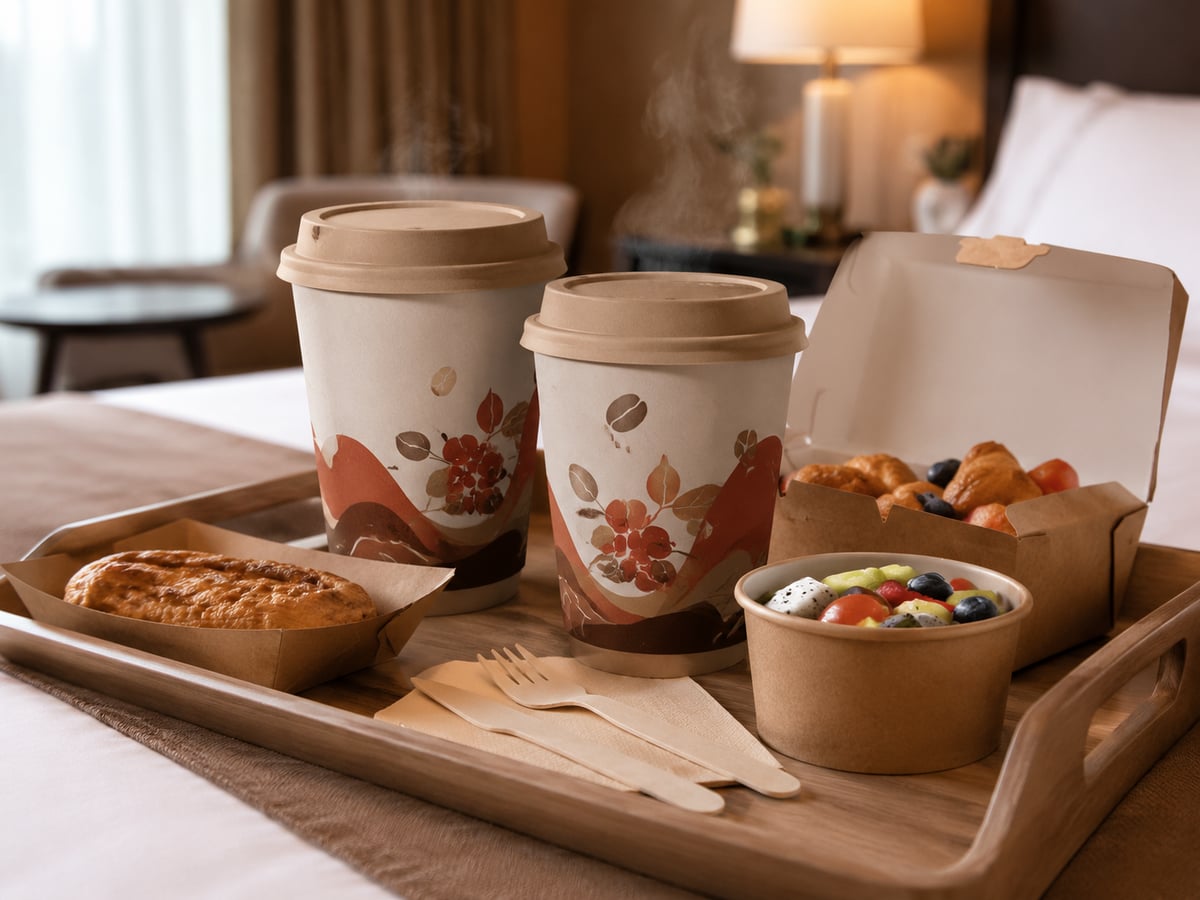
Global Market Branded Coffee Cups: Print Control Guide
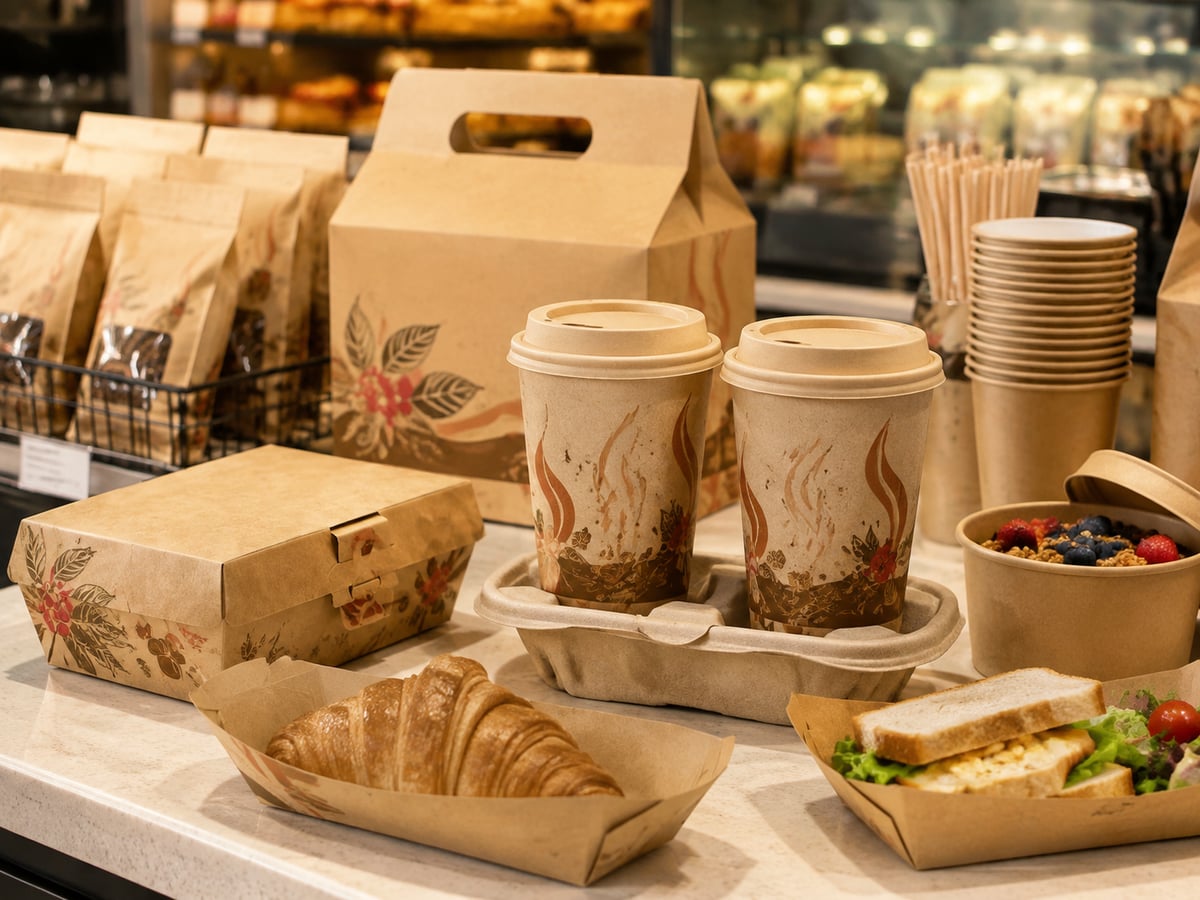
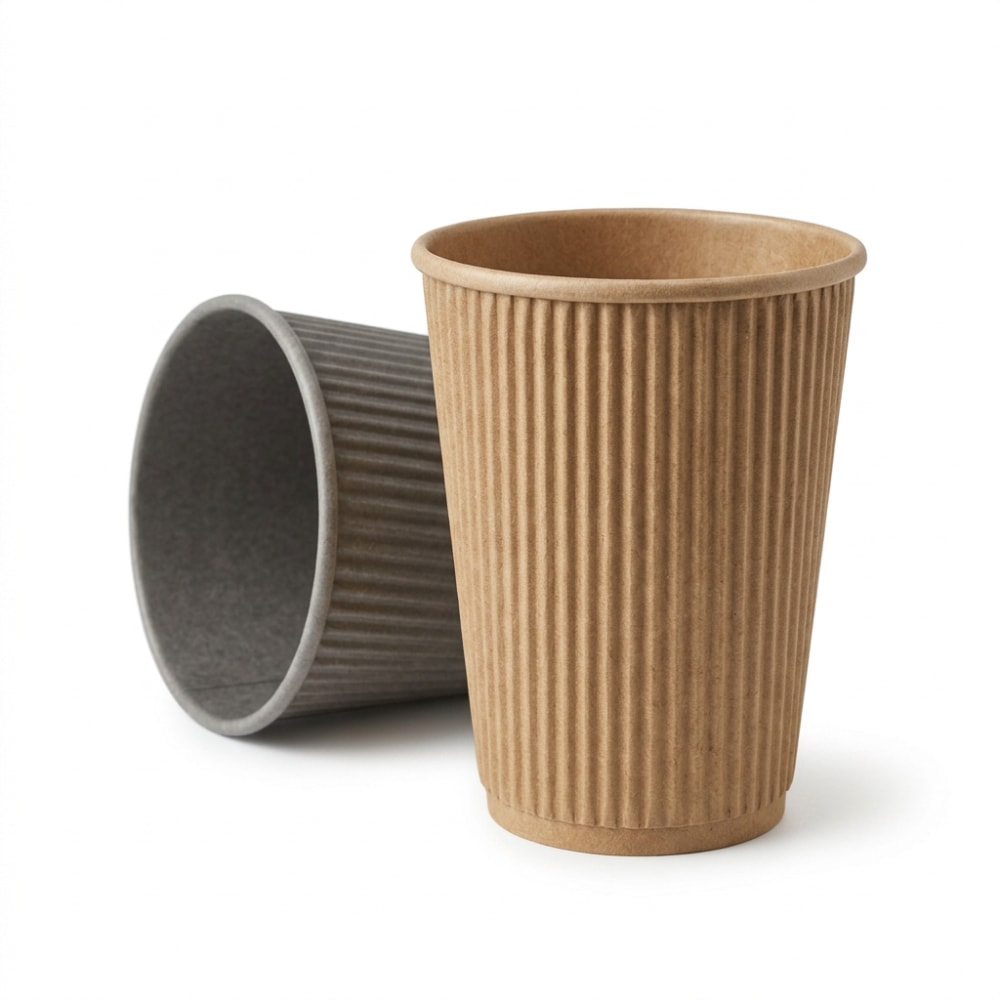
Branded coffee cups bulk programs succeed when the approved design is tested and signed off on the exact cup material, cup size, coating, print process and forming method that will be used in mass production. A digital artwork file alone cannot predict how ink will appear on a PE-coated white cup, water-based coated board, kraft paper, double-wall cup sleeve or ripple-wall surface. For multi-location brands operating across the Global Market, print control must be treated as a repeatable procurement system rather than a one-time design exercise.Before production, confirm the Pantone or approved colour targets, artwork scale, safe zones, seam position, rim clearance, registration tolerance, approved cup sample and visual acceptance criteria. During production, inspect colour, image alignment, scuff resistance, cup formation and packing integrity. After shipment, retain approved production samples, colour standards and batch records so the next order can be compared with the previous approved run.For café chains, beverage distributors, hotel groups and food-service importers, this approach reduces the risk of logo distortion, off-centre graphics, colour drift, seam interference and inconsistent presentations between stores in Dubai, London, Los Angeles, Singapore, Sydney, Rotterdam and other international trade locations. It also helps purchasing teams compare quotations based on total supply risk, not only the lowest unit price.Print-Control ItemWhy It MattersRecommended Buyer ActionArtwork master filePrevents accidental font, scale or logo changesSubmit editable vector artwork with linked specificationsPantone targetCreates a measurable colour referenceState Pantone Solid Coated or an approved physical sampleSeam exclusion zoneAvoids broken logos at the cup side seamKeep critical text and icons away from the seamRim clearanceProtects legibility near the rolled top edgeLeave a clear margin below the rimRegistration toleranceControls alignment of multiple coloursAgree acceptable movement before mass productionRetained production sampleSupports consistent repeat ordersKeep signed samples at both buyer and factory locationsThe table above provides the essential control points for bulk printed coffee cups. A buyer should convert each point into a purchase-order requirement, approved artwork note or quality inspection checklist. This creates a shared standard for brand, sourcing, quality-control and operations teams.Cup artwork is applied to a curved, tapered and formed product, not to a flat poster. The printable panel changes according to cup capacity, wall construction, paperboard thickness, lid fit and side-seam position. A 4 oz espresso cup, 8 oz takeaway cup, 12 oz latte cup, 16 oz cold beverage cup and 20 oz promotional cup each require a specific dieline. Artwork that looks balanced on a flat layout may appear too high, compressed or partially hidden after forming.Keep primary logos, store names, QR codes, allergen statements, certification marks and campaign text inside the designated safe zone. The upper edge needs clearance from the rolled rim because cup curvature and lid overlap can obscure graphics. The lower area requires clearance from the bottom curl and may show more variation during forming. The vertical seam should normally avoid key brand elements, fine text, barcode-like graphics, faces and precise linework.For international coffee brands, a useful practice is to create an artwork hierarchy. Place the main logo on the front panel; reserve side panels for secondary graphics, social media details or campaign copy; and use the rear panel for disposal icons, material messaging, QR codes or multilingual information. This protects brand recognition even when a customer holds the cup at a different angle.Cup ZoneBest UseElements to AvoidFront presentation panelMain logo and high-impact campaign imageVery small legal copySide seam zoneBackground pattern or non-critical colour fieldFaces, logo edges, QR codes and fine textUpper rim clearanceOpen background or simple design continuationSmall lettering close to the rolled rimLower curl clearanceNon-essential texture or solid colourFine borders and alignment-sensitive graphicsRear information panelDisposal instructions and secondary messagingPrimary logo as the only brand identifierFull-wrap backgroundPatterns designed to tolerate seam variationHard borders that must meet perfectlyThe artwork-zone table is especially important for brands that use one visual identity across multiple cup sizes. Rather than stretching one layout across every format, create size-specific artwork files using the supplier’s validated dieline. This can preserve logo proportions and protect visual consistency from espresso service through large iced drinks.Printing methods influence colour range, production economics, registration performance and suitable order quantity. Flexographic printing is widely used for high-volume paper cup production because it offers efficient running speeds and practical repeatability. Offset-style pre-printing may suit detailed graphics on cup paper before forming. Digital printing can be valuable for prototypes, limited campaigns or lower-volume versions, although its appearance and cost structure may differ from high-volume flexographic production.For a multi-location procurement program, the best method is not automatically the most detailed method. It is the method that produces reliable colour, durable print and economically sensible output at the required annual volume. A single-colour logo on white stock may be highly efficient with flexographic printing. A seasonal full-wrap illustration with multiple tones may justify a different production plan, especially where the brand needs short promotional cycles.Paper surface also affects ink appearance. Smooth white coated stock tends to produce cleaner, more saturated colours. Natural kraft stock can mute or warm colours because the base paper shows through. For kraft designs, consider using opaque white underprint where practical, simplifying colour palettes, or approving a dedicated kraft colour standard rather than expecting the same appearance as white board.Production MethodSuitable UseKey StrengthBuyer ConsiderationFlexographic printingHigh-volume branded cup ordersEfficient and repeatable productionPrinting plates and setup may applyPre-printed paperboardDetailed wraparound designsStrong image consistency before formingConfirm forming alignment after printingDigital printingSampling and limited campaignsFast artwork changesMatch to mass-production process before approvalSingle-colour printMinimalist café brandingLower complexity and strong recognitionChoose ink density carefully on kraft stockMulti-colour spot printChain-store logos and illustrationsControlled brand coloursSet registration limits in writingFull-wrap graphic printPromotions and seasonal launchesHigh visual impactDesign around seam and taper distortionThe comparison shows why print selection should happen before the final quotation. A buyer requesting branded coffee cups in bulk should state annual demand, order frequency, number of cup sizes, colour count, destination region and whether the design will change seasonally. These details allow the supplier to recommend a realistic method, tooling plan and minimum order quantity.var ctxMarketGrowth = document.getElementById('marketGrowthChart').getContext('2d');new Chart(ctxMarketGrowth, {type: 'line',data: {labels: ['2022', '2023', '2024', '2025', '2026', '2027'],datasets: [{label: 'Indexed Global Demand for Custom Coffee Cups',data: [100, 108, 117, 126, 136, 147],borderColor: 'rgb(95, 62, 40)',backgroundColor: 'rgba(95, 62, 40, 0.12)',borderWidth: 3,fill: false,tension: 0.3}]},options: {responsive: false, maintainAspectRatio: false, plugins: {legend: {display: true}}, scales: {y: {beginAtZero: false}}}});This line chart illustrates a realistic indexed demand pattern for custom coffee cup programs. Growth is driven by café expansion, delivery beverage formats, private-label retail, event catering and the increasing importance of branded takeaway packaging in the Global Market. The figures are directional planning indicators rather than a guarantee of individual buyer demand.Colour approval should be based on physical production-representative samples, not only monitor displays, PDF proofs or generic Pantone books. Screens vary by brightness and calibration. Ink also reacts differently on white, natural kraft, recycled-look, PE-coated and water-based coated cup stocks. A dark green may look richer on bright white board but softer on kraft. A yellow may appear more muted on an unbleached substrate. White ink coverage, coating gloss and curing conditions can also influence the final result.Specify the intended colour reference in the artwork document. Where a Pantone colour is required, identify the specific Pantone guide and substrate expectation. Where exact brand colour is not technically achievable on a selected material, approve an acceptable production target through a signed sample. For sophisticated brand systems, the supplier may record target values using colour measurement tools, alongside a visual approved standard viewed under consistent lighting.It is sensible to define what is critical. A signature red logo may require close control, while a background beige may have a broader acceptable tolerance. This avoids unnecessary rejection risk while focusing quality resources on the visual features that customers recognise most quickly.Registration refers to the alignment of each print colour and graphic element. Small registration movement can occur during printing, die-cutting and cup forming. On a simple bold logo, normal variation may be difficult to notice. On thin outlines, tightly fitted multi-colour text or designs that rely on exact border alignment, the same variation can become visible.Buyers should avoid creating artwork that depends on hairline traps, tiny reversed lettering or perfectly matched lines across the seam. Use adequate line thickness, sensible trapping and a tolerance-aware layout. If a design includes a coloured circle around a logo, ensure the circle is broad enough that minor registration movement does not make the logo look off-centre. When in doubt, request a pre-production sample formed into the final cup shape.Design FeatureRegistration RiskPractical RecommendationFine multi-colour textHighIncrease text size or simplify to one colourHairline bordersHighUse wider borders or remove themLarge solid logoLowMaintain generous clear spacePhotographic artworkMediumApprove final cup sample, not flat proof onlySeam-crossing patternMedium to highUse repeating artwork that tolerates movementQR codeHighKeep away from seam and validate scan performanceThis table helps marketing teams balance design ambition with factory reality. It does not restrict creativity; it directs creativity toward artwork that performs consistently at scale. Strong cup design is highly visible, easy to recognise and resilient to the small variations inherent in commercial production.Minimum order quantities for branded coffee cups depend on cup size, wall type, paper specification, colour count, printing method, tooling status, packing configuration and whether the factory can combine production with a similar specification. Custom printing may require plates, cylinders, colour setup, material preparation and production scheduling. These fixed costs are spread across the order quantity, so a larger run usually produces a lower unit cost.For a chain with outlets in Paris, Toronto, Riyadh, Johannesburg or Jakarta, annual forecasting is often more valuable than placing irregular emergency orders. A buyer can forecast total yearly usage, split deliveries by season or warehouse location, and align cup designs with planned promotions. This reduces the risk of paying repeated setup costs for small batches and can improve container utilisation for sea freight through ports such as Qingdao, Ningbo, Shanghai, Rotterdam, Jebel Ali and Long Beach.When comparing suppliers, request a transparent breakdown of sample charges, printing setup, unit price, master carton quantity, pallet dimensions, lead time and freight assumptions. The lowest ex-works price may not be the lowest landed or operational cost if it creates inconsistent print, unsuitable packing or frequent replenishment delays.var ctxIndustryDemand = document.getElementById('industryDemandChart').getContext('2d');new Chart(ctxIndustryDemand, {type: 'bar',data: {labels: ['Coffee Chains', 'Quick Service Restaurants', 'Hotels', 'Events', 'Retail Private Label', 'Corporate Catering'],datasets: [{label: 'Relative Demand Index for Custom Cups',data: [92, 78, 61, 55, 68, 49],backgroundColor: ['#6f4e37', '#a56c43', '#c58b56', '#d4a373', '#8d6e63', '#b08968']}]},options: {responsive: false, maintainAspectRatio: false, plugins: {legend: {display: true}}, scales: {y: {beginAtZero: true, max: 100}}}});The bar chart compares common demand segments for custom coffee cup procurement. Coffee chains usually require the highest repeat volume and strongest colour consistency. Quick-service restaurants increasingly use hot beverage cups for breakfast menus and delivery bundles, while hotels, events and corporate caterers often value short-run branding flexibility.Printed coffee cups must remain presentable through packing, transport, nesting, dispensing, filling and customer handling. Rub or scuff marks can occur when cups move against each other in sleeves, cartons or distribution bins. The likelihood depends on ink system, coating, print coverage, curing, cup surface, packing pressure and warehouse conditions.A practical quality plan includes visual inspection of printed surfaces, rub testing under agreed conditions, checks for ink transfer, assessment of large solid colour areas and verification after cups are nested. Where the cup will be used for hot beverages, it is also sensible to evaluate whether heat, moisture or condensation affects the printed surface in normal service conditions. Testing should reflect the cup’s intended application rather than a generic laboratory exercise alone.For dark, highly saturated designs, scuff marks can be more visible. Consider using protective design choices such as less full-coverage ink, a textured visual, suitable varnish or a cup sleeve where appropriate. The correct option depends on the material and intended customer experience.Repeat orders are where a print-control system proves its value. The best safeguard is an approved master sample retained by both the buyer and manufacturer. Each approved sample should identify cup size, product construction, paperboard type, coating, print method, colour version, production date and purchase-order reference. Photographs are useful supporting records, but physical samples are more reliable for reviewing actual tone, gloss, texture and print density.Maintain a reorder file containing the approved artwork version, dieline revision, Pantone instructions, supplier colour notes, print method, inspection criteria, carton specification and history of accepted production lots. If the brand operates in several countries, centralise this file so a regional buyer does not unknowingly approve a different shade or altered layout. A global sourcing team can use one master specification while allowing local language and regulatory panels where needed.Record to RetainPurpose for Repeat OrdersRecommended OwnerSigned physical cup samplePrimary visual benchmarkBuyer and manufacturerFinal artwork PDF and vector filePrevents use of obsolete logosBrand or marketing teamApproved dielineProtects correct logo placementPackaging engineering teamColour target notesGuides Pantone matching and toleranceQuality assurance teamInspection reportTracks recurring print or forming issuesSupplier quality teamBatch and carton referencesSupports traceability and claims handlingProcurement and warehouse teamThe records above turn repeat ordering into a controlled process. They are particularly valuable when a product manager changes, a buying office moves, a new distribution centre opens or a chain launches in another country. Reorder consistency should not depend on individual memory or informal email instructions.var ctxTrendShift = document.getElementById('trendShiftChart').getContext('2d');new Chart(ctxTrendShift, {type: 'line',data: {labels: ['2022', '2023', '2024', '2025', '2026', '2027'],datasets: [{label: 'Standard White Cup Preference',data: [68, 64, 60, 56, 52, 48],borderColor: '#8d8d8d',backgroundColor: 'rgba(141,141,141,0.15)',fill: true,tension: 0.3},{label: 'Custom Sustainable-Look Cup Preference',data: [32, 36, 40, 44, 48, 52],borderColor: '#557a46',backgroundColor: 'rgba(85,122,70,0.22)',fill: true,tension: 0.3}]},options: {responsive: false, maintainAspectRatio: false, plugins: {legend: {display: true}}, scales: {y: {beginAtZero: true, max: 80}}}});The area chart shows the ongoing shift from plain commodity-looking cups toward custom-branded packaging with material and sustainability messaging. For 2026 and beyond, buyers are increasingly requesting fibre-based appearance, simplified ink coverage, clear disposal communication, lower-impact coating options and verified food-contact documentation. A sustainability claim should always be matched to the actual cup construction and destination-market waste infrastructure.Fude Packaging supports Global Market buyers with custom paper cups and coordinated food-service packaging programs. Our technological capabilities include artwork and dieline review, Pantone colour matching, prototype development, functional sample evaluation and in-house laboratory testing. We help buyers identify whether a single-wall, double-wall or ripple-wall format is suitable for the drink temperature, customer handling experience and desired brand presentation. For insulated café formats, buyers can review our custom ripple-wall coffee cups as part of a broader hot-drink packaging program.Our manufacturing capabilities are supported by more than 20 years of packaging experience, a self-owned 30,000 m² factory in Shandong and automated lines designed for high-volume output. Manufacturing is managed from material selection through printing, die-cutting, forming, inspection, packing and export preparation. This direct control helps reduce handoff risk for buyers who need consistent cup dimensions, lid compatibility, print positioning and repeatable batch quality.Our service capabilities focus on practical international project management. We assist with OEM and ODM development, artwork checks, sample coordination, production planning, compliance documentation and export packing. Buyers can consolidate related categories through our paper cup product range, helping reduce fragmented sourcing and simplify visual consistency across beverage formats. For dairy and specialty beverage projects, our custom printed milk cup solutions can also be adapted to private-label requirements.Fude Packaging has experience serving overseas customers across more than 50 countries and can support common shipping arrangements, including full-container, less-than-container, air freight and express samples. For buyers shipping into major trade hubs, we can coordinate documentation and packing information that supports smoother warehouse receiving and customs preparation.Supplier Evaluation PointFude Packaging ApproachBenefit to Multi-Location BrandsArtwork engineeringDieline and print-zone checkingLower risk of seam or rim conflictsColour controlPantone matching and approved samplesMore stable brand appearance on reordersFactory controlIn-house production and inspectionReduced coordination gaps between suppliersProduct rangeCups, bowls and food packaging optionsOpportunity to consolidate purchasingSampling supportWhite, printed and functional samplesValidation before mass-production commitmentInternational serviceExport documents and shipping supportMore practical cross-border procurementThis supplier-comparison framework should be used alongside quotation analysis, independent inspection options and product testing. A responsible packaging partner will clarify limitations early, recommend suitable materials for the destination market and document what has been approved before production begins.var ctxSupplierComparison = document.getElementById('supplierComparisonChart').getContext('2d');new Chart(ctxSupplierComparison, {type: 'bar',data: {labels: ['Artwork Support', 'Colour Control', 'Production Scale', 'Testing Support', 'Export Service', 'Product Consolidation'],datasets: [{label: 'Fude Packaging Capability Index',data: [90, 88, 92, 85, 89, 91],backgroundColor: '#6f4e37'},{label: 'Typical Fragmented Sourcing Model',data: [58, 55, 62, 48, 57, 42],backgroundColor: '#b7a08c'}]},options: {responsive: false, maintainAspectRatio: false, plugins: {legend: {display: true}}, scales: {y: {beginAtZero: true, max: 100}}}});The comparison chart demonstrates why buyers should assess supplier capability across the complete procurement cycle. A cup may be inexpensive at factory gate level but expensive in practice if artwork errors, inconsistent colour, limited testing support or fragmented logistics create operational disruption. The capability index is an illustrative purchasing tool and should be validated through samples, specifications and supplier review.Provide editable vector artwork in AI, EPS or PDF format, with fonts converted to outlines or supplied separately, linked images embedded or included, colour references stated and the correct cup dieline used. Also provide a visual PDF showing intended logo placement. Avoid sending only low-resolution PNG or JPEG files for commercial cup printing.Paper colour, surface smoothness, coating, ink absorption and white-ink coverage affect visual appearance. White coated board generally produces brighter, cleaner colours, while kraft board gives a warmer, more natural result. Approve physical samples on the actual stock before confirming a colour standard.Keep key logos, fine text, QR codes, faces, borders and critical icons away from the side seam. Leave sufficient clearance below the rolled rim and above the lower curl. The exact dimensions depend on the cup size and supplier dieline, so always use the final technical template.Inspection normally includes visual checks under consistent lighting, comparison against the approved sample, assessment of multi-colour alignment, rub or scuff evaluation and examination of formed cups from the production batch. Buyers may request pre-shipment inspection or appoint an independent inspection company where appropriate.Retain signed physical cups, final artwork files, dielines, Pantone instructions, production batch records, inspection reports and packing specifications. Keep one approved master sample with the brand owner and one with the manufacturer. This provides a reliable benchmark for future orders.Key trends include stronger demand for traceable material claims, water-based or alternative barrier discussions, fibre-focused visual design, simpler colour palettes, digital proofing combined with physical approvals, QR-enabled consumer engagement and tighter destination-market packaging rules. Brands should review both performance and compliance before adopting new materials or sustainability claims. -

United States Paper Fries Cup Factory Buying Guide
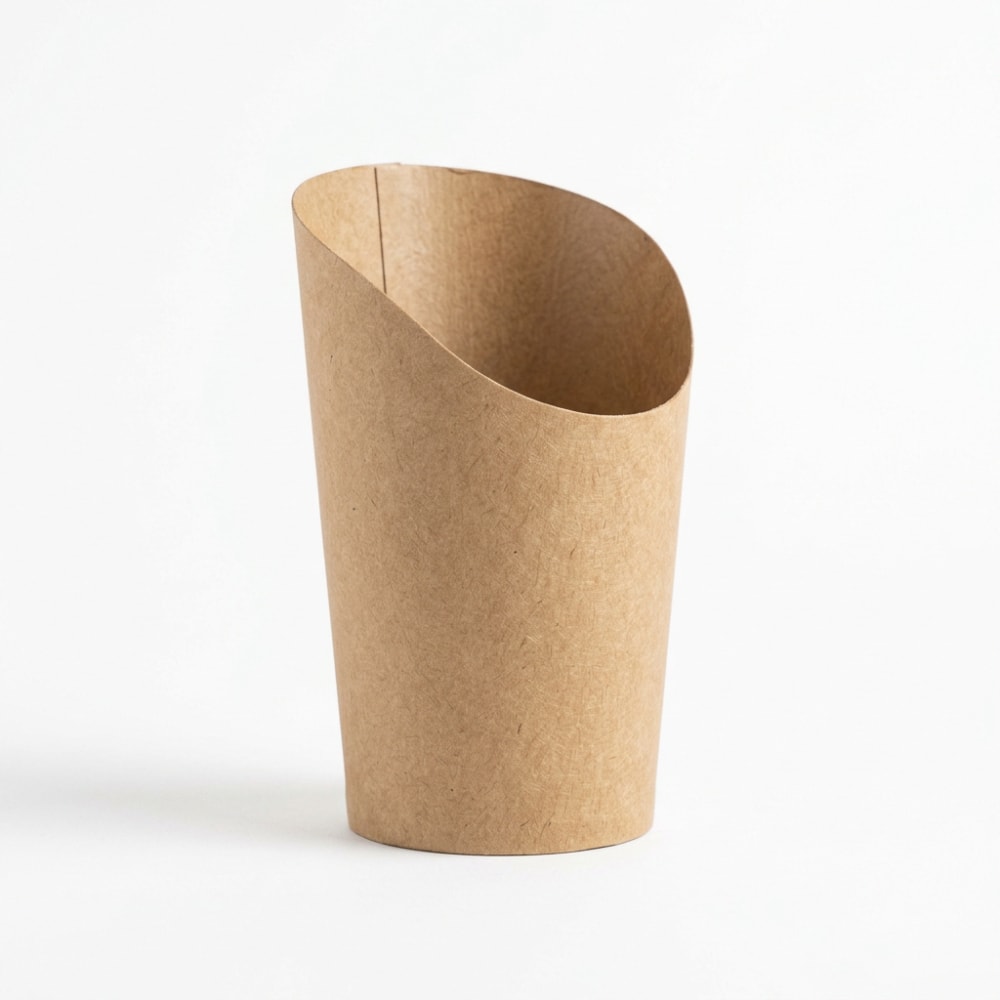
The short answer is simple: if you are buying fries packaging for restaurants, delivery brands, stadium vendors, food trucks, or quick service chains in the United States, working with a true paper fries cup factory usually delivers better cost control, more stable quality, stronger customization, and faster scale-up than buying through a trading company alone. For U.S. buyers in cities such as Los Angeles, Chicago, Houston, Atlanta, New York, Miami, and Seattle, fries cups are no longer just small paper holders. They are part of speed of service, grease resistance, shelf appeal, sustainability claims, and operational consistency across multi-location stores.A good factory partner should offer food-contact compliance, repeatable printing, leak and oil resistance, flexible order volumes, and dependable export planning through major logistics routes serving the Ports of Los Angeles, Long Beach, Savannah, Houston, and New York/New Jersey. It should also understand the real needs of the American market: combo meals, delivery growth, drive-thru throughput, social media branding, and eco-conscious packaging expectations. That is why many U.S. buyers now compare direct manufacturers instead of relying only on local import intermediaries.In this guide, you will find 2026 market outlook data, explanations of how a paper fries cup factory operates, differences between factories and traders, production capacity benchmarks, OEM and private label options, certification issues, and practical sourcing advice for the United States. You can also review Fude’s broader food packaging product range if you are planning fries cups together with bowls, trays, lunch boxes, or beverage cups.For most U.S. foodservice buyers, the best paper fries cup factory is one that combines four strengths: certified food-safe materials, reliable production capacity, custom printing capability, and export experience to the United States. Factories are especially valuable when you need consistent cup dimensions, grease-resistant inner barriers, branded artwork, or repeat orders for multiple store locations. They are also better suited for scaling from pilot launch to regional distribution because they control more of the production process directly.Paper fries cups are used widely across quick service restaurants, burger chains, cinema concessions, theme parks, ghost kitchens, food courts, sports venues, and convenience retail. The American market prefers formats that are stackable, easy to fill, resistant to hot oil transfer, and suitable for dine-in, takeaway, and delivery. Buyers also increasingly request FSC-based paper, compostable alternatives where applicable, and packaging designs that support premium positioning. Quick Evaluation Checklist for U.S. Buyers Factor Why It Matters Preferred Factory Standard Food safety compliance Protects brand and supports import confidence FDA-aligned materials and documented testing Grease resistance Prevents soak-through during hot fries service Consistent barrier coating and performance checks Print quality Supports brand visibility and color consistency Flexo or equivalent controlled printing process Production scale Reduces stockout risk during promotions Automated lines with measurable daily output Lead time Critical for chain launches and replenishment Clear sample, approval, and shipping schedule Customization support Needed for chain differentiation OEM, size, coating, and artwork flexibility The table above shows the minimum issues U.S. buyers should review before placing an order. A supplier that performs well on all six areas is more likely to support repeat purchasing and brand growth rather than just one-time transactions.Demand for paper fries cups in the United States is expected to remain strong through 2026, driven by quick service expansion, third-party delivery, convenience dining, and a continuing shift away from foam and less sustainable packaging formats. Even where local regulations vary by state and city, the market direction is clear: buyers want packaging that balances cost, food performance, and environmental positioning.Three structural demand drivers are especially important. First, U.S. fast casual and QSR operators continue to optimize portion control and presentation, making fries cups more attractive than generic open trays for premium fries, sweet potato fries, loaded fries, and side servings. Second, delivery and pickup orders have increased the need for packaging that travels well and photographs well. Third, regional chains are investing more in custom branding to stand out in crowded markets from Southern California to the Northeast corridor.Buyers in major metropolitan areas such as Dallas, Phoenix, Philadelphia, and San Diego also increasingly request multi-SKU packaging programs. That means they do not only want fries cups; they want matching bowls, snack cups, trays, and beverage packaging from the same source. This is one reason factory-direct sourcing has gained traction. Estimated United States Paper Fries Cup Demand Outlook Year Estimated Market Volume (million units) Primary Demand Driver 2022 1,180 Delivery expansion and dine-out recovery 2023 1,290 QSR menu growth and private label packaging 2024 1,410 Branding investment and convenience consumption 2025 1,535 Sustainability and store network growth 2026 1,690 Premium fries formats and multi-channel foodservice 2027 1,835 Further packaging conversion and product diversification The outlook above reflects a realistic expansion pattern rather than a sudden boom. For suppliers, that means the market rewards consistency. For buyers, it means locking in dependable partners before seasonal demand peaks such as summer travel, sports events, and year-end promotions.var ctx1 = document.getElementById('lineChartMarket').getContext('2d');var chart1 = new Chart(ctx1, { type: 'line', data: { labels: ['2022', '2023', '2024', '2025', '2026', '2027'], datasets: [{ label: 'U.S. Paper Fries Cup Demand (Million Units)', data: [1180, 1290, 1410, 1535, 1690, 1835], borderColor: 'rgb(75, 192, 192)', backgroundColor: 'rgba(75, 192, 192, 0.15)', fill: false, tension: 0.25 }] }, options: { responsive: true, maintainAspectRatio: false }});Beyond volume growth, 2026 will likely bring tighter buyer expectations around material traceability, print precision, and sustainability claims. U.S. procurement teams increasingly ask where paper is sourced, how coatings are selected, and whether a factory can provide documentation suitable for enterprise onboarding. This trend favors established manufacturers with systems rather than opportunistic suppliers.var ctx2 = document.getElementById('barChartIndustry').getContext('2d');var chart2 = new Chart(ctx2, { type: 'bar', data: { labels: ['QSR Chains', 'Food Trucks', 'Stadiums', 'Cinema', 'Delivery Kitchens', 'Convenience Stores'], datasets: [{ label: '2026 Estimated Demand Share (%)', data: [34, 11, 14, 8, 19, 14], backgroundColor: ['#ff6384','#36a2eb','#ffcd56','#4bc0c0','#9966ff','#ff9f40'] }] }, options: { responsive: true, maintainAspectRatio: false }});This industry distribution matters because product needs differ sharply. Stadium operators may prefer larger serving visibility, while ghost kitchens focus on compact stacking and sealing compatibility. QSR chains care most about consistency and brand printing across thousands of units.Many U.S. importers and restaurant groups first encounter packaging through brokers or trading companies. Traders can be useful when consolidating products from multiple factories or when buyers need local communication support. However, a true paper fries cup factory offers deeper control over production variables that directly affect price, quality, and delivery.The biggest difference is operational visibility. A factory controls machinery, raw materials, quality checkpoints, forming tolerances, and scheduling. A trader often depends on outside plants and may have limited control if there is a print issue, paper shortage, or coating inconsistency. For chain operators in the United States, that distinction becomes important when rolling out menu campaigns across many sites. Factory vs. Trader Comparison for Paper Fries Cups Criteria Factory-Direct Model Trader Model Price structure Usually lower due to fewer layers Often includes intermediary margin Customization depth High, with direct engineering input Moderate, depends on partner factories Quality issue resolution Faster root-cause investigation Can be slower due to coordination layers Production transparency Direct scheduling and process data Limited operational visibility Scale-up ability Better for chain expansion Depends on outsourced capacity Documentation support Typically stronger for audits and specs Varies widely by supplier network That does not mean traders have no place. They may be useful if you need mixed products from several factories in one shipment or require warehousing support near U.S. destinations. But if your priority is repeatable fries cup quality, print accuracy, and product development, a factory is generally the stronger long-term choice.In practical sourcing terms, buyers in the United States should ask: who owns the equipment, who performs quality checks, who approves raw material substitutions, and who can provide line-side production evidence? If the answer is unclear, you are likely dealing with a middle layer rather than a manufacturer.Capacity is not just about how many cups a supplier can make in one day. It is about how steadily that output can be maintained, how many sizes can run at once, and how well the factory balances standard SKUs with custom orders. A large promotional order for a U.S. burger chain may need tens or hundreds of thousands of units delivered within a tight timeline. That requires planning, tooling readiness, labor coordination, and raw material security.For American buyers, factory scale should be reviewed in three ways: physical space, line configuration, and throughput discipline. A modern packaging manufacturer with organized warehousing, printing equipment, forming lines, and inspection procedures is usually better prepared for consistent export performance than a small workshop with ad hoc scheduling.Shandong Fude Packaging Co., Ltd. illustrates this point through manufacturing capability. The company operates a modern facility of about 30,000 square meters and has more than two decades of packaging experience. Its automated production system supports daily output levels that can reach around 120,000 paper cups, while related converting, printing, and inspection functions help maintain stable quality. For U.S. customers, this matters because larger, integrated operations tend to perform better during repeated or expanding orders. Capacity Indicators Buyers Should Review Indicator What to Ask Why It Matters for the United States Daily output How many units per day by size? Supports campaign planning and replenishment Line flexibility Can different sizes run in parallel? Useful for chain menus with several fries portions Warehouse control How are finished goods stored? Reduces moisture and print damage risk Seasonal surge handling What happens during peak demand? Important for sports seasons and holidays Raw material planning How is paper inventory managed? Helps avoid delays from paper shortages Export packaging How are cartons prepared for long transit? Protects goods moving through U.S. ports and inland hubs The table above helps buyers move past marketing claims. Capacity should be verified through details: machine count, shift planning, material availability, and sample delivery history. If a supplier cannot explain these points clearly, large orders may carry higher risk.Factory scale also links to freight strategy. Goods arriving at Long Beach may feed West Coast distribution, while shipments into Savannah can serve Atlanta and broader Southeast networks. Importers serving Chicago or Dallas often care about pallet uniformity and carton robustness because inland handling can be more demanding than port-to-port movement alone.A paper fries cup factory typically follows a sequence that begins with material selection and ends with packed, inspected cartons ready for shipment. Understanding this process helps U.S. buyers compare suppliers more intelligently.First comes paper sourcing and barrier specification. Fries cups usually require food-grade paper with a coating that resists grease and moisture. Depending on the product program, that may involve PE lining or alternative eco-focused materials. Next comes printing. Flexographic printing is common for branded orders because it supports repeatability and efficient larger runs. After printing, the paper is die-cut into blanks shaped for the final cup form. These blanks then move to forming lines where heat, pressure, and mechanical shaping create the finished fries cup.After forming, the products pass through quality inspection. Checks may include visual review, print registration, dimension control, bonding strength, barrier integrity, and carton packing accuracy. Better factories also control environmental conditions in warehousing to prevent warping or moisture-related issues before export.From a technological capability perspective, Fude combines automated cup production, flexo printing, die-cutting, forming, quality lab checks, and controlled storage conditions. That integrated setup is valuable for American buyers because it reduces the chance that printing quality and structural performance are managed by separate parties with inconsistent standards. More about the company’s background can be seen on its company overview page. Main Stages in Paper Fries Cup Manufacturing Stage Purpose Buyer Concern Material selection Choose food-grade board and barrier Safety, grease resistance, sustainability claims Artwork preparation Set print layout and colors Brand consistency and readability Flexo printing Apply branding to paper stock Color accuracy and clean registration Die-cutting Create exact cup blank shape Dimensional accuracy and forming efficiency Forming Convert blank into finished cup Shape stability and seam strength Inspection and packing Confirm quality before shipment Carton integrity and order accuracy Each stage has direct consequences in real use. If die-cutting is inconsistent, cups may not stand well on counters. If printing drifts, brand identity suffers. If coating is weak, hot fries may cause visible oil transfer. This is why buyers should request samples produced under actual manufacturing conditions, not only hand-made mockups.var ctx3 = document.getElementById('areaChartTrend').getContext('2d');var chart3 = new Chart(ctx3, { type: 'line', data: { labels: ['2022', '2023', '2024', '2025', '2026', '2027'], datasets: [{ label: 'Share of Sustainable Material Programs (%)', data: [18, 23, 29, 35, 43, 50], borderColor: 'rgb(54, 162, 235)', backgroundColor: 'rgba(54, 162, 235, 0.25)', fill: true, tension: 0.3 }] }, options: { responsive: true, maintainAspectRatio: false }});The area chart shows another major 2026 shift: more buyers want solutions tied to responsible sourcing and reduced environmental impact. This does not mean every program will move to the same material immediately, but sustainable paper and coating decisions are now part of mainstream procurement discussions across the U.S. market.Consider a realistic example based on common industry needs. A regional U.S. burger and loaded-fries chain operating in Texas, Oklahoma, and Arkansas wanted to upgrade from generic unprinted fry sleeves to custom paper fries cups. The company’s goals were to improve shelf appeal, support Instagram-friendly presentation, reduce grease marks on serving trays, and standardize portioning across 28 locations.At first, the brand bought through a trader that sourced from multiple plants. The problems were familiar: slight color shifts between batches, occasional carton shortages, and inconsistent cup opening sizes that affected serving speed. The chain then moved to a factory-direct program with a structured sample and validation process.The manufacturer worked with the buyer on cup dimensions, board weight, oil resistance, and print contrast. A small pilot was tested in Dallas and Fort Worth stores, then rolled out more broadly. Within two quarters, the chain reported smoother packing during rush periods, better photo presentation of side items, and stronger customer recognition because the packaging matched the brand’s burger wraps and drink cups. Illustrative Case Study Results Metric Before Factory-Direct After Factory-Direct Print consistency score 82% 96% Packaging-related complaints 14 per quarter 5 per quarter Average reorder planning window 10 days 21 days Grease soak-through incidents Frequent during peak hours Rare Store-level portion consistency Moderate High Brand presentation impact Basic Premium and recognizable This kind of improvement is not unusual. The real value of a paper fries cup factory is often cumulative rather than dramatic in one single metric. Better packaging can improve speed, presentation, waste control, and purchasing predictability at the same time.Similar opportunities exist for food trucks in Austin, cinema operators in Orlando, concession vendors in Phoenix, and delivery brands in New York City. The common thread is that fries cups influence both operations and brand perception.For U.S. buyers, certifications and compliance documents are not decoration. They are part of risk management. A paper fries cup factory should be able to explain what standards it follows, what material traceability it can provide, and how it ensures food-contact suitability for the intended use.ISO 9001 is relevant because it indicates structured quality management. FSC matters for buyers who want responsibly sourced paper inputs. FDA-aligned food-contact compliance is critical for confidence in the U.S. market. Depending on the program, some buyers may also ask about EU contact standards, compostability claims, or other environmental certifications. What matters most is that documents align with actual product construction and intended use.Fude’s compliance profile is positioned around internationally recognized standards, including quality system controls, FSC paper sourcing options, and food-contact-oriented production. Its product development also includes choices such as PE-coated and PLA-based formats depending on application needs. For a U.S. customer, the key point is not just that a certificate exists, but that the factory can link it to specific materials, batches, and product specifications.Food safety is also operational. A clean production environment, inspection routines, and warehouse control can matter as much as the certificate itself. Buyers should ask how the factory prevents contamination, manages print materials, and separates approved stock from non-conforming items.Policy trends for 2026 are likely to intensify scrutiny on environmental claims and responsible sourcing. As states and cities continue refining packaging policies, buyers will need suppliers that can adapt material programs without sacrificing performance. That is another advantage of working with an experienced manufacturer rather than a pure price broker.OEM and private label services are often where the difference between a commodity supplier and a strategic packaging partner becomes clear. In the United States, restaurant groups want more than a plain container. They want packaging that matches menu identity, store décor, social media style, and customer expectations.A capable paper fries cup factory should support customization in size, shape, paper type, coating, print design, carton packing, and in some cases structural adjustments for specific use scenarios. Smaller cups may be designed for kids’ meals or sampling. Larger formats may serve loaded fries, waffle fries, onion rings, or combo sides. The best result comes when design and manufacturing teams cooperate early.Fude’s service capability is built around this process. Customers can begin with packaging selection support, move to artwork preparation and sample review, and then confirm production before shipment. Flexible order planning and typical lead times in the one- to two-week range for many standard programs can help U.S. buyers test a market before committing to a much larger rollout. You can review more about its custom packaging service process when planning OEM work.Private label programs are especially useful for wholesalers and distributors serving multiple U.S. states. A distributor in New Jersey may want one house brand for independent delis and another for regional restaurant customers. A factory with broad converting capabilities can help manage those parallel programs more efficiently.var ctx4 = document.getElementById('comparisonChartSuppliers').getContext('2d');var chart4 = new Chart(ctx4, { type: 'bar', data: { labels: ['Customization', 'Lead Time Stability', 'Traceability', 'Scale Capacity', 'Cost Control', 'Quality Consistency'], datasets: [{ label: 'Factory-Direct Advantage Score', data: [92, 85, 90, 88, 87, 93], backgroundColor: 'rgb(153, 102, 255)' }] }, options: { responsive: true, maintainAspectRatio: false }});The comparison chart highlights why larger U.S. buyers often move toward factory-direct relationships after early-stage sourcing through traders. The strongest gains usually appear in quality consistency, customization, and traceability.When evaluating OEM options, ask for dielines, Pantone matching approach, barrier details, carton dimensions, and shipping configuration. These details affect real supply chain costs, especially when goods are routed from coastal ports to inland distribution centers in places such as Memphis, Columbus, Kansas City, or Denver.Shandong Fude Packaging Co., Ltd. serves global foodservice customers with a focus on practical, brand-supporting, and more sustainable disposable packaging solutions. For buyers in the United States, the company’s value lies in the combination of technology, manufacturing discipline, and customer support rather than any single product alone.On the technology side, Fude operates integrated printing, die-cutting, forming, inspection, and warehouse control processes that support stable production of paper cups and related food packaging. That technical base helps maintain print clarity, dimensional accuracy, and barrier performance for items such as fries cups, paper bowls, deli boxes, and takeaway containers.On the manufacturing side, Fude’s modern factory footprint and automated lines allow it to serve both trial orders and larger wholesale demand. With more than 20 years of experience and service to customers across multiple continents, the company has built systems aimed at consistency, export readiness, and food-grade quality control. That is important for U.S. importers managing product launches, chain replenishment, or mixed packaging programs.On the service side, the company supports packaging selection, pre-production artwork review, sampling, OEM development, and shipping coordination. This matters to U.S. buyers because sourcing success often depends on communication discipline as much as on product itself. Instead of only quoting a price, a capable supplier helps reduce risk from design approval through delivery scheduling.Fude’s product scope goes beyond fries cups. Buyers sourcing multiple SKUs can pair paper fries cups with lunch boxes, trays, bowls, noodle containers, dessert packaging, fruit boxes, and beverage cups under one broader sourcing program. That approach can simplify vendor management for restaurants, distributors, and chain buyers. If you want to discuss an active project, visit the contact page to share specifications, artwork, or volume expectations.For U.S. importers comparing factories, local alternatives, and trading companies, the key question is whether the supplier can combine compliance, customization, and scale while staying responsive. That is the standard serious buyers should apply.1. What size paper fries cups are most common in the United States?Common U.S. sizes vary by serving style, but small snack portions, medium side servings, and larger loaded-fries formats are all widely used. The right size depends on your menu price point, portion control target, and filling line speed.2. Are paper fries cups better than open fry sleeves?They can be. Cups often improve presentation, stacking, portion consistency, and grease handling. Sleeves may still work for very high-speed, low-cost service models, but cups are often preferred for premium fries and branded presentation.3. What material should I choose for hot, oily fries?Use food-grade paper with a reliable grease-resistant barrier suited to serving temperature and dwell time. Your factory should recommend a construction based on whether the product is for dine-in, takeaway, or delivery.4. Can I print my logo on every fries cup?Yes. Most serious factories offer custom flexographic printing for branded designs. You should confirm color targets, artwork file requirements, and print area limitations before approval.5. How long does production usually take?Lead time depends on quantity, printing complexity, and season. For many standard custom projects, sample confirmation plus production can be completed within a relatively short window, but ocean freight to the United States must also be planned carefully.6. What certifications should I ask for?Ask about food-contact compliance documentation, quality system certifications such as ISO 9001, and FSC if responsible sourcing is part of your procurement policy. If you want compostable options, verify the exact material and corresponding certification.7. Is a factory always cheaper than a trader?Not in every single scenario, but factory-direct sourcing is often more cost-effective over time, especially for recurring custom orders. The biggest savings may come from better consistency, fewer claims, and lower coordination friction.8. Can a factory help with a private label line for U.S. distribution?Yes. Many factories support distributor brands, regional house labels, and multi-SKU packaging programs. This is useful for wholesalers supplying restaurants, food trucks, and convenience retail channels.9. What should I ask before placing a first order?Ask about material structure, grease resistance, print method, MOQ, lead time, carton count, export packing, certifications, sample policy, and quality control checkpoints. Also clarify who manages revisions if artwork or dimensions change.10. What are the biggest 2026 trends in paper fries cup sourcing?Expect more demand for responsibly sourced paper, stronger documentation, automation-driven consistency, improved print impact, and packaging designs that fit delivery, pickup, and premium snacking. Policy pressure and consumer expectations will keep sustainability and traceability high on the agenda.For U.S. buyers, the paper fries cup category is no longer a minor packaging detail. It sits at the intersection of operations, customer experience, compliance, cost management, and brand identity. Choosing the right paper fries cup factory can help restaurants and distributors improve performance from kitchen line to final handoff. The most successful sourcing programs are those that balance material science, production discipline, and clear communication from the very start. -
Canada Guide to Selecting Five-Compartment Catering Trays
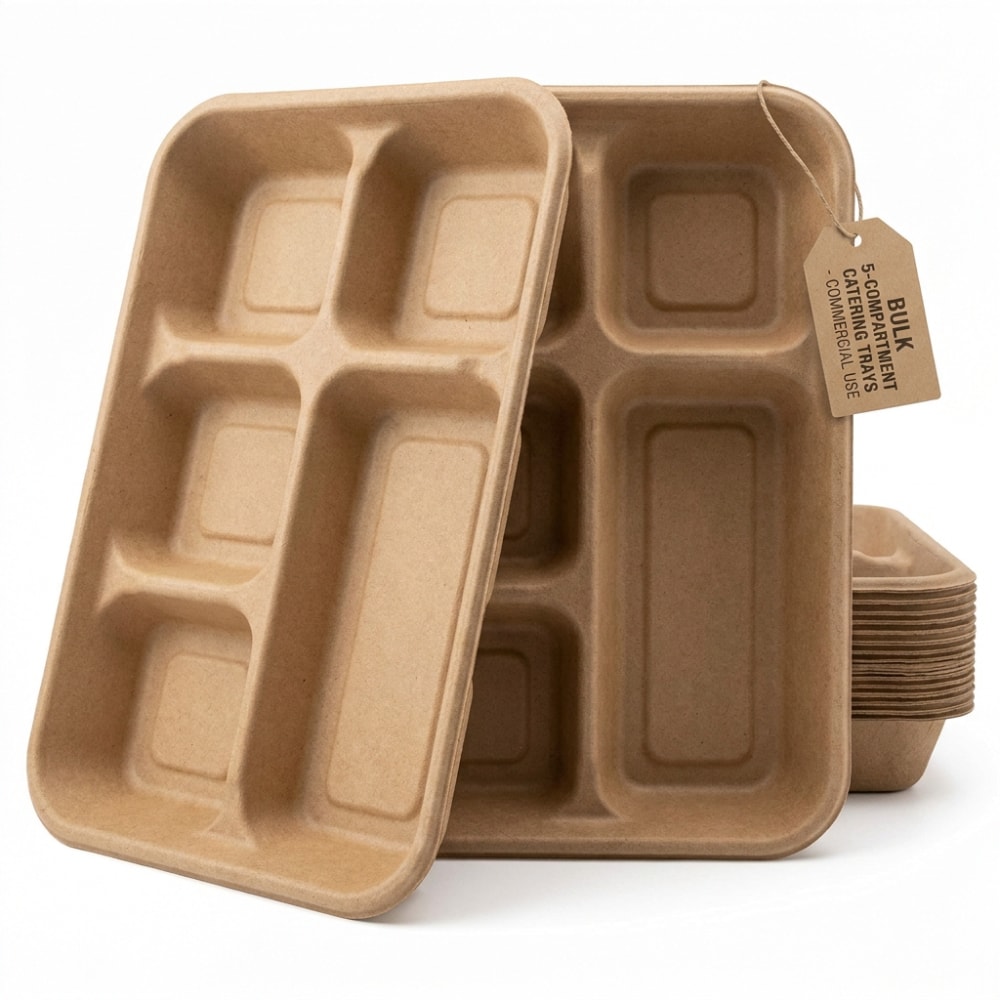
The best five-compartment paper catering tray for a Canadian food-service operation is not always the lowest-priced option. It should match the complete meal: serving temperature, sauce level, food weight, holding time, delivery route, service speed, storage space, sustainability target, and brand presentation requirements. A tray that performs well with dry sandwiches may fail when it carries hot gravy, steamed vegetables, rice, protein, dessert, and a cold side in the same package.For caterers, schools, hospitals, retirement residences, correctional facilities, airline kitchens, corporate cafeterias, and event operators, the most reliable decision is a weighted trial using real menu components. Test hot and cold foods together, measure divider stability, check tray flex when lifted with one hand, review oil and moisture migration, and observe how the tray performs after 20, 40, and 60 minutes of holding.In Canada, buyers should also consider local warehousing costs in Toronto, Vancouver, Montreal, Calgary, Edmonton, and Halifax; winter distribution conditions; provincial food-service rules; and the growing preference for fibre-based packaging. The right tray is the one that protects meal separation and service quality while controlling the total cost of purchasing, storage, labour, disposal, and claims.Selection FactorWhat to MeasureWhy It MattersPractical TargetMeal temperatureFood temperature at filling and serviceHeat can soften low-grade paperboardTest with meals above 60°CMoisture levelGravy, sauce, condensation, wet sidesMoisture can weaken dividers and cornersHold for at least 40 minutesPortion weightTotal loaded tray weightHeavy meals increase bottom flexTest expected maximum portionDivider strengthCross-compartment deflectionControls food mixing and presentationNo collapse during normal handlingStacking requirementFilled tray compression resistanceImportant for banquet and institutional serviceTest planned stack heightBranding needPrint coverage, colour accuracy, finishSupports visible brand consistencyApprove printed production proofThis checklist converts a general packaging discussion into measurable approval criteria. Procurement teams should document the tray grade, coating or barrier type, dimensions, compartment layout, acceptable flex, print standard, packing configuration, and test results before confirming a repeat order.Five-compartment catering trays generally differ by moulding method, paperboard thickness, rim design, divider depth, barrier treatment, and whether the tray is supplied with a lid. The most common commercial options are moulded fibre trays, formed paperboard trays, coated paper trays, kraft-look trays with barrier layers, and premium printed meal trays designed for branded catering programs.Moulded fibre trays are often selected for institutional meals because their formed structure can provide useful compartment definition and a natural fibre appearance. Formed paperboard trays may offer cleaner printing surfaces and more precise geometric shapes. Barrier-coated paper trays are normally better suited to meals containing sauces, oils, braised foods, curries, or high-condensation items. Premium custom printed trays are appropriate when a hospitality group, university, stadium, or chain caterer wants packaging to reinforce the customer experience.Tray OptionTypical ConstructionKey AdvantageMain LimitationSuitable Canadian UseStandard moulded fibrePressed recycled or virgin fibre pulpGood compartment definitionLimited resistance to wet foodsSchools and dry meal serviceHeavy-duty moulded fibreThicker formed fibre with reinforced baseHigher load capacityUsually bulkier in storageHospitals and community meal programsUncoated paperboardFolded or formed paperboardSharp appearance and printable surfaceNot ideal for sauce-heavy foodsBakery, sandwich, and cold cateringBarrier-coated paperboardPaperboard with moisture or grease barrierImproved hot-food protectionSpecification must match disposal goalsHot lunches and delivery cateringKraft-look premium trayKraft visual surface with food-contact barrierNatural brand presentationHigher unit cost than plain stockOrganic, café, and premium eventsCustom printed trayConfigured paperboard with branded graphicsStrong visibility and differentiationHigher MOQ and artwork approval timeChains, campuses, and major venuesThe table shows why “paper tray” is too broad a purchasing description. Two trays with the same five-compartment layout can perform very differently once loaded with a complete roast dinner, a poutine-style side, sauced chicken, pasta, or a mixed hot-and-cold meal.Construction should be evaluated as a system rather than a single material claim. The base must carry the meal load, dividers must remain upright, the rim must resist distortion, and the food-contact surface must control grease and moisture for the required holding period. In Canadian operations, trays may also face cold loading docks, insulated delivery bags, steam-table conditions, and rapid temperature changes during winter transport.Paper weight alone is not enough to predict performance. A well-designed tray can achieve useful rigidity through ribbing, formed corners, flange geometry, and divider shape. Conversely, a heavier board tray may still flex excessively if the base span is wide or the divider junctions are weak. For meals with gravy, stewed proteins, buttery vegetables, oily rice, or sauce cups, a suitable barrier is essential.Construction FeaturePerformance EffectBest forTrial MethodReinforced bottom ribsReduces centre sag under weightProtein-heavy mealsLift loaded tray from one edgeDeep dividersImproves food separationSauced entrées and mixed sidesCheck migration after transportWide rim flangeImproves hand grip and lid supportFast service linesOpen and close repeatedlyGrease-resistant barrierControls oil penetrationFried foods and roasted meatsInspect underside after 45 minutesMoisture-resistant barrierSlows softening from wet foodsGravy, curries, steamed vegetablesHold hot meal in covered trayVented lid compatibilityBalances heat retention and condensationDelivery and off-site cateringCheck food texture after 30 minutesFor purchasers seeking fibre-based food packaging, the barrier choice should be reviewed alongside the intended end-of-life pathway. Requirements can vary by municipality, collection system, and customer sustainability policy. Buyers should request current food-contact documentation, material details, and disposal guidance that is appropriate for the Canadian destination and program.The ideal application depends on whether the meal is dry, hot, oily, wet, portion-controlled, branded, or transported. A tray with five sections is especially useful where the menu requires nutritional separation, allergen-aware portioning, visual presentation, or side-dish control. It is frequently used for complete lunches containing an entrée, starch, vegetable, fruit, dessert, and sauce or snack component.For school and university food programs in Ontario, British Columbia, Alberta, and Quebec, trays are commonly evaluated for portion consistency, rapid loading, student handling, and high-volume storage. Healthcare meal services place greater emphasis on dietary segregation, reliable compartment boundaries, soft-food menus, and predictable performance over long service windows. Corporate caterers may prioritize visual appeal, logo printing, and clean stacking for boardroom meals.var ctx = document.getElementById('lineChart').getContext('2d');new Chart(ctx, {type: 'line',data: {labels: ['2022', '2023', '2024', '2025', '2026', '2027'],datasets: [{label: 'Indexed Canadian demand for fibre-based compartment meal trays',data: [100, 108, 117, 126, 137, 149],borderColor: 'rgb(42, 122, 89)',backgroundColor: 'rgba(42, 122, 89, 0.12)',fill: false,tension: 0.3}]},options: {responsive: false, maintainAspectRatio: false}});This indicative demand trend reflects the continuing shift toward portioned meal programs, convenient off-site catering, and packaging specifications that support sustainability objectives. Actual purchasing volumes will vary by province, public-sector contract cycle, food-service traffic, and local collection infrastructure.ApplicationRecommended Tray StyleCritical RequirementExample MealSchool lunch serviceHeavy-duty moulded fibreSafe handling and portion separationChicken, rice, vegetables, fruit, cookieHospital meal programBarrier-coated five-compartment trayMoisture control and reliable dividersProtein, purée, starch, vegetables, dessertCorporate cateringCustom printed paperboard trayBrand presentation and clean appearanceHot lunch with salad and dessertUniversity diningReinforced fibre tray with lid optionFast service and stackabilityInternational meal combinationsCommunity meal deliveryMoisture-resistant tray with secure lidTransport stabilityRoast dinner with gravy and sidesStadium or event cateringKraft-look tray with grease barrierHandheld convenience and visual appealBBQ meal, fries, slaw, dessertThese examples are not substitutes for testing. A meal containing dry rice and roasted vegetables may work in a standard fibre tray, while the same tray may soften when filled with sauced pasta and gravy. Buyers should test their highest-risk menu, not only their easiest menu.Divider failure and tray flex are two of the most common operational risks in five-compartment paper catering trays. Divider failure occurs when a partition bends, tears, or allows foods to cross between sections. Tray flex occurs when the base bows under the meal’s weight, potentially causing spills, loss of presentation, or difficult handling for staff and guests.Risk increases when trays are filled beyond their intended capacity, carried one-handed, stacked when hot, exposed to condensation, or used with wet foods held for extended periods. A tray may appear satisfactory immediately after filling but fail after a courier drive through downtown Toronto traffic, a banquet service delay in Montreal, or delivery from a Vancouver commissary to a corporate office.Use the heaviest anticipated meal when testing, including sauces and beverages if they travel on the same service cart. Perform a lift test from the rim, centre, and one corner to identify weak handling positions. Fill every compartment because uneven loading can create more flex than a uniformly distributed meal. Test both uncovered and lidded conditions, as trapped steam can accelerate softening. Evaluate stacked trays after the expected holding time, not immediately after loading. Define a rejection limit for divider deflection, seepage, bottom staining, and visible deformation. A useful acceptance record includes meal name, total meal weight, compartment weights, food temperatures, fill time, observation intervals, tray code, lid code, tester name, photographs, and pass/fail conclusion. This record makes future supplier comparisons fair and repeatable.Minimum order quantity is influenced by tray dimensions, material grade, barrier specification, tooling, printing method, number of colours, packing style, and whether a new structure is required. Standard white or natural-fibre stock normally offers the most flexible entry point. Custom printing, special colours, proprietary tray shapes, or dedicated lid designs generally require a larger commitment because they involve setup, material allocation, production planning, and quality approvals.For Canadian importers and distributors, customization should be considered in stages. First approve functional white samples. Next confirm the printed digital proof and colour expectations. Then approve a printed pre-production sample before full production. This process helps avoid expensive surprises involving logo position, readable nutrition messaging, barcode placement, Pantone interpretation, or print coverage on formed surfaces.var ctx = document.getElementById('barChart').getContext('2d');new Chart(ctx, {type: 'bar',data: {labels: ['Schools', 'Healthcare', 'Corporate Catering', 'Universities', 'Events', 'Meal Delivery'],datasets: [{label: 'Relative demand for five-compartment trays',data: [82, 88, 64, 76, 57, 71],backgroundColor: ['#5d9c59', '#3f7cac', '#f2a65a', '#7b68aa', '#d76d77', '#4f9da6']}]},options: {responsive: false, maintainAspectRatio: false}});The industry-demand comparison illustrates why customization decisions should align with volume certainty. Healthcare and school programs can often justify stable scheduled production because demand is regular. Event catering may require shorter runs, neutral stock, and flexible branding through labels, sleeves, or inserts instead of fully printed tray inventory.Customization LevelMOQ ImpactLead-Time ConsiderationBest Buyer ProfileStandard natural fibre trayLowestUsually fastestSmall caterer or trial buyerStandard white trayLow to moderateStock-dependentDistributor needing flexible inventoryOne-colour logo printModerateArtwork and print approval requiredRegional catering groupMulti-colour branded printHigherProofing and colour control requiredRestaurant chain or campusCustom compartment layoutHighTooling and functional validation requiredLarge institutional contractCustom tray and lid systemHighestLonger engineering and testing cycleNational food-service programThe table clarifies that MOQ is not simply a pricing issue. It is a risk-management decision. Buyers with uncertain menu volume should avoid overcommitting to highly specific printed inventory. Buyers with stable national demand can often gain operational and branding benefits from scheduled orders and forecast-based production.Freight is a major part of the landed cost of catering trays because trays are relatively light but occupy substantial volume. Nesting efficiency, carton dimensions, case count, pallet pattern, container utilization, and damage resistance all affect the final cost per usable unit. A cheaper tray can become more expensive if it wastes warehouse space or ships inefficiently.For shipments entering Canada through Vancouver, Prince Rupert, Montreal, Halifax, or inland rail routes to Toronto and Calgary, buyers should assess carton strength and pallet stability as carefully as tray unit cost. Long-distance movement, seasonal humidity changes, and warehouse handling can damage weak cartons or distort poorly protected trays.var ctx = document.getElementById('areaChart').getContext('2d');new Chart(ctx, {type: 'line',data: {labels: ['2022', '2023', '2024', '2025', '2026', '2027'],datasets: [{label: 'Share of buyers prioritizing lower-volume, nest-efficient tray packs',data: [38, 43, 49, 55, 61, 66],borderColor: 'rgb(54, 102, 153)',backgroundColor: 'rgba(54, 102, 153, 0.28)',fill: true,tension: 0.3}]},options: {responsive: false, maintainAspectRatio: false}});The trend highlights the growing importance of freight efficiency. As Canadian storage and transportation costs remain material to food-service operations, procurement teams increasingly compare cubic volume per thousand trays, cartons per pallet, and expected container loading rather than evaluating only quoted price per unit.Logistics MeasureWhat to CompareOperational EffectBuyer ActionNesting depthStack height per 100 traysControls warehouse cube useRequest packed dimensionsCarton strengthBoard grade and compression performanceReduces transit damageInspect export carton samplesUnits per cartonInner pack and master case quantityChanges picking speedMatch to service-site consumptionPallet patternCases per layer and total pallet heightAffects stable storage and handlingConfirm warehouse equipment limitsContainer utilizationCartons per 20-foot or 40-foot containerAffects landed cost per trayCompare cubic loading plansDamage allowanceCrush, dust, moisture, deformation riskInfluences usable inventorySet carton acceptance criteriaFor distributors, a practical approach is to calculate landed cost per serviceable tray: product price plus freight, duties where applicable, inland delivery, warehouse handling, expected damage, and inventory carrying cost. This calculation often produces a more accurate answer than comparing supplier quotations line by line.Different buyer types should prioritize different specifications. A local independent caterer may need flexible stock and low storage commitment. A hospital contractor needs repeatability and documented food-contact compliance. A food-service distributor needs carton efficiency, dependable replenishment, and a product range that can be consolidated under one supplier. A restaurant chain may place greater value on print consistency and nationwide program alignment.var ctx = document.getElementById('comparisonChart').getContext('2d');new Chart(ctx, {type: 'bar',data: {labels: ['Load Strength', 'Moisture Control', 'Print Quality', 'Freight Efficiency', 'MOQ Flexibility', 'Meal Separation'],datasets: [{label: 'Standard fibre tray',data: [68, 52, 45, 78, 88, 70],backgroundColor: 'rgba(92, 155, 102, 0.75)'},{label: 'Barrier-coated custom tray',data: [88, 91, 90, 66, 52, 89],backgroundColor: 'rgba(63, 124, 172, 0.75)'}]},options: {responsive: false, maintainAspectRatio: false}});This comparison is an illustrative buying framework rather than a universal product rating. The strongest choice depends on the menu and supply model. Standard fibre trays can offer a practical balance for dry or moderately moist meals and flexible inventory. Barrier-coated custom trays may produce better performance for demanding menus and visible brands but usually require higher planning discipline.Independent caterers: Start with a robust standard tray, test the heaviest menu, and use labels or sleeves for flexible branding. Schools and universities: Prioritize divider definition, safe handling, nesting efficiency, and scheduled replenishment. Healthcare and senior living: Specify moisture resistance, stable compartments, quality documentation, and consistent batch performance. Distributors: Select a manageable range of neutral stock plus one or two premium tray options for higher-value customers. Restaurant chains: Use structured artwork approval, pre-production samples, and forecast-based orders to protect brand consistency. Event venues: Choose tray and lid combinations that remain presentable after holding and transport through service corridors. Fude Packaging supports overseas B2B buyers with a manufacturing model designed for scalable paper food packaging. For Canadian customers seeking five-compartment meal trays alongside cups, bowls, boxes, and other food containers, consolidating compatible categories with one manufacturer can simplify purchasing, artwork management, quality control, and container planning. Explore the available food container range when building a coordinated meal-packaging program.Technological capability begins with controlled material selection, printing, die-cutting, forming, inspection, and laboratory testing. The company operates an in-house laboratory to assess practical quality and performance factors, helping buyers evaluate strength, food-contact suitability, print quality, leak prevention, and resistance relevant to the intended use. Documentation support can include food-contact and quality-management materials aligned with requirements such as FDA-related food-contact expectations, FSC material options, ISO 9001 systems, and destination-specific requirements.Manufacturing capability is supported by more than 20 years of packaging experience, a self-owned 30,000 m² production base in Shandong, automated output capacity of up to 120,000 units per day, and full-batch traceability. This scale is useful for Canadian importers, distributors, institutional suppliers, and chains that need repeatable quality rather than one-off spot purchasing. Fude Packaging can also support products across cups, bowls, boxes, trays, and multi-compartment meal packaging, reducing the complexity of sourcing from multiple factories.Service capability is equally important for an export program. Buyers can work through digital proofs, white samples, printed samples, and printed pre-production proofs before mass production. The team can assist with artwork and dieline checking, material recommendations, custom sizes, print requirements, packing plans, inspection coordination, and shipping documentation. Learn more about custom packaging support or review the company’s manufacturing background before beginning a project.For Canadian programs, scheduled orders can help manage inbound inventory around seasonal demand, school terms, event calendars, and multi-location rollouts. Standard production timing is often approximately 7–15 days, depending on product specifications and quantity. Sea freight, air freight, full-container, less-than-container, and express sample arrangements can be considered according to the deadline and budget.A heavy-duty tray with well-defined dividers and a moisture-resistant food-contact surface is usually the best starting point for complete hot meals. For meals with gravy, sauces, oily proteins, or long holding times, request a barrier-coated option and test it using the actual menu. The ideal choice should keep foods separate, maintain a stable base, and remain easy to carry after the full service interval.The lowest unit-price tray is not necessarily the lowest operating-cost tray. Calculate product price, freight volume, storage cube, labour speed, breakage, food-mixing complaints, damage, and disposal requirements. A slightly stronger and more nest-efficient tray may lower total cost by reducing waste, service interruptions, and warehouse expense.Deep moulded trays may occupy more space than efficiently nested paperboard designs, while heavy-duty constructions can require stronger export cartons. Ask for case dimensions, tray nesting measurements, pallet layout, units per carton, and container-loading estimates. This is especially important for inventory moving through Vancouver, Toronto, Montreal, Calgary, and regional distribution centres.Custom printed paperboard trays typically offer the best surface for logo visibility, promotional messaging, and consistent colour presentation. Natural-fibre trays can support a sustainability-oriented appearance but may have more limited print detail. Buyers should approve a digital proof and a printed pre-production sample before confirming mass production.Use at least two supplier options and test them with the same meal, portion weights, temperatures, loading process, holding time, lid condition, transport route, and stacking requirement. Record tray flex, divider movement, moisture marks, grease penetration, lid fit, food migration, and guest-facing appearance. Set pass/fail standards before viewing results, then retain the final approval record for future purchasing.To discuss tray samples, customization, freight packing, or a Canadian meal-service project, contact Fude Packaging with your food type, serving temperature, estimated volume, destination city, branding requirements, and target delivery date. -

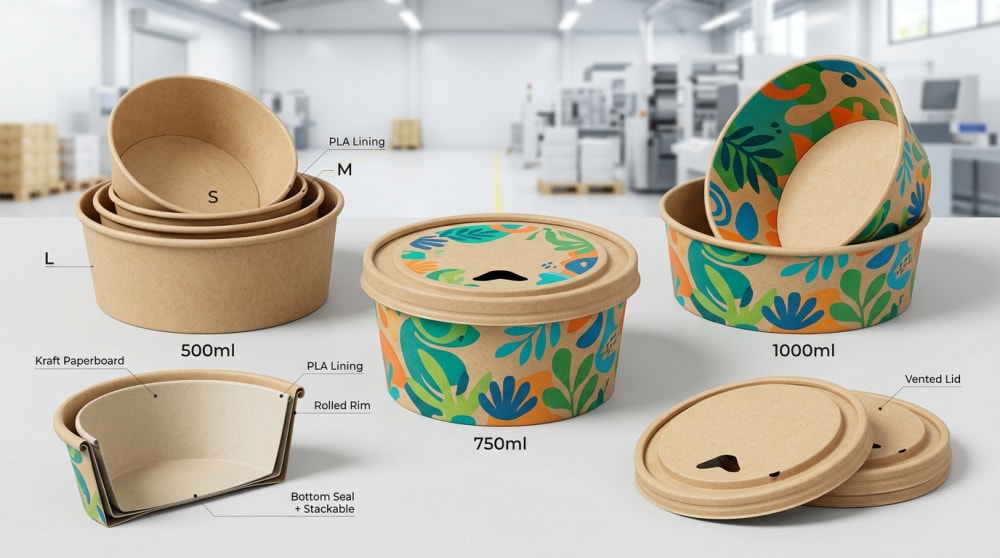
Canada Guide to Durable 500–1500 ml Kraft Salad Bowls
For Canadian salad chains, delis, grocery prepared-food departments, caterers and distributors, a 500–1500 ml kraft salad bowl should be specified as a complete food-packaging system, not purchased simply because it has a natural brown paper appearance. The practical specification combines paperboard grade, basis weight, barrier coating, bowl geometry, rolled rim quality, bottom-seal integrity and compatible lid fit.As a starting point, 250–300 g kraft paperboard with a food-contact barrier coating is suitable for many cold and room-temperature salad applications. However, the right material depends on portion size, moisture load, oil content, dressing type, holding time, delivery distance and stacking conditions. A 500 ml side-salad bowl may perform well with a lighter construction than a 1500 ml sharing bowl carrying greens, roasted vegetables, grains, protein and dressing for several hours.For Canada, buyers should test bowls using their real menu items in conditions similar to service in Toronto, Vancouver, Montréal, Calgary, Ottawa or Halifax. The most common performance failures are dressing leakage at the base or side seam, fibre softening after contact with wet ingredients, lid distortion, poor stacking strength and poor lid retention during delivery. Purchase approval should therefore be based on samples, written acceptance criteria, test evidence and a repeatable approval record for every production batch.Typical CapacityCommon Menu UseSuggested Starting BoardKey Barrier NeedMain Failure RiskRecommended Lid500 mlSide salad, fruit salad250 g kraft boardLight moisture resistanceBase softeningPET or rPET flat lid650 mlPremium side salad250–270 g kraft boardWater-based or PE barrierDressing seepageClear fitted lid750 mlIndividual salad bowl270–280 g kraft boardMoisture and grease barrierSidewall collapseHigh-dome lid900 mlMeal salad with protein280–300 g kraft boardEnhanced oil resistanceRim leakageSecure snap-fit lid1000 mlGrain bowl or lunch salad280–300 g kraft boardHigh moisture resistanceBottom seam leakageVent-free dome lid1200–1500 mlSharing salad or catering portion300 g board or upgraded structureStrong moisture and grease barrierCompression and lid releaseHeavy-duty compatible lidThe table provides a practical starting point rather than a universal rule. Bowl depth, top diameter, base diameter, food temperature and product hold time can change the required construction. A shallow 1000 ml bowl may be stiffer than a tall 1000 ml bowl made from the same paper grade because geometry contributes to real-world rigidity.A kraft salad bowl generally consists of food-contact paperboard, an internal barrier layer, printed or unprinted exterior decoration, formed sidewall and bottom components, a curled rim and a fitted lid. Each component affects performance. The paperboard supplies structure, while the barrier layer limits liquid, grease and moisture penetration. The seam and rim convert these materials into a usable container capable of surviving filling, handling, stacking and transport.For salad service, the most demanding exposure often comes from acidic vinaigrettes, oily sauces, warm grains, pickled vegetables, avocado, tomatoes, marinated proteins and condensation from refrigerated ingredients. A bowl may look acceptable at filling but fail after 30 to 90 minutes if the coating, bottom seal or seam is not suited to the food load.Canadian buyers should define whether the bowl will be used for eat-in, takeaway, delivery, convenience retail or catering. Delivery applications in dense urban areas such as downtown Toronto and Vancouver often require greater lid security and vertical stacking strength than counter-service salad bowls. For interprovincial distribution, packaging must also tolerate cold storage, warehouse handling and temperature variation during transport.Construction ComponentPrimary FunctionInspection PointCommon DefectOperational EffectApproval MethodKraft paperboardProvides bowl shape and stiffnessBoard weight and uniformityThin or uneven boardWeak sidewallGSM and compression checkBarrier coatingResists liquid and greaseCoverage and adhesionPinholes or uneven filmLeakage and softeningFill-and-hold testBottom discSupports food weightSeal continuityIncomplete bondingBase seepageInverted leak testSide seamJoins the sidewallOverlap and seal qualityOpen seamDressing leakageVisual and liquid testRolled rimHolds lid and reinforces edgeRoundness and finishFlattened or irregular rimLid pops offLid-fit samplingLid interfaceProtects food during transportRetention force and alignmentLoose fitSpills in delivery bagsShake and stack testA specification should identify the exact lid model rather than stating only “lid included.” Small changes in bowl rim diameter, lid skirt depth or moulding tolerance can materially affect retention. If a distributor intends to mix bowls and lids from different sources, compatibility should be tested before any bulk order.Paperboard in the 250–300 g range is frequently used for kraft salad bowls because it balances printability, formability, cost and practical stiffness. Yet basis weight alone does not guarantee quality. Fibre composition, moisture content, caliper, coating type, bowl profile and forming quality all influence actual performance.A 250 g board can be suitable for side salads with separated dressing, short holding periods and limited transport. A 280–300 g board is more appropriate when the bowl holds heavier meal salads, wet grain bases, roasted vegetables, chicken, tofu, salmon or sauce-coated ingredients. For 1200–1500 ml sharing portions, the buyer may need a heavier board, stronger base design or a reinforced bowl structure rather than simply increasing paper weight.The coating should be chosen for food-contact requirements, product temperature, grease exposure and sustainability objectives. Common options include PE-coated paperboard, water-based dispersion coatings and other specified barrier technologies. Buyers should discuss the intended end-of-life route with local waste-management partners because recyclability and compostability claims depend on material construction, local acceptance systems and certification scope.var ctx=document.getElementById('lineChart').getContext('2d');new Chart(ctx,{type:'line',data:{labels:['2022','2023','2024','2025','2026','2027'],datasets:[{label:'Indexed Canadian demand for prepared-food salad bowls',data:[100,108,117,126,136,147],borderColor:'rgb(55,112,78)',backgroundColor:'rgba(55,112,78,0.12)',borderWidth:3,fill:false,tension:0.3}]},options:{responsive:false,maintainAspectRatio:false,plugins:{legend:{display:true}},scales:{y:{beginAtZero:false,title:{display:true,text:'Demand index (2022 = 100)'}},x:{title:{display:true,text:'Year'}}}}});The chart illustrates a realistic planning scenario rather than a guarantee of market growth. Demand is supported by delivery, grocery prepared meals, workplace lunch programs and consumer preference for visible fresh-food packaging. Buyers should use their own sales history and seasonal menu plan to forecast purchasing volumes.GSM is important, but it is only one part of bowl strength. A higher-GSM bowl can still underperform if it uses low-caliper board, has inconsistent fibre formation, includes a weak bottom disc or has poor forming precision. Conversely, a well-designed bowl with optimized geometry and good-quality board can feel more stable than a heavier but poorly manufactured alternative.Real stiffness should be evaluated under load. Fill the bowl with the heaviest typical menu combination, apply the expected lid, hold it from the rim, place it in a delivery bag, stack it with other containers and inspect it after the normal service window. For meal salads, testing should include the moment when dressing is added, not only dry ingredients.Evaluation FactorWhy It MattersSimple Buyer TestPreferred ResultWarning SignSpecification LanguageBoard GSMIndicates material massReview supplier material recordWithin agreed toleranceUnexplained variationState target GSM and toleranceCaliperInfluences bending resistanceMeasure with thickness gaugeConsistent board thicknessThin spotsDefine minimum caliperSidewall rigiditySupports lifting and carryingLift filled bowl by rimNo bucklingOval shape or collapseDefine filled-load testBase strengthSupports dense ingredientsPlace on flat surface after fillLevel and stable baseSagging or deformationSet maximum deformationRim qualityControls lid engagementFit lid around full circumferenceEven snap fitGaps or lid liftSpecify matched lid modelStacking strengthProtects delivery ordersStack loaded units for 30 minutesNo visible distortionCrushed lower bowlState stack height and timeWhen comparing quotations, ask suppliers to provide both board information and finished-product performance data. It is also useful to retain approved samples signed or coded by the buyer and supplier. This prevents disagreement when the production batch feels different from the initial sample.The barrier coating is the component that prevents moisture and oil from moving into the paper fibres. It should be selected according to the most demanding menu item, not the easiest item. A dry kale salad can make nearly any bowl appear successful, while a quinoa bowl with lemon vinaigrette, tomatoes, warm chicken and avocado can expose weaknesses rapidly.For Canada-bound food packaging, request relevant food-contact documentation for the material system and confirm that the documentation matches the actual board, coating, inks and intended food use. If the product will be marketed with environmental claims, obtain supporting documentation for the exact construction rather than relying on generic supplier statements.Acidic, oily and warm foods require special attention. The supplier should know the maximum fill temperature, expected hold time, whether dressing is mixed before sale and whether containers will remain in refrigerated display. A high-dome lid may reduce contact with toppings, while a flat lid can improve stacking; the choice should reflect the menu and delivery model.var ctx=document.getElementById('barChart').getContext('2d');new Chart(ctx,{type:'bar',data:{labels:['Quick-service salads','Grocery prepared foods','University dining','Corporate catering','Meal delivery','Delicatessens'],datasets:[{label:'Relative demand for moisture-resistant bowls',data:[82,76,64,58,73,69],backgroundColor:['#476f54','#5d8b67','#7ca57b','#9abf92','#4e7f8f','#b08a58']}]},options:{responsive:false,maintainAspectRatio:false,plugins:{legend:{display:true}},scales:{y:{beginAtZero:true,max:100,title:{display:true,text:'Relative demand score'}}}}});This comparison shows why salad bowls should be selected by application. Quick-service and delivery formats typically place the greatest emphasis on leak resistance, lid retention and rapid handling, while corporate catering may prioritize large capacities, stackability and presentation.Salads are not always cold or dry. Many Canadian menus combine chilled greens with hot grains, roasted vegetables, grilled protein, soups, sauces or warm toppings. When hot ingredients are placed into a bowl, steam can condense beneath the lid and increase moisture exposure. If the bowl then sits in a delivery bag, the combined effects of heat, condensation and weight can accelerate softening.Side salads normally have lower food weight and shorter hold times. Meal salads create higher loading because they include proteins, grains and sauce. Sharing portions create the highest structural demand because the bowl must hold more mass and is often carried by one hand from the rim. For catering, a large salad bowl may also be stacked under other containers during transport.Food ConditionTypical ExampleRisk to BowlRecommended TestTarget Hold TimePotential UpgradeCold and dryMixed greens without dressingLow moisture stress30-minute filled hold30–60 minutesStandard barrierCold with vinaigretteGreek or garden saladSeam seepage60-minute dressing hold60–90 minutesImproved liquid barrierOil-rich dressingCaesar saladGrease migrationOil-contact inspection60–120 minutesEnhanced grease resistanceWarm grain baseQuinoa or rice bowlSteam and softeningHot-fill and lid test45–90 minutesHeat-suitable coatingHeavy protein mealChicken or salmon saladBase deformationMaximum-load test60–120 minutesHigher board gradeSharing portionFamily-style saladCompression and lid releaseStack and transport test90–180 minutesReinforced structureThe table helps buyers translate menu conditions into measurable validation tests. Instead of requesting “good quality,” specify the fill volume, food recipe, test temperature, test duration, stack count and pass/fail criteria. This makes supplier comparison more reliable and helps protect against subjective quality disputes.Not every upgrade creates value. The best upgrades target the actual failure risk. For a salad chain with short counter-service holding times, a premium coating may be unnecessary if dressing is packed separately. For a delivery-led brand operating through Uber Eats, DoorDash or local courier networks, stronger rim formation and lid retention may deliver more value than a minor increase in board GSM.Useful upgrades can include higher-quality food-grade board, a stronger internal moisture-and-grease barrier, improved bottom sealing, a deeper or more secure lid, better rim consistency, custom dimensions for a specific menu, and carton packing designed to reduce deformation during shipping. Where brand visibility matters, buyers can also upgrade print coverage, colour control and matte or gloss finishing without compromising the functional material specification.var ctx=document.getElementById('areaChart').getContext('2d');new Chart(ctx,{type:'line',data:{labels:['2023','2024','2025','2026','2027','2028'],datasets:[{label:'Share of buyers requesting documented barrier and sustainability options',data:[34,43,52,61,69,75],borderColor:'rgb(69,117,123)',backgroundColor:'rgba(69,117,123,0.28)',fill:true,borderWidth:3,tension:0.35}]},options:{responsive:false,maintainAspectRatio:false,plugins:{legend:{display:true}},scales:{y:{beginAtZero:true,max:100,title:{display:true,text:'Buyer request share (%)'}}}}});By 2026 and beyond, packaging buyers are expected to place greater emphasis on traceable materials, lower-plastic alternatives, clearly supported environmental claims, improved fibre recovery and packaging that works with local food-service waste systems. Technology trends include better water-based barriers, digital colour proofing, automated optical inspection and more consistent data capture from incoming paperboard through finished-carton packing.A clear material specification protects the buyer, supplier and end user. It should name the bowl capacity, dimensions, board grade, barrier coating, colour, print requirement, lid model, packing method, food application, temperature range, hold time, quality tests, acceptance criteria and documentation requirements. Avoid vague wording such as “heavy-duty kraft bowl” because suppliers may interpret that phrase differently.For example, an effective requirement could state: “900 ml kraft salad bowl, 280–300 g food-contact paperboard, specified internal moisture and grease barrier, compatible clear dome lid, intended for chilled meal salads with vinaigrette, 90-minute hold time, no visible leakage or base softening after filled-product test, packed to prevent rim deformation.” The final wording should reflect your recipe and operational conditions.Specification ItemWhat to StateExample RequirementReasonVerification MethodApproval RecordCapacityNominal and usable fill volume900 ml nominal capacityEnsures portion consistencyWater-fill checkApproved sample sheetDimensionsTop, base and heightDefined drawing dimensionsEnsures lid compatibilityCaliper measurementTechnical drawingPaperboardGrade, GSM and tolerance280–300 g kraft boardControls stiffnessMaterial reportBatch certificateBarrierCoating type and performanceLiquid and grease resistantPrevents fibre breakdownFill-and-hold testTest reportLidExact compatible modelClear fitted dome lidControls transport securityShake and stack testMatched sample setPackagingCarton count and protectionNested sleeves with export cartonReduces transit damageCarton inspectionPacking specificationFor Canadian importers receiving goods through Vancouver, Prince Rupert, Montréal or Halifax, carton performance is part of product quality. Ask for outer-carton dimensions, gross weight, pallet configuration and container-loading information early in the project. Efficient nesting and carton optimization can reduce freight cost per bowl while maintaining adequate protection.Fude Packaging supports overseas B2B buyers with a manufacturing approach designed around measurable quality, scalable supply and application-focused customization. Our technological capabilities include in-house quality and performance testing, material selection support, printed artwork checking, dieline review, functional sample development and batch-level traceability. These controls help buyers evaluate bowl capacity, lid fit, leak resistance, print quality and practical food-use performance before committing to volume production.Our manufacturing capabilities are supported by more than 20 years of packaging experience, a self-owned 30,000 m² production base in Shandong and automated output capacity of up to 120,000 units per day. We manufacture across multiple paper food-packaging categories, including bowls, cups, boxes, trays and multi-compartment meal packaging. This can help Canadian distributors consolidate purchasing across categories while maintaining consistent branding and quality expectations. Explore our paper bowl range for available formats and customization possibilities.Our service capabilities include OEM and ODM support, white samples, digital proofs, printed pre-production samples, export packing coordination and scheduled-order support. Documentation can be prepared according to the destination market and product requirements, including applicable FSC, ISO 9001, LFGB, FDA-related and other food-contact documentation. Buyers can also arrange third-party inspection before shipment. Learn more about our custom packaging services and our manufacturing background on the Fude Packaging company page.var ctx=document.getElementById('comparisonChart').getContext('2d');new Chart(ctx,{type:'bar',data:{labels:['Material traceability','Custom sampling','Multi-category supply','Production scalability','Export support','Lid-fit validation'],datasets:[{label:'Fude Packaging capability score',data:[92,94,90,95,88,93],backgroundColor:'rgba(64,123,93,0.78)'},{label:'Typical fragmented sourcing approach',data:[55,62,48,60,58,57],backgroundColor:'rgba(176,138,88,0.70)'}]},options:{responsive:false,maintainAspectRatio:false,plugins:{legend:{display:true}},scales:{y:{beginAtZero:true,max:100,title:{display:true,text:'Relative capability score'}}}}});The comparison chart is an illustrative procurement model. It highlights why buyers should compare total supply capability rather than unit price alone. A slightly lower unit price may create higher total cost if it results in rejected batches, damaged cartons, inconsistent printing, missing documentation, incompatible lids or delayed replenishment.A practical case example is a Canadian multi-location deli program requiring 750 ml and 1000 ml kraft bowls for grain salads and protein bowls. The buyer first approved white samples for dimensions and lid fit, then tested printed samples with acidic dressing and warm ingredients. The final specification included a defined paperboard range, barrier requirement, matched dome lid, 90-minute hold test and carton packing standard. This process reduced uncertainty before the production schedule was released.Another common application is a distributor serving independent cafés and prepared-food retailers in Greater Toronto and Southern Ontario. These businesses may need mixed carton quantities across salad bowls, soup cups, lunch boxes and food trays. Working with a manufacturer that offers a broader range can simplify artwork approval, freight planning and supplier management. For a project quotation, sample request or specification review, buyers can contact Fude Packaging with food type, capacity, target quantity, delivery destination and branding requirements.1. Which paper grade is suitable for side salads, meal salads and sharing portions?For many side salads, 250 g kraft board with an appropriate barrier can be suitable. Meal salads commonly require 270–300 g board because of higher food weight, moisture and handling stress. Sharing portions between 1200 ml and 1500 ml often need 300 g board or a structural upgrade. Always confirm with filled-product tests using your real ingredients.2. How should coating be specified?State the food type, temperature, oil level, acidity, expected hold time and sustainability requirement. Specify that the finished bowl must pass an agreed filled-product test without leakage, visible softening or loss of lid fit. Request food-contact documentation relevant to the actual coating and destination market.3. Does higher GSM always mean better quality?No. Higher GSM can improve material mass, but real stiffness also depends on board caliper, fibre quality, moisture level, bowl geometry, bottom structure, seam quality and rim formation. Compare finished bowls under realistic loaded conditions rather than judging only by GSM.4. Which test reports should be requested?Request material specifications, food-contact documentation as applicable, leak-test records, lid-fit testing, dimension checks, batch inspection records and relevant sustainability or certification documents when claims are planned. Buyers may also use an independent inspection company or third-party laboratory before shipment.5. Can the material be upgraded without changing the structure?Often, yes. A buyer may upgrade paperboard grade, barrier performance, print finish or lid material while retaining the same bowl dimensions. However, any change can affect forming, rim profile, lid compatibility, nesting and cost. Approve samples again after a material change.6. What should Canadian buyers inspect on arrival?Inspect carton condition, bowl dimensions, colour consistency, rim roundness, seam appearance, lid engagement, nesting quality and random filled-product performance. Retain photos, lot numbers and samples if issues are found. A documented receiving inspection supports faster claim handling and future batch consistency.Successful bulk purchasing of kraft salad bowls depends on matching the container to the menu, defining measurable acceptance criteria and approving real-use samples. For 500–1500 ml formats, the most dependable approach is to evaluate paperboard, barrier, seam, base, rim and fitted lid as one integrated package system. -

China Paper Coffee Cup Manufacturer: Global B2B Guide
The right China paper coffee cup manufacturer program is not defined by the lowest empty-cup quotation. For buyers serving the Global market, the better decision combines beverage-specific cup construction, compatible lids, repeatable branding, efficient carton design, documented food-contact compliance, and dependable capacity for replenishment orders. A coffee cup is a working packaging system: the cup body, rim, coating or barrier, sleeve or wall construction, lid fit, carton nesting, and handling performance all affect the customer experience and total landed cost.Importers, coffee chains, distributors, restaurant groups, takeaway platforms, and private-label retailers should qualify samples as a complete system. A 12 oz hot cup may appear similar across factories, yet vary significantly in board stiffness, seam quality, rim diameter, barrier performance, lid retention, print registration, carton count, and storage efficiency. These differences become highly visible when cups are used during a morning rush, delivered by motorcycle, stacked in a warehouse, or shipped through humid transit routes.For Global market procurement, a practical supplier review should cover five points: whether the cup matches the beverage temperature and hold time; whether the lid fits consistently; whether the print remains stable across repeat production; whether packaging supports low freight cost and safe handling; and whether the factory can repeat the approved specification at scale. Buyers should compare full-system value, not only unit price.Qualification AreaWhat to ConfirmWhy It MattersBeverage applicationHot coffee, iced coffee, tea, milk beverage, soup, or mixed menu useDetermines board, barrier, wall type, and lid selectionCup constructionSingle wall, double wall, ripple wall, or insulated formatControls hand comfort, insulation, and sleeve requirementsRim and lid systemRim diameter, curl profile, lid material, lock strength, sip openingReduces leaks, loose lids, and delivery complaintsCustom printingArtwork, Pantone reference, print coverage, seam positionProtects brand consistency across batchesCarton configurationPieces per sleeve, sleeves per carton, nesting and carton dimensionsInfluences freight, warehouse space, and store replenishmentReorder controlApproved sample, production record, inspection plan, lead timeImproves consistency as purchase volumes increaseThe table shows why a cup quotation should be read as an operational proposal rather than a simple commodity price. A slightly higher priced cup with stronger nesting efficiency, lower leak risk, and reliable reorder performance can produce a lower overall cost per served beverage.var ctx = document.getElementById('globalCupGrowthChart').getContext('2d');new Chart(ctx, { type: 'line', data: { labels: ['2022', '2023', '2024', '2025', '2026', '2027'], datasets: [{ label: 'Indexed Global Foodservice Paper Cup Demand', data: [100, 108, 117, 126, 136, 148], borderColor: 'rgb(74, 113, 88)', backgroundColor: 'rgba(74, 113, 88, 0.12)', borderWidth: 3, tension: 0.3, fill: false }] }, options: { responsive: false, maintainAspectRatio: false, scales: { y: { beginAtZero: false } } }});This planning trend illustrates why scalable supply matters. Demand is increasingly driven by branded takeaway coffee, delivery platforms, convenience stores, workplace catering, airport concessions, and specialty beverage concepts. The fastest-growing buyers are often not purchasing one cup size; they need a coordinated family of hot cups, cold cups, lids, sleeves, bowls, and food containers with a consistent visual identity.Cup construction should begin with the beverage, not the artwork. Single-wall paper cups are commonly used for short-hold hot drinks, cold beverages, tasting portions, and locations where a sleeve is acceptable. Double-wall cups add an outer paper layer for better insulation and a more premium appearance. Ripple-wall cups use a textured outer layer that improves grip and heat protection, making them suitable for espresso bars, bakery cafés, hotel service, and takeaway coffee programs.A professional factory should explain the differences between the cup formats rather than pushing one structure for every project. A thin single-wall cup may be commercially suitable for iced drinks but uncomfortable for freshly brewed coffee. Conversely, an overbuilt insulated cup can add cost and carton volume where the customer mainly sells cold milk tea or chilled beverages.For branded hot-drink programs, buyers can consider custom ripple-wall paper coffee cups when heat protection, tactile presentation, and strong shelf appeal are priorities. The outer ripple layer can reduce the need for separate sleeves while supporting premium logo visibility.Cup TypeTypical UseStrengthsBuyer ConsiderationSingle-wall cupIced drinks, short-hold coffee, water, tastingLower material use and compact nestingMay need a sleeve for hot beveragesDouble-wall cupHot coffee, tea, cocoa, café takeawayImproved insulation and premium appearanceHigher unit cost than single wallRipple-wall cupSpecialty coffee, bakery café, quick serviceGrip, insulation, distinctive textureConfirm outer-wall bonding and print planPLA-barrier cupSelected compostability-oriented programsPlant-based barrier option where suitableVerify destination collection and composting conditionsPE-barrier cupGeneral hot and cold beverage programsWidely used liquid resistance and stable performanceReview local recycling requirementsWater-based barrier cupMarkets pursuing alternative material routesPotentially supports evolving sustainability strategiesRequire application-specific testingConstruction choices should also account for service time. A café serving coffee consumed within 10 minutes needs different performance from a delivery brand whose beverage may remain in the cup for 45 minutes while traveling through traffic in Dubai, London, São Paulo, Singapore, or Los Angeles. The sample brief should state beverage temperature, fill level, expected holding time, delivery conditions, and whether the cup may be stacked in a carrier.Cup capacity should never be specified only by an ounce label. Buyers should define nominal capacity, brimful capacity, top diameter, bottom diameter, total height, rim curl, and acceptable dimensional tolerance. Two cups described as 12 oz can have different practical fill lines, lid compatibility, visual proportions, and carton nesting behavior.The rim is especially important because it connects the paper cup to the lid. A stable rolled rim helps create a secure lid engagement and supports drinking comfort. If the rim diameter varies, lids may snap on too tightly, fit loosely, deform the cup, or allow leaks around the circumference. Sampling should include cups taken from different stacks rather than one hand-selected piece.Nominal SizeCommon Beverage RoleTypical Lid RequirementSpecification Priority4 ozEspresso, tasting, medication serviceSmall sipping or travel lid where requiredRim consistency and small-cup rigidity6 ozFlat white, small tea, children’s drinksMatched small-diameter lidFill-line accuracy8 ozAmericano, cappuccino, hot chocolateStandard small hot-cup lidHeat comfort and lid retention12 ozLatte, tea, regular iced coffeeMedium common-diameter lidVersatile all-day performance16 ozLarge latte, iced beverage, milk teaLarge-diameter sip or straw lidSidewall strength and transport stability20 ozCold brew, fountain beverage, large takeawaySecure cold-drink or straw lidCompression resistance and nestingThis size matrix is a starting point, not a substitute for a technical drawing. The final specification should identify whether capacity is measured to the brim or to the recommended fill line. It should also state the lid reference, because a 90 mm or 80 mm description alone may not fully define the rim-and-lid interface.Global buyers consolidating beverage packaging may also require dairy or flavored-drink formats. For projects involving branded milk beverages, buyers can review private-label custom printed milk cups alongside coffee cups so artwork, board selection, and delivery packaging can be coordinated across product lines.Paperboard and liquid barrier selection determine whether a cup remains stable under real service conditions. The board must provide sufficient stiffness for the selected size and beverage weight, while the barrier must resist liquid migration without cracking at folds or seams. A hot coffee cup may face high beverage temperature and condensation; an iced cup may face exterior sweating and extended exposure to cold liquid.Buyers should ask the factory to identify the paperboard grade, nominal basis weight range, barrier type, and food-contact documentation applicable to the destination market. For the Global market, requirements differ by customer and region. A buyer serving the European Union may request documentation aligned with EC 1935/2004. A United States customer may need food-contact support relevant to FDA expectations. FSC-certified material, ISO 9001-managed production, BPI options, or OK Compost options may be relevant when they match the customer’s actual claim and disposal environment.Material FactorWhat to RequestOperational ImpactPaperboard stiffnessGrade, basis weight range, supplier consistencyInfluences cup shape, stacking, and hand feelLiquid barrierPE, PLA, water-based, or other approved optionControls leak resistance and end-of-life positioningSeam treatmentSide seam bonding method and inspection standardReduces sidewall seepage riskBottom sealBottom curl formation and heat-seal controlProtects against base leakagePrint substrate behaviorInk adhesion and color performance on selected materialImproves logo clarity and repeatabilityFood-contact documentsMarket-specific declarations and test support where requiredHelps buyer compliance review and import preparationBy 2026, sustainability decisions will become more specific. Buyers are moving away from broad environmental language and toward material choices connected to local collection systems, customer claims, and documented disposal routes. A compostability option may be appropriate for one program but not another if industrial composting access is limited. Likewise, recyclable-material goals should be assessed against local sorting infrastructure. The most credible approach is to select the barrier according to use, market policy, and practical recovery conditions.A cup without a tested lid is an incomplete beverage package. Coffee lids may be made from polystyrene, polypropylene, PET, CPLA, bagasse-based alternatives, or other materials depending on the application and market strategy. The correct choice depends on beverage temperature, lid profile, sipping function, straw use, tamper expectations, and compatibility with the cup rim.Lid testing should include fitting and removal force, perimeter engagement, sip-hole behavior, venting, stacking, and leak performance during realistic handling. For delivery beverage programs, buyers should simulate tilting, vibration, movement in cup carriers, and holding time at both hot and cold conditions. A lid that remains secure on one cup sample may still fail if rim dimensions vary across production.var ctx = document.getElementById('industryDemandChart').getContext('2d');new Chart(ctx, { type: 'bar', data: { labels: ['Coffee Chains', 'Quick Service', 'Delivery Kitchens', 'Hotels', 'Convenience Retail', 'Workplace Catering'], datasets: [{ label: 'Relative Demand for Lidded Beverage Cups', data: [92, 84, 88, 63, 76, 59], backgroundColor: ['#6E4B3A', '#A86B45', '#D28A54', '#8A7C6A', '#4E7B88', '#7C9A72'] }] }, options: { responsive: false, maintainAspectRatio: false, scales: { y: { beginAtZero: true, max: 100 } } }});The industry demand comparison highlights where lid reliability creates the greatest operational value. Coffee chains and delivery kitchens tend to experience the highest direct cost of a cup-and-lid failure because a spilled drink can cause a refund, poor review, wasted product, and brand damage simultaneously.TestSuggested MethodWhat It RevealsStatic leak testFill cup to intended line and hold for set timeBase, seam, and rim leakageLid retention testFit and remove lid repeatedly on sampled cupsConsistency of rim engagementTilt testFill lidded cup and tilt at controlled anglesLeak risk at sip hole and lid perimeterHot-fill testUse target beverage temperature and holding periodHeat-related deformation and seam performanceCold-condensation testUse iced drink and humid ambient exposureExterior moisture behavior and board stabilityCompression testApply controlled load to stacked or packed cupsCarton and warehouse durabilityFor a serious approval, request white samples, printed samples, and functional prototypes. White samples confirm fit and structure. Printed samples confirm color and artwork. Functional prototypes validate the full beverage experience. Buyers should retain approved samples and record lid codes, cup dimensions, test conditions, and artwork versions for future comparisons.Minimum order quantity should be evaluated by stock format, cup size, print complexity, barrier material, and production schedule. Standard white cups may have lower order thresholds because the factory can run common sizes more efficiently. Fully printed custom cups generally require greater volume because artwork setup, print preparation, material allocation, and production changeover must be planned around a repeatable run.Unit price should be compared using a common commercial basis: cup structure, material, size, lid inclusion, printing colors, packaging count, delivery term, and inspection scope. A quote that excludes lids, uses a lower board specification, or packs fewer usable cups per carton cannot be accurately compared with a complete cup system.var ctx = document.getElementById('trendShiftChart').getContext('2d');new Chart(ctx, { type: 'line', data: { labels: ['2022', '2023', '2024', '2025', '2026', '2027'], datasets: [ { label: 'Standard White Cup Programs', data: [62, 59, 55, 51, 48, 45], borderColor: 'rgb(117, 117, 117)', backgroundColor: 'rgba(117, 117, 117, 0.18)', fill: true, tension: 0.3 }, { label: 'Customized and Barrier-Optimized Programs', data: [38, 41, 45, 49, 52, 55], borderColor: 'rgb(48, 115, 90)', backgroundColor: 'rgba(48, 115, 90, 0.20)', fill: true, tension: 0.3 } ] }, options: { responsive: false, maintainAspectRatio: false, scales: { y: { beginAtZero: true, max: 70 } } }});The trend shift reflects a practical market change: buyers increasingly request customized branding, documented materials, delivery-ready lids, and more controlled packaging rather than treating cups as generic consumables. For 2026 and beyond, digital artwork management, machine-vision print checks, traceable batch records, and better data sharing between importer and factory will become more important in repeat orders.A buyer can control cost by standardizing cup diameters across several capacities, using a common lid family where technically suitable, consolidating product categories, and forecasting reorders before seasonal peaks. For example, a distributor supplying cafés in Rotterdam, Melbourne, Riyadh, or Toronto can reduce warehouse complexity if several customers use common carton dimensions and shared lid formats.Carton efficiency is often underestimated. The number of cups per sleeve, sleeves per carton, carton dimensions, gross weight, and nesting quality influence freight cost, warehouse labor, inventory density, and store-level handling. A low factory price can lose its advantage if cartons contain unnecessary air, crush easily, or create irregular pallet loading.Nesting must be controlled carefully. Cups should separate smoothly without sticking, deforming, or becoming difficult for staff to dispense. Excessively tight nesting can slow operations and distort rims; excessively loose nesting may increase carton volume. Cartons should protect the product through inland handling, container loading, port transfer, and final distribution.Carton MetricBuyer QuestionLanded-Cost EffectCups per sleeveCan staff count and replenish efficiently?Reduces store handling timeSleeves per cartonDoes the carton match distributor order patterns?Improves order flexibilityCarton outer dimensionsHow many cartons fit per pallet or container?Influences ocean and warehouse costCarton compression strengthCan cartons withstand stacking?Reduces damage and shortage claimsNesting qualityDo cups release cleanly from stacks?Supports faster service operationsMixed-load planningCan cups ship with bowls or food boxes?Improves container utilizationFor shipments from China, buyers should consider the full route from factory to port, such as Qingdao, Shanghai, Ningbo, Shenzhen, or Xiamen, then onward to destination hubs. A Shandong-based producer can offer practical access to northern logistics networks, including shipments routed through Qingdao Port. The right route depends on order volume, destination, container availability, lead time, and whether the buyer is using full-container or less-than-container freight.Supplier approval should combine document review, sample testing, factory capability checks, and repeat-order controls. The buyer should ask who owns the production process, how incoming paperboard is inspected, whether quality checks occur during forming and packing, how nonconforming goods are handled, and whether an independent inspection company may inspect before shipment.A reliable paper cup supplier should maintain a clear approval sequence: requirement discussion, technical recommendation, dieline and artwork check, white sample, printed sample, functional test, pre-production confirmation, mass production, inspection, packing verification, and shipment documentation. This sequence reduces the chance that a visually attractive cup performs poorly in service.var ctx = document.getElementById('supplierComparisonChart').getContext('2d');new Chart(ctx, { type: 'bar', data: { labels: ['Cup-Lid Fit', 'Print Repeatability', 'Carton Efficiency', 'Test Support', 'Reorder Capacity', 'Export Service'], datasets: [ { label: 'Qualified Integrated Factory', data: [92, 90, 88, 91, 94, 89], backgroundColor: 'rgba(53, 104, 84, 0.78)' }, { label: 'Price-Only Supplier Model', data: [68, 64, 61, 55, 62, 58], backgroundColor: 'rgba(174, 107, 72, 0.72)' } ] }, options: { responsive: false, maintainAspectRatio: false, scales: { y: { beginAtZero: true, max: 100 } } }});The comparison chart demonstrates why integrated capability should be valued. A supplier that coordinates cup forming, printing, inspection, lid sourcing or matching, carton packing, and export documents can reduce communication gaps. The aim is not to eliminate all risk, but to make quality expectations measurable before production and traceable after shipment.Before bulk reorder, compare a retained approved sample with the current production sample. Confirm artwork version, Pantone reference where applicable, board and barrier choice, cup dimensions, lid code, carton count, barcode, label language, delivery schedule, and destination compliance documents. Reorders are where a disciplined specification produces the greatest benefit.Fude Packaging supports overseas B2B buyers with integrated paper food-packaging manufacturing and project coordination. Our technological capabilities include automated cup-forming equipment, controlled printing and die-cutting processes, in-house laboratory support, and quality checks designed around dimensions, liquid resistance, lid compatibility, compression behavior, and visual consistency. This helps buyers move from an initial concept to a defined, testable packaging specification.Our manufacturing capabilities are supported by more than 20 years of industry experience and a self-owned 30,000 m² factory in Shandong. With automated production capacity reaching up to 120,000 units per day, we can support customized coffee cups as well as related paper packaging categories. Buyers can consolidate paper cups, bowls, burger boxes, kraft lunch boxes, salad containers, noodle boxes, food trays, and multi-compartment meal boxes through one manufacturing partner when this improves purchasing efficiency.Our service capabilities are designed for international procurement. We assist with product selection, material recommendations, custom sizes, artwork and dieline review, Pantone matching, white samples, printed samples, functional prototypes, export-ready packing, inspection coordination, and shipping documentation. Standard orders can generally be completed in approximately 7–15 days depending on specifications and volume. We support sea freight, air freight, full-container, less-than-container, and express sample arrangements.Fude Packaging has served more than 500 international customers across over 50 countries and understands the practical concerns of distributors, restaurant chains, retailers, and beverage brands. Rather than offering a generic price alone, we help buyers assess food type, serving temperature, order quantity, target market, branding needs, compliance expectations, and delivery schedule. Explore the wider paper cup product range when planning a coordinated hot-drink, cold-drink, and foodservice packaging program.A complete specification should include cup type, nominal and brimful capacity, top and bottom dimensions, height, rim profile, paperboard requirement, barrier type, print artwork, color references, cup seam location, lid code, packing configuration, carton marking, testing requirements, destination market, and delivery terms. It should also describe beverage temperature, expected hold time, and whether the cup will be used for takeaway or delivery.Sample several cups and lids as a matched set, not as separate products. Test lids across cups from different stacks and production positions. Check fit, removal, tilt leakage, sip opening, venting, hot-fill performance, and compatibility after the cup has been held with a beverage. Keep approved cup-and-lid samples together with a dated specification record.The most useful tests are static liquid holding, hot-fill holding, cold-condensation observation, tilted cup testing, lid retention, seam inspection, bottom-seal observation, and carton compression testing. Delivery operators may also add vibration or carrier movement simulations. The test conditions should match the actual beverage and route rather than relying on a generic test alone.Carton count and nesting determine how many saleable cups fit into a carton, pallet, warehouse bay, and shipping container. Better nesting and efficient carton dimensions can reduce freight cost per cup, lower storage requirements, and improve staff handling. Buyers should compare cubic volume, gross weight, cups per carton, carton strength, and container loading estimates alongside the unit price.Before a reorder, confirm that the approved sample, dimensions, board, barrier, lid, print files, color references, carton count, labels, barcodes, compliance documents, and delivery schedule remain correct. Review prior inspection results and customer feedback. If the beverage menu, lid format, destination market, or storage conditions have changed, conduct a fresh functional review before authorizing full production. -
United States Square Salad Box Bulk Buying Guide
For food businesses in the United States, a reliable square salad boxes bulk supplier should offer more than a low unit price. The right partner must deliver food-safe materials, stable lead times, dependable carton strength, leak resistance, size consistency, and flexible branding options for modern grab-and-go meals. Whether you operate salad chains in New York, meal-prep kitchens in Chicago, deli counters in Los Angeles, or wholesale distribution into Texas and Florida, square salad packaging now plays a larger role in freshness, shelf appeal, and delivery performance.Demand is rising because square containers fit efficiently into refrigerators, prep stations, and delivery bags while maximizing label space and product visibility. Compared with round formats, square salad boxes often improve shelf utilization for grocery, convenience, airport food service, and campus dining programs. Buyers in the United States also increasingly compare kraft paperboard, white paperboard, window lids, PE-lined interiors, compostable PLA options, and matching transparent lids before placing wholesale orders.This guide explains how to evaluate a square salad boxes bulk supplier for the United States market, what sizes and materials are most practical, how volume pricing works, what certifications matter, and how a factory partner can support custom printed food packaging at scale.If you need a quick answer, the best square salad boxes bulk supplier for the United States market is one that combines food-grade certification, strong production capacity, custom branding support, and practical export service. For most U.S. restaurants, deli retailers, and distributors, square salad boxes in the 500 ml to 1300 ml range are the most useful because they fit side salads, grain bowls, fruit mixes, pasta salads, and full lunch portions. Kraft and white paperboard are the most common structures, usually paired with PE lining for moisture resistance or PLA lining for compostable positioning.Buyers should usually compare suppliers on eight points: material stability, lid compatibility, grease and leak resistance, carton packing method, customization ability, compliance documents, minimum order quantity, and total landed cost to U.S. ports such as Los Angeles, Long Beach, Houston, Savannah, or Newark. A factory-direct supplier can often reduce costs compared with trading-only channels, especially for repeat container loads, distributor programs, or private-label restaurant chains.In practical terms, a good square salad boxes bulk supplier should be able to support:Multiple box sizes for side salads, premium bowls, and combo meals Food-grade paperboard with PE or PLA lining Optional transparent lids or window designs for retail display OEM printing for restaurant chains and grocery programs Stable bulk production for seasonal peaks Documentation for FDA-related food-contact requirements and other export standards Flexible ordering for both trial runs and high-volume recurring purchases Businesses comparing factory partners can review product categories directly through food packaging product options, especially when choosing matching bowls, deli boxes, and takeaway formats for a wider menu.Across the United States, square salad box demand is supported by several trends at once: healthy eating, growth in meal prep, higher grab-and-go retail turnover, expansion of third-party delivery, and a stronger preference for packaging that looks clean and premium on shelf. Salads are no longer limited to simple greens. Buyers now package protein bowls, quinoa mixes, poke-style meals, fruit cups, noodle salads, and deli combinations in square containers because the format supports stacking and portion visibility.Major metro areas such as New York City, Los Angeles, Chicago, Dallas, Houston, Miami, Seattle, and Atlanta have especially strong demand because of dense food delivery networks and premium convenience retail. Distribution hubs also matter. Importers serving the East Coast often route container shipments through Savannah or Newark, while West Coast buyers may rely on Los Angeles or Long Beach for faster inland replenishment to California, Arizona, Nevada, and Washington.Another important factor is channel diversification. A single U.S. buyer may supply restaurants, hospital cafés, universities, office catering, airport kiosks, convenience stores, and supermarket prepared-food departments. That increases the need for multiple sizes from one supplier and pushes buyers toward manufacturers that can standardize color, print quality, and lid fit across a product family.By 2026, the market is expected to become even more specification-driven. More U.S. buyers are expected to request certified fiber sources, compostable options for selected states or institutions, and improved coating technologies that maintain leak resistance while supporting sustainability targets. Regional policies in California, Washington, New York, and parts of the Northeast may continue pushing demand toward clearer labeling and better material transparency.U.S. Demand DriverImpact on Square Salad BoxesCommon Buyer TypePreferred Size RangeTypical MaterialNotesGrab-and-go retailHighSupermarkets, c-stores500-1000 mlKraft with clear lidVisual presentation is criticalMeal-prep servicesHighSubscription kitchens750-1300 mlWhite board or kraftStackability mattersSalad chainsVery highRegional QSR and fast casual750-1100 mlPE-lined paperboardLeak resistance is essentialCorporate cateringMediumOffice lunch providers1000-1300 mlKraft premium finishBranding often requestedCampus diningMediumUniversities650-1000 mlValue-focused kraftVolume ordering commonFresh fruit and deli countersHighRetail food service500-750 mlKraft with PET lidMoisture control importantThe table above shows why there is no single “best” box. Demand depends on application. For instance, a premium salad bar in Manhattan may value sharp printing and shelf aesthetics, while a Dallas commissary kitchen may prioritize stacking strength and low freight cost. That is why buyers should compare not just box size, but also coating, board weight, lid style, and case pack.var ctx1 = document.getElementById('marketGrowthChart').getContext('2d');var marketGrowthChart = new Chart(ctx1, { type: 'line', data: { labels: ['2021', '2022', '2023', '2024', '2025', '2026'], datasets: [{ label: 'Estimated U.S. Bulk Demand Index', data: [72, 78, 85, 93, 101, 112], borderColor: 'rgb(75, 192, 192)', backgroundColor: 'rgba(75, 192, 192, 0.15)', fill: false, tension: 0.3 }] }, options: { responsive: true, maintainAspectRatio: false }});The chart reflects a realistic growth path based on sustained expansion in fresh prepared foods and delivery-friendly packaging formats. Growth is not only from more salad consumption, but from broader use cases such as grain bowls, fruit meals, cold pasta, and premium deli combinations.City or Trade HubDemand LevelMain End UseLogistics AdvantageRecommended Buying PatternRisk to WatchLos AngelesVery highDelivery, retail, chainsPort access and warehouse networkQuarterly container ordersSeasonal port congestionNew York / NewarkVery highDeli, office lunch, groceryEast Coast distributionMixed SKU shipmentsStorage cost pressureChicagoHighMeal prep, institutional foodCentral inland distributionRegional replenishment stockWinter transport delaysHoustonHighCatering, chain expansionGulf access and truckingValue-focused bulk buysHumidity-related storage careMiamiMedium to highFresh fruit, retail, hospitalitySoutheast gatewayFrequent mid-volume ordersHeat and moisture handlingAtlantaHighRegional food service distributionStrong inland reachDistributor pallet programsFast inventory turnover planningThis second table helps buyers map supplier choices to U.S. logistics realities. A good square salad boxes bulk supplier should understand not only manufacturing, but also how carton dimensions, pallet load plans, and shipment timing affect warehousing in different U.S. regions.Choosing the right size and material is the part of the buying process that most directly affects customer experience. If the box is too shallow, toppings compress and dressings leak. If it is too large, the meal looks underfilled. If the board is too light, sidewalls may soften under refrigerated condensation. If the material is too expensive for the intended menu price, margins become harder to protect.In the United States market, common square salad box capacities often include 500 ml, 650 ml, 750 ml, 900 ml, 1000 ml, and 1300 ml. Small sizes are practical for side salads, fruit packs, and deli displays. Mid sizes suit most fast-casual salads. Larger sizes are ideal for full meal bowls with grains, proteins, sauces, and mixed vegetables. Some buyers also request divided structures or pair square bases with transparent lids for merchandising.Kraft paperboard remains popular for its natural look and eco-friendly brand image. White paperboard is favored when crisp, bright printing and cleaner color contrast are required. Transparent lid compatibility is also important in U.S. retail settings, where consumers often make quick decisions based on visual freshness.CapacityTypical UseRecommended MaterialBest for U.S. ChannelLid PreferenceBuying Advice500 mlSide salad, fruit cupKraft paperboardConvenience retailClear PET lidGood for high-turnover chilled displays650 mlDeli salad, pasta sideKraft or white boardSupermarket deliSnap-fit lidBalanced for price and presentation750 mlStandard fresh saladPE-lined boardFast casual restaurantsTransparent topOne of the most versatile sizes900 mlProtein salad bowlHeavier paperboardDelivery and takeoutSecure leak-resistant lidUseful for premium menu items1000 mlMeal prep lunchKraft with strong baseSubscription mealsStackable lidIdeal when cold chain handling matters1300 mlFamily portion or loaded bowlRigid paperboardCatering and office lunchDeep dome lidCheck carton dimensions carefullyThe table above gives a practical starting point, but actual size selection should come from your menu layout. A Caesar salad with chicken needs a different depth than a grain bowl with avocado and warm toppings. Buyers should request real packing samples and test them with dressed greens, wet vegetables, and chilled storage before approving large orders.Material selection also affects shelf life and branding. Kraft surfaces are often preferred by natural food brands in Portland, Seattle, Austin, and San Francisco because they communicate simplicity and sustainability. White board is often preferred by national chains and premium retailers because logo colors print more vividly and the presentation feels cleaner in refrigerated displays.To compare broader customization possibilities, buyers can review custom packaging services when evaluating whether a supplier can adapt coatings, dimensions, print layouts, and lid formats to match a U.S. menu program.One of the most important specification decisions is whether to use PE lining or PLA lining. Both are used to improve moisture resistance, but they serve different commercial goals. In simple terms, PE lining is often chosen for performance, price efficiency, and broad practicality, while PLA lining is selected when compostable positioning or sustainability messaging is a stronger priority.PE, or polyethylene, is widely used because it gives dependable leak resistance and works well for salads with dressing, fruit moisture, or oil-based ingredients. It is a common choice for U.S. restaurants that prioritize cost control and stable packaging performance across varied climates and distribution conditions. PLA, or polylactic acid, is typically used for buyers seeking plant-based compostable solutions where local policy, brand image, or customer expectation supports that direction.However, U.S. buyers should avoid oversimplified claims. Compostability depends on local waste infrastructure, disposal behavior, and product design. A compostable lining may support sustainability goals, but the best material still depends on the intended use, disposal route, and the regulations of the city or state where the packaging will be sold.FactorPE LiningPLA LiningBest FitCost EffectU.S. Buying NoteMoisture resistanceStrongGoodWet saladsPE usually lowerUseful for heavy dressing applicationsGrease resistanceStrongGoodPasta and grain bowlsPE usually lowerTest with oil-rich recipesCompostable positioningLimitedStrongerEco-focused brandsPLA usually higherCheck local disposal infrastructureHeat toleranceStable for common cold usesApplication-dependentCold meals mainlyVariesConfirm service temperature rangeSupply consistencyVery commonGrowingHigh-volume chainsPE more predictablePLA may need earlier planningBrand messagingFunctionalSustainability-forwardPremium natural conceptsPLA raises unit priceUseful in selective regional rolloutsThe table shows why PE remains common in U.S. wholesale packaging: it is cost-effective and performs well. Yet PLA continues to gain attention in university dining, corporate sustainability programs, and premium grocery prepared-food departments. By 2026, more U.S. buyers are likely to adopt dual sourcing strategies, using PE-lined options for mainstream price-sensitive channels and PLA-lined options for targeted regions or institutional contracts.var ctx2 = document.getElementById('trendShiftChart').getContext('2d');var trendShiftChart = new Chart(ctx2, { type: 'line', data: { labels: ['2021', '2022', '2023', '2024', '2025', '2026'], datasets: [{ label: 'PE Share', data: [82, 80, 78, 76, 73, 70], borderColor: 'rgb(54, 162, 235)', backgroundColor: 'rgba(54, 162, 235, 0.15)', fill: true, tension: 0.25 },{ label: 'PLA Share', data: [18, 20, 22, 24, 27, 30], borderColor: 'rgb(255, 159, 64)', backgroundColor: 'rgba(255, 159, 64, 0.25)', fill: true, tension: 0.25 }] }, options: { responsive: true, maintainAspectRatio: false }});This area chart illustrates a realistic shift rather than a sudden replacement. PE is likely to remain dominant in bulk purchasing for many high-volume U.S. applications, while PLA grows gradually in targeted sustainability-led programs.Understanding how square salad boxes are produced in bulk helps buyers judge quality consistency. Large orders are not just about speed; they require stable raw materials, accurate coating control, precise die-cutting, clean forming, and repeated inspection. Problems such as lid mismatch, weak corners, poor print registration, and carton deformation usually begin upstream in the production process.Bulk production typically starts with food-grade paperboard selection. The board is coated according to performance needs, then printed if custom branding is required. After printing, sheets move through die-cutting to form the blank shape, followed by controlled forming and bonding into the final box structure. Finished units are counted, packed, and palletized for shipment. Quality checks often include dimensions, sealing consistency, odor review, print appearance, compression behavior, and leak-resistance sampling.For U.S. buyers, factory process visibility matters because repeat orders depend on process control, not just samples. A supplier that can reproduce the same crease lines, fold angles, and coating weight across multiple batches reduces the risk of differences between your first order and your fourth order. This is especially important for chain restaurants and distributors who cannot afford SKU variation across regions.Technological capability is a major differentiator here. Shandong Fude Packaging Co., Ltd. has developed a modern factory system in Shandong with automated lines supporting paper food packaging output at industrial scale. Its workflow integrates printing, die-cutting, forming, quality inspection, and warehousing so that square salad box orders can be produced with tighter dimensional consistency and controlled lead times. That matters for U.S. buyers who require repeated graphics accuracy, reliable stacking, and product uniformity across multiple shipments.Bulk manufacturing capability is equally important. With a large production site, climate-conscious storage practices, and experience serving customers across many regions, the company is positioned to support both trial orders and larger recurring programs. This kind of manufacturing depth is especially valuable for U.S. distributors preparing for seasonal demand increases around back-to-school, corporate catering cycles, or spring and summer salad promotions.Production service capability also affects results. Artwork review, pre-production sampling, and order confirmation procedures help reduce avoidable errors before the final run begins. Buyers can learn more about the manufacturer through the company overview, especially when comparing factories that offer direct technical support instead of simple resale.Below is a simplified view of where bulk demand comes from by industry in the United States.var ctx3 = document.getElementById('industryDemandChart').getContext('2d');var industryDemandChart = new Chart(ctx3, { type: 'bar', data: { labels: ['Fast Casual', 'Supermarkets', 'Meal Prep', 'Catering', 'Universities', 'Hospitals'], datasets: [{ label: 'Estimated Bulk Demand Share', data: [28, 24, 18, 11, 10, 9], backgroundColor: [ 'rgb(255, 99, 132)', 'rgb(54, 162, 235)', 'rgb(255, 206, 86)', 'rgb(75, 192, 192)', 'rgb(153, 102, 255)', 'rgb(255, 159, 64)' ] }] }, options: { responsive: true, maintainAspectRatio: false }});The bar chart shows that fast-casual restaurants and supermarket prepared-food sections remain the biggest volume drivers. Still, institutional channels such as universities and hospitals should not be overlooked, particularly as they increase procurement standards around food safety and sustainability.Ordering from a square salad boxes bulk supplier can generate significant savings, but the savings come from more than lower unit price. In the United States, smart bulk buying reduces total packaging cost through better freight efficiency, fewer emergency replenishments, more stable SKU planning, lower print setup cost per unit, and less waste from inconsistent packaging performance.Square shapes also offer an operational advantage. They usually pack more efficiently in master cartons and on pallets than round formats. That can lower freight cost per usable unit, especially when shipped to large warehouses in New Jersey, Illinois, California, Georgia, or Texas. In retail and commissary environments, square boxes can also improve shelf and storage utilization.Factory-direct ordering often matters most for repeat programs. Importers and distributors serving multiple restaurant groups frequently reduce total cost by consolidating sizes, standardizing lid systems, and aligning reorder windows with container economics. Custom printing is another area where volume makes a difference; a larger print run typically spreads plate and setup costs over more units.Order VolumeTypical BuyerUnit Cost TrendFreight EfficiencyCustomization BenefitBest Use Case10,000-20,000 pcsLocal restaurant groupHighestLow to mediumLimitedTesting a new menu format20,000-50,000 pcsSingle-region distributorModerateImprovedBasic logo printingTrial plus regional launch50,000-100,000 pcsGrowing chainBetterGoodBetter print economicsStandard seasonal demand100,000-300,000 pcsNational distributorLowerStrongMultiple SKUs possibleRegular replenishment300,000-500,000 pcsLarge food service brandVery competitiveVery strongHigh brand controlLong-term supply contracts500,000+ pcsMulti-state programsBest potentialContainer optimizedFull OEM planningNational rolloutThe table above shows why cost comparisons should be based on total commercial structure, not just a sample quote. A low-price small order may actually cost more per usable unit once freight, warehousing inefficiency, and replenishment risk are included.Consider a typical example. A prepared-food distributor in the Midwest that buys three mixed sizes from multiple sellers may pay more in freight, tolerate more dimension variation, and hold excess buffer stock. If that same buyer consolidates to one capable factory, aligns carton specs, and orders at more efficient batch sizes, the annual savings can come from inventory simplification as much as from product price.Service capability plays a role here too. A supplier that supports sampling, artwork review, order tracking, and delivery coordination can help U.S. buyers avoid rushed air shipments caused by production misunderstandings. For businesses planning bulk orders or private-label launches, it is practical to contact a packaging specialist early and confirm exact dimensions, lead times, and loading plans before seasonal peaks.When buying for the United States, food-grade compliance should never be treated as a formality. The most attractive box becomes a liability if documentation is unclear, material origin is inconsistent, or migration safety cannot be verified. Buyers should request relevant declarations, testing support, and sourcing details before approving wholesale orders.For U.S. imports, buyers commonly look for evidence related to food-contact safety, quality management, sustainable paper sourcing, and where applicable, compostability certification. Packaging for fresh salads often contacts moisture, acidity, oils, and refrigeration conditions, so material suitability should be reviewed carefully.Shandong Fude Packaging Co., Ltd. emphasizes certified production systems and material compliance as part of its export supply approach. Instead of relying only on commercial promises, U.S. buyers typically want a supplier that can organize documentation around food-grade paper, coatings, and production quality standards. This is especially important for supermarket programs, institutional procurement, and branded chain audits.Certification or StandardWhy It MattersCommon U.S. Buyer ConcernTypical Use in EvaluationBest forPractical NoteFDA-related food contact complianceSupports food safety confidenceMaterial suitabilityCore supplier screeningAll U.S. buyersRequest current supporting documentsISO 9001Shows quality management processBatch consistencyFactory audit reviewDistributors and chainsUseful for repeat-order reliabilityFSCSupports responsible fiber sourcingSustainability claimsBrand and procurement policy checksRetail and premium brandsImportant for eco-positioningEU EC 1935/2004Signals broader food-contact disciplineExport-grade standardsSupplementary compliance reviewMulti-market importersHelpful beyond U.S.-only programsBPISupports compostability claimsEnd-of-life messagingPLA packaging evaluationInstitutions and green brandsMatch claim to actual disposal systemOK CompostRecognized compostability benchmarkMaterial credibilityPremium eco line reviewSelective sustainability rolloutsVerify application scopeThe table should be used as a document checklist, not just a branding list. Ask suppliers for current records, not old copies, and confirm that the documents match the actual structure being ordered. A kraft PE-lined salad box and a PLA-lined compostable version may require different claim language and supporting files.For U.S. distributors selling into schools, hospitals, airport food operators, and national grocery chains, it is wise to maintain a simple compliance file for each SKU. That file should include dimensions, board structure, coating type, carton quantity, and the supporting food-contact and sustainability documents associated with that exact item.MOQ, or minimum order quantity, can vary widely depending on size, print complexity, and whether the box is a standard item or a custom design. Buyers should understand that MOQ is not arbitrary. It is linked to raw material purchasing, print plate setup, production scheduling, and carton efficiency. Standard unprinted boxes often allow lower MOQs than highly customized private-label runs.For the United States market, many businesses begin with a pilot order before moving into full recurring volume. That is a smart approach, especially if you are introducing a new menu line or entering a new retail account. Still, very small custom orders may have limited price competitiveness. A balanced strategy is to start with one or two core sizes, validate operational performance, and then expand the range.Below is a practical comparison of ordering models that buyers can use when negotiating with a square salad boxes bulk supplier.Ordering ModelTypical MOQPrice LevelLead TimeCustomization ScopeBest Buyer ProfileStock plain itemLowEntry levelFastNone or minimalUrgent replenishment buyersPlain custom sizeMediumModerateMediumDimension changesDistributors testing private rangeSingle-color printMediumModerateMediumBasic brandingRegional chainsFull-color OEM printHigherBetter at scalePlannedStrong brandingMulti-site restaurantsMulti-SKU mixed containerHigher overallEfficient for larger programsPlannedBroad portfolioImporters and wholesalersAnnual supply frameworkFlexible by release orderBest strategic valueScheduledFull development supportNational distributorsWhen evaluating MOQ, buyers should ask several direct questions:Is MOQ based on one size, one print design, or one full container? Can standard lids be shared across multiple box sizes? Can plain inventory be held while printed inventory is phased in? What is the lead time during peak seasons? Can trial quantities be combined with other products such as paper bowls or deli boxes? These details can significantly improve commercial flexibility. A supplier with practical MOQ policy and coordinated production planning is often more valuable than a low-quote supplier that cannot support reorders smoothly.var ctx4 = document.getElementById('comparisonSupplierChart').getContext('2d');var comparisonSupplierChart = new Chart(ctx4, { type: 'bar', data: { labels: ['MOQ Flexibility', 'Custom Print', 'Lead Time Stability', 'Cert Support', 'Portfolio Range', 'Factory Control'], datasets: [{ label: 'Factory-Direct Supplier', data: [82, 90, 86, 92, 88, 95], backgroundColor: 'rgba(153, 102, 255, 0.8)' },{ label: 'Trading-Only Supplier', data: [68, 72, 61, 70, 65, 45], backgroundColor: 'rgba(201, 203, 207, 0.8)' }] }, options: { responsive: true, maintainAspectRatio: false }});This comparison chart highlights why many U.S. buyers prefer factory-linked partners for large salad box programs. Direct manufacturing visibility often improves consistency, specification control, and issue resolution, especially for custom printed items.Shandong Fude Packaging Co., Ltd. serves global food service buyers with a focus on practical, food-safe, and brand-ready paper packaging. For U.S. companies sourcing square salad boxes in bulk, the company’s value lies in three areas: technological capability, manufacturing capability, and service capability.From a technological standpoint, the company operates with integrated printing, die-cutting, and forming systems designed for repeatable production quality. That matters when U.S. customers need logo accuracy, consistent crease performance, and reliable fit between box and lid across multiple batches. Quality control is reinforced through inspection processes and production management that support stable export supply.From a manufacturing standpoint, the company has built capacity around a large modern factory environment and automated production lines for disposable food packaging. This allows support for both standard catalog items and customized wholesale programs. Buyers requiring multiple product types can also align square salad boxes with related takeaway packaging categories, reducing sourcing complexity across a broader menu portfolio.From a service standpoint, the company supports requirement review, artwork preparation, sampling, production confirmation, and delivery coordination. That end-to-end approach is useful for U.S. restaurant groups, wholesalers, and importers that want one packaging partner rather than several disconnected vendors. Lead times are typically structured to support both sample validation and larger-volume replenishment planning.The company’s experience across North America and other markets is relevant because U.S. buyers often need packaging that balances presentation, compliance, and cost control. A supplier with export familiarity can better manage carton loading, labeling clarity, and communication around certifications and customization.If you are comparing potential partners for salad boxes, bowls, lunch boxes, or private-label food packaging, you can review additional details about Fude Packaging and its product range as part of your sourcing process.Looking toward 2026, our view is that successful square salad box supply will increasingly depend on four capabilities: stronger sustainable material options, more transparent compliance records, greater flexibility in mixed-SKU production, and tighter alignment between packaging design and omni-channel food distribution. Buyers that prepare now by standardizing their specifications and choosing a capable manufacturing partner will be in a stronger position as sustainability policy and fresh-food retail continue to evolve in the United States.1. What size square salad box is most popular in the United States?The 750 ml to 1000 ml range is often the most versatile for fast-casual salads, protein bowls, and meal-prep lunches. Smaller 500 ml to 650 ml sizes are common for deli sides and fruit.2. Is kraft or white paperboard better?Kraft is often chosen for a natural, eco-forward appearance. White paperboard is preferred when brighter print color, cleaner visual presentation, or premium shelf impact is needed.3. Should I choose PE or PLA lining?Choose PE when performance, cost efficiency, and broad practicality are priorities. Choose PLA when compostable positioning and sustainability messaging are more important, provided local disposal infrastructure supports the claim.4. What certifications should a U.S. buyer ask for?At minimum, request current food-contact compliance support and quality management documentation. FSC, BPI, or OK Compost may also be important depending on your sustainability goals and material choice.5. What MOQ should I expect?MOQ depends on whether the item is plain, stock, custom-sized, or fully printed. Standard items usually allow lower MOQs, while OEM printed boxes often require higher volumes for better economics.6. Can I use square salad boxes for more than salads?Yes. They are widely used for grain bowls, fruit mixes, cold pasta, deli meals, desserts, and grab-and-go lunches. Their shape supports stacking and retail display well.7. Are square salad boxes better than round bowls for storage?Often yes. Square formats usually make better use of shelf space, refrigerator space, delivery bags, and carton dimensions. This can improve storage efficiency and lower freight cost per unit.8. How can I lower my total landed cost?Consolidate sizes where possible, standardize lids, order at more efficient volumes, reduce urgent replenishments, and work with a factory-direct supplier that can manage both production and export coordination.9. How long should I test before placing a large order?Test with real menu items under actual refrigerated and transport conditions. Check lid fit, leak resistance, print durability, and stacking behavior. A pilot phase is recommended before launching chain-wide.10. What should I ask a square salad boxes bulk supplier before buying?Ask about material structure, lining type, lid options, carton packing, MOQ, lead time, certification support, custom printing, and shipping experience to the United States.For U.S. buyers, the right square salad boxes bulk supplier is not simply the one with the cheapest quote. It is the supplier that can repeatedly deliver the exact structure, finish, safety standard, and service level your market requires. When those pieces are aligned, packaging becomes a competitive advantage rather than a purchasing problem. -
Canada Guide to Specifying Two-Compartment Food Boxes
For Canadian restaurant groups, meal-prep brands, distributors and institutional caterers, a 1080–2000 ml two-compartment takeaway box should be specified as a complete food-contact system: paperboard grade, coating type and weight, forming method, divider geometry, rim strength, lid or closure performance, filled-product load, serving temperature and expected holding time. A natural kraft exterior can look strong while the formed divider, coating coverage or board stiffness is insufficient for a hot entrée and wet side dish.The most common performance failures are not always obvious during a dry inspection. They include leakage through the divider crease, migration of sauce between compartments, wall softening after steam exposure, base flexing under an uneven load, loss of closure during delivery and compression damage in stacked orders. These risks are especially relevant for delivery operations in Toronto, Vancouver, Montreal, Calgary and Ottawa, where a box may pass through production, kitchen holding, courier handling and cold outdoor conditions before reaching the consumer.A practical buying specification should identify the main meal, side dish, sauce volume, oil content, maximum fill weight, filling temperature, intended hold time and transport route. The buyer should then approve white samples and food-filled samples against measurable acceptance criteria. For a repeat order program, retain a signed sample, construction drawing, approved material declaration, inspection standard and batch records.Specification ItemWhat to DefineWhy It MattersTypical Risk if OmittedNominal capacity1080 ml, 1200 ml, 1500 ml, 1800 ml or 2000 mlEnsures enough headspace and closure clearanceOverfilling and lid deformationCompartment splitMain-to-side ratio, such as 70:30 or 60:40Matches menu compositionUneven loading and spilloverMaximum filled weightNet food weight plus sauce allowanceDetermines board and base-strength needsBase sagging or corner openingFood conditionDry, greasy, acidic, sauced, hot or chilledGuides coating selectionOil strike-through or moisture softeningHolding periodImmediate service, 30 minutes, 60 minutes or longerMeasures real performance windowLate-stage leakage during deliveryTransport conditionStacked, insulated bag, bike courier or vehicle deliveryDefines compression and handling requirementsCrushed rims and closure failureThe table above should be included in the buyer’s internal packaging brief. It converts a general request for “strong kraft meal boxes” into criteria that purchasing, quality, kitchen operations and the supplier can verify. For multi-location foodservice businesses, the same brief also helps compare locally stocked products with custom-imported packaging on a like-for-like basis.Material selection begins with the actual meal rather than the desired visual style. A two-compartment box may hold rice and curry, grilled chicken and vegetables, pasta and salad, poutine and protein, sushi and sauces, or a prepared chilled meal. Each combination creates different loads on the board, coating and divider.Write the specification in layers. First, define the box dimensions, total capacity and compartment capacities. Second, specify the paperboard grade, target basis weight range, food-contact coating and coating placement. Third, define structure: formed divider height, sealed divider line, corner folds, rim construction and closure. Finally, establish functional tests and allowable defects. This process gives Canadian importers a stronger basis for sourcing from overseas factories through the Port of Vancouver, Port of Montreal, Port of Halifax or inland freight networks serving Ontario and the Prairies.For most restaurant applications, avoid making “kraft colour” the material requirement. Unbleached kraft can be suitable, but its performance depends on fibre composition, caliper, moisture resistance, coating adhesion and forming quality. A white or kraft surface alone does not establish grease resistance, hot-food suitability or divider integrity.Food ApplicationRecommended Construction DirectionCoating NeedPriority TestRice bowl with curry sideStiff board with reinforced divider and baseHigh moisture and oil resistanceDivider leakage after hot holdChicken, fries and sauceMedium-to-heavy board with stable closureGrease resistance around main compartmentOil penetration and rim compressionPasta with saladMoisture-resistant board with balanced compartmentsFull interior barrier recommendedBase flex under uneven loadPrepared chilled mealDimensionally stable formed boardCondensation-resistant surfaceCold storage and stacking testBBQ protein and beansPremium barrier construction and strong seamHigh grease and sauce resistanceSeam seepage after 60 minutesVegetarian grain mealStandard or premium board based on sauce levelModerate moisture resistanceCompartment cross-migrationThis application matrix is a starting point, not a substitute for a filled-food trial. A meal with 400 g of dry rice behaves differently from a 400 g serving of oily noodles or braised meat. Canadian buyers should provide representative food samples or a detailed food profile when requesting development samples.Paperboard selection affects stiffness, crease durability, print appearance, forming consistency and resistance to moisture. Common choices include natural kraft board, white kraft board, SBS-style white paperboard, and composite food-grade board constructions. A buyer should evaluate both the surface and the structural core.Natural kraft is often selected for an unbleached, casual or sustainability-oriented brand presentation. It can be a practical choice for bowls, trays and meal boxes when the board has sufficient stiffness and a suitable food-contact barrier. White board may support more precise colour reproduction for retail-ready prepared meals, franchise branding or bilingual Canadian packaging layouts. Neither option is automatically stronger; construction and test performance remain decisive.Ask the supplier for a stated board range rather than relying on a single nominal GSM figure. Board weight is useful, but caliper, fibre quality, coating, moisture content and box geometry can materially affect finished strength. If the same board is formed into a taller, wider or more heavily divided 2000 ml box, it may require a different construction than a shallow 1080 ml format.var ctx = document.getElementById('lineChart').getContext('2d');var chart = new Chart(ctx, { type: 'line', data: { labels: ['2022', '2023', '2024', '2025', '2026', '2027'], datasets: [{ label: 'Canadian demand planning index for compartment meal packaging', data: [100, 108, 116, 124, 133, 142], borderColor: 'rgb(42, 108, 79)', backgroundColor: 'rgba(42, 108, 79, 0.12)', borderWidth: 3, fill: false, tension: 0.25 }] }, options: { responsive: true, maintainAspectRatio: false, scales: { y: { beginAtZero: false } } }});The planning index above illustrates why more foodservice operators are reviewing compartment-box specifications as delivery, pickup and prepared meals remain important sales channels. Growth should not be interpreted as a guarantee of market volume; it is a procurement planning tool showing the need for scalable, repeatable packaging programs.The coating is the functional barrier between food and paperboard. It should be selected according to oil level, liquid exposure, acidity, serving temperature, reheating expectations and the time the food will remain inside the box. For a dry bakery item, a light barrier may be sufficient. For sauced chicken, curry, beans, pasta or gravy, the interior needs a more robust moisture-and-grease-resistant construction.Canadian buyers may also have environmental objectives that influence coating decisions. Depending on the intended market and end-of-life program, options can include conventional PE-based barriers, water-based dispersion coatings, PLA-related compostable options or other fibre-compatible barrier systems. The appropriate option depends on performance, local collection infrastructure, municipal rules and the claims the customer intends to make. A material should not be marketed as recyclable or compostable without confirming the relevant conditions and supporting documentation.Temperature matters because hot food creates steam and condensation. A box filled at 80°C can remain intact initially but weaken after 30 to 45 minutes as moisture gathers at folds and divider seams. Cold foods create another challenge: condensation from chilled salads, fruit or refrigerated prepared meals can soften exposed fibre over time.Food ConditionCoating Selection DirectionRecommended Sample HoldAcceptance FocusDry and low-fatStandard food-contact barrier30 minutesNo visible staining or softeningHot rice and vegetablesMoisture-resistant interior coating45 minutesStable base and dividerFried foodsEnhanced grease-resistant surface45 minutesNo oil strike-throughSauced mealsContinuous high-barrier interior coating60 minutesNo seam or divider leakageAcidic tomato dishesFood-contact coating validated for acidic foods60 minutesNo delamination or odour transferChilled prepared mealsCondensation-resistant coating24 hours refrigeratedNo fibre swelling or distortionThe table should be adjusted to the buyer’s service model. A downtown Toronto quick-service restaurant with a 15-minute pickup window may prioritize ventilation and closure. A Vancouver meal-prep business delivering chilled orders across the Lower Mainland may prioritize stacking, condensation resistance and cold-chain handling. The best construction is the one that survives the real route, not the one that performs only on a factory bench.Higher GSM does not always mean a better box. It may improve stiffness, but it can also increase cost, affect folding behaviour and create unnecessary material use if the structural design is weak in the wrong areas. The right question is whether the finished box carries its intended filled weight without excessive deflection, corner opening, divider failure or loss of closure.For a two-compartment format, consider load distribution. A main compartment filled with 700 g of sauced food and a side compartment holding 150 g of vegetables will impose a different stress pattern from a balanced meal. The divider must resist lateral pressure, while the base needs enough rigidity to avoid twisting when carried with one hand. This is particularly important for 1800 ml and 2000 ml boxes used for family meals, large entrées and high-protein meal-prep portions.Ask for a sample test with the heaviest likely menu item, not an average serving. Include a reasonable overfill allowance if kitchen staff do not portion by weight. Evaluate the box when lifted from one side, stacked under additional filled boxes and placed in an insulated delivery bag.var ctx = document.getElementById('barChart').getContext('2d');var chart = new Chart(ctx, { type: 'bar', data: { labels: ['Quick Service', 'Meal Prep', 'University Dining', 'Catering', 'Grocery Prepared Foods', 'Healthcare Foodservice'], datasets: [{ label: 'Relative demand for two-compartment boxes', data: [88, 82, 63, 71, 76, 58], backgroundColor: ['#2f6f4e', '#5e9b72', '#8bbf8c', '#d1a35b', '#6b8fb8', '#8d6c9f'] }] }, options: { responsive: true, maintainAspectRatio: false, scales: { y: { beginAtZero: true, max: 100 } } }});The demand comparison identifies sectors where durable divided food packaging is commonly used. Quick-service restaurants and meal-prep operators generally prioritize throughput and delivery stability, while hospitals, campuses and caterers may emphasize portion control, stacking and traceable food-contact documentation.Divider leakage is a system failure. It can result from insufficient divider height, weak heat sealing or adhesive bonding, coating gaps at folded areas, stress cracks in the crease, inadequate forming pressure or incompatible food conditions. Testing should reproduce the situation in which a wet entrée pushes against the divider while the box is carried at an angle.A meaningful approval trial includes both compartments. Fill one section with a high-moisture or sauce-based food analogue and the second section with a dry absorbent material, such as cooked rice or a paper indicator. Hold the closed box for the expected delivery time, tilt it at controlled angles, stack it, transport it and then inspect the dry section. Repeat the test with hot and chilled conditions where relevant.Uneven loading must be tested separately. Fill the main compartment to maximum anticipated weight while leaving the side section at minimum weight. Lift the box by its intended carrying points, place it on a flat surface, stack it with loaded boxes and inspect the base, corners, rim and closure. Use a documented acceptance threshold such as “no liquid migration,” “no visible exterior stain,” “no closure release,” and “no permanent base deformation that prevents stable stacking.”TestMethodSuggested ConditionPass CriterionDivider leakageWet food in one compartment, dry indicator in the other60-minute holdNo migration across dividerTilt testClose and hold at 30 degreesFive minutes each directionNo leakage from seams or closureHot-food holdFill with representative hot meal45–60 minutesNo wall collapse or soft dividerUneven-load liftMaximum load in main compartmentRepeated hand liftsNo base split or corner openingStack compressionLoaded boxes stacked verticallyOperational stack heightRim remains stable and boxes alignCold-condensation holdChilled food in closed box24 hours refrigeratedNo significant swelling or delaminationThese tests should be part of the purchase approval record. Photos, test date, food type, sample quantity, temperature, hold time and conclusions should be retained. For chain accounts, this record makes it easier to investigate future claims and prevents a new buyer from unintentionally approving a weaker replacement construction.A standard construction may suit low-sauce meals, short pickup windows and moderate fills. A premium construction is generally justified when the menu includes hot, greasy or wet dishes; when delivery is longer; when the box is large; or when the brand has a low tolerance for customer complaints. Premium does not simply mean heavier paperboard. It can include improved coating coverage, stronger divider formation, reinforced rim zones, tighter tolerances, upgraded printing and more comprehensive batch checks.Buyers should calculate total cost rather than unit price alone. A small reduction in leakage complaints, remakes, refunds, courier disruptions and brand damage can justify a modest material upgrade. Conversely, paying for an over-engineered construction for a dry, lightweight menu may not create meaningful value.var ctx = document.getElementById('areaChart').getContext('2d');var chart = new Chart(ctx, { type: 'line', data: { labels: ['2022', '2023', '2024', '2025', '2026', '2027'], datasets: [{ label: 'Share of buyers prioritizing fibre-forward barrier options', data: [28, 34, 41, 49, 57, 64], borderColor: 'rgb(35, 118, 140)', backgroundColor: 'rgba(35, 118, 140, 0.25)', borderWidth: 3, fill: true, tension: 0.25 }] }, options: { responsive: true, maintainAspectRatio: false, scales: { y: { beginAtZero: true, max: 100 } } }});The trend chart reflects a procurement shift toward packaging that balances performance with reduced-plastic and fibre-forward goals. In 2026 and beyond, buyers are expected to request clearer evidence for food-contact suitability, environmental claims, coating composition and end-of-life guidance. The right solution will vary by province, food application and available recovery infrastructure.FeatureStandard ConstructionPremium ConstructionBest Use CaseBoard stiffnessDesigned for moderate fillsEnhanced for heavier fillsLarge hot mealsInterior barrierSuitable for moderate moistureImproved grease and moisture resistanceSauced or oily mealsDivider designBasic formed partitionReinforced divider seam and heightSauce separationClosure strengthStandard tab or tuck closureStronger locking and rim supportCourier deliveryQuality controlRoutine visual and dimension checksAdded functional sampling and recordsMulti-unit chainsCost positionLower initial unit costHigher initial unit cost, lower failure riskHigh-value or sensitive menusThe comparison table should support a menu-based decision rather than a blanket policy. A distributor may stock a standard option for cafés and a premium option for barbecue, Asian cuisine, pasta delivery and meal-prep clients. This approach allows inventory breadth without forcing every customer into the same construction.Canadian buyers should request documentation that is appropriate for the food, market and claims involved. At minimum, this usually includes a food-contact declaration for the relevant material system, material specifications, coating information, product dimensions, packing information and lot identification. Where sustainability claims are made, request supporting certification or test documentation that corresponds to the claim rather than relying on general marketing language.For imports, batch traceability is especially valuable. The outer carton should identify product code, production date or lot, quantity, factory reference and purchase-order reference. This enables a buyer to isolate a concern without unnecessarily holding unrelated inventory. It also supports quality assurance for restaurants supplied through distribution centres in Mississauga, Brampton, Surrey, Laval and Edmonton.Documentation should be reviewed before bulk production, not after the goods are on the water. Confirm whether the documentation applies to the actual coating, ink system, board grade and production facility used for the order. If the product has custom printing, approve a digital proof, white sample and printed pre-production proof before mass production.Record or ReportPurposeWhen to ReviewBuyer ActionFood-contact declarationConfirms suitability of material systemBefore order approvalMatch to intended food useMaterial specification sheetLists board and coating constructionSampling stageAttach to approved sampleDimension and capacity reportVerifies fit and serving volumePrototype stageConfirm operational tolerancesFunctional test recordDocuments leakage and load performanceBefore bulk orderSet pass/fail criteriaPrint proof approvalPrevents artwork and colour errorsBefore productionSign dated versionBatch and inspection recordSupports traceability and claim handlingAt shipment and receiptRetain with receiving documentsIn 2026, documentation expectations will continue to rise as buyers seek clearer supply-chain visibility, responsible fibre sourcing, lower-risk chemical management and defensible environmental communications. Good records protect both the importer and the manufacturer by creating one version of the approved standard.Fude Packaging supports overseas B2B buyers with technical guidance for cups, bowls, trays, food containers and multi-compartment meal packaging. For two-compartment boxes, the technical process focuses on matching paperboard, coating, compartment ratio, forming geometry and closure design to the customer’s food application. The team can assist with food-type review, dieline checking, prototype development, functional testing and print adaptation before mass production.From a manufacturing perspective, Fude Packaging has more than 20 years of packaging experience, a 30,000 m² self-owned production base in Shandong and automated capacity of up to 120,000 units per day. In-house control over material selection, printing, die-cutting, forming, inspection and packing helps maintain consistency for scheduled orders. An in-house laboratory supports performance checks, while quality systems can support documentation related to BRC, FSC, ISO 9001, LFGB and FDA-related requirements as applicable to the product and destination market.Service capabilities are built around repeatable international procurement. Canadian customers can request digital proofs, white samples, printed pre-production proofs and functional samples. Fude Packaging also supports batch traceability, third-party inspection coordination, export-ready packing and practical shipment planning for sea freight, air freight, full-container, less-than-container and express samples. Explore the available food container range when comparing formats, or review custom packaging services for OEM and ODM projects.For restaurant groups, distributors and prepared-meal brands, a single supplier that can cover multiple categories may simplify purchasing and visual consistency. Fude Packaging has served more than 500 business customers and can support planned replenishment programs where order timing, product mix, print approval and container utilization are coordinated. Learn more about Fude Packaging or contact the team for a sample-based specification review.var ctx = document.getElementById('comparisonChart').getContext('2d');var chart = new Chart(ctx, { type: 'bar', data: { labels: ['Customization', 'Batch Traceability', 'Functional Testing', 'Multi-Category Supply', 'Export Documentation', 'Scheduled Orders'], datasets: [ { label: 'Basic catalogue sourcing', data: [45, 40, 35, 42, 50, 38], backgroundColor: 'rgba(142, 142, 142, 0.75)' }, { label: 'Integrated manufacturing program', data: [88, 86, 84, 90, 87, 82], backgroundColor: 'rgba(47, 111, 78, 0.80)' } ] }, options: { responsive: true, maintainAspectRatio: false, scales: { y: { beginAtZero: true, max: 100 } } }});This supplier comparison is a planning illustration. Buyers should verify capabilities through samples, audit information, production records and shipment references. The key question is whether the supplier can reproduce the approved construction at scale, not simply provide an attractive first sample.Which paper grade is suitable for main-and-side meals and sauce separation? Select a food-grade board construction based on the heaviest and wettest component of the meal. For sauced mains with a dry side, prioritize adequate stiffness, continuous interior barrier coverage and a reinforced formed divider. Confirm performance with a food-filled leakage test rather than choosing solely by kraft appearance or GSM.How should coating be specified? State the food type, grease level, acidity, filling temperature, storage condition and maximum hold time. Specify whether the coating is needed across the complete interior, on selected food-contact surfaces or in critical seam areas. If compostability or recyclability is a requirement, request documentation that supports the exact claim in the intended Canadian market.Does higher GSM always mean better quality? No. Higher GSM can improve rigidity, but it does not automatically improve divider sealing, coating adhesion, crease strength or closure performance. A well-engineered medium-weight construction can outperform a heavier board with weak folds or poor moisture protection. Test the finished box with the actual maximum fill weight.Which test reports should be requested? Request food-contact documentation, material specifications, dimensions, capacity information, functional test records, print approval records and batch traceability details. Depending on the project, buyers may also request independent laboratory testing, FSC documentation or evidence supporting specific compostability-related claims.Can the material be upgraded without changing the structure? Often yes. A supplier may increase board stiffness, upgrade the barrier coating or improve the divider-seam process while maintaining the same external dimensions and dieline. However, the revised construction still needs sampling because changes in board thickness or folding behaviour can affect closure fit, stacking and print registration.What should Canadian buyers inspect upon delivery? Check carton labels against the purchase order, verify lot information, count a representative sample, inspect odour and cleanliness, measure key dimensions, test closure engagement and conduct a quick hot-food or water-based leakage check. If goods are received through a third-party warehouse, provide the warehouse with a written inspection checklist and photo-report requirement. -
Canada Kraft Salad Bowl Buying: Cost, Quality & Supply
For Canadian food-service buyers, the price of 500–1500ml kraft salad bowls is shaped by much more than the quoted unit cost. Paperboard grade, barrier coating, bowl capacity, rim construction, printing coverage, order quantity, carton configuration, freight cube and quality-control requirements all affect the final landed cost. A 750ml bowl that looks comparable in a catalogue may perform very differently when filled with a dressed salad, warm grains, acidic fruit, or oily proteins.The most reliable way to budget is to compare like-for-like specifications. Confirm the paper GSM, food-contact coating, usable capacity, top diameter, bottom diameter, height, lid compatibility, print process, packing quantity and acceptance tests before comparing prices. Canadian distributors, restaurant groups and deli operators should also include freight from Asian ports to Vancouver, Montreal, Halifax or Toronto-area warehouses, plus domestic storage and the cost of failed packaging.A lower bowl price can become expensive if bases soften during delivery, lids do not fit consistently, ink colours vary between batches, or cartons occupy too much warehouse space. For salad chains, the best purchasing decision usually balances unit cost with measurable performance, supply continuity and documentation suitable for the Canadian market.Cost ElementWhy It Changes PriceBuyer CheckpointPaperboard gradeHigher-strength food-grade paper improves rigidity and forming stability.Confirm GSM, virgin fibre content and food-contact documentation.Barrier coatingPE, water-based, PLA or other barriers have different moisture and grease resistance.Test with actual dressings, oils and holding times.Bowl volumeLarger capacities require more material and may need stronger sidewalls.Verify usable fill volume rather than nominal capacity alone.PrintingMore colours, high coverage and special finishes increase setup and waste.Approve Pantone references and print coverage assumptions.MOQSmall runs spread plate, setup and changeover costs across fewer units.Compare annual volume and per-SKU volume.Carton densityEfficient nesting and case packing can lower freight and storage costs.Request carton dimensions, gross weight and pallet plan.The table shows why a single “price per bowl” is not enough for procurement. A bowl that costs slightly more per piece may reduce total costs if it nests better, reduces leakage claims, supports a higher fill weight or allows one lid size to serve multiple salad formats.Canada’s takeout and prepared-food market uses kraft salad bowls across quick-service restaurants, university cafeterias, hospital food programs, meal-prep brands, grocery delis and catering businesses. Demand is especially visible in metropolitan markets such as Toronto, Vancouver, Montreal, Calgary and Ottawa, where delivery platforms, office lunches and ready-to-eat grocery sections continue to support food-to-go packaging consumption.Bulk pricing usually falls into three purchasing models: stock bowls with no print, standard bowls with simple logo printing, and fully customised bowls with dedicated artwork, sizes or structures. Stock products can be suitable for distributors requiring fast replenishment. Custom printed kraft salad containers are more appropriate for chains that need brand consistency across multiple locations. Structural customisation can create differentiation, but it should be justified by long-term volume because tooling and development costs may apply.Typical Bowl SizeCommon Canadian Food UseRelative Material DemandCommon Lid Consideration500mlSide salads, fruit cups, snacks and yoghurt bowlsLowerPET, PP or paper lid depending on display needs650mlIndividual salad and grain bowl portionsMediumClear lid for visual merchandising750mlRegular composed salads and poke-style mealsMedium to highSecure anti-pop rim fit1000mlLarge salads, pasta, rice bowls and meal-prep portionsHighStrong rim and adequate headspace1200mlPremium entrée salads and family sharing portionsHighDeep lid profile may be required1500mlCatering, grocery deli and multi-serve meal kitsHighestLoad-bearing lid and reinforced sidewallAs capacity rises, price does not increase only because of additional paper. Larger bowls often require greater sidewall strength, more accurate forming and tighter control of rim geometry. When a 1500ml bowl is stacked in a retail chiller or delivery bag, it must resist compression and prevent the lid from releasing under load. Buyers should therefore compare the complete bowl-and-lid system rather than evaluating the bowl separately.var ctxMarketGrowth = document.getElementById('marketGrowthChart').getContext('2d');new Chart(ctxMarketGrowth, { type: 'line', data: { labels: ['2022', '2023', '2024', '2025', '2026 Forecast', '2027 Forecast'], datasets: [{ label: 'Canadian demand index for paper salad bowls', data: [100, 108, 116, 124, 133, 142], borderColor: 'rgb(74, 118, 76)', backgroundColor: 'rgba(74, 118, 76, 0.12)', borderWidth: 3, pointBackgroundColor: 'rgb(174, 125, 65)', fill: false, tension: 0.25 }] }, options: { responsive: false, maintainAspectRatio: false, plugins: { title: { display: true, text: 'Canadian Food-to-Go Bowl Demand Trend' } }, scales: { y: { beginAtZero: false } } }});This market-growth illustration is directional rather than a quotation benchmark. It highlights why buyers planning recurring orders should secure repeatable specifications and production capacity before seasonal demand peaks, particularly for spring and summer salad promotions.A usable purchasing specification prevents suppliers from quoting different products under the same name. “Kraft bowl, 1000ml, printed” is not a sufficient request for quotation. It does not identify the paper thickness, barrier system, lid type, tolerance, printing method, pack count or performance threshold. Suppliers may respond with apparently comparable prices while offering materially different bowls.For Canada, specify the end use clearly: cold salad, hot grain bowl, pasta, soup-adjacent application, chilled grocery display, delivery time, refrigeration period and maximum product weight. A quinoa salad with oily dressing may require different barrier performance from a dry fruit bowl. A Montreal deli offering prepared salads for refrigerated display may prioritize lid clarity and stacking; a Vancouver delivery brand may focus on leak resistance during bike or vehicle transport.Specification FieldRecommended DetailWhy It MattersCapacityNominal and usable fill volume in mlPrevents overfilling and customer portion inconsistency.PaperboardPaper grade, GSM range and fibre requirementDetermines stiffness, appearance and forming quality.CoatingBarrier type, application side and intended food conditionsControls resistance to moisture, oil and dressing migration.DimensionsTop diameter, bottom diameter, height and rim profileEnsures lid fit and compatibility with filling equipment.PrintingColours, Pantone targets, coverage, artwork and finishDefines cost, colour consistency and brand presentation.PackagingUnits per sleeve, sleeves per carton, carton dimensionsSupports freight, storage and picking-cost planning.Acceptance testingLeak, soak, compression, odour and print-rub requirementsCreates objective pass/fail criteria for every batch.This specification table should be issued to every shortlisted manufacturer. Ask suppliers to state any deviation in writing. That requirement is important because some quotations use broad wording such as “food-grade kraft paper” without identifying the actual substrate, coating construction or test method.Before approving mass production, request a white sample to verify shape and lid fit, then a printed pre-production proof to review artwork placement and colour. For higher-risk applications, conduct a functional trial using the actual menu item. Fill bowls at normal operating weight, hold them for the expected service period and observe the base, seam, rim and lid after refrigeration or transport.Material is usually the largest direct cost in a kraft paper salad bowl. The paperboard must be cut, printed where required, die-cut, formed and trimmed. Yield depends on bowl geometry, blank layout, paper width and production efficiency. A wide, shallow bowl can have a different material yield from a tall bowl with the same nominal capacity. Complex rolled rims, reinforced bases and unusual profiles can increase both material use and forming waste.Paper pricing can also fluctuate with pulp markets, coating availability, certification requirements and currency movements. Canadian buyers importing from China should budget in the agreed trade currency and account for ocean freight, destination handling, brokerage, duty treatment where applicable, inland transportation and exchange-rate exposure. A price quoted FOB Qingdao is not directly comparable to a delivered warehouse price in Mississauga, Surrey or Laval.Buyers should avoid reducing paper weight without performance testing. A lower GSM may make a bowl softer when exposed to acidic dressing or prolonged refrigeration. It can also affect stackability and customer perception. The better approach is to identify the minimum paper and coating combination that reliably passes real-world use conditions.var ctxIndustryDemand = document.getElementById('industryDemandChart').getContext('2d');new Chart(ctxIndustryDemand, { type: 'bar', data: { labels: ['Quick-service chains', 'Grocery delis', 'Meal prep', 'University catering', 'Corporate cafés', 'Distributors'], datasets: [{ label: 'Estimated relative demand for kraft salad bowls', data: [88, 82, 76, 59, 54, 91], backgroundColor: ['#6c8f5f', '#8ba878', '#b38b59', '#7896a8', '#ba9a6d', '#4f7450'] }] }, options: { responsive: false, maintainAspectRatio: false, plugins: { title: { display: true, text: 'Relative Demand by Canadian Buyer Segment' } }, scales: { y: { beginAtZero: true, max: 100 } } }});The chart indicates why distributors often require the broadest size range and the most predictable replenishment program. They may serve independent cafés, franchisees, food trucks and regional chains simultaneously, which makes consistent bowl dimensions and lid compatibility especially valuable.Printing turns a generic container into a branded marketing surface, but it introduces cost variables that must be clearly stated. The number of colours is only one factor. Large solid areas, dark colours, metallic effects, full-coverage artwork, precise registration and special finishes can increase ink usage, make-ready time and reject risk. A small one-colour logo on a natural kraft surface is generally simpler than a full-wrap design with colour blocks and fine text.For Canadian brands, artwork should be checked for bilingual requirements where applicable, especially for products distributed in Quebec. Ensure that French and English copy, recycling or disposal instructions, nutrition-related claims and brand messaging are reviewed by the buyer’s compliance and marketing teams before final proof approval. The packaging manufacturer can check print feasibility, but regulatory wording remains a buyer responsibility.Printing ChoiceCost ImpactOperational ConsiderationNo printingLowestSuitable for stock inventory and private labelling later.One-colour logoLowEfficient for simple brand recognition.Two to three coloursModerateGood balance for chain branding and readable graphics.Four-colour processModerate to highUseful for photographic or complex artwork.Heavy full coverageHighMay increase ink usage, drying control and waste.Special finish or metallic effectHighestRequires additional approval and production control.To control cost without diluting the brand, simplify large ink blocks, use the natural kraft surface as part of the design, standardize artwork across compatible bowl sizes and consolidate annual demand into fewer production runs. Request a digital proof for layout review, followed by a physical printed proof when colour, coverage or finish is critical.Freight cube and warehouse handling are frequently overlooked in bowl sourcing. Salad bowls are lightweight but bulky, so container utilization can strongly influence landed cost. Cartons with poor nesting efficiency may cost less ex-factory but occupy more space in a sea container, third-party logistics facility or restaurant distribution centre.For shipments arriving through the Port of Vancouver, Port of Montreal or Halifax, buyers should compare carton dimensions and total cubic metres before choosing a supplier. Full-container loads may favour a different carton configuration than LCL shipments. A distributor receiving mixed paper cups, bowls, burger boxes and meal trays may also benefit from coordinated loading plans that improve container utilization across several packaging categories.Logistics MetricWhat to RequestBudgeting BenefitUnits per inner sleeveExact packed quantitySupports store-level inventory and hygiene handling.Units per cartonConfirmed sellable case countImproves price comparison and warehouse planning.Carton dimensionsLength, width and heightCalculates freight cube and pallet footprint.Gross carton weightProduct plus packaging weightHelps verify handling and transport requirements.Pallet configurationCartons per layer and total layersReduces damage and optimizes racking space.Container loading planEstimated cartons per 20 ft and 40 ft containerSupports landed-cost modelling before order release.Storage cost should be assessed alongside freight. A Canadian importer with limited space in Toronto or Calgary may prefer slightly denser packing even if the carton is heavier. Conversely, a food-service chain supplying individual stores may prefer smaller cartons that staff can handle easily. The ideal packing plan depends on the buyer’s distribution model, not only on the factory’s standard case count.var ctxTrendShift = document.getElementById('trendShiftChart').getContext('2d');new Chart(ctxTrendShift, { type: 'line', data: { labels: ['2022', '2023', '2024', '2025', '2026 Forecast', '2027 Forecast'], datasets: [{ label: 'Standard unprinted bowl share', data: [62, 57, 52, 48, 43, 39], borderColor: '#8f7b5b', backgroundColor: 'rgba(143, 123, 91, 0.18)', fill: true, tension: 0.25 }, { label: 'Custom barrier and branded bowl share', data: [38, 43, 48, 52, 57, 61], borderColor: '#4d7a55', backgroundColor: 'rgba(77, 122, 85, 0.18)', fill: true, tension: 0.25 }] }, options: { responsive: false, maintainAspectRatio: false, plugins: { title: { display: true, text: 'Shift Toward Branded and Performance-Specified Bowls' } }, scales: { y: { beginAtZero: true, max: 70 } } }});The area chart reflects a broader purchasing shift: buyers are increasingly looking beyond basic kraft appearance toward verified performance, traceability, more precise branding and sustainability-aligned material choices.A low quotation is not automatically a problem, but it deserves careful review. The supplier may have selected a lighter paperboard, a different coating, lower print quality, reduced usable capacity, fewer units per carton or a less robust rim. Some quotes exclude tooling, sampling, plate charges, export carton upgrades, inspection, destination freight or documentation.Procurement teams should ask each supplier to complete the same quotation template. Require a confirmation of paper GSM, coating, dimensions, capacity tolerance, lid fit, packaging count, print colours, sampling charges, tooling charges, production lead time, Incoterm and validity period. If a supplier cannot confirm these fields, the quote should not be treated as comparable.The cost of packaging failure can be substantial. A leaking bowl can trigger refunds, lost consumer confidence, cleaning costs, delivery-platform complaints and damage to other items in the order. A softened base can create safety issues for customers carrying food through a Toronto transit station or a Vancouver office lobby. These costs rarely appear on a quote, yet they can exceed the savings from a lower unit price.Use a structured review process before releasing a purchase order for bulk kraft salad bowls. The checklist should be shared among procurement, operations, quality, logistics, marketing and finance. This reduces the risk that a bowl is approved only for price while failing a critical operational requirement.Review AreaQuestion to AskEvidence to KeepProduct performanceHas the bowl passed leak and soak testing with real menu items?Test record, photos and retained samples.Material complianceAre food-contact and requested fibre documents available?Supplier declarations and applicable certificates.Artwork approvalIs the approved design version clearly identified?Signed digital and printed proof files.Lid compatibilityDoes the lid fit every approved production bowl?Fit-test results and lid specification.Packing accuracyAre case counts and carton dimensions confirmed?Packing specification and loading plan.Batch controlCan finished cartons be traced to production records?Lot code format and inspection records.Commercial termsAre Incoterms, payment, lead time and claims process clear?Purchase order and supplier confirmation.For repeat orders, maintain an approval record containing the final specification, approved samples, colour targets, inspection criteria and packaging plan. This record becomes particularly valuable when demand is handled by more than one buyer, warehouse or restaurant region.var ctxSupplierComparison = document.getElementById('supplierComparisonChart').getContext('2d');new Chart(ctxSupplierComparison, { type: 'bar', data: { labels: ['Specification clarity', 'Sampling options', 'Batch traceability', 'Mixed-load support', 'Quality testing', 'Custom print control'], datasets: [{ label: 'Basic low-price source', data: [45, 35, 30, 40, 38, 50], backgroundColor: '#b89a70' }, { label: 'Qualified manufacturing partner', data: [88, 85, 90, 82, 89, 87], backgroundColor: '#527b5a' }] }, options: { responsive: false, maintainAspectRatio: false, plugins: { title: { display: true, text: 'Supplier Evaluation Beyond Unit Price' } }, scales: { y: { beginAtZero: true, max: 100 } } }});This comparison framework is useful when evaluating suppliers in Canada and overseas. A local supplier may provide faster replenishment from existing inventory, while an overseas manufacturer may offer stronger customization economics at higher volume. The right decision depends on demand certainty, warehouse capacity, lead-time tolerance and the degree of customization required.For buyers seeking a scalable overseas supply option, Fude Packaging’s manufacturing background combines more than 20 years of paper food-packaging experience with a self-owned 30,000 m² production base in Shandong. Its automated capacity can reach approximately 120,000 units per day, supporting planned programs for bowls, cups, boxes, trays and multi-compartment meal packaging.Technological capabilities: Fude Packaging supports material selection, coating recommendations, print feasibility checks, structural development, dieline review, Pantone colour matching and functional sample evaluation. An in-house laboratory helps assess key performance concerns, including leak resistance, strength, lid fit and suitability for the intended food application. This is useful for Canadian customers managing salads with dressings, grains, chilled proteins or mixed-temperature components.Manufacturing capabilities: The company controls core production stages including material preparation, printing, die-cutting, forming, inspection and export packing. Food-contact and quality documentation can be aligned with customer requirements, including FSC, ISO 9001, FDA-related food-contact documentation and other requested market documentation. Full-batch traceability supports repeat-order consistency and clearer investigation if a quality issue occurs.Service capabilities: Canadian importers can use digital proofs, white samples and printed pre-production proofs before mass production. Fude Packaging also supports scheduled ordering, mixed-category sourcing and export coordination for sea freight, LCL, FCL, air shipments and sample delivery. Buyers can explore the available paper bowl range, review tailored custom packaging services, or request a quotation and sample plan based on their Canadian destination, volume and product requirements.For a distributor serving multiple provinces, consolidating paper bowls with cups, food trays and takeaway boxes through one qualified manufacturer can simplify artwork management, inspection coordination and container loading. For a restaurant chain, the priority may be stable bowl dimensions, repeatable printing and replenishment scheduling tied to store openings or promotional calendars.The direct factory cost typically includes paperboard, coating, printing, die-cutting, forming, labour, quality inspection and export packing. Additional costs can include printing plates, moulds or tooling, samples, inland freight, ocean freight, insurance, customs-related costs, destination handling, warehouse storage and domestic distribution. Canadian buyers should calculate landed cost per usable bowl, not only FOB unit price.Paper grade and GSM, barrier coating, bowl capacity, structure, printing coverage, lid selection, MOQ and carton density usually have the strongest impact. Moving from an unprinted 750ml bowl to a full-coverage custom 1000ml bowl with a specialized barrier can materially change the cost. Always evaluate whether each feature improves actual operational performance or brand value.Higher order quantities generally lower the unit price because setup, plate preparation, sampling and production changeovers are distributed over more pieces. However, ordering too much can increase warehouse carrying cost and the risk of obsolete artwork. Buyers should balance unit-price savings against forecast accuracy, storage space and cash flow.Common exclusions include printing plates, custom moulds, physical sample freight, third-party inspection, special export cartons, destination port charges, duties, brokerage, inland delivery and palletization. Ask for an itemized quotation and identify the Incoterm clearly. FOB, CIF and delivered pricing should never be treated as equivalent without a landed-cost calculation.Standardize bowl diameters and lids, consolidate annual demand, simplify print coverage, select the minimum proven paper and coating specification, improve carton density and plan orders ahead of peak seasons. Do not reduce material thickness or coating requirements until the bowl has passed tests with the actual salad, dressing, holding time and delivery conditions.Test capacity, lid fit, sidewall rigidity, base softening, leakage, stack strength, print rub resistance and carton durability. Include chilled holding, short delivery transport and the heaviest expected menu configuration. If bowls will be sold in Quebec or nationally, confirm that approved artwork and product information meet the brand’s bilingual and market requirements.By 2026, buyers are expected to place greater emphasis on material traceability, fibre sourcing, lower-plastic packaging strategies, practical compostability claims and local waste-system compatibility. Technology trends include improved water-based barrier coatings, stronger lightweight paper structures, digital proofing, production data tracking and more precise batch-level quality records. Sustainability claims should remain specific and supported by the relevant material and disposal conditions rather than relying on broad environmental language. -
Global Market Guide to Coffee Cups With Secure Lids
For the Global market, custom coffee cups with lids wholesale should never be selected as two independent items. The cup rim diameter, rolled curl profile, paperboard stiffness, coating, lid resin, vent position, drinking opening, and closure force must operate as one tested system. A lid that appears correct on a technical drawing may leak, pop off, distort, or become difficult to remove when used with a different cup supplier, a heavier paper grade, or a hotter beverage.The safest purchasing method is to approve the actual production-intent cup and lid together before mass production. Buyers should test filled samples at the intended serving temperature, including transport simulation, side-pressure handling, stacking, and opening-and-closing cycles. This is particularly important for coffee chains, airport concessions, delivery platforms, hotel groups, and distributors serving mixed climates from Dubai and Singapore to Rotterdam, Los Angeles, Sydney, and São Paulo.For a practical procurement decision, confirm five points: the finished top diameter and tolerance, the cup curl geometry, the lid material and food-contact suitability, the required retention and removal force, and leak performance for both hot and cold beverages. For projects requiring insulation, buyers can also review custom ripple-wall coffee cups as part of a coordinated cup-and-lid program.Rim diameter is the starting point for cup-and-lid compatibility, but it is not the only dimension that matters. A nominal “80 mm” or “90 mm” rim is a category reference, not a universal fit guarantee. The critical measurements include the outer curl diameter, inner opening diameter, curl height, wall angle below the rim, roundness, and variation after forming. Two cups sold as the same nominal size can have different bead shapes that change how a lid locks into place.In high-volume coffee cup purchasing, common lid families are often organized around 80 mm, 90 mm, and larger beverage diameters. Small espresso or tasting cups may use a narrower family, while iced beverages and premium cold drinks may require wider lids with straw slots or sip openings. However, a procurement team should treat these sizes as a starting filter only. The correct lid should be specified by the cup drawing, a physical fit sample, and a recorded acceptance standard.Nominal Rim FamilyTypical Cup UsesCommon Lid FormatKey Fit RiskRecommended Validation70–73 mmEspresso, tasting cupsSmall sip lidLimited grip areaRemoval-force test80 mmSmall hot coffeeFlat or dome sip lidCurl variationHot-fill leak check90 mmStandard coffee and teaCoffee sip lidMixed supplier toolingFull retention test95 mmLarge hot beveragesWide hot-cup lidSide squeeze leakageCompression test98 mmIced coffee and smoothiesFlat or dome cold lidStraw-slot leakageInversion test100–105 mmSpecialty cold drinksDome or sealing lidLarge opening distortionDelivery simulationThe table shows why the nominal rim family must be linked to beverage use rather than selected only by cup capacity. A 12 oz and 16 oz cup may share a 90 mm top diameter even when their lower-body geometry differs. This can simplify inventory, but only if the same lid passes tests on each cup size. For international buyers consolidating stock through ports such as Ningbo, Shanghai, Hamburg, Jebel Ali, and Long Beach, shared lid specifications can reduce SKUs and container complexity without sacrificing performance.Lid material affects heat resistance, stiffness, closure behavior, appearance, recyclability pathways, and user comfort. Common plastic lids are made from polystyrene, polypropylene, PET, or other resins appropriate to the application. Paper-based, fiber-based, and compostability-oriented alternatives are increasingly requested, but buyers should verify their performance at the actual beverage temperature and with the intended cup curl.For hot coffee, tea, cocoa, and milk beverages, the lid must retain shape under heat and steam exposure. It also needs a venting design that allows controlled drinking without excessive pressure buildup. Cold beverage lids have different priorities: clarity, crack resistance, dome space for foam or toppings, straw compatibility, and resistance to condensation. A single lid style may be technically possible across hot and cold use, but it is not automatically the best customer experience or the lowest-risk operating choice.Lid MaterialSuitable Beverage RangeAdvantagesPurchasing CautionTypical ApplicationPolystyreneHot and ambient, subject to gradeRigid, economical, familiar fitVerify local policy acceptanceTraditional hot coffee lidsPolypropyleneHot beveragesGood heat tolerance, flexibleConfirm rigidity and odor controlTea and coffee sip lidsPETCold beveragesClear presentation, strong appearanceNot preferred for high heatIced coffee and juice lidsFiber moldedSelected hot or cold usesReduced-plastic positioningFit and moisture validation neededSustainability-led cafésCoated paperControlled hot-drink programsBrandable and lightweightAssess seam and rim interactionPremium takeaway coffeeCompostable resin optionApplication-dependentSupports defined waste goalsCheck local collection infrastructureEvent and campus programsMaterial choice should follow destination-market requirements and the actual disposal route, not marketing language alone. In the Global market, regulations differ among European Union member states, the United Kingdom, North America, Australia, Gulf countries, and Southeast Asian markets. Buyers should request food-contact documentation relevant to their destination and confirm whether sustainability claims are supported by the appropriate material, certification route, labeling rules, and local waste-management conditions.For dairy drinks, flavored lattes, and milk tea, odor neutrality and resistance to fat-containing beverages also deserve attention. Buyers developing branded beverage programs may combine coffee cups with private-label custom printed milk cups to maintain a consistent visual system across hot and chilled menus.Closure tolerance describes the practical gap between a lid that is too loose and one that is too tight. A loose lid can leak during delivery, detach when the cup is squeezed, or lift under internal pressure. An overly tight lid can slow service, damage the cup rim, frustrate customers, or cause splashing when removed. The target is controlled engagement: secure enough for normal handling and delivery, but practical for baristas and end users.Closure quality is influenced by both components. Cup factors include curl width, curl height, roundness, seam placement, board thickness, and coating. Lid factors include skirt diameter, locking groove design, wall thickness, resin shrinkage, molding consistency, and temperature response. Even carton storage conditions can affect results because heat can change paper cup roundness and humidity can influence board behavior.Inspection PointWhat to MeasurePotential FailureOperational EffectControl ActionOuter rim diameterMultiple points around cupOversize or undersize rimLid loose or excessively tightSet tolerance rangeCup roundnessMaximum diameter variationOval rimLocalized leaksMonitor forming processCurl heightTop bead profileInsufficient engagementLid can release in transitApprove curl sampleLid groove depthLocking channel geometryWeak snap fitLow retention forceVerify molded toolingClosure forceForce to apply lidHard installationSlow service and spillsDefine range in approvalRemoval forceForce to remove lidOver-tight or under-tight fitPoor customer experienceTest at hot and cold statesThe table should be used as an approval checklist, not merely as a factory document. Buyers should ask the supplier to record sample measurements from several cavities, production shifts, and carton locations. This helps reveal whether a good prototype is stable enough for mass production. For branded programs with high daily usage, a retained reference sample of the approved cup and lid can prevent ambiguity during repeat orders.Leak prevention must be tested under realistic conditions. A dry-fit check on an empty cup cannot predict how the system performs with hot coffee, iced latte, carbonated mixers, foam, or milk-based beverages. Temperature changes can affect cup stiffness and lid fit, while steam and internal pressure can expose venting weaknesses. Cold drinks introduce condensation, ice movement, and straw-slot leakage risks.A robust validation plan includes filling cups to the normal serving line, applying lids using ordinary service pressure, holding samples at the target temperature, and testing them after a defined dwell period. Hot tests should reflect the highest expected serving temperature. Cold tests should include ice where applicable. Delivery tests should simulate cup holders, bag movement, side pressure, vibration, and controlled tilting rather than relying only on complete inversion.var ctxMarketGrowth = document.getElementById('marketGrowthChart').getContext('2d');new Chart(ctxMarketGrowth, { type: 'line', data: { labels: ['2022', '2023', '2024', '2025', '2026', '2027'], datasets: [{ label: 'Indexed Global Demand for Lidded Beverage Cups', data: [100, 108, 117, 126, 136, 147], borderColor: 'rgb(83, 135, 98)', backgroundColor: 'rgba(83, 135, 98, 0.12)', borderWidth: 3, tension: 0.3, fill: false }] }, options: { responsive: false, maintainAspectRatio: false, scales: { y: { beginAtZero: false } } }});This market-growth illustration uses an index rather than a claim of a single official market total. It reflects the continuing influence of takeaway coffee culture, workplace convenience, delivery services, travel retail, and branded beverage expansion. Demand growth does not remove the need for performance testing; as delivery distances increase, lid retention becomes more commercially important.Test MethodSuggested ConditionWhat It IdentifiesPass FocusWhen to UseHot-fill hold80–90°C beverage, timed holdHeat-related fit lossNo rim leakageHot coffee and teaCold-fill holdIced drink with ice cubesCondensation and crackingStable closureCold brew and iced latteControlled tiltMultiple angle positionsSip-hole leakageAcceptable controlled flowAll drinking lidsSide squeezeManual or fixture pressureRim disengagementLid remains seatedDelivery ordersVibration simulationTransport-style movementMicro-leaks and looseningNo meaningful seepageCourier operationsStacking checkLoaded cup-holder conditionLid deformationShape maintainedMulti-cup takeawayTest protocols should be agreed before the order is placed. “Leak-proof” is not a universal promise unless the fill level, drink temperature, handling angle, test time, and allowable result are clearly defined. A lid with a sip opening is designed for drinking convenience and may not be intended for complete inversion; procurement documents should describe the actual service environment.Minimum order quantities and lid cost are often misunderstood in wholesale sourcing. Cup printing may require a higher MOQ because customized artwork, printing plates, paperboard allocation, and production scheduling are involved. Lids can be supplied from standard molds with lower incremental setup cost, but color changes, custom embossing, special resin requirements, individual wrapping, or bespoke tooling can increase both MOQ and unit price.The lowest lid price is not always the lowest landed cost. A poorly fitting lid can create beverage waste, customer complaints, delivery refunds, store-level delays, and reputational damage. Buyers should evaluate landed cost per usable served drink, including cup, lid, sleeve if needed, packing density, freight, import duties, quality controls, and expected leakage loss.var ctxIndustryDemand = document.getElementById('industryDemandChart').getContext('2d');new Chart(ctxIndustryDemand, { type: 'bar', data: { labels: ['Coffee Chains', 'Quick Service', 'Delivery Kitchens', 'Hotels', 'Travel Retail', 'Offices'], datasets: [{ label: 'Lidded Cup Demand Index', data: [92, 78, 85, 61, 74, 56], backgroundColor: ['#6f4e37', '#b07d46', '#d1a15f', '#5b7c99', '#738f63', '#8f6b9f'] }] }, options: { responsive: false, maintainAspectRatio: false, scales: { y: { beginAtZero: true, max: 100 } } }});The demand pattern above helps buyers plan assortment priorities. Coffee chains typically need reliable repeatability and branded printing. Delivery kitchens need strong transport performance. Airports, train stations, and travel retail operators need easy stocking, quick closure, and predictable customer use in fast-moving environments. Hotels and offices may place more emphasis on appearance, waste-stream policy, and shared-lid efficiency.Shared lid SKUs can simplify purchasing and reduce warehouse complexity. For example, a 12 oz and 16 oz hot cup may use the same 90 mm lid family if their rim construction is identical and approved. This reduces the number of lid cartons, minimizes picking errors, increases purchase volume per lid SKU, and can improve container utilization. It is particularly useful for distributors serving many small customers from logistics hubs such as Rotterdam, Dubai, Singapore, and Panama.However, shared lids should not be forced across incompatible applications. A tall cup and a short cup may share a rim size but have different handling behavior. A lid that performs well on a rigid double-wall cup may behave differently on a lighter single-wall cup when squeezed. Cold cups may need a different lid opening even when their diameter matches hot cups.var ctxTrendShift = document.getElementById('trendShiftChart').getContext('2d');new Chart(ctxTrendShift, { type: 'line', data: { labels: ['2022', '2023', '2024', '2025', '2026', '2027'], datasets: [{ label: 'Standard Single-Use Lid Share Index', data: [78, 74, 70, 66, 61, 57], borderColor: 'rgb(151, 105, 68)', backgroundColor: 'rgba(151, 105, 68, 0.25)', fill: true, tension: 0.3 }, { label: 'Performance and Sustainability-Led Lid Share Index', data: [22, 26, 30, 34, 39, 43], borderColor: 'rgb(65, 132, 105)', backgroundColor: 'rgba(65, 132, 105, 0.20)', fill: true, tension: 0.3 }] }, options: { responsive: false, maintainAspectRatio: false, scales: { y: { beginAtZero: true, max: 100 } } }});The area chart indicates a directional procurement shift toward lids selected for measurable functionality and sustainability alignment rather than only low unit cost. By 2026 and beyond, more buyers are expected to request material traceability, reduced packaging weight, reusable service options, fiber-based alternatives, compostability documentation where appropriate, and better compatibility with local collection systems. The correct choice remains market-specific: a theoretically sustainable lid that lacks a viable end-of-life route may not deliver the intended environmental outcome.A capable supplier should provide more than a catalog image and a nominal lid size. The supplier should understand the beverage, destination market, distribution channel, target temperature, expected delivery distance, and brand requirements. Buyers should request cup and lid drawings, actual samples, relevant food-contact documentation, test records, packaging specifications, and clear corrective-action procedures.Supplier QuestionWhy It MattersEvidence to RequestRisk if MissingBuyer DecisionIs the lid tested on this exact cup?Confirms system compatibilityPhysical samples and reportUnknown fit performanceDo not approve without testWhat is the rim tolerance?Controls closure consistencyDrawing and inspection recordBatch variationSet acceptance limitsWhich resin or material is used?Affects heat and complianceMaterial declarationUnsuitable applicationMatch to beverage useCan hot and cold lids be separated?Improves user experienceSKU recommendationOperational confusionAssess menu needsHow are lots identified?Supports traceabilityCarton coding processSlow claim handlingRequire batch labelsWhat pre-shipment checks are available?Reduces import riskInspection plan and photosLate quality discoveryUse third-party optionFor Global market importers, supplier communication should include shipping constraints as well. Cup and lid dimensions influence carton count, pallet configuration, container loading, and warehouse handling. A lower-priced lid that requires more carton volume can raise ocean freight exposure. A supplier should be able to recommend practical carton dimensions, export-ready packing, and shipment planning for full-container, less-than-container, air freight, or express samples.Fude Packaging supports overseas B2B buyers seeking coordinated coffee cups with lids rather than disconnected components. Our technical capability begins with product selection and fit validation. We can review beverage type, serving temperature, cup capacity, rim family, coating choice, lid format, venting needs, print artwork, and destination-market requirements before proposing a practical combination. Functional samples can be supplied for cup-and-lid approval before mass production.Our manufacturing capability is based on more than 20 years of packaging experience, a self-owned 30,000 m² factory in Shandong, automated production lines, and an in-house laboratory supporting routine quality and performance checks. We control key stages including material selection, printing, die-cutting, cup forming, inspection, packing, and shipment preparation. This integrated structure helps maintain consistency for projects requiring custom sizes, branded cups, ripple-wall formats, paper bowls, food containers, and related takeaway packaging.Our service capability is designed for international purchasing teams, distributors, restaurant chains, and food brands. Fude Packaging has served customers across more than 50 countries and can assist with rapid sampling, artwork and dieline review, Pantone color matching, production scheduling, export packing, and documentation support. We work with common trade arrangements and can support sea freight, air freight, full-container, less-than-container, and express sample shipments. Buyers can also appoint independent inspection companies or third-party laboratories before shipment.For buyers building a broader beverage packaging range, our paper cup collection provides additional options for hot drinks, cold drinks, food-service promotions, and custom branding programs. Rather than focusing only on the lowest unit price, our objective is to help customers reduce total procurement risk associated with leakage, color inconsistency, delayed supply, fragmented sourcing, and incomplete compliance documentation.var ctxSupplierComparison = document.getElementById('supplierComparisonChart').getContext('2d');new Chart(ctxSupplierComparison, { type: 'bar', data: { labels: ['Cup-Lid Testing', 'Customization', 'Export Support', 'Traceability', 'Multi-Product Supply', 'Inspection Support'], datasets: [{ label: 'Integrated Manufacturing Partner', data: [92, 88, 90, 85, 94, 87], backgroundColor: 'rgba(65, 132, 105, 0.75)' }, { label: 'Fragmented Spot Purchasing', data: [48, 55, 42, 40, 35, 38], backgroundColor: 'rgba(151, 105, 68, 0.65)' }] }, options: { responsive: false, maintainAspectRatio: false, scales: { y: { beginAtZero: true, max: 100 } } }});This comparison chart is an operational framework, not a universal ranking of every supplier. It illustrates why integrated manufacturing, testing, customization, and export coordination can reduce risk for wholesale buyers. A distributor in Europe may value traceability and container planning, while a café group in the Middle East may prioritize heat performance and replenishment speed. The supplier evaluation should reflect the buyer’s own commercial priorities.1. How is the correct lid matched to custom coffee cups with lids wholesale?Match the lid to the finished cup rim, not only to the stated ounce capacity or nominal diameter. Review the cup drawing, rim curl profile, lid groove design, material, beverage temperature, and actual samples. Approve a filled cup-and-lid test before mass production.2. Why can nominally equal rim sizes fit differently?Nominal rim sizes do not describe every physical feature. Differences in outer diameter, roundness, curl height, paper thickness, seam position, and lid molding tolerance can change engagement. Two 90 mm products from different suppliers may therefore fit differently.3. Should hot and cold drinks use the same lid?They can sometimes share a lid family, but hot and cold drinks often benefit from different designs. Hot lids need controlled sipping and heat stability, while cold lids may need straw slots, dome clearance, or greater clarity. Test each intended beverage application separately.4. How is lid retention tested during delivery?Fill the cup to its normal serving level, apply the lid, and simulate realistic movement. Tests should include holding at beverage temperature, controlled tilting, side squeeze, vibration, cup-holder movement, and stacking. Agree on the test conditions and acceptance criteria before production.5. Can several cup sizes share one lid family?Yes, if the cup sizes have the same approved rim construction and the lid passes fit and leak tests on every size. Shared lids can reduce SKUs, simplify purchasing, and lower inventory costs, but they should not be assumed compatible simply because the cup capacities are related.For future-focused purchasing in the Global market, plan for changing material policies, higher delivery expectations, improved traceability, and sustainability requirements. The strongest 2026 strategy is to standardize where performance permits, verify where variables change, and maintain approved physical references for every cup-and-lid combination. This approach protects beverage quality, customer confidence, and long-term supply continuity.