-
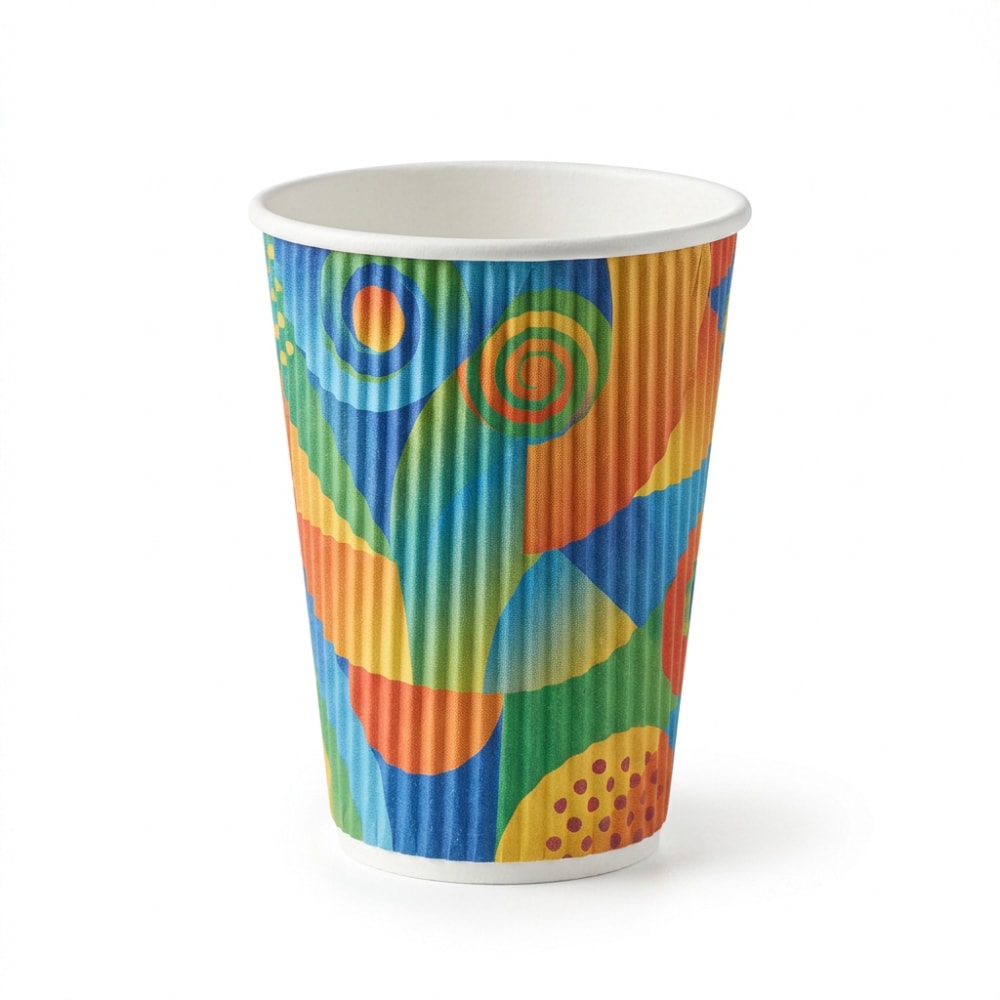
Global Market Guide to Wholesale Single Wall Paper Cups
When buying single wall paper cups wholesale for the Global market, the correct specification depends on beverage temperature, serving duration, lid style, customer hand comfort, transport conditions and brand presentation. A standard single wall cup can be an efficient choice for cold drinks, water, juice, tasting portions, iced coffee and moderately hot beverages consumed quickly. For hotter coffee, tea, chocolate or soup-style drinks held for longer periods, buyers should consider higher board weight, a sleeve, a textured outer wall, a ripple profile, or a double-wall alternative.The most dependable buying method is to test actual samples with real beverages rather than approving a cup only by its appearance or stated paper weight. Fill samples to the intended level, apply the selected lid, carry the cup, stack it in a delivery bag and hold it for the expected consumption time. Check heat transfer, rim softness, side-seam leakage, bottom sealing, lid engagement, nesting release, odor, printing scuff resistance and carton efficiency. These practical details often have a larger commercial impact than a small difference in unit price.For distributors, cafés, restaurant groups and importers in the Global market, a good wholesale cup program balances product safety, customer experience, freight cube and repeat-order consistency. Fude Packaging can support this process with sample development, material recommendations, printed cup prototypes and export-ready packing for international buyers.Drink ApplicationTypical Serving TemperatureRecommended Cup ApproachHolding TimeBuyer PriorityIced coffee0–10°CStandard single wall with moisture-resistant barrier15–45 minutesPrint and lid fitCold juice4–12°CSingle wall with suitable condensation performance10–30 minutesSidewall stiffnessWater dispenser service10–25°CLight-to-medium board single wall cupImmediate useLow cost and nestingAmericano coffee70–85°CHeavier board or sleeve-supported single wall cup10–20 minutesHand comfortMilk tea45–70°CMedium-to-heavy board with matched lid20–40 minutesLeak resistanceHot chocolate65–80°CHeavy board, sleeve or insulated construction15–30 minutesComfort and rim strengthThis table is a starting point, not a substitute for application testing. Recipes, sugar content, milk, carbonation, cup fill level and local delivery practices can affect results. A latte carried through London, Dubai, Singapore, Sydney or New York may experience very different ambient temperatures and delivery times.Single wall paper cups are widely used because they offer an attractive ratio of cost, print area, storage efficiency and production flexibility. Their limitation is direct heat transfer through one paperboard wall. A cup that feels acceptable for a 60°C milk tea can feel uncomfortable when filled with an 85°C black coffee. Therefore, beverage temperature should be specified in the purchase order, together with the expected holding period after filling.For coffee chains, the most relevant test is not only the filling temperature but the temperature at the customer’s hand-contact area after two, five and ten minutes. Buyers should define whether users hold the cup continuously, carry it for a short walk, or receive it through a delivery rider. A takeaway order leaving a café near Rotterdam Port, Jebel Ali, Los Angeles, Hamburg or Melbourne may face extended time in bags, vehicles and outdoor weather.Cold applications also require evaluation. Condensation can reduce grip, soften unprotected paper surfaces and weaken visual presentation. A suitable barrier system, correct paperboard selection and stable cup-forming process help preserve rigidity when the cup contains iced drinks. For long cold-beverage service, buyers should examine the lower wall and bottom edge after exposure to condensation.var ctx=document.getElementById('marketGrowthChart').getContext('2d');new Chart(ctx,{type:'line',data:{labels:['2022','2023','2024','2025','2026','2027'],datasets:[{label:'Indexed Global Demand for Paper Beverage Cups',data:[100,106,113,120,128,137],borderColor:'rgb(34,122,88)',backgroundColor:'rgba(34,122,88,0.12)',borderWidth:3,fill:false,tension:0.3}]},options:{responsive:false,maintainAspectRatio:false,plugins:{legend:{display:true}},scales:{y:{beginAtZero:false,title:{display:true,text:'Demand Index'}}}}});The line chart illustrates a planning scenario for international paper beverage cup demand. Growth is influenced by convenience retail expansion, specialty coffee, delivery platforms, private-label beverage programs and the replacement of some foam or plastic serviceware. Actual demand varies by region, regulations and food-service channel, so importers should use rolling forecasts rather than one annual estimate.A conventional single wall cup has one formed paperboard sidewall, a rolled rim and a sealed bottom. It is efficient to manufacture, nest and ship. However, the absence of an extra insulating layer means that board choice and cup geometry become especially important for hot drinks. Increasing board weight can improve stiffness and handling, but it does not create the same insulation effect as a separate air gap.Ripple cups and double-wall cups use additional structure to reduce direct hand contact with the hot inner cup. Ripple profiles create raised exterior contact points and small air spaces; double-wall cups add an outer sleeve-like layer. These designs can improve comfort but may increase material use, production complexity, nesting height and carton cube. Buyers should avoid assuming that “thicker” always means “cooler”; structure matters.For a price-sensitive coffee program, a practical option may be a single wall cup paired with a separate kraft sleeve. This allows one cup body to serve multiple beverage types while the sleeve is used only for high-temperature orders. The best option depends on usage mix, assembly labor, branding goals and distribution model.Construction TypeHand ProtectionNesting EfficiencyPrint SurfaceTypical UseLight single wallLowVery highExcellentWater and cold drinksHeavy single wallModerateHighExcellentShort-hold warm drinksSingle wall plus sleeveGoodHigh before assemblyFlexible dual brandingCoffee takeawayEmbossed single wallModerateHighGoodPremium cold or warm drinksRipple wall cupGoodModerateTextured appearanceHot coffee and teaDouble-wall cupVery goodLowerPremium brandingLonger hot-drink holdingThe comparison shows why buyers should calculate total delivered cost rather than cup price alone. A construction with greater insulation can reduce complaints and sleeve handling, but it may require more warehouse space and higher freight expenditure. Container loading calculations should be reviewed before finalizing a thermal cup design.Paperboard GSM is one of the most commonly discussed specifications in wholesale paper cup sourcing. Higher GSM generally contributes to stiffness, rim stability and resistance to sidewall deformation, yet the right GSM depends on cup diameter, height, beverage type, print coverage and structural design. A tall 16 oz cup may require different board performance from a short 4 oz espresso or sample cup even if both hold beverages.Barrier selection is equally important. Traditional polyethylene-lined cups remain common for many food-service applications. Water-based dispersion coatings and PLA-based options may be appropriate where product performance, recycling infrastructure, compostability claims and market rules support their use. Buyers should request applicable food-contact documentation and ensure that environmental claims are appropriate for the destination market and available end-of-life systems.For the Global market, regulations can differ substantially. Importers supplying the European Union may focus on EC 1935/2004-related food-contact expectations and packaging reporting requirements, while buyers serving North America may request FDA-related documentation. FSC-certified paperboard, BPI-oriented compostability options and OK Compost options can be considered where relevant, but certification scope must match the selected material and finished product.Board and Barrier OptionStrength ProfileBest Beverage RangeEnvironmental PositioningApproval CheckLight board with PEEconomicalWater, samples, cold drinksConventional food-service optionLeak and nesting testMedium board with PEBalancedJuice, iced coffee, warm drinksConventional food-service optionRim and seam testHeavy board with PEHigh stiffnessShort-hold hot drinksConventional food-service optionHand-comfort testWater-based barrier boardApplication dependentCold and selected hot drinksReduced-plastic positioningReal-drink testingPLA-coated boardStable when correctly specifiedCold and selected warm usesCompostability pathway where acceptedTemperature validationFSC-certified board optionDepends on GSMAll compatible categoriesResponsible sourcing supportChain-of-custody reviewThe table clarifies that barrier choice cannot be separated from beverage performance. A sourcing brief should state cup size, fill volume, beverage temperature, maximum hold time, lid type, print coverage, destination country and requested documentation. This avoids receiving a technically compliant cup that is unsuitable for the actual service environment.A paper cup and lid must be treated as one functional system. Even a well-formed cup can leak if the lid diameter, rolled rim dimensions or locking groove are incompatible. Buyers should use the exact lid intended for production sampling. “Fits most lids” is not a sufficient approval standard for chain operations, delivery services or high-volume distributors.Recommended tests include rim engagement, inversion resistance, squeeze resistance, side-seam inspection, bottom-seam inspection and transport simulation. For hot beverages, test after filling and again after a holding period because heat may alter cup stiffness and lid seating. For cold drinks, test after condensation exposure. Carbonated beverages and thick drinks may need additional testing due to internal pressure, splashing or liquid residue around the lid channel.A practical test protocol can include filling cups to standard service volume, applying lids with normal staff force, turning units sideways for a defined time, gently shaking them, placing them in takeaway bags and checking for leakage after transport. Test at least multiple samples from different sleeves or cartons to identify batch variation.Test ItemPractical MethodRecommended ObservationTypical Failure SignalCorrective ActionSide seamFill and hold at service temperature0, 5, 15 and 30 minutesVertical wet lineAdjust sealing settingsBottom seamStand filled cup on dry tissue15–60 minutesMoisture ringReview bottom curl sealLid engagementApply and rotate lid normallyFull circumference lockLoose or uneven fitMatch rim and lid toolingInversion leakTurn capped cup upside down10–30 secondsLeak at sip opening or rimChange lid profileCarry simulationWalk or shake in delivery bag5–10 minutesSpill or lid releaseImprove lid retentionPrint rub testRub dry and damp outer wallVisual inspectionInk scuffing or transferReview ink and varnishThese tests should be documented with sample code, production date, cup specification, lid model and beverage recipe. A repeat-order approval process is much stronger when the buyer and supplier compare against a retained signed sample rather than relying on memory or a general description.Minimum order quantity for custom printed single wall cups depends on size, paperboard specification, coating, printing colors, artwork complexity, tooling requirements and packing configuration. Plain cups normally allow more flexible volumes, while customized cups require enough quantity to efficiently set up printing and converting. Buyers can reduce risk by using one cup diameter across several sizes, standardizing lid systems and selecting artwork that performs reliably in flexographic production.Printing costs are influenced by the number of colors, coverage area, special finishes, registration tolerance and whether Pantone matching is required. Large solid-color areas can be visually effective but require strong process control to maintain consistency across production batches. Fine text, barcode placement and regulatory marks should be checked on actual formed cups, because cup curvature can affect readability.For launch programs, a staged approach is often effective: approve white samples for dimensions and lids, approve printed samples for artwork and color, then approve functional samples with real drinks. This approach prevents expensive corrections after full production begins.var ctx=document.getElementById('industryDemandChart').getContext('2d');new Chart(ctx,{type:'bar',data:{labels:['Coffee Shops','Quick Service','Hotels','Events','Retail','Delivery Kitchens'],datasets:[{label:'Estimated Single Wall Cup Demand Index',data:[92,84,58,66,71,88],backgroundColor:['#6f4e37','#cc7a00','#41729f','#8e5ea2','#2f7f62','#d95d39']}]},options:{responsive:false,maintainAspectRatio:false,plugins:{legend:{display:true}},scales:{y:{beginAtZero:true,max:100,title:{display:true,text:'Demand Index'}}}}});The bar chart illustrates relative demand intensity by customer segment. Coffee shops and delivery kitchens usually require close attention to lid fit and heat performance. Events prioritize fast distribution and compact storage, while hotels often value visual consistency across breakfast, meeting and room-service operations.Nesting efficiency affects storage, container loading, warehouse handling and replenishment costs. Cups that nest too tightly may be difficult for staff to separate, especially during rush periods. Cups that nest too loosely may consume excessive carton volume. The optimum nesting profile should release smoothly one cup at a time while maintaining stable sleeve and carton counts.When comparing quotations, buyers should ask for cups per sleeve, sleeves per carton, carton dimensions, gross weight, net weight and total cups per cubic meter. A lower unit price can be offset by a higher freight cost if the cup construction increases carton cube. This matters for full-container shipments from Qingdao, Shanghai, Ningbo, Shenzhen or other export hubs, as well as for less-than-container shipments to regional warehouses.Carton strength matters too. Cups may be light, but compressed cartons can deform rims or cause nesting problems. Export packing should be selected according to shipping route, stacking height, humidity exposure and whether cartons will be handled through multiple transfer points.Packaging FactorWhat Buyers Should RequestOperational EffectFreight ImpactQuality RiskCups per sleeveConfirmed count and toleranceFast outlet replenishmentLowMiscount claimsSleeves per cartonClear outer-carton markingSimple warehouse pickingModerateMixed batch errorsCarton dimensionsLength, width and heightStorage planningHighUnexpected cube costNesting heightSample stack measurementDispenser compatibilityHighSlow cup separationCarton burst strengthExport carton requirementSafer handlingModerateCrushed rimsPallet configurationCartons per pallet and heightWarehouse efficiencyModerateInstability in transitThis information enables buyers to calculate landed cost accurately. It is especially useful for importers supplying multiple markets, where a product may move from an arrival port to distribution centers in Frankfurt, Toronto, Johannesburg, Dubai, Jakarta or São Paulo before reaching food-service locations.A reliable supplier checklist should cover technical capability, production controls, compliance, communication and post-shipment responsibility. Buyers should ask whether the supplier controls printing, die-cutting, forming and inspection internally or depends heavily on uncoordinated subcontractors. Internal control can improve traceability and make corrections faster when an issue arises.Request detailed product specifications instead of relying on descriptive language such as “high quality” or “eco-friendly.” The specification should identify cup capacity, top diameter, bottom diameter, height, paperboard GSM, barrier, rim type, print design, packing method, lid model, accepted tolerances and inspection criteria. For repeat orders, reference an approved sample or signed technical sheet.Independent inspection can provide extra confidence for large programs. Buyers may appoint third-party inspection firms to verify quantity, visual appearance, carton marks, dimensions, packing and random functional tests before shipment. This can be especially valuable for first orders or multi-market launches.var ctx=document.getElementById('trendShiftChart').getContext('2d');new Chart(ctx,{type:'line',data:{labels:['2022','2023','2024','2025','2026','2027'],datasets:[{label:'Standard Printed Single Wall Cups',data:[68,66,63,60,57,54],borderColor:'#607d8b',backgroundColor:'rgba(96,125,139,0.20)',fill:true,tension:0.3},{label:'Verified Barrier and Responsible Material Options',data:[32,39,47,55,64,73],borderColor:'#2e8b57',backgroundColor:'rgba(46,139,87,0.24)',fill:true,tension:0.3}]},options:{responsive:false,maintainAspectRatio:false,plugins:{legend:{display:true}},scales:{y:{beginAtZero:true,max:80,title:{display:true,text:'Buyer Preference Index'}}}}});The area chart shows a directional trend toward verified materials, clearer product documentation and fit-for-purpose sustainability claims. In 2026 and beyond, buyers are likely to request stronger traceability, packaging data, lower-material designs, improved recyclability pathways and more precise compliance support. The commercial opportunity is not simply to use a new coating, but to align material choice with real local collection and treatment infrastructure.Fude Packaging supports international buyers seeking practical, scalable single wall cup solutions. Our technological capabilities include automated cup-forming equipment, controlled printing processes, prototype development and in-house testing for important functional factors such as leakage, structure, lid compatibility and print appearance. Buyers can evaluate white samples, printed samples and functional prototypes before approving mass production.Our manufacturing capabilities are supported by more than 20 years of industry experience and a self-owned 30,000 m² factory in Shandong. With automated production capacity reaching up to 120,000 units per day, Fude Packaging can manufacture paper cups and related food packaging in-house, helping buyers consolidate sourcing across beverage cups, paper bowls, food trays, lunch boxes and takeaway containers. Explore our paper cup product range when building a coordinated food-service packaging program.Our service capabilities focus on international B2B project management. We help customers clarify beverage type, serving temperature, cup size, order quantity, print requirements, destination-market documentation and shipping plan before quoting. We support OEM and ODM development, artwork checking, Pantone-oriented color review, export packing, third-party inspection coordination and shipments by sea, air, express, full container or less-than-container load.For brands serving dairy beverages, cafés and dessert concepts, our experience also extends to custom printed milk cup solutions. This can help buyers align visual identity across milk drinks, iced beverages and complementary takeaway packaging.var ctx=document.getElementById('supplierComparisonChart').getContext('2d');new Chart(ctx,{type:'bar',data:{labels:['Customization','Quality Testing','Export Support','Multi-Category Supply','Repeat-Order Control'],datasets:[{label:'Basic Trading Source',data:[55,48,52,42,50],backgroundColor:'rgba(150,150,150,0.75)'},{label:'Integrated Manufacturing Partner',data:[88,90,86,92,89],backgroundColor:'rgba(41,128,185,0.75)'}]},options:{responsive:false,maintainAspectRatio:false,plugins:{legend:{display:true}},scales:{y:{beginAtZero:true,max:100,title:{display:true,text:'Capability Score'}}}}});The comparison chart explains why many importers evaluate more than unit price. An integrated manufacturing partner can provide better coordination between material selection, cup forming, printing, testing, packing and export documentation. For buyers managing restaurant chains or distributor networks, this can reduce the risk of leaks, artwork errors, inconsistent color and shipment delays.Choose single wall paper cups when cost efficiency, compact nesting and strong printing space are important, particularly for cold drinks, water, juice, samples and hot beverages consumed within a short period. For very hot drinks or extended holding periods, use heavier board, a sleeve, ripple construction or double-wall cups after application testing.Fill the cup with the actual beverage at the intended filling temperature. Hold the cup at normal grip points after two, five and ten minutes. Record whether the cup can be held comfortably without a sleeve and compare results against a signed reference sample. Include staff feedback because baristas and delivery workers may handle multiple hot cups at once.Usually, yes. Ripple and double-wall designs often take more space per cup than standard single wall cups because of additional paper layers or exterior structure. Buyers should compare cups per carton and cartons per container before selecting a design, especially for long-distance shipments.At minimum, test side seams, bottom seams, rim integrity and lid fit using actual drinks. Hold filled cups on dry tissue, inspect for leakage after set periods, perform inversion checks with lids, simulate carrying and examine the cup after hot or cold exposure. Testing should cover random samples from more than one production carton.Create a written approval specification covering dimensions, board GSM, barrier, cup construction, lid model, print colors, packing, carton dimensions and functional test method. Retain approved physical samples. For each repeat order, compare production samples against the signed reference before shipment and document any agreed changes. -

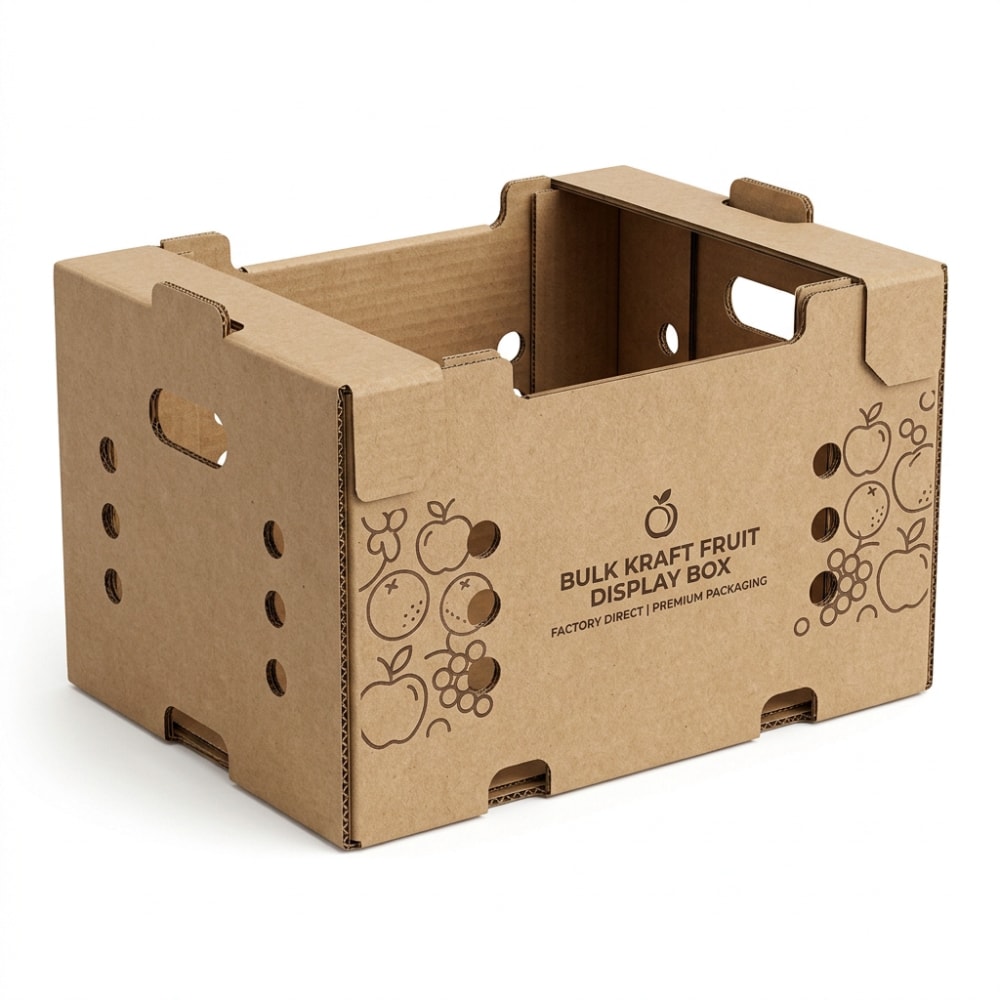
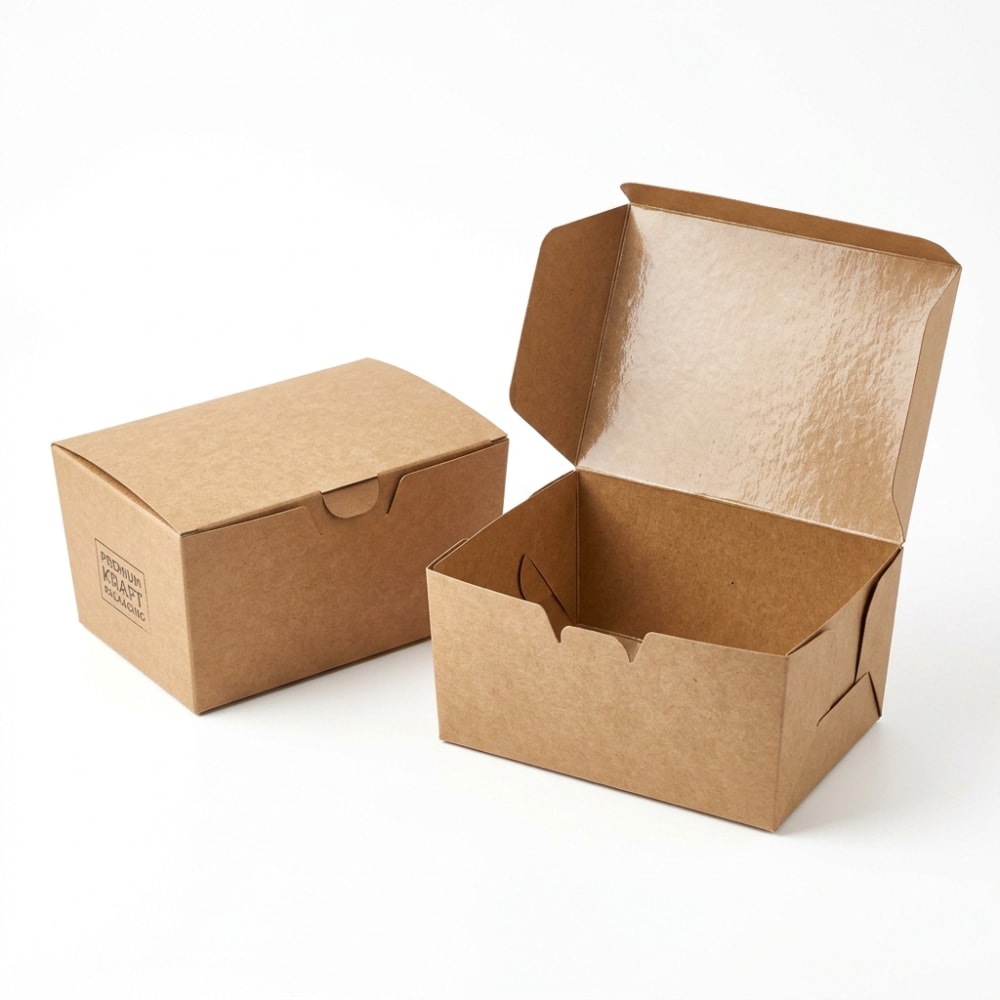
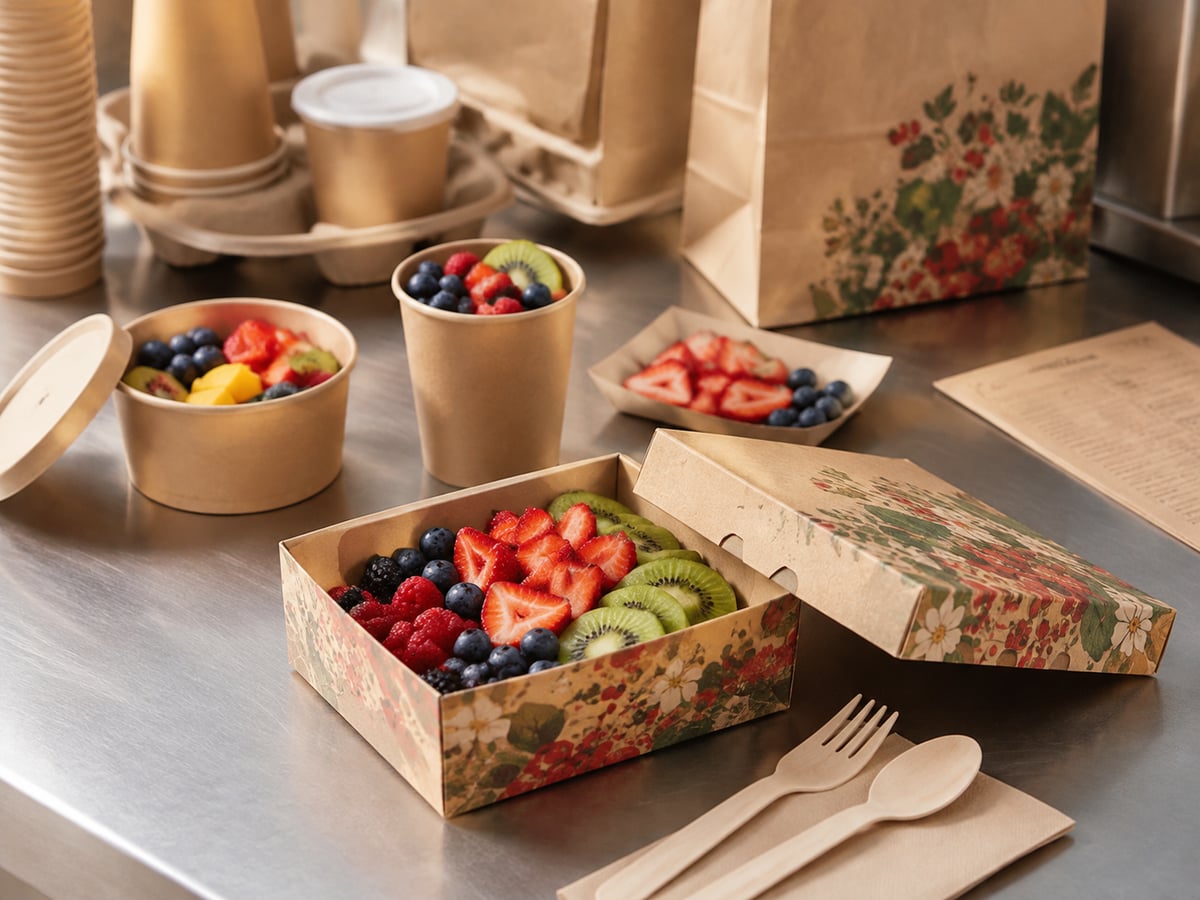
Kraft Fruit Box Supplier Guide in the United States
For importers, farm packers, produce wholesalers, grocery chains, and food-service distributors in the United States, choosing the right kraft fruit boxes supplier is no longer just about cost. It is about moisture resistance, food safety, stacking strength, freight efficiency, sustainability claims, and branding value. Buyers in Los Angeles, Houston, Miami, New York, Chicago, Seattle, and Atlanta are actively shifting toward paper-based fruit packaging that performs well in cold-chain transit and on retail shelves while also aligning with retailer sustainability goals.If you are sourcing paper produce packs for berries, cut fruit, cherries, grapes, citrus gift sets, or mixed fresh-fruit takeaway formats, this guide explains market demand, available box sizes, coating options, manufacturing methods, compliance requirements, and pricing expectations. It also shows how a factory-direct partner can support both standard wholesale programs and custom private-label fruit packaging for the U.S. market.A reliable kraft fruit boxes supplier for the United States should provide food-grade materials, moisture-resistant construction, stable folding strength, secure closure options, custom sizes, and verified compliance such as FDA food-contact standards and compostability-related certifications where applicable. The best suppliers can also support OEM printing, flexible order quantities, sampling, and lead times that fit produce seasonality.In practical terms, U.S. buyers should prioritize five factors:Fruit type and moisture exposure, especially for berries, melon pieces, grapes, and fresh-cut produce. Coating choice, typically PE for strong water resistance or PLA for compostable positioning. Shipping and storage conditions, including refrigerated distribution and pallet stacking. Retail presentation, such as window lids, natural kraft appearance, and clean logo printing. Supply reliability, including production scale, quality control, and export experience into North America. For companies that want a factory-direct sourcing path, paper produce packaging options can cover standard kraft fruit boxes, window-lid display packs, deli-style paper containers, and custom retail-ready structures. The strongest supplier relationships usually begin with a sample review, specification confirmation, and a packaging test against the buyer’s actual fruit application.The United States market for kraft fruit boxes is expected to remain strong through 2026, driven by three overlapping trends: growth in convenience produce, retailer pressure to reduce plastic, and expansion of branded fresh-food packaging. Demand is especially visible in urban and suburban retail corridors where consumers buy more grab-and-go fruit packs, family produce boxes, and premium gift-ready fruit presentations.Distribution hubs such as California’s Central Valley, Miami produce gateways, the Port of Los Angeles, Port Houston, the Port of Savannah, and the New York–New Jersey logistics corridor continue to influence packaging specifications. These regions move large volumes of imported and domestic fruit, making stackability, humidity tolerance, and fast replenishment essential.By 2026, buyers in the United States are expected to request more of the following:Plastic-reduction packaging for retail produce programs. Natural-look kraft paper packs for premium and organic branding. Windowed fruit boxes for visibility without sacrificing carton strength. Smaller single-serve or family-size formats for e-commerce and grocery delivery. Compostable or renewable-material claims supported by documentation. The market is not uniform. Wholesale produce distributors often focus on cost per unit and pallet efficiency, while specialty grocers in cities like San Francisco, Boston, Austin, and Seattle care more about shelf impact and sustainability messaging. Meal-kit companies and fresh-cut fruit suppliers tend to value leak resistance, tamper-friendly closure, and repeat dimensional accuracy for automated filling lines.Demand DriverU.S. Impact in 2026Why It Matters to BuyersRetail plastic reductionHighMore chains are requesting paper-forward produce packs.Fresh-cut fruit growthHighNeeds moisture resistance and food-safe coatings.E-commerce grocery deliveryMedium to highBoxes must withstand handling and short cold-chain cycles.Organic and natural brandingHighKraft appearance supports premium shelf positioning.Regional produce exports/importsMediumPort-based supply chains need stable replenishment.Compostable packaging interestMedium to highDemand rises where municipalities and retailers promote greener packaging.The table above shows why demand is not based on one trend alone. Instead, the U.S. market combines environmental pressure, consumer convenience, and operational performance. A supplier that understands all three can serve more than one channel, from supermarket produce departments to food-delivery fruit brands.var ctxLine = document.getElementById('lineChartMarket').getContext('2d');var lineChartMarket = new Chart(ctxLine, {type: 'line',data: {labels: ['2022', '2023', '2024', '2025', '2026'],datasets: [{label: 'Estimated U.S. Kraft Fruit Box Demand Index',data: [78, 86, 95, 108, 122],borderColor: 'rgb(75, 192, 192)',backgroundColor: 'rgba(75, 192, 192, 0.15)',fill: false,tension: 0.3}]},options: {responsive: true,maintainAspectRatio: false}});The line chart reflects a realistic growth path rather than a sudden surge. Even moderate annual gains create major purchasing volume when national grocery, produce, and food-service networks adopt paper fruit packaging across multiple SKUs.A dependable kraft fruit boxes supplier should offer both standard and custom formats. In the United States, buyers often ask for packaging based on fill weight, shelf footprint, lidding style, and venting needs. Some want compact retail packs for berries or cut fruit, while others need larger produce gift boxes or moisture-resistant family packs.Common product categories include open-top produce trays, tuck-top fruit boxes, window-lid cartons, deli-style rectangular packs, handled fruit gift boxes, and compartment packs for mixed fruit assortments. Custom die-cutting is especially useful when brands want unique shapes for club stores, subscription produce boxes, or seasonal fruit promotions.Product TypeTypical CapacityCommon U.S. UseSmall fruit tray250 g to 500 gBerries, cherries, grape tomatoes, snack fruitRectangular deli fruit box500 ml to 1000 mlFresh-cut melon, pineapple, mixed fruit cupsWindow-lid kraft box400 g to 900 gRetail-ready cut fruit and premium displaysFamily produce pack1 lb to 3 lbGrapes, apples, citrus mixes, bulk produce setsGift fruit carton2 lb to 5 lbSeasonal gifting and direct-to-consumer shippingCompartment fruit boxDual or triple sectionsMixed fruit assortments and prepared snack packsStandard dimensions are often enough for wholesale programs, but many U.S. buyers prefer custom sizes because shelf facings differ by retailer. A fruit pack for Whole Foods-style presentation may not suit a convenience chain in Dallas or a club-store format in New Jersey. That is why suppliers with in-house sampling and die development bring more value than traders working only from catalog items.Approximate SizeDimensions ExampleBest ForCompact120 x 90 x 50 mmSnack fruit and tasting portionsSmall retail140 x 100 x 60 mmBerries and chopped fruitMedium deli170 x 120 x 65 mmMixed fruit for supermarketsLarge deli180 x 140 x 75 mmFamily fruit packs and premium cut fruitWide display box220 x 160 x 70 mmRetail presentation and gift assortmentsDeep produce box240 x 180 x 90 mmHeavier fruit mixes and e-commerce ordersThe size table matters because weight alone does not define the correct box. Fruit density, juice release, lid closure, and stacking pressure all influence what works in real distribution. For example, grapes can create concentrated weight in one corner during transport, while cut watermelon increases interior moisture. The right supplier should discuss these details before recommending structure.Applications by industry also vary:Supermarkets need clean shelf appearance and barcode-friendly printing zones. Fresh-cut processors need coating integrity and dimensional consistency. Food-service distributors need stackability and competitive landed cost. Farm brands need logo visibility and seasonal flexibility. Online grocery channels need secure closure and transit resilience. var ctxBar = document.getElementById('barChartIndustry').getContext('2d');var barChartIndustry = new Chart(ctxBar, {type: 'bar',data: {labels: ['Supermarkets', 'Fresh-Cut Processors', 'Wholesalers', 'Food Service', 'E-commerce Grocery', 'Gift Fruit Brands'],datasets: [{label: 'Estimated 2026 Demand Share',data: [32, 24, 18, 11, 9, 6],backgroundColor: ['rgb(255, 99, 132)','rgb(54, 162, 235)','rgb(255, 206, 86)','rgb(75, 192, 192)','rgb(153, 102, 255)','rgb(255, 159, 64)']}]},options: {responsive: true,maintainAspectRatio: false}});The bar chart highlights that supermarket and fresh-cut channels will likely account for the largest volume in the United States. That does not mean other segments are small opportunities; it means suppliers should be able to serve both mass retail and specialized high-margin packaging programs.One of the most important buying decisions is coating selection. Kraft paper alone may not provide enough protection when fruit releases moisture, syrup, or condensation. That is why many kraft fruit boxes use a functional barrier layer, most commonly PE or PLA.PE, or polyethylene coating, remains the mainstream choice for many produce buyers because it is dependable, cost-effective, and strong against water and light oil. PLA, or polylactic acid coating, is often selected when buyers want a compostable-positioned packaging story, subject to local disposal systems and certification standards.FactorPE CoatingPLA CoatingMoisture resistanceVery strongStrong for suitable applicationsCost levelUsually lowerUsually higherHeat toleranceStable in broad food-service useApplication dependentSustainability positioningConventional barrier solutionBetter for compostable branding when certifiedAvailabilityWidely availableMore selective by material and specificationBest fitHigh-volume produce and value-focused programsEco-forward retail and premium branded programsThe choice should be made based on actual operating conditions rather than trend language alone. For instance:If your fruit pack sits in refrigerated display cases in Chicago or Minneapolis, condensation control matters. If your brand sells natural organic fruit in Portland or San Francisco, compostable messaging may influence your decision. If your priority is large-volume distribution through Houston or Savannah with aggressive price targets, PE may be the more practical coating. Another key factor is disposal reality. U.S. municipalities vary widely in composting infrastructure. A compostable-certified pack has value, but buyers should align material choice with regional waste handling, retailer claims policy, and end-customer understanding. An experienced supplier should explain not just material science but also market fit.var ctxArea = document.getElementById('areaChartTrend').getContext('2d');var areaChartTrend = new Chart(ctxArea, {type: 'line',data: {labels: ['2022', '2023', '2024', '2025', '2026'],datasets: [{label: 'PE Share',data: [74, 71, 68, 65, 61],fill: true,backgroundColor: 'rgba(54, 162, 235, 0.18)',borderColor: 'rgb(54, 162, 235)',tension: 0.3},{label: 'PLA Share',data: [26, 29, 32, 35, 39],fill: true,backgroundColor: 'rgba(75, 192, 192, 0.18)',borderColor: 'rgb(75, 192, 192)',tension: 0.3}]},options: {responsive: true,maintainAspectRatio: false}});The area chart illustrates a gradual shift, not a full replacement. PE is still likely to dominate total volume in 2026, but PLA will continue gaining share where retailers, municipalities, and premium brands want more environmentally progressive packaging narratives.To serve the U.S. market consistently, a kraft fruit boxes supplier needs real factory capability rather than outsourced assembly across uncertain subcontractors. Large-scale production begins with paper selection, coating lamination if required, flexographic or custom printing, die-cutting, creasing, forming, inspection, packing, and export loading.At scale, the process normally includes:Food-grade kraft paper sourcing based on grammage, stiffness, and print suitability. Barrier treatment selection, including PE or PLA depending on customer requirements. Artwork setup for logos, product labels, or retail messaging. Die-cutting and creasing for precise fold performance. Forming and gluing or locking according to box design. Leak, compression, and appearance checks before packing. This is where technological capabilities make a difference. A mature manufacturer with automated lines, flexo printing systems, die-cutting control, forming equipment, quality labs, and climate-controlled warehousing can deliver more stable output than suppliers that depend heavily on manual finishing. Stable production matters for U.S. buyers because minor dimension inconsistency can disrupt automated filling or reduce pallet density.Manufacturing capabilities are equally important. A modern factory with large workshop space, dedicated food-packaging production flow, high daily output, and standardized inspection can support both trial orders and repeat container-volume business. This matters for produce customers with seasonal peaks around California harvests, Florida citrus movement, or imported fruit flows entering East Coast ports.Production StageKey Quality FocusBuyer BenefitPaper selectionFiber strength and food-contact safetyBetter structure and compliance confidenceCoating applicationUniform barrier coverageReduced seepage and improved moisture resistancePrintingColor consistency and ink safetyStronger brand presentationDie-cuttingDimension precisionReliable folding and stackingFormingClosure security and edge finishCleaner pack appearance and better usabilityFinal inspectionLeak, crush, and visual checksLower risk of shipment complaintsThe table above shows why factory scale is more than output capacity. Each stage directly affects whether the fruit box survives transportation from a U.S. distributor warehouse to store shelves or customer delivery routes.In 2026, production trends will continue moving toward smarter tooling, lower material waste, shorter setup times for custom sizes, and more traceable quality systems. Buyers are also asking for cleaner data on material origin, sustainable sourcing, and batch-level consistency. For that reason, choosing a supplier with documented production processes is increasingly valuable.A useful way to evaluate a supplier is to review a real operating scenario. One produce distributor serving grocery accounts in the eastern United States needed a replacement for mixed-material plastic-heavy fruit packs used for pre-cut melon and pineapple assortments. The company shipped through New Jersey and Philadelphia-area distribution centers and wanted stronger shelf appeal while reducing packaging complaints from condensation and crushed corners.The client’s goals were clear:Move toward a kraft-based retail look. Keep visibility for fruit color and freshness. Improve stacking performance in refrigerated handling. Control landed cost versus domestic alternatives. Launch before peak summer volume. A custom window-lid kraft fruit box with moisture-resistant interior treatment was developed. Sample rounds focused on lid fit, fog visibility, board stiffness, and pack height compatibility with the client’s shelf trays. After testing, the buyer shifted one of its fast-moving SKUs into the new paper format.Project MetricBefore ChangeAfter ChangePrimary material lookPlastic-dominantNatural kraft retail appearanceDisplay visibilityGoodGood with improved premium perceptionCorner crush complaintsModerateReduced after structure upgradeBrand print impactLimitedStronger logo and product storytellingSeasonal ordering flexibilityAverageImproved through repeatable sizingRetail feedbackNeutralPositive on appearance and sustainability messagingThe result was not only better presentation but more stable replenishment planning. This kind of case matters because it shows that fruit packaging success depends on fit-for-use design, not just the words “eco-friendly” on a specification sheet.var ctxComp = document.getElementById('comparisonChartSupplier').getContext('2d');var comparisonChartSupplier = new Chart(ctxComp, {type: 'bar',data: {labels: ['Moisture Resistance', 'Print Quality', 'Customization', 'Lead Time Stability', 'Export Experience', 'Cost Control'],datasets: [{label: 'Factory-Direct Supplier Score',data: [90, 88, 92, 84, 95, 87],backgroundColor: 'rgb(153, 102, 255)'},{label: 'Typical Non-specialized Supplier Score',data: [75, 70, 62, 68, 58, 73],backgroundColor: 'rgb(201, 203, 207)'}]},options: {responsive: true,maintainAspectRatio: false}});The comparison chart shows why buyers often move from trading-only sources to established packaging manufacturers. Higher scores usually come from better process control, stronger export knowledge, and more structured customization support.For the United States, compliance should never be an afterthought. Fruit packaging touches food directly, often under moisture and cold-storage conditions. Buyers need documentation that supports food-contact safety and, when relevant, sustainability claims.Common documents and standards buyers request include FDA-related food-contact compliance, quality management records, paper sourcing verification, and compostability certifications for suitable materials. Depending on the customer channel, additional migration or material test reports may also be required.Certification or DocumentPurposeWhy U.S. Buyers Ask for ItFDA food-contact complianceConfirms suitability for food packaging useSupports importer and retailer due diligenceEU EC 1935/2004Food-contact material benchmarkUseful for multinational quality standardsISO 9001Quality management systemShows process discipline and consistencyFSCResponsible paper sourcingSupports sustainability programs and procurement policiesBPI certificationCompostability validation in relevant contextsImportant for U.S. compostable claimsOK CompostAdditional compostability recognitionUseful for global brand harmonizationThe value of these documents lies in practical risk reduction. A produce importer bringing goods through Long Beach or Savannah may need to satisfy internal QA review before approving new packaging. A supermarket own-brand program may require formal supplier files before launch. A supplier that prepares documentation early speeds up purchasing decisions.Still, certification should match the actual item. Not every kraft fruit box needs the same set of claims, and over-claiming can create commercial risk. For example, if a box uses conventional PE, it should not be marketed as compostable. Clear specification discipline is a sign of a trustworthy supplier.MOQ and pricing vary according to box size, printing complexity, coating type, structure, and order volume. In the United States sourcing environment, landed cost also depends on shipping mode, destination port, warehouse handling, and seasonality.Standard stock-style items usually have lower minimum order quantities than fully custom items. A plain kraft box with one-color printing often costs less than a window-lid fruit carton with custom dimensions and multi-color artwork. PLA-coated items typically carry a premium over PE-coated versions.Service capabilities play a major role here. A supplier that offers packaging consultation, artwork support, sample development, and delivery coordination helps buyers avoid hidden cost from rework, wrong sizing, or delayed approvals. For importers and distributors, this is often more valuable than chasing the lowest unit price.Order TypeTypical MOQPricing LevelPlain standard kraft box10,000 to 30,000 pcsLowestCustom size without window20,000 to 50,000 pcsLow to mediumCustom printed fruit box30,000 to 50,000 pcsMediumWindow-lid retail carton30,000 to 80,000 pcsMedium to highPLA-coated custom box30,000 to 80,000 pcsHighSeasonal private-label projectProject-basedDepends on tooling and graphicsThe pricing table is directional rather than absolute, because freight, board weight, and finish can shift final cost significantly. However, it helps U.S. buyers build a realistic sourcing plan. If your volume is modest, starting with a standard-size format and simple print may be the smartest path. If your annual volume is large, custom tooling often pays off through stronger branding and better cube efficiency.Typical production lead times for well-organized suppliers are often in the range of roughly one to two weeks after artwork and sample approval, although ocean freight schedules, peak season congestion, and customs timing should be considered. Buyers supplying produce categories with tight launch windows should build in extra time before harvest seasons or promotional campaigns.If you want direct communication on MOQ, sample review, and project feasibility, a dedicated custom packaging service process can simplify decisions before committing to volume orders. For commercial discussions or drawings, using a clear specification sheet usually reduces quoting time.Shandong Fude Packaging Co., Ltd. serves international food-packaging buyers looking for reliable, factory-direct paper solutions, including kraft fruit boxes for produce, deli, and takeaway applications. For U.S. customers, the company’s value is not only product range but the combination of technical know-how, manufacturing depth, and export-oriented service.From a technology perspective, the company operates with automated production systems, flexographic printing capability, die-cutting precision, forming equipment, and quality inspection support that help maintain stable output across custom and standard packaging lines. This is especially useful for buyers who need repeatable dimensions, brand print consistency, and dependable barrier performance.From a manufacturing perspective, the company runs a large modern factory in Shandong with organized production capacity for food-grade paper packaging and related disposable packaging solutions. Its experience serving clients across multiple continents and countries helps it understand documentation, palletization, and shipment expectations for markets such as the United States. High-volume output capability also supports both routine wholesale programs and seasonal spikes.From a service perspective, the company works as a packaging partner rather than only a box seller. That includes requirement review, packaging recommendations, artwork preparation support, sampling, order confirmation, production follow-up, and delivery coordination. Buyers can move from concept to sample to production in a streamlined process, which is valuable when U.S. distributors or retail brands need quick development cycles.Its broader product family includes food containers, bowls, cups, deli boxes, trays, and custom paper packs for different food-service and retail uses. Buyers exploring complementary packaging can review company information and factory background or browse the wider product catalog to compare structures across produce and takeaway categories.For U.S. importers and brands that prefer direct project discussions, the company supports OEM development, private-label printing, material selection, and specification matching. Questions about samples, lead times, and quotation details can be sent through the contact page.Kraft fruit boxes are commonly used for berries, grapes, cherries, apples, citrus assortments, and fresh-cut fruit. The correct structure depends on weight, moisture, and whether the product needs a window lid or secure sealed top.Yes, if they are engineered with the correct paper weight and barrier treatment. Buyers should evaluate moisture resistance, condensation behavior, and stacking strength under chilled conditions.PE is usually better for cost control and robust moisture resistance in high-volume programs. PLA is often better for compostable-oriented branding when supported by the proper certification and suitable disposal context.Yes. Many produce brands in the United States request custom dimensions, logo printing, color graphics, barcodes, and structural features such as windows, vents, or handles.MOQ depends on whether the item is standard or custom. Plain standard boxes may start lower, while custom printed or window-lid fruit boxes usually require higher minimums because of tooling and setup costs.At minimum, buyers should request food-contact compliance documentation. If sustainability claims matter, ask about FSC, BPI, or other relevant certifications based on the exact material and product type.Look beyond price. Compare material options, compression strength, coating consistency, documentation readiness, export experience, lead time stability, and sample responsiveness.Yes, if it has sufficient factory capacity and organized service support. This is especially important for U.S. customers that plan to test in one region before rolling out nationally.Expect stronger retailer sustainability requirements, more demand for compostable or lower-plastic structures, improved print quality for brand storytelling, and greater use of customized packs for online grocery and fresh-cut convenience fruit.Experienced manufacturers usually offer better control over quality, customization, documentation, and production scheduling. That can reduce costly packaging failures and delays in the U.S. supply chain.In summary, the right kraft fruit boxes supplier for the United States should combine product breadth, coating knowledge, production scale, compliance support, and responsive service. Whether your business operates in California produce packing, East Coast import distribution, Midwest grocery replenishment, or national food-service channels, choosing a supplier with proven factory systems can improve both packaging performance and brand value. -
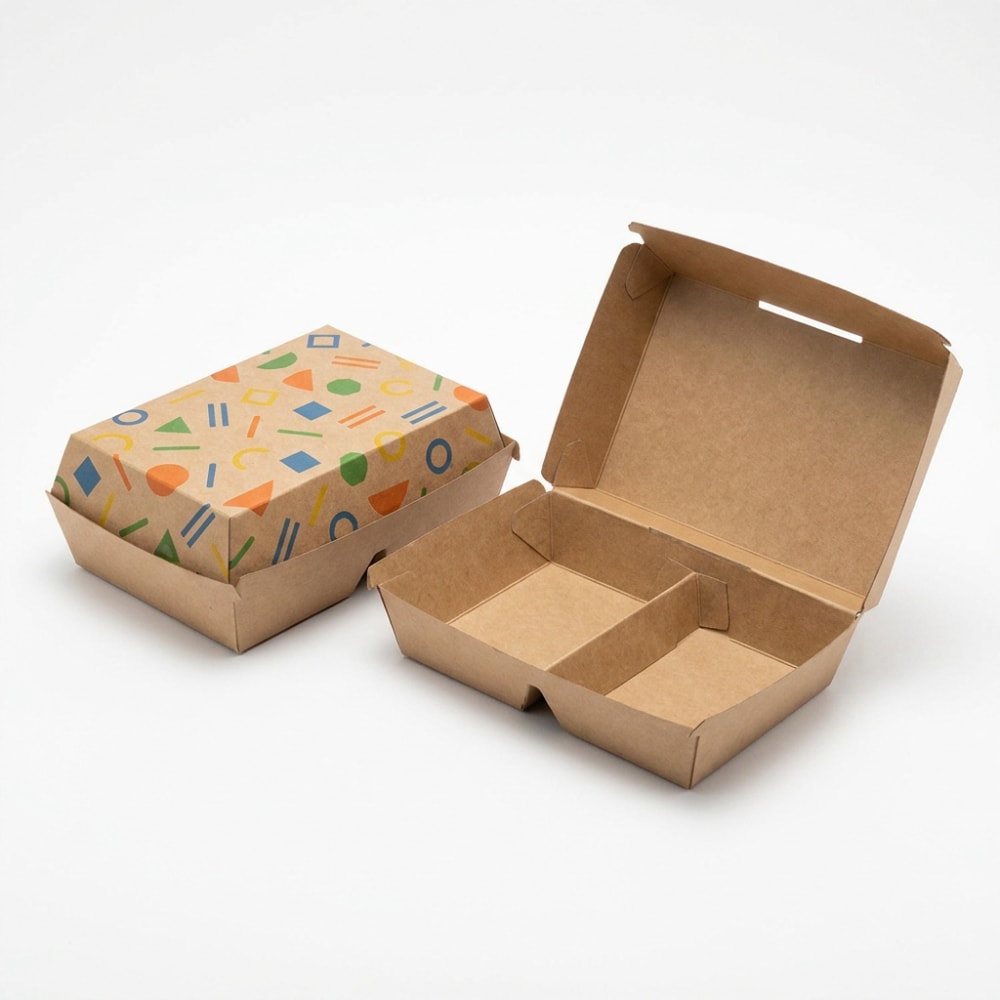
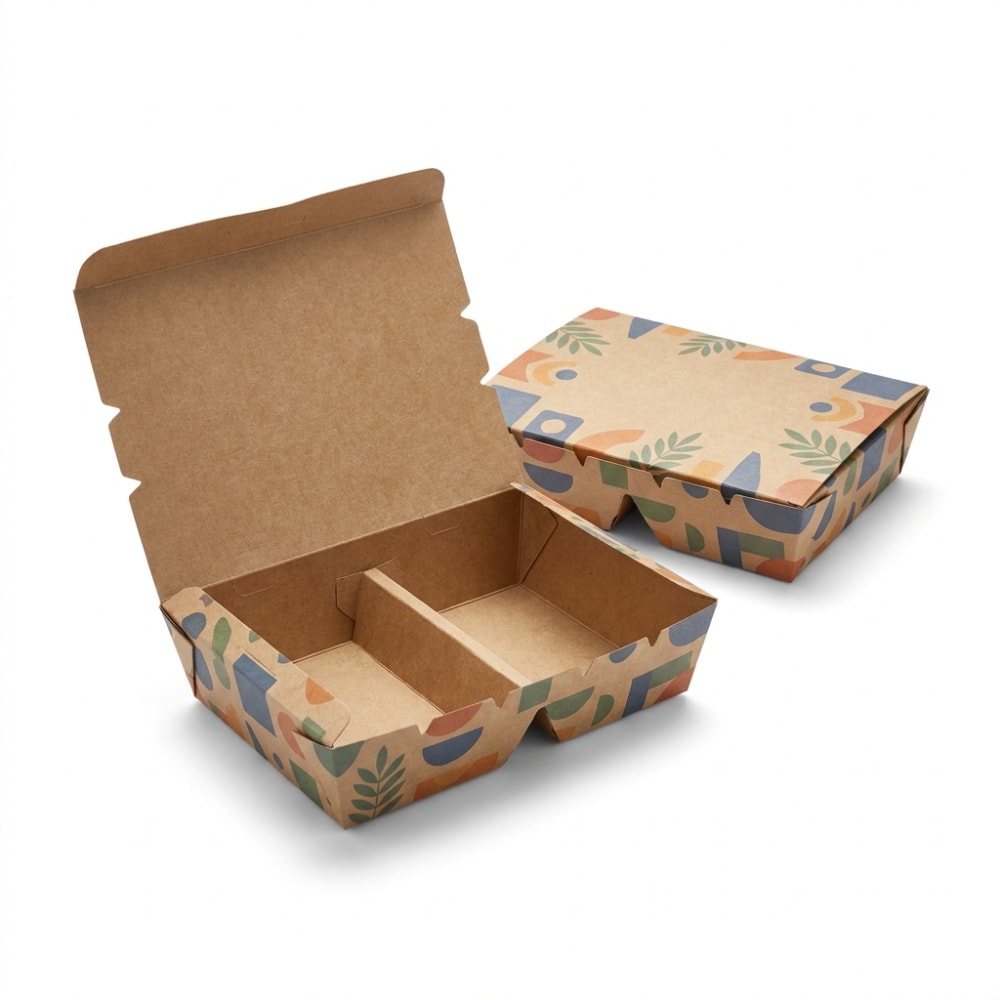
Canada Guide to Pricing 2-Compartment Takeaway Boxes
For Canadian restaurant groups, meal-prep businesses, caterers and food distributors, the price of 1080–2000ml two-compartment takeaway boxes is determined by more than the quoted piece price. Paperboard grade, coating type, board weight, box dimensions, divider geometry, forming difficulty, printing coverage, order quantity, carton density and freight volume all affect the actual landed cost.A low unit quotation can become expensive when a box leaks between compartments, loses shape under hot food, absorbs oil, prints inaccurately, ships inefficiently or fails to meet a brand’s approval standard. Buyers in Toronto, Vancouver, Montréal, Calgary, Edmonton and Halifax should therefore compare suppliers on a total-cost basis: product price, tooling, plates, sampling, quality assurance, freight cube, customs documentation, storage and replacement risk.The practical approach is to confirm the food application before asking for a final quote. State the target capacity, food temperature, holding time, portion weight, sauce content, microwave requirement, lid requirement, coating preference, print design and monthly forecast. Then approve a white sample or printed pre-production sample against measurable criteria such as volume, divider height, leakage, compression strength, fold accuracy and colour consistency.Cost ElementWhat It CoversWhy It Matters to Canadian BuyersPaperboardKraft, white kraft, SBS or coated food-grade boardHigher board weight improves rigidity but raises material cost.Barrier coatingPE, water-based, PLA or other food-contact barrier systemsCoating selection affects grease resistance, recyclability goals and food performance.Forming complexityDie-cutting, folding, gluing and divider constructionDeep or uneven compartments require more precise converting.PrintingInk coverage, colours, Pantone matching and finishingCustom branding adds setup expense, especially at smaller volumes.Freight cubeCarton dimensions and container utilizationBulky boxes can cost more to ship through Vancouver, Prince Rupert or Montréal.Failure riskLeaks, crushing, odour transfer, print errors and shortagesOperational failures can cost much more than a small saving per box.The table shows why a purchasing team should not select packaging only by the lowest FOB or EXW figure. A slightly stronger 1500ml divided meal box may reduce complaint rates, prevent food mixing and improve delivery presentation, creating a lower total procurement cost.The Canadian foodservice market uses divided paper meal boxes for rice bowls, barbecue meals, noodles, protein-and-side meals, school lunches, airline catering, hospital meals and ready-to-heat retail food. The 1080–2000ml range is popular because it supports substantial meal portions while keeping mains and sides separate.Price normally begins with the structural specification. A shallow 1080ml box with a simple straight divider requires less board and less forming control than a 2000ml hinged box with an elevated divider, reinforced corners and leak-resistant folds. The internal partition is especially important: it must remain upright during filling, delivery vibration and stacking.Material costs also move with pulp and coating markets. A buyer who needs a white printed exterior, oil-resistant interior and freezer-to-microwave capability may need a more complex material combination than a plain kraft box intended for dry bakery items. Canadian businesses should request the food-contact documentation relevant to their actual market and product use rather than choosing a generic specification.var ctx=document.getElementById('canadaMarketGrowthChart').getContext('2d');new Chart(ctx,{type:'line',data:{labels:['2022','2023','2024','2025','2026','2027','2028'],datasets:[{label:'Indexed Canadian demand for divided paper meal boxes',data:[100,108,117,126,136,147,159],borderColor:'rgb(37,99,235)',backgroundColor:'rgba(37,99,235,0.12)',borderWidth:3,fill:false,tension:0.3}]},options:{responsive:false,maintainAspectRatio:false,plugins:{legend:{display:true}},scales:{y:{beginAtZero:false,title:{display:true,text:'Demand index (2022 = 100)'}},x:{title:{display:true,text:'Year'}}}}});This market-growth illustration reflects the continuing expansion of delivery, prepared meals and portion-controlled foodservice formats. It is not a supplier quotation. Actual purchasing cost will vary by specification, volume, currency, shipping method and delivery destination.Specification ChangeTypical Price EffectOperational BenefitIncrease board weightModerate increaseBetter stacking strength and resistance to softening.Add grease-resistant coatingModerate increaseHelps with fried food, curries, sauces and oily proteins.Use a deeper compartmentModerate to high increaseAccommodates larger rice, pasta or salad portions.Raise divider heightModerate increaseReduces sauce migration between food sections.Add full-colour exterior printingHigher setup and unit costImproves brand visibility and customer recognition.Add special locking or reinforced foldsModerate increaseImproves handling for delivery and catering operations.For menu trials, a standard shape is usually the lowest-risk choice. For a permanent branded program, custom dimensions may be justified when they improve portion control, reduce the need for inserts or create a distinctive consumer experience.Paper weight is often discussed in grams per square metre, but board weight alone does not define performance. Fibre quality, stiffness, coating adhesion, fold direction, moisture resistance and structural design all influence whether a box remains secure through kitchen assembly and delivery.For light meals, a standard food-grade board may be enough. For hot rice meals with curry, braised meats, fries or sauced vegetables, buyers should test actual food loads. A box can appear strong when empty but deform after 20 to 40 minutes under steam, oil and condensation. Divider leakage is equally important: liquid does not need to overflow the outer wall to create a poor customer experience.Coating selection should be based on function and end-of-life goals. Polyethylene coatings remain common for strong moisture resistance. Water-based barrier options may support certain sustainability positioning, depending on the full material system and local recovery infrastructure. PLA-lined materials can be appropriate in specific composting programs, but buyers should confirm local acceptance before making disposal claims in Canada.Food ApplicationRecommended Performance FocusSuggested Validation TestRice and grilled proteinCompression strength and divider stabilityFill to normal weight; stack for 30 minutes.Curry or sauced chickenLeak resistance and coating integrityHold hot food for 60 minutes; inspect seams.Fried chicken and friesGrease resistance and ventilation balanceCheck oil penetration and crispness after delivery.Cold salad and grainsMoisture control and lid securityRefrigerate filled box for 12 hours.Pasta or noodlesBase rigidity and steam resistanceCarry at normal delivery angle for 20 minutes.Prepared frozen mealsLow-temperature stability and reheating suitabilityTest freezer storage and intended heating process.The most economical material is not always the thinnest board. A properly specified box can reduce double-bagging, remake orders, food waste and negative delivery reviews. It is useful to record test conditions, food temperatures, fill weights and pass/fail results so that approvals can be repeated when production batches change.Plain kraft or plain white two-compartment food boxes usually offer the simplest purchasing route. They avoid artwork approval, printing plates, colour matching and potential packaging obsolescence after a menu or logo change. They are often suitable for wholesalers, short-term promotions, new restaurant openings and businesses that use labels or sleeves for branding.Custom printing adds value where the box is a visible part of the customer experience. A branded meal box can carry logo elements, allergen information, QR codes, reheating instructions, social-media links and promotional messages. For Canadian meal-prep brands, printing can also help distinguish dietary plans such as high-protein, vegan, halal or gluten-conscious meal programs, provided all claims are properly reviewed by the brand.However, printed packaging should be budgeted as a project rather than simply a product. Costs can include artwork adjustment, dieline checking, plate charges, colour proofing, printed samples and production-loss allowance. Full-coverage dark printing may use more ink and require greater colour-control attention than a one-colour logo on kraft stock.var ctx=document.getElementById('industryDemandChart').getContext('2d');new Chart(ctx,{type:'bar',data:{labels:['Restaurant chains','Meal-prep brands','Catering','Campus dining','Retail ready meals','Hospitals'],datasets:[{label:'Estimated relative demand for divided boxes',data:[88,82,64,58,55,47],backgroundColor:['#2563eb','#0ea5e9','#14b8a6','#22c55e','#f59e0b','#8b5cf6']}]},options:{responsive:false,maintainAspectRatio:false,plugins:{legend:{display:true}},scales:{y:{beginAtZero:true,max:100,title:{display:true,text:'Demand score'}}},x:{title:{display:true,text:'Canadian buyer segment'}}}}});The chart compares relative application demand, not actual sales volumes. Restaurant chains and prepared-meal brands often need stronger process control because a printing or dimension issue can affect many locations at once.MOQ, or minimum order quantity, changes the quote because setup costs are spread across the order. The supplier must prepare materials, configure forming equipment, set up printing, inspect output, pack cartons and manage production time. A 10,000-piece printed order may carry substantially more setup cost per unit than a 100,000-piece run using the same design.MOQ should not be treated as a simple negotiation obstacle. A low MOQ can be beneficial for a new brand testing a menu, while a larger release can reduce price for an established chain with reliable demand. The right quantity depends on shelf space, cash flow, packaging change risk, forecast accuracy and replenishment lead time.For import programs into Canada, buyers should also compare order quantity with container efficiency. A partial shipment through the Port of Vancouver or Port of Montréal can have a higher freight cost per box than a fuller load. In some cases, combining bowls, cups, trays and meal boxes under one manufacturer improves container utilization and reduces procurement complexity.Order StrategyBest ForCost ConsiderationSmall trial orderNew restaurants and menu testingHigher unit cost but lower inventory exposure.Standard MOQ orderEstablished independent operatorsBalances unit cost with manageable storage.High-volume annual programRestaurant chains and distributorsCan reduce setup cost and improve production planning.Mixed container orderImporters with several packaging categoriesMay improve freight utilization and supplier consolidation.Scheduled releasesMulti-location businessesRequires forecast discipline and warehouse coordination.Seasonal production runHoliday catering and promotional campaignsNeeds early booking to protect production capacity.Buyers should ask whether the MOQ applies per size, per print design, per material, per carton configuration or per shipment. These are different commercial conditions. A quote becomes easier to compare when all assumptions are stated clearly.Two-compartment takeaway boxes are lightweight but can occupy substantial shipping space. Freight is often charged by volume rather than weight, particularly for ocean less-than-container-load shipments and air freight. A larger 2000ml box can therefore carry much more freight cost per piece than a compact 1080ml format, even when the board weight difference is modest.Carton design matters. Too few boxes per carton can increase freight cube; too many can deform folded edges and make handling difficult. Strong export cartons, moisture protection, pallet planning and clear carton markings are important when shipments move from China through Vancouver, Prince Rupert, Montréal or Halifax before reaching regional warehouses.Canadian distributors should request carton dimensions, gross weight, net weight, pieces per carton, cartons per pallet and estimated container loading. This information supports a realistic landed-cost model and helps warehouse teams estimate racking space. It also prevents misleading comparisons between products packed at different densities.var ctx=document.getElementById('trendShiftChart').getContext('2d');new Chart(ctx,{type:'line',data:{labels:['2022','2023','2024','2025','2026','2027','2028'],datasets:[{label:'Plain standard boxes',data:[72,69,65,61,57,53,49],borderColor:'rgb(107,114,128)',backgroundColor:'rgba(107,114,128,0.18)',fill:true,tension:0.3},{label:'Branded and performance-specified boxes',data:[28,31,35,39,43,47,51],borderColor:'rgb(16,185,129)',backgroundColor:'rgba(16,185,129,0.20)',fill:true,tension:0.3}]},options:{responsive:false,maintainAspectRatio:false,plugins:{legend:{display:true}},scales:{y:{beginAtZero:true,max:80,title:{display:true,text:'Relative share of buyer preference (%)'}}},x:{title:{display:true,text:'Year'}}}}});This trend illustration shows a potential shift toward branded, application-specific food packaging as delivery expectations increase. It does not mean plain packaging will disappear; standard kraft boxes remain important for value-focused and short-run programs.To compare suppliers fairly, place every quotation into the same template. Confirm currency, Incoterm, capacity tolerance, paper grade, board weight, coating, box dimensions, compartment split, print colours, carton quantity, lead time, tooling charges, sample charges and validity period. A quote without these details may look attractive but cannot be reliably benchmarked.For example, one supplier may quote an 1800ml box measured to the brim, while another may quote a practical fill capacity. One may include a lid or lock-tab design, while another quotes only the base. One carton may contain 200 pieces while another contains 300. Normalization prevents these differences from being hidden inside a single unit price.Quote CheckpointQuestion to AskReason for CheckingCapacity definitionIs capacity brim-full or recommended fill volume?Prevents misleading size comparisons.Material specificationWhat board grade, basis weight and coating are included?Confirms comparable performance expectations.Divider configurationWhat is the compartment ratio and divider height?Ensures food portions fit without mixing.Printing scopeHow many colours, sides and coverage areas are printed?Identifies plate, ink and colour-control differences.SamplingAre white, printed and functional samples included?Clarifies pre-production approval expenses.Shipping termsIs pricing EXW, FOB, CIF, DDP or another term?Shows where freight and import responsibility begin.When comparing overseas suppliers with local Canadian converters, include delivery reliability, domestic inventory availability, payment terms, compliance documents and replacement procedures. Local supply may reduce lead time and inventory risk, while direct manufacturing may provide broader customization and lower long-run production cost. The best option depends on the program’s size and urgency.A first order should include a contingency budget. New custom projects may need artwork changes, sample revisions, performance testing, added coating, revised carton packing or a production proof. Budgeting only the advertised unit price can create approval delays and prevent a purchasing team from selecting the best-performing package.A practical Canadian first-order budget includes product cost, print plates or setup, samples, freight, cargo insurance where relevant, customs brokerage, local delivery, warehouse handling and a small reserve for project changes. Taxes and import-related costs should be confirmed with the buyer’s own customs and accounting advisers because requirements vary by shipment structure and province.Businesses that need fast replenishment should also budget for safety stock. A food chain in Ontario may wish to hold enough inventory to protect against ocean-shipping delays, while a Vancouver distributor may have different inbound timing and warehouse options. Forecasts should account for seasonal traffic, catering events, university terms and promotional campaigns.var ctx=document.getElementById('supplierComparisonChart').getContext('2d');new Chart(ctx,{type:'bar',data:{labels:['Unit cost','Customization','Lead-time flexibility','Quality documentation','Freight efficiency','Multi-category supply'],datasets:[{label:'Direct manufacturer program',data:[86,93,78,91,88,95],backgroundColor:'rgba(37,99,235,0.75)'},{label:'Local stock-only program',data:[72,55,92,76,70,58],backgroundColor:'rgba(16,185,129,0.75)'}]},options:{responsive:false,maintainAspectRatio:false,plugins:{legend:{display:true}},scales:{y:{beginAtZero:true,max:100,title:{display:true,text:'Relative program suitability score'}}},x:{title:{display:true,text:'Comparison category'}}}}});The comparison chart is a planning framework, not a universal ranking. A local stock supplier may be best for urgent replenishment, while a direct manufacturer may be stronger for a customized, recurring program with multiple packaging categories.Fude Packaging supports overseas B2B buyers seeking a structured supply option for paper food packaging. Its manufacturing capability includes more than 20 years of packaging experience, a self-owned 30,000 m² production base in Shandong and automated capacity reaching approximately 120,000 units per day. This scale can support repeat orders for restaurant groups, distributors and prepared-meal brands while maintaining controlled production planning.From a technology and quality-control perspective, Fude Packaging manages material selection, printing, die-cutting, forming, inspection, packing and shipment through in-house processes. An internal laboratory supports performance evaluation for practical concerns such as leakage resistance, forming accuracy, strength and consistency. Documentation and material options can be discussed according to destination-market requirements, including FSC, ISO 9001, FDA-related food-contact expectations, LFGB and BRC-related documentation where applicable.Its service capability is designed for projects rather than generic product listings. Canadian buyers can request digital proofs, white samples, printed samples or pre-production proofs to verify dimensions, fill volume, print appearance, divider performance and food-use suitability. This approval record is valuable for multi-store operators because it gives procurement, operations and marketing teams one agreed reference before mass production.For businesses consolidating purchases, the company’s range extends beyond divided meal containers to cups, bowls, trays, lunch boxes and other food containers. Explore the food-container range when planning a mixed packaging order, or review available custom packaging services for OEM and ODM support.Fude Packaging has experience supporting more than 500 business clients and can help buyers plan production schedules, export packing and shipment documentation. Learn more about the manufacturer through the Fude Packaging company profile, or contact the packaging team with capacity, food type, printing requirements, order forecast and Canadian destination port.The main cost structure includes paperboard, barrier coating, forming, printing, packing, quality inspection and freight. For a custom order, add artwork preparation, plates, tooling where needed, samples and pre-production proofing. The landed cost may also include ocean or air freight, customs brokerage, insurance, local transport and storage.Board weight, coating system, box size, divider height, structural reinforcement, printing coverage and order quantity are major price drivers. Deep 1800ml or 2000ml boxes with sauce-resistant performance generally require more material and more controlled forming than simple, shallow boxes.Higher order quantities spread setup, printing and machine preparation costs across more units, often lowering the unit price. However, an excessively large order can increase warehouse costs and the risk of holding obsolete branding. Choose an MOQ that fits forecasted usage, storage capacity and replenishment lead time.Common exclusions include printing plates, mould modifications, samples, freight, insurance, customs charges, local delivery, taxes, palletization, third-party inspection and special export documents. Ask for a written quote breakdown and confirm the Incoterm before comparing offers.Use a proven standard structure where possible, limit printing colours, consolidate packaging categories, improve carton utilization, forecast recurring demand and approve samples before production. Do not reduce board weight or barrier performance until the box has passed tests with actual food, temperature and delivery conditions.Include approved dimensions, capacity tolerance, paper and coating specification, print artwork version, Pantone references where needed, compartment ratio, divider height, leakage standard, compression expectation, carton count, labelling, acceptable defect level and pre-shipment inspection requirements. Retain approved samples and photos as part of the purchase record.Canadian buyers should expect continued demand for lower-impact materials, clearer packaging claims, digitally managed artwork approvals, traceability records and packaging designed for delivery performance. Technology will increasingly support automated inspection, colour monitoring and production data capture. Sustainability decisions will require more than choosing a material label: buyers should consider local collection systems, food contamination, municipal recovery rules and the practical durability needed to prevent food waste. -

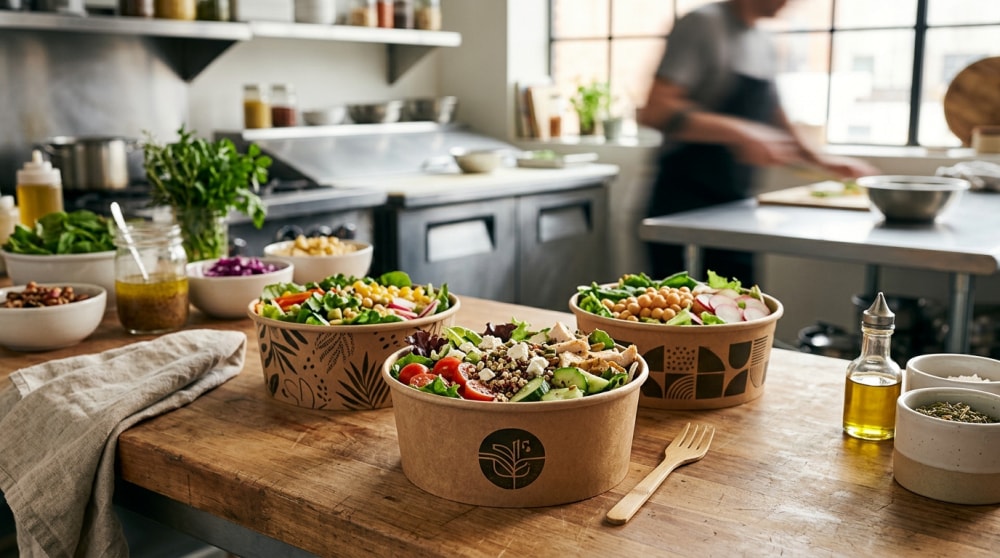
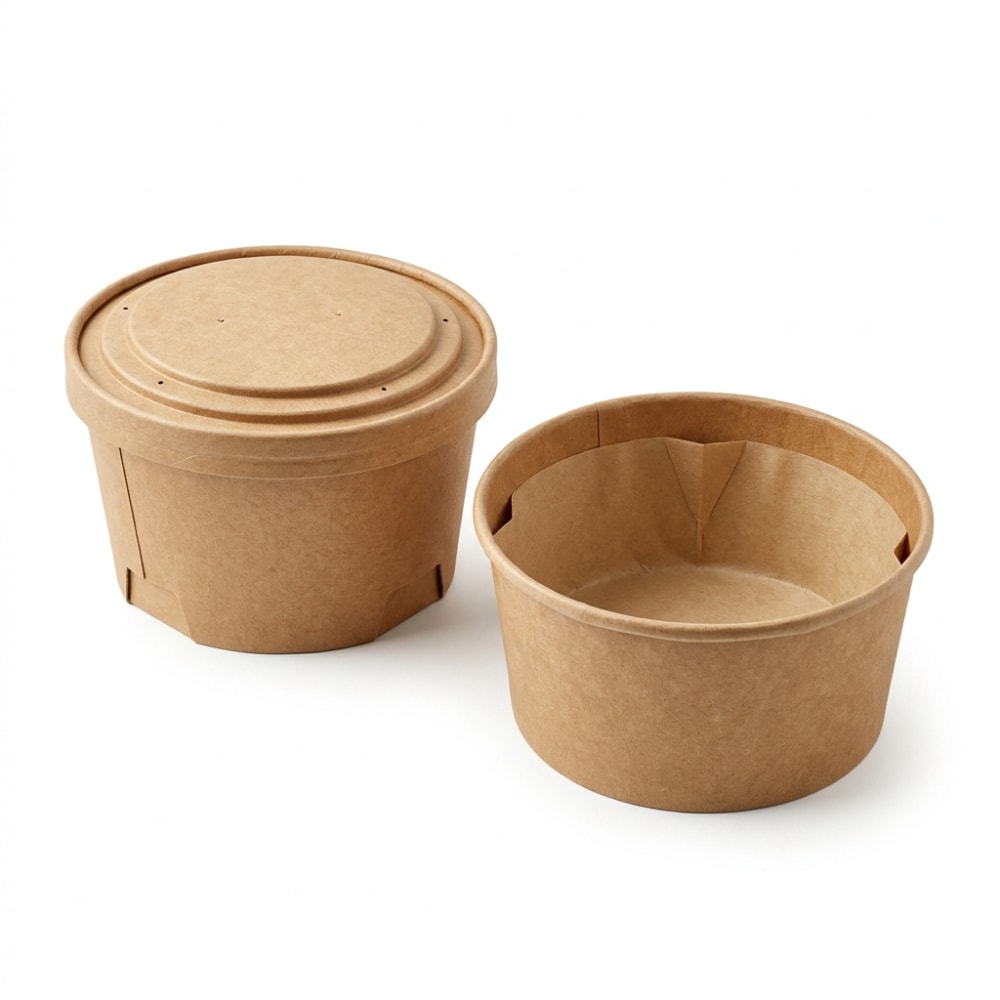
Canada’s 500–1500ml Kraft Salad Bowl Buying Guide
The right 500–1500ml kraft salad bowls for a Canadian food-service operation are selected by matching the container to the actual meal, delivery journey, staff workflow, storage limits and sustainability requirements. Unit price matters, but it should not be the first filter. A low-cost bowl that leaks during a DoorDash, Uber Eats or direct-delivery order can create refunds, remakes and a poor customer impression that far exceed the original packaging saving.For most menus, 500–750ml bowls work best for side salads, fruit cups, yogurt bowls and light lunch portions. Bowls in the 850–1000ml range are the most versatile choice for standard composed salads, grain bowls and meal salads. The 1200–1500ml range is usually better for protein-heavy meals, family salads, sharing portions, catering counters and premium build-your-own salad concepts.Canadian buyers should assess how packaging performs in real local conditions. A cold salad delivered across Toronto in winter may face condensation, while a hot grain-and-chicken bowl travelling through Vancouver rain may require stronger grease resistance, lid security and stacking strength. Restaurants in Montréal, Calgary, Ottawa and Halifax also need to consider local storage space, distributor lead times, bilingual labelling requirements where applicable, and municipal waste-management systems.A practical buying decision starts with six questions: What portion weight goes into the bowl? Is the food cold, warm or hot? How long will it be held before eating? Does dressing travel inside the bowl? Which lid style is required? What happens after use in the customer’s local waste stream? Once these requirements are clear, samples can be tested with measurable pass-or-fail criteria rather than subjective preferences.Menu formatTypical bowl capacityTypical filled weightRecommended configurationMain performance riskBest purchasing focusSide salad500–650ml140–260gKraft bowl with clear or paper lidOversized packagingPortion presentation and lid fitFruit and yogurt bowl500–750ml180–350gMoisture-resistant bowl, secure lidCondensationLeak resistance and visibilityStandard meal salad850–1000ml350–550gWide opening with fitted lidCompression during deliveryStacking strength and closureGrain or protein bowl1000–1200ml450–700gHeavy-duty bowl, vented lid if warmGrease and heat exposureCoating and heat performanceLarge meal salad1200–1300ml600–850gDeep bowl with strong rimLid pop-offRim rigidity and transport stabilitySharing or catering salad1400–1500ml800–1200gWide bowl with reinforced lidSidewall deformationLoad-bearing strengthThe table provides a useful starting point, but portion volume alone is not enough. A 900ml bowl filled with leafy greens may appear generous, while the same bowl filled with quinoa, roasted vegetables, chicken and dressing can be under-sized. Always test your heaviest, wettest and most commercially important recipe.Canadian operators often standardize too quickly. They may buy one bowl size for every menu item to simplify purchasing, then discover that side salads look empty, premium bowls feel cramped, and delivery orders become difficult to stack. A better approach is to create a compact but flexible range of two or three bowl sizes.For a café, deli or quick-service restaurant, a 650ml side bowl, a 1000ml meal bowl and a 1300ml sharing bowl can cover most cold-menu applications. A salad chain with extensive customization may need 750ml, 1000ml and 1500ml formats to preserve visual consistency across menu tiers. A distributor serving multiple independent restaurants may benefit from stocking the most broadly compatible 750ml, 1000ml and 1200ml sizes with common lid diameters.The bowl opening is as important as capacity. Wide bowls make layered ingredients easier to display, simplify filling at the make line and give customers easier access with a fork. Taller, narrower bowls can improve stackability and may reduce freight volume, but they may make a composed salad harder to mix. For delivery-first concepts, a slightly deeper bowl with a tight lid can offer better transport security. For counter display, a wider rim and transparent lid may better showcase ingredients.var ctxMarketGrowth = document.getElementById('marketGrowthChart').getContext('2d');new Chart(ctxMarketGrowth, {type: 'line',data: {labels: ['2022', '2023', '2024', '2025', '2026', '2027'],datasets: [{label: 'Illustrative Canadian demand index for paper salad bowls',data: [100, 108, 117, 126, 136, 148],borderColor: 'rgb(57, 113, 74)',backgroundColor: 'rgba(57, 113, 74, 0.12)',borderWidth: 3,fill: false,tension: 0.25}]},options: {responsive: false,maintainAspectRatio: false,plugins: { legend: { display: true } },scales: { y: { beginAtZero: false, title: { display: true, text: 'Demand index' } } }}});This planning chart illustrates why buyers should build a repeatable selection process rather than make one-off packaging decisions. Demand for convenient, delivery-ready and fibre-based food packaging is expected to remain important through 2026 and beyond, especially in urban food-service markets such as the Greater Toronto Area, Metro Vancouver and Montréal.Before requesting quotations, write a short product specification. Separate non-negotiable requirements from preferences. A non-negotiable requirement is something that causes failure if the bowl does not meet it: a lid must remain closed after a 30-minute courier ride; the bowl must hold 650g of dressed salad; the paper structure must remain stable after contact with warm rice; or the product must support the intended food-contact documentation for the Canadian market.Preferences can include a darker natural kraft tone, a specific print position, a clear lid, embossed branding or a compostability claim. These features can be valuable, but they should be considered after core food protection and operational requirements are validated.Requirement categoryQuestion to askExample acceptance criterionTest methodPriorityRecord to retainCapacityDoes the bowl fit the actual menu portion?Minimum 10% headspace after fillingFill with production recipeCriticalFilled-weight photo and measurementLeak resistanceWill dressing or sauce escape?No visible leakage after 60 minutesFilled bowl held and tiltedCriticalTrial checklistLid engagementDoes the lid stay on during handling?No release after three lifts and stack testManual lift and transport simulationCriticalLid-fit resultHeat toleranceWill warm ingredients soften the bowl?No collapse after 30 minutes with warm foodUse hottest intended recipeCriticalTemperature and visual recordGrease resistanceWill oil migrate through the paper?No staining through outer surfaceTest with oily protein or dressingHighInspection notesPrint qualityWill brand artwork reproduce accurately?Approved colour and legible legal textDigital proof and printed sampleHighSigned artwork approvalEnd-of-life claimCan the claim be supported locally?Claim matches material and destination systemDocument and claim reviewHighCompliance fileFor menus that include hot rice, roasted vegetables, grilled chicken or warm grains, specify the expected filling temperature instead of saying “hot food.” A supplier can recommend paperboard, barrier treatment and lid options more accurately when the condition is measurable. Likewise, “leakproof” should be defined by a test duration, food type and orientation rather than used as a general marketing phrase.A bowl must protect the food, but it also needs to work quickly for staff and comfortably for customers. During the lunch rush in a downtown Toronto salad bar or a busy Vancouver food court, a lid that requires repeated adjustment can slow production and increase product waste. A premium-looking package that cannot be reliably stacked may be unsuitable for courier orders.Use a score from one to five for each performance category. Score competing bowl-and-lid combinations, not bowls alone. A bowl that appears identical may perform differently with a PET lid, a PP lid, a fibre lid or a different rim profile. Test complete pack systems with napkins, cutlery, sauce cups and tamper seals if these are used in the finished order.Evaluation factorWhat a score of 1 meansWhat a score of 5 meansWhy it mattersRecommended weightDecision ownerLeak preventionSeepage or lid release occursNo leakage in realistic handlingProtects order quality20%Operations managerStacking strengthBowls deform under normal loadStable stack during pickup and deliveryReduces courier damage15%Store operationsFilling speedSlow or difficult to closeFast, intuitive one-step closureSupports peak service15%Kitchen leadCustomer usabilityHard to open or eat fromEasy to carry, open and mixImproves repeat orders10%Brand teamAppearanceGeneric or inconsistent presentationStrong menu and brand presentationSupports perceived value10%Marketing teamStorage efficiencyConsumes excessive shelf spaceNests efficiently and is easy to countReduces back-of-house pressure10%Purchasing teamDocument readinessSpecifications are incompleteClear product and food-contact recordsReduces procurement risk20%Quality assuranceThe weighting should change by business model. A delivery-only kitchen should place more weight on closure and stacking strength. A premium salad concept with dine-in traffic may value presentation and eating comfort more heavily. A distributor should give greater attention to product consistency, carton configuration and documentation that can be shared with multiple downstream customers.var ctxIndustryDemand = document.getElementById('industryDemandChart').getContext('2d');new Chart(ctxIndustryDemand, {type: 'bar',data: {labels: ['Salad chains', 'Delis', 'Meal-prep brands', 'Grocery counters', 'Catering', 'Universities'],datasets: [{label: 'Illustrative annual bowl demand index',data: [92, 74, 83, 79, 61, 68],backgroundColor: ['rgb(69, 123, 157)','rgb(42, 157, 143)','rgb(233, 196, 106)','rgb(244, 162, 97)','rgb(231, 111, 81)','rgb(110, 89, 165)']}]},options: {responsive: false,maintainAspectRatio: false,plugins: { legend: { display: true } },scales: { y: { beginAtZero: true, title: { display: true, text: 'Demand index' } } }}});The chart shows an illustrative demand profile across key Canadian buyer groups. Salad chains and meal-prep brands typically prioritize consistent bowl sizes, reliable closures and repeatable branding. Grocery counters and universities often focus more heavily on high-volume operational efficiency, shelf presentation and storage management.Procurement teams should calculate cost per served order, not merely cost per bowl. The complete cost includes the bowl, lid, printing, freight, customs and inland transport, storage loss, damaged-order risk, staff time and possible refunds. For imports arriving through the Port of Vancouver, Port of Montréal or Port of Halifax, carton dimensions and container utilization can materially influence the delivered cost.A lightweight bowl may reduce freight cost but may also fail when used for a large, wet salad. A heavier bowl may cost more per unit but reduce leakage and remakes. The appropriate decision depends on the value of the meal, the delivery distance and the rate of packaging-related failure.Cost componentLow-cost optionPerformance optionHow to measureOperational impactProcurement actionBowl unit costLower initial purchase priceHigher material costQuoted cost per unitVisible budget impactCompare at expected volumeLid costMay use basic closureMay use stronger fitted lidCost per matched setAffects leakage riskQuote bowl and lid togetherFreight and dutyPotentially lower weightPotentially larger carton costLanded-cost calculationChanges true unit costRequest carton dimensionsStorage costMay have bulky nesting profileMay optimize carton packingPallet and shelf usageMatters in urban storesReview case pack and pallet planStaff handling timeMay require lid adjustmentFaster closing systemTimed line testMatters during lunch peaksMeasure seconds per orderRefund and remake exposureHigher if failures occurLower if protection improvesIncident trackingProtects reputation and marginInclude failure cost modelBrand valueLimited visual differentiationCustom print and presentationMarketing evaluationCan support premium pricingLink to menu strategyFor example, a bowl-and-lid system that costs a few cents more can be financially preferable if it reduces packaging-related delivery complaints. Calculate the value of avoided remakes using your own average order value, courier fees, labour cost and customer-service time. This makes the procurement discussion more objective for finance, operations and marketing teams.A blind staff handling test is one of the most reliable ways to compare kraft salad bowl options. Remove supplier names, assign sample codes and ask staff to fill, close, stack, carry and reopen each sample. Include employees who prepare salads, pack delivery orders, manage inventory and serve customers. Their daily experience often reveals problems that are not visible in a showroom sample.Use the same ingredients, portion weights, dressing volume and handling sequence for every sample. Test cold salads and, if relevant, warm bowls. Place filled bowls in delivery bags, stack them as they would be stacked for a courier pickup, and inspect them after 15, 30 and 60 minutes. For Canadian winter operations, allow one set to experience a cool holding environment, because condensation and material stiffness may change.Test stageProcedurePass criterionWho should assessEvidence to collectCommon failure signalFillingFill at normal line speedNo rim contaminationKitchen staffTime per bowlIngredients catch on rimLid closingClose without instructionsSecure closure on first attemptAll participantsAttempts requiredUneven lid engagementCarry testCarry one bowl for 20 metresNo flexing or lid movementFront-of-house staffObservation notesSidewall feels weakStack testStack three filled bowlsStable for 10 minutesDelivery packerPhoto recordTop bowl slidesDelivery simulationPlace in courier bag and moveNo leakage or lid releaseOperations managerInspection at intervalsDressing at rim or baseCustomer openingOpen with clean handsEasy opening without tearingIndependent staff groupEase-of-use scoreLid is too tight or flimsyEnd-of-hold inspectionInspect after 60 minutesNo softening, seepage or odour transferQuality leadFinal scorecardPaperboard discolourationDo not let one senior buyer make the decision alone. Combine staff scores with measurable results. If two options perform similarly, use total landed cost, supply reliability and branding flexibility as tie-breakers. Save the completed scorecard, product sample code, approved artwork and final specification so that repeat orders are controlled consistently.Kraft salad bowls communicate natural materials, freshness and casual premium quality, but the visual message should match the restaurant concept. A wellness-oriented salad brand may prefer unbleached kraft with minimal black printing. A grocery prepared-food program may need higher-impact colour printing and clear product visibility. A corporate catering company may prioritize clean, professional branding and tamper-evident presentation.Environmental claims require particular care in Canada. A bowl may contain renewable fibre, yet its actual disposal route depends on its coating, lid material, food contamination and the waste program available in the city where the customer uses it. Compostability, recyclability and fibre-content claims should be specific, documented and appropriate to the intended market. Avoid broad claims that customers or municipal programs may interpret differently.For Québec distribution, assess whether consumer-facing printed information requires French or bilingual treatment. For national restaurant programs, establish a consistent claim hierarchy that can be used across Ontario, British Columbia, Alberta, Québec and Atlantic Canada without overstating local collection outcomes.var ctxTrendShift = document.getElementById('trendShiftChart').getContext('2d');new Chart(ctxTrendShift, {type: 'line',data: {labels: ['2022', '2023', '2024', '2025', '2026', '2027'],datasets: [{label: 'Preference for basic stock packaging',data: [58, 54, 49, 45, 41, 38],borderColor: 'rgb(140, 140, 140)',backgroundColor: 'rgba(140, 140, 140, 0.18)',fill: true,tension: 0.25},{label: 'Preference for verified, customized fibre packaging',data: [42, 46, 51, 55, 59, 62],borderColor: 'rgb(46, 125, 50)',backgroundColor: 'rgba(46, 125, 50, 0.20)',fill: true,tension: 0.25}]},options: {responsive: false,maintainAspectRatio: false,plugins: { legend: { display: true } },scales: { y: { beginAtZero: true, max: 70, title: { display: true, text: 'Illustrative preference share (%)' } } }}});The trend shift shown above is an illustrative planning view. By 2026, buyers are increasingly expected to ask for traceable materials, clearer environmental language, better printing control and packaging designed for real-world food protection. Technology will support this shift through digital artwork approvals, batch tracking, improved barrier materials and more consistent automated forming processes.A weighted procurement scorecard gives every department a voice without allowing preferences to override operational facts. The scorecard below compares three illustrative configurations: a basic 750ml bowl, a reinforced 1000ml meal bowl and a 1300ml sharing bowl. Replace the sample scores with results from your own trials.CriterionWeight750ml basic bowl1000ml reinforced bowl1300ml sharing bowlHow to interpretPortion fit15%354Match to main recipe volumeLeak resistance20%354Use dressing and tilt testLid security15%354Assess bowl-and-lid systemFilling speed10%543Measure peak-period handlingStorage efficiency10%543Review cartons and nestingBranding potential10%355Review print area and appearanceLanded cost10%543Include freight and handlingDocument readiness10%355Confirm specifications and recordsMultiply each score by the assigned weight and compare the totals. The highest-scoring option is not automatically the best selection if it does not meet a critical requirement. Any bowl that leaks, fails to close or lacks the required documentation should be removed before weighted scoring begins.var ctxComparison = document.getElementById('comparisonChart').getContext('2d');new Chart(ctxComparison, {type: 'bar',data: {labels: ['Protection', 'Service speed', 'Storage', 'Branding', 'Landed cost', 'Documentation'],datasets: [{label: 'Basic stock option',data: [62, 88, 90, 55, 92, 60],backgroundColor: 'rgba(120, 120, 120, 0.75)'},{label: 'Specified custom option',data: [92, 81, 76, 91, 78, 94],backgroundColor: 'rgba(46, 125, 50, 0.75)'}]},options: {responsive: false,maintainAspectRatio: false,plugins: { legend: { display: true } },scales: { y: { beginAtZero: true, max: 100, title: { display: true, text: 'Illustrative performance score' } } }}});This comparison demonstrates a common procurement trade-off: a basic stock product may score well on speed of purchase and short-term cost, while a specified custom option can deliver better protection, documentation and brand consistency. The right answer depends on order volume, business growth plans and the operational cost of failure.Fude Packaging supports overseas B2B buyers seeking paper bowls, cups, boxes, trays and multi-compartment meal packaging from a single manufacturing partner. For Canadian importers, restaurant chains, distributors and food brands, the objective is not simply to source a kraft bowl; it is to establish a controlled packaging specification that can be repeated across purchase cycles.Fude Packaging combines automated production processes with in-house quality and performance testing. Product development can include material selection, coating recommendations, structural evaluation, artwork checking, Pantone colour matching and functional sample review. Buyers can request digital proofs, plain white samples and printed pre-production proofs before approving a mass-production order. This process helps verify bowl dimensions, capacity, rim strength, print quality, lid compatibility, grease resistance and intended food-use performance.With more than 20 years of packaging experience, a self-owned 30,000 m² manufacturing base in Shandong and automated capacity of up to 120,000 units per day, Fude Packaging is positioned to support both standard and customized food-packaging programs. Production control extends through material selection, printing, die-cutting, forming, inspection, packing and shipment preparation. Batch traceability and documented quality checks help customers manage repeat orders more confidently.For buyers seeking a broader packaging range, the paper bowl collection can be reviewed alongside related food-service formats. Consolidating bowls, cups, lunch boxes and trays can simplify supplier management, improve visual consistency and potentially improve container utilization for shipments entering Canada through major ports.Fude Packaging provides OEM and ODM support for buyers that need practical guidance on size, materials, branding and export packing. The team can assist with samples, production scheduling, export documents and shipment coordination for sea freight, air freight, full-container and less-than-container orders. Standard production timing is commonly planned around the confirmed specification, artwork and order volume, with scheduled-order support available for repeat procurement programs.Canadian buyers can explore available custom packaging services when they need printed bowls, structural recommendations or pre-production approvals. Information about the manufacturer’s background is available through Fude Packaging’s company profile, while procurement teams can request samples or discuss a Canada-bound project directly.Local Canadian distributors can offer short lead times, small case quantities and convenient emergency replenishment. This can be valuable for independent cafés in Edmonton, catering businesses in Ottawa or seasonal food-service operators in Halifax. However, stock ranges may be limited, custom printing choices may be restricted, and available capacities may not align perfectly with specialized salad recipes.Direct import programs can offer broader customization, consolidated product categories and stronger control over brand presentation. They normally require more planning, clear forecasts, freight coordination and sufficient storage capacity. Larger chains and distributors often use a hybrid model: locally stocked standard packaging for urgent needs, combined with direct-import custom packaging for core high-volume lines.When comparing suppliers, ask for product dimensions, carton count, carton dimensions, gross weight, pallet arrangement, lid compatibility, food-contact documentation, sample lead time, production lead time and print approval process. These details are more useful than a quotation alone because they allow a fair comparison of landed cost and operational suitability.Use 500–750ml kraft salad bowls for side salads, fruit bowls and lighter portions. Use 850–1000ml bowls for standard meal salads. Use 1200–1500ml bowls for large protein bowls, premium salads, sharing portions and catering applications. Confirm the choice by filling samples with the heaviest and wettest menu item.The lowest unit-cost bowl is not always the lowest-cost solution. Calculate bowl cost, lid cost, printing, freight, storage, staff time, leakage incidents, refunds and remakes. A stronger bowl-and-lid system may reduce total served-order cost if it prevents delivery failures.Smaller bowls generally nest more efficiently and may reduce storage and freight requirements. Larger bowls can require more back-of-house space and may reduce carton density. Ask suppliers for carton dimensions, units per carton, pallet configuration and container-loading estimates before making a comparison.Custom printed kraft bowls offer stronger visual differentiation, particularly for salad chains, prepared-food counters and premium meal-prep brands. The best branding option balances print area, colour accuracy, food visibility, lid style and the sustainability message your business can support responsibly.Use coded samples without supplier names. Fill each bowl with the same menu recipe, portion weight, dressing volume and lid. Test filling speed, closure, stacking, carry performance, delivery-bag handling and condition after 60 minutes. Record results, photographs and staff scores before selecting the final specification.Key trends include more precise environmental claims, increased demand for traceable fibre-based materials, improved barrier technologies, greater use of digital proofing and stronger focus on total cost per served order. Buyers should expect customers, distributors and internal quality teams to ask more detailed questions about food safety, materials, end-of-life messaging and supply reliability. -
Paper Lunch Box Factory Solutions for the United States
The United States food service market continues to move toward reliable, branded, and more sustainable takeaway packaging. For buyers that need consistency, speed, and better cost control, working with a paper lunch box factory is usually more practical than buying through layers of traders. Whether the end use is deli meals in New York, meal prep in Los Angeles, campus catering in Chicago, or delivery kitchens near Houston, the right manufacturing partner can support volume growth, compliance, and brand presentation at the same time.This guide explains how a professional paper lunch box factory serves the United States market, what demand looks like heading into 2026, how production lines operate, which certifications matter, and how OEM or private label projects are normally managed. It also shows how buyers can compare factory-direct sourcing with trader-based sourcing when purchasing kraft lunch boxes, white paper meal boxes, compartment containers, window-lid takeaway boxes, deli boxes, and related food packaging.If you need dependable takeaway packaging for the United States, a qualified paper lunch box factory gives you three main advantages: better price control, steadier quality, and wider customization. This matters for restaurants, distributors, chains, caterers, ghost kitchens, wholesalers, and food brands that want packaging ready for delivery, dine-out, retail display, and meal programs.A factory is usually the better choice when you need:Stable bulk supply for recurring orders Custom sizes, coatings, or logo printing Food-contact compliance for the United States market Lower landed cost over repeat purchase cycles Faster correction if specifications must be adjusted Direct communication on lead times, testing, and production planning For buyers in ports and logistics hubs such as Los Angeles, Long Beach, New York-New Jersey, Savannah, Houston, and Seattle-Tacoma, factory-direct purchasing can also make container planning more efficient because carton dimensions, packing quantity, and pallet strategy can be designed around distribution needs.In practical terms, a paper lunch box factory is not just a supplier of boxes. It is a packaging development partner that helps match structure, board weight, grease resistance, leak protection, stackability, and printing performance to real food applications such as rice meals, salads, grilled items, fried foods, noodles, sandwiches, bakery products, and prepared deli offerings.Demand in the United States is rising because several trends are converging at once: off-premise dining remains strong, delivery and pickup are now part of normal restaurant operations, more regional chains are upgrading packaging for branding, and sustainability policies are influencing material selection. A growing number of food service buyers also want to reduce excessive plastic use without sacrificing performance.By 2026, the strongest growth is expected in six application groups: quick-service restaurants, casual dining takeaway, supermarket prepared meals, catering, meal prep services, and food delivery kitchens. Cities with heavy traffic in these segments include Atlanta, Miami, Dallas, Phoenix, San Francisco, and Boston, where presentation and transport performance both affect repeat business.Paper-based lunch boxes are seeing demand growth because they support several purchasing goals at once. Buyers can choose kraft surfaces for natural branding, white boards for sharp printing, PE coatings for leak resistance, PLA options for compostability programs, and window designs for better shelf appeal in grab-and-go retail settings.United States Demand Segment2024 Estimated Demand Index2025 Estimated Demand Index2026 Estimated Demand IndexMain Buying DriverTypical Box FormatQuick-service restaurants100108117High takeaway volumeClamshell lunch boxFood delivery kitchens100112124Leak protection and stackingPE-coated meal boxSupermarket prepared meals100110121Retail shelf presentationWindow-lid deli boxCatering companies100106114Portion controlMulti-compartment boxMeal prep brands100111123Brand consistencyBento-style lunch boxUniversity and hospital food service100105113Operational scaleStandard kraft lunch boxThe table above shows why 2026 looks favorable for paper lunch box manufacturers serving the United States. The fastest expansion is likely to come from delivery-focused operations and prepared meal retail programs, both of which need dependable packaging in large repeat volumes.var ctx1 = document.getElementById('marketGrowthLine').getContext('2d');var marketGrowthLine = new Chart(ctx1, { type: 'line', data: { labels: ['2022', '2023', '2024', '2025', '2026'], datasets: [{ label: 'United States Paper Lunch Box Demand Index', data: [82, 91, 100, 109, 119], borderColor: 'rgb(54, 162, 235)', backgroundColor: 'rgba(54, 162, 235, 0.15)', fill: false, tension: 0.3 }] }, options: { responsive: true, maintainAspectRatio: false }});The line chart reflects a realistic upward trend based on the expansion of takeaway dining, meal delivery, and food retail packaging. While exact purchasing cycles vary by region, most large buyers in the United States are planning packaging programs with longer forecasting windows than before.Another 2026 demand factor is policy. Municipal and state-level rules around waste reduction, plastic alternatives, recyclability claims, and compostability language are pushing buyers to examine packaging specifications more closely. A paper lunch box factory that understands documentation, coatings, and claim accuracy will be much more useful than a simple reselling trader.Many United States buyers first source through traders because it seems easier. Traders can be useful for mixed small orders or fast quote gathering. However, once order volume rises or product specifications become more technical, the differences between a real factory and a trader become very clear.A factory controls or directly manages tooling, board selection, printing setup, forming, inspections, packing standards, and production scheduling. A trader often depends on third-party factories and may have limited influence over specification changes, color consistency, coating performance, or lead time accuracy.Comparison PointPaper Lunch Box FactoryTraderBuyer ImpactBest ForRisk LevelPricing transparencyDirect cost basisIncludes middle marginBetter repeat-order budgetingLong-term sourcingLowCustomization controlStrongLimited by subcontractorsFaster design adjustmentsPrivate labelLowQuality consistencyProcess-basedSupplier-dependentFewer batch variationsChain supplyLowLead time reliabilityProduction scheduled internallyLess direct controlBetter planning for launchesSeasonal ordersMediumTechnical feedbackMaterial and structure expertiseOften basicSmarter product selectionSpecial applicationsLowProblem resolutionDirect root-cause handlingMulti-step communicationFaster correctionLarge accountsLowThe table shows why factory-direct sourcing becomes more valuable as complexity increases. If a restaurant chain in the United States wants a 3-compartment meal box with a specific grease barrier, nesting depth, and two-color logo, the factory can usually solve it faster because engineering, production, and quality teams are connected.Buyers should still evaluate factories carefully. A real factory should be able to explain raw material choices, forming methods, QC checkpoints, carton loading plans, certification status, and the exact steps from artwork approval to shipment. If a supplier cannot answer those questions clearly, it may be acting more like a trader than a manufacturer.var ctx2 = document.getElementById('comparisonBar').getContext('2d');var comparisonBar = new Chart(ctx2, { type: 'bar', data: { labels: ['Price Control', 'Customization', 'Lead Time Accuracy', 'Quality Stability', 'Technical Support', 'Corrective Response'], datasets: [{ label: 'Factory Direct Score', data: [92, 95, 88, 94, 93, 91], backgroundColor: 'rgba(153, 102, 255, 0.75)' },{ label: 'Trader Score', data: [68, 61, 64, 70, 58, 60], backgroundColor: 'rgba(255, 159, 64, 0.75)' }] }, options: { responsive: true, maintainAspectRatio: false }});The comparison chart summarizes how factories generally outperform traders in categories that matter to United States importers, distributors, and food service groups. The biggest gaps are usually customization and technical support.Capacity matters because many packaging problems are not design problems; they are scale problems. A supplier may send attractive samples but still fail when monthly replenishment begins. For United States buyers serving multiple restaurant locations or distribution branches, the factory needs enough equipment, labor organization, storage space, and quality discipline to support consistent shipment windows.Factory scale should be evaluated through several indicators: workshop size, automation level, forming line quantity, printing capability, warehouse conditions, inspection system, loading efficiency, and export experience. Capacity must also match product mix. A factory that handles simple cups well may not be equally strong in compartment meal boxes or window-lid deli packaging.Shandong Fude Packaging Co., Ltd. is an example of the scale that many serious buyers look for. Founded in 2004, the company operates a modern 30,000 square meter facility in Shandong, China and serves food service clients across more than 35 countries. Its production system supports high-volume paper packaging manufacturing for restaurants, chains, wholesalers, distributors, and takeaway operators. Buyers can review its broader packaging portfolio through its product range.Capacity IndicatorWhy It MattersSmall Supplier RiskFactory-Scale AdvantageUnited States Buyer BenefitPriority LevelWorkshop areaSupports organized production flowCrowded processesBetter process separationMore stable outputHighAutomation levelReduces manual variationInconsistent formingHigher repeatabilityCleaner specification controlHighPrinting capabilityAffects brand appearanceColor mismatchConsistent graphicsBetter shelf presenceHighWarehouse conditionsProtects board and finished goodsMoisture distortionClimate-managed storageStronger delivery qualityMediumLab and QC systemVerifies food-contact and performanceLate defect discoveryRoutine testingReduced claim riskHighExport handlingSupports documents and loadingShipment delaysStandardized packing and coordinationSmoother port arrival planningHighThe scale of a manufacturer is especially important for East Coast and West Coast import planning. A buyer routing cargo to Long Beach or Savannah needs predictable carton counts and loading rates to control freight cost. If the factory can optimize carton dimensions and pallet patterns, the buyer may reduce handling inefficiencies throughout the domestic distribution chain.Beyond equipment, service scale matters too. Many successful United States buyers now ask for sample approval, artwork review, packaging recommendations, and replenishment planning as part of one sourcing relationship rather than through multiple intermediaries.Understanding the production process helps buyers specify the right product. A lunch box is not only defined by its size. It is the result of several linked choices: paperboard type, coating, print method, die-cut pattern, creasing quality, forming precision, adhesive or locking design, and inspection standards. Small differences in these steps affect leak resistance, lid closure, box rigidity, and shipping durability.A typical production workflow includes raw material selection, surface printing, die-cutting, forming, inspection, counting, packing, and warehousing. For coated applications, material choice determines whether the finished box is better suited for oily meals, moist foods, hot dishes, chilled deli products, or short shelf-life retail display.Technological capability is one area where a mature manufacturer stands out. At Fude, production is supported by automated lines, flexographic printing, die-cutting systems, forming equipment, quality testing labs, and controlled warehousing conditions. These capabilities help translate approved artwork and performance requirements into repeatable finished packaging, not just a single good sample.Production StageMain TaskKey Control PointPossible Defect if WeakImpact on End UseBuyer Question to AskBoard selectionChoose paper weight and coatingFood-grade complianceWeak structureBox collapseWhich board and barrier are used?PrintingApply graphics and brandingColor alignmentBlurred logosPoor brand imageHow is print consistency checked?Die-cuttingCreate box shape and foldsCut precisionMisfit foldingSlow packing at store levelWhat tolerances are maintained?FormingAssemble final structureLocking and sealing qualityLeaks or open cornersFood spillageHow is forming strength tested?InspectionCheck dimensions and performanceSampling frequencyMixed-quality cartonsStore complaintsWhat is the QC process?Packing and storageCartonize and warehouse goodsMoisture controlWarping or contaminationDamage in transitHow are finished goods stored?For the United States market, the most common paper lunch box structures include standard clamshell lunch boxes, rectangular deli boxes, noodle-style takeaway boxes, multi-compartment meal boxes, and display-friendly window-lid packs. Each one serves a different operational purpose. A food truck in Austin may prioritize speed of filling and secure closure, while a supermarket deli in Philadelphia may value product visibility and stackability more.Buyers can also improve outcomes by matching product design to the menu. Fried foods need strong oil resistance; sauced rice dishes need leak control; salads need shape retention and visual presentation; hot grab-and-go items need structural integrity under heat and condensation. When the production line is engineered around these conditions, complaint rates usually fall.A practical example helps show why direct manufacturing support matters. Consider a mid-sized United States prepared meal brand supplying retail coolers and delivery orders in California, Nevada, and Arizona. The company had been buying generic packaging through a trader, but it faced recurring problems: logo inconsistency, occasional lid weakness, and poor carton efficiency that increased freight cost.After moving to a factory-direct model, the brand reworked its packaging in three steps. First, it selected a custom deli-style paper lunch box with a clear window lid for shelf visibility. Second, it adjusted the board specification and structure for better moisture resistance during chilled distribution. Third, it optimized carton packing to fit its regional warehouse pallet pattern more efficiently.The result was not just better packaging appearance. It improved operating performance. Store teams packed products faster, damage rates declined, and the brand gained a cleaner premium look in refrigerated displays. Repeat purchase feedback also improved because customers could see the food more clearly before buying.Fude has supported similar growth paths for international clients by combining packaging development, sample confirmation, flexible MOQ planning, and export-ready production support. Its customer base spans more than 500 clients across six continents, which matters because global food service packaging often requires balancing compliance, cost, graphics, and shipment timing. Buyers that want to understand how these projects are managed can explore its service approach.For United States brands, the lesson is simple: packaging becomes a growth tool when it is treated as part of product strategy, not as a low-priority commodity. The right paper lunch box factory can influence sales presentation, store operations, delivery protection, and even social-media appearance for branded meals.var ctx3 = document.getElementById('trendArea').getContext('2d');var trendArea = new Chart(ctx3, { type: 'line', data: { labels: ['2022', '2023', '2024', '2025', '2026'], datasets: [{ label: 'Shift Toward Custom and Sustainable Formats', data: [24, 31, 39, 48, 58], fill: true, backgroundColor: 'rgba(75, 192, 192, 0.25)', borderColor: 'rgb(75, 192, 192)', tension: 0.3 }] }, options: { responsive: true, maintainAspectRatio: false }});The area chart highlights a major 2026 trend in the United States: more buyers are moving away from basic generic packaging and toward custom-branded, application-specific, and sustainability-focused box formats.For United States buyers, compliance is not a side topic. It is central to risk management. A paper lunch box factory should be able to explain its quality systems, sustainable paper sourcing, food-contact compliance, and where relevant, compostability or biodegradability claims. Certifications do not replace physical testing, but they are important signals of management discipline and market readiness.Key standards often discussed in paper food packaging include ISO 9001 for quality management, FSC for responsible paper sourcing, FDA-related food-contact expectations, EU EC 1935/2004 for broader export compliance, and certifications such as BPI or OK Compost where compostable material programs are relevant. Buyers should also review the actual material combination used, because a compostable claim may depend on specific board and lining choices.Standard or RequirementWhat It CoversWhy United States Buyers CareTypical Proof NeededCommon ApplicationDecision ImpactISO 9001Quality management systemSupports repeatabilityCertificate and process recordsAll recurring ordersHighFSCResponsible paper sourcingSupports sustainability programsChain-of-custody documentationKraft and white paper boxesHighFDA food-contact suitabilityFood safety expectationsCritical for market entryMaterial declarations or test reportsDirect food contact packagingVery highEU EC 1935/2004Food-contact frameworkUseful for multi-market buyersCompliance statementExport-focused packagingMediumBPICompostability certificationSupports compostable product linesCertification for applicable materialsPLA-lined formatsMediumOK CompostIndustrial compostability benchmarkUseful for sustainability claimsValid certificateSelect eco product rangesMediumThe table shows that compliance should be matched to the actual purchase program. A national fast-casual chain may prioritize ISO and food safety documentation first, while a premium organic meal brand may also place strong value on FSC and compostability pathways.Fude’s food packaging programs are built around standards such as ISO 9001, FSC, FDA-oriented food-contact requirements, and additional compliance options depending on material selection. The company also works with food-grade PE coatings and compostable PLA options for applications that need oil resistance, leak resistance, or more sustainability-led positioning.For United States importers, it is also wise to verify claim language before final packaging artwork is approved. Terms like recyclable, compostable, biodegradable, or eco-friendly should match the actual material system and the regulations or disposal infrastructure in the target market.OEM and private label programs are increasingly important in the United States because packaging now influences customer perception almost as much as the food itself. A plain box works for some wholesale operations, but many chains, meal brands, and distributors want distinctive packaging that reinforces their identity and helps their products stand out.A professional paper lunch box factory can normally customize:Box dimensions and fill volume Kraft or white board appearance Single-compartment or multi-compartment structure PE-lined or PLA-based barriers Window lids or closed-top formats Logo printing, color systems, and layout Carton packing quantity for warehouse efficiency Private label is especially useful for distributors in the United States that serve independent restaurants under one house brand. It is also valuable for regional food chains that want packaging consistent across multiple states. Customized printing helps with recognition, while structural tailoring improves food performance and operational speed.Customization ElementOptions AvailableWho Usually Requests ItMain Business GoalLead Time EffectValue LevelLogo printing1 to multi-color designsRestaurants and chainsBrand visibilityLow to mediumHighBox sizeStandard or custom dimensionsMeal brandsPortion fitMediumHighMaterial typeKraft, white, coated, PLASustainability-focused buyersCompliance and positioningMediumHighStructureClamshell, deli, bento, windowPrepared food retailersUsability and displayMediumHighCompartment layoutSingle, 2, or 3 sectionsCatering and meal prepFood separationMediumMediumCarton specificationCustom packing countsDistributorsFreight and warehouse efficiencyLowMediumA sound OEM project usually follows three stages: requirement review, design and sample confirmation, and then production with delivery. This process helps reduce costly misunderstandings. It is much better to test a lunch box with the real menu before mass production than to discover after shipment that the lid softens under steam or the base is too shallow for the serving size.For trial launches in the United States, flexible MOQ arrangements are useful. They allow newer brands to test packaging performance in one city or one regional route before placing larger repeat orders.Shandong Fude Packaging Co., Ltd. serves global food service customers that need dependable, food-grade, and brand-ready paper packaging. For United States buyers, the company’s value is best understood through three areas: technological capabilities, manufacturing capabilities, and service capabilities.Fude integrates product development with practical production technology. Its setup includes automated production systems, flexographic printing, die-cutting, forming processes, quality laboratories, and climate-managed warehousing. This combination supports sharper print control, more stable forming accuracy, and better handling of product categories such as kraft lunch boxes, white meal boxes, paper bowls, deli packs, noodle boxes, fries cups, and window-lid food containers.From a United States sourcing perspective, this means the factory can discuss more than price. It can help evaluate whether a lunch box should use a stronger barrier, a different board weight, a more stackable shape, or a window feature that improves retail presentation.Fude operates a 30,000 square meter modern factory and has more than 20 years of industry experience. It supports large-scale output with organized production flow, export-oriented quality control, and warehouse conditions designed to preserve finished goods before loading. The company serves more than 500 clients across six continents and has experience supplying restaurants, distributors, wholesalers, chains, and takeaway-focused operators in North America and other key international markets.Its manufacturing portfolio extends beyond one box style. Buyers can source lunch boxes, trays, boat trays, compartment meal boxes, deli boxes, bowls, cups, and complementary takeaway packaging from one supplier. That can simplify procurement for United States distributors that want to consolidate purchasing and branding across product lines. More company background is available on the company page.Fude supports customers through packaging selection advice, artwork preparation, sample development, production coordination, and delivery planning. The process is designed for practical buying decisions: review the requirement, confirm design and samples, then move to production and shipment. Flexible minimum order quantities and typical lead times of about 7 to 15 days on suitable projects can help both trial orders and established wholesale programs.This service model is relevant for United States buyers that need a supplier who can respond to menu changes, seasonal promotions, brand refreshes, or new store openings. Businesses that want to start a sourcing discussion can reach the team through the contact page.1. What is the biggest advantage of buying from a paper lunch box factory instead of a trader?The main advantage is direct control over quality, customization, and cost. A factory can adjust materials, dimensions, printing, and packing more accurately than a trader that relies on outside producers.2. Which paper lunch box types are most popular in the United States?The most common are kraft clamshell lunch boxes, white paper meal boxes, multi-compartment takeaway boxes, window-lid deli boxes, noodle boxes, and grab-and-go packs for prepared meals.3. How do I choose between kraft and white paper lunch boxes?Kraft is often preferred for a natural, eco-forward look. White board is usually chosen when cleaner, brighter printing is important. The right choice depends on your brand style and menu.4. Are paper lunch boxes suitable for greasy or saucy foods?Yes, if the structure and lining are designed correctly. Buyers should confirm oil resistance, leak resistance, and heat performance with the factory before ordering.5. What certifications should United States buyers request?At minimum, ask about food-contact suitability and quality management. ISO 9001, FSC, and relevant supporting material documents are commonly requested. Compostability claims should be verified if applicable.6. What is a normal lead time for custom paper lunch box orders?Lead time depends on the design, quantity, print complexity, and season. For many projects, sample confirmation is followed by production in a relatively short window, often around one to two weeks for suitable orders.7. Can a factory help with private label packaging?Yes. A capable factory can support custom printing, structure changes, sizing, material selection, and carton packing plans so the packaging fits your brand and your logistics system.8. What industries in the United States use paper lunch boxes most?Quick-service restaurants, fast-casual chains, supermarkets, meal prep companies, catering services, universities, hospitals, food trucks, and delivery kitchens are the major users.9. How should importers compare suppliers?Look at certifications, production capability, sample quality, customization range, responsiveness, export experience, lead time discipline, and whether the supplier can explain technical details clearly.10. What 2026 trends should buyers watch?Three big ones are stronger sustainability expectations, more city- and state-level packaging rules, and increased use of custom packaging for branding and food delivery performance.For procurement teams in the United States, the best sourcing decision usually comes from matching supplier capability with your actual business model. A national distributor may need broad SKU coverage and pallet efficiency. A regional restaurant chain may prioritize custom print and repeat quality. A deli retailer may care most about visibility, grease resistance, and case-ready shelf presentation.It is helpful to build a supplier scorecard around six practical questions:Does the box fit the menu without overpacking? Can the material handle heat, oil, or moisture? Will the graphics stay consistent across reorders? Can the supplier support growth in multiple states? Do the certifications and documents match your compliance needs? Can the carton and pallet plan reduce freight and warehouse waste? Local references also matter. Buyers distributing through New Jersey, Southern California, Texas, or Georgia should think about inland freight, warehouse turnover, and seasonal humidity exposure after arrival. The right packaging specification is not only about factory performance; it must also survive the buyer’s real storage and distribution conditions in the United States.var ctx4 = document.getElementById('industryDemandBar').getContext('2d');var industryDemandBar = new Chart(ctx4, { type: 'bar', data: { labels: ['QSR', 'Prepared Retail', 'Meal Prep', 'Catering', 'Food Trucks', 'Hospitals'], datasets: [{ label: '2026 United States Demand Score', data: [88, 81, 84, 69, 63, 58], backgroundColor: 'rgba(255, 99, 132, 0.75)' }] }, options: { responsive: true, maintainAspectRatio: false }});This industry demand chart shows where paper lunch box purchasing is likely to be strongest in 2026. Quick-service restaurants and prepared retail meals lead because they combine high order frequency with increasing packaging expectations.Overall, the United States market favors suppliers that can combine manufacturing discipline, packaging knowledge, and responsive customer support. A paper lunch box factory that can deliver all three is positioned to become more than a vendor. It becomes part of the buyer’s operating system. -
Canada Guide to 1080–2000ml Two-Compartment Meal Boxes
The correct 1080–2000ml two-compartment takeaway box is the smallest practical format that securely holds a main dish and side dish, protects food texture, separates sauce or moisture, and still closes without pressure on the meal. For Canadian restaurant groups, meal-prep brands, caterers, and distributors, rated capacity alone is not enough. The box must be assessed with actual portions, intended lids, bag dimensions, delivery time, and common handling conditions.A box labelled 1,200ml may have a theoretical brimful capacity of 1,200ml, but its usable capacity can be materially lower after allowing safe headspace, compartment allocation, lid clearance, and food shape. Rice, fries, grilled protein, sauced pasta, salad, steamed vegetables, and cold prepared meals all occupy space differently. The correct size must therefore be confirmed with production-representative food, not water alone.As a practical starting point, 1,080–1,300ml formats often suit lighter lunch combinations; 1,400–1,650ml formats suit standard restaurant mains with a side; and 1,800–2,000ml formats are commonly better for generous protein-and-rice meals, meal-prep subscriptions, family portions, or meals that require greater headspace. Before standardizing, record the food weight, fill level, closure result, leak performance, and movement result for every core menu item.Nominal capacityTypical useSuggested main compartmentSuggested side compartmentBest-fit menu examplesKey check1,080mlLight lunch700–760ml320–380mlSalad with grain sideLid clearance for leafy ingredients1,200mlStandard quick-service meal780–850ml350–420mlChicken, rice, vegetablesSauce migration at divider1,400mlBalanced meal-prep portion900–980ml420–500mlProtein bowl with roasted sideFilled weight and stacking1,600mlGenerous restaurant entrée1,030–1,120ml480–570mlPasta, protein, garlic breadSteam and condensation1,800mlHigh-volume meal1,160–1,280ml560–640mlRice platter with curry sideBag fit during delivery2,000mlLarge meal or shared portion1,300–1,430ml620–700mlFamily-style meal combinationBase rigidity under loadThe ranges above are planning guides, not final specifications. Different materials, wall angles, divider heights, and lid systems change the usable volume. A deeper box may appear smaller on the counter while providing more capacity, whereas a broad shallow box can look generous but offer less room for piled food. Use these figures to narrow sample selection, then validate the final format under real service conditions.Two-compartment boxes work best when the main compartment receives the heaviest, sauciest, or most visually dominant item and the smaller compartment protects a side dish that should stay distinct. A practical compartment ratio is often between 65:35 and 75:25. The correct ratio depends on menu architecture. A rice-and-protein concept may need 70% for the main compartment and 30% for vegetables. A pasta meal with bread or dessert may be better served by 75:25. A meal with a substantial salad side may require a more balanced 60:40 layout.For Canadian operators serving multicultural menus in Toronto, Vancouver, Montréal, Calgary, and Mississauga, this issue is especially relevant. Butter chicken, Korean barbecue, shawarma plates, poke combinations, Italian pasta, grain bowls, and comfort-food meal kits have widely different density, moisture, and portion patterns. The same nominal 1,400ml package may work for one menu but fail on another if the sauce is liquid, the vegetables are piled high, or the side compartment is too narrow for the intended food.Meal formatRecommended capacity rangePreferred compartment ratioMain compartment contentSide compartment contentSeparation requirementChicken and rice meal1,200–1,600ml70:30Rice, chicken, sauceVegetables or saladMedium; control sauce levelPasta meal1,400–1,800ml75:25Pasta and proteinBread, greens, dessertHigh for crisp side itemsGrain and salad bowl1,080–1,400ml60:40Grains and proteinSalad or fruitHigh; dressing should be separateAsian rice platter1,600–2,000ml70:30Rice, meat, curryKimchi or vegetablesHigh for liquid saucesPrepared fitness meal1,200–1,600ml65:35Protein and carbohydrateVegetablesMedium; avoid steam transferFamily combination meal1,800–2,000ml70:30Entrée portionSide or appetizerHigh; test transport movementWhere sauce separation matters, do not assume a divider is automatically liquid-tight. Dividers control food placement, but the performance of sauce containment depends on divider height, material stiffness, base shape, fill height, lid pressure, and the severity of shaking during delivery. If a menu uses gravy, curry, hot oil, vinaigrette, or thin marinades, consider a sealed sauce cup within one compartment. This is often more dependable than relying on the divider alone.For a broader view of available formats, material options, and multi-section food packaging, buyers can review Fude Packaging food container solutions. The final choice should be made around the service model, not merely the catalogue volume.Nominal capacity is usually measured to the brim under controlled conditions. Usable volume is the food volume that can be packed, closed, stacked, and transported without crushing the meal or creating spill risk. The distinction is essential for two-compartment takeaway boxes because each compartment has its own practical fill limit. A box can technically hold its stated volume while still being unsuitable for a menu if its lid touches food, liquid approaches the divider, or the top becomes unstable.For most meals, buyers should leave headspace between the food surface and the lid. A common operational target is approximately 8–15mm, although the correct allowance depends on the food. Fried items and salads need more clearance because they are irregular and can be damaged by a lid. Dense rice or mashed potatoes may need less. Hot meals also need space for steam circulation; otherwise condensation can soften crispy food or accumulate around the rim.Food typeTypical nominal fill targetRecommended headspaceUsable-volume concernRisk when overfilledPractical testSteamed rice80–88%8–10mmCompaction during lid closureFood contacts lidClose after 10 minutesLeafy salad65–75%15–25mmHigh pile and irregular leavesBruised appearanceShake and reopenSauced pasta75–82%10–15mmMovement toward dividerLeakage or lid contamination30-degree tilt testFried chicken and fries70–80%15–20mmTexture loss from steamCrushing and sogginess20-minute hold testCurry or stew65–75%15–20mmFree liquid movementCross-compartment leakageDelivery-route simulationPrepared chilled meal78–85%8–12mmFilm or lid clearanceSeal interferenceRefrigerated stack testThis table shows why water-volume testing cannot be the only acceptance method. Water fills every corner and behaves differently from a food portion. A reliable sample review uses weighed ingredients, normal service utensils, realistic holding time, and the final lid. Record both weight and visual fill level. This allows staff in different locations to reproduce the approved result, which is important for chains with central purchasing and decentralized kitchen operations.Canadian buyers importing through Vancouver, Prince Rupert, Montréal, or Halifax should also account for the packaging’s full logistics cycle. A box may survive in a kitchen but deform after compression in a master carton, temperature variation during inland transit, or repeated handling in a distributor warehouse. Product validation should include packed-carton checks as well as meal-service checks.var ctxMarketGrowth=document.getElementById('marketGrowthChart').getContext('2d');new Chart(ctxMarketGrowth,{type:'line',data:{labels:['2022','2023','2024','2025','2026','2027'],datasets:[{label:'Indexed Canadian demand for divided takeaway meal packaging',data:[100,108,117,126,136,147],borderColor:'rgb(38,116,168)',backgroundColor:'rgba(38,116,168,0.10)',borderWidth:3,fill:false,tension:0.25}]},options:{responsive:false,maintainAspectRatio:false,plugins:{legend:{display:true}},scales:{y:{beginAtZero:false,title:{display:true,text:'Demand index (2022 = 100)'}},x:{title:{display:true,text:'Year'}}}}});The chart presents an indexed planning view rather than a market-size forecast. It illustrates the continued relevance of compartmented packaging as off-premise dining, prepared meals, office lunch programs, and food-delivery platforms retain demand in major Canadian urban markets.Box geometry affects customer perception as much as capacity. A wider, shallower format presents food across a broad surface and can make a meal look abundant, especially for rice bowls, salads, noodles, and colourful vegetables. A deeper, more compact format may carry the same amount of food with better protection, but it can look less full if the base is narrow. Buyers should balance visual presentation with food safety, transport performance, and operational efficiency.For premium prepared meals, the perceived value of the finished meal is often influenced by visible compartment balance. If the main compartment looks full and the side section appears nearly empty, customers may interpret the meal as undersized even when the total food weight meets the stated portion. Conversely, overfilling to improve visual impact can create lid contact, uneven stacking, and leakage.Rounded corners are usually easier to clean visually and can reduce food trapping. Rectangular boxes can improve delivery-bag utilization and carton density. Oval or rounded rectangular shapes may create a more premium plated appearance. The correct choice depends on the menu and the bag system used by the operation. Test filled products under the lighting and presentation conditions that customers actually see.A food box should never be specified independently from its lid. Lid geometry affects closure force, stackability, condensation, visible presentation, tamper-evidence options, and usable food volume. A container that performs well with one matching lid may fail with another lid that has less internal clearance or different locking points. Purchase orders should identify the exact lid code, material, colour, and approved fit condition alongside the container code.For delivery operations in cities such as Toronto, Ottawa, Edmonton, and Vancouver, the container also needs to fit the delivery bag and stacked order pattern. A broad 2,000ml box may fit a single order but create instability when stacked with beverage carriers, soup containers, or dessert packs. Confirm the external length, width, and height of the closed pack, not just its capacity.Compatibility itemWhat to verifyAcceptance criterionCommon failureOperational consequenceCorrective actionLid fitAll locking points engageSecure closure without gapsOne corner releasesLeakage in transitUse matched mould systemLid clearanceFood stays below lidNo compression after closureSalad or fries touch lidPoor presentationIncrease depth or reduce fillStackingFilled boxes remain levelNo sliding in a five-box stackLid flexes under weightToppling and spillsImprove lid ribbing or stack designDelivery bag fitClosed dimensions fit bagEasy insertion and removalBag sidewall compresses lidSeal opens in transportSelect a narrower footprintHeat retentionFood temperature and steamMeal acceptable at delivery timeCondensation softens foodCustomer complaintsAdjust venting or hold timeTamper controlEvidence of openingVisible disturbance after openingUnclear closure statusReduced customer confidenceAdd label or tamper featureIn addition to functional fit, the lid must be appropriate for the chosen material and end-of-life claim. Buyers should request the relevant food-contact, material, and environmental documentation applicable to their intended Canadian sales channel. Environmental positioning should be accurate and specific. “Compostable,” “recyclable,” and “fibre-based” are not interchangeable claims, and local collection infrastructure varies by municipality.Divider leakage most often appears when liquid food is filled too high, when a container is carried at an angle, when a heavy main dish shifts during movement, or when the divider is lower than the food surface. It can also occur if staff place hot sauce in one compartment before adding dry food to the other, causing the box to flex or tilt. Uneven loading is particularly common with delivery orders assembled quickly during peak periods.Map the service journey: fill station, lid application, pass counter, bagging, rider pickup, vehicle movement, customer handoff, and reheating or refrigeration where applicable. The box should be tested at the points where it is actually stressed. A short bench test may overlook the effect of a 20-minute delivery over uneven roads, rapid bag opening, or several hot containers stacked together.Use measurable acceptance criteria. For example: no visible sauce migration after a defined tilt sequence; no lid release after a five-minute vibration simulation; no base distortion after the declared meal weight; and no food contact with the lid after a specified hold period. These criteria make approval repeatable and give purchasing teams a clear basis for supplier quality reviews.var ctxIndustryDemand=document.getElementById('industryDemandChart').getContext('2d');new Chart(ctxIndustryDemand,{type:'bar',data:{labels:['Restaurant chains','Meal-prep brands','Catering','Grocers','Food delivery kitchens','Institutions'],datasets:[{label:'Estimated relative demand for two-compartment meal boxes',data:[88,82,63,58,76,54],backgroundColor:['#276f9f','#3d91bd','#5aa6ca','#77b9d5','#1f5f88','#94c7df'],borderWidth:0}]},options:{responsive:false,maintainAspectRatio:false,plugins:{legend:{display:true}},scales:{y:{beginAtZero:true,max:100,title:{display:true,text:'Relative demand score'}}},x:{ticks:{maxRotation:0,minRotation:0}}}}});The bar chart highlights where divided meal packaging is commonly most useful: chain restaurants and meal-prep businesses need repeatable portions, while delivery kitchens require separation, efficient assembly, and reliable bag performance. Catering and institutional food service may prioritize stacking, volume, and cost control over premium presentation.Reducing stock-keeping units can simplify purchasing, training, warehousing, and distribution. However, forcing every menu item into one box often creates waste, food-quality problems, and inconsistent portion perception. A better approach is a controlled two- or three-size system built around actual menu families. Many operations can cover most needs with a small lunch format, a standard entrée format, and a large format for premium or family meals.For example, a Canadian fast-casual group may use a 1,200ml two-compartment box for salads and lighter lunch bowls, a 1,600ml format for core hot entrées, and a 1,900ml format for larger combination meals. The three boxes should ideally share related lid logic, packing orientation, material family, and branding system. This reduces complexity without treating unrelated meals as identical.SKU strategyNumber of box sizesSuitable operationBenefitLimitationRecommended controlSingle-size system1Very narrow menuLowest inventory complexityMay overpack or underpackUse only after broad menu testingTwo-size system2Quick-service restaurantsSimple training and orderingLarge meals may be constrainedSeparate lunch and entrée useThree-size system3Restaurant groupsBalanced flexibilityMore warehouse planningDefine menu-to-box matrixCore plus premium2–3Meal-prep brandsSupports upsell mealsPremium SKU may move slowlyForecast premium demand monthlySeasonal supplement3–4Caterers and event brandsHandles seasonal menusRisk of obsolete stockBuy against confirmed schedulesCustom platformVariableLarge national programmesStrong brand and food fitHigher development commitmentUse formal forecast and approval gatesThe key is to create a menu-to-package matrix. List every menu item, normal food weight, desired presentation, sauce level, delivery time, and assigned box. This document identifies exceptions early. It also prevents individual locations from substituting packaging when stock runs low, which can damage consistency across a multi-location brand.A repeatable specification should be more detailed than “1,500ml two-compartment box.” It should include external dimensions, internal depth, nominal and usable capacity, compartment ratio, material grade, coating or barrier type, colour, print version, lid code, carton count, packing method, tolerance limits, test conditions, and approved sample reference. If a custom product is used, include the dieline revision and artwork approval version.For import programmes, add shipment requirements: pallet configuration, carton markings, moisture protection, container loading guidance, inspection procedure, and document pack. This is particularly useful for shipments moving through Canadian ports and distribution hubs, where clear carton identification reduces receiving errors and supports inventory control.Specification fieldWhat to recordWhy it mattersOwnerReview frequencyEvidenceProduct codeUnique container and lid codesPrevents incorrect substitutionsPurchasingEvery orderApproved SKU listDimensionsLength, width, depth, toleranceConfirms bag and carton fitQuality teamPer batchMeasurement sheetCapacityBrimful and usable targetSupports portion consistencyMenu operationsAt approvalFill-test recordMaterialBoard, coating, food-contact statusConfirms suitability and claimsCompliance teamAnnual or on changeSupplier documentsPerformanceLeak, stack, heat, grease criteriaControls service reliabilityQuality teamPer approved lot planTest reportArtworkFile version and colour standardProtects brand consistencyMarketingEach print runSigned proofStore the approval record centrally. Include photographs of a correctly filled meal, a list of ingredients used in testing, filled weights, ambient conditions, tester comments, and final sign-off. This level of detail is valuable when opening new locations, changing suppliers, revising recipes, or investigating a delivery complaint.var ctxTrendShift=document.getElementById('trendShiftChart').getContext('2d');new Chart(ctxTrendShift,{type:'line',data:{labels:['2022','2023','2024','2025','2026','2027'],datasets:[{label:'Standard single-use formats',data:[72,68,63,59,55,51],borderColor:'#9a6a3a',backgroundColor:'rgba(154,106,58,0.18)',fill:true,tension:0.25},{label:'Fibre-based and documented-material formats',data:[28,35,43,51,60,69],borderColor:'#2f8a57',backgroundColor:'rgba(47,138,87,0.18)',fill:true,tension:0.25}]},options:{responsive:false,maintainAspectRatio:false,plugins:{legend:{display:true}},scales:{y:{beginAtZero:true,max:80,title:{display:true,text:'Relative adoption index'}}}}});This trend-shift chart reflects the direction of travel many buyers are evaluating: improved fibre-based packaging, clearer documentation, lower-risk environmental claims, and formats designed for both food performance and local policy expectations. By 2026 and beyond, procurement teams are likely to place greater emphasis on verified material data, source traceability, simplified sorting guidance, and packaging designs that reduce food waste.Fude Packaging supports overseas B2B buyers with more than 20 years of food-packaging experience and a manufacturing base of approximately 30,000m² in Shandong. For Canadian importers, distributors, restaurant groups, and prepared-meal brands, the objective is not simply to source a box at a quoted capacity. It is to build a specification that can be produced consistently, tested against the intended food, documented correctly, and replenished reliably.Technical capability starts with product fit and verification. Fude Packaging operates with in-house quality and performance testing support for dimensions, structure, leak resistance, grease resistance, heat behaviour, lid fit, print quality, and batch consistency. Buyers can request practical development support on material selection, barrier recommendations, divider configuration, carton packing, and artwork adaptation. Digital proofs, white samples, and printed pre-production proofs help teams check the product before a full production commitment.For two-compartment meal boxes, the technical discussion should cover serving temperature, food acidity, oil content, sauce viscosity, refrigeration, reheating route, hold time, and intended end-of-life communication. Documentation can be prepared according to relevant project needs, including food-contact and quality-system materials such as FSC, ISO 9001, FDA-related, LFGB, and other applicable records requested for the destination market.With self-owned production facilities, automated capacity of up to 120,000 units per day, and control over printing, die-cutting, forming, inspection, packing, and shipment preparation, Fude Packaging can support standardized and customized food-service programmes. Full-batch traceability and production monitoring support more consistent repeat orders, particularly where a distributor needs the same packaging to serve locations across Canada.Its product range covers cups, bowls, boxes, trays, and multi-compartment meal packaging, helping buyers consolidate related food-packaging categories. Consolidation can reduce supplier-management workload, improve visual consistency, and support more efficient container loading when importing through Vancouver, Montréal, Halifax, or inland distribution networks around the Greater Toronto Area.Fude Packaging provides OEM and ODM support from product selection through sampling, specification confirmation, mass production, and export-ready packing. The team can assist with artwork and dieline review, Pantone matching, functional prototypes, production scheduling, and coordinated replenishment. Standard production timing is commonly around 7–15 days depending on specifications and order volume, while exact timing should be confirmed for each project.For businesses comparing overseas supply options, Fude Packaging’s packaging service support outlines the development and order process. Buyers can also learn more about the manufacturer through the Fude Packaging company profile, including its approach to quality control and international supply.var ctxSupplierComparison=document.getElementById('supplierComparisonChart').getContext('2d');new Chart(ctxSupplierComparison,{type:'bar',data:{labels:['Sampling options','Customization','Traceability','Multi-category supply','Export support','Quality testing'],datasets:[{label:'Integrated manufacturer model',data:[90,92,88,94,86,89],backgroundColor:'#316b9a'},{label:'Basic trading model',data:[60,55,52,45,62,50],backgroundColor:'#a9bbc9'}]},options:{responsive:false,maintainAspectRatio:false,plugins:{legend:{display:true}},scales:{y:{beginAtZero:true,max:100,title:{display:true,text:'Capability comparison score'}}}}});The comparison chart is an illustrative procurement framework. Buyers should score actual suppliers using their own priorities, such as sample speed, technical responsiveness, inspection access, documentation, minimum order quantity, product consistency, payment terms, and destination-port experience.In 2026 and the years ahead, the Canadian market will continue to favour packaging that improves meal quality while supporting more responsible material choices and transparent claims. Delivery is becoming more operationally sophisticated: brands are measuring food temperature, dispatch time, customer ratings, and complaint patterns. Packaging decisions will increasingly be tied to this service data rather than made only by purchasing teams.Technology will also shape packaging development. Digital artwork approval, barcode-based batch control, visual inspection, automated forming, and more detailed shipment records can reduce approval errors. Restaurant groups are likely to use menu data to decide whether a portion should move from a 1,200ml box to a 1,400ml box rather than relying on visual judgement alone.Sustainability decisions will become more specific. Buyers should ask what the material is, which collection streams may accept it, which claims are supported, how printing and coatings affect recovery options, and whether a package reduces food waste by keeping the meal intact. A package with credible documentation, controlled quality, and strong food protection is often a better long-term choice than one carrying broad but unverified environmental language.Start with the actual plated or packed serving for each core menu item. Weigh the food, fill both compartments using normal utensils, close the matched lid, and record whether food contacts the lid, sauce reaches the divider, or the box looks underfilled. Test at least the lightest, average, and heaviest menu combinations. Select the smallest box that passes all defined conditions without compressing food or leaving excessive empty space.In many cases, allow approximately 8–15mm between food and lid, with more room for salads, fried foods, liquid dishes, and irregular toppings. The right amount depends on food height, steam release, lid shape, and delivery duration. The final rule should be based on the actual sample test, not a single universal measurement.Yes. Many operations can use one size for a menu family if portions and food behaviour are similar. For example, several rice-and-protein meals may share a 1,400ml or 1,600ml box. Do not force salads, high-liquid curries, large pasta servings, and family meals into the same size unless they pass the same closure, leakage, and presentation tests.A custom size is justified when standard products repeatedly create expensive problems: excess empty space, food crushing, divider leakage, poor delivery-bag fit, brand presentation issues, or an inability to match a high-volume signature meal. It is most appropriate when annual volume, menu stability, forecast accuracy, and brand value support the added tooling and approval process.The most useful confirmation is a real-food operational test. Fill the box with normal portions, apply the final lid, hold it for the expected preparation-to-delivery time, stack it with other orders, place it in the intended bag, and perform controlled tilt and movement checks. Record filled weight, headspace, closure condition, leakage result, temperature or condensation observations, and photographs. A water test can supplement this process, but it should not replace the real-food test.To discuss samples, specifications, custom options, or scheduled-order support for Canada, contact Fude Packaging’s international packaging team. A clear menu brief should include food type, portion weight, serving temperature, sauce level, lid preference, branding requirements, estimated volume, destination city, and target delivery date. -
United States OEM Paper Noodle Box Supply Guide
For food chains, restaurant groups, cloud kitchens, wholesalers, and takeaway brands in the United States, choosing the right OEM paper noodle boxes supplier is no longer just a purchasing task. It directly affects food safety, delivery performance, brand visibility, labor efficiency, and long-term packaging cost. Whether a buyer is serving ramen in Los Angeles, lo mein in New York, yakisoba in Seattle, pasta in Chicago, or fusion street noodles in Houston, the box itself must protect food quality while supporting branding and operational speed.In practical terms, the best OEM paper noodle boxes supplier for the U.S. market should offer food-grade materials, dependable leak resistance, custom printing, flexible sizing, stable lead times, and documented compliance. Buyers also increasingly expect sustainable paper sourcing, compostable or low-impact material options, and support for private-label packaging programs. For chain restaurants especially, consistency matters across multiple cities, franchise units, and seasonal promotions.This guide explains how U.S. buyers can evaluate suppliers, compare OEM and ODM models, manage design development, control MOQ and landed cost, and build a packaging rollout plan that works from pilot stores to national expansion. It also includes charts, cost tables, and a real-world style launch example to help procurement teams make practical decisions.If you need a quick answer, an OEM paper noodle boxes supplier is a manufacturer that produces noodle packaging to your brand’s specifications rather than selling only standard stock items. For food chains in the United States, this means the supplier can customize dimensions, paper weight, coatings, closure style, lid options, barrier performance, and printed graphics to match your menu and operations.The strongest supplier choice usually combines five essentials: verified food-contact compliance, consistent forming quality, branding flexibility, predictable production lead times, and export coordination for U.S. delivery. A capable factory should also help you reduce risk during development by offering artwork checks, samples, structural testing, and clear communication on carton packing, palletization, and shipping terms.When buyers search for an OEM paper noodle boxes supplier, they are often trying to solve one or more of these business issues:Soup or sauce leakage during delivery Weak side walls that collapse under heat or moisture Printing colors that do not match brand standards High minimum order quantities that block new-store rollouts Limited size options for different noodle portions Delays during peak holiday or promotion periods For a growing U.S. food business, the ideal supplier is not simply the lowest bidder. It is the partner that can hold quality steady while scaling from a few thousand units to container-level orders. That is especially important in major distribution hubs such as Los Angeles, Long Beach, New York/New Jersey, Savannah, Houston, and Chicago, where import timing and inventory planning can shape total packaging cost more than the unit price alone.Buyer NeedWhat an OEM Supplier ProvidesWhy It Matters in the United StatesBest Check MethodCustom sizeBox dimensions built to your serving volumeSupports portion control and delivery consistencyMeasure filled product sampleBrand printingLogo, color system, seasonal graphicsImproves recognition on delivery platformsAsk for print proof and Pantone matchLeak resistancePE or PLA lining, sealed folds, structure tuningPrevents refund claims and bad reviewsRequest hot liquid retention testComplianceFood-grade documentation and testingReduces regulatory riskReview certificates and migration reportsScalable capacityAutomated converting and repeatable outputSupports chain expansion across statesCheck monthly production capacityFlexible MOQTrial-run or phased-volume optionsUseful for pilots and franchise launchesNegotiate first-order MOQThe table above shows why OEM buying fits restaurant groups better than buying plain generic packaging. If your brand experience matters, OEM gives you more control over both performance and presentation.The market opportunity for OEM paper noodle boxes suppliers in 2026 is strong, especially in the United States. Several forces are driving this growth at the same time: continued expansion of off-premise dining, consumer preference for paper-based packaging over foam or rigid plastic in many segments, the rise of regional Asian and fusion food concepts, and tighter purchasing standards from chain operators that want sustainability and brand consistency in one package.In cities like San Francisco, Austin, Atlanta, Boston, and Miami, noodle-based concepts are growing beyond traditional takeout. Fast-casual ramen, healthy grain-and-noodle bowls, pan-Asian delivery kitchens, and premium meal-prep brands are all using paper packaging in different ways. This diversification means demand is no longer limited to the classic folded Chinese takeout box. Buyers now need vented noodle bowls, tall-closing boxes, stackable takeout cartons, compartment structures, and printed premium kraft formats.By 2026, three trend lines will matter most. First, sustainability policy and retailer expectations will increase pressure on packaging specifications. Second, automation and production efficiency will help larger manufacturers deliver better consistency at lower defect rates. Third, branding value will rise as delivery shelves and courier handoffs become key moments of customer impression.var ctx1 = document.getElementById('lineChart2026').getContext('2d');var chart1 = new Chart(ctx1, {type: 'line',data: {labels: ['2022', '2023', '2024', '2025', '2026', '2027'],datasets: [{label: 'Estimated U.S. Demand Index for Custom Paper Noodle Boxes',data: [68, 75, 83, 92, 104, 113],borderColor: 'rgb(75, 192, 192)',backgroundColor: 'rgba(75, 192, 192, 0.15)',fill: false,tension: 0.25}]},options: {responsive: true,maintainAspectRatio: false}});The line chart suggests a realistic growth pattern for U.S. demand as chains and regional brands increase custom packaging adoption. This is not only volume growth; it is also value growth, because more buyers want upgraded materials, better graphics, and differentiated shapes.2026 Market DriverEffect on Noodle Box DemandImpact on BuyersOpportunity for OEM SuppliersDelivery growthMore hot-food transport packaging neededMust improve leak and heat performanceDevelop stronger lined structuresBrand competitionPackaging becomes a marketing assetNeed premium printing and custom sizesOffer private-label design supportSustainability pressureShift toward certified paper and compostable optionsNeed documentation and eco claims supportExpand FSC and PLA product linesMenu diversificationDifferent noodle styles require varied packagingNeed multiple SKU familiesCreate modular packaging rangesLabor efficiencyFast packing formats gain favorNeed easy-fill, easy-close boxesOptimize forming and closure designRegional chain expansionHigher repeat order volumeNeed capacity and lead-time reliabilityInvest in automation and warehousingFuture trends for 2026 include water-based inks improving in food-service packaging, more precise barrier engineering for oil and moisture resistance, and stronger demand for lifecycle transparency. Buyers may also see state-level differences matter more. California and the Pacific Northwest often lead in sustainability expectations, while high-volume takeaway corridors around New York, New Jersey, and Illinois may focus more on logistics and cost efficiency.For U.S. importers and chain operators, the best moment to build supplier relationships is before demand spikes. Waiting until a store rollout is imminent usually means less leverage on pricing, less flexibility on artwork scheduling, and more risk on shipping timelines.U.S. buyers often use OEM and ODM interchangeably, but they are not the same. Understanding the difference helps you choose the right development path for your budget, timing, and branding goals.OEM means the factory manufactures based on your requirements. You define the box size, paper grade, structure, artwork, finish, and packaging details. ODM means the factory already has a ready-made product design, and you mainly adapt it with your branding or minor modifications. For a new restaurant group entering the market quickly, ODM can shorten launch time. For established chains with strict identity standards, OEM is usually the better route.There is no universal winner. The right model depends on whether your priority is speed, exclusivity, development cost, or a unique user experience.FactorOEM ModelODM ModelBest FitProduct ownershipBuyer-led specificationSupplier-led base designOEM for strong brand controlLaunch speedMediumFastODM for urgent rolloutTooling and setupMay require more development workUsually lower setup complexityODM for tight budgetsDesign flexibilityHighModerateOEM for differentiated packagingExclusivityHigher potentialLower unless agreed otherwiseOEM for chain programsCost per unit at scaleOften competitive at volumeCan be efficient for standard runsDepends on order sizeFor example, a 12-store noodle concept in Dallas may begin with an ODM kraft box with custom print to test market response. Once store count grows to 40 or 60 units across Texas and neighboring states, the brand may switch to a true OEM structure with a custom top fold, a reinforced base, and a larger printable panel for digital campaign tie-ins.Procurement teams should ask these questions before deciding:Do we need packaging that looks unique from competitors? How many SKUs do we plan to launch in the first year? Can our operations handle a longer sampling cycle? Are we trying to reduce upfront development spending? Do we need legal protection around graphics or structure? If you need help aligning the model to your rollout, it is smart to work with a supplier that offers both routes and can explain the tradeoffs clearly through its custom packaging service process. That flexibility is often more valuable than a small difference in initial quote price.Design development is where many packaging projects either gain momentum or lose time. A professional OEM paper noodle boxes supplier should move the buyer from concept to approved sample through a structured sequence. That sequence generally includes brief review, dieline planning, structural adjustment, artwork preflight, color proofing, physical sample production, and performance testing.For U.S. buyers, good design is not only about appearance. It must support serving habits, shelf presence, courier handling, and back-of-house speed. A box that photographs well but takes too long to fill during rush hour in Manhattan or downtown Los Angeles is not a successful design.Below is a typical sketch-to-sample workflow:StageWhat HappensBuyer Input NeededCommon RiskRequirement briefingUse case, volume, food type, and brand goals are definedPortion size, menu details, delivery channelVague product requirementsStructural draftDieline and folding geometry are proposedPreferred opening, closure, stackabilityIgnoring operational speedMaterial selectionPaper weight and lining options are chosenHeat, oil, and moisture conditionsUnder-specifying barrier needsArtwork setupLogo, claims, and colors are placed on layoutVector files, brand guide, legal textLow-resolution graphicsPrototype samplePhysical sample is produced for reviewFill test and handling feedbackApproving without real-food testFinal confirmationSample signoff before mass productionWritten approval and PO detailsLast-minute changes after approvalThe table matters because most delays happen when information is incomplete at the briefing or testing stage. Buyers should provide exact portion volumes, expected holding time, whether the noodles are oily or soupy, whether steam venting is needed, and whether the box will be microwaved by the end user. A dry chow mein product and a broth-heavy udon order can require very different packaging solutions.Smart U.S. brands also think beyond the box itself. Design should fit cup holders, takeout bags, shelving dimensions, and delivery bundle configurations. If your store relies on third-party delivery in dense urban areas, stackability and lid stability often matter as much as print quality.When evaluating samples, test them in real conditions: 30-minute hold, 45-minute delivery, reheating, and bag compression. Run tests in one cold-weather city and one hot-weather city if your footprint spans multiple climates. Packaging that performs well in Phoenix may behave differently in Boston during winter condensation cycles.Consider a realistic case. A mid-sized Asian fast-casual chain based in the United States plans to launch a new noodle line across 28 stores in California, Nevada, and Arizona. The menu includes dry garlic noodles, teriyaki udon, spicy ramen, and chilled sesame noodles. The buyer wants custom kraft noodle boxes with two sizes, one premium print design, and enough durability for both dine-in takeout and 40-minute delivery.The buyer initially assumes a four-week process. In reality, a controlled timeline from concept to delivery can take eight to twelve weeks depending on sampling rounds, print complexity, and ocean freight planning. Working backward from a launch date is essential.WeekMilestoneMain ActionRisk Control1Project kickoffRequirements, sizes, and artwork brief confirmedAssign one internal decision maker2Dieline and quoteFactory proposes structure and pricingConfirm serving volume early3Sample developmentBlank and printed prototype preparedReview closure and filling speed4Performance testStore-level food trials in pilot locationsDocument leakage and customer handling feedback5Artwork approvalFinal print files signed offCheck legal copy and color accuracy6-7Mass productionPrinting, die-cutting, forming, packingAsk for in-process quality images8-10Shipping and customsFreight booked to U.S. portBuild buffer for congestion11-12Distribution to storesWarehousing and final deliverySplit inventory by regionThis launch model helps buyers understand why rush decisions can create hidden cost. If artwork is approved late or food testing is skipped, the entire rollout may shift. For a chain distributing through Los Angeles/Long Beach, then sending stock inland to Las Vegas and Phoenix, even one week of freight delay can disrupt store openings or force emergency use of generic packaging.What makes this case useful is that the timeline is not unusual. Most packaging projects succeed when design approval, production booking, and freight planning are treated as one combined schedule rather than separate tasks.var ctx2 = document.getElementById('areaTrendChart').getContext('2d');var chart2 = new Chart(ctx2, {type: 'line',data: {labels: ['Standard Stock', 'Printed Stock', 'Semi-Custom', 'Full OEM', 'Eco Premium', 'Multi-SKU Program'],datasets: [{label: 'Buyer Shift Toward Customized Noodle Packaging',data: [78, 74, 69, 65, 61, 58],fill: true,backgroundColor: 'rgba(54, 162, 235, 0.25)',borderColor: 'rgb(54, 162, 235)',tension: 0.3}]},options: {responsive: true,maintainAspectRatio: false}});The area chart reflects a market shift: buyers are moving away from purely standard stock packaging toward more intentional and customized solutions. The lower numerical line here represents declining dependence on generic stock-only sourcing as chains seek more brand control and product fit.Printing is one of the strongest reasons U.S. restaurant groups choose an OEM paper noodle boxes supplier. A noodle box is not just a container. It is mobile advertising carried through office buildings, apartment lobbies, campus food courts, delivery handoff zones, and social media posts. Good packaging extends brand identity beyond the dining room.The most common options include one-color flexo printing, multi-color flexo printing, and more advanced custom branding programs built around larger print areas and stronger color management. For a national or regional chain, consistency across reorders is critical. A brand red that changes tone between shipments will be noticed.Printing decisions should balance four priorities: visibility, cost, substrate compatibility, and production stability. Kraft paper often gives a natural and sustainable impression, while white paper offers a cleaner base for more vivid colors. Matte and natural textures work well for premium fast-casual brands; bold color blocking suits youth-oriented delivery concepts.Branding ElementBest Packaging UseOperational BenefitBuyer TipLarge logo panelDelivery and takeout visibilityImproves recognition at handoffKeep clear space around logoColor coding by sizeMultiple noodle portionsSpeeds packing and reduces errorsUse simple color systemQR codeLoyalty and reorder campaignsConnects packaging to digital marketingTest scan after printingEco messageSustainability-focused marketsSupports consumer trustOnly use verifiable claimsMenu iconsSpicy, vegan, or gluten-aware productsHelps staff and customers identify itemsDo not overcrowd graphicsSeasonal artworkLTO promotions and campaignsCreates urgency and social sharingPlan print timeline earlyThis table shows how branding can solve operational issues, not just aesthetic ones. Color coding can reduce packing mistakes in busy kitchens. QR codes can support app downloads or loyalty offers. Printed icons can help stores identify products faster during rush periods.Suppliers with in-house or closely managed flexographic printing have an advantage because they can often reduce communication gaps between artwork setup and production. U.S. buyers should ask about print registration tolerance, ink systems, and how proofs are approved. For premium branding, request production photos or pre-shipment images to verify color and placement consistency.Chain operators that want a long-term custom packaging identity should also think about line architecture. Instead of designing one box at a time, build a brand system covering noodle boxes, bowls, cups, deli boxes, and side containers. That approach creates visual consistency across the full menu and often improves ordering efficiency over time.Intellectual property and quality agreements are often overlooked until a problem happens. In OEM packaging, they should be discussed early. If you are investing in custom graphics, exclusive structure adjustments, or a unique brand system for the U.S. market, you need written clarity on ownership, confidentiality, and quality expectations.A good OEM paper noodle boxes supplier should be comfortable with specifications, approvals, and documented quality standards. This includes approved materials, print layout, dimensional tolerances, carton count per case, defect handling, and replacement policy. For restaurant chains, these details support consistent replenishment and reduce disputes later.At minimum, buyers should consider a confidentiality agreement, a product specification sheet, an approved sample record, and a purchase agreement that explains quality claims and rework terms. If the packaging includes unique visual assets or market-sensitive launch campaigns, stronger intellectual property clauses may be wise.Agreement AreaWhat to DefineWhy It MattersCommon MistakeArtwork ownershipWho owns final print files and branding assetsPrevents unauthorized reuseAssuming ownership without writing it downConfidentialityProtection of menu launch and packaging plansSupports competitive advantageUsing verbal promises onlyQuality toleranceAcceptable limits for print and structure varianceReduces disputesLeaving “good quality” undefinedMaterial specificationPaper GSM, coating, lining, and food-grade statusEnsures repeatabilityApproving sample without full specsInspection processPre-shipment checks and defect reporting methodImproves accountabilityWaiting until goods arrive to inspectClaim handlingReplacement, credit, or rework termsClarifies commercial responseNo written claim timelineQuality assurance should also include practical tests. Ask how the supplier checks forming strength, print adhesion, lining consistency, odor, moisture resistance, and packing counts. A serious manufacturer will usually have a quality lab or standardized inspection system, not just a visual look-over before shipping.For U.S. buyers with larger accounts, it is useful to request a production control summary and examples of certifications. Before starting a long-term cooperation, many buyers also review the supplier’s manufacturing background and audit readiness through pages like company information and factory overview. This gives context for whether the supplier can handle multi-SKU growth with stable documentation.MOQ and cost are usually the most sensitive topics in supplier negotiation. In reality, buyers should think in terms of total program cost rather than unit price alone. A slightly lower unit price can become expensive if the packaging causes filling delays, customer complaints, or emergency reorders.MOQ depends on size, print complexity, production method, and whether existing tooling can be used. Plain or lightly customized boxes often allow lower MOQs. Fully custom printed boxes generally require higher volumes because plate setup, material planning, and production scheduling must be economically efficient for the factory.U.S. importers also need to think beyond ex-factory pricing. Ocean freight, customs clearance, inland trucking, warehousing, and safety stock all affect true landed cost. A buyer shipping through Long Beach to a Southern California warehouse will have a different cost profile from a buyer routing freight through Savannah for East Coast distribution.Cost FactorLow-Custom ProgramMid-Custom ProgramFull OEM ProgramArtwork setupLowMediumHighMOQ requirementLowerModerateHigherUnit price at small volumeLowerModerateHigherUnit price at scaleModerateCompetitiveOften best value by brand benefitBrand impactLimitedGoodStrongOperational fitStandardizedBetterBest if designed wellThis comparison highlights why many food chains move gradually. They start with a mid-custom program, validate demand, then scale into full OEM once reorder volume justifies it.Here is a practical buying framework for cost control:Consolidate sizes where possible to reduce SKU complexity. Use one artwork family across multiple box sizes. Balance MOQ against storage cost and forecast accuracy. Request quote scenarios for 1x, 2x, and 5x volume levels. Check pallet efficiency and carton counts, not only piece price. Plan reorders early to avoid costly rush freight. var ctx3 = document.getElementById('barDemandChart').getContext('2d');var chart3 = new Chart(ctx3, {type: 'bar',data: {labels: ['Chinese Fast Casual', 'Ramen Chains', 'College Dining', 'Meal Prep', 'Food Trucks', 'Delivery Kitchens'],datasets: [{label: 'Estimated U.S. Demand Index by Industry',data: [92, 88, 64, 59, 51, 84],backgroundColor: ['rgb(255, 99, 132)','rgb(54, 162, 235)','rgb(255, 206, 86)','rgb(75, 192, 192)','rgb(153, 102, 255)','rgb(255, 159, 64)']}]},options: {responsive: true,maintainAspectRatio: false}});The bar chart shows where demand tends to be strongest in the U.S. market. Traditional Chinese fast casual, ramen chains, and delivery kitchens are the major growth engines for custom noodle box purchasing.For U.S. buyers seeking a better cost-performance balance, factory-direct sourcing can be attractive when paired with organized support. If you want to compare packaging categories and match them to your sales channels, a supplier’s product catalog for food-service packaging can help narrow the right specification before requesting quotes.Shandong Fude Packaging Co., Ltd. serves food-service buyers that need dependable and customizable disposable food packaging for local and international markets, including the United States. Rather than offering a one-size-fits-all approach, the company supports projects ranging from standard takeaway needs to branded OEM programs for chains, distributors, and emerging food concepts.From a technological standpoint, Fude has built capabilities around converting food-grade paper packaging into reliable commercial products. Its production environment integrates printing, die-cutting, forming, and quality verification so packaging development does not stop at visual design. This matters for noodle boxes, where graphics, fold structure, heat resistance, and leak performance all have to work together. The company’s technical experience with kraft and white paper formats, lined food-contact interiors, and custom structural adjustments helps buyers move from idea to practical packaging without unnecessary trial and error.On the manufacturing side, Fude operates a modern large-scale facility in Shandong with automated production systems, organized workflow, and warehousing support. For U.S. buyers, that translates into better repeatability, cleaner execution on private-label orders, and the ability to handle both moderate and larger order volumes. Capacity planning is especially important for chain customers who need the same packaging standard delivered over time rather than only a successful first order.Service capability is another reason buyers consider long-term cooperation. Fude supports packaging selection advice, artwork preparation, sample development, production coordination, and shipment planning through a clear step-by-step process. This is useful for importers and food chains that do not have large in-house packaging teams. Instead of leaving the buyer to manage every technical detail alone, the supplier can help structure requirements, confirm samples, and guide production readiness. Businesses interested in discussing specifications or rollout plans can start through the direct inquiry page.In addition, the company’s experience across North America and other global markets means it understands that packaging is both an operational item and a brand asset. Buyers often need more than a box; they need a packaging system that performs in restaurants, on delivery routes, and in consumer hands.var ctx4 = document.getElementById('comparisonChartSupplier').getContext('2d');var chart4 = new Chart(ctx4, {type: 'bar',data: {labels: ['Customization', 'Production Stability', 'Quality Control', 'Lead-Time Support', 'Brand Printing', 'Service Depth'],datasets: [{label: 'Typical Supplier Capability Comparison',data: [86, 89, 91, 84, 88, 90],backgroundColor: 'rgb(153, 102, 255)'}]},options: {responsive: true,maintainAspectRatio: false}});The comparison chart summarizes the areas that matter most when selecting a supplier for OEM noodle packaging. Buyers should use this type of framework during supplier evaluation instead of focusing on price only.For brands looking for a one-stop packaging partner, it also helps to review how the supplier explains its support structure and workflow through pages such as OEM and customization services. Clear process communication is usually a sign of better project management.1. What is the difference between a noodle box and a noodle bowl?A noodle box typically has folded side walls and a closable top structure, making it useful for dry noodles, stir-fry, and takeaway meals. A noodle bowl is usually round and may suit soups or mixed dishes better. The right choice depends on menu style and delivery conditions.2. Can an OEM paper noodle boxes supplier make custom sizes for U.S. chains?Yes. Most serious OEM suppliers can customize dimensions, paper weight, closure format, print layout, and lining options. Buyers should provide filled product volume, product weight, and handling needs before development starts.3. What materials are commonly used?Common options include kraft paper, white paperboard, PE-lined paper, and PLA-based compostable variants where suitable. Material choice depends on whether the food is oily, moist, soupy, or reheated.4. How can I reduce leakage risk?Use the correct lining, specify the expected temperature and sauce level, and test the sample with real food. Leak resistance depends on both material barrier and structural forming quality.5. What certifications should U.S. buyers ask for?Food-contact compliance documentation, quality management records, and sustainability-related certifications where relevant. Buyers should also confirm any market-specific claims before using them in branding.6. What is a normal MOQ?It varies by size, print complexity, and customization level. Standard items or simple print runs may allow lower MOQ. Full OEM projects usually require higher starting quantities, though some suppliers offer flexible entry-level programs.7. How long does development take?A simple project may move quickly, but a complete OEM program with samples, artwork approval, production, and shipping can take several weeks. Buyers should build a timeline buffer, especially for major seasonal launches.8. Is OEM better than buying from local U.S. stock suppliers?Not always. Local stock suppliers can be excellent for urgent replenishment or low-volume needs. OEM is better when you want brand control, custom performance, and long-term cost efficiency at scale. Many chains use both methods strategically.9. Which industries most often buy custom noodle boxes?Chinese takeout chains, ramen brands, delivery-only kitchens, food courts, universities, travel hubs, meal-prep brands, caterers, and wholesalers serving restaurant networks.10. What should be in my first RFQ?Include box dimensions, food application, temperature range, expected holding time, material preference, print colors, estimated order quantity, shipping destination, and target launch date.11. Are custom printed noodle boxes good for branding?Yes. In the United States, branded packaging helps create recognition on delivery shelves, in office orders, and on social media. It can also improve operational accuracy through color coding or printed identifiers.12. How do I choose between suppliers?Compare sample quality, responsiveness, production capability, documentation, price structure, and service process. A reliable supplier should explain the path from requirement review to delivery clearly and professionally.In conclusion, the right OEM paper noodle boxes supplier for the United States market should support your business in three ways at once: protect food, strengthen brand identity, and simplify operations. If a supplier can do all three consistently, it becomes more than a vendor. It becomes part of your growth strategy. -
Canada Grain Bowl Box Quality Checks for 1000/1300 mL
For Canadian poke shops, meal-prep brands, health-food chains, university food halls, grocery-delivery kitchens, and quick-service restaurants, a 1000/1300 mL large grain bowl box should not be approved only because it looks acceptable when empty. The container must perform under realistic loading conditions: warm grains, cold vegetables, sauces, protein, avocado, dressing cups, and stacked delivery orders. A practical approval process defines measurable dimensions, paper basis weight, coating coverage, lid fit, sealing strength, print tolerance, packing integrity, and food-use performance before bulk production begins.The most reliable method is to create one written approval record that links the approved sample to production. This record should state the exact bowl size, capacity, paperboard grade, coating type, coating weight where applicable, colour target, permitted print variation, carton packing quantity, food-contact documentation, inspection level, test method, defect classification, and replacement rule. Buyers in Toronto, Vancouver, Montréal, Calgary, Edmonton, and Halifax can then compare incoming cartons against the same agreed standard rather than relying on subjective opinions.For a 1000 mL or 1300 mL paper grain bowl, the most important checks are typically:Top diameter, base diameter, height, rim roundness, and usable volume. Paperboard weight and forming consistency across samples. Uniform PE, PLA, water-based, or other specified barrier coating. Secure bottom seam and sidewall seam without visible channels or lifted areas. Reliable lid engagement, particularly for delivery and stacked transport. Resistance to warm rice, oily proteins, acidic dressings, and chilled wet ingredients. Print registration, colour consistency, legibility, and absence of food-contact contamination. Clean packing, correct carton count, traceable lot marking, and moisture protection. For imported food packaging entering Canada through the Port of Vancouver, Port of Montréal, Prince Rupert, or Toronto-area distribution centres, the approval package should also include relevant food-contact declarations and material traceability. The buyer should verify the applicable Canadian regulatory requirements for the final food-contact application, especially when serving hot, greasy, acidic, or refrigerated meals.Approval ItemRecommended Control MethodExample Acceptance CriterionWhy It MattersNominal capacityWater-fill testAt least stated usable capacityPrevents underfilled menu portions and customer complaintsTop diameterDigital caliper, 4-point checkWithin agreed drawing toleranceSupports repeatable lid fitPaperboard weightSample weighing and material reviewWithin approved specification rangeControls stiffness and handling strengthBarrier coatingVisual inspection and food-use testContinuous, even, no exposed fibreReduces leaks, softening, and grease strike-throughBottom seamWater hold and pressure handlingNo seepage or seam openingCritical for sauce-heavy grain bowlsPrint qualityApproved colour proof comparisonWithin agreed colour and registration toleranceProtects brand identity across locationsCarton protectionOuter-carton and inner-bag inspectionDry, clean, intact, correct quantityPrevents transit damage and contamination riskThe table above is a starting point, not a universal specification. A 1300 mL bowl used for a loaded chicken-and-rice meal may need higher sidewall stiffness than a 1000 mL bowl used for chilled quinoa salads. Buyers should write standards around actual menu weight, serving temperature, delivery time, and lid style.Canada’s takeaway and prepared-food market continues to favour larger single-serve bowls because consumers increasingly expect complete meals with grains, vegetables, proteins, sauces, and toppings in one package. Poke concepts in Vancouver and Burnaby, meal-prep businesses in the Greater Toronto Area, plant-forward cafés in Victoria, and office-lunch providers in Ottawa often require bowls that support both visual presentation and delivery reliability. The 1000 mL size is commonly suited to regular meals and salads, while 1300 mL formats are frequently selected for premium protein bowls, large portions, family-style sides, or high-topping menus.var ctx = document.getElementById('canadaMarketGrowthChart').getContext('2d');var chart = new Chart(ctx, {type: 'line',data: {labels: ['2022', '2023', '2024', '2025', '2026', '2027'],datasets: [{label: 'Indexed Canadian Demand for Large Meal Bowls',data: [100, 108, 117, 126, 136, 147],borderColor: 'rgb(40, 120, 190)',backgroundColor: 'rgba(40, 120, 190, 0.12)',borderWidth: 3,fill: false,tension: 0.25}]},options: {responsive: true,maintainAspectRatio: false,plugins: { legend: { display: true } },scales: { y: { beginAtZero: false, title: { display: true, text: 'Demand Index' } } }}});This chart provides an illustrative demand index rather than a guarantee of sales volume. For purchasing teams, the operational lesson is that volume growth increases the cost of small inconsistencies. A bowl that leaks in one out of several hundred units may be manageable for a single café but can become a material claim exposure when thousands of bowls are distributed across Canadian provinces.Inspection before approval should be divided into three stages: sample review, pre-production verification, and final random-carton inspection. The buyer should approve a physical sample, not only a digital rendering. A digital proof confirms artwork content and approximate colour direction, but it cannot confirm paper stiffness, seam construction, coating uniformity, lid engagement, or the way a bowl behaves after holding a warm meal for 30 to 60 minutes.The approval sample should be marked with a project code, date, product name, capacity, paperboard specification, coating description, lid reference, artwork revision, and signature or email approval record. Where possible, retain at least three signed or clearly identified samples: one held by the buyer, one held by the manufacturer, and one reserved for third-party inspection comparison. This is especially useful when goods are shipped to Canadian warehouses months after the original sample approval.For custom bowls, the sequence should normally be digital artwork proof, unprinted white sample, printed pre-production sample, and bulk production. The white sample checks structure and fit. The printed proof checks brand presentation. The pre-production sample verifies that the selected material, forming process, printing, and coating specification work together under production conditions.Before placing the purchase order, specify who may inspect, where inspection takes place, which lot numbers are covered, the timing of the inspection, and the sampling level. Random samples should be taken from more than one carton and, where possible, from cartons located at different positions in the pallet or production lot. Top cartons alone may not reveal forming or packing variation deeper in a shipment.Inspection StageSample SourcePrimary ChecksApproval DecisionArtwork proofDigital fileLogo, text, barcode, dieline, legal marksApprove artwork before plate or print setupWhite samplePhysical unprinted bowlShape, capacity, lid fit, stacking, handlingApprove structure before printed trialPrinted pre-production samplePhysical printed bowlColour, registration, finish, seam appearanceApprove production reference sampleFirst-off production checkEarly production outputDimensions, material, print, forming consistencyCorrect setup before full runFinal random inspectionMultiple cartons and pallet positionsDefects, count, food tests, packing conditionRelease, hold, rework, or reject batchArrival verificationCanadian receiving warehouseTransit damage, moisture, carton count, retained samplesOpen claim quickly if neededThe inspection stages above create a repeatable system. They also reduce disagreements because each party knows whether a concern relates to artwork approval, production setup, final output, shipment handling, or warehouse storage.Buyers should avoid specifying only “kraft bowl, 1000 mL” or “large salad bowl, leakproof.” Such descriptions are too broad for consistent procurement. State the intended food profile: for example, “1300 mL bowl for 650 g loaded rice bowl with warm protein, cold vegetables, 60 g sauce, 45-minute delivery window, compatible with listed PET lid.” This gives the supplier a functional target and helps determine paper weight, coating choice, bowl geometry, and sealing needs.Explore suitable formats through the food container range before finalizing a custom specification. A round bowl may suit a layered poke meal, while a wider bowl may improve presentation for salad-heavy menus. The best choice is not always the lightest or lowest-cost option; it is the option that reliably protects food quality and avoids replacement, refund, and brand-damage costs.A defect classification system lets a buyer and supplier make fast, consistent decisions during inspection. Critical defects create a safety, food-contact, contamination, or severe functional risk. Major defects make the bowl unsuitable for normal use or visibly unacceptable to customers. Minor defects do not materially affect performance but fall outside preferred appearance standards.Defect CategoryExample DefectTypical RiskRecommended Batch DecisionCriticalForeign material inside food-contact surfacePotential contamination concernHold batch and investigate immediatelyCriticalSeam separation causing direct leakageFood loss and unsafe delivery handlingReject affected lot unless fully contained and correctedCriticalWrong material or unapproved coatingSpecification and food-contact nonconformityDo not release without documented resolutionMajorLid does not stay engaged during normal handlingSpillage in delivery and takeaway useRework, replace, or reject according to sampling resultMajorVisible grease soak-through after food testPoor consumer experience and packaging failureHold and evaluate against approved test standardMajorLarge print misregistration or incorrect logo colourBrand presentation failureReject affected production quantityMinorSmall cosmetic scuff away from food-contact areaLimited visual impactAccept if within agreed allowanceMinorSlight carton print variationNo effect on bowl functionRecord and monitorThe defect table should be tailored to the product. For example, a bowl intended for grocery retail may have stricter print requirements than a plain bowl used in a commissary kitchen. Conversely, a delivery-only meal brand may classify lid failure as a critical operational defect because one spill can affect multiple orders in a driver’s insulated bag.Use an agreed sampling standard or a written project-specific plan. The purchase order should identify the lot size, carton count, sample quantity, critical defect allowance, major defect allowance, and minor defect allowance. Many buyers set a zero acceptance level for critical defects. Major and minor limits should reflect the brand’s actual risk tolerance, price point, and intended application.Do not leave terms such as “good quality,” “acceptable colour,” or “no leakage” undefined. Instead, define a test duration, product load, temperature, handling condition, and visual result. For instance: “No visible external seepage after 60 minutes holding 850 g of prepared meal containing warm rice, grilled chicken, vegetables, and 50 g oil-based dressing at a normal serving temperature.”Random-carton comparison is the bridge between approved prototypes and bulk output. The inspector should open cartons selected from different pallet positions and compare bowls directly with the retained approval sample. This comparison should cover dimensions, bowl profile, rim finish, base formation, paper feel, coating appearance, print clarity, shade, lid fit, packing condition, and count.For imported shipments, cartons may experience humidity changes during ocean transport from Asian ports to Vancouver, Prince Rupert, Montréal, or Halifax. Therefore, carton inspection should include moisture exposure, crushed corners, torn inner bags, compression damage, odour, and signs that bowls have been deformed during storage. A structurally sound bowl can still become unusable if its rim is distorted and the lid no longer fits securely.Measurements should be taken with calibrated or verified tools. At minimum, measure several bowls from each selected carton. Record the top diameter in multiple directions to identify ovality, measure height and base diameter, and weigh representative bowls if unit mass is part of the agreed specification. A lower-than-approved bowl weight may indicate reduced paperboard content, a changed coating level, or a forming variation that affects stiffness.Check PointToolHow to MeasureTypical Review FrequencyTop opening diameterDigital caliperMeasure at four points around rimAt least 5 bowls per selected cartonOverall heightHeight gauge or caliperMeasure from base to rimAt least 5 bowls per selected cartonBase diameterDigital caliperMeasure across stable bottom areaAt least 5 bowls per selected cartonUnit weightPrecision scaleWeigh individual bowl without lidAt least 10 bowls per lotRim roundnessCaliper and visual checkCompare maximum and minimum diameterEach sample groupCarton countManual countCount bowls and sleeves versus packing listEvery opened cartonInner-bag conditionVisual inspectionCheck seal, cleanliness, and moisture barrierEvery opened cartonThese checks are valuable because they distinguish a cosmetic concern from a measurable deviation. They also give Canadian procurement managers a clear record to share with suppliers, freight forwarders, inspection companies, and warehouse teams if a claim is necessary.var ctx = document.getElementById('supplierComparisonChart').getContext('2d');var chart = new Chart(ctx, {type: 'bar',data: {labels: ['Sample Control', 'Traceability', 'Food Testing', 'Print Consistency', 'Order Flexibility', 'Export Support'],datasets: [{label: 'Structured Manufacturing Program',data: [92, 90, 88, 89, 84, 91],backgroundColor: 'rgb(54, 130, 92)'},{label: 'Basic Price-Only Sourcing',data: [63, 55, 58, 60, 57, 52],backgroundColor: 'rgb(210, 145, 65)'}]},options: {responsive: true,maintainAspectRatio: false,scales: { y: { beginAtZero: true, max: 100, title: { display: true, text: 'Illustrative Capability Score' } } }}});This illustrative comparison shows why evaluating a bowl supplier should go beyond unit price. For recurring Canadian programs, consistent sampling, traceability, testing, and export documentation can reduce total procurement risk even when the lowest quoted price is not selected.Real-food testing is essential because water-only testing does not replicate the combined effect of heat, salt, oil, acidity, condensation, food weight, and delivery movement. A large grain bowl may perform well with cold water but soften at the rim when filled with hot rice and steam. It may also resist plain water but show grease strike-through with salmon, beef, tahini dressing, curry, or sesame oil.Build test menus around the actual Canadian menu. A Vancouver poke bowl test may include sushi rice, salmon substitute or protein, edamame, cucumber, avocado, seaweed, pickled vegetables, and dressing. A Toronto meal-prep test may include warm brown rice, roasted vegetables, chicken, chickpeas, and sauce. A Montréal salad-and-grain test may include warm quinoa, goat cheese, vinaigrette, and wet greens. Test both hot-fill and chilled ingredients when the menu uses both.TestSuggested LoadDurationPass ConditionStatic hold testNormal menu weight and sauce60 minutesNo leaks, seepage, excessive softening, or base deformationWarm meal testHot grains plus protein and vegetables45 minutesRim and sidewall remain stable; lid still fitsGrease resistance testOily protein and dressing60 minutesNo visible grease migration to outside surfaceCold condensation testChilled ingredients and cold sauce90 minutesNo loss of stiffness from external condensationStacking testFilled bowls with lids10–15 minutesLower bowl maintains shape and lid engagementCarry testFilled bowl in takeaway bagShort walking simulationNo lid release, leakage, or uncomfortable flexingDelivery movement testFilled bowl in transport tote20 minutesNo spills after normal vibration and cornering simulationThe testing table should be reviewed with the supplier before production. The buyer should decide whether the result will be judged visually, by weight loss, by external staining, by lid displacement, or by another measurable method. Photos taken at the start and end of each test create useful evidence.Large bowl demand is not limited to poke restaurants. Canadian usage extends to corporate catering, airline-adjacent food service, sports venues, campus dining, grocery meal kits, hospital cafeterias, and ghost kitchens. Each sector creates different performance demands: a meal-prep company may prioritize long holding time, while a stadium vendor may prioritize quick lid application and stackability.var ctx = document.getElementById('industryDemandChart').getContext('2d');var chart = new Chart(ctx, {type: 'bar',data: {labels: ['Poke & Sushi', 'Meal Prep', 'Health Cafés', 'Grocery Ready Meals', 'Campus Dining', 'Corporate Catering'],datasets: [{label: 'Illustrative Demand Index for 1000/1300 mL Bowls',data: [86, 94, 78, 82, 68, 73],backgroundColor: ['rgb(49, 121, 171)','rgb(73, 157, 109)','rgb(220, 145, 57)','rgb(140, 97, 170)','rgb(202, 90, 90)','rgb(86, 139, 145)']}]},options: {responsive: true,maintainAspectRatio: false,scales: { y: { beginAtZero: true, max: 100, title: { display: true, text: 'Demand Index' } } }}});Dimensions, material weight, and coating consistency are closely connected. A bowl can have the correct nominal capacity but still fail if the sidewall is too thin, the rim is uneven, the coating is incomplete, or the base seam is poorly formed. Buyers should request the supplier’s drawing and establish tolerances that are realistic for the forming method while strict enough to preserve lid compatibility and visual consistency.Coating should be assessed for continuity and suitability, not merely for glossy appearance. Depending on the selected material system, a bowl may use polyethylene, PLA, water-based barrier technology, or another approved solution. The best choice depends on food type, temperature, shelf life, disposal pathway, local waste-management realities, and the buyer’s sustainability targets. Claims such as “compostable,” “recyclable,” or “plastic-free” should be supported by applicable product information and should match the actual material construction and end-of-life conditions available in the relevant Canadian market.By 2026, Canadian packaging buyers are expected to place greater emphasis on material transparency, reduction of unnecessary packaging, recycled-content and fibre-source discussions, and evidence-based environmental claims. At the same time, restaurant operators cannot compromise on leak resistance or food safety. This is driving demand for lightweight but high-performance fibre-based structures, more precise coating control, improved barrier technologies, and digital production records that connect raw materials to finished batches.var ctx = document.getElementById('trendShiftAreaChart').getContext('2d');var chart = new Chart(ctx, {type: 'line',data: {labels: ['2023', '2024', '2025', '2026', '2027', '2028'],datasets: [{label: 'Demand for Traceable Performance Packaging',data: [42, 50, 61, 72, 80, 86],borderColor: 'rgb(48, 125, 104)',backgroundColor: 'rgba(48, 125, 104, 0.25)',fill: true,tension: 0.25},{label: 'Demand for Basic Unspecified Packaging',data: [58, 53, 46, 39, 33, 28],borderColor: 'rgb(186, 119, 72)',backgroundColor: 'rgba(186, 119, 72, 0.10)',fill: true,tension: 0.25}]},options: {responsive: true,maintainAspectRatio: false,scales: { y: { beginAtZero: true, max: 100, title: { display: true, text: 'Illustrative Buyer Preference Index' } } }}});The area chart illustrates a purchasing shift from generic packaging descriptions toward documented performance specifications. For brands operating across Ontario, British Columbia, Alberta, and Québec, this approach supports more consistent purchasing decisions even when menu items, seasonal promotions, or distribution routes change.When a defect is found, documentation should be immediate, structured, and neutral. Take clear photos of the full bowl, close-ups of the defect, the affected carton, lot code, and comparison with the approved sample. Include a ruler, caliper screen, scale display, or test timer in photos where relevant. Video is useful for lid release, seam leakage, bowl collapse, or handling tests.Retained samples should be stored in a clean, dry location and labelled with the purchase order, production date, lot number, carton number, and inspection date. Keep both conforming and nonconforming samples. The conforming sample proves the intended standard; the nonconforming sample helps the supplier identify root cause and prevents repeated discussions based only on photographs.A meal-prep operator serving the Greater Toronto and Hamilton Area used a 1300 mL bowl for rice, roasted vegetables, chicken, and sauce. The initial bowl looked acceptable during dry inspection, but a 60-minute warm meal test showed rim softening and light grease visibility near the lower sidewall. The issue was documented with time-stamped photos, loaded bowl weights, and retained samples. The revised specification increased structural performance and clarified the coating requirement. A second pre-production sample passed the agreed hold and delivery tests before the order was released.A British Columbia poke concept required a 1000 mL bowl with a clear lid for visual presentation. The critical issue was not leakage but lid engagement after the bowl was filled with uneven toppings. The buyer and supplier added a lid-fit test using representative rice and toppings, then measured rim roundness from multiple production samples. This prevented lid pop-off problems during courier delivery and helped maintain a consistent appearance in customer photographs.These examples show why inspection records should be connected to use conditions. A factory can correct a measurable root cause more effectively than a vague statement that a bowl is “too weak” or “not good enough.”A replacement rule should be agreed before a purchase order is issued. It should define what happens if the shipment fails the approved specification, who reviews the evidence, the claim notification period, whether the supplier may inspect samples remotely or through a third party, and which remedy applies. Remedies may include replacement goods, credit, rework where practical, a negotiated discount for usable goods, or refund for verified nonconforming quantity.The rule should distinguish manufacturing defects from freight damage, incorrect storage, customer misuse, or changes to the agreed food application. For example, if a bowl approved for a 45-minute holding time is later used for a four-hour hot hold, the performance expectation has changed. Clear documentation protects both buyer and supplier and encourages a faster resolution.Failure ScenarioEvidence RequiredSuggested Initial ActionPossible RemedyConfirmed seam leakagePhotos, test details, lot code, retained samplesHold affected inventoryReplacement or credit for verified defective quantityWrong printed artworkApproved proof and production comparisonStop distributionReplacement, reprint, or refund agreementIncorrect carton countReceiving count and packing listDocument shortage by cartonCredit or replacement quantityTransit carton damageDelivery photos and carrier notationSegregate damaged palletsFreight claim and coordinated replacement reviewDimension outside toleranceCaliper records and approved drawingHold lot pending lid-fit reviewRework, replacement, or conditional acceptanceColour variation beyond approved rangeApproved sample, photos, controlled lighting reviewAssess usable quantityReplacement or agreed price adjustmentCoating inconsistencyFood test evidence and retained samplesDo not release affected batchRoot-cause review and replacement planA replacement policy does not need to be adversarial. Its purpose is to establish a known path for action. When the quality standard, sampling method, evidence format, and claim timeline are already agreed, both parties can focus on containment and correction instead of debating what should have been measured.Fude Packaging supports overseas B2B buyers seeking repeatable quality controls for food-service packaging. For Canadian grain bowl programs, the company can help align material choice, structure, print requirements, food-use testing, packing method, and approval samples before production. Rather than treating a large grain bowl as a generic commodity, the project can be defined around the food, temperature, delivery route, brand identity, and operational needs of the customer.Fude Packaging uses in-house testing and production controls to review key performance points including material selection, printing, die-cutting, forming, packing, and final inspection. Buyers can request digital proofs, white samples, printed samples, and pre-production proofs to evaluate dimensions, lid compatibility, print placement, capacity, and food-use performance. For projects requiring added assurance, an independent inspection company or laboratory can also be appointed before shipment.The company’s documentation support can include traceability information and relevant material documentation for the agreed destination-market application. Buyers should communicate their intended Canadian use case and any specific customer, retailer, provincial, or food-service requirements early in the quotation stage.With more than 20 years of packaging experience, a self-owned 30,000 m² production base, automated capacity of up to 120,000 units per day, and an established product range covering cups, bowls, boxes, trays, and multi-compartment meal packaging, Fude Packaging can support both stand-alone bowl purchases and broader packaging consolidation. This can help Canadian distributors and restaurant groups align appearance, packing standards, and supplier communication across multiple packaging categories.Full-batch traceability and controlled sampling are particularly useful for recurring orders. A buyer can connect a Canadian warehouse receipt to the relevant production batch, approved sample, carton marking, and inspection record. Learn more about the company’s production background on the Fude Packaging company profile.For importers, distributors, meal-prep brands, and multi-location food-service businesses, service quality includes more than quotation speed. It includes artwork and dieline review, sample coordination, production scheduling, export packing, shipment documents, inspection support, and claim handling. Fude Packaging provides project support for custom food packaging programs and can help buyers clarify practical requirements before committing to bulk quantities.Canadian customers can discuss custom development, approval samples, testing expectations, and scheduled-order support through the packaging service team. For a new 1000 mL or 1300 mL grain bowl project, provide the target food type, serving temperature, lid preference, order quantity, artwork, shipping destination, and required delivery date. For direct project communication, use the contact page.Critical defects normally include foreign matter on the food-contact surface, incorrect or unapproved material construction, severe seam failure, leakage that makes normal food service unsafe or impractical, and major lid failure that creates a clear spill risk. The exact classification should be written into the inspection plan because the risk level depends on the menu and distribution method.Inspect cartons from multiple pallet positions and production-lot locations rather than choosing only easily accessible cartons. The exact quantity should be agreed in the purchase order using a sampling plan suitable for the lot size and risk level. For custom printed bowls, include enough cartons to assess both print consistency and functional performance across the batch.Use the meals your customers actually buy. Test warm grains, proteins, vegetables, oily ingredients, acidic dressings, chilled toppings, and sauces at normal serving weights. Include static hold, grease resistance, lid-fit, stacking, carry, and delivery movement tests. Record temperature, fill weight, test duration, and pass/fail observations.Assign the approved sample a project reference, artwork revision, material description, and approval date. Retain matching samples with both the buyer and supplier. The final inspection should compare random production bowls with that retained reference, while carton labels and batch records connect the finished goods to the specific manufacturing lot.The purchase order should define the claim process before production. After verified evidence is reviewed, remedies may include replacement, credit, rework where feasible, partial compensation for usable but nonconforming goods, or refund for confirmed defective quantity. A clear rule should also state claim timing, retained-sample requirements, and how transit damage is separated from manufacturing defects.For Canadian buyers, the strongest grain bowl box program is built on a simple principle: approve what can be measured, test what will actually be served, document what was produced, and agree in advance how verified failures will be resolved. -

Canada Kraft Fruit Box Pricing: A Buyer’s Cost Guide
Kraft fruit box pricing in Canada is influenced by much more than the quoted price per piece. Paperboard grade, basis weight, moisture or grease barrier, box dimensions, die-cut complexity, print coverage, order volume, packing density, freight route, storage needs, and quality-failure risk all affect the real landed cost. For Canadian produce packers, grocery distributors, farm markets, meal-kit operators, and fresh-food retailers, the most reliable buying method is to compare equivalent specifications rather than comparing unit prices alone.A low-cost kraft produce box can become expensive if it collapses in a refrigerated warehouse, absorbs condensation during transport, scuffs under pallet pressure, or arrives with artwork inconsistency. Conversely, an over-engineered box can consume budget without improving actual performance. The practical target is a box that protects the fruit through filling, stacking, transport, merchandising, and consumer carry-out while meeting food-contact, branding, and sustainability requirements.For Canada-bound orders, ask suppliers to quote a complete specification: board type and GSM, virgin or recycled fibre content, coating system, internal dimensions, load requirement, ventilation features, print colours, finishing, quantity, units per master carton, carton dimensions, pallet pattern, lead time, Incoterm, and test/sample costs. Review the kraft fruit box range before sending an enquiry so the box style can be matched to berries, apples, stone fruit, grapes, citrus, or mixed produce.Cost ElementWhat Changes ItTypical Buyer RiskBest ControlPaperboardGSM, fibre quality, kraft shade, recycled contentSoft walls or inconsistent appearanceApprove board specification and sampleBarrier coatingWater resistance, grease resistance, compostability goalCondensation soak-throughTest with actual fruit and cold-chain conditionsDie-cut and formingHandles, windows, locks, inserts, ventsPoor assembly speed or broken tabsRun a packing-line trialPrintingColour count, ink coverage, special finishesBrand mismatch or scuffingApprove digital and printed proofsOrder quantityMOQ, run length, changeover frequencyHigh setup allocation at low volumePlan seasonal demand by SKULogisticsCarton cube, pallet height, shipping modeFreight exceeds expected savingsCompare landed cost per usable boxThis cost map shows why a complete quotation is more useful than a single ex-works number. The correct comparison point is the cost per accepted, usable box at the Canadian distribution centre or packing facility.The first major price driver is the board itself. Fruit packaging must balance appearance, stiffness, food-contact suitability, moisture tolerance, and conversion efficiency. Natural kraft board can provide a familiar farm-market presentation, while coated or laminated alternatives may be selected for wet produce, cut fruit, chilled display, or extended handling. Heavier board generally improves compression strength, but the right grade depends on box geometry and stack height, not on GSM alone.Size matters because it changes material consumption, die-cut area, bundle count, carton cube, and pallet utilization. A shallow punnet sleeve for blueberries may use little board but require precise locking features. A larger apple or citrus tray may use more material and need reinforced corners. Boxes with built-in handles, display windows, locking lids, perforations, dividers, or nested structures add converting steps and may require more careful quality control.Canadian buyers should also consider the product journey. Produce packed near the Fraser Valley may move to Vancouver retail locations quickly, while fruit entering through the Port of Vancouver or Port of Montreal can spend longer in inland transport and distribution. For deliveries to Calgary, Edmonton, Winnipeg, Toronto, Ottawa, Montreal, or Halifax, the packaging may encounter changes in humidity, warehouse temperature, and handling intensity. A board specification suitable for a dry counter display may not perform adequately in a chilled supply chain.Specification ChangeEffect on Unit CostEffect on PerformanceSuitable UseIncrease board weightUsually increasesImproves stiffness and stack resistanceApples, citrus, multi-pack fruitAdd moisture barrierModerate increaseReduces softening from condensationChilled berries and grapesAdd die-cut windowSmall to moderate increaseImproves product visibilityPremium retail displaysAdd carry handlesModerate increaseImproves consumer convenienceFarm markets and gift packsAdd dividers or insertsIncreases materiallyLimits bruising and movementStone fruit and mixed packsUse complex locking baseModerate increaseCan improve assembly and strengthHigh-speed packing operationsThe table demonstrates that each change should be justified by a measurable benefit. For example, if a barrier coating prevents one percentage point of product loss, it may produce a better total result than a lower-cost uncoated box. Set acceptance criteria in advance: minimum compression performance, maximum print variation, acceptable assembly time, tab-lock engagement, moisture condition after refrigeration, and allowable defect rate.var ctx = document.getElementById('marketGrowthChart').getContext('2d');var marketGrowthChart = new Chart(ctx, {type: 'line',data: {labels: ['2022', '2023', '2024', '2025', '2026', '2027'],datasets: [{label: 'Illustrative Canadian demand index for paper-based fresh-food packs',data: [100, 106, 113, 121, 129, 138],borderColor: 'rgb(70, 126, 79)',backgroundColor: 'rgba(70, 126, 79, 0.12)',fill: false,tension: 0.25}]},options: {responsive: true, maintainAspectRatio: false}});This illustrative market-growth view supports practical procurement planning: demand for paper-based fresh-food packaging is likely to continue rising as retailers strengthen presentation, traceability, material-reduction, and sustainability programs. Buyers should secure capacity and approved specifications before peak produce seasons rather than ordering only when stock is already low.Paper weight and coating should be selected as a system. A thick board without moisture protection can still lose rigidity in a humid environment. A coated board that is too light may resist surface moisture but fail under stacking loads. The ideal combination depends on fruit weight, moisture release, packing method, refrigeration, expected pallet height, and whether the box functions as a primary produce container, a secondary retail sleeve, or an outer display tray.Common coating decisions include uncoated kraft for dry or short-turn applications, water-based barrier options for moderate moisture exposure, and specialized food-contact barrier constructions for more demanding applications. Buyers with recycling or compostability objectives should request documentation relevant to the selected material and destination-market requirements, rather than assuming that every kraft-looking package has the same end-of-life profile.Forming complexity also affects productivity. A simple flat-packed tray may have a low conversion cost and fast assembly. A one-piece auto-lock box can reduce labour at the packing line but may cost more per unit. The best choice depends on total operating cost. In a high-volume Ontario distribution operation, a box that saves several seconds of assembly time can justify a higher purchase price. At a small farm store in the Okanagan, a simpler hand-assembled box may be the more economical choice.Fruit ApplicationRecommended StructureMoisture NeedKey TestBlueberriesVentilated sleeve or lidded punnet cartonMedium to highCold-storage softeningStrawberriesShallow ventilated tray with lidHighBottom sag and lid fitApplesReinforced open tray or handled boxLow to mediumStack compressionGrapesVentilated lidded boxMedium to highCondensation resistancePeachesDivider box or fitted trayMediumBruise protectionCitrusOpen display tray or carry boxLow to mediumHandle and corner strengthThe application comparison above is a starting point, not a substitute for testing. The fruit variety, fill weight, use of liners, packing temperature, and route length can change the result. A white sample verifies dimensions and locking geometry; a printed sample verifies branding; and a pre-production sample confirms the final combination of material, print, and forming.Plain kraft fruit boxes are often the fastest route to market and may be sensible for generic produce lines, emergency replenishment, small farms, or operations using labels. Custom printing adds brand recognition, merchandising value, handling instructions, QR codes, seasonal artwork, and bilingual information where needed for Canadian retail. However, printing introduces artwork preparation, colour management, plate or setup charges, proofing, production scheduling, and potential minimum-order requirements.A plain box is not always cheaper in total. A branded fruit box can support premium positioning, reduce the need for separate labels, improve shelf recognition, and provide clearer care instructions. For grocery programs in Toronto, Montreal, Vancouver, and other competitive urban retail markets, packaging is often part of the consumer experience. The decision should be based on expected sell-through, retail placement, and branding value rather than ink cost alone.For custom work, provide vector artwork, brand colour references, barcode requirements, bilingual copy where applicable, dieline placement instructions, and an approval contact. Avoid approving colour solely from a screen image. A digital proof is useful for layout, but a printed pre-production proof is more dependable for evaluating print density, line sharpness, registration, and kraft-board colour influence.var ctx = document.getElementById('demandChart').getContext('2d');var demandChart = new Chart(ctx, {type: 'bar',data: {labels: ['Supermarkets', 'Produce Packers', 'Farm Markets', 'Meal Kits', 'Food Service', 'E-commerce'],datasets: [{label: 'Illustrative demand index for custom fruit boxes',data: [88, 82, 61, 57, 45, 52],backgroundColor: ['#527f58', '#739c63', '#9bbf75', '#d0a65b', '#bc7659', '#6386a8']}]},options: {responsive: true, maintainAspectRatio: false}});This demand comparison suggests where customization usually delivers the strongest return. Supermarkets and produce packers often gain the most from consistent print identity and scalable replenishment, while local farm markets may prioritize flexibility and shorter seasonal runs.Minimum order quantity, or MOQ, is not simply a supplier preference. It reflects material purchasing, machine setup, printing setup, die-cutting efficiency, labour allocation, quality-control time, and packing operations. Short runs spread those fixed costs across fewer units, making the unit price higher. Longer runs usually lower the factory unit cost, but they can create storage costs, cash-flow pressure, seasonal obsolescence, and risk if artwork or product requirements change.Canadian buyers should evaluate MOQ against annual volume and replenishment frequency. A high-volume importer supplying national retail chains may benefit from a longer production run and ocean-freight consolidation. A regional grower may be better served by a modest production lot with a planned call-off schedule. The right balance depends on demand confidence, warehouse capacity, lead time, and the ability to keep packaging dry and clean in storage.Order StrategyUnit Price DirectionInventory RiskBest FitSmall trial orderHighestLowNew box design or new fruit lineSeasonal pilot runAbove averageModerateRegional launchStandard MOQ runBalancedManageableEstablished retail programQuarterly consolidated orderLowerModerateDistributors with predictable demandContainer-oriented orderOften lowest landed rateHigherLarge importers and multi-SKU buyersScheduled production releaseStable over timeLower at buyer siteChains and recurring packersThe table highlights an important principle: the lowest unit price is not automatically the best purchasing choice. Calculate the annual total, including financing, storage, handling, waste, and the cost of stockouts. For custom kraft fruit boxes, retain approved artwork files, dielines, colour targets, material specifications, and sample records so repeat orders can be quoted and produced consistently.Freight cube is a major hidden cost because empty boxes are lightweight but can occupy significant volume. A box that nests efficiently or ships flat may offer a lower landed cost even when its factory price is slightly higher. Carton dimensions, bundle count, carton strength, pallet pattern, container loading plan, and damage protection should be reviewed before approving a purchase order.For ocean freight to Canada, buyers commonly plan around container utilization and port-to-inland movement from Vancouver, Prince Rupert, Montreal, or Halifax. Western Canadian deliveries may benefit from Pacific routing, while central and eastern destinations need an honest assessment of rail, truck, port congestion, and delivery timing. For urgent launches, air freight may be appropriate for samples or a limited emergency quantity, but it is rarely cost-effective for bulk empty packaging.Ask for a packing list that states pieces per bundle, bundles per carton, cartons per pallet, gross and net weight, carton outside dimensions, and estimated container quantity. This information allows apples-to-apples freight comparisons between suppliers and helps warehouse managers plan receiving space.var ctx = document.getElementById('trendShiftChart').getContext('2d');var trendShiftChart = new Chart(ctx, {type: 'line',data: {labels: ['2022', '2023', '2024', '2025', '2026', '2027'],datasets: [{label: 'Share of buyers prioritizing freight-efficient flat-pack designs (%)',data: [34, 39, 46, 53, 59, 64],borderColor: 'rgb(176, 116, 67)',backgroundColor: 'rgba(176, 116, 67, 0.24)',fill: true,tension: 0.3}]},options: {responsive: true, maintainAspectRatio: false}});The trend shift indicates why logistics design deserves early attention. As freight and warehouse costs remain significant, flat-packed and high-density carton configurations will continue to be important for Canadian buyers importing from overseas suppliers.Supplier comparison should begin with one written request-for-quotation sheet. If one supplier prices 300 GSM coated board, another prices 280 GSM uncoated board, and a third omits master-carton packing, their unit prices are not comparable. Normalize the quote by requiring the same dimensions, board grade, coating, print coverage, structure, quantity, packing method, quality standard, Incoterm, and lead time.Include excluded items as a separate line. Common omissions are printing plates, die or mould charges, sampling, artwork adjustments, inspection, laboratory testing, pallets, export documents, inland delivery, customs clearance, duties, brokerage, and local Canadian transport. Obtain the currency, quotation validity, payment terms, tolerances, and claim procedure in writing.Quote CheckpointSupplier ASupplier BRequired Buyer DecisionBoard grade and GSMSpecifiedNot specifiedRequest equivalent technical detailCoating typeWater-based barrier“Moisture proof” onlyAsk for material confirmationPrinting basisTwo colours includedPlate fee excludedAdd setup costs to totalCarton packingFlat-packed, stated carton sizePiece count onlyCalculate freight cubeQuality standardDefect allowance definedNot statedSet acceptance criteriaDelivery termFOB statedFactory price statedAlign Incoterm and transport scopeThis checklist prevents a common procurement mistake: choosing a low quote that relies on vague materials or excludes essential project charges. For demanding fresh-food applications, require a repeatable approval record with approved samples, specification sheet, artwork version, inspection criteria, production date coding, and batch traceability expectations.A first order should include four budget layers: product cost, one-time development cost, logistics cost, and contingency cost. Product cost covers the confirmed box and standard packing. Development cost may include die-cut tooling, printing plates, sample production, artwork support, and performance testing. Logistics includes freight, insurance where applicable, customs-related charges, brokerage, inland delivery, and warehouse handling. Contingency protects against changes in material markets, exchange rates, revised artwork, seasonal timing, or additional testing.Rather than using a generic price range without context, build scenarios. A plain, standard-size flat-packed box at a stable production volume will usually have the most efficient cost. A heavy, coated, fully printed, structurally complex box ordered at a low quantity will sit at the other end of the range. A well-designed mid-range specification often provides the best balance for Canadian fresh-produce operations.First-Order Budget ItemHow It Is Usually PricedPlanning NoteCost-Control MethodBox unit costPer pieceDepends on final specificationStandardize sizes where possiblePrinting setupOne-time or per designMay apply to custom artworkLimit unnecessary colour changesDie-cut toolingOne-time for new structureApplies to custom dielinesUse proven structure when suitableSamplingPer sample roundEssential for new applicationsCombine dimensional and print reviewOcean or domestic freightBy container, pallet, or cubeVaries by destination and timingOptimize carton densityStorage and handlingPer pallet or warehouse periodOften overlooked in large ordersSchedule phased releasesThe budget structure makes financial decisions easier. It also helps procurement teams explain why an apparently lower factory price may not create the lowest delivered cost. Before placing a first order, confirm the product application, annual forecast, destination postal region, preferred shipping method, warehouse constraints, and target in-market date.In 2026, Canadian packaging buyers are likely to place greater emphasis on material traceability, lower-plastic formats, fibre efficiency, right-sized packaging, recycled-content strategies, and documented food-contact compliance. Retailers will increasingly assess packaging as part of their waste-reduction and brand-trust programs. This does not mean every application should switch to the lightest possible board; performance remains essential when fresh fruit requires ventilation, moisture management, and compression resistance.Technology will also change purchasing decisions. Digital artwork approval, QR-linked batch records, automated vision inspection, production data capture, and structured sample sign-off can reduce costly errors. Suppliers able to retain approved print files, board specifications, and forming settings will be better positioned to support repeat seasonal orders. Forecast-driven scheduling may help produce businesses avoid emergency packaging purchases during harvest peaks.Policy and sustainability discussions will continue to influence material choices. Canadian buyers should verify current federal, provincial, retailer, and municipal expectations relevant to the intended packaging application. Claims such as recyclable, compostable, plastic-free, or responsibly sourced should be supported by the correct material construction and documentation. A practical sustainability choice is one that meets the actual recovery environment while preventing fruit damage and unnecessary food waste.Kraft fruit boxes are used across fresh-produce packing, supermarket retail, independent grocers, farmers’ markets, orchard operations, berry farms, meal-kit companies, foodservice distributors, gift-basket businesses, and e-commerce fulfilment. Their value is not limited to holding fruit. They can improve shelf presentation, organize mixed packs, protect products during movement, display origin information, and provide a convenient carry format for consumers.In British Columbia, berry growers and farm-market businesses may need ventilated, moisture-conscious formats. Ontario and Quebec produce distributors may focus on pallet stacking, bilingual retail information, and consistent replenishment. Prairie retailers often value efficient storage and durable handling across longer inland delivery distances. Atlantic Canadian businesses may prioritize compact freight configurations and flexible seasonal ordering.Local Canadian packaging distributors can be useful for small quantities, immediate stock requirements, or standard unprinted formats. Their strengths are local inventory, rapid pickup, and domestic account support. Overseas manufacturing can be more suitable for recurring custom programs, higher volumes, multi-category consolidation, and factory-controlled printing and structure development. The correct source depends on urgency, customization, annual volume, and total landed cost.Fude Packaging supports overseas B2B buyers with an integrated approach to custom paper food packaging. Its manufacturing capability includes more than 20 years of packaging experience, a self-owned 30,000 m² production base in Shandong, automated capacity of up to 120,000 units per day, and in-house production across material preparation, printing, die-cutting, forming, inspection, packing, and shipment. This direct manufacturing model helps buyers manage consistency when sourcing fruit boxes alongside cups, bowls, trays, meal boxes, and other food-packaging formats.Its technological capabilities include in-house laboratory support, incoming-material checks, production monitoring, final inspection, and batch verification. For custom kraft fruit box projects, buyers can request digital proofs, white samples, printed samples, and pre-production proofs to check dimensions, board feel, print placement, locking performance, stack behaviour, and suitability for the intended fruit application. Food-contact and quality documentation options may include relevant FSC, ISO 9001, FDA-related, LFGB, BRC, or other requested records, subject to the selected material and project requirements.Service capability is built around practical export coordination. Fude Packaging can support artwork and dieline review, material recommendations, OEM and ODM development, Pantone matching, sample planning, export packing, scheduled orders, third-party inspection coordination, and common shipping options. Production timing for standard orders can be approximately 7–15 days, depending on specification and quantity. Canadian buyers can review packaging support services, learn about the manufacturing team, or request a Canada-focused quotation with their dimensions, artwork, quantity, fruit type, destination, and target delivery date.var ctx = document.getElementById('supplierComparisonChart').getContext('2d');var supplierComparisonChart = new Chart(ctx, {type: 'bar',data: {labels: ['Customization', 'Sample Control', 'Multi-SKU Supply', 'Export Packing', 'Traceability', 'Run Scheduling'],datasets: [{label: 'Factory-direct custom program',data: [92, 90, 88, 91, 87, 85],backgroundColor: 'rgba(65, 117, 83, 0.75)'},{label: 'Typical stock-only purchase',data: [42, 48, 35, 58, 51, 40],backgroundColor: 'rgba(110, 132, 160, 0.65)'}]},options: {responsive: true, maintainAspectRatio: false}});This comparison is illustrative rather than a universal supplier ranking. A stock supplier can be ideal for urgent, standard orders, while a factory-direct program can add value when custom printing, repeatability, multiple packaging categories, and planned import logistics are important.1. What is the typical cost structure for kraft fruit boxes?Typical cost includes paperboard, coating, printing, die-cutting, forming, packing, quality control, and factory margin. First orders may also include sample, plate, tooling, or artwork-related charges. The landed cost adds freight, insurance where required, brokerage, customs-related charges, and inland delivery.2. Which specification changes affect price the most?Board weight, moisture barrier, box size, print coverage, structural complexity, inserts, handles, windows, and order quantity usually have the strongest effect. Freight cube can also be significant for lightweight, bulky box formats.3. How does MOQ affect the unit price?MOQ affects how fixed setup and production-changeover costs are allocated. Larger runs usually lower the unit price, but buyers should balance that saving against warehouse space, working capital, seasonal changes, and the risk of unused inventory.4. Which quote items are frequently excluded?Common exclusions include printing plates, tooling, samples, special testing, pallets, export documentation, freight, insurance, duties, customs brokerage, and Canadian inland delivery. Request a written list of inclusions and exclusions before comparing suppliers.5. How can buyers reduce cost without weakening box performance?Standardize dimensions, use a proven structure, reduce unnecessary print colours, optimize carton density, consolidate related packaging categories, forecast seasonal demand, and test the lightest board/coating combination that still meets measurable performance criteria.6. Should Canadian buyers approve samples before mass production?Yes. A white sample checks dimensions and assembly, while a printed pre-production proof checks final artwork, colour appearance, board selection, and functional performance. Keep a signed approval record for repeat orders and quality claims.7. Is a kraft-looking box automatically sustainable?No. Sustainability depends on fibre sourcing, coating, inks, local collection systems, and the specific environmental claim. Confirm the chosen material construction and ask for documentation appropriate to your Canadian market and application.