-
Global Market Guide to Direct Food Packaging Qualification
When sourcing factory-direct food packaging wholesale for the Global market, buyers should verify the supplier’s capability for the exact item, food type, destination market, order volume, and service conditions involved. A factory that produces standard paper cups may not automatically be qualified to make leak-resistant soup bowls, grease-resistant burger boxes, compostable salad containers, or printed meal boxes for a restaurant chain.Start with evidence rather than claims. Request product specifications, machine lists, material declarations, food-contact test reports, production records, inspection procedures, traceability documents, and recent shipment evidence for comparable packaging. Then confirm those records through a product-specific sampling trial, measurable acceptance criteria, and an approved pre-production sample.For international procurement, qualification should also cover export readiness. Buyers shipping through Qingdao, Shanghai, Ningbo, Shenzhen, Rotterdam, Hamburg, Los Angeles, Dubai, Singapore, or Sydney need to confirm carton strength, pallet configuration, container loading plans, labeling accuracy, customs documents, and lead-time control. A low unit price has limited value if the packaging arrives late, leaks in use, fails inspection, or cannot be cleared in the destination market.The practical qualification sequence is: define product scope; confirm the factory’s equipment and material controls; evaluate minimum order quantity and cost drivers; conduct a sample trial; validate documents; test real capacity; and manage the approved supplier with scorecard KPIs. This process reduces risks related to food safety, printing inconsistency, underfilled cartons, missed sailing dates, and untraceable quality complaints.Qualification AreaEvidence to RequestBuyer Verification MethodTypical Risk if MissingProduct scopeSpecification sheet, dieline, material structureMatch documents to the intended food applicationIncorrect packaging performanceFood-contact controlMaterial declarations and test reportsReview against destination-market requirementsCompliance delay or product rejectionEquipmentMachine list, production photos, maintenance recordsConfirm equipment suits the product designInconsistent forming or leakageTraceabilityLot codes, material batch records, inspection logsTrace one shipment batch from paper to cartonSlow complaint investigationCapacityShift plan, output records, order scheduleCompare committed volume with available line hoursLate delivery during peak seasonCorrective actionNonconformance and CAPA recordsReview root-cause and closure evidenceRepeated defects across ordersThis qualification matrix creates a common language between importers, distributors, food-service chains, and packaging factories. It also helps purchasing teams compare suppliers on controllable operational evidence rather than relying only on catalog photos or initial quotations.Product scope is the first control point in factory-direct sourcing. Buyers should describe not merely “food containers,” but the product’s real use: hot or cold food, holding time, grease level, sauce content, microwave requirement, stacking load, delivery distance, lid compatibility, branding method, and disposal expectation.For example, a kraft lunch box for a dry bakery item may need different board stiffness and coating from a box used for fried chicken, rice, noodles, curry, or sauced takeaway meals. A paper cup for chilled beverages has different condensation and lid-fit demands from a cup for hot coffee. Buyers can review suitable in-house options across paper cup packaging solutions, but final approval should always be based on the requested size, coating, print design, and actual food application.Global buyers should create a product brief before requesting pricing. Include dimensions, nominal capacity, fill line, tolerated dimensional variation, paper grade, coating type, print colors, artwork version, pack quantity, carton dimensions, barcode requirements, target destination, and forecast volume. This prevents a supplier from quoting a visually similar but technically different product.Packaging TypeTypical ApplicationCritical Performance CheckRecommended Trial ConditionPaper cupCoffee, tea, juice, cold drinksLid fit, seam integrity, insulationFill and hold for 30–60 minutesPaper bowlSoup, noodles, salad, grain bowlsLeak resistance and rim strengthTest hot liquid and stacked storageBurger boxBurgers, fries, sandwichesGrease resistance and folding strengthHold hot food in delivery bagKraft lunch boxRice, chicken, snacks, bakery foodsBottom strength and closure securityTest with loaded meal weightFood trayStreet food, desserts, fried foodsRigidity and grease barrierEvaluate under warm oily foodCompartment meal boxPrepared meals and institutional cateringDivider strength and portion separationTransport and vibration simulationFor buyers consolidating several categories, a supplier that can manufacture food containers, bowls, cups, trays, and meal boxes may reduce supplier-management workload and improve print consistency across a branded range. Consolidation should not replace item-by-item validation; each stock-keeping unit needs its own approved specification.Equipment verification should focus on suitability, control, and repeatability. Buyers do not need to inspect every machine component, but they should understand whether the factory can print, die-cut, form, inspect, and pack the requested packaging in-house or whether key steps are outsourced. Outsourcing is not automatically unacceptable, but it changes traceability, timing, quality responsibility, and confidentiality risk.For paper food packaging, relevant equipment may include flexographic or offset printing equipment, paper cutting machines, die-cutting systems, cup-forming machines, bowl-forming machines, carton erectors, inspection stations, packing lines, and laboratory equipment for leakage, compression, migration-related, color, and dimensional checks. Automated equipment can improve consistency, but only when operators maintain settings and document inspection results.Fude Packaging operates from a self-owned 30,000 m² factory in Shandong, within a major Chinese paper and packaging supply region. Its automated production lines, supported by an in-house laboratory, enable the company to control material selection, printing, die-cutting, forming, inspection, packing, and shipment coordination. For buyers, the relevant question is not the factory size alone, but whether the proposed line can reliably make the approved specification at the planned volume.Equipment or ControlWhat Buyers Should ConfirmUseful RecordAcceptance IndicatorPrinting lineColor capability and registration controlApproved artwork and color sampleConsistent logo placementDie-cutting machineTooling accuracy and edge qualityDieline and first-piece recordClean cuts and correct foldsForming machineCompatibility with cup, bowl, or box structureMachine setting sheetStable seams and shapeLeak-testing stationSampling method and hold timeLeak-test logNo leakage within agreed timeLaboratoryBasic functional testing capabilityTest procedure and reportRecorded pass or fail criteriaMaintenance systemPreventive maintenance schedulingMaintenance logNo overdue critical servicingTechnology should be assessed with a live or recorded production walk-through, provided commercial confidentiality is protected. During review, ask to see raw-material receiving, work-order issuance, first-article approval, in-process checks, rejected-product segregation, finished-goods storage, and carton labeling. These observations reveal whether the factory’s written system is actually being used.Minimum order quantity is usually driven by material purchasing, printing setup, die-cut tooling, machine changeover, production speed, packing configuration, and freight efficiency. The lowest MOQ may have a higher unit price because setup costs are spread across fewer pieces. Conversely, a very large quantity can lower the ex-factory price while increasing working-capital exposure and storage risk.Buyers should request a transparent quotation basis: product size, paper weight, coating, printing colors, tooling status, units per sleeve, sleeves per carton, cartons per pallet, quotation currency, Incoterm, production lead time, sample charge, and validity period. Compare quotations on landed-cost logic, especially for shipments moving through Qingdao Port toward Europe, North America, the Middle East, Southeast Asia, or Oceania.Price changes should be explained. Paper pulp movement, coating choice, ink coverage, special lid requirements, seasonal capacity pressure, and ocean-freight conditions can all affect total cost. A responsible supplier can identify these drivers before the buyer commits to a launch price.var ctxMarketGrowth = document.getElementById('marketGrowthChart').getContext('2d');new Chart(ctxMarketGrowth, { type: 'line', data: { labels: ['2022', '2023', '2024', '2025', '2026', '2027'], datasets: [{ label: 'Indexed Global Demand for Paper Food Packaging', data: [100, 107, 115, 123, 132, 142], borderColor: 'rgb(31, 120, 180)', backgroundColor: 'rgba(31, 120, 180, 0.12)', borderWidth: 3, fill: false, tension: 0.25 }] }, options: { responsive: true, maintainAspectRatio: false, scales: { y: { beginAtZero: false, title: { display: true, text: 'Demand Index' } } } }});The indexed chart illustrates a planning trend rather than a guaranteed market forecast: demand is increasingly supported by takeaway meals, coffee consumption, delivery platforms, retail-ready food, and regulatory pressure to replace certain single-use plastics. Buyers should use their own sales history and customer forecasts to set order quantities.Samples are a decision tool, not a formality. Product-specific trials should reproduce actual use conditions as closely as possible. Test printed and unprinted versions when branding is involved, because ink coverage, drying, and converting can influence surface appearance and production performance.A useful sample trial includes dimensional verification, capacity check, weight check, odor review, visual inspection, print comparison, lid compatibility, leakage testing, grease resistance, heat exposure, stacking, transport handling, and carton review. For soup or noodle bowls, fill the container with the intended temperature and hold it for the agreed period. For burger boxes, test grease exposure and closure stability after food is packed into a warm delivery bag.Define acceptable quality limits before mass production. AQL-based inspection can be used where suitable, but buyers should also identify critical defects that are not acceptable at any sampling level, such as leakage, wrong material structure, incorrect food-contact marking, severely misprinted branding, or mixed products in a carton.Quality AttributeTest MethodExample Acceptance CriterionDefect PriorityDimensionsMeasure against approved drawingWithin agreed toleranceMajorLeakageFill-and-hold testNo visible leakageCriticalPrint accuracyCompare with approved artworkCorrect design and readable textMajorColor consistencyCompare with master sampleWithin approved visual standardMinor/MajorSeam strengthManual and functional inspectionNo opening during intended useCriticalCarton labelingCheck shipping marks and lot codeCorrect item, quantity, and batchMajorApproval should include a signed specification, approved artwork, physical retained sample, and inspection checklist. Keep one reference sample with the buyer and one with the factory. This simple control is especially valuable when a distributor reorders months later or when multiple regional teams are involved.Compliance documentation must match the product and destination market. Buyers should avoid accepting generic certificates that do not identify the material, product family, validity period, test method, or relevant regulation. Food-contact obligations may vary by country and end use, so importers should confirm local requirements with their compliance advisers before placing an order.Common documentation requests may include food-contact declarations, material specifications, test reports, FSC documentation for relevant paper materials, ISO 9001 evidence, compostability documentation where claimed, ink or coating information, country-of-origin details, and batch traceability records. For European distribution, buyers may review support related to EC 1935/2004. For United States-bound products, buyers commonly request documentation supporting applicable FDA-related food-contact requirements.Fude Packaging can recommend material and documentation routes based on the buyer’s destination market and sustainability objectives. Its products and systems support major international expectations including ISO 9001, FSC-certified material options, FDA-related food-contact support, EC 1935/2004 support, and recognized compostability options such as BPI and OK Compost where the specific product configuration qualifies.Documentation should be controlled like artwork. Record the document name, version, product code, issuance date, expiry date if applicable, and responsible reviewer. For a major tender, ask for documentation before final commercial approval rather than after a container is already packed.var ctxIndustryDemand = document.getElementById('industryDemandChart').getContext('2d');new Chart(ctxIndustryDemand, { type: 'bar', data: { labels: ['Quick-Service Restaurants', 'Coffee Shops', 'Meal Delivery', 'Retail Food', 'Catering', 'Distributors'], datasets: [{ label: 'Relative Packaging Demand Index', data: [92, 84, 96, 71, 63, 88], backgroundColor: ['#2d7d46', '#5a9f68', '#1d6fb8', '#4b88c2', '#d18b35', '#7c5eb7'] }] }, options: { responsive: true, maintainAspectRatio: false, scales: { y: { beginAtZero: true, max: 100, title: { display: true, text: 'Index' } } } }});This industry-demand comparison helps buyers prioritize qualification depth. Meal-delivery and quick-service projects often need stronger validation of leak resistance, grease performance, stacking, and replenishment reliability than low-frequency promotional packaging.Real capacity is not the same as a factory’s theoretical output. Verify capacity for the exact product during the exact production window. A manufacturer may have high daily output across all product lines but limited availability for a specific printed bowl size, coating, forming machine, or peak-season delivery date.Ask for a capacity review covering planned daily output, active orders, shift pattern, line allocation, raw-material availability, tooling readiness, quality-hold allowance, packing speed, and booking time for shipping. For peak periods such as year-end promotions, Ramadan demand, summer beverage season, Lunar New Year planning, or major chain openings, reserve production and freight space early.Fude Packaging’s automated lines can produce up to 120,000 units per day across its manufacturing operations, subject to product specifications and scheduling. Standard production orders are commonly completed in approximately 7–15 days, although customized printing, special structures, large quantities, material availability, and inspection requirements can extend the timeline. Buyers should confirm a written production plan for every purchase order.Lead-Time StageTypical Buyer ActionFactory EvidenceRisk-Control MeasureSpecification approvalFreeze design and material detailsSigned artwork and specificationControl revision numbersSamplingApprove functional and printed samplesSample dispatch recordAllow courier transit timeMaterial procurementConfirm paper and coating availabilityMaterial plan or purchase recordApprove alternatives in advanceMass productionMonitor milestone datesProduction scheduleUse pre-shipment checksContainer bookingChoose port and shipping modeBooking confirmationBook before peak congestionArrival planningPlan warehouse receiving and safety stockShipping documentsMaintain reorder trigger levelsFor an importer supplying restaurant chains across London, Toronto, Dubai, Jakarta, Sydney, or Los Angeles, safety stock should be calculated from consumption rate, production time, ocean transit, port congestion, customs clearance, and warehouse receiving time. Capacity verification is most useful when it is linked to this full replenishment cycle.Supplier approval is the beginning of performance management, not the end. A monthly or quarterly scorecard turns quality and service expectations into measurable accountability. Use the same definitions across suppliers so that procurement teams can compare results fairly.Core KPIs include on-time-in-full delivery, defect rate, complaint closure time, corrective-action effectiveness, document accuracy, sample-to-production consistency, response time, and forecast flexibility. Quality metrics should distinguish critical defects from cosmetic issues. Delivery metrics should measure the promised date and agreed quantity, not merely the factory’s dispatch date.var ctxTrendShift = document.getElementById('trendShiftChart').getContext('2d');new Chart(ctxTrendShift, { type: 'line', data: { labels: ['2022', '2023', '2024', '2025', '2026', '2027'], datasets: [{ label: 'Conventional Plastic Preference', data: [58, 51, 44, 38, 32, 27], borderColor: '#d06752', backgroundColor: 'rgba(208, 103, 82, 0.20)', fill: true, tension: 0.25 }, { label: 'Fiber-Based and Certified Options', data: [42, 49, 56, 62, 68, 73], borderColor: '#2f8f5b', backgroundColor: 'rgba(47, 143, 91, 0.18)', fill: true, tension: 0.25 }] }, options: { responsive: true, maintainAspectRatio: false, scales: { y: { beginAtZero: true, max: 100, title: { display: true, text: 'Preference Index' } } } }});The area chart shows a directional shift affecting procurement decisions: brands increasingly ask for fiber-based formats, lower-plastic structures, responsible sourcing evidence, and clear end-of-life claims. In 2026 and beyond, buyers should expect tighter scrutiny of environmental statements, packaging labeling, recycled-content claims, compostability claims, and food-contact materials.Fude Packaging supports overseas B2B buyers looking for a direct manufacturing partner for paper food packaging. The company has more than 20 years of industry experience and has served over 500 international customers in more than 50 countries. Its export experience covers Southeast Asia, Europe, the United States, Central Asia, the Middle East, and Oceania.Its manufacturing capability is built around a self-owned factory in Shandong, automated production lines, controlled in-house processes, and practical quality checks from incoming material inspection through final inspection and batch verification. Customers can source paper cups, paper bowls, burger boxes, kraft lunch boxes, salad containers, noodle boxes, food trays, and compartment meal boxes under one supplier relationship.Its technology capability includes artwork and dieline checking, Pantone color matching, structural development, prototype production, functional testing, and laboratory support for product performance. Buyers may evaluate white samples, printed samples, or functional prototypes before mass production, helping confirm capacity, strength, heat resistance, grease resistance, leakage prevention, lid compatibility, and print quality.Its service capability includes OEM and ODM support, multilingual communication, flexible scheduling, export-ready packing, sea freight and air freight coordination, T/T and L/C payment support, documentation assistance, third-party inspection cooperation, and defined claim-handling procedures. For buyers managing multi-location restaurant, beverage, takeaway, or retail programs, this combination helps reduce the risk of fragmented sourcing.var ctxSupplierComparison = document.getElementById('supplierComparisonChart').getContext('2d');new Chart(ctxSupplierComparison, { type: 'bar', data: { labels: ['In-House Production', 'Customization', 'Quality Controls', 'Export Support', 'Multi-Category Supply', 'Traceability'], datasets: [{ label: 'Factory-Direct Integrated Supplier', data: [92, 90, 88, 89, 91, 86], backgroundColor: 'rgba(49, 111, 184, 0.75)' }, { label: 'Typical Trading-Only Source', data: [45, 58, 52, 65, 60, 48], backgroundColor: 'rgba(180, 180, 180, 0.75)' }] }, options: { responsive: true, maintainAspectRatio: false, scales: { y: { beginAtZero: true, max: 100, title: { display: true, text: 'Capability Comparison Index' } } } }});This comparison is a supplier-evaluation framework rather than a universal ranking. Buyers should assess every supplier using audited evidence, approved samples, commercial terms, and actual order performance.Verify the supplier through product-specific documents, equipment evidence, material declarations, traceability records, samples, functional tests, third-party inspection options, and a written production plan. Confirm that the same factory responsible for the quotation can control production and quality for the ordered item.Useful records include machine lists, production schedules, maintenance logs, shift plans, recent output reports, work orders, first-article approvals, in-process inspection records, final inspection reports, packing lists, and shipment records for comparable products.It should include visual review, measurements, weight, capacity, print comparison, lid fit, leakage testing, grease resistance, hot- or cold-food exposure, stacking, delivery handling, carton review, and confirmation against the approved specification.Ask the supplier to allocate the requested line, provide available production dates, confirm raw-material supply, identify active order load, estimate daily output for the exact product, and reserve shipping space. A written milestone plan is stronger than a general statement about annual capacity.Track on-time-in-full delivery, critical and major defect rates, complaint response time, corrective-action closure, repeat-defect rate, document accuracy, sample-to-production consistency, communication response time, and flexibility when forecasts change. -

Paper Boat Tray Supplier Guide for the United States
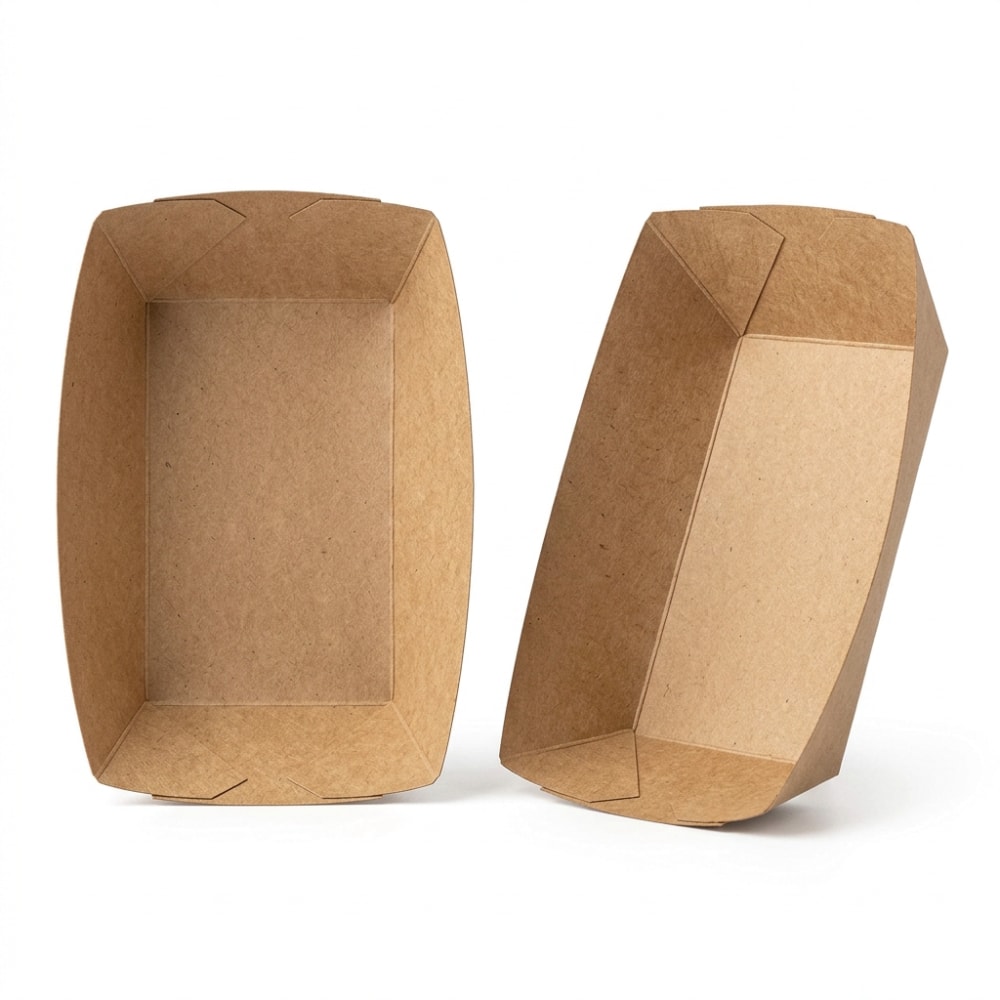
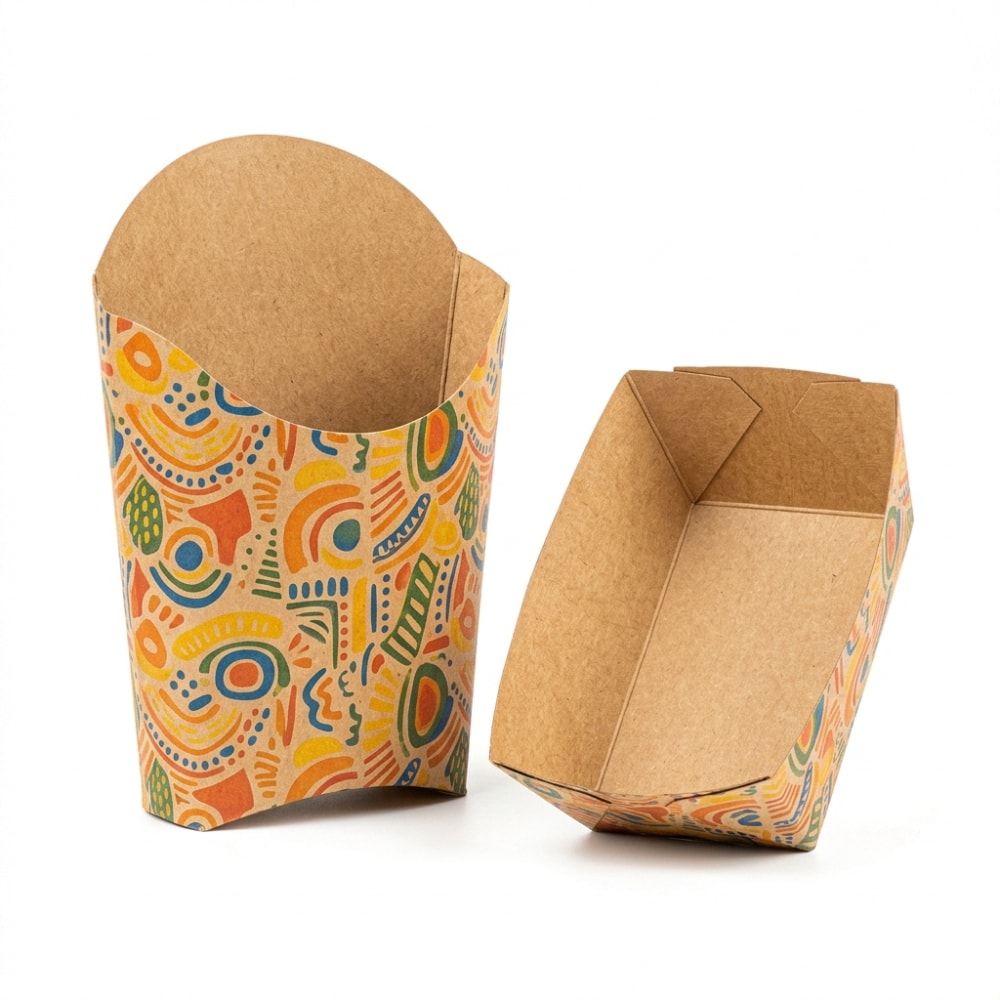
For U.S. food service buyers, a strong paper boat tray supplier should offer food-safe materials, consistent sizing, grease resistance, custom printing, and dependable export support into ports such as Los Angeles, Long Beach, New York/New Jersey, Savannah, and Houston. In the United States, paper boat trays are widely used in stadium concessions, movie theaters, food trucks, school cafeterias, theme parks, delis, and fast-casual chains because they present fries, nachos, chicken tenders, hot dogs, tacos, and shareable snacks in a compact, easy-to-hold format. The best supplier is not simply the cheapest one. It is the one that balances coating choice, structural performance, certifications, packing accuracy, lead time, and customization options for your sales channels.When U.S. distributors and operators compare a paper boat tray supplier, they usually focus on five practical questions: Will the tray hold greasy or saucy foods without softening? Is the size right for concession portions and combo meals? Does the factory support PE and PLA options? Can it pass FDA and compostability checks where needed? And can the supplier scale from pilot orders to repeat wholesale shipments? These are the core issues this guide addresses for buyers across New York, Chicago, Dallas, Atlanta, Miami, Seattle, and other high-volume food markets.If you are sourcing for wholesale, chain restaurants, or event vending, reviewing a supplier’s paper food packaging product range, production control, and customization process is essential before placing a larger order. The U.S. market continues to favor practical disposable formats that improve speed of service while supporting sustainability claims that consumers increasingly notice at checkout windows and concession stands.A qualified paper boat tray supplier for the U.S. market should provide multiple tray sizes, grease-resistant food-grade paperboard, PE and PLA coating choices, FDA-compliant materials, stable printing quality, flexible MOQ options, and reliable shipping coordination. For stadium food service in particular, the supplier should also understand rapid turnover environments where trays must be stackable, easy to separate, and strong enough for hot, oily, or messy foods.In practical buying terms, U.S. concession operators usually prefer boat trays in kraft or white board with capacities suited to fries, onion rings, popcorn chicken, chili cheese snacks, or sampler items. Distributors often want a paper boat tray supplier that can serve both standard stock items and OEM private-label demand for regional chains. For example, a Midwest distributor covering Chicago and Detroit may prioritize neutral kraft trays with fast replenishment, while a premium sports venue buyer in Los Angeles or Miami may need branded trays with sharper flexo printing and compostable positioning.For large buyers, the decision often comes down to supply continuity. A supplier with automated converting, die-cutting, forming, quality testing, and climate-controlled warehousing can reduce issues such as tray deformation, inconsistent folding, color variation, or transit damage. This matters when your product is moving from overseas into U.S. ports and then through domestic fulfillment networks serving busy event calendars and seasonal peaks. Buying Factor Why It Matters in the United States What to Check Food Safety Required for retail, concessions, and chain approval FDA compliance, migration testing, food-grade paper Grease Resistance Critical for fries, wings, tacos, and fried snacks Paper GSM, coating type, soak test results Size Range Needed for portion control and menu flexibility Available ounce or dimension options Branding Important for stadiums, chains, and franchise groups Flexo print quality, color tolerance, artwork setup Lead Time Seasonal demand peaks around sports and events Sampling speed, production window, shipping planning MOQ Flexibility Useful for trials and regional launches Plain vs custom MOQ, mixed-size options Sustainability Claims Increasingly relevant in city contracts and campus dining PLA, FSC, BPI, OK Compost, documentation The table above shows why supplier selection in the United States is broader than price alone. Buyers serving airports, campuses, or stadium groups often need to satisfy procurement, operations, and marketing teams at the same time, so a paper boat tray supplier must support all three functions.Demand for paper boat trays in the United States is expected to remain strong through 2026, driven by concession food, takeaway growth, venue upgrades, and municipal pressure to reduce plastic-heavy packaging. Stadium and arena dining has shifted from basic snack service to a branded guest experience, which has increased interest in well-designed paper food boats for loaded fries, boneless chicken, nachos, and specialty regional foods. The same trend appears in food halls, festival catering, baseball parks, and high-volume convenience operators.Three forces are shaping the 2026 market. First, consumers increasingly expect packaging that looks cleaner and more premium in social media photos and delivery handoffs. Second, procurement teams want packaging formats that are compact, stack well, and move efficiently through warehouses in markets such as Dallas, Atlanta, and New Jersey. Third, policy and sustainability discussions continue to influence material selection, especially in states and cities where compostability or renewable-fiber messaging carries commercial value.While exact national figures vary by segment, the addressable U.S. demand for paper snack trays continues to expand alongside fast-casual, mobile vending, and event concession recovery. Multi-site food operators are also consolidating suppliers, which benefits factories that can deliver broad packaging programs rather than single-SKU offers. U.S. Segment 2024 Demand Level 2026 Outlook Main Drivers Stadiums and Arenas High Very High Premium concessions, event volume, branded serviceware Food Trucks High High Portable snacks, easy handling, low storage footprint Movie Theaters Medium Medium-High Snack combos, fried finger foods, sharing trays College Dining Medium High Sustainability programs, quick-service counters Theme Parks and Festivals Medium-High High Seasonal traffic, impulse purchases, specialty foods Delis and Grab-and-Go Medium Medium-High Snack assortments, hot side dishes, quick display Regional Distributors High Very High Private label growth, SKU consolidation, broad customer reach This market table matters because it shows why buyers are looking beyond generic snack trays. In 2026, demand growth is likely to favor suppliers that can support multiple customer channels with standard and custom paper boat formats.var ctx1 = document.getElementById('lineChartMarket').getContext('2d');var chart1 = new Chart(ctx1, { type: 'line', data: { labels: ['2022', '2023', '2024', '2025', '2026'], datasets: [{ label: 'Estimated U.S. Paper Boat Tray Demand Index', data: [82, 89, 97, 106, 118], borderColor: 'rgb(54, 162, 235)', backgroundColor: 'rgba(54, 162, 235, 0.15)', fill: false, tension: 0.3 }] }, options: { responsive: true, maintainAspectRatio: false }});The line chart illustrates a realistic growth pattern rather than an extreme spike. This reflects how U.S. demand tends to build through channel expansion, procurement replacement cycles, and the steady migration from foam or less brand-friendly packaging formats to paper-based options.var ctx2 = document.getElementById('barChartIndustry').getContext('2d');var chart2 = new Chart(ctx2, { type: 'bar', data: { labels: ['Stadiums', 'Food Trucks', 'Cinemas', 'Campuses', 'Festivals', 'Delis', 'Distributors'], datasets: [{ label: '2026 Expected Purchase Volume Index', data: [92, 74, 58, 67, 71, 61, 95], backgroundColor: 'rgb(255, 159, 64)' }] }, options: { responsive: true, maintainAspectRatio: false }});The bar chart highlights why distributors and stadium accounts are especially valuable. They tend to order repeat volumes, require multiple sizes, and create long-term demand visibility for a reliable paper boat tray supplier.A strong paper boat tray supplier should cover more than one or two generic sizes. U.S. buyers often need a full ladder of capacities to support children’s portions, standard sides, loaded entrees, sampler platters, and promotional event foods. Size flexibility also helps distributors sell into mixed customer bases, from independent taco stands in Phoenix to sports venues near Boston and Seattle.The most common board choices are natural kraft and bleached white paperboard. Kraft communicates a more natural or rustic brand look, while white board helps colors print more sharply for sponsorship-heavy concession programs. Some operators also specify heavier paper weights for loaded toppings or extra hold time under warming lamps. Tray Format Typical Top Dimensions Common Uses Recommended Market Mini Boat 8 oz / 90 x 55 x 35 mm Samples, sauces with sides, kids snacks Promotions, schools, events Small Boat 12 oz / 105 x 70 x 40 mm Fries, nuggets, churro bites Food trucks, cafes Medium Boat 16 oz / 130 x 85 x 45 mm Onion rings, tenders, tacos Fast casual, theaters Large Boat 20 oz / 150 x 95 x 50 mm Loaded fries, combo snacks Stadiums, festivals Extra-Large Boat 24 oz / 165 x 110 x 55 mm Nachos, sharable appetizers Arenas, family venues Deep Boat 26 oz / custom depth Saucy foods, layered items Specialty concession menus Custom OEM Shape Custom dimensions Brand launches, signature menu items Chains, distributors, private label This size chart shows why range matters. Buyers that only stock one format often overuse it, resulting in poor portion control or product presentation. A supplier with a broader offering lets U.S. operators match tray geometry to specific menu items and reduce food cost leakage.In addition to size, buyers should consider wall angle, fold rigidity, stacking performance, and opening width. For example, loaded fries with cheese and bacon need a different structure than dry pretzel bites. A tray that is too shallow can collapse or spill during handoff, while a tray that is too narrow can make dipping and topping access awkward for the customer.For operators seeking custom branding, it is useful to work with a supplier that can pair tray development with broader food packaging categories. This makes it easier to build a coordinated packaging program with cups, bowls, and takeout boxes through one source. Buyers evaluating broader menu packaging can review custom packaging support services to understand artwork preparation, sampling, and production readiness before launch.One of the most important sourcing decisions is whether to choose PE-coated or PLA-coated paper boat trays. Both are used to improve grease and moisture resistance, but they serve different procurement goals. PE, or polyethylene coating, is the more established option for performance, cost control, and broad food service practicality. PLA, or polylactic acid coating, is often selected when compostable positioning or renewable-material messaging plays a larger role in brand strategy or local compliance discussions.For many U.S. stadium, cinema, and delivery snack applications, PE remains the default because it provides reliable oil resistance, broad availability, and predictable economics at scale. For universities, eco-focused chains, or municipalities where sustainability messaging is central, PLA may be preferred if the downstream waste system and certification requirements support the claim. Comparison Point PE Coating PLA Coating Best Fit Cost Lower Higher PE for value-focused high volume Grease Resistance Strong Strong Both suitable with right paper base Heat Tolerance Stable for most hot snacks Application dependent PE for broad concession use Compostable Positioning Limited Better with certified system PLA for sustainability programs Supply Availability Very broad More selective PE for faster replenishment Printing Compatibility Very good Very good Both workable for brand graphics Typical U.S. Use Case Stadiums, food trucks, distributors Campuses, eco-focused chains, premium events Depends on procurement priorities The coating comparison matters because many buyers assume PLA is automatically the best option. In reality, the right answer depends on the food type, budget, local disposal infrastructure, and your public claims. A responsible paper boat tray supplier should explain these tradeoffs clearly instead of pushing one material for every order.var ctx3 = document.getElementById('areaChartTrend').getContext('2d');var chart3 = new Chart(ctx3, { type: 'line', data: { labels: ['2022', '2023', '2024', '2025', '2026'], datasets: [ { label: 'PE-Coated Share', data: [74, 71, 68, 65, 61], borderColor: 'rgb(99, 132, 255)', backgroundColor: 'rgba(99, 132, 255, 0.20)', fill: true, tension: 0.3 }, { label: 'PLA-Coated Share', data: [12, 15, 18, 22, 27], borderColor: 'rgb(75, 192, 192)', backgroundColor: 'rgba(75, 192, 192, 0.20)', fill: true, tension: 0.3 } ] }, options: { responsive: true, maintainAspectRatio: false }});The area chart reflects a realistic market shift rather than a full replacement of PE. By 2026, U.S. buyers are likely to increase PLA adoption in selected channels, but PE will continue to dominate where cost, throughput, and broad operating consistency remain top priorities.From a buying advice perspective, ask your supplier for sample testing with your actual menu items. A buffalo chicken tray in Atlanta summer heat may behave differently than a dry fries tray in Denver. Coating selection should be validated under real service conditions, including hold time, toppings, and handoff speed.Understanding how a paper boat tray supplier manufactures at scale helps buyers assess consistency and risk. Large-scale production generally begins with food-grade paperboard selection, followed by coating application if needed, flexographic printing for custom designs, die-cutting into flat blanks, forming into tray shape, counting, inspection, and export packing. The best factories treat tray production as a controlled converting process rather than a simple folding operation.For U.S. importers, scale matters because it reduces variability between batches. If a factory has automated lines, stable tooling, and in-house quality checks, your tray dimensions and fold integrity are more likely to remain consistent over repeat orders. This becomes especially important for distributors that pack mixed pallets for customers across multiple states. Production Stage What Happens Quality Risk Control Method Paper Selection Choose food-grade kraft or white board by GSM Weak stiffness Material specification review Coating Apply PE or PLA barrier where required Poor grease resistance Coating thickness verification Printing Add logos, colors, and graphics Color shift or smudging Press calibration and sample approval Die-Cutting Cut blanks to exact tray profile Dimension drift Tool inspection and tolerance checks Forming Fold and shape tray walls Open seams or weak corners Line monitoring and compression checks Counting and Packing Bundle trays and load cartons Short shipment or deformation Weight checks and carton standards Final Inspection Review finished lot before dispatch Mixed defects reaching customer AQL-style inspection and records The table explains the manufacturing checkpoints buyers should discuss with any paper boat tray supplier. Even a simple tray can fail if paper stiffness, coating thickness, or forming pressure is inconsistent. Factories serving the U.S. market should be comfortable discussing process control in detail.Technology plays a major role here. A capable producer uses coordinated printing, die-cutting, and forming systems to maintain repeatability at volume. Climate-controlled storage can also protect coated paperboard from humidity swings before conversion and shipment. This is especially useful when inventory is being prepared for long-distance transport to coastal gateways like Long Beach or inland distribution centers near Memphis or Kansas City.At the manufacturing level, buyers should value capacity that can flex with seasonality. Sports seasons, state fairs, and holiday event calendars create spikes in demand. A supplier with modern lines and organized warehouse management can support this better than a workshop that relies on fragmented subcontracting.One practical example involves a North American concessions distributor serving stadium and event customers across the Midwest and Southeast. The distributor needed a paper boat tray supplier that could replace inconsistent mixed sourcing from several vendors. Its key issues were uneven print quality, occasional oil seepage in larger loaded-fries trays, and shipment timing problems before major event weekends.After reviewing tray sizes, grease-resistance targets, and order history, the distributor shifted to a consolidated program built around standardized kraft and white boat trays in three core sizes plus one custom printed stadium format. Samples were tested with fries, tenders, nachos, and sauced appetizers to compare coating behavior and structural hold under live-service conditions. The final packaging set used heavier board for the largest tray and a simpler print layout to improve press consistency.During the first two quarters after conversion, the distributor reported fewer customer complaints, better pallet planning, and easier SKU forecasting. The standardization reduced warehouse complexity because more venues could be served from fewer core tray sizes. The custom printed tray also helped premium accounts improve sponsor visibility and menu presentation at the point of sale. Challenge Previous Situation Supplier Solution Outcome Multiple vendors Inconsistent quality by shipment Single-source standardized line Better repeatability Grease seepage Issues on loaded fries Improved board and coating match Cleaner customer experience Print variation Logo color inconsistency Controlled flexo setup Stronger brand appearance SKU complexity Too many similar tray sizes Core size rationalization Easier inventory control Peak-season pressure Late replenishment risk Planned production windows Improved event readiness Venue differentiation Limited branded options Custom printed stadium tray Higher perceived value Buyer confidence Frequent reactive purchasing Stable communication and samples More predictable procurement This kind of result is typical when a distributor moves from opportunistic buying to a more structured supplier partnership. The biggest gains often come from better specification control rather than headline price cuts. In the U.S. food service market, lower complaint rates and stronger availability can easily outperform a small unit-cost reduction that comes with higher operational risk.For buyers evaluating supplier credibility, it helps to review background and export experience rather than depending only on product photos. A company overview such as the packaging manufacturer profile can help importers understand whether the supplier has enough history, factory depth, and international customer experience to support repeat business into the United States.Certifications are a major filter for U.S. buyers. Food contact documentation, quality system discipline, and sustainable sourcing signals all matter, especially for chain approvals, campus dining contracts, and distributor onboarding. At minimum, a paper boat tray supplier should be able to provide documentation for food-grade materials aligned with FDA expectations. Depending on the product and customer segment, buyers may also request EU food-contact references, FSC chain-of-custody support for paper sourcing, ISO quality management records, and compostability certifications for PLA-based options.Certification does not replace practical testing, but it does help reduce compliance risk. For example, a U.S. distributor selling into California universities may want both compostability support and fiber-sourcing credibility, while a stadium operator in Texas may focus more on FDA and performance consistency. Certification or Standard What It Indicates Why U.S. Buyers Ask For It FDA Food Contact Compliance Materials suitable for food packaging use Baseline safety requirement for import and customer approval ISO 9001 Quality management system discipline Shows process consistency and documentation FSC Responsible paper sourcing Supports sustainability procurement goals BPI Certification Compostable claim validation for relevant products Important for compostability messaging in the U.S. OK Compost Additional compostability recognition Useful for international and premium eco programs EU EC 1935/2004 Food-contact framework reference Shows broader export compliance capability Migration or Lab Test Reports Product-specific performance data Helps validate actual order specifications The practical lesson from this table is that certifications should match the product you are buying. A compostable certificate for one PLA item does not automatically apply to every tray size or construction. U.S. buyers should request the right documents for the exact SKU or material family under review.Looking ahead to 2026, policy trends are likely to push more buyers toward documented sustainability language. However, the market will also become more careful about unsupported environmental claims. A reputable paper boat tray supplier should explain what is certified, what is recyclable by local systems, and what depends on commercial composting availability. Clear communication now helps avoid claim-related issues later.Minimum order quantity and pricing structure are often the deciding factors for new buyers, but they should be evaluated in context. In the U.S. market, paper boat tray pricing depends on size, paper weight, coating type, print complexity, carton configuration, and shipping route. A plain kraft tray usually offers the lowest entry cost, while custom printed PLA-coated trays with specialized dimensions sit at the higher end.MOQ often differs by stock versus custom production. Plain items may allow lower trial quantities, while printed trays require minimum volumes tied to plate setup, production efficiency, and carton standardization. Importers shipping into New York/New Jersey or Los Angeles/Long Beach should also factor in freight seasonality, inland transfer costs, and customs timing when calculating landed cost. Order Type Typical MOQ Range Price Level Best For Plain Mini or Small Tray 30,000-50,000 pcs Low Trials, wholesalers, independent operators Plain Medium or Large Tray 30,000-100,000 pcs Low-Medium Concession standard programs Custom Printed Standard Size 50,000-100,000 pcs Medium Regional chains, venues, distributors PLA-Coated Standard Tray 50,000-100,000 pcs Medium-High Campus and eco-focused programs Custom Size OEM Tray 100,000+ pcs High Large brand launches Mixed-SKU Container Program Negotiated Variable Importers building full product lines Repeat Volume Contract Forecast-based More favorable Distributors and chains with stable demand This table is a planning tool rather than a rigid quote sheet. Actual prices move with raw materials, print coverage, and freight. Still, it helps U.S. buyers set realistic expectations before artwork approval and container booking.var ctx4 = document.getElementById('comparisonChartSupplier').getContext('2d');var chart4 = new Chart(ctx4, { type: 'bar', data: { labels: ['Stock Plain', 'Custom Print', 'PLA Option', 'OEM Size', 'Mixed Program', 'Repeat Contract'], datasets: [{ label: 'Supplier Complexity Score', data: [35, 55, 63, 78, 82, 49], backgroundColor: 'rgb(153, 102, 255)' }] }, options: { responsive: true, maintainAspectRatio: false }});The comparison chart shows that not all sourcing paths carry the same complexity. Stock plain items are easier to launch quickly, while OEM formats and mixed programs need more planning. Buyers should align MOQ and product ambition with their sales forecast instead of over-customizing too early.As a rule, first-time U.S. importers should request samples, confirm carton count, estimate landed cost by port, and test the tray with real menu items before scaling. Experienced distributors may prefer forecast-based agreements to lock in production windows and reduce seasonal supply risk. If you are ready to discuss specific volumes, artwork, or lead times, use a direct packaging inquiry channel to compare options against your target market and shipment schedule.Shandong Fude Packaging Co., Ltd. serves international food service buyers with a broad focus on disposable food-grade packaging and eco-oriented solutions. For U.S. paper boat tray sourcing, the company’s value lies in its ability to combine material knowledge, scalable production, and export-oriented service rather than offering a single standard item. This is particularly relevant for distributors and brand owners who want one supplier to support multiple food packaging categories.On the technology side, the company supports packaging development with integrated flexographic printing, die-cutting, forming control, and quality inspection workflows. This matters for paper boat tray buyers who need reliable dimensions, clean folds, and stable branding across repeat orders. Material options include food-grade PE-coated papers and compostable PLA-based alternatives, allowing U.S. customers to choose between value-oriented and sustainability-oriented specifications. The company also works with artwork preparation and sampling so customers can validate print layout and practical use before mass production.For the U.S. market, these technological capabilities translate into better suitability for chain approvals, distributor rationalization, and private-label launches. Whether a buyer needs simple kraft boats or white printed trays for a premium venue program, the production setup is geared toward consistency rather than one-off manual output.On the manufacturing side, the company operates a modern factory in Shandong with substantial production space, automated lines, organized warehousing, and quality labs that support routine output and repeat export business. Its experience across paper cups, bowls, lunch boxes, trays, and related food packaging categories helps when customers want a coordinated packaging lineup instead of sourcing each SKU from a different factory. With more than two decades in the industry and service to clients across multiple continents, the company has the operational base needed to support wholesale programs, distributor replenishment, and larger brand requirements.For U.S. buyers, factory depth is important because it affects reliability under tight event or seasonal schedules. A supplier with organized production and warehousing can better manage lot consistency, carton integrity, and shipment preparation for ports such as Ningbo or Qingdao on the export side and major U.S. receiving hubs on arrival. Typical lead times of about 7 to 15 days for many programs can support both trial runs and ongoing wholesale replenishment, subject to final specifications.Service capability is often what separates a workable overseas supplier from a difficult one. The company supports packaging selection, requirement review, sample confirmation, artwork conversion for production, and delivery coordination. This helps U.S. importers that may need guidance on tray size matching, print layout, coating selection, and MOQ planning. Flexible customization is available across logo, dimensions, materials, coatings, and structure, making the supplier suitable for both standard food service demand and more distinctive private-label needs.Because many U.S. customers operate through layered channels such as importers, distributors, venue groups, and franchise systems, responsive communication and documentation are essential. The company’s service model is built around practical order handling rather than simply quoting a catalog. Buyers that want to see a wider packaging offering can review the full product portfolio before deciding whether to bundle trays with cups, bowls, or takeaway boxes in the same sourcing program.In 2026 and beyond, this combination of technology, manufacturing depth, and customer-facing service is likely to matter even more. U.S. buyers are asking suppliers to support sustainability goals, visual branding, supply continuity, and lower total procurement friction at the same time. A one-stop packaging partner is often better positioned to meet those expectations than a small supplier limited to one format.What foods are paper boat trays best for?They are commonly used for fries, nachos, chicken tenders, wings, onion rings, tacos, sliders, seafood bites, desserts, and sampler portions. They work especially well for handheld concession foods in stadiums and event venues.What is the best coating for greasy stadium foods?For many U.S. concession applications, PE coating is the most practical choice because of its strong grease resistance and cost efficiency. PLA can also perform well when compostable positioning is needed and the specification matches the food application.Can I order custom printed trays with my logo?Yes. Most established suppliers can offer flexo printing on kraft or white paperboard. You should confirm color count, artwork format, minimum order quantity, and print position before sampling.How do I choose the right size?Start with your menu and target portion weight. Small trays fit sides and kids snacks, medium trays handle standard concession servings, and larger boats suit loaded fries, nachos, or shareable menu items. Testing with real food is the best method.Are paper boat trays compostable?Some are, but not all. Compostability depends on the paper construction, coating, and certification. PLA-based items may support compostable positioning when backed by the correct documentation and disposal context.What certifications should I ask for?For U.S. sourcing, ask for FDA-related food contact documentation first. Depending on your market, you may also request ISO 9001, FSC, BPI, OK Compost, and product-specific lab reports.What is a normal lead time?Lead times vary by plain versus custom orders, but many programs can be produced within about 7 to 15 days before shipping, subject to quantity, print complexity, and scheduling.Can a supplier handle small trial orders?Many can, especially for plain items or limited-size runs. Custom printed work usually requires higher MOQ because of setup costs. Ask whether mixed-size or stock-item programs are available for market testing.Why do U.S. distributors prefer one supplier for multiple packaging items?It simplifies forecasting, reduces vendor management work, improves branding consistency, and often lowers total logistics complexity when trays, bowls, cups, and boxes can be planned together.What should I do before placing a full order?Request samples, review certifications, test the tray with actual food, confirm carton counts and pallet patterns, calculate landed cost to your U.S. destination, and approve artwork and specifications in writing.For U.S. buyers in stadium service, distribution, or quick-service expansion, choosing the right paper boat tray supplier is ultimately about practical performance, documentation, and repeatability. With demand rising into 2026 and packaging expectations becoming more sophisticated, the best sourcing results come from suppliers that combine scalable manufacturing, material expertise, and responsive service. -
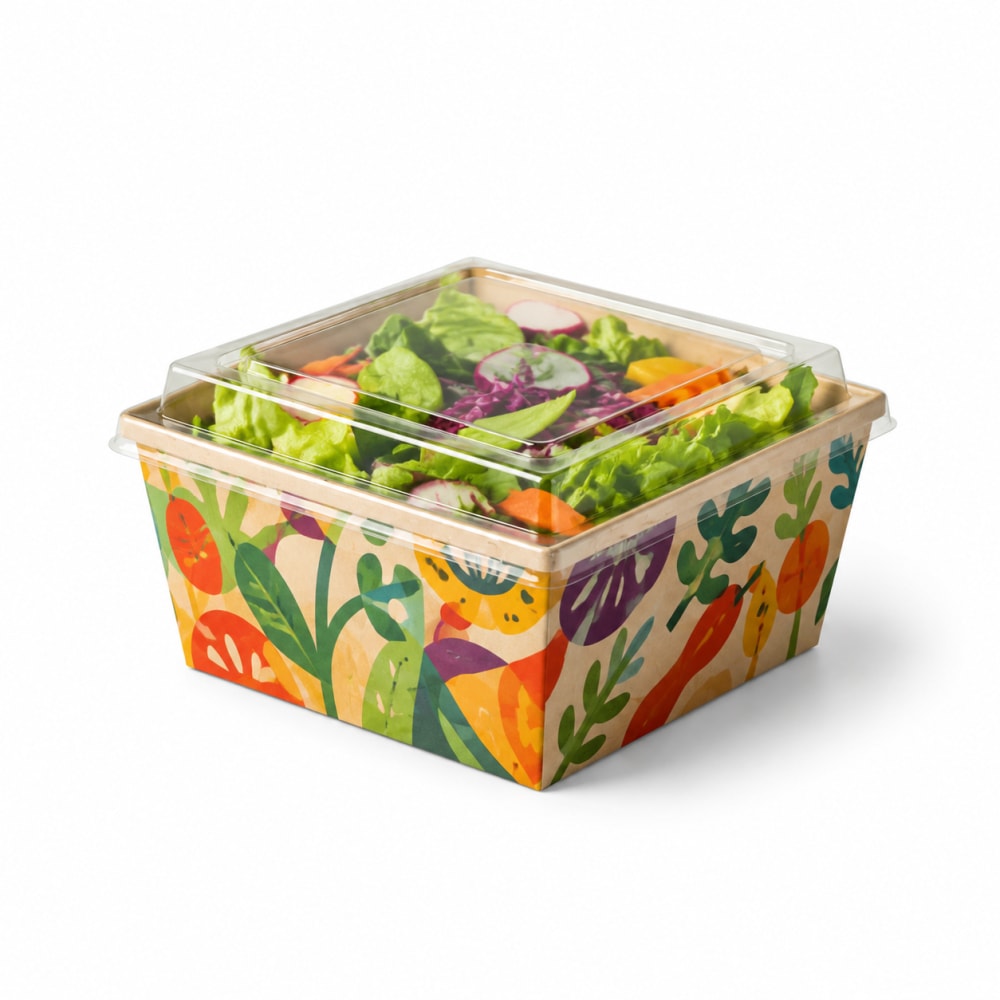
Canada Square Salad Box Bulk Pricing: 2026 Buyer Guide
Bulk pricing for 500–1300ml square salad boxes in Canada depends on more than the quoted cost per container. The main variables are paperboard grade, coating type, container size, wall structure, lid compatibility, printing coverage, order quantity, carton configuration, pallet density, delivery method and quality-control requirements. A basic unprinted 500ml square salad container may have a lower piece cost than a 1000ml or 1300ml printed version, but the final landed cost can change substantially when tooling, freight volume, warehousing and rejected-product risk are included.For Canadian food-service buyers, comparing quotations requires a like-for-like specification. A container designed for chilled greens in Toronto may need different moisture resistance from a container used for sauced grain bowls in Vancouver, hot deli meals in Montreal or prepared retail lunches in Calgary. The lowest quote may omit a matching lid, food-contact documentation, stronger corner forming, print colour control, export cartons, sampling or third-party inspection.For reliable sourcing, buyers should define food type, fill temperature, shelf life, capacity tolerance, paper weight, coating, lid type, artwork, packing quantity and acceptance criteria before requesting prices. This allows the buyer to compare total procurement cost rather than only the factory unit price.Cost ElementTypical Effect on PriceWhy It Matters for Canadian BuyersPaperboard gradeHighControls stiffness, food-contact suitability and appearance.PE, PLA or water-based coatingHighAffects leak resistance, recycling strategy and end-of-life positioning.Container capacityMedium to highLarger formats use more board and occupy more shipping volume.Custom printingMediumInk colours, coverage and finishing affect setup and production cost.MOQHighHigher volume spreads setup, plate and production-change costs.Carton and pallet densityMediumDirectly affects freight, warehouse space and handling in Canada.The table shows why a meaningful quotation review must include operational costs. A lower per-unit price can be less competitive when carton density is poor, lids are incompatible or containers fail during delivery and display.The Canadian market for square salad containers includes independent cafés, quick-service restaurants, grocery meal programs, institutional caterers, airport food operators and multi-location fresh-food chains. Demand is strongest in urban centres where takeaway salads, grain bowls, poke bowls and prepared meals are common. Toronto, Mississauga, Vancouver, Richmond, Montreal, Laval, Ottawa, Calgary and Edmonton are active food-service procurement hubs, while Port of Vancouver, Port of Montreal and rail-linked Toronto-area distribution centres influence imported packaging logistics.A practical pricing model separates factory price, landed cost and operating cost. Factory price covers materials, converting, forming, printing, labour, packing and factory overhead. Landed cost adds ocean or air freight, inland transport, customs handling, duties where applicable, insurance and destination charges. Operating cost includes storage, inventory carrying cost, order picking, product damage, outlet-level handling and the cost of a packaging failure.Square salad containers generally cost more than simple round bowls when the design requires sharply formed corners, reinforced panels, secure lid engagement or a wide opening for merchandising. However, square formats can improve shelf presentation, portion organization and carton utilization for some programs.var ctxMarketGrowth = document.getElementById('marketGrowthChart').getContext('2d');new Chart(ctxMarketGrowth, { type: 'line', data: { labels: ['2022', '2023', '2024', '2025', '2026', '2027'], datasets: [{ label: 'Indexed Canadian demand for prepared-food paper containers', data: [100, 108, 116, 124, 133, 142], borderColor: 'rgb(37, 99, 235)', backgroundColor: 'rgba(37, 99, 235, 0.12)', borderWidth: 3, tension: 0.3, fill: false }] }, options: { responsive: false, maintainAspectRatio: false, plugins: { legend: { display: true } }, scales: { y: { beginAtZero: false } } }});This indexed market-growth illustration reflects a continuing shift toward convenient, portioned and branded food packaging. Buyers should treat it as a planning aid rather than a fixed market forecast. Growth does not remove the need to validate supply continuity, freight options and food-contact compliance.A precise specification protects procurement teams from misleading comparisons. Two 750ml square salad boxes can look similar in a product photo but differ in board thickness, usable volume, coating performance, lid sealing, fold geometry and compression strength. Before requesting prices, provide a complete technical brief and ask suppliers to confirm every item in writing.For example, a retail salad brand in Ontario may need a 1000ml container with a clear anti-fog lid, printed exterior, chilled-food resistance and reliable stacking in refrigerated display cases. A delivery-only meal brand in British Columbia may instead prioritize sauce resistance, lid retention, corner strength and compact carton dimensions for courier handling. These are not equivalent specifications.Specification ItemWhat to DefineSuggested Acceptance MeasureNominal capacity500ml, 650ml, 750ml, 900ml, 1000ml or 1300mlVolume tolerance tested with water at stated fill line.DimensionsTop length, width, base size and heightMeasured sample dimensions within agreed tolerance.PaperboardGrade, GSM, virgin or recycled-content requirementsSupplier material declaration and incoming inspection record.CoatingPE, PLA, aqueous or other approved barrier systemLeak, grease and moisture test for the intended food.Lid systemPET, PP, rPET or fibre lid; fit and vent requirementsDrop, stack and transport lid-retention test.PrintingPantone references, colour count, coverage and finishApproved digital proof and printed pre-production sample.Pack configurationUnits per sleeve, carton and palletConfirmed packing list and pallet layout drawing.The specification table should become part of the purchase order and approval record. It creates a defensible basis for inspecting goods at origin, receiving goods in Canada and resolving quality claims if a batch does not meet the approved standard.Material cost is often the largest component of a square salad box quotation. Larger capacities require more paperboard, but container geometry also changes material yield. Deep boxes, wide openings, rolled rims, reinforced corners and complex locking panels may increase blank size and trimming loss. A 1300ml container is not simply a scaled-up 500ml box; its structural requirement can make the material increase disproportionate.Paperboard selection should match the food application. Dry salads may work with a standard moisture-resistant structure, while avocado dressings, marinated proteins, oily grains, fruit cups and prepared meals can require stronger grease and liquid barriers. Choosing an unnecessarily heavy board adds cost and freight weight, but under-specifying the board may lead to softened walls, distorted corners and poor shelf presentation.Fude Packaging uses in-house material selection, die-cutting, forming and inspection processes to help buyers align paper grade and coating with actual use conditions. Its laboratory capability can support practical checks for leak resistance, forming consistency, stacking and food-application performance before mass production.Container FormatCommon ApplicationMaterial ConsiderationCost Sensitivity500ml square boxSide salad, fruit, snack bowlLight to medium board; moisture barrier matters.High sensitivity to MOQ and printing setup.650ml square boxLunch salad, yogurt granola bowlBalanced stiffness and clear-lid fit.Moderate material usage.750ml square boxSalad and protein mealCorner strength for transport is important.Moderate forming complexity.900ml square boxGrain bowl, poke bowlHigher grease and sauce resistance may be needed.Higher board and lid cost.1000ml square boxEntrée salad, retail prepared mealDisplay clarity and stacking performance matter.Freight cube becomes more relevant.1300ml square boxLarge sharing salad or meal kitStructural rigidity and carton compression are critical.Highest material and storage impact.Material yield should be reviewed together with functional performance. A supplier that can reduce board waste without weakening the container may offer a better long-term cost position than one quoting a thin, failure-prone format.Custom printing helps Canadian restaurant groups and retail meal brands create recognizable packaging, but it also adds setup and production variables. Price can change according to the number of colours, coverage area, artwork complexity, special inks, Pantone matching, varnish, matte or gloss finish, interior printing and the need for frequent artwork changes.A one-colour logo on kraft-style board is generally more economical than full-coverage artwork with multiple colours and photographic elements. Large dark ink areas can also affect scuff visibility during shipping and handling. When containers are used in refrigerated retail displays, printed colours should be reviewed under store lighting rather than only on a digital screen.Digital proofing is useful for layout approval, but it cannot fully replace a physical printed sample. For branded projects, request a white sample to verify shape, then a printed pre-production proof to confirm colour, folding, registration and lid fit. This is especially important when procurement teams, marketing teams and operations teams approve different aspects of the project.var ctxIndustryDemand = document.getElementById('industryDemandChart').getContext('2d');new Chart(ctxIndustryDemand, { type: 'bar', data: { labels: ['Quick Service', 'Grocery Retail', 'Catering', 'Universities', 'Airports', 'Meal Delivery'], datasets: [{ label: 'Relative demand for square salad containers', data: [88, 92, 61, 54, 48, 77], backgroundColor: [ 'rgb(22, 163, 74)', 'rgb(59, 130, 246)', 'rgb(249, 115, 22)', 'rgb(168, 85, 247)', 'rgb(239, 68, 68)', 'rgb(20, 184, 166)' ] }] }, options: { responsive: false, maintainAspectRatio: false, plugins: { legend: { display: true } }, scales: { y: { beginAtZero: true, max: 100 } } }});This demand comparison illustrates why grocery retail and quick-service operators often require the strictest consistency in printing, shelf appearance and lid fit. Catering and institutional programs may place more weight on cost, bulk packing and straightforward identification.Canadian importers should not evaluate packaging only by container price. Food containers are lightweight but volumetric, meaning freight is often driven by cubic metres rather than weight. A space-efficient carton can lower ocean freight, domestic trucking and warehouse cost. This is particularly important for shipments routed through Vancouver to Western Canada, Montreal to Quebec and Atlantic markets, or rail and truck networks serving the Greater Toronto Area.Ask for carton dimensions, gross weight, net weight, units per carton, cartons per pallet and total pallet height. Compare the number of usable containers delivered per cubic metre, not just the number of cartons. If a supplier offers a nested design with stronger compression performance, the product may provide better freight efficiency even if the unit cost is slightly higher.Logistics MeasureWhy It Affects CostProcurement CheckUnits per sleeveChanges outlet handling and inventory counting.Confirm sleeves are practical for store operations.Units per cartonInfluences carton price and warehouse picking efficiency.Compare total unit count, not carton count alone.Carton dimensionsDetermines freight cube and storage footprint.Request external length, width and height.Carton compression strengthProtects product during container and truck stacking.Ask for packing and stacking recommendations.Cartons per palletAffects pallet utilization and unloading time.Request a pallet layout or loading plan.Containers per cubic metreShows true space efficiency.Use this measure in landed-cost comparisons.Storage cost can be significant for seasonal promotions, large chain rollouts and long-distance replenishment. A buyer with limited warehouse space in Toronto or Vancouver may benefit from scheduled orders and phased deliveries rather than importing a full annual requirement at once.A lower quotation is not automatically a problem, but it should trigger structured questions. The supplier may be quoting a lower GSM board, a smaller actual capacity, a different coating, fewer printed colours, non-matching lids, weaker cartons or a lower inspection standard. Some offers exclude plates, mould adjustments, samples, inland freight, export documentation or palletization.Potential warning signs include vague product descriptions, no stated material grade, no carton dimensions, no food-contact documents, no approved sample procedure and no defined process for resolving non-conforming goods. A quotation that simply says “square salad bowl with lid” leaves too much room for variation.Quality failures create costs beyond replacement containers. A leaking package can damage a retailer’s display, cause delivery complaints, reduce repeat purchase and affect a brand’s reputation. Corner stress and poor lid retention are especially relevant for salads with dressing, sauces or high moisture content.var ctxTrendShift = document.getElementById('trendShiftChart').getContext('2d');new Chart(ctxTrendShift, { type: 'line', data: { labels: ['2022', '2023', '2024', '2025', '2026', '2027'], datasets: [{ label: 'Standard commodity purchasing', data: [68, 62, 57, 51, 46, 42], borderColor: 'rgb(107, 114, 128)', backgroundColor: 'rgba(107, 114, 128, 0.18)', fill: true, tension: 0.3 }, { label: 'Performance and sustainability-led purchasing', data: [32, 38, 43, 49, 54, 58], borderColor: 'rgb(16, 185, 129)', backgroundColor: 'rgba(16, 185, 129, 0.20)', fill: true, tension: 0.3 }] }, options: { responsive: false, maintainAspectRatio: false, plugins: { legend: { display: true } }, scales: { y: { beginAtZero: true, max: 100 } } }});The trend-shift illustration reflects the growing importance of measurable packaging performance, fibre sourcing, waste-reduction objectives and transparent documentation. For 2026 and beyond, buyers are increasingly asking not only “What is the price?” but also “What is the material system, what is the proof and how does this packaging perform in our actual supply chain?”Use a documented comparison process that brings procurement, quality, marketing, operations and logistics into the same decision. The goal is not to choose the highest specification in every case; it is to choose the appropriate specification for the actual food, service model and Canadian distribution environment.Checklist QuestionRequired EvidenceRisk if MissingIs the capacity clearly stated?Technical drawing and water-fill test.Portioning errors and customer complaints.Is the material and coating identified?Material declaration and food-contact documentation.Inadequate barrier or regulatory uncertainty.Has lid fit been tested?Physical sample and transport test.Leaks, spills and poor stackability.Are print colours approved?Digital proof and printed sample.Brand inconsistency and rework.Are carton details confirmed?Carton specification and pallet plan.Unexpected freight and storage expense.Are setup charges transparent?Separate list for plates, moulds and samples.Budget overrun after order placement.Is quality acceptance documented?Approved sample, AQL approach or inspection criteria.Disputes over subjective quality expectations.Buyers can reduce cost without weakening performance by standardizing sizes across menu items, reducing unnecessary colour coverage, selecting proven stock-compatible lid systems, planning higher-volume releases, improving forecast accuracy and using scheduled production. Consolidating bowls, boxes, trays and cups with one qualified manufacturer can also simplify procurement and improve container utilization.Square salad packaging is used across multiple food categories because it provides a broad display surface and can separate ingredients visually. The right format depends on portion size, food temperature, moisture level, merchandising style and transport conditions.500ml containers are suitable for side salads, fruit portions, snack packs and children’s meal additions. 650ml and 750ml formats are common for lunch salads, yogurt-and-granola combinations and lighter grain bowls. 900ml and 1000ml formats are widely used for entrée salads, poke bowls, pasta salads and retail prepared meals. 1300ml square salad boxes are useful for larger portions, meal kits, family salads and shareable deli offerings. Clear-lid versions support fresh-food visibility in grocery refrigerated cases and grab-and-go displays. Printed fibre containers help restaurant chains carry branding from counter service to delivery. Industries using these products include quick-service restaurants, supermarkets, specialty grocers, meal-prep companies, corporate cafeterias, hospitals, colleges, sports venues, airports and event caterers. A downtown Toronto salad chain may require high-volume branding consistency, while a Banff catering operator may prioritize durable transport packaging and smaller replenishment quantities.Case example 1: Ontario retail meal program. A prepared-food buyer compared two 1000ml printed square salad box offers. The lower quote used a lighter board and included no detailed lid-fit test. The alternative included an approved printed sample, stronger carton design and documented pallet layout. Although the second offer had a higher unit price, it reduced damaged cartons, improved refrigerated display appearance and lowered per-unit freight cube. The buyer selected the higher-performing specification after a transport test.Case example 2: British Columbia delivery brand. A meal-delivery operator needed 750ml containers for dressed grain bowls. Early samples showed corner softening after extended contact with sauce. The specification was revised to include a more suitable barrier system and confirmed lid retention. The company avoided the larger cost of delivery leakage complaints and repeated packaging changes after launch.Case example 3: Quebec multi-location café group. The group standardized 500ml, 750ml and 1000ml formats across salads, desserts and cold meal options. By reducing the number of separate SKUs, it improved purchasing volume, simplified staff training and lowered warehouse complexity. Brand artwork was standardized across formats, limiting plate and design-change cost.Canadian buyers can source square salad containers through local distributors, converters, wholesalers or direct overseas manufacturers. Local inventory can provide fast replenishment and lower administrative complexity, especially for standard unprinted products. Direct importing may offer stronger customization, broader format selection and improved economics for larger recurring volumes, but it requires careful planning for lead time, documentation, freight and warehousing.For buyers importing into Canada, Port of Vancouver is a key gateway for Western markets, while Port of Montreal supports Quebec and Eastern distribution. Toronto-area warehouses and intermodal hubs often serve national food-service networks. Buyers should assess whether full-container load, less-than-container load or staged stock through a domestic distribution partner best matches their annual usage.When evaluating suppliers, confirm the ability to provide food-contact documentation appropriate to the destination market, product traceability, export-ready packing and responsive communication across time zones. For packaging categories beyond salad boxes, buyers can review Fude Packaging’s food container range for coordinated cups, bowls, trays and meal packaging options.var ctxSupplierComparison = document.getElementById('supplierComparisonChart').getContext('2d');new Chart(ctxSupplierComparison, { type: 'bar', data: { labels: ['Customization', 'Quality Control', 'Freight Efficiency', 'Documentation', 'Sampling', 'Supply Scalability'], datasets: [{ label: 'Basic commodity offer', data: [45, 50, 55, 42, 40, 58], backgroundColor: 'rgba(156, 163, 175, 0.75)' }, { label: 'Qualified integrated manufacturing partner', data: [88, 90, 82, 91, 89, 93], backgroundColor: 'rgba(37, 99, 235, 0.75)' }] }, options: { responsive: false, maintainAspectRatio: false, plugins: { legend: { display: true } }, scales: { y: { beginAtZero: true, max: 100 } } }});This supplier comparison is an illustrative procurement framework. A strong supplier assessment should use verified samples, documented capabilities, current production information and your own quality requirements rather than relying only on a scorecard.Fude Packaging supports overseas B2B buyers with more than 20 years of paper-packaging experience and a 30,000 m² self-owned production base in Shandong. The company’s manufacturing capability includes automated production capacity of up to 120,000 units per day, with control over material selection, printing, die-cutting, forming, inspection, packing and export preparation. This integrated approach is designed to support repeatability for buyers managing multi-store food-service or retail programs.Its technological capability includes in-house laboratory support for practical quality and performance testing. Buyers can evaluate paper grade, coating direction, structural strength, leak resistance, lid compatibility, print quality and application performance before approving mass production. For custom projects, Fude Packaging can provide digital proofs, white samples and printed pre-production samples, helping stakeholders verify measurable requirements before a final production release.Its service capability includes OEM and ODM support for custom sizes, artwork checking, Pantone colour matching, structural development, production scheduling and export-ready packing. The company can assist with common documentation needs, including FSC, ISO 9001, FDA-related food-contact documentation and other market-specific records where applicable. Buyers can learn more about available custom packaging services, review the company’s manufacturing background, or contact the team to request samples and a specification-based quotation.For Canadian programs, the recommended approach is to begin with the food application, destination, forecast volume, branding requirements and shipping model. A repeatable approval record should then include the signed specification, sample photographs, physical sample approval, test results, carton details and final artwork confirmation.From 2026 onward, square salad packaging decisions will increasingly be shaped by sustainability expectations, fibre sourcing transparency, material innovation and operational automation. Buyers are expected to continue evaluating water-based barriers, compostability options where locally appropriate, recycled-content strategies, fibre-based lids and packaging designs that reduce unnecessary material without compromising food protection.Policy direction and municipal waste-management systems may differ across provinces and cities, so packaging claims should be specific and supported by relevant documentation. A compostable or recyclable claim should not be used as a generic marketing statement without checking the actual material construction, collection systems and local acceptance conditions. Canadian buyers should also monitor retailer requirements, provincial packaging rules and evolving food-service waste policies.Technology will improve production consistency through better camera inspection, digital workflow control, traceability records and more precise colour management. For food brands, the most valuable trend is likely to be packaging that combines lower material use, stronger performance, clearer consumer communication and efficient distribution.1. What is the typical cost structure for 500–1300ml square salad boxes?The cost structure usually includes paperboard, coating, converting, forming, printing, lids, packing, quality control, setup charges and freight. Larger sizes and higher-performance barriers usually increase cost. For imported orders, buyers should calculate landed cost per usable container, including freight cube, duty-related costs where applicable and destination handling.2. Which specification changes affect price the most?Paper grade, coating system, container size, lid design, print coverage, production quantity and carton density are usually the largest price variables. Structural changes such as reinforced corners, special locking features or custom dimensions can also require additional tooling or reduce material yield.3. How does MOQ change the unit price?MOQ affects how setup, printing plates, production changeover and sampling costs are distributed. Higher order quantities generally reduce the unit cost, provided that the buyer can manage inventory and storage. A scheduled-release plan may balance volume economics with warehouse capacity.4. Which quotation items are often excluded?Common exclusions include printing plates, mould modifications, prototype samples, third-party inspection, export pallets, inland freight, destination charges, custom labels and special documentation. Ask suppliers to list included and excluded items separately before comparing offers.5. How can buyers reduce cost without weakening performance?Standardize container sizes, avoid unnecessary heavy board, reduce excessive printing coverage, use proven matching lids, improve forecast accuracy, optimize carton count and consolidate packaging categories. Always validate any cost-saving change through samples and food-application testing.6. Should Canadian buyers request physical samples?Yes. Physical samples should be tested with the real food, dressing, temperature, storage duration and delivery conditions. Test corner strength, leakage, lid fit, stackability, condensation behaviour and appearance after refrigeration. A printed pre-production sample is recommended for branded programs.7. What records should be retained after approval?Keep the approved specification, drawings, artwork files, material declarations, food-contact documents, sample photographs, test outcomes, carton specification, pallet configuration and batch-identification process. These records support repeat ordering and reduce disputes if later shipments differ from the approved standard. -
Canada Guide to White 4-Compartment Bento Meal Boxes
White cardboard 4-compartment bento boxes are a practical choice for balanced meals, tasting assortments, corporate lunches, school meal programs, airline-style catering and premium grab-and-go offers in Canada. The right pack is not selected by outside dimensions alone. Buyers should begin with the actual menu: total food weight, portion distribution, serving temperature, sauce level, oil content, holding time, delivery distance and how customers will open, carry and eat from the box.For a typical Canadian balanced lunch, a four-compartment meal box may hold a main protein, grain or starch, vegetables and fruit, dessert or a cold side. A box that works for a 450 g chilled salad-and-chicken meal may fail with a 750 g hot rice bowl, sauced meat and roasted vegetables. The most dependable buying process is to test samples during an ordinary service period, define measurable acceptance criteria, record results and approve the final structure before placing a production order.White paperboard bento packaging can support a clean premium presentation, strong brand visibility and efficient portion separation. However, its performance depends on board grade, coating selection, fold geometry, compartment-wall height, lid alignment and the quality of the closure. For foodservice businesses in Toronto, Vancouver, Montréal, Calgary, Ottawa and Halifax, testing should reflect local delivery routes, seasonal temperatures and the operational pace of the kitchen.The meal format should determine the compartment plan. Balanced meals usually require one large compartment for the main item or grain base and three smaller sections for sides. Tasting sets need more equal section sizes so that each item looks intentional rather than underfilled. Premium lunches often benefit from a large central or rear compartment, smaller front compartments for colourful sides, and enough lid clearance to protect garnish, skewers or composed food.Start with portion weights recorded from real recipes, not estimated serving sizes. Weigh at least 20 finished meals from each menu family. Include the food, sauce, garnish and any moisture that may release during holding. A practical target is to leave visible headspace below the rim. Overfilling is a common cause of lid displacement, cross-compartment migration and poor presentation after a courier journey.Meal FormatTypical Total WeightRecommended LayoutKey Pack RequirementCommon Canadian UseLight wellness lunch350–500 gOne medium, three small compartmentsGood visibility and moderate moisture controlDowntown Toronto cafésStandard balanced bento500–700 gOne large, two medium, one smallRigid base and reliable lid lockOffice catering in OttawaHot protein-and-rice meal650–850 gLarge main section with deep sidesHeat, grease and steam managementCalgary takeaway countersPremium corporate lunch450–650 gLarge rear section, refined small sectionsClean white finish and accurate printingMontréal meetingsTasting set250–450 gFour similar-size sectionsStrong dividers and visual separationVancouver eventsSchool or care meal400–650 gClear portion-oriented layoutEasy opening and safe handlingOntario meal programsThis comparison shows why a single “universal” four-compartment box rarely performs equally well across all menus. A light cold meal can prioritize appearance and low material use, while a hot, sauced meal demands greater structural margin. For programs with several menu types, consider approving two compatible carton sizes rather than forcing every meal into one format.Weight, heat and moisture interact. Higher food weight increases pressure on the base panel and compartment walls. Hot food generates steam, which can soften unprotected paperboard over time. Oil can migrate into fibre structure if the coating is insufficient, while free sauce may move through corners or over low dividers when a box is tilted. A suitable white cardboard bento box therefore needs to be evaluated as a complete food-and-pack system.For hot food, test the box at the actual filling temperature, not only at room temperature. A kitchen may load food at 70–85°C, then hold it in an insulated delivery bag for 30 to 60 minutes. In winter, a courier travelling through Edmonton or Winnipeg may face cold outdoor conditions, but condensation inside the closed box can still be the dominant issue. In summer, a vehicle parked in Greater Toronto can increase internal heat and soften sauces or toppings.Food ConditionSuggested Test RangeTypical RiskWhat to InspectPossible AdjustmentChilled salads2–8°C for 60 minutesCondensationBase softness and salad freshnessAdd breathable separation where suitableWarm rice meals60–80°C for 45 minutesSteam and lid sagCorner strength and lid alignmentUse heat-resistant coated boardFried foods50–75°C for 30 minutesOil staining and loss of crispnessGrease marks and textureImprove grease barrier or add linerSauced proteins55–75°C for 60 minutesLeakage and crossoverSeams, dividers and lid interiorIncrease wall height or use sauce cupCold fruit and dessert2–10°C for 90 minutesJuice migrationCompartment poolingUse sealed insert for high-juice itemsMixed hot-and-cold mealHot 60°C / cold under 8°CQuality conflictFood safety and presentationSeparate cold component if neededThe table provides a working test framework rather than a substitute for food-safety planning. Canadian buyers should validate temperature control under their own HACCP procedures and provincial requirements. Packaging is an important support for quality, but it does not replace appropriate hot-holding, chilling, preparation or delivery controls.var ctx = document.getElementById('lineChart').getContext('2d');new Chart(ctx, { type: 'line', data: { labels: ['2022', '2023', '2024', '2025', '2026', '2027'], datasets: [{ label: 'Indexed Canadian demand for compartment meal packaging', data: [100, 108, 117, 126, 137, 149], borderColor: 'rgb(42, 115, 89)', backgroundColor: 'rgba(42, 115, 89, 0.12)', borderWidth: 3, fill: false, tension: 0.3 }] }, options: { responsive: false, maintainAspectRatio: false }});This market-growth illustration uses an indexed demand view, with 2022 set at 100. It reflects the continued expansion of prepared meals, corporate food programs, delivery-led lunch occasions and portion-conscious menu formats. Actual demand will vary by province, customer segment and season.Rectangular boxes are the most common choice for meal delivery because they stack efficiently, use vehicle space well and present food in an organised grid. Square formats can give tasting sets and premium lunches a more balanced visual composition. A shallow profile suits cold meals, while a deeper profile may be necessary for rice, noodles, larger proteins or foods with height. Depth should be selected with lid clearance in mind; a high dome of food can transfer oil, sauce and garnish onto the lid.Opening style affects both staff productivity and customer experience. A hinged-lid format keeps the lid attached and reduces loose components during service. A tuck-top closure can be compact and economical but should be tested repeatedly for secure engagement. A separate lid can improve presentation in certain tray systems, though it adds a component to stock, assembly and waste handling. For meal programs serving children, older adults or customers with limited dexterity, a closure should be firm enough for transport without requiring excessive force to open.Shape or Opening StyleBest FitAdvantagesWatch PointsRecommended TrialRectangular hinged lidDelivery bento mealsFast filling and stable stackingHinge fatigue under repeated flexingOpen and close 20 timesSquare hinged lidPremium lunch setsSymmetrical visual presentationMay use more shelf spaceCheck stacking on display shelfTuck-top cartonLight cold mealsSimple structure and flat shippingClosure may loosen when overfilledTilt and vibration trialSeparate lid trayCatering and retail displayNeat appearance and flexible tray useSeparate lid inventoryConfirm lid fit by batchWindowed top boxRetail grab-and-goFood visibility and premium appealCondensation can reduce visibilityChilled-display testDeep-wall meal cartonHot, heavier menusMore food capacity and containmentNeeds firm board and lid clearanceLoad to maximum weightUse the table to narrow the structure before requesting samples. A properly selected format should match the workflow as well as the menu. If staff need both hands to secure a complicated closure, service speed and consistency may suffer during peak lunch periods.Compartment crossover occurs when sauce, grains, chopped vegetables or small toppings move from one section into another. It is especially noticeable in premium lunches where colours and flavours are intentionally separated. Divider height matters, but it is not the only factor. A box can have high walls and still allow crossover if it is overfilled, tilted sharply or exposed to vibration during delivery.Lid alignment must be checked with a realistic food load. An empty box may close perfectly, but a full box can bow along the rim, prevent tabs from engaging or create pressure points that cause the lid to open. Inspect all four corners, the centre hinge or fold, the locking tab, and the contact pattern around the perimeter. For saucy meals, keep free-flowing liquids below the divider line or use a lidded sauce cup placed in its own compartment.Premium white cardboard packaging also relies on visual cleanliness. If the internal lid collects sauce, oil or crumbs, the customer sees a less polished presentation when opening it. Build menu instructions around the packaging: place dry grain or roasted vegetables in the most stable section, position sauced protein in the deepest section, and use the smallest compartment for a sealed dressing, dessert or fruit portion.Operational efficiency is a purchasing criterion. A strong bento box that is slow to erect, difficult to fill or inconsistent to close may cost more in labour than it saves in material. Test with the same staff who will assemble meals on a busy weekday. Include a representative mix of experienced and new team members. Record assembly time, filling time, closure time, rework rate and rejected units.A realistic target depends on the kitchen process, but each step should be repeatable. Flat-packed cartons should open cleanly without cracking. Compartments should remain defined after folding. Closure tabs should be intuitive, and staff should not need to press food downward to make the lid fit. For central kitchens supplying multiple sites across the Greater Toronto Area, Montréal or Lower Mainland, consistent assembly is critical because the same product may be packed by different shifts.Service CheckpointHow to MeasureAcceptable ResultFailure SignalAction if FailedCarton erectionTime 30 units per staff memberConsistent, low-force openingCracked folds or slow setupReview score lines and board gradePortion loadingObserve 20 completed mealsNo distortion after fillingWalls lean outwardReduce fill weight or increase depthLid closingClose at normal service paceTabs engage in one motionRepeated re-closingAdjust locking geometryLabel placementApply label to packed unitsFlat, readable label surfaceWrinkling or poor adhesionReserve a label panelStackingStack five full boxesStable without lid collapseSliding or compressionStrengthen rim or revise profileOrder handoffCarry a loaded bag 20 metresEasy and secure handlingBoxes open or shiftModify closure or bag arrangementThe purpose of these checks is to create measurable acceptance criteria. Instead of approving a box because it “looks good,” buyers can document outcomes such as no visible grease breakthrough after 60 minutes, no lid opening in a five-box stack and an average assembly time below a chosen internal threshold.A delivery test should imitate the actual customer journey. Pack finished food at normal temperatures, place the boxes in standard bags, load them as usual and travel a representative route. In Canada, consider urban traffic, condominium elevator delays, suburban driving distances, winter outerwear handling and wet weather. A 10-minute counter pickup test is not enough for a meal travelling from a commissary in Mississauga to a downtown Toronto office tower.Inspect the package at departure, after 15 minutes, after 30 minutes and at final handoff. Photograph the exterior, lid interior and food arrangement. Ask testers to open the box without instructions. The closure should be understandable, the food should remain in its intended compartment, and the base should feel stable when held with one hand.var ctx = document.getElementById('barChart').getContext('2d');new Chart(ctx, { type: 'bar', data: { labels: ['Corporate catering', 'Restaurant delivery', 'Retail prepared meals', 'Schools', 'Healthcare', 'Events'], datasets: [{ label: 'Estimated relative demand for 4-compartment meal boxes', data: [86, 92, 78, 68, 61, 74], backgroundColor: ['#2b6f8c', '#3f8f62', '#c98b32', '#8569a8', '#c45c5c', '#5279a6'] }] }, options: { responsive: false, maintainAspectRatio: false, scales: { y: { beginAtZero: true, max: 100 } } }});This industry-demand comparison highlights where compartmentalized meal packaging is most frequently relevant. Restaurant delivery often leads because portion separation protects meal quality, while corporate catering values orderly presentation, stackability and easy distribution.A real-service trial is the most reliable way to confirm white cardboard 4-compartment bento boxes before a bulk order. Use production-intent samples whenever possible, especially for custom printing, special coatings or structural changes. Run the trial under regular service pressure, with real recipes, standard staff, normal storage and typical delivery methods.Create a written approval record. Include the product code, dimensions, board specification, coating or barrier requirement, print version, food types tested, food temperatures, holding duration, total weight, pass/fail observations and corrective actions. Keep approved samples or photographs as a reference for future orders. This record protects both the buyer and supplier when production batches are repeated months later.Trial StageSample QuantityWhat to TestPass StandardApproval EvidenceDesk review5 unitsDimensions, folds, print layoutMatches approved specificationSigned drawing or dielineKitchen fill test20 unitsPortion fit and closureNo overfill-related deformationWeight and photo logHot-hold trial10 unitsHeat, steam and greaseNo structural failure at target timeTimed inspection sheetDelivery simulation10 unitsVibration, tilting and stackingNo opening or meaningful leakageRoute record and photosCustomer-use test10 unitsOpening, carrying and eatingClear, comfortable experienceUser feedback formBatch confirmationPre-production sampleColour and repeatabilityMatches final approved sampleWritten release approvalA structured trial lowers the risk of discovering issues after thousands of units arrive at a warehouse or food-production site. It also gives purchasing teams a common language for comparing suppliers, whether goods are sourced locally or imported through Vancouver, Prince Rupert, Montréal or Halifax.Canada’s demand for multi-compartment food packaging is shaped by urban office lunch programs, online ordering, grocery prepared foods, institutional feeding and rising interest in portion-controlled meals. Dense commercial areas in Toronto, Vancouver and Montréal favour delivery-ready formats. Calgary and Edmonton show strong demand from workplace catering, while Ottawa’s government, education and health-related meal programs value predictable portioning and dependable supply.Buyers also face changing expectations around sustainability. Many foodservice operators want renewable fibre content, responsible forestry claims, reduced plastic use and practical end-of-life messaging. The correct environmental claim depends on the material, coating, local collection infrastructure and intended use. Avoid making compostable, recyclable or plastic-free claims unless they are substantiated for the exact product and market pathway.var ctx = document.getElementById('areaChart').getContext('2d');new Chart(ctx, { type: 'line', data: { labels: ['2022', '2023', '2024', '2025', '2026', '2027'], datasets: [{ label: 'Share of buyers prioritizing fibre-based meal packaging (%)', data: [41, 47, 53, 59, 65, 70], fill: true, backgroundColor: 'rgba(66, 135, 95, 0.25)', borderColor: 'rgb(66, 135, 95)', borderWidth: 3, tension: 0.3 }] }, options: { responsive: false, maintainAspectRatio: false, scales: { y: { beginAtZero: true, max: 100 } } }});The area chart illustrates a directional shift toward fibre-based packaging preferences. By 2026 and beyond, procurement decisions are increasingly likely to combine performance testing with documentation review, brand presentation and end-of-life considerations.Fude Packaging supports overseas B2B buyers seeking white cardboard bento boxes and related food containers with a controlled manufacturing process. Its 30,000 m² self-owned production base in Shandong combines paper converting, printing, die-cutting, forming, inspection, packing and export preparation. With automated capacity reaching up to 120,000 units per day, the company can support scheduled orders and scalable programs for distributors, restaurant groups and meal-preparation brands.From a technology perspective, Fude Packaging uses in-house laboratory testing and controlled production monitoring to evaluate practical characteristics such as dimensions, board performance, grease resistance, structural integrity, lid fit and print consistency. Buyers can request digital proofs, white samples and printed pre-production proofs to assess the product before mass production. Material and barrier recommendations can be aligned with food temperature, moisture exposure and destination-market requirements.Manufacturing capability is supported by more than 20 years of packaging experience, full-batch traceability and a broad in-house range that includes cups, bowls, trays, boxes and multi-compartment meal packaging. This can help Canadian importers consolidate categories rather than managing multiple packaging suppliers. Food-contact and management documentation can include relevant FDA-related, FSC, ISO 9001, LFGB and BRC materials where applicable to the product and order requirements.Service capability is equally important for international purchasing. Fude Packaging provides OEM and ODM support for custom sizes, structural development, artwork review, colour matching, functional sampling and export-ready packing. Canadian buyers can coordinate production schedules, third-party inspections, commercial documents and shipment methods for container, less-than-container or express sample deliveries. Explore the available food container range while planning a meal-packaging program, or review custom packaging support for sample and artwork requirements.var ctx = document.getElementById('comparisonChart').getContext('2d');new Chart(ctx, { type: 'bar', data: { labels: ['Custom sizing', 'Print control', 'Sample testing', 'Batch traceability', 'Export support', 'Multi-category supply'], datasets: [ { label: 'Integrated manufacturer capability score', data: [92, 90, 88, 91, 87, 94], backgroundColor: 'rgb(80, 111, 169)' }, { label: 'Typical fragmented sourcing score', data: [58, 62, 49, 55, 51, 46], backgroundColor: 'rgb(184, 184, 184)' } ] }, options: { responsive: false, maintainAspectRatio: false, scales: { y: { beginAtZero: true, max: 100 } } }});This supplier comparison is a practical procurement model, not a universal rating. Integrated manufacturing can simplify approval and repeat-order management, while fragmented sourcing may offer flexibility but can create more coordination points for quality, artwork and logistics.Canadian buyers should compare local stock suppliers, domestic converters and direct manufacturers based on total landed cost rather than unit price alone. Local suppliers may offer quick access to standard inventory and shorter emergency replenishment times. Direct manufacturing can be more suitable for custom dimensions, branded printing, recurring high-volume orders and consolidated packaging programs.For imported white cardboard four-compartment bento boxes, plan around carton dimensions, pallet configuration, warehouse receiving capacity and shipping lead times. West Coast destinations often route through Vancouver or Prince Rupert, while Eastern Canada may use Montréal or Halifax. Buyers serving Toronto, Hamilton, Kitchener-Waterloo or Ottawa should account for inland freight and seasonal congestion. Build a safety-stock policy around forecast accuracy, production lead time and peak periods such as back-to-school, holiday catering and major corporate events.Before selecting a supplier, review sample control, quality records, food-contact documentation, print-approval methods and claim-handling procedures. Learn more about the manufacturer’s experience on the Fude Packaging profile, and use the contact team to request a size recommendation based on your meal weights and service conditions.In 2026, bento packaging development will increasingly focus on measurable performance, lower-material structures and improved end-of-life compatibility. Buyers will ask more detailed questions about fibre sourcing, coating composition, food-contact evidence and whether local systems can process the package after use. Clear documentation and accurate claims will become more valuable than broad sustainability language.Technology trends include digital artwork approval, QR-linked batch records, faster prototype cycles, automated visual inspection and better data exchange between food brands, packaging manufacturers and logistics teams. For multi-location meal programs, a digital approval record can reduce variation when menus or production sites change. Printed bento cartons may also carry preparation guidance, allergen prompts, reheating instructions, brand storytelling or recycling information where appropriate.Design trends will favour right-sized compartments, reduced headspace, improved stackability and modular meal systems. Instead of using one oversized box for every menu, food operators are likely to standardize a small range of boxes matched to lunch, premium, family and tasting applications. This improves product fit, limits food movement and can reduce the need for extra void fill or secondary packaging.Yes. It is especially suitable when the food is portioned deliberately and each compartment has a defined purpose. Confirm that the largest compartment fits the main item and that smaller compartments hold sides without allowing crossover. Premium meals should also be tested for lid clearance and clean presentation after transport.Test the actual food temperature at filling and the longest expected time before customer opening. For many hot delivery meals, a 30- to 60-minute test is useful. For chilled retail meals, test the expected display period and handling conditions. Include condensation, delivery-bag storage and stacking in the test.Fill the box with the real meal, including sauce and oil, then hold, stack, tilt and transport it. Inspect seams, corners, the exterior base, divider walls and lid interior at timed intervals. Record visible staining, softening, leakage and food movement. A lidded sauce cup may be the best option for highly liquid components.A rectangular format is often best for delivery and corporate meal distribution because it stacks efficiently. Square formats can suit premium or tasting sets. Choose depth according to the tallest food item and leave adequate headspace so the lid does not compress the meal.Use actual recipes, typical staff, normal service speed, standard bags and a representative delivery route. Measure food weights, temperatures, assembly time, closure success, stacking stability, grease resistance and customer opening experience. Approve the product only after the results are documented against defined pass criteria.Provide the intended food type, total meal weight, compartment portion weights, serving temperature, holding time, sauce or oil level, required dimensions, monthly volume, branding requirements, delivery destination and any food-contact or sustainability documentation requested by your organization. -

Global Market ODM Food Packaging Supplier Audit Guide
When sourcing from an ODM food packaging supplier for the Global market, buyers should qualify the factory against the exact item being purchased rather than relying on a general brochure, a certificate list, or a low quotation. A supplier that produces paper cups successfully may not automatically be suitable for hot soup bowls, grease-resistant burger boxes, compartment meal trays, or leak-sensitive salad containers. Qualification should confirm the right converting equipment, food-contact material controls, lot traceability, quality inspection process, production capacity, and corrective-action discipline for the intended packaging format.A practical audit starts with a product specification sheet covering food type, serving temperature, filling volume, coating or barrier requirement, printing artwork, lid compatibility, storage conditions, destination country, delivery schedule, and acceptable defect level. Buyers should then request verifiable records: equipment lists, preventive-maintenance logs, incoming-material inspection reports, production batch reports, laboratory test records, certificates, shipment inspection reports, and documented corrective actions. Product-specific samples should be tested before approval, not merely viewed for appearance.For importers serving Dubai, Rotterdam, Los Angeles, Singapore, Sydney, Hamburg, Jebel Ali, and other major Global market trade hubs, supplier qualification also needs to account for container utilization, port schedules, customs documentation, seasonal demand, and market-specific food-contact expectations. The strongest ODM packaging manufacturers combine engineering support with controlled mass production, not just flexible artwork printing.Qualification AreaBuyer Evidence RequiredAcceptance QuestionProduct scopeProduct drawings, application references, material optionsHas the supplier made the same or similar food-contact item?Equipment fitMachine list, tooling records, maintenance logsIs the equipment suitable for the required size and structure?Food safetyMaterial declarations, migration reports, supplier approvalsCan food-contact compliance be traced to each material lot?SamplingWhite samples, printed samples, functional test samplesDoes the sample perform with the actual food application?CapacityProduction plan, shift schedule, utilization dataCan output be protected during peak demand?Quality controlInspection standards, AQL plan, defect photographsAre critical defects identified and controlled?Corrective actionCAPA reports, root-cause records, closure evidenceDoes the factory prevent repeat failures?This qualification matrix helps procurement teams compare suppliers on evidence instead of sales claims. It is especially valuable when an ODM project includes new sizes, custom print, compostable materials, special lids, or food-service chain rollouts.ODM food packaging is more than adding a logo to an existing stock item. It may involve adapting paper grade, coating, forming angle, lid fit, insulation, print layout, stack height, carton configuration, or structural design to suit a brand’s operating model. A qualified supplier should be able to explain which elements are standard, which require new tooling, and which can affect lead time or minimum order quantity.Global market demand is increasingly divided between convenience-driven takeaway formats and compliance-driven sustainable packaging formats. Delivery platforms need stackable, leak-resistant containers. Coffee chains need cup-and-lid systems with reliable rim dimensions. Retail food brands need shelf-ready cartons and consistent graphic reproduction. Quick-service restaurants need grease-resistant clamshells that hold temperature without weakening.Paper cups for hot coffee, cold drinks, smoothies, milk tea, and promotional beverages. Paper bowls for soups, noodles, rice meals, salad, poke, desserts, and takeaway sides. Burger boxes and food trays for fried foods, sandwiches, bakery items, and quick-service meals. Kraft lunch boxes for meal preparation, catering, deli counters, and corporate food delivery. Multi-compartment meal boxes for school meals, airline catering, central kitchens, and healthcare food service. Salad containers and noodle boxes for fresh food retailers, convenience stores, and cloud kitchens. Buyers can review relevant categories such as food containers, paper bowls, and paper cups when defining the initial sourcing scope. The objective is to avoid selecting a supplier based on an attractive prototype that cannot be reproduced at scale.var ctxMarketGrowth = document.getElementById('marketGrowthChart').getContext('2d');new Chart(ctxMarketGrowth, { type: 'line', data: { labels: ['2022', '2023', '2024', '2025', '2026', '2027'], datasets: [{ label: 'Indexed Global Demand for Custom Food Packaging', data: [100, 108, 117, 126, 137, 150], borderColor: 'rgb(36, 122, 92)', backgroundColor: 'rgba(36, 122, 92, 0.12)', borderWidth: 3, fill: false, tension: 0.25 }] }, options: { responsive: true, maintainAspectRatio: false }});The line chart shows a realistic indexed view of custom food-packaging demand. Growth is supported by food delivery, branded takeaway programs, retail prepared meals, and replacement of less recyclable packaging. Buyers should treat this growth as a reason to qualify backup capacity before launching a high-volume program.Factory equipment must match the product’s structural and food-contact requirements. For paper packaging, buyers should verify printing equipment, die-cutting systems, cup or bowl forming machines, sealing or curling equipment, inspection devices, packing lines, and in-house testing capabilities. A factory tour, live video audit, or third-party inspection should confirm that machines are operating and not simply listed in a presentation.For example, double-wall coffee cups need accurate inner-cup formation, outer sleeve bonding, rim consistency, and print registration. Soup bowls need stable side seams, controlled bottom sealing, coating suitability, and lid compatibility. Grease-resistant burger boxes need proper creasing, folding precision, and board stiffness. Each design requires a different equipment and process-control combination.Equipment or ControlWhat It DemonstratesBuyer Verification MethodFlexographic or offset printing linePrint consistency and color capabilityCheck production samples, color records, and registration tolerancesDie-cutting machineDimensional repeatabilityMeasure cut edges, scores, folding positions, and tooling conditionCup-forming machineSide-seam and bottom-seal qualityRequest leak tests and production-speed recordsBowl-forming machineHigh-temperature container constructionReview rim shape, base bond, nesting, and compression resistanceAutomated visual inspectionDetection of visible defectsVerify defect criteria, reject records, and calibration historyLaboratory test equipmentFunctional and material performance testingReview test methods for leakage, compression, odor, and migration supportCarton packing lineExport packing consistencyInspect carton markings, count control, palletization, and drop protectionEquipment verification should include the factory’s tooling ownership policy. If a buyer funds a custom die, embossing plate, or forming mold, the agreement should state who owns it, where it is stored, how it is maintained, and whether it can be transferred if the supply relationship ends.Fude Packaging operates a self-owned 30,000 m² facility in Shandong, China, within a developed paper-manufacturing and packaging supply region. Its production process covers material selection, printing, die-cutting, forming, inspection, packing, and shipment coordination. For ODM food packaging programs, the factory can support structural selection, material and coating recommendations, custom dimensions, artwork checking, Pantone color matching, prototype development, and functional testing.An in-house laboratory supports practical assessments of strength, leakage resistance, heat tolerance, grease resistance, lid fit, print quality, and batch consistency. Buyers can request white samples before artwork confirmation, printed samples before final color approval, and functional prototypes for real food trials.MOQ is often misunderstood as a supplier preference, but it is usually driven by material purchasing, print setup, die-cutting, machine changeover, packing requirements, and logistics economics. A low MOQ may be possible for standard stock structures, while custom coating, special printing, unique dimensions, and private tooling normally increase the commercial threshold.Buyers should request transparent pricing that separates unit price, tooling, plate charges, sample charges, compliance testing, export cartons, palletization, and freight assumptions. Comparing only the product unit price can lead to underestimating landed cost, especially when shipping to inland destinations from ports such as Rotterdam, Long Beach, Felixstowe, Melbourne, or Santos.Price DriverTypical Effect on CostHow Buyers Can Manage ItPaperboard weight and gradeHigher stiffness generally raises material costMatch board specification to food weight and stacking needsBarrier coatingChanges heat, grease, and moisture performanceSelect coating based on actual application and destination rulesPrinting colorsMore colors increase setup and quality-control needsUse approved Pantone references and simplify nonessential artworkCustom toolingCreates one-time development costAmortize tooling over forecast volume where appropriateOrder quantityLower volume raises setup cost per unitConsolidate SKUs or plan repeat ordersCarton configurationAffects packing labor and freight efficiencyOptimize carton size for pallet and container utilizationShipping modeAir freight is faster but much more expensiveUse sea freight for replenishment and express only for samplesPrice negotiations should be based on forecast credibility. A buyer with a quarterly forecast, approved artwork calendar, and planned shipment windows is better positioned to obtain stable pricing than a buyer requesting repeated urgent quotations. For global distributors, combined orders across cups, bowls, and meal boxes can improve container utilization and reduce supplier-management complexity.Product-specific sampling is the bridge between concept approval and dependable production. The sample trial should simulate actual use: hot soup, oily noodles, chilled salad, carbonated drinks, fried food, sauces, microwave exposure where applicable, and delivery stacking. A beautiful sample that leaks after 20 minutes or loses shape during transport should not be approved.Buyers should define measurable quality limits before mass production. Critical defects may include leakage, foreign matter, incorrect food-contact material, sharp edges, wrong dimensions, unreadable mandatory markings, and gross print errors. Major defects may include poor folding, crushed rims, weak seams, color variation outside an agreed tolerance, or lid mismatch. Minor defects can include small nonfunctional cosmetic marks.Sample Trial ItemRecommended TestExample Acceptance CriterionHot beverage cupFill with hot liquid and holdNo leakage, softening, or seam failure after defined holding timeSoup bowlHot liquid retention and lid-fit testNo drips during tilt test; lid remains secureSalad containerCold food and condensation evaluationContainer remains stable with no bottom deformationBurger boxGrease and compression testNo breakthrough; shape remains functional after stackingNoodle boxSauce resistance and fold retentionNo opening at folds or visible soak-throughPrinted packagingColor, artwork, rub, and odor checkMatches approved artwork and has no objectionable odorExport cartonDrop, count, and labeling verificationCorrect quantity, traceable labels, and protected contentsFor an ODM food packaging supplier, the final approved sample should become the controlled reference sample. It should be dated, coded, signed by both parties when possible, and linked to the purchase specification. Any change to paper source, coating, ink, glue, tooling, or manufacturing location should trigger a documented review.Use a written AQL plan or equivalent inspection standard. The plan should identify lot size, inspection level, sample size, defect classification, acceptance number, rejection number, and escalation process. If a shipment fails inspection, the supplier should issue a corrective and preventive action report explaining containment, root cause, corrective action, responsible owner, deadline, and verification of effectiveness.Compliance documents should be reviewed as a package, not as isolated logos. Depending on the destination market and material construction, buyers may need food-contact declarations, test reports, traceability statements, FSC documentation, ISO 9001 evidence, compostability certificates, safety data for inks or adhesives, and packaging material specifications. Regulations may differ across the European Union, United States, United Kingdom, Middle East, Australia, and Asian markets.For Global market sourcing, buyers should verify that documents identify the relevant product or material, issuing organization, report date, test scope, and applicable regulatory reference. A generic certificate that does not cover the actual coated paper, ink system, or intended food type is not sufficient evidence.DocumentPurposeBuyer Review PointFood-contact declarationConfirms intended food-use suitabilityCheck material identity, application conditions, and signerMigration test reportSupports chemical safety assessmentConfirm relevant simulants, temperatures, and test conditionsFSC certificate or claimSupports responsible fiber sourcing claimsVerify certificate validity and chain-of-custody scopeISO 9001 certificateIndicates quality-management system scopeConfirm factory name, address, scope, and expiry dateCompostability certificateSupports compostability claims where applicableEnsure claim matches complete product constructionBatch traceability recordLinks finished goods to inputs and production dateCheck lot code format and recall readinessPre-shipment inspection reportRecords released shipment conditionReview sampling method, defects, photos, and resultFude Packaging can support customers with documentation aligned with FDA-related food-contact expectations, EC 1935/2004, FSC-certified materials, ISO 9001 systems, and selected BPI or OK Compost options. Buyers should still confirm their own legal obligations in the destination market, particularly when using environmental claims or packaging for high-temperature and fatty foods.Real capacity is not the same as theoretical machine output. A reliable capacity check considers available shifts, staffing, maintenance, material supply, tooling availability, rejected units, product complexity, committed orders, and packing resources. Before a peak season, request a rolling production plan showing reserved capacity for the buyer’s SKU and the supplier’s current utilization rate.Standard production at Fude Packaging can often be completed in approximately 7–15 days, depending on specification and volume. However, buyers should include time for artwork approval, samples, material preparation, production scheduling, inspection, export documents, container booking, port handling, and destination customs clearance. A launch in London, Toronto, Riyadh, or Auckland should be planned backward from the required delivery date rather than from the factory completion date.var ctxIndustryDemand = document.getElementById('industryDemandChart').getContext('2d');new Chart(ctxIndustryDemand, { type: 'bar', data: { labels: ['Coffee Chains', 'QSR', 'Delivery Kitchens', 'Retail Ready Meals', 'Catering', 'Schools'], datasets: [{ label: 'Indexed ODM Packaging Demand in 2026', data: [88, 96, 92, 84, 71, 67], backgroundColor: ['#6b9e78', '#3f7f62', '#8abf91', '#548b9b', '#c6974d', '#7a78a8'] }] }, options: { responsive: true, maintainAspectRatio: false }});The bar chart indicates why capacity planning must be sector-specific. Coffee chains and quick-service restaurants often create concentrated demand around promotions and holiday periods, while delivery kitchens may require rapid replenishment of multiple SKUs.Fude Packaging has more than 20 years of industry experience and automated production lines with output capacity of up to 120,000 units per day. Its in-house manufacturing model supports control over printing, die-cutting, forming, inspection, packing, and shipment preparation. The company has served more than 500 international customers in over 50 countries and has experience supporting restaurant, coffee, and beverage chains with large multi-location requirements.For capacity verification, buyers can request production photographs, machine videos, batch reports, daily output records, order schedules, and third-party inspection access. This evidence is more meaningful than a monthly capacity statement with no connection to the buyer’s exact product.A supplier scorecard turns factory qualification into a repeatable procurement system. Use weighted metrics to compare approved vendors, track monthly performance, and identify risk before it becomes a supply interruption. The scorecard should be reviewed after every significant shipment and at least quarterly for strategic suppliers.var ctxTrendShift = document.getElementById('trendShiftChart').getContext('2d');new Chart(ctxTrendShift, { type: 'line', data: { labels: ['2022', '2023', '2024', '2025', '2026', '2027'], datasets: [{ label: 'Demand for Recyclable or Fiber-Based Formats (%)', data: [42, 48, 55, 62, 69, 75], borderColor: 'rgb(44, 113, 150)', backgroundColor: 'rgba(44, 113, 150, 0.25)', fill: true, borderWidth: 3, tension: 0.3 }] }, options: { responsive: true, maintainAspectRatio: false }});The area chart reflects the continuing shift toward fiber-based, recyclable, renewable-content, and compostability-supported formats. By 2026 and beyond, buyers should expect more scrutiny of PFAS-related restrictions, recyclability claims, extended producer responsibility requirements, fiber sourcing, and full-package material disclosure.KPISuggested TargetWhy It MattersOn-time in-full delivery98% or higherMeasures schedule reliability and shipment completenessCritical defect rateZero toleranceProtects food safety, function, and brand reputationMajor defect rateWithin agreed AQLControls functional packaging failureCorrective-action closureWithin agreed deadlineShows responsiveness and prevention disciplineArtwork approval accuracy100% approved revision usePrevents brand and labeling errorsDocument completeness100% before shipmentReduces customs and compliance delaysForecast adherenceTracked monthlySupports materials planning and peak-season capacityA scorecard should also include communication quality. Delayed warnings about paper availability, tooling wear, port congestion, or production slippage can be more damaging than a slightly higher unit price. A strategic ODM supplier should report risks early and propose workable alternatives.var ctxSupplierComparison = document.getElementById('supplierComparisonChart').getContext('2d');new Chart(ctxSupplierComparison, { type: 'bar', data: { labels: ['Equipment Fit', 'Food-Contact Evidence', 'Sample Performance', 'Capacity Visibility', 'CAPA Response', 'Export Service'], datasets: [ { label: 'Qualified ODM Supplier', data: [92, 95, 93, 90, 88, 91], backgroundColor: '#347a5a' }, { label: 'Quote-Only Supplier', data: [66, 61, 70, 54, 48, 58], backgroundColor: '#c7854d' } ] }, options: { responsive: true, maintainAspectRatio: false }});The comparison chart illustrates the difference between a supplier selected only on quotation and one selected through evidence-based qualification. The highest-value supplier is not necessarily the lowest-cost supplier; it is the supplier that reduces total cost of risk across quality, compliance, delivery, and claims handling.Fude Packaging supports overseas B2B buyers seeking scalable, customized paper food packaging from China. The company’s ODM offering is designed for importers, distributors, restaurant chains, takeaway platforms, retailers, and food brands that need consistent specifications across multiple product categories.Its service capabilities include product selection, material guidance, structural adaptation, custom sizes, artwork and dieline checking, Pantone matching, sampling, functional testing, export-ready packing, and international shipment coordination. Customers may arrange independent inspection companies or third-party laboratories before shipment. Support is available for sea freight, air freight, full-container loads, less-than-container loads, and express sample shipments.Fude Packaging also provides practical post-shipment support through defined quality-assurance, replacement, return, and claim-handling procedures. For buyers managing deliveries through Qingdao, Shanghai, Ningbo, or onward routes to Europe, North America, the Middle East, Southeast Asia, and Oceania, this integrated approach can reduce fragmented supplier management and improve order visibility.Verify the supplier through a product-specific audit. Review factory ownership, equipment, material controls, food-contact documents, quality records, sample performance, traceability, current production schedule, export experience, and CAPA history. Use a video audit, site visit, or independent inspection when order value or regulatory risk is high.Useful records include machine lists, maintenance schedules, tooling logs, daily production reports, shift rosters, incoming-material inspections, in-process inspection sheets, final inspection reports, laboratory tests, shipment records, and production plans. The records should identify dates, product codes, quantities, and responsible personnel.The trial should use the actual food or a realistic equivalent. Test temperature, holding time, grease, sauce, moisture, stacking, transport vibration, lid fit, odor, print rub, compression strength, and carton protection. Record the method and pass/fail limits before approving mass production.Ask for a rolling production plan, machine allocation, utilization level, shift pattern, raw-material availability, confirmed customer commitments, and contingency options. Verify actual output through batch reports or an inspection visit. Reserve capacity contractually if the program is seasonal or linked to a major promotion.Track on-time in-full delivery, defect rate, complaint rate, CAPA closure time, sample-to-production consistency, document completeness, artwork accuracy, communication response time, and forecast adherence. Review KPI trends quarterly and require improvement plans if performance declines. -

U.S. Guide to Custom Paper Catering Trays Wholesale
For restaurants, caterers, deli chains, meal prep brands, stadium vendors, and wholesale distributors in the United States, custom paper catering trays wholesale is no longer a niche purchase. It is a practical sourcing category tied to food delivery growth, event recovery, sustainability mandates, and stronger branding expectations. Buyers now want trays that hold hot or cold food securely, stack efficiently, resist oil and moisture, print clearly, and meet food-contact compliance requirements while still landing at a workable landed cost.In the U.S. market, the strongest demand comes from metro areas with heavy catering and takeout traffic such as New York City, Los Angeles, Chicago, Dallas, Atlanta, Miami, Seattle, and the San Francisco Bay Area. These regions also connect to major logistics gateways like the Port of Los Angeles, Port of Long Beach, Port of New York and New Jersey, Port of Savannah, and Port of Houston, which matters when import timing, freight cost, and replenishment planning affect tray programs.This guide explains how U.S. buyers can evaluate paper tray formats, compare OEM and ODM development paths, estimate minimum order quantities, choose printing methods, reduce quality and intellectual property risk, and plan a realistic launch schedule. It also introduces how Shandong Fude Packaging Co., Ltd. supports private-label and wholesale buyers with factory-direct packaging development for foodservice applications.If you need a direct buying answer, custom paper catering trays wholesale makes sense for U.S. foodservice brands when you want three things at once: lower packaging cost at volume, stronger brand visibility, and a tray structure tailored to your menu. For most U.S. buyers, the best route is to start with a proven tray style, adjust size and print, confirm grease resistance and stacking performance, and then move into larger-volume production after a physical sample approval.Typical wholesale buyers include:Restaurant groups adding branded catering packaging Corporate lunch providers and meal delivery operators Event caterers serving platters, sandwiches, salads, desserts, and appetizers Distributors supplying independent foodservice operators Retail deli and grab-and-go programs in supermarkets Ghost kitchens and franchise systems seeking uniform presentation In practical terms, U.S. buyers usually choose among kraft trays, white board trays, compartment trays, window-lid combinations, and heavy-duty grease-resistant formats. The right selection depends on whether the food is dry, oily, sauced, chilled, reheated, or displayed for retail sale. If your launch window is tight, a semi-custom OEM route is usually faster than a fully custom ODM structure. If your brand wants a differentiated shape or service format, ODM may deliver better long-term value.The most common success formula is this: validate dimensions, coating, and load-bearing performance first; confirm artwork second; lock carton packing and shipping marks third; then align lead time with your U.S. receiving warehouse or port schedule. Buyers that skip these steps often end up paying more for rushed corrections, carton redesign, or reorders.Buying GoalRecommended Tray ApproachBest ForMain BenefitCommon RiskBuyer TipFast market entryStock mold with custom printRegional chainsShorter lead timeLimited shape flexibilityFocus on artwork and carton labelingPremium brand lookWhite board tray with high-clarity printingCafes and bakery cateringStronger shelf and event presentationHigher print scrutinyApprove color proof carefullyHeavy oily menu itemsKraft tray with strong grease barrierBBQ and fried food sellersLeak and oil controlWrong coating selectionRun hot-food performance testsMulti-item mealsCompartment trayMeal prep and institutional cateringPortion separationHigher tooling complexityCheck lid fit and stack heightRetail deli displayTray with window lid optionSupermarketsVisual merchandisingCondensation issuesTest chilled storage conditionsCost reduction at scaleStandardized OEM tray familyWholesalers and chainsLower unit economicsOverbuying too earlyPhase volumes by quarterThe table above shows why there is no single best tray. The best wholesale decision depends on menu profile, launch speed, branding needs, and volume confidence.The 2026 market opportunity in the United States is strong because several demand signals are moving in the same direction. First, catering has recovered across offices, universities, healthcare, sports venues, and private events. Second, delivery and pickup remain embedded habits rather than temporary channels. Third, local and state sustainability expectations are pushing many operators away from foam-heavy formats and toward paper-based solutions with better recovery, compostability, or renewable-material positioning.Across major U.S. trade hubs, buyers are also becoming more deliberate. In Chicago and Dallas, distributors are looking for tray programs that can serve both independent operators and chain accounts. In Los Angeles and Seattle, brand owners increasingly prioritize fiber-based packaging narratives. In New York and Boston, presentation quality matters because trays are often used for premium office catering, deli platters, and upscale grab-and-go. In Atlanta, Houston, and Miami, cost control still matters deeply, but buyers also want dependable supply and compliance paperwork.By 2026, the categories likely to increase tray demand fastest are:Corporate and institutional lunch catering Prepared meal subscriptions Supermarket deli and fresh food merchandising Sports and entertainment concession bundles Airport, rail, and travel foodservice Event, wedding, and hospitality catering U.S. policy and purchasing trends will also influence design choices. Buyers should expect closer review of material claims, food-contact safety documentation, recycled and renewable content narratives, and disposal labeling. Sustainability will not mean only one material pathway; instead, buyers will compare PE-lined paper, alternative barrier systems, compostable options where appropriate, and source-certified paper. The best supplier conversations in 2026 will center on total fit: compliance, operational performance, and realistic end-of-life positioning.var ctx1 = document.getElementById('marketGrowthChart').getContext('2d');var marketGrowthChart = new Chart(ctx1, {type: 'line',data: {labels: ['2022', '2023', '2024', '2025', '2026', '2027'],datasets: [{label: 'U.S. custom paper catering tray demand index',data: [78, 86, 95, 107, 121, 132],borderColor: 'rgb(54, 162, 235)',backgroundColor: 'rgba(54, 162, 235, 0.12)',fill: false,tension: 0.3}]},options: {responsive: true,maintainAspectRatio: false}});The line chart reflects a realistic demand pattern: steady expansion rather than sudden spikes. Even with freight and input-cost volatility, the long-term direction remains positive because catering trays support both dine-out and off-premise consumption models.2026 DriverWhy It Matters in the United StatesImpact on Tray DesignImpact on SourcingWho Feels It MostPriority LevelCorporate catering recoveryOffice events and meetings are returningLarger platter and sandwich tray demandNeed stable replenishment cyclesCaterers and delisHighDelivery channel resilienceTakeout remains core to revenue mixBetter lid fit and stacking requiredMore testing before launchChains and ghost kitchensHighSustainability expectationsBuyers want paper-forward packagingFiber selection and barrier choice matterCertification review increasesRetail and campusesHighPremium brandingPackaging acts as a marketing assetImproved printing and finishArtwork workflow becomes criticalFranchise and premium brandsMediumFood safety scrutinyDocumentation is more closely checkedMaterial traceability neededFactory qualification matters moreImporters and distributorsHighFreight optimizationLanded cost still shapes sourcingNesting and carton efficiency matterPort routing becomes strategicWholesalersMediumThis table shows that growth is not only about market size. It is also about more sophisticated buying requirements. Suppliers that understand both packaging engineering and U.S. channel behavior will be better positioned.For U.S. buyers, the choice between OEM and ODM is less about terminology and more about project speed, risk tolerance, and the degree of product differentiation needed.OEM usually means you adapt an existing factory capability. You may choose a standard mold, then customize dimensions within range, board weight, coating, print design, or packing configuration. This is ideal for distributors, regional chains, and buyers launching quickly across cities like Phoenix, Denver, Orlando, or Philadelphia where market testing may start with moderate volume.ODM usually means deeper product development. The supplier helps create a new structure, new folding logic, a unique tray profile, or a proprietary fit for your menu line. This route works for national brands, private-label wholesalers, and caterers with a distinctive service concept that cannot be supported by stock tray geometry.In the United States, many buyers start with OEM and later graduate into ODM after sales data proves the concept. That staged method reduces early tooling risk and helps internal teams align operations, procurement, and marketing.FactorOEM RouteODM RouteBest U.S. Buyer TypeTimeline EffectCost EffectDevelopment speedFasterSlowerRegional launch teamsShortens launchLower upfront costShape uniquenessLimited to existing platformHighly flexibleBrand-led innovatorsNeeds more review cyclesHigher tooling costSampling complexityModerateHighEstablished procurement departmentsMore prototype roundsHigher sample expenseMOQ suitabilityUsually lowerUsually higherTrial programsFaster reorder logicLess inventory pressureBrand differentiationGood through printStrong through form and printPremium chainsRequires internal signoffMay improve long-term marginOperational predictabilityHigherDepends on new tooling successDistributorsFewer unknownsLower early-stage riskThe comparison shows why OEM is often the practical entry point. It balances customization with predictability. ODM becomes attractive when packaging itself is part of the brand proposition, such as high-end charcuterie, sushi catering, or segmented meal service.When evaluating a supplier, ask who owns tooling, who owns the final artwork files, how mold modifications are billed, and what happens if your annual volume grows enough to justify a dedicated production schedule. These issues affect margin more than many first-time buyers expect.var ctx2 = document.getElementById('comparisonChart').getContext('2d');var comparisonChart = new Chart(ctx2, {type: 'bar',data: {labels: ['Launch Speed', 'Customization', 'MOQ Flexibility', 'Upfront Cost', 'Brand Differentiation', 'Operational Risk'],datasets: [{label: 'OEM',data: [90, 62, 84, 88, 68, 75],backgroundColor: 'rgba(75, 192, 192, 0.8)'},{label: 'ODM',data: [58, 93, 55, 49, 91, 60],backgroundColor: 'rgba(153, 102, 255, 0.8)'}]},options: {responsive: true,maintainAspectRatio: false}});This comparison chart helps procurement teams explain the trade-off internally. OEM wins on speed and flexibility for entry volume; ODM wins on distinction and long-term category control.A successful tray program moves through a structured design path. In U.S. foodservice, packaging must function in actual kitchen, transport, and serving conditions, not only look good in a rendering. That is why the sketch-to-sample process matters.The first step is requirement capture. Buyers should define product dimensions, food weight, expected holding time, hot versus cold use, oil exposure, stacking needs, and service environment. A tray for fried chicken catering in Nashville will need a different barrier approach than a pastry tray for a Manhattan bakery account or a chilled fruit tray for a Southern California grocery deli.The second step is structural design. This includes board thickness, fold strength, corner integrity, nesting behavior, and lid compatibility if needed. The third step is print and branding review. Artwork placement must account for fold lines, ink coverage, and where the tray will be visible in use. The fourth step is sample validation. U.S. buyers should test grease migration, moisture resistance, compression under stacking, transport vibration, and visual presentation after actual service time.Development StageKey InputMain OutputCommon MistakeRecommended TestDecision OwnerBriefingMenu and sales channelProject specification sheetVague size requirementsFood load estimateBuyer and operations teamStructural draftTray dimensions and barrier needsFlat die-line or concept layoutIgnoring stacking spaceMock nesting reviewPackaging engineerMaterial selectionKraft or white board, coating choiceMaterial proposalChoosing by price onlyHeat and grease testProcurement and QAArtwork setupBrand files and color targetsPrint-ready fileLow-resolution logosColor proof reviewMarketing teamPhysical sampleApproved structure and printHand or machine sampleSkipping live food testKitchen trialOperations teamFinal approvalSample performance feedbackProduction releaseNot documenting revisionsSigned approval checklistCross-functional teamThis table makes clear that packaging development is cross-functional. The best U.S. launches involve procurement, marketing, operations, and quality teams from the start.For buyers looking for factory support, custom development services should include artwork preparation guidance, production-ready file checking, sample coordination, and practical material recommendations rather than only quoting a unit price.Consider a realistic U.S. launch case: a fast-growing deli and catering brand serving Boston, New York, and Washington, D.C. wants to introduce custom sandwich and pastry trays before the holiday office catering season. The brand needs a kraft look, grease resistance, clear logo visibility, and master cartons that fit the distributor’s warehouse slotting system.Week 1 begins with tray size confirmation, menu photos, and estimate volume by quarter. Week 2 covers artwork alignment, barrier recommendation, and a sample plan. By Week 3, physical samples are reviewed, revised, and retested with sandwiches, cookies, and breakfast pastries. Week 4 locks print approval and carton marks. Production starts in Weeks 5 to 6, followed by booking, export, ocean transit, customs clearance, and drayage to the receiving point on the East Coast. A prudent buyer still builds in extra days for port congestion or inland transfer.For West Coast importers receiving through Los Angeles or Long Beach, timing can differ from East Coast arrivals through New York/New Jersey or Savannah. Freight strategy should be discussed before production is complete, not after.var ctx3 = document.getElementById('areaTrendChart').getContext('2d');var areaTrendChart = new Chart(ctx3, {type: 'line',data: {labels: ['2023', '2024', '2025', '2026', '2027'],datasets: [{label: 'Shift from generic trays to custom branded paper trays',data: [34, 42, 51, 63, 72],borderColor: 'rgb(255, 159, 64)',backgroundColor: 'rgba(255, 159, 64, 0.25)',fill: true,tension: 0.25}]},options: {responsive: true,maintainAspectRatio: false}});The area chart illustrates a clear market shift: more U.S. operators are moving from unbranded commodity packaging toward branded, menu-specific paper tray programs.Launch WeekActivityBuyer ResponsibilitySupplier ResponsibilityPotential DelayHow to Avoid ItWeek 1Requirement briefProvide sizes, food type, target volumeReview feasibilityIncomplete specsUse a structured intake sheetWeek 2Design and material proposalConfirm prioritiesRecommend board and barrierConflicting internal opinionsAssign one approval leadWeek 3Sample production and testingRun live use testShip samples and reviseSlow feedback cycleBook review meeting in advanceWeek 4Artwork and carton approvalSign off branding and labelsPrepare production filesLate logo revisionsFreeze artwork before PO releaseWeek 5-6Mass productionMonitor milestone updatesManufacture and inspectMaterial bottleneckConfirm paper stock earlyWeek 7+Shipping and deliveryCoordinate customs and warehouseProvide export documentsPort congestionBuild schedule bufferThe timeline table shows why buyers should work backward from the in-market date. Waiting until the last minute leaves no space for sample revision or transit variability.Custom printing is one of the strongest arguments for paper catering trays wholesale. In the United States, branded trays often serve as mobile advertising across offices, events, break rooms, corporate campuses, sports facilities, and delivery drop-offs. A well-printed tray improves perceived quality even when the underlying food menu is simple.Flexographic printing remains a common and cost-efficient option for many tray programs. It supports solid logos, repeat branding, and practical production volumes. For more premium visual effects, buyers may request stronger color control, cleaner white backgrounds, or layout changes that maximize the visible panel area. The right print method depends on artwork complexity, volume, board type, and budget.Important U.S. branding considerations include:How the logo appears when trays are nested Whether branding is visible during buffet or countertop display If QR codes, allergen notes, or disposal icons are needed Whether tray printing must align with cup, bowl, and box packaging families How kraft backgrounds affect color vibrancy versus white board How ink coverage influences cost and production tolerance Buyers building a broader packaging line should review related foodservice packaging products so visual identity remains consistent across trays, bowls, cups, and takeaway containers.Branding ElementKraft Tray ImpactWhite Tray ImpactBest Use CaseRisk to WatchAdviceSingle-color logoNatural, artisanal lookClean and sharpDeli and bakeryToo subtle on dark kraftIncrease contrastMulti-color artworkMuted palette effectMore vivid resultFranchise brandingColor mismatchApprove production standardLarge side-panel printStrong shelf presenceVery prominentRetail deliPanel distortion near foldsRespect safe print zoneQR codeReadable if contrast is highBest readabilityPromotions and traceabilityScanning issuesTest with multiple phonesSustainability iconsFits natural storyLooks technical and clearInstitutional buyersClaim overstatementUse verified wordingSeasonal campaign printWarm and festive toneBright campaign impactHoliday cateringInventory leftoverLimit seasonal volumesThis branding table shows that printing is not only decoration. It shapes consumer perception, usability, and even scan performance for digital engagement or batch traceability.U.S. buyers often focus on price, yet intellectual property protection and quality agreements are where many long-term savings are created. If a tray carries your brand, shape concept, or unique structural idea, your commercial protection should be defined before scale production starts.A strong quality and IP framework usually includes artwork confidentiality, tooling ownership language, approved sample retention, incoming material standards, inline inspection criteria, and a final release process. If you are importing into the United States for resale, you should also maintain organized compliance files that are easy to retrieve during customer audits.Key quality checkpoints for paper catering trays include board gsm consistency, barrier coating accuracy, die-cut precision, glue or fold integrity where applicable, odor control, print registration, carton count accuracy, and transport durability. If your trays will move through distribution centers in New Jersey, Illinois, Texas, or California, carton compression and palletization standards matter because long domestic handling chains can expose packaging weaknesses not seen at the factory.When working with a qualified manufacturer, ask for documentation on food-contact standards, quality management, and source certifications where relevant. For example, Fude supports buyers with internationally recognized quality systems and sustainable paper sourcing approaches while aligning product development with foodservice performance needs.var ctx4 = document.getElementById('industryDemandChart').getContext('2d');var industryDemandChart = new Chart(ctx4, {type: 'bar',data: {labels: ['Catering', 'Restaurant Chains', 'Supermarket Deli', 'Meal Prep', 'Stadium/Venue', 'Food Distributors'],datasets: [{label: 'Expected 2026 U.S. demand score',data: [92, 86, 81, 75, 69, 88],backgroundColor: 'rgba(255, 99, 132, 0.8)'}]},options: {responsive: true,maintainAspectRatio: false}});The bar chart highlights which U.S. sectors are likely to purchase the highest volumes of custom paper catering trays. Catering, chains, and distributors stand out because they combine volume with brand and operational requirements.Agreement ItemWhy It MattersWhat to SpecifyRisk If IgnoredBest OwnerReview TimingArtwork confidentialityProtects brand identityRestricted file useCopying or leakageLegal and marketingBefore samplingTooling ownershipClarifies control of custom structuresOwnership and storage termsDisputes on exitProcurementBefore tooling paymentApproved sample retentionCreates production benchmarkGolden sample standardQuality driftQA teamBefore mass productionInspection protocolDefines measurable qualityAQL or agreed criteriaAmbiguous claimsQA and supplierBefore first orderCompliance document packageSupports U.S. customer auditsMaterial and test recordsSales delaysImporter compliance leadAt order confirmationCorrective action termsSpeeds issue resolutionRemedy and reporting processSlow claim handlingOperations and procurementContract stageThe quality table shows that disciplined documentation is not bureaucracy. It reduces dispute cost, protects brand equity, and improves reorder confidence.MOQ and cost depend on structure complexity, print coverage, material type, carton configuration, and whether the project uses an existing or custom mold. In the United States, buyers should think in landed-cost terms rather than ex-factory price alone. A lower tray price can still become a weaker deal if nesting is inefficient, cartons are oversized, or production delays lead to emergency domestic replacement purchases.For many wholesale programs, cost is influenced by six practical variables: tray dimensions, paper board grade, barrier treatment, print color count, packing quantity per master carton, and annual volume commitment. Buyers should also ask whether there are cost breakpoints at container scale and whether mixed-size orders can share production or shipping efficiency.Smaller trial orders may carry a higher unit price, but they can still be financially smart if they validate menu fit before nationwide rollout. Larger buyers in cities such as Chicago, Dallas, and Atlanta often save by standardizing tray footprints across multiple menu lines, which reduces tooling variation and warehouse complexity.Cost DriverLow Impact ScenarioHigh Impact ScenarioEffect on MOQEffect on Unit CostBuyer StrategyTray sizeStandard footprintOversized custom platterMay increaseRaises material useStandardize where possibleMaterialCommon food-grade boardSpecial barrier or compostable optionMay increaseRaises conversion costMatch material to real use casePrintingSimple one-color logoFull multi-color layoutUsually unchangedRaises print costPrioritize visible panels onlyToolingExisting die-lineNew structure developmentOften higherAdds upfront expenseAmortize over forecast volumePacking methodEfficient nested countProtective custom retail packingCan increaseRaises logistics costBalance presentation and freightOrder volumeTrial purchaseContainer-scale runHigher for best pricingLowers at scalePhase volume growthThis table explains why cost conversations should be modelled, not guessed. A capable supplier can show where customization adds commercial value and where it simply adds unnecessary cost.Before issuing a purchase order, ask for a cost discussion that covers sample charges, tooling if any, unit price by quantity tier, carton specifications, production lead time, and shipping document support. If you need direct project discussion, it is smart to contact the supplier with your target dimensions, print idea, and estimated monthly usage.Shandong Fude Packaging Co., Ltd. serves U.S. buyers seeking a dependable manufacturing partner for custom paper catering trays wholesale and broader foodservice packaging categories. Instead of treating trays as simple disposables, the company approaches them as performance products that must balance food safety, branding, manufacturing consistency, and sustainability goals.From a technological standpoint, Fude supports development with integrated printing, die-cutting, forming, and quality testing processes. This matters for U.S. private-label buyers because tray performance often depends on how structure, ink, coating, and forming accuracy work together rather than on any single component. The company’s production environment is designed to support repeatable output, and its quality-oriented workflow helps buyers move from concept to commercial order with fewer avoidable revisions.From a manufacturing standpoint, Fude operates a modern large-scale factory in Shandong with automated lines and organized warehousing that support both stable routine items and customized wholesale orders. That scale is useful for U.S. distributors and chain programs that need a supplier capable of handling consistent repeat demand. The company’s product range extends across trays, boxes, bowls, and cups, which can simplify packaging family development for brands that want one coordinated source instead of several separate vendors.From a service standpoint, Fude works with a step-by-step process covering requirement review, design and sample confirmation, and production with delivery coordination. For U.S. importers, that service approach is important because it improves visibility during sampling, printing approval, and shipping preparation. Buyers can learn more about the company’s manufacturing background through the company overview and review packaging options across categories via the product catalog.What makes this relevant to the United States market is not only capacity, but fit. U.S. buyers need food-grade materials, consistent printing, export experience, and familiarity with the demands of restaurants, chains, takeaway businesses, wholesalers, and distributors. Fude’s export experience across multiple global regions supports that kind of commercial coordination.1. What tray materials are most common for U.S. catering use?Kraft and bleached white paperboard are the most common. The right choice depends on your branding style, grease resistance needs, and whether the tray is used for hot, cold, dry, or oily foods.2. Is custom paper catering trays wholesale suitable for small businesses?Yes, especially when starting with OEM formats that use existing tray structures. This usually lowers upfront cost and shortens development time.3. How long does a typical project take?Sampling may take days to a few weeks depending on complexity. Full production and delivery timing depend on approvals, order size, and shipping route to the United States.4. What U.S. industries buy these trays most often?Caterers, deli retailers, restaurant groups, meal prep brands, stadium vendors, distributors, and corporate foodservice operators are among the main buyers.5. Should I choose OEM or ODM?Choose OEM if speed, budget control, and lower MOQ are priorities. Choose ODM if you need a distinctive structure tailored to your menu or brand experience.6. What printing method is typically used?Flexographic printing is common for many wholesale paper tray programs because it offers practical cost efficiency and dependable branding performance at scale.7. How can I reduce quality risk?Use approved physical samples, define inspection standards, document material requirements, and keep a golden sample for future production comparison.8. What certifications or documents should U.S. importers ask about?Ask about food-contact compliance, quality management documentation, sustainable paper sourcing where relevant, and any compostability claims you plan to market.9. How do I manage freight risk?Plan early around your receiving port, seasonal congestion, inland drayage, and warehouse timing. East Coast and West Coast routing can affect the launch schedule differently.10. Can one supplier support trays plus related packaging?Yes. Many U.S. buyers prefer a one-stop packaging partner that can coordinate trays, boxes, bowls, and cups for more consistent branding and simpler procurement.11. What are the biggest 2026 trends?Expect continued demand for brandable fiber-based packaging, stronger scrutiny of sustainability claims, more attention to food-contact documentation, and increased use of tailored packaging for delivery and catering workflows.12. What is the best first step?Prepare your tray dimensions, food application, target print style, expected monthly volume, and launch date. Then share those details with a qualified supplier so the design and quoting process starts accurately.For U.S. buyers, the opportunity in custom paper catering trays wholesale is clear: better presentation, better menu fit, and better cost planning when development is handled professionally. The most successful projects pair realistic packaging engineering with disciplined sourcing and a supplier that can support quality, customization, and reliable delivery. -
Canada Kraft Fruit Box Sizing for Fresh Delivery Teams
The right 500–1500 ml kraft fruit box is the smallest practical format that holds a real fruit portion without crushing delicate pieces, forcing the lid upward, leaving excessive empty space, or becoming unstable during delivery. For Canadian fruit shops, grocery deli counters, smoothie brands, meal-prep businesses and fresh-food delivery operators, nominal capacity is only a starting point. The final choice should be based on actual cut fruit, dressing or juice volume, topping height, lid fit, filled weight and movement inside the delivery bag.A 500 ml container can be suitable for snack cups, children’s portions, yogurt-and-fruit combinations and single-serve cut fruit. A 750 ml or 1,000 ml kraft bowl is often the operational middle ground for standard fruit salads, mixed berries, melon bowls and smoothie add-ons. A 1,250 ml or 1,500 ml format is better suited to family portions, premium fruit assortments, large delivery bowls and menu items with high-volume ingredients such as watermelon, pineapple, grapes, mango and citrus segments.For buyers in Canada, test samples using the exact menu portion rather than water alone. Record the filled weight, distance from food to lid, visible fullness, leakage after inversion, lid retention after vibration and fit inside the bag used by delivery drivers. This process is especially important in Toronto, Vancouver, Montréal, Calgary and Ottawa, where delivery time, seasonal produce variation and multi-platform food delivery can change packaging requirements.Nominal CapacityTypical Fruit ApplicationRecommended Fill RangeBest Service ModelMain Watchpoint500 mlSnack fruit, berries, small fruit cups350–430 mlRetail grab-and-goAvoid overfilling near the lid650 mlFruit and yogurt, small fruit salad470–560 mlCafés and school-area shopsCheck topping clearance750 mlRegular cut-fruit portion560–650 mlTakeaway and deliveryConfirm lid lock strength1,000 mlLarge fruit salad, mixed fruit bowl760–880 mlFresh-food deliveryPrevent juice pooling1,250 mlSharing bowl, premium fruit mix950–1,080 mlGrocery deli and cateringVerify bag dimensions1,500 mlFamily fruit bowl, party platter portion1,150–1,300 mlPre-order and group deliveryControl weight and stackingThe table shows why buyers should not fill containers to their stated capacity. In most fruit applications, leaving practical headspace supports cleaner closure, better product appearance and reduced juice transfer to the lid. The usable volume depends on fruit geometry, moisture, topping height and the intended delivery route.Fruit has different packing behaviour from rice, noodles or dry snacks. Blueberries and grapes settle into spaces. Large melon cubes create uneven peaks. Strawberries bruise if compressed. Orange segments release juice, while pineapple and watermelon can create a wet base that changes the effective load on the container. A sizing decision should therefore begin with the food itself.For a Canadian grocery retailer, a 500 ml kraft fruit box can work well for a 250–350 g berry mix or a small melon-and-grape snack pack. A smoothie shop in downtown Vancouver may prefer 650 ml or 750 ml containers for fruit-and-granola bowls, because the additional headspace protects toppings and improves the unboxing appearance. A delivery-focused fruit salad brand in Greater Toronto may standardize 750 ml and 1,000 ml bowls for regular menus, then reserve 1,250 ml and 1,500 ml bowls for sharing orders.Use at least two measured portions when testing each menu item: a normal operating portion and a high-side portion prepared by a busy employee. The high-side sample reveals whether the selected format still closes reliably when staff members add a few extra grapes, strawberries or melon pieces. If the lid touches fruit, it can trap moisture, pull loose during transport or make the bowl look overfilled.Menu ItemSuggested ContainerSuggested ShapeUseful HeadspaceOperational ReasonMixed berries500–650 mlWide and shallow15–20 mmProtects delicate fruit from compressionMelon and pineapple mix650–750 mlRound or square bowl20–25 mmAllows uneven cut pieces to settleFruit salad with mint750 mlWide-top bowl20–30 mmImproves visual presentationFruit, yogurt and granola750–1,000 mlDeep bowl25–35 mmSeparates topping from lidLarge delivery fruit bowl1,000–1,250 mlStackable round bowl25–35 mmSupports delivery stabilityFamily sharing fruit bowl1,250–1,500 mlWide-base bowl30–40 mmManages higher filled weightFor operators seeking formats by application, the kraft fruit box range can be used as a starting point for matching practical dimensions, capacities and lid styles. The best operational result usually comes from selecting a core small format, a core regular format and one larger sharing format instead of treating every capacity as interchangeable.Nominal capacity is normally measured as the maximum volume a container can hold under laboratory conditions. Usable volume is the amount that can be packed while allowing the lid to close, avoiding overflow, maintaining a clean rim and preserving the intended product appearance. In fruit packaging, usable volume may be 10% to 25% lower than nominal capacity, depending on fruit size, cut style, topping height and moisture level.Water testing is useful for comparing containers, but it is not enough for final approval. Water has no protruding surfaces, does not trap air between pieces and does not shift like cut fruit. A 750 ml bowl that holds 750 ml of water may comfortably hold only 600 ml of mixed fruit when a clear lid requires 25 mm of headspace. The same bowl may hold a larger weight of diced watermelon because the pieces settle more closely.Filled weight matters as much as volume. A 1,500 ml fruit bowl can exceed 1 kg when loaded with high-moisture fruit. This affects bottom rigidity, lid retention, hand comfort and delivery-bag handling. When orders travel from a commissary kitchen in Mississauga to customers across the Greater Toronto Area, a container that performs at the counter but flexes in a driver’s bag can lead to avoidable complaints.var ctx = document.getElementById('lineChart').getContext('2d');var chart = new Chart(ctx, {type: 'line',data: {labels: ['2022', '2023', '2024', '2025', '2026', '2027'],datasets: [{label: 'Indexed Canadian demand for fresh delivery packaging',data: [100, 108, 117, 126, 136, 148],borderColor: 'rgb(46, 125, 50)',backgroundColor: 'rgba(46, 125, 50, 0.12)',fill: false,tension: 0.3}]},options: {responsive: true,maintainAspectRatio: false,plugins: { title: { display: true, text: 'Projected Growth in Fresh-Food Delivery Packaging Demand' } },scales: { y: { beginAtZero: false } }}});This market-growth illustration reflects a practical purchasing reality: as fresh prepared food expands through urban delivery, retailers and food-service brands need packaging specifications that are repeatable across locations. Growth does not automatically mean that buyers need more sizes; it means they need better-tested sizes with documented acceptance criteria.Two containers with the same millilitre rating can look very different to the customer. A wide, shallow 750 ml bowl can make fruit appear abundant because the surface area is visible. A deep, narrow 750 ml bowl may better protect layered yogurt, granola and toppings, but it can make the product look less generous at first glance. Shape affects portion perception, packing speed, lid compatibility, stackability and the likelihood of fruit movement.For retail displays in Montréal or Ottawa, wide openings often support colourful visual merchandising because customers can see berries, mango, kiwi and citrus segments through a clear lid. For delivery-only fruit salads, a deeper structure may be more stable when placed in insulated courier bags. Square or rectangular kraft boxes can use bag space efficiently, but round bowls generally distribute wet fruit and liquid more evenly.When comparing options, measure top diameter or length and width, bottom footprint, overall depth, rim profile and lid seating area. A wider rim can improve lid engagement, while a narrower base can make a loaded bowl more prone to tipping. If a product includes forks, napkins or sauce cups, test those components inside and outside the primary container to prevent unplanned lid pressure.Container ShapePortion AppearanceDelivery StabilityDisplay StrengthTypical Best UseWide round bowlGenerous and colourfulGood with fitted lidExcellentFruit salads and retail bowlsDeep round bowlCompact and layeredVery goodGoodYogurt-fruit combinationsSquare kraft boxStructured and premiumGood when tightly packedVery goodPremium cut-fruit assortmentsRectangular boxOrganized by ingredientModerateGoodMulti-item meal and fruit packsLow wide bowlHigh visual fullnessModerateExcellentBerries and garnish-heavy bowlsTall narrow bowlDense and compactGoodModerateSmoothie add-ons and layered cupsThe comparison confirms that capacity alone should not drive the purchase decision. A buyer should decide whether the primary goal is visual abundance, compact delivery, ingredient separation or efficient stacking, then choose the shape that supports that goal.A fruit box and lid must be treated as a tested system. Even a well-made kraft container can fail if the lid diameter, rim profile or locking mechanism does not match precisely. Clear lids are popular for fruit because they display freshness and colour, but the lid should have adequate clearance and consistent engagement around the entire rim. For juice-heavy products, a tight lid fit is particularly important.Test lid application under realistic speed. Staff in a busy Toronto food court or Vancouver airport-area café may close hundreds of containers per day. If the lid requires excessive force, it slows service and can deform the rim. If it snaps on too easily, it may release when the bowl is lifted from one side. The best choice is a lid that seats consistently, gives clear closure feedback and remains secure after handling.Delivery bags also determine container selection. Measure the internal bag width, height and compartment layout. A 1,250 ml bowl may fit upright but become unstable when paired with beverages, ice packs or sandwich boxes. Confirm whether the selected lid supports safe stacking. If bowls are stacked, test the lower lid for deformation and verify that the top bowl does not slide during turns or braking.var ctx = document.getElementById('barChart').getContext('2d');var chart = new Chart(ctx, {type: 'bar',data: {labels: ['Grocery deli', 'Smoothie shops', 'Meal prep', 'Catering', 'Campus cafés', 'Delivery kitchens'],datasets: [{label: 'Estimated annual demand index for fruit containers',data: [86, 78, 71, 64, 58, 82],backgroundColor: ['#8BC34A', '#4CAF50', '#689F38', '#CDDC39', '#7CB342', '#2E7D32']}]},options: {responsive: true,maintainAspectRatio: false,plugins: { title: { display: true, text: 'Relative Demand by Canadian Fresh-Food Segment' } },scales: { y: { beginAtZero: true } }}});The bar chart highlights why packaging buyers should consider service channel as carefully as menu type. Delivery kitchens and grocery deli departments often need greater lid security and stack performance, while smoothie shops may prioritize appearance, topping clearance and fast staff handling.Most fruit-packaging failures happen after the product leaves the prep table. Lid release can occur when an employee lifts a container by the lid edge, when a courier bag compresses the bowl, or when a container is stacked on an uneven surface. Juice leakage often starts when liquid reaches the rim, when fruit is packed above the lid line or when a poorly fitting lid leaves a small gap.Vibration is common during urban delivery. Roads, curb stops, elevator rides, bicycle delivery, vehicle turns and sudden braking can make fruit shift inside the bowl. In winter, Canadian delivery routes may also involve temperature swings between warm kitchens, outdoor loading areas and heated vehicles. Condensation can make exterior surfaces slippery, while cold fruit may release liquid after packing.A practical service test should include a filled container placed in its normal delivery bag, carried for several minutes, tilted at multiple angles, stacked with typical companion products and checked after simulated vibration. Buyers can use a repeatable internal test: inspect the rim, lid, sidewall, bottom panel, print area and bag interior. A container that passes a static counter test but fails a route simulation should not be standardized.Failure PointLikely CauseTest MethodCorrective ActionAcceptance TargetLid lifts at one sideIncorrect rim or lid mismatchLift and tilt testUse matched lid specificationNo separation after handlingJuice reaches rimInsufficient headspaceHigh-side fill testReduce portion or increase sizeClean rim before closureBottom softensHigh liquid exposure30-minute hold testSelect suitable barrier materialNo visible seepage or collapseFruit bruisesOverpacking or low lid clearanceTransport simulationAdd headspace or wider bowlAppearance remains marketableBowl tips in bagNarrow base or loose bag fitBag movement testUse divider or wider footprintContainer stays uprightStacked lid deformsExcessive top loadStacking testLimit stack height or change lidNo seal loss after stackingThis table can become part of a buyer’s quality-control sheet. Clear pass/fail criteria help procurement teams compare samples objectively and protect consistency when the business adds locations in Alberta, British Columbia, Ontario or Quebec.Reducing stock-keeping units can lower purchasing complexity, warehouse space and training time, but using one bowl for every menu item usually creates waste or poor presentation. A better approach is to select a compact size architecture based on actual demand. Many fresh-food operators can cover most fruit applications with three core capacities: a small 500–650 ml unit, a regular 750–1,000 ml unit and a large 1,250–1,500 ml unit.The small format handles snack portions and add-ons. The regular format covers most individual fruit salads. The large format supports sharing orders, meal bundles and corporate catering. Where possible, select sizes that share compatible lid diameters, similar carton dimensions and consistent visual branding. This helps simplify replenishment for regional distributors serving cities such as Edmonton, Winnipeg, Halifax and Surrey.Do not eliminate a size simply because it has lower monthly volume if it protects a high-value menu item. For example, a premium berry box may require a wider, shallower package even if the standard fruit salad uses a deeper 750 ml bowl. The right SKU strategy balances purchase efficiency with portion control, customer experience and food protection.var ctx = document.getElementById('areaChart').getContext('2d');var chart = new Chart(ctx, {type: 'line',data: {labels: ['2022', '2023', '2024', '2025', '2026', '2027'],datasets: [{label: 'Share of orders using standardized three-size systems (%)',data: [34, 41, 49, 56, 63, 69],borderColor: 'rgb(255, 152, 0)',backgroundColor: 'rgba(255, 152, 0, 0.25)',fill: true,tension: 0.3}]},options: {responsive: true,maintainAspectRatio: false,plugins: { title: { display: true, text: 'Shift Toward Streamlined Fruit Packaging Size Programs' } },scales: { y: { beginAtZero: true, max: 100 } }}});The trend shift illustrates why scalable packaging programs increasingly focus on a limited group of proven sizes rather than a long list of overlapping capacities. A documented three-size system can improve inventory visibility while retaining enough flexibility for small, regular and sharing portions.Once a fruit box passes testing, create a repeat-order specification that can be understood by procurement, operations, quality teams and the supplier. A purchase order that states only “750 ml kraft bowl” leaves room for inconsistency. The specification should identify the container code, nominal capacity, usable fill level, top and bottom dimensions, height, paperboard or material configuration, coating or barrier requirement, lid code, print artwork version, packing configuration and inspection standard.For branded packaging, include approved colour references, logo placement, artwork revision number and photo of the finished product. For food-service operations, also note which menu items are approved for the container and which items are not. This avoids a common problem where a larger, wetter menu item is later packed into a container designed for a smaller dry fruit mix.For Canadian import programs, include shipping requirements such as carton size, pallet pattern, moisture protection, container loading preference and destination port. Vancouver and Prince Rupert may be practical gateways for Western Canada, while Montréal and Halifax can support eastern distribution routes. Buyers importing through Toronto-area warehouses should also consider pallet handling and indoor storage conditions.Specification FieldWhat to RecordWhy It MattersOwnerReview FrequencyContainer codeUnique internal and supplier referencePrevents ordering confusionProcurementEvery orderCapacity and dimensionsNominal and usable volume with measurementsMaintains portion consistencyOperationsAnnual reviewLid codeExact compatible lid modelProtects closure performanceQuality teamEvery orderMaterial requirementKraft board, barrier and food-contact needsControls resistance and complianceQuality teamAnnual reviewArtwork versionApproved file and colour standardReduces print variationMarketingEach design updateSample approval recordDate, tester, photos and pass criteriaCreates traceabilityProject managerBefore productionThe record should be shared before reorders, promotions and new-store launches. A clear approval record reduces the risk of accidental substitutions and supports repeatable packaging performance across multiple locations.Canada’s demand for convenient fresh food continues to support opportunities for kraft fruit boxes, especially where consumers want portable fruit salads, healthier snacks, office catering and prepared produce. High-density urban areas such as Toronto, Vancouver and Montréal generate strong demand for delivery-ready formats, while grocery chains, campus food programs and workplace catering create additional opportunities for pre-packed fruit.Seasonality remains important. Summer berry programs, back-to-school snack packs, winter citrus offers and holiday catering can all change the ideal mix of container sizes. Buyers should forecast capacity by menu season rather than relying only on annual averages. A business selling mostly berries in July may need more shallow 500 ml and 650 ml formats, while winter fruit salad bundles may shift demand toward 750 ml and 1,000 ml bowls.By 2026 and beyond, buyers can expect stronger interest in lightweight designs, responsible fibre sourcing, optimized transport packing and packaging that supports clear product visibility. Policy and customer expectations will continue to encourage companies to review material choices, food-contact documentation, recovery pathways and unnecessary packaging volume. Sustainable packaging should still be tested for moisture resistance, cold-food performance and delivery reliability; environmental claims do not replace functional validation.For buyers sourcing fruit packaging internationally, supplier evaluation should include more than unit price. It should cover technical control, manufacturing scale, sampling speed, compliance support, export experience and the ability to maintain specifications over repeat orders.Fude Packaging supports product development through material selection, structural recommendations, artwork checking, printing control, die-cutting, forming and in-house testing. The team can help buyers assess lid fit, usable capacity, leak resistance, grease resistance, print accuracy and container strength before production. For food-contact projects, available documentation can be matched to the destination-market requirements, including relevant FSC, ISO 9001, FDA-related and other applicable compliance materials. Buyers can explore broader project support through the packaging customization service.With more than 20 years of packaging experience, a self-owned 30,000 m² production base and automated capacity reaching up to 120,000 units per day, Fude Packaging can support both established importers and growing food-service programs. In-house production helps maintain control from raw-material inspection through printing, forming, final checks, packing and shipment. This is useful for customers who want to consolidate fruit boxes, cups, bowls, trays and multi-compartment meal packaging with one manufacturing partner.Fude Packaging can provide digital proofs, plain white samples and printed pre-production samples so buyers can test a specification before mass production. Scheduled-order support can help distributors and multi-location operators plan replenishment around promotions and seasonal demand. The company has served more than 500 business clients and can coordinate practical discussions on food type, order volume, branding, delivery requirements and export packing. Learn more about the manufacturer through Fude Packaging’s company profile or contact the packaging team for samples and specification guidance.var ctx = document.getElementById('comparisonChart').getContext('2d');var chart = new Chart(ctx, {type: 'bar',data: {labels: ['Sampling options', 'In-house production control', 'Custom printing support', 'Batch traceability', 'Multi-category supply', 'Export coordination'],datasets: [{label: 'Fude Packaging capability score',data: [92, 95, 90, 93, 94, 88],backgroundColor: 'rgb(121, 85, 72)'},{label: 'Typical fragmented sourcing score',data: [64, 58, 67, 55, 48, 61],backgroundColor: 'rgb(158, 158, 158)'}]},options: {responsive: true,maintainAspectRatio: false,plugins: { title: { display: true, text: 'Supplier Capability Comparison for Packaging Programs' } },scales: { y: { beginAtZero: true, max: 100 } }}});The comparison chart demonstrates the operational value of an integrated supplier model. Buyers handling multiple food packaging categories can reduce coordination effort when sampling, printing, quality control and export packing are managed through a consistent production system.Start with the actual menu portion, including fruit, juice, yogurt, granola, garnish and any sauce cup. Place the food in the sample container, close the intended lid and measure headspace from the highest food point to the lid. Then record filled weight, exterior dimensions and whether the container fits the delivery bag. Repeat the test with a normal portion and a high-side portion.For most cut-fruit applications, allow approximately 15–40 mm of headspace depending on fruit shape, lid style and delivery conditions. Small berry cups may need less, while large fruit salads with uneven melon cubes, strawberries or toppings need more. The objective is a clean rim, secure lid seating and enough space for movement without product compression.Yes. A regular 750 ml or 1,000 ml format can often serve multiple individual fruit salad recipes, provided each recipe passes the same lid, headspace and transport tests. Avoid forcing berry-heavy snacks, layered yogurt bowls and family fruit portions into one format because visual quality and delivery stability may suffer.A custom size is justified when a high-volume menu item consistently wastes space, looks underfilled, cannot close properly, requires a special lid or does not fit the standard delivery workflow. It may also be justified for distinctive brand presentation, retail shelf dimensions or a multi-compartment fruit-and-snack concept. Confirm annual volume before developing a custom format.The most reliable approval test combines real-food filling, lid closure, 30-minute standing time, tilt testing, bag-fit testing, vibration simulation and post-test visual inspection. Include normal and maximum portions, then document the result with photos, weights, dimensions and pass/fail criteria. This creates a repeatable standard for future orders.For Canadian buyers, the most dependable fruit-box program is built on measured portions, matched lids, realistic delivery testing and a documented final specification. Whether the requirement is a 500 ml berry cup, a 750 ml fruit salad bowl or a 1,500 ml family sharing format, sample validation before standardization protects product quality, customer satisfaction and procurement consistency. -
Global Market OEM Food Paper Packaging Supplier Guide
When sourcing paper cups, bowls, takeaway boxes, trays, salad containers, or meal boxes, Global Market buyers should qualify an OEM paper food packaging manufacturer against the exact product, food application, destination market, and demand plan. A factory may be capable of making standard paper packaging but still lack the equipment, coating knowledge, molding accuracy, traceability system, or export documentation needed for a branded food-service program.The strongest qualification process combines document review, factory evidence, product-specific sampling, laboratory or third-party testing, and measurable commercial criteria. Buyers should ask for machine lists, production records, material specifications, food-contact declarations, inspection reports, batch coding examples, defect records, corrective-action reports, and recent shipping evidence. A sample trial should test the actual food, serving temperature, filling method, delivery time, lid fit, stacking condition, and branding requirements.For a Global Market sourcing program, the practical goal is not merely to find the lowest factory quotation. It is to identify a supplier that can repeatedly deliver approved packaging with safe materials, stable print quality, workable lead times, reliable export packing, and documented responses when a problem occurs. This is especially important for importers shipping through Rotterdam, Hamburg, Los Angeles, Dubai, Singapore, Sydney, and other major food-service trade hubs where delays, customs holds, or rejected packaging can quickly become expensive.Qualification AreaEvidence to RequestWhat the Buyer Should ConfirmProduct capabilityProduct drawings, dielines, samples, size rangeThe factory can make the required structure, capacity, coating, and fit.Food-contact safetyMaterial declarations, migration reports, supplier recordsPaper, inks, adhesives, and coatings suit the destination market.EquipmentMachine list, production video, maintenance recordsDedicated equipment exists for printing, die-cutting, forming, and packing.Quality controlInspection plan, test records, defect reportsChecks occur before, during, and after production.TraceabilityLot code format, warehouse records, material batch logsFinished cartons can be traced back to materials and production dates.Delivery capabilityProduction plan, shipment history, loading photosCapacity and export handling support the requested schedule.This qualification matrix gives buyers a simple starting point. Each claim should be supported by records rather than general assurances. For higher-risk products, such as hot soup bowls, grease-resistant burger boxes, or coated paper cups, buyers should make approval conditional on functional testing and documented acceptance limits.OEM paper packaging covers far more than a printed logo on a standard cup. It may include selecting paperboard grade, cup-wall construction, barrier coating, container dimensions, lid compatibility, folding structure, print layout, carton configuration, and sustainability claims. The product scope should be defined before a buyer compares quotations because two products that look similar can have very different material weights, barrier performance, and production requirements.Common food-service categories include custom paper cups for coffee, tea, cold drinks, and desserts; paper bowls for noodles, soups, salads, rice, and grain dishes; and paper food containers for burgers, lunch sets, fried foods, bakery products, and takeaway meals. Each category must be evaluated according to actual use conditions rather than appearance alone.A hot beverage cup requires seam integrity, heat resistance, suitable rim forming, and compatible lids. A bowl for ramen or curry needs stable sidewall strength, adequate liquid barrier performance, and a lid that remains secure during delivery. A kraft lunch box requires folding precision, grease resistance, compression strength, and dependable closure tabs. For branded chain programs, print consistency between production batches is also a commercial requirement.Product TypeTypical End UseCritical OEM VariablesSingle-wall paper cupCoffee, tea, juicePaper weight, coating, seam sealing, rim quality, print registrationDouble-wall or ripple cupHot drinksInsulation sleeve bond, outer-wall alignment, lid fit, stackingPaper bowlSoup, noodles, saladCapacity, rigidity, leak resistance, lid diameter, coating selectionBurger boxBurgers and fried foodGrease resistance, folding accuracy, closure strength, ventilationKraft lunch boxRice meals and bakery itemsBoard strength, window option, oil resistance, carton packingCompartment meal boxPrepared meals and cateringDivider stability, stackability, food separation, compression resistanceThe table shows why qualification must be product-specific. A supplier’s successful record with small cold-drink cups does not automatically prove that it can manufacture leak-resistant 1,000 ml soup bowls or compartment containers for airline catering. Buyers should approve a technical specification sheet that defines dimensions, tolerance, paper grade, coating, print colors, packaging count, test method, and allowable defects.var ctx=document.getElementById('marketGrowthChart').getContext('2d');new Chart(ctx,{type:'line',data:{labels:['2022','2023','2024','2025','2026','2027'],datasets:[{label:'Indexed Global Demand for Paper Food Packaging',data:[100,108,117,126,136,147],borderColor:'rgb(32,118,88)',backgroundColor:'rgba(32,118,88,0.12)',fill:false,tension:0.25}]},options:{responsive:false,maintainAspectRatio:false,plugins:{legend:{display:true}},scales:{y:{beginAtZero:false,title:{display:true,text:'Demand Index'}}}}});The line chart illustrates a realistic directional purchasing trend: demand continues to rise as restaurants, delivery platforms, retailers, and institutional caterers replace some plastic formats, expand takeaway operations, and improve branded customer presentation. Growth does not mean every paper format is automatically sustainable or compliant; buyers still need to select the right materials and verify local disposal or labeling rules.Factory qualification begins with matching equipment to the proposed product. Buyers should request a dated equipment list and ask the supplier to identify which machines will be used for their order. The objective is to confirm that the manufacturer controls the key processes rather than outsourcing critical stages without disclosure.For printed food packaging, a capable production flow normally includes incoming material inspection, paper cutting or slitting, printing, coating or lamination where applicable, die-cutting, forming, curing or drying, in-process inspection, final packing, and finished-goods storage. Paper cup lines require forming equipment that can control side seams, bottom sealing, rim rolling, and count accuracy. Folded boxes require accurate die-cutting, creasing, gluing, folding, and packing systems.Buyers should look beyond the number of machines. Useful evidence includes machine model and age, planned daily output, changeover records, maintenance logs, calibration documents for measuring tools, quality checkpoints, and photos or live video of the actual line. An audit can also review whether raw paper, printed sheets, rejects, and finished goods are clearly separated to reduce mix-ups.Equipment or ControlWhy It MattersVerification MethodFlexographic or offset printing lineControls logo clarity, color consistency, and print alignmentReview print samples, color records, plate approval, and maintenance history.Die-cutting machineDetermines folding, edge quality, and structural accuracyMeasure blanks and inspect cuts for burrs, cracks, and misalignment.Paper cup forming machineControls seam strength, bottom sealing, and rim formationObserve operating speed and test samples for leaks and rim defects.Bowl forming lineSupports large diameters and liquid-food performanceRun fill, inversion, stacking, and lid-fit tests on production samples.In-house laboratory toolsSupports routine checks of weight, dimensions, leak performance, and strengthReview test procedures, results, operator training, and retained samples.Automatic counting and packing lineReduces quantity errors and improves carton consistencyCheck packing specifications, count checks, carton labels, and pallet photos.Fude Packaging operates from a self-owned 30,000 m² factory in Shandong, an established paper manufacturing and packaging region. Its automated production lines, with stated capacity up to 120,000 units per day depending on product mix, support in-house processes from material selection and printing through forming, inspection, packing, and shipment. For buyers, the relevant point is not the headline capacity alone: it is the ability to review product-specific machine allocation, quality checks, and scheduling evidence for the proposed program.Minimum order quantity and unit price are driven by production efficiency, not simply by supplier preference. Custom print jobs require plate preparation, color setup, machine adjustment, material procurement, and line cleaning. A small order may therefore have a higher unit cost even when the material is similar to a high-volume program.Buyers should request a quotation that separates product price, printing setup, tooling where relevant, sample fees, export carton cost, palletization, inspection, freight terms, and optional certifications. This makes comparisons more accurate between suppliers in China, Southeast Asia, Europe, Turkey, and regional converters near major import markets.Price DriverCost EffectBuyer ActionOrder volumeHigher volume usually improves machine utilization and unit economics.Compare annual volume, container load, and call-off schedules.Paper weightHeavier board improves rigidity but increases material cost.Specify performance targets rather than unnecessarily high GSM.Barrier coatingPE, water-based, or alternative coatings affect price and end-of-life options.Select based on food type, regulations, and disposal infrastructure.Print colorsAdditional colors and special finishes raise setup and running cost.Use approved Pantone references and avoid unneeded finishes.Custom dimensionsNew tooling or altered forming settings may increase cost.Use existing molds when the available size meets the application.Export packingStronger cartons, inner bags, pallets, and fumigation requirements add cost.Match packing to sea freight, humidity exposure, and warehouse handling.A lower quoted price can create higher total procurement cost if it causes leakage claims, missed delivery windows, inconsistent branding, or excessive carton damage. Buyers should calculate landed cost to their warehouse in locations such as Antwerp, Jebel Ali, Long Beach, Felixstowe, or Melbourne, including container utilization, customs documentation, local storage, and expected quality loss.Samples should be treated as a controlled approval stage, not a marketing exercise. White samples verify structure and size. Printed samples verify artwork, color, and registration. Functional prototypes verify real food application. Pre-production samples confirm that the approved design can be produced using the intended materials, printing process, and forming line.A product-specific trial should include the buyer’s actual food or a representative substitute. Test hot liquids at the expected serving temperature, cold beverages with condensation, oily foods after holding time, and delivery items after vibration and stacking. Assess odor, leakage, softening, grease strike-through, lid retention, compression, visible print defects, and user handling.Sample TestExample Acceptance CriterionRecommended TimingDimensional checkDiameter, height, and capacity meet approved drawing tolerances.At sample approval and during production.Leak testNo visible leak after specified fill volume and hold period.Before approval and per production lot.Heat-use testNo unacceptable deformation with agreed hot-food temperature.For hot cups, bowls, and meal containers.Grease resistanceNo unacceptable oil penetration after agreed food-contact time.For burger boxes, trays, and fried-food packaging.Lid compatibilityLid fits securely without cracking, excessive looseness, or leakage.For every cup or bowl and lid combination.Print inspectionColor, text, logo position, and barcode remain within approved standard.At first article and final inspection.Quality limits should also define the acceptable quality level for cosmetic defects, count shortage, carton damage, and critical food-contact failures. Critical defects, such as contamination, incorrect material, severe leakage, or a wrong product code, should normally have zero acceptance. Major and minor defect limits should be agreed in the purchase order or quality agreement. Buyers can appoint independent inspection companies before shipment, especially when product is moving directly to a retail distribution center or restaurant chain warehouse.Compliance documentation must correspond to the product, material, intended use, and destination market. Buyers should avoid accepting a generic certificate without checking dates, product descriptions, issuer credentials, relevant testing conditions, and consistency with the actual specification. A declaration for one paper grade or coating should not be assumed to cover another.Global Market importers commonly ask for documentation related to food-contact suitability, quality management, responsible fiber sourcing, compostability where claimed, and destination-specific requirements. Requirements differ across the European Union, United States, United Kingdom, Australia, Gulf markets, and individual local jurisdictions. The buyer or importer remains responsible for determining which requirements apply to the final marketed item.DocumentPurposeBuyer Review PointFood-contact declarationStates material suitability for intended food contact.Confirm product code, materials, use conditions, and issuing party.Migration or material test reportProvides test evidence where applicable.Check test scope, date, laboratory identity, and relevant conditions.FSC chain-of-custody evidenceSupports certified fiber claims when applicable.Verify certificate validity and correct claim wording.ISO 9001 certificateIndicates a quality-management system.Confirm certification body, scope, factory address, and validity.Compostability certificateSupports compostability claims for eligible materials and formats.Match the certificate to the exact material and market claim.Batch inspection reportShows product-specific release information.Ensure lot numbers correspond with cartons and shipping documents.Fude Packaging can support documentation discussions involving FDA-related food-contact requirements, EC 1935/2004, FSC-certified materials, ISO 9001 systems, and recognized compostability options such as BPI and OK Compost where suitable. Buyers should specify their selling country and intended claims at the inquiry stage so material recommendations, artwork statements, and documentation can be aligned before production begins.var ctx=document.getElementById('industryDemandChart').getContext('2d');new Chart(ctx,{type:'bar',data:{labels:['Coffee Chains','Quick Service Restaurants','Food Delivery','Retail Prepared Food','Catering','Institutional Dining'],datasets:[{label:'Indicative Paper Packaging Demand Index',data:[88,96,100,74,61,68],backgroundColor:['#805b36','#c78545','#267b70','#729e4f','#9b6a8d','#4977a8']}]},options:{responsive:false,maintainAspectRatio:false,plugins:{legend:{display:true}},scales:{y:{beginAtZero:true,max:110,title:{display:true,text:'Demand Index'}}}}});The bar chart highlights why food-delivery operators and quick-service restaurants often impose the strictest functional requirements. Their packaging must perform after filling, sealing, stacking, travel, and handoff. Coffee chains focus heavily on cup feel, insulation, print uniformity, and lid compatibility, while retail prepared-food programs may prioritize shelf appearance, barcode placement, and case packing.Real capacity is verified through production evidence, not a single daily-output number. Buyers should ask for the current order book, product-specific line allocation, planned shifts, changeover time, raw material availability, warehouse space, and historical on-time delivery data. A supplier with a large annual capacity may be fully committed during seasonal peaks, promotional launches, or pre-holiday shipping periods.Before peak season, ask the factory to reserve capacity against a rolling forecast and convert the forecast into a written production plan. For sea freight, work backward from destination arrival date, customs clearance, port congestion risk, vessel departure, container loading date, finished-goods inspection, production completion, and material procurement. This is particularly important before Lunar New Year, Ramadan demand peaks, summer beverage seasons, and year-end retail campaigns.Fude Packaging states that standard production orders can often be completed in approximately 7–15 days, depending on product specifications and volume. For custom projects, buyers should allow additional time for artwork approval, sampling, material selection, testing, and line scheduling. A reliable lead-time commitment must be tied to an approved specification, confirmed deposit or payment terms, and an agreed production slot.var ctx=document.getElementById('trendShiftChart').getContext('2d');new Chart(ctx,{type:'line',data:{labels:['2023','2024','2025','2026','2027','2028'],datasets:[{label:'Conventional Coated Paper Formats',data:[72,68,64,60,56,52],borderColor:'#8d6e63',backgroundColor:'rgba(141,110,99,0.18)',fill:true,tension:0.3},{label:'Fiber-Focused and Alternative Barrier Formats',data:[28,32,36,40,44,48],borderColor:'#2d8b72',backgroundColor:'rgba(45,139,114,0.22)',fill:true,tension:0.3}]},options:{responsive:false,maintainAspectRatio:false,plugins:{legend:{display:true}},scales:{y:{beginAtZero:true,max:100,title:{display:true,text:'Share of Buyer Development Focus (%)'}}}}});This area chart illustrates the ongoing shift in buyer development focus toward fiber-based packaging, reduced-plastic structures, recyclable design discussions, and compostability options. In 2026 and beyond, sustainability decisions will increasingly be linked to local collection systems, labeling laws, extended producer responsibility rules, and verified end-of-life pathways. Buyers should not rely on broad “eco-friendly” language; they should request specific, market-appropriate claims and documentation.Supplier approval should be followed by ongoing performance measurement. A structured scorecard transforms expectations into a practical management process. It also creates an objective basis for corrective action, price discussions, volume allocation, and supplier development.Recommended KPIs include on-time-in-full delivery, incoming defect rate, critical complaint rate, corrective-action closure time, quantity accuracy, documentation accuracy, sample-to-production consistency, and communication response time. For restaurant chains and distributors, the supplier’s flexibility during a promotion or regional replenishment shortage may also be important.KPISuggested MeasurementWhy It MattersOn-time-in-full deliveryOrders delivered by confirmed date and complete quantityProtects store supply, promotions, and warehouse planning.Critical defect rateFood-safety, leakage, wrong-material, or wrong-product incidentsMeasures serious operational and brand risk.Major defect rateDefects found per inspected quantityTracks functional and appearance consistency.Corrective-action closureDays from complaint to verified root-cause responseShows whether the factory solves issues systematically.Documentation accuracyCorrect invoices, packing lists, certificates, labels, and lot recordsReduces customs, warehouse, and compliance disruption.Sample-to-production matchConformance of mass production to approved sampleProtects brand appearance and functional performance.Buyers should use a monthly scorecard for active programs and a quarterly business review for strategic suppliers. When a nonconformity occurs, request a corrective-action report that identifies containment, root cause, corrective action, responsible owner, due date, and effectiveness verification. A promise to “be more careful” is not a corrective-action system.var ctx=document.getElementById('supplierComparisonChart').getContext('2d');new Chart(ctx,{type:'bar',data:{labels:['Equipment Match','Documentation','Sample Performance','Capacity Visibility','Corrective Action','Export Support'],datasets:[{label:'Qualified OEM Supplier Score',data:[92,90,94,88,89,91],backgroundColor:'#3d6fb4'},{label:'Unverified Low-Price Supplier Score',data:[61,54,63,48,45,57],backgroundColor:'#c76b55'}]},options:{responsive:false,maintainAspectRatio:false,plugins:{legend:{display:true}},scales:{y:{beginAtZero:true,max:100,title:{display:true,text:'Assessment Score'}}}}});The comparison chart is an example of how buyers can weigh more than purchase price. A lower-cost supplier may be appropriate only if its equipment match, compliance records, sample results, and delivery capability are sufficiently verified. A supplier scorecard makes these trade-offs visible before the buyer commits to a large branded packaging program.Fude Packaging supports overseas B2B buyers seeking a single manufacturing partner for multiple food-packaging categories. The company’s technological capabilities include automated paper packaging lines, in-house laboratory testing, material and coating recommendations, printing support, artwork and dieline review, Pantone color matching, prototype development, and functional sample evaluation. Buyers can assess capacity, strength, heat resistance, grease resistance, leak prevention, lid fit, and print quality before mass production.Its manufacturing capabilities are based on more than 20 years of industry experience, a 30,000 m² self-owned factory in Shandong, and integrated control across material selection, printing, die-cutting, forming, inspection, packing, and shipment. Products include paper cups, bowls, burger boxes, kraft lunch boxes, salad containers, noodle boxes, trays, and multi-compartment meal boxes. This range can help importers and chain operators consolidate purchasing, standardize brand presentation, and improve container loading efficiency.Fude Packaging’s service capabilities include OEM and ODM project support, rapid sampling, export-ready packing, third-party inspection cooperation, and international shipping coordination by sea, air, full container, less-than-container, or express sample shipment. The team can assist with commercial invoices, packing lists, certificates, inspection documents, and claim handling. Its export experience covers customers in more than 50 countries across Southeast Asia, Europe, the United States, Central Asia, the Middle East, and Oceania.For Global Market buyers, the most effective inquiry includes product type, food application, serving temperature, size, order volume, logo files, destination country, required documentation, target delivery date, and preferred shipping term. This allows the factory to recommend a practical material and production route rather than issuing a generic quotation.Verify the supplier through product-specific evidence: factory registration details, machine list, production videos or audit access, food-contact records, material specifications, sample trials, inspection procedures, traceability examples, recent export evidence, and a written corrective-action process. Approval should be based on the actual cup, bowl, box, or tray being sourced, not on unrelated product samples.Useful records include machine inventories, maintenance logs, line output reports, daily production reports, quality inspection forms, operator training records, material receiving logs, finished-goods lot records, warehouse inventory reports, shipping documents, and production schedules. For a major program, request a capacity plan that identifies the specific line, shift allocation, expected output, and backup arrangement.It should include dimensional measurement, print approval, actual food filling, leak testing, heat or cold testing, grease-resistance evaluation, lid-fit testing, stacking, simulated delivery handling, carton-drop or compression review where appropriate, and sensory checks for odor or unusual material issues. The buyer should document pass/fail criteria and retain approved samples as references.Ask for a rolling forecast review, current production loading, reserved machine time, raw-material availability, confirmed production dates, and shipping plan. Compare these with the supplier’s recent output records and lead-time performance. For sea freight, include vessel schedule risk, port congestion, and customs clearance time in the planning window.Track on-time-in-full delivery, critical and major defect rates, quantity accuracy, sample-to-production consistency, complaint response speed, corrective-action closure time, document accuracy, and communication quality. For strategic accounts, add forecast adherence, emergency replenishment capability, and performance during new product launches or seasonal demand peaks. -

Global Market Guide to Wholesale Food Packaging Suppliers
When selecting a food packaging wholesale supplier for distributors, buyers should verify more than catalog pricing or attractive product photos. The supplier must demonstrate that it can repeatedly manufacture the exact cup, bowl, box, tray, or container required, using suitable materials, controlled processes, food-contact documentation, traceable lots, and an established corrective-action system.For Global market distributors, the most reliable qualification method combines document review, factory capability verification, product-specific sample testing, pre-shipment inspection, and measurable acceptance criteria. A supplier may produce standard kraft food boxes successfully but lack the coating equipment, forming controls, leak testing, or lid-matching capability needed for hot soup bowls, cold beverage cups, grease-resistant burger boxes, or custom-printed takeaway containers.Buyers should begin with a written product brief that defines food type, serving temperature, capacity, material preference, coating requirement, print design, destination market, expected annual demand, order frequency, carton configuration, and quality limits. This brief becomes the basis for comparing suppliers fairly and preventing misunderstandings after an order is placed.Qualification AreaWhat the Distributor Should RequestPractical Verification MethodProduct fitDrawings, dimensions, material specifications, application photosTest samples with the actual food, lid, and filling processFood-contact safetyRelevant declarations, test reports, raw-material informationConfirm documents match the product, material, and destinationEquipmentMachine list, production photos, maintenance recordsReview forming, printing, die-cutting, inspection, and packing stagesTraceabilityLot coding method, material batch records, inspection reportsAsk the factory to trace one finished carton back to incoming materialsCapacityMonthly output data, production schedule, order backlogCompare available machine hours with forecasted peak demandCorrective actionComplaint process, root-cause reports, replacement policyReview how previous quality issues were closed and preventedThis verification approach protects distributors from common wholesale risks: inconsistent print color, weak side seams, lid mismatch, odor, damaged cartons, incomplete declarations, insufficient peak-season capacity, and late corrective action. It also creates a clearer basis for long-term supply agreements with measurable supplier performance targets.Distributor product scope should be built around customer use cases rather than a generic packaging list. Restaurants, convenience stores, coffee chains, caterers, supermarkets, delivery platforms, and meal-preparation companies require different combinations of performance, presentation, price, and compliance documentation. A distributor serving London coffee shops may prioritize branded paper cups and secure lids, while a buyer supplying Dubai delivery kitchens may focus on heat retention, stackability, and grease resistance. In Sydney or Los Angeles, compostability claims and local waste-stream compatibility may be commercially important.Core categories include paper cups, paper bowls, salad containers, noodle boxes, burger boxes, kraft lunch boxes, food trays, multi-compartment meal boxes, and matching lids. Buyers sourcing a broad assortment can simplify replenishment by working with a manufacturer capable of producing multiple categories in-house. For example, distributors can explore food containers for takeaway and meal service when building a versatile catalog for restaurants and retailers.Product CategoryTypical End UseCritical Purchase RequirementPaper cupsHot coffee, tea, cold drinksLeak resistance, rim quality, lid compatibility, print registrationPaper bowlsSoup, noodles, rice, saladsSeam integrity, heat tolerance, nesting performanceBurger boxesFast food and deliveryGrease resistance, folding accuracy, compression strengthKraft lunch boxesBakery, deli, meal preparationClosure security, food-contact suitability, carton efficiencySalad containersCold prepared foodVisibility options, lid fit, moisture resistanceNoodle boxesAsian takeaway and street foodLeak control, heat retention, easy handlingMeal boxesAirline, catering, institutional mealsCompartment definition, stacking, portion consistencyThe table shows why distributors should avoid approving a supplier based on one successful product alone. Each format introduces distinct risks. A paper bowl suitable for cold salad may not be appropriate for oily ramen; a standard cup may not work with a high-speed café lid dispenser. Product specifications must therefore identify the intended application rather than relying only on dimensions or a product name.Global demand for convenient, hygienic, and branded foodservice packaging continues to influence purchasing decisions. The following line chart illustrates a realistic indexed view of distributor demand growth for paper-based food packaging categories from 2022 through projected 2027.var ctxMarketGrowth = document.getElementById('marketGrowthChart').getContext('2d');new Chart(ctxMarketGrowth, { type: 'line', data: { labels: ['2022', '2023', '2024', '2025', '2026 Forecast', '2027 Forecast'], datasets: [{ label: 'Global Distributor Demand Index', data: [100, 108, 117, 126, 136, 147], borderColor: 'rgb(44, 122, 78)', backgroundColor: 'rgba(44, 122, 78, 0.12)', borderWidth: 3, tension: 0.3, fill: false }] }, options: { responsive: false, maintainAspectRatio: false, scales: { y: { beginAtZero: false } } }});Factory equipment should be reviewed against the actual product scope. A reliable food packaging wholesale supplier needs more than general paper-converting machines. Buyers should identify whether the factory has suitable printing equipment, die-cutting lines, paper cup or bowl forming machines, sealing controls, inspection stations, packing equipment, and laboratory tools. Equipment condition matters as much as equipment quantity because worn forming dies, poor temperature control, or inconsistent glue application can create leakage and dimensional variation.For custom packaging, confirm that artwork preparation, color matching, plate management, and print inspection are controlled internally or by qualified partners. For cup and bowl programs, check how the factory controls bottom sealing, sidewall overlap, rim forming, and lid compatibility. For food boxes, examine folding accuracy, crease strength, glue placement, grease barriers, and finished-stack consistency.Fude Packaging operates from a self-owned 30,000 m² manufacturing facility in Shandong, within an established Chinese paper and packaging supply region. Its integrated manufacturing process covers material selection, printing, die-cutting, forming, inspection, packing, and shipment coordination. Automated production lines can produce up to 120,000 units per day, subject to the product format and specification. The company also uses an in-house laboratory to support quality and performance testing.Equipment or Control PointWhy It MattersBuyer Verification QuestionPrinting equipmentControls brand color, registration, and legibilityHow are Pantone targets and print samples approved?Die-cutting equipmentDetermines folding accuracy and structural consistencyHow are cut and crease tolerances monitored?Cup and bowl forming linesInfluence seam strength and finished dimensionsWhat in-process checks detect weak seams?Coating and material handlingAffects barrier performance and food-contact consistencyWhich material lots are used for each production batch?Laboratory testing toolsSupports functional and quality verificationCan the factory test leak resistance, compression, and fit?Automated packing linesReduce packing variation and transport damageHow are pack counts and carton labels verified?Maintenance systemHelps prevent avoidable production defectsCan recent preventive-maintenance records be reviewed?The equipment review should lead to a product-specific factory audit checklist. A distributor importing through Rotterdam, Hamburg, Jebel Ali, Singapore, or Long Beach may face expensive consequences if a container arrives with widespread defects. Reviewing machine suitability before production is generally less costly than rejecting inventory after unloading.Minimum order quantity is not simply a supplier policy; it is usually connected to raw-material purchasing, printing plates, setup time, machine efficiency, packaging configuration, and freight economics. Distributors should compare total landed cost, not only ex-works unit price. A lower product price can be offset by weak cartons, poor pallet utilization, high defect rates, delayed shipment, or the need to hold too many slow-moving stock keeping units.Custom printing usually increases the practical MOQ because production needs sufficient volume to absorb setup and artwork costs. Standard sizes with neutral designs can support smaller replenishment orders, while bespoke dimensions, special coatings, multi-color printing, and exclusive structures generally need larger runs. Buyers should request a price ladder showing the effect of volume, print coverage, material grade, carton quantity, and delivery terms.Price DriverEffect on CostDistributor Buying ActionPaperboard grade and weightHigher strength or specialty board increases material costSpecify required performance rather than over-engineeringBarrier coatingChanges heat, moisture, grease, and recycling characteristicsMatch coating to food temperature and destination needsCustom print colorsMore colors and larger coverage increase setup complexityConsolidate designs and approve color standards earlyTooling and custom sizeNew dies or molds create upfront costsAmortize tooling over forecasted annual volumeOrder quantityLarger runs improve machine efficiencyUse volume tiers and scheduled call-off ordersCarton configurationImpacts labor, warehouse handling, and freight densityOptimize inner packs for customer consumption patternsFreight modeAir freight costs more but shortens transit timeReserve air freight for samples, launches, or urgent shortfallsA practical strategy is to combine high-volume branded items with standard stock formats in one supply program. For example, a distributor may order custom coffee cups for a regional café chain while adding standard bowls and kraft boxes to improve container utilization. This reduces fragmented sourcing and can improve purchasing leverage without forcing every customer into large custom MOQs.Samples should not be treated as decoration or sales material. A product-specific trial should replicate real operating conditions. For a hot beverage cup, test the intended beverage temperature, holding time, lid fit, sleeve compatibility, transport handling, and print appearance after condensation. For a bowl, test the actual soup, sauce, noodles, oil content, filling level, stacking, and delivery period. For a burger box, assess grease migration, closure performance, crush resistance, and food presentation after travel.A thorough approval process normally includes white samples to confirm structure, printed samples to verify artwork and color, and functional prototypes to evaluate use performance. Distributors should keep signed or digitally approved control samples and reference them during future inspections. Acceptance limits should be agreed before mass production rather than debated after a claim arises.Quality AttributeExample Acceptance RequirementInspection MethodDimensionsWithin agreed product drawing toleranceCaliper, ruler, template, or fitted gaugeCapacityMeets stated volume at defined fill levelWater-fill test using calibrated measurementLeak resistanceNo visible leakage during specified test durationHot or cold liquid holding testLid fitLid remains secure during normal handlingManual fit, inversion, and vibration checksPrint qualityNo major color deviation, blur, missing print, or misregistrationApproved artwork comparison and visual inspectionOdor and cleanlinessNo abnormal odor, foreign matter, or visible contaminationSensory and visual examinationCarton packingCorrect count, labels, protection, and carton integrityRandom carton audit before shipmentThe table provides a starting point, but numerical tolerances should reflect the product. A beverage distributor may define a maximum acceptable defect level for rim damage, while a meal-kit distributor may prioritize carton count accuracy and nesting consistency. When products are used in automated filling or dispensing equipment, conduct a line trial before approving the final design.Industry demand varies by end-use sector. The following bar chart provides an illustrative comparison of annual paper-food-packaging demand from distributor customer groups.var ctxIndustryDemand = document.getElementById('industryDemandChart').getContext('2d');new Chart(ctxIndustryDemand, { type: 'bar', data: { labels: ['Quick-Service Restaurants', 'Coffee Shops', 'Delivery Kitchens', 'Retail Food', 'Catering', 'Institutions'], datasets: [{ label: 'Illustrative Annual Demand Index', data: [92, 78, 88, 61, 47, 54], backgroundColor: ['#C46B38', '#A65335', '#D38C45', '#6A9A72', '#537C9A', '#85629B'] }] }, options: { responsive: false, maintainAspectRatio: false, scales: { y: { beginAtZero: true } } }});Compliance documentation must match the specific material, coating, intended food contact, and destination market. Distributors should never assume that a certificate for one product automatically covers every item in a supplier’s catalog. Request current documents for the actual item being imported, including material declarations, applicable food-contact statements, test evidence where required, traceability records, and sustainability documentation for any environmental claim used in marketing.Requirements may differ across the United States, European Union, United Kingdom, Gulf markets, Australia, New Zealand, Southeast Asia, and other destinations. Importers should confirm their local legal requirements with qualified regulatory advisers, particularly where packaging may contact hot, acidic, oily, or frozen foods. Claims such as “compostable,” “recyclable,” “plastic-free,” or “FSC-certified” should be specific, supported, and compatible with the relevant local collection or certification framework.Fude Packaging supports products and manufacturing systems aligned with major international requirements, including FDA-related food-contact expectations, EC 1935/2004, FSC-certified material options, ISO 9001 quality-management practices, and selected compostability options such as BPI and OK Compost. Documentation should always be reviewed against the chosen product and destination market before order confirmation.Document TypePurpose for the DistributorImportant Review PointFood-contact declarationConfirms intended suitability of material for food useCheck product description, material, date, and destination relevanceMaterial specificationDefines paper, coating, ink, and adhesive componentsEnsure it matches the approved sample and purchase orderTest reportProvides evidence for defined performance or migration parametersVerify scope, laboratory, sample identity, and validityFSC documentationSupports responsible-sourcing claims where applicableConfirm chain-of-custody claim rules before using logosCompostability evidenceSupports environmental positioning for eligible productsConfirm the claim applies to the full product constructionBatch inspection reportShows production-lot quality checksMatch lot number to cartons, invoice, and shipping documentsCertificate of originSupports customs and trade documentationConfirm format required by destination customs authoritiesDocumentation should be controlled as part of the distributor’s supplier file. Assign a review owner, expiry date, product applicability, and revision history. This reduces the risk of a sales team using an outdated certificate or making an unsupported sustainability claim to a restaurant chain or retailer.Capacity is real only when it is available at the moment the distributor needs it. A supplier’s theoretical monthly output does not guarantee space during holiday peaks, promotional launches, restaurant rollouts, or seasonal beverage demand. Buyers should ask for production calendars, current order backlog, machine allocation, shift arrangements, raw-material lead times, and contingency plans for equipment failure or port disruption.Standard production orders at Fude Packaging can typically be completed in approximately 7–15 days, depending on specifications and volume. Actual lead time should be confirmed for each order because custom artwork, special materials, seasonal demand, sampling cycles, and shipping method can change the schedule. Distributors using sea freight through Qingdao, Ningbo, Shanghai, or Shenzhen should add realistic port, sailing, customs, and inland-delivery buffers to their replenishment plan.Before a peak season, conduct a capacity reservation review. Confirm forecast quantities by SKU, planned production week, packaging materials on hand, inspection date, cargo-ready date, and vessel booking deadline. A shared rolling forecast of three to six months gives both parties more time to secure paperboard and plan production efficiently.The area chart below illustrates the ongoing shift in distributor sourcing toward packaging solutions that combine food safety, efficient logistics, custom branding, and lower-impact material options.var ctxTrendShift = document.getElementById('trendShiftChart').getContext('2d');new Chart(ctxTrendShift, { type: 'line', data: { labels: ['2022', '2023', '2024', '2025', '2026 Forecast', '2027 Forecast'], datasets: [{ label: 'Demand for Verified Sustainable Paper Packaging (%)', data: [29, 35, 42, 49, 56, 63], borderColor: 'rgb(59, 130, 246)', backgroundColor: 'rgba(59, 130, 246, 0.25)', borderWidth: 3, tension: 0.35, fill: true }] }, options: { responsive: false, maintainAspectRatio: false, scales: { y: { beginAtZero: true, max: 100 } } }});Looking toward 2026 and beyond, distributors should expect more demand for fiber-based designs, better material transparency, reduced unnecessary packaging weight, digital batch traceability, automated visual inspection, and packaging designed around local recovery systems. Policy changes may increasingly restrict certain single-use materials or require clearer environmental claims. Suppliers that invest in flexible equipment, documented materials, and rapid prototype development will be better positioned to support these changes.A supplier scorecard converts supplier approval into an ongoing management system. It should include service, quality, delivery, compliance, and commercial performance. Review results quarterly for stable programs and monthly for new launches, high-volume accounts, or suppliers with corrective-action concerns. The objective is not to create paperwork; it is to identify trends before they affect distributor customers.KPISuggested MeasurementWhy It MattersOn-time deliveryPercentage of orders shipped by confirmed cargo-ready dateProtects customer replenishment and promotional schedulesDefect rateNonconforming units or cartons per inspected quantityMeasures product consistency and inspection effectivenessClaim response timeHours or days to acknowledge and investigate a claimShows supplier accountability after shipmentCorrective-action closurePercentage closed by agreed deadlineConfirms that recurring problems are preventedDocument accuracyCorrect documents issued per shipmentReduces customs, compliance, and customer-service delaysSample-to-production matchInspection conformity against approved sampleProtects product appearance and functional performanceCommunication speedAverage response time for technical and order questionsSupports fast decisions during launches and disruptionsSet realistic thresholds based on risk and product category. For example, a premium printed cup program may require stricter color controls than an unprinted kraft tray, while a soup bowl program may require more intensive leak testing than a dry-food box. Scorecards should also include qualitative feedback from warehouses, restaurant operators, and end customers because they often identify handling problems that factory inspection alone cannot reveal.The following comparison chart presents an illustrative supplier evaluation model. It shows why distributors should balance unit cost with capacity, documentation, quality systems, customization, and service support.var ctxSupplierComparison = document.getElementById('supplierComparisonChart').getContext('2d');new Chart(ctxSupplierComparison, { type: 'bar', data: { labels: ['Equipment Fit', 'Quality Controls', 'Compliance Support', 'Peak Capacity', 'Customization', 'Service Response'], datasets: [ { label: 'Integrated Manufacturer', data: [90, 88, 86, 91, 89, 85], backgroundColor: 'rgba(63, 130, 95, 0.75)' }, { label: 'Trading-Only Source', data: [65, 60, 62, 58, 70, 72], backgroundColor: 'rgba(194, 107, 56, 0.70)' } ] }, options: { responsive: false, maintainAspectRatio: false, scales: { y: { beginAtZero: true, max: 100 } } }});Fude Packaging supports overseas distributors, importers, restaurant groups, food brands, retailers, and takeaway businesses seeking a scalable paper food packaging supply partner. With more than 20 years of industry experience and customers in more than 50 countries across six continents, the company understands that distributors need repeatable quality, practical documentation, flexible order planning, and dependable international communication.From a technological capability perspective, Fude Packaging combines automated production equipment with in-house quality and performance testing. Its team can support material and coating recommendations, artwork review, dieline checking, Pantone color matching, prototype development, and functional sample testing. Buyers can evaluate white samples, printed samples, and functional prototypes before proceeding to mass production. For beverage programs, distributors can review customizable paper cup solutions with attention to capacity, insulation, print quality, and lid compatibility.From a manufacturing capability perspective, the Shandong facility produces key product categories in-house, including paper cups, paper bowls, burger boxes, kraft lunch boxes, salad containers, noodle boxes, food trays, and multi-compartment meal boxes. This enables buyers to consolidate categories under one manufacturer, improve brand consistency, coordinate inspections, and optimize container loading. Distributors developing soup, salad, rice, or noodle ranges can also examine paper bowls for foodservice distribution as part of a broader assortment.From a service capability perspective, Fude Packaging provides multilingual support for product selection, specifications, sample development, production planning, export-ready packing, and shipment documentation. The company supports T/T and L/C payment methods, along with sea freight, air freight, full-container, less-than-container, and express sample delivery. Customers may appoint independent inspection companies or third-party laboratories before shipment. After shipment, confirmed manufacturing or quantity issues are handled through defined quality assurance, replacement, return, and claim procedures.For distributors, the value of an integrated manufacturer is not limited to a quotation. It is the ability to build a controlled supply program that accounts for food application, market regulations, print accuracy, order scheduling, shipment timing, warehouse handling, and customer expectations. This approach can reduce total procurement risk compared with managing multiple uncoordinated suppliers.1. How should buyers verify food packaging wholesale suppliers for distributors?Verify the supplier through a product-specific process: review company and factory information, inspect equipment capability, request food-contact documents, approve functional samples, define quality limits, review capacity data, and conduct pre-shipment inspection. Do not approve a supplier solely on price, online images, or a generic certificate.2. Which factory records prove production capability?Useful records include machine lists, production schedules, maintenance logs, incoming-material inspection records, in-process inspection forms, finished-product reports, lot traceability documents, capacity reports, packing specifications, and corrective-action reports. Ask the factory to demonstrate how a finished carton can be traced to its material batch and production date.3. What should a product-specific sample trial include?The trial should use the actual food or beverage, expected serving temperature, intended filling level, matching lid, realistic holding time, transport conditions, and handling process. Test for leakage, grease resistance, strength, odor, lid fit, print quality, stacking, and user comfort. For custom printed products, approve artwork, colors, dimensions, carton marking, and packing count.4. How is real capacity verified before a peak season?Ask for available production weeks, current backlog, machine allocation, raw-material availability, planned shifts, inspection timing, cargo-ready dates, and booking deadlines. Reserve capacity against a rolling forecast and confirm the schedule in writing. Include contingencies for demand spikes, port congestion, and raw-material changes.5. Which supplier KPIs matter after approval?Track on-time delivery, defect rate, inspection pass rate, document accuracy, response time, claim-resolution speed, corrective-action closure, sample-to-production consistency, and communication quality. Review KPI trends regularly and escalate recurring issues before they affect distributor customers or retail programs.For Global market distributors, a strong supplier relationship is built on evidence, not assumptions. The right food packaging wholesale supplier should provide the equipment fit, quality controls, documentation, capacity visibility, customization support, and service discipline needed to protect your inventory, customer reputation, and long-term growth.