-
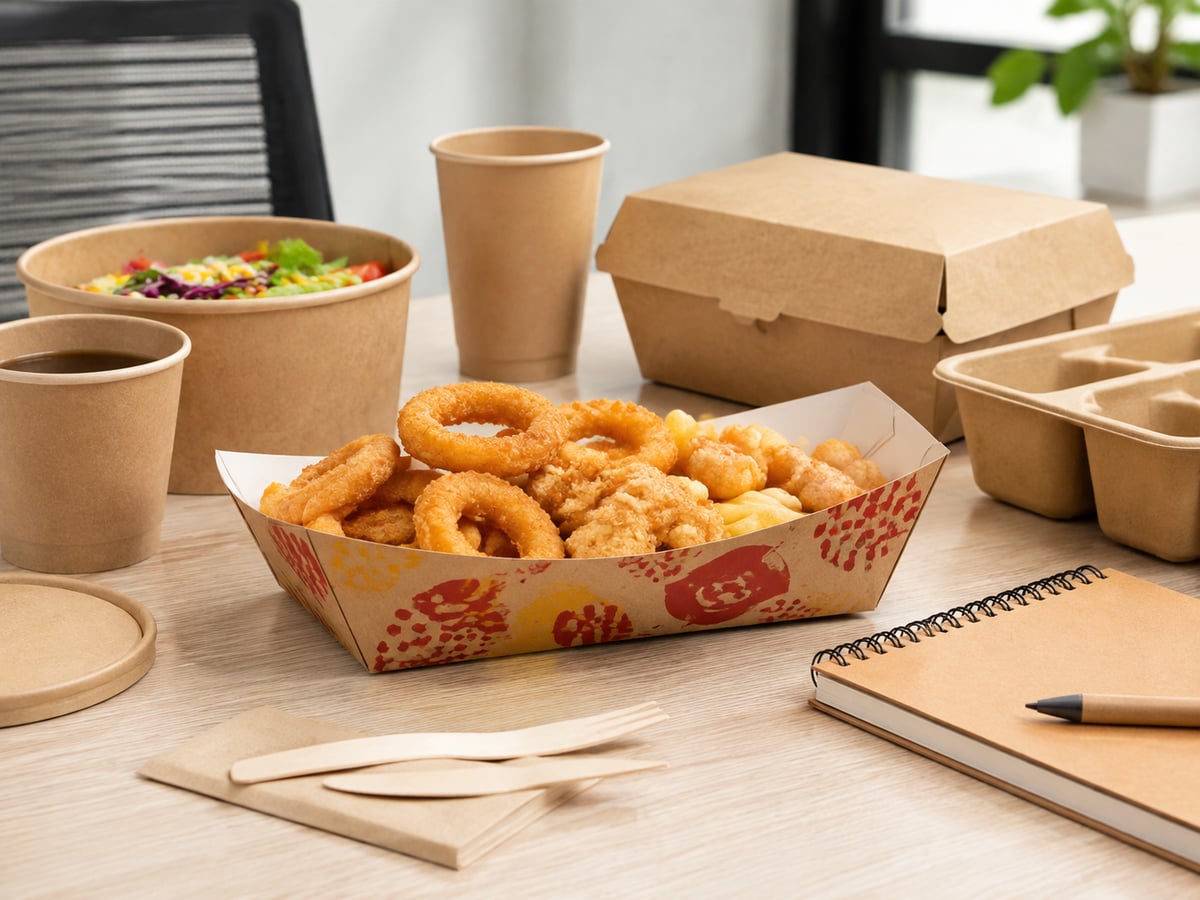
Co-Branded Packaging Standards for Canada Food Brands
Co-branded packaging becomes a valuable brand asset when every visible decision is controlled across cups, bowls, takeaway boxes, trays and meal containers. For Canadian restaurant groups, coffee chains, delivery brands, retailers and partnership marketers, the objective is not simply to place two logos on one pack. The objective is to make the partnership immediately recognizable while protecting the visual authority of each brand.A reliable co-branding system defines what customers notice first, how both logos relate to each other, which colours are approved for kraft and white paper, how artwork adapts to different pack sizes, and which finishes are worth using. The most dependable process includes digital artwork review, unprinted structural samples, printed pre-production samples, measurable acceptance criteria and a signed production record retained for repeat orders.For Canada, packaging approval should also consider long-distance shipping, seasonal temperature changes, bilingual labelling requirements where applicable, provincial waste and recycling expectations, food-contact documentation, and consistency between distribution points such as Vancouver, Toronto, Montréal, Calgary and Halifax. A design that looks strong on a screen but changes on real kraft paper, curves around a cup seam, or loses contrast under restaurant lighting is not yet production-ready.Approval ElementWhat It ControlsRecommended EvidenceCanadian Buyer ConsiderationBrand hierarchyWhich logo receives first attentionSigned artwork layoutKeep partner recognition clear in multi-market campaignsColour targetInk appearance on the selected paperPrinted substrate proofApprove kraft and white versions separatelyPack structurePanel space, folds, seams and lid fitWhite sample or functional prototypeTest for delivery, takeaway and cold-weather handlingPrint coverageBalance between branding and paper characterCoverage map in artwork fileConsider fibre-based appearance and recycling messagingFinish standardGloss, matte, embossing or tactile effectApproved finish swatchVerify scuff resistance during import and warehousingRepeat-order recordConsistency across future production batchesSigned specification sheetUseful for scheduled replenishment across provincesThe table above turns subjective design feedback into production controls. Buyers should avoid approving packaging with comments such as “make it feel premium” or “make the logo larger” unless the requirement is converted into dimensions, placement rules, Pantone references, coverage limits or sample-based acceptance standards.Co-branded food packaging is strongest when it works at three viewing distances. From several metres away, customers should identify the primary restaurant, retailer or campaign brand through its colour field, logo shape or distinctive graphic device. At arm’s length, they should understand the partnership. In the hand, they should discover product information, responsible-material messaging, QR codes, limited-edition artwork or promotion details.This hierarchy is especially important for Canadian foodservice brands operating in dense retail and commuter environments. A cup carried through downtown Toronto, a lunch box delivered in Montréal, or a bowl served in a Vancouver food hall competes visually with many other packages. A partnership mark that is too small disappears; one that is too dominant can confuse customers about who prepared, sold or endorsed the food.Start by assigning each brand a role. The host brand generally owns the largest logo, core colour and product naming. The partner brand may appear as an endorsement, event sponsor, ingredient collaborator, loyalty-program tie-in or limited-time campaign identifier. Equal logo sizes can work for genuine joint ventures, but equal visual weight is not always equal physical size. A high-contrast logo on white can dominate a larger low-contrast logo on kraft.var ctx=document.getElementById('lineChart').getContext('2d');new Chart(ctx,{type:'line',data:{labels:['2022','2023','2024','2025','2026','2027'],datasets:[{label:'Canadian foodservice co-branding index (2022=100)',data:[100,108,119,130,143,157],borderColor:'rgb(33,99,160)',backgroundColor:'rgba(33,99,160,0.12)',fill:false,tension:0.25}]},options:{responsive:false,maintainAspectRatio:false,plugins:{legend:{display:true}},scales:{y:{beginAtZero:false}}}});This planning chart illustrates a realistic direction of travel rather than a market forecast: foodservice partnerships increasingly rely on packaging as a visible media surface. Growth is driven by delivery platforms, coffee collaborations, sports and entertainment activations, grocery prepared-food programs, local tourism campaigns and loyalty partnerships. The operational implication is clear: design standards must be established before a campaign expands to additional sizes or regions.Before choosing colours or finishes, define the first-message rule. Ask one question: within two seconds, what must a customer understand? Possible answers include the restaurant brand, a national coffee partner, a charity collaboration, a seasonal promotion, a premium product line or a reusable-container program. Only one element should normally lead.A practical hierarchy uses a primary mark, secondary mark and supporting information zone. The primary mark may occupy the front panel of a cup or the lid-facing panel of a bowl. The secondary mark can appear below, beside or in an endorsed phrase such as “in partnership with.” Supporting details belong on side panels, bottom panels, sleeves, seals or interior flaps where permitted by the structure.Partnership TypePrimary Customer MessageSuggested Logo RelationshipBest Packaging SurfacesRestaurant and beverage brandMenu experienceHost brand leads; beverage mark endorsesCups, sleeves, combo boxesRetailer and local producerIngredient provenanceBalanced, with retailer navigation prioritySalad bowls, trays, meal kitsSports venue partnershipEvent or team affiliationEvent mark leads during campaignDrink cups, snack trays, food boatsCharity campaignCause participationHost brand leads; cause badge is prominentCoffee cups, bakery boxes, donation packsDelivery-platform programOrder convenience and offerRestaurant remains primarySealed bowls, lunch boxes, tamper labelsLimited-edition collaborationNovelty and collectabilityNear-equal marks with campaign lockupPremium cups, dessert boxes, gift traysThe table provides a starting point, not a substitute for actual layout testing. Print a full-scale mock-up, place it on the intended container, and evaluate visibility from the front, side and customer hand position. On round cups, avoid treating the dieline as a flat poster: seams, handles, lid overlap and cup taper can reduce the usable logo zone.Kraft and white paper create different colour environments. White paper generally provides brighter, cleaner reproduction and better predictability for light tints, fine typography and photographic elements. Kraft paper introduces a warm base tone that can mute bright inks, reduce contrast and make some brand colours appear darker, duller or more organic. Neither option is automatically better; the correct choice depends on the desired brand impression and approved proof.For example, a Canadian natural-food retailer may intentionally choose kraft packaging because the visible fibre character supports an earthy, less processed brand expression. A premium bubble tea chain, hospital café or airline foodservice program may prefer white paper for cleaner colour consistency and high legibility. A hybrid approach can use a white print panel on kraft stock, allowing the material character to remain visible while protecting logo colour accuracy.Do not approve colour solely from a monitor, PDF or digital mock-up. Colour management must include the actual paper grade, coating, print process, ink coverage, production speed and viewing conditions. If a logo uses a signature red, turquoise, violet or pale yellow, a printed proof on the actual substrate is essential. A white underprint may improve opacity, but it changes both cost and visual character and should be specified clearly.var ctx=document.getElementById('areaChart').getContext('2d');new Chart(ctx,{type:'line',data:{labels:['2022','2023','2024','2025','2026','2027'],datasets:[{label:'Kraft-led co-branded concepts (%)',data:[28,31,35,38,41,43],borderColor:'rgb(127,91,54)',backgroundColor:'rgba(127,91,54,0.28)',fill:true,tension:0.25},{label:'White-board colour-led concepts (%)',data:[52,50,47,45,43,41],borderColor:'rgb(40,120,180)',backgroundColor:'rgba(40,120,180,0.12)',fill:true,tension:0.25}]},options:{responsive:false,maintainAspectRatio:false,plugins:{legend:{display:true}},scales:{y:{beginAtZero:true,max:60}}}});This trend-shift illustration reflects the growing use of material-forward design, not a rule that kraft should replace white board. In 2026, Canadian buyers are likely to evaluate packaging through both brand impact and sustainability communication. The best designs avoid exaggerated environmental claims and instead use accurate material, disposal and certification language that can be supported by the supplier’s documentation.A logo system that works on a 16 oz cup may fail on a 4 oz sauce cup, a narrow noodle box or a large multi-compartment meal container. Consistency does not mean copying identical artwork onto every dieline. It means preserving recognizable relationships: the same primary brand position, similar partner prominence, repeatable colour balance and familiar graphic elements.Create a size-family matrix before production. Identify the minimum logo width, minimum clear space, minimum text size, preferred print panel, seam exclusion zone and allowed alternate layout for each format. Small packs may require a simplified lockup with one logo on the front and the partner mark on a side panel. Large boxes can carry a fuller campaign story, QR code, food imagery and regulatory details without overcrowding the design.FormatTypical Brand ZoneRecommended LayoutKey Production Check4–8 oz sauce cupSmall front arc or lidSimplified symbol and one short partner cueMinimum line thickness remains legible8–16 oz hot cupFront panel opposite seamPrimary logo above secondary logoConfirm seam and sleeve do not hide marks12–24 oz cold cupFront and rear panelsLarge primary mark with campaign patternCheck condensation and transparency effects500–1,000 ml bowlFront wall and lid labelFront lockup plus side informationConfirm lid alignment and stack visibilityBurger or lunch boxTop lid panelCentred campaign lockupReview folds, score lines and closing tabsMulti-compartment meal boxLarge lid and side panelPrimary logo on lid; partner story on sideCheck grease resistance and rub resistanceUse the table as a production-family brief. Every item should be reviewed at actual size, not as a scaled screen image. This is particularly important for distributors supplying mixed product assortments to restaurant locations across Ontario, British Columbia, Alberta and Québec, where inconsistent packaging can make a national campaign appear fragmented.Heavy print coverage can create a bold promotional pack, but it can also conceal kraft texture, increase ink demand, make scuffing more noticeable and reduce the calm visual space that helps logos stand out. Conversely, sparse printing may look refined but can underperform in crowded food courts or on delivery shelves. The right coverage is determined by the campaign’s objective, substrate and real-world handling conditions.For material-forward designs, use one or two strong spot colours, a clear logo zone and restrained patterns. Leave purposeful areas of kraft visible rather than treating unprinted board as empty space. For premium white-board packaging, full-panel colour may work well when the brand requires a controlled visual field. In both cases, consider where customers touch the package. Dark, high-coverage surfaces on cup rims, box folds or lid edges are more likely to show abrasion.Finishes should add functional or sensory value. Matte surfaces can support a modern, understated appearance. Gloss can intensify colour but may reveal fingerprints. Embossing, debossing and tactile varnishes can create memorable brand moments, yet they are most effective when applied to a small focal area rather than every panel. For high-volume foodservice, ease of forming, stacking, packing and delivery remains more important than decorative complexity.The most common avoidable approval error is approving a colour digitally and discovering a shift after printing. Colour can vary because of kraft tone, white-board brightness, coating, ink transparency, press calibration, screen or plate preparation, print coverage, drying conditions and viewing light. This is why a practical approval sequence should move from digital proof to substrate-specific printed proof before mass production.For a co-branded project, both brand owners should sign the same printed reference sample. If the partner brand has protected colour standards, include its Pantone reference, acceptable conversion method, permitted tolerance and the chosen substrate. Where instrumental measurement is available, define a measurable colour-difference threshold and record the method. Where visual approval is the primary method, identify the approved sample number, date, lighting condition and decision-makers.Approval StagePurposeWhat to VerifyRelease DecisionArtwork preflightCatch file and dieline errorsFonts, bleed, overprint, legal copy, logo filesApprove print-ready artworkDigital proofReview layout and copyHierarchy, spelling, QR code placementApprove design directionWhite sampleConfirm physical structureCapacity, folds, lid fit, panel visibilityApprove structural formatPrinted pre-production proofApprove actual print effectColour, coverage, seam placement, finishApprove production standardFunctional testConfirm food-use performanceHeat, grease, leakage, stacking and deliveryApprove application suitabilityFirst production inspectionVerify mass-production matchColour, forming, count, packing and defectsRelease shipment or corrective actionThe sequence above protects both brand equity and procurement timelines. Buyers importing through the Port of Vancouver, Port of Montréal or Toronto-area logistics networks should allow sample and approval time before promotional launch dates. Rushed approval often creates far greater cost than a planned pre-production review.A factory can repeat what is documented, measured and approved. It cannot reliably repeat vague creative intent. Build a production standard that includes final dielines, artwork versions, colour references, substrate specification, coating or barrier requirement, approved print coverage, finish details, logo minimum size, seam placement rules, carton-packing instructions and inspection criteria.Each co-branded item should have a unique specification code linked to its physical sample and artwork revision. If a campaign includes cups, bowls, boxes, trays and compartment containers, establish one master brand guide plus product-specific sheets. The master guide defines visual rules; the individual sheets define forming and print details. This structure helps purchasing teams avoid accidentally reordering a previous version after a campaign refresh.var ctx=document.getElementById('barChart').getContext('2d');new Chart(ctx,{type:'bar',data:{labels:['Coffee & tea','Quick service','Prepared retail','Delivery kitchens','Events','Institutional dining'],datasets:[{label:'Relative demand for co-branded packaging programs',data:[86,78,69,62,74,48],backgroundColor:['#6F4E37','#C94C4C','#3D8B5E','#5069A8','#D79B2E','#7A7A7A']}]},options:{responsive:false,maintainAspectRatio:false,plugins:{legend:{display:true}},scales:{y:{beginAtZero:true,max:100}}}});This demand comparison helps buyers prioritize format development. Coffee and tea programs often need cup, sleeve and lid compatibility; quick-service programs typically need boxes, wrappers, bowls and beverage packaging; event programs require high visual impact and rapid replenishment. Institutional dining may prioritize clear identification, food safety and durable transport over decorative finishes.Fude Packaging supports overseas B2B buyers seeking a controlled route from co-branded concept to repeat production. Its technological capabilities include in-house quality and performance testing, artwork and dieline checking, Pantone-oriented colour matching, prototype development and printed pre-production proof options. These tools help customers identify problems before high-volume manufacturing, especially when designs must perform across multiple packaging structures.Its manufacturing capabilities are based on more than 20 years of packaging experience, a self-owned 30,000 m² production base, automated output capacity of up to 120,000 units per day and in-house production across key paper food-packaging categories. Buyers can coordinate cups, bowls, boxes, trays and multi-compartment meal packaging under one supplier, supporting more consistent branding and simpler quality management.Service capabilities include white samples, digital proofs, printed samples, functional testing support, scheduled-order coordination, export-ready packing and documentation assistance. Fude Packaging serves more than 500 business customers and can support buyers who require traceability, inspection records and food-contact documentation such as BRC, FSC, ISO 9001, LFGB and FDA-related materials where applicable to the product and destination requirements. Explore the available food packaging products while planning a format family, or review custom packaging services for sampling and development options.var ctx=document.getElementById('comparisonChart').getContext('2d');new Chart(ctx,{type:'bar',data:{labels:['Format consolidation','Colour-proof options','Traceability support','Daily capacity','Custom development','Export coordination'],datasets:[{label:'Integrated manufacturing program',data:[90,88,85,92,87,84],backgroundColor:'rgba(33,99,160,0.75)'},{label:'Fragmented multi-supplier route',data:[48,42,45,52,50,46],backgroundColor:'rgba(160,160,160,0.75)'}]},options:{responsive:false,maintainAspectRatio:false,plugins:{legend:{display:true}},scales:{y:{beginAtZero:true,max:100}}}});This supplier comparison is a planning framework rather than an audit score. An integrated supplier model can reduce artwork handoffs, simplify approval records and support more consistent brand presentation across product categories. Buyers can learn more about Fude Packaging’s production background through the company profile and discuss Canada-bound packaging requirements through the contact team.1. How can co-branded packaging strengthen brand recognition?It creates repeated visual exposure at the point of purchase, during delivery and in social sharing. Recognition improves when the primary brand, partner mark, colour system and package structure remain consistent across every format.2. Why does colour change on kraft paper?Kraft has a warm, natural base that interacts with ink. Colours may appear darker, less saturated or more muted than on white board. Always approve important colours on the actual selected paper.3. How are several sizes kept visually consistent?Use a size-family design guide with logo minimums, clear space, preferred print panels, alternate layouts and seam exclusions. Do not simply scale one artwork file onto every product.4. Which finishes add real value?Matte, gloss, embossing, debossing and tactile effects can add value when they reinforce a focal brand element and remain compatible with forming, stacking and foodservice handling. Test scuff resistance before approval.5. What files and standards should be archived?Retain final editable artwork, PDFs, dielines, colour references, substrate details, signed samples, inspection criteria, packaging photos, revision history, carton standards and batch records. These documents make repeat orders more reliable.Looking toward 2026, Canadian co-branded food packaging will increasingly combine short-run digital campaign flexibility, QR-enabled loyalty engagement, simplified material communication, improved fibre-based solutions and more detailed traceability expectations. Buyers should build these future needs into the approval record now, while ensuring every sustainability statement, colour standard and food-contact claim remains specific, supportable and repeatable. -

Global Market Paper Food Packaging COA Buyer Controls
A paper food packaging certificate of analysis (COA) should be treated as part of a controlled evidence pack, not as a generic supplier attachment. For Global market buyers, the document set must connect the exact packaging structure, raw materials, production lot, tested sample, test method, result, legal declaration, and destination-market requirement. A certificate that merely states “food grade,” “FDA compliant,” or “passed test” without identifying the factory, product code, coating, ink system, lot number, laboratory, standard, and test conditions is not sufficient for purchasing approval.Food-contact paper packaging may appear simple, but its compliance profile changes with the paper grade, barrier coating, adhesive, printing ink, food type, contact time, serving temperature, filling process, and final destination. A kraft salad bowl shipped through Qingdao to Rotterdam may require a different evidence review than a hot soup cup supplied to Dubai, Los Angeles, Singapore, or Sydney. Buyers should therefore approve a controlled product specification and a destination-specific declaration before the first production order, then obtain lot-level records for each shipment.The most reliable approach is to create an approval matrix that defines the product family, applicable regulation, required tests, acceptance limits, renewal period, and change-notification triggers. This reduces delays at import, prevents unsupported sustainability claims, and helps restaurant chains, distributors, retailers, and food brands demonstrate due diligence during customer audits.Evidence itemWhat it must identifyBuyer control pointProduct specificationSKU, dimensions, paperboard, coating, print, intended useApprove before sampling and productionRaw-material recordsPaper, PE/PLA/water-based barrier, ink, adhesive suppliers and lotsConfirm approved material listProduction COAFactory, manufacturing date, batch or lot, quantity and inspection statusMatch shipment and carton labelsLaboratory reportSample identity, method, conditions, results, laboratory detailsReview validity and test scopeDeclaration of complianceApplicable food-contact requirements and restrictionsApprove by destination marketShipping filePurchase order, invoice, packing list, lot traceability and releaseRetain with import recordsThis evidence pack is useful because each record answers a different question. The specification proves what was ordered; the lot record proves what was made; the laboratory report proves what was tested; the declaration states the compliance basis; and the shipping file proves what was delivered. No single certificate can credibly replace all five controls.Global packaging trade increasingly requires buyers to verify documentation before goods leave the factory. Importers serving supermarkets, food-service chains, meal-delivery platforms, airlines, hospitals, schools, and hospitality groups are often asked to present traceable records long after shipment. A strong COA package should therefore be designed for audit retrieval, not merely for customs clearance.At a minimum, request the supplier’s legal entity name, factory address, manufacturing site code, quality contact, report issue date, document revision number, product identification, batch reference, and signature or controlled approval. The document must distinguish between a production inspection report and an accredited third-party migration or chemical test report. Production inspection confirms routine characteristics such as dimensions, weight, bonding, leak resistance, print quality, and carton quantity. A food-contact laboratory report evaluates the relevant material or finished article under defined conditions.For paper cups, bowls, burger boxes, noodle boxes, lunch boxes, trays, and multi-compartment meal boxes, buyers should also request a bill of materials. This is especially important for laminated or printed products because the food-contact side may differ from the outer printed side. A product cannot be approved only as “paper packaging” when it contains multiple functional layers.Product typeTypical constructionPrimary evidence focusHot beverage cupPaperboard with barrier layer and bottom sealHot-use suitability, seams, coating and lid fitCold drink cupPaperboard with moisture barrierCondensation resistance, odor and print durabilitySalad bowlKraft or white board with PE, PLA or aqueous coatingOil, acid, moisture and chilled-food contactNoodle boxFolded paperboard with coated interiorHot liquid retention and fold integrityBurger boxFolded grease-resistant boardGrease resistance, odor and print transfer controlMeal trayHeavy board, formed compartments or lidsLoad strength, hot-food performance and nestingThe table shows why a universal certificate is weak evidence. A coating appropriate for cold salad may not be appropriate for hot soup, while a grease-resistant burger box may need different proof from a leak-resistant bowl. Buyers should define the intended food contact in the purchase specification: dry, aqueous, acidic, alcoholic, fatty, hot, frozen, microwave, short-term, repeated-use, or long-term contact.Demand for controlled packaging evidence is increasing across major trade hubs. Buyers sourcing through Shanghai, Ningbo, Qingdao, Shenzhen, Rotterdam, Hamburg, Jebel Ali, Singapore, Los Angeles, and Melbourne need consistent documentation because the same SKU may be distributed across several legal jurisdictions. The following chart provides an illustrative view of the expected rise in buyer requests for lot-linked food-contact documentation between 2023 and 2028.var ctx=document.getElementById('lineChart').getContext('2d');new Chart(ctx,{type:'line',data:{labels:['2023','2024','2025','2026','2027','2028'],datasets:[{label:'Indexed demand for traceable COA packs',data:[100,112,126,143,161,181],borderColor:'rgb(45,125,85)',backgroundColor:'rgba(45,125,85,0.15)',fill:false,tension:0.25}]},options:{responsive:true,maintainAspectRatio:false,plugins:{legend:{display:true}},scales:{y:{beginAtZero:false,title:{display:true,text:'Index, 2023 = 100'}}}}});The most important buyer question is simple: does this report apply to the exact product that will be shipped? To answer it, compare the report against the approved specification, artwork, sample, production order, carton marking, packing list, and invoice. The identifiers must be consistent. If a test report names “paper cup” but the shipment is a printed, double-wall, 12-ounce cup with a water-based coating, the linkage is incomplete unless the report and specification explicitly cover that construction.A robust lot traceability system uses a unique lot code that follows the product from raw-material receipt to finished-goods release. The code may include the production date, machine line, shift, product family, and sequence number. It should appear on pallet labels, outer cartons, inspection records, and shipment documents. Buyers should retain a sample or photographic record of carton labels for each imported batch.Matching fieldRequired consistency checkCommon red flagBuyer SKUMatches purchase order and approved specificationGeneric product description onlyFactory identityMatches audited or approved production siteTrading company shown as manufacturerProduct structurePaper grade, coating, glue and print configuration matchReport does not state material layersLot numberMatches cartons, packing list and release recordNo batch code on shipmentProduction dateFalls within the documented manufacturing periodReport predates current material changeSample descriptionRepresents the tested finished item or validated worst caseUnexplained substitute sampleWhere a laboratory test covers a product family rather than every SKU, buyers should request a documented rationale. For example, a worst-case construction might use the highest coating weight, darkest print coverage, greatest food-contact surface area, highest intended temperature, or longest contact time. The supplier should explain why the tested configuration is representative of lower-risk variants. Without this reasoning, an old report may create a false sense of security.For custom branded packaging, artwork approval is part of traceability. Ink coverage, color system, varnish, print location, and curing conditions may affect the compliance assessment. The buyer’s final artwork revision should be linked to the production order and retained with the COA pack.Test results are meaningful only when the method and test conditions fit the intended use. Buyers should never compare a numerical result with a limit without first checking the tested simulant, contact temperature, contact duration, sample preparation, extraction ratio, and standard version. A low migration result under a mild cold-contact condition cannot automatically support a hot, oily, or acidic food application.The relevant framework depends on the destination market and material combination. Common buyer references may include FDA-related food-contact requirements in the United States, Regulation (EC) No 1935/2004 and applicable EU measures, German customer specifications, UK requirements, Gulf buyer requirements, Australian and New Zealand food-contact expectations, or local import rules in Southeast Asia and Latin America. A declaration must name the actual compliance basis; it should not claim worldwide compliance without a reviewed legal scope.Test review itemWhat to verifyWhy it mattersTest standardMethod number, revision and laboratory procedureConfirms reproducible technical basisFood simulantDry, aqueous, acidic, alcoholic or fatty representationMust reflect intended food categoryContact temperatureCold fill, ambient, hot fill or heating conditionMigration and coating behavior can changeContact timeMinutes, hours or days used in the methodMust match realistic package useTested surfaceFood-contact side, printed side, seam or complete articleIdentifies exposure pathwayLaboratory statusCompetence, accreditation scope and report authenticitySupports buyer audit confidenceIn addition to chemical compliance evidence, commercial buyers often need functional testing. For hot cups, check compression strength, rim roundness, lid compatibility, side seam integrity, bottom leakage, and heat tolerance. For bowls and takeaway containers, check stackability, liquid retention, grease penetration, stiffness, closure performance, and resistance to transport vibration. These tests do not replace food-contact testing; they confirm that a compliant material remains suitable in real food-service use.Illustrative buyer demand by industry is shown below. The data reflects relative documentation intensity rather than legal requirements and helps procurement teams allocate review resources.var ctx=document.getElementById('barChart').getContext('2d');new Chart(ctx,{type:'bar',data:{labels:['Restaurant chains','Retail private label','Airline catering','Meal delivery','Hospitals','Schools'],datasets:[{label:'Documentation review intensity (out of 100)',data:[92,88,84,79,86,76],backgroundColor:['#356859','#4f8a6b','#6ca66f','#87b56a','#a0bf74','#bfd080']}]},options:{responsive:true,maintainAspectRatio:false,scales:{y:{beginAtZero:true,max:100,title:{display:true,text:'Relative control score'}}}}});A COA review should use a clear pass/fail rule. The result, unit, detection limit, uncertainty where relevant, legal or customer limit, and conclusion should be visible. Buyers should be cautious when a report states only “pass” because the reviewer cannot assess whether the limit applied was correct or whether the result was near the threshold. Numerical reporting is particularly useful for long-term supplier performance monitoring.Reviewers should also distinguish between “not detected,” “below quantification limit,” and “compliant.” These phrases are not interchangeable. “Not detected” depends on the method’s detection capability. “Below quantification limit” does not mean zero. “Compliant” depends on the result, the applicable limit, the test conditions, and the legal interpretation. If a report includes unexplained abbreviations or foreign-language technical notes, request an official clarification before release.Physical results also require defined limits. A cup leak test should specify fill level, liquid temperature, test duration, sample quantity, acceptance criterion, and failure count. A board grammage value should state tolerance. Color evaluation should identify the approved standard or signed master sample. Generic phrases such as “quality approved” cannot support a dispute investigation.A declaration of compliance is a formal supplier statement describing the basis on which the product is considered suitable for food contact. It should be issued by an authorized person, dated, controlled by revision, and linked to the exact product structure. The declaration should identify restrictions, intended conditions of use, and any assumptions. It should also state if the packaging is intended for single use only and whether it is suitable for hot food, frozen food, microwave use, or specific food groups.Buyers should avoid accepting unsupported environmental or regulatory claims. “Compostable,” “biodegradable,” “plastic-free,” “recyclable,” “PFAS-free,” and “FSC certified” each require a defined scope and evidence. For example, FSC claims must relate to a valid chain-of-custody arrangement and approved claim language. Compostability claims should identify the standard, certification body, and whether the product is intended for industrial or home composting conditions. Destination markets may restrict how these statements are communicated to consumers.For buyers sourcing kraft food packaging, product selection should begin with practical application and documentation. Fude Packaging provides options including sustainable kraft takeaway containers where buyers can evaluate material structure, capacity, and end-use requirements before approving the associated evidence pack.Declaration fieldApproval expectationEscalate whenLegal entity and factoryClearly named and traceableFactory differs from approved siteProduct identitySKU, construction and revision are specifiedOnly generic category is statedIntended useFood type, time and temperature are definedUse condition is missingRegulatory basisDestination-relevant framework is namedClaims are broad or unsupportedRestricted substancesRelevant limitations and assumptions are disclosedRestrictions are omittedAuthorized approvalDate, signature and document revision are controlledUndated marketing letter is suppliedRecord retention should reflect product shelf life, legal exposure, customer contracts, and the time needed to investigate a complaint. As a practical Global market control, many buyers retain the core evidence pack for at least five years after final shipment, while high-risk programs, private-label contracts, healthcare applications, or market-specific rules may justify longer retention. Retain records in searchable digital form and preserve the original signed documents where required.The retained file should include the approved specification, quotation, purchase order, artwork version, sample approval, raw-material declarations, lot COA, laboratory reports, production inspection records, packing list, bill of lading, complaint history, corrective actions, and any change approvals. Index documents using supplier name, factory, product code, lot number, purchase order, and shipment date. A well-organized archive can turn a potential recall or customer audit into a controlled verification exercise.For high-volume programs, keep retention samples from each major lot. Store them in clean, dry conditions with labels showing product code, lot, date, and shipment destination. A retention sample cannot prove every legal attribute, but it helps investigators assess print, odor, construction, dimensions, coating appearance, and functional condition if a complaint occurs months later.New approval is required when a supplier changes anything that can affect food-contact compliance, performance, appearance, sustainability claims, or traceability. The supplier should notify the buyer before implementation, provide a change-control summary, submit updated evidence, and obtain written approval. This requirement should be included in the quality agreement and purchase terms.Major changes include a new paper mill, coating supplier, adhesive, ink system, pigment, barrier technology, forming process, factory location, subcontractor, test laboratory, food-contact declaration, product dimensions, print coverage, or destination use condition. Even a change described as “equivalent” should not be accepted without documented technical comparison. Equivalent commercial performance does not automatically mean equivalent migration behavior or regulatory status.The chart below illustrates the expected shift toward lower-impact barrier technologies and more comprehensive documentation through 2028. Values are illustrative percentages of buyer inquiries requesting specific packaging approaches.var ctx=document.getElementById('areaChart').getContext('2d');new Chart(ctx,{type:'line',data:{labels:['2023','2024','2025','2026','2027','2028'],datasets:[{label:'Requests for fiber-based and alternative barrier solutions',data:[28,35,44,55,65,73],borderColor:'rgb(42,117,132)',backgroundColor:'rgba(42,117,132,0.30)',fill:true,tension:0.3},{label:'Requests requiring formal change-control evidence',data:[39,46,54,63,71,78],borderColor:'rgb(190,125,48)',backgroundColor:'rgba(190,125,48,0.18)',fill:true,tension:0.3}]},options:{responsive:true,maintainAspectRatio:false,scales:{y:{beginAtZero:true,max:100,title:{display:true,text:'Share of buyer inquiries (%)'}}}}});By 2026 and beyond, the leading trend is not simply replacing one coating with another. Buyers are expected to demand documented proof that new materials preserve food safety, functional performance, manufacturability, and claim accuracy. Digital lot records, QR-linked specifications, automated vision inspection, batch-level release dashboards, and third-party laboratory integration will become more common. Policy developments on single-use packaging, recycled content, fluorinated substances, waste labeling, and substantiation of environmental claims will also increase the value of disciplined change management.Fude Packaging supports overseas B2B buyers with paper food packaging produced in a self-owned manufacturing operation in Shandong. With more than 20 years of industry experience, a 30,000 m² factory, automated production capacity, and in-house quality testing, the company can coordinate documentation with actual manufacturing controls rather than treating compliance files as disconnected sales materials.Technological capabilities: Fude Packaging supports material selection, coating recommendations, structural development, dieline checking, Pantone color matching, prototype evaluation, and functional testing. Buyers can review white samples, printed samples, and application-oriented prototypes for capacity, strength, insulation, leak resistance, lid fit, grease resistance, print quality, and food-service performance. This supports a more accurate connection between the approved product specification and COA evidence.Manufacturing capabilities: Core in-house product categories include paper cups, bowls, burger boxes, kraft lunch boxes, salad containers, noodle boxes, food trays, and compartment meal boxes. Incoming-material inspection, production monitoring, final inspection, and batch verification help support lot-level traceability. Buyers seeking coated bowl formats can review leak-resistant kraft paper salad bowls while defining intended use and required approval documents.Service capabilities: Fude Packaging serves customers in more than 50 countries and can support OEM and ODM requirements, export packing, inspection coordination, sample shipments, commercial documents, and international freight options. The multilingual team can help buyers identify food type, serving temperature, destination requirement, branding needs, volume, and delivery schedule before recommending a practical documentation path. For broader sourcing requirements, buyers may explore the food container product range and consolidate multiple packaging categories with one manufacturing partner.Supplier comparison factorGeneric document supplierControlled manufacturing partnerFactory visibilityMay list only a sales companyIdentifies manufacturing site and quality contactProduct structureOften described as “paper packaging”Linked to approved bill of materialsLot traceabilityMay not connect cartons to reportsConnects production, inspection and shipmentTest reviewProvides generic pass statementsProvides method and condition review supportChange managementChanges may be notified after shipmentUses advance notification and approval processInternational serviceLimited support after dispatchCoordinates samples, documents and claim handlingThe comparison does not mean every project requires the same level of testing. It means the evidence level should match the product’s risk, customer exposure, destination market, and intended use. A standard unprinted dry-food tray may have a simpler file than a printed hot beverage cup or a coated meal box used for oily takeaway food. The buyer should document why the selected level of control is appropriate.The following comparison chart summarizes a practical evaluation framework for supplier selection. Scores are illustrative and should be replaced with the buyer’s audit findings, product test results, and commercial priorities.var ctx=document.getElementById('comparisonChart').getContext('2d');new Chart(ctx,{type:'bar',data:{labels:['Lot traceability','Product detail','Method transparency','Change control','Export support','Customization'],datasets:[{label:'Controlled packaging partner',data:[92,90,88,91,87,93],backgroundColor:'rgba(53,104,89,0.85)'},{label:'Generic certificate supplier',data:[48,52,44,39,55,58],backgroundColor:'rgba(180,180,180,0.85)'}]},options:{responsive:true,maintainAspectRatio:false,scales:{y:{beginAtZero:true,max:100,title:{display:true,text:'Illustrative evaluation score'}}}}});1. What should a paper food packaging certificate of analysis evidence pack contain?It should include the approved product specification, material structure, factory identification, raw-material traceability, production lot record, inspection report, applicable laboratory tests, declaration of compliance, shipment documents, and controlled change history. The pack must make it possible to trace a delivered carton back to the product design, manufacturing date, material inputs, and approval basis.2. How is a report linked to the exact product?Match the report to the buyer SKU, factory, product construction, dimensions, coating, print version, lot number, production date, and intended use. If the report covers a representative or worst-case product rather than the exact SKU, request written technical justification and confirm that the actual SKU does not exceed the tested risk profile.3. Which test conditions must be checked?Check the test standard, laboratory, sample description, food simulant, contact temperature, contact duration, exposed surface, extraction conditions, result units, detection limits, and applicable legal or customer limit. The selected conditions must reflect actual use, including hot, cold, fatty, acidic, wet, dry, or frozen foods.4. How long should records be retained?A practical baseline is at least five years after the final shipment, subject to contractual obligations, destination rules, product risk, and customer policy. Maintain searchable electronic copies and preserve retention samples for important lots where feasible. Longer retention may be appropriate for private-label, healthcare, institutional, or high-volume food-service programs.5. What supplier changes require new approval?Require approval before changes to paperboard, coating, adhesive, ink, pigment, barrier technology, factory, subcontractor, manufacturing process, dimensions, artwork, test method, declaration, certification status, or intended use. A supplier should provide a change notice, risk assessment, revised documents, and samples or test evidence where needed before production resumes. -

Canada Seasonal Packaging Inventory Planning Guide
Seasonal packaging inventory should be planned from actual menu usage, store-level demand, supplier lead time, expected waste, campaign duration, and the remaining useful life of printed cartons. For Canadian restaurant chains, cafés, retailers, distributors, and food-delivery brands, the goal is not simply to buy enough packaging. The goal is to maintain service availability while avoiding excess cartons that cannot be used after a promotion, menu change, holiday event, or brand refresh.A practical seasonal packaging plan begins with the menu. Estimate how many beverages, meals, desserts, salads, noodles, burgers, or takeaway orders will be sold by store and by week. Then match each menu item to the cup, bowl, box, tray, lid, sleeve, or compartment container required. Add realistic allowances for damaged cartons, store transfers, sample testing, launch variability, and seasonal peaks such as summer festivals, back-to-school promotions, Thanksgiving, Black Friday, Christmas, Lunar New Year, and winter delivery demand.For Canada-based buyers importing custom food packaging through Vancouver, Prince Rupert, Montreal, Halifax, or Toronto-area logistics hubs, lead time must include artwork approval, sampling, production, export booking, ocean transit, customs clearance, inland delivery, and receiving time. Packaging should be released in planned stages rather than delivered as one oversized shipment whenever storage and cash flow are limited.Strong control depends on four disciplines: forecast from menu usage, establish minimum and reorder levels, separate core fast-moving SKUs from promotional items, and review consumption variance monthly. Before production, brands should confirm specifications through digital proofs, white samples, printed pre-production samples, measurable acceptance criteria, and a repeatable approval record.Which stores, menus, campaigns, and dates will consume each packaging SKU? What is the average weekly usage, peak-week usage, and expected end-of-season balance? How many days are required for sampling, production, freight, customs, and local delivery? Which cartons can be used after the campaign, and which are date-specific or promotion-specific? What minimum stock protects service without creating excessive warehouse inventory? Can production be completed in one run but released in scheduled deliveries? An operating plan converts a marketing calendar into an inventory decision. It should be owned jointly by purchasing, demand planning, operations, marketing, finance, warehouse teams, and the packaging supplier. Marketing knows the campaign dates; operations understands store usage; finance monitors working capital; and the supplier confirms production capacity, material availability, sample timing, and release options.For example, a Toronto coffee chain launching holiday paper cups in November should not forecast from total annual cup consumption. It should forecast the specific holiday drink mix, participating-store count, expected transaction uplift, lid type, sleeve requirement, and campaign duration. A Calgary quick-service restaurant promoting winter meal bundles must forecast the relevant burger boxes, fries trays, soup cups, and multi-compartment meal boxes rather than applying a flat percentage to all packaging.Planning inputRecommended sourceWhy it mattersTypical review frequencyMenu forecastSales and menu teamsLinks each packaging item to expected food or beverage salesMonthlyStore countOperations teamCaptures openings, closures, pilot stores, and regional rolloutsMonthlyCampaign calendarMarketing teamIdentifies launch dates, end dates, and promotion-specific artworkWeekly during launch periodSupplier lead timeSupplier and freight forwarderSets the order date and reorder triggerEvery order cycleWarehouse capacityDistribution centreDetermines whether staged releases are necessaryQuarterlyHistorical wasteStore and warehouse reportsPrevents underestimating damage, loss, and end-of-season write-offsMonthlyApproval statusBrand and quality teamsConfirms artwork, colour, performance, and food-contact requirementsBefore productionThe table above should be used as a pre-order checklist. If one input is incomplete, the order quantity may be unreliable. This is especially important for custom printed packaging because unused branded cartons may have limited reuse value after the promotional window closes.Canadian foodservice demand remains shaped by urban delivery growth, convenience-led meal occasions, regional tourism, and increasing attention to fibre-based food packaging. Large markets including Toronto, Vancouver, Montreal, Calgary, Ottawa, Edmonton, Winnipeg, and Halifax have different seasonality patterns. Summer patio service and festivals can increase cold drink cup demand in Vancouver and Toronto, while winter hot beverage and delivery packaging demand may be stronger in colder regions. Quebec brands may also require bilingual packaging planning, making early artwork review essential.var ctxMarketGrowth = document.getElementById('marketGrowthChart').getContext('2d');new Chart(ctxMarketGrowth, { type: 'line', data: { labels: ['2022', '2023', '2024', '2025', '2026 Forecast', '2027 Forecast'], datasets: [{ label: 'Indexed Canadian seasonal foodservice packaging demand', data: [100, 106, 113, 119, 126, 133], borderColor: 'rgb(35, 123, 91)', backgroundColor: 'rgba(35, 123, 91, 0.12)', borderWidth: 3, tension: 0.3, fill: false }] }, options: { responsive: false, maintainAspectRatio: false, scales: { y: { beginAtZero: false } } }});This indexed chart is a planning illustration rather than a replacement for a buyer’s own sales data. The most useful forecast is always the one built from actual weekly consumption by location, menu, season, and packaging format.Forecasting should start at the lowest practical level of detail: store, menu item, packaging SKU, and week. A national average can conceal major differences between downtown Vancouver delivery stores, suburban Greater Toronto drive-through locations, Montreal cafés, and seasonal tourism outlets in Banff or Halifax. If the data is limited, begin with store clusters rather than individual locations.Use historical sales as the baseline, then apply adjustments for price changes, planned store openings, delivery-platform promotions, local events, weather sensitivity, menu changes, and campaign reach. Do not assume a new printed cup or food box will automatically increase sales. Instead, create a conservative, expected, and high-demand scenario.Seasonal packaging SKUForecast driverExample seasonal triggerSuggested forecasting methodHot paper cupsHot beverage transactionsWinter drinks and holiday menusWeekly drinks sold × cup conversion rateCold drink cupsCold beverage transactionsSummer patios and festivalsWeather-adjusted weekly averageBurger boxesMeal bundles and delivery ordersSports events and limited offersMenu mix by store clusterSalad bowlsLunch and health-focused menu demandJanuary wellness campaignsPrior campaign sales plus expected upliftNoodle boxesTakeaway and delivery ordersCold-weather comfort food demandDaypart and delivery-platform forecastMulti-compartment meal boxesCombo meals and institutional ordersSchool, office, and catering cyclesContract volume plus safety allowancePrinted sleevesSelected beverage sizesHoliday brand campaignCup forecast less double-cup usageThe forecast method should reflect what actually causes consumption. Packaging demand is normally driven by menu sales, not by purchase history alone. Purchase history can be distorted when a warehouse previously overbought, when stores changed ordering behaviour, or when a campaign ended with leftover stock.Expected packaging demand = planned menu units × packaging conversion rate × participating-store coverage + planned waste allowance.A conversion rate is usually one container per menu item, but exceptions matter. A beverage may require one cup, one lid, and one sleeve; a meal may need a box, sauce cup, lid, and carry bag. Build these relationships into a bill of materials so that every promotion is forecast consistently.Minimum stock, reorder point, and safety stock protect availability while controlling inventory exposure. These levels should not be copied from a generic template. They must reflect average consumption, demand volatility, production lead time, transit lead time, customs risk, warehouse transfer time, and the consequences of a stockout.For seasonal packaging, safety stock should be higher when the item is essential to serving food and difficult to substitute, such as a custom lid-compatible hot cup. It should be lower when the product is highly promotional, date-specific, or likely to become obsolete after a short campaign. A plain kraft backup item can provide operational resilience where brand rules allow it.Inventory settingPurposePractical calculationBest useMinimum stockSignals the lowest acceptable operating balanceAverage weekly use × minimum coverage weeksCore, repeat-use packagingSafety stockAbsorbs forecast or transit variabilityPeak weekly variance × risk coverage factorHigh-service or import-sensitive SKUsReorder pointTriggers a replenishment decisionLead-time demand + safety stockAll actively replenished itemsMaximum stockLimits cash tied up in inventoryTarget coverage based on storage and shelf lifeWarehouse-controlled programsLaunch stockCovers first delivery and early volatilityExpected first-month demand + launch bufferNew seasonal campaignsExit thresholdTriggers markdown, transfer, or reuse actionRemaining stock versus remaining campaign demandPromotional packagingAs an example, if a chain uses 18,000 printed 12 oz hot cups per week and total replenishment lead time is eight weeks, lead-time demand is 144,000 cups. If the business holds 24,000 cups as safety stock, the reorder point is 168,000 cups. However, if the printed design is only valid for a six-week holiday campaign, ordering a full additional eight-week supply would be inappropriate. In that case, a staged release, shorter run, or reusable base design is safer.Core evergreen packaging: typically higher protection because it can be used across seasons. Seasonal design with flexible timing: moderate protection, supported by scheduled releases. Date-specific promotion packaging: low protection and strict exit management. New menu packaging: controlled launch stock until actual usage is proven. Imported specialty material: additional allowance where approved alternates are unavailable. Not all custom packaging should be controlled in the same way. Fast-moving core items, such as standard coffee cups, bowls, burger boxes, and delivery trays, usually justify recurring replenishment rules. Promotional SKUs require a campaign-based plan with an end date, capped quantity, and clear disposition path for remaining cartons.A useful approach is an ABC-style classification. “A” items represent high-volume, critical packaging with regular usage. “B” items have moderate volume or moderate uncertainty. “C” items are slow-moving, seasonal, niche, or campaign-specific and should be ordered cautiously. This segmentation helps purchasing teams avoid treating a Valentine’s Day dessert sleeve the same way as a year-round salad bowl.SKU classTypical examplesInventory strategyRelease approachA: Core fast-movingStandard cups, lids, burger boxesRolling forecast with defined reorder pointRegular scheduled replenishmentA: High-volume seasonalWinter hot drink cupsForecast by store cluster and weather periodInitial release plus replenishment windowB: Limited menu itemSalad bowls for a special menuModerate safety stock and monthly reviewTwo or three planned releasesB: Regional campaignFestival-branded cold cupsRegional forecast with transfer optionDelivery to participating markets onlyC: Date-specific promotionHoliday printed dessert boxesStrict capped buy and early exit reviewSmall initial delivery, optional second releaseC: Test-market formatNew compartment meal boxPilot quantity with rapid feedbackHold expansion production until resultsThe table helps planning teams assign the correct level of control to each item. The key rule is simple: the more difficult it is to reuse a package after the season, the tighter the buying discipline should be.var ctxIndustryDemand = document.getElementById('industryDemandChart').getContext('2d');new Chart(ctxIndustryDemand, { type: 'bar', data: { labels: ['Coffee Shops', 'Quick-Service Restaurants', 'Delivery Kitchens', 'Retail Prepared Foods', 'Catering', 'Universities'], datasets: [{ label: 'Seasonal packaging demand index', data: [88, 94, 82, 71, 63, 58], backgroundColor: ['#4C956C', '#2C6E49', '#F4A261', '#457B9D', '#8D5A97', '#E76F51'] }] }, options: { responsive: false, maintainAspectRatio: false, scales: { y: { beginAtZero: true, max: 100 } } }});The industry profile illustrates why packaging plans should be tailored. Coffee chains may concentrate demand around hot beverages and seasonal sleeves. Quick-service restaurants may require coordinated inventory across meal boxes, trays, cups, and lids. Catering and university foodservice can experience concentrated demand around event calendars and academic terms.Scheduled releases are one of the most effective ways to reduce leftover stock without compromising production efficiency. A buyer can confirm an overall production quantity, reserve manufacturing capacity, complete the artwork and specification approval process, and then arrange deliveries in stages. This reduces warehouse congestion, lowers cash tied up in cartons, and creates a checkpoint before later releases.For an importer receiving through the Port of Vancouver, a full-container shipment may be appropriate for high-volume core items. For smaller seasonal programs, planned partial releases, mixed-SKU container loading, distributor storage, or regional warehouse allocation may provide better control. Buyers serving Ontario may route inventory through Greater Toronto Area warehouses, while Western Canadian stock may move through Vancouver or Calgary distribution networks.Release modelSuitable situationInventory benefitControl pointOne full deliveryEvergreen, high-volume SKUsLower unit logistics costRequires strong warehouse capacityTwo scheduled releasesDefined seasonal campaignReduces early inventory exposureReview sell-through before second releaseMonthly release planLong seasonal periodImproves cash-flow controlUpdate forecast each monthRegional allocationMulti-province rolloutsPrevents overstock in slower regionsRebalance between provincesPilot then expansionNew format or new menu itemLimits test-market riskApprove next run after usage dataSupplier-held release programConfirmed recurring demandReduces buyer storage burdenWritten release schedule and storage termsScheduled releases work best when the agreement defines production completion date, storage responsibility, release notice period, inspection requirements, permitted quantity tolerance, freight responsibility, and final collection deadline. The buyer should avoid assuming that finished inventory can be held indefinitely. A clear release schedule protects both parties.Staged releases are particularly useful for Christmas beverage cups, summer cold drink cups, branded food trays for sporting events, promotional burger boxes, meal-prep bowls, delivery packaging for limited-time menus, and event catering containers. They are also useful for franchise systems where individual store demand can vary sharply by province, neighbourhood, or store format.Packaging inventory is not maintenance-free. Paper-based cups, bowls, boxes, and trays should be stored in clean, dry, ventilated conditions away from direct sunlight, excessive humidity, chemical odours, pests, and floor moisture. Warehouses in Canadian coastal regions can face humidity variation, while winter receiving conditions can introduce condensation if pallets are moved too quickly from cold loading areas to warm storage.Use first-in, first-out management for evergreen items and campaign-date tracking for promotional stock. Each pallet should be labelled with SKU, artwork version, production batch, receipt date, quantity, intended campaign, and release status. Full-batch traceability supports faster investigation if a print, fit, strength, or food-contact concern is identified.Storage controlRecommended practiceRisk reducedReview ownerPallet elevationKeep cartons off the floorMoisture and contamination damageWarehouse supervisorHumidity managementMaintain dry, stable storage conditionsWarping, softening, and carton degradationFacilities teamSunlight protectionStore away from direct UV exposurePrint fading and material ageingWarehouse teamBatch labellingRecord production and receipt informationTraceability gaps and incorrect pickingInventory controlFIFO rotationPick oldest approved stock firstAging stock and avoidable write-offsWarehouse teamArtwork version checksSeparate obsolete and current designsIncorrect campaign or brand useBrand operationsMonthly ageing reportFlag stock with limited remaining useLate action on surplus inventoryDemand plannerThe storage checklist above is especially relevant when seasonal programs overlap. A spring promotion, summer cold-cup campaign, and holiday launch can create several similar-looking printed cartons in one distribution centre. Clear visual identification and system records reduce picking errors.var ctxTrendShift = document.getElementById('trendShiftChart').getContext('2d');new Chart(ctxTrendShift, { type: 'line', data: { labels: ['Q1', 'Q2', 'Q3', 'Q4', '2026 Q1', '2026 Q2'], datasets: [{ label: 'Share of seasonal orders using staged releases (%)', data: [28, 32, 37, 43, 49, 54], borderColor: 'rgb(25, 118, 210)', backgroundColor: 'rgba(25, 118, 210, 0.24)', fill: true, tension: 0.35, borderWidth: 3 }] }, options: { responsive: false, maintainAspectRatio: false, scales: { y: { beginAtZero: true, max: 100 } } }});This area chart reflects a broader operational shift: brands increasingly prefer flexible replenishment, smaller inventory exposure, and closer coordination between demand planners and suppliers. In 2026, digital approval workflows, batch-level inventory visibility, and more responsive release schedules are expected to become more common in foodservice packaging programs.A monthly consumption variance review compares planned packaging usage with actual usage. It is one of the clearest ways to detect overbuying early. If actual consumption is consistently below forecast, the business should pause additional releases, transfer stock to stronger locations, adjust future promotions, or identify reuse opportunities where branding permits.Track variance at SKU level and investigate the cause. A low result may reflect weaker menu sales, delayed store openings, a shorter campaign, an incorrect bill of materials, packaging substitution, operational waste, or inaccurate warehouse records. A high result may signal stronger demand, unplanned promotional activity, increased delivery volume, or store-level ordering outside policy.Forecast accuracy: actual consumption compared with planned consumption. Weeks of cover: stock on hand divided by average weekly usage. End-of-season inventory: remaining promotional stock after campaign completion. Inventory ageing: percentage of cartons held beyond the defined period. Waste rate: damaged, obsolete, or unusable cartons as a percentage of receipts. Stockout rate: missed availability events by SKU and store group. Release adherence: actual deliveries compared with the agreed release schedule. The KPI that most clearly reveals overbuying is often weeks of cover after the campaign end date. If a holiday cup remains equal to eight weeks of normal usage when the holiday program has ended, the business has purchased too much unless an approved reuse plan exists. This metric should be reviewed alongside end-of-season inventory value and forecast bias.For Canadian buyers seeking a manufacturer capable of supporting seasonal packaging planning, Fude Packaging combines custom development, factory control, quality testing, and export coordination. The company supports foodservice packaging programs for cups, bowls, boxes, trays, salad containers, noodle boxes, burger boxes, kraft lunch boxes, and multi-compartment meal packaging.Fude Packaging supports product selection, material recommendations, coating options, structural development, custom sizing, artwork checking, dieline review, and Pantone-oriented colour matching. Before mass production, buyers can evaluate digital proofs, white samples, printed samples, and functional pre-production samples. These approval steps help teams verify capacity, dimensions, rigidity, heat resistance, grease resistance, leak prevention, lid compatibility, print placement, and food-application performance.For seasonal programs, measurable acceptance criteria should be written into the approval record. This may include approved artwork version, colour tolerance, board grade, coating type, cup volume, lid fit, carton packing configuration, drop-test expectation, batch identification, and inspection method. An in-house laboratory and production-stage inspection process support consistent quality control before shipment.With more than 20 years of packaging experience, a self-owned 30,000 m² production base, and automated capacity reaching up to 120,000 units per day, Fude Packaging can support scalable custom orders while maintaining direct oversight of material selection, printing, die-cutting, forming, inspection, packing, and shipment preparation. Manufacturing is designed to support batch traceability and consistent production for multi-location foodservice customers.Documentation support can include food-contact and quality-related materials aligned with requirements such as FSC, ISO 9001, FDA-related food-contact expectations, LFGB, and other destination-market documentation where applicable. Canadian buyers should confirm their specific application, provincial requirements, fibre sourcing objectives, coating preferences, and end-of-life claims before finalizing a specification.Fude Packaging provides overseas B2B support for OEM and ODM projects, including sampling, product consultation, export-ready packing, shipment documentation, and scheduled-order coordination. Standard production timing may be approximately 7–15 days depending on product specifications, order volume, artwork status, and production scheduling. Buyers can also arrange independent inspection or third-party testing where required.For Canadian importers, distributors, restaurant chains, and food brands, coordinated replenishment can help align seasonal packaging deliveries with warehouse capacity and regional demand. Explore the available food packaging product range, review custom packaging services, learn more about Fude Packaging, or contact the team for a seasonal inventory plan.var ctxSupplierComparison = document.getElementById('supplierComparisonChart').getContext('2d');new Chart(ctxSupplierComparison, { type: 'bar', data: { labels: ['Custom Development', 'Batch Traceability', 'Scheduled Releases', 'Sampling Options', 'Multi-SKU Supply', 'Export Documentation'], datasets: [ { label: 'Integrated packaging manufacturer', data: [92, 90, 86, 94, 95, 88], backgroundColor: 'rgb(76, 149, 108)' }, { label: 'Typical fragmented sourcing approach', data: [58, 52, 43, 61, 47, 55], backgroundColor: 'rgb(244, 162, 97)' } ] }, options: { responsive: false, maintainAspectRatio: false, scales: { y: { beginAtZero: true, max: 100 } } }});The comparison chart is a purchasing framework. Buyers should assess suppliers based on their own requirements, including product performance, compliance documentation, minimum order quantities, delivery schedule, quality controls, communication speed, total landed cost, and ability to support future replenishment.Canadian buyers may source locally, regionally, or internationally. Local suppliers can offer short domestic transport distances and fast replenishment for standard stock products. International manufacturers may offer broader customization, integrated multi-SKU sourcing, and competitive production economics for planned volume programs. The best route depends on volume, product complexity, warehousing, lead-time tolerance, and the degree of customization.For import programs, buyers should build realistic transit and customs allowances into their inventory plan. Vancouver and Prince Rupert are key gateways for Asia-Pacific freight into Western Canada, while Montreal and Halifax can support eastern distribution routes. Toronto remains a major demand-planning, warehousing, and foodservice trade hub, even when containers arrive through other ports.Forecast demand from expected menu sales by store, week, and campaign period. Multiply each menu item forecast by its packaging requirement, then add a controlled allowance for damage, operational waste, and launch variability. Use historical campaign results where available, but adjust for store openings, price changes, local events, weather, delivery-platform activity, and new menu items.Reasonable safety stock depends on lead time, demand volatility, and whether the item can be reused after the season. Core cups, bowls, and boxes may justify several weeks of protection. Highly promotional or date-specific packaging should have tighter safety stock because leftovers can become obsolete. A practical approach is to set a larger buffer for reusable core formats and a smaller buffer for limited campaign artwork.Slow-moving sizes should be ordered separately from high-volume items whenever possible. Use a lower maximum stock level, smaller initial release, and an early review point. Consider whether one versatile format can replace several low-volume sizes. For test items, use a pilot order and delay larger production until actual store usage confirms demand.Yes. Production can be planned with staged releases when terms are agreed in advance. Confirm the total quantity, finished-goods storage period, release dates, notice period, freight responsibilities, inspection requirements, and final collection deadline. This approach can protect availability while reducing the amount of seasonal stock held at a Canadian warehouse.End-of-season weeks of cover is one of the best indicators. It shows how many weeks of normal consumption remain after a campaign ends. Also review inventory value at risk, obsolete artwork stock, forecast bias, ageing inventory, and the percentage of stock transferred or written off after the season.Approve the final artwork, dieline, material and coating specification, capacity, dimensions, structure, lid compatibility, print colours, packaging configuration, food-contact documentation needs, test requirements, and acceptable production tolerances. Keep one controlled approval record so that future repeat orders use the same confirmed specification.In 2026, Canadian foodservice buyers are expected to place more emphasis on demand-sensing data, digital proof approvals, traceable batches, fibre-based materials, reduced unnecessary packaging, and more accurate sustainability claims. Policy expectations around packaging waste reduction, recyclability, compostability, and food-contact compliance will continue to influence material selection. Brands should avoid making environmental claims that cannot be supported by the actual material, local collection infrastructure, and applicable documentation.A disciplined seasonal packaging inventory program helps Canadian brands protect service levels, reduce working-capital pressure, limit end-of-season write-offs, and maintain a consistent customer experience. The most reliable process connects menu demand, approved specifications, supplier lead time, staged releases, storage controls, and monthly variance review in one repeatable operating plan. -

Global Market Guide to Food-Contact Packaging Compliance
A food-contact declaration of compliance for packaging should be treated as a controlled evidence pack, not as a single generic certificate. For Global market buyers, the pack should connect the exact product structure, raw materials, production factory, manufacturing lot, intended food application, test method, migration results, applicable legal framework, customer approval, and destination-market requirements.Buyers should reject declarations that merely state “food safe,” “FDA compliant,” or “EU compliant” without identifying the product code, factory address, material layers, test conditions, responsible issuer, document date, and supporting evidence. A declaration for a paper cup cannot automatically support a kraft lunch box, a coated salad bowl, or a multi-compartment meal tray because the food-contact surface, coating system, print coverage, use temperature, filling time, and food type may differ.For importers serving Rotterdam, Hamburg, Dubai, Singapore, Los Angeles, Sydney, São Paulo, or other international trade hubs, the practical objective is simple: create a file that enables a buyer, regulator, customer, auditor, or claims team to trace the packaging back to its source and validate that it was assessed for the intended application.Evidence ItemWhat It Should IdentifyWhy Buyers Need ItCommon Red FlagDeclaration of complianceSupplier, factory, product code, material and applicable standardCreates the formal compliance statementGeneric wording with no product referenceProduct specificationDimensions, grammage, coating, print area, structure and food-contact sideConfirms what was actually evaluatedSpecification differs from purchase orderRaw-material statementPaperboard, inks, adhesives, coatings and additivesSupports material-level traceabilityOnly paper is named; coating is omittedTest reportSample identity, laboratory, method, simulant, time and temperatureShows how compliance was assessedNo use conditions or sample descriptionProduction lot recordOrder number, batch code, date, machine and inspection statusSupports recall and shipment traceabilityLot code cannot be matched to shipmentDestination assessmentCountry or region, intended customer requirement and legal scopeAvoids applying the wrong market standardOne certificate used for all markets without reviewThe table above shows why food-contact compliance is a documentation system. The declaration is important, but its reliability depends on the linked specification, test evidence, production records, and change-control history behind it.A complete evidence pack should be assembled before the first commercial shipment and updated whenever the product, material, process, use conditions, or destination market changes. In the Global market, requirements vary by jurisdiction, but disciplined documentation principles remain broadly consistent.For paper food packaging, buyers should request information for every relevant component: base paper or paperboard, polyethylene or water-based coating, PLA or other bio-based layer, aluminum barrier where used, inks, varnishes, adhesives, lids, and any direct-contact accessories. The supplier should explain which materials directly contact food and which are separated from food by a functional barrier.The buyer’s own intended use matters. Hot soup, oily fried food, frozen desserts, acidic salads, dry bakery items, coffee, and chilled ready meals expose packaging to different chemical and physical conditions. A declaration must align with the most demanding realistic use, rather than relying on a broad but undefined claim.DocumentMinimum ContentOwnerReview TriggerSigned declarationProduct scope, regulation scope, date, issuer and signature authoritySupplier quality or regulatory teamAnnual review or product changeBill of materialsAll substrate, barrier, ink, adhesive and accessory componentsSupplier engineering teamMaterial or formulation changeTechnical drawingProduct dimensions, contact surfaces and construction detailsSupplier product developmentSize, seam or structure changeMigration assessmentApplicable simulants, conditions, limits and conclusionQualified laboratory or compliance teamNew food-use profile or coatingQuality-control recordIncoming checks, in-process checks and final release dataFactory quality departmentEach production lotChange notification recordChange description, risk evaluation and customer approval statusSupplier account and quality teamsBefore implementationShipment traceability fileLot code, packing list, container number and destination customerSupplier logistics teamEach shipmentThis evidence pack is particularly valuable for distributors that consolidate products from several factories. It enables purchasing teams to compare documentation consistently, reduce onboarding risk, and respond more effectively if a restaurant chain, retailer, customs authority, or third-party auditor requests verification.For buyers sourcing sustainable kraft paper takeout containers, the product file should distinguish between uncoated kraft, PE-coated kraft, water-based barrier systems, and compostable coating options. Similar-looking containers may require different test rationales and different disposal claims.var ctx = document.getElementById('lineChart').getContext('2d');new Chart(ctx, { type: 'line', data: { labels: ['2022', '2023', '2024', '2025', '2026', '2027'], datasets: [{ label: 'Index of buyer requests for traceable food-contact evidence', data: [100, 112, 128, 145, 163, 181], borderColor: 'rgb(24, 104, 156)', backgroundColor: 'rgba(24, 104, 156, 0.12)', borderWidth: 3, fill: false, tension: 0.3 }] }, options: { responsive: true, maintainAspectRatio: false, scales: { y: { beginAtZero: false, title: { display: true, text: 'Demand index' } } } }});The line chart presents an illustrative procurement trend: international buyers are increasingly requesting traceable evidence rather than accepting broad supplier assurances. This shift is driven by retailer audits, food-service chain controls, regulatory scrutiny, sustainable-material claims, and tighter supplier-risk management.The central question for every buyer is: “Does this document apply to the exact goods being delivered?” A useful declaration must match the commercial product and the shipment lot. It should state the internal product code, customer artwork or project number where relevant, dimensions, construction, material composition, production site, and document revision.Lot traceability should work in both directions. Starting with a carton label or shipping document, the supplier should be able to identify the production date, machine, raw-material batches, inspection records, and final release decision. Starting with a raw-material batch, the supplier should be able to identify finished-product lots and customers that received them.For printed packaging, artwork control is also important. A change in ink coverage, varnish, print location, or print process may alter the migration assessment. A custom coffee cup for a franchise in London should not be supported by a test report for an unprinted cup if the printed design, lacquer, or contact-side geometry materially differs.Match PointBuyer Verification QuestionAcceptable EvidenceEscalation Needed WhenFactory identityWas the product made at the named facility?Declaration address, audit record and production releaseTrading company issues factory-free documentsProduct codeDoes the code match the purchase order?Specification, quotation and packing labelSupplier uses a different internal code without cross-referenceStructureDo paper, coating and lid components match?Bill of materials and approved sampleCoating or board grade changedArtworkIs the printed version included in the scope?Artwork approval and print specificationLarge design or ink change occurredLot codeCan the delivered carton be traced to production?Carton label, production report and packing listCodes are missing, duplicated or unreadableDestinationIs the declaration assessed for the actual sales market?Market-specific compliance reviewGoods are diverted to another countryIntended useDoes the file cover food type and serving conditions?Use statement and test rationaleCustomer changes from dry food to hot oily foodThe table provides a practical receiving checklist. A product and lot match does not mean every carton needs a separate test report. It means the buyer must be able to show that the tested or assessed product is materially representative of the delivered product and that the delivered lot was controlled under the same approved system.Test reports should be reviewed for relevance, not just for a “pass” conclusion. Buyers should inspect the laboratory identity, accreditation scope where applicable, sample description, sample preparation, test method, simulants, contact time, temperature, repetitions, analytical limits, and applicable migration limits.For example, a paper bowl designed for ramen, soup, curry, or oily noodles may require a different assessment from a bowl intended only for dry snacks. Hot-fill conditions, long holding times, acidic sauces, alcoholic ingredients, fatty foods, and microwave exposure can all change the appropriate evaluation. The declared scope should never be broader than the evidence can support.Global buyers should also distinguish between overall migration, specific migration, heavy-metal screening, organoleptic assessment, fluorinated-substance restrictions where applicable, and other targeted tests. The right testing strategy depends on material composition and jurisdiction. A responsible supplier should be able to explain why a particular method was selected and what its limitations are.var ctx = document.getElementById('barChart').getContext('2d');new Chart(ctx, { type: 'bar', data: { labels: ['Coffee & Beverage', 'Quick-Service Restaurants', 'Meal Delivery', 'Retail Ready Meals', 'Airline Catering', 'Institutional Catering'], datasets: [{ label: 'Documentation review intensity index', data: [82, 94, 89, 91, 86, 78], backgroundColor: ['#1f77b4', '#2a9d8f', '#457b9d', '#e9c46a', '#f4a261', '#8d99ae'] }] }, options: { responsive: true, maintainAspectRatio: false, scales: { y: { beginAtZero: true, max: 100, title: { display: true, text: 'Index score' } } } }});The bar chart illustrates typical relative documentation pressure by sector. Quick-service restaurants, delivery platforms, and retail ready-meal programs often need more formal specification control because they manage high volumes, multiple outlets, branded packaging, and standardized operating procedures.When reviewing results, buyers should not focus only on whether a report says “compliant.” They should identify the reported result, the legal or customer limit, the measurement unit, the analytical detection limit, and the margin between result and limit. A result close to the permitted limit may warrant additional review, particularly if the commercial product uses a different supplier batch, darker printing, a higher coating weight, or more demanding food conditions.Reports should also specify whether conclusions apply to the finished article, a representative material, or a worst-case model. For multilayer packaging, the supplier should explain how each relevant component was assessed. This is particularly important for printed paper cups, coated bowls, burger boxes with grease-resistant treatment, and food trays with glued seams.Review ElementWhat to ConfirmWhy It MattersBuyer ActionReported valueActual numerical result is shown“Pass” alone does not show marginRequest full laboratory reportApplicable limitLimit is clearly cited for the target jurisdictionLimits may differ by material and marketValidate destination-market scopeUnit of measureResults and limits use comparable unitsPrevents incorrect comparisonsAsk laboratory for clarification if neededDetection capabilityMethod can detect at a meaningful levelWeak methods may not support a conclusionReview method performance detailsSample representativenessSample matches current product constructionOld or simplified samples can misleadReassess after material changesSafety marginResult is reasonably below the relevant limitSupports routine manufacturing variationIncrease monitoring for narrow marginsUse-condition scopeTest reflects realistic temperature and durationIncorrect conditions can invalidate relevanceConfirm with end user before approvalThis table is a commercial control tool, not legal advice. Importers should maintain their own regulatory review process and consult qualified compliance professionals where local law, customer contracts, or a novel material system requires specialist interpretation.A formal approval workflow prevents incomplete files from reaching purchasing, warehouse, and sales teams. The approval decision should involve procurement, quality, regulatory or technical personnel, and the commercial owner responsible for the destination market. The approved document version should be stored with the product specification and linked to the supplier’s approved vendor record.For a distributor supplying food-service customers across Europe, the Gulf, North America, and Oceania, a single internal approval note should identify the approved territory, permitted application, customer-specific limitations, document expiry or review date, and any outstanding conditions. For example, a hot beverage cup may be approved for coffee and tea but not automatically for alcoholic hot drinks, microwave reheating, or prolonged frozen storage.Buyers should require pre-production approval for customized items. This is especially useful where a customer has selected a new coating, changed a cup size, introduced metallic inks, or requested a different lid system. White samples, printed samples, and functional prototypes should be retained as physical or photographed approval references.var ctx = document.getElementById('areaChart').getContext('2d');new Chart(ctx, { type: 'line', data: { labels: ['2022', '2023', '2024', '2025', '2026', '2027'], datasets: [{ label: 'Share of buyers requiring change-control evidence (%)', data: [38, 46, 55, 64, 72, 79], borderColor: 'rgb(42, 157, 143)', backgroundColor: 'rgba(42, 157, 143, 0.28)', fill: true, borderWidth: 3, tension: 0.35 }] }, options: { responsive: true, maintainAspectRatio: false, scales: { y: { beginAtZero: true, max: 100, title: { display: true, text: 'Buyer share (%)' } } } }});The area chart highlights an important 2026 trend: buyers are moving from document collection to active change control. They increasingly expect suppliers to notify them before changing material sources, coatings, formulations, production locations, or manufacturing processes.Record retention should be long enough to support the shelf life of the packaged product, commercial traceability, customer audit cycles, and applicable legal requirements. There is no universal retention period that fits every jurisdiction and contract, so buyers should establish a documented policy based on the highest relevant requirement for their markets and products.As a practical business approach, many organizations retain declarations, test reports, specifications, purchase orders, production-lot records, shipment records, and change notices for several years after the final supply date. Longer retention may be appropriate for long-term framework agreements, high-risk applications, public-sector tenders, private-label retail programs, or markets with extended product-liability exposure.Digital document control is strongly recommended. Each file should have a revision number, approval date, owner, review due date, and access control. A cloud folder without version governance can create confusion when outdated declarations remain available to sales teams or customers.Record TypeSuggested ControlTypical Retention ConsiderationRetrieval PurposeApproved declarationRevision-controlled PDF with approval logRetain superseded and current versionsCustomer or regulatory requestTest reportsLink to product code and sample descriptionKeep while product remains active plus policy periodTechnical verificationProduction recordsLot-based database or controlled batch fileBased on traceability and contract needsRecall investigationRaw-material certificatesAssociate with incoming material batchMaintain with finished-product traceabilityRoot-cause analysisArtwork approvalsStore final approved artwork and dateKeep through product lifecyclePrint and migration reviewCustomer approvalsRecord restrictions, deviations and signaturesKeep through contract and claims periodCommercial accountabilityChange noticesDocument risk review and acceptance decisionRetain for full product historyAudit and reapproval evidenceThe table above explains why record retention is more than archiving. Effective retention allows a buyer to reconstruct what was supplied, under which specification, with which materials, and with which approval decision. This is essential for managing complaints, withdrawals, customs questions, and customer due diligence.A supplier should issue a change notice before implementing any change that may affect food-contact compliance, product performance, traceability, sustainability claims, or customer acceptance. The notice should describe the old and new condition, reason for change, implementation date, affected products, risk assessment, evidence required, and whether customer approval is needed before production.Changes that commonly require review include a new paper mill, altered coating supplier, adhesive reformulation, ink system change, new production line, factory relocation, different lid supplier, updated barrier treatment, new recycling or compostability claim, and revised artwork. Even a seemingly small change can matter when it affects the food-contact surface or migration behavior.Buyers should add a contractual clause requiring advance notice. The required notice period should reflect lead time, test duration, customer approval processes, and inventory planning. For major changes, buyers may require fresh samples, updated declarations, revised risk assessments, independent testing, or a first-article inspection before release.var ctx = document.getElementById('comparisonChart').getContext('2d');new Chart(ctx, { type: 'bar', data: { labels: ['Factory Identification', 'Lot Traceability', 'Test-Condition Detail', 'Change Control', 'Document Response Speed', 'Customization Support'], datasets: [ { label: 'Generic certificate supplier', data: [35, 42, 38, 30, 55, 48], backgroundColor: 'rgba(231, 111, 81, 0.75)' }, { label: 'Controlled evidence-pack supplier', data: [93, 91, 89, 88, 84, 86], backgroundColor: 'rgba(38, 70, 83, 0.80)' } ] }, options: { responsive: true, maintainAspectRatio: false, scales: { y: { beginAtZero: true, max: 100, title: { display: true, text: 'Capability score' } } } }});The comparison chart demonstrates the practical difference between generic paperwork and a managed compliance system. The strongest supplier is not necessarily the supplier with the longest certificate list; it is the supplier that can connect evidence to the actual factory, product, lot, use conditions, and approved change history.Fude Packaging supports overseas buyers with food-contact packaging documentation that is connected to actual manufacturing and project requirements. Rather than treating compliance as a sales attachment, our teams integrate document control into product development, material selection, production inspection, and shipment preparation.Technological capabilities: Our in-house laboratory and quality processes support incoming-material inspection, performance checks, dimensional review, leak-resistance evaluation, print verification, and batch assessment. For projects requiring additional specialist evidence, buyers can arrange independent inspection companies or qualified third-party laboratories. We can help clarify the intended food type, serving temperature, hold time, grease exposure, acidity, capacity, and destination-market expectations before the product is finalized.Manufacturing capabilities: With more than 20 years of packaging experience, a self-owned 30,000 m² factory in Shandong, automated production lines, and daily capacity reaching up to 120,000 units depending on product mix, Fude Packaging maintains direct control over paper selection, printing, die-cutting, forming, inspection, packing, and export preparation. Our in-house production supports paper cups, paper bowls, burger boxes, kraft lunch boxes, salad containers, noodle boxes, food trays, and compartment meal boxes.Service capabilities: Our international team assists importers, distributors, restaurant groups, retail brands, and takeaway operators in more than 50 countries. We provide OEM and ODM support, including material recommendations, custom sizes, artwork checking, Pantone matching, prototypes, sampling, functional testing, export packing, documentation coordination, and shipment support through major routes serving ports such as Qingdao, Shanghai, Ningbo, Jebel Ali, Rotterdam, and Los Angeles.For leak-sensitive menu applications, buyers can review our kraft paper salad bowls with protective coating options alongside their intended food temperature and holding conditions. Businesses seeking to consolidate product categories can also explore our broader food-container range for coordinated sourcing and document control.Our approach is designed to reduce total procurement risk: fewer fragmented suppliers, clearer product specifications, better lot traceability, controlled customization, and practical support when buyers need evidence for customer onboarding, import documentation, audits, or internal quality files.Buyer NeedFude Packaging SupportEvidence or OutputBusiness BenefitMarket-specific product selectionReview food type, temperature and destination needsRecommended material and product structureReduced mismatch riskCustom branded packagingArtwork, dieline, color and print reviewApproved artwork and sample processMore consistent brand presentationFood-contact documentationCoordinate declarations and product informationTraceable evidence-pack componentsImproved audit readinessFunctional verificationProvide white, printed or functional prototypesSample evaluation before mass productionEarlier issue detectionProduction controlIncoming, in-process and final inspectionLot-linked quality recordsMore reliable batch consistencyIndependent validationSupport buyer-appointed inspectors or laboratoriesThird-party inspection coordinationHigher sourcing confidenceInternational deliverySupport packing lists, invoices and shipping coordinationExport-ready shipment documentationSmoother procurement logisticsThe table summarizes how manufacturing, technology, and service capabilities work together. Compliance documents are strongest when they are supported by controlled materials, stable production, approved samples, and traceable shipment records.At minimum, request a signed declaration, product specification, factory identification, bill of materials or material summary, intended-use statement, relevant test reports or compliance assessments, production-lot traceability method, document revision history, and supplier change-control procedure. The exact pack should reflect the destination market and product risk level.Link the report through a product code, structure description, dimensions, material layers, coating type, artwork scope where relevant, factory identity, and manufacturing-lot system. The delivered carton label and packing list should be traceable to the same approved product specification. If the tested sample differs materially from the delivered item, seek an updated assessment.Check the food type or simulant, contact temperature, contact duration, repeated-use assumptions, surface-area-to-volume relationship, sample preparation, and applicable limits. Verify that these conditions represent the actual application, such as hot coffee, chilled salad, greasy fried food, acidic sauce, frozen dessert, or takeaway noodles held for extended delivery time.Retention should follow applicable law, customer contracts, product-liability exposure, and internal traceability policy. Many B2B buyers retain approval files and traceability records for several years after the final shipment, while preserving superseded documents and change notices. Establish a documented retention schedule rather than relying on individual email archives.New approval or formal review is normally needed for changes to paperboard source, coating, adhesive, ink, varnish, additive, lid supplier, product structure, dimensions, food-contact side, manufacturing site, production process, artwork with materially different print coverage, intended use, or destination-market claim. Major changes may require updated samples, declarations, and testing.It can, but only where the products share a clearly defined material structure, food-contact design, manufacturing process, and intended-use scope. Different cup sizes, bowl depths, seam areas, coating weights, or print patterns may need separate assessment or a documented family rationale. Buyers should not assume that every size is covered without confirmation.Key trends include digital lot traceability, QR-enabled document access, more rigorous supplier change notices, deeper scrutiny of recycled-content and barrier-material claims, sustainability verification, PFAS-related restrictions in relevant markets, lower-impact coating development, and increased retailer demand for product-level documentation. Buyers are also placing more importance on recyclability and compostability claims being supported by the correct market-specific evidence.No. A supplier declaration is a key document, but it should be reviewed alongside specifications, test reports, lot records, raw-material information, and change-control records. Higher-risk applications, high-volume programs, or new supplier relationships may justify independent laboratory testing, factory audits, or pre-shipment inspection. -
Canada Paper Food Tray Manufacturer Buying Guide
For buyers in Canada, the best paper food tray manufacturer is one that can match tray style, grease resistance, food safety compliance, print quality, MOQ flexibility, and dependable shipping with your actual menu and distribution needs. If you run a restaurant in Toronto, a food truck in Vancouver, a concession stand in Calgary, or a wholesale distribution business serving Montreal and Ottawa, the right supplier should provide multiple tray formats, food-grade board options, barrier coatings for oily or saucy foods, custom branding, clear testing documentation, and practical lead times. In today’s market, selecting a paper tray supplier is no longer only about unit price. It is about performance in delivery, appearance on shelf, consistency in high-volume service, and alignment with Canada’s growing preference for responsible packaging.A paper food tray manufacturer for the Canada market should offer a full range of open trays, boat trays, compartment trays, fry trays, and specialty serving trays in kraft or white paperboard with PE, water-based, or compostable barrier options. Buyers should evaluate six things first: tray type, serving capacity, grease resistance, food-contact certifications, print capability, and landed cost to Canada. For most Canadian restaurants, cinemas, caterers, stadium vendors, and takeaway operators, the ideal supplier also supports custom sizing, bilingual packaging needs where required, reliable container loading, and delivery planning through gateways such as Vancouver, Prince Rupert, Montreal, Halifax, and Toronto-area warehousing networks.When comparing vendors, ask for product specifications, grease test results, coating details, carton dimensions, sample lead times, production lead times, and export experience with North American foodservice clients. A manufacturer that understands fast-moving QSR, delivery, and retail-ready presentation usually creates better value than a low-price seller with inconsistent forming quality or weak barriers.The Canadian disposable food packaging market has become more sophisticated due to changes in consumer expectations, sustainability policy, and the growth of delivery-first food brands. Paper trays are widely used because they combine simple handling, broad printability, good stackability, and lower material weight than many rigid alternatives. However, not every tray performs equally. A strong paper food tray manufacturer should be able to recommend the right board structure and barrier system according to food temperature, oil content, hold time, and transport conditions.In Canada, buying criteria often vary by sector. A poutine outlet in Quebec may prioritize soak resistance and thermal stability for gravy and fries. A bakery chain in Mississauga may need shallow white trays with premium graphics for pastries. A stadium concession buyer in Edmonton may care most about nesting efficiency, quick handoff, and low per-unit cost. A distributor supplying independent restaurants in British Columbia may need a flexible SKU range that covers fries, tacos, wings, snacks, and combo meals.The most useful selection framework is practical rather than theoretical. Start with the menu, then match the tray to food load, grease exposure, stacking requirements, and brand presentation. After that, verify certification, print capability, MOQ, and transit suitability.Selection FactorWhy It MattersTypical Buyer QuestionRisk if IgnoredBest Fit ExampleCanada RelevanceTray structureDetermines strength, usability, and food containmentWill it hold fries, wings, or a combo meal?Collapse or spills during serviceBoat tray for street foodUseful for food trucks and festivalsBoard weightAffects rigidity and performance under loadWhat GSM or thickness is available?Bending under hot or oily foodsHeavier board for loaded nachosImportant in delivery-heavy citiesGrease barrierPrevents oil migration and sogginessHow many minutes of oil resistance?Leaks, stains, poor customer experiencePE or water-based barrier trayCritical for poutine, fried foods, gravy itemsFood safety certificationConfirms suitability for direct food contactDo you provide FDA/EU/ISO documents?Compliance risk for importersCertified food-grade trayImportant for import approval and retailer standardsPrinting qualitySupports branding and menu communicationCan you print logos accurately?Weak shelf impact or inconsistent brand imageFlexo printed kraft trayUseful for chain rollouts across provincesShipping efficiencyAffects landed cost and warehouse handlingHow many pieces per carton and container?High freight cost or storage wasteNested tray packsImportant for long-distance Canadian distributionThe table above shows why a paper food tray buying decision should include both product performance and operating economics. In Canada, freight distance often adds substantial cost, so packing density and container utilization deserve as much attention as unit price.Tray format should be selected according to portion size, consumption method, and whether the customer will eat immediately or after transport. The most common types used in Canada include open-top snack trays, paper boat trays, rectangular serving trays, compartment trays, fry trays, and specialty scoop-style formats. Each one serves a different operational purpose.Open trays are popular for chips, onion rings, mini donuts, popcorn, and side orders. Boat trays are common for poutine, tacos, nuggets, and loaded street food because their side walls help contain toppings. Compartment trays are practical for school meals, institutional use, and combo portions in arenas or events. Fry trays are narrower and optimized for fast filling and one-hand serving. Larger rectangular trays are used for deli counters, platters, bakery displays, and premium takeaway presentation.Capacity should not be estimated by appearance alone. Buyers should review top dimensions, base dimensions, wall height, volume equivalence, and recommended food load. A tray that looks large may not support wet weight well unless the sidewall geometry and board weight are matched properly.Tray TypeTypical Top SizeApproximate CapacityCommon FoodsStrength PriorityBuyer NotesMini snack tray9 x 6 cm50 to 100 gSamples, nuggets, mini pastriesSpeed and low material useGood for events and tasting countersFries tray11 x 7 cm80 to 150 gFries, wedges, churrosGrease controlOften ordered by QSR chainsBoat tray small13 x 9 cm150 to 250 gTacos, wings, poutine sideWall stabilityPopular for delivery and food trucksBoat tray medium16 x 11 cm250 to 400 gLoaded fries, nachos, tendersBottom rigidityCommon all-purpose formatRectangular serving tray18 x 12 cm350 to 500 gBakery items, deli servingsPresentation qualitySuitable for retail countersCompartment tray22 x 16 cm500 to 800 g totalCombo meals, cafeteria menusPartition strengthUseful for schools and institutionsThis table gives buyers a functional view of sizing rather than only catalog names. In practice, Canadian importers often ask for both metric dimensions and ounce-based references because restaurant operators may think in either system when comparing serving portions.Serving capacity also changes with food density and moisture. For example, a 300 g dry snack load is very different from 300 g of fries with gravy and cheese curds. For that reason, sample testing with actual menu items is strongly recommended before placing a large order. Seasonal demand also matters. Summer festivals in Toronto, Vancouver, and Halifax usually increase demand for hand-held street food trays, while winter delivery traffic may favour stronger trays with improved barrier performance.var ctx1 = document.getElementById('lineChartMarket').getContext('2d');var chart1 = new Chart(ctx1, {type: 'line',data: {labels: ['2021', '2022', '2023', '2024', '2025', '2026'],datasets: [{label: 'Estimated Canada Demand Growth Index for Paper Food Trays',data: [78, 84, 91, 101, 112, 124],borderColor: 'rgb(75, 192, 192)',backgroundColor: 'rgba(75, 192, 192, 0.15)',fill: false,tension: 0.3}]},options: {responsive: true,maintainAspectRatio: false}});The line chart above reflects a realistic upward demand pattern driven by takeaway expansion, event recovery, and policy pressure toward more responsible packaging formats. For buyers negotiating annual supply, long-term volume planning is becoming more important than spot purchasing.The core material decision usually starts with kraft versus white paperboard. Kraft trays are widely chosen for their natural look and sustainability-oriented brand image. White board is preferred when colour reproduction and cleaner premium presentation are priorities. Beyond surface appearance, buyers must assess board weight, fibre quality, stiffness, and compatibility with barrier coatings.Common barrier systems include PE coating, double PE for heavier moisture conditions, water-based barriers, and compostable PLA for selected programs where industrial compostability is part of the brief. PE remains widely used because it balances cost, food safety, and reliable resistance to oils and moisture. Water-based systems are gaining attention in Canada as businesses seek alternatives aligned with evolving packaging goals. PLA can be effective in the right disposal environment, but buyers should evaluate actual end-of-life infrastructure in their province before using compostability as a core claim.Grease performance should be discussed in real use terms: how long the tray resists staining, softening, seepage, and loss of stiffness under hot oil or gravy contact. A tray for dry pastries does not need the same barrier as one intended for poutine or fried chicken tenders.Material or CoatingAppearanceMain Performance BenefitTypical ApplicationsCost LevelBuyer ConsiderationNatural kraft boardBrown, rusticStrong brand appeal for eco positioningStreet food, bakery, snacksLow to mediumGraphics appear softer than on white boardBleached white boardBright whiteBest print contrast and clean visual presentationDesserts, retail display, branded chainsMediumGood for multi-colour logosSingle PE coatingLight inner barrierOil and moisture resistanceFries, wings, sandwichesLowMost common mainstream choiceDouble PE coatingEnhanced barrierBetter for wet and heavy foodsLoaded fries, gravy dishesMediumUseful for longer hold timesWater-based barrierSubtle coatingSupports newer sustainability goalsGeneral takeaway foodsMedium to highNeed performance verification by applicationPLA-coated paperSmooth compostable optionRenewable-origin coating routeSelect eco-focused programsHighBest where composting pathway existsThe table above helps compare materials beyond marketing language. In real procurement, the right question is not “Which material is best?” but “Which material performs best for this menu, this service time, and this disposal strategy at an acceptable landed cost?” Canadian buyers are increasingly asking suppliers to explain that difference clearly.Material choice also affects machine forming precision, carton weight, and printing behaviour. An experienced supplier of Custom Paper Food Container products can often align tray construction with broader menu packaging so that a restaurant group can standardize colour, coating strategy, and logo presentation across multiple SKUs.Grease resistance should be validated with objective testing, not assumptions. Serious buyers in Canada typically request barrier performance documentation and food-contact declarations before finalizing import decisions. While exact test protocols can vary by product and market requirements, the supplier should be able to explain how the tray is evaluated for oil penetration, moisture handling, and structural integrity under heat and load.Useful quality indicators include Cobb-related water absorption evaluation, grease holdout observation, edgewicking review, coating adhesion checks, compression stability, and practical hot-fill or hot-hold simulation. For menu-specific applications such as poutine, fried chicken, or butter-heavy bakery goods, live food trials can be more valuable than a generic lab claim. Ask whether the test is based on dry room conditions or simulated service conditions.Food safety documentation is equally important. Canadian buyers commonly look for support records tied to food-grade raw materials, manufacturing quality systems, and sustainable sourcing claims where applicable. Certifications such as FDA food-contact compliance references, EU EC 1935/2004 conformity, ISO 9001 quality management, and FSC chain-related sourcing support are often used by international food packaging manufacturers to build confidence for importers and distributors.Quality or Compliance ItemWhat It ConfirmsWhy Buyers AskTypical EvidencePriority LevelImport Decision ImpactFood-contact declarationMaterial suitability for direct contactProtects food safety and buyer liabilitySupplier declaration and test filesVery highOften mandatory in approval stageFDA-related compliance supportRecognized material safety basisCommon benchmark for North AmericaCompliance statementHighSpeeds importer reviewEU EC 1935/2004 supportBroad food-contact compliance frameworkSignals disciplined material controlDeclaration of conformityMedium to highUseful for multinational buyersISO 9001Controlled quality management processReduces batch inconsistency riskCertificateHighSupports stable long-term supplyFSC sourcing supportResponsible paper sourcing traceabilityImportant for sustainability claimsCertification referenceMediumHelpful in retail and chain tendersGrease resistance test recordsBarrier performance in useConfirms suitability for oily foodsInternal or third-party reportsVery highDirectly affects product selectionThe explanation from this table is simple: documentation reduces operational risk. In Canada, where importers may serve restaurant chains, public institutions, or regional distributors, missing quality records can delay onboarding even if the tray price is attractive.var ctx2 = document.getElementById('barChartDemand').getContext('2d');var chart2 = new Chart(ctx2, {type: 'bar',data: {labels: ['QSR', 'Food Trucks', 'Catering', 'Stadiums', 'Cinemas', 'Bakery Retail', 'Delivery Brands'],datasets: [{label: 'Estimated Demand Index in Canada',data: [95, 74, 68, 82, 70, 77, 88],backgroundColor: ['#ff6384','#36a2eb','#ffcd56','#4bc0c0','#9966ff','#ff9f40','#8bc34a']}]},options: {responsive: true,maintainAspectRatio: false}});This bar chart illustrates why product specifications differ by channel. QSR and delivery brands generally demand stronger repeatability and competitive landed pricing, while food trucks and event operators often prioritize flexible tray sizes and fast replenishment.For many foodservice businesses in Canada, the tray is not just a serving tool. It is a brand surface visible in-store, in social media photos, and in delivery handoffs. Custom printing can improve recognition, menu positioning, and perceived product value. Even a simple one-colour logo on kraft board can create a stronger experience than generic plain packaging.Buyers should ask whether the manufacturer offers flexo printing, colour matching, line clarity, inside or outside print options, and support for artwork adaptation to die lines. Design flexibility matters when a company has seasonal campaigns, regional promotions, bilingual text requirements, or wants coordinated packaging across trays, bowls, and cups. Businesses that already source Custom Paper Bowl products or Custom Paper Cup products often benefit from aligning graphics across all dine-in and takeaway touchpoints.Good print design for trays should respect production limits. Fine gradients and tiny text may not reproduce equally on all substrates. Dark ink coverage can also affect visual consistency on kraft surfaces. An experienced manufacturer will advise on realistic artwork choices instead of simply accepting files that may print poorly at scale.Brand integration also includes shape and finish decisions. A premium dessert chain may want bright white trays with clean red logo placement. A burger concept in Winnipeg may prefer unbleached kraft with black printing for a handcrafted look. A national distributor serving convenience stores may prioritize standard stock trays with carton labels customized for easy internal SKU control.For growing brands, packaging consistency across provinces matters. Consumers in Surrey, Saskatoon, Hamilton, and Quebec City should receive the same tray quality and brand appearance. That consistency is easier to achieve when the manufacturer manages printing, die-cutting, and forming in an integrated production process.MOQ, or minimum order quantity, affects both cash flow and packaging flexibility. For Canadian buyers, MOQ decisions should be linked to demand stability, warehouse capacity, and whether the product is plain stock or custom printed. A startup ghost kitchen may need a lower MOQ to test menu traction. A large distributor may optimize around full-container quantities to reduce freight cost per unit.Bulk pricing generally follows a curve: the higher the volume, the lower the unit price, but only up to the point where storage and inventory carrying costs remain reasonable. It is not always economical to buy the largest quantity if menu changes, branding updates, or seasonal demand swings are likely. Smart procurement balances production efficiency with inventory risk.Order ModelTypical MOQBest ForMain Cost AdvantageMain RiskRecommended Buyer TypePlain stock trial orderLowTesting new menu itemsMinimal upfront commitmentLimited branding impactStartups and pilotsCustom print small batchLow to mediumRegional launchesBranding with moderate inventoryHigher unit costIndependent chainsMixed SKU orderMediumDistributors with varied customersRange coverage in one shipmentComplex forecastingWholesalersFull-container standard runHighStable high-volume demandLower freight and unit costHigher inventory holdingNational foodservice suppliersAnnual contract schedulingHigh but phasedChain restaurantsPredictable pricing and supplyForecasting discipline neededMulti-location operatorsOEM private label programMedium to highBrand owners and importersStrong differentiationArtwork and approval lead timeRetail and franchise groupsThe table shows that there is no single “best MOQ.” The best MOQ is the one that keeps unit cost competitive without creating obsolete inventory. In Canada, where storage and interprovincial shipping add cost, a phased delivery model can be especially useful.Cost optimization strategies include consolidating trays with bowls and cups into the same purchasing cycle, maximizing pallet efficiency, reducing unnecessary print colours, choosing stock die sizes where possible, and planning orders around stable seasonal peaks. If a supplier also offers Custom and Wholesale food Paper packaging, buyers can sometimes centralize specification control and reduce sourcing complexity.var ctx3 = document.getElementById('areaChartTrend').getContext('2d');var chart3 = new Chart(ctx3, {type: 'line',data: {labels: ['2021', '2022', '2023', '2024', '2025', '2026'],datasets: [{label: 'Share of Sustainable Barrier Preference in Buyer Inquiries',data: [26, 31, 39, 48, 58, 69],borderColor: 'rgb(54, 162, 235)',backgroundColor: 'rgba(54, 162, 235, 0.25)',fill: true,tension: 0.35}]},options: {responsive: true,maintainAspectRatio: false}});The area chart highlights a realistic shift in procurement preference. Buyers are still cost-conscious, but requests for alternative barrier systems, recyclable-friendly structures, and stronger sustainability narratives are rising steadily toward 2026.Production capacity matters because supply reliability is part of product quality. A capable manufacturer should be able to show how it manages printing, die-cutting, forming, QC, and warehouse staging for export orders. Canadian buyers especially need visibility into lead time, because ocean transit, customs timing, and inland transport can all affect replenishment cycles.For import planning, ask four practical questions: how many pieces can be produced daily or weekly for your tray SKU, what is the standard lead time for repeat orders, how are products packed for container efficiency, and which ports are most commonly used for export. Depending on shipment route, goods may move through major Chinese ports and arrive in Canada via Vancouver, Prince Rupert, Montreal, or Halifax, then continue inland by rail or truck to distribution points around the Greater Toronto Area, Calgary, or other regional hubs.Sea freight is generally the most cost-effective for bulk tray orders, while air freight may only make sense for urgent sampling or emergency replenishment. Carton compression strength, moisture protection, palletization, and labeling standards all matter in international delivery, especially when cargo changes climate from humid departure zones to cold Canadian storage environments.Canadian importers should also account for seasonal logistics volatility. Winter weather can affect inland transit. Peak pre-holiday demand can delay freight bookings. Event-season spikes in spring and summer may require earlier production reservations. A manufacturer with climate-conscious warehousing and structured production planning is often a safer partner for recurring orders.Logistics FactorOperational MeaningBuyer BenefitPotential IssueHow to VerifyCanada-Specific NoteLead timeDays from order confirmation to shipmentImproves replenishment planningStockouts if unclearWritten schedule from supplierImportant for long ocean transit windowsCarton densityPieces packed per export cartonLower freight per unitOverpacking can cause deformationCarton specification sheetUseful for warehouse slot planningContainer loading efficiencyTotal units per 20ft or 40ft containerBetter landed costAir space wasteLoading plan or estimateCritical for coast-to-coast distributionPallet compatibilityEase of storage and handlingFaster receiving operationsDamage in local warehousingPallet dimensions and wrapping detailsImportant for Toronto and Vancouver DCsExport documentationCommercial and compliance paperworkSmoother customs processClearance delaysDocument checklistUseful for import brokers in CanadaDelivery coordinationBooking and shipment follow-up supportLess buyer administrationCommunication gapsAssigned service contactValuable for multi-shipment programsThe explanation here is straightforward: logistics discipline protects margins. Even an excellent tray becomes expensive if it ships inefficiently or arrives inconsistently. For national Canadian buyers, landed cost should always be calculated to final warehouse, not just FOB factory.For buyers seeking a dependable manufacturing partner, Shandong Fude Packaging Co., Ltd. positions itself as a factory-focused supplier with broad foodservice packaging expertise and international export experience. Rather than treating trays as isolated items, the company works across a larger food packaging ecosystem that includes cups, bowls, containers, and customized takeaway solutions, helping clients build more consistent packaging programs.In terms of technological capabilities, the company operates with integrated printing, die-cutting, forming, and quality-control processes supported by internal labs and automated lines. This matters for buyers who want stable tray dimensions, cleaner print registration, and better repeatability across production batches. Technical competence also helps when matching material structure to application, whether the need is for a light snack tray or a grease-resistant format for hot takeaway foods.In terms of manufacturing capabilities, the company runs a modern factory in Shandong with large-scale space, organized production flow, and climate-aware warehousing support. Its broader production system serves global catering and foodservice customers, and that scale is useful for importers needing both trial flexibility and repeat-volume confidence. Buyers evaluating source stability often value this kind of operational depth because it reduces the risk of quality drift or delayed fulfillment during peak periods.In terms of service capabilities, the company supports selection advice, artwork preparation, sampling, customization development, and delivery coordination. That is particularly relevant for Canadian customers who may need help comparing tray structures, testing branding concepts, or building mixed orders with bowls, cups, and containers. More about the company can be found at our company profile, while service information is available through Custom and Wholesale food Paper packaging.For importers, chains, wholesalers, and growing food brands, this combination of technology, manufacturing control, and service support can simplify sourcing compared with managing multiple suppliers for each packaging format.1. What tray type is best for poutine in Canada?A medium or large boat tray with strong side walls and a reliable grease and moisture barrier is typically best. If hold time is long or the gravy load is heavy, request a stronger board or enhanced coating.2. Is kraft always better than white paperboard?Not always. Kraft offers a natural brand look, while white board gives sharper print quality and a cleaner premium appearance. The better choice depends on branding and menu use.3. What certifications should I request from a paper food tray manufacturer?Ask for food-contact compliance support, quality management certification such as ISO 9001, and material or sourcing documentation relevant to your purchasing policy. Grease test records are also important for oily foods.4. How do I reduce total tray cost for the Canada market?Focus on landed cost, not just unit price. Improve carton efficiency, consolidate SKUs, align order volumes with real demand, and consider full-container or scheduled contract purchasing if your volume is stable.5. Can custom printing work on small orders?Yes, but unit cost is usually higher. Many manufacturers offer flexible MOQ options for trial runs or regional launches, especially if standard die sizes are used.6. How long should grease resistance last?It depends on the food. Dry snacks may need only short-term resistance, while fries with toppings, wings, or gravy dishes require stronger performance. Always test with your actual menu and service time.7. Are compostable tray options always the most practical choice?Not necessarily. They can support sustainability goals, but practicality depends on local disposal infrastructure, product performance, and cost. Canadian buyers should match claims to actual end-of-life conditions in their region.8. What industries buy paper trays most often?Quick-service restaurants, food trucks, cinemas, stadium concessions, caterers, bakeries, school meal providers, and takeaway-focused virtual brands are all major buyers.9. Should I source trays separately from cups and bowls?Sometimes, but many buyers save time and improve branding consistency by sourcing trays together with Custom Paper Bowl products and Custom Paper Cup products from one experienced supplier.10. What future trends should Canadian buyers watch through 2026?Three trends stand out: broader demand for lower-impact barrier systems, stricter attention to packaging claims and sourcing transparency, and more digital coordination between manufacturer and buyer for design approvals, forecasting, and replenishment planning.Looking ahead to 2026, the Canadian market for paper food trays will likely be shaped by three converging forces. First, sustainability expectations will continue rising, especially around fiber sourcing, barrier chemistry, and realistic end-of-life communication. Second, buyers will expect tighter technical documentation, from grease testing to food-contact records, as procurement becomes more standardized. Third, packaging will play a bigger role in brand identity, with custom print and coordinated product families becoming common even among mid-sized regional food businesses.var ctx4 = document.getElementById('comparisonChartSupplier').getContext('2d');var chart4 = new Chart(ctx4, {type: 'bar',data: {labels: ['Tray Range', 'Grease Barrier Options', 'Custom Printing', 'MOQ Flexibility', 'Export Support', 'Production Stability'],datasets: [{label: 'What Canadian Buyers Commonly Prioritize',data: [88, 92, 81, 76, 85, 90],backgroundColor: 'rgb(153, 102, 255)'}]},options: {responsive: true,maintainAspectRatio: false}});The comparison chart reinforces a key sourcing lesson: product range and reliable performance matter more than chasing the lowest nominal quote. For Canadian buyers, especially those importing at scale, stable quality and competent export support usually create the best long-term value.In summary, choosing a paper food tray manufacturer for Canada requires more than comparing brochure photos. Buyers should evaluate tray type, serving capacity, material structure, barrier performance, testing records, print flexibility, MOQ logic, and delivery execution together. Whether you serve a single-location takeaway shop in London, Ontario, or a distribution network spanning Vancouver to Montreal, the right manufacturing partner should help you improve functionality, branding, and cost control at the same time. That is the basis of a resilient packaging program in a market where operational efficiency and responsible packaging expectations are both growing quickly. -

Canada Compartment Meal Box Factory Guide for Buyers
For buyers in Canada, a reliable compartment meal box factory should offer three things at the same time: food-safe materials, dependable leak resistance, and flexible customization for local food service needs. Whether you supply restaurants in Toronto, meal prep brands in Vancouver, wholesalers in Montreal, or takeaway operators in Calgary, the best compartment meal box manufacturer is one that can match portion design, coating type, print quality, and logistics speed with your business model. In practice, that means evaluating structure, heat resistance, coating safety, seal integrity, production scale, and factory-direct pricing rather than choosing on unit cost alone.Demand in Canada is growing because more operators now sell portioned meals, bento sets, healthy bowls, school lunches, airline catering, retail deli packs, and ready-to-heat takeaway menus. Compartment packaging helps keep sauces away from rice, proteins away from salads, and hot items from soft bakery or dessert sides. It also improves presentation, supports calorie control, reduces food mixing during delivery, and gives brands more space for premium printing. For importers and distributors serving cities such as Ottawa, Edmonton, Winnipeg, Halifax, and Quebec City, a strong supplier can create standard SKUs for volume business while also supporting private label development for regional accounts.Canada’s packaging buyers usually compare local distributors, overseas factories, and trading companies. The most efficient sourcing route often depends on order size. For trial runs, buyers may prioritize flexible MOQs and sampling. For wholesale supply, they usually focus on stable forming quality, shipment planning through Vancouver or Prince Rupert on the West Coast and Montreal or Halifax for Eastern Canada, and a clear understanding of landed cost. A direct manufacturing partner also matters if you need broader packaging categories beyond meal boxes, such as Custom Paper Food Container products, soup and salad formats, or related takeaway solutions.A compartment meal box factory for the Canada market should be selected based on food application, temperature range, number of compartments, coating type, branding needs, and annual purchasing volume. The right supplier can provide 2-compartment, 3-compartment, 4-compartment, and custom layout meal boxes in kraft or white paperboard, PE-lined or PLA-based structures, and options for lids, windows, stackability, and delivery performance. For food service buyers in Canada, the strongest factories also support regulatory documentation, sampling, and production consistency suitable for restaurant groups, distributors, and private label importers.In the current market, compartment meal boxes are widely used by Asian restaurants, meal prep chains, university food halls, grocery deli departments, catering firms, hospital food services, and delivery-first kitchens. Operators in dense urban areas like Toronto and Vancouver often prioritize leak resistance and visual presentation for app-based delivery, while buyers in colder provinces may put extra attention on heat retention, anti-sogging structure, and durability during longer transport routes. In French-speaking and bilingual retail environments, label layout and print compatibility also matter.There is no single “best” meal box format for every buyer. A sushi combo set may need shallow food separation with premium print surfaces, while a hot entrée with sauce and sides may require deeper compartments, stronger board, and reinforced folds. A school lunch program may prefer safer handling, stackability, and easier opening. A wholesaler may prioritize pallet efficiency and broad SKU compatibility for many end users. This is why the selection process should start with menu mapping rather than with dimensions alone.Buying FactorWhy It Matters in CanadaTypical Buyer QuestionRisk If IgnoredRecommended CheckBest ForCompartment countControls menu separation and portioningDo rice, protein, and sides need separation?Food mixing and poor presentationRequest filled sample testMeal prep, bento, school mealsMaterial typeAffects sustainability, rigidity, and costKraft, white board, or hybrid?Wrong balance of look and strengthCompare GSM and stiffnessRetail and takeaway brandsCoating systemDetermines grease and liquid resistancePE or compostable coating?Leaks, softening, or compliance issuesCheck food-contact specsHot meals and saucy dishesHeat performanceImportant for hot holding and reheatingCan it handle warm delivery conditions?Warping or seal failurePerform heat exposure testTakeout and delivery kitchensPrint qualitySupports branding in competitive citiesCan the logo remain clear on kraft?Weak shelf and delivery impactReview pre-production proofChains and premium food brandsFactory capacityPrevents delays in peak seasonsCan supply continue during Q4 demand?Stockouts and missed launchesAudit line output and lead timeDistributors and importersThe table above shows why compartment meal box sourcing should be treated as an operational decision, not just a packaging purchase. In Canada, winter delivery conditions, long-distance freight, and varied menu formats make functional performance especially important. Buyers should always test with real menu items before locking in volume orders.var ctx1 = document.getElementById('lineChartCanadaGrowth').getContext('2d');var lineChartCanadaGrowth = new Chart(ctx1, {type: 'line',data: {labels: ['2022', '2023', '2024', '2025', '2026', '2027', '2028'],datasets: [{label: 'Canada demand index for compartment meal boxes',data: [78, 86, 95, 108, 121, 135, 149],borderColor: 'rgb(54, 162, 235)',backgroundColor: 'rgba(54, 162, 235, 0.15)',fill: false,tension: 0.3}]},options: {responsive: true,maintainAspectRatio: false}});The line chart indicates the expected rise in demand as Canadian food service shifts toward organized meal delivery, healthier portioned menus, and premium takeaway packaging. Growth is likely to continue through 2026 and beyond as operators increase branded packaging use and as sustainability requirements reshape packaging choices.A true compartment meal box factory does much more than fold paperboard into boxes. It combines structural design, food-contact material selection, tooling development, print preparation, forming control, and quality testing into one process. For Canadian buyers, this matters because a box that looks acceptable in a catalog may perform poorly in real service conditions if its fold geometry, compression strength, or coating thickness is not matched to local menu use. Factories with in-house development capabilities can adjust wall height, locking tabs, lid compatibility, and compartment depth based on the actual food items being packed.In Canada, the market includes quick-service restaurants, food courts, regional deli operators, campus dining, airline and rail catering, and meal subscription brands. Their needs differ sharply. A Montreal deli may need separate zones for sandwich, salad, and dessert. A Vancouver poke brand may need moisture control and visibility. A Calgary meal prep company may prioritize freezer-to-delivery durability. A factory that supports tailored engineering can solve these needs with better structure, stackability, and board optimization.Good design also influences logistics. Meal boxes shipped to Canada must be space-efficient in flat form, stable during container loading, and easy for restaurant staff to erect quickly. This reduces storage pressure in downtown kitchens where rent is high and back-of-house space is limited. For distributors serving multiple provinces, SKU standardization across dimensions and carton counts can improve inventory planning and reduce replenishment errors.From a production standpoint, buyers should ask how the factory manages printing, die-cutting, forming, inspection, and warehousing. An integrated setup is often more dependable than fragmented outsourced production, especially when the product includes custom graphics or special structures. In addition, buyers sourcing adjacent items may benefit from a supplier that can coordinate broader categories such as Custom Paper Bowl products for soups and salads and Custom Paper Cup products for drinks and dessert programs, creating a more consistent brand system.Factories serving Canada also need to understand seasonal shipping and purchasing cycles. Spring and summer may bring higher demand from events, tourism, and patio service, while autumn can trigger reorder pressure for school and corporate catering. Experienced manufacturers help customers forecast these cycles, book production windows, and align print approvals before seasonal peaks.Compartment design directly affects food quality, user convenience, and brand value. The most common layouts are 2-compartment, 3-compartment, and 4-compartment structures, but custom arrangements are increasingly requested in Canada for healthy meal plans, combo menus, and culturally specific dishes. The design choice should reflect food volume, moisture migration risk, lid interaction, and the intended eating experience.A two-compartment box is often used when the main item must be separated from one side, such as grilled chicken with vegetables or rice with curry toppings. A three-compartment format is a mainstream option for portion control and balanced meals. Four-compartment designs are useful for sampler platters, airline meals, kids’ packs, and premium catering where visual order matters. Some factories can also create asymmetric compartment ratios, which are useful when one section needs to hold most of the meal while the remaining areas carry smaller sides or condiments.Food separation is not only about walls between ingredients. It also involves depth, corner radius, panel rigidity, and the way the base resists flexing during transport. If the internal walls are too shallow, sauces can spill over during delivery. If the box base is too soft, the contents can shift, causing cross-contamination and visual disorder. For delivery-heavy restaurants in Toronto or Mississauga, these issues quickly become customer review problems.Layout design is also linked to menu identity. Bento-style boxes support Asian cuisine, while broad rectangular compartments can suit North American roast meals or deli trays. Salad and grain bowl operators may prefer lower dividers that preserve a visually abundant look but still limit ingredient contact. Grocery-ready boxed meals need stronger shelf appearance and often require dimensions that fit refrigerated display plans in chains across Ontario, British Columbia, and Alberta.Layout TypeTypical Dimensions RangeBest Menu UseMain AdvantageMain LimitationCommon Canada Buyers2-compartmentMedium to large rectangularMain + side mealSimple portion splitLess control for multi-side menusQSR, meal prep kitchens3-compartment equalStandard lunch box sizeBalanced meal setsStrong portion controlMay be too small for large entréeSchools, hospitals, caterers3-compartment asymmetricalLarge main zone + 2 side zonesRice or pasta + sidesBetter menu flexibilityCustom tooling may be neededAsian restaurants, delis4-compartmentWide tray formatSampler, kids’ meals, airlineExcellent separationHigher material useCatering, travel food serviceShallow bento styleLow profile rectangleSushi, cold sets, premium presentationHigh visual appealLess suitable for large hot mealsSushi chains, retail delisDeep wall meal boxTaller rectangular or squareSaucy or high-volume mealsBetter spill controlBulkier in storageDelivery brands, wholesalersThe table above shows that compartment selection should be tied to menu architecture. Canadian buyers should ask suppliers for filled mockups, stack tests, and delivery simulations before choosing a standard format. A box that appears efficient in a dimension sheet can fail when paired with gravy, dressing, or steaming food.One useful buying approach is to group your products into menu families. For example, one layout may serve hot entrée programs, another can support cold deli meals, and a third can be used for premium seasonal launches. This limits unnecessary SKU complexity while still keeping the packaging aligned with actual sales channels. For distributors, that means lower inventory confusion and faster replenishment. For restaurants, it means easier training and less packing error during busy service windows.Material choice is one of the most important technical decisions in a compartment meal box project. In the Canada market, the main material families include natural kraft paperboard, bleached white paperboard, PE-lined paper, and compostable structures such as PLA-based options where suitable. Each material serves a different balance of appearance, stiffness, grease resistance, moisture barrier, and cost.Kraft board is popular because it communicates a natural and eco-conscious image. It performs well for takeaway, deli, and casual dining brands. White board offers a cleaner premium print surface, which is especially useful for stronger logo contrast and sharper food photography-inspired branding. PE lining remains common when a dependable moisture and grease barrier is needed. Compostable solutions attract growing interest, especially among buyers targeting environmentally conscious consumers in cities like Vancouver, Victoria, and Toronto, but they must still be evaluated carefully for real menu conditions, storage, and temperature exposure.Heat resistance specifications should be assessed in practical rather than vague terms. Buyers should ask about safe temperature range, structural stability under hot filling, short-term hold performance, and whether the product is suitable for microwave reheating if that use case is relevant. A meal box may tolerate hot food on filling but still soften during a 30-minute delivery hold if the coating and board weight are not balanced properly.For Canadian applications, buyers also need to think about climate variation. Packaging may move through cold loading zones, heated kitchens, and winter transportation. Condensation control becomes important. The board should resist edge softening, and the internal barrier should remain consistent after exposure to moisture and oil. If frozen or chilled meal prep is involved, buyers should also ask about dimensional stability after refrigeration or short freezer storage.Material / CoatingVisual StyleGrease ResistanceMoisture ResistanceHeat SuitabilityTypical Use in CanadaKraft paperboardNatural, eco-forwardModerate without coatingModerateGood with proper liningCasual takeaway, meal prepWhite paperboardClean, premium print lookModerate without coatingModerateGood with proper liningRetail deli, branded chainsPE single-side coatedFunctional food-service finishHighHighGood for hot food contactSaucy entrées, rice mealsPE double-side coatedMore barrier-focusedHighVery highGood, depending on structureHeavy moisture conditionsPLA-based compostable optionEco-positionedGoodGoodMust be application checkedSelect green-focused programsWindow-lid hybrid structuresDisplay-friendlyVariable by buildVariable by buildBetter for ambient or chilled useRetail meal display packsThe table above clarifies that no single substrate is ideal for every menu. Buyers should verify material performance using actual fill products such as pasta, curry, fried foods, salad dressing, or roasted vegetables. Beyond appearance, the practical issues are board stiffness, grease holdout, and whether the material can maintain shape through preparation, delivery, and consumption.By 2026, the Canada market is expected to place greater pressure on traceable sourcing, lower-plastic designs, and stronger documentation for food-contact materials. Buyers should anticipate more questions from restaurant groups and retail customers about recyclability pathways, compostability claims, and certification support. This does not automatically remove conventional barrier systems from the market, but it does mean material transparency will become a competitive advantage.var ctx2 = document.getElementById('areaChartTrendShift').getContext('2d');var areaChartTrendShift = new Chart(ctx2, {type: 'line',data: {labels: ['2022', '2023', '2024', '2025', '2026', '2027', '2028'],datasets: [{label: 'Share of buyers requesting eco-focused meal box solutions (%)',data: [28, 34, 41, 49, 58, 66, 73],borderColor: 'rgb(75, 192, 192)',backgroundColor: 'rgba(75, 192, 192, 0.25)',fill: true,tension: 0.3}]},options: {responsive: true,maintainAspectRatio: false}});The area chart reflects the market shift toward sustainable packaging preferences. This trend is especially relevant in large Canadian urban centers, where food brands increasingly use packaging to communicate environmental responsibility alongside product quality.Leak-proof performance is often the deciding factor in whether a compartment meal box succeeds in Canada. Even an attractive, well-printed box can fail commercially if sauce escapes during delivery or if compartment walls allow wet foods to migrate into dry sections. Leak-proof construction depends on more than coating. It includes corner folding design, pressure points at lock seams, bottom geometry, board compression strength, and forming precision.Reliable factories typically use reinforced fold lines, tightly controlled die-cut tolerances, and repeatable forming pressure so each unit maintains the same shape. Deep corner architecture, secure tab interlocks, and balanced coating distribution all contribute to integrity. In practical use, this matters for dishes like poutine variations, teriyaki meals, butter chicken sets, pasta with cream sauce, and marinated salads that are common in urban and suburban Canadian takeaway channels.Seal integrity testing should also be systematic. Buyers should not rely on verbal promises such as “good leak-proof quality.” Instead, they should request test protocols. Common checks include static liquid holding, hot oil resistance, filled weight loading, stacking compression, drop simulation, lid closure retention, and time-based seepage observation. If a supplier exports to Canada regularly, it should understand the importance of transit and cold-weather delivery scenarios.For national distributors and chain buyers, standard operating specifications are useful. These can define acceptable seepage rates, hold times, weight limits, and pass/fail thresholds. This creates a measurable basis for quality claims and reduces disputes after delivery incidents. It also helps downstream sales teams explain performance to restaurant clients.Test MethodWhat It MeasuresTypical Test ConditionWhy It MattersSuggested Pass StandardBest Use CaseStatic water hold testBasic liquid retention30 to 60 minutes at room temperatureChecks seam leakageNo visible seepageGeneral meal boxesHot sauce retention testBarrier under heat and oilFilled with hot sauce for 30 minutesCloser to real takeaway useNo corner leakageSaucy hot mealsStack compression testStrength under loadMulti-layer stacking in cartonProtects during transportShape retained without collapseWholesale and distributionDrop simulationShock resistanceShort controlled drop with filled boxTests delivery handlingLid stays closed, no burst leakDelivery apps and QSRGrease migration testOil resistance over timeOily food contact over set periodPrevents staining and weakeningNo external bleed-throughFried and roasted foodHot hold shape testStructural stability with steamWarm holding environmentImportant in winter and cateringNo major softening or deformationCatering and meal prepThe table above gives buyers a more practical quality framework. Instead of asking for “best leak-proof box,” ask for measurable test results relevant to your menu. A factory that can discuss seal construction and documented testing is usually more reliable than one that only competes on price.Many Canadian operators also require confidence in adjacent products used in a full takeaway system. If your menu includes soup, noodles, or side dishes, it can be useful to source through a partner that understands broader food-service performance requirements and offers Custom and Wholesale food Paper packaging support in one coordinated process. This can reduce design mismatch across meal boxes, bowls, and cups.Customization has become a major driver in the compartment meal box market, especially in Canada’s crowded delivery and retail food landscape. Packaging now functions as a marketing surface, a menu organizer, and a customer experience tool. Strong factories support customization in dimensions, compartment ratio, board style, coating system, lid form, print layout, and carton packing method.Printing quality matters because many food purchases are now influenced by digital presentation and repeat impressions. A customer who receives a clean, well-branded meal box from a Toronto meal prep brand or a Vancouver poke chain is more likely to associate the meal with consistency and professionalism. Factories with flexographic or similar integrated printing processes can often deliver reliable logo reproduction, color matching, and production efficiency for mid- to large-volume runs.Brand integration goes beyond placing a logo on the lid. Smart customization can include reheating guidance, bilingual text for English and French markets, QR codes for loyalty programs, ingredient prompts, recyclable disposal messaging, and product differentiation by daypart or menu category. A chain with breakfast, lunch, and dinner sets can use controlled print variations to simplify operations and strengthen shelf recognition.Private label distributors in Canada often need multiple branding tiers: plain stock for commodity sales, one-color prints for cost-sensitive restaurant buyers, and premium full-design runs for chains or retail launches. A capable factory should be able to support all three without losing consistency in structure and food-safe performance.Customization AreaOptions AvailableBusiness BenefitComplexity LevelLead Time ImpactWho Usually Needs ItBox sizeStandard or custom dimensionsFits actual menu portionsMediumLow to mediumMeal prep, caterersCompartment ratioEqual or asymmetrical sectionsImproves food presentationMedium to highMediumRestaurants, retail delisMaterial finishKraft, white, lined, compostableMatches brand and use caseLow to mediumLowAll buyer typesPrintingLogo, patterns, full artworkStronger brand recallMediumMediumChains, franchises, DTC brandsFunctional textBilingual messaging, QR, handling notesSupports compliance and engagementLowLowRetail and regional brandsCarton packingTailored counts and labelingEasier warehouse controlLowLowDistributors, importersThis table shows that customization should be balanced against sales value and production complexity. Not every buyer needs a custom mold, but many can benefit from tailored print, bilingual communication, or revised compartment proportions. The best factories help customers decide where customization produces real return instead of unnecessary cost.One useful strategy in Canada is phased customization. Start with a proven structural SKU, validate it with local users, and then upgrade artwork, finishes, or lid features once demand stabilizes. This approach works especially well for emerging food brands launching in Toronto, Surrey, Brampton, Laval, or other fast-growing markets where speed and cash flow matter.var ctx3 = document.getElementById('barChartIndustryDemand').getContext('2d');var barChartIndustryDemand = new Chart(ctx3, {type: 'bar',data: {labels: ['Restaurants', 'Meal Prep', 'Retail Deli', 'Catering', 'Schools', 'Hospitals', 'Airline/Rail'],datasets: [{label: 'Estimated annual demand index in Canada',data: [92, 76, 68, 61, 55, 49, 37],backgroundColor: ['rgb(255, 99, 132)','rgb(255, 159, 64)','rgb(255, 205, 86)','rgb(75, 192, 192)','rgb(54, 162, 235)','rgb(153, 102, 255)','rgb(201, 203, 207)']}]},options: {responsive: true,maintainAspectRatio: false}});The bar chart highlights where compartment meal box demand is strongest in Canada today. Restaurants and meal prep remain the largest drivers, but institutional sectors and retail deli channels also represent stable growth opportunities for factories and importers.Production capacity is a major evaluation point for importers, distributors, and multi-location food service groups. A supplier may offer attractive samples, but if it cannot maintain output during peak demand or repeat custom printing accurately across batches, it will create costly disruptions. Buyers in Canada should ask not only for daily output numbers but also for information about line count, tooling flexibility, inspection systems, and warehousing support.When assessing factory scale, look at how the operation manages each production stage. Printing should be consistent. Die-cutting should maintain tight tolerances. Forming machines should deliver stable lock strength and compartment geometry. Quality labs should test food-contact and functional performance. Finished goods should be stored in controlled conditions to prevent moisture-related deformation. These details matter because Canada-bound goods may spend significant time in marine transit before reaching ports and inland distribution centers.Technological capabilities are especially important here. Shandong Fude Packaging Co., Ltd. has built its operation around modern automated lines, integrated forming equipment, flexo printing, die-cutting, and quality testing functions that support repeatability across food packaging categories. This kind of technical setup is valuable for compartment meal boxes because precision in cut lines, folds, and barrier consistency directly affects leakage control and stacking performance. For buyers who manage multiple SKUs, a supplier with process discipline is generally safer than one that depends on fragmented subcontracting.Manufacturing capabilities should also be measured by factory footprint and workflow organization. A large modern plant with structured material flow, production planning, and warehousing can better support both standard and custom orders. In practical terms, that means better chance of stable lead times, reduced contamination risk, and more reliable packing for ocean freight to Canada. It also improves the ability to produce coordinated packaging programs for chains, wholesalers, and distributors.Capacity IndicatorWhy Buyers AskWhat Good Looks LikeOperational BenefitRisk If WeakWho Cares MostAutomated forming linesShows production stabilityMultiple lines with monitored outputConsistent box shapeBatch variationDistributors, chainsIntegrated printingControls branding qualityIn-house print coordinationCleaner artwork consistencyColor mismatchPrivate label buyersDie-cutting precisionCritical for lock and seal fitTight dimensional controlBetter assembly and leak resistanceMisfit panelsAll buyersQuality lab supportVerifies food-safe performanceRoutine barrier and strength testingLower claim ratesUndetected defectsImporters, institutionsWarehouse conditionsProtects finished goodsClean, climate-aware storageStable shipment qualityWarping or contaminationLong-distance buyersLead time flexibilitySupports seasonal planningClear 7 to 15 day production windows for typical runsFaster replenishmentStockoutsRestaurant groups, wholesalersThe table above provides a practical way to interpret factory capacity beyond headline numbers. High output alone does not guarantee reliability. The real issue is whether the factory can sustain quality while meeting delivery schedules. For Canadian buyers with inland warehousing in Toronto, Montreal, or Edmonton, consistency across shipments is often more valuable than one-time promotional pricing.Case study patterns in the market show this clearly. A distributor importing for Western Canada may succeed with a standard 3-compartment kraft box because the supplier maintains steady board thickness and carton dimensions, allowing smooth warehouse handling. By contrast, a restaurant chain that changes suppliers for a slightly lower unit price may face assembly inconsistency, leaks, and social media complaints. Packaging failure costs far more than the nominal savings on paperboard.Factory-direct sourcing is attractive to Canadian buyers because it can reduce intermediary markup and create better visibility into product development, quality control, and replenishment planning. However, real cost advantage should be analyzed across total landed cost, not just FOB unit price. That includes tooling, sampling, print setup, container utilization, duties, inland freight, warehousing, reorder flexibility, and claim risk.For wholesalers and importers, the biggest margin gains often come from format optimization. A slightly different meal box dimension may allow better carton density and container efficiency, reducing freight cost per unit. Similarly, standardizing one box across three menu lines may reduce inventory complexity and dead stock. A supplier with direct factory communication can usually help identify these savings faster than a reseller can.In Canada, local distributors may still be useful for emergency replenishment or low-volume buyers, but businesses with predictable annual usage often achieve stronger margins through factory-direct arrangements. This is especially true in large-volume corridors such as Southern Ontario, Greater Vancouver, and Quebec distribution networks. Importers using major entry points like Vancouver, Montreal, and Halifax can further improve landed cost through better shipment planning and consolidated purchasing across meal boxes, bowls, cups, and deli containers.Service capabilities become critical at this stage. A dependable manufacturing partner should support packaging selection advice, artwork preparation, sampling, production review, and delivery coordination. Shandong Fude Packaging Co., Ltd. is structured to provide that type of end-to-end support, which is important for Canadian buyers managing long-distance sourcing. Instead of simply quoting a price, a service-oriented factory helps reduce delays, avoid artwork errors, and match packaging specs to actual food applications.Cost FactorFactory Direct EffectPossible Savings AreaPossible Hidden CostHow to Control ItMargin ImpactUnit priceUsually lower than distributor resaleBase product costMOQ pressureForecast volume realisticallyHighTooling / setupDirect access to mold decisionsCustom efficiency over timeUpfront development costUse standard sizes when possibleMediumFreight utilizationCan be optimized with factory packingBetter carton densityUnderfilled container spacePlan mixed SKU loadingHighPrint controlImproves repeat qualityFewer rejection lossesDesign revisionsApprove final proof carefullyMediumClaims and defectsResolved faster when factory is directLower service lossWeak documentationSet QC standards in advanceHighReorder lead timeMore transparent planningAvoid emergency local buyingPoor forecast timingBook seasonal production earlyHighThis table shows that margin analysis should include operational savings, not just quote comparison. If a direct factory partner cuts leakage claims, improves print consistency, and supports container efficiency, the commercial benefit can exceed the visible price difference on paper.var ctx4 = document.getElementById('comparisonChartSourcing').getContext('2d');var comparisonChartSourcing = new Chart(ctx4, {type: 'bar',data: {labels: ['Unit Cost Score', 'Customization Flexibility', 'Lead Time Visibility', 'Brand Control', 'Large Volume Suitability', 'Margin Potential'],datasets: [{label: 'Local Distributor',data: [68, 52, 72, 58, 49, 55],backgroundColor: 'rgba(255, 99, 132, 0.7)'},{label: 'Trading Company',data: [74, 64, 60, 66, 70, 68],backgroundColor: 'rgba(54, 162, 235, 0.7)'},{label: 'Factory Direct',data: [88, 86, 82, 90, 92, 91],backgroundColor: 'rgba(75, 192, 192, 0.7)'}]},options: {responsive: true,maintainAspectRatio: false}});The comparison chart illustrates why factory-direct sourcing often becomes the preferred model for established Canadian buyers. While local distributors can help with speed and convenience, factory-direct relationships usually provide better economics, customization depth, and long-term control.By 2026, pricing decisions will increasingly be influenced by sustainability policy, carbon-awareness in procurement, and the need for transparent documentation. Buyers should expect more RFPs to request proof of material origin, food-contact compliance, and responsible sourcing practices. Suppliers that can combine competitive cost with clear records will likely gain share.For Canadian buyers looking for a dependable long-term partner, Shandong Fude Packaging Co., Ltd. brings together technology, manufacturing scale, and service support in a way that fits the needs of modern food packaging procurement. Founded in 2004 and operating from a 30,000 square meter modern factory in Shandong, the company focuses on food-grade paper and plastic packaging for global catering and food service markets, with a strong emphasis on practical eco-friendly solutions.From a technological perspective, the company uses automated production systems supported by flexo printing, die-cutting, forming operations, and quality lab controls. That technical foundation helps maintain consistency across compartment meal boxes, lunch boxes, bowls, trays, cups, and related packaging formats. For Canadian importers and brand owners, this means tighter control over structure, print quality, and repeat performance in high-volume supply.From a manufacturing perspective, the company has experience serving more than 500 clients across six continents and supports a broad portfolio that includes kraft and white meal boxes, multi-compartment takeaway containers, paper bowls, deli formats, window-lid options, and cups in multiple sizes. The production setup is designed for both standard and custom orders, with organized warehousing and process control that support dependable lead times. This is useful for buyers shipping to major Canadian logistics points and then distributing inland to restaurants, chains, and wholesalers.From a service perspective, the company works as a one-stop packaging partner rather than only a unit-price supplier. Support can include packaging selection guidance, artwork preparation, sampling, requirement review, design confirmation, and shipment coordination. Flexible MOQs and common lead times in the 7 to 15 day range for typical projects make the company suitable for both trial programs and larger wholesale orders. Buyers looking to learn more about the manufacturer can visit our company profile and review how the business approaches responsible packaging development.Another strength is product range coordination. A Canadian buyer building a complete takeaway line can source not only compartment meal boxes but also complementary cups, bowls, trays, fries containers, and deli boxes through one supplier. This reduces design fragmentation and helps keep branding and quality standards aligned across product families. The company’s approach is especially relevant for chains, emerging delivery brands, distributors, and wholesale importers that want practical packaging with room for private label customization.Looking ahead, the company’s sustainability direction is aligned with where the Canada market is moving: more interest in FSC-based paper sourcing, eco-material options, reduced environmental impact by design, and packaging that is both safe for food and strong in brand presentation. For buyers balancing cost, compliance, and market image, that alignment can be a meaningful advantage.1. What is the best compartment count for a standard Canadian takeaway meal?For most operators, a 3-compartment meal box is the most versatile starting point. It supports a balanced meal with a main item and two sides, which works well for many restaurant, deli, and meal prep applications. However, the best format always depends on the menu.2. Are kraft compartment meal boxes strong enough for hot foods?Yes, if the board weight and coating system are correctly matched to the food. Hot meals with sauce or oil usually require a barrier layer and a properly engineered fold structure. Buyers should request hot-fill and hold-time tests.3. Can these meal boxes be customized for bilingual packaging in Canada?Yes. Many buyers request English and French text, heating instructions, QR codes, disposal guidance, or branded graphics. A capable factory should support artwork preparation and print approval before mass production.4. What certifications or compliance documents should Canadian buyers ask for?Buyers commonly ask for food-contact compliance support, quality management documentation, and, where relevant, sustainability-related certifications. It is also useful to request material specifications and test reports for barrier and structural performance.5. How do I test whether a box is truly leak-resistant?Use real menu items, not only water. Test hot sauces, oily foods, and stacked delivery conditions. Ask the supplier for liquid hold, grease migration, compression, and drop simulation results. A supplier should be able to explain its seal integrity standards clearly.6. Is factory-direct sourcing suitable for smaller businesses in Canada?It can be, especially if the supplier offers flexible MOQs or if several SKUs are combined into one order. For very small quantities, a local distributor may still be faster, but growing brands often shift to factory-direct purchasing for better cost control and customization.7. What lead time should I expect?Lead time varies by design complexity, print requirements, and season. Many standard or moderately customized orders can move within roughly 7 to 15 days for production, with ocean transit and inland logistics added based on the route to Canada.8. Which Canadian industries use compartment meal boxes most?The largest users include restaurants, meal prep companies, grocery deli departments, school food programs, hospitals, caterers, and transportation catering providers. Demand is strongest where portion control and neat presentation are important.9. What trends will shape compartment meal box buying in 2026?Expect stronger demand for sustainable materials, more documentation on sourcing and food safety, higher interest in premium printing, and more packaging engineered specifically for delivery. Buyers will also look more closely at total landed cost and carbon-conscious procurement.10. Should I buy one universal box or multiple specialized boxes?Most businesses benefit from a limited family of boxes rather than a single universal design. Usually, two or three carefully selected formats can cover most menu types while preserving purchasing efficiency and reducing stock complexity.For Canadian buyers, the smartest compartment meal box sourcing strategy is to treat packaging as part of food quality, operations, and brand development. A dependable factory should help you choose the right structure, validate performance through testing, support custom branding, and deliver on schedule. When those elements come together, the meal box becomes more than packaging: it becomes a reliable part of the customer experience and a practical contributor to margin, repeat orders, and market growth. -
Packaging Surface Finishes for Food Brands in Canada
The right packaging surface finish depends on the food being served, operating conditions, customer expectations, storage limitations and the desired brand position. For Canadian food-service buyers, packaging surface finishes should be evaluated as a total operating decision rather than a print-decoration decision. Matte, gloss, spot UV and foil can each improve presentation, but their value changes when the packaging is exposed to heat, condensation, cooking oil, delivery handling, freezer storage or fast counter service.For most everyday quick-service packaging, a practical matte or gloss finish offers the strongest balance of print quality, durability and unit cost. Matte is often preferred for premium, natural, organic and craft-led brands because it reduces glare and creates a refined tactile feel. Gloss is commonly selected for colourful menus, beverage brands and high-turnover takeaway concepts because it makes colours appear brighter and is generally easy to wipe clean. Spot UV works best as a controlled premium accent on logos, product images or graphic details. Foil gives the strongest visual impact, but it requires more careful artwork preparation, process control and budget planning.A Canadian buyer should first confirm food temperature, moisture level, grease exposure, portion weight, storage method, service speed and destination regulations. Then compare samples using measurable requirements such as rub resistance, colour tolerance, odour, fold cracking, water staining, oil migration appearance, lid fit and stacking performance. A finish that looks attractive on a flat printed sheet may not perform well after converting into a cup, bowl, burger box or multi-compartment meal container.Finish OptionBest UseVisual EffectOperational StrengthTypical Cost LevelBuyer WatchpointMattePremium meals, bakery, organic brandsSoft, modern, low glareGood handling appearanceMediumCan show oil marks on some dark coloursGlossQSR, beverage, retail takeawayBright, saturated coloursEasy-clean visual impressionLow to mediumGlare can reduce readabilitySpot UVLogo highlights and limited campaignsHigh-contrast raised shinePremium detail without full coverageMedium to highRequires accurate registrationFoilLuxury gifts, desserts, premium launchesMetallic, highly distinctiveStrong shelf recognitionHighHigher setup and artwork complexitySoft-touch mattePremium coffee and lifestyle brandsVelvety tactile surfaceHigh perceived valueHighNeeds abrasion testingUncoated kraft lookNatural, eco-positioned food conceptsAuthentic fibre appearanceSimple and practicalLow to mediumPrint colours may appear less vividThis comparison is a starting point only. Food-contact materials, barrier layers and structural design remain more important than decorative finish selection. The finish should support the container’s function, not mask a weak board grade, unsuitable coating or poorly engineered construction.Canadian restaurant groups, independent cafés, meal-prep providers, grocery deli counters and food distributors serve very different customer expectations. A Toronto coffee chain may prioritize an elegant cup sleeve that photographs well for social media. A Vancouver salad-delivery operator may need packaging that stays presentable after moisture exposure during bicycle courier delivery. A Montréal bakery may choose a subtle matte carton that reflects artisanal positioning, while an airport food-service operator in Calgary may prioritize fast packing, stack strength and efficient inventory replenishment.Start by defining the role of the finish. A finish may need to create visual differentiation, make a logo easier to recognize, protect the printed image, reduce scuffing, support seasonal promotion or reinforce a sustainability story. It should never be selected only because it looks impressive under showroom lighting. Request samples under realistic Canadian operating conditions, including refrigerated deliveries, winter temperature changes, warm food holding and condensation during transit.Food-Service ScenarioRecommended Finish DirectionWhy It FitsTesting PriorityBranding OpportunityPractical NoteHot coffee and teaMatte or glossReliable for high-volume cup printingHeat, sleeve friction, lid contactLogo consistencyUse darker colours carefully with matteBurgers and fried foodsGloss or selected matteStrong colour visibility and practical costGrease marks, fold rubBold menu graphicsConfirm grease-resistant structure separatelyCold salads and fruitGloss with selective UVFresh product imagery stands outCondensation and refrigerator storageVibrant photographyTest labels and lids togetherPremium dessert boxesMatte plus foil or spot UVCreates a high-value gift experienceScratch resistance, crease crackingLuxury logo detailBest for limited areas of embellishmentMeal-prep traysMatte or controlled glossBalances practical handling and brand imageStacking, sauce exposure, deliveryClear nutrition and reheating instructionsAvoid finishes that reduce text clarityBakery takeaway cartonsMatte or kraft appearanceSupports artisan and sustainable imageButter transfer, moisture, foldingMinimalist presentationUse print proofs on actual board stockFor national rollouts, the best choice is normally the one that delivers consistent appearance across production batches, locations and seasons. This is especially important when packaging is produced overseas and shipped through ports such as Vancouver, Montréal or Halifax before distribution across Canada.Functional requirements should be ranked before appearance. A useful specification assigns a weight to each factor: food protection, print appearance, storage efficiency, service speed, cost, compliance documentation and environmental positioning. The highest-scoring finish is not necessarily the shiniest or least expensive option; it is the one that best supports the complete packaging system.Buyers should assess the base material and barrier structure before discussing decorative effects. Paper cups, bowls, noodle boxes, burger boxes and trays may use different paper grades, coatings, inks and forming methods. A finish applied to a flat sheet can react differently after scoring, folding, rolling or heat sealing. Ask the supplier to provide a white sample, printed proof and pre-production sample for approval before mass manufacturing.var ctx = document.getElementById('lineChart').getContext('2d');new Chart(ctx, {type: 'line',data: {labels: ['2022', '2023', '2024', '2025', '2026', '2027'],datasets: [{label: 'Indexed demand for branded food packaging in Canada',data: [100, 108, 116, 125, 135, 146],borderColor: 'rgb(44, 123, 182)',backgroundColor: 'rgba(44, 123, 182, 0.12)',fill: false,tension: 0.3}]},options: {responsive: false, maintainAspectRatio: false}});The chart illustrates an indexed planning scenario rather than a market forecast. It shows why buyers should build finish specifications that can scale with growing order volumes. As brand programs expand from a few locations to regional distribution, colour repeatability, artwork control and supply continuity become more valuable.Heat, oil and moisture are the most common reasons a packaging finish fails in real use. Hot fried food can transfer oil through folds and corners. Soup bowls and noodle containers can experience steam condensation. Cold beverages can create exterior water droplets. In winter, packaging moving between heated stores, delivery vehicles and outdoor conditions may face rapid temperature changes that affect appearance and stiffness.Gloss finishes can help colours remain visually bright after light moisture exposure, while matte surfaces can create a sophisticated look but may need more careful testing with dark ink coverage and oily foods. Spot UV should be tested for cracking at fold lines and for abrasion where stacks rub together. Foil areas should be placed away from high-stress creases unless the construction and process have been validated.ConditionPotential Finish IssueTest MethodAcceptance CriterionRecommended ActionRelevant PackagingHot food at 80°CInk scuffing or visual dullingFilled-container hold testNo visible print transferValidate actual serving timeSoup bowls, noodle boxesFried-food oilDarkening or stain visibilityOil contact testAcceptable appearance after 30 minutesUse suitable barrier constructionBurger boxes, fry cartonsCold condensationWater spotting and label liftRefrigerated storage trialNo loss of print legibilityCheck lid and label compatibilitySalad bowls, drink cupsStack frictionRub marks and scratched glossStack-and-transport simulationNo critical logo damageReview outer-carton packingCups, trays, cartonsFold and creaseCracking on UV or foil areasRepeated open-close testNo obvious cracking in visible zonesKeep effects away from scoresLunch boxes, dessert cartonsFreezer-to-room transitionSurface change from condensationTemperature-cycle testFinish remains intact and readableTest for prepared-food programsMeal-prep containersPerformance testing should include the actual food, fill weight, holding time, lid and outer delivery bag. A dry sample review at a desk cannot replace a practical restaurant or commissary trial.Unit price is only one part of total cost. A premium finish may raise the printed-container price but reduce the need for separate stickers, sleeves, promotional inserts or extra counter explanation. Conversely, a visually expensive finish may add cost without improving customer retention, handling speed or food protection. Buyers should calculate landed cost to Canada, including freight, duties where applicable, warehouse handling, secondary cartons, production waste and labour at the point of service.For import programs, container utilization matters. Larger or more heavily protected packaging can increase freight cost from China to Vancouver or Prince Rupert, particularly when products have low weight but high cube volume. The best finish program minimizes unnecessary secondary packaging while preventing abrasion and print damage during ocean shipment and domestic transportation.Cost ElementMatteGlossSpot UVFoilBuying ConsiderationBase printing costMediumLow to mediumMediumMediumDepends on coverage and order volumeAdditional process costLowLowMediumHighSpecial effects add converting stepsArtwork preparationSimpleSimpleDetailedDetailedRegistration files must be accurateSecondary protection needMediumMediumMedium to highHighConsider scuff protection in transitService labour impactLowLowLowLowStrong design can reduce stickers or labelsPerceived retail valueHighMedium to highHighVery highMatch spend to menu price pointWhere budgets are limited, a common solution is to use a standard gloss or matte finish across the full range and apply spot UV only to a signature logo or campaign message. This preserves brand distinction without placing foil or special effects across every panel.Packaging must work at the counter, in the kitchen and in the warehouse. Surface finish affects how packaging looks after stacking, but the structure determines whether it opens quickly, nests efficiently and protects food in a rush. A finish choice should therefore be reviewed with service teams, not only marketing teams.High-volume operators in Toronto, Mississauga, Edmonton and Surrey often require packaging that can be opened with one hand, packed quickly and stacked in tight back-of-house spaces. In these settings, a simple durable finish may outperform a complex premium treatment that needs extra handling or protective packing. For premium cafés and boutique dessert concepts, slower service may justify a more distinctive presentation.var ctx = document.getElementById('barChart').getContext('2d');new Chart(ctx, {type: 'bar',data: {labels: ['Coffee shops', 'QSR', 'Meal prep', 'Bakery', 'Grocery deli', 'Catering'],datasets: [{label: 'Relative demand for premium finish options',data: [72, 48, 58, 76, 54, 63],backgroundColor: ['#4c78a8','#f58518','#54a24b','#e45756','#72b7b2','#b279a2']}]},options: {responsive: false, maintainAspectRatio: false}});This operational comparison highlights that premium finishing demand is not equal across industries. Bakeries and café brands often benefit more from tactile and visual differentiation, while quick-service operators may prioritize speed, grease resistance and predictable replenishment.Packaging is a mobile brand asset. Customers see it in restaurants, offices, transit stations, homes and delivery photographs. The printed area should communicate the brand clearly without overwhelming food instructions, recycling information, allergen statements or bilingual requirements that may be relevant in Canadian markets. Québec buyers may require additional French-language review, and all buyers should confirm local labelling expectations with qualified advisors.Matte works particularly well for minimalist design, warm colour palettes and uncoated-paper visual styles. Gloss supports vivid reds, oranges, greens and food photography. Spot UV draws attention to a logo, product name or pattern while preserving a restrained overall design. Foil can be effective for seasonal gifting, premium chocolate, celebratory desserts and limited-edition beverage packaging.Brand GoalSuitable FinishDesign ApproachBest Print AreaRisk to AvoidIdeal Product TypeNatural and sustainableMatte or kraft appearanceEarth tones and open spaceFront panel and side panelOverprinting too many claimsSalad bowls, bakery boxesBright and energeticGlossHigh-saturation graphicsFull-wrap graphicsGlare over small textCold cups, snack boxesPremium minimalistMatte plus spot UVSimple logo-focused layoutCentered logo areaUV applied across fold linesCoffee cups, dessert cartonsLuxury seasonalMatte plus foilLimited metallic detailsLogo, border or emblemExcessive foil coverageGift food packagingFamily value mealGloss or standard matteClear images and menu messagingLarge top panelComplex graphics at low resolutionMeal boxes, traysCorporate cateringMatte with spot UV accentProfessional, restrained graphicsLid panel and sleeveUnreadable small typeMulti-compartment boxesUse a digital proof to confirm layout, a white sample to verify dimensions and a printed pre-production proof to approve real colour, finish placement and forming appearance. Approval records should identify Pantone references, artwork version, finish zones, board grade, coating system and acceptable print tolerance.A weighted matrix creates a fairer buying decision. Give each category a score from one to five, multiply it by its importance and compare the total. For a high-volume fried-food chain, grease handling and cost may receive the highest weights. For a premium dessert brand sold through retail and delivery, visual quality, scratch resistance and social-media appearance may be more important.var ctx = document.getElementById('areaChart').getContext('2d');new Chart(ctx, {type: 'line',data: {labels: ['2022', '2023', '2024', '2025', '2026', '2027'],datasets: [{label: 'Standard gloss preference',data: [54, 52, 50, 48, 46, 44],borderColor: '#f58518',backgroundColor: 'rgba(245,133,24,0.20)',fill: true,tension: 0.3},{label: 'Matte and selective premium finish preference',data: [28, 32, 37, 42, 47, 52],borderColor: '#54a24b',backgroundColor: 'rgba(84,162,75,0.18)',fill: true,tension: 0.3}]},options: {responsive: false, maintainAspectRatio: false}});The trend shift shown above is a planning illustration of a broader market direction: brands increasingly seek practical premiumization. Instead of using expensive effects everywhere, they combine functional materials with carefully targeted visual accents. By 2026 and beyond, digital workflow control, lower-waste decoration methods, traceability and packaging designs that support recycling or compostability objectives will influence finish choices.Decision FactorSuggested WeightMatte ScoreGloss ScoreSpot UV ScoreFoil ScoreFood-condition performance25%4433Brand presentation20%5455Unit and landed cost20%4532Storage and transport durability15%4433Service speed10%5555Campaign differentiation10%4355The scores should be adjusted based on the actual project. The key benefit of the matrix is transparency: procurement, operations, marketing and quality teams can see why a finish was selected and what trade-offs were accepted.Fude Packaging supports overseas B2B buyers with food packaging development across cups, bowls, trays, burger boxes, lunch boxes, salad containers, noodle boxes and multi-compartment meal packaging. Its technological capabilities include in-house laboratory testing, artwork review, Pantone colour matching, functional prototype evaluation and production controls that help buyers assess heat resistance, grease resistance, leak prevention, print accuracy and forming performance.From a manufacturing perspective, Fude Packaging has more than 20 years of industry experience, a 30,000 m² self-owned production base and automated capacity of up to 120,000 units per day. Direct production control from material selection through printing, die-cutting, forming, inspection, packing and shipment helps support batch consistency for customers supplying Canadian restaurant, retail and distribution channels. Explore the available food packaging product range when comparing formats and finish possibilities.Its service capabilities include OEM and ODM project support, digital proofs, white samples, printed pre-production proofs, scheduled-order planning and export documentation support. Fude Packaging can provide documentation related to FSC, ISO 9001, FDA-related food-contact requirements and other applicable project requirements, while buyers should always confirm the documentation needed for their specific Canadian destination and application. Learn more about custom packaging services for artwork, sampling and production planning.var ctx = document.getElementById('comparisonChart').getContext('2d');new Chart(ctx, {type: 'bar',data: {labels: ['Customization', 'Batch traceability', 'Sampling options', 'Multi-category supply', 'Production scale', 'Export support'],datasets: [{label: 'Fude Packaging capability score',data: [92, 90, 95, 94, 91, 89],backgroundColor: '#6f4e7c'},{label: 'Typical fragmented supplier score',data: [65, 58, 62, 55, 60, 63],backgroundColor: '#a9a9a9'}]},options: {responsive: false, maintainAspectRatio: false}});For Canadian importers, consolidating cups, bowls, boxes and trays under one qualified manufacturer can simplify supplier management, reduce artwork variation and improve container planning. Buyers can review Fude Packaging’s manufacturing background before beginning a project, then request a practical quotation based on product size, food type, finish requirement, order quantity, delivery port and required delivery date.1. Which finish is best when perceived value and practicality are both important?Matte with a limited spot UV accent is often a strong option for premium food brands. It provides a refined surface while keeping special decoration limited to the areas customers notice most, such as the logo or product name.2. Which option costs less in real operation?Gloss or standard matte usually provides the best overall operating cost for high-volume food-service use. The final answer depends on print coverage, order quantity, shipping protection requirements and whether the finish eliminates additional labels or sleeves.3. How do storage and freight requirements differ?Foil and spot UV may require more careful packing to prevent abrasion during long-distance freight. Matte and gloss also need transport testing, particularly for stacked cups, folded boxes and printed surfaces exposed to carton friction.4. Which surface finish provides better branding?There is no universal winner. Gloss suits vivid, energetic graphics; matte supports sophisticated and natural positioning; spot UV focuses attention; foil creates luxury. Match the finish to the menu price point, audience and service environment.5. How should a buyer conduct a fair trial?Approve the same artwork across two or more finish options. Test filled packaging in actual restaurant, delivery and storage conditions. Record print appearance, grease marks, condensation, scuffing, packing speed, customer feedback and cost per served meal.6. What should be included in the approval record?Include the approved artwork file, colour references, finish placement map, material specification, product dimensions, sample photographs, performance test results, outer-carton requirements and signed acceptance criteria. This makes repeat orders more consistent.For assistance with samples, technical questions or a finish comparison for your Canadian food packaging program, contact Fude Packaging with your food type, container format, artwork, estimated quantity and delivery requirements. -
Global Market Guide to OK Compost Packaging Verification
For Global market procurement teams, OK Compost certified paper food packaging should be assessed as a controlled compliance package rather than a single certificate file. Buyers should verify the certificate number, certification scope, issuing organization, named production site, covered material or product family, trademark authorization where relevant, and expiry date. The information should then be matched to the actual SKU, specification, artwork, coating, ink system, and manufacturing location stated in the purchase order.Compostability certification can support supplier qualification and environmental claims management, but it does not automatically prove that every paper bowl, paper cup, lunch box, tray, or salad container is suitable for a particular food application. Product-specific food-contact declarations, migration evidence where applicable, odor and sensory checks, leak-resistance results, grease resistance, heat performance, lid compatibility, and transport testing may still be required.For importers serving London, Rotterdam, Hamburg, Dubai, Singapore, Los Angeles, Sydney, and other major trade hubs, the practical question is not simply “Does the supplier have a certificate?” It is “Does the valid certificate cover the exact material structure, factory, product configuration, destination-market claim, and supply period?” Buyers should retain the verification record in their approved-supplier file and repeat the review when a certificate, site, material, coating, printer, or product design changes.Verification itemWhat buyers should checkTypical evidenceRisk if missingCertificate numberNumber matches the issuer record and supplier documentCertificate PDF and issuer database confirmationFalse or outdated certificate claimCertification scopeMaterials, coatings, product groups, and claim conditions are statedScope appendix or approved-product scheduleCertificate covers a different materialProduction siteFactory name and address match the manufacturing siteCertificate, audit record, factory declarationUnauthorized subcontract productionProduct applicabilitySKU structure matches the approved article or material combinationSpecification sheet and bill of materialsIncorrect use of a general certificateFood-contact supportFood-contact documents match destination market and intended useDeclaration of compliance and test reportsFood-safety or border-clearance issuesValidity periodExpiry date extends through production and shipment periodCertificate register and renewal planExpired environmental claimThis first-pass matrix helps procurement, quality, sustainability, and legal teams use the same acceptance standard. It also prevents a common documentation error: approving a supplier based on one compostability certificate while buying a different laminated, printed, or coated paper food package.Certificate scope is the central document-control issue for compostable paper food packaging. Buyers should read the scope wording instead of relying on a logo, marketing brochure, or general statement such as “our products are OK Compost certified.” Scope may identify a material grade, biopolymer coating, adhesive, pigment, paper substrate, thickness range, article category, or brand owner. A certificate may cover a raw material but not necessarily a converted food container; alternatively, it may cover a finished article only when made with listed components.In Global market sourcing, the most reliable method is to create a SKU-to-certificate map. Each purchased item should have its own internal reference, such as “750 ml kraft salad bowl with compostable barrier coating,” and the map should show its paper basis weight, coating type, print status, lid system, forming method, and corresponding certification evidence. This approach is especially valuable for multi-SKU tenders covering cups, bowls, noodle boxes, burger boxes, food trays, and compartment meal boxes.Demand for verified fiber-based food-service packaging is expanding as restaurant chains, retailers, delivery platforms, universities, venues, and corporate catering operators pursue lower-plastic packaging portfolios. In 2026, buyer scrutiny is likely to move beyond broad “eco” messaging toward traceable material claims, better end-of-life instructions, data-supported lifecycle decisions, and more explicit separation between industrial-composting claims and home-composting claims. Procurement specifications should therefore define the required end-of-life claim before samples are approved.var ctxMarketGrowth = document.getElementById('marketGrowthChart').getContext('2d');new Chart(ctxMarketGrowth, { type: 'line', data: { labels: ['2022', '2023', '2024', '2025', '2026', '2027'], datasets: [{ label: 'Indexed demand for verified compostable paper food packaging', data: [100, 112, 126, 141, 158, 174], borderColor: 'rgb(45, 130, 85)', backgroundColor: 'rgba(45, 130, 85, 0.12)', borderWidth: 3, tension: 0.3, fill: false }] }, options: { responsive: true, maintainAspectRatio: false, scales: { y: { beginAtZero: false, title: { display: true, text: 'Demand index (2022 = 100)' } } } }});The chart presents an illustrative procurement-demand index rather than a certification forecast. It shows why buyers should establish a document-review process early: as demand grows, distributors and food-service brands often add new sizes, coatings, printed designs, and factories faster than internal compliance files are updated.Scope elementBuyer questionAcceptable outcomeFollow-up when unclearPaper substrateIs the named paper grade within scope?Grade, source, and basis-weight range are alignedRequest material traceability recordBarrier coatingIs the coating specifically covered?Coating chemistry and application range matchObtain coating supplier declarationPrinting systemDoes colored or full-print artwork affect applicability?Ink and varnish use is addressedReview print and ink specificationsAdhesivesAre seam and label adhesives included?Adhesive system is identified or approvedRequest component confirmationProduct formDoes the scope include cups, bowls, boxes, or trays?Finished format is listed or technically matchedAsk for product-level linkage statementClaim typeIs the intended compostability claim authorized?Claim wording and logo use are permittedConfirm market-specific marking rulesScope review is not intended to create unnecessary paperwork. It is a way to prevent claim mismatches before containers arrive at a port, enter a distributor warehouse, or are printed with a sustainability statement that cannot be substantiated.A valid certificate should be tied to the real production site. A supplier may operate a trading office in one city, source paper from another region, print in a third location, and convert finished products in a fourth factory. Buyers should identify where each compliance-relevant production step occurs, especially coating, printing, die-cutting, cup forming, bowl forming, gluing, and final packing.The factory name and address on the certificate or scope document should be compared with the factory address on the quotation, production order, shipping documents, audit report, and carton marking. When a supplier uses subcontractors, buyers should require written disclosure of the subcontracted process and evidence that the subcontract arrangement is permitted under the relevant certification arrangement.Paper food packaging is not a single product category. A flat kraft burger box, a coated soup bowl, a double-wall coffee cup, and a takeaway noodle container face very different conditions. A buyer should specify the food type, fill temperature, holding time, oil content, acidity, moisture, transport duration, stacking load, and disposal route. For example, a salad bowl may need cold-food rigidity and dressing resistance, while a noodle bowl requires hot-fill performance, seam reliability, and extended moisture resistance.Buyers sourcing salad packaging can review Fude Packaging’s sustainable kraft salad bowl options as a starting point for comparing sizes, construction, and food-service use conditions. Product selection should still be confirmed against the buyer’s own food application, logo requirements, and compliance file.Product categoryKey use conditionSite/product matching evidenceRecommended functional reviewHot beverage cupHot liquid and lid pressureCup-forming site and coating specificationLeak, heat, lid-fit, sleeve testPaper bowlSoup, rice, noodles, or saladBowl-forming line and material structureSoak, compression, grease testBurger boxSteam and grease exposureBoard grade, print process, gluing siteGrease holdout and closure testKraft lunch boxMixed hot or chilled mealDie-cutting and barrier application recordLoad, seepage, stack testNoodle containerHot, wet, longer holding timeSeam process and coating confirmationHot-fill and transport testFood trayTakeaway, bakery, or quick servicePaperboard source and forming locationRigidity and grease-resistance testThe table demonstrates why “same certificate, different product” is not an adequate approval rule. Material composition and conversion method must be checked at the final product level, particularly where a different coating thickness, ink coverage, adhesive, lid, or paperboard grade is introduced.Buyers should confirm who issued the certificate and whether the issuer’s identification, certificate format, and registry information are consistent. A credible verification process includes checking the certificate number, legal entity name, manufacturing address, issue date, expiry date, and scope wording against the issuer’s available verification route. If a public lookup is unavailable or incomplete, buyers should request confirmation through the supplier and maintain the response in the supplier approval file.Certificates should not be accepted solely because they display a familiar environmental logo. Logos can be copied, certificates can be superseded, and scope may change after material reformulation. Procurement teams should also verify whether logo use is governed by separate trademark rules, since product marking may require specific authorization and approved artwork.For shipments moving through Qingdao, Shanghai, Ningbo, Rotterdam, Antwerp, Jebel Ali, Long Beach, or Melbourne, certificate validity should cover the relevant production and commercial period, not merely the date when the quotation was issued. A certificate expiring during production does not automatically invalidate products already manufactured, but the buyer should have documented confirmation of the applicable status and lot traceability.var ctxIndustryDemand = document.getElementById('industryDemandChart').getContext('2d');new Chart(ctxIndustryDemand, { type: 'bar', data: { labels: ['Quick-service restaurants', 'Coffee chains', 'Food delivery', 'Retail ready-to-eat', 'Corporate catering', 'Events and venues'], datasets: [{ label: 'Illustrative 2026 demand score for verified fiber packaging', data: [88, 82, 86, 73, 68, 76], backgroundColor: ['#2d8255', '#4da875', '#75be91', '#d39b3b', '#557a95', '#8a6db0'] }] }, options: { responsive: true, maintainAspectRatio: false, scales: { y: { beginAtZero: true, max: 100, title: { display: true, text: 'Demand score out of 100' } } } }});This industry comparison is illustrative, but it reflects a practical sourcing reality: high-volume users such as coffee chains, quick-service restaurants, delivery operators, and event caterers require dependable repeatability. Documentation controls need to scale with purchasing volume and brand exposure.Compostability certification should sit alongside a product-specific technical file. The supporting tests depend on destination market, product construction, intended food contact, and the buyer’s quality specification. For food-service packaging, buyers commonly request a food-contact declaration applicable to the intended market, material composition statement, migration evidence where applicable, product specification, and functional test results.Performance evidence is especially important when a product is customized. A new Pantone color, higher ink coverage, heavier food load, revised coating, different lid, or larger bowl diameter can change real-world performance even when the core packaging concept remains similar. Testing should be conducted on representative finished articles rather than relying only on a raw material data sheet.Supporting document or testWhy it mattersTypical triggerBuyer acceptance approachFood-contact declarationConfirms intended regulatory food-contact basisAll food-contact packagingMatch market, food type, and conditions of useOverall or specific migration evidenceSupports material safety assessment where relevantCoated, printed, or complex structuresReview against applicable use conditionsLeak-resistance testChecks seams, bottom joints, and coating integrityCups, bowls, noodle containersDefine fill temperature and durationGrease-resistance testChecks protection against oily foodsBurger boxes, trays, lunch boxesUse representative food or test methodCompression testConfirms stackability and delivery resilienceDelivery and retail distributionSet target load and stacking heightPrint-quality inspectionControls brand color, registration, and rub resistanceCustom printed itemsApprove artwork and batch reference sampleBuyers should define acceptance criteria before sampling. “Leak resistant” is not precise enough; a useful requirement may state the test liquid, temperature, fill volume, dwell time, permitted leakage, sample quantity, and test location. The same principle applies to grease holdout, compression strength, odor, lid fit, and print color.Fude Packaging uses in-house quality and performance testing to support practical product development for paper food packaging. Its manufacturing process can be controlled from material selection and printing through die-cutting, forming, inspection, packing, and shipment. For buyers, this makes it easier to request product-specific prototypes, assess functional performance, and connect approved samples with mass-production controls.For technical projects, testing should be built around the actual application: iced beverages, hot coffee, soup, fried foods, sauced meals, salad dressing, bakery items, or delivery meals. This product-use approach produces more valuable evidence than a generic document bundle.Document gaps usually appear when sales claims move faster than quality systems. Common warning signs include a certificate without a scope appendix, an unreadable certificate number, a site address that differs from the manufacturing address, no connection between the certificate and the offered SKU, an expired document, or a food-contact declaration that does not identify intended conditions of use.Other gaps arise in global trade when commercial invoices name a trading company while certificates name a manufacturer, or when carton labels, factory audits, and shipping records point to different legal entities. These differences are not always nonconformities, but they require a documented explanation. Buyers should ask who manufactures, who owns the certificate, who is authorized to use environmental claims, and who accepts responsibility for batch records.var ctxTrendShift = document.getElementById('trendShiftChart').getContext('2d');new Chart(ctxTrendShift, { type: 'line', data: { labels: ['2022', '2023', '2024', '2025', '2026', '2027'], datasets: [{ label: 'Buyers requiring product-level evidence (%)', data: [34, 43, 53, 64, 74, 81], borderColor: 'rgb(31, 112, 156)', backgroundColor: 'rgba(31, 112, 156, 0.22)', borderWidth: 3, fill: true, tension: 0.35 }] }, options: { responsive: true, maintainAspectRatio: false, scales: { y: { beginAtZero: true, max: 100, title: { display: true, text: 'Share of procurement programs' } } } }});The area chart illustrates the shift from broad supplier certification toward SKU-level traceability and functional evidence. In 2026 and beyond, digital document control, QR-linked batch records, automated artwork approval, and better material traceability are likely to become more common in multinational packaging programs.Renewal management should be a calendar-based process. Buyers should record certificate expiry dates, schedule review alerts at least 90, 60, and 30 days before expiry, and block unverified environmental claims from new purchase orders when evidence is overdue. A valid renewal does not eliminate the need to review scope changes; a new document can exclude a previously used material, factory, coating, or product family.Change control is equally important. Suppliers should notify buyers before changing paper source, pulp composition, barrier coating, additive, adhesive, ink, varnish, forming process, production site, subcontractor, food-contact basis, product dimensions, or packaging configuration. The buyer can then decide whether updated samples, testing, declarations, or certificate confirmation are needed.Change eventPotential impactRequired buyer actionApproval statusNew paper mill or paper gradeFiber, strength, and coating adhesion may varyReview specification and traceabilityConditional pending reviewBarrier coating revisionCompostability and food-contact status may changeRequest new scope and test evidenceReapproval requiredInk or color changePrint safety and compostability relevance may changeReview ink declaration and printed sampleArtwork approval requiredNew production siteCertificate site match may be brokenVerify site approval and factory controlsSite approval requiredNew lid or accessorySeparate material and disposal pathway may applyAssess system-level product claimComponent review requiredDimension or capacity changePerformance and stacking may varyConfirm prototype and transit testingFunctional approval requiredChange-control discipline protects both sides. It allows a manufacturer to improve efficiency without creating hidden compliance risk, while giving buyers a repeatable way to protect product claims, restaurant operations, and customer experience.A practical buyer checklist should be used during supplier onboarding, before the first production order, and during periodic review. The checklist should include commercial details, compliance evidence, quality controls, traceability, and shipping readiness. It should also be reviewed by the functions that will rely on it: procurement, quality assurance, sustainability, product development, marketing, and import compliance.Checklist stageBuyer taskEvidence to retainOwnerSupplier onboardingConfirm legal entity and manufacturing locationsRegistration details and factory profileProcurementCertificate reviewValidate issuer, number, scope, site, and expiryCertificate and verification recordComplianceSKU approvalMatch construction to certificate scopeSKU map and bill of materialsProduct developmentFood-contact reviewConfirm intended-use evidence for target marketDeclarations and relevant reportsQuality assuranceSamplingTest real food, temperature, and delivery conditionsApproved sample reportOperationsRenewal monitoringTrack expiry and material/site changesCompliance calendar and change logSupplier managementFor local supplier comparison in a Global market tender, buyers should evaluate more than geographic distance. A local distributor may offer faster replenishment, while an overseas manufacturer may offer broader customization, lower consolidated cost, and direct factory control. The appropriate model depends on order volume, lead-time tolerance, inventory strategy, customs capability, and need for customized branding.var ctxSupplierComparison = document.getElementById('supplierComparisonChart').getContext('2d');new Chart(ctxSupplierComparison, { type: 'bar', data: { labels: ['Customization', 'Document traceability', 'Multi-SKU consolidation', 'Rapid replenishment', 'Unit-cost efficiency', 'Pre-shipment inspection'], datasets: [ { label: 'Direct manufacturer model', data: [92, 88, 94, 68, 87, 90], backgroundColor: 'rgba(45, 130, 85, 0.75)' }, { label: 'Local stock distributor model', data: [55, 72, 60, 91, 64, 70], backgroundColor: 'rgba(211, 155, 59, 0.75)' } ] }, options: { responsive: true, maintainAspectRatio: false, scales: { y: { beginAtZero: true, max: 100, title: { display: true, text: 'Illustrative capability score' } } } }});This comparison is illustrative rather than a ranking of individual companies. Many Global market buyers use a hybrid approach: direct manufacturing for core branded volumes and regional warehousing or distributors for urgent replenishment and smaller local orders.Fude Packaging supports overseas B2B buyers seeking paper food packaging with practical compliance planning, scalable production, and customization support. With more than 20 years of industry experience and a self-owned 30,000 m² factory in Shandong, the company serves importers, distributors, restaurant groups, coffee brands, retailers, takeaway platforms, and food-service operators across international markets.Fude Packaging operates automated production lines with capacity of up to 120,000 units per day, subject to item design and production scheduling. Core in-house categories include paper cups, paper bowls, salad containers, burger boxes, kraft lunch boxes, noodle boxes, food trays, and multi-compartment meal boxes. Consolidating these categories with one manufacturing partner can help buyers maintain consistent print presentation, simplify inspection, improve container utilization, and reduce fragmented sourcing work.Buyers exploring bowl formats can compare available paper bowl packaging solutions while discussing capacity, food temperature, lid compatibility, coating preference, and custom printing requirements with the project team.Fude Packaging combines material selection, printing, die-cutting, forming, inspection, and in-house laboratory testing to support development and production control. OEM and ODM projects may include structural recommendations, custom dimensions, artwork and dieline checks, Pantone matching, prototypes, white samples, printed samples, and functional trials. This process enables customers to verify leak prevention, strength, heat resistance, grease resistance, capacity, print quality, and product fit before committing to mass production.For Global market projects, Fude Packaging provides multilingual communication, export-ready packing, coordinated sampling, production scheduling, and documentation support. The company has supplied customers in more than 50 countries across six continents and can support common shipment arrangements by sea, air, full container, less-than-container, and express sample delivery. Standard orders can often be completed in approximately 7–15 days, depending on product specifications, artwork, order quantity, and production capacity.For compostability-oriented packaging programs, Fude Packaging can help buyers identify suitable materials and request the appropriate documentation path based on destination-market requirements and environmental objectives. Final acceptance should always remain tied to the buyer’s exact product specification, claim strategy, and applicable local regulatory assessment.Buyers should request the certificate number, issuer name, scope document, covered site, legal entity, expiry date, and product linkage statement. They should compare these records with the offered SKU, bill of materials, factory address, artwork, and purchase order. Where possible, confirmation should be checked through the issuing organization’s official verification process or through documented written confirmation.It may, but buyers must confirm this from the certificate scope or associated documentation. The listed site should match the actual location that makes the finished package. If coating, printing, forming, or packing is subcontracted, buyers should ask whether the arrangement is permitted and whether the finished article remains within the approved scope.No. Certification may apply only to identified materials, components, article types, thickness ranges, or manufacturing conditions. A certificate for one paper bowl structure does not automatically extend to all cups, boxes, trays, printed versions, or products made with another barrier coating. Each SKU should be matched to the relevant scope.Typical requirements include food-contact declarations for the destination market, migration evidence where applicable, material specifications, leak-resistance testing, grease-resistance testing, compression testing, lid-fit testing, and print-quality checks. The correct evidence depends on the food type, serving temperature, holding time, product construction, and local regulatory requirements.Maintain a certificate register with alerts at 90, 60, and 30 days before expiry. Require the supplier to provide updated documents before expiry and review whether the renewal changes the site, product scope, material composition, or claim conditions. Record all renewals and changes against approved SKUs so production and shipment records remain traceable. -
Canada Food Packaging Guide: Custom Manufacturing
For buyers in Canada, choosing a custom food packaging manufacturer is no longer only about price. It is about food safety, print quality, shelf-life protection, logistics reliability, sustainability compliance, and the ability to support growth across cities such as Toronto, Vancouver, Montreal, Calgary, Ottawa, Edmonton, Winnipeg, and Halifax. Whether you import through the Port of Vancouver, Prince Rupert, Montreal, or Toronto-area distribution channels, your packaging supplier must match your operational needs, brand goals, and compliance expectations.This guide explains how a custom food packaging manufacturer supports Canadian food service businesses, distributors, wholesalers, restaurant groups, cafés, takeaway brands, and delivery operators. It covers services, materials, processes, customization, printing methods, sample approval, MOQ planning, cost reduction, sustainability certifications, and supplier evaluation. It also introduces our company’s capabilities for buyers seeking a factory-direct partner with proven export experience.If you need a fast answer, the best custom food packaging manufacturer for Canada is one that can offer food-grade materials, reliable printing, flexible MOQ, export-ready documentation, and scalable production for cups, bowls, and food containers. Canadian buyers should verify five essentials before ordering: material suitability for hot or cold food, barrier performance for oil and moisture, print method fit for the order volume, certification support, and shipping coordination to Canadian ports and inland warehouses.For most Canadian B2B buyers, the practical procurement path looks like this: define the food application, confirm the package structure, choose paper or hybrid material, select a printing process, review dielines and samples, approve production, and plan delivery around your inventory cycle. This is especially important for businesses with seasonal peaks, such as summer cold drinks in Vancouver, winter coffee sales in Toronto, or multi-location takeaway demand in Montreal.In simple terms, a strong manufacturer should help you buy the right package, not just sell a package. If you are sourcing bowls for noodles, cups for coffee, or boxes for takeaway meals, your supplier should guide you from concept to delivery with clear timelines and technical support.Buyer NeedWhat to CheckWhy It Matters in CanadaRecommended ActionHot beverage cupsHeat insulation, lid fit, wall structureEssential for coffee-heavy markets and winter demandTest single, double, and ripple wall optionsTakeout meal boxesOil and leak resistanceImportant for delivery apps and urban takeawayRequest fill and hold-time testingSalad and cold foodsMoisture resistance and presentationNeeded for deli, retail, and fresh food chainsCompare kraft and white paper formatsSoup and noodlesLid seal and thermal stabilityCritical for delivery and winter menusValidate with transport simulationBrand printingColor consistency and print resolutionImportant for franchises and chain identityApprove physical print samplesSustainability goalsFSC, compostability, compliance recordsIncreasingly relevant in public procurement and retailAsk for current certificates before POThe table above shows that a quick answer is not one-size-fits-all. The right packaging depends on the product, route to market, temperature, grease level, shelf life, and whether the packaging is used in-store, for pickup, or for third-party delivery.A professional custom food packaging manufacturer usually provides three core layers of value: technical packaging knowledge, stable manufacturing execution, and commercial service. For Canadian buyers, this means the supplier should understand how packaging behaves in cafés, QSR chains, food trucks, institutional catering, grocery prepared meals, and e-commerce meal delivery.Typical product families include paper cups, paper bowls, takeout boxes, trays, deli packs, lunch boxes, fry containers, dessert cups, and specialty food service formats. If your business is comparing categories, you can review Custom Paper Food Container products, Custom Paper Bowl products, and Custom Paper Cup products to understand common structures used by food service buyers.Services usually start with packaging selection. A good manufacturer asks what food is being packed, how long it stays inside the package, whether it is consumed immediately or delivered, and what environmental and branding requirements apply. Next comes structural recommendation, artwork adaptation, sample production, manufacturing, inspection, and delivery coordination.Material and process selection are central. Paperboard grades, food-grade barrier coatings, lamination methods, cup-forming precision, die-cutting accuracy, and stacking performance all affect usability. If you operate in major Canadian distribution networks around Mississauga, Brampton, Surrey, Laval, or Calgary logistics corridors, consistency matters because small defects become costly at scale.Manufacturing processes commonly include paper selection, printing, die-cutting, forming, curling, bottom sealing, leak testing, packing, palletizing, and export preparation. For bowls and containers, lid fit and wall rigidity are also crucial. For branded cups, registration accuracy and color control are often among the most visible quality indicators.Product TypeMain MaterialsKey ProcessMain Performance GoalHot drink cupsFood-grade paperboard with PE or PLA liningPrinting, cup forming, rim curlingHeat retention and leak resistanceCold drink cupsPaperboard with moisture barrierForming and side sealingCondensation control and print appearanceSoup bowlsKraft or white paper with barrier liningDeep forming and lid compatibilityLeak prevention and heat stabilityTakeout boxesKraft board or white boardDie-cutting and foldingOil resistance and stackabilityFries cups and snack traysOil-resistant kraft paperCutting and shape formingGrease control and fast service useDeli and dessert packsPaper with PE lining and PET lid optionsContainer forming and lid matchingVisibility, hygiene, and freshnessThe table helps buyers compare products not only by category, but by manufacturing logic. This reduces mismatches, such as using a low-barrier box for oily foods or choosing a print method unsuited to volume.var ctxLine = document.getElementById('lineChartMarket').getContext('2d');var lineChartMarket = new Chart(ctxLine, {type: 'line',data: {labels: ['2021', '2022', '2023', '2024', '2025', '2026'],datasets: [{label: 'Estimated Canada Demand Index for Custom Food Packaging',data: [72, 78, 84, 91, 99, 108],borderColor: 'rgb(75, 192, 192)',backgroundColor: 'rgba(75, 192, 192, 0.15)',fill: false,tension: 0.3}]},options: {responsive: true,maintainAspectRatio: false}});The market growth trend shown above reflects the continued expansion of branded takeaway, premium café concepts, delivery platforms, and sustainability-led procurement in Canada. Growth is especially visible in high-density metro areas and provincial food service hubs.Customization is where many suppliers claim strength, but the real test is whether they can manage the full workflow clearly and efficiently. For Canadian buyers, custom packaging projects often involve bilingual considerations, franchise consistency, seasonal promotions, or private-label retail rollout. That means the supplier must have a disciplined design-to-delivery process.The first stage is requirement review. The buyer shares product use, volume forecasts, target dimensions, branding files, and any compliance needs. The manufacturer then checks whether the requested format is suitable for production and shipping. If not, they recommend changes before sampling.The second stage is technical design and sample confirmation. This includes dieline creation, artwork positioning, print color review, material matching, lid compatibility checks, and sample production. Depending on complexity, buyers may receive digital proofs, blank structural samples, or fully printed pre-production samples.The third stage is mass production and delivery completion. Once the sample is approved, the order moves into manufacturing, quality control, packing, shipment planning, and post-shipment support. This is where a good supplier provides visibility on lead times, carton counts, pallet planning, and shipping documents.For businesses launching in Toronto or Vancouver and distributing nationally, a supplier that supports coordination from design to freight handoff reduces costly relabeling, delayed launches, and inventory gaps. If you want a broader service overview for custom projects, review Custom and Wholesale food Paper packaging.Project StageBuyer InputManufacturer OutputRisk If SkippedRequirement reviewFood type, use case, volume, artworkFeasibility assessmentWrong structure or material choiceDieline and layoutLogo files and branding rulesPrint-ready templateDistorted graphics or cut-line errorsMaterial confirmationTemperature and shelf-life requirementsMaterial recommendationLeaks, soft walls, or poor performanceSample productionApproval commentsPhysical or printed sampleUnexpected issues in mass productionMass productionPO and depositManufactured orderDelayed launch from unclear schedulingShipping and deliveryDestination and timingPacked goods and documentsCustoms delays or warehouse mismatchThis workflow table shows why structured project management matters. Packaging customization is not just graphic design; it is a manufacturing and logistics program with technical checkpoints.Material selection is one of the most important decisions for food packaging procurement. In Canada, buyers often serve varied menu types, from espresso drinks and soups to poutine, rice bowls, salads, sandwiches, pastries, desserts, and meal kits. Each requires different resistance to oil, moisture, heat, compression, and storage time.Kraft paper is popular for natural branding and takeaway presentation. White paperboard is often preferred by premium beverage brands and cleaner visual identities. PE lining supports moisture and liquid resistance, while PLA options can support compostability goals in suitable use conditions. PET windows or lids improve product visibility for deli and retail use.Shelf life also changes packaging needs. Immediate-consumption takeaway can use lighter structures than products displayed in refrigerated cases or delivered over longer routes. For example, a noodle bowl delivered across downtown Toronto during winter may need stronger thermal and seal performance than a bowl used for dine-in collection only.Canadian buyers should also consider regional operating conditions. In coastal Vancouver and Halifax, humidity and logistics timing can influence storage conditions. In prairie markets such as Calgary and Winnipeg, temperature swings and warehouse handling may influence carton integrity and packaging stability.Food TypeRecommended MaterialBarrier NeedTypical Shelf-Life ScenarioHot coffee and teaSingle, double, or ripple wall paper cupLiquid and heat resistanceConsumed within 30 minutesCold drinksMoisture-resistant paper cupCondensation resistanceConsumed within 1 hourSoup and ramenPaper bowl with secure lid and liningHigh leak and heat resistance30 to 90 minutes including deliveryFried foodsOil-resistant kraft tray or boxGrease resistanceImmediate takeaway or short holdSalads and fruitKraft or white paper container with clear lidMoisture resistance and visibilitySeveral hours to same-day retailBakery and dessertsPaper container with PET lid or windowLight moisture barrierSame day to short retail displaySaucy rice mealsStructured lunch box with coatingLeak and oil resistanceUp to 1 hour deliveryThe table clarifies that shelf life in food service packaging usually means “functional hold time,” not long-term preservation like industrial food packaging. Buyers should define how long the food remains inside the package before consumption or sale.var ctxArea = document.getElementById('areaChartShift').getContext('2d');var areaChartShift = new Chart(ctxArea, {type: 'line',data: {labels: ['2021', '2022', '2023', '2024', '2025', '2026'],datasets: [{label: 'Shift Toward Sustainable Material Adoption in Canada (%)',data: [28, 34, 41, 49, 58, 66],borderColor: 'rgb(54, 162, 235)',backgroundColor: 'rgba(54, 162, 235, 0.25)',fill: true,tension: 0.3}]},options: {responsive: true,maintainAspectRatio: false}});The area chart illustrates a realistic direction of travel in Canada: more buyers are shifting from generic commodity packaging toward certified, brandable, and lower-impact materials.Printing choice affects cost, speed, color consistency, and order suitability. The three most common methods discussed in food packaging projects are flexographic printing, offset printing, and digital printing. Each has strengths depending on volume, graphic complexity, and lead-time pressure.Flexo is widely used for large-volume food packaging because it is efficient and cost-effective once the setup is complete. It is often suitable for repeat orders of branded cups, bowls, and food containers where solid colors and simple branding are common.Offset printing is typically used when higher image detail and strong color fidelity are needed. It can be attractive for premium brands, retail presentation packs, or highly visual promotional packaging. Digital printing is often used for short runs, tests, market launches, or highly flexible campaigns because it minimizes plate cost and shortens setup.Canadian businesses often use multiple print strategies. A chain with national distribution may use flexo for standard SKUs, while a startup in Montreal or a seasonal beverage brand in Vancouver may begin with short digital runs before scaling to flexo.Printing MethodBest ForAdvantagesLimitationsFlexoMedium to large recurring ordersEfficient, scalable, good unit economicsPlate setup cost for small runsOffsetDetailed graphics and premium brandingHigh image quality, strong color controlCan be less economical for simple bulk runsDigitalShort runs, trials, seasonal campaignsFast setup, low prepress cost, flexible changesHigher unit cost at large volumesSpot color flexoLogo-focused food service packsGood for consistent brand colorsLess suitable for photo-heavy designsCMYK offsetRetail-ready presentation packagingStrong photographic reproductionSetup complexityHybrid approachMixed SKU portfoliosCost and quality balanceRequires planning by SKUWhen buyers compare print methods, they should look beyond unit price. Plate fees, artwork changes, color expectations, turnaround time, and volume repeatability all affect total project cost.A clear sample approval system protects both buyer and manufacturer. In Canada, this is especially important when distributors, restaurant groups, and private-label buyers need internal sign-off from multiple stakeholders such as procurement, marketing, operations, and quality teams.The design workflow usually begins with artwork file submission. Vector logo files, pantone references, text placement, legal claims, QR codes, and bilingual content should be checked early. The manufacturer then creates the dieline layout to show how graphics align with folds, seams, cup curves, and lid openings.Prototyping may happen in several levels. A plain structural sample validates dimensions and assembly. A white sample helps test fit and filling. A printed sample confirms graphics, readability, and appearance. Some buyers also request packed-carton photos and pallet mock-ups to verify warehouse compatibility.Sample approval documentation should include product code, dimensions, material, coating, lid type if applicable, color references, approved artwork version, sample date, test results, and approval signatory. This creates a production control record and reduces disputes later.For chains supplying multiple provinces, sample approval also helps standardize the customer experience. A cup used in downtown Toronto should look and perform the same as one used in suburban Calgary or central Ottawa.var ctxBar = document.getElementById('barChartIndustry').getContext('2d');var barChartIndustry = new Chart(ctxBar, {type: 'bar',data: {labels: ['Coffee Shops', 'QSR Chains', 'Takeaway Restaurants', 'Caterers', 'Distributors', 'Retail Deli'],datasets: [{label: 'Estimated Packaging Demand Intensity in Canada',data: [92, 88, 84, 63, 79, 68],backgroundColor: ['rgb(255, 99, 132)','rgb(255, 159, 64)','rgb(255, 205, 86)','rgb(75, 192, 192)','rgb(54, 162, 235)','rgb(153, 102, 255)']}]},options: {responsive: true,maintainAspectRatio: false}});The bar chart highlights where packaging demand is especially concentrated. Coffee shops, quick-service chains, and takeaway-heavy restaurants continue to be major drivers of custom printed cups, bowls, and meal packs in Canada.MOQ, or minimum order quantity, is one of the first commercial questions Canadian buyers ask. The answer depends on product type, size, print method, and customization complexity. Generic stock items may have low MOQs, while fully custom printed packaging usually requires a higher threshold due to plate, setup, and production efficiency considerations.Pricing usually includes material cost, printing cost, tooling or plate charges if applicable, forming cost, packing cost, and freight-related considerations. Buyers should distinguish between one-time setup costs and repeat-order costs. This is essential when comparing pilot projects with long-term supply contracts.Volume-based cost reduction is real, but it should be approached strategically. Ordering too little raises unit cost. Ordering too much creates storage pressure and risk of outdated branding. The best approach is to align MOQ and reorder cycles with forecast accuracy, warehouse capacity, and launch schedule.Canadian distributors in Ontario or British Columbia often reduce cost by consolidating SKUs, standardizing lid systems, or using the same cup structure across multiple store concepts with different print runs. Franchise groups can also save by centralizing artwork rules and forecast planning.Cost FactorWhat Influences ItBuyer StrategySavings PotentialMaterialBoard grade, barrier type, wall structureMatch spec to actual useMediumPrintingColors, method, coverage, setupChoose the right print process by volumeHighMOQFactory efficiency and customization levelBundle SKUs where possibleMediumCarton packingPack count and shipping formatOptimize for warehouse handlingLow to mediumFreightPort, season, container usagePlan orders around shipping cyclesHighRepeat ordersStable artwork and dimensionsKeep specs consistentHighThe table shows that unit price is only one part of total cost. Buyers often save more by reducing complexity, repeat changes, and inefficient logistics than by pushing only on base material pricing.Common cost reduction strategies include annual blanket forecasts, split shipments, shared components across SKUs, early artwork lock, and mixed-volume planning. For importers serving Canada from Vancouver to Montreal, freight timing and container efficiency can materially affect landed cost.Sustainability has become a mainstream buying criterion in Canada, not just a niche preference. Buyers increasingly ask for responsible paper sourcing, food-contact compliance, compostability options, and lower-impact material choices. Municipal waste systems vary across provinces, so procurement teams should understand both marketing claims and technical realities.Key certifications may include FSC for responsible paper sourcing, ISO 9001 for quality management, FDA and EU food-contact standards for export trust, and where applicable BPI or OK Compost certification for compostable material claims. However, buyers should always match certification type to actual product structure and local disposal conditions.Eco-friendly packaging is not a single category. It may include responsibly sourced virgin paper, reduced-material designs, recyclable paper-based structures, compostable PLA-lined formats, or packaging engineered to reduce overpacking. The best sustainability decision is the one that balances environmental goals with food protection, because food waste also has environmental cost.For Canadian chains and public-facing brands, certification transparency supports customer trust. It also helps when responding to retail tenders, institutional requirements, or ESG reporting expectations.Certification or StandardWhat It CoversWhy Canadian Buyers Ask for ItUse in Supplier ReviewFSCResponsible forest-based paper sourcingSupports sustainability positioningVerify certificate validityISO 9001Quality management systemIndicates process controlAssess manufacturing reliabilityFDA food-contact complianceFood safety material suitabilityCommon export assurance benchmarkCheck product scopeEU EC 1935/2004Food-contact framework complianceAdds credibility for global sourcingUseful for multi-market buyersBPICompostability certificationRelevant to compostable programsConfirm exact product applicabilityOK CompostIndustrial compostability standardSupports eco-material positioningReview with local disposal realityThe table helps explain that certifications are not decorative badges. They are tools for risk management, procurement assurance, and environmental communication.Shandong Fude Packaging Co., Ltd. serves food service buyers looking for a factory-direct custom food packaging manufacturer with established export experience. For Canadian importers, wholesalers, and brand owners, the company offers a practical mix of technology, manufacturing depth, and service support rather than a trading-only model.Technological capabilities: the company operates with integrated printing, die-cutting, forming, and quality control systems designed for disposable food-grade paper packaging. Its production environment supports branded cups, bowls, and food containers with stable forming precision, print application, and inspection routines. Flexographic printing capability supports recurring custom orders, while in-house process control helps maintain consistency from artwork approval to batch output.Manufacturing capabilities: the factory is based in Shandong and operates a modern production site with automated lines, organized workflow, and warehousing support suitable for export orders. Its product range includes kraft and white food containers, leak-resistant bowls, and single-wall, double-wall, and ripple-wall paper cups across common food service sizes. This breadth is useful for Canadian buyers who want to consolidate sourcing across beverage, takeaway, and prepared food formats instead of managing multiple fragmented suppliers.Service capabilities: the company supports packaging selection, artwork preparation, sampling, order follow-up, and delivery coordination. Buyers can move through a clear process of requirement review, design and sample confirmation, and production with dispatch planning. This service model is especially helpful for distributors, private-label programs, and growing restaurant brands that need responsive communication as they move from trial order to repeat volume.With experience serving clients across multiple continents, the company understands the documentation discipline and performance expectations needed for export business. Buyers who want to learn more about the manufacturer can visit our company for background and capability details.The Canadian market for custom food packaging is shaped by several overlapping forces: coffee culture, urban takeaway habits, growth in delivery apps, premium casual dining, and increasing sustainability expectations. Demand is strongest in metropolitan corridors including Greater Toronto Area, Metro Vancouver, Montreal, Calgary, Edmonton, and Ottawa, but regional distributors also support growing independent operators in Atlantic Canada and the Prairies.Product types in strongest demand include paper cups for hot drinks, soup and noodle bowls, compartment meal boxes, kraft takeaway containers, deli packs, and snack trays. Industries using them include cafés, quick-service chains, ghost kitchens, campus dining, hospitals, caterers, grocery prepared foods, food trucks, and dessert retailers.Applications vary by channel. In-store service prioritizes stackability and speed. Pickup orders prioritize leak resistance and branding. Delivery prioritizes sealing, structural strength, and hold performance. Retail deli presentation prioritizes shelf visibility and lid clarity. Event catering prioritizes cost control and handling convenience.var ctxComp = document.getElementById('comparisonChartSuppliers').getContext('2d');var comparisonChartSuppliers = new Chart(ctxComp, {type: 'bar',data: {labels: ['Customization', 'MOQ Flexibility', 'Production Scale', 'Export Readiness', 'Certification Support', 'Product Range'],datasets: [{label: 'Factory-Direct Supplier Capability Score',data: [90, 78, 88, 92, 89, 91],backgroundColor: 'rgb(153, 102, 255)'},{label: 'Typical Small Local Converter Score',data: [72, 81, 54, 46, 63, 58],backgroundColor: 'rgb(201, 203, 207)'}]},options: {responsive: true,maintainAspectRatio: false}});The comparison chart above illustrates a common sourcing reality. Local small suppliers may provide flexibility for tiny runs, but factory-direct export manufacturers often offer stronger scale, range, and certification support for growing programs. The right choice depends on your order profile, lead-time tolerance, and strategic goals.Canadian buyers should evaluate suppliers based on use-case fit, not generic claims. Start with three questions: what food are you packing, how long must the package perform, and what image must your brand project? Then compare suppliers on proof, not promises. Ask for samples, test reports, carton specs, production photos, and current certification copies.For example, a Toronto café chain launching a new takeaway coffee program may prioritize double-wall cups, strong lid fit, and repeatable logo color. A Vancouver poke brand may value moisture-resistant bowls with clean print and visible lids. A Montreal meal-prep company may need compartment containers that hold sauces without softening. Each case needs a different balance of material, print, and cost.Case example one: an Ontario distributor consolidates cups, bowls, and takeaway boxes with one export-ready manufacturer. By reducing supplier fragmentation, it improves print consistency, lowers setup duplication, and simplifies inbound planning at a GTA warehouse.Case example two: a western Canada restaurant group begins with a trial run of custom bowls and cups, verifies consumer response, then scales to larger recurring flexo-printed volumes. The result is a lower unit cost after validation, rather than overcommitting in the first purchase.Case example three: a deli brand selling in refrigerated retail environments chooses containers with clear-lid presentation and moisture control. Instead of chasing the cheapest paper format, it buys for shelf appearance and reduced complaint rates.Local supplier considerations still matter. Canadian buyers may work with local distributors, importers, converters, or direct overseas factories. Local stock suppliers can be useful for emergencies or unprinted commodity items. Direct manufacturers can be more competitive for custom, repeat, and scalable programs. Some companies use both: local safety stock plus direct factory sourcing for planned volume.When comparing local and overseas supply, consider lead time, landed cost, quality consistency, emergency backup, packaging development support, and communication speed. Businesses with stable forecasts often benefit most from direct factory relationships, while highly unpredictable operators may keep a local fallback channel.1. What is the best packaging type for hot coffee in Canada?For most cafés, single-wall cups work for basic service, while double-wall or ripple-wall cups are better for heat insulation and customer comfort during colder months.2. How do I choose between kraft and white paper packaging?Kraft gives a natural, eco-forward look. White paper often delivers stronger color contrast and a cleaner premium appearance. The right choice depends on your brand positioning and print design.3. What MOQ should I expect for custom printed packaging?MOQ depends on size, structure, and print method. Digital runs can support smaller tests, while flexo becomes more economical at higher volumes.4. Which printing method is best for repeat restaurant orders?Flexo is often the most practical for recurring medium and high-volume food service packaging because it balances speed and cost well.5. Are compostable materials always the best option?Not automatically. The best choice depends on food type, performance needs, local disposal systems, and budget. Compostable materials should be matched to real end-of-life conditions.6. What certifications should I ask for?Common requests include FSC, ISO 9001, food-contact compliance records, and where relevant compostability certifications such as BPI or OK Compost.7. How long does sampling usually take?It depends on the project, but sampling is generally much faster when the artwork is complete, dimensions are confirmed, and material choice is clear from the start.8. What lead time should Canadian importers plan for?Production lead time often depends on quantity and customization level. Buyers should also add ocean or air shipping time, customs clearance, and inland delivery planning.9. Can one manufacturer supply cups, bowls, and food containers together?Yes, many capable factories can supply multiple paper packaging categories, which can simplify procurement and support stronger cost control.10. What are the key 2026 trends in custom food packaging for Canada?The main 2026 trends include stronger demand for certified sustainable materials, growth in premium branded takeaway packaging, shorter development cycles, more SKU rationalization, and wider use of data-led forecasting to reduce packaging waste and inventory pressure. Policy expectations around responsible sourcing and environmental claims are also likely to become stricter, making documentation and traceability more important.In summary, Canadian buyers should select a custom food packaging manufacturer based on functional fit, print capability, scalability, documentation quality, and sustainability credibility. The most successful sourcing programs are built on clear specifications, tested samples, realistic MOQs, and suppliers that can support both everyday operations and future growth.