-
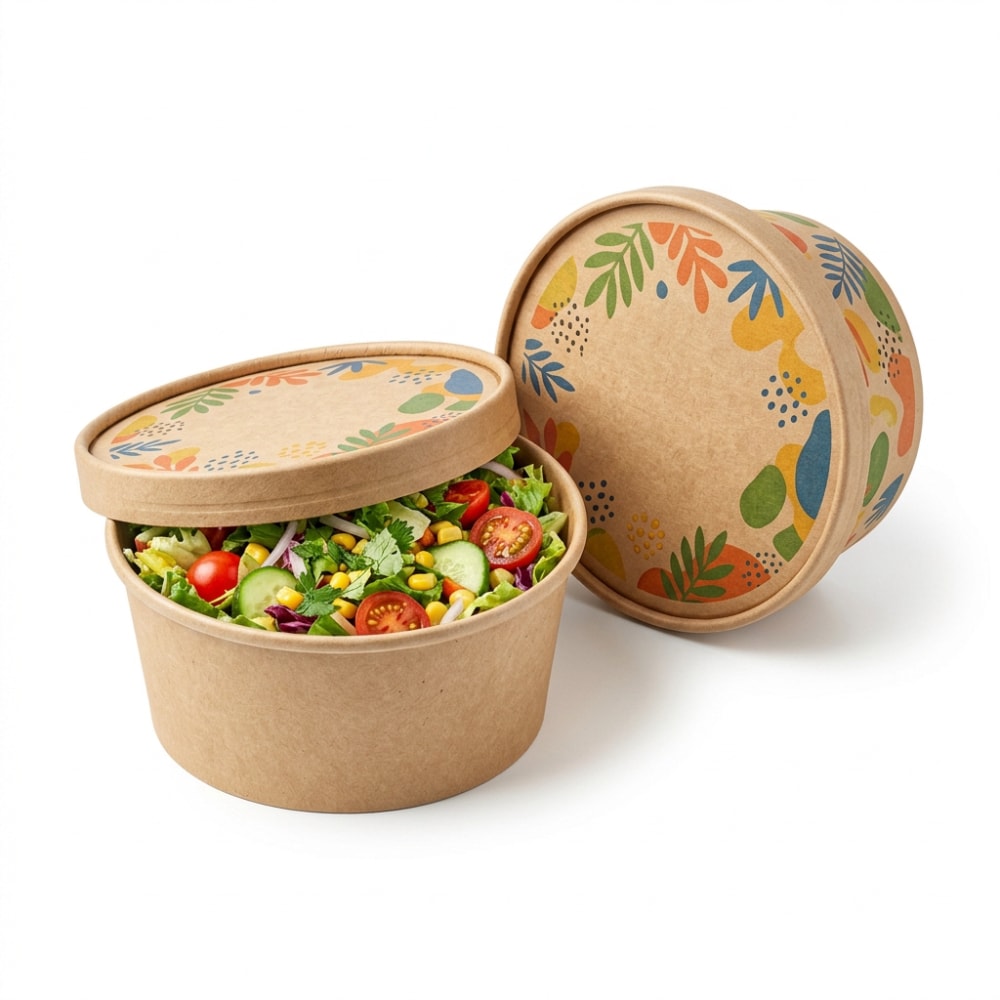
United States Guide to Wholesale Custom Kraft Salad Bowls
For restaurant groups, salad chains, deli brands, grocery foodservice teams, and delivery-first concepts in the United States, custom kraft salad bowls wholesale is no longer a simple packaging purchase. It is a brand, operations, compliance, and margin decision. Buyers now expect bowls that hold cold greens, warm grains, dressings, proteins, and sauces without leaking, softening, or losing visual appeal during dine-in, pickup, and last-mile delivery. At the same time, marketing teams want custom printing, procurement teams want reliable lead times, and operations teams want stackability and lid fit consistency across multiple states.The best wholesale strategy is to align bowl size, paper weight, coating, lid type, branding method, and order volume with the actual service model. A fast-casual chain in Los Angeles may prioritize photo-ready print and delivery stability. A university dining contractor in Chicago may care more about cost control and high-volume replenishment. A regional organic brand in Seattle may focus on compostable or low-plastic positioning. In all three cases, a well-developed custom kraft bowl program improves food presentation, reduces complaints, protects brand standards, and simplifies procurement.This guide explains how to buy custom kraft salad bowls wholesale for the U.S. market, how OEM and ODM differ, how design moves from sketch to sample, what MOQ and cost structures usually look like, what quality and IP terms should be locked into supply agreements, and how import buyers can compare overseas factories with local U.S. distributors. It also includes charts, data tables, and a practical case study relevant to multi-unit foodservice expansion.Custom kraft salad bowls wholesale is a strong fit for U.S. chains when the buyer needs consistent packaging across locations, better branding, lower unit economics at scale, and dependable bowl performance for salads, grain bowls, poke, fruit, pasta salads, and mixed hot-cold meals. The fastest route is to define the bowl capacity, lid type, barrier requirement, print coverage, annual forecast, and target landed cost before sampling begins.For most U.S. buyers, the winning specification includes six core points: food-safe kraft paperboard, grease and moisture resistance, leak-resistant rim structure, secure lid compatibility, high print clarity, and shipping-ready case packs. Common capacities include 500ml, 750ml, 1000ml, 1090ml, 1300ml, and 1500ml. The most requested lid options are PET clear lids for merchandising visibility, PP lids for heat tolerance, and compostable alternatives for sustainability-led programs.Chain operators usually choose custom kraft bowls for five reasons:They create a stronger shelf and delivery presentation than plain stock containers. They support menu expansion into salads, power bowls, fruit, and premium cold meals. They reduce brand inconsistency across franchisees and regions. They improve operational speed when lids, bowls, and case quantities are standardized. They can lower total packaging cost when purchased at wholesale volumes with direct factory planning. In the United States, buyers in New York, Los Angeles, Chicago, Houston, Miami, Atlanta, Dallas, and San Francisco often evaluate not only unit price but also lead time reliability through major gateways such as the Port of Los Angeles, Port of Long Beach, Port of New York and New Jersey, Port of Savannah, and Port of Houston. For import programs, transit planning matters as much as bowl design.If you are evaluating product options, a practical place to start is by reviewing a broad packaging range such as custom food packaging products and then narrowing the selection based on salad menu type, service temperature, lid preference, and distribution model.Use CaseRecommended CapacityTypical LidBarrier NeedPrint PriorityBuyer GoalSide salad500mlPET flat lidMediumMediumLow cost and stackabilitySingle meal salad750mlPET dome lidHighHighVisual appeal and portion controlProtein bowl1000mlPET or PP lidHighHighLeak resistance and secure travelFamily salad1300mlClear high-profile lidHighMediumDelivery performanceFruit and yogurt bowl750mlPET anti-fog lidMediumHighMerchandising visibilityWarm grain salad1000ml to 1090mlPP lidHighMediumHeat tolerance and structureThe table above shows why there is no single best bowl. The right wholesale program depends on menu architecture and logistics. A low-cost side salad bowl may fail if used for a sauce-heavy grain bowl, while an oversized premium bowl can erode margins for a basic lunch combo.The U.S. market opportunity for custom kraft salad bowls wholesale in 2026 is supported by three converging trends: sustained growth in fresh prepared foods, higher packaging expectations from delivery and pickup customers, and tighter scrutiny around sustainable packaging claims. Salad bowls are no longer limited to lettuce-based meals. They now support rice bowls, burrito bowls, poke, Mediterranean meals, fruit mixes, pasta salads, and meal-prep subscriptions. This broadens total demand well beyond traditional salad chains.Fast-casual brands, supermarket prepared-food departments, stadium concessions, airports, hospitals, universities, and convenience retail are all pushing more bowl-format meals. In U.S. trade hubs such as Chicago, Dallas, Atlanta, and Southern California, the bowl format works because it supports speed, visibility, and flexible menu assembly. As labor costs remain high, operators prefer packaging that is easy to fill, stack, label, and hand to delivery drivers without rework.By 2026, buyers should expect sustainability pressure to become more practical and less slogan-driven. Municipal and state-level policies, corporate ESG requirements, and consumer skepticism about greenwashing are likely to push more buyers to ask direct questions about paper sourcing, compostability claims, plastic content, recyclability pathways, and food-contact compliance. This does not mean every chain will move to the same material. It means documentation and fit-for-purpose design will matter more.var ctx1 = document.getElementById('lineMarketGrowth').getContext('2d');var chart1 = new Chart(ctx1, {type: 'line',data: {labels: ['2022','2023','2024','2025','2026','2027'],datasets: [{label: 'Estimated U.S. Demand Index for Custom Kraft Salad Bowls',data: [100,112,126,141,158,171],borderColor: 'rgb(75, 192, 192)',backgroundColor: 'rgba(75, 192, 192, 0.15)',fill: false,tension: 0.3}]},options: {responsive: true,maintainAspectRatio: false}});The growth line above reflects realistic demand expansion driven by chain standardization, private-label prepared food, and growing meal-bowl penetration. While exact market value varies by source and segment, the directional trend is clear: more U.S. operators need branded, durable, and scalable bowl packaging.Market DriverImpact on Bowl Demand2026 OutlookBest Packaging ResponseRisk if IgnoredWho Feels It MostGrowth in meal bowlsHigher volume across lunch and dinnerStrongMore capacities and lid choicesLost menu flexibilityFast-casual chainsDelivery and pickup habitsNeed for leak resistance and stackingStrongSecure lid fit and stronger rimsSpills and refundsDelivery-led brandsSustainability claims reviewMore documentation requestsHighFSC, compostability, and compliance filesCompliance exposureEnterprise buyersPrivate-label grocery mealsMore branded bowl formatsHighHigh-clarity printing and shelf visibilityWeak retail impactSupermarket chainsLabor efficiency focusPreference for easy-fill packagingHighStable stacking and uniform case packsSlower assemblyMulti-unit operatorsRegional menu diversificationNeed for multiple bowl sizesMedium to highSKU family planningOverbuying wrong sizesFranchise systemsBuying advice for 2026 is simple: do not treat bowls as a commodity line item. Use packaging to support menu mix, sustainability positioning, and distribution resilience. Buyers that build a structured specification now will be better placed to manage growth and policy change later.For U.S. buyers, one of the first strategic questions is whether to choose OEM or ODM. OEM means you bring the concept, specifications, artwork, and brand requirements, while the factory manufactures to your request. ODM means the supplier already has ready-made structures, sizes, and engineering templates that can be customized with your branding or slight modifications.OEM is usually best for larger chains, private-label programs, and distributors with clear technical requirements. It offers stronger differentiation, especially when you need a unique shape, exact rim profile, proprietary sizing, or a special lid fit. ODM works better for buyers who need speed, lower development costs, and lower launch risk. Many U.S. foodservice buyers actually use a hybrid model: start with an ODM structure, then move toward OEM refinements once volume is proven.The right choice depends on annual volume, urgency, budget, and brand distinctiveness. A 10-store healthy bowl concept in Austin or Denver may launch faster with ODM. A national grocery meal-prep partner supplying stores across the Midwest and East Coast may prefer OEM to lock in a signature package and avoid easy imitation.FactorOEMODMBest ForMain BenefitMain LimitationDesign controlHighMediumBrands with clear specsFull customizationLonger setupSpeed to marketModerateFastUrgent launchesShorter development cycleLess uniquenessTooling or setup complexityHigherLowerCost-sensitive pilotsEasier startStructural limitsMOQ flexibilityOften higherOften lowerTrial programsLower initial riskMay not optimize unit cost long termBrand differentiationStrongModerateCompetitive retail environmentsDistinct look and feelRequires more planningSupply chain repeatabilityStrong once approvedStrong for standard itemsScaling chainsPredictable replenishmentDependent on template availabilityAs a rule, if your team already knows the target bowl volume, food type, filling line process, and print architecture, OEM is likely to deliver better long-term returns. If you are still testing menu fit or region demand, ODM may be the smarter first step. A capable packaging partner should explain both options clearly rather than pushing a one-size-fits-all answer.var ctx2 = document.getElementById('barIndustryDemand').getContext('2d');var chart2 = new Chart(ctx2, {type: 'bar',data: {labels: ['Salad Chains','Supermarkets','Meal Prep','Universities','Cafes','C-Stores','Airports'],datasets: [{label: 'Estimated 2026 U.S. Demand Share by Segment',data: [88,74,69,57,51,46,39],backgroundColor: ['rgb(255, 99, 132)','rgb(54, 162, 235)','rgb(255, 206, 86)','rgb(75, 192, 192)','rgb(153, 102, 255)','rgb(255, 159, 64)','rgb(99, 255, 132)']}]},options: {responsive: true,maintainAspectRatio: false}});The bar chart highlights where custom kraft bowl demand is strongest. Salad chains remain the most obvious buyers, but supermarkets and meal-prep businesses are rising quickly because the bowl format works for branded grab-and-go programs.A successful custom kraft salad bowls wholesale project usually moves through six stages: requirement review, concept sketch, structural confirmation, artwork setup, sample production, and final validation. Problems happen when buyers skip details early. For example, a beautiful print layout may fail once the seam area or lid engagement line is considered. Likewise, a bowl that works for dry salads may not handle dressing cups, roasted vegetables, or protein-heavy meals.At the design stage, U.S. buyers should define product type and application first. Are you packaging Caesar salads, grain bowls, acai, fruit, deli sides, or mixed-temperature meals? Do you need a wide-mouth bowl for top-loading ingredients? Will labeling be done manually or by machine? Will the bowl be held in a refrigerated display in Boston, a high-turn lunch line in Manhattan, or a delivery rack in Phoenix? These details shape structure selection.Common product types include round kraft salad bowls, rolled-rim bowls, straight-wall bowls, window-lid meal bowls, and combo sets with separate lids. Applications include dine-in service, takeout, chilled retail display, catered boxed lunches, campus foodservice, office meal delivery, and grocery prepared-food shelves.Sample development should test four issues at minimum: filling speed, lid closure, resistance to oil and moisture, and print consistency after handling. If the concept is heading to large chains, test bowls with actual menu items and real holding times rather than only dry-pack tests.StageBuyer Input NeededSupplier DeliverableTypical RiskBest PracticeExpected OutputRequirement reviewMenu, volume, lid need, annual forecastFeasibility adviceIncomplete briefShare exact use casesClear specification directionSketch or conceptBrand look and dimensionsStructure proposalOverdesignBalance function and appearanceApproved concept pathArtwork setupLogo files and print zonesDieline and print proofDistortion near seamsUse production-ready artworkPrint-ready filesWhite sampleFunctional reviewUnprinted sampleIgnoring lid fitTest with real foodStructural approvalPrinted sampleColor approvalBrand sampleMismatch with Pantone intentReview under store lightingFinal visual approvalPilot productionPO and QC planTrial batchScale variationSet AQL and checkpoint rulesLaunch-ready production standardThe table shows why sketch-to-sample is not merely a design exercise. It is a commercial validation process. Buyers that invest in a disciplined sample phase usually see fewer issues in full production, especially when managing franchise rollouts or distributor inventory.Consider a realistic U.S. scenario: a 26-location fast-casual chain based in Dallas plans to launch a new salad and grain bowl line across Texas, Oklahoma, and Tennessee. The brand currently uses generic white containers from mixed distributors, creating brand inconsistency and recurring lid complaints. Leadership wants one standardized custom kraft bowl family for dine-in, pickup, and third-party delivery.The chain chooses two bowl sizes, 750ml and 1000ml, with clear lids. It needs one-color outer branding, improved oil resistance, and enough stock for a phased launch. The buying team decides against a fully unique structure because timing matters more than novel shape. They select an ODM base with custom printing and slight reinforcement changes to improve delivery performance.Below is a practical launch timeline.WeekActionOwnerKey DecisionRisk PointOutput1Requirement call and spec alignmentProcurement and operationsChoose two bowl sizesToo many SKUsApproved brief2Dieline and artwork setupBrand teamOuter print layoutLogo crowdingArt proof3White sample reviewKitchen test teamLid fit and fill lineCondensation issuesStructural feedback4Printed sample reviewMarketing and QAColor acceptanceInk expectations mismatchFinal sample approval5 to 6Pilot productionSupplier and QACase pack and barcodeCarton labeling errorsFirst batch complete7 to 10Ocean transit and inbound planningLogistics partnerPort routingArrival delayWarehouse receiptThe chain launches first in Dallas and Houston, then expands to Nashville and Oklahoma City. Within two months, average delivery complaint rates on bowl orders drop because the new lids fit more consistently and the bowl walls maintain shape better in transit. Social media imagery also improves because the kraft print creates a more natural, premium look.The lesson is not that every chain should choose ODM. The lesson is that launch timing, operational needs, and total landed cost should drive the program. A staged rollout often beats an overcomplicated packaging project.Branding on kraft salad bowls does more than display a logo. It affects shelf recognition, customer memory, social sharing, and perceived food quality. For U.S. restaurants and retailers, the bowl often appears in customer photos, office lunch setups, grocery coolers, and delivery handoffs. That means the surface area should be designed with purpose.Typical printing methods include flexographic printing for efficient wholesale runs and clean single- or multi-color branding. Buyers should ask about print area limitations, seam placement, minimum readable line thickness, and how kraft substrate tone affects color output. Dark kraft usually softens bright colors slightly, so a white underlayer or simplified palette may be needed depending on the final look required.Branding strategy should align with use case. A premium salad concept may use sparse typography and earthy tones. A supermarket private-label bowl may need larger nutritional identifier zones and stronger shelf contrast. A college foodservice operator may prioritize clear item labeling space over decorative printing.Good print design for bowls should consider six practical elements: readability at arm’s length, grease and condensation resistance, compatibility with stickers, scannability if barcodes are used, consistency across bowl sizes, and legal room for disposal or material messaging.var ctx3 = document.getElementById('areaTrendShift').getContext('2d');var chart3 = new Chart(ctx3, {type: 'line',data: {labels: ['2022','2023','2024','2025','2026','2027'],datasets: [{label: 'Shift Toward Branded and Sustainable Bowl Programs',data: [32,39,47,56,66,74],borderColor: 'rgb(75, 192, 192)',backgroundColor: 'rgba(75, 192, 192, 0.25)',fill: true,tension: 0.35}]},options: {responsive: true,maintainAspectRatio: false}});The area chart illustrates the steady move from generic commodity packaging toward branded, sustainability-conscious bowl programs. This trend is especially visible in coastal metros, health-focused chains, and premium prepared-food retail.When planning branding, buyers should also decide whether to standardize a family look across cups, bowls, boxes, and trays. A consistent packaging system improves recognition and can support cross-selling. If you are developing a broader custom program, it helps to discuss artwork and production support with a supplier that offers integrated packaging services such as custom packaging development and sampling.For serious U.S. importers and chain buyers, supply agreements should cover more than price and lead time. They should include intellectual property protection, quality standards, inspection rules, material specifications, and remedies for nonconformance. This is especially important when the bowl structure, artwork, or market positioning gives the brand a competitive advantage.At minimum, agreements should define artwork ownership, printing file confidentiality, mold or tooling ownership if applicable, exclusivity terms if negotiated, material requirements, food-contact compliance, packaging dimensions, defect tolerance, and claim handling procedures. Do not assume these points are understood. Put them in writing.Quality control should include incoming material checks, in-process controls, and final inspection for print accuracy, bowl shape, rim integrity, lid fit, leakage resistance, and carton marking. For the U.S. market, buyers commonly request documentation aligned with FDA food-contact expectations and may also ask for FSC, ISO 9001, EU framework compliance references, or compostability documentation depending on their program requirements.Technology capability matters here. A supplier with in-house printing, die-cutting, forming, and lab testing can usually control variation better than a fragmented trading arrangement. Climate-managed warehousing and structured production records also reduce the risk of print inconsistency and moisture-related material issues.Contract TopicWhy It MattersWhat to SpecifyCommon MistakeBuyer ProtectionPriorityArtwork ownershipPrevents unauthorized reuseFiles remain buyer propertyLeaving ownership vagueWritten IP clauseHighConfidentialityProtects launch plansNDA and restricted sharingAssuming verbal promises are enoughSigned confidentiality termsHighMaterial specificationEnsures food safety and performancePaper grade, coating, GSMOnly approving by appearanceDetailed spec sheetHighQuality toleranceDefines acceptable variationAQL, leak test, print limitsNo agreed defect thresholdsInspection protocolHighCorrective actionSpeeds issue resolutionReplacement, credit, timelineUndefined claim methodFormal complaint clauseMedium to highExclusivity scopeProtects custom differentiationMarket, term, SKU scopeOverbroad expectationsSpecific exclusivity languageMediumIn 2026, quality agreements will likely become even more data-driven. Buyers increasingly want batch traceability, digital approval records, test reports, and clearer proof of sustainable sourcing. Technology and policy are moving in the same direction: less ambiguity, more documentation.MOQ and cost planning is where many bowl projects succeed or fail. The lowest unit price does not always produce the lowest total cost. U.S. buyers should evaluate tooling or setup expense, sampling fees, carton quantities, shipping configuration, warehouse handling, damage risk, and reorder flexibility. A bowl that is a fraction cheaper per unit can become more expensive after inbound logistics, overstock, or poor fit leads to returns and waste.MOQs vary depending on whether the project is stock, ODM, or OEM; how many colors are printed; whether a special lid is required; and how many sizes are ordered together. Buyers often achieve better economics by consolidating multiple SKUs or planning quarterly demand instead of buying only one month at a time.Important cost drivers include paperboard weight, barrier coating, lid material, print coverage, production complexity, carton design, and freight mode. Ocean freight remains the most common import route for volume programs arriving via Los Angeles/Long Beach, Savannah, New York/New Jersey, or Houston, then moving inland to regional distribution centers.Cost ElementWhat Changes ItLow-Cost ScenarioHigher-Cost ScenarioHow to OptimizeBuyer NoteBowl materialGSM and coatingStandard cold-food barrierHeavy-duty leak resistanceMatch barrier to menuDo not over-specifyLid typePET, PP, compostableStandard PET flat lidSpecial dome or compostable lidUse common lid familiesLid cost can swing totalsPrintingColors and coverageOne-color logoFull-wrap multi-color printSimplify artworkKraft tone affects color resultMOQSKU count and setupStandard ODM sizeUnique OEM structureBundle sizes in one forecastMOQ impacts cash flowFreightVolume and routePlanned ocean shipmentUrgent split air shipmentForecast earlierTransit strategy mattersWarehouse handlingCarton dimensionsEfficient stackable cartonsAwkward mixed case packsAlign case packs to DC needsOften overlookedAs a rough buying principle, small trial orders are useful for validation but rarely represent the best unit cost. Once the bowl specification is stable, annual or semi-annual planning typically unlocks stronger pricing and more reliable production windows. Buyers should request a clear landed-cost model rather than comparing only ex-factory price.var ctx4 = document.getElementById('comparisonSupplier').getContext('2d');var chart4 = new Chart(ctx4, {type: 'bar',data: {labels: ['Unit Cost Control','Customization Depth','Lead Time Stability','Documentation','Production Scale','Brand Support'],datasets: [{label: 'Direct Factory Program',data: [91,89,82,87,90,84],backgroundColor: 'rgb(153, 102, 255)'},{label: 'Small Local Reseller Program',data: [68,54,76,58,49,61],backgroundColor: 'rgb(255, 159, 64)'}]},options: {responsive: true,maintainAspectRatio: false}});The comparison chart explains why many U.S. chains use direct factory relationships for standardized packaging while still keeping local distributors for emergency stock support. Local suppliers can be valuable for quick replenishment, but direct manufacturing often wins on customization depth, documentation, and long-run cost control.That said, local suppliers still have a role. They can help with short-run top-ups, warehousing, and regional logistics, especially for operators with unpredictable demand. The smartest strategy is often mixed sourcing: direct factory for programmed volume, domestic backup for continuity.Shandong Fude Packaging Co., Ltd. supports global foodservice buyers with a factory-direct model designed for reliable custom packaging development. For U.S. buyers looking at custom kraft salad bowls wholesale, the company’s strength is not just product range but the ability to connect design, manufacturing, and service into one workflow.On the technology side, Fude operates integrated processes that include flexographic printing, die-cutting, forming, and quality testing. That matters because custom bowls are sensitive to print placement, rim consistency, and coating performance. With internal technical control, sample refinement tends to move faster and production variation is easier to manage. The company also works with food-grade materials and offers options relevant to sustainability-focused programs, including paper from responsible sources and selected compostable solutions where appropriate for the application.On the manufacturing side, Fude runs a modern production base in Shandong with automated lines and organized warehousing support. The company has more than two decades of experience in disposable food-grade paper and plastic packaging for restaurants, chains, takeaway operators, wholesalers, and distributors across multiple regions. This scale is useful for U.S. customers who need dependable repeatability across large orders rather than one-off runs. The factory’s broader range also helps brands build consistent packaging families beyond salad bowls, such as lunch boxes, noodle bowls, deli containers, trays, dessert bowls, and matching custom cup programs. Buyers who want to understand the production background can review the company overview.On the service side, Fude provides requirement review, artwork preparation support, sampling, production coordination, and delivery planning. Instead of asking buyers to solve everything alone, the company structures projects around a practical sequence: clarify requirements, confirm design and sample, then move into production and shipment. For U.S. importers, this approach helps reduce confusion around MOQ, artwork readiness, and lead time planning. If your team wants to discuss a project directly, you can start through the contact page for wholesale packaging inquiries.For chains and distributors, the value of a supplier relationship is not only the bowl itself. It is the ability to maintain quality, timing, and communication as volumes grow. That is why the strongest packaging programs are usually built with suppliers that combine technical capability, manufacturing stability, and service responsiveness.What sizes are most common for U.S. salad chains?The most common sizes are 500ml, 750ml, 1000ml, and 1300ml. The right size depends on whether the bowl is used for sides, full meals, grain bowls, fruit, or family portions.Can kraft salad bowls handle both cold and warm foods?Yes, but the specification must match the application. Cold salads, warm grains, and sauce-heavy bowls may need different coatings or lid materials.Is OEM always better than ODM?No. OEM is better for strong differentiation and exact specs. ODM is often better for faster launch, lower development complexity, and smaller pilot programs.What is a realistic lead time?Lead time depends on print complexity, sample approval, and order volume. Many projects move from approved sample to production in a practical wholesale window, while transit time to the United States must also be planned carefully.What documents should U.S. buyers ask for?Ask for food-contact compliance documentation, material specifications, print and size tolerances, sustainability certifications if relevant, and inspection or test records.How can I reduce cost without hurting quality?Standardize lid families, avoid unnecessary print complexity, forecast larger combined volumes, and match barrier levels to actual menu use instead of overengineering every bowl.Should I buy from a local supplier or import directly?It depends on your volume and timing. Local suppliers are helpful for speed and emergency stock. Direct factory sourcing is often stronger for customized programs, stable volume, and long-term cost control.What trends will shape 2026?Expect growth in meal-bowl formats, stronger demand for packaging documentation, continued focus on sustainability claims, and more use of digital forecasting and structured quality data in supplier management.How do I begin a custom program?Start with six items: food type, bowl size, lid type, print needs, annual forecast, and delivery method. With those details, a supplier can recommend whether a standard structure, ODM modification, or OEM project is best.In summary, custom kraft salad bowls wholesale in the United States is a meaningful market opportunity when buyers approach it strategically. The winning program is not simply the cheapest bowl. It is the bowl system that protects food quality, supports branding, meets compliance expectations, fits logistics, and scales with your business. -

Custom Meal Box Manufacturing Guide for U.S. Brands
For food brands in the United States, OEM multi compartment meal boxes are no longer a niche packaging option. They are now a practical tool for portion control, meal presentation, delivery durability, and private-label growth. Whether you run a fast-casual chain in Chicago, a meal-prep startup in Dallas, a supermarket deli program in Los Angeles, or a catering concept serving New York City offices, the right compartment box can improve food separation, reduce leakage claims, support sustainability goals, and make your brand more recognizable on shelves and at doorsteps.In simple terms, OEM means your packaging is manufactured to your specifications: structure, dimensions, coating, paper weight, lid style, print design, and branding details. This differs from buying generic stock boxes because an OEM program lets you match packaging to real menu needs such as hot entrees with sides, salad-and-protein combinations, premium bento meals, airline-style portions, or retail chilled meal kits. In the U.S. market, demand is rising because consumers expect convenience, operators need delivery-safe packaging, and buyers increasingly care about recyclable, compostable, and responsibly sourced materials.This guide explains the U.S. opportunity for custom compartment meal boxes, compares OEM and ODM paths, walks through the design process from sketch to sample, outlines timelines, printing choices, intellectual property and quality agreements, MOQ and cost planning, and what a dependable packaging partner should offer. If you want to review available formats first, you can browse food packaging product options before building a custom specification.OEM multi compartment meal boxes are custom-made food packaging products built for a brand’s exact menu, operational, and compliance requirements. In the United States, they are especially suitable for meal-prep services, QSR chains, deli counters, institutional catering, convenience foods, and delivery-first restaurants. The biggest buying advantages are better fit for your food, stronger branding, improved product consistency, and more control over materials, coatings, and sustainability positioning.If you are a U.S. buyer, the best opportunity usually comes when your business has one or more of these conditions:You serve meals with two or three components that must stay separated. You need custom sizing to reduce food movement during transport. You want printed packaging for franchise consistency or retail display. You must comply with food-contact, sourcing, and eco-material standards. You need a supplier able to support both trial runs and scale-up orders. For most brands, an OEM project is worthwhile when annual packaging volume is high enough to justify custom tooling, printing setup, or dedicated inventory planning. But even mid-size U.S. operators can benefit if they are replacing multiple stock SKUs with one purpose-built compartment box.Business TypeTypical UseWhy Compartments MatterBest Material DirectionBranding NeedOEM FitMeal-prep companyWeekly subscription mealsSeparates protein, carbs, vegetablesKraft paper with PE or PLA optionHighVery strongFast-casual chainRice bowls and combo platesMaintains presentation in deliveryRigid paperboard with grease resistanceHighVery strongSupermarket deliGrab-and-go chilled mealsSupports portion control and displayWindow-lid or sealed box formatsMedium to highStrongCatererCorporate lunch packsKeeps items organized for serviceStackable lunch box structureMediumStrongSchool or hospital supplierInstitutional meal traysImproves serving consistencyFunctional, durable food-grade boardLow to mediumGoodFood truck groupPortable combo mealsPrevents sogginess and mixingLeak-resistant kraft formatsMediumGoodThe table above shows why the same packaging category serves very different industries. The core value is not simply “a box with sections”; it is a packaging system that protects food quality, helps labor efficiency, and supports a stronger selling image.The U.S. market outlook through 2026 is favorable. Several forces are driving demand for OEM multi compartment meal boxes: rising off-premise dining, meal-prep subscriptions, growth in fresh prepared foods at retail, and sustainability pressure from states and municipalities. Food operators in California, Texas, Florida, Illinois, and the Northeast corridor are looking for packaging that balances food performance with greener materials and clearer branding.By 2026, three trends are likely to shape purchasing decisions:Material transition: more buyers will compare PE-lined paper, PLA-coated paper, and alternative barrier technologies as local waste rules evolve. Operational optimization: brands will choose custom compartment depth and lid closure based on delivery distance, reheating needs, and stackability in fulfillment centers. Visual differentiation: stronger print quality, natural kraft aesthetics, and window-lid concepts will matter more in retail-ready meal programs. U.S. trade hubs also matter. Buyers importing through the ports of Los Angeles and Long Beach often prioritize reliable lead time and container efficiency. East Coast operators shipping through Savannah, Newark, or Norfolk often focus on replenishment timing and transit risk. Midwest brands distributing via Chicago or Kansas City may place extra value on warehousing coordination and carton dimensions that fit domestic pallet networks.var ctxMarket = document.getElementById('lineChartMarket').getContext('2d');var lineChartMarket = new Chart(ctxMarket, { type: 'line', data: { labels: ['2022', '2023', '2024', '2025', '2026'], datasets: [{ label: 'Estimated U.S. Demand Index', data: [78, 86, 95, 107, 121], borderColor: 'rgb(75, 192, 192)', backgroundColor: 'rgba(75, 192, 192, 0.12)', fill: false, tension: 0.25 }] }, options: { responsive: true, maintainAspectRatio: false }});The line chart illustrates a realistic growth pattern rather than a speculative spike. Market demand is supported by restaurants adding premium lunch formats, supermarket chains expanding fresh food sections, and direct-to-consumer meal brands scaling from local to regional shipping.U.S. Segment2024 Demand Level2026 OutlookMain DriverPreferred Box StyleBuying PriorityMeal-prep subscriptionsHighVery highRepeat weekly orders2- and 3-compartment sealed boxesConsistencyFast-casual deliveryVery highVery highOff-premise growthLeak-resistant hot meal boxesTransport durabilitySupermarket prepared foodsHighHighGrab-and-go convenienceWindow-lid and chilled meal packsShelf appealCorporate cateringMediumHighOffice return patternsStackable lunch boxesEase of serviceInstitutional foodserviceMediumMedium to highStandardized portionsSimple multi-section boxesCost controlConvenience retailMediumHighFresh food expansionCompact retail meal boxesDisplay and sealingFor U.S. food brands, the opportunity is strongest where packaging affects repeat purchase behavior. A customer may not remember the paper weight of a box, but they remember whether fries stayed crisp, sauce leaked, or vegetables were soggy by delivery time. That memory influences ratings and reorder rates.Technology will move toward better water- and oil-resistant barriers with lower environmental burden. Policy will continue pushing buyers to document food-contact safety, recycled content claims, and responsible sourcing. Sustainability will move from broad messaging to measurable proof, including FSC paper sourcing, compostability certifications where appropriate, and transparent statements about what infrastructure actually exists in the United States for disposal.var ctxArea = document.getElementById('areaTrendShift').getContext('2d');var areaTrendShift = new Chart(ctxArea, { type: 'line', data: { labels: ['2022', '2023', '2024', '2025', '2026'], datasets: [{ label: 'Share of Buyers Prioritizing Eco-Specs', data: [32, 39, 47, 55, 64], fill: true, borderColor: 'rgb(34, 139, 34)', backgroundColor: 'rgba(34, 139, 34, 0.2)', tension: 0.25 }] }, options: { responsive: true, maintainAspectRatio: false }});The area chart shows how eco-specification priorities are becoming central rather than optional. In 2026, many U.S. buyers will ask not only “Can you make it?” but also “Can you document it?”U.S. buyers often ask whether OEM or ODM is better. The answer depends on how much control you want over packaging performance and how quickly you need to launch.OEM is best when you already know your menu requirements and want your own dimensions, branding, board thickness, barrier performance, and structure. ODM is faster when you prefer an existing factory design that can be lightly customized, usually with logo printing or small format changes.FactorOEMODMBest ForRisk LevelTypical ResultStructure controlFullLimitedCustom menusMediumPerfect fit when well-managedSpeed to launchModerateFastUrgent rolloutsLowShorter sampling cycleBrand uniquenessHighMediumPremium brandsLowDistinct packaging identityTooling needOften requiredUsually no new toolingVolume programsMediumBetter long-term efficiencyUnit cost optimizationBetter at scaleGood for small runsGrowth brandsMediumLower cost after ramp-upMenu fit accuracyHighModerateSeparated meal conceptsLowReduced food movement and wasteThe table shows why many U.S. brands start with ODM for testing and then shift to OEM once sales data confirms the format. For example, a deli chain in the Northeast might use an existing three-compartment kraft box for a seasonal launch, then move to a custom-size OEM version once store-level sales prove demand.If you are comparing suppliers, the key questions are:Can the supplier propose the right compartment geometry for your food? Can they support custom printing registration and color consistency? Do they understand FDA and broader export compliance expectations? Can they document material specs, coating type, and performance tests? Will they support repeat orders with stable dimensions and lead times? A capable supplier should also explain tradeoffs honestly. For instance, a deeper compartment can improve portion containment but may reduce carton packing efficiency. A stronger coating can improve leak resistance but may affect sustainability claims depending on disposal pathways. That is where experienced project support matters more than just quoted price.The design journey from concept sketch to approved production sample is where successful OEM projects are won or lost. Many U.S. buyers focus first on printing, but structure comes first. A box that looks excellent yet fails in microwave use, stackability, or sauce retention is expensive branding with poor operational value.A typical design workflow includes six stages:Requirement intake: food type, serving temperature, hold time, transport distance, and filling process. Structural concept: compartment count, depth, corners, lid type, and locking mechanism. Material selection: paper grade, coating, grease resistance, compostable or traditional barrier options. Artwork setup: dieline, logo placement, legal marks, batch coding area, and print colors. Prototype sample: physical forming test with your food. Pre-production revision: fit corrections before mass production. In practice, U.S. brands often underestimate operational details. A burrito bowl concept in Austin may need a different compartment ratio than a grilled salmon lunch sold in Boston. A box for chilled meals in Seattle may require a different lid clarity or moisture resistance than a hot deli combo sold in Atlanta. Good OEM design is always use-case specific.Design ItemWhat to DefineWhy It MattersCommon U.S. Use CasePotential Problem if IgnoredRecommended CheckCompartment count2, 3, or more sectionsMatches menu layoutProtein + sides mealsFood mixingPortion simulationDepthShallow or deep cavitiesControls spill and volumeRice or pasta dishesOverflow or collapseFill test by weightBoard thicknessPaper GSM and rigidityAffects stacking and feelDelivery combosBending during transportCompression testCoatingPE, PLA, or alternative barrierLeak and grease resistanceSaucy entreesSeepageHot oil testLid structureFold-over, separate lid, windowDisplay and closure securityDeli or retail mealsPoor sealDrop and tilt testPrint placementBrand area and legal text zonesSupports visibility and complianceChain restaurant packagingUnreadable logo or misprintMock-up reviewThe table above shows that every design element has a functional and commercial consequence. Sampling should never be limited to visual approval alone. It should include food loading, stacking in bags or cartons, short microwave testing if relevant, and a delivery simulation.When choosing a development partner, it helps to work with a manufacturer that combines technical, manufacturing, and service support. A useful overview of such capabilities can be found on custom packaging services, especially if you need artwork review, sample development, and order coordination in one workflow.Although “multi compartment meal box” sounds broad, the U.S. market usually clusters into a few practical types:Two-compartment lunch boxes for entrée plus side. Three-compartment bento-style paper boxes for balanced meals. Window-lid retail meal boxes for fresh prepared foods. Microwave-friendly takeaway boxes for reheating convenience. Grease-resistant combo meal boxes for fried or grilled foods. Premium kraft presentation boxes for healthy and upscale concepts. These formats serve industries including QSR, casual dining, travel catering, school lunch providers, supermarkets, cloud kitchens, wholesale distributors, and private-label prepared meal brands.Below is a realistic launch timeline for a U.S. brand introducing an OEM three-compartment paper meal box. Imagine a regional meal-prep business serving California, Arizona, and Nevada through refrigerated distribution and local last-mile delivery.WeekStageMain TaskBrand ResponsibilitySupplier ResponsibilityOutput1BriefingShare menu specs and target priceProvide requirementsReview feasibilityProject scope2Structural proposalConfirm size and compartmentsApprove conceptCreate dieline and spec draftPreliminary drawing3Artwork setupBrand graphics and print zonesSend logo filesPrepare print proofArtwork approval file4Sample makingProduce plain or printed sampleTest with real foodShip samplesPhysical sample set5RevisionAdjust fit, depth, or closureFeedback and signoffRefine designFinal production sample6-8Mass productionManufacture orderDeposit and schedulePrinting, forming, QC, packingFinished goodsThis kind of schedule is realistic when decisions are made quickly and artwork is production-ready. Delays most often come from incomplete specifications, repeated logo changes, or a lack of real food testing during sample review.Now consider what happens after production. U.S. importers may bring containers through Long Beach for West Coast replenishment or Savannah for Southeast and East Coast distribution. If your company distributes nationally, launch planning should also consider inland transit to Chicago, Dallas, or New Jersey warehouses. Packaging projects fail less often because of poor manufacturing than because of poor timing between production, ocean freight, customs clearance, and domestic receiving windows.var ctxBar = document.getElementById('barIndustryDemand').getContext('2d');var barIndustryDemand = new Chart(ctxBar, { type: 'bar', data: { labels: ['Meal Prep', 'Fast Casual', 'Supermarket Deli', 'Catering', 'Institutions', 'Convenience Retail'], datasets: [{ label: 'Demand Score in the U.S.', data: [92, 96, 83, 68, 61, 74], backgroundColor: [ 'rgb(255, 99, 132)', 'rgb(54, 162, 235)', 'rgb(255, 206, 86)', 'rgb(75, 192, 192)', 'rgb(153, 102, 255)', 'rgb(255, 159, 64)' ] }] }, options: { responsive: true, maintainAspectRatio: false }});The bar chart helps explain launch priority by industry. Meal prep and fast casual tend to create the fastest ROI because packaging performance directly affects repeat purchases and delivery reviews.In a typical U.S. rollout, the brand first used a generic clamshell. Customers complained that sauce spread into side dishes and vegetables became soggy. After switching to a custom three-compartment kraft paper box with improved depth ratios and leak-resistant coating, customer feedback improved, refund claims dropped, and the brand gained a cleaner visual identity across Instagram content and store pickup shelves. That is the real value of OEM packaging: it turns packaging from a purchasing expense into a brand and operations asset.Printing matters because U.S. consumers often interact with packaging before the food itself. A meal box can function as a mini billboard in office lunchrooms, retail chillers, apartment lobbies, and delivery photos. For chains and growth brands, the box also becomes a consistency tool across locations.Common branding options include:One-color flexo printing for cost-efficient logo visibility. Multi-color branding for stronger retail presentation. Natural kraft background with dark ink for eco positioning. Seasonal campaigns or limited-run printed graphics. Window features to showcase freshness and portioning. Branding should be balanced with production practicality. Fine lines, very dark flood coverage, and edge-to-fold artwork can increase variation risk. Experienced manufacturers will advise where to place logos, nutritional callouts, disposal instructions, and batch coding without compromising forming quality.For U.S. retail programs, consider leaving space for stickers or secondary labels. Many supermarket meal lines in cities like Philadelphia, Houston, and San Diego use a preprinted structural box plus an applied product label for ingredients, date coding, and barcode information.Printing OptionVisual ImpactCost LevelBest UseLead Time ImpactOperational NoteSingle-color flexoClean and simpleLowFoodservice chainsLowGood for logo repeatabilityTwo-color flexoBetter brand distinctionLow to mediumRegional restaurant groupsLowBalanced choiceFull graphic printHigh shelf appealMedium to highRetail meal brandsMediumNeeds artwork precisionKraft with minimal inkNatural eco lookLow to mediumOrganic or healthy conceptsLowPopular in the U.S.Window-lid integrationHigh product visibilityMediumDeli and chilled mealsMediumCheck condensation behaviorSticker-ready blank areaFlexible SKU managementLowMulti-menu programsLowIdeal for changing labelsGood branding is not only visual. It should support your message about food safety, convenience, and sustainability. If you claim compostability, recyclability, or responsibly sourced paper, those claims should align with the actual specification and local disposal context.When U.S. brands buy custom packaging internationally, they should protect both their intellectual property and their quality expectations. The right commercial agreements reduce risk and improve long-term consistency.Key IP and quality points include:Artwork ownership and use restrictions. Confidentiality regarding custom dimensions and brand files. Approved sample retention as the quality reference standard. Material specification sheets and food-contact declarations. AQL or defined inspection criteria before shipment. Clear policy for print variation, dimensional tolerance, and claim handling. For U.S. importers, quality control should go beyond a simple visual inspection. Custom compartment boxes should be checked for forming consistency, bond strength, grease resistance, carton count accuracy, and pallet or case packing stability. A box can pass appearance checks but still fail when hot food sits in it for 30 minutes during delivery.This is where supplier capabilities matter. Strong technological capability means access to material testing, print control, forming know-how, and quality labs. Strong manufacturing capability means automated lines, controlled die-cutting and forming, and orderly warehousing that protects cartons from moisture. Strong service capability means sample support, responsive communication, clear timelines, and practical problem solving. You can learn more about one manufacturer’s background at the company overview page.A supplier serving U.S. food brands should also understand documents often requested by buyers or distributors, such as FDA-related food-contact compliance information, ISO-driven quality management references, FSC sourcing documentation, and where relevant, compostability certificates for selected materials.var ctxComp = document.getElementById('comparisonSupplierChart').getContext('2d');var comparisonSupplierChart = new Chart(ctxComp, { type: 'bar', data: { labels: ['Price Stability', 'Print Quality', 'Lead Time', 'Compliance Docs', 'OEM Flexibility', 'Service Response'], datasets: [{ label: 'Ideal Supplier Score', data: [85, 92, 88, 95, 90, 93], backgroundColor: 'rgb(153, 102, 255)' }] }, options: { responsive: true, maintainAspectRatio: false }});The comparison chart shows what serious U.S. buyers should evaluate. The cheapest source is rarely the best source if it fails on documentation, consistency, or launch support.Ask for signed approval on artwork, dimensions, material type, coating type, carton quantity, and packing method. Keep an approved sample on both sides. Define what level of print shift, edge cracking, or forming inconsistency is acceptable. If you are developing a unique compartment pattern or branded retail format, include confidentiality language before detailed design sharing.MOQ and pricing depend on structure complexity, print colors, board grade, coating type, and whether you need new tooling. U.S. buyers should think about cost in layers rather than as a single number. Unit price matters, but so do shipping efficiency, damage rates, printing waste, and whether the box reduces food complaints or operational labor.Typical cost drivers include:Custom die and tooling requirements Paper weight and material grade Barrier coating choice Number of print colors Order volume and reorder frequency Packing method and export carton design Cost FactorLow-Cost RangeHigher-Cost RangeWhat Raises CostWhat Lowers CostU.S. Buyer TipStructureStandard 2-compartmentCustom 3+ compartmentComplex folds and deeper sectionsUse proven geometryOnly customize where neededPrinting1 colorMulti-color full printLarge coverage and tight registrationSimple layoutFocus ink on top visibility areaMaterialStandard food-grade boardHeavier or specialty eco materialHigher GSM or premium barrierMatch spec to menuAvoid overengineeringMOQHigher per-unitLower per-unit at scaleSmall runsForecasted repeat ordersConsolidate SKUsFreightContainer efficientAir or urgent split shipmentsRush timingAdvance planningAlign with port scheduleSamplingBasic sampleMulti-round printed sampleRepeated changesClear brief upfrontTest food earlyU.S. buyers often ask what MOQ is reasonable. There is no universal answer, but the right MOQ is one that allows efficient manufacturing while matching your sales rhythm. If you operate in multiple states, a larger order can reduce unit cost. If you are testing a new menu line in only a few stores, a more flexible MOQ may be worth the slightly higher price.Another important point is total landed cost. A seemingly cheaper box may require more storage space, perform worse in delivery, or generate more customer complaints. Buyers in high-rent markets like San Francisco, Manhattan, or Miami should evaluate cubic efficiency and warehouse turnover, not just unit price.Before requesting a quote, prepare these details:Exact food application and temperature range Needed compartment count and fill weights Whether microwave use is expected Delivery or shelf-life scenario Printing requirement and artwork readiness Annual forecast and preferred shipping schedule The clearer your brief, the more accurate your cost and MOQ proposal will be.Shandong Fude Packaging Co., Ltd. works with global foodservice and food retail customers that need practical, brand-ready disposable packaging. For U.S. buyers considering OEM multi compartment meal boxes, the company’s value is best understood through three areas: technology, manufacturing, and service.Fude has built its business around packaging engineering rather than simple trading. Its product development covers paper and selected plastic food packaging with attention to leak resistance, grease control, stackability, print compatibility, and eco-material options. The company supports custom structures such as kraft and white lunch boxes, trays, bento-style meal boxes, bowls, cups, and formats with window lids or multiple compartments. This matters for U.S. customers because a packaging program often needs coordinated SKUs rather than a single box type. The company also supports flexographic printing, structural adaptation, and pre-production sample review, helping buyers move from concept to manufacturable design.The company operates from a modern 30,000 square meter factory in Shandong and has more than two decades of industry experience. Its production setup includes automated lines, die-cutting, forming, printing, quality inspection, and warehousing support. For U.S. buyers, these capabilities matter because custom meal boxes require stable forming quality, repeatable dimensions, and dependable order output. Fude serves clients across more than 35 countries and supports a broad range of food packaging categories for restaurants, chains, takeaway brands, wholesalers, and distributors. The ability to manage both standard production and customized private-label orders is especially relevant for growing U.S. food brands that need consistency as they scale.Beyond manufacturing, Fude provides packaging selection support, artwork preparation assistance, sampling, order coordination, and delivery planning. Its process is straightforward: requirement review, design and sample confirmation, then production and shipment. Lead times commonly fall in the 7 to 15 day range depending on order type, which can be useful for both trial orders and ongoing wholesale supply. For U.S. businesses that want a one-stop partner instead of managing separate design, sourcing, and production contacts, this service model can reduce delays and communication gaps. To discuss a custom project, buyers can use the contact page for packaging inquiries.What makes this relevant to the U.S. market is not only production scale but alignment with buyer expectations: food-grade materials, export experience, customization flexibility, and documented quality systems. For importers, distributors, and restaurant groups, those basics often matter as much as price.The largest users are meal-prep companies, fast-casual restaurant chains, supermarket deli departments, institutional foodservice providers, caterers, convenience retail brands, and cloud kitchens. They all need portion control and food separation.Yes, if the material, coating, and forming structure are chosen correctly. Hot rice dishes, grilled proteins, pasta, and sides are common uses. Always request testing for grease resistance, hold time, and closure performance.Kraft is often preferred for a natural, eco-forward brand image, while white board can provide stronger color contrast for printing. The best choice depends on your visual identity, menu style, and print goals.Some can, depending on material and construction. Microwave suitability should be confirmed during development, especially if the meal contains sauces or high oil content.If you need speed and lower development complexity, ODM can be a good first step. If you want exact dimensions, differentiated branding, and long-term cost optimization, OEM is usually the better investment.A straightforward program may take a few weeks from brief to approved sample, then additional time for production and shipping. Artwork delays and repeated design changes are the biggest causes of schedule extension.Ask for food-contact compliance documentation, material specs, quality management information, and any sustainability documents relevant to the chosen substrate, such as FSC or compostability certifications where applicable.The main reasons are shallow or poorly proportioned compartments, insufficient grease or leak resistance, weak fold structure, and not testing the box with actual food and transport conditions before mass production.Keep printing simple, avoid unnecessary structure changes, consolidate SKUs, and design around real menu needs instead of over-specifying every feature. A skilled supplier can help identify savings without sacrificing function.Provide dimensions if known, desired compartment count, food type, temperature, coating preference, estimated order quantity, branding needs, and destination market. Photos of current packaging and filled food are also helpful.In the U.S. market, OEM multi compartment meal boxes are becoming an important category because they solve practical problems while supporting modern brand expectations. The best buyers approach them not as simple disposables, but as engineered packaging tools that improve food quality, customer experience, and operational control. If your brand is preparing for 2026 growth, a well-designed OEM program can be a durable competitive advantage. -

United States Guide to Bulk Paper Fries Cup Supply
For food courts, stadium kiosks, fast-casual chains, and delivery-first snack brands in the United States, choosing the right paper fries cups bulk supplier is about more than price. Operators need grease resistance, stackability, steady lead times, food-safe materials, custom branding, and a supply plan that works across busy markets such as New York, Los Angeles, Chicago, Houston, Miami, Seattle, and Atlanta. This guide explains current demand, cup sizes, material choices, production methods, certifications, buying strategy, and how to compare domestic and overseas sourcing for high-volume fries packaging.If you need a reliable paper fries cups bulk supplier for the United States market, the best option is usually a manufacturer or factory-direct exporter that can provide consistent quality, food-grade certification, customization, and predictable lead times rather than a simple trading intermediary. For most buyers, the right bulk fries cup supplier should offer kraft and white paper options, standard serving sizes from snack portions to large sharing sizes, PE or PLA lining choices, OEM printing, and volume pricing tied to annual demand.In practice, U.S. buyers often compare three routes:Local distributors for small, urgent replenishment orders. Domestic converters for shorter transit and easier communication. Overseas factory-direct partners for lower unit cost and deeper customization. For large food courts, concession groups, regional chains, wholesalers, and importers, bulk purchasing works best when the supplier can support stable production, artwork control, palletized export packing, and compliance documentation. A dependable partner should also be able to discuss cup wall strength, anti-grease performance, sealing behavior in humid kitchens, carton loading, and lead times around peak periods such as summer sports events and holiday traffic.Buyers serving high-turnover urban centers like Dallas, Phoenix, San Diego, Philadelphia, and Boston should pay special attention to warehousing strategy. Freight timing from ports such as Los Angeles/Long Beach, New York/New Jersey, Savannah, Houston, and Seattle-Tacoma can influence total inventory cost more than the unit price difference between suppliers. That is why experienced purchasers treat paper fries cups bulk supplier selection as a supply-chain decision, not just a packaging purchase.The U.S. market for disposable fry and snack packaging remains strong because fries are one of the most universal quick-service menu items. Growth is supported by fast-casual restaurants, food halls, mall food courts, cinemas, amusement venues, sports concessions, campus dining, and delivery-oriented ghost kitchens. A paper fries cups bulk supplier serving the United States is benefiting from several overlapping trends: rising off-premise dining, a preference for grab-and-go formats, stronger branding needs, and the push toward fiber-based packaging.Demand is especially resilient in metropolitan trade corridors. Southern California remains a packaging-heavy zone because of high restaurant density and import logistics. The Northeast corridor, from Washington, D.C. to Boston, has dense demand from concession operators and chain outlets. Texas continues to expand with restaurant growth in Houston, Dallas-Fort Worth, Austin, and San Antonio. Florida drives seasonal volume through tourism, while the Midwest supports wholesale redistribution through hubs such as Chicago and Columbus.From a buyer perspective, demand is not just about fries. The same cup format is also used for onion rings, fried pickles, mozzarella sticks, churro bites, waffle fries, sweet potato fries, nuggets, popcorn chicken, and even cold snack presentation. That multi-use functionality helps justify larger annual contracts with a paper fries cups bulk supplier.Another key shift is the move from generic stock cups to printed branded cups. U.S. operators increasingly want packaging that photographs well for delivery apps and social media. This raises the value of flexographic printing quality, ink safety, and color consistency across repeat orders.U.S. Demand DriverWhy It MattersImpact on Bulk OrdersTypical Buyer TypeSeasonalityProcurement NoteFast-casual expansionFries remain a core side itemSteady repeat volumeRegional chainsLowAnnual contracts commonDelivery and takeoutPortable packaging is essentialHigher grease-resistant demandGhost kitchens, app brandsMediumNeed secure stackingFood courts and mallsQuick service and visual appealMixed-size demandCourt operatorsMediumPrinted branding usefulSports and entertainmentLarge crowds, quick servingsEvent-based volume spikesConcession companiesHighPre-season planning neededTourism marketsImpulse snack purchasesHigher summer demandBeach, resort, theme park vendorsHighShort replenishment windowsEco-packaging shiftMore interest in paper over foamSupplier screening intensifiesNational brands, universitiesLowCertifications become decisiveThe table above shows why a paper fries cups bulk supplier must be ready for both stable annual volume and short-term peaks. Buyers should map demand by channel, not only by total piece count.var ctxLineMarket = document.getElementById('lineChartMarket').getContext('2d');var lineChartMarket = new Chart(ctxLineMarket, {type: 'line',data: {labels: ['2021','2022','2023','2024','2025','2026'],datasets: [{label: 'Estimated U.S. Demand Index for Paper Fries Cups',data: [78, 84, 91, 98, 106, 115],borderColor: 'rgb(75, 192, 192)',backgroundColor: 'rgba(75, 192, 192, 0.15)',fill: false,tension: 0.3}]},options: {responsive: true,maintainAspectRatio: false}});The growth line reflects a realistic upward trend driven by replacement of less sustainable packaging, strong concession demand, and greater use of paper snack containers in delivery-oriented menus. Looking ahead to 2026, buyers should expect more pressure for recyclable fiber content disclosure, compostable alternatives in select states, and improved grease-barrier technology.Selecting the correct size is one of the most practical tasks when sourcing from a paper fries cups bulk supplier. U.S. buyers often think in serving application rather than milliliters alone. A snack stand may prefer a compact cup for portion control, while a food court combo meal may need a medium cup that holds fries and a sauce sachet. Stadium concessions sometimes choose a taller cup for speed of serving and easier stacking in prep lines.Common materials include bleached white board and natural kraft board. White cups emphasize vivid printing and a cleaner visual identity. Kraft cups communicate a rustic or eco-minded look and are popular with burger shops, street-food concepts, and organic or artisanal brands. Paper weight matters because fries release heat, moisture, and oil quickly. Thin board may soften during service, while oversized heavy board may raise unnecessary cost.Many buyers also request rolled rims or reinforced top edges to improve grip and keep the opening shape consistent. A strong side seam matters when cups are filled quickly during lunch rush. If your operation frequently serves loaded fries with cheese, chili, or sauces, ask for extra barrier performance and a board structure tested for short-term wet holding.Size CategoryTypical CapacityBest UseRecommended Board RangeCommon Material LookBuyer TipMini snack2 oz to 4 ozKids portions, samples210 to 250 gsmWhite or kraftGood for combo controlSmall6 ozStandard side fries230 to 280 gsmKraft popularMost versatile sizeMedium8 ozFood court meals250 to 300 gsmWhite for brandingUseful for chainsLarge12 ozSharing portions280 to 320 gsmWhite or kraftCheck rigidity carefullyLoaded fries cup12 oz to 16 ozFries with toppings300 to 340 gsmOften white printedNeed better barrierSpecialty scoop styleCustomSignature presentationVaries by designBrand drivenRequires tooling reviewThe table makes clear that size and board choice should match menu style, not just purchase price. If you buy a lower-cost cup that collapses under heat and grease, service speed and customer perception both suffer.Applications by industry also affect size selection. Cinemas often favor taller cups that can be held with one hand. Theme parks may choose medium cups for walk-around snacking. University dining programs often standardize two sizes to simplify inventory across campuses. Wholesale buyers supplying multiple restaurant types usually keep at least three core sizes in stock.var ctxBarIndustry = document.getElementById('barChartIndustry').getContext('2d');var barChartIndustry = new Chart(ctxBarIndustry, {type: 'bar',data: {labels: ['Food Courts','Fast Casual','Stadiums','Cinemas','Food Trucks','Delivery Brands'],datasets: [{label: 'Estimated U.S. Bulk Demand by Channel (%)',data: [24, 28, 14, 10, 8, 16],backgroundColor: ['#ff6384','#36a2eb','#ffcd56','#4bc0c0','#9966ff','#ff9f40']}]},options: {responsive: true,maintainAspectRatio: false}});The bar chart highlights why suppliers serving chain restaurants and food courts usually win the largest sustained volumes, while event venues create sharp but profitable peak windows.When evaluating a paper fries cups bulk supplier, lining choice is one of the most misunderstood issues. PE, or polyethylene, is still widely used because it provides dependable oil and moisture resistance at a competitive cost. PLA, or polylactic acid, is often selected when a buyer wants a compostable bioplastic-based lining under specific waste-handling conditions.For many United States buyers, PE remains the default due to cost efficiency, broad production familiarity, and reliable barrier behavior with hot fried foods. It is especially common for mainstream quick-service operations, distributors, and stadium concession programs where budget discipline is strict. PLA can be attractive to brands in sustainability-focused cities such as San Francisco, Portland, Seattle, Austin, and parts of the Northeast where packaging policy and consumer expectations are evolving faster.However, PLA should not be treated as a universal upgrade. Compostability claims depend on local infrastructure, disposal behavior, and certification. If the end user does not have access to suitable industrial composting channels, the practical advantage may be limited. On the other hand, brands with formal sustainability targets may still choose PLA to align with procurement policy and public commitments.FeaturePE LiningPLA LiningBest ForCost EffectKey WatchpointOil resistanceStrongStrongBoth mainstream fry usesPE lowerTest with loaded friesMoisture barrierVery stableGoodHigh-turnover servicePE lowerHumidity varies by climateCompostable positioningNoPossible with proper certificationEco-led brandsPLA higherNeed local waste fitPrinting compatibilityCommon and matureCommon with controlsCustom branded ordersSimilarConfirm ink systemSupply availabilityVery broadMore selectiveLarge recurring ordersPE steadierLead times may differTypical buyer choiceValue-oriented chainsPolicy-driven or premium brandsDepends on goalsVariesAvoid one-size-fits-all decisionsThis comparison helps buyers frame the decision in operational terms. A paper fries cups bulk supplier should be able to provide material data, migration compliance, and real-use samples for both options. A good rule is simple: choose PE when the priority is cost and broad utility; choose PLA when sustainability positioning and certified compostable pathways are important enough to justify the premium.By 2026, lining innovation is likely to expand into lower-plastic and water-based barrier systems. Buyers should start asking suppliers about research pipelines, not just current inventory. That forward-looking conversation is useful for chain groups planning multi-year packaging transitions.Understanding production helps buyers reduce risk. Large-scale fries cups are usually produced through a controlled workflow: paper sourcing, coating or lined board preparation, flexographic printing, die-cutting, forming, inspection, counting, carton packing, palletization, and shipment. Each stage affects final performance, especially in grease resistance and seam strength.In bulk manufacturing, consistency matters more than any single sample. A supplier may show a good prototype, but high-volume reliability depends on automated forming equipment, print registration control, adhesive accuracy, and batch inspection. For U.S. importers, product consistency is essential because replacement lead times can be long once a container has crossed the Pacific.Technological capabilities are important here. An established producer should be able to run automated cup forming lines, manage flexo printing for custom graphics, maintain die-cutting precision, and use quality laboratories for leak, grease, and compression checks. Climate-controlled storage also matters because paper packaging can react to moisture shifts during warehousing and loading.Manufacturing capabilities should include adequate daily output, stable labor organization, equipment maintenance discipline, and export packing standards. For buyers planning major food court programs or distribution into several states, cup count accuracy per sleeve and per carton is not a minor issue. It affects receiving, forecasting, and inventory reconciliation.Production StageMain ActivityQuality RiskBuyer QuestionWhy It MattersControl MethodPaper selectionChoose board and liningWeak stiffnessWhat gsm is standard?Defines cup strengthMaterial spec sheetPrintingApply brand artworkColor inconsistencyHow is print matched?Brand image protectionPress checksDie-cuttingCreate blanksPoor shape accuracyHow often are tools checked?Affects forming qualityDimensional inspectionFormingShape cups and seal seamsSide seam failureWhat sealing tests are used?Stops product complaintsSample pull testsPackingCount and carton cupsShort countsHow are counts verified?Prevents inventory lossAutomated countingStorage and shippingWarehouse and load cartonsMoisture damageIs storage climate controlled?Protects paper conditionPallet wrap and dry storageFor example, a supplier with mature production systems can support trial orders and then scale into full container loads without changing core specifications. That is especially important for U.S. distributors supplying multiple accounts in different states.Trend shifts are also affecting production. Buyers increasingly request lower-ink coverage, cleaner fiber appearance, and packaging designed to reduce transport inefficiency. Some suppliers are optimizing cup nesting and carton dimensions to improve container utilization and reduce landed cost per thousand units.var ctxAreaTrend = document.getElementById('areaChartTrend').getContext('2d');var areaChartTrend = new Chart(ctxAreaTrend, {type: 'line',data: {labels: ['2021','2022','2023','2024','2025','2026'],datasets: [{label: 'Shift Toward Eco-Focused Fries Cup Orders (%)',data: [18, 23, 29, 35, 42, 50],borderColor: 'rgb(54, 162, 235)',backgroundColor: 'rgba(54, 162, 235, 0.25)',fill: true,tension: 0.35}]},options: {responsive: true,maintainAspectRatio: false}});The area chart shows the rising share of orders influenced by sustainability, regulation, or public brand positioning. In 2026, the best paper fries cups bulk supplier will not only manufacture at scale but also explain material evolution clearly.Bulk ordering lowers unit cost, but smart purchasing goes beyond chasing the lowest quote. Total cost includes tooling, printing plate fees, sampling, shipping, duties, inland drayage, warehouse storage, inventory carrying cost, and reorder risk. In the United States, landed cost can vary considerably depending on whether goods arrive through Los Angeles, Long Beach, Oakland, Seattle, Houston, Savannah, or New York/New Jersey.The biggest savings usually come from four areas: better volume breaks, factory-direct sourcing, packaging optimization, and demand planning. A buyer that consolidates monthly orders into quarterly production may reduce unit price meaningfully. Likewise, standardizing artwork across multiple franchise locations can lower setup complexity. If you operate several concepts under one hospitality group, aligning cup sizes can reduce SKU count and improve purchase leverage.Another often-overlooked cost factor is damage and waste. A slightly stronger cup that reduces deformation during rush-hour filling may save labor and prevent remakes. For wholesalers, improved carton strength lowers transit claims and warehouse breakage.Cost LeverHow Savings HappenBest Buyer TypePotential DownsideMitigationResultHigher order volumeLower unit conversion costChains, distributorsMore inventory heldPhase deliveriesBetter price per thousandFactory-direct purchaseFewer middle marginsImporters, large brandsLonger shipping leadForecast earlierLower landed unit costStandard sizingFewer tooling changesMulti-store groupsLess menu flexibilityUse 2 to 3 core sizesSimpler procurementContainer optimizationMore units per shipmentHigh-volume buyersNeed exact planningConfirm load plansReduced freight costArtwork simplificationLower print complexityPrivate label programsLess visual impactPrioritize key brand colorsBetter print efficiencyLong-term contractsPrice stabilityRegional chainsCommitment riskReview quarterlyBudget certaintyThe explanation above shows that the right paper fries cups bulk supplier can help reduce hidden costs even when its unit quote is not the absolute lowest. Serious suppliers should discuss freight, carton dimensions, and loading efficiency during quotation, not after the order is placed.Case studies illustrate this clearly. A multi-location snack chain in the Midwest may cut cost by consolidating generic small-lot distributor purchases into two annual factory orders with staged warehouse releases. A concession operator in Florida may save more by securing pre-season production capacity than by bargaining for a one-cent discount during peak demand. A California importer may choose a slightly higher board grade to reduce spoilage claims from coastal humidity exposure. Good purchasing decisions are operationally grounded.Certification is not a box-ticking exercise. For a paper fries cups bulk supplier serving the United States, compliance builds buyer confidence, simplifies onboarding, and reduces legal or brand risk. At minimum, purchasers generally want documentation showing that the product is suitable for food contact and manufactured under controlled quality systems.Common standards buyers look for include FDA-related food-contact compliance, ISO 9001 quality management, FSC for responsibly sourced paper, and relevant EU food-contact references when multinational buyers want wider acceptance across markets. For compostable or eco-positioned cups, certifications such as BPI or OK Compost may be relevant depending on material structure and end-market claims.Restaurant groups, wholesalers, and importers should also ask about migration testing, heavy metal controls for inks, odor neutrality, and traceability by production batch. If a supplier cannot clearly identify production date, raw material source, or inspection records, risk increases. This matters especially when supplying high-visibility accounts such as airport concessions, university systems, and national franchise groups.Certification or ControlWhat It CoversWhy U.S. Buyers AskBest Use CaseDocuments to RequestPractical BenefitFDA food-contact complianceMaterial suitability for food useCore market requirementAll fries cupsDeclaration or test reportSupports import confidenceISO 9001Quality management systemShows process disciplineRepeat bulk programsCurrent certificateMore predictable consistencyFSCResponsible paper sourcingSustainability procurement goalsEco-minded brandsChain-of-custody detailsStronger sourcing storyEU EC 1935/2004Food-contact frameworkUseful for global buyersCross-border distributorsDeclaration of conformityBroader market credibilityBPICompostability validationNeeded for some PLA claimsCompostable cup linesValid certification scopeSupports green marketingBatch traceabilityProduction identificationIssue control and recallsLarge annual volumesLot coding methodReduces response timeThe explanation is straightforward: the more visible your brand, the more important a documentation-ready paper fries cups bulk supplier becomes. In some U.S. municipalities and institutional channels, sustainability statements are now reviewed as carefully as price sheets.By 2026, expect foodservice buyers to ask more questions about recycled content, fiber origin transparency, and compatibility with local waste-handling systems. Packaging compliance conversations are becoming broader and more strategic.MOQ, or minimum order quantity, is one of the first topics in any negotiation with a paper fries cups bulk supplier. Yet MOQ should be understood in relation to printing, cup size, material type, and whether the order is stock or custom. Simple stock designs may support lower MOQs, while custom printed cups often need higher quantities to spread setup cost efficiently.For U.S. buyers, the most common purchasing bands include trial orders, mixed-SKU wholesale orders, partial container orders, and full container programs. A small restaurant group may start with a test run to validate customer response and operational performance. A distributor may combine multiple cup sizes or other paper packaging products in one shipment. Large chains often move quickly to annual framework agreements once specifications are locked.Pricing usually improves with larger runs because press setup, die handling, and forming changeovers are spread over more units. However, lower price tiers only make sense if your demand forecast is reliable. Slow-moving inventory can erase the gains from bulk buying.Order LevelTypical MOQ LogicCustomization LevelBest ForPrice TrendPlanning AdviceSample stageLow, often development basedPrototype or stockNew brandsHighest unit costTest performance firstTrial orderModerate MOQBasic custom printRegional restaurantsImproving costValidate reordering speedMixed wholesale orderShared MOQ across SKUsMediumDistributorsEfficient if consolidatedBalance sizes carefullyPartial containerHigher MOQ by designStrong custom optionsImportersGood landed costCoordinate port timingFull containerBest MOQ efficiencyFull OEM/private labelChains and wholesalersLowest unit costNeed firm forecastAnnual contractScheduled releasesStable branded programLarge foodservice groupsMost stable pricingReview market quarterlyBuyers should always ask a paper fries cups bulk supplier to separate ex-works cost, freight assumptions, printing plate charges, and carton packing details. That transparency makes supplier comparison much more accurate.var ctxComparisonSupplier = document.getElementById('comparisonChartSupplier').getContext('2d');var comparisonChartSupplier = new Chart(ctxComparisonSupplier, {type: 'bar',data: {labels: ['Unit Cost','Customization','Lead Time Stability','MOQ Flexibility','Compliance Support','Scale Capacity'],datasets: [{label: 'Factory-Direct Supplier Score',data: [92, 95, 84, 80, 93, 97],backgroundColor: 'rgb(153, 102, 255)'},{label: 'Small Reseller Score',data: [68, 55, 72, 88, 60, 50],backgroundColor: 'rgb(255, 159, 64)'}]},options: {responsive: true,maintainAspectRatio: false}});This comparison chart shows a common real-world pattern in the United States market: resellers may offer lower entry barriers and smaller MOQs, but factory-direct suppliers typically score higher on cost efficiency, customization depth, compliance support, and scale once volume grows.For buyers seeking a long-term paper fries cups bulk supplier, our company approach is built around three strengths: technological capabilities, manufacturing capabilities, and service capabilities. Rather than acting as a simple vendor, we work as a packaging partner for restaurants, chains, wholesalers, distributors, and importers that need practical foodservice packaging for the United States market.On the technology side, Shandong Fude Packaging Co., Ltd. operates with modern automated production systems designed for consistent food-grade paper packaging output. Our capabilities include flexographic printing for custom brand graphics, precise die-cutting, high-efficiency cup forming, in-house quality checks, and storage controls that help protect paper products before shipment. These systems support the repeatability required for wholesale paper fries cup programs, especially when a U.S. buyer needs the same print quality and cup structure across multiple reorders.On the manufacturing side, we bring more than 20 years of experience in disposable food packaging and run a large-scale modern factory in Shandong with organized production flow and export readiness. We serve clients across more than 35 countries and support a broad product range that includes fries cups, takeout boxes, bowls, trays, and cups for hot and cold foodservice use. Our production planning is designed to support both trial orders and larger wholesale projects, with typical lead times often in the 7 to 15 day range depending on product and order details. That flexibility is valuable for U.S. distributors and food brands balancing inventory pressure with seasonal demand.On the service side, we support customers from packaging selection through artwork review, sampling, production confirmation, and delivery coordination. Buyers can work with us on stock-style needs, custom sizing, private label printing, and material choices such as PE-lined or PLA-oriented solutions. Our team helps simplify the process into clear steps: confirm requirements, review design and sample details, then move into production and shipment. Businesses that want to discuss their next order or compare options can learn more through our product catalog, read more about our factory, review our custom packaging services, or contact our team for project support.Our experience with foodservice packaging also helps us advise on use cases beyond fries alone. Many U.S. clients cross-apply the same cup styles for snacks, finger foods, and event servings, which improves SKU efficiency. Because American buyers often need a balance of price, compliance, and brand presentation, we focus on practical recommendations rather than one-size-fits-all selling.Looking toward 2026, we see three clear trends shaping purchases in the United States: stronger demand for eco-focused materials, more attention to policy and certification by chains and institutions, and growing interest in efficient custom branding for delivery and concession channels. Suppliers that invest in process control, material innovation, and responsive service will be best positioned to support that shift.What is the best cup size for a food court fries serving?For many U.S. food courts, 6 oz to 8 oz is the most practical range because it balances portion control, margin, and ease of handling. Loaded fries often move up to 12 oz or more.Should I choose kraft or white paper fries cups?Choose kraft if you want a natural, casual, or eco-forward look. Choose white if you need stronger print contrast, brighter branding, or a cleaner premium appearance.Is PE lining still acceptable for the U.S. market?Yes. PE lining remains common for mainstream foodservice because it is cost-effective and dependable for grease resistance. The right choice depends on your price target and sustainability goals.When does PLA make sense?PLA is worth considering when your brand has compostable packaging goals, serves eco-sensitive regions, or must align with procurement requirements that favor certified alternative linings.How do I compare a local supplier with an overseas factory?Compare total landed cost, not unit price alone. Review MOQ, lead time, freight path, quality consistency, certification support, and how quickly the supplier can scale after a successful trial.What lead times should I plan for?For factory production, many custom orders require planning time for artwork approval, manufacturing, packing, and shipping. Buyers should build a safety stock buffer, especially before peak seasons.Can paper fries cups be customized with logos?Yes. A professional paper fries cups bulk supplier can offer OEM or private label printing, usually through flexographic methods suitable for large-volume orders.What certifications should I request before importing?Ask for food-contact compliance documentation, quality system certification, and any sustainability or compostability certificates relevant to the material you are buying.Are paper fries cups only for fries?No. They are widely used for onion rings, nuggets, popcorn chicken, fried appetizers, dessert bites, churros, and other handheld snack foods.What are the most common mistakes when buying in bulk?The biggest mistakes are choosing size without testing menu fit, ignoring freight and warehouse cost, skipping lining discussions, and not confirming compliance documents before payment.How can I reduce risk on my first bulk order?Start with clear specifications, request samples, verify carton counts, review documentation, and discuss future reorder terms before confirming the first production run.What should distributors in the United States prioritize?Distributors should focus on standardized sizes, broad customer appeal, reliable lot consistency, and a supplier that can support mixed-product shipments and repeat custom orders.In summary, the best paper fries cups bulk supplier for the United States is one that aligns with your real operating model. A stadium concession group, a regional burger chain, a university dining system, and an importer serving multiple states will each have different priorities. The strongest buying results come from matching size, material, lining, certification, production scale, and logistics strategy to your actual channel demand. As 2026 approaches, successful sourcing will increasingly depend on sustainability readiness, transparent documentation, and the ability to balance cost control with reliable brand-quality packaging. -
Bulk Paper Fruit Box Supply Guide for the United States
Fresh produce businesses in the United States need packaging that protects fruit, supports branding, moves efficiently through distribution, and meets food-contact standards. For farms, packing sheds, wholesalers, grocery chains, delivery brands, and produce resellers, choosing the right paper fruit boxes bulk supplier is not just a purchasing task. It affects freight cost, shelf appearance, product freshness, labor efficiency, and customer perception. In cities and trade corridors such as Los Angeles, Fresno, Seattle, Chicago, Miami, Houston, Philadelphia, Newark, and Atlanta, buyers are balancing cost pressure with sustainability goals and stricter retail expectations.This guide explains how to evaluate a bulk paper fruit box supplier for the United States market, what sizes and materials perform best, how PE and PLA linings compare, how large production runs are made, what certifications matter, and where volume pricing usually starts. It also covers practical buying advice for importers using West Coast entry points like the Port of Long Beach and Port of Oakland, as well as East and Gulf routes through Savannah, Houston, and New York/New Jersey.If you need a direct answer, a strong paper fruit boxes bulk supplier for the United States should offer food-grade materials, moisture resistance, reliable compression strength, stable sizing, print customization, consistent lead times, and documentation for FDA-related food-contact compliance. The right supplier should also understand produce use cases such as berries, grapes, citrus, cut fruit, cherries, apples, and premium gift fruit packs.In practical terms, U.S. buyers usually look for six things first: the board grade, the box structure, the lining option, the minimum order quantity, the turnaround time, and the delivered cost per unit. Boxes for strawberries and cherries often need lighter formats with ventilation or moisture control, while apples, pears, citrus, and mixed fruit packs often need stronger walls and dependable stacking during palletization. Retail-ready boxes for club stores or upscale grocers may also need high-quality flexographic printing, window features, or premium kraft appearance.A dependable overseas partner should not only manufacture but also support packaging decisions. That includes artwork checking, sample approval, shipment planning, and carton optimization. For buyers comparing domestic converting houses with export factories, the real question is total value rather than only headline unit price. Lower waste, fewer collapsed cartons, better nesting, and stronger print consistency can save more than a small price difference on paper.Buyer TypeMain NeedTypical Box StyleKey Material ConcernCommon Order PatternBest Purchasing FocusFruit farmsHarvest packing speedTop-open or lidded packMoisture resistanceSeasonal bulkStrength and quick deliveryProduce wholesalersDistribution efficiencyStackable cartonCompression performanceLarge repeat ordersFreight optimizationGrocery chainsShelf presentationPrinted retail boxFood-contact safetyPlanned annual volumesConsistency and brandingMeal and fruit delivery brandsLeak controlLidded kraft boxLining performanceMonthly replenishmentPE or PLA selectionImporters/distributorsMargin managementMixed-size assortmentsMOQ flexibilityContainer-basedFactory-direct pricingGift fruit retailersPremium appearanceWindow or handled boxPrint qualityHoliday peaksCustom finishingThe table above shows that there is no single ideal fruit box. The best supplier is one that can match box design to a specific produce channel, whether that is a berry packout in California, a citrus display in Florida, or a mixed fruit delivery concept in New York City.Demand for paper-based fruit packaging in the United States is being driven by three long-term forces: retailer pressure to reduce visible plastic, expansion of e-commerce and prepared food delivery, and stronger brand interest in natural-looking packaging. While plastic clamshells remain important for some produce formats, paper fruit boxes are gaining share where stackability, printable surfaces, and sustainability messaging matter. Buyers in regional food hubs such as Dallas, Chicago, Boston, and San Francisco are increasingly asking for kraft paper fruit boxes, white paper produce trays, and lidded paper fruit containers that work in chilled distribution.Seasonality still shapes the market. Spring and summer drive high demand for berries, cherries, peaches, melons, and grapes. Fall supports apples and pears. Winter often shifts demand toward citrus and gift-oriented fruit packaging. This means the best paper fruit boxes bulk supplier should have the production flexibility to support surges without sacrificing print quality or board stability. For importers, forecasting around harvest cycles can significantly improve cost control.U.S. produce buyers are also becoming more analytical. They want to compare collapse rates, absorbency, grease and moisture behavior, pallet efficiency, and freight cost by cubic volume. A paper box that saves one cent at the factory but reduces pallet density or arrives with a higher damage rate may not be a true savings. This is why supplier evaluation increasingly includes packaging engineering, not only sales quotations.var ctx1 = document.getElementById('lineChartMarketGrowth').getContext('2d');var chart1 = new Chart(ctx1, { type: 'line', data: { labels: ['2021', '2022', '2023', '2024', '2025', '2026'], datasets: [{ label: 'Estimated U.S. Demand Index for Paper Fruit Boxes', data: [82, 89, 97, 108, 118, 131], borderColor: 'rgb(75, 192, 192)', backgroundColor: 'rgba(75, 192, 192, 0.15)', fill: false, tension: 0.3 }] }, options: { responsive: true, maintainAspectRatio: false }});The line chart above illustrates a realistic growth pattern for paper fruit box demand in the United States. The upward movement reflects broader adoption in produce retail, fresh-cut fruit service, and branded delivery. Growth is not purely volume-driven; it also reflects a shift from plain commodity packaging toward higher-value printed boxes and lined formats.YearEstimated Demand IndexMain Demand DriverLeading Buying RegionsTypical Product MixPurchasing Behavior202182Recovery in foodserviceCalifornia, TexasBasic kraft boxesPrice-led202289Retail sustainability pushNew York, FloridaPrinted lidded boxesTrial orders202397Growth in delivery modelsIllinois, GeorgiaLeak-resistant packsMore repeat contracts2024108Brand differentiationWashington, New JerseyCustom retail boxesAnnual sourcing plans2025118Retail conversion from plasticMassachusetts, OhioMixed-size programsHigher spec requests2026131Policy and compostability goalsNational coveragePLA and FSC-rich optionsStrategic sourcingFor U.S. buyers, 2026 will likely bring tighter expectations around source transparency, recyclability messaging, and material efficiency. States and municipalities with stronger packaging policy attention may accelerate requests for documented chain of custody, compostability claims support, and lower-plastic alternatives.Choosing size and substrate is where most packaging performance decisions begin. A paper fruit box for a 250g berry portion is very different from a box used for several pounds of apples or oranges. Dimensions influence shelf fit, trucking efficiency, case packing, lid closure, and display appeal. Material selection influences wet strength, tear resistance, stacking, and print results.For light fresh fruit sold at retail, common structures include open-top trays, tuck-top boxes, clamshell-style paperboard packs, and kraft bases with separate lids. For heavier produce or wholesale use, SBS board, kraft board, or multi-layer paperboard with coatings may be preferred. U.S. buyers often choose natural kraft visuals for sustainability messaging, while white board is favored when bright branding and high-color print are priorities.Thickness usually depends on fruit weight and route-to-market. A store display box in Seattle or Manhattan may prioritize appearance and consumer handling. A wholesale shipper moving through cold chains from California to Chicago may need higher rigidity and better moisture tolerance. The best paper fruit boxes bulk supplier should provide load guidance by fruit type, weight, and stacking height rather than quoting all products with a single board grade.Fruit ApplicationSuggested CapacityTypical Size RangeRecommended Board StyleBest Surface OptionNotesBlueberries and raspberries125g to 500gSmall shallow traysLight kraft paperboardPE or no lining if dry useGood ventilation helps shelf lifeStrawberries250g to 1lbMedium vented packMedium kraft boardLight moisture barrierNeed shape retention under chillCherries and grapes500g to 1kgMedium lidded boxKraft or white boardPE lining commonStrong corner structure mattersApples and pears2lb to 6lbDeeper rigid boxHeavier paperboardMoisture-resistant inner wallStacking strength is criticalCitrus2lb to 8lbCarry or display boxKraft board with reinforcementPE optional depending on condensationRetail branding often importantCut fruit and mixed cupsSingle serve to family packLidded food boxFood-grade lined paperboardPE or PLA liningLeak protection is essentialThe table above is useful because it connects fruit type to material logic. Moisture level, expected condensation, and unit weight all affect the right board choice. Buyers should ask suppliers to confirm flat crush, sidewall strength, and whether the box is meant for direct food contact or only for secondary packing.For imported packaging, size standardization also matters. U.S. buyers who use co-packers or multiple warehouses in places like Fresno, Jacksonville, or Columbus often reduce inventory complexity by limiting to a core set of SKUs. Standardized dimensions can lower tooling variation and improve replenishment planning.One of the most common sourcing questions is whether to choose PE or PLA lining. Both serve as moisture barriers, but they fit different business priorities. PE, or polyethylene, is widely used because it offers dependable leak resistance, stable sealing behavior, good performance under varied temperatures, and lower cost. PLA, a biobased compostable material used in some applications, is chosen when buyers want a more sustainability-focused specification and have a suitable end-of-life program or market positioning strategy.For many fruit applications, PE remains the practical default in the United States because the produce chain values durability, price stability, and broad availability. It is especially common when boxes must handle juice, condensation, and long transport routes. PLA becomes more attractive when a brand sells into premium grocery, eco-focused catering, campus dining, or municipal programs that actively support compostable packaging claims.However, the right choice depends on the use case. A retailer in Portland or San Francisco may see brand value in PLA-lined paper fruit packaging. A wholesale distributor shipping mixed loads into the Midwest may prioritize the cost-performance ratio of PE. The best paper fruit boxes bulk supplier should explain not only the coating type but also coating weight, temperature limits, compostability scope, and any trade-offs in cost or handling.FactorPE LiningPLA LiningBest Use CaseCost ImpactBuyer ConsiderationMoisture barrierVery reliableGoodCondensation-prone fruit packsPE lowerChoose based on route conditionsHeat toleranceStable for broader useMore application-specificMixed food and fruit servicePLA higherConfirm operating environmentSustainability perceptionConventionalStronger eco positioningPremium retail brandsPLA higherClaims must be documentedAvailabilityVery commonMore specializedLarge repeated ordersPE steadierLead time can differPrint and forming compatibilityExcellentGood with process controlCustom-branded boxesVariesSupplier experience mattersEnd-of-life positioningDepends on local recycling systemsDepends on composting accessSustainability programsPLA premiumAvoid unsupported marketing claimsThe comparison shows why no coating is universally better. For many U.S. fruit businesses, PE is still the economical workhorse. PLA is a strategic material, especially where brand image, policy trends, or customer expectations support the added cost.var ctx2 = document.getElementById('areaChartTrendShift').getContext('2d');var chart2 = new Chart(ctx2, { type: 'line', data: { labels: ['2021', '2022', '2023', '2024', '2025', '2026'], datasets: [{ label: 'PE Share in Paper Fruit Box Orders (%)', data: [78, 75, 72, 69, 66, 62], borderColor: 'rgb(54, 162, 235)', backgroundColor: 'rgba(54, 162, 235, 0.18)', fill: true, tension: 0.3 }, { label: 'PLA Share in Paper Fruit Box Orders (%)', data: [22, 25, 28, 31, 34, 38], borderColor: 'rgb(255, 159, 64)', backgroundColor: 'rgba(255, 159, 64, 0.18)', fill: true, tension: 0.3 }] }, options: { responsive: true, maintainAspectRatio: false }});The area chart suggests a gradual shift rather than a sudden replacement. That reflects the U.S. reality: performance and cost still dominate many produce decisions, but sustainability-led demand is steadily increasing.Understanding production helps buyers ask better questions and avoid quality surprises. Large-volume paper fruit boxes are usually made through a sequence that includes material sourcing, coating or laminating where needed, flexographic printing, die-cutting, creasing, forming, gluing, inspection, packing, and warehouse staging. Each step affects final consistency.First, the supplier selects the right food-grade paperboard or kraft stock. If moisture or juice resistance is required, the board may be PE lined or PLA lined before conversion, or it may be sourced as pre-coated stock. Next comes printing. Flexo printing is common for bulk volumes because it balances speed, color control, and cost efficiency. After printing, the sheet is die-cut to the exact box template, with crease lines engineered so folding is clean and repeatable.Forming and gluing are especially important for fruit boxes because weak glue lines or inconsistent lock tabs can lead to pop-open issues in warehouses or stores. After forming, quality control checks dimensions, print registration, load stability, odor, cleanliness, and coating adhesion. Finally, cartons are packed for export or domestic distribution.This process is where factory capability matters. A supplier with integrated printing, die-cutting, forming, and quality labs can usually maintain tighter consistency than a fragmented converter chain. That is particularly important for U.S. distributors selling to chains, since a single off-spec batch can trigger chargebacks or force repacking.Production StageMain PurposeQuality RiskWhat Buyers Should AskImpact on PerformanceImpact on CostPaper selectionSet base strengthWrong GSM or poor fiber qualityWhat board grade is used?HighMediumLining/coatingAdd barrierUneven coatingWhat is the coating weight?HighMediumPrintingBranding and labelingColor driftHow is print consistency controlled?MediumLow to mediumDie-cuttingCreate shape and foldsMisaligned cutsWhat tolerance is maintained?HighLowForming and gluingBuild the boxOpen seams or weak cornersAre glue lines tested?HighMediumFinal inspection and packingProtect shipment qualityMixed lots or contaminationHow are lots packed and traced?HighLowThe production table shows where hidden failures happen. A cheap quotation is risky if the supplier cannot control die-cut precision or packing cleanliness. In fruit packaging, small mechanical errors often become big operational issues.From a technology standpoint, modern factories that use automated forming lines, climate-controlled warehousing, and in-house quality labs can deliver more consistent results for export orders. Those capabilities reduce warping, print defects, and moisture-related distortion during storage and transit. This is one reason many U.S. importers prefer established factory-direct partners with documented processes rather than trading firms without production visibility.Cost savings in wholesale fruit packaging come from more than buying a larger quantity. Real savings are achieved through optimized size selection, nested shipping efficiency, reduced damage, print plate reuse, shared tooling logic, and coordinated replenishment. U.S. buyers often focus first on the quoted unit price, but delivered cost should include ocean or domestic freight, warehouse handling, customs-related costs where relevant, product loss, labor efficiency, and reorder complexity.For example, a grower-packer in California may save materially by switching from three low-volume custom sizes to two standardized boxes that fit pallet footprints more efficiently. A distributor in New Jersey may cut inbound freight by using knocked-down designs that maximize carton count per container. A retailer in Florida may lower write-offs by choosing a slightly heavier board that prevents sidewall collapse in refrigerated storage.Bulk ordering also creates leverage in artwork consistency, plate amortization, and scheduling priority. Annual or seasonal blanket purchase arrangements often produce better overall economics than repeated spot buys. The strongest paper fruit boxes bulk supplier will discuss cost engineering openly rather than only pushing volume.var ctx3 = document.getElementById('barChartIndustryDemand').getContext('2d');var chart3 = new Chart(ctx3, { type: 'bar', data: { labels: ['Farms', 'Wholesalers', 'Grocery Chains', 'Fruit Delivery', 'Foodservice', 'Gift Retail'], datasets: [{ label: 'Estimated U.S. Demand Share by Buyer Group (%)', data: [24, 21, 27, 10, 9, 9], backgroundColor: [ 'rgb(255, 99, 132)', 'rgb(54, 162, 235)', 'rgb(255, 206, 86)', 'rgb(75, 192, 192)', 'rgb(153, 102, 255)', 'rgb(255, 159, 64)' ] }] }, options: { responsive: true, maintainAspectRatio: false }});The bar chart highlights where demand tends to cluster. Grocery and farm channels represent a large share, but wholesalers also play a major role, especially in major produce corridors linked to Chicago, Los Angeles, and Philadelphia distribution networks.Cost LeverHow It Saves MoneyBest ForTypical Savings PotentialTrade-OffAdviceHigher order volumeLowers unit production costStable annual usersMedium to highMore inventoryMatch volume to seasonalityStandardized sizesReduces tooling variationMulti-site buyersMediumLess SKU flexibilityBuild around core formatsShared print layoutsCuts plate and setup costBrand familiesLow to mediumDesign limitsUse modular artwork systemsContainer optimizationImproves freight efficiencyImportersHighMay affect pack count choicePlan carton dimensions earlyHeavier board where neededReduces damage and returnsLong-distance distributionIndirect but significantSlightly higher unit priceCompare total landed loss ratesForecasted replenishmentImproves production schedulingChains and distributorsMediumNeeds planning disciplineUse quarterly call-offsThe most important lesson from the table is that the cheapest box is not always the lowest-cost program. Buyers should ask suppliers to model landed economics, not just ex-factory pricing.In the United States, food packaging buyers want documentation that the packaging is safe for direct or indirect food contact, depending on the application. For paper fruit boxes, the most relevant proof points typically include food-grade material declarations, FDA-related compliance for food-contact materials, quality management certification, and sustainability credentials when those claims are made.Common certifications and standards buyers look for include FDA-related compliance for food-contact use, ISO 9001 for quality management, FSC for responsibly sourced paper, and where applicable, compostability certifications such as BPI or OK Compost for certain materials. For export supply into U.S. channels, it is also helpful when the manufacturer can provide migration-related material information, test reports, and lot traceability documents.Certifications matter even more when selling into chain retail, institutional foodservice, schools, universities, and health-oriented grocery programs. Procurement teams in Boston, Denver, Minneapolis, and Washington, D.C. increasingly require formal records before approving new packaging vendors. A capable paper fruit boxes bulk supplier should be prepared to share documents promptly and explain which standards apply to which SKU.Certification or StandardWhy It MattersTypical U.S. RelevanceBest ForWhat Buyers Should RequestCommon Mistake to AvoidFDA-related food-contact complianceSupports material safetyVery highDirect-contact fruit boxesDeclaration or test supportAssuming all paper is food-gradeISO 9001Shows quality management systemHighChain and distributor programsCurrent certificate copyIgnoring scope detailsFSCSupports responsible fiber sourcingHigh for sustainability buyersRetail and premium brandsChain-of-custody evidenceUsing logo without approvalBPISupports compostability claimsApplication-specificEco-focused programsCertification status by productClaiming compostable without system fitOK CompostFurther compostability proofUseful for some buyersPLA-based solutionsValid certificateConfusing industrial and home compostingEU EC 1935/2004Signals broader food-contact rigorHelpful but secondary in U.S.Global sourcing programsCompliance statementTreating it as a U.S. substituteThis certification matrix helps buyers understand which documents are essential and which are supportive. It also reminds brands not to make environmental claims they cannot operationally support in the local market.MOQ and price breaks vary by box size, print complexity, coating, and whether existing tooling can be used. In the U.S. market, buyers typically see lower MOQs on standard kraft fruit boxes and higher MOQs on fully customized printed structures with unique die lines. If window features, premium coatings, or special lock bottoms are required, the minimum order may rise further.Import buyers often order in mixed container programs, where several SKUs share one shipment. This is common among distributors serving different produce accounts across the United States. It allows better inventory balance while still unlocking factory-direct economics. Smaller trial buyers may start with a limited run, then move to seasonal or annual replenishment once packout performance is proven.Lead time also matters. A low MOQ is less useful if production windows are unstable during peak seasons. Buyers should ask not only for MOQ by SKU, but also for repeat-order lead time, artwork approval timing, sample development time, and whether stock materials are held regularly.var ctx4 = document.getElementById('comparisonChartSupplierProduct').getContext('2d');var chart4 = new Chart(ctx4, { type: 'bar', data: { labels: ['Unit Cost', 'MOQ Flexibility', 'Customization', 'Lead Time Stability', 'Cert Support', 'Scale Capacity'], datasets: [{ label: 'Factory-Direct Overseas Supplier Score', data: [88, 72, 93, 84, 90, 95], backgroundColor: 'rgba(153, 102, 255, 0.75)' }, { label: 'Small Local Converter Score', data: [64, 89, 68, 79, 75, 52], backgroundColor: 'rgba(255, 159, 64, 0.75)' }] }, options: { responsive: true, maintainAspectRatio: false }});The comparison chart illustrates a common sourcing reality. Local converters may offer easier low-volume starts, while established factory-direct partners often lead on customization depth, scale, and cost efficiency at volume. The best choice depends on forecast certainty and operational priorities.Order TypeTypical MOQ PatternPrice LevelLead TimeBest ForKey CautionStandard plain kraft boxLow to mediumLowestShorterBasic farm and wholesale useConfirm actual board gradeStandard printed boxMediumLow to mediumModerateRegional distributorsCheck print registration toleranceCustom die-line retail boxMedium to highMediumModerate to longerGrocers and branded fruit packsTooling approval takes timePE-lined custom boxMedium to highMediumModerateMoisture-sensitive applicationsSpecify coating weight clearlyPLA-lined eco programHigherHigherModerate to longerEco-positioned retail brandsVerify claim languageMixed-SKU container orderFlexible by projectEfficient landed costPlanned scheduleImporters and wholesalersNeed strong forecast controlFor many U.S. buyers, the ideal approach is a phased program: start with a controlled trial, test pack line performance and market response, then expand into a volume contract with clearer annual demand visibility.For buyers seeking a factory-direct partner rather than a trading intermediary, Shandong Fude Packaging Co., Ltd. offers a practical fit for produce and food-service packaging programs. The company has been operating since 2004 and serves customers across multiple continents, including North America. For U.S. fruit packaging buyers, its value is best understood in three areas: technology, manufacturing, and service.On the technology side, the company uses integrated flexographic printing, die-cutting, forming equipment, and quality inspection procedures that support stable high-volume output. Those technical capabilities matter when packaging must maintain consistent folds, clear graphics, and dependable moisture resistance from the factory floor to U.S. distribution centers. Climate-controlled storage and quality lab support also help reduce warping and performance variation during export logistics.On the manufacturing side, the operation is built around a modern 30,000 square meter production base with automated lines and organized warehousing. This is important for U.S. distributors, chain suppliers, and wholesale buyers who need large and repeatable production. The factory develops and manufactures food-grade paper packaging for multiple applications, including fruit boxes, takeout boxes, paper bowls, trays, and cups. That broader production experience is useful because fruit packaging often overlaps with deli, bakery, and fresh food display needs in grocery environments.On the service side, the company supports clients through packaging selection, artwork preparation, sample development, production follow-up, and delivery coordination. That consultative approach can help U.S. buyers reduce mistakes early, especially when converting from plastic formats or launching a private-label fruit packaging line. Typical lead times are often in the 7 to 15 day range depending on product complexity, and the factory can support both flexible MOQ trials and larger wholesale programs.Its standards framework includes food-grade compliance support, ISO 9001 quality management, FSC-related sourcing options, and compostability-related options for suitable products. Buyers who want to explore product categories can review the full packaging range. Those who need background can visit the company introduction page, while businesses planning OEM or distributor projects may benefit from the overview of custom packaging services. If you are ready to request specifications, samples, or a quotation for the United States market, you can contact the team directly.For U.S. importers, what matters most is not the company story alone but execution: clear communication, dependable documentation, and production discipline. In that respect, a packaging manufacturer with established export experience and organized internal processes can offer real advantages in cost, consistency, and response speed.1. What is the best type of paper fruit box for U.S. farms?For farms, the best option depends on the fruit, pack weight, moisture level, and distribution route. Many growers prefer kraft boxes with strong structure, simple closing systems, and moisture resistance. Berry operations may need lighter vented packs, while citrus and apple users often need deeper, stronger cartons.2. Is PE lining still acceptable for the United States market?Yes. PE-lined fruit boxes remain widely used because they are dependable and cost-effective. They are especially practical when condensation or juice exposure is likely. However, buyers should make sure the materials are food-grade and properly documented.3. When should I choose PLA-lined fruit boxes?PLA-lined boxes make the most sense when sustainability positioning is important, when the customer base values compostability messaging, or when a program is aligned with compostable packaging goals. Buyers should still verify whether the local waste system supports the intended claim.4. What MOQ should I expect?Plain standard boxes usually have the lowest MOQ. Custom printed or uniquely shaped fruit boxes typically require larger runs. Mixed-SKU projects can sometimes help buyers meet factory volume requirements while keeping inventory balanced.5. How can I lower total packaging cost?Look beyond the unit price. Standardize sizes, improve container loading efficiency, reduce SKU count, plan seasonal forecasts early, and test board strength to minimize product damage. Freight and handling often matter as much as factory price.6. What certifications should a paper fruit boxes bulk supplier provide?At minimum, buyers should ask for food-contact compliance documentation appropriate to the product. ISO 9001, FSC, and where relevant BPI or OK Compost can add value depending on your program and claims.7. Are paper fruit boxes suitable for refrigerated supply chains?Yes, if they are designed correctly. The right board grade, barrier treatment, and structural design can perform well in refrigerated environments. Buyers should confirm condensation resistance and stacking performance before full rollout.8. Should I buy from a local supplier or an overseas factory?Local suppliers may be easier for urgent small orders. Overseas factory-direct programs often become more competitive for medium and large recurring volumes, especially when customization and cost control matter. The best choice depends on your forecast, lead time tolerance, and logistics setup.9. What future trends should buyers watch in 2026?Expect stronger demand for source transparency, more scrutiny of environmental claims, increased use of compostable and recyclable messaging, greater interest in lightweight but stronger board structures, and more data-based packaging procurement. Technology such as better print automation, digital proofing, traceability records, and material optimization will likely become more important.10. What should be included in a quotation request?Include fruit type, box dimensions, weight capacity, lining preference, print requirements, annual volume, destination city or port, pallet preference, required certifications, and whether the box is for direct food contact. A detailed RFQ gets faster and more accurate pricing.In summary, the best paper fruit boxes bulk supplier for the United States is one that combines material knowledge, manufacturing consistency, scalable pricing, and clear documentation. Whether you supply farm markets in California, chain stores in Texas, wholesalers in Chicago, or import-driven distribution through Savannah and Newark, the right packaging partner will help protect fruit quality, simplify operations, and support brand growth. -
Kraft Lunch Box Wholesale Guide for United States
For buyers in the United States, kraft paper lunch boxes wholesale is a practical category for restaurants, caterers, meal-prep brands, delis, food trucks, and packaging distributors that need cost control, food safety, and a more sustainable presentation than foam or rigid plastic. The best wholesale program usually combines stable board quality, leak resistance, reliable sizing, compliant food-contact materials, customization options, and import-ready documentation. In today’s market, buyers are not only comparing unit prices; they are also checking freight efficiency, shelf appeal, grease resistance, compostability claims, and supplier consistency across repeat orders.Demand in the U.S. continues to rise in cities such as New York, Los Angeles, Chicago, Houston, Atlanta, Seattle, and Miami, where takeout, corporate catering, convenience retail, and third-party delivery remain strong. Importers moving freight through the Ports of Los Angeles, Long Beach, New York/New Jersey, Savannah, and Houston are also paying closer attention to carton density, palletization, lead times, and customs paperwork. That means wholesale success now depends on both product design and supply-chain discipline.If you need a short answer, kraft paper lunch boxes wholesale works best for U.S. buyers when the boxes meet six core standards: food-grade paperboard, dependable leak and grease resistance, stackable dimensions, clear certification support, competitive landed cost, and consistent supply. Common bulk buyers include caterers, restaurant chains, school meal providers, airport food vendors, deli operators, and regional packaging distributors.Typical U.S.-bound wholesale orders focus on clamshell meal boxes, window lunch boxes, noodle and rice boxes, compartment trays, and tamper-aware takeaway packs. Standard ordering decisions are based on size, coating, lid style, print requirement, pack count, and whether the product needs PE lining, water-based barrier, or PLA for a greener positioning. Buyers who plan for freight, certification, and reordering schedules can often improve margins more than buyers who focus only on ex-factory price.For distributors and food service importers, the strongest suppliers are usually factories with in-house converting, printing, forming, QA inspection, and export support. That lowers the risk of inconsistent color, poor creasing, lid mismatch, leakage, carton damage, or delivery delays. In the United States, users also care about how the box performs with hot meals, saucy dishes, fried foods, chilled salads, and multi-item catering service.Buyer TypeMain UseTop PriorityTypical Order PatternCustomization NeedPrice SensitivityCaterersEvent meals and boxed lunchesPresentation and stackabilitySeasonal bulk ordersMedium to highMediumRestaurant chainsTakeout mealsConsistencyForecasted monthly releasesHighHighFood trucksPortable hot foodsLeak resistanceSmaller repeat ordersLow to mediumHighDeli and grab-and-go storesCold and warm mealsDisplay appealRegular weekly replenishmentMediumMediumDistributorsResale to local accountsMargin and fill rateContainer or pallet buysMixedHighMeal-prep brandsPortioned packaged mealsUniform size and brandingSteady volume growthHighMediumThe table above shows why one wholesale solution rarely fits every buyer. A caterer may prioritize clean visual presentation and fast loading into vans, while a distributor may care more about container utilization and reorder speed. Understanding your own demand pattern is the first step before negotiating specifications.Across the United States, demand for kraft paper lunch boxes wholesale has been supported by three lasting shifts: the expansion of takeout dining, stronger consumer preference for paper-based packaging, and pressure on food businesses to show visible sustainability efforts. In dense urban markets like San Francisco, Boston, Philadelphia, and Washington, D.C., buyers often request natural kraft appearance because it signals simplicity and eco-conscious branding. In suburban and highway retail locations, operational durability matters more, especially for delivery and curbside pickup.Pricing trends have been influenced by paper pulp costs, coating material costs, labor, printing complexity, energy, and ocean freight. During periods of freight volatility, the landed cost per thousand units can move more than the product cost itself. This is why U.S. buyers increasingly ask suppliers to quote both ex-works and delivered-port scenarios. For importers bringing containers through Long Beach or Savannah, small differences in carton dimensions can materially improve cubic efficiency and reduce total packaging cost per meal served.Another notable trend is the widening spread between standard unprinted boxes and custom-branded boxes with windows, multiple colors, or special structures. Basic kraft clamshells remain very competitive, but premium lunch boxes with compartments, clear lids, or grease-enhanced barriers command higher prices because they support higher menu pricing at the retail level. Many U.S. food brands accept this premium when packaging contributes to stronger customer perception and easier social-media presentation.var ctx1 = document.getElementById('lineChartMarket').getContext('2d');var chart1 = new Chart(ctx1, {type: 'line',data: {labels: ['2021', '2022', '2023', '2024', '2025', '2026'],datasets: [{label: 'Estimated U.S. Wholesale Demand Index',data: [82, 89, 97, 108, 118, 129],borderColor: 'rgb(75, 192, 192)',backgroundColor: 'rgba(75, 192, 192, 0.15)',fill: false,tension: 0.3}]},options: {responsive: true,maintainAspectRatio: false}});The chart indicates a realistic upward demand pattern rather than explosive growth. This is consistent with mature food service markets, where product substitution from foam and some plastics toward paper creates steady category expansion. For 2026, buyers should expect greater demand from schools, healthcare catering, convenience chains, and premium takeaway operators that want recyclable-looking or compostable-positioned meal packaging.Cost DriverImpact on PriceWhy It MattersTypical Buyer ResponseRisk Level2026 OutlookKraft paperboard costHighBase material is the main cost componentLock short-term price windowsMediumStable to slightly higherPE or PLA coatingMediumAffects leak resistance and sustainability positioningChoose by end useMediumPLA premium likely remainsPrinting complexityMediumMore colors increase setup and wasteStandardize artworkLowDigital support may improve efficiencyOcean freightHighBulky packaging is freight sensitiveOptimize carton loadingHighModerate volatilityTariffs and complianceMediumChanges landed cost and clearance speedCheck broker updatesMediumPolicy dependentMOQ sizeMediumLarger runs lower unit conversion costConsolidate SKUsLowBulk efficiency favoredThis pricing table highlights a key point: the cheapest factory quote is not automatically the lowest landed cost. U.S. buyers should compare freight density, documentation quality, and defect rate alongside unit cost. A supplier that prevents leakage claims and shipment delays often delivers better total value.When evaluating kraft paper lunch boxes wholesale, U.S. buyers usually begin with appearance but finalize based on engineering details. Board weight, coating type, seal integrity, fold strength, lid closure, and dimensional tolerance all affect the real-world performance of the package. If a box fails during delivery or becomes soggy on a steam table, the downstream cost is far greater than the initial savings.The most important specification is material structure. Buyers commonly request virgin food-grade kraft board or a strong food-contact paperboard with a natural brown exterior. Next is barrier performance. Dry bakery items may need only basic stiffness, while saucy rice meals, pasta, fried chicken, or oily sandwiches require grease and moisture protection. Some operators prefer PE lining for practical performance, while others evaluate water-based coatings or PLA when sustainability claims matter more to their brand positioning.Closure design is another critical detail. A lunch box used for delivery in Manhattan or Chicago must remain closed during transport, bagging, and stacking. Windows are attractive for display in airport kiosks or upscale delis, but they change the rigidity and may affect compostability claims if PET is used. Buyers also check microwave suitability, cut resistance, odor neutrality, and the reliability of glue or lock-tab areas.SpecificationWhat to CheckBest forCommon U.S. ConcernGood Range or OptionProcurement TipPaper weightBoard thickness and stiffnessHot meals, stacked transportCrushing during delivery250gsm to 350gsm+Test with full meal weightBarrier coatingPE, PLA, or water-basedGreasy or moist foodsLeaks and softeningSingle or double side barrierMatch to menu, not trend aloneBox styleClamshell, tuck-top, windowDifferent menu formatsSlow packing lineUse standardized SKUsConfirm packing speedClosure strengthSnap, tab, adhesive areaDelivery and cateringLids popping openSecure locking tabDrop-test samplesFood contact complianceFDA and migration-related supportAll food serviceImport riskClear supplier documentsReview before depositPrint finishInk safety and color consistencyPrivate label brandsBrand mismatchFlexo or custom printApprove color proof firstThis table gives buyers a practical checklist to use during sample evaluation. In the United States, many procurement teams now ask the kitchen staff, delivery manager, and marketing team to review the same sample. That helps avoid ordering a box that looks good in the office but performs poorly in actual service.Another smart buying step is to request both flat and formed samples. Flat samples show printing accuracy and board feel, while formed samples reveal real closure performance, hand feel, and stack strength. If your operation serves hot foods over 140°F or refrigerated meals that produce condensation, run both hot-hold and cold-hold tests before final approval.The U.S. market uses a broad range of sizes and styles because menus vary greatly. A downtown salad concept in Seattle may want low-depth rectangular boxes with large top visibility, while a Southern barbecue operator in Dallas may need deeper leak-resistant meal boxes with room for protein, sides, and sauce cups. Good wholesale suppliers therefore offer a menu of structures instead of only one universal carton.Popular styles include classic clamshell lunch boxes, top-lock takeaway boxes, bento-style compartment packs, window lid boxes for sandwiches and pastries, and rectangular meal trays with separate lids. For caterers, boxed lunch formats with room for a sandwich, chips, cookie, and napkin remain common. For hot kitchens, deeper kraft boxes with secure locking flaps are preferred because they handle steam and transport better.Sizes are often described by capacity, dimensions, or meal type. U.S. buyers usually standardize around a few core SKUs to simplify purchasing and storage. That is especially important in cities where warehouse or back-of-house space is expensive, such as New York, San Diego, and Boston. Standardization also helps distributors reduce slow-moving inventory.StyleTypical CapacityBest ApplicationAdvantagesPossible LimitationCommon U.S. BuyerClamshell lunch box700ml to 1800mlBurgers, rice meals, pastaFast packing and easy stackingMay vent poorly if too sealedTakeout restaurantsWindow lunch box500ml to 1200mlSandwiches, bakery, saladsStrong display valueWindow affects recycling perceptionDeli retailersBento compartment box800ml to 1600mlPortion-separated mealsCleaner food presentationHigher unit costMeal-prep brandsTop-lock takeaway box650ml to 1300mlNoodles, stir-fry, mixed dishesSecure closureMay require more forming precisionAsian food outletsShallow tray with lid600ml to 1000mlCold meals and displaysEasy merchandisingLess height for bulky foodsGrab-and-go chainsLarge catering lunch pack1200ml to 2000mlCorporate boxed lunchesFits full meal setsHigher freight per unitCaterersThe table shows that the “right” style depends less on general popularity and more on menu format, delivery distance, and display requirements. Buyers should also think about secondary packaging. A box that fits neatly into standard delivery bags or catering crates can save labor and reduce damage.In 2026, expect more interest in hybrid designs: kraft lunch boxes with anti-fog windows, venting features for fried foods, and more modular compartment systems for meal subscriptions. Premium lunch packaging is also gaining traction in airport retail, universities, and fresh food vending programs.Understanding manufacturing helps buyers judge supplier quality. The process normally starts with food-grade paperboard selection, followed by coating or lamination if barrier performance is required. The board is then printed, die-cut, creased, formed, glued or locked, packed, and inspected. Every stage can affect the final usability of the lunch box.High-quality factories control moisture, print registration, die precision, and forming consistency. If creasing is weak, side panels may crack. If the coating is uneven, some boxes may leak while others perform correctly. If carton packing is poor, products may deform during ocean transport to the United States. These are not small issues; they directly affect distributor claims and food operator complaints.Shandong Fude Packaging Co., Ltd. supports buyers through a modern manufacturing base in Shandong with integrated converting processes. From a technical capability standpoint, the company uses automated production lines, flexographic printing, die-cutting systems, forming equipment, and internal quality checks to maintain stable output for food service packaging. This matters to U.S. buyers because repeatability is often more important than one-time pricing.On manufacturing capability, Fude operates large-scale workshop space and structured production workflows that support both standard runs and customized wholesale orders. The factory’s experience in kraft and white paper food containers, bowls, trays, cups, and compartment formats allows buyers to consolidate related SKUs with one supplier. Companies looking for a broader packaging source can review product categories at food packaging product solutions.On service capability, the company supports requirement review, artwork confirmation, sampling, production planning, and shipment coordination. For U.S. importers and distributors, that helps reduce the common friction points of private-label packaging: slow approvals, unclear dimensions, and mismatched expectations between design and production. Buyers wanting a summary of support options can explore custom packaging services.var ctx2 = document.getElementById('areaChartTrend').getContext('2d');var chart2 = new Chart(ctx2, {type: 'line',data: {labels: ['Standard PE', 'PLA-Coated', 'Window Boxes', 'Compartment Boxes', 'Water-Based Barrier', 'Premium Printed'],datasets: [{label: 'Share of Buyer Interest Shift',data: [34, 18, 22, 26, 29, 31],borderColor: 'rgb(54, 162, 235)',backgroundColor: 'rgba(54, 162, 235, 0.25)',fill: true,tension: 0.3}]},options: {responsive: true,maintainAspectRatio: false}});The area chart reflects a practical market shift rather than a replacement of one format by another. Standard PE-coated boxes remain important because performance matters, but the U.S. market is steadily exploring water-based barriers, PLA options, and more premium structures where brand presentation supports higher menu prices.Margins for distributors in the United States depend on channel, carton efficiency, private labeling, and the complexity of customer service. A regional packaging distributor selling unprinted stock lunch boxes into independent restaurants may aim for moderate percentage margins but higher volume turnover. A specialty distributor offering branded boxes, design support, and mixed-SKU fulfillment may earn higher gross margins but carry greater service cost.Consider a realistic distributor case. A buyer imports one 40HQ mixed order of standard kraft clamshell lunch boxes, two window box sizes, and one compartment SKU for customers across New Jersey, Pennsylvania, and Maryland. The standard boxes move quickly with lower markup, while the window and compartment products sell at stronger margins due to presentation value and fewer direct local substitutes. Because freight, customs, and warehouse handling are spread across multiple SKUs, the blended margin improves when the distributor maintains high sell-through and avoids dead stock.Distributors also improve margin by choosing items that reduce complaint rates. A lunch box that appears slightly more expensive may lower returns, avoid food leakage claims, and reduce emergency local purchases. In practice, reliable packaging helps preserve customer loyalty, and that creates margin beyond the invoice line.SKU TypeEstimated Landed Cost/1000Estimated Resale/1000Gross Margin %Turn RateMargin DriverStandard clamshell 900ml$58$7926.6%HighVolume movementDeep clamshell 1200ml$66$9228.3%HighHot meal demandWindow lunch box medium$74$10831.5%MediumDisplay premiumCompartment meal box$88$13233.3%MediumSpecialized applicationCustom printed lunch box$95$14835.8%Low to mediumBranding serviceCatering box large$102$14931.5%SeasonalCorporate eventsThe numbers above are illustrative and will vary by freight, port, quantity, and local competition, but they show how margin expands with value-added structures and printing. Distributors in markets like Atlanta, Phoenix, and Minneapolis often build a balanced portfolio: high-turn standard lunch boxes for cash flow and higher-margin specialty items for profit lift.var ctx3 = document.getElementById('barChartIndustry').getContext('2d');var chart3 = new Chart(ctx3, {type: 'bar',data: {labels: ['Restaurants', 'Caterers', 'Meal Prep', 'Deli Retail', 'Schools', 'Corporate Dining'],datasets: [{label: 'Relative Demand by Industry',data: [92, 74, 68, 71, 55, 63],backgroundColor: 'rgb(255, 99, 132)'}]},options: {responsive: true,maintainAspectRatio: false}});The bar chart shows why distributors frequently lead with restaurants and deli retail while gradually expanding into schools, healthcare, and corporate dining. Each segment has different packaging specifications, but lunch boxes are one of the most adaptable paper packaging categories.Certification and compliance are essential for U.S. imports. Buyers sourcing kraft paper lunch boxes wholesale should confirm food-contact suitability, raw material documentation, and any sustainability certifications they plan to mention in marketing. Requirements vary by product structure and claim, but importers should not assume that “eco-friendly” wording on a sales sheet is enough.For food-contact packaging entering the United States, buyers commonly request FDA-related compliance support for food-contact materials, plus test reports or declarations covering inks, coatings, and paper substrates where relevant. If paper sourcing matters to the brand or end customer, FSC documentation can be important. If compostability is part of the marketing claim, buyers may look for BPI or OK Compost support depending on material type and selling channel.European standards such as EU EC 1935/2004 are also useful supporting documents for internationally active buyers, even when the immediate target market is the United States. ISO 9001 is relevant as a quality-management signal rather than a direct food-contact certificate. Experienced importers also ask for packing lists, invoices, product specifications, and clear carton marks to avoid customs confusion at U.S. ports.Certificate or DocumentMain PurposeWho Usually Requests ItWhy It Matters in the U.S.Mandatory or CommercialBuyer ActionFDA food-contact supportShows material suitability for food packagingImporters, chainsReduces compliance riskEssential commercial requirementReview before purchase orderFSC certificationConfirms responsible paper sourcingBrands, retailersSupports sustainability messagingCommercialVerify chain-of-custody scopeBPI certificationCompostability claim supportEco-focused buyersImportant for compostable positioningCommercial claim-basedMatch certificate to actual SKUOK CompostAdditional compostability standardExport-oriented buyersUseful for broader market acceptanceCommercialConfirm relevance to U.S. channelISO 9001Quality management systemDistributors, large chainsSignals process controlCommercialCheck validity datesSpecification sheet and test dataConfirms size, material, and performanceAll professional buyersSupports quality claims and receiving checksEssential operational documentUse in incoming QCThe explanation here is straightforward: certificates help buyers reduce both legal and commercial risk. They also protect distributors from making unsupported claims in front of large accounts. If a customer in California, Oregon, or Washington asks detailed questions about compostability or sourcing, having clear documentation speeds the sale.Bulk pricing depends on size, board specification, coating, print complexity, and order volume. In general, standard unprinted kraft paper lunch boxes wholesale has the lowest unit cost, while custom-printed, compartment, or window styles are priced higher. MOQs can vary widely by supplier, but custom structures and custom artwork usually require higher minimums than stock items.U.S. buyers should negotiate pricing in a way that reflects their demand pattern. If you are a distributor with mixed customers, ask for tiered pricing by SKU and by container mix. If you are a restaurant group, consider annual framework agreements with rolling releases rather than chasing spot pricing every month. This can stabilize supply and improve planning during peak seasons such as summer catering, holiday events, and back-to-school demand.Another overlooked issue is carton count. A low quoted unit price can become inefficient if case packs are awkward for warehouse handling or if too many boxes are compressed in each export carton. Ask suppliers to confirm carton dimensions, gross weight, pallet pattern, and the number of units per 20GP or 40HQ. These details matter when freight and warehouse cost are high.Product TypeTypical MOQPrice LevelBest Order ModeLead Time EstimateBuyer NoteStock clamshell kraft box10,000 to 30,000 pcsLowPallet or mixed load7 to 12 daysBest for testing demandCustom printed clamshell50,000 pcs+Low to mediumContainer consolidation10 to 15 daysArtwork approval neededWindow lunch box30,000 to 50,000 pcsMediumMixed SKU order10 to 15 daysCheck window material specCompartment meal box30,000 pcs+Medium to highForecasted purchase plan12 to 18 daysWorth it for premium mealsPLA or compostable option30,000 to 50,000 pcsHighBrand-led programs12 to 20 daysConfirm compost claim scopeLarge catering box20,000 to 30,000 pcsMediumSeasonal pre-booking10 to 15 daysPlan before event peaksThe table demonstrates why MOQ should be considered alongside brand strategy. A smaller operator may be better served by stock or semi-custom solutions, while a chain with predictable demand can unlock better pricing through standardized custom runs. For buyers exploring factory-direct sourcing, it is wise to begin with a trial order and then move into annual volume planning once performance is confirmed.var ctx4 = document.getElementById('comparisonChartSupplier').getContext('2d');var chart4 = new Chart(ctx4, {type: 'bar',data: {labels: ['Unit Price', 'Print Flexibility', 'MOQ Flexibility', 'Lead Time', 'QA Consistency', 'Export Support'],datasets: [{label: 'Factory-Direct Supplier Comparison Score',data: [86, 82, 74, 79, 91, 88],backgroundColor: 'rgb(153, 102, 255)'}]},options: {responsive: true,maintainAspectRatio: false}});This comparison chart illustrates how wholesale decisions involve multiple tradeoffs. A supplier may not score highest on every factor, but strong quality assurance and export support often matter more to U.S. buyers than a minimal difference in unit price.Shandong Fude Packaging Co., Ltd. is positioned as a factory-focused packaging partner for food service buyers that need dependable paper-based takeaway packaging, including kraft lunch boxes, bowls, trays, cups, and related container formats. The company serves customers across multiple regions and is especially relevant to U.S. importers, distributors, restaurant groups, and brand owners that prefer direct manufacturing support rather than relying only on trading intermediaries.From a technology perspective, Fude combines automated paper packaging production with printing, die-cutting, forming, and quality control workflows that help maintain product consistency from sample to repeat order. For buyers evaluating long-term supply, this kind of process control supports better closure accuracy, cleaner print registration, and steadier barrier performance. More background on the manufacturer is available at about Fude Packaging.From a manufacturing perspective, the company’s large production footprint and experience in food-grade disposable packaging make it suitable for both standard and customized wholesale programs. The product range covers kraft and white lunch boxes, multi-compartment meal packs, window formats, bowls, cups, and other takeaway packaging used by restaurants, deli stores, chains, and food delivery operators. This broad capability helps buyers simplify sourcing when they want multiple related paper packaging items from one production base.From a service perspective, Fude supports consultation, artwork preparation, sample confirmation, production scheduling, and shipment coordination. This is useful for U.S. buyers who want a smoother path from concept to imported finished product, particularly when private label printing or custom sizing is required. Companies planning their next sourcing cycle can reach the team through direct wholesale inquiry contact.For the United States market, the company’s value is strongest when buyers need a combination of cost efficiency, stable factory execution, documentation support, and customization flexibility. That makes it relevant not only to large distributors but also to growth-stage food brands that need packaging able to scale with them into 2026 and beyond.What is the best kraft paper lunch box style for U.S. takeout restaurants?For most takeout restaurants, the best starting point is a clamshell or secure top-lock box with grease resistance and enough depth for a full meal. Burgers, rice bowls, sandwiches, and pasta usually perform well in these formats.Are kraft lunch boxes always compostable?No. Some kraft lunch boxes use PE or PET components that affect compostability. Buyers should verify actual material structure and certificate support before making compostable claims in the United States.How can I lower landed cost when importing wholesale lunch boxes?Focus on carton efficiency, SKU standardization, annual planning, mixed-container optimization, and defect prevention. Freight and warehouse performance can matter as much as ex-factory price.What documents should U.S. importers request first?Start with specification sheets, food-contact compliance support, carton details, packing list format, and any FSC, BPI, or ISO-related documents relevant to your sales claims and buyer requirements.Is custom printing worth the extra cost?Often yes, especially for restaurant groups, premium deli retail, and catering brands. Printed packaging can improve brand recognition and justify higher menu pricing, but only when demand volume supports the MOQ.Which industries are growing fastest for kraft paper lunch boxes wholesale?Meal-prep services, deli retail, premium grab-and-go, school food programs, corporate catering, and regional restaurant delivery remain strong areas of growth in the U.S.What future trends should buyers watch for in 2026?Expect tighter scrutiny around green claims, greater interest in water-based barriers, wider use of premium display boxes, more automation-friendly box designs, and continued pressure for lower-plastic food service packaging. Policy trends in major U.S. cities and states will also encourage paper-forward solutions, especially where single-use plastics face growing restrictions.Should I buy from a local U.S. supplier or import direct?That depends on volume and urgency. Local suppliers offer faster replenishment and lower complexity, but direct importing often improves cost and customization at scale. Many U.S. distributors use a hybrid strategy: local emergency stock plus direct factory sourcing for core SKUs.How long should I test samples before approving production?Ideally test for at least several real service cycles, including hot food holding, refrigerated storage, transport, stacking, and customer handoff. A quick desk review is not enough for wholesale packaging decisions.Can one supplier handle cups, bowls, and lunch boxes together?Yes, and that can be advantageous. A broader food packaging manufacturer can simplify sourcing, unify branding, and reduce coordination time across multiple disposable packaging categories.In summary, kraft paper lunch boxes wholesale remains a strong category for the United States because it balances practicality, branding, and the market’s shift toward more responsible food packaging. Buyers who combine careful specification review with realistic freight planning and supplier qualification will be best positioned to protect margins and meet customer expectations in 2026. -
United States Guide to Custom Paper Noodle Box Wholesale
For foodservice buyers in the United States, custom paper noodle boxes wholesale is no longer just a packaging purchase. It is now a decision tied to brand visibility, delivery performance, sustainability claims, local compliance, and margin control. Restaurants in New York, Los Angeles, Chicago, Houston, Seattle, Atlanta, and Miami increasingly need noodle packaging that can handle hot broth, oily stir-fried items, long delivery routes, and strong shelf presence on takeout counters and delivery apps. This guide explains how to source the right wholesale paper noodle boxes, how to compare OEM and ODM models, how sampling and printing typically work, and how to manage quality, cost, and launch timing for a successful United States rollout.If you need a direct answer, custom paper noodle boxes wholesale is a strong opportunity in the United States because demand is rising across Asian restaurants, fast-casual chains, ghost kitchens, meal prep brands, campus dining, and delivery-first concepts. The best wholesale buyers focus on six things first: food-safe materials, leak resistance, print quality, realistic MOQ, dependable lead times, and compliance documentation. For most United States buyers, kraft or white paper noodle boxes with PE or PLA lining, secure fold-top or lid options, and custom branding are the most practical choices.Buy OEM when you already have a clear dieline, branding system, and packaging specifications. Buy ODM when you want a supplier to help shape structure, dimensions, and production-ready solutions. In either case, ask for migration and food-contact compliance documents, perform drop and leak tests, confirm printing expectations, and align the packaging with your delivery conditions. Importers serving Long Beach, Oakland, New York/New Jersey, Savannah, and Houston often save more over time by choosing a factory partner that can handle design support, quality control, sampling, and volume scaling rather than buying only on the lowest unit price.In the United States, paper noodle boxes are commonly used for chow mein, lo mein, ramen sides, rice bowls, pasta, fried snacks, mixed entrees, and combo meals. They are also being adopted by convenience retailers and event caterers because branded paper packaging helps products look more premium than generic foam or plain white alternatives. Buyers who want a broad view of formats can review a full packaging product catalog before narrowing down size, paper weight, lining, printing, and closure style. Quick Buyer Checklist for United States Orders Decision Area What to Confirm Why It Matters Material Kraft or white paper, food-grade coating, optional compostable lining Affects food safety, sustainability claims, and appearance Use Case Dry noodles, saucy noodles, broth-heavy items, combo meals Determines board weight, sealing, and structure Size Range Typical capacities from small side portions to family servings Prevents overfill and improves portion consistency Printing Flexo or other print method, color count, logo placement Impacts brand recognition and unit cost Compliance FDA food-contact documentation and related certifications Reduces import and customer audit risk Logistics Lead time, carton dimensions, pallet load, port routing Affects landed cost and stock planning MOQ Per size, per print design, and mixed-SKU options Helps control cash flow for launches and tests The table above matters because many wholesale packaging issues are caused by incomplete specifications, not factory failure. A buyer who defines usage, dimensions, print coverage, and destination conditions at the start usually gets better cost control and fewer production revisions.The United States market opportunity for custom paper noodle boxes wholesale in 2026 looks attractive for three linked reasons: continued growth in takeout and delivery, stronger demand for eco-minded packaging, and the expansion of regional Asian and fusion food concepts into mainstream channels. Operators that used to rely on plain stock containers now want brandable paper packaging that looks good in social media photos, delivery handoff moments, and retail grab-and-go displays.Demand is strongest in high-density urban and suburban corridors with active delivery ecosystems. Los Angeles and Orange County continue to drive volume for pan-Asian takeout. New York City and northern New Jersey remain major demand centers because of dense restaurant clusters and multi-borough delivery traffic. Chicago, Dallas, Houston, San Francisco Bay Area, Seattle, and Atlanta are also strong because noodle-based menus work well for lunch, dinner, and late-night segments. College towns such as Boston, Austin, Ann Arbor, and Madison also support smaller but fast-moving wholesale programs through local distributors and commissary kitchens.By 2026, three trends are likely to shape purchases. First, policy pressure around plastics and packaging waste will continue pushing operators toward paper-based formats and more carefully documented sustainable materials. Second, delivery packaging performance will matter even more because customer reviews increasingly mention leaks, sogginess, and presentation. Third, chains and regional groups will seek packaging systems, not one-off boxes, meaning noodle boxes may need to match cups, bowls, trays, and meal boxes in print style and material story. var ctxMarket = document.getElementById('marketGrowthChart').getContext('2d');var marketGrowthChart = new Chart(ctxMarket, { type: 'line', data: { labels: ['2022', '2023', '2024', '2025', '2026', '2027'], datasets: [{ label: 'Estimated U.S. Demand Index', data: [78, 86, 95, 107, 121, 134], borderColor: 'rgb(54, 162, 235)', backgroundColor: 'rgba(54, 162, 235, 0.15)', fill: false, tension: 0.3 }] }, options: { responsive: true, maintainAspectRatio: false }});The line chart shows a realistic demand index trend for the United States wholesale market. It does not represent one company’s sales alone; instead, it reflects broader movement driven by delivery, chain expansion, and replacement of less sustainable formats. United States Market Drivers for 2026 Driver Impact Level Why Buyers Should Care Delivery growth High Need stronger leak resistance and heat retention Eco expectations High Brands increasingly market paper packaging choices Regional chain expansion High Creates repeat volume and standardized packaging needs Retail grab-and-go meals Medium Opens opportunities beyond restaurants Campus and corporate dining Medium Supports seasonal and contract-based wholesale demand Private label distributors Medium Drives ODM opportunities and mixed-SKU programs Packaging regulation High Requires better documentation and material choices This table shows why the opportunity goes beyond traditional Chinese takeout. The category now serves food halls, airport kitchens, boba and snack chains, gourmet convenience stores, and even premium meal subscription brands.Looking ahead, 2026 buyers should monitor PFAS-related purchasing policies, compostability claim scrutiny, and broader retailer requests for responsible fiber sourcing. A strong supplier should be able to discuss FDA-facing documentation, paper sourcing, and the practical difference between recyclable-looking packaging and actually suitable material systems for a given market channel.OEM and ODM are often confused in the packaging trade, but they serve different buyer profiles. OEM works best when you, the buyer, already know what you want. You provide logo files, box size, wall structure, paper grade, lining, print areas, and often the dieline itself. The factory then manufactures according to your exact specification. This is common for established restaurant groups, national distributors, and importers that manage packaging across many locations in the United States.ODM is more collaborative. You may know you need a paper noodle box for saucy entrees, but not the exact structure or board weight. In that case, the factory helps recommend dimensions, folding design, coating choices, ventilation options, and production details based on end use and target price. This is valuable for startup food brands, regional chains, and wholesalers expanding private label ranges.United States buyers should choose based on internal capability. If your team has packaging engineers or brand production managers, OEM is efficient. If your team is focused more on menu growth and operations than packaging development, ODM often reduces trial-and-error. OEM and ODM Comparison for United States Buyers Factor OEM ODM Design ownership Buyer-led Supplier-assisted or supplier-led structure Speed to specification Fast if dielines are ready Moderate because development is involved Customization depth Very high High, but based on available design paths Ideal buyer Chains, importers, established brands Startups, private label distributors, new concepts Upfront effort Higher on buyer side Higher on supplier side Cost efficiency Strong at scale Strong for guided launches and testing Risk of misfit Higher if buyer specs are incomplete Lower when supplier understands application well The comparison above helps buyers decide what kind of partner they need. Many United States importers actually use both models at once: OEM for mature high-volume SKUs and ODM for new regional launches or category tests.A useful buying strategy is to start with ODM for concept validation, then move to OEM once dimensions, graphics, and performance standards are proven. This lowers development friction while still giving long-term control over branding and supply planning. var ctxCompare = document.getElementById('supplierComparisonChart').getContext('2d');var supplierComparisonChart = new Chart(ctxCompare, { type: 'bar', data: { labels: ['Price Stability', 'Design Support', 'Lead Time Control', 'Print Flexibility', 'Quality Traceability', 'Scale Capacity'], datasets: [{ label: 'Factory-Direct Program Score', data: [84, 92, 88, 90, 91, 95], backgroundColor: 'rgb(153, 102, 255)' }, { label: 'Trading-Only Program Score', data: [72, 68, 70, 76, 64, 73], backgroundColor: 'rgb(255, 159, 64)' }] }, options: { responsive: true, maintainAspectRatio: false }});This comparison chart illustrates why many U.S. buyers prefer factory-direct sourcing for custom programs. When packaging needs to be adjusted quickly, direct communication on structure, printing, and quality usually saves time.Design development for custom paper noodle boxes wholesale usually moves through five stages: brief, dieline, visual artwork, physical sample, and production approval. Buyers that skip any of these steps often discover problems too late, especially when their products contain broth, oil, or steam.Start with a simple but complete brief. Include intended food type, average fill weight, temperature, holding time, whether the box sits in insulated delivery bags, and whether customers eat directly from the box. A noodle box for dry lo mein behaves differently from one used for spicy ramen sides or saucy rice bowls. Also specify whether the box must stack in refrigerators, delivery shelves, or store displays.Next comes the structure. Common types include fold-top noodle boxes, top-open paper pails, lidded boxes, window-lid variations, and integrated lock-corner styles. In the U.S. market, the choice often depends on whether the operator prioritizes portability, heat retention, visual merchandising, or speed of service. A downtown Manhattan lunch spot may favor quick-fill stackable formats, while a premium West Coast concept may prefer a cleaner retail presentation with stronger branding panels.Artwork should be adapted to the box shape, not pasted onto it. Important design elements include readable logo placement on the front panel, contrast for app-delivery photography, grease-tolerant color choices, and practical guidance text such as reheating or recycling instructions where appropriate. Flexo printing works well for many wholesale programs, especially where color efficiency and volume matter. Common Paper Noodle Box Types and Their Best Uses Box Type Typical Use Strength Fold-top classic box General takeout noodles and rice dishes Familiar shape and easy closure Top-open pail style Fast service counters and quick fill lines Operational efficiency Leak-resistant lid box Saucy entrees and combo meals Better transport security Window-lid version Retail deli and grab-and-go meals Product visibility Compartment variant Noodles plus sides Portion separation Microwave-friendly paper format Prepared meal reheating programs User convenience Premium white printed box Brand-forward urban concepts Higher visual impact The table above is useful because product type is tied directly to end use. A buyer focused only on appearance can easily under-specify structure, while a buyer focused only on function may miss branding value.Sampling is where weak points show up. Ask for performance checks such as hot-fill testing, leak testing after 30 to 60 minutes, stack compression, and print rub resistance. If your products travel through Los Angeles traffic or cold-weather delivery routes in Chicago, real usage tests are more valuable than desktop assumptions.For buyers needing help at this stage, a capable supplier should offer more than just production. It should be able to review application details, prepare artwork for production readiness, and convert concepts into manufacturable samples. Companies offering a defined packaging service process are usually easier to work with during redesigns or launch adjustments.Consider a realistic United States launch case. A regional fast-casual Asian concept with 18 stores across Texas and Arizona wants to replace generic stock containers with branded paper noodle boxes. The brand needs two sizes, one for individual noodle entrees and one for combo meals. Its goals are better delivery presentation, improved leak performance, and packaging that supports social media marketing.Week 1 begins with a requirement review: portion size, menu mix, sauce levels, target unit price, distribution model, and destination ports. Because stores receive inventory through a regional warehouse near Dallas, carton configuration and pallet efficiency matter nearly as much as unit cost.Week 2 covers artwork and sample preparation. The supplier refines dielines, confirms fold lines and logo placement, and issues white and printed samples. Week 3 is for testing in live stores, including delivery routes in Phoenix and Houston. The brand discovers the larger box needs stronger board weight because combo meals create more sidewall pressure after 25 minutes in insulated bags.Week 4 is for sample revision and final approval. Week 5 begins mass production. Week 6 includes final inspection, packing, and export booking. Week 7 or 8 sees arrival depending on the port and shipping method. If the buyer already has approved artwork and no structural changes, the timeline can be shorter. If there are multiple stakeholders, legal review for claims, or chain-wide rollout planning, it can be longer. Typical Launch Timeline for a United States Wholesale Program Stage Typical Time Main Output Requirement review 2 to 4 days Application brief and target specifications Dieline and artwork setup 3 to 5 days Printable layout and technical dimensions Sample production 5 to 7 days Physical sample for testing Operational testing 5 to 10 days Feedback from store, kitchen, or distributor Revision and final approval 3 to 5 days Locked sample and sign-off Mass production 7 to 15 days Finished order ready for shipment Freight and delivery Variable Arrival at destination port or warehouse The key lesson from this timeline is that the fastest wholesale projects are not always the cheapest mistakes to fix. A modest sample review phase can prevent a large-volume packaging problem that affects stores across several states.Printing is where a paper noodle box becomes part of the brand experience. For many United States operators, especially those competing on delivery apps, packaging serves as silent advertising. A strong custom design can help a restaurant look more established, more hygienic, and more premium without changing the menu itself.Branding decisions should consider the user journey. On a pickup shelf in Brooklyn or San Diego, the customer sees the front panel first. On a delivery app photo or influencer post, the top and side angles may matter more. For wholesalers supplying multiple restaurant groups, it is also important to know whether one print design will serve many operators or whether private label runs need flexible color and logo treatments.Flexographic printing is common for high-volume wholesale paper packaging because it balances cost and consistency. Simpler designs with one to three colors often produce the best return on investment. Heavy full-coverage dark inks can look attractive but may increase cost, create longer approval cycles, and affect perceived sustainability if not thoughtfully executed.Good branding on noodle boxes usually includes a clear logo, a concise brand line, simple handling cues, and a color system that remains readable under kitchen and retail lighting. White boxes often create a cleaner premium look, while kraft boxes communicate warmth and a natural material story. In the United States, many fast-growing concepts use kraft for eco positioning and white for more polished urban branding. var ctxIndustry = document.getElementById('industryDemandChart').getContext('2d');var industryDemandChart = new Chart(ctxIndustry, { type: 'bar', data: { labels: ['Asian Takeout', 'Fast Casual', 'Ghost Kitchens', 'Campus Dining', 'Retail Deli', 'Catering', 'Convenience Stores'], datasets: [{ label: 'Estimated 2026 Packaging Demand', data: [92, 84, 76, 58, 63, 49, 55], backgroundColor: 'rgb(255, 99, 132)' }] }, options: { responsive: true, maintainAspectRatio: false }});The bar chart above shows where category demand is likely to be strongest. Asian takeout remains the largest natural fit, but fast casual, ghost kitchens, and retail foodservice are catching up as more operators want versatile paper-based meal packaging.Branding should also match operational reality. If boxes are assembled quickly during rush periods, overly intricate folds or small text areas may not help. If products are sold through third-party delivery platforms, a bold color block and legible logo often outperform subtle decorative graphics.Many buyers now coordinate their noodle box design with cups, bowls, trays, and deli containers to create a full branded set. This is especially useful for chains and franchise groups. If you are planning a broader line, it helps to review a supplier’s ability to support multiple SKUs and consistent print execution rather than treating the noodle box as an isolated item.Custom packaging carries both branding value and business risk, so IP and quality terms should be addressed before mass production. United States buyers often focus on price first, but packaging disputes usually come from unclear artwork ownership, weak sample approval records, or incomplete quality specifications.At minimum, buyers should define logo usage rights, who owns custom dielines, whether any molds or print plates are exclusive, and how artwork files are stored. If your noodle box design is part of a regional chain’s identity, make sure non-disclosure and non-use expectations are written clearly. This is especially important for wholesalers managing private label products for multiple customers.Quality agreements should be measurable. Instead of saying “good printing,” define acceptable color deviation, panel registration tolerance, fold accuracy, leak resistance expectations, carton labeling, and inspection method. Ask whether the supplier has a documented quality process and whether in-line checks are used during printing, die-cutting, and forming.For imported food packaging entering the United States, documentation matters. Buyers should request material specifications, food-contact declarations, and any relevant certification records related to paper sourcing, quality systems, and product safety. A supplier with established export experience should understand the documentation expectations of distributors, chains, and importer compliance teams.It is also useful to set a pre-shipment approval standard. This may include random sample inspection, photo confirmation of finished cartons, pallet count verification, and barcode review if the boxes move through retail or warehouse systems. Quality consistency matters even more when orders are split across repeat shipments into Long Beach, New York/New Jersey, Seattle, or Savannah. Recommended IP and Quality Terms for Contracts Contract Item What to State Clearly Business Benefit Artwork ownership Buyer retains rights to logos and final approved graphics Protects brand control Dieline ownership Clarify exclusive vs shared structural design rights Avoids later disputes Confidentiality No reuse or disclosure of private label designs Protects commercial information Material spec Paper grade, coating type, basis weight, food-contact status Maintains product consistency Inspection standard AQL or agreed sampling criteria Reduces ambiguity in acceptance Defect categories Critical, major, and minor defect definitions Improves dispute resolution Corrective action Replacement, credit, or remake procedure Limits financial exposure The table above helps buyers translate general concerns into contract language. Clear definitions are especially valuable when scaling from test orders to container-load programs.MOQ and cost are influenced by structure, print complexity, board weight, coating, and packing method. There is no universal best price because a noodle box used for dry stir-fried noodles in a suburban food court is not the same product as a premium printed leak-resistant box used by a delivery-first chain in San Francisco.For most United States wholesale programs, MOQ is set per size and per print design. Some buyers lower risk by starting with one universal design across two sizes, while others accept a higher MOQ to maintain brand segmentation by menu category. Mixed orders can help distributors test demand, but custom printing still requires production efficiency.Landed cost should include more than ex-factory price. Add print plate or sampling charges if applicable, export packing, freight, customs, inland transportation, warehouse handling, and potential tariff exposure. Sometimes a slightly higher unit price from a more capable factory leads to lower overall landed cost because defect rates, delays, and reorders are reduced.Board choice has a major cost effect. Kraft often offers a practical balance of appearance and value, while bright white premium surfaces can be more expensive. Larger boxes use more material, but deeper cost variation often comes from coatings, stronger structure, and special branding requirements rather than pure size alone. var ctxTrend = document.getElementById('trendShiftChart').getContext('2d');var trendShiftChart = new Chart(ctxTrend, { type: 'line', data: { labels: ['2022', '2023', '2024', '2025', '2026', '2027'], datasets: [{ label: 'Conventional Plastic Share', data: [62, 56, 49, 43, 38, 33], fill: true, backgroundColor: 'rgba(255, 99, 132, 0.2)', borderColor: 'rgb(255, 99, 132)', tension: 0.3 }, { label: 'Paper-Based Noodle Box Share', data: [38, 44, 51, 57, 62, 67], fill: true, backgroundColor: 'rgba(75, 192, 192, 0.2)', borderColor: 'rgb(75, 192, 192)', tension: 0.3 }] }, options: { responsive: true, maintainAspectRatio: false }});The area chart shows the broader trend shift expected in foodservice packaging: a gradual move from more plastic-heavy formats toward paper-based options where function allows. That shift is one reason custom paper noodle boxes wholesale remains attractive for 2026 planning. Main Cost Drivers in Custom Noodle Box Purchasing Cost Driver Low Impact Scenario Higher Impact Scenario Print coverage 1 to 2 colors, simple panels Multiple colors, large coverage design Paper type Standard kraft board Premium white or specialty paper Coating Standard food-grade lining Special compostable or enhanced barrier Structure Standard fold-top box Custom lid, window, or compartment design Order volume Large repeat runs Small test runs with multiple SKUs Packaging method Standard carton packing Retail-ready or barcode-specific packing Freight route Planned ocean shipment Urgent shipment or peak-season routing This table is helpful because it shows where price pressure really comes from. Buyers often ask only for a lower unit cost, but smart cost control usually comes from simplifying print, consolidating sizes, or improving freight planning.As a rule, the best buying advice is to balance MOQ with inventory velocity. If your product turnover is concentrated in a few metro areas such as Los Angeles, New York, and Chicago, central warehousing may reduce complexity. If demand is fragmented across smaller regional accounts, a more flexible MOQ strategy may preserve cash.Shandong Fude Packaging Co., Ltd. serves foodservice and packaging buyers looking for a factory partner with long experience in disposable food-grade paper packaging and related takeout solutions. For United States customers, the company’s value is best understood through three practical strengths: technological capabilities, manufacturing capabilities, and service capabilities.Technological capabilities: Fude has built its packaging business around applied development rather than simple trading. Its production environment supports flexographic printing, die-cutting, forming, quality testing, and the use of food-grade materials suited for hot, oily, moist, and takeaway-oriented applications. This matters for custom paper noodle boxes wholesale because performance depends on how material, coating, structure, and print interact in real use. Buyers exploring broader programs can learn more through the company background page.Manufacturing capabilities: With a modern 30,000 square meter factory and automated production systems, Fude is equipped to support both standard and customized food packaging programs for international markets. The company has experience serving restaurants, chains, wholesalers, distributors, and takeaway platforms across many regions, which is useful for U.S. buyers needing stable repeat production. In practical terms, that means better consistency in board conversion, forming, packing, and shipment readiness, especially when an order includes multiple SKUs such as noodle boxes, bowls, trays, and cups.Service capabilities: Fude’s service model is designed around requirement review, design and sample confirmation, then production with delivery coordination. For U.S. importers and brands, this is important because packaging projects often involve artwork preparation, sample revision, and schedule control before mass production begins. The company also supports product selection guidance and customization development, helping buyers reduce communication gaps between concept, sample, and finished shipment. If you want to discuss specifications, lead times, or a live sourcing project, you can contact the packaging team.For wholesalers and restaurant groups in the United States, the main advantage of working with a packaging manufacturer of this type is consolidation. Instead of sourcing noodle boxes from one vendor, cups from another, and bowls from a third, buyers can often align material story, print style, and scheduling under one partner. That creates a cleaner brand system and simplifies procurement planning.What sizes are most common for the United States market?The most common sizes are individual meal, large entrée, and combo-meal capacities. Exact dimensions should match fill weight, not just volume, because noodles, vegetables, and protein settle differently.Are kraft boxes always more sustainable?Not automatically. Kraft has a natural visual appeal, but true sustainability depends on paper sourcing, coating type, disposal pathway, and how claims are communicated. Buyers should ask for supporting documentation.Can paper noodle boxes hold saucy or oily foods?Yes, if the structure and lining are correctly specified. Buyers should request leak testing and hot-fill testing, especially for dishes held in delivery bags for extended periods.What is a good MOQ for a trial order?That depends on size count, print complexity, and factory setup. For first launches, many buyers reduce risk by limiting SKU variation and choosing a shared print design across sizes.How long does custom production usually take?A common production range is about 7 to 15 days after final sample and artwork approval, though the full project timeline is longer when testing, revisions, or freight planning are included.Should I choose OEM or ODM?Choose OEM if you already have packaging specifications and brand files ready. Choose ODM if you want supplier guidance on structure, dimensions, and application fit.Do I need compliance documents for the United States?Yes. Food-contact packaging should be backed by appropriate documentation. Importers, chains, and distributors often request product specs, declarations, and certification records as part of vendor approval.Can custom noodle boxes be matched with other packaging?Yes. Many brands coordinate noodle boxes with cups, bowls, trays, lunch boxes, and deli containers to create a unified visual identity and easier purchasing system.What industries use these boxes besides restaurants?Retail deli counters, convenience stores, airport foodservice, corporate catering, campus dining, event vendors, meal-prep services, and private label distributors all use paper noodle-style containers in suitable formats.How should I compare suppliers?Compare not only price, but also sample quality, printing consistency, communication speed, export experience, compliance support, and the ability to scale with your program over time.In summary, custom paper noodle boxes wholesale is a practical growth category for the United States in 2026 because it sits at the intersection of delivery demand, branding needs, and sustainability pressure. Buyers who define their use case clearly, choose the right OEM or ODM path, validate samples under real operating conditions, and work with a capable manufacturing partner are more likely to achieve lower risk and stronger long-term value. -
Kraft Paper Bowl Wholesale Guide for the United States
The U.S. market for takeaway packaging keeps expanding as restaurants, meal-prep brands, grocery deli counters, ghost kitchens, and delivery platforms all need reliable disposable containers. For buyers searching for kraft paper bowls wholesale, the best options balance food safety, leak resistance, stable supply, branding flexibility, and landed cost. In the United States, strong demand comes from cities such as Los Angeles, Chicago, Houston, Seattle, Miami, New York, and Atlanta, where delivery, salad, noodle, poke, soup, and rice-bowl concepts continue to grow.This guide explains what U.S. importers, distributors, and foodservice brands should know before buying paper bowls in volume: market demand, pricing trends, material and coating choices, bowl sizes, production methods, gross margin logic, compliance requirements, and realistic MOQ ranges. It also covers how a factory partner can support customization, freight planning through ports such as Los Angeles/Long Beach, New York/New Jersey, Savannah, and Houston, and product development for national and regional restaurant chains.If you are comparing suppliers, review the product catalog first, then match bowl structure to the food application. Soup, ramen, grain bowls, ice cream, salad, and hot entrees all require different wall strength, coating performance, and lid compatibility. A bowl that works for cold poke in San Diego may not be ideal for hot broth delivery in Boston winter conditions. That is why procurement teams increasingly evaluate packaging by total use-case performance instead of piece price alone.For U.S. buyers, kraft paper bowls wholesale is most attractive when ordered in standard sizes from 8oz to 49oz with PE or PLA lining, matching paper or PET lids, and outer carton packing optimized for container loading. Current wholesale demand is strongest from takeaway restaurants, meal delivery operators, supermarket prepared foods, and distributors serving urban metro areas. Buyers usually check five things first: food-contact compliance, leak resistance, stackability, printing quality, and delivered cost per thousand units.In general, plain stock bowls cost less and move faster, while custom printed bowls support higher resale value and stronger brand identity. Importers in the United States often prefer suppliers that can offer FDA-compliant materials, FSC-certified paper options, stable lead times, mixed-size loading, and private-label support. The ideal sourcing strategy is not simply to buy the cheapest bowl, but to secure repeatable quality, predictable shipment schedules, and packaging that performs well in actual delivery environments.Buyer GoalBest Bowl TypeTypical U.S. UsePriority FeatureCost LevelCustomization PotentialLowest landed costStandard kraft bowl with PE liningFast casual takeawayBasic leak resistanceLowMediumEco-focused brandingPLA-lined kraft bowlOrganic cafes and salad barsCompostable positioningMedium to highHighHot soup deliveryHeavy-duty soup bowlNoodles, broths, chiliHeat toleranceMediumHighCold deli serviceKraft bowl with PET lidPoke, fruit, yogurtProduct visibilityMediumHighChain restaurant rolloutCustom printed multi-size programRegional or national brandsConsistencyMediumVery highDistributor resaleMixed container stock assortmentBroadline distributionSKU coverageMediumMediumThe table above shows why wholesale selection starts with application fit. Many purchasing managers focus on price first, but food type, store format, and shelf or delivery time directly affect customer satisfaction and reorder rates.The U.S. market for disposable food containers has shifted from generic foam and low-cost plastic toward paper-based formats that better align with retailer expectations, city-level packaging restrictions, and consumer preference for more natural-looking materials. Kraft-finish bowls are especially popular because they combine a premium, eco-forward appearance with broad menu versatility. They suit salad concepts in Austin, ramen shops in Portland, meal-prep brands in Phoenix, and deli counters in Philadelphia.Demand is driven by several overlapping trends. First, off-premise dining remains structurally important, even after dine-in recovery. Second, convenience retail and grocery prepared foods are expanding premium grab-and-go programs. Third, many food businesses want packaging that communicates a sustainable image without sacrificing operational speed. Finally, distributors prefer SKUs that can be sold across multiple categories, and kraft bowls do that well.Pricing, however, is influenced by more than factory ex-works cost. U.S. buyers must consider pulp prices, coating material costs, ocean freight rates, carton efficiency, import duty exposure, domestic warehousing, and inland trucking. A bowl that looks cheaper on a supplier quote may end up more expensive if cartons are inefficient, lids are sourced separately, or defects raise claim rates. During periods of freight volatility, larger sizes and heavier grammage items can see sharper landed-cost increases.For 2026, the U.S. market is expected to place greater value on traceable paper sourcing, lower-plastic designs, improved heat retention, and automation-friendly packaging dimensions. More restaurant groups are also asking suppliers for data on material composition and end-of-life options because procurement teams now coordinate more closely with ESG and compliance departments.var ctx1 = document.getElementById('lineChartDemand').getContext('2d');var lineChartDemand = new Chart(ctx1, {type: 'line',data: {labels: ['2021', '2022', '2023', '2024', '2025', '2026'],datasets: [{label: 'Estimated U.S. Demand Index',data: [78, 86, 95, 108, 121, 136],borderColor: 'rgb(75, 192, 192)',backgroundColor: 'rgba(75, 192, 192, 0.15)',fill: false,tension: 0.25}]},options: {responsive: true,maintainAspectRatio: false}});Cost DriverImpact on Wholesale PriceWhy It Matters in the U.S.Volatility LevelBuyer ActionNotesBase paper boardHighDirectly affects bowl body costMediumLock quotes by quarterVirgin fiber costs can shift seasonallyPE or PLA coatingMedium to highChanges performance and eco positioningMediumChoose coating by use casePLA often costs morePrinting complexityMediumBrand-heavy U.S. chains need consistent graphicsLowStandardize artwork panelsMore colors raise setup costOcean freightHighAffects importers using West and East Coast portsHighPlan bookings earlierPeak season can add major costCarton efficiencyMediumImpacts warehousing and truckload economicsLowAsk for loading planNesting ratio mattersOrder volumeHighContainer utilization reduces unit costLowConsolidate SKUsMOQ planning is keyCertificationsLow to mediumNeeded for larger U.S. accountsLowRequest documents in advanceImportant for auditsThe price trend table shows why landed cost planning is essential. Sophisticated U.S. distributors do not ask only for FOB price; they ask for packaging density, loading quantity per 40HQ, lid matching, and defect-control data before making volume commitments.When sourcing kraft paper bowls wholesale for the United States, experienced buyers compare technical details carefully. The first is paper weight and structure, because bowl rigidity influences filling speed, lid fit, stacking, and customer handling. The second is lining type. PE is still common for moisture and grease resistance, while PLA is favored by buyers prioritizing industrial compostability messaging where local waste systems support it. The third is sealing quality at the bottom curl and sidewall seam, which determines leak performance during transport.U.S. restaurant chains and distributors also review rim diameter consistency so bowls match standard lid families. A mismatch of even a few millimeters can create warehouse confusion and store-level complaints. Heat performance is another major factor for soup, ramen, oatmeal, and curry applications. Some buyers request double-layer structures or improved insulation performance to reduce the need for sleeves or secondary bagging.Visual quality matters too. Kraft texture should look natural and uniform, not patchy or overprocessed. Printing registration should remain sharp, especially for franchise brands that use QR codes, ingredient claims, or promotional graphics. For operators selling via delivery apps, the package often appears in customer photos and ratings, so branding quality can influence perception almost as much as the food itself.SpecificationTypical RangeWhy Buyers Check ItBest ForRisk If IgnoredRecommended VerificationPaper grammage250gsm to 337gsmControls bowl strengthHot and heavy mealsSoft walls or deformationMaterial data sheetLining materialPE or PLADetermines leak and grease resistanceSoups, salads, riceSeepage or wrong eco claimCoating spec reportTemperature toleranceCold to hot fillImportant for delivery foodsNoodles and stewsWarping or lid loosenessHot-fill testLid compatibilityPET, PP, paperEnsures secure closureDelivery and grab-and-goSpills and customer complaintsFit test with sampleLeak resistance30 min to 4 hours+Key for transit reliabilitySoup and saucy foodsBag contaminationWater and oil testPrint quality1 to 6 colorsProtects brand imageChains and premium retailInconsistent shelf appearanceApproved preproduction samplePack-out quantity300 to 600 sets per cartonAffects warehouse handlingDistributorsInefficient storageCarton spec reviewThis specification checklist is useful because it translates technical terms into operating consequences. A buyer in Dallas serving hot gumbo and a buyer in San Francisco selling grain bowls will use different thresholds, but the evaluation framework is largely the same.One of the biggest advantages of kraft bowls is their flexibility across menu types. In the U.S. market, common sizes include 8oz, 12oz, 16oz, 20oz, 24oz, 26oz, 32oz, 36oz, 40oz, and 49oz. Smaller formats are often used for soup, sides, desserts, and deli sampling. Mid-range sizes support rice bowls, salads, noodles, and pasta. Larger bowls are favored by family takeaway, meal kits, burrito bowls, and premium salad programs.Styles vary by wall design, rim profile, coating, and lid family. Standard single-wall bowls are the broadest wholesale category. Heavier constructions serve hotter or denser foods. Buyers may choose clear PET lids for display and cold applications, PP lids for heat tolerance in selected use cases, or paper lids for a more fiber-based presentation. Some distributors ask for vented lids for hot steam release, while others prefer tight closures for delivery aggregation hubs.Applications differ by region and channel. In New York, soup and deli bowl programs often need efficient stacking and fast cashier handling. In Los Angeles, healthy lifestyle brands may prioritize large salad bowls with transparent lids for presentation. In Chicago and Minneapolis, hot comfort foods require stronger structures in colder weather. This is why wholesale programs often combine several sizes rather than relying on one universal bowl.var ctx2 = document.getElementById('barChartIndustry').getContext('2d');var barChartIndustry = new Chart(ctx2, {type: 'bar',data: {labels: ['QSR', 'Casual Dining', 'Meal Prep', 'Grocery Deli', 'Catering', 'Dessert Shops', 'Delivery Kitchens'],datasets: [{label: 'Share of U.S. Bowl Demand (%)',data: [24, 14, 13, 18, 9, 7, 15],backgroundColor: ['rgb(255, 99, 132)','rgb(54, 162, 235)','rgb(255, 206, 86)','rgb(75, 192, 192)','rgb(153, 102, 255)','rgb(255, 159, 64)','rgb(99, 255, 132)']}]},options: {responsive: true,maintainAspectRatio: false}});SizeApprox. CapacityCommon U.S. Menu UseTypical Lid OptionWholesale Demand LevelComments8ozSmall side portionSoup cup, chili, dessertPET or paper lidMediumGood for add-on sales12ozSingle soup servingBroth, fruit, yogurtPET lidHighPopular in delis16ozVersatile single portionSalad, noodles, pokePET or PP lidVery highCore distributor SKU24ozMeal bowl sizeRice bowls, pastaPET lidVery highStrong delivery use32ozLarge meal formatFamily soup, large saladPET or paper lidHighUseful for premium takeaway40ozExtra largeShared dishes, cateringPET lidMediumLower turnover but good value49ozOversized servingParty packs, meal prepPET lidMediumNeeds strong sidewallThe size table helps wholesalers build a practical assortment. Usually, 12oz, 16oz, 24oz, and 32oz cover the broadest U.S. foodservice demand, while larger sizes support specialized accounts with higher basket values.Understanding production helps buyers compare suppliers beyond surface appearance. The manufacturing process starts with food-grade paperboard selection. The sheet may use natural kraft aesthetics outside and a barrier lining inside. After material inspection, rolls or sheets move to printing if custom artwork is required. Flexographic printing is common for wholesale packaging because it supports large runs with controlled color application.Next comes die-cutting, where blanks are prepared to exact dimensions. The bowl sidewall is formed and joined, then attached to a shaped bottom using heat and pressure. Curling forms the rim, which is critical for lid fit and handling strength. Each step must remain dimensionally stable; poor control can cause stacking issues or leakage. After forming, products go through visual inspection, leak checks, packing, and palletization.For importers serving demanding U.S. accounts, a supplier’s process control matters as much as raw capacity. Reliable factories maintain consistent moisture conditions, monitor glue-free heat seals, and test coating performance. They also document lot traceability so any issue can be isolated quickly. In high-volume programs, this reduces claim risk and supports smoother communication with distributors and end users.From a technology standpoint, Shandong Fude Packaging integrates automated lines, flexo printing, die-cutting, bowl forming, and in-house quality testing to keep output stable across repeat orders. Buyers who want a closer look at manufacturing background can review about our factory. This matters because consistent production is essential when supplying multi-location restaurant groups that require the same bowl performance in Florida, California, and Illinois.Production StageMain PurposeQuality Risk PointBuyer ConcernControl MethodEffect on Finished BowlPaper selectionSet base strength and food safetyInconsistent board qualityWeak structureIncoming material inspectionDurability and appearanceCoating applicationCreate moisture barrierUneven liningLeakageBarrier thickness monitoringGrease and liquid resistancePrintingAdd branding and graphicsColor shiftBrand inconsistencyColor control checksShelf and delivery presentationDie-cuttingPrepare accurate blanksDimension driftLid mismatchTool calibrationUniform formingForming and sealingBuild bowl shapePoor seam sealingLeak complaintsHeat-pressure standardizationFunctional integrityRim curlingStrengthen top edgeIrregular rimLid instabilityDimension checksStacking and closurePacking and storageProtect goods for exportCompression or contaminationDamaged arrivalsCarton and warehouse controlTransit reliabilityThe manufacturing table shows how each stage connects directly to U.S. buyer priorities. A low claim rate depends on systematic process control, not only on the final inspection at shipping.Wholesale profitability depends on channel strategy. A U.S. importer or regional distributor typically buys by container, stores mixed SKUs, and resells to restaurants, caterers, commissaries, and local chains. Gross margin can vary significantly based on whether the program is plain stock, custom print, bundled with lids, or supplied as part of a broader packaging basket. Large broadline distributors may accept lower percentage margins on fast-turn bowls because repeat volume and cross-selling create overall account value.As a simplified example, a distributor importing standard 16oz and 24oz kraft bowls into New Jersey may target moderate margin on plain stock but higher margin on matching lids, smaller split-carton service, and local delivery. Distributors in Texas or the Midwest often improve returns by stocking mixed applications such as soup bowls, salad bowls, lunch boxes, and cups from one factory source, reducing supplier management cost and improving purchasing leverage.For many buyers, the real profit gain is not just resale markup. It comes from fewer defects, better fill rates, less customer churn, more flexible reordering, and stronger private-label positioning. A supplier that supports artwork optimization, pre-shipment confirmation, and shipment coordination often delivers better total margin even if nominal unit cost is slightly higher.var ctx3 = document.getElementById('areaChartShift').getContext('2d');var areaChartShift = new Chart(ctx3, {type: 'line',data: {labels: ['2021', '2022', '2023', '2024', '2025', '2026'],datasets: [{label: 'Shift Toward Premium and Custom Bowl Orders (%)',data: [22, 27, 34, 42, 49, 57],borderColor: 'rgb(75, 192, 192)',backgroundColor: 'rgba(75, 192, 192, 0.25)',fill: true,tension: 0.3}]},options: {responsive: true,maintainAspectRatio: false}});Distribution ModelTypical CustomerMargin PotentialInventory PressureValue-Add OpportunityBest Bowl ProgramCash-and-carry wholesaleIndependent restaurantsMediumLow to mediumFast turnoverStock plain bowlsRegional delivery distributorChains and delisMedium to highMediumScheduled route serviceMixed sizes with lidsPrivate-label importerSub-distributorsHighHighBrand controlCustom printed rangeFoodservice broadlinerLarge accountsLow to mediumHighCross-category salesStandardized assortmentE-commerce packaging sellerSmall businessesHighMediumConvenience packsSmaller case quantitiesSpecialty eco distributorPremium cafes and health brandsHighMediumSustainability storyPLA or certified paper bowlsThis margin table is important because the right bowl range depends on sales model. A product that performs well in a broadline warehouse may not produce the best margins in premium retail distribution, where branding and sustainability claims carry more value.U.S. buyers should always verify compliance before ordering. For food-contact packaging, the main expectation is that materials are suitable for food use under applicable U.S. requirements. Importers commonly request FDA-related declarations, test reports for food-contact safety, and manufacturing quality documentation. While requirements vary by application and buyer type, larger distributors and restaurant chains often also ask for evidence of quality management and sustainable sourcing.Commonly requested documents include FDA food-contact compliance statements, ISO 9001 quality management certification, FSC chain-of-custody or paper sourcing support for sustainability programs, and if applicable, compostability documentation such as BPI or OK Compost for specific material constructions. Buyers should avoid making disposal claims in the U.S. market unless the exact product structure and local regulations support those claims. State-level scrutiny on environmental claims is rising, particularly in California.For imports entering the United States, proper commercial invoices, packing lists, HS code classification, and product descriptions are essential. If a distributor is supplying schools, healthcare systems, or major retailers, additional supplier questionnaires may cover social compliance, traceability, and restricted substances. It is best to organize all documents before shipment rather than after goods arrive at port.From a manufacturing capability perspective, Shandong Fude Packaging supplies foodservice packaging aligned with FDA, EU food-contact standards, ISO 9001, FSC, and selected compostability options depending on the product build. That gives U.S. importers a stronger documentation base when selling into audited channels. For sourcing support, buyers can also review available packaging services and ask for the exact paperwork needed for their product line.Document or CertificationWhy It MattersCommon U.S. Buyer TypeMandatory or PreferredWhen to RequestExtra NoteFDA food-contact declarationConfirms material suitabilityAll importersEssentialBefore order confirmationMatch declaration to actual structureISO 9001Shows process managementDistributors and chainsPreferredSupplier qualification stageSupports audit confidenceFSC certificationSupports responsible sourcingEco-focused brandsPreferredDuring product selectionUseful in sustainability reportingBPI or OK CompostSupports compostability claimsPremium eco channelsCase-dependentBefore marketing launchClaims must fit U.S. local rulesTest report for leak and migrationVerifies performance and safetyChains and large accountsHighly preferredPre-shipment or sampling stageReduces claim disputesCommercial invoice and packing listNeeded for customs clearanceAll importersEssentialBefore shipmentCheck SKU descriptions carefullyProduct specification sheetDefines exact item detailsDistributors, private label buyersEssentialAt sample approvalUse for repeat-order consistencyThe certification table clarifies that compliance is both a legal and commercial issue. Proper documentation makes customs clearance smoother and helps wholesalers win larger U.S. accounts that require supplier audits.Bulk pricing for kraft paper bowls wholesale depends on size, paper weight, lining, print complexity, lid type, packaging method, and total order volume. Standard, unprinted bowls usually have the lowest MOQ and shortest lead time. Custom printed programs require plate setup, artwork approval, and often higher minimum runs per size. In many cases, importers reduce cost by combining several SKUs into one container rather than over-ordering a single size.Typical MOQs in the wholesale market may start at a few tens of thousands of pieces for standard items and increase for fully custom production. Buyers in the United States should ask about MOQ by bowl size, MOQ by lid, and MOQ by printed artwork version. It is also smart to compare whether the factory can support trial orders, mixed-size consolidation, and repeat-order flexibility once a program is established.Lead time often matters as much as price. A supplier with good planning can produce and deliver standard custom runs within a practical 7 to 15 day production window before shipping, depending on order complexity and schedule. That responsiveness is especially valuable for distributors handling seasonal surges, restaurant openings, or promotional campaigns.var ctx4 = document.getElementById('comparisonChartSuppliers').getContext('2d');var comparisonChartSuppliers = new Chart(ctx4, {type: 'bar',data: {labels: ['Price Stability', 'MOQ Flexibility', 'Print Quality', 'Lead Time', 'Cert Support', 'Customization'],datasets: [{label: 'Factory-Direct Program',data: [88, 82, 91, 85, 90, 93],backgroundColor: 'rgb(153, 102, 255)'},{label: 'Trader-Only Program',data: [71, 65, 74, 69, 68, 72],backgroundColor: 'rgb(201, 203, 207)'}]},options: {responsive: true,maintainAspectRatio: false}});Order TypeTypical MOQPrice DirectionLead TimeBest ForCommentPlain stock bowlLow to mediumLowestFastDistributors testing a marketEasier replenishmentCustom logo, one sizeMediumMediumModerateRegional restaurant chainsStrong branding valueFull custom multi-size programMedium to highMedium to highModerateNational or multi-location brandsBest long-term consistencyStock bowl with custom cartonMediumLow to mediumFast to moderatePrivate-label distributorsSimple brand solutionPLA-lined eco seriesMediumHigherModerateEco-focused channelsCheck local end-of-life claimsMixed container orderBy SKU combinationEfficient landed costModerateImporters building broad assortmentImproves freight utilizationThe pricing and MOQ table shows why buyers should negotiate by program, not by single piece. Combining sizes, lids, and related food packaging often creates better total economics than chasing the lowest headline quote on one item.For U.S. wholesalers and importers looking for a dependable production partner, Shandong Fude Packaging offers a factory-direct model built for foodservice packaging at scale. On the technology side, the company operates modern converting systems including automated paper cup and bowl lines, flexographic printing, die-cutting, forming, and in-house quality labs. That technical setup supports stable dimensions, cleaner print registration, and tighter control over the leak-proof performance that restaurant operators expect.On the manufacturing side, the company runs from a 30,000 square meter facility in Shandong and serves customers across more than 35 countries. Its output structure is designed for repeat wholesale supply, not only occasional export orders. The range includes paper bowls, lunch boxes, trays, cups, deli containers, and related takeaway packaging, which is useful for U.S. distributors wanting to consolidate sourcing. Climate-controlled warehousing and standardized QC procedures help reduce variation between production batches, which is especially important for repeat private-label programs.On the service side, the company supports requirement review, artwork preparation, sample development, order planning, and shipment coordination. That means U.S. buyers can move from concept to sample to volume production with less friction. Flexible MOQs and practical production lead times help support both trial orders and large-scale replenishment. If you want to discuss specifications, freight planning, or private-label development, use the contact page to speak with the team directly.The company’s value is strongest for importers who need a one-stop supplier rather than a single-item vendor. A distributor in New Jersey might source bowls, cups, and lunch boxes together; a chain in California may want custom printed salad bowls with matching lids; a wholesaler in Georgia may need mixed container programs for Southern regional accounts. In each case, a supplier with both production depth and service responsiveness can simplify purchasing and lower total sourcing risk.What size sells best in the United States?The strongest wholesale movement usually comes from 12oz, 16oz, 24oz, and 32oz sizes because they suit soup, salad, rice bowls, noodles, and deli meals across many channels.Are kraft bowls always compostable?No. Many kraft bowls use PE lining for moisture resistance and are not automatically compostable. Buyers should confirm the exact structure and avoid unsupported claims in marketing.Which lid is best for delivery?For cold foods and visual presentation, clear PET lids are popular. For some hotter applications, other lid materials may be preferred depending on steam, temperature, and transport time.How do U.S. buyers reduce import risk?Request samples, verify specifications, confirm certifications, review carton loading plans, and align all documents before shipping. It also helps to test bowls with the actual menu items.Can small distributors order custom printing?Yes, if MOQ requirements are met. Some buyers begin with plain stock or simple logo versions, then move into broader custom programs as order volume grows.What future trends matter for 2026?Expect stronger demand for fiber-forward packaging, compliance-ready documentation, lighter but stronger structures, digital workflow for artwork approval, and more scrutiny on sustainability claims. U.S. buyers are likely to prioritize packaging that supports policy compliance, operational efficiency, and visible environmental responsibility.Why choose a factory-direct partner instead of a trader only?Factory-direct sourcing often improves consistency, customization speed, certification visibility, and cost transparency. It can also shorten communication loops during sampling, production, and claims handling.How should I compare suppliers?Compare not just unit price, but also food-contact documentation, production capacity, QC process, loading efficiency, lead time, claim history, customization options, and communication reliability.In short, the U.S. kraft paper bowl market rewards buyers who source strategically. Restaurants and distributors need packaging that performs on the line, travels well through delivery, supports branding, and meets growing compliance expectations. Whether you sell into Manhattan delis, Seattle salad chains, Miami meal-prep brands, or Houston catering accounts, the right wholesale bowl program should combine stable supply, clear documentation, and practical value across the full landed-cost picture. -
Paper Food Container Factory Guide for the United States
For U.S. food brands, importers, restaurant groups, and distributors, choosing the right paper food container factory is no longer only about price. It is about stable supply, food safety compliance, custom branding, freight planning, and the ability to support growth across takeaway, delivery, retail, and catering channels. A strong manufacturing partner helps businesses lower packaging risk, improve presentation, and respond to changing consumer expectations around sustainability.In the United States, demand for paper food packaging continues to rise across cities such as Los Angeles, Chicago, New York, Houston, Atlanta, Seattle, and Miami, where takeout volume, third-party delivery, and grab-and-go retail formats are especially strong. Buyers increasingly want leak-resistant bowls, kraft lunch boxes, window deli packs, noodle containers, fries cups, and branded hot and cold cups that can perform well in transit while reflecting the identity of the brand.This guide explains how a real paper food container factory works, how it differs from a trading company, what 2026 demand signals mean for U.S. buyers, and how factory-direct sourcing can support better margins and more consistent quality. It also covers certifications, OEM and private label options, production scale, applications by industry, and practical sourcing advice for the American market.A paper food container factory is the best choice for U.S. buyers that need reliable quality, cost control, customization, and scalable supply. Compared with traders, a factory offers direct control over material selection, printing, forming, inspection, and delivery planning. For restaurants, wholesalers, chain operators, deli brands, and food delivery suppliers in the United States, a factory-direct model often means more stable lead times, better custom packaging results, and fewer problems with compliance documentation.The most suitable factory partner should offer food-grade raw materials, strong leak and grease resistance, multi-size product options, and the ability to support both standard and custom orders. U.S. buyers should also look for certifications such as ISO 9001, FSC, FDA-related food-contact compliance, and where relevant compostability-related claims that can be supported with proper documentation. Operationally, the supplier should be able to provide artwork support, sampling, clear production timelines, export coordination, and consistent communication.For buyers comparing global sourcing options, factory-direct cooperation is especially valuable when ordering lunch boxes, paper bowls, paper cups, trays, deli boxes, and multi-compartment meal packs in recurring volumes. It reduces the layers between design intent and finished output. That matters for chain consistency across major U.S. distribution routes, whether goods enter through the Port of Los Angeles, Port of Long Beach, Port of New York and New Jersey, Savannah, Houston, or inland warehouse hubs near Dallas and Columbus.Buyer TypeTypical NeedBest Product FocusMain Buying PriorityFactory AdvantageRisk If Using Weak SupplierRestaurant chainsConsistent branded packagingCups, bowls, meal boxesRepeatable qualityColor control and volume planningBrand inconsistencyWholesalersBroad SKU rangeStandard containers and lidsStable supplyMulti-line productionStockoutsFood delivery suppliersLeak resistanceNoodle bowls, soup bowlsTransit performanceMaterial engineeringSpillage complaintsDeli and retail operatorsVisibility and shelf appealWindow boxes, salad bowlsPresentationCustom structuresWeak shelf impactCaterersPortion controlCompartment boxes, traysFunctionalitySize customizationPoor fit for menuImportersMargin and documentationFull container mixed SKUsTotal landed costDirect pricing and compliance filesHidden costsThe table above shows why U.S. buyers usually benefit from working with a true manufacturing source. The more complex the packaging program becomes, the more important factory control becomes.The U.S. paper food packaging market is being shaped by three strong forces heading into 2026: continued growth in off-premise dining, tighter attention to sustainability claims, and a shift toward packaging that protects food quality during longer delivery journeys. Paper-based containers are benefiting from these trends because they align well with consumer expectations for lower-plastic packaging formats while still supporting high-quality printing and strong product presentation.In metropolitan markets like New York City, San Francisco, Austin, Phoenix, and Boston, foodservice operators are using packaging not only for containment but also for brand signaling. A kraft bowl with a clean printed logo, a secure window-lid deli pack, or a premium ripple-wall cup can increase perceived quality. This is important in crowded categories such as fast casual, Asian takeout, healthy bowls, coffee chains, bakeries, and meal-prep businesses.Demand is also changing by segment. Hot beverages remain stable, but faster growth is visible in meal boxes, salad bowls, noodle containers, and dual-use dine-in/takeout formats. In grocery-adjacent foodservice, more prepared meal sections now require sturdy paper packaging for fresh fruit, deli items, desserts, and ready meals. This is especially visible in regional retail networks near major logistics hubs such as New Jersey, Southern California, and the Dallas-Fort Worth corridor.For 2026, buyers should expect the strongest momentum in four areas: custom-branded takeaway packaging, leak-resistant bowls for delivery, compartment meal boxes for portioned menus, and sustainable alternatives with traceable paper sourcing. Companies that adapt early can protect margins and avoid late-stage packaging redesigns caused by policy or customer pressure.var ctx1 = document.getElementById('marketGrowthChart').getContext('2d');var marketGrowthChart = new Chart(ctx1, {type: 'line',data: {labels: ['2021', '2022', '2023', '2024', '2025', '2026'],datasets: [{label: 'U.S. Demand Index for Paper Food Containers',data: [78, 84, 91, 99, 108, 118],borderColor: 'rgb(75, 192, 192)',backgroundColor: 'rgba(75, 192, 192, 0.15)',fill: false,tension: 0.3}]},options: {responsive: true,maintainAspectRatio: false}});Segment2024 Demand Level2026 OutlookKey DriverPreferred PackagingBuyer NoteCoffee and beverageHighStable to moderate growthCommuter and delivery trafficSingle, double, and ripple wall cupsBrand print quality mattersAsian takeawayHighStrong growthNoodles, rice, soup deliveryBowls, noodle boxes, lunch boxesLeak resistance is criticalSalad and healthy fast casualHighStrong growthGrab-and-go lunchesSalad bowls, deli boxesWindow lids improve merchandisingPrepared grocery mealsMediumStrong growthRetail convenienceMeal boxes, trays, fruit boxesStackability supports shelf displayDessert and bakeryMediumModerate growthVisual appeal and giftingDessert bowls, cups, window packsClarity and branding both matterCatering and institutional foodMediumModerate growthPortioned meal serviceCompartment boxes and traysStrength under weight is essentialThe chart and table show that the U.S. market is not growing evenly. Buyers serving high-delivery or high-visibility categories should prioritize product engineering, print consistency, and supply continuity over the lowest quotation.var ctx2 = document.getElementById('industryDemandChart').getContext('2d');var industryDemandChart = new Chart(ctx2, {type: 'bar',data: {labels: ['Coffee Shops', 'QSR Chains', 'Asian Takeout', 'Meal Prep', 'Deli Retail', 'Catering'],datasets: [{label: 'Estimated 2026 U.S. Purchase Volume Index',data: [88, 96, 104, 92, 85, 73],backgroundColor: ['#4e79a7', '#f28e2b', '#e15759', '#76b7b2', '#59a14f', '#edc948']}]},options: {responsive: true,maintainAspectRatio: false}});Another major 2026 trend is policy pressure. State and local packaging rules are evolving, especially in coastal markets and environmentally active states. U.S. buyers should monitor labeling rules, compostability claim restrictions, EPR-related developments, and the need for transparent documentation. Sustainable positioning will remain valuable, but unsupported claims will become a larger commercial risk.A trader can be useful for small sourcing experiments or broad product searches, but a paper food container factory offers deeper production control. The difference becomes obvious when you need custom printing, structure changes, urgent production slots, repeat color matching, or troubleshooting for leak performance. A factory can align engineering, materials, and scheduling directly with the order. A trader often coordinates through multiple outside suppliers and may not have direct visibility into process details.For U.S. buyers, this difference affects landed cost as much as purchase price. A cheaper quote from an intermediary may lead to reprint issues, carton mismatch, weak lids, late shipments, or inconsistent coating performance. Those hidden costs become serious once products move through ports, customs clearance, domestic trucking, and final warehouse distribution in the United States.Factories also support better documentation. If a buyer needs food-contact material details, certification copies, production photos, lot traceability, or sample adjustments, a factory is usually more responsive because the information is generated in-house. This is especially important for importers selling into compliance-sensitive channels or restaurant groups that need standardization across many locations.Comparison PointFactoryTraderImpact on U.S. BuyerBest Use CaseMain LimitationPrice transparencyHigherLowerBetter cost analysisLong-term programsFactory may have MOQ limitsCustomization speedDirect and fasterIndirectFewer approval delaysPrivate label packagingTrader depends on third partiesQuality controlIn-houseVariableMore stable outputRepeat ordersTrader may switch sourcesTechnical supportProduction-basedSales-basedBetter problem solvingLeak or print issuesLimited if not actual manufacturerLead time controlBetterWeakerImproved planningSeasonal demandTrader has less scheduling powerCompliance filesUsually strongerDepends on supplier networkSupports audits and importsRegulated channelsExtra verification often neededThe main lesson from the comparison is simple: if your business depends on packaging performance, not just packaging availability, direct manufacturing is the safer model.When evaluating suppliers, ask practical questions. Do they have their own forming lines? Can they show photos or videos of flexographic printing, die-cutting, and finished packing? Can they explain paperboard options, PE or PLA lining choices, and lid compatibility? Can they provide sampling before mass production? The answers reveal quickly whether you are speaking with a factory or a middle layer.Factory capacity matters because it affects delivery confidence, expansion ability, and the consistency of large-volume programs. Small workshops may be enough for commodity items, but growing U.S. accounts usually need structured production planning, reliable warehousing, and enough line capacity to manage mixed SKUs. A factory with meaningful scale can also support container optimization, carton standardization, and better schedule allocation during peak periods.Shandong Fude Packaging Co., Ltd. provides a useful example of the kind of manufacturing profile many American buyers seek. Founded in 2004, the company operates from a modern 30,000 square meter factory in Shandong, China, serving global foodservice buyers with paper and related food packaging solutions. For U.S. importers and brand owners, scale like this matters because it reduces dependence on fragmented outsourcing and supports repeatable export programs.Its manufacturing capabilities include automated production lines, daily output that can reach 120,000 paper cups, integrated forming processes, die-cutting, flexographic printing, quality inspection systems, and climate-aware warehousing support for finished goods. These are not just factory statistics; they directly influence whether a supplier can handle both routine replenishment and promotional spikes for customers in the United States.Capacity FactorWhy It MattersStrong Factory SignalBenefit to U.S. BuyerQuestions to AskWarning SignFactory areaIndicates scale and workflowLarge organized siteBetter production coordinationHow many square meters?Very limited footprintDaily outputShows fulfillment abilityDocumented line capacitySupports recurring ordersWhat is daily cup or box output?No clear answerLine automationImproves consistencyAutomated forming and packingLower defect variationWhich processes are automated?Manual-heavy bottlenecksSKU flexibilityImportant for mixed ordersMultiple sizes and structuresFewer suppliers to manageCan you combine product types?Only one narrow categoryWarehouse controlReduces damage and delayManaged finished goods storageImproved shipment readinessHow is stock stored before export?Loose storage conditionsPeak season planningAffects continuityReserve capacity and scheduling systemSafer holiday supplyHow do you handle Q4 peaks?First-come, unclear allocationFor U.S. buyers, capacity should be matched to growth goals. A regional deli chain with ten stores may only need flexible MOQs and quick sample rounds. A national distributor may need repeat production windows, carton-level traceability, and mixed container loads. In both cases, factory scale is not about ordering the largest supplier; it is about finding a partner whose operations match the complexity of your packaging program.var ctx3 = document.getElementById('trendShiftChart').getContext('2d');var trendShiftChart = new Chart(ctx3, {type: 'line',data: {labels: ['2021', '2022', '2023', '2024', '2025', '2026'],datasets: [{label: 'Shift Toward Custom Factory-Direct Orders',data: [32, 38, 45, 53, 61, 69],borderColor: 'rgb(255, 159, 64)',backgroundColor: 'rgba(255, 159, 64, 0.35)',fill: true,tension: 0.25}]},options: {responsive: true,maintainAspectRatio: false}});The area chart above reflects a broader buying trend: as U.S. businesses become more brand-driven and compliance-aware, more purchasing moves toward structured factory-direct relationships rather than spot buying through intermediaries.Understanding production flow helps buyers judge quality risk before placing an order. In a well-run paper food container factory, production begins with material selection. The factory confirms paper type, basis weight, coating structure, barrier needs, and size specifications based on application. Soup bowls need stronger liquid resistance. Fries cups need oil resistance. Premium salad packs may need visual presentation features such as clear lids or window openings.Next comes design and prepress. Artwork must be adjusted to match printing requirements, die lines, color tolerances, and fold or seal zones. A capable supplier will check whether logos, barcodes, nutritional zones, and legal marks are correctly placed before full production. This stage is essential for U.S. private label customers, because packaging errors can be expensive once inventory is already in domestic circulation.Production typically moves through printing, die-cutting, forming, edge sealing, rim rolling where relevant, matching with lids or accessories, packing, and final inspection. In advanced operations, each stage has checkpoints to reduce defects such as print drift, weak seams, shape distortion, contamination, or carton count issues. Quality labs may test dimensions, coating adhesion, odor, resistance, and basic structural performance.Fude’s technological capabilities are relevant here. The company combines automated lines with flexographic printing, forming systems, die-cutting functions, and quality lab support. For buyers, that means packaging development is not treated as a simple commodity transaction but as a controlled production process. This is especially valuable when custom sizes, logo printing, or function-specific coatings are required.Production StageMain TaskQuality CheckCommon ProblemHow Good Factories Prevent ItBuyer BenefitMaterial sourcingSelect food-grade paper and liningPaper and coating verificationWeak barrier performanceApproved raw material standardsSafer packaging performanceArtwork preparationSet print layoutColor and die-line reviewMisaligned brandingPre-production proofingProfessional final appearancePrintingApply designInk adhesion and color checkBlurred or unstable printPress calibrationConsistent shelf imageDie-cuttingCut flat blanksDimensional controlPoor fold precisionTooling maintenanceBetter forming accuracyForming and sealingCreate finished containerSeal integrity testLeaks or weak edgesMachine setting controlReliable takeaway usePacking and warehousingCount, carton, storeCarton review and cleanlinessTransit damageControlled packing workflowSmoother import handlingFor U.S. buyers purchasing from overseas, production visibility matters. Ask for sample confirmation, in-line production photos, and packaging details before shipment. That is often more valuable than chasing the lowest unit price.Product types commonly produced in this environment include kraft and white lunch boxes, paper trays, boat trays, compartment meal boxes, noodle bowls, soup bowls, salad bowls, fruit containers, deli boxes, dessert bowls, hot and cold paper cups, and specialty fries cups. Applications range from QSR and coffee service to office lunch catering, convenience retail, school meal distribution, and food truck operations.Consider a mid-sized U.S. fast casual brand operating in California, Nevada, and Arizona. The company sold rice bowls, salads, and hot side dishes through dine-in, takeaway, and app-based delivery. Initially it purchased packaging through mixed domestic distributors and short-term import offers. The result was inconsistent branding, variable leak performance, and purchasing complexity across several container sizes.After switching to a structured paper food container factory partnership, the brand standardized its bowl sizes, introduced custom-printed meal boxes, and aligned lid fit across more menu items. The packaging redesign improved visual consistency, reduced complaint rates from delivery orders, and made inventory forecasting easier. Because artwork, dimensions, and coating choices were managed centrally, the company could expand locations without rebuilding the packaging system store by store.The most important gain was not just unit economics. It was brand control. Consumers receiving meals in Los Angeles and Las Vegas saw the same printed identity and experienced similar performance. For delivery-heavy concepts, that consistency has direct marketing value.Before Factory PartnershipAfter Factory PartnershipOperational ResultBrand ResultCost ImpactGrowth ImpactMultiple packaging sourcesCentralized supply partnerSimpler orderingUniform brand imageBetter forecastingEasier expansionDifferent print quality by SKUStandardized print managementFewer mismatchesStronger recognitionLower wasteHigher customer trustFrequent lid fit issuesMatched container systemLess leakageBetter reviewsFewer remakesMore delivery confidenceReactive purchasingPlanned replenishment cyclesInventory stabilityConsistent launch timingLess emergency buyingSupports promotionsNo packaging differentiationCustom structures and sizesBetter menu fitPremium presentationImproved value perceptionSupports pricing powerWeak compliance recordsDocumented material filesSmoother procurement approvalHigher confidenceLower audit frictionSupports larger accountsThis case pattern is common in the U.S. market. Packaging becomes a growth tool once the business moves from buying items to managing a packaging system. A true factory partner is usually better positioned to support that transition.Local supplier options in the United States can still be valuable, especially for emergency replenishment, low-volume pilots, or short lead-time stock items. However, local sources often become expensive for fully custom programs at scale. Many growing brands use a blended strategy: domestic backup inventory and imported factory-direct core packaging.var ctx4 = document.getElementById('comparisonChart').getContext('2d');var comparisonChart = new Chart(ctx4, {type: 'bar',data: {labels: ['Unit Cost Control', 'Customization Depth', 'Quality Traceability', 'Lead Time Visibility', 'Volume Scalability', 'Documentation Support'],datasets: [{label: 'Factory-Direct Advantage Score',data: [90, 95, 92, 88, 94, 91],backgroundColor: 'rgb(153, 102, 255)'},{label: 'Trader Model Score',data: [68, 61, 58, 63, 66, 57],backgroundColor: 'rgb(201, 203, 207)'}]},options: {responsive: true,maintainAspectRatio: false}});The comparison chart shows why factory-direct sourcing becomes more attractive as a U.S. brand scales. The advantages become stronger when customization, repeat quality, and documentation matter.Food safety is one of the most important parts of supplier evaluation. In the United States, buyers need packaging that is suitable for food contact, properly documented, and produced under controlled quality systems. Certifications do not replace due diligence, but they are an important starting point.ISO 9001 indicates a documented quality management system. FSC certification supports traceable paper sourcing and is increasingly relevant for buyers with sustainability targets or retail-facing claims. Food-contact compliance related to FDA expectations and applicable international frameworks helps demonstrate that materials have been selected and managed with safety in mind. In some product programs, buyers may also request compostability-related documents for PLA or other eco-focused materials, but those claims should be used carefully and only where fully supported.Fude’s service capabilities are useful in this area because the company supports documentation, sampling, requirement review, artwork confirmation, and delivery coordination. This helps U.S. buyers move from a concept stage to a production-ready order with fewer misunderstandings. It also supports internal procurement teams that need technical and compliance files before approving a new packaging vendor.For meal delivery, soup, oily foods, and high-moisture applications, food safety should be paired with functional testing. A container may be compliant on paper yet still fail in transit due to weak structure or seam integrity. Smart buyers test both compliance and performance.Certification or StandardWhat It CoversWhy It Matters in the U.S.Best ForBuyer ActionCommon MisunderstandingISO 9001Quality management systemShows process disciplineLong-term supply programsRequest current certificateDoes not alone guarantee product fitFSCResponsible paper sourcingSupports sustainability positioningRetail and brand communicationsAsk for claim scopeNot every product is automatically FSC claimableFDA-related food contact complianceMaterial suitability for food useCritical for U.S. import confidenceAll food packagingRequest declarations and reportsMust match actual product structureEU EC 1935/2004Food-contact frameworkAdds international credibilityGlobal brandsUse as supplemental evidenceNot a substitute for U.S. reviewBPI or OK Compost related claimsCompostability positioningUseful in selected programsEco-focused product linesVerify allowed marketing useLocal disposal systems may differInternal lab testingDimensional and performance checksSupports practical reliabilityLeak-sensitive applicationsAsk what is tested in-houseNot all labs test the same itemsThe safest sourcing approach is to combine certification review, sample testing, and a clear understanding of the end use. A coffee cup, noodle bowl, fruit box, and deli tray do not require exactly the same material strategy. U.S. buyers that match packaging design to real menu conditions usually achieve the best results.OEM and private label services are major reasons why buyers work directly with a paper food container factory. In the U.S. market, packaging is part of brand identity. It appears in social media photos, delivery handoffs, catering displays, office lunches, convenience shelves, and customer reviews. A generic container may work operationally, but a custom container supports both recognition and perceived quality.Common OEM options include logo printing, custom dimensions, paper choice, coating type, wall structure, lid format, compartment layouts, window features, carton labeling, and mixed SKU planning. Private label programs can also include artwork adaptation for regional launches, promotional runs, or retailer-specific packaging.Fude supports customization across logos, sizes, materials, coatings, and structures, with a practical development flow that includes requirement review, design and sample confirmation, then production and delivery. This kind of service structure is useful for U.S. buyers that want to move quickly while avoiding design mistakes. Flexible MOQs and lead times often in the 7 to 15 day range can be particularly helpful for pilot projects or seasonal launches, provided freight planning is also built into the timeline.Buying advice for OEM programs is straightforward. First, standardize what truly needs customization. Second, reduce unnecessary SKU complexity. Third, test your highest-risk items first, especially soup, oily foods, hot foods, and products with long delivery windows. Fourth, confirm carton dimensions and loading efficiency because freight cost is often more important than buyers expect.U.S. industries that benefit most from OEM and private label paper food packaging include coffee chains, meal-prep brands, healthy fast casual concepts, supermarket deli programs, franchise groups, hotel catering, event foodservice, and distributor-owned house brands.If you want to review suitable product categories, the factory’s paper food packaging product range can help identify standard and custom formats for cups, bowls, lunch boxes, trays, and specialty takeaway items.Shandong Fude Packaging Co., Ltd. is positioned as a factory-direct packaging partner for foodservice and retail buyers that need dependable disposable paper packaging with practical customization. Rather than serving only one product niche, the company supports a broad mix of food containers, bowls, cups, trays, fries cups, deli packs, fruit boxes, dessert packaging, and compartment meal boxes for international markets including North America.Its technological capabilities center on automated production lines, flexographic printing, die-cutting systems, forming processes, and quality lab support. These capabilities help maintain consistent printing, dimensional control, and functional performance for products used in takeaway, delivery, dine-in support, and shelf-ready retail formats.Its manufacturing capabilities include a modern 30,000 square meter factory, organized production workflows, output capacity suited to recurring export business, daily paper cup capacity reaching 120,000 units, and warehousing practices designed to support orderly shipment preparation. For U.S. buyers, this means the company can support both trial orders and larger recurring procurement programs.Its service capabilities include packaging selection guidance, artwork preparation assistance, pre-order sampling, requirement review, production follow-up, and delivery coordination. This matters for importers, distributors, restaurant groups, and emerging brands that need a smoother bridge between packaging concept and commercial rollout. Buyers can learn more on the company overview page, explore the custom packaging service process, or reach the team through the contact page for U.S. packaging inquiries.The company’s product mix suits a wide range of U.S. applications: hot and cold beverages, noodle service, soup delivery, salads, deli counters, desserts, fries, fruit packaging, premium takeaway meals, and portion-controlled catering. It also aligns with sustainability-oriented procurement thanks to food-grade materials, FSC-related sourcing support, and options such as PLA-based solutions where appropriate.For American buyers evaluating suppliers, the company’s main value lies in combining customization, manufacturing discipline, and export experience into a one-stop model. That can be especially useful for businesses that want factory-direct pricing without losing support on design, sampling, and logistics coordination.Most established factories can produce paper cups, lunch boxes, trays, noodle containers, soup bowls, salad bowls, deli boxes, fruit boxes, dessert bowls, fries cups, and compartment meal packs. Some also provide matching lids and window features.Not always for small urgent orders, but usually yes for repeat custom programs and medium-to-large volumes. Total value should include print quality, defect rate, freight efficiency, and fewer supply disruptions.Lead time depends on complexity, artwork approval, and shipping method. For many projects, production itself can move quickly after confirmation, but U.S. buyers should build in time for sampling, freight booking, customs, and domestic transport.Choose containers engineered for leak resistance and grease protection. Ask about coating type, seam strength, and application testing. Soup, curry, noodles, and fried foods need more than basic dry-food packaging.Yes, if it offers flexible MOQ policies. Many emerging U.S. food brands begin with a limited range of branded cups or bowls, then expand to meal boxes and deli packaging after demand stabilizes.Request product specifications, certification files, sample confirmation, carton details, loading estimates, lead time, and clear Incoterm terms. It is also wise to confirm how the supplier handles quality issues and replacement policies.Coffee shops, quick-service restaurants, Asian takeaway concepts, salad and health brands, deli retail, grocery prepared foods, catering operators, and food delivery-focused brands are among the largest users.Very important. In cities such as New York, Los Angeles, and Chicago, packaging often appears in delivery apps, office meetings, and customer photos. Poor print quality weakens brand perception even if the container works mechanically.The biggest trends are sustainability scrutiny, traceable sourcing, stronger state-level packaging expectations, better delivery performance, and more demand for custom-branded packaging that works across dine-in, takeaway, and retail channels.That depends on scale. Many businesses use one primary factory for core custom SKUs and keep a domestic backup source for emergency inventory. This hybrid model balances cost, resilience, and brand consistency.In summary, the best paper food container factory for the United States market is one that can combine customization, compliance, production discipline, and responsive service. As 2026 approaches, buyers that treat packaging as a strategic operating asset rather than a simple commodity will be better prepared to grow across foodservice, delivery, and retail channels. -

Custom Paper Cup Suppliers for U.S. Chain Growth
For restaurant groups, coffee chains, dessert brands, and convenience-led beverage operators in the United States, choosing the right custom printed paper cups supplier is not just a packaging decision. It affects brand visibility, store consistency, franchise rollout speed, food safety compliance, logistics planning, and unit economics. In cities such as New York, Chicago, Los Angeles, Houston, Atlanta, Seattle, and Miami, branded cups function as moving advertisements, especially in takeaway and delivery-heavy markets. A reliable supplier should therefore offer stable cup forming, high-quality printing, food-contact compliance, scalable production, and a workable sample-to-production process.In the U.S. market, demand is expanding across hot coffee, iced beverages, smoothies, bubble tea, soups, frozen desserts, and seasonal promotional drinks. Buyers are also balancing sustainability goals with performance needs, looking for PE-lined, water-based barrier, or PLA-based options depending on local disposal systems and state-level environmental expectations. Importers working through Los Angeles, Long Beach, New York/New Jersey, Savannah, Houston, and Norfolk often prioritize predictable lead times, pallet efficiency, and documentation as much as the cup itself.This guide explains how to evaluate a custom printed paper cups supplier for chains, what to expect from OEM and ODM programs, how artwork moves from sketch to approved sample, how to protect branding and quality, and how MOQ and cost structures usually work for the U.S. market in 2026.If you need a quick answer, the best custom printed paper cups supplier for a U.S. chain is one that can do five things well: meet food-contact standards, print your branding consistently across multiple sizes, support both trial and volume orders, protect your artwork and specifications, and deliver on schedule to your U.S. distribution model. For chain buyers, a supplier must be more than a converter of paperboard. It should work as a packaging partner that understands seasonal launches, regional warehousing, and cup-lid compatibility.For most U.S. buyers, the ideal supplier profile includes single wall, double wall, and ripple wall cup capability; sizes from 4oz to 32oz; hot and cold drink formats; logo printing with color management; and matching lids or coordinated cup programs. Buyers serving urban commuter markets such as Boston or San Francisco often prioritize heat retention and premium print impact, while QSR operators in suburban and highway corridors may focus more on stackability, fill-line consistency, and low total delivered cost.Before placing a full order, ask the supplier for material specifications, print proofs, leak and compression test data, carton dimensions, pallet loading details, lead time by order size, and U.S.-relevant compliance support. Also verify whether the supplier can handle recurring artwork revisions for limited-time promotions and whether they offer professional support through custom packaging services rather than one-time transactional selling.In practical terms, the best buying path is to define your beverage menu, temperature range, cup sizes, annual forecast, artwork requirements, and target landed cost first. Then compare suppliers on technical fit, not just headline price.The U.S. market opportunity for custom printed paper cups in 2026 looks strong because three trends are converging: beverage-led traffic growth, brand-forward takeaway culture, and pressure to upgrade packaging sustainability. Chains are using cups not just as beverage containers but as part of loyalty marketing, store identity, and social media visibility. A well-designed paper cup can raise perceived product value, especially in premium coffee, craft tea, smoothie bars, dessert cafés, and convenience beverage programs.Several sectors are driving volume. Coffee remains a core category, but the fastest visual branding gains are often in cold beverages: iced coffee, milk tea, fruit tea, protein shakes, and seasonal specialty drinks. In large U.S. metros, where delivery and pickup are embedded habits, branded cups create repeat exposure on sidewalks, transit systems, office desks, college campuses, and event venues. This is especially important in markets like New York City, Austin, Los Angeles, and Washington, D.C., where customer acquisition costs are high and every touchpoint matters.2026 is also expected to bring tighter scrutiny around packaging claims. Buyers will likely request clearer declarations for paper sourcing, compostability, coating type, and recycling compatibility. A custom printed paper cups supplier that understands U.S. buyer expectations will be ready with FDA-related material compliance documentation, FSC sourcing support where needed, and transparent communication on what the cup can and cannot claim in different local waste systems.The market is also becoming more segmented. National chains may run centralized sourcing through distribution centers near Chicago, Dallas, or Atlanta, while regional brands may import mixed SKUs to East Coast or West Coast ports for direct delivery to co-packers, commissaries, or franchise warehouses. This increases the value of suppliers that can handle SKU variety without losing print consistency.U.S. SegmentPrimary Cup NeedsBranding Priority2026 Opportunity LevelTypical Cup SizesBuying NotesCoffee chainsHeat resistance, lid fit, sleeve reductionVery highStrong8oz, 12oz, 16oz, 20ozDouble wall and ripple wall demand remains highBubble tea brandsCold cup graphics, large capacity, sealing compatibilityVery highVery strong16oz, 20oz, 24oz, 32ozBright colors and social media branding are keyQSR beverage programsCost control, stacking, distribution efficiencyHighStrong12oz, 16oz, 22ozLarge volume contracts favor stable MOQsDessert and ice cream shopsCold-use performance, premium visualsHighGrowing4oz, 8oz, 12oz, 16ozOften paired with seasonal print campaignsSoup and deli operatorsLeak resistance, heat retentionMediumSteady8oz, 12oz, 16oz, 20ozFunction often outweighs complex print designFood delivery kitchensReliable bulk supply, broad SKU coverageMedium to highGrowing12oz, 16oz, 22ozFast replenishment matters more than noveltyThe table above shows why there is no single “best” cup program for every buyer. A supplier should align cup structure, coating, and print style to the actual operating model. A premium café in Seattle has different needs from a multi-state fried chicken chain in the Southeast or a smoothie franchise expanding through Texas and Florida.var ctx1 = document.getElementById('marketGrowthChart').getContext('2d');var marketGrowthChart = new Chart(ctx1, {type: 'line',data: {labels: ['2022', '2023', '2024', '2025', '2026', '2027'],datasets: [{label: 'U.S. Demand Index for Custom Printed Paper Cups',data: [82, 89, 97, 106, 118, 127],borderColor: 'rgb(54, 162, 235)',backgroundColor: 'rgba(54, 162, 235, 0.15)',fill: false,tension: 0.3}]},options: {responsive: true,maintainAspectRatio: false}});This line chart illustrates a realistic growth pattern: steady expansion rather than a temporary spike. For procurement teams, that means supplier evaluation should consider future capacity and not only present pricing. A cup supplier that can support your chain at 500,000 units may struggle when you need 5 million units spread across multiple SKUs.var ctx2 = document.getElementById('industryDemandChart').getContext('2d');var industryDemandChart = new Chart(ctx2, {type: 'bar',data: {labels: ['Coffee', 'Bubble Tea', 'QSR', 'Dessert', 'Deli/Soup', 'Convenience Stores'],datasets: [{label: 'Estimated 2026 Demand Share',data: [28, 21, 19, 11, 9, 12],backgroundColor: ['rgb(255, 99, 132)','rgb(255, 159, 64)','rgb(255, 205, 86)','rgb(75, 192, 192)','rgb(54, 162, 235)','rgb(153, 102, 255)']}]},options: {responsive: true,maintainAspectRatio: false}});The bar chart highlights where supplier specialization matters. A manufacturer focused only on basic hot drink cups may not be the right choice for brands growing in high-impact cold beverages or promotional dessert categories.One of the most important sourcing questions is whether you need OEM or ODM. In a paper cup context, OEM generally means you bring your own design, structure requirements, branding system, and performance specifications, and the supplier manufactures accordingly. ODM means the supplier starts from an existing cup structure or design platform and adapts it with your branding, dimensions, or small functional changes.For large U.S. chains with established style guides, OEM is usually the better long-term choice. It offers tighter control over wall structure, paper weight, rim curl, base stability, print placement, coating selection, and case pack format. It also supports multi-region consistency, which matters when cups are distributed from hubs in New Jersey, Illinois, California, or Georgia to dozens or hundreds of stores.ODM can be the faster route for emerging beverage brands, pilot programs, franchise startups, or seasonal launches. If a supplier already has proven cup molds, standard capacities, and tested lid fits, the buyer can save development time and reduce early-stage cost. However, ODM is less suitable when your branding system depends on unusual silhouettes, special insulation effects, or exact dimensions tied to existing cup dispensers and holders.FactorOEM ModelODM ModelBest ForCost ImpactLead Time ImpactStructural customizationHighLow to mediumChains with strict specsHigher setup costLonger at startArtwork ownershipBuyer-ledShared adaptationBrands with full style guidesNeutral to moderateDepends on proof cycleSampling speedModerateFastTest launchesLower in ODMShorter in ODMUnique cup formatPossibleLimitedPremium positioningHigherLongerScale efficiencyExcellent after validationGoodNational rolloutBetter over timeStable after setupBrand differentiationStrongestModerateCompetitive urban marketsDepends on designProofing requiredThe practical takeaway is simple. If your company already has a defined brand architecture and expects multi-year volume, use OEM. If you are validating a concept, expanding quickly, or need a low-friction launch, start with ODM and transition later. Many successful U.S. buyers actually use both approaches: ODM for initial market entry and OEM once store count, beverage mix, and annual usage become clearer.When reviewing a supplier, ask whether they can support both routes. That flexibility becomes valuable if your business runs limited-time flavors, regional sub-brands, or co-branded campaigns. A supplier with proven experience in private label and custom development is often a safer partner. You can review a broad packaging portfolio through the company’s product catalog to see whether it has the range needed for a larger packaging strategy beyond cups.var ctx3 = document.getElementById('comparisonSupplierChart').getContext('2d');var comparisonSupplierChart = new Chart(ctx3, {type: 'bar',data: {labels: ['Customization', 'Launch Speed', 'Brand Control', 'Scalability', 'Unit Cost at Volume', 'Design Originality'],datasets: [{label: 'OEM',data: [95, 68, 96, 92, 88, 94],backgroundColor: 'rgba(153, 102, 255, 0.75)'},{label: 'ODM',data: [62, 90, 70, 80, 76, 58],backgroundColor: 'rgba(75, 192, 192, 0.75)'}]},options: {responsive: true,maintainAspectRatio: false}});This comparison chart shows the trade-off most buyers face. OEM wins on control and differentiation; ODM wins on speed. Your choice should match your launch stage and operational complexity.For buyers in the United States, one of the biggest causes of delay is not production itself but unclear design handoff. A strong custom printed paper cups supplier should have a structured path from concept to sample approval. This normally starts with beverage application, fill volume, use temperature, target market, and printing objectives. A 12oz hot latte cup for a downtown café in Denver is different from a 24oz cold drink cup for a college-town tea chain.The design path usually includes six steps: requirement brief, dieline preparation, artwork adaptation, digital proof review, physical sample creation, and final approval for mass production. At the requirement stage, buyers should define whether cups must fit existing lids, cup carriers, cup dispensers, vending rings, or automated filling systems. They should also specify if the artwork is campaign-based, evergreen, or seasonal.Sketch-to-sample development works best when artwork files are supplied in vector format, spot colors are identified where critical, and the supplier can explain print tolerances around the seam area, base area, and rim zone. In cup printing, what looks centered on a flat artwork file may shift visually after wrapping, so experienced suppliers flag those issues early.Development StepBuyer Input NeededSupplier OutputMain RiskHow to Prevent DelayTypical TimeRequirement briefSizes, drink types, forecastFeasibility reviewWrong structure choiceShare real usage scenario1 to 2 daysDieline creationLogo area and copy needsPrintable templateArtwork crowdingUse clear brand hierarchy1 to 3 daysArtwork adaptationVector files and colorsProduction-ready layoutColor mismatchProvide Pantone references2 to 4 daysDigital proofApproval commentsRevised proofLate correctionsConsolidate feedback internally1 to 3 daysPhysical samplePerformance checkPrinted cup sampleUnexpected wrap distortionApprove actual formed sample3 to 7 daysProduction signoffFinal approvalMass production releaseVersion confusionUse signed master artwork1 dayThe table makes clear why internal alignment matters. Many delays happen because marketing approves a design that operations later rejects due to lid fit, cup holder issues, or insufficient readability at counter distance. Bring procurement, operations, and brand teams into the approval loop early.Product type selection should also happen at this stage. Common U.S. chain options include single wall for cold drinks or low-cost hot use, double wall for heat insulation without sleeves, and ripple wall for stronger grip and premium café presentation. Cup sizes should match beverage menu logic, not simply what is popular in the market.Cup TypeBest UseBrand PositioningThermal PerformancePrint VisibilityCommon U.S. ApplicationsSingle wallCold drinks, basic hot drinksValue to mainstreamBasicHighQSR, offices, eventsDouble wallPremium hot beveragesHigher-endStrongHighCafés, franchises, commuter coffeeRipple wallSpecialty coffeePremium tactile feelVery strongMedium to highUrban coffee bars, boutique chainsCold drink cupIced coffee, tea, smoothiesGraphic-ledNot thermal focusedVery highTea shops, dessert brandsSoup cupSoup, chili, side dishesFunctionalStrong for hot fillModerateDeli, meal prep, convenienceIce cream paper cupFrozen dessert portionsPlayful or premiumCold-use focusedHighDessert shops, stadiums, food hallsA supplier with experienced technicians can help optimize these choices. That matters especially when a buyer is designing a full packaging program rather than a single SKU.Consider a hypothetical regional beverage chain in the United States with 48 stores across Texas, Arizona, and Nevada. The brand wants to launch new custom printed paper cups ahead of a summer menu update. Its objectives are stronger Instagram visibility, more consistent in-store branding, and lower dependence on plain stock cups with stickers. It uses 16oz, 20oz, and 24oz cups for iced drinks and 8oz, 12oz, and 16oz for hot drinks.The launch begins with a packaging review in January. The brand compares domestic distributors and overseas manufacturing partners. Domestic suppliers offer shorter replenishment windows but narrower customization and higher unit cost. An overseas custom printed paper cups supplier offers better print flexibility, broader size support, and a more economical annual program, provided forecasting and logistics are planned well.By February, the chain finalizes artwork, confirms lid compatibility, and approves first samples. In March, it runs an operational test at six stores in Dallas, Phoenix, and Las Vegas. Adjustments are made to text placement near the seam and to one cold cup size for improved rack fit in the back-of-house area. Mass production begins in April, vessels move through Long Beach and Houston in May, and full store launch happens in June.WeekProject StageMain ActionOwnerRisk PointResultWeek 1Project kickoffDefine sizes and demand forecastProcurement and operationsUnderestimating volumeSKU list approvedWeek 2Supplier screeningCompare capability and complianceSourcing teamPrice-only decisionShortlist createdWeek 3Artwork briefingSend design assets and requirementsMarketingIncomplete filesDielines preparedWeek 4Proof reviewApprove print layoutBrand teamToo many revisionsDigital proof lockedWeek 5-6Sample testingCheck leakage, grip, lid fitStore operationsSkipping real store testSample approved with changesWeek 7-10Mass productionManufacture and QCSupplier factorySpec driftGoods completedWeek 11-14Shipping and customsOcean transit to U.S.Logistics teamPort delaysInventory landedWeek 15Store rolloutLaunch chainwideRegional managersLate DC deliveryProgram liveThis kind of timeline is realistic for a chain that wants both custom quality and controlled risk. The core lesson is that launch timing must account for artwork, sample approvals, freight booking, customs clearance, and warehouse intake. Brands that wait until the last minute often pay premium freight or accept compromised print quality.A useful way to compare supply models is to estimate total landed program value, not only ex-factory cost. Lower defect rates, better carton labeling, and dependable container loading can save significant downstream cost inside a U.S. distribution network.Printing quality often determines whether a custom cup looks premium or generic. In crowded U.S. beverage categories, the difference matters. A cup in the hand of a commuter in Manhattan or a student in Los Angeles acts as public branding. If color reproduction is weak, registration is off, or the seam cuts through key design elements, the brand impression suffers immediately.Most chain buyers should think about cup branding in layers. The first layer is logo recognition at distance. The second is menu alignment, such as hot versus cold color systems. The third is campaign flexibility for holidays, collaborations, limited runs, or local market activations. A capable custom printed paper cups supplier should be able to discuss print method fit, color tolerance, and how graphics behave after forming.Good design for cups is not the same as good design for flat labels. Cup artwork needs visual hierarchy, readable typography, and a strong seam strategy. In many cases, one bold visual statement performs better than crowded design. For brands serving both hot and cold beverages, it can also be smart to build a system: same core logo, different background treatments by category.Advanced printing capability is particularly important when buyers want accurate color across multiple sizes. A supplier with integrated printing and forming processes usually has better control than one outsourcing major steps. This matters for franchises that want store-to-store consistency from Boston to San Diego.var ctx4 = document.getElementById('trendShiftChart').getContext('2d');var trendShiftChart = new Chart(ctx4, {type: 'line',data: {labels: ['2022', '2023', '2024', '2025', '2026', '2027'],datasets: [{label: 'Standard PE-Lined Cups',data: [72, 69, 65, 61, 56, 52],borderColor: 'rgb(255, 99, 132)',backgroundColor: 'rgba(255, 99, 132, 0.20)',fill: true,tension: 0.25},{label: 'Eco-Forward and Alternative Material Cups',data: [28, 31, 35, 39, 44, 48],borderColor: 'rgb(75, 192, 192)',backgroundColor: 'rgba(75, 192, 192, 0.20)',fill: true,tension: 0.25}]},options: {responsive: true,maintainAspectRatio: false}});This area chart reflects a realistic trend shift. Standard PE-lined cups will remain important in 2026, but eco-forward materials and claim-sensitive packaging programs are gaining share. U.S. buyers should evaluate sustainability choices by actual disposal context, not by marketing language alone.Branding decisions should also include operational print needs such as scannable QR codes, promotional messages, or cup-based loyalty mechanics. If the code sits on a curved area or near the seam, readability may drop. Testing under real store conditions is essential.Beyond the cup itself, many chains gain better impact by coordinating cups with bowls, boxes, or takeaway packaging. A one-stop supplier can help create visual consistency across channels. Buyers exploring broader packaging alignment can learn more about the manufacturer and whether its product scope supports a full-brand system.Brand owners in the United States should never treat packaging artwork as a casual file transfer. Your logos, visual system, sizing specs, and cup structures are business assets. A proper custom printed paper cups supplier relationship should include clear IP protection and quality agreements before mass production begins.At minimum, buyers should use approved artwork files, version control, and written confirmation of ownership. If you have unique cup visuals, campaign names, or trade dress concerns, require the supplier to confirm that your files are used only for your orders. This can be included in non-disclosure terms, production agreements, and purchase order language.Quality agreements should define measurable standards, not vague expectations. That includes paper specification, coating type, printing tolerance, cup dimensions, seam bonding, odor expectations, leakage standards, compression requirements, packing method, and defect classification. It should also explain how pre-shipment inspection works and what happens if goods deviate from the approved sample.For U.S. importers, documentation readiness is part of quality. A good supplier should provide material declarations, test reports where relevant, carton labeling consistency, and shipping documents aligned with customs and warehousing needs. This is especially useful when goods move through major gateways like Long Beach, Oakland, New York/New Jersey, Savannah, or Houston.When auditing supplier capability, it helps to separate three layers: technological capability, manufacturing capability, and service capability. Technologically, a strong supplier should have controlled printing, forming, and quality verification processes rather than treating cups as generic commodities. Manufacturing-wise, it should be able to run stable volume with climate-conscious storage and process discipline. Service-wise, it should support artwork preparation, sample revisions, order coordination, and after-sales communication without confusion.Shandong Fude Packaging Co., Ltd. is relevant here because its operating model aligns with what many U.S. chain buyers need from an overseas partner. On the technology side, the company integrates R&D, flexographic printing, die-cutting, forming, and quality testing so cup performance and print execution can be monitored through one system. On the manufacturing side, it operates a large modern factory with automated output and structured warehousing, which supports scale and consistency. On the service side, it works through a practical process of requirement review, sample confirmation, production, and delivery support, which helps buyers reduce mistakes during rollout.For buyers building a long-term sourcing relationship, the safest approach is to formalize artwork use, sample approval, quality standards, inspection method, complaint handling, and reorder consistency in writing before the first large order ships.MOQ and cost are the most frequently misunderstood parts of custom cup sourcing. Many buyers ask for the cheapest cup, but the useful question is what combination of MOQ, print setup, structure, material, and freight creates the best total program value. A custom printed paper cups supplier prices not only the cup itself but also tooling realities, print plate preparation, production scheduling, scrap allowances, packaging configuration, and shipping efficiency.In general, larger runs lower unit cost, but only if the demand forecast is reliable. A six-SKU order for a regional chain may have a higher blended cost than a two-SKU order with the same total volume because setup is spread differently. Likewise, a double wall cup with dense branding may cost more than a simple single wall cup, but it may eliminate the need for sleeves and improve customer perception.U.S. buyers should model cost in five layers: ex-factory unit price, tooling or plate cost where applicable, carton and pallet efficiency, ocean or air freight, and inland delivery to the warehouse or distributor. Seasonal chains should be careful not to over-order low-MOQ trial inventory that later becomes obsolete after a menu or logo refresh.Cost FactorWhat Increases CostWhat Reduces CostWhy It MattersBest Buyer ActionTypical InfluenceOrder volumeSmall custom runsConsolidated annual planningSetup spreadForecast by quarterHighCup structureDouble or ripple wallSingle wall where suitableMaterial and process useMatch structure to drink needHighPrint complexityHeavy color coverageSimpler layoutsInk and registration controlPrioritize visual hierarchyMediumMaterial choiceSpecial barriers or PLAStandard food-grade optionsCompliance and sustainability goalsAlign with local claim needsMedium to highPacking formatInefficient carton mixOptimized case packsWarehouse and freight efficiencyReview pallet plan earlyMediumFreight modeAir shipmentOcean planningLanded cost swingBuild timeline bufferVery highThe right MOQ is different for every buyer. A startup with 10 stores may need flexibility more than the lowest price, while a mature chain may optimize around full container loads and annual contracts. Good suppliers can often recommend a phased approach: first approval batch, then repeat volume after sales validation.If you are reviewing landed cost, also compare failure cost. A cheaper cup with unstable rims, weak print quality, or poor lid compatibility can create complaints, store waste, and reputational damage. In many U.S. chain environments, those hidden costs outweigh small unit price differences.For planning purposes, buyers should request quotations by SKU, by annual volume tier, and by shipping basis. Ask for carton dimensions, pieces per carton, cartons per pallet, and estimated container loading. This is especially important if inventory will be sent to multiple regional warehouses.Shandong Fude Packaging Co., Ltd. serves food service and catering customers that need dependable, custom-oriented packaging solutions rather than generic off-the-shelf supply. For U.S. buyers evaluating a custom printed paper cups supplier, the company’s value is best understood in three areas: technology, manufacturing, and service.From a technological perspective, Fude has built its operation around integrated product development and controlled converting processes. Its team works across material selection, flexographic printing, die-cutting, cup forming, and quality verification, which helps reduce the gaps that often appear when packaging production is fragmented. That matters for chain programs where artwork alignment, cup forming precision, and repeat consistency across multiple orders are essential. The company also supports a broad range of food-grade paper packaging, making it useful for buyers that want a coordinated packaging family instead of isolated cup sourcing.From a manufacturing perspective, Fude operates a modern large-scale factory in Shandong with automated lines, organized quality controls, and warehousing conditions designed to support reliable output and orderly shipment preparation. Its production base allows it to serve both development orders and repeat commercial volumes, which is important for U.S. importers that start with a pilot program and then scale. With experience serving customers across many regions, the factory is structured to handle export packaging requirements and the consistency expected by professional food service buyers.From a service perspective, Fude supports customers from requirement review through artwork preparation, sample confirmation, production coordination, and delivery follow-up. This is especially useful for U.S. companies working across marketing, sourcing, and operations teams because packaging projects often fail when communication is not centralized. Instead of simply quoting products, the company helps guide customization choices, sample evaluation, and order execution. Buyers that want to discuss a chain program or compare specifications can use the company’s contact page to begin a project conversation.Beyond cups, Fude also works with lunch boxes, bowls, deli containers, fruit boxes, fries cups, and related takeaway packaging. For restaurant groups, this creates a practical pathway toward wider packaging standardization under one supply relationship.1. What should U.S. chains ask first when evaluating a custom printed paper cups supplier?Start with food-contact compliance, cup type range, print capability, sample process, MOQ, lead time, and experience with export shipments to the United States. Then review whether the supplier can support your annual growth and not just your first order.2. Is overseas sourcing still practical for U.S. buyers in 2026?Yes, especially for chains that can forecast demand and plan ocean freight through ports such as Los Angeles, Long Beach, New York/New Jersey, Savannah, or Houston. Overseas sourcing is often most competitive when customization level is high and annual volume is meaningful.3. Which cup structure is best for coffee chains?Double wall and ripple wall are common for hot beverage chains because they improve hand comfort and premium perception. Single wall can still work for value-led programs or where sleeves are already part of operations.4. How long does a custom cup project usually take?A standard project may take a few days for design review, several days for sample development, and additional time for production and shipping. For U.S. chain launches, a full program timeline is often safer at 8 to 15 weeks depending on complexity and freight mode.5. What is the difference between OEM and ODM in cup sourcing?OEM means the buyer defines the custom product and the supplier manufactures it to spec. ODM uses the supplier’s existing design platform with customized branding or moderate adaptation. OEM is better for mature brands; ODM is often faster for test launches.6. Can a supplier help with artwork preparation?Yes. Many professional suppliers help convert brand files into production-ready layouts, flag seam issues, and prepare print proofs. This is particularly helpful when a brand has strong marketing assets but limited packaging production experience.7. What MOQ is normal for custom printed paper cups?There is no single standard because MOQ depends on cup size, structure, print complexity, and production planning. Buyers should ask for MOQ by SKU and for volume breaks that show how cost improves at larger order levels.8. Are sustainable cup options always better for the U.S. market?Not automatically. The best option depends on local disposal systems, state expectations, your brand claims, and beverage performance requirements. A responsible supplier should explain what each material can realistically support.9. How can I reduce risk on my first order?Approve physical samples, define quality standards in writing, align artwork versions, test lid compatibility in stores, and avoid under-planned launch timelines. It also helps to work with a supplier that offers structured service support and clear communication.10. Can one supplier support more than cups?Yes. Many chains benefit from using a partner that can also supply bowls, takeaway boxes, deli containers, and other branded packaging. This improves visual consistency and can simplify sourcing management. You can explore broader options through the supplier’s full packaging range.In conclusion, the U.S. opportunity for branded paper cups remains strong, but success depends on choosing a supplier that fits your business model. The right custom printed paper cups supplier will help you balance design impact, food safety, sustainability direction, MOQ reality, and supply chain dependability. For chains and growth-stage beverage brands, that balance is what turns cups from a commodity into a strategic packaging asset.