-
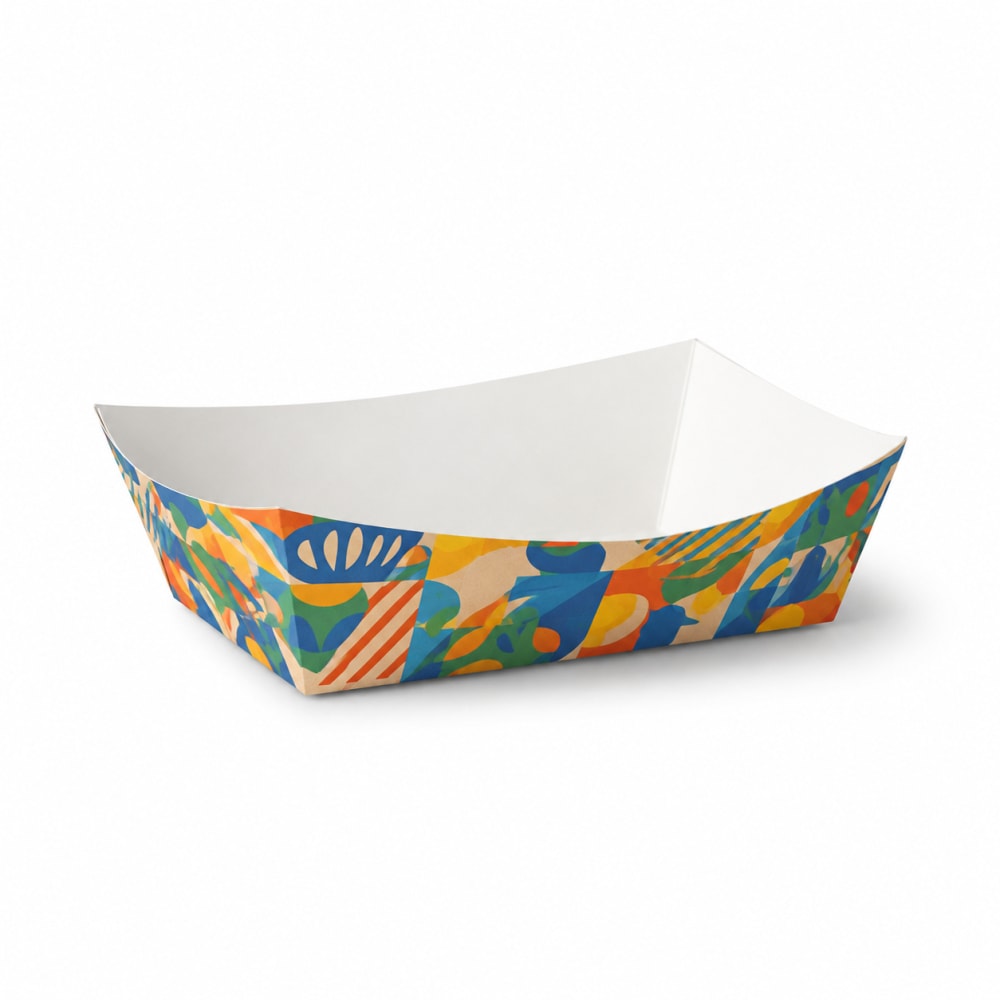
Bulk Paper Boat Trays Supplier Guide for the United States
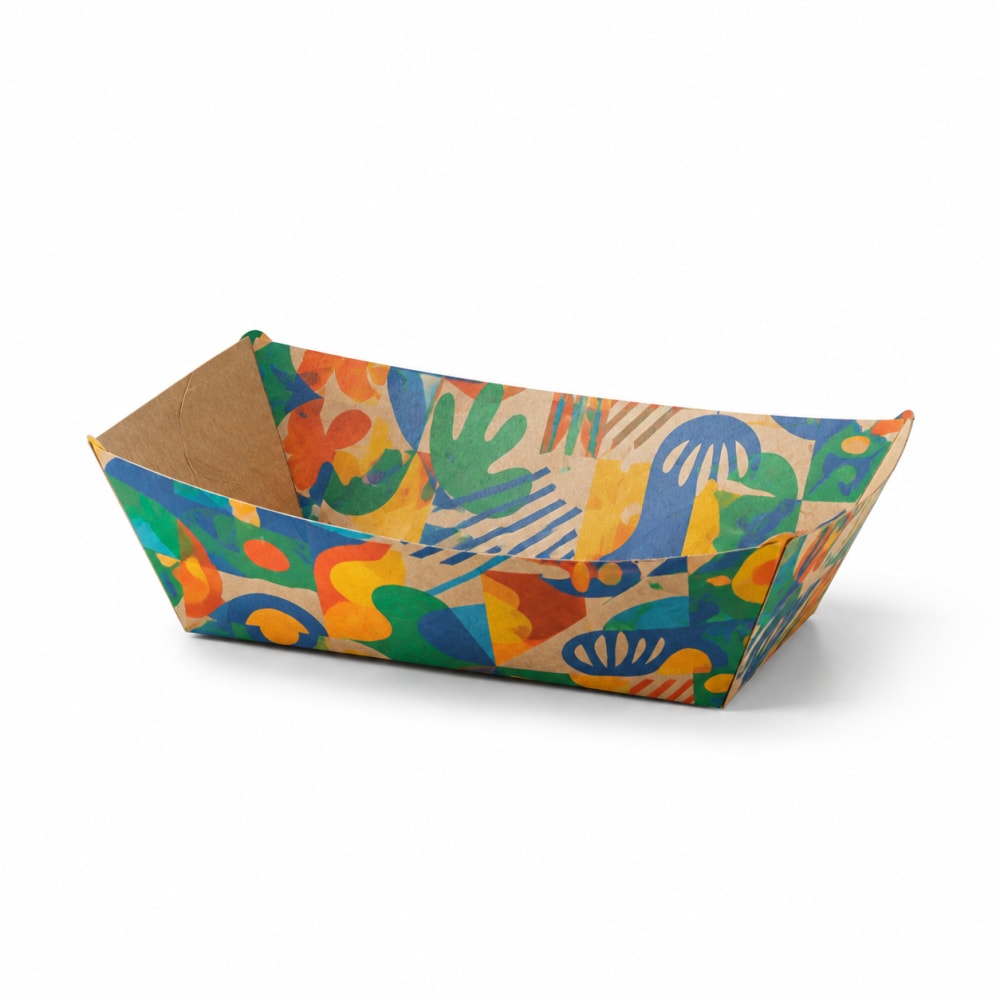
Paper boat trays have become a practical packaging choice for food trucks, stadium vendors, quick-service restaurants, caterers, and takeaway counters across the United States. Buyers in cities such as Los Angeles, Houston, Chicago, New York, Atlanta, Miami, Seattle, and Dallas now look for trays that hold fried foods, snacks, tacos, sliders, barbecue sides, desserts, and grab-and-go street food without leaking or collapsing. A strong paper boat trays bulk supplier helps these businesses balance food safety, brand presentation, freight efficiency, and cost control.This guide explains what U.S. buyers should know before sourcing in volume: current market demand, tray sizes, paper weights, PE versus PLA lining, production methods, food-grade certifications, price breaks, minimum order quantities, and supplier evaluation. It also covers the role of factory-direct export partners for importers, distributors, and food-service brands that need reliable supply into major logistics corridors such as the Port of Los Angeles, Long Beach, Savannah, Houston, and Newark.If you need a fast buying decision, the best paper boat trays bulk supplier for the United States market should offer food-grade kraft or white board options, multiple sizes for fries and appetizers, PE or PLA lining choices, stable case packing, clear compliance documents, and pricing that improves at higher volumes. For most food trucks and fast-casual operators, the safest starting point is a grease-resistant kraft boat tray in the 16 oz to 32 oz range with a PE lining for heavy oil resistance or a PLA lining when compostability goals are part of the brand strategy.When choosing a supplier, focus on six basics. First, confirm the tray fits the food application, because nachos, fried chicken bites, lobster rolls, and dessert waffles all create different grease and moisture loads. Second, check whether the paper stock and lining support your target customer experience, especially if the tray will hold food for more than 10 minutes before serving. Third, compare wholesale case quantities and freight efficiency. Fourth, review food-contact certifications required by U.S. buyers. Fifth, ask about custom logo printing, because many food trucks use packaging as a moving billboard. Sixth, review lead times and whether the supplier can support both trial orders and container-scale reorders.For buyers seeking factory-direct options, paper food packaging products from experienced export manufacturers can reduce landed cost while still allowing customization in size, board grade, printing, and lining. This is especially useful for distributors supplying regional food truck clusters in Texas, California, Florida, and the Northeast.Buying FactorWhy It MattersRecommended CheckTray sizePrevents underfilling or overflowMatch ounces and dimensions to menu itemsPaper gradeAffects stiffness and stackingRequest gsm or board thickness dataLining typeControls grease and moisture resistanceChoose PE for oil-heavy foods, PLA for compost goalsCertificationSupports compliance and importer confidenceVerify FDA and related food-contact documentsMOQImpacts cash flow and storageStart with manageable trial quantitiesLead timeProtects supply continuityConfirm production and shipping window in writingThe table above shows the core filter for supplier selection. It helps buyers avoid a common problem in wholesale packaging: comparing only unit price while missing functional differences that create product failure, customer complaints, or higher waste.Demand for disposable food trays in the United States continues to rise because of three long-term shifts: growth in takeaway meals, expansion of food trucks and pop-up food retail, and stronger consumer expectations for cleaner-looking, more sustainable packaging. Paper boat trays fit this demand because they are lightweight, stack well, display food attractively, and can replace foam or rigid plastic in many quick-serve applications.In metro markets such as Los Angeles, Austin, Phoenix, Nashville, and Orlando, food truck operators prefer packaging that can handle fast service and social-media presentation at the same time. Boat trays meet both needs. They are commonly used for fries, corn dogs, mini donuts, chicken tenders, loaded tots, sushi hand-roll sides, fish bites, tacos, and fair-style foods. Stadium vendors and event caterers also favor them because they can be nested tightly for transport and served quickly during peak demand.U.S. wholesalers see increased interest from restaurant supply distributors serving suburban growth belts and entertainment districts. Demand is also supported by third-party delivery, convenience retail, campus dining, and festival concessions. Businesses that once bought generic small trays now want multiple sizes, custom prints, and more specific grease barriers. This means the market is shifting from commodity buying toward specification buying.var ctxMarket = document.getElementById('lineChartMarket').getContext('2d');var chartMarket = new Chart(ctxMarket, {type: 'line',data: {labels: ['2021','2022','2023','2024','2025','2026'],datasets: [{label: 'Estimated U.S. Demand Index',data: [82, 89, 97, 106, 116, 128],borderColor: 'rgb(75, 192, 192)',backgroundColor: 'rgba(75, 192, 192, 0.12)',fill: false,tension: 0.25}]},options: {responsive: true,maintainAspectRatio: false}});The line chart illustrates a realistic demand index trend for U.S. paper boat tray purchasing. The rise is driven by continued expansion of convenience dining, event service, and packaging substitution away from foam in some municipalities and institutional accounts.End-Use SegmentDemand Level in U.S.Main Foods ServedFood trucksVery highFries, tacos, snacks, fried itemsStadiums and arenasHighNachos, tenders, sides, combosCaterers and eventsHighAppetizers, desserts, tasting portionsQuick-service restaurantsMedium to highSides, finger foods, combo add-onsConvenience storesMediumHot snacks, bakery servingsCollege and campus diningMediumGrab-and-go and late-night foodsThis demand table helps buyers understand where volume is coming from. Food trucks and stadium vendors tend to favor fast-turn, grease-resistant trays, while caterers may prioritize appearance and custom print quality.var ctxIndustry = document.getElementById('barChartIndustry').getContext('2d');var chartIndustry = new Chart(ctxIndustry, {type: 'bar',data: {labels: ['Food Trucks','Stadiums','Caterers','QSR','Convenience','Campus Dining'],datasets: [{label: 'Estimated Annual Bulk Purchasing Share (%)',data: [24, 20, 17, 16, 12, 11],backgroundColor: ['rgb(255, 99, 132)','rgb(54, 162, 235)','rgb(255, 206, 86)','rgb(75, 192, 192)','rgb(153, 102, 255)','rgb(255, 159, 64)']}]},options: {responsive: true,maintainAspectRatio: false}});The bar chart compares demand concentration by sector. For suppliers, this matters because a distributor serving food trucks in Southern California may need more medium trays and custom branding, while a stadium account in Chicago may need plain trays in very high case counts.Looking toward 2026, three market trends stand out. First, more U.S. buyers will request packaging with lower plastic perception, including compostable or fiber-forward solutions. Second, local policy pressure in parts of California, Washington, New York, and some college systems will push buyers to review material claims more carefully. Third, digital procurement will increase, so suppliers that can provide spec sheets, audit documents, and rapid sampling will win more repeat business.Choosing the right paper boat tray size is not only about capacity. It affects food appearance, portion control, stackability, storage, and cost per serving. U.S. food-service buyers usually choose based on portion weight, menu item dimensions, and whether the tray will be hand-carried, bagged, or placed in a combo order.Smaller trays are often used for fries, onion rings, churro bites, or sample servings. Mid-size trays are popular for tacos, wings, and loaded sides. Larger trays suit mixed platters, seafood baskets, or shareable snacks. Material choice also matters. Kraft board gives a natural and eco-forward look that works well with street food, barbecue, and farm-to-table branding. White board offers a cleaner premium look and stronger contrast for custom logos and food photography.Typical SizeSuggested CapacityCommon U.S. UseMaterial OptionSmall8 oz to 12 ozFries, nuggets, churrosKraft or white boardSmall-medium12 oz to 16 ozTacos, sides, samplersKraft with grease barrierMedium16 oz to 24 ozLoaded fries, tenders, slidersKraft or white PE-linedMedium-large24 oz to 32 ozSeafood, nachos, combo servingsHeavier board, linedLarge32 oz to 40 ozShare trays, event plattersThicker kraft boardCustom dimensionsBased on productSignature menu packagingOEM board and print optionsThe sizing table is useful because capacity alone does not tell the full story. A tall food pile may need a broader opening rather than a deeper tray, especially for visual items like loaded fries or lobster rolls sold at premium pricing.Paper weight and structure should match the food load. Light snacks can use lighter board, but wet or oily foods need heavier stock and lining. In the United States, buyers also increasingly ask whether the tray can handle short holding times under heat lamps or transit across a food court, event site, or delivery zone.Material TypeAppearanceStrengthBest ForNatural kraft boardRustic and eco-focusedGoodStreet food, barbecue, organic brandingBleached white boardClean and brightGoodPremium presentation, logo printingSingle-side coated boardFunctionalVery goodGreasy snacks and fried foodsDouble-side coated boardSmooth inside and outsideVery goodMessier foods and upscale presentationThickened rigid boardSturdy feelExcellentHeavy loaded portionsCustom laminated structureApplication-specificVariableSpecialty distributor projectsWhen evaluating sizes, ask the supplier for nesting dimensions, case counts, and carton cube. These details matter for storage in compact food trucks and for pallet planning in distribution warehouses near hubs such as Inland Empire, Dallas-Fort Worth, and New Jersey.One of the most important specification choices is the lining. PE, or polyethylene, remains the most common lining for paper boat trays because it provides strong grease and moisture resistance at an economical cost. It is widely used for fries, wings, fried shrimp, mozzarella sticks, and sauced appetizers. PLA, or polylactic acid, is a plant-based compostable lining option used by brands that want to align packaging with sustainability messaging or institutional composting programs.For the U.S. market, neither option is universally best. The correct choice depends on food temperature, grease intensity, disposal system, price sensitivity, and the environmental claims a brand wants to make. In many cities, end-of-life infrastructure varies widely. A compostable tray only delivers its full environmental benefit if the local collection and processing system supports it. That is why buyers in Seattle or parts of California may prioritize compostable specifications more often than buyers in regions where landfill disposal still dominates.FactorPE LiningPLA LiningGrease resistanceExcellentGood to very goodMoisture barrierExcellentGoodHeat toleranceGenerally strong for hot snacksApplication-specific, confirm with supplierCostUsually lowerUsually higherBrand sustainability appealStandardHigherCompostability pathwayLimitedPossible with proper certification and systemTypical U.S. useHigh-volume value operationsEco-positioned food service programsThis PE versus PLA table shows the real purchasing tradeoff: PE usually wins on cost and heavy grease performance, while PLA often wins on brand perception and sustainability goals. Buyers should not decide based on marketing terms alone. They should ask for actual application testing.var ctxTrend = document.getElementById('areaChartTrend').getContext('2d');var chartTrend = new Chart(ctxTrend, {type: 'line',data: {labels: ['2021','2022','2023','2024','2025','2026'],datasets: [{label: 'PE-Lined Share',data: [76, 73, 70, 67, 64, 61],borderColor: 'rgb(255, 159, 64)',backgroundColor: 'rgba(255, 159, 64, 0.25)',fill: true,tension: 0.25},{label: 'PLA-Lined Share',data: [24, 27, 30, 33, 36, 39],borderColor: 'rgb(75, 192, 192)',backgroundColor: 'rgba(75, 192, 192, 0.20)',fill: true,tension: 0.25}]},options: {responsive: true,maintainAspectRatio: false}});The area chart reflects a reasonable trend shift through 2026. PE-lined trays remain dominant because they are dependable and affordable, but PLA and other compostability-focused options continue to gain attention in institutional and sustainability-driven channels.A good supplier will explain these tradeoffs clearly, rather than pushing one material for every account. Ask for guidance based on your menu, service time, local waste policy, and budget. This reduces the risk of buying an eco-claimed tray that fails in real use or a low-cost tray that damages your sustainability positioning.Bulk production of paper boat trays involves a sequence of material control and forming steps designed for consistency. First, food-grade paperboard is selected according to weight, stiffness, coating, and print requirements. If the buyer needs custom branding, the artwork is prepared for flexographic or similar printing. After printing, the board is die-cut into the flat pattern that will become the tray. Then the cut blanks move through forming equipment that folds, presses, and shapes them into the finished boat structure.Reliable production depends on more than machinery speed. It requires material stability, accurate die lines, line calibration, in-process inspection, and controlled packing. For high-volume U.S. orders, carton count accuracy and nesting consistency matter because they affect warehouse receiving and unit dispensing in restaurants.From a technology standpoint, advanced suppliers use automated lines, print control, die-cutting precision, forming stations, and quality labs to keep dimensions stable across large runs. That matters when a buyer wants the same tray performance in repeated shipments delivered months apart. Strong technical capability also supports custom projects such as special tray depth, logo registration, or board upgrades for heavier foods.At our company background page, buyers can see how an experienced export manufacturer builds its process around modern production management rather than only manual conversion. This is especially relevant for distributors who need repeatable quality for chain accounts.Production StepMain PurposeKey Quality PointPaperboard selectionMatch strength and complianceFood-grade material verificationCoating or lining preparationAdd grease or moisture barrierUniform adhesion and surface integrityPrintingApply branding or product infoColor accuracy and registrationDie-cuttingCreate exact blank shapeClean edges and dimensional consistencyFormingShape the tray structureStable folds and tray geometryPacking and warehousingProtect goods in transitCount accuracy and dry storage conditionsThe production table helps buyers identify where defects usually originate. Weak corners, poor nesting, and leaking bottoms often trace back to die-cutting accuracy, board choice, or forming consistency.For U.S. importers, manufacturing capability is critical. A factory with organized warehousing, defined quality checks, and bulk export experience is better equipped to support container planning and schedule coordination to ports such as Qingdao outbound and Long Beach or Savannah inbound. This reduces disruption during peak seasons like summer fair circuits and football season.The biggest advantage of working with a paper boat trays bulk supplier is total cost control, not just a lower unit price. Savings come from factory-direct purchasing, better case utilization, reduced reorder frequency, more predictable quality, and custom sizing that avoids over-packaging. For a U.S. distributor or food-service chain, even a small reduction in cost per tray can produce meaningful annual savings.However, the lowest quote is not always the lowest cost. Buyers should calculate landed cost, freight, customs, storage, defect risk, and service life. A tray that costs less but collapses under loaded fries can create food waste, double-serve usage, and customer dissatisfaction. The better metric is cost per successful serving.Order VolumeTypical Unit Price TrendFreight EfficiencyBest Buyer Type5,000 to 10,000 pcsHighestLowLocal test launch20,000 to 50,000 pcsModerateBetterGrowing food truck group50,000 to 100,000 pcsCompetitiveGoodRegional distributor100,000 to 300,000 pcsLowerStrongChain supply programs300,000 to 500,000 pcsVery competitiveVery strongNational wholesale buyers500,000+ pcsBest negotiated levelMaximumImporters and large contractsThis cost table shows why wholesalers and chain groups usually receive better pricing. Setup cost, carton planning, and production scheduling become more efficient as the order gets larger.Other savings come from specification discipline. Standardizing a limited range of tray sizes across multiple menu items cuts SKU complexity. Printing in larger runs usually lowers branding cost per piece. Working with a single supplier for trays, bowls, cups, and boxes may also improve negotiation leverage and shipment planning. Buyers looking for broader support can explore packaging services and customization support to align ordering with artwork, sampling, and delivery schedules.For U.S. food businesses, storage economics matter too. A compact, well-nesting paper tray saves back-of-house space in urban food trucks and high-rent retail kitchens. In dense markets like Manhattan, San Francisco, and downtown Boston, space efficiency can be almost as important as unit price.Any serious paper boat trays bulk supplier serving the United States should be ready to provide food-contact compliance documents. These documents support importer confidence, distributor audits, and customer qualification. At a minimum, buyers often ask about FDA compliance for food-contact materials. Depending on the account, they may also review broader management and sustainability credentials such as ISO quality systems, FSC chain-of-custody for responsible paper sourcing, and compostability certifications for PLA-lined options.Food-grade certification is not just a box to tick. It indicates whether the supplier can maintain traceable materials, standardized production, and controlled documentation. For chain restaurants, school systems, and institutional buyers, missing paperwork can block approval even when the product itself looks acceptable.Certification or StandardWhy U.S. Buyers Ask for ItTypical RelevanceFDA food-contact complianceConfirms suitability for food packaging useCore requirementEU EC 1935/2004Shows strong international food-contact controlUseful for import credibilityISO 9001Indicates organized quality managementImportant for repeatabilityFSCSupports responsible paper sourcing claimsHelpful for sustainability programsBPI compostabilityValidates compostable claims in some marketsRelevant for PLA productsOK CompostAdditional compostability referenceUseful for export-wide specification reviewThe certification table explains why each document matters in practical buying. A buyer in the United States may not need every document for every order, but a supplier able to provide a full compliance pack is easier to approve and scale.In 2026, expect more customers to challenge vague sustainability language. Terms like eco-friendly, biodegradable, and compostable will face closer scrutiny. Buyers should request exact certification names, scope, and test conditions. A strong supplier will also clarify the difference between food-safe performance and environmental disposal claims.Minimum order quantity, or MOQ, affects whether a supplier fits your business stage. Startups and independent food truck groups may need modest MOQs for testing. Regional distributors usually want lower pricing tied to larger mixed orders. National buyers often negotiate annual volume commitments across multiple SKUs.The right MOQ depends on whether the product is plain stock, standard printed, or fully custom. Plain white or kraft trays often have the lowest entry point because they do not require print plate setup. Custom branding usually raises MOQ because of print preparation, color matching, and production scheduling. Still, experienced suppliers often offer flexible pathways, such as sample development followed by scale-up runs.Order TypeTypical MOQ PatternLead Time PatternBuyer AdvicePlain stock traysLow to moderateFastestBest for immediate useStandard size with basic printModerateShort to mediumGood for local brand buildingCustom size and printModerate to highMediumBest for signature menu itemsMixed SKU orderVaries by combinationMediumUseful for distributorsTrial orderFlexible when supportedShortValidate performance before scalingContainer programHighPlanned scheduleBest landed cost for importersThis MOQ table helps buyers align order type with business reality. A food truck expanding from two to ten units should not buy like a national chain, and a distributor with stable monthly turnover should not remain stuck in trial-order pricing.var ctxSupplier = document.getElementById('comparisonChartSupplier').getContext('2d');var chartSupplier = new Chart(ctxSupplier, {type: 'bar',data: {labels: ['MOQ Flexibility','Customization','Compliance Docs','Lead Time Stability','Volume Pricing','Export Experience'],datasets: [{label: 'Strong Bulk Supplier Score',data: [82, 90, 95, 88, 92, 94],backgroundColor: 'rgb(153, 102, 255)'},{label: 'Basic Trading Supplier Score',data: [60, 58, 65, 57, 63, 55],backgroundColor: 'rgb(201, 203, 207)'}]},options: {responsive: true,maintainAspectRatio: false}});The comparison chart highlights the difference between a strong manufacturing-based supplier and a basic reseller model. U.S. buyers often find that the real value lies in documentation control, customization capability, and lead-time stability rather than in a headline quote alone.When discussing MOQs, also ask about packaging counts per sleeve, cartons per pallet, and whether split shipments are possible. These details are useful for multi-location distribution into Florida, Texas, the Midwest, and the West Coast.Shandong Fude Packaging Co., Ltd. serves global food-service buyers with a factory-direct approach built for dependable packaging supply. For U.S. customers evaluating a paper boat trays bulk supplier, three areas are especially relevant: technology capability, manufacturing capability, and service capability.On the technology side, the company operates with integrated printing, die-cutting, forming, and quality control systems that support consistent production of food-grade paper packaging. This allows better control over tray dimensions, print appearance, grease barrier performance, and batch repeatability. For buyers creating custom paper boat trays for regional chains or branded mobile food concepts, that technical base is essential.On the manufacturing side, the business runs from a modern large-scale facility with automated production lines and organized warehousing. That scale helps support both smaller development orders and larger export volumes. A manufacturing setup like this is valuable for U.S. distributors who need continuity across repeat orders rather than one-off spot buys. It also supports broader product coordination, including cups, bowls, lunch boxes, and related takeaway packaging.On the service side, the company supports customers through packaging selection, artwork preparation, sampling, order confirmation, production follow-up, and delivery coordination. This is important because most wholesale packaging problems happen before production begins, usually from unclear dimensions, incomplete artwork, or mismatched lining choices. Structured communication reduces those mistakes and shortens the path from concept to shipment.For buyers who want to discuss custom tray sizes, branding, or shipping plans, contacting the packaging team is the most direct next step. This is especially useful for importers, wholesalers, and restaurant groups building supply programs for the United States.Capability AreaWhat It IncludesBuyer BenefitTechnology capabilityPrinting, die-cutting, forming, lab checksStable specs and branding qualityManufacturing capabilityModern plant, automation, warehousingReliable volume outputMaterial expertiseKraft, white board, PE, PLA optionsBetter fit for different foodsCustomization supportLogo, size, structure, coating choicesDifferentiated market presenceOrder processReview, sample, production, deliveryLower project riskExport experienceService to multiple global marketsSmoother U.S.-bound coordinationThis company capability table summarizes why some suppliers are better equipped for wholesale than others. In the U.S. market, buyers increasingly value systems, communication, and documentation alongside price.As 2026 approaches, the strongest suppliers will combine efficient production with sustainability readiness, customization speed, and clearer compliance support. Buyers should prioritize partners that can adapt to policy changes, customer packaging expectations, and evolving menu formats.They are widely used for fries, tacos, wings, fried seafood, mini sandwiches, desserts, fair food, and event snacks. Food trucks, stadiums, caterers, and quick-service operators are the biggest users.For most food truck menus, start with one small tray for sides and one medium tray for signature items. A 16 oz to 24 oz format is often the most versatile. Always test with actual food load and serving time.Neither is always better. Kraft suits rustic and eco-focused branding, while white offers a brighter premium look and often makes custom printing stand out more clearly. The decision is usually based on branding and menu style.PE is generally the more economical and stronger choice for heavy grease resistance. PLA can work well when compostability goals matter, but it should be selected with clear performance testing and realistic disposal expectations.At minimum, request FDA-related food-contact compliance information. Many buyers also ask for ISO 9001, FSC, and compostability certificates such as BPI or OK Compost when relevant to the product specification.Yes. Most experienced suppliers support custom logo printing, size changes, and material selection. MOQ is usually higher for printed trays than for plain stock items.Lead times vary by product complexity, print requirements, and shipping method. Plain stock runs are usually faster. Custom orders need extra time for artwork approval, sample confirmation, and production scheduling.Consolidate SKUs, order larger repeat quantities, standardize sizes across customers where possible, and work with a supplier that can support multiple food packaging categories in one sourcing program.Yes, especially when paired with responsibly sourced paper and, where appropriate, compostability-oriented lining options. However, brands should make environmental claims carefully and align them with local waste systems.Ask for tray dimensions, board weight, lining type, certificate pack, carton configuration, MOQ, lead time, print details, sample availability, and whether the supplier has experience shipping to the United States. These questions reduce purchasing risk and improve long-term supply reliability.In summary, a dependable paper boat trays bulk supplier for the United States should combine practical food-service knowledge, consistent manufacturing, flexible order planning, and clear compliance support. Whether you are serving festival fries in Austin, seafood baskets in Miami, game-day snacks in Chicago, or branded street food in Los Angeles, the right tray specification and supplier relationship can improve both operating efficiency and customer perception. -

U.S. Wholesale Paper Catering Trays: Prices, Specs & Supply
For food vendors, caterers, deli operators, meal-prep brands, and distributors in the United States, wholesale paper catering trays remain one of the most practical packaging categories for prepared food presentation, transport, and short-hold service. Demand is being pushed by off-premise dining, event catering, supermarket grab-and-go programs, and stronger sustainability requirements from both consumers and buyers. Whether a business serves sandwiches in Chicago, boxed lunches in Dallas, party platters in Los Angeles, or bakery assortments in New York, the right tray specification affects food safety, grease resistance, stackability, freight cost, and brand perception.This guide explains how U.S. buyers evaluate bulk paper catering trays, where price pressure comes from, what sizes move fastest, which certifications matter for imports, and how wholesale margins can work for distributors. It also introduces the factory strengths and service model of Shandong Fude Packaging Co., Ltd. for importers and private-label buyers seeking a stable packaging partner.In the United States, wholesale paper catering trays are in steady demand from restaurants, supermarkets, convenience chains, foodservice distributors, party suppliers, and catering companies. The most commonly sourced formats are kraft and white paper trays with grease-resistant or PE/PLA-coated interiors, often used for sandwiches, pastries, appetizers, fried foods, fruit, and combination platters. Buyers typically compare five things first: tray strength, grease resistance, dimensions, nesting efficiency, and food-contact compliance.For most import and distribution programs, bulk buying becomes cost-effective when the order volume is large enough to reduce freight cost per carton. Standard MOQs often start from one mixed container for importers or several master cartons per size for trial orders, while custom logo printing and private-label packaging usually require higher quantities. U.S. buyers also increasingly ask for FSC paper sourcing, FDA-compliant materials, and compostable or lower-plastic structures where suitable.If you need a direct sourcing summary: choose tray sizes based on serving format, confirm whether hot or greasy foods will be packed, verify board weight and coating type, ask for nesting and carton-loading data, and review food-contact and sustainability documentation before confirming price. Fast Buying Snapshot for U.S. Wholesale Paper Catering Trays Buying Factor Why It Matters Typical U.S. Preference Risk If Ignored Board strength Prevents bending under heavy foods Medium to heavy gsm for deli and party trays Collapsed trays and customer complaints Grease barrier Keeps oils from soaking through Kraft with greaseproof layer or PE/PLA lining Leaks, soggy bottoms, messy delivery Tray dimensions Fits menu portions and lids or wraps Quarter, half, and full catering sizes Food movement and wasted space Food-contact compliance Required for legal import and sale FDA declaration plus test reports Border delays and compliance exposure Case pack efficiency Affects warehouse and freight cost High nesting ratio and stable carton count Higher landed cost per unit Branding options Supports chain identity and resale Flexo printing or neutral kraft stock Weak shelf appeal or missed private-label value The table above shows that price alone is not enough. In U.S. foodservice, a cheap tray that fails during delivery can cost more than a better tray with a slightly higher unit price.Demand for paper catering trays in the United States has broadened beyond traditional event caterers. Today, major consumption comes from supermarket deli counters, airport food concessions, office lunch providers, school meal support vendors, bakery chains, food trucks, party stores, and digital-first food brands. Cities with heavy event and hospitality traffic such as Las Vegas, Orlando, Miami, Houston, Atlanta, and Los Angeles tend to show stronger seasonal and project-based purchasing. Distribution hubs around New Jersey, Savannah, Long Beach, Oakland, and Chicago also matter because freight routing affects landed cost and replenishment speed.Three forces are shaping pricing. First, paperboard costs fluctuate with pulp, energy, and recycled fiber conditions. Second, coating choice matters: uncoated trays are cheaper, while grease-resistant barriers, PE lining, PLA compostable options, or window-lid compatibility raise cost. Third, ocean freight and domestic warehousing have become a major part of landed cost, especially for lower-value, high-cube packaging.In the United States, many buyers are also reducing overly broad SKU counts. Instead of holding ten similar tray formats, they narrow purchasing to a few versatile sizes that suit sandwiches, pastry assortments, and hot finger foods. This helps improve pallet efficiency and buying leverage.Pricing trends through 2026 suggest moderate upward pressure on premium sustainable structures, but more stable pricing for conventional kraft and white paper tray lines as factories improve automation and sourcing efficiency. Buyers should expect custom printing, low-volume mixed orders, and special coatings to remain the biggest cost multipliers.var ctx1 = document.getElementById('lineChart').getContext('2d');var chart1 = new Chart(ctx1, { type: 'line', data: { labels: ['2021', '2022', '2023', '2024', '2025', '2026'], datasets: [{ label: 'Estimated U.S. Demand Index', data: [78, 84, 91, 99, 108, 117], borderColor: 'rgb(75, 192, 192)', backgroundColor: 'rgba(75, 192, 192, 0.15)', fill: false, tension: 0.3 }] }, options: { responsive: true, maintainAspectRatio: false }});The line chart indicates a realistic upward demand curve, driven by takeout, deli merchandising, and replacement of foam or less sustainable alternatives in some foodservice segments. U.S. Demand Drivers and Price Influences Market Driver Effect on Demand Effect on Price 2026 Outlook Supermarket deli expansion Higher recurring volume Supports larger contract buying Strong growth in East Coast and Midwest Corporate catering recovery Boosts platter and tray use Higher demand for premium presentation Stable to growing in major metros Food delivery and grab-and-go Expands everyday use More need for leak and grease control Continues to support standard tray volumes Sustainability policies Shifts buyers toward fiber packaging Premium for certified or compostable formats Increasing influence in California and Northeast Ocean freight volatility No direct effect on demand Can sharply alter landed cost Moderating but still a risk Raw material and energy costs Indirect impact Changes ex-factory prices Moderate upward pressure possible For U.S. importers, landed cost planning should include customs brokerage, inland trucking from ports such as Long Beach or Savannah, palletizing preferences, and carton damage allowances. These factors often matter as much as the invoice price itself.American buyers usually begin with application fit. A tray for cold sandwich assortments has different performance needs than a tray used for wings, fries, sliders, or sauced appetizers. The next layer of evaluation is technical. Experienced procurement managers and distributors look beyond appearance and request measurable tray specifications.The first priority is material structure. Kraft paperboard is popular for its natural look and sustainable brand image, while white paperboard works better for brighter printing and premium bakery display. Next is basis weight or gsm, which helps determine rigidity. Heavier wall construction is especially important when trays are carried in stacks or loaded with moist foods.Barrier performance follows. Greaseproof treatments are common for pastries, fried sides, and deli items. PE-coated formats provide stronger resistance to oil and moisture. PLA-coated structures may appeal to sustainability-driven programs, though compostability claims must match actual local disposal systems and buyer expectations in the United States.Buyers also examine edge construction and sidewall lock design. Weak folds or inconsistent gluing create a high failure rate during service. For distributors selling into quick-service chains or supermarket programs, nesting consistency matters because poor nesting slows packing lines and increases labor. Core Specifications U.S. Buyers Review Specification Typical Requirement Best For Buyer Concern Material type Kraft or white food-grade paperboard Deli, bakery, catering, takeaway Appearance, sustainability, print quality Board weight Light, medium, or heavy depending on load From pastries to full platters Bending resistance Barrier layer Greaseproof, PE, or PLA Oily, moist, or hot food Leak-through and food staining Temperature tolerance Cold service, ambient, or moderate heat Prepared foods and reheatable items Warping or softening Stackability Stable nested count per sleeve Warehouse and fast packing lines Labor efficiency Print capability Plain, one-color, or full custom Private label and chain branding Ink adhesion and visual consistency Lid compatibility Optional PET or paper lid pairing Retail display and delivery Fit and closure security For larger buyers, the spec sheet should also include carton dimensions, units per carton, pallet configuration, and container load quantity. These numbers directly affect freight modeling and replenishment cycles in U.S. distribution centers.One practical sourcing tip is to request samples filled with real menu items. A dry pastry test is not enough if the actual application is buffalo chicken sliders or barbecue appetizers. Functional trials should cover oil exposure, hold time, stacking under weight, and transport vibration.The U.S. market buys paper catering trays in a wide range of dimensions because foodservice users need formats for individual servings, combo meals, family packs, and party platters. Smaller open trays are common for fries, tacos, slices, desserts, and side dishes. Mid-size trays are widely used for sandwiches, wraps, bakery assortments, and deli combinations. Large catering platters often serve office lunches, sandwich sets, pastry selections, fruit displays, and holiday party foods.Style selection usually depends on whether the tray is used for service, display, delivery, or retail merchandising. Open-top trays are economical and efficient for fast turnover. Foldable trays reduce storage volume and can work well for distributors managing multiple SKUs. Boat trays are popular for snacks and food truck menus. Compartment trays help portion control for mixed meals. Window-lid options support retail presentation and improve perceived freshness. Common Sizes and Styles for U.S. Foodservice Use Style Typical Size Range Main Use Strength Level Mini snack tray Small single-serve Fries, nuggets, pastry bites Light to medium Boat tray Small to medium Street food, samples, appetizers Medium Rectangular deli tray Medium Sandwiches, wraps, bakery items Medium to heavy Compartment tray Medium to large Meal combos, portion control Heavy Party platter base Large Fruit, cookies, sandwich assortments Heavy Window-lid tray set Medium to large Retail display and premium takeaway Medium to heavy Fold-flat catering tray Medium to large Warehouse-efficient distribution Medium Different cities and sectors show different preferences. Food trucks in Austin or Phoenix may favor boat trays and compact open-top structures. Corporate caterers in Boston or Washington, D.C. may prefer large platter bases with clear lids. Supermarket programs in New Jersey and California often require display-friendly window options.var ctx2 = document.getElementById('barChart').getContext('2d');var chart2 = new Chart(ctx2, { type: 'bar', data: { labels: ['Restaurants', 'Caterers', 'Supermarkets', 'Food Trucks', 'Bakeries', 'Distributors'], datasets: [{ label: 'Estimated U.S. Demand by Sector', data: [82, 76, 94, 61, 73, 88], backgroundColor: 'rgb(255, 99, 132)' }] }, options: { responsive: true, maintainAspectRatio: false }});The bar chart shows that supermarkets and distributors are among the strongest channels because they buy repeatedly and often stock multiple tray formats for downstream resale.When selecting sizes, buyers should also consider the outer dimensions of their shelf sets, tray sleeves, and retail display cases. A tray that performs well in the kitchen but wastes space in a refrigerated display can reduce profit per linear foot.High-quality paper catering trays are not simply cut and folded. Manufacturing quality affects rigidity, consistency, grease resistance, print clarity, and food safety. For U.S. import buyers, understanding the process helps distinguish reliable factory output from inconsistent low-cost production.The process starts with food-grade paperboard selection. Mills produce kraft or white board in specified weights and treatment levels. Depending on the application, the sheet may receive greaseproof treatment or lamination with PE or PLA. Material consistency is critical because fluctuations in board thickness can change tray performance and nesting behavior.Next comes printing, if branding or decorative artwork is required. Flexographic printing is common for practical, high-volume runs. After printing, the board is die-cut into precise blanks. Tooling accuracy matters because fold lines, tabs, and locking points determine whether the tray forms correctly on packing lines or during manual assembly.Forming and gluing then shape the tray into its final structure. For some open-top designs, locking folds reduce adhesive use. For more complex forms, controlled gluing ensures sidewall integrity. After forming, quality checks verify dimensions, visual defects, compression resistance, odor, edge neatness, and food-contact cleanliness.At Fude Packaging, technology and process control are central to output stability. The company operates a 30,000 square meter modern factory with automated lines, flexo printing, die-cutting, forming equipment, in-house quality labs, and climate-controlled warehousing. Those technological capabilities support more consistent tray geometry, cleaner print registration, and better batch control for export orders bound for the United States.Manufacturing capability is equally important. With more than 20 years of experience in disposable food-grade paper packaging and an established export track record across many markets, the factory is positioned to support both standard products and custom OEM developments. That matters for importers who need repeatable structure, reliable board sourcing, and scalable production during seasonal volume spikes. Paper Catering Tray Manufacturing Stages Stage Main Activity Quality Check Impact on Buyer Material sourcing Select food-grade kraft or white board Weight, odor, moisture, certification Safety and structural consistency Barrier treatment Add greaseproof, PE, or PLA layer Uniform coating and adhesion Leak and oil resistance Printing Apply artwork or logos Color accuracy and registration Brand appearance Die-cutting Cut blanks and score folds Dimensional precision Easy forming and lid fit Forming Fold, lock, or glue structures Bond strength and shape retention Operational reliability Inspection Review finished goods Compression, appearance, cleanliness Lower defect rate Packing and storage Case packing and warehousing Carton integrity and humidity control Better transit performance For U.S. buyers, a well-run factory should be able to provide product drawings, test data, sample confirmation, and shipment photos. These are signs of manufacturing discipline rather than one-off trading arrangements.Margins in this category vary widely depending on channel, order size, packaging format, and whether the tray is plain stock or customized. A distributor importing a standard kraft catering tray into the Port of Los Angeles for resale to regional restaurant suppliers may work on slimmer percentage margins but higher volume. A private-label deli packaging distributor serving supermarket chains in the Northeast may earn better margins due to design support, branding, and coordinated replenishment.Consider a realistic example. A regional distributor buys standard medium deli trays in bulk, stores inventory in a warehouse outside Chicago, and resells them to independent restaurant supply stores and local caterers. If the distributor manages freight well, keeps carton breakage low, and maintains repeat orders, margins can improve through scale rather than high markups.Another case involves a branded retail packaging line sold to deli counters and bakeries in Florida and Georgia. Here, the distributor may add value through printed sleeves, barcoding, carton relabeling, and mixed pallet service. That service package justifies a higher margin than commodity plain trays.var ctx3 = document.getElementById('areaChart').getContext('2d');var chart3 = new Chart(ctx3, { type: 'line', data: { labels: ['2021', '2022', '2023', '2024', '2025', '2026'], datasets: [{ label: 'Shift Toward Premium/Sustainable Trays (%)', data: [18, 22, 27, 33, 39, 46], fill: true, backgroundColor: 'rgba(75, 192, 192, 0.25)', borderColor: 'rgb(75, 192, 192)', tension: 0.3 }] }, options: { responsive: true, maintainAspectRatio: false }});The area chart illustrates a steady transition in the U.S. market toward better-looking, more sustainable, and more specification-driven tray options. This shift can create margin opportunities for distributors that stock the right mix. Illustrative Margin Scenarios for U.S. Distributors Channel Product Type Margin Tendency Key Profit Lever Restaurant supply Plain stock kraft trays Low to medium Volume and freight efficiency Catering wholesalers Large platter trays Medium Seasonal demand and bundled sales Supermarket deli supply Lid-compatible trays Medium to high Private label and repeat contracts Bakery distributors White or printed pastry trays Medium Presentation value Food truck suppliers Boat trays and snack trays Medium Fast rotation and mixed-SKU orders E-commerce packaging sellers Small-case resold stock High percentage, lower scale Convenience and smaller pack breaks The explanation behind this table is simple: the more value a distributor adds through stock depth, private label service, mixed pallet delivery, or technical specification guidance, the less the product behaves like a pure commodity.Import compliance is one of the most overlooked areas for new buyers. In the United States, paper catering trays that contact food should be backed by documentation showing food-contact suitability. At minimum, buyers commonly request an FDA-related declaration of compliance for food-contact materials, along with supporting migration or material test reports where applicable.Depending on the buyer profile, additional certifications can strengthen trust and ease vendor approval. FSC certification supports responsible fiber sourcing, which is valuable for retail and institutional accounts. ISO 9001 indicates a structured quality management system. If the product is promoted as compostable, buyers may ask for BPI or OK Compost documentation, but claims should be carefully aligned with the tray’s actual composition and end-of-life conditions.Importers should also verify carton labeling, HS code alignment, packaging descriptions, and shipment paperwork consistency. Goods entering major U.S. ports such as Long Beach, New York/New Jersey, Savannah, or Houston can face delays if declarations do not match the actual product specification.Fude Packaging manufactures products aligned with key international requirements including FDA, EU EC 1935/2004, ISO 9001, FSC, and selected biodegradability certifications such as BPI or OK Compost where relevant to the material option. This gives U.S. buyers a stronger starting point when building compliance files for chain approval or importer due diligence. Common Certifications and Documents U.S. Buyers Request Certification or Document Main Purpose Who Usually Requests It Importance Level FDA food-contact declaration Confirms suitability for food use Importers, distributors, chains Very high Material test report Supports compliance claim Procurement and QA teams Very high FSC certificate Shows responsible paper sourcing Retail and sustainability-led buyers High ISO 9001 Demonstrates quality system control Larger distributors and brand owners High BPI or OK Compost Supports compostable claims Eco-focused programs Conditional Specification sheet Confirms size, board, coating, packing All professional buyers Very high Packing list and carton marks Supports customs and warehouse receipt Importers and brokers High For smooth importing, buyers should ask suppliers to organize documents before production ends, not after the container is at the port. This reduces customs risk and shortens release time.Bulk pricing depends on material, tray size, print complexity, barrier layer, packing count, and order volume. Plain stock kraft trays in standard dimensions generally offer the best ex-factory value. Custom-printed trays, heavy board formats, special compartment tooling, and lid-compatible premium sets will cost more. Pricing also changes based on whether the order is trial scale, LCL, full container load, or recurring program volume.For U.S. buyers, MOQ strategy should reflect sales channel. A distributor building a stock line may want fewer designs but deeper inventory per SKU. A caterer or chain testing a new menu program may prefer mixed-size trial quantities before scaling. Custom private-label work usually requires a higher MOQ because print plates, setup, and production planning need volume to be economical.At Fude Packaging, service capability is designed to support both trial and larger wholesale programs. The company offers packaging selection advice, artwork preparation, sampling, customization development, and delivery coordination through a clear workflow covering requirement review, design and sample confirmation, then production and shipment. Typical lead times often fall within 7 to 15 days depending on product and order complexity, which is useful for U.S. importers balancing test orders with season-driven demand. Illustrative Bulk Pricing and MOQ Structure Product Level Typical MOQ Pattern Price Tendency Best Buyer Type Plain standard tray Low to medium cartons Lowest Distributors and resellers Grease-resistant tray Medium cartons Low to medium Restaurants and food trucks Heavy-duty platter tray Medium to high Medium Caterers and deli chains Custom-printed tray Higher MOQ Medium to high Private-label buyers Tray with matching lid Higher due to paired components High Retail-ready programs PLA or compostable option Medium to high High Sustainability-led accounts As a practical rule, landed cost becomes more competitive when buyers consolidate SKUs, standardize carton counts, and ship through efficient port routes. Importers serving the Midwest may compare rail-linked routes from West Coast entry points against East Coast options depending on season and freight conditions.var ctx4 = document.getElementById('comparisonChart').getContext('2d');var chart4 = new Chart(ctx4, { type: 'bar', data: { labels: ['Price Stability', 'Customization', 'Cert Support', 'Lead Time', 'Scale Capacity', 'Freight Efficiency'], datasets: [{ label: 'Factory-Direct Import Advantage Score', data: [82, 91, 88, 79, 93, 84], backgroundColor: 'rgb(153, 102, 255)' }] }, options: { responsive: true, maintainAspectRatio: false }});This comparison chart reflects why many U.S. buyers move toward direct factory sourcing once their annual volume is high enough: they gain stronger control over customization, documentation, and production planning.Shandong Fude Packaging Co., Ltd. is a factory-focused packaging manufacturer established in 2004, serving foodservice and takeaway buyers across global markets. For U.S. importers interested in wholesale paper catering trays, the company’s value lies in three areas.First, technological capability. Fude operates modern automated production systems that support consistent flexo printing, die-cutting precision, tray forming quality, and laboratory-based inspection. This helps buyers maintain stable product specifications across repeat orders, which is especially important for chain accounts and distribution programs.Second, manufacturing capability. The company’s large-scale facility and long experience in food-grade paper packaging enable it to produce a broad range of food containers, bowls, trays, cups, and specialized takeaway formats. Paper catering trays can be developed in kraft or white board, with different coatings, structures, and branding options to suit deli retail, event catering, bakery, or quick-service applications. Buyers looking for a one-stop source can also review other complementary food packaging through the product catalog.Third, service capability. Fude supports customers with packaging selection guidance, sample development, artwork preparation, OEM and private-label customization, and shipment coordination. For buyers new to factory-direct importing, the company’s service process helps reduce friction from design to delivery. If a U.S. distributor, chain, or food brand needs a quote or sample discussion, they can reach out through the contact page.Beyond manufacturing scale, the company positions itself around responsible packaging. That matters in the U.S. because many food businesses no longer want packaging that simply performs; they want packaging that supports safety, practical sustainability goals, and visible brand quality. With export experience across more than 35 countries and a broad customer base spanning restaurants, wholesalers, delivery platforms, and food brands, Fude is structured to support both standard stock and custom development programs.For buyers evaluating overseas suppliers, the biggest advantage is not just factory price. It is the combination of production control, documentation readiness, customization range, and lead-time discipline. Those factors determine whether a packaging line can scale smoothly in the United States.What foods are paper catering trays best for?They work well for sandwiches, wraps, pastries, appetizers, fried sides, deli assortments, fruit displays, desserts, and many grab-and-go foods. The best result depends on choosing the right barrier and strength level.Are kraft trays always better than white trays?Not always. Kraft gives a natural and eco-forward appearance, while white trays often provide a cleaner premium look and better print brightness. The right choice depends on brand image and menu style.Do I need PE or PLA coating?If the food is oily, moist, or held for a longer period, a coated tray is usually safer. For dry bakery or short-service applications, uncoated or greaseproof paperboard may be enough. Buyers should match the barrier to the food, not only to cost.Can paper catering trays be customized for U.S. chain accounts?Yes. Common custom options include logo printing, size adjustments, board upgrades, compartment layouts, and paired lid formats. Custom work usually requires higher MOQs and sample approval.What certifications should U.S. importers ask for first?Start with food-contact compliance documentation, product specifications, and quality system evidence. FSC and compostability certificates can be added depending on customer requirements.How can I lower landed cost without lowering quality?Reduce unnecessary SKUs, choose standard carton counts, improve container utilization, and standardize high-volume sizes. Also compare port routing and inland freight options before confirming orders.What is the usual lead time?Lead time varies by stock level, customization, and order volume. For many projects, a factory with organized production planning can ship in roughly one to two weeks after confirmation, while larger or more customized orders may require more time.What are the main 2026 trends to watch?Expect more demand for fiber-based replacement packaging, better grease barriers with lower environmental impact, stronger chain and institutional documentation requirements, digital artwork management for faster private-label launches, and growing buyer interest in packaging that balances sustainability claims with real operational performance. Local U.S. policy pressure in states and cities with packaging restrictions will continue to influence material choices.Should I source from a local U.S. distributor or directly from a factory?If you need small quantities and immediate replenishment, a local distributor may be better. If you need custom specifications, better long-term cost control, or larger annual volume, direct factory sourcing can be more competitive.What should I ask for before placing a large order?Request production samples, specifications, compliance documents, carton data, pallet loading details, photos of packing, and a clear lead-time commitment. It is also smart to test the tray with your actual menu items and service conditions.In short, the U.S. market for wholesale paper catering trays is healthy, specification-driven, and increasingly shaped by sustainability, presentation quality, and logistics discipline. Buyers who define their application clearly, compare total landed cost instead of only unit price, and work with a capable manufacturing partner are best positioned to build stable supply and better margins. -
U.S. Kraft Deli Box Manufacturer Guide for 2026
For food retailers, deli chains, meal-prep brands, salad bars, bakeries, and grab-and-go operators in the United States, the best kraft deli box manufacturer is not simply the lowest-price source. It is the supplier that can deliver consistent food safety, reliable lead times, customization, scalable production, and packaging performance that matches American retail and delivery expectations. In 2026, demand is rising across New York, Los Angeles, Chicago, Houston, Atlanta, Miami, Seattle, and other major food distribution hubs as operators seek sustainable paper packaging that still protects margins and brand image.A strong manufacturer should offer food-grade materials, flexible sizes, leak-resistant structures, optional window lids, custom printing, and clear compliance documentation for the U.S. market. It should also support both wholesale buyers and private-label brands. For buyers comparing factory-direct partners, the real questions are capacity, certification, engineering, and long-term service quality. That is where a professional kraft deli box manufacturer stands apart from a trading company.In this guide, you will find direct sourcing advice, 2026 market and demand data, product comparisons, factory evaluation criteria, industry applications, case insights, and practical information on OEM development. Buyers looking for a broader product range can also review food packaging product categories while planning a full deli and takeaway packaging program.If you are sourcing for the United States, a dependable kraft deli box manufacturer should provide five essentials: verified food-contact compliance, stable factory capacity, customizable structures, quality control across each production batch, and responsive export service. Buyers should look for manufacturers that can produce multiple formats such as 500ml, 750ml, and 1000ml deli boxes, with options for kraft or white board, PE or PLA lining, and transparent window lids for fresh food presentation.The U.S. market increasingly prefers packaging that balances sustainability with performance. Restaurants and retailers need deli boxes that resist grease, hold cold or warm foods, stack efficiently in distribution centers, and fit the visual standards of premium grocery shelves and delivery apps. A qualified kraft deli box manufacturer can help brands reduce purchasing complexity by offering design support, sampling, custom logo printing, and coordinated shipment planning through major export and import channels such as Qingdao, Shanghai, Los Angeles, Long Beach, Savannah, New York-New Jersey, and Houston.For U.S. importers, the fastest way to evaluate a supplier is to check three things first: certification files, actual production capability, and responsiveness during sampling. If a supplier can clearly answer specification questions, provide test-based quality procedures, and manage repeat orders without major variation, that supplier is closer to a true manufacturing partner than a simple reseller. Buyer Priority Why It Matters in the U.S. Recommended Standard Risk If Ignored Best Check Method Typical Impact on Cost Food safety compliance Needed for retail and foodservice acceptance FDA-aligned food-contact materials Rejected shipments or liability Request compliance documents Low to moderate Leak resistance Critical for sauces, salads, deli items PE or PLA barrier with forming control Customer complaints Sample filling test Moderate Print quality Important for shelf appeal and branding Stable flexo printing accuracy Weak brand presentation Artwork proof review Low Factory capacity Supports chain expansion and seasonal demand Automated lines with planning capacity Late delivery Ask for monthly output data None directly Customization ability Needed for private label retail Size, lid, coating, logo options Generic packaging Review past OEM cases Low to moderate Export service Prevents delays in U.S. logistics Sampling, packing, delivery coordination Long replenishment cycle Check service process Low The table above shows why purchasing decisions should go beyond unit price. In the U.S., packaging failure affects not only product loss but also consumer ratings, retailer acceptance, and labor efficiency in stores and commissary kitchens.The U.S. market for deli and takeaway paper packaging continues to expand as convenience food, prepared meals, and fresh retail formats grow. Kraft deli boxes are used by supermarket delis, urban lunch concepts, airport concessions, stadium vendors, cafes, salad chains, and catering businesses. In 2026, demand is being shaped by three major forces: the growth of ready-to-eat retail, stricter sustainability expectations, and the need for packaging that supports both in-store merchandising and last-mile delivery.Demand is strongest in dense metro markets where grab-and-go food turnover is high. New York City and Northern New Jersey remain major hubs for deli, grocery, and food distribution. Los Angeles and Orange County drive demand through prepared foods, chain restaurants, and delivery kitchens. Chicago remains central for Midwest foodservice distribution. Atlanta, Dallas, Houston, and Miami continue growing due to catering, convenience retail, and regional wholesaling. On the West Coast, Seattle and the San Francisco Bay Area are especially sensitive to sustainable packaging claims and certification transparency.By 2026, buyers are also paying closer attention to total packaging efficiency. A kraft deli box that stacks better, seals more cleanly, or prints more sharply may reduce labor, spoilage, or display issues enough to justify a slightly higher landed cost. This is especially true for grocery prepared foods, premium salads, meal kits, and deli counters where presentation drives repeat sales. var ctx1 = document.getElementById('lineChartMarket').getContext('2d');var chart1 = new Chart(ctx1, { type: 'line', data: { labels: ['2022', '2023', '2024', '2025', '2026', '2027'], datasets: [{ label: 'U.S. Kraft Deli Box Demand Index', data: [78, 85, 93, 102, 114, 126], borderColor: 'rgb(75, 192, 192)', backgroundColor: 'rgba(75, 192, 192, 0.15)', fill: false, tension: 0.3 }] }, options: { responsive: true, maintainAspectRatio: false }});The line chart reflects a realistic demand index trend driven by expanding prepared-food retail and stricter packaging preferences. Growth is not only volume-based; it is also value-based because customized, premium, and certified paper packaging continues to gain share. U.S. Demand Segment 2026 Growth Outlook Main Driver Preferred Box Features Key Cities Buying Pattern Supermarket deli High Ready meals and fresh packs Window lid, stackability New York, Chicago, Miami Contract supply Salad and healthy meal chains High Takeout and lunch traffic Leak resistance, branding Los Angeles, Seattle, Austin Recurring monthly orders Cafes and bakeries Moderate to high Grab-and-go displays Compact sizes, clean print Boston, San Diego, Portland Distributor-based Meal prep brands High Subscription food delivery Portion control, seals Dallas, Phoenix, Atlanta Mixed OEM and stock Convenience retail Moderate Fresh snacking Window visibility, shelf fit Houston, Orlando, Denver Bulk purchasing Catering and corporate dining Moderate to high Event and office meal demand Durability, larger sizes Washington DC, Atlanta, San Jose Seasonal contracts This table shows that different U.S. sectors buy kraft deli boxes for different reasons. A bakery cares about shelf appeal and footprint, while a meal-prep brand focuses on consistency, portioning, and leakage control.Many U.S. buyers use the term supplier broadly, but there is a major difference between a kraft deli box manufacturer and a trader. A trader may offer convenience and mixed sourcing, but usually does not control paper conversion, forming precision, print registration, or in-line quality checks. A manufacturer controls production more directly and can usually adjust board weight, structure, lid fit, coating type, carton packing, and branding details with greater speed and accuracy.For American importers, this distinction affects cost, consistency, and accountability. If a deli box warps, leaks, prints off-color, or arrives with unstable dimensions, the manufacturer can inspect the production root cause. A trader often must relay information to another factory, which slows corrective action. In markets like California, Illinois, and New York where sustainability claims and food-contact expectations are scrutinized more closely, that gap matters.A true factory partner can also support development work. That includes custom die-lines, trial samples, material optimization for cold foods or oily items, and packaging adjustments based on retail feedback. This is especially valuable for regional U.S. chains expanding from 20 stores to 200 stores, where packaging consistency becomes a brand asset. Comparison Point Manufacturer Trader Benefit to U.S. Buyer Common Risk With Trader Model Best Use Case Production control Direct Indirect Stable quality Slow problem solving Long-term contracts Customization High Moderate Better private label fit Limited technical changes Brand owners Pricing transparency Usually clearer Includes intermediary margin Better landed cost planning Hidden markups Volume importers Lead time control Higher Lower Better replenishment timing Schedule uncertainty Chain operators Quality traceability Batch-based Often fragmented Faster claims handling Documentation gaps Retail compliance Technical support Material and structure expertise Sales-focused Improved fit for applications Generic recommendations New product launches The comparison makes one point clear: for repeat procurement, a manufacturer generally delivers stronger control and lower long-term risk. Traders can be useful for mixed-category sourcing, but packaging programs tied to brand reputation are usually safer with a dedicated factory source. var ctx2 = document.getElementById('comparisonChartSupplier').getContext('2d');var chart2 = new Chart(ctx2, { type: 'bar', data: { labels: ['Cost Control', 'Customization', 'Lead Time Control', 'Quality Traceability', 'Technical Support', 'Scalability'], datasets: [ { label: 'Manufacturer', data: [88, 92, 85, 94, 90, 91], backgroundColor: 'rgba(54, 162, 235, 0.7)' }, { label: 'Trader', data: [68, 60, 55, 50, 58, 63], backgroundColor: 'rgba(255, 159, 64, 0.7)' } ] }, options: { responsive: true, maintainAspectRatio: false }});Factory scale is one of the most important yet misunderstood metrics when evaluating a kraft deli box manufacturer. U.S. buyers often ask for MOQ and price first, but capacity matters just as much. If a supplier cannot support growth, holiday peaks, multi-SKU orders, or urgent replenishment, the cheapest quote can become the most expensive supply decision.Large-scale manufacturing matters because deli box production involves multiple linked processes: paper selection, printing, die-cutting, forming, inspection, packing, and storage. A well-equipped factory can maintain these steps in a coordinated way, reducing variation between runs. That is particularly important for customers serving large U.S. retailers or foodservice groups, where each shipment must match the last one in size, color, folding precision, and barrier performance.Shandong Fude Packaging Co., Ltd. offers a useful example of what buyers should look for in manufacturing scale. Founded in 2004, the company operates a modern 30,000 square meter factory and serves customers across North America, Europe, Southeast Asia, the Middle East, and other markets. Its production environment includes automated lines, flexo printing, die-cutting, forming systems, quality laboratories, and warehousing arrangements designed to support stable export operations. For U.S. buyers, that mix of scale and systems is often more meaningful than a single headline capacity number.Beyond square meters, buyers should assess whether the factory has climate-conscious storage, order scheduling discipline, and enough line flexibility to run different deli box sizes without severe delays. A plant that can produce large cup volumes, multiple food container formats, and customized takeaway packaging often has broader operational depth and stronger raw material sourcing relationships. More information about factory background can be found on the company’s manufacturer overview page. Capacity Factor What to Ask Why It Matters Preferred Answer Warning Sign U.S. Buyer Impact Factory size Total production area? Indicates infrastructure depth Dedicated large-scale workshop Only office or showroom Supply reliability Line automation How many automated steps? Supports consistency Printing, die-cutting, forming integrated Mostly manual production Lower defect risk SKU flexibility Can multiple sizes run together? Useful for mixed U.S. orders Yes, with scheduling support Single-format limitation Better portfolio management Storage capacity How are finished goods stored? Protects packaging quality Clean, controlled warehousing Uncontrolled storage Reduced transit issues QC lab support Any testing facilities? Verifies performance Routine quality checks No lab procedure Fewer claims Export experience Main export regions? Shows documentation readiness North America and global markets Only domestic sales Smoother import process This table helps procurement teams turn broad factory claims into practical questions. Capacity is not only about volume; it is about the ability to deliver predictable performance across repeated shipments.Understanding how production lines work helps U.S. buyers assess whether a kraft deli box manufacturer can meet quality and performance expectations. In general, deli box production starts with board selection. The paperboard must match the intended food use, whether for dry deli items, salads with dressing cups, fried snacks, pastries, or lightly sauced meals. The barrier layer, often PE or PLA depending on performance goals, is chosen next.After material selection, printing is applied for custom branding. Flexographic printing is common for large-volume food packaging because it is efficient and cost-effective. Next, the printed or plain board goes through die-cutting, where the flat blank is shaped precisely for folding and sealing. Forming follows, turning the die-cut sheets into finished deli boxes with the correct geometry and edge strength. Then the products pass through inspection, counting, packing, and warehousing before export.In technical capability terms, buyers should value process integration. Fude’s operational structure illustrates this well: automated production lines, flexo printing, die-cutting, forming, and quality lab support are aligned so that finished food packaging is not treated as a generic commodity. This kind of technical setup improves print clarity, fold stability, and leak resistance while supporting repeatability for branded U.S. customers.Another important point is line discipline. A serious kraft deli box manufacturer tracks artwork files, board specifications, forming tolerances, and packing standards batch by batch. That matters for supermarket and chain orders where one incorrect dimension can disrupt shelf trays, lids, or case packing. Buyers exploring development support may also review custom packaging services for sampling and artwork preparation. Production Step Main Purpose Key Quality Focus Common Equipment Possible Defect Buyer Checkpoint Paperboard selection Match strength and food use Food-grade consistency Material handling system Weak board or poor barrier Request material specs Coating application Add moisture and grease resistance Even barrier performance Coating line Leakage Liquid retention test Printing Brand decoration Color registration Flexo printer Blurred logo Printed sample approval Die-cutting Create accurate box blanks Dimensional precision Die-cut machine Bad folding lines Measure samples Forming Build final structure Sealing and shape stability Automatic forming machine Loose corners Manual stress test Packing and warehousing Protect shipment quality Carton integrity and cleanliness Packing line and warehouse Transit damage Review packing spec This production overview is useful because many packaging issues originate upstream. Buyers who understand the line flow can ask better questions and reduce sourcing risk before placing a high-volume order.Consider a realistic U.S. case pattern: a regional prepared-food brand in the Northeast expands from 18 locations to 64 locations across New York, New Jersey, Pennsylvania, and Massachusetts. At the early stage, the company buys generic deli containers from mixed distributors. As store count rises, problems appear: inconsistent box size, logos that look different by batch, limited availability during seasonal peaks, and rising packaging costs due to multiple middlemen.The brand then shifts to a direct kraft deli box manufacturer model. First, it standardizes three deli box sizes for salads, sandwiches, and hot side dishes. Second, it develops a cleaner kraft surface design with consistent flexo printing. Third, it uses window-lid options for front-of-store display and closes gaps in leakage complaints through material and structure adjustments. Finally, it consolidates orders through planned production cycles.Within one year, the result is better shelf presentation, fewer complaints, and more accurate packaging forecasting. The brand also improves labor efficiency because cartons arrive with consistent pack counts and box dimensions. This type of case is increasingly common among U.S. deli chains, airport operators, and supermarket fresh-food programs.Fude’s global experience with restaurants, chains, wholesalers, distributors, and emerging food brands illustrates why such outcomes are possible. With years of export work across more than 35 countries and hundreds of business clients, the company’s manufacturing model is structured to help reduce procurement fragmentation. For U.S. buyers that want a direct discussion about a packaging growth plan, the most efficient next step is to contact the packaging team with target sizes, artwork, and estimated monthly demand. var ctx3 = document.getElementById('areaChartTrend').getContext('2d');var chart3 = new Chart(ctx3, { type: 'line', data: { labels: ['2022', '2023', '2024', '2025', '2026', '2027'], datasets: [{ label: 'Shift From Generic Stock Packaging to Customized Kraft Deli Boxes', data: [32, 38, 45, 53, 62, 71], fill: true, borderColor: 'rgb(153, 102, 255)', backgroundColor: 'rgba(153, 102, 255, 0.25)', tension: 0.3 }] }, options: { responsive: true, maintainAspectRatio: false }});The area chart reflects the broad transition in the U.S. market from standard stock packaging toward more customized and brand-forward deli box programs.Certification and compliance are central to U.S. sourcing decisions. A kraft deli box manufacturer should be ready to provide documentation related to quality management, paper sourcing, food-contact safety, and where relevant, compostability claims. For the U.S. market, buyers commonly review FDA-related material suitability, broader export compliance, and proof of controlled manufacturing systems.ISO 9001 matters because it indicates a structured quality management approach. FSC matters because it supports responsible paper sourcing and strengthens sustainability positioning, especially for retail brands and foodservice groups facing ESG pressure. Food-safety-related controls matter even more because deli boxes are in direct contact with ready-to-eat foods. Claims about grease resistance, leak resistance, or eco-materials should always align with documented specifications rather than marketing language alone.Fude’s compliance framework includes standards such as ISO 9001, FSC, FDA-oriented food-contact requirements, EU EC 1935/2004, and compostability-related options including BPI or OK Compost for applicable materials. For U.S. buyers, this means the packaging development conversation can include both performance and documentation. That combination is especially valuable in states and cities where procurement teams, supermarket compliance departments, and distributor audits are becoming more detailed. Standard or Certification Main Purpose Why U.S. Buyers Care Typical Application What to Request Commercial Benefit ISO 9001 Quality management system Supports consistent production All repeat orders Certificate copy Lower quality risk FSC Responsible paper sourcing Helps sustainability positioning Retail and premium food brands Chain-of-custody details Stronger brand trust FDA-aligned materials Food-contact suitability Critical for U.S. import use Deli, bakery, takeaway Material declaration Safer market entry EU EC 1935/2004 Food-contact framework Shows broader compliance discipline Export-grade packaging Conformity statement Higher buyer confidence BPI Compostability validation Important in eco-focused channels PLA-based options Certification proof Supports green claims OK Compost Compostability assessment Useful for sustainability programs Select eco product lines Applicable scope Differentiation in bidding The table shows that certifications do not all serve the same role. Some protect operational quality, some support legal and customer requirements, and others strengthen the commercial story behind sustainable packaging.OEM and private-label development are major reasons U.S. buyers prefer a real kraft deli box manufacturer over a simple stock goods supplier. Food retailers increasingly want packaging that reinforces brand identity, clarifies portion sizes, and improves the customer experience. In 2026, this often includes minimalist kraft aesthetics, strong logo visibility, QR-linked campaign printing, clear lid visibility, and practical structural upgrades such as easy-close flaps or stack-optimized shapes.Private-label development usually begins with four decisions: size, board type, barrier coating, and print layout. Then the buyer chooses whether the deli box will be used for chilled display, ambient takeaway, or warm food service. Structural details such as window placement, lid style, compartment layout, and carton packing follow. For importers serving wholesalers or distributors in the United States, private labeling can also extend to outer cartons and barcode handling.Service capability is where a manufacturer proves its value. Fude supports requirement review, artwork preparation, sampling, confirmation, mass production, and delivery coordination through a streamlined process. This is especially helpful for U.S. customers launching trial orders, regional rollouts, or retailer-specific packaging lines. Flexible MOQs and lead times commonly in the 7 to 15 day range can support both testing and scaling, depending on project complexity and order volume.OEM buyers also benefit from a one-stop approach. If a supplier can align deli boxes with paper bowls, lunch boxes, cups, and lids, the brand can achieve a more unified packaging identity while simplifying procurement. That matters for U.S. chains operating across grocery, cafe, and takeaway channels. OEM Option Buyer Purpose Customization Level Typical U.S. User Lead Time Impact Brand Benefit Custom logo printing Brand recognition High Cafes, deli chains Low Stronger shelf presence Custom size Portion optimization High Meal-prep brands Moderate Better product fit Window lid design Product visibility Moderate to high Bakery and supermarket deli Moderate Higher display appeal Material selection Eco and performance goals High Retail brands Moderate Supports compliance claims Carton labeling Warehouse efficiency Moderate Distributors Low Easier inventory control Private-label full program Market differentiation Very high National food brands Moderate to high Long-term brand value This table highlights how OEM is not just decoration. For many U.S. buyers, it improves operations, retail presentation, and packaging efficiency at the same time.Shandong Fude Packaging Co., Ltd. is positioned as a factory-direct partner for global food packaging buyers seeking dependable, food-grade, and increasingly eco-conscious solutions. Rather than acting only as a volume seller, the company combines technology, manufacturing depth, and export service to support food businesses that need packaging to perform consistently in real retail and delivery environments.From a technological capability perspective, the company uses integrated production resources that include flexo printing, die-cutting, forming systems, and quality lab procedures. This matters for U.S. buyers because product performance is tied to technical control, not just raw materials. Accurate printing, stable forming, reliable leak resistance, and repeatable dimensions all depend on disciplined process engineering.From a manufacturing capability perspective, the operation is built around a 30,000 square meter modern factory with automated production lines and warehousing support. The company serves more than 500 clients across six continents and supplies a broad range of disposable food-grade paper packaging used by restaurants, chains, wholesalers, distributors, and takeaway platforms. Its portfolio includes lunch boxes, deli boxes, paper bowls, paper cups, trays, fries cups, fruit boxes, and multi-compartment meal boxes, which allows buyers to consolidate sourcing when needed.From a service capability perspective, the company offers guidance on product selection, artwork readiness, sample development, customization, production planning, and delivery coordination. That service model is useful for U.S. importers that need a clear path from concept to container shipment. Whether the project is a first trial order or a scaled wholesale program, the process is designed to move through requirement review, sample confirmation, production, and shipment with fewer handoff points.For buyers that want to evaluate whether the factory is a fit for U.S. retail, deli, or takeaway packaging programs, the practical next step is to review the product range, discuss specifications, and request samples based on actual use cases.1. What sizes are most common for the U.S. market?Common sizes include 500ml, 750ml, and 1000ml formats, but custom capacities are also popular for salads, deli meals, bakery packs, and side dishes.2. Are kraft deli boxes suitable for greasy or moist foods?Yes, when the right barrier layer is selected. Food-grade PE coatings are common for strong leak and grease resistance, while PLA may be considered for specific eco-focused programs.3. Can I order custom printing with a low MOQ?Many manufacturers support flexible MOQ structures, especially for trial programs. MOQ depends on size, print colors, structure, and whether a new die-line is required.4. How long does production usually take?Typical lead times often range from 7 to 15 days after design and sample confirmation, though larger or more complex orders may require additional scheduling time.5. What documents should U.S. buyers request?Ask for food-contact material documentation, ISO records, FSC information where relevant, product specifications, and any applicable compostability certificates for claimed eco materials.6. What is the difference between kraft and white deli boxes?Kraft offers a natural, eco-forward look and is widely preferred for artisanal and sustainable branding. White board often gives a cleaner print surface and can suit premium or colorful brand visuals.7. Are window-lid deli boxes a good choice?Yes. They are especially useful for grab-and-go retail because they improve product visibility and can increase impulse purchases in supermarkets, cafes, and airport stores.8. Should I source from a local U.S. supplier or import directly?It depends on your volume and service needs. Local U.S. suppliers may offer speed and smaller orders, while a direct kraft deli box manufacturer often provides better customization, stronger cost efficiency at scale, and clearer factory control. Many buyers use a hybrid strategy with local emergency inventory and direct imported core SKUs.9. Which industries use kraft deli boxes the most?Supermarket deli departments, meal-prep businesses, bakeries, salad chains, cafes, food trucks, catering services, convenience stores, and takeaway restaurants are major users.10. What trends will shape the U.S. market in 2026 and beyond?The key trends are stronger sustainability standards, more retailer scrutiny of certifications, smarter packaging optimization, increasing private-label demand, and continued migration from generic plastic-heavy formats toward premium paper-based food packaging. var ctx4 = document.getElementById('barChartIndustry').getContext('2d');var chart4 = new Chart(ctx4, { type: 'bar', data: { labels: ['Supermarket Deli', 'Salad Chains', 'Meal Prep', 'Cafes', 'Bakeries', 'Catering', 'Convenience Stores'], datasets: [{ label: '2026 U.S. Demand Score by Industry', data: [92, 84, 88, 70, 74, 68, 63], backgroundColor: 'rgba(255, 99, 132, 0.75)' }] }, options: { responsive: true, maintainAspectRatio: false }});The industry demand chart shows why supermarket deli, meal-prep, and salad-focused businesses are expected to remain the strongest demand engines for kraft deli box sourcing in the United States.Before selecting a kraft deli box manufacturer, U.S. buyers should compare suppliers on landed value rather than unit price alone. Landed value includes product consistency, defect rate, logistics support, usable certifications, speed of communication, and the ability to scale with your business. A very cheap box that fails at the shelf, leaks in transport, or delays a retail launch is not truly low cost.Start by defining your application clearly. Are you packing cold pasta salad in New Jersey grocery stores, hot rice bowls in Houston, sandwiches in Chicago airport kiosks, or pastry assortments in Seattle coffee shops? The use case affects barrier needs, board weight, structure, and lid options. Then confirm whether your supplier can support both current and future volume.It is also wise to check how the manufacturer handles U.S.-specific operational realities. For example, can the box survive third-party delivery stacking? Does the carton labeling support Amazon-style warehouse discipline or grocery DC receiving? Can the print remain clear under refrigerated display lighting? These questions are increasingly commercial, not merely technical.A practical sourcing process often looks like this: shortlist suppliers, review certificates, request samples, test with real food applications, compare production lead times, verify packing specs, calculate landed cost through your target port, and only then move to volume negotiations. Buyers sourcing through Los Angeles/Long Beach, Savannah, New York-New Jersey, or Houston should also compare inland delivery implications when planning inventory.Kraft deli packaging is no longer limited to a single box style. Today’s market includes compact deli boxes, clamshell-like lunch boxes, window-top bakery packs, multi-compartment meal boxes, noodle and salad bowls, fries cups, dessert packs, and fresh fruit boxes. For U.S. food brands, choosing the right format can improve merchandising, reduce food movement inside the pack, and align packaging with menu architecture.Applications vary widely. Supermarket delis use compact rectangular deli boxes for salads, wraps, sliced fruit, pasta, and protein snack packs. Bakeries use window boxes for pastries and mini sandwiches. Catering companies prefer larger boxes with stronger walls for buffets and boxed lunches. Meal-prep operators may need standardized portion-control packaging that fits insulated delivery bags and labels easily. Food trucks and stadium vendors often prioritize speed of assembly and ease of handling.Industry by industry, the use case also affects whether plain kraft, white board, or premium print is preferable. Urban premium retailers in Manhattan or San Francisco may want a minimalist natural look with a visible window. High-volume commissaries serving airports around Dallas or Atlanta may prioritize cost efficiency, carton density, and line speed. This is why the right kraft deli box manufacturer should have a broad enough product platform to adapt the packaging solution, not force every customer into the same box.Some buyers ask whether they should source from local suppliers in the United States or import directly from overseas manufacturers. Local distributors can offer speed, lower minimum orders, and convenient replenishment. This can be very useful for smaller brands, emergency stock, or regional pilots. However, local stock programs are often limited in size range, printing options, and sustainability customization.Factory-direct imports become more attractive when volumes rise, branding matters more, or product specifications are more specialized. For example, a multi-state prepared-food brand in Florida and Georgia may need the same box size, print, and case labeling across every DC and store location. In that scenario, importing directly from a kraft deli box manufacturer often creates better consistency and stronger long-term cost control.The most effective strategy for many U.S. buyers is blended sourcing. Use local partners for backup inventory and urgent top-ups, while using a trusted manufacturer for core OEM volume. This approach reduces risk while preserving control over brand and cost structure.Three trends will shape the kraft deli box manufacturer landscape in 2026. First is smarter manufacturing. Buyers increasingly expect more precise converting, better color control, lower defect rates, and stronger production traceability. Automated forming, printing consistency, and laboratory-based inspection are becoming differentiators rather than bonuses.Second is policy pressure. Across the United States, city and state-level packaging discussions continue to influence procurement. California remains especially important in shaping sustainability expectations, but cities from Seattle to New York are also affecting how brands think about recyclable, compostable, and responsibly sourced materials. Buyers should pay attention to how packaging claims are communicated and documented.Third is sustainability with performance. The market no longer accepts weak eco packaging that compromises food quality. Operators want kraft deli boxes that look sustainable and actually work in busy retail and delivery settings. This means more interest in responsibly sourced paper, compostable options where appropriate, optimized material use, and packaging structures designed to reduce waste without sacrificing durability.For U.S. brands, the future is not about choosing between appearance, compliance, and function. The best packaging programs combine all three, and the right kraft deli box manufacturer is the partner that can make that balance commercially realistic. -

Bulk Kraft Takeout Containers Across the United States
Restaurants, ghost kitchens, deli chains, caterers, stadium vendors, and food delivery brands across the United States are buying more bulk kraft takeout containers than ever before. The reason is simple: they need packaging that protects food, travels well, supports branding, and aligns with rising expectations around sustainability and compliance. From New York City delis and Chicago meal-prep kitchens to Los Angeles salad brands, Houston barbecue takeout counters, and Miami beachfront cafés, kraft paper food packaging has become a practical standard for both hot and cold applications.This guide explains what U.S. buyers should know before ordering in volume: demand trends, common sizes, material selection, lining choices, factory production, cost savings, food-grade certifications, MOQ strategy, and how to evaluate a dependable packaging supplier. It is written for importers, wholesalers, restaurant groups, distributors, and brand owners looking for a clear, commercially useful overview of the bulk kraft takeout containers market in the United States.If you need the short version, bulk kraft takeout containers are a strong fit for U.S. restaurants and foodservice operators because they combine sturdy paperboard construction, grease resistance, stackability, printable branding surfaces, and broad format flexibility. The best choice depends on your menu and distribution model:Choose smaller 16 oz to 26 oz kraft containers for rice bowls, salads, noodles, sides, and lunch specials. Choose mid-size 30 oz to 38 oz formats for combo meals, pasta, poke, and larger deli portions. Choose compartment or rectangular lunch boxes for meal-prep, family meals, and mixed hot dishes. Choose PE lining when cost efficiency, moisture resistance, and mainstream takeout performance matter most. Choose PLA lining when compostable positioning is important for selected programs and local waste policies. Request FDA-compliant food-contact materials and ask suppliers for FSC, ISO 9001, and relevant export documentation. Compare landed cost, not just unit price, especially if you are shipping to ports such as Los Angeles, Long Beach, New York/New Jersey, Savannah, Houston, Seattle, or Oakland. For many U.S. buyers, the smartest route is factory-direct sourcing with stable specifications, custom printing, and consistent case packing. That approach helps reduce packaging cost per meal while improving operational predictability for multi-location food businesses.Buyer TypeRecommended Container StyleTypical LiningPrimary BenefitCommon U.S. Use CaseBuying PriorityIndependent restaurantRectangular lunch boxPEVersatile for mixed menusUrban takeoutLow MOQRegional chainCustom printed bowl and box setPE or PLABrand consistencySuburban delivery networkStable supplyMeal-prep brandCompartment containerPEPortion controlWeekly subscription mealsStacking strengthDeli wholesalerWindow-lid deli boxPEDisplay appealGrab-and-go retailFreight efficiencyFood truckClamshell kraft boxPEFast serviceStreet eventsEase of useEco-focused caféKraft bowl with compostable optionPLASustainability messagingCollege town diningCertificationsThe table above shows that there is no single universal container. The right bulk kraft takeout containers depend on menu type, expected hold time, grease exposure, presentation goals, and whether your business serves customers in-store, through third-party apps, or via central kitchen distribution.Demand for kraft takeout packaging in the United States is being shaped by several long-term forces: delivery growth, labor efficiency, sustainability pressure, expansion of prepared foods in retail, and more frequent replacement of foam and rigid plastic in local procurement standards. Foodservice buyers are also standardizing SKUs to reduce storage complexity. Instead of carrying many unrelated containers, operators increasingly prefer a small set of multi-use kraft formats that handle bowls, proteins, rice, salads, pasta, and hot sides.In major food hubs such as New York, Los Angeles, Chicago, Dallas, Atlanta, Seattle, and San Francisco, packaging demand is closely tied to delivery density and premium presentation. In logistics centers such as New Jersey, Savannah, and Houston, importers and distributors focus more on warehouse turns, pallet optimization, and freight predictability. Across the Midwest, many restaurant groups want strong value pricing and dependable replenishment because seasonal promotions can rapidly change volume needs.Another factor is the growth of private-label prepared food programs in supermarkets and convenience stores. Retail foodservice departments now require kraft packaging that can look natural on shelf, resist leaks, and support stickers or custom print. This expands demand beyond restaurants and into grocery chains, airport concessions, schools, hospitals, and office catering.var ctx1 = document.getElementById('lineChartMarket').getContext('2d');var chart1 = new Chart(ctx1, {type: 'line',data: {labels: ['2021','2022','2023','2024','2025','2026'],datasets: [{label: 'Estimated U.S. Demand Index',data: [78, 86, 95, 108, 119, 131],borderColor: 'rgb(75, 192, 192)',backgroundColor: 'rgba(75, 192, 192, 0.15)',fill: false,tension: 0.3}]},options: {responsive: true,maintainAspectRatio: false}});The line chart illustrates a realistic upward trend in estimated U.S. demand. Growth is not only driven by eco messaging. It is also driven by operational needs: containers must arrive nested, assemble quickly, travel without collapsing, and keep sauces from soaking through.Market DriverImpact on U.S. DemandMost Affected RegionPackaging PreferenceBusiness Type2026 OutlookDelivery app growthHigher order volumeNortheast metrosLeak-resistant boxesGhost kitchensContinued expansionPrepared foods retailMore shelf-ready packagingMidwest and SoutheastWindow-lid kraft packsSupermarketsStrong growthMunicipal plastic reductionShift to paper-based optionsWest Coast citiesKraft bowls and lunch boxesCafés and chainsAcceleratingBranding competitionHigher demand for custom printNationalLogo-printed kraft containersQSR and fast casualHigh priorityWarehouse optimizationConsolidated SKU planningDistribution hubsMulti-use standard sizesWholesalersStableMeal-prep subscriptionsRecurring packaging consumptionSun Belt citiesCompartment boxesMeal servicesGrowing steadilyFor buyers evaluating long-term demand, 2026 trends point toward three shifts. First, operators want smarter material selection, using PE-lined containers for mainstream applications and compostable options only where policy or customer value supports the higher cost. Second, custom branding is becoming standard, even for mid-sized chains. Third, procurement teams are moving toward supplier partnerships that combine packaging advice, sampling, and reliable lead times instead of purely transactional buying.Container size and board material affect customer experience, food integrity, and total cost. Ordering the wrong size increases food movement, condensation, stacking problems, and freight waste. Ordering the wrong board weight can cause sidewall weakness or unnecessary cost. In the U.S. market, practical sizing is usually discussed in ounces, milliliters, or meal format descriptions rather than by technical paperboard thickness alone.For bowls and deli-style containers, common sizes include 16 oz, 20 oz, 24 oz, 26 oz, 30 oz, 32 oz, 36 oz, and 38 oz. For clamshell or rectangular lunch boxes, buyers often review dimensions, compartments, hinge strength, and closure security. Material selection usually involves kraft paperboard with one or more functional barriers such as PE, PLA, or specialty coatings.A dependable supplier should help translate menu needs into exact packaging specs. For example, a ramen concept serving broth-heavy products needs different wall and rim performance than a salad concept or a fried chicken operation. Brands selling on delivery platforms in dense markets like Brooklyn or downtown Los Angeles often need stronger stack performance than suburban pickup-focused restaurants.Common SizeApprox. CapacityBest Food TypesTypical Material StyleTravel PerformanceNotes16 oz475 mlSides, soup, fruitKraft bowlGood for short tripsPopular add-on size20 oz600 mlSalads, rice bowlsKraft bowl or deli boxVery goodBalanced portion option24 oz710 mlNoodles, pastaRound kraft containerStrongCommon delivery format26 oz770 mlPoke, entrée saladsKraft bowlStrongGood lid fit matters32 oz950 mlFamily sides, larger mealsRectangular or roundVery strongHigher case cube38 oz1120 mlCombo meals, premium deliHeavy-duty kraft boxExcellentBest for hearty portionsThe size table above helps buyers link capacity to application. In practice, U.S. operators often narrow their range to two or three core sizes that cover most of the menu. This reduces inventory complexity and improves reorder speed.Material choice also affects appearance. Natural brown kraft signals a rustic or sustainable brand identity and works well for barbecue, bakery, salad, sandwich, and healthy meal concepts. Bleached white boards may suit premium pastry, dessert, or cleaner minimalist branding. Some buyers use both: brown kraft for core takeout and white printed packs for limited-time promotions.If you want a wider view of available food packaging categories beyond just takeout boxes, you can review food packaging product options here. Comparing related bowls, trays, cups, and window boxes can help you standardize your packaging system across multiple menu lines.Lining choice is one of the most important technical and commercial decisions in a bulk order. PE and PLA are both used in kraft takeout packaging, but they serve different objectives.PE, or polyethylene, is the mainstream choice for many U.S. foodservice programs. It provides dependable moisture and grease resistance, works well with hot and cold foods, and supports cost-efficient mass production. For restaurants focused on performance, shelf stability, and price control, PE-lined bulk kraft takeout containers are often the default option.PLA, or polylactic acid, is a plant-based lining associated with compostable packaging programs. It can be an attractive option for eco-positioned brands, universities, corporate campuses, and municipalities that promote compostable foodservice formats. However, U.S. buyers should verify actual end-of-life pathways in their local market. Compostable packaging only delivers its intended disposal advantage when local industrial composting systems accept it.FactorPE LiningPLA LiningBest ForCost LevelU.S. Buyer NoteMoisture resistanceHighHighSoups and saucy mealsPE lowerBoth perform well when properly specifiedHeat toleranceStrong for common takeoutModerate by applicationHot foodsPE lowerConfirm product-specific limitsCommercial compostabilityNoYes, where acceptedEco programsPLA higherInfrastructure varies by citySupply stabilityVery stableStable but more specializedHigh-volume chainsPE lowerPE easier for broad rolloutPrint compatibilityExcellentExcellentCustom brandingSimilarArtwork quality matters more than liningMain U.S. use caseGeneral restaurant takeoutTargeted sustainability programsSegment-specificVariesMatch to disposal realityThe table shows why PE still dominates broad U.S. demand, while PLA continues to grow in selected channels. A restaurant group in Phoenix or Dallas may choose PE for cost-sensitive delivery volume, while a university dining contract in Portland or San Francisco may request PLA to align with sustainability commitments.By 2026, lining decisions are likely to become more strategic. Buyers will increasingly segment orders by application: PE for mainstream hot food SKUs, compostable options for event, campus, or municipal programs, and enhanced barrier systems for premium long-distance delivery. This is more practical than trying to force one material across every channel.Understanding how bulk kraft takeout containers are produced helps buyers assess quality, lead time, and consistency. Industrial production typically begins with food-grade paperboard selection, followed by coating or lamination, printing, die-cutting, forming, inspection, packing, and palletizing. Each step affects the final product’s performance.In professional manufacturing, raw materials are tested for basis weight, stiffness, and food-contact suitability. If the order includes custom branding, artwork is prepared for flexographic or other print processes. Sheets or rolls are then converted into blanks through die-cutting. The blanks are formed into bowls, trays, lunch boxes, or specialty structures using dedicated machinery. During production, factories monitor sealing, rim shape, fold accuracy, leakage performance, and print registration.For U.S. importers, the most important production questions are not just “Can the factory make this?” but “Can the factory make it consistently at scale?” and “Can the factory maintain the same standard across repeat orders?” That is where production systems, quality labs, and climate-controlled warehousing make a difference.Shandong Fude Packaging Co., Ltd. integrates technology and process management in ways that matter for volume buyers. The company operates a modern 30,000-square-meter factory with automated lines, flexo printing, die-cutting, forming systems, and internal quality control functions designed for stable output. For buyers that need more background on the manufacturer, this company overview provides useful context.From a technological capabilities standpoint, a supplier’s value lies in print accuracy, structural engineering, coating knowledge, and repeatable forming performance. This matters especially when U.S. customers need private-label packaging with strict color consistency or when a restaurant chain wants the same lunch box specification shipped repeatedly to distribution centers in California, Texas, Illinois, and Florida.From a manufacturing capabilities standpoint, volume output, line efficiency, and quality checks are essential. Fude’s production setup supports large-scale paper packaging manufacturing and export, which is important for wholesale buyers that need synchronized supply rather than spot-market buying. Well-managed production also helps keep defect rates low and supports faster lead times for seasonal demand spikes.From a service capabilities standpoint, the best factories do more than make containers. They help select the right structure, verify artwork, arrange samples, support OEM development, and coordinate delivery schedules. For buyers managing private-label programs or distributor inventory, that support can prevent expensive errors.Food-grade paperboard is selected based on strength and intended use. PE or PLA lining is applied or sourced in lined board format. Custom graphics are printed, commonly with flexo systems for efficient volume runs. Blanks are die-cut for exact dimensions and folding architecture. Containers are formed and sealed on automated equipment. Leak and appearance checks are performed during and after forming. Units are packed into inner bags and export cartons. Cartons are palletized for container loading and shipment to U.S. ports. This process matters because every production step affects field performance. A poor fold design can lead to lid looseness. Weak sealing can create leaks. Unstable board quality can cause deformation in humid transit conditions. Buyers who understand the production chain usually make better sourcing decisions.Ordering in bulk can reduce cost significantly, but only when buyers look beyond the quoted unit price. Real savings come from total landed cost, case efficiency, lower breakage, print setup optimization, and SKU simplification. A container priced slightly lower at origin may cost more overall if it wastes freight space, requires rework, or arrives inconsistently packed.U.S. buyers should evaluate cost across five layers: product cost, tooling or print setup, shipping, customs and inland freight, and operational cost in the restaurant or warehouse. For example, a container that nests efficiently and assembles faster can reduce labor at scale. A slightly heavier but stronger container can cut complaint rates from leaks or collapses during delivery.Cost FactorLow-Volume ImpactBulk-Order ImpactSavings OpportunityBest PracticeCommon MistakeUnit priceHigherLowerVolume negotiationConsolidate SKUsComparing only ex-factory costPrinting setupHigh per pieceSpread over volumeCustom branding at scaleUse stable artworkFrequent design changesFreightLess efficientBetter container utilizationFull-load planningOptimize carton dimensionsIgnoring cube efficiencyWarehouse handlingMore frequent replenishmentLower per-unit touch costCase standardizationUniform pack countsMixed, confusing cartonsRestaurant laborHigher if poor designReduced with repeatable packagingFaster assemblyTest in live serviceSkipping trial ordersCustomer complaintsHigher risk with cheap specsLower with stable qualityAvoid remake/refund costsSpecify leak performanceBuying by appearance onlySuppose a regional chain serving 50 locations in the United States standardizes three kraft sizes and orders quarterly instead of monthly. It may reduce unit price, cut artwork setup repetition, simplify forecasting, and improve inbound freight planning through ports such as Long Beach or Savannah. If the brand also removes two slow-moving SKUs, warehouse handling becomes easier and store managers spend less time chasing substitutes.One overlooked area of cost savings is damage prevention. Better sealing, stronger corners, and proper stacking geometry reduce refunds on third-party delivery orders. In large metro areas where app ratings matter, the hidden cost of packaging failure can exceed the visible difference between two suppliers’ quotes.If you need support comparing custom structures, samples, and production planning, packaging service details are available here. Structured pre-production support often saves more money than chasing the lowest first quote.Compliance is critical in the United States. Buyers should always confirm that bulk kraft takeout containers meet food-contact expectations and are supported by clear documentation. Exact requirements depend on the product type, the intended market channel, and customer procurement rules, but the most common review areas include food-grade declarations, material safety, quality management, sustainable sourcing, and compostability claims when applicable.For mainstream U.S. import programs, FDA-related food-contact compliance is a baseline expectation. Many buyers also request ISO 9001 quality management documentation to demonstrate process discipline. FSC certification is valuable for brands that want traceable paper sourcing. If compostable claims are part of the program, buyers may ask for BPI or OK Compost documentation, depending on the selling channel and customer expectations.Shandong Fude Packaging supplies products aligned with recognized standards such as FDA, EU EC 1935/2004, ISO 9001, FSC, and compostability-related certifications for applicable products. That documentation helps U.S. importers, distributors, and food brands communicate quality and sourcing credibility to procurement teams and end customers.Certification or StandardWhy It MattersTypical U.S. BuyerApplies ToDecision ValueCheck Before OrderingFDA food-contact complianceSupports food safety expectationsAll importersPaper food containersEssentialRequest current documentsISO 9001Shows process controlChains and distributorsFactory systemsHighConfirm validityFSCSupports responsible paper sourcingEco-conscious brandsPaperboard materialsHighMatch claim to scopeEU EC 1935/2004Additional international credibilityGlobal distributorsFood-contact materialsUsefulReview product relevanceBPISupports compostable claimsCampus and municipal programsApplicable compostable itemsSituationalVerify exact SKU coverageOK CompostSupports compostability messagingSpecialty buyersApplicable lined containersSituationalConfirm local acceptanceThe key point is that certificates should match the actual product you are buying. A buyer should not assume one document covers every container size, lid material, or coating system. Ask for item-specific or material-specific confirmation, especially if the packaging will enter school systems, healthcare channels, or national retail programs with formal vendor onboarding.Looking toward 2026, U.S. buyers can expect more scrutiny around environmental claims. Terms like “eco-friendly,” “compostable,” and “sustainable” will need stronger backing in procurement, marketing, and local regulatory reviews. Honest, evidence-based claims will matter more than generic green language.MOQ and pricing structure vary by container type, print complexity, material, and factory scheduling. In general, plain stock items can support lower minimums, while custom printed bulk kraft takeout containers usually require higher order quantities to justify plate setup, production changeovers, and efficient material usage.For U.S. buyers, MOQ should be approached strategically. The goal is not always to get the lowest possible minimum. The goal is to align MOQ with forecast reliability, warehouse capacity, and reorder cadence. A very low MOQ may help trial a new product, but it can raise unit cost. A very high MOQ may improve pricing, but it can create cash-flow pressure and inventory risk if your menu or branding changes.var ctx2 = document.getElementById('barChartDemand').getContext('2d');var chart2 = new Chart(ctx2, {type: 'bar',data: {labels: ['QSR','Fast Casual','Meal Prep','Deli/Retail','Catering','Delivery Kitchens'],datasets: [{label: 'Estimated Annual Demand Share (%)',data: [24, 22, 14, 16, 10, 14],backgroundColor: 'rgb(255, 99, 132)'}]},options: {responsive: true,maintainAspectRatio: false}});The bar chart highlights how demand is spread across major business segments. QSR and fast casual remain major packaging users, but retail deli and delivery kitchens also account for meaningful share.Order TypeTypical MOQ PatternPricing TrendBest Buyer TypeLead Time EffectRecommendationPlain stock containerLowerModerateTrial buyersFasterUse for testingCustom logo, one sizeMediumBetter valueSingle-brand restaurantsStandardGood first custom stepCustom multi-size programHigher combined volumeStrong negotiated valueChains and distributorsRequires planningBundle SKUsCompartment meal boxesMedium to highHigher unit costMeal-prep operatorsMay be longerForecast carefullyPLA-lined seriesMedium to highPremiumEco-focused programsStandard to slightly longerOrder by policy needMixed container shipmentFlexible by agreementDepends on case mixImporters and wholesalersCoordination neededOptimize freightAs a practical example, a distributor serving the East Coast may order multiple SKU sizes in one production cycle to improve pricing and fill a container more efficiently. A restaurant brand entering new markets might begin with a trial order, validate live performance, then scale to a quarterly custom program.When comparing suppliers, ask these questions:Is MOQ based on pieces, cartons, or one full SKU run? Can multiple sizes share one print design to reduce setup costs? What is the lead time for repeat orders versus first custom orders? How are overages or shortages handled? Can mixed products be loaded into one shipment to maximize container utilization? Shandong Fude Packaging Co., Ltd. serves foodservice and packaging buyers that want a one-stop source for disposable food-grade paper packaging with scalable manufacturing and custom development support. Founded in 2004, the company has built long-term export experience across more than 35 countries and supports restaurants, chains, wholesalers, distributors, and food brands in major international markets, including the United States.Its technological capabilities are especially relevant for custom kraft takeout projects. The factory uses automated production lines, flexo printing, die-cutting, forming systems, and quality inspection processes that help maintain consistency across repeated runs. For U.S. buyers who care about logo color stability, structural fit, and leak-resistant performance, these capabilities reduce sourcing risk.Its manufacturing capabilities support volume output across a broad packaging portfolio, including kraft lunch boxes, paper bowls, trays, fries cups, deli boxes, bento-style options, and related foodservice formats. That breadth matters for buyers who want to simplify vendor management by sourcing multiple food packaging categories from one factory. Stable output also helps importers and distributors coordinate replenishment into major logistics points such as Los Angeles, New York/New Jersey, Houston, and Savannah.Its service capabilities include packaging selection advice, artwork support, sample preparation, customization development, and delivery coordination. The workflow is practical: confirm requirements, review design and samples, then move into production and shipment. This approach works well for U.S. customers who need private-label development, new product trials, or a dependable transition from stock packaging to branded packaging.Fude also aligns its product offering with certifications and material options that matter in export markets, including FDA-oriented food-contact expectations, ISO 9001 quality management, FSC paper sourcing, and compostability-related options for relevant items. Lead times are often in the range of 7 to 15 days depending on order type, which can support both test orders and larger wholesale programs.If you are evaluating a sourcing partner for kraft bowls, lunch boxes, paper trays, or related takeaway packaging, you can contact the company here to discuss specifications, samples, or a quotation for the United States market.var ctx3 = document.getElementById('areaChartTrend').getContext('2d');var chart3 = new Chart(ctx3, {type: 'line',data: {labels: ['2021','2022','2023','2024','2025','2026'],datasets: [{label: 'Shift Toward Custom and Sustainable Formats',data: [18, 24, 31, 39, 48, 58],borderColor: 'rgb(54, 162, 235)',backgroundColor: 'rgba(54, 162, 235, 0.25)',fill: true,tension: 0.3}]},options: {responsive: true,maintainAspectRatio: false}});The area chart reflects a realistic market shift: more U.S. buyers are moving from generic stock packaging toward custom-branded and sustainability-positioned formats. This does not eliminate the role of cost-sensitive standard products, but it does show how procurement priorities are evolving.Case examples help illustrate supplier value. A fast-casual chain may need custom printed PE-lined containers for national rollout with consistent color matching. A university vendor may require PLA-lined kraft bowls for select campuses. A wholesaler may need mixed product loading to reduce freight cost per SKU. The supplier that can handle all three scenarios with clarity and speed is typically more valuable than the one offering the lowest simple quote.1. What are bulk kraft takeout containers used for?They are used for hot and cold takeout foods such as rice bowls, noodles, salads, deli items, fried foods, meal-prep portions, soups, and combo meals. In the United States, they are common in restaurants, cafés, food trucks, supermarkets, and delivery kitchens.2. Are kraft takeout containers good for delivery?Yes, if you choose the correct structure, board strength, and lining. Delivery-focused businesses should prioritize leak resistance, lid fit, stackability, and condensation control.3. Which is better for U.S. buyers: PE or PLA?PE is often better for mainstream cost-sensitive, high-volume takeout due to stable performance and lower cost. PLA is better when compostable positioning or program requirements justify the premium and local disposal infrastructure exists.4. What sizes are most common?Popular sizes include 16 oz, 20 oz, 24 oz, 26 oz, 32 oz, and 38 oz, plus rectangular lunch boxes and compartment options. The right size depends on your actual fill weight and menu design.5. Can I add my logo?Yes. Custom printing is widely available for bulk kraft takeout containers. Most factories offer flexo printing or other suitable methods for wholesale runs. Custom print usually increases MOQ compared with plain stock products.6. What certifications should I ask for?Request food-contact compliance documentation, quality management proof such as ISO 9001, and FSC if responsible paper sourcing matters. Ask for BPI or OK Compost only when ordering compostable products that make those claims.7. What is a reasonable MOQ?It depends on whether the product is stock or custom. Plain containers generally allow lower minimums. Custom printed and specialized structures usually require higher MOQs for economical production.8. How do I reduce costs without lowering quality?Standardize a few core sizes, combine orders, optimize print designs, compare landed cost instead of ex-factory price alone, and test the container with actual food before placing a large order.9. Are these containers suitable for supermarkets and deli counters?Yes. Window-lid or display-friendly kraft formats are widely used for prepared foods, bakery items, salads, fruit, and grab-and-go meals in U.S. retail settings.10. How long does production usually take?Lead time varies by product and customization level. For experienced factories with stable workflows, many orders can be completed within roughly 7 to 15 days, though ocean transit to the United States must be added to the timeline.11. How should U.S. importers compare suppliers?Compare material consistency, certifications, sample quality, lead time, print capability, communication speed, MOQ flexibility, export experience, and service support. Do not compare price in isolation.12. What are the main 2026 trends?Expect continued growth in delivery-ready packaging, stricter scrutiny of sustainability claims, more selective use of compostable linings, better custom branding, and increased demand for suppliers that can offer technical advice as well as manufacturing.var ctx4 = document.getElementById('comparisonChartSupplier').getContext('2d');var chart4 = new Chart(ctx4, {type: 'bar',data: {labels: ['Price Stability','Custom Print','Cert Support','MOQ Flexibility','Lead Time','Product Range'],datasets: [{label: 'Factory-Direct Supplier Evaluation Score',data: [88, 92, 90, 84, 86, 94],backgroundColor: 'rgb(153, 102, 255)'}]},options: {responsive: true,maintainAspectRatio: false}});The comparison chart summarizes the categories many U.S. buyers use when evaluating packaging partners. Product range, custom print capability, and certification support are becoming more influential as foodservice operators shift toward stronger brand presentation and more documented procurement requirements.In closing, the United States market for bulk kraft takeout containers is growing because it solves real operating problems: portability, food protection, visual appeal, and scalable sourcing. The best buying strategy is to match size, lining, certification, and MOQ to your actual sales channel. Restaurants, wholesalers, deli retailers, and meal-prep brands that treat packaging as part of product quality—not just an afterthought—usually get better customer retention and better cost control over time. -

United States Kraft Salad Bowl Bulk Supply Guide
For foodservice operators in the United States, a reliable kraft salad bowls bulk supplier can help reduce packaging costs, improve product consistency, support eco-positioning, and protect food quality during takeout and delivery. Kraft salad bowls are widely used by salad bars, meal prep brands, grocery delis, airport kiosks, college dining programs, and fast-casual restaurants in cities such as New York, Los Angeles, Chicago, Houston, Miami, Seattle, and Atlanta. The best wholesale supplier is not simply the one with the lowest carton price. It is the one that can deliver the right bowl sizes, safe food-contact materials, stable lead times, clear documentation, and dependable volume support for your operation.In the U.S. market, buyers increasingly compare kraft paper salad bowl suppliers based on coating choice, custom print capability, lid fit, stack strength, and freight efficiency through major ports such as Los Angeles, Long Beach, New York/New Jersey, Savannah, and Houston. If your business manages recurring orders, regional distribution, or private label packaging, supplier selection affects not only cost per unit but labor, storage, waste rates, and customer experience.A good kraft salad bowls bulk supplier for the United States should offer food-grade paper bowls in multiple sizes, PE or PLA lining options, matching lids, clear compliance documents, consistent mass production, and flexible order planning. For restaurants, distributors, and meal prep companies, the ideal supplier combines factory-direct pricing with quality control, stable export capability, and customization support.When evaluating suppliers, buyers should prioritize six points:Food safety compliance for U.S. import and food-contact use Size range that fits salads, grain bowls, poke bowls, and hot-cold mixed meals Leak resistance, grease resistance, and lid compatibility Transparent MOQ, volume pricing, and freight planning Repeatable manufacturing quality for large-scale orders Responsive service for samples, artwork, and delivery coordination If you want a factory partner rather than a trading intermediary, it helps to review the supplier’s product scope, production controls, and customization process. Buyers looking for broader food packaging categories can also review food packaging product options before narrowing specifications for salad bowls.In practice, the most common U.S. buying pattern is to test 1 to 3 sizes first, confirm lid fit and container performance, then move into repeat container-load or mixed-SKU purchase cycles. This lowers risk while establishing a stable packaging program.Demand for kraft paper salad bowls in the United States continues to rise because prepared meals, healthy takeaway, and delivery-first food models are expanding. Salads are no longer limited to dine-in lunch counters. They are now part of subscription meal prep, convenience retail, ghost kitchens, campus catering, and corporate lunch delivery. Bowl packaging has become central to presentation, moisture control, and transport reliability.The strongest demand comes from several sectors:Fast-casual salad chains and independent healthy restaurants Meal prep brands shipping fresh bowls regionally Supermarket deli counters and grab-and-go sections College and hospital foodservice programs Caterers needing attractive single-serve cold meal packaging Distributors supplying restaurants and specialty food retailers Across major U.S. cities, operators increasingly want packaging that supports both premium appearance and operational speed. A kraft finish communicates a natural and clean image, while bowl geometry improves stackability and fill efficiency. Many buyers also prefer a supplier that can support custom logo printing for local market branding.U.S. Demand SegmentMain UseWhy Kraft Bowls Are ChosenTypical Bowl SizesPurchase FrequencyBuying PriorityFast-casual salad chainsIn-store and delivery saladsBrand image and leak resistance750ml, 1000ml, 1300mlWeekly or monthlyConsistency across locationsMeal prep companiesPortioned ready mealsStackability and portion control500ml, 750ml, 1000mlMonthlyReliable repeat supplySupermarket delisGrab-and-go fresh foodsVisual appeal with clear lids500ml, 750ml, 1090mlMonthlyShelf appearanceUniversitiesCampus dining takeawayDisposable convenience750ml, 1000mlSemester contractsBudget and volumeCaterersIndividual event mealsClean presentation750ml, 1000ml, 1300mlSeasonalVersatilityWholesalersResale to foodservice clientsBroad market suitabilityFull rangeQuarterlyMOQ and marginThe table above shows that demand does not come from one niche. Instead, kraft salad bowl purchasing is spread across many commercial uses, which is why suppliers with broad size and lid compatibility often perform better in the U.S. market.var ctxLine = document.getElementById('lineChartMarket').getContext('2d');var lineChartMarket = new Chart(ctxLine, {type: 'line',data: {labels: ['2021', '2022', '2023', '2024', '2025', '2026'],datasets: [{label: 'Estimated U.S. Kraft Salad Bowl Demand Index',data: [78, 86, 95, 108, 121, 136],borderColor: 'rgb(75, 192, 192)',backgroundColor: 'rgba(75, 192, 192, 0.15)',fill: false,tension: 0.3}]},options: {responsive: true,maintainAspectRatio: false}});The line chart reflects a realistic growth pattern driven by healthy eating, convenience retail, and expansion of delivery-friendly menu formats. By 2026, U.S. procurement teams are expected to place even more emphasis on packaging that balances compliance, sustainability claims, and freight efficiency.Another important shift is geographical. Coastal gateways such as California and New Jersey remain major import hubs, but demand is rising fast in inland logistics centers like Dallas, Phoenix, Columbus, and Kansas City. These markets value packaging that can move efficiently through regional warehousing without crushing or moisture issues.Choosing the right bowl size is one of the most practical decisions in wholesale purchasing. A bowl that is too small causes overflow and poor presentation. A bowl that is too large wastes packaging cost and can make portions look inconsistent. U.S. buyers often standardize 2 to 4 bowl sizes to simplify operations.Common materials include kraft paperboard with food-grade lining and matched lids. Bowl walls may be optimized for cold salads, warm grains, or mixed meals. Lid options typically include PET clear lids, PP lids in some applications, or paper lids depending on presentation and heat requirements. For fresh salads, transparent lids remain the preferred choice because customers want visual confirmation of ingredients.Bowl CapacityTypical U.S. UseCommon Menu FitMaterial StructureBest Lid StyleBuyer Note500mlSide salads, fruit, deli itemsLight portionsKraft paper + liningClear PET lidGood for grab-and-go retail750mlStandard lunch saladCaesar, garden, quinoa bowlsKraft paper + liningClear PET lidMost versatile size850mlMixed hot-cold mealsRice and vegetable bowlsHeavy paper + liningPET or PP lidUseful for meal prep1000mlMain meal saladProtein-rich entrée saladsKraft paper + liningClear PET lidPopular for delivery1090mlRetail family-size fresh foodsPasta salad, grain bowlReinforced paper + liningClear PET lidCommon in supermarkets1300mlLarge entrée and shared portionsPoke, hearty salad, combo bowlHeavy paper + liningClear PET lidNeeds strong stacking performanceThis size table helps buyers align package volume with actual menu engineering. For example, a downtown Chicago salad brand may find 750ml ideal for office lunch service, while a Los Angeles meal prep company might need 1000ml and 1300ml for high-protein combinations with toppings and sauces.Material selection matters just as much as size. Buyers should discuss paper grammage, bowl wall rigidity, rim strength, and coating weight with the supplier. A stronger rim improves lid closure and makes the container easier to handle during assembly. In high-speed prep lines, this can save labor and reduce rejected units.For businesses developing a branded product line, bowl material also affects print quality. Kraft surfaces create a natural look, while white paper alternatives can produce brighter logo colors. However, many U.S. brands now prefer kraft aesthetics because they support a more organic and sustainable market image.var ctxBar = document.getElementById('barChartIndustry').getContext('2d');var barChartIndustry = new Chart(ctxBar, {type: 'bar',data: {labels: ['Salad Chains', 'Meal Prep', 'Grocery Deli', 'Catering', 'Universities', 'Distributors'],datasets: [{label: 'Estimated U.S. Purchase Demand by Industry',data: [92, 81, 77, 58, 49, 84],backgroundColor: ['rgb(255, 99, 132)','rgb(54, 162, 235)','rgb(255, 206, 86)','rgb(75, 192, 192)','rgb(153, 102, 255)','rgb(255, 159, 64)']}]},options: {responsive: true,maintainAspectRatio: false}});The industry bar chart shows why suppliers serving the United States should not focus only on restaurants. Wholesale demand is also strong among distributors and grocery deli operators, both of which often require carton efficiency, broad SKU availability, and dependable documentation for repeat tenders.One of the most important buying decisions is whether to choose PE lining or PLA lining. Both are used in food-grade kraft salad bowls, but they serve different commercial goals.PE, or polyethylene lining, is widely used because it provides dependable moisture resistance, stable sealing performance, and competitive cost. It is often the default choice for cold salads, grain bowls, and deli foods where leak protection and price control matter most. For many U.S. foodservice buyers, PE-lined bowls remain the practical standard.PLA, or polylactic acid lining, is chosen by brands that want a compostable-positioned material solution under appropriate waste stream conditions and certification frameworks. PLA can support sustainability messaging, but buyers need to understand real disposal conditions in their target market. Availability of commercial composting varies significantly across U.S. cities and counties.FactorPE LiningPLA LiningBest ForU.S. Buyer ConcernRecommendationCostLowerHigherBudget-sensitive operationsMargin pressureChoose PE for broad rolloutMoisture resistanceStrongStrong for intended useWet salads and saucesLeak controlBoth can work if well madeCompostability positioningLimitedBetter with valid certificationEco-focused brandsClaim accuracyUse certified PLA onlyHeat toleranceGenerally stableDepends on specificationMixed-temperature foodsPerformance mismatchConfirm application detailsAvailabilityVery commonModerateLarge repeat ordersSupply continuityPE often easier to scaleMarket perceptionPracticalMore eco-orientedPremium sustainable brandsConsumer messagingMatch with real disposal systemThe comparison above shows that the “better” option depends on your business model. A New York salad franchise serving thousands of bowls daily may prioritize PE for consistency and cost. A West Coast natural foods brand selling in Portland, San Francisco, or Seattle may prefer certified PLA-lined bowls to align with sustainability marketing and regional waste policy expectations.For 2026, the trend is not simply “switch everything to PLA.” The trend is smarter material matching. Buyers are expected to demand documented performance, verified food safety, and realistic end-of-life claims. This means supplier transparency will matter more than generic green language.var ctxArea = document.getElementById('areaChartTrend').getContext('2d');var areaChartTrend = new Chart(ctxArea, {type: 'line',data: {labels: ['2021', '2022', '2023', '2024', '2025', '2026'],datasets: [{label: 'Shift Toward Certified Sustainable Lining Options',data: [22, 27, 35, 44, 53, 63],fill: true,backgroundColor: 'rgba(75, 192, 192, 0.25)',borderColor: 'rgb(75, 192, 192)',tension: 0.3}]},options: {responsive: true,maintainAspectRatio: false}});The area chart highlights the gradual rise in interest for certified sustainable lining options. It reflects the U.S. market’s increasing preference for documented environmental claims, especially among chain buyers, campus systems, and urban food brands.Bulk production quality is what separates a dependable factory supplier from a short-term source. Kraft salad bowls are typically produced through a sequence of material selection, printing, die-cutting, forming, rim curling, lining integrity checks, packing, and shipment preparation. In large-scale orders, process control is essential because even small variance in paper thickness or rim shape can affect leak performance and lid fit.Bulk manufacturing usually involves these steps:Food-grade base paper selection and incoming material inspection Coating or laminated structure confirmation based on PE or PLA specification Printing, if custom branding is requested Die-cutting of bowl blanks Heat forming and body shaping Rim curling and structure reinforcement Inline and batch quality inspection Packing into export cartons and palletization For U.S. buyers, the most important production questions are not only “Can you make it?” but “Can you make it repeatedly at scale?” Ask suppliers about defect rates, sealing checks, warehousing conditions, and whether they use automated production lines for key forming processes. Consistency is critical when products are ordered in tens or hundreds of thousands of units.Strong production management also protects freight value. Bowls that are incorrectly nested or loosely packed can deform in transit, especially across long sea routes to the United States. Proper carton design, moisture protection, and pallet stability are therefore part of product quality, not just logistics.Companies wanting to understand how a supplier handles custom development, pre-production review, and shipment planning can also review available packaging service capabilities as part of supplier qualification.By 2026, production trends will include tighter digital color control for branding, more automated visual inspection, stronger traceability on raw materials, and improved nesting design to reduce freight cost per usable unit. Buyers who secure long-term supply contracts may benefit from these efficiency improvements first.Bulk buying saves money, but only if the full cost structure is understood. Many U.S. buyers focus on unit price and overlook hidden costs such as underfilled containers, lid mismatch, high storage burden, damaged inventory, or rush reorder freight. True packaging savings come from total landed cost and operational fit.There are five main ways buyers save when ordering from a qualified kraft salad bowls bulk supplier:Lower per-unit pricing through higher carton or container volume Reduced spoilage or leakage complaints Better packing density in storage and transportation Fewer SKU changes through smart size standardization Lower marketing cost through custom print branding on packaging Cost FactorSmall Spot OrdersPlanned Bulk OrdersOperational ImpactWho Benefits MostPractical AdviceUnit priceHigherLowerBetter marginWholesalers, chainsLock in forecast volumeFreight efficiencyLowerHigherLower landed costImportersOptimize pallet loadingInventory stabilityUnpredictableMore stableFewer stockoutsMulti-site brandsUse rolling purchase plansCustomization costHigher per pieceSpread over volumeStronger brand valuePrivate label usersCombine SKUs where possibleDamage and wasteOften higherBetter controlledLess disposal lossDistributorsConfirm export packing specsEmergency replenishmentFrequentReducedLower rush shipping costFast-growing operatorsBuild safety stock windowsThe cost table shows why bulk ordering should be approached as a planning tool rather than just a price negotiation. A distributor in New Jersey, for example, may achieve lower total cost by bringing in mixed sizes on a regular import schedule instead of buying smaller domestic emergency lots at higher prices. Likewise, a meal prep company in Texas may save more from standardizing on two bowl sizes than from chasing the absolute cheapest single SKU.It is also smart to ask suppliers for carton dimensions, units per carton, and load quantity per 20GP or 40HQ container. These details directly affect warehouse space and landed cost. In practical terms, logistics-friendly packaging can become a meaningful source of annual savings.Food-contact documentation is essential for any U.S. buyer importing or distributing kraft salad bowls. Certifications and test records reduce risk, help with customer audits, and support marketplace trust. The right paperwork depends on product material and intended market channel, but reputable suppliers should be prepared to provide core compliance documentation.Common documents buyers may request include FDA-related food-contact compliance information, EU food-contact references where applicable, ISO quality management certification, FSC chain or sourcing references for paper, and compostability certificates such as BPI or OK Compost for eligible products. Importers may also ask for migration testing, declaration of conformity, and product specification sheets.Certification or DocumentPurposeWhy It Matters in the U.S.Who Commonly Requests ItBest Use CaseBuyer TipFDA food-contact complianceConfirms suitable material basisSupports lawful food packaging useImporters, chainsAll bowl purchasesRequest product-specific paperworkEU EC 1935/2004 referenceInternational food-contact benchmarkShows broader compliance disciplineDistributorsMulti-market sourcingUseful but not a U.S. substituteISO 9001Quality management systemSignals process consistencyCorporate buyersLong-term sourcingPair with product testingFSCResponsible paper sourcingSupports sustainability claimsRetail and institutional buyersBrand positioningVerify certificate scopeBPICompostability certificationImportant for compostable claimsEco-focused buyersPLA-lined productsCheck exact product coverageMigration or lab reportsMaterial performance evidenceReduces buyer riskPrivate label clientsHigh-volume contractsAsk for recent reportsThe table above helps purchasing teams separate broad corporate claims from usable product documentation. This distinction matters. A supplier may have general quality certifications, but U.S. buyers still need product-level evidence for the specific bowl being ordered.As regulations and customer expectations become stricter through 2026, packaging buyers are likely to ask more detailed questions about coating chemistry, recyclability language, compostability claims, and chain-of-custody evidence. The safest approach is to work with suppliers who answer clearly and provide written support.MOQ and volume pricing vary depending on size, printing, lining type, and whether standard or custom molds are used. In general, unprinted standard kraft salad bowls have lower entry MOQs than custom printed bowls. Buyers entering the market should understand that MOQ is not just a commercial barrier; it is often tied to efficient material setup and machine scheduling.Typical U.S.-bound buying scenarios include:Sample evaluation for 1 to 3 sizes before formal order Initial trial orders for regional brands or distributors Mixed-size container loads for wholesalers Repeat monthly purchase plans for growing chains Private label print programs with annual volume commitments Order TypeTypical MOQ PatternPricing LevelLead Time RangeBest Buyer ProfileNegotiation TipStandard unprinted bowlsLowerMost competitiveFastDistributors and trial buyersBundle multiple sizesCustom printed bowlsModerate to highMid-rangeLongerChains and brandsStandardize artwork colorsPLA-lined bowlsModerateHigherModerateEco-focused operatorsPlan ahead for supplyMixed-SKU wholesale loadVolume-basedBetter landed valueModerateImportersOptimize carton mixUrgent replenishment ordersDepends on stockUsually higherShort if availableExisting customersMaintain forecast sharingAnnual contract volumeNegotiatedBest long-term pricingScheduledLarge multi-site buyersUse release schedule planningThis pricing and MOQ table shows why purchasing strategy matters as much as quoted price. Smaller operators in cities like Denver or Nashville may begin with lower-MOQ standard bowls, while larger East Coast distributors often negotiate better terms through mixed-SKU planning and annual forecasts.var ctxComp = document.getElementById('comparisonChartSupplier').getContext('2d');var comparisonChartSupplier = new Chart(ctxComp, {type: 'bar',data: {labels: ['Price Stability', 'Customization', 'Production Scale', 'Cert Support', 'Lead Time Control', 'Export Readiness'],datasets: [{label: 'Factory-Direct Supplier Capability Score',data: [88, 91, 94, 90, 86, 93],backgroundColor: 'rgb(153, 102, 255)'},{label: 'Small Intermediary Supplier Capability Score',data: [69, 63, 54, 58, 61, 55],backgroundColor: 'rgb(201, 203, 207)'}]},options: {responsive: true,maintainAspectRatio: false}});The comparison chart illustrates a common sourcing pattern in the United States: factory-direct suppliers often perform better in scale, export readiness, and product control, while smaller intermediaries may be useful for spot buying but less suitable for long-term growth programs.When buyers are ready to move from inquiry to quotation, it is best to share estimated annual usage, preferred sizes, lining type, print needs, destination port, and delivery schedule. This allows the supplier to build a more accurate volume proposal.Shandong Fude Packaging Co., Ltd. serves foodservice and packaging buyers seeking a dependable bulk supplier relationship rather than a one-off transaction. For United States customers, the company’s value is strongest in three areas: technological capabilities, manufacturing capabilities, and service capabilities.Fude has invested in modern production systems, flexographic printing, die-cutting, forming processes, and quality inspection workflows that support stable output for food-grade paper packaging. This is important for salad bowl buyers because uniform coating, accurate forming, and clean rim finishing directly affect lid fit and leak resistance. The company’s technical experience across paper bowls, lunch boxes, cups, deli containers, and related food packaging also helps customers select the right paper structure and lining combination for real menu applications.Buyers who want more background on the manufacturer can review the company profile and production overview to better understand factory scale and export orientation.Based in Shandong with a modern factory footprint of about 30,000 square meters, Fude supports large-scale production for global foodservice markets. Its automated lines, organized quality controls, and warehousing systems are designed for repeat wholesale supply. For U.S. importers, this matters because bulk salad bowl orders require consistency not only in the bowl itself, but in carton packing, pallet readiness, and shipping coordination. The company has experience serving restaurants, chains, wholesalers, and distributors across multiple regions, which strengthens its ability to support recurring volume programs.Its broad product range is also a practical advantage. A buyer who starts with kraft salad bowls may later want matching takeout boxes, soup bowls, deli containers, or branded paper cups. Consolidating these categories with one capable factory can simplify procurement and improve packaging consistency across a menu.Fude supports customers through product selection, artwork preparation, sample review, customization planning, and delivery coordination. This service model is useful for U.S. companies that need more than a standard quote. For example, a distributor may need mixed-size recommendations, while a meal prep brand may require logo placement guidance and pre-production samples. The process typically follows three practical stages: requirement review, design and sample confirmation, and production with delivery scheduling.Lead times commonly fall in the 7 to 15 day range depending on specification and order type, which can be helpful for buyers balancing trial orders and larger purchase cycles. Companies ready to discuss project details can use the supplier contact channel to request samples, specifications, or a tailored quotation.For the U.S. market, the main strength is that Fude combines food-grade documentation, broad customization, export experience, and factory-level production support in one partner. That is especially useful for businesses trying to scale while keeping packaging quality stable.For many restaurants and meal prep brands, 750ml to 1000ml is the most practical range. The right choice depends on protein volume, toppings, and whether sauces are packed inside.No. Many are used for cold salads, but certain specifications are also suitable for warm grain bowls, rice meals, and mixed-temperature foods. Buyers should confirm the intended temperature range with the supplier.PE-lined bowls are usually more economical and easier to source in large repeat volumes. PLA-lined bowls are often selected for sustainability positioning but usually come at a higher price.Yes. Most wholesale buyers prefer matched lid programs because lid fit is critical for delivery performance, shelf presentation, and warehouse planning.Request product-specific food-contact compliance documents, plus supporting certifications such as FDA-related compliance information, ISO 9001, FSC where relevant, and compostability certificates for compostable claims.Yes. Many factory suppliers provide OEM and private label customization. Artwork setup, color limitations, and MOQ should be confirmed early in the quotation stage.Fast-casual salad chains, grocery deli programs, meal prep businesses, caterers, universities, hospitals, airport food operators, and broadline packaging distributors all use them extensively.Use standardized bowl sizes, combine SKUs efficiently, confirm carton and pallet loading details, align orders with forecast demand, and ship through the most suitable port for your inland distribution network.Vague food-contact claims, inconsistent sample quality, no clear MOQ explanation, lack of export packing detail, slow documentation response, and unclear lead time commitments.Expect stronger focus on traceability, coating transparency, certification-backed sustainability claims, better automation in quality inspection, and increasing demand for freight-efficient packaging designs. U.S. buyers will likely push harder for packaging that supports both operational cost control and credible environmental positioning.In summary, choosing the right kraft salad bowls bulk supplier for the United States is a strategic packaging decision. Market demand is growing, especially in healthy fast-casual, grocery deli, and meal prep sectors. The right supplier should offer more than bowls at a low price. It should provide the correct sizes, dependable lining options, food-grade paperwork, repeatable production quality, and responsive support for long-term business growth. Buyers that take a structured approach to product fit, certifications, logistics, and volume planning are more likely to secure both cost savings and stronger brand performance. -
U.S. Multi-Compartment Paper Meal Box Manufacturer Guide
For buyers in the United States, a strong multi-compartment paper meal box manufacturer is not just a source of packaging. It is a supply partner that helps restaurants, meal-prep brands, delivery platforms, caterers, schools, and wholesalers protect food quality, control costs, improve sustainability performance, and build consistent brand presentation. In the U.S. market, demand is rising for leak-resistant, portion-controlled, stackable, and custom-printed paper meal boxes that work for takeout, pickup, and delivery. The best manufacturers combine certified food-contact materials, scalable production, stable lead times, private label flexibility, and export experience to major American gateways such as Los Angeles, Long Beach, New York, Savannah, Houston, and Seattle.Buyers across cities such as New York, Chicago, Dallas, Miami, Los Angeles, Atlanta, and San Francisco increasingly prefer packaging that supports both convenience and environmental positioning. This is especially true in segments like healthy bowls, bento meals, school lunch programs, airline catering, convenience retail, and prepared foods in supermarket chains. A factory-direct approach often provides better control over material quality, structural design, printing accuracy, and delivery scheduling than buying through multiple intermediaries.A multi-compartment paper meal box manufacturer serves the U.S. market by producing food-grade paper containers with two, three, or more separated sections for entrees, sides, sauces, or desserts. These boxes are widely used by restaurants, ghost kitchens, meal-prep brands, institutional food service, and distributors that need organized meal presentation and portion control. The best manufacturing partner offers FDA-aligned materials, FSC-certified paper options, leak and grease resistance, customized sizes, OEM printing, and reliable export support.For U.S. buyers, the key difference between an average supplier and a strong manufacturer is factory control. A true manufacturer manages raw material selection, printing, die-cutting, forming, inspection, packing, and shipment coordination. That means better consistency, lower defect rates, more customization, and clearer accountability.Shandong Fude Packaging Co., Ltd. is one example of a factory-direct partner with long-term export experience in disposable food packaging. Through its modern production base, the company supports food service brands, wholesalers, and importers with kraft and white paper lunch boxes, trays, bowls, cups, and specialized compartment meal packaging. Buyers looking for a broader view of available packaging categories can review the company’s food packaging product range.Buyer Need in the United StatesWhy It MattersRecommended Manufacturer CapabilityLeak resistancePrevents spills during delivery and pickupPE or compostable barrier coating with forming precisionPortion separationKeeps foods crisp, fresh, and visually appealingStable multi-compartment mold designBrand printingSupports recognition and repeat ordersFlexographic printing with color consistencyScalable supplyNeeded for chains, distributors, and seasonal peaksAutomated lines and warehouse planningComplianceReduces import and food-safety riskFDA, EU food-contact, ISO, FSC, and quality documentationCost controlImproves unit economics for high-volume usersFactory-direct pricing and optimized carton loadingThe table above summarizes what most U.S. buyers care about first. In practice, leak protection, dependable lead time, and customization usually determine whether a packaging supplier can support long-term growth.The United States remains one of the most attractive markets for multi-compartment paper meal box manufacturers because prepared meals and off-premise dining continue to reshape food packaging demand. Consumers increasingly order complete meals rather than single-item takeout, and operators need packaging that can hold rice, protein, vegetables, sauces, salads, or dessert in one unit. This shift is visible in major metro markets including Los Angeles, New York City, Dallas-Fort Worth, Chicago, Seattle, Boston, and Washington, D.C.Three forces are pushing U.S. demand higher into 2026. First, delivery and pickup remain structurally stronger than pre-2020 levels. Second, institutional buyers such as schools, hospitals, and workplace cafeterias are modernizing meal packaging. Third, sustainability policies and customer expectations are pressuring food brands to replace more plastic-heavy formats with paper-based alternatives where operationally feasible.In 2026, buyers are expected to focus on four trends: better barrier coatings, lighter but stronger board structures, more compostable and responsibly sourced materials, and digital speed in artwork approval and reorder management. State and city regulations in places such as California, New York, and parts of the Pacific Northwest are also encouraging brands to reassess packaging materials for recyclability and compostability positioning.YearEstimated U.S. Demand IndexMain DriverTypical Buyer Group2022100Post-pandemic takeout normalizationIndependent restaurants2023109Growth in meal delivery and bento conceptsRegional chains2024118Retail prepared meal expansionSupermarkets and delis2025129Higher demand for portion-controlled packagingMeal-prep and catering brands2026142Sustainability and packaging redesign programsNational distributors and chains2027151Advanced barrier materials and custom brandingMulti-location food service groupsThe demand index above is a practical way to read market direction. It shows sustained expansion rather than a short-term spike. Growth is strongest in categories where the box has to separate hot and cold items, maintain visual presentation, and survive travel time.var ctx1 = document.getElementById('marketGrowthChart').getContext('2d');var marketGrowthChart = new Chart(ctx1, { type: 'line', data: { labels: ['2022', '2023', '2024', '2025', '2026', '2027'], datasets: [{ label: 'U.S. Demand Index', data: [100, 109, 118, 129, 142, 151], borderColor: 'rgb(54, 162, 235)', backgroundColor: 'rgba(54, 162, 235, 0.15)', fill: false, tension: 0.3 }] }, options: { responsive: true, maintainAspectRatio: false }});U.S. importers should also watch regional logistics. West Coast ports such as Los Angeles and Long Beach remain important for Asian-origin packaging imports, while East Coast routing through New York/New Jersey or Savannah may be preferred for distribution into the Northeast and Southeast. Freight planning matters because carton dimensions and stack efficiency directly affect landed cost per unit.Many U.S. buyers ask an important question: should they buy from a trader or directly from a multi-compartment paper meal box manufacturer? The answer depends on what they value most, but for custom, scalable, or quality-sensitive orders, the manufacturer route is usually stronger.A trading company may offer convenience by sourcing from multiple factories, but it often has less control over board selection, coating thickness, forming accuracy, print registration, and final inspection. If a buyer changes compartment size, lid fit, or carton packing details, that change may pass through several layers before reaching the production floor. This can slow approvals and make problem-solving less precise.A factory, by contrast, owns the process. It can discuss material GSM, edge sealing, grease resistance, compartment geometry, stacking strength, pallet configuration, and production feasibility in direct terms. For U.S. distributors and brand owners, this is especially valuable when launching a custom line or replacing an inconsistent incumbent supplier.Evaluation FactorDirect ManufacturerTrading CompanyControl over raw materialsHighMedium to lowCustomization speedFast with engineering supportUsually slowerPrice transparencyBetter factory-direct structureIncludes intermediary marginProduction visibilityDirect updates from factoryIndirect updatesQuality issue resolutionTechnical and immediateCan be delayedBest fitOEM, private label, large volumeMixed small sourcing projectsThe comparison above explains why many U.S. food packaging importers shift from traders to direct factories once their volume grows. A direct manufacturer is generally better for chain rollouts, regional distributor programs, and recurring branded packaging.From an operational perspective, the strongest manufacturers also provide technical capabilities rather than only sales support. At Fude, these strengths are tied to technology on the production side: automated lines, flexographic printing, die-cutting systems, forming equipment, quality testing, and controlled storage environments. Those capabilities help maintain consistency across repeated orders, which is essential for U.S. buyers managing multiple restaurant locations or wholesale channels. Buyers wanting background on the business can visit the company overview page.Capacity matters because U.S. demand can change quickly. A local meal-prep brand may start with one container size and within months need several compartment formats in larger monthly volumes. A distributor may also require mixed SKU loading for restaurant clients across different states. For that reason, factory scale is a major sourcing criterion.Shandong Fude Packaging operates from a modern 30,000 square meter facility and serves customers across six continents. This type of footprint is relevant because it supports separate functional areas for raw material handling, printing, die-cutting, forming, inspection, packing, and warehousing. In practice, that means the factory can handle both standard and customized food packaging with better workflow control.Capacity is not only about total volume. U.S. buyers should evaluate how a supplier manages SKU complexity, changeover time, carton planning, climate-controlled storage, and export documentation. If a supplier can only run one standard format efficiently, it may struggle with a private label program that includes multiple compartment counts, logo designs, and board colors.Capacity MetricWhy U.S. Buyers CareWhat Strong Factories OfferFactory sizeIndicates operational structureDedicated areas for printing, forming, and packingDaily outputSupports chains and repeat ordersAutomated, high-throughput productionSKU flexibilityNeeded for mixed client portfoliosMultiple molds and fast changeoversStorage conditionsProtects packaging quality before shipmentClean and climate-aware warehousingInspection processReduces returns and complaintsIn-line and final QC checkpointsLead time reliabilityImportant for promotions and launchesProduction planning and shipment coordinationThe best factories also understand shipping realities into the United States. Products headed to inland hubs like Chicago, Columbus, Kansas City, or Dallas often need carton efficiency that supports domestic redistribution after import. Strong secondary packing design can lower warehouse handling costs and improve pallet use in U.S. distribution centers.Understanding the production process helps U.S. buyers ask better questions and avoid quality surprises. A multi-compartment paper meal box manufacturer usually follows a sequence that begins with material selection and ends with packed export cartons ready for container loading.The first stage is paper and coating selection. Depending on the application, the factory may use kraft or white board with PE lining, alternative eco coatings, or compostable PLA structures. The correct combination depends on whether the box will hold oily foods, sauced meals, hot rice dishes, or refrigerated prepared foods.Next comes printing. Flexographic printing is commonly used for high-volume branding because it offers repeatable output and cost efficiency. Then the printed sheets are die-cut into precise blanks. These blanks move to forming lines, where heat and pressure shape the compartments and secure structural folds. After forming, units undergo inspection for seal integrity, dimensions, print alignment, cleanliness, and packing count accuracy.Fude’s technological capabilities are valuable here. The factory integrates flexo printing, die-cutting, automated forming, quality laboratory checks, and controlled warehousing into one system. This makes it easier to deliver food packaging that is not only visually consistent but also functionally reliable under delivery conditions in the U.S. market.Production StepMain ObjectiveBuyer BenefitMaterial sourcingSelect food-contact paper and barrier structureSafe, fit-for-use packagingPrintingApply brand graphics accuratelyProfessional shelf and delivery presentationDie-cuttingCreate exact blank dimensionsBetter lid fit and folding precisionFormingBuild compartments and box shapeStable structure for transportQuality inspectionCheck sealing, print, and cleanlinessLower defect and complaint riskPacking and warehousingPrepare cartons for exportSafer shipping and easier receivingThe table above shows why production transparency matters. Each step affects actual performance in an American restaurant, commissary kitchen, or distributor warehouse. If the material choice is wrong, the box may soften. If die-cutting is inconsistent, lids may not fit properly. If packing quality is poor, cartons may arrive damaged at U.S. ports or inland distribution points.Consider a realistic U.S. growth case. A regional healthy meal brand operating in California and Arizona wanted to expand into Nevada and Texas. The company offered rice bowls, grilled chicken meals, vegetable sides, and dessert add-ons. Its old packaging caused condensation buildup and product mixing during delivery, especially during summer transport in Phoenix and Las Vegas.The brand worked with a direct multi-compartment paper meal box manufacturer to redesign its packaging. The new box used a three-compartment format with better structural balance, oil resistance, and stronger top closure. The factory also adjusted carton packing to improve pallet efficiency for shipments routed through Los Angeles and then redistributed to regional fulfillment points.After the switch, the brand reported three commercial gains. First, meal presentation improved because sauces and sides stayed separate. Second, customer complaints related to leaks and crushed boxes fell. Third, the printed exterior helped reinforce visual identity across delivery platforms and in-store pickup shelves.This kind of result is why packaging should be treated as part of operations, not only as a commodity. Good packaging protects food quality, improves repeat purchase behavior, and supports expansion into new markets.var ctx2 = document.getElementById('industryDemandChart').getContext('2d');var industryDemandChart = new Chart(ctx2, { type: 'bar', data: { labels: ['Restaurants', 'Meal Prep', 'Catering', 'Schools', 'Retail Deli', 'Delivery Kitchens'], datasets: [{ label: '2026 Estimated U.S. Demand Share', data: [28, 16, 12, 10, 18, 16], backgroundColor: [ 'rgb(255, 99, 132)', 'rgb(54, 162, 235)', 'rgb(255, 206, 86)', 'rgb(75, 192, 192)', 'rgb(153, 102, 255)', 'rgb(255, 159, 64)' ] }] }, options: { responsive: true, maintainAspectRatio: false }});The industry demand chart shows that restaurants remain the largest volume driver, but strong growth also comes from meal-prep businesses, retail deli programs, and delivery-focused kitchens. These segments typically need dependable sizes, repeat print quality, and boxes that perform in both hot and ambient conditions.For U.S. importers, certifications and testing are not optional talking points. They are practical risk-control tools. A multi-compartment paper meal box manufacturer serving the United States should be able to discuss food-contact compliance, quality management, paper sourcing, and material traceability clearly and quickly.Important areas include FDA-relevant food-contact suitability, ISO 9001 quality management, FSC-certified paper sourcing for sustainability claims, and where needed, compostability pathways such as BPI or OK Compost depending on product structure and project goals. U.S. buyers should also ask for migration-related documentation, coating details, and product specification sheets.Fude integrates these requirements into its export model. Its paper packaging solutions are developed for food service applications with food-grade materials and compliance-focused controls. The company also supports sustainability positioning through responsibly sourced paper and eco-material options where appropriate.Standard or DocumentPurposeWhy It Matters in the U.S.ISO 9001Quality management systemShows process discipline and repeatabilityFSCResponsible forest sourcingSupports sustainability claims and buyer standardsFDA-aligned food contact complianceMaterial safety for food useReduces regulatory concern for importersEU EC 1935/2004Food-contact frameworkAdds global compliance credibilityBPI or OK CompostCompostability certification where applicableUseful for eco-positioned packaging programsProduct specification sheetsConfirms size, board, coating, packingPrevents ordering and performance mistakesFor buyers supplying chains or institutions, documentation should be reviewed before first purchase, not after shipment. It is also wise to request pre-production samples and retain approved reference samples for repeat orders. This lowers the risk of misunderstanding around board color, logo placement, lid fit, or compartment depth.OEM and private label are major reasons U.S. brands choose a direct multi-compartment paper meal box manufacturer. A well-managed OEM program allows a buyer to create differentiated packaging rather than rely on generic stock boxes used by hundreds of competitors.Customization can include dimensions, compartment count, paper color, barrier coating, thickness, lid style, window features, pack quantity, outer carton marks, and full brand printing. For U.S. chains and food startups, this helps connect packaging to menu design and customer experience. A premium salad brand may want a cleaner white finish with subtle print, while a barbecue concept in Texas may prefer a kraft look with bold branding and stronger grease resistance.Fude’s service capabilities support this process through packaging selection guidance, artwork preparation, sample development, order confirmation, and delivery coordination. The workflow is designed to move from requirement review to sample approval and then to mass production. Flexible minimum order quantities and common lead times of about 7 to 15 days can help both trial buyers and larger wholesale clients. Buyers interested in customization support can review packaging service options.OEM OptionTypical Use CaseValue for U.S. BuyersCustom sizeFit a specific entree and side combinationLess wasted space and better food holdTwo or three compartmentsPortion separation for combo mealsCleaner presentation and reduced mixingKraft or white boardBrand image alignmentBetter visual differentiationCustom printingLogo, pattern, instructions, QR codeBrand recognition and marketing valueCoating selectionGreasy, saucy, or hot mealsFunctional performance and fewer leaksRetail-ready carton labelingDistributor and warehouse managementFaster receiving and inventory controlIn 2026, private label will increasingly overlap with sustainability messaging. Brands will ask not only for logos but also for recycling guidance, sourcing statements, and localized messaging for U.S. consumers. Manufacturers that can print clearly, maintain compliance, and scale quickly will have an advantage.var ctx3 = document.getElementById('trendShiftChart').getContext('2d');var trendShiftChart = new Chart(ctx3, { type: 'line', data: { labels: ['2022', '2023', '2024', '2025', '2026', '2027'], datasets: [{ label: 'Standard Unbranded Box Share', data: [62, 58, 53, 48, 42, 38], borderColor: 'rgb(201, 203, 207)', backgroundColor: 'rgba(201, 203, 207, 0.25)', fill: true, tension: 0.3 }, { label: 'Custom Branded Sustainable Box Share', data: [38, 42, 47, 52, 58, 62], borderColor: 'rgb(75, 192, 192)', backgroundColor: 'rgba(75, 192, 192, 0.25)', fill: true, tension: 0.3 }] }, options: { responsive: true, maintainAspectRatio: false }});This area chart highlights a clear trend shift: generic packaging is gradually losing share to branded, sustainability-oriented packaging programs. That trend is especially visible in urban markets where customer experience and eco positioning influence repeat orders.Shandong Fude Packaging Co., Ltd. supports global food service clients with a factory-direct model built around paper food packaging and related disposable solutions. For U.S. buyers, the company’s value is best understood through three areas: technology, manufacturing, and service.On the technology side, the company uses modern automated production equipment supported by flexographic printing, die-cutting systems, forming lines, and quality testing functions. This helps maintain print consistency, structural accuracy, and stable batch performance for products such as compartment lunch boxes, bowls, trays, and cups.On the manufacturing side, the business operates a large modern facility in Shandong with organized production flow, inspection procedures, and storage systems. That scale helps support recurring export demand from restaurants, wholesalers, chains, and distributors in North America and other regions. It also supports broader category planning, so buyers can often source multiple packaging formats from one partner rather than splitting orders across several vendors.On the service side, the company provides consultation on packaging selection, artwork support, pre-order samples, production follow-up, and shipment coordination. This is important for U.S. clients that need practical communication, not just quotations. The team works with both trial orders and larger volume programs, helping buyers move from concept to delivery with fewer delays.Because U.S. buyers often want one dependable packaging source, Fude’s broader portfolio can also be helpful beyond meal boxes. It includes kraft and white lunch boxes, trays, boat trays, paper bowls, fries cups, deli boxes, fruit boxes, takeaway noodle boxes, and hot or cold beverage cups. To discuss a project directly, buyers can use the contact page for packaging inquiries.Choosing a multi-compartment paper meal box manufacturer should start with application details, not price alone. A box for grilled chicken and rice in Miami may require different moisture and heat performance than a box for sandwiches and sides in Seattle. The more clearly a buyer defines use conditions, the easier it is to source correctly.First, identify the food type. Is the meal oily, saucy, dry, frozen, hot-filled, or refrigerated? Second, define the service model. Will the box be used for dine-in leftovers, immediate pickup, 30-minute delivery, or chilled shelf display? Third, estimate monthly volume and SKU count. A supplier can recommend more accurate production and packaging options when these fundamentals are known.U.S. buyers should also ask practical logistics questions. Can the supplier optimize carton dimensions for 40HQ loading? Can mixed designs be packed efficiently? What is the standard sampling timeline? Are photos or inspection records available before shipment? Can the supplier support repeat artwork control for national expansion?Buying CheckpointQuestion to AskWhy It HelpsFood applicationWhat meals will the box hold?Guides material and structure selectionTemperature conditionHot, chilled, or mixed?Affects barrier and rigidity needsDelivery durationHow long before consumption?Influences leak and condensation controlCustomization scopeStock or full OEM?Determines lead time and MOQCertification needsWhat documents are required?Reduces compliance and procurement riskImport planningWhich U.S. port and warehouse route?Improves landed cost and timingFor U.S. distributors, it is also smart to ask for a product matrix that groups items by application: meal boxes, salad bowls, soup bowls, deli packs, and beverage packaging. This can create cross-selling opportunities and make the supplier relationship more strategic. A buyer who initially imports only compartment meal boxes may later add matching bowls, trays, or cups for chain accounts.Multi-compartment paper meal boxes are used across a wider range of industries than many buyers first assume. While restaurants are the largest segment, demand also comes from schools, hospitals, travel catering, corporate cafeterias, fresh food retailers, event catering, meal-kit assemblers, and convenience-store prepared food programs.In New York and Chicago, urban lunch brands often use them for rice bowls, salads, and protein combinations. In California, wellness-focused concepts use them for meal-prep subscriptions and refrigerated pickup. In Texas and the Southeast, they are common for barbecue plates, combo meals, and family-style side dishes. In airport and campus settings, the compartment format helps keep meals tidy and portable.Applications typically fall into six categories: hot meals, mixed hot-cold meals, premium plated takeout, institutional lunches, chilled prepared foods, and retail deli meal sets. Each of these needs slightly different board performance and box geometry. A skilled manufacturer can recommend the best format instead of forcing every buyer into one stock design.var ctx4 = document.getElementById('comparisonChart').getContext('2d');var comparisonChart = new Chart(ctx4, { type: 'bar', data: { labels: ['Factory Direct Cost Control', 'Customization Flexibility', 'Lead Time Visibility', 'Quality Stability', 'Documentation Support', 'Scale for Chains'], datasets: [{ label: 'Direct Manufacturer Score', data: [90, 94, 88, 92, 89, 93], backgroundColor: 'rgb(153, 102, 255)' }, { label: 'Typical Trader Score', data: [72, 68, 63, 70, 66, 61], backgroundColor: 'rgb(255, 159, 64)' }] }, options: { responsive: true, maintainAspectRatio: false }});The comparison chart illustrates why direct factory sourcing often performs better for U.S. buyers who need repeatability, technical support, and growth-ready packaging programs.By 2026, additional demand is expected from municipalities and institutional food systems looking to reduce plastic intensity in single-use formats. That does not mean every plastic application disappears, but paper-based compartment boxes are positioned to gain share where performance and cost can align with sustainability goals.What is the ideal use case for a multi-compartment paper meal box?It is ideal for meals that need separation between entrees, sides, sauces, or desserts. Typical U.S. uses include bento meals, school lunches, meal-prep packs, deli meals, and restaurant combo plates.Are paper compartment meal boxes strong enough for delivery?Yes, if the box is engineered with the right board weight, coating, and forming quality. Delivery performance depends on food type, weight, and travel duration, so sample testing is important.What compartment formats are most common?Two-compartment and three-compartment designs are the most common in the United States. However, custom formats can be developed for unique menus or retail needs.Can I add my logo and colors?Yes. A direct manufacturer can usually provide OEM or private label printing, custom carton marks, and structure adjustments based on artwork and product requirements.What certifications should I request?Request food-contact documentation, ISO 9001 quality system information, FSC details for paper sourcing, and any compostability documents if those are relevant to your program.How do I compare manufacturers?Evaluate material options, compliance records, customization flexibility, lead times, factory scale, QC process, export experience, and communication quality. Ask for samples and detailed specifications.What lead time is typical?Lead time varies by customization level and order volume. For many projects, manufacturers can support sample development first and then move to production within a practical commercial window.Should I buy from a U.S. stockist or an overseas manufacturer?If you need standard packaging fast, a domestic stockist can help. If you need private label, better unit economics, or scalable long-term supply, a direct overseas manufacturer is often the stronger option.What future trends will shape this category in 2026?Expect continued growth in lighter barrier materials, compliance-focused sourcing, better compostable or recyclable positioning, stronger print quality for branding, and more digital coordination of sampling and reorders.How can I start a sourcing discussion?Prepare your target size, compartment count, food application, estimated volume, port destination, and branding requirements. Then contact the supplier for recommendations, samples, and a quotation.For United States buyers, choosing the right multi-compartment paper meal box manufacturer is about balancing performance, compliance, customization, and landed cost. The most effective suppliers do more than produce boxes. They help food businesses scale, protect brand reputation, and adapt to the evolving 2026 packaging landscape. -

United States Kraft Fries Cup Supplier Guide for 2026
For restaurant chains, concession operators, delivery brands, and packaging importers in the United States, choosing the right kraft paper fries cups supplier is now a strategic purchasing decision rather than a simple commodity buy. Fries packaging directly affects food presentation, grease control, holding time, brand visibility, and customer perception. In markets such as Los Angeles, Chicago, Houston, Atlanta, Miami, New York, and Seattle, where fast turnover, delivery growth, and sustainability claims increasingly shape buying behavior, paper fries cups must balance performance, price, and compliance.This guide explains the United States market outlook for 2026, common product formats and sizes, the difference between PE and PLA coatings, how large-volume fries cups are manufactured, what certifications matter, and how minimum order quantity and pricing usually work. It also includes practical buying advice for importers shipping through Long Beach, Savannah, Houston, or the Port of New York and New Jersey, along with a real client-style success example and a detailed overview of supplier capabilities.If you need a quick answer, the best kraft paper fries cups supplier for United States buyers is one that can provide stable food-grade paper, grease resistance, dependable cup forming, custom printing, certification support, and export coordination at the same time. For QSR brands and distributors, the ideal supplier should offer multiple cup sizes, both PE and PLA lining options, low-defect mass production, and clear communication on lead times, MOQs, and landed cost.In practical terms, United States buyers should prioritize five points when evaluating a supplier of kraft fries cups:Verified food-contact compliance for the U.S. market, including FDA-aligned materials Consistent forming quality that prevents seam opening, softening, and oil leakage Flexible custom printing for logos, seasonal promotions, and franchise identity Production capacity suited to recurring wholesale orders rather than one-off runs Support for shipping documentation, sampling, and artwork confirmation A reliable kraft paper fries cups supplier is especially valuable for burger chains, stadium vendors, movie theaters, fried chicken brands, food trucks, and convenience retail programs. Fries cups are small-format items, but they move in high volumes and create visible brand touchpoints during every order. In the United States, packaging buyers are increasingly looking for products that travel well in dine-in, takeout, drive-thru, and third-party delivery channels.Buyer TypeMain ConcernPreferred Cup StyleTypical Volume PatternKey Compliance NeedBest Supplier AttributeQSR chainConsistency across storesCustom printed kraft cupMonthly repeat ordersFDA food-contact supportStable mass productionDistributorSKU breadthMixed sizesContainer-based buyingLabeling and documentationFlexible product rangeFood truckSmall storage spaceCompact nested cupsSeasonal reordersGrease resistanceLow MOQ optionsCinema or stadiumFast service speedWide-mouth fries cupEvent-driven peaksDurabilityFast replenishmentFrozen food brandBrand imagePremium printed cupCampaign launchesPrint safetyArtwork accuracyRegional wholesalerCost controlStock kraft cupQuarterly importsImport paperworkFactory-direct pricingThe table above shows why supplier selection varies by business model. A national chain cares most about repeatability, while a wholesaler may focus on mixed container efficiency and stock turnover. This is why a specialist kraft paper fries cups supplier usually outperforms a general packaging trader in long-term U.S. supply programs.Demand for kraft paper fries cups in the United States is expected to remain strong through 2026 as foodservice operators continue moving toward fiber-based, visually natural packaging. Growth is supported by three overlapping shifts: the rise of delivery and takeaway, stronger local pressure to reduce visible plastic, and the branding advantage of kraft packaging in casual dining and fast service.Large metropolitan areas such as Los Angeles, San Francisco, Portland, Austin, Boston, and New York tend to adopt eco-forward packaging faster, but growth is not limited to coastal cities. In the Midwest and South, many regional chains are also replacing plain white fry containers with kraft styles because they better fit premium burger, chicken, and loaded-fries menus. Sports venues, university dining, airport concessions, and amusement parks also contribute to steady volume.For 2026, buyers should expect demand to be shaped not only by restaurant traffic but by menu engineering. Loaded fries, chicken bites, onion rings, waffle fries, mozzarella sticks, and snack samplers all use similar paper cup formats. This widens the addressable market for suppliers beyond traditional French fries.var ctx = document.getElementById('lineChartMarket').getContext('2d');var chart = new Chart(ctx, {type: 'line',data: {labels: ['2022', '2023', '2024', '2025', '2026'],datasets: [{label: 'Estimated U.S. Demand Index',data: [78, 85, 93, 101, 110],borderColor: 'rgb(75, 192, 192)',backgroundColor: 'rgba(75, 192, 192, 0.15)',fill: false,tension: 0.3}]},options: {responsive: true,maintainAspectRatio: false}});The line chart reflects a realistic upward demand pattern rather than explosive growth. Packaging procurement in the United States typically scales with chain expansion, supplier consolidation, and local regulatory pressure. A supplier that can handle annual forecasting, warehouse scheduling, and repeat artwork control has an advantage as buyers move from spot purchasing to structured sourcing.Demand Driver2024 Situation2025 Direction2026 OutlookImpact on Fries CupsBuyer ResponseDelivery growthStable expansionHigher packaging scrutinyContinued growthNeed for durable grease barriersSpecify lining and board weightEco messagingHigh in urban marketsBroadening nationallyMainstream for many chainsMore kraft visual demandUse certified materialsMenu diversificationLoaded snacks risingShareable formats increasingMore snack applicationsWider cup size demandSource multi-size rangesLabor pressureService speed importantAutomation focusPackaging efficiency matters moreEasy-stack cups preferredTest pack-out handlingMunicipal policyMixed by stateMore local rulesStronger material reviewInterest in compostable linesMaintain dual PE/PLA optionsPrivate label growthDistributor-ledMore regional brandsContinued expansionNeed for custom print runsChoose OEM-capable supplierAnother useful way to read 2026 demand is by sector. The strongest end-use categories are not identical in volume or margin, so suppliers that understand sector-specific needs can price and recommend more accurately.var ctx = document.getElementById('barChartIndustry').getContext('2d');var chart = new Chart(ctx, {type: 'bar',data: {labels: ['Burger QSR', 'Fried Chicken', 'Food Trucks', 'Stadiums', 'Cinemas', 'Convenience Retail', 'Universities'],datasets: [{label: 'Estimated 2026 Demand Share Index',data: [92, 88, 54, 71, 63, 58, 67],backgroundColor: 'rgb(255, 99, 132)'}]},options: {responsive: true,maintainAspectRatio: false}});Burger and fried chicken operators lead demand because fries are core sides. Stadiums and universities also represent meaningful seasonal volume, especially in large hubs such as Dallas, Orlando, Phoenix, and Minneapolis. For suppliers, these sectors value stackability, quick pick-and-pack, and dependable appearance under high-speed service conditions.A strong kraft paper fries cups supplier should not offer only one generic scoop cup. United States buyers usually need several sizes for menu flexibility, cost control, and merchandising. Small cups work for combo meals and kids’ portions. Mid-size cups suit standard fries and appetizers. Larger sizes help with sharing portions, loaded fries, and premium snack builds.Product range also includes structural variations such as straight-wall cups, flared scoop cups, square-top snack holders, and dual-use formats that can hold fries, nuggets, churros, or onion rings. Some buyers prefer natural brown kraft for an artisanal look, while others need bleached white cups for brighter printing. Window features are uncommon for fries cups but may appear in specialty retail snack packs.Nominal SizeTypical CapacityCommon UseSuggested Customer SegmentPrinting AreaNotesSmall2.5 oz to 3 ozKids fries, samplesQSR combosModerateBest for controlled portionsSmall-Mid4 ozSide friesFood trucks, cafesGoodPopular entry SKUMid6 ozStandard friesBurger and chicken shopsGoodBalanced food cost and presentationLarge8 ozLoaded friesCasual dining and cinemasLargeWorks for toppings and saucesExtra Large10 oz to 12 ozSharing portionsStadiums and family outletsLargeNeeds stronger board supportCustom shapeVariesSignature menu itemsBrand programsVariableHigher tooling complexityThe table above shows why size planning matters. A distributor serving mixed customers in Chicago or New Jersey may want at least three sizes in stock, while a chain with standardized menu boards may use only one or two. For operators using third-party delivery platforms, larger cups may require tighter board specifications to prevent softening from steam and oil during transport.When choosing dimensions, buyers should test not only fill volume but hand feel, carton efficiency, and fit inside combo trays or bags. A cup that looks perfect on a product sheet may be inefficient for actual line operation if it tips easily or slows portioning.Product FeatureKraft StandardPremium OptionBest Use CaseOperational BenefitCost EffectPaper colorNatural brownWhite or dual-toneBrand stylingVisual alignmentWhite often higherWall designStraight wallFlared scoopGrab-and-go servingEasy fillingShape can affect toolingCoatingPEPLAGrease controlLeak and oil resistancePLA usually higherPrint finish1-color flexoMulti-color brandingFranchise identityStrong shelf impactArtwork complexity adds costBoard weightStandard gsmHeavy-duty gsmLoaded friesBetter rigidityMaterial cost risesPacking formatBulk cartonsRetail-ready inner packsDistribution resaleInventory flexibilityMore packing laborFor buyers comparing catalogs, product range should be evaluated together with actual manufacturing control. A supplier may list many sizes online, but the real question is whether those sizes are routine production items with stable tooling, repeatable forming, and export packaging suited to U.S. distribution channels.One of the most common questions from United States buyers is whether to choose PE-coated or PLA-coated kraft fries cups. Both options can help paper cups resist grease and moisture, but they serve different commercial needs.PE, or polyethylene, is widely used because it delivers dependable oil resistance, good heat stability, and competitive cost. It is the practical mainstream choice for many QSR chains, wholesalers, and event operators. PLA, a bioplastic derived from renewable resources, is often selected when compostable positioning or local environmental requirements are stronger parts of the purchasing decision.The right answer depends on where the cups will be used, how waste is handled, what regulatory claims are needed, and how price-sensitive the program is. A nationwide burger franchise may continue using PE for operational consistency, while a West Coast premium snack concept may prefer PLA for brand alignment.CriteriaPE CoatingPLA CoatingBest ForTrade-OffU.S. Buyer TipCostLowerHigherHigh-volume QSRPLA raises unit priceModel landed cost firstGrease resistanceVery goodGood to very goodFries and snacksDepends on constructionRequest real oil testsHeat performanceStableApplication-specificHot served friesNeed correct specValidate with actual menu itemCompostable positioningLimitedStrongerEco-focused brandsNeeds proper waste streamAvoid overclaiming disposal outcomesAvailabilityVery commonMore selectiveFast replenishmentPLA lead times can varyForecast earlier for peak seasonCustomer perceptionNeutral practical choiceEco-forward imageUrban premium conceptsBrand story mattersMatch material to actual positioningFor many United States importers, the safest approach is to carry both lines: PE-coated cups for broad commercial demand and PLA-coated cups for customers requesting compostable positioning. This dual-range strategy is especially useful for distributors serving California, Washington, Oregon, Colorado, and Northeast metro markets where sustainability messaging is more visible.var ctx = document.getElementById('areaChartTrend').getContext('2d');var chart = new Chart(ctx, {type: 'line',data: {labels: ['2022', '2023', '2024', '2025', '2026'],datasets: [{label: 'PE Share Index',data: [82, 80, 77, 74, 71],borderColor: 'rgb(54, 162, 235)',backgroundColor: 'rgba(54, 162, 235, 0.2)',fill: true,tension: 0.3},{label: 'PLA Share Index',data: [18, 20, 23, 26, 29],borderColor: 'rgb(75, 192, 92)',backgroundColor: 'rgba(75, 192, 92, 0.2)',fill: true,tension: 0.3}]},options: {responsive: true,maintainAspectRatio: false}});The area chart shows a realistic shift rather than a sudden replacement. PE is likely to remain dominant through 2026 because of cost and availability, but PLA and other compostable solutions will continue gaining share in selected urban, institutional, and premium foodservice channels.For serious buyers, understanding manufacturing is useful because many quality issues originate long before shipping. Large-scale fries cup production typically begins with sourcing food-grade paperboard in the right weight, stiffness, and surface quality. The board is then coated, printed, die-cut, formed, sealed, inspected, packed, and warehoused.At scale, process control matters more than catalog variety. A well-run factory should maintain stable printing registration, accurate die-cutting, clean edge finishing, secure side seams, and consistent carton packing. Even a minor forming variation can lead to leaking seams or misshapen cup mouths, which becomes expensive when large U.S. chains are distributing across multiple states.Technological capabilities are a key differentiator here. Advanced suppliers use automated forming lines, flexographic printing systems, precise die-cutting, in-house quality labs, and climate-conscious material storage to reduce variability. These capabilities are especially important for customers placing recurring orders through West Coast ports like Long Beach or East Coast gateways like Savannah, where delayed replacement is costly.Manufacturing capabilities also define whether a supplier can support scale. High daily output, standardized work instructions, trained operators, batch traceability, and inspection checkpoints help reduce defects and keep lead times predictable. For U.S. distributors, that means fewer surprises when building inventory for back-to-school, sports season, summer tourism, or holiday traffic.Production StageMain ActivityQuality RiskControl MethodBuyer ImpactWhat to Ask SupplierPaper sourcingSelect food-grade boardWeak stiffnessMaterial verificationCup collapse riskAsk for paper specsCoatingAdd barrier layerUneven oil resistanceCoating consistency checksGrease seepageRequest performance dataPrintingApply artworkColor driftPress calibrationBrand inconsistencyConfirm print methodDie-cuttingCut blanks accuratelyMisalignmentTooling inspectionPoor forming accuracyAsk about tooling maintenanceForming and sealingShape cup bodyOpen seamsSeal pressure monitoringLeak or failureRequest defect rate targetsPacking and storageCartonize finished goodsCompression or moistureWarehouse controlTransit damageCheck carton design and storageFuture trends for 2026 will likely include stronger digital quality tracking, more efficient material use, and wider use of eco-material specifications tied to customer claims. Buyers should also expect more questions from major chains about traceability, sourced fiber, print safety, and total packaging footprint. Suppliers that invest in process visibility will be better positioned for larger U.S. accounts.A useful way to judge a kraft paper fries cups supplier is to see how the supplier solves actual business problems. One representative example involves a North American distributor serving regional burger and chicken brands across Texas, Georgia, and Florida. The distributor faced three issues at the same time: inconsistent cup rigidity from its previous source, delayed seasonal reorders, and poor print consistency between lots.After reviewing menu usage, portion sizes, and annual demand, the new supply program consolidated the product line into three kraft fries cup sizes with two coating options. The supplier prepared production-ready artwork, sent samples for handling tests, and adjusted board weight for the larger loaded-fries format. Shipment planning was aligned with container timing through the Port of Houston and Savannah to support faster inland distribution.The result was better line efficiency, fewer customer complaints, and improved visual consistency across store groups. The distributor also expanded its offer to independent restaurants by adding a private-label option. This kind of success usually depends on service capabilities as much as factory output. Good suppliers do not only manufacture; they help with packaging selection, artwork review, sample approval, and delivery coordination.Project ChallengeBefore ChangeSupplier ActionOperational ResultCommercial ResultKey LessonWeak cup structureLarge cups softenedAdjusted board specificationBetter rigidityFewer returnsMatch gsm to menu loadInconsistent printingLot-to-lot variationStandardized flexo controlMore stable brandingHigher customer trustPrint process mattersSlow reorder cycleEmergency purchasesForecasted production slotsImproved inventory flowLower rush freightPlan seasonality earlyToo many SKUsInventory complexityRationalized sizesEasier warehousingBetter turnoverReduce unnecessary formatsNo eco optionMissed some tendersAdded PLA lineBroader sales coverageNew account winsOffer dual material strategyArtwork delaysApproval bottlenecksPre-production proof processFaster confirmationsShorter launch timeService support is essentialFor U.S. buyers, this illustrates an important point: supplier value is not just about the lowest ex-factory price. A stable partner can reduce hidden costs such as dead stock, damaged impressions, missed promotions, and emergency domestic buys at much higher replacement rates.Compliance is a non-negotiable issue for any supplier shipping fries cups into the United States. The baseline expectation is that materials and production controls support food-contact safety. For many buyers, especially importers, wholesalers, and chain operators, documentation quality is nearly as important as the product itself.FDA-related food-contact suitability is usually the first requirement. Depending on the product line and sustainability claims, buyers may also ask for FSC for responsible paper sourcing, ISO 9001 for quality management, EU food-contact standards for multinational consistency, and BPI or OK Compost style documentation for compostable programs. Buyers should request updated certificates, test reports when relevant, and clear statements on what each certification actually covers.It is also important not to confuse compostable certification with guaranteed curbside acceptance. In the United States, waste handling differs significantly by city and state. A compostable cup may support a sustainability strategy, but disposal outcomes depend on local infrastructure in places like San Francisco, Seattle, or parts of the Northeast.Certification or StandardWhy It MattersTypical BuyerBest Use CaseVerification Tip2026 RelevanceFDA food-contact complianceSupports U.S. safety expectationsAll U.S. buyersCore import requirementCheck current documentationEssentialFSCSupports sourced fiber claimsEco-focused brandsBrand sustainability messagingConfirm scope and chain claimsIncreasingly valuedISO 9001Shows quality system disciplineDistributors and chainsSupplier qualificationReview certificate validityStrong trust factorBPICompostable claim supportInstitutional and urban buyersPLA programsMatch claim to exact SKUGrowing importanceOK CompostAdditional compostability benchmarkExport-oriented buyersPremium eco linesCheck application scopeUseful for broader marketsEU EC 1935/2004Cross-market reassuranceGlobal importersMulti-region sourcingRequest supporting declarationsHelpful but secondary in U.S.As 2026 approaches, policy and procurement trends will favor suppliers that can document materials clearly and communicate claims responsibly. Public institutions, hospitality groups, and larger restaurant chains are asking more detailed questions on barrier chemistry, recyclability narratives, and sustainable sourcing. A supplier with organized compliance files can reduce onboarding friction significantly.MOQ and pricing depend on cup size, paper weight, coating type, print complexity, packing method, and order frequency. For United States buyers, the most useful way to evaluate price is to consider total landed value rather than unit price alone. Ocean freight, customs handling, domestic trucking, and warehouse storage all influence final economics.Stock unprinted kraft fries cups usually carry lower MOQs and faster lead times than custom-printed items. Custom printing, special coatings, and custom sizes generally raise both MOQ and lead time because they require dedicated raw material planning, plate setup, and production scheduling.Supplier comparison also changes depending on whether the buyer is a distributor buying full containers, a chain with rolling forecasts, or an emerging brand testing a pilot launch. Some importers prefer factory-direct programs for cost efficiency, while others buy through local inventory holders in New Jersey, California, or Illinois for speed and lower working capital exposure.var ctx = document.getElementById('comparisonChartSupplier').getContext('2d');var chart = new Chart(ctx, {type: 'bar',data: {labels: ['Factory Direct Cost', 'Customization', 'Lead Time Control', 'Small-Batch Flexibility', 'Certification Depth', 'Inventory Speed'],datasets: [{label: 'Overseas Specialized Supplier',data: [92, 90, 84, 62, 88, 55],backgroundColor: 'rgb(153, 102, 255)'},{label: 'Local Stock Distributor',data: [68, 58, 72, 89, 70, 94],backgroundColor: 'rgb(255, 159, 64)'}]},options: {responsive: true,maintainAspectRatio: false}});The comparison chart highlights a common U.S. sourcing reality. Overseas specialized suppliers usually win on cost efficiency, customization, and broad product development, while local distributors often win on speed and small-lot convenience. Many medium and large buyers use both models at once: direct import for base volume and local stock for top-up orders.Pricing FactorLower-Cost ScenarioHigher-Cost ScenarioEffect on MOQEffect on Lead TimeBuyer AdvicePrintingPlain or 1-colorMulti-color custom designHigher for customLonger setupStandardize artwork when possibleCoatingPEPLAMay rise for PLACan extend sourcing timeUse PLA only where neededSizeRegular production sizeCustom dimensionCustom may increaseTooling adds timePrefer standard molds for trialsOrder volumeFull containerPartial mixed shipmentLower per unit at scaleBetter scheduling at scaleBundle SKUs strategicallyPacking styleBulk export cartonRetail inner packsMay increaseMore packing laborAlign with sales channelTimingForecasted orderRush orderNo direct changeRush may cost moreBook ahead before peak seasonU.S. buyers should ask for a transparent quotation structure covering cup specification, carton quantity, sample policy, tooling if applicable, production lead time, and shipment terms. This is especially important when importing through Long Beach, Oakland, Houston, or the Port of New York and New Jersey, where inland transfer cost can shift the final economics significantly.Buyers in the United States often ask whether they should purchase from a domestic packaging distributor or import directly from a specialized overseas factory. The answer depends on scale, urgency, and customization needs.Local suppliers in markets such as California, Illinois, Texas, and New Jersey are useful for quick replenishment, low-volume testing, and immediate warehousing access. They often maintain mixed inventory and can support smaller restaurant groups that do not want to hold container-level stock. However, product range may be narrower, and custom branding options can be more limited or more expensive.Overseas factories are usually stronger for long-run OEM programs, mixed-product container loading, and direct control over structure, coating, and print. For buyers with stable demand forecasts, this route often provides better cost efficiency and broader packaging development. The trade-off is the need for planning, shipping coordination, and supplier qualification.The strongest sourcing strategy for 2026 may be hybrid: import base volume directly from a capable manufacturer and keep a local contingency channel for urgent fills. This is particularly practical for chains operating across multiple U.S. regions with different seasonality patterns.If you are comparing supplier options, reviewing the manufacturer’s full product catalog for foodservice packaging can help you see whether fries cups are part of a broader integrated offering that includes bowls, trays, boxes, and matching takeaway formats. Buyers consolidating multiple packaging SKUs often gain better freight efficiency and more consistent branding.Shandong Fude Packaging Co., Ltd. serves global foodservice and retail customers with a focus on practical, food-grade, and brand-friendly packaging solutions. For United States buyers looking for a kraft paper fries cups supplier, the company’s value lies in the combination of technology, manufacturing depth, and service support rather than in a one-size-fits-all sales approach.On the technological side, the company operates modern production systems that include automated cup-forming lines, flexographic printing, die-cutting processes, and quality inspection support. These systems are designed to maintain stable output and repeatable appearance, which is critical when restaurant groups need packaging that looks the same across multiple order cycles. This production discipline also supports development of custom cup sizes, structures, and print layouts for branded U.S. programs.On the manufacturing side, the company works from a large modern factory environment with high-volume daily paper cup output, organized production flow, quality control checkpoints, and warehousing conditions that protect packaging before export. Its experience across multiple food packaging categories is also useful for importers who want to source more than one paper item from a single partner. Buyers interested in broader supply planning can learn more about the packaging manufacturer and its production background.On the service side, the company supports requirement review, artwork preparation, sample confirmation, production scheduling, and delivery coordination. That means U.S. importers can move from concept to purchase order with clearer communication on specifications, MOQ, and lead time. For restaurant brands and distributors needing a more customized path, the company’s packaging development and order support services help reduce delays between design and shipment.This combination is especially relevant for buyers who want factory-direct supply but still need responsive communication and a structured order process. Whether the goal is a pilot private-label launch or recurring wholesale shipments, the company positions itself as a one-stop packaging partner rather than a simple trading intermediary. To discuss custom fries cups, sample requests, or container planning for the United States, buyers can contact the packaging team directly.What is the best material for hot fries?For most commercial applications, food-grade kraft paper with a reliable PE barrier performs very well. If compostable positioning is a major requirement, PLA-coated options may be appropriate depending on the use case and disposal program.What sizes should a new U.S. fries concept start with?A practical starting range is usually one small size for combo meals, one mid size for standard fries, and one large size for loaded or shareable portions. This keeps inventory manageable while covering most menu needs.Can a supplier print logos and promotional graphics?Yes. Most specialized manufacturers can provide custom flexographic printing. Buyers should confirm color count, print area, file requirements, and proof approval steps before mass production.How do I choose between local inventory and direct import?Use local inventory if speed and lower volume matter most. Choose direct import if you need better cost efficiency, broader customization, or container-scale supply. Many U.S. buyers use both methods.What certifications should I request?At minimum, ask for documentation supporting food-contact compliance relevant to the United States. If sustainability claims are important, ask about FSC, compostability certifications, and quality system credentials such as ISO 9001.What affects lead time the most?Custom printing, special coatings, unusual sizes, and peak-season shipping all extend timelines. Forecasting ahead of major summer, sports, or holiday demand helps avoid rush cost.Are kraft fries cups only for French fries?No. They are also widely used for onion rings, chicken bites, churros, mozzarella sticks, waffle fries, tater tots, and other hot snack items.How should U.S. buyers evaluate samples?Test them with real food, real hold times, and real packing conditions. Evaluate grease resistance, rigidity, seam strength, stackability, visual appeal, and handling speed on the service line.What is the key 2026 trend to watch?The biggest trend is the combination of sustainability pressure and operational practicality. Buyers want greener packaging, but they still need reliable grease performance, cost stability, and supply continuity.What makes a supplier dependable over time?Dependability comes from stable materials, consistent production, good documentation, honest lead times, and strong communication before and after shipment. -
United States Guide to Wholesale Square Salad Boxes
For restaurant chains, deli groups, meal-prep brands, and distributors in the United States, square paper salad boxes wholesale purchasing is no longer a simple packaging decision. It affects food presentation, delivery performance, sustainability claims, unit economics, import compliance, and brand consistency across stores. Buyers in markets such as New York, Los Angeles, Chicago, Dallas, Miami, Atlanta, Seattle, and Houston increasingly want packaging that looks premium, holds cold food well, resists leaks, and still lands at a workable landed cost.This guide explains how wholesale square salad containers are priced, what U.S. buyers usually check before ordering, which sizes and styles move fastest, how manufacturing works, what import certifications matter, and how distributors can protect margin. It also shows how a factory-direct partner can help chains and wholesalers reduce risk on custom programs. If you are comparing sources, reviewing private-label options, or building a long-term import plan for the United States, the sections below are designed to be practical rather than promotional.In the United States, square paper salad boxes wholesale demand remains strong because salad, poke, fruit, grain bowl, and cold deli formats continue to expand across quick-service restaurants, grocery prepared foods, campus dining, catering, and food delivery. The fastest-moving specifications are typically 500ml to 1300ml leak-resistant kraft or white paper boxes with PE or PLA lining, optional PET lids, secure fold-top structures, stackable geometry, and custom printing for chain branding.For most U.S. importers and distributors, the best buying strategy is to balance five factors at once: food safety compliance, coating choice, lid fit, shipping efficiency, and total landed cost. Unit price alone can be misleading. A cheaper box may increase damage rates, absorb dressing, fail stack tests, or require higher freight cost because of inefficient carton packing. Strong programs usually start with a sample review, then pilot-volume purchase, then scale-up with a forecast aligned to seasonal demand in spring and summer.Typical wholesale decisions in the United States follow this pattern:Regional deli chains and salad concepts prioritize appearance, lid clarity, and logo printing. Large distributors prioritize carton efficiency, consistent dimensions, and low defect rates. Meal-prep and delivery brands prioritize leak control and seal integrity during transport. Institutions and contract caterers prioritize dependable supply and straightforward compliance paperwork. Eco-focused brands prioritize FSC paper sourcing and compostable material pathways where operationally realistic. Buyers seeking stable supply often prefer working directly with an established manufacturer rather than a pure trading intermediary, especially when they need repeat artwork, multiple SKUs, or coordinated production schedules. When reviewing suppliers, it helps to compare product engineering, production control, export experience, and service responsiveness together instead of looking only at ex-works price.Demand in the United States has been supported by three overlapping forces: continued off-premise dining, growth in healthier fast-casual menus, and pressure on operators to replace plastic-heavy packaging with more brand-friendly paper formats. Even where total restaurant traffic softens, operators often continue investing in packaging because the container directly affects perceived freshness and social-media presentation.Pricing, however, has become more dynamic. Buyers now track pulp and paperboard costs, coating material costs, printing complexity, labor, energy, sea freight, port congestion, and domestic warehousing. On routes entering Long Beach, Los Angeles, New York/New Jersey, Savannah, Norfolk, or Houston, delivery timing can shift based on booking conditions and customs flow. That is why experienced U.S. importers ask for both product quotes and realistic lead-time windows.The table below shows indicative demand and pricing patterns seen in the U.S. market. These are broad commercial ranges meant for sourcing evaluation, not fixed public pricing.YearU.S. Demand TrendTypical Use GrowthIndicative Wholesale Price TrendMain Cost DriverBuyer Impact2021Strong reboundDelivery and takeout expansionHigh volatilityFreight spikesShort buying cycles, emergency replenishment2022Steady growthSalad chains and meal prepModerately elevatedPaperboard and logisticsMore annual contracts2023Stable to risingGrocery fresh foodsMixed by SKUPrint and coating inputsFocus on specification standardization2024Healthy demandPremium cold food presentationMore rationalizedMaterial mix and carton efficiencyGreater custom branding adoption2025Growth in replacement purchasesRegional distributor stockingCompetitive at factory levelContainer fill and MOQsConsolidated sourcing programs2026 outlookContinued expansionSustainability-led upgradesStable with eco-premium tiersPolicy and compostable demandHigher interest in certified materialsThis pattern matters because a buyer in California, Illinois, Texas, or Florida may see similar product demand but different landed economics depending on inland freight, local warehousing, and replenishment speed. Importers serving the Port of Los Angeles/Long Beach often focus on turn speed and storage planning, while East Coast importers using Savannah or New York/New Jersey may compare transit balance and drayage timing.var ctx1 = document.getElementById('lineChartDemand').getContext('2d');var chart1 = new Chart(ctx1, {type: 'line',data: {labels: ['2021', '2022', '2023', '2024', '2025', '2026'],datasets: [{label: 'Estimated U.S. Demand Index',data: [68, 77, 82, 89, 95, 103],borderColor: 'rgb(75, 192, 192)',backgroundColor: 'rgba(75, 192, 192, 0.15)',fill: false,tension: 0.3}]},options: {responsive: true,maintainAspectRatio: false}});The chart above reflects how wholesale demand has trended upward as foodservice operators increasingly standardize square containers for salads, grain bowls, fruit, and cold deli sets. The upward line is not caused by one channel alone. It reflects combined growth from restaurant chains, convenience retail, prepared foods, and delivery-led menu formats.When U.S. buyers assess square paper salad boxes wholesale, the most important question is not simply “Does it look good?” but “Will it perform reliably in real service conditions?” Performance usually means cold food holding, sauce resistance, lid retention, stackability, clean folding, and consistent dimensions across large runs. For chains, a mismatch of only a few millimeters can create lid complaints or operational slowdowns at store level.Below are the core specifications that experienced buyers in the United States normally verify before approving a supplier or finalizing an import order.SpecificationWhat It MeansCommon U.S. PreferenceWhy It MattersRisk If IgnoredRecommended CheckPaper weightBoard thickness and stiffnessTypically 280gsm to 350gsmSupports structure and stackingWall collapse or soft cornersRequest board spec sheetLining typeInner barrier layerPE for broad use, PLA for compostable positioningProtects against moisture and oilLeaks, soak-through, delaminationTest with dressed saladsLid fitClosure security and alignmentTight fit with PET lid or fold-top lockPrevents spills in deliveryCustomer complaints and food lossRun drop and vibration testsPrint qualityColor accuracy and registrationConsistent brand graphicsSupports chain identityOff-brand appearanceApprove pre-production proofGrease resistanceBarrier against oily toppingsStrong for avocado, cheese, proteinsImproves shelf appearanceStaining and weak baseHold filled sample for 2-4 hoursStackabilityAbility to nest and ship efficientlyUniform shape and carton packingReduces freight and warehouse wasteCrushing and poor case yieldReview carton dimensionsFood-contact complianceSafety for direct food useFDA-relevant materials and migration controlImport and legal confidenceCustoms and customer rejectionCollect declarations and test reportsFor U.S. chains with multiple menu formats, the practical buying approach is to standardize a family of containers rather than a single SKU. That might mean one 750ml box for side salads, one 1000ml box for signature builds, and one 1300ml version for protein-heavy bowls. Standardization simplifies forecasting, warehouse allocation, and store training.Another key issue is lid strategy. Some brands prefer a fully paper-based fold-top look, while others choose clear PET lids for visual merchandising. The latter can be especially effective in grocery prepared foods, airport concessions, grab-and-go fridges, and downtown lunch programs where seeing ingredients drives purchase conversion. However, clear-lid systems require tighter dimension control, so supplier consistency becomes even more important.The U.S. market does not buy one universal size. The right capacity depends on ingredient bulk, visual fullness, topping count, and whether the box is used for dine-in display, refrigerated retail, pickup, or third-party delivery. Urban lunch operators in Manhattan or Chicago may favor compact premium packs, while suburban catering and family-meal programs may need larger formats.The table below summarizes common square paper salad container sizes and styles used in the United States.Size / CapacityCommon StyleTypical UseBest ForU.S. Buyer NotesPackaging Consideration500mlCompact square boxSide salad, fruit cupDeli counters and combo mealsMoves well in convenience retailNeeds firm lid for refrigerated display650mlShallow square containerLight lunch saladOffice districts and cafesUseful for lower price-point menusGood carton efficiency750mlStandard square salad boxRegular salad portionFast-casual chainsOne of the most balanced sizesWorks well with custom printing1000mlDeep square bowl-box hybridSignature salad, grain bowlDelivery and meal prepHigh demand in major metro marketsCheck sidewall rigidity1200mlLarge square containerProtein-rich saladsPremium menus and cateringSupports visual ingredient layeringRequires better stacking test1300ml+Extra-large square boxFamily portions or combo bowlsCatering and grocery setsLower volume but higher unit valueFreight cost per case should be reviewedWindow-lid versionSquare box with clear topRetail displayPrepared foods and fresh marketsPopular for premium presentationSeal fit is criticalCompartment styleDivider square boxSalad plus toppings separationMeal prep and premium takeawayGood for texture preservationUsually higher MOQFrom a style perspective, the U.S. market is split into three main groups:Kraft natural look for eco-oriented, artisanal, and organic-positioned brands. White paper finish for cleaner high-contrast graphics and a more polished chain identity. Window or transparent-lid formats for fresh-food visibility and impulse purchase merchandising. Applications also vary by industry. Salad chains use these boxes for dine-out and delivery. College campuses use them for self-serve and prepared programs. Grocery stores use them in chilled display cases. Caterers use larger formats for events and boxed lunches. Meal-prep operators rely on accurate size consistency to fit racks, sleeves, and last-mile transport bags.var ctx2 = document.getElementById('barChartIndustry').getContext('2d');var chart2 = new Chart(ctx2, {type: 'bar',data: {labels: ['Salad Chains', 'Grocery Prepared Foods', 'Meal Prep', 'Cafes', 'Catering', 'Campus Dining', 'Delivery Kitchens'],datasets: [{label: 'Estimated U.S. Demand Share by Industry',data: [26, 22, 16, 11, 9, 8, 8],backgroundColor: ['rgb(255, 99, 132)','rgb(54, 162, 235)','rgb(255, 206, 86)','rgb(75, 192, 192)','rgb(153, 102, 255)','rgb(255, 159, 64)','rgb(99, 255, 132)']}]},options: {responsive: true,maintainAspectRatio: false}});The bar chart shows why square paper salad boxes are not limited to restaurant chains. Grocery prepared foods and meal-prep programs now represent a major source of repeat volume, especially in metropolitan areas where grab-and-go cold meals are growing.Understanding manufacturing helps buyers judge whether a quoted price is realistic and whether a supplier can keep quality stable at scale. Square paper salad boxes usually follow a process that starts with food-grade paperboard selection and ends with forming, inspection, packing, and export preparation. The quality of each stage affects the final result.A standard manufacturing workflow usually includes the following steps:Material selection. Food-grade kraft or white paperboard is chosen based on required stiffness, printing style, and barrier system. Coating or lamination. A PE layer is commonly applied for moisture and grease resistance; PLA may be used for compostable-oriented specifications. Printing. Flexographic printing is often used for logos, brand color blocks, and repeating graphics. Die-cutting. Sheets are cut into accurate blanks, where dimensional control becomes essential for lid fit and folding consistency. Forming and gluing. The box structure is assembled through automated forming lines. In-line inspection. Operators and QA teams review print quality, cut accuracy, adhesion, and shape integrity. Packing and warehousing. Units are packed into export cartons and stored under controlled conditions before shipment. From a buyer’s point of view, the real differentiator is process discipline. A supplier may show an attractive sample, but what matters is whether that quality survives full-scale production. U.S. distributors commonly ask questions such as:How are color deviations controlled between repeat orders? What is the acceptable defect rate per carton? How are forming lines calibrated for lid dimensions? How is moisture exposure managed before shipment? Can the factory support mixed-SKU production for chain programs? Strong technological capability can reduce these risks. For example, a manufacturer with automated forming equipment, flexo printing systems, die-cutting precision, internal quality labs, and climate-controlled warehousing is generally better positioned to maintain consistency over large volumes. Buyers looking for an established partner can review product categories, structures, and customization options on the product packaging range page to compare which formats match their use cases.Manufacturing capability also matters when scaling from a trial order to a nationwide rollout. A factory with modern lines, organized QC checkpoints, and stable production planning can support restaurant groups and distributors that need repeated replenishment rather than one-off shipments. That becomes especially relevant before peak spring and summer demand, when salad packaging programs often tighten lead-time expectations.Distributors in the United States usually evaluate square paper salad boxes wholesale through margin after landed cost, not just through purchase price. The gap between ex-factory price and resale margin can be influenced by ocean freight, customs, inland transportation, warehousing, repacking, account management, and credit terms offered to foodservice customers.Consider a simplified distributor case for a standard 1000ml kraft square salad box sold into the Midwest:Ex-factory price: $0.078 per unit Ocean and import-related cost allocation: $0.010 per unit Domestic warehousing and handling: $0.006 per unit Total landed and handled cost: $0.094 per unit Distributor sell price to regional chain: $0.118 to $0.128 per unit Gross margin range: about 20% to 27%, depending on volume and service level Where do stronger margins come from? Usually from one or more of the following:Higher carton density that reduces freight cost per unit Repeat artwork that avoids frequent plate changes Shared lids across several box sizes Multi-SKU order consolidation in one container Lower defect rates and fewer customer credits Factory-direct planning that reduces emergency domestic buys Now compare that with a premium custom-printed version for a coastal salad chain. The unit cost might rise because of higher board weight, stronger coating, custom print coverage, and a tighter lid fit requirement. Yet the distributor may still protect or improve margin if the chain values premium shelf appearance, brand consistency, and fewer leakage complaints. In food packaging, operational reliability can be worth more than a nominal price discount.For local distributors in Chicago, Dallas, Phoenix, Charlotte, and Philadelphia, margin planning often depends on whether customers buy pallet quantities or mixed-case quantities. Pallet buyers are cheaper to serve; mixed-case buyers often bring better selling price but higher handling cost. The best supplier relationships help distributors align product specs with the profitability of the target account.var ctx3 = document.getElementById('areaChartTrend').getContext('2d');var chart3 = new Chart(ctx3, {type: 'line',data: {labels: ['2021', '2022', '2023', '2024', '2025', '2026'],datasets: [{label: 'Shift Toward Premium and Eco-Oriented Specs',data: [18, 26, 35, 46, 58, 70],fill: true,backgroundColor: 'rgba(75, 192, 192, 0.25)',borderColor: 'rgb(75, 192, 192)',tension: 0.3}]},options: {responsive: true,maintainAspectRatio: false}});This area chart highlights a trend many U.S. buyers are already seeing: the market is gradually shifting from basic commodity packaging toward better printing, stronger barrier performance, more visible sustainability credentials, and more standardized branded programs.For U.S. importers, compliance is not optional. Whether the product is sold to restaurant chains, grocery prepared foods, or institutional foodservice, buyers need documents showing that materials are suitable for food contact and that sourcing claims are supportable. The exact paperwork may vary by program, but importers generally expect a well-prepared document package.Certification or DocumentPurposeWhy U.S. Buyers Ask for ItMost Relevant ForTypical Review PointPractical NoteFDA food-contact compliance supportConfirms food-safe material basisEssential for importer confidenceAll direct food packagingBefore first orderShould match actual material structureEU EC 1935/2004 documentationAdditional food-contact benchmarkShows broader export readinessBuyers with global programsSupplier qualification stageUseful but not a substitute for U.S. reviewISO 9001Quality management systemSignals process controlDistributor and chain sourcingFactory audit stageHelps assess consistency capabilityFSC certificationResponsible paper sourcingSupports sustainability claimsEco-positioned brandsArtwork and sales claim reviewClaim language should be accurateBPI or OK Compost for compostable linesSupports compostability claimImportant for marketed compostable SKUsPLA or compostable programsBefore market launchCheck local composting reality in the U.S.Test reports for migration, barrier, or performanceVerifies product behaviorReduces operational riskLarge chains and institutional buyersSpecification approval stageAsk for recent and product-specific reportsPacking list, invoice, and shipping docsSupports customs clearanceStandard import requirementAll shipmentsPre-shipment and arrivalDetails must match order and cartonsU.S. buyers should also review claim language carefully. A package can be recyclable in concept but not universally accepted in all local systems. A compostable substrate may still require commercial composting infrastructure that is not available everywhere. States and cities are tightening scrutiny around environmental marketing, so packaging claims should be specific, supportable, and aligned with actual regional waste realities.If your organization imports through ports such as Long Beach, Oakland, Seattle, Savannah, or Newark, customs clearance is easier when the supplier delivers complete and consistent documentation before vessel arrival. For chain accounts and national distributors, a document gap can cause far more disruption than a modest change in unit cost.Prices for square paper salad boxes wholesale vary based on paper weight, coating, printing coverage, box depth, lid style, certification needs, and order volume. In the United States, buyers often compare direct-import container pricing with domestic inventory purchases. Direct imports usually offer lower unit economics at scale, while domestic supply can offer lower minimums and faster replenishment.The table below provides realistic wholesale guidance ranges for sourcing analysis.Product TypeTypical CapacityIndicative MOQIndicative Factory Price RangeCustom Print ImpactBest Buyer FitPlain kraft square box500ml to 650ml30,000 to 50,000 units$0.045 to $0.068Low to noneWholesalers and value programsPlain kraft standard box750ml30,000 to 50,000 units$0.058 to $0.082Low to noneRegional restaurant supplyPrinted kraft square salad box750ml to 1000ml50,000 to 100,000 units$0.072 to $0.105Moderate depending on colorsChains and branded meal prepWhite printed premium box750ml to 1200ml50,000 to 100,000 units$0.078 to $0.115Higher due to print finishPremium fast casual and retailBox with PET lid system750ml to 1300ml50,000 units per box size$0.095 to $0.145 combinedModerateGrocery and grab-and-go displayCompostable-oriented PLA lined version650ml to 1000ml50,000 to 100,000 units$0.085 to $0.130ModerateEco-positioned programsCompartment or custom structureVaries100,000+ units$0.110 to $0.170High due to tooling and structurePrivate-label specialty accountsThese ranges normally move with order complexity and shipping conditions. The biggest pricing mistakes U.S. buyers make are:Comparing quotes without matching lid type or coating type Ignoring carton packing quantity and cube Forgetting artwork setup costs on smaller custom runs Ordering too many low-volume SKUs in one initial launch Assuming compostable claims will not affect cost or lead time Smart buyers often start with two or three core sizes, then widen the program once sell-through data is clear. This reduces inventory drag and simplifies demand planning. For broader packaging sourcing, many buyers first review available categories and structures through a custom packaging service overview before asking for a detailed quotation package.For U.S. importers evaluating long-term packaging partners, it is important to look beyond trading language and understand the supplier’s actual operating strengths. Shandong Fude Packaging Co., Ltd. has been serving global foodservice and packaging buyers since 2004, with export experience across North America, Europe, Southeast Asia, the Middle East, Oceania, and other regions. The company works with restaurants, wholesalers, distributors, chains, and brand owners that need disposable food-grade paper packaging with dependable quality and customization.From a technological capability perspective, the company combines flexographic printing, die-cutting, forming systems, laboratory-based quality review, and climate-controlled warehousing to support product consistency. That matters for square salad box programs because print registration, fold precision, barrier reliability, and dimensional stability all affect the final customer experience. Buyers who want to understand the factory background can review the company introduction for a closer look at its operational foundation.On manufacturing capability, the factory operates from a 30,000 square meter modern site and supports large-scale paper packaging production with organized workflow and quality checks. This helps when a buyer needs repeated runs, multiple SKUs, or seasonal scaling rather than a one-time shipment. The company’s product portfolio includes kraft and white lunch boxes, trays, paper bowls, paper cups, window-lid options, compartment formats, and custom structures suitable for takeaway, delivery, fresh food display, and premium presentation. For chains and distributors, the practical advantage is being able to source related packaging items through one manufacturing partner rather than coordinating several unrelated vendors.Service capability is another area that often determines whether a program succeeds. The company supports packaging selection, artwork preparation, sample development, order review, production planning, and delivery coordination. This is useful for U.S. buyers who need OEM or private-label packaging adapted to their logo, dimensions, coating, or structure. Trial orders and large-scale wholesale can be handled through a process that starts with requirements review, moves through design and sample confirmation, and then proceeds into production and shipment. Buyers who are ready to discuss specifications, samples, or shipment planning can use the contact page for packaging inquiries.For the United States market, these capabilities are especially valuable when customers need a combination of food safety documentation, custom branding, balanced MOQs, and lead times that support launch schedules. The strongest packaging relationships are rarely built on price alone. They are built on repeatability, communication, and the ability to prevent problems before goods leave the factory.1. What size sells best in the United States?The most versatile range is usually 750ml to 1000ml because it fits standard salad, grain bowl, and protein-topped lunch portions. Grocery and grab-and-go programs may also use 500ml to 650ml for side salads and fruit.2. Is kraft always cheaper than white paper?Not always. Kraft often offers attractive economics, but final cost depends on board weight, print coverage, lining type, and lid system. A lightly printed white box may price competitively against a heavily printed kraft version.3. Which lining is better for salad packaging, PE or PLA?PE is often chosen for broad practicality, moisture resistance, and cost efficiency. PLA may be selected for compostable-oriented programs, but buyers should confirm compostability claims and local end-of-life realities in the United States.4. Do I need custom printing for a chain launch?If brand recognition and presentation matter, custom printing usually delivers value. It helps with shelf identity, social-media visibility, and perceived quality. For pilot launches, some brands begin with generic stock packaging to test volume before committing to full print runs.5. What causes most leakage complaints?Common causes include weak board, inadequate barrier lining, poor fold forming, inconsistent dimensions, and lids that do not match the box exactly. That is why sample testing with actual menu items is essential.6. What documents should a U.S. importer request first?Start with food-contact compliance support, product specifications, material declarations, quality management evidence, and any FSC or compostability documentation that relates to advertised claims.7. Are lower MOQs always better?Lower MOQs reduce initial risk but may increase unit cost. For distributors and chains, the better question is whether MOQ aligns with forecast accuracy, warehouse capacity, and reorder rhythm.8. How long should I plan for production and delivery?Lead time depends on season, artwork complexity, and shipping route. Buyers usually plan for sampling, approval, production, and ocean transit with a buffer for customs and inland movement. Programs tied to spring promotions should start earlier than many first-time importers expect.9. What industries besides salad restaurants buy square paper salad containers?Grocery prepared foods, campus dining, airport foodservice, hospitals, corporate catering, convenience retail, meal prep, and deli chains all use them for cold meals and fresh display products.10. How can a distributor protect margin on imported boxes?Focus on carton efficiency, SKU rationalization, repeat artwork, consolidated shipments, lower defect rates, and customer contracts that support predictable inventory turns. The goal is not just a cheaper unit but a more profitable total program.var ctx4 = document.getElementById('comparisonChartSupplier').getContext('2d');var chart4 = new Chart(ctx4, {type: 'bar',data: {labels: ['Print Consistency', 'Lead-Time Stability', 'MOQ Flexibility', 'Customization Depth', 'Documentation Support', 'Carton Efficiency'],datasets: [{label: 'Factory-Direct Program Score',data: [91, 86, 79, 93, 95, 88],backgroundColor: 'rgb(153, 102, 255)'},{label: 'Generic Market Average',data: [74, 69, 72, 66, 70, 73],backgroundColor: 'rgb(201, 203, 207)'}]},options: {responsive: true,maintainAspectRatio: false}});The comparison chart illustrates why many U.S. buyers ultimately select a structured factory-direct program over a generic commodity purchase. Better documentation support, stronger customization control, and more consistent production quality can translate into fewer downstream costs even if the initial quote is not the very lowest.Looking ahead to 2026, three trends are likely to shape square paper salad boxes wholesale purchasing in the United States. First, data-driven packaging procurement will become more common, with buyers tracking not only unit cost but also defect rate, freight cube, and claim incidence. Second, policy and consumer pressure around sustainability claims will push brands toward better-documented materials and more careful language around recyclability and compostability. Third, design will continue moving toward operational convenience: easy stackability, cleaner seals, stronger coatings for mixed-ingredient salads, and coordinated packaging families across bowls, boxes, trays, and lids.For chain operators, distributors, and importers, the practical conclusion is clear. The best wholesale square paper salad box program is the one that balances food safety, performance, brand appearance, and landed cost over time. Whether your goods flow through Los Angeles, Long Beach, Seattle, Savannah, Houston, or New York/New Jersey, successful sourcing depends on clear specifications, documented compliance, realistic MOQs, and a supplier that can scale with your business instead of simply quoting it. -
Paper Lunch Box Supplier Guide for the United States
Choosing the right paper lunch boxes supplier in the United States market is no longer just about finding a low unit price. Catering companies, restaurant groups, meal-prep brands, school food programs, ghost kitchens, and regional distributors now need packaging that is food-safe, grease-resistant, stackable, brandable, and aligned with changing sustainability expectations. A reliable supplier should also understand U.S. freight realities, from Los Angeles and Long Beach on the West Coast to New York, Savannah, Houston, and Chicago on the East and inland distribution side. This guide explains what U.S. buyers should look for, how product specifications affect performance, and how to compare supply partners for long-term growth.If you need a fast answer, the best paper lunch boxes supplier for U.S. catering buyers is one that can deliver consistent food-grade quality, offer both kraft and white board options, support PE and PLA coatings, provide FDA-compliant documentation, and scale from pilot orders to container-volume shipments. For catering operations in cities such as New York, Los Angeles, Miami, Dallas, Seattle, Atlanta, and Chicago, the practical choice is usually a factory-direct manufacturer with customization capability, stable export experience, and flexible lead times.In simple terms, a strong paper lunch box supplier should provide:Standard and custom lunch box sizes for hot and cold meals Single-compartment and multi-compartment formats Leak-resistant and grease-resistant construction Brand printing for catering, takeout, and events Support for compostable or conventional lining options Documentation for U.S. compliance and food contact safety Reasonable minimum order quantities for distributors and growing brands For U.S. buyers, the most important commercial question is not only “What is the carton price?” but “What is the landed cost per usable unit?” A box that fails in transit, leaks sauce, collapses under heat, or prints poorly can quickly erase small savings. That is why the best supply relationships combine technical material guidance, quality control, shipping coordination, and dependable communication.Businesses looking to compare options can review broader food packaging lines through paper food packaging products, while buyers that want to understand manufacturing background can visit the company overview at about Fude Packaging.The U.S. market for paper lunch boxes is expanding because food service has shifted toward takeaway, delivery, grab-and-go retail, corporate catering, campus dining, and event-based meals. By 2026, demand is expected to remain strong across metro areas where off-premise dining continues to dominate consumer behavior. Cities with dense delivery ecosystems, including San Francisco, Boston, Washington DC, and Austin, are especially active in sustainable paper packaging adoption.Three forces are shaping 2026 demand. First, consumers increasingly prefer packaging that looks natural, recyclable, or compostable. Second, local and state policy discussions are pushing brands away from conventional plastic-heavy formats. Third, operators want packaging that supports premium presentation for social media, direct-to-consumer meal kits, and workplace lunch programs.For wholesalers and importers serving the United States, this means the paper lunch boxes supplier market is not just getting bigger; it is becoming more segmented. A supplier may be asked for economy kraft clamshells for independent delis in Philadelphia, premium white printed meal boxes for event caterers in Las Vegas, or compartment boxes for meal-prep companies shipping regionally from Texas or Illinois.The table below shows a realistic view of 2026 U.S. demand by customer type and what it means for sourcing strategy.Buyer SegmentTypical U.S. LocationsPrimary UseDemand Trend 2026Key Specification NeedBuying PatternRestaurant ChainsChicago, Dallas, AtlantaTakeout meal packagingHighStable size and printing consistencyForecast-based bulk ordersIndependent CaterersNew York, Miami, SeattleEvents and office lunchesHighPresentation and leak resistanceMixed-volume recurring ordersMeal Prep BrandsLos Angeles, Phoenix, DenverWeekly pre-portioned mealsVery highCompartment design and stackabilityMonthly replenishmentFood Delivery KitchensHouston, San Jose, OrlandoDelivery-only menusHighHeat retention and closure securityFast turnover ordersWholesalers and DistributorsNew Jersey, California, IllinoisResale across channelsVery highBroad SKU range and MOQ flexibilityContainer and mixed SKU ordersSchools and InstitutionsNationwidePrepared lunch serviceModerate to highCompliance and budget controlTender and contract ordersConvenience and Deli RetailersBoston, Minneapolis, CharlotteGrab-and-go mealsHighWindow-lid and shelf appealSeasonal and recurring ordersThis demand profile shows why supplier breadth matters. A manufacturer that only offers one box style may not support the SKU diversity needed by U.S. distributors. A paper lunch boxes supplier with multiple formats, coatings, and printing options can serve more channels and reduce switching risk as menus evolve.var ctxLineMarket = document.getElementById('lineChartMarket').getContext('2d');var chartLineMarket = new Chart(ctxLineMarket, {type: 'line',data: {labels: ['2022', '2023', '2024', '2025', '2026'],datasets: [{label: 'Estimated U.S. Paper Lunch Box Demand Index',data: [82, 91, 103, 116, 131],borderColor: 'rgb(75, 192, 192)',backgroundColor: 'rgba(75, 192, 192, 0.15)',fill: false,tension: 0.3}]},options: {responsive: true,maintainAspectRatio: false,plugins: { legend: { display: true } },scales: { y: { beginAtZero: false } }}});The chart above reflects a realistic upward trend driven by catering recovery, food delivery normalization, and sustainability-led purchasing. In 2026, buyers will also pay closer attention to packaging compatibility with new municipal waste programs and composting claims. That is especially relevant in states like California and in progressive urban procurement environments.var ctxBarIndustry = document.getElementById('barChartIndustry').getContext('2d');var chartBarIndustry = new Chart(ctxBarIndustry, {type: 'bar',data: {labels: ['Catering', 'Quick Service', 'Meal Prep', 'Campus Dining', 'Deli Retail', 'Delivery Kitchens'],datasets: [{label: '2026 U.S. Demand by Industry Segment',data: [88, 79, 92, 63, 71, 84],backgroundColor: ['#4dc9f6','#f67019','#f53794','#537bc4','#acc236','#166a8f']}]},options: {responsive: true,maintainAspectRatio: false,plugins: { legend: { display: true } },scales: { y: { beginAtZero: true, max: 100 } }}});From a buying perspective, the highest-growth areas are meal prep and catering. These businesses care deeply about portion control, lid reliability, and branding, making them ideal customers for a well-equipped paper lunch boxes supplier.Product range is one of the clearest signals of supplier maturity. A basic vendor might only carry one or two lunch box styles. A more developed paper lunch boxes supplier will offer multiple board grades, closure types, capacities, compartment structures, color options, window lids, and private-label printing choices. For the U.S. market, versatility matters because menu formats differ widely between salad bars in Portland, BBQ concepts in Kansas City, sushi takeout in Los Angeles, and office catering in Manhattan.Common product families include:Kraft fold-top lunch boxes for casual takeaway and eco-forward branding Bleached white lunch boxes for clean premium presentation Bento-style multi-compartment boxes for meal-prep and mixed-menu service Window-lid boxes for deli, bakery, and visible retail merchandising Heavy-duty hot meal boxes with stronger rigidity for saucy entrees Stackable catering trays and rectangular meal containers for larger orders The table below summarizes practical size planning for U.S. buyers.Box StyleApproximate CapacityTypical Food UseCommon U.S. BuyerRecommended MaterialNotesSmall Lunch Box500 mlSnacks, side dishes, kids mealsCafes, schoolsKraft board with PE or PLAUseful for low-ticket meal bundlesMedium Lunch Box700 mlRice bowls, salads, pastaQuick service restaurantsKraft or white boardMost versatile general-use sizeLarge Lunch Box900 mlFull entrees, combo mealsDelivery kitchens, caterersThicker paperboardPopular for dinner portionsExtra Large Box1200 mlFamily portions, hearty mealsBBQ, Asian takeoutHigh-rigidity boardNeeds strong lock and bottom sealTwo-Compartment Box850 mlMain plus sideMeal prep brandsPE lined kraftReduces food mixingThree-Compartment Box1000 mlBalanced meal setsCorporate catering, schoolsCoated heavy boardGreat for portion controlWindow-Lid Box500 to 1000 mlDeli, bakery, cold mealsGrab-and-go retailersPaper box with PET windowBoosts shelf visibilityWhen selecting sizes, U.S. catering companies should think in terms of menu architecture rather than just capacity. A Southwest bowl with beans, rice, salsa, and protein needs a different footprint from a sandwich lunch with chips and a cookie. In many cases, buying two or three harmonized sizes works better than chasing a single universal container.Another factor is carton efficiency. A supplier that designs boxes to nest well can lower shipping volume and warehouse space. That matters for U.S. distributors holding inventory near New Jersey ports, Southern California fulfillment hubs, or Midwest cross-dock centers.For buyers interested in wider matching packaging systems, including bowls, cups, trays, and deli containers, product selection can be explored through the full packaging catalog.One of the most important specification decisions is the inner coating. Paper lunch boxes usually require a barrier layer to resist grease, moisture, and sauces. The two most common choices are PE and PLA. U.S. buyers often ask which one is better, but the right answer depends on use case, waste-stream reality, cost target, and local sustainability positioning.PE, or polyethylene, is the standard food-grade lining used in many paper food containers. It offers strong resistance to oil and moisture, performs well with hot foods, and is typically more cost-effective. PLA, or polylactic acid, is a plant-based compostable lining often chosen by brands pursuing a greener market image or compliance with compostability-related procurement goals.The table below compares them in a sourcing-friendly format.Comparison PointPE CoatingPLA CoatingBest ForCost ImpactBuyer NoteBarrier PerformanceStrongStrong for many usesHot and saucy mealsPE usually lowerCheck actual food test resultsHeat ToleranceGenerally higher practical toleranceGood but application dependentHot entreesPLA may cost moreConfirm microwave expectationsCompostability PositioningNot compostableCompostable in proper systemsEco-focused programsHigherNeeds accurate disposal messagingPrint and AppearanceStable and commonAlso suitableCustom branded boxesNeutralBoard quality matters tooAvailabilityVery wideGrowingLarge recurring programsPE often easierLead times may differ seasonallyTypical U.S. UseMainstream food servicePremium sustainable linesTargeted brand positioningPLA premiumUseful in eco-conscious urban marketsWaste System FitStandard disposal routesNeeds industrial composting accessSpecific municipal programsVariesCheck local infrastructure firstFor many U.S. caterers, PE remains the practical default because it is cost-efficient and proven. For West Coast operators, natural food brands, university foodservice, and companies working with sustainability mandates, PLA may deliver better market alignment. The key is to avoid treating PLA as a marketing shortcut. If the end user does not have realistic composting access, the environmental story becomes weaker.This is why experienced manufacturers usually ask several questions before recommending a coating:Will the box hold hot, oily, or acidic food? How long will food remain inside before eating? Will the product be microwaved? Is the buyer selling a sustainability premium? Does the city or customer have access to composting facilities? What is the acceptable price increase per thousand pieces? In 2026, the U.S. trend will likely move toward more selective material matching rather than one coating for all SKUs. Premium lines may use PLA for showcase products, while high-volume operational lines may continue with PE for efficiency.var ctxAreaMaterials = document.getElementById('areaChartMaterials').getContext('2d');var chartAreaMaterials = new Chart(ctxAreaMaterials, {type: 'line',data: {labels: ['2022', '2023', '2024', '2025', '2026'],datasets: [{label: 'Share of Sustainable-Focused Orders',data: [18, 23, 29, 36, 44],fill: true,backgroundColor: 'rgba(75, 192, 192, 0.25)',borderColor: 'rgb(75, 192, 192)',tension: 0.3},{label: 'Share of Conventional PE Orders',data: [82, 77, 71, 64, 56],fill: true,backgroundColor: 'rgba(255, 159, 64, 0.20)',borderColor: 'rgb(255, 159, 64)',tension: 0.3}]},options: {responsive: true,maintainAspectRatio: false,plugins: { legend: { display: true } },scales: { y: { beginAtZero: true, max: 100 } }}});The area chart illustrates a realistic transition in buyer preference: PE remains important, but demand for compostable-positioned alternatives steadily increases.Understanding large-scale production helps U.S. buyers separate true manufacturers from traders with limited control. A professional paper lunch boxes supplier uses an integrated workflow that starts with paper selection and ends with packed export cartons ready for palletization and container loading. At scale, consistency is built through automation, tooling precision, in-process checks, and climate-aware storage.For lunch boxes, manufacturing usually follows these steps: raw board selection, coating or lined board preparation, printing, die-cutting, creasing, forming, gluing or locking, inspection, bundling, carton packing, and warehousing. Each stage influences performance. If creasing is weak, box corners may split. If forming pressure is not well controlled, closures may not stay locked. If storage humidity is unstable, cartons can warp or soften.The table below shows how the production process connects to practical buyer outcomes.Production StageWhat HappensMain Quality CheckRisk if Poorly ControlledBuyer ImpactFactory Capability SignalPaperboard SelectionChoose grade, thickness, sourceGSM and food-contact suitabilityWeak rigidityBox deformationMaterial traceabilityCoating ApplicationApply PE or use PLA-lined stockBarrier consistencyLeaks and grease bleedFood complaintsBarrier testing recordsFlexo PrintingBrand graphics addedColor accuracy and registrationBlurry logosBrand damagePrint process controlDie-Cutting and CreasingSheet shaped for foldingDimensional precisionPoor foldingSlow line packingTooling maintenanceFormingBoxes folded and structuredLock integrity and symmetryOpening during useOperational wasteAutomated forming linesInspectionCheck finished unitsLeaks, print, shape, countMixed defects in shipmentReturns and delaysDocumented QC systemPacking and StorageBundle, carton, warehouseMoisture and count controlWarped boxesLost inventory valueClimate-aware warehousingFor U.S. importers, the most valuable manufacturing sign is not just equipment count but process stability. A factory with automated lines, flexographic printing, die-cutting, forming units, quality labs, and organized warehousing can usually keep dimensional consistency over large runs. This matters when distributors are selling repeated SKUs into chain accounts and cannot accept variation between batches.Scalable production is also linked to freight planning. Large-volume lunch boxes often move best in standardized export cartons that maximize pallet efficiency. Suppliers who understand container optimization can help reduce per-unit landed cost into major U.S. ports like Long Beach, Oakland, Norfolk, or Savannah.Another important factor in 2026 is digital coordination. Better suppliers now support artwork preparation, sample confirmation, production scheduling, and shipment tracking through structured workflows. That shortens the order cycle and lowers the chance of last-minute print or dimension errors. Buyers wanting more detail on project support and workflow can review custom packaging services.A practical way to judge a supplier is to look at how it solves operational problems. One representative case involved a mid-sized U.S. catering and meal delivery company serving corporate clients in Chicago, Milwaukee, and Indianapolis. The company had been using mixed packaging from several domestic distributors, but was facing three issues: inconsistent stock availability, rising costs, and poor box performance with hot entrees containing oil-based sauces.The buyer needed a more reliable paper lunch boxes supplier that could provide one cohesive packaging program. The solution included a 900 ml kraft lunch box for standard hot meals, a three-compartment meal box for diet-plan sets, and a smaller 500 ml side box for salads and desserts. The supplier also adjusted the paperboard structure and recommended a PE-lined interior for the main meal boxes because the meals stayed hot in transit for 30 to 60 minutes.After sample review and transit testing, the client adopted custom printing with a simple one-color brand layout. Because the packaging program was consolidated, carton labeling became easier for warehouse staff. Product receiving improved, damages declined, and box performance during delivery was more consistent. Over time, the customer gained better forecast control and reduced emergency local purchases at higher prices.Key results from that type of partnership typically include:Lower packaging fragmentation across product lines Better consistency in dimensions and closure performance Reduced leakage complaints from end users More predictable landed costing for budgeting Better visual branding across meals, sides, and drinks Fewer stockouts during seasonal demand peaks For U.S. buyers, the lesson is simple: the right supplier relationship is not only about manufacturing capability but about matching products to the food journey, from kitchen prep to final consumption.Certifications are a core buying requirement in the United States. Importers, distributors, and foodservice buyers increasingly ask for documented proof that packaging is safe, compliant, and accurately represented. A professional paper lunch boxes supplier should be ready to provide food-contact documentation, quality management certification, and sustainable sourcing or compostability certifications where applicable.For the U.S. market, FDA-related compliance is especially important because buyers need assurance that paperboard, coatings, inks, and relevant materials are suitable for food contact. At the same time, sustainability claims should be backed by recognized certification rather than vague wording. If a product is marketed as compostable, the supplier should be able to explain whether it is backed by standards such as BPI or OK Compost and what conditions are required.The table below gives a practical overview.Certification or StandardWhat It CoversWhy U.S. Buyers CareTypical Applicable ProductCommercial ValueBuyer ActionFDA Food Contact ComplianceFood-safe material suitabilityEssential for legal and buyer confidenceAll lunch boxesHighRequest current documentationEU EC 1935/2004Food contact frameworkExtra assurance for global distributorsExport product linesModerate to highUseful for multi-market importersISO 9001Quality management systemSignals process disciplineFactory-wideHighCheck scope and validityFSCResponsible paper sourcingSupports sustainability messagingKraft and white board itemsHigh for branded buyersConfirm chain-of-custody relevanceBPI CompostableCompostability standard recognitionImportant for U.S. compostable claimsPLA-lined boxesHigh in eco-focused marketsMatch claim to actual SKUOK CompostCompostability verificationUseful for international consistencyCompostable linesModerateClarify industrial conditionsFactory Test ReportsLeak, grease, and dimension checksConfirms performanceCustom lunch boxesHighAsk for lot-based recordsIn 2026, policy and buyer scrutiny will rise. U.S. brands will need more precise language around “compostable,” “eco-friendly,” and “sustainable.” That means suppliers should not only provide certificates but help buyers align marketing claims with actual technical attributes. This reduces legal and reputational risk.It is also wise to ask whether custom printing inks and adhesives are suitable for the intended application. A complete documentation package creates smoother onboarding with procurement teams, food safety managers, and larger chain customers.Minimum order quantity and pricing are where many U.S. buyers make expensive mistakes. A low MOQ can look attractive, but if it comes with unstable specifications or poor freight efficiency, the total cost advantage disappears. On the other hand, jumping too quickly into large custom orders can create excess inventory risk if menu demand changes.Pricing for paper lunch boxes depends on size, board weight, coating type, print complexity, compartment structure, packing style, and order volume. Shipping terms also matter. A buyer receiving goods in Los Angeles under one freight model may see a different landed cost than a buyer routing to New York or Houston. For distributors and importers, the best pricing usually comes from planned repeat orders rather than one-off spot buys.The table below gives a realistic framework rather than fixed quotes.Order TypeTypical MOQCustomization LevelBest ForLead TimePricing CharacteristicSample OrderSmall evaluation quantityLow or noneTesting and approvalFastHighest per-unit costTrial BatchFlexible low MOQBasic print or stock sizeNew brands7 to 15 days typicalModerate premiumStandard Production OrderMid-level MOQStandard custom artworkGrowing caterersPlanned scheduleBalanced pricingMixed SKU Wholesale OrderVaries by itemSelectiveDistributorsPlanned container loadBetter carton efficiencyFull Container ProgramHigh volumeFull branding optionsChains and importersForecast-drivenBest unit economicsAnnual Contract SupplyRecurring release scheduleStable custom lineLarge food service groupsReserved capacityMost predictable pricingCompostable Premium LineDepends on substrateOften customEco-focused programsMay be slightly longerHigher than PE-lined optionsU.S. buyers should always compare at least six cost elements:Box unit price Print plate or artwork setup cost Carton packing quantity Freight efficiency per cubic meter Expected defect or waste allowance Import duties, domestic drayage, and final-mile delivery Another smart buying method is to align MOQ with actual monthly usage. If a caterer in Atlanta uses 80,000 large meal boxes every month, ordering three months of stock may be reasonable. But for a seasonal event caterer in Las Vegas, smaller recurring orders may reduce inventory pressure.The right paper lunch boxes supplier should help buyers build a commercial model, not just send a one-line quote. If you want to discuss lead time, packaging development, or request a customized quotation, you can contact the packaging team.var ctxComparisonSupplier = document.getElementById('comparisonChartSupplier').getContext('2d');var chartComparisonSupplier = new Chart(ctxComparisonSupplier, {type: 'bar',data: {labels: ['MOQ Flexibility', 'Print Options', 'Scale Capacity', 'Cert Support', 'Lead Time', 'Customization Depth'],datasets: [{label: 'Factory-Direct Supplier Score',data: [85, 90, 94, 91, 82, 93],backgroundColor: 'rgb(153, 102, 255)'},{label: 'Typical Small Trading Supplier Score',data: [72, 58, 49, 61, 65, 54],backgroundColor: 'rgb(201, 203, 207)'}]},options: {responsive: true,maintainAspectRatio: false,plugins: { legend: { display: true } },scales: { y: { beginAtZero: true, max: 100 } }}});This comparison shows why many U.S. buyers migrate toward factory-linked supply programs as volumes increase. Stronger technical control, broader customization, and better certification support often outweigh small differences in quoted base price.For U.S. buyers looking for a dependable manufacturing partner, Shandong Fude Packaging Co., Ltd. serves food service, catering, distribution, and private-label customers with a factory-direct model focused on food-grade paper packaging. Instead of positioning itself as a simple exporter, the company operates as a one-stop development and production partner for brands that need practical, scalable, and visually strong packaging.Its technological capabilities are important for buyers who care about consistency. The company works with integrated development, flexographic printing, die-cutting, and forming processes that support repeatable production across multiple packaging lines. This allows custom artwork, structural adjustments, and barrier-material matching to be managed more carefully than in fragmented sourcing models. For U.S. customers launching branded meal packaging, that means cleaner print execution and more dependable box construction.Its manufacturing capabilities are built around a modern production environment with large-scale workshop space, automated equipment, and quality-focused workflows. This matters when buyers need recurring supply for chain growth, wholesale distribution, or multi-SKU catering programs. The factory has experience serving clients across many international markets, which helps when U.S. importers need export-ready packing, document support, and consistent production runs over time.Its service capabilities are especially relevant for new and growing buyers. The workflow typically covers requirement review, artwork preparation, sampling, confirmation, mass production, and delivery coordination. This is useful for U.S. restaurant groups and distributors who want a smoother path from concept to shipment. Flexible MOQs and normal production lead times can support both trial orders and larger volume programs. If you want a clearer picture of the company background, you can read the company introduction here. For project planning support, the available custom service process is also helpful.What makes this relevant for the United States market is the combination of eco-focused product development, food-contact compliance awareness, broad product coverage, and export experience. Buyers do not just need boxes; they need a supply partner that understands how paper lunch packaging performs in actual catering, takeout, and delivery environments.1. What should a U.S. buyer ask a paper lunch boxes supplier first?Start with the intended food type, required size, grease resistance, coating preference, print needs, MOQ, lead time, and destination port. These determine the correct specification far better than price-first conversations.2. Are kraft paper lunch boxes better than white paper lunch boxes?Kraft boxes are often chosen for natural, eco-oriented branding, while white boxes offer a cleaner premium visual for sharper printed graphics. The better choice depends on brand positioning and food presentation.3. Which is better for hot meals, PE or PLA?For many mainstream hot meal applications, PE is still the most practical due to cost and performance. PLA is attractive for compostable-positioned programs but should be matched carefully to heat conditions and disposal reality.4. Can a supplier provide custom logos and sizes?Yes. A mature paper lunch boxes supplier should support OEM and private-label development, including logos, dimensions, board type, coating, and structural features such as compartments or windows.5. What certifications matter most in the United States?FDA food-contact compliance is essential. Depending on the product, buyers may also request ISO 9001, FSC, BPI, or OK Compost documentation.6. How long does production usually take?For many programs, sample confirmation and standard production can move within roughly 7 to 15 days, though timing depends on customization level, order size, and shipping schedule.7. What industries use paper lunch boxes most heavily?Catering companies, quick service restaurants, meal-prep brands, school food programs, deli retailers, food delivery kitchens, and regional wholesalers are major buyers in the U.S.8. How do I compare local U.S. suppliers with overseas factory-direct suppliers?Compare landed cost, available SKUs, customization depth, certifications, lead time, communication quality, and quality consistency. Local suppliers may offer speed, while factory-direct manufacturers often provide stronger scale economics and broader product development.9. What U.S. cities have strong demand for paper lunch boxes?Demand is especially strong in New York, Los Angeles, Chicago, Dallas, Houston, Atlanta, Seattle, Miami, Boston, San Francisco, and other major food service and logistics hubs.10. Are compostable boxes always the best choice?Not always. Compostable packaging works best when the buyer has a clear sustainability strategy and customers have access to appropriate disposal systems. Otherwise, a well-made conventional paper box may be the more practical option.11. What future trends will shape 2026 purchasing?Expect more demand for right-sized packaging, improved barrier materials, better print-based branding, closer scrutiny of green claims, and wider use of data-driven inventory planning. Policy pressure and customer preference will continue to push eco-friendly options, but cost control will remain essential.12. How can I start a sourcing project?Begin by defining your menu items, estimated monthly usage, target box sizes, coating requirements, artwork needs, and destination city. Then request samples and discuss production planning with a qualified supplier through the contact page.In summary, selecting a paper lunch boxes supplier for the United States requires a balance of market understanding, product fit, technical materials knowledge, certification support, and scalable service. Buyers that approach sourcing strategically can reduce packaging risk, protect brand quality, and improve long-term cost control in a market that is becoming more demanding and more opportunity-rich at the same time.