-
United States Bulk Noodle Box Supplier Buying Guide
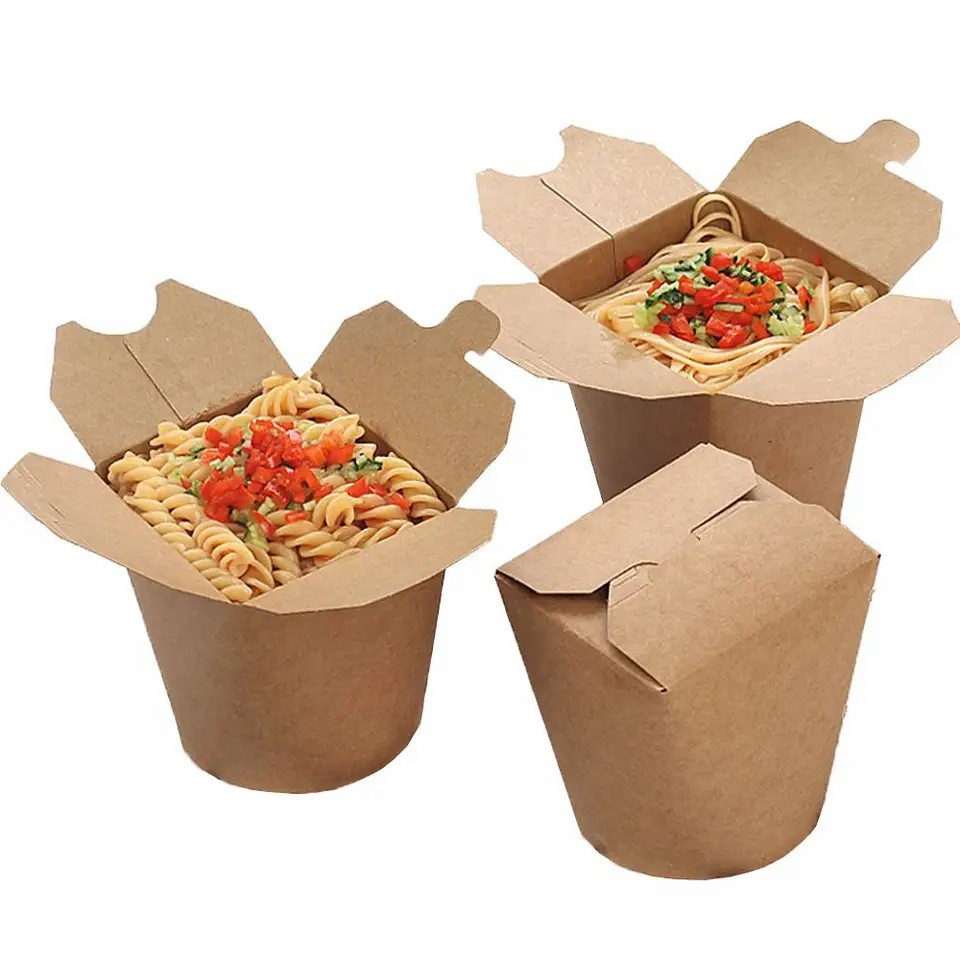
Restaurants, delivery kitchens, campus dining operators, and food distributors across the United States are buying noodle takeout packaging in larger volumes than ever. The reason is simple: noodles travel well, but only when the box holds heat, resists leaks, manages steam, and supports efficient stacking from kitchen line to delivery vehicle. For buyers searching for a dependable bulk noodle boxes supplier, the right decision is not just about price per unit. It also involves sizing, lining type, sustainability requirements, print quality, freight planning, certification, and whether the supplier can stay consistent during peak ordering cycles.In the U.S. market, demand is especially strong in dense urban and suburban delivery corridors such as Los Angeles, New York City, Chicago, Houston, Seattle, Atlanta, Miami, and the Bay Area. Import logistics often move through ports such as Los Angeles/Long Beach, New York/New Jersey, Savannah, and Houston, while domestic distribution then flows to restaurant groups, wholesalers, and foodservice packaging resellers. Buyers that order well usually compare case pack structure, moisture resistance, printing options, lid compatibility, coating type, and total landed cost rather than carton price alone.This guide explains how to evaluate a bulk noodle boxes supplier for the United States, how demand is changing, which specifications matter most, where cost savings come from in large orders, and what certifications should be checked before purchasing.A strong bulk noodle boxes supplier for the United States should offer food-grade paperboard, reliable PE or PLA lining options, multiple standard capacities, custom branding, verified compliance documentation, stable lead times, and pricing that improves at higher volumes without sacrificing leak resistance or crush strength. For U.S. restaurants and distributors, the best supplier is usually one that can support both stock and customized noodle boxes, provide consistent quality across repeat orders, and coordinate export shipping efficiently to major U.S. ports and inland logistics hubs.If you are buying for a restaurant group, ghost kitchen network, food truck franchise, Asian fast-casual chain, or regional packaging distributor, prioritize these factors:Correct size range for ramen, lo mein, chow mein, rice dishes, and combo meals Oil and moisture resistance suitable for hot sauces, broth residue, and stir-fry items Safe food-contact materials with documented compliance Carton configuration that fits warehouse and store-level inventory needs Clear MOQ and volume pricing structure Customization support for branding and operational labeling Shipping reliability to the United States For product sourcing, buyers looking for a broader packaging range can review food packaging product options to compare noodle boxes with bowls, meal boxes, trays, and companion takeaway formats.Demand for noodle takeout packaging in the United States is being pushed by several overlapping trends: sustained third-party delivery, growth in regional Asian cuisine chains, broader consumer acceptance of takeout premiumization, and stricter attention to packaging sustainability. Noodles, rice bowls, and stir-fry dishes are no longer limited to traditional Chinese takeout. They are now standard menu items across fast casual, fusion, college foodservice, airport concessions, and meal delivery brands.In metropolitan areas like San Francisco, Los Angeles, Boston, Dallas, and Washington, D.C., operators increasingly need packaging that performs across dine-in leftovers, curbside pickup, and app-based delivery. This raises the demand for fold-top noodle boxes that can be closed quickly, stacked securely, and printed with brand elements. At the wholesale level, distributors serving regional restaurant clusters want versatile SKUs that can cover both noodle and rice applications to reduce storage complexity.The market also reflects changing consumer expectations. Diners now pay closer attention to grease leaks, soggy corners, package appearance, and sustainability claims. That means packaging is no longer a back-of-house commodity alone; it is part of the guest experience. A poorly formed box can lead to spills in rideshare delivery, while a well-designed box supports product quality and repeat ordering.U.S. Demand DriverImpact on Noodle Box BuyingTypical Buyer SegmentPreferred SpecificationOperational BenefitRisk if IgnoredThird-party delivery growthHigher packaging performance requirementGhost kitchensLeak-resistant lined boxesFewer spill complaintsRefunds and bad reviewsAsian fast-casual expansionMore standardized volume ordersRestaurant chainsPrinted branded sizesBrand consistencyMixed store presentationRising takeout frequencyGreater reorder speedIndependent restaurantsStock carton programsFaster replenishmentStockouts during busy weeksSustainability pressureInterest in compostable optionsUniversities and corporate diningPLA-lined formatsBetter policy alignmentBid disqualificationLabor efficiency needsPreference for easy-fold designsQSR operatorsPre-creased fold-top boxesFaster line packingSlower service timesPremium food photographyNeed for clean, attractive packagingDelivery-first brandsHigh-quality flexo printBetter customer perceptionLower brand valueThe table shows that buying trends are operational as much as aesthetic. Demand is not only increasing in volume; it is becoming more specification-driven. U.S. buyers now ask more detailed questions about paper weight, lining thickness, certification, and freight timing than they did a few years ago.var ctx1 = document.getElementById('lineChart').getContext('2d');var chart1 = new Chart(ctx1, {type: 'line',data: {labels: ['2021', '2022', '2023', '2024', '2025', '2026'],datasets: [{label: 'Estimated U.S. Bulk Noodle Box Demand Index',data: [72, 79, 86, 95, 104, 115],borderColor: 'rgb(75, 192, 192)',backgroundColor: 'rgba(75, 192, 192, 0.15)',fill: false,tension: 0.3}]},options: {responsive: true,maintainAspectRatio: false}});The growth trend above reflects steady demand expansion through 2026, supported by menu diversification, urban takeout density, and replacement of lower-performing generic food cartons with more specialized noodle packaging.Looking ahead to 2026, three trends matter most. First, buyers will ask for more traceable fiber sourcing and clearer compostability claims. Second, digital ordering growth will keep pushing packaging that survives longer hold times. Third, city- and state-level packaging policy changes will increase requests for lower-plastic or compostable solutions, especially in California, Washington, Oregon, New York, and parts of the Northeast.Choosing the right box size and board material is essential because the same noodle box may be used for dry stir-fry, saucy lo mein, fried rice, pad thai, or side dishes. In the United States, the most common buying mistake is selecting a size based only on ounce count without considering food density, topping volume, and closure performance.Most bulk noodle boxes are made from food-grade paperboard, commonly kraft or white board, with an inner barrier coating. Kraft is popular for natural, eco-forward branding, while white board is often preferred for brighter printing and a cleaner, more uniform surface. Paper weight and box geometry affect rigidity, especially when the package is filled with heavy, hot food for 20 to 40 minutes of transit.Nominal SizeTypical UseRecommended Food TypeCommon BuyerMaterial PreferenceNotes8 ozSide portionsRice, appetizers, kids mealsFood trucksWhite board or kraftUseful for sampler menus16 ozLight entréeLo mein, chow mein, fried riceTakeout shopsKraft with PE liningPopular for lunch portions26 ozStandard entréeNoodles with vegetables and sauceIndependent restaurantsKraft or white boardOne of the most common sizes32 ozHeavier entréeLarge noodles, combo dishesDelivery kitchensHeavier paperboardGood for premium bowls in box form48 ozSharing portionFamily-style noodles or riceCaterersReinforced kraftNeeds strong folds and bottom sealCustomized sizesBrand-specific menusSignature dishesRestaurant groupsTailored board and liningBest for chains standardizing portionsThis size guide helps buyers map operational needs to realistic packaging formats. For example, a 26 oz box may handle a standard stir-fry entrée better than a 16 oz box even if the menu weight seems close, because steam space and fold closure improve food presentation and reduce compression.Material selection should also reflect menu behavior. For high-oil dishes, stronger grease resistance matters. For dry noodle items, a lighter construction may work. For shared platters or family meal bundles, the bottom seam strength becomes more important than print aesthetics.Material TypeAppearanceStrength LevelBest ForPrint QualityBuyer ConsiderationNatural kraft boardBrown, eco lookHighTakeout and sustainable brandingGoodPopular with casual and organic brandsBleached white boardBright whiteHighSharp logo presentationVery highBest for colorful brand graphicsHeavy-gauge kraftBrownVery highLarge portions and cateringGoodHigher unit cost but better rigidityLightweight white boardWhiteMediumDry foods and smaller servingsVery highNot ideal for long delivery timesWindow-lid combination packMixed materialsMedium to highRetail-ready display foodsHighUseful for premium grab-and-goCustom OEM specificationVariableVariableChain accounts and distributorsVariableAllows exact menu and brand fitWhen evaluating a bulk noodle boxes supplier, ask for filled-sample testing under realistic food conditions. A specification sheet is useful, but actual hot food trials often reveal whether the paperboard and lining combination will resist softening during a typical 25-minute delivery cycle in cities such as Chicago or Philadelphia.PE and PLA are the two most commonly discussed inner barrier options for paper noodle boxes. Both help resist oil and moisture, but they serve different commercial priorities. U.S. buyers should understand the difference because the wrong choice can affect price, disposal claims, and customer messaging.PE, or polyethylene, is widely used because it is reliable, cost-effective, and performs well with hot, greasy, or wet foods. It is often the practical choice for high-volume takeaway businesses that need strong moisture resistance at competitive pricing. PLA, or polylactic acid, is a bio-based lining option associated with compostable packaging programs. It is attractive for brands seeking lower-fossil-plastic positioning or compliance with compostability goals, but it usually comes at a higher cost and should be matched carefully to disposal infrastructure and product conditions.FactorPE LiningPLA LiningBest Use CaseCost ImpactBuyer NoteMoisture resistanceStrongStrongBoth for noodles and ricePE lowerCheck real food testingHeat toleranceReliable for standard takeoutApplication-dependentHot entréesPLA higherConfirm temperature rangeSustainability messagingConventionalCompostable-orientedEco-focused brandsPLA higherClaims must match certificationUnit costLowerHigherVolume programsPE advantageImportant for chain marginsU.S. buyer adoptionVery commonGrowingMixed procurement strategiesDepends on city policyRegional regulations matterDisposal pathwayStandard waste stream contextIndustrial composting contextInstitutional foodserviceVariableInfrastructure availability mattersThe comparison makes clear that PE is often the default commercial choice, while PLA is usually a policy- or brand-led choice. Many U.S. buyers now carry both: PE-lined boxes for general distribution and PLA-lined boxes for select accounts in higher-regulation markets.For example, a distributor servicing independent takeout outlets across Texas and Georgia may prefer PE-lined boxes due to cost efficiency and broad versatility. By contrast, a university dining system in California may request PLA-lined products to align with institutional sustainability targets. Neither choice is automatically better; the right choice depends on menu, disposal context, target customer, and budget.var ctx2 = document.getElementById('areaChart').getContext('2d');var chart2 = new Chart(ctx2, {type: 'line',data: {labels: ['2021', '2022', '2023', '2024', '2025', '2026'],datasets: [{label: 'PE-Lined Share',data: [78, 75, 72, 69, 66, 63],borderColor: 'rgb(54, 162, 235)',backgroundColor: 'rgba(54, 162, 235, 0.20)',fill: true,tension: 0.3},{label: 'PLA-Lined Share',data: [22, 25, 28, 31, 34, 37],borderColor: 'rgb(255, 159, 64)',backgroundColor: 'rgba(255, 159, 64, 0.20)',fill: true,tension: 0.3}]},options: {responsive: true,maintainAspectRatio: false}});The trend shift above shows growing PLA interest through 2026, though PE still remains dominant in many high-volume restaurant and wholesaler applications. Buyers should expect a mixed market rather than a full replacement in the near term.Understanding production helps buyers judge whether a supplier can deliver consistent quality at scale. A professional bulk noodle boxes supplier typically follows a sequence that includes paper selection, coating or lining application, printing, die-cutting, creasing, forming, inspection, packing, and warehousing. Each step affects how the final box performs in a U.S. restaurant environment.First, food-grade board is selected according to requested weight, color, and end use. Second, the barrier layer is applied or the lined board is sourced in the required specification. Third, artwork is printed, often through flexographic printing for efficient large-scale production. Fourth, sheets are die-cut and creased to create accurate folding lines. Fifth, the box bodies are formed and quality-checked for seam integrity, lining adhesion, and dimensional consistency. Finally, products are packed in export cartons and staged for shipment.High-volume buyers should ask how the supplier controls variation between batches. Even a small difference in crease depth, bottom folding pressure, or lining quality can affect leakage rates and fill speed during rush periods. A supplier with automated lines, quality labs, and climate-controlled warehousing is better positioned to keep each lot consistent.As an example of what capable production looks like, Shandong Fude Packaging integrates modern production flow across printing, die-cutting, forming, inspection, and warehousing. The company’s technology capabilities support repeatability in high-volume disposable food packaging projects, while its manufacturing systems are structured for both standard and custom runs. Buyers wanting background on factory operations can review the company overview for a closer look at experience and export orientation.Production scale matters especially for restaurant groups and distributors in the United States. An operator with 30 locations may need a monthly replenishment program with strict consistency, while a wholesaler in New Jersey or Southern California may need multiple SKUs combined into container shipments. In those cases, supplier process discipline matters just as much as pricing.Production StageWhat HappensQuality Control PointWhy It Matters for U.S. BuyersCommon Problem if WeakBuyer QuestionPaper selectionBoard grade chosenBasis weight checkDetermines rigiditySoft wallsWhat GSM range is used?Lining applicationBarrier layer addedAdhesion and coveragePrevents leaksMoisture seepageWhat lining thickness is standard?PrintingBrand graphics appliedColor consistencyProtects brand imageFaded or misaligned logosHow is print accuracy monitored?Die-cuttingShape cut from sheetDimension toleranceEnsures fit and closureUneven foldsWhat tolerance is maintained?FormingBox structure assembledSeam strength testSupports heavy food loadsCorner failureHow are formed units sampled?Packing and storageCases packed and stagedCarton integrity and humidity controlPreserves export conditionWarping or damageHow is warehouse climate managed?The table clarifies how manufacturing quality links directly to downstream restaurant performance. Buyers that understand these steps usually make better sourcing decisions and avoid the hidden costs of inconsistent packaging.The biggest savings from ordering bulk noodle boxes do not always come from the lowest quoted unit price. In the United States, sophisticated buyers calculate total usable cost. That includes freight efficiency, damage rates, leak-related claims, print setup allocation, warehouse handling, and reorder frequency.Large-volume purchasing often lowers unit cost because paper sourcing, machine setup, and printing become more efficient over longer runs. But savings also come from ordering the right assortment. Too many sizes raise inventory carrying cost. Too few sizes can create operational mismatch and food waste. The best strategy is usually a carefully limited SKU plan that covers major menu applications.For example, a multi-location noodle concept in Los Angeles might reduce total costs by standardizing around 16 oz, 26 oz, and 32 oz boxes rather than carrying six separate capacities. A distributor in Illinois may save on inland handling by ordering pallet patterns optimized for its warehouse racking. An East Coast importer may reduce landed cost by consolidating noodle boxes with bowls, cups, or meal boxes in the same container.var ctx3 = document.getElementById('barChart').getContext('2d');var chart3 = new Chart(ctx3, {type: 'bar',data: {labels: ['Chinese Takeout', 'Asian Fast Casual', 'Ghost Kitchens', 'Universities', 'Food Trucks', 'Distributors'],datasets: [{label: 'Estimated Demand Intensity',data: [92, 88, 81, 63, 57, 95],backgroundColor: 'rgb(255, 99, 132)'}]},options: {responsive: true,maintainAspectRatio: false}});The industry demand chart shows why distributors and traditional Chinese takeout remain major volume buyers, while fast-casual chains and ghost kitchens are driving specification complexity and branding upgrades.Cost planning should include these savings categories:Lower per-unit cost at higher volumes Reduced print setup cost spread across more pieces Fewer emergency purchases from local spot suppliers Lower complaint and refund rates if box quality improves More efficient shipping when mixed SKUs are container-optimized Less packaging waste when sizes are properly matched to menu items Service capability also affects cost. A supplier that helps with artwork preparation, sample testing, and delivery planning can reduce expensive revisions later. Buyers seeking consultation on packaging selection or project flow can review custom packaging services to understand how sampling, artwork review, and production coordination can support smoother purchasing.In practical terms, the lowest invoice price can become the highest operational cost if the boxes leak, arrive late, or do not match the restaurant’s actual serving profile. Experienced U.S. buyers evaluate landed value, not just factory quote.Certification and compliance matter because noodle boxes are direct food-contact packaging. In the United States, importers, distributors, restaurant chains, and institutional buyers increasingly request documentation before approving a supplier. This is especially important for school dining, healthcare foodservice, large chain procurement, and distributor resale.Key items typically reviewed include food-contact compliance, quality management standards, sustainable forestry sourcing, and compostability documentation when applicable. Certifications do not replace product testing, but they provide a strong baseline for supplier credibility and procurement confidence.Certification or StandardWhat It IndicatesWhy U.S. Buyers Ask for ItRelevant Product TypeBest ForProcurement ValueFDA food-contact complianceMaterials suitable for food packagingCore U.S. safety expectationAll noodle boxesGeneral restaurant useEssential screening documentEU EC 1935/2004Food-contact material frameworkShows wider export disciplinePaper packaging linesImporters and distributorsExtra assuranceISO 9001Quality management systemSignals process controlFactory-wide operationsChain accountsSupports consistency claimsFSCResponsible paper sourcingImportant for sustainability reportingPaperboard productsCorporate and institutional buyersHelps with ESG goalsBPI certificationCompostability benchmarkUseful for PLA-lined claimsCompostable formatsEco-program buyersValidates marketing claimsOK CompostCompostability verificationRequested in some sustainability bidsPLA or compostable productsUniversities and municipalitiesBid support documentationThe table shows that each certification serves a different procurement purpose. FDA-related safety documentation is foundational, while FSC and compostability certifications help buyers meet sustainability policies and customer expectations.For a bulk noodle boxes supplier, strong compliance support also means being able to provide documents clearly and promptly. Large U.S. buyers often need a complete file before onboarding a product. Delays in documentation can slow launches, especially when packaging is tied to chain rollouts or seasonal menu promotions.In 2026, expect even tighter scrutiny around environmental claims. Buyers will increasingly ask whether “compostable,” “eco-friendly,” or “biodegradable” language is supported by actual certification and whether the disposal pathway is realistic in the target region. A credible supplier should communicate these distinctions carefully rather than using broad sustainability labels without evidence.MOQ, or minimum order quantity, is a major factor for U.S. buyers because it affects cash flow, warehouse space, and testing flexibility. A wholesaler may be comfortable ordering container-scale quantities, but an emerging restaurant brand may want a trial run first. The best bulk noodle boxes supplier usually offers different order structures for stock items, custom print runs, and fully customized dimensions.In general, stock or plain designs have lower MOQs because they do not require custom printing plates or specialized setup. Custom printed boxes usually need higher volumes to make setup economical. Fully custom sizes or structures can require even more volume because tooling and production planning become more specialized.Order TypeTypical MOQ RangeLead Time RangeBest Buyer TypePrice LevelMain AdvantagePlain stock boxLowShortSmall restaurantsEntry-levelFast startStock size with simple printLow to mediumModerateRegional takeout groupsModerateBasic brandingCustom print standard sizeMediumModerateChains and franchisesBetter at scaleBrand consistencyCustom size and printMedium to highLongerLarge restaurant groupsHigher initial setupExact operational fitMixed container programHigh total, mixed SKUsModerateDistributorsCompetitive landed costSKU flexibilityOEM private label projectProject-basedModerate to longerImporters and brand ownersBest long-term valueDifferentiationThis pricing table should be read as a strategy guide rather than a fixed quote sheet. Actual MOQ and lead time depend on box size, board type, lining, print colors, and shipping mode. Still, the pattern is consistent: the more customized the product, the more important forecasting becomes.For many U.S. buyers, the smartest approach is phased sourcing:Start with sample testing Place a pilot order in a standard size Confirm menu fit and customer response Scale to custom branding once reorder velocity is proven Shift to mixed-SKU or container programs for best economics Suppliers with flexible MOQs and 7 to 15 day production windows for many projects can be especially useful for distributors and restaurant groups managing both trial and recurring orders. Buyers that want to discuss a tailored MOQ or wholesale program can use the contact page to request product details, samples, or quotations.var ctx4 = document.getElementById('comparisonChart').getContext('2d');var chart4 = new Chart(ctx4, {type: 'bar',data: {labels: ['Price Stability', 'Customization', 'Export Support', 'Lead Time Control', 'Certification Depth', 'Mixed SKU Capability'],datasets: [{label: 'High-Capacity Overseas Factory',data: [88, 94, 91, 84, 90, 93],backgroundColor: 'rgb(153, 102, 255)'},{label: 'Small Local Converter',data: [72, 66, 40, 78, 65, 48],backgroundColor: 'rgb(201, 203, 207)'}]},options: {responsive: true,maintainAspectRatio: false}});The comparison chart illustrates a common sourcing tradeoff in the United States: local suppliers may offer convenience for small urgent orders, while higher-capacity export manufacturers often provide stronger customization, mixed-SKU economics, and certification depth for planned volume programs.For U.S. buyers looking for an established packaging manufacturing partner, Shandong Fude Packaging Co., Ltd. positions itself as a factory-focused supplier serving global foodservice businesses with food-grade paper packaging and related solutions. Rather than functioning only as a trader, the company operates with integrated production and export capabilities that support restaurant groups, wholesalers, distributors, and private label projects.From a technology capability perspective, the company uses modern production systems that support flexographic printing, die-cutting accuracy, forming consistency, and in-house quality verification. That matters for noodle boxes because fold precision, print clarity, and barrier performance all depend on process control. Buyers evaluating custom printed or OEM projects benefit from a supplier that can translate artwork into efficient, repeatable mass production.From a manufacturing capability perspective, the company operates a large modern factory environment in Shandong with structured production flow and warehousing support. Its scale supports both standard packaging and customized foodservice items for export markets. For U.S. importers, this is valuable because stable output helps reduce supply disruption risk during chain expansion, promotional periods, and seasonal peaks. The ability to produce across multiple food packaging categories also allows consolidated sourcing, which can improve container utilization and purchasing efficiency.From a service capability perspective, the company supports buyers with packaging selection advice, artwork preparation, sample development, production follow-up, and delivery coordination. This is useful for American businesses that need more than just a price list. Many foodservice operators need help choosing the right lining, size mix, carton format, or branding approach before committing to larger volume orders. The company’s process structure is designed to move from requirement review to sample confirmation and then into production and delivery with clear communication along the way.This combination of technology, manufacturing, and service is especially relevant for restaurant chains, distributors, and private label packaging brands in the United States that need dependable export support, practical customization, and compliance-oriented documentation.What size noodle boxes sell best in the United States?The most common high-volume sizes are typically 16 oz, 26 oz, and 32 oz because they cover lunch portions, standard entrées, and larger delivery orders. Final selection should match your actual menu build, not just nominal capacity.Are noodle boxes only for noodles?No. Many U.S. restaurants use them for fried rice, wings, appetizers, side dishes, combo meals, and even desserts in some concepts. Their folding structure makes them versatile for many takeaway applications.Should I choose kraft or white noodle boxes?Kraft works well for natural or eco-forward branding, while white board usually gives cleaner, brighter print results. The better choice depends on your brand image and print needs.Is PE lining still acceptable in the U.S. market?Yes. PE-lined noodle boxes remain widely used because they are cost-effective and reliable for hot, greasy foods. However, some buyers in policy-sensitive regions also request PLA-lined alternatives.Are PLA-lined noodle boxes always the best sustainable option?Not always. PLA can support compostable packaging programs, but the right choice depends on local disposal infrastructure, product requirements, and certification. Sustainability claims should be matched with real end-of-life conditions.What industries buy noodle boxes in bulk?The main buyers are Chinese takeout restaurants, Asian fast-casual chains, food trucks, college dining systems, corporate cafeterias, ghost kitchens, event caterers, and foodservice packaging distributors.Can a bulk noodle boxes supplier provide custom printing?Yes. Many suppliers can print logos, colors, and brand graphics on standard or customized box formats. Buyers should confirm print method, color consistency, and MOQ before ordering.How can I reduce total cost without sacrificing quality?Standardize your most-used sizes, test box performance with actual food, plan larger but smarter orders, and work with a supplier that can optimize mixed-SKU shipments and avoid repeat defects.What certifications should I ask for?At minimum, request food-contact compliance documentation. Depending on your market and customer base, also ask about ISO 9001, FSC, BPI, or OK Compost where relevant.How important is lead time for U.S. buyers?Very important. Restaurants and distributors often run lean inventories. A supplier that provides realistic production schedules, clear export communication, and consistent replenishment can help prevent stockouts.Should I buy from a local U.S. supplier or an overseas manufacturer?It depends on your order size and business model. Local suppliers may help with emergency replenishment, while higher-capacity overseas factories often offer better customization, broader product ranges, and stronger volume economics for planned programs.What should I ask for before placing a large order?Request samples, specification sheets, compliance documents, carton packing details, production lead time, MOQ, and a quote that shows both unit pricing and shipping assumptions.In summary, choosing the right bulk noodle boxes supplier for the United States means balancing performance, compliance, branding, sustainability, and total landed cost. Buyers that evaluate the full picture rather than chasing only the cheapest carton usually achieve better customer experience, lower operational risk, and stronger long-term margins. -

Custom Paper Bowl Manufacturer for Canada Wholesale
Yes. Fude Packaging is a custom paper bowls manufacturer with a 30,000 m² BRC-certified factory in Shandong, China, serving overseas B2B buyers including importers, distributors, restaurant chains, food brands, and packaging wholesalers in Canada. We produce up to 120,000 units per day and support full customization, including artwork, bowl size, structure, coating selection, rim design, lid compatibility, packing method, and export documentation.For custom orders, the typical MOQ starts at 30,000–50,000 units, depending on the bowl specification, printing complexity, material, and production schedule. Lead time is generally 25–40 days after artwork approval, supported by a 3-stage proofing process: digital proof, white sample, and printed pre-production sample. This process helps Canadian buyers reduce risks related to colour deviation, lid mismatch, leakage, bulk inconsistency, and compliance gaps before mass production begins.For buyers in Toronto, Vancouver, Montreal, Calgary, Edmonton, Ottawa, Winnipeg, and Halifax, working with a real factory rather than an unknown trading middleman can improve cost control, communication accuracy, traceability, and delivery planning. Canada’s foodservice market has increasing demand for paper-based takeaway packaging, compostable-looking kraft bowls, soup bowls, salad bowls, noodle bowls, rice bowls, and branded food containers suitable for delivery platforms, catering, quick-service restaurants, supermarkets, and meal-prep brands.If you are sourcing from overseas, the best starting point is to confirm factory identity, certifications, sample workflow, artwork requirements, Pantone control, food-contact documentation, export experience, and production capacity. Buyers can explore our Custom Paper Bowl products to compare common structures and capacities before preparing a formal quotation request.Canada is a practical and quality-sensitive market for disposable food packaging. Foodservice operators must balance cost, branding, food safety, local sustainability expectations, and consumer convenience. Demand is driven by urban delivery culture in Toronto and Vancouver, chain expansion in Ontario and British Columbia, strong coffee and quick-service restaurant consumption nationwide, and growing adoption of paper-based bowls for soup, salad, poke, noodles, rice, dessert, and prepared meals.Canadian buyers often ask for packaging that looks sustainable while remaining functional. A paper bowl must resist heat, moisture, grease, and deformation during pickup or delivery. A bowl used for ramen in downtown Toronto has different performance needs from a salad bowl sold through a grocery chain in Vancouver or a frozen-ready meal container moving through distribution in Montreal. For this reason, choosing a custom paper bowl manufacturer is not only about unit price; it is also about matching structure, coating, paperboard grade, sealing performance, and lid fit to the actual application.Ports and logistics hubs matter. Vancouver is a major entry point for Asian imports and is often used for western Canadian distribution. Prince Rupert can be attractive for some container routes. Montreal serves eastern Canada and inland connections, while Toronto-area warehouses often support national distribution for large retailers and chain restaurants. Some buyers also consolidate paper bowls with cups, food boxes, trays, and other SKUs in one shipment to reduce freight cost per unit.Canadian RegionMain Demand DriversCommon Bowl ApplicationsTypical Buyer TypeProcurement FocusLogistics NoteOntarioDense foodservice market, chain headquarters, grocery distributionSoup bowls, rice bowls, salad bowls, meal-prep bowlsImporters, QSR chains, distributorsConsistent supply and price stabilityOften distributed through GTA warehousesBritish ColumbiaSustainability awareness, Asian cuisine, port accessNoodle bowls, poke bowls, kraft salad bowlsRestaurants, wholesalers, food brandsEco appearance and lid compatibilityVancouver is a key ocean freight gatewayQuebecRetail food, cafés, institutional foodserviceSoup containers, dessert bowls, deli containersRetail suppliers and packaging distributorsLabeling, bilingual market requirementsMontreal supports eastern distributionAlbertaGrowing takeaway and catering demandHot meal bowls, chili bowls, portion bowlsRegional distributors, restaurant groupsDurability and delivery performanceOften supplied from Vancouver or central warehousesAtlantic CanadaTourism, seafood, prepared food retailChowder bowls, salad bowls, takeaway mealsFoodservice distributorsFlexible mixed-SKU shipmentsHalifax and regional trucking matterPrairiesChain restaurants, grocery, institutional cateringMeal bowls, soup bowls, family-size containersWholesalers and operatorsInventory planning and replenishmentNeeds stable inland delivery schedulesThis table shows why one universal specification rarely works for every Canadian buyer. A national distributor may need several bowl formats, different coatings, and several lid systems, while a regional restaurant chain may need one branded bowl with tight colour control and scheduled releases.Line Chart: Canadian paper bowl demand has shown steady expansion as delivery, prepared meals, and paper-based packaging policies influence purchasing decisions.var ctx = document.getElementById('canadaMarketGrowthChart').getContext('2d');var canadaMarketGrowthChart = new Chart(ctx, {type: 'line',data: {labels: ['2021', '2022', '2023', '2024', '2025', '2026'],datasets: [{label: 'Estimated Canadian Custom Paper Bowl Demand Index',data: [68, 74, 82, 91, 101, 113],borderColor: 'rgb(40, 130, 190)',backgroundColor: 'rgba(40, 130, 190, 0.1)',fill: false,tension: 0.3}]},options: {responsive: true,maintainAspectRatio: false,scales: { y: { beginAtZero: false } }}});When sourcing custom paper bowls from overseas, Canadian buyers should confirm whether the supplier is a real factory, a trading company, or a broker using factory images without production control. A real factory should be able to show manufacturing lines, workshop areas, raw material storage, printing equipment, forming machines, inspection procedures, laboratory capability, packing areas, and shipment records. More importantly, it should be able to answer technical questions without delay.A serious manufacturer can explain paperboard grammage, coating differences, rim forming, leak prevention, printing limitations, sleeve packing, carton strength, palletization, container loading, batch traceability, and test methods. If a supplier can only discuss price and cannot explain why one bowl structure works better for hot soup while another suits cold salad, the buyer should be cautious.Canadian importers should request a business licence, factory address, audit reports, production videos, live video calls, certification documents, and recent export packing examples. A factory visit by the buyer or third-party inspection company is ideal for larger programs. Buyers can also verify whether the supplier has in-house product categories such as bowls, cups, boxes, trays, and containers. Fude Packaging manufactures a wide product range, including Custom Paper Food Container products, paper bowls, paper cups, lunch boxes, and multi-compartment meal boxes in its self-owned Shandong facility.Verification ItemWhat to RequestPositive SignalWarning SignWhy It MattersSuggested Buyer ActionFactory identityLicence, address, ownership detailsConsistent company name and locationDifferent names on documentsReduces fraud and middleman riskCheck documents before paymentProduction capacityMachine list, daily output, videosClear output by product typeVague “large capacity” claimsConfirms ability to meet deadlinesAsk for capacity allocationQuality controlInspection forms and lab testsDocumented incoming and final checksNo testing recordsProtects food-contact performanceRequest pre-shipment inspectionSample processDigital proof, white sample, printed sampleDefined approval workflowSamples sent without specificationPrevents bulk mismatchSign approved samplesCertificationsBRC, FSC, ISO, LFGB, FDA-related documentsTraceable certificate numbersExpired or unrelated certificatesSupports Canadian compliance reviewVerify with issuing bodiesExport experienceShipment photos, packing lists, client regionsExperience with North AmericaNo export documentation knowledgeReduces customs and logistics issuesConfirm Incoterms and documentsThis checklist should be used before comparing prices. The lowest quotation is not useful if the factory cannot produce consistent colour, maintain hygiene control, or ship on time for a launch in Canada.Sample-to-bulk differences are common in custom paper packaging, but they can be controlled. Differences usually come from printing method, paper batch, coating type, machine setup, curing time, humidity, cutting tolerance, and manual sample-making. A hand-made prototype may show the approximate structure, but it does not always represent final automated production. A printed sample may use a proofing device instead of the bulk printing press, which can cause colour deviation.For Canadian food brands, sample consistency is especially important when packaging appears in retail shelves, delivery apps, franchise stores, and social media. A green kraft salad bowl that looks premium in a sample but appears dull in bulk can weaken brand consistency. A soup bowl that fits a lid during sampling but becomes loose in production may cause leakage complaints. The solution is to define which sample is being approved for which purpose.A white sample should be used to confirm size, capacity, shape, lid fit, and structural strength. A digital proof should confirm layout, barcode position, logo placement, mandatory marks, and cutting line. A printed pre-production sample should confirm colour, printing position, coating appearance, and real production tolerances. Before mass production, Canadian buyers should approve a signed sample and keep one reference sample at the factory and one at their office.Fude Packaging’s project team uses artwork checking, dieline review, Pantone matching, prototype development, and functional testing to reduce sample-to-bulk risk. This is especially useful for multi-location brands that need the same bowl appearance across stores in Toronto, Montreal, Vancouver, Calgary, and Ottawa.A proper 3-stage sampling process is not a formality. It is a risk-control system. For custom paper bowls, it should start with a digital proof, continue with a white sample, and finish with a printed pre-production sample when required. Each stage answers a different question.The digital proof answers: Is the artwork positioned correctly? Are bleed, safe zone, barcode, QR code, logo, nutrition panel, and legal text visible? Is the dieline correct? Are Pantone colours listed? Are fonts outlined? This stage is fast and cost-efficient, but it cannot prove physical strength.The white sample answers: Does the bowl structure work? Is the capacity correct? Does the lid fit? Is the height suitable for stacking? Does the rim feel strong? Will the bowl fit existing shelves, delivery bags, or meal kits? This stage is ideal before committing to tooling or printing plates.The printed pre-production sample answers: Does the final printed bowl match the approved brand standard? Is the coating correct? Does the print register well on curved surfaces? Are colours acceptable under normal light? Is the result suitable for mass production? For Canadian brands with franchise or retail visibility, this step can prevent expensive errors.Sampling StageMain PurposeBuyer Should CheckManufacturer Should ProvideTypical Risk ReducedApproval OutputDigital proofConfirm visual layoutLogo, text, dieline, barcode, bleedPDF proof and artwork commentsWrong layout or missing contentWritten artwork approvalWhite sampleConfirm physical structureCapacity, height, rim, lid fitUnprinted sample or prototypePoor fit or wrong sizeStructure approvalPrinted sampleConfirm production appearancePantone, registration, coating, finishPrinted pre-production sampleColour and print mismatchSigned colour approvalFunctional testConfirm use performanceLeakage, heat, grease, stackingTest data or internal reportFoodservice complaintsPerformance approvalPacking mock-upConfirm logistics formatCarton quantity, labels, pallet planCarton dimensions and loading planWarehouse inefficiencyPacking approvalFinal referenceControl mass productionApproved sample retentionFactory reference sampleUncontrolled production changesGolden sample fileBuyers should avoid approving mass production based only on a photo. Physical samples are more reliable because paper texture, coating, rim strength, and colour perception can differ from screen images.Certifications matter because paper bowls are food-contact products. For Canada, buyers often ask about food safety, traceability, responsible sourcing, and international food-contact standards. BRC demonstrates a recognized food safety and packaging management system. FSC supports responsible paper sourcing. ISO 9001 indicates a structured quality management system. LFGB is often relevant for European food-contact confidence. FDA-related documentation is commonly requested by North American buyers to understand material suitability for food contact.However, having certification names on a website is not enough. Buyers should request certificate copies, certificate numbers, scope, factory name, issuing body, expiry date, and product category coverage. If the certificate belongs to a different factory or trading company, it may not cover the actual production site. If FSC is required, confirm whether the specific paper material and chain-of-custody claim can be supported for the order.Fude Packaging operates with BRC, FSC, ISO 9001, LFGB, and FDA-related documentation support, together with in-house laboratory testing and batch traceability. For Canadian buyers, the practical approach is to specify the destination market, food type, serving temperature, sustainability objective, and required documentation at the quotation stage. This allows the manufacturer to recommend suitable materials and avoid compliance misunderstandings.Many custom bowl problems start with artwork files. A curved bowl is not the same as a flat label. Artwork must be prepared according to the correct dieline, with enough bleed, safe margins, vector logos, outlined fonts, embedded images, CMYK settings, Pantone references, and clear varnish or coating notes where applicable. Canadian brands often provide beautiful brand assets, but those assets may not be ready for bowl printing.For paper bowls, distortion can occur when flat artwork wraps around a tapered shape. Important logos should not be placed too close to the seam, rim, or bottom curve. Small text may become difficult to read after forming. Fine lines may break, and gradients may print differently depending on paper texture and coating. If the bowl uses kraft paper, colour results will look different from white paper because the brown base affects ink appearance.Fude Packaging checks dielines, artwork resolution, colour mode, Pantone numbers, logo placement, print limitations, and production feasibility before approval. This technical review helps reduce delays after order confirmation. For buyers ordering multiple SKUs, such as bowls plus Custom Paper Cup products, maintaining consistent brand colour across different product shapes and paper substrates requires coordinated artwork management.Pantone colour matching is essential for restaurants, beverage chains, retail brands, and meal delivery companies that rely on brand recognition. A red used by a national fast-food chain or a green used by a health-focused salad brand must remain stable across orders. Yet exact colour matching on paper packaging is affected by paper colour, coating, ink absorption, printing machine, lamination, lighting, and drying conditions.A professional manufacturer should request Pantone references, not only screen colours. The workflow should include artwork review, substrate confirmation, ink preparation, proofing, visual comparison under controlled light, buyer approval, and production monitoring. For repeat orders, the factory should keep records of ink formulas, paper batches, approved samples, and production notes.Canadian buyers should define acceptable tolerance before production. For some foodservice packaging, a close commercial match is enough. For retail shelf packaging or franchise systems, tighter control may be necessary. It is also useful to approve colours on the same paper material intended for bulk production. A colour approved on white coated paper will not look identical on unbleached kraft paper.Area Chart: Sustainability and brand customization are shifting Canadian demand from generic stock bowls toward customized paper packaging with verified materials.var ctx = document.getElementById('canadaTrendShiftChart').getContext('2d');var canadaTrendShiftChart = new Chart(ctx, {type: 'line',data: {labels: ['2021', '2022', '2023', '2024', '2025', '2026'],datasets: [{label: 'Generic Stock Bowls Demand Share',data: [62, 58, 53, 48, 43, 38],borderColor: 'rgb(160, 160, 160)',backgroundColor: 'rgba(160, 160, 160, 0.25)',fill: true,tension: 0.3},{label: 'Customized Verified Paper Bowls Demand Share',data: [38, 42, 47, 52, 57, 62],borderColor: 'rgb(54, 162, 120)',backgroundColor: 'rgba(54, 162, 120, 0.25)',fill: true,tension: 0.3}]},options: {responsive: true,maintainAspectRatio: false,scales: { y: { beginAtZero: true, max: 100 } }}});A clear quotation request saves time and improves accuracy. Instead of asking only, “What is your best price for paper bowls?”, Canadian buyers should provide product size, capacity, material preference, coating type, food application, hot or cold use, lid requirement, printing colours, artwork status, order quantity, destination port or warehouse, required delivery date, certification needs, packing preference, and whether multiple products should be consolidated.For example, a buyer in Toronto sourcing branded soup bowls for a winter launch should state the soup temperature, required lid type, expected holding time, carton requirements, and launch date. A Vancouver distributor sourcing kraft salad bowls should state whether the bowl will be used for cold salad, oily dressing, chilled display, or delivery. A Montreal retail supplier may need bilingual packaging considerations and consistent barcode placement.Fude Packaging supports custom and wholesale paper packaging projects through structured communication, sample confirmation, artwork checking, and production scheduling. Buyers who need multiple categories can review Custom and Wholesale food Paper packaging support to understand how OEM and ODM projects are managed from specification to shipment.Quotation DetailExample InformationWhy It Affects PriceWhy It Affects Lead TimeCommon Buyer MistakeBest PracticeBowl size12 oz, 16 oz, 24 oz, 32 ozChanges paper use and toolingMay require mould availability checkOnly sending a photoProvide dimensions and capacityMaterialWhite paperboard, kraft paper, FSC optionMaterial cost variesSpecial paper may need sourcingAssuming all kraft is the sameState grade and sustainability goalCoatingPE, water-based, other optionsCoating cost and performance varyTesting may be requiredChoosing coating only by appearanceMatch coating to food typePrinting1 colour, 4 colour, PantoneInk and setup cost differArtwork approval affects scheduleNo Pantone referenceSend editable artwork filesOrder quantity30,000–50,000 units or moreDetermines unit priceAffects production slotRequesting custom print below MOQPlan launch and replenishment volumesDestinationVancouver, Toronto, Montreal, CalgaryFreight cost differsTransit and customs timing differNo delivery addressProvide port or warehouse locationThis information allows the manufacturer to quote a realistic price rather than a low estimate that later changes after technical details are clarified.Custom paper bowls come in many structures. Common options include single-wall paper soup bowls, double-wall bowls, kraft salad bowls, wide-mouth bowls, noodle bowls, rice bowls, ice cream cups used as bowls, deli containers, and multi-compartment meal containers. The right choice depends on temperature, food weight, grease level, moisture, serving time, delivery distance, and lid requirement.For hot soup, rim strength and lid sealing are critical. For salads, bowl appearance, rigidity, and condensation control matter. For rice or noodle bowls, grease resistance and bottom strength are important. For meal-prep applications, stacking and transport durability may be more important than premium printing. For supermarkets, carton labeling, barcode accuracy, and display consistency become key factors.Many Canadian distributors benefit from consolidating related products under one supplier. A chain may need bowls, cups, burger boxes, trays, and meal boxes with consistent branding. A foodservice wholesaler may need several stock-like sizes but with private-label printing. Fude Packaging’s in-house range allows buyers to source bowls together with paper cups, boxes, trays, and multi-compartment containers, reducing supplier fragmentation and simplifying quality control.Custom paper bowls are used across many Canadian sectors. Quick-service restaurants use them for soup, rice bowls, chili, noodles, and desserts. Cafés use small bowls for oatmeal, yogurt, and seasonal soups. Asian restaurants use noodle and rice bowls. Grocery retailers use paper bowls for prepared foods and grab-and-go meals. Catering companies use them for events, corporate lunches, and institutional meal service. Meal-kit and meal-prep brands use them when they need convenient portion control and brand presentation.Demand also comes from hotels, universities, hospitals, airports, stadiums, food trucks, cloud kitchens, and delivery-only brands. Toronto Pearson, Vancouver International Airport, downtown office districts, university campuses, and sports venues all create high-volume takeaway packaging needs. For these applications, product failure is costly because leakage or weak structure can damage customer trust immediately.Bar Chart: Demand varies by industry segment, with quick-service restaurants and prepared meals leading custom paper bowl adoption.var ctx = document.getElementById('industryDemandChart').getContext('2d');var industryDemandChart = new Chart(ctx, {type: 'bar',data: {labels: ['QSR Chains', 'Grocery Prepared Food', 'Meal Prep Brands', 'Cafés', 'Catering', 'Food Trucks'],datasets: [{label: 'Estimated Demand Index in Canada',data: [92, 78, 70, 58, 51, 44],backgroundColor: ['rgb(43, 120, 180)','rgb(54, 162, 120)','rgb(255, 159, 64)','rgb(153, 102, 255)','rgb(255, 99, 132)','rgb(100, 100, 100)']}]},options: {responsive: true,maintainAspectRatio: false,scales: { y: { beginAtZero: true, max: 100 } }}});A custom bowl should be designed around actual food use. Hot soup requires heat resistance, leak prevention, and safe handling. Cold salad requires rigidity, freshness presentation, and lid clarity if a transparent lid is used. Rice and noodle meals require bottom strength and grease resistance. Saucy dishes require coating performance and seam control. Desserts may require smaller capacities and attractive print. Large family-size takeaway meals require stacking strength and secure closure.Canadian winters also influence packaging performance. Hot soups, ramen, curry, and chili are popular seasonal items, and delivery distance in cold weather can increase condensation and temperature change. In summer, salad, poke, fruit, and cold noodle products may require fresh visual presentation and reliable lids. A manufacturer should help test the bowl under realistic conditions rather than simply approving it based on appearance.Functional testing can include water leakage checks, oil resistance, hot-fill simulation, lid-fit testing, compression testing, stacking evaluation, and carton drop considerations. These tests help confirm whether the bowl is suitable for the buyer’s menu, distribution route, and customer experience.A Toronto quick-service restaurant chain planned to launch a branded soup and rice bowl program across more than 80 locations. The key concern was not only price but also lid fit and repeat colour consistency. The recommended approach was to start with a white sample for structure approval, then a printed pre-production sample for brand colour approval. Scheduled production releases helped the buyer avoid overstocking while maintaining consistent supply.A Vancouver foodservice distributor wanted kraft salad bowls for independent restaurants and cafés. Their customers cared about natural appearance and sustainability messaging, but also needed grease resistance for dressings and toppings. The solution was to define a standard range of bowl sizes, confirm coating performance, and prepare private-label cartons for warehouse handling. Consolidating several sizes in one shipment improved container utilization.A Montreal prepared-meal brand required paper bowls for chilled ready-to-eat meals sold through retail channels. The buyer needed stable dimensions, barcode placement, bilingual label compatibility, and carton markings for warehouse receiving. Artwork checking and packing confirmation were as important as bowl production because retail distribution errors can be expensive.A Calgary catering supplier needed durable bowls for hot meals served at corporate and institutional events. The major requirement was performance under transport and stacking. A stronger bowl structure with suitable lid testing reduced deformation during delivery, and scheduled replenishment prevented last-minute emergency orders.Canadian buyers can source from local packaging distributors, regional converters, importers, or overseas manufacturers. Local suppliers offer fast delivery, smaller quantities, and easier communication, which is useful for urgent stock orders or small businesses. However, custom printing, larger volume programs, private-label packaging, and multi-category consolidation may be more cost-effective through direct factory sourcing.Overseas factory sourcing works best when the buyer can plan ahead, meet MOQ requirements, approve samples carefully, and manage ocean freight timelines. The advantage is stronger customization control, direct production communication, broader product range, and potentially better unit cost at scale. The challenge is that buyers must verify the factory, confirm documentation, and build lead time into the procurement calendar.For Canadian distributors and chain operators, a hybrid approach is common: use local stock for emergency needs and overseas custom production for planned branded programs. This reduces risk while preserving cost competitiveness. Ports such as Vancouver and Montreal, plus inland distribution through the Greater Toronto Area, make planned container shipments practical for national supply programs.Comparison Chart: Supplier selection should consider more than price. Factory-direct sourcing offers customization and cost advantages when volumes are planned.var ctx = document.getElementById('supplierComparisonChart').getContext('2d');var supplierComparisonChart = new Chart(ctx, {type: 'bar',data: {labels: ['Customization', 'Small MOQ', 'Unit Cost', 'Fast Local Delivery', 'Certification Control', 'Multi-SKU Consolidation'],datasets: [{label: 'Local Distributor',data: [55, 90, 60, 95, 65, 58],backgroundColor: 'rgba(255, 159, 64, 0.75)'},{label: 'Verified Overseas Factory',data: [92, 45, 88, 55, 90, 86],backgroundColor: 'rgba(54, 162, 235, 0.75)'}]},options: {responsive: true,maintainAspectRatio: false,scales: { y: { beginAtZero: true, max: 100 } }}});Fude Packaging brings more than 20 years of paper packaging experience to international buyers. Our self-owned 30,000 m² factory in Shandong supports automated production of up to 120,000 units per day, with in-house manufacturing covering paper cups, paper bowls, burger boxes, kraft lunch boxes, salad containers, noodle boxes, food trays, and multi-compartment meal boxes. This enables Canadian customers to consolidate multiple packaging categories with one manufacturing partner.Technological capabilities: Our technical support includes artwork and dieline checking, Pantone colour matching, structural development, coating recommendations, prototype sampling, functional performance testing, and laboratory checks. For custom paper bowls, we help evaluate capacity, rim strength, lid compatibility, heat resistance, grease resistance, leak prevention, print registration, and batch consistency before mass production.Manufacturing capabilities: Fude Packaging maintains direct control over material selection, printing, die-cutting, forming, inspection, packing, and shipment. Automated lines, standardized production monitoring, incoming-material inspection, final inspection, and batch verification support consistent output. Our full-batch traceability helps buyers investigate issues quickly and maintain confidence across repeat orders.Service capabilities: Our international team supports quotation clarification, sample planning, production scheduling, export packing, commercial invoices, packing lists, certificates, inspection coordination, sea freight, air freight, full-container shipments, LCL shipments, and express sample delivery. We also support scheduled orders and multi-release shipping, which is valuable for Canadian buyers managing warehouse space, promotions, seasonal launches, or national rollouts.Fude Packaging has served more than 500 international clients across more than 50 countries. Our experience with restaurant, coffee, and beverage chains helps us understand practical requirements involving structure, insulation, leak resistance, lid fit, print accuracy, batch consistency, production scheduling, and logistics. Rather than competing only on the lowest unit price, we help buyers reduce total procurement risk from printing errors, leakage, delayed delivery, incomplete documentation, and inconsistent supplier management.By 2026, Canadian paper food packaging procurement is expected to become more data-driven and compliance-focused. Buyers will increasingly ask for traceability, responsible sourcing, clear material claims, and packaging that supports sustainability goals without sacrificing performance. Paper bowls with improved coatings, better recyclability discussions, and certified paper sources will remain important topics.Technology will also influence sourcing. More buyers will use digital artwork approval systems, QR-code batch tracking, automated inspection records, and digital proof libraries for repeat orders. Colour control will become more standardized as brands operate across delivery platforms, franchise networks, and retail channels. Manufacturers with in-house laboratory capability and documented quality workflows will be better positioned than suppliers relying only on manual inspection.Policy trends will continue to shape demand. Restrictions and public pressure around single-use plastics encourage foodservice operators to evaluate paper-based alternatives, but buyers must still confirm whether a product fits local waste systems and actual food-contact requirements. Sustainability claims should be accurate, documented, and matched to the buyer’s market. A bowl that looks environmentally friendly but fails during use creates both operational and reputational risk.For Canadian importers, the best long-term strategy is to build a supplier relationship that combines cost efficiency, documentation readiness, product testing, flexible customization, and reliable production capacity. This is especially important for distributors and chains planning annual programs rather than one-time purchases.For custom paper bowl orders, MOQ usually starts at 30,000–50,000 units, depending on the size, structure, printing requirements, material, coating, and production schedule. For multi-SKU programs, the MOQ may vary by item. Buyers should share expected annual demand and launch quantity so the manufacturer can recommend a practical ordering plan.Custom paper bowl production usually takes 25–40 days after artwork approval. The final timeline depends on sampling requirements, material availability, production capacity, order quantity, and shipping plan. Digital proofing is faster, while printed pre-production samples require additional time but reduce bulk production risk.Fude Packaging supports BRC, FSC, ISO 9001, LFGB, and FDA-related documentation. Buyers should confirm certificate scope, expiry date, factory name, and product relevance before placing an order. For Canada, it is important to communicate food type, serving temperature, and documentation requirements early in the project.Yes. Buyers can consolidate paper bowls with cups, food containers, burger boxes, lunch boxes, trays, and multi-compartment meal boxes when production schedules and carton planning allow. Consolidation can help Canadian importers reduce logistics cost, improve container utilization, and simplify supplier management.Yes. Scheduled orders and multi-release shipping can be arranged for buyers who need planned replenishment, seasonal launches, promotions, or distribution across multiple Canadian warehouses. This approach is useful for chain restaurants, distributors, retailers, and food brands that want stable supply without excessive inventory pressure.Please send bowl capacity, dimensions if available, food application, hot or cold use, lid requirement, artwork file, Pantone references, order quantity, destination city or port, certification needs, and target delivery date. If you are not sure which structure is suitable, the manufacturer can recommend options after reviewing your food type and usage scenario.Yes. A manufacturer can usually provide a dieline for the selected bowl size and help adapt your logo and artwork to the correct printable area. However, final artwork should still be approved carefully, especially for curved bowl surfaces, seams, barcodes, and small text.Use Pantone references, approve a printed production sample, keep a signed golden sample, and ask the factory to retain ink and production records. Repeat orders should use the same substrate and coating where possible because paper colour and surface treatment affect final print appearance.They can be suitable if the structure, coating, paperboard, rim, and lid are designed for hot-fill use. Buyers should test the bowl with actual soup temperature, holding time, delivery method, and lid system before full launch. Hot soup packaging should never be selected by appearance alone.A verified factory offers better control over production, quality, sampling, documentation, traceability, and schedule. For Canadian buyers managing branded packaging, food safety expectations, and long-distance logistics, factory verification reduces the risk of inconsistent quality, delayed delivery, and unclear accountability. -
United States OEM Paper Bowl Supplier Guide 2026
Packaged food brands in the United States are under pressure from every direction: rising delivery volumes, retailer shelf standards, ESG reporting, state-level packaging rules, and consumer expectations for convenience without compromising presentation. For soups, noodles, salads, frozen-prep kits, deli meals, and microwaveable ready-to-eat products, the paper bowl has moved from a simple container to a strategic brand asset. Choosing the right OEM paper bowls supplier now affects leakage rates, unit economics, freight efficiency, print quality, launch speed, and even retail acceptance.This guide is written for U.S. importers, food manufacturers, restaurant chains, distributors, and private-label operators looking for a dependable custom paper bowl manufacturing partner. It covers direct buying advice, 2026 market opportunity, OEM vs ODM decisions, design development, launch timelines, print and branding options, intellectual property and quality agreements, MOQ and cost planning, and a practical supplier evaluation framework for the United States market.If you need a short answer, the best OEM paper bowls supplier for a U.S. packaged food brand is one that can combine food-contact compliance, reliable bowl forming quality, leak resistance, custom printing accuracy, flexible MOQ, and shipping discipline for ports such as Los Angeles, Long Beach, New York/New Jersey, Savannah, Houston, and Seattle-Tacoma. A strong supplier should also support sample development, artwork checks, testing, and documentation for FDA-related food-contact requirements and sustainability claims.For most buyers in the United States, OEM paper bowls are the better choice when your brand already knows its product positioning, fill weight, lid format, serving temperature, and retail or delivery use case. ODM can work for startups that need a faster path using existing bowl structures, but OEM usually provides better long-term control over dimensions, stacking, wall strength, coating choice, and brand presentation.When selecting an OEM paper bowls supplier, ask these six questions first:QuestionWhy It MattersWhat Good Looks LikeWhat food applications do you specialize in?Soup, noodles, salad, rice bowls, frozen meals, and deli products all need different performance.Supplier shows application-specific recommendations and test history.Which materials and coatings are available?PE, double PE, PLA, and specialty barriers affect heat, grease, and recyclability strategy.Clear explanation of material fit by product use.Can you provide custom printing and brand color control?Retail visibility depends on sharp graphics and batch consistency.In-house or tightly managed flexo printing with prepress support.What certifications and food-contact documents are available?U.S. buyers need confidence for compliance reviews and customer audits.FDA-related declarations, ISO quality systems, FSC, and other relevant records.How do you manage MOQ and mixed-size orders?Inventory risk is high for new launches and regional pilots.Reasonable trial-order options and planning flexibility.What is the realistic lead time to U.S. ports?Late packaging can halt product launches or foodservice supply.Transparent production plus shipping schedule with contingencies.The table above matters because U.S. buyers often compare suppliers only on unit price, yet the real cost is determined by failure rate, freight cube, rejected print runs, missed launch windows, and bowl performance in transit. A paper bowl that costs less per thousand can still be the expensive option if it absorbs moisture, loses shape in warming cabinets, or arrives with unstable stack dimensions.Businesses in Chicago, Dallas, Atlanta, Miami, Los Angeles, and New York typically need different packaging mixes depending on menu style, delivery distance, climate, and retail channel. That is why a supplier’s application knowledge is often as valuable as its factory scale.The U.S. market opportunity for OEM paper bowls in 2026 is expanding because food consumption is moving into formats that favor portable, portioned, and branded packaging. Growth is coming from three areas at once: restaurant off-premise demand, retail-ready prepared foods, and branded packaged meals sold through supermarkets, convenience chains, club stores, and e-commerce grocery platforms.Paper bowls are especially relevant for categories that require visual cleanliness, heat retention, grease control, and easy labeling. This includes ramen kits, grain bowls, soup cups with lids, salad meal sets, poke-style servings, dessert bowls, frozen ready meals, and deli hot bars. In metro markets like Los Angeles, San Francisco, Seattle, Austin, Boston, and Washington, D.C., buyers also face stronger sustainability scrutiny, which increases interest in paper-based formats over heavier plastic alternatives.Three forces will define 2026:State and local packaging policy pressure, especially around recyclability, compostability claims, and responsible sourcing. Brand competition inside retail chilled and ambient shelves, making print quality and structure more important. A continued shift toward hybrid consumption: dine-in, pickup, delivery, workplace eating, and convenience-led meal replacement. The following chart illustrates a realistic U.S. market growth trend for branded paper bowl demand across packaged food and foodservice-linked segments.var ctx1 = document.getElementById('marketGrowthLine').getContext('2d');var marketGrowthLine = new Chart(ctx1, { type: 'line', data: { labels: ['2021', '2022', '2023', '2024', '2025', '2026'], datasets: [{ label: 'Estimated U.S. OEM Paper Bowl Demand Index', data: [100, 109, 118, 129, 141, 156], borderColor: 'rgb(54, 162, 235)', backgroundColor: 'rgba(54, 162, 235, 0.15)', fill: false, tension: 0.3 }] }, options: { responsive: true, maintainAspectRatio: false }});The line chart shows a steady demand curve rather than a short-lived spike. This reflects durable use cases across meal prep, convenience retail, campus foodservice, ghost kitchens, and healthy fast-casual concepts. As these segments mature, buyers increasingly move from generic commodity bowls to custom OEM programs with precise dimensions, coatings, and artwork.Industry demand is not evenly distributed. Some categories are expected to consume far more custom paper bowls than others in 2026.var ctx2 = document.getElementById('industryDemandBar').getContext('2d');var industryDemandBar = new Chart(ctx2, { type: 'bar', data: { labels: ['Prepared Meals', 'Soup & Noodles', 'Salads', 'Desserts', 'Deli Retail', 'Delivery Kitchens'], datasets: [{ label: 'Estimated 2026 U.S. Demand Share Index', data: [88, 95, 74, 58, 81, 92], backgroundColor: [ 'rgb(255, 99, 132)', 'rgb(255, 159, 64)', 'rgb(255, 205, 86)', 'rgb(75, 192, 192)', 'rgb(54, 162, 235)', 'rgb(153, 102, 255)' ] }] }, options: { responsive: true, maintainAspectRatio: false }});Prepared meals, soup and noodles, deli retail, and delivery kitchens lead because they demand lidded, stackable, reliable bowls that can protect food quality during movement. Salad and dessert bowls remain strong, but their barrier needs differ; salad may prioritize moisture control and visibility through lid pairing, while desserts may emphasize branding and aesthetic finish.For 2026 planning, U.S. buyers should pay attention to trend shifts rather than only current volume. The chart below highlights how priorities are moving from plain commodity containers toward sustainable and branded formats.var ctx3 = document.getElementById('trendShiftArea').getContext('2d');var trendShiftArea = new Chart(ctx3, { type: 'line', data: { labels: ['2021', '2022', '2023', '2024', '2025', '2026'], datasets: [{ label: 'Custom Branded & Sustainability-Focused Bowl Programs', data: [28, 34, 41, 49, 57, 66], fill: true, backgroundColor: 'rgba(75, 192, 192, 0.25)', borderColor: 'rgb(75, 192, 192)', tension: 0.3 }] }, options: { responsive: true, maintainAspectRatio: false }});The area chart reflects a broad change in buying behavior. Buyers are no longer asking only for “paper bowls.” They are asking for certified fibers, clear recycling or composting pathways, stronger sidewalls, premium matte or natural kraft visuals, tamper-evident lid fit, and warehouse efficiency. These needs increase the value of a capable OEM supplier.Below is a practical market-opportunity table for the United States by segment.Segment2026 Opportunity LevelMain DriverKey Bowl RequirementPrepared meal brandsVery HighRetail meal replacement growthMicrowave suitability, secure lid fit, printable surfaceSoup and noodle brandsVery HighHot, portable meal demandLeak resistance, heat handling, strong rimHealthy salad conceptsHighFresh convenience and premium positioningMoisture control, appearance, stackabilityDeli and supermarket hot barsHighGrab-and-go food expansionGrease resistance, volume variety, labeling areaFrozen or chilled meal kitsMedium to HighConvenience retail innovationDimension accuracy, barrier choice, transport stabilityDessert and snack brandsMediumImpulse retail and delivery add-onsPresentation, print quality, lid compatibilityThis table shows that the strongest opportunities are where bowl performance directly affects food quality during transit or reheating. That is why OEM development is especially attractive for brands with sensitive products or premium positioning.One of the first sourcing decisions is whether to build an OEM program or choose an ODM route. In simple terms, OEM means the supplier manufactures according to your brand’s specifications. ODM means the supplier offers a pre-developed design or structure that you can brand and sometimes modify. For U.S. buyers, the choice depends on speed, investment, brand maturity, and operational complexity.OEM is ideal when you want control over bowl diameter, height, rim profile, paper weight, coating, lid fit, carton count, print layout, and use performance. It is the preferred model for established food brands, national chains, and distributors serving multiple clients with differentiated packaging lines.ODM is useful when speed matters more than uniqueness. A startup launching regional soup bowls in Texas or a distributor testing private-label salad packaging in Florida may choose an existing bowl architecture and add custom graphics. The risk is that the structure may not fully match your product or logistics requirements.FactorOEMODMBest ForDesign controlHighMediumBrands with clear packaging specificationsSpeed to marketMediumHighShort launch windows or pilot testsUpfront development workHigherLowerTeams with different resource levelsProduct differentiationHighLow to MediumRetail and premium food brandsLong-term cost optimizationHighMediumStable, repeat-volume programsPackaging-performance precisionHighMediumHeat, moisture, grease-sensitive foodsThe comparison above shows why OEM often wins for medium- and large-scale buyers. Although ODM appears easier at the beginning, many U.S. companies later discover that they are paying hidden costs through overpacking, product damage, unnecessary material weight, or poor branding impact.A more detailed supplier comparison helps buyers decide what type of partner they need.var ctx4 = document.getElementById('supplierComparison').getContext('2d');var supplierComparison = new Chart(ctx4, { type: 'bar', data: { labels: ['Customization', 'Speed', 'Brand Impact', 'Cost Control', 'Performance Fit', 'Scalability'], datasets: [ { label: 'OEM Program', data: [95, 72, 93, 88, 94, 90], backgroundColor: 'rgba(153, 102, 255, 0.8)' }, { label: 'ODM Program', data: [62, 89, 68, 71, 73, 78], backgroundColor: 'rgba(201, 203, 207, 0.8)' } ] }, options: { responsive: true, maintainAspectRatio: false }});This chart shows a common sourcing reality: ODM gives a faster start, but OEM delivers stronger customization, brand impact, and application fit. For U.S. importers supplying retailers in cities like Philadelphia, Phoenix, Denver, or Minneapolis, those advantages often become critical once volumes scale.When should you choose OEM?You have a defined filling line, cup dispenser, or lidding system. Your product has a specific temperature, oil content, or hold-time requirement. You need print consistency across multiple SKUs. You want to reduce freight waste through optimized nesting and master carton design. You plan to grow nationally through club stores, grocers, or restaurant chains. When might ODM make sense?You are validating demand in one region. You need quick shelf entry with lower tooling complexity. Your product can use a standard bowl size already proven in similar applications. Your team is still learning packaging specs before investing in a full OEM pathway. In practice, many buyers begin with a near-ODM base structure and move into deeper OEM revisions after the first two or three purchase cycles. A good supplier should support that transition without forcing unnecessary redesign.The design process is where packaging success is either built or compromised. U.S. buyers often focus on artwork first, but functional packaging development should start with the food. The correct sequence is product application, bowl structure, material, lid compatibility, logistics, and only then graphics refinement. That approach reduces costly sample rounds.A proper sketch-to-sample workflow normally includes:Use-case review: food type, fill volume, serving temperature, hold time, and transport conditions. Dimension planning: top diameter, bottom diameter, height, and stack profile. Material selection: kraft or white paperboard, GSM, PE or PLA lining, and wall structure. Prototype artwork layout: logo placement, nutrition or legal print zones, and seam considerations. Physical sample: forming, lid test, leakage test, and carton pack verification. Revision and approval: based on performance, appearance, and logistics findings. The table below explains what buyers should provide to an OEM paper bowls supplier before sampling begins.Input NeededWhy the Supplier Needs ItCommon MistakeBest PracticeFood typeDetermines barrier and structure needsCalling all products “hot food”State whether it is soup, noodle, rice, salad, or dessertFill volumeAffects size, headspace, and lid performanceUsing nominal volume onlyShare actual serving range and top-fill limitTemperature rangeImpacts coating and handling comfortIgnoring warming or microwaving conditionsState serving and reheating temperaturesDelivery or shelf useChanges strength and stack needsDesigning only for store displayDescribe transport distance and stacking weightArtwork filesNeeded for print accuracyLow-resolution logosProvide vector artwork and color referencesTarget certificationsAffects material and sourcing choicesAdding certification requests lateConfirm FDA, FSC, compostability, or buyer-specific needs earlyThis table is important because delays in packaging sampling usually come from incomplete briefs, not factory inefficiency. Buyers who clearly define food use, fill line behavior, and branding requirements generally move faster to approved samples.Product types matter greatly in this stage. A qualified OEM paper bowls supplier should be able to advise on multiple bowl families, including:Single-wall soup and noodle bowls Kraft salad bowls with matching lids White premium retail bowls for bright graphics Double-PE bowls for stronger liquid resistance PLA-lined bowls for compostable positioning where appropriate Microwave-oriented bowl structures for prepared meal applications U.S. buyers should also ask how the supplier handles seam strength, rim forming, nesting depth, and lid interchangeability. These details affect machine feeding, warehouse stacking, and customer use. A bowl that looks good in a PDF mockup can fail quickly if it deforms under steam or shifts in a delivery bag.For private-label projects, artwork preparation should include barcode placement, production lot coding area, and enough unbroken surface for retail stickers or date labels. In supermarket-heavy markets like New Jersey, Illinois, and California, the ability to add labels cleanly is often a non-negotiable operational need.To understand how an OEM paper bowl program works in real business conditions, consider a realistic example: a mid-sized U.S. packaged food brand preparing to launch refrigerated noodle bowls in the Midwest and Northeast. The brand plans distribution through grocery chains in Chicago, Detroit, Columbus, Pittsburgh, and New York metro, with imports arriving through New York/New Jersey and occasional West Coast replenishment via Long Beach.The company needed a 26 oz custom paper bowl with strong leak resistance, secure clear lid compatibility, black-and-red premium graphics, and reliable carton counts for third-party logistics handling. It compared several suppliers and selected a factory-direct manufacturer with sample support, printing capability, and clear quality documentation.Here is a typical launch timeline:WeekMilestoneMain ActionRisk to WatchWeek 1Requirement reviewShare product specs, volume, artwork, shipping planUnclear fill or lid requirementsWeek 2Technical proposalSupplier recommends paper weight, coating, sizeOverengineering material and raising costWeek 3Blank sample approvalCheck bowl feel, fit, lid, stackabilityApproving before actual food testingWeek 4Printed sample approvalVerify colors, seam alignment, text readabilityIgnoring print shift on curved surfacesWeek 5-6Pilot productionRun limited quantity and conduct QC checksSkipping drop and leakage testsWeek 7-8Mass production and shipmentFinalize cartons, loading, export documentsPort timing and booking delaysThe lesson from this timeline is that custom paper bowl sourcing is not just an artwork job. It is a coordinated product-development and operations exercise. The most successful launches build time for actual food trials, warehouse handling reviews, and shipping planning.In this case, the brand initially wanted a lighter board weight to save money, but testing showed slight sidewall softening after extended hot broth contact. The supplier proposed a revised barrier structure that increased unit cost only marginally while improving user experience and reducing complaint risk. That is the kind of value a capable OEM partner brings.Another key learning involved freight planning. The first packing concept left unused cube in master cartons. By adjusting nesting and carton dimensions, the supplier improved pallet efficiency. That matters greatly for inbound freight to U.S. distribution centers in Memphis, Atlanta, and Inland Empire facilities in Southern California.Launch success usually depends on four execution habits:Approve the blank sample before final print work. Test with real food, not only water. Check lid fit after temperature changes. Align production timing with vessel schedules and destination port congestion. For brand owners, this means a supplier should be treated as a development partner rather than only a converter. Buyers that collaborate early on structure and logistics tend to launch faster and reorder with fewer surprises.Printing is where the paper bowl becomes a brand communication tool. In a crowded retail cooler, on a delivery app photo, or in a customer’s hand, the bowl may be the first physical expression of the brand. For U.S. packaged food brands, the right print strategy can improve shelf recognition, perceived quality, and customer recall.Custom printing decisions should begin with channel strategy. A bowl sold in Whole Foods-style premium environments may benefit from natural kraft textures and restrained graphics. A value-driven convenience-store line may need bolder colors and larger typography. A restaurant chain in markets like Las Vegas or Orlando may prioritize logo visibility in user-generated social media content.Important branding factors include:Color stability across production runs Legibility on curved surfaces Print-safe zones around seams and bottom folds Contrast between food imagery and substrate color Space for regulatory or product information Compatibility with labels, QR codes, or promotional stickers Flexographic printing remains a strong choice for many OEM paper bowl programs because it balances speed, consistency, and cost at volume. However, brand teams should ask for practical guidance about line thickness, small text, tonal gradients, and registration tolerances. What works on a flat digital file may not reproduce perfectly on a formed container.Branding ElementBest PracticeOperational BenefitRisk if IgnoredMain logo placementCenter in primary viewing panelBetter shelf and delivery visibilityLogo hidden by seam or hand gripColor paletteUse limited, strong contrast colorsCleaner print consistencyDull or variable brandingTexture choiceMatch kraft or white base to brand identitySupports premium or natural positioningMixed visual messageMandatory text areaReserve readable, uncluttered zonesHelps labeling and complianceCrowded graphics and unreadable detailsBatch coding zonePlan blank or low-ink areaClear traceability markingIllegible production codesLid and bowl visual matchCoordinate materials and finishStronger complete-package presentationDisjointed consumer perceptionThe explanation behind this table is simple: great branding must survive manufacturing reality. Good print design respects the bowl’s shape, seam, forming tolerances, and warehouse handling. If those factors are ignored, even a premium design can end up looking weak at production scale.Packaging should also support application-specific messaging. For example, salad bowls can emphasize freshness, noodles can highlight warmth and comfort, and meal bowls can communicate convenience or protein value. In the United States, where regional taste positioning matters, graphic systems may even vary by distribution territory while using the same bowl dimensions.Another growing 2026 trend is connected packaging. More brands are adding QR codes for sourcing stories, heating instructions, rewards, or recycling guidance. When discussing this with an OEM paper bowls supplier, confirm code readability after forming and under condensation conditions.Custom packaging creates value only when your designs, specifications, and brand assets are protected. That is why intellectual property and quality agreements are essential in OEM sourcing. A strong supplier relationship should include practical controls, not just verbal assurances.For U.S. buyers, IP protection normally covers artwork files, dielines, dimensions, tooling-related formats, and exclusive design elements. Quality agreements cover approved materials, acceptance standards, inspection methods, deviation reporting, and corrective action processes. Both should be discussed before mass production.Key contract topics include:Ownership of custom artwork and brand marks Rules for mold, tooling, or custom dimension use Restrictions on selling the same design to other buyers Approved raw material specifications In-process and final inspection standards Claim handling and remake or compensation logic Quality is not only about pass/fail defects. For paper bowls, it should include structural consistency, rim smoothness, coating uniformity, side-seam adhesion, nesting performance, odor neutrality, and carton pack accuracy. U.S. food brands with retailer scorecards especially need documented control points.Agreement ItemWhat to DefineWhy It Protects the BuyerArtwork ownershipBuyer retains rights to logos and approved layoutsPrevents unauthorized reuseExclusive structure clauseCustom dimensions or features not shared without permissionProtects brand differentiationMaterial specification sheetPaper grade, coating type, GSM, lid compatibilityPrevents silent substitutionsQuality AQL or defect standardsAcceptable defect limits and inspection methodReduces disputes after shipmentTraceability ruleLot coding and production batch recordsImproves recall readinessCorrective action processTimeline for reporting, analysis, and remedySpeeds resolution of issuesThis table matters because many sourcing problems happen after the first successful order, when volume grows and assumptions replace written controls. A documented agreement keeps product quality stable even when order frequency increases.Buyers should also ask how the supplier tests products. Good practices may include leakage tests, heat exposure checks, compression or stack tests, print adhesion checks, odor review, and packaging integrity verification before shipment. A reliable supplier can explain these controls clearly and provide records when needed.For food-contact confidence, U.S. brands often request declarations related to FDA-oriented requirements, plus broader documentation such as ISO 9001 quality management, FSC paper sourcing, and where relevant compostability certifications such as BPI or OK Compost. The exact package depends on your channel and marketing claims.Importantly, “eco-friendly” should never be treated as a vague slogan. Claims need to align with actual material selection, end-of-life pathway, and local disposal realities in the United States. By 2026, this will matter even more as buyers face deeper scrutiny from retailers and regulators.MOQ and cost planning are central to a successful U.S. import program. Minimum order quantity depends on bowl size, print complexity, material type, and whether the project uses existing structures or new specifications. Many buyers focus only on the quoted price per piece, but the more useful metric is total landed cost matched against sell-through speed and inventory risk.Cost drivers usually include:Paper grade and thickness Coating type such as PE, double PE, or PLA Bowl size and structural complexity Print color count and artwork coverage Lid type and pack format Carton configuration and pallet efficiency Sampling and development work Ocean freight and destination-port charges For U.S. companies importing through Long Beach, Oakland, Houston, or Savannah, container utilization often makes a meaningful difference to final economics. A slightly redesigned bowl stack or carton footprint can reduce logistics cost more effectively than pressuring the supplier on piece price alone.Cost FactorLow Impact ScenarioHigh Impact ScenarioBuyer TipMaterial weightStandard dry-food bowlHeavy hot-liquid applicationDo not over-specify unless needed by testingCoating choiceSingle PEDouble PE or specialty barrierMatch barrier to actual hold timePrintingSimple 1-2 color designDense full-wrap graphicsOptimize design for visibility, not ink coverageMOQ levelShared or standard size baseFully custom dimensionAsk about phased rollout quantitiesLid compatibilityExisting standard lidNew custom lid systemUse standard interfaces where possibleFreight utilizationEfficient nesting and carton cubeAir gaps and weak pallet planningReview loading plans before productionThe explanation here is that unit cost is only one part of the purchasing decision. Packaging that reduces waste, improves palletization, and cuts complaint rates frequently delivers better margin even if the invoice price is modestly higher.What MOQ strategy works best in the United States?For pilot launches, seek flexible MOQ tied to a standard bowl platform with custom print. For regional rollouts, consider mixed-SKU planning if graphics vary but structure stays the same. For national programs, optimize volume commitments in exchange for better print and logistics economics. Lead time also affects cost. Rush schedules may increase error risk or force expensive shipping choices. A well-organized supplier with stable production planning and climate-controlled warehousing can help smooth demand and prevent stockouts.If you are evaluating suppliers, compare quotations using a full checklist: ex-factory price, sample cost, tooling implications, carton counts, loading quantity per container, document support, inspection policy, and standard lead time. This creates a fairer comparison than piece price alone.For U.S. buyers seeking a one-stop OEM paper bowls supplier, Shandong Fude Packaging Co., Ltd. positions itself as a practical manufacturing partner rather than just a catalog seller. The company has been operating since 2004 and serves customers across multiple continents, including foodservice and distribution markets that demand stable quality, custom development, and export execution.Fude’s technical strength lies in integrating design support with production reality. Its team supports packaging selection, artwork preparation for manufacturing, and sample development so clients can move from concept to production with fewer revisions. The factory uses flexographic printing and forming systems suited to custom food packaging, while quality-lab processes help verify leak resistance, print consistency, and structural suitability. For U.S. buyers developing noodles, salads, soups, and deli applications, that combination is useful because it aligns branding needs with actual bowl performance.Brands that need guidance on coatings, stack geometry, or custom sizing can explore product directions through the company’s paper packaging product range. This is especially relevant for buyers comparing kraft, white, insulated, or premium retail-oriented bowl concepts.From a production standpoint, Fude operates a modern 30,000 square meter factory in Shandong with automated lines, die-cutting, printing, forming, and warehousing functions organized for export supply. Its broader disposable food packaging manufacturing base supports paper bowls alongside related containers and cups, which can benefit buyers wanting coordinated packaging families. The company’s experience serving clients in North America and other regions is important for U.S. importers who need stable output and familiarity with international shipping routines.Manufacturing depth also matters when buyers move from trial order to recurring volume. A supplier with organized capacity, batch control, and warehouse discipline is generally better equipped to maintain schedule consistency for arrivals into ports such as Los Angeles, New York/New Jersey, or Savannah.Service is where many supplier relationships succeed or fail. Fude supports a structured process of requirement review, design and sample confirmation, then production and delivery coordination. For U.S. buyers, this helps reduce friction between sourcing teams, packaging engineers, and marketing departments. The company also offers flexible MOQs and typical lead times that can support both trials and wholesale-scale orders, which is especially useful for regional brand launches or distributor programs.Buyers who want to understand the company background can visit the company overview page, while those comparing OEM support processes can review custom packaging services. If you are ready to request specifications, samples, or a quote for the United States market, you can contact the team directly.What makes this relevant to U.S. brands is not only capacity, but the ability to connect technology, manufacturing, and service in one process. That is the difference between simply buying bowls and building a packaging program that supports launch, scaling, and brand consistency.A manufacturer may produce standard bowls, while an OEM supplier develops and manufactures bowls according to your brand’s specifications, including size, material, print, and application needs.Prepared meal brands, soup and noodle brands, salad chains, deli retailers, supermarkets, food delivery platforms, dessert companies, caterers, and restaurant groups all use custom paper bowls.Yes, if designed correctly. The right paper weight, coating, and rim structure can make them suitable for soups, noodles, and other hot foods. Always test with your real product.Many can be designed for microwave use, but this depends on the specific paper, barrier layer, and food application. Buyers should confirm intended usage during development.It varies by complexity, but sampling and production often fall within a multi-week cycle. Production plus ocean freight should be planned early to meet U.S. launch schedules.Common requests include food-contact compliance documentation, ISO 9001 quality management, FSC paper sourcing, and where applicable compostability-related certifications.Not automatically. Sustainability depends on material sourcing, barrier system, disposal pathway, and the claims being made in your target market. Choose based on both performance and end-of-life reality.Use a standard bowl structure with custom print, launch regionally first, and align purchasing with realistic sell-through. Ask the supplier about flexible MOQ options for trial orders.If speed and budget are your top priorities, ODM may be a practical first step. If your product has unique needs or your brand depends on differentiation, OEM is usually the better long-term route.Soup, ramen, hot grain bowls, oily foods, and long-distance delivery use cases generally need stronger leak resistance, heat handling, and structural reliability than dry or cold foods.Very important. Your total cost and inventory timing depend on vessel schedules, destination congestion, inland trucking, and warehouse receiving windows in cities such as Los Angeles, Houston, or New York.Approve the blank sample, printed sample, material specification, carton configuration, quality standard, and shipping plan. Testing with real food is strongly recommended.For U.S. packaged food brands, the best OEM paper bowls supplier is not simply the lowest bidder. It is the partner that understands your application, protects your brand, documents quality, supports efficient logistics, and helps you adapt to 2026 trends in sustainability, regulation, and customer experience. With the right sourcing approach, custom paper bowls can improve both operational performance and market visibility. -

Custom Noodle Boxes Wholesale for Canada Importers
Yes. Canada-based importers, restaurant groups, food-service distributors, takeaway platforms, and private-label packaging buyers can wholesale custom noodle boxes from qualified Chinese manufacturers when the project is managed with clear specifications, verified food-contact documentation, controlled sampling, and suitable shipping planning. Reputable factories can produce custom printed noodle boxes with OEM branding, kraft or white paperboard, PE, PLA, or water-based barrier coatings, different capacities, folding structures, leak-resistant bottoms, and export-ready cartons for Canadian warehouses in Toronto, Vancouver, Montréal, Calgary, Edmonton, Ottawa, Winnipeg, and Atlantic Canada.For custom-printed orders, a realistic minimum order quantity usually starts around 30,000 to 50,000 pieces per size or design, depending on structure, board grade, printing method, coating type, and production scheduling. After artwork confirmation and sample approval, production commonly takes 15 to 25 days. Sea shipping to Canada typically takes about 15 to 35 days depending on whether the cargo moves through ports such as Vancouver, Prince Rupert, Montréal, or Halifax, and whether the destination is an inland warehouse by rail or truck. For a first custom order, buyers should plan a total cycle of approximately 45 to 75 days from final specification to warehouse arrival.The key is not simply finding the lowest quotation. The better procurement decision is to identify a real packaging factory with stable paper sourcing, food-grade materials, in-house or documented quality testing, export experience, and a clear process for printed proofs, pre-production samples, mass production inspection, and claims handling. For Canadian buyers, the supplier should also understand bilingual retail expectations where relevant, North American pallet requirements, winter moisture risk, warehouse handling, and documentation needed by importers and customs brokers.Procurement FactorTypical Benchmark for Canada OrdersWhy It MattersCustom MOQ30,000–50,000 pieces per printed designBalances printing setup cost, paper purchasing, and factory efficiency.Production Lead Time15–25 days after sample approvalAllows time for printing, die-cutting, forming, inspection, and packing.Shipping Time15–35 days by sea, depending on port and routeVancouver and Prince Rupert are common for western Canada; Montréal and Halifax serve eastern routes.Coating OptionsPE, PLA, or water-based coatingDetermines grease resistance, heat performance, compostability positioning, and unit cost.Certification FocusFDA-related, LFGB, BRC, FSC, ISO 9001, compostability optionsHelps importers meet customer, retailer, and food-service chain requirements.First-Order Cycle45–75 daysIncludes specification, sample approval, production, ocean freight, customs, and inland delivery.This table gives Canada importers a practical starting point. Actual timelines may change during peak seasons before summer festivals, back-to-school restaurant promotions, Christmas food-service campaigns, or Lunar New Year factory holidays in China. A professional supplier should warn buyers early and recommend order cut-off dates.Many overseas buyers begin sourcing on B2B platforms and receive quotations from both manufacturers and trading companies. A trading company is not always a problem, but when Canada buyers need repeatable quality, branded packaging, lower long-term cost, and direct technical support, a real factory usually offers stronger control. The challenge is that some intermediaries present themselves as manufacturers even when they do not own paper conversion equipment, printing lines, forming machines, or testing facilities.A genuine noodle box factory should be able to show production areas for material storage, printing, laminating or coating coordination, die-cutting, forming, inspection, and packing. It should explain how paperboard thickness is selected, how coating weight is controlled, how print colour is matched, and how leakage or grease resistance is tested. It should also be able to provide consistent answers about daily output, machine count, standard box sizes, custom mould costs, carton dimensions, and container loading volume.For a Canada importer, factory verification can be done through video audits, third-party inspection companies, business licence checks, certificate validation, factory visit reports, and sample-to-mass-production comparison. Ask for photos or videos that include today’s date, your company name on a paper note, production line footage, raw material labels, and packing areas. A real factory will normally respond confidently, while a middleman may delay, avoid details, or provide generic brochure images.Fude Packaging operates as a direct manufacturer with more than 20 years of experience and a self-owned 30,000 m² production base in Shandong. Its manufacturing capabilities include material selection, printing, die-cutting, forming, quality inspection, packing, and export shipment coordination. For buyers managing multiple locations in Canada, this type of direct factory control helps reduce the common risks of colour variation, delayed production, inconsistent box folding, and unclear responsibility when problems occur.Verification QuestionStrong Factory AnswerWarning SignCan you show live production?Provides real-time video of machines, staff, and current orders.Only sends catalogue photos or refuses a live call.Who controls printing?Explains printing method, colour control, artwork checking, and proofing.Cannot explain colour tolerance or print setup cost.Can you provide carton specifications?Gives box count per carton, carton size, gross weight, and CBM.Only quotes unit price without logistics details.How is leakage tested?Describes hot-water, oil, or filled-food testing procedures.Claims “no problem” but provides no test method.Can third-party inspection visit?Accepts SGS, Intertek, Bureau Veritas, or buyer-appointed inspection.Discourages inspection before shipment.Where are certificates issued?Provides issuer, certificate number, scope, date, and product relevance.Sends expired or unrelated certificates.Can you combine categories?Can produce noodle boxes, bowls, cups, trays, and lunch boxes in-house.Quotes many products but cannot show matching production capability.The purpose of verification is not to create distrust; it is to build a procurement record that protects both sides. Once the first order is successful, Canada buyers can move toward forecast-based purchasing, scheduled releases, and consolidated shipments.The coating inside a noodle box is one of the most important technical choices. It determines whether the box can hold hot noodles, stir-fried rice, saucy pasta, curry, dumplings, poutine-style fusion meals, or cold salads without leaking, softening too quickly, or transferring grease. Canada food-service buyers also need to consider sustainability claims, municipal waste rules, composting infrastructure, and customer expectations in cities such as Vancouver, Victoria, Toronto, Montréal, and Ottawa.PE coating is widely used because it provides reliable moisture and grease resistance at a competitive cost. It performs well for hot soups, oily noodles, and high-turnover takeaway restaurants. PLA coating is plant-based and is often selected by brands that want a compostability-focused message, although actual composting depends on local industrial composting acceptance. Water-based coating is increasingly popular because it can support plastic-reduction objectives and may offer improved recyclability positioning, depending on paper grade, coating formulation, and local recycling systems.There is no single best coating for every buyer. A national restaurant chain shipping packaged meals from Vancouver to Calgary may prioritize leak resistance and stacking strength. A boutique organic food brand in Montréal may value FSC paper and water-based coating. A distributor serving food courts in the Greater Toronto Area may choose PE for mainstream cost efficiency while offering PLA or water-based alternatives for premium customers.Coating TypeBest ApplicationsStrengthsConsiderationsPE CoatingHot noodles, fried rice, saucy takeaway, high-volume restaurantsStrong barrier, mature process, competitive unit costLess attractive for brands focused on plastic reduction messaging.PLA CoatingEco-positioned meals, organic food service, compostability campaignsPlant-based material, useful for sustainability brandingRequires suitable composting infrastructure and correct claims.Water-Based CoatingPlastic-reduction projects, premium takeaway, retail food packagingSupports modern sustainability trends and may improve recyclability positioningNeeds application testing for hot oil, soup, and long holding times.Double Barrier StructureHeavy sauce, high-fat meals, delivery platformsImproves resistance under demanding conditionsHigher cost and must be tested with actual food.Uncoated KraftDry snacks, bakery items, limited-contact foodsNatural appearance and lower material complexityNot suitable for wet noodles or oily meals.Custom Tested CoatingChain restaurants with special recipesMatched to real temperature, oil, acidity, and holding timeRequires sampling and lab-style performance verification.Before mass production, test the coating with the exact food, portion size, sauce level, temperature, and delivery time expected in Canada. A noodle box that works for dry chow mein may not work for ramen broth or curry noodles. Serious suppliers should ask about menu type before recommending a material.var ctx = document.getElementById('areaTrendCoating').getContext('2d');var chart = new Chart(ctx, {type: 'line',data: {labels: ['2021', '2022', '2023', '2024', '2025', '2026'],datasets: [{label: 'PE Coated Boxes Share %', data: [72, 69, 65, 61, 56, 51], borderColor: 'rgb(54, 162, 235)', backgroundColor: 'rgba(54, 162, 235, 0.15)', fill: true},{label: 'PLA and Water-Based Share %', data: [18, 22, 27, 32, 38, 44], borderColor: 'rgb(75, 192, 192)', backgroundColor: 'rgba(75, 192, 192, 0.2)', fill: true}]},options: {responsive: true, maintainAspectRatio: false}});The area chart illustrates a realistic trend shift in North American food packaging. PE remains important because of its performance and cost, but PLA and water-based coatings are gaining share as food brands prepare for stricter sustainability policies, plastic-reduction targets, and more transparent environmental claims in 2026 and beyond.Certifications are often misunderstood in packaging sourcing. A certificate does not automatically make every product legal in every country, and a supplier’s certificate may apply only to a specific material, facility, process, or product range. Canada buyers should review documentation carefully and ensure it matches the noodle box material, coating, ink, and food-contact application being purchased.FDA-related food-contact compliance is widely requested for North American trade because many material standards and test reports are based on United States food-contact expectations. LFGB is associated with German and European food-contact testing and is often considered strict for sensory and migration performance. BRC certification focuses on food safety management systems for packaging manufacturers and is valued by large chains and retailers. FSC certification confirms that paper material can be sourced from responsibly managed forests under a chain-of-custody framework when the correct FSC-certified material and documentation are used.For the Canada market, importers should also consider customer requirements, retailer audits, provincial packaging expectations, and Extended Producer Responsibility trends. Canadian food-service brands increasingly ask suppliers to provide traceable materials, responsible fibre sourcing, test reports, declaration documents, and clear sustainability statements that do not overpromise compostability or recyclability.Fude Packaging supports international compliance requirements including FDA-related food-contact documentation, LFGB, BRC, FSC, ISO 9001, and other recognized standards depending on product and material selection. Its technological capabilities include in-house laboratory support for quality and performance checks, which helps buyers evaluate strength, heat resistance, grease resistance, leakage, and print results before shipment.Certification or StandardMain MeaningImporter ActionFDA-Related Food ContactMaterial suitability for food-contact applications under North American expectationsRequest test reports for paper, coating, and ink where relevant.LFGBEuropean food-contact testing with migration and sensory considerationsCheck product scope, material type, and testing date.BRC PackagingFood safety and hygiene management for packaging productionConfirm factory name, site address, grade, and validity.FSCResponsible forest material chain-of-custodyEnsure FSC claim appears correctly on invoice and packaging if needed.ISO 9001Quality management system certificationUse it as a management signal, not a product safety certificate.BPI or OK CompostCompostability certification for specific materials or productsVerify local acceptance in Canadian composting programs before marketing claims.Third-Party InspectionIndependent check of goods before shipmentUse for first orders, large chain launches, and high-value shipments.The best practice is to maintain a compliance folder for each SKU. Include artwork, specifications, approved sample photos, material declaration, test reports, certificate copies, purchase order, inspection report, packing list, and shipment documents. This makes reorders easier and helps Canadian distributors answer questions from restaurant clients or retail buyers.Sampling is the strongest protection against mistakes in custom noodle box wholesale. A low-cost sample process can prevent expensive errors such as incorrect capacity, weak folding, colour mismatch, leaking seams, unsuitable coating, wrong dieline placement, or carton packing that does not fit Canadian warehouse systems. For first-time China sourcing, Canada buyers should avoid skipping samples just to save a few days.The first step is the digital proof. The supplier checks the dieline, logo position, barcode, nutrition or recycling symbols if used, Pantone references, bleed area, text size, and bilingual English-French copy where required for certain retail or national accounts. Digital proofing is fast and helps catch artwork errors before any physical sample is produced.The second step is the white sample or blank structural sample. This sample confirms size, shape, volume, folding method, lid compatibility, stacking, hand feel, and carton fit. A blank sample is especially useful when a Canadian buyer is replacing a local supplier and needs to confirm whether the new China-made box fits existing kitchen workflows, shelving, delivery bags, or meal assembly lines.The third step is the printed pre-production proof. This is the most important sample before mass production because it shows real colours, printing alignment, coating appearance, structure, and practical food performance. Fill it with actual noodles, sauce, oil, or soup at service temperature. Leave it for the expected delivery time, then check leakage, wall softness, odour, staining, and customer presentation.Fude Packaging offers three flexible proofing options: digital proof, white sample, and printed pre-production proof. Combined with functional testing and practical project management, this process helps restaurant chains and distributors reduce risk before committing to full custom-printed quantities.Sampling StageWhat to CheckTypical Buyer DecisionDigital ProofDieline, logo, colour reference, text, barcode, warning marksApprove artwork or request revision.White SampleCapacity, folding, lid fit, stacking, hand feel, carton estimateApprove structure or adjust size and board grade.Printed ProofColour, registration, coating finish, brand impactApprove printing standard for mass production.Food TestHeat, grease, sauce, soup, delivery timeConfirm coating choice or upgrade barrier.Logistics TestCarton strength, pallet pattern, compression riskAdjust master carton and pallet loading plan.Final ApprovalSigned sample, photos, specifications, tolerance limitsRelease purchase order for mass production.For large orders, keep one approved sample at the factory and one in Canada. If a dispute occurs, both sides can compare delivered goods against the approved reference rather than relying on memory or screen colours.Many Canada food-service distributors buy noodle boxes from one supplier, paper bowls from another, cups from a third, and burger boxes from a local wholesaler. This fragmented model can appear flexible, but it often increases hidden costs. Buyers spend more time managing artwork, certificates, supplier communication, freight bookings, inventory planning, and quality complaints. Brand colours may vary across packaging categories, and container space may be wasted because cartons are not planned together.Consolidation under one capable paper-packaging factory can reduce total procurement cost even if the unit price of one item is not always the absolute lowest. A single supplier can align paper grades, coating recommendations, printing colours, carton dimensions, production schedules, and shipping documents. This is especially valuable for restaurant chains, café groups, Asian food franchises, meal-prep brands, and distributors serving multiple provinces.Fude Packaging manufactures a broad range of in-house products, including noodle boxes, food containers, paper bowls, cups, burger boxes, kraft lunch boxes, salad containers, food trays, and multi-compartment meal boxes. Canada buyers reviewing a complete packaging program can explore Custom Paper Food Container products for takeaway meals, add Custom Paper Bowl products for soups and rice bowls, and coordinate beverage packaging through Custom Paper Cup products. This category-level approach supports brand consistency across the full customer experience.For example, a Toronto-based Asian quick-service chain may need noodle boxes for stir-fry, paper bowls for soup, paper cups for drinks, burger boxes for fusion sandwiches, and trays for catering. If each category ships separately, the buyer may face multiple customs entries, different delivery dates, and uneven inventory. If the categories are planned together, the supplier can improve container utilization and arrange release schedules that match store openings or promotional campaigns.var ctx = document.getElementById('comparisonSupplierChart').getContext('2d');var chart = new Chart(ctx, {type: 'bar',data: {labels: ['Unit Cost Control', 'Brand Consistency', 'Certificate Management', 'Container Utilization', 'Reorder Efficiency', 'Quality Accountability'],datasets: [{label: 'Fragmented Suppliers', data: [68, 55, 52, 58, 60, 50], backgroundColor: 'rgba(255, 99, 132, 0.7)'},{label: 'Integrated Factory Supplier', data: [82, 90, 86, 88, 87, 91], backgroundColor: 'rgba(75, 192, 192, 0.7)'}]},options: {responsive: true, maintainAspectRatio: false}});The comparison chart shows why many experienced importers evaluate total landed cost rather than unit price only. When one supplier manages several compatible paper packaging categories, the buyer often gains better forecasting, less administrative work, and clearer responsibility if issues arise.Paper noodle boxes are lightweight but bulky. Freight efficiency depends on carton size, nesting design, compression strength, container type, palletization, and final delivery route. A quotation that looks attractive at the factory gate may become expensive if the cartons waste container space or arrive crushed. Canada buyers should request carton dimensions, quantity per carton, gross weight, net weight, CBM per carton, and estimated loading quantity for 20-foot, 40-foot, and 40-foot high-cube containers.For western Canada, shipments often enter through the Port of Vancouver or Prince Rupert, then move by rail or truck to distribution centres in British Columbia, Alberta, Saskatchewan, and Manitoba. For eastern Canada, shipments may move through Montréal or Halifax, or sometimes through U.S. ports depending on routing and customs strategy. Buyers in the Greater Toronto Area often compare Vancouver rail routes with eastern port options based on season, congestion, and inland freight cost.Damage prevention requires attention to carton strength and loading pattern. Noodle boxes should be packed in export-grade cartons with moisture-resistant handling practices, clear shipping marks, and suitable stacking height. If pallets are required, confirm pallet size, wrap method, and container loading loss. Pallets improve warehouse handling but reduce the total number of boxes per container. Loose loading increases quantity but requires more unloading labour and careful carton design.During Canadian winter, condensation and temperature changes can affect paper packaging if goods are stored incorrectly. Buyers should keep cartons dry, avoid direct floor contact in damp warehouses, and allow temperature adjustment before opening shrink-wrapped pallets. For national chains, scheduled-order and multi-release shipping can reduce inventory pressure while maintaining supply continuity.Fude Packaging supports sea freight, air freight for urgent requirements, full-container loads, less-than-container shipments, and express sample delivery. Its service capabilities include export documentation such as commercial invoices, packing lists, certificates, and inspection-related documents, helping Canada importers work more smoothly with freight forwarders and customs brokers.Large chains do not choose packaging only by appearance. They need repeatability. A noodle box used in thousands of daily transactions must perform the same way across stores, staff shifts, delivery platforms, and menu cycles. Chain buyers evaluate structure, filling speed, stackability, leak resistance, lid compatibility, insulation, print accuracy, carton handling, inventory replenishment, and complaint response.For restaurant chains in Canada, packaging must also work across diverse conditions. A box may be filled in a busy Vancouver kitchen, delivered during heavy rain, stored in a Calgary dry warehouse, or transported in a Toronto delivery bag during winter. If the paperboard is too weak, the box may deform. If the coating is wrong, grease may seep through. If the print rubs, brand perception suffers. If the carton is poorly designed, store-level storage becomes inefficient.Coffee and beverage chains often require matching cups, bowls, and food containers so that seasonal campaigns look unified. A limited-time noodle bowl promotion may need coordinated paper cups, snack trays, and takeaway boxes. Suppliers must support colour consistency across different substrates, not just produce one attractive sample.Fude Packaging has experience serving major restaurant, coffee, and beverage chains, including projects that require customized paper cups and other food-packaging products. Its automated production capacity can reach up to 120,000 units per day, supporting large orders and repeat programs. For chain buyers, this manufacturing scale matters because shortages can disrupt store operations and emergency local replacement packaging can be expensive.var ctx = document.getElementById('barIndustryDemand').getContext('2d');var chart = new Chart(ctx, {type: 'bar',data: {labels: ['Quick-Service Restaurants', 'Asian Food Chains', 'Meal Prep Brands', 'Food Courts', 'Catering Companies', 'Retail Ready Meals'],datasets: [{label: 'Estimated Custom Noodle Box Demand Index in Canada',data: [88, 94, 72, 76, 64, 69],backgroundColor: ['rgba(255, 159, 64, 0.75)','rgba(75, 192, 192, 0.75)','rgba(54, 162, 235, 0.75)','rgba(153, 102, 255, 0.75)','rgba(255, 205, 86, 0.75)','rgba(201, 203, 207, 0.75)']}]},options: {responsive: true, maintainAspectRatio: false}});The bar chart reflects where custom noodle box demand is strongest in Canada. Asian food chains and quick-service restaurants lead because they combine frequent takeaway orders with strong branding needs. Meal-prep companies and retail ready-meal brands are also growing as consumers seek convenient, portion-controlled meals.For Canada buyers sourcing custom noodle boxes from China, the right supplier should combine cost efficiency, stable manufacturing, quality control, documentation, customization, and dependable communication. Fude Packaging brings these elements together through more than 20 years of industry experience, a self-owned 30,000 m² factory in Shandong, automated production lines, and daily capacity of up to 120,000 units.From a manufacturing capabilities perspective, Fude controls the main production process from material selection and printing to die-cutting, forming, inspection, packing, and shipment preparation. This matters because custom noodle boxes require accurate paperboard selection, clean folding, reliable coating, stable printing, and strong cartons. When these steps are managed within one production system, the buyer has better visibility and fewer gaps between quotation and delivery.From a technological capabilities perspective, Fude maintains in-house laboratory support for quality and performance testing. Buyers can evaluate dimensions, capacity, strength, heat resistance, grease resistance, leak prevention, lid compatibility, print quality, and real food-application performance before confirming mass production. This is especially useful for Canadian menus with hot sauces, oily stir-fry, soup noodles, rice bowls, or delivery orders that may sit for 30 to 60 minutes before consumption.From a service capabilities perspective, Fude supports OEM and ODM projects, custom sizing, artwork and dieline checking, Pantone colour matching, prototype development, rapid sampling, functional testing, production scheduling, and export-ready packing. The international team helps clarify food type, serving temperature, order volume, branding, destination requirements, deadline, and shipping method before preparing a practical solution. Buyers looking for a broader program can review Custom and Wholesale food Paper packaging support to align products, sampling, production, and logistics.Fude has served more than 500 customers across over 50 countries and has experience across Southeast Asia, Europe, the United States, Central Asia, the Middle East, and Oceania. For Canada importers, this global export experience helps reduce uncertainty around documentation, container loading, third-party inspection, and reorder management. The company can also support scheduled orders and multi-release shipping for distributors and chains that need predictable replenishment without overloading warehouse space.var ctx = document.getElementById('lineMarketGrowth').getContext('2d');var chart = new Chart(ctx, {type: 'line',data: {labels: ['2021', '2022', '2023', '2024', '2025', '2026'],datasets: [{label: 'Canada Custom Paper Food Packaging Demand Index',data: [62, 68, 75, 83, 91, 101],borderColor: 'rgb(75, 192, 192)',backgroundColor: 'rgba(75, 192, 192, 0.15)',fill: false,tension: 0.3}]},options: {responsive: true, maintainAspectRatio: false}});The line chart shows a realistic growth pattern for custom paper food packaging demand in Canada. Growth is driven by delivery platforms, restaurant chain expansion, private-label food programs, plastic-reduction policies, and the need for branded takeaway packaging that performs reliably.Looking toward 2026, several trends will shape noodle box sourcing. First, buyers will request more evidence-based sustainability claims and avoid vague “eco-friendly” language. Second, water-based coatings and fibre-based barrier innovation will continue to improve. Third, digital workflow tools will make artwork approval, sample tracking, and reorder management faster. Fourth, chain restaurants will demand more resilient supply plans because port congestion, weather disruptions, and geopolitical risk can affect lead times. Finally, packaging suppliers will be expected to provide not just products but measurable risk reduction through testing, documentation, and transparent communication.For most custom-printed noodle boxes, the MOQ is usually 30,000 to 50,000 pieces per size or design. The exact quantity depends on paper grade, coating, printing complexity, box structure, and whether the order can be combined with other production runs. Plain or standard-size items may sometimes have more flexible quantities, but full custom branding usually requires higher volume to make printing and setup economical.A realistic first-order timeline is 45 to 75 days. Specification discussion, artwork checking, and sampling may take one to three weeks depending on revisions. After sample approval, production usually takes 15 to 25 days. Sea freight and inland delivery to Canadian warehouses can take 15 to 35 days depending on the port, route, customs clearance, and final destination. Repeat orders are usually faster because specifications and samples are already approved.Ask for complete certificate copies showing the factory name, site address, issuing organization, certificate number, validity date, scope, and product relevance. Check whether the certificate applies to the actual noodle box material and coating. For critical orders, verify directly with the certification body or use a third-party inspection company. Do not rely on a certificate if the company name does not match the supplier or if the document is expired, blurred, or unrelated to food-contact packaging.Yes. Consolidating multiple categories in one shipment is often a smart strategy for Canada importers. Noodle boxes, paper cups, paper bowls, burger boxes, trays, and lunch boxes can be coordinated under one purchase plan when production schedules and carton loading are properly arranged. This can improve container utilization, reduce administrative work, align brand colours, and simplify customs and warehouse receiving.The purchase agreement should define approved samples, specifications, acceptable tolerances, inspection standards, and claim procedures before mass production. If delivered goods do not match the approved sample, document the issue with photos, videos, carton labels, batch numbers, and inspection records. A responsible factory should investigate promptly and provide a solution such as replacement, credit, rework, or another agreed remedy when a confirmed manufacturing issue is found.Importing works best for businesses with repeat demand and planned inventory, such as food-service distributors, restaurant chains, Asian cuisine franchises, meal-prep companies, catering suppliers, supermarket ready-meal programs, and packaging wholesalers. Very small restaurants may prefer local stock packaging, while growing chains and distributors can achieve better branding and landed cost through direct factory sourcing.Kraft paper gives a natural, casual, and sustainability-oriented appearance that works well for organic, street-food, and Asian takeaway concepts. White paperboard provides a cleaner print background and stronger colour impact for premium branding. The best choice depends on menu positioning, artwork style, coating needs, and customer expectations. Both options should be tested for strength and food performance.Prepare box size or capacity, food type, serving temperature, coating preference, print design, expected order quantity, delivery city, target port, certification requirements, and launch deadline. If you already use a local box, send photos, measurements, and current packing details. The more complete the information, the more accurate the quotation, sampling plan, and shipping estimate will be. -

Canada Custom Paper Lunch Boxes Wholesale Guide 2026
Yes. Canadian importers, food-service distributors, restaurant groups, meal-prep brands, grocery chains, and packaging wholesalers can source custom paper lunch boxes at wholesale volume directly from Fude Packaging, a 30,000 m² BRC-certified factory in Shandong, China. For most custom paper lunch box wholesale projects, the practical minimum order quantity starts from 30,000 to 50,000 units, depending on structure, paper grade, coating, printing coverage, tooling needs, and packing method.For Canada-bound orders, standard lead time is usually 15–25 days for plain or stock-based production and 25–40 days for custom-printed production after artwork approval. This timeline does not include ocean freight to Canadian ports such as Vancouver, Prince Rupert, Montreal, or Halifax, nor inland trucking to Toronto, Calgary, Edmonton, Ottawa, Winnipeg, or other distribution points. Buyers planning seasonal launches, chain-store rollouts, franchise menu updates, or private-label packaging should add time for sampling, testing, artwork checking, production, export documents, sailing schedules, customs clearance, and warehouse receiving.Fude Packaging holds BRC, FSC, ISO 9001, LFGB, and FDA-related food-contact documentation, and serves clients in more than 50 countries. For Canadian buyers, these credentials support supplier qualification, food-contact risk review, sustainable sourcing discussions, and retailer due diligence. They do not replace the buyer’s responsibility to confirm local requirements with Canadian authorities, private auditors, retailers, or legal advisers, but they provide a stronger starting point than sourcing from an unknown trading company with limited manufacturing control.In simple terms, a strong custom lunch box wholesale program for Canada should answer six questions before purchase: What food will be packed? What temperature and holding time are expected? Which coating is needed for grease, moisture, or heat? What MOQ and forecast justify custom printing? Which certifications and documents will the buyer require? How will packaging be shipped, stored, distributed, and reordered?Decision PointTypical Canada Buyer QuestionPractical Wholesale AnswerMOQCan I start below 10,000 units?For fully custom printing, 30,000–50,000 units is more realistic because setup, printing, and material planning must be efficient.Lead timeHow fast can production finish?Plain orders often need 15–25 days; custom printed orders usually need 25–40 days after approved artwork.CertificationDo I need FDA, LFGB, or BRC?Food-contact documentation, factory audit credentials, FSC material options, and quality-system records are all useful for Canadian importers.ShippingWhich Canadian port is best?Vancouver is common for Western Canada; Montreal and Halifax may fit Eastern Canada depending on route and inland delivery.SamplingShould I approve a photo only?No. Digital proof, white sample, and printed pre-production proof reduce risk before mass production.Total costIs unit price the full cost?No. Tooling, printing plates, cartons, testing, freight, duty, warehousing, and stock-out risk affect real cost.This table shows why Canadian sourcing decisions should be based on landed cost, compliance confidence, and repeat supply stability—not only the lowest ex-factory quotation.The real MOQ for custom lunch box wholesale is not a fixed number printed on a catalogue page. It is the point where material procurement, printing setup, die-cutting, forming, inspection, packing, and export shipping become efficient enough for both buyer and factory. For many Canadian buyers, this range begins at 30,000–50,000 units per SKU for custom paper lunch boxes. More complex shapes, multi-compartment structures, heavy ink coverage, custom lids, special coating, or small carton packing can increase the minimum.A Toronto meal-prep brand may want 12,000 branded kraft lunch boxes for a pilot program. A Vancouver sushi and poke distributor may need 80,000 leak-resistant bowls and trays across several SKUs. A Montreal food-service wholesaler may require mixed paper cups, bowls, and clamshell boxes for warehouse replenishment. Each case has a different economic logic. If the buyer wants full CMYK or Pantone printing, special board, grease-resistant lining, and private-label cartons, the factory must align paper stock, printing schedule, cutting dies, forming machines, and packaging labour. That is why “real MOQ” is often higher than what a small local digital printer or stock-box reseller may advertise.For buyers not ready for full custom production, a practical route is to begin with plain stock or semi-custom packaging, then move to full custom once demand stabilizes. Fude Packaging can help buyers compare plain kraft, white board, PE-coated, water-based coated, and other suitable structures based on food type and market positioning. Buyers can also review Custom Paper Food Container products to understand which existing formats may reduce development cost.Order SituationRecommended MOQ RangeBest Use CasePlain stock-style lunch boxLower than full custom when availableMarket testing, small distributor trial, seasonal backup stockOne-colour custom logo30,000–50,000 unitsCafés, lunch chains, regional restaurants, private-label startersFull-colour custom print50,000 units or moreRetail-ready branding, national food-service accounts, franchise systemsSpecial size or structureDepends on tooling and paper useMeal kits, airline catering, school meals, institutional feedingMulti-SKU consolidated orderNegotiated by total volumeWholesalers importing cups, bowls, trays, and boxes togetherScheduled annual programBased on release planLarge buyers needing several shipments across the yearThe key point is that MOQ should be discussed together with annual forecast, SKU plan, artwork complexity, and shipment schedule. A buyer ordering 40,000 units once has less leverage than a buyer planning 300,000 units annually with scheduled releases.Certification language can be confusing because different documents serve different purposes. FDA-related documentation is often associated with food-contact material expectations in the United States and is widely recognized in export trade. LFGB is a German food-contact standard known for strict testing and is frequently requested by European buyers. BRC relates to factory-level food safety and hygiene management, helping buyers evaluate whether production systems are controlled, audited, and traceable. FSC supports responsible forest-material sourcing and is especially relevant when Canadian brands communicate sustainability commitments.For Canada, buyers should not assume one certificate automatically covers all regulatory and retailer requirements. Instead, they should build a document package that fits their sales channel. A distributor selling to independent restaurants in Calgary may need food-contact declarations, product specifications, and basic compliance files. A grocery private-label project in Ontario may require FSC claim evidence, migration test reports, factory audit records, ink and coating information, and traceability documentation. A national franchise may ask for BRC, ISO 9001, batch control, corrective action procedures, and third-party inspection acceptance.Fude Packaging’s in-house laboratory and quality-management process help support practical document preparation. Incoming paper, coating performance, printing quality, forming strength, carton integrity, and finished-goods inspection can be checked before shipment. The value for Canadian buyers is not only having certificates, but also having a supplier capable of explaining which certification applies to the product, factory, material, or management system.Document or CertificationMain PurposeCanadian Buyer RelevanceBRCFactory food-safety and hygiene systemUseful for retailer, chain restaurant, and distributor supplier approvalFSCResponsible forest-based material sourcingImportant for sustainability claims and environmentally focused procurementISO 9001Quality-management systemSupports process control, documentation discipline, and corrective actionsLFGBFood-contact testing standardHelpful when buyers need stricter migration testing referencesFDA-related documentsFood-contact material referenceCommonly requested in North American trade and supplier qualificationBatch traceabilityProduction and material trackingSupports claim handling, quality review, and recall-readiness planningCanadian importers should ask suppliers to match certificates with the exact product, material, coating, and production site. Generic certificates from unrelated factories or expired documents should be treated as a warning sign.Three-stage sampling is one of the most effective ways to prevent expensive mistakes in custom paper packaging. The first stage is a digital proof. It confirms artwork position, dieline alignment, logo size, text legibility, colour references, barcode area, recycling marks, and mandatory customer information. Digital proofing is fast and cost-efficient, but it cannot fully verify hand feel, box strength, coating behaviour, lid fit, or actual capacity.The second stage is a white sample. This is usually an unprinted or simply marked structural sample that helps buyers test dimensions, folding, stacking, lid compatibility, food volume, insulation, grease resistance, and user handling. A Vancouver quick-service restaurant packing hot rice bowls, a Toronto salad chain using chilled meals, and a Quebec bakery selling oily pastries may all discover different structural needs from a white sample.The third stage is a printed pre-production proof. This confirms how the approved artwork appears on real material through real printing. It helps identify colour shift, ink density, coating interaction, registration accuracy, fold-line distortion, and brand consistency. For Canadian brands selling through grocery shelves, delivery apps, office catering, and franchise counters, visual consistency is part of customer trust.Fude Packaging provides digital proof, white sample, and printed pre-production proof options. This approach reduces the risk of approving a design that looks good on screen but performs poorly in real use. It also creates a clear approval record so that bulk production can be compared against the signed sample.A 40HQ container is a common choice for Canadian wholesale packaging imports because it offers better freight efficiency than scattered LCL shipments when order volume is large enough. However, the number of custom lunch boxes that fit in a 40HQ container depends on box dimensions, nesting efficiency, carton size, paper thickness, whether lids are separate, and whether multiple SKUs are mixed. A compact kraft food tray may load in much higher quantities than a tall multi-compartment meal box.As a rough planning example, a 40HQ may hold several hundred thousand compact paper food containers if they are nested tightly and packed in export cartons. Larger lunch boxes, burger boxes, or compartment containers may load significantly fewer units. Buyers should ask for carton dimensions, gross weight, cubic metre total, palletized or floor-loaded packing plan, and loading photos. For Canadian warehouses, palletization may help unloading and inventory control, but it reduces container utilization compared with floor loading.Shipping route also matters. Western Canadian importers often receive containers through Port of Vancouver or Prince Rupert before trucking or rail delivery to Calgary, Edmonton, Saskatoon, or Winnipeg. Eastern buyers may use Montreal or Halifax depending on service route, season, inland freight, and customs broker preference. Winter rail congestion, peak-season vessel delays, port labour issues, and warehouse receiving windows should all be considered in launch planning.Packaging TypeApproximate 40HQ Planning RangeKey Factor Affecting QuantitySmall paper lunch box300,000–500,000 unitsStrong nesting and compact carton sizeMedium kraft meal box180,000–320,000 unitsBoard thickness and formed heightLarge multi-compartment box80,000–180,000 unitsBulky shape and lower nesting efficiencyBurger or clamshell box150,000–300,000 unitsCarton volume and lid structureMixed cups, bowls, and boxesCalculated by CBM mixSKU balance and carton stacking planPalletized shipmentLower than floor-loadedBetter warehouse handling but less cube useThese ranges are planning references, not final loading guarantees. A professional supplier should calculate CBM based on actual product drawings and export carton design before confirming shipment strategy.The quoted unit price is only one part of custom paper lunch box wholesale cost. Hidden costs can appear in artwork changes, printing plates, die moulds, special paper procurement, coating upgrades, small carton packing, lab testing, sample courier charges, export documentation, third-party inspection, freight fluctuations, customs brokerage, inland delivery, warehouse handling, and inventory carrying cost. Canadian buyers comparing quotes should request a transparent breakdown rather than accepting a suspiciously low headline price.For example, a buyer in Mississauga may receive a low ex-factory price from one supplier, but later discover that printing setup, carton marking, FSC claim paperwork, and pre-shipment inspection were not included. Another buyer in Richmond, British Columbia may choose the lowest LCL freight option, then pay high destination fees, warehouse charges, and demurrage because cartons were not ready for fast customs clearance. A lower unit price can become more expensive when delays and claims are included.Fude Packaging’s direct manufacturing model helps reduce uncertainty because material selection, printing, die-cutting, forming, testing, packing, and shipment preparation are controlled in-house. Buyers can also consolidate related items such as lunch boxes, paper bowls, cups, and trays to improve container utilization. For brands needing a complete packaging range, reviewing Custom Paper Bowl products and Custom Paper Cup products alongside lunch boxes can create a more efficient procurement plan.Stock packaging is useful for market entry, emergency replenishment, menu testing, and small food businesses that cannot commit to wholesale MOQ. However, custom packaging becomes more logical when brand visibility, repeat purchase, operational efficiency, and supply stability matter. In Canada’s competitive food-service market, packaging is often the first physical brand touchpoint customers see when receiving delivery from Uber Eats, DoorDash, SkipTheDishes, corporate catering, food trucks, university dining, or grocery grab-and-go counters.A business should consider switching from stock to custom packaging when monthly usage is predictable, multiple stores need consistent presentation, product leakage or lid mismatch creates complaints, private-label branding is required, sustainability messaging matters, or distributor margins justify direct import. If a restaurant group in Toronto uses 20,000 lunch boxes per month across several locations, a custom wholesale program may reduce long-term cost while improving brand recognition. If a Vancouver distributor sells to Asian restaurants, poke shops, and cafés, custom SKUs can differentiate its catalogue from generic stock sellers.The shift should be gradual and data-based. Buyers can start with the highest-volume SKU, approve samples, test in real service conditions, then expand to secondary sizes. A full custom packaging system may later include bowls, cups, trays, sleeves, labels, and multi-compartment meal boxes. Fude Packaging supports this transition through product selection, material recommendation, structural development, artwork checking, and scheduled replenishment planning.var ctx = document.getElementById('lineChartCanadaMarket').getContext('2d');var chart = new Chart(ctx, {type: 'line',data: {labels: ['2021','2022','2023','2024','2025','2026','2027','2028'],datasets: [{label: 'Estimated Canadian Demand Index for Paper Food Packaging',data: [100,108,116,124,134,145,157,169],borderColor: 'rgb(54, 162, 235)',backgroundColor: 'rgba(54, 162, 235, 0.15)',fill: false,tension: 0.3}]},options: {responsive: true, maintainAspectRatio: false}});The line chart illustrates a realistic demand trend: Canadian food packaging demand continues to grow as takeout, delivery, prepared meals, institutional catering, and sustainability-led paper substitution expand. Growth is not uniform, but long-term demand supports serious planning for custom wholesale procurement.Many Canadian buyers cannot visit China before placing an order, especially when teams are small or purchasing cycles are fast. However, factory verification can still be rigorous. Start by confirming the business license, factory address, export history, certificates, audit reports, product scope, production videos, machine photos, and live video tour availability. Ask whether the supplier owns production lines or only coordinates with subcontractors. Request product samples from recent production, not only showroom pieces.Next, verify whether documents match the exact company and factory. BRC, FSC, ISO 9001, LFGB, and FDA-related files should show valid dates, relevant product categories, and traceable issuing bodies. If a supplier cannot explain the difference between material testing, factory certification, and product performance, that is a risk. Ask for batch traceability process, incoming material inspection records, and final inspection standards.Third-party inspection is also useful. Canadian buyers can appoint an independent inspection company before shipment to check quantity, carton condition, workmanship, print quality, dimensions, packing, and loading. A proper supplier should cooperate with inspection instead of resisting it. Fude Packaging supports third-party inspection, sample confirmation, export documentation, and batch verification for international buyers.Verification StepWhat to RequestWarning SignFactory identityBusiness license, address, production photosSupplier refuses video tour or gives inconsistent addressesCertificatesBRC, FSC, ISO 9001, LFGB, FDA-related filesExpired, blurred, unrelated, or unverifiable documentsSample proofDigital proof, white sample, printed sampleOnly catalogue photos are providedProduction controlQC plan, inspection checklist, batch recordNo written quality standard existsExport abilityPacking list, invoice, HS code supportUnclear Incoterms or shipment responsibilityInspection accessThird-party inspection acceptanceSupplier discourages inspection before payment balanceRemote verification is not about distrust; it is about professional risk control. A capable factory should welcome clear requirements because they reduce disputes for both sides.Fude Packaging combines technological capabilities, manufacturing capabilities, and service capabilities for overseas B2B buyers. Technologically, the company supports artwork and dieline checking, Pantone colour matching, custom structural development, coating recommendations, functional testing, and pre-production proofing. Its in-house laboratory helps evaluate performance areas such as strength, leak resistance, heat tolerance, grease resistance, lid fit, print quality, and batch consistency. These technical steps are especially important for Canadian buyers whose packaging may be used for hot noodles, poutine, salads, burgers, rice meals, baked goods, frozen-ready meals, and high-moisture takeout foods.In manufacturing, Fude Packaging operates a 30,000 m² self-owned factory in Shandong with automated production lines and capacity up to 120,000 units per day. The production scope covers paper cups, bowls, burger boxes, kraft lunch boxes, salad containers, noodle boxes, food trays, and multi-compartment meal boxes. Because multiple food packaging categories are made in-house, buyers can consolidate supply and maintain consistent brand presentation across different product formats. For companies seeking broader project support, Custom and Wholesale food Paper packaging services provide a practical path from concept to bulk shipment.In service, Fude Packaging has worked with more than 500 international customers across more than 50 countries. The team assists with product selection, material comparison, sampling, OEM and ODM development, export-ready packing, shipping coordination, documentation, scheduled orders, and multi-release shipping. This is useful for Canadian importers who need to manage warehouse capacity, retailer delivery windows, bilingual packaging requirements, and seasonal demand peaks from summer festivals to winter holiday catering.var ctx2 = document.getElementById('barChartIndustryDemand').getContext('2d');var chart2 = new Chart(ctx2, {type: 'bar',data: {labels: ['Quick-Service Restaurants','Meal Prep','Grocery Grab-and-Go','Catering','Food Trucks','Institutional Dining'],datasets: [{label: 'Relative Demand for Custom Lunch Boxes in Canada',data: [92,78,74,66,58,61],backgroundColor: ['rgb(255,99,132)','rgb(255,159,64)','rgb(255,205,86)','rgb(75,192,192)','rgb(54,162,235)','rgb(153,102,255)']}]},options: {responsive: true, maintainAspectRatio: false}});The bar chart shows that quick-service restaurants and meal-prep operators are often the strongest drivers of custom paper lunch box demand, while grocery, catering, food trucks, and institutional dining provide steady additional volume.Custom paper lunch boxes are not a single product. They include kraft fold-top boxes, white paperboard meal boxes, rectangular lunch containers, clamshell burger boxes, windowed boxes, salad containers, noodle boxes, compartment meal boxes, food trays, and matching lids. Each format solves a different food-service problem. A burger box needs ventilation and stacking strength. A noodle box needs liquid resistance and safe handling. A salad container needs visual freshness and lid clarity. A meal-prep tray needs compartment separation and predictable portioning.Industries in Canada using these products include restaurants, cafés, food trucks, franchise chains, hotels, airlines, universities, hospitals, school lunch programs, cloud kitchens, supermarkets, catering companies, convenience stores, and packaging distributors. Applications range from hot entrées and rice bowls to cold salads, bakery items, snacks, desserts, grab-and-go meals, promotional tasting portions, and private-label prepared foods.Local preferences also matter. In Vancouver and Richmond, Asian cuisine, sushi, noodles, and rice bowl demand can influence container shapes. In Toronto and the Greater Toronto Area, dense delivery volume and franchise activity create demand for consistent branded packaging. In Montreal, bakeries, cafés, and prepared foods may prioritize presentation and bilingual labelling space. In Calgary and Edmonton, catering, energy-sector worksites, and institutional meal service may value strength, heat holding, and bulk distribution efficiency.var ctx3 = document.getElementById('areaChartTrendShift').getContext('2d');var chart3 = new Chart(ctx3, {type: 'line',data: {labels: ['2022','2023','2024','2025','2026','2027','2028'],datasets: [{label: 'Shift from Generic Stock to Custom Branded Paper Packaging',data: [32,38,45,52,60,67,73],fill: true,borderColor: 'rgb(75,192,192)',backgroundColor: 'rgba(75,192,192,0.25)',tension: 0.35}]},options: {responsive: true, maintainAspectRatio: false}});The area chart reflects a broader trend: as food-service operators compete for loyalty and delivery visibility, more buyers move from generic stock containers to branded, tested, and specification-controlled paper packaging.Canadian buyers usually choose between local stock suppliers, Canadian packaging distributors, local custom printers, and factory-direct overseas manufacturers. Each option has strengths. Local suppliers can provide fast delivery, smaller quantities, and emergency stock. Canadian distributors understand local warehousing and may offer credit terms. Local printers may help with short-run branding. Factory-direct manufacturers offer stronger control over custom structure, large-volume pricing, category consolidation, and long-term program development.The best choice depends on volume and risk tolerance. A new café in Ottawa may be better served by local stock cartons. A regional chain with 30 locations may benefit from factory-direct custom production. A distributor serving restaurants across Ontario, Alberta, and British Columbia may use both: local stock for urgent needs and direct imports for high-volume SKUs. For serious wholesale buyers, a hybrid model often works well.When comparing local and factory-direct options, include freight lead time, MOQ, print quality, certification depth, technical support, sample process, carton labelling, warehouse handling, reorder cycle, and claim response. Factory-direct sourcing requires more planning, but it can reduce total procurement cost and improve specification control when volumes are stable.var ctx4 = document.getElementById('comparisonChartSupplier').getContext('2d');var chart4 = new Chart(ctx4, {type: 'bar',data: {labels: ['MOQ Flexibility','Custom Structure','Unit Cost at Scale','Certification Depth','Fast Local Refill','Brand Consistency'],datasets: [{label: 'Local Stock Supplier',data: [90,35,45,50,92,48],backgroundColor: 'rgba(255,99,132,0.65)'},{label: 'Factory-Direct Manufacturer',data: [55,92,88,86,45,91],backgroundColor: 'rgba(54,162,235,0.65)'}]},options: {responsive: true, maintainAspectRatio: false}});The comparison chart shows why neither model is perfect for every buyer. Local suppliers are strong for speed and small quantities, while factory-direct manufacturers are stronger for custom engineering, cost at scale, certification depth, and brand consistency.Good sourcing starts with a clear brief. Tell the supplier the food type, serving temperature, target capacity, lid requirement, storage condition, delivery method, branding objective, expected monthly volume, destination city, and documentation needs. A vague request such as “send price for lunch box” often leads to inaccurate quotes. A precise request such as “750 ml kraft fold-top lunch box for hot rice meals, grease-resistant, one-colour logo, 50,000 units, delivery to Toronto warehouse” allows a supplier to recommend a realistic structure and price.Before approving mass production, test samples with real food. Fill the box with hot, oily, wet, acidic, or chilled food according to actual use. Check whether the box softens, leaks, stains, warps, collapses, or affects customer handling. Test stacking, bagging, delivery vibration, microwave expectations if applicable, and storage humidity. Packaging that performs well for dry bakery items may fail with saucy noodles or poutine.For Canada, also plan bilingual artwork where required by sales channel, recycling instructions, brand colours, QR codes, importer information, and carton labels. If the product will be sold through retailers, ask whether they require pallet labels, case pack standards, FSC claims, or specific testing files. If the product is for restaurant internal use, operational strength and reorder reliability may matter more than retail shelf design.Use Incoterms carefully. EXW, FOB, CIF, DDP, and other terms create different responsibilities. Many experienced importers prefer FOB Chinese port plus their own freight forwarder, while smaller buyers may request more support. Always clarify who pays origin charges, ocean freight, insurance, destination handling, customs clearance, duties, taxes, inland trucking, and warehouse unloading.Case one: A Toronto meal-prep company wanted branded lunch boxes for chilled high-protein meals. The initial design used a generic box, but sample testing showed the lid fit was not secure during delivery. A revised structure with better closure strength and a printed pre-production proof helped the buyer approve 50,000 units for the first run. The final program improved presentation for corporate wellness deliveries and reduced complaints from shifting meals.Case two: A Vancouver distributor needed packaging for rice bowls, noodle boxes, and paper cups for restaurant customers across British Columbia. Instead of sourcing each product from a separate supplier, the buyer consolidated several SKUs in one factory-direct shipment. This improved carton planning, container utilization, print consistency, and communication. The buyer kept local emergency stock but used scheduled imports for high-volume items.Case three: A Montreal prepared-food brand required lunch boxes with FSC material options and print space for bilingual branding. The buyer used digital proofing to correct text layout, a white sample to verify capacity, and a printed sample to check colour on kraft board. This prevented a common mistake: assuming colours on kraft paper will match colours on white board. The final packaging supported grocery grab-and-go sales while keeping the brand’s natural look.These cases highlight the same lesson: custom paper lunch boxes wholesale is not just a purchase order. It is a coordinated process involving structure, compliance, artwork, testing, logistics, and repeat supply.Looking toward 2026, Canadian buyers should expect stronger attention to sustainable materials, clearer packaging claims, improved traceability, and more data-driven procurement. Brands will face pressure to reduce plastic, improve recyclability or compostability where infrastructure supports it, and avoid vague environmental claims. Paper packaging will continue to grow, but buyers must choose coatings and materials carefully because not every “eco” claim performs the same in real municipal systems.Technology will also shape custom wholesale packaging. Digital dieline review, faster proofing, automated inspection, colour management, batch coding, and online order tracking will become more important. Larger buyers may require supplier scorecards that measure defect rate, on-time delivery, corrective actions, documentation speed, and carbon-related data. Packaging suppliers with in-house testing and controlled manufacturing will be better positioned than fragmented trading companies.Policy trends may vary by province and municipality. Vancouver, Toronto, Montreal, and other cities continue to influence sustainability expectations through public procurement, local waste-management goals, and consumer culture. National chains operating across provinces will need packaging that can satisfy multiple local expectations while remaining operationally practical. For buyers, this means choosing a supplier that can discuss material trade-offs honestly rather than simply promising the lowest price.For custom noodle boxes, 30,000–50,000 units is usually a realistic starting range, especially when custom printing, specific coating, or special dimensions are required. Larger orders may achieve better unit economics and easier production scheduling.Production normally takes 15–25 days for plain orders and 25–40 days for custom-printed orders after artwork approval. Ocean freight, customs clearance, and inland delivery to Canadian cities such as Toronto, Vancouver, Montreal, Calgary, or Edmonton must be added to the schedule.It depends on your customer, product, and sales channel. FDA-related food-contact documents, LFGB testing references, BRC factory certification, FSC material options, and ISO 9001 quality-system records may all be useful. Canadian buyers should confirm requirements with their compliance team, retailer, or regulator.A white sample checks structure, size, capacity, folding, strength, and lid fit without final printing. A printed sample checks artwork placement, colour, ink coverage, brand appearance, and print quality on real material. Both are valuable before mass production.Bulk consistency is controlled through approved proof records, material checks, production monitoring, printing inspection, forming inspection, final quality control, and batch traceability. Buyers may also request third-party inspection before shipment.Yes. For buyers with annual forecasts or distributor programs, scheduled-order and multi-release shipping can help manage warehouse space, cash flow, and seasonal demand. Details should be agreed before production planning.They can be, if the correct board, coating, structure, and closure are selected. Buyers should test samples with actual food, temperature, holding time, and delivery conditions before approving mass production.Yes. Fude Packaging manufactures a full range covering paper cups, bowls, food containers, trays, noodle boxes, burger boxes, and multi-compartment meal boxes, helping Canadian buyers simplify supplier management and brand consistency. -
Private Label Paper Cup Wholesale in the United States
For coffee distributors, foodservice wholesalers, chain buyers, and importers in the United States, private label paper cups wholesale is no longer just a packaging purchase. It is a branding decision, a margin decision, and a compliance decision. From New York and Chicago to Los Angeles, Houston, Miami, Seattle, and Atlanta, buyers want cups that protect drink quality, print cleanly, stack efficiently, pass food-contact requirements, and arrive on time through major ports such as Los Angeles/Long Beach, New York/New Jersey, Savannah, Houston, and Oakland.In the U.S. market, paper cups are used across coffee shops, convenience stores, office coffee programs, hotels, colleges, stadiums, hospitals, delivery kitchens, dessert brands, and franchised beverage chains. Buyers are increasingly looking for custom branding, stable wholesale pricing, and eco-focused material options. At the same time, they need dependable export factories that understand artwork setup, production consistency, and import documentation.This guide explains how U.S. buyers evaluate private label paper cups wholesale, which cup sizes and wall structures sell best, how pricing and MOQs are usually set, what certifications matter for imports, and where distributor margins can be improved. It also covers 2026 trends in sustainability, technology, and packaging policy that are shaping sourcing decisions in the American market.Private label paper cups wholesale in the United States is a strong and growing category driven by specialty coffee, takeaway growth, food delivery, and brand differentiation. The most in-demand specifications are 8oz, 12oz, 16oz, and 20oz hot cups; 12oz to 24oz cold cups; single wall, double wall, and ripple wall structures; food-grade PE or compostable PLA lining; and sharp flexographic custom printing. For importers and distributors, the best wholesale suppliers offer reliable cup forming, leak resistance, artwork support, FDA-compliant materials, clear carton labeling, and practical MOQs.For most U.S. buyers, the right factory is not simply the cheapest one. It is the supplier that can maintain wall thickness consistency, rim curling quality, print registration, sleeve compatibility, and delivery performance at scale. Distributors who source well can preserve margin through factory-direct purchasing, mixed-size container planning, and brand-focused upselling to cafés and regional chains.Typical buying questions include:Which cup sizes move fastest in coffee distribution? How much does custom logo printing add to cost? What is the MOQ for each size and wall structure? Which certifications are necessary for U.S. import clearance and customer confidence? How can distributors balance sustainability claims with realistic cost targets? The short answer is that private label paper cups wholesale works best when buyers combine commercial priorities with technical screening. Cups must look good on shelf and in the hand, but they also need to perform during morning rush, delivery transit, and heat retention cycles.Demand in the United States has remained resilient because beverage consumption is broad-based. Independent coffee stores still matter, but the larger volume drivers are multi-location cafés, gas station beverage programs, office pantry suppliers, college dining operators, bakery chains, bubble tea brands, smoothie stores, and restaurant groups adding branded takeaway drink packaging.Three forces are shaping demand:Brand visibility: A printed cup acts as mobile advertising in urban markets like Boston, San Francisco, Austin, and Washington, D.C. Takeaway normalization: Even dine-in operators now need stronger off-premise packaging programs. Sustainability pressure: Buyers increasingly ask for FSC-certified paper, lighter-weight structures, improved recyclability messaging, or compostable options where local disposal infrastructure supports them. On price, the market has become more educated. U.S. importers now compare total landed cost rather than ex-factory price alone. Ocean freight, customs clearance, carton count per container, defect rate, and reorder flexibility all affect profitability. Since the pandemic-era shipping spikes, pricing has stabilized somewhat, but raw material swings still influence cup cost, especially for food-grade paperboard, PE resin, inks, and energy-intensive converting processes.Most distributors also see seasonal demand peaks around fall and winter for hot beverage cups and around spring/summer for cold beverage formats. Promotional campaigns, school calendars, sports events, and regional tourism patterns create localized shifts. For example, cold cup demand tends to be stronger in Florida, Texas, Southern California, Arizona, and Las Vegas, while hot cup programs maintain steadier year-round volume in the Northeast and Midwest.The chart below shows a realistic growth pattern for U.S. private label paper cup demand.var ctx1 = document.getElementById('lineChartGrowth').getContext('2d');var chart1 = new Chart(ctx1, {type: 'line',data: {labels: ['2021','2022','2023','2024','2025','2026'],datasets: [{label: 'U.S. Wholesale Demand Index',data: [82, 89, 97, 106, 114, 123],borderColor: 'rgb(75, 192, 192)',backgroundColor: 'rgba(75, 192, 192, 0.15)',fill: false,tension: 0.25}]},options: {responsive: true,maintainAspectRatio: false}});What does this mean for buyers? It means delaying a sourcing strategy can be costly. As more regional operators shift to branded packaging, distributors with ready private label programs gain a selling advantage. Instead of offering only generic stock cups, they can provide customized, compliant, and market-ready cup lines that support customer retention.FactorImpact on U.S. DemandWhy It Matters to BuyersSpecialty coffee growthHigher demand for premium printed hot cupsDistributors can sell better margin productsDelivery and takeaway expansionMore need for secure lids and durable cup wallsPerformance reduces leakage complaintsRegional chain expansionMore private label cup programsCustom branding becomes a repeat-volume driverSustainability policiesGrowing interest in FSC and compostable optionsBuyers must match claims with local regulationsFreight stabilizationImproved import planning versus crisis yearsLanded cost forecasting becomes easierRaw material volatilityPeriodic changes in board and lining costsContracts and reorder timing matterThe table above shows why demand is not shaped by coffee alone. It is a packaging ecosystem tied to operations, marketing, and policy. U.S. buyers that understand these drivers can forecast inventory more accurately and negotiate smarter supply terms.When a U.S. distributor evaluates private label paper cups wholesale, the first review should focus on technical specifications rather than logo design. A beautiful print on a weak cup still becomes a costly problem. Buyers commonly check the following areas before approving mass production.1. Paperboard weight and stiffness. Cup board grade affects hand feel, insulation, resistance to deformation, and suitability for hot or cold use. Lower-cost board can reduce unit price, but if it causes soft sidewalls or poor stack performance, the distributor may lose more through complaints and repacks.2. Lining type. Standard hot and cold cups often use PE lining for moisture resistance. Some programs request PLA for compostable positioning. The right choice depends on end use, local disposal realities, beverage temperature, and budget.3. Wall structure. Single wall is cost-efficient, double wall improves heat protection and print presence, and ripple wall offers insulation and grip. U.S. cafés often choose double wall or ripple wall for premium programs because it reduces the need for sleeves.4. Rim curl quality. The rolled rim affects lid fit, drinking comfort, and leak prevention. Uneven rim formation is a red flag during sample approval.5. Bottom sealing performance. Poor sealing leads to seepage, especially with hot drinks held for longer periods or transported through delivery apps.6. Print clarity and registration. A private label cup must carry logos, colors, legal marks, and campaign graphics consistently. Misaligned branding damages perceived quality.7. Nesting and stackability. Warehouses in New Jersey, Dallas, and Inland Empire distribution hubs care about pallet efficiency. Cups that stick together or deform under storage stress increase labor costs.8. Lid compatibility. The cup diameter must match commonly used sip lids, dome lids, or flat lids. Buyers should confirm tolerance consistency across runs.SpecificationWhat Buyers CheckCommon U.S. PreferencePaperboard GSMWall strength, stiffness, insulation feelBalanced durability over minimum costLiningPE or PLA, leak resistance, heat suitabilityPE for mainstream, PLA for select eco programsWall typeSingle, double, or ripple wallDouble wall for branded coffee programsPrintingColor accuracy, logo sharpness, registrationClean branding for chains and boutiquesRim and sealingLid fit and leak performanceCritical for takeaway and delivery usePacking methodCarton counts, sleeve counts, barcode labelsRetail-ready and warehouse-friendly packingThe table makes a simple point: U.S. buyers do not purchase cups by appearance alone. They buy repeatable performance. Good wholesale partners provide specification sheets, sample testing, and pre-production confirmation before full output begins.Industries such as convenience retail, university dining, hospital foodservice, airline catering, and quick-service restaurants are especially sensitive to consistency. A distributor serving these sectors should request production photos, carton dimensions, loading plans, and defect management procedures before placing a large container order.The size mix in the United States depends heavily on beverage menu, channel, and region. For coffee-focused programs, 8oz, 12oz, 16oz, and 20oz remain the core wholesale sizes. For water, soda, smoothies, tea, juice, and dessert drinks, 12oz, 16oz, 20oz, 22oz, and 24oz are common. Smaller sizes like 4oz are often used for espresso sampling, tasting events, and medical or office applications.Style selection also matters. A downtown specialty café in Portland may choose matte-finish double wall cups with understated branding, while a national gas station chain may prioritize single wall hot cups for aggressive price targets and high-volume lid compatibility.SizeTypical UsePopular Style4ozEspresso, sampling, medicine cupsSingle wall8ozSmall coffee, cappuccinoSingle or double wall12ozRegular coffee, teaSingle, double, or ripple wall16ozLarge coffee, latteDouble wall or ripple wall20ozExtra-large hot drinksDouble wall22oz-24ozCold drinks, smoothies, fountain beveragesCold cup formatThe explanation behind these sizes is practical. The 12oz and 16oz segment usually drives the most repeat business for independent coffee shops and regional chains. The 20oz segment is important for convenience stores and value-focused beverage programs. Meanwhile, 22oz and 24oz cold cup formats support iced coffee and blended drink growth in warmer U.S. markets.Beyond size, distributors should think in terms of application groups:Hot beverage cups for coffee, tea, cocoa Cold beverage cups for soda, iced coffee, juice Dessert and specialty cups for frozen yogurt or promotional items Seasonal campaign cups for holiday branding, sports tie-ins, or local events Premium presentation cups for boutique cafés and hotel foodservice Another useful way to view the market is by end-industry demand.var ctx2 = document.getElementById('barChartIndustry').getContext('2d');var chart2 = new Chart(ctx2, {type: 'bar',data: {labels: ['Coffee Shops','QSR Chains','Convenience Stores','Hotels','Colleges','Delivery Kitchens','Dessert Brands'],datasets: [{label: 'Estimated U.S. Demand Share',data: [28, 19, 17, 8, 9, 10, 9],backgroundColor: 'rgb(255, 99, 132)'}]},options: {responsive: true,maintainAspectRatio: false}});The bar chart shows why coffee shops lead, but not by enough to ignore other sectors. Distributors that only sell into cafés may miss strong volume opportunities in campuses, corporate catering, hospital systems, and large convenience chains.For buyers exploring a broader packaging portfolio, it is useful to review related foodservice formats through food packaging product categories, especially if cups are only one part of a combined import program. Mixed orders with bowls, boxes, and containers can improve container utilization and customer share of wallet.Understanding the manufacturing process helps buyers judge quality risk before products ever arrive at a U.S. warehouse. Paper cups may look simple, but reliable performance depends on disciplined converting steps, material handling, machine calibration, and inspection protocols.The basic manufacturing flow typically includes:Food-grade base paper selection PE or PLA coating preparation where required Flexographic or similar printing process Die-cutting of cup fan blanks and bottom rolls Side sealing and body forming Bottom insertion and sealing Rim curling Leak testing and visual inspection Sleeving, carton packing, and palletizing For wholesale private label orders, print precision is especially important. Poor color matching can cause problems for franchise programs that enforce brand standards. The best factories maintain controlled artwork workflows, plate preparation checks, and sample confirmation before large-scale production.On the technology side, buyers should look for a supplier with integrated capabilities rather than fragmented outsourcing. For example, a factory with automated lines, in-house printing support, die-cutting, forming, and testing can usually control consistency better than a trading-only operation. This becomes critical when a U.S. buyer is managing multiple SKUs and reorder schedules.Shandong Fude Packaging Co., Ltd. is relevant here because its technological capabilities support this type of wholesale program. The company operates modern production systems with automated cup forming, flexographic printing, die-cutting, quality testing, and controlled warehousing. For U.S. importers, that matters because stable technology often means tighter tolerance control, cleaner print output, and lower variability across repeat orders.Manufacturing capability is equally important. Fude’s production base in Shandong includes a large modern factory environment and export-oriented workflow designed for food-grade disposable packaging. This kind of setup is useful for buyers who need multiple cup formats, coordinated production planning, and dependable daily output volume for regular replenishment.Service capability also affects manufacturing success. Artwork review, sample confirmation, packaging advice, delivery coordination, and customization development reduce the risk of approving the wrong cup construction. Buyers looking for that kind of support can learn more about custom packaging services when comparing wholesale partners.Production StageMain Quality RiskWhat U.S. Buyers Should AskPaper selectionWeak stiffness or poor heat performanceWhat board grade and food-contact standards are used?PrintingBlurred logos or color inconsistencyCan the factory provide print proofs or samples?Die-cuttingDimension error affecting cup formingHow are cutting tolerances controlled?Forming and side sealingLeaks at the seamWhat leak test procedures are applied?Bottom sealingSeepage under hot liquid loadIs batch testing documented?Packing and storageCarton damage or contaminationHow are products stored before shipment?The table shows that every stage has a downstream cost consequence. A small forming defect in China can become a customer complaint in Denver or Philadelphia. That is why experienced U.S. buyers ask process questions, not just price questions.Margins vary by sales channel, but private label paper cups wholesale can be a profitable category when distributors manage SKU mix, freight allocation, and print value correctly. Generic stock cups are often more price-sensitive, while custom branded cups can deliver stronger gross margin because they solve a marketing need, not just a utility need.Consider a realistic distributor scenario. A regional beverage packaging distributor serving café groups in Illinois, Wisconsin, and Minnesota imports a mixed container of 8oz, 12oz, 16oz, and 20oz double wall cups with custom branding. The distributor sells to independent coffee shops, two local bakery chains, and one office coffee service provider.The distributor’s margin improves through four levers:Factory-direct sourcing instead of buying through multiple intermediaries Container planning based on top-selling sizes Charging setup and artwork value into the overall program Offering matching lids and related packaging items to increase order value In practice, distributors usually see the best margin on mid-volume branded programs where customers are large enough to reorder consistently but not large enough to buy direct containers themselves. This middle market is common in states like Ohio, North Carolina, Tennessee, Colorado, and Arizona.ItemExample Cost or ValueMargin InsightFactory-direct cup costLower than domestic small-batch sourcingCreates base margin roomOcean freight allocationSpread across mixed SKUsBetter loading improves landed costCustom print valuePremium over generic stock designSupports higher resale priceMatching lidsAdditional attached saleRaises total account profitabilitySleeves or accessoriesOptional upsell where neededImproves account average order sizeRepeat reordersLower sales acquisition costLong-term margin becomes strongerThe key explanation is that margin is not created by unit price alone. It is created by program structure. A distributor that bundles cup sizes, lids, food containers, and artwork support becomes harder for local competitors to replace.Below is a realistic comparison view of distributor priorities when evaluating supplier or product program performance.var ctx3 = document.getElementById('comparisonChartSupplier').getContext('2d');var chart3 = new Chart(ctx3, {type: 'bar',data: {labels: ['Print Quality','Leak Resistance','MOQ Flexibility','Lead Time','Eco Options','Price Stability'],datasets: [{label: 'Importance Score for U.S. Distributors',data: [92, 95, 81, 84, 76, 88],backgroundColor: 'rgb(153, 102, 255)'}]},options: {responsive: true,maintainAspectRatio: false}});This chart illustrates a common reality in the market: leak resistance and print quality often outrank almost everything else. A distributor can survive a slightly longer lead time, but it cannot easily survive repeated product failure claims from customers.For imports into the United States, certification and compliance review is essential. Buyers should separate three issues: legal food-contact suitability, customer-required management standards, and sustainability credentials used for brand positioning.The most common certifications and documentation requests include FDA food-contact compliance for relevant materials, factory quality management evidence such as ISO 9001, and sustainable sourcing or environmental claims such as FSC for paper origin. Depending on customer segment, buyers may also ask for compostability-related documentation where applicable, though claims must always be aligned with actual material and disposal conditions.Shandong Fude Packaging has experience supplying products built around recognized standards such as FDA-related food-contact expectations, ISO 9001 quality systems, FSC-certified sourcing options, and additional certifications relevant to biodegradable or compostable material lines. For U.S. importers, this kind of documentation support can help during supplier onboarding and customer audits.Still, buyers should always confirm exact product-level paperwork for the cup they are purchasing, including material composition, test reports, declaration of conformity where relevant, and carton labeling details. Importers selling into schools, healthcare systems, airports, or national accounts often require a more formal document package.Certification or DocumentWhy It MattersTypical U.S. Buyer UseFDA food-contact complianceShows materials are suitable for food packaging useCore import and customer confidence requirementISO 9001Indicates quality management disciplineUseful for chain and institutional accountsFSCSupports sustainable paper sourcing claimsImportant for eco-focused programsBPI or OK Compost related optionsRelevant for compostable material linesUsed selectively where claims are neededProduct test reportsBack up leakage, migration, or material dataHelps supplier qualificationPacking list and invoice accuracySupports customs and receiving accuracyReduces import clearance issuesThe explanation here is straightforward. Certifications are not decoration. They are risk-control tools. In the United States, especially when selling to sophisticated buyers in California, Washington, Massachusetts, or New York, documentation quality can influence whether a supplier is approved at all.For buyers reviewing supplier background, a useful next step is to see more about the manufacturer and verify whether its scale, export experience, and product scope match the needs of your distribution program.Bulk pricing depends on several variables: cup size, wall structure, board weight, number of print colors, coating type, packing specification, and total order volume. Buyers sometimes ask for a single universal price, but paper cups are too specification-driven for that to be realistic.In general, single wall cups are the lowest-cost option, double wall costs more because of the added outer layer, and ripple wall usually sits at the premium end for insulation and tactile presentation. Small custom orders also cost more per thousand because setup cost, plate preparation, and machine changeover are spread over fewer units.MOQ is often established per size and artwork, though flexible suppliers may support trial orders with practical minimums for developing brands or regional distributors testing a new program. Lead times commonly depend on season, production queue, and whether artwork is fully approved. For many export programs, a 7 to 15 day production window after confirmation is achievable, followed by shipping time to the United States.Cup TypeTypical MOQ PatternPricing Direction4oz single wallLower to moderate MOQ per artworkLow unit price, niche volume8oz single wallModerate MOQCompetitive mainstream pricing12oz double wallModerate to higher MOQHigher than single wall due to structure16oz ripple wallHigher MOQ for efficiencyPremium price tier20oz hot cupModerate to higher MOQDepends on board weight and print22oz-24oz cold cupVolume-sensitive MOQAffected by material and seasonalityThis table should be read as a buying framework rather than a public quote sheet. The real value for U.S. importers lies in landed cost calculation. Always compare:Ex-factory or FOB price Carton quantity per SKU Container loading efficiency Freight to target port Customs, duties, and inland delivery Defect allowance and replacement policy The market trend is also shifting. More buyers now want flexible MOQ support for testing local concepts before scaling nationally. This is especially common among emerging café chains in Austin, Nashville, Charlotte, Tampa, and Salt Lake City.The area chart below illustrates how the market is shifting from generic stock cups toward custom and eco-positioned private label programs.var ctx4 = document.getElementById('areaChartShift').getContext('2d');var chart4 = new Chart(ctx4, {type: 'line',data: {labels: ['2021','2022','2023','2024','2025','2026'],datasets: [{label: 'Custom and Eco Program Share',data: [24, 29, 35, 42, 49, 57],fill: true,backgroundColor: 'rgba(75, 192, 192, 0.2)',borderColor: 'rgb(75, 192, 192)',tension: 0.25}]},options: {responsive: true,maintainAspectRatio: false}});For distributors, this shift matters because custom programs are usually stickier. Once a customer has approved artwork, cup size mix, and reorder rhythm, it becomes less likely to switch suppliers casually.Shandong Fude Packaging Co., Ltd. serves foodservice buyers looking for dependable custom disposable packaging, including private label paper cups for hot, cold, and dessert beverages. For U.S. distributors, the company’s value is best understood in three practical areas: technology, manufacturing, and service.Technological capabilities. Fude uses modern automated production systems for cup forming and related converting work, supported by flexographic printing, die-cutting, quality inspection procedures, and controlled warehousing. This helps customers who need clear logo reproduction, stable sizing, and repeatable product performance across multiple purchase cycles. For a U.S. importer managing programs in several states, consistency matters more than a one-time low quote.Manufacturing capabilities. The company operates from a large production base in Shandong and has more than two decades of industry experience serving global foodservice markets. Its manufacturing setup supports a broad packaging range and meaningful output volume, making it suitable for wholesalers, chains, takeaway platforms, and regional distributors that need both standard items and custom OEM/private label solutions. This is especially useful when buyers want coordinated sourcing beyond cups, such as bowls, lunch boxes, or deli packaging.Service capabilities. Fude supports buyers with product selection guidance, artwork preparation, pre-order sampling, customization development, and delivery coordination. This service structure is valuable for U.S. buyers who need an export partner that can move from concept to sample to production without excessive back-and-forth. Flexible MOQs and practical lead times help both trial launches and larger repeat orders.Because the company works across food-grade paper and plastic packaging, many clients also use it as a one-stop packaging partner instead of sourcing every item from different vendors. If you want to discuss cup specifications, carton planning, or a custom branding project, you can contact the packaging team here.In the 2026 outlook, Fude and similar export-oriented manufacturers will be increasingly judged on three things: data-backed quality control, verifiable sustainability claims, and responsiveness to local market needs. U.S. buyers are becoming less tolerant of generic promises and more interested in measurable execution.What is the most popular cup size mix for U.S. coffee distributors?For hot drinks, 8oz, 12oz, 16oz, and 20oz usually form the core range. For cold drinks, 16oz, 20oz, 22oz, and 24oz are commonly requested.Is single wall or double wall better for wholesale coffee programs?Single wall is more economical and suitable for high-volume value programs. Double wall is preferred for premium coffee branding because it improves insulation and presentation. Ripple wall adds grip and often feels more upscale.How much does private label printing affect cost?It depends on color count, artwork complexity, and order volume. Custom printing adds value and usually increases unit cost, but it also improves brand visibility and resale margin.What MOQ should a new U.S. buyer expect?MOQ varies by cup size, artwork, and structure. Many factories offer flexible MOQ arrangements for trial programs, but the lowest unit cost comes with higher-volume orders.What documents should importers request before ordering?At minimum, request product specifications, food-contact compliance information, factory quality documentation, packing details, and sample confirmation. For eco-claimed programs, ask for certification support relevant to the exact material.Are compostable cups always the best choice for the U.S. market?Not always. Compostable materials can be effective in certain regions and programs, but buyers should match the product to local disposal systems, customer expectations, and budget realities.How can distributors improve margin on private label paper cups wholesale?Use factory-direct sourcing, focus on top-turning sizes, bundle lids and related packaging, and sell branding value rather than only price. Customers often pay more for consistent, custom-printed cups.How long does production usually take?Lead time depends on order complexity and production schedule, but many standard custom projects can move through production in roughly 7 to 15 days after final approval, plus shipping transit time.What are the main risks to watch when buying from overseas?The biggest risks are inconsistent sealing quality, weak paperboard, poor print registration, inaccurate carton counts, delayed shipment, and incomplete documents. Good supplier screening and sample testing reduce these issues.What are the major 2026 trends in private label paper cup wholesale?Expect more demand for traceable sustainable materials, lighter but stronger cup engineering, sharper digital workflow integration for artwork approval, and closer alignment with local packaging policy. Buyers will also expect factories to provide clearer environmental claim support and more efficient mixed-SKU production.For U.S. distributors, importers, and foodservice brands, private label paper cups wholesale remains a strong category because it combines recurring demand with branding value. The buyers that win in this market are the ones who treat cups not as a commodity alone, but as part of a broader packaging system built around quality, compliance, logistics, and customer retention. -
Wholesale Paper Lunch Boxes for Canada Food Brands
Yes. Canada importers, distributors, restaurant groups, meal-prep brands, grocery food counters, and private-label packaging companies can wholesale custom paper lunch boxes directly from Fude Packaging in China. Fude Packaging manufactures paper lunch boxes at industrial volume from a 30,000 m² BRC-certified factory in Shandong, with automated production capacity of up to 120,000 units per day. Typical MOQ starts at 30,000–50,000 units for plain stock orders and 50,000+ units for custom-printed paper lunch boxes, depending on size, material, coating, structure, and printing requirements.For standard plain paper lunch boxes, production lead time is commonly 15–25 days after order confirmation. For custom-printed orders, lead time is usually 25–40 days after artwork approval and sample confirmation. For Canada-bound shipments, buyers commonly route containers through Vancouver, Prince Rupert, Montreal, Toronto-area distribution networks, or inland rail connections serving Calgary, Edmonton, Winnipeg, Ottawa, and the Greater Toronto Area. When packaging SKUs are planned correctly, a single China-to-Canada shipment can combine lunch boxes, bowls, cups, trays, burger boxes, and lids to improve container utilization and reduce landed cost.Fude Packaging serves overseas B2B buyers in more than 50 countries and supports Canada customers with practical export documentation, batch traceability, third-party inspection coordination, custom printing, material selection, proofing, scheduled production, and multi-release shipment planning. Buyers can also review related Custom Paper Food Container products when building a broader takeaway or food-service packaging range.For Canadian operators, the main purchasing question is not simply whether China can produce paper lunch boxes cheaply. The better question is whether the supplier can consistently deliver food-safe, compliant, print-accurate, leak-resistant, brand-ready products while supporting Canadian logistics, bilingual label expectations where relevant, retailer requirements, sustainability targets, and seasonal demand peaks. Fude Packaging is positioned for this type of long-term wholesale supply rather than one-off transactional sourcing.Buyer RequirementTypical Canada ExpectationFude Packaging SupportMOQBulk volumes suitable for distributors, chains, and importers30,000–50,000 units for plain stock; 50,000+ units for custom printLead timePredictable production for replenishment cycles15–25 days plain; 25–40 days custom printed after artwork approvalComplianceFood-contact documentation for Canadian buyers and retailersFDA-related, LFGB, FSC, ISO 9001, BRC, and other support documentsBrandingClean print, consistent colour, private-label presentationArtwork checking, dielines, Pantone matching, printed samplesLogisticsEfficient container loading to Vancouver, Montreal, or inland hubsMixed-product container planning and export-ready packingRisk controlProofing, inspection, batch records, and claim handlingWhite samples, printed samples, prototypes, traceability, final inspectionThis table shows that wholesale paper lunch box sourcing is a complete procurement project. Unit price matters, but Canada buyers also need to manage compliance, product fit, shipping cost, inventory risk, and supplier reliability.When sourcing paper lunch boxes from overseas, Canada buyers often face a confusing supplier landscape. Many companies show similar catalogues, similar product photos, and similar promises. A real manufacturer, however, can answer technical questions about paperboard grammage, coating performance, forming methods, die-cutting tolerance, lid compatibility, print registration, grease resistance, and production batch control. A trading company may be useful for small mixed purchases, but for wholesale custom paper lunch boxes, direct manufacturing provides better control over quality, cost, sampling, corrective action, and long-term supply.A real factory should be able to show verifiable production facilities, equipment, certificates, product test documents, factory audit materials, production videos, packing standards, and export history. Buyers should ask for a factory business license, recent certification documents, photos or live video of production lines, sample cartons with batch markings, and references for similar export projects. For Canada companies supplying restaurant chains or national food-service distributors, supplier verification should be completed before artwork is released and before deposits are paid.Fude Packaging operates a self-owned 30,000 m² manufacturing base in Shandong, one of China’s established paper and packaging production regions. The factory controls material selection, printing, die-cutting, forming, testing, inspection, packing, and shipment coordination in-house. This matters because custom lunch boxes must perform under real conditions: hot rice bowls, sauced noodles, burgers, salads, baked goods, fried foods, refrigerated meals, and delivery periods that may be longer in Canadian winter or high-density urban delivery routes.Verification PointReal Manufacturer SignalTrading Company RiskFactory addressClear production site with workshop, warehouse, and office recordsOnly sales office or vague address detailsTechnical answersCan explain material, coating, forming, and testing detailsGives generic catalogue replies without engineering supportSamplingOffers white samples, printed samples, and functional prototypesDepends on third-party factories and slow sample changesQuality controlIncoming inspection, production monitoring, lab testing, final checksLimited visibility into the actual production processTraceabilityBatch records from raw material to finished goodsDifficult to trace defects to source batchesCost stabilityDirect manufacturing cost structure and better volume planningExtra margin layers and less control during price changesFor Canadian procurement teams, supplier verification should be treated like insurance. It reduces the chance of delayed shipments, colour deviation, weak cartons, inaccurate capacity, coating failure, leakage, or incomplete import documentation.The best paper lunch box material depends on food type, serving temperature, holding time, grease level, moisture level, disposal expectations, and buyer sustainability goals. Canada has diverse food-service needs, from Toronto meal-prep brands and Vancouver sushi counters to Montreal bakery cafés, Calgary barbecue takeout, Ottawa institutional catering, and quick-service restaurants across suburban retail plazas. A single material does not fit every menu.PE-coated paperboard remains widely used because it offers reliable moisture and grease resistance for many hot and cold foods. It is practical for sauced meals, fried products, rice dishes, noodles, and delivery items that need stable performance. PLA-coated paperboard is often selected by brands seeking compostable-oriented packaging narratives, but buyers must confirm local composting availability and disposal claims before using environmental messaging. Uncoated kraft paperboard can work for dry, low-oil foods, bakery items, fries with short service time, or products wrapped with an inner liner, but it is not suitable for all wet or greasy foods.Fude Packaging helps buyers compare materials based on application instead of simply selling the most fashionable option. The company can recommend paperboard weight, coating type, structure, capacity, ventilation, lid fit, and printing method after reviewing the customer’s food menu, serving temperature, delivery model, and destination market. For buyers also expanding into soups, rice bowls, poke, or noodle formats, related Custom Paper Bowl products can be coordinated with lunch box orders for consistent branding.Material OptionBest ApplicationsBuyer Notes for CanadaPE-coated paperboardHot meals, greasy foods, sauced items, delivery lunch boxesStrong practical performance; confirm recycling rules by municipalityPLA-coated paperboardBrands with compostability goals and suitable waste streamsClaims should match actual composting access in target cityUncoated kraft boardDry foods, bakery, fries, sandwiches with short hold timeLower barrier performance; best for low-moisture menusHigh-grammage boardHeavy meals, catering, large portions, multi-compartment mealsImproves rigidity but may increase unit cost and carton weightWhite paperboardPremium branding, full-colour printing, clean retail appearanceGood for private-label and chain-store visual consistencyKraft paperboardNatural look, casual dining, eco-positioned food brandsPopular in cafés, bakeries, and independent takeaway operationsThe right choice should be validated with actual food testing. Buyers should place hot food, oily food, chilled food, acidic sauce, or high-moisture ingredients into samples and observe leakage, warping, staining, odour transfer, lid fit, and stack strength over realistic holding periods.Proofing is essential for wholesale custom paper lunch boxes because a small design or structural mistake can become expensive when multiplied across 50,000, 100,000, or 500,000 units. Canada buyers should expect more than a digital mock-up. They should verify size, capacity, board stiffness, folding quality, lid compatibility, print layout, barcode placement, bilingual text if applicable, QR code readability, carton markings, and real food performance.Fude Packaging supports three flexible proofing options. The first is a white sample, typically used to check shape, size, capacity, structure, and fit before finalizing artwork. The second is a printed sample, used to evaluate logo placement, colour accuracy, brand presentation, and print details. The third is a functional prototype, useful when the customer has special requirements such as multi-compartment structure, enhanced leak resistance, venting, special locking tabs, or compatibility with an existing lid or sleeve.Proofing is especially important for Canadian restaurant chains and distributors serving multiple provinces. A packaging item that works well in one store should work consistently in thousands of daily transactions. If a lunch box is slightly difficult to close, staff speed may be affected. If the box loses shape during delivery, customer reviews can suffer. If the print colour shifts between batches, brand presentation becomes inconsistent across locations.Certification requirements depend on where the lunch boxes will be sold, what they will contact, how they will be marketed, and what retailers or food-service customers demand. Canadian buyers commonly ask for food-contact documentation, material declarations, FSC documentation when forest-source claims are used, quality-management evidence, and testing records. Some brands also request BRC, ISO 9001, LFGB, FDA-related support, compostability documentation, or third-party laboratory test reports depending on the application.For Canada, buyers should pay attention to food-contact safety, truthful environmental claims, packaging labelling, and retailer-specific procurement standards. If a product is marketed as compostable, recyclable, plastic-free, PFAS-free, or FSC-certified, the buyer should confirm that the claim is supported by valid documents and aligned with local disposal realities. Vancouver, Toronto, Montreal, Calgary, and Halifax can have different municipal waste programs, so a national chain should avoid oversimplified claims unless verified.Fude Packaging can provide certification and documentation support based on customer needs, including BRC, FSC, ISO 9001, LFGB, FDA-related food-contact support, and other documents relevant to project requirements. The in-house laboratory supports performance testing and quality checks, while third-party inspection or laboratory testing can be arranged before shipment when required by the customer.Document or CertificationWhy It MattersTypical Buyer UseBRCShows structured food-packaging safety managementRestaurant chains, importers, large distributorsFSCSupports responsible forest-source claimsRetail, premium brands, sustainability programsISO 9001Demonstrates quality-management systemsSupplier qualification and procurement auditsFDA-related supportRelevant for food-contact material reviewNorth American importers and food-service buyersLFGBRecognized strict food-contact testing referenceBuyers selling across multiple international marketsCompostability documentsSupports claims when using suitable materialsEco-focused brands and municipal program alignmentDocumentation should be checked early in the sourcing process. Waiting until the shipment is ready can create unnecessary delay if a retailer, customs broker, or corporate quality department requests additional paperwork.Full-batch traceability means a manufacturer can connect finished paper lunch boxes back to raw-material batches, production dates, machine records, inspection results, packing information, and shipment details. For Canada buyers, this matters because food-service packaging is part of the food safety environment. If an issue occurs, the buyer needs fast, factual answers: which batch was affected, which cartons were shipped, what raw material was used, what tests were completed, and whether other shipments are involved.At Fude Packaging, traceability starts with incoming raw-material inspection. Paperboard, coating materials, inks, cartons, and accessories are checked against order specifications. During production, operators monitor printing, die-cutting, forming, and packing. Quality teams check appearance, size, strength, print position, sealing, leakage resistance, carton condition, and batch identification. Finished goods are released only after final inspection and batch verification.Traceability is particularly valuable for distributors supplying multiple Canadian customers from one container. If a shipment is divided between warehouses in Mississauga, Brampton, Vancouver, Calgary, and Montreal, clear batch and carton records help manage inventory rotation and customer service. For chain restaurants, traceability also supports internal audits and vendor scorecards.Yes. Canada buyers can often mix multiple paper packaging products in one container, provided that MOQ, carton dimensions, production schedules, and loading plans are coordinated in advance. This is one of the most effective ways to reduce landed cost for importers and distributors. A container filled only with one bulky product may leave unused space, while a carefully planned mix of lunch boxes, bowls, cups, lids, burger boxes, food trays, and meal boxes can improve cube utilization and reduce per-unit freight impact.Fude Packaging manufactures many food-packaging categories in-house, which allows buyers to consolidate purchasing and improve brand consistency. For example, a Canadian food-service distributor may combine kraft lunch boxes, soup bowls, paper cups, salad containers, and burger boxes in one shipment. A restaurant chain may combine custom-printed lunch boxes with matching cups and bowls for a national menu launch. Buyers sourcing beverage packaging can review Custom Paper Cup products and coordinate them with food containers under one supplier program.Mixed loading requires planning. Different products have different carton sizes, stacking limits, weight distribution, and production lead times. Fude Packaging helps optimize container loading so that fragile cartons are protected, heavy items are placed properly, and shipping space is used efficiently. This is particularly important for Canada routes where ocean freight, inland rail, port congestion, and warehouse handling all affect final landed cost.var ctx = document.getElementById('lineChartCanadaMarket').getContext('2d');var chart = new Chart(ctx, {type: 'line',data: {labels: ['2021', '2022', '2023', '2024', '2025', '2026'],datasets: [{label: 'Canada Demand Index for Paper Lunch Boxes',data: [82, 91, 105, 118, 132, 149],borderColor: 'rgb(46, 125, 50)',backgroundColor: 'rgba(46, 125, 50, 0.15)',fill: false,tension: 0.3}]},options: {responsive: true,maintainAspectRatio: false,scales: { y: { beginAtZero: false } }}});The line chart illustrates a realistic growth path for paper lunch box demand in Canada. The increase is driven by takeaway dining, food delivery, prepared meals, grocery grab-and-go counters, catering, and brand demand for alternatives to conventional plastic packaging.For Canada buyers, purchasing a full container at once can reduce unit cost, but receiving all inventory at the same time can create storage pressure and cash-flow risk. Scheduled orders and multi-release shipping help solve this problem. Instead of placing urgent small orders or holding excessive inventory, buyers can plan quarterly, monthly, or seasonal releases based on demand forecasts.Scheduled production is valuable for restaurant chains, distributors, and private-label brands that need stable pricing and consistent quality. A buyer may approve one artwork, one structure, and one material specification, then schedule multiple releases across several months. This reduces repeated sampling work and helps the manufacturer reserve capacity. It also allows the buyer to align production with Canadian demand peaks such as summer tourism, back-to-school season, holiday catering, hockey arena traffic, office lunch cycles, or promotional menu launches.Multi-release shipping can also support regional distribution. For example, one order program may supply containers through Vancouver for western Canada and Montreal for eastern Canada, or ship full-container loads to one warehouse and less-than-container replenishments later. Planning ahead is especially important when freight rates fluctuate, when ports experience congestion, or when seasonal weather affects trucking and rail movement.var ctx = document.getElementById('barChartIndustryDemand').getContext('2d');var chart = new Chart(ctx, {type: 'bar',data: {labels: ['QSR Chains', 'Meal Prep', 'Grocery Deli', 'Catering', 'Food Trucks', 'Cafés'],datasets: [{label: 'Estimated Demand Share in Canada',data: [32, 21, 18, 12, 9, 8],backgroundColor: ['rgb(30, 136, 229)', 'rgb(67, 160, 71)', 'rgb(251, 140, 0)', 'rgb(142, 36, 170)', 'rgb(0, 137, 123)', 'rgb(198, 40, 40)']}]},options: {responsive: true,maintainAspectRatio: false,scales: { y: { beginAtZero: true } }}});The bar chart compares major demand segments. Quick-service restaurants remain the largest driver, but meal-prep companies and grocery deli counters are increasingly important because consumers want convenient, portioned, ready-to-eat meals.Fude Packaging combines technology, manufacturing scale, and service capability for international B2B buyers. With more than 20 years of industry experience, the company has developed from a paper packaging producer into a supplier capable of supporting complex OEM and ODM projects for food-service, retail, and distributor customers. Its 30,000 m² self-owned factory in Shandong provides the foundation for stable capacity, quality control, and export coordination.Technological capabilities include automated production lines, in-house laboratory testing, artwork and dieline checking, Pantone colour support, product structure evaluation, coating performance review, prototype development, and functional testing. These capabilities are important for Canada customers because packaging must perform across varied climates, delivery distances, food formats, and brand standards. A lunch box used for hot poutine, rice bowls, fried chicken, vegan meals, or chilled salads may require different board strength and barrier design.Manufacturing capabilities include paper selection, printing, die-cutting, forming, inspection, packing, and batch release. Producing core categories in-house allows Fude Packaging to maintain consistent quality across lunch boxes, bowls, cups, burger boxes, kraft containers, salad boxes, noodle boxes, food trays, and multi-compartment meal boxes. Buyers seeking a broad procurement program can explore Custom and Wholesale food Paper packaging to understand how custom and bulk production can be coordinated under one supplier.Service capabilities include product recommendation, material selection, rapid sampling, export packing, shipping coordination, document preparation, third-party inspection support, after-sales claim handling, scheduled-order planning, and container-loading optimization. Fude Packaging has served more than 500 international customers across 50+ countries and has experience cooperating with restaurant and coffee chains operating large store networks. This experience helps Canada buyers reduce risks linked to fragmented supplier management, inconsistent batches, print errors, leakage, delayed replenishment, and incomplete documentation.Capability AreaWhat Fude Packaging ProvidesValue for Canada BuyersTechnologyAutomated lines, lab testing, colour matching, prototype supportBetter product accuracy and performance validationManufacturing30,000 m² factory and 120,000 units/day capacityScalable supply for distributors and chainsQualityIncoming inspection, production monitoring, final inspectionLower risk of defects and inconsistent batchesCustomizationOEM/ODM design, custom sizes, custom print, structure developmentBrand-ready packaging for Canadian menusComplianceBRC, FSC, ISO 9001, LFGB, FDA-related supportImproved readiness for importers and retailer checksLogisticsMixed loading, scheduled orders, export documentsReduced landed cost and smoother replenishmentThis capability profile is designed for buyers who need a long-term manufacturing partner, not only a low-price quotation. In food packaging, reliable supply and consistent performance often protect more profit than a small unit-price saving.1. What is the MOQ for custom-printed paper lunch boxes?For most custom-printed paper lunch box orders, MOQ usually starts at 50,000+ units. Plain stock orders may start around 30,000–50,000 units depending on size and availability. Larger volumes normally provide better unit economics because printing setup, material purchasing, machine scheduling, and export packing are spread across more units.2. How do I verify your factory is real and not a trading company?Buyers can request factory documents, certification records, production photos, live video calls, sample cartons, audit support, and third-party inspection. Fude Packaging operates its own 30,000 m² factory in Shandong and can provide relevant verification materials for serious B2B procurement projects.3. Can I order lunch boxes with cups and bowls in the same shipment?Yes. Fude Packaging supports mixed-product shipments when MOQ, production schedule, carton dimensions, and loading plan are confirmed. Combining lunch boxes with bowls, cups, trays, and other paper packaging can improve container utilization and reduce total landed cost for Canada importers.4. What certifications do I need to import into the EU or US?For EU or US markets, buyers often request food-contact documentation, LFGB or FDA-related support, FSC documents, ISO 9001, BRC, and sometimes compostability documents. Exact needs depend on material, food application, retailer requirements, and environmental claims. Canada buyers reselling across North America should confirm documentation requirements before production.5. Do you support scheduled orders with monthly or quarterly releases?Yes. Scheduled orders and multi-release shipping are supported for qualified wholesale buyers. This helps distributors, chains, and private-label brands reduce inventory pressure, stabilize supply, and plan around seasonal demand. Fude Packaging can coordinate production, packing, and shipping according to agreed release schedules.Canada’s food packaging market is shaped by urban density, multicultural food habits, food delivery growth, environmental policy, and retailer expectations. In major cities such as Toronto, Vancouver, Montreal, Calgary, Edmonton, Ottawa, Winnipeg, and Halifax, consumers regularly buy takeaway meals from quick-service restaurants, cafés, food courts, convenience stores, grocery prepared-food counters, ghost kitchens, and catering operators. These businesses need packaging that looks good, travels well, and supports safe food handling.For importers and distributors, Canada is also geographically demanding. A supplier program must consider port entry, customs clearance, rail and truck movement, regional warehousing, and long distances between markets. Vancouver and Prince Rupert are common gateways for Asia-Pacific shipments into western and central Canada, while Montreal supports eastern distribution and access to Quebec, Ontario, and Atlantic Canada. Toronto-area logistics hubs such as Mississauga, Brampton, and Vaughan often serve national distribution networks.The market is moving toward packaging that balances cost, function, and environmental responsibility. Buyers increasingly ask about FSC paper, plastic reduction, compostable options, PFAS concerns, lightweighting, better cube efficiency, and lower damage rates. At the same time, restaurants cannot accept packaging that leaks, collapses, traps steam badly, or weakens during delivery. This creates demand for practical engineering rather than simple green slogans.var ctx = document.getElementById('areaChartTrendShift').getContext('2d');var chart = new Chart(ctx, {type: 'line',data: {labels: ['2021', '2022', '2023', '2024', '2025', '2026'],datasets: [{label: 'Share of Orders Requesting Sustainable Materials',data: [28, 34, 41, 49, 57, 65],fill: true,backgroundColor: 'rgba(0, 150, 136, 0.25)',borderColor: 'rgb(0, 121, 107)',tension: 0.3}]},options: {responsive: true,maintainAspectRatio: false,scales: { y: { beginAtZero: true, max: 80 } }}});The area chart shows a realistic shift toward sustainability-related requests. The trend does not mean every buyer selects the same material; it means more buyers are asking for documentation, better sourcing, reduced plastic, and packaging designs that support responsible disposal.Paper lunch boxes are used across many product types. Common formats include kraft clamshell boxes, fold-top lunch boxes, rectangular meal boxes, salad containers, burger boxes, noodle boxes, compartment meal boxes, deli trays, bakery boxes, and takeaway food cartons. Each format has a different role. A burger box must protect shape and heat. A salad container must present freshness. A rice meal box needs strength and moisture resistance. A multi-compartment box must separate foods without increasing leakage risk.Industries using wholesale paper lunch boxes include restaurant chains, cloud kitchens, food trucks, catering firms, schools, universities, hospitals, airlines, grocery stores, convenience retailers, bakeries, cafés, corporate cafeterias, and event venues. In Canada, lunch box demand is particularly visible in downtown business districts, university towns, ski resorts, highway service centres, sports arenas, and festival catering. Buyers should match packaging to actual operational conditions, not only catalogue photos.Good buying practice starts with a clear specification. Before requesting a quote, prepare size, capacity, food type, serving temperature, coating preference, printing colours, order quantity, destination port, carton marking requirements, certification needs, and delivery deadline. If the product will be used by staff in high-speed service, ask for samples and test opening, filling, closing, stacking, and delivery handling. If the product will be sold at retail, test shelf appearance, barcode scanning, label placement, and carton protection.Case study example one: a Canadian meal-prep brand wants a custom-printed rectangular lunch box for chilled meals distributed around the Greater Toronto Area. The key concerns are stackability, condensation resistance, branding, and portion capacity. Fude Packaging would review the menu, recommend a suitable coated board, prepare dielines, provide printed samples, and run functional checks before mass production. The buyer could schedule monthly releases to reduce warehouse pressure.Case study example two: a western Canada distributor serving Vancouver, Calgary, and Edmonton wants to consolidate packaging suppliers. Instead of importing cups from one supplier, bowls from another, and lunch boxes from a third, the distributor can combine multiple SKUs from Fude Packaging in one container. This improves brand consistency, reduces supplier communication, and may improve freight utilization.Case study example three: a quick-service restaurant chain launching a seasonal rice bowl needs packaging that handles hot food and sauce without leaking during delivery. The buyer tests white samples and functional prototypes with actual menu items. After confirming capacity, lid fit, and print quality, mass production is scheduled before the campaign launch, with cartons marked by batch for traceability.Local suppliers in Canada can offer fast replenishment and smaller quantities, which is useful for emergency needs or small businesses. However, direct wholesale manufacturing from China is often stronger for custom print, large-volume cost control, broad product range, and long-term private-label programs. Many successful buyers use both models: local inventory for short-term coverage and factory-direct production for planned volume.var ctx = document.getElementById('comparisonChartSupplier').getContext('2d');var chart = new Chart(ctx, {type: 'bar',data: {labels: ['Custom Print', 'Unit Cost', 'MOQ Flexibility', 'Traceability', 'Mixed Loading', 'Lead-Time Control'],datasets: [{label: 'Factory-Direct Manufacturing',data: [92, 88, 70, 90, 86, 82],backgroundColor: 'rgba(25, 118, 210, 0.75)'},{label: 'General Trading Supplier',data: [68, 62, 76, 55, 58, 60],backgroundColor: 'rgba(239, 108, 0, 0.75)'}]},options: {responsive: true,maintainAspectRatio: false,scales: { y: { beginAtZero: true, max: 100 } }}});The comparison chart highlights the practical difference between factory-direct sourcing and general trading supply. Trading suppliers may offer convenience for small mixed orders, but factory-direct manufacturing is usually stronger for repeatable custom packaging programs, traceability, technical adjustments, and cost control at scale.Looking toward 2026, Canada buyers should expect paper food packaging to become more data-driven, compliance-focused, and sustainability-aware. Technology will influence both production and procurement. More buyers will ask for digital artwork approval, batch-level records, automated inspection, improved colour consistency, QR-code traceability, and packaging designs optimized by real food testing. Suppliers with in-house laboratories and production control will be better positioned to meet these expectations.Policy and retail pressure will continue to shape material selection. Plastic reduction, responsible sourcing, compostability claims, PFAS-related concerns, and recycling clarity will remain important. However, the strongest buyers will avoid one-dimensional decisions. A compostable package that fails in actual waste systems may not meet the brand’s goals, while a lighter package that leaks can create food waste and customer dissatisfaction. The best 2026 sourcing strategy will balance verified sustainability, food safety, function, cost, and logistics efficiency.Container-loading optimization will also become more important as freight rates and warehouse costs fluctuate. Canada importers will look for suppliers that can combine products, plan scheduled releases, reduce carton damage, and provide accurate packing data. The ability to coordinate lunch boxes with bowls, cups, trays, and lids under one manufacturing program can reduce administrative burden and improve landed cost predictability.For buyers evaluating wholesale custom paper lunch boxes for Canada, Fude Packaging offers a practical combination: direct manufacturing, international export experience, certification support, in-house testing, flexible proofing, multi-category production, traceability, and logistics planning. This combination helps importers, distributors, restaurant chains, takeaway platforms, retailers, and food brands build a lower-risk supply chain for branded paper food packaging. -

Custom Noodle Boxes Wholesale in Canada: Certified Supply
Yes. Fude Packaging supplies custom noodle boxes at wholesale volume for Canadian importers, distributors, restaurant groups, food manufacturers, and takeaway brands directly from a 30,000 m² BRC-certified factory. For most custom noodle box wholesale projects, the realistic MOQ starts at 30,000–50,000 units, depending on size, material, coating, printing method, and whether the order is consolidated with other paper food packaging products.For plain noodle boxes, standard production lead time is usually 15–25 days after order confirmation. For custom-printed noodle boxes, the normal lead time is 25–40 days after artwork approval, sampling confirmation, and production scheduling. This timing is important for Canadian buyers planning seasonal menu launches in Toronto, Vancouver, Montréal, Calgary, Ottawa, Edmonton, Winnipeg, and Halifax, where takeaway demand can change quickly because of weather, university calendars, festivals, and local foodservice promotions.Fude Packaging holds BRC, FSC, ISO 9001, LFGB, and FDA-related food-contact documentation, helping Canadian buyers prepare compliance files for internal audits, retail onboarding, foodservice tenders, and cross-border distribution. For the Canada market, buyers normally focus on food-contact safety, material traceability, reliable documentation, and stable repeat supply rather than only the lowest unit price.For a practical purchasing plan, Canadian buyers should define capacity, food type, serving temperature, sauce level, lid or closure needs, print coverage, warehouse space, and shipment route before requesting a quotation. A Toronto importer shipping through the Port of Vancouver may calculate inventory differently from a Montréal distributor receiving containers through the Port of Montréal. The right solution is not just a box; it is a coordinated packaging program covering product design, sampling, production, inspection, packing, container loading, documentation, and reorder management.Buying FactorTypical Canada RequirementFude Packaging SupportMOQ30,000–50,000 units for custom projectsFlexible planning based on size, print, and materialLead time15–25 days plain, 25–40 days printedProduction scheduling after artwork and sample approvalComplianceFood-contact documentation and traceabilityBRC, FSC, ISO 9001, LFGB, FDA-related documentationShippingFCL, LCL, or mixed-container programsExport-ready packing and container utilization supportSamplingWhite samples, digital proofs, printed samplesThree-stage proofing before mass productionProduct rangeNoodle boxes plus cups, bowls, trays, and meal boxesSingle-supplier consolidation for multiple categoriesThis table shows why wholesale custom packaging should be evaluated as a supply-chain decision. The unit price matters, but Canadian buyers also need predictable lead time, documentation, printing accuracy, shipment planning, and repeat-order consistency.The real MOQ for custom noodle boxes wholesale is rarely a single universal number. A practical MOQ depends on the board grade, coating structure, size, forming process, print method, and whether the design uses standard tooling or a new structural format. For most Canadian B2B buyers, 30,000–50,000 units is a realistic starting range for custom noodle boxes because it balances printing setup, paper procurement, die-cutting efficiency, forming speed, packing labour, and export logistics.For a small restaurant chain in Vancouver or Montréal, 30,000 units may feel large at first. However, when divided across several locations, promotional cycles, and monthly takeaway volume, the quantity can be reasonable. For distributors serving independent Asian restaurants, food courts, campus dining, and ghost kitchens, 50,000 units may be the minimum that allows efficient freight cost per box. In Canada, where domestic warehousing and last-mile distribution can be expensive, container planning is often as important as factory production cost.Stock noodle boxes are suitable when a buyer needs immediate supply, has no brand-print requirement, or is testing a new menu. Custom noodle boxes become more economical when the buyer has stable repeat demand, wants stronger brand visibility, needs consistent packaging for multiple branches, or wants to differentiate its products in delivery platforms. A custom print can turn a simple takeaway box into a mobile advertisement across downtown Toronto, Richmond, Burnaby, Mississauga, Markham, Scarborough, and Laval.The MOQ is also influenced by ink coverage. A kraft box with one-colour logo printing usually has a lower complexity than a full-surface CMYK design with precise Pantone matching. If a buyer wants special coatings, modified sizing, vent holes, grease-resistant lining, or multiple SKUs in the same shipment, the factory may recommend a higher production batch to maintain efficiency and stable quality.Order ScenarioRecommended MOQBest ForKey ConsiderationPlain standard noodle box30,000 unitsDistributors and quick replenishmentLower setup complexityOne-colour logo print30,000–50,000 unitsSmall chains and regional brandsArtwork and colour confirmationFull-colour custom print50,000 units or moreRestaurant groups and retailersPrint registration and colour stabilityCustom size or structure50,000 units or moreFood manufacturers and private labelsTooling and pre-production proofingMixed packaging programNegotiated by SKUImporters consolidating categoriesContainer utilization and SKU planningSeasonal promotional orderBased on forecastHoliday menus and limited campaignsArtwork deadline and shipment timingThe best way to define MOQ is to share expected monthly consumption, destination city, preferred shipping method, and whether the noodle box is part of a broader food packaging program. Buyers can also combine noodle boxes with Custom Paper Food Container products to improve purchasing efficiency.Canadian buyers often ask whether FDA, LFGB, or BRC certification is required for noodle boxes. The answer depends on the buyer’s destination market, customer type, and internal risk policy. Canada has its own food safety expectations and regulatory framework, but importers commonly request internationally recognized documentation because packaging may be used by multinational restaurant groups, retail chains, airline caterers, meal-kit companies, and distributors serving both Canada and the United States.FDA-related documentation is especially relevant when products or clients are connected with the U.S. market. Many Canadian distributors sell to customers near the border, such as Windsor, Niagara, Vancouver, and Montréal, or support brands operating in both Canada and the United States. LFGB is a respected European food-contact standard and can be valuable when a buyer wants stricter migration testing confidence or supplies international accounts. BRC focuses more on manufacturing systems, hygiene, risk control, traceability, and process discipline, which is highly relevant for B2B buyers evaluating factory reliability.FSC certification supports responsible paper sourcing and is increasingly important for Canadian companies with sustainability targets. ISO 9001 provides quality-management assurance, helping buyers understand that production is managed through documented procedures rather than informal workshop practices. For many Canadian buyers, the right approach is to maintain a compliance folder that includes food-contact statements, test reports, material specifications, factory certifications, batch records, and inspection documentation.Certification or StandardMain PurposeValue for Canada MarketTypical Buyer ConcernFDA-related food-contact documentationSupports U.S.-oriented food-contact expectationsUseful for cross-border brands and distributorsMaterial safety and migration suitabilityLFGBEuropean food-contact testing benchmarkHelpful for stricter internal compliance policiesOdour, taste, and migration performanceBRCManufacturing hygiene and risk managementImportant for retail and chain restaurant auditsFactory control and traceabilityFSCResponsible forestry and paper sourcingSupports ESG and sustainability claimsVerified material originISO 9001Quality-management systemReduces risk in repeat wholesale ordersProcess consistencyBatch traceabilityLinks production to material and inspection recordsSupports claims, audits, and recalls if neededAccountability by production lotCertification should not be treated as a logo on a sales sheet. It should be connected with actual production control, incoming-material inspection, laboratory testing, final inspection, and batch verification. This is particularly important when packaging is used for hot noodles, oily sauces, soups, stir-fry dishes, poutine-inspired fusion menus, and ready-to-eat meals.Three-stage sampling reduces risk before mass production. In custom wholesale packaging, mistakes can be expensive because a single print error or structural mismatch may affect tens of thousands of units. Fude Packaging supports three flexible proofing options: digital proof, white sample, and printed pre-production proof. Each stage answers a different question.A digital proof confirms the artwork layout, logo position, dieline fit, barcode location, mandatory text, colour references, and print area. It is fast and useful for early approval, but it cannot confirm physical strength or real colour on paper. A white sample confirms structure, capacity, folding, lid closure, stackability, and food fit. It is especially useful when a Canadian buyer serves saucy noodles, rice bowls, dumplings, fried snacks, or combo meals. A printed pre-production proof confirms how the approved design looks on actual material using the selected print process.For a restaurant group in Toronto launching a new noodle concept across multiple locations, a printed proof may prevent a costly mismatch between brand guidelines and factory output. For a distributor in Calgary selling to independent restaurants, a white sample may be enough if the print design is simple. For a food manufacturer in Québec, both functional and printed samples may be required for internal sign-off.Sampling also helps confirm packaging performance under real service conditions. Buyers should test whether the box holds noodles without deformation, whether the coating resists grease, whether the lid stays closed during delivery, and whether the box fits existing bags, shelves, and delivery racks. If the order is intended for third-party delivery platforms, testing with actual delivery time and temperature is valuable.The number of custom noodle boxes that fit in a 40HQ container depends on box size, carton dimensions, packing method, palletization, and whether the shipment includes mixed products. A 40HQ container is often the most cost-effective option for Canadian buyers importing wholesale packaging through Vancouver, Prince Rupert, Montréal, or Halifax. However, the final quantity should be calculated from actual master carton measurements rather than a generic estimate.Flat-packed or nested packaging can dramatically improve container utilization. Noodle boxes are usually shipped in cartons designed to protect shape and print quality while maximizing space. If the buyer also orders paper bowls, cups, trays, or multi-compartment meal boxes, mixed-container planning can reduce freight cost per unit and simplify purchasing.For buyers with warehouses in the Greater Toronto Area, Metro Vancouver, Montréal, or Calgary, container unloading and storage space should be considered early. A full 40HQ may lower freight cost but create pressure on warehousing if monthly consumption is limited. Multi-release shipping or scheduled orders can solve this problem by allowing larger production planning while splitting delivery over time.Packaging TypeEstimated 40HQ Loading RangeTypical UsePlanning NoteSmall noodle boxes450,000–650,000 unitsSnacks, small noodles, sidesHigh nesting efficiencyMedium noodle boxes300,000–480,000 unitsStandard takeaway mealsMost common wholesale formatLarge noodle boxes180,000–320,000 unitsFamily portions and combo mealsMore carton volume per unitHeavy-board premium boxes150,000–280,000 unitsRetail and premium restaurant useStronger board reduces loading quantityMixed food packagingDepends on SKU mixDistributors and chainsImproves purchasing consolidationPalletized shipmentLower than floor-loadedWarehouse-friendly receivingBetter handling, less total volumeThese ranges are planning estimates. Final loading should be confirmed after carton design and packing specifications are approved. Canadian buyers should also consider inland freight from the port to warehouses in Mississauga, Brampton, Richmond, Surrey, Laval, or Edmonton.The visible unit price is only part of the total cost of custom noodle boxes wholesale. Hidden costs can come from artwork corrections, colour revisions, tooling, sample shipping, third-party testing, inspection, carton upgrades, palletization, port charges, customs brokerage, inland freight, warehousing, and inventory carrying costs. For Canada, buyers should also consider exchange-rate fluctuation, seasonal ocean freight changes, winter weather disruptions, and port congestion.One common hidden cost is artwork preparation. If a logo file is low resolution or not built on the correct dieline, the project may require design adjustment before proofing. Another hidden cost is print colour mismatch. Pantone colours may look different on coated white board versus natural kraft paper. A printed pre-production proof helps reduce this risk but adds time and cost.Freight is another major factor. A low factory price may not be attractive if cartons are inefficiently packed. Good packaging engineering reduces empty space and improves container loading. For buyers importing through Vancouver and then trucking to Toronto, inland freight can be significant. For Montréal-based buyers, the Port of Montréal may offer advantages, but shipping schedules and seasonal conditions should be checked.Quality failures are the most expensive hidden cost. Leakage, weak folding, inaccurate capacity, poor print adhesion, or inconsistent carton counts can create customer complaints and operational disruption. This is why supplier evaluation should include certifications, factory scale, inspection systems, traceability, and after-sales responsibility.Canadian buyers should switch from stock noodle boxes to custom packaging when order volume, brand value, operational consistency, or customer expectations justify the investment. Stock boxes are useful for testing and emergency supply, but custom noodle boxes improve brand recognition, menu presentation, customer trust, and repeat purchasing. For restaurants competing on Uber Eats, DoorDash, SkipTheDishes, and local delivery channels, packaging is part of the customer experience.Custom packaging becomes more attractive when monthly demand is predictable. If a chain uses 10,000 noodle boxes per month, a 50,000-unit order may cover five months. If a distributor sells to dozens of restaurants, custom private-label packaging may improve margin and customer loyalty. If a food manufacturer sells refrigerated or prepared meals into grocery channels, custom packaging may be required for barcode, instructions, nutrition panels, and retail branding.Switching to custom packaging also helps with sustainability positioning. Canadian consumers increasingly notice recyclable paper packaging, responsible sourcing, and reduced plastic use. While compostability and recyclability depend on local municipal systems, material transparency and FSC options can support credible sustainability communication.var ctx = document.getElementById('lineChartCanadaMarket').getContext('2d');var chart = new Chart(ctx, {type: 'line',data: {labels: ['2021', '2022', '2023', '2024', '2025', '2026'],datasets: [{label: 'Canada takeaway paper packaging demand index',data: [72, 79, 86, 94, 103, 114],borderColor: 'rgb(31, 119, 180)',backgroundColor: 'rgba(31, 119, 180, 0.1)',fill: false,tension: 0.3}]},options: {responsive: true,maintainAspectRatio: false,scales: { y: { beginAtZero: false } }}});The line chart illustrates steady growth in Canadian takeaway paper packaging demand. The rise is driven by delivery dining, food halls, Asian noodle concepts, quick-service restaurants, catering, meal-prep brands, and corporate sustainability policies.The best printing method depends on order volume, artwork complexity, colour requirements, and cost target. Digital printing is useful for fast proofing, short runs, and design validation. Offset printing offers strong image quality, accurate colour, and good efficiency for custom printed noodle boxes at wholesale scale. Flexo printing is often cost-effective for simpler graphics, large quantities, and certain paper packaging formats.For Canadian restaurant brands, offset printing is often preferred when the box carries detailed brand artwork, food photography style graphics, or precise colour identity. Flexo may be suitable for kraft packaging with one or two colours and repeat orders. Digital proofing is valuable early in the process but may not represent final mass-production output exactly if the final order uses offset or flexo.Buyers should decide printing based on the final sales channel. A premium noodle bar in downtown Toronto may need high visual quality. A wholesale distributor in Winnipeg may prioritize cost, clarity, and consistent logo placement. A national foodservice program may require Pantone matching, barcode readability, carton labelling, and strict batch control.Printing MethodBest UseStrengthLimitationDigital proofingSample validation and early design reviewFast setup and flexible changesNot always identical to mass productionOffset printingHigh-quality custom wholesale ordersSharp graphics and colour accuracySetup cost requires suitable volumeFlexo printingLarge runs with simpler graphicsEfficient for repeat productionLess ideal for very detailed imageryOne-colour kraft printNatural and minimalist brandingCost-effective and popularLimited visual complexityFull-colour CMYKRetail and strong brand presentationHigh marketing impactNeeds careful proofingPantone matchingChain restaurants and brand manualsConsistent brand colour controlRequires approved colour standardBefore choosing a print method, buyers should provide vector artwork, brand colour references, expected order quantity, and target delivery date. The factory can then recommend the most practical balance of quality, cost, and timing.Fude Packaging supports Canadian B2B buyers through a combination of technological capabilities, manufacturing capabilities, and service capabilities. With more than 20 years of experience and a self-owned 30,000 m² factory in Shandong, the company manages key production steps in-house, including material selection, printing, die-cutting, forming, inspection, packing, and export preparation. Automated production lines can reach up to 120,000 units per day, helping wholesale customers plan stable repeat supply.Technological capabilities: Fude Packaging operates an in-house laboratory for quality and performance testing. This supports checks related to material performance, heat resistance, grease resistance, leak resistance, print appearance, structural strength, and lid or closure compatibility. For Canadian buyers, laboratory-backed development is useful when packaging must handle hot noodles, broth-based dishes, oily sauces, rice meals, and delivery conditions in cold weather.Manufacturing capabilities: The factory produces a broad product range including noodle boxes, paper bowls, paper cups, burger boxes, kraft lunch boxes, salad containers, food trays, and multi-compartment meal boxes. This allows Canadian importers to consolidate multiple categories under one supplier. A distributor that buys noodle boxes may also source Custom Paper Bowl products for soups and rice bowls, or Custom Paper Cup products for beverage programs.Service capabilities: Fude Packaging provides OEM and ODM support covering product selection, material recommendations, dieline checking, artwork review, Pantone colour matching, sampling, testing, mass production, inspection coordination, and export documentation. Scheduled-order and multi-release shipping support help Canadian buyers avoid overstocking while maintaining factory production efficiency. For buyers developing a complete packaging program, Custom and Wholesale food Paper packaging services can support product planning from concept to shipment.Fude Packaging has served more than 500 international clients across more than 50 countries. This export experience is valuable for Canadian buyers because international packaging supply requires more than production. It requires communication, document accuracy, carton labelling, shipment coordination, compliance awareness, and responsible after-sales handling.var ctx = document.getElementById('barChartIndustryDemand').getContext('2d');var chart = new Chart(ctx, {type: 'bar',data: {labels: ['QSR chains', 'Asian restaurants', 'Meal prep', 'Food distributors', 'Retail ready meals', 'Catering'],datasets: [{label: 'Relative demand for custom noodle boxes in Canada',data: [88, 96, 71, 84, 63, 58],backgroundColor: ['rgb(255, 99, 132)', 'rgb(54, 162, 235)', 'rgb(255, 205, 86)', 'rgb(75, 192, 192)', 'rgb(153, 102, 255)', 'rgb(201, 203, 207)']}]},options: {responsive: true,maintainAspectRatio: false,scales: { y: { beginAtZero: true, max: 100 } }}});The bar chart shows demand across major Canadian buyer groups. Asian restaurant concepts and quick-service chains lead because noodle boxes are used daily for high-volume takeaway and delivery.1. What MOQ is realistic for custom noodle boxes wholesale?For most projects, 30,000–50,000 units is realistic. The exact MOQ depends on size, material, print method, and whether the design uses standard or custom tooling. Larger quantities usually improve unit cost and freight efficiency.2. How long from order to delivery?Production normally takes 15–25 days for plain orders and 25–40 days for custom-printed orders after artwork approval. Ocean freight and inland delivery to Canadian cities should be added separately. Buyers should plan earlier before peak seasons such as summer festivals, back-to-school periods, and winter holiday promotions.3. Do I need FDA, LFGB, or BRC for my market?Canadian buyers should evaluate food-contact safety, customer audit requirements, and cross-border needs. FDA-related documentation is useful for U.S.-linked business, LFGB supports stricter food-contact confidence, and BRC demonstrates factory hygiene and risk-control systems. FSC and ISO 9001 may also support sustainability and quality-management expectations.4. What is the difference between white and printed samples?A white sample tests structure, capacity, folding, closure, and physical performance without custom print. A printed sample shows artwork, colour, logo placement, and real visual presentation. For high-value custom orders, both are recommended.5. How do you ensure bulk production matches the approved sample?Bulk consistency is controlled through approved artwork files, confirmed material specifications, colour references, production monitoring, in-house testing, final inspection, carton labelling, and batch traceability. Buyers may also arrange third-party inspection before shipment.The Canadian market for custom noodle boxes wholesale is shaped by urban density, multicultural dining, delivery growth, and sustainability expectations. Cities such as Toronto, Vancouver, Montréal, Calgary, Edmonton, Ottawa, and Winnipeg have strong demand for Asian cuisine, quick-service meals, food courts, universities, office lunches, and delivery-friendly menus. Noodle boxes are used not only for noodles but also for rice dishes, stir-fry meals, dumplings, fried snacks, and fusion takeaway.Canada’s geography makes logistics planning especially important. A buyer in the Greater Toronto Area may import through Vancouver and move goods by rail or truck, or use Montréal depending on shipping route and delivery schedule. Western Canadian buyers in British Columbia and Alberta often benefit from Port of Vancouver access, while Atlantic buyers may evaluate Halifax. Importers should consider port selection, customs brokerage, warehouse receiving hours, carton labelling, and inland freight before finalizing order size.Local suppliers in Canada can offer fast replenishment and smaller quantities, but factory-direct imports usually provide better value for larger custom projects. The choice depends on urgency, customization level, cash flow, and storage space. Many mature buyers use a hybrid model: local stock for emergency backup and factory-direct custom packaging for planned volume.var ctx = document.getElementById('areaChartTrendShift').getContext('2d');var chart = new Chart(ctx, {type: 'line',data: {labels: ['2021', '2022', '2023', '2024', '2025', '2026'],datasets: [{label: 'Shift from generic stock to custom branded packaging',data: [34, 41, 49, 58, 67, 76],borderColor: 'rgb(46, 204, 113)',backgroundColor: 'rgba(46, 204, 113, 0.25)',fill: true,tension: 0.35}]},options: {responsive: true,maintainAspectRatio: false,scales: { y: { beginAtZero: true, max: 100 } }}});The area chart reflects a clear shift toward branded paper food packaging. In Canada, this shift is supported by delivery competition, chain expansion, private-label foodservice distribution, and stronger sustainability messaging.Custom noodle boxes can be designed in several formats. Common options include kraft noodle boxes, white board noodle boxes, PE or water-based coated boxes, vented boxes for hot food, premium printed boxes for brand presentation, and sizes suitable for single meals, side dishes, or sharing portions. The best design depends on food moisture, oil content, temperature, delivery time, and customer handling.Restaurants use noodle boxes for dine-out takeaway and delivery. Food manufacturers may use them for prepared meal lines or promotional kits. Distributors sell them as private-label packaging to independent restaurants. Caterers use them for events, office lunches, festivals, and pop-up food service. Retailers may use custom paper containers for ready-to-eat or heat-and-serve meals when structure and labelling are suitable.Applications are expanding beyond traditional noodles. Many Canadian operators use noodle boxes for poke-style meals, fried rice, Korean japchae, Thai noodles, pasta, loaded fries, poutine fusion, dumplings, salad toppers, and snack combinations. For wet or oily foods, coating selection and seam integrity are critical. For hot foods, ventilation and board stiffness should be tested. For delivery, closure security and bag fit are essential.ApplicationRecommended FeatureTypical Canadian UserRisk to TestHot noodlesHeat-resistant board and secure closureAsian quick-service restaurantsSteam softening and lid openingStir-fry mealsGrease-resistant coatingFood courts and delivery kitchensOil staining and leakageRice or combo mealsStrong structure and correct capacityRestaurant chainsBottom deformationRetail prepared mealsPrintable panels and barcode areaFood manufacturersLabel readabilityCatering portionsStackability and carton efficiencyEvent caterersTransport compressionPromotional menu launchesHigh-impact custom printBrand campaignsColour mismatchThis application table helps buyers connect product design with real operating conditions. A box that looks attractive must also perform during filling, stacking, delivery, and customer use.Start with a clear product brief. Include capacity, dimensions, food type, temperature, sauce level, required print colours, monthly usage, destination city, and preferred shipping method. If possible, provide photos of current packaging and explain what should improve. This allows the supplier to recommend material, coating, structure, and printing before quoting.Second, request the right sample stage. A digital proof is useful for artwork checking. A white sample is useful for structure and food testing. A printed pre-production proof is useful for final brand approval. Skipping samples may save time at the beginning but can create larger costs later.Third, calculate landed cost rather than only factory price. Landed cost includes product price, sample cost, testing, inspection, ocean freight, insurance, port charges, customs brokerage, duties if applicable, inland transport, warehousing, and financing. Canadian buyers should compare cost per usable box, not cost per quoted box. If poor quality causes rejects, the true cost increases quickly.Fourth, plan reorder timing. Custom packaging should not be purchased only when stock is almost gone. Artwork approval, production, inspection, shipping, customs, and inland delivery all take time. A safety stock policy is especially important for buyers serving restaurant chains or national distributors.Case 1: Toronto noodle chain expansion. A growing quick-service noodle brand with locations in downtown Toronto, North York, and Mississauga needed consistent packaging for delivery and in-store takeaway. The buyer moved from plain stock boxes to custom printed noodle boxes at 50,000 units per order. A white sample confirmed capacity and closure, while a printed proof confirmed brand colour. The result was stronger brand recognition and fewer complaints about box strength during delivery.Case 2: Vancouver distributor consolidation. A foodservice distributor serving Richmond, Burnaby, Surrey, and Vancouver wanted to reduce supplier fragmentation. Instead of buying noodle boxes, bowls, cups, and trays from separate sources, it consolidated multiple paper packaging categories into one factory-direct program. Container utilization improved, purchasing communication became simpler, and the distributor could offer private-label packaging to restaurant clients.Case 3: Montréal prepared meal company. A Québec food brand needed packaging for Asian-inspired chilled meals sold through specialty retailers. The project required print panels for product information, stable colour presentation, and food-contact documentation. Sampling helped verify structure, filling compatibility, and carton packing before mass production. Compliance documentation supported retailer onboarding.Case 4: Calgary catering supplier. A catering company serving corporate events and festivals needed sturdy noodle boxes for mixed hot foods. The buyer prioritized structure, grease resistance, and stacking strength over complex artwork. A standard kraft design with simple logo printing reduced cost while improving professionalism compared with unbranded stock packaging.Local Canadian suppliers are valuable when buyers need small quantities, emergency replacement stock, or immediate delivery. They can be a good option for new restaurants testing demand. However, for custom noodle boxes wholesale, factory-direct supply often provides better control over size, material, print, documentation, and long-term unit cost. The decision should be based on volume, lead time, customization needs, and risk tolerance.A local supplier may hold inventory in Toronto, Vancouver, or Montréal, allowing fast delivery. But custom print choices may be limited, and the unit price may include multiple distribution margins. Factory-direct buying requires earlier planning but gives buyers more control over specifications and cost structure. For established restaurant groups, distributors, and food brands, this can create a stronger long-term supply position.The most resilient approach is often dual planning. Keep a small amount of local backup stock for emergencies while using factory-direct custom orders for regular volume. This protects operations from unexpected shipping delays while preserving the branding and cost advantages of custom wholesale packaging.var ctx = document.getElementById('comparisonChartSupplierProduct').getContext('2d');var chart = new Chart(ctx, {type: 'bar',data: {labels: ['Customization', 'Fast replenishment', 'Unit cost at scale', 'Compliance files', 'SKU consolidation', 'Brand control'],datasets: [{label: 'Local stock supplier',data: [45, 92, 52, 60, 55, 48],backgroundColor: 'rgba(255, 159, 64, 0.7)'},{label: 'Factory-direct custom supplier',data: [94, 58, 88, 90, 86, 93],backgroundColor: 'rgba(54, 162, 235, 0.7)'}]},options: {responsive: true,maintainAspectRatio: false,scales: { y: { beginAtZero: true, max: 100 } }}});The comparison chart highlights the trade-off. Local suppliers are strong for urgent replenishment, while factory-direct custom supply is stronger for branding, compliance documentation, product consistency, and cost efficiency at scale.By 2026, Canadian buyers are expected to pay closer attention to three areas: smarter packaging development, policy-driven material choices, and credible sustainability claims. Technology will improve artwork checking, dieline validation, colour management, automated inspection, and batch traceability. Buyers will increasingly expect suppliers to provide digital production records, clearer documentation, and faster sample-to-production workflows.Policy and customer expectations will continue to influence packaging choices. Foodservice operators are reducing unnecessary plastic and looking for paper-based alternatives where performance allows. However, sustainability claims must be accurate. A package described as recyclable or compostable should match local infrastructure and material reality. Canadian municipalities vary in how they handle coated paper packaging, so buyers should avoid vague claims and ask for material details.In sustainability, FSC-certified paper, optimized board weight, efficient carton packing, reduced damage rates, and better container utilization all matter. A lighter box is not always better if it leaks or collapses. The most sustainable packaging is often the one that uses responsible materials, performs reliably, prevents food waste, and moves efficiently through the supply chain.For custom noodle boxes wholesale in Canada, the winning suppliers will be those that combine compliance, engineering, customization, stable production, and honest communication. Buyers should look for a partner that can support growth from first sample to repeat container shipments, not just provide a one-time quotation.Before placing an order, Canadian buyers should confirm six fundamentals. First, verify the box size and capacity with actual food. Second, confirm board grade, coating, and food-contact suitability. Third, approve artwork through the correct proofing stage. Fourth, review MOQ, lead time, and reorder schedule. Fifth, calculate landed cost and storage capacity. Sixth, collect compliance documents and define inspection requirements before shipment.Fude Packaging is positioned to support these requirements with a 30,000 m² factory, automated production capacity, in-house testing, BRC/FSC/ISO 9001/LFGB/FDA-related documentation, three-stage proofing options, full-batch traceability, and export experience across more than 50 countries. For Canadian importers, distributors, chains, takeaway platforms, retailers, and food brands, this combination helps reduce procurement risk while improving brand consistency and long-term supply stability.Custom noodle boxes are not just disposable packaging. They protect food, communicate brand identity, support delivery performance, and influence customer perception. When planned correctly, factory-direct custom packaging can help Canadian businesses lower total procurement risk, improve packaging reliability, and create a more professional foodservice experience from kitchen to customer. -
U.S. Paper Fries Cup Manufacturer Guide for 2026 Buyers
Choosing the right paper fries cup manufacturer is no longer a simple packaging decision for U.S. snack chains, QSR brands, concession operators, food trucks, and distributors. In the United States, fries packaging now affects food presentation, grease resistance, delivery performance, unit economics, sustainability claims, and even how a brand is perceived on social media. Whether a buyer is serving loaded fries in Los Angeles, carnival snacks in Houston, stadium portions in Chicago, or delivery-side snacks in New York, the right supplier can reduce waste, improve consistency, and support brand growth.This guide explains how to evaluate a reliable manufacturer of paper fries cups for the U.S. market, what 2026 demand looks like, how factory scale influences lead time and quality, how production lines work, and how OEM and private label programs help chains stand out. It also explains what makes a true manufacturer different from a trader and how to assess certifications, logistics, and food safety before placing a large order.A strong paper fries cup manufacturer for the United States should offer food-grade materials, grease resistance, stable forming quality, custom printing, compliance support, and factory-direct production rather than relying only on reselling. For most U.S. buyers, the best manufacturing partner is one that can handle both standard and custom fries cups, provide consistent lead times, document FDA-related compliance, support FSC-certified paper options, and coordinate export logistics through major routes serving Long Beach, Los Angeles, New York/New Jersey, Savannah, Houston, and Seattle.For snack chains and distributors, the practical difference between an average supplier and a dependable one usually comes down to five points: process control, printing precision, material traceability, capacity planning, and service response. A reliable manufacturer should be able to explain cup structure, paper grammage, lining options, oil resistance, packing method, and expected transit performance for warehouse distribution in the United States.Buyers should also look for a producer that can support more than one format. In real U.S. operations, fries cups may be used for standard French fries, waffle fries, sweet potato fries, onion rings, fried snacks, churro bites, potato wedges, and combo snack portions. This means the supplier needs a flexible tooling and printing setup, not just a single stock item.Another fast indicator is whether the company can support broader packaging planning. A supplier with an integrated product range can help buyers standardize other foodservice items as well. For example, many operators reviewing fries cups also compare matching items from a broader food packaging product catalog to create a more consistent takeaway program. What U.S. Buyers Usually Need From a Paper Fries Cup Manufacturer Requirement Why It Matters Typical U.S. Use Case Oil and grease resistance Helps maintain hand feel and appearance Fast-food fries, loaded fries, snack bars Stable cup forming Prevents weak seams and deformation Delivery and takeaway orders Custom printing Supports branding and promotional campaigns QSR chains, sports venues, franchise launches Food safety documentation Supports procurement review and import confidence Distributors, restaurant groups, retailers Flexible MOQ Useful for pilot programs or regional rollouts Emerging brands, food trucks, test markets Reliable shipping coordination Reduces stockout risk National warehouse replenishment The table above summarizes the core buying criteria seen most often in the U.S. market. While price per thousand pieces remains important, buyers increasingly rank durability, lead time reliability, and brand presentation nearly as high as direct cost.The U.S. demand outlook for paper fries cups remains strong heading into 2026. Growth is supported by three linked trends: continued expansion of takeaway and delivery, increasing consumer pressure for fiber-based food packaging, and menu diversification across fries, sides, and snackable hot foods. Beyond traditional burger chains, demand now comes from ghost kitchens, gourmet fry concepts, stadium foodservice, movie theaters, amusement parks, campus dining, convenience stores, and regional distributors serving local operators.Large metro areas continue to shape purchasing standards. Buyers in New York City and Northern New Jersey often prioritize warehouse efficiency and repeatable quality because of high turnover and dense delivery volume. Southern California buyers, especially around Los Angeles and Long Beach, tend to emphasize visual branding and sustainability positioning. Chicago, Atlanta, Dallas, Miami, and Phoenix show strong demand for mixed-format foodservice packaging that serves both dine-in and third-party delivery. In port-connected procurement flows, freight timing and documentation remain especially important for importers distributing inland to hubs such as Memphis, Kansas City, and Columbus.In 2026, demand is also expected to be influenced by procurement policies at chain and institutional levels. Foodservice buyers increasingly ask for proof of responsible sourcing, detailed material descriptions, and consistent test standards. This does not mean all operators will move to compostable solutions immediately, but it does mean paper-based fries packaging with credible compliance support will remain favored over loosely specified alternatives. var ctx1 = document.getElementById('marketGrowthChart').getContext('2d');var marketGrowthChart = new Chart(ctx1, { type: 'line', data: { labels: ['2021', '2022', '2023', '2024', '2025', '2026'], datasets: [{ label: 'Estimated U.S. Demand Index for Paper Fries Cups', data: [78, 84, 92, 101, 111, 123], borderColor: 'rgb(54, 162, 235)', backgroundColor: 'rgba(54, 162, 235, 0.15)', fill: false, tension: 0.3 }] }, options: { responsive: true, maintainAspectRatio: false }});The line chart shows a realistic demand index trend for the U.S. paper fries cup market. The upward movement reflects not only volume growth, but also increased product variety, smaller-batch custom programs, and replacement demand as brands upgrade from generic packaging to branded paper formats. Estimated U.S. Paper Fries Cup Demand Drivers by Segment, 2026 Segment Demand Level Main Driver Packaging Need National QSR chains Very High High store count and brand consistency Large-scale custom printed cups Regional snack chains High Menu expansion and franchising Custom sizes and moderate MOQs Food trucks Medium Portable serving needs Stock and short-run printed formats Stadiums and theaters High Event-driven volume spikes Fast replenishment and strong cup walls Convenience stores Medium to High Grab-and-go hot snacks Grease-resistant standard cups Distributors and wholesalers Very High Multi-account supply aggregation Mixed sizes, pallet efficiency, documentation This market table matters because it shows that not all demand is created by the same business model. A supplier serving national chains must excel in repeatability and documentation, while one serving food trucks may need lower MOQs and faster artwork adjustment. var ctx2 = document.getElementById('industryDemandChart').getContext('2d');var industryDemandChart = new Chart(ctx2, { type: 'bar', data: { labels: ['QSR Chains', 'Food Trucks', 'Cinemas', 'Stadiums', 'Convenience Stores', 'Delivery Kitchens'], datasets: [{ label: 'Projected 2026 Demand Share', data: [29, 10, 11, 16, 14, 20], backgroundColor: [ 'rgb(255, 99, 132)', 'rgb(255, 159, 64)', 'rgb(255, 205, 86)', 'rgb(75, 192, 192)', 'rgb(54, 162, 235)', 'rgb(153, 102, 255)' ] }] }, options: { responsive: true, maintainAspectRatio: false }});The bar chart shows how demand is spread across U.S. end-use sectors. QSR and delivery kitchens remain dominant because fries and fried sides are well suited to high-turnover packaging formats.Policy and sustainability trends also matter for 2026. More U.S. buyers are building supplier scorecards that include recyclable content, responsible paper sourcing, and options for lower-impact materials. At the same time, they still need grease resistance and structural reliability. That creates a favorable environment for established paper fries cup manufacturers with material expertise and strong quality systems.Many U.S. buyers searching online find dozens of suppliers that appear similar at first glance. The key difference is whether the company is a real manufacturer or only a trader. A trader may be useful for sourcing convenience, but a paper fries cup manufacturer usually provides better control over material selection, print quality, forming consistency, timeline visibility, and product development.A manufacturer controls or directly supervises production stages such as paper sourcing, flexographic printing, die-cutting, cup forming, inspection, and packing. That gives buyers better accountability. If grease bleed, seam weakness, color deviation, or packing issues occur, the manufacturer can trace the problem at the process level. A trader often depends on third-party factories and may not have direct visibility into machine settings, incoming material specifications, or batch-level testing.This matters even more in the U.S. market because packaging often moves through importers, regional warehouses, and final distributors before reaching end users. If a problem is detected in a warehouse in New Jersey, Savannah, or Oakland, a true manufacturer can usually respond faster with corrective action data. Paper Fries Cup Manufacturer vs. Trader Evaluation Point Manufacturer Trader Production control Direct process oversight Indirect, dependent on partner factories Quality traceability Batch and line-level tracking Often limited or delayed Customization flexibility Higher, especially for size and print Restricted by outside suppliers Lead time predictability Generally more reliable Can vary with sourcing chain Technical communication Can explain material and machinery details May only relay information Cost transparency Factory-direct pricing structure Includes intermediary margin Problem resolution Direct root-cause analysis Slower due to multiple parties The table above shows why many U.S. distributors and growing chains prefer factory-direct suppliers. While traders still play a role in aggregation, a manufacturer is usually the better choice when packaging is part of the brand experience and operational performance.That said, buyers should verify manufacturer claims. Ask for production photos, machine lists, audit records, sample timelines, and clear answers about how artwork approval, raw material control, and pre-shipment inspection are handled. A serious partner should also be able to discuss how orders are packed for long-haul transport to U.S. ports and inland warehouses.Capacity is not just about how many cups a factory can make in one day. For U.S. buyers, factory scale affects scheduling, quality stability, contingency planning, and the ability to support both standard and custom programs. A small workshop might offer low prices, but it may struggle with color consistency, urgent replenishment, or expansion after a pilot launch succeeds.Shandong Fude Packaging Co., Ltd. provides a useful example of what buyers should look for in manufacturing capability. Founded in 2004, the company operates a modern 30,000 square meter facility in Shandong and serves global foodservice clients with food-grade paper packaging. Its scale supports large-volume production while still allowing customization for brand owners, importers, distributors, and restaurant chains. The factory’s automated paper cup capacity reaches about 120,000 units per day, which is important for steady replenishment planning when U.S. buyers want recurring shipments rather than one-off orders.From a U.S. procurement perspective, factory scale matters in six practical ways. First, it helps secure production slots during peak periods such as summer events and holiday promotions. Second, it supports better process separation between printing, die-cutting, forming, packing, and warehouse staging. Third, larger factories often invest more in quality labs and climate-controlled storage, reducing risk during pre-shipment holding. Fourth, more mature plants can usually manage multiple SKUs at once. Fifth, they are better positioned for OEM work. Sixth, they generally have more experience with export packaging and documentation. Factory Scale Indicators U.S. Buyers Should Review Indicator What to Ask Why It Matters Factory area How large is the production site? Larger space often supports cleaner workflow and storage Daily capacity How many cups can be made per day? Helps estimate scalability and replenishment reliability Automation level Which steps are automated? Supports consistency and labor efficiency Printing capability Is flexo printing in-house? Improves schedule control and brand accuracy Warehouse conditions Is storage climate-controlled? Protects paper product condition before shipment Export experience Which markets are regularly served? Indicates readiness for U.S. logistics and compliance expectations This capacity table helps buyers convert abstract factory claims into measurable procurement questions. A supplier that can answer clearly is more likely to perform reliably after the purchase order is issued.Scale also supports better multi-market experience. A manufacturer already shipping to North America, Europe, Southeast Asia, the Middle East, and Oceania has usually learned how to adapt specifications, labels, and shipping arrangements to different market requirements. That experience can reduce friction for U.S. importers. var ctx3 = document.getElementById('supplierComparisonChart').getContext('2d');var supplierComparisonChart = new Chart(ctx3, { type: 'bar', data: { labels: ['Capacity', 'Customization', 'Traceability', 'Lead Time', 'Price Stability', 'Quality Control'], datasets: [ { label: 'Factory Manufacturer', data: [92, 90, 94, 88, 85, 93], backgroundColor: 'rgb(75, 192, 192)' }, { label: 'Trading Company', data: [68, 72, 60, 66, 70, 64], backgroundColor: 'rgb(201, 203, 207)' } ] }, options: { responsive: true, maintainAspectRatio: false }});The comparison chart illustrates how manufacturers tend to outperform traders on the factors most relevant to U.S. chain buyers and distributors. The gap is especially visible in traceability, quality control, and customization.Understanding the production line helps buyers judge product quality more accurately. A paper fries cup is not just folded paper. Its real performance depends on paper selection, barrier treatment, print accuracy, die-cut shape, forming precision, edge finishing, and final packing.A typical production workflow begins with material selection. For fries cups, this usually means food-grade paper chosen for stiffness, printability, and oil resistance. Depending on the end use, the structure may involve kraft paper, white paperboard, PE-lined paper, or a more specialized eco-focused option. The next stage is flexographic printing, where logos, colors, patterns, and nutritional or promotional graphics are applied. Good printing matters because U.S. franchises and multi-unit chains expect consistent brand color across batches.After printing, the paper passes through die-cutting. This creates the flat blanks that will become the final cup shape. Precision is important because even small variation can affect seam alignment or rim formation. The blanks then move to cup-forming machines, where heat, pressure, and mechanical shaping create the finished fries cup. During this stage, the manufacturer checks sealing strength, structural shape, and dimensional accuracy.Shandong Fude Packaging integrates several of these technological capabilities in-house, including automated production lines, flexo printing, die-cutting, cup forming, and lab-based quality inspection. For a U.S. buyer, that matters because technical capability inside one manufacturing system usually means faster troubleshooting and more dependable repeat orders. Main Steps in a Paper Fries Cup Production Line Production Step Key Control Point Risk if Poorly Managed Paper selection Food-grade specification and stiffness Weak body structure or unsuitable surface Coating or barrier preparation Grease and moisture resistance Oil bleed or reduced performance Flexo printing Color registration and ink stability Brand inconsistency or smudging Die-cutting Blank accuracy Poor forming and wasted material Cup forming Seam sealing and shape consistency Leakage, splitting, or deformation Inspection and packing Sampling, counting, carton protection Transit damage or batch complaints The table above shows why paper fries cup quality is a process issue rather than a single-material issue. If one stage is unstable, the final product may fail even if the paper itself is good.In 2026, production technology is likely to improve further in three areas. First, better process monitoring will help reduce print deviation and forming defects. Second, smarter material usage will lower paper waste and improve cost control. Third, data-driven inspection systems will make batch consistency stronger, which matters for U.S. buyers managing multiple warehouses and regional distribution points. var ctx4 = document.getElementById('trendShiftChart').getContext('2d');var trendShiftChart = new Chart(ctx4, { type: 'line', data: { labels: ['2021', '2022', '2023', '2024', '2025', '2026'], datasets: [{ label: 'Shift Toward Branded and Sustainable Fries Cups', data: [34, 39, 46, 54, 63, 72], borderColor: 'rgb(255, 159, 64)', backgroundColor: 'rgba(255, 159, 64, 0.35)', fill: true, tension: 0.35 }] }, options: { responsive: true, maintainAspectRatio: false }});This area chart reflects a major market shift: U.S. buyers are steadily moving away from purely generic commodity cups toward custom-printed, more sustainability-focused packaging programs.Consider a realistic U.S. scenario. A regional loaded-fries brand based in Texas started with six stores in Dallas, Fort Worth, and Austin. At first, the company used generic packaging bought through local wholesale channels. Costs seemed manageable, but operations faced three recurring issues: grease transfer during peak service, uneven portion presentation across stores, and weak visual branding in social media photos and third-party delivery apps.When the brand prepared to expand into Houston and San Antonio, it shifted to a factory-direct paper fries cup manufacturer with custom sizing, grease-resistant paper, and branded flexo printing. The new cup was designed to hold fries upright for better presentation, reduce hand-contact grease, and support a more premium look for menu photography. The buyer also coordinated with the manufacturer on master carton counts suited to warehouse handling and multi-store distribution.Over two ordering cycles, the chain reported more consistent presentation, easier staff portioning, and stronger recognition in user-generated online content. Although custom packaging cost more than the most basic generic cup, the business gained measurable value in product perception and operational consistency. The brand then added matching paper packaging for side dishes and dessert items to create a more unified customer experience.This type of growth path is common in the United States. Packaging starts as a buying decision, then becomes a systems decision. Once a brand opens more units, franchisees and managers need repeatable results. That is where a real paper fries cup manufacturer adds value beyond piece price. Illustrative Brand Growth Results After Switching to a Manufacturer Metric Before After Business Impact Packaging consistency Variable High Better store-to-store standardization Grease resistance Moderate Strong Cleaner customer handling Brand visibility Low High Improved recognition in delivery and social media Warehouse planning Ad hoc Structured Fewer emergency reorders Menu fit Generic sizes Tailored size options Better portion control Expansion readiness Limited Scalable Supports franchising and regional rollout The case study table shows the practical value of working with a manufacturer. Better packaging can support branding, reduce inconsistency, and improve readiness for growth without requiring dramatic operational change.Certifications and compliance are central to supplier evaluation in the U.S. market. While every buyer has its own procurement standards, paper fries cup manufacturers serving U.S. foodservice customers are commonly expected to provide documentation related to food-contact suitability, quality systems, and responsible sourcing.Three areas are especially important. First, quality management systems such as ISO 9001 indicate that the factory follows documented procedures for production and control. Second, FSC certification helps buyers demonstrate that paper sourcing aligns with responsible forestry standards. Third, food safety and regulatory alignment matter for imports intended for use in restaurants, chains, and retail environments. Buyers also look for supporting declarations linked to FDA expectations, EU food-contact standards, or specific migration and material test reports depending on procurement policy.Shandong Fude Packaging positions itself around this compliance-focused model, offering products aligned with FDA-related and EU EC 1935/2004 standards, with ISO 9001 and FSC support, plus options such as BPI or OK Compost on relevant materials. For U.S. buyers, this kind of documentation can simplify supplier review and help internal quality teams approve packaging more quickly. Key Standards U.S. Buyers Review for Paper Fries Cups Standard or Certification What It Covers Why U.S. Buyers Care ISO 9001 Quality management system Shows process discipline and control FSC Responsible paper sourcing Supports sustainability procurement goals FDA-related food-contact compliance Suitability for food packaging use Important for importer confidence and audits EU EC 1935/2004 Food-contact framework compliance Signals broader international standard alignment BPI Compostability on qualifying products Useful for eco-focused product lines OK Compost Compostability certification Supports sustainability claims where appropriate The table above gives buyers a practical compliance checklist. Not every project needs every certification, but a serious manufacturer should clearly state which standards apply to each material and product format.In 2026, compliance expectations are likely to become more detailed rather than less. Buyers may ask more questions about coatings, compostability claims, recycled content, and fiber sourcing. They may also request clearer documentation for state-level or customer-specific sustainability programs. Manufacturers with organized quality systems and testing routines will be better positioned to serve large U.S. accounts.OEM and private label services are now a major reason brands choose a factory-direct paper fries cup manufacturer. In the United States, even smaller chains want packaging that looks proprietary rather than generic. Good custom packaging helps build memory, supports photography, and creates a more premium customer impression.OEM support typically includes size selection, paper choice, coating selection, logo printing, structural tuning, carton labeling, and sometimes coordinated matching products. Private label programs are especially useful for distributors and wholesalers that sell under their own brand to restaurants, concession operators, and regional accounts.For U.S. buyers, the best OEM partner is one that combines manufacturing capability with service capability. Shandong Fude Packaging supports this through a practical workflow: packaging consultation, artwork preparation, sample review, mass production, and shipping coordination. This is important because many packaging delays happen before production starts, usually during artwork confirmation or specification mismatch. A supplier with a clear development process helps reduce those errors.The company also supports flexible MOQs and typical lead times of around 7 to 15 days depending on the order profile. That can be useful for U.S. buyers running pilot programs, seasonal promotions, or regional brand launches where demand is still being validated. Common OEM and Private Label Options for Paper Fries Cups Customization Item Available Approach Business Benefit Cup size Standard or custom dimensions Better portion control and menu fit Paper type Kraft, white, coated, eco options Matches performance and branding goals Printing Single or multi-color flexo print Improves brand recognition Structure Open cup, scoop style, special form Optimizes serving presentation Carton labeling Private label outer cartons Supports distributor resale programs Mixed product development Linked packaging family design Creates a unified packaging system This OEM table shows how customization supports both operations and branding. For example, the right cup depth can improve fry presentation, while a different wall geometry can make handling easier during service rushes.U.S. buyers should still review cost implications. Custom printing plates, order volume, and color count can influence price. However, many chains find that branded packaging improves perceived value enough to justify the difference, especially when used across expansion markets like Atlanta, Denver, Orlando, and Las Vegas.If a buyer is comparing suppliers for long-term packaging development, it is worth reviewing a company’s custom packaging service process to understand how sampling, artwork approval, and delivery coordination are handled from start to finish.Shandong Fude Packaging Co., Ltd. serves foodservice businesses looking for a dependable manufacturing partner rather than a simple reseller. For U.S. buyers seeking a paper fries cup manufacturer with export experience, the company’s value lies in the combination of technology, production scale, and service structure.On the technology side, Fude uses automated cup production systems supported by flexographic printing, die-cutting equipment, product inspection procedures, and quality lab controls. That technical base helps maintain consistent forming, print clarity, and batch stability across orders. This is especially relevant for U.S. customers that need repeatable quality over multiple shipments.On the manufacturing side, the company operates from a modern 30,000 square meter factory and produces a broad range of food-grade paper packaging for global catering and takeaway use. Its experience spans cups, bowls, trays, lunch boxes, noodle containers, deli boxes, and specialty items such as grease-resistant fries cups. That breadth matters because many U.S. buyers eventually want to bundle packaging categories under one sourcing strategy. Buyers who want to learn more about the company background can review the manufacturer profile for additional context.On the service side, Fude supports requirement review, design confirmation, sample development, production scheduling, and delivery coordination. This matters because successful supply relationships depend as much on communication and execution as on the product itself. The company’s experience serving customers across more than 35 countries and more than 500 clients gives it familiarity with the type of coordination needed by importers, restaurant groups, distributors, and brand owners.Another strength for the U.S. market is product range compatibility. Buyers sourcing paper fries cups often also need takeout containers, bowls, or other disposable food packaging aligned with the same visual identity and performance standards. A one-stop partner can reduce sourcing complexity and simplify carton planning for warehouse operations.For procurement teams, Fude is best evaluated as a factory-direct packaging partner with experience in eco-focused foodservice packaging, flexible OEM development, and export-oriented production. For companies planning national distribution, franchise expansion, or regional packaging upgrades, this type of manufacturing partner can be more effective than piecing together supply from multiple unrelated vendors.When buyers are ready to request specifications, samples, or shipping discussion for the U.S. market, they can use the company’s contact page for packaging inquiries to begin a more detailed conversation.1. What is the best material for a paper fries cup in the United States?The best material depends on the menu and service model. For standard fries and fried snacks, food-grade paper with strong grease resistance is usually preferred. Kraft options support a natural look, while white paperboard often works well for high-impact printing.2. How do I know if I am dealing with a real manufacturer?Ask about factory size, daily capacity, in-house printing, die-cutting, forming equipment, quality labs, and sampling workflow. A true manufacturer should answer clearly and provide process-level information.3. What sizes are common for paper fries cups?Common formats vary by serving style, from small snack portions to larger loaded-fries presentations. The right supplier should help match cup dimensions to serving weight, visual presentation, and handling needs.4. Are custom printed fries cups worth the added cost?For many U.S. chains, yes. Custom cups improve brand recognition, presentation consistency, and perceived value. They are especially useful for delivery apps, social media visibility, and franchise standardization.5. What certifications should I ask for?Common requests include ISO 9001, FSC, and food-contact compliance documents. Depending on the project, buyers may also ask for compostability certifications or additional test reports.6. How long does production usually take?Lead times depend on quantity, printing complexity, and seasonality. For many factory-direct programs, standard custom orders can move within roughly 7 to 15 days after specification and artwork approval, excluding shipping time.7. What should U.S. importers check before shipping?Review carton counts, pallet planning, labeling details, HS code alignment, compliance documents, and shipping route timing. This is especially important when goods are entering through ports like Long Beach, Los Angeles, Savannah, or New York/New Jersey.8. Can one supplier handle more than fries cups?Yes. Many strong manufacturers also produce paper bowls, takeout boxes, trays, deli containers, and beverage cups. This can simplify procurement and make branding more consistent across product lines.9. Is a local U.S. supplier always better than an overseas manufacturer?Not always. Local suppliers may offer shorter transit and easier communication, but an experienced overseas manufacturer can provide stronger customization, better capacity, and more competitive factory-direct pricing. The better choice depends on your lead time, compliance, and volume requirements.10. What is the biggest buying mistake to avoid?Choosing only by price. A cheap cup that loses shape, shows grease quickly, or arrives inconsistently packed can cost more in complaints, waste, and brand damage than a slightly higher-priced, better-controlled product.In conclusion, the best paper fries cup manufacturer for the United States in 2026 will be one that combines reliable factory capacity, strong process control, verified compliance, practical OEM support, and responsive service. As snack categories continue growing across cities, delivery channels, and event venues, packaging performance will remain a key competitive factor. Buyers who evaluate manufacturers carefully can secure not only a container for fries, but a more scalable packaging system for long-term brand growth.