-
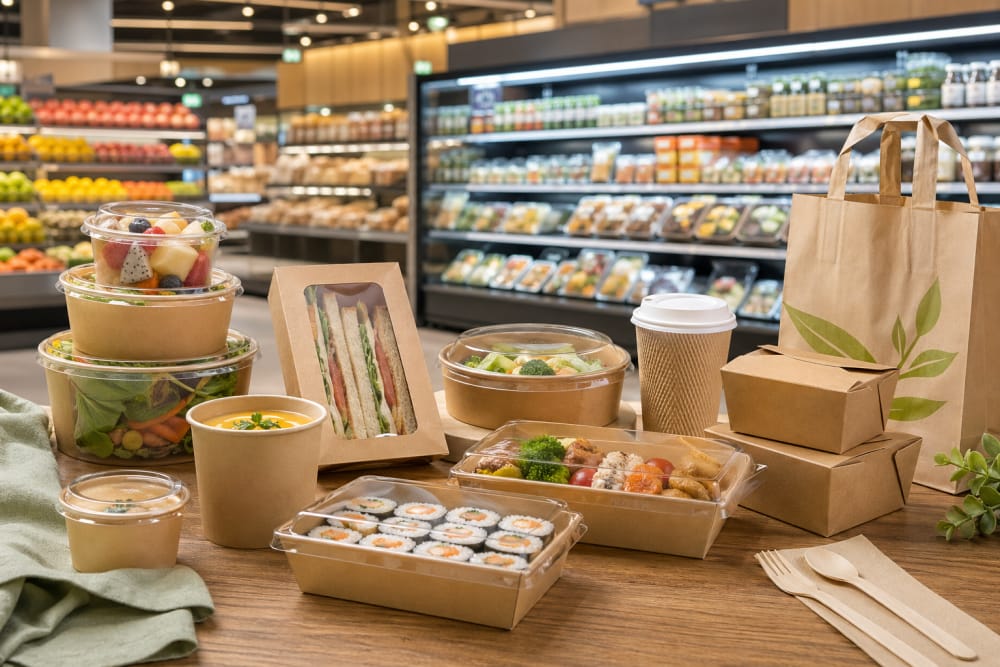
Canada Bulk Paper Takeout Containers Buying Guide
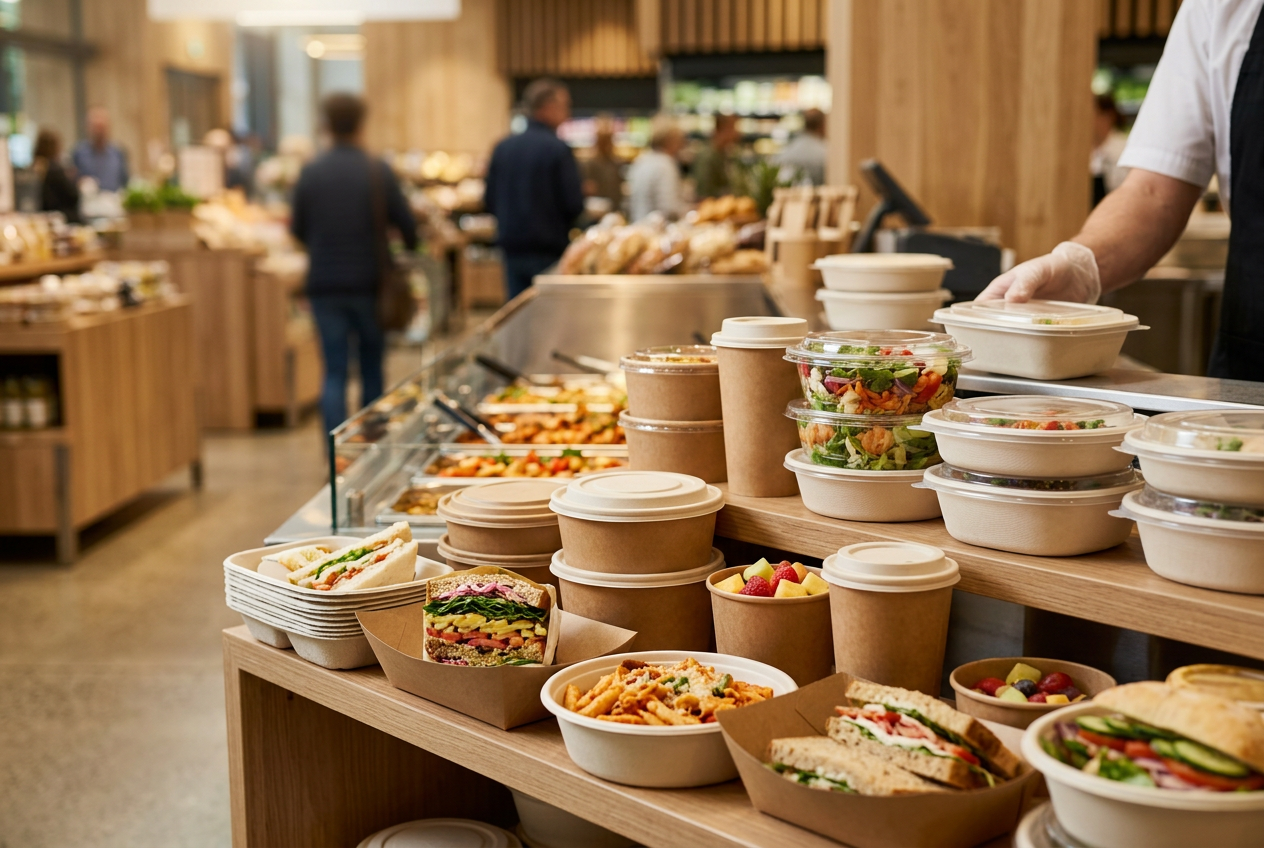
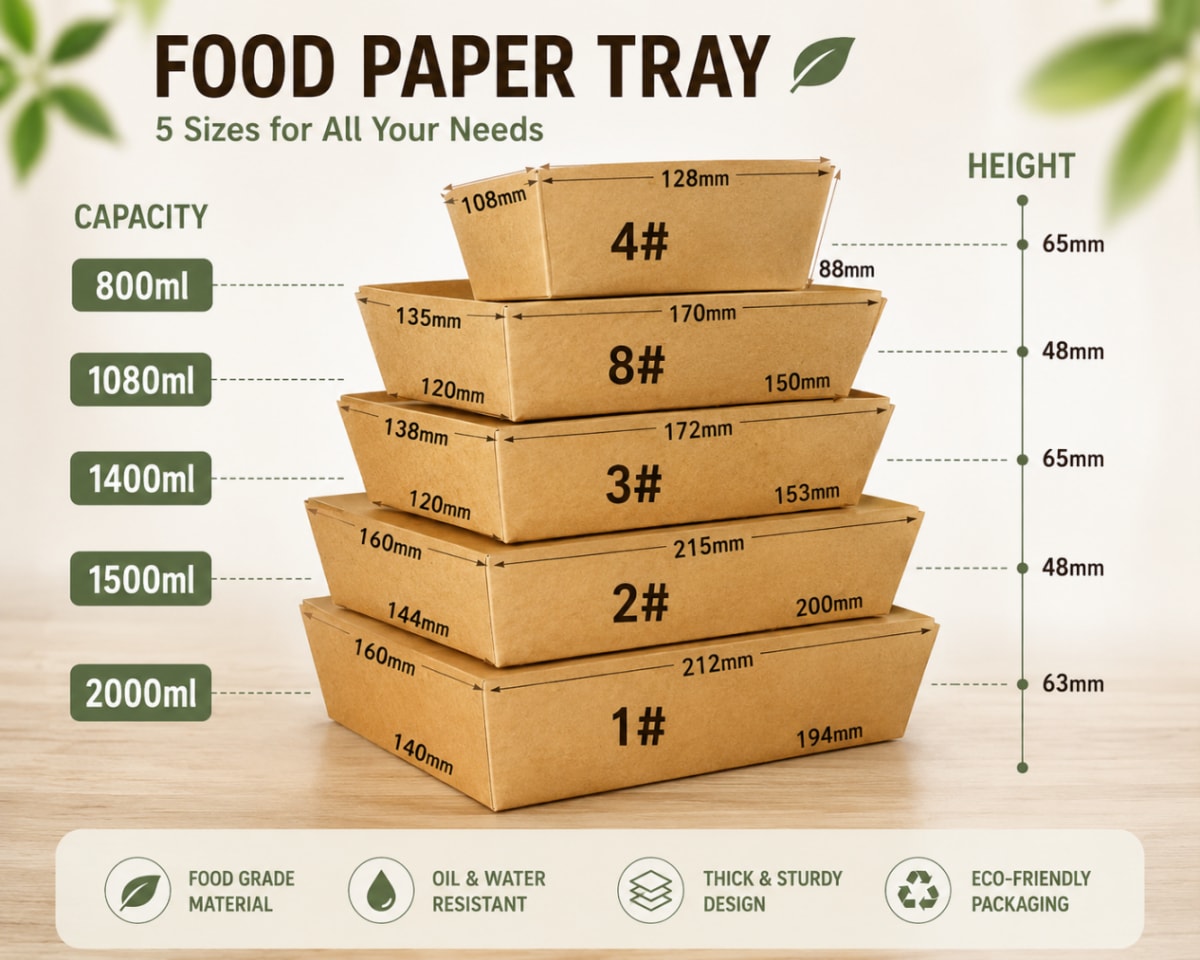
Yes. Fude Packaging supplies bulk paper takeout containers for Canadian importers, food-service distributors, restaurant groups, takeaway brands, grocery retailers, catering companies, and packaging wholesalers from a 30,000 m² BRC-certified manufacturing base in Shandong, China. Typical MOQ starts at 30,000–50,000 units, depending on container size, coating, structure, printing complexity, and whether several SKUs are consolidated in one production plan. Standard lead time is usually 15–25 days for plain kraft or white paper container orders and 25–40 days for custom-printed projects after artwork, dielines, colour references, and pre-production samples are approved.For Canadian buyers, the practical question is not only “Can you make paper takeout containers?” but “Can you make the right container consistently, document it correctly, ship it predictably, and support reorder planning across Vancouver, Toronto, Montréal, Calgary, Ottawa, Edmonton, Halifax, and other distribution points?” Fude Packaging is positioned for this type of B2B procurement. The company has more than 20 years of paper food packaging experience, 120,000 units/day production capacity, an in-house laboratory, full-batch traceability, and certification support including FDA, LFGB, BRC, FSC, and ISO 9001.Bulk paper takeout containers include kraft lunch boxes, salad containers, noodle boxes, soup bowls, burger boxes, multi-compartment meal boxes, paper food trays, paper cups, and matching lids. Canadian customers often use them for hot meals, cold salads, poutine, rice bowls, sushi sets, baked goods, meal kits, catering trays, café takeaway, food truck service, ghost kitchens, institutional dining, and supermarket ready-to-eat programs. Buyers can review Custom Paper Food Container products when comparing common formats for local menus and retail channels.Procurement ItemTypical ExpectationCanadian Buyer NoteMOQ30,000–50,000 units per SKUCan vary by size, coating, and printPlain order lead time15–25 daysAfter order confirmation and depositCustom print lead time25–40 daysAfter artwork and proof approvalFactory scale30,000 m² self-owned siteSupports multi-SKU productionDaily capacityUp to 120,000 unitsUseful for chain and distributor replenishmentCertificationsFDA, LFGB, BRC, FSC, ISO 9001Documentation should match destination needsExport reach500+ clients in 50+ countriesIndicates practical shipping experienceThis table shows the baseline procurement conditions that Canadian buyers should confirm before requesting a quotation. Exact pricing and delivery time depend on paper weight, coating type, carton packing, port selection, order volume, container-loading method, and inspection requirements.For Canadian importers, verifying whether a supplier is a real manufacturer is one of the most important risk-control steps. A trading company may still be useful in some cases, but it normally has less control over production scheduling, raw material selection, printing accuracy, batch traceability, and corrective action. A direct paper container manufacturer can usually provide clearer evidence of equipment, factory address, certifications, quality-control records, production videos, material inventory, and shipment history.Start with factory registration, business scope, and site ownership. A genuine manufacturer should be able to show its production floor, printing lines, die-cutting equipment, forming machines, carton packing areas, warehouse zones, and laboratory testing capability. Ask for live video tours rather than only edited promotional photos. During the video call, request to see machine nameplates, current production jobs, carton labels, raw paper rolls, coating material records, and inspection tools. The ability to answer technical questions quickly is often more reliable than a glossy brochure.Canadian buyers shipping through the Port of Vancouver, Port of Montréal, Prince Rupert, or Halifax should also check export capability. A real manufacturer should understand container loading, palletization, commercial invoices, packing lists, certificates, batch labels, HS code discussions, third-party inspection scheduling, and shipment documentation. If a supplier cannot explain how goods move from PO to dock, the buyer may face delays, unclear responsibility, or costly customs confusion.Verification PointWhat to Ask ForWarning SignFactory identityBusiness licence and factory addressAddress leads to office onlyProduction proofLive video tour of machinesOnly stock images providedQuality systemInspection reports and QC workflowNo batch records availableCertificationsCertificate copies and verification routeNames do not match supplier entitySampling abilityWhite, printed, and functional proofsSupplier avoids custom sample discussionExport experiencePast shipment routes and document samplesNo knowledge of Canadian portsTechnical answersCoating, GSM, lid fit, leakage testingOnly price-based communicationThe table helps separate manufacturing capability from sales claims. For higher-volume Canadian programs, buyers should consider independent factory audits, pre-shipment inspections, or third-party laboratory testing. Fude Packaging supports these verification steps and can coordinate with appointed inspection companies before shipment.Choosing the correct coating is essential because paper alone cannot reliably resist moisture, oil, sauce, steam, or freezing and thawing cycles. Canadian food-service operators sell a wide variety of menus: hot ramen in Toronto, poutine in Québec, seafood takeaway in Halifax, grain bowls in Vancouver, butter chicken in Brampton, bakery items in Montréal, and meal-prep boxes in Calgary. Each application requires a different balance of grease resistance, heat tolerance, environmental positioning, cost, and end-of-life expectations.PE coating is widely used because it provides strong moisture and grease resistance at a competitive cost. It is suitable for hot and cold takeaway, saucy foods, rice bowls, noodle boxes, and many general applications. PLA coating is plant-based and often selected for compostability-focused branding, but buyers must confirm composting infrastructure and certification relevance in the target market. Water-based coating is a fast-growing option because it can reduce plastic-lining concerns and support sustainability policies, although performance must be tested against actual foods, temperatures, and holding times.In Canada, environmental expectations differ by province and municipality. Vancouver, Toronto, Montréal, Ottawa, and Halifax may have different waste-management realities, buyer preferences, or institutional procurement requirements. A distributor selling nationally should avoid assuming one coating works for every customer. Instead, build a matrix by menu, temperature, shelf life, local disposal infrastructure, and brand promise.Coating TypeBest UseStrengthBuyer ConsiderationPEHot meals, sauces, oily foodsReliable barrier and competitive costCheck local plastic-related policiesPLAEco-positioned cold or warm foodsPlant-based material optionNeeds suitable composting routeWater-basedBrands reducing plastic liningImproving sustainability profileRequires food-specific testingUncoated kraftDry bakery or short-contact foodsNatural appearance and lower costNot ideal for sauce or moistureDouble coatingHigh-moisture or long-hold foodsEnhanced resistanceHigher cost and needs validationCustom barrierSpecialty applicationsDesigned to menu requirementLonger development timelineThis comparison should be combined with real food testing. Fude Packaging’s in-house laboratory can help evaluate leak resistance, grease resistance, heat performance, lid fit, capacity, compression strength, and coating suitability before mass production. Canadian buyers planning branded programs should request functional prototypes, not only visual samples.Sampling is not a formality. It is the buyer’s main protection against wrong dimensions, weak structure, poor print colour, lid mismatch, leakage, or unsuitable coating. For bulk paper takeout containers, Fude Packaging offers three practical proofing routes: white samples, printed samples, and functional prototypes. Each proof validates different risks before a purchase order moves into full production.White samples are usually the fastest and are used to confirm basic structure, size, capacity, folding method, lid compatibility, and shelf presence. They are useful when a Canadian buyer is comparing multiple formats for restaurants, food trucks, or retail deli counters. Printed samples validate artwork placement, Pantone matching, brand visibility, barcode position, legal text, recycling or compostability claims, and general appearance. Functional prototypes go further by testing actual foods, sauce exposure, heating conditions, condensation, delivery stacking, and holding time.For Canadian restaurant chains and distributors, sampling should involve real operating conditions. If a container will be used for hot poutine, test fries, gravy, cheese curds, and delivery time. If it will hold a cold salad, test dressing, refrigeration, and lid security. If it is for meal-prep distribution, test stacking, transport vibration, labelling, and freezer or refrigerator exposure. For beverage and side-dish programs, buyers may also review Custom Paper Bowl products and Custom Paper Cup products to keep brand presentation consistent across multiple categories.Proof TypeMain PurposeWhat It ValidatesWhen to UseWhite sampleStructure confirmationSize, capacity, lid fit, handlingEarly product selectionDigital artwork proofPre-print checkingDieline, logo, text, barcodeBefore printed samplePrinted sampleVisual approvalColour, layout, brand consistencyBefore custom mass productionFunctional prototypePerformance testingLeakage, grease, heat, stackingBefore large rolloutPre-production sampleFinal benchmarkMass-production standardAfter PO confirmationRetention sampleDispute referenceApproved comparison recordDuring claims or reordersA disciplined sampling process saves money by preventing mass-production problems. It also creates an agreed reference standard, which is essential if a later claim involves colour deviation, leakage, carton packing, or dimensional tolerance.Many Canadian buyers initially compare suppliers only by unit price. However, total procurement cost includes artwork management, sampling time, freight efficiency, inspection cost, stock control, supplier communication, claim handling, and reorder reliability. A distributor buying burger boxes from one supplier, noodle boxes from another, salad bowls from a third, and cups from a fourth may appear to save a few cents per item but often loses money through fragmented logistics and inconsistent quality.Single-source procurement allows buyers to consolidate SKUs, align carton dimensions, optimize container loading, standardize print colours, and simplify documentation. For example, a Canadian restaurant group operating in Toronto, Vancouver, and Montréal may need kraft lunch boxes, soup bowls, beverage cups, paper trays, and multi-compartment meal boxes. If these are produced by one factory, the buyer can coordinate production windows, ship mixed SKUs in one container, and reduce administrative workload.Fude Packaging manufactures a broad product range in-house, including cups, bowls, burger boxes, lunch boxes, salad containers, noodle boxes, food trays, and compartment meal boxes. This supports purchasing consolidation for distributors and chain operators. Buyers seeking a wider program can explore Custom and Wholesale food Paper packaging to understand OEM, ODM, sampling, and export support.var ctx = document.getElementById('comparisonChart').getContext('2d');var comparisonChart = new Chart(ctx, {type: 'bar',data: {labels: ['SKU Range', 'Quality Control', 'Print Consistency', 'Logistics Efficiency', 'Traceability', 'After-Sales Speed'],datasets: [{label: 'Single Manufacturer', data: [92, 90, 88, 86, 91, 87], backgroundColor: 'rgba(54, 162, 235, 0.75)'},{label: 'Multiple Fragmented Suppliers', data: [70, 62, 58, 55, 60, 52], backgroundColor: 'rgba(255, 99, 132, 0.75)'}]},options: {responsive: true, maintainAspectRatio: false, scales: {y: {beginAtZero: true, max: 100}}}});The comparison chart illustrates how supplier consolidation can improve operational efficiency. The savings are often found not in the first quotation but in fewer errors, fewer emergency shipments, smoother replenishment, and stronger brand consistency across packaging categories.Canadian buyers should plan imported paper takeout containers around production time, inspection time, vessel schedules, customs clearance, inland transport, and seasonal demand. A purchase order is only the beginning. After PO confirmation, the factory checks artwork, confirms material availability, schedules production, produces samples if needed, arranges printing and forming, completes quality inspection, packs goods, prepares documents, and coordinates shipment to the departure port.For plain bulk paper takeout containers, production often takes 15–25 days. For custom-printed containers, 25–40 days is more realistic because artwork approval, plate preparation, colour matching, and sample confirmation add time. Ocean freight to Canada can vary based on origin port, destination port, route, congestion, and season. Vancouver and Prince Rupert are common gateways for Western Canada, while Montréal and Halifax serve many Central and Eastern Canadian routes. Toronto-area buyers often receive goods through inland rail and truck connections from major ports.Inventory planning should account for Chinese holidays, Canadian peak food-service seasons, summer festivals, back-to-school demand, winter delivery growth, and Q4 retail pressure. Buyers should avoid placing reorder POs only when warehouse stock is almost empty. A better method is to calculate average weekly usage, safety stock, supplier lead time, shipping lead time, and customs buffer.StageTypical TimePlanning AdviceSpecification confirmation1–5 daysPrepare size, coating, artwork, and forecastSampling and approval5–15 daysLonger if functional testing is requiredPlain production15–25 daysConfirm material availability earlyCustom print production25–40 daysApprove artwork before schedulingFactory inspection1–3 daysUse AQL or agreed inspection standardSea freight and port handlingVariableAllow buffer for congestion and seasonalityInland distribution2–10 daysDepends on Canadian destination warehouseFude Packaging supports scheduled-order arrangements, multi-release shipping, container-loading optimization, and logistics coordination. These service capabilities are especially useful for Canadian distributors managing multiple provinces or restaurant chains opening new locations in phases.Consistent quality across multiple batches is achieved through process control, not luck. Paper takeout containers must remain stable in material thickness, coating performance, folding accuracy, printing position, sealing strength, lid fit, and carton packing. If one batch performs well and the next leaks, the buyer risks customer complaints, product waste, and brand damage.Fude Packaging controls manufacturing from material selection through printing, die-cutting, forming, inspection, packing, and shipment. Incoming paper materials are checked before production. During manufacturing, operators monitor machine settings, forming pressure, glue or sealing quality, and print registration. The in-house laboratory can test practical performance indicators such as leakage, grease resistance, heat resistance, compression, and dimensional accuracy. Final inspection verifies quantity, appearance, packing, labels, and batch identity.Traceability matters because it allows a problem to be investigated quickly. A proper batch record should connect raw material, production date, machine line, operator record, inspection result, carton label, and shipment information. For Canadian buyers, this is valuable when products are distributed across multiple warehouses or sold to national food-service accounts. If a complaint arises in Ottawa or Winnipeg, the supplier should be able to identify the relevant batch and compare it with retained samples.Technological capabilities also influence consistency. Automated production lines reduce manual variation. Dieline checking reduces artwork mistakes. Pantone matching supports brand accuracy. Laboratory testing reduces dependence on guesswork. Digital communication of proofs, inspection photos, and packing details helps procurement teams approve each stage without travelling to the factory.var ctx = document.getElementById('lineChart').getContext('2d');var lineChart = new Chart(ctx, {type: 'line',data: {labels: ['2021', '2022', '2023', '2024', '2025', '2026'],datasets: [{label: 'Estimated Canadian Demand Index for Paper Takeout Containers', data: [100, 112, 126, 139, 153, 168], borderColor: 'rgb(75, 192, 192)', backgroundColor: 'rgba(75, 192, 192, 0.15)', fill: false, tension: 0.25}]},options: {responsive: true, maintainAspectRatio: false, scales: {y: {beginAtZero: false}}}});The line chart reflects a realistic demand index for Canada’s paper takeout packaging market, driven by delivery platforms, quick-service restaurants, grocery prepared foods, sustainability policies, and consumer preference for practical disposable packaging.Certifications help buyers reduce compliance risk, but they must be understood correctly. Not every certificate serves the same purpose. For Canadian buyers, documentation should be matched to food-contact safety, customer requirements, sustainability claims, retail audits, and internal procurement policies. A certificate is useful only when it is current, issued to the correct company, applicable to the relevant product or material, and verifiable through the issuing body or audit scheme.FDA-related food-contact documentation is often requested by North American buyers because it addresses materials intended for contact with food. LFGB is widely recognized in European-style compliance discussions and can support strict food-contact evaluation. BRC is valuable because it indicates audited hygiene, quality, and safety management in packaging manufacturing. FSC certification supports responsible paper sourcing claims. ISO 9001 demonstrates a quality-management system rather than product-specific safety. Depending on the product, compostability documentation such as BPI or OK Compost may also be relevant, but buyers must confirm local acceptance.In Canada, importers should also consider their own legal responsibilities, customer contracts, and provincial or municipal environmental rules. Claims such as “compostable,” “recyclable,” “plastic-free,” or “eco-friendly” should be used carefully and supported by accurate documentation. A container may be technically compostable under a standard but still not accepted in a local composting facility. For this reason, procurement, marketing, and compliance teams should align before printing claims on packaging.CertificationMain RelevanceHow Canadian Buyers Use ItFDAFood-contact material safetyNorth American procurement confidenceLFGBStrict food-contact testing referenceUseful for premium or international accountsBRCPackaging safety and factory hygieneRetailer and chain supplier approvalFSCResponsible forestry sourcingSustainability and corporate procurementISO 9001Quality management systemSupplier process evaluationBPI or OK CompostCompostability routeOnly if local infrastructure supports claimThird-party test reportProduct-specific validationConfirms actual SKU complianceFude Packaging can provide certification support and recommend suitable documentation based on the buyer’s target market, menu, coating type, and environmental objectives. Buyers should request updated documents during supplier qualification rather than after goods arrive.Fude Packaging’s manufacturing capabilities are built around scale, control, and product breadth. The company operates a 30,000 m² self-owned factory in Shandong, one of China’s established paper-manufacturing and packaging regions. With automated production lines and capacity up to 120,000 units per day, it can support both regular distributor replenishment and large customized programs. Core product categories include paper cups, paper bowls, burger boxes, kraft lunch boxes, salad containers, noodle boxes, food trays, and multi-compartment meal boxes.Its technological capabilities include in-house laboratory testing, structural development, dieline checking, Pantone colour matching, prototype development, material and coating recommendations, and production traceability. These capabilities matter because paper food packaging performance depends on details: board weight, coating type, forming pressure, sealing method, lid tolerance, printing ink behaviour, grease exposure, moisture resistance, and shipping compression. Fude Packaging does not rely only on visual inspection; it can test actual performance before and during production.Its service capabilities are designed for international B2B buyers. The team supports OEM and ODM projects, rapid sampling, white samples, printed samples, functional prototypes, export-ready packing, third-party inspection coordination, commercial documents, multi-release shipping, container-loading optimization, and after-sales claim handling. For Canadian buyers, this means support from product selection through delivery planning. The company has served more than 500 clients in over 50 countries, including restaurant, coffee, and beverage chains with large store networks.Canada’s food-service market is geographically large and operationally diverse. A distributor in Mississauga may supply independent restaurants, a Vancouver buyer may focus on sustainability-oriented cafés, a Montréal group may need bilingual printed packaging, and a Calgary meal-prep company may need strong compartment boxes for refrigerated delivery. Fude Packaging’s broad product range and customization process allow buyers to build a coordinated packaging program rather than purchasing isolated items from unrelated suppliers.var ctx = document.getElementById('barChart').getContext('2d');var barChart = new Chart(ctx, {type: 'bar',data: {labels: ['QSR Chains', 'Restaurants', 'Cafés', 'Grocery Prepared Food', 'Catering', 'Meal Prep', 'Food Trucks'],datasets: [{label: 'Relative Demand for Paper Takeout Containers in Canada', data: [88, 82, 64, 76, 58, 69, 51], backgroundColor: 'rgba(255, 159, 64, 0.75)'}]},options: {responsive: true, maintainAspectRatio: false, scales: {y: {beginAtZero: true, max: 100}}}});The bar chart shows how demand is spread across Canadian industries. Quick-service restaurants and full-service takeaway users remain strong, while grocery prepared food and meal-prep brands continue to grow as consumers seek convenient ready-to-eat options.1. What is the MOQ for bulk paper takeout containers? MOQ typically starts at 30,000–50,000 units, depending on size, structure, coating, printing, and whether the order is plain or customized. For multi-SKU programs, buyers should share a complete forecast so production and container loading can be planned efficiently.2. How long from PO to delivery? Plain orders usually need 15–25 days for production. Custom-printed orders usually need 25–40 days after artwork approval. Total delivery time to Canada also depends on ocean freight, port selection, customs clearance, and inland distribution. Buyers should plan safety stock and avoid emergency reorders.3. How do I verify your certifications are genuine? Ask for current certificate copies, issuing-body details, certificate numbers, company-name consistency, product scope, and expiry dates. Fude Packaging can provide certification documentation and support verification. For high-value programs, buyers may also use third-party audits or laboratory testing.4. Can I mix multiple packaging products in one container? Yes, mixed-SKU shipments can often be arranged, especially for buyers ordering paper food containers, bowls, cups, trays, and boxes together. The exact plan depends on MOQ, carton dimensions, production schedule, and container-loading efficiency.5. What if the delivered goods do not match the approved sample? The approved pre-production sample and retained reference sample should be used as comparison standards. If a confirmed manufacturing or quantity issue occurs, Fude Packaging investigates batch records, inspection data, photos, and shipment details, then follows defined quality assurance, replacement, return, or claim-handling procedures.Which industries in Canada use bulk paper takeout containers most? Major users include quick-service restaurants, independent restaurants, cafés, bakeries, catering companies, food trucks, grocery stores, institutional cafeterias, meal-prep brands, ghost kitchens, and event vendors. Demand is particularly strong in dense urban centres such as Toronto, Vancouver, Montréal, Calgary, Edmonton, Ottawa, and Québec City.Can Fude Packaging support bilingual packaging for Canada? Yes. Buyers can provide English and French artwork, ingredient panels, handling instructions, disposal icons, QR codes, and brand elements. Artwork should be checked carefully against dielines and local labelling requirements before printed samples are approved.What product types should a Canadian distributor consider? A balanced catalogue may include kraft lunch boxes, clamshell burger boxes, salad bowls, soup bowls, noodle boxes, paper trays, portion cups, drink cups, and multi-compartment meal boxes. Stocking complementary SKUs helps distributors serve restaurants, cafés, grocers, and caterers from one inventory base.Are local Canadian suppliers still useful? Yes. Local suppliers can provide fast replenishment, small quantities, and emergency stock. However, for large-volume customized programs, direct manufacturing in China may offer better unit economics, broader customization, and stronger control over multi-SKU production. Many buyers combine local safety stock with scheduled factory-direct imports.What trends should buyers watch in 2026? Important 2026 trends include water-based barrier coatings, improved fibre-based lids, digital print workflow, stronger traceability systems, tighter sustainability claims, increased demand from grocery prepared meals, and more policy pressure on unnecessary plastic packaging. Buyers should design packaging programs that can adapt to changing municipal and provincial expectations.var ctx = document.getElementById('areaChart').getContext('2d');var areaChart = new Chart(ctx, {type: 'line',data: {labels: ['2021', '2022', '2023', '2024', '2025', '2026'],datasets: [{label: 'PE-Coated Share Index', data: [78, 75, 71, 66, 61, 56], fill: true, backgroundColor: 'rgba(201, 203, 207, 0.35)', borderColor: 'rgb(201, 203, 207)', tension: 0.25},{label: 'Water-Based and Compostable Options Index', data: [22, 27, 33, 41, 50, 60], fill: true, backgroundColor: 'rgba(75, 192, 192, 0.25)', borderColor: 'rgb(75, 192, 192)', tension: 0.25}]},options: {responsive: true, maintainAspectRatio: false, scales: {y: {beginAtZero: true, max: 90}}}});The area chart highlights the shift Canadian buyers are likely to see through 2026: conventional PE-coated products remain important for performance and cost, while water-based and compostability-oriented options gain share as brands and regulators focus on sustainability. The best procurement strategy is not to chase a label, but to validate real performance, compliance, and end-of-life practicality.For Canadian procurement teams, the safest buying process is structured and evidence-based: define the menu, choose the right container type, confirm coating performance, verify the factory, approve samples, check certifications, plan lead times, and maintain batch traceability. Fude Packaging combines manufacturing scale, technical testing, export experience, and practical B2B service to support buyers who need reliable bulk paper takeout containers for long-term supply. -

Custom Paper Takeout Containers Supplier for Canada
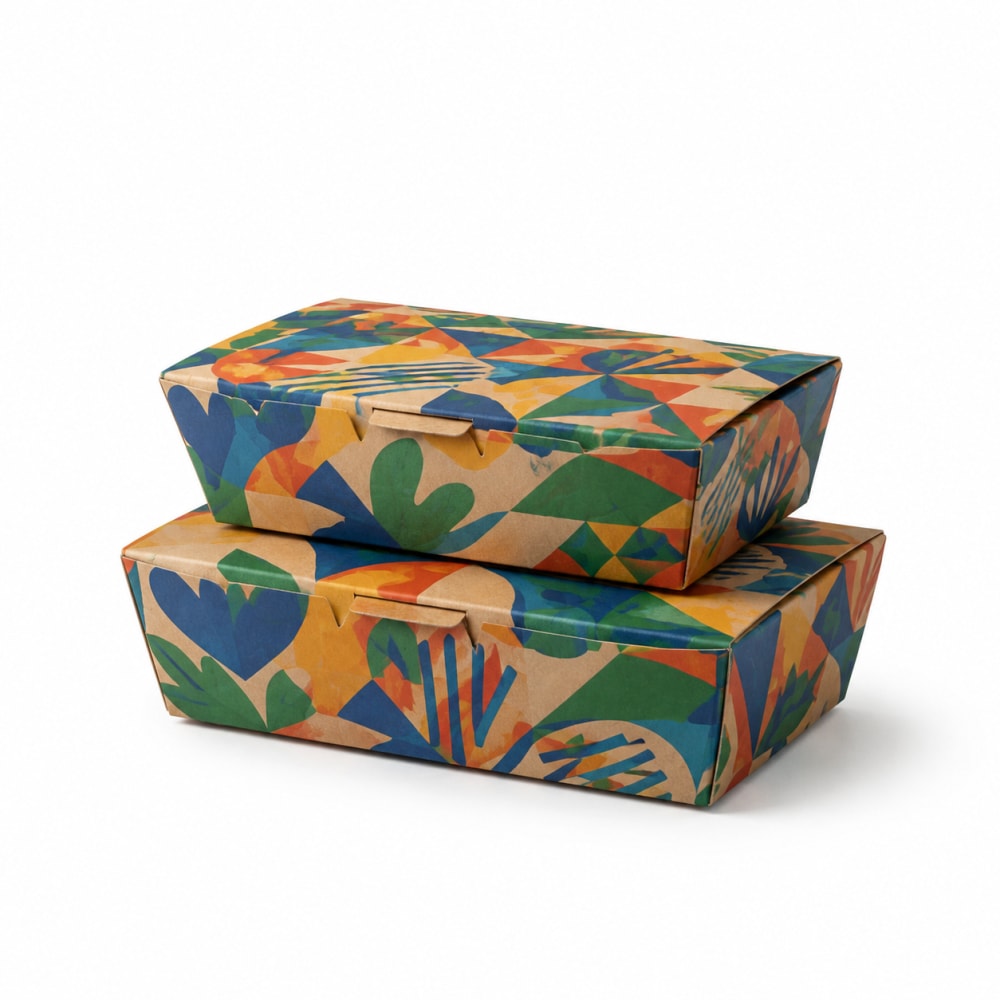
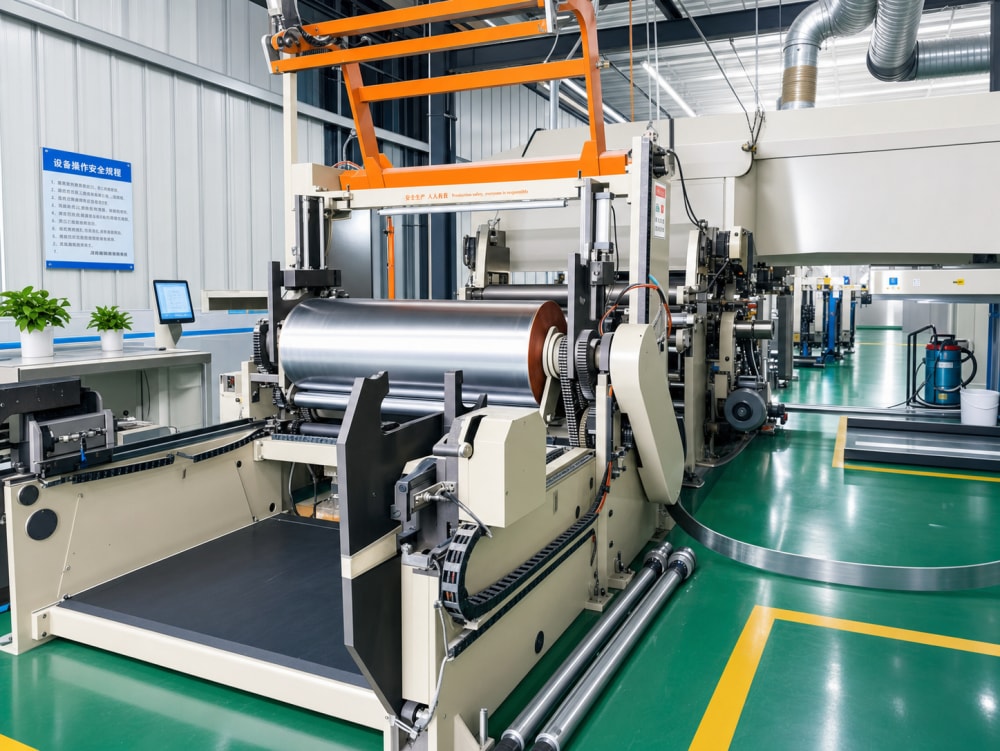
Yes. Fude Packaging is a custom paper takeout containers supplier serving Canadian importers, distributors, restaurant groups, food-service operators, cafés, meal-prep brands, caterers, and packaging wholesalers that need certified, scalable, and brand-consistent paper food packaging. With more than 20 years of paper packaging manufacturing experience, a 30,000 m² self-owned factory in Shandong, automated production lines, an in-house testing laboratory, and export experience across more than 50 countries, Fude Packaging supports Canadian buyers that require stable quality, practical customization, and documentation for food-contact compliance.For the Canada market, buyers usually care about four issues before placing a custom order: food safety, print consistency, supply reliability, and total landed cost. A low unit price is not enough if the container leaks, warps under heat, arrives late through Vancouver or Montreal, or fails a customer’s sustainability expectations. Fude Packaging addresses these risks through controlled material sourcing, printing, die-cutting, forming, inspection, packing, and shipment management. Custom projects can include paper cups, bowls, burger boxes, kraft lunch boxes, salad containers, noodle boxes, food trays, and multi-compartment meal boxes.Typical custom order quantities begin at approximately 30,000 to 50,000 units, depending on product structure, material, coating, printing complexity, and packaging configuration. Lead time generally ranges from 15 to 40 days for customized production, while sampling and proofing are planned before mass manufacturing. Canadian buyers can evaluate digital proofs, white samples, or printed pre-production proofs before committing to a full order. This helps teams in Toronto, Vancouver, Calgary, Edmonton, Ottawa, Montreal, Winnipeg, and Halifax verify size, capacity, lid fit, print accuracy, insulation, grease resistance, and real food-service performance.For product selection, buyers can review Custom Paper Food Container products to compare common formats used for takeout, delivery, grab-and-go retail, event catering, and restaurant chain operations.Custom takeout containers often look perfect during the sample stage but inconsistent during mass production if the supplier lacks process control. At scale, small deviations in paper thickness, coating weight, moisture content, ink density, die-cut alignment, folding pressure, glue position, or forming temperature can become visible across thousands of cartons. For Canadian restaurant chains and distributors, this can create problems at store level: lids may fit one batch but not another, printed brand colours may shift between orders, or stacked containers may perform differently in cold delivery conditions.Scale changes the buying question. A boutique food brand may only need a few thousand printed boxes for a launch in Toronto. A national chain, however, may need identical packaging in Vancouver, Calgary, Winnipeg, Mississauga, Ottawa, Montreal, and Halifax at the same time. That requires repeatable production, documented specifications, controlled tooling, retained colour standards, and traceable batch records. A custom paper takeout containers supplier must therefore be evaluated not only by its design ability, but by its ability to reproduce the same result repeatedly.Scale FactorCommon RiskImpact in CanadaSupplier Control NeededPaperboard batchDifferent stiffness or colour shadeInconsistent shelf appearanceMaterial inspection and approved paper gradesCoating levelGrease or moisture failureLeakage during delivery in urban routesCoating verification and functional testingPrinting densityBrand colour variationDifferent look across franchise storesPantone matching and press controlDie-cut tolerancePoor folding or lid fitSlow packing during lunch rushTooling maintenance and dimensional checksForming pressureWeak corners or cracked coatingSauce leakage and customer complaintsMachine setting control and in-line inspectionCarton packingDeformation during transitDamage through long ocean or rail routesExport packing and pallet planningThis table shows why a factory-based supplier is important for large-volume custom packaging. When production variables are measured, recorded, and corrected, the buyer receives packaging that performs consistently instead of only looking attractive in a showroom sample.Canadian operators also face climate-related packaging demands. Containers may move from a heated kitchen to a cold delivery vehicle in winter, then into a customer’s home or office. Hot soups, poutine, rice bowls, noodle meals, burgers, salads, and bakery items each expose packaging to different moisture, grease, heat, and stacking pressures. A supplier with an in-house laboratory can test structure, leakage, compression, and material performance before mass production, reducing the risk of packaging failure after arrival.Restaurant chains and café groups need a unified packaging system. Whether a customer buys a rice bowl in Vancouver, a salad in Toronto, a burger in Calgary, or a coffee in Montreal, the packaging should communicate the same brand quality. Consistency is not accidental. It comes from locked specifications, approved drawings, standard material codes, controlled artwork files, colour references, production checklists, and batch traceability.Fude Packaging supports chain-style procurement by using structured proofing and project management. Before production, the buyer can confirm size, capacity, material, coating, artwork position, colour targets, lid compatibility, carton quantity, barcode requirements, and shipping marks. During production, the factory monitors critical points such as material selection, printing registration, die-cut accuracy, forming strength, and packing configuration. After production, inspection records and batch information help buyers manage repeat orders.For Canadian chains, identical packaging also depends on distribution planning. A national food-service buyer may ship containers from a port such as Vancouver, Prince Rupert, Montreal, or Halifax into regional warehouses. From there, goods may move by truck or rail to Ontario, Quebec, Alberta, British Columbia, Saskatchewan, Manitoba, and the Atlantic provinces. If carton dimensions, palletization, or release schedules are poorly planned, stores may experience shortages or mixed inventory. Scheduled-order shipping and multi-release planning help reduce this problem.Chain RequirementOperational ReasonRecommended Supplier PracticeBuyer BenefitLocked dielinesPrevent size driftMaintain approved engineering filesSame fit at every storeColour standardsProtect brand identityUse Pantone references and print checksConsistent shelf and delivery appearanceApproved materialsControl performanceUse specified paperboard and coatingPredictable heat and grease resistanceBatch traceabilitySupport audits and claimsRecord production lot dataFaster issue investigationScheduled releasesMatch store demandPlan shipments by forecastLower inventory pressureProduct family designUnify menu packagingCoordinate cups, bowls, boxes, and traysCleaner procurement and brandingThis approach is especially useful for Canadian franchises and multi-location groups that must balance local menu adaptation with national brand standards. A chain may need bilingual packaging, recyclable material messaging, QR codes, nutrition-related labels, or promotional printing. These elements should be integrated without disturbing food-safety performance or production repeatability.For beverage chains and cafés, buyers can evaluate Custom Paper Cup products alongside food containers to maintain a consistent visual system across hot drinks, cold drinks, snacks, desserts, and meal items.The real cost of a custom takeout container supplier is not limited to the quoted unit price. Canadian buyers should calculate the total landed and operational cost, including tooling, artwork adjustment, proofing, cartons, pallets, ocean freight, customs brokerage, inland delivery, storage, inspection, compliance documentation, exchange rate exposure, defect risk, shortage risk, and the cost of emergency replacement if packaging fails. A container that is slightly cheaper per unit may become expensive if it causes leakage, slow packing, brand inconsistency, or delayed store launches.For example, a distributor in Mississauga importing containers through the Port of Vancouver may need to account for ocean freight, rail movement across Canada, warehouse handling, and local delivery. A restaurant group in Quebec may prefer Montreal routing. A Western Canadian buyer in Calgary or Edmonton may evaluate Vancouver and Prince Rupert logistics. The supplier’s export packing, carton strength, pallet plan, and document accuracy can affect these costs directly.Cost ItemOften Ignored?Why It MattersHow to Reduce RiskUnit priceNoDirect purchasing costCompare only equal specificationsTooling and setupSometimesRequired for special shapes or sizesConfirm before quotation approvalProofing costSometimesPrevents expensive production errorsUse digital, white, or printed proofs wiselyFreight and dutiesOftenAffects landed cost in CanadaCalculate by carton volume and routeDefect rateOftenCreates replacement and complaint costsRequire inspection and traceabilityInventory holdingOftenLarge MOQs use warehouse spaceUse scheduled orders and multi-release shippingBrand inconsistencyOftenWeakens customer trustLock artwork, colour, and material standardsThe table highlights why a professional purchasing decision should compare total value, not only initial quotation. For custom paper food packaging, the lowest offer can hide compromises in material, coating, printing, carton strength, documentation, or quality control. A serious supplier should be able to explain specifications clearly and help the buyer understand trade-offs.Fude Packaging’s advantage for Canadian importers is the combination of direct manufacturing, broad product coverage, automated production, in-house quality testing, and export experience. Buyers can consolidate bowls, cups, trays, boxes, and multi-compartment containers under one supplier, reducing supplier fragmentation and simplifying quality management. Consolidation can also improve freight planning because carton dimensions and shipment schedules can be coordinated across multiple SKUs.Many packaging websites appear similar, but not every supplier owns production equipment. Some are trading companies or brokers that outsource manufacturing to several factories. Middlemen can be useful for small or mixed sourcing projects, but they may have limited control over materials, production schedules, machine settings, inspection procedures, and batch traceability. For Canadian B2B buyers ordering custom takeout containers at scale, the difference matters.A real factory should be able to show its production site, equipment, quality-control process, certifications, export history, sample process, production capacity, and batch records. It should understand how paperboard, coating, printing, die-cutting, forming, and packing interact. It should also be able to explain why one container works for hot noodles while another works better for cold salads, or why a heavier board may not automatically solve a leakage issue if coating and structure are wrong.Fude Packaging operates a self-owned 30,000 m² facility in Shandong and manufactures core paper food packaging products in-house. Its automated production capacity can reach up to 120,000 units per day, depending on product mix and production scheduling. This manufacturing foundation allows buyers to discuss technical requirements directly with a producer instead of relying only on a reseller’s quotation sheet.Verification QuestionReal Factory SignalMiddleman Warning SignBuyer ActionCan they show production lines?Clear photos, videos, or audit accessOnly catalogue imagesRequest factory evidenceCan they explain technical details?Specific material and process guidanceGeneric answersAsk application-based questionsDo they control sampling?Proofing options and test feedbackSlow sample coordinationSet sample approval stepsAre certificates traceable?Relevant certificates and documentationUnclear or unrelated filesVerify scope and validityCan they repeat orders?Stored specifications and batch recordsFrequent unexplained changesRequire order history controlDo they manage inspections?In-house and third-party inspection supportResistance to inspectionInclude inspection termsThis table gives Canadian procurement teams a practical screening method. It is not enough for a supplier to say it can manufacture custom packaging. Buyers should confirm whether the supplier controls the production environment and can support quality claims with records, testing, and repeatable procedures.For buyers reviewing supplier background, Fude Packaging also provides service information through Custom and Wholesale food Paper packaging, including customization, proofing, production, and export support for wholesale orders.Food packaging certifications and compliance documents depend on product use, destination market, material type, buyer policy, and end-customer requirements. In Canada, buyers should consider food-contact safety, quality management, responsible fibre sourcing, and sustainability claims. Not every certification is mandatory for every project, but unclear documentation can delay retailer approval, distributor onboarding, or franchise procurement.Commonly requested documents may include food-contact declarations, FDA-related documentation for international buyers, LFGB or EU-related references for brands selling across multiple regions, FSC material options, ISO 9001 quality-management systems, BRC-related factory food-safety management, and compostability-related documentation where applicable. Canadian buyers should avoid using sustainability claims casually. Words such as recyclable, compostable, biodegradable, plastic-free, or FSC-certified should match the actual material, coating, printing, and local disposal infrastructure.Fude Packaging supports BRC, FSC, ISO 9001, LFGB, and FDA-related requirements depending on product scope and customer needs. The practical value of these certifications is not simply marketing. They help buyers assess whether a supplier has controlled processes, documented procedures, material traceability, and food-contact awareness. For Canadian distributors supplying grocery, institutional catering, airports, schools, hospitals, and franchise chains, documentation can be as important as the physical container.Certification or DocumentMain PurposeWhen Canadian Buyers Ask for ItPractical NoteBRC-related factory standardFood-safety managementChain and distributor qualificationCheck scope and validityFSC material optionResponsible fibre sourcingSustainability-focused brandsConfirm material and claim rulesISO 9001Quality managementRepeat procurement and auditsSupports process consistencyLFGBFood-contact referenceInternational multi-market brandsUseful for broader compliance planningFDA-related food-contact supportMaterial safety referenceNorth American supply chainsConfirm relevance to product structureCompostability documentationEnvironmental claim supportEco-positioned food brandsMust match local composting accessBatch recordsTraceabilityClaims, audits, and recallsEssential for professional supplyThe right certification package should be selected before mass production. If a buyer changes from standard PE-coated paper to an aqueous coating, PLA coating, or other barrier system, documentation and performance should be reviewed again. Canadian municipal recycling and composting rules also vary by province and city, so packaging claims that work in one location may not be appropriate everywhere.A food safety trace audit asks a simple question: if there is a complaint, can the supplier identify what was produced, when it was produced, which materials were used, which batch was shipped, and how the issue can be isolated? For packaging that touches food directly, traceability is a major risk-control tool. It helps buyers respond quickly to complaints, retailer inquiries, distributor audits, and internal quality reviews.A strong traceability system includes incoming material records, production batch numbers, machine records, inspection data, packing lists, shipment details, retained samples where applicable, and communication procedures. If a container batch is reported to have leakage, odour, print rubbing, weak seams, or contamination concerns, the supplier should not guess. It should investigate the batch, compare retained standards, review production conditions, and support corrective actions.Fude Packaging uses batch verification and quality-control steps from incoming materials to final inspection. Its in-house laboratory supports performance testing such as strength, heat response, grease resistance, leakage prevention, and lid fit checks depending on the product. Canadian buyers may also appoint independent inspection companies or third-party laboratories before shipment. This is especially useful for first orders, large launches, or high-visibility chain rollouts.Traceability is also important for seasonal and promotional packaging. A Canadian coffee chain may launch holiday cups in November, while a meal-prep brand may run a New Year healthy eating campaign in January. If artwork, materials, or container sizes change for a promotion, each batch should remain identifiable. This prevents confusion when warehouses handle both standard and seasonal inventory.For bowl-based menus such as poke, ramen, salads, grain bowls, soups, and meal kits, buyers can compare Custom Paper Bowl products while confirming lid compatibility, coating options, and batch-control expectations.Many food-service businesses carry too many packaging SKUs. Too many sizes create purchasing complexity, warehouse pressure, staff confusion, and higher freight cost. Too few sizes can create poor presentation, wasted space, leakage, or incorrect portions. The best packaging system matches the menu, portion sizes, delivery style, holding time, stacking needs, and branding goals.A Canadian restaurant group selling burgers, fries, salads, rice bowls, soups, desserts, and drinks may be tempted to customize every container. In practice, a smarter approach is to create a modular packaging system. For example, one kraft box may cover two burger sizes, one bowl family may cover salads and grain bowls, one multi-compartment container may serve combination meals, and one cup design may support hot beverages across all stores. The goal is not to reduce choice blindly, but to build a menu packaging map.Menu CategorySuggested Container TypeKey Performance NeedSKU StrategyBurgers and sandwichesClamshell or burger boxSteam control and structureUse one or two core sizesSalads and grain bowlsPaper bowl with lidFreshness and lid securityStandardize diameter where possibleNoodles and soupsDeep bowl or noodle boxHeat and leak resistanceTest with real broth and saucesCombo mealsMulti-compartment meal boxFood separationLimit compartment formatsBakery and dessertsTray or folding boxPresentation and protectionCoordinate with display needsCoffee and beveragesPaper cup and lidInsulation and lid fitUnify cup brandingFamily mealsLarge food tray or boxStacking and strengthUse seasonal or catering-specific SKUsThis table shows that SKU planning should start with the menu, not the catalogue. Fude Packaging can assist buyers with product selection, structural recommendations, custom sizes, material options, and artwork adaptation. By consolidating similar applications, Canadian buyers can reduce inventory burden while improving customer experience.SKU rationalization is especially important for distributors serving multiple independent restaurants. A distributor in the Greater Toronto Area may carry many packaging sizes for Asian restaurants, cafés, pizzerias, bakeries, food trucks, and corporate caterers. A more disciplined SKU strategy improves stock turnover and reduces slow-moving inventory.Fude Packaging combines technological capabilities, manufacturing capabilities, and service capabilities to support overseas B2B buyers. For the Canada market, this means the company can help with both product development and supply stability, rather than only selling standard catalogue packaging.Technological capabilities. Fude Packaging provides OEM and ODM support covering material recommendations, coating selection, structural development, custom sizing, artwork checking, dieline review, Pantone colour matching, digital proofing, white samples, printed pre-production proofs, and functional testing. The in-house laboratory helps evaluate practical performance such as capacity, heat resistance, grease resistance, leakage, compression, and lid fit. This is valuable when Canadian buyers develop packaging for hot soups in winter, chilled salads in retail fridges, high-grease fried foods, or delivery meals that must travel through dense downtown routes.Manufacturing capabilities. With a 30,000 m² self-owned factory in Shandong and automated production lines capable of producing up to 120,000 units per day, Fude Packaging controls key production steps including material selection, printing, die-cutting, forming, inspection, packing, and shipment preparation. The company manufactures a broad range of paper food packaging in-house, including cups, bowls, boxes, trays, lunch containers, salad containers, noodle boxes, and multi-compartment meal boxes. This broad coverage helps Canadian buyers consolidate procurement under one manufacturing partner.Service capabilities. Fude Packaging has served more than 500 international clients across more than 50 countries. Its export team supports quotation clarification, product selection, regulatory documentation, sample shipment, third-party inspection coordination, commercial invoices, packing lists, certificates, and shipping arrangements. For buyers in Canada, service can include scheduled-order planning, multi-release shipping, and coordination with sea freight, air freight, full-container, less-than-container, or express sample shipments.The company’s value is not only production capacity. It is the ability to connect brand goals, food performance, compliance documentation, and logistics planning. A buyer can discuss a full packaging family instead of sourcing cups from one supplier, bowls from another, and boxes from a third. This reduces colour mismatch, specification conflicts, and communication delays.Canada’s food-service market continues to demand better paper takeout packaging because delivery, pickup, prepared foods, and grab-and-go retail have become normal consumer habits. Toronto, Vancouver, Montreal, Calgary, Edmonton, Ottawa, and Halifax all show strong demand for packaging that can support restaurant delivery, office lunches, campus dining, airport food service, supermarket prepared meals, and catering. At the same time, Canadian consumers increasingly expect packaging to look responsible, clean, and brand-specific.Growth is supported by several forces: multi-location restaurant expansion, food delivery platforms, immigrant cuisine diversity, premium café culture, health-focused meal bowls, institutional catering, and retailer prepared-food programs. Packaging must now do more than hold food. It must protect temperature, preserve texture, prevent leakage, stack well, display branding, and support responsible sourcing claims where appropriate.Line Chart: Canadian custom paper takeout container demand indexvar ctx = document.getElementById('lineChartCanadaGrowth').getContext('2d');var chart = new Chart(ctx, {type: 'line',data: {labels: ['2021', '2022', '2023', '2024', '2025', '2026'],datasets: [{label: 'Demand Index',data: [72, 79, 86, 94, 103, 113],borderColor: 'rgb(20, 120, 120)',backgroundColor: 'rgba(20, 120, 120, 0.12)',fill: false,tension: 0.3}]},options: {responsive: true,maintainAspectRatio: false,scales: { y: { beginAtZero: false } }}});The line chart illustrates a realistic upward demand trend for custom paper takeout containers in Canada. Demand is not driven only by restaurants. Retailers, cloud kitchens, institutional food service, corporate catering, school meals, airport concessions, and food manufacturers also require reliable paper packaging.Bar Chart: Canadian industry demand for paper food containersvar ctx = document.getElementById('barChartIndustryDemand').getContext('2d');var chart = new Chart(ctx, {type: 'bar',data: {labels: ['QSR Chains', 'Cafés', 'Meal Prep', 'Supermarkets', 'Catering', 'Food Trucks'],datasets: [{label: 'Relative Demand Score',data: [92, 78, 74, 83, 69, 58],backgroundColor: ['rgb(54, 162, 235)', 'rgb(75, 192, 192)', 'rgb(255, 159, 64)', 'rgb(153, 102, 255)', 'rgb(255, 99, 132)', 'rgb(100, 181, 246)']}]},options: {responsive: true,maintainAspectRatio: false,scales: { y: { beginAtZero: true, max: 100 } }}});The bar chart shows that quick-service restaurant chains and supermarkets are especially strong packaging users, while cafés, meal-prep brands, caterers, and food trucks also contribute meaningful demand. Each segment has different priorities: speed, appearance, stacking, sustainability, heat retention, or cost control.Custom paper takeout containers should be selected by food type and operating environment. Hot foods need heat tolerance and structure. Greasy foods need barrier performance. Cold foods need condensation management and lid clarity where presentation matters. Delivery meals need stacking strength and leak resistance. Retail meals need shelf appeal and barcode-ready surfaces. The same container is rarely ideal for every application.Paper bowls are commonly used for soups, salads, noodles, rice bowls, poke, curry, and meal kits. Burger boxes and kraft lunch boxes work for sandwiches, fries, wraps, and casual meals. Multi-compartment boxes are useful for bento-style meals, combination menus, school meals, airline-style food service, and catering. Food trays suit bakery, snacks, fried foods, and events. Paper cups support hot drinks, cold drinks, desserts, and sample service.Area Chart: Shift toward customized and sustainable paper packagingvar ctx = document.getElementById('areaChartTrendShift').getContext('2d');var chart = new Chart(ctx, {type: 'line',data: {labels: ['2021', '2022', '2023', '2024', '2025', '2026'],datasets: [{label: 'Customized Paper Packaging Share',data: [34, 39, 45, 52, 60, 68],fill: true,backgroundColor: 'rgba(46, 204, 113, 0.25)',borderColor: 'rgb(39, 174, 96)',tension: 0.3},{label: 'Generic Packaging Share',data: [66, 61, 55, 48, 40, 32],fill: true,backgroundColor: 'rgba(149, 165, 166, 0.22)',borderColor: 'rgb(127, 140, 141)',tension: 0.3}]},options: {responsive: true,maintainAspectRatio: false,scales: { y: { beginAtZero: true, max: 100 } }}});The area chart reflects a trend many Canadian distributors already see: generic packaging remains important, but customized, branded, and sustainability-oriented paper packaging is gaining share. Brands use packaging as a customer touchpoint, not just a utility item.When selecting products, buyers should test packaging with real food. A noodle box should be tested with hot broth and sauce. A salad bowl should be tested with dressing and refrigeration. A burger box should be tested for steam and bun texture. A delivery tray should be tested for stacking and transport vibration. Fude Packaging’s proofing process allows buyers to move from digital confirmation to physical sample evaluation before mass production.A professional buying process begins with a clear brief. Canadian buyers should provide food type, serving temperature, portion size, lid requirement, expected holding time, delivery method, branding requirement, target quantity, warehouse destination, compliance documents, and launch deadline. Without these details, suppliers may quote a generic container that looks acceptable but fails in use.Buyers should also clarify whether they need standard size customization, full structural customization, private-label printing, bilingual packaging, FSC materials, special coatings, QR codes, promotional artwork, or export carton markings. For large chain orders, a pre-production proof is highly recommended because it confirms physical appearance and function before mass production.Comparison Chart: Supplier capability comparison for Canadian buyersvar ctx = document.getElementById('comparisonChartSupplier').getContext('2d');var chart = new Chart(ctx, {type: 'bar',data: {labels: ['Factory Control', 'Customization', 'Certifications', 'Traceability', 'Export Service', 'SKU Range'],datasets: [{label: 'Fude Packaging',data: [92, 90, 88, 91, 89, 93],backgroundColor: 'rgba(54, 162, 235, 0.75)'},{label: 'Typical Trading Supplier',data: [55, 68, 60, 52, 64, 70],backgroundColor: 'rgba(255, 99, 132, 0.65)'}]},options: {responsive: true,maintainAspectRatio: false,scales: { y: { beginAtZero: true, max: 100 } }}});The comparison chart shows why direct factory capability matters for customized packaging. A trading supplier may help with sourcing, but factory control, traceability, and repeatable production are critical when packaging must be identical across multiple Canadian stores and orders.Buyers should request clear samples and confirm what the sample represents. A handmade sample may show structure but not mass-production print quality. A white sample may confirm size and shape but not final branding. A printed pre-production proof gives stronger confidence but requires more time and setup. The right proofing path depends on risk level and launch timeline.Custom paper takeout containers are used across many Canadian industries. Quick-service restaurants use them for burgers, fries, wraps, rice bowls, and combos. Cafés use them for pastries, sandwiches, salads, desserts, and beverages. Meal-prep companies use portion-controlled bowls and trays. Supermarkets use branded grab-and-go packaging. Caterers use trays and multi-compartment boxes. Food trucks use compact, durable containers that perform in outdoor service environments.Institutional food service is another important segment. Universities in Ontario, hospitals in British Columbia, corporate cafeterias in Alberta, and event venues in Quebec may require packaging that balances cost, safety, sustainability, and operational speed. Airport and transit food-service locations need containers that are stackable, easy to store, and reliable during peak traffic.Applications can be grouped into dine-away meals, delivery meals, retail display meals, catering meals, beverage service, and promotional packaging. Each application has different performance requirements. Delivery packaging must survive transport. Retail packaging must look good on shelves. Catering packaging must hold larger portions. Promotional packaging must align with campaign artwork and launch timing. A custom paper takeout containers supplier should understand these distinctions.For Canadian brands, packaging is also part of customer perception. A well-printed bowl or box can support premium positioning, while a weak or leaking container can damage brand trust even if the food tastes good. This is why testing, proofing, and supplier verification are practical business safeguards.Consider a Toronto-based fast-casual chain expanding from 12 stores to 40 stores across Ontario. The chain needs bowls for grain meals, boxes for wraps, and cups for drinks. Its old packaging comes from three suppliers, creating colour differences and inventory confusion. By consolidating packaging under one custom paper takeout containers supplier, the chain can standardize artwork, reduce SKU overlap, and schedule shipments around new store openings.In another scenario, a Vancouver distributor supplies sushi shops, noodle restaurants, and cafés throughout British Columbia. The distributor needs reliable containers that can be ordered in volume and released in planned shipments. Because warehouse space is expensive near Metro Vancouver, multi-release shipping helps balance inventory with demand. Export carton strength is also important because goods may move through port handling and regional trucking before reaching customers.A Montreal supermarket group may need bilingual branded bowls and trays for prepared foods. The packaging must work in refrigerated displays and maintain visual appeal. Material selection, print durability, lid fit, and carton labelling all matter. A pre-production proof reduces the risk of bilingual artwork errors and helps the buyer confirm barcode position, design layout, and product presentation.A Calgary catering company serving corporate offices and energy-sector events may require multi-compartment meal boxes and trays that stack securely during transport. In this case, compression resistance, lid closure, and portion separation are more important than decorative complexity. The supplier should recommend practical structures rather than simply offering the lowest-cost option.These scenarios show that customization should be driven by business needs. The best supplier asks detailed questions before quoting, because the correct answer for a café is not always the correct answer for a supermarket or a national restaurant chain.Canadian buyers can source paper takeout containers from local distributors, domestic converters, North American suppliers, or overseas factories. Local suppliers offer fast delivery and lower minimum quantities, which is useful for urgent replenishment or small businesses. Domestic and North American sources may be attractive for shorter lead times or specific compliance preferences. Overseas factories such as Fude Packaging can provide stronger customization flexibility, broader product families, and competitive large-volume manufacturing economics.The best sourcing model often combines both. A restaurant group may use local stock packaging for emergencies while importing custom branded containers for planned volume. A distributor may carry generic local inventory and develop private-label container lines through factory production. A growing chain may start with domestic stock items, then shift to custom overseas manufacturing once demand becomes predictable.Import logistics matter. The Port of Vancouver is a major gateway for Western Canada and inland rail movement. The Port of Prince Rupert can also support efficient Pacific routing. The Port of Montreal serves Quebec and central Canadian distribution, while Halifax can support Atlantic Canada and certain eastern routes. Inland hubs such as Toronto, Mississauga, Brampton, Calgary, Edmonton, Winnipeg, and Montreal play major roles in warehousing and redistribution.Buyers should plan customs documentation, commercial invoices, packing lists, certificates, inspection reports, and shipment schedules early. Packaging is bulky, so freight cost is often driven by volume rather than weight. Carton design, nesting efficiency, and container loading plans can materially influence landed cost.By 2026, custom paper takeout packaging in Canada will be shaped by technology, policy, sustainability, and supply-chain resilience. Digital artwork workflows will become more important as brands run seasonal campaigns, local promotions, and limited-time menu launches. QR codes may connect packaging to nutrition details, sourcing stories, recycling guidance, loyalty programs, or multilingual customer information.Policy pressure will continue to influence material decisions. Canadian buyers will pay closer attention to plastic reduction, fibre sourcing, recyclability, compostability, and truthful environmental claims. However, sustainability will need to be practical. A compostable container is only beneficial if the local waste system can process it. A recyclable paper container must be compatible with local recycling rules and contamination realities. Buyers should ask suppliers for documentation and avoid unsupported claims.Technology will also improve consistency. Better colour management, automated forming, machine vision inspection, digital order records, and batch traceability will help suppliers reduce variation. For chain buyers, this means fewer surprises between orders. For distributors, it means fewer customer complaints. For food brands, it means stronger packaging identity across channels.Supply-chain planning will remain important. The pandemic era taught many Canadian buyers that relying on last-minute packaging procurement is risky. Scheduled production, forecast sharing, multi-release shipping, and backup SKU planning will become normal purchasing practices. Fude Packaging’s scheduled-order support helps buyers align manufacturing with seasonal peaks, store openings, promotional launches, and warehouse capacity.1. How do I verify a supplier is a real factory?Ask for factory information, production-line evidence, certification scope, product videos, audit access, sample records, and technical answers about materials, coatings, printing, forming, and inspection. A real factory should be able to discuss production details and provide traceable documentation, not only a catalogue and price list.2. What is the realistic sampling timeline?Sampling time depends on the proofing type. A digital proof is usually fastest because it confirms layout and artwork. A white sample may take longer because it verifies structure and dimensions. A printed pre-production proof requires more setup but gives the best confirmation before mass production. For custom Canadian projects, buyers should plan sampling before final launch dates, especially for chain rollouts or seasonal campaigns.3. How do I calculate the true total cost beyond unit price?Calculate unit price, tooling, proofing, packaging, freight, customs clearance, inland delivery, warehousing, inspection, defect risk, reorder lead time, and emergency replacement cost. Because paper packaging is bulky, carton volume and loading efficiency can significantly affect landed cost in Canada.4. Which certifications are mandatory versus optional?The answer depends on product use, buyer policy, and market requirements. Food-contact safety documentation is essential. ISO 9001, BRC-related standards, FSC material options, LFGB, FDA-related support, and compostability documentation may be required depending on the customer, retailer, chain, or sustainability claim. Always confirm certificate scope and relevance to the exact product.5. How can a supplier guarantee consistency across multiple orders?Consistency comes from approved specifications, controlled materials, retained dielines, colour standards, production records, inspection procedures, and batch traceability. Buyers should require clear approval samples and ensure repeat orders reference the same specifications.6. What MOQ should Canadian buyers expect?For customized paper takeout containers, a practical MOQ often begins around 30,000 to 50,000 units, depending on size, structure, printing, material, and production setup. Higher customization may require higher minimums, while standard products may offer more flexibility.7. How long does production take?Customized production commonly takes 15 to 40 days depending on product complexity, proofing, order volume, material availability, and production schedule. Buyers should also add time for ocean freight, customs clearance, and inland delivery to Canadian warehouses.8. Can one supplier handle cups, bowls, boxes, and trays together?Yes, if the supplier has broad in-house manufacturing capability. Fude Packaging produces multiple paper food packaging categories, allowing Canadian buyers to coordinate branding, specifications, quality control, and shipment planning across a complete packaging family.9. What information should I provide for a quotation?Provide product type, dimensions, capacity, food type, hot or cold use, coating preference, lid requirement, artwork, quantity, certification needs, destination city or port, delivery deadline, and whether you need digital proofing, white samples, or printed pre-production samples.10. Why choose Fude Packaging for the Canada market?Fude Packaging offers direct factory production, more than 20 years of experience, a 30,000 m² facility, automated capacity, in-house testing, broad product coverage, customization support, food-safety documentation, batch traceability, export service, and scheduled-order planning. For Canadian buyers, this creates a balanced solution for cost, quality, compliance, brand consistency, and long-term supply reliability. -

Paper Catering Tray Supplier in the United States Guide
The United States catering and takeaway sector is moving fast toward practical, brandable, and more sustainable serving formats, and that is why choosing the right paper catering tray supplier matters more than ever. Whether you serve office lunches in Chicago, stadium snacks in Dallas, deli platters in New York, or event meals in Los Angeles, the right tray affects food presentation, grease resistance, delivery performance, storage efficiency, and operating cost. Buyers in the U.S. market are increasingly asking for trays that are stackable, leak-resistant, suitable for hot and cold foods, customizable with logos, and aligned with food-contact and compostability standards where required.For importers, distributors, restaurant groups, and caterers, the best supplier is not simply the one with the lowest quoted price. It is the one that can deliver stable quality, consistent dimensions, correct coating selection, reliable lead times, flexible private-label support, and documentation that satisfies U.S. compliance expectations. That means evaluating material specs, coating options, carton efficiency, production consistency, testing protocols, and shipping readiness from origin to U.S. ports such as Los Angeles, Long Beach, New York/New Jersey, Savannah, Houston, and Seattle.This guide explains the U.S. demand outlook, tray sizes and formats, PE versus PLA coating choices, large-scale manufacturing methods, pricing logic, certifications, and supplier selection criteria. It also introduces how paper food packaging product lines can support food service operators that need dependable tray solutions for catering, deli, grab-and-go, food trucks, and event service.If you need a quick answer, a strong paper catering tray supplier for the United States should offer multiple tray sizes, food-safe coatings, custom branding, export experience, stable quality control, and clear compliance documents. For most U.S. buyers, the best supplier profile includes kraft and white paper tray options, PE and PLA coating choices, grease resistance for fried or sauced foods, low-MOQ sampling, and the ability to support both wholesale distribution and chain-level customization.In practical terms, U.S. buyers usually prioritize seven things: structural rigidity, leak and oil resistance, stackability, visual presentation, shipping efficiency, certification readiness, and predictable replenishment. A tray that looks attractive but collapses under warm entrees is a poor fit. A tray that is durable but too costly for large event catering can also fail commercially. The ideal product balances protection, cost, and sustainability.For events, corporate catering, deli counters, and delivery-focused operations, common high-demand formats include open catering trays, boat trays, compartment meal trays, window-lid trays, and shallow platters for bakery or sandwich service. If your menu includes fries, sliders, wraps, pastries, fruit, pasta, rice meals, or tasting assortments, your tray specification should be matched to food weight, moisture level, service time, and whether the product is eaten immediately or transported.Shandong Fude Packaging Co., Ltd. is one supplier profile that fits this sourcing model well for U.S. buyers. The company combines food-grade paper packaging development, export manufacturing, OEM customization, and operational support for wholesalers, restaurant brands, and distributors. Buyers exploring supplier options can review the company’s broader packaging range through its packaging service solutions and assess whether the support model fits U.S. procurement needs.Buying PriorityWhy It Matters in the United StatesWhat to Check with a SupplierFood safetyRequired for restaurant, deli, and retail useFDA-related food-contact documentation, migration compliance, test reportsGrease resistanceImportant for fries, wings, sandwiches, and pastriesCoating type, gsm, real food testingSize consistencyAffects lid fit, stacking, and portion controlDimensional tolerance and forming consistencyBrandingSupports catering presentation and chain identityFlexo printing quality, ink standards, artwork review processSupply stabilityCritical for repeat orders and seasonal demand spikesLead time, output capacity, warehouse planningSustainability optionsGrowing relevance in state and city procurementPLA, FSC, BPI, compostability scopeMOQ flexibilityHelps importers test SKUs without overstockingTrial order terms, mixed-size container planningThe table above shows why a supplier evaluation should go beyond unit price. In the U.S. market, a tray that performs well operationally often saves more money through fewer leaks, less food waste, better stacking, and fewer customer complaints.Demand for paper catering trays in the United States is being shaped by four converging forces: off-premise dining growth, event catering recovery and expansion, sustainability targets, and the replacement of rigid plastic in selected applications. From school events and workplace lunches to hotel banquets and sports venues, operators are looking for serving formats that look cleaner, feel more premium, and create less resistance with end customers concerned about packaging waste.By 2026, the U.S. market for paper-based food service trays is expected to continue expanding across metropolitan hubs such as New York City, Atlanta, Miami, Phoenix, San Francisco, and Seattle. Growth will be particularly noticeable in contract catering, corporate meal programs, food delivery, convenience retail, and chain restaurants that want packaging alignment across dine-in, takeaway, and catering channels. Buyers are also paying more attention to total packaging systems, where trays must work with lids, sleeves, inserts, and secondary cartons.Another factor behind demand is menu diversification. U.S. consumers increasingly order global foods such as tacos, rice bowls, noodles, mezze, baked snacks, and curated tasting platters. That pushes paper tray suppliers to offer more shapes, depths, compartments, and barrier options. Suppliers that only sell one or two standard open trays may miss large portions of the market.States and municipalities are also influencing purchase decisions. Compostable service ware policies, waste reduction initiatives, and retailer sustainability pledges are encouraging buyers to ask for better material transparency. At the same time, cost pressure remains real, especially in bulk food service. That means the market is not shifting in one straight line to compostable materials; instead, it is segmenting. Premium urban catering, universities, and eco-focused brands may choose PLA-coated or certified compostable structures, while price-sensitive mainstream users may continue with PE-lined trays where local disposal systems or budgets make that more practical.var ctx1 = document.getElementById('lineChartMarket').getContext('2d');var chart1 = new Chart(ctx1, {type: 'line',data: {labels: ['2021', '2022', '2023', '2024', '2025', '2026'],datasets: [{label: 'Estimated U.S. Demand Index',data: [68, 74, 81, 89, 98, 108],borderColor: 'rgb(54, 162, 235)',backgroundColor: 'rgba(54, 162, 235, 0.15)',fill: false,tension: 0.3}]},options: {responsive: true,maintainAspectRatio: false}});The line chart indicates a realistic upward demand trend through 2026. It reflects stronger use in events, takeaway, and branded retail food service rather than only one segment. Growth is driven not just by more units consumed, but by an increase in value-added formats such as printed trays, compartment trays, and specialty serving styles.Demand DriverU.S. Impact in 2026Effect on Tray SpecificationCorporate cateringHigher order frequency in metro business districtsCleaner presentation, custom print, stackable traysFood deliveryMore transport-sensitive packaging needsLeak resistance, secure fit, rigidityEvent serviceLarge batch serving and buffet turnoverMultiple sizes, bulk packing, shallow plattersEco policy pressureMaterial scrutiny in some states and institutionsPLA or compostable options, certification requestsMenu expansionBroader cuisine mix across chains and independentsCompartments, different depths, grease barrier tuningRetail grab-and-goVisual merchandising matters moreWhite board, kraft look, optional window structuresLabor efficiencyOperators want faster packing workflowsEasy stacking, fast loading, consistent dimensionsFor importers and distributors, 2026 will likely reward suppliers that can serve both standard-volume and tailored-volume programs. The U.S. market no longer wants only commodity trays; it wants trays that fit a menu, a brand, and a compliance context.Product range is where many supplier comparisons become clear. A serious paper catering tray supplier should not offer just one footprint and one coating. In the United States, buyers commonly ask for a mix of small snack trays, medium sandwich and pastry trays, large platter trays, compartment meal trays, and custom structures for chain menus or event service. Color, board weight, coating type, depth, and print area all affect suitability.Kraft trays remain highly popular for natural and eco-conscious branding, especially in farmers market catering, bakery service, casual dining, and artisanal concepts. White paper trays are often preferred by bakeries, premium delis, hotel banquets, airline catering, and chains that want brighter printing or a cleaner visual base. Deep-wall formats perform better for wet foods or combination meals, while shallow trays work well for finger foods and display-oriented presentation.Common size demand in the United States includes compact trays for fries or snacks, mid-size trays for burgers or sandwich sides, and larger catering platters for wraps, sandwiches, pastries, or assorted event items. Distributors also often request size rationalization so they can cover multiple menu applications with fewer SKUs. A supplier that helps optimize this can lower warehouse complexity and improve reorder discipline.Tray TypeTypical Size RangeCommon U.S. Use CaseMini snack tray8 oz to 16 oz equivalent capacityFries, nuggets, samples, festival snacksStandard open food tray5 x 3 in to 7 x 5 inBurgers, hot dogs, bakery items, deli sidesDeep serving tray6 x 4 in to 9 x 6 inRice meals, pasta portions, sauced dishesBoat traySmall to large elongated formatsTacos, wraps, seafood, finger foodsCompartment tray2-compartment to 3-compartmentCatered meals, school service, combo setsLarge catering platter base10 in to 16 in footprintsSandwich platters, pastry assortments, fruit traysWindow-lid tray systemCustom by menu and lid fitRetail deli, premium display, grab-and-goThe table above shows how tray selection should match actual service needs rather than generic descriptors. “Large” means different things to a bakery in Boston, a concession vendor in Orlando, and a corporate caterer in San Jose. Suppliers with a wider range can support better portfolio matching.In many U.S. purchasing programs, the most effective approach is to define trays by application family: hot snacks, dry bakery, mixed platters, greasy foods, compartment meals, and premium retail presentation. That way, the supplier can recommend the right board and coating combination rather than forcing one structure across every menu item.var ctx2 = document.getElementById('barChartIndustry').getContext('2d');var chart2 = new Chart(ctx2, {type: 'bar',data: {labels: ['Catering', 'QSR', 'Deli', 'Food Trucks', 'Stadiums', 'Bakery', 'Retail Grab-and-Go'],datasets: [{label: 'Estimated Tray Demand Share',data: [22, 19, 15, 10, 12, 9, 13],backgroundColor: 'rgb(255, 159, 64)'}]},options: {responsive: true,maintainAspectRatio: false}});The bar chart highlights where demand clusters are strongest. Catering and QSR remain major consumers, but deli, stadium, and retail grab-and-go channels also create meaningful volume, especially for differentiated tray formats.One of the most important technical decisions for U.S. buyers is the barrier layer. PE and PLA coatings both serve valuable roles, but they suit different commercial realities. PE, or polyethylene, is widely used because it delivers strong moisture and grease resistance, stable performance, and cost efficiency. PLA, or polylactic acid, is often chosen where compostability positioning is essential and where buyers want a renewable-material narrative.PE-coated paper catering trays are typically the most practical option for high-volume mainstream food service. They are commonly used for hot foods, greasy items, and applications where cost-per-unit matters. In large event catering, concession service, and quick-service retail, PE trays can provide the leak protection and forming stability needed without the premium attached to some compostable alternatives.PLA-coated trays are more often selected by universities, premium catering groups, sustainability-led corporate campuses, organic retailers, and buyers working under compostable procurement policies. However, U.S. purchasers should always evaluate disposal infrastructure. A compostable-certified tray creates the most value when it enters a system able to process it properly. Otherwise, the environmental story may be weaker in practice than on paper.FactorPE CoatingPLA CoatingCost levelUsually lowerUsually higherGrease resistanceStrong for many foodsStrong when correctly specifiedHeat performanceReliable for broad food service useGood, but needs application reviewSustainability positioningConventional food-safe barrierOften chosen for compostable programsAvailabilityBroad and matureGrowing but more selectiveBest-fit usersHigh-volume mainstream buyersEco-focused institutions and brandsTypical U.S. buying triggerPerformance plus pricePolicy plus brand sustainability goalsThe table makes clear that there is no universal winner. The right answer depends on menu type, price target, local waste systems, and customer expectations. A supplier should be able to explain both options transparently and recommend one based on actual usage conditions.By 2026, coating innovation is likely to become a stronger differentiator. U.S. buyers should watch for improved water-based barriers, lower-plastic-content structures, and better compostability verification. State purchasing criteria and large-brand sustainability reporting may push more companies to ask for lifecycle and sourcing information, not just a basic spec sheet.var ctx3 = document.getElementById('areaChartTrend').getContext('2d');var chart3 = new Chart(ctx3, {type: 'line',data: {labels: ['2021', '2022', '2023', '2024', '2025', '2026'],datasets: [{label: 'Compostable Tray Preference Trend',data: [18, 21, 25, 30, 36, 43],borderColor: 'rgb(75, 192, 192)',backgroundColor: 'rgba(75, 192, 192, 0.25)',fill: true,tension: 0.35}]},options: {responsive: true,maintainAspectRatio: false}});The area chart shows the gradual shift toward compostable-oriented procurement, especially in institutions and premium metro markets. Importantly, it suggests growth rather than complete replacement. PE-coated formats are likely to remain relevant in the United States beyond 2026 because of cost, infrastructure, and broad utility.Understanding how paper catering trays are made helps U.S. buyers judge quality, consistency, and supplier reliability. Large-scale production is not just about speed. It is about keeping every tray dimensionally accurate, coating-effective, food-safe, and visually consistent from the first carton to the last pallet. A supplier that can explain its process usually has stronger control over defects and lead time.The process normally starts with food-grade paperboard selection. Depending on the application, this may include kraft board, white board, or specialty board chosen for stiffness, printability, and barrier compatibility. The board is then coated or laminated according to the project specification. Printing, if needed, is applied with food-safe inks and controlled registration, especially for logo-heavy private label orders.After printing and coating, the material is die-cut to precise tray layouts. Good die-cutting matters because poor edge control leads to folding issues, weak corners, and inconsistent stacking. Then the blanks move into forming, where heat and pressure create the final tray structure. For export-grade supply, this stage must be carefully calibrated to maintain shape retention, especially in deeper trays or larger serving formats.Quality control continues throughout production. Dimensions, bonding strength, leak performance, print accuracy, and carton packing are checked. Finished trays are then packed in export-appropriate cartons, palletized for container loading, and stored in controlled warehouse conditions to reduce deformation or moisture-related issues. This production discipline matters greatly for long transit to U.S. ports and inland distribution centers.From a technology standpoint, Fude’s production model is relevant for buyers that need consistency at volume. The company integrates automated lines, flexo printing, die-cutting, forming operations, quality labs, and organized warehousing into one coordinated packaging workflow. Buyers interested in supplier background can review more at the company overview page. For U.S. importers, that kind of integrated setup often means fewer handoff errors, better color consistency, and stronger repeat-order reliability.Production StageMain PurposeBuyer BenefitPaperboard sourcingSelect food-grade raw materialBetter safety, strength, and print qualityCoating applicationAdd moisture and grease barrierImproved food performanceFlexo printingApply logos and brand graphicsStronger presentation and brand recallDie-cuttingCreate accurate blank shapeStable forming and dimensional consistencyFormingBuild tray structure under heat/pressureReliable rigidity and stackingQuality inspectionCheck leaks, size, finishLower defect riskCarton packing and warehousingProtect trays for shipmentSafer export handling and cleaner arrivalThe manufacturing table shows why buyers should ask more than “Can you make this size?” They should ask how the supplier controls every stage, because that determines consistency across long production runs.Looking ahead to 2026, smart manufacturing trends will likely include more automated defect monitoring, faster artwork-to-plate preparation, better lot traceability, and improved material efficiency. U.S. buyers who source private-label trays at scale will benefit from factories that invest in process data and preventive quality systems rather than only final inspection.A useful way to judge a supplier is to look at how tray programs perform in real commercial settings. One representative success pattern involves a U.S.-focused distributor supplying independent caterers and deli operators across the Northeast corridor, especially in New York, New Jersey, and Pennsylvania. The distributor needed a tray portfolio that could cover sandwich platters, pastry assortments, hot finger foods, and corporate lunch programs without carrying too many overlapping SKUs.Before updating its packaging program, the distributor faced three problems: inconsistent tray rigidity from previous sources, poor print alignment on branded items, and rising landed costs due to inefficient carton packing. The business also wanted a more premium kraft appearance for some accounts while retaining white tray options for bakery and institutional use.After working through specification review and sampling, the distributor moved to a more structured sourcing model with multiple tray families, better carton optimization, and clearer coating segmentation. High-grease items were assigned stronger PE-lined trays, while selected customer accounts with sustainability goals shifted to PLA-based options. The supplier also helped rationalize sizes so the distributor could reduce duplicate inventory.Results included cleaner presentation, fewer complaints about soft tray corners, easier shelf management, and stronger repeat business from corporate catering clients. The distributor reported that custom printing improved customer retention because many end users wanted packaging that reflected their own catering brand. Importantly, stable lead times allowed better seasonal planning for graduation events, holiday platters, and conference catering cycles.Project AreaBefore ChangeAfter ImprovementTray rigidityFrequent corner weaknessMore stable formed structureSKU countToo many overlapping sizesStreamlined range by applicationPrint qualityLogo inconsistencyCleaner flexo presentationGrease performanceComplaints on oily foodsImproved barrier selectionWarehouse efficiencySpace used inefficientlyBetter carton planning and pallet logicCustomer perceptionGeneric packaging imageMore premium branded appearanceSeasonal readinessLate replenishment riskBetter lead-time planningThis type of case is increasingly common in the United States. The best outcomes come when suppliers do not simply quote a tray; they help build a packaging program. Buyers wanting to discuss packaging fit, samples, or customization can connect through the supplier contact page to review technical and commercial requirements.Compliance is a core buying requirement for the U.S. market. Even experienced importers should verify that a paper catering tray supplier can provide the documentation needed for food-contact confidence, market access, and institutional procurement. In the United States, buyers often request FDA-related food-contact compliance support, material declarations, and migration-oriented documentation depending on the application and account type.For sustainability-focused programs, buyers may also request FSC for responsible paper sourcing and compostability evidence such as BPI or other recognized certification pathways, depending on the product construction. If a tray is marketed as compostable, the claim should be supported clearly and carefully. Overstated environmental claims can create risk with customers, retailers, or procurement teams.Large U.S. distributors, food service chains, universities, and hospitality groups frequently maintain vendor onboarding checklists. These can include quality management systems, batch traceability, test reports, factory audit data, and social or environmental policy questions. A supplier that has served export markets across North America and Europe is often better prepared for this document flow than one focused only on local domestic sales.Fude’s broader compliance framework includes food-contact and quality system alignment relevant to international buyers, including FDA-oriented standards, EU food-contact references, ISO quality management, FSC sourcing, and compostability options where applicable. For U.S. buyers, the practical value lies in a supplier’s ability to match the certificate set to the actual tray structure being ordered, not simply list logos on a brochure.Certification or DocumentWhy U.S. Buyers Ask for ItTypical UseFDA-related food-contact complianceConfirms suitability for food packagingRestaurant, deli, catering, retailISO 9001Shows managed quality systemVendor qualification and repeat ordersFSCSupports responsible fiber sourcing claimsEco-positioned food service programsBPI or comparable compostability proofSupports compostable claimsInstitutional or policy-driven purchasingMaterial specification sheetClarifies board weight and coatingTechnical approval and SKU setupTest reportsSupports performance and safety reviewImporters, distributors, chainsArtwork approval recordsPrevents print disputesPrivate label and OEM productionThe key lesson is simple: certifications are not decoration. They are part of risk management. U.S. buyers should ask for the right documents early, especially before placing a large private-label order or committing to an institutional tender.MOQ and pricing depend on tray size, board specification, coating type, printing complexity, and packaging configuration. In the United States import market, the lowest unit quote is not always the most economical choice because freight utilization, damage rates, carton count, and inventory turnover all influence landed cost. Buyers should think in terms of total delivered cost per usable tray, not just ex-factory price.Standard unprinted trays generally have the most flexible MOQ and the shortest development cycle. Custom-printed trays require plate preparation, color control, and dedicated production planning, so MOQs are often higher. PLA-coated trays may also carry higher cost than PE-coated equivalents due to material and certification positioning. Larger platter trays and compartment structures typically cost more than simple open snack trays because they use more material and more demanding forming processes.U.S. buyers should also factor in order strategy. One full container with a balanced SKU mix usually improves freight efficiency versus fragmented low-volume shipments. On the other hand, new distributors or emerging brands may benefit from trial orders with flexible MOQs to validate demand before scaling. The right supplier can usually support both development stages.Fude’s service model is relevant here because it supports requirement review, sample confirmation, and production planning with flexible MOQ logic and lead times often in the 7 to 15 day range, depending on order specifics. That can be useful for U.S. distributors testing regional accounts or chains launching new packaging in stages.Pricing FactorEffect on CostBuyer AdviceBoard weightHigher gsm usually increases priceUse only as much stiffness as neededCoating typePLA often costs more than PEMatch coating to actual market needPrinting colorsMore complex artwork can raise costStandardize graphics where possibleTray sizeLarger formats use more materialRationalize size portfolioCustom toolingSpecial designs may add setup costUse custom tools for long-run programsOrder volumeHigher volume often lowers unit costPlan annual demand with call-offsPacking methodCarton efficiency affects freightAsk for carton and pallet optimizationAs a practical buying guide for the United States, many distributors aim to compare suppliers using five numbers: ex-factory price, cartons per pallet, trays per container, estimated landed cost to a target port, and expected defect rate. That gives a more accurate commercial picture than unit price alone.var ctx4 = document.getElementById('comparisonChartSupplier').getContext('2d');var chart4 = new Chart(ctx4, {type: 'bar',data: {labels: ['Product Range', 'Print Flexibility', 'MOQ Flexibility', 'Cert Support', 'Lead Time', 'Export Readiness'],datasets: [{label: 'Supplier Capability Comparison Index',data: [90, 88, 82, 91, 85, 93],backgroundColor: 'rgb(153, 102, 255)'}]},options: {responsive: true,maintainAspectRatio: false}});The comparison chart above illustrates the types of categories buyers often score when selecting a supplier. A strong exporter for the United States should perform well across product breadth, documentation, responsiveness, and logistics readiness, not just on initial price.Shandong Fude Packaging Co., Ltd. serves global food service buyers looking for dependable, customizable paper packaging built for practical commercial use. For U.S. importers and distributors, the company’s value lies in combining technology, production discipline, and service support into one supply model rather than treating trays as a simple commodity.From a technological capabilities perspective, the company uses integrated flexo printing, die-cutting, tray forming, and quality testing processes to support repeatable output across food service packaging categories. This matters for buyers who need accurate logo reproduction, stable dimensions, and barrier performance suited to real catering use. With in-house development and production coordination, projects can move from artwork review to sample approval with less friction, which is especially helpful for private label programs.From a manufacturing capabilities perspective, the operation is supported by a modern 30,000 square meter factory and automated lines designed for scale. The company has experience serving buyers across more than 35 countries, which is relevant for U.S. customers concerned about export handling, packaging consistency, and order continuity. Product offerings extend beyond catering trays into lunch boxes, bowls, cups, compartment meal boxes, fries cups, noodle boxes, deli boxes, fruit boxes, and other food-grade packaging, enabling distributors to consolidate multiple packaging categories with one supplier. Buyers exploring category expansion can review more through the full product catalog.From a service capabilities perspective, the company supports packaging selection, artwork preparation, pre-production sampling, delivery coordination, and OEM development. This is useful for U.S. wholesalers that want not only manufacturing, but a partner able to advise on size selection, coating fit, private label setup, and order planning. The process is designed around requirement review, sample confirmation, and production with delivery, helping simplify sourcing for both first-time importers and experienced buyers. Additional details are available through the service page.For the United States market, this combined model can be especially valuable because packaging programs often evolve over time. A customer may begin with one kraft tray size for catering platters and later expand into cups, bowls, and deli boxes. Working with a supplier that understands this progression can reduce sourcing fragmentation and improve brand consistency across packaging lines.If your business needs a paper catering tray supplier able to support testing, documentation, and scalable manufacturing for the U.S. market, direct discussion is the best next step. You can send project details, target sizes, and expected volumes through the contact channel for quotation and technical review.1. What is the best paper catering tray material for the United States market?It depends on your menu and positioning. Kraft paper trays are popular for natural branding, while white paper trays suit premium presentation and brighter print graphics. For barrier needs, PE is often best for broad cost-sensitive use, while PLA is better for compostable-focused programs.2. What sizes are most commonly ordered in the U.S.?Small snack trays, standard sandwich trays, deep meal trays, boat trays, and large platter bases are all common. Demand varies by sector: food trucks often prefer compact formats, while corporate catering and deli programs need larger platters and compartment solutions.3. Are paper catering trays strong enough for hot foods?Yes, when the board weight, structure, and coating are correctly specified. Hot fries, sandwiches, rice dishes, bakery items, and finger foods can all be served effectively in properly designed trays.4. How do I choose between PE and PLA coating?Choose PE if your focus is broad performance and price efficiency. Choose PLA if your account requires compostable positioning or sustainability alignment. Always match the coating to local disposal realities and menu temperature requirements.5. What certifications should I request from a supplier?For the U.S. market, ask for food-contact compliance documentation, material specifications, relevant test reports, and quality system information. If sustainability claims are part of the project, request FSC and compostability documentation where applicable.6. What is a reasonable MOQ for custom trays?MOQ varies by size, print complexity, and material. Unprinted standard trays often have lower MOQs. Custom-printed OEM trays typically require higher quantities because of production setup and plate costs.7. How long does production usually take?Lead time depends on tray complexity and volume, but many export orders can be produced within a practical schedule after sample and artwork approval. Buyers should also allow time for ocean freight to U.S. ports and customs handling.8. Can I order mixed sizes in one shipment?In many cases, yes. Mixed-SKU container planning is common for U.S. distributors and helps improve freight efficiency while supporting broader customer demand.9. Do paper catering trays work for retail grab-and-go?Yes. Trays with strong visual presentation, optional lids or window structures, and good stacking can work very well for deli, bakery, and fresh prepared foods sold in refrigerated or ambient display.10. What trends should U.S. buyers watch in 2026?Watch for stronger sustainability screening, more requests for compostable or lower-impact barrier options, improved automation in tray manufacturing, and growing demand for multi-use packaging families that align with delivery, catering, and in-store presentation.In summary, selecting the right paper catering tray supplier for the United States means balancing performance, compliance, cost, and brand goals. Buyers that evaluate materials, manufacturing controls, service support, and logistics readiness together are far more likely to build a tray program that performs well in real-world food service. -

Custom Paper Food Containers for Canada Importers Guide
Yes. Canadian importers, distributors, restaurant groups, coffee chains, catering suppliers, grocery brands, and takeaway platforms can order custom paper food containers in bulk from Fude Packaging. We are a paper food container supplier with a 30,000 m² BRC-certified factory in Shandong, China, supplying wholesale paper containers, paper bowls, paper cups, burger boxes, kraft lunch boxes, salad containers, noodle boxes, food trays, and multi-compartment meal boxes for international food-service buyers.For custom-printed paper containers, the usual MOQ starts from 30,000 to 50,000 units, depending on product type, size, coating, structure, printing method, and packing requirements. Plain standard orders normally require about 15–25 days, while custom-printed orders usually require 25–40 days after artwork approval. For Canadian buyers planning seasonal promotions, restaurant openings, franchise rollouts, or retail packaging updates, this schedule should be built into procurement planning before the product launch date.Fude Packaging holds BRC, FSC, ISO 9001, LFGB, and FDA-related food-contact compliance documentation and serves clients across more than 50 countries. For the Canada market, this matters because buyers often need packaging that can satisfy internal brand audits, food-contact expectations, sustainability targets, traceability reviews, and third-party inspection requirements. Whether your goods arrive through the Port of Vancouver, Prince Rupert, Montreal, Halifax, or move inland through Toronto, Calgary, Winnipeg, Edmonton, Ottawa, and the Greater Vancouver Area, documentation and predictable production are as important as unit price.Canada’s food-service packaging demand is shaped by several forces: growth in delivery and takeaway, municipal restrictions on certain single-use plastics, sustainability expectations from consumers, and the operational needs of national or regional food chains. A buyer choosing paper containers must consider not only the visible container but also lid fit, leak resistance, grease resistance, heat tolerance, stacking strength, printing accuracy, carton labeling, palletization, freight cube, and batch consistency.If you are sourcing for Canada, the best approach is to treat packaging as a supply-chain system, not as a simple commodity. A low unit price can become expensive if containers deform during hot-food service, leak in delivery bags, fail franchise colour standards, arrive without correct documents, or vary across repeat batches. Fude Packaging helps buyers reduce these risks by combining in-house production, automated forming lines, laboratory testing, flexible proofing, full-batch traceability, container-loading coordination, and export support.Buyer QuestionPractical Answer for Canada OrdersWhy It MattersCan I order custom printing?Yes, with artwork checking, dieline review, colour confirmation, and sample options.Protects brand consistency across restaurants, stores, and delivery channels.What MOQ should I expect?Usually 30,000–50,000 units for custom-printed containers.Helps buyers calculate inventory, warehousing, and landed cost.How long does production take?15–25 days for plain orders and 25–40 days for printed orders after approval.Supports launch planning and multi-location replenishment.Can products be shipped to Canada?Yes, via sea freight, LCL, FCL, air freight, or sample express shipment.Useful for importers using Vancouver, Montreal, Halifax, or inland warehouses.Are certificates available?BRC, FSC, ISO 9001, LFGB, and FDA-related documentation can be provided.Supports food-contact review, brand audit, and distributor compliance.Can multiple items be consolidated?Yes, containers, bowls, cups, trays, and boxes can be combined in one shipment.Reduces supplier management, logistics complexity, and mixed-brand risk.This quick table shows why bulk custom paper food containers are not purchased only by comparing FOB prices. Canadian B2B buyers should evaluate MOQ, lead time, documentation, production control, product fit, and logistics together.A genuine paper food container factory controls production directly. It has material storage, printing, die-cutting, forming, inspection, packing, production scheduling, and quality management systems under one organization. A trading company may still provide useful sourcing services, but it does not usually control the production line, capacity allocation, in-process inspection, or root-cause correction in the same way. For Canadian buyers importing packaging across the Pacific or through global freight routes, that difference affects risk.One of the most reliable checks is factory transparency. A real factory can show workshop footage, equipment lists, production capacity, quality-control records, certificate ownership, in-house laboratory capability, and examples of batch traceability. It can explain how a paper bowl is formed, how a kraft lunch box is tested, how lid compatibility is checked, and how printed colour variance is controlled. It can also discuss production limitations honestly, including MOQ, forming mould availability, paper thickness choices, coating differences, and drying or curing requirements.Fude Packaging operates a 30,000 m² self-owned manufacturing facility in Shandong, one of China’s established paper and packaging supply regions. The factory combines automated production lines with in-house inspection and testing. This manufacturing base helps overseas buyers consolidate product categories such as paper cups, bowls, food containers, burger boxes, salad bowls, food trays, and lunch boxes. Buyers seeking a broader category solution can review Custom Paper Food Container products to compare structures and application scenarios.Canadian buyers should also ask who issues the invoice, who holds certificates, who approves samples, who manages production schedules, and who handles claims. If every technical question is redirected to an unnamed third party, that is a warning sign. A true manufacturer should be able to discuss material grades, PE or water-based coating options, FSC paper availability, compostability targets where applicable, and food-contact documentation for the intended market.Verification PointFactory IndicatorTrading Company Warning SignProduction addressClear factory location, workshop photos, and visit or audit support.Only a sales office address or vague supplier description.Certificate holderCertificates match the manufacturing entity or controlled production site.Documents belong to unrelated factories or cannot be verified.Technical responseDetailed answers about coating, forming, print tolerance, and testing.Generic replies focused only on price and delivery.Sampling processWhite samples, printed samples, or functional prototypes are available.No structured proofing; only photos from previous suppliers.TraceabilityBatch records connect materials, production date, line, and inspection results.No clear batch system after shipment.Claim handlingDefined investigation and replacement or compensation process.Responsibility is unclear when quality issues appear.The table highlights a practical point: the lowest quote is not automatically the safest source. For Canada-bound containers, especially for branded restaurants or distributors serving many provinces, factory verification reduces the risk of shipment delays, inconsistent specifications, and compliance gaps.Custom printing can make packaging memorable, but it also introduces risk. A small dieline shift, wrong Pantone shade, unclear logo, reversed text, or misplaced safety message can affect thousands of containers. For Canadian brands operating in bilingual regions, especially where English and French packaging details may both be required, artwork control becomes even more important.Fude Packaging uses a three-stage proofing approach to reduce printing errors before mass production. First, the artwork and dieline are checked. This includes dimensions, bleed area, logo placement, barcode readability, colour references, coating compatibility, and whether the design fits the container’s forming area. Second, buyers can review samples. Depending on the project, this may include a white structural sample, a printed sample, or a functional prototype. Third, production approval is confirmed before the full batch begins, allowing both sides to align on colour, layout, structure, and use conditions.For paper bowls, for example, a flat artwork file must match a curved surface after forming. A logo that looks centred on a digital proof may appear visually shifted after the cup or bowl is formed. Buyers comparing soup, rice, salad, and noodle packaging can explore Custom Paper Bowl products to understand how shape affects design space. The same principle applies to paper cups, where rim area, bottom curvature, sleeve use, and stacking influence the printed result.Proofing is especially useful for Canadian chains preparing rollouts across Toronto, Montreal, Vancouver, Calgary, Edmonton, Ottawa, and Halifax. If one batch goes to a central warehouse and then to hundreds of stores, an artwork mistake becomes expensive quickly. A structured proofing process catches errors before they multiply.Proofing StageWhat Is CheckedBuyer BenefitArtwork reviewDieline, bleed, logo size, text, colour code, barcode, and warning icons.Prevents obvious layout and compliance mistakes.White structural sampleSize, capacity, lid fit, stacking, strength, and handling feel.Confirms function before printing investment.Printed sampleBrand colour, image clarity, ink coverage, and visual alignment.Protects brand identity in real packaging form.Functional prototypeHeat resistance, grease resistance, leak resistance, and food compatibility.Reduces risk during actual service conditions.Pre-production approvalFinal sample, packing plan, carton label, and production schedule.Aligns all stakeholders before mass production.Mass-production monitoringColour consistency, forming quality, sealing, and random inspection.Keeps approved quality stable during full-batch output.Proofing should not be treated as a delay. It is a protection tool. For custom paper food containers ordered in bulk, a few extra days before production can prevent costly rework, missed promotions, rejected shipments, and inconsistent shelf or counter presentation.Certification requirements differ by market, product use, food type, and customer audit standards. Canadian buyers often ask about FDA, LFGB, BRC, FSC, and ISO 9001 because these documents are widely recognized in international food packaging procurement. While Canada has its own regulatory framework and import responsibilities, internationally recognized documentation helps buyers assess supplier discipline and food-contact readiness.FDA-related documentation is frequently requested by North American buyers because it relates to food-contact material expectations in the United States and is familiar to many Canadian importers and brand owners. LFGB is often associated with strict European food-contact testing and can be relevant when a buyer also sells into the EU or wants an additional level of material confidence. BRC is important for manufacturing-site food-safety management and shows that the production environment is controlled. FSC is connected to responsible forestry and is increasingly valuable for sustainability claims. ISO 9001 indicates a formal quality-management system, including process control, corrective action, documentation, and continuous improvement.Fude Packaging’s certifications and documentation help Canadian buyers prepare for internal approvals, distributor onboarding, franchise compliance, and retailer review. They are not merely logos on a brochure. They support discussions with procurement managers, quality teams, sustainability officers, and logistics partners. For buyers supplying national food chains, documentation must usually be current, relevant to the product, and traceable to the manufacturing process.Certification or StandardMain PurposeRelevance for Canada BuyersFDA-related food-contact documentationSupports North American food-contact material assessment.Useful for importers serving Canada and the United States.LFGBEuropean-style testing for materials in contact with food.Helpful for buyers with EU sales or strict internal requirements.BRCFood-safety and packaging manufacturing management.Supports chain restaurant, retailer, and distributor audits.FSCResponsible sourcing of paper materials.Supports sustainability programs and customer-facing claims.ISO 9001Quality-management system and process discipline.Reduces risk of inconsistent batches and unmanaged defects.Third-party inspection reportsIndependent pre-shipment or laboratory verification.Gives importers extra confidence before goods leave China.For Canadian purchasing teams, the key is to match certification requests to the product and sales channel. A quick-service restaurant may prioritize BRC, traceability, and heat performance. A natural-food retailer may emphasize FSC and compostability options. A distributor selling across Canada and the United States may need broader documentation to satisfy multiple customer files.Many buyers compare unit prices across several suppliers. At first glance, splitting orders between different factories can appear cheaper: cups from one supplier, bowls from another, burger boxes from a third, and food trays from a fourth. In practice, multi-source procurement can create hidden costs: inconsistent colour, different carton sizes, multiple inspection standards, separate shipping schedules, higher administrative workload, and uneven claim handling.One-stop sourcing does not mean buying everything blindly from one supplier. It means choosing a manufacturer capable of managing multiple packaging categories with consistent quality logic. Fude Packaging manufactures core paper food packaging products in-house, including cups, bowls, containers, lunch boxes, trays, and boxes. This lets Canadian buyers consolidate specifications, brand guidelines, documentation, carton labelling, and container-loading plans. Buyers looking for cups for coffee, tea, smoothies, or cold beverages can review Custom Paper Cup products as part of a broader packaging system.Splitting orders can be especially costly when a restaurant chain wants all packaging to look unified. If the coffee cup white tone differs from the salad bowl, or the burger box kraft shade differs from the lunch box, the brand may look inconsistent. If each supplier uses different carton sizes, container utilization may fall. If shipments arrive at different times in Vancouver or Montreal, the buyer may need extra storage, separate customs processing, and more warehouse handling.For importers serving Canadian provinces from centralized warehouses, consolidated sourcing can reduce total landed cost even when the quoted unit price is not the absolute lowest. The cost of supplier management, inspection, freight coordination, inventory mismatch, and emergency replenishment should be included in the calculation.var ctx = document.getElementById('lineChartCanadaMarket').getContext('2d');var chart = new Chart(ctx, {type: 'line',data: {labels: ['2021', '2022', '2023', '2024', '2025', '2026'],datasets: [{label: 'Canada Paper Food Packaging Demand Index',data: [72, 78, 86, 94, 103, 113],borderColor: 'rgb(32, 132, 199)',backgroundColor: 'rgba(32, 132, 199, 0.15)',fill: false,tension: 0.3}]},options: {responsive: true,maintainAspectRatio: false,scales: { y: { beginAtZero: false } }}});The line chart illustrates a realistic upward demand pattern for paper food packaging in Canada. Delivery meals, quick-service expansion, sustainable sourcing policies, and plastic-reduction measures continue to support growth into 2026.Quality control in paper food packaging is more than checking random boxes at the end. When containers are used for hot soup, oily noodles, sauced meals, salads, desserts, burgers, or coffee, failure can affect food safety perception, customer satisfaction, and brand reputation. Full-batch traceability means that each production batch can be connected to raw materials, production date, machine line, operator records, inspection results, and packing information.Fude Packaging applies quality control across incoming materials, production monitoring, laboratory testing, final inspection, and batch verification. The in-house laboratory can support checks related to strength, capacity, heat resistance, grease resistance, leakage prevention, lid fit, and other performance factors. This technological capability helps buyers verify packaging before goods are placed into a Canadian distribution network.For example, a Toronto meal-prep brand may use kraft containers for refrigerated meals, while a Vancouver noodle restaurant chain may need heat-resistant bowls with leak-resistant lids. A Calgary catering supplier may require stackable trays that hold form during delivery. Each application has different risk points. Traceability allows a supplier to investigate issues precisely rather than guessing.Full-batch traceability also supports responsible claim handling. If a confirmed issue appears in one batch, records help identify whether it relates to paper material, coating, forming temperature, printing, packing, transit damage, or storage conditions. This is far more useful than a generic statement that “quality was checked.” For serious Canadian buyers, traceability should be part of supplier qualification.Quality CheckTypical MethodRisk ReducedIncoming paper inspectionMaterial verification, thickness check, surface review, certificate check.Prevents unsuitable paper from entering production.Printing inspectionColour comparison, registration check, text clarity, ink coverage review.Reduces branding and readability errors.Forming inspectionShape, sealing, rim, bottom, sidewall, and capacity checks.Prevents deformation, leaks, and unstable stacking.Functional testingHot-fill, grease, leakage, lid fit, and compression testing.Confirms performance for real food applications.Final inspectionRandom sampling, carton count, packing condition, label check.Reduces shipment errors before loading.Batch record reviewLinking order, material lot, production line, inspection data, and packing.Supports investigation and accountability after delivery.This quality-control structure is important for every unit because packaging failure often appears in front of the end customer. A container that leaks during delivery in downtown Toronto or collapses in a Montreal food court does more than waste one meal; it damages trust in the brand.Canadian chain buyers often face a difficult balance. Ordering too little creates shortage risk, especially during promotions, winter delivery peaks, or new store openings. Ordering too much creates warehouse pressure in expensive logistics markets such as Greater Toronto, Metro Vancouver, and Montreal. Scheduled orders with multi-release shipping provide a practical middle path.Under a scheduled-order model, a buyer confirms a larger production plan but arranges staged releases. Goods may be produced and shipped according to monthly or quarterly demand forecasts. This approach supports price stability, production planning, and inventory control. It also helps buyers avoid emergency air freight, which can quickly erase the savings of offshore manufacturing.Fude Packaging supports flexible scheduling and coordinated replenishment for distributors and multi-location food-service businesses. This service capability includes clarifying product mix, order volume, destination port, delivery deadline, packing preference, shipping method, and documentation requirements. For buyers seeking a broader service arrangement, Custom and Wholesale food Paper packaging support can cover product selection, customization, sampling, manufacturing, inspection, and export coordination.Multi-release shipping is especially valuable for custom-printed packaging because brand artwork ties inventory to a specific campaign or operating concept. If a chain changes menu design, store format, or promotional message, excess printed stock can become obsolete. Scheduled releases reduce that risk while still protecting supply continuity.var ctx = document.getElementById('barChartIndustryDemand').getContext('2d');var chart = new Chart(ctx, {type: 'bar',data: {labels: ['Quick Service', 'Coffee Chains', 'Meal Prep', 'Grocery Deli', 'Catering', 'Food Trucks'],datasets: [{label: 'Estimated Canada Demand Share',data: [32, 24, 16, 12, 9, 7],backgroundColor: ['rgb(45, 125, 210)', 'rgb(80, 170, 120)', 'rgb(245, 160, 60)', 'rgb(150, 110, 210)', 'rgb(220, 90, 90)', 'rgb(90, 180, 190)']}]},options: {responsive: true,maintainAspectRatio: false,scales: { y: { beginAtZero: true } }}});The bar chart compares major Canadian demand sources for paper containers. Quick-service restaurants and coffee chains remain strong users, while meal-prep brands, grocery deli departments, caterers, and food trucks continue to increase adoption.Supplying a small café and supplying a 1,000-store chain are different challenges. A small business may order several cartons at a time and tolerate minor variation. A chain needs the same size, colour, lid fit, strength, carton label, and delivery timing across repeated batches. Consistency is not achieved by promise; it is engineered through material standards, equipment control, documented tolerances, approved samples, trained operators, inspection routines, and batch records.Fude Packaging has experience serving major restaurant, coffee, and beverage chains operating thousands of stores. These projects involve more than manufacturing volume. They require understanding practical store-level requirements: how staff stack cups, how containers fit in delivery bags, how lids perform during transport, how hot liquids affect sidewalls, how printed colours look under store lighting, and how cartons move through distribution centres.Manufacturing capability matters here. With automated production lines capable of producing up to 120,000 units per day, Fude Packaging can support large wholesale orders while maintaining repeatable process control. The 30,000 m² factory layout allows material handling, forming, packing, and inspection to be managed at scale. For Canadian chains expanding across provinces, this production depth supports national rollouts and recurring replenishment.Multi-batch consistency also depends on communication. Buyers should lock specifications, confirm approved samples, document acceptable tolerances, and avoid changing materials or artwork without formal review. If a product is used in both hot and cold applications, the supplier should know this before production. If a container is paired with a locally sourced lid in Canada, compatibility must be tested in advance.Fude Packaging combines over 20 years of industry experience, a 30,000 m² self-owned factory, automated production capacity of up to 120,000 units per day, an in-house laboratory for quality testing, recognized certifications, a full-batch traceability system, flexible proofing options, and service experience with more than 500 global clients across over 50 countries. For Canadian buyers, these figures matter because packaging supply is not only about making containers; it is about protecting continuity, compliance, and brand presentation.Our technological capabilities include artwork and dieline checking, Pantone colour matching, structural development, prototype development, material and coating recommendations, laboratory performance testing, and functional validation for heat, grease, leakage, strength, and lid compatibility. These capabilities help buyers move from a concept or existing package to a production-ready custom container.Our manufacturing capabilities include material selection, printing, die-cutting, forming, inspection, packing, and shipment preparation. Because core product categories are produced in-house, buyers can consolidate paper cups, bowls, trays, boxes, and containers under one supplier. This supports consistent brand appearance and simplifies quality management for importers, distributors, and chain operators.Our service capabilities cover quotation support, product selection, regulatory-document discussion, sampling, third-party inspection coordination, export packing, container-loading optimization, commercial documents, shipping coordination, and after-sales issue handling. We support common international payment methods such as T/T and L/C and can assist with sea freight, air freight, full-container, less-than-container, and express sample shipments.For Canada, practical logistics planning may involve ocean freight to Vancouver for Western Canada, Montreal for Quebec and Ontario distribution, Halifax for Atlantic Canada, or inland warehousing around Toronto, Mississauga, Brampton, Calgary, Edmonton, and Winnipeg. Container-loading optimization matters because paper packaging is often light but bulky. Better cube utilization can significantly affect landed cost per unit.var ctx = document.getElementById('areaChartTrendShift').getContext('2d');var chart = new Chart(ctx, {type: 'line',data: {labels: ['2021', '2022', '2023', '2024', '2025', '2026'],datasets: [{label: 'Shift Toward Certified and FSC Paper Packaging',data: [38, 45, 53, 62, 71, 80],borderColor: 'rgb(60, 150, 95)',backgroundColor: 'rgba(60, 150, 95, 0.25)',fill: true,tension: 0.35}]},options: {responsive: true,maintainAspectRatio: false,scales: { y: { beginAtZero: true, max: 100 } }}});The area chart shows the increasing shift toward certified and responsibly sourced paper packaging. By 2026, sustainability and documentation are expected to become stronger purchasing filters for Canadian chains, retailers, and food-service distributors.1. What is your MOQ for custom-printed containers? The typical MOQ for custom-printed paper food containers is 30,000–50,000 units, depending on the container type, size, print coverage, material, coating, and structure. For complex structures or special materials, the MOQ may be higher. Plain standard products may have more flexible options depending on current production availability.2. How can I verify you are a real factory, not a trading company? Buyers can request factory information, production photos or videos, certificate details, sample records, audit support, and manufacturing-process explanations. Fude Packaging operates a 30,000 m² self-owned factory in Shandong and controls key steps from material selection and printing to forming, inspection, packing, and shipment.3. Which certifications do I need for the US, EU, and Middle East markets? Requirements vary by product and sales channel. FDA-related documentation is commonly requested for North American food-contact review. LFGB is useful for European-style testing expectations. BRC supports food-safety manufacturing audits. FSC supports responsible paper sourcing. ISO 9001 supports quality-management review. For Middle East buyers, customer-specific documents and import requirements should also be confirmed before order placement.4. Can I order multiple container types in one shipment? Yes. Many B2B buyers combine paper cups, paper bowls, food containers, burger boxes, kraft lunch boxes, salad containers, noodle boxes, trays, and multi-compartment meal boxes in one shipment. This can improve container utilization, reduce administrative work, and support brand consistency across multiple packaging formats.5. Do you support scheduled orders with monthly releases? Yes. Scheduled orders and multi-release shipping can be arranged according to production planning, product mix, storage requirements, and shipping routes. This is useful for Canadian distributors and chain buyers that want supply security without holding excessive inventory in local warehouses.6. Can you help with packaging selection for Canadian applications? Yes. Our team can discuss food type, serving temperature, oil or moisture level, delivery distance, lid requirements, capacity, branding, storage, and destination-market documentation. The goal is to recommend a practical container rather than simply quote the cheapest size.7. Can I appoint an independent inspection company? Yes. Buyers may appoint third-party inspection companies or laboratories before shipment. This is often helpful for large first orders, branded rollouts, retail packaging programs, or distributor onboarding.8. What future trends should Canada buyers prepare for in 2026? Buyers should expect stronger interest in certified paper, lower-plastic designs, improved barrier coatings, digital traceability, better carton-level data, more accurate demand forecasting, and closer review of environmental claims. Municipal and provincial policies may continue to influence food-service packaging choices, so buyers should maintain flexible specifications and updated documentation.2026 TrendExpected ImpactRecommended Buyer ActionStronger sustainability reviewMore customers will ask about paper source and recyclability.Request FSC options and clear material documentation.Improved barrier technologyMore paper containers will target grease and moisture resistance with less plastic.Test coatings with actual foods before mass order.Digital traceabilityBatch data and shipment records will become more important.Choose suppliers with full-batch record systems.Policy changesPlastic-reduction measures may shift product specifications.Monitor Canadian federal, provincial, and municipal rules.More delivery-focused designLeak resistance, lid fit, and stacking strength will matter more.Run functional delivery tests during sampling.Consolidated sourcingBuyers will reduce fragmented supplier networks.Evaluate total landed cost, not only unit price.The 2026 trend outlook points to a more technical purchasing environment. Canadian buyers will need packaging that satisfies performance, documentation, sustainability, and supply-chain reliability at the same time.var ctx = document.getElementById('comparisonChartSupplierProduct').getContext('2d');var chart = new Chart(ctx, {type: 'bar',data: {labels: ['Factory Control', 'Certifications', 'Customization', 'Traceability', 'Multi-Category Supply', 'Canada Logistics Support'],datasets: [{label: 'Integrated Factory Supplier',data: [92, 90, 88, 91, 89, 86],backgroundColor: 'rgba(45, 125, 210, 0.75)'},{label: 'Fragmented Multi-Source Buying',data: [55, 62, 68, 50, 58, 60],backgroundColor: 'rgba(220, 90, 90, 0.75)'}]},options: {responsive: true,maintainAspectRatio: false,scales: { y: { beginAtZero: true, max: 100 } }}});The comparison chart shows why many chain buyers prefer an integrated factory supplier for custom paper food containers. Stronger factory control, certification support, traceability, customization, and logistics coordination can reduce long-term procurement risk.For Canadian importers, the right paper food container supplier should help answer practical questions before production starts: Will the bowl hold hot soup? Will the burger box keep its structure? Will the cup match the brand colour? Will the cartons fit the container plan? Will documentation satisfy the customer’s audit? Will repeat batches remain consistent? Fude Packaging is built to support these questions with manufacturing experience, technical capability, structured service, and scalable production.Whether you supply restaurants in Toronto, coffee shops in Vancouver, caterers in Calgary, grocery delis in Montreal, food trucks in Ottawa, or distributors serving multiple provinces, custom paper food containers should be selected as part of a complete supply-chain decision. The best result comes from matching product design, compliance documentation, quality control, logistics planning, and long-term replenishment strategy before the first mass-production batch begins. -

Certified Custom Paper Food Container Supplier Canada
Yes. Fude Packaging is a custom paper food containers supplier serving Canadian importers, restaurant chains, distributors, food brands, ghost kitchens, coffee groups, and takeaway platforms that need certified, scalable, and brand-consistent packaging. The company operates a 30,000 m² BRC-certified manufacturing facility in Shandong, supports BRC, FSC, ISO 9001, LFGB, FDA-related food-contact documentation, and provides 3-stage proofing through digital proof, white sample, and printed pre-production proof options. For wholesale custom projects, the typical MOQ begins around 30,000–50,000 units, while realistic lead times range from 15–40 days depending on structure, print complexity, coating, testing, and order size.For the Canada market, the most important buying question is not only “What is the unit price?” but “Can the supplier deliver the same container, the same print, the same lid fit, and the same compliance documents across multiple releases?” This matters in Toronto, Vancouver, Montréal, Calgary, Edmonton, Ottawa, Winnipeg, Halifax, and other food-service hubs where a brand may operate many stores, supply franchisees, or distribute across provinces. A paper bowl that performs well in one location but leaks in another location is not a packaging solution; it is a supply-chain risk.Fude Packaging’s value for Canadian buyers comes from the combination of direct factory production, automated equipment, in-house laboratory checks, full-batch traceability, export packing, scheduled-order shipping, and experience with international food-service buyers. Buyers looking for full category coverage can review Custom Paper Food Container products to compare bowls, boxes, trays, lunch containers, and multi-compartment solutions used in takeaway, delivery, meal prep, catering, and retail food programs.Buyer Concern in CanadaWhy It MattersFude Packaging ResponseFood safety documentationCanadian importers must reduce compliance risk before customs clearance and retail onboarding.BRC, FSC, ISO 9001, LFGB, FDA-related support and batch records are available for suitable projects.Consistent print colourMulti-location chains need the same brand appearance in Toronto, Vancouver, and Montréal.Artwork checking, Pantone matching, pre-production proofing, and batch verification support consistency.Leak and grease resistanceHot noodles, poutine, curries, salads, and sauced meals need structure and coating compatibility.Material, coating, forming, and lid-fit recommendations are matched to real food applications.MOQ planningWholesale custom packaging requires practical inventory planning.Typical custom MOQ begins at 30,000–50,000 units depending on product type and customization level.Lead time reliabilitySeasonal promotions and franchise launches cannot wait for uncertain production.15–40 day lead times are planned according to proofing, printing, forming, inspection, and shipping needs.Multi-release shippingCanadian warehouses may not want all inventory at once.Scheduled-order and multi-release shipping can help control storage pressure and replenishment timing.This table shows why a custom food container supplier should be evaluated as a production partner, not merely as a price list. For Canadian buyers, the best supplier is usually the one that can prevent problems before they reach stores, warehouses, or customers.Custom food containers often look perfect during sampling but slightly different after mass production. The reason is simple: scale introduces variables. A sample may be printed on a small run, formed with limited tooling, or checked individually by a technician. A mass order may involve thousands of sheets, multiple production shifts, die-cutting batches, forming pressure adjustments, drying time, stacking compression, and export packing. If the supplier does not control these variables, the container can change in shade, stiffness, rim fit, seam strength, or lid compatibility.In Canada, this issue becomes more visible because food brands often operate across large distances. A chain may launch a paper bowl in Greater Toronto Area stores, then roll out the same bowl to Vancouver, Calgary, Ottawa, and Halifax. Customers expect the same brand experience everywhere. If the custom container colour changes from batch to batch or the printed logo shifts position, store teams notice. If a lid that fits well in Ontario performs poorly in British Columbia after a later reorder, the purchasing department faces complaints from franchisees and delivery partners.Scale differences usually come from six areas: raw paper variation, coating thickness, printing calibration, die-cutting tolerance, forming equipment settings, and packaging compression during shipment. A real factory minimizes these risks by controlling production records, using approved materials, confirming dielines, measuring dimensions, testing samples from production batches, and maintaining traceability. A supplier that outsources every step may struggle to identify where a problem occurred.For Canadian buyers purchasing printed kraft lunch boxes, paper bowls, paper cups, salad containers, burger boxes, or multi-compartment meal boxes, the solution is to define measurable standards before placing the order. Ask for approved artwork files, tolerance ranges, material specifications, coating type, sample approval records, and production batch coding. For larger programs, request a printed pre-production proof before full mass production. This step adds discipline and prevents the common problem of approving a beautiful sales sample that cannot be repeated at scale.Scale VariablePossible ProblemPreventive ControlPaper board GSMContainer feels thinner or folds differently in later orders.Set exact material grade, GSM range, and incoming-material inspection rules.Coating applicationOil or moisture resistance changes between batches.Confirm coating type, application side, and performance tests before production.Print calibrationLogo colour varies from approved sample.Use Pantone references, print proofs, and batch colour checks.Die-cutting toleranceLid fit, folding, or stacking changes.Control dieline version, cutting tool condition, and dimensional inspection.Forming temperature and pressureWeak seams, uneven rim, or shape deformation appears.Monitor production equipment settings and conduct line inspections.Export packing pressureContainers arrive compressed or deformed after ocean freight.Use export cartons, pallet planning, moisture control, and loading standards.The key lesson is that visual consistency is not accidental. It is engineered through documentation, equipment control, material selection, and inspection. A custom paper food containers supplier serving Canada should be able to explain these controls clearly before you commit to a large wholesale order.Restaurant, café, bubble tea, bakery, quick-service, and meal-prep chains in Canada face a special challenge: every store is judged as part of the same brand. A customer who buys a salad in Vancouver expects the same container quality as a customer buying it in Toronto. A food delivery order in Montréal should arrive in packaging that looks and performs like the same brand’s packaging in Calgary. This is why chain packaging procurement must be built around repeatability.Successful chains usually begin by creating a packaging standard sheet for each item. The sheet includes capacity, dimensions, paper board grade, coating, colour reference, print position, logo size, lid model, packing quantity, carton size, storage guidance, and approved supplier information. When this standard is shared with the supplier, the factory can treat the item as a controlled product instead of a one-time custom job. The result is fewer surprises when reordering.Fude Packaging supports this process through artwork and dieline checking, sample stages, in-house testing, batch verification, and scheduled production planning. For a Canadian chain with distribution centers near Toronto, Vancouver, or Montréal, the supplier can plan production releases that match warehouse demand instead of pushing all inventory at once. This helps brands reduce storage pressure, avoid emergency air freight, and maintain stable packaging availability during promotions, seasonal menus, and franchise openings.For hot drinks and cold beverages, buyers can explore Custom Paper Cup products as part of a broader brand system. For rice bowls, salads, noodles, soups, and meal prep, Custom Paper Bowl products can be aligned with matching lids and print standards. The strongest programs treat cups, bowls, boxes, and trays as one coordinated visual system rather than separate purchases from unrelated vendors.var ctx = document.getElementById('lineMarketGrowth').getContext('2d');var chart = new Chart(ctx, {type: 'line',data: {labels: ['2021', '2022', '2023', '2024', '2025', '2026'],datasets: [{label: 'Estimated Canadian Demand Index for Custom Paper Food Containers',data: [68, 75, 84, 93, 104, 116],borderColor: 'rgb(34, 139, 34)',backgroundColor: 'rgba(34, 139, 34, 0.15)',fill: false,tension: 0.3}]},options: {responsive: true,maintainAspectRatio: false,scales: { y: { beginAtZero: false } }}});The line chart illustrates a realistic upward demand trend for custom paper food containers in Canada. Growth is driven by delivery, takeout, food halls, franchise expansion, sustainability goals, and increased private-label food programs. It also shows why packaging consistency becomes more important each year: as usage volume rises, a small defect rate can turn into a large operational cost.The real cost of a custom food container supplier is not the quoted unit price alone. Canadian buyers should calculate total landed and operational cost. This includes mold or tooling fees, artwork preparation, sample freight, material selection, certification documentation, inspection, production loss risk, export packing, ocean freight, port charges, customs brokerage, duties where applicable, inland trucking, warehouse handling, inventory carrying cost, reorder risk, and after-sales support. A supplier with a slightly higher unit price may become less expensive if it reduces leakage, late delivery, printing errors, and emergency replacement costs.Ports and trade hubs matter. Many Canadian packaging shipments enter through the Port of Vancouver for Western Canada, the Port of Montréal for Québec and Eastern Canada, and sometimes through Prince Rupert, Halifax, or U.S. gateways depending on logistics strategy. A buyer in Calgary may prioritize Vancouver entry and inland rail. A distributor serving Québec and Ontario may compare Montréal and Toronto-area warehouse costs. Packaging is bulky, so carton efficiency and container loading plans can significantly affect final cost.MOQ also affects cost. A small trial order may seem attractive, but printed custom paper packaging becomes more economical when production reaches efficient quantities. For many custom paper food containers, a 30,000–50,000 unit starting MOQ gives enough volume to justify printing setup, die-cutting, forming, inspection, and export packing. Higher quantities may reduce unit cost, but only if the buyer has demand, storage capacity, and stable artwork.Cost ElementLow-Price Supplier RiskFactory-Controlled Supplier AdvantageUnit priceMay exclude material quality, inspection, or documentation.Quote can be tied to confirmed specification and performance requirements.SamplingFast samples may not match mass production.Digital, white, and printed pre-production proofs reduce approval risk.FreightPoor carton planning increases cubic volume and shipping cost.Export packing and loading planning improve logistics efficiency.ComplianceMissing documents delay onboarding or shipment release.Certification and test documentation can be prepared according to project needs.DefectsLeakage, weak seams, or wrong print create store-level losses.Material inspection, production monitoring, and final inspection reduce claims.ReordersNo record control causes colour, size, or structure drift.Batch traceability and controlled specifications support repeat orders.The table demonstrates that the cheapest quotation can become expensive after real operating costs are counted. Canadian food-service buyers should request a quote that separates product specification, proofing method, packaging method, lead time, shipping terms, and available documentation. This makes supplier comparison more accurate and prevents hidden risks.Many overseas buyers struggle to determine whether they are working with a real factory or a trading middleman. A middleman is not always bad, but the risk increases when the seller cannot control production, inspect materials, correct technical issues, or maintain repeat-order consistency. For custom food containers, direct manufacturing control becomes especially important because print, structure, coating, and lid fit must work together.A real factory should be able to show production equipment, workshop processes, quality-control procedures, material storage, laboratory or testing capability, inspection records, export packing experience, and certification documents. It should be able to answer technical questions about paper board, coating, forming, print tolerance, capacity measurement, hot-fill conditions, grease resistance, and container stacking. If the seller only provides generic catalogues and avoids technical details, Canadian buyers should investigate further.Fude Packaging operates a self-owned 30,000 m² facility in Shandong, one of China’s established paper-manufacturing and packaging supply regions. The factory integrates material selection, printing, die-cutting, forming, inspection, packing, and export coordination. Automated production lines support large-volume output, while in-house testing helps verify practical performance such as dimensions, lid fit, leakage resistance, heat resistance, and structural strength. This factory-control model is valuable for buyers that want to consolidate multiple categories under one supplier.Verification can be done through video audits, third-party inspections, business license checks, factory address confirmation, production photos, live production walkthroughs, certification validation, and sample comparison against mass-production goods. Canadian buyers importing for retail chains, franchise networks, or food distributors should treat factory verification as a standard due-diligence step, not an optional extra.Verification QuestionStrong Factory AnswerWarning SignCan you show production lines?Provides current workshop images, videos, or live audit support.Only sends catalogue pictures or stock images.Who controls printing?Explains print process, colour control, and proofing workflow.Cannot explain how colour matching is managed.Can you support third-party inspection?Allows independent inspection before shipment.Discourages inspection or gives unclear timing.Do you keep batch records?Maintains traceability from material to finished goods.No clear batch coding or record system.Can you repeat an approved product?Uses controlled dielines, material specs, and production standards.Requires new guessing for every reorder.Can you explain certifications?Provides relevant documents and explains market suitability.Claims “all certificates” without matching them to products.This checklist helps Canadian buyers identify whether a supplier can actually manage custom production. A real factory should be comfortable with technical discussion because production control is part of its daily work.Food packaging certifications depend on destination market, food type, sales channel, and buyer policy. For Canada, importers should consider food-contact safety, quality management, responsible sourcing, and sustainability claims. Although requirements vary by product and application, commonly requested documentation may include FDA-related food-contact references, LFGB or EU-style food-contact test reports, ISO 9001 quality management, FSC chain-of-custody material support, BRC packaging certification, compostability-related documentation where applicable, and supplier declarations.It is important to separate mandatory requirements from commercial requirements. A regulation may require that a food-contact material be safe for its intended use, while a retailer or restaurant chain may require additional certificates before supplier approval. For example, a national café group may require FSC-certified paper for brand policy, while a distributor may request BRC certification to satisfy large food-service customers. A sustainability-focused brand may ask about compostable coatings, but compostability claims should be checked against local municipal acceptance because composting infrastructure differs across Toronto, Vancouver, Montréal, Calgary, and smaller Canadian municipalities.Fude Packaging supports international compliance discussions through documentation and material recommendations. The company does not treat certification as a decorative logo; it helps buyers match documents to the intended food application, destination market, and brand policy. For example, hot soup bowls, cold salad containers, greasy burger boxes, and coffee cups may require different test priorities because temperature, moisture, oil, and contact duration differ.var ctx = document.getElementById('barIndustryDemand').getContext('2d');var chart = new Chart(ctx, {type: 'bar',data: {labels: ['Quick-Service Restaurants', 'Coffee & Beverage', 'Meal Prep', 'Supermarkets', 'Food Delivery', 'Catering'],datasets: [{label: 'Relative Demand for Custom Paper Packaging in Canada',data: [92, 86, 74, 68, 88, 61],backgroundColor: ['rgb(54, 162, 235)','rgb(255, 159, 64)','rgb(75, 192, 192)','rgb(153, 102, 255)','rgb(255, 99, 132)','rgb(46, 204, 113)']}]},options: {responsive: true,maintainAspectRatio: false,scales: { y: { beginAtZero: true, max: 100 } }}});The bar chart shows how demand varies by industry. Quick-service restaurants, food delivery, and coffee chains are among the strongest users because they combine high daily volume with visible branding. Meal-prep brands and supermarkets also require durable containers, especially for refrigerated, ready-to-eat, and grab-and-go applications.Certification or DocumentMain PurposeTypical Canadian Buyer UseBRC PackagingDemonstrates food-packaging safety management and factory controls.Useful for chain, distributor, and retailer supplier approval.FSCSupports responsible paper sourcing claims.Important for sustainability-focused brands and retail programs.ISO 9001Shows quality-management system discipline.Helps buyers assess process control and repeatability.FDA-related food-contact supportAddresses food-contact material suitability references.Often requested by North American importers and brand owners.LFGB or EU-style testingProvides additional migration and safety test confidence.Useful for buyers with international sales channels or strict internal policies.Compostability documentationSupports environmental claims for suitable materials.Relevant when the brand can verify local disposal and composting acceptance.The practical recommendation is to build a document checklist before sampling. If certification is discussed only after mass production, the buyer may discover that the selected material or coating does not match the claim needed for launch.A food safety trace audit asks one core question: can the supplier identify what materials were used, when the product was made, which production line made it, what inspections were performed, and where the finished goods were shipped? For food packaging, traceability is critical because containers contact food directly. If a problem occurs, buyers must be able to isolate affected batches instead of guessing across all inventory.In Canada, traceability is especially important for companies supplying multi-province distribution. A distributor serving Ontario, Québec, Alberta, and British Columbia may ship the same packaging lot to many food businesses. If one store reports leakage, odour, contamination concern, or print transfer, the buyer needs batch records to investigate quickly. Without traceability, the safest response may be to hold or recall more inventory than necessary.Fude Packaging supports full-batch traceability through controlled manufacturing records, material checks, production monitoring, final inspection, and export packing documentation. The in-house laboratory can help test relevant performance points, while buyers may appoint third-party inspection agencies before shipment. This approach is aligned with the expectations of professional B2B buyers who need more than verbal assurance.A good trace audit should include supplier name, product code, order number, material batch, production date, inspection result, carton information, pallet or shipment details, and retained samples where possible. For custom printed packaging, artwork version control is also important. A wrong logo, old ingredient claim, outdated recycling statement, or incorrect bilingual instruction can create brand and compliance problems.Sampling delays are common in custom packaging projects, but many delays can be avoided with disciplined preparation. The fastest safe sampling process begins with a complete brief. Canadian buyers should provide food type, serving temperature, container capacity, target dimensions, lid requirement, microwave or refrigeration expectation if applicable, branding files, colour references, destination market, order volume, launch date, and preferred shipping method. When this information is incomplete, the supplier must guess, and guessing creates revision cycles.Fude Packaging uses three flexible proofing options: digital proof, white sample, and printed pre-production proof. A digital proof is useful for artwork layout, dieline checking, logo placement, and visual confirmation. A white sample is useful for structure, capacity, lid fit, stacking, and hand-feel before printing. A printed pre-production proof is the strongest option before mass production because it confirms both structure and visual appearance using a process closer to the final order.Sampling should not be rushed blindly. The right goal is not the shortest sample time; it is the shortest path to a reliable approval. For a simple logo print on an existing container, digital approval plus a white sample may be enough. For a new structure, unusual coating, heavy ink coverage, or national chain rollout, printed pre-production proofing is safer. If a brand plans to sell across Canada with bilingual English-French packaging information, artwork checking becomes even more important, especially for retail-facing items in Québec.To speed the process, buyers should lock the product family early. If the project includes bowls, cups, burger boxes, and trays, confirm whether the supplier can manufacture the full range in-house. Consolidation reduces repeated testing and creates a more consistent brand system. Buyers that need broader custom and wholesale support can review Custom and Wholesale food Paper packaging to understand how project management, sampling, production, and export coordination can be handled together.var ctx = document.getElementById('areaTrendShift').getContext('2d');var chart = new Chart(ctx, {type: 'line',data: {labels: ['2021', '2022', '2023', '2024', '2025', '2026'],datasets: [{label: 'Shift Toward Certified and Fibre-Based Packaging',data: [42, 49, 57, 66, 74, 83],borderColor: 'rgb(0, 128, 128)',backgroundColor: 'rgba(0, 128, 128, 0.25)',fill: true,tension: 0.35}]},options: {responsive: true,maintainAspectRatio: false,scales: { y: { beginAtZero: true, max: 100 } }}});The area chart reflects a continued shift toward certified, fibre-based, and better-documented food packaging. The 2026 trend is not only about replacing plastic; it is about combining sustainability claims with reliable documentation, traceability, and performance. Canadian brands increasingly want packaging that looks responsible, performs under delivery conditions, and can be defended during buyer audits.Fude Packaging brings together technological, manufacturing, and service capabilities for overseas B2B buyers. Its technological capabilities include artwork and dieline checking, Pantone colour matching, material and coating recommendations, structural development, prototype support, laboratory testing, and performance verification. These capabilities matter because custom food packaging is a technical product. A soup bowl, a cold salad container, and a burger box may all be made from paper, but each one faces different heat, moisture, grease, folding, stacking, and transport conditions.The company’s manufacturing capabilities are built around more than 20 years of industry experience, a self-owned 30,000 m² factory in Shandong, automated production lines, and output capacity of up to 120,000 units per day. In-house production covers paper cups, paper bowls, burger boxes, kraft lunch boxes, salad containers, noodle boxes, food trays, and multi-compartment meal boxes. This category breadth helps Canadian importers reduce fragmented supplier management and maintain a consistent packaging system across different menu items.Fude Packaging’s service capabilities include multilingual export communication, requirement clarification, custom OEM and ODM support, proofing options, scheduled-order planning, multi-release shipping, export documentation assistance, and after-sales claim handling. The team works with buyers to clarify food type, serving temperature, capacity, branding requirements, regulatory needs, delivery schedule, and shipping preferences before recommending a solution. This is different from simply sending a generic quote.For Canadian distributors, restaurant chains, and food brands, the company’s combination of certifications, traceability, factory scale, proofing discipline, and export experience can reduce procurement risk. Instead of buying cups from one supplier, bowls from another, and boxes from a third, buyers can consolidate multiple paper packaging categories under a single manufacturing partner. This helps simplify quality control, shipping coordination, visual identity, and reorder management.var ctx = document.getElementById('comparisonSupplierProduct').getContext('2d');var chart = new Chart(ctx, {type: 'bar',data: {labels: ['Factory Control', 'Certification Support', 'Custom Proofing', 'Category Range', 'Traceability', 'Scheduled Shipping'],datasets: [{label: 'Typical Trading Supplier',data: [45, 50, 42, 55, 38, 46],backgroundColor: 'rgba(255, 99, 132, 0.65)'},{label: 'Integrated Custom Paper Packaging Factory',data: [90, 88, 86, 91, 89, 84],backgroundColor: 'rgba(54, 162, 235, 0.65)'}]},options: {responsive: true,maintainAspectRatio: false,scales: { y: { beginAtZero: true, max: 100 } }}});The comparison chart highlights why Canadian buyers often prefer a factory-controlled supplier for strategic packaging programs. A trading supplier may be useful for simple spot purchases, but custom printed food packaging requires stronger control over specifications, repeatability, certification, and shipment planning.Custom paper food containers cover a broad range of product types. The right choice depends on menu, serving temperature, delivery distance, shelf display, storage space, branding, and disposal goals. In Canada, common applications include coffee shops in Vancouver, poutine and burger shops in Montréal, meal-prep brands in Toronto, Asian noodle restaurants in Calgary, catering groups in Ottawa, seafood takeout in Halifax, and supermarket grab-and-go programs across multiple provinces.Paper cups are used for hot coffee, tea, cold drinks, juices, and promotional beverages. Paper bowls are used for salads, noodles, rice, soups, burrito bowls, poke, desserts, and meal-prep programs. Burger boxes and kraft lunch boxes support quick-service, bakery, sandwich, and casual dining. Food trays work well for snacks, fries, bakery items, tastings, food trucks, and events. Multi-compartment meal boxes are increasingly popular for airline-style meals, office lunch programs, school catering, healthcare food service, and ready-to-eat retail meals.Choosing the right container requires more than matching volume. A 750 ml bowl can behave differently depending on paper grade, coating, rim design, lid material, and filling temperature. A kraft box that works for dry pastries may fail with greasy fried chicken. A paper tray that looks attractive for dine-in may not survive delivery stacking. This is why a professional supplier asks about the real food application before recommending a structure.Product TypeCommon Canadian ApplicationsKey Buying ChecksPaper cupsCoffee chains, bakeries, bubble tea, offices, events.Heat insulation, lid fit, print quality, cup sleeve need, coating selection.Paper bowlsSalads, noodles, soups, rice bowls, meal prep.Leak resistance, lid compatibility, capacity accuracy, stacking strength.Burger boxesBurger shops, food trucks, quick-service restaurants.Grease resistance, ventilation, folding strength, branding area.Kraft lunch boxesTakeout meals, pasta, fried foods, catering.Coating, closure security, portion size, delivery durability.Food traysFries, bakery, stadium food, samples, snacks.Stiffness, oil resistance, nesting, serving convenience.Multi-compartment boxesMeal prep, school meals, office catering, retail meals.Compartment depth, sauce separation, lid seal, transport stability.This product comparison helps buyers connect packaging choice to actual use. The best container is not always the most expensive or the thickest; it is the one properly matched to food, handling, branding, and logistics.Canadian buyers should begin with a written packaging specification, even if the project is still early. Include product category, dimensions, capacity, food type, temperature, desired material appearance, print coverage, quantity, carton requirements, shipping destination, certification needs, and launch date. This allows the supplier to recommend an efficient solution rather than quoting blindly.Second, request samples that match the decision stage. Use digital proofing for artwork and layout decisions. Use white samples for structure and lid checks. Use printed pre-production proofing for final brand approval before mass production. If the project involves multiple stores or national distribution, avoid approving only a digital image. Physical performance matters.Third, calculate total landed cost. Ask for carton size, pieces per carton, estimated cubic volume, loading quantity, production lead time, sample cost, tooling fees if any, and available shipping options. Packaging occupies space, so freight can change the real cost significantly. A supplier that optimizes carton packing can create savings beyond unit price.Fourth, confirm reorder rules. Ask whether the supplier will store dielines, artwork version, material specification, and production records. Reorder consistency is vital for chains and distributors. If a supplier treats every reorder as a new project, your brand may face colour drift, fit variation, or documentation confusion.Fifth, plan for 2026 trends. Canadian buyers should expect more pressure around sustainable sourcing, plastic reduction, packaging waste, recyclability claims, compostability accuracy, and supply-chain transparency. At the same time, digital printing, better colour management, automated inspection, traceable batch coding, and data-supported production planning will become more important. The winning suppliers will combine sustainability with measurable quality control.Custom paper food containers are used across many Canadian industries. Quick-service restaurants use them for burgers, fries, wraps, rice bowls, and combo meals. Coffee chains use custom cups, sleeves, bakery bags, and snack boxes. Meal-prep companies use bowls and compartment boxes for portion control and refrigerated delivery. Supermarkets use paper bowls, trays, and boxes for ready-to-eat meals, salads, bakery, and deli programs. Food trucks use compact, strong, and easy-to-store containers. Catering companies need containers that present food well while surviving transport and event service.Delivery has changed packaging requirements. A container must now survive stacking, vibration, condensation, courier bags, longer hold times, and customer unboxing. In cities like Toronto and Vancouver, where delivery competition is intense, packaging is part of the customer experience. A leaking noodle bowl or crushed burger box can damage reviews even if the food tastes good. Therefore, the supplier must understand performance, not just appearance.Retail applications add another layer. Products sold through grocery stores or convenience chains may require barcode space, bilingual information, storage instructions, ingredient-related design coordination, and shelf presentation. Although the food brand controls label content, the packaging supplier must provide stable print surfaces, accurate dimensions, and consistent production so labels and sleeves fit correctly.Consider a Toronto-based meal-prep brand expanding from local delivery to Ontario-wide distribution. The company originally used generic plastic containers but wanted a stronger sustainability image and better shelf presentation. A custom paper bowl with a matching lid was selected after testing capacity, refrigeration handling, sauce resistance, and label placement. The buyer used white samples first, then printed pre-production proofs. By setting a controlled specification and planned reorder schedule, the brand reduced packaging variation and improved customer unboxing consistency.A Vancouver coffee group faced a different challenge. It needed custom hot cups for multiple store locations while keeping the same colour across seasonal campaigns. The solution required Pantone control, approved artwork files, lid-fit testing, and scheduled production to support store openings. Instead of changing suppliers for each cup size, the group consolidated cup production with one supplier to improve visual consistency and simplify reordering.A Montréal quick-service restaurant needed burger boxes and fry trays that could handle grease while supporting bilingual brand messaging. The buyer focused on coating suitability, folding strength, and print clarity. Because the restaurant planned franchise expansion, it requested production records and repeat-order controls before approving mass production. This prevented packaging drift as order volumes increased.A Calgary distributor serving multiple independent restaurants needed a range of kraft lunch boxes, bowls, and trays. The main priority was dependable wholesale supply and mixed product planning. By working with a supplier capable of multiple product categories, the distributor reduced vendor complexity and improved container loading efficiency. Scheduled shipping helped balance inventory across Western Canada.Canada has many local packaging distributors, and they play an important role in fast replenishment, small-volume stock supply, and regional service. However, local distributors may not always provide deep customization, factory-direct pricing, or full control over overseas production. For standard stock items, a local supplier may be the fastest option. For custom printed, certified, high-volume paper packaging, importing directly from a specialized factory can provide stronger cost efficiency and customization flexibility.The choice is not always local versus overseas. Many successful Canadian buyers use a hybrid strategy. They keep emergency stock from local distributors while importing planned custom packaging from a factory. This allows fast response for urgent needs while preserving brand consistency and cost control for main production. A national chain may store imported custom packaging in a Toronto-area or Vancouver-area warehouse, then distribute to stores as needed.When comparing local and overseas options, consider MOQ, lead time, customization depth, certification availability, print control, category range, freight cost, storage capacity, and reorder planning. If your order volume is small or uncertain, local stock packaging may be safer. If your brand has stable usage, multiple locations, and clear design requirements, a factory-direct custom program can be more strategic.Ask for business registration details, factory address, production videos, live video walkthroughs, equipment lists, certification documents, sample production records, and third-party inspection acceptance. A real factory should be able to explain printing, die-cutting, forming, material inspection, batch traceability, and export packing. If the supplier avoids technical questions, proceed carefully.Sampling time depends on product complexity. A digital proof can usually move quickly once artwork and dielines are ready. A white sample requires structural preparation and shipping time. A printed pre-production proof takes longer but is safer for brand-critical projects. For Canadian buyers planning a launch, it is wise to build sampling time into the project calendar instead of waiting until the final month.Calculate product cost, setup cost, sample cost, testing or certification cost if needed, carton volume, freight, insurance, customs brokerage, inland transport, warehouse handling, inventory carrying cost, defect risk, and reorder reliability. For bulky packaging, freight and storage can strongly affect the final landed cost in Canada.The answer depends on the product, food-contact application, sales channel, and buyer policy. Food-contact safety is essential. BRC, FSC, ISO 9001, LFGB, FDA-related documentation, and compostability documents may be required by certain buyers or useful for market confidence. Do not choose certifications randomly; match them to your destination market, food use, and brand claims.Consistency comes from controlled specifications, approved artwork, Pantone references, material records, dieline version control, production monitoring, final inspection, retained samples, and batch traceability. Scheduled reorders should use the same approved standard unless the buyer requests a change. This is especially important for Canadian chains with stores across multiple provinces.For many custom wholesale projects, MOQ usually starts around 30,000–50,000 units depending on container type, print method, size, material, and customization level. Higher-volume orders can improve production efficiency, but buyers should balance price savings with storage capacity and forecast accuracy.Lead time commonly ranges from 15–40 days depending on proofing, material availability, printing complexity, production schedule, inspection, and order quantity. Ocean freight to Canada adds additional transit time, so launch planning should include both production and logistics.Yes, if the supplier has broad in-house manufacturing capability. Consolidating categories can simplify quality management, improve brand consistency, reduce communication errors, and support better shipping coordination. This is one of the main reasons Canadian chains and distributors choose an integrated custom paper packaging factory.Expect stronger demand for verified sustainable sourcing, accurate compostability and recyclability claims, plastic-reduction policies, automated quality inspection, digital colour control, traceable production records, and supply-chain transparency. Buyers should choose suppliers that can support both environmental goals and practical food-service performance.Fude Packaging combines 20+ years of experience, a 30,000 m² BRC-certified factory, automated production capacity of up to 120,000 units per day, in-house testing, BRC/FSC/ISO 9001/LFGB/FDA-related support, full-batch traceability, three proofing options, broad product coverage, and scheduled-order shipping. For Canadian importers, distributors, restaurant chains, and food brands, this creates a lower-risk path to custom paper food containers that are scalable, consistent, and export-ready. -
Wholesale Kraft Deli Boxes Guide for the United States
For restaurants, delis, sandwich shops, meal prep brands, distributors, and importers in the United States, wholesale kraft deli boxes are a practical packaging choice for grab-and-go food, cold prepared items, light hot meals, and premium takeaway presentation. They balance cost, shelf appeal, grease resistance, and sustainability expectations better than many foam or rigid plastic alternatives. Buyers in markets such as New York, Los Angeles, Chicago, Dallas, Miami, Seattle, and Atlanta increasingly look for deli box formats that are stackable, food-safe, custom printable, and compatible with delivery operations.In the U.S. market, purchasing decisions are shaped by several factors at once: price pressure from food delivery competition, state-level sustainability policy, distributor margin expectations, freight conditions through ports such as Long Beach, Los Angeles, Savannah, Houston, and Newark, and the need for reliable supply continuity. Whether the end user is a neighborhood sandwich counter in Boston or a regional chain distributing through Phoenix and Denver, the right kraft deli box program usually depends on material structure, lining choice, size range, print method, and case-pack efficiency.This guide explains what U.S. buyers should know before sourcing wholesale kraft deli boxes, including demand trends, buyer specifications, size options, manufacturing methods, import compliance, wholesale pricing logic, and supplier comparison factors. It also includes practical charts and tables for sourcing teams, distributors, and foodservice operators that want packaging that works in real-world conditions.Wholesale kraft deli boxes are in strong demand across the United States because they meet three needs at the same time: functional sandwich and deli packaging, natural-looking brand presentation, and better alignment with sustainability goals than many traditional plastic-heavy formats. They are commonly used for sandwiches, wraps, salads, pastries, side dishes, bakery items, cut fruit, meal kits, and chilled deli foods.If you need a short buying answer, the best wholesale kraft deli boxes for the U.S. market usually have these features:Food-grade kraft paperboard in a stable GSM range suitable for the product weight Grease-resistant or PE/PLA-lined interior based on moisture and oil exposure Secure lock-top or tuck-top structure for delivery and display Optional PET or compostable window for retail visibility FDA-compliant food-contact materials Carton packing optimized for pallet efficiency and import freight cost Custom print capability for store branding or distributor private label programs For most U.S. deli counters and sandwich chains, common order priorities are leak control, lid integrity, print consistency, freight efficiency, and sustainable sourcing documentation. Buyers often compare domestic stock programs with direct-import factory supply. Domestic stock offers faster replenishment, while factory-direct import can improve unit economics at scale, especially when full container loads arrive through major gateways such as Long Beach, Oakland, Houston, or Savannah.Companies evaluating a long-term source may also want support beyond the product itself. That includes artwork checks, sample development, transit-safe packing design, and reorder planning. Buyers that need a broader food packaging portfolio can review food packaging product options to align deli boxes with bowls, trays, lunch boxes, and cups under one sourcing program.Buyer TypeMain UsePriority FeatureTypical Order StyleBest Sourcing RouteNotesIndependent deliSandwiches and sidesLow MOQPlain kraft or 1-color printMixed wholesaleNeeds flexibility more than deep customizationRegional sandwich chainGrab-and-go mealsBrand consistencyCustom printDirect factory or importerBetter savings at recurring volumeDistributorResale to foodserviceMargin and broad size rangeStock + private labelImport container programCase-pack efficiency mattersMeal prep brandCold deli mealsLeak resistanceLined kraft boxSpecialized supplierWindow options help retail displayBakery-cafePastries and wrapsPresentationWindow lid formatsCustomized wholesaleClear lid area boosts merchandisingRetail food packerPrepared food shelvesShelf appeal and complianceBarcode-ready printFactory-direct with QAConsistency across stores is criticalThe table above shows why there is no one-size-fits-all deli box. The same kraft paperboard format may serve very different goals depending on whether the buyer needs fast local inventory, private label margin, or premium retail presentation.Demand for wholesale kraft deli boxes in the United States has grown steadily over the last several years, supported by food delivery, convenience-oriented retail, and consumer preference for packaging that looks more natural and less disposable. Kraft packaging is especially popular in urban and suburban foodservice markets where visual branding and environmental messaging influence consumer perception. Operators in cities such as San Francisco, Austin, Philadelphia, Minneapolis, and Washington, D.C. often use kraft formats to signal quality and a more eco-aware brand image.Price trends, however, are not driven by demand alone. U.S. buyers have seen fluctuations tied to pulp costs, coating materials, freight rates, labor, carton conversion expenses, and port congestion. When container rates rise through Pacific gateways like Los Angeles and Long Beach, landed costs can increase significantly for lower-value bulky packaging. East Coast routing through Savannah or Newark may help some buyers, depending on destination geography and domestic trucking conditions.Another price factor is the material spec. Plain uncoated kraft deli boxes are usually cheaper than PE-lined, PLA-lined, or window-lid versions. Custom printing, especially multi-color flexographic work, also affects the unit cost, though branding can improve the final sales value of the packaged food. U.S. buyers that focus only on unit price often underestimate spoilage risk, leakage complaints, and presentation issues that come from under-spec packaging.From late 2024 into 2026, the market is expected to continue shifting toward:Higher demand for recyclable and compostable structures More requests for FSC-certified paper sourcing Growth in clear-window deli boxes for retail merchandising More distributor private label programs Closer review of coatings due to municipal and state packaging policies Greater interest in supply chain diversification outside single-country dependency var ctx1 = document.getElementById('lineChartDemand').getContext('2d');var chart1 = new Chart(ctx1, {type: 'line',data: {labels: ['2021', '2022', '2023', '2024', '2025', '2026'],datasets: [{label: 'Estimated U.S. Demand Index',data: [82, 89, 97, 108, 118, 129],borderColor: 'rgb(75, 192, 192)',backgroundColor: 'rgba(75, 192, 192, 0.15)',fill: false,tension: 0.3}]},options: {responsive: true,maintainAspectRatio: false}});The line chart above illustrates a realistic demand index pattern for the U.S. kraft deli box market. Growth is not explosive, but it is steady, reflecting broad adoption across convenience food, deli, bakery, and takeout segments. This kind of gradual market expansion usually benefits buyers that secure repeat-volume contracts rather than those buying only during short-term shortages.FactorEffect on DemandEffect on PriceU.S. Buyer ImpactHigh-Risk PeriodMitigation StrategyFood delivery growthRaises usage volumeModerate upward pressureHigher replenishment frequencyHoliday peaksForecast quarterly demandPulp cost changesNeutralDirect material impactPrice revisions in new quotesRaw material spikesLock price windowsOcean freight volatilityNeutralStrong landed cost effectImported boxes can swing sharplyPort congestion periodsUse route alternativesSustainability regulationBoosts kraft demandCan raise compliant material costMore spec checks neededNew state rulesPrequalify certified productsCustomization demandBoosts premium segmentIncreases print and setup costHigher brand value potentialShort lead custom runsCombine SKUs strategicallyLabor and energy costsNeutralConversion cost pressureMay affect factory quotesInflation cyclesCompare total landed costThe table shows that price is multi-layered. A low ex-factory quote does not guarantee a competitive landed result once freight, duty, inland delivery, and warehousing are included. Smart U.S. procurement teams review total cost per usable box, not just the printed quote.When U.S. buyers review wholesale kraft deli boxes, they usually begin with size and price, but experienced purchasers check performance specifications first. A deli box that looks good on paper can fail in field use if the board is too light, the coating is wrong, or the closure is weak. For foodservice operators, every failure shows up fast as a leak, a collapsed side wall, or a poor customer review.The most important specifications include paper weight, board stiffness, food-contact compliance, grease resistance, moisture tolerance, fold accuracy, and nesting consistency. If the boxes are used for chilled deli items, window fogging and condensation behavior may also matter. If they are used for warm sandwiches or sauced wraps, the inside coating becomes more important.Key questions U.S. buyers should ask:What is the paperboard GSM or thickness? Is the material virgin kraft, mixed fiber, or recycled-content structure? What lining is used: none, PE, water-based barrier, or PLA? Does the product meet FDA food-contact requirements? How does it perform with oil, vinegar, dressing, or moisture? What is the compression strength during stacking and transport? Is the lid closure secure under delivery vibration? Is there a PET or compostable window option? Can the box be custom printed without ink rub-off issues? What is the packed quantity per master carton and pallet? SpecificationWhat Buyers CheckWhy It MattersCommon U.S. RequirementRisk if IgnoredBest PracticePaper weightGSM and rigidityDetermines shape retentionEnough stiffness for sandwich loadsBox collapseMatch GSM to food weightBarrier liningPE, PLA, or grease-resistant layerControls leaks and oil migrationNeeded for moist deli itemsSeepage and customer complaintsTest with actual menu itemsClosure designTuck lock or tab fitPrevents opening in transitSecure for delivery appsSpills in bagsDrop-test filled samplesWindow materialPET or alternative filmImproves visibilityUseful for grab-and-go retailWeak shelf presentationUse only when product visibility adds valuePrint qualityColor registration and rub resistanceProtects brand imageConsistent logos across storesCheap appearanceApprove production proofCase packQty per cartonAffects warehouse handlingDistributor-friendly packagingInefficient storageAlign with pallet and reorder logicThe table above helps buyers understand why a technical review matters even for a simple-looking paper box. A wholesale deli box is not just a container; it is a performance product that affects food quality, operations, and branding.In the United States, buyers serving schools, hospitals, airports, grocery prepared foods, and chain cafes may also request additional documentation or controlled specifications. For example, airport and institutional channels often prefer stable, easy-stack structures with exact dimensions to fit shelving or vending systems. Grocery prepared food departments may want barcoding zones, tamper-evident label space, and window alignment for shelf display.Wholesale kraft deli boxes come in a wide range of sizes and formats because the foodservice market is highly segmented. The same buyer may need a small box for half sandwiches, a medium option for wraps and pastries, and a larger format for combination lunch packs. In the U.S., the most popular sizes often correspond to familiar menu categories rather than metric dimensions, but import suppliers usually provide both millimeter sizing and approximate ounce or milliliter volume references.Common styles include clamshell-style deli boxes, top-tuck rectangular boxes, window-lid boxes, lunch-box hybrids, and stackable premium takeaway cartons. Some are optimized for dry or light-moisture foods, while others are lined for more demanding items such as sauced wraps, marinated vegetables, or pasta salads.StyleTypical CapacityBest UseKey FeatureU.S. Market FitNotesSmall deli box500 mlPastries, sides, snacksCompact footprintHigh for cafes and bakeriesGood for single-item retailMedium deli box650 mlSandwich halves, wrapsBalanced versatilityVery highCommon in urban grab-and-go storesStandard meal deli box750 mlSalads, combo lunchesBetter depthHighUseful for convenience storesLarge deli box1000 mlFull meals and bulky itemsHigher wall supportModerate to highMore freight-sensitive due to volumeWindow deli box500-1000 mlRetail display foodProduct visibilityHigh for premium retailPopular in supermarketsCompartment styleCustomMeal kits and portioned foodsSeparation of itemsNiche but growingUseful for fresh meal brandsThe table shows why size selection should follow menu strategy. A distributor serving delis in Chicago and Detroit may prioritize medium universal sizes for fast turnover, while a grocery chain in Seattle or Portland may prefer window boxes for display-driven prepared foods.Style decisions also affect shelf presence. Window-lid kraft deli boxes often perform well in premium retail because customers can see freshness, texture, and portion quality. Plain top-lid styles remain strong where cost control matters most, such as high-volume QSR back-of-house use. Multi-compartment versions are increasingly relevant for meal prep companies and healthy fast-casual concepts.var ctx2 = document.getElementById('barChartIndustry').getContext('2d');var chart2 = new Chart(ctx2, {type: 'bar',data: {labels: ['Delis', 'Sandwich Chains', 'Grocery Prepared Foods', 'Bakeries', 'Meal Prep', 'Cafes'],datasets: [{label: 'Estimated U.S. Demand by Industry',data: [88, 95, 84, 63, 58, 71],backgroundColor: 'rgb(255, 99, 132)'}]},options: {responsive: true,maintainAspectRatio: false}});The bar chart highlights where the strongest current U.S. demand sits. Sandwich chains and traditional delis remain the biggest volume users, while grocery prepared foods continue to gain importance because of grab-and-go retail expansion.Another practical consideration is packing density. Larger boxes may seem attractive because they cover more applications, but they also consume warehouse space and can raise inbound freight cost per usable unit. A good size strategy balances menu flexibility with pallet efficiency.Understanding manufacturing helps buyers judge consistency and quote accuracy. Kraft deli boxes are generally produced through a sequence that includes paper selection, coating or barrier treatment when needed, printing, die-cutting, creasing, forming, inspection, packing, and export preparation. Each stage affects the final performance.The process usually begins with food-grade kraft board selected for stiffness, color tone, and surface printability. If the product needs grease or moisture protection, a PE layer, PLA layer, or other barrier structure may be applied. Printing is commonly done using flexographic methods for efficient bulk production. The printed sheets then move to die-cutting and creasing, where exact dimensions and fold behavior are established. Precision at this stage matters because poor creasing leads to weak corners, uneven tops, or assembly issues in high-speed packing lines.After conversion, products are folded flat, counted, packed into inner sleeves or master cartons, and checked through quality inspection. Export-ready goods may then enter climate-managed warehousing before shipment. For U.S. importers, packaging integrity during ocean transit matters almost as much as the product itself, because crushed cartons or moisture damage can lead to warehouse claims.Buyers looking for reliable supply should pay attention to technological capability, not just paper spec. Strong suppliers typically have integrated printing, die-cutting, forming, lab testing, and organized warehousing. Those capabilities reduce defect variation between batches and improve response time for repeat orders.At Shandong Fude Packaging Co., Ltd., technological capabilities are built around modern automated lines, flexographic printing systems, die-cutting accuracy, forming equipment, and internal quality control support. That matters for U.S. customers that need consistent dimensions, clean folds, stable printing, and repeatable delivery across multiple purchase cycles. Buyers interested in the company background can review the company overview for a broader introduction.Manufacturing StageMain ActivityQuality CheckCommon Defect RiskBuyer ConcernControl MethodPaper selectionChoose kraft board gradeGSM and surface testInconsistent stiffnessBox strengthIncoming material inspectionBarrier applicationAdd PE, PLA, or other liningCoating uniformityWeak leak resistanceFood performanceLayer thickness monitoringPrintingApply graphicsColor and registration checkBlur or rub-offBrand appearancePress calibrationDie-cuttingCut and crease sheetsDimension accuracyMisaligned foldsAssembly issuesTool maintenanceForming and countingStack and pack unitsCount and shape verificationMixed counts or deformed piecesReceiving accuracyBatch spot checksCarton packingExport packagingCarton compression and labelsTransit damageImport warehousing lossDrop and stack testsThe manufacturing table makes one point clear: quality problems usually begin upstream. If creasing is weak or coating is uneven, no amount of warehouse care in the United States will fix the issue once the shipment arrives.From a 2026 trend perspective, manufacturing is moving toward better water-based barriers, smarter defect detection, lower-ink waste printing, and more traceable material sourcing. Buyers that plan ahead should ask suppliers what sustainable material innovations they are actively commercializing, rather than assuming every “eco” claim means the same thing.For U.S. distributors, wholesale kraft deli boxes are not simply a commodity. Margin performance depends on sourcing discipline, SKU control, freight planning, and whether the product is sold as stock packaging or private label packaging. Distributors that focus only on the cheapest case price often lose margin later through slower turns, complaints, or unnecessary SKU overlap.A common distributor model is to import standard kraft deli boxes in 2 to 4 high-rotation sizes, then hold inventory near major customer regions such as Southern California, Texas, the Midwest, and the Northeast. This allows sales teams to reach restaurants, cafes, and deli retailers with a short replenishment cycle. Another model is private label distribution, where the distributor sells custom-printed boxes to multi-location operators at a higher gross margin and stronger customer retention.Consider a simplified case. A distributor serving accounts in Atlanta, Charlotte, Nashville, and Jacksonville imports a container of medium and large kraft deli boxes through Savannah. By optimizing carton cube, maintaining a focused SKU mix, and selling both stock and branded programs, the distributor improves warehouse efficiency and average selling price. The biggest gains often come from reducing dead inventory and offering better upsell items such as window-lid versions or coordinating bowls and trays.Case ItemStock ProgramPrivate Label ProgramMargin EffectOperational RiskRecommended ActionUnit sourcing costLower setup costHigher setup costPrivate label can sell higherMOQ exposureUse with repeat accountsSales priceCompetitive market pricePremium possiblePrivate label improves gross marginLonger sales cycleBundle with contractsInventory turnoverUsually fasterAccount-specificStock SKUs move broadlyCustom overstockForecast customer commitmentCustomer loyaltyModerateHigherBranding increases stickinessArtwork revision delaysStandardize design templatesWarehouse complexityLowerHigherMore SKUs can reduce marginPallet fragmentationLimit custom variantsTotal profit potentialStableHigher with controlBest in mixed modelForecasting errorsBlend stock and custom businessThe margin lesson is that distributors usually perform best with a hybrid approach. Stock kraft deli boxes attract broad demand and support quick turns, while custom runs build account loyalty and differentiated pricing.var ctx3 = document.getElementById('areaChartTrend').getContext('2d');var chart3 = new Chart(ctx3, {type: 'line',data: {labels: ['2021', '2022', '2023', '2024', '2025', '2026'],datasets: [{label: 'Shift Toward Sustainable and Custom Formats',data: [28, 34, 42, 51, 61, 72],fill: true,backgroundColor: 'rgba(75, 192, 192, 0.25)',borderColor: 'rgb(75, 192, 192)',tension: 0.3}]},options: {responsive: true,maintainAspectRatio: false}});The area chart reflects a steady trend shift toward more sustainable and custom-oriented kraft deli box programs. This matters for distributor margins because the market is slowly moving away from plain basic packaging toward value-added packaging.Import compliance is one of the most important checkpoints for U.S. buyers. Wholesale kraft deli boxes intended for food contact must satisfy relevant food safety and material requirements. Although exact documentation needs can vary by application and customer type, importers commonly request evidence tied to FDA food-contact compliance, manufacturing quality systems, and sustainable sourcing where applicable.For many U.S. foodservice and retail buyers, the most relevant documentation includes:FDA compliance for food-contact materials Test reports for overall migration or related safety parameters when required by customer policy ISO 9001 quality management evidence FSC certification for responsibly sourced paper, when sustainability claims are made BPI or OK Compost documentation for compostable claims, where relevant EU food-contact compliance data if the buyer sells globally and wants harmonized documents It is also important that certifications match the specific product configuration. A plain kraft box and a PLA-lined compostable version may require different support documents. U.S. buyers should avoid using generic supplier certificates as a substitute for product-specific compliance files.State and municipal packaging policy is becoming more relevant through 2026. Buyers supplying California, Washington, Oregon, Colorado, New York, and certain city programs may face more scrutiny over recyclability language, compostability claims, and material disclosure. If your business serves multiple states, align packaging claims carefully with actual end-of-life pathways.Certification or DocumentWhat It CoversWhy U.S. Buyers Request ItMost Relevant ForRisk Without ItBuyer TipFDA food-contact complianceMaterial suitability for food useCore legal and customer requirementAll food-contact deli boxesImport or customer rejectionAsk for product-specific declarationISO 9001Quality management systemSignals process controlChain and distributor sourcingInconsistent production qualityUse as supporting, not sole, proofFSCResponsible paper sourcingSupports sustainability procurementEco-focused brands and retailersWeak sourcing credibilityVerify claim use rulesBPI certificationCompostability claim supportNeeded for U.S. compostable programsPLA or compostable formatsMisleading environmental claimsConfirm exact product scopeOK CompostCompostability standard recognitionUseful for international buyersExport or multi-market programsClaim inconsistencyCheck compatibility with U.S. channelsMigration or lab test reportMaterial safety performanceCustomer due diligenceRetail and institutional accountsApproval delaysKeep updated reports on fileThe compliance table above is especially useful for first-time importers. Certification needs are not only about customs; they are also about passing customer onboarding requirements, retailer audits, and sustainability reviews.Bulk pricing for wholesale kraft deli boxes depends on several variables: size, board weight, lining type, print complexity, packing method, order quantity, and shipping terms. In the United States, buyers often compare domestic reseller prices to import factory pricing, but the comparison should be made on the same specification basis. A plain stock box is not directly comparable to a custom-printed lined box with a PET window.Minimum order quantity, or MOQ, usually rises when the product is customized. Plain stock styles may be available at lower trial volumes, while custom print or custom size programs often require larger runs to justify plate setup, die cost allocation, and production scheduling. For importers, freight economics also matter. Ocean shipping rewards volume because the landed cost per unit usually improves when container space is used efficiently.Typical pricing logic for U.S. buyers works like this:Small plain kraft boxes cost less per unit than large lined or window versions Custom printing adds setup and unit cost, but may lower total brand packaging spend if used across locations Mixed-size purchasing can raise handling complexity unless planned at container level Freight can outweigh material savings when order volume is too small Stable annual contracts often secure better pricing than spot orders Order TypeTypical MOQPrice LevelBest ForLead TimeCommentPlain stock sizeLow to moderateEntry levelTrial orders and smaller buyersShorterGood for initial testingCustom print, standard sizeModerateMid rangeChains and distributorsMediumBalances branding and efficiencyCustom size and printHigherHigherUnique menu formatsLongerBest for repeat volume buyersWindow-lid versionModerate to highPremiumRetail displayMediumHigher perceived valueCompostable barrier versionModerate to highPremium+Eco-positioned programsMedium to longerDocument claims carefullyContainer-load programHigh volumeBest landed efficiencyImporters and distributorsPlanned cycleMost economical at scaleThe table above explains why MOQ should be judged together with landed cost, lead time, and sales velocity. A very low MOQ may look attractive, but the unit cost can be too high to support long-term margin. A container-load program can deliver much better cost efficiency if demand is predictable.For buyers evaluating OEM or private label projects, it is useful to work with suppliers that provide sampling, artwork checks, and shipment coordination. That can reduce approval delays and avoid costly mistakes before full production. If you need support with artwork preparation, product matching, or export planning, you can review packaging service capabilities for a clearer sense of how a factory-backed supplier can simplify procurement.var ctx4 = document.getElementById('comparisonChartSuppliers').getContext('2d');var chart4 = new Chart(ctx4, {type: 'bar',data: {labels: ['Unit Cost', 'Customization', 'Lead Time Stability', 'Compliance Support', 'Volume Efficiency', 'Product Range'],datasets: [{label: 'Imported Factory Program',data: [90, 94, 78, 88, 96, 92],backgroundColor: 'rgb(153, 102, 255)'},{label: 'Domestic Stock Distributor',data: [68, 60, 93, 80, 64, 72],backgroundColor: 'rgb(54, 162, 235)'}]},options: {responsive: true,maintainAspectRatio: false}});The comparison chart above does not mean one source model is always better. It shows that imported factory programs often win on unit economics, customization, and assortment depth, while domestic stock distributors usually win on short lead times and immediate availability. Many U.S. buyers use both models at the same time.Shandong Fude Packaging Co., Ltd. serves foodservice and packaging buyers that need a reliable source for paper-based takeaway packaging, including kraft deli boxes, lunch boxes, trays, bowls, and cups. For U.S. customers, the company is best understood not only as a manufacturer, but as a practical supply partner for standard wholesale, OEM, and private label projects.On the technology side, Fude operates with modern production systems that support stable printing, clean die-cutting, efficient forming, and controlled quality checks. This is important for buyers that need repeat consistency across multiple shipments, whether they are supplying a deli group in New Jersey or a restaurant chain across Texas and Arizona. Automated processes and in-house testing support more predictable results in board shape, fold precision, and print quality.On the manufacturing side, the company works from a large modern factory in Shandong with integrated capacity for food-grade paper packaging production. The facility setup supports bulk output, organized warehousing, and export readiness, which helps buyers that need recurring supply rather than one-time spot orders. The manufacturing model is especially relevant for importers trying to build cost-effective container programs for the U.S. market.On the service side, Fude supports packaging selection, artwork preparation, sampling, production follow-up, and shipment coordination. That type of service is valuable for buyers that want to reduce back-and-forth during development and move from concept to delivered goods more smoothly. Lead times are generally structured to support both trial orders and larger wholesale programs.For buyers wanting a direct conversation about sizes, coatings, print options, or U.S.-bound shipment planning, the fastest route is to contact the packaging team. This is especially useful when comparing kraft deli boxes with companion items such as paper bowls, trays, or lunch boxes to create a complete packaging line.In the 2026 sourcing environment, strong supplier partnerships will depend on more than price. U.S. buyers increasingly value documentation readiness, material transparency, responsive sampling, and the ability to adapt packaging specifications as policies and consumer expectations change. A supplier with broad product capability can help reduce the complexity of managing too many separate vendors.What foods are kraft deli boxes best suited for?They work well for sandwiches, wraps, salads, pastries, cookies, fruit, side dishes, bakery items, and light meal combinations. Lined versions are better for oily or moist foods.Are kraft deli boxes safe for direct food contact in the United States?They should be when produced with compliant food-grade materials and supported by proper FDA-related documentation. Buyers should always request product-specific compliance files.Can I order custom printing with my logo?Yes. Many wholesale programs support flexographic custom printing. MOQ depends on size, artwork complexity, and whether the structure is standard or fully customized.What sizes are most common for U.S. deli and sandwich packaging?500 ml, 650 ml, 750 ml, and 1000 ml formats are common reference points, though exact dimensions vary by supplier and application.Do window kraft deli boxes cost more?Usually yes. A clear window adds material and production complexity, but it can improve retail presentation and product visibility enough to justify the added cost.Are kraft deli boxes recyclable or compostable?It depends on the structure. Plain kraft may be easier to recycle in some systems, while coated or window versions may have different disposal pathways. Compostable claims require proper material selection and recognized certification support.How do I choose between domestic supply and direct import?Domestic supply is useful for speed and lower immediate risk. Direct import is often better for large recurring volume, customization, and lower unit cost. Many U.S. buyers combine both models.What should distributors focus on first?Start with the core sizes that move fastest, confirm compliance documents, optimize carton counts, and avoid building too many slow-moving SKUs. Margin usually improves when the assortment is disciplined.How important is case-pack design?Very important. Good case packs improve warehouse handling, reduce damage, and support easier inventory counting for importers and distributors.What future trends matter most through 2026?Expect continued growth in sustainable materials, stronger policy attention to packaging claims, greater interest in FSC-backed sourcing, improved barrier technology, and more private label packaging demand from U.S. foodservice brands.For U.S. buyers, wholesale kraft deli boxes remain one of the most practical packaging formats for modern takeaway and prepared food operations. The right sourcing decision comes from balancing food performance, compliance, presentation, freight efficiency, and supplier reliability. When those factors are aligned, kraft deli boxes can support both operating efficiency and stronger brand perception in a competitive market. -

Custom Bulk Paper Cups for Canada Buyers from Fude
For Canadian importers, distributors, coffee chains, catering suppliers, and food-service groups, the practical answer is yes: Fude Packaging manufactures custom bulk paper cups from a 50,000-unit MOQ for custom-printed cups, with standard production usually completed in 20–25 days after sample approval. Production is handled in a 30,000 m² BRC-certified factory in Shandong, China, supported by automated lines with daily capacity of up to 120,000 units. For buyers serving Toronto, Vancouver, Montréal, Calgary, Ottawa, Edmonton, Winnipeg, Halifax, and regional food-service networks across Canada, this production scale helps balance cost, branding, compliance, and repeat-order stability.Custom bulk paper cups are not simply disposable drink containers. For Canadian operators, they carry brand identity, support food-safety expectations, affect customer experience, influence logistics efficiency, and must fit the realities of hot beverages, iced drinks, takeaway traffic, and delivery platforms. Whether you need single-wall coffee cups, double-wall insulated cups, ripple-wall cups, cold drink cups, matching lids, or coordinated paper bowls and food boxes, factory-direct sourcing helps reduce fragmented supplier management and makes quality control more measurable.Fude Packaging serves overseas B2B customers with custom and wholesale paper food packaging, including cups, bowls, kraft lunch boxes, burger boxes, salad containers, noodle boxes, food trays, and multi-compartment meal boxes. Buyers can review Custom Paper Cup products to compare cup structures, capacities, materials, coating options, printing approaches, and lid compatibility before confirming a specification. For Canada, common buyer concerns include bilingual branding, café chain consistency, FSC material requests, food-contact documentation, container loading, port routing through Vancouver or Montréal, and predictable replenishment planning.The table below summarizes the core procurement facts most Canadian buyers need before requesting a quotation.Procurement ItemTypical Fude Packaging AnswerWhy It Matters for CanadaCustom-printed MOQFrom 50,000 unitsSuitable for distributors, café groups, beverage brands, and regional launchesStandard production lead time20–25 days after sample approvalSupports seasonal beverage campaigns and planned replenishmentFactory scale30,000 m² self-owned manufacturing baseImproves production control compared with fragmented subcontractingDaily capacityUp to 120,000 units per dayHelps maintain batch consistency for repeat Canadian ordersKey certificationsBRC, FSC, ISO 9001, LFGB, FDA-related supportHelps buyers prepare food-contact and responsible-sourcing documentationProofing optionsDigital proof, white sample, printed pre-production proofReduces risk before mass production and container shipmentExport experience500+ clients across 50+ countriesUseful for import procedures, packing documents, and long-distance logisticsIn practical terms, Canadian buyers should define cup size, drink temperature, coating preference, artwork requirements, lid type, target province, warehouse location, annual volume, and certification needs before requesting a quotation. This allows Fude Packaging to recommend a workable structure rather than simply offering a generic low price.Sampling is one of the most important steps in custom bulk paper cup procurement. A cup may look simple on a screen, but real-world performance depends on rim forming, wall stiffness, coating selection, base sealing, ink accuracy, lid fit, stacking behavior, heat resistance, and shipping durability. Canadian buyers importing from Asia should treat proofing as a risk-control step rather than a formality.Fude Packaging supports three practical proofing paths: digital proof, white sample, and printed pre-production proof. A digital proof is suitable when the buyer mainly needs artwork layout confirmation, logo placement, barcode position, and dieline alignment. A white sample is better when the structure, capacity, hand feel, lid fit, and strength matter more than print. A printed pre-production proof is the strongest option for brand-critical orders, national chain launches, seasonal promotions, or new product development involving strict Pantone color matching.For a Canadian coffee roaster launching in Toronto and Ottawa, a digital proof may be enough if the cup structure has already been approved. For a restaurant group in Vancouver switching from plastic-lined cups to a more sustainable paper solution, a white sample and functional test may be necessary. For a beverage franchise rolling out hundreds of stores from Montréal to Calgary, a printed pre-production proof is usually recommended because small color deviations can become visible across a large network.Proofing MethodBest Use CaseChecks CoveredBuyer Risk ReducedDigital proofRepeat orders or simple artwork updatesLogo placement, dieline, text position, general layoutArtwork errors before plate or mass printingWhite sampleNew cup size, new lid, new drink applicationCapacity, rim, base, wall strength, lid fit, stackingStructural mismatch and user-experience problemsPrinted pre-production proofBrand-sensitive launches and chain rolloutsColor, finish, registration, print clarity, structureMass-production visual inconsistencyFunctional prototypeHot coffee, iced drinks, oily toppings, delivery useLeak resistance, heat handling, condensation responseApplication failure in actual serviceThird-party checked sampleHigh-value import or regulated programIndependent visual, dimensional, and packaging reviewDispute risk before shipmentRetained production sampleLong-term repeat programBatch reference for future comparisonGradual specification driftThe choice depends on order size, brand exposure, time pressure, and whether the product is new or repeated. A useful rule is simple: if the cup is standard and the artwork is minor, start with digital proofing; if the structure is new, request a white sample; if the brand presentation is important, approve a printed proof before mass production. Fude Packaging’s in-house team can check artwork files, dielines, Pantone references, warning text, bilingual labeling space, and practical cup geometry before manufacturing begins.Many Canadian packaging buyers compare suppliers only by unit price. That approach often misses the real cost of procurement: multiple sample shipments, repeated artwork adjustments, scattered certificates, inconsistent color across product categories, inefficient carton sizes, partial-container waste, and repeated administrative work. Consolidated sourcing solves many of these problems by purchasing related paper packaging categories from one factory-managed supplier.Fude Packaging manufactures paper cups, bowls, food containers, lunch boxes, burger boxes, noodle boxes, trays, and other paper food packaging in-house. This helps Canadian distributors and food-service operators build a unified packaging program. A café chain may need hot cups, cold cups, sleeves, and paper bowls. A meal-prep brand may need salad bowls, kraft boxes, and sauce-friendly containers. A quick-service restaurant may need cups, burger boxes, fries trays, and takeout meal boxes. Sourcing these together can reduce total cost even if one individual item is not the absolute lowest unit price.Buyers can explore related Custom Paper Food Container products and Custom Paper Bowl products when planning a broader food-packaging program. In Canada, where freight from Asia must be carefully planned through ports such as Vancouver, Prince Rupert, Montréal, and Halifax, consolidated sourcing can also improve container utilization and reduce landed cost per carton.The following chart illustrates how demand for different paper packaging categories is distributed across Canadian food-service sectors.var ctx = document.getElementById('barIndustryDemand').getContext('2d');var chart = new Chart(ctx, {type: 'bar',data: {labels: ['Coffee Shops', 'Quick-Service Restaurants', 'Bubble Tea', 'Catering', 'Meal Prep', 'Food Trucks'],datasets: [{label: 'Estimated Demand Index in Canada',data: [92, 88, 76, 64, 58, 49],backgroundColor: 'rgb(54, 162, 235)'}]},options: {responsive: false, maintainAspectRatio: false}});This demand pattern shows why Canadian buyers frequently benefit from a multi-category supply plan. Coffee shops may start with paper cups, but quickly need bowls and takeaway boxes. Quick-service restaurants often need matching cups and food containers. Food trucks may require smaller mixed quantities across cups, trays, and boxes. When these items are engineered and printed under coordinated production control, visual identity and functional quality become easier to manage.Consolidation AreaSeparate Supplier ProblemSingle Factory-Managed BenefitBrand colorDifferent printers create shade variationCentralized color matching improves visual consistencyDocumentationCertificates arrive in different formatsCertification support is easier to organizeShippingSmall shipments increase freight costContainer loading can be optimizedSamplingRepeated courier costs and delaysCombined sample review shortens evaluationQuality claimsResponsibility may be unclearOne production partner simplifies investigationPurchasing workloadMultiple contacts, invoices, timelinesOne coordinated order plan saves timePromotionsLaunch items may arrive separatelyCoordinated production supports campaign timingProduction capacity matters because custom paper cups are often repeat-purchase products. A single successful Canadian launch may lead to monthly or quarterly replenishment. If a supplier cannot maintain consistent paper stock, coating, rim quality, print color, and carton packing, the buyer may face complaints from store managers, franchisees, or end users. Fude Packaging’s automated capacity of up to 120,000 units per day gives buyers a stronger foundation for repeat-order planning.Technological capabilities are central to this stability. Fude Packaging uses automated production lines, controlled forming processes, artwork and dieline checking, Pantone color matching support, in-house laboratory testing, and batch verification. The in-house lab helps evaluate practical performance such as leakage, heat resistance, grease resistance, strength, and lid compatibility. For Canada, this is especially relevant because products may travel long distances by sea and truck before reaching warehouses in Ontario, British Columbia, Québec, Alberta, or the Prairies.Manufacturing capabilities are equally important. Fude Packaging controls material selection, printing, die-cutting, cup forming, inspection, packing, and shipment preparation. A self-owned 30,000 m² factory reduces dependence on unknown subcontractors and gives the production team direct visibility over batch scheduling. This is different from buying through a trading company that may coordinate orders but not control the production floor.The line chart below shows an illustrative Canadian market growth trend for custom paper cups and related food-service paper packaging from 2021 to 2026.var ctx = document.getElementById('lineMarketGrowth').getContext('2d');var chart = new Chart(ctx, {type: 'line',data: {labels: ['2021', '2022', '2023', '2024', '2025', '2026'],datasets: [{label: 'Canada Custom Paper Cup Demand Index',data: [62, 68, 74, 81, 89, 97],borderColor: 'rgb(75, 192, 192)',backgroundColor: 'rgba(75, 192, 192, 0.15)',fill: false,tension: 0.3}]},options: {responsive: false, maintainAspectRatio: false}});The growth is driven by takeaway coffee culture, food delivery, urban convenience dining, sustainability pressure, and the need for branded packaging among independent and multi-location operators. In cities such as Toronto and Vancouver, consumers are accustomed to visible branded packaging. In Montréal, Ottawa, and Québec City, bilingual presentation and food-service professionalism are important. In Calgary, Edmonton, and Winnipeg, regional chains often need dependable replenishment across wide delivery areas.Canadian buyers frequently face a difficult balance: ordering enough inventory to secure good factory pricing while avoiding excessive warehouse pressure. Scheduled orders and split shipments can solve this problem. Instead of placing many small urgent orders, a buyer can confirm a larger production plan and release goods in stages according to warehouse capacity, seasonal demand, and sales forecasts.For example, a coffee chain may approve a 300,000-unit custom cup program but request releases in three shipments. A distributor serving Ontario and Québec may ship part of the order to a Toronto warehouse and another part toward Montréal. A national food-service buyer may route a full container to Vancouver first, then schedule later shipments through Montréal or Halifax depending on market demand. Fude Packaging supports scheduled-order planning, multi-release shipping, export-ready packing, carton labeling, and container-loading optimization.Service capabilities matter here. Fude Packaging’s international team helps clarify food type, serving temperature, size, volume, branding requirements, certification needs, destination market, shipping preference, and delivery deadline. The team can assist with commercial invoices, packing lists, certificates, inspection documents, and export coordination. This practical project-management support is valuable for Canadian buyers because customs clearance, freight booking, domestic trucking, and warehouse receiving must be coordinated in advance.Planning StepBuyer ActionFude Packaging SupportForecast demandEstimate 3–6 months of cup usageRecommend production batch and packing planConfirm specificationApprove size, material, coating, artwork, lidCheck dieline, color, structure, and applicationChoose proofingSelect digital, white, or printed proofPrepare suitable sample pathPlan releasesDefine shipment dates and quantitiesCoordinate batch scheduling and packingRoute logisticsChoose port and warehouse destinationSupport export documents and container loadingInspect goodsUse internal or third-party inspectionProvide batch details and inspection accessReview replenishmentCompare actual usage with forecastAdjust future production and release planSplit shipments are especially useful before major Canadian holidays, summer beverage promotions, university campus reopenings, winter coffee demand, and franchise expansion. They help avoid stockouts while reducing the risk of holding too much inventory in expensive warehouse space.Factory-direct sourcing is not only about price. It is about visibility and accountability. A trading company may provide communication convenience, but if it does not control the production floor, it may have limited influence over material selection, machine setup, print monitoring, in-process inspection, packing details, and corrective action. For packaging that touches food and represents a brand, this lack of control can create hidden risk.Fude Packaging operates as a direct manufacturer with a self-owned facility. This enables tighter control from raw material inspection to production monitoring, final inspection, packing, and shipment. When a Canadian buyer requests a change in cup wall thickness, coating type, rim tolerance, or print color, the instruction can be translated into production requirements rather than passed through several layers of communication.In practical buying terms, the difference becomes visible during problem solving. If a lid does not fit tightly, a factory can check rim dimension and tooling. If ink appears inconsistent, a factory can review printing setup and color control. If cartons arrive compressed, a factory can evaluate carton strength and palletization. If a cup leaks during hot beverage testing, the factory can review forming temperature, base sealing, and paper-coating compatibility.The comparison chart below illustrates typical buyer ratings for factory-direct sourcing versus fragmented sourcing across key procurement factors.var ctx = document.getElementById('comparisonSupplier').getContext('2d');var chart = new Chart(ctx, {type: 'bar',data: {labels: ['Quality Control', 'Cost Transparency', 'Customization', 'Batch Traceability', 'Problem Solving', 'Container Planning'],datasets: [{label: 'Factory Direct', data: [92, 86, 90, 88, 91, 84], backgroundColor: 'rgb(153, 102, 255)'},{label: 'Fragmented Sourcing', data: [68, 61, 64, 55, 58, 60], backgroundColor: 'rgb(201, 203, 207)'}]},options: {responsive: false, maintainAspectRatio: false}});For Canadian importers, this distinction affects landed cost and brand risk. A cheaper unit price can become expensive if the buyer receives inconsistent batches, delayed corrective action, or incomplete documents. Factory-direct production floor control is therefore a practical buying advantage, not just a marketing claim.Canadian buyers often ask which certifications they need. The answer depends on product material, food-contact use, customer requirements, retailer expectations, and sustainability objectives. Certifications do not replace the buyer’s own regulatory responsibility, but they provide structured evidence that the supplier operates under recognized systems and can support documentation requests.BRC certification is valuable because it reflects a recognized food-safety and packaging management framework. FSC certification supports responsible forestry claims when FSC-certified materials are selected and properly documented. ISO 9001 indicates a quality-management system. LFGB and FDA-related documentation are often requested by international buyers to support food-contact confidence, even when the exact legal framework varies by destination. For Canadian buyers, documentation may also be used in internal supplier approval, retailer onboarding, distributor compliance files, or food-service chain audits.Certification mapping should be done before production, not after shipment. A buyer should identify whether the cups will be used for hot coffee, cold beverages, dairy drinks, acidic drinks, or extended holding. They should also clarify whether compostability claims, FSC labeling, bilingual text, or retailer-specific documentation is required. Fude Packaging can recommend suitable materials and provide relevant supporting documents based on the target market and order specification.Certification or StandardPrimary PurposeTypical Buyer QuestionPractical Procurement NoteBRCPackaging and food-safety managementIs the factory system controlled?Useful for chain, distributor, and retailer reviewFSCResponsible paper sourcingCan we support forest-responsible claims?Requires correct material selection and documentationISO 9001Quality-management systemAre processes documented and repeatable?Supports long-term supplier qualificationLFGBFood-contact confidence for demanding marketsIs the material suitable for food contact?Often requested for international assuranceFDA-related supportFood-contact material referenceCan the supplier support food-contact files?Useful for North American buyer documentationBatch traceabilityProduction trackingCan the order be traced if a problem occurs?Important for complaint investigationThird-party testingIndependent confirmationCan we appoint an inspector or lab?Recommended for high-value or new programsFor Canada in 2026 and beyond, sustainability claims are expected to receive more scrutiny. Buyers should avoid vague environmental wording unless supported by material documentation, certification scope, and local disposal reality. Compostable, recyclable, FSC, and plastic-reduction claims should be reviewed carefully against provincial and municipal waste systems.The best procurement decision is rarely based on the cup unit price alone. Canadian buyers should calculate true landed cost from factory quotation to final warehouse arrival. This includes product cost, printing setup, sample cost, inland transportation in China if applicable, export packing, sea freight, insurance, customs brokerage, duties or taxes where applicable, port fees, domestic trucking, warehouse handling, inspection cost, and inventory financing.For example, a buyer importing custom bulk paper cups to a warehouse near Mississauga may route through Vancouver by rail or through Montréal depending on shipping schedule and freight conditions. A buyer in British Columbia may prefer Vancouver for shorter inland movement. A buyer serving Atlantic Canada may compare Montréal and Halifax. Each route affects timing and cost.Container loading optimization can meaningfully reduce landed cost. Paper cups are bulky relative to weight, so carton dimensions, nesting, pallet choices, and mixed-product loading matter. When cups, bowls, and boxes are ordered together, the loading plan should be checked to reduce wasted space while protecting crush-sensitive items.The following area chart shows an illustrative trend shift in Canada from conventional single-category purchasing toward coordinated sustainable paper packaging programs.var ctx = document.getElementById('areaTrendShift').getContext('2d');var chart = new Chart(ctx, {type: 'line',data: {labels: ['2021', '2022', '2023', '2024', '2025', '2026'],datasets: [{label: 'Coordinated Sustainable Packaging Adoption Index',data: [35, 43, 52, 63, 72, 82],fill: true,backgroundColor: 'rgba(255, 159, 64, 0.25)',borderColor: 'rgb(255, 159, 64)',tension: 0.3}]},options: {responsive: false, maintainAspectRatio: false}});This shift is influenced by policy pressure, brand sustainability programs, consumer expectations, and the operational need to simplify packaging management. In 2026, Canadian buyers are expected to prioritize measurable documentation, lower-risk supply chains, better print consistency, and flexible replenishment rather than one-time low-price purchasing.Landed Cost LineWhat to CheckCost-Control AdviceProduct unit priceMaterial, size, coating, wall type, print colorsCompare equal specifications, not vague item namesProofing and setupSamples, plates, artwork adjustmentApprove files carefully before productionExport packingCarton strength, labeling, pallet choiceMatch packing to long-distance transportOcean freightContainer type, route, seasonal ratesPlan early around peak shipping periodsCustoms and brokerageDocuments, classification, importer recordsPrepare paperwork before vessel arrivalDomestic truckingPort to warehouse distanceCompare Vancouver, Montréal, Halifax, or rail optionsInventory costWarehouse space and cash tied in stockUse scheduled releases where practicalFude Packaging combines manufacturing scale, technical control, and export service for overseas B2B packaging buyers. With more than 20 years of industry experience, a 30,000 m² self-owned factory in Shandong, automated production capacity of up to 120,000 units per day, and an in-house laboratory, the company is positioned to support custom bulk paper cups and broader food packaging programs for Canadian customers.The company’s manufacturing capabilities cover material selection, printing, die-cutting, forming, inspection, packing, and shipment preparation. This makes it possible to produce coordinated paper packaging categories under one production system. Canadian buyers can source hot cups, cold cups, bowls, boxes, trays, and related food-service packaging while keeping quality standards and brand presentation more consistent. For buyers looking beyond cups, Custom and Wholesale food Paper packaging services provide a broader route for OEM and ODM development.Technological capabilities include automated production equipment, artwork checking, dieline verification, Pantone color support, in-house testing, and batch traceability. These tools help reduce common risks such as print misalignment, poor lid fit, weak base sealing, leakage, cup deformation, and inconsistent repeat batches. The ability to test practical performance before full shipment is especially useful for hot coffee, iced beverages, soup, noodles, salads, and delivery meals.Service capabilities include multilingual communication, rapid quotation preparation after requirement clarification, sample coordination, certification support, third-party inspection cooperation, export documentation, container-loading advice, scheduled-order planning, and after-shipment issue handling. The company has served more than 500 clients across more than 50 countries, giving it practical experience with different import requirements and international buyer expectations.For Canadian buyers, Fude Packaging is best suited when the project involves custom branding, repeat procurement, multi-category packaging, documentation needs, or long-term supply planning. A small one-time urgent order may not be the right fit for a 50,000-unit custom MOQ, but distributors, chains, importers, franchise groups, beverage brands, and food-service suppliers can gain value from the scale, consistency, and documentation support.Typical industries served include coffee shops, bakeries, bubble tea chains, quick-service restaurants, catering companies, hotel food-service operations, meal-prep kitchens, food trucks, stadium vendors, school and campus dining, supermarket prepared-food counters, and online delivery brands. Applications include hot coffee, tea, iced drinks, smoothies, soup, noodles, salads, rice meals, burgers, snacks, desserts, and promotional beverage programs.A practical Canadian case example is a regional café distributor supplying independent shops in Ontario. Instead of buying unprinted cups locally and separate bowls from another source, the distributor can develop a private-label range of custom cups, matching bowls, and kraft takeaway boxes. By consolidating artwork, proofing, production, and shipping, the distributor may reduce handling complexity while offering a more professional packaging line to its customers.A second case example is a beverage chain entering Western Canada. The chain may need 12 oz, 16 oz, and 20 oz cold cups, hot cups for winter drinks, and coordinated takeaway packaging for snacks. A printed pre-production proof helps verify brand color before the launch, while scheduled releases support phased store openings in Vancouver, Calgary, and Edmonton.A third case example is a meal-prep brand serving Toronto and Montréal. The buyer may require paper bowls, food containers, and branded cups for drinks. Consolidated sourcing helps align pack design and sustainability messaging while reducing the number of suppliers the procurement team must manage.1. What is the MOQ for custom bulk paper cups?The MOQ for custom-printed bulk paper cups starts at 50,000 units. The exact recommendation may vary depending on size, wall structure, printing requirements, material selection, and whether the order is combined with other paper packaging products. For Canadian buyers, this MOQ is usually suitable for distributors, regional chains, importers, beverage brands, and promotional programs rather than very small one-location purchases.2. How long does production and shipping take?Standard production lead time is usually 20–25 days after sample approval for custom bulk paper cups. Shipping time to Canada depends on port routing, vessel schedule, customs clearance, and inland transportation. Vancouver can be practical for Western Canada, while Montréal may serve Ontario and Québec efficiently depending on freight conditions. Halifax may be considered for Atlantic Canada. Buyers should add time for proofing, booking, customs, and warehouse receiving.3. What proofing options do you offer before mass production?Fude Packaging offers digital proofs, white samples, and printed pre-production proofs. Digital proofs are useful for artwork confirmation. White samples are useful for checking structure, size, capacity, and lid fit. Printed pre-production proofs are recommended when brand color and final appearance are critical. Functional prototypes may also be evaluated for heat resistance, leakage, grease resistance, and actual food or beverage use.4. Which certifications do I need for my target market?Common documentation includes BRC, FSC, ISO 9001, LFGB, and FDA-related food-contact support. The right combination depends on the material, food application, customer requirements, and sustainability claims. Canadian buyers should clarify whether their customers require FSC material, food-contact documentation, third-party inspection, or special environmental claims before production starts.5. Can I schedule orders with multiple releases?Yes. Scheduled orders and split shipments can be planned for larger programs. This is useful when a buyer wants factory-direct pricing but does not want all inventory arriving at once. Multi-release planning can support seasonal campaigns, franchise openings, distributor replenishment, and warehouse capacity control across Canada.6. Can Fude Packaging help with products beyond cups?Yes. Fude Packaging manufactures related paper food packaging such as bowls, burger boxes, kraft lunch boxes, salad containers, noodle boxes, food trays, and multi-compartment meal boxes. This helps Canadian buyers consolidate sourcing and maintain consistent brand presentation across multiple packaging formats.7. What information should I provide to get an accurate quotation?Provide cup size, intended drink, hot or cold use, material preference, coating preference, wall type, lid requirement, print design, quantity, destination city or port, certification needs, and target delivery date. If you already have artwork or an existing sample, sharing those details helps the team recommend a more accurate structure and price.8. What future trends should Canadian buyers prepare for in 2026?Canadian buyers should prepare for stronger sustainability scrutiny, greater demand for documented responsible sourcing, more interest in plastic reduction, improved coating technologies, clearer environmental claims, digital artwork workflows, better batch traceability, and more coordinated packaging programs. Buyers will likely place more value on suppliers that can combine certification support, technical testing, production scale, and practical export service.In conclusion, custom bulk paper cups for Canada require more than a printed logo and a low unit price. The right supplier should help confirm structure, proofing, certification, production consistency, landed cost, logistics, and replenishment planning. Fude Packaging’s factory-direct model, 50,000-unit custom MOQ, 20–25 day production window, 120,000 units/day capacity, in-house lab, and multi-category paper packaging capability make it a practical partner for Canadian buyers seeking scalable, compliant, and brand-consistent food-service packaging. -
Custom Ice Cream Paper Bowls Wholesale in Canada
Yes. Fude Packaging supplies custom ice cream paper bowls at wholesale volume for Canadian distributors, food-service groups, frozen dessert brands, importers, and private-label packaging buyers. Orders are produced directly in a 30,000 m² BRC-certified factory, with MOQ typically starting from 30,000–50,000 units depending on size, coating, print complexity, and packing method. Standard lead time is 15–25 days for plain orders and 25–40 days for custom-printed orders after artwork approval.For Canadian buyers, the main procurement questions are usually not limited to price. Importers in Toronto, Vancouver, Montréal, Calgary, Edmonton, Ottawa, Winnipeg, and Halifax also need predictable carton dimensions, food-contact compliance, traceability, print consistency, container loading plans, and practical support for customs paperwork. Fude Packaging holds BRC, FSC, ISO 9001, LFGB, and FDA-related certifications and serves clients across more than 50 countries, making it suitable for buyers who require scalable supply rather than occasional spot purchasing.Custom ice cream paper bowls are commonly used by gelato shops, frozen yogurt chains, stadium concession operators, dessert factories, catering companies, meal-kit brands, supermarkets, and distributors serving Canada’s food-service market. Buyers can select single-wall or double-wall structures, PE or water-based coatings, kraft or white board, custom artwork, Pantone colour matching, private-label carton marks, and export-ready packing.Buying PointTypical Requirement for CanadaFude Packaging SupportBuyer BenefitMOQ30,000–50,000 unitsFlexible wholesale starting volumeSuitable for distributors and brand launchesLead time15–40 days depending on printingPlain and custom-printed production schedulesBetter seasonal planning before summer demandCertificationsFood-contact and audit documentationBRC, FSC, ISO 9001, LFGB, FDA-related filesEasier supplier qualificationCustomizationLogo, colour, size, carton markDigital proof, white sample, printed proofLower print and fit risk before mass productionShippingFCL, LCL, scheduled releaseExport packing and container loading supportReduced freight cost per unitTraceabilityBatch documents and inspection recordsFull-batch traceability systemSupports audits, claims, and recallsThis table shows why factory-direct sourcing is attractive for Canadian buyers that require both competitive unit costs and documentation. In practice, the lowest quote is not always the best value if the supplier cannot provide stable print colours, carton strength, reliable production slots, or post-shipment support.For importers shipping into Canada through the Port of Vancouver, Port of Montréal, Port of Halifax, or intermodal hubs serving Toronto and Calgary, container utilization is a major cost driver. Ice cream paper bowls are lightweight but bulky, so freight planning should focus on carton dimensions, stacking strength, pallet choice, and the balance between cube utilization and damage prevention.A full container load can include multiple bowl sizes, matching paper lids, paper cups, food trays, and takeaway containers if the supplier coordinates packing dimensions early. Fude Packaging’s product range includes bowls, cups, boxes, trays, and multi-compartment meal boxes, allowing buyers to consolidate categories under one shipment. Canadian distributors often combine seasonal ice cream bowls with year-round takeaway items to improve container economics and reduce the number of suppliers they must manage.For custom-printed bowls, each SKU should be clearly separated by carton mark, barcode, batch code, and purchase order number. This is particularly important when goods are redistributed from warehouses in Mississauga, Richmond, Laval, or Edmonton to regional food-service clients. A clear loading list helps warehouse teams receive, count, and allocate goods without opening every carton.Shipment ElementRecommended PracticeRisk if IgnoredCanada-Specific NoteCarton strengthUse export-grade corrugated cartonsCrushing during ocean transitImportant for rail movement from ports inlandPallet or floor loadingChoose based on warehouse handlingPoor cube use or unloading delaysPallets may reduce units per containerSKU separationUse clear carton marks and loading sequenceMixed inventory at destinationUseful for 3PL warehouses near TorontoMoisture controlAdd desiccants when requiredWarping, odour, weakened cartonsHelpful during winter-to-spring transitContainer planConfirm CBM before bookingUnexpected LCL overflowSupports better freight negotiationDocumentationMatch invoice, packing list, and cartonsCustoms or receiving discrepanciesReduces clearance delaysA practical FCL plan starts before production. Buyers should provide target destination, warehouse unloading method, required pallet height, and whether cartons must be retail-ready or distributor-ready. Fude Packaging can support scheduled-order and multi-release shipping, which is useful when Canadian buyers want to secure production capacity while releasing goods according to seasonal demand.Although this article focuses on Canada, many Canadian distributors also sell to the United States, the European Union, or multinational food-service groups with global sustainability standards. The expected tightening of PFAS restrictions in Europe by 2026 is already influencing purchasing decisions. Even when a shipment is destined for Canada, buyers increasingly ask suppliers to clarify coating chemistry, grease resistance, compostability options, and documentation readiness.For ice cream bowls, PFAS concerns are usually connected to oil and grease resistance rather than frozen dessert performance. However, distributors should avoid assuming that all paper food packaging is automatically future-proof. They should ask whether the bowl uses conventional PE coating, water-based dispersion coating, PLA, or another barrier solution, and whether test reports align with the intended destination market.Canadian buyers serving national chains should build a verification checklist now. Sustainability teams may require FSC material evidence, food-contact declarations, non-intentionally added substance reviews, and written confirmation of coating type. Fude Packaging’s in-house laboratory and documented quality-management process help buyers evaluate paper strength, barrier performance, heat resistance, leak resistance, lid fit, and print durability before mass production.var ctx = document.getElementById('lineMarketGrowthCanada').getContext('2d');var chart = new Chart(ctx, {type: 'line',data: {labels: ['2021', '2022', '2023', '2024', '2025', '2026', '2027'],datasets: [{label: 'Estimated Canadian Demand Index for Paper Dessert Packaging',data: [100, 108, 119, 131, 145, 161, 178],borderColor: 'rgb(38, 132, 255)',backgroundColor: 'rgba(38, 132, 255, 0.12)',fill: false,tension: 0.3}]},options: {responsive: true,maintainAspectRatio: false,scales: { y: { beginAtZero: false } }}});The chart illustrates a realistic growth pattern for paper-based dessert packaging demand in Canada. Growth is supported by takeaway desserts, premium gelato, food courts, event catering, and sustainability-driven replacement of plastic packaging. Future regulation will not only affect product materials; it will also affect supplier selection, because buyers will need evidence, not verbal promises.Canadian distributors often compare three sourcing models: buying from a local importer, buying through a trading company, or buying directly from the factory. Local importers can offer small quantities and fast delivery from stock, but prices include warehousing and margin. Traders may help consolidate products, but they may not control production, testing, or corrective actions. Factory-direct sourcing gives better visibility into cost, quality, customization, and production scheduling, but requires buyers to plan MOQ, freight, and lead time.For buyers ordering custom ice cream paper bowls at wholesale volume, factory direct becomes especially valuable. Print plates, artwork control, Pantone colour matching, and batch consistency are easier to manage when the manufacturing team communicates directly with the buyer. Fude Packaging integrates material selection, printing, die-cutting, forming, inspection, packing, and shipment in-house, reducing handoffs that can cause delay or miscommunication.Sourcing ModelBest ForMargin StructureMain AdvantageMain RiskLocal Canadian importerSmall urgent ordersHigher unit price, local stock marginFast availabilityLimited customizationTrading companyMixed product sourcingMiddleman markupConvenient communicationLess production controlFactory directWholesale custom ordersLower direct manufacturing costBetter customization and traceabilityRequires planningHybrid stock plus customGrowing distributorsBalanced costFlexible replenishmentInventory management neededPrivate-label programBrand owners and chainsHigher brand marginMarket differentiationArtwork and compliance reviewMulti-category consolidationLarge food-service buyersLower total procurement costFewer suppliersNeeds product planningFactory-direct sourcing is not simply about paying less per bowl. The larger value comes from controlling total landed cost: fewer rejected cartons, fewer artwork errors, better container loading, fewer supplier audits, and stronger replacement procedures if a confirmed manufacturing issue occurs.var ctx = document.getElementById('comparisonSupplierChart').getContext('2d');var chart = new Chart(ctx, {type: 'bar',data: {labels: ['Unit Cost', 'Customization', 'Traceability', 'Lead-Time Control', 'Documentation', 'After-Sales Support'],datasets: [{label: 'Factory Direct',data: [90, 92, 88, 84, 89, 86],backgroundColor: 'rgba(46, 204, 113, 0.75)'},{label: 'Trader',data: [68, 70, 55, 60, 58, 62],backgroundColor: 'rgba(241, 196, 15, 0.75)'},{label: 'Local Importer',data: [52, 48, 65, 78, 60, 74],backgroundColor: 'rgba(231, 76, 60, 0.75)'}]},options: {responsive: true,maintainAspectRatio: false,scales: { y: { beginAtZero: true, max: 100 } }}});Private-label packaging is one of the fastest ways for Canadian distributors and dessert brands to build recognition. A gelato brand in Montréal, an ice cream franchise in Toronto, or a frozen yogurt chain expanding through British Columbia can use custom-printed bowls to reinforce brand value at every customer touchpoint. The challenge is launching without excessive tooling cost or slow development.Many bowl projects do not require new mold investment if the buyer selects an existing size and structure. Fude Packaging can support private-label launches through standard bowl capacities, custom artwork, logo printing, colour matching, and carton customization. Buyers can start with digital proofing, then request a white sample to confirm size and structure, and finally approve a printed pre-production proof before mass production.For brand managers, this three-step proofing approach reduces risk. Digital proofing checks visual layout. A white sample confirms physical fit, lid compatibility, capacity, and hand feel. A printed pre-production proof confirms colour, registration, barcode readability, and overall shelf appearance. This process is especially useful for buyers supplying cafés, supermarkets, university campuses, tourist areas, and stadium concessions.Fude Packaging’s Custom Paper Bowl products can be adapted for frozen desserts, hot soups, rice bowls, salads, snacks, and takeaway meals. Buyers seeking a broader packaging program can also review Custom Paper Food Container products to coordinate packaging appearance across multiple food categories.Canada’s climate creates storage challenges for paper packaging. Goods may arrive at the Port of Vancouver in rainy conditions, move by rail through cold regions, and then sit in a heated warehouse in Ontario or Quebec. Paper bowls can be affected by humidity, condensation, temperature swings, and odour contamination if warehouse practices are weak.Ice cream paper bowls should be stored in clean, dry, odour-free areas away from direct sunlight, chemicals, wet floors, and strong-smelling products. Cartons should remain sealed until use. If cartons are moved from cold trailers into warm warehouses, they should be allowed to acclimate before opening to reduce condensation risk. Distributors should also apply first-in, first-out inventory management, especially for custom-printed SKUs tied to seasonal promotions.Storage FactorRecommended Range or PracticeReasonInspection MethodRelative humidityKeep stable and moderatePrevents warping and carton weakeningWarehouse humidity meterTemperatureAvoid extreme changesReduces condensationReceiving area checksStackingFollow carton strength limitsPrevents deformationVisual pallet inspectionOdour controlSeparate from chemicals and spicesPaper can absorb odoursRandom carton openingFloor clearanceUse pallets or racksProtects from moistureWarehouse auditFIFO rotationUse older batches firstMaintains print and packaging qualityBatch-code trackingGood storage protects margin. A distributor may negotiate a strong factory price, but poor warehousing can still cause complaints from restaurants and retail clients. Fude Packaging’s export packing and batch labelling help Canadian buyers organize stock rotation and respond quickly if a customer asks for production details.Traceability is increasingly important for Canadian importers, especially those selling to chain restaurants, grocery networks, institutions, and audited food-production facilities. Customs clearance may require commercial invoices, packing lists, bills of lading, certificates of origin when applicable, and product descriptions that match the shipment. Customer audits may request food-contact declarations, quality certificates, FSC evidence, batch records, and inspection reports.Fude Packaging maintains full-batch traceability, which supports quality investigation and claim handling. If a distributor receives a complaint about print colour, carton count, lid fit, or leakage, batch information allows the factory to identify production date, material batch, machine line, inspection record, and shipment details. This is critical for responsible after-sales service and long-term buyer confidence.Canadian buyers should create a document checklist before placing a purchase order. The checklist should identify what is needed for customs brokers, internal compliance teams, third-party auditors, and end customers. Waiting until the vessel is close to Vancouver or Montréal can create unnecessary pressure.DocumentPurposeWho Uses ItWhen to ConfirmCommercial invoiceCustoms valuation and product identificationBroker, importer, customsBefore shipmentPacking listCarton count, weight, CBM, SKU detailsWarehouse, broker, buyerBefore container loadingFood-contact declarationShows intended food packaging suitabilityCompliance team, customersBefore order approvalCertificate copiesSupplier qualificationAuditors and chain accountsDuring supplier onboardingBatch inspection reportQuality verificationBuyer QC and claims teamBefore final payment or shipmentBill of ladingTransport ownership and releaseForwarder, consignee, bankAfter vessel departureDocumentation should be treated as part of the product. For Canadian food-service distributors, missing documents can delay customer approval even when the physical bowls are acceptable. A mature supplier helps reduce this risk by preparing export paperwork, certification files, and inspection support in an organized manner.A 30,000-unit starting order is practical for many Canadian businesses. It is large enough to justify custom production but not so large that it becomes impossible for a regional distributor or growing dessert brand to manage. The key is choosing the right size mix, artwork strategy, and replenishment plan.First, define the food application. A small gelato tasting cup has different requirements from a large sundae bowl with toppings. Second, confirm serving temperature, filling weight, and whether a lid is needed. Third, select paper material and coating. Fourth, prepare artwork with dielines, bleed, safe zones, barcode placement, and colour references. Fifth, confirm packing, carton marks, and shipping route.Fude Packaging provides OEM and ODM support covering material selection, coating recommendations, structure, sizing, artwork checking, Pantone matching, prototype development, sampling, testing, mass production, and export packing. Buyers can also coordinate related items such as Custom Paper Cup products for beverages or sampling programs.var ctx = document.getElementById('barIndustryDemandCanada').getContext('2d');var chart = new Chart(ctx, {type: 'bar',data: {labels: ['Ice Cream Shops', 'Cafés', 'Supermarkets', 'Events', 'Catering', 'Food Trucks', 'Institutions'],datasets: [{label: 'Relative Demand for Custom Paper Bowls in Canada',data: [88, 74, 69, 63, 57, 52, 45],backgroundColor: 'rgba(155, 89, 182, 0.75)'}]},options: {responsive: true,maintainAspectRatio: false,scales: { y: { beginAtZero: true, max: 100 } }}});The bar chart shows that ice cream shops and cafés are strong demand drivers, but supermarkets, events, catering operators, food trucks, and institutions also create meaningful volume. This matters because distributors can sell the same bowl format to multiple channels, improving inventory turnover.Fude Packaging brings more than 20 years of paper food-packaging experience to Canadian wholesale buyers. Its 30,000 m² self-owned factory in Shandong provides direct manufacturing control, while automated production lines support daily capacity up to 120,000 units. This scale is important for distributors that must serve seasonal spikes, chain rollouts, new store openings, and promotional campaigns without depending on unstable subcontracting.Fude Packaging’s technology base covers printing, die-cutting, forming, laboratory testing, colour control, and structural evaluation. The in-house laboratory helps verify functional performance such as leak resistance, lid fit, heat resistance, grease resistance, compression strength, and food-application suitability. For custom projects, the team can review dielines, adapt brand visuals, match Pantone colours, and provide several proofing options before mass production.Technology also affects compliance. As 2026 sustainability and chemical-policy trends develop, buyers will need suppliers that understand coatings, material declarations, FSC sourcing, and test documentation. Fude Packaging can recommend suitable material and coating options according to the buyer’s destination market and environmental goals.The manufacturing system covers the complete workflow from paper material selection to final inspection and export packing. By controlling printing, die-cutting, forming, inspection, packing, and shipment preparation in-house, Fude Packaging reduces coordination risk and supports consistent batch output. The factory produces paper cups, bowls, burger boxes, kraft lunch boxes, salad containers, noodle boxes, trays, and multi-compartment meal boxes, allowing buyers to consolidate multiple categories with one manufacturing partner.This is especially useful for Canadian distributors serving restaurants, coffee chains, dessert shops, and takeaway platforms. Instead of sourcing bowls from one supplier, cups from another, and trays from a third, buyers can coordinate branding, quality standards, documentation, and shipping through one factory. This reduces purchasing workload and helps maintain a consistent brand image across packaging formats.Fude Packaging supports international buyers with inquiry clarification, product selection, sampling, artwork review, production planning, export documentation, shipment coordination, and after-sales response. The team can discuss food type, serving temperature, order volume, destination regulations, packaging design, delivery deadline, and freight preference before quoting. This consultative approach is valuable for Canadian buyers who need practical solutions rather than generic price lists.Service also includes flexible proofing: digital proof, white sample, and printed pre-production proof. For larger programs, scheduled-order and multi-release shipping support can help buyers manage warehouse space and cash flow. Learn more about Custom and Wholesale food Paper packaging services for OEM, ODM, custom printing, and wholesale supply.Canadian dessert packaging demand varies by serving style. A premium gelato shop in Vancouver may prefer a smooth white bowl with elegant minimalist printing. A family ice cream brand in Ontario may need colourful artwork and matching lids. A stadium concession operator may prioritize speed, stackability, and carton handling. A supermarket private-label dessert program may require barcode consistency and retail shelf presentation.Common bowl types include small tasting cups, single-scoop bowls, double-scoop bowls, sundae bowls, yogurt bowls, kraft dessert bowls, white paper bowls, and lidded takeaway bowls. The correct choice depends on portion size, temperature, topping weight, brand positioning, and whether the customer will eat immediately or transport the product.Bowl TypeTypical UseKey FeatureRecommended BuyerSmall tasting bowlSamples and eventsLow cost, compact sizeGelato shops and promotionsSingle-scoop bowlStandard dessert servingBalanced size and stackabilityIce cream storesDouble-scoop bowlLarger portionsHigher capacityFrozen yogurt and dessert chainsSundae bowlIce cream with toppingsStronger structureCafés and concession standsKraft paper bowlNatural brand imageEco-style appearanceOrganic and artisan brandsLidded takeaway bowlDelivery or transportLid compatibilityFood delivery and supermarketsThe best wholesale program often includes two or three sizes rather than one universal bowl. This helps operators manage portion control while giving end customers a better serving experience.Custom ice cream paper bowls are used across several Canadian industries. Food-service distributors supply restaurants, cafés, dessert stores, bakeries, hotels, caterers, convenience stores, cinemas, theme parks, universities, and corporate cafeterias. In cities such as Toronto, Montréal, Vancouver, Calgary, Ottawa, and Quebec City, demand is supported by tourism, multicultural food scenes, delivery platforms, and the growth of premium dessert concepts.Applications extend beyond ice cream. The same bowl structure may be used for frozen yogurt, gelato, fruit cups, pudding, shaved ice, snacks, oatmeal, small salads, rice bowls, and tasting portions. This cross-application flexibility is valuable for distributors because one inventory line can serve multiple customer segments.var ctx = document.getElementById('areaTrendShiftCanada').getContext('2d');var chart = new Chart(ctx, {type: 'line',data: {labels: ['2022', '2023', '2024', '2025', '2026', '2027'],datasets: [{label: 'Conventional Plastic Dessert Packaging Share',data: [58, 51, 44, 37, 30, 24],borderColor: 'rgba(231, 76, 60, 0.9)',backgroundColor: 'rgba(231, 76, 60, 0.18)',fill: true,tension: 0.3},{label: 'Paper-Based Dessert Packaging Share',data: [42, 49, 56, 63, 70, 76],borderColor: 'rgba(39, 174, 96, 0.9)',backgroundColor: 'rgba(39, 174, 96, 0.18)',fill: true,tension: 0.3}]},options: {responsive: true,maintainAspectRatio: false,scales: { y: { beginAtZero: true, max: 100 } }}});The area chart reflects a realistic shift toward paper-based packaging. Canadian buyers are influenced by municipal waste policies, brand sustainability goals, consumer expectations, and food-service chain requirements. By 2026, packaging decisions will increasingly combine cost, compliance, recyclability claims, material transparency, and brand presentation.A Toronto-area distributor planning for summer demand may start with 50,000 custom-printed single-scoop bowls and 50,000 matching larger sundae bowls. The buyer confirms artwork in February, approves printed samples in March, and ships by sea in April for arrival before peak summer sales. By planning early, the distributor avoids air freight and keeps margins stable.A Vancouver gelato chain may focus on premium appearance and sustainable messaging. It chooses FSC paper, a matte-style design, and a bowl size compatible with both dine-in and takeaway service. Because the chain operates multiple stores, it requests batch codes and carton marks by location group. This improves internal distribution and stock control.A Montréal frozen dessert manufacturer supplying supermarkets may require barcode placement, bilingual packaging considerations, strict carton labelling, and consistent print colour. In this case, pre-production proofing is critical. A printed proof allows the buyer to check retail-facing details before mass production.A Calgary event catering supplier may prioritize mixed loading. It orders ice cream bowls, paper cups, and food trays in one shipment to support festivals, corporate events, and sports venues. Consolidating product categories improves container utilization and reduces administrative cost.Canada has many local packaging suppliers that provide fast stock delivery, especially around Toronto, Montréal, and Vancouver. These suppliers are useful when buyers need emergency replenishment or small quantities. However, for custom-printed wholesale bowls, local stock suppliers may not offer the same control over artwork, cost, or factory documentation.A practical strategy is to use local suppliers for short-term backup while developing a factory-direct program for core SKUs. This gives distributors flexibility. They can meet urgent customer needs from local stock while protecting long-term margin through direct production. Factory-direct sourcing also supports exclusive designs, private-label positioning, and better landed-cost management.When comparing suppliers, Canadian buyers should ask for more than a price list. They should request factory information, production capacity, certificates, sample options, lead time, carton dimensions, CBM, coating details, artwork requirements, payment terms, replacement policy, and references from export markets. Fude Packaging’s experience with more than 500 international clients across 50+ countries helps reduce onboarding uncertainty for importers that need a reliable overseas partner.By 2026, paper food packaging procurement will become more technical. Buyers will need to evaluate not only bowl size and price but also chemical restrictions, coating transparency, fibre sourcing, recyclability claims, compostability options, and audit documentation. Canadian distributors serving multinational accounts should prepare for stricter supplier questionnaires and more frequent documentation requests.Technology will also influence purchasing. Digital artwork workflows, colour management, automated forming lines, batch traceability, and laboratory testing will become standard expectations for serious buyers. Suppliers that cannot provide proofing, test reports, or batch investigation may become unsuitable for chain accounts.Sustainability will remain a commercial requirement, not only a marketing claim. Buyers should avoid vague terms and ask specific questions: Is the paper FSC-certified? What is the coating type? Is the product intended for cold food, hot food, greasy food, or frozen dessert? What test reports are available? What disposal claims are legally supportable in the destination market? These questions protect the buyer from greenwashing risk and customer complaints.For many wholesale paper packaging products, including ice cream paper bowls and related trays, MOQ commonly starts from 30,000–50,000 units depending on size, material, printing, and packing requirements. Canadian buyers should confirm MOQ by SKU because custom printing and special structures may require different minimums.Production lead time is usually 15–25 days for plain orders and 25–40 days for custom-printed orders after artwork approval. Ocean freight time to Canada depends on port, route, season, and customs clearance. Buyers shipping to Vancouver may have different transit timing than buyers shipping to Montréal or Halifax.Requirements vary by destination and product application. Buyers often request food-contact documentation, quality-management certification, FSC material evidence, and relevant test reports. Fude Packaging holds BRC, FSC, ISO 9001, LFGB, and FDA-related certifications and can help recommend documentation according to the buyer’s target market.Yes. Custom logo printing is available for wholesale bowls, trays, cups, boxes, and food containers. Buyers can provide artwork for dieline checking, colour matching, and proofing. Fude Packaging offers digital proof, white sample, and printed pre-production proof options to reduce production risk.If a confirmed manufacturing or quantity issue occurs, Fude Packaging investigates using batch records, inspection data, photos, samples, and shipment details. Resolution may include replacement, credit, or another agreed solution depending on the verified issue and contract terms.Yes. They are suitable when the distributor can plan MOQ, lead time, storage, and customer demand. Factory-direct custom bowls are especially useful for distributors serving dessert shops, cafés, supermarkets, catering companies, and food-service chains.Yes. Buyers can combine ice cream bowls with paper cups, food containers, trays, burger boxes, lunch boxes, and other paper packaging categories when production and loading plans are coordinated in advance. This can improve container utilization and reduce total logistics cost.Provide bowl size, capacity, material preference, coating requirement, printing design, quantity, destination city or port, lid requirement, carton mark needs, certification requests, and expected delivery date. Clear information helps the factory provide a practical and accurate quotation. -

OEM Paper Cups Supplier Guide for United States Buyers
For coffee chains, restaurant groups, food delivery operators, convenience brands, and wholesalers in the United States, selecting the right OEM paper cups supplier is not just a packaging decision. It affects landed cost, brand consistency, food-contact compliance, lead times, customer perception, and the ability to scale into multiple states or channels. Whether you sell in New York, Los Angeles, Chicago, Houston, Miami, Seattle, or through distribution hubs tied to the ports of Long Beach, Los Angeles, Savannah, Newark, and Houston, your cup program needs to perform operationally and visually.In practical terms, an OEM paper cups supplier develops and manufactures custom paper cups under your brand specifications. That includes cup sizes, paper weights, barrier choices, wall construction, lid compatibility, print design, pack-out format, carton labeling, and often documentation for FDA-facing food-contact requirements. For United States buyers, a good supplier also helps navigate freight terms, pallet efficiency, warehouse flow, and sustainable packaging expectations that are becoming more important in 2026 purchasing decisions.If you are comparing suppliers for private label beverage packaging, you should review more than price per thousand. You should test print registration, rim roll quality, seam integrity, lid fit, odor neutrality, leakage resistance, coating type, supply continuity, and communication speed. You should also understand whether you are buying from a true factory or from a trading intermediary. That difference can affect engineering support, revision control, and how quickly an issue gets solved after arrival at a U.S. warehouse.Shandong Fude Packaging Co., Ltd. is one example of a factory-oriented manufacturer serving global foodservice markets. Through its company background, buyers can see a long-term focus on food-grade disposable packaging, while its product range covers paper cups, bowls, food boxes, and related private label formats. The company’s capabilities are useful to review not because every buyer needs the same spec, but because scalable cup programs depend on the right mix of technology, manufacturing discipline, and service execution.An OEM paper cups supplier helps private label brands scale by converting brand requirements into repeatable production standards. For a U.S. buyer, that means the supplier should be able to support pilot volumes, retail or foodservice expansion, multi-SKU coordination, seasonal graphics, and steady replenishment without changing the drink experience. The best suppliers reduce complexity by offering design assistance, sampling, coordinated production scheduling, and clear documentation.Private label scaling usually happens in stages. A startup beverage brand may begin with a single hot cup size and simple one-color branding. A regional chain may then add cold cups, lid options, double-wall hot cups, and holiday runs. A national program may require several cup diameters, warehouse barcodes, carton branding, and split shipments to U.S. logistics points near Dallas, Atlanta, or New Jersey. A capable OEM partner aligns tooling, printing, materials, and inventory planning to support each growth stage.The strategic advantage is consistency. When cup feel, insulation, and print finish match your intended brand image across locations, customer trust improves. When lid fit and stacking performance are stable, operations improve. When the supplier can deliver both standard and custom formats with predictable lead times, procurement becomes easier.For U.S. importers, another key scaling factor is whether the supplier can support adjacent packaging categories. A buyer sourcing cups may later want matching soup bowls, dessert bowls, or takeaway boxes. Reviewing a supplier’s broader custom food packaging portfolio can reduce vendor fragmentation and improve print alignment across SKUs.var ctx1 = document.getElementById('lineChartGrowth').getContext('2d');var chart1 = new Chart(ctx1, { type: 'line', data: { labels: ['2021', '2022', '2023', '2024', '2025', '2026'], datasets: [{ label: 'Estimated U.S. demand index for branded paper cups', data: [82, 88, 95, 103, 111, 120], borderColor: 'rgb(54, 162, 235)', backgroundColor: 'rgba(54, 162, 235, 0.15)', tension: 0.3, fill: false }] }, options: { responsive: true, maintainAspectRatio: false }});The growth trend above reflects why more United States buyers are shifting from plain-stock cups to branded private label programs. Growth is supported by coffee culture, delivery expansion, store-level differentiation, and pressure to move toward more responsible packaging formats.One of the first decisions a buyer should make is whether to work factory-direct or through a trading company. Neither model is automatically wrong, but each has different implications for price transparency, engineering access, and communication control. Evaluation Point Factory-Direct Supplier Trading Supplier What It Means for U.S. Buyers Price visibility Usually clearer cost structure Often includes intermediary margin Better for scale negotiations and annual contracts Technical communication Direct access to production and quality teams Filtered through account manager Faster root-cause analysis when issues appear Customization flexibility Higher if the plant controls printing and forming Depends on upstream factory partners Important for lid fit, special coatings, and carton specs Lead-time control More accurate scheduling May rely on supplier coordination Useful when shipping to tight U.S. launch dates Problem resolution Usually faster on production defects Can be slower if responsibility is layered Reduces risk for importers with large container orders Product range sourcing May be narrower if factory specializes May bundle more SKUs from many plants Helpful if you want one vendor for mixed packaging Auditability Easier to inspect machinery and workflow May not own manufacturing site Critical for food-contact and quality assurance reviews This comparison matters because many U.S. procurement teams want both cost efficiency and operational control. A factory-direct model is often stronger for high-volume branded cup programs, especially when print consistency and engineering support are priorities. A trading model can still be useful if you need mixed product sourcing in one order, but buyers should ask who actually converts and prints the cups.Fude’s operating model is relevant here because it combines product development, printing, forming, and quality control in a manufacturing environment rather than acting only as an intermediary. On its service page, buyers can review how specification review, sampling, and production coordination are handled in sequence. That structure is often preferred by U.S. distributors who want fewer translation gaps between artwork approval and finished goods.In the United States market, the most commonly compared variables are cup size, wall construction, and lid compatibility. These influence beverage temperature, handling comfort, fill accuracy, freight density, and how well the cup integrates into an existing foodservice system. Cup Size Typical Use Common Wall Type Typical Lid Style U.S. Buyer Notes 4 oz Espresso, samples, sauces Single wall Sip lid or no lid Often used for tasting counters and office coffee stations 8 oz Small coffee, tea Single or double wall 80mm sip lid Popular for cafés in dense urban markets like Boston and Seattle 12 oz Medium hot drinks Single, double, or ripple wall 90mm sip lid A core SKU for national coffee chains and office pantry supply 16 oz Large coffee, latte, hot chocolate Double or ripple wall 90mm sip lid Important for comfort and heat insulation in grab-and-go service 20 oz Extra-large hot drinks Double wall 90mm or 98mm lid Used by convenience stores and highway foodservice operators 22 oz Cold beverages, fountain drinks Single wall cold cup Flat or dome lid Good for quick-service and cinema-style programs 24 oz Iced drinks, smoothies Single wall cold cup Dome lid High demand in southern U.S. states with longer warm seasons 32 oz Large cold beverages Single wall reinforced Flat or dome lid Often tied to delivery, theaters, and promotional refill programs Beyond size, buyers compare the feel and performance of each wall type. Single-wall cups are cost-efficient but often require sleeves for hot drinks. Double-wall cups provide better insulation and stronger branding presence because they feel more premium. Ripple-wall cups add grip and visual texture. For cold applications, condensation handling and sidewall stiffness become more important than thermal insulation.Lid fit should never be treated as a secondary issue. Many incoming defects reported by U.S. operators are not cup leaks but loose lids, over-tight lids, or inconsistent snap-on performance across lots. During sampling, buyers should test cup-to-lid fit with the exact lid specification, not a “close enough” substitute. This is especially important when goods are distributed through third-party logistics centers in California, Texas, Illinois, and New Jersey.Barrier selection influences performance, sustainability positioning, end-of-life messaging, and cost. U.S. buyers increasingly ask whether they should use PE-lined, PLA-lined, or aqueous-coated paper cups. The answer depends on the beverage application, disposal infrastructure, local sustainability goals, and price tolerance. Barrier Type Main Benefit Main Limitation Best Use Case Typical Cost Position PE coating Reliable liquid resistance and broad availability Less favorable sustainability perception Standard hot and cold beverage programs Lowest Double PE Improved moisture resistance for cold drinks Higher material load Cold cups with condensation exposure Low to mid PLA lining Compostable positioning in suitable systems Requires correct disposal channel and often higher cost Eco-focused brands and event programs Mid to high Aqueous barrier Reduced plastic-content messaging potential Performance depends on coating formulation and use condition Progressive sustainability programs Mid Water-based dispersion variants Good branding story for circular packaging initiatives Requires careful validation with hot liquids and storage Retail chains with sustainability pilots Mid to high Specialty grease/liquid barriers Application-specific performance May be limited in size or supply base Dessert, soup, or niche beverage use High PE remains widely used because it is proven, economical, and easy to source at scale. PLA is valuable when the brand has a specific compostability story and access to appropriate waste systems. Aqueous barriers are gaining attention as buyers prepare for stricter sustainability screening in 2026 and beyond. However, the correct path is not decided by trend alone. It should be validated by storage tests, hot-fill performance, print adhesion, and local disposal realities in the United States.var ctx2 = document.getElementById('areaChartBarrier').getContext('2d');var chart2 = new Chart(ctx2, { type: 'line', data: { labels: ['2021', '2022', '2023', '2024', '2025', '2026'], datasets: [ { label: 'PE share', data: [72, 69, 65, 61, 57, 53], borderColor: 'rgb(255, 159, 64)', backgroundColor: 'rgba(255, 159, 64, 0.25)', fill: true, tension: 0.3 }, { label: 'PLA and aqueous share', data: [28, 31, 35, 39, 43, 47], borderColor: 'rgb(75, 192, 192)', backgroundColor: 'rgba(75, 192, 192, 0.25)', fill: true, tension: 0.3 } ] }, options: { responsive: true, maintainAspectRatio: false }});The area chart shows a realistic directional shift rather than a universal replacement timeline. In real procurement, PE does not disappear overnight, but alternative barriers gain share as foodservice groups respond to policy, customer expectations, and ESG reporting requirements.Auditing a supplier should include both desktop review and factory-level verification. For U.S. importers, the strongest audit process checks management systems, materials, printing, forming, traceability, finished-goods testing, warehouse handling, and export readiness. A paper cup may look simple, but consistency depends on many controlled variables. Audit Area What to Check Why It Matters Red Flag Raw materials Paper source, coating specs, food-grade declarations Ensures compliance and performance Unclear supplier chain or missing documents Printing control Color registration, ink suitability, curing consistency Protects brand appearance and safety Frequent shade variation between runs Forming equipment Maintenance records, output consistency, rim quality Reduces leaks and dimensional errors Visible wear with no preventive maintenance plan Quality lab Leak tests, compression tests, fit tests, odor checks Verifies actual use performance No routine lot testing or records Traceability Batch coding, carton labels, lot retention samples Important if a claim arises in the U.S. No way to isolate affected production lots Warehouse conditions Cleanliness, climate control, FIFO practice Protects food-contact packaging integrity Dust, moisture exposure, mixed unidentified stock Document control Approved artwork records, revision management Prevents wrong-print shipments Production uses informal file versions A thorough audit also reveals the supplier’s technological capabilities. In Fude’s case, buyers can evaluate the presence of flexographic printing, die-cutting, forming equipment, quality lab functions, and controlled warehousing as indicators of process maturity. Those are not just marketing points. They affect print sharpness, cup sealing, and shipment stability. For high-volume cup buyers in the United States, technology should support repeatability rather than only speed.Manufacturing capability is equally important. A modern plant footprint, automated lines, and daily output capacity matter because they show whether the supplier can handle promotional peaks, chain rollouts, or mixed-SKU programs. U.S. brands launching in several states at once should ask how capacity is allocated during seasonal demand surges such as autumn beverage season and year-end holiday runs.Service capability is the third part of the audit. The best factories do not simply quote; they guide specification selection, artwork readiness, pre-production samples, and delivery coordination. If you need that level of support, review the supplier’s custom packaging service process and ask how they manage approval milestones. A dependable service workflow lowers the risk of delays before goods ever reach a U.S. port.MOQ, artwork, and sampling terms often determine whether a private label cup project moves smoothly or gets delayed. Many first-time buyers focus only on unit price and discover later that design revisions, cylinder costs, or special-size minimums change the economics. Commercial Term What It Usually Means What U.S. Buyers Should Ask Practical Tip MOQ per size Minimum units for one cup size Is MOQ based on one print or one diameter? Combine nearby sizes when possible MOQ per artwork Minimum volume for one design file Can seasonal graphics share the same structure? Reduce design fragmentation early Plate or printing setup Initial cost for custom print preparation Is it one-time or repeated for each run? Confirm ownership and reuse terms Digital mockup Visual proof before sample or production Who signs off the print placement? Approve dieline carefully Blank sample Unprinted structural sample Can it be used for lid and filling tests? Always test with real beverages Pre-production sample Printed sample before mass run Does it come from actual production materials? Request photos plus physical samples Sampling lead time Time needed to prepare sample lots How does it affect vessel booking? Build sample time into launch calendar For many U.S. buyers, flexible MOQ is a significant advantage, especially when testing a new concept in regional markets such as the Northeast corridor or Southern college towns. Suppliers that support trial volumes can help brands validate beverage mix, customer response, and packaging cost before scaling to full truckload or container-level planning.Artwork setup should include exact panel dimensions, bleed, safe zones, barcode placement, legal claims, and Pantone references where needed. If your brand uses multiple channels, also consider whether the cup design should match carton branding, master case labels, and in-store merchandising visuals.Sampling terms should be clarified in writing: who pays freight, whether sample costs are refundable, how many revisions are included, and whether final samples represent the exact board, coating, and wall structure of the production run. This is especially important when shipping to busy retail calendars in the United States.Scaled pricing is driven by a mix of material cost, print complexity, cup structure, production efficiency, packaging method, and freight configuration. A lower unit price may come from lighter paper or simpler printing, not necessarily from better manufacturing efficiency. Buyers should ask for pricing logic, not only a quote sheet. Pricing Driver Cost Impact How It Changes Total Value Buyer Strategy Paper weight and grade High Affects stiffness and feel Do not over-downgrade structural integrity Barrier material Medium to high Changes sustainability story and performance Match barrier to actual channel needs Wall construction Medium Drives insulation and premium perception Reserve double/ripple wall for hot-drink lines Print colors and coverage Medium Improves shelf and hand visibility Optimize design without unnecessary full coverage Order volume High Improves setup efficiency and buying leverage Consolidate annual forecasts where possible Carton configuration Low to medium Affects warehouse handling and cube Align pack-out with distributor needs Freight and Incoterms High Influences landed cost more than many buyers expect Compare FOB and CIF carefully At scale, the biggest pricing mistakes usually come from poor specification discipline. If one department wants a premium tactile finish, another insists on the lowest MOQ, and a third asks for multiple seasonal graphics, your cost base rises quickly. Good procurement practice is to separate must-have specifications from optional branding elements.var ctx3 = document.getElementById('barChartDemand').getContext('2d');var chart3 = new Chart(ctx3, { type: 'bar', data: { labels: ['Coffee Chains', 'QSR', 'Food Delivery', 'Convenience Stores', 'Catering', 'Distributors'], datasets: [{ label: 'Estimated demand intensity in the U.S.', data: [92, 78, 84, 70, 58, 88], backgroundColor: 'rgb(255, 99, 132)' }] }, options: { responsive: true, maintainAspectRatio: false }});The bar chart highlights where large-volume purchasing tends to concentrate. Coffee chains and distributors are especially important segments because they often standardize multiple cup sizes and buy on predictable replenishment cycles. This scale can create opportunities for better annual pricing if the supplier has stable capacity and the buyer has credible forecasts.Private label programs do not end at the cup surface. U.S. buyers increasingly ask for coordinated branding across sleeves, lids, retail packs, master cartons, and warehouse labels. Good packaging design should support both marketing and logistics. Branding Element Available Options Operational Benefit Best for Cup printing One-color to full flexo print Creates customer-facing brand recognition Cafés, chains, private label retail Outer carton logo Plain, one-color, or custom branded carton Easier warehouse identification Distributors and multi-site operators Case markings SKU code, size, lot, barcode, destination mark Improves traceability Importers and 3PL users Retail-ready pack Smaller inner packs with consumer labeling Supports resale channels Club, online, and grocery formats Seasonal graphics Limited-time design changes Supports campaigns and promotions Coffee chains and events Matched packaging family Cups, bowls, and takeaway boxes with shared branding Builds unified brand system Restaurants and delivery brands From a brand perspective, printing quality matters most at the point of handoff. The cup is often one of the few pieces of packaging customers hold long enough to notice detail. Clean registration, accurate logo placement, and the right finish can elevate a basic beverage order into a stronger brand impression.From a logistics perspective, carton branding is often underestimated. U.S. distributors moving pallets through Chicago, Atlanta, or Inland Empire facilities benefit from clear outer-case identification. Correct pack counts, scannable labels, and consistent carton dimensions reduce receiving errors and speed order picking.Fude’s manufacturing and printing setup is relevant because in-house print and forming coordination generally leads to better alignment between artwork approval and production execution. Buyers looking for this level of support can start with the contact page to request print specs, dielines, and carton options matched to their own channel needs.Lead times should be evaluated from approval to delivered goods, not only from production start to ex-factory completion. U.S. buyers need to account for artwork confirmation, pre-production sampling, manufacturing, export booking, ocean transit, customs clearance, and domestic drayage or inland trucking. Item to Confirm What to Request Why It Matters in the United States Typical Risk if Ignored Production lead time Days after deposit and artwork approval Sets launch and replenishment calendar Missed promotions or stockouts Incoterms FOB, CIF, DDP discussion Defines cost and responsibility split Unexpected landed cost FDA-related food-contact declaration Material compliance statements Supports importer due diligence Documentation gaps during review Test reports Migration, odor, and physical performance reports Useful for QA and customer assurance Weak claim support if issues arise FSC or sustainability claims Valid certificates and scope Needed for brand marketing accuracy Unverifiable sustainability messaging ISO quality system evidence Current certification and audit status Shows process control maturity Unstable lot-to-lot quality Packing list and carton spec Case count, dimensions, gross weight Needed for warehouse planning and freight quotes Pallet inefficiency and receiving issues Typical factory lead times for customized cup programs may be around one to two weeks for simpler orders and longer for complex or high-volume runs, but buyers should never assume. Vessel availability, seasonality, and print scheduling can change timing. U.S. importers working around holiday demand should reserve more buffer than they expect.Food-contact documentation should be requested before mass production, not after goods are already on the water. Ask for compliance evidence tied to the exact material system you are buying. If the supplier offers PE, PLA, and other eco-material options, confirm which documentation applies to each one. This becomes even more important as retailers and foodservice groups expand supplier onboarding checklists for 2026 sustainability reporting.What industries typically buy OEM paper cups?Coffee chains, quick-service restaurants, bakeries, bubble tea brands, cinemas, caterers, office coffee service providers, convenience stores, wholesalers, and food delivery brands are all common buyers. In the United States, distributors also buy private label cups for resale into regional hospitality markets.Are local U.S. suppliers always better than overseas manufacturers?Not always. Local suppliers may offer shorter domestic transit and easier communication, but overseas factories can provide broader customization, stronger cost efficiency at scale, and more integrated OEM development. The right choice depends on your volume, forecast stability, and speed requirements.What should I do before approving a supplier?Request a specification sheet, samples, compliance documents, carton details, lead-time commitment, and references to similar projects. You should also verify whether the company is a factory, a trader, or a hybrid sourcing model.How can I reduce risk on a first order?Start with one or two core sizes, one barrier system, and one lid family. Ask for pre-production samples, lot coding, and agreed QC standards. Avoid launching too many graphics or structural variations in the first shipment.Can a supplier support more than cups?Yes. This is often useful for restaurant groups that want a unified brand look across bowls, lunch boxes, trays, and dessert packaging. Reviewing the broader capabilities on the product catalog can help identify future consolidation opportunities.What are realistic case-study scenarios?A regional café chain may switch from generic 12 oz cups to a custom 8 oz, 12 oz, and 16 oz hot cup family and improve brand recognition without changing beverage operations. A wholesaler may move from mixed small suppliers to one qualified factory and reduce carton inconsistency, stock complexity, and landed cost. A delivery-first brand may add branded soup bowls and cups under one packaging style guide, improving customer recall across touchpoints.What should I expect from a capable supplier’s service team?You should expect specification guidance, artwork support, sampling coordination, production updates, and assistance with shipping documents. Strong service capability is especially important if your procurement team is managing multiple ports, multiple warehouse destinations, or several private label SKUs at the same time.What trends should U.S. buyers watch for in 2026?Expect stronger attention to alternative barrier technologies, more buyer scrutiny on material transparency, wider adoption of traceable paper sourcing, and tighter sustainability claims review. Automation, digital production planning, and data-backed quality control will also matter more as buyers seek predictable results from international sourcing.var ctx4 = document.getElementById('comparisonChartSupplier').getContext('2d');var chart4 = new Chart(ctx4, { type: 'bar', data: { labels: ['Customization', 'Audit Transparency', 'Scale Capacity', 'Speed of Issue Resolution', 'Multi-SKU Support', 'Cost Efficiency'], datasets: [ { label: 'Factory-direct model', data: [90, 92, 88, 91, 84, 87], backgroundColor: 'rgba(153, 102, 255, 0.75)' }, { label: 'Trading model', data: [72, 64, 78, 68, 86, 74], backgroundColor: 'rgba(201, 203, 207, 0.75)' } ] }, options: { responsive: true, maintainAspectRatio: false }});The comparison chart reflects a typical sourcing pattern for branded cup programs. Factory-direct models often score higher in audit transparency and technical response, while trading models can still be useful when broad SKU aggregation is the main goal.For many United States buyers, the best next step is to create a supplier scorecard that includes structure, barrier, print, documents, lead time, carton details, and total landed cost. If you want a factory-led discussion around custom paper cups and matching foodservice packaging, review Fude’s manufacturing profile and use the inquiry channel to compare specifications against your target program. A strong OEM paper cups supplier is not just a vendor; it is a packaging partner that helps your brand scale with fewer quality surprises and better commercial control.