-
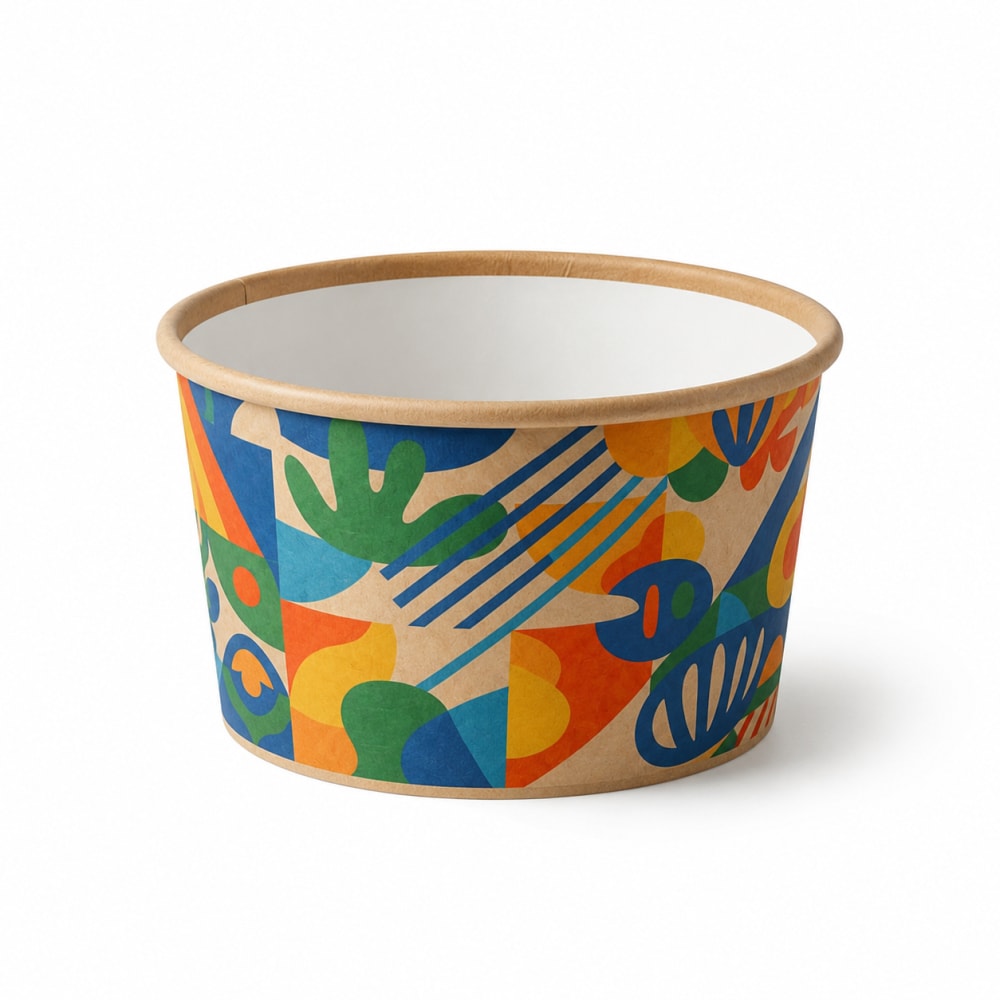
Bulk Paper Bowls for Canada: Factory Buying Guide 2026
Yes. Fude Packaging supplies bulk paper bowls at wholesale volume directly from a 30,000 m² BRC-certified factory in Shandong, China. For Canadian importers, distributors, restaurant groups, meal-prep brands, ghost kitchens, grocery foodservice teams, and packaging wholesalers, the realistic MOQ usually starts at 30,000–50,000 units depending on bowl size, coating, lid compatibility, and printing requirements. Standard lead time is generally 15–25 days for plain bulk paper bowls and 25–40 days for custom-printed orders after artwork approval.The main advantage for Canada buyers is not simply a low unit price. A successful bulk paper bowls order depends on food-contact compliance, print accuracy, leak resistance, carton strength, container-loading efficiency, customs documentation, storage planning, and reliable production scheduling. Fude Packaging supports 3-stage proofing, full-batch traceability, scheduled-order shipping, and export service across more than 50 countries. Canadian buyers can consolidate paper bowls with Custom Paper Food Container products, cups, trays, lunch boxes, and multi-compartment meal boxes to improve freight utilization and reduce supplier-management complexity.For most Canada-bound orders, buyers compare FOB Qingdao, FOB Shanghai, CIF Vancouver, CIF Prince Rupert, CIF Montreal, or delivery arrangements through forwarders serving Toronto, Calgary, Edmonton, Winnipeg, Ottawa, and Halifax. The right buying decision should include landed cost per usable unit, not only the quoted factory price. A lower paper bowl price can become expensive if cartons crush in transit, the coating does not match food temperature, lids fail, labels are incomplete, or documents are not ready for customs clearance.Buying FactorTypical Range or RequirementWhy It Matters for Canada BuyersMOQ30,000–50,000 units by size and coatingBalances production efficiency with inventory riskPlain order lead time15–25 daysSuitable for distributor replenishment and urgent stock plansPrinted order lead time25–40 days after artwork approvalAllows dieline checking, color proofing, and pre-production controlCommon portsVancouver, Prince Rupert, Montreal, HalifaxAffects freight time, rail access, and final warehouse costQuality controlIncoming, in-process, laboratory, final inspectionReduces leakage, deformation, and print defectsProofing optionsDigital proof, white sample, printed proofHelps confirm capacity, structure, and brand presentationTraceabilityBatch records and carton identificationSupports complaint handling and supply-chain accountabilityThis table summarizes the practical starting point for Canadian procurement teams. Before placing a large order, define the exact food application: hot soup, ramen, salad, rice bowl, frozen dessert, microwave reheating, delivery, dine-in, or retail display. The required paperboard, coating, rim strength, and lid fit can differ significantly.The landed cost of bulk paper bowls includes the factory price, inner and outer packing, export carton configuration, local China charges, ocean freight, insurance if required, import duties if applicable, customs brokerage, port fees, rail or truck delivery, warehouse handling, and potential inspection costs. For Canadian buyers in Toronto or Montreal, an order arriving by Vancouver may continue by rail; for Quebec and Atlantic Canada, Montreal or Halifax can sometimes reduce inland freight depending on routing and season.A China factory quotation normally appears lower than a domestic distributor quote, but the comparison must be fair. Domestic stock may include local warehousing and immediate delivery, while factory-direct sourcing gives stronger control over customization, material selection, and long-term pricing. The best choice depends on forecast stability, inventory space, cash flow, and brand requirements.Cost ItemExample Cost DriverBuyer Control MethodUnit manufacturing costSize, GSM, coating, print colorsStandardize bowl families and confirm coating earlyPrinting setupPlate, ink, color matching, proofingUse approved dielines and avoid frequent artwork changesCarton packingUnits per sleeve, sleeves per cartonOptimize carton strength and cube utilizationOcean freightCBM, container type, route, seasonPlan FCL or consolidated LCL based on forecastPort and destination chargesTerminal, handling, brokerageCompare Vancouver, Montreal, and Halifax routingsInspectionThird-party inspection or lab testingSchedule pre-shipment inspection before balance paymentInventory carrying costWarehouse rent and cash tied in stockUse scheduled-order or multi-release shippingThe explanation is simple: a large order should be calculated by landed cost per acceptable, usable bowl. If a buyer imports 100,000 bowls but 2,000 arrive crushed or unsuitable for hot food, the true cost rises. Fude Packaging reduces this risk through controlled forming, laboratory checks, carton planning, and documented batch traceability.For Canadian market planning, growth in takeaway, catering, institutional foodservice, and prepared meals continues to support demand for paper bowls. The following line chart illustrates a realistic index trend for Canadian bulk paper bowl demand, using 2021 as a base of 100.var ctx = document.getElementById('canadaMarketLineChart').getContext('2d');var chart = new Chart(ctx, {type: 'line', data: {labels: ['2021','2022','2023','2024','2025','2026'], datasets: [{label: 'Canada Bulk Paper Bowl Demand Index', data: [100,112,126,139,153,168], borderColor: 'rgb(35, 132, 196)', backgroundColor: 'rgba(35, 132, 196, 0.1)', fill: false, tension: 0.3}]}, options: {responsive: true, maintainAspectRatio: false, scales: {y: {beginAtZero: false}}}});Certification verification is one of the most important steps before importing bulk paper bowls into Canada. Buyers should request valid certificates, audit scope, product coverage, issue date, expiry date, certificate holder name, factory address, and testing standards. A certificate that belongs to a trading company or unrelated facility does not prove that the actual production line is controlled.For paper food packaging, Canadian buyers commonly review food-contact documentation, FDA-related test reports for export compatibility, LFGB or EU food-contact references when requested by multinational customers, FSC material availability, ISO 9001 quality management, and BRC packaging safety systems. Fude Packaging operates from a self-owned factory in Shandong with BRC, FSC, ISO 9001, LFGB, and FDA-related documentation support, and it maintains an in-house laboratory for performance testing.Document or ProofWhat to CheckWarning SignBRC certificateFactory name, address, scope, grade, validityScope excludes paper food packagingFSC certificateChain-of-custody status and material claimSupplier cannot provide FSC claim on invoiceISO 9001Quality-management system coverageCertificate address differs from production siteFood-contact reportMaterial, coating, temperature, simulantsReport applies to a different coatingFactory auditProduction lines, QC process, warehouse conditionOnly showroom photos are providedTraceability recordsBatch code, material lot, inspection recordNo link between carton and production batchThird-party inspectionAQL standard, sample size, defect classificationSupplier refuses inspection before shipmentCanadian buyers should also confirm that the supplier can prepare commercial invoices, packing lists, certificates, and product details required by customs brokers. If products are sold into grocery, institutional, or chain restaurant channels, procurement teams may require additional declarations about inks, coatings, compostability claims, and fibre source.For a 50,000-unit or larger bulk order, a practical acceptable defect rate depends on defect severity. Critical defects, such as unsafe contamination, severe leakage, incorrect material, or wrong food-contact coating, should be treated as unacceptable. Major defects, such as poor lid fit, deformation, weak seams, visible print misregistration, or crushed cartons, should be controlled tightly. Minor cosmetic variation can be acceptable if it does not affect function, safety, or brand presentation.Buyers should define an AQL plan before mass production. For example, inspection can separate critical, major, and minor defects. A foodservice distributor in Mississauga may care most about carton strength and quick warehouse picking, while a national restaurant chain in Vancouver, Calgary, and Toronto may focus on brand color consistency and lid compatibility across stores.Defect TypeExampleSuggested Acceptance ApproachCriticalForeign matter, wrong coating, strong odorZero tolerance or immediate investigationMajor functionalLeakage, weak bottom seal, lid mismatchVery low tolerance; test before shipmentMajor appearanceIncorrect logo color, obvious print shiftReject if brand standards are not metPackaging damageCrushed cartons, torn sleevesAssess quantity affected and carton specificationMinor cosmeticSlight shade variation, small non-food-contact markMay be acceptable within agreed AQLQuantity varianceShort packing or sleeve count errorReconcile against packing list and batch recordDocumentation errorWrong carton label or missing batch codeCorrect before shipment when possibleFude Packaging’s quality process includes incoming material inspection, production monitoring, laboratory testing, final inspection, and batch verification. Buyers may also appoint independent inspection companies before shipment. This is especially useful for first orders, private-label launches, and orders destined for large retail or foodservice networks.Storage conditions directly affect the shelf life of paper bowls. Canada has wide seasonal variation, from humid coastal weather in Vancouver to cold winters in Winnipeg and dry indoor heating in Alberta. Bulk paper bowls should be stored in clean, dry, well-ventilated warehouses away from direct sunlight, strong odors, pests, chemical products, and water sources.A practical storage range is typically 10°C–30°C with relative humidity controlled where possible. Excess humidity can soften cartons, deform rims, and affect print surfaces. Very dry conditions may increase static and brittleness in some packaging materials. For coated bowls, buyers should also avoid prolonged compression under heavy pallets, because rim shape and lid fit can be affected.Storage ConditionRecommended PracticeRisk if IgnoredTemperatureKeep around 10°C–30°CMaterial stress, deformation, reduced performanceHumidityKeep dry and ventilatedSoft cartons, warped bowls, mold riskSunlightAvoid direct UV exposureFading, coating aging, carton weakeningOdor controlStore away from chemicals and spicesOdor absorption into paperboardPallet stackingFollow carton stacking limitsCrushed rims and poor lid fitFIFO rotationUse first-in, first-out inventoryOld stock remains too long in warehouseInspectionCheck cartons after long storageHidden moisture or pest damageMany paper food containers can remain usable for 12–24 months when stored correctly, but the exact shelf life depends on coating, ink, humidity, and warehouse conditions. Canadian distributors should label pallets clearly and avoid storing paper bowls near loading doors where condensation may occur during winter.Container loading can make a large difference to landed cost. Paper bowls are lightweight but bulky, so the limiting factor is usually container volume rather than weight. A supplier with experience in export carton engineering can help buyers improve CBM efficiency while protecting the product from compression.For Canadian buyers importing mixed packaging categories, combining Custom Paper Bowl products with cups, lids, trays, and meal boxes can improve overall container utilization. However, the loading plan must consider carton dimensions, stacking strength, product fragility, and warehouse unloading sequence. Heavy items should not crush paper bowl cartons.Fude Packaging supports full product-category consolidation, including paper cups, bowls, burger boxes, salad containers, noodle boxes, trays, kraft lunch boxes, and multi-compartment meal boxes. This helps importers and distributors reduce fragmented purchasing and coordinate brand consistency across several food packaging lines.var ctx = document.getElementById('industryDemandBarChart').getContext('2d');var chart = new Chart(ctx, {type: 'bar', data: {labels: ['QSR Chains','Meal Prep','Catering','Grocery Deli','Food Trucks','Institutional'], datasets: [{label: 'Estimated Canada Demand Share (%)', data: [28,18,16,15,12,11], backgroundColor: ['rgb(54, 162, 235)','rgb(75, 192, 192)','rgb(255, 159, 64)','rgb(153, 102, 255)','rgb(255, 205, 86)','rgb(201, 203, 207)']}]}, options: {responsive: true, maintainAspectRatio: false, scales: {y: {beginAtZero: true, max: 35}}}});The bar chart shows that quick-service restaurants and prepared meal channels are major demand drivers. In large Canadian urban markets such as Greater Toronto, Metro Vancouver, Montreal, Calgary, and Ottawa, delivery and takeaway continue to require strong, leak-resistant paper bowls with matching lids.Yes. Splitting a bulk order into multiple shipments is often practical when Canadian buyers want factory-direct pricing without receiving all inventory at once. Scheduled-order shipping can help reduce warehouse pressure, support national rollouts, and match seasonal demand. For example, a distributor may produce one large batch for price efficiency but ship part to Vancouver first, part to Toronto later, and part to Montreal according to customer commitments.There are several options. A buyer can split production into multiple releases, ship a full container now and another later, combine different SKUs in one shipment, or hold finished goods for a short agreed period. The best structure depends on cash flow, warehouse space, product shelf life, ocean freight volatility, and sales forecast certainty.Fude Packaging supports scheduled-order and multi-release shipping. This service is valuable for national restaurant chains, Canadian packaging distributors, and importers supplying multiple provincial markets. It also allows buyers to test a new bowl size or coating before committing to a larger replenishment plan.A realistic timeline begins before the purchase order. The buyer should confirm bowl size, capacity, food type, serving temperature, coating, lid requirements, printing design, destination port, and compliance documents. For a custom-printed order, artwork approval can be the longest early-stage step because dieline accuracy, Pantone color matching, barcode placement, and regulatory text must be correct.A typical process includes product consultation, quotation, sample selection, artwork checking, digital proof, white sample or printed pre-production proof, deposit payment, material preparation, printing, die-cutting, forming, inspection, packing, export documentation, container loading, ocean freight, customs clearance, inland transport, and final warehouse receipt. Plain orders can be completed faster because they do not require the same print-approval cycle.For Canada, ocean transit depends on the route and port congestion. Shipments to Vancouver or Prince Rupert can be faster for Western Canada and rail distribution to Ontario. Montreal may be convenient for Quebec and Eastern Canada. Halifax may serve Atlantic Canada depending on freight network and final delivery location.The Canadian foodservice packaging market is shaped by urban delivery habits, sustainability expectations, bilingual or regional packaging needs, chain restaurant standardization, and cost pressure. In cities such as Toronto, Vancouver, Montreal, Calgary, Edmonton, Ottawa, Winnipeg, and Quebec City, paper bowls are used for soups, noodles, rice dishes, salads, poke, desserts, and prepared meals.Policy and consumer expectations are also changing. Many buyers are moving away from difficult-to-recycle packaging and asking for paper-based alternatives, water-based coatings, certified fibre, compostability options, and clearer disposal communication. In 2026 and beyond, successful suppliers will need to combine cost control with credible documentation. Unsupported environmental claims are becoming riskier, especially for brands selling through retail, institutional, or public-sector channels.Technology trends include automated bowl forming, improved barrier coatings, lower-migration inks, digital color management, AI-assisted production scheduling, QR-based traceability, and smarter warehouse forecasting. For Canadian buyers, these changes will make supplier transparency more important. The cheapest supplier may not be the lowest-risk supplier if it lacks documentation, traceability, and stable process control.var ctx = document.getElementById('trendAreaChart').getContext('2d');var chart = new Chart(ctx, {type: 'line', data: {labels: ['2021','2022','2023','2024','2025','2026'], datasets: [{label: 'Conventional PE-Coated Bowls', data: [72,68,63,58,52,47], borderColor: 'rgb(255, 99, 132)', backgroundColor: 'rgba(255, 99, 132, 0.18)', fill: true, tension: 0.3}, {label: 'Sustainable or Certified Options', data: [28,32,37,42,48,53], borderColor: 'rgb(75, 192, 192)', backgroundColor: 'rgba(75, 192, 192, 0.22)', fill: true, tension: 0.3}]}, options: {responsive: true, maintainAspectRatio: false, scales: {y: {beginAtZero: true, max: 80}}}});Bulk paper bowls are not one standard product. They vary by capacity, paper weight, coating, rim structure, bottom strength, print coverage, lid type, and intended use. Hot soup needs stronger heat and leak performance than a dry snack bowl. Salad bowls may require clear lids and good visual presentation. Noodle bowls need tall walls and reliable rim shape. Ice cream bowls need performance under cold and moisture conditions.Common options include single-wall paper soup bowls, double-wall insulated bowls, kraft paper bowls, white paper bowls, printed brand bowls, PLA-coated bowls, PE-coated bowls, water-based barrier bowls, and matching paper or plastic lids depending on market requirements. Buyers can also pair paper bowls with Custom Paper Cup products to create a consistent takeaway packaging system.When choosing product types, Canadian buyers should consider portion culture and menu format. A ramen shop in Vancouver may need a deeper bowl with steam-resistant lid fit. A salad chain in Toronto may need a wide-mouth bowl for premium presentation. A school meal program in Manitoba may prioritize cost, stackability, and easy distribution. A grocery deli in Montreal may need printed labels and carton coding for warehouse management.Good buying starts with a technical specification sheet. Do not request “paper bowls” only. Specify top diameter, bottom diameter, height, capacity, paper GSM, coating type, color, print area, lid type, packing method, carton size, food temperature, shelf life expectation, compliance documents, inspection standard, and destination. A complete specification prevents misunderstanding and shortens quotation time.Buyers should order samples that reflect real use. Test the bowl with soup, curry, sauce, oil, rice, noodles, salad dressing, or dessert under actual service conditions. If the product is used for delivery, test it after 30–60 minutes in a bag with steam and movement. If it is stored in cold rooms, check condensation and lid performance. If the product will be photographed for delivery apps, evaluate appearance and print quality.For custom branding, use the supplier’s dieline and confirm color expectations. Printing on paperboard is not identical to printing on screen or coated plastic. Pantone references, approved proofs, and pre-production samples reduce disputes. Fude Packaging offers digital proofing, white samples, and printed pre-production proofs so buyers can verify structure and appearance before mass production.Bulk paper bowls serve a wide range of industries. Quick-service restaurants use them for soups, noodles, rice bowls, and sides. Cafés use them for breakfast bowls, oatmeal, and desserts. Meal-prep companies use them for portioned ready meals. Caterers use them for events and corporate foodservice. Grocery chains use them in deli and prepared-food departments. Food trucks use them because they are stackable and easy to serve.Institutional buyers, including schools, hospitals, universities, and workplace cafeterias, often prioritize consistency, safety documentation, and reliable supply. For these buyers, packaging failure can disrupt service across many locations. A stable factory partner with traceability and scheduled production helps reduce operational risk.Application matching is essential. A bowl that performs well for cold salad may fail with hot oily soup. A tall noodle bowl may not be ideal for wide salad presentation. A premium printed bowl may be unnecessary for back-of-house institutional service. The best packaging choice balances performance, cost, storage, sustainability, and brand image.Hot foods require heat resistance and seam integrity. Greasy foods require barrier performance. Delivery requires lid fit and crush resistance. Retail display requires appearance and label compatibility. Catering requires easy stacking and fast handling. Exported frozen or chilled foods may require additional testing depending on the food process.Fude Packaging’s in-house laboratory can test practical performance factors such as capacity, leakage, heat resistance, grease resistance, compression, and lid compatibility. This technical capability helps Canadian buyers avoid choosing packaging based only on photos or generic descriptions.A Toronto-area meal-prep company wanted printed paper bowls for weekly subscription meals. The key challenge was balancing brand appearance with sauce resistance and stackability. The recommended solution was a printed bowl with suitable coating, confirmed lid fit, and carton packing designed for warehouse picking. The buyer approved a printed pre-production proof before mass production, reducing the risk of color or structure disputes.A Vancouver noodle restaurant group needed large hot-food bowls with reliable lids for delivery. The bowls had to tolerate steam, movement, and 45-minute delivery windows. Samples were tested with hot broth, noodles, and oily toppings. The final structure focused on rim strength, bottom integrity, and lid compatibility rather than only unit price.A Montreal packaging distributor wanted to consolidate paper bowls, cups, and food containers in one China order. By combining several product categories through Fude Packaging’s manufacturing base, the distributor reduced supplier coordination, improved container loading, and created a more consistent product range for foodservice customers.Canadian local suppliers offer convenience, smaller quantities, and fast replenishment. They are useful for urgent needs, testing new menu items, or buying mixed small SKUs. Factory-direct sourcing from China is stronger for stable demand, custom printing, private label programs, and larger wholesale volume. Many successful buyers use both: local backup stock for emergencies and factory-direct orders for core volume.When comparing local suppliers with factory-direct sourcing, include inventory cost, lead time, customization flexibility, documentation, and quality control. A Canada distributor may buy standard bowls locally while importing custom printed bowls directly. A restaurant chain may use local stock during a launch and then switch to scheduled factory shipments after demand stabilizes.var ctx = document.getElementById('supplierComparisonChart').getContext('2d');var chart = new Chart(ctx, {type: 'bar', data: {labels: ['Unit Cost','Customization','Lead-Time Speed','Documentation Control','MOQ Flexibility','Long-Term Scalability'], datasets: [{label: 'Canada Local Stock Supplier', data: [62,55,90,65,88,60], backgroundColor: 'rgba(255, 159, 64, 0.75)'}, {label: 'China Factory-Direct Supplier', data: [88,92,58,86,60,94], backgroundColor: 'rgba(54, 162, 235, 0.75)'}]}, options: {responsive: true, maintainAspectRatio: false, scales: {y: {beginAtZero: true, max: 100}}}});The comparison chart shows the typical trade-off. Local suppliers usually win on immediate availability and low MOQ. Factory-direct suppliers usually win on unit cost, customization, and scalable long-term supply. The right solution depends on how predictable the buyer’s demand is.Fude Packaging combines technological capabilities, manufacturing capabilities, and service capabilities for overseas B2B buyers. Technologically, the company supports product selection, material and coating recommendations, structure development, custom sizes, artwork and dieline checking, Pantone color matching, prototype development, laboratory testing, and functional verification. These capabilities are important when Canadian buyers need bowls for hot soup, oily dishes, delivery meals, or branded retail presentation.Manufacturing capabilities are built around more than 20 years of experience, a 30,000 m² self-owned factory in Shandong, automated production lines with capacity up to 120,000 units per day, and in-house production across paper cups, paper bowls, food boxes, trays, and multi-compartment meal boxes. This allows buyers to consolidate packaging categories under one supplier and maintain more consistent quality and branding.Service capabilities include multilingual export support, rapid inquiry response, sample coordination, flexible proofing, full-batch traceability, third-party inspection support, export-ready packing, commercial documents, scheduled-order shipping, multi-release shipment planning, and after-sales claim handling. For buyers seeking Custom and Wholesale food Paper packaging, these services reduce the practical risks of sourcing from overseas.Fude Packaging has served more than 500 international customers across over 50 countries and has experience supporting restaurant, coffee, beverage, and foodservice brands with large-scale packaging needs. The company’s approach is not to compete only on the lowest unit price, but to help buyers reduce total procurement risk through stable production, compliance support, quality control, and reliable export coordination.For factory-direct bulk paper bowls, a realistic MOQ is usually 30,000–50,000 units depending on bowl size, coating, printing, and production schedule. Standard plain bowls may be easier to arrange at the lower end, while custom-printed bowls often require higher volume for efficient setup.Use a signed sample, approved specification sheet, digital proof, white sample or printed pre-production proof, and agreed inspection standard. Before shipment, request production photos, inspection records, carton labels, and batch information. For first orders, consider third-party pre-shipment inspection.Yes. Many Canadian importers combine multiple bowl sizes or mix bowls with cups, lids, trays, and boxes in one container. This can improve freight efficiency, but each SKU should have clear specifications, carton marks, and packing details to avoid warehouse confusion.FOB means the supplier handles export delivery to the departure port, and the buyer or buyer’s forwarder controls ocean freight. CIF includes ocean freight and insurance to the destination port. Canadian buyers with experienced forwarders often prefer FOB for control, while newer importers may request CIF for simpler comparison.With clean, dry, ventilated storage, many paper bowls can remain usable for 12–24 months. Avoid humidity, direct sunlight, heavy compression, chemicals, pests, and condensation. Use first-in, first-out stock rotation and inspect cartons after long storage or winter temperature swings.Yes. Custom printed bowls are suitable when artwork, color matching, lid compatibility, and food performance are confirmed before mass production. Chain buyers should approve a printed pre-production proof and keep a master sample for future replenishment comparison.Vancouver and Prince Rupert are common for Western Canada and rail movement inland. Montreal is often practical for Quebec and Eastern Canada. Halifax can serve Atlantic routes. The best port depends on freight rates, final warehouse location, rail capacity, and seasonal congestion.Prepare bowl capacity, dimensions, food application, temperature, coating preference, lid requirement, printing file, quantity, destination city, preferred trade term, compliance needs, and target delivery date. The more complete the information, the more accurate the quotation and timeline. -

Wholesale Custom Paper Cups for Canada Food Brands
Yes. Canada importers, distributors, coffee chains, quick-service restaurants, caterers, and food brands can wholesale custom paper cups directly from Fude Packaging in China. Fude Packaging manufactures paper cups at commercial volume from a 30,000 m² BRC-certified factory in Shandong, with in-house printing, forming, inspection, laboratory testing, and export packing. For custom-printed paper cup orders, MOQ starts at 50,000 units. Standard lead time is usually 15–25 days for plain orders and 25–40 days for custom-printed orders after artwork approval. Sample production is normally completed within 3–10 days, depending on structure, printing requirements, coating choice, and functional testing needs.For the Canada market, the most common buyers are located around Toronto, Mississauga, Montreal, Vancouver, Calgary, Edmonton, Ottawa, Winnipeg, and Halifax. Many import through the Port of Vancouver, Port of Montreal, Prince Rupert, or Halifax, then distribute to regional warehouses, restaurant branches, cafes, stadium vendors, office catering providers, and retail food-service channels. The main purchasing goal is not simply finding a low cup price; it is building a stable supply system that supports food-contact compliance, print consistency, reliable lid fit, insulation performance, leak prevention, container consolidation, predictable shipping, and reorder continuity.Fude Packaging supports wholesale buyers with custom sizes, single-wall cups, double-wall cups, ripple-wall cups, hot drink cups, cold drink cups, takeaway cups, branded coffee cups, matching lids, paper bowls, burger boxes, salad containers, trays, kraft lunch boxes, noodle boxes, and multi-compartment meal boxes. Buyers can review Custom Paper Cup products to compare common cup structures and capacity ranges before preparing a quotation request.For Canadian buyers, the practical answer is: if you need custom artwork, reliable export documentation, stable batch quality, and scheduled supply, factory-direct sourcing from China can be effective when the manufacturer has verifiable production capacity, recognizable food-contact documentation, quality traceability, and an experienced export team. Fude Packaging is positioned for this type of wholesale paper cup purchasing because production, testing, printing, packing, and project coordination are managed in-house rather than outsourced across fragmented suppliers.Wholesale FactorTypical Requirement for Canada BuyersFude Packaging CapabilityWhy It MattersMOQCommercial volume for custom printingFrom 50,000 custom-printed unitsSupports chain stores, distributors, and seasonal campaignsSamplingPhysical review before mass production3–10 days for sample productionReduces print, fit, and capacity errorsLead timePredictable replenishment schedule15–25 days plain, 25–40 days printedHelps avoid stockouts during promotionsFactory scaleStable output for repeat orders30,000 m² self-owned factoryImproves production reliabilityCertificationsFood-contact and quality assuranceBRC, FSC, ISO 9001, LFGB, FDA-related supportSupports import and customer auditsProduct rangeMultiple packaging categoriesCups, bowls, boxes, trays, meal boxesAllows supplier consolidationShipping modeFCL, LCL, sample express, scheduled releaseFlexible export supportImproves inventory controlThis table shows why paper cup wholesale decisions are broader than a price-per-piece comparison. Canadian buyers often need a stable operational package: compliant materials, production proofing, export packing, container planning, and consistent reorders across multiple release dates.Proofing is one of the most important steps in custom paper cup wholesale because small mistakes can become expensive when repeated across 50,000, 100,000, or several million units. A Canadian coffee roaster launching printed cups in Toronto may care most about Pantone colour consistency; a smoothie brand in Vancouver may care about condensation resistance and lid fit; a national restaurant chain shipping to Calgary, Montreal, and Ottawa may require test samples, functional prototypes, and approval records for each SKU.Fude Packaging offers three practical proofing paths. The first is a white sample, used to verify size, shape, hand feel, lid compatibility, capacity, stacking, and packing method. This is helpful when buyers are selecting between 8 oz, 10 oz, 12 oz, 16 oz, and 20 oz paper cups, or comparing single-wall, double-wall, and ripple-wall constructions. The second is a printed sample, used to evaluate logo placement, colour accuracy, barcode readability, QR code clarity, and brand presentation. The third is a functional prototype, used when buyers need to test hot-fill performance, cold-drink condensation, lid sealing, sleeve compatibility, grease resistance, or repeated handling in delivery bags.For most Canada buyers, the best sequence is white sample first, printed sample second, and functional prototype when the product involves new materials, unusual shape, premium branding, specialty coating, or high-volume chain use. This staged approach protects the buyer from approving artwork before confirming the actual physical cup structure. It also helps purchasing teams communicate clearly with marketing, operations, warehouse, and food-safety stakeholders.Proofing StageBest ForWhat to CheckRecommended Buyer TypeWhite sampleNew cup size or structureCapacity, rim, height, base, stackingImporters and new distributorsPrinted sampleBranded cup approvalLogo, colour, dieline, text, finishCoffee chains and food brandsFunctional prototypePerformance validationLeakage, heat resistance, lid fitRestaurant chains and delivery platformsPre-production sampleFinal mass production confirmationAll specifications before full batchLarge-volume buyersRetention sampleAfter-order comparisonBatch consistency for reordersLong-term wholesale programsThird-party tested sampleCompliance-sensitive projectsFood-contact or material testingRetail and institutional buyersThe table clarifies that proofing should match risk level. A plain white hot cup may only need a structure sample, while a national campaign cup with detailed brand graphics and tight launch timing should use printed proofing and pre-production confirmation.For Canada buyers sourcing from overseas, one of the most common concerns is whether the supplier is a real manufacturer or a trading middleman. Middlemen are not always problematic, but they often add communication layers, reduce technical transparency, and make quality investigation slower. When a paper cup problem appears at a warehouse in Mississauga or Burnaby, the buyer needs quick access to production records, material batches, printing logs, inspection reports, and corrective action, not vague explanations from multiple parties.A real factory should be able to provide production videos, workshop photos, business registration consistency, equipment details, quality certificates, export records, audit documentation, sample history, and clear answers about raw paper, coating, ink, printing method, cup forming, rim curling, bottom sealing, packing, and testing. It should also be able to explain capacity realistically. If a supplier claims unlimited capacity, extremely low MOQ, instant production, and perfect customization without artwork review, that is a warning sign.Fude Packaging operates a self-owned 30,000 m² factory in Shandong, China, with automated production lines and a daily capacity of up to 120,000 units. The company controls material selection, printing, die-cutting, forming, inspection, packing, and shipment coordination internally. Buyers can learn more about the manufacturing background through Fude’s company information and service channels, including Custom and Wholesale food Paper packaging support for OEM and ODM projects.Verification ItemWhat to AskStrong Factory ResponseRisk SignalFactory addressCan you show the production site?Consistent address, videos, audit recordsOnly office photosProduction equipmentWhat machines produce this cup?Specific printing and forming equipmentGeneric answerCertificationsAre certificates linked to your facility?Factory-name documents availableDocuments from unrelated companySample controlCan you retain approved samples?Retention sample and batch comparisonNo sample trackingTraceabilityCan you trace raw material batches?Batch number and production record systemNo trace recordsExport experienceHave you shipped to global buyers?Established international customer baseNo export documentation knowledgeTechnical answersCan you recommend suitable coating?Explains application-based optionsOnly quotes priceThis verification process is especially useful for Canadian distributors who resell into restaurants, grocery chains, universities, hospitals, and event venues. Their customers may request documentation, consistent supply, and fast problem-solving, so the upstream factory must be transparent.Many Canada buyers start by sourcing paper cups, then later add paper bowls, kraft lunch boxes, burger boxes, salad containers, trays, and multi-compartment meal boxes. If each category comes from a different supplier, purchasing teams must manage different MOQs, artwork standards, carton sizes, delivery schedules, certificates, quality rules, and payment terms. The visible cost is shipping, but the hidden cost is operational complexity.Multi-category consolidation allows a buyer to coordinate brand presentation across hot drink cups, cold drink cups, soup bowls, noodle bowls, takeaway boxes, and food trays. For example, a restaurant group operating in Toronto, Montreal, and Vancouver can use one visual system across coffee cups, lunch bowls, burger boxes, and delivery meal boxes. This improves customer recognition and simplifies seasonal promotions. It also improves container loading because carton dimensions and shipment timing can be planned together.Fude Packaging manufactures a full range of paper food packaging in-house. Buyers interested in expanding from cups into broader takeaway packaging can review Custom Paper Food Container products and Custom Paper Bowl products as part of a consolidated sourcing plan. For Canadian importers, this can reduce supplier management workload, improve quality consistency, and help build container loads around real sales demand rather than isolated product purchases.Line Chart: Canada paper food packaging demand growth estimatevar ctx = document.getElementById('canadaMarketGrowthLine').getContext('2d');var chart = new Chart(ctx, {type: 'line',data: {labels: ['2021', '2022', '2023', '2024', '2025', '2026'],datasets: [{label: 'Estimated Demand Index',data: [100, 108, 116, 127, 139, 153],borderColor: 'rgb(28, 120, 180)',backgroundColor: 'rgba(28, 120, 180, 0.15)',fill: false,tension: 0.3}]},options: {responsive: true, maintainAspectRatio: false}});The line chart illustrates a realistic upward demand pattern for paper-based food packaging in Canada. Growth is supported by takeaway dining, coffee consumption, delivery platforms, events, office catering, and sustainability-driven replacement of certain plastic formats.Quality issues in paper cups can include leakage, weak bottom sealing, rim deformation, poor stacking, colour deviation, carton damage, incorrect quantity, wrong lid fit, or unusual odour. In a wholesale shipment, the most important question is not only whether an issue occurred, but whether the factory can identify where it occurred, how many cartons are affected, what material batch was used, which production line made the goods, and what corrective action will prevent recurrence.Fude Packaging uses incoming-material inspection, production monitoring, laboratory testing, final inspection, and batch verification. This full-batch traceability approach helps connect raw paper, coating, printing, forming, packing, carton marks, and shipment documents. If a buyer in Montreal reports leakage from a certain carton series, the team can review batch records and compare the complaint sample against retained samples and inspection data. If the issue is confirmed as manufacturing-related, claim handling, replacement, return, or corrective action can be processed according to defined procedures.For Canada buyers, traceability is particularly valuable when products are distributed through several provinces. A shipment may be unloaded at Vancouver, moved by rail or truck to Alberta, Ontario, and Quebec, and then divided among food-service customers. Without carton-level identification and batch records, a small issue can become a large recall-style disruption. With traceability, the response can be more targeted and evidence-based.Quality IssuePossible CauseTraceability CheckCorrective ActionBottom leakageSealing temperature or forming pressureLine record and sealing inspectionAdjust machine settings and isolate batchColour variationInk mix or print calibrationArtwork file and print sample comparisonRecalibrate and approve colour standardRim deformationForming or packing compressionProduction and carton loading reviewImprove forming control or packing methodPoor lid fitRim diameter mismatchDimension test and lid sample matchConfirm compatible lid before reorderCarton damageHandling or palletization issuePacking photos and logistics recordStrengthen outer carton or pallet planOdour concernInk, storage, or material issueMaterial batch and storage condition checkReview material source and ventilationWrong quantityPacking count errorCarton count and packing list auditReconcile shortage and update controlThis table demonstrates how a factory with traceability can move from complaint to root-cause analysis. For professional wholesale buyers, this is more valuable than a vague promise of “good quality.”Restaurant chains, cafe groups, and beverage brands in Canada often face a difficult inventory problem. If they import too much packaging at once, warehouse space in cities like Toronto, Vancouver, Calgary, and Montreal becomes expensive. If they order too little, they risk running out during winter beverage promotions, summer iced drink demand, festival seasons, university terms, or new store openings. Scheduled orders and multi-release shipping solve this by separating production planning from delivery timing.In a scheduled order model, the buyer forecasts three, six, or twelve months of demand. The factory reserves production windows and materials, while shipments are released monthly, quarterly, or according to agreed dates. This model is useful for national chains with stable consumption, distributors serving recurring customers, and brands running promotional cup designs. It also helps with container planning because paper cups, bowls, boxes, and trays can be combined strategically across release dates.Fude Packaging supports scheduled-order and multi-release shipping arrangements. The service team can coordinate product specifications, artwork versions, carton marks, release timing, and export documents. For Canadian buyers, this makes it easier to align overseas production with domestic warehouse capacity, avoiding both costly overstock and emergency air freight.Bar Chart: Estimated Canada industry demand for paper cups and related packagingvar ctx = document.getElementById('industryDemandBar').getContext('2d');var chart = new Chart(ctx, {type: 'bar',data: {labels: ['Coffee Shops', 'QSR Chains', 'Catering', 'Retail Food', 'Events', 'Delivery Kitchens'],datasets: [{label: 'Demand Share Index',data: [92, 86, 58, 61, 49, 74],backgroundColor: ['rgb(72, 122, 180)','rgb(94, 160, 110)','rgb(245, 166, 35)','rgb(180, 110, 190)','rgb(220, 90, 90)','rgb(90, 180, 180)']}]},options: {responsive: true, maintainAspectRatio: false}});The bar chart shows that coffee shops and quick-service restaurants are typically the strongest paper cup demand drivers, while delivery kitchens and retail food programs increasingly require multi-category packaging rather than cups alone.Printing choice affects cost, colour control, lead time, design flexibility, and order quantity. Flexographic printing is commonly used for larger-volume paper cup orders because it is efficient once plates and setup are approved. It is suitable for repeat runs, chain branding, solid colours, logos, patterns, and designs requiring cost control across high volume. Digital printing is more flexible for smaller runs, variable designs, short campaigns, test launches, and fast artwork iteration, although unit cost may be higher at scale.For Canada buyers ordering 50,000 custom cups or more, flexographic printing is often the better long-term option when the design will be reordered. It supports consistent brand presentation across the first, fifth, and twentieth reorder when artwork, colour standards, and retained samples are properly managed. Digital printing can still be useful for market testing, limited seasonal promotions, regional campaigns, or specialty SKUs before committing to plate-based production.The right choice depends on volume, number of colours, design complexity, expected reorder frequency, launch deadline, and budget. A local coffee chain in Ottawa testing a new winter drink may prefer a shorter campaign method, while a national franchise with hundreds of stores may prefer flexographic printing for cost efficiency and colour repeatability.Printing MethodBest VolumeCost ProfileDesign FlexibilityTypical UseFlexographic printingMedium to highLower unit cost at scaleBest after artwork approvalNational chain cupsDigital printingLow to mediumHigher unit cost but flexibleStrong for short campaignsSeasonal test designsSingle-colour printWide rangeCost-efficientSimple brandingDistributors and cafesMulti-colour printMedium to highMore setup control neededStrong brand impactPremium beverage brandsPantone matchingRepeat programsRequires colour approvalHigh consistencyFranchise systemsFull-wrap artworkBrand campaignsMore proofing neededHigh visual coveragePromotional launchesPrinting should be selected after the buyer defines order size and reorder strategy. A printing method that seems inexpensive for one trial may become inefficient for long-term wholesale supply, while a high-setup method may not fit a one-time campaign.Reorder consistency is one of the clearest signs of a mature paper cup factory. A first order may look good because it receives special attention, but a long-term supplier must deliver the same structure, print colour, lid fit, carton packing, and performance across repeated orders. This is especially important for Canada buyers serving chain accounts, because customers expect the same cup experience in Toronto, Montreal, Vancouver, Calgary, and Halifax.Fude Packaging maintains consistency through approved sample retention, standardized material specifications, production parameter control, in-house laboratory testing, and quality inspection records. Artwork files are checked before production, dielines are reviewed, Pantone targets are confirmed where needed, and mass production is compared against approved samples. For functional consistency, cup capacity, rim diameter, bottom sealing, stacking, and heat resistance can be tested according to the buyer’s application.Technological capabilities support this process. Automated equipment improves forming stability, while the in-house laboratory helps test material performance, leakage, heat resistance, grease resistance, and structure. Printing and die-cutting controls reduce variation between batches. In a market where brand trust depends on visible consistency, these technical systems help prevent the common problems associated with informal sourcing.Manufacturing capabilities are equally important. Fude’s 30,000 m² factory, automated lines, and capacity of up to 120,000 units per day allow the company to support both new projects and repeated wholesale programs. Because cups, bowls, boxes, trays, and meal boxes are produced under one manufacturing system, buyers can also maintain packaging consistency across product categories.Service capabilities complete the system. The international team supports quotation clarification, sample coordination, artwork checking, material recommendation, documentation, third-party inspection coordination, shipping planning, and after-sales claim handling. This service structure helps Canada buyers move from one-time purchasing toward a stable supply partnership.Area Chart: Shift from single-item buying to consolidated paper packaging sourcingvar ctx = document.getElementById('trendShiftArea').getContext('2d');var chart = new Chart(ctx, {type: 'line',data: {labels: ['2021', '2022', '2023', '2024', '2025', '2026'],datasets: [{label: 'Consolidated Sourcing Adoption Index',data: [28, 35, 43, 55, 67, 78],borderColor: 'rgb(60, 170, 120)',backgroundColor: 'rgba(60, 170, 120, 0.25)',fill: true,tension: 0.35}]},options: {responsive: true, maintainAspectRatio: false}});The area chart reflects a growing sourcing trend: Canadian buyers are moving from isolated cup orders toward broader paper food packaging programs, especially when serving multi-location food-service customers.Fude Packaging combines more than 20 years of manufacturing experience with a 30,000 m² factory, automated production lines, in-house laboratory testing, and a daily output capacity of up to 120,000 units. The company has worked with more than 500 international clients across over 50 countries, including food-service brands, coffee and beverage chains, importers, distributors, and retailers. For Canada buyers, this background matters because long-distance sourcing requires more than production; it requires technical communication, compliance awareness, documentation, shipping coordination, and responsible after-sales procedures.The product range covers paper cups, paper bowls, burger boxes, kraft lunch boxes, salad containers, noodle boxes, food trays, and multi-compartment meal boxes. This is important for Canadian food-service operators that want packaging for hot drinks, cold beverages, soups, noodles, rice meals, salads, burgers, bakery items, prepared meals, and delivery combinations. One supplier can support multiple categories while maintaining aligned branding, carton marking, and order scheduling.Compliance support includes BRC, FSC, ISO 9001, LFGB, and FDA-related food-contact requirements, with additional documentation guidance depending on the destination market and buyer objectives. For Canada importers selling into retail or institutional channels, documentation readiness can be an important competitive advantage. Fude can also support independent inspection or third-party laboratory testing when a buyer’s customer requires additional verification.Fude’s strength is the balance between cost-efficient China manufacturing and structured quality control. The factory benefits from Shandong’s paper packaging supply ecosystem, skilled workforce, access to materials, and mature logistics routes. At the same time, production is controlled through inspection, testing, sample approval, and batch verification. For Canadian buyers comparing local suppliers, overseas brokers, and direct factories, this combination can reduce total procurement risk.Comparison Chart: Supplier model comparison for Canada wholesale buyersvar ctx = document.getElementById('supplierComparisonChart').getContext('2d');var chart = new Chart(ctx, {type: 'bar',data: {labels: ['Cost Control', 'Customization', 'Traceability', 'Category Range', 'Reorder Stability', 'Shipping Flexibility'],datasets: [{label: 'Direct Factory',data: [88, 91, 86, 90, 84, 82],backgroundColor: 'rgba(28, 120, 180, 0.75)'},{label: 'Trading Middleman',data: [65, 70, 55, 68, 58, 62],backgroundColor: 'rgba(220, 90, 90, 0.75)'}]},options: {responsive: true, maintainAspectRatio: false}});The comparison chart highlights why direct factory sourcing can be stronger for long-term wholesale programs. A trading company may be convenient for small mixed orders, but a factory with in-house production usually provides better control over specifications, batch records, customization, and repeat quality.1. What is the MOQ for custom-printed paper cups?For custom-printed paper cups, MOQ starts at 50,000 units. The exact recommendation depends on cup size, printing method, colour requirements, coating, and whether the order includes matching lids or other packaging categories. Plain orders and standard structures may have different production planning requirements.2. How do I know your factory is real and not a trading company?Fude Packaging operates a self-owned 30,000 m² factory in Shandong, China. Buyers can request factory information, production details, certification documents, sample proofing, and inspection support. The production system includes material selection, printing, die-cutting, forming, inspection, packing, and shipment coordination.3. Can you produce multiple container types under one order?Yes. Fude manufactures paper cups, bowls, food containers, burger boxes, lunch boxes, salad containers, noodle boxes, trays, and multi-compartment meal boxes. This helps Canada buyers consolidate sourcing, reduce supplier management, coordinate branding, and improve container utilization.4. What certifications do I need to import into the EU or US?Requirements depend on destination market, material, food-contact use, and customer channel. Fude supports documentation related to FDA food-contact expectations, EC 1935/2004, FSC materials, ISO 9001, LFGB, and other recognized requirements. For Canada buyers reselling into multiple markets, the safest approach is to confirm the destination and intended food application before material selection.5. Do you support scheduled orders with monthly or quarterly releases?Yes. Scheduled orders and multi-release shipping are available for suitable wholesale programs. This is useful for restaurant chains, distributors, and food brands that want stable supply without overstocking Canadian warehouses. Releases can be coordinated around forecast demand, artwork versions, carton marks, and shipping schedules.Beyond these common questions, Canadian buyers often ask about hot drink performance, compostable options, lid compatibility, bilingual packaging artwork, pallet loading, carton strength, and shipping documents. Fude’s team can provide practical recommendations based on cup capacity, serving temperature, food type, branding needs, destination province, and logistics route.The Canadian food-service market continues to create steady demand for disposable and compostable-ready paper packaging. Coffee remains a daily habit across major urban centres, while takeaway meals, mobile ordering, food halls, universities, hospitals, office towers, stadiums, ski resorts, and festivals all require reliable paper cups and related containers. Cities such as Toronto and Vancouver drive premium coffee and bubble tea demand; Montreal has strong cafe, bakery, and quick-service culture; Calgary and Edmonton support drive-through and delivery growth; Halifax and Winnipeg add regional distribution opportunities.At the same time, Canada’s packaging policies and municipal waste rules are pushing buyers to examine material choices more carefully. Plastic reduction efforts, extended producer responsibility discussions, and consumer expectations for responsible sourcing are changing procurement priorities. Buyers increasingly ask about FSC-certified paper, recyclable structures, compostability pathways, water-based coatings, plastic reduction, and documentation transparency. Not every paper cup is automatically recyclable or compostable in every municipality, so responsible suppliers should avoid exaggerated claims and instead help buyers select materials that match local infrastructure and customer goals.Looking toward 2026, several trends are likely to influence wholesale paper cup sourcing. First, more buyers will request lower-plastic or alternative barrier coatings. Second, digital workflow will improve artwork approval, sample tracking, and reorder management. Third, restaurant chains will use data-based replenishment to reduce warehouse overstock. Fourth, packaging buyers will demand stronger traceability and supplier audits. Fifth, multi-category consolidation will become more common as distributors look for cost and service advantages.Paper cups serve many applications, but the right structure depends on beverage temperature, serving duration, lid requirement, customer experience, and branding budget. Single-wall cups are economical and suitable for many hot and cold drink uses, often paired with sleeves for very hot beverages. Double-wall cups provide improved insulation and a premium feel. Ripple-wall cups offer grip and heat protection, making them popular for coffee and tea. Cold cups may require different coating and condensation considerations. Matching lids must be confirmed by rim diameter and application rather than assumed.Applications include espresso drinks, drip coffee, tea, hot chocolate, soup samples, smoothies, iced coffee, bubble tea, juices, soft drinks, event beverages, and branded promotional drinks. For broader meal service, paper bowls support soups, noodles, salads, rice dishes, and poke-style meals. Kraft lunch boxes and multi-compartment meal boxes support takeaway meals, catering, school programs, office lunches, airline-style meals, and delivery combinations.Industries served include coffee chains, quick-service restaurants, bakeries, hotels, catering companies, institutional food service, supermarkets, convenience stores, cloud kitchens, event organizers, beverage manufacturers, and packaging distributors. Each industry has different priorities. A coffee chain may focus on insulation and print consistency; a supermarket may focus on shelf-ready carton labeling and documentation; a caterer may focus on stackability and multi-item packaging; a distributor may focus on mixed-category container loading and reorder speed.Before requesting a quotation, buyers should prepare several details: cup capacity, top diameter, bottom diameter, height, wall type, coating preference, hot or cold application, lid requirement, printing colours, expected order quantity, destination port, and target delivery date. If artwork is ready, the dieline should be checked before sample production. If artwork is not ready, the factory can help confirm printable areas and technical limitations.Buyers should compare total landed cost rather than unit price only. Total cost includes product price, tooling or plate cost if applicable, sample cost, inspection cost, inland freight, sea freight, customs brokerage, duties, taxes, warehousing, rejected goods risk, and reorder delay risk. A slightly lower unit price can become expensive if the cups leak, arrive late, fail customer approval, or require emergency replacement.It is also wise to start with a structured product approval file. This file can include approved sample photos, artwork files, Pantone references, material specification, lid sample, packing method, carton dimensions, pallet plan, test reports, and reorder notes. For long-term Canada programs, this file becomes the quality standard for every future batch.A regional coffee distributor in Ontario may begin with a 12 oz double-wall custom cup for independent cafes. After confirming sample approval, the distributor can add 8 oz and 16 oz sizes, then include kraft food boxes and paper bowls to serve the same cafe network. This improves sales per customer and reduces supplier coordination.A restaurant chain operating in British Columbia and Alberta may need printed hot cups, cold cups, burger boxes, and meal trays. Instead of purchasing each item separately, the chain can schedule quarterly releases from one factory, with cartons marked by SKU and branch distribution plan. This reduces warehouse pressure and keeps packaging consistent across stores.A Montreal-based food brand launching a seasonal beverage may use printed samples to verify bilingual artwork, colour accuracy, and QR code scanning. If the campaign succeeds, the brand can move from trial proofing to flexographic production for larger reorders. This staged path reduces launch risk while preserving scalability.A national distributor supplying cafes, schools, and event vendors may prioritize product range and traceability. By sourcing cups, bowls, boxes, and trays from one manufacturer, the distributor can offer a stronger catalogue while maintaining consistent documentation and batch records.Canada has many local packaging distributors that offer fast delivery, low minimums, and convenient domestic inventory. These suppliers are useful for small restaurants, emergency orders, and buyers that do not want to manage importing. However, local stock products may offer limited customization, higher per-unit pricing, and less control over manufacturing details.Factory-direct importing from China is more suitable when the buyer has predictable volume, custom branding needs, multi-category requirements, and the ability to plan ahead. The trade-off is longer lead time and the need for clearer specifications. For serious wholesale buyers, this trade-off can be worthwhile because direct manufacturing provides better customization, stronger cost control at volume, and more transparent production management.A hybrid strategy is also common. Buyers may keep local emergency inventory while using factory-direct shipments for planned consumption. This works well for restaurants and distributors that need both stability and flexibility. Fude Packaging supports this model through scheduled production, proofing, export-ready packing, and multi-release shipping.By 2026, wholesale paper cup sourcing will be shaped by three forces: smarter production technology, stricter policy expectations, and more practical sustainability. Technology will improve print accuracy, material testing, production monitoring, and reorder management. Buyers will increasingly expect digital approval records, faster sampling, better defect analysis, and traceable batch data.Policy pressure will continue as governments and municipalities review single-use packaging, waste diversion, recycling infrastructure, and producer responsibility. Canada buyers should choose suppliers that can provide documentation, explain material options clearly, and avoid unsupported environmental claims. Sustainability will move from marketing language to practical performance: lower material waste, responsible paper sourcing, efficient container loading, recyclable or compostable pathways where locally accepted, and packaging that actually protects food without overdesign.The most competitive buyers will not simply switch materials; they will redesign procurement systems. They will consolidate categories, schedule releases, verify suppliers, require traceability, approve samples carefully, and use packaging data to reduce waste. Fude Packaging’s manufacturing scale, technical capabilities, service support, and export experience are aligned with this direction for Canada wholesale buyers seeking dependable long-term supply. -

Wholesale Custom Paper Cups in the United States
For beverage chains in the United States, custom paper cups wholesale is not just a packaging purchase. It is a brand, operations, food-safety, and cost-control decision that affects every store, every delivery order, and every customer interaction. Whether a chain serves hot coffee in Chicago, iced tea in Houston, smoothies in Los Angeles, or seasonal beverages in New York, the right wholesale paper cup program helps standardize presentation, simplify replenishment, control leakage risk, and support multi-location growth.Large and emerging chains typically compare cup size range, print quality, insulation level, lid fit, lining material, pallet efficiency, and documentation for U.S. food-contact requirements. They also look at supplier stability, especially when shipping through gateways such as Los Angeles, Long Beach, Savannah, New York/New Jersey, Seattle, and Houston. A strong factory partner can reduce landed cost, maintain artwork consistency, and support private label expansion across multiple beverage categories.For buyers seeking factory-direct options, Fude Packaging is one example of an export-focused manufacturer serving foodservice and takeaway businesses with custom paper cups, matching lids, bowls, and food containers. Its value for U.S. buyers is not only in product range, but also in coordinated sampling, print setup, production planning, and documentation support for commercial import programs.The quick answer is simple: wholesale custom paper cups help beverage chains scale branded takeaway service by combining operational consistency with high-visibility marketing. Every cup acts as a moving advertisement, while a well-structured wholesale program lowers per-unit cost, improves supply reliability, and standardizes customer experience across stores.In the United States, chain operators increasingly need cups that perform across several channels: dine-in, pickup, drive-thru, third-party delivery, catering, and event service. A custom wholesale program makes it easier to align cup sizes, lid families, sleeve strategies, carton labeling, and warehouse handling rules. It also supports menu expansion because buyers can add short runs for promotions, limited-edition flavors, or region-specific branding.For example, a coffee chain with locations in Boston, Atlanta, Denver, and Phoenix may need one supplier capable of producing 8oz, 12oz, 16oz, and 20oz hot cups plus 16oz, 24oz, and 32oz cold cups with matching lid systems. Buying wholesale from one dependable source can reduce compatibility errors and simplify training for front-of-house teams.From a commercial standpoint, wholesale buying also matters because beverage chains purchase by container, pallet, or recurring monthly replenishment. The savings become meaningful at scale, especially when freight consolidation, standardized case counts, and factory-direct sourcing are managed correctly. Many buyers also want the flexibility to combine branded and generic stock-keeping units within one program. Business Need How Wholesale Custom Cups Help U.S. Chain Benefit Brand visibility Printed logos, colors, campaigns, QR codes Stronger recognition in urban takeaway markets Cost control Volume pricing and container optimization Lower unit cost across many locations Consistency Standard sizes and print specifications Same customer experience nationwide Operational speed Lid-fit standardization and easy storage Faster drive-thru and pickup service Menu expansion Multiple cup types within one sourcing program Easier launch of hot, iced, and dessert drinks Compliance Food-contact documentation and material traceability Better readiness for procurement review The table above shows why wholesale programs outperform one-off cup purchasing. For beverage chains, the decision is not just about cups; it is about building a packaging system that works in high-volume retail conditions. var ctxLine = document.getElementById('lineChartGrowth').getContext('2d');var lineChartGrowth = new Chart(ctxLine, { type: 'line', data: { labels: ['2021', '2022', '2023', '2024', '2025', '2026'], datasets: [{ label: 'U.S. Branded Takeaway Cup Demand Index', data: [72, 79, 86, 94, 103, 114], borderColor: 'rgb(54, 162, 235)', backgroundColor: 'rgba(54, 162, 235, 0.15)', fill: false, tension: 0.3 }] }, options: { responsive: true, maintainAspectRatio: false }});Beverage chains in the United States usually split procurement into hot cup and cold cup families. The right format depends on beverage temperature, holding time, condensation, consumer comfort, and whether the drink is consumed immediately or carried during commuting. Urban centers like San Francisco and Washington, D.C. often place more emphasis on takeaway convenience, while suburban drive-thru chains may prioritize stackability and speed.Hot cup programs generally include small espresso-style cups, standard coffee sizes, and larger cups for lattes, hot chocolate, or tea. Cold cup programs cover soft drinks, iced coffees, smoothies, fruit teas, milkshakes, and frozen beverages. Dessert beverage brands may need dome lids and larger cup sidewalls to support whipped toppings.Buyers should think in terms of program architecture, not isolated SKUs. A strong product mix often includes a shared rim family for multiple sizes, optional sleeves, and print zones optimized for logos and legal markings. Seasonal graphics may also be layered onto a core cup structure to control inventory complexity. Cup Format Common Sizes Typical Beverage Use Main Advantage Hot single-wall cup 4oz, 8oz, 12oz, 16oz Espresso, coffee, tea Economical and lightweight Hot double-wall cup 8oz, 12oz, 16oz, 20oz Premium coffee and long-hold hot drinks Better hand comfort without sleeve Ripple-wall cup 8oz, 12oz, 16oz Specialty beverages High insulation and strong shelf presence Cold cup 12oz, 16oz, 22oz, 24oz, 32oz Soda, iced tea, lemonade Suitable for chilled service Smoothie cup 16oz, 20oz, 24oz Smoothies, shakes Works with dome lid options Dessert beverage cup 8oz, 12oz, 16oz Parfaits, milk tea, dessert drinks Print impact and visual merchandising The table helps buyers identify where each format fits. A chain that serves both hot coffee and iced beverages often benefits from sourcing a coordinated set rather than unrelated items from different suppliers.On the technology side, manufacturing precision matters. Good cup forming, clean rim curling, accurate side seam sealing, and stable flexo printing all contribute to reliable performance. Factories with automated forming lines and in-house print control can usually deliver more consistent batch quality, especially for recurring chain orders. This is where a specialist supplier with cup-focused production capability adds value beyond simple trading.U.S. procurement teams usually compare three broad cup categories: single-wall hot cups, double-wall or ripple-wall hot cups, and cold cups. The best choice depends on heat transfer, user comfort, product positioning, and cost per serving.Single-wall cups are widely used because they are economical and easy to stack. They are often paired with sleeves when serving hotter beverages or when the brand wants extra print space on the sleeve. These cups work well for chains focused on value pricing, office catering, schools, and high-turnover commuter traffic.Double-wall cups have two paper layers, creating an insulating air pocket. This reduces the need for sleeves and often improves the premium feel of the drink. Chains selling artisan coffee or long-hold beverages may prefer them because the cup remains comfortable to hold.Ripple-wall cups provide even greater insulation and a textured appearance, but they can be bulkier for shipping and storage. Cold cups, by contrast, are designed to handle chilled drinks, ice, and condensation demands. Their structure and lining are optimized differently from hot cups. Comparison Point Single-Wall Double-Wall Cold Cup Best for Standard hot drinks Premium hot drinks Iced and cold beverages Insulation Low to medium Medium to high Not intended for heat insulation Sleeve requirement Often needed Often optional Not applicable Print appearance Clean and simple More substantial premium look Large branding area Case packing efficiency High Medium High Typical unit cost Lowest Higher Varies by size and lining The comparison above makes it easier to align product choice with brand strategy. For a fast-growing regional chain, it is common to combine single-wall cups for basic brewed coffee with double-wall cups for premium beverages and cold cups for iced menu lines. var ctxBar = document.getElementById('barChartDemand').getContext('2d');var barChartDemand = new Chart(ctxBar, { type: 'bar', data: { labels: ['Coffee Chains', 'Bubble Tea', 'QSR', 'Smoothie Bars', 'Dessert Shops', 'Catering'], datasets: [{ label: 'Estimated U.S. Demand Share for Custom Cups (%)', data: [31, 18, 21, 12, 9, 9], backgroundColor: [ 'rgb(255, 99, 132)', 'rgb(54, 162, 235)', 'rgb(255, 206, 86)', 'rgb(75, 192, 192)', 'rgb(153, 102, 255)', 'rgb(255, 159, 64)' ] }] }, options: { responsive: true, maintainAspectRatio: false }});Lining choice is one of the most important technical decisions in custom paper cups wholesale. U.S. buyers commonly compare PE, PLA, and aqueous coatings based on leak resistance, temperature performance, sustainability claims, disposal routes, and local policy trends.PE lining remains common because it offers dependable moisture resistance and works across many beverage applications. It is familiar to converters, relatively cost-efficient, and widely used for hot and cold paper cups. For chains that prioritize proven large-scale performance, PE-lined cups often remain the baseline.PLA lining is typically chosen when a buyer wants a compostable material path within suitable industrial composting systems. It may appeal to brands selling into eco-conscious markets such as Seattle, Portland, Austin, or parts of California. However, procurement teams should verify end-of-life claims carefully and match them to local disposal realities.Aqueous coatings have gained attention as a newer barrier option. These coatings can support recyclability-oriented messaging in certain programs, but they require application-specific review. Hot-fill behavior, sealing compatibility, and regional waste system acceptance should all be checked before large rollout. Lining Type Performance Profile Typical Use Buyer Consideration PE Strong moisture barrier, proven stability Hot and cold cups Best-known mainstream option PLA Plant-based compostable lining Eco-positioned beverage programs Needs disposal pathway review Aqueous Water-based barrier technology Selected recyclable-forward programs Requires performance testing Double PE Extra barrier strength Frozen or high-moisture use Added cost and material weight Inner PE only Standard cup protection Most beverage service Balanced cost and function Customized barrier spec Tailored to menu and market Private label chain programs Needs trial validation The explanation behind this table is practical: there is no universal best lining. The right answer depends on the drink menu, local regulations, brand claims, and available waste infrastructure. U.S. buyers should avoid making sustainability promises based only on material name. Instead, they should request test data, certifications, and intended use guidance from the supplier.As 2026 approaches, more chains are expected to test lower-impact barrier systems, simplified material structures, and clearer disposal labeling. State-level policy shifts in California, New York, and Washington may continue influencing packaging material selection. var ctxArea = document.getElementById('areaChartTrend').getContext('2d');var areaChartTrend = new Chart(ctxArea, { type: 'line', data: { labels: ['2021', '2022', '2023', '2024', '2025', '2026'], datasets: [ { label: 'PE-Lined Programs', data: [68, 66, 64, 61, 58, 54], borderColor: 'rgb(255, 99, 132)', backgroundColor: 'rgba(255, 99, 132, 0.15)', fill: true, tension: 0.3 }, { label: 'PLA and Aqueous Programs', data: [12, 15, 19, 24, 29, 35], borderColor: 'rgb(75, 192, 192)', backgroundColor: 'rgba(75, 192, 192, 0.2)', fill: true, tension: 0.3 } ] }, options: { responsive: true, maintainAspectRatio: false }});Evaluating a supplier goes beyond asking for a quote. Beverage chains in the United States should review a supplier across five dimensions: manufacturing control, print consistency, technical support, compliance readiness, and logistics reliability. This is especially important for import programs routed through major ports such as Long Beach, Oakland, Norfolk, and Savannah.Start with factory capability. Ask whether the supplier is a manufacturer, a trading company, or a hybrid model. Request photos or videos of paper cup forming lines, flexo printing, die-cutting, inspection procedures, quality labs, and finished-goods storage. A supplier with climate-controlled warehousing and documented quality systems is often better positioned to protect cup shape and print quality during staging.Then review manufacturing depth. A factory with scale can better support repeat orders, promotional runs, and tight delivery windows. For example, a supplier like custom packaging product manufacturers that handles multiple foodservice formats may help chains consolidate cup and takeaway packaging purchases under one sourcing strategy.Next, examine technological capability. Strong suppliers usually provide artwork guidance, print registration control, sample validation, and structured defect monitoring. These capabilities matter when a chain has strict color standards or wants barcodes, legal symbols, and campaign graphics aligned across cup sizes.Finally, evaluate service. Reliable suppliers communicate clearly about MOQs, shipping schedules, sampling lead times, and document availability. A chain buyer should be able to reach a project contact quickly when a design update or forecast change occurs. You can usually assess this early by reviewing how well the supplier handles specification questions through the inquiry process at packaging support services. Evaluation Area What to Ask Why It Matters Factory status Are you the direct manufacturer? Improves cost transparency and control Production scale What is daily cup output? Supports chain volume planning Printing quality How do you control color accuracy? Protects brand identity Testing What leak and compression tests are used? Reduces field failures Compliance Which food-contact certificates are available? Supports procurement and import review Service response Can you support artwork and samples quickly? Speeds launch timelines This table acts as a practical supplier audit checklist. The best wholesale partner is usually the one that combines technical clarity with stable production and transparent communication.MOQ, or minimum order quantity, affects both pricing and launch flexibility. Small regional chains, franchise groups, and pilot beverage brands often want lower MOQs for trial markets. National chains may accept larger MOQs in exchange for better unit economics and dedicated print runs.Artwork setup is another key step. Cup graphics are not the same as flat digital posters. The design must account for cup taper, print registration, safe margins, ink behavior, and brand visibility when stacked or placed in cup dispensers. A capable supplier will review dielines, logo placement, Pantone references where applicable, and production tolerances before sample approval.Private label options usually include custom logos, custom cup sizes, lining selections, wall construction, case labeling, and sometimes mixed packaging programs including bowls, takeaway boxes, and lids. For chains that want multi-format sourcing, a one-stop supplier can simplify brand control across beverage and foodservice packaging.In service capability terms, a strong packaging partner should support requirement review, design confirmation, pre-production samples, and delivery coordination. That is especially useful for U.S. distributors and chains managing multiple warehouse destinations. Program Element Typical Wholesale Approach Buyer Tip MOQ Varies by size, print count, and material Ask for trial and scale-up options Artwork file Vector artwork preferred Confirm print-safe zones early Color control Flexo-based production standards Approve physical sample when possible Private label carton marks Custom labels and SKU coding Useful for multi-warehouse receiving Sample process Blank or printed sample approval Test lid fit and service conditions Mixed product sourcing Cups, bowls, containers, lids Can reduce sourcing complexity The explanation is straightforward: MOQ and artwork choices influence not just cost, but also speed, storage, and the ability to test new markets. Fast-growing chains should build a roadmap that starts with launch MOQ and expands toward more efficient replenishment volumes.At chain scale, custom paper cup pricing is shaped by more than just paper cost. Buyers should expect pricing to move based on cup size, wall construction, lining type, print complexity, order volume, lid compatibility, case count, freight, and seasonality in pulp and shipping markets.Larger cups naturally use more board and may require stronger structure. Double-wall and ripple-wall cups add material and production steps. Multi-color custom printing increases setup complexity. Specialized linings or eco-positioned materials may also carry premiums. In addition, U.S. landed cost can change with ocean freight rates, destination port congestion, customs timing, and domestic trucking into inland markets such as Dallas, Atlanta, or Columbus.Another pricing factor is packaging efficiency. If a supplier can improve pallet density or case dimensions without compromising cup integrity, buyers may reduce warehouse and transportation cost per thousand cups. This is often overlooked during quote comparison.Manufacturing capability matters here as well. A factory with automated lines, structured quality inspection, and steady output can help reduce waste, rework, and delay risk, all of which affect total cost of ownership. Suppliers that manage print, forming, and storage in a coordinated way are often better positioned to maintain stable pricing for recurring chain programs. var ctxComp = document.getElementById('comparisonChartPricing').getContext('2d');var comparisonChartPricing = new Chart(ctxComp, { type: 'bar', data: { labels: ['Single-Wall 12oz', 'Double-Wall 12oz', 'Cold Cup 16oz', 'PLA Hot Cup 12oz', 'Aqueous Cup 12oz', 'Ripple Cup 16oz'], datasets: [{ label: 'Relative Cost Index', data: [100, 122, 108, 128, 124, 134], backgroundColor: [ 'rgb(153, 102, 255)', 'rgb(255, 99, 132)', 'rgb(54, 162, 235)', 'rgb(75, 192, 192)', 'rgb(255, 206, 86)', 'rgb(255, 159, 64)' ] }] }, options: { responsive: true, maintainAspectRatio: false }});When comparing suppliers, buyers should request a detailed cost breakdown: cup body, print, lids, cartons, palletization, and shipping assumptions. This makes cross-supplier evaluation much more accurate than comparing a single headline number.A custom cup program can fail operationally if lid fit is inconsistent. Rim diameter standardization is essential for beverage chains, especially those serving through drive-thru, delivery, or high-volume commuter traffic. Procurement teams should confirm which cup sizes share lid families and whether sip lids, flat lids, dome lids, straw-slot lids, and vented hot lids are available.U.S. chains often prefer fewer lid SKUs because it speeds cashier training and reduces back-of-house confusion. Shared lid diameters also improve warehouse organization and replenishment forecasting. However, a broader beverage menu may require separate systems for hot cups, iced drinks, and dessert beverages.Case packing compatibility matters too. Cup counts per sleeve, sleeves per carton, carton dimensions, and pallet stacking pattern influence labor efficiency at both distribution centers and store level. If a case is too heavy or awkward, it creates handling issues. If cup stacks are too loose, rims may deform during inland transport from ports to final destinations. Compatibility Item What Buyers Check Operational Impact Rim diameter Shared lid family across sizes Fewer lid SKUs to manage Hot lids Sip hole, venting, secure lock Safer hot beverage handling Cold lids Flat or straw-slot options Better fit for iced menu lines Dome lids Height for toppings Supports smoothies and dessert drinks Case count Units per carton and sleeve count Easier replenishment planning Pallet pattern Carton footprint and stack stability Lower warehouse and freight friction The table highlights why compatibility is a systems issue, not just a packaging detail. Chains that standardize diameters and case formats usually reduce store-level errors and improve service speed.Lead time planning is critical for U.S. beverage chains, especially those managing seasonal launches. Typical wholesale lead times may range from short trial runs to full production windows of around one to two weeks after design and sample approval, with shipping time added based on route, booking conditions, and destination port. Buyers should always separate production lead time from transit lead time.Pallet efficiency deserves more attention than it often gets. Optimized pallet loading can lower freight cost per thousand cups, improve warehouse slotting, and reduce damage. For importers sending goods from Asia into U.S. ports, efficient pallet design matters all the way through drayage, transload, and domestic line-haul to regional hubs.Compliance documents are equally important. U.S. buyers commonly request food-contact declarations, test reports, material specifications, and certifications relevant to paper sourcing, quality systems, and compostability claims where applicable. Documentation may include FDA-related conformity, EU food-contact references for multinational programs, ISO quality system support, FSC chain-of-custody materials, and third-party compostability certifications depending on the product.From a service perspective, reliable suppliers help buyers gather these documents early rather than after the purchase order is placed. Buyers with tender processes or distributor contracts often need this paperwork before approval. If you are building a supplier shortlist, it is wise to contact a packaging specialist and request both sample timing and document availability at the same time. Planning Area Key Point Why It Matters in the United States Production lead time Depends on artwork approval and volume Affects launch calendar accuracy Ocean transit Varies by route and port congestion Impacts safety stock levels Pallet efficiency Optimized carton stacking lowers dead space Reduces freight and storage cost Warehouse handling Stable cartons and clear labels Improves receiving and picking Food-contact documents Declarations and test records Supports compliance review Sustainability documents FSC, compostability, or material claims Supports brand and procurement policy As 2026 trends develop, chains will likely pay closer attention to digital traceability, better carton labeling, and packaging data integration for procurement systems. Policy pressure around recyclability claims and environmental marketing language may also increase, especially in highly regulated states.What cup sizes do beverage chains in the United States usually order?Most programs focus on 8oz, 12oz, 16oz, and 20oz for hot beverages, plus 16oz, 22oz, 24oz, and 32oz for cold drinks. Final selection depends on the menu and lid family strategy.Is single-wall or double-wall better for coffee chains?Single-wall is usually more economical and works well with sleeves. Double-wall is often chosen for premium positioning, better hand comfort, and less sleeve dependence.Which lining is best for a branded cup program?There is no universal best option. PE remains widely used for dependable performance. PLA and aqueous options may suit sustainability-led programs, but they should be matched to actual disposal systems and tested for application fit.What should I ask a supplier before ordering?Ask about factory status, production capacity, sample process, MOQ, print method, lead time, lid compatibility, pallet loading, and food-contact documentation. Also ask how they handle repeat color consistency and complaint resolution.Can wholesale custom cup suppliers support private label packaging?Yes. Many suppliers offer logo printing, structure selection, custom sizes, carton labels, and coordination across related packaging lines such as bowls and takeaway boxes.How do buyers reduce the risk of leakage or lid mismatch?Approve physical samples, test with actual beverages, confirm rim diameter standards, review storage conditions, and validate cup-lid compatibility before full production.What lead time should I plan for?Plan for sample approval time, production time, and shipping separately. Buyers importing into the United States should also account for port handling and domestic delivery to warehouses or stores.Why do chain-scale prices vary so much?Pricing depends on material, cup construction, size, printing, order volume, lining type, lid program, carton design, and freight assumptions. The landed cost is often more important than the ex-factory price alone.How do I choose between domestic and overseas sourcing?Domestic supply may offer shorter replenishment windows, while overseas factory-direct sourcing may provide better scale economics and broader customization. Many chains use a hybrid model with imports for base volume and local inventory backup.What makes a supplier suitable for long-term chain growth?The best partners combine technological capability, manufacturing stability, and responsive service. That means strong print control, reliable forming quality, capacity for recurring orders, document readiness, and support from inquiry through delivery.In summary, custom paper cups wholesale for beverage chains in the United States is a strategic purchasing category. Buyers need the right combination of cup design, lining technology, production quality, logistics planning, and service support. A supplier with deep manufacturing experience, automated production, print capability, and structured customer support can help chains grow more confidently across hot, cold, takeaway, and delivery channels. For teams evaluating scalable packaging partners, exploring an experienced foodservice packaging manufacturer can be a practical next step toward building a more consistent and cost-effective branded cup program. -

United States Guide to Wholesale Kraft Deli Boxes
For buyers in the United States, kraft deli boxes wholesale is a practical way to secure food-safe, branded, and operationally efficient packaging for grab-and-go foods, prepared meals, deli counters, bakery snacks, salads, noodles, and hot or chilled retail items. The best wholesale programs combine leak resistance, stackability, print quality, and dependable supply. Whether you are sourcing for a single cafe in Austin, a grocery group in Chicago, a deli chain in New York, or a distributor serving Los Angeles and Miami, the right kraft deli box should protect food, strengthen presentation, and fit your cost targets at scale.Demand is rising because more U.S. food businesses are balancing three priorities at once: visual shelf appeal, delivery-ready performance, and compliance with food-contact standards. Buyers also increasingly want flexible order quantities, private label options, and support with artwork, testing, and shipping. That is why factory-direct sourcing has become more attractive for many importers, wholesalers, and food brands.In this guide, we look at the main formats, materials, linings, supplier evaluation points, pricing drivers, and ordering considerations for kraft deli boxes wholesale in the United States market. We also explain how a capable manufacturer can support product development, quality control, and faster replenishment for ongoing food service and retail programs.The short answer is simple: kraft deli boxes wholesale makes sense when you need packaging that protects food, supports branding, and works efficiently in-store, on delivery shelves, and in transport. In the United States, these boxes are commonly used for salads, rice bowls, pasta, bakery assortments, deli sides, cut fruit, sandwiches, wraps, and meal-prep items. A strong wholesale program typically offers multiple capacities, optional window lids, PE or PLA barrier linings, custom printing, and documentation for food-contact compliance.For U.S. buyers, the most important purchasing criteria usually include:Resistance to oil, sauce, moisture, and light leakage Fit for hot, cold, or room-temperature foods Reliable nesting, filling, closing, stacking, and pallet stability Clean branding for shelf impact and customer recognition Reasonable minimum order quantities for testing or rollout Clear lead times and shipping terms to ports such as Los Angeles, Long Beach, New York/New Jersey, Savannah, Houston, and Seattle Food-contact documentation such as FDA-related declarations and other export compliance records For companies comparing partners, it helps to work with a manufacturer that combines material expertise, automated forming, printing accuracy, and export experience. A company such as Fude Packaging stands out to many global buyers because it combines more than two decades of packaging experience with modern production systems, broad food-service product lines, and support for custom solutions used by distributors, chain operators, and independent brands.The United States market continues to favor packaging that feels natural and premium while still performing under pressure. Kraft deli boxes fit this position well because they can look clean and sustainable while also supporting grease resistance, condensation management, and branding across many food categories.Not every deli box works for every menu. Cafes often prioritize compact footprints for pastries, salads, and lunch sets, while grocers need boxes that look attractive in refrigerated displays and can carry heavier food loads. Distributors and importers also compare packing efficiency, case counts, and carton dimensions because these affect storage cost and freight utilization.The most common wholesale formats in the United States include clamshell deli boxes, folded top-lock boxes, rectangular takeaway containers, and compact windowed packs for chilled display foods. Popular capacities often range from 500 ml to 1000 ml, although regional deli concepts may demand smaller snack formats or larger meal sizes.FormatTypical CapacityBest UseMain StrengthRetail VisibilityCommon Buyer TypeSmall rectangular deli box500 mlSide dishes, fruit, dessertsCompact and easy to stackMediumCafes, delisMedium rectangular deli box650 mlSalads, wraps, noodlesBalanced portion sizeMediumMeal-prep brandsLarge rectangular deli box750 mlRice meals, pasta, combo lunchesHigher fill volumeMediumTakeout restaurantsExtra-large deli box1000 mlFamily sides, larger entreesGood for hearty servingsMediumGrocers, chainsWindowed kraft deli box500–1000 mlGrab-and-go chilled foodsProduct visibilityHighSupermarkets, convenience storesCompartment-style box700–1200 mlMeal sets with separationKeeps foods apartMediumCaterers, prepared meal sellersThe table above shows why buyers rarely select based on capacity alone. In many U.S. grocery settings, a 650 ml or 750 ml format becomes the sweet spot because it balances portion value, visual fullness, and shelf density. By contrast, cafes near college campuses or office districts may prefer 500 ml sizes for lunch specials and snack combinations.Another factor is lid or closure style. Some buyers prefer integrated one-piece boxes because staff can assemble them quickly during rush periods. Others want a wider opening for easier filling in commissary kitchens. Still others need flatter tops so boxes stack securely during third-party delivery. These details matter more than they first appear, especially when hundreds or thousands of units move daily through urban stores in Boston, San Francisco, Atlanta, or Dallas.var ctx1 = document.getElementById('lineChart').getContext('2d');var lineChart = new Chart(ctx1, {type: 'line',data: {labels: ['2021', '2022', '2023', '2024', '2025', '2026'],datasets: [{label: 'United States demand index for kraft deli boxes',data: [82, 89, 97, 108, 119, 131],borderColor: 'rgb(75, 192, 192)',backgroundColor: 'rgba(75, 192, 192, 0.15)',fill: false,tension: 0.3}]},options: {responsive: false,maintainAspectRatio: false}});The line chart reflects a realistic growth pattern driven by prepared foods, delivery, and retailer demand for paper-based presentation. The expected 2026 increase is linked to continued sustainability pressure, food-service expansion, and stronger preference for branded takeaway packaging.One of the most frequent buying questions is whether to choose a box with a clear window or a solid kraft top. The answer depends on the product, sales channel, and storage conditions. Windowed boxes help customers see freshness, color, and portion quality. Non-windowed boxes tend to offer simpler construction, stronger print coverage, and sometimes lower cost.Windowed deli boxes are especially common in supermarket chilled sections, cafe display fridges, airport kiosks, and premium meal-prep shelves. A customer choosing between several salad or fruit options often buys faster when the contents are visible. In competitive retail environments like Manhattan groceries, Seattle fresh markets, and suburban chains around Phoenix, presentation speed matters.Non-windowed boxes are often preferred for hot foods, heavily sauced meals, and concepts where branding is meant to dominate the surface. They can also be a better choice when condensation might reduce visual clarity or when the menu changes frequently and standard packaging is more practical.FeatureWindowed BoxNon-Windowed BoxBest ChannelBranding SpaceTypical Cost PositionFood visibilityHighLowRetail shelvesModerateHigherSurface for graphicsModerateHighChains and private labelHighLower to midCondensation toleranceModerateHighHot foodsHighMidImpulse purchase supportHighModerateGrab-and-go foodsModerateHigherMenu flexibilityModerateHighVariable offeringsHighLowerPremium shelf appearanceHighModerate to highGrocery and deliModerate to highVariesThe table shows that there is no universal winner. The best choice depends on merchandising goals. If your products sell by appearance, the window can lift conversion. If your foods rely on temperature retention, sauces, or strong logo recognition, a solid top may be better. Many U.S. buyers therefore split their orders: windowed kraft deli boxes for salads, bakery, and chilled ready meals, and non-windowed versions for hot lunch programs or delivery-heavy menus.For companies developing a broader packaging assortment, reviewing options through a complete food packaging catalog can help align each format with a specific use case rather than forcing one box across all product lines.The lining inside a kraft deli box affects performance, sustainability positioning, and application fit. In the United States, the two most commonly compared linings are PE and PLA. PE, or polyethylene, is widely used because it delivers good moisture and grease resistance at practical cost. PLA, a compostable bioplastic derived from renewable resources, is often selected for buyers pursuing a stronger sustainability story or compostability-related goals where local disposal infrastructure supports it.PE-lined boxes are usually the more versatile choice for hot, cold, and greasy foods. They perform well with deli salads, sauced rice dishes, fries, noodles, and baked items. PLA-lined boxes often suit cold foods, fresh produce, and selected room-temperature applications, though buyers should verify heat tolerance and end-of-life claims based on their exact use and local regulations.CriterionPE LiningPLA LiningHot FoodsCold FoodsGreasy FoodsMoisture resistanceStrongGoodStrongGoodGoodGrease resistanceStrongModerate to goodStrongGoodStrongHeat suitabilityBetter for broad useBest verified by applicationStrongGoodModerateCompostability positioningLimitedStrongerModerateStrongModerateCostUsually lowerUsually higherAdvantageNeutralAdvantageTypical U.S. buyerRestaurants, chainsEco-focused brandsTakeoutRetail deliPrepared foodsThis comparison matters because U.S. cities and states are moving at different speeds on packaging policy. A cafe group in California may prioritize compostable messaging for local brand fit, while a meal distributor in Texas may focus first on leak performance and cost efficiency. Buyers should not assume that a compostable material is automatically the best operational choice for every menu item. Real testing with your foods, fill temperatures, and hold times is essential.From a technical perspective, manufacturers with in-house material knowledge can help match the coating to use conditions. Fude Packaging’s technology capability is especially relevant here: the company works with food-grade PE coatings, compostable PLA options, and product engineering aimed at oil, leak, and moisture resistance. That kind of material support helps buyers avoid under-specifying or overpaying.var ctx2 = document.getElementById('areaChart').getContext('2d');var areaChart = new Chart(ctx2, {type: 'line',data: {labels: ['2021', '2022', '2023', '2024', '2025', '2026'],datasets: [{label: 'Share of buyers requesting compostable or lower-impact lining options',data: [18, 24, 31, 39, 48, 57],borderColor: 'rgb(54, 162, 235)',backgroundColor: 'rgba(54, 162, 235, 0.25)',fill: true,tension: 0.3}]},options: {responsive: false,maintainAspectRatio: false}});The area chart highlights a credible trend shift: more United States buyers are asking about compostable or reduced-impact options each year. By 2026, packaging policy and customer preference will likely push more operators to compare not only price and leakage but also disposal outcomes, certification status, and sustainable sourcing.Evaluating suppliers is where many procurement teams either reduce risk or create future problems. A low price alone is not enough. You need to know whether the factory can maintain dimensions, lining consistency, print registration, and carton quality from one batch to the next. You also need evidence of export discipline, food-contact understanding, and communication speed.For U.S. buyers, supplier evaluation usually includes five layers: product performance, manufacturing control, quality systems, compliance documents, and service reliability. Start by asking for samples for real food trials. Fill them with hot, oily, acidic, and chilled items. Test hold times, leaks, sogging, closures, stacking, and branding appearance after transport.Then review the factory itself. Can it scale? Does it have automated equipment? Are there quality labs? Is warehousing controlled? Does the supplier handle printing and converting internally or outsource critical steps? A stronger manufacturing setup usually means better consistency.Evaluation PointWhat to CheckWhy It MattersRisk if WeakHow to VerifyPriority LevelMaterial qualityPaper weight, coating, rigidityDetermines durabilityLeaks or collapseSamples and specsHighFactory automationForming, printing, die-cuttingImproves consistencyBatch variationFactory profile, videos, auditsHighQuality controlInspection stages, lab testingReduces defectsReturns and delaysQC reportsHighCompliance readinessFDA-related and export paperworkSupports import clearanceCustoms issuesDocument reviewHighCommunication speedArtwork, revisions, issue handlingPrevents launch delaysMissed timelinesEmail and sample processMedium to highExport experiencePort handling, carton labelingImproves shipping controlFreight inefficiencyTrade referencesMedium to highFude Packaging is a useful example of what a stronger factory profile can look like for international wholesale buyers. On the manufacturing side, it operates a large modern production base with automated lines, printing, die-cutting, forming, quality inspection, and warehousing systems that support stable output. On the technology side, it develops food packaging around leak resistance, structural strength, and customization needs across cups, bowls, trays, lunch boxes, and compact deli boxes. On the service side, it supports packaging selection, artwork preparation, sampling, and delivery coordination through a structured order process. Buyers looking for a one-stop packaging partner can explore custom packaging services to understand how project support works before placing production orders.Another important point is category breadth. Suppliers with a wide food-service range often understand how deli boxes interact with lids, bowls, cups, sleeves, and retail presentation. This matters to distributors building mixed container programs for supermarkets or regional restaurant groups.Minimum order quantity, printing style, and private label support heavily affect the economics of wholesale purchasing. In the United States market, not every buyer needs a full container load of one design. Independent operators may want to test a new menu concept, while distributors may need mixed SKUs across regions. That is why MOQ flexibility is important.Smaller trial orders allow buyers to validate filling speed, customer response, leak performance, and retail sell-through before scaling. Larger repeat orders typically lower unit cost because tooling, setup, and print preparation are spread over more units. Buyers should also clarify whether MOQ is set by size, artwork, paper grade, or coating type.Custom printing adds value when the box is part of the brand experience. In grocery and cafe environments, packaging often acts like a mini billboard. Strong logo placement, ingredient stories, reheating guidance, QR codes, and regional identity can all improve perceived quality.OptionWhat It MeansBest ForCost EffectLead Time EffectNotesPlain stock boxesNo custom printFast replenishmentLowestShortestGood for testingOne-color printSimple logo brandingValue-focused brandsLow to moderateShortClean brand recognitionMulti-color flexo printFull branded artworkChains and retailModerateModerateImproves shelf presencePrivate label packagingCustomer-owned brand designDistributors, grocersModerate to highModerateSupports differentiationMixed size programSeveral capacities in one projectMulti-menu operatorsVariesModerateUseful for chainsOEM structural customizationCustom size or shapePremium conceptsHigherLongerRequires samplingThe table helps explain why buyers should match customization depth to business stage. A regional deli chain rolling out a new line in Philadelphia may start with a standard box and one-color print. A national prepared-food supplier may require full private label graphics and a distinctive window shape to stand out in refrigerated aisles.Fude Packaging’s service model is relevant here because it supports OEM and private label development across logos, materials, coatings, sizes, and structures. The ability to move from requirement review to sample confirmation and then mass production is valuable for buyers that want to test quickly but retain room for long-term differentiation.Pricing is shaped by more than just paper cost. Buyers often compare quotes without realizing that box size, paper weight, coating, print complexity, window film, packing method, and shipment size all affect the final number. Freight conditions and order timing can also move landed cost significantly.In broad terms, higher quantities usually lower unit cost, but only if the specification remains stable. Frequent artwork changes, mixed structures, and small custom runs can increase setup burden. Materials also matter. A thicker board or premium window feature may improve performance and shelf appeal, but it changes price. So does a compostable lining versus a standard PE barrier.From a logistics point of view, the United States buyer should think in landed cost, not ex-factory cost alone. Ocean shipping to Long Beach, Oakland, Houston, Norfolk, or Newark, plus inland trucking to distribution centers in Illinois, Georgia, or Nevada, can change the total economics of a program.var ctx3 = document.getElementById('barChart').getContext('2d');var barChart = new Chart(ctx3, {type: 'bar',data: {labels: ['Cafes', 'Supermarkets', 'Meal Prep', 'Delis', 'Catering', 'Convenience Stores'],datasets: [{label: 'Estimated U.S. demand by buyer segment',data: [68, 96, 74, 83, 59, 71],backgroundColor: 'rgb(255, 99, 132)'}]},options: {responsive: false,maintainAspectRatio: false}});The bar chart shows why supermarkets and deli programs often have the strongest demand intensity: prepared foods and grab-and-go merchandising create high turnover and frequent reorder cycles. Cafes, convenience stores, and meal-prep brands also represent strong recurring demand, especially in metro areas with office lunch traffic and commuter retail.Key pricing drivers usually include:Board grade and grammage PE or PLA lining selection Window film type and placement Box capacity and structural complexity Number of print colors and print coverage Carton packing density and export carton quality Order volume and reorder frequency Shipping term such as EXW, FOB, CIF, or DDP-style arrangements where applicable When reviewing supplier quotations, request a transparent breakdown. Ask which elements are fixed and which can improve with higher annual volume. For U.S. importers and wholesalers, the most useful conversations involve annual demand planning rather than single-order bargaining.These three performance factors directly affect revenue, labor efficiency, and customer trust. Leak resistance prevents complaints, delivery mess, bag contamination, and waste. Stackability matters because kitchens, display fridges, and transport totes depend on stable geometry. Shelf presentation influences whether a shopper picks up the product at all.In grocery and deli environments, weak packaging can quickly damage perceived freshness. A soggy corner or oil stain on the outside of a box makes the food look less safe and less premium. In delivery, poor stacking can crush lids or shift fillings. In cafes, hard-to-close boxes slow service during peak periods. So although buyers often focus on price first, packaging performance affects many hidden costs.Performance FactorOperational BenefitRetail BenefitDelivery BenefitMain Test MethodBusiness ImpactLeak resistanceLess mess in prep and storageCleaner appearanceFewer customer complaintsHot and cold fill testsHighGrease resistanceProtects handlingBetter shelf lookLess bag stainingOil exposure testHighStackabilityFaster storageNeater displaysSafer transportCompression testHighClosure securityFaster packingTamper confidenceLess accidental openingOpen-close cycle testMedium to highPrint qualityBrand consistencyStronger shelf appealProfessional imageArtwork sample approvalMedium to highShape retentionReliable fillingBetter appearanceLess crushingLoad and hold testHighFor buyers in cities with strong delivery demand such as New York, Los Angeles, and Chicago, leak resistance and stackability often matter more than a slight unit price difference. For supermarket buyers in places like Minneapolis, Denver, or Charlotte, visual merchandising and condensation behavior may receive greater attention.Manufacturers that engineer around these real-use conditions tend to become better long-term partners. Fude Packaging’s product focus on leak-proof bowls, lunch boxes, and deli formats with strong structural performance reflects the importance of these fundamentals across takeout, delivery, and retail display channels.Lead time planning is critical, especially for import programs supporting promotional launches, chain openings, or seasonal menu transitions. A supplier may offer a competitive quote but still create inventory risk if sample approval, printing, production, and freight are not managed clearly.Typical lead times for wholesale kraft deli boxes can vary by customization level, but practical buyers usually separate the timeline into four stages: sample development, artwork confirmation, production, and shipping. For standard formats with straightforward branding, many projects can move quickly. More specialized structures or multi-SKU private label programs naturally take longer.Shipping terms also matter. Buyers should confirm whether the quote is EXW, FOB, CIF, or another agreed arrangement. U.S. importers may prefer FOB from a major Chinese port for better freight control, while smaller buyers may ask for more managed shipping support. Timing to West Coast ports such as Los Angeles and Long Beach is different from timing to East Coast gateways like New York/New Jersey or Savannah, and inland transfer to distribution centers adds another layer.TopicWhat Buyers Should ConfirmWhy It MattersCommon U.S. ConcernRecommended ActionPrioritySample lead timeDays to produce and shipImpacts launch speedSlow approvalsSet target datesHighProduction lead timeOrder-to-finish timelineSupports replenishmentStockoutsPlan reorder windowHighShipping termEXW, FOB, CIF, othersDefines cost responsibilityUnexpected chargesConfirm in writingHighPort routingOrigin and destination portsAffects transit timeDelay riskChoose route earlyMedium to highCompliance documentsFood-contact declarations, certificationsSupports import and salesCustoms and audit needsReview before orderHighCarton and pallet specsCase count, labels, palletizationAffects warehouse handlingReceiving inefficiencyStandardize requirementsMediumWell-prepared suppliers provide clear document packages covering applicable food-contact and quality standards. Buyers should expect documentation relevant to FDA expectations, export declarations, and other certifications that may include FSC, ISO systems, or compostability-related records depending on product type. Fude Packaging is positioned well here because its products are manufactured with attention to FDA-related requirements, EU food-contact standards for broader export discipline, and additional certifications tied to quality and sustainable sourcing.To reduce uncertainty, it is smart to discuss service support before ordering. Buyers with active expansion plans can contact the packaging team to review sample requests, lead times, artwork files, and shipping preferences in advance.What size sells best for grab-and-go foods in the United States?The 500 ml to 750 ml range is often the most versatile for salads, deli sides, rice meals, and lunch specials. Grocery prepared-food departments may also use 1000 ml for larger meal portions or family sides.Are windowed boxes always better for retail?Not always. Windowed boxes help visual selling, but non-windowed boxes can be better for hot foods, heavy branding, or products likely to create condensation. Many buyers use both formats across different menu categories.Should I choose PE or PLA lining?PE is usually the broader-performance option for hot, moist, or greasy foods. PLA may suit eco-focused programs and selected food types, especially where compostability goals are part of the brand strategy. Testing with your exact menu is essential.What is a reasonable MOQ for custom printed kraft deli boxes?MOQ depends on size, artwork, and factory setup. Many manufacturers offer flexible starting quantities for trials, then improve price at higher repeat volumes. Always ask whether MOQ applies per size or per printed design.How important are food-contact documents?Very important. U.S. buyers should request applicable declarations and certifications before production. This helps with customs, internal quality review, and customer assurance.How can I compare suppliers fairly?Compare samples, structure, paper weight, barrier coating, print quality, lead time, compliance readiness, and service responsiveness. A low price on an underperforming box often costs more later in complaints and waste.What future trends should buyers watch in 2026?The biggest trends are stronger demand for certified and lower-impact materials, better grease and leak engineering, more private label graphics, and greater policy attention on packaging waste. Digital procurement, shorter replenishment cycles, and more integrated global supplier relationships will also shape sourcing decisions.var ctx4 = document.getElementById('comparisonChart').getContext('2d');var comparisonChart = new Chart(ctx4, {type: 'bar',data: {labels: ['Leak Resistance', 'Print Flexibility', 'MOQ Flexibility', 'Export Experience', 'Sustainability Options', 'Lead Time Control'],datasets: [{label: 'What U.S. buyers prioritize when comparing suppliers',data: [95, 82, 76, 88, 84, 79],backgroundColor: 'rgb(153, 102, 255)'}]},options: {responsive: false,maintainAspectRatio: false}});The comparison chart reflects how U.S. buyers often think in practice: leak resistance and export reliability tend to sit at the top, while sustainability and printing remain major decision factors. Lead time control is also rising as retailers and restaurants tighten inventory planning.The United States market for kraft deli boxes wholesale is being shaped by prepared-food growth, convenience retail, food delivery, and increasing packaging scrutiny. Cafes want stylish lunch packaging that supports speed of service. Grocers want shelf-ready containers that present food attractively and minimize product loss. Distributors want steady supply, predictable documentation, and designs that appeal across multiple customer segments.Real-world use cases are diverse. A deli operator in Brooklyn may need windowed 650 ml boxes for salads and pasta. A regional grocery distributor in Atlanta may want non-windowed 1000 ml packs for hot bar takeout. A meal-prep company in Denver may focus on stackability and case efficiency. A campus cafe network in Los Angeles may seek custom printing and flexible MOQ for seasonal promotions.By 2026, three trends are likely to become even more important. First, technology: better converting precision, stronger barrier design, and improved print methods will help buyers combine shelf appeal with performance. Second, policy: more states and municipalities will push food businesses to reconsider materials, waste reduction, and claims around compostability. Third, sustainability: buyers will increasingly ask about responsibly sourced paper, lower-impact coatings, and packaging designs that reduce unnecessary material while still protecting food.This is where supplier capability matters. A packaging partner should not simply sell boxes; it should help solve packaging problems. That means understanding the menu, recommending the right format, preparing artwork correctly, producing consistent quality, and coordinating delivery with realistic timelines. It also means supporting growth, from pilot programs to high-volume replenishment.Fude Packaging fits this type of role because its strengths are spread across three areas that matter to wholesale buyers. In technological capabilities, it applies material and structure knowledge to food-safe, leak-resistant, oil-resistant, and customizable packaging formats. In manufacturing capabilities, it supports scale with automated forming, flexo printing, converting, quality checks, and warehousing. In service capabilities, it helps clients move from requirement review to sample approval and then production with coordinated delivery. For U.S. buyers seeking a factory-direct source that can support both standard and private label deli box programs, this combination is highly practical.Ultimately, successful kraft deli box sourcing in the United States is about fit, not just price. The right box should match your food, your customers, your operations, and your replenishment model. When that fit is correct, wholesale kraft deli boxes do more than hold food. They protect margins, improve brand perception, support compliance, and help prepared foods sell faster across cafe counters, grocery chillers, delivery channels, and regional distribution networks. -

Kraft Paper Bowl Manufacturing Guide for United States
Kraft paper bowls have become a standard packaging format across the United States for soups, salads, grain bowls, noodles, desserts, deli items, and delivery meals. Buyers in Los Angeles, Chicago, Houston, New York, Miami, Atlanta, Seattle, and Dallas are no longer choosing bowls based only on price. In 2026, they are evaluating fiber origin, food-contact compliance, coating technology, leak resistance, stackability, print quality, logistics efficiency, and sustainability claims with far more scrutiny. Understanding how these bowls are manufactured helps importers, restaurant groups, distributors, and food brands choose products that perform reliably in real operating conditions.This guide explains the complete process from kraft fiber selection to pulping, board making, PE or PLA coating, bowl forming, inspection, leak-proof testing, and export packing. It also covers buying advice for the U.S. market, practical application by industry, common acceptance criteria, and what to look for when sourcing from overseas factories that ship through major routes to ports such as Los Angeles/Long Beach, New York/New Jersey, Savannah, Houston, and Oakland.Kraft paper bowls are typically manufactured through a multi-stage process: food-grade kraft fiber is selected, pulped, refined, and formed into paperboard; the board is coated with PE or PLA for liquid and grease resistance; printed or left plain; die-cut into blanks; heat-formed into round bowls; rim curled; bottoms sealed; and then tested for leakage, compression strength, dimensional accuracy, odor, and food-contact compliance before packing for shipment. For the United States market, the best bowls usually balance FDA-compliant raw materials, stable forming quality, consistent sealing, and export-ready packaging that protects cartons during ocean or inland transit.For buyers who want a direct sourcing route, choosing a supplier with integrated production is often more efficient than splitting work among multiple converters. That is especially important for operators buying Custom Paper Bowl products for soup chains, salad brands, and delivery kitchens that need stable lead times and custom specifications.PriorityWhy It MattersCommon U.S. ConcernFactory Control PointTypical Risk if IgnoredBuying TipLeak resistancePrevents spills in delivery and dine-outHot soup and oily foodsBottom sealing and coating integrityClaims, product returns, bad reviewsAsk for hot-fill leak test recordsFood safetyRequired for legal market entryFDA compliance documentationRaw material traceabilityCustoms issues or retail rejectionRequest migration and food-contact filesStructural strengthBowl must hold shape in useStacking and delivery handlingBoard GSM and forming precisionSidewall collapseMatch bowl grade to food weightCoating choiceAffects sustainability and use casePE vs PLA decisionsCoating thickness controlPoor heat performance or wrong disposal claimConfirm end-use temperature rangePrint qualitySupports branding and shelf appealPrivate label consistencyFlexo or offset registrationColor mismatchApprove physical samplesTransit packagingProtects bowls during shippingLong ocean transit to U.S. portsCarton strength and pallet methodCrushed rims or wet cartonsAsk for pallet and carton specsThe table above highlights the six most common purchasing factors for U.S. importers. In practice, leak resistance and food safety usually come first, but logistics durability is nearly as important because paper bowls may travel from Asia to distribution centers in New Jersey, Southern California, or Texas before reaching the final customer.var ctx1 = document.getElementById('lineChartGrowth').getContext('2d');var chart1 = new Chart(ctx1, {type: 'line',data: {labels: ['2021','2022','2023','2024','2025','2026'],datasets: [{label: 'Estimated U.S. demand index',data: [68,74,81,89,97,108],borderColor: 'rgb(75, 192, 192)',backgroundColor: 'rgba(75, 192, 192, 0.15)',fill: false,tension: 0.3}]},options: {responsive: true,maintainAspectRatio: false}});The chart shows a realistic upward demand trend tied to delivery growth, grab-and-go dining, stricter plastic reduction policies in some states, and stronger consumer preference for fiber-based food packaging. Markets such as California, Washington, New York, Massachusetts, and Colorado often move faster on sustainable packaging requirements, which influences procurement standards across the country.The foundation of a good kraft paper bowl is the fiber. Manufacturers generally choose between virgin kraft fiber, recycled kraft fiber, or blends. For direct food-contact bowls in the United States, virgin fiber is commonly preferred for the inner food-contact layer because it offers cleaner appearance, more stable strength, lower odor risk, and easier compliance documentation. Recycled content can still play a role in secondary layers or specific outer structures, depending on product design and regulatory limits.Virgin kraft fiber usually comes from softwood and hardwood pulp sources chosen for tensile strength, stiffness, and forming behavior. Softwood fibers add length and tear resistance. Hardwood fibers contribute smoothness and printability. A carefully balanced furnish lets the paperboard withstand hot liquids while still running efficiently on high-speed forming lines.Recycled kraft fiber can reduce material cost and support sustainability positioning, but it also introduces greater variability in cleanliness, color, odor, and fiber length. For bowls that must hold soup, ramen broth, chili, curry, or sauces for 30 to 60 minutes, inconsistency in the base sheet can affect sealing and wall strength. That is why many U.S. buyers specify food-grade virgin kraft paper with FSC-certified sourcing where possible.FactorVirgin Kraft FiberRecycled Kraft FiberBest Use CaseU.S. Buyer ConsiderationNotesPurityHighVariableDirect food contact bowlsPreferred for premium food serviceSupports cleaner compliance filesStrength consistencyVery stableModerateHot soup and heavy mealsImportant for chain operationsBetter forming reliabilityColor uniformityMore uniformCan vary batch to batchPrinted branded bowlsMatters for visual brandingEspecially for natural kraft lookOdor riskLowHigher if poorly processedSalads, desserts, deli foodsCritical for sensory qualityOdor tests are recommendedEnvironmental positioningStrong with certified forestryStrong with verified recycled contentBrand marketing strategiesClaims must be preciseAvoid vague green claimsCostUsually higherUsually lowerBudget-sensitive projectsBalance with performance targetsTotal cost includes failure riskFor the U.S. market, fiber selection should match the actual application rather than broad sustainability slogans. A salad chain in San Francisco may prioritize compostable positioning and cold-food performance. A soup supplier in Chicago shipping winter orders may prioritize seal strength and heat retention. A grocery deli in Atlanta may want a bowl that stacks well and prints cleanly for grab-and-go merchandising. Those are different technical needs, and the fiber choice should reflect them.Many buyers also compare the full packaging range instead of bowls only. When a supplier can provide coordinated Custom Paper Food Container products and cups in matched materials and print systems, color control and sourcing efficiency often improve across the entire packaging program.Once the fiber type is chosen, manufacturing begins with pulping and paper formation. In a modern kraft bowl supply chain, pulp may be prepared in-house or sourced as finished board from qualified mills. Either way, the goal is to produce a paperboard sheet with controlled basis weight, moisture, density, stiffness, and surface characteristics suitable for coating and forming.The pulping process starts with fiber slushing in water, followed by screening to remove contaminants and refining to adjust fiber bonding. Refining is an important step because under-refined stock may lead to weak sheet formation, while over-refined stock can reduce bulk and stiffness, making the bowl feel soft. Additives may be introduced to improve wet strength, grease resistance support, or surface performance, but these must remain compatible with food-contact regulations and downstream coating.During sheet formation, the pulp slurry is evenly distributed onto a forming wire, dewatered, pressed, and dried. The resulting board is then calendered to control thickness and smoothness. For kraft bowl applications, mills often target a balance between stiffness and convertibility. If the board is too rigid, forming cracks may appear near the rim or sidewall. If it is too soft, the bowl may lose shape under hot contents.StagePurposeKey Control MetricEffect on Final BowlCommon DefectPrevention MethodSlushingDisperse fibers uniformlyConsistency levelStable base sheetFiber clumpsCorrect mixing timeScreeningRemove contaminantsCleanlinessFood safety and appearanceSpecks or foreign particlesMulti-stage screeningRefiningImprove fiber bondingFreeness and fiber developmentStrength and sealing supportWeak sheet or low stiffnessOptimize refining energySheet formingCreate uniform webBasis weight profileEven wall thicknessMD/CD variationHeadbox flow controlDryingRemove moistureFinal moisture contentDimensional stabilityWarping or curlControlled dryer profileCalenderingSet surface and thicknessSmoothness and caliperPrinting and forming qualityPoor print or crackingBalanced nip pressureFor buyers, this stage may seem remote because it happens before bowl conversion, but it explains why not all kraft paper bowls perform the same. Two bowls with similar dimensions may use very different board structures. One may have excellent rim memory and bottom lock strength, while another may soften quickly or show sidewall whitening during forming.On high-volume programs serving East Coast and West Coast distributors, board consistency matters even more because small differences become large performance issues across millions of units. That is why experienced manufacturers track GSM, caliper, moisture, Cobb values, and stiffness before production starts.var ctx2 = document.getElementById('areaChartTrend').getContext('2d');var chart2 = new Chart(ctx2, {type: 'line',data: {labels: ['2021','2022','2023','2024','2025','2026'],datasets: [{label: 'High-strength virgin board share',data: [62,64,67,70,72,74],fill: true,backgroundColor: 'rgba(54, 162, 235, 0.2)',borderColor: 'rgb(54, 162, 235)',tension: 0.25},{label: 'Mixed/recycled board share',data: [38,36,33,30,28,26],fill: true,backgroundColor: 'rgba(255, 159, 64, 0.2)',borderColor: 'rgb(255, 159, 64)',tension: 0.25}]},options: {responsive: true,maintainAspectRatio: false}});The area chart reflects a practical U.S. trend rather than an absolute rule: stronger preference for reliable food-contact virgin board in premium takeaway applications, even while sustainability goals remain central. Buyers increasingly want both documented sourcing and dependable bowl performance.Uncoated kraft paper alone does not provide the barrier required for soup, dressing, curry, or ice cream melt. That is why paper bowl surfaces usually receive a thin extrusion coating or lamination layer. The two most common choices are PE and PLA.PE, or polyethylene, remains widely used because it delivers dependable moisture resistance, strong heat-seal performance, and stable cost. It is especially common for hot food bowls that need proven leak resistance and broad processing compatibility. PLA, or polylactic acid, is chosen when buyers want a bio-based compostable coating option that aligns with specific disposal systems and sustainability programs. However, PLA must be evaluated carefully for heat tolerance, end-of-life infrastructure, and local claim rules in the United States.During extrusion coating, molten PE or PLA is applied to the paperboard surface and bonded under controlled temperature and pressure. Coating weight must be uniform. Too little coating can create pinholes or weak sealing. Too much can raise cost, change stiffness, or affect forming behavior. Some bowl structures use single-side coating, while others use double-side treatment depending on moisture exposure and design needs.AttributePE CoatingPLA CoatingSuitable Foods2026 U.S. TrendBuyer AdviceSealabilityExcellentGoodSoup, noodles, rice bowlsPE still dominantUse for high-heat reliabilityHeat resistanceStronger overallApplication dependentHot entreesCritical for delivery bowlsVerify temperature rangeCompostable positioningLimitedStronger with certificationCold or moderate heat itemsGrowing in coastal citiesCheck disposal infrastructureCost levelUsually lowerUsually higherLarge-volume procurementPrice-sensitive categories prefer PECompare total program costProcessing stabilityVery matureMore sensitiveMass productionPE remains standardAsk about forming speed recordsClaim complexityStraightforwardRequires clear compostability claimsEco-focused brandsRegulatory scrutiny increasingUse exact certified wording onlyFor U.S. buyers, the correct choice often depends on where and how the bowl will be used. A ramen chain in Seattle may choose PE for long hot-hold times and delivery durability. A salad concept in Portland may test PLA-lined bowls for cold-use compostable programs. A wholesaler in New Jersey may stock both, since its restaurant customers have different requirements. The key is to match barrier technology to actual use conditions rather than marketing language alone.Factories with strong technical capabilities typically monitor coating adhesion, coating weight, surface tension, seal response, and edge exposure before the paper enters bowl conversion. That upstream control reduces leakage issues later in production.After coating, the paperboard is printed if required, die-cut into fan-shaped sidewall blanks and circular bottom pieces, and then fed into forming machines. This is the stage where flat material becomes a three-dimensional food container.In standard bowl forming, the sidewall blank is wrapped into a conical cylinder, side-seamed with heat and pressure, combined with a bottom disc, and then tightly sealed. The upper rim is curled to improve rigidity, drinking comfort where relevant, and lid fit. Machine settings such as heating temperature, dwell time, pressure, feeding alignment, and curling depth all affect finished quality.Bowl size also changes the forming challenge. Small dessert bowls may require highly precise curling to avoid ovality. Large 26oz or 32oz soup bowls need stronger wall support and robust bottom sealing. Noodle bowls with wide openings must preserve roundness so lids fit correctly during takeaway operations. If lids are sold as a matching system, bowl diameter tolerance becomes a major acceptance point.Modern manufacturers increasingly use automated vision systems, servo-driven forming controls, and inline counting to improve consistency. This is one of the areas where a technically mature factory stands out. Forming speed is not the only metric; stable yield and low defect rates are more important over long production runs.Bowl TypeTypical SizeMain ApplicationKey Forming ChallengeImportant TestRecommended Material DirectionSoup bowl8oz to 32ozHot liquidsBottom seal strengthHot leak testVirgin kraft + PESalad bowl16oz to 40ozCold foodWide-mouth roundnessLid fit testKraft with PE or PLANoodle bowl26oz to 32ozAsian takeoutWall rigidityCompression testHigher GSM boardIce cream bowl4oz to 12ozDessertsPrint registration and rim finishOdor and appearance checkSmooth coated boardRice bowl12oz to 24ozMeal bowlsGrease barrier retentionOil resistance testKraft + barrier controlDeli bowl500ml to 1000mlGrab-and-go foodsStacking consistencyCarton drop and stack testBalanced stiffness boardU.S. operators often look for coordinated programs that include bowls, cups, and matching containers under one visual identity. A supplier that also manufactures Custom Paper Cup products can often help maintain print harmony and purchasing simplicity for multi-store food service brands.var ctx3 = document.getElementById('barChartDemand').getContext('2d');var chart3 = new Chart(ctx3, {type: 'bar',data: {labels: ['Quick-service restaurants','Delivery kitchens','Grocery deli','Cafes','Caterers','Food trucks','Campus dining'],datasets: [{label: 'Estimated 2026 U.S. demand index',data: [94,102,76,58,63,55,69],backgroundColor: 'rgb(255, 99, 132)'}]},options: {responsive: true,maintainAspectRatio: false}});The bar chart shows that delivery kitchens and quick-service restaurants are driving the largest demand for kraft bowls. Grocery deli and campus dining are also significant because portioned ready meals continue to expand. This helps buyers decide where higher-performance bowl constructions are worth the premium.Quality control in kraft bowl manufacturing should never be limited to final random inspection. The most dependable factories build control points into every stage of production. That includes incoming paper and coating verification, pre-production sample confirmation, in-process forming checks, and finished goods audits.Incoming raw material inspection usually covers basis weight, caliper, moisture, color, odor, and surface condition. During printing, operators monitor color consistency, registration, and smearing. During die-cutting, they check dimensions and burr levels. During forming, they review side seam bonding, bottom sealing, curl quality, stackability, and cleanliness. Final inspection often includes count accuracy, carton labeling, transit packaging review, and retained sample storage.This stage is especially important for U.S. customers because supply chains can be long. If a defect reaches a warehouse in Chicago or a food distributor in New Jersey, replacement time may be measured in weeks rather than days. Prevention at source is far cheaper than correction after import.Production StageInspection ItemMethodFrequencyTypical TolerancePurposeRaw board intakeGSM and caliperLab measurementEach lotPer approved specMaintain structural consistencyCoated board intakeCoating adhesionPeel or visual checkEach lotNo delaminationProtect leak resistancePrintingColor registrationVisual and proof matchStart and hourlyWithin approved standardBrand consistencyDie-cuttingBlank dimensionsTemplate measurementHourlyWithin drawing rangeFit for formingFormingSeam and rim qualityVisual and touchEvery machine shiftNo open seam or deformed rimLeak and lid performanceFinal packingCount and carton strengthManual auditPer batchZero count shortage targetShipment accuracyWell-managed suppliers combine manual inspection with lab verification. A more advanced operation will also keep traceable production records by machine, operator, lot number, and date. That traceability supports complaint investigation and quality improvement over time.For U.S. importers working on custom branding, service capability matters as much as manufacturing control. Suppliers that provide artwork review, sampling, and packaging selection support through Custom and Wholesale food Paper packaging services can reduce the risk of avoidable production mistakes before mass order launch.Leak-proof performance is one of the most important practical standards for paper bowls. In actual food service use, bowls may hold hot broth, sauces, oil-rich meals, or refrigerated liquids. They may sit on warming shelves, ride in delivery bags, or be carried across parking lots. A bowl that survives a short tabletop test may still fail in real distribution. Good factories therefore use multiple test methods rather than a single quick inspection.Common tests include room-temperature water holding, hot-water holding, oil resistance observation, side seam integrity checks, bottom seal pressure checks, tilt tests, and sometimes microwave or heat-retention simulation depending on product claims. Acceptance criteria should be clearly documented before order confirmation.U.S. buyers often ask for a hot-fill leak test such as 85 to 95 degrees Celsius water held for 30 minutes with no seepage at the seam or bottom. For heavier soup bowls, some buyers extend the duration or add transport simulation. Delivery-focused restaurant groups may also require stacked loading tests because deformation under pressure can cause delayed leaks.Test TypeTest ConditionCommon Acceptance StandardFailure SignWhy It MattersBuyer NoteAmbient water hold20 to 25°C for 4 hoursNo visible leakSeepage at bottom or seamBasic seal integrityMinimum screening testHot water hold85 to 95°C for 30 minutesNo leak, no major softeningDrip or wall collapseSoup applicationsImportant for U.S. winter marketsOil resistanceHot oily food simulationNo breakthroughExternal grease stainRice and meat bowlsNeeded for deli programsTilt testFilled bowl angled brieflyNo seam openingTopside leakageDelivery handlingUseful for takeout brandsCompression testVertical loadingWithin shape toleranceRim buckle or collapseStackabilityRelevant to warehouse storageLid fit testMatched lid applicationSecure snap or seatLoose fit or pop-offTransit safetyMust test with actual lid typeThe explanation behind these standards is simple: a bowl is only useful if it performs through the entire food journey. For example, a distributor serving Boston and Philadelphia may need bowls that tolerate hot clam chowder or broth during delivery. A salad concept in Austin may focus more on lid fit, condensation handling, and visual presentation. Acceptance criteria should always reflect the intended end use.var ctx4 = document.getElementById('comparisonChartSupplier').getContext('2d');var chart4 = new Chart(ctx4, {type: 'bar',data: {labels: ['Leak test reliability','Print consistency','Lead time stability','Customization depth','Export packing strength','Document readiness'],datasets: [{label: 'Integrated factory score',data: [92,88,85,90,87,91],backgroundColor: 'rgb(153, 102, 255)'},{label: 'Trader-only score',data: [72,76,68,70,65,66],backgroundColor: 'rgb(201, 203, 207)'}]},options: {responsive: true,maintainAspectRatio: false}});The comparison chart shows why many U.S. buyers prefer integrated manufacturers over trader-only sourcing models for performance-sensitive food packaging. Better process control often translates into fewer complaints, smoother replenishment, and stronger documentation support.Even the best-made bowl can arrive damaged if export packaging is weak. Packaging and logistics are therefore part of product quality, not an afterthought. Standard bowl export packing generally includes inner poly bags or sleeves, corrugated cartons, palletizing, stretch wrapping, edge protection, and container loading plans designed to reduce compression and moisture exposure.For ocean shipments to the United States, the route and climate matter. Cargo bound for Los Angeles/Long Beach may face different transit conditions than cargo shipped to Savannah or New York/New Jersey via longer water routes. Inland movement to Chicago, Memphis, or Denver adds another stage where carton strength and pallet stability become critical.Most importers prefer clearly labeled outer cartons showing item code, quantity, size, production lot, and destination mark. Pallets should be heat-treated if required and loaded to preserve stack integrity. If bowls are custom printed for retail or branded food service chains, barcode accuracy and carton count accuracy matter just as much as physical protection.Packaging ElementStandard PracticeMain BenefitRisk if WeakBest ForBuyer CheckpointInner sleeve packingPoly bag by fixed countDust protection and count controlContamination or recount issuesFood service distributionConfirm bag thickness and countOuter cartonCorrugated export cartonCompression resistanceCrushed bowlsOcean freightRequest carton burst dataPalletizingStack by footprint and height limitWarehouse efficiencyLean or collapseLarge ordersMatch U.S. warehouse handling rulesStretch wrappingMachine or manual wrapStabilizes shipmentCarton shiftingMixed climate transportCheck wrap layersCorner protectionPaper or plastic edge guardsProtects outer rowsEdge crush damageLong-haul containersUseful for high palletsContainer loading planWeight-balanced loadingReduces transit movementCarton collapse and moisture zonesFCL shipmentsAsk for loading photosFrom a buying perspective, small test orders may move by LCL or air freight, but repeat wholesale orders usually ship by FCL containers for cost efficiency. If your distribution center receives goods in California and re-allocates them to Phoenix, Las Vegas, and Portland, pallet pattern and carton durability should be specified early. If your supply chain serves retail clubs or large wholesalers, pallet labels and carton dimensions may need to comply with warehouse scanning systems.In 2026, more buyers are also asking about low-damage packaging optimization. That includes stronger cartons with lighter total packaging weight, moisture-aware warehousing, and carton designs that improve container cube utilization without crushing product.Shandong Fude Packaging Co., Ltd. serves global food service and packaging buyers with a factory-direct approach focused on practical performance, customization, and responsible material selection. For U.S. customers, the company’s value is strongest when viewed through three lenses: technological capabilities, manufacturing capabilities, and service capabilities.Fude has invested in integrated production technologies that support paper packaging development from concept to finished export goods. This includes flexographic printing systems, die-cutting, bowl and cup forming equipment, and internal quality testing workflows. The technical team works with food-grade materials and can support projects involving kraft and white boards, PE linings, PLA options, print customization, and structure adjustments for different food applications. For importers that need consistent custom work rather than generic stock, this technical depth matters.The company also understands that U.S. buyers increasingly need packaging that balances branding and compliance. Artwork review, sample verification, and production-readiness checks help reduce errors before mass manufacturing begins.Founded in 2004, Fude operates from a modern 30,000 square meter factory in Shandong, China, with automated lines and organized production workflows serving food service clients in many regions. The company manufactures paper bowls, cups, lunch boxes, trays, and other disposable food packaging products for wholesalers, restaurant chains, distributors, and takeaway brands. Its production environment includes quality control labs and warehousing systems designed to keep inventory stable before shipment.This scale is useful for U.S. buyers that need a steady source for multiple packaging categories instead of one-off purchasing. In addition to bowls, buyers can coordinate broader food packaging needs through the company’s range of Custom Paper Food Container products, helping streamline sourcing for restaurants and distributors that want consistent quality across containers, noodle boxes, trays, and related items.Fude’s service model is built around requirement review, design and sample confirmation, then production and delivery coordination. That process is especially helpful for North American customers who need private-label branding, size customization, coating choices, or application-specific recommendations. Flexible order structures and practical lead times make it easier to support both market testing and larger wholesale replenishment.For buyers evaluating supplier fit, the company overview at About Fude provides additional background. The core advantage is not only manufacturing volume, but the ability to connect material knowledge, production control, and customer service into one sourcing relationship.In the U.S. market, that one-stop approach is useful for restaurants, distributors, food trucks, caterers, delivery platforms, campus dining operators, and emerging packaged food brands that need a dependable long-term packaging partner rather than a spot-price vendor.When buying kraft paper bowls for the United States, start with the actual food use. Soup, ramen, poke, salad, chili, pasta, frozen yogurt, and deli grain bowls all require different barrier and strength profiles. Then define capacity, lid compatibility, print needs, pallet pattern, and destination warehouse conditions. If you distribute through Southern California, where goods may move quickly through high-volume cross-docks, count accuracy and pallet stability become a top priority. If you supply Northeast winter soup programs, hot-fill leak resistance should come first.Industries with the strongest bowl demand include quick-service restaurants, grocery deli departments, meal prep companies, food delivery brands, university dining, convenience retailers, hospital food service, and event catering. Applications range from dine-in takeaway backup to central kitchen meal assembly and retail chilled display.A common sourcing case involves a regional salad chain that starts with a 26oz kraft bowl and later adds matching cups and side containers. Another case is a distributor in Texas that needs both standard stock bowls and custom-printed items for independent Mexican, Asian, and barbecue operators. In both examples, selecting a supplier with both technical knowledge and flexible service reduces inventory complexity.Some buyers ask whether they should source from local U.S. converters or overseas manufacturers. Local suppliers may offer shorter replenishment windows and easier communication, while overseas factories often provide broader customization and better economics at scale. The best decision depends on order volume, forecast accuracy, and how much technical support is required before launch.For most direct food-contact and hot-fill applications in the United States, virgin kraft bowls are generally preferred because they offer cleaner appearance, more stable strength, lower odor risk, and smoother compliance support. Recycled content can still be useful in some structures, but it must be managed carefully.Neither is universally better. PE is usually better for broad hot-food reliability and cost stability. PLA may be better when a buyer specifically needs a compostable, bio-based coating path and has suitable disposal messaging and infrastructure. The right choice depends on food temperature, hold time, regulation, and brand goals.Ask for hot leak testing, room-temperature hold testing, dimension checks, lid fit checks, compression testing, odor evaluation, food-contact compliance documents, and shipping carton specifications. For custom print orders, request a pre-production sample or photo confirmation tied to the approved artwork file.Popular sizes include 8oz, 12oz, 16oz, 20oz, 24oz, 26oz, and 32oz. Smaller sizes are common for desserts and sides, while larger bowls are often used for salads, soups, noodles, and meal bowls.Very important. Even a high-quality bowl can fail operationally if the lid fit is inconsistent. Always test the actual bowl-lid combination under fill, stacking, and transport conditions. This is especially important for delivery and grocery grab-and-go use.Yes. Common customization options include logo printing, color design, size, board weight, coating type, and packaging count. Buyers should confirm artwork resolution, color expectations, and printing tolerances before production starts.Lead times vary by order size and customization, but many experienced factories can support sample development and production within practical commercial timelines. Buyers should also factor in vessel booking, customs clearance, and inland transport to final U.S. destinations.The main trends are stronger traceability for raw materials, more precise sustainability claims, automation in forming and inspection, broader use of data-driven quality control, and higher buyer focus on total packaging performance rather than unit price alone. Policy trends in several U.S. states are also pushing clearer material choices and end-of-life communication.Keep the first order simple. Choose one or two core sizes, define the food use clearly, request physical samples, confirm carton and pallet specifications, and align leak-test acceptance criteria before mass production. A supplier that can guide this process reduces risk.Buyers looking to compare options can review bowl formats, food containers, and cups through Custom Paper Bowl products, Custom Paper Food Container products, and Custom Paper Cup products. For tailored sourcing support, Custom and Wholesale food Paper packaging services can help match product structure to application.In summary, kraft paper bowl manufacturing in 2026 is no longer just a converting process. It is a system that combines raw material discipline, controlled paper formation, barrier engineering, precise forming, rigorous testing, and export-ready logistics. For the United States market, success depends on choosing bowls that fit real food applications, comply with food-contact expectations, survive transit, and align with increasingly sophisticated sustainability and brand requirements. -

MOQ for Custom Paper Packaging in Canada Explained
For Canadian buyers, the minimum order quantity for custom paper packaging usually starts around 5,000 to 10,000 units for simple printed items and can rise to 20,000, 30,000, or more for highly customized formats. The exact MOQ depends on size, paper structure, coating, printing colors, lid or window options, and whether a factory already has a similar mold. In practical terms, a café in Toronto ordering branded cups may face a lower MOQ than a chain launching a new leak-resistant noodle bowl for Vancouver delivery, while a distributor importing mixed food boxes through the Port of Montreal may negotiate better terms by combining SKUs in one shipment. For most first-time importers in Canada, the smartest approach is to begin with a sample run, simplify artwork, reduce size variations, and align the order with one core product line before scaling up.MOQ, or minimum order quantity, is the smallest production volume a supplier is willing to manufacture for a custom packaging order. In the custom paper packaging business, MOQ matters because factories must prepare raw materials, printing plates, machine settings, die-cutting tools, labor schedules, and quality inspections before a single finished unit is packed. Those setup costs are spread over the total order quantity. The smaller the order, the higher the cost per unit tends to be.For buyers in Canada, a realistic MOQ range for custom paper packaging often looks like this: Product Category Simple Customization MOQ Moderate Customization MOQ Complex Customization MOQ Common Canadian Use MOQ Driver Single-wall paper cups 5,000-10,000 10,000-20,000 20,000+ Cafés, milk tea, events Print plate and cup size Double-wall or ripple cups 10,000 15,000-25,000 25,000+ Winter beverage programs Extra material layers Paper bowls 8,000-10,000 10,000-20,000 20,000-30,000 Salads, poke, soups Lamination and lid fit Food boxes 5,000-10,000 10,000-15,000 15,000-30,000 Takeout, meal kits Structure and die line Kraft bags 10,000 15,000-25,000 25,000+ Bakery, retail takeaway Handle type and print Window-lid deli packs 10,000 20,000 30,000+ Grab-and-go food retail Window film and tooling This table gives a practical snapshot rather than a rigid rule. If a supplier already manufactures a standard size, MOQ may drop. If you require compostable coatings, premium matte finishes, or special window structures, MOQ usually increases. Buyers in Calgary, Mississauga, and Surrey often reduce risk by choosing standard diameters and common carton packing formats first.The main takeaway is simple: if you want the lowest MOQ, keep the packaging close to a factory’s existing production standards. If you want complete uniqueness, expect a larger minimum quantity.MOQ is not just a pricing term. It is a production planning tool that balances machinery efficiency, material waste, and supplier profitability. In custom paper packaging, factories do not simply print a logo and ship. They may need to source food-grade paperboard, PE or PLA coating materials, inks that meet food-contact standards, printing plates for each color, dies for cutting, and packaging cartons sized to your final product.For the Canadian market, MOQ decisions are also shaped by freight logic. Buyers importing into Vancouver, Prince Rupert, Montreal, Halifax, or Toronto-area warehouses usually think in pallet quantity, cubic meter use, and container optimization. A small order can create landed-cost pressure because shipping, customs clearance, and local distribution may cost almost as much as the product itself. That is why many wholesalers and food-service importers prefer MOQ levels that fill at least a meaningful share of a pallet or a mixed container.Another point often overlooked is compliance. Packaging sold into Canada may need clear documentation on food-grade materials, and many buyers increasingly ask for FSC, compostability-related documentation where applicable, or migration test support. When the compliance process is part of a project, suppliers are less willing to produce tiny runs because document preparation and traceability add fixed costs.MOQ also changes depending on the buyer type: Buyer Type Typical Order Goal MOQ Tolerance Main Concern Best Starting Strategy Likely Product Focus Independent café Brand visibility Low Cash flow One cup size first Hot cups Restaurant chain Standardization Medium Supply consistency Core takeaway SKUs Bowls and boxes Food truck operator Fast turnover Low Storage space Shared stock size Lunch boxes Wholesaler Margin and volume High Unit economics Mixed-container orders Full range Distributor Resale breadth High Inventory rotation Neutral stock plus custom runs Cups, bowls, boxes Emerging delivery brand Presentation and function Medium Leak resistance Test one hero product Soup bowls, deli packs In short, MOQ is best understood as the point where manufacturing becomes economically workable. Canadian buyers who understand that logic usually negotiate more effectively because they focus on reducing setup complexity rather than merely asking for fewer units.var ctxLine = document.getElementById('lineChartCanada').getContext('2d');var lineChartCanada = new Chart(ctxLine, { type: 'line', data: { labels: ['2022', '2023', '2024', '2025', '2026', '2027'], datasets: [{ label: 'Estimated Canadian demand index for custom paper packaging', data: [78, 85, 93, 101, 112, 124], borderColor: 'rgb(54, 162, 235)', backgroundColor: 'rgba(54, 162, 235, 0.15)', fill: false, tension: 0.3 }] }, options: { responsive: true, maintainAspectRatio: false }});The line chart reflects a realistic growth pattern driven by food delivery, dine-out recovery, sustainability targets, and brand differentiation. The implication for MOQ is important: as demand grows, factories may standardize more formats and offer greater flexibility on repeat programs, but niche custom structures can still require higher order minimums.Three variables influence MOQ more than anything else: size, printing, and materials. These are the foundation of cost and feasibility in custom packaging production.A standard 12oz paper cup or 26oz salad bowl is easier to produce than a custom dimension with unique lid fit. When a factory already has molds, forming tools, and packing layouts for a common size, MOQ can be lower. A custom size means more setup and sometimes a new die or forming adjustment, pushing MOQ upward.One-color logo printing is the easiest option. Full-color wraparound artwork with gradients, inside printing, metallic effects, or highly precise registration increases waste and setup time. Flexographic printing is efficient for volume, but it still requires plates and calibration. If your branding uses many color changes for short runs, the MOQ usually rises.Kraft paper, white paperboard, PE-lined stock, PLA-coated compostable material, and heavier GSM boards all affect sourcing and machine compatibility. Standard food-grade materials generally support lower MOQs. Specialized sustainable materials, barrier treatments, or moisture-resistant boards can require larger orders because mills and converters also operate with their own minimum quantities. Factor Lower MOQ Condition Higher MOQ Condition Why It Matters Impact on Lead Time Buyer Tip Size Standard dimensions Custom dimensions Existing tooling reduces setup Shorter Choose market-standard capacities Printing colors 1-2 colors 4+ colors with gradients More plates and calibration Longer Simplify first launch artwork Paper type Regular food-grade stock Special barrier paper Raw material sourcing minimums Longer Ask what stock is already in use Coating Standard PE PLA or specialty coatings Machine and material constraints Medium to longer Match coating to actual use case Structure Basic shape Windows, compartments, lids More converting steps Longer Use existing box styles Packaging method Standard carton counts Custom retail packs Extra packing labor Longer Keep master carton standard Canadian buyers often see the best MOQ results when they combine practical choices: standard size, 1-3 color branding, and common food-service paperboard. For example, a Montreal soup brand can lower MOQ by choosing a standard 32oz bowl with a common lid size instead of designing a completely new rim profile. Likewise, a quick-service operator in Edmonton may keep MOQ manageable by using one printed design across two nearby cup sizes rather than separate artwork for every SKU.Material trends for 2026 are worth noting. Buyers increasingly ask for fiber-forward packaging, lighter-weight structures with maintained rigidity, and compostable or recyclable-compatible formats. These trends can improve environmental positioning, but they may also raise MOQ temporarily while mills and converting lines standardize more sustainable inputs. A good supplier will explain which eco-materials already run at scale and which ones remain specialty items.Not all packaging products behave the same way in production. Cups, bowls, boxes, and bags each involve different machinery, waste levels, and material combinations. That is why MOQ varies by category.For Canadian food-service buyers, the most commonly ordered categories are paper cups for hot and cold beverages, bowls for salads and noodles, food boxes for takeaway meals, and bags for bakery or retail carryout. Here is a more detailed guide. Product Type Common Sizes Typical MOQ Best for Trial Orders Common Add-ons Notes for Canada Paper cups 8oz, 12oz, 16oz 5,000-20,000 Yes Lids, sleeves Popular with coffee and tea chains Soup and salad bowls 16oz, 26oz, 32oz 8,000-20,000 Yes PET lids, paper lids Important for delivery and winter menus Lunch boxes 500ml, 750ml, 1000ml 5,000-15,000 Yes Window lids, compartments Used widely in urban takeaway Noodle boxes 16oz, 26oz, 32oz 10,000-20,000 Moderate Leak-resistant coating Strong demand in Vancouver and Toronto Kraft bags Small, medium, large 10,000-25,000 Moderate Twisted handles, flat handles Storage space should be considered Fries cups and snack trays Small to XL 10,000-30,000 Moderate Grease barrier Seasonal events can justify higher runs As a rule, Custom Paper Cup products often offer the lowest entry point because the category is highly standardized. Custom Paper Bowl products can be slightly more demanding because sealing performance, lid compatibility, and barrier properties are crucial. Custom Paper Food Container products cover a wider structural range, so MOQs vary more depending on folds, windows, and compartment designs.The Canadian market also behaves differently by province and use case. In British Columbia, many buyers prioritize natural kraft appearances and environmentally conscious messaging. In Ontario, speed of scale and brand consistency often drive cup and bowl programs. In Quebec, bilingual packaging considerations may influence artwork layout and therefore print planning. In Alberta and Saskatchewan, robust structures for delivery and meal prep can matter more than decorative finishes.var ctxBar = document.getElementById('barChartDemand').getContext('2d');var barChartDemand = new Chart(ctxBar, { type: 'bar', data: { labels: ['Coffee & Tea', 'Quick Service', 'Food Delivery', 'Catering', 'Bakery', 'Retail Deli'], datasets: [{ label: 'Estimated demand index in Canada by sector', data: [92, 88, 95, 61, 70, 76], backgroundColor: [ 'rgb(255, 99, 132)', 'rgb(255, 159, 64)', 'rgb(75, 192, 192)', 'rgb(54, 162, 235)', 'rgb(153, 102, 255)', 'rgb(201, 203, 207)' ] }] }, options: { responsive: true, maintainAspectRatio: false }});This bar chart shows why cups, bowls, and meal containers dominate MOQ discussions in Canada. Coffee, takeaway meals, and delivery formats lead demand. If you buy for one of these sectors, suppliers are more likely to have standard options that support flexible minimums.Lower MOQ is possible, but it usually comes from reducing production friction rather than simply asking for a concession. Experienced buyers negotiate on structure, artwork, scheduling, and order mix.The fastest way to reduce MOQ is to align your order with stock tooling and common capacities. Ask the supplier which sizes they run most often for North American clients. If your 12oz cup, 26oz bowl, or 750ml box matches existing production lines, your MOQ may fall immediately.Keeping print to fewer colors or using one master design over multiple SKUs can make a short run more practical. Some Canadian brands create a base visual identity and then use stickers, sleeves, or local labels for store-specific information rather than fully unique prints for every item.Instead of ordering 5,000 units each across many unrelated products, some suppliers will accept a lower MOQ if the total order value is strong. For example, a buyer might order cups, bowls, and boxes together under one purchasing plan. This approach is common among restaurant groups supplying multiple branches in Toronto, Ottawa, and Hamilton.Suppliers may lower the first MOQ if the buyer commits to repeat purchases within a defined period. This is especially useful for distributors in Canada who can forecast resale demand over six to twelve months.If you show that your order fits efficiently into export cartons, pallets, or a planned mixed container to Vancouver or Montreal, the supplier sees less handling risk. Organized buyers often receive better flexibility. Negotiation Method How It Lowers MOQ Best For Possible Trade-Off Effectiveness Practical Example Choose standard sizes Uses existing tooling First-time buyers Less uniqueness High Standard 16oz cup instead of custom shape Reduce color count Simplifies printing setup Small brands Less visual complexity High Two-color logo rather than full wrap gradient Bundle several SKUs Raises total order value Distributors More inventory planning Medium to high Cups plus bowls in one PO Accept stock material Avoids special sourcing minimums Trial orders Fewer material options High Regular PE lining before PLA switch Flexible delivery schedule Allows batch production planning Chains Longer replenishment timing Medium Production in one run, split shipments later Forecast repeat orders Reduces supplier risk Growing brands Requires sales confidence Medium Quarterly reorder agreement Negotiation also works better when buyers speak in operational terms. Instead of saying, “Can you reduce MOQ?” try asking, “Which standard size and print format would allow the lowest production run?” That question leads to solutions. It helps if you are working with a supplier that offers Custom and Wholesale food Paper packaging support, because technical guidance often reveals where flexibility truly exists.Canadian buyers should also ask whether the supplier can hold part of the order for staged release. Even if production MOQ stays the same, split shipment or planned storage can ease inventory pressure. This can be valuable for businesses with limited warehouse space in downtown Toronto, central Vancouver, or urban Montreal locations.Before committing to MOQ, a smart buyer should go through a sample and prototype process. This reduces risk, catches design issues early, and helps confirm whether the packaging performs in real operating conditions such as hot drinks, refrigerated deli display, or long delivery windows.A typical process looks like this: Define the product use case and dimensions. Choose a standard structure where possible. Prepare artwork in production-ready format. Request plain or digital mock-up samples. Review physical fit, stacking, and seal performance. Approve a pre-production sample before the full run. For restaurants and food chains in Canada, samples should be tested under realistic service conditions. A soup bowl should be filled with hot liquid for leak checks. A salad bowl should be refrigerated with dressing contact. A cup should be tested with lids during delivery. A takeaway box should be stacked, carried, and evaluated after 20 to 30 minutes of steam exposure. Sampling Stage Purpose What the Buyer Checks Typical Time Common Issue Found Decision Outcome Reference sample Confirm existing style Size and material feel 2-5 days Wrong capacity assumption Proceed or change SKU Artwork mock-up Visual validation Logo placement and color 2-7 days Unreadable text near folds Revise graphics White sample Structural test Folding, closure, lid fit 3-7 days Weak corners or loose lid Modify structure Pre-production sample Manufacturing check Print quality and function 5-10 days Color deviation Approve production Pilot test in store Operational feedback Customer handling and staff use 1-2 weeks Slow assembly or poor stacking Optimize before bulk run Final sign-off Purchase approval All specs and carton details 1-3 days Missing barcode or carton mark Release production Sampling costs money, but it often saves far more than it costs. A failed full production order can create waste, delayed launches, and dead inventory. For first-time buyers in Canada, sample approval is where a professional supplier adds real value.Looking ahead to 2026, digital workflow and remote proofing tools will continue improving. However, physical validation will still matter for food packaging because touch, fit, rigidity, grease resistance, and sealing cannot be judged by a screen alone.MOQ directly affects your landed cost per unit. The lower the order volume, the more setup cost each unit must absorb. But buying too much creates storage pressure, cash flow strain, and obsolescence risk if artwork changes. Good budget planning finds the balance between manufacturing efficiency and inventory discipline.For Canadian importers, the real calculation should include: Unit production cost Printing plate or tooling cost Sampling cost Freight from origin to Canadian port or inland point Customs, brokerage, and local delivery Storage cost in Canada Risk of slow-moving stock A slightly higher MOQ can be financially smarter if it significantly lowers unit cost and fills freight space efficiently. On the other hand, a startup brand in Winnipeg or Quebec City may benefit more from a smaller run with higher unit pricing if it preserves cash and supports market testing.var ctxArea = document.getElementById('areaChartShift').getContext('2d');var areaChartShift = new Chart(ctxArea, { type: 'line', data: { labels: ['Low MOQ', 'Medium MOQ', 'High MOQ', 'Container Optimized'], datasets: [{ label: 'Relative landed cost efficiency', data: [42, 67, 81, 94], fill: true, backgroundColor: 'rgba(75, 192, 192, 0.25)', borderColor: 'rgb(75, 192, 192)', tension: 0.35 }] }, options: { responsive: true, maintainAspectRatio: false }});The area chart shows a common trend: landed-cost efficiency improves as volume becomes more production- and freight-friendly. But there is a ceiling. Once volume exceeds what you can sell or store efficiently, financial efficiency starts to weaken. That is why MOQ planning should always connect to your sales velocity.Consider the following budget model: Order Scenario Units Estimated Unit Cost Setup Cost Share Inventory Risk Best For Micro trial 5,000 High Very high Low Testing new concept Small launch 10,000 Moderately high High Low to medium Single location or pilot chain Balanced program 20,000 Moderate Moderate Medium Growing regional brand Scale order 50,000 Lower Low Medium to high Multi-site operators Wholesale import 100,000+ Lowest Very low High Distributors and importers Mixed container plan Varies by SKU Often optimized Shared across items Managed Broad product portfolios The lesson is not to chase the smallest MOQ or the largest discount. It is to choose the MOQ that fits your monthly usage, sales confidence, warehouse capacity, and branding timeline. If you expect a design refresh within six months, do not overbuy printed inventory. If your stores in Toronto, Burnaby, or Mississauga consume packaging rapidly, a more aggressive MOQ may deliver better economics.First-time buyers often make the same mistakes: too many SKUs, too much artwork variation, unrealistic lead-time expectations, and weak forecasting. A better first order is focused, simple, and easy to repeat.Choose the packaging item most visible to customers or most central to operations. For a café, that may be a 12oz or 16oz hot cup. For a salad concept, it may be a 26oz or 32oz bowl. For a takeaway kitchen, it may be a 750ml food box.A common color palette and logo treatment reduce prepress work. You can later expand into more specialized graphics once volume is stable.Many Canadian brands underestimate seasonality. Hot cup demand rises in colder months. Salad and cold beverage patterns change in summer. Event-driven business in cities like Toronto, Vancouver, and Montreal can create sharp spikes. MOQ should align with realistic monthly depletion, not hopeful annual totals.How many units fit per carton? How many cartons per pallet? What is the cubic volume? Can different SKUs ship together? These details matter as much as unit price.If you want to market packaging as recyclable, compostable, or responsibly sourced, make sure the product specifications and certifications support your claim in your intended market context.Industries in Canada that most actively order custom paper packaging include coffee chains, quick-service restaurants, Asian takeaway brands, bakery groups, meal prep businesses, fresh deli counters, event caterers, and grocery-adjacent ready-to-eat concepts. Applications range from hot beverages and smoothies to salads, noodles, fries, desserts, fruit packs, and compartment meal boxes.One common case study pattern is the regional café group that begins with one custom cup size, validates customer response, then expands to sleeves, cold cups, and pastry packaging. Another is the delivery-focused restaurant that first tests bowl leakage and lid fit before scaling to multi-compartment meal boxes. A third is the wholesaler who starts with neutral stock and gradually introduces private-label lines for high-volume resellers.var ctxComp = document.getElementById('comparisonChartSuppliers').getContext('2d');var comparisonChartSuppliers = new Chart(ctxComp, { type: 'bar', data: { labels: ['Low MOQ', 'Custom Flexibility', 'Lead Time', 'Unit Cost Efficiency', 'Eco Material Options', 'Technical Support'], datasets: [ { label: 'Local small supplier', data: [88, 54, 82, 46, 58, 61], backgroundColor: 'rgba(153, 102, 255, 0.75)' }, { label: 'Overseas specialized factory', data: [64, 86, 68, 89, 84, 88], backgroundColor: 'rgba(255, 206, 86, 0.75)' } ] }, options: { responsive: true, maintainAspectRatio: false }});This comparison chart reflects a typical buying reality. Local suppliers may offer smaller trial volumes and faster replenishment, while specialized factories often provide stronger customization, broader product categories, and better unit economics at scale. The right choice depends on whether your priority is speed, flexibility, price, or technical packaging performance.When comparing local suppliers in Canada with overseas manufacturers, buyers should look beyond MOQ alone. Ask about defect rate, color consistency, document support, replacement policy, and responsiveness during development. A low MOQ is not useful if the packaging fails in actual service.For Canadian buyers seeking a long-term custom packaging partner, supplier capability matters as much as MOQ. Shandong Fude Packaging Co., Ltd. serves food-service and catering markets with a factory-direct model that supports both trial orders and volume programs. Rather than treating every project as a simple commodity transaction, the company approaches packaging as a combination of food safety, brand presentation, manufacturing reliability, and sustainability planning.Fude’s technical strength lies in integrated product development for disposable food-grade paper packaging. The company works with flexographic printing, die-cutting, forming, quality inspection systems, and material selection support that help buyers align packaging performance with actual food applications. This is especially relevant for Canadian clients who need reliable solutions for hot drinks, soups, greasy foods, chilled deli products, and delivery-focused formats. Its experience with paper cups, bowls, takeaway boxes, and specialty containers helps reduce design risk when a buyer wants a practical structure rather than an untested concept.With a modern 30,000 square meter facility in Shandong and over two decades of production experience, Fude has the scale needed for stable export supply while still supporting flexible MOQ discussions. Automated lines, organized workflow, and dedicated quality control support daily output across multiple paper packaging categories. That manufacturing base is useful for Canadian importers who want consistent repeatability across product batches, especially when supplying restaurant chains, wholesalers, or distributors in large metro areas such as Toronto, Vancouver, Montreal, and Calgary.Fude also supports the commercial side of ordering: packaging advice, artwork preparation, sampling, specification confirmation, production follow-up, and delivery coordination. This service layer is important for first-time buyers because MOQ planning often depends on technical choices made during the quoting stage. Through a structured process of requirement review, design and sample confirmation, and then production with delivery, the company helps buyers move from concept to shipment more smoothly. Businesses interested in standardized or private-label programs often value this support because it reduces delays and specification errors.For buyers evaluating suppliers, what matters most is whether the factory can match your product needs, order size, certification expectations, and timeline. Fude’s product coverage in cups, bowls, and food containers makes it relevant to a wide range of Canadian food-service uses, from coffee service and takeaway meals to deli display and delivery packaging.A normal MOQ is often 5,000 to 10,000 units for simpler products and 10,000 to 30,000 units for more complex or specialized packaging. Cups are usually easier to order at lower quantities than custom-structured boxes or bowl systems with unique lids.Yes, sometimes. The best way is to choose standard sizes, simplify printing, and avoid special materials. Some suppliers may also reduce MOQ if you agree to a repeat-order plan or combine multiple standard SKUs in one purchase.These materials can involve separate sourcing minimums, machine adjustments, and more limited stock availability. As the market expands toward 2026, some of these MOQs may improve, but specialty materials still often carry higher thresholds than common food-grade stock.Not always, but they can be helpful for faster testing and lower immediate volume. Overseas specialized factories may still deliver better total value if your order includes several items, repeat demand, or tighter unit-cost targets.Sampling may take days to a couple of weeks depending on complexity. Production often follows in roughly one to two weeks after final approval for standard items, though freight time to Canada must also be added. Complex custom developments can take longer.Only if you have the sales velocity, storage space, and design stability to support it. A lower unit cost is not automatically better if inventory sits too long or becomes outdated after a branding change.Standard hot cups, basic salad or soup bowls, and common takeaway food boxes are usually the easiest place to start. They are widely used, production is mature, and many suppliers already have compatible tooling.Prepare your target size, intended food use, estimated quantity, print artwork, color count, material preference, lid requirements, and destination in Canada. It also helps to mention whether goods will go to a warehouse near Vancouver, Toronto, Montreal, or another distribution hub.Compare MOQ, unit price, sample quality, production lead time, certifications, packaging performance, responsiveness, and after-sales support. The best supplier is not always the cheapest one.Three trends stand out: stronger sustainability requirements, better use of automation and digital production planning, and increasing demand for packaging that balances branding with material efficiency. Buyers should also watch policy shifts on single-use items, producer responsibility, and waste reduction across Canadian provinces.In conclusion, the MOQ for custom paper packaging in Canada is best viewed as a practical manufacturing threshold shaped by customization level, material choice, shipping logic, and demand confidence. The buyers who succeed are not necessarily those who force the smallest order; they are the ones who design a smart first run, validate performance, and scale with control. Whether you are a café owner in Toronto, a distributor near the Port of Vancouver, a deli operator in Montreal, or a food-service wholesaler in Calgary, the right MOQ strategy will protect cash flow, improve unit economics, and build a stronger packaging program over time. -
Wholesale Meal Boxes for Takeout in the United States
For restaurants, chains, caterers, meal prep brands, campus dining programs, and food delivery operators in the United States, wholesale multi compartment meal boxes solve two problems at once: they improve portion control and they make takeout meals look cleaner, more organized, and more premium. Whether a buyer is serving rice and protein bowls in Los Angeles, barbecue platters in Houston, deli meals in New York, or school lunches in Chicago, divided meal packaging helps keep hot and cold items separated, reduces mixing during transport, and supports better customer satisfaction.In the U.S. market, demand is strongest in dense delivery corridors, suburban meal prep programs, airport catering, convenience retail, and chain restaurant systems. Buyers are no longer looking only for a low carton price. They also want leak resistance, stackability, lid security, print quality, material compliance, and dependable shipping terms. That is why supplier selection matters as much as product selection.A practical sourcing strategy usually starts with menu mapping: what foods go into which compartments, how long the meal stays in transit, whether reheating is required, whether compostability matters, and how branding will be applied. From there, buyers compare 2-compartment, 3-compartment, and 5-compartment formats across materials such as bagasse, PP, and kraft-lined board. They also review factory capability, OEM flexibility, and documentation for food-contact safety before placing trial and volume orders.For buyers that need a factory-direct partner, Shandong Fude Packaging Co., Ltd. offers multi compartment paper and plastic food packaging backed by more than two decades of export experience. Its product range, available through the product catalog, supports takeout, delivery, deli, catering, and branded foodservice packaging programs for customers across major international markets, including North America.Multi compartment meal boxes are one of the most efficient packaging choices for takeout because they support operational consistency. A divided tray or box makes it easier for kitchen teams to keep food categories separated, control serving size, and reduce appearance-related complaints. In U.S. delivery markets where online reviews affect repeat business, presentation is no longer optional. A meal that arrives with sides intact and sauces contained tends to perform better than a meal packed in a single cavity.Portion control matters financially. Independent operators in cities such as Seattle, Austin, Philadelphia, and Atlanta use compartmented packaging to standardize proteins, grains, vegetables, sauces, and add-ons. This helps reduce overfilling, improve food cost tracking, and simplify training for new kitchen staff. For institutions such as schools, hospitals, and corporate cafeterias, divided packaging also helps meet menu planning standards while supporting safe transport.From a brand perspective, multi compartment boxes create a more deliberate customer experience. Meals look balanced, premium, and less messy. This is particularly important for bento-style concepts, healthy meal prep, airline catering, premium deli retail, and modern fast casual brands. The right box can also support stackability in third-party delivery operations, reducing crush risk during last-mile transport.Operational NeedHow Multi Compartment Boxes HelpBest U.S. Use CaseMain BenefitPortion consistencySeparates mains, sides, and saucesMeal prep brands in DallasLower food cost variancePresentationPrevents foods from mixingPremium lunch delivery in New YorkBetter customer perceptionDelivery stabilitySupports organized stackingThird-party delivery in Los AngelesFewer transport complaintsMenu flexibilityWorks for combos and sampler mealsFood halls in ChicagoBroader menu designReheating convenienceSome materials are microwave-friendlyOffice lunch programs in BostonImproved end-user usabilityBrandingLarge printable outer surfaceChain takeout in MiamiStronger shelf and delivery presenceThe table above shows why the divided meal box is not just a packaging item; it is an operating tool. In high-volume U.S. foodservice environments, even small gains in consistency and presentation can translate into measurable improvement in labor efficiency, food cost, and customer ratings.var ctxLine = document.getElementById('lineChartGrowth').getContext('2d');var lineChartGrowth = new Chart(ctxLine, { type: 'line', data: { labels: ['2021', '2022', '2023', '2024', '2025', '2026'], datasets: [{ label: 'U.S. wholesale demand index for divided meal boxes', data: [72, 81, 93, 106, 118, 131], borderColor: 'rgb(75, 192, 192)', backgroundColor: 'rgba(75, 192, 192, 0.15)', fill: false, tension: 0.3 }] }, options: { responsive: true, maintainAspectRatio: false }});The growth pattern above reflects the continued expansion of delivery, grab-and-go retail, and portion-controlled meal programs. Looking into 2026, demand is expected to remain strong as sustainability standards tighten and branded takeout becomes more important for restaurant differentiation.The best format depends on menu architecture. Some foods need strong separation, some need ventilation, and some need heat retention more than visual appearance. U.S. buyers should choose formats based on food type, journey time, and customer reheating habits rather than simply selecting the lowest-cost tray.Common wholesale formats include clamshell meal boxes, tray-plus-lid systems, hinged-lid boxes, window-lid paper boxes, rectangular bento containers, and deep-base compartment trays. Fast casual restaurants often prefer clamshell formats for speed. Premium retail and deli counters often choose separate base-and-lid designs for a cleaner shelf look. School nutrition and institutional feeding programs usually prioritize stackable, durable trays with clear compartment boundaries.FormatTypical CompartmentsBest FoodsStrengthWatch-OutHinged clamshell box2 or 3Rice meals, grilled combosFast packing speedLid pressure must match fill heightTray with separate lid3 or 5Meal prep, airline mealsClean presentation and sealing optionsMore components to manageBento-style rectangular box3 to 5Asian takeout, sushi sides, fusion mealsPremium visual appealNeeds careful sauce managementWindow-lid kraft box2 or 3Deli retail, chilled mealsHigh shelf visibilityNot always ideal for very hot foodsDeep-base compartment tray3Saucy entrees, proteins with sidesBetter capacity and containmentCan use more carton spaceInstitutional segmented tray5Schools, hospitals, cafeteriasMaximum separationLess flexible for premium brandingThis comparison makes format selection easier. A buyer supplying airport catering near Newark, school systems in California, or grocery meal kits in Florida may all need compartment packaging, but their ideal box format will differ based on handling, merchandising, and reheating requirements.Shandong Fude Packaging supports multiple takeout-focused structures, including kraft and white lunch boxes, trays, and bento-style options. For U.S. buyers developing a private label range, the value is not just catalog variety but the ability to align structure, board, coating, and print design with actual menu needs.Material choice shapes cost, sustainability claims, food compatibility, and operating performance. The three common categories for multi compartment meal boxes are bagasse, PP plastic, and kraft-lined paperboard. Each has a clear role in the U.S. market.Bagasse is made from plant fiber and is widely chosen by buyers that want a molded, more eco-forward look. It works well for dry to moderately moist foods and appeals to brands with compostability goals, especially in sustainability-focused markets such as San Francisco, Portland, and parts of the Northeast. However, exact compostability claims should always be matched to local disposal infrastructure.PP is still widely used where microwave use, strong leak performance, and toughness are priorities. It is common in meal prep, chilled prepared foods, convenience retail, and transport-heavy distribution. Its performance is practical, especially for meals that will be reheated by consumers.Kraft-lined paperboard is popular for branded takeout because it balances paper aesthetics with grease and moisture resistance. With PE or PLA lining options, it can serve many delivery and takeaway applications while supporting printed branding. This is especially useful for chains that want a natural appearance on shelf and in customer photos.MaterialAppearanceLeak ResistanceHeat/Microwave PerformanceSustainability PositioningTypical U.S. BuyersBagasseNatural molded fiberModerate to goodGood for many hot foodsStrong eco appealEco-focused restaurantsPPSmooth plastic finishVery goodStrong microwave utilityPerformance-led choiceMeal prep and retailKraft-lined paperboardNatural kraft exteriorGood with proper coatingDepends on coating and useBalanced branding and sustainabilityTakeout chains and delisWhite paperboard linedClean premium lookGoodUseful for broad hot food applicationsBrand-forward presentationFast casual conceptsPLA-lined paperPaper feel with compostable liningModerateBest matched carefully to end useHigh sustainability valueGreen foodservice programsHybrid customized structuresDepends on designApplication-specificApplication-specificFlexible positioningLarge branded OEM buyersThe right material depends on menu realities. For greasy fried chicken with sides in Atlanta, PP or a well-coated kraft-lined structure may outperform basic fiber. For a premium salad-and-protein meal sold in Whole Foods-adjacent retail channels, a kraft-lined or window-lid paper solution may deliver a stronger brand image. Buyers should request filled-sample testing with their actual menu items before committing.Choosing a supplier is not just about comparing quotations. U.S. importers and distributors need to evaluate process control, scale, communication quality, export experience, testing capability, and documentation readiness. A low initial quote can become expensive if the supplier cannot maintain lid fit consistency, print registration, carton quality, or delivery reliability.Start by asking what the factory actually manufactures in-house. A supplier with control over printing, die-cutting, forming, quality inspection, and warehousing has more influence over consistency than a company that mainly trades sourced goods. It is also important to review whether the factory has experience serving North American buyers and understands labeling, shipping, palletization, and food-contact expectations for the U.S. market.For example, Fude operates a modern 30,000-square-meter factory in Shandong with automated production lines, flexographic printing, die-cutting, forming capability, quality labs, and climate-controlled warehousing. This matters because stable temperature and humidity management can improve paper packaging consistency during storage and export preparation. Automated processes also help support repeatability across large-volume orders.Evaluation PointWhy It MattersQuestions to AskRisk if MissingIn-house manufacturingControls consistency and lead timeWhich steps are produced on-site?Variable qualityTesting capabilityVerifies leakage, stacking, and fitDo you have lab testing records?Field failures after importNorth America export experienceImproves compliance and logistics understandingHow many U.S. customers do you serve?Documentation gapsCustomization abilitySupports OEM and private label growthCan you adjust size, print, and coating?Limited differentiationWarehouse and packing controlProtects cartons and product shapeHow are finished goods stored?Transit damageCommunication and serviceReduces approval errorsWhat is the sample-to-production workflow?Artwork and spec mistakesA strong supplier review should also include sample evaluation, production photos or videos, and a clear quality agreement. Buyers importing through ports such as Long Beach, Los Angeles, Oakland, Houston, Savannah, or New York/New Jersey should confirm carton dimensions, pallet patterns, and loading efficiency early in the process to avoid avoidable freight costs.MOQ is one of the first concerns for U.S. buyers, especially for regional chains, distributors testing a new SKU, or startups entering the meal prep market. In packaging, MOQ is influenced by material type, box size, print complexity, mold requirements, and whether the order is stock or customized.Stock items generally have lower MOQs and shorter lead times. Custom printed items require plate setup, color approval, and production scheduling, so MOQs are usually higher. Fully custom OEM programs involving unique structures, sizes, coatings, or lid systems may involve the highest setup commitment but can produce better long-term cost efficiency and stronger brand control.Fude’s service model is useful here because it combines packaging selection advice, artwork preparation, sample confirmation, and delivery coordination in a relatively streamlined process. That is especially relevant for U.S. buyers who need a dependable path from concept to production without excessive back-and-forth. Buyers interested in custom development or trial runs can review options through the company’s packaging service process.Program TypeTypical MOQ LevelBest ForAdvantagesTrade-OffStock unprintedLowDistributors, urgent buyersFast and simpleLimited brand identityStock with sticker labelLow to moderateSmall restaurant groupsLow-risk brandingLess premium appearanceCustom flexo printModerateGrowing chainsStrong branded presenceArtwork approval requiredOEM size adjustmentModerate to highMeal prep and retail packsBetter menu fitLonger development timeCustom structure programHighLarge chains, distributorsMaximum differentiationTooling and validation needsMulti-SKU private label lineHigh but scalableNational distributorsPortfolio consistencyForecasting discipline requiredThis table shows why MOQ should not be viewed in isolation. A slightly higher MOQ can make sense if it reduces unit cost, improves brand presentation, or creates a more efficient SKU structure across many restaurant locations in the United States.At scale, pricing is shaped by far more than raw material weight. Buyers should expect meal box pricing to reflect board grade or resin grade, coating type, box dimensions, compartment depth, printing, lid design, packing count, master carton specification, freight terms, and production efficiency.The most important cost drivers are usually material choice, customization level, and shipment size. Bagasse tooling, high-coverage printing, custom die-lines, and reinforced structures can raise unit cost. On the other hand, standardized sizes, optimized carton loading, and larger consolidated purchase volumes can bring down cost meaningfully.Freight and Incoterms also matter. A quote under EXW may look attractive but can become less competitive once inland transport, export handling, ocean freight, insurance, customs brokerage, and domestic drayage are added. U.S. buyers often compare FOB Chinese port pricing with landed cost into Long Beach, Houston, Savannah, or Newark to understand the real economics.var ctxComp = document.getElementById('comparisonChartPricing').getContext('2d');var comparisonChartPricing = new Chart(ctxComp, { type: 'bar', data: { labels: ['Material', 'Printing', 'Custom Size', 'Carton Spec', 'Order Volume', 'Freight Terms'], datasets: [{ label: 'Relative impact on landed cost', data: [88, 62, 54, 36, 79, 84], backgroundColor: 'rgb(153, 102, 255)' }] }, options: { responsive: true, maintainAspectRatio: false }});The comparison chart highlights a practical truth: order volume and logistics terms often move landed cost as much as the product itself. That is why experienced buyers build annual or quarterly forecasts instead of purchasing in isolated small batches whenever possible.Another factor is defect risk. Cheap packaging that fails during transport can create remake costs, refunds, and brand damage. In real purchasing practice, the best value usually comes from reliable mid-range pricing tied to stable quality, not simply the lowest first quote.Performance testing should be mandatory before approving a wholesale packaging supplier. U.S. takeout operators face different food profiles: teriyaki meals, sauced barbecue, buffalo chicken, grain bowls, pasta, curries, and breakfast combos all place different stress on a box. A compartment design that works well for dry items may fail with oily sauces or long hold times.Leak resistance depends on material density, coating integrity, corner sealing, and compartment geometry. Lid fit depends on forming precision, dimensional tolerance, and stacking pressure. Heat retention depends on wall construction, closure style, venting strategy, and how much empty headspace remains after filling.Technological capability matters here. Fude’s production setup combines material expertise, forming control, printing, and quality inspection, allowing buyers to evaluate structure and performance together rather than as isolated variables. For U.S. brands with demanding delivery standards, that integrated approach can reduce mismatch between approved samples and final production.Performance RequirementWhat to TestRecommended MethodCommon Failure ModeBest FixLeak resistanceSauce hold under time and movementFilled tilt and vibration testCorner seepageUpgrade coating or seal designLid fitSnap closure or seal securityRepeated open-close handlingLid pops openTighter forming toleranceHeat retentionTemperature drop over delivery time30- to 45-minute hold testRapid coolingChange wall design or lid styleGrease resistanceOil migration through boardHot oil dwell testExterior stainingStronger barrier layerStack strengthCompression under loaded stackingWarehouse and delivery stack testCrushed compartmentsReinforced structureConsumer reheatingMicrowave suitabilityControlled heating trialWarping or softeningSelect compatible materialRestaurants in markets with longer suburban delivery routes, such as Phoenix, Denver, and parts of Southern California, should pay particular attention to heat retention and transport movement. Urban operators in Manhattan or downtown Chicago may prioritize presentation and stackability over extended heat hold, depending on average delivery distance.The number of compartments should match the menu, not fashion. Too few compartments create food mixing and poor appearance. Too many can reduce usable cavity size and make packing slower. Buyers should map the average meal composition, side count, and sauce volume before choosing.A 2-compartment box is often ideal when one main item and one side dominate the meal. It is popular for grilled proteins with rice, sandwiches with fries, and simple lunch programs. A 3-compartment box is the most versatile for mainstream takeout because it supports a main plus two sides or a balanced meal prep format. A 5-compartment box is common in schools, hospitals, catering, and tasting-style menus where separation matters more than premium visual simplicity.Compartment FormatBest Menu TypeOperational AdvantageLimitationTypical U.S. Sector2-compartmentMain plus sideFast fill speedLess flexibleFast casual takeout2-compartment deepSaucy entree plus starchMore capacityCan still mix at boundaryMeal prep delivery3-compartment standardMain plus two sidesBest all-around balanceNeeds accurate portioningRestaurant chains3-compartment premiumBento or branded combosStrong presentationHigher unit costPremium deli and retail5-compartment shallowInstitutional segmented mealsMaximum food separationLess suitable for large mainsSchools and hospitals5-compartment customTasting kits and catering samplersCreative menu layoutComplex sourcingSpecialty events and cateringFor most U.S. restaurant buyers, the 3-compartment format remains the safest starting point because it balances usability, portion control, and customer expectations. However, a 2-compartment structure can reduce cost and improve line speed when menus are simple, while a 5-compartment tray becomes highly valuable in regulated feeding environments.var ctxBar = document.getElementById('barChartIndustry').getContext('2d');var barChartIndustry = new Chart(ctxBar, { type: 'bar', data: { labels: ['Restaurants', 'Meal Prep', 'Schools', 'Hospitals', 'Catering', 'Grocery Prepared Foods'], datasets: [{ label: 'Estimated U.S. demand by sector', data: [92, 78, 66, 59, 51, 73], backgroundColor: 'rgb(255, 99, 132)' }] }, options: { responsive: true, maintainAspectRatio: false }});The sector chart illustrates why format planning should be tied to end use. Restaurants and prepared foods often favor flexible 2- and 3-compartment solutions, while schools and hospitals may require greater segmentation and standardization.Lead time planning is critical for U.S. importers, especially around holiday peaks, back-to-school demand, and seasonal menu launches. A standard production window for many packaging programs may fall around one to two weeks after artwork and sample confirmation for straightforward orders, but custom projects, peak-season schedules, and vessel availability can extend total timeline considerably.Buyers should separate production lead time from total replenishment lead time. Total lead time includes sampling, approvals, manufacturing, inland movement to port, export handling, ocean transit, customs clearance, port drayage, and warehouse receiving. For importers supplying distribution centers in New Jersey, Southern California, Texas, or Georgia, transit planning can materially affect reorder points.Shipping terms should be understood clearly. EXW places most logistics responsibility on the buyer. FOB is common for experienced importers. CIF can simplify freight in some cases, though buyers should still review insurance, arrival charges, and destination fees carefully. For newer buyers, a supplier that can coordinate delivery support reduces friction.Compliance is equally important. U.S. buyers should request food-contact documentation relevant to the product and destination requirements. Depending on material and market need, this may include FDA-related declarations, EU food-contact documentation for broader international programs, ISO quality system evidence, FSC paper sourcing documents, and compostability certifications where applicable. Fude states adherence to standards such as FDA, EU EC 1935/2004, ISO 9001, FSC, and applicable biodegradability certifications, which is valuable for buyers needing organized export paperwork.Document or TermWhy U.S. Buyers Need ItWhen to RequestNotesProduct specification sheetConfirms size, material, and packing detailsBefore samplingUse for quote comparisonFood-contact declarationSupports safety reviewBefore order approvalMatch to product materialTest reportsValidates performance claimsBefore scale-upAsk for current reportsISO 9001 evidenceShows quality management frameworkSupplier screening stageNot a substitute for product testingFSC documentationSupports responsible sourcing claimsBrand review stageImportant for sustainability programsIncoterm confirmationClarifies freight responsibilityBefore PI issuanceAlign with landed-cost modelIf buyers need a tailored quote, sample plan, or compliance review, they can use the supplier’s contact page to discuss project details directly. This is especially useful for importers building annual purchase plans around forecasted demand in regional U.S. distribution networks.What industries use multi compartment meal boxes most in the United States?The strongest demand comes from restaurants, fast casual chains, meal prep brands, school nutrition programs, hospitals, airline and event catering, grocery prepared foods, and delivery-only kitchens.Which material is best for hot takeout meals?There is no single answer. PP performs strongly for heat and microwave use, bagasse works well for many hot foods with an eco-forward image, and coated kraft-lined paperboard is often ideal when branding and paper aesthetics matter. The right choice depends on menu, delivery time, and local sustainability goals.Is a 3-compartment box the safest default option?For many restaurants, yes. It offers the best balance of flexibility, portion control, and presentation. Still, a 2-compartment design may be better for simple combo meals, while 5-compartment trays fit schools, hospitals, and highly segmented meal service.How should buyers compare suppliers?Review manufacturing control, testing capability, export experience, documentation, MOQ flexibility, print quality, lead time reliability, and communication discipline. Sample testing with real menu items is essential.What affects pricing the most?Material, order volume, printing, custom tooling, carton efficiency, and freight terms are the biggest drivers. Landed cost matters more than unit ex-factory cost alone.What lead time should buyers expect?Straightforward orders can move quickly after approval, but total import lead time depends on sampling, customization, production schedule, shipping mode, port congestion, and customs handling. Buyers should build inventory buffers around major U.S. seasonal peaks.What documentation should be prepared before import?At minimum, buyers should request specification sheets, food-contact declarations, and any relevant test reports. Depending on brand requirements, they may also need ISO, FSC, and compostability-related documentation.Can meal boxes be custom branded for regional restaurant chains?Yes. Many wholesale programs support logo printing, structural changes, size adjustments, coating selection, and private label development. The best approach depends on forecasted volume and how much packaging differentiation the brand wants.var ctxArea = document.getElementById('areaChartTrend').getContext('2d');var areaChartTrend = new Chart(ctxArea, { type: 'line', data: { labels: ['2022', '2023', '2024', '2025', '2026'], datasets: [{ label: 'Shift toward sustainable and branded formats', data: [38, 46, 57, 69, 82], fill: true, backgroundColor: 'rgba(75, 192, 192, 0.2)', borderColor: 'rgb(75, 192, 192)', tension: 0.3 }] }, options: { responsive: true, maintainAspectRatio: false }});The area chart reflects a major 2026 direction: buyers are increasingly moving from generic commodity boxes to purpose-built packaging that supports sustainability positioning, stronger branding, and menu-specific performance. This trend is reinforced by policy changes, consumer expectations, and the growth of premium takeout experiences.Looking ahead to 2026, the United States market for wholesale multi compartment meal boxes will continue to be shaped by three forces: operational efficiency, sustainability pressure, and omnichannel food retail. Restaurants are no longer only serving dine-in and takeout. They are serving direct delivery, third-party delivery, curbside pickup, catering, and retail-ready refrigerated meals. That makes compartment packaging more strategically important than standard one-cavity containers.In practical applications, buyers should think in segments. A health-forward meal prep company in Southern California may prioritize microwave performance, weekly repeatability, and a neat rectangular appearance. A barbecue concept in Texas may prioritize grease control and structural strength. A deli chain in the Northeast may need window-lid presentation for chilled merchandising. A school district buyer may need 5-compartment control and clear compliance records. These are different procurement problems, even if they all involve divided meal packaging.Case patterns in the market also show the value of factory-direct partnerships. Distributors often start with one or two fast-moving SKUs, then expand into a fuller packaging line after confirming carton quality, transit performance, and customer response. Regional chains may begin with printed sleeves or labels, then move into full custom flexo printing once volumes justify it. Foodservice buyers that grow efficiently usually standardize dimensions across several menu types to improve warehousing and freight density.There is also a local supplier question. Some U.S. buyers prefer domestic stock for speed, while others use overseas manufacturing for cost efficiency and customization depth. The most resilient strategy is often hybrid: hold some fast-turn inventory locally while sourcing strategic custom SKUs from qualified manufacturers with proven export systems. Ports such as Long Beach, Seattle-Tacoma, Houston, Savannah, and Newark remain important gateways in this model, and buyers should align sourcing plans with their warehouse geography.For buyers evaluating a long-term partner, it helps to break supplier capability into three areas. First is technological capability: material knowledge, forming precision, print quality, barrier options, and testing discipline. Second is manufacturing capability: output capacity, automation, warehousing, and process control. Third is service capability: responsiveness, artwork support, sampling, delivery coordination, and the ability to support both trial orders and larger wholesale programs. Fude aligns well with this framework through its integrated manufacturing, quality focus, customization options, and export-oriented service process.In 2026, policy and sustainability expectations will continue to influence sourcing. Buyers should expect more scrutiny around paper sourcing, compostability claims, recyclability communication, and food-contact documentation. At the same time, technology will improve print clarity, barrier performance, and production consistency. The strongest suppliers will be those that can combine regulatory readiness with flexible customization and stable large-scale manufacturing.For U.S. restaurants, distributors, and brand owners, the central takeaway is simple: the right wholesale multi compartment meal box is not just packaging. It is part of food cost control, delivery performance, brand positioning, and customer retention. Choosing the right material, format, and supplier can improve both operations and perception across every meal served. -

PE-Coated Paper Containers Guide for US Food Brands
Paper food packaging looks simple, but its performance depends heavily on the barrier layer applied to the paper surface. In the United States, PE-coated paper containers are widely used for coffee cups, soup bowls, takeout boxes, deli packaging, and many fast-moving food service applications because they combine paper rigidity with moisture and grease resistance. For restaurant groups in New York, food trucks in Austin, distributors in Chicago, and importers moving goods through Los Angeles, Long Beach, Houston, and Savannah, understanding PE coating is important for both product quality and purchasing decisions.This guide explains what PE coating is, how it works, which coating structures are used, where it performs best, how coating thickness is specified, and how it compares with PLA and other barrier options. It is written for US buyers who need practical information for sourcing, specification review, and packaging selection.PE coating on paper food containers is a thin layer of polyethylene applied to one or both sides of paperboard to create a protective barrier against liquid, oil, moisture, and mild heat transfer. It matters because plain paper alone can absorb water, weaken quickly, leak, and lose shape when used for hot drinks, soups, sauces, greasy foods, or chilled items with condensation. PE-coated paper helps cups, bowls, and boxes stay functional during filling, transport, delivery, and consumption.In the US food service market, PE-coated paper remains one of the most common packaging structures because it is cost-effective, reliable, scalable, and compatible with a wide range of converting methods. It is especially relevant for businesses that need dependable packaging for coffee, tea, soda, noodles, rice meals, fried foods, deli items, and takeaway orders. For buyers, the key issues are not only whether a container has PE coating, but also which side is coated, how thick the coating is, what temperature range it can handle, and whether the structure matches the real food application.PE stands for polyethylene, a thermoplastic polymer commonly used in food packaging because it is lightweight, stable, and capable of forming a continuous barrier film. When used on paper containers, PE is typically extrusion coated onto paperboard. The result is a composite material: paper provides stiffness and printability, while PE provides resistance to water, grease, and leakage.This matters because paper by itself is porous. If you pour hot coffee into an uncoated paper cup or put soup into a plain paper bowl, the fiber structure will absorb moisture, soften, and potentially fail. Oil can also migrate into fibers, creating stains, reducing strength, and harming the appearance of branded packaging. PE coating reduces these risks by sealing the paper surface.For US operators, this is not just a technical issue. It affects customer experience, delivery performance, shelf presentation, and complaint rates. A cup that softens during a commute in Boston or a salad bowl that leaks dressing during delivery in Seattle can hurt the brand more than the product cost difference saved at purchase. PE coating is therefore closely tied to food safety perception, product integrity, and repeat business.PE-coated paper is also important because it supports high-speed converting and sealing. Many paper cups use heat sealing at the side seam and bottom joint, and the PE layer helps enable a tight seal. In takeout containers, the coating helps resist sauces, steam, and food oils while preserving stackability and structural performance.Below is a practical overview of how PE-coated paper compares with uncoated paper in common food service conditions.Performance FactorUncoated PaperPE-Coated PaperWhy It Matters in US Food ServiceWater resistanceLowHighEssential for beverages, soups, and foods with saucesGrease resistanceLow to moderateHighHelps with fries, fried chicken, noodles, and deli mealsStructural stabilityDrops quickly when wetMore stable during useImportant for takeaway and delivery handlingHeat sealing abilityLimitedStrongUseful for cup making and leak controlPrint appearanceCan absorb moisture and stainBetter surface protectionProtects branded packaging appearanceCold condensation toleranceWeakGoodImportant for iced drinks and chilled dessertsSauce contact performancePoorGoodNeeded for rice bowls, pasta, curry, and meal boxesThe table shows why PE coating is common in practical food packaging. It is not only about making paper “waterproof.” It is about creating a predictable package that performs in the real conditions faced by restaurants, chains, caterers, delivery platforms, wholesalers, and retailers throughout the United States.Demand is also shaped by broader market movement. As off-premise dining, online delivery, and grab-and-go retail expand, packaging must survive longer hold times and more complex logistics.var ctx1 = document.getElementById('lineChartGrowth').getContext('2d');var lineChartGrowth = new Chart(ctx1, { type: 'line', data: { labels: ['2021', '2022', '2023', '2024', '2025', '2026'], datasets: [{ label: 'Estimated US Demand Index for PE-Coated Paper Food Containers', data: [78, 84, 91, 97, 104, 112], borderColor: 'rgb(54, 162, 235)', backgroundColor: 'rgba(54, 162, 235, 0.15)', fill: false, tension: 0.3 }] }, options: { responsive: true, maintainAspectRatio: false }});PE coating usually reaches the paperboard through an extrusion process. Molten polyethylene is applied in a thin, even layer onto the paper surface, then cooled and bonded to the substrate. Once bonded, it forms a continuous film that covers fiber openings and creates a smoother, less absorbent contact surface.The protection comes from several mechanisms. First, the PE layer reduces liquid penetration. Instead of soaking into the fibers, water stays on the surface long enough for the package to do its job. Second, the coating improves grease holdout, which is critical for oily foods like fries, wings, stir-fry, and roasted meats. Third, it supports sealing and joining during the cup- or bowl-forming process. Fourth, it helps reduce flavor migration and staining in short-term food contact conditions.The paper side still matters. Base paper selection influences stiffness, forming behavior, print quality, and container strength. PE coating is not a cure for weak paperboard. A well-designed container depends on both the fiber base and the barrier layer. That is why professional buyers review GSM, board grade, coating weight, forming quality, and intended use together rather than considering PE coating alone.In practical terms, the coating acts like a shield between food and paper fibers. On a hot drink cup, the inner PE layer prevents the beverage from saturating the paper. On a cold cup, the layer helps manage condensation. On a bowl, it protects the inner wall from broth and oils. On a takeout box, it improves resistance to gravies and steam.For buyers importing into major US gateways such as the Port of Los Angeles, Port of Long Beach, Port Houston, the Port of Savannah, and the Port of New York and New Jersey, consistency of coating is especially important. If coating thickness varies too much from batch to batch, it can create leaks, poor sealing, or delamination after long transit and warehousing. That is why supplier quality control matters as much as nominal material specification.The barrier effect can be summarized across common food conditions below.Food or Beverage ConditionMain Packaging RiskRole of PE CoatingTypical Container ExampleHot coffee or teaLiquid soak-throughBlocks moisture absorptionSingle-wall or double-wall paper cupIced drinksExterior condensationImproves moisture toleranceCold beverage cupSoup or ramenHeat plus liquid exposureMaintains interior barrierPaper soup bowlRice with sauceSauce leakageHelps retain liquid and oilTakeout meal boxFried foodsGrease migrationReduces oil penetrationFries cup or kraft traySalads with dressingAcidic moisture contactProtects paper during short use periodSalad bowlDesserts and chilled fruitMoisture and condensationImproves interior cleanliness and rigidityDessert cup or fruit boxThis table shows that PE coating is not one-dimensional. It serves different barrier needs depending on whether the threat is water, oil, steam, or cold condensation. The correct specification should be matched to actual use rather than chosen by price alone.Not every paper container uses the same PE structure. The three most common coating formats are single-side PE, double-side PE, and pattern coating. Each has different cost, performance, and conversion implications.Single-side PE coating is the most common structure for many hot beverage cups, bowls, and food boxes. Usually, the inner side of the paperboard is coated because that is where direct contact with food or drink occurs. This approach provides sufficient barrier protection for many applications while keeping material cost relatively controlled.Double-side PE coating means both the inside and outside surfaces are coated. This is often used when exterior condensation, freezer exposure, or dual-side moisture contact is likely. Cold cups are a classic example because chilled drinks can create outside moisture. Certain frozen, refrigerated, or high-moisture applications may also benefit from double-side coating.Pattern coating applies PE only to selected areas instead of fully covering the surface. This is more specialized and is sometimes chosen for structural, sealing, or cost reasons. It can be useful when only certain zones require barrier protection or heat seal functionality.For US buyers, the choice depends on application, temperature, holding time, lid system, stacking, and budget. A single-side structure may work perfectly for dry or moderately moist foods, while a cold beverage program in Florida or Texas may need better external moisture control. Importers serving different climate zones across the United States should consider how humidity and transport conditions affect real packaging performance.Coating TypeWhere PE Is AppliedMain AdvantageTypical UseCost LevelKey Buying NoteSingle-side PEUsually inner sideEfficient barrier where food contacts paperHot cups, soup bowls, lunch boxesLowerBest for many general food service usesDouble-side PEInner and outer sidesExtra moisture protectionCold cups, frozen-use items, humid conditionsModerateHelpful when condensation is a concernPattern PESelected zones onlyTargeted sealing or barrierSpecialty structuresVariableRequires precise engineering reviewLight single-side PEInner side with thinner coatLower material useDry snacks or short-contact itemsLowerNot suitable for heavy liquid loadsHeavy single-side PEInner side with thicker coatImproved liquid holdoutSaucy meals, soup bowlsModerateUseful for long hold timesDouble-side with print protectionBoth sidesHelps preserve outer graphicsPremium branded beverage cupsModerate to highGood for visible consumer packagingThe table above clarifies that “PE-coated paper” is a category, not a single exact specification. Buyers should ask suppliers which coating format is being quoted, rather than assuming all products under that label perform the same way.The biggest reason PE-coated paper remains popular is performance across a wide range of temperature conditions. In hot food service, it helps prevent quick failure caused by soups, stews, gravies, hot beverages, or steam-heavy meals. In cold service, it helps manage condensation and preserve the shape of the package.For hot drinks, PE-coated cups support fill temperatures common in coffee shops, convenience stores, and office catering. The barrier layer helps stop liquid penetration, while the paperboard provides stiffness and brand printing space. For soups and noodle bowls, the coating helps maintain integrity during dine-in, takeaway, and delivery windows. For rice boxes or meal containers, it helps resist sauce pooling and oil migration.For cold drinks, double-side PE-coated structures often perform better because moisture can form outside the container. For chilled desserts, fruit cups, and salad bowls, the coating helps keep the paper cleaner and stronger through refrigeration-to-consumption handling. This is relevant for grocery deli programs, university dining, airport concessions, and meal-prep businesses from Miami to Minneapolis.Another benefit is process compatibility. PE-coated paper converts efficiently into cups, bowls, and formed containers. It works well with printing, die-cutting, forming, and sealing systems used at scale. That makes it attractive to high-volume food chains and packaging distributors who need repeatable manufacturing results and dependable lead times.The chart below shows typical demand by industry segment in the US market.var ctx2 = document.getElementById('barChartDemand').getContext('2d');var barChartDemand = new Chart(ctx2, { type: 'bar', data: { labels: ['Coffee Shops', 'QSR Chains', 'Food Delivery', 'Deli & Grocery', 'Catering', 'Schools & Hospitals', 'Dessert Brands'], datasets: [{ label: 'Estimated 2026 Relative Demand Index', data: [92, 88, 95, 71, 63, 67, 58], backgroundColor: 'rgb(255, 99, 132)' }] }, options: { responsive: true, maintainAspectRatio: false }});These benefits become clearer when matched with use cases.Use CaseTemperature RangeMain Benefit of PE CoatingTypical US BuyerHot coffee serviceHighLeak resistance and seam supportCafes, bakeries, office beverage vendorsIced beverage serviceLowCondensation managementTea chains, smoothie shops, convenience storesSoup and noodle takeawayHighLiquid and steam resistanceAsian restaurants, delis, ghost kitchensRice and meal boxesMedium to highSauce and oil holdoutTakeout restaurants, caterersSalad and chilled bowlsLow to mediumMoisture protection for fresh ingredientsHealthy fast casual chainsFried snack serviceMediumGrease resistance and cleaner presentationFood trucks, stadium vendorsDessert packagingLowInterior cleanliness and structure retentionFrozen yogurt and dessert brandsThis table shows why PE-coated paper spans multiple industries. It is not limited to beverage packaging; it is deeply relevant to hot foods, grab-and-go meals, and refrigerated offerings as well.From a buying perspective, one important lesson is to test the package under the real holding time. A soup bowl that works for 10 minutes in-store may fail after 40 minutes in delivery. A salad bowl that looks fine in a dry climate may soften faster in humid Gulf Coast conditions. Real-world validation is essential.Different container types place different demands on the coating. Cups require strong sealing and often precise sidewall forming. Bowls need barrier performance over a wider surface area, especially for soups and noodles. Boxes must balance rigidity, foldability, and sauce resistance.Cups. Paper cups are among the most common PE-coated products. Hot drink cups often use single-side PE with optional single-wall, double-wall, or ripple-wall structures for insulation. Cold cups may use double-side coating for better exterior moisture resistance. Businesses sourcing Custom Paper Cup products should confirm beverage type, fill temperature, lid fit, stacking needs, and desired print coverage.Bowls. Paper bowls are used for soup, noodles, poke, salads, and desserts. They need reliable barrier protection because contents often remain in the bowl longer than beverages remain in cups. Bowl geometry, rim curl quality, and lid compatibility are especially important for delivery. Buyers reviewing Custom Paper Bowl products should also ask whether the bowl is optimized for hot liquid, chilled food, microwave use, or mixed-service conditions.Boxes and trays. Lunch boxes, takeout containers, deli boxes, boat trays, fries cups, and compartment meal boxes often use PE-coated paperboard to improve leak and grease resistance. These are widely used by restaurants, food courts, amusement venues, and meal-prep operators. Companies looking at Custom Paper Food Container products should focus on closure design, stackability, filling line speed, and sauce exposure.The application profile differs by format, as shown below.Container TypeTypical ContentsCommon Coating ChoiceMain Performance RequirementCommon Failure if Mis-SpecifiedBest Buying CheckpointHot drink cupCoffee, tea, cocoaSingle-side PELiquid barrier and seal integritySeam leakageSide seam and bottom seal testCold drink cupSoda, iced coffee, juiceDouble-side PECondensation resistanceExterior softeningCold condensation trialSoup bowlSoup, ramen, chiliSingle-side or heavier PEHeat and liquid holdoutBottom weakening30-60 minute hot fill testSalad bowlSalad, grain bowlsSingle-side PEMoisture resistanceDressing seepageLid fit and dressing contact testMeal boxRice, pasta, combo mealsSingle-side PESauce and grease protectionCorner leakageFold line strength checkFries or snack trayFries, nuggets, snacksSingle-side PE or oil-resistant structureGrease holdoutOil stainingGrease migration testDessert cup or deli boxFruit, cake, cold dessertsSingle- or double-side PEMoisture control and appearanceSurface softeningRefrigeration trialThis table helps buyers choose by application instead of generic category. The right PE coating depends on what the container must endure, not just on how it looks in a catalog.In the US market, application choice is often shaped by channel. Delivery-heavy businesses in cities like Chicago, San Francisco, and Atlanta usually need stronger leak resistance and lid security. Stadium and event vendors may prioritize speed and stackability. Grocery deli counters often care more about appearance, visibility, and refrigerated performance.PE coating thickness is one of the most misunderstood purchasing points. Some buyers ask only whether a product is “PE lined,” but that does not reveal how much PE is applied, how consistent the layer is, or whether it suits the intended application. Thickness may be discussed directly in microns, but in many packaging transactions it is expressed as coating weight, often in grams per square meter.In practical terms, a thicker PE layer generally improves barrier performance, though it may also change cost, stiffness balance, forming behavior, and sustainability positioning. The ideal thickness depends on the paperboard grade, product geometry, and food contact condition. A cup for short-term hot coffee use may not need the same barrier build as a soup bowl designed for a 45-minute delivery run.Tolerance matters as much as nominal thickness. If the supplier promises a target coating but production fluctuates significantly, the weakest units in the batch can create leaks or poor sealing. This is why serious buyers ask for specification sheets, test reports, and quality control practices. Incoming inspection and production sampling are also useful, especially for high-volume import programs routed through US distribution hubs like Dallas, Memphis, or New Jersey.The table below shows a practical framework rather than a legal standard. Exact specifications vary by supplier, product design, and customer requirement.ApplicationTypical PE Coating LevelWhy This Range Is UsedCommon Tolerance ConcernBuyer CheckHot drink cupsLight to mediumSupports liquid barrier and sealingUneven seam performanceLeak test after hot fillingCold drink cupsMedium, often double-sideAdds external moisture resistanceOuter side undercoatingCondensation exposure testSoup bowlsMedium to higherLonger liquid contact and heatBottom area weaknessHold-time stress testTakeout meal boxesMediumBalances sauce resistance and foldabilityCracking at fold linesFilled box transport testSnack traysLight to mediumGrease control without excess weightOil spotting in thin zonesGrease migration observationDessert or deli packsLight to mediumHandles moisture and chilled useSurface inconsistencyCold storage trialSpecialty custom itemsApplication-specificDepends on food type and structureMismatch between drawing and outputPre-production sample approvalThe key lesson from this table is that thickness should not be purchased blindly. Buyers should always connect the coating level to container shape, paper weight, temperature, hold time, and distribution method.When evaluating tolerance standards, ask questions such as:What is the target PE coating weight or thickness? What production tolerance is allowed? How is coating uniformity verified? Is testing done per batch, per roll, or per production run? Does the supplier perform hot fill, cold fill, grease, and seam integrity tests? These questions are especially important for large private-label programs, custom print projects, and multi-location chains where consistency matters more than low unit cost. In many cases, buying slightly better coating control reduces complaint costs far more than it increases packaging cost.US buyers increasingly compare PE coating with PLA and alternative barrier systems because sustainability goals, municipal waste policies, and consumer expectations continue to evolve. While PE remains highly practical, it is no longer the only option being considered.PLA, or polylactic acid, is a bio-based compostable coating option often chosen for facilities or brands pursuing compostable packaging strategies. It can be a strong choice in the right waste-management system, but performance depends on temperature limits, local composting access, and actual end-of-life conditions. In many US cities, composting infrastructure is still uneven. A compostable coating only delivers full system value where collection and processing are available.Water-based barrier coatings and other emerging technologies are also gaining attention. They may improve recyclability or reduce plastic content in some applications, but performance and cost can vary widely. For many demanding uses such as soups, greasy meals, and long delivery windows, PE still often offers the most proven balance of cost and functional reliability.From a 2026 outlook, the market is likely to become more segmented. Brands with strong composting channels may lean toward PLA or certified compostable structures. High-volume beverage and takeout programs may continue using PE where operational consistency is the top priority. Hybrid strategies are becoming common, especially among national chains.var ctx3 = document.getElementById('areaChartShift').getContext('2d');var areaChartShift = new Chart(ctx3, { type: 'line', data: { labels: ['2021', '2022', '2023', '2024', '2025', '2026'], datasets: [{ label: 'PE-Coated Share Index', data: [100, 99, 97, 95, 93, 91], fill: true, backgroundColor: 'rgba(75, 192, 192, 0.2)', borderColor: 'rgb(75, 192, 192)', tension: 0.3 },{ label: 'PLA and Alternative Barrier Share Index', data: [18, 22, 27, 33, 40, 48], fill: true, backgroundColor: 'rgba(255, 159, 64, 0.2)', borderColor: 'rgb(255, 159, 64)', tension: 0.3 }] }, options: { responsive: true, maintainAspectRatio: false }});Barrier OptionMain StrengthMain LimitationBest-Fit Use CaseUS Buying ConsiderationPE coatingReliable liquid and grease resistanceConventional plastic layerHigh-volume cups, bowls, takeout boxesBest for broad operational consistencyPLA coatingCompostable positioningNeeds proper composting systemEco-focused food service programsCheck local compost infrastructureWater-based barrierLower plastic-profile potentialPerformance varies by food contact loadDry or lower-stress applicationsTest carefully before large rolloutWax coatingTraditional moisture resistanceLess versatile for modern convertingLimited specialty usesLess common in mainstream food serviceDispersion coatingAlternative barrier routeSupplier capability variesSelect custom packaging programsNeeds detailed specification reviewLaminated specialty filmsHigh barrier potentialHigher cost and complexityPremium or specialty food packagingUse when product value justifies itThe table shows that there is no single universal winner. PE performs strongly on cost-to-function ratio, especially for mainstream US food service. PLA and newer coatings become more attractive when a brand has specific environmental commitments, local waste-system support, or premium pricing power.For buying teams, the smart approach is to compare performance, compliance, disposal reality, branding goals, and total system cost. A material that looks better in a sustainability slide deck may not be better if it increases leakage, returns, or menu limitations. On the other hand, if a brand operates in cities with stronger composting infrastructure and clear consumer demand, PLA may be the right long-term direction.One more practical question is supplier readiness. Some manufacturers are stronger in PE and just beginning to develop alternative coatings. Others have broader material portfolios. US buyers should choose partners who can explain trade-offs honestly, not just push one material for every project.var ctx4 = document.getElementById('comparisonChartSuppliers').getContext('2d');var comparisonChartSuppliers = new Chart(ctx4, { type: 'bar', data: { labels: ['Barrier Reliability', 'Cost Efficiency', 'Hot Food Use', 'Cold Use', 'Scale Availability', 'Sustainability Positioning'], datasets: [{ label: 'PE Coating', data: [94, 92, 95, 88, 96, 62], backgroundColor: 'rgb(153, 102, 255)' },{ label: 'PLA Coating', data: [78, 69, 74, 79, 71, 90], backgroundColor: 'rgb(255, 206, 86)' }] }, options: { responsive: true, maintainAspectRatio: false }});Looking ahead to 2026, three trends stand out in the United States: stricter packaging scrutiny from local and state policy makers, more brand pressure to show measurable sustainability progress, and greater investment in material engineering that improves barrier performance while reducing environmental impact. That means PE-coated packaging will remain important, but buyers should expect more side-by-side material decisions than in the past.For US importers, restaurant groups, and distributors, choosing the right manufacturing partner is just as important as selecting the right coating. Shandong Fude Packaging Co., Ltd. serves food service buyers with a practical focus on performance, customization, and scalable production for cups, bowls, and food containers used across global catering and takeaway markets.Fude has built its business around food-grade packaging development rather than simple commodity conversion. Its technical strengths include work on PE-coated paper structures, compostable PLA options, custom sizing, flexo printing, die-cutting, forming, and product development support for private-label and OEM projects. This matters for US buyers because packaging often needs to match exact menu requirements, filling conditions, and branding standards rather than fitting a one-size-fits-all stock item.The company also supports artwork preparation, sample confirmation, and specification alignment before mass production. For buyers launching regional chains in markets like California, Texas, Florida, or the Northeast corridor, this reduces the risk of approving packaging that looks good digitally but performs poorly in operation.Fude operates a modern 30,000 square meter factory in Shandong with automated production lines, climate-conscious warehousing, and in-house quality controls designed for food packaging export. With more than two decades of manufacturing experience and established service to clients across multiple continents, the company is positioned to support both trial orders and wholesale programs.Its production scope includes cups, bowls, lunch boxes, trays, fries cups, deli boxes, dessert packaging, and compartment meal containers. Automated output and process control help maintain consistency across high-volume orders, which is especially important for buyers supplying chain restaurants, distributors, or delivery platforms that cannot afford variable packaging performance. Quality systems aligned with standards such as FDA-related requirements, EU food-contact expectations, ISO 9001, FSC sourcing, and selected compostability certifications add another layer of confidence for international customers.Beyond manufacturing, Fude works as a one-stop packaging partner. It supports packaging selection advice, custom development, sampling, production planning, and delivery coordination. Lead times are typically structured to support both testing and scale-up, and MOQs can be adapted to project stage. Businesses needing Custom and Wholesale food Paper packaging often value this flexibility because not every program begins with a massive rollout.For US buyers, service quality matters in practical ways: clear communication on specifications, timely sample updates, realistic freight planning, and responsiveness when refining custom print or structural features. These are often the details that separate a smooth supply program from an expensive packaging headache.Companies interested in learning more about the manufacturer’s background can also review its broader story at the company profile page. For buyers seeking dependable paper cups, bowls, and food containers with custom branding and export support, Fude offers a combination of technical understanding, production scale, and customer-focused service.From a supplier-evaluation standpoint, US buyers should compare manufacturers across several factors: product range, material expertise, quality control discipline, export experience, sample speed, and willingness to tailor structures to real food applications. A low quote is not enough if the supplier cannot hold tolerances, support documentation, or respond quickly during development.When produced with food-grade materials and under compliant manufacturing controls, PE coating is widely used for food contact packaging. Buyers should still verify supplier documentation, testing practices, and market compliance requirements relevant to the United States.Yes, many PE-coated paper bowls and boxes are designed specifically for hot soup, noodles, and saucy meals. The key is selecting the correct paperboard structure, coating level, seam quality, and hold-time performance.No. Cups can differ in coating side, coating amount, paper weight, and wall structure. A hot coffee cup and a cold beverage cup often require different specifications.Single-side coating usually protects the food-contact surface only. Double-side coating protects both the inside and outside, making it useful for applications where external moisture or condensation is a concern.Not in every situation. PE usually offers stronger cost-efficiency and broad functional reliability. PLA can be attractive for compostable programs where proper collection and composting infrastructure exist. The right choice depends on operations, policy goals, and disposal realities.Start with the menu item, serving temperature, hold time, transportation method, and branding needs. Then review paper weight, coating structure, lid fit, print quality, and sample performance. Real-use testing is essential.Coffee chains, quick-service restaurants, delivery kitchens, caterers, grocery delis, schools, hospitals, dessert brands, and convenience stores are among the biggest users in the US market.Yes, if properly specified. Delivery adds stress from movement, time, temperature retention, and condensation. Choose structures designed for leak resistance and lid security, especially for soups and saucy meals.Ask about coating type, coating thickness or weight, tolerance control, paperboard grade, test methods, certifications, lead time, print process, packaging details, and sample approval steps. Also ask how the product performed in similar applications.Yes. Even as sustainability policy and alternative materials advance, PE-coated paper will likely remain a major packaging solution because of its proven performance, scalability, and cost balance. At the same time, buyers should expect growing interest in PLA, water-based barriers, and upgraded recyclable or compostable systems.For businesses in the United States, the best PE-coated paper packaging decision is a balanced one: choose the barrier structure that matches the food, the service model, the climate, and the brand promise. Whether you are supplying cafes in Seattle, meal delivery in Dallas, or deli counters in New Jersey, the details behind the coating can make a measurable difference in packaging performance and customer satisfaction. -

FSC Paper Packaging in the United States: 2026 Buyer Guide
For food brands, restaurants, distributors, and importers in the United States, FSC-certified packaging is no longer a niche procurement choice. It is increasingly part of how companies manage risk, prove responsible sourcing, align with retailer expectations, and communicate environmental values to customers. Whether you buy paper cups for a Seattle coffee chain, takeout boxes for a New York ghost kitchen, deli bowls for a Chicago wholesaler, or custom food containers for a Los Angeles restaurant group, understanding what FSC certification means can help you make better purchasing decisions in 2026 and beyond.FSC-certified packaging refers to paper or paperboard packaging made from responsibly sourced forest materials and verified through the Forest Stewardship Council system. In practical terms, this means the fiber used in the packaging can be traced through approved supply chain controls, known as chain of custody, from forest source to finished product. For buyers in the United States, FSC certification matters because it helps confirm that cartons, bowls, cups, trays, and related paper packaging products come from sources managed with environmental, social, and economic safeguards.For most U.S. businesses, FSC certification answers five important questions quickly:Is the fiber responsibly sourced? Can the supplier document that claim? Can the final packaging legally carry an FSC label? Will it fit customer, retailer, or procurement requirements? Does it support broader sustainability reporting? If your company buys paper foodservice packaging, the short version is simple: FSC-certified paper packaging is a documented sourcing standard, not just a marketing phrase. It is especially relevant for importers serving major hubs such as Los Angeles, Long Beach, Newark, Savannah, Houston, and Miami, where large-volume packaging procurement increasingly includes sustainability specifications.In the U.S. market, FSC-certified packaging is commonly used for takeaway boxes, disposable bowls, cups, sleeves, trays, sandwich packs, dessert containers, produce boxes, and printed brand packaging. Companies often combine FSC sourcing with food safety, compostability, grease resistance, leak resistance, and custom branding needs. For example, buyers sourcing Custom Paper Food Container products, Custom Paper Bowl products, or Custom Paper Cup products may request FSC status together with size, coating, and print requirements.Buyer QuestionWhat FSC Helps ConfirmWhy It Matters in the United StatesWhere did the paper fiber come from?It came from approved sources under FSC rules.Supports ESG claims and supplier due diligence.Can I verify the supplier?Yes, through certificate details and chain of custody records.Useful for audits, retailer onboarding, and procurement controls.Can the package carry an FSC label?Only if the product and seller are properly certified and approved.Protects against misleading environmental claims.Does FSC mean recyclable or compostable?No, FSC addresses sourcing, not end-of-life performance alone.Prevents confusion in U.S. consumer messaging.Will FSC increase credibility?Usually yes, especially with institutional and retail buyers.Helps win business in competitive foodservice segments.Is it relevant for imports?Very much, because documentation follows the supply chain.Important for importers moving goods through major U.S. ports.The table above shows why FSC is often treated as both a compliance tool and a commercial differentiator. It does not guarantee that a package is plastic-free, compostable, or carbon neutral, but it does provide a recognized framework for responsible fiber sourcing.FSC stands for Forest Stewardship Council, an international nonprofit organization that sets standards for responsible forest management and chain of custody certification. In the paper packaging sector, FSC certification applies to the material pathway that turns wood fiber into pulp, paperboard, converted packaging, and labeled finished goods. That pathway matters because paper packaging is often made through multiple stages: forest sourcing, pulp processing, paperboard production, printing, converting, storage, and export.For U.S. buyers, the most important concept is that FSC certification is system-based. It is not a one-time statement printed on a box. Instead, every certified company in the supply chain must follow procedures for handling certified material, recording inputs and outputs, controlling claims, and maintaining documentation. If one link in the chain is missing when a label claim is required, the final product may not be eligible for an FSC claim.FSC certification generally appears in two related forms:Forest management certification, which applies to forest operations. Chain of custody certification, which applies to companies that process, manufacture, trade, print, convert, or sell certified material. In paper packaging, most U.S. importers and brand buyers work mainly with chain of custody certification because they buy finished products from converters and exporters rather than directly from forests or pulp mills. If you purchase printed cups, soup bowls, lunch boxes, or kraft containers from overseas manufacturers, chain of custody is the key document trail you will evaluate.FSC-certified paper packaging products can include plain kraft boxes, white paper containers, double-wall hot cups, cold drink cups, salad bowls, noodle bowls, fry cups, bakery sleeves, deli cartons, compartment meal boxes, and other food-grade formats. However, certification applies to the paper fiber claim, not automatically to every component. Buyers should ask whether lids, windows, coatings, sleeves, and inserts are included in the certified scope.In the United States, FSC adoption has grown because several market forces are converging at once. Large restaurant groups want cleaner sourcing stories. Retailers want substantiated environmental claims. Universities, hospitals, and corporate campuses often require purchasing standards. Investors and boards expect more formal ESG reporting. State-level packaging regulation is becoming more active. All of that makes documented paper sourcing more valuable than broad “eco-friendly” language.var ctxLine = document.getElementById('lineChartMarketGrowth').getContext('2d');var lineChartMarketGrowth = new Chart(ctxLine, {type: 'line',data: {labels: ['2021', '2022', '2023', '2024', '2025', '2026'],datasets: [{label: 'Estimated U.S. demand index for FSC paper packaging',data: [68, 74, 81, 89, 98, 109],borderColor: 'rgb(46, 125, 50)',backgroundColor: 'rgba(46, 125, 50, 0.12)',fill: false,tension: 0.3}]},options: {responsive: true,maintainAspectRatio: false}});The line chart reflects a realistic directional trend seen across U.S. foodservice and retail packaging procurement: demand is not just rising because consumers ask for greener options, but because procurement teams increasingly need traceable sourcing systems they can audit.TermMeaningHow U.S. Buyers Should Use ItFSC-certified packagingPackaging made with fiber under FSC-certified controls.Use when supplier has valid certificate and product claim support.Chain of custodyDocumented tracking of certified material through the supply chain.Request during qualification and annual review.FSC claimApproved statement attached to certified material or product.Check purchase documents and product specs.FSC labelTrademarked mark used on packaging with approval.Confirm artwork authorization before printing.Controlled sourcesInputs screened to reduce unacceptable sourcing risk.Understand this in mixed claims, especially for large-volume orders.Certificate codeUnique supplier identifier linked to certification records.Verify it before signing long-term supply agreements.For buyers in cities such as Atlanta, Dallas, Philadelphia, and San Francisco, FSC can also improve consistency across multi-state operations. When a chain operates in many regions, procurement teams prefer standards that travel well across different menus, packaging lines, and brand programs. FSC often becomes one of the easiest sourcing standards to scale internationally while still being relevant in the U.S. market.One of the biggest sources of confusion in the U.S. packaging market is the difference between FSC 100%, FSC Mix, and FSC Recycled. These are not interchangeable. They indicate different material origins under the FSC system, and buyers should understand what each one means before placing label-sensitive orders.FSC 100% means the fiber comes entirely from FSC-certified forests. This claim is common where brands want the strongest direct forest-origin message and the supply chain can support it. In food packaging, FSC 100% may be less common for some converted formats because mills often use mixed feedstock systems depending on grade, availability, and cost.FSC Mix means the product contains a combination of material from FSC-certified forests, recycled material, and/or controlled wood under FSC rules. In the foodservice packaging world, this is often the most commercially practical option. It allows flexibility in sourcing while still keeping the product within an FSC-controlled framework.FSC Recycled means the fiber comes from reclaimed material. This can be attractive for brands prioritizing circularity messaging, but it is important to check food-contact suitability, board performance, print quality, and barrier needs. Not every recycled fiber construction is appropriate for every food application, especially for hot, greasy, wet, or long-hold delivery foods.FSC Label TypeFiber Source ProfileTypical Packaging UseMain AdvantageMain ConsiderationFSC 100%All virgin fiber from FSC-certified forestsPremium cartons, branded sleeves, selected cups and boxesStrong responsible forest messageMay cost more or have narrower supply optionsFSC MixBlend of certified, recycled, and/or controlled materialsHigh-volume food containers, bowls, and cup linesBalanced availability and sustainabilityNeeds clear understanding of claim basisFSC RecycledReclaimed and verified recycled fiberSecondary packaging, some rigid paper formatsSupports circularity goalsMust be checked for food-contact performanceNo FSC label but certified supplyCertified materials may be used without label displayPrivate label or compliance-driven ordersSourcing benefit without on-pack redesignCannot market on-pack FSC claim without approvalPrinted label useOn-pack trademark with approved artworkRetail visible packages and consumer-facing itemsCustomer communication valueArtwork and claim rules are strictB2B claim onlyShown in sales and invoice documentsDistributor and institutional channelsSimplifies logistics for bulk packaging buyersLess visible to end consumersThe table shows that the “best” FSC label type depends on your use case. A grocery deli program in Boston may value recycled content messaging. A premium organic meal brand in Portland may prefer FSC 100% for storytelling. A national quick-service chain may choose FSC Mix for scale, cost control, and supply stability.When selecting a label type, U.S. buyers should ask these questions:What exact claim will appear on invoices, specs, and packaging artwork? Is the product itself eligible for the label, or only the paperboard input? Do coatings, windows, and mixed materials affect the claim? Is this claim available across all future reorder volumes? Will the same claim hold if production moves between factories? These questions matter because packaging programs often change as businesses scale. A regional chain in Denver may start with 100,000 units per month and later need 2 million units distributed through Phoenix, Minneapolis, and Tampa. The FSC claim should remain stable across that growth, or at least be clearly managed if it changes.Traceability is the backbone of FSC-certified paper packaging. If sustainability claims cannot be documented, they cannot be defended during a customer audit, retailer review, or compliance check. In practice, chain of custody means every certified company handling the material records how certified inputs come in, how they are processed, and how certified outputs leave the facility.For U.S. buyers, this matters most in imports. A finished paper cup or takeout box may involve pulp mills, paperboard manufacturers, printers, converters, warehouses, exporters, freight forwarders, and importers. Not every party must always own the certificate depending on transaction structure, but certified claims must be properly transferred and documented where required.Typical chain of custody documents for paper packaging procurement include supplier certificate information, product specifications, purchase orders, invoices with certification claims, batch or lot references, production records, artwork approvals for labels, and shipping documentation. Procurement teams in the United States should build these into supplier onboarding, especially for large or repeat programs moving through ports like Long Beach, New York/New Jersey, Savannah, and Houston.Document TypePurposeWho Usually Provides ItWhen to Check ItCertificate codeConfirms certification identityManufacturer or traderAt supplier qualification and renewalScope statementShows which products and activities are coveredCertificate holderBefore first orderInvoice claimTransfers FSC status in transaction documentsSellerEvery shipmentProduct specificationDefines structure, material, and claim basisManufacturerSampling and approval stageArtwork approvalValidates any FSC logo or label placementCertified producer/design teamBefore mass productionBatch/lot recordsSupports traceability if questions arise laterFactory quality systemFor audits or claims investigationThe table makes one point clear: FSC documentation is operational, not theoretical. If your business sells to universities in California, hospital systems in Texas, or national distributors headquartered in Illinois, you may be asked to provide evidence fast. Companies that build traceability into procurement from day one usually handle these requests much better.Below is a simple view of how U.S. buyers often see demand for traceable paper packaging by industry.var ctxBar = document.getElementById('barChartIndustryDemand').getContext('2d');var barChartIndustryDemand = new Chart(ctxBar, {type: 'bar',data: {labels: ['QSR Chains', 'Coffee Shops', 'Meal Delivery', 'Universities', 'Grocery Deli', 'Distributors'],datasets: [{label: 'Estimated U.S. demand score for documented FSC sourcing',data: [92, 85, 81, 88, 79, 90],backgroundColor: ['#2e7d32','#388e3c','#43a047','#66bb6a','#81c784','#a5d6a7']}]},options: {responsive: true,maintainAspectRatio: false}});This bar chart reflects a common commercial reality: institutional buyers and large distributors often score especially high because they operate formal procurement systems, while restaurant and beverage segments increasingly follow close behind.Strong chain of custody practice also reduces claim errors. Common mistakes include printing an FSC logo without approval, using outdated certificate details, assuming a supplier’s general certificate covers every product line, or forgetting that a trader and converter may require different documentation roles. These are avoidable errors, but only if procurement, QA, and artwork teams communicate.For U.S. importers, a practical best practice is to create a supplier file that includes certificate screenshots, product-level claim confirmation, signed specifications, and shipment samples. This is particularly useful when products are stored in multiple U.S. warehouses or redistributed through 3PLs in New Jersey, Georgia, or Southern California.The environmental value of FSC-certified paper packaging comes from responsible fiber sourcing, not from a claim that paper is automatically perfect. This distinction matters because sophisticated buyers in the United States increasingly want honest sustainability language. FSC helps address upstream forest impacts by promoting responsible management principles and supply chain verification. It can support biodiversity protection, responsible harvesting practices, legal sourcing, and stronger oversight of forest-derived raw materials.For packaging buyers, the environmental benefits can be grouped into four areas. First, better sourcing governance. Second, traceable chain of custody. Third, stronger procurement transparency. Fourth, alignment with broader sustainability strategies such as reduced virgin risk, circular procurement, and responsible material substitution.In practical terms, an FSC-certified kraft food box does not solve every environmental issue by itself. End-of-life depends on design choices, coatings, contamination, recycling systems, and local infrastructure. A PLA-lined bowl may relate more to compostability pathways, while an FSC claim relates to fiber sourcing. A PE-lined hot cup may still be responsibly sourced on the paper side even if recovery remains limited in some U.S. municipalities. Buyers need to separate sourcing benefits from disposal realities.That said, FSC-certified packaging often improves sustainability decision-making because it gives buyers a clearer starting point. A restaurant group in California comparing paper suppliers can more confidently evaluate one vendor over another when documentation exists. A grocery chain in the Midwest can integrate FSC criteria into scorecards. A procurement team in Washington, D.C. can support policy-aligned purchasing with less ambiguity.Environmental AreaHow FSC HelpsBusiness ImpactForest stewardshipPromotes responsible forest management and lower sourcing riskSupports stronger sourcing claimsTraceabilityCreates documented material flow across the supply chainImproves audit readinessProcurement transparencyProvides a recognized standard for evaluating suppliersSimplifies sustainability reviewsBrand credibilityEnables substantiated messaging when used properlyReduces greenwashing riskGlobal consistencyWorks across multiple sourcing regionsUseful for multi-country supply programsPolicy alignmentSupports internal ESG and external reporting frameworksHelps with stakeholder communicationThe chart below illustrates a realistic shift in U.S. packaging purchasing priorities between 2021 and 2026. While price remains important, verified sourcing and compliant sustainability claims continue to gain share in decision-making.var ctxArea = document.getElementById('areaChartTrendShift').getContext('2d');var areaChartTrendShift = new Chart(ctxArea, {type: 'line',data: {labels: ['2021', '2022', '2023', '2024', '2025', '2026'],datasets: [{label: 'Priority on verified sourcing',data: [32, 38, 45, 53, 61, 69],fill: true,backgroundColor: 'rgba(33, 150, 243, 0.20)',borderColor: 'rgb(33, 150, 243)',tension: 0.3},{label: 'Priority on lowest unit cost only',data: [64, 61, 57, 52, 47, 42],fill: true,backgroundColor: 'rgba(255, 152, 0, 0.15)',borderColor: 'rgb(255, 152, 0)',tension: 0.3}]},options: {responsive: true,maintainAspectRatio: false}});The area chart shows an important 2026 trend: U.S. buyers are not abandoning price sensitivity, but many are now balancing price against sourcing credibility, retailer pressure, and customer expectations. This is especially visible in coffee, fast casual, meal prep, and premium takeaway segments.Environmental benefits become more meaningful when FSC is combined with design improvements. Examples include right-sizing the pack, reducing unnecessary board weight, using efficient nesting geometry, minimizing overprinting, selecting appropriate barriers, and avoiding oversized secondary packaging. In other words, responsibly sourced material works best when the package is also engineered efficiently.Many U.S. buyers assume FSC-certified packaging always costs much more. In reality, the cost impact depends on product type, board grade, order volume, supply region, certification claim type, print complexity, and documentation requirements. For some stock-like formats, the difference can be modest. For highly customized runs with strict label controls, the total cost effect can be larger.Manufacturers bear direct and indirect costs related to certification. Direct costs include audits, administration, training, recordkeeping, and trademark compliance. Indirect costs may include certified material sourcing premiums, production planning restrictions, artwork control, inventory segregation where necessary, and additional quality checks. These costs can affect the final quoted unit price, but they are often diluted in larger production runs.For U.S. importers and brand buyers, the real financial question is broader than unit price. You should compare total value. FSC-certified packaging may lower the risk of retailer rejection, procurement delays, unsupported marketing claims, or supplier replacement later. In some categories, that risk reduction is worth more than a small packaging premium.Cost FactorLow Impact ScenarioHigher Impact ScenarioBuyer TipRaw material sourcingStandard FSC Mix board in common gradesSpecialized FSC 100% or tight-spec boardAsk for alternate structures earlyOrder volumeHigh-volume repeat ordersSmall custom trial runsBundle SKUs where possibleArtwork and label approvalNo on-pack logo neededVisible FSC label with multiple SKUsLock artwork before mass productionInventory managementStable replenishment demandFrequent design changes or split lotsForecast more accuratelySupply chain complexitySingle factory and direct shipmentMultiple converters or tradersReduce handoffs if possibleAudit/admin burdenExperienced certified supplierNew supplier building the systemFavor mature operators for critical programsThe table above shows why price quotes vary. A national beverage chain ordering millions of hot cups through a mature supplier may see manageable cost effects. A startup with six SKUs, low volumes, and frequent design changes may face higher per-unit costs because the administrative burden is spread across fewer units.In the U.S. market, buyers should also consider freight and inventory costs. If a certified product saves time during retailer approval or helps standardize sourcing across multiple states, it can improve planning efficiency. On the other hand, if a company over-specifies FSC 100% when FSC Mix would satisfy customer expectations, it may spend more than needed.A useful buying framework is to evaluate total landed cost across five elements: packaging price, shipping, documentation management, artwork control, and commercial value. This is especially important for importers moving products into Los Angeles/Long Beach, then distributing to warehouses in Nevada, Texas, or Illinois. The best FSC purchasing decision is often the one that preserves compliance while keeping operations simple.As a 2026 trend, more U.S. buyers are trying to combine FSC requirements with lightweighting and SKU rationalization. That approach can offset some certification-related costs by reducing board usage, simplifying purchase planning, and improving container utilization.Finding FSC-certified packaging suppliers in the United States or overseas is not just about seeing a logo in a catalog. The right process is part qualification, part risk management, and part commercial fit. Buyers need suppliers that can prove certification, match product performance, support volumes, deliver consistent print quality, and handle U.S. market compliance expectations.Start with product fit. Are you sourcing cups, bowls, food containers, deli boxes, or meal trays? Then narrow by food application: hot drinks, cold beverages, soups, noodles, greasy takeaway meals, salads, desserts, or grab-and-go retail. After that, check whether the supplier’s certification scope covers the exact product category you need.For example, if you need Custom and Wholesale food Paper packaging for a multi-SKU U.S. rollout, the supplier should not only show a certificate but also demonstrate conversion capability, print control, lead-time reliability, and the ability to produce consistent food-grade structures for your applications.The supplier verification process usually includes these steps:Request certificate details and scope information. Confirm the product category falls within certified operations. Ask how FSC claims appear on invoices and specifications. Review sample products and test print quality and durability. Check whether label artwork can be approved correctly. Audit communication speed, change control, and logistics support. U.S. buyers should be especially careful with traders and intermediaries. A broker may offer FSC-certified packaging, but you need to know who the actual certificate holder is and how claims transfer through the transaction. This matters for import records, annual sustainability reporting, and customer-facing claim defense.var ctxComp = document.getElementById('comparisonChartSupplier').getContext('2d');var comparisonChartSupplier = new Chart(ctxComp, {type: 'bar',data: {labels: ['Certification Validity', 'Food Packaging Range', 'Custom Printing', 'Lead Time Stability', 'Export Experience', 'Documentation Support'],datasets: [{label: 'Ideal supplier score out of 100',data: [98, 90, 93, 88, 95, 97],backgroundColor: '#7e57c2'},{label: 'Average unverified supplier score',data: [52, 61, 58, 49, 54, 44],backgroundColor: '#b39ddb'}]},options: {responsive: true,maintainAspectRatio: false}});The comparison chart highlights why verification matters. A supplier can look attractive on price but still fail in documentation support or shipment consistency. For U.S. distributors, importers, and restaurant groups, those weaker areas often create the biggest long-term costs.It is also useful to think geographically. “Local suppliers” in the U.S. market can mean several things: converters with domestic warehousing, import-focused distributors near major ports, regional packaging wholesalers, or overseas factories that support American buyers directly with stable export programs. A buyer in New Jersey may prioritize East Coast replenishment speed. A West Coast chain may prefer inventory flowing through Los Angeles or Oakland. A Texas distributor may focus on Houston access and central-state coverage.Supplier CheckpointWhat to AskWhy It MattersCertificate statusIs your FSC certification current and verifiable?Prevents outdated or invalid claimsProduct scopeAre cups, bowls, or containers in your certified scope?A certificate may not cover every productInvoice wordingHow will the FSC claim appear on documents?Needed for recordkeeping and audit trailsFood-contact complianceCan you provide FDA or relevant food-grade support?FSC alone does not cover food safetyCustomization abilityCan you manage print, size, and structure changes?Essential for branded packaging programsLogistics supportWhat are your lead times, packing specs, and export terms?Protects delivery performance and landed costCase studies in the U.S. market often show the same pattern. A regional coffee chain in Oregon switches to an FSC-certified hot cup program and wins smoother approval from corporate clients. A meal-prep brand in Florida uses FSC-certified bowls and containers to support retailer pitches. A Midwest distributor standardizes certified paper food containers across multiple customers to reduce SKU complexity while improving sourcing credibility. In each case, the value comes not just from the certificate, but from the supplier’s ability to execute consistently.FSC certification can strengthen brand messaging, but only when used accurately. In the United States, customers are increasingly skeptical of vague environmental language. That means your messaging should be specific, restrained, and evidence-based. If your packaging carries an FSC label, explain that it indicates responsibly sourced paper materials under a recognized certification system. Do not imply that FSC alone means compostable, recyclable everywhere, or zero impact.For restaurants and consumer brands, the best FSC messaging is usually short and integrated. On-pack messaging may include the approved label plus a concise statement in broader sustainability materials. For B2B channels, the message can appear in supplier decks, procurement documents, e-commerce specifications, and sales sheets used with distributors or chain buyers.Brand messaging should align with the actual product. If the package is a paper bowl with PE lining, say the paper is FSC-certified rather than calling the entire item “fully sustainable” without context. If the product line includes multiple materials, explain each claim clearly. Precision builds trust.In the U.S., FSC marketing often performs best in sectors where customers already care about ingredients, sourcing, or premium positioning. Examples include specialty coffee, organic takeaway, salad concepts, university dining, upscale deli retail, and eco-conscious catering. In those channels, packaging choices can reinforce broader brand narratives.Messaging ApproachRecommended ExampleAvoid ThisOn-pack sourcing claimPaper sourced from FSC-certified materialsPlanet-safe package with no explanationWebsite sustainability pageWe use FSC-certified paper packaging for selected productsAll our packaging is greenSales presentationTraceable certified fiber supports responsible sourcing goalsFSC proves zero environmental impactRetail shelf talkerCertified paper packaging helps support responsible forest sourcing100% eco packaging for every useDistributor spec sheetFSC claim available with invoice documentationCertified somehow by supplierSocial media postWe upgraded to responsibly sourced paper packagingWe solved packaging waste foreverThe table shows a simple principle: good FSC marketing is factual, not exaggerated. This is especially important as U.S. regulation and retailer scrutiny around environmental claims become more active.Brands can also combine FSC messaging with practical product benefits. For example:Leak-resistant FSC-certified takeaway bowls for delivery. FSC-certified paper cups with custom printing for cafes. Responsibly sourced meal boxes designed for portioned takeout service. Certified kraft containers that strengthen both sourcing credibility and shelf presentation. A useful 2026 trend is QR-based packaging transparency. Some brands are beginning to connect on-pack sourcing claims with web pages explaining materials, certifications, disposal guidance, and supplier standards. This approach works well in urban U.S. markets such as San Francisco, Austin, New York, and Boston, where customer engagement with sustainability stories is relatively high.For U.S. buyers looking for a practical packaging partner, Shandong Fude Packaging Co., Ltd. combines export experience, product range, and sustainability-focused manufacturing with the operational discipline that foodservice packaging programs require. Rather than offering only generic stock items, the company supports branded and application-specific solutions for food businesses that need dependable custom paper packaging.Fude has built its packaging development around foodservice use cases that matter to U.S. buyers: heat retention for beverage cups, grease resistance for fried foods, leak resistance for soups and sauces, stackability for delivery operations, and print clarity for brand presentation. Its technical setup includes flexographic printing, die-cutting, forming, and quality inspection systems designed to support product consistency across cups, bowls, and containers. This is important for companies that need visual brand uniformity across multiple outlets or wholesale channels.The company also works with a range of materials and structures, including kraft and white paper formats, PE-lined solutions, and selected compostable options, enabling buyers to match packaging design with menu requirements. That matters when a U.S. distributor serves different end users, from coffee shops in Portland to noodle concepts in Chicago and deli counters in New Jersey.Founded in 2004, Fude operates a modern manufacturing site of approximately 30,000 square meters and has more than two decades of experience producing food-grade disposable packaging for global markets. Automated lines support significant daily output, including high-volume cup production, while integrated production processes help maintain consistency from printing through final forming and packing. Climate-controlled storage and laboratory-based quality checks add another layer of process control, which is particularly valuable for export buyers managing longer transit times into the United States.Its product portfolio covers takeaway boxes, bowls, trays, deli packs, dessert containers, fry cups, compartment meal boxes, and beverage cups in multiple wall structures and size ranges. This breadth allows American buyers to consolidate sourcing instead of managing too many specialized vendors. Companies that want to review current formats can explore Custom Paper Food Container products, Custom Paper Bowl products, and Custom Paper Cup products.For U.S. importers and brand owners, service quality often determines whether a packaging rollout stays on track. Fude supports buyers with packaging selection guidance, artwork preparation, sampling, order follow-up, and shipping coordination. Its process is structured around requirement review, sample and design confirmation, and then production with delivery scheduling. That makes it easier for customers to manage both test orders and larger wholesale replenishment.The company’s service model is particularly useful for buyers who need flexible minimums, customization support, and a supplier familiar with export documentation and international quality expectations. Businesses can also learn more about the company through our company profile or review available support under Custom and Wholesale food Paper packaging.For U.S. customers, the main advantage is not simply factory scale. It is the combination of manufacturing control, material know-how, customized development, and sustainability alignment. In a market where procurement teams need responsible sourcing, consistent quality, and reliable lead times, that combination is increasingly valuable.1. Does FSC-certified packaging mean the product is compostable?No. FSC certification addresses responsible paper sourcing and chain of custody. Compostability depends on material structure, coatings, inks, food contamination, and local processing systems.2. Is FSC certification important for foodservice packaging in the United States?Yes. It is becoming more important for chains, distributors, institutions, and brands that want documented responsible sourcing and stronger sustainability claims.3. What is the difference between FSC Mix and FSC Recycled?FSC Mix can include certified virgin fiber, recycled inputs, and controlled material under FSC rules. FSC Recycled is based on reclaimed recycled fiber. The right choice depends on application, cost, and brand goals.4. Can any supplier print an FSC logo on packaging?No. FSC labels are trademarked and must be used under certification and approval rules. Buyers should confirm that the supplier is authorized and that artwork is approved correctly.5. Do I need chain of custody documents if I am only importing finished packaging?If you want certified claims to remain valid and defensible, yes. At minimum, you should review supplier certificate status, product scope, and transaction documentation that supports the claim.6. Does FSC certification affect the price of paper cups and food containers?It can, but not always dramatically. Cost depends on material grade, order volume, label type, customization, and supply complexity. High-volume programs often absorb the cost more efficiently.7. How do I verify an FSC-certified packaging supplier?Check the supplier’s certificate details, scope statement, product eligibility, invoice claim process, and ability to manage approved label artwork. Also review food-grade compliance and export experience.8. Is FSC useful if I do not plan to print the label on the package?Yes. Many U.S. buyers use FSC for procurement standards, retailer qualification, or sustainability reporting even without visible on-pack labeling.9. Which U.S. industries commonly use FSC-certified paper packaging?Coffee chains, quick-service restaurants, meal delivery brands, grocery deli operations, university dining, healthcare foodservice, caterers, and wholesale distributors all use it increasingly.10. What should I ask before buying FSC-certified paper packaging in 2026?Ask about certificate validity, claim type, product scope, food-contact suitability, customization, lead times, logistics support, and how future policy changes may affect materials and labeling.Looking ahead to 2026, FSC-certified packaging in the United States will likely become more tightly linked with digital traceability, stronger environmental claim enforcement, broader procurement scorecards, and integrated sustainability design. Buyers that understand FSC as both a sourcing standard and a business tool will be better positioned to select the right materials, the right suppliers, and the right message for customers.