-
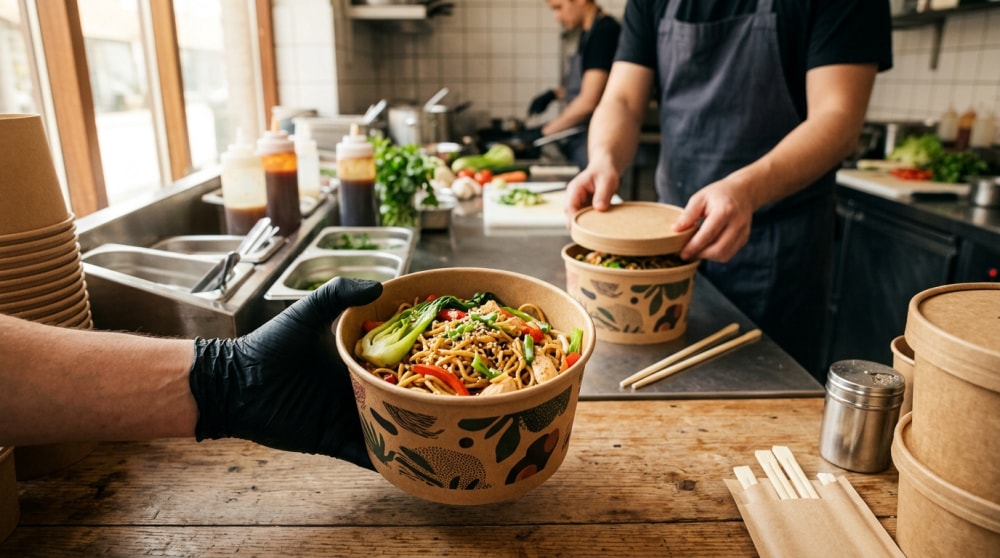
United States Guide to Wholesale Noodle Boxes
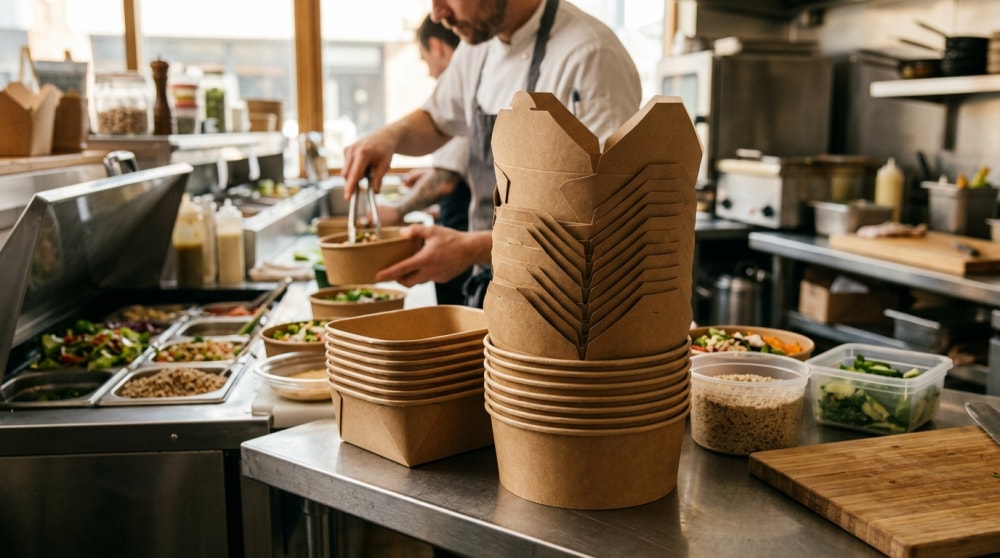
For restaurant owners, multi-unit operators, distributors, and takeaway brands in the United States, buying noodle boxes wholesale is mainly about balancing four factors: food performance, brand presentation, landed cost, and supply reliability. Whether you run a ramen shop in Los Angeles, a fast-casual Asian chain in Chicago, a ghost kitchen in Houston, or a college-town takeout concept near Boston, the right noodle box affects customer satisfaction, delivery ratings, and operating margins. A weak box can leak in transit, trap steam, collapse under sauce-heavy meals, or fail to communicate your brand. A well-designed box supports hot holding, stackability, grease resistance, and repeat purchasing. The U.S. market has also shifted. Third-party delivery, curbside pickup, and combo meals have increased demand for paper-based containers that look clean, seal well, and support sustainability messaging. For that reason, many buyers now compare kraft and white noodle boxes, check food-contact certifications more closely, and request customized print runs for franchise systems and private label programs. Buyers also increasingly source from specialized overseas factories that can offer flexible size development, OEM printing, and scalable production for regional or national rollouts. This guide explains how restaurants source noodle boxes wholesale, which sizes work best, how pricing is structured, how to compare suppliers, what certifications matter, and how imports from China typically work for U.S. buyers. It also highlights how a factory-direct partner such as Fude Packaging can support chains, wholesalers, and foodservice operators seeking dependable packaging programs. Most restaurants in the United States source noodle boxes wholesale through one of four channels: domestic distributors, restaurant supply wholesalers, packaging importers, or direct factory relationships. Independent stores often buy smaller quantities from local suppliers for convenience and short lead times. Growing chains usually move toward factory-direct or importer-led programs because they need better consistency, stronger branding control, and lower cost per unit. The standard sourcing process looks like this: Common Wholesale Sourcing Paths for Noodle Boxes Sourcing Channel Best For Main Advantage Main Limitation Typical Lead Time Branding Flexibility Local restaurant supplier Single stores Fast replenishment Higher unit cost 1 to 7 days Low National distributor Regional chains Established logistics Limited structural customization 3 to 14 days Low to medium Packaging importer Large buyers Consolidated overseas sourcing Less direct factory control 30 to 75 days Medium to high Direct China factory Chains and wholesalers Better pricing and OEM options Requires planning 25 to 60 days High Private label program Franchises Standardized branding Artwork approval time 35 to 70 days Very high Hybrid model Multi-location systems Backup supply security More vendor management Mixed Medium to high This table shows why many U.S. chains adopt a hybrid strategy: they test structure and print with a factory, reserve container stock for predictable demand, and keep a domestic backup source for emergencies. Buyers near major ports such as Los Angeles, Long Beach, New York/New Jersey, Savannah, and Houston often have easier access to containerized imports and drayage networks, making direct procurement more practical. When evaluating direct suppliers, restaurants should request samples, review coating options, test leak resistance using actual menu items, and compare total landed cost instead of unit price only. A reliable packaging program can lower damage rates, improve customer perception, and simplify expansion. var ctxLine = document.getElementById('lineChartMarket').getContext('2d'); var chartLine = new Chart(ctxLine, { type: 'line', data: { labels: ['2021', '2022', '2023', '2024', '2025', '2026'], datasets: [{ label: 'U.S. Demand Index for Wholesale Noodle Boxes', data: [82, 89, 97, 108, 118, 129], borderColor: 'rgb(54, 162, 235)', backgroundColor: 'rgba(54, 162, 235, 0.15)', fill: false, tension: 0.3 }] }, options: { responsive: true, maintainAspectRatio: false } }); The line chart indicates a realistic growth pattern tied to delivery expansion, urban takeout demand, and stronger adoption of branded paper food packaging. For U.S. restaurants planning growth into 2026, securing a wholesale noodle box supplier early can help avoid seasonal shortages and price volatility. Choosing the right size is not only a packaging issue; it affects portion control, food cost, and customer expectations. In the U.S. market, the most common wholesale noodle box sizes support single entrees, lunch specials, family sides, and combo meals. Buyers should select sizes based on menu density, sauce volume, toppings, and whether the meal includes rice, noodles, or mixed protein components. Popular Noodle Box Sizes for U.S. Foodservice Nominal Size Approximate Use Best Menu Fit Delivery Suitability Portion Control Common Buyer Type 16 oz Small single serving Kids meals, sides, light noodles Moderate High Cafes, food courts 26 oz Standard lunch serving Lo mein, chow mein, rice bowls High High Takeout restaurants 32 oz Large entree Ramen, saucy noodles, combo entrees High Medium Asian casual chains 38 oz Premium portion Protein-heavy noodle dishes High Medium Urban delivery brands 50 oz Sharing size Family sides, meal bundles Moderate to high Low Caterers, family meal operators Customized dimensions Brand-specific use Combo meals or signature dishes Depends on structure Very high Franchises, private labels The table above helps operators match packaging with actual menu architecture. A 26 oz or 32 oz format is usually the best starting point for U.S. takeout because it accommodates mainstream portions without making the box look underfilled. Larger formats may be ideal for college-town stores in Ann Arbor or Austin where shareable, value-driven meals sell well. Smaller boxes perform better for side noodles, add-ons, or lunch combos in downtown office districts such as Manhattan, Seattle, or Atlanta. Beyond volume, restaurants should assess whether the top fold closes firmly, whether the base remains rigid after 20 to 30 minutes of steam exposure, and whether the box stacks cleanly in delivery bags. If your menu includes broth, extra sauce, or oily toppings, you may need a paper bowl format rather than a fold-top noodle box. Buyers can review broader food container options at Fude’s product range when comparing noodle boxes with bowls, meal boxes, and other takeaway formats. Wholesale pricing for noodle boxes depends on material, size, coating, print coverage, order volume, and shipping method. Many U.S. buyers focus too heavily on ex-factory price and overlook the cost impact of ink coverage, carton packing density, custom dies, and port-to-warehouse freight. In practice, the best purchasing decisions come from comparing full landed cost per usable unit. Typical Pricing Drivers for Wholesale Noodle Boxes Factor Low Cost Option Higher Cost Option Effect on MOQ Effect on Lead Time Buyer Impact Material Standard kraft board Premium white board Neutral Low Changes look and feel Coating Single PE PLA or specialty barrier May increase Medium Affects sustainability and resistance Printing 1 color logo Full coverage multi-color Usually increases Medium Raises branding value Order volume Trial run Container load Lower price at scale Neutral Best cost leverage Tooling Standard size Custom structure Often higher Higher initially Supports unique menus Shipping Shared freight Urgent air freight Neutral Much faster Can change unit economics sharply For most custom printed noodle boxes, MOQs are higher than plain stock items because print plates, setup time, and carton consolidation matter. However, flexible manufacturers can still support trial orders for smaller chains or pilot launches. For instance, a supplier with integrated flexo printing and converting can often streamline production compared with a trader who outsources each step. Shandong Fude Packaging, for example, supports customized packaging development through a structured process that includes requirement review, artwork preparation, sample confirmation, and production coordination. That matters for U.S. buyers who need to line up packaging launches with store openings or seasonal promotions. More details on project flow can be found on the company’s service page. In general, restaurants should request quotes in tiers such as 10,000 units, 30,000 units, 50,000 units, and full container quantities. This makes it easier to see where the real price breaks occur. It is also smart to compare two freight scenarios: delivery to a U.S. port and delivery to your warehouse in places like New Jersey, Dallas, or Southern California. Kraft and white noodle boxes can both perform well, but they create very different brand impressions. Kraft usually signals natural, rustic, eco-conscious positioning. White board generally communicates cleanliness, premium presentation, and stronger color contrast for printed graphics. The right choice depends on your menu style, customer demographic, and store aesthetic. Kraft vs White Noodle Boxes for U.S. Restaurants Criteria Kraft Boxes White Boxes Best Use Case Brand Effect Notes Visual style Natural and earthy Clean and bright Brand-led decision Distinct Both can be premium Print contrast Moderate High Logo-heavy designs White stands out Useful for colorful artwork Eco perception Very strong Moderate to strong Green positioning Kraft often preferred Certification still matters Grease appearance Can hide marks better Shows stains more easily Oily menu items Kraft can look practical Barrier quality is key Premium feel Artisanal premium Modern premium Depends on concept Both viable Finishing affects perception Typical buyer Organic, casual, street food Franchises, malls, polished brands Format-driven Market specific Samples recommended This comparison is useful because many U.S. buyers assume kraft is always better for sustainability positioning, but actual performance depends on paper source, barrier coating, and end-of-life conditions. Some brands in Portland, San Francisco, and Denver prefer kraft because it aligns with their eco-story. Meanwhile, mall-based chains in Miami or Las Vegas often prefer white because it delivers stronger shelf appeal and cleaner logo presentation. If your brand uses bold color blocks, mascots, or promotional graphics, white may produce better visual consistency. If your marketing emphasizes natural ingredients, minimalist design, or farm-inspired messaging, kraft may feel more authentic. Either way, wholesale buyers should test both materials with actual sauces and steam. Large restaurant groups and regional chains need more than a low quote. They need a supplier that can support repeat quality, artwork control, compliance, scaling, and dependable communication across reorder cycles. Supplier evaluation should combine commercial review with technical validation. Supplier Evaluation Checklist for Restaurant Chains Evaluation Area What to Check Why It Matters Risk if Ignored Best Verification Method Priority Food safety compliance FDA, EU contact standards, test reports Protects legal and brand risk Rejected goods Request documents and samples Very high Production capacity Daily output and line redundancy Supports scaling Late delivery Factory profile review High Print quality Color consistency and registration Brand integrity Off-brand packaging Pre-production samples High Structural reliability Leak and fold performance Customer satisfaction Delivery complaints Hot-food testing Very high Communication Speed, clarity, documentation Reduces order errors Missed deadlines Email and sampling process High Service support Artwork review, shipping coordination Simplifies procurement Internal workload grows Project timeline discussion Medium to high The best suppliers provide clear technical information and do not avoid difficult questions about coating composition, temperature tolerance, stacking strength, carton counts, or defect handling. Restaurants should also ask whether the supplier has experience serving chains, wholesalers, and distributors in North America. That experience is valuable because U.S. buyers often need carton labels, barcode systems, and consistent case-pack formats. On the technology side, a modern factory should have integrated printing, die-cutting, forming, and quality inspection. Fude Packaging’s technological capabilities include automated production lines, flexographic printing, die-cutting, forming systems, internal quality labs, and warehousing designed for packaging stability. These capabilities matter because they help reduce variation across production runs and improve scale readiness for restaurant chains. Manufacturing capability is equally important. A factory with significant floor space, climate-aware storage, and process control can support consistent paper conversion and finished product handling. In practice, this means better crease performance, cleaner folds, and more predictable closure behavior. For restaurant groups standardizing packaging across multiple states, consistency from batch to batch is often more important than saving a fraction of a cent on unit cost. var ctxBar = document.getElementById('barChartDemand').getContext('2d'); var chartBar = new Chart(ctxBar, { type: 'bar', data: { labels: ['Asian Takeout', 'QSR Chains', 'Ghost Kitchens', 'Campus Dining', 'Catering', 'Food Trucks'], datasets: [{ label: 'Estimated U.S. Wholesale Demand Share', data: [31, 24, 15, 10, 12, 8], backgroundColor: [ 'rgb(255, 99, 132)', 'rgb(255, 159, 64)', 'rgb(255, 205, 86)', 'rgb(75, 192, 192)', 'rgb(54, 162, 235)', 'rgb(153, 102, 255)' ] }] }, options: { responsive: true, maintainAspectRatio: false } }); The bar chart shows where demand is strongest. Asian takeout and QSR chains remain the leading users of noodle boxes, but ghost kitchens and catering continue to rise. This is important for suppliers because each segment wants different features: ghost kitchens prioritize leak control and stackability, while food trucks often prioritize compact storage and quick closure. Custom printed noodle boxes are especially valuable for franchise networks and private label foodservice programs because packaging acts as mobile advertising. Every takeout bag, delivery drop, and office lunch order becomes a brand touchpoint. For chains operating in high-density markets such as New York City, San Diego, Phoenix, or Philadelphia, packaging visibility can meaningfully influence repeat orders. There are several levels of customization. The simplest is a one-color logo on a standard box. The next level includes multi-color exterior print, QR codes, campaign graphics, nutritional messaging, and SKU-specific identifiers. More advanced programs involve exclusive structures, seasonal artwork, and coordinated packaging families across noodle boxes, bowls, cups, and meal containers. Private label buyers should confirm artwork bleed areas, color tolerance, print plate ownership, carton marks, and reprint rules. Franchise systems should also standardize approved inks, panel layout, and master references so all units receive consistent packaging. A direct manufacturer that handles artwork support can reduce revision cycles and prevent errors during launch. Service capability becomes crucial here. Fude’s customer support model includes packaging selection guidance, artwork preparation assistance, sampling before bulk production, and delivery coordination. For U.S. franchise buyers, this can reduce the burden on internal procurement teams and help stores roll out packaging on schedule. Restaurants exploring a tailored program can start discussions through the contact page. A well-managed custom print program also helps wholesalers serving restaurant groups. Instead of carrying multiple generic SKUs, they can allocate branded inventory by chain, territory, or launch period. This is particularly useful for chains expanding in regional corridors such as the Northeast I-95 market, the Texas Triangle, or the Southern California metro zone. Noodle packaging performance depends on more than paper thickness. Hot foods generate steam, oils move through seams, and sauces pool at the bottom corners during transport. That is why leak resistance, venting, and closure design should be tested using actual menu items and actual delivery timing. Leak resistance starts with material and internal barrier design. For dry noodle dishes, a standard PE-lined paperboard structure may be sufficient. For oily stir-fry dishes, buyers should confirm grease resistance under hot holding conditions. For very wet meals or broth-heavy dishes, a paper bowl with matching lid may outperform a classic fold-top noodle box. Venting matters because trapped steam softens fried toppings and can weaken folds. Some operators prefer a tighter closure for transit security, while others use subtle venting to reduce condensation. The best solution depends on your food profile. For example, a saucy lo mein dish in Chicago winter delivery conditions behaves differently than crispy noodles delivered in humid Miami. Closure design should also support speed in the kitchen. Staff should be able to fill, fold, and bag the box quickly during rush periods. Chains processing high order counts near lunchtime in downtown Dallas or Washington, D.C. often prioritize easy-closing structures that still hold shape during stacking. If the closure pops during transit, customer trust drops immediately. Practical testing should include: 20-minute and 40-minute hot holding evaluations Shake tests inside delivery bags Bottom seam inspections after oily foods Stack tests with multiple filled units Customer opening experience after transit Visual appearance after steam release These tests often reveal that the lowest-priced box is not the lowest-cost option once refunds, remakes, and poor reviews are considered. Food-contact compliance is a non-negotiable issue for U.S. buyers. Imported noodle boxes should be supported by documentation that demonstrates the materials are suitable for foodservice use. Depending on the market and buyer requirements, common reference points include FDA-related compliance expectations, EU EC 1935/2004 for food-contact materials, ISO 9001 quality management, FSC for responsible paper sourcing, and compostability certifications such as BPI or OK Compost where applicable. Certifications do not replace practical testing, but they help buyers screen serious suppliers from unreliable ones. A supplier that can quickly provide documentation, explain coating choices, and match certifications to actual product SKUs is usually better prepared for chain or distributor business. For U.S. restaurant groups, the most useful questions are straightforward: Which certification applies to this exact noodle box construction? Is the paper source traceable? What barrier material is used: PE, PLA, or another option? Can you provide migration or food-contact test reports if needed? How do you control batch consistency? What is your defect response process? Fude Packaging integrates compliance-oriented production with food-grade materials and export experience across major global markets. For buyers in the United States, that international experience can help shorten the qualification process, especially when procurement teams need clear documentation for internal approval. Importing noodle boxes wholesale from China is common for U.S. chains and distributors because it can provide meaningful savings, better customization, and access to specialized converting capability. However, success depends on planning. Buyers should think in terms of total timeline: sampling, artwork approval, production, inland transport, ocean transit, customs handling, and final delivery. Typical lead time depends on whether the boxes are stock or custom printed. Plain stock items can move faster. Printed programs need additional time for proofing, plate preparation, and production scheduling. Ocean freight remains the most economical option for large orders entering ports such as Los Angeles/Long Beach, Oakland, Seattle/Tacoma, Houston, Savannah, or New York/New Jersey. Typical Import Timeline for U.S. Noodle Box Orders Project Stage Typical Time What Happens Main Risk How to Reduce Delay Buyer Action Requirement review 1 to 3 days Specs, size, print, quantity confirmed Missing information Use a written checklist Approve exact SKU details Artwork and sample 3 to 10 days Design proof and sample creation Revision cycles Finalize branding early Sign off quickly Production 7 to 15 days Printing, die-cutting, forming, packing Peak season congestion Book in advance Confirm schedule Port handling in China 2 to 5 days Export documentation and loading Cutoff misses Prepare docs early Verify shipment plan Ocean transit 18 to 35 days China to U.S. port movement Port congestion Choose route carefully Track vessel ETA Customs and final delivery 3 to 10 days Clearance and inland trucking Document errors Use an experienced broker Plan warehouse receipt This timeline shows why U.S. buyers should reorder before inventory gets tight. Waiting until two weeks of stock remain is risky, especially before Lunar New Year, summer freight peaks, or holiday demand periods. A reserve-stock strategy is often better. Some chains keep 8 to 12 weeks of cover for custom packaging and maintain a generic emergency SKU domestically. On the manufacturing side, Fude’s production model supports relatively efficient turnaround through integrated operations and organized delivery coordination. For buyers that want a factory-direct relationship without losing process support, this can be a practical advantage. var ctxArea = document.getElementById('areaChartTrend').getContext('2d'); var chartArea = new Chart(ctxArea, { type: 'line', data: { labels: ['2021', '2022', '2023', '2024', '2025', '2026'], datasets: [{ label: 'Shift Toward Custom Printed and Sustainable Formats', data: [28, 34, 41, 49, 58, 68], borderColor: 'rgb(75, 192, 192)', backgroundColor: 'rgba(75, 192, 192, 0.25)', fill: true, tension: 0.25 }] }, options: { responsive: true, maintainAspectRatio: false } }); The area chart reflects a realistic trend in the United States: buyers are moving from generic containers toward printed, sustainability-oriented packaging. This trend is likely to continue through 2026 as restaurants compete more aggressively on presentation, convenience, and environmental positioning. What is the best noodle box size for a standard U.S. takeout entree? For many menus, 26 oz to 32 oz works best. The ideal size depends on noodle volume, protein load, and whether the meal includes sauce or toppings. Are noodle boxes good for delivery? Yes, if the structure, barrier, and closure are matched to the food. Dry and semi-saucy dishes usually perform well. Broth-heavy dishes often need paper bowls instead. Can I order custom printed noodle boxes at wholesale volume? Yes. Many factories support OEM and private label production with logo printing, custom sizes, and tailored material options. MOQ depends on print complexity and box structure. Should I choose kraft or white? Choose kraft if your branding emphasizes natural, casual, or eco-forward presentation. Choose white if you want sharper graphic contrast and a cleaner, more polished retail look. How long does it take to import from China to the United States? Custom orders often take several weeks when sampling, production, ocean transit, and customs are included. Planning ahead is essential. What certifications should I ask for? Ask for food-contact compliance documentation and any relevant quality or sustainability certifications tied to the exact product you are buying. Can a supplier support franchise rollouts? A qualified supplier should offer artwork review, sample confirmation, consistent production, and reorder management. This is especially important for regional and national chains. How do I reduce risk when choosing a supplier? Request samples, validate documents, test hot-food performance, review production capability, and compare total landed cost instead of quoted unit price alone. The U.S. market for wholesale noodle boxes is being shaped by several linked forces: takeout frequency, labor efficiency, tighter food safety expectations, sustainability pressure, and stronger brand competition on delivery apps. Industry demand is no longer limited to traditional Chinese takeout. Ramen concepts, pan-Asian chains, meal-prep brands, corporate caterers, stadium vendors, airport concessions, and virtual restaurants all use noodle-style paper containers in some form. Applications are broad. Noodle boxes are used for lo mein, pad thai, fried rice, stir-fry vegetables, combo meals, snack packs, side dishes, and even desserts in some quick-service formats. Some U.S. operators also use them for merchandising because the vertical walls provide good printable space and the shape photographs well for social media and app listings. By 2026, the biggest purchasing trends are likely to include: Greater demand for compostable or lower-impact material options More brand-specific packaging for franchises and delivery-first concepts Closer scrutiny of food-contact compliance and sourcing traceability Improved structural designs for leak reduction and stackability Data-driven inventory planning to reduce freight disruption risk More dual-sourcing strategies combining domestic backup with factory-direct imports Policy and sustainability trends will also influence buying decisions. Major metro markets and institution-driven foodservice programs may tighten procurement standards around responsible paper sourcing, recyclability claims, or compostability language. Buyers should avoid unsupported marketing claims and instead focus on documentation and realistic disposal outcomes in their operating regions. var ctxComp = document.getElementById('comparisonChartSupplier').getContext('2d'); var chartComp = new Chart(ctxComp, { type: 'bar', data: { labels: ['Customization', 'Lead Time Control', 'Cost Efficiency', 'Quality Consistency', 'Support Service', 'Scale Capacity'], datasets: [{ label: 'Direct Factory Program Score', data: [92, 84, 90, 88, 87, 93], backgroundColor: 'rgb(153, 102, 255)' },{ label: 'Generic Trading Source Score', data: [68, 61, 74, 63, 58, 65], backgroundColor: 'rgb(201, 203, 207)' }] }, options: { responsive: true, maintainAspectRatio: false } }); The comparison chart illustrates why many restaurant chains move toward direct factory programs once their volume grows. Higher scores in customization, quality consistency, and scale capacity can translate into stronger long-term value, even if the first onboarding steps require more planning. For restaurants and chains in the United States, a factory-direct packaging partner can offer three meaningful advantages. First is technology: integrated printing, converting, and quality control help keep branded packaging consistent. Second is manufacturing: stable capacity, organized warehousing, and process-driven production reduce reorder risk. Third is service: structured sampling, artwork support, and shipping coordination save time for procurement teams. Fude Packaging reflects this model. With more than two decades in food packaging manufacturing, the company serves global foodservice buyers with paper containers, bowls, cups, lunch boxes, and custom takeaway solutions. Its experience with OEM development, export handling, and food-grade materials is particularly relevant for U.S. distributors, chain restaurants, and growing brands that need a one-stop packaging supplier rather than a simple trading contact. For operators that want to review broader packaging categories, the company’s product catalog can help compare noodle boxes with meal containers, bowls, and cups. Buyers that want to understand the manufacturer more fully can explore the company overview, while those ready to discuss specifications can use the inquiry channel to request samples or quotes. In short, the right wholesale noodle box program should do more than hold food. It should protect the meal, support the kitchen, reinforce the brand, comply with standards, and arrive on schedule. For U.S. restaurants and chains, that is the difference between packaging as a cost center and packaging as an operational asset. -

Choosing a U.S. Paper Cup Packaging Manufacturer
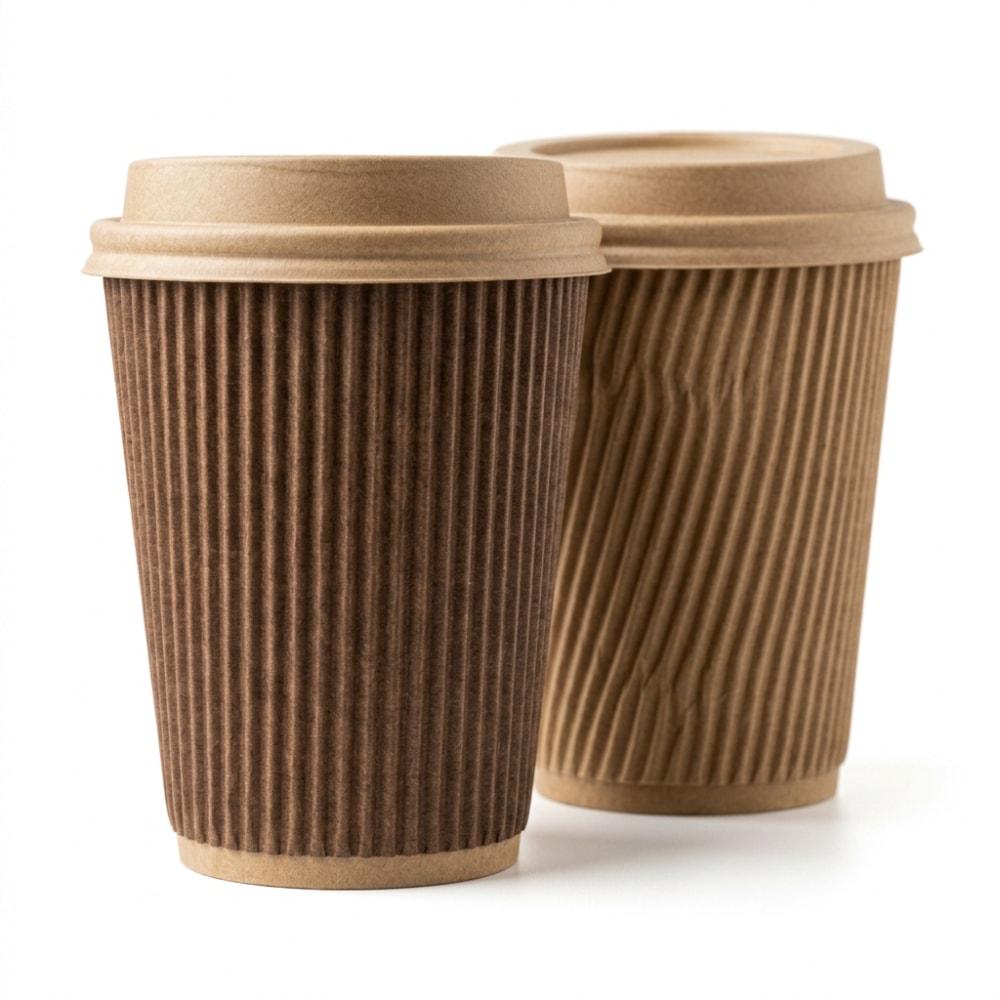
For beverage brands, cafés, restaurant groups, distributors, and food service importers in the United States, choosing the right paper cup manufacturer is not only a packaging decision. It affects product safety, print quality, freight cost, brand consistency, launch speed, and long-term margins. Whether your business serves coffee in Seattle, milk tea in Los Angeles, smoothies in Miami, or hot chocolate in Chicago, the right supply partner should help you balance appearance, performance, compliance, and reliable replenishment.The best paper cup supplier for custom beverage packaging should offer more than cup forming. It should provide food-grade materials, strong printing control, practical size ranges, matching lids, sampling, quality documentation, scalable output, and clear shipping terms to the United States. For buyers sourcing internationally, ports such as Los Angeles, Long Beach, New York/New Jersey, Savannah, Houston, and Oakland are often central to planning landed cost and replenishment lead time. A strong manufacturer helps buyers forecast demand, approve artwork accurately, and avoid costly production errors.In the United States market, demand remains broad across coffee shops, QSR chains, catering operators, food trucks, campus dining, convenience retail, dessert brands, and delivery-first beverage concepts. Buyers are also under pressure to improve sustainability claims while maintaining cup strength, leak resistance, and reliable insulation. That is why vendor selection now involves technical review, audit readiness, and commercial flexibility as much as price comparison.If you are reviewing a factory-direct option, learn more about the manufacturer background before requesting quotations. A qualified export-oriented producer should show clear experience, factory scale, compliance systems, and customization ability for North American accounts.The fastest way to choose a paper cup manufacturer is to evaluate six points in order: product fit, compliance, print quality, capacity, total landed cost, and communication speed. In practical terms, a United States buyer should confirm whether the supplier can produce the cup style needed for the brand, provide food-contact documentation, print custom graphics accurately, meet timeline targets, support the required order volume, and ship under trade terms that match the importer’s logistics model.Start with application. Hot coffee, iced beverages, fountain drinks, premium tea, soup-adjacent hot liquids, and desserts all place different demands on paper stock, wall structure, and lid compatibility. Next, review regulatory and sourcing documentation such as FDA suitability, ISO quality management, FSC chain considerations, and any customer-required social or factory audit standards. Then assess decoration capability, because weak color control can damage a premium brand even when the cup itself is structurally sound.Buyers should also compare not just unit price but total supply cost, including printing plates, tooling, sampling, freight, duties, storage, minimum order quantities, and expected reorder timing. A low quoted cup price can become expensive if the supplier has unstable lead times or weak communication during mass production.Evaluation FactorWhy It MattersWhat U.S. Buyers Should AskRisk if IgnoredProduct MatchEnsures the cup suits beverage temperature and service modelWhich cup styles, sizes, and lid options are available?Poor user experience and leakage complaintsFood SafetySupports legal and customer complianceCan you provide food-contact documentation and material specs?Retail rejection or compliance issuesPrint AccuracyProtects brand appearance on shelf and in-storeHow do you control color and registration?Off-brand packaging and reprint costsCapacityPrevents stockouts during promotions or peak seasonWhat is your daily output and backup plan?Delayed replenishmentCommercial TermsClarifies MOQ, tooling, and payment structureWhat are standard MOQ and plate costs?Budget overrunsLogistics SupportImproves import planning into U.S. portsDo you support FOB, CIF, and documentation for customs?Freight confusion and customs delaysThe table above shows the minimum screening framework. Buyers who use this structure early usually shortlist suppliers faster and reduce sourcing mistakes.A serious paper cup manufacturer should function as a packaging partner for beverage brands, not just a low-cost converter. For the United States market, the supplier should offer a complete range of hot and cold cup options, matching lids, sleeves where needed, and customization support for chain operations, franchise systems, and wholesalers.At a product level, beverage brands typically need multiple sizes from sample cups to large servings, often spanning 4oz to 32oz. They may also require different wall constructions for cost-sensitive cold drinks versus premium hot beverages. Print capability is equally important. A manufacturer should be able to support branded designs, seasonal campaigns, limited runs for regional promotions, and private label programs for distributors serving many independent cafés.Technological capability is especially relevant here. A modern producer should have integrated printing, die-cutting, cup forming, and inspection processes that reduce variation from one production batch to the next. In factory-direct sourcing, consistency matters more than a one-time attractive sample. Manufacturers with automated lines and structured quality labs are better positioned to maintain stable dimensions, side seam bonding, and print registration.Service capability also separates good suppliers from average ones. U.S. buyers often need artwork checking, carton marking alignment for warehouse receiving, sample review, transit coordination, and fast replies across time zones. A strong exporter should support these steps as part of the sales process rather than treat them as extras.Supplier CapabilityBasic SupplierPreferred SupplierBenefit to Beverage BrandSize RangeOnly common sizes4oz to 32oz with optionsSupports broader menu strategyPrintingLimited spot colorsHigh-quality flexo or equivalent processBetter shelf and counter presentationLid MatchThird-party sourcing onlyMatched lid recommendationsReduces fit problemsSamplingSlow and informalStructured sample approvalFewer mass production surprisesOEM SupportSimple logo print onlyFull custom sizes, coatings, structuresGreater differentiationExport ServiceMinimal documentationClear trade terms and shipment supportSmoother U.S. import handlingFor brands building a long-term packaging program, it is worth reviewing the supplier’s custom packaging service process to see whether artwork, sampling, production approval, and delivery support are integrated into a clear workflow.Choosing among single wall, double wall, and ripple wall cups depends on beverage temperature, service style, target price point, and customer expectations. In the United States, these choices vary by region and channel. Busy commuter coffee shops in Boston or New York may prioritize insulation and fast handheld use. Smoothie shops in Southern California may prefer single wall cups for cold applications. Premium cafés in Austin or Portland may use ripple cups to communicate a more upscale experience.Single wall cups are usually the most economical option and work well for cold drinks or hot beverages when paired with a sleeve. They are often used by large-volume operators focused on low packaging cost. Double wall cups improve heat insulation and reduce the need for separate sleeves, helping both comfort and operational simplicity. Ripple wall cups offer the highest perceived premium value and strong grip, making them popular for specialty beverages.Cup TypeBest UseCost LevelInsulationBrand LookCommon U.S. UsersSingle WallCold drinks, budget hot drinksLowBasicSimpleQSR, food courts, large-volume chainsSingle Wall + SleeveHot coffee and teaLow to mediumModerateCustomizableCoffee carts, convenience retailDouble WallHot beverages without sleeveMediumGoodClean and modernCafés, office coffee serviceRipple WallPremium hot beveragesMedium to highVery goodPremium textureSpecialty coffee, hotel servicePLA-Lined OptionEco-positioned drinksHigherDepends on wall typeEco-forwardOrganic cafés, green campus programsPE-Lined StandardMainstream hot and cold useCommon market priceDepends on wall typeVersatileBroad food service marketThe table helps buyers align cup structure with their market positioning. For example, a value-focused franchise may choose single wall cups for iced drinks and double wall cups for core hot beverages. A premium tea brand may justify ripple cups because tactile appearance supports higher menu pricing.var ctxComparison = document.getElementById('comparisonChart').getContext('2d');var comparisonChart = new Chart(ctxComparison, { type: 'bar', data: { labels: ['Single Wall', 'Single Wall + Sleeve', 'Double Wall', 'Ripple Wall'], datasets: [ { label: 'Cost Index', data: [55, 68, 78, 88], backgroundColor: 'rgba(54, 162, 235, 0.7)' }, { label: 'Insulation Score', data: [40, 62, 82, 90], backgroundColor: 'rgba(153, 102, 255, 0.7)' }, { label: 'Premium Appearance Score', data: [48, 60, 76, 92], backgroundColor: 'rgba(255, 159, 64, 0.7)' } ] }, options: { responsive: true, maintainAspectRatio: false }});The comparison chart shows a realistic tradeoff: the more insulation and premium appearance required, the more likely the unit cost rises. This is why cup choice should be linked to menu margin, not just packaging preference.Quality and capacity are two of the most common failure points in cross-border sourcing. A supplier may produce excellent pilot samples but struggle to scale. Another may have high nominal output but weak inspection discipline. United States importers should therefore evaluate both process quality and actual manufacturing capability.Manufacturing capability can be reviewed through factory size, machine count, automation level, labor organization, warehouse controls, and daily output. For example, a supplier with a modern factory environment, dedicated converting stages, and climate-conscious warehousing usually has a stronger foundation for protecting paper materials and finished cups before loading. If the supplier reports stable daily cup output and serves many export markets, that is generally a positive signal.From a quality standpoint, ask about incoming material checks, side seam strength testing, leak testing, dimensional control, print inspection, and carton verification. Factories that invest in in-house labs and routine batch checks are typically more dependable than those inspecting only at the end of production. United States buyers should also confirm whether the supplier has experience supporting chain accounts or distributors who require consistent repeat orders.Quality/Capacity CheckpointWhat to ReviewPreferred SignalWarning SignFactory ScaleProduction area and layoutOrganized large-scale workshopCrowded mixed-use spaceAutomationPrinting and forming integrationAutomated lines with stable throughputManual-heavy processDaily OutputReal operational capacityDocumented production volumeVague claims without supportInspection SystemMaterial and finished goods checksLab testing and batch controlOnly visual final inspectionWarehouse ControlStorage environmentClean, dry, organized warehousingExposure to moisture or confusionExport ExperienceDestination market historyRegular shipments to North AmericaLittle documentation experienceWhen reviewing suppliers, buyers often compare domestic converters with international manufacturers. Domestic sourcing may offer shorter transit time, but offshore sourcing can provide wider customization and lower ex-factory costs. The right answer depends on forecast volume, speed requirements, and margin goals.var ctxBar = document.getElementById('barChart').getContext('2d');var barChart = new Chart(ctxBar, { type: 'bar', data: { labels: ['Coffee Shops', 'Bubble Tea', 'QSR', 'Catering', 'Food Trucks', 'Wholesalers', 'Dessert Brands'], datasets: [{ label: 'Estimated U.S. Demand Index for Custom Cups', data: [92, 78, 88, 63, 57, 81, 69], backgroundColor: 'rgba(255, 99, 132, 0.75)' }] }, options: { responsive: true, maintainAspectRatio: false }});The bar chart highlights the broad-based demand profile in the United States. Coffee shops, QSR operators, and wholesale channels are especially important for custom printed cup demand.Pricing should always be reviewed as a complete package. Unit price alone is not enough. For a United States importer, the most important cost elements usually include raw material grade, cup size, wall structure, print colors, order quantity, tooling or printing plate charges, packaging configuration, and international freight.MOQ matters because it affects inventory commitment and cash flow. Small chains and new beverage brands often need lower entry volumes for market tests, while regional distributors may want larger mixed loads. Printing cost depends on artwork complexity, number of colors, and whether the supplier uses flexographic printing or another process. Tooling may apply to special sizes, unique structures, or customized lids. Buyers should clarify whether plate charges are one-time, repeatable, or waived after certain order volumes.Freight into ports such as Long Beach, Newark, Savannah, or Houston can materially change the final landed cost. For inland distribution to markets like Dallas, Atlanta, Denver, or Columbus, buyers should also consider domestic drayage and warehouse transfer cost after customs clearance.Cost ComponentWhat Influences ItLow-Impact ScenarioHigh-Impact ScenarioBase Cup PriceSize, paper weight, wall typeStandard single wall sizesLarge premium ripple cupsMOQ EffectProduction efficiencyLarge repeat orderSmall trial orderPrinting CostColor count and coverageSimple logoFull-wrap multi-color artPlate/Tooling CostArtwork setup or special moldsExisting standard formatCustom structure or new formatPackaging CostCarton spec and inner baggingStandard export packingRetail-ready custom outer cartonsFreight and DutiesRoute, Incoterm, season, portOff-peak ocean shipmentPeak season or urgent air freightThe table above shows why comparative sourcing must be done on a landed-cost basis. Two suppliers can quote similar cup prices but end with very different total costs after tooling, freight, and inventory timing are considered.Custom artwork is often the main reason beverage brands choose a dedicated paper cup manufacturer rather than generic stock cups. In the United States, visual branding on cups functions as mobile advertising. A cup carried through Manhattan, downtown Seattle, the Las Vegas Strip, or a college campus in Ann Arbor is a visible marketing asset.OEM service should include support for logo placement, dieline review, color matching expectations, warning about fine-text limitations, and approval before mass production. Private label programs are especially valuable for importers and distributors who sell to many local food service operators under their own packaging brand. A capable manufacturer should support confidential supply, custom carton marks, and repeatable brand standards across different cup sizes.Service capability matters strongly in this phase. Artwork preparation should be checked for bleed, seam-safe zones, and print distortion around the cup curve. Sample confirmation is also essential. Buyers should request either plain structure samples first, then printed pre-production samples, or a clear equivalent process. This reduces disputes later.To review available customization paths, buyers can explore the product range and align cup style selection with intended branding, menu positioning, and seasonal demand plans.Customization AreaTypical OptionsWhy It MattersBest PracticeLogo PlacementFront, wraparound, repeated motifImproves visibilityKeep primary mark seam-safeColor Design1-color to full graphic coverageDefines brand lookApprove color expectations in advanceCup Size Mix4oz to 32oz programSupports full menuStandardize art hierarchyMaterial SelectionPE-lined or PLA-related choicesBalances performance and positioningMatch claim to applicationPrivate Label CartonsCustom outer box markingUseful for distributorsAlign with warehouse receiving formatSeasonal EditionsHoliday or regional promotionsBoosts engagementPlan earlier due to print setup timeThis table shows that customization is not just a graphic decision. It is a coordination process touching production, operations, sales, and logistics.Food-grade packaging compliance is non-negotiable. A paper cup manufacturer serving United States buyers should be ready to discuss material composition, coatings, migration suitability for intended use, and relevant quality systems. For many importers and branded food service accounts, documentation is as important as the physical cup.Food-grade PE coatings remain common because they provide reliable moisture resistance and structural stability. PLA or other compostability-oriented options may be used where the market supports them, but claims should always be aligned with real disposal systems and local regulations. FSC certification is increasingly relevant for buyers that want responsible paper sourcing or need sustainability documentation for corporate procurement reviews.Factory audit readiness is another essential point. Large chains, distributors, and institutional buyers may require social compliance, production process transparency, or customer-specific audit standards. A manufacturer with disciplined factory management, documented systems, and consistent traceability will be better prepared for these reviews.From a technology perspective, quality documentation should be supported by actual process control rather than marketing language. Reliable manufacturers typically combine certified systems with material know-how, test routines, and practical export experience.var ctxArea = document.getElementById('areaChart').getContext('2d');var areaChart = new Chart(ctxArea, { type: 'line', data: { labels: ['2022', '2023', '2024', '2025', '2026'], datasets: [ { label: 'Conventional PE-Lined Share', data: [72, 69, 66, 62, 58], fill: true, backgroundColor: 'rgba(54, 162, 235, 0.20)', borderColor: 'rgba(54, 162, 235, 1)', tension: 0.3 }, { label: 'Certified / Sustainable Material Interest', data: [28, 31, 36, 42, 48], fill: true, backgroundColor: 'rgba(75, 192, 192, 0.20)', borderColor: 'rgba(75, 192, 192, 1)', tension: 0.3 } ] }, options: { responsive: true, maintainAspectRatio: false }});The area chart reflects a realistic trend shift: conventional formats remain important, but buyer interest in certified sourcing and sustainability claims is increasing toward 2026.A clear approval process is one of the best predictors of a successful packaging order. Most problems in custom cup sourcing happen not because the manufacturer cannot produce, but because specifications were not frozen clearly before mass production. United States buyers should insist on a step-by-step sequence: requirement review, artwork confirmation, sample verification, production approval, final inspection, and shipment release.Lead times vary by season, order size, print complexity, and factory schedule. For many custom cup orders, buyers should plan buffer time for artwork revision and shipping rather than focus only on production days. During peak beverage seasons or holiday campaigns, advance planning is especially important. Sampling may include blank cup samples for fit testing, printed mockups for design review, and final pre-production samples where feasible.Service capability is crucial here. Suppliers that respond quickly, identify artwork risks early, and confirm timelines honestly are easier to work with than those promising unrealistic shipment dates. If a manufacturer offers a streamlined process with requirement review, design confirmation, sample approval, and then production with delivery coordination, that is usually a strong sign of export maturity.Order StageTypical Buyer ActionTypical Supplier ActionMain Approval PointRequirement ReviewShare cup sizes, quantities, use caseRecommend structure and quoteTechnical feasibility confirmedArtwork PreparationSend logos and design filesPrepare print layoutDieline and visual approvalSamplingCheck fit, feel, and appearanceProvide structure or print samplesSample sign-offProduction BookingConfirm PO and payment termsSchedule manufacturingMass production authorizationInspectionReview reports if neededRun quality checksRelease for packingShipmentArrange freight or receive shipping detailsPrepare export documentsLoading and dispatch confirmedThis approval flow reduces ambiguity. It is especially useful for first orders, private label launches, and seasonal promotion cups where timing and accuracy are critical.For United States importers, shipping terms influence both risk and internal workload. The most common trade terms in paper cup sourcing are EXW, FOB, CIF, and sometimes DDP-like arrangements through third-party logistics coordination. FOB is often preferred by experienced buyers because it allows better control over ocean booking and U.S. customs handling. Smaller buyers may prefer CIF for simplicity, though they should still review destination charges carefully.Port selection matters. West Coast entry through Los Angeles, Long Beach, or Oakland may be best for distribution in California, Nevada, Washington, and Arizona. East Coast entry through New York/New Jersey or Savannah may support inventory flow to the Northeast and Southeast. Houston can be a useful hub for Texas and surrounding states. Buyers should match port strategy to their warehouse network and peak demand areas.Documentation should include commercial invoice, packing list, bill of lading, and any compliance paperwork required by the buyer or customs broker. Carton marking and palletization details should be settled before production to avoid receiving confusion at U.S. warehouses.If you are ready to compare shipping options and order structure, you can contact the supplier team for quotation details, packaging specifications, and trade term discussion.var ctxLine = document.getElementById('lineChart').getContext('2d');var lineChart = new Chart(ctxLine, { type: 'line', data: { labels: ['2022', '2023', '2024', '2025', '2026'], datasets: [{ label: 'U.S. Custom Beverage Cup Market Growth Index', data: [100, 107, 115, 124, 134], borderColor: 'rgb(75, 192, 192)', backgroundColor: 'rgba(75, 192, 192, 0.15)', fill: false, tension: 0.35 }] }, options: { responsive: true, maintainAspectRatio: false }});The line chart indicates steady growth in custom beverage cup demand. This aligns with ongoing expansion in takeaway coffee, tea chains, delivery-oriented beverage formats, and private label food service packaging.What is the first thing a United States buyer should confirm?Confirm that the manufacturer can produce the right cup structure for your beverage application and provide food-grade documentation suitable for your purchasing requirements.Is lower MOQ always better?No. Lower MOQ is helpful for trials, but very small orders can raise unit cost significantly. Buyers should balance testing flexibility with overall landed cost.Which cup type is best for hot coffee?Double wall and ripple wall cups are common choices for hot coffee because they improve insulation and customer comfort. Single wall works well with sleeves for budget-sensitive programs.How important is custom printing quality?Very important. Cups are highly visible brand assets. Weak print registration or color inconsistency can harm brand perception, especially for premium beverage concepts.What certifications should buyers ask about?Common priorities include food-contact compliance support, ISO quality management, FSC for responsible paper sourcing, and any chain-specific or importer-requested audit readiness.How long does custom production usually take?Lead time depends on order complexity and season. Buyers should include time for artwork review, sampling, manufacturing, and ocean transit into the United States, not just factory production days.Can a manufacturer support OEM and private label cup programs?Yes, a strong export supplier should be able to support custom graphics, carton markings, confidential supply, and multi-size cup programs for distributors and beverage brands.What should be included in a supplier comparison?Compare product fit, compliance, print quality, MOQ, plate cost, daily capacity, lead time, service responsiveness, and shipment terms rather than price alone.Looking ahead, the United States market for custom beverage packaging will continue to be shaped by three forces: convenience-driven consumption, sustainability pressure, and operational efficiency. Coffee chains, tea brands, dessert beverage operators, stadium vendors, campus food service, and convenience retail are all likely to remain strong packaging buyers through 2026.Applications will keep expanding beyond traditional coffee. High-growth channels include cold brew, protein shakes, fresh juice, soft-serve add-ons, frozen drinks, bubble tea, and premium bottled-to-cup hybrid concepts. Local demand will also continue to vary. For example, high commuter traffic in New York and Washington, D.C. supports strong hot cup turnover, while warmer markets like Phoenix, Orlando, and San Diego maintain large cold drink volume year-round.Policy and sustainability expectations will push more buyers to ask for certified paper sourcing, lighter material optimization, and packaging designs that reduce waste while keeping beverage performance intact. Technology will also play a bigger role. By 2026, stronger print consistency, better traceability, and more data-driven production planning are likely to become standard expectations rather than premium features.For buyers seeking a dependable international manufacturing partner, it is helpful to evaluate three dimensions separately. In technological capability, look for integrated printing, converting, and quality control systems. In manufacturing capability, review factory scale, automated output, and warehousing discipline. In service capability, confirm support for packaging selection, artwork preparation, sampling, and delivery coordination. These areas together determine whether a supplier can support both initial custom orders and long-term program growth.One practical example is an export-focused manufacturer with over two decades of experience, a modern production base, automated paper cup lines, flexographic printing, die-cutting, structured forming operations, and lab-based inspection support. A supplier with that profile can better serve restaurant groups, wholesalers, and private label distributors across the United States because it combines production efficiency with custom service. Buyers comparing options should assess whether the factory can scale from trial orders to recurring container loads while maintaining print and structural consistency.Local sourcing in the United States may still be preferable for urgent short runs, but many importers and brand owners continue to use overseas manufacturing for customized beverage packaging because of broader OEM flexibility and competitive cost. The best approach is often a balanced sourcing strategy: near-term inventory planning, documented approvals, and a supplier capable of stable repeat manufacturing.In short, a good paper cup manufacturer should help your brand sell, protect, and scale. It should make the cup fit the beverage, the artwork fit the brand, the documentation fit the buyer’s compliance needs, and the lead time fit the business calendar. If all four align, the packaging program becomes a commercial advantage rather than a sourcing risk. -

Paper Takeout Containers Wholesale in the United States
For buyers in the United States, sourcing paper takeout containers wholesale is no longer just a packaging decision. It affects food quality in delivery, labor efficiency in busy kitchens, compliance with state chemical regulations, landed cost, brand presentation, and the ability to scale across multiple locations. Whether you run a restaurant group in Chicago, a delivery kitchen in Los Angeles, a deli wholesaler in New Jersey, or a franchise network serving the Southeast, the right paper packaging program should balance performance, consistency, sustainability, and purchasing flexibility.In the U.S. market, wholesale buyers usually compare domestic distributors, importers, and factory-direct manufacturers. Each route has trade-offs. Domestic stock often offers fast replenishment and lower complexity, while overseas manufacturing can provide stronger customization, broader size options, and lower unit pricing at higher volumes. Food operators increasingly want leak-resistant paper takeout boxes, PFAS-free options, clear lid compatibility, stronger grease barriers, and custom printing that still works at franchise scale.Buyers that source successfully usually start with application matching: hot entrees, fried foods, noodles, salads, combo meals, deli items, or premium grab-and-go. They then evaluate coating type, lid fit, stackability, pallet efficiency, lead time, and compliance paperwork. This is especially important in regulated U.S. markets such as California, New York, Washington, and Colorado, where packaging claims and chemical restrictions are under greater scrutiny.For operators seeking factory-direct supply, Shandong Fude Packaging is one example of a Chinese manufacturer that supports food service buyers with food-grade paper containers, custom printing, and export experience across North America and other regions. Its value lies not simply in product range, but in how it combines product development, quality inspection, and order support for wholesalers, chains, and importers.The fastest route to successful sourcing is to define five points before requesting quotes: container use, monthly volume, material preference, printing needs, and delivery timeline. In practice, U.S. buyers often source wholesale paper takeout containers through three channels:Sourcing ChannelBest ForMain AdvantageMain LimitationTypical Lead TimeBuying PatternDomestic distributorRestaurants needing quick restockFast delivery in the U.S.Higher unit cost, limited customization2 to 10 daysSmaller recurring ordersRegional packaging wholesalerDeli chains and local groupsMixed SKUs, local warehousingLess factory transparency3 to 14 daysCase and pallet ordersImporter with U.S. inventoryMid-size brandsBalanced cost and servicePrint options may be limited1 to 3 weeksForecast-driven purchasingFactory-direct from ChinaChains, distributors, private label buyersLower unit cost at scaleLonger planning cycle30 to 75 days landedContainer loads or scheduled productionOEM packaging partnerFranchises and branded conceptsCustom structure and artworkHigher MOQ25 to 60 days ex-factoryProgram-based contractsBroker or sourcing agentNew import buyersSupplier screening supportAdded margin layerVariesTrial orders then scaleThis comparison shows why many U.S. buyers use a dual strategy: domestic stock for backup and imports for core volume. Restaurants in New York City or Miami may hold two to four weeks of local safety stock, while importing custom printed SKUs through ports such as Los Angeles/Long Beach, New York/New Jersey, Savannah, Houston, or Seattle/Tacoma.When evaluating factory-direct sourcing, buyers should look beyond price. A qualified supplier should have stable forming quality, reliable flexographic or offset printing, documented food-contact compliance, and the ability to repeat color and dimensions across batches. Fude, for example, presents its product range through its paper food packaging catalog and supports order consultation through its service process, which is useful for buyers managing custom requirements.var ctx1 = document.getElementById('lineChartGrowth').getContext('2d');var chart1 = new Chart(ctx1, {type: 'line',data: {labels: ['2021', '2022', '2023', '2024', '2025', '2026'],datasets: [{label: 'U.S. demand index for paper takeout containers',data: [82, 89, 97, 108, 118, 129],borderColor: 'rgb(75, 192, 192)',backgroundColor: 'rgba(75, 192, 192, 0.15)',fill: false,tension: 0.3}]},options: {responsive: true,maintainAspectRatio: false}});The growth pattern above reflects the continued expansion of delivery, grab-and-go retail, and sustainability-driven packaging shifts across the United States.Not all paper takeout containers perform the same way in delivery. Shape, wall strength, venting, lid retention, and coating all affect customer experience. For example, a salad chain in Austin needs stackable bowls with secure lids and visual appeal, while a fried chicken concept in Atlanta needs grease resistance and steam management. Matching container style to menu is one of the best ways to reduce complaints and refund claims.Container StyleCommon SizesBest UseKey Performance NeedTypical Lid OptionU.S. Buyer NoteClamshell lunch box500 ml to 1800 mlRice meals, entrees, combo lunchesHinge strength and leak controlAttached lidPopular with casual dining takeoutPaper bowl8 oz to 50 ozSoups, salads, noodles, pokeLeak resistance and stackabilityPP, PET, or paper lidHigh demand in urban delivery marketsNoodle box / fold-top box16 oz to 32 ozAsian takeout, pasta, stir-frySidewall integrityFold-top or plastic lidStrong fit for Seattle and San Francisco conceptsBoat traySmall to largeFries, snacks, tacos, street foodGrease barrierOpen topCommon in stadium and food truck useWindow deli box500 ml to 1000 mlBakery, deli, grab-and-goVisual merchandisingIntegrated PET windowUseful in airport and campus retailCompartment meal box2 or 3 sectionsMeal prep, school meals, cateringPartition stiffnessAttached lid or separate lidStrong fit for institutional food serviceDessert bowl/cup4 oz to 16 ozIce cream, fruit, sweetsMoisture resistancePET clear lidImportant for visibility and upsellFor delivery, the best-selling styles in the U.S. are bowls with tight-fitting lids, kraft lunch boxes, and compartment containers for combo meals. Ghost kitchens in Dallas and Phoenix often prefer versatile paper bowls because one SKU can serve soup, grain bowls, or salads. By contrast, convenience retail programs in Boston or Washington, D.C. may favor white or windowed packaging for a cleaner shelf presentation.If you manage multiple menu categories, a smart wholesale strategy is to standardize a narrow range of diameters and lid families. That lowers complexity, reduces warehouse confusion, and improves franchise execution.Paper takeout container pricing depends on material weight, coating type, structure, size, lid choice, print coverage, pack-out, and order quantity. Freight can materially change unit economics, especially for lower-density items shipped over long distances. U.S. buyers should compare ex-works price, FOB China port price, landed duty-paid estimate, and domestic replenishment cost.Pricing FactorLow Impact ScenarioHigher Cost ScenarioReasonBuyer TipTypical EffectMOQStock plain kraftCustom printed unique sizeTooling and setup spread over fewer unitsBundle SKUs where possible10% to 30% price swingVolumeTrial pallet orderFull container orderScale improves material and production efficiencyForecast quarterly demandUnit cost usually drops at scalePrinting1-color logoFull-wrap multi-color brandingMore plates and tighter color controlUse limited color system for franchisesAdds 5% to 20%MaterialStandard PE lined paperPLA or specialty barrierAlternative materials cost moreMatch claim to actual needAdds 3% to 18%LidNo separate lidPET or PP lid includedExtra component and packing spaceCheck lid nesting efficiencyAdds significant per-set costFreightWest Coast destination, efficient loadingSmall shipment to inland marketPackaging is bulky, not heavyOptimize carton and pallet cubeFreight can exceed product marginCompliance testingStandard stock with existing reportsNew custom material validationTesting and documentation workReuse certified constructionsUpfront project cost increasesAs a general rule, buyers in the United States should expect the best economics when ordering container-load quantities or committing to rolling production schedules. A restaurant group with 30 stores may save meaningfully by consolidating bowl, lunch box, and cup orders rather than buying them as separate short runs.Custom printing costs also vary by artwork complexity. Deep solid coverage, metallic effects, or precise brand colors increase difficulty. Many chains reduce costs by limiting exterior print areas and keeping interior surfaces unprinted for food safety simplicity.When requesting quotations, ask suppliers to separate price lines for container, lid, master carton, print plate, sampling, and freight assumptions. That makes supplier comparison much more accurate.In the U.S. market, kraft and white paper containers communicate different brand messages. Kraft usually signals natural, casual, eco-conscious, and artisanal. White often suggests clean, premium, clinical, or modern. Neither is universally better. The right option depends on cuisine, price point, shelf presentation, and your digital delivery brand image.Brand FactorKraft PaperWhite PaperBest FitPrint ResultBuyer ConsiderationBrand imageNatural and earthyClean and polishedDepends on conceptWhite gives sharper contrastMatch in-store identityEco perceptionOften perceived as greenerLess obvious eco signalKraft for sustainability-led brandsSimple logos work well on kraftClaims must still be verifiedFood visibilityRustic presentationMore premium for plated-style mealsWhite for bakery or upscale takeoutPhotos better with white backgroundsUseful for social media brandingOil marksCan disguise minor marks betterMay show stains more visiblyKraft for fried foodsDepends on barrier qualityCoating matters more than colorPrint color accuracyMuted or warmer tonesBrighter, more exact colorsWhite for strict corporate brandingBetter for multi-color logosImportant for franchisesMenu alignmentBurgers, tacos, deli, bowlsSushi, bakery, premium saladsBy cuisine positioningBoth can be customizedTest with final menu photosA practical approach is to use kraft for high-turn hot food packaging and white for premium retail-ready lines. For example, a fast-casual burrito brand in Denver may choose kraft clamshells for value and eco messaging, while a premium salad concept in Manhattan may choose white bowls with crisp green branding for stronger visual consistency.Factories with in-house printing capabilities are better positioned to help buyers make this decision. From a technology standpoint, Fude combines flexographic printing with converting and forming processes, allowing food service buyers to test how logos appear on different paper substrates before full-scale production. That matters when brand consistency is required across multiple regions.Supplier selection should be based on capability, not just quote speed. A strong paper takeout container supplier must be able to prove material control, forming consistency, food-contact safety, export execution, and responsive communication. This is especially true for import projects where order errors can take weeks to correct.Evaluation AreaWhat to CheckWarning SignGood Supplier SignalWhy It MattersVerification MethodFactory experienceYears in food packagingLittle export historyLong operating recordReduces learning curve riskCompany profile and customer listProduction capabilityForming lines, printing, die cuttingHeavy outsourcingIntegrated workflowBetter quality consistencyFactory video or auditQuality controlLeak, compression, dimension checksNo written QC processLab testing and lot recordsProtects repeat order reliabilityInspection reportsComplianceFDA, FSC, PFAS-free documentationVague claimsClear certificates and reportsNeeded for U.S. buyersDocument reviewCommunicationArtwork review, specification claritySlow or inconsistent repliesStructured pre-production processAvoids costly mistakesEmail and sample workflowExport logisticsPort familiarity, carton marking, lead timesNo freight understandingStable shipment coordinationCritical for landed cost planningPast B/L examplesCustomization supportSampling and engineering changesRigid stock-only modelOEM flexibilitySupports brand growthSample development historyThis framework helps buyers compare suppliers objectively. A low quote from an inexperienced converter may create far higher costs later through poor lid fit, crushed cartons, or customs document issues.From a manufacturing standpoint, Fude operates a modern factory environment with automated production lines, dedicated converting processes, and climate-conscious warehousing support. That kind of setup matters because paper packaging quality can shift if storage, forming pressure, or moisture conditions are poorly managed. For U.S. importers, consistency across lots is often more important than achieving the absolute lowest opening price.var ctx2 = document.getElementById('barChartDemand').getContext('2d');var chart2 = new Chart(ctx2, {type: 'bar',data: {labels: ['QSR', 'Fast Casual', 'Delivery Kitchens', 'Deli/Bakery', 'Catering', 'Institutional'],datasets: [{label: 'Estimated U.S. demand intensity',data: [92, 88, 95, 71, 63, 57],backgroundColor: 'rgb(255, 99, 132)'}]},options: {responsive: true,maintainAspectRatio: false}});The highest demand segments continue to come from quick-service restaurants, fast-casual brands, and delivery-led concepts, where packaging directly affects guest satisfaction and repeat orders.Three performance issues drive most packaging complaints: sauce leakage, grease breakthrough, and lids that pop off during transport. U.S. buyers should test each container style with actual menu items, not water alone. Oily noodles, hot fried chicken, creamy pasta, or acidic salad dressings behave differently in transit.Performance RequirementWhy It MattersTypical TestFailure SignBest Use CaseBuyer StandardLeak resistancePrevents spills in delivery bagsHot liquid hold testSeam seepageSoups, curries, sauced meals30 to 60 minute hold minimumGrease barrierProtects hands and outer packsHot oil contact testExterior stainingFried food and grilled meatsNo visible bleed in use cycleLid fitAvoids transport openingDrop and shake testLid looseningBowls and deli packsSecure under filled conditionCompression strengthSupports stacked delivery ordersTop-load testWall collapseMulti-order dispatchMeasured by stack height targetHeat toleranceMaintains shape with hot foodFilled hot-hold simulationWarping or softeningNoodles, rice, baked mealsStable at service temperatureCut resistanceResists utensils and sharp foodsFork and edge pressure testInterior damageMeal boxes and saladsImportant for dine-out useIn dense delivery markets such as Los Angeles, Brooklyn, and Chicago, packaging often sits 20 to 40 minutes before final consumption. Steam buildup can make fried foods soggy if the pack lacks vent control. For this reason, some operators use separate vented containers for crispy items and tightly sealed bowls for wet dishes.Ask suppliers whether they can provide different barrier constructions for different menus. A standard PE-lined bowl may work for grain bowls, while heavier grease resistance may be needed for loaded fries or braised meats.Custom printing helps U.S. chains and franchise systems unify store presentation and turn every delivery order into a brand touchpoint. But customization only works well when artwork, SKU governance, and replenishment are controlled. Franchise buyers should standardize dielines, approved colors, carton labels, and reorder windows before launching custom packaging nationally.There are three practical custom print models. First is the basic one-color logo on stock dimensions, ideal for regional restaurant groups. Second is full-brand exterior printing on standard structures, common for growing chains. Third is engineered OEM packaging with custom sizes, compartment layouts, or windows for premium retail or meal kit use.On the technology side, Fude supports custom branding through integrated printing and converting processes, making it easier for multi-location food businesses to manage logo placement, substrate choice, and production consistency. This is particularly relevant for chains that need repeatable appearance from one production batch to the next.Custom Program TypeBest ForMOQ LevelLead TimeMain BenefitKey Risk to ManageStock item + logoRegional groupsLowerShorterAffordable brandingLimited differentiationStandard size full printFast-growing chainsMediumModerateStrong brand visibilityColor consistencyCustom size and printFranchisesHigherLongerOperational fit and exclusivityForecast accuracySeasonal campaign printQSR promotionsMediumModerateMarketing impactShort run obsolescenceWindowed retail packDeli and bakery chainsMedium to highModerateMerchandising appealWindow material compatibilityMulti-SKU national programLarge chain accountsHighPlanned productionUnit cost efficiencyInventory synchronizationFor franchise networks, custom packaging should be managed like any other controlled operational asset. That means central artwork approval, pilot testing in a few stores, then staged rollout. Buyers that want project support can review custom packaging services before moving to production planning.Food-contact compliance is now a critical buying factor in the United States. Buyers increasingly ask for FDA suitability, sustainability chain-of-custody documentation, and PFAS-free declarations where relevant. Packaging claims should be backed by reports, not sales language alone.Depending on your customer base, the most common documents requested include FDA food-contact compliance statements, FSC certification for responsibly sourced paper, ISO 9001 quality management records, and compostability certification where compostable lines are specified. If you sell into states or institutions with tighter procurement standards, you may also need material disclosure statements and migration-related documentation.PFAS-free expectations are growing because some states are tightening restrictions around intentionally added fluorinated substances in food packaging. Buyers serving schools, healthcare, municipal programs, and natural grocery retail are especially focused on this issue. Always ask what the supplier means by “PFAS-free” and whether the claim is based on formulation, testing, or both.Compliance ItemWhy U.S. Buyers Request ItWho Usually Needs ItSupplier ProofRisk If MissingBest PracticeFDA food-contact statementBasic market entry confidenceMost food service buyersDeclaration and material dataCustomer rejectionKeep current per constructionFSC certificationSustainability sourcing claimsRetail and brand-led buyersChain-of-custody certificateWeak ESG positioningUse only when certified scope appliesISO 9001Quality system assuranceImporters and distributorsCertificate and process recordsInconsistent lot controlReview validity datesPFAS-free declarationState compliance concernSchools, chains, natural retailSupplier statement and test supportRegulatory and reputation exposureClarify intentionally added statusBPI/OK CompostCompostable product claimsEco-focused programsCertification documentsFalse claim liabilityMatch claim to local compost realityEU food-contact referencesExtra assurance for global brandsMulti-market buyersCompliance statementSpecification gapsUseful for multinational programsFude’s product platform includes paper packaging aligned with recognized food-contact and sustainability standards, which is relevant for U.S. buyers trying to balance performance and compliance. Still, every buyer should request the latest documents for the exact item, coating, and print configuration being ordered.var ctx3 = document.getElementById('areaChartTrend').getContext('2d');var chart3 = new Chart(ctx3, {type: 'line',data: {labels: ['2021', '2022', '2023', '2024', '2025', '2026'],datasets: [{label: 'Shift toward PFAS-free and certified paper packaging',data: [18, 27, 39, 53, 66, 79],borderColor: 'rgb(54, 162, 235)',backgroundColor: 'rgba(54, 162, 235, 0.25)',fill: true,tension: 0.3}]},options: {responsive: true,maintainAspectRatio: false}});The area trend reflects the accelerating shift toward safer chemistry, verified sourcing, and sustainability-linked purchasing standards in the U.S. market through 2026.Importing from China can significantly improve unit economics, especially for larger orders and custom programs, but it requires better forecasting. U.S. buyers should plan around production time, booking space, ocean transit, customs clearance, and final inland delivery. Freight routes often move from Qingdao, Shanghai, Ningbo, or Shenzhen to Los Angeles/Long Beach, Oakland, Seattle/Tacoma, Houston, Savannah, or New York/New Jersey depending on destination economics.Import StageTypical Time RangeMain RiskBuyer ActionGood PracticeCost ImpactArtwork approval2 to 7 daysSpecification mismatchApprove dieline carefullyUse final signed artwork fileAvoids reworkSampling3 to 10 daysRushing validationTest with real foodApprove both print and functionReduces failure riskProduction7 to 15 days typicalPeak season congestionBook early for holiday periodsConfirm raw material availabilityProtects schedulePort handling in China3 to 7 daysBooking delayCoordinate with forwarderUse shipping cut-off calendarCan affect sailing dateOcean transit15 to 35 daysRoute disruptionSelect port by final regionCompare East vs West Coast landed costMajor landed cost factorCustoms and delivery5 to 12 daysDocument errorsPrepare broker file in advanceAlign carton labels and invoice dataAvoids demurrageFor a buyer serving California, Nevada, and Arizona, West Coast entry often makes sense. For buyers focused on the Northeast or Mid-Atlantic, New York/New Jersey or Savannah may be more efficient depending on rates. Importing bulky paper packaging is often about cube optimization more than weight, so carton dimensions and nesting design should be reviewed closely.From a service perspective, a supplier with structured support can make importing much easier. Fude provides requirement review, artwork preparation, sampling, and delivery coordination as part of its export-oriented workflow. That service layer is especially useful for U.S. distributors and restaurant groups importing for the first time. Buyers ready to move from quote to planning can use the contact page to discuss specifications, samples, and order timing.What is a typical MOQ for wholesale paper takeout containers?It depends on whether you buy stock items or custom print. Plain stock sizes are usually available at lower MOQs, while custom printed or custom-structured items require higher order volumes to absorb setup costs.Are kraft paper containers always more sustainable than white ones?No. Visual appearance does not guarantee sustainability. Buyers should check the actual paper source, coating type, compostability claim, and certifications such as FSC or compostability approvals where relevant.Can paper takeout containers handle soups and oily foods?Yes, if they are built with the right barrier system and properly matched lids. Buyers should test the exact menu application, fill temperature, and delivery hold time before scaling orders.How long does it take to import from China to the United States?Typical total timing can range from about 30 to 75 days depending on sampling, production, ocean route, customs clearance, and inland delivery. Peak seasons can extend this.What certifications matter most in the U.S.?FDA food-contact suitability is foundational. Many buyers also ask for FSC, ISO 9001, PFAS-free declarations, and compostability certificates when eco claims are involved.Is custom printing worth it for small restaurant groups?Usually yes if your order frequency is steady and branding is part of your growth strategy. A simple one-color logo on standard containers often delivers the best return without overcomplicating inventory.How should buyers compare suppliers?Compare not just price, but tooling control, print quality, leak testing, compliance documentation, communication quality, export experience, and repeat-order consistency.What trends should U.S. buyers watch through 2026?Three stand out: stronger PFAS-related policy scrutiny, continued movement toward fiber-based and verified sustainable packaging, and better integration of automation, print control, and product engineering at factory level. Buyers will increasingly favor suppliers that can provide data-backed compliance, flexible MOQ planning, and packaging designs that perform well across delivery, retail display, and in-store service.var ctx4 = document.getElementById('comparisonChartSupplier').getContext('2d');var chart4 = new Chart(ctx4, {type: 'bar',data: {labels: ['Unit Cost', 'Customization', 'Lead Time Speed', 'Compliance Support', 'Scalability', 'Branding Flexibility'],datasets: [{label: 'Domestic stock supplier',data: [72, 48, 92, 70, 58, 44],backgroundColor: 'rgb(153, 102, 255)'},{label: 'Factory-direct import supplier',data: [90, 89, 55, 84, 93, 91],backgroundColor: 'rgb(255, 159, 64)'}]},options: {responsive: true,maintainAspectRatio: false}});The comparison chart highlights a common U.S. purchasing reality: domestic stock wins on speed, while factory-direct sourcing often wins on cost efficiency, customization, and long-term scaling.In summary, the best wholesale paper takeout container strategy for the United States is not simply finding the lowest per-piece quote. It is selecting the right structure for the menu, validating leak and grease performance, aligning brand presentation, verifying certifications, and choosing a supply model that supports your growth. Buyers that take a structured approach usually achieve lower complaint rates, more stable margins, and stronger customer perception across delivery and dine-out channels. -

U.S. Guide to Choosing a Kraft Salad Bowl Manufacturer
For meal prep brands in the United States, the right kraft salad bowl manufacturer should do more than quote a low unit price. It should supply leak-resistant bowls, secure lid compatibility, consistent print quality, reliable case packing, and food-contact documentation that holds up under importer review. Whether your products ship to New York City grocery coolers, Los Angeles grab-and-go counters, Chicago commissaries, Dallas ghost kitchens, or Miami airport retail, your packaging supplier directly affects shelf appeal, customer satisfaction, and operating margins.In practice, the best supplier is one that understands real food service conditions: chilled grain bowls, salad mixes with acidic dressings, cut fruit, deli pasta, poke, and ready-to-eat meal prep. Buyers also need support on coating selection, clear lid fit, carton optimization, private label programs, and transit planning from major export gateways to U.S. ports such as Los Angeles/Long Beach, New York/New Jersey, Savannah, Houston, and Seattle. This guide explains what U.S. brands should compare before choosing a kraft salad bowl manufacturing partner.If you are benchmarking suppliers, it helps to review a broad product portfolio first. You can explore food packaging product categories to compare salad bowls with lunch boxes, deli containers, trays, and matching lids. For buyers that need background on capabilities and scale, the manufacturer’s company overview and custom packaging services can clarify whether the supplier is ready for private label and wholesale distribution in the United States.A dependable kraft salad bowl manufacturer for U.S. meal prep brands should provide five essentials: leak-proof performance, stable structural strength, accurate lid fit, custom branding support, and dependable export execution. Leak resistance matters because chilled salads often contain vinaigrettes, sauces, oil, or moisture-heavy vegetables that can quickly expose weak seams or poor interior barriers. Structure matters because bowls are stacked in stores, packed in delivery bags, and transported through fulfillment chains.Brand readiness is equally important. Meal prep businesses in the United States often compete on appearance as much as convenience. A kraft bowl that prints cleanly, keeps its shape in refrigerated display, and pairs with a crystal-clear lid supports premium positioning. A manufacturer should also be able to discuss MOQ by size, artwork setup, carton marking, barcode labeling, and whether it can support private label rollout across multiple SKUs.Finally, supply reliability should not be overlooked. Buyers need clarity on typical production windows, sample lead times, quality control checkpoints, food-contact compliance, and Incoterms. A true manufacturing partner will speak in operational terms, not just offer a generic catalog. That distinction becomes critical once volumes increase and the brand expands from one city to multi-state distribution. Core requirements U.S. buyers should expect from a kraft salad bowl manufacturer Requirement Why it matters What to verify Risk if ignored Leak resistance Prevents dressing seepage and carton damage Coating type, seam testing, sample trial Returns, complaints, soggy packaging Lid compatibility Supports stacking and delivery use Exact diameter tolerance and snap fit Popped lids, spills, poor appearance Print quality Builds shelf presence and brand recognition Flexo samples, color consistency, artwork proof Weak retail presentation Food-contact compliance Needed for import and customer assurance FDA, EU framework, material declarations Customs and legal exposure Stable lead time Protects inventory planning Production capacity, warehouse management Stockouts and emergency freight MOQ flexibility Helps brands test SKUs before scaling MOQ by print design and bowl size Overbuying slow movers The table above shows why a packaging program should be reviewed as a system rather than a simple commodity purchase. For U.S. meal prep operators, a bowl, lid, print layout, case pack, and transit plan all interact with each other.One of the first sourcing decisions is whether to buy factory-direct or through a trading supplier. A factory-direct kraft salad bowl manufacturer generally gives the buyer better visibility into production, materials, tooling, print setup, and quality control. This can be especially valuable when you are standardizing multiple sizes or building a private label range for regional or national rollout.A trading supplier can still be useful in some cases. Traders may consolidate products from several factories, which helps if your business wants bowls, cup lids, trays, cutlery, and accessories under one mixed shipment. However, traders often add a layer between the buyer and the actual production floor. That can slow technical clarification on lid fit, coating revisions, or print corrections.For U.S. importers serving demanding metro markets such as San Francisco, Boston, Atlanta, and Phoenix, response time on product issues matters. When a bowl sidewall softens under refrigerated condensation or a PET lid cracks in transit, the fastest path to correction is usually direct communication with the manufacturer. Factory-direct manufacturer vs trading supplier comparison Criteria Factory-direct Trading supplier Best for Price transparency Usually higher transparency Often bundled markup Cost-focused volume buyers Technical communication Direct with production team Indirect via sales intermediary Custom projects Mixed product sourcing May be narrower Often wider assortment Small import consolidations Quality traceability Stronger traceability Varies by trader Compliance-driven buyers Lead-time control Usually better visibility Depends on factory network Repeat programs Customization depth Better for OEM/private label May be limited Brand-building companies The comparison suggests that factory-direct sourcing is often better for U.S. meal prep brands that need stable product specifications and long-term brand consistency. Traders can help with procurement convenience, but direct manufacturing relationships usually offer stronger control once order volumes grow. var ctxComp = document.getElementById('comparisonChart').getContext('2d');var comparisonChart = new Chart(ctxComp, { type: 'bar', data: { labels: ['Price Transparency', 'Customization', 'Traceability', 'Lead-Time Control', 'Technical Support', 'Mixed Sourcing'], datasets: [ { label: 'Factory-Direct', data: [88, 92, 91, 86, 90, 65], backgroundColor: 'rgba(54, 162, 235, 0.7)' }, { label: 'Trading Supplier', data: [62, 68, 58, 60, 64, 89], backgroundColor: 'rgba(255, 159, 64, 0.7)' } ] }, options: { responsive: true, maintainAspectRatio: false }});Not every meal prep concept needs the same bowl geometry. U.S. brands generally compare capacity, top diameter, usable fill volume, sidewall shape, stacking behavior, and lid interchangeability. A nominal 750ml bowl may work for a side salad in Seattle but be too small for a protein-heavy lunch bowl sold in Austin. Likewise, a 1000ml bowl may photograph well for food delivery apps but waste shelf space in c-store chillers.Brands should compare dimensions instead of relying on volume alone. Diameter affects garnish visibility, ingredient layering, and fork access. Depth affects stacking and customer perception. Lid fit affects seal integrity and shipping performance. Clear matching lids are particularly important in refrigerated retail because visual merchandising drives grab-and-go conversion. Common kraft salad bowl sizes for U.S. meal prep programs Nominal capacity Approx. top diameter Typical use Recommended lid style 500ml 148mm Fruit cups, side salads, yogurt bowls Flat clear PET or PP lid 750ml 148mm Standard mixed salad, deli pasta Snap-fit PET lid 850ml 150mm Grain bowls, poke, premium meal prep Raised dome clear lid 1000ml 150mm Full lunch bowls, high-protein meals Dome PET or PP lid 1100ml 165mm Large entree salad Wide clear PET lid 1300ml 185mm Family portions, catering salads Large snap-fit lid The table above gives U.S. buyers a practical way to map capacity to menu format. Before finalizing sizes, request filled-product tests with actual ingredients, especially where avocado, dressing cups, proteins, or high toppings sit above the fill line.The coating inside a kraft salad bowl determines liquid resistance, grease performance, and end-of-life positioning. For U.S. buyers, PE, PLA, and aqueous coatings are the three most discussed options, but they are not interchangeable in all applications.PE-coated kraft bowls are common because they provide dependable moisture resistance and broad performance across chilled applications. They are often the safest choice where leakage risk is the top operational concern. PLA-coated bowls are selected when compostable positioning is important, though buyers should align claims with actual local composting infrastructure in the United States. Aqueous coatings are gaining interest because they can support plastic-reduction goals and emerging sustainability preferences, but performance should be validated carefully against menu type and dwell time.Brands in California, Washington, Oregon, and parts of the Northeast increasingly ask for lower-plastic or compostability-aligned solutions, but a sustainability story should never compromise functional use. If your meal prep bowls hold dressed salads overnight in refrigeration, performance testing comes first. Coating comparison for kraft salad bowls Coating Main benefit Primary limitation Best use case PE Strong leak resistance and broad compatibility Traditional plastic lining General chilled meal prep PLA Supports compostable positioning Requires proper disposal pathway and validation Eco-forward brands with managed channels Aqueous Reduced plastic perception and innovation appeal Performance varies by food and storage duration Light-moisture salads and short dwell times Double-sided PE Extra barrier and structure protection Higher material cost Heavy sauce applications Single-sided PE Cost-effective and widely available Not ideal for all condensation conditions Mainstream food service use Custom barrier combinations Tailored balance of cost and function May require larger MOQ Scaled private label programs The key lesson is that coating choice should be tied to food type, refrigerated hold time, sustainability target, and the regulatory environment of the end market. What works for a same-day chopped salad brand in Manhattan may differ from a three-day meal prep program shipping from a Texas commissary.Lids affect merchandising, stacking, crack resistance, and consumer experience. For chilled meal prep in the United States, PET lids are widely used because they are clear and present food attractively in retail refrigerators. They also support the premium look many fresh meal brands want. PP lids are useful where greater toughness or different handling characteristics are needed. PLA lids may be considered for compostability-led programs but should be reviewed for real-world supply chain suitability.The best lid is not simply the clearest one. Buyers need to check snap force, sealing consistency, anti-fog behavior where relevant, transit durability, and compatibility with automated or semi-manual packing lines. Dome lid clearance also matters for toppings like chicken strips, egg halves, or dressing cups. Lid material comparison for chilled salad and meal prep bowls Lid material Strength Visual clarity Typical use PET Good for chilled display use High clarity Retail salads and grab-and-go meals PP Durable and versatile Moderate clarity Operationally demanding handling PLA Varies by design Good clarity Eco-positioned chilled programs Flat PET lid Efficient stacking High product visibility Lower-profile salads Dome PET lid Better topping clearance High product visibility Protein bowls and premium builds Lock-fit custom lid Higher sealing confidence Depends on resin Private label premium programs This comparison helps explain why many U.S. brands choose PET lids for front-of-house presentation, while some operations shift toward PP or specialty solutions for back-of-house durability or alternative sustainability strategies.A proper supplier review should cover technological capabilities, manufacturing capabilities, and service capabilities. These three pillars reveal whether the manufacturer can support growth from local food brand to national program.Technological capabilities: Review printing, forming accuracy, quality testing, material development, and dimensional consistency. A manufacturer with modern flexo printing, forming controls, die-cutting precision, and internal quality labs is better positioned to maintain color consistency and lid fit over repeat production. U.S. buyers should ask for tolerances, leak test methods, nesting consistency, and evidence of batch quality control.Manufacturing capabilities: Assess factory size, automation level, daily output, warehousing, and export experience. A large modern facility with automated lines, climate-managed storage, and established shipping routines is less likely to create avoidable delays. For example, a manufacturer operating a substantial production base with integrated printing, die-cutting, bowl forming, inspection, and warehousing can usually support steadier replenishment and better quality discipline than a fragmented workshop model.Service capabilities: Strong support includes packaging consultation, artwork assistance, sampling, documentation, and delivery coordination. U.S. brands benefit from suppliers that can walk them through requirement review, design confirmation, sample approval, and production planning in a structured way. This is particularly useful when the buying team includes operations, procurement, and marketing stakeholders who need one aligned launch process.For buyers evaluating options, it is worth contacting the supplier directly through a packaging inquiry channel and checking how quickly the team answers technical questions about bowl sizes, lids, coatings, and shipping terms. Responsive communication before the order often predicts the support level after the order. var ctxBar = document.getElementById('barChart').getContext('2d');var barChart = new Chart(ctxBar, { type: 'bar', data: { labels: ['Meal Prep Brands', 'Salad Chains', 'Delis', 'Grocery Fresh', 'Catering', 'Delivery Kitchens'], datasets: [{ label: 'Estimated U.S. demand index for kraft bowls', data: [92, 87, 74, 95, 61, 83], backgroundColor: 'rgba(75, 192, 192, 0.7)' }] }, options: { responsive: true, maintainAspectRatio: false }});The demand mix above reflects how kraft salad bowls are used across multiple U.S. channels. Grocery fresh and meal prep tend to demand the most consistency, while catering often prioritizes larger sizes and shorter lead times.MOQ is one of the biggest practical issues for emerging U.S. meal prep brands. Minimum order quantity usually depends on bowl size, coating choice, print complexity, and whether the lid is standard or customized. Plain stock items often allow lower MOQs than custom-printed private label runs. If you are launching in one metro area, start by asking whether the supplier offers flexible MOQs for trial orders before committing to several sizes.Custom printing matters because bowls act as mobile advertising in offices, gyms, campuses, airports, and refrigerated retail. Clean logo reproduction, consistent registration, and suitable ink performance all contribute to a stronger brand impression. For private label programs, the best manufacturers provide artwork support, proofing, and practical advice on how to place logos, nutrition callouts, QR codes, and disposal messaging.A capable supplier should also explain case pack options, carton branding, and whether it can align private label programs across bowls, lunch boxes, cups, and other takeout packaging. That matters if your brand wants a unified look across salads, hot foods, and beverages. MOQ and customization factors for U.S. buyers Factor Lower MOQ likelihood Higher MOQ likelihood Buyer advice Plain stock bowl High Low Use for market testing Single-color print Moderate Moderate Good for early private label Multi-color artwork Low High Combine volumes across SKUs if possible Custom size/tooling Low Very high Reserve for scaled programs Special coating Moderate High Validate demand before rollout Private label full range Low High Plan phased launches by region As shown above, MOQ strategy should match commercial stage. A regional operator in Denver or Charlotte may begin with one printed bowl and one stock backup size, then expand once reorder velocity is proven.Pricing at scale depends on more than paper cost. The main drivers include paper grade, coating type, bowl size, wall construction, print coverage, lid material, packing method, production efficiency, and freight conditions. For U.S. importers, the delivered cost picture also includes ocean shipping from China, inland drayage, customs brokerage, warehouse transfer, and domestic distribution.Size efficiency matters. Sometimes a 1000ml bowl costs only slightly more than an 850ml option, which may make it the better commercial choice if it improves perceived value. On the other hand, switching diameters may require a different lid inventory, changing total system cost. Print coverage also affects price. A simple one- or two-color flexo design usually scales more efficiently than a full-wrap premium print program.Transit planning is another hidden factor. Routing into Los Angeles/Long Beach may be ideal for West Coast distribution, while New York/New Jersey or Savannah may better serve East Coast brands. When lead times are tight, carton density and pallet efficiency become especially important because they influence freight economics per thousand units. var ctxLine = document.getElementById('lineChart').getContext('2d');var lineChart = new Chart(ctxLine, { type: 'line', data: { labels: ['2021', '2022', '2023', '2024', '2025', '2026'], datasets: [{ label: 'Estimated U.S. demand growth for kraft salad bowls', data: [68, 74, 81, 89, 97, 106], borderColor: 'rgb(75, 192, 192)', backgroundColor: 'rgba(75, 192, 192, 0.15)', fill: false, tension: 0.3 }] }, options: { responsive: true, maintainAspectRatio: false }});The line trend reflects a realistic growth pattern driven by grab-and-go food, healthier eating, and sustainable packaging expectations across the United States.Compliance is a non-negotiable part of supplier selection. U.S. buyers should request food-contact declarations, material specifications, and relevant certifications or testing references for paper, coatings, and lid materials. Manufacturers serving international markets often maintain FDA-aligned documentation, EU framework references such as EC 1935/2004, ISO 9001 systems, and certification pathways tied to sustainable or compostable materials, depending on the product line. However, buyers should still confirm which documents apply to the exact SKU ordered.Lead times should also be discussed in detail. Sample timelines, artwork approval windows, production lead time, and shipment booking all affect stock planning. Many manufacturers can deliver common projects within a short production cycle once specifications are confirmed, but seasonal pressure, custom printing, and mixed-SKU programs may extend timelines. U.S. brands should plan around peak promotions, New Year health campaigns, and summer demand spikes.Incoterms matter because they define cost and risk allocation. FOB is common for experienced importers managing their own freight. CIF may help buyers who want a more bundled landed approach to the destination port. DDP discussions can arise in certain sourcing models, but buyers should evaluate carefully based on customs and domestic logistics control. Documents and shipping terms U.S. buyers should request Item Why request it Who uses it When to ask Food-contact declaration Confirms material suitability Importer, QA team Before order confirmation Material specification sheet Verifies paper, coating, lid resin Procurement, compliance Sampling stage Carton packing list format Supports receiving and warehouse planning Logistics team Before shipment Production lead-time schedule Aligns replenishment planning Supply chain manager Quotation stage Incoterm quotation Clarifies cost responsibility Finance and logistics Quotation stage Pre-shipment inspection standard Reduces receiving surprises QA team, importer Before final production This checklist helps U.S. buyers avoid common sourcing friction. Compliance, timing, and shipping terms should be agreed before deposit payment, not after production starts.The U.S. market for kraft salad bowl packaging is supported by several converging trends: growth in prepared meals, healthier convenience eating, premium chilled retail, and increasing pressure to reduce unnecessary plastic. Demand is strongest in urban and suburban trade hubs where fresh grab-and-go is well established, including New York City, Los Angeles, Chicago, Seattle, Austin, Atlanta, and Washington, D.C. Meal prep brands, supermarket deli departments, airport retail, college campuses, and fitness-oriented food concepts all contribute to this demand.Applications continue to broaden beyond basic salad use. Kraft bowls now support grain bowls, poke, fruit, noodle salads, cold pasta, protein lunches, and deli sets. This is why lid depth and barrier performance are becoming more important than simple bowl capacity. Operators increasingly need one packaging family that works across multiple dayparts and menu categories.Looking toward 2026, three trend lines will shape buying decisions. First, technology: tighter forming tolerances, better print precision, and improved barrier engineering will reduce leakage complaints and support stronger branding. Second, policy: U.S. states and municipalities are likely to continue expanding rules related to packaging claims, recyclability language, compostability messaging, and material restrictions. Third, sustainability: brands will face growing pressure to prove that packaging choices are both functional and responsible, not just marketed as green. var ctxArea = document.getElementById('areaChart').getContext('2d');var areaChart = new Chart(ctxArea, { type: 'line', data: { labels: ['2021', '2022', '2023', '2024', '2025', '2026'], datasets: [ { label: 'Traditional PE share', data: [72, 70, 67, 64, 60, 56], fill: true, backgroundColor: 'rgba(255, 99, 132, 0.20)', borderColor: 'rgba(255, 99, 132, 0.85)', tension: 0.3 }, { label: 'PLA and aqueous share', data: [28, 30, 33, 36, 40, 44], fill: true, backgroundColor: 'rgba(54, 162, 235, 0.20)', borderColor: 'rgba(54, 162, 235, 0.85)', tension: 0.3 } ] }, options: { responsive: true, maintainAspectRatio: false }});The area chart illustrates a plausible shift in material preference as U.S. buyers balance performance with sustainability positioning through 2026.Consider three common scenarios. First, an emerging brand in Brooklyn or Jersey City selling chilled salads through local delivery should prioritize low MOQ, one reliable diameter, stock or lightly customized lids, and fast reorder cycles. Second, a regional grocery supplier serving Florida and Georgia should focus on crystal-clear retail presentation, barcode-compatible carton labeling, and high consistency across multiple distribution centers. Third, a national private label program supplying airport kiosks and fitness chains should emphasize full specification control, audit-ready documentation, and factory-direct issue resolution.In each case, packaging works best when selected with both the menu team and logistics team involved. A bowl that looks great in a product photo but fails stacking tests in a warehouse is not the right bowl. Likewise, a low-cost option that weakens brand image may reduce retail conversion.For this reason, many buyers prefer working with manufacturers that combine product breadth, export experience, and practical service support. A producer with more than two decades of packaging experience, a large modern factory base in China, automated lines, in-house printing and forming, quality labs, and climate-controlled warehousing can offer the kind of stability U.S. importers usually seek. When that manufacturer also supports OEM development, flexible MOQ discussions, sample review, artwork preparation, and coordinated shipping, it becomes easier to scale from pilot to repeat orders.If you are building a unified meal packaging line, it may also be useful to compare bowls with adjacent categories such as lunch boxes and deli trays through the supplier’s full packaging range. That allows U.S. brands to standardize design language across more of the customer journey.What is the best bowl size for meal prep salads in the United States?For most single-serve lunch salads and grain bowls, 750ml to 1000ml is the most practical range. The right size depends on proteins, toppings, and whether a dressing cup sits inside the bowl.Are kraft salad bowls really leak-proof?They can be highly leak-resistant when properly designed with the correct coating and seam structure. Always test with your actual menu, especially for oily dressings, marinated vegetables, or overnight refrigeration.Should I choose PE, PLA, or aqueous coating?Choose based on food type, hold time, sustainability positioning, and local disposal realities in the United States. PE is often the most operationally dependable, while PLA and aqueous options may support brand sustainability goals when performance is verified.Which lid material is best for chilled retail?PET is commonly preferred for high clarity and strong shelf presentation. PP may work better for some handling conditions. PLA can suit specific eco-positioned programs.What MOQ should a small brand expect?Plain stock items usually have the lowest MOQ. Custom printing and custom structures increase MOQ. Ask for a phased program with one or two core SKUs first.Is factory-direct better than buying from a trader?For long-term control, custom development, and quality traceability, factory-direct is often better. Traders can help when mixed-product consolidation matters more than direct technical access.What compliance documents should I request?Request food-contact declarations, material specifications, and any applicable certification or test support for the exact bowl and lid combination being quoted.How long do orders usually take?Lead times vary by print, volume, and season. Sample confirmation, production scheduling, and vessel booking should all be factored into your inventory plan.Can a manufacturer support private label programs?Yes, strong manufacturers often support OEM and private label work, including logo printing, structure choices, material selection, and packaging consultation.How do I start the supplier evaluation process?Begin with your target sizes, menu applications, forecast volumes, print requirements, and destination port. Then request samples, documentation, and a quotation under the Incoterms you prefer. For direct discussions, use the supplier’s contact page for custom packaging inquiries.Choosing a kraft salad bowl manufacturer for the United States is ultimately a matter of fit: fit for your menu, fit for your brand, and fit for your supply chain. When the supplier combines proven manufacturing scale, technical control, customization support, and export discipline, your packaging program becomes easier to grow and far less risky to manage. -
Paper Bowl Wholesale Guide for Restaurants in United States
For restaurants, caterers, food trucks, ghost kitchens, deli counters, and multi-location chains in the United States, buying paper bowls wholesale efficiently means choosing the right sizes, lining materials, lids, print options, and supplier model before placing a large order. The most successful buyers do not focus only on carton price. They compare total landed cost, leak resistance, stackability, lead time, certification compliance, and whether the bowls fit real menu items such as ramen, chili, poke, grain bowls, side salads, and family-style catering portions.In practical terms, a restaurant in Chicago, a salad chain in Dallas, a commissary kitchen in Los Angeles, and a caterer in Atlanta may all buy “paper bowls wholesale,” but they often need very different specifications. Soup-heavy menus usually require stronger heat performance and better lid fit. Salad and cold bowl concepts often need wider diameters, clean presentation, and custom branding. High-volume delivery brands in New York City or Seattle may care most about stack stability, leak resistance during transit, and consistent supply into regional warehouses.This guide explains how foodservice buyers in the United States can source paper bowls wholesale with fewer mistakes, lower risk, and better long-term margins. It also shows where factory-direct imports from experienced manufacturers such as Fude Packaging can fit into a modern procurement strategy alongside local distributors and mixed inventory models.The fastest path to efficient wholesale purchasing is to start with menu use rather than bowl appearance. Buyers should define product temperature, holding time, average fill weight, lid requirement, and whether the order is for dine-in, takeout, delivery, or catering. Once that is clear, they can compare stock bowls versus custom printed runs, domestic inventory versus imported production, and short-term pricing versus annual supply reliability.For most U.S. restaurants, efficient buying follows six steps:Match bowl size to menu portions and customer expectations. Select the correct lining: PE-coated for broad utility, PLA-lined for compostability goals, or other structures for specialty use. Confirm lid compatibility, leak testing, and stacking performance. Review MOQ, volume tiers, and landed cost instead of unit price alone. Verify certifications for food contact and sustainability claims. Plan inventory around lead times, especially when importing from China through ports such as Long Beach, Los Angeles, Savannah, Houston, or New York/New Jersey. Restaurants with stable volume often save more by working with a factory-direct supplier on recurring production. Businesses with uncertain demand may prefer mixed purchasing: one stock SKU purchased locally for emergency replenishment and one custom wholesale program for core demand. This reduces rush freight, overstocks, and seasonal shortages.Buyers should also calculate packaging cost by served item, not by carton. A bowl that costs slightly more but prevents leakage, lid pop-off, and negative delivery reviews can be the better operational choice. In U.S. takeout markets where customer complaints can affect app rankings, packaging reliability has direct revenue value.Buying StepWhat to ConfirmWhy It MattersTypical U.S. Buyer BenefitMenu mappingHot, cold, oily, acidic, dry, or liquid-heavy foodsPrevents under-spec or over-spec purchasingLower waste and fewer product complaintsSize selectionPortion weight, toppings, headspace, lid fitAffects food presentation and margin controlMore accurate serving consistencyMaterial choiceKraft, white board, PE, PLA, barrier typeChanges performance and sustainability positionBetter brand fit and compliance alignmentSupplier reviewFactory, QA, certifications, export experienceReduces shipment and quality riskMore predictable replenishmentCost analysisMOQ, freight, duty, printing plate, warehousingUnit price alone can misleadImproved true landed marginTrial testingLeak test, microwave use, stacking, lid snapConfirms fit in real operationsFewer post-purchase surprisesThe table above shows why disciplined wholesale buying is usually more profitable than simply selecting the cheapest bowl from an online catalog. Operational fit is the real cost driver over time.var ctx1 = document.getElementById('lineChartGrowth').getContext('2d');var lineChartGrowth = new Chart(ctx1, {type: 'line',data: {labels: ['2021', '2022', '2023', '2024', '2025', '2026'],datasets: [{label: 'Estimated U.S. Demand Index for Paper Bowls',data: [72, 79, 87, 95, 104, 114],borderColor: 'rgb(75, 192, 192)',backgroundColor: 'rgba(75, 192, 192, 0.15)',fill: false,tension: 0.3}]},options: {responsive: true,maintainAspectRatio: false}});This growth trend reflects how delivery, grab-and-go retail, and fast casual bowl concepts continue expanding across the United States. Buyers planning for 2026 should expect stronger demand for sustainable materials, custom branding, and dependable import scheduling.Choosing the right paper bowl size is one of the most common pain points in foodservice purchasing. Bowl volume printed on a specification sheet does not always equal usable volume in service. Soup needs headspace to prevent spills. Salads need width for toppings. Catering orders need handling efficiency and predictable lid fit. A 16oz bowl may work for one chili concept but feel too small for a loaded grain bowl with protein, sauce, and garnish.In the United States, the most commonly requested sizes for paper bowl wholesale programs are 8oz, 12oz, 16oz, 20oz, 24oz, 26oz, 32oz, and larger family-style formats. Quick-service restaurants often standardize two or three sizes to simplify purchasing and storage. Caterers may add one larger SKU for buffet sides or bulk servings.Bowl SizeBest Menu UsesTypical U.S. OperationKey Advantage8ozSoups, sides, oatmeal, dessertsCafes, delis, breakfast countersPortion control and compact storage12ozSmall soup, fruit, side saladHospitals, schools, grab-and-goFlexible everyday use16ozMain soup, chili, noodle servingsTakeout shops, food trucksStrong fit for hot liquid items20ozSalads, rice bowls, pasta bowlsFast casual bowl chainsGood topping visibility24ozLarge salads, poke, ramenDelivery-focused brandsBalanced capacity and presentation32ozFamily sides, catering portions, shared dishesCaterers, commissariesHigh-volume serving efficiencyThis size table is useful as a starting point, but menu testing matters more than generic labels. For example, a salad concept in Austin or Denver may prefer a wider 24oz bowl because it displays greens and toppings better for social media photography. A soup kitchen in Boston may prioritize deeper 16oz and 32oz formats that travel safely with vented lids.Operators should also think about storage density. If your back-of-house space is tight, stack height and carton dimensions can matter almost as much as bowl volume. Bowl geometry affects how many cases fit in a dry storage room or distribution center. High-volume chains often ask for optimized stackable designs because every pallet position has cost.When testing sample bowls, fill them to actual service levels, add lids, and place them in a delivery bag for 20 to 30 minutes. Check for condensation, top compression, and sidewall softening. This practical test reveals whether the selected size truly fits your menu.Wholesale paper bowl pricing is shaped by more than raw paper cost. The main drivers are size, paperboard weight, coating type, printing complexity, MOQ, carton packing, lid inclusion, factory efficiency, and freight route. In imports to the United States, port congestion, seasonal booking pressure, and inland trucking from hubs like Los Angeles, Chicago, or Savannah can also change the final number.MOQ, or minimum order quantity, usually becomes lower for stock items and higher for custom printed bowls. A plain kraft bowl in a common size may be available at a relatively accessible MOQ, while a fully branded private label design with custom dimensions, special lid fit, or compostable structure will typically require a higher commitment.Pricing FactorLower Cost ScenarioHigher Cost ScenarioNotes for U.S. BuyersMaterialStandard PE-coated boardPLA-lined or specialty barrierEco positioning may justify higher unit costPrintingPlain or simple flexo printMulti-color custom artworkBrand impact can improve customer recallOrder volumeFull-container or repeat programSmall trial orderVolume tiers often reduce cost substantiallySizeCommon smaller sizesLarge or non-standard sizesUnique tooling may increase total spendPacking styleStandard case packCustom retail or mixed bundlesSpecial packing adds labor and carton costShippingPlanned ocean freightRush air freight or peak season shippingLate planning can erase factory savingsThe pricing table above shows why a cheap ex-factory quote can still become expensive after logistics and handling. Smart buyers compare total landed cost per usable bowl.Order TypeTypical MOQ PatternCost PositionBest ForStock plain bowlsLower MOQModerateDistributors and urgent replenishmentStock printed bowlsMedium MOQModerate to lowChains needing speed with standard brandingCustom private labelHigher MOQLower at scaleStable multi-location brandsMixed trial orderFlexible MOQ by supplierHigher short-termNew menu launchesSeasonal promotion runMedium to higher MOQVariableLTOs and holiday packagingAnnual contract supplyNegotiated recurring volumesMost efficientLarge chains and importersFor a growing U.S. restaurant brand, the best price often appears after standardizing a few core SKUs and consolidating annual volume. This can reduce per-unit production cost and simplify shipping. Buyers who split small quantities across too many sizes often lose negotiating power and create avoidable warehouse complexity.var ctx2 = document.getElementById('barChartDemand').getContext('2d');var barChartDemand = new Chart(ctx2, {type: 'bar',data: {labels: ['Soup Concepts', 'Salad Chains', 'Asian Takeout', 'Catering', 'Grocery Deli', 'Meal Prep'],datasets: [{label: 'Estimated U.S. Wholesale Bowl Demand by Segment',data: [88, 94, 97, 76, 69, 83],backgroundColor: ['rgb(255, 99, 132)','rgb(54, 162, 235)','rgb(255, 206, 86)','rgb(75, 192, 192)','rgb(153, 102, 255)','rgb(255, 159, 64)']}]},options: {responsive: true,maintainAspectRatio: false}});The bar chart highlights why Asian takeout, salad chains, and soup concepts are among the strongest demand drivers for paper bowls wholesale in the United States.No single bowl material is best for every restaurant. The right choice depends on menu composition, temperature, moisture exposure, sustainability goals, municipal packaging rules, and customer expectations. Buyers should choose materials based on actual operational use rather than trend language alone.Kraft paper bowls are popular because they convey a natural look and work well for many modern fast casual brands. White paper bowls often suit premium or highly graphic branding programs. The more important distinction, however, is the lining or barrier system inside the bowl. PE-coated bowls remain common because they perform reliably with soups, sauces, and oily foods. PLA-lined bowls appeal to operators prioritizing compostable positioning where composting infrastructure and claim substantiation are relevant.TypePerformance StrengthBest UseWatch-OutKraft with PE liningStrong leak and grease resistanceSoup, noodles, curry, hot takeoutNot always accepted in compost streamsWhite with PE liningClean print surface and reliable barrierBranded chains, deli, premium retailCan cost more with complex printingKraft with PLA liningSupports compostable positioningSalads, light hot foods, eco-led brandsNeeds accurate disposal claims and heat reviewWhite with PLA liningStrong visual branding plus eco messagingPrivate label premium conceptsHigher cost at low volumeHeavy board bowlBetter rigidity and handlingLarge portions, delivery, cateringMore material costMicrowave-oriented structureUseful for reheating workflowsMeal prep, retail deli, commissaryMust be validated by actual product testingThe table clarifies that “kraft” describes mainly the visual and paper style, while PE or PLA relates to barrier performance. Many buyers mistakenly treat these categories as separate when they are often combined in real production specifications.For U.S. cities with stronger sustainability purchasing pressure, such as San Francisco, Seattle, Portland, or parts of the Northeast, PLA-lined or certified compostable options may support procurement goals better. For broader national distribution, PE-coated bowls still remain a practical choice because they are widely available, durable, and cost-efficient.By 2026, material selection will increasingly be shaped by local regulation, EPR-style packaging policy pressure, clearer green claim scrutiny, and customer demand for lower-impact packaging. That means buyers should request precise technical documents, not just generic eco claims.Supplier evaluation should cover quality systems, production consistency, export experience, communication speed, and problem-solving ability. A supplier may have a low quoted price but weak quality control, poor documentation, or little experience shipping to the United States. That can create expensive delays, especially for importers serving strict retail and foodservice customers.Foodservice buyers should ask whether the supplier is a real manufacturer, a trading company, or a hybrid model. Neither is automatically bad, but the buying strategy changes. A manufacturer with in-house forming, printing, and quality inspection usually offers better technical control and more stable repeat production. A trader may offer assortment flexibility but less direct production visibility.Evaluation AreaWhat to AskStrong Supplier SignalRisk SignalFactory statusDo you own production lines?Clear factory photos, audit records, process flowVague answers or outsourced uncertaintyQuality controlHow do you test leakage and dimensions?Documented lab checks and batch inspectionNo standard test procedureExport experienceWhich markets do you serve?Regular shipments to North America and EuropeLittle experience with compliance paperworkCustomizationCan you support artwork and sampling?Pre-production proofs and sample confirmationPrint approvals handled informallyLead time reliabilityWhat is normal production time?Consistent schedule with realistic buffersPromises that seem too fast to trustService responseWho handles after-sales issues?Dedicated account support and traceabilitySlow or fragmented communicationThis supplier scorecard is especially useful for wholesalers, distributors, and restaurant groups building long-term packaging programs. It helps separate low-price offers from truly dependable partners.Fude Packaging fits the profile many U.S. buyers seek when importing paper bowls wholesale. On the technology side, the company operates modern printing, die-cutting, forming, and quality inspection systems, supported by controlled warehousing and structured production management. On the manufacturing side, it runs a large factory base with automated capacity designed for repeat wholesale supply rather than one-off hand production. On the service side, it supports requirement review, artwork preparation, sampling, production confirmation, and delivery coordination, which is valuable for private label and multi-SKU programs. Buyers can review product categories through its packaging product range and learn more about its approach on the customer service page.Custom printed paper bowls are not just a branding upgrade. For many restaurant chains and premium takeout brands, they are part of customer acquisition, visual consistency, and menu positioning. A well-printed bowl can improve shelf appeal in grab-and-go refrigerators, reinforce online delivery impressions, and make a concept more memorable on social media.Private label programs work best when the buyer has stable demand, approved artwork standards, and a clear SKU plan. Instead of printing every size with a different design, many U.S. brands reduce complexity by using a modular artwork system: one main brand pattern, one color family by size, and one shared lid platform where possible.Restaurants in large metro areas such as Miami, Los Angeles, and New York often use custom bowls to stand out in crowded delivery marketplaces. Catering businesses also benefit from branded bowls because events, office lunches, and buffet service create group visibility.Before approving custom printed bowls, buyers should review:Color accuracy on kraft versus white paperboard Placement of logos around seam and fold areas Ink suitability for food packaging production Barcode or item code printing if needed for inventory control Carton labeling for warehouse identification Lead time for samples, mass production, and repeat orders One practical case involves a U.S. salad brand expanding from two stores to regional delivery service. At first, the business bought generic stock bowls locally. After order volume stabilized, it shifted core 24oz and 32oz SKUs to a custom wholesale program. The result was better brand recognition, improved bowl consistency, and lower cost per unit at scale, while keeping one plain emergency SKU in local inventory. That hybrid model is common and effective.For buyers interested in development support, a structured packaging partner can simplify artwork setup, sample approval, and production rollout. This is one reason many private label buyers choose a supplier with both printing capability and export experience rather than a commodity-only source.Certification review is essential when importing food packaging into the United States. Buyers need to distinguish between food-contact compliance, quality management certification, responsible sourcing, and compostability claims. Each serves a different purpose, and none should be treated as interchangeable.Certification or StandardWhy It MattersWho Usually Requests ItTypical Buyer ActionFDA food-contact complianceSupports suitability for food packaging in the U.S.Importers, restaurant groups, distributorsRequest declarations and supporting documentsEU EC 1935/2004Shows broader export compliance strengthGlobal brands and cross-market buyersUseful when evaluating supplier maturityISO 9001Indicates quality management structureDistributors and large procurement teamsReview certificate validity and process controlsFSCSupports responsible paper sourcing claimsEco-focused chains and corporate buyersMatch claim use to chain-of-custody rulesBPIRelevant for compostability claims in some marketsSustainability-led brandsCheck claim scope and local acceptanceOK CompostAdditional compostability reference in global tradeImporters serving multiple regionsConfirm alignment with actual disposal systemsThis table matters because many buyers see certification logos but do not ask what each one actually covers. A compostability certificate does not replace food-contact compliance, and a quality management certificate does not prove local disposal acceptance.For U.S. restaurant imports, certification review should be paired with product-specific testing documents, material descriptions, and clear specification sheets. If a city or state has stricter packaging rules, buyers should verify local policy impact before printing disposal claims onto the bowl.Experienced exporters serving foodservice customers often maintain the documentation needed to support retailer onboarding, importer due diligence, and chain procurement review. That capability can save time during account approval.China remains a major sourcing base for paper bowls wholesale because of production scale, machinery capability, printing flexibility, and competitive manufacturing costs. For U.S. buyers, the key is not whether to import, but whether they can manage forecasting, shipping, and safety stock correctly.Lead time has two parts: production time and logistics time. Production for standard wholesale orders may move quickly when materials and artwork are approved, while custom runs need more time for confirmation. Shipping time depends on origin, destination, vessel schedule, customs handling, and inland delivery. A bowl shipment landing in Long Beach may still require rail or truck transfer to Phoenix, Chicago, or Dallas.Supply StageTypical Time RangeWhat Can Delay ItPlanning TipRequirement review1 to 3 daysUnclear specs or missing dimensionsSend artwork and use-case details earlySampling3 to 7 daysArtwork changes or special toolingTest sample with real menu itemsProduction7 to 15 daysPeak season queues or material changesBook repeat orders before stock runs lowOcean booking3 to 10 daysHoliday rush or vessel space shortageConfirm shipping window in advancePort transit to U.S.20 to 40 daysRoute, weather, congestionAllow buffer for major portsCustoms and inland delivery5 to 12 daysDocument issues or trucking bottlenecksWork with an experienced broker and forwarderThe lead-time table shows why import success depends on planning rather than speed alone. A supplier may produce quickly, but if the buyer waits too long to book shipping, savings can disappear.For many U.S. importers, the most common receiving gateways are Los Angeles/Long Beach for West Coast and national distribution, New York/New Jersey for Northeast access, Savannah for Southeast coverage, and Houston for Gulf logistics. Larger buyers may stage inventory in inland hubs such as Chicago, Dallas, or Atlanta to support regional delivery.One of the advantages of working with an established factory is better production predictability and export coordination. Buyers seeking direct discussion on specifications, samples, or shipping schedules can use the contact page to start a sourcing conversation.var ctx3 = document.getElementById('areaChartTrend').getContext('2d');var areaChartTrend = new Chart(ctx3, {type: 'line',data: {labels: ['2021', '2022', '2023', '2024', '2025', '2026'],datasets: [{label: 'Shift Toward Sustainable and Custom Bowl Programs',data: [28, 34, 41, 49, 58, 68],borderColor: 'rgb(54, 162, 235)',backgroundColor: 'rgba(54, 162, 235, 0.25)',fill: true,tension: 0.35}]},options: {responsive: true,maintainAspectRatio: false}});The area chart reflects a broader shift in the market: more U.S. foodservice buyers are moving from generic commodity purchasing toward branded, sustainability-aware, specification-driven bowl programs.Many bowl sourcing problems are actually lid problems. A high-quality bowl with a poor-fitting lid can still fail during delivery. That is why takeout-focused operators should evaluate bowls as a complete system, including lid snap, venting, condensation control, leak performance, and stack strength.Soup, noodles, and sauced rice bowls need especially careful testing. During transport, heat and movement increase pressure inside the container. If the lid fit is weak or the rim tolerance is inconsistent, the container may leak or pop open. For delivery-focused kitchens, this is not a minor packaging issue; it directly affects refunds, customer ratings, and reorders.Salad operations face a different challenge. They often need wide bowls with clear lids for visual merchandising, but these bowls must still stack efficiently and resist side compression in store and during transport. Catering businesses need bulk handling efficiency and lids that stay secure when trays are moved from kitchen to venue.When evaluating lids and bowls, buyers should test:Hot fill and cold fill performance Leak resistance after 20 minutes and 45 minutes Lid fit consistency across cartons Stack height stability on prep lines Compression resistance inside delivery bags Consumer ease of opening without tearing the rim A practical comparison is shown below.FeatureBasic PerformancePreferred for DeliveryWhy It MattersLid sealStandard snap fitTight, repeatable rim lockReduces transit spillsLeak resistanceLight sauce toleranceSoup and broth capableProtects bags and customer experienceStackabilityShort stack runsStable tall stacks in prep areasImproves speed in busy kitchensHeat handlingModerate hot fillConsistent for hot takeout menusPrevents wall softeningClear presentationLimited visibilityOptional clear lid for cold foodsSupports merchandising and app photographyWarehouse efficiencyAverage nesting and case useOptimized packing and pallet densitySaves space and handling timeThe explanation is simple: a bowl is only as good as the way it performs in the actual service chain, from fill station to customer table. That is why operators should test lids with real foods, not just empty containers.var ctx4 = document.getElementById('comparisonChartSupplier').getContext('2d');var comparisonChartSupplier = new Chart(ctx4, {type: 'bar',data: {labels: ['Leak Resistance', 'Lid Fit', 'Custom Print', 'MOQ Flexibility', 'Lead Time Control', 'Export Readiness'],datasets: [{label: 'Factory-Direct Program Score',data: [92, 90, 94, 78, 88, 93],backgroundColor: 'rgb(153, 102, 255)'},{label: 'Generic Commodity Supplier Score',data: [75, 72, 48, 84, 63, 58],backgroundColor: 'rgb(201, 203, 207)'}]},options: {responsive: true,maintainAspectRatio: false}});This comparison chart illustrates why some buyers move from generic commodity sourcing to more structured supplier programs. The best choice depends on whether the buyer values customization, consistency, and export readiness more than maximum short-term flexibility.What is the best paper bowl size for soup?For many U.S. soup programs, 12oz and 16oz cover standard single servings, while 32oz works well for family portions or catering sides. The right choice depends on broth level, ingredients, and whether bread or sides are included.Are kraft paper bowls always compostable?No. Kraft describes the paper appearance, not the full compostability status. The internal lining and certification determine whether compostability claims are appropriate.Should restaurants buy from local distributors or import direct?If you need fast replenishment and small volumes, local distribution can be useful. If you have stable demand and want better long-term economics or custom branding, factory-direct importing can be more efficient.How much inventory should a restaurant group carry?That depends on lead time, sales volatility, and storage space. Businesses importing to the United States commonly keep safety stock to cover production plus transit variability, especially during holiday or peak shipping periods.What should I ask for before approving a supplier?Ask for specifications, sample evaluation, food-contact compliance documents, certification copies, production lead time, carton details, and lid compatibility confirmation.Do custom printed paper bowls require large MOQs?Usually yes, compared with stock items, but the exact MOQ depends on size, design, and supplier capability. Repeat annual volume can often improve terms.Which industries buy paper bowls wholesale most often?Fast casual chains, Asian takeout restaurants, soup brands, salad concepts, grocery delis, meal prep companies, institutional foodservice, and caterers are all major buyers.What trends should buyers watch for 2026?Expect stronger demand for verified sustainability claims, more local policy pressure on packaging materials, wider use of custom private label designs, better data-driven procurement, and increased interest in bowls engineered for delivery performance and warehouse efficiency.For buyers in the United States, paper bowl wholesale is no longer just a packaging purchase. It is a business decision tied to customer experience, freight planning, sustainability messaging, and brand consistency. The best wholesale program is one that matches menu reality, passes operational testing, and comes from a supplier with proven technology, scalable manufacturing, and responsive service. Businesses that want to review product options, factory capabilities, and custom program support can explore the company background, browse available packaging solutions, or discuss a sourcing plan through direct consultation. -

Paper Lunch Box Sourcing Guide for United States Buyers
For restaurants, meal prep companies, caterers, grocery delis, and food delivery brands in the United States, paper lunch boxes wholesale purchasing is no longer just a packaging task. It affects food safety, delivery performance, labor efficiency, sustainability claims, brand presentation, and operating margins. Whether a buyer is serving salads in Los Angeles, hot rice meals in Houston, boxed lunches in Chicago, or grab-and-go deli items in New York, the right paper lunch box has to balance cost, grease resistance, secure closure, stackability, and regulatory compliance.The U.S. market has also become more demanding. Operators now ask about PFAS-free packaging, FDA food-contact suitability, compostability claims, print consistency, and supply chain reliability. Buyers increasingly compare domestic distributors with factory-direct import options from China, especially when they need custom printed paper lunch boxes, chain-level volume pricing, or private label programs. That is why supplier evaluation matters as much as box style selection.This guide explains how wholesale sourcing works, which lunch box formats fit takeout and catering best, how MOQs and print tiers affect landed cost, what separates kraft from white paperboard branding, and how to qualify a supplier before placing production orders. It also includes practical notes for United States importers using ports such as Los Angeles/Long Beach, New York/New Jersey, Savannah, Houston, and Seattle, and export routes from Qingdao, Ningbo, and Shanghai.If you are comparing factory-direct options, you can review paper food packaging product categories to understand common structures, sizes, and customization possibilities used by restaurants, distributors, and food service brands.The fastest answer is this: food businesses usually source paper lunch boxes wholesale by defining their food application first, then matching container structure, barrier performance, print requirements, order volume, and lead time to a qualified supplier. In the United States, independent restaurants often buy through local distributors for speed and low inventory risk, while chains, wholesalers, and importers often source directly from manufacturers to lower unit cost and gain custom branding control.A practical sourcing process usually follows six steps. First, identify the menu: hot meals, fried foods, salads, sushi, pasta, sandwiches, or meal prep portions. Second, choose the box style and capacity. Third, confirm material and barrier needs such as grease resistance, moisture resistance, PE or PLA lining, and whether PFAS-free construction is required. Fourth, request samples and test closure strength, leak resistance, and stacking during transit. Fifth, compare quotation details including MOQ, tooling, printing plates, carton pack count, and freight terms. Sixth, verify certifications and production consistency before approving mass production.Sourcing StepWhat the Buyer ConfirmsWhy It MattersTypical U.S. Buyer ExampleMenu analysisHot, cold, oily, saucy, or dry foodsDetermines coating and structureTexas barbecue bowls need stronger grease controlSize selectionVolume in oz or ml and portion layoutControls fill fit and food presentationCorporate lunch caterers often prefer 800ml to 1200mlMaterial choiceKraft, white board, window lid, PE, PLAAffects image, price, and end usePremium salad brands often choose white printed boxesOperational testingLeak, stack, closure, microwave suitabilityPrevents complaints and delivery failuresMeal prep kitchens test fridge-to-reheat performanceQuote comparisonMOQ, carton qty, print cost, IncotermsReveals true landed costDistributors compare FOB Qingdao vs DDP warehouseCompliance reviewFDA, FSC, ISO, PFAS-free, migration reportsProtects legal and brand riskCalifornia buyers often ask stricter compliance questionsProduction approvalArtwork proof and sample sign-offReduces print and die-line errorsRestaurant chains approve one national design setThe table above shows why price alone is not enough. A cheap lunch box can become expensive if it leaks in delivery, collapses in stacking, or fails retailer compliance review. U.S. buyers who plan accurately often secure both lower packaging cost and better customer experience.Different food channels need different lunch box formats. Takeout restaurants prioritize fast filling and reliable closure. Caterers care about clean presentation and stacking in transport vans. Meal prep businesses need portion control, refrigeration performance, and often microwave convenience. Deli counters and grab-and-go retailers may prefer window-lid formats to improve shelf visibility.StyleBest UseMain StrengthCommon CapacityClassic clamshell lunch boxRice meals, noodles, mixed entreesFast packing and secure tuck closure700ml to 1500mlBento paper meal boxPortion-controlled lunchesSeparates foods neatly800ml to 1200mlWindow-lid deli boxSalads, sandwiches, bakery lunch setsMerchandising visibility500ml to 1000mlBoat tray with optional topFries, snacks, finger foodsEasy access and servingSmall to large snack sizesDeep rectangular takeaway boxPasta, stir-fry, saucy dishesBetter containment for wet foods900ml to 1300mlThree-compartment lunch boxMeal prep, school meals, corporate cateringPortion separation1000ml to 1400mlPremium fold-top kraft boxUpscale cafes and eco brandingNatural look and strong shelf appeal650ml to 1100mlFor U.S. takeout, the most common mistake is choosing a style based on appearance rather than service reality. A beautiful narrow box may underperform for hot foods held 20 minutes before courier pickup in Miami humidity or during winter delivery in Boston. A meal prep operator in Phoenix may prioritize refrigeration stability and reheating, while a Seattle cafe may care more about condensation control for chilled grain bowls.Demand is growing across several lunch box use cases in the U.S. food service market.var ctxBar = document.getElementById('barIndustryDemand').getContext('2d');var chartBar = new Chart(ctxBar, { type: 'bar', data: { labels: ['Quick Service', 'Meal Prep', 'Corporate Catering', 'Grocery Deli', 'Food Trucks', 'Campus Dining'], datasets: [{ label: 'Estimated 2025 Demand Index', data: [92, 81, 74, 69, 58, 63], backgroundColor: ['#8B5E3C','#B07D52','#D9A066','#A66E3F','#C48A5A','#6E4B2A'] }] }, options: { responsive: true, maintainAspectRatio: false }});This demand picture helps buyers prioritize inventory. Quick service chains and meal prep brands are driving much of the volume growth because they need standardized sizes, faster fulfillment, and strong repeat purchasing patterns.Wholesale pricing depends on five major factors: box size, paper weight, barrier structure, print complexity, and total order volume. A plain kraft clamshell box is usually cheaper than a fully custom white printed compartment box with a window and special coating. However, landed cost can flip if one format ships more efficiently by carton and pallet.In the United States market, buyers should think in total cost layers rather than only unit cost. Those layers include sample charges, plate or tooling cost, box price, export carton packing, inland trucking, ocean freight or air freight, customs clearance, duty exposure, and domestic warehousing. This is why a supplier quote should be reviewed line by line.Order TierTypical MOQBest ForPrinting LevelExpected Unit Cost TrendTrial order10,000 to 20,000 pcsNew menu launch or market testPlain or simple 1-colorHighest unit priceSmall wholesale30,000 to 50,000 pcsRegional restaurants1 to 2 colorsModerate savingsGrowth stage50,000 to 100,000 pcsMulti-location operators2 to 4 colorsBetter price breakChain volume100,000 to 300,000 pcsNational programsFull custom printStrong cost efficiencyDistributor stock order300,000 to 500,000 pcsPackaging wholesalersMixed SKUs possibleLow unit costPrivate label annual program500,000+ pcsLarge retail and chain groupsHigh consistency brandingBest factory economicsAs a rule, flexo printing is usually cost-effective for recurring wholesale programs, while complex artwork may need more proofing attention. Buyers should also ask whether printing is on outer surfaces only and whether dark kraft substrate will affect color accuracy.Cost VariableLow Impact ScenarioHigh Impact ScenarioBuyer AdviceBox sizeStandard 750mlLarge custom die-lineStandardize across menu where possiblePaper gradeCommon kraft boardHeavier premium boardMatch paper strength to actual loadBarrier optionBasic PE liningSpecial oil-resistant or compostable layerRequest real performance dataPrint coverageSimple logoFull-surface graphicsLimit ink area if cost is criticalMOQ levelSmall runVolume contract runForecast 3 to 6 months aheadShipping modeOcean freightEmergency air freightAvoid last-minute replenishmentDestinationWest Coast portInland multi-stop deliveryModel total landed cost by regionExplanation matters here: a buyer in Southern California using the Port of Los Angeles may see a lower total landed cost than a buyer shipping the same container inland to Atlanta or Minneapolis. U.S. businesses with multiple fulfillment points often save money by splitting inbound planning rather than relying on urgent replenishment.Kraft and white paper lunch boxes both sell well in the United States, but they communicate different brand messages. Kraft usually signals natural, rustic, eco-conscious, and casual food service. White boxes feel cleaner, brighter, and often more premium or modern, especially when paired with colorful branding. The right answer depends on your product positioning, price point, and customer channel.FactorKraft Paper Lunch BoxWhite Paper Lunch BoxBest FitBrand imageNatural, earthy, sustainable lookClean, premium, modern lookKraft for rustic brands, white for polished presentationPrint effectMuted colors on brown surfaceBrighter and more precise colorsWhite for detailed brandingPerceived valueHonest and casualHigher-end and refinedDepends on target audienceFood photographyGood for eco-themed visualsGood for sharp retail displayWhite often wins in social media imageryStain visibilityHides marks betterCan show grease soonerKraft for messy foodsTypical usersCafes, food trucks, organic brandsChains, deli counters, premium caterersChannel-specific choiceCost patternOften competitive for plain stockMay rise with high-end printingCompare total spec, not color aloneFor example, a farm-to-table concept in Portland may benefit from kraft packaging that reinforces sustainability cues. A national salad chain selling through urban office districts in Manhattan and San Francisco may prefer white printed boxes for stronger shelf impact and logo consistency. Neither is universally better; the brand and application decide.Not all suppliers operate at the same level. Some are trading companies, some are converters with limited in-house control, and some are established manufacturers with design, printing, forming, and quality control under one system. A good supplier should answer technical questions clearly, provide documentation promptly, and offer reliable sampling before bulk production.When evaluating a partner, ask about production capacity, print equipment, food-contact compliance, carton quality, defect rate management, and export experience to the United States. It is also smart to review how the supplier handles moisture control in storage, batch traceability, and claim resolution. Businesses sourcing from overseas should pay special attention to communication speed and artwork accuracy.Shandong Fude Packaging is an example of a factory-focused model that appeals to buyers needing both scalability and customization. Its technology capabilities include automated production, flexo printing support, die-cutting precision, forming lines, quality lab controls, and organized warehousing systems. These factors matter because they influence print repeatability, structural consistency, and delivery reliability across repeat orders.var ctxComp = document.getElementById('comparisonSupplierChart').getContext('2d');var chartComp = new Chart(ctxComp, { type: 'bar', data: { labels: ['Custom Print Control', 'Lead Time Stability', 'Compliance Support', 'Volume Flexibility', 'Food Service Experience', 'Sampling Speed'], datasets: [ { label: 'Manufacturer-Direct', data: [90, 84, 88, 86, 91, 78], backgroundColor: '#7A4B2A' }, { label: 'General Trader', data: [65, 60, 62, 70, 58, 67], backgroundColor: '#C89B6D' } ] }, options: { responsive: true, maintainAspectRatio: false }});The chart highlights a pattern many U.S. buyers already know: direct manufacturers often provide better control for custom programs, while traders may be convenient for mixed sourcing but can introduce another layer between buyer and production.If you need a supplier background review, you can explore the company overview to understand factory history, export orientation, and experience serving food service markets across multiple regions.Custom printing is one of the biggest reasons U.S. buyers move from stock packaging to wholesale factory programs. Chains want consistent logos across states. Grocery private label programs want retail-ready shelf appearance. Meal prep brands want packaging that photographs well on marketplaces and subscription channels. Even food trucks increasingly use custom boxes because branded packaging helps repeat recognition on delivery apps.The main questions to ask are: what is the print method, what is the minimum order for custom artwork, how many colors are included, how accurate are logo colors on kraft versus white stock, and how long does plate preparation take? Buyers should also confirm barcode or QR code placement, legal text areas, and whether print registration remains stable on multiple box sizes.From a manufacturing perspective, reliable custom programs depend on a supplier’s converting discipline. Fude’s manufacturing capabilities are relevant here: a large modern plant, integrated production stages, automated forming capacity, and in-house quality checks can help maintain consistency for long runs. For chains or private label buyers, that is often more important than a marginally lower quote from a less controlled source.Custom packaging also works best when the supplier supports artwork preparation and pre-production samples. For buyers building a branded line, it helps to review packaging development and service support before finalizing dielines and print layouts.Operational performance separates acceptable packaging from excellent packaging. In lunch boxes, the three most frequent failure points are grease breakthrough, weak closure, and poor stacking performance. These issues show up fast in fried foods, saucy entrees, courier delivery, and commissary production.Grease resistance matters for burgers, fries, fried chicken, sautéed noodles, and roasted meat dishes. Moisture control matters for salads, fruit meals, and cold deli items. Closure design matters when boxes are packed quickly during rush periods and then loaded into delivery bags. Stackability matters for storage in back-of-house, catering transport, and warehouse pallet efficiency.RequirementWhat to TestCommon FailureRecommended ActionGrease resistance30 to 60 minute hot food holdOuter surface stainingRequest stronger barrier or suitable liningLeak resistanceSauce retention under tiltSeam seepageUse deeper structure or improved fold designClosure securityOpen-close cycle and courier handlingTop flap pops openTest lock tab geometry and board stiffnessStackabilityLoaded stacking in cartons or vansCrushing or slidingChoose reinforced sidewalls or nesting designHeat toleranceFreshly packed hot mealsSoftening due to steamMatch board and venting to food typeCold-chain useRefrigerated holdingCondensation weakeningRun real kitchen storage trialsMicrowave suitabilityReheat test under buyer protocolWarping or consumer misuseConfirm product-specific guidance in advanceFor U.S. operations, always test with actual menu items, not just water or dry goods. A Nashville hot chicken meal behaves differently from a cold Cobb salad or a teriyaki rice bowl. Restaurants often discover that one universal container does not serve every menu segment well.Food-contact packaging in the United States requires careful documentation. Buyers typically ask for FDA suitability, manufacturing quality systems, and sustainability certifications where applicable. Increasingly, PFAS-free status is a major requirement, especially for buyers serving states or customers with tighter chemical scrutiny.U.S. businesses should distinguish between marketing language and technical proof. “Eco-friendly” is not the same as verified compostability. “Food grade” is not enough without supporting compliance documents. If a lunch box is promoted as biodegradable or compostable, supporting certification and end-of-life conditions should be clear. If it is promoted as PFAS-free, buyers should request declaration materials or relevant test support according to project requirements.Certification or StandardWhy U.S. Buyers Ask for ItWhat It CoversUse in Supplier EvaluationFDA food-contact suitabilityBasic U.S. market requirementFood safety for contact materialsEssentialEU EC 1935/2004Additional international credibilityFood-contact frameworkHelpful for multinational buyersISO 9001Process consistencyQuality management systemUseful for repeat-order controlFSCSustainable sourcing claimsResponsible fiber chainImportant for sustainability programsBPI or OK CompostCompostability claimsIndustrial compost standardsNeeded when marketed as compostablePFAS-free declaration/test supportChemical compliance concernsAbsence or controlled level reviewIncreasingly criticalMigration or material test reportsTechnical verificationSubstance transfer and performance dataRecommended for larger accountsFude’s service capabilities are especially relevant in this stage: packaging selection advice, sample development, artwork preparation, and order coordination help buyers move from concept to compliant production with fewer revisions. For U.S. importers, strong documentation support can save time during internal procurement review.Importing from China can be cost-effective for U.S. buyers, but timing and freight planning matter. Standard production lead times for paper lunch boxes are often around 7 to 15 days for many routine orders, though custom printing, peak seasons, and complex structures may extend this. Transit time then depends on loading point, vessel schedule, destination port, and inland delivery.For example, cargo leaving Qingdao or Shanghai for the Port of Los Angeles/Long Beach may move faster than shipments bound for East Coast ports through longer routes. Buyers sending containers to New York/New Jersey or Savannah should model both transit time and final warehouse trucking. During peak season, a lower factory price can be offset by slower replenishment if forecasting is weak.StageTypical Time RangeKey RiskBuyer TipSpecification confirmation2 to 5 daysWrong size or material choiceApprove detailed datasheetArtwork and sample approval3 to 7 daysPrint mismatchCheck dieline and color expectations carefullyProduction7 to 15 daysPeak season congestionBook earlier for Q3 and Q4 demandExport packing and dispatch2 to 4 daysDocumentation delayConfirm carton marks and paperwork in advanceOcean freight to West Coast15 to 25 daysSchedule rolloversUse buffer stock for critical SKUsOcean freight to East Coast25 to 40 daysLonger route variabilityForecast by quarter, not by month onlyCustoms and inland delivery3 to 10 daysPort congestion or chassis shortagesCoordinate broker and warehouse earlyThe explanation is simple: imported wholesale works best when demand is forecastable. Chains, wholesalers, and distributors benefit most because they can plan containers and leverage volume. Small independent operators may still prefer domestic stock buying unless they are combining orders or building a strong branded program.var ctxLine = document.getElementById('lineMarketGrowth').getContext('2d');var chartLine = new Chart(ctxLine, { type: 'line', data: { labels: ['2021', '2022', '2023', '2024', '2025', '2026'], datasets: [{ label: 'U.S. Paper Takeout Packaging Demand Index', data: [68, 72, 77, 83, 89, 96], borderColor: '#4E7D5B', backgroundColor: 'rgba(78,125,91,0.15)', fill: false, tension: 0.3 }] }, options: { responsive: true, maintainAspectRatio: false }});This growth line reflects why more U.S. buyers are moving from ad hoc packaging purchases to structured sourcing programs. Demand is rising not just in restaurants but also in ready-to-eat retail, institutional food service, and delivery-focused brands.What is a good MOQ for first-time buyers?For many custom programs, 10,000 to 30,000 pieces is a manageable starting point. It is large enough to improve cost versus tiny runs, but still reasonable for trial launches.Are kraft paper lunch boxes always more sustainable than white boxes?Not automatically. Sustainability depends on fiber sourcing, barrier system, certification, and disposal pathway. FSC sourcing and verified compostability claims matter more than color alone.Do all lunch boxes work for hot and greasy foods?No. Buyers should test grease resistance, closure security, and structural rigidity with actual menu items. Fried and saucy foods usually need stronger barrier performance.Can custom printed paper lunch boxes be used for chain branding?Yes. They are commonly used by restaurant chains, meal prep companies, grocery deli programs, and private label operators that need logo consistency and stronger shelf or delivery presentation.How long does wholesale production usually take?Routine paper lunch box production often takes about 7 to 15 days after sample and artwork approval, though seasonality and specification complexity can extend timelines.Should U.S. buyers import directly from China or buy locally?Direct import usually makes more sense for larger volumes, custom programs, or distributor-level purchasing. Local sourcing may be better for smaller quantities, urgent replenishment, or mixed-pack needs.What compliance documents should buyers request?At minimum, ask for food-contact documentation suitable for the U.S. market. Depending on your program, also request FSC, ISO 9001, compostability support, PFAS-free declarations, and test reports.What are the biggest 2026 trends?Expect stronger PFAS-free purchasing requirements, more demand for recyclable or compostable barrier systems, better print personalization for regional campaigns, smarter SKU reduction for warehouse efficiency, and greater use of packaging engineered for omnichannel food service. Technology will continue improving forming precision and quality traceability, while policy pressure in the United States will push brands to verify environmental claims more carefully.The U.S. market for paper lunch boxes is shaped by labor efficiency, delivery growth, retailer packaging expectations, and sustainability pressure. Metropolitan areas such as New York City, Los Angeles, Chicago, Dallas, Atlanta, and Seattle continue to create strong demand for food packaging that performs across dine-in, pickup, and delivery. University dining programs, hospital food service, office catering, airport concessions, and grocery prepared foods are also significant users.Applications vary by sector. Restaurants want speed and cost control. Caterers want stack stability and presentation. Meal prep businesses want portion accuracy and reheating compatibility. Distributors want reliable cartonization and repeatability. Food delivery brands want closures that survive transport and branding that photographs well. Private label retailers want compliance-ready documentation and consistent print reproduction.Case experience across the industry shows a clear pattern: buyers who align packaging to a specific application reduce waste and complaints. A deli using a window-lid box can improve product visibility. A chain switching to a better grease-resistant box can reduce remake cost. A meal prep brand standardizing two or three core sizes can simplify warehouse storage and order planning.When choosing between local suppliers and overseas manufacturers, compare what you truly need. If speed, mixed items, and low storage commitment matter most, a U.S. distributor may be the best fit. If your priority is factory-direct pricing, OEM development, and consistent chain branding, an experienced export manufacturer may provide stronger long-term value. The best approach for many growing food businesses is a hybrid model: local stock for safety inventory and direct import for core branded volume.var ctxArea = document.getElementById('areaTrendShift').getContext('2d');var chartArea = new Chart(ctxArea, { type: 'line', data: { labels: ['2022', '2023', '2024', '2025', '2026'], datasets: [{ label: 'Share of Buyers Requesting PFAS-Free or Verified Eco Specs', data: [28, 36, 47, 59, 71], borderColor: '#2F6F7E', backgroundColor: 'rgba(47,111,126,0.25)', fill: true, tension: 0.25 }] }, options: { responsive: true, maintainAspectRatio: false }});The area trend shows the clear shift taking place: sustainability is moving from marketing preference to procurement requirement. By 2026, more U.S. buyers are expected to ask not only for eco claims, but also for clearer proof behind those claims.For many food businesses, the ideal supplier is not simply a box manufacturer. It is a packaging partner that helps translate menu needs into workable packaging specifications, tests samples quickly, supports custom branding, and manages repeat production without surprises. That is especially important when dealing with multiple SKUs or regional rollouts.Shandong Fude Packaging has built its position in this space by combining three strengths. First, technology capabilities: automated production, printing and converting systems, quality inspection processes, and warehousing discipline that support consistency. Second, manufacturing capabilities: a large modern factory, broad food-service packaging range, and OEM/private label flexibility for kraft, white, compartment, and specialty formats. Third, service capabilities: requirement review, sample confirmation, artwork support, and coordinated delivery planning to help buyers move from concept to shipment efficiently.For importers, distributors, chains, and growing restaurant brands in the United States, that combination can reduce sourcing risk. If you want to discuss specifications, samples, or a wholesale program, you can contact the packaging team directly for product and ordering support.In short, paper lunch boxes wholesale buying works best when the decision is made from the kitchen outward: menu first, performance second, compliance third, and price evaluated across the full landed-cost picture. Buyers who follow that sequence usually get packaging that protects food, supports brand growth, and fits the operational reality of the United States market. -

Paper Cups Wholesale Guide for Cafes in the United States
For cafes, coffee chains, smoothie shops, food trucks, distributors, and private label beverage brands in the United States, the best paper cups wholesale strategy is not simply finding the lowest unit cost. It is choosing the right cup construction, dependable supply, food-safe materials, accurate lid fit, and a supplier that can support both branding and scale. Buyers in markets such as New York, Los Angeles, Chicago, Houston, Miami, Seattle, and Atlanta usually need consistent quality, stable lead times, and cup formats that work across hot coffee, iced drinks, tea, desserts, and delivery service.In the current U.S. market, strong wholesale options usually include single wall cups for standard hot drinks, double wall or ripple wall cups for premium heat insulation, cold cups for iced beverages, and custom printed cups for growing retail and franchise brands. Reliable factory-direct sourcing can also help importers and wholesalers control costs, especially when product planning includes MOQ, print method, freight timing, customs clearance, and compliance documents from the start.If you are comparing domestic stocking versus importing, the decision often depends on volume. Small local runs may suit regional suppliers near Dallas, New Jersey, or Southern California warehouses. Larger repeat programs often benefit from direct production with an experienced manufacturer that can manage cup forming, printing, quality inspection, and export logistics in one system. That is where a specialist producer such as Fude Packaging can be relevant for U.S. buyers looking for scalable food-grade paper cup supply with custom development.The best wholesale paper cup options for U.S. cafes and drink brands usually fall into five categories: standard single wall hot cups, insulated double wall cups, ripple wall premium cups, cold drink paper cups, and custom branded paper cups with matching lids. The right choice depends on beverage temperature, price position, serving style, and customer experience.Wholesale OptionBest ForMain AdvantageTypical U.S. UseBranding PotentialCost LevelSingle wall paper cupsHot coffee, tea, espresso drinksLowest cost per unitOffice coffee, quick service countersHigh with custom printLowDouble wall paper cupsPremium hot beveragesBetter insulation without sleeveSpecialty coffee shopsHighMediumRipple wall paper cupsVery hot drinks and takeawayStrong grip and upscale feelUrban cafe chains, airport kiosksMedium to highMedium to highCold drink paper cupsIced coffee, soda, juiceDesigned for chilled serviceFood courts, stadiums, dessert shopsHighLow to mediumCustom printed cupsPrivate label and franchise brandsBrand visibilityRegional chains and delivery brandsVery highDepends on volumeCompostable coated cupsSustainability-focused programsAlternative material positioningCollege towns, eco-conscious marketsHighMedium to highThis comparison shows that “best” does not mean one universal cup. For a busy cafe in Seattle serving hot drip coffee all morning, single wall cups with sleeves may be economical. For a premium chain in Boston or San Francisco, double wall cups can improve customer comfort and visual appeal. For a beverage startup selling through Whole Foods-style grab-and-go channels or local events in Austin, custom printed cups may be the stronger marketing asset.In broad U.S. market terms, demand has continued shifting toward better insulation, cleaner print quality, improved lid compatibility, and packaging claims that align with retailer and consumer expectations.var lineCtx = document.getElementById('lineChartMarketGrowth').getContext('2d');var lineChartMarketGrowth = new Chart(lineCtx, { type: 'line', data: { labels: ['2021', '2022', '2023', '2024', '2025', '2026'], datasets: [{ label: 'U.S. Wholesale Paper Cup Demand Index', data: [82, 87, 93, 101, 109, 118], borderColor: 'rgb(75, 192, 192)', backgroundColor: 'rgba(75, 192, 192, 0.15)', fill: false, tension: 0.3 }] }, options: { responsive: true, maintainAspectRatio: false }});Single wall and double wall paper cups serve different operational goals. Single wall cups are the standard wholesale choice for many cafes because they are lighter, cheaper, and easy to store in high volumes. They work well for beverages that are warm rather than extremely hot, or where sleeves are already part of service.Double wall paper cups use an extra paper layer for insulation. This reduces heat transfer and often removes the need for a sleeve, improving the appearance of the drink at the counter. They are common in higher-end coffee service, train station kiosks, and takeaway programs where customers carry drinks over longer distances.FeatureSingle WallDouble WallRipple WallOperational ImpactTypical BuyerInsulationBasicGoodVery goodAffects hand comfortCafes, chainsNeed for sleeveOften yesOften noUsually noChanges packing costTakeaway countersUnit costLowestHigherHighest among the threeImpacts marginAll segmentsPrint surfaceExcellentExcellentMore textured lookBrand presentation differsBrand ownersStacking efficiencyHighModerateModerateAffects warehousingDistributorsBest beverage rangeTea, Americano, waterLatte, cappuccino, hot chocolateExtra hot takeaway drinksBetter fit by menuSpecialty coffeeThe table makes the main tradeoff clear: single wall is cost efficient, while double wall adds comfort and perceived quality. If your business ships to colder U.S. regions like Minneapolis, Denver, or the Northeast in winter-heavy months, insulated cups often generate fewer complaints about hot handling. If your menu is mostly mild beverages and refill coffee, single wall can remain the smarter wholesale format.A reliable paper cups wholesale supplier should be judged on consistency, compliance, communication, production capability, and export support. Many buyers focus first on price, but late delivery, unstable quality, or missing food-contact documents can create far greater cost than a few cents saved per carton.For U.S. importers and growing beverage brands, a dependable supplier should provide:Food-grade material specifications and coating details FDA-related compliance support and relevant test reports Consistent cup dimensions and lid compatibility Stable print registration and color control Transparent MOQ and production lead time Clear packaging, pallet, and loading information Responsive after-sales communication It also helps when the supplier is a true manufacturer rather than only a trading intermediary. A direct factory usually has better control over paper sourcing, printing, cup forming, and quality inspection. On the manufacturing side, Fude Packaging operates a modern facility of about 30,000 square meters, with automated cup production, forming equipment, die-cutting, printing processes, in-house testing, and warehousing systems that support stable export programs for buyers in North America and other regions.On the technology side, buyers should ask whether the supplier has process control for flexographic printing, dimensional accuracy, leakage testing, compression resistance, and storage conditions. Those capabilities matter when you need clean logo reproduction, leak resistance, and repeatable cup shape at scale. You can review broader packaging categories and production range on the company’s product pages.Supplier CheckpointWhat to AskWhy It MattersRisk if MissingIdeal AnswerBuyer PriorityFactory statusAre you the manufacturer?Improves control and traceabilityHigher inconsistencyYes, with production photos and audit dataHighCertificationsWhat standards do you meet?Supports complianceImport and retail issuesFDA-related, FSC, ISO, EU food-contact as neededHighMOQWhat is the minimum by size and print?Matches budget and launch planOverbuyingFlexible by item typeHighLead timeHow long after artwork approval?Supports inventory planningStockoutsClear schedule with peak-season adviceHighSamplingCan you provide plain or printed samples?Verifies fit and printWrong cup/lid matchYes, before mass productionMediumExport serviceCan you support shipment coordination?Simplifies import processDelays at portYes, with packing list and logistics supportMediumService capability is often overlooked. For U.S. buyers who need artwork review, sample confirmation, and shipping coordination, it is valuable to work with a supplier that can guide each stage rather than just issue a quotation. Fude’s packaging service model includes requirement review, pre-production design coordination, sampling, and delivery support, which is especially useful for private label programs or first-time importers.Wholesale pricing for paper cups depends on more than cup size. In the United States market, the biggest cost drivers are material structure, paper weight, coating type, print coverage, order quantity, lid requirements, and freight. A 12oz single wall generic cup sourced in large volumes can cost dramatically less than a 16oz double wall custom printed cup with matching black lids and premium carton packing.Pricing FactorLower Cost ScenarioHigher Cost ScenarioEffect on BudgetPlanning TipTypical Impact LevelMOQLarge repeat orderSmall custom batchLower or higher unit priceCombine SKUs where possibleHighWall constructionSingle wallDouble or ripple wallMaterial cost risesMatch cup to menu, not trendHighPrinting1-color simple logoMulti-color full coveragePlate and production cost increaseUse efficient artwork layoutMediumSize8oz or 12oz20oz or 24ozMore paper and shipping spaceForecast real sales mixMediumCoating materialStandard PEPLA or specialty liningChanges raw material costConfirm disposal claims carefullyMediumLids and accessoriesNo lid or standard lidCustom lid or bundled sleeveAdds total landed costQuote as full setMediumMOQs vary by manufacturer, but custom printed programs generally require a higher minimum than plain stock cups because of plate setup and production efficiency. For U.S. buyers, pricing should always be evaluated as landed cost, not ex-factory cost alone. Ocean freight to Long Beach, Los Angeles, New York/New Jersey, Savannah, Houston, or Seattle/Tacoma can shift your final numbers significantly, especially during peak shipping periods.One practical buying method is to separate the order into high-volume core sizes and low-volume specialty sizes. For example, a cafe chain might order 12oz and 16oz in custom print, while using a simpler stock option for 4oz sampling cups or 20oz seasonal cold drinks. This keeps branding strong where sales volume is highest while controlling total inventory value.Custom printed paper cups are especially important for private label drink brands, franchise systems, boutique coffee roasters, and fast-growing dessert concepts. In crowded retail zones like Manhattan, downtown Chicago, Santa Monica, or Miami Beach, the cup itself becomes a moving advertisement. A well-printed cup can increase recall, support social media sharing, and make a smaller brand look established.Key points for custom cup design include logo placement, color consistency, contrast for readability, wrap area, print registration, and whether the design needs to work across multiple sizes. Simple branding often scales better in wholesale production than artwork with extremely fine details or heavy gradients.From a technological standpoint, manufacturers with flexo printing capability and controlled forming lines usually deliver cleaner repeat results across long runs. That matters if your private label coffee brand wants the same logo appearance on 8oz, 12oz, 16oz, and 20oz cups sold across several states.For U.S. brands entering chains, convenience retail, or regional distribution, custom programs should also consider secondary packaging. Carton labeling, barcode placement, and count-per-case affect warehouse handling in logistics centers from New Jersey to Inland Empire distribution hubs in California.var barCtx = document.getElementById('barChartIndustryDemand').getContext('2d');var barChartIndustryDemand = new Chart(barCtx, { type: 'bar', data: { labels: ['Coffee Shops', 'Tea Brands', 'Smoothie Bars', 'Food Trucks', 'Dessert Stores', 'Distributors'], datasets: [{ label: 'Estimated U.S. Demand Share for Wholesale Paper Cups (%)', data: [31, 16, 14, 11, 12, 16], backgroundColor: [ 'rgb(255, 99, 132)', 'rgb(54, 162, 235)', 'rgb(255, 206, 86)', 'rgb(75, 192, 192)', 'rgb(153, 102, 255)', 'rgb(255, 159, 64)' ] }] }, options: { responsive: true, maintainAspectRatio: false }});For brands that want to move from concept to production quickly, the most useful suppliers are those that can advise on artwork setup, produce samples, and then move smoothly into manufacturing. Buyers who need help with design readiness or custom development can review available support services on the service page.Standard sizing is essential in paper cups wholesale because the wrong diameter or lid fit creates operational waste. U.S. cafes usually work with common beverage sizes such as 4oz, 8oz, 10oz, 12oz, 16oz, 20oz, 22oz, and 24oz, although exact top diameters vary by manufacturer. Buyers should never assume cross-compatibility between all suppliers without testing samples.Cup SizeTypical UseCommon FormatSuggested Lid TypeU.S. Business ExampleBuying Note4ozEspresso, tasting, medicine cup useSingle wallSip lid optionalRoasters and demosOften low-volume SKU8ozSmall coffee, cappuccinoSingle or double wallHot sip lidUrban cafesPopular in premium coffee10ozRegular tea or coffeeSingle wallHot sip lidOffice coffee serviceUseful for value menus12ozStandard latte or drip coffeeSingle or double wallHot sip lidMost coffee chainsCore volume size16ozLarge coffee or iced drinkDouble wall or cold cupHot or cold dome/flat lidTakeaway-focused shopsCheck fit carefully20oz+Extra large coffee, soda, smoothieCold cup or heavy hot cupFlat or dome lidFood courts and cinemasNeeds stronger structureThe explanation behind this table is straightforward: size planning should start from your actual menu and sales mix, not supplier convenience. Many wholesale buyers over-purchase slow-moving sizes and under-buy the two main sizes that drive most revenue. For coffee shops, 12oz and 16oz are often the highest-volume units. For dessert and smoothie brands, larger cold drink sizes may dominate instead.Lid fit is equally important. Ask for precise top diameter data, compatible lid material options, and sample testing before approving a large run. This is particularly critical if your operation uses mobile delivery through DoorDash, Uber Eats, or local courier systems where vibration and tilt increase the risk of leakage.U.S. buyers should pay close attention to cup coating, paper sourcing, and factory compliance because food-contact packaging is under increasing scrutiny from both regulators and brand customers. Most paper cups use PE lining for liquid resistance, while some programs request PLA or other alternative materials depending on sustainability goals and disposal conditions.RequirementWhat It CoversWhy U.S. Buyers CareTypical ProofBest UsePriority LevelFood-grade coatingLiquid barrier safetyProtects beverage integrityMaterial specification sheetAll hot and cold cupsHighFDA-related complianceFood-contact suitabilitySupports import and customer reviewTest reports or declarationsU.S. market supplyHighFSC certificationResponsible paper sourcingSupports sustainability claimsCertificate copyRetail and brand programsMedium to highISO 9001Quality management systemIndicates process disciplineCertification recordStable wholesale supplyMediumEU EC 1935/2004Food-contact frameworkUseful for broader export credibilityCompliance documentsGlobal multi-market brandsMediumCompostability claimsEnd-of-life performanceMust match actual disposal pathBPI or OK Compost evidenceSpecific sustainability programsMediumThe main lesson is that compliance should be verified, not assumed. If your brand sells in supermarket chains, universities, airports, or healthcare environments, documentation becomes even more important. Fude Packaging’s broader compliance profile includes food-contact standards, FSC sourcing support, and quality management practices relevant to importers who need traceable manufacturing.For 2026 and beyond, sustainability policy and procurement standards are likely to become more demanding. More U.S. cities and institutional buyers may ask clearer questions about material sourcing, recyclability, compostability conditions, and plastic reduction. That means cups should be selected not only for today’s function, but for future policy fit.Importing paper cups wholesale from China remains common for U.S. distributors, packaging importers, and large foodservice buyers because it can provide better scale economics and broader customization. However, planning is essential. Lead time includes sample approval, production, packing, vessel booking, ocean transit, customs clearance, and inland delivery.StageTypical TimeWhat HappensPossible Delay RiskBuyer ActionNotes for U.S. ImportersSpecification confirmation1 to 3 daysSize, print, lid, coating confirmedUnclear artworkFinalize details earlyAvoid repeated revisionsSample making3 to 7 daysPlain or printed samples preparedApproval lagReview quicklyTest fit with actual lidsMass production7 to 15 daysCup printing and formingPeak season congestionBook in advanceLonger near holiday periodsPacking and loading2 to 4 daysCartoning, palletizing, container loadingTruck schedulingConfirm markingsUseful for warehouse receivingOcean freight18 to 35 daysTransit to U.S. portPort congestionTrack vessel regularlyWest Coast usually fasterCustoms and inland delivery3 to 10 daysRelease and truckingDocument errorsUse experienced brokerPlan buffer stockThis timeline explains why many U.S. buyers forecast cup demand at least two to three months ahead. If your distribution network serves the East Coast from New Jersey or Savannah, or the West Coast from Los Angeles/Long Beach, Oakland, or Seattle/Tacoma, freight decisions should align with where your customers are located. Inland freight to Chicago, Phoenix, or Memphis can be significant and should be included in total cost calculations.When evaluating China sourcing, it is wise to ask suppliers about climate-controlled storage, export packing discipline, and damage prevention. Packaging that arrives compressed or damp can erase any savings. Buyers needing direct consultation for a project can reach out through the contact page for specific cup formats, production schedules, and shipping support.var areaCtx = document.getElementById('areaChartTrendShift').getContext('2d');var areaChartTrendShift = new Chart(areaCtx, { type: 'line', data: { labels: ['2021', '2022', '2023', '2024', '2025', '2026'], datasets: [{ label: 'Shift Toward Custom and Sustainable Cup Programs (%)', data: [28, 33, 39, 46, 54, 63], borderColor: 'rgb(75, 192, 192)', backgroundColor: 'rgba(75, 192, 192, 0.25)', fill: true, tension: 0.3 }] }, options: { responsive: true, maintainAspectRatio: false }});Not every product feature adds equal value. U.S. cafes and beverage brands should prioritize the features that most directly affect operations, customer experience, and brand consistency. In practice, the top priorities are leak resistance, heat insulation, lid fit, stackability, print quality, material safety, and supply reliability.FeatureWhy It MattersBest ForBusiness BenefitHow to VerifyPriorityLeak resistancePrevents complaints and wasteHot and cold drinksLower loss rateLiquid hold testingVery highLid compatibilityAvoids spills in transitDelivery and takeawayBetter customer satisfactionSample fit testVery highHeat insulationImproves carrying comfortHot coffee programsPremium feelCompare wall structuresHighPrint claritySupports brandingPrivate label cupsMore professional imagePrinted sample approvalHighStructural strengthPrevents deformationLarge sizes, deliveryBetter handlingCompression checksHighSustainability profileAligns with policy and buyer expectationsInstitutions and eco-led brandsProcurement advantageCertification reviewMedium to highThe explanation here is practical: a cup that looks attractive but leaks under real use is not a good wholesale choice. Likewise, a sustainable claim that cannot be supported with documents may cause retail problems. The best wholesale cup balances function, compliance, and brand value.In terms of future trends for 2026, buyers should expect three major shifts. First, more data-driven purchasing, where chains compare supplier defect rates and fill performance rather than only quoted price. Second, stronger demand for sustainable material options and responsible paper sourcing. Third, increased need for suppliers with flexible development capability, because beverage menus keep changing with cold brew, protein shakes, bubble tea, seasonal drinks, and hybrid dessert formats.var compareCtx = document.getElementById('comparisonChartSupplierProduct').getContext('2d');var comparisonChartSupplierProduct = new Chart(compareCtx, { type: 'bar', data: { labels: ['Quality Stability', 'Customization', 'Lead Time', 'Compliance Support', 'Scale Capacity', 'Service Response'], datasets: [{ label: 'Factory-Direct Specialist Supplier Score', data: [92, 90, 84, 91, 89, 88], backgroundColor: 'rgb(153, 102, 255)' }, { label: 'General Trading Supplier Score', data: [75, 72, 70, 68, 73, 71], backgroundColor: 'rgb(201, 203, 207)' }] }, options: { responsive: true, maintainAspectRatio: false }});What is the best wholesale cup type for a small U.S. cafe?For many small cafes, 8oz, 12oz, and 16oz single wall or double wall cups cover most hot beverage needs. If customer comfort and premium presentation are important, double wall cups are usually worth the extra cost.Can I order custom printed paper cups at a low MOQ?It depends on the supplier and cup size. Custom printing generally requires a higher MOQ than plain stock cups, but some manufacturers offer flexible minimums for trial runs or developing brands.Are paper cups from China suitable for the U.S. market?Yes, if the supplier provides proper food-grade documentation, quality control, and export support. Many U.S. distributors and brands import successfully through ports such as Long Beach, New York/New Jersey, and Savannah.How long does wholesale production usually take?Sample approval can take a few days, while mass production often takes about 7 to 15 days for standard programs. Ocean transit and customs add more time, so total lead time should be planned well in advance.Do I need sleeves if I use double wall cups?Often no. That is one of the main reasons buyers choose double wall cups. However, extra-hot drink programs should still test real usage conditions.What certifications should I request?At minimum, ask for food-contact and material compliance support relevant to the U.S. market. FSC, ISO 9001, and compostability documentation may also be important depending on your customers and sustainability positioning.Which cup sizes sell most for coffee?In many U.S. cafe settings, 12oz and 16oz are core sizes. Espresso bars may also use 4oz and 8oz, while chains with broad menus may add 20oz or larger options.How should I compare suppliers?Compare not just unit price, but also sample quality, lead time, print control, lid fit, carton strength, compliance documents, communication speed, and freight planning support.For buyers that want a one-stop partner rather than only a seller, it helps to work with a company that combines technology, manufacturing, and service capability in one program. Fude Packaging supports foodservice packaging development with automated production, custom cup manufacturing, printing control, quality labs, warehousing, and export-oriented coordination. That makes it relevant for U.S. cafes, wholesalers, and beverage brands that need repeatable supply and room to scale.Whether you are sourcing for one coffee bar in Portland, a regional tea brand in Florida, a distributor serving Texas, or a multi-state private label beverage program, the smartest paper cups wholesale decision is the one that aligns cup structure, compliance, branding, and logistics from the start. Buyers who plan around real beverage use, true landed cost, and future sustainability requirements usually achieve better margins and fewer operational problems over time. -

Paper Food Containers Wholesale in the United States
For takeout brands in the United States, the best paper food containers wholesale programs combine leak resistance, heat retention, food safety compliance, branding flexibility, and reliable supply. Whether you run a fast-casual chain in Chicago, a ghost kitchen in Los Angeles, a salad concept in New York, or a distributor serving Texas and Florida, choosing the right paper packaging affects food quality, delivery performance, customer satisfaction, and total operating cost. Today, many restaurants and importers are shifting toward paper-based takeout packaging because it helps them balance sustainability goals, presentation, and logistics while meeting growing consumer expectations. Strong wholesale purchasing is not only about finding a low unit price. It also involves selecting the right container shape, coating, lid system, carton configuration, print method, and supplier quality system. A dependable partner should support both standard stock items and custom solutions for menus such as noodles, rice bowls, fried foods, deli meals, salads, desserts, and hot soups. For buyers looking for factory-direct options, Shandong Fude Packaging Co., Ltd. offers a structured model for food service brands, importers, and distributors that need product consistency, customization, and export experience for the United States market. The best wholesale paper food containers for takeout brands are those matched to actual menu use, not just general packaging categories. In practice, the most effective options for the United States market usually include kraft or white paper bowls for hot and cold foods, clamshell lunch boxes for rice and entrée combinations, noodle containers for soups and pasta, fry cups and snack trays for quick-service concepts, deli boxes with windows for grab-and-go retail, and compartment meal boxes for controlled portions. For delivery, leak-proof construction and secure lids matter more than appearance alone. For in-store presentation, print quality and shape often matter more. Buyers should prioritize six factors: Food compatibility with oil, sauce, steam, and moisture Appropriate size range for portion control Coating choice such as PE or PLA based on use and disposal goals Lid fit, stackability, and delivery stability Regulatory compliance for the United States Stable lead times and repeatable quality at scale A practical buying approach is to start with high-volume SKUs, test them across lunch rush and delivery conditions, then expand into custom-printed packaging. This reduces risk and allows brands to validate sealing, insulation, and customer response before committing to broader runs. Best-fit paper container choices by menu type Menu Category Recommended Container Typical Size Best Lid Style Key Property Common Buyer Rice meals Clamshell lunch box 700ml to 1200ml Attached fold lid Leak resistance Takeout chains Noodles Round paper bowl 26oz to 40oz PP or paper lid Heat retention Asian restaurants Salads Kraft bowl 24oz to 48oz PET clear lid Visual display Healthy food brands Soups Soup bowl 8oz to 32oz Sealed PP lid Leak control Cafés and delis Fried snacks Boat tray or fry cup Small to large No lid or optional cover Grease resistance Quick-service outlets Premium meal sets Compartment box 900ml to 1500ml Integrated lid Portion separation Caterers and chains This table shows why there is no single universal container. The right wholesale program starts with menu engineering and operating conditions, then aligns packaging materials to those needs. Across the United States, takeout and delivery brands are moving toward paper food containers wholesale for commercial, regulatory, and brand reasons. Consumers increasingly notice packaging materials and often associate paper-based formats with a cleaner, more natural image. At the same time, operators want packaging that supports sustainability messaging without sacrificing reliability during transport. Several market forces are driving the shift: Growth of third-party delivery and ghost kitchens Restaurant pressure to reduce plastic-heavy packaging Retail-ready presentation for grab-and-go foods City and state regulations affecting certain materials Demand for custom branding on visible packaging surfaces In major cities such as Seattle, San Francisco, Boston, and New York City, operators are especially sensitive to packaging claims, disposal expectations, and local customer preferences. Paper containers also perform well in omnichannel food service because they can support dine-in leftovers, curbside pickup, direct delivery, and retail shelf presentation with the same product line. var ctx1 = document.getElementById('marketGrowthChart').getContext('2d'); var marketGrowthChart = new Chart(ctx1, { type: 'line', data: { labels: ['2021', '2022', '2023', '2024', '2025', '2026'], datasets: [{ label: 'Estimated U.S. demand index for paper takeout containers', data: [78, 86, 95, 108, 121, 136], borderColor: 'rgb(54, 162, 235)', backgroundColor: 'rgba(54, 162, 235, 0.12)', fill: false, tension: 0.3 }] }, options: { responsive: true, maintainAspectRatio: false } }); The trend line above illustrates how paper takeout packaging demand has continued to rise, and many buyers expect further acceleration through 2026 as sustainability policies, food delivery growth, and private-label food retail continue to expand. Paper food containers wholesale covers more than one format. The best suppliers offer a broad assortment so restaurants can standardize sourcing while still matching specific menu items. For the United States market, the most in-demand formats include bowls, lunch boxes, trays, noodle packs, snack cups, deli containers, and compartment meal boxes. Round bowls are common for poke, salad, noodles, soups, grain bowls, and dessert applications. Clamshell boxes work well for burgers, sandwiches, rice meals, and combo entrées. Boat trays and fry cups suit fries, chicken bites, tacos, and street-food concepts. Window-lid deli boxes are increasingly popular in convenience retail, airports, campuses, and fresh-food programs. Common paper food container types used in the United States Type Typical Use Strength Weakness Best Sales Channel Customization Level Round bowl Soup, salad, noodles Versatile and stackable Lid selection is critical Delivery and in-store High Clamshell lunch box Entrées and combos Fast packing Less transparent display Takeout counter Medium Noodle box Asian cuisine, pasta Compact and recognizable Not ideal for all salads Quick service High Boat tray Snacks, fries, sides Low cost Limited for liquids Events and kiosks Medium Deli box with window Bakery, deli, retail meals Strong shelf appeal Window adds cost Grab-and-go retail High Compartment box Meal prep, catering Separates items well Higher unit price Corporate catering Medium For brands expanding across regions, standardizing one supplier family can reduce SKU complexity. A supplier with bowls, trays, boxes, matching lids, and custom print support can simplify purchasing and improve brand consistency across states. Size selection should follow actual fill weight and transport conditions. Oversized containers increase cost, waste pallet space, and reduce presentation quality. Undersized containers create leakage and customer dissatisfaction. U.S. brands often work from ounce and fluid-ounce references, while many factories also use milliliter measurements, so specification sheets should include both. Coatings are equally important. PE-lined paper remains common because it offers dependable moisture and grease resistance and broad compatibility with hot and cold foods. PLA options are often chosen by brands pursuing compostable positioning, although operational suitability depends on local waste infrastructure. For some dry or lightly greasy applications, uncoated or specially treated paper structures can also be appropriate. Lid options usually include paper lids, PP lids, and PET clear lids. PET lids are widely used for salads and cold foods because they improve product visibility. PP lids are often selected for hot applications because of temperature tolerance and fit security. Paper lids can reinforce a natural brand image while reducing plastic appearance, though buyers should verify venting and sealing performance. Size, coating, and lid options buyers compare most often Container Format Typical Capacity Common Coating Lid Options Best For Buyer Note Soup bowl 8oz to 32oz PE PP, paper Hot liquids Check seam integrity Salad bowl 24oz to 48oz PE or PLA PET clear lid Cold foods Visibility drives impulse sales Lunch box 700ml to 1500ml PE Folded top or separate lid Main meals Test stacking under heat Noodle container 16oz to 32oz PE Paper or PP Noodles, rice Check venting for steam Deli window box 500ml to 1000ml PE PET window lid Cold deli foods Retail-friendly design Compartment meal box 900ml to 1500ml PE Attached lid Meal sets Useful for portion control When buying at wholesale scale, request a formal specification sheet listing paper grammage, coating type, lid material, sealing method, carton pack, and pallet loading data. These details directly affect inland transport costs from ports such as Los Angeles, Long Beach, Savannah, New York/New Jersey, and Houston. A reliable supplier should demonstrate consistency in quality, documentation, production planning, and communication. For U.S. importers and brands, price alone is not enough. The supplier must be able to support repeat orders, pre-shipment verification, and compliance paperwork while maintaining print accuracy and structural consistency. Important supplier evaluation points include: Export experience to the United States Factory audit readiness and documented quality controls Capability to provide FDA-related food-contact information Sampling speed and responsiveness Customization support for artwork and structure Lead time stability during peak seasons From a technology perspective, strong suppliers use integrated production systems rather than fragmented outsourcing. At Fude, automation, flexographic printing, die-cutting, forming equipment, and in-house testing support tighter quality control. These technological capabilities are especially valuable when brands need accurate color reproduction, stable dimensions, and reliable lid fit across repeat orders. Manufacturing capability also matters. A modern factory with climate-controlled warehousing, scalable output, and process control is better positioned to handle both distributor volumes and custom projects. Buyers can review product categories and standard packaging formats to assess range breadth before requesting samples. Supplier evaluation checklist for wholesale buyers Evaluation Area What to Ask Why It Matters Low-Risk Answer Warning Sign Priority Level Compliance Can you provide food-contact documentation? Import and retail assurance Clear documentation set Vague or delayed response High Customization Do you support OEM artwork review? Brand consistency Artwork file guidance No template system High Lead Time What is normal production time? Inventory planning Clear range with milestones No schedule commitment High Sampling How fast can samples be sent? Development speed Fast sample turnaround Long delay before proofing Medium Capacity Can you handle scale-up orders? Growth support Documented output ability Capacity changes each month High Service Who manages production follow-up? Fewer order errors Dedicated account process Unclear communication chain Medium Beyond production, service capability is a major differentiator. The best partners help with packaging selection, production-ready artwork, sample confirmation, delivery coordination, and post-order support. Buyers that need tailored guidance can review custom packaging services and development steps before moving into quotation. MOQ structure varies by size, material, print count, and whether the item is a stock design or fully custom run. For many restaurant groups and distributors, the best route is a mixed sourcing strategy: begin with neutral containers for validation, then transition core SKUs into custom print after sales volume is proven. Custom printing serves multiple goals in the United States market. It improves shelf recognition, strengthens delivery branding, communicates sustainability positioning, and turns packaging into a low-cost advertising surface. Single-color designs often keep costs controlled, while multi-color flexographic printing supports more advanced brand presentation. OEM options can include: Logo printing and private label branding Custom dimensions or fill capacities Alternate paper color such as kraft or white Different coating structures Compartment inserts or special lid formats Window features for cold display packaging For emerging brands, flexible MOQ support can reduce cash pressure. For larger distributors, the focus shifts toward carton efficiency, master pack planning, and line-item consolidation across multiple container styles. Good OEM development should include dielines, print approval, sample confirmation, and production sign-off before mass manufacturing. var ctx2 = document.getElementById('industryDemandChart').getContext('2d'); var industryDemandChart = new Chart(ctx2, { type: 'bar', data: { labels: ['Quick Service', 'Casual Dining', 'Ghost Kitchens', 'Catering', 'Deli Retail', 'Food Trucks'], datasets: [{ label: 'Estimated wholesale demand index', data: [94, 76, 88, 62, 79, 57], backgroundColor: 'rgb(255, 159, 64)' }] }, options: { responsive: true, maintainAspectRatio: false } }); The chart above shows that quick-service restaurants, ghost kitchens, and deli retail continue to be strong demand centers for paper food containers wholesale. These segments prioritize packaging speed, branding, and dependable delivery performance. Wholesale pricing depends on much more than raw material cost. Buyers should understand how FOB pricing, order volume, print complexity, coating choice, lid type, and seasonal freight patterns influence landed cost. In many sourcing conversations, a lower unit price can be offset by weaker carton efficiency, longer production lead time, or higher defect rates. FOB pricing is common in cross-border sourcing because it gives buyers a clear starting point before ocean freight, customs clearance, port handling, inland trucking, and warehouse receiving are added. U.S. importers commonly compare landed costs into hubs such as Los Angeles, Chicago, Atlanta, Dallas, and New Jersey, depending on final distribution. Main cost drivers in paper food container wholesale Cost Driver Lower Cost Scenario Higher Cost Scenario Impact on Unit Price Impact on Lead Time Buyer Tip Order Volume Full container load mix Small custom order Large Low Combine SKUs when possible Printing Plain or 1-color Multi-color custom Medium Medium Use custom print only on core SKUs Material Standard PE kraft Special coatings or PLA Medium Low Match material to real use case Lid Type Paper lid Custom PET or PP fitment Medium Low Verify compatibility by sample test Shape Complexity Standard round bowl Compartment structure Medium Medium Reserve complex forms for premium menus Freight Season Stable shipping cycle Peak congestion period Indirect High Book earlier before peak season For many brands, the best savings come from specification discipline rather than aggressive price negotiation. Simplifying print, reducing excess sizes, and selecting standard lids can improve economics without lowering performance. United States buyers often compare direct China sourcing with local distribution or domestic converting. Each model has advantages. China sourcing typically offers wider customization, stronger factory-scale economics, and better integration for multi-SKU packaging programs. Local supply can offer faster replenishment, easier communication, and lower inventory risk for smaller operators. For importers, distributors, and larger chains, direct factory sourcing often becomes attractive when annual volume is high enough to justify container loads and structured forecasting. This is especially true for private-label packaging. For single-location restaurants or smaller regional groups, local wholesalers may remain more practical for speed and lower minimums. Port and logistics planning are central to this decision. Imports into Long Beach, Los Angeles, Savannah, Houston, or Newark can be cost-effective for scheduled volume, but buyers should account for drayage, customs, and inland transit. Local stock supply may look more expensive per piece yet reduce safety-stock requirements and warehousing pressure. var ctx3 = document.getElementById('trendShiftChart').getContext('2d'); var trendShiftChart = new Chart(ctx3, { type: 'line', data: { labels: ['2021', '2022', '2023', '2024', '2025', '2026'], datasets: [{ label: 'Direct import sourcing share', data: [42, 45, 49, 53, 57, 61], borderColor: 'rgb(75, 192, 192)', backgroundColor: 'rgba(75, 192, 192, 0.25)', fill: true, tension: 0.3 },{ label: 'Local supply share', data: [58, 55, 51, 47, 43, 39], borderColor: 'rgb(201, 203, 207)', backgroundColor: 'rgba(201, 203, 207, 0.12)', fill: true, tension: 0.3 }] }, options: { responsive: true, maintainAspectRatio: false } }); The area chart indicates a realistic market shift: as brands seek customization and cost control, more volume is moving toward direct import relationships, especially among wholesalers, regional chains, and high-growth food service groups. China sourcing compared with local supply in the United States Factor China Factory Sourcing Local U.S. Supply Best For Main Risk Overall Comment Unit Cost Usually lower at scale Usually higher Importers and chains Freight fluctuations Best with forecasting MOQ Higher for custom runs Lower for stock items Small operators locally Inventory burden Depends on volume Customization Strong OEM flexibility Often limited stock range Private label programs Longer development cycle Factory sourcing wins here Lead Time Longer overall Faster replenishment Urgent demand Stockouts Local supply is more responsive Documentation Varies by supplier Often easier to access Retail compliance buyers Inconsistent export paperwork Audit before ordering Range Breadth Broad product families May be narrower Distributors SKU complexity Good for one-stop purchasing The right model is not always either-or. Many successful buyers use a hybrid strategy: direct import for stable core items and local replenishment for urgent or seasonal demand. Food safety is one of the most important decision areas in paper food containers wholesale. U.S. buyers need confidence that materials are suitable for intended food contact, are manufactured under controlled conditions, and can be supported with compliance documentation when requested by distributors, restaurant chains, or retail customers. Claims such as PFAS-free should be handled carefully and verified with supplier documentation and applicable testing support. Buyers should never rely on marketing language alone. They should ask exactly what the claim covers, whether it applies to all SKUs or only selected lines, and whether there are current test reports or material declarations supporting the statement. For the United States market, buyers commonly review factors such as food-contact suitability, traceability, paper sourcing credentials, manufacturing quality systems, and if relevant, compostability claims. Fude integrates sustainability and compliance into its product development by offering food-grade materials, FSC-based sourcing pathways, and products aligned with recognized standards. That does not remove the buyer's due diligence obligation, but it provides a stronger starting point for qualified sourcing. Technological capability also supports compliance. In-house quality labs and controlled production environments help reduce variability in coating, forming, and print quality. Manufacturing capability matters because a modern factory can maintain tighter process standards. Service capability matters because U.S. buyers often need fast access to specification sheets, declarations, and sample follow-up during approvals. var ctx4 = document.getElementById('comparisonChart').getContext('2d'); var comparisonChart = new Chart(ctx4, { type: 'bar', data: { labels: ['Compliance Support', 'Customization', 'Scalability', 'Lead Time Speed', 'Cost Efficiency', 'Documentation'], datasets: [{ label: 'Factory-direct import model', data: [88, 95, 93, 62, 91, 85], backgroundColor: 'rgb(153, 102, 255)' },{ label: 'Local stock supply model', data: [84, 58, 67, 92, 69, 89], backgroundColor: 'rgb(99, 255, 132)' }] }, options: { responsive: true, maintainAspectRatio: false } }); The comparison chart highlights a common buyer reality: factory-direct programs tend to score higher on customization and scale economics, while local stock supply is often stronger on replenishment speed. For regulated food packaging, documentation support must remain strong in either model. Looking ahead to 2026, three trends are especially important: More scrutiny of fluorinated chemistry claims and material disclosures Greater demand for practical, not just symbolic, sustainability positioning Improved packaging design using lighter structures, better stackability, and more efficient case packs Brands that prepare now by standardizing specifications and qualification procedures will be better positioned as policies and customer expectations evolve. For delivery, leak-proof bowls, clamshell meal boxes, and containers with secure PP or PET lids are usually best. The right choice depends on sauce level, heat, and travel time. Kraft usually gives a natural, eco-focused look, while white paper supports brighter print color and a cleaner premium appearance. Performance depends more on structure and coating than outer color alone. MOQ varies by item, print count, and production setup. Standard items generally allow easier entry, while custom OEM runs require higher volume. It is best to confirm MOQ by SKU and artwork plan. Yes, especially for importers, distributors, and growing chains that need customization and volume pricing. Smaller operators may prefer local stock supply for speed and lower inventory commitment. Request product specifications, food-contact compliance information, material details, carton and pallet data, and any sustainability or PFAS-related declarations relevant to your purchase requirements. Sampling is essential. Test for leakage, heat retention, stacking, microwave use if relevant, lid fit, print quality, and actual line performance in your kitchen or packing station. Absolutely. Custom printing, window lids, strong shape design, and coordinated cups, bowls, and meal boxes can create a highly recognizable packaging system for premium takeout concepts. Ask for sampling time, artwork confirmation time, production lead time, peak-season changes, and shipment coordination windows. Clear milestone planning reduces stockout risk. You can explore product lines through the packaging catalog, learn more about the manufacturer on the company overview page, review service and customization support, or contact the team for quotations, samples, and OEM inquiries. If you are buying paper food containers wholesale for the United States, start with menu mapping, not packaging trend language. Define your top items, expected holding time, temperature range, and delivery distance. Then narrow your packaging program by structure, coating, and lid style. Compare at least three scenarios: stock local supply, direct import standard items, and direct import custom items. Calculate landed cost, not just FOB price. Most importantly, test every shortlisted SKU in real service conditions before scaling. A strong supplier should deliver more than products. It should provide technical clarity, manufacturing consistency, and responsive service. Fude’s position as a factory-focused packaging producer with automated lines, export experience, quality systems, and broad OEM capability makes it relevant for U.S. distributors, restaurant chains, and brand owners seeking a one-stop partner. As the market moves toward 2026, the winning packaging programs will be those that combine compliance, functionality, sustainability, and brand value in one practical sourcing strategy.