-
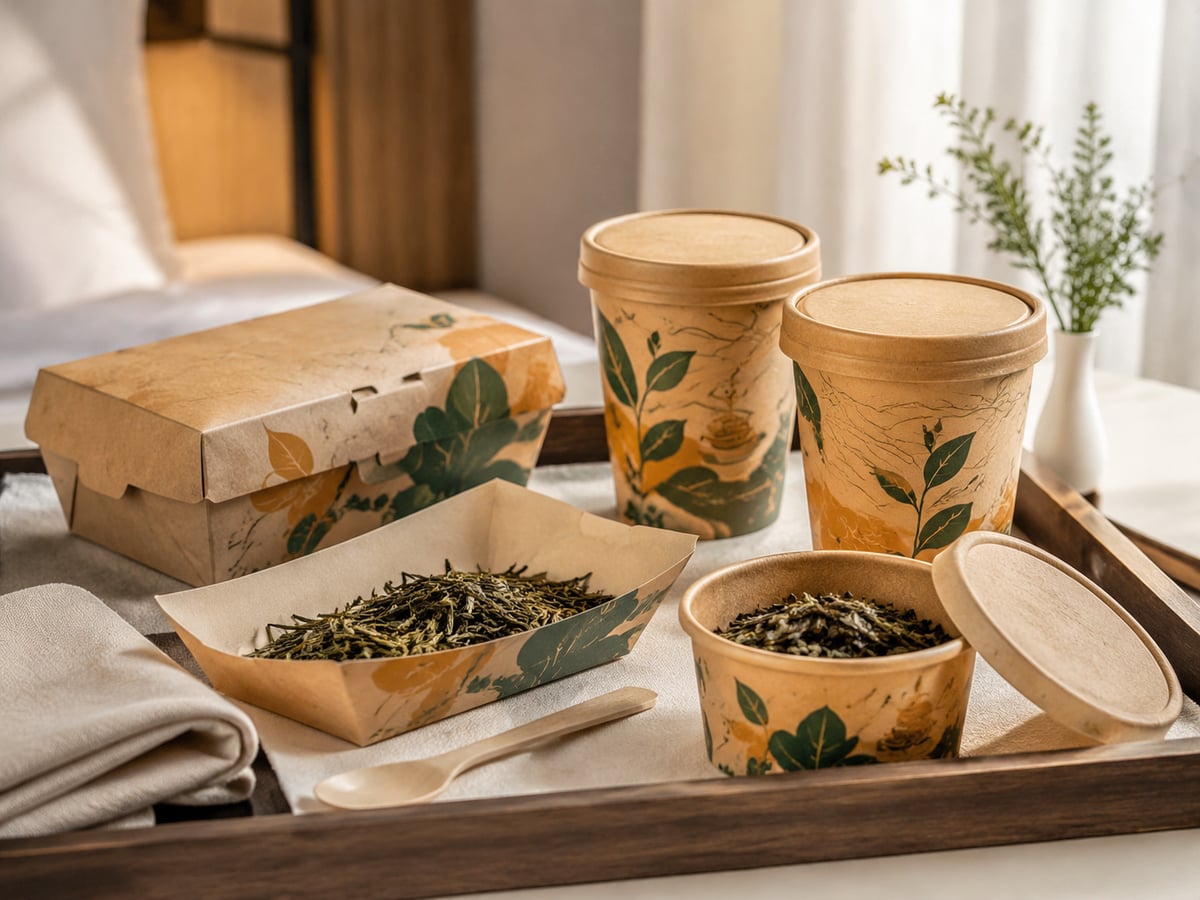
Canada Packaging Artwork: Files That Print Correctly
Successful printing of packaging artwork in Canada depends on more than supplying a logo and PDF. The factory needs an approved dieline, correct bleed and safety margins, suitable colour settings for the selected substrate, controlled ink coverage, defined registration tolerance, and a physical proof before mass production. A design that looks accurate on a screen can shift noticeably when printed on kraft paper, coated board, PE-coated cup stock, biodegradable paper, or textured food-grade material.For Canadian buyers, the practical goal is to create a repeatable artwork approval process that works whether products are landed through Vancouver, Toronto, Montréal, Halifax, or distributed to restaurant locations across provinces. Define acceptable colour variation, print alignment, scuff resistance, fold cracking, odour, food-contact requirements, and packing marks before production starts. A signed proof, approved sample, and revision-controlled artwork file reduce costly production delays and inconsistent reorders.For custom cups, bowls, meal boxes, trays, burger boxes, and takeaway containers, the most reliable process is: confirm product structure, receive the factory dieline, place artwork on the dieline, check fonts and images, specify Pantone or approved colour targets, request a digital proof, evaluate a white sample where needed, approve a printed pre-production sample, and retain the final approval record for future orders.Artwork Control PointRecommended RequirementWhy It MattersDieline versionFactory-issued, dated dieline onlyPrevents cuts, folds, seams, and windows from landing in the wrong position.BleedUsually 3 mm or factory specificationAvoids unprinted edges after die-cutting.Safe areaKeep text away from folds, seams, rims, and cut linesProtects readable branding and mandatory information.Image resolution300 dpi at final print sizeReduces blurry logos and pixelated food photography.Colour modeCMYK plus clearly named spot coloursSupports predictable separation and colour matching.Proof approvalSigned printed pre-production proof for critical designsCreates a physical production standard for acceptance.This checklist should be treated as a production-control document rather than a graphic-design preference. It helps procurement teams compare suppliers fairly and gives designers measurable limits when adapting a brand identity to food packaging.Most packaging print failures begin before printing. Common issues include artwork built on an outdated dieline, low-resolution images, unexpanded fonts, incorrect overprint settings, white elements accidentally set to overprint, missing linked images, RGB colour values, and text positioned too close to a fold or cup seam. A file may open correctly in the designer’s software but still fail during prepress if layers, fonts, transparencies, or cut contours are not prepared for commercial production.Canadian food-service packaging often includes bilingual requirements, recycling claims, compostability messaging, nutrition references, QR codes, lot-code areas, and distributor labels. These elements need enough clear space and sufficient contrast. Small reverse text, especially white text printed over dark coated areas, should be reviewed at actual size. On cup sidewalls and folded boxes, distortion can reduce readability further.Use editable vector artwork whenever possible. Preferred source formats are Adobe Illustrator AI, editable PDF, EPS, or packaged InDesign files. High-resolution PDF files can work well when fonts are outlined or embedded and images are correctly linked. Ask the supplier to perform preflight checking before platemaking or cylinder preparation. This is especially important for projects being shipped from Asian manufacturing centres to Canadian ports such as Vancouver, Prince Rupert, Montréal, or Halifax, where an artwork correction after production can affect an entire launch schedule.File IssueLikely Printed ResultPrevention MethodRGB artworkUnexpected colour conversionConvert approved design elements to CMYK or specified spot colours.Missing bleedWhite edge after cuttingExtend background graphics beyond the cut line.Text near foldUnreadable copy or cracked inkFollow the factory safe-zone layer.Low-resolution imageSoft or pixelated printUse 300 dpi images at final output dimensions.Unoutlined fontFont substitutionOutline type or embed licensed font files.Incorrect overprintMissing white objects or dirty coloursRun overprint preview and factory preflight checks.Unapproved dielineMisplaced art, window, or seamUse only the final factory structural drawing.Before sending files, name them clearly with product, size, material, revision, date, and language version. For example: “12oz-hot-cup-Canada-FR-EN-Rev03-2026-04.pdf.” Avoid vague names such as “final-final-new.pdf.” Controlled naming is a simple but valuable defence against wrong-version production.A monitor emits light while packaging reflects light. This difference alone means screen colour cannot be considered a production approval standard. Colour also changes according to paper whiteness, coating, ink absorption, press settings, varnish, lighting, and the surface shape of the finished package. A bright blue seen on a calibrated display may print duller on natural kraft board or deeper on a smooth PE-coated cup substrate.For Canadian brands, colour accuracy is particularly important when products are sold in supermarkets, airport food halls, coffee chains, university campuses, and multi-location quick-service restaurants. Brand owners should specify whether a colour is a Pantone reference, a CMYK build, a previous approved production sample, or a measured colour target. Pantone guidance is useful, but it must be interpreted for the actual printing method and substrate rather than treated as an automatic guarantee.Digital proofs are useful for checking layout, wording, positioning, and barcode content, but they are not always reliable for confirming press colour. A printed pre-production proof on the same or equivalent substrate is the stronger approval method. When an exact corporate colour is commercially critical, the buyer can request measured colour evaluation using agreed Delta E tolerance and standard viewing conditions.var ctx = document.getElementById('lineChart').getContext('2d');new Chart(ctx, { type: 'line', data: { labels: ['2022', '2023', '2024', '2025', '2026', '2027'], datasets: [{ label: 'Indexed Canadian demand for custom printed food packaging', data: [100, 108, 116, 126, 137, 149], borderColor: 'rgb(34, 115, 82)', backgroundColor: 'rgba(34, 115, 82, 0.12)', tension: 0.3, fill: false }] }, options: { responsive: false, maintainAspectRatio: false }});The chart illustrates a realistic planning trend rather than a guarantee of market performance. As custom printed packaging demand rises, buyers benefit from setting colour and approval standards early because artwork revisions become more expensive once products are scheduled for large-scale distribution.Registration is the alignment of colours, graphics, die-cutting, embossing, windows, seams, and structural features. Perfect alignment is not always physically realistic on high-speed packaging production. Material movement, moisture, die-cutting variation, cup forming, folding, and glue application all create small tolerances. The buyer should define which areas are visually critical and where normal production variation is acceptable.Curved cups require special attention. A centred logo on a flat dieline can visually shift after the cup is formed because of the taper, seam overlap, and viewing angle. Similarly, a graphic that crosses a fold on a lunch box can appear broken, while heavy artwork on a glue flap may create a visible mismatch. Factory technical teams should identify seam zones, forming overlaps, fold lines, lid-contact areas, and no-print zones before design approval.For standard food packaging, a practical registration tolerance may be discussed in millimetres, but the tolerance should be related to the product size and artwork sensitivity. A 1 mm shift may be unnoticeable in a full-coverage background but unacceptable when it cuts through a thin white border, QR code, or small icon. Specify special controls for fine lines, reverse type, narrow borders, and graphics that continue across panels.Packaging FormatRegistration Risk AreaRecommended Design ControlPaper hot cupSide seam and tapered wallKeep logos and fine text clear of seam overlap.Paper bowlRim curl and bowl taperUse larger graphics and avoid precise horizontal rules near the rim.Burger boxFold scores and corner flapsDo not place small copy directly over fold lines.Kraft lunch boxHandle cuts and glue panelsReserve clear space around cuts and adhesive zones.Food trayDie-cut edge and creasesExtend background bleed beyond the trimming line.Multi-compartment meal boxDeep folds and panel transitionsUse separate visual zones rather than continuous fine patterns.Noodle boxTop closure foldsKeep compliance copy inside the verified readable panel.Acceptance criteria should include both numerical tolerance and visual judgement. For example, “registration variation up to 1.5 mm may be accepted in non-critical full-coverage areas, but not where it affects logo shape, legibility, barcode scanning, or mandatory product information.” This language gives both buyer and factory a clearer basis for inspection.Large dark solids, rich black backgrounds, metallic effects, and high-coverage designs can look premium, but they increase production risk. Heavy ink coverage may dry more slowly, transfer during stacking, scuff in transport, crack along folds, or show inconsistent density from one batch to another. These risks increase when printing on absorbent paperboard, recycled fibres, uncoated kraft, or materials used for folded food boxes.Designers should avoid using multiple CMYK colours to create unnecessarily dense black areas. Ask the factory for a recommended rich black build suitable for the selected press and substrate. If a dark background is essential, consider whether varnish, coating, reduced ink density, a lighter brand colour, or a design with strategic unprinted areas can improve performance. A good packaging design balances visual impact with stable manufacturing.Rub resistance matters in Canada because packaging can move through long distribution routes, cold storage, delivery bags, restaurant counters, warehouses, and consumer handling. Hot-food packaging may encounter moisture, grease, heat, friction, and condensation. Rub testing should reflect the real application rather than only a visual inspection under office lighting.Design FeaturePotential RiskRecommended ActionFull black backgroundScuffing and uneven densityApprove ink build and rub-resistant finish through a physical sample.Heavy ink over foldCracking at crease lineReduce coverage or move solid colour away from the fold.Large metallic areaDrying and visual variationConfirm press capability and production lead time.Fine white reverse textFill-in or poor readabilityIncrease type size and avoid fragile font weights.Dark print on kraftSubstrate show-throughUse a printed sample on the final kraft grade.High-coverage cup designSeam mismatch or transferKeep critical artwork away from overlap zones.Gloss varnish requirementFood-contact or scuff performance concernConfirm suitable coating and documentation before approval.Heavy coverage is not automatically unsuitable. It simply requires a print method, ink system, drying process, and quality standard matched to the product. Fude Packaging can advise buyers on substrate and coating options during the artwork review stage, particularly for cups, bowls, boxes, trays, and compartment meal packaging designed for hot, greasy, or high-contact foods.Incomplete artwork files are a frequent cause of avoidable delays. A factory may need to stop prepress work when product dimensions are unclear, the dieline is missing, spot colours are unnamed, images are not embedded, legal copy has not been approved, or the buyer has sent several conflicting versions. These issues can add days to a production plan and may affect container booking for shipments headed to Canada.A complete submission should include the final artwork file, editable source file where available, factory dieline, colour instructions, packaging specification, material choice, coating preference, quantity by SKU, proofing requirement, barcode artwork, language approval, and contact details for the person authorized to approve changes. If different artwork applies to different provinces, restaurant locations, or promotional periods, list each SKU separately.Buyers should also reserve an unprinted area for lot coding, date coding, production information, or distributor labels if required. Do not assume that a code can be added anywhere after the design is approved. Coding areas must be compatible with the product structure and production equipment.var ctx = document.getElementById('barChart').getContext('2d');new Chart(ctx, { type: 'bar', data: { labels: ['Coffee shops', 'Quick-service restaurants', 'Meal delivery', 'Retail food brands', 'Institutions', 'Catering'], datasets: [{ label: 'Estimated relative demand for branded disposable packaging', data: [86, 94, 78, 71, 63, 58], backgroundColor: ['#2E86AB', '#F18F01', '#6A994E', '#9B5DE5', '#E76F51', '#457B9D'] }] }, options: { responsive: false, maintainAspectRatio: false }});This demand comparison helps buyers prioritize artwork durability. High-volume coffee and quick-service operations often require repeatable colour, rapid replenishment, and reliable compatibility between cups, lids, trays, and secondary packaging. A clear artwork package allows future reorders to proceed more efficiently.Objective acceptance criteria reduce subjective disagreement. Instead of saying “the colour should look close,” buyers can specify an approved physical standard, viewing conditions, Pantone reference, colour measurement tolerance, allowed registration range, ink adhesion standard, and rub-test method. The exact test should be appropriate for the material and use case.For a premium coffee cup, colour consistency and logo placement may be the highest priorities. For a greasy fried-food box, rub resistance, grease resistance, fold integrity, and print adhesion may be equally important. For meal-prep packaging, lid compatibility and stacking performance may matter alongside graphics. A practical specification makes those priorities visible before mass production.Test ItemExample Acceptance StandardApplication ValueColour approvalApproved printed standard or agreed Delta E rangeControls brand colour variation across reorders.RegistrationDefined mm tolerance in critical zonesProtects logos, borders, QR codes, and legal copy.Dry rub resistanceNo objectionable scuff after agreed cyclesChecks handling damage during packing and delivery.Wet rub resistanceNo unacceptable ink transfer after moisture exposureUseful for cold drinks, condensation, and delivery use.Fold crack reviewNo visible cracking in approved critical areasImportant for lunch boxes, trays, and folded cartons.Odour inspectionNo abnormal odour after productionSupports food-service presentation and user experience.Barcode scan testReadable at final printed sizeReduces retail and inventory-processing failures.Document the result with sample photographs, date, SKU number, material grade, print method, and approval signature. For larger Canadian programs, retain a sealed master sample and send reference samples to both the purchasing office and the production team. This provides a practical standard when reordering months later.Reorders should not be treated as entirely new projects. The strongest approach is to establish an approved “golden sample,” locked artwork revision, confirmed substrate, ink reference, dieline, print method, and inspection criteria. When a reorder is requested, the supplier compares the new production setup against the approved record before release.Changes should be controlled. Even a minor modification, such as switching from virgin white board to natural kraft, changing a coating, increasing cup size, moving to another press, or updating a QR code, can affect colour and registration. The buyer should know whether the change requires a digital proof, white sample, or new printed pre-production sample.var ctx = document.getElementById('areaChart').getContext('2d');new Chart(ctx, { type: 'line', data: { labels: ['2022', '2023', '2024', '2025', '2026', '2027'], datasets: [{ label: 'Share of projects requiring sustainability-related artwork claims (%)', data: [31, 38, 46, 55, 63, 70], fill: true, borderColor: 'rgb(67, 160, 71)', backgroundColor: 'rgba(67, 160, 71, 0.25)', tension: 0.3 }] }, options: { responsive: false, maintainAspectRatio: false }});The trend highlights why artwork governance is becoming more important. Sustainability claims, fibre sourcing statements, recycling instructions, compostability logos, and food-contact declarations must be reviewed carefully. Canadian buyers should avoid printing environmental claims until the selected material, coating, certification scope, and local disposal context have been confirmed.Fude Packaging supports overseas B2B buyers with a structured process for custom printed food packaging. Its technological capabilities include artwork and dieline checking, Pantone colour matching support, prototype development, digital proofs, white samples, printed pre-production proofs, in-house laboratory testing, and batch-based quality records. These controls help customers move from a brand concept to a production-ready packaging specification with fewer unknowns.Its manufacturing capabilities are built around more than 20 years of packaging experience, a self-owned production base of approximately 30,000 m² in Shandong, automated capacity of up to 120,000 units per day, and in-house control of material selection, printing, die-cutting, forming, inspection, packing, and shipment preparation. The product range includes paper cups, paper bowls, burger boxes, kraft lunch boxes, salad containers, noodle boxes, food trays, and multi-compartment meal boxes. Buyers can explore relevant formats through the custom food packaging product range.Service capabilities include OEM and ODM support, material recommendations, size and structure development, sample evaluation, export documentation assistance, shipment coordination, and scheduled-order planning. Fude Packaging has experience supporting more than 500 business customers and can help buyers prepare practical files for Canadian import programs, whether shipments are planned for Vancouver-area distribution, Greater Toronto food-service channels, Montréal buyers, or regional warehouse networks. Learn more about available custom packaging services.var ctx = document.getElementById('comparisonChart').getContext('2d');new Chart(ctx, { type: 'bar', data: { labels: ['Artwork review', 'Sample options', 'Batch traceability', 'Product range', 'Export support', 'In-house testing'], datasets: [ { label: 'Fude Packaging capability index', data: [92, 90, 88, 94, 86, 89], backgroundColor: 'rgb(95, 70, 176)' }, { label: 'Typical fragmented sourcing model', data: [62, 55, 48, 58, 54, 51], backgroundColor: 'rgb(178, 190, 195)' } ] }, options: { responsive: false, maintainAspectRatio: false }});The comparison is an operational illustration of why consolidated sourcing can reduce artwork risk. When products, printing, sample approval, and inspection are managed through one production partner, the buyer has fewer handoffs and clearer accountability. For company background and production information, visit Fude Packaging’s manufacturing profile.Different products need different artwork decisions. A hot cup must account for the side seam, tapered shape, lid line, and possible heat sleeve. A salad bowl may need strong moisture resistance and large branding visible from above. A burger box requires fold-safe artwork. A meal box may require panels for ingredients, allergen messaging, heating instructions, and branded delivery presentation.Key Canadian industries using custom food packaging include coffee chains, quick-service restaurants, ghost kitchens, meal-delivery businesses, institutional cafeterias, supermarkets, catering companies, sporting venues, airport concessions, and food manufacturers. Buyers in Toronto and Mississauga may prioritize high-volume restaurant distribution; Vancouver buyers may focus on delivery-friendly packaging and sustainability messaging; Montréal projects often require carefully reviewed bilingual packaging copy; Calgary and Edmonton caterers may prioritize insulation and grease resistance in colder-season logistics.IndustryCommon PackagingArtwork PriorityCoffee shopsHot cups, cold cups, sleevesLogo placement, colour consistency, seam control.Quick-service restaurantsBurger boxes, fry trays, bowlsRub resistance, bold branding, fast reorder control.Meal deliveryCompartment boxes, salad bowlsClear labels, stacking areas, moisture-resistant graphics.Retail food brandsTrays, cartons, bowlsBarcode readability, mandatory copy, shelf impact.CateringLunch boxes, trays, bowlsLarge event branding and transport durability.Universities and hospitalsFood containers and beverage cupsClear instructions, allergen messaging, durability.Airports and venuesPortable meal packs and cupsPremium graphics, quick service, scuff resistance.In 2026 and beyond, packaging artwork will increasingly need to accommodate variable data, QR-based product information, digital loyalty campaigns, traceability codes, lower-ink designs, fibre-based material claims, and region-specific sustainability communication. Brands should build flexible artwork systems with editable fields rather than producing a separate completely rebuilt file for every promotion or market.Canadian buyers can source packaging from local converters, regional distributors, or overseas manufacturers. Local suppliers may offer fast replenishment and simplified domestic freight, while overseas factories can provide broader customization, integrated product categories, scalable volume, and competitive production economics. The best choice depends on order volume, lead time, design complexity, required inventory strategy, and risk tolerance.When importing, evaluate total landed cost rather than unit price alone. Include freight, customs documentation, palletization, warehouse handling, inspection, duty considerations, damage allowance, production lead time, and the cost of a wrong print run. For large orders, full-container shipments through Vancouver or Prince Rupert may suit Western Canadian distribution, while Montréal or Halifax can be relevant for Eastern Canadian supply chains. Smaller programs may begin with air-shipped samples and then move to consolidated sea freight.Ask suppliers how they manage food-contact documentation, material traceability, sample approvals, colour records, and claims. Fude Packaging can provide support related to commonly requested documentation such as FSC, ISO 9001, FDA-related food-contact requirements, LFGB, and other product-specific compliance information where applicable. Buyers should always confirm the exact documentation needed for their packaging format and intended Canadian market use.For quotation, sample planning, or an artwork review conversation, use the Fude Packaging contact page and provide product type, dimensions, annual volume, destination city, food temperature, branding files, target delivery date, and preferred proof option.1. Which printing method is suitable for print-ready packaging artwork?Flexographic printing is often suitable for high-volume food packaging with simpler colour requirements. Offset printing can support detailed graphics on certain paperboard formats. Digital printing may be useful for short runs, market testing, and variable designs. The best method depends on quantity, substrate, colour expectations, product structure, and budget.2. What artwork files should be supplied?Provide a print-ready PDF plus editable AI, EPS, or packaged source files when available. Include the approved factory dieline, linked images, font information or outlined fonts, Pantone references, colour instructions, and clear revision naming. Use 300 dpi images and CMYK or confirmed spot colours.3. How is Pantone colour approved?State the Pantone reference in the artwork and request a printed sample on the actual or equivalent substrate. Confirm whether approval is visual, based on an approved master sample, or measured against an agreed colour tolerance. Pantone on coated paper will not necessarily match the same ink printed on kraft or textured board.4. Why do colours shift on different papers?Paper brightness, absorbency, fibre content, coatings, ink coverage, varnish, lighting, and press conditions all influence printed colour. Natural kraft normally produces a warmer, more muted result than bright white coated paper. A physical proof is the best way to assess the final effect.5. Which print defects should be rejected?Reject defects that materially affect brand appearance, legal information, barcode scanning, product usability, or food-service presentation. Examples include unreadable text, missing graphics, severe colour deviation from the approved standard, ink transfer, unacceptable scuffing, obvious fold cracking, incorrect dieline placement, damaged forming, or artwork printed on the wrong product version.6. Should Canadian buyers approve a digital proof or physical sample?Use a digital proof to confirm content and layout, then use a physical white sample or printed pre-production proof when structure, colour, material feel, folds, seams, and rub resistance matter. For major launches, a printed production-standard sample is strongly recommended. -

Global Buyer Guide to BPI Compostable Food Packaging
For global buyers, selecting a BPI compostable food packaging supplier requires more than receiving a certificate PDF. Buyers should verify the certificate or license number, the certified product scope, the company named on the documentation, the relevant production site, the material construction, the active status or expiry date, and the exact product SKU being purchased. BPI certification is a valuable indicator that a product or material is designed to meet recognized compostability requirements, but it does not automatically prove that every cup, bowl, lid, coating, printing ink, or custom food package is covered.A reliable sourcing decision combines certification review with food-contact compliance documents, product specifications, migration evidence where applicable, functional test reports, samples, and shipment-level quality controls. This is particularly important for importers supplying restaurants, coffee chains, meal-prep brands, supermarkets, distributors, and takeaway platforms across North America, Europe, the Middle East, Oceania, and Southeast Asia.For example, a buyer importing compostable salad bowls through the Port of Los Angeles, Rotterdam, Singapore, Dubai, or Sydney should confirm that the documentation matches the product delivered to the port. A certificate held by a material producer may not cover the converting factory. Likewise, a certificate for an unprinted fiber bowl may not cover a customized bowl with a different barrier coating, added lid, heavier basis weight, or special printing treatment.Verification ItemWhat the Buyer Should CheckWhy It MattersCertificate or license numberMatch the number with the official BPI listing or written confirmation.Helps identify invalid, outdated, or misrepresented documentation.Certified product scopeReview product name, material type, format, thickness, and intended use.Confirms that the purchased item is within the approved scope.Named companyCheck whether the document names the brand owner, material supplier, converter, or factory.Prevents assuming that supplier status automatically transfers.Manufacturing siteConfirm the actual production address and site relationship.Supports factory-level traceability and supplier qualification.Validity statusCheck the effective date, expiry date, and renewal status.Controls the risk of shipping products under lapsed credentials.Product evidenceRequest food-contact, performance, artwork, and lot records.Certification alone does not establish food safety or package fitness.The table above should be used as a minimum gate before purchase order approval. Buyers should retain the reviewed files in their supplier-quality system and require notification before any material, coating, factory, printing, or product-design change.Certificate scope is the most important part of BPI compostable packaging verification. It defines what is actually covered, rather than what a sales quotation claims. The scope may relate to a finished article, a family of articles, a resin or fiber material, a coating, or a licensed product format. It may also include limitations on composition, dimensions, colorants, inks, additives, or end-of-life conditions.Buyers should compare the scope line by line against their specification sheet. A food-service package is usually a multi-component system: base paperboard or molded fiber, barrier layer, adhesive, ink, varnish, lid, sleeve, label, and sometimes a separate sauce cup. If a buyer requests a custom 32 oz bowl with a printed exterior, a heat-resistant coating, and a clear lid, the compliance review should address each relevant component rather than treating “compostable bowl” as a complete answer.Compostability claims also need to be communicated carefully. BPI certification is associated with compostability standards and labeling requirements, but practical acceptance depends on local collection programs and industrial composting infrastructure. A city may allow food scraps collection while another city, even in the same country, may not accept compostable food-service packaging. Buyers should avoid making universal disposal statements on packaging without checking the local market.Packaging ComponentScope QuestionBuyer ActionPaper cup bodyIs the cup size and paper/coating construction included?Match GSM, lining type, diameter, and capacity to the approved item.Paper bowlDoes the scope include hot, cold, oily, or acidic foods?Request application-specific leak and heat test results.Barrier coatingIs the coating certified independently or as part of the finished article?Confirm coating supplier and formulation control.Printing inkIs custom printing addressed in the compliance package?Obtain ink declaration and food-contact suitability evidence.LidIs the lid included in the claim and compatible with the container?Review the lid as a separate SKU unless clearly covered.Label or stickerCan labels, adhesives, or tamper seals affect compostability?Limit non-compostable additions and document exceptions.This component-level review is especially useful for distributors that source multiple packaging categories from different factories. It prevents an otherwise compliant bowl from being marketed with an unsupported compostability claim because of an added component outside the certified construction.Global demand for compostable food packaging continues to be supported by plastic-reduction initiatives, food-delivery growth, corporate sustainability procurement, and changing waste-management rules. The figures below illustrate an indicative indexed growth pattern for organized B2B demand, using 2023 as a base year of 100.var ctxMarketGrowth = document.getElementById('marketGrowthChart').getContext('2d');new Chart(ctxMarketGrowth, { type: 'line', data: { labels: ['2023', '2024', '2025', '2026', '2027', '2028'], datasets: [{ label: 'Global B2B Compostable Packaging Demand Index', data: [100, 111, 124, 139, 155, 173], borderColor: 'rgb(46, 125, 50)', backgroundColor: 'rgba(46, 125, 50, 0.12)', fill: false, tension: 0.3, borderWidth: 3 }] }, options: { responsive: false, maintainAspectRatio: false, scales: { y: { beginAtZero: false } } }});A frequent buyer error is assuming that a certificate attached to a quotation applies automatically to the actual manufacturing site. In international trade, the sales company, certificate holder, raw-material supplier, printing facility, converting factory, and exporter may be different entities. That structure is not inherently a problem, but the relationships must be transparent.Request the legal name and address of the producing site, the name appearing on the certification record, and a written explanation of their relationship. If the factory is authorized to manufacture a licensed product, ask for evidence of that authorization. If the supplier buys certified material and converts it into finished packaging, confirm whether the finished format itself is included in the recognized scope. Buyers should also compare factory details with commercial invoices, packing lists, inspection reports, and country-of-origin records.Product matching should be performed at SKU level. Record the product code, dimensions, capacity, paper weight, coating or lining, color, print version, lid type, packing configuration, and intended food application. This level of detail is essential for restaurant chains and retail brands because a minor construction change can affect both performance and compliance.Match PointDocument to ReviewAcceptance StandardSupplier identityBusiness license, invoice, contractLegal entity is consistent across commercial documents.Factory identityFactory profile, audit report, production recordsActual manufacturing location is clearly identified.Product SKUSpecification sheet and approved sampleSKU, size, material, and format match the order.Material constructionBill of materials or declaration of conformityNo unapproved changes in paper, coating, adhesive, or ink.Application conditionFunctional test reportSuitable for stated temperature, fill time, grease, and moisture.Shipment traceabilityLot code, packing list, final inspection reportFinished goods can be linked to a defined production batch.For high-volume programs, buyers should establish a master approved-product list. Each listed SKU should state the applicable certification reference, food-contact document version, supplier site, approved sample date, and test-report validity. This reduces confusion when a procurement team in London, Toronto, Melbourne, or Riyadh orders from a centralized sourcing office.Buyers should verify both the issuer and the status of every compostability document. The document should identify the certification program, the certificate or license holder, product description, relevant reference number, issue date, and status information. Where a public directory or official verification channel is available, compare the supplier-provided information against that source. If information cannot be matched, request clarification directly from the supplier before approving the claim.Expiry control matters because product certifications, permissions, test reports, and supplier declarations may be subject to renewal, reassessment, or change conditions. An expired document should not be treated as current merely because the product design has not visibly changed. Buyers should also distinguish between an expired certificate, a still-active listing, a renewal in progress, and a document that applies only to historical production.Set reminders at least 120, 90, 60, and 30 days before a key document expires. For strategic suppliers, require a renewal-status update before issuing a new annual purchase agreement. If renewal is delayed, do not automatically continue environmental claims; instead, assess the supplier’s documented status, shipment timing, and commercial risk with legal and quality teams.Compostability certification does not replace product-specific food-contact and performance evidence. Packaging intended for direct food contact must be suitable for the destination market and actual use conditions. Buyers commonly request compliance declarations and supporting test reports aligned with applicable regulations, such as FDA-related food-contact expectations in the United States or EC 1935/2004 requirements for the European Union. Requirements vary by market, product construction, and food type, so buyers should obtain professional regulatory advice where needed.Functional validation is equally important. A soup bowl may pass a general material review but still fail during a 45-minute hot delivery because of seam leakage, rim softening, lid distortion, or coating breakdown. A salad container may require resistance to oil, vinegar, chilled storage, and stacking loads. A paper cup may require hot-fill stability, sleeve compatibility, lid fit, and odor control.Supporting EvidencePrimary PurposeTypical Buyer TriggerFood-contact declarationConfirms material suitability for food use.Required before launch in regulated markets.Migration or material test reportSupports safety assessment under defined conditions.Needed for direct-contact packaging and sensitive foods.Leak-resistance testEvaluates seams, folds, and coating integrity.Essential for soups, sauces, noodles, and beverages.Heat-resistance testChecks deformation and performance at service temperature.Needed for hot drinks, curry, and hot takeaway meals.Grease-resistance testAssesses resistance to oils and fried-food leakage.Useful for burgers, fries, bakery, and grilled foods.Compression or stacking testMeasures strength during warehousing and delivery.Important for e-commerce, catering, and long-distance shipping.The table shows why qualification should be application-led. Buyers should define the food type, maximum fill temperature, holding time, delivery route, filling weight, storage condition, and preferred disposal claim before asking a supplier for documentation. This produces a more useful test plan and reduces the chance of ordering packaging that looks correct but performs poorly in service.Industry demand differs by sector. The chart below illustrates indicative annual purchasing intensity for compostable food packaging categories in a global B2B sourcing portfolio.var ctxIndustryDemand = document.getElementById('industryDemandChart').getContext('2d');new Chart(ctxIndustryDemand, { type: 'bar', data: { labels: ['Quick Service Restaurants', 'Coffee Chains', 'Food Delivery', 'Catering', 'Retail Ready-to-Eat', 'Institutions'], datasets: [{ label: 'Indicative Demand Index', data: [92, 84, 88, 66, 73, 59], backgroundColor: ['#2e7d32', '#43a047', '#66bb6a', '#8bc34a', '#a5d6a7', '#c8e6c9'] }] }, options: { responsive: false, maintainAspectRatio: false, scales: { y: { beginAtZero: true, max: 100 } } }});Document gaps are not always evidence of poor manufacturing, but they are a supplier-risk signal that should be resolved before scale-up. Common gaps include a certificate with no product description, a document naming a different company, an old test report for a changed product, incomplete food-contact declarations, no batch traceability, or unsupported claims about lids and printed versions.Buyers should use a corrective-document request rather than relying on verbal assurances. Ask the supplier to provide a controlled document set with revision dates and responsible contacts. For custom packaging, require an approved specification signed by both parties. The specification should state the permitted tolerances and define what constitutes a material or process change.When documents are incomplete, the appropriate action depends on risk. For a low-risk dry-food tray, a buyer may request a revised declaration before the next shipment. For hot soup containers marketed as compostable in a regulated retail channel, the buyer may need to pause approval until scope, food-contact, and functional evidence are complete.Renewal and change control protect buyers after the first shipment. A qualified supplier can become non-compliant if the factory changes paper sources, coating suppliers, adhesives, ink systems, molding tools, production locations, or quality procedures without customer review. These changes may influence compostability, food-contact status, odor, print quality, leak resistance, and customer experience.Purchase agreements should require written notification before changes to any approved product. A practical notification period is 60 to 90 days for planned changes, with immediate notification for events that may affect regulatory status, certificate validity, or product safety. The buyer should then decide whether document review, new samples, laboratory testing, pilot production, or a third-party inspection is needed.By 2026 and beyond, buyers can expect stronger digital traceability, QR-linked packaging records, lower-plastic barrier technologies, fiber-based innovations, automated visual inspection, and more detailed environmental-claim scrutiny. Policy direction is also likely to increase attention on proof of claims, local composting access, recyclability versus compostability distinctions, and packaging minimization. The most resilient suppliers will provide controlled technical files rather than generic marketing statements.The following area chart illustrates an indicative shift in buyer priorities from simple price focus toward traceability, documented compliance, and verified end-of-life claims.var ctxTrendShift = document.getElementById('trendShiftChart').getContext('2d');new Chart(ctxTrendShift, { type: 'line', data: { labels: ['2023', '2024', '2025', '2026', '2027', '2028'], datasets: [{ label: 'Buyers Prioritizing Verified Traceability (%)', data: [38, 46, 55, 64, 71, 77], borderColor: 'rgb(21, 101, 192)', backgroundColor: 'rgba(21, 101, 192, 0.25)', fill: true, tension: 0.35, borderWidth: 3 }] }, options: { responsive: false, maintainAspectRatio: false, scales: { y: { beginAtZero: true, max: 100 } } }});A structured checklist makes supplier comparison more consistent across product categories and regions. Procurement, quality, sustainability, and logistics teams should jointly review the package before supplier onboarding. For global sourcing, include Incoterms, port routing, packing strength, container loading, customs documents, and local-labeling requirements in addition to technical compliance.Checklist StageRequired OutputDecision RuleSupplier prequalificationFactory profile, certifications, market referencesProceed only with identifiable and responsive suppliers.Certification reviewVerified BPI scope and active-status evidenceAccept only claims supported by matching documents.Food-contact reviewDeclarations and applicable test evidenceConfirm destination-market suitability before ordering.Sample approvalWhite sample, printed sample, or functional prototypeApprove dimensions, fit, print, and food performance.Production controlApproved specification and in-process inspection planRequire approval for material or process changes.Pre-shipment releaseLot records, final inspection, packing listShip only after quantity and quality verification.For buyers purchasing bowls, a useful starting point is to compare material and application options through paper bowl solutions for food-service buyers. For salad, poke, grain bowl, and chilled takeaway programs, buyers can also review FSC-certified kraft salad bowl options while requesting product-specific documentation for the selected configuration.Fude Packaging supports overseas B2B buyers seeking practical, document-controlled compostable food packaging solutions. Our approach is based on matching the requested environmental claim with the actual product construction, target market, food application, and commercial supply requirements. We do not treat a broad certification statement as a substitute for SKU-level technical review.From a technological capability perspective, Fude Packaging operates with in-house quality and performance testing support and can assist customers with material selection, coating recommendations, structural development, artwork review, Pantone color matching, prototype preparation, and functional evaluation. For hot beverages, noodles, salads, burgers, and meal boxes, our team considers heat, moisture, grease, stacking, lid fit, and delivery duration before recommending a format.From a manufacturing capability perspective, our self-owned 30,000 m² factory in Shandong has more than 20 years of packaging experience and automated production capacity of up to 120,000 units per day. We manufacture core product categories in-house, including paper cups, paper bowls, burger boxes, kraft lunch boxes, salad containers, noodle boxes, food trays, and multi-compartment meal boxes. This helps buyers consolidate purchasing, improve print consistency, and simplify quality management.From a service capability perspective, Fude Packaging has supplied more than 500 international customers in over 50 countries. We support OEM and ODM projects from sampling through export-ready packing, with options for sea freight, air freight, full-container, less-than-container, and express sample shipments. Buyers shipping through Qingdao, Ningbo, Shanghai, Jebel Ali, Hamburg, or Long Beach can receive support for commercial documentation, inspection coordination, packing lists, and practical delivery planning.For strategic projects, customers can request white samples, printed samples, and functional prototypes before mass production. Our team can also support third-party inspections and provide responsive after-sales handling when confirmed production or quantity issues arise. The objective is to reduce total procurement risk, not simply to offer the lowest unit price.The comparison chart below demonstrates how buyers can assess supplier readiness across the areas that matter most for compostable food-service packaging programs.var ctxSupplierComparison = document.getElementById('supplierComparisonChart').getContext('2d');new Chart(ctxSupplierComparison, { type: 'bar', data: { labels: ['Documentation Control', 'Customization', 'Factory Capacity', 'Testing Support', 'Export Service', 'Traceability'], datasets: [ { label: 'Fude Packaging Capability Index', data: [90, 92, 88, 85, 91, 87], backgroundColor: 'rgba(46, 125, 50, 0.75)' }, { label: 'Basic Supplier Benchmark', data: [62, 58, 65, 49, 57, 52], backgroundColor: 'rgba(120, 144, 156, 0.65)' } ] }, options: { responsive: false, maintainAspectRatio: false, scales: { y: { beginAtZero: true, max: 100 } } }});Buyers should request the certificate or license number, product scope, certificate holder name, site information, validity details, and product specification. Compare the information with official verification sources where available and confirm that the purchased SKU, material construction, and manufacturing arrangement match the documented scope. Also request food-contact and performance evidence for the intended application.Not necessarily. A certificate may name a brand owner, material producer, converter, or another responsible company. Buyers should confirm the actual factory address, its relationship to the certificate holder, and its authorization to manufacture the relevant product. Factory identity should also match commercial and inspection documents.No. Certification generally applies only to the products, materials, constructions, and conditions defined in the approved scope. A different size, coating, paper weight, lid, ink, adhesive, or custom design may require separate confirmation. Buyers should review each product family and SKU rather than applying one certificate to an entire catalog.Required evidence depends on the destination market and application. Common documents include food-contact declarations, migration or material reports where applicable, leak tests, heat-resistance tests, grease-resistance tests, compression tests, and lid-fit evaluations. Hot, oily, acidic, frozen, or long-delivery foods usually require more demanding performance validation.Create a controlled compliance register containing certificate numbers, document versions, effective dates, expiry dates, approved SKUs, factory names, and responsible contacts. Set automated reminders before expiry, request renewal evidence before annual contract renewal, and require written notice for any material, site, process, or certification-status change. Do not continue environmental claims based solely on outdated records. -

Canada Paper Ice Cream Bowl Supplier Guide & Branding
If you are sourcing paper ice cream bowls for the Canadian market, the best supplier is one that can deliver reliable cold resistance, moisture protection, compatible lids, flexible bowl sizes, and strong custom branding support at wholesale scale. For buyers serving Toronto, Vancouver, Montreal, Calgary, Edmonton, Ottawa, Winnipeg, Halifax, and Quebec City, the practical priorities are not only price per unit, but also freezer-safe performance, stackability, shipping consistency, seasonal print options, and lead-time reliability during summer peaks.A dependable paper ice cream bowl supplier for Canada should offer multiple capacities for gelato, soft serve, frozen yogurt, sorbet, acai, and dessert applications; food-safe PE or PLA linings; options for PET, PP, or paper lids; and custom printing that remains sharp across both short promotions and year-round retail programs. It should also be able to support importers, distributors, restaurant chains, dessert shops, food trucks, and delivery brands with planning help before high-demand periods such as Victoria Day, Canada Day, summer tourism season, and winter holiday campaigns.For many Canadian buyers, factory-direct sourcing becomes more competitive when the supplier can combine manufacturing stability, artwork preparation, sampling, private-label development, and export coordination in one process. That is especially valuable when products move through Vancouver, Prince Rupert, Montreal, Halifax, or inland distribution hubs near Brampton and Mississauga. In short, the right supplier is not only a manufacturer of bowls but a packaging partner that helps reduce leakage risk, maintain product presentation, protect margins, and strengthen branding.Canada has a strong and varied frozen dessert market. Demand comes from urban quick-service brands, neighborhood ice cream shops, seasonal kiosks, grocery-ready dessert programs, event caterers, and food delivery operators. Because Canada includes both dense metro regions and long-distance logistics networks, paper ice cream bowls need to perform consistently from production to end use. A bowl that works in-store in downtown Vancouver must also hold up during distribution into Alberta, Manitoba, or Atlantic Canada.Cold performance matters because frozen desserts create condensation. When the product sits in a customer’s hand, in a freezer display, or in a takeout bag, the bowl must resist softening, edge warping, and base seepage. A quality paper bowl supplier will specify coating type, paper weight, rim strength, and recommended temperature conditions. This is particularly important for premium gelato stores, poutine-and-dessert hybrid concepts, family entertainment venues, stadium concessions, and summer festival vendors that require fast service without product failure.Branding options matter just as much. In the dessert category, packaging is highly visible in social media photos, mall food court purchases, and delivery app listings. Canadian buyers frequently want bowls that can support bright seasonal graphics, maple-themed promotions, French-English bilingual print layouts where needed, and clean brand identities for premium artisan concepts. Strong print registration, color consistency, and minimum order flexibility can turn basic packaging into a revenue-supporting brand tool.When selecting a supplier, buyers typically compare four performance layers: structural integrity, moisture resistance, print quality, and supply reliability. These factors influence customer experience, reordering efficiency, and total cost. For businesses that also sell soups, salads, or warm foods, it is useful to work with a supplier that can align dessert packaging with broader takeaway ranges such as Custom Paper Food Container products, giving procurement teams more consistency across SKUs.Canadian distributors often prefer suppliers that can scale from trial runs to container-load programs. That allows them to test branding in Ontario or British Columbia first, then expand to national sales once velocity is confirmed. A supplier with strong manufacturing systems can support this phased approach more smoothly than a trader with inconsistent factory access.The table below outlines the main commercial criteria that Canadian buyers often use when reviewing ice cream bowl suppliers. Evaluation Factor Why It Matters in Canada What to Ask the Supplier Common Buyer Concern Preferred Outcome Impact on Operations Cold resistance Supports frozen desserts in humid or takeaway conditions What lining and paper weight are used? Bowl softening during service Stable structure for 30 to 60 minutes of use Fewer complaints and product returns Moisture barrier Prevents seepage from melting toppings or condensation Is the bowl tested for leak resistance? Wet outer wall Dry exterior with reliable hold Cleaner customer experience Print quality Important for premium dessert branding Can you provide flexo or custom color proofing? Color mismatch Consistent logo reproduction Stronger shelf and social appeal Lid fit Needed for delivery and grab-and-go sales Which lids match each bowl size? Loose closures Secure fit with minimal leakage Better delivery reliability Lead time Summer peaks create stock pressure How long for samples and mass production? Late arrivals during high season Planned replenishment windows Lower risk of stockouts MOQ flexibility Useful for new product launches Can you support trial orders? Overcommitting inventory Balanced entry volume Better cash flow control Market growth for frozen dessert packaging in Canada is expected to remain positive as convenience, delivery, and premium dessert purchases continue to expand. The chart below illustrates a realistic demand trend.var ctx1 = document.getElementById('lineChartCanadaGrowth').getContext('2d');var chart1 = new Chart(ctx1, { type: 'line', data: { labels: ['2021', '2022', '2023', '2024', '2025', '2026'], datasets: [{ label: 'Estimated Canada ice cream bowl demand growth index', data: [78, 84, 91, 99, 108, 118], borderColor: 'rgb(75, 192, 192)', backgroundColor: 'rgba(75, 192, 192, 0.15)', fill: false, tension: 0.3 }] }, options: { responsive: true, maintainAspectRatio: false }});Paper ice cream bowls are not one-size-fits-all. In Canada, bowl selection depends on product style, serving temperature, topping volume, customer demographic, price point, and whether the order is for dine-in, takeaway, or delivery. A 4oz or 5oz bowl may suit tasting flights, kids’ portions, or premium gelato sampling. A 6oz to 8oz bowl works well for standard single-serve frozen yogurt and soft-serve applications. Larger 10oz to 16oz bowls are often chosen for sundaes, acai bowls, fruit-and-ice cream mixes, or sharing portions.Shape also matters. Straight-wall bowls are efficient for stacking and machine forming, making them popular in bulk wholesale channels. Slightly flared bowls improve visual presentation and topping access. Wide-mouth options work better for layered desserts and spoon movement. Deep bowls help contain sauces and reduce spill risk during transport. Canadian buyers serving high-footfall urban areas like Toronto Eaton Centre, downtown Montreal, or Richmond food courts often prefer bowls that balance strong presentation with easy high-speed dispensing.Scoop capacity specifications should be considered carefully. A bowl labeled by fluid ounces may perform differently when filled with dense gelato versus airy soft serve. Suppliers that understand food service usage will discuss practical fill volumes in relation to one scoop, two scoops, toppings, dome lid clearance, and customer handling. This is useful for dessert chains trying to control portion costs across multiple locations.For buyers that want to unify dessert and beverage packaging, it can be helpful to source both bowls and cups from one partner. That reduces design fragmentation and can align color systems across Custom Paper Bowl products and Custom Paper Cup products.The table below shows common bowl size references and their practical use cases for the Canadian market. Nominal Size Typical Scoop Capacity Best Use Common Shape Lid Need Recommended Channel 4oz 1 small scoop Tasting, kids' sample, event promotions Straight wall Optional Sampling booths, fairs, in-store trials 5oz 1 regular scoop Gelato and premium small serve Slight flare Optional to light-fit lid Artisan dessert counters 6oz 1 to 2 scoops Standard takeout serving Straight or flared Recommended QSR and takeaway shops 8oz 2 scoops plus topping Most common retail size Wide mouth Recommended Chains and delivery 10oz 2 to 3 scoops Sundaes, mix-ins, yogurt bowls Deep bowl Strongly recommended Food delivery and family desserts 12oz to 16oz 3+ scoops or share size Acai, fruit bowl, premium dessert combo Wide and deep profile Secure lid required Delivery, retail bundles, catering In practice, size choice should match both menu engineering and freight efficiency. Larger bowls increase cube usage in warehouses, while smaller bowls can raise unit handling volumes. Importers in the Greater Toronto Area often compare landed cost per thousand units against shelf space, while western Canada buyers may prioritize pallet density due to longer inland freight routes from Vancouver.Industry demand also varies by application. The following chart shows a realistic comparison of where paper ice cream bowls are most heavily used across frozen dessert channels in Canada.var ctx2 = document.getElementById('barChartIndustryDemand').getContext('2d');var chart2 = new Chart(ctx2, { type: 'bar', data: { labels: ['Ice Cream Shops', 'Frozen Yogurt', 'Gelato Bars', 'Food Delivery', 'Events', 'Grocery Desserts'], datasets: [{ label: 'Estimated packaging demand share', data: [88, 72, 61, 79, 54, 47], backgroundColor: ['#ff6384','#36a2eb','#ffce56','#4bc0c0','#9966ff','#ff9f40'] }] }, options: { responsive: true, maintainAspectRatio: false }});For frozen dessert packaging, material choice determines whether the bowl simply looks acceptable or truly performs under real conditions. In Canada, buyers should look at cold resistance from three angles: freezer storage, counter service, and post-purchase use. A bowl may hold shape in a freezer yet still weaken when a customer grips it for fifteen minutes while the dessert begins to melt. That is why coating quality, paperboard specification, and forming precision all matter.The most common lining for paper ice cream bowls is food-grade PE, which provides strong moisture resistance and broad suitability for frozen desserts. Compostable PLA options may also be requested for sustainability-focused programs, though buyers should confirm end-use and waste-stream compatibility in their target provinces or municipalities. Some brands in Vancouver and parts of Ontario are especially attentive to packaging claims, so the supplier must present clear material positioning rather than vague eco language.Freezer-safe standards involve more than low temperature tolerance. Bowls should maintain rim shape for lid application, resist panel softening, and avoid fibre separation when moved between freezer storage and ambient handling. For Canadian buyers distributing through cold rooms near Montreal or through mixed logistics environments in Calgary and Winnipeg, consistency across different humidity levels is valuable.It is also important to ask about compliance and documentation. Food-contact suitability, quality control procedures, and material consistency should be verifiable. Suppliers serving international markets typically maintain testing processes for lining adhesion, leakage, print durability, and structural performance.The trend shift in Canadian packaging is moving from purely low-cost commodity bowls toward better barrier performance, more sustainable materials, and more premium presentation. The chart below reflects that change.var ctx3 = document.getElementById('areaChartTrendShift').getContext('2d');var chart3 = new Chart(ctx3, { type: 'line', data: { labels: ['2021', '2022', '2023', '2024', '2025', '2026'], datasets: [{ label: 'Shift toward higher-barrier and branded paper bowls', data: [32, 39, 46, 55, 63, 72], fill: true, backgroundColor: 'rgba(75, 192, 192, 0.25)', borderColor: 'rgb(75, 192, 192)', tension: 0.3 }] }, options: { responsive: true, maintainAspectRatio: false }});The following table summarizes practical material considerations. Material Feature Function Best For Buyer Question Potential Limitation Recommended Check PE lining Moisture and melt resistance Mainstream ice cream bowls What coating thickness is used? Not always compostable Leak test and freezer handling sample PLA lining Plant-based barrier option Eco-positioned dessert brands Is it suitable for actual local disposal streams? Policy and composting conditions vary Confirm claim wording for Canada Heavy paperboard Improves rigidity Premium servings and delivery What gsm range is available? Higher unit cost Compare structural performance versus freight cost Rolled rim Better lid fit and comfort Takeout and chain operations Is rim diameter tolerance controlled? Poor forming can affect seal Check production consistency Double-side treatment Extra moisture stability High-condensation usage Is outer wall protected from dampness? May be unnecessary for basic use Test in actual menu conditions Food-safe ink system Safe branding and print quality Custom printed bowls What printing process is used? Complex graphics may increase setup Approve pre-production proof As a buying guideline, request filled-condition testing with actual products such as ice cream, sorbet, frozen yogurt, fruit toppings, syrups, and whipped cream. A bowl that performs with plain frozen product may react differently once toppings add moisture and weight.Lids are a major selection factor for Canadian buyers because dessert consumption increasingly includes takeaway, delivery, and supermarket-adjacent impulse purchases. The right lid depends on bowl diameter, fill height, product visibility goals, and transport conditions. Clear PET lids are often preferred for visual merchandising, especially for layered desserts, acai, and premium sundaes. Flat lids work well when stackability matters. Dome lids support whipped cream or high topping volume. Paper lids may be chosen for a more fiber-forward look in sustainability-led branding.Fit type is critical. Snap-fit lids are common for secure closure. Press-fit lids can work for lighter applications but should be tested carefully for delivery. Some buyers prefer anti-pop rim designs or tighter circumference tolerances to prevent accidental opening in courier bags. For products moving through high-density urban delivery routes in Toronto, Vancouver, or Montreal, leak prevention is closely tied to customer ratings and refund costs.Leak prevention features are not limited to the lid itself. Rim roll quality, top diameter control, bowl roundness, and wall strength all influence the seal. If the bowl distorts after filling, even a good lid may not seat properly. That is why a supplier should treat bowl-and-lid compatibility as a system, not as independent items.The table below provides a practical compatibility guide. Lid Type Material Best Matching Bowl Uses Main Advantage Main Risk Best Buyer Use Case Flat clear lid PET 6oz to 10oz standard bowls Product visibility and stackability Less headroom for toppings Retail grab-and-go desserts Dome clear lid PET 8oz to 16oz bowls Space for whipped cream and fruit Higher cube in shipping Premium sundaes and delivery Paper lid Paper with lining Simple frozen yogurt servings Coordinated fiber appearance No visibility Eco-style brand presentation PP lid Polypropylene Colder environments and sturdy transport Good toughness Less premium look than PET Distribution-heavy programs Snap-fit lid Various Most takeaway bowls More secure closure Needs precise bowl diameter Delivery and food court sales Press-fit lid Various Light handling applications Easy opening Weaker for courier transport Dine-in leftovers and counter pickup When comparing suppliers, Canadian buyers should request matched samples rather than evaluating bowls and lids separately. Testing should include shaking, stacking, side pressure, short freezer exposure, and 20 to 30 minutes of carrying in a takeaway bag. This is especially important if your business sells via third-party delivery apps.The comparison chart below shows how buyers often rate supplier capability across core packaging attributes.var ctx4 = document.getElementById('comparisonChartSuppliers').getContext('2d');var chart4 = new Chart(ctx4, { type: 'bar', data: { labels: ['Cold Resistance', 'Lid Fit', 'Print Quality', 'MOQ Flexibility', 'Lead Time', 'Export Support'], datasets: [ { label: 'Factory-direct specialist supplier', data: [92, 90, 88, 79, 84, 91], backgroundColor: 'rgb(153, 102, 255)' }, { label: 'General trading supplier', data: [74, 69, 71, 62, 58, 64], backgroundColor: 'rgb(255, 159, 64)' } ] }, options: { responsive: true, maintainAspectRatio: false }});Custom printing is one of the strongest reasons Canadian brands choose paper bowls over plain generic packaging. A printed bowl can communicate flavor launches, loyalty messaging, QR promotions, sustainability positioning, and distinct identity at the point of consumption. This is highly valuable for dessert shops in competitive urban zones such as Queen Street West, downtown Vancouver, Old Montreal, and high-traffic suburban plazas.Seasonal branding is common in Canada. Summer series can feature bright fruit colors, outdoor festival themes, and tourism-oriented visuals. Autumn can introduce harvest motifs and warm dessert pairings. Winter campaigns may focus on holiday gifting, family sharing, and limited-edition graphics. For year-round use, many brands prefer minimalist logo-centric designs that can stay relevant across all channels while controlling inventory complexity.A strong supplier should support artwork preparation, print proof review, color adjustment, and structural layout guidance. Flexo printing is often efficient for wholesale production, while design decisions should consider bowl curvature, seam placement, and readability when the bowl is held. If a buyer wants both bowls and matching takeaway packaging, coordinated sourcing through Custom and Wholesale food Paper packaging can simplify development and procurement.For the Canadian market, custom print planning should also consider bilingual needs, ingredient or promotional messaging, and retail compliance where relevant. While not every dessert bowl requires detailed labeling, many brands appreciate the ability to adapt graphics for Quebec, national campaigns, or private-label retail programs.Buyers should ask for guidance on print coverage, standard color ranges, plate setup, and inventory strategy for multiple designs. Splitting annual volume into seasonal runs can increase brand energy, but it should be balanced against warehousing and reorder timing.Bulk ordering success depends on timing as much as price. Canada’s frozen dessert demand is highly seasonal, with stronger movement in late spring and summer, plus selective peaks during school breaks, festivals, and holiday dessert promotions. Importers and distributors that wait too long to finalize artwork or forecasts often face compressed production windows and limited freight flexibility.A sensible ordering process usually follows five stages: demand review, specification confirmation, artwork approval, sample validation, and production scheduling. Canadian buyers should build in enough time for freight booking and customs handling, especially if goods are moving to central distribution centers before local release.Inventory planning is especially important for chains and multi-site operators. A supplier that can help with staggered production, mixed-SKU planning, or replenishment scheduling adds value beyond unit pricing. For example, a buyer may carry 8oz bowls year-round but add 12oz printed sundae bowls only from May to August. Good forecasting prevents both stockouts and overstock.Case examples illustrate the point. A dessert distributor near Mississauga may import neutral stock bowls for continuous supply and combine them with limited-run printed sleeves or stickers for promotions. A regional gelato chain in British Columbia may order smaller customized lots more frequently to support rotating flavors and local campaigns. A stadium vendor in Alberta may prioritize delivery-ready bowls and lids in larger pre-season volumes to avoid mid-season rush costs.The table below provides a practical inventory planning model. Buyer Type Typical Order Rhythm Best Inventory Strategy Key Risk Planning Recommendation Useful Supplier Support Independent shop Monthly or quarterly Moderate stock with seasonal top-up Cash tied in excess inventory Start with core size only Lower MOQ and fast sampling Regional chain Quarterly Centralized warehouse planning Stock mismatch across stores Use one standard bowl family Forecast review and repeat schedules National brand Contracted annual volume Annual plan with phased releases Promotion timing errors Lock seasonal artwork early Capacity reservation Distributor Container-based Mix plain stock and printed programs Warehouse congestion Balance fast movers and niche sizes SKU consolidation advice Food delivery brand Demand-driven Secure lid-focused inventory Leak-related complaints Prioritize matched bowl-lid packs Performance testing support Event operator Project-based Short campaign purchasing Late branding approval Use pre-approved templates Rapid artwork and dispatch coordination From a procurement standpoint, Canadian buyers should also consider whether they need broader packaging families. If frozen desserts are only one part of the menu, working with a supplier that also offers bowls, takeaway boxes, and related Custom Paper Food Container products can reduce sourcing complexity and standardize quality.Production capacity and export execution often determine whether a supplier can truly support the Canadian market. During peak summer demand, buyers need confidence that the supplier can produce repeat orders on schedule without quality drift. This is where manufacturing systems become a competitive advantage.Shandong Fude Packaging Co., Ltd. supports international food service buyers through a modern factory footprint of 30,000 square meters and automated production processes that allow consistent output across paper packaging categories. Its manufacturing capabilities include forming lines, die-cutting, flexographic printing, quality inspection routines, and climate-controlled warehousing that help protect packaging before shipment. For buyers evaluating supplier stability, this matters because output consistency supports cleaner replenishment planning and lower defect risk.From a technological capability standpoint, the company integrates production control with material expertise, print execution, and quality testing. This enables better management of rim fit, coating consistency, visual print alignment, and food-contact standards. Buyers looking for customized dessert bowls benefit from a setup that can align design with actual forming and export requirements rather than treating artwork and production as disconnected steps.Lead times for custom orders commonly depend on specification complexity, printing requirements, and quantity, but many factory-direct programs operate within a practical window suited to commercial buyers planning ahead. Sampling, artwork confirmation, and production scheduling should be built into the order timeline. For Canada, buyers should add ocean transit, customs clearance, and inland transport to warehouses in hubs such as Vancouver, Surrey, Calgary, Mississauga, or Montreal.International shipping delivery should be planned around the most suitable port routing. West Coast buyers often compare entry via Vancouver or Prince Rupert, while eastern and central buyers may review Montreal or Halifax options depending on freight economics and inland distribution strategy. National importers can also split containers or stage inventory through third-party logistics providers near major highway corridors.The table below outlines practical logistics considerations. Supply Chain Stage What Happens Buyer Priority Possible Delay Point How to Reduce Risk Best Timing Practice Specification confirmation Size, coating, lid, print, packing set Avoid mismatch Late internal approval Use final specification sheet Confirm before seasonal rush Sampling Physical review and fill tests Verify actual performance Revision cycles Test with real menu items Complete before order deposit Production Printing, forming, packing Consistent quality Peak season load Reserve capacity early Place summer orders in advance Export booking Container or LCL scheduling Freight cost and timing Port congestion Book with time buffer Monitor vessel windows closely Customs and arrival Import clearance into Canada Smooth entry Documentation issues Prepare paperwork in advance Coordinate with broker early Inland delivery Transfer to warehouse or sites Final availability Rail or truck scheduling Choose realistic DC routing Allow buffer for regional distribution For buyers considering 2026, three trends are especially relevant. First, packaging technology will continue to focus on stronger barrier efficiency with reduced material weight where possible. Second, policy pressure around sustainability claims and waste handling will likely increase, making accurate material communication more important. Third, more brands will expect packaging to serve both operational and marketing roles, meaning custom bowls will need to combine performance, compliance, and visual differentiation.Shandong Fude Packaging Co., Ltd. is positioned as a one-stop packaging partner for food service businesses that need practical, brand-ready, and export-capable paper packaging. Rather than focusing on a single item line, the company supports broader menu packaging needs across bowls, cups, and takeaway containers, which is valuable for Canadian importers and distributors managing multiple product categories.Its technological capabilities include in-house development tied to production reality, flexographic print support, and quality-focused process control that helps maintain consistency in food-grade paper packaging. For paper ice cream bowls, this means attention to factors such as moisture resistance, lid fit, visual finish, and structure stability.Its manufacturing capabilities are built around a large modern factory with automated production lines, converting equipment, forming systems, inspection procedures, and warehousing conditions designed for export operations. This gives buyers greater confidence when moving from sample approval to recurring bulk orders. The company’s experience serving clients across multiple continents also supports smoother understanding of wholesale expectations, documentation needs, and packaging variations.Its service capabilities cover packaging selection advice, artwork preparation, sample support, requirement review, production coordination, and delivery planning. That service model is useful for Canadian buyers who need more than a quote. It helps importers, chains, and private-label operators move through the full process from concept to arrival with fewer communication gaps.Businesses looking to review the wider company background can visit our company profile. Buyers who want broader category sourcing can also review Custom Paper Bowl products, Custom Paper Cup products, and integrated Custom and Wholesale food Paper packaging support for wholesale development.1. What bowl size is most popular for Canadian ice cream shops?The most common range is usually 6oz to 8oz because it balances serving size, cost control, and suitability for takeaway. Premium gelato stores may also use 4oz to 5oz tasting or small-serve options, while sundae and acai concepts often move into 10oz and above.2. Are paper ice cream bowls suitable for freezer storage?Yes, if they are made with the right paperboard and moisture-resistant lining. Buyers should still request freezer and condensation testing because freezer-safe performance depends on structure, coating, and how long the bowls are stored or handled before use.3. Which lid is best for delivery in Canada?A secure snap-fit PET or PP lid is usually the safest choice for delivery, especially for orders moving through third-party couriers. Dome lids are useful when toppings need headroom, while flat lids help with stacking.4. Can I order custom printed bowls for seasonal promotions?Yes. Many suppliers support seasonal graphics, limited campaigns, and year-round branding. The key is to finalize artwork and volume planning early enough to avoid summer rush pressure and shipping bottlenecks.5. How do I choose between PE-lined and PLA-lined bowls?PE-lined bowls are widely used for strong moisture protection and dependable performance. PLA-lined bowls may fit eco-oriented brand positioning, but buyers should confirm disposal claims and local policy alignment in the regions where the packaging will be sold.6. What should Canadian importers ask before placing a bulk order?Ask about material specifications, size tolerance, lid compatibility, leak testing, print method, MOQ, sample timing, production lead time, export packing, shipping terms, and whether the supplier can support reorder planning for peak season.7. Is it better to source bowls only or build a full packaging range?If your menu includes beverages, hot foods, salads, or takeaway meals, building a broader packaging range can simplify procurement and branding. That is why many buyers review bowls alongside Custom Paper Food Container products and Custom Paper Cup products.8. How early should I plan for summer inventory?For the Canadian market, it is wise to begin planning well ahead of the summer season. This allows time for artwork approval, sample testing, production, ocean shipping, customs processing, and inland delivery.9. What are the main 2026 trends for paper ice cream bowls?Expect stronger demand for better barrier performance, more accurate sustainability positioning, lighter but stronger material engineering, and packaging that supports both operational efficiency and social-media-ready branding.10. What makes a supplier dependable for Canada?A dependable supplier combines cold-performance knowledge, size flexibility, matched lid systems, custom print capability, stable production capacity, export experience, and service support that helps buyers plan inventory and delivery effectively. -
Canada Guide to Pantone-Matched Food Packaging Printing
Successful Pantone-matched food packaging starts with more than selecting a colour code. Canadian buyers need a production-ready dieline, a substrate-specific colour target, a printing method suited to the artwork and order volume, controlled ink coverage near folds and seams, and an approved physical proof. A Pantone spot colour can look substantially different on white SBS board, natural kraft paper, coated cup stock, or a paper surface with a barrier coating. The purchase specification should therefore define the intended substrate, the Pantone reference book or target value, acceptable registration variation, rub-resistance expectations, finish, inspection method, and approval authority before mass production.For restaurant chains in Toronto, Vancouver, Montréal, Calgary, Mississauga, and Halifax, packaging is often handled by many people across cold storage, delivery, assembly lines, counter service, and takeaway transport. The print must remain recognizable after these real operating conditions. Brand owners should approve a printed pre-production sample on the final paper and final construction, rather than relying on a screen image or an uncalibrated digital print alone. A repeatable approval record should include the artwork revision, dieline revision, paper grade, coating, ink system, print method, proof date, approved sample photographs, signed tolerances, and batch reference.Fude Packaging supports custom cups, bowls, boxes, trays, and multi-compartment meal packaging for overseas B2B buyers. Buyers can review available food packaging formats and customization options before preparing a detailed print brief. For Canadian imports, a strong brief reduces the risk of colour disputes, missed deadlines, avoidable rework, and inconsistent visual identity between replenishment orders.Canada’s food-service packaging market combines national restaurant brands, independent cafés, delivery-focused kitchens, grocery prepared-food programs, universities, stadiums, and convenience retail. These sectors increasingly use branded disposable packaging as an extension of store signage and digital ordering. The practical need is not simply “match Pantone”; it is to achieve a stable, commercially acceptable brand appearance across product sizes, production lots, distribution regions, and seasonal menu campaigns.Import planning matters because packaging for Ontario and Québec distribution may arrive through the Port of Vancouver, Port of Montréal, Prince Rupert, or Halifax before moving through regional warehousing. Transit time, container loading, humidity exposure, and warehouse handling can affect outer-carton condition and, in some cases, the surface performance of paper packaging. Buyers should identify the destination, delivery date, storage environment, and intended food application during quotation and sampling.var ctx=document.getElementById('canadaMarketGrowthChart').getContext('2d');new Chart(ctx,{type:'line',data:{labels:['2022','2023','2024','2025','2026','2027'],datasets:[{label:'Indexed demand for customized food packaging in Canada',data:[100,108,117,126,136,147],borderColor:'rgb(25,118,210)',backgroundColor:'rgba(25,118,210,0.12)',borderWidth:3,fill:false,tension:0.3,pointRadius:4}]},options:{responsive:true,maintainAspectRatio:false,plugins:{legend:{display:true}},scales:{y:{beginAtZero:false,title:{display:true,text:'Demand index (2022 = 100)'}},x:{title:{display:true,text:'Year'}}}}});The line chart is an illustrative planning index rather than a forecast. It shows why purchasing teams should create repeatable colour approval systems. As branded takeaway, prepared meals, and delivery applications expand, more buyers need consistent print standards across cups, clamshells, noodle boxes, salad bowls, and meal trays.Canadian buying factorWhy it affects Pantone matchingRecommended specificationRegional warehousingLong storage can expose packaging to friction and humidity changes.Confirm carton protection, storage conditions, and rub-resistance testing.Multilingual packagingEnglish and French copy can create smaller type and tighter layouts.Set minimum font, barcode quiet zones, and safe-area rules.Cold beveragesCondensation can affect surface appearance and handling.Test cup stock, coating, ink adhesion, and scuff performance.Hot foodsHeat, steam, and grease challenge printed surfaces and structure.Approve samples with the actual food temperature and holding time.Delivery platformsFriction during stacking can mark large solid colour panels.Use suitable varnish or coating and define rub limits.National campaignsMultiple locations require batch-to-batch visual consistency.Keep approved drawdowns, proof records, and retained samples.This table shows that colour control is tied to functional performance. A package that appears correct under office lighting but scuffs during delivery, stains under grease, or shifts visually between paper grades does not meet a practical brand requirement.Printing selection should be based on artwork complexity, colour count, order volume, substrate, forming method, and the level of consistency required across repeat runs. Flexographic printing is commonly effective for recurring, higher-volume packaging with spot colours, uncomplicated illustrations, and broad logo areas. Offset printing can provide fine detail, tonal images, and sharp type for folding cartons, paperboard boxes, and premium retail presentation. Digital printing is useful for prototypes, smaller campaigns, variable designs, and early market tests, but it should not automatically be treated as the contractual standard for a flexographic or offset production run.A buyer should ask whether the colour is printed directly on the final food-contact packaging material, printed on a flat blank before forming, or printed on a separate sleeve, label, or wrap. Each route changes colour appearance and registration risk. For example, a complex burger box with panels, tuck flaps, and fold lines may benefit from offset-style detail, while high-volume paper cups using one or two solid brand colours may be more efficient with flexographic printing.Printing methodBest fitPantone controlTypical limitationFlexographicHigh-volume cups, bowls, wraps, simple boxesStrong for dedicated spot colours with controlled ink densityFine gradients and tiny reverse details need careful preparationOffsetPremium cartons, detailed boxes, retail food packsHigh detail and stable reproduction on suitable boardSetup may be less economical for short runsDigitalSampling, limited campaigns, regional testsUseful visual reference when calibratedMay not replicate final production ink and substrate behaviourScreen printingSpecialty graphics and selected applicationsCan deliver opaque colour coverageUsually slower and less suitable for broad packaging volumesGravureVery high-volume repeat packaging projectsGood consistency after cylinder approvalHigher initial preparation costLabel or sleeve printingFlexible short-run branding or multi-SKU projectsSeparate print surface can simplify colour controlAdditional component and application process requiredThe table provides a selection framework, not a universal rule. The most economical method is the one that meets the approved visual standard, functional requirement, and replenishment volume without adding unnecessary setup, wastage, or inspection risk.Flexographic printing is generally a practical choice when Canadian buyers require repeatable spot-colour logos on large volumes of food-service packaging. It performs especially well where artwork uses clean vector graphics, limited spot colours, readable typography, and stable line weights. Ink transfer, plate quality, anilox selection, drying conditions, and paper absorbency must be controlled. A large dark or saturated solid panel should be evaluated for uniformity, pinholing, mottling, and rub resistance before approval.Offset is often preferred for packaging that requires product photography, complex illustrations, multiple tonal transitions, small text, detailed patterns, or premium retail graphics. It can be suitable for kraft lunch boxes, bakery cartons, burger boxes, and meal boxes when the structural and material specifications support the process. Offset output still changes depending on the paperboard colour and coating. The approved target should be based on the actual production board, not only a Pantone book printed on another stock.var ctx=document.getElementById('industryDemandChart').getContext('2d');new Chart(ctx,{type:'bar',data:{labels:['Coffee shops','Quick service restaurants','Meal delivery','Grocery prepared food','Bakeries','Event catering'],datasets:[{label:'Illustrative demand index for branded printed packaging',data:[88,96,91,79,68,62],backgroundColor:['rgb(65,105,225)','rgb(38,166,154)','rgb(255,152,0)','rgb(126,87,194)','rgb(239,83,80)','rgb(121,134,203)'],borderWidth:1}]},options:{responsive:true,maintainAspectRatio:false,plugins:{legend:{display:true}},scales:{y:{beginAtZero:true,max:100,title:{display:true,text:'Demand index'}}}}});The bar chart illustrates why artwork and volume should be considered together. Coffee chains and quick-service restaurant groups often need stable replenishment programs, while bakeries and event caterers may prioritize campaign flexibility, seasonal designs, and smaller production quantities.A dieline is the technical map that defines cutting, creasing, folding, gluing, seams, openings, and finished dimensions. It is not decorative artwork. Canadian buyers should supply editable vector files, preferably Adobe Illustrator or print-ready PDF files with linked images, outlined fonts where appropriate, colour references, and layers that separate cut lines, creases, varnish, white ink, and artwork. Files should clearly identify the revision date and product size.Bleed allows artwork to extend beyond the cut edge so that small cutting movement does not leave unwanted white borders. Safe areas keep logos, legal copy, QR codes, nutrition-related information, and key visual elements away from cuts, creases, glue zones, rims, and seams. On paper cups, a logo can distort or become partially hidden at the side seam. On lunch boxes and clamshells, a central graphic may be interrupted by a fold or compressed at a corner. These risks should be visible in a 3D artwork review and physical white sample.Artwork elementPlacement ruleCommon failureBuyer actionLogoKeep within the approved safe areaLogo crosses seam or foldReview flat dieline and formed sampleBackground colourExtend beyond the cut line with bleedWhite edge after die-cuttingSpecify adequate bleed on all exposed edgesSmall textUse readable size and adequate line weightFill-in, blur, or broken lettersCheck production-method minimumsBarcode or QR codeProtect quiet zone and avoid creasesUnreadable code after foldingConduct scan test on formed packagingRegistration markPlace outside finished product areaVisible mark on packageConfirm trimming and inspection standardLegal copyAllow space for bilingual content where neededText too close to cut or creaseApprove final copy placement before printingThese controls are especially important for Québec-facing packaging, where bilingual design often requires more copy. A print supplier can check dielines, but the buyer should remain responsible for confirming brand, marketing, legal, and regulatory content before production release.Pantone matching on food packaging is substrate-aware colour management. White paper generally produces brighter, cleaner, and more saturated colour than unbleached kraft. Natural kraft introduces a warm brown base that can mute blues, shift greens, dull reds, and reduce the apparent brightness of yellow or orange inks. Coatings, paper smoothness, fibre variation, opacity, ink absorption, and varnish all influence the final result.If a bright corporate colour is essential on kraft, the artwork may need an opaque white underprint before the Pantone ink. This can improve visual strength but adds a print station, cost, and registration consideration. In other cases, the better brand decision is to approve a kraft-adapted colour standard rather than demand that kraft reproduce the exact appearance of coated white stock. This approach is more realistic and helps protect consistency in future orders.SubstrateExpected colour behaviourRecommended approval methodCoated white cup paperBright, relatively vivid spot coloursApprove printed cup sample under standard lightingUncoated white boardMore ink absorption and softer appearanceApprove drawdown and formed box sampleNatural kraft paperWarm base reduces brightness and alters hueApprove kraft-specific target or white underprint sampleRecycled grey-board surfaceHigh variation and lower colour purityUse tolerant brand palette and controlled incoming materialsPE- or water-based coated boardSurface energy affects ink adhesion and glossConduct adhesion, rub, and visual testsPLA-coated paperColour and drying may differ from standard stockApprove on final coating and final forming processThe table highlights why a Pantone reference is a target, not a guarantee detached from material. Buyers should specify whether the intended reference is Pantone Solid Coated, Pantone Solid Uncoated, a previously approved physical sample, or a measured colour tolerance. For high-importance brand colours, a retained master sample and defined lighting condition provide a more reliable basis for repeat production.Ink coverage should be planned around package geometry. Heavy ink films across crease lines can crack, especially on folding cartons or stiff paperboard. Large solid panels near cup seams can show overlap, visual density differences, or seam distortion. Glue areas may lose bond strength if ink, varnish, or coating interferes with adhesion. On formed bowls and boxes, the print may stretch visually around curves or be partly hidden once lids are applied.Food-contact requirements also require thoughtful design. Printing and coatings should be selected for the construction and intended use, while food-contact surfaces should not be treated casually as ordinary promotional print areas. Discuss the food type, contact side, serving temperature, grease content, storage duration, and barrier requirement early in development. Fude Packaging can provide material and coating recommendations through its custom packaging development service so the visual design and functional construction are reviewed together.A PDF proof is primarily an artwork approval tool. It confirms spelling, layout, image placement, dieline alignment, and version control. It cannot confirm final ink density, substrate influence, gloss, opacity, seam position, rub resistance, or forming quality. A digital colour proof can be useful for early design communication, but it is only reliable when it is produced through a controlled workflow and clearly identified as a simulation.A white sample verifies structure without finished printing. It allows buyers to inspect dimensions, lid compatibility, capacity, hand feel, stacking, folding, and closure function. A printed pre-production proof is the most meaningful visual approval tool because it combines the actual artwork, intended print method, selected substrate, and formed package. For high-volume Canadian programs, the printed proof should be signed or approved through an organized digital approval record before mass production begins.Sample or proofWhat it confirmsWhat it cannot fully confirmArtwork PDFCopy, layout, version, dieline placementPhysical colour, rub, texture, forming qualityDigital colour proofApproximate visual direction and image balanceFinal press colour on production substrateWhite sampleStructure, capacity, folds, lid fit, stackabilityFinal print appearance and ink durabilityPrinted flat sampleInk coverage, artwork, basic registrationAll effects of final forming and use conditionsPrinted formed proofFinal visual, seam placement, construction interactionLong-run variation across every production batchProduction retention sampleReference for repeat orders and complaint reviewFuture material or artwork changes unless updatedFor a repeatable approval process, record who approved the proof, the date, the product code, the Pantone target, the substrate, the proof type, and any exceptions. If a buyer accepts a slightly darker kraft result, for example, that exception should be documented rather than left to memory.Registration is the alignment between colours and between printed artwork and structural features. Misregistration can create coloured halos around text, distort fine lines, shift logos toward seams, and make a package look unprofessional. Buyers should define which elements are critical. A broad background panel can tolerate more movement than a narrow keyline around a white logo or a small bilingual ingredient panel.Rub resistance measures whether printing scuffs, transfers, flakes, or loses readability during normal handling. Testing should reflect real use: cup stacking, carton packing, delivery-bag friction, greasy fingers, condensation, lid contact, and transport vibration. Surface finish affects both appearance and performance. Matte surfaces may look premium but can show abrasion differently from gloss surfaces; varnish can improve protection but may alter apparent colour and sheen.Acceptance criteria should use practical language and measurable limits. Examples include no exposed unprinted edge in normal viewing, no readable-text loss, no severe scuffing on key logo areas, no unacceptable colour shift from the approved proof, no delamination, no loose glue, no stain transfer, and no registration defect visible at an agreed inspection distance. Where a numeric colour tolerance is required, it should be agreed with the supplier using the same measurement method, instrument, illuminant, and sample condition.Pantone-matched packaging is relevant across Canadian food-service applications. Coffee shops use branded hot cups, cold cups, sleeves, and pastry boxes. Quick-service restaurants use burger boxes, fry cartons, trays, wraps, and meal boxes. Salad and poke concepts need bowls, lids, and tamper-aware presentation. Noodle shops and Asian-fusion kitchens often require leak-conscious bowls or folded cartons that maintain graphic impact despite steam and sauces. Grocery prepared-food teams require packaging that supports shelf presentation, batch coding, and product differentiation.var ctx=document.getElementById('trendShiftChart').getContext('2d');new Chart(ctx,{type:'line',data:{labels:['2022','2023','2024','2025','2026','2027'],datasets:[{label:'Single-use generic designs',data:[72,67,61,55,49,43],borderColor:'rgb(158,158,158)',backgroundColor:'rgba(158,158,158,0.18)',fill:true,tension:0.35},{label:'Customized lower-impact packaging programs',data:[28,35,44,54,65,76],borderColor:'rgb(46,125,50)',backgroundColor:'rgba(46,125,50,0.20)',fill:true,tension:0.35}]},options:{responsive:true,maintainAspectRatio:false,plugins:{legend:{display:true}},scales:{y:{beginAtZero:true,max:100,title:{display:true,text:'Illustrative share index'}}}}});The area chart illustrates an important procurement shift: buyers increasingly want packaging that combines brand visibility, material transparency, functional performance, and sustainability planning. In 2026 and beyond, technology trends include improved water-based coatings, lower-migration ink systems, digital workflow integration, colour measurement at press, QR-enabled traceability, and more efficient short-run personalization. Policy and sustainability expectations may also influence material choice, recyclability claims, fibre sourcing, compostability pathways, labelling, and extended producer responsibility obligations. Canadian buyers should review provincial and municipal requirements with qualified local compliance advisers before making market claims.Consider a hypothetical Ontario-based café group opening locations across the Greater Toronto Area and adding seasonal drinks in Vancouver and Ottawa. The brand needs 12 oz and 16 oz hot cups, sleeves, pastry boxes, and takeaway trays using a recognizable deep blue and warm orange. The initial artwork looks correct on a bright digital proof, but the selected cup stock has a different surface character, and the deep blue appears less saturated after production printing.A stronger process begins with a structured pre-production review. The buyer supplies vector artwork, brand-colour references, bilingual copy, a list of product sizes, target annual volumes, and the intended launch date. The manufacturer checks the cup template, identifies seam-safe zones, confirms print coverage, and prepares a white sample for sleeve and lid-fit evaluation. Next, printed samples are produced on the selected material. The buyer compares samples under agreed lighting, tests stacking and handling, and records an acceptable colour range based on the physical sample rather than the screen proof.The approval file then becomes the reference for future orders. It includes the Pantone target, the agreed kraft or white-stock appearance, approved varnish, sample photographs, artwork revision, product dimensions, packing method, and inspection limits. This does not eliminate every normal production variation, but it gives both parties a practical standard for deciding whether production is acceptable.Canadian buyers may source from local converters, North American regional suppliers, or overseas manufacturers. Local supply can reduce transit time and may simplify short-notice replenishment. Overseas manufacturing can offer broader product consolidation, customization scale, and competitive unit economics for planned orders. The best route depends on forecast accuracy, container utilization, stockholding capability, quality requirements, and the buyer’s tolerance for lead-time risk.var ctx=document.getElementById('supplierComparisonChart').getContext('2d');new Chart(ctx,{type:'bar',data:{labels:['Customization range','Large-volume efficiency','Short-notice delivery','Multi-category consolidation','Pre-production sampling','Import planning need'],datasets:[{label:'Local Canadian converter',data:[68,60,91,58,72,25],backgroundColor:'rgba(66,133,244,0.75)'},{label:'Overseas integrated manufacturer',data:[90,89,48,92,88,90],backgroundColor:'rgba(52,168,83,0.75)'}]},options:{responsive:true,maintainAspectRatio:false,plugins:{legend:{display:true}},scales:{y:{beginAtZero:true,max:100,title:{display:true,text:'Illustrative capability index'}}}}});The comparison chart is illustrative. It is intended to show trade-offs, not rank every supplier. A Canadian distributor serving urgent restaurant replenishment may need local stock, while a national chain with scheduled purchasing may gain value by consolidating cups, bowls, boxes, and trays through an integrated export manufacturer. Some buyers use a blended model: planned base volume from an overseas factory and emergency replenishment from domestic inventory.Fude Packaging combines technological, manufacturing, and service capabilities for overseas food-packaging projects. From a technology perspective, the company uses in-house laboratory testing and structured pre-production checks to evaluate printing, material behaviour, forming, and functional performance. Artwork and dieline review, Pantone colour matching, digital proofs, white samples, and printed pre-production proofs allow buyers to move from design intent to a controlled production standard. This is particularly valuable when colour, coating, fold geometry, leak resistance, or lid compatibility must work together.From a manufacturing perspective, Fude Packaging has more than 20 years of packaging experience, a self-owned 30,000 m² production base in Shandong, and automated capacity of up to 120,000 units per day. In-house manufacturing covers key stages from material selection and printing through die-cutting, forming, inspection, packing, and shipment. The range includes paper cups, bowls, burger boxes, kraft lunch boxes, salad containers, noodle boxes, food trays, and multi-compartment meal packaging. This helps Canadian importers consolidate categories and maintain a more consistent brand presentation across food-service formats.From a service perspective, Fude Packaging supports OEM and ODM projects with product selection, material recommendations, custom sizing, prototypes, printing review, scheduled-order support, export packing, and documentation coordination. The company has served more than 500 business customers and can support food-contact documentation requests, including relevant FSC, ISO 9001, FDA-related, and destination-market materials information where applicable. Buyers can learn more about the manufacturer’s background through Fude Packaging’s company profile and can discuss a Canada-specific packaging project through the international sales contact team.Which printing method fits Pantone-matched packaging? Flexographic printing is often suitable for recurring high-volume food-service packaging with limited spot colours and clean artwork. Offset printing is often better for detailed graphics, premium cartons, small typography, and complex imagery. Digital printing is valuable for testing and limited programs. The final choice should consider the material, product structure, order volume, and approved proof.What artwork files are required? Provide editable vector artwork whenever possible, such as AI or print-ready PDF, together with linked image files, Pantone references, fonts or outlined text, barcode files, a completed dieline, and a clearly identified revision number. Separate cut, crease, varnish, white ink, and artwork layers. Do not embed key artwork in low-resolution screenshots.How is Pantone colour approved? Start with the Pantone reference and artwork review, then approve a printed sample made on the final or equivalent substrate. For important brand colours, retain an approved sample and define lighting, inspection distance, finish, and tolerance expectations. A screen view alone should not be the final production approval.Why do colours shift on different papers? Paper whiteness, kraft tone, coating, ink absorption, opacity, surface smoothness, varnish, and printing method all influence colour. A Pantone ink on natural kraft will not look the same as the same ink on coated white paper. White underprint or substrate-specific approval standards may be needed.Which print defects should be rejected? Reject defects that exceed the agreed acceptance criteria, such as severe logo misregistration, unreadable text or codes, exposed white cut edges, obvious colour variation from the approved proof, major scuffing, ink transfer, cracking at important folds, poor glue adhesion, delamination, stains, or damaged package formation. Define these standards before production, not after shipment. -
Global Market Guide to ISO 9001 Food Packaging Verification
For a Global Market buyer sourcing food packaging, an ISO 9001 certificate is a useful supplier-qualification document, but it is not proof that every cup, bowl, box, tray, coating, or printed product is food-contact compliant. Buyers should verify the certificate number, legal company name, production-site address, certified scope, certification body, accreditation status, issue date, expiry date, and surveillance status. They should also confirm that the specific factory manufacturing the order—not only a sales company, headquarters, or affiliated site—is included.ISO 9001 demonstrates that a manufacturer operates a documented quality-management system covering activities such as purchasing, production control, inspection, corrective action, traceability, and customer feedback. It does not automatically certify individual packaging products for contact with food. A buyer importing paper cups, kraft lunch boxes, salad bowls, burger boxes, noodle containers, or food trays should therefore request product-specific food-contact declarations, material specifications, migration or safety documentation where applicable, performance tests, and current production records.For international purchasing teams, the practical rule is simple: use ISO 9001 to assess whether the supplier has a managed and repeatable quality system, then use product-specific evidence to confirm that the ordered packaging is suitable for its intended food, temperature, filling method, storage period, transport route, and destination-market regulations.Verification ItemWhat the Buyer Should CheckWhy It MattersCertificate numberMatch the number on the certificate with the issuer’s database or written confirmation.Reduces the risk of altered, expired, or invalid documents.Legal entityConfirm that the certified company name matches the contracting and manufacturing entity.Prevents reliance on a certificate held by another affiliate.Production addressVerify that the exact factory location appears in the certificate scope or annex.Shows whether the production site is within the certified system.Scope statementReview whether the scope covers design, manufacture, printing, converting, or food packaging.Identifies whether the stated activity is relevant to the order.Certification bodyCheck the issuing body, accreditation mark, and its official verification channel.Helps determine whether the certificate is credible and current.Validity periodRecord issue, expiry, recertification, and surveillance-audit dates.Supports ongoing approved-supplier monitoring.The table above should be included in a buyer’s supplier-approval file. For higher-risk applications—such as hot soup containers, oily fried-food boxes, frozen-food packaging, acidic salads, or direct-contact printed packs—buyers should go beyond document review and request samples, functional testing, pre-shipment inspection, or independent laboratory verification.The certificate scope is one of the most important lines on an ISO 9001 certificate. It explains the activities included in the audited quality-management system. A broad statement such as “manufacture of paper products” may be relevant, but it offers less clarity than a scope stating “design and manufacture of paper food containers, paper cups, printed paper packaging, and related food-service products.” Buyers should read the wording rather than assuming that the presence of an ISO 9001 logo means the supplier is qualified for all packaging formats.For a Global Market procurement team, the certificate scope should be compared against the actual purchase order. If the buyer needs double-wall coffee cups with lids, the factory should have controls for paperboard sourcing, coating selection, printing, die-cutting, forming, bonding, cup-rim integrity, leakage inspection, carton packing, and lot identification. If the buyer orders kraft salad bowls, the system should also address bowl rigidity, lid compatibility, grease resistance, coating integrity, stacking strength, and storage conditions.Scope review is particularly important where a supplier uses subcontractors. A certificate may cover trading, assembly, or printing but not the forming factory. Ask which steps occur in-house and which are outsourced. If a critical process is outsourced, request supplier-control procedures, incoming inspection requirements, traceability records, and confirmation of how nonconforming materials are handled.Ordered ProductRelevant Scope LanguageImportant Supporting EvidencePaper hot cupsManufacture of paper cups or food-service paper containersLeak test, heat-use specification, lid-fit test, food-contact declarationKraft lunch boxesManufacture of paper food boxes or takeaway packagingGrease-resistance data, folding strength, material declarationSalad bowlsPaper bowl converting and food packaging productionLid compatibility, cold-food performance, coating informationBurger boxesPrinted and converted paperboard packagingCompression test, odor review, print-quality approvalNoodle containersFood container manufacturing and formingLeak resistance, hot-food test, seam and rim inspectionFood traysPaperboard food packaging manufactureLoad bearing, grease resistance, dimensional inspectionThis comparison does not require the certificate to name every stock-keeping unit. Instead, it helps the buyer decide whether the manufacturer’s controlled operations logically match the product category and production route. When the relationship is unclear, the buyer should request a process flowchart, factory audit report, or product-family quality plan.A valid certificate must be connected to the correct production site. Many international suppliers operate through several entities: an export company in Qingdao, a sales office in Shanghai, a warehouse near Ningbo, and a production plant in Shandong or another manufacturing region. The buyer should identify which location prints, forms, packs, and releases the product. The factory address on the certificate must match that operating site or be clearly listed in a multi-site certificate annex.Site matching is especially relevant for buyers shipping through Qingdao Port, Ningbo-Zhoushan Port, Shanghai Port, Shenzhen, Rotterdam, Los Angeles, Jebel Ali, Singapore, or Sydney. Logistics documents may identify an exporter or freight forwarder rather than the actual manufacturer. Compare the certificate address with the factory business license, audit report, invoice details, packing-list producer information, and shipping records.Product matching also requires reviewing the material structure. A certificate for paperboard conversion does not confirm that a particular PE, PLA, water-based, or barrier-coated structure is appropriate for a customer’s food application. If the buyer changes from dry snacks to hot oily noodles, from ambient delivery to frozen storage, or from unprinted stock to heavy exterior printing, product verification should be repeated.var ctxLineMarketGrowth = document.getElementById('lineMarketGrowth').getContext('2d');new Chart(ctxLineMarketGrowth, { type: 'line', data: { labels: ['2022', '2023', '2024', '2025', '2026 Forecast', '2027 Forecast'], datasets: [{ label: 'Indexed Global Demand for Documented Food-Service Paper Packaging', data: [100, 108, 117, 126, 136, 147], borderColor: 'rgb(33, 130, 98)', backgroundColor: 'rgba(33, 130, 98, 0.12)', borderWidth: 3, fill: false, tension: 0.25 }] }, options: { responsive: false, maintainAspectRatio: false, scales: { y: { beginAtZero: false, title: { display: true, text: 'Demand Index (2022 = 100)' } } } }});The line chart presents an indexed planning illustration, not a certification statistic. It reflects why buyers increasingly request structured supplier documentation: growth in delivery food, chain-store standardization, private-label programs, sustainability reporting, and cross-border compliance reviews makes repeatable quality control more valuable than simply choosing the lowest quoted unit price.Buyers should verify not only the certificate but also the issuing certification body. A credible certificate normally identifies the certification body, certificate number, standard version, scope, certified site, issue date, expiry date, and authorized signature or electronic validation method. Where an accreditation symbol appears, it should be checked carefully; buyers should not assume every logo represents accredited certification.Request a readable PDF rather than a cropped image. Search the issuer’s public certificate directory where available, or email the certification body using contact information independently obtained from its official website. Avoid relying only on telephone numbers, QR codes, or email addresses printed on a supplier-provided file because those details may be outdated or manipulated.ISO 9001 certificates commonly operate on a multi-year certification cycle with periodic surveillance audits. A certificate may remain within its printed validity period but be suspended or withdrawn under certain circumstances. Therefore, a buyer should confirm current status before first approval, before a major order, and when a certificate is approaching expiry. Renewal should be treated as a controlled supplier-document update, not a formality.Document StatusBuyer ActionProcurement DecisionValid and independently verifiedSave certificate, validation result, and scope review.Approve subject to product-specific evidence.Valid but scope is unclearRequest clarification, process map, and product-family records.Conditional approval only.Different site shownAsk for multi-site annex or certificate for the actual factory.Do not assume site coverage.Certificate nearing expiryRequest renewal plan and updated document deadline.Monitor before next production release.Expired certificateRequest recertification evidence and issuer verification.Hold new approval until confirmed.Certificate cannot be verifiedConduct deeper due diligence or third-party audit.Do not rely on the claim alone.For large recurring programs, record document expiry in an approved-supplier register. Automated reminders at 120, 90, 60, and 30 days before expiration allow both buyer and supplier to resolve renewal gaps before production schedules, container bookings, or retail launch dates are affected.ISO 9001 is a quality-management standard, not a food-contact product approval. A manufacturer may have a well-controlled system and still need to provide separate evidence for the exact material and use condition ordered. The buyer should define the intended application before requesting reports: direct or indirect food contact, dry or wet food, hot or cold fill, acidic food, fatty food, microwave use, freezer storage, delivery duration, and reusable or single-use use.For Global Market importers, supporting documentation may include a declaration of compliance, material specification, paperboard and coating information, food-contact test reports where relevant, ink or adhesive declarations, migration evidence, compostability certificates where claimed, FSC chain-of-custody information where claimed, and product performance records. Requirements vary by destination market, and buyers should evaluate local legal requirements with qualified compliance professionals.Performance testing is equally important. A paper cup that passes a basic room-temperature water test may not be suitable for a 90°C beverage held for 30 minutes. A kraft box may look strong when empty but soften under fried chicken, curry, or sauce. Functional samples should reflect actual operating conditions, including lid application, stacking, transport vibration, and customer handling.Test or RecordTypical UseBuyer Review PointFood-contact declarationDirect-contact cups, bowls, boxes, and traysConfirm material, intended use, and product identification.Migration or safety reportCoated, printed, or barrier-treated food packagingCheck the report applies to comparable materials and conditions.Leak-resistance testSoup cups, noodle boxes, sauce containersReview fill temperature, duration, sample size, and pass criteria.Grease-resistance testBurger boxes, fried-food trays, lunch boxesMatch the test to oily-food exposure and delivery time.Compression or stacking testDelivery cartons and multi-unit food containersAssess transport handling and pallet configuration.Lid-fit and dimensional testSalad bowls, coffee cups, noodle containersVerify interchangeability across approved lid and bowl batches.The table should be used as a purchasing guide, not as a universal legal checklist. The necessary reports depend on the product, market, claim, and end use. Buyers should identify a product code, revision number, material composition, production date or batch, and test conditions so reports can be linked to the goods actually supplied.Documentation gaps do not always mean that a supplier is unsuitable, but they should be resolved before commercial risk increases. Common issues include certificates held by a trading company rather than the factory, old certificates without current surveillance evidence, a scope that does not mention manufacturing, incomplete product specifications, test reports for a different coating structure, undated declarations, missing lot traceability, and sustainability claims without recognized supporting certification.Another frequent problem is using a generic food-contact statement for all products. A buyer may receive the same declaration for white paper cups, kraft bowls, printed burger boxes, and molded trays even though materials, inks, coatings, and intended uses differ. Ask suppliers to identify the exact product code and material configuration. Where custom printing, embossing, coating changes, or new suppliers are introduced, request updated documentation before approval.Buyers should also review control of nonconforming product. A reliable ISO 9001 packaging manufacturer should be able to explain how it isolates defective cups, cartons, printed sheets, or finished containers; how it investigates root causes; and how it prevents recurrence. This is critical for chain restaurants and distributors because a single dimensional change can create lid-fit failure across thousands of outlets.var ctxBarIndustryDemand = document.getElementById('barIndustryDemand').getContext('2d');new Chart(ctxBarIndustryDemand, { type: 'bar', data: { labels: ['Coffee Shops', 'Quick-Service Restaurants', 'Delivery Kitchens', 'Retail Food', 'Catering', 'Airline/Rail'], datasets: [{ label: 'Indicative Documentation Demand Score', data: [88, 93, 96, 82, 76, 71], backgroundColor: ['#2d6a4f', '#40916c', '#52b788', '#74c69d', '#95d5b2', '#b7e4c7'] }] }, options: { responsive: false, maintainAspectRatio: false, scales: { y: { beginAtZero: true, max: 100, title: { display: true, text: 'Score out of 100' } } } }});The bar chart illustrates the relative pressure for supplier controls in different food-service applications. Delivery kitchens and quick-service restaurant chains often require the greatest consistency because packaging must withstand sauces, heat, stacking, dispatch handling, and high-volume repeat ordering. Coffee chains prioritize leakage, rim quality, insulation, print accuracy, and lid compatibility. Retail food programs often place additional attention on labeling, shelf presentation, and batch consistency.Supplier approval should continue after the first certificate review. A strong buyer program tracks certificate expiry, annual surveillance status, changes in factory address, legal entity, production equipment, material source, coating type, printing ink, subcontractor, product dimensions, and quality contacts. These changes can affect both compliance evidence and packaging performance.Change control is especially important in 2026 as packaging manufacturers adopt lower-plastic barrier technologies, water-based coatings, fiber-based lids, lightweight paperboard, recycled-content initiatives, digital print processes, and improved traceability systems. Sustainable alternatives may offer commercial and environmental advantages, but they should be validated for the exact food application before roll-out. Buyers should not assume that “plastic-free,” “compostable,” “recyclable,” or “eco-friendly” automatically means suitable in every disposal system or destination market.For recurring orders, establish a written notification requirement. The supplier should notify the buyer before implementing material or process changes that could affect food-contact suitability, dimensions, sealing, leakage, strength, odor, print appearance, or environmental claims. The buyer can then request revised samples, test reports, approvals, and updated drawings.Controlled ChangePotential Buyer RiskRecommended ResponsePaperboard supplier changeDifferent stiffness, odor, or food-contact profileReview specification and obtain comparative samples.Coating changeLeakage, heat resistance, recycling, or migration impactRequest updated declaration and functional testing.Ink or print-process changeColor variation, odor, rub resistance, documentation impactApprove artwork proof and relevant material records.Die-line revisionPoor lid fit, altered capacity, stacking failureCheck dimensions and conduct fit trials.Factory relocationCertificate and process-control mismatchReverify site certification and audit status.New subcontractorReduced process visibility or inconsistent qualityReview supplier controls and incoming-inspection plan.Before placing an order, the buyer should create a product-specific approval file. This is particularly valuable for distributors serving multiple countries, restaurant chains with centralized procurement, and brand owners supplying franchise locations. The file should contain commercial documents, quality evidence, samples, approved artwork, packaging specifications, and change-control records.Confirm the manufacturer’s legal name, factory address, and business identity. Obtain the ISO 9001 certificate in full and verify its number with the issuing body. Review scope wording for relevance to the ordered food packaging category. Confirm the certificate is valid and the site is included. Request product drawings, capacity, dimensions, material structure, and packaging configuration. Review food-contact documentation appropriate to the destination market and intended use. Request performance evidence for leakage, grease resistance, strength, heat use, and lid fit where relevant. Approve physical samples under realistic filling, storage, delivery, and serving conditions. Define acceptable quality levels, print tolerances, packing requirements, and inspection criteria. Set a renewal schedule and require advance notice of material, site, or process changes. For first orders or high-value programs, buyers may appoint an independent inspection company to inspect finished goods before shipment. Inspection can cover quantity, workmanship, dimensions, carton labeling, barcode accuracy, print color, packaging condition, and randomly selected functional tests. This extra step is often cost-effective when shipping full containers to distant markets.var ctxAreaTrendShift = document.getElementById('areaTrendShift').getContext('2d');new Chart(ctxAreaTrendShift, { type: 'line', data: { labels: ['2022', '2023', '2024', '2025', '2026 Forecast', '2027 Forecast'], datasets: [{ label: 'Buyer Preference for Documented Sustainable Packaging (%)', data: [34, 42, 51, 59, 67, 73], borderColor: 'rgb(25, 118, 210)', backgroundColor: 'rgba(25, 118, 210, 0.24)', fill: true, tension: 0.3, borderWidth: 3 }] }, options: { responsive: false, maintainAspectRatio: false, scales: { y: { beginAtZero: true, max: 100, title: { display: true, text: 'Indicative Buyer Preference (%)' } } } }});The area chart reflects a broad procurement shift toward documented sustainability rather than unverified environmental language. In 2026 and beyond, buyers are likely to request clearer data on fiber sourcing, coating systems, recyclability pathways, compostability claims, material reduction, and carbon-related supply-chain reporting. ISO 9001 can support disciplined document control, but environmental claims should remain separately substantiated.Fude Packaging supports overseas B2B buyers looking for a controlled manufacturing partner for food-service paper packaging. Our technological capabilities include automated production processes, in-house laboratory support, incoming-material inspection, in-process monitoring, finished-product checks, and functional evaluation for characteristics such as leakage resistance, dimensions, strength, print quality, and lid compatibility. These controls help convert approved specifications into repeatable production outcomes.Our manufacturing capabilities are based on a self-owned 30,000 m² factory in Shandong, China, with automated lines capable of producing up to 120,000 units per day, depending on product type and configuration. We manufacture core food-service formats in-house, including paper cups, paper bowls, burger boxes, kraft lunch boxes, salad containers, noodle boxes, food trays, and multi-compartment meal boxes. Buyers can explore our food container range when consolidating several packaging categories under one supplier.For takeaway and delivery applications, buyers may consider our sustainable kraft paper takeout containers for practical food-service packaging programs. For salad, cold-food, and lid-compatible bowl requirements, our kraft paper salad bowl solutions can be evaluated with product-specific samples and specifications.Our service capabilities include OEM and ODM consultation, custom sizing, material and coating recommendations, artwork and dieline checks, Pantone color matching, sampling, functional prototypes, export packing, and support for international shipping documentation. We have experience serving customers across more than 50 countries and can coordinate sea freight, air freight, less-than-container shipments, full-container orders, and express samples through major export routes including Qingdao and other Chinese trade hubs.For a chain restaurant launching branded cups across Europe, Southeast Asia, the Middle East, or North America, the practical process is to confirm food type, serving temperature, capacity, lid selection, order volume, print artwork, market documentation, delivery date, and inspection plan before production. This approach helps reduce risks related to leakage, inconsistent print, poor lid fit, incomplete records, and delayed replenishment.var ctxComparisonSupplierProduct = document.getElementById('comparisonSupplierProduct').getContext('2d');new Chart(ctxComparisonSupplierProduct, { type: 'bar', data: { labels: ['Site Traceability', 'Product Testing', 'Customization', 'Export Documentation', 'Change Control', 'Pre-Shipment Support'], datasets: [ { label: 'Basic Document-Only Supplier', data: [55, 48, 60, 52, 44, 50], backgroundColor: 'rgba(255, 159, 64, 0.75)' }, { label: 'Controlled Manufacturing Partner', data: [88, 86, 90, 87, 84, 85], backgroundColor: 'rgba(54, 162, 235, 0.75)' } ] }, options: { responsive: false, maintainAspectRatio: false, scales: { y: { beginAtZero: true, max: 100, title: { display: true, text: 'Indicative Capability Score' } } } }});This comparison chart illustrates why buyer verification should assess the full supply process rather than a certificate alone. A lower-cost quote with limited traceability, unclear test records, or poor change communication can create higher total costs through rejected shipments, retail complaints, rework, urgent air freight, delayed store openings, or reputational damage.Request the complete certificate, verify the certificate number with the issuing certification body, check the legal company name and factory address, read the scope statement, confirm the expiry date, and save evidence of verification. Then request product-specific food-contact and performance documents for the packaging being ordered.Only if the production-site address is shown on the certificate or in a valid multi-site annex. A certificate belonging to a sales office, parent company, or trading business does not automatically cover another factory. Confirm where printing, forming, inspection, and packing occur.No. ISO 9001 applies to the supplier’s quality-management system and certified scope. It does not automatically confirm that every product material, coating, size, print design, or use condition is suitable for food contact. Each product family requires its own supporting evidence.The required evidence depends on the product and destination market. Typical records include food-contact declarations, material specifications, relevant migration or safety reports, leakage testing, grease resistance, heat-use testing, compression strength, dimensional checks, and lid-fit tests. Buyers should match the evidence to actual food and service conditions.Add certificate expiry to an approved-supplier register and set reminders well before expiration. Request renewed certificates and current status confirmation before the expiry date. If the certificate expires during a production program, obtain updated evidence before releasing new purchase orders or approving material changes. -

United States Guide to Custom Kraft Takeout Box Suppliers
Restaurants, food trucks, ghost kitchens, deli chains, meal-prep brands, and distributors across the United States are under pressure to buy packaging that is practical, brand-friendly, compliant, and cost-conscious at the same time. That is why the role of a custom kraft takeout box supplier has expanded far beyond simply shipping paper containers. Today, buyers in New York, Los Angeles, Chicago, Houston, Miami, Seattle, and Atlanta need suppliers that can support custom sizing, leak resistance, grease control, printing, stable lead times, and documentation for food-contact safety.In the U.S. market, kraft takeout boxes are especially attractive because they align with consumer expectations around natural-looking materials, sustainability messaging, and premium presentation. They also work well across multiple applications, from hot rice bowls and noodle dishes to bakery items, salads, sandwiches, fried foods, and delivery meals. A strong supplier can help a buyer choose board weight, coating type, lid structure, stackability, transport performance, and logo printing that fit the target menu and sales channel.This guide explains how U.S. buyers can evaluate a custom kraft takeout box supplier in 2026, compare OEM and ODM models, estimate MOQ and landed cost, protect brand designs, and plan a smoother launch timeline. It also shows how manufacturing strength, technical capability, and service responsiveness affect real purchasing outcomes.If you need a fast answer, the best custom kraft takeout box supplier for a United States buyer is one that can do four things well: provide food-safe and compliant materials, customize structure and branding for your menu, maintain predictable production and shipping schedules, and offer clear support from artwork review to final delivery. For most U.S. restaurants and distributors, the ideal supplier is not simply the cheapest factory. It is the supplier that lowers the total cost of ownership by reducing leakage, print errors, late shipments, and packaging mismatch.When screening suppliers, ask for proof of food-contact compliance, coating options such as PE or compostable PLA, print capability, size range, and prior experience serving North America. Review whether the supplier can handle small trial runs and larger repeat orders without changing quality. Ask how they support import buyers using ports such as Los Angeles, Long Beach, New York/New Jersey, Savannah, Houston, and Seattle/Tacoma. Also confirm their sampling time, production lead time, carton markings, pallet options, and private label workflow.A reliable supplier should help you answer practical questions: Will the box keep fried chicken crisp? Will a noodle meal stay secure during 30 minutes of delivery? Will your one-color logo still look clean on kraft stock? Can the box be stacked in a high-volume lunch rush? Can the design support local brand storytelling for consumers in California, Texas, Florida, or the Northeast? If the supplier can answer those questions with technical confidence, samples, and process control, you are likely speaking to a serious partner.Buyer NeedWhat to CheckWhy It MattersTypical U.S. ImpactFood safetyFDA-related food-contact compliance and test recordsReduces legal and quality riskImportant for restaurant groups and distributorsLeak resistanceBoard thickness, fold design, lining typePrevents customer complaintsCritical for delivery apps and hot mealsBrandingFlexo or other custom printing optionsSupports repeat recognitionUseful for chains and premium takeoutMOQ flexibilityTrial quantities by size or artworkReduces launch riskHelpful for regional brands and startupsLead timeSample and mass production scheduleImproves menu launch planningImportant before seasonal promotionsShipping supportExport packaging, labeling, coordinationLowers logistics frictionUseful for imports through major U.S. portsThe table above shows why supplier selection should be based on operating fit, not headline price alone. A box that saves one cent but causes leakage, reorders, or weak branding may cost far more in real use.The United States market opportunity in 2026 is being driven by three converging factors: sustained delivery and takeout demand, regulatory and consumer pressure toward more responsible packaging, and a stronger use of packaging as a visual brand asset. Kraft packaging fits each of these trends. Its natural look signals simplicity and environmental awareness, while its structure can be engineered for modern delivery needs.Large metro areas such as New York City, Los Angeles, San Francisco, Chicago, Dallas, Miami, Boston, and Washington, D.C. continue to support high-volume demand for takeout packaging. At the same time, fast-growing suburban delivery corridors and college-town food hubs are expanding the market for small and mid-sized restaurant buyers. In 2026, many buyers will seek packaging that supports omnichannel food sales: dine-in leftovers, direct takeaway, third-party delivery, catering, meal prep, and retail-ready grab-and-go.Policy will also shape buying decisions. More municipalities and states are tightening rules around single-use materials, recyclability claims, and compostability language. Buyers will increasingly ask suppliers to specify whether a kraft takeout box uses conventional PE, water-based barrier systems, or compostable materials such as PLA. This does not mean one structure fits every use. Instead, it means suppliers must explain tradeoffs clearly, especially for greasy, wet, or reheated foods.Technology trends matter as well. Better die-cut design, more stable forming, improved edge sealing, and higher consistency in flexo printing will support both performance and branding. Buyers will also care more about carton efficiency and warehouse density because transportation and storage costs in the U.S. remain significant.var ctx1 = document.getElementById('marketGrowthLine').getContext('2d');var marketGrowthLine = new Chart(ctx1, {type: 'line',data: {labels: ['2022', '2023', '2024', '2025', '2026', '2027'],datasets: [{label: 'Estimated U.S. Demand Index for Custom Kraft Takeout Boxes',data: [82, 89, 97, 108, 121, 133],borderColor: 'rgb(75, 192, 192)',backgroundColor: 'rgba(75, 192, 192, 0.15)',fill: false,tension: 0.3}]},options: {responsive: true,maintainAspectRatio: false}});The line chart above reflects a realistic growth pattern for the U.S. market: strong but not explosive, with packaging demand linked to food delivery resilience, regional restaurant expansion, and premium branding. Buyers who secure a capable supplier early can better manage future price shifts, policy changes, and seasonal demand spikes.2026 Market DriverDescriptionEffect on Packaging ChoiceHigh-Impact U.S. RegionsDelivery growthContinued use of app-based food ordersMore demand for leak-resistant box designsNew York, California, TexasSustainability pressureConsumers expect lower-plastic presentationGreater interest in kraft and compostable optionsWest Coast, NortheastBrand visibilityPackaging acts as mobile advertisingHigher demand for custom printingUrban restaurant clusters nationwideMenu diversificationFusion, healthy meals, bento, deli formatsNeed for multiple box structuresChicago, Seattle, AustinRetail-ready takeawayGrab-and-go food is expandingWindow lids and stackable formats growAirports, campuses, convenience retailCompliance scrutinyMore buyer audits and documentation requestsPreference for established exportersNational chains and importersThis market view suggests that the strongest opportunities are with suppliers that can serve both practical and strategic needs: cost, compliance, speed, branding, and format diversity.U.S. buyers often compare OEM and ODM when sourcing custom kraft takeout packaging. OEM generally means you provide the artwork, dimensions, or structure requirements, and the supplier manufactures according to your specification. ODM typically means the supplier already has proven box styles and offers customization around them, such as logo, color, coating, or slight structural changes.For restaurant groups, food service distributors, and emerging chains in the United States, the right model depends on launch speed, budget, internal design resources, and degree of brand differentiation. OEM is usually best when you need a unique form factor, portion-specific sizing, compartment layout, or specialized functionality. ODM is often better when you need a faster route to market and can adapt an existing structure.For example, a fast-casual rice bowl brand in Los Angeles may want a specific box depth to fit proteins and vegetables without crushing toppings. That buyer may choose OEM. By contrast, a deli chain in Philadelphia launching a seasonal lunch line may choose ODM using a standard kraft clamshell or lunch box and focus budget on custom printing instead of structural development.var ctx2 = document.getElementById('supplierCompareBar').getContext('2d');var supplierCompareBar = new Chart(ctx2, {type: 'bar',data: {labels: ['Launch Speed', 'Design Freedom', 'Tooling Cost', 'MOQ Flexibility', 'Brand Differentiation', 'Sampling Simplicity'],datasets: [{label: 'OEM Suitability Score',data: [68, 95, 55, 62, 93, 70],backgroundColor: 'rgba(54, 162, 235, 0.75)'},{label: 'ODM Suitability Score',data: [92, 68, 84, 80, 72, 89],backgroundColor: 'rgba(255, 99, 132, 0.75)'}]},options: {responsive: true,maintainAspectRatio: false}});The comparison chart shows a practical sourcing reality. OEM usually wins on differentiation and exact fit, while ODM is often stronger on speed, convenience, and lower development friction. Neither is universally better. The right choice depends on your sales channel, menu complexity, and branding goals.FactorOEMODMBest ForStructure controlHighMediumBrands with specialized menu needsTime to marketModerateFastSeasonal or urgent launchesTooling and setupUsually higherUsually lowerBudget-sensitive projectsArtwork freedomVery highHighPrivate label and chain brandingRisk of redesignHigher if concept is untestedLower with proven stylesFirst-time import buyersLong-term uniquenessStrongModeratePremium and scalable brandsBefore choosing either route, request dielines, existing sample photos, and a discussion of menu use cases. A strong supplier should not push one model blindly; they should match the development path to your commercial objective.Design development is where many packaging projects either become efficient or become expensive. U.S. buyers often start with a menu requirement rather than a packaging drawing. A restaurant may simply say, “We need a kraft box for a hot sandwich combo with fries,” or “We need a branded salad bowl carrier for office lunch delivery.” A good supplier converts that use case into structural logic.The process usually starts with dimensions, food type, portion weight, temperature, moisture level, transport time, and branding needs. From there, the supplier can recommend paper weight, lining, lock structure, top closure, venting, stackability, and print area. If your menu includes saucy noodles, oily fried foods, or steam-heavy meals, the box must be designed around real transport behavior, not just shelf appearance.In the United States, sketch-to-sample speed matters because operators often launch packaging in sync with menu updates, regional openings, or promotional campaigns. A buyer should expect a structured sampling workflow: requirement review, dieline confirmation, mockup or plain sample, print sample if needed, then production approval. Delays often happen when artwork files are not print-ready or when box dimensions were chosen without considering lids, inserts, or bag fit.Packaging design also needs to reflect where the food will be sold. A compact deli box for Manhattan office lunch traffic may differ from a larger family-meal takeout format in Houston or Phoenix. A premium bakery box in San Francisco may prioritize window presentation, while a barbecue meal box in Kansas City may require stronger grease control and stacking strength.Design StageBuyer Input NeededSupplier OutputMain Risk if SkippedRequirement reviewFood type, serving size, temperatureRecommended structure and materialWrong box performanceDimension confirmationExact usable internal sizeDieline and structural notesFood fit problemsMaterial choiceLeak and grease expectationsBoard weight and lining optionsSoaking or deformationArtwork prepLogo, colors, brand rulesPrint-ready layout guidanceBlurred or off-center printingPrototype sampleFunctional reviewPhysical sample for testingSurprises after productionFinal approvalSignoff on sample and specificationMass production releaseDisputes about final qualityThe table makes one thing clear: sampling is not a formality. It is a cost-saving step. A proper sample review can catch issues with closure strength, logo placement, bag compatibility, and delivery performance before large-scale production begins.Consider a realistic U.S. case: a regional fast-casual chain based in Dallas wants to launch a new line of rice bowls and grilled meals across Texas and neighboring states. The company needs a custom kraft takeout box with a clean natural look, one-color branding, grease resistance, and a size that fits a standard delivery bag. The launch target is eight weeks before a promotional campaign tied to college football season.Week 1 begins with supplier outreach and requirement review. The buyer shares food photos, approximate portion weights, current complaint points, and target cost. Week 2 focuses on dieline selection and material recommendation. The supplier proposes two structures: a standard top-lock lunch box and a deeper bento-style box. Plain samples are shipped for fit testing.Week 3 is where many projects gain or lose momentum. The operations team tests filling speed, heat retention, stacking, and lid closure during simulated delivery runs. One structure is rejected because steam causes softening after 25 minutes. The second structure passes with minor adjustments. Week 4 covers artwork adaptation and print proofing. Week 5 confirms pre-production samples. Weeks 6 and 7 move into full manufacturing, packing, and booking. Week 8 covers export shipping and domestic receiving.This kind of timeline is realistic only when the supplier has organized technical, manufacturing, and service systems. Buyers should look for suppliers that can move from design review to sampling to production with few handoff errors. That is especially important when imported packaging must be timed around container bookings and U.S. warehouse intake schedules.var ctx3 = document.getElementById('launchTrendArea').getContext('2d');var launchTrendArea = new Chart(ctx3, {type: 'line',data: {labels: ['Week 1', 'Week 2', 'Week 3', 'Week 4', 'Week 5', 'Week 6', 'Week 7', 'Week 8'],datasets: [{label: 'Project Readiness Progress',data: [10, 24, 42, 58, 72, 84, 93, 100],borderColor: 'rgb(153, 102, 255)',backgroundColor: 'rgba(153, 102, 255, 0.25)',fill: true,tension: 0.25}]},options: {responsive: true,maintainAspectRatio: false}});The area chart above reflects how packaging projects typically accelerate after sample approval. Early weeks are specification-heavy, while later weeks are production-heavy. Experienced suppliers reduce uncertainty in the first half of the timeline, which is where most avoidable delays begin.WeekMain TaskBuyer ActionSupplier Action1Project briefingShare menu and target specsRecommend suitable box options2Dieline and material reviewConfirm preferred directionPrepare structural proposal3Plain sample testingRun operational trialsAdjust design details4Artwork setupApprove print layoutCheck color and position5Pre-production sampleFinal signoffLock production parameters6-7Mass production and packingPrepare receiving planManufacture and pack goods8Shipment and receiptTrack arrival and warehouse intakeCoordinate export deliveryThis timeline is especially useful for U.S. buyers launching in stages across multiple states. It helps align packaging arrival with marketing, store training, and inventory turnover.Printing turns a plain package into a brand asset. In a competitive U.S. food service environment, custom kraft takeout boxes do more than hold food. They appear in delivery photos, office lunch orders, curbside pickup counters, social media posts, and customer car seats. A well-printed box can create recognition long after the meal is finished.Kraft stock behaves differently from white paperboard, so buyers should discuss print expectations early. Dark logos and simple color systems often perform beautifully on kraft. Fine gradients or very light colors may need testing. Flexo printing remains a common and cost-effective choice for high-volume packaging, especially when the artwork is bold and clean. For many restaurant groups, one-color or two-color printing on kraft delivers the best balance of visual impact and budget control.Branding should also be tied to use case. A fried chicken brand in Atlanta may prioritize strong side-panel visibility for delivery bags. A premium salad concept in Seattle may want top-panel branding with ingredient callouts. A deli retailer in Boston may use window-lid formats so the product itself becomes part of the brand story.Another practical point is print consistency across SKUs. If you use multiple sizes for lunch, family meals, sides, and desserts, the supplier should help standardize logo placement, margin spacing, and color tone. This creates a stronger shelf and delivery presence. It also simplifies future reorders.For more customization support and production guidance, buyers can review the supplier’s custom packaging service options to better understand artwork handling, sample confirmation, and order workflows.Intellectual property protection and quality assurance are essential when a restaurant chain or distributor invests in custom packaging. In the United States, buyers increasingly treat packaging graphics, box structures, and even surface messaging as part of their brand equity. That means supplier agreements should address confidentiality, artwork usage, sample control, and non-disclosure where appropriate.A practical IP approach includes confirming who owns the artwork, how files are stored, whether custom tooling is exclusive, and whether your branded design can be shown in public marketing. Many buyers also ask suppliers not to sell identical branded structures to direct competitors in the same region. The exact terms vary, but clarity prevents disputes.Quality agreements should be equally specific. Do not rely on vague promises like “good quality.” Define material standards, print tolerance, acceptable color variation, carton count accuracy, and sealing performance. If your menu is sensitive to oil, steam, or long delivery times, include test expectations. For repeat business, a production specification sheet becomes extremely valuable.When importing into the U.S., documentation quality can be just as important as product quality. Buyers may request certificates related to food-contact standards, factory quality systems, sustainable sourcing, or compostability depending on the order. A mature supplier should know how to prepare these efficiently.During supplier evaluation, it also helps to review the manufacturer’s background and operating philosophy. A detailed overview on the company information page can help buyers understand experience, export focus, and production strengths before moving into custom negotiations.Agreement AreaWhat to IncludeBuyer BenefitSupplier BenefitArtwork ownershipWritten confirmation of brand asset ownershipProtects identity and packaging equityReduces dispute riskConfidentialityNDA or confidentiality clausePrevents unauthorized sharingClarifies internal handling rulesTooling termsWho pays and whether it is exclusiveAvoids reuse confusionDefines cost responsibilityQuality specificationMaterial, printing, counts, defectsSupports consistent reordersCreates clear inspection basisClaim procedureTime limit and evidence formatFaster issue resolutionFair handling of complaintsCompliance recordsFood-contact and sustainability documentsUseful for audits and procurementImproves trust and buyer approvalThe lesson here is simple: quality and IP are easier to protect before production begins than after goods arrive at your warehouse.MOQ and cost are often the first questions U.S. buyers ask, but they should be discussed in context. The quoted price of a kraft takeout box depends on size, board weight, lining, print colors, structural complexity, packing method, and order volume. Freight, duty, storage, and damage rates also influence the real cost per usable unit.MOQ usually varies by SKU and level of customization. A standard-size ODM box with simple one-color printing may support a lower entry volume than a fully customized OEM structure with a special die and multiple print elements. For U.S. restaurant groups testing a new concept, it is often wise to start with a moderate MOQ and validate field performance before consolidating into large annual orders.Buyers should also compare unit cost against operational savings. A slightly more expensive box may reduce double-packing, sauce leaks, bag failures, or customer refund rates. It may also improve filling speed during peak hours. Those savings matter in labor-heavy markets such as California, New York, and Massachusetts, where time efficiency has real financial value.To review broader format options before requesting quotes, buyers can browse the supplier’s food packaging product range and compare common structures suitable for takeout, deli, meal prep, and delivery applications.var ctx4 = document.getElementById('costCompareChart').getContext('2d');var costCompareChart = new Chart(ctx4, {type: 'bar',data: {labels: ['Plain ODM Box', '1-Color Printed ODM', 'Custom OEM Box', 'Window-Lid Box', 'Compostable Lining Box', '3-Compartment Box'],datasets: [{label: 'Relative Cost Index',data: [65, 78, 92, 98, 105, 110],backgroundColor: 'rgba(255, 159, 64, 0.8)'}]},options: {responsive: true,maintainAspectRatio: false}});The comparison chart illustrates a common pricing pattern: added structure, special materials, and enhanced presentation raise cost progressively. However, the best-value choice depends on the menu, positioning, and customer expectations rather than cost alone.Cost FactorLow Impact ScenarioHigh Impact ScenarioHow to Control ItSizeStandard compact boxLarge family meal formatMatch exact portion needPrintingOne-color logoMulti-panel or dense coverageUse simplified brand systemMaterialRegular food-grade kraft boardSpecial barrier or compostable liningSelect by menu requirementStructureCommon fold designCustom compartment or window formUse proven designs when possibleMOQHigher volume runSmall fragmented orderCombine SKUs strategicallyLogisticsEfficient carton loadingAir freight or poor cube usePlan ocean shipping earlyA good supplier should explain cost drivers transparently. If a quotation seems unusually low, ask what has been excluded: thicker board, print setup, palletization, export carton quality, or sampling charges. Clear cost logic is a sign of a dependable long-term supplier relationship.For U.S. importers and food service brands looking for a dependable manufacturing partner, Shandong Fude Packaging Co., Ltd. offers a practical combination of technical depth, production scale, and service responsiveness. Rather than acting only as a converter, the company supports packaging development from requirement review through sample confirmation and delivery coordination, which is especially valuable for buyers managing time-sensitive launches in the United States.On the technology side, the company has built its operation around food-service packaging engineering. Its systems support flexo printing, die-cutting, forming, quality inspection, and controlled warehousing. That means U.S. buyers needing customized kraft takeout boxes can work with a supplier capable of translating functional requirements into manufacturable designs. Technical capability matters when you need leak control, grease resistance, stackability, or print consistency across multiple SKUs. It also matters when choosing among food-grade PE-coated options, compostable alternatives, or other eco-oriented material paths for specific menu needs.On the manufacturing side, Fude operates a modern 30,000-square-meter factory in Shandong with over two decades of experience in disposable food-grade packaging. Its production environment is designed for scale and repeatability, serving food service customers in North America and many other regions. The company’s broad product experience includes kraft and white lunch boxes, paper bowls, meal boxes, deli containers, fries cups, and takeaway formats with options such as multi-compartment structures and window lids. For U.S. buyers, this breadth is useful because one supplier can often support several packaging categories under the same quality and customization workflow.On the service side, the company emphasizes a practical three-step process: requirement review, design and sample confirmation, then production with delivery. That approach helps reduce friction for restaurant groups, wholesalers, importers, and distributors who need clarity rather than complexity. Typical lead times in the 7 to 15 day range for many orders can help support trial runs and repeat wholesale purchasing, while flexible MOQs are valuable for brand testing or regional rollouts. Buyers who want to discuss a custom project directly can use the contact page for packaging inquiries and request product recommendations based on menu application, print needs, and planned volume.Fude also aligns well with the direction of the 2026 U.S. market because it combines export experience, sustainability awareness, and broad category support. Its products are developed for the global catering and food service industry, with attention to food safety, functional performance, and eco-conscious material options. For U.S. buyers that want one supplier able to support both operational packaging and branded presentation, that combination can be highly efficient.1. What is the main advantage of sourcing from a custom kraft takeout box supplier instead of buying generic stock boxes?Custom sourcing gives you better size fit, stronger food performance, and stronger branding. It can reduce leakage, wasted space, and poor delivery presentation.2. Are kraft takeout boxes suitable for hot and greasy foods?Yes, if the structure and lining are selected correctly. Buyers should specify food type, temperature, oil level, and expected transport time before sampling.3. What certifications should a U.S. buyer ask for?Ask for relevant food-contact compliance documentation, quality system information, and sustainability-related records where needed for your purchasing process.4. How long does custom development usually take?For many projects, sample development may take days rather than weeks, and full launch timelines often fall within several weeks depending on complexity, approval speed, and shipping method.5. Is OEM always better than ODM?No. OEM is better for unique structural needs. ODM is often faster and easier for proven box formats with customized branding.6. What print style works best on kraft paper?Simple, high-contrast artwork usually performs best. One-color and two-color printing are common because they are cost-efficient and visually strong on natural kraft stock.7. How should I estimate landed cost for the United States?Include box price, tooling if any, inland delivery, ocean freight, duty, customs-related charges, warehouse receiving, and expected damage allowance.8. Can a supplier help with several packaging categories, not just one box?Yes. Many experienced manufacturers support lunch boxes, bowls, cups, trays, deli containers, and specialty takeaway items, which can simplify procurement.9. What are the biggest mistakes U.S. buyers make?Choosing only by unit price, skipping sample testing, providing incomplete artwork, underestimating shipping lead time, and failing to define quality expectations in writing.10. What should I do before placing my first order?Confirm the specification sheet, review samples under real food conditions, verify documents, align shipping timing with your U.S. warehouse plan, and make sure reorder procedures are clear.In summary, the U.S. market in 2026 offers significant opportunity for restaurants, chains, food delivery operators, distributors, and private label brands that choose the right custom kraft takeout box supplier. The best results come from matching the supplier’s design ability, production reliability, compliance readiness, and service discipline to your real operating needs. When that match is strong, packaging becomes more than a container. It becomes part of the product, the brand, and the customer experience. -
Packaging Dieline Print Approval Guide for Canada Brands
Successful packaging dieline printing begins long before press production. Canadian brand, design, and procurement teams need a confirmed structural dieline, print-ready artwork, substrate-specific colour expectations, controlled ink coverage, and a signed physical proof. A dieline is not simply an outline for a box, cup, tray, or bowl; it is the production map that determines where printing, cutting, folding, gluing, seams, lids, food-contact surfaces, and brand messages will appear.For packaging supplied into Canada, the approval process should account for the intended food application, transport conditions, retail handling, bilingual label requirements where applicable, paper colour, coating choice, and the difference between a digital screen preview and a production press result. A kraft lunch box printed for a Toronto takeaway chain will not reproduce colour in exactly the same way as a white paper cup made for a Vancouver coffee roaster. The substrate, ink system, print method, varnish, drying process, and artwork coverage all influence the final result.A practical approval record should define: the approved dieline revision; finished dimensions; bleed and safe-area rules; CMYK and Pantone references; permitted registration variation; acceptable colour variation; rub-resistance expectations; coating and finish; proof type; inspection method; and approval signatures. This reduces disputes between designers, importers, distributors, food-service operators, and the manufacturer.Approval ItemWhat to ConfirmWhy It MattersRecommended RecordDieline revisionVersion number, dimensions, cut and fold linesPrevents artwork being placed on an outdated structureLocked PDF and editable source fileBleed areaArtwork extending beyond trim edgeReduces visible white edges after die-cuttingArtwork checklistSafe areaDistance between critical text and folds, seams, cutsProtects logos, QR codes, and legal copyAnnotated dielineColour targetPantone reference, CMYK build, substrate conditionCreates a realistic colour approval standardSigned printed swatch or proofRegistration toleranceMaximum acceptable colour-to-colour movementControls halos, blurred type, and misaligned graphicsQuality specificationRub resistanceScuffing limit after handling and transportProtects brand appearance in delivery and retail channelsTest method and retained sampleProof approvalDigital, white sample, printed sample, or production proofClarifies which sample governs productionApproval form with photosThe table above should be treated as the minimum control sheet, not merely a prepress formality. It gives all parties a common language for approving packaging dieline printing before production begins.Print method selection should match artwork complexity, annual volume, surface material, order frequency, and required colour consistency. The most common choices for food packaging are flexographic printing, offset printing, digital printing, and in some cases gravure or screen-supported decorative processes. For most paper cups, bowls, clamshells, burger boxes, noodle boxes, trays, and meal boxes, flexographic, offset, and digital printing are the main options to evaluate.In Canada, a buyer may order locally for fast replenishment, source through a North American converter, or import finished packaging through ports such as Vancouver, Prince Rupert, Montréal, Halifax, or Toronto-area logistics hubs. The printing process should be selected based on total landed cost and brand risk, rather than unit price alone. A high-volume national campaign may justify a dedicated flexographic setup, while a short-run product launch in Calgary or Montréal may benefit from digital printing and lower setup exposure.Print MethodBest FitStrengthsLimitationsTypical Approval FocusFlexographicMedium and high-volume packagingEfficient, repeatable, suitable for many paper formatsPlate cost and setup require planningPlate proof, registration, ink densityOffsetDetailed graphics and premium cartonsFine images, sharp type, high graphic qualityMay require converting after printingColour balance, varnish, die-cut accuracyDigitalShort runs, tests, seasonal promotionsLow setup, fast artwork changes, variable dataHigher unit cost at large volumesScreen-to-print match, toner or ink durabilityGravureVery large repeat programmesStrong repeatability for long production runsHigh cylinder investmentCylinder approval, repeat consistencyScreen-supported printSpecial effects and opaque highlightsHigh ink laydown and visual impactSlower process and limited use casesOpacity, texture, cure qualityHybrid workflowComplex multi-SKU programmesBalances volume efficiency and launch flexibilityRequires strict colour governanceMaster standard across methodsThe comparison shows why no single method is automatically best. A procurement team should compare annual quantity, number of SKUs, artwork revision frequency, colour criticality, lead time, and the cost of rejected inventory before committing to a production route.Flexographic printing is often a practical option for food-service packaging with repeated designs, broad colour areas, simple-to-moderate graphics, and substantial order volume. It is widely used for paper cups, bowls, wraps, food trays, and converted paper formats. Modern flexographic systems can deliver strong branding results when artwork is prepared for the process and the supplier controls plates, anilox selection, ink viscosity, drying, and press registration.Offset printing is generally preferred when the design includes fine illustrations, small text, photographic images, detailed gradients, or premium retail presentation. It can provide refined results on flat paperboard before the material is die-cut and formed. For a high-detail bakery carton in Ottawa or a retail-ready meal kit sleeve for a Montréal distributor, offset may offer a stronger visual result than flexography, provided the converting sequence and coating are suitable for the final package.var ctx = document.getElementById('lineChart').getContext('2d');new Chart(ctx, { type: 'line', data: { labels: ['2023', '2024', '2025', '2026', '2027', '2028'], datasets: [{ label: 'Indexed demand for custom food packaging in Canada', data: [100, 108, 117, 127, 138, 150], borderColor: 'rgb(32, 112, 178)', backgroundColor: 'rgba(32, 112, 178, 0.12)', borderWidth: 3, fill: false, tension: 0.25 }] }, options: { responsive: true, maintainAspectRatio: false, plugins: { legend: { display: true } }, scales: { y: { beginAtZero: false, title: { display: true, text: 'Index: 2023 = 100' } } } }});This planning chart illustrates a realistic growth pattern for custom food-service packaging demand, driven by delivery, takeaway, café expansion, private-label food retail, and brand differentiation. It is an indexed planning view rather than a guarantee of market performance.Choose flexographic printing when the order is repeatable, the artwork has controlled colour complexity, and the savings from efficient long-run production outweigh plate setup costs. Choose offset printing when visual detail is central to the brand and the package is suited to print-then-convert production. Use digital printing for market trials, limited regional campaigns, new menu launches, or artwork testing before committing to plates.Canadian buyers should also consider inventory strategy. A national chain may use flexographic production for evergreen cup designs and digital production for regional promotions, French-language seasonal messages, or limited events. A combined strategy can lower obsolete inventory risk while protecting the consistency of core packaging.A packaging dieline must be supplied in a controlled, editable format, typically with clear layers for cut lines, crease lines, glue zones, perforations, windows, artwork, white ink, varnish, and technical notes. The manufacturer should confirm the dieline before final artwork is built. Never assume that a dieline for one paper cup, burger box, or bowl can be used without adjustment for another size, board grade, coating, or forming machine.Bleed protects artwork at trim edges. Safe areas protect critical content from trimming variation, folds, seams, and gluing. On a cup, the seam may cover a logo or create a colour interruption. On a tuck-top box, an ingredient statement or QR code placed too close to a crease may become difficult to read. On a multi-compartment meal box, large dark ink areas near fold lines can crack visually or transfer during stacking if the print and finish are not designed correctly.Dieline ZoneDesign RuleCommon FailureApproval CheckTrim edgeExtend background artwork through bleedUnprinted slivers at cut edgesConfirm bleed on all sidesFold lineKeep fine text and borders away from creasesCracked ink or distorted wordingInspect folded sampleGlue flapExclude critical graphics unless agreedCovered branding or poor adhesionMark non-printable areaCup seamMove logos and legal copy away from overlapInterrupted artworkReview formed cup sampleRim or curl areaAvoid essential text near forming zonesWarped or hidden informationCheck finished containerWindow areaAllow for film placement and glue toleranceMisaligned transparent windowApprove structural prototypeBarcode or QR codeMaintain quiet zone and adequate contrastScanning failure after printingScan physical proofThese dieline controls are particularly important for buyers managing several products under one brand. A standard artwork checklist can prevent repeated issues across cups, bowls, boxes, trays, and meal packaging formats.Pantone references are valuable, but they are not a promise that the printed package will look identical on every substrate. White coated board, uncoated white paper, natural kraft paper, recycled-content board, and laminated surfaces absorb or reflect light differently. A bright orange that appears strong on white board may look warmer, deeper, or less saturated on kraft. A pale blue can shift toward grey when printed directly onto a natural brown substrate.For kraft packaging, buyers should decide whether a natural-substrate appearance is part of the brand strategy. If yes, colour should be approved as “Pantone target on kraft,” not as an expectation of coated white-paper appearance. If the brand requires a bright colour, a white underprint or white-panel design may be necessary. The trade-off is additional printing complexity, cost, and potentially different recycling considerations depending on the full pack construction.var ctx = document.getElementById('barChart').getContext('2d');new Chart(ctx, { type: 'bar', data: { labels: ['Coffee Shops', 'Quick Service Restaurants', 'Food Delivery', 'Grocery Prepared Foods', 'Catering', 'Institutions'], datasets: [{ label: 'Custom-print packaging demand index in Canada', data: [88, 96, 91, 78, 62, 70], backgroundColor: ['#1f77b4', '#2ca02c', '#ff7f0e', '#9467bd', '#8c564b', '#17becf'] }] }, options: { responsive: true, maintainAspectRatio: false, plugins: { legend: { display: true } }, scales: { y: { beginAtZero: true, max: 100, title: { display: true, text: 'Demand index' } } } }});The chart helps teams prioritize where colour consistency has the greatest commercial impact. Coffee, quick-service restaurant, and delivery packaging typically receive high handling exposure and frequent customer visibility, making printed colour and finish especially important.SubstrateExpected Colour BehaviourBest Approval MethodDesign RecommendationWhite coated boardHigh brightness and vivid colour reproductionPrinted press proofSuitable for strong brand colours and fine graphicsUncoated white paperSofter appearance and higher ink absorptionSubstrate-specific sampleAllow for reduced saturationNatural kraft paperWarm, muted, earthy colour shiftPrinted kraft proofUse dark inks, black, or intentional natural aestheticsRecycled-content boardPotential shade variation between batchesApproved tolerance rangeUse robust contrast and avoid very pale tintsWhite underprinted kraftBrighter colours over selected areasLayer-separated printed proofSpecify white ink coverage and opacityPE or water-based coated paperDifferent gloss and ink holdout characteristicsFinal-material proofConfirm adhesion and rub resistancePLA-coated paperMay affect surface appearance and print setupFunctional printed sampleVerify forming and food-use performanceThe important point is that colour approval should name the exact material. “Approved blue” is incomplete; “approved blue printed on 320 gsm white coated board with matte water-based varnish” is a production-ready instruction.Large solid ink areas create impressive shelf impact, but they require careful engineering. Heavy ink coverage around creases, cup seams, curled rims, glue zones, and high-contact surfaces can lead to scuffing, cracking, transfer, uneven drying, or adhesion concerns. The risk rises when dark colours are used over large areas, when packages are tightly stacked, or when products travel through varied humidity and temperature conditions between factories, ports, warehouses, and Canadian distribution centres.For delivery packaging, consider the full handling cycle: production packing, container loading, ocean transit, unloading, warehouse movement, restaurant storage, food filling, delivery-bag friction, and customer handling. A beautiful black background may need an appropriate varnish, controlled ink laydown, and a rub-resistance test before it is approved for a high-volume burger box or meal tray.Keep critical white type away from folds, seams, and curled rims. Use trapping where adjacent colours meet and registration movement may be visible. Review reverse text at final production size, not only on a magnified screen. Specify a suitable varnish or protective finish for high-touch packaging. Test stacked, nested, folded, and formed products rather than flat sheets alone. Avoid placing large dark solids directly in glue areas unless the adhesive system is approved for the construction. var ctx = document.getElementById('areaChart').getContext('2d');new Chart(ctx, { type: 'line', data: { labels: ['2023', '2024', '2025', '2026', '2027', '2028'], datasets: [{ label: 'Share of projects requesting fibre-based or lower-plastic designs (%)', data: [34, 41, 49, 57, 64, 70], borderColor: 'rgb(46, 125, 50)', backgroundColor: 'rgba(76, 175, 80, 0.28)', borderWidth: 3, fill: true, tension: 0.25 }] }, options: { responsive: true, maintainAspectRatio: false, plugins: { legend: { display: true } }, scales: { y: { beginAtZero: true, max: 80, title: { display: true, text: 'Share of custom projects (%)' } } } }});This trend view reflects the growing importance of material selection, recyclability conversations, compostability options, and reduced-plastic packaging design. By 2026 and beyond, print specifications will increasingly need to consider not only appearance but also the compatibility of inks, coatings, fibre sources, and end-of-life claims.A digital proof is useful for checking layout, spelling, image placement, barcode content, and dieline alignment. It is not normally sufficient to approve final colour, rub resistance, folding performance, or real press registration. Screen settings, office printers, and desktop monitors cannot fully simulate production inks on the exact paper substrate.A white sample confirms shape, capacity, fit, stacking, lid compatibility, handling, and food application. A printed pre-production sample adds the essential print review. For colour-critical or high-volume orders, the best approval sequence is often: artwork PDF approval, white sample approval, printed sample approval, and retained signed reference sample. This creates a repeatable benchmark for later production batches.Proof TypeWhat It Can ApproveWhat It Cannot Fully ApproveBest UsePDF digital proofText, layout, dieline placement, basic contentFinal substrate colour, texture, rub resistanceEarly artwork reviewSoft screen proofDesign direction and image placementProduction colour accuracyInternal creative reviewWhite sampleStructure, dimensions, nesting, forming, lid fitPrinted colour and ink finishFunctional validationDigital printed sampleShort-run visual test and limited artwork reviewExact flexographic or offset resultLaunch mock-upPrinted pre-production proofColour, registration, finish, forming appearanceEvery possible production variationPrimary production approvalPress-side retained sampleReference for batch inspectionFuture design changes without reapprovalOngoing quality controlThird-party inspection sampleIndependent verification against agreed criteriaReplacement for detailed specificationsHigh-risk or large ordersThe proof table demonstrates why a buyer should not use one approval tool for every question. A digital proof answers “Is the file correct?” A physical printed proof answers “Is the package acceptable in real use?”Registration inspection checks whether each printed colour aligns correctly with other colours, outlines, type, and die-cut positions. Poor registration can create coloured shadows around text, broken hairlines, off-centre graphics, or mismatched panels. The permitted variation should be agreed before production, especially for fine type, reverse lettering, borders, and multi-colour logos.Rub resistance is equally important for Canadian food-service and retail distribution. Cups can rub during nesting; burger boxes can scuff during stacking; trays can contact each other during transport; and delivery packaging can experience friction inside insulated bags. Inspect both dry and practical handling conditions. If a brand requires a matte finish, ensure the finish is evaluated for its actual resistance properties rather than appearance alone.Inspection PointTypical DefectAcceptance ApproachCorrective ActionColour registrationHalo around type or graphicsCompare to approved proof at normal viewing distanceAdjust press registrationDie-cut positionArtwork too close to edge or uneven borderMeasure against approved dielineCorrect cutting alignmentRub resistanceScuffing, ink transfer, dull patchesPerform agreed rub or handling testAdjust varnish, drying, or ink systemFold performanceCracking over creasesInspect folded finished packageReduce coverage or revise finishGlue areaPoor bond or ink contaminationCheck adhesion after formingModify non-print zone or adhesive processSurface finishUneven gloss, streaks, pinholesReview under consistent lightingAdjust coating applicationBarcode readabilityUnreadable code or insufficient contrastScan physical production sampleRevise size, contrast, or locationTeams should reject defects that materially affect brand recognition, readability, food-package function, or customer perception. Minor variation may be acceptable if it falls within the written tolerance. The critical point is to define that tolerance before goods are produced and shipped.Fude Packaging supports custom paper food packaging projects through a manufacturing base designed for repeatable conversion, printing, forming, inspection, and export packing. With more than 20 years of packaging experience, a self-owned production facility of approximately 30,000 m², automated output capability reaching up to 120,000 units per day, and an in-house laboratory, the company can support programmes requiring controlled packaging dielines across multiple formats.Technological capabilities include artwork and dieline checking, Pantone-oriented colour matching, printed sample preparation, material and coating recommendations, structural development, functional sample review, and production inspection. These capabilities are useful when a buyer needs to evaluate cup seams, box folds, bowl rims, lid fit, grease resistance, heat handling, or print alignment before confirming a mass-production order.Manufacturing capabilities cover paper cups, bowls, burger boxes, kraft lunch boxes, salad containers, noodle boxes, food trays, and multi-compartment meal packaging. Internal control over material preparation, printing, die-cutting, forming, packing, and final inspection helps maintain consistency across coordinated packaging ranges. Documentation options can support food-contact and quality-management requirements relevant to international procurement, including FSC, ISO 9001, FDA-related, LFGB, and BRC-related documentation where applicable to the project.Service capabilities include digital proofs, white samples, printed pre-production proofs, scheduled-order support, export packing, third-party inspection coordination, and support for overseas buyers. Canadian customers importing through Vancouver, Prince Rupert, Montréal, Halifax, or inland distribution networks can coordinate packaging specifications and approval records before shipment. Explore the available custom food packaging range while planning formats, or review custom project support for artwork, sampling, and production coordination.var ctx = document.getElementById('comparisonChart').getContext('2d');new Chart(ctx, { type: 'bar', data: { labels: ['Dieline Review', 'Physical Sampling', 'In-House Testing', 'Multi-Format Supply', 'Export Coordination', 'Batch Traceability'], datasets: [ { label: 'Integrated manufacturing partner', data: [92, 90, 88, 94, 86, 91], backgroundColor: 'rgba(44, 123, 182, 0.8)' }, { label: 'Basic trading workflow', data: [58, 52, 45, 50, 63, 54], backgroundColor: 'rgba(160, 160, 160, 0.75)' } ] }, options: { responsive: true, maintainAspectRatio: false, plugins: { legend: { display: true } }, scales: { y: { beginAtZero: true, max: 100, title: { display: true, text: 'Capability comparison index' } } } }});This comparison chart is a procurement framework, not a claim that every supplier performs identically. Buyers should assess the actual supplier’s sample process, documentation, inspection plan, production capacity, communication speed, and ability to maintain approved standards over repeat orders.Flexographic printing is usually suitable for repeat, medium-to-high-volume food packaging with controlled artwork. Offset printing is often better for premium detail, fine graphics, and image-led cartons. Digital printing is useful for short runs, tests, seasonal designs, and rapid changes. Select the method after reviewing artwork, volume, substrate, finish, and lead time.Provide editable vector artwork where possible, with linked images at suitable resolution, outlined fonts or supplied font files, separate layers for cut lines and technical marks, and clearly identified Pantone colours. Supply a print-ready PDF for final review, but retain the editable source file for prepress adjustments. The manufacturer should confirm the exact dieline revision before artwork is finalized.Approve Pantone colour on the actual production substrate whenever colour is important. The approval should state the Pantone reference, paper type, coating, finish, and proof date. For kraft, approve the expected appearance on kraft rather than expecting the same result as white coated paper. Keep a signed printed sample as the master reference.Paper brightness, fibre colour, coating, absorbency, surface texture, ink holdout, varnish, and drying conditions all influence perceived colour. Natural kraft warms colours, uncoated paper can soften them, and white coated paper usually supports stronger saturation. A physical sample is the most reliable way to evaluate the result.Reject defects that exceed agreed tolerances or impair brand quality, including severe registration error, unreadable text, barcode failure, visible unwanted white edges, major scuffing, poor glue performance, colour far outside the approved range, cracked ink in key branding areas, and coating defects that reduce package appearance or function.For a structured project discussion, buyers can learn more about Fude Packaging and submit artwork, specifications, order estimates, and destination details through the packaging project contact page. A disciplined approval workflow helps Canadian teams protect brand consistency from first sample through repeat production. -
Global Market Guide to FSC Food Packaging Suppliers
For global buyers sourcing paper cups, bowls, meal boxes, trays, salad containers, and other paper-based food packaging from China, FSC certification is an important supplier-qualification document, but it is not a complete product-compliance package. Buyers should verify the supplier’s FSC certificate number, legal company name, manufacturing-site address, certificate scope, certification body, product group coverage, validity period, and current status in the FSC public certificate database.An FSC claim generally relates to responsible forest-based material sourcing and chain-of-custody control. It does not, by itself, prove that a paper bowl is suitable for hot soup, that a printed cup meets food-contact migration requirements, or that a burger box will resist grease. For importers and food-service brands, the correct approach is to combine FSC verification with product-specific food-contact declarations, migration or relevant material test reports, structural-performance testing, artwork approval, batch inspection, and renewal monitoring.When assessing an FSC certified food packaging supplier in China, buyers should ask one practical question: “Does this certificate cover the exact legal entity, factory site, material flow, and product category used for my order?” If the answer is unclear, the order should not carry an FSC claim until the supplier provides clarification from its certification body or a documented scope statement.Verification ItemWhat the Buyer Should CheckWhy It MattersCertificate numberMatch the number on supplier documents with the FSC database record.Reduces the risk of using outdated, incorrect, or borrowed certificates.Legal entityConfirm that the company name matches the purchase contract and invoice.A trading company and the actual factory may be different legal entities.Factory addressCheck whether the listed site is the facility producing the ordered packaging.Certification may not automatically extend to every production location.ScopeReview approved activities such as converting, printing, packing, or trading.The scope must match the supplier’s role in the product supply chain.Product groupConfirm paper food packaging or relevant paperboard-converted products are included.Certification of another product group does not guarantee coverage of food packaging.Expiry dateVerify current validity and request renewal evidence before the certificate lapses.Expired documentation cannot support a current FSC claim.The table above provides a first-stage qualification screen. A credible supplier should be able to provide an unaltered certificate copy, its certification code, relevant product information, and a clear explanation of how FSC-controlled material is kept separate or correctly accounted for during receiving, printing, converting, packing, and shipment.Certificate scope is the most important section of an FSC document after the certificate number. It defines what the certified organization is authorized to do and often identifies whether the company operates as a manufacturer, converter, printer, distributor, trader, or multi-site certificate holder. For food packaging buyers, a broad statement such as “paper products” is not enough. The scope should reasonably align with the ordered items, such as paper cups, paper bowls, folding cartons, kraft lunch boxes, paper trays, or food-service containers.China has a highly specialized packaging supply chain. Pulp, paperboard, PE-coated paper, water-based coated paper, inks, adhesive systems, die-cut blanks, and finished food containers may move through different businesses before reaching the buyer. FSC chain-of-custody certification helps control claims through that chain, but buyers should understand which company owns and converts the material at every stage.For example, a supplier may hold certification for paper trading but outsource cup forming to another factory. In that situation, the supplier must demonstrate that the outsourced process is covered by its certified control system or that the manufacturing factory has valid relevant certification. Otherwise, an FSC claim on the finished cup may be unsupported. This issue matters particularly for global buyers who purchase through sourcing companies in Shanghai, Ningbo, Shenzhen, Guangzhou, Qingdao, or Hong Kong while goods are made elsewhere.Scope ScenarioBuyer InterpretationRecommended ActionManufacturer of paper packagingGenerally suitable when product groups include the ordered category.Confirm the specific factory and material inputs.Printer and converterMay support printed cups, cartons, sleeves, and paperboard boxes.Check whether forming and packing are also controlled.Trader onlyMay resell certified items but may not manufacture them.Request the producing factory’s identity and certificate information.Multi-site certificateCan cover several approved sites under one certificate.Verify the exact factory is listed within the approved scope.Outsourced productionMay be allowed only under documented FSC control procedures.Ask for evidence of outsourced-process management.Non-paper accessory supplierLids, coatings, or plastic components may not be covered by FSC.Separate FSC evidence from food-contact and packaging-performance evidence.Certificate scope should be read alongside the product specification. A kraft lunch box made from FSC paperboard, a PLA-coated soup cup, and a plastic-lidded salad bowl are composite products with different compliance questions. FSC applies to eligible forest-based components and claims; it does not certify every non-fibre component in a finished package.Global demand for certified paper packaging continues to increase as restaurant groups, retailers, distributors, and delivery platforms expand responsible-sourcing policies. The following illustrative trend chart shows indexed demand for FSC-relevant paper food packaging procurement among international buyers sourcing from China.var ctxMarketGrowth = document.getElementById('marketGrowthChart').getContext('2d');new Chart(ctxMarketGrowth, {type: 'line',data: {labels: ['2022', '2023', '2024', '2025', '2026 Forecast', '2027 Forecast'],datasets: [{label: 'Indexed Global Buyer Demand for FSC Paper Food Packaging',data: [100, 116, 132, 151, 171, 194],borderColor: 'rgb(35, 125, 78)',backgroundColor: 'rgba(35, 125, 78, 0.10)',borderWidth: 3,fill: false,tension: 0.25}]},options: {responsive: true,maintainAspectRatio: false,plugins: { legend: { display: true } },scales: { y: { beginAtZero: false, title: { display: true, text: 'Demand Index' } } }}});Site matching prevents one of the most common document-control errors in international procurement: using a valid certificate from one facility to support products made in another. Buyers should compare the factory address shown on the certificate record with the address on the commercial invoice, manufacturing declaration, quality-control record, container-loading plan, and third-party inspection report.If a supplier has offices in Guangzhou or Shanghai but manufactures in Shandong, Zhejiang, Fujian, or Guangdong, this is not automatically a problem. However, the buyer should know where conversion and final packing occur. For FSC-labelled or FSC-claimed packaging, the certified entity and applicable site must control the relevant material and transaction flow.Product matching should be equally specific. A supplier may be certified for paperboard packaging while your order consists of double-wall hot cups, which involve cup stock, barrier coating, bottom paper, inks, adhesives, sleeves, and forming. The supplier should explain which fibre-based components are within the FSC claim and how the finished item is described on sales documentation.Food Packaging ProductKey FSC Match QuestionAdditional Product Evidence NeededPaper cupsDoes certified paper cup stock flow into the formed cup?Leak test, heat resistance, print adhesion, food-contact declaration.Paper bowlsDoes the bowl board and forming process match the certified scope?Lid fit, compression strength, hot-liquid resistance.Kraft lunch boxesIs the kraft board included in approved product groups?Grease resistance, folding strength, odor assessment.Salad containersAre the paper bowl and carton components traceable to certified material?Cold-food performance, moisture resistance, lid compatibility.Burger boxesDoes certification cover printed and converted folding carton material?Grease resistance, stacking stability, print-rub testing.Noodle boxesIs the fibre-based blank within controlled FSC material flow?Leak prevention, fold-lock integrity, thermal performance.For buyers looking for relevant product options, Fude Packaging provides FSC-certified salad bowl solutions designed for wholesale and customized food-service supply. Buyers should still confirm the final material construction, destination-market requirements, and the documentation applicable to the specific project before approving production.A certificate should identify the independent certification body that issued it and should be independently verifiable. Buyers should not rely solely on a PDF received through email or messaging platforms. Certificates can be edited, expired, superseded, or issued to a company with a similar name. A proper verification process includes searching the FSC certificate database using the certificate code, checking the status, confirming the organization name, reviewing validity dates, and comparing the available scope details with supplier statements.Expiry control is particularly important for long purchasing cycles. A buyer may approve a supplier in January, release a production order in April, complete shipment in June, and receive goods in August. If the certificate expires during this period, the buyer should know whether the supplier completed recertification or surveillance requirements and whether uninterrupted claim eligibility is confirmed.Build certification checks into vendor onboarding and annual supplier reviews. High-volume food-service customers should also require notification of suspension, withdrawal, scope reduction, ownership change, factory relocation, major material-source change, or transfer to another certification body.Document CheckpointRecommended FrequencyEscalation TriggerCertificate database statusBefore supplier approval and before major ordersStatus is suspended, terminated, or unavailable.Certificate expiry dateQuarterly for active suppliersExpiry is within 90 days without renewal communication.Legal entity and addressAt onboarding and after contract changesInvoice entity differs from certificate holder.Scope and product groupFor each new product categoryScope does not clearly support the ordered packaging.Sales-document claim wordingEach FSC-related shipmentClaim wording is missing, unclear, or inconsistent.Change notification recordAt least annuallySupplier cannot confirm operational or ownership changes.The table is designed as a procurement-control schedule rather than a one-time paperwork exercise. Consistent monitoring is especially useful for distributors shipping through Qingdao Port, Ningbo-Zhoushan Port, Shanghai Port, Yantian Port, or Los Angeles and Rotterdam destination channels, where long lead times can create a gap between qualification and delivery.FSC verification should be paired with evidence that the packaging is safe and functional for its intended food application. Food-contact requirements depend on destination market, material composition, food type, temperature, contact duration, printing location, and local regulations. A hot coffee cup, oily fried-food box, frozen-food carton, and acidic salad bowl do not present identical compliance conditions.Buyers importing into the United States may request documentation relevant to FDA food-contact expectations. European buyers may need evidence aligned with EC 1935/2004 and applicable requirements for specific materials. Other markets may apply national rules, customer protocols, or retailer standards. The supplier should not issue generic compliance language without identifying the product, material, and applicable use conditions.Supporting EvidencePurposeWhen It Is Especially ImportantFood-contact declarationStates relevant material compliance and intended-use conditions.Every export food-packaging project.Migration test reportAssesses potential transfer from materials to food simulants.Printed, coated, laminated, or high-temperature products.Leak-resistance testChecks liquid containment over stated time and temperature.Soup cups, noodle boxes, beverage cups, sauce containers.Grease-resistance testEvaluates performance with oily foods.Burger boxes, fried-food trays, bakery packaging.Compression or stacking testMeasures strength during packing, transport, and service.Meal boxes, bowls, delivery and retail applications.Print and odor assessmentChecks print quality, rub resistance, and undesirable odor.Premium branding, direct food-service use, retail display.The required reports should be product-specific wherever possible. A test report for one paper cup size or coating structure may not automatically validate a different cup, ink system, board grade, or food-use condition. For this reason, buyers should maintain a technical file that links approved artwork, material specifications, samples, certificates, reports, and final inspection results to each SKU.The bar chart below illustrates typical relative demand across major end-use industries for FSC-related paper food packaging. It is an indicative procurement view, not a certification statistic.var ctxIndustryDemand = document.getElementById('industryDemandChart').getContext('2d');new Chart(ctxIndustryDemand, {type: 'bar',data: {labels: ['Coffee Shops', 'Quick-Service Restaurants', 'Meal Delivery', 'Retail Food', 'Hotels', 'Events & Catering'],datasets: [{label: 'Relative FSC Packaging Demand Index',data: [88, 96, 91, 78, 64, 70],backgroundColor: ['#4d8f64', '#2f6f50', '#6ba77d', '#8bbf8f', '#a6cfa3', '#5e9f72']}]},options: {responsive: true,maintainAspectRatio: false,plugins: { legend: { display: true } },scales: { y: { beginAtZero: true, max: 100, title: { display: true, text: 'Demand Index' } } }}});Document gaps do not always mean a supplier is unsuitable, but they do indicate that further review is required before an FSC claim, food-contact declaration, or product approval is accepted. The most frequent issue is a mismatch between a polished sales presentation and the technical evidence needed for a specific order.Examples include a certificate belonging to a parent company rather than the contracted supplier, a certificate covering a trading activity but not finished-goods conversion, test reports for unrelated products, reports without sample identification, incomplete expiry information, or unsupported statements such as “all materials are FSC.” Buyers should ask for transparent clarification rather than relying on assumptions.Another common gap concerns mixed construction. A paper bowl may be FSC-supported in its paperboard component, while its plastic lid is not forest-based and must be separately assessed. Likewise, compostability claims, recycled-content claims, PFAS-related declarations, and food-contact statements have their own technical and regulatory requirements. They should never be treated as automatic consequences of FSC certification.In practical purchasing, document review should be risk-based. A plain kraft tray for dry bakery items may require a simpler technical file than a printed, barrier-coated hot soup container intended for cross-border retail distribution. However, every food-contact package should have clear intended-use information and traceable production records.Renewal management protects buyers from using obsolete supplier evidence. Establish a documented calendar that flags certificate expiry at 180, 90, 60, and 30 days. The supplier should provide renewal status updates before expiry, while the buyer should independently reconfirm the public database status after the renewal date.Change control is equally valuable. A change in paperboard supplier, coating type, ink system, production site, cup-forming machine, lid design, carton packing method, or approved artwork can affect compliance, FSC material traceability, and real-world performance. For large restaurant chains and distributors, changes should be controlled through a written notification and approval process.Future procurement trends in 2026 and beyond point toward more digital traceability, more buyer requests for material-origin transparency, stronger sustainability reporting, and closer linking of purchasing data to certification and batch records. Global brands are increasingly asking suppliers to provide structured documentation rather than isolated certificates. QR-linked batch records, electronic approvals, and controlled digital specification files are likely to become more common.var ctxTrendShift = document.getElementById('trendShiftChart').getContext('2d');new Chart(ctxTrendShift, {type: 'line',data: {labels: ['2023', '2024', '2025', '2026 Forecast', '2027 Forecast', '2028 Forecast'],datasets: [{label: 'Buyers Requesting Digital Traceability (%)',data: [28, 37, 49, 61, 70, 78],borderColor: 'rgb(33, 108, 165)',backgroundColor: 'rgba(33, 108, 165, 0.25)',borderWidth: 3,fill: true,tension: 0.25}, {label: 'Buyers Accepting Certificate-Only Review (%)',data: [46, 39, 31, 24, 18, 14],borderColor: 'rgb(180, 102, 48)',backgroundColor: 'rgba(180, 102, 48, 0.08)',borderWidth: 3,fill: true,tension: 0.25}]},options: {responsive: true,maintainAspectRatio: false,plugins: { legend: { display: true } },scales: { y: { beginAtZero: true, max: 100, title: { display: true, text: 'Share of Buyers' } } }}});A structured checklist helps procurement teams compare suppliers consistently across China and other sourcing markets. It is especially useful when multiple departments participate in approval: procurement may assess commercial terms, quality teams may review testing, sustainability teams may review FSC claims, and logistics teams may confirm export packing and lead times.Checklist StepBuyer RequirementApproval EvidenceSupplier identityConfirm legal entity, business registration, and factory location.Contract details, invoice details, factory profile.FSC validityVerify active certificate status through the official database.Certificate number, status screenshot, current certificate copy.Scope alignmentConfirm certified activities and product group match the ordered goods.Scope statement and supplier explanation.Material traceabilityConfirm controlled use of eligible paperboard or paper materials.Material records, transaction documentation, internal controls.Food-contact complianceReview destination-market requirements for the exact product.Declarations, relevant reports, material specifications.Performance approvalValidate use conditions before mass production.Samples, leak tests, grease tests, lid-fit records.Artwork and claimsApprove FSC claim wording and packaging artwork before printing.Signed artwork proof and claim review record.Shipment controlConfirm packing, batch identification, inspection, and export documents.Inspection report, packing list, shipping documents.This checklist can support applications in coffee chains, takeaway brands, airline catering, supermarket deli counters, event catering, institutional dining, hotel food service, bakery retail, and meal-delivery operations. Each sector has different performance priorities. Coffee shops may prioritize insulation and lid compatibility; delivery businesses may emphasize leak prevention and stacking strength; retailers may focus on print presentation, shelf handling, and documented food-contact assurance.Fude Packaging supports overseas B2B buyers seeking scalable paper food packaging solutions from China. The company combines more than 20 years of packaging experience with a self-owned 30,000 m² manufacturing facility in Shandong, a major paper and packaging supply region with efficient access to materials, skilled manufacturing resources, and export infrastructure.From a technological-capability perspective, Fude Packaging uses automated production systems and in-house quality and performance testing to support product development and production consistency. Technical work can include material and coating recommendations, structural development, artwork and dieline review, Pantone color matching, rapid sampling, and functional assessment. These capabilities help buyers evaluate capacity, strength, heat resistance, grease resistance, leak prevention, lid fit, and print quality before approving mass production.From a manufacturing-capability perspective, the facility can produce up to 120,000 units per day, subject to product configuration. Core in-house categories include paper cups, paper bowls, burger boxes, kraft lunch boxes, salad containers, noodle boxes, food trays, and multi-compartment meal boxes. Consolidating categories under one manufacturer can simplify vendor management, improve packaging consistency, and support container utilization for buyers shipping to markets across Europe, North America, Southeast Asia, the Middle East, Central Asia, and Oceania.Buyers can review the wider selection of paper bowl packaging options for food-service, takeaway, retail, and customized branding projects. Final recommendations should always account for food type, serving temperature, destination regulations, order quantity, sustainability objectives, and logistics conditions.From a service-capability perspective, Fude Packaging provides OEM and ODM support from inquiry through shipment. International buyers can request white samples, printed samples, or functional prototypes; arrange third-party inspection; and receive assistance with export documents such as commercial invoices, packing lists, certificates, and inspection records. Standard orders may be completed in approximately 7–15 days, depending on specifications and volume. The company supports sea freight, air freight, full-container, less-than-container, and express sample arrangements.Fude Packaging has experience serving more than 500 international customers in over 50 countries and supporting projects for restaurant, coffee, and beverage chains. For FSC-related food packaging projects, the practical objective is not simply to show a certificate. It is to provide a controlled sourcing, manufacturing, testing, customization, inspection, and export process that helps buyers manage total procurement risk.var ctxSupplierComparison = document.getElementById('supplierComparisonChart').getContext('2d');new Chart(ctxSupplierComparison, {type: 'bar',data: {labels: ['Certificate Verification', 'In-House Production', 'Custom Sampling', 'Performance Testing', 'Export Support', 'Multi-Category Supply'],datasets: [{label: 'Integrated Manufacturer Capability Score',data: [92, 95, 90, 88, 91, 94],backgroundColor: 'rgba(56, 116, 181, 0.75)'}, {label: 'Typical Fragmented Supply Model Score',data: [62, 55, 58, 49, 67, 52],backgroundColor: 'rgba(180, 122, 67, 0.65)'}]},options: {responsive: true,maintainAspectRatio: false,plugins: { legend: { display: true } },scales: { y: { beginAtZero: true, max: 100, title: { display: true, text: 'Capability Score' } } }}});The comparison chart illustrates why global buyers often evaluate suppliers on more than unit price. A lower-priced offer may create higher total cost if it requires separate vendors for material verification, printing, forming, testing, quality inspection, and export coordination. An integrated supplier can reduce handoffs, although buyers should still conduct their own document review and product validation.Check the certificate number in the FSC public database, confirm the legal entity and manufacturing site, review the scope and product groups, verify the issuing certification body, and check the validity date. Then compare this information with the supplier contract, invoice, factory address, and ordered product specification. Request food-contact and performance evidence separately because FSC certification does not replace those documents.Not always. A certificate may cover one location, multiple approved locations, or a controlled outsourcing arrangement. Buyers should confirm that the exact site producing and packing their goods is listed or validly managed under the certificate scope. If the supplier operates from a sales office in one city and manufactures in another province, ask for written site confirmation.No. Coverage depends on the certificate scope, approved product groups, material flow, and the specific fibre-based component. A supplier with an FSC certificate may not be able to make an FSC claim for every item it sells. Plastic lids, coatings, inks, adhesives, and other non-forest-based components require separate review where relevant.Requirements vary by destination market and application, but buyers commonly request food-contact declarations, relevant migration testing, leak-resistance testing, grease-resistance testing, compression testing, heat-performance testing, lid-fit testing, print-rub testing, and inspection records. The test plan should reflect whether the product contacts hot, cold, oily, acidic, dry, or liquid foods.Record certificate expiry dates in the approved-supplier system and set reminders at 180, 90, 60, and 30 days before expiry. Request renewal updates from the supplier and independently verify current status after renewal. Require prompt written notice if the certificate is suspended, withdrawn, reduced in scope, transferred, or affected by a site or ownership change.For global market buyers, the strongest sourcing decision combines verified FSC chain-of-custody credentials, clearly matched production-site evidence, product-specific compliance documentation, functional testing, controlled change management, and reliable export execution. This layered approach helps protect sustainability claims, food-service performance, brand reputation, and long-term supply continuity. -

Custom Paper Catering Trays in the United States
Paper catering trays are becoming a strategic packaging category for event food brands, deli groups, takeout operators, stadium vendors, hotel caterers, meal prep companies, and wholesale distributors across the United States. For buyers that need stronger branding, size flexibility, grease resistance, and supply consistency, OEM paper catering trays offer a practical route to build a packaging line that fits the menu instead of forcing the menu to fit a generic tray.In cities such as New York, Los Angeles, Chicago, Houston, Miami, Seattle, and Atlanta, foodservice businesses are under pressure to improve presentation, reduce plastic reliance, maintain transport safety, and keep packaging costs under control. That is why custom paper catering trays are increasingly used for sandwich platters, fried appetizers, bakery assortments, barbecue combo packs, salad displays, sushi party trays, and premium buffet service.For U.S. buyers importing through ports such as Los Angeles/Long Beach, New York/New Jersey, Savannah, Houston, and Oakland, the real opportunity is not only product substitution. It is margin protection, brand visibility, and operational standardization. A well-designed OEM tray can improve stackability, limit leakage, support heat retention, increase order accuracy, and create a more consistent consumer experience across events, catering drops, and delivery channels.OEM paper catering trays are custom-manufactured trays made to a buyer’s brand, size, coating, structure, print design, and performance requirements. In the United States, they are a strong opportunity for event food brands because they answer three major needs at once: sustainability expectations, food presentation, and efficient bulk service. Compared with off-the-shelf trays, OEM options allow better fit for menu portions, more precise branding, and stronger control over grease resistance, lid compatibility, stacking, and case-pack efficiency.For most U.S. buyers, the best OEM program includes:Food-grade kraft or white paperboard selected by menu type PE or compostable PLA lining where moisture or oil resistance is required Custom dimensions based on catering portions and shelf setup Flexographic or multi-color branding for logo visibility Transit-tested carton packing for domestic redistribution Clear quality terms covering print tolerance, leakage, compression, and delivery timing If your business serves corporate lunches in Dallas, wedding catering in California, supermarket deli trays in New Jersey, or sports event concessions in Florida, custom paper catering trays can support both premium presentation and scalable purchasing.Buyer TypeMain NeedBest Tray DirectionSuggested MaterialTypical Branding LevelWhy OEM HelpsIndependent caterersFlexible menu sizesMixed size programKraft with grease barrier1–2 colorBetter fit for varied event ordersRegional food chainsBrand consistencyStandardized tray familyWhite board or premium kraftFull printUniform look across locationsSupermarket deli departmentsDisplay and transportWindow or lid-ready traysRigid paperboardMid to highImproves shelf appealDelivery platformsSpeed and stackingFlat nestable traysMoisture-resistant kraftLow to mediumReduces packing complexityHotel and banquet groupsPremium presentationCompartment and platter traysHigh-strength white boardHighSupports upscale serviceWholesale distributorsPrivate label marginMulti-SKU OEM rangeCost-optimized boardCustom case brandingBuilds differentiated catalogThe table above shows why OEM matters in practical purchasing terms. Different buyer groups in the United States need different tray geometries, coating levels, and print depth. OEM lets them tailor each variable rather than compromise with generic stock items.The U.S. market opportunity for OEM paper catering trays in 2026 is supported by five overlapping trends: event catering recovery and expansion, growth in premium takeout, supermarket prepared food expansion, anti-plastic policy pressure, and stronger buyer interest in branded packaging that photographs well for digital ordering.Demand is no longer concentrated only in big-city caterers. Growth is spreading through suburban meal delivery operators, grocery deli chains, sports venues, university food programs, and franchise groups that need disposable yet brand-forward serving formats. States with active packaging regulation, including California, Washington, New York, and parts of the Northeast, are accelerating the move toward more fiber-based formats where performance permits.In 2026, U.S. buyers will also pay more attention to total system performance rather than unit price alone. A tray that nests better, reduces sauce seepage, survives one extra handling stage, or improves brand recall can produce measurable savings in labor, complaints, and product loss.Key local demand hubs include:New York City and Northern New Jersey for deli, corporate catering, and imported specialty food distribution Los Angeles and Orange County for event catering, entertainment service, and eco-focused food brands Chicago for wholesale foodservice supply and central distribution Dallas–Fort Worth and Houston for rapid multi-unit catering expansion Miami for hospitality, cruise-adjacent foodservice, and Latin food takeaway formats Seattle and Portland for sustainability-driven packaging conversions var ctx1 = document.getElementById('marketGrowthChart').getContext('2d');var marketGrowthChart = new Chart(ctx1, { type: 'line', data: { labels: ['2022', '2023', '2024', '2025', '2026', '2027'], datasets: [{ label: 'Estimated U.S. OEM Paper Catering Tray Demand Index', data: [78, 86, 95, 108, 123, 136], borderColor: 'rgb(54, 162, 235)', backgroundColor: 'rgba(54, 162, 235, 0.12)', fill: false, tension: 0.3 }] }, options: { responsive: true, maintainAspectRatio: false }});The line chart illustrates a realistic demand index trend for OEM paper catering trays in the United States. The sharpest lift appears between 2025 and 2026, when sustainability rules, prepared food growth, and private-label packaging investment combine.2026 Market DriverImpact on U.S. BuyersEffect on Tray DesignPriority RegionsCommercial OutcomeUrgency LevelPlastic reduction policiesMoves demand toward fiber formatsNeed better barrier coatingsCalifornia, Washington, New YorkFaster conversion projectsHighPrepared food retail growthMore deli and grab-and-go traysLid compatibility mattersNew Jersey, Illinois, TexasHigher volume repeat ordersHighPremium catering reboundBetter presentation expectedCustom print and shape demandFlorida, Nevada, New YorkHigher-value SKUsMediumFood delivery expansionPackaging must travel wellStackability and rigidity improveNationalReduced failure ratesHighPrivate label expansionDistributors need differentiationCase branding and SKU varietyChicago, Atlanta, DallasMargin growthMediumCompostability interestBuyers ask for eco claimsPLA and certified paper optionsWest Coast, NortheastMore premium positioningMediumFrom a procurement angle, 2026 is a market-entry window. Brands that lock in tray specifications, supplier quality terms, and print systems early are better positioned than buyers who wait for seasonal demand spikes and accept whatever stock is available.U.S. buyers often compare OEM and ODM when sourcing catering trays, but the right choice depends on speed, control, and brand maturity.OEM means you define the brand and usually the functional requirements. The supplier manufactures to your artwork, tray dimensions, board thickness, barrier specification, and packing needs. ODM means the supplier already has a product design, and you adapt it with limited changes such as logo, color, or minor dimension adjustments.For event food brands in the United States, OEM is often the better fit when menu presentation and operational handling matter. ODM works well for fast launches or trial orders when the buyer wants to test demand without funding extensive development.FactorOEMODMBest ForTrade-OffU.S. Buyer AdviceCustomization depthHighMediumBrands with defined packaging strategyLonger setupChoose OEM for signature tray linesLaunch speedModerateFastTrial projectsLess unique designUse ODM for pilot regionsTooling changesPossibleLimitedSpecial portions or structuresHigher upfront costWorth it for recurring volumeBrand exclusivityStrongerLowerChains and distributorsMore design managementProtects market identityUnit economics at scaleOften betterGood at low complexityLong-term programsMOQ sensitivityForecast annual demand before decidingDevelopment workloadHigher buyer involvementLower buyer involvementSmaller teamsLess controlPick based on internal resourcesAs a simple rule, use ODM when you need speed and low-risk market testing. Use OEM when packaging is part of your brand identity or service model. For example, a Houston barbecue caterer needing oversized grease-resistant trays for family packs will benefit from OEM. A Boston distributor launching a house brand of standard deli trays may start with ODM and upgrade later.Buyers reviewing supplier options should also ask whether the factory can support both paths. That flexibility matters because many U.S. customers begin with a standard tray and move into full custom sizing after three to six months of market validation.The best OEM tray projects begin with practical information, not abstract design ideas. A supplier cannot optimize structure unless it understands the menu, service flow, target customers, and logistics route. A catering tray for dry pastries in Phoenix is not engineered the same way as a sauce-heavy wing platter shipped across Manhattan by bike courier.A typical sketch-to-sample path includes the following steps:Requirement intake: food type, portion weight, service temperature, expected hold time, and transport method Structural concept: tray depth, wall angle, bottom locking style, lid or film compatibility, and stack geometry Material selection: kraft, white board, single-side coating, double-side barrier, PE, or PLA Graphic layout: logo placement, color zones, legal text, QR code, and barcode area Prototype sample: white sample or printed mockup Performance testing: grease migration, load test, compression, moisture resistance, and transport simulation Final approval and production release For buyers in the United States, one frequent mistake is approving design based only on appearance. A tray must also pass warehouse, transit, repacking, and service-line realities. That is why sample evaluation should include use testing in kitchens and events, not only desk review.Good design choices by application include:Wide, shallow trays for sandwich assortments and bakery platters Deeper reinforced trays for fried food and sauced items Compartment versions for meal combinations and sampler sets Window-lid configurations for supermarket presentation Nested stacks for high-volume catering operations var ctx2 = document.getElementById('trendShiftChart').getContext('2d');var trendShiftChart = new Chart(ctx2, { type: 'line', data: { labels: ['2022', '2023', '2024', '2025', '2026', '2027'], datasets: [{ label: 'Standard Generic Trays', data: [62, 59, 55, 49, 43, 38], borderColor: 'rgb(255, 159, 64)', backgroundColor: 'rgba(255, 159, 64, 0.20)', fill: true, tension: 0.3 }, { label: 'Custom OEM Branded Trays', data: [38, 41, 45, 51, 57, 62], borderColor: 'rgb(75, 192, 192)', backgroundColor: 'rgba(75, 192, 192, 0.20)', fill: true, tension: 0.3 }] }, options: { responsive: true, maintainAspectRatio: false }});The area chart highlights a shift already visible in U.S. foodservice purchasing: generic trays are losing share while custom OEM formats rise. That trend reflects the need for tighter fit, better performance, and stronger visual branding.When reviewing samples, buyers should score the tray against the points below:Does the tray hold actual serving portions without sidewall collapse? Does grease bleed through after 20 to 40 minutes? Can staff stack and separate trays quickly during a rush? Does the print stay sharp after forming? Can the tray survive pallet shipment and local last-mile movement? Does it present well in customer photos and event setups? If you need support from requirement review to sample confirmation, it is useful to work with a supplier that offers integrated development services rather than only quoting by drawing. Buyers can learn more about structured packaging support through custom packaging services.Consider a realistic U.S. launch example: a regional prepared-food brand serving supermarket deli counters in New Jersey and Pennsylvania wants to replace plastic platters with branded paper catering trays before the Thanksgiving and year-end holiday season.The project target includes three tray sizes, one window-lid compatible version, and one premium white-board party tray for cheese and bakery assortments. The company sells through 48 retail points and a central distribution center near Newark, with inbound cargo routed through the Port of New York and New Jersey.Below is a realistic launch timeline.WeekProject StageMain TasksBuyer Input NeededRisk PointExpected Output1Requirement reviewConfirm menu, size, coating, artwork needsSKU list and usage forecastUnclear demand planningProject brief2Structural proposalDrawings and board optionsPortion dimensionsWrong tray depthDesign direction approved3White samplingUnprinted prototypes madeFood test feedbackNo kitchen validationStructure confirmed4Artwork setupPrint layout and dieline reviewBrand files and label textLate artwork editsPrepress approval5Printed samplesColor and forming verificationFinal visual signoffColor mismatch expectationMass production authorization6-8ProductionPrinting, die-cutting, forming, packingDeposit and shipping confirmationRush changesGoods ready9-12Ocean transit and customsShipment to U.S. port and inland deliveryImport coordinationPort congestionWarehouse receiptThis case shows that the development phase itself can move quickly if artwork, usage data, and approvals are organized. Problems usually come from uncertain forecasting, last-minute logo changes, or underestimating U.S. inland transit after port arrival.For time-sensitive launches in Chicago, Atlanta, or Los Angeles, buyers often reserve stock buffer cartons or split shipments between pilot and full volume. That reduces risk during promotions, sports seasons, and holiday catering peaks.Printing is not only decoration. On catering trays, branding affects shelf recognition, event presentation, and customer memory. In the United States, where visual differentiation matters in supermarket displays and online ordering photos, well-executed tray branding can increase perceived food value even when menu pricing stays unchanged.Common branding choices include:Single-color logos for cost-sensitive wholesale programs Two-color kraft print for natural, sustainable positioning Full-color exterior branding for premium event service Interior print zones for upscale unboxing impact QR codes linking to menu, catering reorder pages, or sustainability claims Case-pack printing for distributor warehouse identification Flexographic printing is widely used for paper food packaging because it balances speed, acceptable color quality, and scale economics. However, buyers should ask about color tolerance, ink suitability for food-contact standards, trapping, and how artwork behaves on folds and corners.Branding ElementWhy It MattersBest PlacementCost ImpactOperational BenefitCommon MistakeFront logo panelImmediate recognitionOuter side wallLowStronger brand recallLogo too smallColor bandingSKU distinctionPerimeter wallsLow to mediumFaster staff pickingPoor color contrastInterior messagePremium feelTray base or inner flapMediumBetter consumer experienceInk in high-grease zonesQR codeDigital engagementSide corner or label areaLowReorder supportCode too close to foldCompliance textMarket clarityBottom or sideLowCleaner retail communicationUnreadable font sizeMaster carton printWarehouse efficiencyOuter shipping caseLowImproved inventory handlingMissing SKU indicatorsThe table above shows that branding has both marketing and operations value. A branded catering tray is easier to identify in a busy kitchen, easier to merchandise in retail, and more likely to reinforce the food brand after service.U.S. buyers should also adapt design to local customer expectations. For example, West Coast brands may prefer minimal natural kraft aesthetics, while East Coast deli programs often favor stronger color contrast and denser information. If your business wants packaging that aligns with product portfolio planning, the broader food packaging range can help you standardize trays, bowls, cups, and boxes under one brand system.OEM projects work best when intellectual property and quality terms are clarified before production begins. This is especially important for U.S. buyers building private-label programs or exclusive foodservice packaging lines.IP discussions should cover ownership of custom artwork, exclusive structural tooling if developed, use of approved designs for other customers, and confidentiality around forecasts or menu applications. Quality terms should cover raw material compliance, print consistency, tray dimensions, bonding performance, odor control, packaging integrity, and defect thresholds.Practical quality clauses often include:Approved master sample as reference standard Dimensional tolerance range Grease and moisture resistance requirement Drop, compression, or stacking expectation AQL or defect acceptance terms Reprint or compensation policy for confirmed production defects For the U.S. market, buyers should also confirm relevant compliance documentation for food contact and sustainability claims. Depending on the tray specification, this may include FDA-related food-contact suitability, FSC chain-of-custody for paper sourcing, and compostability certification where applicable.var ctx3 = document.getElementById('supplierComparisonChart').getContext('2d');var supplierComparisonChart = new Chart(ctx3, { type: 'bar', data: { labels: ['Customization', 'Lead Time Stability', 'Print Control', 'QA Documentation', 'Material Options', 'Service Support'], datasets: [{ label: 'Factory-Direct OEM Supplier Score', data: [92, 85, 90, 88, 91, 89], backgroundColor: 'rgba(153, 102, 255, 0.7)' }, { label: 'General Trading Supplier Score', data: [68, 72, 64, 61, 66, 70], backgroundColor: 'rgba(201, 203, 207, 0.7)' }] }, options: { responsive: true, maintainAspectRatio: false }});The comparison chart shows why many U.S. buyers prefer factory-direct relationships for OEM tray programs. Direct suppliers usually perform better in customization, print control, material flexibility, and technical quality documentation.Before placing an order, ask these questions:Who owns the custom dieline and final artwork files? Can the supplier sign a confidentiality agreement? What happens if color varies from the approved sample? How are incoming paperboard and coating materials inspected? How are damaged cartons or short counts handled? Will replacement lead time be guaranteed for quality claims? These details are not administrative extras. They protect margins, launch schedules, and brand reputation in the U.S. market.MOQ and cost depend on size, print complexity, coating type, board grade, packing method, and whether new tooling is needed. Buyers in the United States should avoid chasing only the lowest unit price. Freight, inventory carrying cost, reordering flexibility, and failure rates often matter more over a full year.Typical cost drivers include:Paperboard weight and source grade Barrier type: none, PE, double PE, or PLA Tray dimensions and structural complexity Number of print colors and coverage percentage Master carton specification Sampling, tooling, and design revision frequency Shipment mode and U.S. inland delivery distance Cost VariableLow-Cost OptionHigher-Cost OptionEffect on MOQEffect on Unit PriceBuyer TipMaterialStandard kraft boardPremium white boardNeutralModerate increaseMatch grade to presentation goalCoatingSingle PEPLA or dual barrierCan riseIncreaseUse only where neededPrinting1 colorFull coverage multi-colorCan riseIncreaseReserve full print for hero SKUsStructureStandard open trayCustom reinforced trayHigher if tooling changesIncreaseUseful for repeat programsPackingBulk case packRetail-ready inner packsNeutralIncreaseChoose based on channelOrder volumeSmall pilot orderAnnual blanket programLower flexibility at scaleLower at scaleForecast seasonality earlyIn U.S. procurement planning, MOQ should be evaluated against warehouse space and reorder rhythm. A distributor in Chicago with broad customer demand can justify larger annual volume. A boutique caterer in San Diego may prefer a smaller MOQ with a simpler print layout and faster replenishment.There are also hidden savings from OEM design optimization:Right-sized trays reduce overpacking Better nesting lowers storage volume Clear SKU branding reduces picking errors Stronger trays lower food damage and refunds Standardized family sizes improve purchasing control For price discussions, it is helpful to request quotes in several scenarios: standard size with basic print, optimized size with medium print, and premium version with full branding. This lets you compare margin impact rather than debate price in the abstract.For U.S. buyers seeking a dependable OEM partner, Shandong Fude Packaging Co., Ltd. brings a factory-based model focused on foodservice and catering packaging. The company serves global restaurant, takeaway, wholesale, and distributor clients and supports custom development for paper trays, boxes, bowls, and cups.Fude’s technical strength lies in integrating material selection, print preparation, die-cut structure planning, and food packaging performance control. The company works with food-grade paper solutions for applications that require oil resistance, leak control, moisture protection, stackability, and brand visibility. Buyers needing custom sizes, coatings, logo placement, or tray structures can align technical decisions with the actual menu and service method rather than choosing generic specifications. This is especially helpful for U.S. brands building coherent packaging systems across catering, deli, takeaway, and event channels.The company operates a modern 30,000 square meter production base with automated lines, printing, forming, converting, quality inspection, and warehousing functions designed to support consistent export supply. With more than 20 years of manufacturing experience and a client base spread across multiple continents, Fude is structured to handle both trial volumes and repeat production programs. Its production setup supports a broad mix of disposable food-grade paper packaging, while quality control and storage management help reduce risk in large-volume orders destined for the United States.Beyond manufacturing, Fude offers a practical OEM service flow: requirement review, design and sample confirmation, then mass production and delivery coordination. This service approach is useful for U.S. buyers who need a responsive partner for artwork preparation, sample approval, product matching advice, and lead-time planning. If you want to review the company background in more detail, visit our company profile. For direct project discussion, custom tray development, or quotation requests, buyers can also contact the packaging team.For event food brands in the United States, the biggest benefit of a partner like Fude is supply integration. Instead of sourcing trays from one supplier, cups from another, and bowls from a third, buyers can build a more unified packaging program with coordinated quality and branding logic.1. What foods are best suited to paper catering trays?Paper catering trays work well for sandwiches, pastries, bakery assortments, sushi sets, charcuterie portions, fried appetizers, salad platters, fruit service, barbecue sides, and many prepared deli items. The correct coating and board strength should be chosen based on grease level, moisture, and hold time.2. Are OEM paper catering trays strong enough for delivery?Yes, if they are designed for the application. Structural reinforcement, correct board thickness, barrier choice, and stacking design all affect delivery performance. Samples should be tested with real food loads and local delivery conditions.3. How long does a custom tray project usually take?A straightforward OEM project can move from requirement review to sample approval in a few weeks, while full production and shipping add more time depending on order size, print complexity, and logistics. Seasonal U.S. programs should start early, especially before holiday peaks.4. Is OEM always better than buying stock trays?Not always. Stock trays are useful for urgent needs or very low-volume businesses. OEM becomes more valuable when branding, product fit, recurring volume, or presentation quality materially affect your business.5. What is the difference between kraft and white paper catering trays?Kraft trays communicate a natural, eco-oriented look and are popular with casual, sustainable brands. White trays often support sharper color printing and a more premium or clean retail presentation. The choice depends on your brand image and menu style.6. Can I use compostable options in the United States?Yes, in many cases. Buyers should confirm the exact material system and certification needed for their market claims. Compostable options may influence cost, shelf life considerations, and performance with hot or oily foods, so application testing is important.7. What MOQ should a new brand expect?MOQ varies by design, print, and material complexity. New brands often start with fewer SKUs, simpler graphics, and standard structures to keep MOQ practical while testing demand in the U.S. market.8. How can I reduce total cost without sacrificing quality?Use a standardized tray family, limit unnecessary print coverage, select premium material only where required, forecast annual demand, and optimize packing configuration. Often, small design adjustments reduce both material waste and logistics cost.9. What certifications should U.S. buyers request?Request documentation relevant to food-contact compliance, quality systems, sustainable paper sourcing, and compostability claims where applicable. Requirements may differ depending on the customer channel and state-level marketing claims.10. What trends will shape OEM paper catering trays in 2026 and beyond?Three trends stand out: smarter barrier materials, tighter sustainability standards, and packaging designed for digital food commerce. Buyers will increasingly expect trays that are recyclable or compostability-oriented where practical, strong enough for delivery, visually brandable, and efficient to stack and ship.var ctx4 = document.getElementById('industryDemandChart').getContext('2d');var industryDemandChart = new Chart(ctx4, { type: 'bar', data: { labels: ['Catering', 'Supermarket Deli', 'Food Delivery', 'Hotels', 'Stadiums', 'Wholesale Distribution'], datasets: [{ label: 'Estimated 2026 U.S. Demand Share for Custom Paper Catering Trays', data: [82, 88, 76, 64, 58, 71], backgroundColor: 'rgba(255, 99, 132, 0.7)' }] }, options: { responsive: true, maintainAspectRatio: false }});The bar chart above shows where demand is strongest in the U.S. market. Supermarket deli and organized catering are expected to lead, but delivery, wholesale distribution, and venue foodservice also represent meaningful opportunities for OEM tray programs.Looking ahead, the most successful U.S. buyers will be those that treat catering trays as part of a packaging system rather than a one-off commodity. That means matching tray format to menu architecture, channel needs, transport realities, sustainability goals, and brand design. In 2026, the market opportunity for OEM paper catering trays is not only about replacing plastic. It is about creating packaging that performs better, sells better, and scales better.