-
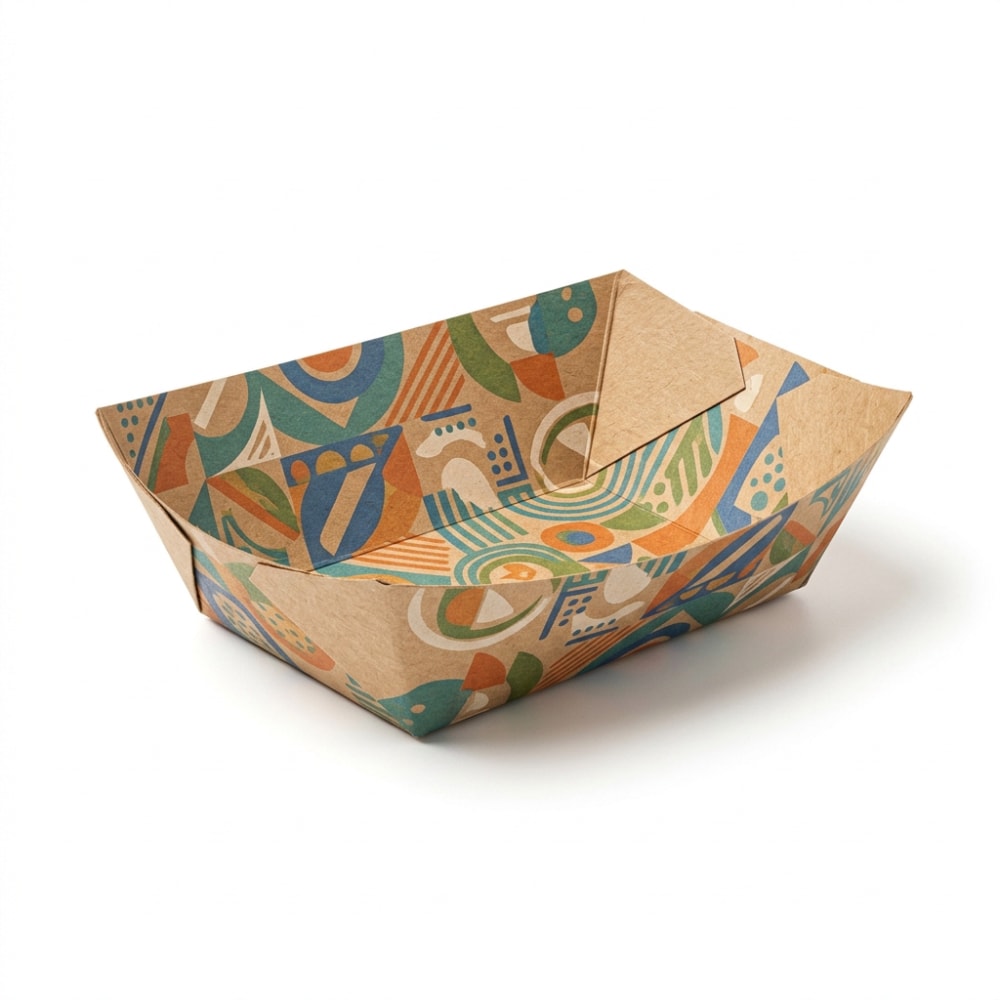
Canada Guide to Bulk Mobile Kitchen Paper Boat Tray Pricing
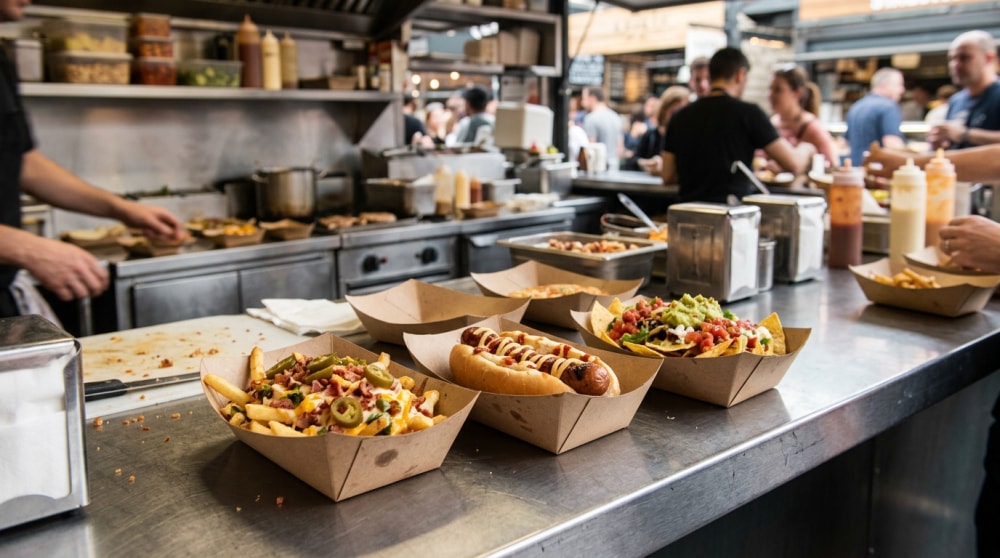
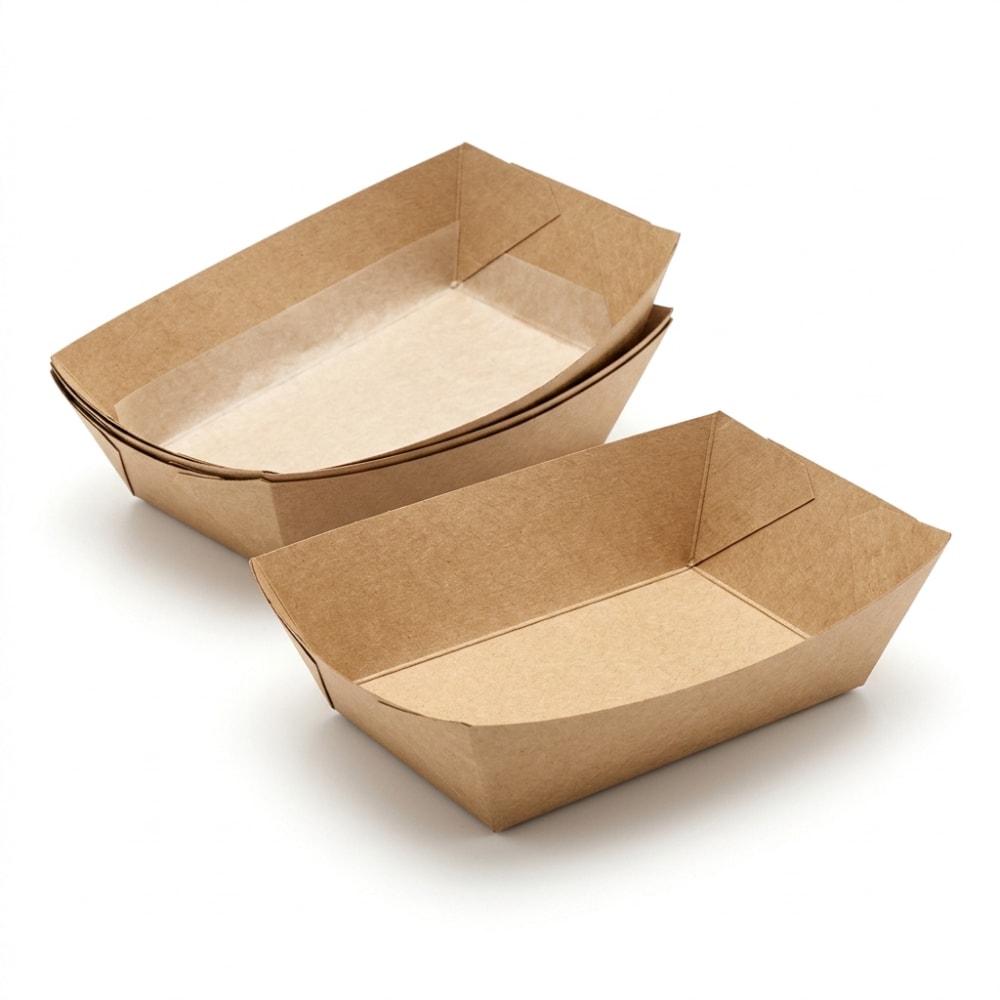
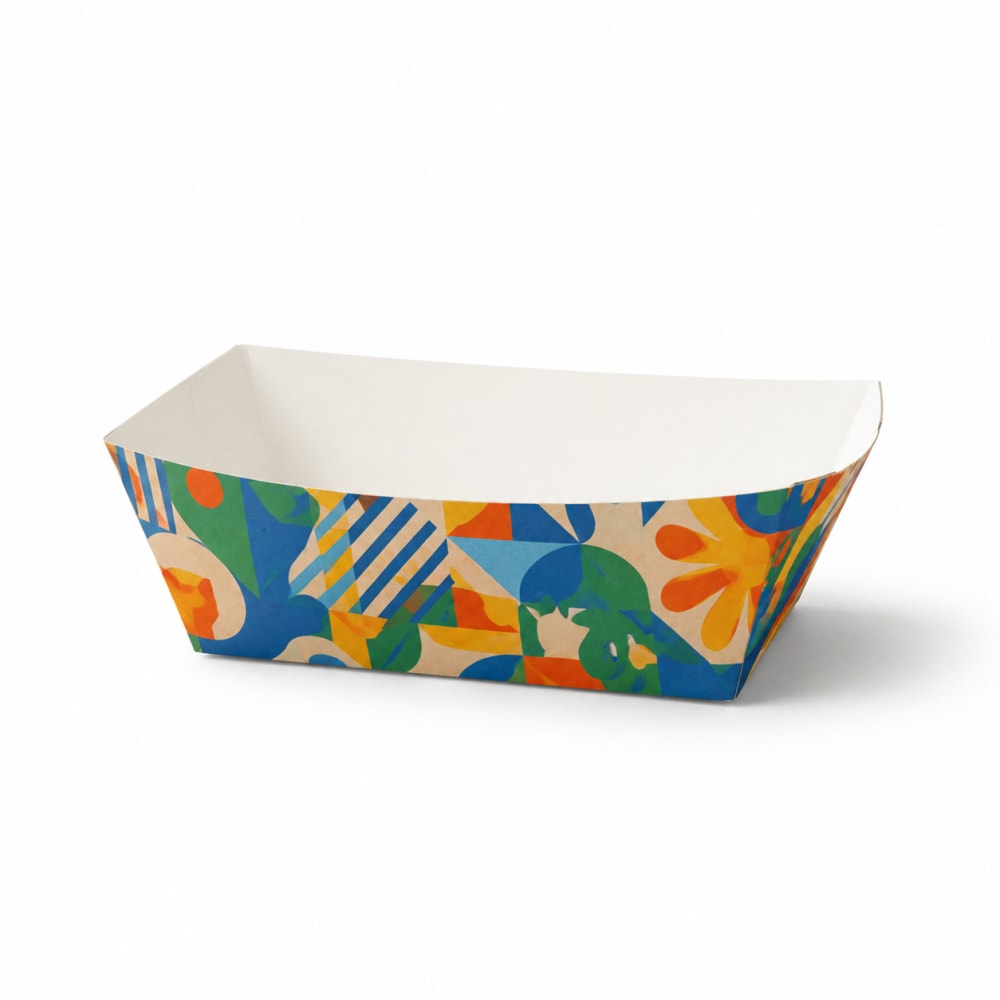
Bulk pricing for nested paper boat trays for mobile kitchens in Canada is shaped by the complete specification: paperboard grade, grease-resistant coating, tray dimensions, wall height, folding pattern, print coverage, minimum order quantity, packing method, and freight volume. A low quoted price may look attractive, but it can become expensive if the trays occupy too much space in a food truck, stick together during a lunch rush, soften under poutine gravy, or arrive without the documents required by a distributor or restaurant group.For Canadian food trucks, mobile caterers, stadium vendors, festival operators, and quick-service chains, the best purchasing decision is based on total delivered operating cost. This includes unit price, artwork setup, printing plates, tooling, samples, carton count, pallet density, inland freight, import charges, storage space, damage risk, and the labor cost of slow denesting during peak service.A practical buying process begins with a like-for-like specification, followed by physical sample testing using the foods actually served. Test fries, fried chicken, nachos, poutine, pulled pork, tacos, hot sandwiches, and oily snacks at realistic holding times. Confirm stack separation, grease resistance, rim strength, print quality, and carton dimensions before approving a mass-production order.Cost ElementWhat It CoversWhy It Matters for Canadian BuyersPaperboardVirgin kraft, white board, recycled-content paper, food-contact gradeDetermines rigidity, appearance, and food safety documentationBarrier coatingPE, water-based, grease-resistant, or compostable coating optionsAffects performance with fries, sauces, gravy, and oily foodsForming complexityFold lines, locking tabs, flared walls, reinforced baseInfluences machine time, yield, and nesting consistencyPrintingNumber of colours, coverage, Pantone matching, varnishCan materially increase setup and production costCarton densityUnits per sleeve, carton size, pallet configurationChanges warehouse and food-truck storage efficiencyFreight and importOcean freight, drayage, customs, domestic deliveryImportant for shipments through Vancouver, Montreal, Toronto, or HalifaxThe table shows why price comparisons should not rely on a single per-piece figure. A tray that costs slightly more but ships in a denser carton, separates quickly, and holds sauced food reliably may reduce overall cost for a busy mobile kitchen.Paper boat trays are open-top, fold-formed serving containers commonly used for fries, chicken tenders, hot dogs, sliders, tacos, churros, onion rings, poutine, barbecue portions, and street-food combinations. Their nesting design helps save space, but that advantage depends on accurate forming and controlled dimensions.In Canada, buyers often source from domestic distributors for urgent replenishment and from overseas manufacturers for customized, high-volume, or multi-item programs. Domestic stock products may offer shorter lead times, while direct factory purchasing can provide better control over board grade, coating, printing, packaging, and scheduled container loads.Indicative pricing changes with order size, specification, currency, and shipping conditions. Rather than treating any range as a fixed market price, procurement teams should request a quote that clearly separates ex-works or FOB cost, tooling, print setup, packing, freight assumptions, and destination delivery terms.Tray StyleTypical Mobile Kitchen UseRelative Material UsePrice SensitivitySmall fry boatFries, churros, snack sidesLowHighly sensitive to paper price and MOQMedium food boatChicken bites, nachos, tacosMediumDriven by board weight and coatingLarge poutine trayPoutine, loaded fries, barbecue sidesMedium to highNeeds stronger grease and moisture resistanceDeep flared boatBurgers with sides, loaded snacksHighMore complex forming and greater paper yield lossPrinted brand boatFranchise, event, promotional serviceVariesArtwork, colour count, and coverage are major factorsCompartment-style trayProtein-and-side combinationsHighMay require special tooling and careful nesting testsFood trucks operating around Toronto, Vancouver, Calgary, Montreal, Ottawa, Edmonton, and Halifax should consider seasonal demand. Summer festivals, hockey events, university campuses, tourist districts, and waterfront markets can create sharp peaks. The ability to open cartons, separate trays, and serve quickly has a direct operational value that should be included in the buying decision.var ctx = document.getElementById('lineChart').getContext('2d');var chart = new Chart(ctx, {type: 'line',data: {labels: ['2022', '2023', '2024', '2025', '2026', '2027'],datasets: [{label: 'Indexed Canadian demand for paper food boats',data: [100, 107, 115, 123, 132, 141],borderColor: 'rgb(34, 139, 94)',backgroundColor: 'rgba(34, 139, 94, 0.12)',fill: false,tension: 0.3}]},options: {responsive: true, maintainAspectRatio: false}});This market-growth illustration reflects the continued expansion of convenience food, mobile catering, branded takeaway service, and packaging replacement programs. It is useful for production planning, but each buyer should forecast according to regional seasonality, menu mix, and storage capacity.A quote is comparable only when every supplier is quoting the same product. “Kraft boat tray” is not a complete specification. Procurement teams should define inside length, inside width, bottom dimensions, side-wall height, board basis weight, coating type, colour, print area, nesting tolerance, units per sleeve, sleeves per carton, carton dimensions, pallet pattern, and target lead time.For example, a tray intended for dry fries may work with lighter paper and a basic grease-resistant treatment. A tray intended for poutine requires stronger wet strength, a more robust barrier, and an acceptance test based on gravy exposure. If one supplier quotes a lightweight fry boat and another quotes a poutine-ready tray, the lower price is not evidence of better value.Specification ItemWhat to StateSuggested Acceptance CheckInternal dimensionsLength, width, base, and wall height in millimetresMeasure 10 samples from a production batchPaper gradeKraft or white board; target basis weight and toleranceVerify supplier material declaration and sample stiffnessFood-contact barrierGrease, moisture, and heat requirementsHold actual menu food for the agreed service periodPrint standardColour count, Pantone references, coverage, placementApprove digital proof and printed pre-production proofNesting performanceRequired separation speed and no-locking expectationTimed test during a simulated peak-service rushCarton configurationUnits per carton, gross weight, outside dimensionsConfirm packing list and physical carton sampleDefect limitFlattened walls, print defects, weak seams, contaminationUse an agreed inspection standard before shipmentFor importers supplying multiple Canadian cities, a written approval record is especially important. It should contain the approved artwork, dieline, sample photos, physical sample reference, carton label, quality criteria, and revision number. This reduces the risk that a later replenishment differs from the first approved order.Material is usually the largest direct cost in a paper boat tray. The board grade and basis weight determine strength, print appearance, folding behavior, and finished feel. Heavier board can improve rigidity, but it also increases paper consumption, freight weight, and carton cost. The correct specification is not the heaviest board; it is the lowest material level that consistently performs for the intended food and service time.Yield matters because tray blanks are die-cut from printed sheets or rolls. A compact dieline may produce more usable blanks per sheet than a deep tray with wide flares and large locking tabs. Trim waste, make-ready sheets, colour changeovers, and rejected forming pieces all affect cost. Custom shapes can be valuable for branding, but a standard or near-standard footprint often gives a better balance of appearance and purchasing efficiency.Canadian buyers should also consider winter logistics. Containers arriving through the Port of Vancouver, Prince Rupert, Montreal, or Halifax may encounter seasonal delays, and long inland movements to Winnipeg, Saskatoon, Calgary, or the Greater Toronto Area can affect replenishment planning. Ordering a slightly denser carton or consolidating compatible paper packaging can reduce freight cube and simplify inventory management.var ctx = document.getElementById('barChart').getContext('2d');var chart = new Chart(ctx, {type: 'bar',data: {labels: ['Fries', 'Poutine', 'Chicken', 'Nachos', 'Tacos', 'Desserts'],datasets: [{label: 'Relative demand for food boat trays',data: [92, 74, 81, 66, 58, 49],backgroundColor: ['#d97706', '#b45309', '#ea580c', '#c2410c', '#f59e0b', '#fbbf24']}]},options: {responsive: true, maintainAspectRatio: false}});The demand mix above illustrates why food type must be included in a tray inquiry. Fries may need high volume and rapid denesting, while poutine and sauced chicken require better moisture and grease performance. Different menu categories justify different material choices.Custom printing turns a disposable tray into a visible brand asset. For food trucks and mobile caterers, a well-printed tray can reinforce menu identity, improve social-media visibility, and create a more professional presentation at corporate events or festivals. However, print cost is affected by the number of colours, coverage area, ink density, special finishes, registration tolerances, and order quantity.A simple one-colour logo on natural kraft board is usually more economical than full-coverage artwork. Full-surface dark printing can require more ink, tighter print control, and careful scuff-resistance evaluation. White ink on kraft, metallic effects, gradients, and fine text can also increase complexity. Buyers should provide vector artwork and Pantone references where colour consistency is important.Before mass production, approve the sequence of a digital proof, white sample, and printed pre-production sample. A digital proof confirms layout; a white sample verifies the structure and dimensions; a printed sample confirms the actual result on the selected paperboard. These stages are particularly important when a restaurant group has multiple regional operators or franchise locations.Printing ChoiceCost EffectBest FitControl PointNo printLowestGeneric catering and wholesale supplyConfirm board colour and surface cleanlinessOne-colour logoLow to moderateIndependent food trucks and cafésCheck logo sharpness and placementTwo-colour designModerateRegional chains and event vendorsApprove colour registrationFull-colour artworkModerate to highPromotional campaigns and branded launchesUse printed pre-production proofFull-coverage dark printHighPremium visual identity programsTest scuffing, ink rub, and food-contact suitabilitySpecial finishHighLimited-edition or premium conceptsConfirm practical benefit against added costThe table demonstrates that not every branding decision should be made on aesthetics alone. A two-colour design with more open kraft space may achieve strong recognition while using less ink and reducing print variation risk.Mobile kitchens have unusually limited storage space. A truck parked near downtown Toronto, Vancouver’s event venues, Old Montreal, Calgary Stampede grounds, or Ottawa festival locations may have only a narrow dry-storage area. Therefore, carton size is not a shipping detail; it is an operating requirement.Ask suppliers for carton external dimensions, gross weight, number of sleeves, units per sleeve, and pallets per container. Compare the number of usable trays per cubic metre, not only the number of trays per carton. A well-designed nested tray should maximize carton density while still allowing quick removal without crushing or locking.var ctx = document.getElementById('areaChart').getContext('2d');var chart = new Chart(ctx, {type: 'line',data: {labels: ['2022', '2023', '2024', '2025', '2026', '2027'],datasets: [{label: 'Share of buyers prioritizing compact, high-density packing',data: [42, 48, 55, 63, 69, 74],borderColor: 'rgb(37, 99, 235)',backgroundColor: 'rgba(37, 99, 235, 0.24)',fill: true,tension: 0.35}]},options: {responsive: true, maintainAspectRatio: false}});This trend illustrates a growing emphasis on compact inventory and lower freight cube. For food truck groups, improved pallet density can reduce warehouse handling, make scheduled replenishment easier, and free up valuable truck storage.A lower quote is not automatically a warning, but it should trigger structured questions. The supplier may be quoting thinner board, a different coating, fewer units per carton, lower print coverage, a smaller actual size, lower inspection standards, or an incomplete freight term. The quote may also exclude printing plates, samples, moulds, export cartons, palletization, customs documentation, or delivery to the final Canadian location.Warning signs include vague descriptions such as “kraft food tray” without dimensions or board weight; claims of compostability without identifying the relevant material and certification pathway; no carton dimensions; no sample approval process; or no stated tolerance for nesting and forming quality. Buyers should request clarification in writing before comparing offers.For a high-volume Canadian distributor, the cost of a failure can exceed the savings from a cheaper tray. A shipment that sticks together during a music festival, leaks under poutine, or has inconsistent branding can cause lost sales, staff frustration, and customer complaints. Build these risks into the purchasing decision.Lower-Quote IssuePossible Hidden DifferenceQuestion to AskMuch lower unit priceLighter board or smaller finished trayWhat are the exact dimensions and basis weight?Low custom-print priceReduced colour coverage or excluded setupAre plates, proofing, and colour matching included?Very dense packing claimRisk of crushed trays or poor denestingCan you provide carton and separation test samples?“Food safe” statement onlyNo destination-specific documentationWhich food-contact documents are available for Canada?Fast lead-time promiseMay exclude proof approval or shipping transitWhat is the timeline from artwork approval to arrival?Compostable claimCoating or disposal pathway may be unclearWhich material system and supporting documents apply?A disciplined quote review lets buyers compare suppliers fairly and identify risk early. Use one specification sheet for every bidder and request the same commercial terms. For imported packaging, state whether pricing is ex-works, FOB, CIF, DDP, or another agreed Incoterm, and identify the destination port or delivery location.Confirm finished dimensions, board grade, coating, and tray capacity. State food type, serving temperature, sauce exposure, and target hold time. Identify print colours, artwork version, Pantone references, and print coverage. Request white samples and printed pre-production samples where branding is involved. Compare units per carton, carton size, gross weight, and pallet configuration. Separate unit price from tooling, plates, samples, inspection, freight, duty, and local delivery. Define acceptable defects, sampling method, and traceability requirements. Confirm production lead time, transit time, buffer stock, and reorder schedule. For buyers managing several packaging categories, supplier consolidation can also be a cost-control strategy. Combining trays with paper cups, bowls, fry cups, burger boxes, or meal boxes can simplify artwork management, reduce vendor administration, and improve container utilization.var ctx = document.getElementById('comparisonChart').getContext('2d');var chart = new Chart(ctx, {type: 'bar',data: {labels: ['Unit Cost', 'Print Control', 'Custom Options', 'Carton Density', 'Documentation', 'Reorder Flexibility'],datasets: [{label: 'Generic spot purchase',data: [88, 52, 42, 55, 48, 50],backgroundColor: 'rgba(148, 163, 184, 0.8)'},{label: 'Approved factory program',data: [76, 86, 90, 84, 88, 82],backgroundColor: 'rgba(22, 163, 74, 0.8)'}]},options: {responsive: true, maintainAspectRatio: false}});This comparison highlights a common procurement reality: a generic spot purchase can appear cheaper on unit cost, while an approved factory program may deliver better control across printing, documentation, packing, and repeat ordering.Fude Packaging supports international B2B buyers with more than 20 years of paper-packaging experience and a self-owned 30,000 m² production base in Shandong. Automated production capacity of up to 120,000 units per day supports planned orders for food-service distributors, mobile kitchen groups, restaurant chains, and packaging wholesalers.Manufacturing control covers material selection, printing, die-cutting, forming, inspection, packing, and shipment preparation. This is particularly useful for Canadian buyers who want tray specifications to remain consistent across recurring orders. In-house production also enables coordinated sourcing across food boats, cups, bowls, boxes, trays, and multi-compartment meal packaging.Buyers can explore Fude’s paper food boat tray range when comparing standard and custom formats. For fries, snack sides, and mobile-service menus, matching trays with kraft paper fry cups can help create a more consistent package program.Technical capability matters when the tray must withstand real menu conditions rather than simply look acceptable when empty. Fude Packaging uses an in-house laboratory and production monitoring to support material evaluation, forming consistency, printing control, and functional checks. Documentation and material options can be aligned with food-contact, quality-management, and responsible sourcing requirements relevant to destination-market needs.For custom projects, the approval route can include a digital proof, white structural sample, and printed pre-production proof. This process gives Canadian procurement teams a practical way to verify tray size, structure, logo placement, colour appearance, stacking, and food performance before full production begins.Full-batch traceability supports clearer issue investigation if a quality concern occurs after delivery. Customers may also arrange independent third-party inspection before shipment. More information about development and export support is available through Fude’s custom packaging service.Service capability is as important as production capability for overseas purchasing. Fude Packaging works with buyers on food type, temperature, capacity, branding, order volume, destination requirements, deadline, and preferred transport mode before recommending a practical tray solution. Standard production timing can be approximately 7–15 days after approvals, depending on specification and volume.For Canada-bound programs, scheduled ordering can help buyers prepare for summer events, winter holiday markets, restaurant promotions, and regional demand peaks. Sea freight, air freight, full-container, less-than-container, and express sample shipment options can be coordinated with commercial invoices, packing lists, inspection documents, and other export paperwork.Fude Packaging has supplied international clients across multiple regions and supports a structured approach to quality claims, replacement discussions, and shipment follow-up. Learn more about the company’s factory background and global approach on the Fude Packaging company profile.In 2026, Canadian buyers are likely to place greater emphasis on practical sustainability, material transparency, efficient freight utilization, and verified food-service performance. Demand is moving beyond simple “eco-friendly” claims toward packaging decisions that consider coating type, fibre sourcing, local disposal realities, and the compatibility of the tray with actual menu items.Technology will continue to improve print precision, production monitoring, defect detection, and batch traceability. Digital artwork workflows and clearer approval records can reduce errors in multi-location programs. At the same time, automation in die-cutting, forming, and packing can support more consistent nesting performance and carton density.Policy and customer expectations will encourage buyers to request clearer information on fibre sourcing, food-contact suitability, compostability claims, and end-of-life options. Because municipal collection rules differ across Canada, from Metro Vancouver to the Greater Toronto Area and Montreal, packaging claims should be evaluated against the intended market and disposal channel rather than used as generic marketing language.The cost structure generally includes paperboard, coating, die-cutting and forming, printing, packing, quality control, samples, setup charges, freight, and storage. For custom orders, tooling and print plates may be one-time or amortized costs. Delivered cost should be calculated per usable tray rather than from the factory unit price alone.The largest price drivers are paper grade and basis weight, barrier coating, tray size, structural complexity, print coverage, number of colours, MOQ, and carton density. A larger tray with deeper walls and strong grease resistance uses more material and may generate more die-cut waste than a basic fry boat.Higher volumes spread setup, sampling, plate, and machine changeover costs across more units. However, ordering too much can create storage pressure or obsolete branded inventory. A sensible MOQ balances unit-price efficiency with forecast accuracy, warehouse capacity, and seasonal demand in the Canadian market.Common exclusions include printing plates, moulds, design revisions, sample courier charges, export cartons, palletization, inspection, freight, customs clearance, duty, taxes, inland delivery, and storage. Ask each supplier to list inclusions and exclusions clearly.Use a proven tray footprint, limit unnecessary print coverage, optimize carton count, consolidate compatible packaging products, forecast seasonal demand, and test the lightest board that meets real food-performance requirements. Avoid reducing coating or board strength without testing sauces, grease, heat, and service holding time.Not always. A small dry-food boat may be ideal for fries or churros, while loaded fries, poutine, barbecue, and sauced proteins may need a larger and more resistant tray. A two- or three-size system often provides better value than forcing every menu item into one format.Test dimensions, stack separation, crush resistance, grease resistance, moisture resistance, food holding time, print rub, carton durability, and actual staff handling. A timed service test is valuable: ask staff to dispense trays quickly during a simulated rush and record any nesting or forming problems. -

Global Market Guide to Tamper-Evident Food Boxes
Tamper-evident paper takeout boxes are credible only when their performance is verified with the actual menu, fill temperature, holding time, stack height, courier movement, and local delivery conditions. A box that looks secure in a dry sample room may fail when filled with hot curry, fried chicken, sauced noodles, oily rice, or cold salad dressing. For Global market buyers, the safest purchasing approach is to define measurable pass/fail limits before approving artwork, tooling, or mass production.A practical validation plan should cover leakage, grease staining, board softening, closure engagement, visible tamper evidence, dimensional change, print scuffing, and stack compression. Test samples should represent the intended material, coating, print coverage, size, closure design, and production method. Buyers should not approve a tamper-evident food box based solely on a flat blank, a dry-folding sample, or a supplier video.For example, a restaurant chain in Dubai delivering spicy rice dishes may need stronger grease resistance and high-temperature hold performance. A London delivery kitchen selling burgers and fries may prioritize closure security, ventilation, and stacking strength. A distributor shipping stock through Rotterdam, Los Angeles, Singapore, or Sydney should also assess carton cube, moisture protection, pallet stability, and container loading efficiency.Performance ItemRecommended Test ConditionTypical Pass LimitBuyer Evidence RequiredLeak resistanceFill with actual sauced food and hold uprightNo visible leakagePhotographs and test recordGrease barrierHot oily menu item held for specified timeNo unacceptable external stainInside and outside inspectionBoard stiffnessHot fill and stack loadingNo collapse or severe saggingStack test observationsTamper closureClose, open once, and inspect seal evidenceOpening must be visibly indicatedClosure samples retainedDimensional stabilityHeat, moisture, and delivery handlingBox remains usable and stackableMeasured dimensionsPrint durabilityRub and condensation exposureNo serious scuffing or transferPrint inspection reportThe table above should become part of the buyer’s written product specification. It turns broad terms such as “leakproof,” “strong,” and “tamper-proof” into inspectable acceptance standards. If a supplier cannot agree on the method, sample quantity, limit, and corrective action, the buyer carries unnecessary commercial risk.The food profile determines the correct tamper-evident paper box. Buyers should specify whether the application contains free liquid, heavy sauce, oil, steam, acid, salt, sugar, or chilled moisture. Food temperature at filling and expected consumption time are equally important. A 90°C noodle dish held for 45 minutes is a very different application from a 20°C pastry box transported for 15 minutes.For Global market distribution, specify the full food-use scenario in the request for quotation. Include portion weight, fill level, maximum food temperature, estimated hold time, product orientation, expected delivery distance, and whether the box will be packed inside an insulated bag. This information helps the manufacturer recommend board grade, barrier treatment, fold geometry, venting, and closure configuration.Common tamper-evident structures include tear-strip lids, locking tabs that visibly deform after opening, adhesive security labels, perforated pull tabs, integrated paper seals, and tuck-top boxes with breakable locking points. Integrated designs can reduce separate label costs, while label-based systems offer flexibility for multiple box sizes. The best option depends on menu moisture, brand experience, speed of packing, and local recycling requirements.Food ApplicationTypical Fill TemperatureKey RiskPreferred Box FeatureFried chicken and fries65–85°CSteam and greaseGrease barrier with controlled ventsNoodles with sauce75–95°CLeakage at foldsReinforced base and secure lidRice and curry meals70–90°COil migration and softeningHigh-barrier board and tight cornersBurgers and sides55–75°CClosure opening in transitBreak-tab or tear-strip closureSalads and cold bowls4–15°CCondensationMoisture-resistant barrierBakery and desserts20–45°CCrushing and print scuffingRigid board and clean locking tabThis matrix illustrates why one “universal” takeaway box often leads to complaints. Buyers handling multiple menus may reduce supply complexity by using a common visual platform with different board weights, barrier levels, or closure layouts for high-risk food categories. For kraft-oriented menu programs, review sustainable kraft paper takeout containers as a reference point for matching container format to practical food-service use.Global delivery, ghost kitchens, airport catering, convenience retail, and supermarket prepared-food programs continue to increase demand for packaging that protects both food integrity and customer trust. By 2026, buyers are likely to request more evidence-based packaging specifications, including traceable food-contact documentation, reduced-plastic barrier alternatives, digital batch records, and designs that make unauthorized opening obvious without creating excessive material waste.var ctxMarketGrowth = document.getElementById('marketGrowthChart').getContext('2d');new Chart(ctxMarketGrowth, { type: 'line', data: { labels: ['2022', '2023', '2024', '2025', '2026', '2027'], datasets: [{ label: 'Indexed Global Demand for Tamper-Evident Food Boxes', data: [100, 112, 126, 141, 158, 174], borderColor: 'rgb(31, 119, 180)', backgroundColor: 'rgba(31, 119, 180, 0.12)', fill: false, tension: 0.25 }] }, options: { responsive: false, maintainAspectRatio: false }});The line chart shows an illustrative indexed demand trend, not a universal market forecast. It reflects the practical direction of demand: more operators need reliable delivery packaging as takeaway orders, food safety expectations, and brand-protection requirements rise.Board choice is the foundation of box performance. Paperboard caliper, fiber composition, stiffness, surface treatment, moisture resistance, and folding behavior all affect whether a closure remains secure after hot filling. A heavier board does not automatically provide better service performance; the folding score, barrier construction, glue pattern, and box geometry must work together.Buyers should ask suppliers to identify the board basis weight, thickness range, food-contact status, barrier type, and expected tolerance. A water-based coating, PE coating, PLA coating, dispersion barrier, or other treatment may be appropriate depending on destination-market compliance needs and end-of-life objectives. Claims such as recyclable, compostable, plastic-free, or PFAS-free should be supported by documentation applicable to the target market rather than used as generic marketing language.For food imported or sold across Europe, North America, the Middle East, Oceania, and Southeast Asia, documentation should be matched to the applicable supply chain and intended use. Buyers may need food-contact declarations, material specifications, migration-related information where relevant, FSC chain-of-custody support, compostability evidence, or country-specific labeling guidance.Material OptionStrength ProfileBarrier ProfileSuitable UseNatural kraft boardGood tear resistanceModerate without coatingDry foods and light-grease mealsWhite paperboardStrong print appearanceDepends on treatmentBranded retail and restaurant boxesPE-coated boardGood wet strengthHigh moisture resistanceHot foods with saucePLA-coated boardGood when properly specifiedModerate to high moisture barrierCompostability-led programsWater-based barrier boardApplication dependentGood grease and moisture controlFiber-recycling focused projectsDouble-side barrier boardHigh resistance to wet conditionsHigh moisture protectionVery saucy or chilled-condensation foodsThe material table should guide early sampling, not replace testing. Food chemistry, fill heat, transit time, and coating quality can change the result. Ask for production-representative samples rather than a substitute board grade when evaluating a final project.A tamper-evident feature must do more than keep the lid closed. It should provide clear, visible evidence that the consumer can understand. A tear strip should tear consistently. A break tab should separate at the intended point. A security label should adhere through heat, steam, and refrigerated condensation. The box should remain reasonably easy for kitchen staff to close at operating speed.Closure testing should include repeated assembly, actual filling, transport vibration, stacking, and deliberate opening. Testers should assess whether the seal can be opened and reclosed without obvious evidence. If it can, it may be a closure but not an effective tamper-evident mechanism. Buyers should also confirm that opening does not create loose paper fragments near food.Leak testing should focus on seams, corners, base panels, and lid interfaces. A useful protocol is to fill the box to the intended operating level with actual food or a representative liquid/oil mixture, hold it at service temperature, inspect at intervals, and then simulate movement. Tilt tests should be specified carefully because a box designed for upright delivery may not be intended for inversion.For a new format, use at least 30 representative samples for initial functional approval, divided across food conditions and closure cycles. For a high-volume chain, buyers may increase the trial to 50 or 100 pieces to capture variability. Before mass production, retain approved benchmark samples, photographs, dielines, color targets, and test records. These documents provide a fair reference if later deliveries differ from the approved standard.var ctxIndustryDemand = document.getElementById('industryDemandChart').getContext('2d');new Chart(ctxIndustryDemand, { type: 'bar', data: { labels: ['Delivery Kitchens', 'QSR Chains', 'Supermarkets', 'Catering', 'Airports', 'Convenience Retail'], datasets: [{ label: 'Illustrative Demand Index for Tamper-Evident Boxes', data: [92, 88, 74, 61, 55, 69], backgroundColor: ['#1f77b4', '#ff7f0e', '#2ca02c', '#d62728', '#9467bd', '#8c564b'] }] }, options: { responsive: false, maintainAspectRatio: false }});The bar chart highlights where security packaging demand is commonly strongest. Delivery kitchens and quick-service restaurants need speed, stackability, and customer confidence, while supermarkets and convenience retailers often add shelf-life handling, labeling, and display requirements.Stacking and delivery tests reproduce the failures that matter most to food-service operators. A secure individual box can still fail when loaded beneath other meals, placed in a courier backpack, exposed to vehicle vibration, or transferred repeatedly between kitchen, rider, and customer. Testing should represent the highest practical stack, not only a single box on a table.A basic protocol can include filled boxes stacked three to six layers high, held for the expected delivery period, and subjected to controlled movement. Observe base deformation, lid disengagement, sidewall bowing, sauce migration, seal tearing, and print abrasion. In humid climates such as Singapore, Jakarta, Miami, or coastal Gulf cities, moisture exposure may be more severe than in a dry warehouse test.For international buyers, freight handling matters too. Flat-packed boxes may travel from Qingdao or Shanghai through major hubs including Hamburg, Jebel Ali, Rotterdam, Long Beach, and Melbourne before local conversion or distribution. Carton compression, container humidity, and warehouse storage can affect fold quality and board condition before the boxes ever reach a restaurant.Test StageSuggested ConditionPrimary ObservationFailure ExampleInitial assemblyFold and close 10 unitsSpeed and correct engagementTab does not lock consistentlyHot-fill holdFill and hold 30–60 minutesSoftening and leakageBase becomes wet or distortedStack compressionThree to six filled layersLoad-bearing capacityLid crushes into foodVibration simulationControlled courier-style movementClosure retentionSeal opens during motionTilt handlingModerate side tiltCorner and seam securitySauce escapes from side foldCold-condensation testChilled food or refrigerated holdingMoisture absorptionPaper fibers soften excessivelyThe test stages above should be tailored to the intended application. A sushi retailer may emphasize condensation and presentation, while a fried-food chain may focus on steam release, grease resistance, and crispness retention. Avoid copying a test standard from an unrelated menu category.var ctxTrendShift = document.getElementById('trendShiftChart').getContext('2d');new Chart(ctxTrendShift, { type: 'line', data: { labels: ['2022', '2023', '2024', '2025', '2026', '2027'], datasets: [{ label: 'Share of Buyers Prioritizing Integrated Tamper Evidence (%)', data: [28, 35, 43, 52, 61, 68], borderColor: 'rgb(44, 160, 44)', backgroundColor: 'rgba(44, 160, 44, 0.25)', fill: true, tension: 0.25 }] }, options: { responsive: false, maintainAspectRatio: false }});The area chart presents an illustrative shift toward integrated security features. By 2026, many buyers are expected to seek structures that reduce dependence on extra plastic labels while retaining a clear visual indication of opening.Minimum order quantity and unit price depend on box size, board material, barrier treatment, print colors, die-cutting complexity, closure design, packing configuration, and order repetition. A standard unprinted box normally has a lower MOQ than a fully customized tamper-evident format with proprietary tooling and multiple-color printing.Global market buyers should compare total landed cost rather than unit price alone. The lowest quoted box can create higher costs through weak performance, excessive carton volume, production delays, print inconsistency, damaged deliveries, or restaurant complaints. A suitable quotation should identify tooling charges, sample charges, material specification, tolerance, packaging details, lead time, payment terms, and shipping basis.For phased launches, a buyer can begin with functional white samples, then printed samples, then a controlled first production run. This approach protects budget while allowing the food-service team to verify filling speed, customer opening experience, and delivery performance before rolling out across many locations.Freight efficiency is a major purchasing factor for paper takeout boxes because the product ships as volume rather than high weight. A small difference in folded dimension or carton count can materially affect container utilization. Buyers importing to distribution centers near Toronto, Frankfurt, Johannesburg, Dubai, São Paulo, or Auckland should request carton dimensions, gross weight, net weight, pallet plan, and estimated loading quantity for 20-foot and 40-foot containers.Flat-packed boxes typically improve shipping efficiency, but the design must still assemble easily. Overly complex folding can increase labor cost in busy kitchens. The correct balance is a compact shipper pack, dependable protection in transit, and fast service-side assembly.Freight Planning FactorWhy It MattersBuyer ActionCommercial BenefitCarton dimensionsDetermines cubic utilizationRequest outer carton specificationMore accurate freight budgetUnits per cartonAffects picking and storageMatch quantity to outlet demandLower handling timeCarton strengthProtects flat-packed boxesConfirm corrugated gradeFewer damaged unitsPallet configurationSupports warehouse handlingRequest pallet drawingBetter receiving efficiencyContainer loadingControls shipment economicsCompare loading plansLower cost per usable boxMoisture protectionProtects paper during sea freightSpecify liners or desiccants if neededReduced humidity damageCarton cube should be reviewed alongside local warehouse capacity. A distributor with limited storage may accept a slightly higher unit cost for a box that ships and stores more efficiently, while a high-volume importer may prioritize full-container loading and long-term replenishment schedules.Supplier acceptance should be documented before the purchase order is released. The approved specification should include dimensions, board construction, color standard, closure behavior, tamper-evidence requirement, packing method, acceptable quality level, test protocol, inspection sampling, and response procedure for nonconforming goods.Incoming material checks, in-process controls, final inspection, and batch verification all contribute to consistency. Buyers can appoint independent inspection companies or third-party laboratories before shipment, especially for a first order, a high-value branded project, or products distributed in regulated markets. Inspection should not replace supplier controls; it should verify that agreed controls are working.When a batch fails, isolate the affected quantity, document the defect with lot numbers and photographs, determine the root cause, and agree on disposition before shipment whenever possible. Corrective actions may include rework, replacement, reinspection, credit, or production of a new batch. The exact remedy should be stated in the commercial agreement.var ctxSupplierComparison = document.getElementById('supplierComparisonChart').getContext('2d');new Chart(ctxSupplierComparison, { type: 'bar', data: { labels: ['Food Testing', 'Customization', 'Batch Control', 'Freight Support', 'Documentation', 'After-Sales'], datasets: [ { label: 'Integrated Manufacturing Partner', data: [92, 90, 91, 84, 89, 87], backgroundColor: 'rgb(75, 192, 192)' }, { label: 'Basic Trading Source', data: [62, 68, 58, 66, 61, 55], backgroundColor: 'rgb(153, 102, 255)' } ] }, options: { responsive: false, maintainAspectRatio: false }});This comparison chart is illustrative. It shows why buyers should evaluate the supplier’s overall operating capability rather than comparing unit price alone. Strong testing, production control, export coordination, and claim handling can reduce total procurement risk.Fude Packaging supports overseas B2B buyers seeking reliable paper food packaging from a single manufacturing partner. The company works with importers, distributors, restaurant groups, food brands, takeaway platforms, and retail food programs across international markets. Its practical focus is to match the container structure and material to the food application rather than simply offering a standard catalog item.Fude Packaging uses in-house testing capability to assess packaging performance in areas such as leakage resistance, strength, heat use, grease resistance, dimensional stability, and closure behavior. For tamper-evident projects, the team can support material and barrier recommendations, structural development, dieline review, prototype preparation, functional sampling, and print color matching. This helps buyers validate a box against the actual food application before mass production.With more than 20 years of industry experience and a self-owned 30,000 m² factory in Shandong, Fude Packaging manages material selection, printing, die-cutting, forming, inspection, packing, and shipment coordination. Automated lines can produce up to 120,000 units per day, subject to product design and production planning. In-house manufacturing supports more consistent control of custom sizes, branding, closure details, and repeat-order quality.Buyers sourcing complementary formats can also explore disposable kraft paper lunch boxes for meal applications, or browse the broader food container range when consolidating multiple packaging categories under one supplier.Fude Packaging provides OEM and ODM support from quotation through sampling, mass production, export packing, and after-sales coordination. The international team can discuss destination regulations, food type, capacity, customization, order volume, shipping preference, and delivery timing. Standard production orders can typically be completed in approximately 7–15 days, depending on product specification and volume. Sea freight, air freight, full-container, less-than-container, and express sample arrangements can be coordinated with export documents needed for international trade.Use the actual menu item whenever possible. Fill the box at the normal portion weight and temperature, close it using normal restaurant procedures, hold it for the expected delivery time, stack it, and simulate courier movement. Inspect for leaks, staining, softening, closure release, visible seal damage, and loss of shape. Retain approved samples and photographs as the benchmark.Use the highest normal filling temperature and the longest realistic holding period for the menu. For many hot takeaway foods, this may be 70–95°C and 30–60 minutes. For cold foods, test at the expected chilled temperature and include condensation exposure. The right condition is the buyer’s actual operating condition, not a generic supplier assumption.For initial development, 30 representative samples are a practical minimum. Use more samples for high-volume launches, multiple food types, or critical tamper-evident designs. A larger pilot of 50–100 units is advisable when the box will be used by many restaurant locations or distributed through several countries.For food with free sauce or liquid, the target should normally be no visible external leakage under the agreed upright handling condition. Minor internal moisture may be acceptable if the box remains safe, clean, secure, and functional. Softening is unacceptable when it causes collapse, loss of closure engagement, severe deformation, food contamination risk, or an unsatisfactory customer experience.The affected batch should be identified and held. The buyer and supplier should compare it against the approved specification, investigate the cause, and agree on corrective action. Depending on the issue, the solution may include rework, replacement, sorting, credit, reinspection, or a new production run. A clear quality agreement before ordering makes this process faster and more objective.For Global market buyers, the most dependable tamper-evident paper takeout box is not defined by appearance alone. It is defined by tested food performance, documented material and closure specifications, efficient freight planning, consistent batch control, and a supplier able to support the product throughout its commercial life cycle. -

U.S. OEM Paper Lunch Boxes Guide for 2026 Buyers
Restaurants, deli chains, food trucks, campus dining operators, and delivery-first brands across the United States are rethinking takeout packaging. The shift is not only about replacing plastic. It is about cost control, brand visibility, grease resistance, delivery performance, food safety, and sustainability claims that can stand up to buyer scrutiny. For many U.S. importers and food service operators, OEM paper lunch boxes have become a practical route to private-label growth because they allow tailored sizing, structural design, printing, and material selection without building an in-house packaging factory.In cities such as Los Angeles, Chicago, Houston, New York, Miami, Seattle, and Atlanta, demand for reliable paper food containers is being pushed by online ordering, grab-and-go retail, ghost kitchens, school meal programs, and premium casual dining. Buyers sourcing through ports such as Los Angeles/Long Beach, New York/New Jersey, Savannah, Houston, and Oakland often compare domestic distributors with overseas manufacturers on price, lead time, compliance support, and printing flexibility. The best sourcing decision usually depends on volume, launch speed, and how customized the lunch box must be.This guide explains where the U.S. opportunity is heading in 2026, how OEM differs from ODM, what design development looks like from sketch to production sample, how branding and printing should be planned, which quality and IP clauses matter in supply agreements, and what kind of MOQ and pricing logic buyers should expect. It also introduces the capabilities of Shandong Fude Packaging Co., Ltd. as a manufacturing partner for food-grade paper packaging programs serving the U.S. market.OEM paper lunch boxes are a strong opportunity in the United States because they help food businesses combine brand identity, operational convenience, and more sustainable packaging goals in one product. If your business needs a custom size, custom print, special compartments, window lids, grease resistance, PLA or PE lining options, or a unique folding structure, OEM is usually the right model. If you need a faster launch with less development work, ODM may be better.For most U.S. buyers, the smartest approach is to define five things first: food type, holding time, leakage risk, print requirements, and monthly order volume. A fried chicken chain in Texas, a salad concept in California, and a sushi takeaway in New York may all need “paper lunch boxes,” but the coating, venting, lock style, stacking strength, and branding priorities can be completely different.In practical terms, a successful OEM paper lunch box project should cover:Food-contact compliance for the U.S. market Correct paperboard weight and barrier structure Suitable size and shape for the menu Printing that stays sharp under production conditions Transit-safe packing for ocean shipment and inland distribution Clear MOQ, tooling, sample, and lead-time planning If you are evaluating suppliers, compare factory depth, not just unit price. A supplier with in-house flexo printing, die-cutting, forming, and lab testing can often reduce launch risk. Buyers who want a broader product view can review food packaging product categories here before narrowing specifications.Buyer GoalRecommended Box TypeCommon U.S. UseKey Material OptionMain Risk to CheckBest Sourcing ModelLow-cost takeoutStandard tuck-top kraft boxChinese takeout, deli mealsKraft + PE liningBottom leakageOEM or ODMPremium presentationWindow-lid lunch boxSalads, bakery mealsWhite board + PET windowWindow sealing strengthOEMMeal separation3-compartment boxSchool meals, meal prepHeavy board + PEWall collapse under heatOEMEco positioningCompostable boxOrganic cafes, campus foodPLA-coated paperHeat and shelf-life limitsOEMHigh delivery volumeStackable rectangular boxGhost kitchensGrease-resistant kraftCompression during shippingOEMFast launchExisting stock structure with custom logoRegional chainsStandard paper gradesLimited differentiationODMThe table above shows that the “right” OEM paper lunch box depends less on appearance alone and more on the operating model. Buyers should always match structure to menu, delivery distance, and brand tier.The U.S. market outlook for 2026 is favorable because several trends are converging. First, off-premise dining remains structurally important. Second, municipalities and large institutional buyers are putting more pressure on packaging sustainability. Third, private-label branding is becoming more valuable as restaurant competition increases on delivery apps. Fourth, paper-based formats are benefiting from a better public perception than expanded polystyrene and many rigid plastic alternatives.OEM paper lunch boxes are especially relevant in metropolitan regions with dense takeaway activity: Southern California, the Northeast corridor, the Dallas-Fort Worth area, South Florida, and the Chicago metro. Demand is also rising in secondary logistics hubs such as Phoenix, Charlotte, Nashville, Columbus, and Salt Lake City, where regional chains and wholesalers need scalable custom packaging without committing to huge inventories.Looking toward 2026, three future-facing shifts matter most:Technology: smarter converting, stronger barrier coatings, and more accurate color control for branded packaging. Policy: tighter local rules on single-use materials, clearer reporting expectations, and more buyer attention to certified sourcing. Sustainability: movement from generic “eco-friendly” claims toward measurable attributes such as FSC sourcing, compostability certification, reduced material weight, and optimized freight efficiency. U.S. buyers also increasingly want packaging that works across multiple channels. A lunch box may need to perform in-store, in delivery, in refrigerated display, or in a catering stack. That versatility makes OEM attractive because stock packaging often solves only one use case.var ctxLine = document.getElementById('lineChartMarket').getContext('2d');var lineChartMarket = new Chart(ctxLine, {type: 'line',data: {labels: ['2022', '2023', '2024', '2025', '2026', '2027'],datasets: [{label: 'Estimated U.S. demand index for OEM paper lunch boxes',data: [78, 86, 95, 106, 119, 131],borderColor: 'rgb(75, 192, 192)',backgroundColor: 'rgba(75, 192, 192, 0.15)',fill: false,tension: 0.3}]},options: {responsive: true,maintainAspectRatio: false}});The line chart indicates a realistic growth pattern based on continuing food delivery demand, regional packaging regulation, and stronger brand investment in private-label foodservice packaging. Even where growth in restaurant traffic softens, branded takeout packaging often remains a priority because it affects customer retention and social media visibility.2026 Growth DriverImpact on U.S. BuyersWhy It Matters for OEMLikely Priority RegionsRisk FactorSupplier Response NeededDelivery expansionHigher package usage per mealNeed better stackability and sealingNYC, LA, ChicagoSoggy food complaintsStructure testingBrand differentiationHigher print demandCustom logos and color systemsNationwide chainsColor mismatchPress proof controlSustainability pressureMaterial switchingCompostable and FSC optionsCalifornia, WashingtonGreenwashing concernsCertification supportMeal prep growthCompartment demandCustomized forms and dimensionsTexas, FloridaWarpage under heatMaterial engineeringRetail grab-and-goNeed for visibilityWindow-lid and display-ready boxesBoston, SeattleCondensation issuesVent designCost controlPressure on unit economicsFactory-direct optimizationNationwide importersFreight volatilityPacking efficiencyThis table shows why 2026 is not just about more volume. It is about more technical buying. The companies that win will be the ones selecting a manufacturer that can adapt structure, coating, and branding to specific food-service realities.For U.S. buyers, the difference between OEM and ODM is strategic. OEM means the product is manufactured to your requirements. You define the dimensions, paper grade, coating, print design, compartments, closure, and packaging details. ODM means the supplier already has an existing design or structure that you can brand or slightly modify.OEM is best for restaurant groups, fast-growing chains, distributors building private-label lines, and premium operators with specific menu needs. ODM is useful for importers who need speed, lower development cost, and proven structures. Neither model is inherently better; the right choice depends on timing and differentiation goals.FactorOEMODMBest for U.S. Buyer TypeTypical AdvantageMain Trade-OffProduct structureFully customizedExisting supplier designChains, brandsPrecise fitLonger setup timeArtwork and brandingFull controlModerate controlPrivate-label programsStrong differentiationPrepress complexityToolingOften neededUsually minimalHigh-volume buyersUnique structureHigher initial costMOQModerate to highLower to moderateEstablished operatorsBetter long-run economicsInventory planning requiredLaunch speedMediumFastUrgent rolloutsQuick market entryLess uniquenessIP sensitivityHigh importanceModerate importanceCustom conceptsBrand ownership clarityRequires stronger contractsFor example, a burrito chain in Phoenix with a rectangular menu profile may require an OEM structure designed to hold heat and resist oil migration without collapsing in a delivery bag. By contrast, a regional wholesaler near the Port of Savannah might prefer an ODM kraft lunch box that can be logo-printed and sold quickly to multiple independent restaurant customers.If you need help choosing between custom development and a faster existing format, it is useful to look at a supplier’s project workflow and packaging advisory support. Fude’s custom packaging service overview illustrates how design review, sample confirmation, and production can be aligned before order release.A well-run OEM program starts long before the first production run. The strongest projects move through a sequence: brief, technical review, dieline development, mockup, sample, performance adjustments, final artwork, pilot run, and full production. Skipping steps often leads to delays later, especially when the box must hold hot, oily, or moist foods.U.S. buyers should prepare a development brief that includes:Exact food application and portion size Temperature range and holding time Delivery or dine-in use Microwave requirements if applicable Target dimensions and stackability needs Print colors and logo placement Required certifications and market destination The “sketch to sample” stage is where technical capability matters. A supplier that handles die-cutting, forming, and print proofing internally can make corrections faster than one outsourcing each stage. Structural details such as corner locks, lid closure tension, and base reinforcement may look minor on paper but strongly affect filling speed and leakage resistance in real operations.Development StageBuyer Input NeededSupplier OutputCommon U.S. ConcernTypical TimingWhy It MattersConcept briefFood type, size, volumeFeasibility reviewFit with current menu1-2 daysPrevents wrong structure selectionDieline designDimension approvalTechnical drawingShelf and bag compatibility2-4 daysControls folding accuracyMaterial selectionBarrier expectationsPaper/coating proposalLeakage and grease holdout1-3 daysDetermines performancePlain samplePhysical reviewUnprinted sampleFill speed in kitchen3-7 daysChecks structure before printingPrinted sampleArtwork approvalColor and logo sampleBrand consistency4-8 daysReduces print surprisesFinal confirmationSigned approvalProduction releaseTiming to launch1-2 daysLocks specificationsThe table shows why sampling should not be treated as a formality. A plain structure sample can reveal whether a lunch box opens smoothly on a fast service line in Denver or closes securely after a courier picks it up in Manhattan. A printed sample then confirms branding impact and registration quality.In the technical capability area, Fude’s production system combines flexo printing, die-cutting, forming, lab inspection, and controlled warehousing. That matters because package development is only reliable when print, forming, and material tolerances are managed together rather than in isolated subcontracting steps.Consider a realistic U.S. launch case. A Midwest meal-prep brand headquartered near Chicago wants a 3-compartment OEM paper lunch box for refrigerated ready meals sold online and in regional grocery stores. The box needs clean black branding, moderate grease resistance, secure closure, and a white interior appearance for food presentation. The target launch is 12 weeks away.The project could move like this:Week 1: requirement meeting and initial drawings Week 2: dieline confirmation and material recommendation Week 3: plain sample review Week 4: revised sample and artwork adaptation Week 5: printed sample approval Week 6: purchase order and deposit Week 7-9: mass production Week 10: inspection and export packing Week 11-12: shipment release and logistics handoff Actual transit to the U.S. depends on routing and season. Buyers using West Coast entry through Los Angeles/Long Beach may see different inland timing than cargo routed to New York/New Jersey or Savannah. That is why packaging launch plans should always separate factory lead time from total landed timeline.var ctxArea = document.getElementById('areaChartTimeline').getContext('2d');var areaChartTimeline = new Chart(ctxArea, {type: 'line',data: {labels: ['Brief', 'Dieline', 'Plain Sample', 'Revision', 'Printed Sample', 'Production', 'Inspection', 'Shipment'],datasets: [{label: 'Project effort intensity',data: [20, 35, 50, 42, 58, 90, 65, 40],borderColor: 'rgb(54, 162, 235)',backgroundColor: 'rgba(54, 162, 235, 0.25)',fill: true,tension: 0.25}]},options: {responsive: true,maintainAspectRatio: false}});The area chart illustrates that the highest project intensity usually occurs during printed sample approval and production. That is where schedule slips can happen if the buyer changes artwork late or if the original technical brief was incomplete.A second common U.S. case involves a fast casual chain launching in California and Nevada with a kraft window-lid lunch box for premium salads. Here, branding, condensation management, and shelf appearance matter more than maximum heat resistance. This kind of program may move faster if the factory already has a suitable window structure and only minor OEM modifications are needed.Strong project management is a service capability, not just an admin function. Fude supports requirement review, artwork preparation, sampling, and delivery coordination in a streamlined process, which helps buyers avoid the common gap between approved design and manufacturable design.In the U.S. food service market, packaging has become a media surface. A lunch box may be carried through a downtown office tower in Boston, photographed for Instagram in Austin, or delivered to an apartment lobby in Brooklyn. Because of that, printing and branding deserve the same attention as structural design.The first decision is print strategy. Some buyers want simple one- or two-color kraft printing for a natural, cost-conscious look. Others need stronger shelf impact with fuller graphics on white board. The right choice depends on brand position, order volume, and the type of press the supplier uses. Flexo printing is efficient for many lunch box programs, but artwork should be prepared with production realities in mind, especially around fine lines, large solids, and registration tolerance.Important branding decisions include:Exterior and interior print placement Kraft versus bleached white substrate QR code, recycling note, or sourcing claims Window placement for food visibility Seasonal versions versus evergreen branding Multi-SKU color coding for operations Branding ElementBest Use CaseVisual EffectCost ImpactOperational BenefitKey RiskSingle-color logo on kraftValue-focused takeoutClean, naturalLowSimple replenishmentLower shelf standoutTwo-color flexo printRegional chainsBalanced brandingModerateSKU coding possibleArtwork simplification neededFull-panel brandingPremium launchesHigh visibilityHigherStronger customer recallPrint registration sensitivityWindow lidSalads, deli displayProduct visibilityModerateSupports merchandisingFogging or seal issuesInside-lid messagingDelivery brandsSurprise brand touchModeratePromotional useInk placement planningQR code and trace messagingTech-forward brandsFunctional brandingLowSupports repeat purchaseScanning readabilityThe explanation behind this table is simple: good branding is not only decorative. It can support faster kitchen picking, retail merchandising, campaign marketing, and customer loyalty. The most effective OEM paper lunch boxes align print strategy with actual business use.For U.S. operators selling through food halls, airports, and universities, color coding by menu family can reduce service mistakes. For grocery-adjacent deli programs, a window panel can increase conversion because customers see freshness immediately. Packaging that looks attractive but slows filling speed is rarely a long-term success, so printing decisions should always be reviewed alongside operations.Custom packaging projects often focus heavily on graphics and price, but the contract side is just as important. If you are developing OEM paper lunch boxes for the U.S. market, you should clearly define intellectual property ownership, sample approval standards, quality tolerances, claim procedures, and compliance responsibilities before mass production begins.At minimum, an OEM supply agreement should address:Ownership of custom artwork and tooling Confidentiality for new structures and brand concepts Approved material specifications and tolerances Food-contact compliance documentation Inspection standards and defect definitions Reorder consistency rules Dispute handling and replacement terms Quality is especially important when products will be distributed through wholesalers or across multiple states. A box that performs well in a short-distance pickup business in San Diego may fail in humid, long-route delivery conditions in Miami if the material choice is wrong. Quality agreements should therefore connect the packaging specification to the true application, not just a generic product name.Contract TopicWhat Buyer Should DefineWhy It MattersCommon U.S. IssueEvidence to RequestBest PracticeArtwork ownershipLogo and print rightsPrevents misuseUnauthorized repeat saleSigned IP clauseState exclusivity clearlyTooling ownershipWho owns custom diesProtects custom investmentTransfer disputesTool list and IDsInclude custody termsMaterial specPaper GSM and coatingLocks performanceUnannounced substitutionsSpec sheetApprove exact gradeQuality toleranceLeakage, print, dimensionsSets inspection benchmarkAmbiguous claim handlingQC reportDefine AQL or equivalentComplianceFood-contact standardsNeeded for U.S. useIncomplete documentsFDA and related recordsReview before productionClaim processTiming and remedySpeeds resolutionDelayed compensationWritten procedureUse photo and batch traceabilityThe table above is not just legal housekeeping. It directly affects inventory security and brand risk. If a restaurant chain launches a new lunch box across 40 locations, even a minor closure defect can become expensive very quickly.Fude supports quality assurance through food-grade manufacturing controls, lab inspection, and compliance-oriented production management. Buyers wanting to understand the company background and standards can visit the company introduction page as part of supplier due diligence.MOQ and cost are two of the first questions U.S. buyers ask, but they should be discussed with context. The final unit price of an OEM paper lunch box depends on size, paperboard grade, coating type, print complexity, structure, packaging method, order volume, and shipping route. A simple kraft box with one-color print may be dramatically different in cost from a white multi-compartment box with a window lid and custom die.MOQ is usually driven by production efficiency. Custom printing, die setup, and material procurement all influence the minimum economic run. Some buyers make the mistake of pushing MOQ too low and then discovering that unit costs rise sharply. In many cases, a moderate increase in volume improves not only price but also freight efficiency and stock planning.var ctxBar = document.getElementById('barChartDemand').getContext('2d');var barChartDemand = new Chart(ctxBar, {type: 'bar',data: {labels: ['Quick Service', 'Casual Dining', 'Meal Prep', 'Campus Food', 'Catering', 'Retail Deli'],datasets: [{label: 'Estimated U.S. demand score for custom lunch boxes',data: [88, 73, 81, 67, 59, 76],backgroundColor: 'rgb(255, 99, 132)'}]},options: {responsive: true,maintainAspectRatio: false}});The bar chart highlights where custom paper lunch box demand is strongest. Quick-service operators, meal-prep brands, and retail deli programs tend to create steady reorder patterns, which often makes OEM pricing more attractive over time.Cost DriverLow Impact ScenarioHigh Impact ScenarioEffect on Unit PriceHow to OptimizeBuyer NotePrint colors1 colorFull-panel designModerate increaseSimplify artworkKeep branding functionalStructure complexityStandard boxCompartments/windowHigh increaseUse existing base designCheck filling speed trade-offMaterial gradeStandard PE kraftHeavy board / PLA optionModerate to highMatch spec to real needDo not over-engineerMOQ sizeSmaller runLarger runHigher at low MOQCombine SKUs where possiblePlan warehouse spacePacking densityLess efficient cartonOptimized export cartonAffects landed costImprove carton loadingImportant for ocean freightLead time urgencyNormal productionRush productionPossible premiumForecast earlyAvoid peak season stressThe explanation here is that the cheapest quoted unit price is not always the lowest landed cost. A lunch box that nests poorly, damages easily, or requires more storage space can cost more after freight, warehousing, and handling are considered. U.S. buyers should calculate total delivered value, not just ex-factory price.Manufacturing capability is central in this area. Fude operates a 30,000 square meter modern factory with automated production systems, integrated converting processes, and capacity suited to both trial orders and larger wholesale programs. This kind of setup helps stabilize output, maintain consistency, and support flexible MOQ discussions when buyers have a clear forecast.Shandong Fude Packaging Co., Ltd. is positioned as a one-stop manufacturing partner for food-grade disposable paper packaging serving global catering and food service markets, including the United States. Founded in 2004, the company has more than two decades of experience in developing and exporting practical packaging for restaurants, chains, takeaway platforms, wholesalers, and distributors.From a technology capability perspective, Fude combines flexo printing, die-cutting, forming, and quality-lab support under a coordinated production system. That is especially valuable for OEM paper lunch box programs because customization often requires tight control over print accuracy, folding behavior, coating performance, and finished-box consistency. Buyers developing custom kraft or white lunch boxes, multi-compartment formats, and window-lid structures benefit when those functions are managed together rather than passed across multiple unrelated vendors.From a manufacturing capability perspective, the company operates a modern 30,000 square meter factory in Shandong with automated lines, food-grade process control, and climate-aware warehousing support. Its product scope includes lunch boxes, trays, bowls, cups, deli boxes, fries cups, noodle containers, and compartment meal packaging. This wider manufacturing base matters for U.S. buyers because many importers prefer to consolidate multiple takeaway packaging SKUs with one supplier to improve consistency and freight planning. Buyers interested in broader custom packaging options can explore the full product range while defining a lunch box program.From a service capability perspective, Fude provides packaging selection guidance, artwork preparation support, sampling, and delivery coordination through a simple project path: requirement review, design and sample confirmation, then production and shipment. This is useful for U.S. companies that do not have in-house packaging engineers. Typical lead times of about 7 to 15 days for many standard development situations help support trial orders and scalable reorders, although fully custom projects should still be planned with realistic sampling and transit time. Companies ready to discuss specifications can contact the team directly here.The company’s export orientation also matters to the U.S. market. Experience serving customers across North America, Europe, Southeast Asia, the Middle East, and Oceania supports stronger communication around compliance, product adaptation, and order execution. The overall value proposition is practical: safe food-contact packaging, customization depth, factory-direct efficiency, and a sustainability-centered approach that aligns with current U.S. buying priorities.var ctxCompare = document.getElementById('comparisonChartSuppliers').getContext('2d');var comparisonChartSuppliers = new Chart(ctxCompare, {type: 'bar',data: {labels: ['Customization', 'Factory Integration', 'Print Flexibility', 'Volume Scalability', 'Sampling Support', 'Compliance Readiness'],datasets: [{label: 'Direct manufacturer capability score',data: [91, 89, 86, 88, 84, 87],backgroundColor: 'rgb(153, 102, 255)'},{label: 'Typical trading-only source score',data: [68, 45, 62, 59, 57, 54],backgroundColor: 'rgb(201, 203, 207)'}]},options: {responsive: true,maintainAspectRatio: false}});This comparison chart explains why many U.S. buyers choose an integrated manufacturer for OEM packaging rather than a purely trading intermediary. The greatest gains usually come in customization control, quality coordination, and repeat-order consistency.1. What are OEM paper lunch boxes?They are paper-based food containers produced to a buyer’s custom requirements, including size, shape, coating, printing, material, compartments, and branding.2. Are OEM paper lunch boxes suitable for hot and greasy foods?Yes, if the right paperboard and barrier system are selected. Grease resistance, PE or PLA lining, and structural reinforcement should match the actual menu item and holding time.3. What is the difference between kraft and white paper lunch boxes?Kraft gives a natural and value-friendly look often preferred by takeout and eco-positioned brands. White board generally offers stronger print contrast and a more premium branded appearance.4. Can I add my restaurant logo and brand colors?Yes. OEM projects are specifically built for private-label branding. Logo placement, panel coverage, color strategy, and messaging can be customized according to production method and box structure.5. What certifications should U.S. buyers ask for?At a minimum, ask for food-contact compliance documentation relevant to the U.S. market. Depending on your sustainability goals, FSC, compostability-related documentation, and quality system records may also be important.6. What is a typical MOQ?MOQ varies by box size, print complexity, and whether a new die is needed. Standardized formats with simple printing often have lower MOQs than fully custom structures with multiple print colors.7. How long does custom sampling usually take?A plain sample can often be prepared relatively quickly, while printed samples take longer because artwork and press preparation must be checked carefully. Exact timing depends on project complexity.8. Is OEM always cheaper than buying from a U.S. distributor?Not always at low volume. But for repeat programs, private-label strategies, or specialized structures, OEM can provide better long-term value and better fit than off-the-shelf distribution stock.9. How do I reduce the risk of a poor first order?Use a clear technical brief, approve both plain and printed samples, define quality tolerances in writing, and make sure the supplier understands the real food application and logistics conditions.10. Which industries buy OEM paper lunch boxes in the United States?Quick-service restaurants, fast casual chains, deli counters, supermarkets, campus dining, hospitals, caterers, meal-prep brands, airline foodservice, and food delivery operators all buy custom paper lunch packaging.11. Are compostable options available?Yes, many programs can use compostable or more sustainability-oriented material options, but the right solution depends on heat, moisture, shelf-life needs, and local disposal realities in the target U.S. market.12. What should I send a supplier before asking for a quote?Send dimensions, food type, monthly volume, target market, desired print coverage, material preference, and any structural references or artwork files. The better the brief, the more accurate the quote.For U.S. buyers, the best OEM paper lunch box project is the one that balances branding, compliance, performance, and landed cost. If your team needs factory-direct support with custom development, sample review, and order planning, you can learn more through the service page or start a project discussion on the contact page. -

Canada Guide to Nested Paper Boat Trays for Food Trucks
The best nested paper boat trays for mobile kitchens depend on what is served, how long food stays in the tray, how much moisture or oil is present, how quickly orders move during peak service, and how much storage space is available in the truck. For Canadian food trucks, festival vendors, mobile caterers, stadium concession operators, and quick-service pop-ups, a tray that looks attractive but softens under hot gravy or loaded fries can create waste, slow service, and weaken customer perception.For dry handheld street food, a standard kraft or white paper boat tray is often the most efficient choice. For loaded fries, poutine, nachos, fried chicken bites, and dishes with sauces, buyers should prioritize stronger board grades, grease-resistant surfaces, deeper sidewalls, and a base that remains stable after 10 to 20 minutes of holding. For wraps, sliders, tacos, samosas, dumplings, and small snack portions, the right tray should support quick handoff without excessive material cost.Canadian buyers should compare total operating value rather than unit price alone. A lower-cost tray may require a liner, a secondary bag, more frequent restocking, or extra labour when staff need to double-stack trays. A better specification can reduce these hidden costs while supporting speed at lunch rushes in Toronto, Vancouver, Montréal, Calgary, Ottawa, Halifax, and seasonal food events across the country.Food Service SituationRecommended Tray ProfileTypical Size DirectionKey Performance NeedOperational PriorityHot dogs, sausage rolls, churrosShallow narrow paper boatSmall to mediumDry-food rigidityFast one-hand serviceTacos, dumplings, samosasMedium boat with raised sidesMediumShape retentionSpill reductionLoaded fries and poutineDeep grease-resistant boatMedium to largeOil and moisture controlStable carry-out useNachos and shareable snacksWide, deeper trayLargeBase strengthEasy topping distributionChicken tenders and wingsMedium-to-large kraft boatMedium to largeGrease resistanceComfortable eatingMini burgers and slidersWide low-profile trayMediumPresentation and gripBrand visibilityThis starting matrix is useful because it connects food characteristics with tray structure. Before ordering, measure the finished serving weight, include sauces and toppings, and test the tray at the actual serving temperature. A tray that works for plain fries may not be suitable for fries topped with cheese curds, gravy, pulled pork, or mayonnaise-based sauces.Street food menus require flexibility. A food truck in downtown Toronto may sell tacos at lunch, loaded fries at night, and snack boxes at a weekend festival. A single tray format can simplify procurement, but it should not compromise food quality. Many operators therefore choose two or three standard sizes: a small tray for snacks, a medium tray for handheld meals, and a larger or deeper tray for high-moisture portions.Nested paper boat trays save space because units stack tightly inside one another. This is especially important in mobile kitchens, where dry storage competes with beverage cups, napkins, ingredients, cleaning supplies, and small appliances. However, deep trays with strong sidewalls may occupy more cubic volume per case than lightweight shallow boats. The best choice balances nesting density with food protection.For street food, shallow trays work well when customers eat immediately. For loaded fries, deeper trays help contain toppings and reduce spills during walking service. For handheld meals, a medium boat with a broad base can support a sandwich, slider pair, bao bun, or wrap cut in half while leaving room for a side.Tray TypeBest Food MatchMoisture ToleranceStorage EfficiencyBranding PotentialSmall shallow kraft boatFries, pastries, snacksLow to mediumExcellentModerateMedium white paper boatTacos, sliders, fried snacksMediumExcellentHighDeep kraft food boatLoaded fries, poutine, nachosHighGoodHighWide serving trayChicken tenders, shared snacksMedium to highGoodHighGrease-resistant coated trayWings, fried chicken, sauced foodsHighGoodModerateCustom printed boat trayBranded food truck menusDepends on board specificationGoodVery highThe table shows why the phrase “best paper tray” is incomplete without an application. A thin tray can be excellent for fresh-cut fries served immediately. It may be a poor choice for poutine carried through a winter market in Ottawa or a summer festival in Vancouver, where holding time, condensation, and walking distance change the packaging requirement.Appearance matters, particularly for social-media-friendly food trucks and catering brands, but functional performance should be confirmed first. Buyers should begin with food temperature, tray dimensions, board strength, edge stiffness, grease resistance, nesting fit, and handling comfort. Once these criteria are stable, printing, kraft texture, white-board finish, logo position, and colour selection can be developed around the selected structure.A practical buying process starts with a sample trial. Test a standard serving at normal kitchen temperature, then repeat the test after 10, 20, and 30 minutes. Record whether the base bends, corners soften, grease shows through, or toppings migrate over the sidewall. Ask staff whether trays separate easily while wearing gloves and whether they can be loaded without slowing the service line.For Canadian food-service buyers importing packaging through Vancouver, Prince Rupert, Montréal, Halifax, or Toronto-area logistics hubs, specification consistency is also essential. The order document should state dimensions, paper weight or board requirement, surface treatment, print specification, packing quantity, acceptable tolerance, and approval sample reference.var ctx = document.getElementById('lineChart').getContext('2d');new Chart(ctx, {type: 'line',data: {labels: ['2022', '2023', '2024', '2025', '2026', '2027'],datasets: [{label: 'Indexed Canadian Mobile Food Packaging Demand',data: [100, 108, 117, 126, 136, 148],borderColor: 'rgb(44, 122, 90)',backgroundColor: 'rgba(44, 122, 90, 0.12)',borderWidth: 3,fill: false,tension: 0.3}]},options: {responsive: true,maintainAspectRatio: false,scales: { y: { beginAtZero: false, title: { display: true, text: 'Demand Index' } } }}});This indexed chart illustrates a realistic planning pattern rather than a sales forecast. Mobile food service continues to favour compact, single-use serving formats because vendors need rapid service, visible branding, and simple portion control. Growth is strongest for durable tray formats that support fried foods, shareable snacks, and sauces without adding bulky secondary packaging.Heat, oil, and moisture are the main performance risks for paper food boats. High heat can soften fibres when food is held for an extended period. Oil can migrate into unprotected paper and create translucent spots. Steam from fries, fried chicken, or covered food can produce condensation, especially during delivery or cold-weather service. These factors are amplified when portions are heavy or include wet toppings.For loaded fries and poutine, use a tray with a strong base and suitable grease resistance. The tray must handle fries, cheese, gravy, toppings, and utensils without deforming. For fried snacks, oil resistance matters more than liquid resistance. For tacos and dumplings, sidewall height and seam integrity may be more important than board thickness.Buyers should avoid assuming that all kraft trays perform identically. Kraft describes appearance and substrate style, not a complete performance standard. Ask whether the surface is untreated, grease-resistant, PE-coated, water-based coated, or designed for a specific food-contact application. Documentation should suit the destination market and the intended food-contact conditions.Test CriterionSuggested Trial MethodPass IndicatorFailure IndicatorWhy It MattersHot-food stabilityFill with serving-temperature food for 20 minutesBase remains levelTray sags or twistsProtects customer handlingGrease resistanceHold fried food for 15 minutesNo visible oil strike-throughOil marks on outer surfaceMaintains hygiene and appearanceMoisture controlTest sauce or gravy toppingSidewalls remain firmSoft corners or leakageReduces spillsPortion loadWeigh normal and maximum servingComfortable one-hand carryBase flexes excessivelySupports consistent portionsStack separationSeparate trays during rush serviceOne tray releases cleanlyMultiple trays stick togetherImproves labour speedPrint durabilityRub and moisture exposure checkColour remains clearScuffing or visible transferProtects brand presentationA documented trial reduces subjective decisions. Each test should identify the food item, serving temperature, fill weight, holding time, staff comments, and visual result. This creates a repeatable approval record when the buyer reorders, expands a food truck fleet, or adds locations in different Canadian provinces.The lowest per-unit price is not always the lowest operating cost. A lightweight tray may look economical until the operator adds parchment liners, double trays, extra napkins, or a bag to control grease and instability. It can also cost more in labour if staff need to carefully handle weak trays or replace damaged servings.To compare options fairly, calculate cost per served meal. Include tray cost, liners, bags, napkins added because of tray performance, product loss, storage handling, and labour time. For a high-volume food truck serving 300 to 800 orders on an event day, a few seconds saved per order can have more value than a small difference in tray price.Secondary packaging should be minimized only when food protection remains acceptable. For example, a deep grease-resistant paper boat may eliminate the need for a liner for certain loaded-fries applications. That can improve service speed and reduce material handling, even if the tray itself costs more.var ctx = document.getElementById('barChart').getContext('2d');new Chart(ctx, {type: 'bar',data: {labels: ['Loaded Fries', 'Tacos', 'Fried Chicken', 'Poutine', 'Sliders', 'Festival Snacks'],datasets: [{label: 'Relative Demand for Durable Paper Boats',data: [88, 64, 81, 92, 58, 73],backgroundColor: ['#c68b35', '#4b7f52', '#b4513b', '#7a5b9c', '#337a9e', '#d18a37']}]},options: {responsive: true,maintainAspectRatio: false,scales: { y: { beginAtZero: true, max: 100, title: { display: true, text: 'Demand Score' } } }}});The comparison highlights why moisture-heavy menu items deserve more attention during purchasing. Poutine and loaded fries generally need more robust tray specifications than tacos or sliders, although each food truck should validate based on its own recipe, portion weight, and holding time.Storage density matters in every food truck, but it is particularly important for operators serving busy downtown zones, fairs, ski resorts, waterfront events, university campuses, and seasonal markets. Nested trays can reduce the footprint of serving packaging, but buyers should compare case dimensions, stack height, carton strength, and the number of units available per shelf or storage bin.Service speed depends on more than how quickly a tray can be picked up. Staff should be able to separate one unit at a time, fill it without crushing the walls, add toppings, and hand it to a customer safely. Excessively deep trays can slow topping placement. Very shallow trays can increase spill risk. The ideal profile fits the menu assembly process.For mobile caterers, consider how trays travel between a commissary kitchen and event site. Cartons should protect nested products from crushing, moisture, and contamination. Import buyers should also specify master-carton dimensions that make sense for palletization and container loading.Operational FactorShallow TrayMedium TrayDeep TrayBest UseNested storage densityVery highHighModerateSmall trucks with limited shelvingSpeed of fillingVery fastFastModerateHigh-volume dry foodsSauce containmentLowMediumHighLoaded and topped foodsHand-carry stabilityMediumHighHighWalking customersBrand print areaLimitedGoodGoodVisible logo placementMaterial use per servingLowModerateHigherMatch to portion needThe right storage choice should be measured in operational days, not just carton count. Ask: how many days of trays can fit inside the vehicle without blocking ingredients or safety equipment? A tray with slightly lower nesting density may be worthwhile if it prevents stock-outs during a long event weekend.Paper boats provide an accessible branding surface for food trucks that want a polished customer experience without investing in rigid premium packaging. A logo, short message, QR code, event hashtag, or simple pattern can strengthen brand recall when customers photograph food or carry it through an event.White paper trays often provide stronger colour contrast, while kraft trays communicate a natural, casual, and street-food-oriented presentation. The best choice depends on the visual identity, ink coverage, and sustainability story. Designs should remain readable even when the tray is partially covered by food, sauce cups, or napkins.For custom printing, request a digital proof, white sample, and printed pre-production proof where appropriate. Confirm logo direction, Pantone or approved colour targets, print position, barcode requirements, and acceptable variation. Avoid placing essential text directly on folds, corners, or high-contact areas.var ctx = document.getElementById('areaChart').getContext('2d');new Chart(ctx, {type: 'line',data: {labels: ['2022', '2023', '2024', '2025', '2026', '2027'],datasets: [{label: 'Share of Buyers Prioritizing Sustainable Material Options',data: [38, 45, 53, 61, 68, 74],borderColor: 'rgb(40, 130, 110)',backgroundColor: 'rgba(40, 130, 110, 0.25)',fill: true,borderWidth: 3,tension: 0.35}]},options: {responsive: true,maintainAspectRatio: false,scales: { y: { beginAtZero: true, max: 100, title: { display: true, text: 'Buyer Priority (%)' } } }}});The trend shift reflects greater buyer attention to material transparency, fibre sourcing, coating choices, waste-stream compatibility, and practical sustainability claims. In 2026 and beyond, Canadian food-service buyers are likely to request clearer documentation, recyclable or compostable options where locally appropriate, reduced-plastic formats, and designs that use only the material required for the food application.A weighted decision matrix makes purchasing more consistent across multiple menu items and locations. Start by assigning scores from one to five for each tray candidate. Then give the greatest weight to the factors that affect the menu most. A loaded-fries operator may assign a high weight to grease resistance and load-bearing strength. A dessert truck may prioritize presentation, nesting density, and print quality.The example below is designed for a Canadian mobile kitchen selling loaded fries, poutine, tacos, and fried snacks. It should be adjusted after real product trials. Scores should come from measured samples rather than assumptions based on photographs or a supplier quotation.Evaluation FactorWeightShallow Standard BoatMedium Printed BoatDeep Grease-Resistant BoatHeat and moisture performance25%235Portion stability20%245Storage density15%543Service speed15%544Brand presentation10%254Total operating cost15%445The matrix does not mean every food truck should choose the deepest tray. Instead, it makes trade-offs visible. A simple snack operation may score the shallow tray highest after applying its own weights. A poutine specialist will usually find that the deeper, more protective tray produces better overall results.var ctx = document.getElementById('comparisonChart').getContext('2d');new Chart(ctx, {type: 'bar',data: {labels: ['Heat Resistance', 'Grease Control', 'Storage Density', 'Service Speed', 'Print Area', 'Total Value'],datasets: [{label: 'Standard Shallow Boat',data: [52, 50, 94, 91, 58, 70],backgroundColor: 'rgba(190, 135, 55, 0.75)'},{label: 'Deep Grease-Resistant Boat',data: [91, 94, 70, 82, 83, 88],backgroundColor: 'rgba(50, 110, 84, 0.75)'}]},options: {responsive: true,maintainAspectRatio: false,scales: { y: { beginAtZero: true, max: 100, title: { display: true, text: 'Performance Score' } } }}});This comparison demonstrates the typical trade-off between compactness and protection. Product selection should be based on the food item, not a generic ranking. Maintaining two tray formats can often be more efficient than forcing all menu items into one compromise size.Fude Packaging supports overseas B2B buyers with paper food packaging manufactured in a self-owned 30,000 m² production base. With more than 20 years of packaging experience and automated capacity reaching up to 120,000 units per day, the company can support scheduled orders for distributors, food-service groups, restaurant brands, and mobile catering operators.From a technological capability perspective, Fude Packaging combines material selection, printing, die-cutting, forming, inspection, and laboratory testing in one controlled manufacturing process. This helps buyers evaluate key tray requirements including dimensions, board performance, grease resistance, heat suitability, print accuracy, and packing consistency. Food-contact documentation and quality-management support can be matched to project requirements, including FDA-related requirements, FSC materials, ISO 9001 systems, LFGB documentation, and other applicable specifications.From a manufacturing capability perspective, in-house production supports stable specifications across food trays, cups, bowls, boxes, and multi-compartment meal packaging. Buyers who need several categories can reduce supplier fragmentation and create a more consistent brand presentation. Explore the available paper boat tray range for formats suited to snacks, fries, and handheld foods, or review kraft fries cups when a more upright portion format is appropriate.From a service capability perspective, Fude Packaging offers OEM and ODM support, artwork review, custom dimensions, Pantone matching, digital proofs, white samples, printed samples, and pre-production approvals. Canadian importers can also discuss export packing, order scheduling, sample shipments, inspection documentation, and logistics planning for deliveries routed through major Canadian ports and inland distribution networks. Learn more about available custom packaging services and the company’s manufacturing background.Use shallow or medium nested paper boats for dry snacks and handheld meals, medium raised-side trays for tacos and fried snacks, and deep grease-resistant boats for loaded fries, poutine, nachos, and sauced foods. Confirm the decision with a filled-product test at actual service temperature.The lowest-cost choice is the tray with the best total served-meal cost. Include the tray, liners, bags, napkins, product loss, labour time, storage use, and customer complaints. A stronger tray can cost less overall if it removes the need for secondary packaging.Shallow trays generally offer the highest nesting density and can reduce storage space. Deep trays use more volume but can protect high-moisture foods better. Compare units per carton, carton dimensions, pallet pattern, container utilization, and the number of operating days that can be stored inside each vehicle.Medium and deep paper boats usually provide more visible print area, while white paper can improve colour contrast. Kraft trays support a natural visual style. Use proofs and printed samples to check colour, logo placement, readability, and durability before mass production.Test at least two or three tray options using the same food, portion weight, toppings, temperature, and holding time. Record base stiffness, grease strike-through, sidewall condition, spill resistance, staff handling time, and customer feedback. Keep the approved sample and written acceptance criteria for future repeat orders.Key 2026 trends include fibre-based packaging innovation, reduced-plastic material strategies, clearer food-contact documentation, digital proofing, more precise colour management, smaller production runs for seasonal promotions, and packaging designed to support both dine-in handoff and short-distance delivery. Buyers should also monitor provincial and municipal waste-management rules because accepted recycling and composting systems can differ by location.For a reliable purchase decision, define the menu application first, shortlist tray structures second, test samples under real conditions third, and approve the final specification with measurable criteria. This approach helps Canadian mobile kitchens protect food quality, improve service speed, control total costs, and create a stronger branded customer experience. -
Global Market Guide to Freezer-Safe Paper Containers
Freezer-safe paper food containers should never be approved only because a supplier describes them as “freezer safe.” For Global market buyers, credibility comes from testing the exact food recipe, filling temperature, frozen storage period, stacking pattern, transportation route, and final-use handling. A container that performs well with dry frozen snacks may fail with oily pasta sauce, high-salt soup, marinated meat, dairy desserts, or meals exposed to thaw-and-refreeze cycles.Before ordering, define measurable pass/fail criteria for leakage, panel softening, lid security, grease migration, staining, odor transfer, print damage, dimensional change, and stack compression. The specification should cover the food-contact board, barrier coating, seam construction, lid material, carton packing, and the intended frozen distribution environment.For example, a buyer exporting frozen meal kits through Rotterdam, Los Angeles, Dubai, Singapore, or Sydney may need containers to survive warehouse storage at -18°C, temporary loading exposure, pallet stacking, ocean freight vibration, retail freezers, and consumer thawing. A practical approval process combines laboratory checks with real product trials.Test actual food formulations rather than plain water alone. Record filling temperature, net weight, headspace, and closure method. Hold samples at the normal storage temperature and worst-case duration. Include freeze-thaw cycles where last-mile delivery conditions can vary. Inspect containers after stacking, vibration, carton compression, and thawing. Approve a signed golden sample and written acceptance specification before mass production. The food itself determines the performance requirement. Frozen rice dishes, ready meals, ice cream toppings, seafood, curry, dumplings, pet food, bakery fillings, and prepared vegetables all create different stress conditions. Fat content can weaken some barriers, salt can accelerate material stress, and acidic sauces may reveal weak points in a coating or folded corner.Buyers should provide suppliers with a food specification sheet that includes ingredients, pH range where available, oil content, salt level, expected fill weight, filling temperature, storage temperature, target shelf life, reheating method, and delivery route. This information allows the packaging manufacturer to recommend suitable board weight, barrier treatment, structure, and lid configuration.Food ApplicationTypical Fill ConditionMain RiskRecommended Test FocusSuggested StructureFrozen pasta with sauceWarm fill, then frozenGrease and seam leakage24-hour leakage and freeze-thawHeavy board with grease-resistant barrierRice and protein mealWarm or ambient fillBottom softeningStack compression at -18°CRigid folded tray with secure lidSoup or broth concentrateAmbient fillSidewall seepageInverted hold and vibration testHigh-barrier paper bowl or tubFrozen seafoodCold fillOdor and moisture exposureExtended storage and odor reviewBarrier-coated board with tight closureIce cream dessert toppingCold fillCondensation and lid looseningThaw condensation testingPaper cup with fitted lidFrozen bakery fillingsAmbient fillOil staining and deformationGrease stain inspectionKraft food box with internal barrierThis table is a starting point, not a universal rule. A chicken curry meal packed at 400 g behaves differently from a 750 g family-size meal, even when both use similar sauces. Higher food weight increases base-panel load, while more headspace can increase movement during transport. Buyers should identify the worst commercial scenario rather than testing only the easiest version.Frozen prepared food demand continues to expand in urban retail, convenience stores, airline catering, institutional foodservice, and direct-to-consumer meal programs. Growth is supported by busy households, expanded cold-chain infrastructure, online grocery ordering, and demand for portion-controlled meals. In Global market trade, major logistics hubs such as Shanghai, Qingdao, Hamburg, Rotterdam, Jebel Ali, Singapore, Long Beach, and Melbourne create strong demand for export-ready food packaging that can tolerate long handling cycles.var ctx1 = document.getElementById('marketGrowthChart').getContext('2d');new Chart(ctx1, {type: 'line',data: {labels: ['2022', '2023', '2024', '2025', '2026', '2027'],datasets: [{label: 'Indexed Global Demand for Frozen Food Paper Packaging',data: [100, 107, 115, 124, 134, 145],borderColor: 'rgb(44, 120, 180)',backgroundColor: 'rgba(44, 120, 180, 0.12)',borderWidth: 3,fill: false,tension: 0.25}]},options: {responsive: true, maintainAspectRatio: false}});The line chart shows an indexed planning illustration of demand growth rather than a guarantee of market volume. Procurement teams can use this kind of forecast to reserve production capacity, schedule artwork approvals earlier, and maintain safety stock for seasonal frozen-food promotions.Paper containers for frozen food normally combine paperboard with a functional barrier. The paperboard provides stiffness, printability, folding strength, and shape retention. The barrier limits moisture penetration, grease absorption, and food contact exposure. The best combination depends on the food, destination-market requirements, recovery or compostability objective, and expected storage conditions.Key board variables include basis weight, fiber quality, moisture content, stiffness, bursting strength, fold endurance, and consistency from lot to lot. Lightweight board may reduce unit price but can soften at the base or corners after freezing and thawing. Overly rigid board can crack at folds if forming settings are not optimized. The coating or barrier must also remain stable at low temperatures without developing pinholes, cracking, or poor adhesion.Material OptionFreezer PerformanceGrease ResistancePrint AppearanceEnd-of-Life ConsiderationPE-coated paperboardStrong moisture resistanceGoodHigh-quality printingRecycling route depends on local facilitiesPLA-coated paperboardSuitable when correctly specifiedModerate to goodGoodCommercial composting conditions may be requiredWater-based dispersion barrierApplication dependentModerate to goodGoodPotentially improved fiber recovery profileFluorine-free grease barrierGood for selected foodsGoodGoodVerify destination-market complianceUncoated kraft boardLimited for wet frozen foodsLimitedNatural appearanceSimple paper stream where uncontaminatedMulti-layer barrier boardHigh protection levelHighVery goodAssess material separation and local rulesThe table helps buyers compare broad material directions. It does not replace migration testing, food-contact documentation, or product-specific trials. For regulated markets, buyers should request relevant declarations and verify applicable requirements for the country where the packaged food will be sold. Material selection should also reflect whether the packaging is only stored frozen, heated after thawing, or used in microwave reheating where permitted.By 2026, buyers are expected to place greater emphasis on fluorine-free grease resistance, reduced plastic content, fiber recovery compatibility, traceable paper sourcing, and packaging designs that use less material without sacrificing frozen-food performance. Brands are also moving toward simplified structures, clear disposal communication, and supplier documentation that supports environmental claims.Technology trends include better water-based barriers, improved fiber molding and paper-forming processes, digital color control, automated visual inspection, and data-backed production traceability. Policy trends vary by country, but many buyers are preparing for tighter food-contact chemical controls, extended producer responsibility schemes, packaging reporting obligations, and closer scrutiny of compostability claims.var ctx2 = document.getElementById('trendShiftChart').getContext('2d');new Chart(ctx2, {type: 'line',data: {labels: ['2022', '2023', '2024', '2025', '2026', '2027'],datasets: [{label: 'Buyer Preference for Fiber-Forward Barrier Solutions (%)',data: [28, 35, 43, 52, 61, 68],borderColor: 'rgb(46, 135, 87)',backgroundColor: 'rgba(46, 135, 87, 0.28)',borderWidth: 3,fill: true,tension: 0.3}]},options: {responsive: true, maintainAspectRatio: false}});The area chart illustrates the expected shift toward fiber-forward packaging specifications. It should be interpreted alongside local recycling systems, food performance needs, and total cost of ownership. The most sustainable option is not necessarily the thinnest or least expensive material if it causes product spoilage, leakage, or increased transport waste.Leak resistance depends on more than the wall material. The bottom seam, side seam, corner folds, lid overlap, locking tabs, rim geometry, and filling line all influence performance. Containers designed for solid frozen foods may not be suitable for free-flowing sauces. Similarly, a lid that fits tightly at room temperature can become difficult to close or may lose engagement after low-temperature exposure.A robust test plan should simulate production conditions. Fill containers with the actual food or a representative product of similar fat, salt, acidity, and viscosity. Record whether filling occurs hot, warm, room temperature, or chilled. Freeze samples at the specified temperature, hold them for the target period, and then assess them during frozen handling and thawing.Test MethodTypical ProcedureWhat to InspectExample Pass CriterionBuyer RecordStatic leakage testFilled container held uprightSeepage at seams and baseNo visible leakagePhotos and sample countInverted closure testClosed pack turned upside downLid seal and rim stabilityNo release or dripsTime and temperatureFreeze-thaw testFrozen then thawed under controlSoftening, cracking, warpingNo functional lossCycle countGrease stain testOil-rich product held in packExternal stainingNo unacceptable visible stainVisual gradingDrop testCartoned or packed unit droppedClosure opening and damageNo food releaseDrop heightCompression testLoaded stack held under weightPanel collapse and lid movementNo collapse affecting saleabilityLoad and duration“No leakage” is often the right standard for retail-ready frozen meals, but buyers should define the inspection conditions. A faint moisture trace caused by external condensation is not the same as product leakage. Acceptance language should distinguish product loss, barrier staining, condensation, structural damage, and cosmetic defects. This avoids disputes after containers reach a warehouse or supermarket freezer.For early product development, 20 to 30 samples may identify obvious design issues. For meaningful functional approval, a practical program often uses at least 50 to 100 filled samples across multiple production settings. For high-risk food, national retail programs, or multi-country launches, larger validation groups are advisable. Sampling should include containers taken from the start, middle, and end of a production run because forming and printing conditions can vary.Frozen packaging can look satisfactory in a laboratory but fail in transit. Cartons may be stacked in cold stores, moved by forklift, loaded into reefer containers, transferred at ports, and delivered to regional distribution centers. During ocean freight from Qingdao or Shanghai to Rotterdam, Felixstowe, Vancouver, or Los Angeles, packaging can experience vibration, changes in humidity, extended compression, and multiple handling events.Stack testing should replicate the maximum expected pallet configuration. Buyers should calculate the load applied to lower cartons and then test filled packs inside the final shipper carton. Delivery testing should include vibration or movement simulation where possible, especially for meal-delivery businesses and frozen subscription-box programs.Distribution ConditionOperational RiskTest SetupPrimary Failure SignCorrective ActionCold-store pallet stackingBase deformationMaximum pallet load at -18°CCrushed lower packsIncrease board stiffness or carton supportReefer container transportVibration and compressionCarton vibration simulationLid displacementImprove lid lock or packing patternPort transfer handlingShock and dropsDrop test in shipper cartonCorner splitReinforce folds or add carton dividersRetail freezer stockingFrequent handlingRepeated pick-and-place cyclesPrint scuffingAdd protective packing or coating reviewHome deliveryTemporary thawingControlled thaw exposureSoftened sidewallsUpgrade barrier or reduce fill temperatureConsumer freezer storageLong hold timeExtended frozen retentionOdor or shape changeReview barrier and closure geometryThe purpose of stack and delivery testing is not to make packaging indestructible. It is to ensure that the pack remains safe, functional, presentable, and fit for sale under realistic logistics conditions. A buyer should agree with the supplier on what conditions are within scope and which conditions are considered abuse outside the approved distribution profile.var ctx3 = document.getElementById('industryDemandChart').getContext('2d');new Chart(ctx3, {type: 'bar',data: {labels: ['Ready Meals', 'Frozen Snacks', 'Seafood', 'Desserts', 'Meal Kits', 'Institutional Catering'],datasets: [{label: 'Relative Demand for Freezer-Safe Paper Containers',data: [88, 72, 58, 64, 81, 69],backgroundColor: ['#2c78b4', '#4d9d74', '#d79335', '#b55c78', '#6c6bc0', '#708090']}]},options: {responsive: true, maintainAspectRatio: false}});The bar chart highlights the broad demand profile often seen in frozen packaging procurement. Ready meals and meal kits require dependable performance because they commonly combine sauces, proteins, starches, branded presentation, and complex cold-chain distribution.Minimum order quantity and unit price depend on container size, board specification, coating, printing colors, lid type, tooling needs, packing quantity, certification requirements, and order frequency. A plain standard container generally has a lower entry threshold than a custom-printed package with a new die-cut shape. Buyers should compare total landed cost, not only the ex-factory unit price.For smaller launches, selecting an existing structure with custom printing can reduce development time and tooling risk. For larger restaurant chains, supermarket brands, or frozen-food manufacturers, a custom size may improve shelf presentation, portion control, and carton efficiency enough to justify new tooling.Order TypeTypical MOQ DirectionCost DriverBest Use CaseBuyer StrategyPlain stock containerLowerMaterial and packingTesting or urgent replenishmentUse for early market entrySingle-color custom printModeratePrinting setupRegional food brandsConsolidate sizes where possibleFull-color branded printModerate to highArtwork and color controlRetail frozen mealsApprove press sample carefullyCustom die-cut structureHigherTooling and forming setupDistinctive product formatsValidate prototype firstSpecial barrier specificationModerate to highMaterial conversionOily or wet foodsUse documented food trial resultsMixed-container programDepends on total volumeSKU complexityDistributors and chainsBundle categories under one supplierFude Packaging can help buyers balance these variables by identifying whether a standard paper bowl, folded meal box, lunch box, or tray can meet the application before recommending a fully custom design. Buyers can also review sustainable kraft takeout container options when assessing shapes suitable for frozen prepared foods.Freight is a major part of the delivered cost of low-weight paper packaging. A slightly lower unit price can be offset by poor carton cube, unused container space, high carton damage, or inefficient palletization. Buyers importing into Europe, North America, the Middle East, Africa, Oceania, or Southeast Asia should request carton dimensions, gross weight, net weight, packing quantity, pallet data, and container loading estimates.Nested containers may offer strong cube efficiency, while flat-folded boxes can reduce freight volume substantially. However, flat-fold designs require adequate forming performance at the food packing site. The best choice depends on local labor, automated packing equipment, freezer space, and delivery frequency.Confirm pieces per inner bag, carton, pallet, and 20-foot or 40-foot container. Check carton burst strength for cold-chain warehouse handling. Ask whether cartons require moisture-resistant outer protection. Compare full-container and less-than-container freight economics. Review loading plans for ports such as Ningbo, Qingdao, Shanghai, and Shenzhen. Allow for customs inspection, port congestion, and seasonal shipping demand. A practical sourcing decision combines product cost, carton cube, damage risk, inventory cost, freight route, import duty exposure, and service reliability. For a multi-SKU food business, consolidating cups, bowls, trays, and meal boxes with one manufacturer may reduce administrative work and improve container utilization.A supplier acceptance standard should be agreed before the production order is released. It should define dimensions, capacity, material structure, print standard, color tolerance, odor requirement, cleanliness, packaging quantity, carton markings, inspection sampling, food-contact documentation, and functional performance criteria. The document should also state what happens when a batch fails.Typical batch controls include incoming paper inspection, print verification, forming checks, seam inspection, random leakage testing, count verification, carton inspection, and pre-shipment review. Buyers may appoint an independent inspection company or request third-party laboratory testing for high-value or regulated projects.var ctx4 = document.getElementById('supplierComparisonChart').getContext('2d');new Chart(ctx4, {type: 'bar',data: {labels: ['Material Traceability', 'Custom Development', 'Frozen-Food Testing', 'Export Documentation', 'Multi-SKU Supply', 'Response Speed'],datasets: [{label: 'Integrated Manufacturer',data: [90, 92, 88, 91, 94, 87],backgroundColor: 'rgb(83, 132, 186)'},{label: 'Trading-Only Source',data: [62, 65, 58, 70, 55, 73],backgroundColor: 'rgb(180, 142, 88)'}]},options: {responsive: true, maintainAspectRatio: false}});The comparison chart illustrates why buyers should assess suppliers beyond quoted price. Integrated manufacturing can provide better control over board selection, forming quality, artwork execution, inspection records, and production scheduling. Actual supplier capability should always be verified through samples, audit information, documentation, and order performance.Fude Packaging supports overseas B2B buyers seeking paper food packaging for frozen meals, takeaway, retail, catering, and food distribution. The company operates a self-owned factory in Shandong, China, within an established paper-packaging supply region. Its production environment supports consistent sourcing, forming, printing, inspection, packing, and shipment management for international buyers.Fude Packaging uses automated production lines and in-house quality testing to evaluate product dimensions, forming accuracy, print quality, structural performance, and practical food-use requirements. For freezer-safe paper food containers, the technical team can recommend board and barrier directions based on food type, fill condition, temperature profile, closure requirement, and environmental objective. Functional prototypes and samples allow buyers to review capacity, fit, rigidity, leak resistance, grease resistance, and branded appearance before production.With more than 20 years of industry experience, a 30,000 m² self-owned factory, and automated capacity reaching up to 120,000 units per day, Fude Packaging can support both standard and customized programs. Its in-house product range includes paper cups, bowls, burger boxes, kraft lunch boxes, salad containers, noodle boxes, food trays, and multi-compartment meal boxes. Buyers can explore a broader food container collection when developing a coordinated packaging program.For frozen meals and prepared foods, the company can help match product structure to filling weight, product viscosity, freezer storage, and shipping configuration. Its quality process includes material checks, production monitoring, laboratory evaluation, final inspection, and batch verification. Customers may also arrange third-party inspection before shipment.Fude Packaging provides OEM and ODM support covering structure selection, sizing, material recommendations, artwork review, dieline checks, Pantone matching, sampling, functional testing, export packing, and shipping coordination. The international service team works with buyers on destination-market requirements, order volume, expected delivery date, loading method, and shipping preference.Standard production orders can often be completed in approximately 7 to 15 days, depending on specification and quantity. Available support includes commercial invoices, packing lists, certificates, inspection documents, sea freight, air freight, less-than-container shipments, full-container orders, and express samples. For buyers evaluating lunch-box formats, Fude Packaging also offers disposable kraft paper lunch box solutions that may be adapted for selected frozen-food applications after validation.Use the actual food recipe whenever possible. Fill containers at the real production temperature and weight, close them with the intended lid or locking method, freeze them at the target temperature, and hold them for the planned storage period. Then inspect leakage, softening, stains, seam integrity, lid retention, odor, warping, and print condition. Add stacking, drop, vibration, and thawing tests if the product will move through a complex cold chain.Test at the normal commercial storage temperature, commonly around -18°C for frozen distribution, unless the product specification requires another condition. Hold time should reflect the intended shelf life and logistics exposure. A short screening test may use several days or weeks, while final approval should represent the realistic storage and transport profile. Include freeze-thaw cycles if loading, home delivery, or handling interruptions are expected.For preliminary screening, 20 to 30 samples can identify clear weaknesses. For functional approval, use at least 50 to 100 filled units across different cartons and production intervals. Larger test groups are advisable for national retail launches, liquid products, high-value foods, or applications with strict retailer requirements. The sample plan should be written into the buyer’s approval protocol.For most frozen food packs, visible food leakage should be unacceptable. Softening may be acceptable only if it does not affect handling, closure security, food safety, product presentation, or stack performance. Buyers should define objective limits, such as no leakage after a set test period, no opened lids, no structural collapse, no external grease stain beyond an agreed visual grade, and no dimensional change that prevents packing or display.The batch should be quarantined while the supplier and buyer review the failure evidence, retained samples, production records, material lots, forming conditions, and packing data. Depending on the issue, the supplier may sort the goods, rework where feasible, replace affected quantity, adjust future production, or issue a mutually agreed claim resolution. The best prevention is a signed acceptance standard, approved golden sample, clear inspection method, and documented corrective-action process before mass production begins. -
Custom Noodle Box Supplier Guide for the United States
For food brands, noodle shops, Asian restaurant groups, delivery kitchens, and distributors in the United States, choosing the right custom noodle boxes supplier is no longer only about price. It now affects delivery performance, leak resistance, branding quality, sustainability claims, and long-term purchasing stability. Whether you are operating in New York City, Los Angeles, Houston, Chicago, Seattle, or Miami, your packaging must survive transport, support your brand image, meet food-contact requirements, and match changing consumer expectations around eco-friendly takeout.This guide is built for buyers who need a practical, market-focused view of custom paper noodle box sourcing for the U.S. market. It covers direct answers, 2026 market opportunity, OEM versus ODM decisions, the product development path from sketch to sample, branding options, intellectual property and quality agreements, MOQ and cost structure, a launch case study, and supplier evaluation criteria. It also explains how a factory partner such as Shandong Fude Packaging Co., Ltd. can support American importers, restaurant chains, wholesalers, and growing food brands with factory-direct packaging solutions.A strong custom noodle boxes supplier for the United States should provide five things at once: food-safe materials, dependable leak and grease resistance, flexible customization, stable production lead times, and export-ready compliance documents. In practical terms, U.S. buyers usually need paper noodle boxes that can hold hot noodles, stir-fry, rice dishes, or saucy entrees while preserving shape during delivery. The best suppliers help brands select the right board weight, coating, lid style, print method, pack count, and carton configuration rather than simply quoting a unit price.If you are comparing suppliers, the fastest buying shortcut is this: prioritize a supplier that can demonstrate experience with takeout packaging, offer OEM and private-label support, produce pre-production samples quickly, and communicate clearly about certifications, coatings, and shipping terms. For the U.S. market, this matters especially when shipments move through major gateways such as the Port of Los Angeles, Port of Long Beach, Port of New York and New Jersey, Savannah, and Houston, where reliable packaging specs reduce costly returns and reorders.In many cases, buyers should choose a supplier that supports both standard and customized noodle boxes, because this reduces development time for trial launches while leaving room for later branding upgrades. A capable supplier can also coordinate artwork preparation, dieline adjustment, production sampling, and freight planning. Businesses exploring product categories can review broader food packaging options at Fude’s product range, where containers, bowls, cups, and takeaway formats can be aligned into one sourcing plan.Buyer NeedWhy It MattersRecommended Supplier CapabilityTypical U.S. Use CaseRisk If MissingPriority LevelLeak resistancePrevents sauce seepage in deliveryFood-grade coating selection and seal controlRamen, lo mein, chow meinCustomer complaints and refundsVery highGrease resistanceMaintains carton strengthKraft or white board with proper liningStir-fried noodles and combo mealsWall softening and collapseVery highCustom printingBuilds brand recallFlexo or advanced custom logo printingRegional restaurant chainsGeneric presentationHighMOQ flexibilitySupports pilot launchesTrial runs and scalable volumesCloud kitchens and startupsCash flow pressureHighCompliance supportHelps import and food-contact confidenceFDA and related documentationImporters and distributorsCustoms or audit issuesVery highStable lead timeReduces stockoutsPlanned production and export schedulingMulti-state distributorsInterrupted serviceHighThe table above shows that supplier selection should be treated as an operational decision, not just a packaging purchase. For U.S. food service businesses, the right noodle box supplier becomes part of the customer experience, especially in delivery-heavy cities where packaging is often the first physical touchpoint with the brand.The market opportunity for custom noodle boxes in 2026 is tied to three converging U.S. trends: continued off-premise dining growth, stronger state-level interest in sustainable packaging, and the rise of visually distinctive packaging for social media and delivery apps. Noodles, rice bowls, stir-fry dishes, fusion concepts, and ready-to-eat hot foods remain highly compatible with paper takeout formats. As operators seek to replace plain stock packaging with branded, grease-resistant containers, custom noodle boxes move from a commodity item into a brand asset.In dense markets like San Francisco, Boston, Austin, Atlanta, and Denver, independent Asian restaurants and modern fast-casual brands increasingly want packaging that looks premium without becoming operationally complex. In suburban markets, distributors serving local takeout stores and supermarket prepared-food counters are also seeing demand for cost-controlled private-label options. This means the 2026 opportunity is not limited to giant chains. It includes franchise groups, meal kit add-ons, university dining, airport concessions, and ghost kitchen operators serving on DoorDash, Uber Eats, and Grubhub.Policy pressure is another key factor. Many U.S. buyers are shifting away from packaging that feels overly plastic-heavy. Even where regulations differ by state or city, operators want a packaging story that sounds responsible and practical. Paper noodle boxes with suitable barrier options, FSC-linked paper sourcing, or compostability pathways where appropriate can strengthen that story. Buyers should still align sustainability claims with actual local disposal infrastructure and avoid overpromising, but the direction of travel is clear.var ctx1 = document.getElementById('lineChartMarket').getContext('2d');var chart1 = new Chart(ctx1, {type: 'line',data: {labels: ['2022', '2023', '2024', '2025', '2026', '2027'],datasets: [{label: 'U.S. Custom Noodle Box Demand Index',data: [68, 75, 83, 92, 104, 113],borderColor: 'rgb(75, 192, 192)',backgroundColor: 'rgba(75, 192, 192, 0.15)',fill: false,tension: 0.3}]},options: {responsive: true,maintainAspectRatio: false}});The line chart illustrates a realistic demand growth pattern for custom noodle box sourcing in the United States. Growth is driven not only by restaurant count but by SKU expansion: more sizes, better lid combinations, premium graphics, and specialized coatings for hot, oily, or sauce-heavy dishes.2026 Opportunity DriverU.S. Market EffectBest Packaging ResponseMost Relevant BuyersRevenue ImpactUrgencyDelivery growthMore meals consumed off-siteStronger leak-resistant noodle boxesRestaurants, ghost kitchensHighImmediateBrand differentiationPackaging becomes visible marketingCustom logo and color printingRegional chains, startupsHighImmediateSustainability pressurePreference for paper-based formatsEco-positioned materials and claimsUniversities, retailersMedium to highGrowingMenu diversificationMore hybrid noodle and bowl conceptsMultiple box sizes and structuresFast casual brandsHighImmediatePrivate-label expansionDistributors seek unique SKUsOEM packaging programsWholesalers and importersMedium to highGrowingMulti-location purchasingStandardization across outletsStable specs and repeatabilityChains and franchise groupsHighImmediateFor buyers planning for 2026, the best timing is to finalize supplier screening before peak seasonal demand, then pilot one or two high-volume SKUs first. A phased approach lowers risk while giving your business real feedback from kitchen staff, delivery partners, and end customers.When sourcing from a custom noodle boxes supplier, one of the most important early decisions is whether to use OEM or ODM. OEM usually means the buyer brings the concept, dimensions, brand identity, or exact packaging requirements, and the supplier manufactures according to those specifications. ODM usually means the supplier offers an existing or semi-developed packaging model that the buyer adapts with custom branding or modest structural changes.For U.S. buyers, OEM works best when the brand already understands its menu, fill weights, stacking needs, venting, and print standards. ODM is often faster and more affordable for distributors, first-time importers, or restaurants launching a new line without the time to engineer a structure from scratch. The right path depends on budget, time to market, and how differentiated the final package needs to be.FactorOEMODMBest ForMain AdvantageMain LimitationDesign ownershipBuyer-ledSupplier-led base modelBrands with clear packaging visionHigh uniquenessLonger setupDevelopment speedModerateFastQuick product launchesShorter timelineLess structural originalityTooling or setup effortHigherLowerBudget-sensitive projectsLower initial costMay share format logic with othersPrint customizationVery highHighMost U.S. buyersStrong brandingDepends on artwork qualityMOQ flexibilityUsually mediumOften better for trialsStartups and pilot programsEasier testingFewer structural optionsLong-term scalabilityExcellentGoodChains and distributorsStandardized growthMay need redesign laterA practical U.S. sourcing pattern is to start with ODM for one launch SKU and move to OEM as order volume and brand clarity increase. For example, a Seattle noodle concept may begin with a standard kraft noodle box with custom printing, then develop a proprietary vented lid or unique serving geometry once repeat sales justify the investment.Suppliers with broad custom packaging services can support both paths. This matters because buyers often change direction after sample testing. A flexible supplier helps you avoid restarting the full project if your team decides to adjust volume, material, or box form after kitchen trials.The development path from sketch to sample is where many packaging projects either gain momentum or lose it. A reliable custom noodle boxes supplier should convert a buyer’s concept into a production-ready sample through a structured process. This usually begins with menu analysis: what food is being packed, what temperature range is involved, how long is delivery time, how much sauce or oil is present, and whether the pack must support reheating, stacking, or display.Next comes structure definition. The supplier reviews dimensions, paper grade, fold pattern, lid design, wall strength, and coating options. Then the artwork phase translates logos, brand colors, legal marks, QR codes, and messaging into a printable dieline. Finally, a physical sample is produced for testing under real conditions.For U.S. buyers, do not approve a sample based only on appearance. Test with actual food. Fill it with hot noodles, broth-adjacent dishes if relevant, fried sides, and heavy sauces. Stack multiple units. Place them in delivery bags. Hold them for 30 to 45 minutes. This is especially important for urban markets like Manhattan, Brooklyn, Los Angeles, and Chicago, where delivery travel time and handling conditions are inconsistent.StageBuyer InputSupplier ActionTypical TimeOutputKey CheckpointRequirement reviewMenu, size, branding goalsAssess feasible structure and material1 to 2 daysProject briefClear use-case definitionConcept sketchReference images or rough ideaCreate structural direction1 to 3 daysInitial layoutFunctional fitDieline and artworkLogo files and print contentPrepare production-ready design2 to 4 daysDigital mockupPrint placement accuracyMaterial confirmationBarrier and look preferencesSelect board and lining1 to 2 daysMaterial specificationFood compatibilitySample makingApproval to proceedProduce physical sample3 to 7 daysSample boxForming and print qualityPerformance testKitchen and delivery feedbackRevise if needed3 to 5 daysFinal sample approvalCommercial readinessThe table above highlights why speed without discipline creates risk. A fast sample is useful only if it mirrors real production conditions closely enough. Buyers should request a confirmed specification sheet after sample approval, including dimensions, board type, coating, print colors, packing method, and tolerance.From a technology perspective, supplier capability matters a great deal at this stage. Shandong Fude Packaging has invested in modern production support systems such as flexographic printing, die-cutting, forming lines, quality lab controls, and climate-managed storage, which helps reduce variation between approved samples and bulk production. For buyers, that means the transition from concept to mass manufacturing is more predictable.Consider a realistic U.S. launch case. A fast-growing Asian fusion restaurant group based in Dallas wants to introduce branded paper noodle boxes across 18 locations in Texas and Oklahoma. The company currently uses generic containers purchased from a local distributor but wants a more polished look, stronger leak resistance, and consistent sizing across stores.The buyer begins by defining two primary SKUs: a medium noodle box for individual servings and a larger takeout box for combo meals. Artwork includes a bold black-and-red logo, delivery QR code, and a short sustainability message. Because the group wants a quick rollout, it selects an ODM base structure with OEM-level print customization.WeekActionStakeholdersDecision PointOutputRisk ControlWeek 1Requirement briefing and supplier shortlistProcurement, operationsChoose supplier candidatesProject scopeClarify volume forecastWeek 2Structure and size confirmationKitchen team, supplierSelect standard formatsDimensional specTest fill weightsWeek 3Artwork and dieline reviewMarketing, supplierApprove print layoutDigital proofCheck logo color accuracyWeek 4Physical sample productionSupplierReceive samplesSample unitsInspect forming qualityWeek 5In-store and delivery testingStore managers, driversApprove or revisePerformance feedbackLeak and stack testsWeek 6 to 8Mass production and export prepSupplier, freight partnersRelease purchase orderBulk productionPre-shipment quality reviewAfter testing, the chain adjusts one panel of the artwork to improve barcode scanning and changes the master carton count to better match store-level replenishment patterns. Production is then scheduled, and the shipment is routed through a major U.S. port with inland distribution to Dallas and Tulsa warehouses.This type of timeline is realistic when the supplier has structured service support and the buyer responds promptly to approvals. Fude’s service model, which includes requirement review, design confirmation, sample development, and coordinated delivery planning, suits this kind of launch, especially for restaurant groups that want faster movement from idea to rollout.Printing quality strongly influences how U.S. buyers perceive a custom noodle boxes supplier. For some brands, the package is effectively a mobile advertisement moving through office towers, campuses, apartment buildings, and suburban neighborhoods. For others, it is a retail-facing surface on deli shelves or prepared-food counters. In both cases, poor printing weakens trust.Most noodle box branding projects focus on logo placement, color blocks, brand story, QR code integration, social media handles, and sustainability cues. The visual strategy should match the sales channel. Delivery-only brands often prefer bold, high-contrast graphics that read well in app photos and customer snapshots. Premium dine-in takeout programs may prefer minimalist kraft or white surfaces with subtle design elements.Buyers should also think operationally. Dark coverage can affect scratch visibility. Fine text may blur on unsuitable substrates. Large print areas need consistent registration. If your brand uses exact Pantone references, state this early. If you sell across California, New York, Illinois, or Washington, you may also want different print content for recycling or disposal guidance depending on your messaging strategy.var ctx2 = document.getElementById('barChartDemand').getContext('2d');var chart2 = new Chart(ctx2, {type: 'bar',data: {labels: ['Asian Restaurants', 'Fast Casual', 'Ghost Kitchens', 'Distributors', 'Retail Deli', 'Catering'],datasets: [{label: 'Estimated U.S. Demand for Custom Noodle Boxes in 2026',data: [92, 78, 71, 84, 58, 49],backgroundColor: ['#ff6384','#36a2eb','#ffcd56','#4bc0c0','#9966ff','#ff9f40']}]},options: {responsive: true,maintainAspectRatio: false}});The bar chart shows that restaurants and distributors remain the largest immediate demand segments, but fast casual and ghost kitchens continue to influence design trends because of their emphasis on delivery aesthetics and operational efficiency.Branding ElementFunctionBest PracticeCommon MistakeImpact on SalesPriorityMain logoBrand recognitionPlace on primary visible panelToo small or low contrastHighVery highColor paletteVisual identityLimit to clean, consistent colorsOverly complex designMedium to highHighQR codeReorders and promotionsTest scan after print proofPoor placement near foldsMediumMediumSustainability messageSupports brand storyUse accurate claimsVague greenwashingMediumHighProduct labeling zoneOperations and order accuracyLeave writable or sticker spaceNo room for store labelingHighHighSocial handle or websiteCustomer retentionKeep concise and legibleToo much textMediumMediumManufacturing capability is critical here. A packaging partner with automated lines, controlled forming processes, and in-house printing support can deliver more consistent visual results across repeated orders. This is especially valuable for U.S. multi-location brands that need cartons ordered in different months to look the same on shelf and in customer photos.Before mass production, buyers should settle intellectual property and quality terms in writing. Many packaging projects are straightforward, but problems often occur when artwork versions change, sample approvals are informal, or product standards are not defined clearly enough. A custom noodle boxes supplier should be willing to document approved dielines, print files, tolerance, testing expectations, and confidentiality obligations where needed.For U.S. importers and brand owners, quality agreements should cover at least material specification, coating type, print accuracy, dimensions, forming quality, odor expectations, carton packing, and acceptable defect rates. If your brand has a unique structure, ask how tooling or proprietary design data will be managed. If you are a distributor developing private-label packaging, you may also want exclusivity terms by region or design.Quality assurance should go beyond marketing claims. Ask how incoming materials are controlled, how print registration is checked, how forming consistency is monitored, and whether pre-shipment inspection reports are available. Serious suppliers should be able to explain these processes plainly.var ctx3 = document.getElementById('areaChartTrend').getContext('2d');var chart3 = new Chart(ctx3, {type: 'line',data: {labels: ['2022', '2023', '2024', '2025', '2026', '2027'],datasets: [{label: 'Shift from Generic to Customized Noodle Packaging',data: [22, 29, 37, 46, 57, 66],borderColor: 'rgb(54, 162, 235)',backgroundColor: 'rgba(54, 162, 235, 0.25)',fill: true,tension: 0.35}]},options: {responsive: true,maintainAspectRatio: false}});The area chart reflects an important structural trend: U.S. buyers are gradually moving from generic commodity packaging to customized, branded formats. That increases the importance of artwork control, supplier confidentiality, and repeat quality management.Agreement ItemWhat to DefineWhy It MattersRecommended Buyer ActionWho Needs It MostPriorityArtwork approvalFinal print-ready file versionAvoid wrong production runSign off on exact PDF proofAll buyersVery highSpecification sheetSize, board, coating, packingControls product consistencyAttach to purchase orderImporters, chainsVery highConfidentialityDesign and commercial informationProtects brand assetsUse NDA where neededPrivate-label programsHighDefect standardAcceptable quality levelReduces disputesAgree inspection criteria earlyDistributorsHighCompliance recordsFood-contact and factory certificationsSupports confidence and auditsRequest latest documentsLarge buyersHighClaims languageSustainability wording and logosAvoid misleading statementsReview by marketing/legal teamNational brandsHighService capability matters here as much as factory strength. Suppliers that communicate clearly during approval, revision, and shipment preparation reduce the chance of misunderstanding. This is one reason many U.S. buyers prefer suppliers that combine manufacturing with structured customer support rather than relying on loosely coordinated trading arrangements.MOQ and cost are where sourcing plans become real. Many buyers ask for a unit price immediately, but a useful quotation depends on several variables: size, board thickness, coating, print coverage, box structure, pack count, and order quantity. Freight, carton efficiency, and port routing also affect landed cost. A custom noodle boxes supplier should be transparent about which cost elements are fixed and which improve with scale.For the United States, the smartest way to approach cost is to separate three layers: ex-factory packaging cost, logistics cost, and operational value. A box that costs slightly more but performs better in delivery may lower refunds, improve customer perception, and reduce double-packing. Similarly, a slightly higher MOQ may be acceptable if it unlocks custom printing that drives better brand retention.Different buyers need different MOQ strategies. A national distributor can often absorb larger runs to secure lower unit cost. A startup noodle brand may prefer a shorter run for testing, even if the initial unit price is higher. Ask your supplier where pricing breaks occur and which SKUs can share production conditions to improve efficiency.var ctx4 = document.getElementById('comparisonChartSupplier').getContext('2d');var chart4 = new Chart(ctx4, {type: 'bar',data: {labels: ['MOQ Flexibility', 'Print Quality', 'Lead Time Stability', 'Customization Depth', 'Compliance Support', 'Cost Efficiency'],datasets: [{label: 'Factory-Direct Supplier Performance Index',data: [82, 90, 86, 88, 91, 84],backgroundColor: 'rgb(153, 102, 255)'},{label: 'General Trading Supplier Performance Index',data: [68, 72, 63, 66, 70, 76],backgroundColor: 'rgb(201, 203, 207)'}]},options: {responsive: true,maintainAspectRatio: false}});The comparison chart shows a common sourcing reality: trading intermediaries may sometimes appear simpler at the quote stage, but factory-connected programs often perform better across customization depth, quality control, and technical support.Cost FactorWhat Changes ItEffect on PriceHow to OptimizeTypical Buyer ConcernNotesMaterial gradeBoard weight and lining typeMedium to highMatch spec to real food useOverpaying for unnecessary barrierTest before scalingPrint complexityNumber of colors and coverageMediumSimplify artwork intelligentlyBrand consistencyDark flood areas may cost moreBox sizePaper usage and carton packingHighReduce empty headspacePortion fitRight-sizing saves moneyOrder quantityScale and setup allocationHighConsolidate SKUs where possibleInventory riskAsk for price breaksCustom structureTooling and engineering effortMedium to highStart with semi-standard geometryLaunch budgetODM may reduce entry costFreight routePort, container usage, inland transportHighPlan shipping windows earlyLanded cost volatilityLos Angeles and Savannah timing can differU.S. buyers should also ask whether the supplier can combine multiple packaging items into one shipment. If you are already sourcing bowls, cups, trays, or meal boxes, a combined program can improve container utilization and simplify vendor management. That is especially useful for wholesalers serving mixed food service accounts.Shandong Fude Packaging Co., Ltd. is positioned as a one-stop manufacturing partner for disposable food-grade packaging with strong relevance for the United States market. Rather than acting only as a low-cost exporter, the company supports food service buyers that need a workable balance of product performance, customization, and production reliability.From a technological capability standpoint, Fude has built its operations around modern conversion and quality support systems, including flexographic printing, die-cutting, forming equipment, testing workflows, and controlled storage conditions. These capabilities help maintain consistency in print, forming, and food-contact performance, especially for buyers who need repeat orders to match approved samples. For American importers and restaurant brands, that consistency is often more valuable than the cheapest first quote.From a manufacturing capability standpoint, the company operates a large modern factory in Shandong with significant output capacity and experience serving clients across many international markets. That matters for U.S. customers who may begin with a trial order and later require scale across multiple SKUs or locations. Fude’s production breadth across noodle boxes, food containers, bowls, cups, trays, and related takeout items allows buyers to build broader packaging programs through one source instead of coordinating fragmented suppliers.From a service capability standpoint, Fude supports buyers through packaging selection, artwork preparation, sample confirmation, production planning, and delivery coordination. This service model suits U.S. businesses that need practical guidance rather than only a catalog. Buyers can learn more about the company at the company profile page, explore customization support through the service page, or discuss project requirements directly through the contact page.For American customers, the company’s broad export experience is relevant because it suggests familiarity with varied market requirements, documentation expectations, and communication rhythms. While every project still requires precise specification and approval, working with an experienced packaging manufacturer can shorten the learning curve for private-label noodle box development.Capability AreaWhat It IncludesWhy U.S. Buyers BenefitBest Fit CustomerOperational ValueStrategic ValueTechnologyPrinting, die-cutting, forming, lab checksMore consistent custom outputBrands and chainsFewer defectsStronger repeatabilityManufacturing scaleModern factory and automated linesSupports growth ordersDistributors, importersStable supplyLong-term vendor fitProduct rangeBoxes, bowls, cups, trays, lunch containersOne-source sourcing convenienceWholesalersFewer vendorsBetter purchasing leverageCustomizationLogo, size, material, structure optionsBrand differentiationRestaurant groupsMenu-specific packagingBrand growth supportCompliance orientationFood-grade and certification focusImproves buyer confidenceLarge and audited buyersDocument readinessLower sourcing riskService flowRequirement review to delivery coordinationSmoother project executionFirst-time importersLess confusionFaster commercializationIn short, Fude is most suitable for U.S. buyers seeking a factory-backed custom noodle boxes supplier that can handle not only production, but also the detailed process around sampling, artwork, packaging selection, and ongoing supply coordination.What is the best material for paper noodle boxes in the United States?The best material depends on the menu. For dry or lightly sauced noodles, standard food-grade paperboard with suitable barrier protection may work well. For oily or heavily sauced dishes, stronger grease and moisture resistance is important. Always test with real food before approving a bulk order.Should I choose kraft or white noodle boxes?Kraft often communicates a natural, casual, eco-minded brand image. White boxes usually provide a cleaner print surface for bright colors and premium graphics. The choice should match your branding strategy and not only aesthetics.What MOQ should a startup expect?MOQ varies by size, print complexity, and whether you choose an existing structure or a custom one. Startups should ask for trial-friendly options, especially if they are launching only one or two SKUs first.How long does custom noodle box production usually take?After specification and artwork are confirmed, many projects move from sampling to production within a few weeks, though exact timing depends on order volume, revision cycles, and shipping plans. Early approval from the buyer speeds everything up.Is OEM better than ODM?Not always. OEM is better for distinctive brand-led packaging and long-term proprietary development. ODM is often better for faster launches, lower setup complexity, and first-stage market tests.Can a supplier help with artwork preparation?Yes. Strong suppliers commonly assist with dielines, print positioning, and production-ready artwork setup. This reduces printing errors and shortens the approval cycle.How do I compare U.S. local suppliers with overseas manufacturers?Compare total landed cost, sampling speed, customization depth, compliance support, and long-term scalability. Local supply may offer convenience, while overseas factory-direct sourcing can provide stronger customization and better economics at scale.What should I request before placing a large order?Ask for a specification sheet, sample approval confirmation, print proof, compliance documents, carton packing details, lead time estimate, and agreed quality terms. These details prevent most avoidable problems.How important is sustainability in 2026?Very important, but it should be handled honestly. Buyers should align packaging claims with actual material properties, local disposal realities, and brand positioning. Sustainability is now both a compliance discussion and a consumer trust issue.Can one supplier cover more than noodle boxes?Yes. This is often an advantage. If your supplier can also provide bowls, cups, lunch boxes, deli packs, or trays, you may gain better consistency and more efficient sourcing across your packaging portfolio.For U.S. businesses planning growth in 2026, the smartest sourcing approach is to treat noodle box purchasing as part of brand, operations, and compliance strategy all at once. A dependable custom noodle boxes supplier should help you lower risk, improve customer experience, and scale with confidence. -
Canada Guide to Branded Kraft Boat Tray Quality Control
For Canadian restaurant chains, stadium vendors, food-truck operators, caterers and promotional food brands, branded kraft boat trays should be approved against measurable standards rather than appearance alone. A practical quality checklist should cover tray dimensions, paper weight, coating coverage, fold and seam strength, print colour tolerance, carton packing, food-contact documentation and performance with the actual foods being served.The most reliable approval process begins with a signed reference sample, often called a golden sample or approved production sample. This sample should show the accepted tray size, kraft-paper shade, print placement, logo colour, structural shape and finish. It should also be tied to a written inspection plan. Before placing a bulk purchase order, the buyer and supplier should agree on the sampling quantity, acceptable defect rate, food-performance tests, reporting format and replacement process if the batch fails.For branded kraft boat trays used in Canada, the inspection should reflect the real operating environment. A tray that looks acceptable in a warehouse may soften when filled with hot poutine in Montréal, greasy pulled pork in Toronto, loaded fries in Vancouver, or nachos at an Edmonton event. The tray should maintain its shape during holding, handoff, transport and consumption. It must also protect the brand presentation by keeping the printed design readable and consistent.Fude Packaging recommends using a documented approval record that includes physical samples, photos, dimensions, test results, print references, carton labels and revision history. This gives purchasing teams a repeatable way to compare future deliveries with the approved standard. Buyers can review available kraft boat tray formats before developing an inspection specification for a new custom project.Inspection ItemWhat to MeasureSuggested Acceptance StandardWhy It MattersTop openingLength and width at tray rimWithin agreed tolerance, commonly ±2 mmSupports consistent portions and food presentationTray heightSidewall height at all cornersWithin agreed tolerance, commonly ±1.5 mmHelps prevent fries, toppings and sauces from spillingPaper basis weightGSM or agreed board specificationWithin approved material rangeControls stiffness, stacking strength and tactile qualityCoating consistencyCoverage, adhesion and visible finishNo exposed areas, streaking or transferImproves grease and moisture resistancePrint registrationLogo and artwork positionWithin agreed print toleranceProtects branded presentation at point of saleSeam and foldsBond strength and fold alignmentNo opening, cracking or weak cornersPrevents collapse during handheld eatingCarton packingQuantity, bagging and carton conditionMatches purchase order and packing specificationReduces shortages and transport damageThe table should be treated as a starting point, not a universal specification. For example, a small fries tray used for dry snacks may accept a lighter board than a larger tray for saucy chicken bites. The final criteria should be based on the intended food, serving temperature, holding time, expected filling weight and distribution channel.Inspection should happen at three stages: pre-production sample approval, in-process production verification and pre-shipment inspection. Canadian importers receiving containers through Vancouver, Prince Rupert, Montréal or Halifax benefit from finding problems before cargo leaves the factory. Correcting print or structural defects after arrival can affect launch schedules, warehouse space and promotional commitments.Start by reviewing the artwork file, dieline, material description and approved sample together. Confirm that the product code, tray dimensions, kraft finish, ink colours, coating type, packing method and quantity per carton are clearly stated. If the tray is intended for direct food contact, request the relevant food-contact declarations and material information needed for the destination market.During visual inspection, lay trays flat under neutral lighting and compare them to the approved sample. Check whether the kraft shade is visually consistent, the logo is sharp, the tray opens fully, corners are even and no odour, dust, oil marks or foreign particles are present. Then use callipers, a scale and a practical food test. The strongest quality program combines measurable inspection with actual-use validation.Verify the purchase order number, product code, artwork revision and carton marks. Confirm the factory has the same approved sample and signed specification used by the buyer. Select cartons from different production times, pallet positions and carton layers. Inspect a mix of visual appearance, dimensions, board weight and forming quality. Run grease, heat, load and handling tests with representative foods. Photograph any defect beside a ruler, product label and sample identifier. Record findings by carton number, batch number and defect classification. Release, conditionally release, rework or reject the batch according to the agreed rule. Demand for single-serve food trays remains linked to quick-service restaurants, sports venues, delivery kitchens, campus food halls, festivals and independent takeaway counters. Branded kraft boat trays are widely selected because they offer a natural paper appearance while providing a large printable surface for restaurant logos, seasonal campaigns and sponsor messages. In cities such as Toronto, Calgary, Ottawa and Vancouver, operators also increasingly ask for packaging that balances cost control, grease performance and sustainability messaging.var ctx = document.getElementById('canadaMarketGrowthChart').getContext('2d');new Chart(ctx, { type: 'line', data: { labels: ['2022', '2023', '2024', '2025', '2026', '2027'], datasets: [{ label: 'Indexed Canadian Demand for Paper Food Trays', data: [100, 107, 115, 124, 134, 145], borderColor: 'rgb(79, 116, 67)', backgroundColor: 'rgba(79, 116, 67, 0.12)', borderWidth: 3, fill: false, tension: 0.25 }] }, options: { responsive: true, maintainAspectRatio: false, scales: { y: { beginAtZero: false, title: { display: true, text: 'Demand Index' } } } }});This chart is an indexed planning illustration rather than a forecast guarantee. It shows why buyers should build a quality record that supports repeat orders: as volume rises, a small inconsistency in board weight, print registration or folding can become a significant operational issue across multiple locations.A defect classification system prevents disagreements during inspection. Critical defects are unacceptable because they may create a food-safety, contamination, product-integrity or severe brand-risk issue. Major defects affect the tray’s ability to hold food, resist grease or present the brand properly. Minor defects are visible deviations that do not materially affect food service, but should still be controlled to prevent declining batch consistency.Defect LevelExample DefectOperational RiskTypical DecisionCriticalForeign matter, mould, strong chemical odour or suspected contaminationFood-contact and consumer safety riskImmediate batch hold and investigationCriticalIncorrect food-contact material or unapproved coatingCompliance and functional riskReject unless independently resolvedMajorOpen seam, split corner or tray collapse under agreed loadFood spill and customer complaint riskReject or require full reworkMajorLogo shifted beyond approved toleranceBrand presentation failureConditional release only if buyer acceptsMajorUneven grease barrier causing soak-throughMessy handling and table contaminationHold batch for performance reviewMinorSmall colour variation within approved rangeLimited visual impactRecord and monitor trendMinorLight scuffing away from logo areaLow impact on useAccept if within agreed AQLFor a restaurant chain, define defects according to where the tray is seen and how it is used. A faint mark on an inside panel may be minor, while the same mark across a high-contrast logo could be major. A small fold variation on a dry-snack tray may be acceptable, but it may become major for a loaded-fries application where sidewall height is essential.Buyers should state the acceptable quality limit, or AQL, in the purchase order or quality agreement. The right AQL depends on product risk, brand visibility, order volume and intended use. Critical defects are normally set at zero acceptance. Major and minor limits should be agreed in advance, rather than negotiated after inspection.Comparing only the first carton or only loose samples is not enough. Random carton selection is necessary because variations can occur between production shifts, paper reels, printing runs, packing teams and pallet locations. A dependable inspection plan chooses cartons from the beginning, middle and end of production whenever possible.For a shipment of branded kraft boat trays, identify each carton by its carton code, production date, batch or lot number and pallet position. Select cartons from top, middle and bottom pallet layers. Take samples from both the outer and inner portions of each carton because compression, humidity exposure and handling can affect tray shape.Shipment SizeSuggested Cartons to SelectSuggested Tray SamplesInspection FocusUp to 20 cartons5 cartons minimum50–80 traysDimensions, print, folds and packing count21–100 cartons8–13 cartons80–125 traysInclude cartons from separate pallet areas101–300 cartons13–20 cartons125–200 traysCheck production and packing variation301–1,000 cartons20–32 cartons200–315 traysUse formal AQL sampling if specifiedMore than 1,000 cartons32 cartons or formal plan315+ traysInclude all production lots where possibleNew supplier or new designIncrease above normal levelIncrease functional testing samplesVerify design transfer and process stabilityThe suggested quantities are operational guidance, not a substitute for a contract-specific AQL plan. Higher-risk tray designs, newly launched campaigns and products distributed nationwide may need more stringent sampling. For a first order shipping to a Canadian distribution centre, buyers may also appoint an independent inspection company before container loading.The approved sample should never be a vague verbal reference. It should have an approval date, buyer signature or digital authorization, version number, artwork revision and product code. Retain one sample with the buyer, one at the factory and, where practical, one with the quality-control file. This makes it easier to resolve questions months later when a reorder is produced.Laboratory checks are valuable, but practical food testing is what reveals whether a boat tray can perform at a serving counter. The test food should represent the heaviest, hottest, greasiest or wettest menu item expected. For Canadian applications, this may include fries and gravy, poutine, wings, onion rings, fried chicken, nachos, pulled pork, potato wedges, mini donuts or plant-based loaded snacks.Use the specified serving portion, fill the tray at the normal service temperature, and observe the tray immediately, after ten minutes, after twenty minutes and at the expected maximum holding time. Inspect for softening, grease strike-through, bottom sag, sidewall deformation, seam separation, ink transfer and leakage onto a napkin or countertop.var ctx = document.getElementById('industryDemandChart').getContext('2d');new Chart(ctx, { type: 'bar', data: { labels: ['Quick-Service Restaurants', 'Sports Venues', 'Food Trucks', 'Catering', 'Campus Dining', 'Festivals'], datasets: [{ label: 'Relative Demand for Branded Boat Trays', data: [92, 84, 78, 66, 71, 88], backgroundColor: ['#597b4e', '#789d5f', '#9fb77a', '#c4a76b', '#7c8f61', '#a66c45'] }] }, options: { responsive: true, maintainAspectRatio: false, scales: { y: { beginAtZero: true, max: 100, title: { display: true, text: 'Demand Score' } } } }});The demand comparison highlights why functional testing should reflect the buyer’s sector. A stadium operator may prioritize fast stacking and high-volume serving. A food truck may prioritize grease resistance and stable handheld performance. A café or campus outlet may prioritize portion consistency and visual branding. Each use case needs a tray specification that matches actual service conditions.TestSuggested MethodPass IndicatorBest Suited ToHot-fill testFill with food at normal serving temperatureNo loss of tray shape during hold timeFries, wings, hot snacksGrease testUse oily or fried product with liner-free serviceNo unacceptable grease breakthroughFried chicken, onion rings, nachosMoisture testServe sauce, gravy or wet toppingsNo soft bottom or seam openingPoutine, loaded fries, pulled porkLoad testFill to agreed maximum serving weightTray can be lifted without distortionLarge snack portions and sharing traysStacking testStack filled or empty trays as used in serviceRims retain shape and trays separate easilyFast-service counters and eventsPrint rub testRub printed area after handling and heat exposureNo visible ink transfer or major scuffingLogo-led promotions and premium food brandsDocument the test conditions: food temperature, food weight, holding time, room temperature, test date and sample batch. Photos taken at the start and end of the test are especially useful. If a tray fails with a menu item, do not assume a thicker paper alone is the answer. The solution may involve a different coating, revised tray geometry, stronger folds, lower fill weight or a different packaging format.For customers serving fries and similar products, Fude Packaging can also help buyers compare related kraft paper fries cup options where a taller format may offer better portion containment.Dimensions affect more than appearance. A tray that is too narrow can reduce portion capacity. A tray that is too low can create spillage. A tray that is too wide may not fit dispensers, counter shelving or packing stations. Every specification should identify the critical measurement points: top length, top width, bottom length, bottom width, height, fold position and, if relevant, internal usable volume.Paper weight should be tested using a calibrated scale and a defined sample method. When tray board is specified by GSM, the factory and buyer should agree whether the reported value applies to the base paper, coated material or finished tray. Coating consistency should be reviewed visually and through food-performance tests. Patchy coating can cause soak-through even when average board weight appears acceptable.var ctx = document.getElementById('trendShiftChart').getContext('2d');new Chart(ctx, { type: 'line', data: { labels: ['2022', '2023', '2024', '2025', '2026', '2027'], datasets: [{ label: 'Standard Uncoated Tray Preference', data: [58, 53, 47, 42, 37, 33], borderColor: '#9b7653', backgroundColor: 'rgba(155, 118, 83, 0.18)', fill: true, tension: 0.25 }, { label: 'Performance-Coated and Verified Tray Preference', data: [42, 47, 53, 58, 63, 67], borderColor: '#4f7447', backgroundColor: 'rgba(79, 116, 71, 0.22)', fill: true, tension: 0.25 }] }, options: { responsive: true, maintainAspectRatio: false, scales: { y: { beginAtZero: true, max: 100, stacked: true, title: { display: true, text: 'Preference Share (%)' } } } }});The trend shift illustrates the move toward packaging that is not only visually natural but also demonstrably fit for food use. Canadian buyers increasingly request traceable material choices, consistent barrier performance and packaging information that supports responsible procurement. In 2026 and beyond, digital inspection records, automated camera checks, batch-level traceability and more refined fibre-based barrier technologies are expected to become more important.Sustainability requirements should be discussed alongside performance. A tray’s material composition, coating, inks and end-of-life claims should be reviewed for the intended market and waste-stream conditions. Buyers should avoid unsupported environmental claims. Instead, specify the actual materials, relevant documentation and the practical disposal guidance intended for customers.A written quality report is the buyer’s evidence when a batch does not meet specification. The report should be clear enough for a factory quality team, purchasing manager, freight forwarder and third-party inspector to understand the issue without repeated explanations.Every defect photo should include a scale reference, such as a ruler, and an identifier showing the carton, pallet, batch or sample number. Photograph the defect close-up and from a wider angle. For print issues, include the approved sample beside the production sample. For structural failures, photograph the tray before filling, immediately after filling and at the end of the hold period.Record ItemInformation to IncludePurposeRetention RecommendationApproved sampleDate, version, signature and product codeProvides the physical quality benchmarkKeep through product life and reorder periodInspection reportCarton count, sample size and defect totalsShows inspection scope and decision basisKeep with purchase order fileMeasurement sheetIndividual dimensions and weightsConfirms tolerance complianceKeep with batch recordsFood-test logFood type, temperature, weight and hold timeProves real-use performanceKeep for repeat-order comparisonFailure photographsClose-up, scale and carton identificationSupports corrective action and claimsKeep until claim closureRetained production samplesSealed, labelled samples from each lotEnables later investigationRetain for an agreed periodCorrective action reportRoot cause, action owner and completion datePrevents recurring defectsReview before next productionRetained samples should be protected from moisture, sunlight and crushing. Label each retained sample with the customer name, item number, artwork version, production date, lot number and inspection outcome. This is particularly useful for seasonal promotions, where the same artwork may be reordered several months after the original launch.A replacement rule should be agreed before production begins. It should state what happens if the delivered boat trays fail the approved specification, including the evidence required, response time, inspection method, remedy options and responsibilities for replacement freight or credit. Clear rules reduce conflict and help both parties act quickly.Possible remedies include sorting and rework before shipment, replacement production, partial credit, replacement quantity on the next order or rejection of the affected quantity. The appropriate remedy depends on the defect severity, whether the trays can still be safely used, the customer’s launch deadline and the cost of disruption. Critical defects normally require immediate containment and a documented root-cause investigation.var ctx = document.getElementById('supplierComparisonChart').getContext('2d');new Chart(ctx, { type: 'bar', data: { labels: ['Traceability', 'Custom Sampling', 'In-House Testing', 'Print Control', 'Export Support', 'Capacity Planning'], datasets: [{ label: 'Structured Manufacturing Partner', data: [92, 90, 88, 91, 89, 93], backgroundColor: '#547c4a' }, { label: 'Basic Transactional Supplier', data: [58, 52, 44, 61, 56, 49], backgroundColor: '#b58a58' }] }, options: { responsive: true, maintainAspectRatio: false, scales: { y: { beginAtZero: true, max: 100, title: { display: true, text: 'Capability Score' } } } }});This comparison is a procurement framework, not a rating of specific companies. It shows why buyers should compare suppliers on more than unit price. For branded food service packaging, sampling discipline, testing ability, print control, production capacity and claims handling can materially influence total landed cost and brand risk.Before issuing a purchase order, confirm payment milestones, production lead time, shipping terms, destination port, packing requirements and claim notification period. Buyers importing into Canada may plan freight through Vancouver, Prince Rupert, Montréal or Halifax depending on the supply route and final distribution location. Allow sufficient time for production samples, quality inspection and ocean transit before a campaign date or store rollout.Fude Packaging supports overseas B2B buyers with customized paper food packaging manufactured in a self-owned 30,000 m² production base in Shandong. With more than 20 years of packaging experience and automated capacity of up to 120,000 units per day, the company can support branded tray projects ranging from promotional orders to scheduled supply programs for multi-location food-service businesses.Quality control begins with material selection, artwork review, printing, die-cutting, forming and final inspection. Fude Packaging uses in-house testing capability to evaluate key product characteristics such as structural stability, print appearance, material consistency and application performance. Customers can request digital proofs, white samples and printed pre-production proofs to confirm their requirements before mass production.For customers needing a tailored tray format, the team can review food type, portion size, serving temperature, grease level, branding layout and destination-market requirements. This approach helps avoid selecting a standard kraft tray that may look suitable but fail under real food-service conditions.Integrated manufacturing gives Fude Packaging control over paper conversion, printing, die-cutting, forming, inspection, packing and batch identification. The company produces cups, bowls, boxes, trays and multi-compartment meal packaging, allowing buyers to consolidate related food-service packaging categories with one manufacturing partner. Its documented systems can support FSC, ISO 9001, FDA-related food-contact, LFGB and other requested compliance documentation where applicable to the product and market.Full-batch traceability helps identify the production source of a quality concern. This is particularly useful for restaurant groups and distributors that require repeatable specifications across different order cycles. Buyers can explore additional project options through Fude Packaging’s custom packaging services.Fude Packaging works with more than 500 business customers and supports export-focused projects with sample development, artwork checking, production scheduling, inspection coordination and export-ready packing. Standard orders may be completed in approximately 7–15 days depending on specification and volume. The team can also support third-party inspections and provide documents commonly required for international logistics and customs processes.For Canadian buyers, the service model is designed to reduce uncertainty before cargo reaches local warehouses or distribution points. A clear approval sample, practical quality plan and agreed defect remedy help protect purchasing teams serving food brands in Toronto, Montréal, Winnipeg, Calgary and other markets. Learn more about the manufacturer through the Fude Packaging company profile.Critical defects include foreign matter, suspected contamination, mould, severe odour, incorrect food-contact materials, unapproved coatings and any defect that makes the tray unsafe or unsuitable for direct food service. Critical defects should normally have zero acceptance and trigger an immediate batch hold.The quantity depends on shipment size, product risk and the agreed sampling plan. For a small order, inspect at least five cartons. For larger shipments, select cartons from different pallets, layers and production lots. A formal AQL plan is recommended for chain programs, high-value promotional packaging and large-volume imports.Use foods that represent the actual menu conditions: hot fries, gravy, poutine, fried chicken, sauces, nachos or greasy snacks. Test normal portion weight, serving temperature and holding time. Check for soak-through, sagging, seam opening, print rub and the ability to carry the tray by hand.The approved sample should include a product code, artwork revision, date and approval record. The factory should retain a matching reference sample, and inspection reports should state that the lot was compared against that version. This avoids confusion when branding, dimensions or material choices change between orders.The purchase order should define the remedy before production. Depending on defect severity, remedies may include sorting, rework, replacement production, credit, replacement on a future shipment or rejection of the affected quantity. The rule should also state claim timing, required photos, retained-sample review and responsibility for corrective action.For Canadian food-service buyers, the most effective approach is simple: approve a physical sample, define measurable limits, test the tray with real food, inspect random cartons, retain evidence and agree on the remedy before bulk production. This creates a dependable quality system for branded kraft boat trays and supports consistent service across restaurants, events, venues and retail food programs. -
Global Market Guide to Water-Based Takeout Containers
Water-based coated takeout containers can be a practical option for food-service brands, distributors, importers, and restaurant chains seeking paper packaging with reduced reliance on conventional plastic laminations. However, “water-based” is not a performance guarantee by itself. Global Market buyers should verify what the barrier coating contains, how it performs with actual foods, whether its food-contact documentation matches the destination market, and whether environmental claims are supported by recognized testing or local waste-stream acceptance.A responsible purchasing decision should combine laboratory evidence with real-use validation. A container that holds cold salad for 30 minutes may fail with hot curry, fried chicken, oily noodles, soup, or steam-heavy rice bowls. Buyers should therefore request material declarations, food-contact compliance documents, test methods, recommended temperature ranges, grease-resistance data, leak-resistance data, and sample units for application trials.For international supply, the decision also includes commercial control. Confirm the minimum order quantity, coating-related price premium, artwork approval process, production lead time, batch traceability, and supplier change-control rules. A clear specification should define paper grade, basis weight, coating type, coating weight, container structure, lid compatibility, acceptable odor, print requirements, carton packing, and defect limits.Buyer CheckpointWhat to RequestWhy It MattersTypical Risk if IgnoredBarrier chemistryCoating declaration and technical data sheetClarifies whether the coating is suitable for the intended foodUnexpected leakage or weak grease resistanceFood-contact scopeMarket-specific declaration of complianceConfirms suitability for the destination and food typeCustoms, retailer, or regulatory rejectionHeat rangeRecommended filling and holding temperaturePrevents softening, deformation, or seal failureContainer collapse during deliveryGrease resistanceGrease test results and food-use samplesImportant for fried, oily, and cheese-based foodsOil staining, customer complaints, carton contaminationEnvironmental claimTest report, certification scope, disposal guidancePrevents misleading recyclable or compostable messagingGreenwashing exposure and retailer delistingSupplier controlApproved specification and change notification procedureMaintains consistency across repeat ordersUnannounced material substitutionsThe table above provides a practical first-screening framework. Before launching a water-based container across multiple cities or countries, buyers should conduct their own food trials with the longest expected delivery time, highest serving temperature, and most demanding menu item.Water-based coated containers normally use paperboard or kraft paper as the primary structural substrate, combined with a dispersion coating, aqueous barrier layer, or other water-borne formulation. The term does not automatically mean that every component is bio-based, plastic-free, recyclable everywhere, or compostable under every local system. The exact composition must be confirmed product by product.A typical structure may include virgin paperboard, recycled-content paper where appropriate, a water-based barrier coating on one or both sides, food-safe ink, adhesive, and optional lid materials. For bowls, noodle boxes, and soup containers, the inside barrier is generally the critical functional layer. For highly humid foods or chilled applications, outside moisture resistance may also be required to preserve rigidity and printing appearance.Buyers should ask whether the coating is designed primarily for water resistance, oil resistance, vapor resistance, heat stability, or a balance of these properties. In real food-service use, no single barrier is equally strong against all stresses. Water, oil, acid, salt, steam, high temperature, and holding time can interact with paper fibers and coating performance differently.Material ComponentPrimary FunctionQuestions for BuyersRelevant Food ApplicationsWhite paperboardRigid structure and premium print surfaceWhat is the basis weight and fiber source?Salads, rice bowls, bakery mealsKraft paperboardNatural appearance and strengthIs the surface treated for moisture exposure?Burgers, lunch boxes, fried foodsWater-based barrierResistance to liquid and greaseWhat food and temperature range is approved?Sauces, noodles, salads, side dishesFood-contact inkBrand decoration and codingIs print placed away from food-contact surfaces?Custom branded containersAdhesiveForming and seam strengthDoes it retain strength under steam and heat?Folded boxes, bowls, sleevesLid materialClosure, spill control, heat retentionIs the lid compatible with the container rim?Soup, noodles, delivery mealsThe material table should be used as a specification checklist rather than a generic product description. For example, a kraft lunch box carrying dry sandwiches may require a simpler barrier design than a round bowl used for hot ramen with oily broth. Buyers should define the most demanding use case before selecting the material.For brands that need a natural paper appearance, water-based coatings can help preserve a more paper-like surface than some heavily laminated alternatives. Yet visual preference should never replace performance validation. A container must remain firm, clean, and leak-resistant through filling, closing, stacking, transportation, customer handling, and disposal.Barrier performance should be evaluated according to actual menu conditions. Water resistance describes how well the container resists liquids such as soup, sauce, dressing, or beverage condensation. Grease resistance addresses oil migration from foods such as fries, fried chicken, pizza toppings, grilled meat, cheese, and oily noodles. Vapor resistance becomes important when hot food releases steam inside a closed container.For Global Market buyers, the most useful test is not a single laboratory number but a defined application protocol. Fill containers with real food at the intended temperature. Close them with the approved lid. Stack them in delivery bags. Hold them for 30, 45, 60, and 90 minutes where appropriate. Inspect seams, corners, bases, rim areas, lid fit, outside staining, odor, deformation, and print rub.Water-based coated packaging may be suitable for many takeaway applications when the correct coating, paperboard weight, shape, and forming process are selected. Nevertheless, very hot, long-hold, high-fat, or high-liquid foods may need upgraded barrier specifications or a different container design. Suppliers should not make universal claims without stating the use limitations.var ctx = document.getElementById('lineChart').getContext('2d');new Chart(ctx, {type: 'line',data: {labels: ['2022', '2023', '2024', '2025', '2026', '2027'],datasets: [{label: 'Indexed Global Demand for Water-Based Food Containers',data: [100, 114, 131, 149, 171, 196],borderColor: 'rgb(46, 125, 50)',backgroundColor: 'rgba(46, 125, 50, 0.12)',borderWidth: 3,fill: false,tension: 0.3}]},options: {responsive: true,maintainAspectRatio: false,plugins: { legend: { display: true } },scales: { y: { beginAtZero: false, title: { display: true, text: 'Demand Index' } } }}});The line chart illustrates an indexed demand outlook rather than a universal market forecast. Growth is being supported by food-delivery expansion, restaurant sustainability targets, restrictions on selected single-use materials, retailer packaging requirements, and greater buyer interest in fiber-based formats. Actual demand will vary by region, waste infrastructure, policy enforcement, and price sensitivity.Food-contact compliance should be confirmed in relation to the destination market, food category, contact duration, and temperature. A general statement that a product is “food grade” is not sufficient for professional procurement. Buyers should request documentation identifying the product, material construction, applicable regulations or standards, test scope, issue date, and responsible manufacturer.For shipments to the United States, buyers commonly review FDA-related food-contact suitability. For the European Union, buyers may need documentation aligned with EC 1935/2004 and applicable good manufacturing practice expectations. Other markets may have their own requirements, importer obligations, labeling rules, or retailer-specific packaging standards. A certificate relevant to one country does not automatically cover every other country.Documentation should match the finished article wherever possible. Testing only the raw paper does not always establish the suitability of the finished coated, printed, glued, and formed container. Where a supplier relies on component declarations, the buyer should understand how the final compliance statement is assembled and controlled.Document or EvidenceWhat It Should ConfirmBuyer Review PointRecommended TimingTechnical data sheetMaterial construction and recommended useCheck temperature, food type, and storage limitsBefore samplingDeclaration of complianceFood-contact suitability for the stated marketConfirm product code and material matchBefore purchase orderMigration or safety reportRelevant testing under defined conditionsReview test conditions, not only pass resultBefore market launchTraceability recordBatch or lot identificationEnsure cartons can be linked to productionDuring shipment approvalInk and adhesive declarationSuitability of ancillary materialsCheck printed areas and food-contact exposureFor custom printed ordersThird-party inspection reportQuantity, appearance, packing, and agreed checksCompare results with approved specificationBefore loadingThe documentation table is especially important for distributors supplying multiple customers. A distributor may be asked by a restaurant chain, supermarket, online platform, or local authority to demonstrate product control quickly. Organized files reduce the risk of delayed launch approvals and help distinguish verified performance claims from marketing language.Heat and grease testing should simulate the full service journey, not only the filling moment. For example, a container may appear acceptable immediately after filling but soften after 40 minutes because hot steam condenses under the lid. Similarly, grease may migrate slowly through folded corners or seam areas that are less protected than the container wall.Test plans should include the intended fill weight, maximum food temperature, likely holding time, stacking arrangement, and delivery vibration. Buyers operating in warm climates such as Dubai, Singapore, São Paulo, Mumbai, Lagos, or Miami should also consider ambient temperature and humidity. Long-distance delivery, insulated bags, and tightly packed orders can intensify steam exposure.Test ScenarioSuggested MethodPass CriteriaBest-Suited ProductsCold salad with dressingHold 60 minutes at ambient conditionsNo bottom softening or dressing leakageSalad bowls and deli containersHot noodle bowlFill at service temperature and close lidNo seam leak after 45 minutesNoodle bowls and soup cupsFried chicken mealHold hot food with oil and steam exposureNo external grease stainingKraft lunch boxes and traysCurry and riceSimulate delivery bag transport for 60 minutesNo corner failure or odor transferCompartment meal boxesSoup or brothFill, close, tilt, and stack testNo leakage at rim or baseRound soup containersBakery and dessertTest chilled condensation and grease contactPrint remains clean and board stays rigidPastry boxes and dessert traysThe tests above should be adapted to the buyer’s own menu. A practical buyer may set acceptable thresholds such as no visible leakage, no container collapse, no exterior grease spots larger than an agreed size, and no loss of lid engagement. Testing should include both early production samples and randomly selected finished goods from mass production.Environmental claims require precision. Terms such as “water-based,” “plastic-free,” “recyclable,” “biodegradable,” “compostable,” “eco-friendly,” and “sustainable” may have different meanings in different markets. Buyers should avoid using broad claims unless the product, test evidence, certification scope, and local disposal route support them.A water-based coating can reduce the use of some conventional plastic barrier systems, but it does not automatically mean the finished container is accepted in every paper recycling stream. Local sorting equipment, contamination from food residue, regional recycling specifications, and municipal collection rules all influence practical recyclability. Similarly, compostability claims may depend on industrial composting availability rather than home composting conditions.For Global Market programs, packaging artwork should include only claims approved by the buyer’s compliance team. If disposal guidance is used, it should be localized. A container sold in Rotterdam may enter a different waste system than the same container sold in Sydney, Toronto, Johannesburg, or Riyadh.var ctx = document.getElementById('areaChart').getContext('2d');new Chart(ctx, {type: 'line',data: {labels: ['2022', '2023', '2024', '2025', '2026', '2027'],datasets: [{label: 'Share of Buyer Requests Including Verified Environmental Evidence (%)',data: [34, 42, 51, 59, 67, 74],fill: true,backgroundColor: 'rgba(25, 118, 210, 0.25)',borderColor: 'rgb(25, 118, 210)',borderWidth: 3,tension: 0.3}]},options: {responsive: true,maintainAspectRatio: false,scales: { y: { beginAtZero: true, max: 100, title: { display: true, text: 'Share of Requests (%)' } } }}});The area chart reflects a procurement trend: buyers increasingly ask suppliers to provide evidence behind environmental claims before approving packaging. This shift is expected to continue through 2026 as brands face stricter retailer reviews, consumer scrutiny, extended producer responsibility systems, and evolving packaging policy requirements.Water-based coated containers may involve a price premium compared with standard coated products, depending on paperboard grade, coating formulation, barrier requirement, printing complexity, order quantity, and production efficiency. Buyers should evaluate total delivered cost rather than comparing only a unit price. A low-cost container that leaks, weakens during delivery, or lacks documentation can create much higher operational costs.Minimum order quantities usually depend on size, shape, printing method, coating specification, and whether the supplier can run the item with other compatible orders. Custom printing generally increases MOQ because artwork setup, print plates, ink preparation, and production scheduling must be allocated to a defined volume. Standard brown kraft formats may offer lower entry quantities than highly customized premium containers.Commercial FactorEffect on CostBuyer StrategyPotential Savings LeverBarrier performance levelHigher barrier may increase material costSpecify only the necessary performance levelMatch coating to actual menu useCustom printingIncreases setup and production complexityUse approved artwork and limited colorsStandardize branding across SKUsOrder quantityHigher volume can reduce unit costForecast quarterly or seasonal demandCombine orders across locationsContainer size rangeMany sizes increase inventory complexityRationalize the product assortmentUse shared lids where practicalFreight methodAir freight has a major cost impactPlan sea freight and safety stockImprove container loading efficiencyQuality inspectionAdds direct cost but reduces riskUse pre-shipment checks for key ordersAvoid claims, rework, and emergency replacementThe commercial table shows why procurement teams should calculate landed cost, not simply factory price. Product consolidation can be valuable: ordering bowls, burger boxes, trays, lunch boxes, and salad containers from one capable manufacturer may simplify container loading, reduce administrative work, align artwork, and improve batch consistency.Supplier change control is essential for any packaging used at scale. A buyer’s approved sample is meaningful only when the supplier has a process to prevent unapproved changes to paperboard, coating, adhesive, ink, size, mold, forming method, packaging configuration, or production location.Purchase specifications should identify the approved product code and revision number. The supplier should notify the buyer before material or process changes that could affect food-contact status, barrier performance, appearance, dimensions, environmental claims, or packing. For critical changes, buyers should require new samples, updated documents, and written approval before mass production resumes.Batch traceability is equally important. Cartons should be identifiable by production date, lot number, product code, quantity, and where appropriate, manufacturing shift. This allows targeted investigation if a restaurant group reports leaking bowls, unusual odor, poor lid fit, or print variation.var ctx = document.getElementById('comparisonChart').getContext('2d');new Chart(ctx, {type: 'bar',data: {labels: ['Material Traceability', 'Food-Contact Files', 'Application Testing', 'Change Notification', 'Pre-Shipment Inspection', 'Custom Development'],datasets: [{label: 'Controlled Supplier Capability Score',data: [92, 90, 88, 91, 89, 93],backgroundColor: 'rgba(123, 31, 162, 0.75)'},{label: 'Basic Transactional Supplier Score',data: [58, 55, 49, 42, 51, 46],backgroundColor: 'rgba(255, 112, 67, 0.75)'}]},options: {responsive: true,maintainAspectRatio: false,scales: { y: { beginAtZero: true, max: 100, title: { display: true, text: 'Capability Score' } } }}});The comparison chart demonstrates the difference between a controlled manufacturing partner and a basic transactional supplier. The exact scores will differ by supplier, but buyers should evaluate evidence for each capability rather than relying on a brochure or general factory statement.Fude Packaging supports overseas B2B buyers looking for practical paper food packaging solutions, including water-based coated takeout containers where the application and market requirements are clearly defined. The company operates a self-owned approximately 30,000 m² manufacturing facility in Shandong, China, within an established paper packaging supply region with access to paper materials, industrial infrastructure, skilled production personnel, and export logistics connections.From a technological capability perspective, Fude Packaging uses automated production equipment and in-house quality testing to support material selection, printing control, die-cutting, forming, and finished-product inspection. Product development can include paper and coating recommendations, structural review, lid-fit evaluation, functional prototypes, and application testing for heat, grease, leakage, strength, and print quality. This process helps buyers determine whether a water-based barrier solution fits hot meals, cold foods, salads, noodles, sauces, fried foods, or delivery applications.From a manufacturing capability perspective, Fude Packaging can produce up to approximately 120,000 units per day depending on product format and specification. Its in-house product range includes paper cups, bowls, burger boxes, kraft lunch boxes, salad containers, noodle boxes, trays, and multi-compartment meal boxes. Buyers can explore related sustainable kraft paper takeout containers when assessing fiber-based food packaging options for restaurant and retail programs.For lunch and meal-delivery projects, buyers may also review disposable kraft paper lunch boxes to compare structures, capacity formats, and operational suitability. Fude Packaging can support white samples, printed samples, and functional prototypes before mass production so customers can check capacity, board strength, grease resistance, leak prevention, visual quality, and real menu performance.From a service capability perspective, Fude Packaging works with international buyers across more than 50 countries and can support OEM and ODM projects involving custom size, branding, artwork checks, Pantone color matching, export packing, documentation coordination, and third-party inspection arrangements. Standard production orders may be completed in approximately 7–15 days depending on order volume and specifications. The team can also assist with sea freight, air freight, full-container shipments, less-than-container shipments, and express sample delivery through export hubs serving ports such as Qingdao, Shanghai, Ningbo, and Shenzhen.For buyers consolidating different takeaway packaging categories, the food container collection provides a broader starting point for sourcing compatible bowls, boxes, trays, and food-service formats from one manufacturing partner. The objective is not only to offer a competitive unit price, but to reduce procurement risks related to inconsistent quality, leakage, printing errors, incomplete documents, delayed replenishment, and fragmented supply management.1. What proof supports claims for water-based coated takeout containers?Buyers should request a technical data sheet, material declaration, food-contact documentation relevant to the destination market, test evidence for the claimed use conditions, and written clarification of environmental claim scope. If the product is described as recyclable or compostable, ask what test method, certification, or local disposal guidance supports that statement.2. Which barrier is suitable for oil, sauce, or steam?The correct barrier depends on food temperature, oil content, liquid volume, acidity, holding time, and delivery conditions. Sauce and soup require strong liquid resistance; fried and cheese-rich foods require grease resistance; hot closed meals require attention to steam and condensation. Trial samples should be tested with the buyer’s actual menu.3. How should food-contact scope be confirmed?Confirm the destination market, food type, maximum filling temperature, expected contact duration, and whether the food is dry, moist, oily, acidic, or alcoholic. Then request documentation that identifies the finished product or its controlled material construction and applies to those conditions.4. Can the material enter the local waste stream?Local acceptance cannot be assumed. Waste systems differ between countries, municipalities, and commercial collection programs. Buyers should check local recycling or composting rules, contamination requirements, and the specific scope of any environmental certification before printing disposal claims on packaging.5. How are supplier material changes controlled?Use an approved written specification with a product revision number. Require advance notification and written approval for changes affecting paper, coating, ink, adhesive, dimensions, performance, compliance, or packaging. For critical changes, require updated samples and documents before shipment.6. What is the best way to reduce failure risk before a large order?Start with samples, conduct real-food trials, approve a detailed specification, confirm documentation, inspect the first production order, and maintain batch records. Test the most demanding menu item rather than the easiest application.var ctx = document.getElementById('barChart').getContext('2d');new Chart(ctx, {type: 'bar',data: {labels: ['Quick-Service Restaurants', 'Food Delivery Brands', 'Cafes', 'Supermarkets', 'Catering Companies', 'Institutional Dining'],datasets: [{label: 'Estimated Demand Intensity for Water-Based Containers',data: [88, 94, 70, 76, 68, 61],backgroundColor: ['rgba(46, 125, 50, 0.75)','rgba(25, 118, 210, 0.75)','rgba(251, 140, 0, 0.75)','rgba(123, 31, 162, 0.75)','rgba(0, 137, 123, 0.75)','rgba(198, 40, 40, 0.75)']}]},options: {responsive: true,maintainAspectRatio: false,scales: { y: { beginAtZero: true, max: 100, title: { display: true, text: 'Demand Intensity Index' } } }}});The bar chart highlights the industries most likely to increase demand for verified water-based coated takeout containers. Food-delivery brands and quick-service restaurants often lead adoption because packaging performance directly affects customer satisfaction, delivery ratings, food presentation, and brand reputation.Looking ahead to 2026, the Global Market is expected to place greater emphasis on coating innovation, lower-material packaging structures, verifiable fiber sourcing, digital product traceability, reusable-system integration in selected cities, and stronger environmental claim review. Policy changes will continue to vary by region, but buyers that build documentation, testing, and supplier change control into procurement today will be better positioned to respond to future sustainability and compliance requirements. -
Paper Bowl Distribution Solutions for the United States
For restaurant groups, wholesalers, meal-prep brands, supermarket delis, stadium vendors, and delivery kitchens in the United States, choosing the right paper bowls distributor is no longer just a packaging decision. It affects food safety, freight efficiency, shelf appeal, sustainability claims, and total operating cost. Buyers in Los Angeles, Houston, Chicago, Miami, New York, Atlanta, Seattle, and nearby distribution corridors increasingly need bowls that can handle hot soups, grain bowls, salads, poke, noodles, frozen desserts, and saucy takeout without leaks or structural collapse.A strong distributor or factory-direct supply partner should offer consistent paper quality, coating options for different foods, custom printing, matching lids, food-contact certifications, and dependable lead times. That is especially important in the U.S. market, where brands sell across multiple channels such as dine-in, curbside pickup, third-party delivery apps, convenience retail, and institutional food service. Buyers are comparing local stock programs with import-based replenishment, balancing warehouse capacity against seasonal demand spikes and managing compliance expectations from national chain procurement teams.This guide explains what U.S. buyers should know about market demand, product sizing, PE and PLA coating differences, manufacturing at scale, certifications, minimum order quantities, pricing logic, and supplier evaluation. It also introduces how paper bowl packaging options, custom service support, and a responsive contact process can help distributors and food brands build a dependable packaging program.If you need a quick recommendation, the best paper bowls distributor for the United States market is one that combines broad size coverage, food-grade coatings, custom branding, stable export logistics, and documented compliance. U.S. food service buyers generally look for 8oz to 46oz paper bowls with matching lids, reliable leak resistance, carton-level consistency, and the ability to support both trial orders and repeat bulk shipments through major ports such as Los Angeles/Long Beach, New York/New Jersey, Savannah, Houston, and Seattle-Tacoma.For hot foods and oily applications, PE-lined bowls remain the mainstream commercial choice because they offer dependable moisture and grease resistance, cost stability, and compatibility with many restaurant use cases. For eco-positioned concepts and compostability-led programs, PLA-coated bowls are increasingly requested, especially by salad chains, campus dining, premium organic brands, and municipalities with stricter waste-diversion goals. The correct choice depends on temperature range, disposal pathway, local consumer expectations, and whether the buyer needs compostable certification or simply recyclable paper-based presentation.In practical terms, a good paper bowls distributor should be able to provide:Standard serving sizes for soup, noodles, rice, salad, dessert, and combo meals Kraft and white paper options for different branding styles Single-wall and reinforced structures for hot and cold applications PE or PLA lining based on use and sustainability targets OEM printing for chain restaurants, regional distributors, and wholesalers FDA-ready food-contact documentation and, where required, compostable certifications Predictable production lead times and export coordination For U.S. buyers comparing domestic inventory with direct factory sourcing, the biggest decision is usually not whether paper bowls are necessary, but how to secure better consistency, lower landed cost, and more flexible customization without increasing supply risk.Buyer TypeTypical NeedBest Bowl RangePreferred CoatingCustomization LevelSupply ModelRegional restaurant chainBrand consistency16oz to 32ozPE or PLAHighFactory-direct or hybridFood service distributorBroad SKU mix8oz to 46ozMainly PEMediumBulk importSalad conceptCold food presentation24oz to 40ozPLA often preferredHighCustom brandedNoodle or soup brandHeat and leak resistance16oz to 32ozPEMedium to highVolume contractSupermarket deliShelf-ready appearance12oz to 32ozPEMediumMixed stock and customWholesalerPrice competitivenessFull rangePE mainstreamLow to mediumContainer-load ordersThe table above shows that the right distributor profile changes by channel. A chain may prioritize artwork control and repeat quality, while a wholesaler may focus more on carton economics and inventory turnover.The U.S. market for paper bowls continues to expand because of three overlapping trends: sustained takeout demand, stronger sustainability expectations, and menu diversification. By 2026, demand is expected to remain strongest in urban and suburban food corridors where off-premise dining is high. Cities such as New York, Chicago, Dallas, San Diego, San Francisco, Boston, Phoenix, and Orlando are seeing continued growth in packaged meals, soups, burrito bowls, protein bowls, ramen, acai, and meal kits.Restaurants that once used foam or rigid plastic are shifting into fiber-based formats to improve brand perception and align with state or city regulations. California remains a major influence on packaging policy and sustainability messaging, but similar buyer expectations are spreading through the Northeast, Pacific Northwest, and large campus and healthcare systems nationwide. At the same time, third-party delivery growth keeps pressure on packaging performance: bowls must travel well, stack well, and survive condensation, hot fillings, and courier handling.Another major demand driver is private-label and regional chain expansion. Mid-sized U.S. brands increasingly want custom paper bowls rather than plain commodity stock because packaging now functions as a marketing surface. A printed kraft bowl used in Austin, Denver, or Nashville can reinforce a premium identity while still meeting practical cost targets.On the supply side, distributors are under pressure to shorten replenishment cycles and reduce inventory risk. That is pushing interest in suppliers with strong production planning, quality control, and faster sample approval. Buyers also want to know whether a supplier can support SKU rationalization: fewer bowl formats, more versatile sizing, and lid compatibility across multiple products.var ctxLine = document.getElementById('lineChartMarket').getContext('2d');var lineChartMarket = new Chart(ctxLine, {type: 'line',data: {labels: ['2022', '2023', '2024', '2025', '2026'],datasets: [{label: 'Estimated U.S. Paper Bowl Demand Index',data: [72, 79, 87, 95, 104],borderColor: 'rgb(54, 162, 235)',backgroundColor: 'rgba(54, 162, 235, 0.15)',fill: false,tension: 0.3}]},options: {responsive: true,maintainAspectRatio: false}});The line chart reflects a realistic growth pattern rather than explosive expansion. This fits the current U.S. market, where paper bowls are not a novelty category anymore; they are a mature but still rising format shaped by menu innovation and regulations.Demand DriverImpact on U.S. Buyers2026 DirectionMost Affected SegmentsOperational ResultPackaging ResponseDelivery and takeout growthHigher bowl usageUpQSR, ghost kitchensNeed leak resistanceStronger lining and lidsSustainability pressureMaterial reviewUpCampus, retail, premium chainsEco claims matterPLA and certified paperMenu diversificationMore size variationUpSalad, poke, ramenSKU expansion8oz to 46oz portfolioRegional packaging rulesCompliance checksUpCalifornia, NortheastSpec changesVerified certificationsPrivate-label brandingPrint demand risesUpChains, delisArtwork managementFlexo print programsFreight cost volatilityLanded cost pressureModerateImporters, distributorsMOQ balancingContainer optimizationLooking ahead to 2026, the most successful distributors will likely combine mainstream PE-lined inventory with selected compostable lines, hold fewer slow-moving SKUs, and emphasize stronger forecasting partnerships with restaurant groups. Digital procurement, vendor scorecards, and packaging sustainability reporting will become more common in large U.S. accounts.The most competitive paper bowls distributor in the United States is not simply the one with the most products. It is the one with the right assortment. U.S. buyers usually need a practical range covering individual servings, side dishes, entrees, and family portions. Common sizes include 8oz, 12oz, 16oz, 20oz, 24oz, 26oz, 32oz, 36oz, and 46oz, with some projects needing intermediate dimensions depending on the lid system.Small bowls are typically used for ice cream, sides, fruit, and soup tastings. Mid-range bowls dominate soup, chili, noodles, rice bowls, deli salads, and grain bowls. Larger bowls are used for main-course salads, poke, pasta, and high-volume takeout meals. Some chains intentionally standardize around only three or four bowl sizes to simplify ordering and storage, while broadline distributors often need a full menu of options for reselling to mixed customer types.Kraft paper bowls remain popular in the U.S. because they communicate a natural, eco-aware look. White paper bowls are widely used by premium chains and branded concepts that want crisp color printing. Matching lids may include paper lids, PP lids, PET lids, or other configurations depending on food temperature, visibility needs, and regulatory preference.Bowl SizeTypical UseCommon BuyersPopular Paper StyleLid PreferenceU.S. Demand Level8ozIce cream, sides, samplesDessert shops, delisWhite or kraftPET or open topSteady12ozSoup, fruit, yogurtCafes, hospitalsWhitePP or paper lidStrong16ozSoup, noodles, oatmealQSR, office diningKraft or whitePP lidVery strong24ozSalad, rice bowlSalad chains, delisKraftPET or PP lidVery strong32ozMain meal, poke, pastaTakeout brandsKraft or whitePET lidVery strong46ozSharing portion, family mealCaterers, grocery hot barsKraftPET or paper lidModerateThe table shows why a balanced range matters. Distributors serving multiple sectors often do better with a core assortment rather than dozens of overlapping capacities that complicate warehousing. In the U.S., the best-selling sizes usually align with menu trends: 16oz for soups and noodles, 24oz for salad and grain bowls, and 32oz for premium composed meals.From a buying perspective, sizing should be considered together with rim diameter, lid interchangeability, nesting efficiency, and carton dimensions. An apparently small design difference can affect how many pieces fit in a case, on a pallet, or in a warehouse rack. For national distribution, these logistical details matter almost as much as the bowl itself.var ctxBar = document.getElementById('barChartDemand').getContext('2d');var barChartDemand = new Chart(ctxBar, {type: 'bar',data: {labels: ['8oz', '12oz', '16oz', '24oz', '32oz', '46oz'],datasets: [{label: 'Estimated U.S. Distributor Demand Score',data: [48, 61, 92, 96, 89, 52],backgroundColor: ['rgba(255, 99, 132, 0.7)','rgba(255, 159, 64, 0.7)','rgba(255, 205, 86, 0.7)','rgba(75, 192, 192, 0.7)','rgba(54, 162, 235, 0.7)','rgba(153, 102, 255, 0.7)']}]},options: {responsive: true,maintainAspectRatio: false}});These demand scores highlight the central role of mid-size and large-format bowls in U.S. food service. Their popularity reflects current consumer preference for substantial one-bowl meals.One of the most important specification choices for a paper bowls distributor is the lining material. In the U.S. market, PE and PLA are the two most discussed coatings, but they serve different priorities. PE, or polyethylene, is widely used because it provides strong moisture resistance, reliable heat handling, and cost efficiency. PLA, or polylactic acid, is often selected when buyers need a compostable positioning or want to align with eco-forward brand messaging.PE-lined bowls are still the mainstream choice for soups, noodles, curries, rice dishes, stews, deli meals, and many hot applications. They are familiar to food service operators, easy to source in volume, and often more economical for large chain programs. PLA-lined bowls are more common in chilled foods, salad concepts, specialty organic retail, and institutions where compostable serviceware programs are already active. However, compostability only delivers its full environmental value if the disposal infrastructure exists and the customer understands how to sort the package.In procurement discussions, the key question is not which coating sounds greener in theory. The right question is which coating fits the real product, operating conditions, local waste system, and brand promise. A soup-heavy restaurant in Minneapolis or Philadelphia may choose PE for performance, while a wellness-focused chain in Portland or Berkeley may prefer PLA to support a compostable packaging strategy.FactorPE CoatingPLA CoatingBest Use CaseCost PositionBuyer ConsiderationMoisture barrierStrongStrong for suitable usesHot and wet foodsPE lowerCheck food typeHeat suitabilityVery goodApplication dependentSoup and noodlesPE lowerConfirm temperature rangeCompostable positioningLimitedBetterEco-driven brandsPLA higherNeeds disposal pathwayMarket availabilityVery broadGrowingMass food servicePE more stableLead time may varyPrint compatibilityStrongStrongCustom brandingComparableArtwork approval neededU.S. buyer preferenceMainstreamNiche but risingChains and institutionsDepends on volumeAlign with brand claimsThe comparison above is useful because many buyers oversimplify the issue. PE is not automatically the wrong choice, and PLA is not automatically the right one. The best paper bowls distributor explains these trade-offs clearly and matches material choice to operational reality.var ctxArea = document.getElementById('areaChartTrend').getContext('2d');var areaChartTrend = new Chart(ctxArea, {type: 'line',data: {labels: ['2022', '2023', '2024', '2025', '2026'],datasets: [{label: 'PE Share of U.S. Orders',data: [82, 79, 76, 73, 70],borderColor: 'rgb(255, 159, 64)',backgroundColor: 'rgba(255, 159, 64, 0.25)',fill: true,tension: 0.3},{label: 'PLA Share of U.S. Orders',data: [18, 21, 24, 27, 30],borderColor: 'rgb(75, 192, 192)',backgroundColor: 'rgba(75, 192, 192, 0.25)',fill: true,tension: 0.3}]},options: {responsive: true,maintainAspectRatio: false}});The area chart shows a realistic trend shift rather than a sudden replacement. By 2026, PE is likely to remain dominant in U.S. volume terms, while PLA continues gaining share in selected sectors where policy, brand strategy, or composting infrastructure supports adoption.Understanding production helps buyers evaluate which paper bowls distributor can truly support national or regional U.S. demand. Large-scale manufacturing begins with food-grade paperboard selected for basis weight, stiffness, printability, and forming performance. The paper is coated or laminated according to the project specification, then printed when custom branding is required. After printing, the material is die-cut into blanks that are later formed into bowl shapes using automated equipment.At scale, quality depends on process discipline. Consistent rim curling, seam sealing, sidewall forming, and coating integrity are essential for preventing leaks. Temperature and humidity control also matter because paper behaves differently in different environments. A serious supplier invests not just in machines but in stable operating conditions, inspection routines, and packaging standards that protect the bowls during storage and ocean transit.For U.S. distributors importing container volumes, production capacity should be reviewed together with carton design and warehouse readiness. Bowls must arrive in stackable inner packs and export-safe outer cartons. Palletization plans should suit receiving facilities in places like New Jersey, Dallas, or Southern California, where high-throughput warehouses need predictable dimensions and label formats.From a technology standpoint, the most capable manufacturers use integrated printing, die-cutting, forming, and testing workflows. This reduces variation and shortens production handoffs. In practical terms, that means better color consistency for custom orders, more reliable sealing, and lower defect rates across large runs.Production StageMain ActivityQuality RiskControl MethodImpact on BuyerWhy It Matters in the U.S.Paper selectionChoose board gradeWeak structureMaterial testingBetter durabilitySupports heavy mealsCoating applicationAdd barrier layerPoor leak resistanceCoating checksSafer transportCritical for delivery ordersPrintingApply brand graphicsColor inconsistencyPress calibrationStronger brandingImportant for chain identityDie-cuttingCreate bowl blanksShape variationDimensional inspectionBetter lid fitImproves inventory efficiencyForming and sealingBuild final bowlLeakageSeal testsReduced complaintsProtects online reviewsPacking and storageCase pack and warehouseTransit damageCarton reviewCleaner arrivalEssential for port-to-warehouse flowThe manufacturing process above also explains why very low prices can be risky. If a supplier cuts corners in paper grade, coating control, forming precision, or packing, the distributor may save cents per case but lose more through product failure, account dissatisfaction, and emergency reorder costs.For buyers evaluating technical and manufacturing capabilities, it helps to look for suppliers with automated lines, in-house printing expertise, forming equipment matched to bowl sizes, lab-based quality checks, and warehouse practices that preserve food-grade packaging condition. A modern factory environment is especially important for custom work destined for national distribution.A useful example comes from a multi-state U.S. food service distributor supplying independent restaurants and small regional chains across Texas, Georgia, and Florida. The distributor had been buying mixed-origin paper bowls from several trading channels, but the program faced recurring issues: uneven print quality on branded orders, inconsistent lid fit, and too many overlapping SKUs. That created warehouse complexity in Atlanta and longer picking times during seasonal peaks.The solution was to redesign the assortment around fewer core bowl sizes and create a clearer product ladder: 12oz for soup and deli sides, 16oz for hot meals, 24oz for salad and grain bowls, and 32oz for premium entrees. Matching lids were rationalized to reduce complexity. The distributor then worked with a factory partner on consistent carton marking, better stack strength, and improved seal quality.Within two purchasing cycles, the distributor reported lower complaint rates, faster warehouse handling, and stronger sell-through among restaurant customers. Custom printed kraft bowls also improved uptake among emerging chains that wanted a more polished brand presence without moving to expensive rigid packaging.A second example involved a West Coast salad concept with stores in California and Arizona. The brand wanted bowls that supported an eco-forward image while still holding chilled proteins, grains, and dressings. After reviewing local waste program expectations, the company moved part of its line to compostable-oriented material options for selected cities while keeping high-volume PE-based formats for stores where performance and cost remained the priority. This hybrid approach preserved operational flexibility while still improving sustainability communication.These cases show that success is rarely about one single feature. It usually comes from the combination of correct sizing, realistic material choices, better print execution, and a supplier who can support planning rather than merely shipping cartons.var ctxComp = document.getElementById('comparisonChartSupplier').getContext('2d');var comparisonChartSupplier = new Chart(ctxComp, {type: 'bar',data: {labels: ['Consistency', 'Customization', 'Lead Time', 'Lid Fit', 'Price Stability', 'Compliance Support'],datasets: [{label: 'Factory-Integrated Supplier Score',data: [92, 90, 84, 93, 86, 94],backgroundColor: 'rgba(153, 102, 255, 0.7)'},{label: 'Fragmented Multi-Source Program Score',data: [68, 61, 59, 65, 57, 63],backgroundColor: 'rgba(201, 203, 207, 0.7)'}]},options: {responsive: true,maintainAspectRatio: false}});The comparison chart captures a pattern seen by many U.S. buyers: integrated supply programs tend to outperform fragmented sourcing in the areas that matter most to restaurant and distributor accounts.In the United States, certification is not a minor detail. Food service buyers want evidence that the bowl material is suitable for food contact, that sourcing is documented, and that any compostable claim is backed by recognized standards rather than marketing language alone. For paper bowls, the most commonly requested documentation includes FDA-related food-contact compliance, quality management evidence, sustainable paper sourcing records such as FSC, and where applicable compostability certifications such as BPI or OK Compost depending on the project and target market.Large U.S. accounts often ask for technical data before approving a packaging supplier. These requests may come from procurement teams, quality assurance departments, distributors, or end customers. The documentation may include material specifications, migration-related statements, test reports, product drawings, carton details, and print ink declarations. Buyers serving schools, healthcare systems, or national chains should expect a more structured approval process than smaller restaurant groups.Compostable claims require particular care. A bowl may contain a compostable coating, but if the lid is conventional plastic or local collection systems do not accept the item, the customer experience becomes confusing. Distributors should therefore present both the performance and disposal reality clearly. In many U.S. cities, that kind of transparency is increasingly valued by food brands trying to avoid greenwashing concerns.Certification or StandardWhat It SupportsWhy U.S. Buyers Ask for ItMost Relevant SegmentPractical BenefitNotesFDA food-contact complianceMaterial safetyBasic approval requirementAll food service channelsFaster onboardingCore requirementEU EC 1935/2004Broad food-contact standardExtra quality confidenceImporters, premium buyersStronger documentation fileUseful for global brandsISO 9001Quality managementProcess reliabilityDistributors, chainsConsistency assuranceSupports repeat ordersFSCResponsible paper sourcingSustainability policy alignmentRetail, universitiesBetter brand positioningImportant for ESG reportingBPICompostability claimAccepted U.S. compostable referenceEco-driven programsClaim credibilityNeeds proper disposal pathwayOK CompostCompostability verificationAdditional market confidenceGlobal and premium buyersSupports specification reviewCheck local relevanceThe table above helps buyers separate core compliance from optional value-added credentials. In the U.S. market, FDA-related food-contact readiness is foundational, while compostable and sourcing certifications are often driven by brand strategy, policy pressure, or institutional purchasing requirements.When reviewing a supplier, it is wise to ask not only whether documentation exists, but whether it can be organized quickly, updated when needed, and linked to the exact SKU being purchased. Strong paperwork discipline is often a sign of strong operational discipline.Minimum order quantities and pricing for paper bowls in the United States depend on whether the buyer wants plain stock, custom printing, special materials, or uncommon sizes. Generally speaking, stock-style bowls can support lower MOQs, while custom printed bowls require higher volume because print plate setup, material planning, and production changeovers affect economics. Large distributors and restaurant groups often buy by container or by repeated bulk schedule, while smaller importers may combine SKUs to reach practical freight efficiency.Pricing is influenced by paper weight, bowl size, coating type, print colors, lid selection, packaging format, certification requirements, and shipping destination. Freight to West Coast ports may differ materially from East Coast routing, and inland delivery to hubs such as Memphis, Kansas City, or Columbus can change landed cost calculations. That is why experienced buyers evaluate total cost, not just unit price.In many projects, the best value comes from standardizing around a small number of high-velocity SKUs and using common lid diameters wherever possible. This reduces tooling variation, simplifies inventory, and improves purchasing leverage. Buyers should also consider sample approval timelines, repeat-order scheduling, and safety stock planning before finalizing MOQ expectations.Order TypeTypical MOQ TrendPrice Level TrendBest ForMain Cost DriverBuying AdvicePlain stock bowlLowerLowerWholesalersMaterial and freightGood for market testingCustom printed bowlMedium to highModerateChains, delisPrinting setupConsolidate artworkPLA-coated bowlMediumHigherEco-focused brandsMaterial costConfirm compostability needsMixed-size container orderContainer-basedBetter landed efficiencyDistributorsFreight optimizationUse high-turn SKUsSmall pilot orderFlexible if supportedHigher per unitNew brandsLow volume inefficiencyUse for validation onlyAnnual contract programPlanned volumeMore stableLarge chainsForecast accuracyLock key specificationsThis table illustrates why there is no one universal MOQ answer. The right commercial structure depends on the buyer’s scale, design complexity, and replenishment rhythm. U.S. customers often benefit from discussing forecast windows early, especially before holiday peaks or back-to-school demand surges.By 2026, pricing discussions in the U.S. market will likely include more emphasis on sustainability cost trade-offs, resin and paper volatility, and carbon-conscious transport planning. Buyers may also ask suppliers for stronger carton efficiency to lower storage and freight cost per usable bowl.Shandong Fude Packaging Co., Ltd. serves the global food service market as a factory-focused packaging partner with long experience in disposable food-grade paper and related packaging solutions. For U.S. importers, distributors, and restaurant brands, the company’s value is best understood through three areas: technology, manufacturing, and service.Technological capabilities: Fude has built an integrated production workflow that supports flexographic printing, die-cutting, forming, and quality inspection for food packaging. This matters for U.S. private-label and chain buyers because color control, structural consistency, and artwork execution need to stay stable across repeat runs. Matching bowl geometry, print placement, and leak-control performance are especially important when bowls are sold across multiple states and fulfillment channels. Buyers interested in reviewing broader formats can explore the company’s product catalog.Manufacturing capabilities: The company operates a modern 30,000 square meter factory with automated lines, organized production planning, and climate-conscious warehousing conditions that help preserve packaging quality. Its experience supplying customers across many export markets is relevant for the United States, where distributors often require container-scale reliability, consistent case packing, and repeatable lead times. The manufacturing system is designed to support food containers, bowls, cups, and related packaging with both standard and custom specifications. More background is available on the company overview page.Service capabilities: U.S. buyers often need more than manufacturing alone. They need help selecting the right bowl structure, coating, size mix, printing layout, and shipping plan. Fude supports this through consultation, artwork preparation, sampling, and order coordination from confirmation to delivery. Flexible MOQ planning and typical lead times in the 7 to 15 day range for many projects can help importers and food brands move from test orders to regular purchasing. Companies looking for project support can review the service process or contact the team directly for specifications and samples.For U.S. customers, the attraction of this model is straightforward: factory-direct communication, broad customization options, and established experience serving restaurants, chains, takeaway brands, wholesalers, and distributors in multiple regions. That combination can support a more controlled packaging supply program, particularly when buyers want to reduce fragmentation across vendors.Capability AreaWhat It IncludesBenefit to U.S. BuyersBest Fit CustomerOperational AdvantageCommercial ImpactPrinting technologyFlexo custom graphicsBetter brand consistencyChains, private labelStable artwork executionStronger shelf presenceAutomated formingHigh-volume bowl productionReliable repeat supplyDistributorsLower variationFewer complaintsQuality lab checksLeak and material reviewImproved approval confidenceLarge accountsRisk reductionSupports long-term contractsClimate-aware storageProtected packaging conditionCleaner arrivalsImportersTransit readinessLower damage rateSampling supportPre-order validationFaster specification alignmentNew brandsLess reworkSmarter launch decisionsOEM customizationSizes, coatings, logosTailored market fitRegional and national brandsRange flexibilityHigher product differentiationThis summary shows how internal capabilities translate into practical outcomes for U.S. importers. The best supplier relationship is not just transactional; it improves planning, consistency, and brand execution.What size paper bowls are most popular in the United States?The strongest demand usually sits in 16oz, 24oz, and 32oz sizes because these match common soup, grain bowl, salad, noodle, and entree applications.Should I choose kraft or white paper bowls?Kraft bowls suit natural, casual, and eco-leaning brand identities. White bowls often work better for premium graphics, vivid logos, and cleaner visual presentation.Are PE-coated bowls still acceptable in the U.S. market?Yes. PE-coated bowls remain widely used because they perform well and are cost efficient. The decision depends on the local market, disposal expectations, and the specific food application.When does PLA make more sense?PLA is often selected for compostable-oriented programs, especially in eco-forward retail, institutional food service, and selected city markets where sustainability claims strongly influence procurement.What certifications should I request from a paper bowls distributor?At minimum, ask for food-contact compliance documentation relevant to U.S. buyers. Depending on the program, FSC, ISO 9001, BPI, or other certification records may also be valuable.Can a distributor order custom printed bowls without huge volume?Often yes, but MOQ depends on print complexity, size count, and factory planning. Many suppliers can structure a practical entry volume for serious commercial projects.How long does production usually take?Lead time varies by project, but many repeat and standard custom programs can be produced within a few weeks. Planning ahead is always better for import freight coordination.What industries use paper bowls the most?Quick-service restaurants, fast casual chains, supermarket delis, meal-prep brands, catering companies, hospitals, schools, convenience retail, and delivery-first kitchens are all major users.How do I compare suppliers effectively?Review material quality, coating options, lid fit, certifications, print consistency, carton dimensions, lead time reliability, and communication responsiveness. Do not compare only the lowest price.Is it better to buy locally in the U.S. or import directly?It depends on your order size, urgency, customization needs, and warehousing strategy. Local stock can help with speed, while direct factory sourcing may improve cost control and branding flexibility.What are the key 2026 trends for paper bowl distribution?Expect stronger demand for SKU rationalization, better sustainability documentation, selective growth of compostable formats, more digital procurement reviews, and higher pressure for packaging that performs well in delivery channels.How can I start a project?Define your food application, bowl sizes, annual volume, coating preference, print needs, and delivery destination. Then request samples, documentation, and a quotation with landed-cost logic in mind.For U.S. buyers, the best paper bowls distributor is the one that understands food service reality: bowls must protect the meal, support the brand, satisfy compliance requirements, and arrive on time at the right total cost. Whether your distribution point is near the Port of Los Angeles, Newark, Savannah, Houston, or an inland hub like Chicago or Dallas, the same rule applies: a reliable packaging partner reduces friction across the whole supply chain.