-
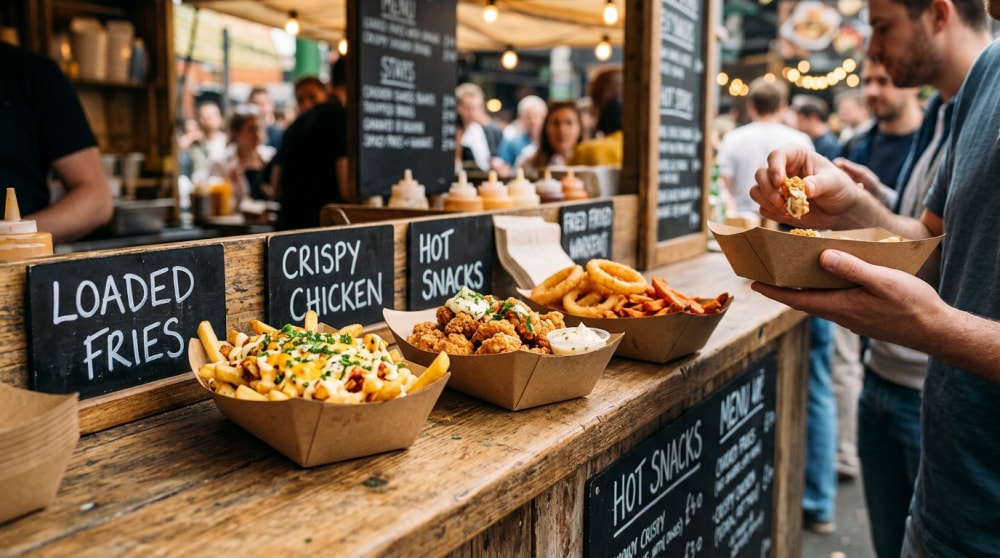
Canada Kraft Boat Tray Budgeting: Cost, Quality and Value
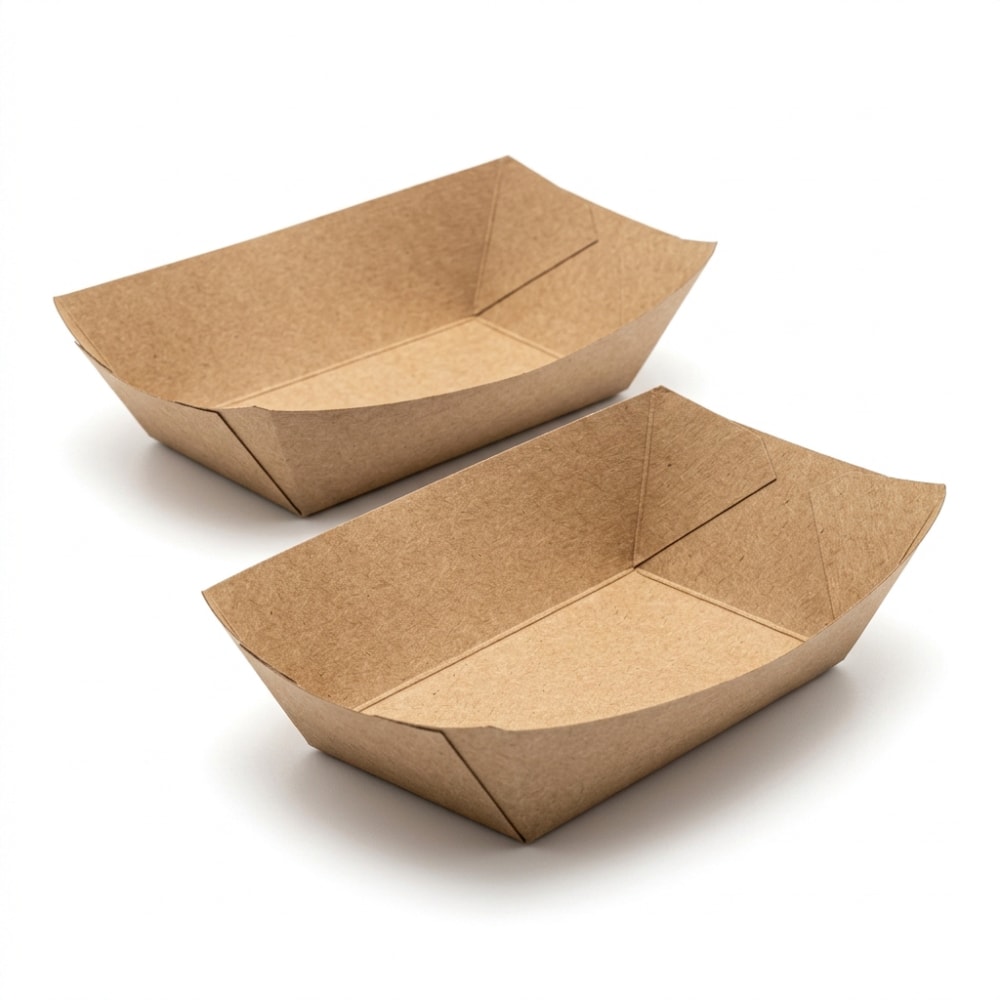
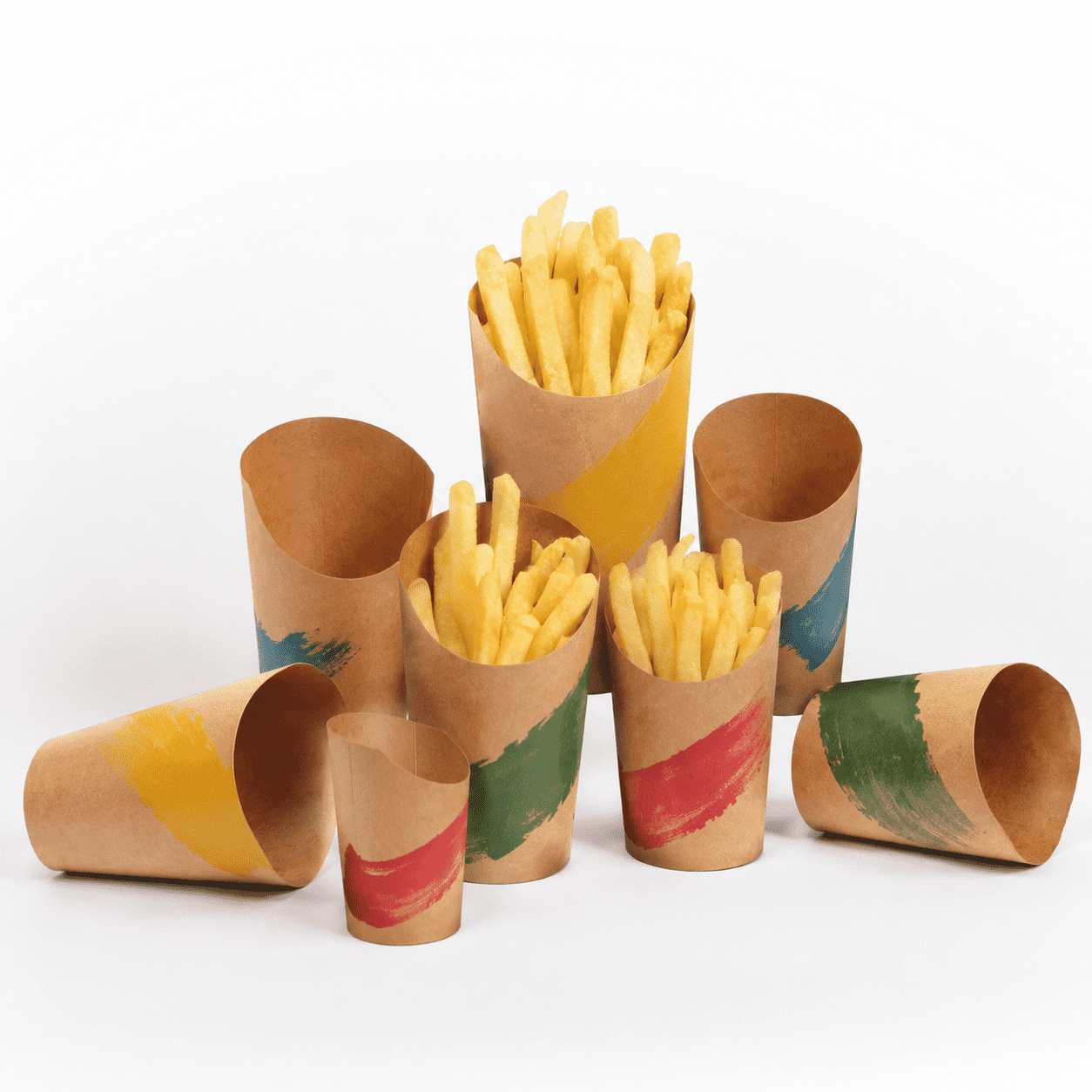
For Canadian foodservice operators, importers and packaging distributors, the best way to budget for #1–#5 kraft boat trays is to evaluate total delivered cost rather than comparing only the quoted unit price. Tray pricing is affected by paperboard grade, basis weight, grease-resistant coating, tray dimensions, wall angle, forming complexity, printing coverage, packing method, minimum order quantity and freight volume. A low-priced tray that softens under poutine, fried chicken, nachos or gravy-heavy foods can cost far more through product waste, customer complaints, cleanup, refunds and brand damage.A practical buying process starts with a written specification: tray number or dimensions, usable capacity, paper thickness, coating requirement, food temperature, holding time, print artwork, packing quantity, acceptance criteria and delivery location. Canadian buyers should also ask whether pricing is quoted EXW, FOB, CIF, DDP or delivered to a warehouse in Toronto, Vancouver, Montréal, Calgary or Halifax. This distinction changes the real landed cost considerably.For a dependable quote, separate recurring costs from one-time costs. Recurring costs include trays, inner bags, cartons, labels and freight. One-time costs may include printing plates, cutting dies, mould changes, pre-production samples, laboratory testing and artwork adjustments. For custom printed kraft food trays, this separation makes quote comparisons more accurate and prevents unexpected charges after approval.Cost ElementUsually Recurring?Buyer QuestionWhy It MattersTray unit priceYesWhat paper grade and coating are included?Defines product performance and basic cost.Printing platesUsually one-timeHow many colours and plate sets are required?Can materially affect a first custom order.Die or mould adjustmentUsually one-timeIs the tray standard or structurally customized?Custom shapes require development work.SamplesOne-time or creditedAre white, printed and functional samples available?Reduces risk before mass production.Ocean and inland freightYesWhat is the freight basis and destination?Bulky trays can have high cube-related freight cost.Storage and handlingYesHow many cartons fit on each pallet?Influences warehouse efficiency and damage risk.The table shows why a “cheap” unit quote is incomplete. Canadian buyers should calculate cost per usable serving, including losses from leakage, collapse, damaged cartons and slow service. This approach is especially relevant for quick-service restaurants, stadium concessions, food trucks, ghost kitchens, campus cafeterias and grocery prepared-food counters.A complete quotation for kraft paper boat trays should identify the product clearly enough that another supplier could reproduce the same functional requirement. “Kraft tray, food grade” is not a sufficient specification. Buyers should request dimensions in millimetres, paperboard type, grammage, coating type, coating side, colour, print coverage, packing configuration, carton size, gross weight, lead time, trade term and payment terms.In Canada, tray numbers are frequently used as shorthand, but #1 through #5 formats can vary slightly by supplier. Confirm the internal length, width, bottom size, top opening and sidewall height. A #3 boat tray that appears similar on a product page may have a different usable food area or board strength than another #3 tray. For fries, chicken tenders, onion rings, mini donuts, tacos and snack platters, usable capacity matters more than the label alone.Quote FieldWhat to ConfirmCommon Risk if OmittedRecommended Acceptance MethodTray sizeTop and bottom dimensions; wall heightPortion does not fit or looks underfilledMeasure approved sample in millimetresPaperboardVirgin kraft, recycled content, grammageUnexpected softness or colour variationMaterial declaration and sample comparisonGrease barrierType, side applied and food-contact suitabilityOil penetration and stained handsHot-food hold testPrintingColours, Pantone references and coverage areaIncorrect brand colour or higher costSigned digital proof and printed proofPackingPieces per sleeve, sleeves per cartonSlow replenishment or excessive carton wasteCarton specification approvalIncotermEXW, FOB, CIF, DDP or other basisUnbudgeted freight, duty or local chargesWritten landed-cost worksheetFor food-contact packaging entering Canada, buyers should request appropriate supporting documentation for their application and market requirements. Documentation should match the actual material and production batch wherever possible. If compostability, responsibly sourced fibre or recycled-content claims are planned, confirm that the selected tray construction and claim language are appropriate before printing cartons or marketing materials.Standard unprinted trays normally have the simplest pricing structure because existing forming tools and carton patterns may already be available. A custom size, unusual wall profile, high-coverage print, special coating or non-standard pack count can introduce setup costs. These costs should not be hidden inside the unit price because doing so makes volume comparisons misleading.Printing plates are commonly charged when a buyer uses custom artwork. The number of colours, print area, registration tolerance and whether artwork changes between SKUs all influence setup. A full-wrap design with several spot colours generally requires more preparation than a one-colour logo on the sidewall. Buyers with multiple Canadian locations can often reduce setup cost by using one core design and changing only a small localized area where needed.Samples are an economical form of insurance. A white sample verifies dimensions, fold quality and capacity. A printed sample checks colour and artwork positioning. A functional pre-production sample tests actual menu items under operational conditions. For example, a restaurant chain may test a tray with fresh fries, cheese curds and hot gravy for 15 to 30 minutes, rather than relying only on a dry sample.Pre-Production ItemBest UseTypical Decision It SupportsBudget TreatmentDigital artwork proofReview graphics and copyApprove logo position and textUsually low-cost or includedWhite structural sampleCheck physical dimensionsConfirm serving fit and stackingOne-time sample expensePrinted sampleVerify print appearanceApprove colour and registrationOne-time sample expenseFunctional food testTest grease and strengthConfirm real menu performanceSmall testing investmentPrinting platesPrepare custom print productionLaunch branded programmeOne-time setup chargeCustom die or forming toolCreate unique structureApprove a non-standard tray designOne-time capitalized project costThe most reliable approach is to issue a sample approval record. It should include approved dimensions, photographs, paper specification, coating description, artwork version, print colours, packing details, test results and approval date. This record becomes the reference for repeat orders, supplier audits and claims resolution.Two brown paper boat trays can look nearly identical while performing very differently. One may use lighter paperboard, a lower grease barrier, less precise forming or lower carton protection. Another may use a more stable board, stronger sidewall design and a coating better suited for fried foods. Visual appearance is not a reliable proxy for foodservice durability.Paper grammage is one major driver. Higher grammage can improve rigidity, but the best choice depends on the tray format, food load and serving conditions. A heavier board may be necessary for a #5 tray used for loaded fries or chicken wings, while a smaller #1 tray for dry snacks may perform well with a lighter material. Coating choice is equally important. The specification should be based on grease, moisture, heat and hold time, not a generic request for “waterproof” paper.Forming accuracy also changes cost. Consistent corners, even sidewalls and reliable nesting require controlled die-cutting and forming. Poorly formed trays may jam in dispensers, lean on counters or lose strength when filled. For distributors selling across provinces, consistent carton packing and tray nesting can reduce warehouse picking time and prevent freight damage.var ctx = document.getElementById('lineChart').getContext('2d');new Chart(ctx, { type: 'line', data: { labels: ['2022', '2023', '2024', '2025', '2026 Forecast', '2027 Forecast'], datasets: [{ label: 'Canadian demand index for paper food trays', data: [100, 108, 117, 126, 136, 147], borderColor: 'rgb(116, 82, 45)', backgroundColor: 'rgba(116, 82, 45, 0.12)', borderWidth: 3, fill: false, tension: 0.25 }] }, options: { responsive: true, maintainAspectRatio: false, scales: { y: { beginAtZero: false } } }});The line chart is an illustrative demand index rather than a market forecast guarantee. It shows why buyers should secure repeatable specifications and supply capacity as Canadian takeaway, delivery and prepared-food channels continue to use paper-based serving formats.MOQ affects more than a supplier’s willingness to sell. It determines how widely setup, material preparation, production labour, quality checks and export packing can be spread across each tray. Small custom orders often carry higher unit costs because the same preparation work is divided over fewer pieces. However, ordering too much can create storage pressure, cash tied up in inventory and risk of artwork becoming outdated.For Canadian importers, the most useful volume break is often not the lowest factory unit price. It may be the point at which carton density improves, a container is filled efficiently or inland freight is reduced per piece. Vancouver and Prince Rupert can be strategic gateways for Western Canada, while Montréal and Halifax can support Eastern Canadian distribution depending on routing and inventory plans. Ontario-based distribution networks often assess whether container arrivals should be staged through Greater Toronto Area warehouses.Order ScaleProduction EconomicsFreight ConsiderationBest FitSample quantityHigh cost per unitExpress delivery is commonTesting and approvalSmall trial orderSetup spread over limited quantityLCL may add handling costNew restaurant conceptRegional distributor orderBetter line efficiencyConsolidation can reduce costMulti-customer inventoryChain restaurant orderRepeat production improves consistencyScheduled shipments become practicalMulti-location foodserviceNear-container volumeStrong carton and freight economicsCube utilization becomes importantEstablished importerContainer programmeLowest repeat-order production costRequires forecast and storage controlNational distributor or major chainBuyers should ask for price breaks at realistic order levels rather than arbitrary numbers. A supplier can often quote several quantities using the same specification: trial, quarterly replenishment and annual forecast volume. Comparing these tiers supports purchasing decisions without forcing an unnecessary reduction in paper quality or coating performance.Grease penetration is not merely a cosmetic defect. Oil transfer can weaken paper fibres, stain counters, soil napkins, damage delivery bags and make customers feel that the food is lower quality. Sidewall collapse can cause spills, reduce portion presentation and slow down service during peak periods. For a busy food truck in Toronto, a hockey arena concession in Edmonton or a quick-service counter in Montréal, even a small packaging failure rate can create operational disruption.The financial impact should include replacement packaging, lost food, labour for cleanup, customer recovery, online review risk and potential damage to delivery orders. A tray that costs a fraction of a cent less but fails with hot, oily food is usually not an economical choice. Testing should use the actual menu, actual fill weight, actual holding time and realistic ambient conditions.var ctx = document.getElementById('barChart').getContext('2d');new Chart(ctx, { type: 'bar', data: { labels: ['Fries', 'Poutine', 'Chicken Tenders', 'Nachos', 'Bakery Snacks', 'Festival Foods'], datasets: [{ label: 'Relative requirement for grease and structure (out of 100)', data: [72, 95, 88, 84, 48, 76], backgroundColor: ['#B8793D', '#7B4D28', '#996633', '#87512D', '#C79A5C', '#6E4022'] }] }, options: { responsive: true, maintainAspectRatio: false, scales: { y: { beginAtZero: true, max: 100 } } }});The bar chart highlights that menu application drives packaging requirements. Poutine and heavily sauced foods generally need a more robust grease-resistance and structural assessment than dry bakery snacks. Buyers should avoid applying one tray specification to every menu item without testing.Cost per meal is a more meaningful purchasing metric than cost per tray. It combines packaging expense with food protection, portion presentation, speed of service and waste. A tray that keeps fries crisp-looking, contains toppings and protects staff from heat or grease can support a better customer experience. This is especially important for delivery and takeaway, where the customer sees the package after transport rather than immediately at the counter.To calculate cost per meal, begin with the tray price and add estimated freight, storage, handling and expected quality loss. Then compare the total against food cost and selling price. A $0.01 reduction in tray cost is insignificant if a weak tray increases food loss by $0.20 per failed serving. Use a 30-day operational test whenever possible, particularly before rolling out packaging across many locations.Cost-per-Meal ComponentExample MeasurementManagement BenefitReview FrequencyTray purchase priceCost per 1,000 piecesTracks direct packaging spendEvery purchase orderInbound freightFreight cost per cartonShows landed-cost accuracyEvery shipmentWarehouse handlingLabour per carton pickedImproves inventory efficiencyQuarterlyPackaging failure rateFailures per 10,000 servingsQuantifies quality riskMonthlyFood replacement costAverage value of remade ordersConnects tray quality to wasteMonthlyCustomer complaint ratePackaging-related complaintsProtects guest experienceMonthlyThis calculation is useful for packaging distributors as well. A distributor that provides reliable specifications, stable carton packing and clear documentation can reduce claims, protect margins and build stronger long-term customer relationships.Good negotiation does not require reducing board weight or eliminating grease protection. Better levers include consolidating SKUs, standardizing tray sizes, using practical print coverage, optimizing pieces per carton, scheduling repeat orders, improving demand forecasts and combining related food-packaging products. Buyers can explore the available kraft boat tray range before creating a completely new format.For example, a foodservice distributor may save more by selecting common #1–#5 tray formats than by developing several unique structures. A restaurant chain can also use one brand colour and a restrained logo placement rather than a complex multi-colour full-surface design. This preserves brand identity while reducing plate and print complexity.Another effective strategy is combined sourcing. When compatible products are manufactured together, buyers may gain operational efficiencies across trays, bowls, boxes and fry-serving formats. Fude Packaging also produces items such as kraft paper fries cups, allowing distributors to align visual presentation across a wider takeaway packaging programme.var ctx = document.getElementById('areaChart').getContext('2d');new Chart(ctx, { type: 'line', data: { labels: ['2022', '2023', '2024', '2025', '2026 Forecast', '2027 Forecast'], datasets: [{ label: 'Share of buyers prioritizing verified grease resistance (%)', data: [42, 49, 57, 64, 70, 75], borderColor: 'rgb(46, 112, 78)', backgroundColor: 'rgba(46, 112, 78, 0.25)', fill: true, borderWidth: 3, tension: 0.25 }] }, options: { responsive: true, maintainAspectRatio: false, scales: { y: { beginAtZero: true, max: 100 } } }});The area chart illustrates the shift from buying solely by price toward buying for verified performance. By 2026, Canadian purchasers are expected to place increasing emphasis on traceability, responsible fibre sourcing, food-contact documentation, reduced material waste and reliable delivery performance.Canada’s foodservice market uses kraft boat trays across independent restaurants, national quick-service chains, cafés, breweries, sports venues, universities, grocery stores, farmers’ markets, festivals and catering operations. The format is valued because it provides visible food presentation, easy stacking, fast dispensing and a familiar paper-based appearance.#1 trays are commonly used for tasting portions, small snacks, churros, mini doughnuts and sides. #2 and #3 trays often suit fries, mozzarella sticks, chicken bites, potato wedges and pastry items. #4 and #5 kraft trays are better suited for larger snack combinations, loaded fries, wings, fried seafood, sliders and shareable servings. The correct format depends on food weight, sauce level, desired visual presentation and whether the order is eaten on-site or transported.Tray FormatCommon Canadian UsePerformance PriorityRecommended Buying Focus#1 boat traySamples, sides and small snacksClean appearance and nestingEfficient carton packing#2 boat trayFries and bakery servingsBasic grease resistanceStable paperboard quality#3 boat trayChicken bites and snack combosSidewall rigidityActual food-load testing#4 boat trayLoaded fries and larger portionsGrease and moisture resistanceCoating suitability#5 boat trayWings, poutine and shareable foodsHigh structural performanceHot-food hold testCustom boat trayBranded promotions and specialty menusBrand consistency and fitPrototype and proof approvalLocal purchasing conditions differ by region. British Columbia buyers may prioritize efficient imports through Vancouver, while Alberta operators may focus on dependable replenishment to Calgary and Edmonton. Ontario distributors often need inventory systems that can supply the Greater Toronto Area, Ottawa and Southwestern Ontario. Québec buyers may require French-language packaging information where applicable, while Atlantic Canadian customers may consider Halifax routing and smaller regional delivery schedules.Canadian buyers can source kraft trays from local converters, packaging wholesalers, North American manufacturers and overseas factories. Local suppliers may offer short lead times and easy access to small quantities. Overseas manufacturers can be competitive for standardized high-volume orders, custom printing programmes and consolidated packaging sourcing. The best option depends on forecast accuracy, storage capacity, customization needs, cash flow and risk tolerance.var ctx = document.getElementById('comparisonChart').getContext('2d');new Chart(ctx, { type: 'bar', data: { labels: ['Small MOQ Flexibility', 'Custom Print Capacity', 'Unit Cost at Volume', 'Lead-Time Speed', 'Multi-Category Consolidation', 'Documentation Support'], datasets: [ { label: 'Typical local stock supplier', data: [88, 48, 55, 92, 45, 72], backgroundColor: 'rgba(69, 123, 157, 0.75)' }, { label: 'Direct manufacturing programme', data: [58, 90, 89, 62, 91, 85], backgroundColor: 'rgba(116, 82, 45, 0.75)' } ] }, options: { responsive: true, maintainAspectRatio: false, scales: { y: { beginAtZero: true, max: 100 } } }});The comparison chart is a general procurement guide. Local stock suppliers can be valuable for urgent replenishment and low-volume testing, while direct manufacturing programmes may offer greater customization and cost efficiency at stable volumes. Many Canadian distributors use both approaches: local inventory for urgent demand and scheduled imports for core high-volume SKUs.Fude Packaging supports overseas B2B buyers with an integrated manufacturing model for paper food packaging. The company has more than 20 years of packaging experience and operates a self-owned 30,000 m² production base in Shandong. Automated capacity reaches up to 120,000 units per day, supporting planned orders for trays, cups, bowls, food boxes and multi-compartment meal packaging.Technologically, Fude Packaging controls key stages including material selection, printing, die-cutting, forming, inspection, packing and shipment preparation. An in-house laboratory supports performance testing for practical concerns such as structural strength, grease resistance, leakage prevention and print consistency. Buyers can request digital proofs, white samples and printed pre-production proofs before mass production, helping them evaluate food fit and brand presentation.From a manufacturing perspective, the ability to produce multiple food-packaging categories in-house can help Canadian distributors consolidate purchasing and improve container utilization. Rather than importing boat trays from one factory and other serving products from separate sources, buyers can coordinate categories under one production plan where specifications permit. More information about project planning and customization is available through Fude Packaging’s packaging services.From a service perspective, the company supports OEM and ODM development, artwork and dieline checks, custom sizing, material recommendations, export packing and scheduled-order coordination. Documentation relating to food-contact requirements, FSC materials, ISO 9001 systems and other relevant compliance needs can be discussed based on the product, destination and intended claim. Full-batch traceability and inspection procedures help create a clearer approval and claim-handling process for overseas customers.Fude Packaging has served more than 500 business customers and can support buyers using sea freight, air freight, full-container, less-than-container and express sample shipments. Standard production lead times may be approximately 7–15 days depending on order quantity and specification. Canadian purchasers can learn more about the company’s background through the Fude Packaging company profile.From 2026 onward, Canadian packaging buyers are likely to focus more closely on fibre sourcing, coating design, lightweighting without performance loss, traceability and operational waste reduction. Sustainability will increasingly be evaluated through practical product design rather than appearance alone. A kraft look does not automatically prove a package is recyclable, compostable or suitable for every waste stream; buyers should confirm the actual material construction and local disposal context.Technology will also influence purchasing. Digital artwork approval, batch tracking, automated inspection, production data and repeat-order specifications can reduce avoidable errors. For chain restaurants, digital approval records make it easier to maintain consistent tray performance across menu launches and regional warehouse networks. As delivery remains important, more buyers will test trays for transport vibration, stacking, condensation and hold time rather than counter service alone.Policy and procurement requirements may continue to encourage documentation, responsible sourcing and transparent environmental claims. Canadian buyers should keep packaging claims specific, evidence-based and aligned with provincial and municipal collection realities. The strongest long-term strategy is to select a tray that meets food performance needs first, then choose the most appropriate material and end-of-life communication for the programme.1. What is the typical cost structure for #1–#5 kraft boat trays?Typical costs include the tray itself, paperboard, coating, printing, packing, export carton, freight, customs-related charges, inland delivery and storage. Custom projects may also include plates, tooling, samples and artwork preparation. Ask suppliers to separate one-time charges from recurring charges.2. Which specification changes affect price most?Paper grade, grammage, coating, tray size, structural complexity, printing coverage, carton density and order quantity usually have the largest effect. Larger trays are not always proportionally more expensive, because forming complexity and paper usage can vary significantly.3. How does MOQ change the unit price?Higher quantities spread setup and production costs over more trays, usually reducing unit cost. However, the best MOQ is one that matches sales velocity, warehouse capacity and cash flow. A container-scale order is beneficial only if inventory can be used before it becomes obsolete or damaged.4. Which quote items are often excluded?Common exclusions include printing plates, custom dies, sample freight, third-party inspection, laboratory tests, ocean freight, destination port charges, customs clearance, taxes, duties, inland delivery and palletization. Confirm the trade term and request a detailed landed-cost estimate.5. How can buyers reduce cost without weakening performance?Standardize tray sizes, reduce unnecessary print complexity, improve carton packing, forecast repeat orders, consolidate related packaging categories and test the correct specification before buying in volume. Do not reduce grease resistance or structural strength without testing the actual menu application. -

Global Market PET Bowl Lid Sourcing and Fit Guide
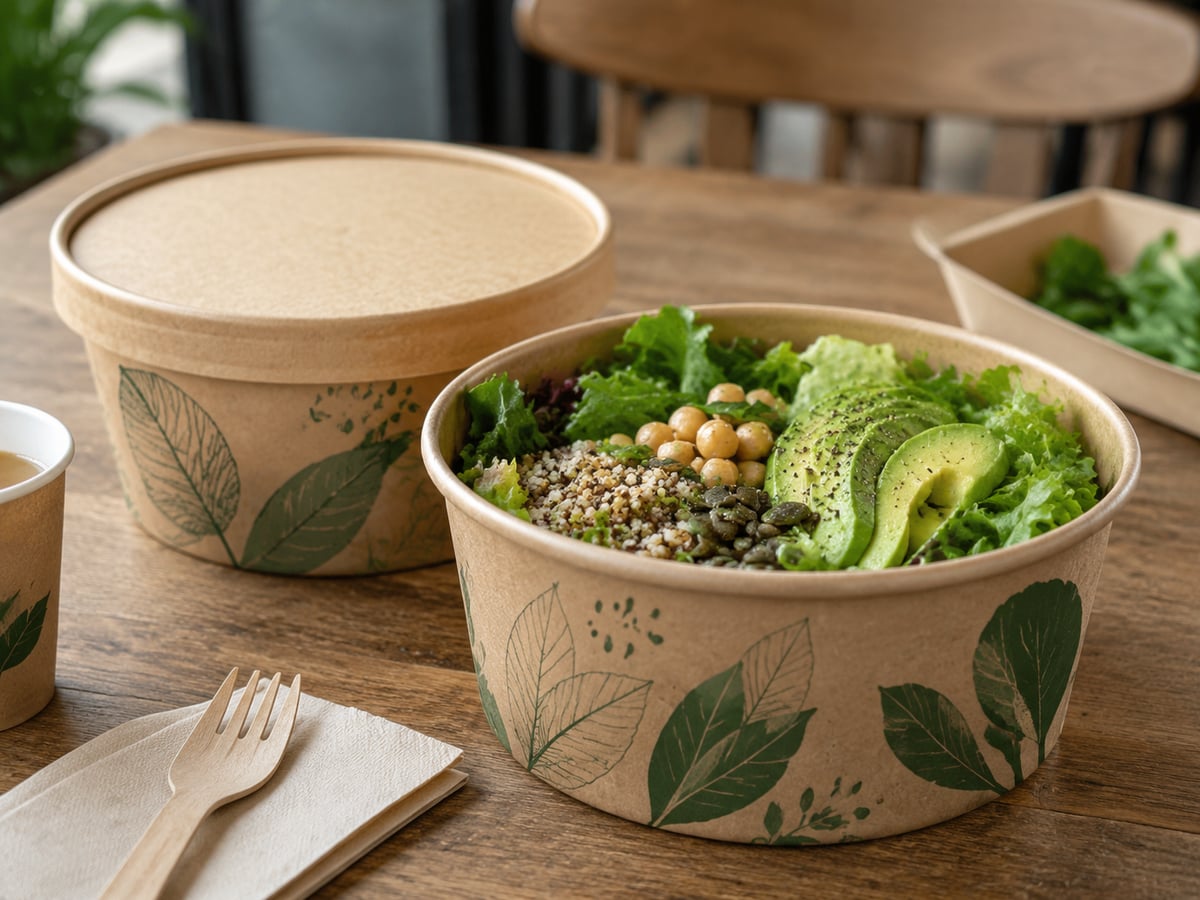
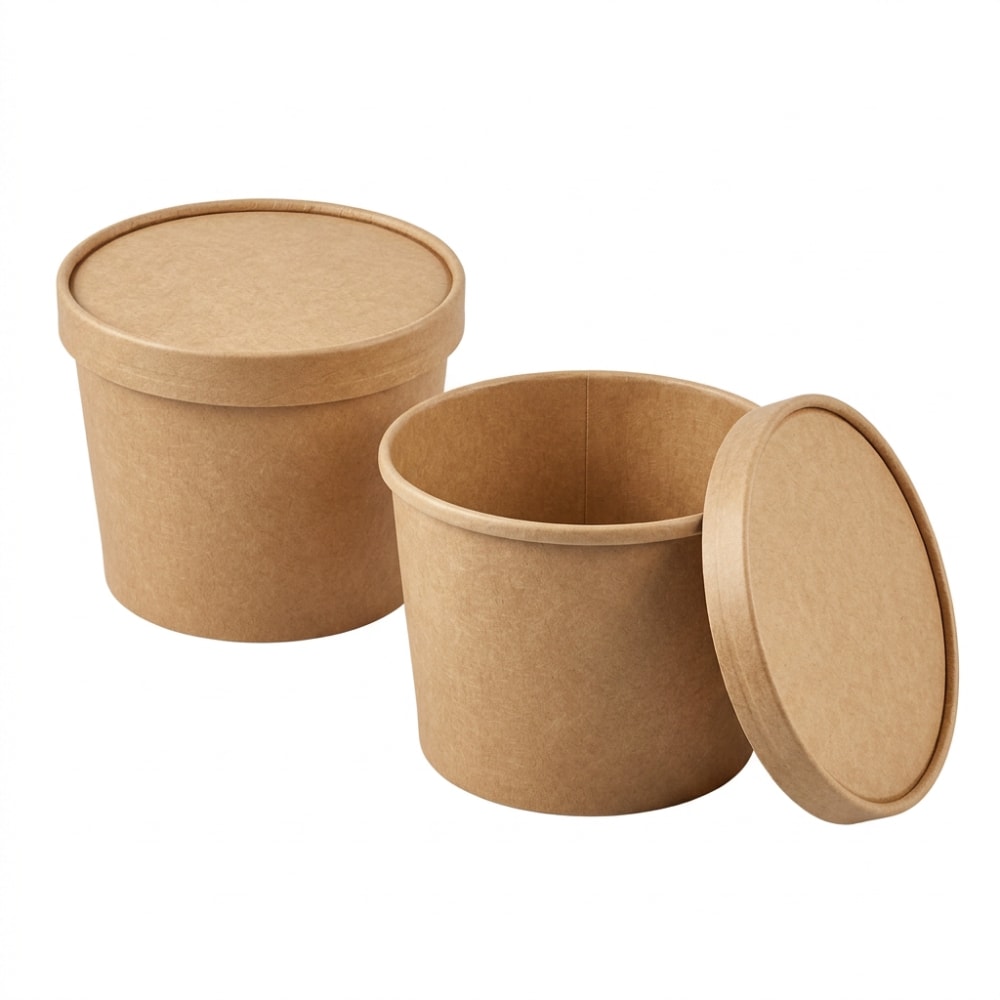
For Global market buyers, PET lids for paper bowls wholesale are not a simple add-on purchase. The lid is a functional closure system that must match the bowl’s rolled rim, coating thickness, filling temperature, food moisture, stacking pattern, courier handling, and customer opening experience. A lid that appears secure on an empty paper bowl may release after hot soup creates steam, after a salad bowl is compressed in a delivery bag, or after a filled container moves across several handling points.The practical buying rule is straightforward: approve a bowl and lid as one tested assembly. Request production-representative samples, fill them with the actual menu item, close them using normal restaurant procedures, stack them at expected delivery height, and test movement at hot, ambient, and chilled temperatures. This approach helps buyers avoid leakage claims, delivery refunds, lid cracking, fogging complaints, and unnecessary SKU proliferation.PET is widely used for transparent lids because it gives strong product visibility and an attractive display for cold salads, fruit, desserts, poke bowls, grain bowls, and chilled prepared foods. However, standard PET is not normally the first choice for high-temperature applications. For hot soups, noodles, rice meals, or foods packed immediately after cooking, PP lids or specifically engineered heat-resistant alternatives are often more suitable. The selection must be based on verified application conditions rather than appearance alone.Qualification factorWhat the buyer should defineTypical risk if ignoredBowl rim outside diameterNominal size plus accepted production toleranceLoose or overly tight closureRim profileRolled, flat, stepped, or reinforced rim geometryIncomplete snap engagementFood temperatureTemperature at filling, dispatch, and consumptionWarping, softening, trapped steamFood typeDry, oily, acidic, saucy, liquid, or high-moisture menuLeakage or condensation complaintsDelivery routeTravel time, vehicle type, stack height, handling pointsLid release during transportStorage planChilled display, ambient shelf, or rapid turnoverFogging, deformation, poor appearanceBrand programShared diameters, printed bowls, and menu expansion plansExcessive lid SKUs and inventory costThis checklist is the starting point for importers, distributors, restaurant chains, cloud kitchens, retailers, and food brands. It also creates a clearer technical brief for a supplier, whether shipments move through Shanghai, Qingdao, Ningbo, Rotterdam, Hamburg, Dubai, Los Angeles, Singapore, or Sydney.Rim tolerance is the most important mechanical variable in paper bowl lid compatibility. Buyers often refer only to a bowl as “90 mm,” “150 mm,” or “184 mm,” but a nominal diameter does not fully describe the closure. The actual rim outside diameter, wall thickness, rolled-edge height, roundness, and coating build can all affect the grip of a PET lid.A reliable specification should state the measured rim outside diameter at multiple points around the bowl, not merely the drawing dimension. Measurements should be taken across the rim in more than one direction because an ovalized bowl can fit at one angle but fail at another. The supplier should also confirm the lid’s inner locking diameter and the geometry of its snap bead or channel.For a wholesale buying project, request samples from normal production rather than hand-selected pieces. Test bowls from several packs and lids from several sleeves. This matters because paperboard moisture, forming pressure, die condition, and transport compression can create small variations that are not visible in a single sample set.Rim-control checkpointRecommended methodAcceptance purposeOutside diameterUse calibrated calipers at two or more axesConfirms lid engagement rangeRoundnessCompare maximum and minimum diameter readingsIdentifies ovality riskRim heightMeasure from bowl wall to top edgeProtects locking-bead contactRim thicknessCheck compressed roll or curl thicknessPrevents under- or over-gripCoating effectTest PE, water-based, or alternative barrier constructionsAccounts for surface variationSeam areaInspect the side-seam transition at the rimFinds local closure gapsPost-conditioning sizeMeasure after chilled and warm storageChecks dimensional stabilityA practical tolerance program does not require buyers to over-engineer every item. It requires agreement on what is critical. For example, a cold salad bowl used for short takeaway journeys can tolerate a different closure profile than a soup bowl used by a delivery platform with 45-minute travel times. The right target is repeatable functional fit, not theoretical perfection.Buyers sourcing compatible paper bowls can review leak-resistant kraft salad bowl options when planning a matched container-and-lid program. The bowl rim, barrier construction, and lid should be reviewed together before purchase approval.PET and PP lids serve different operating conditions. PET lids are valued for clarity, stiffness, presentation, and suitability for many cold or room-temperature foods. Clear PET can help a deli, supermarket, salad brand, or café showcase toppings, color contrast, fruit freshness, and portion size. It is particularly useful where visual merchandising helps conversion.PP lids are generally more appropriate where the food is packed hot or where steam exposure is significant. PP can offer better heat tolerance in many foodservice situations, though the exact performance depends on grade, thickness, design, and the total heating profile. Buyers should never assume that a lid is microwave-safe, heat-safe, or suitable for hot filling without supplier documentation and application testing.ApplicationTypical lid preferenceBuyer decision pointCold saladClear PETVisibility, crisp presentation, chilled handlingFruit and yogurtClear PETDisplay quality and condensation managementPoke bowlClear PET or specialty lidCold ingredients, sauce control, premium appearanceHot soupPP or heat-suitable alternativeSteam, filling temperature, leak resistanceNoodle deliveryVented PP or designed hot-food lidSteam release and movement resistanceRice mealPP or material validated for the temperatureHeat retention versus condensation balanceBakery dessertPETProduct visibility and stack protectionMaterial selection should also account for destination-market policy. In the Global market, packaging requirements vary by country and region, including food-contact declarations, recycled-content expectations, labeling, extended producer responsibility schemes, and restrictions on particular single-use formats. Buyers importing into the European Union may assess EC 1935/2004-related food-contact expectations, while United States buyers commonly request relevant FDA food-contact documentation. Local rules in the United Kingdom, Australia, Canada, the Gulf region, and Southeast Asia should be checked before commercial launch.Looking toward 2026, buyers are expected to place more emphasis on material traceability, recycled-content feasibility where regulations and food-contact rules permit, mono-material recovery pathways, and clear disposal communication. Sustainability claims should be specific and supported; a transparent PET lid should not be presented as compostable unless it is genuinely certified for that claim and accepted within the intended market’s waste system.var ctxMaterialTrend = document.getElementById('materialTrendChart').getContext('2d');new Chart(ctxMaterialTrend, {type: 'line',data: {labels: ['2022', '2023', '2024', '2025', '2026 Forecast'],datasets: [{label: 'Clear PET lid demand index', data: [100, 108, 117, 126, 134], borderColor: 'rgb(38, 139, 210)', backgroundColor: 'rgba(38, 139, 210, 0.12)', fill: false, tension: 0.25},{label: 'Heat-suitable PP lid demand index', data: [100, 105, 111, 119, 128], borderColor: 'rgb(203, 75, 22)', backgroundColor: 'rgba(203, 75, 22, 0.12)', fill: false, tension: 0.25}]},options: {responsive: true, maintainAspectRatio: false, plugins: {title: {display: true, text: 'Illustrative Global Foodservice Lid Demand Trend'}}}});The chart illustrates an expected parallel increase in demand for clear cold-food lids and heat-suitable hot-food closures. The key procurement implication is that menu segmentation, rather than one universal material choice, remains the safer strategy.Venting is a performance decision, not a decorative feature. Hot foods continue to release steam after filling. If a lid seals too tightly without an appropriate vent path, condensation can build underneath the lid, reduce product appeal, soften fried toppings, and create pressure that contributes to closure release. If venting is too open, the container may lose heat quickly or spill when tilted.For noodles, rice bowls, curries, soups, and hot prepared meals, buyers should compare no-vent, micro-vent, and larger vent configurations using the actual food recipe. Steam behavior changes with sauce volume, oil content, filling headspace, and time between kitchen packing and customer receipt. A dry noodle bowl and a broth noodle bowl should not be qualified in the same way.For cold salads, PET lids are often non-vented to preserve freshness and reduce the chance of dressing leakage. Yet high-moisture ingredients can fog a transparent lid. The best solution may involve lower food temperature at packing, controlled headspace, separate dressing cups, anti-fog material options where available, or menu preparation adjustments.var ctxVentingArea = document.getElementById('ventingAreaChart').getContext('2d');new Chart(ctxVentingArea, {type: 'line',data: {labels: ['Cold Salad', 'Warm Grain Bowl', 'Hot Rice Meal', 'Dry Noodles', 'Broth Noodles', 'Soup'],datasets: [{label: 'Relative need for controlled venting',data: [10, 28, 52, 66, 86, 92],borderColor: 'rgb(42, 161, 152)',backgroundColor: 'rgba(42, 161, 152, 0.28)',fill: true,tension: 0.3}]},options: {responsive: true, maintainAspectRatio: false, plugins: {title: {display: true, text: 'Illustrative Venting Requirement by Food Type'}}, scales: {y: {beginAtZero: true, max: 100}}}});This trend view shows why hot-liquid applications require more careful engineering than chilled foods. The “best” vent is the one that maintains closure security and food quality through the actual delivery window, not the one that looks most airtight in a sample-room inspection.Closure testing should reproduce how the packaging will be used in kitchens, warehouses, vehicles, and customer handoffs. An empty-fit check is useful only as an initial screen. A meaningful protocol includes filled samples, realistic temperatures, normal headspace, stack loads, repeated handling, and observation after a defined waiting period.Begin with a manual application test. Staff should be able to seat the lid around the full rim without excessive force or repeated adjustments. Next, inspect whether the lid has engaged evenly around the circumference. A visibly lifted edge, especially near a bowl seam, is a warning sign even if the container does not immediately leak.TestSuggested procedureWhat it revealsFilled inversion testFill to normal line, close, invert briefly over absorbent paperImmediate leakage pointsShake testUse controlled forward, side, and vertical movementClosure release under courier motionStack compression testStack filled bowls at expected dispatch heightLid distortion and bowl-rim collapseHot-hold testKeep filled hot samples for the planned delivery durationSteam pressure and softening effectsChilled testHold prepared samples in refrigerated display conditionsCondensation and grip stabilityDrop simulationPerform controlled low-height handling simulationWeak closure after impactBag transport testPlace samples in actual delivery bag or crateReal-world rubbing and tilt riskDocument the results by bowl size, lid SKU, recipe, fill weight, fill temperature, and test outcome. Photographs of the rim after testing are useful for supplier discussions. If failures occur, investigate systematically: bowl diameter variation, lid channel geometry, material stiffness, fill line, vent position, stacking force, or food temperature may each be involved.Food delivery demand is especially strong around dense urban trade areas such as London, Paris, New York, Toronto, Dubai, Riyadh, Jakarta, Manila, Bangkok, Mumbai, São Paulo, and Sydney. In these environments, delivery time and rider movement can be more demanding than in-store takeaway. Buyers supplying these markets should make bag transport testing a mandatory approval stage.MOQ and lid cost should be evaluated as part of total packaging cost, not only price per thousand pieces. A lower-priced lid that creates delivery leakage, forces an additional bowl size, or occupies inefficient warehouse space may cost more than a stable, standardized closure system. Freight volume, carton strength, nesting efficiency, and forecast accuracy all influence landed cost.For standard clear PET lid designs, MOQs are often more manageable than for custom molds or printed components. However, buyers should confirm whether the quoted MOQ applies per diameter, per material thickness, per carton configuration, or per shipment. A supplier may offer a low unit price while requiring a volume that creates slow-moving stock.Custom lid development can be justified for high-volume programs, differentiated food concepts, or unique bowl profiles. Before investing in a mold, calculate the annual consumption, forecast confidence, expected product life cycle, and the cost of retaining an additional SKU. In many cases, a standardized lid diameter paired with multiple bowl heights offers a better commercial result.Shared lid SKUs can reduce purchasing complexity, simplify restaurant operations, and improve container utilization in international shipments. The safest approach is to standardize by rim diameter and closure profile, not merely by stated bowl capacity. Two bowls with different capacities can often use one lid when their rim dimensions and forming quality are intentionally matched.For example, a 500 ml and 750 ml salad bowl may share a lid if both use the same top diameter and have a compatible rim profile. This reduces the number of lids staff must identify during busy service periods. It can also reduce stockouts, simplify replenishment, and lower the risk that a restaurant accidentally applies the wrong lid.SKU planning approachOperational effectRisk control measureOne lid for two bowl heightsLower inventory complexityValidate both rim profiles separatelyOne lid across cold-menu bowlsFaster packing and trainingConfirm chilled condensation behaviorSeparate hot and cold lidsBetter material suitabilityUse clear kitchen identificationShared lid across regionsSupports global sourcing efficiencyCheck local compliance requirementsStandardized carton packImproves warehouse handlingMatch consumption rate to pack sizeCommon lid color or transparencyConsistent brand presentationPrevent confusion with similar sizesPhased SKU consolidationReduces obsolete inventory riskRun dual stock during transitionThe table shows that consolidation should be a controlled engineering project. It is not safe to eliminate a lid SKU just because two bowls look similar. Each bowl-lid combination should complete the same closure and delivery validation process before it is released to restaurants or distributors.var ctxIndustryDemand = document.getElementById('industryDemandChart').getContext('2d');new Chart(ctxIndustryDemand, {type: 'bar',data: {labels: ['Salad Brands', 'Supermarkets', 'Cloud Kitchens', 'Cafés', 'Meal Prep', 'Restaurant Delivery', 'Catering'],datasets: [{label: 'Illustrative PET bowl lid demand index',data: [88, 82, 91, 62, 79, 95, 54],backgroundColor: ['#268bd2','#2aa198','#859900','#b58900','#6c71c4','#dc322f','#657b83']}]},options: {responsive: true, maintainAspectRatio: false, plugins: {title: {display: true, text: 'Illustrative Demand by Foodservice Segment'}}, scales: {y: {beginAtZero: true, max: 100}}}});Restaurant delivery and cloud kitchens typically place the greatest demand on closure reliability because containers experience more handling, stacking, and route variability. Supermarkets and salad brands often place greater importance on clarity, shelf appearance, and consistent nesting.Supplier approval should combine technical confirmation, production capability, quality controls, food-contact documentation, communication quality, and logistics readiness. Buyers should ask who manufactures the bowl, who manufactures the lid, and whether the supplier controls compatibility testing between the two. Purchasing bowls from one source and lids from another can work, but it increases the risk that dimensional responsibility becomes unclear if a closure problem occurs.Ask for product specifications, samples, production lead times, carton dimensions, pallet plans, traceability practices, inspection process, and destination-market documentation. If an order will supply multiple countries, establish a document matrix early. The requirements for a distributor serving Rotterdam and Hamburg may differ from those for a customer shipping onward through Jebel Ali or Los Angeles.Pre-shipment inspection can be especially valuable for large orders. Buyers may use in-house supplier inspection records, appoint an independent inspection company, or engage a third-party laboratory when necessary. The goal is not to create paperwork for its own sake; it is to confirm that production matches the approved sample and agreed specification.var ctxSupplierComparison = document.getElementById('supplierComparisonChart').getContext('2d');new Chart(ctxSupplierComparison, {type: 'bar',data: {labels: ['Rim Control', 'Sample Support', 'Documentation', 'Production Scale', 'Export Packing', 'After-sales Response'],datasets: [{label: 'Basic trading source', data: [55, 52, 58, 60, 57, 50], backgroundColor: 'rgba(203, 75, 22, 0.7)'},{label: 'Integrated manufacturing partner', data: [88, 86, 84, 91, 87, 83], backgroundColor: 'rgba(38, 139, 210, 0.7)'}]},options: {responsive: true, maintainAspectRatio: false, plugins: {title: {display: true, text: 'Illustrative Supplier Evaluation Comparison'}}, scales: {y: {beginAtZero: true, max: 100}}}});The comparison highlights why buyers should assess supplier capability beyond an initial quotation. Strong fit control, sample support, documentation, export packing, and responsive corrective action all reduce total procurement risk.Fude Packaging supports Global market buyers with paper bowl and lid projects that require practical compatibility planning. The company’s technological capabilities include in-house quality and performance testing, material selection guidance, artwork and dieline review, prototype development, and functional assessment for leak resistance, rim fit, print quality, and food-use conditions. This helps customers move from a general packaging concept to a specification that can be tested before mass production.From a manufacturing perspective, Fude Packaging operates a self-owned 30,000 m² factory in Shandong with automated production lines and direct control over core paper food-packaging processes. With more than 20 years of industry experience and output capability reaching up to 120,000 units per day across applicable programs, the business can support custom bowls, salad containers, noodle packaging, meal boxes, and related foodservice packaging. Buyers can explore the broader paper bowl product range when designing shared-rim and shared-lid systems.Its service capabilities are designed for overseas B2B purchasing: white samples, printed samples, functional prototypes, export-ready packing, support for sea freight and air freight, and coordination of common documentation such as packing lists, commercial invoices, certificates, and inspection records. Standard production projects can often be scheduled in approximately 7–15 days depending on specifications and order volume. Fude Packaging has experience serving customers across more than 50 countries and can help buyers evaluate suitable material and compliance documentation for destination markets.For branded food concepts, custom printed salad bowl packaging can be developed alongside an appropriate lid plan. This allows operators to protect visual identity while maintaining a practical closure specification for takeaway, retail display, or delivery.Fude Packaging support areaPractical buyer benefitTypical project stageMaterial recommendationBetter alignment with temperature and food typeEarly concept stagePrototype samplingAllows actual menu validationPre-approval stageRim-fit assessmentReduces mismatch between bowl and lidTechnical reviewCustom printing supportMaintains brand consistency across packagingArtwork approvalIn-house production controlImproves consistency and accountabilityMass productionInspection coordinationSupports quality verification before shipmentPre-shipment stageInternational logistics supportHelps manage documents and shipping optionsExport executionFor 2026 planning, Fude Packaging can assist customers in balancing performance, brand presentation, regulatory readiness, and sustainability objectives. The most durable program is one that uses only the packaging features the menu requires, validates performance with representative samples, and keeps future line extensions compatible wherever safe.1. How should buyers qualify PET lids for paper bowls wholesale?Buyers should qualify a matched bowl-and-lid assembly using production-representative samples. Measure rim diameter and roundness, fill with the actual menu, apply the lid under normal operating conditions, and conduct inversion, shake, stack, hot-hold or chilled-hold, and delivery-bag tests. Record the bowl size, lid SKU, fill weight, temperature, and result.2. Which lid material is best for hot or cold food?Clear PET is commonly preferred for cold foods where visibility is important, including salads, fruit, desserts, and chilled meal bowls. PP or another validated heat-suitable material is generally a better starting point for hot foods with substantial steam. The final choice depends on the resin grade, design, food temperature, filling process, and local compliance requirements.3. How is rim tolerance measured?Measure the bowl rim outside diameter using calibrated calipers at multiple positions, usually across at least two axes. Compare maximum and minimum readings to identify ovality. Also assess rim height, thickness, side-seam area, and dimensional behavior after relevant warm or chilled conditioning. Match these measurements to the lid’s specified internal locking profile.4. What delivery tests reveal lid-release risk?The most revealing tests are filled-container inversion, controlled shaking, stacked compression, hot holding, transport in the actual courier bag, and low-height impact simulation. These tests should be run after the product has rested long enough for steam and moisture conditions to develop. A lid that remains secure only immediately after closure has not passed a meaningful delivery assessment.5. How can lid SKUs be reduced safely?Standardize bowl families around common rim diameters and compatible rim profiles. Test each bowl-lid combination independently, then consolidate only those combinations that meet closure, temperature, and transport requirements. Maintain clear labeling in warehouses and restaurants, and phase out old SKUs gradually to avoid accidental substitution or obsolete inventory. -
United States Custom Kraft Deli Box OEM Guide
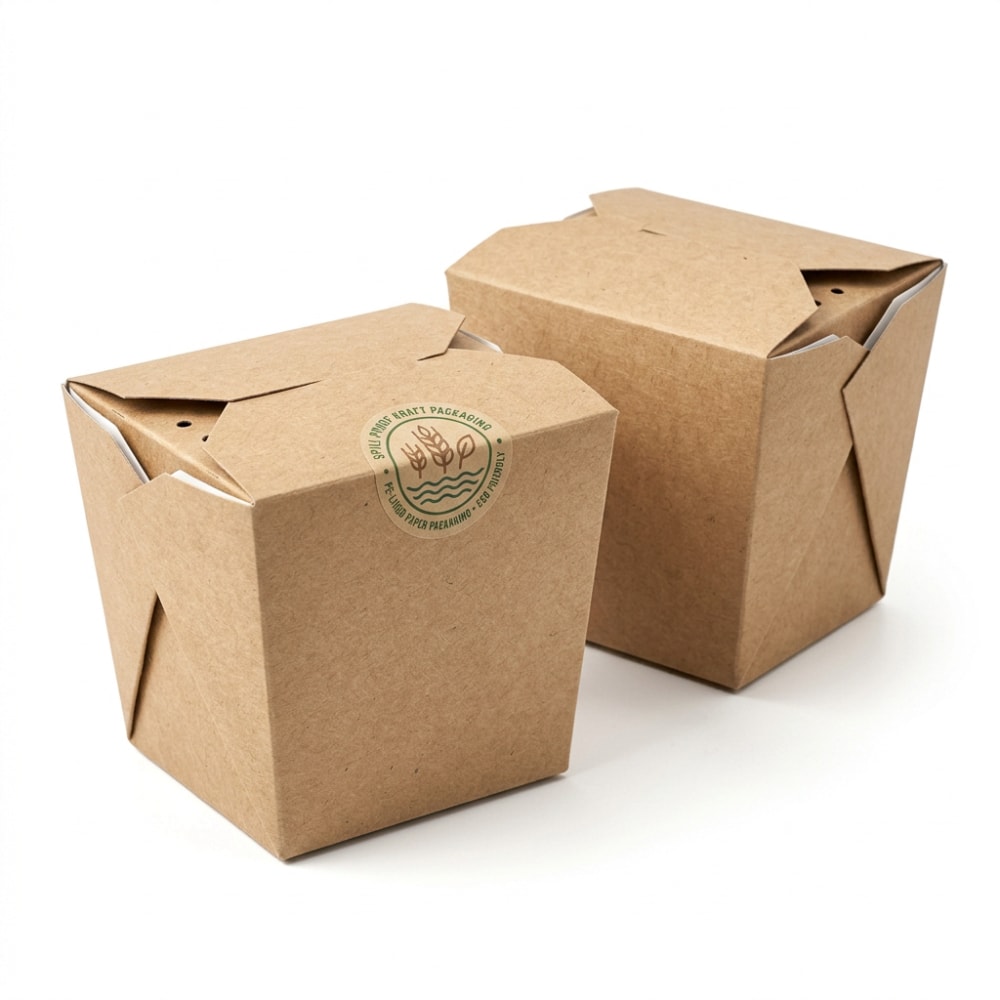
Retail food brands in the United States need deli packaging that protects food, supports branding, meets safety rules, and still works within tight margin targets. For many buyers, the best path is to work with an OEM kraft deli boxes supplier that can customize size, structure, coating, lid format, and print design for sandwiches, salads, pastries, fruit, meal kits, and grab-and-go deli items. This article explains how OEM sourcing works, what the 2026 market looks like, how to compare OEM and ODM options, how a sketch becomes a production sample, how printing and quality agreements should be handled, and what realistic MOQ and cost planning looks like for U.S. importers, distributors, restaurant groups, and retail food operators.If you are looking for an OEM kraft deli boxes supplier for the United States market, the strongest opportunity usually comes from a factory partner that can provide food-grade materials, custom structure development, brand printing, compliance documentation, stable lead times, and flexible order planning. In practical terms, OEM is the better model when your business already knows its target package size, product fit, retail shelf goals, and brand standards. It allows you to specify board grade, PE or PLA lining, window placement, folding structure, leak resistance, stacking behavior, and logo presentation.For U.S. buyers in cities such as New York, Los Angeles, Chicago, Houston, Miami, Seattle, and Atlanta, demand is rising not only from restaurants but also from supermarket delis, premium convenience stores, ghost kitchens, meal prep brands, food trucks, airport retail, and event catering. A reliable supplier should be able to support both pilot runs and repeat volume, especially for import routes tied to Los Angeles/Long Beach, New York/New Jersey, Savannah, Houston, Oakland, and Norfolk.When screening suppliers, buyers should prioritize six basics:Food-contact compliance for the U.S. market Custom size and structure capability Consistent print quality across repeat orders Grease, leak, and moisture performance Clear sampling and approval workflow Transparent MOQ, tooling, and shipping terms In short, the best OEM kraft deli boxes supplier is not just a low-price exporter. It is a manufacturing partner that can turn your packaging specification into a repeatable, compliant, brand-ready product with predictable landed cost.Buyer NeedWhy It MattersRecommended OEM ResponseRisk If IgnoredLeak resistancePrevents sauce seepage and shelf messUse suitable lining and lock structureProduct returns and bad reviewsGrease barrierKeeps box appearance cleanSelect grease-resistant food boardWeak shelf presentationBrand printingImproves recall and premium perceptionFlexo or custom print with proof approvalGeneric packaging feelCorrect sizingReduces food movement and damageCustom dieline based on product dimensionsCollapsed or crushed presentationCompliance recordsSupports import and food safety checksProvide test documents and standardsCustoms or buyer rejectionStable lead timePrevents stockouts in busy seasonsProduction planning and warehousing supportEmergency air freight costsThe table above shows that packaging success in the United States depends on more than unit price. Buyers that treat deli boxes as a branded operating tool usually achieve better reorder stability and better food presentation.The 2026 market opportunity for OEM kraft deli boxes suppliers is tied to three forces in the United States: continued growth in takeout and prepared foods, stricter sustainability expectations, and the expansion of premium private-label retail foods. Supermarket chains, independent delis, bakery cafes, and healthy fast-casual concepts are all moving toward packaging that feels natural, recyclable where accepted, and visually aligned with clean-label food positioning.Prepared foods are no longer limited to lunch counters. In Boston, Philadelphia, San Francisco, Dallas, and Denver, grocery retailers now compete directly with restaurants through ready-to-eat programs. These formats need compact, attractive, stackable paper deli boxes for wraps, sliced cakes, donuts, fruit cups, sushi-adjacent items, snack packs, and hot or warm food held for short windows. A kraft look communicates freshness and eco-awareness, especially when paired with simple black printing or clear windows.By 2026, buyers are likely to face stronger scrutiny around packaging waste, PFAS-related concerns, certified sourcing, and regional compostability or recyclability claims. That means suppliers must be prepared to discuss paper origin, barrier material, ink suitability, and disposal pathway in plain commercial terms. United States buyers increasingly expect a supplier to explain whether a box is best positioned as recyclable, compostable, or simply reduced-plastic food packaging.Another market driver is private-label growth. Retailers want packaging that looks proprietary, not generic. This benefits OEM sourcing because structure and print can be tailored to each program. A deli chain in Chicago may need a tall sandwich wedge box with a front window, while a fruit retailer in Miami may need moisture-resistant mini kraft boxes with secure lids and venting behavior.var ctx1 = document.getElementById('lineChart2026').getContext('2d');var chart1 = new Chart(ctx1, {type: 'line',data: {labels: ['2022', '2023', '2024', '2025', '2026'],datasets: [{label: 'Estimated U.S. Demand Index for Custom Kraft Deli Boxes',data: [78, 86, 95, 107, 121],borderColor: 'rgb(75, 192, 192)',backgroundColor: 'rgba(75, 192, 192, 0.15)',fill: false,tension: 0.25}]},options: {responsive: true,maintainAspectRatio: false}});The line chart indicates a realistic growth pattern rather than an exaggerated surge. This kind of steady expansion reflects how packaging demand follows prepared food growth, brand differentiation, and environmental pressure at the same time.2026 Growth DriverImpact on U.S. BuyersEffect on OEM PackagingOpportunity LevelPrepared food expansionMore SKUs need packagingGreater size and structure customizationHighDelivery and grab-and-go salesPackaging must travel wellStronger lids and leak controlHighRetail private labelDemand for brand-specific packagingCustom print and differentiated formatHighSustainability pressureClaims must be more credibleCertified materials and clear specificationsHighPremium food presentationPackaging affects shelf appealWindow lids and cleaner graphicsMedium to highRegional regulation changesCompliance review becomes essentialMore technical communication from suppliersMediumFor purchasing teams, the key lesson is that 2026 will reward suppliers that combine manufacturing discipline with advisory support. Price will still matter, but buyers will increasingly choose partners who can explain material tradeoffs and help avoid compliance surprises.Many U.S. buyers use OEM and ODM interchangeably, but the difference matters. OEM means the factory manufactures based on your specification. ODM means the factory offers an existing design that you adapt slightly, often with your logo, color changes, or small structural revisions. For kraft deli boxes, OEM is best for differentiated retail programs, while ODM is often faster for simpler launches or small trial programs.Suppose a prepared-food distributor in New Jersey wants a unique 750 ml deli box with a die-cut viewing window shaped to match its premium sandwich line. That is usually an OEM project. In contrast, if a convenience store chain in Arizona only needs a standard kraft tuck-top box with one-color branding, an ODM-style starting point may reduce cost and shorten development time.Choosing between the two depends on branding depth, speed, budget, and packaging uniqueness. Importantly, OEM usually offers better long-term identity, while ODM often offers quicker commercialization.FactorOEM ModelODM ModelBest FitDesign ownershipBuyer-led specificationSupplier-led base designOEM for unique packagingLaunch speedModerateFastODM for urgent rolloutTooling needsHigher chance of custom toolingOften lowerODM for simpler formatsBrand distinctionStrongModerateOEM for retail positioningUnit cost at scaleEfficient after setupCan be efficient for standard itemsDepends on volumeFlexibility for performance upgradesHighLimited by existing designOEM for technical needsThe table shows why large restaurant groups, deli brands, and wholesalers serving multiple accounts often prefer OEM. They need the freedom to match local menu formats, shelf-space constraints, and customer expectations. Meanwhile, regional resellers testing a new product line may find ODM more practical in the first phase.One smart buying strategy is a hybrid model. A buyer begins with an ODM deli box to test store velocity in markets such as Orlando or Minneapolis, then shifts to a full OEM design after confirming product-market fit. This reduces launch risk without giving up future brand control.The design process is where many packaging projects either gain momentum or lose time. A disciplined OEM kraft deli box development path should move from concept to sample through clear milestones. For U.S. buyers, the most efficient projects start with product-use data rather than only visual references. In other words, send food dimensions, target fill weight, serving temperature, storage duration, stacking requirements, and retail display method before requesting artwork.A typical design process includes the following steps: requirement intake, preliminary structure proposal, dieline draft, material recommendation, print layout placement, white sample review, revised prototype, final artwork proof, pre-production sample, and mass production approval. If the packaging will be used for sauces, oily pastries, chopped fruit, or chilled deli meals, the barrier discussion should happen before final graphics are approved.For example, a sandwich concept in Seattle may want a natural unbleached kraft appearance with a narrow PET window and black flexo branding. A fruit-and-yogurt retailer in Austin may prefer higher moisture resistance and a stronger locking tab. These are not cosmetic differences alone; they affect board selection, scoring, folding behavior, and sample testing.StageBuyer Input NeededSupplier OutputMain DecisionProject briefFood type, size, use caseInitial recommendationProject feasibilityStructure draftPhotos or dimensionsDieline conceptBox format selectionMaterial selectionHeat, grease, moisture needsBoard and lining optionsPerformance balanceWhite samplePhysical fit feedbackBlank prototypeSize and fold approvalPrint proofArtwork and brand rulesDigital or printed proofVisual approvalPre-production sampleFinal sign-offNear-mass-production sampleMass production releaseThis table reflects a reliable path from sketch to sample. Each stage reduces downstream errors. Buyers that skip the white sample stage often discover fit problems only after production, which is far more expensive to correct.Practical buying advice for U.S. importers: ask suppliers to test not just box assembly but also shelf behavior, lid closure after filling, oil migration over time, and carton packing efficiency. If your product will be sold in refrigerated deli cases, request feedback on condensation impact. If it will move through delivery channels in cities like Los Angeles or Phoenix, ask about heat retention and structure stability during transport.Consider a realistic United States launch case. A regional deli retailer with 48 stores across the Northeast wants to introduce a new line of grab-and-go wraps, brownies, cut fruit, and mini pasta salads. The buyer needs two deli box sizes, one windowed dessert box, and one compact fruit box under a private-label identity. The project begins in January with a target shelf launch in May.Week 1 focuses on project briefing. The retailer shares product dimensions, expected weekly throughput, shelf layout, refrigeration conditions, and desired kraft visual style. Week 2 and Week 3 cover structure proposals and blank sample review. By Week 4, the buyer confirms that one wrap box needs a stronger front lock because staff will assemble it quickly during morning prep. Week 5 is print proofing. Week 6 involves revised samples with graphics. Weeks 7 to 9 handle mass production, carton packing verification, and export booking. Week 10 to Week 13 covers ocean transit, customs clearance, inland delivery, and DC receipt.That kind of timeline is realistic when the project remains disciplined. Delays usually come from late artwork changes, vague size instructions, or underestimating how long approval loops take inside multi-store organizations.WeekProject ActivityCritical CheckpointCommon Delay Risk1Requirement reviewUse case clarityIncomplete product data2Structural proposalInitial box geometryToo many concept changes3White sampleFood fit testNo physical test by operations team4Revision roundClosure and filling speedLate performance concerns5Artwork proofingLogo, color, legal textBrand team approval lag6Pre-production sampleFinal sign-offUnexpected print adjustments7-9Mass productionQuality consistencyRush scheduling10-13Shipping and deliveryArrival planningPort congestion or customs issuesThe main lesson from this case study is that packaging launch success is project-management driven. Even when a supplier is capable, the buyer must coordinate operations, merchandising, compliance, and brand approvals. For companies shipping through Long Beach, Seattle, or Savannah, inland timing should also be built into launch calendars.Printing is where functionality meets shelf identity. In the United States, many deli brands want packaging that looks premium but not overworked. Kraft substrate often performs well with simple one-color or two-color graphics, especially black, dark green, deep red, or muted earth tones. Minimal branding can look more upscale than crowded artwork, particularly for organic, artisan, bakery, and farm-style positioning.However, branding decisions should never ignore production reality. The absorbency and color variance of kraft board can affect print sharpness and color consistency. Buyers should define acceptable variation levels, barcode readability, logo scale, and panel placement before production. Window positioning also matters. A clear PET window can increase product visibility and conversion, but if placed too low or too wide it may weaken structure or expose grease marks.Smart branding choices for deli boxes include front-panel logo placement, top-panel product naming space, ingredient or date-label area, QR code placement, and enough blank area for store stickers. This is especially useful for multi-SKU retailers in markets like San Diego, Charlotte, and Nashville.var ctx2 = document.getElementById('barChartDemand').getContext('2d');var chart2 = new Chart(ctx2, {type: 'bar',data: {labels: ['Supermarket Deli', 'Bakery Cafe', 'QSR Takeout', 'Meal Prep', 'Fruit Retail', 'Convenience Stores'],datasets: [{label: 'Estimated U.S. Demand by Industry Segment',data: [92, 74, 88, 63, 57, 69],backgroundColor: ['#8B5E3C','#D2691E','#C19A6B','#A67B5B','#B8860B','#CD853F']}]},options: {responsive: true,maintainAspectRatio: false}});The bar chart highlights why branding needs vary by channel. Supermarket delis and QSR takeout place heavy emphasis on visual consistency and speed, while fruit retail and meal prep often prioritize freshness cues and labeling flexibility.From a printing perspective, U.S. buyers should ask these questions early:What print method is being used for the expected order volume? How will kraft board color affect brand color accuracy? Can the supplier match repeat orders consistently? Will the box include date coding, lot coding, or application stickers? Is the window film clear enough for shelf display but practical for production? How much edge movement should be expected in folded print alignment? For companies developing private label, it is wise to request a print hierarchy plan: master logo, product descriptor, usage claims, compliance text, and sticker space. This reduces redesign cycles and keeps the package usable in store operations.When developing custom deli boxes, intellectual property and quality agreements are not secondary paperwork. They are part of supplier risk control. In OEM projects, U.S. buyers may share dielines, brand artwork, retail concepts, and new product launch information before market release. A clear agreement should define who owns the design, how files may be used, whether molds or tooling are exclusive, and how similar concepts will be handled for other customers.Quality agreements matter just as much. A purchase order alone is often not enough. Buyers should define critical specifications such as dimensions, board grammage, lining type, odor limits, visual inspection standard, packing counts, master carton strength, moisture protection during storage, and defect thresholds. If the product includes a window, specify placement tolerance and bonding integrity. If used for oily foods, define the test method or practical expectation for grease resistance over a stated period.For United States importers, quality agreements are especially important when goods move through multiple hands before final use: importer, 3PL, regional distributor, store warehouse, then retail shelf. A box that leaves the factory looking good but fails after humidity exposure in Gulf Coast transit is still a costly failure.Agreement AreaWhat to DefineWhy U.S. Buyers Need ItRecommended PracticeArtwork ownershipWho owns logos and filesProtects private-label identityWritten ownership clauseDieline exclusivityWhether structure is exclusivePrevents direct copyingSpecify scope and termMaterial specificationPaper, lining, window filmEnsures repeat performanceAttach approved spec sheetInspection standardDefect tolerance and checksReduces disputes at receiptUse approved QC criteriaCompliance documentsFood-contact and certification filesSupports import and customer auditsCollect before shipmentCorrective action processHow claims are handledImproves accountabilitySet response timeline in advanceThe best suppliers treat these documents as a normal part of business, not as a sign of mistrust. In fact, clear documentation often speeds repeat orders because both parties know exactly what has been approved.MOQ and cost planning are where many sourcing decisions become practical. A supplier may offer a good unit price, but if the minimum order is too large for your SKU rotation, the total inventory cost may erase any benefit. For the United States market, smart buyers consider four cost layers: manufacturing price, tooling or plate cost, shipping and duty, and storage or carrying cost.MOQ depends on size complexity, print colors, structure uniqueness, and whether existing tooling can be used. Standard or near-standard deli box formats may allow lower entry volumes. A highly customized structure with window film, special coating, and multi-color printing usually requires a larger MOQ to make production efficient.Buyers should also look at carton count and pallet utilization. A box that is slightly redesigned to improve nesting or shipping density may lower landed cost more than a small unit-price concession. This is especially relevant for container planning into U.S. ports such as Newark, Charleston, or Tacoma.var ctx3 = document.getElementById('areaChartTrend').getContext('2d');var chart3 = new Chart(ctx3, {type: 'line',data: {labels: ['2022', '2023', '2024', '2025', '2026'],datasets: [{label: 'Shift from Generic Packaging to Custom OEM Programs',data: [34, 41, 49, 58, 67],fill: true,backgroundColor: 'rgba(54, 162, 235, 0.25)',borderColor: 'rgb(54, 162, 235)',tension: 0.3}]},options: {responsive: true,maintainAspectRatio: false}});The area chart shows an expected trend: more buyers are moving away from generic stock packaging toward custom OEM formats because shelf differentiation and sustainability messaging are becoming more important.Cost FactorWhat Affects ItTypical Buyer ConcernOptimization TipUnit priceMaterial, size, print, volumeStaying within target marginConsolidate volumes by size familyTooling or platesCustom structure and print setupHigh first-order costAmortize across annual demandMOQProduction efficiencyInventory pressureStart with core SKUs firstFreightCarton density and routeLanded cost swingsImprove pack-out efficiencyWarehousingOrder size and turnover rateSpace cost at U.S. DCsUse phased shipment plansQuality failure costDefects and delaysUnplanned replacement expenseApprove samples carefullyAs a rule, buyers should ask for a cost model, not just a quote. Knowing what drives the price makes future negotiations more productive. If volume grows, you can revisit print method, carton configuration, or board grade without restarting the project from scratch.For U.S. buyers seeking a stable long-term packaging partner, Shandong Fude Packaging Co., Ltd. provides a factory-direct model built around food-service and retail packaging customization. Rather than acting only as a trading source, the company supports product development, printing, and export coordination for food-grade paper packaging used by restaurants, distributors, takeaway platforms, wholesalers, and emerging food brands.In terms of technological capabilities, Fude has invested in integrated development processes for paper food packaging, including printing, die-cutting, forming, and quality verification workflows that help convert packaging concepts into production-ready items. This matters for OEM kraft deli boxes because performance depends on the interaction between structure, barrier choice, graphics, and end use. The company’s technical approach is designed to support leak resistance, grease control, print clarity, and practical stackability for deli, takeaway, dessert, and meal applications. Buyers exploring custom shapes, window-lid concepts, or modified compartment formats can learn more about available packaging categories through custom food packaging products.In manufacturing capabilities, Fude operates a modern large-scale facility in Shandong with automated lines, organized production planning, and controlled warehousing conditions suited to repeat export orders. With over two decades of industry experience and service to customers across multiple continents, the company is structured to support both standardized production and customized OEM programs. Its manufacturing system is particularly relevant for buyers who need dependable conversion of kraft lunch boxes, deli boxes, bowls, trays, and cups with consistent folding quality, print accuracy, and batch stability. This production base is valuable for importers serving metropolitan food hubs such as New York, Chicago, Los Angeles, and Miami where reliability often matters as much as first-cost savings. More background is available on the company profile page.In service capabilities, Fude supports buyers from requirement review through artwork preparation, sampling, production, and delivery coordination. This service model is useful for U.S. customers that need a clear path from concept to launch, especially when internal teams include procurement, branding, and operations stakeholders. Typical support may include packaging selection advice, sample confirmation, custom specification alignment, and lead-time planning for both trial and volume orders. Buyers interested in discussing packaging structure, MOQ, or shipment scheduling can review packaging development services or contact the team through the inquiry page.For United States customers, the value proposition is straightforward: a one-stop supply partner with experience in eco-focused food packaging, broad customization range, and export familiarity. That combination can help reduce sourcing friction when launching or scaling retail deli packaging programs.var ctx4 = document.getElementById('comparisonChartSupplier').getContext('2d');var chart4 = new Chart(ctx4, {type: 'bar',data: {labels: ['Customization', 'Print Capability', 'Production Scale', 'Sampling Speed', 'Export Experience', 'Quality Control'],datasets: [{label: 'Factory-Direct OEM Supplier Capability Index',data: [91, 88, 90, 82, 93, 89],backgroundColor: 'rgb(153, 102, 255)'}]},options: {responsive: true,maintainAspectRatio: false}});This comparison chart illustrates the capability profile buyers should look for in a factory-direct OEM partner. A strong supplier is not necessarily the cheapest at first glance, but it usually lowers total risk across design, execution, and repeat supply.1. What products are usually covered under OEM kraft deli box sourcing?Common items include sandwich boxes, bakery boxes, fruit boxes, dessert boxes, meal-prep boxes, noodle and salad containers, compact deli boxes from about 500 ml to 1000 ml, and window-lid formats for grab-and-go display. U.S. buyers often bundle several related items into one sourcing program to improve consistency and pricing leverage.2. Which industries in the United States commonly buy these boxes?Supermarket delis, bakery chains, quick-service restaurants, coffee shops, fresh fruit sellers, meal-prep companies, catering firms, food trucks, convenience store operators, and distributors serving institutional food service all use kraft deli packaging. Demand is especially strong in dense retail corridors and commuter markets.3. What applications are most suitable for kraft deli boxes?They are widely used for wraps, pastries, fries, salads, cut fruit, desserts, sandwiches, pasta portions, rice meals, cookies, and snack assortments. Window versions help visual merchandising, while lined versions help with oil and moisture resistance.4. How do I choose between local suppliers and overseas OEM factories?Local suppliers can provide fast replenishment, easier communication, and lower transit complexity. Overseas OEM factories often provide stronger customization, better scale economics, and broader structure options. Many U.S. buyers use a blended strategy: overseas production for core volume and local backup for urgent replenishment.5. What should I ask before requesting a quote?Prepare your size, volume, food type, temperature range, leakage concerns, target artwork, quantity by SKU, delivery schedule, and preferred destination port. Without these details, quotes may be incomplete or not directly comparable.6. What certifications or standards matter for the U.S. market?Food-contact compliance, quality management discipline, responsible paper sourcing, and any compostability claims relevant to your market all matter. Buyers should verify which documents apply to the exact material and coating being quoted.7. Are compostable and recyclable the same for deli boxes?No. A box may be marketed under one disposal route but not the other, depending on its barrier, film window, and local infrastructure. U.S. buyers should avoid broad claims unless disposal pathways are clear in their sales regions.8. How long does a custom project usually take?A practical timeline from brief to shipment often ranges from several weeks for straightforward designs to longer for more complex multi-SKU programs. Sampling, artwork approval, and shipping method will heavily influence the total timeline.9. What future trends should buyers watch for in 2026?Expect more pressure on sustainable materials, more attention to regulatory claims, increasing demand for cleaner print aesthetics, better barrier engineering with lower environmental impact, and more data-driven purchasing around freight efficiency and total landed cost.10. What is the biggest sourcing mistake buyers make?Focusing on unit price without controlling specification. A deli box is only cost-effective when it performs correctly, ships efficiently, prints consistently, and supports your brand at store level.In the United States, the OEM kraft deli boxes market is moving toward smarter customization rather than simple commodity purchasing. Buyers that combine clear specifications, realistic launch timing, and disciplined supplier selection will be better positioned in 2026 as retail food competition intensifies and packaging expectations rise. -
Canada Kraft Boat Tray Guide for Foodservice Menus
#1–#5 kraft boat trays should be chosen according to the foods being served, including fries, chicken, nachos, snack portions, tasting samples and heavily loaded menu items. For Canadian foodservice operators, the correct tray is not determined by size alone. Food weight, serving temperature, oil content, moisture, condiment volume, holding time, delivery exposure and customer handling all affect performance.A small #1 or #2 paper boat can work well for samples, sides, onion rings, churros and light fries. Larger #3, #4 and #5 kraft food boats are generally more suitable for poutine, loaded fries, chicken tenders, fish and chips, nachos, pulled pork portions and other high-volume servings. However, a larger tray is not automatically stronger. The paperboard grade, barrier treatment, sidewall structure and packing method must match the actual menu application.The most reliable buying process is to order samples, define measurable acceptance criteria and conduct a real-service trial before placing a bulk order. Test trays with the real food recipe, normal portion weight, hottest expected temperature, sauces, peak-period stacking and delivery conditions. Record results so purchasing teams, franchise operators and distributors can approve the same specification repeatedly.For Canadian buyers importing or distributing food packaging in Toronto, Vancouver, Montréal, Calgary, Halifax or Winnipeg, tray selection should also consider warehouse storage, port-to-warehouse transit, seasonal humidity, bilingual branding requirements where applicable and food-contact documentation for the intended market.A kraft paper boat tray performs best when treated as part of a packaging system rather than as an isolated item. The tray must work with the serving process, paper liners, condiment cups, bags, napkins, beverage carriers, delivery bags and back-of-house workflow. This is especially important for quick-service restaurants, sports venues, food trucks, campus dining programs and packaging distributors serving diverse Canadian menus.Start with a menu map. Separate dry snacks, fried foods, sauce-coated foods, chilled samples and loaded meals. Then identify which items are eaten immediately, held under heat lamps, carried to a seat, handed through a drive-through window or transported through third-party delivery. A boat tray that succeeds for fresh fries at a Toronto food hall may fail for poutine delivered across Vancouver during rain and traffic.Menu ApplicationRecommended Tray RangeKey Performance NeedSuggested Supporting PackTasting samples and snack cups#1 kraft boat trayEasy hand-held servingNapkin or small paper linerRegular fries and onion rings#1–#2 kraft boat traysGrease resistance and rigid sidewallsFry scoop or branded linerChicken wings and tenders#2–#3 kraft boat traysSauce control and stable carryingPortion cup and delivery bagPoutine and loaded fries#3–#5 kraft boat traysMoisture barrier and high load capacityInsert, lid option or secondary trayNachos and shareable snacks#4–#5 kraft boat traysWide opening and topping retentionPaper liner and sauce cupsFish and chips#3–#5 kraft boat traysOil management and structural strengthGrease-resistant liner and carry bagThis table is a starting point, not a substitute for testing. A #3 tray made from heavier board can outperform a poorly specified #4 tray, while a tray used with a liner may suit a menu that would otherwise require a higher barrier construction. Establish the system around the food and operating conditions instead of relying only on catalogue names.Demand for paper food trays in Canada is supported by takeaway growth, event catering, food halls, casual dining, quick-service restaurants and consumer interest in fibre-based packaging. Cities such as Toronto, Vancouver, Montréal, Ottawa and Calgary have dense concentrations of restaurant concepts requiring flexible, stackable and brand-ready serving packaging.Canadian foodservice buyers increasingly seek packaging that balances visual presentation, food-contact compliance, practical performance and reduced reliance on conventional plastic formats. Kraft boat trays offer a familiar natural-paper appearance and can support many menu applications, but sustainability claims must be aligned with the actual material, coating, local collection infrastructure and customer instructions.var ctxMarket = document.getElementById('marketGrowthChart').getContext('2d');new Chart(ctxMarket, {type: 'line',data: {labels: ['2022', '2023', '2024', '2025', '2026', '2027'],datasets: [{label: 'Indexed Canadian demand for paper food trays',data: [100, 108, 117, 126, 136, 147],borderColor: 'rgb(109, 76, 65)',backgroundColor: 'rgba(109, 76, 65, 0.10)',borderWidth: 3,fill: false,tension: 0.25}]},options: {responsive: true, maintainAspectRatio: false}});The chart presents an illustrative indexed demand outlook, with 2022 set at 100. It reflects continued interest in portable food formats, restaurant packaging standardization and fibre-based serving solutions. Actual purchasing volume will vary by province, menu mix, tourism activity, distribution coverage and local foodservice conditions.The most efficient tray program usually uses a limited number of core sizes. Too many sizes increase inventory complexity, warehouse space, purchasing administration and the risk that staff select the wrong pack during busy service. In many operations, two or three tray sizes can cover most menu items when paired with liners, sauce cups and well-controlled portioning.Use portion weight rather than menu descriptions alone. “Loaded fries” can mean 250 g at one location and more than 600 g at another. Measure the filled food weight, topping weight and sauce volume separately. Also observe the tray after five, 15 and 30 minutes, because moisture migration often becomes visible after the initial handoff.Tray SizeTypical Canadian Menu UseApproximate Load RangeImportant Test Condition#1Samples, mini snacks, kids’ sides50–120 gHand-held stability#2Fries, nuggets, onion rings120–220 gBottom grease staining#3Chicken tenders, medium fries, snack platters220–350 gSidewall strength during carrying#4Loaded fries, fish and chips, larger snacks350–550 gSauce and steam exposure#5Nachos, poutine, shareable servings550–900 gHigh-load rigidity and leakageCustom formatSignature menu items or branded promotionsDefined by product designProduction proof and service trialThe load ranges above are planning estimates, not guaranteed capacities. The usable load depends on tray dimensions, paperboard basis weight, fold geometry, barrier treatment and the way food is placed in the tray. For heavy dishes such as poutine, test the tray with fresh gravy, cheese curds and the intended fry volume—not dry proxy materials.Open boat trays are ideal for immediate consumption and counter service, but they may need additional protection for delivery, stadium seating, retail sampling or multi-item orders. For wet or high-value servings, use a secondary packaging strategy rather than forcing an open tray to do the work of a sealed container.Possible solutions include grease-resistant paper liners, formed inserts, paperboard sleeves, lidded outer containers, kraft carry bags and corrugated delivery supports. Condiment cups should fit the tray without tipping. A sauce cup that slides across hot fries can create localized moisture failure and reduce presentation quality.For deliveries in Canadian winter conditions, the challenge can be both heat retention and condensation. A tightly closed outer pack may preserve warmth but soften fried foods. A properly designed vented secondary pack can help manage steam while keeping the order protected.Standardization helps distributors and restaurant groups control quality across trays, fry cups, bowls, clamshells and meal boxes. Where practical, coordinate kraft appearance, print colours, food-contact material declarations and barrier technologies across product categories. This creates a more consistent customer-facing presentation and reduces the number of specifications that purchasing teams must manage.However, visual consistency should not override functionality. A dry snack tray and a sauce-heavy poutine tray may require different grease or moisture resistance. Ask suppliers to clearly identify the substrate, coating or treatment used for each SKU, and request documentation appropriate to your destination market and project requirements.Standardization ItemWhy It MattersRecommended Control MethodRisk if IgnoredKraft shadeMaintains consistent brand appearanceApproved physical sampleVisible batch variationPaperboard gradeSupports predictable strengthWritten material specificationCrushing or softeningGrease resistanceProtects hands and bagsFood application testOil transfer complaintsPrint colourProtects visual identityDigital proof and printed proofOff-brand appearanceCarton packing quantityImproves warehouse planningCarton specification sheetCounting and replenishment errorsTraceability markingSupports complaint investigationLot and batch recordsSlow corrective actionThis controls table is useful for both importers and local distributors. It helps transform a general request for “kraft food boats” into a repeatable procurement standard with clear quality checkpoints.Laboratory checks are valuable, but real-service testing is the final approval step. Test the trays during the busiest service period, when staff are portioning quickly, customers are carrying multiple items and finished orders may wait before pickup. Include staff from kitchen, front counter, delivery dispatch and purchasing in the evaluation.A practical trial should assess filling speed, tray opening, stacking, oil staining, sidewall collapse, sauce migration, customer grip, bag fit, presentation after holding and ease of disposal. Where relevant, test with gloves, wet hands, drive-through handoffs and delivery riders. Record failures by time and location rather than relying on general impressions.Trial CheckpointHow to TestAcceptance ExampleDecision UseFill speedTime 30 consecutive servingsNo slower than current packLabour planningGrease resistanceHold hot fried food for 20 minutesNo oil transfer to customer handBarrier selectionMoisture controlServe sauce-coated foodNo soft bottom or seepageTray grade approvalLoad stabilityCarry filled tray through service routeNo sidewall collapseSize and board selectionDelivery handlingPlace in normal delivery bagNo tipping or crushingSecondary-pack decisionCustomer experienceCollect feedback from live usersComfortable grip and clean presentationFinal launch decisionFor a multi-location chain, use the same test protocol in different markets. A tray that works in a dry indoor food court may react differently in a humid coastal environment such as Vancouver or during a winter delivery cycle in Montréal. A standardized approval record makes it easier to compare outcomes and prevent location-specific substitutions.Kraft boat trays are used across more than traditional fry service. Their wide opening and informal presentation are suitable for many food concepts, from small-batch snack brands to high-volume concession operations. The strongest applications are those where consumers eat directly from the tray and where a rigid, open format improves access to the food.var ctxIndustry = document.getElementById('industryDemandChart').getContext('2d');new Chart(ctxIndustry, {type: 'bar',data: {labels: ['Quick Service', 'Food Trucks', 'Sports Venues', 'Food Halls', 'Catering', 'Retail Sampling'],datasets: [{label: 'Illustrative annual tray demand index',data: [92, 74, 81, 78, 63, 58],backgroundColor: ['#795548', '#8D6E63', '#A1887F', '#6D4C41', '#BCAAA4', '#5D4037']}]},options: {responsive: true, maintainAspectRatio: false}});The bar chart shows relative application potential rather than audited market totals. Quick-service restaurants lead because of daily throughput, while sports venues and food halls can generate intense short-duration demand. Food trucks often prioritize compact storage and fast serving, making a streamlined #1–#3 tray program particularly useful.Custom printing can turn a plain kraft tray into a recognizable menu asset, but branding should be added after the structure and material have passed application testing. First approve the tray size, paper quality, barrier performance, fold accuracy and packing format. Then finalize artwork, print placement and colour expectations.For Canadian brands, branding may need to accommodate English and French content depending on product claims, location and customer requirements. Artwork should be reviewed for legibility on natural kraft stock, where colour appearance can differ from white coated paper. Fine lines, light ink coverage and small reverse text deserve special attention.Fude Packaging can support digital proofs, white samples and printed pre-production proofs for customized projects. This staged approval process helps buyers confirm tray dimensions, print placement, kraft tone and practical performance before mass production.The lowest unit price is not always the lowest total cost. An inexpensive tray that leaks, stains bags, collapses under loaded food or produces inconsistent print quality can create refunds, food waste, damaged brand perception and extra labour. Review packaging performance after launch using data from operations, customer service and warehouse teams.Track complaint types by location, tray lot, menu item and service channel. If problems occur mainly with delivery orders, the solution may be a secondary pack instead of a different tray. If failures occur only with one sauce recipe, a moisture barrier or menu assembly change may be more effective than increasing tray size.Post-Launch MetricWhat It RevealsReview FrequencyTypical Corrective ActionLeakage complaintsBarrier or food-load mismatchWeeklyImprove material or add linerCrushed tray reportsWeakness in transport or stackingWeeklyAdjust carton or secondary packFood wastePoor portion protection or handlingMonthlyReview tray size and workflowInventory varianceOveruse, loss or incorrect pack countMonthlyStandardize carton quantitiesCustomer presentation scoreBrand and food appearance impactMonthlyRefine serving systemSupplier lot performanceBatch consistency and traceabilityPer shipmentInvestigate and document findingsThese metrics give procurement teams evidence for future purchasing decisions. They also create a factual basis for discussions with suppliers, reducing the risk of vague quality disputes after a product has already entered service.By 2026, Canadian foodservice packaging decisions are expected to place greater emphasis on traceability, material transparency, practical waste outcomes and efficient supply planning. Buyers will increasingly ask not only whether a tray looks sustainable, but also whether it performs properly, contains recycled or certified fibre where specified, and matches the recovery systems available in the areas where it is used.Technology will support this shift through digital artwork approval, lot-level production records, automated inspection, data-based demand forecasting and more precise material selection. Restaurant chains may use packaging feedback from delivery platforms and customer-service systems to identify which menu items cause the most tray failures.var ctxTrend = document.getElementById('trendShiftChart').getContext('2d');new Chart(ctxTrend, {type: 'line',data: {labels: ['2023', '2024', '2025', '2026', '2027', '2028'],datasets: [{label: 'Share of buyers prioritizing verified performance and material data',data: [42, 49, 57, 65, 71, 76],borderColor: 'rgb(46, 125, 50)',backgroundColor: 'rgba(46, 125, 50, 0.22)',fill: true,borderWidth: 3,tension: 0.25}]},options: {responsive: true, maintainAspectRatio: false}});This area chart illustrates the expected shift from appearance-led purchasing toward evidence-led packaging selection. For tray buyers, this means samples, test records, documentation and lot traceability will become increasingly valuable during supplier qualification.Canadian buyers can source from local converters, broadline distributors, North American manufacturers or overseas factories. The right option depends on order volume, customization level, lead-time requirements, inventory strategy and the need to consolidate related packaging categories. Local suppliers may offer faster replenishment for standard items, while direct manufacturing can be attractive for planned volume programs and custom printed specifications.When importing through Vancouver, Prince Rupert, Montréal or Halifax, factor in shipping lead times, customs documentation, inland freight, pallet configuration and warehouse capacity. A reliable supplier should help clarify carton dimensions, loading quantities, production schedules, inspection options and documentation before the order is released.var ctxSupplier = document.getElementById('supplierComparisonChart').getContext('2d');new Chart(ctxSupplier, {type: 'bar',data: {labels: ['Customization', 'Multi-SKU Supply', 'Production Scale', 'Traceability', 'Sample Support', 'Planned Cost Control'],datasets: [{label: 'Direct manufacturing program',data: [90, 92, 95, 88, 90, 87],backgroundColor: 'rgba(109, 76, 65, 0.75)'},{label: 'Standard local stock program',data: [45, 58, 62, 70, 55, 60],backgroundColor: 'rgba(120, 144, 156, 0.75)'}]},options: {responsive: true, maintainAspectRatio: false}});The comparison chart is an illustrative procurement framework. It does not mean one route is always superior. Local stock programs can be highly effective for urgent replenishment, while direct manufacturing tends to be more suitable for stable volume, custom printing and coordinated specifications across trays, cups, bowls and food boxes.Fude Packaging supports overseas B2B customers seeking paper trays and related food packaging from a single manufacturing partner. The company has more than 20 years of packaging experience and operates a self-owned 30,000 m² production base in Shandong. For buyers developing a broader program beyond boat trays, the available range includes cups, bowls, food boxes, kraft lunch boxes, salad containers, noodle packaging, trays and multi-compartment meal packs.From a technological perspective, Fude Packaging uses automated production equipment and an in-house laboratory to support material checks, forming consistency, print review and functional evaluation. The company can provide digital proofs, white samples and printed pre-production proofs, allowing Canadian purchasers to confirm the practical specification before approving mass production. Food-contact and quality documentation can be discussed according to destination-market requirements, including FSC, ISO 9001, LFGB, FDA-related and other applicable documentation requests.From a manufacturing perspective, automated capacity can reach approximately 120,000 units per day, subject to product structure and production planning. Direct control over printing, die-cutting, forming, inspection, packing and shipment preparation helps support batch consistency and traceability. This can be useful for distributors supplying multiple provinces or restaurant groups coordinating packaging across several locations.From a service perspective, Fude Packaging provides OEM and ODM support for custom dimensions, material recommendations, print adaptation, artwork checks, prototype development and scheduled orders. Standard production timing may be approximately 7–15 days depending on product details and order volume. Buyers can also review the company’s kraft boat tray collection, explore related kraft fry cup options, learn about available custom packaging services, or review Fude Packaging’s manufacturing background.1. Are #1–#5 kraft boat trays suitable for fried foods, snacks, samples and loaded servings?Yes, but suitability depends on the tray size, paperboard construction, grease resistance and food load. Smaller trays are commonly used for samples and side portions, while #3–#5 trays are better suited to heavier servings such as loaded fries, chicken tenders, fish and chips, nachos and poutine. Test the actual recipe before final approval.2. Which temperature and holding time should be tested?Test at the highest realistic serving temperature and for the longest normal holding period. For many quick-service applications, assess the tray immediately after filling, after 10–15 minutes and after 20–30 minutes. Include delivery testing when food may remain in a bag or vehicle before consumption.3. How are leakage and grease resistance checked?Fill the tray with the intended food at normal portion weight. Check the bottom, folds and sidewalls for oil staining, softening, seepage and deformation. Place the filled tray on a napkin or paper bag during the test to identify transfer that a customer would notice.4. Which tray size and shape work best?Choose based on portion volume, topping height, hand-held comfort and secondary packaging. Wide trays suit nachos and loaded foods. Narrower trays work well for fries and snack portions. A larger size should be selected only when it improves food fit and stability rather than simply making the portion look smaller.5. What should a real-service trial include?Include normal kitchen assembly, peak-period filling speed, counter handoff, customer carrying, sauce exposure, holding under realistic conditions, bagging and delivery if applicable. Record tray lot numbers, food weight, failure time and staff feedback so the final purchasing decision is repeatable.6. Can kraft boat trays be customized for Canadian restaurant brands?Yes. Custom options may include size, paper material, print design, logo placement and packing configuration. Before approving production, review a digital proof and physical sample. For branded programs, confirm colour appearance on kraft stock and ensure artwork supports the intended regional language and regulatory requirements. -

Global Market Guide to Wholesale Salad Bowls with Lids
Custom salad bowls with lids wholesale should be specified as a complete food-packaging system rather than purchased as a bowl and lid that merely appear compatible. For Global market buyers, the critical decisions are bowl rim tolerance, lid material, food temperature, moisture release, stack height, delivery vibration, filling weight, branding requirements, and destination-market compliance. A clear PET lid may work well for chilled grain bowls and salad displays, while a PP lid may provide more reliable performance when warm proteins, rice, noodles, or steam are involved.The most common purchasing mistake is approving an empty bowl-and-lid fit. An empty container can snap together correctly yet fail after dressing, hot ingredients, condensation, stacked loading, or motorcycle and van delivery. Buyers should test multiple production samples filled with the actual menu, including typical toppings, sauces, temperatures, and holding times. The lid should remain secure through sealing, stacking, transport, customer opening, and disposal.For importers, restaurant groups, distributors, takeaway platforms, and retail food brands, a practical specification should define the bowl diameter, rim profile, dimensional tolerance, capacity, material grade, coating or barrier, lid resin, vent format, pack configuration, print standard, acceptable defect level, and test method. The right wholesale salad bowl supplier will discuss these details before quoting instead of simply offering a generic stock size.Buying FactorWhy It MattersTypical Risk if IgnoredRecommended Buyer ActionRim diameterControls lid engagement and closure forceLoose lids or cracked bowl rimsApprove a dimensional drawing and sample measurement planLid materialDetermines clarity, heat tolerance and flexibilityWarping, fogging or brittle closureMatch PET or PP to actual food temperatureVentingManages steam and condensationSoggy greens or pressure releaseTest vented and non-vented lid optionsFill weightChanges transport force on the closureLid release during deliveryTest at maximum operational fill levelStacking heightCreates downward load on lower bowlsRim distortion and lid deformationEvaluate loaded stack compressionDelivery routeIntroduces vibration, tilt and impactSauce leakage and customer complaintsRun drop, vibration and tilt testsThis table shows why a food-service bowl cannot be evaluated only on unit cost. Small differences in rim geometry or lid stiffness can affect customer satisfaction, refund rates, product waste, and brand presentation across thousands of deliveries.The bowl rim is the mechanical interface between the paper bowl and its lid. A lid can only perform consistently if the bowl’s upper diameter, curl profile, wall thickness, and roundness remain within an agreed production tolerance. In paper food bowls, variation may arise from paperboard thickness, coating behavior, forming pressure, humidity, tooling wear, or storage conditions. For this reason, a buyer should not approve a bowl and lid based on one hand-picked prototype.Rim tolerance is usually checked by measuring the external rim diameter at several points around the circumference. Buyers should also inspect ovality, rim height, curl consistency, and the engagement depth between lid and bowl. A bowl that is slightly oval can feel secure on one side but release when pressed, tilted, or compressed in a delivery bag. For multi-country procurement programs, document the target measurement and acceptable range in the purchase specification.For example, a 150 mm nominal bowl opening may require a narrowly controlled rim range compatible with the selected lid tooling. The exact tolerance depends on the bowl construction and lid design, so buyers should ask the manufacturer for a drawing rather than applying a generic tolerance from another supplier. Changing factories while retaining an old lid SKU is especially risky unless functional compatibility has been verified.Rim Inspection PointWhat to MeasureSuggested Sample CheckFunctional RelevanceOuter diameterRim width across opposite pointsMinimum 4 positions per bowlConfirms lid seating diameterRoundnessDifference between maximum and minimum diameterCheck every sampled bowlReduces one-sided lid releaseRim curl heightVertical profile of rolled edgeMeasure with profile gaugeSupports snap-lock engagementRim thicknessCombined paperboard and coating thicknessCheck by production batchAffects closure pressureSurface conditionCracks, delamination or coating damageVisual inspection under lightPrevents leak paths and weak spotsSeal forceForce needed to fit and remove lidFunctional test on filled bowlsBalances security and customer usabilityFor a global supply chain, buyers can request retained samples from approved production batches. This makes it easier to investigate whether a future closure issue is connected to bowl forming, lid molding, storage, filling temperature, or operational handling.PET and PP lids serve different operating conditions. PET lids are widely selected for cold salads, fruit cups, yogurt bowls, poke bowls, deli counters, and retail displays because they offer high clarity and attractive food visibility. Clear PET can help retailers in London, Dubai, Singapore, Sydney, Toronto, and Los Angeles present colorful ingredients without opening the pack.PP lids are commonly preferred where food may be warm, where the bowl is held in heated environments, or where stronger heat tolerance is needed. PP generally has greater resistance to elevated temperatures than standard PET, but exact performance depends on resin formulation, lid thickness, geometry, food temperature, and contact duration. A warm quinoa bowl with grilled chicken may create a different result from a chilled salad packed beside a hot soup.Material selection should also account for recycling infrastructure and local policy. Some markets prioritize easily recognizable clear packaging formats, while others emphasize fiber-based systems, compostability claims, recycled-content expectations, or restrictions on selected single-use items. Buyers should confirm claims and required documentation for the destination market instead of assuming that a material accepted in one region will be marketed identically elsewhere.Selection CriteriaClear PET LidPP LidBest Purchasing UseFood visibilityExcellent transparencyUsually lower clarityRetail salad and display-focused menusCold-food suitabilityStrongStrongChilled salads, fruit and dessertsWarm-food toleranceLimited depending on temperatureGenerally more suitableWarm grains, proteins and mixed mealsFlexibilityMore rigidMore flexibleChoose based on closure geometryCondensation appearanceMay fog with steamMay be less display-orientedTest with actual holding timeTypical visual positioningPremium fresh-food presentationOperational hot-food performanceMatch restaurant concept and menuThe comparison does not mean that PET is always for cold food and PP is always for hot food. The correct choice must be validated with the filled product. Ingredient temperature at filling, time before delivery, sauce placement, lid vents, and outer bag conditions all influence results.Venting is a controlled trade-off. A tightly closed lid helps retain liquid and protects food during travel, but trapped steam can produce condensation, soften salad leaves, fog a clear lid, or create pressure that affects closure stability. A vented lid can release moisture and heat, yet oversized or poorly positioned vents can increase spill risk when a bowl tilts.Mixed-temperature menus deserve special attention. Many salad concepts combine chilled greens with warm roasted vegetables, rice, falafel, chicken, salmon, noodles, or eggs. Steam rises into the headspace while cold ingredients can encourage condensation. In these cases, a vented PP lid, a separated hot component, a lower filling temperature, or a revised assembly sequence may improve the customer experience.For delivery-focused brands, run tests after 10, 20, 30, and 45 minutes. Inspect the lid surface, salad texture, leakage around the rim, sauce migration, and whether vent openings allow droplets to escape. The correct design is not necessarily the lid with the greatest number of vents; it is the design that preserves food quality while maintaining transport security.var ctx=document.getElementById('marketGrowthChart').getContext('2d');new Chart(ctx,{type:'line',data:{labels:['2022','2023','2024','2025','2026','2027'],datasets:[{label:'Indexed Global Demand for Salad Bowl Packaging',data:[100,108,117,128,140,153],borderColor:'rgb(47,111,92)',backgroundColor:'rgba(47,111,92,0.12)',fill:false,tension:0.3,borderWidth:3}]},options:{responsive:false,maintainAspectRatio:false,scales:{y:{beginAtZero:false,title:{display:true,text:'Demand Index'}}},plugins:{legend:{display:true}}}});The line chart illustrates a realistic indexed outlook for demand growth in salad and prepared-food bowl packaging. Growth is supported by urban lunch delivery, convenience retail, health-oriented menus, and the expansion of customizable meal concepts in major trade and food-service hubs.Closure testing should simulate how the pack will be used rather than only how it looks on the production table. A sound approval routine includes lid application, removal force, upside-down holding, tilt, drop, vibration, stacking, compression, and temperature-conditioned tests. Use actual menu components and include heavy sauces, oily dressings, grains, and wet vegetables where relevant.A practical delivery test begins with bowls filled to the highest normal fill line. Seal the lids using the same process used by restaurant staff. Place the bowls in the intended paper bag, delivery crate, or insulated courier bag, then move them through a vibration or route simulation. For a simple internal test, staff can carry the bag up and down stairs, place it in a vehicle, make controlled turns, and inspect after repeated handling. Formal laboratory tests may be appropriate for high-volume chain programs.Test MethodSample ConditionWhat It RevealsAcceptance FocusEmpty snap-fit checkDry bowl and lidBasic geometry compatibilityEven engagement around rimFilled hold testMaximum normal fill weightStatic leakage riskNo visible rim seepage45-degree tilt testDressing or sauce includedSidewall and lid leak resistanceNo lid lift or sauce escapeStack compression testLoaded multi-bowl stackRim deformation under weightLids remain fully seatedDrop testPacked bowl in delivery bagImpact resistanceNo catastrophic lid releaseVibration testDelivery-ready packed orderTransport movement riskAcceptable appearance and no leakageThe results should be recorded by bowl SKU, lid SKU, filling temperature, food type, and test date. This creates a useful approval history when menus change or when a distributor introduces the same bowl range in another country.Minimum order quantity is often misunderstood in custom food packaging. The MOQ for a printed paper bowl may differ from the MOQ for a custom lid, because the bowl printing process, bowl forming process, and lid molding process have different setup requirements. A buyer may be able to order branded bowls at one volume while needing a higher forecast to justify an exclusive lid color, embossed logo, custom vent pattern, or new lid mold.Lid cost should be evaluated as part of total landed cost. A low-cost lid that causes leakage, replacement meals, delivery-platform refunds, or damaged brand perception can be more expensive than a slightly higher-cost lid with better fit stability. Global buyers should calculate product cost, printing cost, tooling amortization, carton volume, container loading efficiency, freight, duties, warehousing, and expected operational loss.For initial launches, it is often practical to use a standard transparent lid with a custom printed bowl. This gives the food brand strong visual identity while reducing development time and lowering the commercial risk of a new molding program. After repeat demand is proven, buyers can assess whether a custom lid project is justified.var ctx=document.getElementById('industryDemandChart').getContext('2d');new Chart(ctx,{type:'bar',data:{labels:['Quick-Service Restaurants','Healthy Meal Delivery','Supermarkets','Corporate Catering','Universities','Travel Foodservice'],datasets:[{label:'Relative Demand for Lidded Salad Bowls',data:[86,92,78,65,58,61],backgroundColor:['#2f6f5c','#4d9d82','#76b7a3','#d6a84a','#6f8ab7','#b7786f']}]},options:{responsive:false,maintainAspectRatio:false,scales:{y:{beginAtZero:true,max:100,title:{display:true,text:'Demand Score'}}},plugins:{legend:{display:true}}}});This bar chart demonstrates where demand is typically concentrated. Healthy meal delivery and quick-service restaurant concepts often require the most rigorous closure validation because their products experience frequent handling and extended delivery movement.Reducing lid SKUs can simplify purchasing, warehouse management, staff training, and restaurant operations. A shared-lid strategy means using one lid design across several bowl capacities that have the same rim diameter. For example, a shallow 500 ml bowl and a deeper 750 ml bowl may use the same 150 mm lid if the rim profile is identical and stack performance remains acceptable.However, shared lids should never be approved only by nominal diameter. Bowl height, wall angle, rim stiffness, fill level, headspace, and food type can alter real performance. A shallow bowl may place sauce closer to the lid, while a deep bowl may create greater internal pressure when packed with warm ingredients. Each bowl-lid combination should be separately tested.When successful, a shared-lid program can reduce the number of cartons held in a warehouse near Rotterdam, Jebel Ali, Long Beach, Hamburg, or Melbourne. It can also simplify replenishment for restaurant chains operating across several regions. The safest approach is to standardize rim families first, then validate each capacity under real delivery conditions.Bowl CapacityExample Rim FamilyShared Lid PotentialKey Validation Need500 ml shallow bowl150 mmHighCheck sauce contact at lid underside650 ml salad bowl150 mmHighTest full topping load750 ml grain bowl150 mmModerate to highTest warm ingredient steam900 ml meal bowl165 mmHigh within 165 mm familyTest stack compression1,000 ml large salad bowl165 mmModerateTest courier-bag tilt1,300 ml sharing bowl185 mmLimitedConfirm lid rigidity under fill weightThe table illustrates how shared lid rationalization can work in practice. It is a supply-chain tool, not an assumption: every capacity must be qualified with its intended menu and handling process.Supplier approval for custom salad bowl packaging should cover manufacturing control, food-contact documentation, product traceability, sample consistency, export capability, and response quality. Start by sharing the actual application: cold salad, poke bowl, warm grain bowl, noodle bowl, meal-prep kit, supermarket deli product, or catering service. Then provide target capacity, annual volume, print artwork, desired delivery market, preferred material, and expected purchase schedule.A capable supplier should provide product drawings, material recommendations, sample options, artwork checks, lid compatibility information, packing details, production lead times, and quality-control procedures. Buyers should ask whether white samples, printed samples, and functional prototypes are available. They should also confirm whether independent inspection companies can inspect finished goods before shipment.For Global market shipments, logistics planning is part of supplier approval. Carton dimensions, pallet pattern, moisture protection, container utilization, loading method, and shipping documents affect final landed cost and delivery reliability. Orders moving through Qingdao, Shanghai, Ningbo, Singapore, Rotterdam, Felixstowe, Los Angeles, or Jebel Ali require clear packing and documentation coordination.var ctx=document.getElementById('trendShiftChart').getContext('2d');new Chart(ctx,{type:'line',data:{labels:['2022','2023','2024','2025','2026','2027'],datasets:[{label:'Standard Stock Packaging',data:[72,68,63,57,51,45],borderColor:'#9b6b43',backgroundColor:'rgba(155,107,67,0.22)',fill:true,tension:0.3},{label:'Customized Verified Packaging',data:[28,32,37,43,49,55],borderColor:'#2f6f5c',backgroundColor:'rgba(47,111,92,0.25)',fill:true,tension:0.3}]},options:{responsive:false,maintainAspectRatio:false,scales:{y:{beginAtZero:true,max:100,title:{display:true,text:'Share of Buyer Priority (%)'}}},plugins:{legend:{display:true}}}});The area chart reflects the expected shift toward customized, tested, and compliance-ready packaging programs. Buyers increasingly value fewer supplier problems, consistent branding, and better operating performance over the lowest ex-factory price alone.Fude Packaging supports overseas buyers seeking paper salad bowls, lids, and related food-service packaging with a manufacturing-led approach. Our technological capabilities include material selection guidance, structural development, coating recommendations, artwork and dieline review, Pantone-oriented color matching, prototype preparation, and in-house quality and performance testing. We help customers evaluate bowl capacity, grease resistance, leak resistance, lid fit, print clarity, and food-contact suitability before moving into mass production.Our manufacturing capabilities are based on more than 20 years of packaging experience, a self-owned 30,000 m² factory in Shandong, automated production lines, and capacity of up to 120,000 units per day depending on product specification. We manufacture paper cups, paper bowls, salad containers, burger boxes, kraft lunch boxes, noodle boxes, trays, and meal boxes in-house, helping buyers consolidate categories and maintain a coordinated brand presentation. Buyers can explore our leak-resistant kraft paper salad bowls for food-service programs requiring dependable bowl construction.Our service capabilities cover OEM and ODM projects from early inquiry through export preparation. We clarify food type, serving temperature, capacity, destination, branding, annual quantity, and delivery schedule before recommending a solution. Standard production may be completed in approximately 7–15 days, subject to specifications and volume. We support sample shipments, sea freight, air freight, FCL and LCL planning, commercial documents, inspection coordination, and after-sales claim handling. For branded launches, our custom printed salad bowl service can combine practical bowl performance with consistent visual identity.Fude Packaging serves customers in more than 50 countries across Southeast Asia, Europe, North America, Central Asia, the Middle East, and Oceania. Our systems can support FDA-related food-contact requirements, EC 1935/2004, FSC material options, ISO 9001 quality management, and selected compostability programs where applicable. Documentation requirements should always be reviewed against the destination market and the customer’s intended environmental claims. Buyers needing a broader range can also review our paper bowl packaging collection when building a multi-SKU procurement plan.Supplier Evaluation AreaFude Packaging ApproachBuyer BenefitEvidence to RequestProduct developmentOEM and ODM specification supportMore suitable bowl and lid selectionDrawings, prototypes and sample recordsManufacturing controlSelf-owned factory and production monitoringImproved consistency across batchesFactory audit informationQuality testingIn-house laboratory and final inspectionReduced risk of fit and leak issuesInspection plan and test resultsCustomizationPrinting, sizing and structural optionsBrand differentiationArtwork proof and color standardExport serviceFreight and document coordinationSmoother international deliveryPacking list and shipping planMulti-category supplyBowls, cups, boxes and trays in-houseFewer suppliers and simpler sourcingConsolidated quotationThis evaluation framework helps buyers compare suppliers on operational value rather than price alone. A reliable long-term supplier should support product performance, documentation, repeatability, and communication throughout the purchase cycle.In 2026, salad bowl packaging decisions will increasingly be shaped by three forces: convenience-led food delivery, sustainability expectations, and more precise packaging engineering. Food brands are moving toward menu-specific packaging instead of one universal bowl for every item. This means different lid configurations for chilled salads, warm grain bowls, premium poke bowls, and supermarket-ready prepared meals.Technology will support better process control through digital artwork approval, traceable production records, dimensional sampling, more automated inspection, and data-led inventory forecasting. Restaurant chains will continue to reduce unnecessary packaging variation by standardizing bowl rim families and shared lid systems. At the same time, premium food retailers will demand clearer product visibility, stronger leakage protection, and improved shelf presentation.Policy trends will vary by region, but buyers should expect closer attention to food-contact compliance, packaging material claims, recyclability communication, compostability certification, and extended producer responsibility requirements. Sustainable procurement should focus on verified material options and realistic end-of-life pathways rather than unsupported marketing language. Paper bowls with responsibly sourced fiber options, carefully selected barrier systems, and optimized carton loading can contribute to a more practical packaging strategy.var ctx=document.getElementById('supplierComparisonChart').getContext('2d');new Chart(ctx,{type:'bar',data:{labels:['Rim Consistency','Custom Printing','Functional Testing','Export Support','Multi-SKU Supply','Documentation Readiness'],datasets:[{label:'Integrated Manufacturing Partner',data:[90,92,88,89,94,87],backgroundColor:'#2f6f5c'},{label:'Basic Trading Source',data:[62,70,48,59,54,57],backgroundColor:'#b9a37a'}]},options:{responsive:false,maintainAspectRatio:false,scales:{y:{beginAtZero:true,max:100,title:{display:true,text:'Capability Score'}}},plugins:{legend:{display:true}}}});The comparison chart summarizes why integrated manufacturing support can be valuable for wholesale programs. The data is illustrative, but the practical point is clear: buyers should compare a supplier’s quality systems, customization ability, testing, documentation, and logistics support alongside quoted price.1. How should buyers qualify custom salad bowls with lids wholesale?Start with the menu, serving temperature, fill weight, delivery time, destination market, and branding needs. Request bowl and lid samples, measure the rim, test filled products, confirm food-contact documentation, review packing details, and approve a written specification before placing a mass-production order.2. Which lid material is best for hot or cold food?Clear PET lids are often preferred for cold food presentation because of their transparency. PP lids are generally a better option for warmer applications because they typically offer stronger heat tolerance. Final selection must be based on actual food temperature, holding period, steam level, and the specific lid design.3. How is rim tolerance measured?Measure the outside rim diameter at multiple positions around each bowl, then compare the readings with the approved dimensional specification. Check roundness, rim height, curl shape, and visual defects as well. Functional lid fit should be confirmed with production samples, not only with measurements.4. What delivery tests reveal lid-release risk?Useful tests include filled hold tests, 45-degree tilt checks, upside-down checks where suitable, stack compression, controlled drops, and vibration simulation in the intended delivery bag. Test with sauces, warm components, maximum fill weight, and realistic transport duration.5. How can lid SKUs be reduced safely?Standardize bowl families around common rim diameters, then validate one lid on every bowl capacity and menu application. Do not assume bowls with the same nominal diameter will perform identically. Test stacking, steam, fill level, and delivery movement before reducing inventory.6. Should buyers choose a custom lid or a custom printed bowl first?For many launch programs, a custom printed bowl paired with a proven standard lid is the lower-risk option. It provides immediate branding while reducing tooling, development time, and MOQ pressure. A custom lid can be considered later when volumes and performance requirements justify it. -

Bulk Kraft Takeout Container Supplier in United States
For buyers in the United States, a reliable kraft takeout containers bulk supplier should offer food-safe materials, stable lead times, flexible customization, and pricing that works for restaurants, distributors, and delivery-focused brands. If you are sourcing for New York, Los Angeles, Chicago, Houston, Miami, Seattle, or other major food-service hubs, the best supplier is not simply the lowest-cost factory. It is the partner that can consistently deliver leak-resistant, grease-resistant, stackable, print-ready containers in the right sizes with the right lining and certifications.Kraft takeout packaging remains a strong category across the U.S. because it balances practical performance with a natural look that consumers associate with modern, eco-conscious food service. Demand continues to rise in quick-service restaurants, salad concepts, noodle shops, delis, meal-prep brands, ghost kitchens, stadium vendors, university dining operations, and grocery hot bars. Buyers increasingly compare PE-lined and PLA-lined containers, evaluate total landed cost through ports such as Los Angeles, Long Beach, New York/New Jersey, Savannah, Houston, and Oakland, and look for suppliers that can handle both standard SKUs and OEM development.If your business needs factory-direct sourcing, custom branding, or a long-term packaging partner, it helps to work with a manufacturer that can support product development, sampling, compliance documentation, and volume scheduling rather than only quoting cartons. Buyers who want to review broader paper food packaging lines can explore food packaging product options while planning a container program for the U.S. market.A kraft takeout containers bulk supplier for the United States should provide several essentials at once: food-grade kraft board, dependable barrier lining, multiple size formats, clear certification support, and predictable bulk production capacity. For most U.S. restaurants and distributors, the winning combination is a supplier that can produce standard clamshells, lunch boxes, noodle boxes, deli boxes, and compartment trays in high volumes while also offering private-label printing and manageable minimum order quantities.In practical terms, buyers should prioritize six checks. First, confirm whether the supplier offers PE-lined and PLA-lined options based on your performance and sustainability goals. Second, verify that paper weight, fold strength, sealing structure, and leak resistance match your menu, especially for saucy, hot, or oily foods. Third, check food-contact compliance documents such as FDA-related declarations and relevant export certifications. Fourth, compare shipping plans and replenishment schedules for U.S. warehouses or direct port delivery. Fifth, ask about artwork support, dielines, and sample turnaround. Sixth, calculate total cost per usable unit, not just ex-factory pricing.For buyers serving dense metropolitan areas like Boston, Philadelphia, Atlanta, Dallas, San Francisco, and Phoenix, consistency is often more valuable than chasing the lowest unit quote. Missed delivery windows can disrupt multi-location restaurant chains or distributors serving regional accounts. A qualified supplier should be able to support trial orders, repeat production, and customized runs without unstable quality from batch to batch. Buying Priority Why It Matters in the U.S. What to Ask the Supplier Food safety Required by restaurant groups and importers Can you provide food-contact compliance documents? Leak resistance Essential for delivery and takeaway Which sizes are recommended for soups, rice bowls, and oily foods? Lining choice Affects recyclability perception, heat resistance, and compostability goals Do you offer PE and PLA linings in the same box style? MOQ flexibility Useful for pilots, seasonal launches, and private labels What is the MOQ for plain stock and for custom print? Lead time Critical for distributors and chain rollouts What is your average production window and peak-season schedule? Port and shipping support Reduces delays and landed-cost surprises Can you ship to Los Angeles, New York/New Jersey, Savannah, or Houston? The table above is a quick screening tool. A supplier that answers these questions clearly is far more likely to support long-term procurement needs than one focused only on low carton pricing.The U.S. market for kraft takeout containers is supported by several overlapping demand drivers: food delivery growth, expansion of fast-casual formats, increased use of grab-and-go meal packaging, and stronger consumer preference for natural-looking paper packaging over fully plastic alternatives. Independent restaurants in urban centers still represent strong demand, but some of the fastest growth comes from chain operators, campus dining, convenience retail foodservice, and meal subscription providers.Major coastal and inland trade hubs shape buying patterns. Importers in Southern California often route large orders through the Ports of Los Angeles and Long Beach for West Coast distribution. East Coast buyers commonly use New York/New Jersey and Savannah. Gulf Coast and Texas-centered distributors look to Houston. Midwest demand often flows through Chicago-area warehousing and intermodal networks. These route choices directly affect replenishment planning, especially for high-volume SKUs such as 26oz to 50oz lunch boxes, noodle takeout boxes, and compartment meal containers.From a menu perspective, the strongest volume categories include rice meals, fried foods, pasta, salads, poke, deli prepared foods, barbecue sides, Asian takeaway, bakery lunch combos, and healthy meal-prep packaging. Consumer expectation has shifted toward packaging that photographs well, travels safely, and fits brand identity. Kraft containers perform well here because their surface supports clean printing and a premium, natural presentation.The market is also becoming more segmented. Some buyers prioritize low-cost standard kraft boxes for fast-moving wholesale distribution. Others need higher-spec containers with windows, venting, custom closures, better rigidity, or multi-compartment structures. In the United States, the rise of regional franchise groups means suppliers must support both standardization and branding consistency across multiple states.var ctx1 = document.getElementById('marketGrowthChart').getContext('2d');var marketGrowthChart = new Chart(ctx1, { type: 'line', data: { labels: ['2021', '2022', '2023', '2024', '2025', '2026'], datasets: [{ label: 'Estimated U.S. Bulk Demand Index', data: [78, 84, 91, 99, 108, 118], borderColor: 'rgb(75, 192, 192)', backgroundColor: 'rgba(75, 192, 192, 0.15)', fill: false, tension: 0.3 }] }, options: { responsive: true, maintainAspectRatio: false }});The line chart illustrates a realistic upward demand curve. It reflects how U.S. buyers continue to add paper-based food containers to replace or reduce expanded foam and some rigid plastic applications, while also supporting premium takeaway presentation. U.S. Demand Segment Typical Container Needs Buying Pattern Fast-casual restaurants Lunch boxes, salad bowls, side trays Monthly replenishment, branded print Delivery kitchens Leak-resistant meal boxes, noodle containers High repeat volume, plain or 1-color print Distributors and wholesalers Mixed carton programs across sizes Container-load purchases, stock focus Grocers and deli counters Window boxes, deli boxes, prepared-food packs Seasonal plus weekly replenishment Caterers and meal prep Compartment trays, portion-control boxes Program orders, menu-dependent sizing Universities and venues High-stackability meal packaging Tender-based, specification-driven sourcing This demand table shows why there is no one-size-fits-all sourcing strategy. A supplier serving a U.S. distributor in New Jersey may need different packaging mixes than one serving a meal-prep operator in Arizona or a chain in Illinois.var ctx2 = document.getElementById('industryDemandChart').getContext('2d');var industryDemandChart = new Chart(ctx2, { type: 'bar', data: { labels: ['QSR', 'Fast Casual', 'Delivery Kitchens', 'Grocers', 'Caterers', 'Universities', 'Food Trucks'], datasets: [{ label: 'Estimated U.S. Bulk Purchase Volume Share', data: [24, 21, 18, 14, 9, 8, 6], backgroundColor: [ 'rgb(255, 99, 132)', 'rgb(54, 162, 235)', 'rgb(255, 206, 86)', 'rgb(75, 192, 192)', 'rgb(153, 102, 255)', 'rgb(255, 159, 64)', 'rgb(99, 255, 132)' ] }] }, options: { responsive: true, maintainAspectRatio: false }});The bar chart helps buyers understand where the largest commercial demand sits. Quick-service, fast casual, and delivery-first operations account for a major share, which explains why leak control, stacking strength, and cost-per-unit are under constant pressure.When selecting a kraft takeout containers bulk supplier, buyers should map packaging size directly to menu use. A common mistake in the U.S. market is overbuying one “universal” container that fits some dishes but wastes board cost, underperforms in delivery, or creates poor food presentation. The right size plan reduces food shifting, lowers freight inefficiency, and improves customer satisfaction.Most U.S. buyers evaluate capacity in ounces, milliliters, and dimensions. Salad and grain concepts may favor deeper rectangular boxes or wide-mouth bowls, while fried chicken, sandwiches, and combo meals may need clamshell structures or 2- and 3-compartment lunch boxes. For delis and grocery prepared foods, window-lid options can be useful because they improve shelf visibility. Noodle and rice concepts often need folding pail-style or leak-resistant lidded structures.Material selection matters just as much as size. Kraft paperboard varies in basis weight, stiffness, fiber composition, and coating compatibility. A flimsy wall may collapse in high-humidity conditions, especially during delivery in warm climates like Florida, Texas, or Louisiana. A stronger board may cost slightly more but can reduce complaints, returns, and double-packing needs. Common Size Typical Capacity Best For Small deli box 16oz / 500ml Salads, pastries, side dishes, fruit cups Medium deli box 26oz / 750ml Rice meals, pasta, lunch combos Large deli box 34oz / 1000ml Heavier entrées, family sides, meal prep Noodle box 16oz to 32oz Noodles, stir fry, saucy Asian dishes Clamshell meal box Standard and jumbo sizes Burgers, fries, wraps, sandwiches Compartment lunch box 2 or 3 sections Set meals, protein with sides, school meals The table above shows how capacity should match application. In real purchasing, buyers often build a packaging matrix where one supplier provides 5 to 10 core SKUs covering most menu formats. That is more efficient than sourcing every shape from a different vendor. Material Feature Lower Spec Option Higher Spec Option Paper weight For dry or light foods For hot, heavy, or oily foods Barrier layer Basic moisture resistance Enhanced grease and leak control Closure style Simple tuck fold Lock tab or reinforced closure Stack strength Counter takeaway use Delivery and warehouse stacking Print surface Plain kraft look Custom branding and premium finish Lid compatibility Open top or fixed fold PET window, paper lid, or matched cover This material guide is useful when comparing samples. Buyers should not evaluate containers only on appearance. Structure, board memory, corner integrity, and how the box behaves under steam are all part of performance.In colder U.S. markets like Minneapolis or Denver, heat retention can be a bigger concern. In warmer humid areas like Miami or New Orleans, moisture resistance and wall stability may matter more. Regional operating conditions should influence final specification.One of the most common questions from U.S. buyers is whether to choose PE or PLA lining in kraft takeout containers. The answer depends on end use, disposal goals, local regulations, price tolerance, and performance expectations.PE, or polyethylene lining, is widely used because it offers dependable moisture and grease resistance, strong heat performance, and cost efficiency. It is often the preferred option for mainstream takeaway applications where leakage protection and broad product availability matter most. For hot foods, oily dishes, and long delivery times, PE-lined containers are often easier to source at scale and at stable quality.PLA, or polylactic acid lining, is typically chosen when compostability positioning or biobased material goals are important. It can support sustainability programs, especially where customers or local procurement policies favor compostable packaging. However, buyers must verify whether local composting infrastructure actually accepts the item and whether the packaging will perform well for intended temperature ranges and logistics.In the U.S., this choice is increasingly shaped by city and state policy. Buyers in California, Washington, Oregon, Colorado, and parts of the Northeast may face stricter sustainability expectations than buyers in other regions. Yet policy language often differs from consumer assumptions. A “greener” claim must align with actual certification, end-of-life pathways, and truthful marketing. Factor PE-Lined Kraft Container PLA-Lined Kraft Container Cost Usually lower Usually higher Leak resistance Very reliable Good when correctly specified Heat handling Strong for many hot food uses Must be checked by application Sustainability positioning Conventional barrier option Often chosen for compostable programs Availability Broad and common More limited by spec and region Typical buyer High-volume food service and wholesale Eco-focused brands and regulated markets The comparison table above is best used as a commercial decision aid, not just a technical checklist. For example, a distributor serving mainstream restaurant accounts in Ohio may choose PE for cost and performance. A branded organic salad chain operating in Seattle or San Francisco may accept a higher cost for PLA if it fits customer expectations and policy commitments.A growing 2026 trend is the demand for clearer life-cycle communication. U.S. buyers increasingly ask suppliers to explain not only what a lining is made of, but how it should be disposed of and what claims can legally appear on packaging. Expect more scrutiny around recyclability, compostability, and “plastic-free” language.var ctx3 = document.getElementById('trendShiftChart').getContext('2d');var trendShiftChart = new Chart(ctx3, { type: 'line', data: { labels: ['2021', '2022', '2023', '2024', '2025', '2026'], datasets: [ { label: 'PE-Lined Share', data: [72, 70, 67, 64, 61, 58], borderColor: 'rgb(54, 162, 235)', backgroundColor: 'rgba(54, 162, 235, 0.20)', fill: true, tension: 0.3 }, { label: 'PLA-Lined Share', data: [28, 30, 33, 36, 39, 42], borderColor: 'rgb(75, 192, 192)', backgroundColor: 'rgba(75, 192, 192, 0.20)', fill: true, tension: 0.3 } ] }, options: { responsive: true, maintainAspectRatio: false }});The area chart reflects a realistic market shift rather than a total replacement. PE remains important for volume foodservice, while PLA grows steadily as sustainability standards and customer programs evolve.Understanding bulk production helps U.S. buyers compare suppliers more intelligently. A kraft takeout container is not just folded paper. The quality outcome depends on raw material consistency, barrier coating control, printing precision, die-cutting accuracy, forming stability, and final inspection before packing.Production usually begins with food-grade paperboard selection. The board may be natural kraft or white-back kraft, depending on appearance and printing needs. Next comes coating or laminated barrier treatment, followed by flexographic or other printing methods when branding is required. The printed and coated sheets are then die-cut into flat blanks. These blanks move into forming lines where edges, corners, and locks are shaped into functional containers. The finished items are inspected, counted, packed, and warehoused before shipment.For U.S. import buyers, the most important issue is process consistency. If board thickness varies, if die-cut tolerances drift, or if forming pressure is unstable, boxes may fail at folds or leak at corners. High-volume orders for restaurant chains and distributors require repeatability across lots, not just acceptable first samples.Production scale also affects lead time. Suppliers with automated forming, in-house printing, and planned warehousing can often support repeat orders more efficiently than brokers relying on fragmented subcontracting. This becomes especially important in peak periods before holidays, major promotions, or school and university term starts. Production Step Purpose Buyer Impact Paperboard sourcing Establishes strength and base appearance Affects rigidity, print result, and sustainability profile Coating application Adds moisture and grease barrier Determines leak performance Printing Adds logos, colors, legal text Influences brand consistency Die-cutting Creates exact box blank shape Controls fold accuracy and assembly speed Forming Builds structural shape and closures Affects stackability and use in service Inspection and packing Removes defects and secures shipment Reduces claims, shortages, and transport damage This process table matters because each production stage can create hidden cost risks. A supplier with poor final inspection may ship cartons containing crushed or poorly formed pieces, which raises actual per-usable-unit cost for the buyer.Another trend moving into 2026 is smarter quality control. More manufacturers are adding in-line inspection, moisture control in storage areas, and better batch traceability. U.S. buyers increasingly ask for photos, video checks, digital approvals, and pre-shipment reporting, especially for private-label orders destined for national distribution.The biggest savings in bulk sourcing do not always come from the lowest quoted price. U.S. buyers save more when they optimize specification, carton efficiency, print planning, shipping routes, and reorder schedules. Cost should be measured across the full procurement cycle: unit price, freight, duties, damage, storage, stock-out risk, and customer complaint reduction.For example, a restaurant distributor in New Jersey might source a slightly stronger 750ml deli box at a marginally higher unit cost, but if that choice reduces leakage complaints and nested-carton damage, the total operating result is better. Similarly, a food chain in Texas may cut costs by standardizing 3 box sizes instead of carrying 8 low-volume SKUs across multiple warehouses.Container-load buying usually provides the strongest economies, but mixed loads can also be efficient when planned correctly. Buyers should compare stock designs against custom print runs, especially if artwork complexity, color count, and plate setup costs will be amortized over lower volumes. Another overlooked cost factor is warehouse cube. Efficient nesting and carton dimensions matter a lot for large distributors. Cost Lever How It Saves Money Typical U.S. Buyer Benefit Standardize core sizes Reduces SKU complexity Less storage confusion and faster reordering Choose the right lining Avoids over-specification Lower unit cost where PLA is unnecessary Optimize carton loading Improves freight efficiency Better landed cost per container Plan repeat orders Stabilizes production scheduling Reduced rush fees and emergency buying Use factory-direct sourcing Cuts middle layers Better price transparency Consolidate product families Combines bowls, boxes, and trays in one program Stronger negotiating position The table demonstrates that savings are operational as much as transactional. Smart buyers use packaging programs, not isolated purchases.There is also a timing advantage. When U.S. buyers place rolling forecasts instead of one-off emergency orders, suppliers can reserve raw materials and production windows more efficiently. That often improves both price stability and delivery reliability. Buyers looking for packaging development or sourcing support can review custom packaging services as part of a broader cost-control strategy.By 2026, cost pressure will likely come from both labor and sustainability compliance. As more buyers request documentation, traceability, and environmentally aligned materials, packaging teams will need to balance price with policy readiness. A low-cost supplier without documentation may become expensive later if product claims or import checks create delays.Food-grade certification is one of the most important filters in supplier selection. In the United States, importers, distributors, and restaurant groups increasingly request not only declarations of food safety, but also proof that materials, manufacturing controls, and sustainability claims are supported by recognized systems.For kraft takeout containers, buyers commonly look for documents related to food-contact suitability, quality management, paper sourcing, and compostability where applicable. These may include FDA-oriented compliance documentation, EU food-contact framework references for broader export credibility, ISO 9001 quality management, FSC paper chain or sourcing support, and BPI or OK Compost credentials for compostable product lines. The exact document set depends on product type, lining, and buyer requirements.U.S. buyers should also ask practical questions: Are inks suitable for food packaging applications? Is the paper from controlled and traceable sources? Can the supplier provide batch records? What migration or material declarations are available? How are warehouse and contamination controls managed? A certificate list alone is not enough. The supplier should explain how those controls work in routine production. Certification or Document What It Covers Why U.S. Buyers Care FDA-related food-contact declaration Suitability of materials for food packaging use Supports importer and customer compliance review ISO 9001 Quality management system Signals process control and consistency FSC Responsible paper sourcing Useful for sustainability programs and tenders EU EC 1935/2004 support General food-contact framework credibility Shows broader export-grade compliance discipline BPI certification Compostability recognition for qualifying items Important for U.S. compostable programs OK Compost Compostability verification for qualifying products Helpful for global buyers and eco-positioning This table helps procurement teams align technical approval with sales and marketing claims. If a product is sold into natural grocery retail or premium foodservice, documentation quality often matters almost as much as product quality.In 2026, expect more U.S. buyers to request cleaner, more auditable supplier files. Sustainability reporting, material transparency, and anti-greenwashing rules are pushing packaging suppliers to provide more exact product data rather than broad promotional language.MOQ and pricing structures vary widely among kraft takeout containers bulk suppliers. Plain stock items usually have lower MOQs because they can be produced or stocked in repeatable formats. Custom-printed containers generally require higher volumes due to plate setup, material planning, and production efficiency. Buyers in the United States should always compare MOQ by SKU, not by “order total,” because a mixed order can hide impractical minimums per design.For importers and distributors, the most efficient orders are usually mixed product programs that fill a container with several fast-moving items. For restaurant brands launching a new design, a pilot quantity may be acceptable if the supplier supports flexible first runs. That matters for emerging chains in cities like Austin, Nashville, Charlotte, and San Diego where concept growth can be rapid but initial packaging demand is still developing.Pricing is influenced by container size, board weight, lining type, print coverage, packing method, and order volume. Freight and destination also play a major role in landed cost. A quote to Los Angeles may differ meaningfully from a quote to Savannah or Chicago inland delivery due to routing and domestic handling.var ctx4 = document.getElementById('comparisonChart').getContext('2d');var comparisonChart = new Chart(ctx4, { type: 'bar', data: { labels: ['Plain Stock', '1-Color Print', 'Full Custom Print', 'PE Lined', 'PLA Lined', 'Compartment Box', 'Window Box'], datasets: [{ label: 'Relative Bulk Cost Index', data: [72, 80, 92, 78, 89, 95, 88], backgroundColor: 'rgb(153, 102, 255)' }] }, options: { responsive: true, maintainAspectRatio: false }});The comparison chart gives a realistic cost relationship rather than exact pricing. Plain stock tends to be the most economical entry point, while specialty structures and compostable specifications generally raise per-unit cost. Order Type Typical MOQ Pattern Best For Plain stock box Lower MOQ Wholesalers, urgent replenishment, trials Custom logo, single color Moderate MOQ Regional chains and local brands Full custom print Higher MOQ National branding and retail presentation Special size development Higher MOQ plus tooling review Unique menu formats Mixed container program MOQ by SKU, container-level planning Distributors and importers Repeat production order Often more flexible after first run Stable restaurant and chain accounts This MOQ table is useful during negotiation. The best arrangement is often a phased approach: start with a manageable custom run, validate market response, then move to higher-volume repeat orders for stronger pricing.U.S. buyers should also ask whether the supplier can coordinate mixed loads with bowls, cups, or trays. This can improve total purchasing efficiency. Buyers who want to review company background before moving into volume discussions can visit the manufacturer overview.For buyers in the United States seeking a dependable packaging manufacturing partner, Shandong Fude Packaging Co., Ltd. combines factory-scale output with practical support for food-service packaging programs. Rather than acting only as a trading source, the company operates as a production-based supplier serving restaurants, takeaway platforms, wholesalers, distributors, and food brands across international markets.Technological capabilities: Fude has developed integrated capabilities around food-grade paper packaging design, printing, forming, and quality management. Its operation includes flexographic printing support, die-cutting systems, forming lines, product testing workflows, and controlled warehousing conditions that help maintain packaging performance before shipment. These capabilities matter to U.S. buyers because they support more stable print registration, cleaner structural conversion, and better consistency from sample to repeated production. For brands that need customized sizes, logo placement, or structure adjustments, this technology base allows faster movement from concept to production-ready packaging.Manufacturing capabilities: Founded in 2004, the company operates a modern factory of about 30,000 square meters in Shandong and has more than 20 years of production experience in disposable food-grade paper and related packaging. Automated lines and organized production planning support substantial output across paper cups, bowls, lunch boxes, trays, noodle containers, deli boxes, fries cups, and compartment meal packaging. For U.S. importers, this breadth is useful because one supplier can support multiple packaging families under a single sourcing plan. The factory’s established export experience and broad global customer base also help when managing repeat quality requirements, packaging specs, and container scheduling.Service capabilities: Fude supports buyers with packaging selection advice, artwork preparation, sampling, customization development, production scheduling, and delivery coordination. That is especially valuable for U.S. distributors and restaurant groups that need more than a quotation. A structured process covering requirement review, sample confirmation, and production execution can reduce errors before the order reaches a port or domestic warehouse. Flexible minimums for some projects and typical lead times in the 7 to 15 day range for many standard production scenarios can support both trial orders and larger wholesale programs. Businesses ready to discuss a sourcing plan can use the contact page for packaging inquiries.In practical U.S. terms, this kind of supplier profile is most useful for regional distributors, expanding restaurant chains, and private-label food brands that need a long-term packaging partner rather than spot buying. It also supports case-based sourcing. For example, a deli wholesaler supplying the Northeast may need repeated plain stock runs with occasional logo customization, while a fast-growing California health-food chain may require custom print, PLA options, and detailed compliance files.Another advantage is category range. Buyers often begin with kraft takeout containers and later add matching bowls, trays, cups, or specialty boxes. Consolidating these products with one qualified manufacturer can improve quality control, artwork consistency, and supply chain communication.What industries use kraft takeout containers in bulk?Restaurants, fast-casual chains, food trucks, ghost kitchens, supermarkets, delis, meal-prep companies, caterers, university dining systems, and event venues all buy kraft takeout containers in bulk. In the United States, the heaviest repeat demand usually comes from quick-service food service, wholesale distribution, and prepared-food retail.Which applications are best for kraft takeaway boxes?They are widely used for salads, rice bowls, pasta, sandwiches, fried foods, noodles, combo meals, desserts, fruit, deli meals, and premium takeaway sets. Window-lid and compartment versions are especially useful for grab-and-go programs and portioned meals.How do I choose between local U.S. suppliers and overseas manufacturers?Local suppliers may offer faster replenishment and easier small-order access, but direct manufacturers often provide stronger customization, broader SKU development, and better long-term cost efficiency for volume programs. Many U.S. buyers combine both strategies: domestic backup stock plus direct factory sourcing for planned container-load orders.What should I ask about shipping to the United States?Ask which ports are commonly used, how cartons are packed, whether mixed SKUs can be loaded efficiently, and what lead time is typical to Los Angeles, Long Beach, New York/New Jersey, Savannah, Houston, or inland rail-connected cities such as Chicago and Dallas.Can I order custom branding for a smaller restaurant chain?Yes, but MOQ depends on container size, print coverage, and production planning. Many suppliers can offer a staged approach where a chain starts with a moderate custom order and scales into better pricing on repeat runs.Are kraft takeout containers always eco-friendly?Not automatically. Sustainability depends on paper sourcing, lining type, certification, and local disposal systems. Buyers should review actual material specs and avoid broad assumptions based only on the kraft appearance.What are common mistakes when buying in bulk?Choosing a size that does not fit the menu, ignoring humidity and heat performance, overcomplicating SKUs, focusing only on unit price, and skipping document review are the most common errors. Another mistake is failing to sample actual food applications before placing a large order.What future trends should U.S. buyers prepare for in 2026?Expect stronger sustainability scrutiny, more demand for compostable and traceable material options, more precise labeling rules, greater interest in smart supply planning, and wider use of premium branded takeaway packaging. Technology-driven quality inspection and clearer compliance documentation will become even more important in supplier selection.How can a buyer evaluate supplier reliability before a large order?Review samples under real menu conditions, check food-grade documentation, compare response speed, inspect printing and forming quality, ask about production capacity and lead time, and confirm how the supplier handles corrective actions if issues appear. The strongest suppliers will answer clearly and support the process with data, not only promises.In summary, the best kraft takeout containers bulk supplier for the United States is one that combines strong material knowledge, scalable manufacturing, certification support, reasonable MOQs, and practical logistics thinking. Buyers who source with a full view of performance, cost, compliance, and future sustainability trends will make better long-term decisions than those comparing quotes alone. -

Canada Guide to Reliable FSC Kraft Salad Bowl Quality
For Canadian food-service brands, distributors and procurement teams, FSC-certified kraft salad bowls should not be approved only because they look natural, carry a kraft-paper appearance or arrive with an FSC-related document. Reliable quality depends on a written specification that can be measured during sampling, production and pre-shipment inspection. The specification should cover bowl dimensions, usable capacity, paperboard weight, coating coverage, odour, seam strength, rim quality, lid fit, print tolerance, carton packing and performance with real cold foods.For salads, grain bowls, poke bowls, fruit bowls and chilled prepared meals, the most common field failures are bottom seepage, sidewall softening, loose lids, oil staining, distorted rims, poor stack release and print inconsistency. These defects may not appear during a short visual inspection. They often emerge after a dressed salad remains in the bowl during delivery from downtown Toronto to a customer in North York, or when a chilled grain bowl is held in a Vancouver refrigerated display cabinet for several hours.The practical solution is to approve three linked records before bulk production: an approved physical sample, a written inspection plan and a batch-failure remedy agreement. The sample establishes the visual and functional benchmark. The inspection plan defines what will be measured, how many units will be checked and what defects are acceptable. The remedy agreement identifies the corrective action, replacement process, credit arrangement or rework method if a shipment does not meet the agreed standard.Quality ItemSuggested RequirementInspection MethodTypical Failure RiskTop diameterWithin agreed tolerance, commonly ±1.0 mmDigital calliper measurementLid does not fit or pops offUsable capacityMeet declared fill volume at practical fill lineWater-volume testUnderfilled customer portionsPaperboard basis weightMeet approved GSM rangeMaterial record and lab checkSoft walls and poor stacking strengthBarrier coatingUniform, continuous and suitable for cold foodsVisual check and food-hold testLeakage, grease strike-throughSide seam and bottom sealNo open seam, channel or delaminationWater hold and compression testSeepage during deliveryPrinted artworkWithin approved colour and registration limitsComparison with signed proofBrand inconsistency or unreadable detailsLid compatibilitySecure engagement without rim damageFit, shake and inversion testSpills during transportThis table is a starting point rather than a universal standard. A 750 ml salad bowl used for leafy greens has different needs from a 1,000 ml bowl used for quinoa, avocado, chicken, sauce and pickled vegetables. The intended food, storage time, delivery route and lid style should determine the final acceptance criteria.Canadian buyers should also distinguish between responsible fibre sourcing and performance claims. FSC certification relates to controlled forest-based sourcing and chain-of-custody requirements when properly documented; it does not automatically prove compostability, recyclability in every municipal program, grease resistance or liquid resistance. Claims should be supported by current documents, product construction details and destination-market suitability.Kraft salad bowls can pass a warehouse check yet fail in restaurant, catering or delivery use because real service combines moisture, oil, pressure, movement and time. A bowl may hold dry lettuce for ten minutes but weaken after contact with vinaigrette, citrus dressing, warm roasted vegetables or cold condensation. In Montreal, where delivery orders may travel through winter weather and then enter heated interiors, condensation and temperature change can expose weak barrier layers. In Calgary, long delivery distances can magnify lid-fit and stacking problems.Failure usually comes from a mismatch between the bowl’s construction and the actual food application. Procurement teams may buy according to capacity and appearance, while the operator needs a bowl that resists dressing migration for 45 to 90 minutes, stays round under a snap-on lid and remains stable when stacked in courier bags. The first step is therefore to map the service environment: food composition, fill temperature, dwell time, lid type, transport method, stacking height and consumer handling.Real-Service ConditionWhat Happens to the BowlWeak Construction IndicatorRecommended RequirementDressed leafy saladAcidic liquid gathers at the bottomSoft base or staining after 30 minutesMinimum 60-minute sauce hold testGrain bowl with avocadoOil and moisture contact sidewallGrease marks through outer paperGrease-resistance verificationCold prepared mealCondensation forms beneath lidRim softens or lid loosensChilled hold and lid-fit testDelivery courier bagMovement and side pressure occurLid disengages or bowl ovalizesShake and compression testRetail refrigerated displayExtended moisture exposureDelamination after several hoursFour- to eight-hour holding testStacked catering orderVertical load stresses rim and baseTop bowl dents or bottom leaksDefined stacking-load testThe table shows why “leakproof” should not be accepted as a vague marketing phrase. Buyers should specify the food simulant or actual food, fill volume, hold time, test temperature and pass/fail condition. For example, a useful requirement may state that a 1,000 ml bowl filled to 90% with dressed salad must show no external seepage, no coating separation and no lid release after 60 minutes at 4–8°C plus ten controlled shakes.For Canadian importers receiving products through the Port of Vancouver, Port of Montreal or Port of Halifax, container transit and storage conditions should also be considered. Excess humidity, carton compression and temperature changes can affect paper packaging before it reaches a distribution centre. Moisture-resistant export cartons, clear pallet wrapping instructions and batch identification help reduce this risk.var ctx = document.getElementById('lineChart').getContext('2d');var chart = new Chart(ctx, {type: 'line',data: {labels: ['2022', '2023', '2024', '2025', '2026', '2027'],datasets: [{label: 'Indexed Canadian demand for paper salad bowls',data: [100, 108, 117, 127, 138, 151],borderColor: 'rgb(58, 120, 85)',backgroundColor: 'rgba(58, 120, 85, 0.12)',borderWidth: 3,fill: false,tension: 0.25}]},options: {responsive: true,maintainAspectRatio: false,plugins: { legend: { display: true } },scales: { y: { beginAtZero: false, title: { display: true, text: 'Demand index (2022 = 100)' } } }}});The line chart illustrates an indexed planning scenario rather than a guarantee of market results. Demand for practical fibre-based food packaging is expected to remain linked to takeaway, meal-prep, grocery prepared foods and sustainability-led procurement. The highest-value opportunity is not simply more bowls sold; it is lower failure rates through clear, repeatable quality controls.One root cause is confusing a sourcing certificate with a product-performance certificate. FSC-certified material can be an appropriate choice for brands seeking responsibly sourced fibre, but an FSC claim does not confirm that a bowl will resist oil, salad dressing or moisture. Buyers should request documentation that identifies the relevant FSC claim, supplier chain-of-custody status where applicable, material description and the product scope covered. The final artwork and packaging claim should be reviewed before printing.Barrier failure occurs when the interior coating is unsuitable, uneven, too thin, poorly bonded or damaged during forming. A kraft bowl may look well coated under warehouse lighting yet have microscopic discontinuities around the base fold, side seam or rim. These areas become leak paths when exposed to vinaigrette, sesame oil, tomato juice, citrus, mayonnaise or moisture released by cut vegetables.Canada does not have one identical municipal recovery system across all provinces and cities. A statement about recyclability or compostability should therefore be specific, evidence-based and reviewed against the intended material construction and local program conditions. For a national restaurant chain serving Toronto, Ottawa, Edmonton and Vancouver, product claims should avoid implying universal local acceptance where collection infrastructure differs.A strong purchase specification states the barrier type, whether it is PE, water-based dispersion, PLA or another agreed construction, and the specific application. It should also state whether the bowl is intended only for cold food or for limited warm-food contact. The supplier should not substitute coatings, paperboard mills or forming settings without written approval.Paperboard variation is often invisible until the bowls are used at scale. A lower-than-approved basis weight can reduce rigidity, make the rim less stable and increase the chance of deformation under a fitted lid. Fibre composition, moisture content, surface treatment and roll consistency can also affect printing, forming and barrier adhesion. When a factory changes a paper roll source without controlled validation, a bowl can look nearly identical but perform differently.Coating consistency matters as much as nominal material type. A bowl with an adequate average coating weight may still fail if coverage is poor in high-stress areas. Coating flow, curing, adhesion and edge coverage should be managed through process controls. During incoming inspection, the factory should verify paperboard specifications and retain lot information. During production, it should monitor forming temperature, pressure, seam alignment and finished-bowl performance.Material VariablePossible VariationOperational EffectControl MeasurePaperboard GSMBelow approved rangeReduced stiffness and stack strengthIncoming roll verificationPaper moistureToo high or unstableWarping, weakened form and print issuesControlled storage and testingCoating coverageThin spots or missed areasLeakage and grease migrationCoverage inspection and hold testCoating adhesionPoor bond to paperboardPeeling or delaminationCross-check after formingKraft surface shadeNatural colour variationDifferent print appearanceSigned colour standard and toleranceRoll-to-roll variationDifferent supplier or batch propertiesInconsistent forming performanceApproved supplier and lot traceabilityFor private-label programs, buyers should approve a written material bill of specification. It should include bowl size, nominal capacity, paperboard grade, agreed GSM range, coating type, print method, ink requirements, lid reference, carton count and pallet configuration. A material change-control clause should require notification and approval before any substitution affecting food contact, performance, sustainability claims or appearance.Fude Packaging can support this process through its in-house laboratory and documented production controls. With a self-owned 30,000 m² manufacturing base and automated capacity stated at up to 120,000 units per day, the company can organize repeatable checks from incoming material through finished-goods inspection. For buyers sourcing multiple food-service categories, the paper bowl range can be reviewed alongside compatible packaging formats rather than treating every item as an isolated purchase.Even good paperboard and coating can fail when forming is inconsistent. The bowl blank must be shaped accurately, the side seam must overlap correctly, the bottom must be sealed evenly and the top rim must remain round enough to engage the lid. Small variations in rim diameter or ovality can cause a lid to feel secure during a brief fit check but release after handling.Seam and rim issues are especially serious for Canadian delivery businesses. A salad bowl carried in a bicycle courier bag in Toronto or placed in a multi-order vehicle tray in Mississauga experiences vibration, lateral pressure and stacking. A lid that is only marginally compatible may open at the rim, allowing dressing to reach the outer bowl surface, paper bag and adjacent order.Dimensions should be measured at defined locations and using a fixed method. If the lid is supplied separately, the buyer should require a compatibility matrix identifying the bowl code, lid code, lid material and acceptable fit range. Mixing lids from different suppliers without validation is a common source of service failures.Forming or Fit DefectLikely Root CauseCriticalityRequired ResponseOpen side seamLow sealing energy or misalignmentCriticalStop line, segregate affected lotBottom-channel leakageUneven bottom curl or weak sealCriticalRetest tooling and increase inspectionOval rimForming mould variationMajorAdjust mould and check lid fitLoose lid engagementDiameter out of toleranceCritical for delivery useHold shipment pending verificationRim crackingExcess forming stressMajorCorrect process setting and sort stockNested bowls stickingIncorrect nesting profile or moistureMajorInspect stack-release performanceUneven baseTool wear or poor forming alignmentMajorRepair tooling and re-inspect batchThe table distinguishes critical and major issues because not every cosmetic imperfection should stop an order. A tiny non-food-contact print dot may be minor if it falls within the agreed limit. However, any defect that can cause leakage, food-contact concern, incorrect certification claim, sharp edge, lid release or unsafe product handling should be treated as critical.var ctx = document.getElementById('barChart').getContext('2d');var chart = new Chart(ctx, {type: 'bar',data: {labels: ['Quick-service restaurants', 'Meal-prep brands', 'Grocery deli', 'University food service', 'Catering', 'Delivery kitchens'],datasets: [{label: 'Relative demand for cold-food bowls',data: [82, 76, 69, 54, 48, 73],backgroundColor: ['#5b8c5a', '#729f70', '#8db78a', '#a7caa4', '#c0d9bd', '#4b7650']}]},options: {responsive: true,maintainAspectRatio: false,plugins: { legend: { display: true } },scales: { y: { beginAtZero: true, max: 100, title: { display: true, text: 'Demand index' } } }}});The bar chart helps purchasing teams prioritize applications that require rigorous leak and fit validation. Quick-service restaurants and delivery kitchens typically need the strongest repeatability because service speed, order volume and transportation conditions leave little opportunity to replace a failed package before it reaches the customer.A practical kitchen test can identify weak batches before a national rollout or container release. It should not replace formal compliance testing where required, but it gives restaurant operators and quality teams a realistic screening tool. Use the same food, fill level, lid and holding conditions expected in service. Include at least one wet acidic food, one oily food and one cold prepared-food condition.For each selected bowl, fill it to the normal operational level rather than the absolute brim capacity. Use dressed lettuce and vegetables for the moisture test, a grain-and-avocado mixture for the oil test and a chilled prepared meal for the condensation test. Close the approved lid, hold the samples at the normal refrigeration temperature, then perform a controlled shake, stack and visual inspection. Record every result with batch code, time, food type and tester.Test StepSuggested MethodPass ConditionFailure EvidenceInitial visual checkInspect 20 bowls before fillingNo seam openings, odour or rim damageCracks, stains, foreign matterSalad holdDressed salad for 60 minutes at 4–8°CNo seepage or soft bottomWet exterior or delaminationOil resistanceGrain bowl with avocado or dressingNo visible grease strike-throughDark oil marks on outer wallLid securityClose lid and shake ten timesLid remains fully engagedLid lift, leakage or rim releaseStacking checkStack three filled bowls for 30 minutesNo deformation or base failureDented rim or unstable stackDelivery simulationPlace in carry bag and walk for ten minutesNo spill or bowl collapseLeak path or lid displacementThis test should be repeated whenever a new paperboard lot, coating, lid, print design, forming tool or production line is introduced. It is also useful for first-article approval before a larger order is released. A digital photo record and retained sample create a simple but powerful traceability trail.After a verified failure, the correct response is not simply to send a replacement carton. The factory should identify the failure mechanism, contain the affected production lot, inspect retained samples and compare them with the approved standard. Corrective action should match the root cause. A coating issue may require material review and coating-process checks, while a loose lid may require forming-tool adjustment, rim-dimension control and compatibility retesting.A formal corrective and preventive action process should include: description of the defect, affected lot numbers, quantity involved, containment action, root-cause finding, correction, verification result and preventive control. For imported orders, the buyer should receive a concise report before agreeing to shipment release, replacement or future production.Fude Packaging’s manufacturing capability supports this approach through controlled in-house production across material selection, printing, die-cutting, forming, inspection, packing and shipment. Full-batch traceability, laboratory testing and final inspection procedures can help a Canadian buyer isolate an issue rather than treating every quality claim as a general complaint. Buyers may also arrange independent inspection or third-party testing before shipment.var ctx = document.getElementById('areaChart').getContext('2d');var chart = new Chart(ctx, {type: 'line',data: {labels: ['2022', '2023', '2024', '2025', '2026', '2027'],datasets: [{label: 'Share of buyers requiring documented functional testing',data: [31, 38, 47, 56, 65, 72],borderColor: 'rgb(44, 102, 120)',backgroundColor: 'rgba(44, 102, 120, 0.28)',fill: true,borderWidth: 3,tension: 0.25}]},options: {responsive: true,maintainAspectRatio: false,plugins: { legend: { display: true } },scales: { y: { beginAtZero: true, max: 100, title: { display: true, text: 'Buyer share (%)' } } }}});The area chart represents a planning trend: procurement is shifting from appearance-based approval toward documented performance validation. By 2026 and beyond, buyers are expected to request more product-level evidence for food contact, material claims, batch consistency and real-use testing, especially where private-label reputation is at stake.A written quality standard turns verbal expectations into repeatable production requirements. It should be attached to the purchase order or supply agreement and referenced on the approved sample record. The document should be understandable to the buyer, factory, inspector and logistics team. It should identify what is critical, what is major, what is minor and what evidence is required before shipment.For a Canada-bound program, include destination details, import documentation needs, shipping marks, carton strength, pallet requirements and the Canadian warehouse receiving procedure. If bowls will move from Vancouver to Alberta or from Montreal to Ontario distribution centres, specify how cartons should be protected from moisture and compression during ocean freight, drayage and warehouse storage.Quality Standard SectionWhat to DefineWhy It MattersProduct identitySKU, size, capacity, bowl and lid codesPrevents mixing of similar productsMaterial constructionPaperboard, GSM range, barrier type, food useControls performance consistencyVisual standardKraft shade, print proof, registration toleranceProtects brand presentationCritical defectsLeaks, open seams, wrong claim, sharp edgesDefines automatic rejection triggersSampling planCartons, units, test frequency and AQL if usedMakes inspection repeatableFunctional testsFood type, time, temperature and pass criteriaLinks approval to actual serviceFailure remedyReplacement, credit, sorting or rework processReduces dispute time and costFor 2026 purchasing plans, sustainability and compliance expectations will continue to evolve. More buyers will ask for better material traceability, lower-plastic options, water-based barrier technologies, digital batch records and more precise environmental claims. The most resilient buying strategy is to avoid broad claims and instead select the material system that matches the actual use, local waste-management context and food-contact requirements.var ctx = document.getElementById('comparisonChart').getContext('2d');var chart = new Chart(ctx, {type: 'bar',data: {labels: ['Traceability', 'Functional testing', 'Custom print control', 'Multi-product sourcing', 'Pre-shipment support', 'Scheduled-order flexibility'],datasets: [{label: 'Documented factory program',data: [92, 90, 88, 91, 86, 84],backgroundColor: 'rgba(49, 106, 72, 0.78)'},{label: 'Basic commodity sourcing',data: [55, 48, 61, 42, 50, 39],backgroundColor: 'rgba(148, 113, 72, 0.70)'}]},options: {responsive: true,maintainAspectRatio: false,plugins: { legend: { display: true } },scales: { y: { beginAtZero: true, max: 100, title: { display: true, text: 'Capability index' } } }}});The comparison chart demonstrates why a documented factory program can reduce total procurement risk. Unit price remains important, but the cost of leaky deliveries, rejected warehouse receipts, brand complaints, emergency replacement orders and inconsistent artwork can exceed a modest initial saving.Technological capabilities: Fude Packaging supports quality verification with an in-house laboratory, controlled material checks and functional assessment for paper food packaging. Buyers can request digital proofs, white samples and printed pre-production proofs to verify artwork, dimensions, practical capacity, lid fit and intended food performance before mass production. Documentation may be prepared according to product scope and destination requirements, including relevant FSC, ISO 9001, food-contact and other available compliance records.Manufacturing capabilities: With more than 20 years of packaging experience, a self-owned 30,000 m² production base in Shandong and automated capacity of up to 120,000 units per day, Fude Packaging produces bowls, cups, boxes, trays and multi-compartment meal packaging in-house. This supports coordinated quality management for Canadian importers consolidating several product types into one shipment. Material selection, printing, die-cutting, forming, inspection, packing and export preparation can be managed through one manufacturing workflow.Service capabilities: For customers importing into Canada through Vancouver, Montreal, Halifax or Toronto-area logistics hubs, Fude Packaging can support custom development, artwork review, sampling, scheduled orders, export packing and shipment documentation. The company has served more than 500 business customers and can assist with practical conversations about food type, serving temperature, order volume, branding, lead times and inspection requirements. Explore available custom packaging services when building an approval plan, learn more about the manufacturing team, or contact Fude Packaging to discuss a Canada-specific bowl specification.A suitable supplier should welcome measurable requirements. The strongest relationship is based on transparent samples, clear change control, retained records, defined inspection and a responsive remedy process rather than on unverified assurances.Critical defects include leakage, open side seams, bottom seal failure, sharp edges, foreign contamination, incorrect food-contact material, unsupported FSC or environmental claims, lid disengagement in an approved delivery test and serious dimensional deviation that prevents normal use. These defects should trigger containment of the affected lot and a documented investigation.The quantity depends on order size, risk level, customer requirements and whether the product is new or repeat production. For first orders, new artwork, new materials or high-risk delivery applications, buyers should use enhanced inspection. A practical plan may inspect cartons from different pallet positions and production periods, then test multiple bowls from each selected carton. The written agreement should define the sampling standard and rejection rule before production begins.Use the foods most likely to stress the bowl in actual service: dressed leafy salad for moisture and acidity, grain bowls with avocado or oily dressing for grease resistance, and chilled prepared meals for condensation. Record fill level, temperature, holding time, lid type, stacking condition and movement simulation. Testing with plain water alone is useful but not sufficient for many salad applications.The approved sample should have a unique reference number, date, product code, artwork revision, material description and signed approval record. The factory should retain a matching sample and use it as the visual and functional reference during production. Purchase orders, inspection reports, carton markings and batch records should refer to the same product code and revision.The remedy should be agreed in writing and depend on the failure type, quantity affected and whether goods have shipped. Options can include sorting, rework, replacement production, credit, partial reimbursement or return arrangements where practical. The supplier should provide containment action, root-cause analysis, corrective action and verification evidence. For critical leakage or claim-related failures, shipment should normally remain on hold until the issue is resolved.No. FSC certification and end-of-life claims address different subjects. Compostability or recyclability depends on the complete bowl construction, coating, inks, local collection systems and processing conditions. Canadian buyers should use carefully supported claims and confirm suitability for the intended province, city or customer program rather than assuming one claim applies everywhere. -
Global Market Guide to Wholesale Paper Ramen Bowls
For the Global market, paper ramen bowls wholesale should be selected according to the actual food system rather than capacity alone. A successful specification considers noodle texture, broth volume, oil level, serving temperature, filling method, lid style, delivery time, stacking pressure and destination-market compliance. The correct paper bowl and lid combination helps preserve noodle quality, topping separation, presentation and customer confidence while reducing leakage, sidewall softening, rim deformation and accidental lid release.Ramen is more demanding than dry rice, salad or snack applications because it combines hot liquid, steam, salt, oil and a delivery journey that may include vibration and temperature loss. A 750 ml bowl may be suitable for a dry yakisoba portion but insufficient for a 700 g tonkotsu ramen serving with broth, noodles, meat and toppings. Buyers should therefore define both nominal capacity and working fill level. As a practical rule, leave enough headspace to control splashing, steam expansion and lid contact with toppings.For importers, restaurant chains, ghost kitchens and distributors, the purchase decision should be based on tested performance. Order samples filled with the intended menu at the highest expected serving temperature. Test them through hot hold, courier transport, bag stacking and reopening. The best wholesale paper ramen bowl is the one that performs consistently at the customer’s actual handoff time, not simply the one with the lowest unit price.Menu conditionRecommended bowl approachKey riskSuggested testLight shoyu ramenMedium board bowl with secure lidSteam condensation30-minute hot-hold testRich tonkotsu ramenHigher barrier bowl with tight-fit lidOil migration and leaks45-minute transport testSpicy soup noodlesStrong rim and compatible vented lidSplashing during deliveryBag vibration testDry ramen or yakisobaStandard grease-resistant bowlSoftening from sauce20-minute hold testRamen with separate brothTwo-container systemAssembly complexityReheating and pour testLarge sharing noodle bowlWide-rim, heavy-duty bowl and lidCompression in stacked bagsTop-load carton testThe table shows why a single stock bowl rarely suits every menu. Buyers should map each menu to realistic liquid, oil and delivery conditions before approving a final specification.Menu fit starts with usable capacity, not the capacity printed on a product sheet. Usable capacity is the volume available after allowing for broth movement, noodles rising during filling, toppings, steam and lid clearance. For a bowl used in Tokyo-style shoyu ramen, a moderate fill level may work well. For rich broth concepts popular in London, Dubai, Los Angeles, Singapore and Sydney, additional headspace and a stronger lid seal are often necessary.Buyers should record fill weight in grams and broth volume in millilitres for every SKU. A 32 oz bowl, for example, may be a strong candidate for standard ramen, but the exact suitability depends on topping load. Chashu, egg halves, corn, seaweed, vegetables and crispy garnish all change the headspace requirement. When the menu contains elevated toppings, a clear high-dome lid can protect visual appeal, while flat lids may be more efficient for compact delivery packing.Nominal bowl sizeTypical usable fill rangeSuitable applicationsRecommended headspace500 ml350–420 mlSide noodles, children’s portions, dry snacks80–120 ml750 ml550–640 mlDry ramen, udon, moderate soup portions110–160 ml1,000 ml760–860 mlStandard ramen and pho portions140–220 ml1,100 ml840–940 mlRich broth ramen with toppings160–260 ml1,300 ml980–1,110 mlLarge servings and premium presentation190–300 ml1,500 ml1,150–1,280 mlSharing bowls and family meal sets220–320 mlThese ranges are planning guidelines rather than fixed product limits. Each restaurant should validate its own recipe. A useful approval sheet includes bowl size, total fill weight, broth temperature, filling line, topping height, lid type and expected journey duration. This turns a vague bowl inquiry into a repeatable operating standard for franchise locations and food-delivery partners.The global demand for hot takeaway bowls continues to expand as delivery platforms, urban lunch formats and convenience-led dining grow. The following illustrative chart tracks an index of wholesale demand for paper noodle and ramen bowl systems from 2022 through projected 2027.var ctx1 = document.getElementById('ramenGrowthChart').getContext('2d');new Chart(ctx1, { type: 'line', data: { labels: ['2022', '2023', '2024', '2025', '2026 Forecast', '2027 Forecast'], datasets: [{ label: 'Global wholesale demand index', data: [100, 111, 124, 138, 153, 169], borderColor: 'rgb(28, 112, 174)', backgroundColor: 'rgba(28, 112, 174, 0.12)', borderWidth: 3, pointBackgroundColor: 'rgb(28, 112, 174)', fill: false, tension: 0.25 }] }, options: { responsive: true, maintainAspectRatio: false, scales: { y: { beginAtZero: false } } }});The board structure and barrier layer determine whether a bowl remains reliable when exposed to hot broth, oil and extended holding. Paperboard provides stiffness and printability, but the surface treatment protects it from moisture and grease. Buyers should select a material system according to menu severity, disposal requirements and the regulations of the final destination.Common options include PE-coated paper, water-based dispersion coatings, PLA-lined paper and other certified barrier systems. PE-coated bowls are widely used for reliable liquid resistance and operational familiarity. Water-based coatings may support specific sustainability objectives where suitable recovery or composting conditions exist. PLA-based solutions can be relevant for programs with access to compatible industrial composting infrastructure. The practical choice should be verified against local collection systems, food-contact documentation and performance tests, rather than based on a broad environmental claim alone.Material systemHot broth resistanceOil resistancePrint suitabilityTypical buying considerationPE-coated paperboardHighHighExcellentReliable option for broad foodservice useWater-based barrier paperMedium to highMedium to highExcellentConfirm menu and recycling compatibilityPLA-lined paperboardMedium to highGoodGoodAssess industrial composting accessDouble-wall paper constructionHighDepends on linerGoodImproves insulation and hand comfortHeavy-grade single-wall boardHighDepends on barrierExcellentUseful for heavy soup portionsKraft-look coated boardMedium to highGoodGoodPopular for natural-brand presentationBoard thickness should support the expected fill weight without excessive flexing. More board is not automatically better: it can increase material cost, shipping weight and carton volume. The correct balance is achieved through samples and testing. Buyers should also confirm whether the internal barrier reaches the rim area and whether the seam area remains fully protected after forming.For buyers building a broader hot-food range, Fude Packaging also supplies leak-resistant kraft paper bowls for foodservice, allowing distributors to align salad, grain bowl and noodle-bowl sourcing under a compatible quality standard.Lid performance is a system issue. A strong bowl with an unsuitable lid can still fail in delivery. The lid must fit the exact rim diameter and profile of the bowl, resist lifting under steam pressure, tolerate normal bag movement and remain easy for customers to remove. Do not assume that lids with a nominally identical diameter are interchangeable between factories; even small tooling differences can affect engagement.Venting requires careful balance. Hot ramen produces steam, and a completely sealed lid can collect condensation or create pressure that weakens engagement. Excessive venting, however, may permit spills and heat loss. For most hot ramen operations, controlled micro-venting or a properly designed raised-lid geometry can reduce condensation while preserving secure closure. The preferred solution depends on delivery time, broth temperature, product texture and whether the bowl is carried upright.Lid typeBest useStrengthWatch pointFlat PP lidCompact delivery ramenEfficient stackingLimited topping clearanceClear PET dome lidCold or warm visual presentationHigh product visibilityConfirm heat ratingVented PP lidHot soup noodle deliverySteam managementValidate spill resistancePaper lid with coatingBrand-led takeaway conceptsConsistent paper appearanceTest rim engagement closelyHigh-dome lidTopping-heavy ramenProtects garnish and egg halvesUses more delivery bag heightTamper-evident seal systemPremium delivery and retailAdded customer assuranceRequires trained packing processApproval testing should include repeated opening and reclosing, because customers often inspect food before carrying it to a desk or home. A lid that works once but becomes loose after reopening can create complaints. Operators should also test with chopsticks, soup spoons and condiments packed alongside the bowl, as these items can press against the lid inside a delivery bag.Filled-product testing is the most valuable quality-control step in paper ramen bowl procurement. Laboratory checks are important, but the final package must survive real operations: broth filling, topping placement, lid application, counter hold, courier pickup, vehicle movement, bag stacking and customer opening. Test both the normal menu and the most severe menu, such as oily tonkotsu broth or spicy soup with a high fill line.A robust test protocol uses fresh production samples from the intended factory. Fill bowls at normal serving temperature, close them with approved lids and inspect at intervals. Record exterior moisture, seam condition, rim deformation, lid release, broth leakage, temperature loss and noodle texture. Add a transport simulation by placing bowls in the usual paper or insulated bag, then moving the bag over a controlled route or vibration platform.Test stageMethodRecommended durationAcceptance indicatorInitial fill inspectionCheck rim, seam and lid closure0 minutesNo visible seepage or distortionCounter hot-holdLeave filled bowl upright15 minutesDry exterior and secure lidStandard delivery holdPlace in normal takeaway bag30 minutesNo leak and acceptable presentationExtended delivery trialSimulate peak-distance route45–60 minutesNo lid release or major softeningVibration simulationControlled hand or vehicle movement5–10 minutesNo splash beyond acceptable limitStacking testLoad typical bag or carton weight above15 minutesRim remains round and functionalA delivery trial should normally run at least as long as the longest promised customer delivery window, plus a practical buffer. For example, if a restaurant promises delivery in 35 minutes, a 45-minute filled trial provides a more realistic safety margin. Record results with photographs and batch references. These records help purchasing teams compare suppliers objectively and protect consistency when new production lots arrive.Industry demand varies by channel. Delivery-led restaurants usually require the most demanding bowl-and-lid performance, while food courts may prioritize quick service and compact storage. The following chart illustrates relative demand intensity by operating segment.var ctx2 = document.getElementById('ramenDemandChart').getContext('2d');new Chart(ctx2, { type: 'bar', data: { labels: ['Delivery Kitchens', 'Ramen Chains', 'Food Courts', 'Hotels', 'Convenience Retail', 'Event Catering'], datasets: [{ label: 'Relative demand for high-performance ramen bowls', data: [92, 86, 72, 61, 58, 49], backgroundColor: ['#1f77b4', '#2f8f83', '#f2a541', '#7b68aa', '#d65f5f', '#739b4b'] }] }, options: { responsive: true, maintainAspectRatio: false, scales: { y: { beginAtZero: true, max: 100 } } }});Wholesale pricing depends on material, bowl size, coating, lid selection, print coverage, order quantity, packing style and destination. Standard unprinted bowls generally offer the lowest entry quantity and shortest decision cycle. Custom printing adds brand value but can introduce setup costs, color-control requirements and higher minimum order quantities. Buyers should request quotations that separate unit price, tooling where relevant, plate charges, sample cost, cartons, pallets and freight assumptions.For a new ramen brand, an economical launch strategy may use a standard kraft or white bowl with branded labels, sleeves or tamper seals. Once volume stabilizes, fully printed bowls can create stronger shelf recognition and improve customer recall. Multi-location restaurant groups should also evaluate whether one bowl print design can serve several markets, or whether local language and compliance information require regional artwork versions.Fude Packaging supports OEM and ODM projects with artwork review, dieline checking, Pantone color matching, sampling and functional validation. This helps buyers avoid common issues such as important logo elements sitting too close to a seam, color shifts on kraft substrates or text becoming unreadable around curved bowl walls.Nesting efficiency affects freight cost, warehouse space and restaurant backroom operations. Bowls should separate cleanly during fast service but should not become excessively loose in the sleeve or carton. A well-designed nesting profile allows efficient packing while protecting rim shape. Lids should be packed in a way that prevents warping, dust exposure and unnecessary sorting time at the restaurant.Carton cube matters especially for importers shipping through ports such as Shanghai, Qingdao, Ningbo, Rotterdam, Hamburg, Los Angeles, Jebel Ali and Singapore. A slightly lower unit price can be offset by poor container utilization. Ask suppliers for inner pack quantity, master-carton dimensions, gross weight, net weight, pallet pattern and estimated 20-foot and 40-foot container loading quantity.Logistics measureWhy it mattersWhat buyers should requestOperational benefitBowl nesting heightControls carton cubeStack height per 50 or 100 bowlsLower storage requirementMaster-carton dimensionsDetermines freight planningLength, width and heightImproved container utilizationCarton gross weightSupports safe handlingVerified packed weightSafer warehouse workflowInner pack quantitySupports outlet replenishmentBag count and bowl countFaster stock controlLid packing methodProtects fit and shapeSeparate sleeve and carton dataFewer service disruptionsPallet configurationSupports distribution centersCartons per pallet and heightBetter receiving efficiencyFor regional distributors, mixed-container sourcing can reduce landed costs. A supplier able to provide ramen bowls, salad bowls, lunch boxes and food trays can simplify consolidation. Buyers may explore Fude Packaging’s broader paper bowl product range when planning a coordinated foodservice packaging program.Material selection is shifting as brands balance performance, cost and environmental goals. The area chart below illustrates an indicative trend in buyer preference toward barrier systems selected for both functionality and end-of-life planning.var ctx3 = document.getElementById('ramenTrendChart').getContext('2d');new Chart(ctx3, { type: 'line', data: { labels: ['2022', '2023', '2024', '2025', '2026 Forecast', '2027 Forecast'], datasets: [{ label: 'Orders requesting documented sustainable material options (%)', data: [24, 31, 39, 48, 57, 65], borderColor: 'rgb(44, 143, 97)', backgroundColor: 'rgba(44, 143, 97, 0.28)', borderWidth: 3, fill: true, tension: 0.3 }] }, options: { responsive: true, maintainAspectRatio: false, scales: { y: { beginAtZero: true, max: 100 } } }});A capable supplier should answer operational questions with evidence rather than generic claims. Before placing a wholesale order, request samples, specifications, food-contact documents appropriate to the destination, inspection standards, packing data and production lead-time confirmation. The supplier should also identify which lid is designed for the selected bowl, instead of offering an unverified “universal” option.Quality acceptance criteria should be written into the purchase order. Typical criteria include capacity tolerance, board specification, coating type, color reference, print registration, lid fit, leakage allowance, carton marking, quantity tolerance, packing method and inspection process. For branded chains, retain an approved master sample or signed sample sheet so future deliveries can be compared to an agreed standard.Supplier approval itemQuestion to askEvidence to requestRisk reducedFood-contact complianceWhich documents apply to destination?Relevant declarations and test reportsImport and compliance delaysMaterial traceabilityHow are board and coating batches tracked?Batch records and inspection processInconsistent performanceLid compatibilityIs the lid made for this exact rim?Filled sample test resultsLeakage and lid releasePrint controlHow are colors checked in production?Artwork proof and color standardBrand inconsistencyCapacity controlHow is usable volume verified?Dimension and volume reportUnder-sized servingsShipment readinessCan pre-shipment inspection be arranged?Inspection plan and carton listReceiving disputesIn 2026 and beyond, buyers should expect stricter scrutiny of packaging claims, material traceability and waste-management compatibility. Future-ready sourcing will combine lower-material designs, more accurate barrier selection, digital artwork control, batch-level quality tracking and packaging formats designed around local collection systems. The best approach is to define measurable product performance first, then select the most appropriate material pathway for the market.Fude Packaging serves overseas B2B buyers with paper food packaging developed for practical restaurant, takeaway and distribution requirements. Our technological capabilities include material selection support, coating recommendations, structural development, custom dimensions, print adaptation, Pantone color matching, dieline checking, prototype preparation and in-house performance testing. For ramen bowl projects, this means buyers can evaluate leak resistance, heat performance, grease resistance, lid engagement, capacity and print quality before approving mass production.Our manufacturing capabilities are built around more than 20 years of industry experience, a self-owned 30,000 m² factory in Shandong and automated production lines with output capacity of up to 120,000 units per day. We manage material selection, printing, die-cutting, forming, inspection, packing and shipment coordination within our operating system. This direct control supports consistent bowl shape, stable rim dimensions, dependable print quality and scalable output for restaurant groups, importers and distributors.Our service capabilities support international buyers from inquiry through delivery. We clarify food type, serving temperature, capacity, branding, order volume, destination requirements and logistics preferences before proposing a solution. Customers can request white samples, printed samples or functional prototypes. We support common export documents, third-party inspection arrangements, sea freight, air freight, less-than-container shipments and express sample delivery. Standard production is commonly completed in approximately 7–15 days, depending on specifications and order volume.For businesses seeking branded foodservice packaging beyond ramen, our team can also assist with custom printed paper bowl packaging for restaurant brands. This supports cohesive visual identity across noodle, salad, grain bowl and meal-prep concepts.The comparison below illustrates the value of evaluating suppliers beyond quoted unit price. Performance, documentation, customization and logistics readiness can materially affect total procurement cost.var ctx4 = document.getElementById('ramenComparisonChart').getContext('2d');new Chart(ctx4, { type: 'bar', data: { labels: ['Lid Compatibility', 'Custom Print Control', 'Testing Support', 'Export Documentation', 'Mixed SKU Capability'], datasets: [ { label: 'Integrated manufacturer model', data: [92, 88, 90, 86, 89], backgroundColor: 'rgba(31, 119, 180, 0.8)' }, { label: 'Basic trading-only sourcing model', data: [68, 61, 55, 64, 57], backgroundColor: 'rgba(242, 165, 65, 0.8)' } ] }, options: { responsive: true, maintainAspectRatio: false, scales: { y: { beginAtZero: true, max: 100 } } }});Paper ramen bowls can suit shoyu ramen, miso ramen, tonkotsu ramen, spicy soup noodles, udon, pho, dry ramen, yakisoba, rice bowls and grain bowls when the board, barrier and lid are selected for the actual menu. Rich oily broth and long delivery routes require more careful validation than dry noodle dishes or short counter-service applications.Test at the highest realistic fill line using the hottest intended broth or sauce. Include noodles, toppings and the actual lid. Inspect immediately, after 15 minutes, after the normal delivery period and after an extended delivery period. Check for seepage, bowl softening, rim distortion, condensation, lid movement and visual presentation.There is no universal vent specification. Hot ramen usually benefits from controlled venting or a lid geometry that manages steam, but the design must still resist splashing and lid release. Test several lid options with the actual menu, especially if broth is very hot, oily or filled close to the rim.Run the trial for at least the longest advertised delivery time plus a buffer. For a 30–35 minute delivery promise, a 45-minute trial is a practical minimum. For remote suburbs, airport locations, peak-hour traffic or cross-city deliveries, test 60 minutes or longer under representative bag and transport conditions.Include bowl size, usable capacity, material and coating, approved lid code, print artwork, color standard, packing quantity, carton dimensions, quality inspection method, leak-test expectations, quantity tolerance, compliance documents and shipment marks. For custom programs, attach approved samples or photographs to the purchase order.Yes. Customization can include bowl diameter, height, capacity, board selection, barrier system, lid pairing, matte or gloss appearance, printed artwork, localized information and export packing. Restaurant chains should test samples across several locations before rolling out a single specification globally. -
United States Kraft Deli Box Bulk Supply Guide
For food businesses in the United States, choosing the right kraft deli boxes bulk supplier is no longer only about price. It is about leak resistance, shelf appeal, food safety, sustainability claims, dependable lead times, and the ability to support growing grab-and-go demand. From New York delis and Chicago salad shops to Los Angeles meal-prep brands and Houston convenience retailers, kraft deli packaging has become a core format for cold meals, hot sides, sandwiches, bakery items, cut fruit, noodles, and premium takeaway.This guide explains what buyers in the United States should know before placing wholesale orders. It covers market demand, box sizes, material options, PE versus PLA lining, production methods, cost-saving tactics, food-grade certifications, MOQ and volume pricing, supplier evaluation, and practical buying advice for distributors, restaurant chains, and private-label food brands. It also explains how a manufacturing partner with export experience can help U.S. buyers balance quality, compliance, and landed cost.If you need a fast answer, the best kraft deli boxes bulk supplier for the United States market should offer food-grade board, stable sealing performance, multiple sizes from 500ml to 1000ml and beyond, options for PE or PLA lining, clear compliance documents, customization support, and dependable production capacity. Buyers should compare not only unit price, but also coating type, thickness, lid compatibility, freight planning, and quality consistency across repeat orders.In the United States, kraft deli boxes are widely used by delis, salad bars, meal-prep brands, c-stores, food trucks, supermarkets, and online delivery kitchens. Demand is especially strong in metro areas such as New York City, Miami, Atlanta, Dallas, Seattle, San Francisco, and Boston, where grab-and-go food traffic is high and packaging appearance matters. A reliable bulk supplier should be able to serve both standard wholesale runs and custom-branded projects with practical lead times.When reviewing suppliers, buyers usually look for these essentials:Food-contact compliance for the U.S. market Grease and moisture resistance for varied menu items Stackability and crush resistance during delivery Window lid or closed lid options for merchandising Factory-scale output for chain or distributor demand Reasonable MOQ for trial orders and volume discounts for container orders Support with artwork, carton specs, and shipment coordination For many importers and brand owners, factory-direct procurement creates better control over material selection and packaging cost than buying through multiple trading layers. If you are comparing customized food containers, product details and format options can be reviewed through this product range page, where common takeaway structures and food-service packaging formats are presented in a practical way.Buying FactorWhy It MattersTypical U.S. Buyer PriorityRisk If IgnoredBoard qualityAffects rigidity and print appearanceHighDeformation and weak shelf presentationLining typeControls leak resistance and disposal profileHighSoaking, customer complaints, wrong sustainability claimSize rangeSupports multiple menu applicationsMedium to highToo many SKUs or poor portion fitCompliance documentsNeeded for importer and retail confidenceHighCustoms or customer approval delaysMOQ flexibilityImportant for new product launchesMediumExcess inventory or blocked testingLead time reliabilityProtects inventory planningHighStockouts during busy seasonsThe table above shows why supplier selection should be based on operational fit rather than headline price alone. A box that is cheaper by a fraction of a cent can become more expensive if it leaks, crushes, or arrives late during peak sales periods.The United States market for kraft deli containers is being shaped by three major demand drivers: convenience food growth, sustainable packaging preferences, and the expansion of prepared food retail. Grocery chains now devote more space to ready meals. Independent cafes increasingly use display-friendly window boxes. Delivery-first kitchens need dependable leak-resistant containers for short transport cycles. Together, these trends support steady demand for kraft deli boxes in bulk.Demand is strongest in urban and suburban trade corridors where office lunches, commuter snacks, campus food service, and premium takeaway overlap. Ports and logistics hubs also matter. Buyers in New Jersey and New York often import through Port Newark and the Port of New York and New Jersey. West Coast distributors commonly route through Los Angeles and Long Beach. Southeast buyers may prefer Savannah or Miami, while Houston supports Gulf-region distribution. These freight gateways affect landed cost, replenishment strategy, and warehouse planning.The market is also influenced by menu diversification. Kraft deli boxes are no longer limited to cold deli salads. They are increasingly used for poke bowls, bakery assortments, wraps, rice meals, hot snacks, dessert sets, and produce servings. The rise of omnichannel food retail means the same package may need to work in a refrigerated case, on a delivery shelf, and in a consumer’s car cup holder or lunch bag.var ctxLine = document.getElementById('lineChartMarket').getContext('2d');var lineChartMarket = new Chart(ctxLine, { type: 'line', data: { labels: ['2021', '2022', '2023', '2024', '2025', '2026'], datasets: [{ label: 'Estimated U.S. Demand Index', data: [78, 84, 92, 101, 110, 121], borderColor: 'rgb(75, 192, 192)', backgroundColor: 'rgba(75, 192, 192, 0.15)', fill: false, tension: 0.3 }] }, options: { responsive: true, maintainAspectRatio: false }});The line chart above illustrates a realistic upward demand pattern as more operators standardize grab-and-go packaging. Growth is not explosive in every segment, but it is broad-based and resilient because it is tied to ongoing shifts in food consumption and retail merchandising.var ctxBar = document.getElementById('barChartIndustry').getContext('2d');var barChartIndustry = new Chart(ctxBar, { type: 'bar', data: { labels: ['Delis', 'Salad Chains', 'Meal Prep', 'Supermarkets', 'Food Trucks', 'Cafes', 'C-Stores'], datasets: [{ label: 'Bulk Box Demand by Sector (%)', data: [18, 16, 14, 21, 9, 11, 11], backgroundColor: ['#8d6e63','#a1887f','#bcaaa4','#6d4c41','#d7ccc8','#795548','#5d4037'] }] }, options: { responsive: true, maintainAspectRatio: false }});This industry view shows that supermarkets and delis are among the highest-volume users in the United States, while meal-prep brands and salad chains continue to add fast growth. For distributors, this means stocking flexible sizes and lid styles can support multiple downstream sectors with the same carton family.U.S. RegionMain Demand DriversFrequent Use CasesRelevant Logistics HubNortheastDense deli culture, commuter food, supermarketsSalads, pasta, sandwiches, bakery assortmentsNew York, Newark, PhiladelphiaSoutheastTourism, convenience retail, delivery growthFruit cups, wraps, hot sides, dessertsSavannah, Miami, JacksonvilleMidwestPrepared grocery food, corporate lunch trafficMeal sets, deli sides, lunch combosChicago, Detroit, ColumbusSouthTakeout expansion, large metro spreadBBQ sides, rice bowls, grab-and-go mealsHouston, Dallas, MemphisWest CoastHealth food, premium takeaway, eco focusPoke, salads, vegan meals, bakery boxesLos Angeles, Long Beach, Oakland, SeattleMountain StatesRegional chains, travel food serviceConvenience meals, cold deli itemsDenver, Salt Lake CityThis regional table helps buyers understand why a one-size-fits-all procurement strategy rarely works. Product mix, freight route, and disposal expectations may vary by state and customer channel.Choosing the right size and material is critical because portion fit drives both user satisfaction and food cost control. Most U.S. buyers use compact kraft deli boxes for 500ml, 650ml, 750ml, and 1000ml applications, but larger formats are also common for combo meals or family-size side dishes. Small-format boxes are favored by cafés, bakeries, and c-stores. Mid-size formats often suit salads, rice bowls, and lunch specials. Larger formats work for meal prep, hot food takeaway, and supermarket deli counters.Material selection starts with paperboard weight and stiffness. A stronger board improves stacking strength and reduces sidewall collapse when the product is hot or heavy. It also supports better machine filling in larger operations. Kraft paper remains popular because it offers a natural presentation associated with freshness and sustainability. White board alternatives may be used where premium print clarity matters more than rustic appearance.Window-lid configurations are often chosen for chilled grab-and-go displays because product visibility increases conversion. Closed-lid versions may be preferred for hot food, heavier sauces, or longer delivery journeys. Some buyers want freezer tolerance for pre-packed meals, while others prioritize microwave suitability for limited reheating applications. These practical details should be confirmed before bulk purchase.Nominal SizeCommon Food ApplicationsBest User SegmentMaterial Notes500mlFruit, desserts, side salads, snacksCafes, c-stores, bakeriesLight to medium board usually sufficient650mlPasta salads, wraps, bakery setsDelis, lunch countersGood all-around grab-and-go format750mlRice meals, noodle portions, mixed saladsMeal prep brands, food trucksOften needs stronger sidewall support1000mlFull lunches, family sides, premium takeawaySupermarkets, restaurantsHigher board strength and better lid fit recommendedCompartment styleMixed meals and portion controlCorporate catering, delivery kitchensUseful where sauces and sides must be separatedWindow-lid typeCold display and impulse retailConvenience retail, premium deliEnhances shelf visibility and brandingThe table above shows how format choice should follow menu needs, not only shelf dimensions. Right-sizing reduces food waste, improves the customer experience, and helps standardize packing procedures across locations.Another key decision is whether you want standard stock dimensions or a custom structure. Standard sizes move faster and are usually more economical. Custom dimensions can improve brand differentiation, pallet efficiency, or specific menu fit, but they normally require higher tooling commitment and longer approval cycles.For buyers in the United States with seasonal or regional menu rotation, a balanced packaging program often works best: use standard kraft deli boxes for core SKUs and introduce a limited number of custom-branded high-visibility formats for signature products.Lining choice directly affects performance, disposal messaging, and cost. In the U.S. market, PE-lined kraft deli boxes are still the most common because they offer dependable leak resistance, broad temperature versatility, and competitive pricing. PLA-lined boxes are selected when compostability goals or brand sustainability positioning carry greater weight, especially in markets where consumers actively look for plant-based packaging alternatives.PE, or polyethylene, creates a moisture barrier that helps the paperboard resist oils, sauces, and condensation. It is widely used in takeaway and deli packaging because it performs consistently across many food categories. PLA, or polylactic acid, is a bio-based lining often chosen for compostable packaging programs, but buyers need to align claims with actual local disposal infrastructure. In many U.S. cities, commercial composting access is uneven. A compostable package may still enter landfill if collection systems are not in place.var ctxArea = document.getElementById('areaChartTrend').getContext('2d');var areaChartTrend = new Chart(ctxArea, { type: 'line', data: { labels: ['2021', '2022', '2023', '2024', '2025', '2026'], datasets: [{ label: 'PE Share', data: [72, 70, 67, 64, 61, 58], borderColor: '#42a5f5', backgroundColor: 'rgba(66, 165, 245, 0.20)', fill: true, tension: 0.3 }, { label: 'PLA Share', data: [18, 20, 23, 26, 29, 33], borderColor: '#66bb6a', backgroundColor: 'rgba(102, 187, 106, 0.20)', fill: true, tension: 0.3 }] }, options: { responsive: true, maintainAspectRatio: false }});The area chart above reflects a realistic trend shift rather than an overnight conversion. PE remains dominant for many mainstream food-service operations, but PLA continues to gain share in premium, eco-focused, and policy-sensitive segments.FactorPE LiningPLA LiningBuying ImplicationLeak resistanceStrong and widely provenGood when matched to the right applicationPE is often preferred for hot and oily foodsCostUsually lowerUsually higherPLA may raise unit costSustainability messagePractical but less eco-marketableStronger renewable-material storyImportant for premium brandsDisposal infrastructureBroadly understoodDepends on composting accessLocal policy mattersMenu flexibilityBroad use rangeBest validated per menu typeTesting is recommended before scale-upAvailabilityVery commonMore selectivePE may offer faster replenishmentFor U.S. buyers, the smartest approach is usually application-based rather than ideology-based. If you are packaging hot, saucy, or oily foods for broad distribution, PE often provides the most stable result. If your brand sells fresh, chilled, or low-grease products in eco-conscious markets such as Seattle, Portland, San Francisco, or parts of the Northeast, PLA may support both merchandising and sustainability goals. In either case, run product tests under real storage and transport conditions before committing to container-load volume.Understanding production helps buyers assess quality risk. Bulk kraft deli boxes typically move through several controlled stages: raw paper sourcing, board coating or lamination, printing, die-cutting, forming, sealing, inspection, packing, and palletization. Each stage affects final box consistency. A supplier that controls these steps with automated equipment and documented quality checks is better positioned to support repeat wholesale orders.First, food-grade paperboard is selected according to thickness, burst strength, and intended use. Then the board is coated or laminated with PE or PLA, depending on the specification. Printing may be done by flexographic methods for brand graphics and regulatory text. After printing, sheets are die-cut into precise blanks. Forming machines fold and seal the structure. Finished boxes are checked for dimensions, wall adhesion, barrier quality, and print registration before packing into export cartons.Technology matters here. A supplier with modern forming lines, quality labs, and climate-controlled storage can better manage dimensional stability and coating performance. That becomes important for importers shipping to humid Gulf states, dry interior regions, or multi-warehouse distribution networks. Consistency also matters for automated or semi-automated packing lines in U.S. food plants and commissaries.From a manufacturing standpoint, buyers should ask about daily output, defect control, sampling routines, and carton traceability. Production scale is not only about speed; it is about the ability to hold specification from the first carton to the last. A supplier’s manufacturing strength can also influence lead time during seasonal surges such as summer travel months, holiday retail seasons, and back-to-school lunch demand.Companies evaluating large-scale supply partners often want more than a product list. They want to know whether the factory can print accurately, maintain sealing quality, and support long-term repeatability. More detail on packaging development processes and order handling can be explored through these service capabilities, which are especially relevant for private-label and repeat wholesale projects.Production StepMain Control PointWhy It MattersCommon Buyer QuestionPaper sourcingFood-grade base materialSafety and strength begin hereIs the board traceable and certified?CoatingUniform PE or PLA applicationControls leakage and heat responseWhat is the lining weight and consistency?PrintingInk safety and registrationBrand image and compliance text qualityCan logos print clearly on kraft stock?Die-cuttingDimensional accuracyAffects fold quality and lid fitHow tight are tolerance controls?Forming and sealingBond strengthPrevents corner leaks and shape failureAre sealing tests performed routinely?Final inspectionSampling and packing reviewReduces shipment defectsWhat AQL or QC standard is used?This production overview helps explain why a seemingly similar deli box can perform very differently depending on factory discipline. For U.S. distributors, consistency across repeat shipments is often more valuable than chasing the lowest bid.Bulk ordering can cut costs significantly, but true savings come from a combination of manufacturing efficiency, freight planning, SKU simplification, and damage reduction. Many buyers focus only on ex-factory price, yet total landed cost per usable box is the more important metric. A box that arrives with less breakage, better stack efficiency, and fewer customer complaints can lower operating cost even if the invoice unit price is slightly higher.There are several proven ways to save money when sourcing kraft deli boxes in bulk for the United States:Consolidate sizes to reduce mixed inventory complexity Use standard structures unless custom dimensions add measurable value Increase print run length for lower decoration cost per unit Plan imports around container optimization rather than urgent replenishment Choose the right board and lining instead of over-specifying every SKU Use factory sampling before launch to avoid rework or dead stock Coordinate orders across lids, boxes, and companion packaging items Distributors serving multiple cities such as Chicago, Dallas, Atlanta, and Phoenix often reduce cost by centralizing imports through one or two hubs and then forwarding domestically. Restaurant groups with operations on both coasts may prefer regional warehousing to reduce final-mile packaging replenishment time. Landed cost strategy should therefore be designed together with sales footprint.Case examples show how ordering strategy changes outcome. A salad chain expanding from Boston to Washington, D.C. reduced packaging complexity by moving from five deli box sizes to three core sizes and one promotional size, cutting warehouse touches and obsolete stock. A Texas meal-prep brand saved freight by revising carton dimensions to improve pallet density rather than changing the box itself. A West Coast premium deli accepted a slightly higher box cost because a better window-lid format increased chilled-display sell-through.var ctxComp = document.getElementById('comparisonChartCost').getContext('2d');var comparisonChartCost = new Chart(ctxComp, { type: 'bar', data: { labels: ['Small MOQ', 'Mid Volume', 'High Volume', 'Full Container', 'Annual Contract'], datasets: [{ label: 'Estimated Cost per 1,000 Boxes (USD Index)', data: [100, 92, 86, 80, 76], backgroundColor: ['#ffcc80','#ffb74d','#ffa726','#fb8c00','#ef6c00'] }] }, options: { responsive: true, maintainAspectRatio: false }});The comparison chart shows how cost typically improves as order size and planning visibility increase. Annual or forecast-based buying usually gives the supplier more scheduling efficiency, which may translate to better pricing and production priority.Cost LeverHow It Saves MoneyBest ForNotesStandard size selectionReduces tooling and setup complexityMost buyersFastest path to lower unit costHigher MOQImproves run efficiencyDistributors, chainsRequires storage planningContainer optimizationLowers freight cost per boxImportersImportant at U.S. portsSKU reductionCuts inventory overheadMulti-location brandsNeeds menu alignmentJoint purchasingCombines lids and boxesWholesalersCan improve negotiation leverageForecast contractsSupports stable production planningLarge recurring buyersOften improves lead-time securityThe key takeaway is that pricing should be discussed together with volume rhythm, delivery schedule, and packaging standardization. Smart procurement often saves more than aggressive unit-price negotiation alone.Food-grade certification is central to U.S. procurement decisions. Buyers typically expect packaging to align with applicable food-contact requirements and to be supported by documentation that can be shared with importers, distributors, retailers, and end customers. Certification also helps buyers evaluate supplier discipline, especially when packaging will be sold into regional supermarket chains or institutional food service.Commonly requested documents for kraft deli boxes include FDA-related food-contact compliance statements, ISO 9001 quality management credentials, FSC support for responsible paper sourcing, and where applicable, EU food-contact references for multinational buyers. Compostability claims may be supported by BPI or OK Compost credentials where the relevant material and structure qualify. Not every certificate applies to every SKU, so claims should be specific and documented rather than generic.For U.S. importers, it is good practice to request test reports, migration information where relevant, coating details, and product specifications before confirming a production run. Buyers supplying schools, healthcare food service, or high-visibility retail accounts often need a document package in advance for vendor approval. The stronger the paper trail, the easier it is to scale from sample order to rollout.Certification or DocumentPurposeWhy U.S. Buyers Ask for ItTypical RelevanceFDA food-contact complianceConfirms suitability for food packagingCore U.S. safety expectationHighISO 9001Quality management systemShows process disciplineHighFSCResponsible paper sourcingSupports sustainability programsMedium to highEU EC 1935/2004Additional food-contact referenceUseful for global buyersMediumBPICompostability claim supportImportant for eco-focused projectsSelectiveOK CompostBiodegradability and compostability supportUseful in premium sustainability discussionsSelectiveThe table highlights that compliance should match the product and its sales channel. Buyers should avoid making broad environmental claims unless the exact deli box configuration is backed by the appropriate certification.In 2026, compliance is likely to become even more important as U.S. buyers respond to stricter packaging scrutiny, wider ESG reporting expectations, and more detailed customer questionnaires around materials, sourcing, and end-of-life treatment. Future-ready suppliers will need stronger digital traceability, clearer claim substantiation, and better support for chain-of-custody documentation.MOQ and pricing structure can vary depending on whether the order is plain stock, custom printing, special sizing, or a new mold. For the United States market, many buyers begin with trial quantities, then move to recurring purchase plans once the package passes fill-line and shelf tests. A supplier that offers flexible MOQs can be especially useful for emerging brands, regional distributors, and pilot programs in grocery or food delivery.Plain boxes usually have lower MOQs because they do not require dedicated print plates or complex setup. Custom-branded kraft deli boxes often have higher thresholds, but they can deliver stronger merchandising value in refrigerated display and delivery photos. That trade-off matters most for brands competing on shelf presence.Order TypeTypical MOQ RangePrice LevelBest FitPlain stock boxLow to mediumLowestWholesalers and fast restock programsSingle-color custom printMediumLow to mediumRegional chains and delisMulti-color custom printMedium to highMediumRetail-facing brandsCustom size or structureHigherHigherSignature packaging projectsMixed container programNegotiableImproved blended costDistributors buying multiple SKUsAnnual volume contractForecast basedMost competitiveNational or multi-state accountsThe table makes clear that MOQ should be discussed in the context of your growth stage. A startup meal-prep company in Austin may prioritize flexibility. A national deli program shipping from New Jersey to Florida may prioritize price stability and annual capacity reservation.Good suppliers help buyers compare these scenarios rather than simply quoting one number. They may also help estimate the break-even point between domestic spot buying and direct import. Buyers planning longer-term programs can learn more about supplier background and operating scale through the company overview page, which is useful when evaluating whether a partner can support repeat volume rather than one-off shipments.Shandong Fude Packaging Co., Ltd. serves food-service and takeaway businesses with a factory-direct model built for dependable export supply. For United States buyers looking for a kraft deli boxes bulk supplier, the company’s value is best understood across three areas: technological capabilities, manufacturing capabilities, and service capabilities.Technological capabilities: Fude has invested in modern production systems that support flexographic printing, precise die-cutting, consistent forming, and controlled packaging performance. This matters to U.S. buyers because deli boxes must combine branding with functional reliability. Clean print, accurate folds, and stable sealing all contribute to shelf presentation and reduced leakage risk. Quality labs and controlled checks support repeatability from sampling to mass production.Manufacturing capabilities: The company operates a large modern factory in Shandong with automated lines, organized warehousing, and the scale required to support wholesale food packaging programs. Its broader experience in disposable food-grade paper packaging helps it serve restaurant groups, chains, distributors, wholesalers, and takeaway platforms across multiple regions. That manufacturing depth is useful when buyers need matching formats across lunch boxes, paper bowls, cups, and related takeaway items rather than a single isolated SKU.Service capabilities: Fude supports packaging selection, artwork preparation, sampling, order confirmation, production follow-up, and delivery coordination. This service model is especially relevant for U.S. customers that need practical communication across time zones and clear progression from requirement review to sample approval and shipment. Typical lead times for many standard projects fall within a commercially workable range for wholesale planning, while OEM and private-label support enables customized logos, coatings, sizes, and structures.The company also aligns with common buyer expectations around food-grade and sustainability-related documentation, including standards such as FDA, ISO 9001, FSC, and compostability-related credentials for applicable products. For importers who need direct discussion on project details, sampling, or quotations, the most efficient step is to use the contact page and outline expected volumes, sizes, coating preference, print requirements, and delivery destination in the United States.For U.S. businesses, a qualified overseas factory partner can be an advantage when the relationship is structured around specification control, documentation, and realistic logistics. The strongest partnerships are built not only on price, but on predictable quality, responsiveness, and a clear understanding of how food packaging performs in the field.What industries use kraft deli boxes most in the United States?Delis, supermarkets, salad chains, meal-prep services, cafés, bakeries, food trucks, campus dining, airport retail, and convenience stores are among the largest users. High-density metro areas like New York City, Chicago, Los Angeles, Miami, and Seattle show especially strong demand.Are kraft deli boxes suitable for hot foods?Yes, many are, especially when specified with the correct board strength and PE lining. However, buyers should test for steam, oil, and holding time based on the actual menu. Hot noodles, sauced rice meals, and fried sides may need stronger barrier performance than chilled salads.Which is better for U.S. buyers, PE or PLA lining?Neither is universally better. PE is often the most practical for broad food-service use because it offers dependable performance and lower cost. PLA can be a strong option for eco-positioned brands if local disposal infrastructure and claim documentation support the sustainability story.Can I order custom printing with my logo?Yes. Most established suppliers offer OEM or private-label options for logos, colors, structures, and coatings. Custom printing generally requires a higher MOQ than plain stock products, but it can improve brand recognition and chilled-display conversion.What sizes are most popular?In the U.S. market, 500ml, 650ml, 750ml, and 1000ml are common because they fit a wide range of deli, salad, dessert, and meal-prep applications. The best size depends on portion strategy, menu shape, and display shelf dimensions.How can I reduce packaging cost without hurting quality?Start by reducing unnecessary SKUs, choosing standard sizes where possible, improving container loading efficiency, and using the right specification for each menu category instead of overbuilding every box. Long-term forecasting can also improve price and lead-time stability.What certifications should I ask for?Request food-contact compliance documentation, quality system information, and any sustainability or sourcing certificates relevant to the product claim. If the deli box is promoted as compostable or responsibly sourced, supporting documents should be specific to that structure.How do I evaluate a bulk supplier beyond price?Review production capacity, defect control, coating consistency, documentation quality, lead times, communication speed, export experience, and sample performance. A supplier that can explain technical trade-offs clearly is usually a stronger long-term partner.What are the main 2026 trends in kraft deli packaging?Three trends stand out: greater demand for verified sustainability claims, more policy pressure around packaging materials and disposal language, and wider use of digital printing, traceability systems, and data-driven packaging development. Buyers will increasingly ask for evidence, not only marketing language.Should I buy from a domestic distributor or import directly?That depends on your volume, storage capacity, and customization needs. Domestic distributors can offer speed and low initial commitment. Direct import can provide better cost control and customization for buyers with larger or recurring volume. Many successful U.S. companies use both models: domestic supply for urgent replenishment and factory-direct imports for planned core demand.In summary, selecting the right kraft deli boxes bulk supplier for the United States means balancing performance, compliance, sustainability messaging, freight logic, and long-term supply reliability. The most successful buyers take a structured approach: define the menu application, match the right size and lining, verify certificates, test samples, optimize MOQs, and build a supplier relationship that can scale with demand across cities, channels, and future packaging regulations.