-
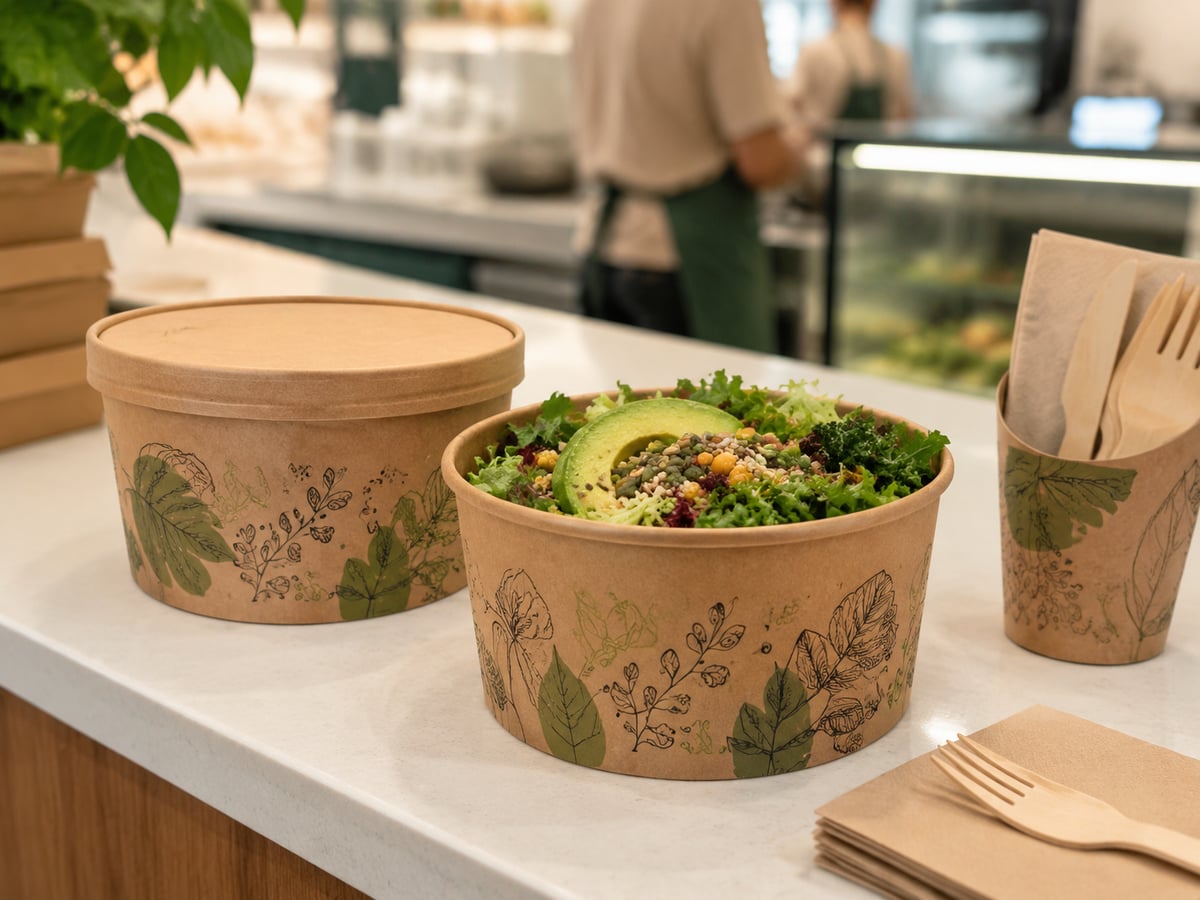
Canada FSC Kraft Salad Bowl Pricing: Buyer Cost Guide
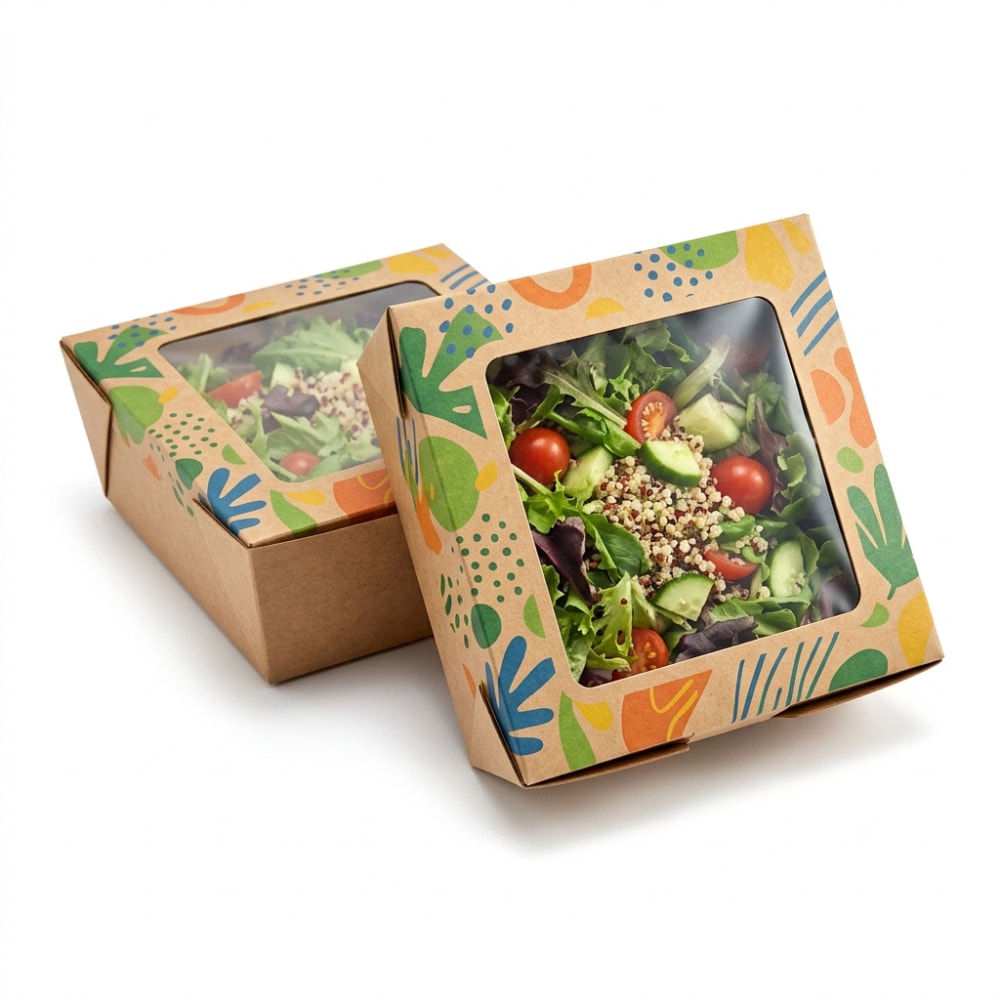
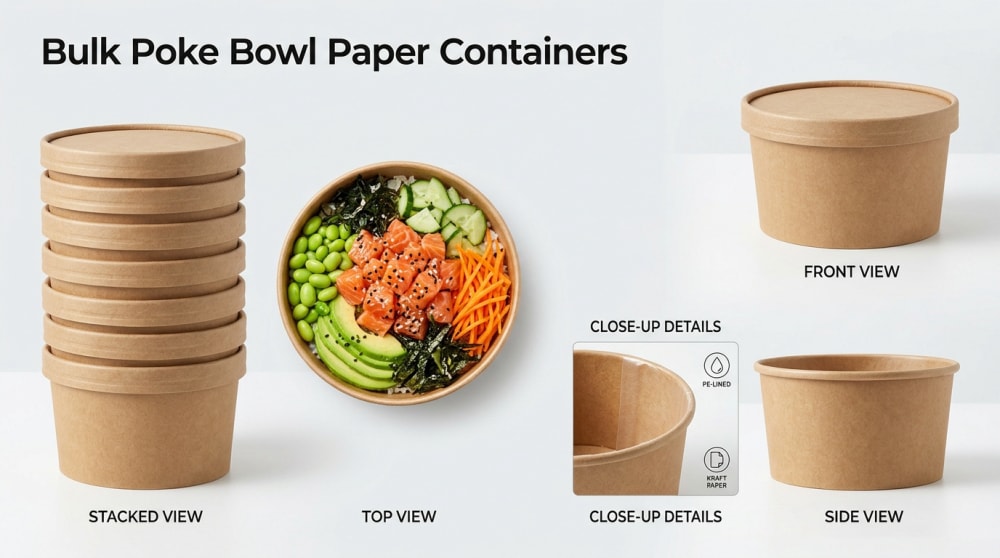
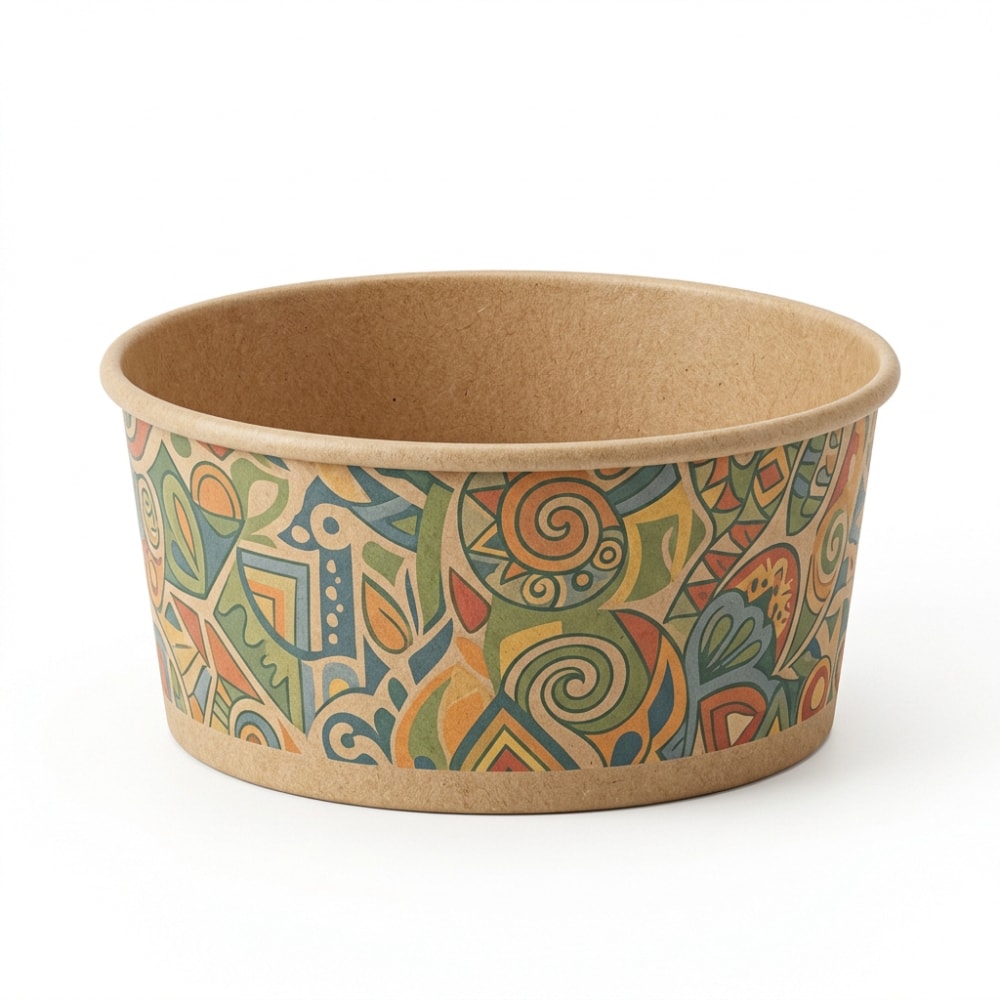
FSC-certified kraft salad bowl pricing is not determined by bowl size alone. For Canadian food-service buyers, the delivered cost depends on paperboard grade, barrier coating, bowl capacity, rim and base structure, printing coverage, order quantity, carton density, freight route, import documentation and the cost of product failure after delivery. Two bowls may look nearly identical in a catalogue but perform very differently with dressed salads, hot grains, saucy proteins, cold deli meals or long delivery windows.A useful buying method is to separate the quoted unit price from non-recurring and downstream costs: printing plates, mould adjustments, prototypes, pre-production samples, freight cube, warehousing, inspection, duties or brokerage where applicable, and claims caused by leakage, softening, lid mismatch or unsupported environmental statements. For a restaurant group in Toronto, a meal-prep operator in Vancouver, or a distributor serving Montréal and Ottawa, the lowest ex-factory price can become the most expensive choice if the bowl causes food waste, customer complaints or an interrupted launch.Buyers should confirm a written specification before approving volume production. That specification should cover capacity, paper weight, coating type, rim diameter, lid fit, target foods, fill temperature, hold time, acceptable leakage level, compression strength, print standard, packing count, FSC documentation requirements and inspection method. Fude Packaging supports this process through digital proofs, unprinted white samples and printed pre-production proofs, allowing teams to validate the product rather than rely on a catalogue image.Cost driverWhat changes the priceWhy it matters in CanadaBuyer checkPaperboardGrade, basis weight, fibre source and stiffnessAffects stack strength during distribution and storageConfirm GSM and food-contact suitabilityBarrier coatingPE, water-based, PLA or other specified barrierControls resistance to moisture, oil and dressingTest with actual menu itemsSize and shapeCapacity, diameter, height and base geometryChanges material use and lid compatibilityMeasure fill volume and rim dimensionsPrintingColours, coverage, finishes and registration toleranceInfluences brand consistency across locationsApprove artwork and colour targetMOQOrder volume per size, print run and SKUSpreads setup and production losses over more unitsCompare annual volume, not one order onlyCarton densityUnits per carton, nesting efficiency and carton strengthDirectly affects freight cube and warehouse spaceRequest carton dimensions and gross weightThe table above shows why a quote should be evaluated as a system. A 0.5-cent saving per bowl may be outweighed by higher freight volume, lower packing efficiency, leakage losses or a need to hold more safety stock. Canadian buyers should also review delivery timing around peak demand periods, including summer festivals, campus return periods and holiday catering volumes.Demand for paper salad containers continues to grow across quick-service restaurants, grocery prepared-food counters, office catering, university dining, ghost kitchens and meal-subscription businesses. Vancouver and Victoria buyers often prioritize environmental positioning, while Greater Toronto Area operators frequently focus on high-volume delivery performance and consistent branding. In Montréal, bilingual artwork requirements and regional distribution planning may add review steps. Halifax, Calgary, Edmonton and Winnipeg distributors may place greater emphasis on cold-weather transport, warehouse inventory and reliable replenishment cycles.var ctx=document.getElementById('marketGrowthChart').getContext('2d');new Chart(ctx,{type:'line',data:{labels:['2022','2023','2024','2025','2026','2027'],datasets:[{label:'Indexed Canadian demand for paper salad bowls',data:[100,108,118,128,140,153],borderColor:'rgb(52,116,84)',backgroundColor:'rgba(52,116,84,0.12)',borderWidth:3,fill:false,tension:0.3}]},options:{responsive:false,maintainAspectRatio:false,plugins:{legend:{display:true}},scales:{y:{beginAtZero:false,title:{display:true,text:'Demand index'}}}}});This market-growth chart is an illustrative procurement planning index, not a forecast of any individual supplier’s sales. It helps buyers see why supply planning should begin before seasonal demand rises. For imported bowls, production time, sampling, consolidation, ocean transit, port handling and inland delivery can all affect the availability date.A complete quotation should allow the buyer to understand exactly what is being purchased. Ask for the bowl’s internal and external dimensions, nominal and practical fill capacity, paperboard specification, coating, print colours, matching lid options, packing configuration, MOQ, lead time, trade term, port of loading and payment terms. If the shipment is destined for Canada, clarify whether the price is EXW, FOB, CIF, DAP or another agreed Incoterm. Freight comparisons are only meaningful when the commercial terms are the same.For FSC-related requirements, ask the supplier to identify the applicable FSC-certified material option and the documentation pathway available for the order. Do not assume that kraft appearance alone proves responsible sourcing. Marketing wording should be reviewed and approved based on the actual certified supply chain, product construction and destination-market rules. A responsible supplier will distinguish between available certification documentation and claims that a brand may legally or accurately print on the finished package.Quote lineWhat it should stateCommon omissionRecommended actionProduct descriptionCapacity, dimensions, material and coatingOnly “kraft salad bowl”Request a controlled specification sheetPrice basisPrice per unit, thousand units or cartonUnclear currency or quantity basisConfirm CAD or USD and calculation methodMOQMOQ by design, size and print runMOQ stated without print conditionsAsk whether mixed SKUs are allowedPrintingColour count, coverage and finishPlates or Pantone matching excludedList all artwork-related chargesPackingUnits per sleeve, carton and palletNo carton cube or weightCalculate warehouse and freight impactLead timeSampling and production periodsTiming starts before artwork approvalDefine the production-start triggerCompliance documentsAvailable food-contact and FSC recordsGeneric certificate statementsRequest documents for the quoted materialThe quotation should also identify whether lids are included. A bowl that appears inexpensive may require a separately sourced lid with a different rim standard. For delivery-focused salad concepts, bowl-and-lid compatibility should be tested after shaking, stacking and holding the filled package for the anticipated delivery duration.Canadian buyers commonly source 500 ml to 1,500 ml kraft bowls for side salads, grain bowls, poke-style meals, pasta salads, fruit cups, soup-and-salad combos and prepared grocery meals. Smaller formats help control portion size; wider formats improve presentation of toppings; deeper bowls better contain sauce-heavy meals. A clear lid can improve display for retail refrigerators, while a kraft lid may support a consistent paper-based visual identity where appropriate.Bowl formatTypical applicationKey performance concernSuggested validation500 mlSide salads, fruit, snacksAccurate portion capacityCheck practical fill line750 mlLunch salads and grain bowlsLid retention during deliveryStack and shake test1,000 mlEntrée salads and pasta mealsWall stiffness with heavy ingredientsLoaded compression test1,100–1,300 mlProtein bowls and family portionsBase stability and nestingEvaluate filled handling1,500 ml+Catering and shared servingsRim rigidity and carton strengthAssess long-hold performanceWide shallow bowlPremium plated presentationLarge lid surface and freight cubeCompare cubic volume per 1,000 unitsThe product-type table illustrates why capacity should not be the only comparison point. A 1,000 ml bowl may have different diameters, wall angles and lid systems. Those structural choices affect salad presentation, carton nesting, sauce resistance and the likelihood that the bowl will fit existing filling equipment or retail shelving.Non-recurring costs should be visible rather than hidden inside a unit rate. For standard bowl shapes with custom printing, the main upfront costs may include artwork preparation, printing plates, colour proofs and courier delivery of samples. For a custom rim, unusual diameter, proprietary lid connection or new structural geometry, mould and tooling costs can be more substantial. These costs may be worthwhile when a chain needs a distinctive package, but they should be amortized over expected annual volume rather than evaluated against a single purchase order.Fude Packaging can provide digital proofs, white samples and printed pre-production proofs according to project needs. A white sample helps verify size, stacking, lid fit and food handling before branding is finalized. A printed proof helps buyers inspect colour, barcode placement, registration, copy and visual coverage before the full run begins. This staged approval process reduces the risk of discovering a print or functional problem only after a container reaches a Canadian warehouse.Cost categoryUsually one-time or recurringCommercial purposeHow to control itPrinting platesUsually one-time per artwork versionTransfers approved artwork to productionFreeze artwork before plate releaseCustom mouldOne-time, sometimes shared by agreementCreates a unique bowl or lid structureClarify ownership and maintenance termsWhite samplesPer sampling roundChecks fit, shape and basic handlingUse a written test checklistPrinted proofPer artwork and production trialApproves print quality before mass runSet colour and registration standardsCourier freightPer shipmentMoves samples for approvalConsolidate samples where timing allowsThird-party inspectionPer order or batchVerifies quantity and agreed criteriaBook inspection before final packingFor procurement teams, the practical question is not whether an upfront fee exists; it is whether the fee prevents a larger and more expensive error. A $500 proof-and-sample process may be economical compared with receiving a full container of bowls with an incorrect bilingual panel, poor lid engagement or an unsuitable barrier for acidic dressing.Similar-looking containers can differ in paper weight, fibre quality, coating application, forming accuracy, compression strength, print coverage and quality-control level. Kraft paperboard may vary in appearance, stiffness and consistency. A thin wall may look acceptable when empty but soften under warm food or become difficult to carry when a salad includes dressing, avocado, grains and protein. Coating selection also changes both product performance and end-of-life positioning, so it should be matched to the food application instead of selected from a generic sustainability claim.Forming complexity is another price factor. Bowls with deeper walls, wider rims, reinforced bases or special lid-lock geometry can require more material, tighter process control or slower forming. Full-coverage printing may need more ink management and closer registration standards than a one-colour logo. Canadian brands that use dark solid colours, fine type or light-on-dark artwork should specify acceptable colour variation and readability requirements in advance.var ctx=document.getElementById('industryDemandChart').getContext('2d');new Chart(ctx,{type:'bar',data:{labels:['Quick-service restaurants','Prepared grocery','Meal kits','Campus dining','Corporate catering','Food distributors'],datasets:[{label:'Indicative demand index for salad bowls',data:[92,84,71,64,58,79],backgroundColor:['#4c7a58','#6c9b72','#8fbc8f','#b3c99c','#d3d9a8','#3f6b75']}]},options:{responsive:false,maintainAspectRatio:false,plugins:{legend:{display:true}},scales:{y:{beginAtZero:true,max:100,title:{display:true,text:'Demand index'}}}}});The bar chart reflects common purchasing intensity by channel, using an illustrative index. Quick-service and distribution channels tend to place greater weight on supply continuity, while prepared-food retailers may emphasize shelf appearance, lid clarity, print quality and refrigerated-display performance. The right specification therefore depends on the buyer’s actual industry and use case.MOQ influences pricing because setup time, material handling, printing preparation, machine adjustment, quality checks and packing losses must be spread across the production run. The largest savings generally occur when an order moves from a small custom run to a stable production quantity, or when a buyer consolidates compatible SKUs. However, ordering too much inventory can erase production savings through storage costs, capital tied up in stock, changing artwork, damaged cartons or obsolete seasonal designs.For a Canadian importer, it is useful to compare three planning models: frequent smaller shipments, quarterly consolidated orders and annual scheduled releases. Scheduled-order support can help buyers reserve production capacity while releasing stock according to warehouse space and demand. This is particularly valuable for distributors supplying several provinces or restaurant chains with planned promotional calendars.Order approachProduction economicsInventory riskBest fitSample and pilot orderHighest setup cost per unitLowNew menu or new brand launchSmall custom orderLimited scale efficiencyModerateRegional trial or seasonal offerStandard MOQ orderBalanced production efficiencyModerateEstablished independent operatorsContainer-consolidated orderBetter freight and packing efficiencyHigherImporters with multiple packaging categoriesScheduled annual programStable capacity and planning efficiencyManaged through releasesChains and distributorsMulti-SKU consolidationMay improve total logistics economicsDepends on demand accuracyBuyers sourcing bowls, cups and boxes togetherThe volume table shows why price breaks should be assessed against inventory turnover. Buyers in Mississauga, Brampton and Vaughan may have access to larger warehousing networks, while businesses serving smaller markets may prefer staged releases. Ask for carton dimensions, pallets per container and units per cubic metre before choosing an order size.var ctx=document.getElementById('trendShiftChart').getContext('2d');new Chart(ctx,{type:'line',data:{labels:['2022','2023','2024','2025','2026','2027'],datasets:[{label:'Buyers prioritizing lowest unit price',data:[66,61,56,50,44,39],borderColor:'rgb(190,102,74)',backgroundColor:'rgba(190,102,74,0.18)',fill:true,tension:0.3},{label:'Buyers prioritizing verified total cost',data:[34,39,44,50,56,61],borderColor:'rgb(57,112,88)',backgroundColor:'rgba(57,112,88,0.18)',fill:true,tension:0.3}]},options:{responsive:false,maintainAspectRatio:false,plugins:{legend:{display:true}},scales:{y:{beginAtZero:true,max:70,title:{display:true,text:'Illustrative buyer priority share (%)'}}}}});This area chart demonstrates the procurement trend toward total-cost analysis. By 2026 and beyond, Canadian buyers are expected to place more emphasis on documented sourcing, packaging performance, freight optimization, traceability and realistic sustainability communications. Automation, digital proofing, batch records and testing data will increasingly support supplier selection.The cost of a failed bowl is far greater than the original unit price. Barrier failure can lead to soggy walls, leaking dressings, stained bags, damaged adjacent orders, food waste, refunds and negative online reviews. For a delivery kitchen, even a small failure rate can create operational disruption because replacement meals, customer-service time and courier redelivery all add cost. In grocery prepared-food programs, packaging failure can reduce shelf appeal and trigger waste before the product is sold.Unsupported sourcing or environmental claims create a different type of risk. Buyers should not use FSC language, logos or other sustainability statements without verifying that the order, chain-of-custody arrangements and artwork approval support the intended claim. The safest approach is to ask for the relevant documentation, define the exact marketing language during artwork review and retain an approval record. Claims about compostability, recyclability or material composition should also be reviewed for the applicable Canadian market context and local collection realities.Use measurable acceptance criteria rather than vague statements such as “good quality” or “leakproof.” Define the food type, fill temperature, holding time, storage condition, number of stacked bowls, lid fit tolerance, print placement, carton drop or compression expectation and allowed defect level. When possible, test the actual dressing, sauce or meal composition, because oil, acid, salt and heat can behave differently from plain water.Potential failureLikely causeOperational consequenceAcceptance testWall softeningInsufficient paper or barrier selectionDifficult handling and poor presentationFilled hold test at target durationBase leakageForming or coating weaknessBag damage and meal replacementStatic leak test with target foodLid looseningRim and lid mismatchSpills during deliveryShake, tilt and stack testPrint variationUnapproved colour target or registration driftInconsistent brand appearanceApproved proof comparisonCarton crushingWeak outer carton or pallet handlingLosses at warehouse receivingCarton compression reviewUnsupported claimIncorrect or unverified artwork wordingCompliance and reputation exposureDocument and artwork approval checkThe failure-cost table should be shared with quality, marketing, operations and procurement teams. Each department sees a different risk: procurement sees purchase cost, operations sees handling problems, marketing sees claim accuracy and finance sees refunds or write-offs. A shared approval file aligns these perspectives before mass production.Cost per meal is a more useful metric than bowl price alone. Calculate the packaging cost as the bowl, lid, label or seal, secondary bagging, freight allocation, warehousing allocation and expected failure allowance divided by sellable meals. Then compare alternatives based on performance. A slightly higher-cost bowl may protect a premium $15 salad, reduce remakes and improve customer confidence enough to lower the total cost per served meal.For example, a 1,000 ml bowl at a lower unit price may require a heavier carton, occupy more warehouse space and generate more complaints with wet ingredients. Another option may cost more per piece but nest efficiently, hold dressing reliably and reduce loss. This comparison is especially relevant for meal-delivery businesses operating from Toronto, Vancouver, Calgary or Montréal, where labour and customer-acquisition costs make remakes expensive.var ctx=document.getElementById('supplierComparisonChart').getContext('2d');new Chart(ctx,{type:'bar',data:{labels:['Unit cost score','Barrier performance','Carton efficiency','Documentation readiness','Sampling support','Traceability'],datasets:[{label:'Lowest-price option',data:[95,58,60,45,42,48],backgroundColor:'rgba(190,102,74,0.75)'},{label:'Verified total-cost option',data:[82,88,84,90,86,91],backgroundColor:'rgba(57,112,88,0.75)'}]},options:{responsive:false,maintainAspectRatio:false,plugins:{legend:{display:true}},scales:{y:{beginAtZero:true,max:100,title:{display:true,text:'Illustrative comparison score'}}}}});This supplier comparison chart is illustrative. It demonstrates why a low unit-cost score should be weighed against barrier performance, packing density, documentation, sampling support and batch traceability. The right procurement decision is the one that protects the full meal experience and the buyer’s commercial commitments.Effective negotiation does not mean removing the specifications that protect food quality. The strongest cost levers are usually artwork simplification, print standardization, SKU consolidation, practical carton counts, forecast sharing, repeat-order scheduling and combining compatible packaging categories in one shipment. Buyers may also reduce cost by selecting an existing bowl diameter and matching lid system rather than funding an entirely new mould.Do not negotiate away the barrier needed for the actual menu, paper stiffness needed for filled handling, carton strength needed for long-distance logistics or verification needed for sourcing statements. Instead, identify where complexity does not create customer value. A two-colour logo may perform as well as a full-coverage design. A standard capacity may avoid a custom mould. A planned release schedule may improve production planning without forcing the buyer to receive all inventory at once.Canadian local suppliers can offer short replenishment times, local inventory and simplified domestic shipping. Imported direct manufacturing can offer broader customization, competitive scale and the ability to coordinate bowls, cups, boxes, trays and multi-compartment meal packaging under one production partner. The best choice depends on demand certainty, branding complexity, lead-time tolerance and warehouse capability.For import programs, buyers should map the route from the production facility to port, then to Canadian entry points such as Vancouver, Prince Rupert, Montréal or Halifax, followed by inland delivery to the final warehouse. A western Canadian program may prioritize Vancouver or Prince Rupert routing, while eastern distribution may consider Montréal or Halifax depending on schedule and destination. Request freight cube data early because lightweight paper bowls can be constrained by volume before cargo weight.Fude Packaging combines manufacturing, technical and service capabilities for overseas B2B buyers. Its 30,000 m² self-owned production base in Shandong uses automated production lines with capacity of up to 120,000 units per day. In-house manufacturing covers material selection, printing, die-cutting, forming, inspection, packing and shipment preparation, helping buyers maintain more consistent specifications across related food-packaging categories.Technologically, Fude Packaging supports product development through material and coating recommendations, artwork and dieline review, Pantone matching, prototype work and in-house laboratory testing. Manufacturing controls include incoming-material checks, in-process monitoring, final inspection and batch verification. Documentation can support customer reviews involving FSC-certified materials, ISO 9001, food-contact requirements and other requested records relevant to the project. Buyers can also arrange independent third-party inspections before shipment.From a service perspective, the company supports white samples, printed pre-production proofs, scheduled orders, export packing, commercial documents and common shipping arrangements. With more than 20 years of packaging experience and service to more than 500 business customers, Fude Packaging helps importers, restaurant chains, distributors and food brands assess total procurement risk rather than simply compare the lowest unit price. Explore the available paper bowl range when comparing standard and customized formats, or review available custom packaging services for sampling and artwork support.For buyers evaluating a long-term supply partner, learn more about Fude Packaging’s manufacturing background and request a project-specific quotation through the Canada export inquiry contact page. A useful inquiry includes bowl size, lid preference, food type, temperature, anticipated annual quantity, print artwork, destination city and required delivery date.For Canadian procurement teams, a supplier’s capability should be assessed through repeatability, not only factory photographs or broad claims. Fude Packaging’s self-owned factory, automated output and in-house laboratory support more direct control over production stages. The company produces cups, bowls, boxes, trays and multi-compartment meal packaging, which can help buyers consolidate product categories, improve container utilization and reduce supplier-management complexity.Its quality approach includes material inspection, production monitoring, final inspection and batch traceability. For customized salad bowl projects, customers can validate dimensions, capacity, strength, heat resistance, grease resistance, leak prevention, lid fit and print quality with physical samples before approving mass production. This is particularly useful for brands launching in multiple Canadian provinces, where a packaging error can affect many locations at the same time.Standard production timing may be approximately 7–15 days after specification and artwork approval, subject to order volume and product complexity. International transit and local delivery must be planned separately. Buyers should build a realistic calendar that includes sampling, approvals, production, inspection, export handling, ocean or air shipment, customs clearance and warehouse receiving. A documented launch calendar is a stronger risk-control tool than relying on an estimated delivery date alone.The total cost generally includes bowl material, barrier coating, forming, printing, packing, quality control and freight. Custom projects may also include printing plates, moulds, samples, proofing, courier fees and inspection. Canadian buyers should compare the delivered and usable cost, including expected storage and failure risk.Paper weight, coating type, capacity, bowl geometry, lid system, printing coverage, custom tooling, MOQ and carton density are major price drivers. Barrier performance should be selected around the food and holding time rather than reduced solely to lower the unit price.A higher MOQ can lower unit cost by spreading setup, printing preparation and production losses across more units. However, the best order quantity balances that saving against storage space, cash flow, expiry of artwork or changing menu demand. Scheduled releases may provide a more practical solution for recurring programs.Common exclusions include printing plates, custom moulds, sample courier freight, third-party inspection, special export documents, destination charges, customs brokerage, inland transport, lids, labels and warehousing. Ask for a line-by-line commercial comparison before selecting a supplier.Use existing bowl and lid formats where possible, simplify artwork, standardize colours, consolidate compatible SKUs, improve carton utilization, share forecasts and plan repeat orders. Keep the paper strength, barrier requirement, lid fit and sourcing-claim verification necessary for the actual application.Test the bowl with actual food, dressings and sauces at the planned serving temperature and holding time. Check lid fit, stacking, delivery handling, print quality, capacity, nesting, carton condition and documentation. Retain the approved sample and written acceptance criteria as the production reference.Key trends include more precise sustainability communication, increased interest in lower-plastic and alternative barrier technologies, stronger demand for traceability, digitally controlled artwork approvals, freight-cube optimization and procurement decisions based on cost per meal. Brands will increasingly expect suppliers to provide practical performance data and reliable documentation rather than generic environmental language. -

Global Market Guide to Wholesale Paper Soup Bowl Lids
For Global market buyers, wholesale paper soup bowls with lids should be selected as a complete packaging system rather than as separate bowls and lids. Reliable performance depends on bowl-rim tolerance, lid material, food temperature, steam release, fill level, stacking pressure, delivery vibration, and the time between packing and consumption. A lid that appears secure on an empty bowl may loosen after hot soup creates steam, after oil reaches the rim, or after the bowl is compressed inside a delivery bag.Buyers should request multiple production-representative samples and test them using the actual menu: soup, ramen, curry, congee, chili, pho, grain bowls, stews, sauces, or hot salads. Fill samples to the intended operational level, apply the expected lid, stack the units, place them in delivery bags, and simulate handling over the longest realistic delivery window. This approach identifies lid release, leakage, condensation, softening, and customer-opening problems before a purchase order is approved.A robust buying specification should define bowl capacity, usable fill line, rim diameter, permitted rim variation, coating type, lid resin, vent location, food-contact documentation, print requirements, packing configuration, and inspection sampling requirements. For distributors and restaurant chains, the best result is usually a standardized bowl-and-lid family that reduces stock complexity while preserving fit security across the menu.Qualification FactorWhat to SpecifyOperational Risk if IgnoredPractical Buyer TestBowl rim diameterNominal diameter and allowable variationLid may feel loose or require excessive forceMeasure 20 bowls from different sample sleevesLid engagementSnap depth and contact points around the rimCorner lifting or partial release during transitPress lid around the full circumferenceFood temperatureExpected filling temperature and holding timeHeat distortion, steam buildup, condensationFill with actual hot menu item and hold 30 minutesSteam managementVented or non-vented lid selectionPressure release, soggy food, splashingClose bowl immediately after fillingDelivery movementStack height and bag orientationLeakage, lid displacement, sidewall deformationShake and tilt packed delivery bagOil and sauce exposureMenu-specific grease and coating requirementsRim contamination reduces closure securityTest curry, broth, oil, and sauce at full fill levelThe table above provides a basic approval framework. It is especially relevant for buyers supplying food-service operators in high-delivery markets such as Dubai, London, Los Angeles, Singapore, Sydney, Toronto, Rotterdam, and São Paulo, where packaging can experience substantial handling between kitchen and customer.Rim tolerance is one of the most important technical controls in paper soup bowl production. The rolled or curled rim of a paper bowl provides the interface where the lid locks into position. If the rim is too large, the lid can become difficult to apply and may deform. If the rim is too small, the lid may not create sufficient retention force. Variations in rim roundness, curl height, wall thickness, and moisture exposure can also affect performance.For wholesale purchasing, buyers should ask suppliers how rim diameter is measured, how often it is checked during production, and whether measurements are taken at multiple points around each bowl. A single diameter measurement does not confirm roundness. Better practice is to measure at several angles, compare bowl samples from different production periods, and assemble lids from the intended lot.Paper bowls may expand or soften slightly when filled with high-temperature foods. This does not automatically indicate a defect, but it should be considered in product development. A ramen bowl packed with 85°C broth behaves differently from a cold grain bowl. Bowl construction, paperboard weight, barrier coating, rim roll quality, and lid design should therefore be validated together.Rim Measurement ItemWhy It MattersRecommended Verification MethodBuyer Approval SignalOuter rim diameterDetermines lid engagement forceUse calibrated calipers at four positionsMeasurements remain within agreed toleranceRim roundnessPrevents gaps between lid and bowlCompare diameter across perpendicular pointsNo visible oval shape or uneven seatingRim curl heightAffects snap-on retentionMeasure cross-section with gauge or profile checkConsistent curl around circumferenceRim surface cleanlinessOil or fibers may reduce lid gripVisual check before and after fillingClean, smooth contact surfaceRim compression resistancePrevents collapse under stacked lidsStack filled bowls for planned delivery timeNo lid lift or bowl-wall distortionLot-to-lot consistencyEnsures replacement lids continue to fitCross-fit bowls and lids from separate cartonsReliable fit across sample lotsIn practical sourcing, a buyer should avoid approving a bowl using a lid made only for a prototype. Production bowls and production lids must be tested in cross-combinations. This is particularly important when lids are ordered separately, when bowls are custom printed at one facility, or when distributors hold inventory from multiple receiving dates.PET and PP are common lid materials for paper soup bowls, but they are not interchangeable. PET lids are often selected for cold food, chilled salads, desserts, fruit bowls, and products where high transparency supports visual presentation. PP lids are generally better suited to hot foods because they offer stronger heat resistance and more stable performance when bowls are filled with hot soup, noodles, rice, or curry.The decision should be based on the highest expected filling temperature, menu holding time, microwave requirements, condensation level, lid clarity expectations, and destination-market regulations. A transparent PET lid can showcase toppings attractively, but a high-temperature soup application may require a PP lid with a venting feature. For mixed menus, buyers may adopt two lid families: clear PET for cold applications and PP for hot bowls.Global market importers should also assess local collection and recycling infrastructure. Material choice can influence sustainability communication, but claims should match the actual material construction, local waste stream, and documented product certification. A compostable paper bowl does not automatically make a plastic lid compostable, and a recyclable lid does not guarantee recovery in every destination.Selection FactorPET LidPP LidTypical RecommendationVisual clarityVery high transparencyUsually translucent to clearPET for display-focused cold foodsHot-food suitabilityLimited for high-temperature fillingBetter for hot soups and noodlesPP for hot food-service operationsCold-food presentationExcellent topping visibilityFunctional but less display-orientedPET for salads and dessertsMicrowave suitabilityGenerally unsuitableMore suitable when specified correctlyConfirm full package compatibilitySteam vent designPossible but application-specificCommon for hot-food lidsPP for steaming soup and rice bowlsOperational costDepends on thickness and clarity gradeDepends on heat grade and toolingCompare landed cost, not unit price aloneThe comparison above should be used as a buying guide rather than an absolute material rule. Exact performance depends on resin grade, lid thickness, geometry, venting design, bowl diameter, and operational conditions. Buyers should ask for food-contact declarations appropriate to the destination market and confirm that the selected lid is approved for the intended use.Venting is a controlled trade-off between pressure management and leakage prevention. Freshly filled soup can produce steam that accumulates beneath a tightly closed lid. Without an appropriate escape path, pressure may distort the lid, push liquid toward the rim, create sudden release when the customer opens the bowl, or cause condensation to fall back onto crispy ingredients.A vented PP lid is often appropriate for hot soups, noodles, congee, braised dishes, and rice bowls. The vent should be positioned and sized for the food application rather than treated as a generic feature. Excessive venting may permit aroma loss, reduce heat retention, or allow splash leakage when the delivery bag is tilted. Insufficient venting can increase internal pressure and soften fried toppings.Restaurants serving soups for delivery should conduct a filled-bowl steam test: close the bowl immediately after filling, hold it for 10, 20, and 30 minutes, then inspect lid shape, visible condensation, rim wetness, and customer-opening force. The menu should be tested at the actual kitchen fill temperature, not after it has cooled on a bench.var ctx = document.getElementById('lineChart').getContext('2d');new Chart(ctx, { type: 'line', data: { labels: ['2022', '2023', '2024', '2025', '2026', '2027'], datasets: [{ label: 'Indexed Global Demand for Lidded Paper Food Bowls', data: [100, 108, 117, 127, 138, 150], borderColor: 'rgb(34, 139, 94)', backgroundColor: 'rgba(34, 139, 94, 0.12)', borderWidth: 3, pointRadius: 4, fill: false, tension: 0.3 }] }, options: { responsive: true, maintainAspectRatio: false, plugins: { legend: { display: true } }, scales: { y: { beginAtZero: false, title: { display: true, text: 'Demand Index (2022 = 100)' } } } }});This market-growth chart illustrates a realistic planning scenario for global demand for lidded paper food bowls. Growth is supported by takeaway ordering, urban lunch delivery, convenience food retail, and the replacement of rigid plastic food containers in some food-service channels. Buyers should use market projections for capacity planning but make purchasing decisions based on verified restaurant demand, local regulations, and available storage space.Closure performance must be tested under realistic logistics conditions. A secure lid is not defined only by the sound of a snap or the force required to apply it. It must remain seated after steam exposure, stacking, lateral vibration, brief impact, and tilting. Delivery platforms and restaurant chains should test packed bowls using the same bags, dividers, stack configuration, and travel duration used in daily operations.A practical closure protocol starts with at least six filled samples per menu item. Test normal fill level, maximum fill level, and one deliberately overfilled sample to understand failure limits. Include hot broth, oily soup, thick curry, and acidic tomato-based food where relevant. Mark each sample, document the lid and bowl batch, and photograph any leakage, lid lifting, or deformation.For soups and noodle dishes, the most meaningful test is often a combined heat-and-motion test. Fill the bowl, close it immediately, hold it for ten minutes, place it into a delivery bag, carry it on a short route or use controlled vibration, then inspect it after 20 to 30 minutes. This process reveals risks that static bench testing may miss.Closure TestMethodTypical Failure RevealedAcceptance GoalPerimeter snap testPress around the complete rim by handUnseated lid sectionsEven engagement around all edgesHot hold testFill at operating temperature and hold 30 minutesSteam lift or rim seepageNo visible lid distortion or leakageStack compression testStack filled bowls at planned bag heightSidewall collapse and lid liftingBowls remain stable and closedTilt testTilt packed bowl to 45 degrees brieflyLeakage from rim or ventNo meaningful liquid escapeVibration testCarry or shake in delivery-bag arrangementProgressive lid releaseLid stays seated after movementCustomer-opening testAsk staff to open cooled and hot samplesUnsafe opening force or sudden splashControlled opening without tearingThe table provides a structured route to supplier approval. Buyers should record results by product code and menu item, because a bowl that passes for thick chili may not perform equally with thin ramen broth. If failure occurs, determine whether the cause is bowl geometry, lid design, hot-fill temperature, excess fill volume, or bag packing practice before changing the complete package.var ctx = document.getElementById('barChart').getContext('2d');new Chart(ctx, { type: 'bar', data: { labels: ['Soup & Noodles', 'Salads', 'Rice Bowls', 'Meal Prep', 'Desserts', 'Retail Deli'], datasets: [{ label: 'Estimated Lidded Bowl Demand Share (%)', data: [29, 21, 18, 13, 8, 11], backgroundColor: [ 'rgba(240, 128, 128, 0.8)', 'rgba(75, 192, 192, 0.8)', 'rgba(255, 206, 86, 0.8)', 'rgba(153, 102, 255, 0.8)', 'rgba(255, 159, 64, 0.8)', 'rgba(54, 162, 235, 0.8)' ] }] }, options: { responsive: true, maintainAspectRatio: false, plugins: { legend: { display: true } }, scales: { y: { beginAtZero: true, max: 35, title: { display: true, text: 'Demand Share (%)' } } } }});This industry-demand chart shows why soup and noodle operators remain major users of secure lidded bowls, while salads, rice bowls, meal-prep brands, dessert sellers, and retail delis also create significant demand. For buyers, these categories have different requirements: soup prioritizes heat and seal security, salads emphasize clarity and presentation, and meal-prep operators often prioritize stacking and microwave suitability.Minimum order quantity and lid cost should be evaluated as part of total procurement cost. A lower bowl price can be offset by a high-cost lid, excessive carton volume, slow inventory turnover, or losses caused by mismatched stock. Buyers should calculate the landed cost of the complete usable set: bowl, lid, printing, master carton, freight, duty, local transport, storage, and expected quality loss.Standard plain bowls and standard lids normally support lower MOQs and shorter lead times. Custom printing, special rim diameters, unique venting, embossed logos, or proprietary lid tooling can increase both MOQ and development cost. This does not mean customization should be avoided; it means the expected sales volume should justify the additional inventory and tooling commitment.Distributors in Rotterdam, Hamburg, Jebel Ali, Long Beach, Melbourne, and Singapore often consolidate packaging orders to improve container utilization. A mixed product order from one manufacturer can reduce freight fragmentation when it combines paper bowls, salad containers, cups, kraft lunch boxes, and food trays. Buyers should request carton dimensions and pallet plans before comparing quotations.Cost DriverEffect on BudgetHow to Control ItBest Use CaseStandard bowl diameterUsually lower tooling and MOQ burdenUse existing manufacturer moldsDistributors and new food brandsCustom printed bowlAdds artwork setup and print controlsUse repeatable brand artwork and forecast volumeRestaurant chains and retail brandsSpecial lid designMay require tooling investmentValidate demand before developmentHigh-volume proprietary conceptsSeparate lid inventoryCan create stock imbalanceOrder bowls and lids in matched ratiosMulti-site food-service operationsFreight cubeLarge cartons increase landed costReview nesting and carton optimizationInternational container shipmentsInspection and testingSmall upfront cost reduces claims riskInclude AQL checks and functional testsImporters and private-label buyersThe cost table shows why procurement teams should not choose solely by price per thousand pieces. A supplier with stable bowl-lid compatibility, compact export packing, consolidated product categories, and documented quality control can reduce total cost over a full selling season.Shared lid SKUs can simplify purchasing, warehouse picking, restaurant training, and replenishment. However, SKU reduction must not create unsafe combinations. A shared lid should be verified across every bowl capacity and product type it is intended to cover. Two bowls with similar visual diameter may still have different rim profiles, curl dimensions, or wall angles that affect lid retention.A common strategy is to standardize bowl families around one or two rim diameters. For example, a buyer may use one lid for smaller soup bowls and another lid for larger salad and noodle bowls. The exact capacities can vary, but the rim specification must remain controlled. This arrangement can reduce inventory complexity without requiring staff to identify many nearly identical lids during busy service periods.Before implementing shared lids, build a compatibility matrix. Test every bowl-lid pairing with cold food, hot food, and the highest-risk menu item. Clearly label cartons and internal product codes. Do not assume that a lid intended for a salad bowl will safely close a soup bowl simply because the nominal diameter looks identical.var ctx = document.getElementById('areaChart').getContext('2d');new Chart(ctx, { type: 'line', data: { labels: ['2022', '2023', '2024', '2025', '2026', '2027'], datasets: [{ label: 'Standardized Shared-Lid Programs (%)', data: [22, 28, 35, 43, 51, 58], fill: true, backgroundColor: 'rgba(75, 192, 192, 0.28)', borderColor: 'rgb(35, 145, 145)', borderWidth: 3, tension: 0.35 }, { label: 'Single-Use Unique Lid Programs (%)', data: [78, 72, 65, 57, 49, 42], fill: true, backgroundColor: 'rgba(255, 159, 64, 0.15)', borderColor: 'rgb(230, 125, 30)', borderWidth: 2, tension: 0.35 }] }, options: { responsive: true, maintainAspectRatio: false, plugins: { legend: { display: true } }, scales: { y: { beginAtZero: true, max: 100, title: { display: true, text: 'Program Mix (%)' } } } }});The area chart illustrates a market shift toward standardized lid platforms. This trend is driven by warehouse efficiency, demand forecasting, labor simplification, and lower packaging complexity. Successful standardization depends on technical compatibility testing, not merely on using the same stated diameter.Supplier approval should combine documentary review, sample inspection, functional testing, and commercial assessment. A capable supplier can provide consistent food-contact materials, clear specifications, production controls, export packing details, and responsive communication. Buyers should verify whether the supplier manufactures the bowls in-house or acts primarily as a trading intermediary, because direct manufacturing control can improve traceability and shorten problem resolution.For Global market importers, compliance requirements vary by destination. Buyers should clarify whether their market requires specific food-contact declarations, FSC material documentation, quality-management evidence, compostability certification, migration testing, labeling support, or packaging statements. Certification should be checked against the exact product material and application rather than treated as a general company claim.Approval should include a pre-production sample, a signed specification, and a defined final-inspection process. For high-volume orders, buyers may appoint an independent inspection company or third-party laboratory. This is particularly useful when shipping full containers through Qingdao, Shanghai, Ningbo, Shenzhen, or other major China export ports.Supplier Approval AreaBuyer QuestionEvidence to RequestReason for ReviewFood-contact complianceIs the product suitable for the destination market?Relevant declarations and test documentationSupports regulatory readinessRim-control systemHow is bowl-lid fit monitored?Inspection records and sample measurementsReduces closure variabilityMaterial traceabilityCan paperboard and lid lots be identified?Batch coding and incoming inspection processImproves claim investigationSampling capabilityCan production-like samples be supplied quickly?Sample schedule and prototype optionsEnables real-menu validationExport experienceCan documents and shipping be coordinated?Packing list, invoice, shipping support examplesReduces customs and logistics frictionCorrective action processHow are confirmed defects handled?Written claim and replacement procedureProtects long-term supply continuityLocal suppliers can provide fast replenishment and smaller order quantities, while overseas manufacturers may offer wider customization and more competitive ex-factory pricing at scale. A balanced sourcing plan may use local stock for urgent replenishment and direct-import programs for predictable volume. The right model depends on annual consumption, cash flow, warehouse capacity, and lead-time tolerance.var ctx = document.getElementById('comparisonChart').getContext('2d');new Chart(ctx, { type: 'bar', data: { labels: ['Customization', 'Lead-Time Flexibility', 'Unit Cost at Scale', 'Quality Traceability', 'Multi-Category Supply', 'Local Replenishment'], datasets: [{ label: 'Direct Manufacturer Program', data: [92, 78, 90, 88, 94, 52], backgroundColor: 'rgba(82, 121, 204, 0.8)' }, { label: 'Local Stock Supplier Program', data: [58, 91, 62, 72, 60, 95], backgroundColor: 'rgba(105, 181, 113, 0.8)' }] }, options: { responsive: true, maintainAspectRatio: false, plugins: { legend: { display: true } }, scales: { y: { beginAtZero: true, max: 100, title: { display: true, text: 'Relative Procurement Advantage Score' } } } }});This comparison chart demonstrates the strategic difference between a direct manufacturing program and a local stock-supply program. It is not a universal ranking. Direct sourcing generally supports customization, consolidated category purchasing, and cost efficiency at volume, while local distributors can be valuable for urgent needs and lower-volume replenishment.Fude Packaging supports wholesale paper soup bowl projects with in-house quality and performance testing, material selection guidance, structure recommendations, print checking, and prototype development. Buyers can evaluate plain samples, printed samples, or functional prototypes before mass production. Testing can focus on capacity, rim fit, leak resistance, heat exposure, grease resistance, lid compatibility, print quality, and menu-specific delivery performance.For buyers sourcing related food packaging, Fude Packaging also offers leak-resistant kraft paper salad bowls for cold and mixed-menu applications. This allows procurement teams to compare bowl formats and develop a more consistent packaging platform across soup, salad, grain bowl, and deli food categories.With more than 20 years of packaging experience, a self-owned 30,000 m² factory in Shandong, automated production lines, and daily output capability reaching up to 120,000 units, Fude Packaging provides scalable manufacturing for international B2B buyers. Manufacturing control covers material sourcing, printing, die-cutting, forming, inspection, packing, and shipment preparation.The product range includes paper cups, paper bowls, burger boxes, kraft lunch boxes, food trays, noodle boxes, salad containers, and multi-compartment meal boxes. Buyers seeking a broader range can review the paper bowl product collection while planning shared materials, coordinated artwork, and container-efficient shipping. Consolidating categories can simplify supplier management and help maintain consistent brand presentation.Fude Packaging serves overseas buyers in more than 50 countries and supports OEM and ODM projects for importers, distributors, restaurant chains, retailers, takeaway operators, and food brands. The international team helps clarify food type, temperature, capacity, order volume, destination-market requirements, branding needs, and shipping preferences before recommending a practical configuration.Standard production orders may be completed in approximately 7 to 15 days depending on specifications and order volume. Support includes artwork and dieline review, Pantone color matching, export-ready packing, commercial documentation, third-party inspection coordination, and sea, air, full-container, less-than-container, or express sample shipment options. Buyers developing branded bowls can also explore custom printed bowl packaging solutions to coordinate soup-bowl graphics with other food-service packaging.Future trends through 2026 and beyond include stronger demand for lower-plastic packaging systems, improved fiber-based barrier technologies, more precise rim-control monitoring, lighter-weight designs that maintain stacking strength, digital traceability by batch, and increased scrutiny of environmental claims. Buyers should prepare for policy changes by selecting materials with clear documentation and by avoiding sustainability claims that cannot be supported in the destination market.Buyers should qualify the bowl and lid as a combined system. Request production-representative samples, verify rim measurements, check bowl-to-lid cross-fit across cartons, fill with the real menu, and perform hot hold, tilt, stack, vibration, and customer-opening tests. Confirm food-contact documentation and agree on inspection requirements before mass production.PP is often the better choice for hot soup, noodles, rice bowls, and other high-temperature applications because of its heat resistance. PET is often preferred for chilled salads, desserts, fruit bowls, and display-focused foods because of its clarity. The final decision should be based on actual filling temperature, holding time, venting needs, and the intended customer experience.Measure the outer rim diameter using calibrated tools at multiple positions around the bowl, typically at four points. Compare opposing measurements to assess roundness, and test the rim with the intended lid. Buyers should inspect samples from different production lots because lot-to-lot consistency is as important as a single sample result.The most useful tests are hot hold, perimeter snap, 45-degree tilt, stacked compression, and vibration inside the actual delivery bag. Use filled bowls, not empty bowls. Test thin broth, oily liquid, thick soup, and the maximum approved fill level. Inspect the rim after 10, 20, and 30 minutes to identify gradual lid lifting caused by steam or movement.Reduce lid SKUs only after creating a bowl-lid compatibility matrix. Standardize around controlled rim diameters, test each proposed bowl-lid pairing with the menu, and keep hot-food and cold-food requirements separate where needed. Clearly label cartons and internal item codes so restaurant staff cannot accidentally use a visually similar but incompatible lid. -
Canada Guide to FSC-Certified Kraft Salad Bowl Selection
The best FSC-certified kraft salad bowl for a Canadian food business is not always the lowest-priced option or the bowl with the most attractive kraft appearance. The correct choice depends on the food’s temperature, dressing level, oil content, holding time, portion weight, delivery distance, lid type, storage space and branding requirements. For most takeaway salads, grain bowls and cold prepared foods, a rigid paper bowl with an appropriate food-contact barrier, secure lid fit and verified moisture resistance provides the most dependable balance of performance and presentation.Canadian operators should begin with the food application rather than the container catalogue. A light garden salad served immediately in a Toronto quick-service café needs different protection from a 750 mL quinoa bowl with warm roasted vegetables, avocado, dressing and protein that may travel 35 minutes across the Greater Toronto Area. Similarly, a prepared-food counter in Vancouver, Calgary, Montréal or Halifax may prioritize display clarity, stackability, tamper evidence or cold-chain storage differently.For sustainability-led procurement teams, FSC-certified kraft salad bowls should be assessed through a structured trial. Confirm fibre certification documentation, food-contact suitability, coating or barrier specifications, bowl rigidity, lid compatibility, print quality and packing configuration before placing a production order. A repeatable approval record protects the buyer from inconsistent lots, rushed substitutions and future disputes.Food-Service SituationRecommended Bowl FocusSuggested Capacity RangeKey Performance RequirementUseful Lid ChoiceSide salad or fruit cupLightweight kraft paper bowl500–650 mLClean rim and short holding-time moisture controlPaper or clear PET lidCaesar salad with dressingMedium-weight barrier-coated bowl650–750 mLResistance to acidic dressing and oilClear anti-fog lidGrain bowl with proteinRigid wide-rim bowl750–1,000 mLLoad-bearing strength and secure stackingSnap-fit PET, PP or fibre lidCold prepared pasta saladHigh grease-resistance bowl750–1,000 mLOil resistance during retail displayClear display lidWarm-cold hybrid mealHeavy-duty bowl with tested barrier1,000–1,300 mLHeat, condensation and rim stabilityVented compatible lid where neededCatering or office lunch bowlLarge reinforced bowl1,000–1,500 mLTransport stability and lid retentionStrong flat or dome lidThis starting matrix is not a substitute for testing. It is a practical way to narrow the specification before samples are ordered. A bowl should be tested using the actual menu recipe, actual dressings, actual fill weight and realistic delivery timing.FSC-certified kraft salad bowls are commonly available in several structural formats: round paper bowls, wide-mouth bowls, deep bowls, shallow bowls, rectangular paper containers and multi-compartment meal packaging. FSC certification addresses responsible sourcing of paper fibre, but it does not automatically confirm that every bowl will perform equally with moisture, oil, heat or delivery handling. Buyers should review both the FSC claim and the functional construction.For leafy salads, the best format is usually a wide, moderately deep bowl that protects the ingredients without compressing them. A clear lid helps customers see colourful ingredients such as kale, tomatoes, berries, roasted vegetables and grains. For a grain bowl, a deeper and more rigid structure is usually better because rice, beans, chicken, tofu and sauces create higher weight and greater pressure at the bottom seam.Cold prepared foods sold through supermarkets, airport kiosks and corporate catering programmes often need superior display performance. In downtown Montréal, retail-ready bowls may sit in refrigerated display cases for hours; in these situations, condensation, label adhesion and lid clarity matter as much as the basic bowl price. A kraft surface can support a natural brand image, while a well-designed label panel or printed outer area can deliver nutrition, ingredient and bilingual packaging information where applicable.Bowl FormatBest-Fit FoodStrengthsLimitations to CheckTypical Canadian BuyerRound shallow kraft bowlLeafy salads, fruit, sidesEasy filling, good ingredient visibilityMay be unsuitable for heavy portionsCafés and salad barsRound deep kraft bowlGrain bowls, pasta saladsHigher volume and stronger sidewallConfirm lid nesting and stack heightDelivery kitchensWide-rim paper bowlPremium composed saladsStrong presentation and easy eatingUses more shelf spaceFast-casual restaurantsRectangular kraft containerPrepared meals and deli foodsEfficient display and labelling areaCheck corner leakage resistanceRetail meal-prep brandsMulti-compartment paper packSalad plus protein or snack setsIngredient separationMore complex filling processAirports and institutional cateringLarge catering salad bowlShared salads and buffet serviceHigh capacity and strong visual impactRequires stable transport packagingEvent and corporate caterersThe table illustrates why “paper salad bowl” is too broad a buying description. Procurement specifications should state capacity, top diameter, bottom diameter, height, paperboard basis weight, barrier type, lid material, packing quantity and intended food application. This makes quotations more comparable and reduces the risk of receiving an attractive but impractical substitute.Kraft texture, natural colour and printed logos influence customer perception, but function must come first. A beautiful bowl that softens during delivery can damage a food brand faster than a plain bowl can. Canadian buyers should create a weighted scorecard that reflects their actual business model. A dine-in salad bar may give presentation a higher score; a delivery-first ghost kitchen in Mississauga may prioritize lid security, stack strength and speed of assembly.Start by mapping the meal journey: filling, dressing addition, lid application, bagging, courier handling, vehicle transit, customer opening and waste disposal. Each stage exposes a bowl to different risks. An operator serving lunch rushes near Union Station in Toronto might require rapid nesting separation and one-handed lid application. A meal-prep company shipping weekly subscriptions across Edmonton may place more weight on refrigerated storage and carton efficiency.Evaluation CriterionSuggested WeightWhat to MeasurePass Standard ExampleWhy It MattersLeak resistance20%Bottom and sidewall leakageNo visible leakage after 60 minutesProtects bags, vehicles and customer trustLid fit15%Retention under handlingNo lid release after tilt testReduces delivery spillsRigidity15%Sidewall deformation under loadMaintains shape at full fill weightImproves carrying comfortFood appearance10%Visibility and condensation effectIngredients remain appealing after 30 minutesSupports repeat ordersService speed10%Time to separate, fill and lidTarget met during peak shiftControls labour costStorage efficiency10%Cases per pallet and shelf spaceFits designated stock locationImportant in high-rent urban locationsBranding quality10%Print alignment and colour consistencyApproved proof matches production sampleProtects visual identityCompliance documentation10%FSC and food-contact documentsComplete documents available before shipmentSupports procurement controlA weighted matrix makes decision-making transparent. For example, if leak resistance and lid retention represent 35% of the total score, a cheaper bowl should not win solely because its unit cost is lower. This approach is especially useful when multiple departments participate in approval, including procurement, operations, marketing, sustainability and quality assurance.var ctx=document.getElementById('lineChart').getContext('2d');new Chart(ctx,{type:'line',data:{labels:['2022','2023','2024','2025','2026','2027'],datasets:[{label:'Indexed Canadian demand for fibre-based food bowls',data:[100,109,119,130,142,155],borderColor:'rgb(72,118,79)',backgroundColor:'rgba(72,118,79,0.12)',borderWidth:3,fill:false,tension:0.3}]},options:{responsive:false,maintainAspectRatio:false,plugins:{legend:{display:true}},scales:{y:{beginAtZero:false,title:{display:true,text:'Demand index'}}}}});The line chart uses an indexed planning view rather than a sales forecast. It shows why buyers should build scalable packaging specifications: demand for fibre-based food-service packaging is expected to remain influenced by sustainability commitments, takeaway growth and procurement standardization through 2027.Although this guide focuses on salads, grain bowls and cold prepared foods, many bowls are exposed to warm ingredients. Roasted sweet potato, grilled chicken, rice, quinoa, mushrooms and warm sauces can create condensation inside a lidded bowl. When hot food meets cold greens, the result can be moisture pooling at the bottom, softened paperboard, fogged lids and deteriorated food appearance.Buyers should ask how the barrier system is designed and what food conditions it has been tested for. Different materials may be suitable for different applications, including PE-lined, PLA-lined, water-based dispersion-coated or other specialty barrier solutions. The preferred option depends on the disposal route, destination-market requirements, food temperature and operational needs. Sustainability claims should be made only when supported by the relevant material and end-of-life documentation.Oil is another important variable. Caesar dressing, tahini, pesto, mayonnaise, sesame oil and cheese-based sauces can migrate through weak barriers. Acidity also matters: lemon vinaigrette, tomato ingredients and pickled vegetables may challenge certain constructions during extended holding. Rather than relying on generic statements such as “leakproof,” buyers should define the exact recipe and time period used for testing.Test ConditionSuggested Food SimulationTest DurationWhat to InspectAcceptance CriterionCold moisture testWet greens, cucumber and dressing90 minutesBottom softening and seam marksNo leakage or loss of formOil resistance testPesto pasta or sesame dressing120 minutesOil staining and exterior transferNo visible oil migrationWarm ingredient testRice and roasted vegetables60 minutesSteam condensation and wall stabilityBowl stays stable and lid remains fittedDelivery tilt testFinished bowl with dressing10 tilt cyclesLid movement and liquid escapeNo spill beyond rimStacking testThree filled bowls30 minutesRim deformation and lid compressionAll units remain intactRefrigerated display testPrepared meal bowl at 4°C12 hoursCondensation, label adhesion and appearanceRetail-ready presentation maintainedThe test table gives Canadian buyers measurable checkpoints. A test report should include product code, lot number, fill weight, temperature, recipe, test start and end time, observations, photos and approval signature. This record is valuable when a business later reorders, changes menu items or expands from one location to a national chain.Unit price is only one component of real operating cost. A lower-cost bowl can increase total cost if it requires double bagging, creates spills, slows employees, consumes more storage space or causes customer credits. The more useful measure is cost per successfully delivered meal.For Canadian importers, landed cost should include product price, printing plate or setup cost, freight, insurance, customs-related costs where applicable, warehouse handling, secondary packaging, spoilage allowance and local distribution. Shipment planning through Vancouver, Prince Rupert, Montréal, Halifax or the Port of Toronto may change timing and container utilization. Buyers importing full containers may achieve lower per-unit freight costs, while distributors or growing regional brands may benefit from consolidated orders and scheduled replenishment.Labour should be calculated with the same discipline. If a difficult lid takes five additional seconds to apply during a lunch rush, the annual impact can be material. A bowl that separates cleanly from a stack and accepts the lid on the first attempt can be worth more than a small reduction in purchase price.Cost ElementLow-Price Bowl RiskBetter Specification BenefitHow to CalculateProcurement ActionUnit purchase priceMay exclude required lid qualityStable matching bowl-and-lid systemPrice per complete setQuote bowl and lid togetherFreight costPoor carton design raises cube useEfficient nested packingFreight divided by usable unitsRequest carton dimensionsWarehouse costLarge cases consume valuable spaceHigher units per palletMonthly storage per caseCompare pallet configurationsLabour costSlow separation or lid applicationFaster assembly at peak periodsSeconds per order × wage rateRun timed service trialsFailure costLeaks, refunds and remakesLower complaint rateClaims plus replacement mealsTrack delivery incidentsSecondary packagingExtra bags, sleeves or tape neededReduced protective material useAdded material per orderTest in real delivery bagsThis total-cost method is particularly relevant to chains operating across Ontario, British Columbia, Alberta and Québec, where warehouse geography and last-mile delivery conditions vary. A standard bowl system can simplify purchasing, training and inventory control across locations, even if a highly localized alternative appears slightly cheaper in one region.Storage density is a practical concern in Canada’s major urban food-service markets. A compact downtown kitchen in Vancouver’s Yaletown district or Toronto’s Financial District may have limited dry storage. Bowl nesting geometry, carton strength, case count and lid packing can directly affect operating efficiency.Ask suppliers for a palletization drawing that shows units per sleeve, sleeves per carton, carton dimensions, gross weight, cartons per pallet and pallets per container. This information helps buyers compare not just bowl cost but warehouse capacity and freight efficiency. It also helps ensure the cartons can be handled safely by staff and fit shelving systems.Service speed depends on reliable nesting and intuitive lid orientation. During busy lunch periods, staff should be able to take one bowl at a time without crushing the rim or accidentally pulling out several units. Lids should be easy to identify, easy to apply and difficult to mis-match. Colour-coded outer cartons and clear SKU names reduce picking errors for multi-location operations.var ctx=document.getElementById('barChart').getContext('2d');new Chart(ctx,{type:'bar',data:{labels:['Quick-service salads','Meal-prep subscriptions','Supermarket deli','Corporate catering','Campus food service','Airport retail'],datasets:[{label:'Relative demand for salad bowl formats',data:[88,72,76,58,63,49],backgroundColor:['#6d9f71','#89b57c','#b6c98b','#d4ad69','#7da8b0','#9a8cb8']}]},options:{responsive:false,maintainAspectRatio:false,plugins:{legend:{display:true}},scales:{y:{beginAtZero:true,max:100,title:{display:true,text:'Demand score'}}}}});The bar chart highlights application differences. Quick-service salad concepts tend to prioritize rapid assembly, while supermarket deli and meal-prep channels usually require longer holding performance, strong visual presentation and reliable labelling surfaces.Kraft salad bowls can communicate a natural, modern and sustainability-focused brand identity, but print planning should be connected to bowl geometry. A logo that looks correct on a flat digital artwork file may appear distorted when applied around a tapered bowl. Buyers should provide artwork in the supplier’s dieline format and request a digital proof before approving a printed sample.In Canada, packaging design may need space for menu identifiers, ingredients, allergen information, QR codes, recycling or disposal guidance, and bilingual requirements in relevant markets. Québec-based food businesses should plan French-language presentation early rather than attempting to add labels after bowl printing is approved. Retail-ready bowls should also leave room for date labels and barcode labels without covering core brand elements.There are several branding approaches. Full-wrap printing delivers the strongest shelf impact but may require higher order quantities and more careful colour control. Partial printing offers a balance of brand recognition and economy. A plain FSC-certified kraft bowl paired with a premium label, paper band or tamper seal can be an effective option for emerging brands that need flexibility across changing seasonal menus.Branding MethodBest UseAdvantagesOperational ConsiderationRecommended Approval StepFull bowl printingEstablished chain brandingHigh visibility and professional consistencyRequires accurate colour managementPrinted pre-production proofOne-colour logo printNatural kraft identityCost-efficient and cleanLimited visual complexityDigital proof and ink checkTwo- or three-colour printGrowing regional brandsMore brand detail without full artwork coverageConfirm registration tolerancePrinted samplePressure-sensitive labelMeal-prep and changing menusFlexible SKU managementTest adhesion under refrigerationRefrigerated display trialPaper band or sleevePremium café presentationAdditional message spaceAdds a packing stepAssembly speed trialTamper-evident sealDelivery and retail mealsImproves customer confidenceMust not interfere with lid removalTransport and opening testThe branding table shows that printing should be evaluated as a system. The bowl, lid, label and outer bag should present one coherent customer experience. For a national rollout, approved Pantone references, artwork versions and sample retention should be controlled centrally.var ctx=document.getElementById('areaChart').getContext('2d');new Chart(ctx,{type:'line',data:{labels:['2022','2023','2024','2025','2026','2027'],datasets:[{label:'Plain kraft bowl preference',data:[62,59,54,49,45,41],borderColor:'rgb(143,109,65)',backgroundColor:'rgba(143,109,65,0.18)',fill:true,tension:0.3},{label:'Printed and labelled premium bowl preference',data:[38,41,46,51,55,59],borderColor:'rgb(61,125,98)',backgroundColor:'rgba(61,125,98,0.20)',fill:true,tension:0.3}]},options:{responsive:false,maintainAspectRatio:false,plugins:{legend:{display:true}},scales:{y:{beginAtZero:true,max:70,title:{display:true,text:'Preference share index'}}}}});This area chart illustrates a planning trend: while natural kraft remains important, more operators are pairing fibre-based packaging with stronger visual storytelling, digital traceability and retail-ready information. The shift reflects demand for packaging that supports both sustainability positioning and premium food presentation.The final selection should be based on a documented comparison between at least two or three candidate bowl systems. Use the same foods, fill weights, temperatures, lids and test procedures for every option. Avoid comparing one supplier’s sample with another supplier’s catalogue claim. A fair trial is controlled, measured and repeatable.For Canadian buyers, the matrix should also reflect supply-chain risk. Local stock availability can be useful for urgent replenishment, while direct manufacturing may provide greater customization, broader product choices and more stable large-volume economics. The best model may combine a locally held safety stock with scheduled import orders for custom printed products.Decision FactorLocal Stock SupplierCanadian ConverterDirect Overseas ManufacturerBest FitEmergency availabilityUsually strongestModerate to strongDepends on forecast and transitImmediate replacement needCustom bowl dimensionsOften limitedModerateUsually broad capabilityUnique menu formatCustom printing optionsLimited stock designsGood for regional programmesStrong for scalable brand projectsChain-wide visual consistencyMinimum order quantityLowMediumOften higher for custom workStart-up or trial purchaseUnit economics at volumeCan be higherVariableOften competitive at scaleNational or distributor volumesDocumentation controlDepends on distributor recordsDepends on source materialsCan be managed directly by factoryCompliance-focused procurementProduct development speedFast for stock itemsModerateFast after specification confirmationPlanned customizationLocal Canadian suppliers can be highly valuable for small orders, emergency stock and rapid access in markets such as Toronto, Montréal, Vancouver, Calgary and Ottawa. However, buyers should still request certification evidence, food-contact documentation, material details and batch identification. A local warehouse location does not automatically prove product consistency or supply-chain transparency.For larger programmes, direct factory collaboration can offer better control of bowl dimensions, paper specifications, lid matching, printed artwork, carton configuration and production scheduling. The decision should be based on total cost, lead-time planning, customization needs and risk tolerance rather than a simple local-versus-imported assumption.var ctx=document.getElementById('comparisonChart').getContext('2d');new Chart(ctx,{type:'bar',data:{labels:['Customization','Emergency availability','Documentation control','Volume economics','Brand consistency','Product development'],datasets:[{label:'Local stock supplier',data:[45,92,64,56,52,48],backgroundColor:'rgba(103,145,184,0.75)'},{label:'Direct manufacturer programme',data:[91,55,88,87,92,86],backgroundColor:'rgba(81,143,94,0.75)'}]},options:{responsive:false,maintainAspectRatio:false,plugins:{legend:{display:true}},scales:{y:{beginAtZero:true,max:100,title:{display:true,text:'Comparative planning score'}}}}});The comparison chart is a strategic planning tool, not a universal ranking. A local supplier may be ideal for an urgent opening in Ottawa, while a direct manufacturer programme may be more suitable for a restaurant group standardizing packaging across Canada. Buyers can adjust the scores and weighting to reflect their own service model.Fude Packaging supports overseas B2B buyers seeking scalable paper food packaging solutions, including salad bowls, paper cups, meal boxes, trays and multi-compartment formats. For Canadian buyers, the most relevant advantage is the ability to develop a specification around actual food performance instead of forcing a menu into a generic stock container. Explore the available paper bowl solutions when comparing capacities, structures and lid-compatible formats.Technological capabilities: Product development can include material and barrier recommendations, artwork and dieline checking, Pantone colour matching, prototype development and functional testing. An in-house laboratory supports quality and performance verification, helping customers assess requirements such as leak resistance, lid fit, strength, print quality and food application suitability. Documentation support can include FSC, ISO 9001 and food-contact-related records appropriate to the specified destination-market requirements.Manufacturing capabilities: With more than 20 years of packaging experience, a 30,000 m² self-owned production base and automated capacity reaching approximately 120,000 units per day, Fude Packaging provides direct control from material selection and printing through die-cutting, forming, inspection, packing and shipment. This integrated approach is useful for customers that want consistent bowl dimensions, repeatable printing and batch traceability across planned orders.Service capabilities: Buyers can evaluate digital proofs, white samples and printed pre-production proofs before mass production. This allows operations teams to run food tests while marketing teams verify brand presentation. Scheduled-order support, export-ready packing and coordination for sea freight, air freight, full-container or less-than-container shipments can help Canadian distributors and multi-location brands plan inventory around seasonal demand and transit schedules. Learn more about available custom packaging services for OEM and ODM food-service projects.Fude Packaging has worked with more than 500 business customers and provides a broad manufacturing base for buyers that prefer to consolidate bowls, cups, boxes and trays under one supplier. More information about the production approach is available through the Fude Packaging company profile. For a tailored quotation or sample plan for Canada, buyers can contact the packaging team with menu details, capacity, artwork, order volume and delivery location.From 2026 onward, Canadian food-service packaging decisions will increasingly be shaped by three connected forces: measurable sustainability claims, performance-driven material innovation and more disciplined procurement data. Buyers will be expected to understand not only whether a bowl contains responsibly sourced fibre, but also what barrier materials are used, how the bowl performs with food and what end-of-life route is realistically available in the destination market.Technology will continue to improve water-based and lower-plastic barrier systems, printable coatings, fibre-based lids, anti-fog lid designs and digital quality tracking. Food brands will also use QR codes and batch records more often to connect packaging with sourcing, menu information, disposal instructions and product traceability. This is especially relevant for prepared-food brands selling through grocery, campus, airport and corporate channels.Policy trends will encourage buyers to avoid vague environmental language. Procurement teams should ask for product-specific evidence before using terms such as recyclable, compostable, plastic-free or sustainable. Municipal collection systems differ across Canada, so disposal guidance should be designed for real local infrastructure rather than general assumptions. A bowl suitable for one programme in Metro Vancouver may need a different communication approach in Greater Montréal or Atlantic Canada.Operationally, the strongest packaging programmes will reduce SKU complexity. Rather than carrying many nearly identical bowl sizes, leading brands may standardize a small family of lid-compatible capacities: one bowl for sides, one for standard salads, one for grain bowls and one for premium meal portions. This approach reduces training time, simplifies purchasing and improves forecasting.1. Which option is best for salads, grain bowls and cold prepared foods?For light salads, a wide, moderate-depth kraft bowl with a clear lid is often effective. For grain bowls and protein-heavy meals, choose a more rigid deep bowl with a secure lid and verified load performance. For refrigerated prepared foods, prioritize display quality, condensation resistance, label space and longer holding-time tests.2. Which choice costs less in real operation?The lowest unit-price option is not necessarily the least expensive operationally. Calculate the full cost of the bowl, lid, freight, storage, labour, secondary packaging, product failure and customer refunds. A durable bowl-and-lid system may lower total cost by reducing spills, remakes and service delays.3. How do storage and freight differ?Compare carton dimensions, unit count per carton, gross weight, pallets per container and lid packing configuration. Deep bowls may use more cubic space than shallow formats. Well-designed nesting and carton packing can improve warehouse efficiency and freight utilization for shipments entering through ports such as Vancouver, Montréal or Halifax.4. Which option offers better branding?Full-wrap printing offers the strongest visual impact for established brands, while partial printing, labels and paper bands provide flexibility for seasonal or changing menus. Always approve a digital proof and a physical printed sample because tapered bowl surfaces can change the appearance of artwork.5. How should a buyer run a fair trial?Test at least two or three candidate bowl systems with the same recipe, fill weight, dressing level, temperature, lid and delivery conditions. Record leakage, softness, lid retention, stacking, service time and customer-facing appearance. Set pass/fail standards in advance and retain approved samples and test records.6. What documents should Canadian buyers request?Request product specifications, FSC documentation where applicable, food-contact compliance information, material and barrier details, packing specifications, batch identification procedures and any relevant testing records. If sustainability or compostability claims will be used publicly, request documentation specific to the actual product and intended market.7. When should custom production begin?Begin custom development after confirming capacity, food type, lid format, print requirements, forecast volume and delivery destination. Allow time for artwork checks, white samples, printed samples, functional trials and production scheduling. For a multi-location launch, build in time for internal approval and a safety-stock plan. -

Global Market Kraft Poke Bowl Supplier Guide
A reliable kraft poke bowl manufacturer should specify more than nominal capacity and bowl diameter. For Global market buyers, the correct paper bowl depends on rice texture, protein moisture, sauce quantity, oil content, food temperature, stacking pressure and the actual delivery route. A cold salmon poke bowl with separated sauce has very different packaging needs from a warm chicken grain bowl, a curry bowl or a soup-adjacent ramen-poke hybrid.The most practical buying method is to define the menu first, then confirm fill weight, freeboard, barrier system, lid fit, delivery duration and acceptance criteria. A bowl that looks strong when empty can soften at the base, wick liquid at the rim or release its lid after 30 to 45 minutes in a delivery bag. A manufacturer should therefore provide functional samples and support filled-food trials before the final purchase order.For most takeaway poke applications, buyers should confirm a compatible bowl-and-lid system rather than sourcing bowls and lids independently. The system should preserve ingredient separation, show the brand clearly, resist leakage during transport and remain easy for customers to open. For product options, buyers can review bulk kraft poke bowl paper containers designed for food-service supply.Menu conditionRecommended bowl approachPrimary riskTrial requirementCold salmon or tuna pokeKraft bowl with secure clear lidSauce migration and lid fogging45-minute delivery testRice and grilled chicken bowlHigher board stiffness and vented lidSteam softening60-minute warm-hold testAvocado, mango and greens bowlMedium barrier bowl with flat lidCompression damageStacking test at 3 unitsCurry or saucy protein bowlEnhanced leak-resistant liningRim seepageShake and tilt testBroth-heavy noodle-poke menuDeep bowl with tight lid systemLiquid escape90-minute leak trialBuild-your-own salad pokeWide-mouth bowl with clear lidOverfill and lid liftMaximum-fill testThis table demonstrates why “kraft” alone is not a performance specification. The paperboard grade, coating or barrier, rim construction and lid tolerance must be selected for the menu’s real operating conditions.Menu engineering is the foundation of wholesale packaging selection. In busy Global market trade hubs such as Rotterdam, Dubai, Singapore, Los Angeles and Sydney, delivery platforms increasingly expose packaging weaknesses because bowls may travel across dense urban areas, wait at pickup points and be carried inside insulated bags. A bowl should be tested at realistic maximum fill weight, not only the average portion.Capacity should be stated in both volume and recommended food weight. A 750 ml bowl may hold very different weights depending on rice density, grains, raw fish, vegetables and sauces. Specify the target fill line and retain adequate freeboard so the lid does not touch toppings. Usually, 10 to 20 mm of headspace helps protect presentation, but the required space depends on lid shape and topping height.Nominal bowl sizeTypical food weightSuitable menuSuggested freeboard500 ml280–380 gSnack poke, side salad, fruit bowl10 mm650 ml380–500 gStandard salad poke12 mm750 ml450–600 gRice poke bowl15 mm850 ml550–700 gProtein-rich meal bowl15 mm1000 ml650–850 gLarge sharing or hot grain bowl18 mm1200 ml800–1,000 gPremium mixed meal bowl20 mmThese ranges are planning values rather than a substitute for a filled test. Restaurants should weigh their heaviest standard build, including sauce, garnish and any separate hot component. Distributors should request this information from each chain customer before selecting a universal stock bowl.var ctx=document.getElementById('lineChart').getContext('2d');new Chart(ctx,{type:'line',data:{labels:['2022','2023','2024','2025','2026','2027'],datasets:[{label:'Indexed Global Market demand for paper poke bowls',data:[100,112,126,141,156,174],borderColor:'rgb(48,120,96)',backgroundColor:'rgba(48,120,96,0.12)',fill:false,tension:0.3}]},options:{responsive:false,maintainAspectRatio:false}});The growth chart uses an indexed view of demand, illustrating why wholesalers increasingly need stable replenishment, consistent carton specifications and coordinated lead-time planning. Growth is especially strong where meal delivery, health-focused menus and branded takeaway concepts overlap.Kraft appearance does not automatically mean uncoated paper. Food bowls need an appropriate food-contact barrier to manage moisture and oils. Common solutions include PE-coated paperboard, water-based dispersion coatings and selected compostable barrier options. The appropriate choice depends on the destination market, local waste-stream requirements, food temperature and the customer’s sustainability claim.For chilled poke, moisture resistance and rim integrity are often more important than extreme heat performance. For warm grain bowls, hot proteins or rice-based meals, the board must maintain stiffness after exposure to heat and steam. Oil-rich sauces, sesame dressing, mayonnaise, coconut curry and marinated proteins should be tested separately because grease can travel differently from water-based liquid.Buyers should request food-contact documentation appropriate to their import market and verify whether the material construction matches the commercial claim. A compostability statement should never be treated as a generic label; it should relate to the full bowl structure, including lining and printing where relevant. Fude Packaging can recommend material options based on food application, destination market and brand objectives.Barrier optionBest useAdvantagesPoints to verifyPE-coated kraft boardGeneral cold and warm takeawayReliable liquid resistanceLocal recycling requirementsWater-based dispersion barrierBrands seeking plastic-reduction optionsPaper-forward appearanceLong-duration sauce performancePLA-based barrierSpecified compostable programsSuitable for defined waste systemsTemperature and certification scopeDouble-sided barrier boardHigh-moisture food operationsImproved external moisture protectionCost and forming consistencyHeavyweight boardLarge or hot meal bowlsBetter rigidity and handlingCarton weight and nestingGrease-resistant treatmentOily proteins and dressingsHelps maintain clean exteriorCompatibility with lining systemThe barrier decision should be made after evaluating the longest expected time from filling to consumption. A bowl used only for counter service may perform well with one material, while the same bowl used for a 75-minute delivery route may require a different specification.Lid performance is central to a successful poke-bowl program. Clear PET-style lids are popular for cold presentation because they display colorful toppings and enable order checking without opening the pack. Paper lids can support a more uniform fiber-based appearance, while vented solutions may be better for warm dishes. The lid must match the bowl’s rolled rim profile, diameter tolerance and expected fill height.A secure fit should resist ordinary vibration, bag movement and stacking. However, an excessively tight lid can frustrate customers, deform the rim or increase labor during assembly. The practical target is controlled engagement: a lid that closes with consistent pressure, remains attached under transit stress and can still be removed safely by the consumer.Venting is not a universal requirement. Cold poke generally does not need vents; vents can increase spill risk if bowls are tipped. Warm rice or hot toppings may generate condensation and pressure, especially under a tight transparent lid. In that case, small controlled vents or a lid design that manages steam can reduce condensation, but the design must be retested for leakage.var ctx=document.getElementById('barChart').getContext('2d');new Chart(ctx,{type:'bar',data:{labels:['Poke chains','Salad brands','Meal delivery kitchens','Supermarkets','Hotels','Catering'],datasets:[{label:'Relative demand for kraft bowls',data:[92,86,81,58,49,66],backgroundColor:['#577c63','#6f9b75','#88ad82','#b0b86b','#d2a75b','#8d6d5a']}]},options:{responsive:false,maintainAspectRatio:false,scales:{y:{beginAtZero:true,max:100}}}});The chart highlights major demand segments. Poke and salad operators have the highest recurring need, while catering often requires larger sizes and stronger stacking performance. Supermarkets may prioritize shelf appearance, tamper-evidence options and consistent barcode-label application.Performance testing should simulate actual restaurant use. A sound protocol begins with an approved sample, a defined menu, measured fill weight and a documented test environment. Fill bowls with the hottest or wettest normal recipe, apply the designated lid, place the bowls in the delivery bag used by the operator and inspect them at timed intervals.At minimum, inspect for bottom softening, sidewall staining, rim wicking, lid movement, visible leakage, condensation, print scuffing and loss of topping presentation. The test should include static holding and movement. A simple movement test can involve carefully tilting the bowl at multiple angles, carrying it in a bag and stacking it beneath one or two filled bowls.Test stageSuggested conditionPass criterionReasonInitial assemblyMaximum normal fillLid closes without contacting foodChecks freeboard15-minute holdCounter or bag temperatureNo rim seepageChecks immediate integrity30-minute transitNormal delivery bagNo lid release after handlingChecks fit under vibration45-minute transitStacked delivery conditionNo visible external stainingChecks leak resistance60-minute hot holdWarm rice or protein menuBase remains firm enough to carryChecks board strength90-minute stress trialWet or broth-heavy menuNo product loss or structural failureChecks worst-case useFor international buyers, samples can be assessed at destination after air shipment, but final approval should include production-representative material. Seasonal conditions also matter. A hot summer delivery in Dubai, a humid rainy-day route in Singapore and a cold winter handoff in Toronto may create very different condensation and handling conditions.var ctx=document.getElementById('areaChart').getContext('2d');new Chart(ctx,{type:'line',data:{labels:['2022','2023','2024','2025','2026','2027'],datasets:[{label:'Share of buyers requesting lower-plastic barrier options (%)',data:[24,31,39,48,57,65],borderColor:'rgb(36,110,145)',backgroundColor:'rgba(36,110,145,0.25)',fill:true,tension:0.35}]},options:{responsive:false,maintainAspectRatio:false,scales:{y:{beginAtZero:true,max:100}}}});This trend shift indicates that sustainability requests are rising, but performance verification remains essential. Buyers should avoid replacing a proven barrier solely for marketing reasons without confirming food compatibility and end-of-life claims in their target region.Minimum order quantity, print coverage, color count, bowl size, lid type and packing configuration all affect landed cost. Plain kraft bowls usually offer the most flexible purchasing route for distributors and new food brands. Custom printing becomes more economical as volumes increase because setup, plate or process preparation can be spread across more units.For a growing chain, one-color branding may deliver a clean, premium identity at lower complexity than a full photographic design. Artwork should include adequate bleed, safe areas, readable nutrition or disposal messages where required and practical color expectations. Pantone matching can help maintain brand consistency, but final color is influenced by kraft substrate tone, coating and print coverage.Buyers should ask for a quotation that separates unit cost, printing cost, tooling if applicable, sample charge, export carton details and shipping terms. This makes it easier to compare suppliers honestly. Low ex-works pricing can be offset by weak cartons, inconsistent pack counts or higher container cube.Nesting efficiency affects warehouse capacity, shipping cost and line speed. Bowls should separate smoothly without sticking, yet maintain a stable nested profile that minimizes empty space. Excessively deep nesting may make bowls hard for staff to separate; insufficient nesting increases carton volume and freight cost.For importers supplying markets through ports such as Hamburg, Jebel Ali, Long Beach, Antwerp and Melbourne, carton cube is often as important as the bowl price. Request outer-carton dimensions, gross weight, net weight, units per carton and cartons per pallet before calculating freight. Cartons should protect the rim from deformation because even a slightly oval rim can compromise lid fit.Fude Packaging supports bowl, lid and related food-packaging categories from one manufacturing base, which can help buyers consolidate purchases and improve container utilization. Customers seeking related formats can also explore the wholesale kraft paper salad bowl range for compatible salad and grain-bowl programs.Logistics factorWhat to requestWhy it mattersBuyer actionUnits per sleeveExact count and wrapping methodSupports outlet inventory controlMatch to daily usageUnits per cartonConfirmed pack configurationEnables accurate cost calculationVerify before orderCarton dimensionsLength, width and heightDetermines freight cubeCompare suppliers by volumeCarton gross weightWeight with bowls and lidsSupports handling planningCheck warehouse limitsPallet patternCartons per layer and palletImproves unloading efficiencyCoordinate with 3PLContainer loading planEstimated 20 ft and 40 ft quantityReduces freight uncertaintyPlan mixed SKU ordersCarton marks should identify item code, size, batch, quantity and destination information. This is especially important for distributors carrying visually similar 750 ml, 850 ml and 1,000 ml bowls with different lid systems.A qualified kraft poke bowl manufacturer should provide clear specifications, not generic assurances. The supplier checklist should cover board type, barrier construction, size tolerance, bowl weight, rim diameter, lid compatibility, food-contact documentation, print standard, carton packing, lead time, inspection method and claims procedure.Ask whether the supplier can provide plain samples, printed samples and functional prototypes. For custom projects, dieline review is important before artwork approval. The buyer should also confirm whether bowls are manufactured in-house or outsourced, since this influences process control, response speed and consistency.var ctx=document.getElementById('comparisonChart').getContext('2d');new Chart(ctx,{type:'bar',data:{labels:['Food-contact documentation','Leak-test support','Custom printing','Export packing','Multi-SKU consolidation','Production traceability'],datasets:[{label:'Integrated manufacturer capability score',data:[94,91,89,92,88,93],backgroundColor:'rgba(101,72,142,0.78)'},{label:'Basic trading-source capability score',data:[67,54,71,62,49,58],backgroundColor:'rgba(177,150,204,0.78)'}]},options:{responsive:false,maintainAspectRatio:false,scales:{y:{beginAtZero:true,max:100}}}});The comparison chart is illustrative, showing the operational difference between an integrated production partner and a basic sourcing route. Buyers should validate each capability through samples, factory information, inspection arrangements and written order specifications.Fude Packaging supports Global market buyers with in-house manufacturing and project coordination for paper bowls, paper cups, salad containers, lunch boxes, food trays and related takeaway formats. With more than 20 years of packaging experience and a self-owned 30,000 m² factory in Shandong, the company combines cost-efficient production with direct quality control from material selection through forming, packing and shipment.Technological capability includes automated production lines, in-house laboratory testing and product development support for bowl structure, barrier selection, print adaptation and lid compatibility. This enables a practical response to questions about heat resistance, grease resistance, leakage control and delivery performance rather than a one-size-fits-all quotation.Manufacturing capability includes output of up to 120,000 units per day, controlled inspection procedures and scalable customization for chains, importers and distributors. Fude Packaging can support prototypes, white samples, printed samples and production-representative tests, allowing buyers to approve size, capacity, print quality and functional performance before mass production.Service capability includes OEM and ODM assistance, artwork and dieline checks, Pantone color matching, export-ready packing, third-party inspection support and international shipping coordination. The team serves customers across more than 50 countries and can help clarify destination requirements, shipping preferences, document needs and replenishment schedules. Buyers may view the broader paper bowl product collection when building a consolidated packaging program.Looking toward 2026, the market will continue to move toward measured material reduction, better fiber-based design, more transparent supply documentation and packaging engineered for delivery. Policy changes regarding single-use materials will differ by market, so brands should align sustainability messaging with local compliance requirements and proven end-of-life pathways.Kraft poke bowls are suitable for cold poke, rice bowls, salads, grain bowls, fruit bowls and many warm protein meals. The bowl must be selected according to sauce amount, oil content, temperature and delivery duration. Very broth-heavy menus require deeper bowls, stronger barriers and more intensive leak testing.Test the maximum approved sauce or broth amount rather than the average portion. Fill the bowl with the actual recipe, close the lid, hold it at expected service temperature and inspect at 15, 30, 45, 60 and 90 minutes. Include tilt, carry and stacked-bag conditions. Record any rim seepage, bottom softening, external staining or lid movement.Cold poke normally needs no venting unless the menu creates unusual condensation. Warm rice and hot proteins may benefit from controlled venting, but vents can increase spill risk. The correct answer depends on steam generation, lid geometry, food temperature and travel time. Test vented and unvented alternatives using the actual delivery workflow.A minimum 45-minute test is useful for standard urban delivery. For wet, hot or high-risk menus, 60 to 90 minutes gives a more reliable stress assessment. The right trial duration should exceed the normal promised delivery time and include a reasonable safety margin for delays.Specify bowl size, capacity, board and barrier construction, bowl weight, rim diameter, compatible lid code, print approval standard, carton count, carton dimensions, food-contact documentation, sample approval reference, allowable defect level, production lead time and inspection process. Add functional acceptance criteria where relevant, such as no visible leakage or lid release after the agreed filled delivery test. -

Wholesale Ice Cream Paper Bowls in the United States
The United States ice cream, frozen yogurt, gelato, shaved ice, and dessert takeaway market is creating strong demand for custom ice cream paper bowls wholesale programs that combine branding, food safety, leak resistance, and better unit economics. For buyers in New York, Los Angeles, Chicago, Dallas, Miami, Seattle, and other major retail and delivery hubs, the right paper bowl is no longer just a container. It is part of product presentation, customer retention, sustainability messaging, and operating efficiency.For chain operators, distributors, and startup dessert brands, the buying question usually comes down to this: how can you source bowls that look premium, survive cold and wet use conditions, work with lids, fit portion sizes, and still land at a workable cost per unit? The answer is to build a supply plan around material selection, print method, bowl structure, volume planning, and supplier capability instead of buying by price alone.In the U.S. market, custom ice cream paper bowls wholesale demand is especially strong among multi-location dessert chains, ghost kitchens, college-area dessert shops, food delivery operators, event caterers, and supermarket private label dessert counters. Buyers are also watching regulations and consumer expectations more closely. Compostability claims, FSC paper sourcing, food-contact compliance, and supply chain transparency matter more in 2026 than they did even two years ago.If you are evaluating factory-direct sourcing, sample development, or private label packaging, you can start by reviewing a broad product catalog for food packaging options, compare customization paths through these packaging development services, learn more about the manufacturer, or speak directly with a packaging project team for specifications and quotations.For U.S. buyers, custom ice cream paper bowls wholesale is a strong category because dessert brands need packaging that supports portion control, protects texture, carries brand identity, and performs in dine-in, takeaway, and delivery channels. The best wholesale program usually includes food-grade paperboard, PE or PLA lining depending the use case, tight rim curling, optional PET or paper lids, custom flexo or offset printing, and a realistic MOQ tied to bowl size and artwork complexity.If you need the shortest buying answer, choose based on five priorities:Buying PriorityWhat to SpecifyWhy It MattersBest Fit for U.S. BuyersRisk if IgnoredTypical Decision StagePortion size4 oz, 6 oz, 8 oz, 12 oz, 16 ozControls food cost and serving consistencyMost chains start with 6 oz and 8 ozMismatch with menu pricingMenu planningLiningPE, double PE, or PLAProtects from moisture and seepagePE for performance, PLA for eco goalsSoftening, leaks, customer complaintsMaterial selectionPrint methodFlexo or higher-detail printImpacts branding clarity and costFlexo works well for wholesale runsWeak shelf and social media appealArtwork stageLid compatibilityPET dome, flat PET, or paper lidImportant for delivery and toppingsPET lids common for premium dessertsSpills in transitSampling stageMOQ planningVolume by size and designAffects unit price and inventory balanceSplit by regional warehouses when possibleHigh storage or stockout costQuotation stageComplianceFDA, FSC, ISO, migration checksSupports U.S. import and buyer confidenceRequired for chains and distributorsApproval delays or rejected lotsSupplier approvalThis table matters because many U.S. importers focus first on piece price, yet the bigger cost often comes from the wrong size mix, poor lid fit, or low print quality that weakens the customer experience. In dessert packaging, presentation and usability directly affect repeat sales.Most American buyers should request samples before locking artwork, especially if they sell through DoorDash, Uber Eats, campus kiosks, mall stores, or airport concessions. The transport conditions in Phoenix differ from those in Boston, and the cold-chain handling around Seattle or Minneapolis can be very different from quick-serve use in Houston. Real testing matters.The 2026 outlook for custom ice cream paper bowls wholesale in the United States is positive because three forces are converging. First, dessert consumption is diversifying beyond traditional scooped ice cream into frozen yogurt, acai bowls, gelato, mochi desserts, mini sundaes, and mix-in concepts. Second, off-premise demand remains high in dense urban centers such as New York City, Los Angeles, San Francisco, Atlanta, and Washington, D.C. Third, packaging has become a branding surface that supports social sharing, seasonal campaigns, and private label expansion.Growth is also linked to logistics. Major U.S. import gateways such as Los Angeles/Long Beach, New York/New Jersey, Savannah, Houston, and Seattle-Tacoma make nationwide replenishment faster for importers who plan correctly. For regional chains, the economics of wholesale sourcing improve further when inventory is staged near Memphis, Dallas, Chicago, or Inland Empire distribution networks.Market Driver2024 Status2026 DirectionImpact on Bowl DemandHigh-Opportunity U.S. RegionsBuyer ResponseDessert delivery growthStrong in metrosContinuing upwardMore lidded bowl demandNew York, Chicago, Los AngelesPrioritize secure lid systemsPremium brandingCommon among chainsMore personalized designsHigher print demandMiami, Austin, Las VegasUse custom graphics and finishesEco expectationsBuyer-specificBroadening rapidlyInterest in PLA and FSC paperCalifornia, Washington, NortheastPrepare sustainability claims carefullyPrivate label retail dessertsGrowingExpansion in grocerySteady volume contractsTexas, Florida, MidwestDesign stackable SKUsSeasonal campaignsFrequentMore limited editionsShort-run artwork requestsNational chainsPlan artwork calendars earlyMenu diversificationAlready visibleMore formats and toppingsNeed multiple bowl sizesCollege towns, malls, resortsBuild size familiesThe explanation here is simple: volume growth is not only coming from more ice cream shops. It is coming from more channels using the same packaging family, including dessert kiosks, event sellers, food courts, convenience formats, and grocery pickup counters.var lineCtx2026 = document.getElementById('lineChart2026').getContext('2d');var lineChart2026 = new Chart(lineCtx2026, {type: 'line',data: {labels: ['2022', '2023', '2024', '2025', '2026'],datasets: [{label: 'Estimated U.S. Demand Index for Custom Ice Cream Paper Bowls',data: [78, 86, 96, 108, 123],borderColor: 'rgb(75, 192, 192)',backgroundColor: 'rgba(75, 192, 192, 0.15)',fill: false,tension: 0.3}]},options: {responsive: true,maintainAspectRatio: false}});The line chart shows a realistic demand index trend rather than a claim about one single market dataset. It illustrates how packaging demand can rise faster than store count because operators add delivery, limited-time offerings, and larger bowl size ranges.Policy will matter too. By 2026, procurement teams in the United States are expected to place more weight on fiber sourcing, packaging reduction, and clear end-of-life communication. Some cities and states will continue to shape buyer behavior through waste reduction rules, especially on the West Coast and in parts of the Northeast. For this reason, suppliers that can document FDA compliance, FSC chain of custody, and material options clearly will be better positioned than those selling only commodity bowls with thin paperwork.U.S. buyers often ask whether OEM or ODM is the better path. OEM means you provide your own design, dimensions, branding requirements, and often usage targets. The supplier manufactures to your specification. ODM means the supplier offers an existing or semi-developed bowl structure that can be adapted with your branding, selected dimensions, or small structural changes.Neither is automatically better. OEM is ideal for established chains with strict brand standards, while ODM is often smarter for importers, distributors, or emerging dessert brands that need speed, lower development risk, and easier sampling.FactorOEMODMBest ForMain AdvantageMain LimitationDesign ownershipBuyer-ledSupplier-led base modelBrand owners vs fast-launch buyersOEM gives full controlODM offers less uniquenessDevelopment speedModerateFastSeasonal launchesODM saves timeOEM takes more approvalsTooling changesMore likelyUsually minimalSpecial sizesODM reduces complexityOEM may need more setupMOQ sensitivityOften higherOften lower or more flexiblePilot ordersODM lowers entry barrierOEM needs stronger forecastingBrand differentiationHighMediumNational chainsOEM supports signature lookODM can resemble market normsCost predictabilityVariableUsually easier to estimateImporters and wholesalersODM simplifies quotingOEM can shift with revisionsThis comparison is useful because many U.S. buyers assume OEM always means a more professional result. In reality, an ODM foundation with custom print and lid selection often delivers the best first-year economics for brands expanding from 3 stores to 30 stores.var comparisonCtxOEMODM = document.getElementById('comparisonChartOEMODM').getContext('2d');var comparisonChartOEMODM = new Chart(comparisonCtxOEMODM, {type: 'bar',data: {labels: ['Launch Speed', 'Design Flexibility', 'MOQ Friendliness', 'Unit Cost Control', 'Brand Uniqueness', 'Forecast Accuracy Need'],datasets: [{label: 'OEM Score',data: [68, 95, 55, 70, 96, 88],backgroundColor: 'rgba(54, 162, 235, 0.75)'},{label: 'ODM Score',data: [92, 72, 84, 82, 70, 60],backgroundColor: 'rgba(153, 102, 255, 0.75)'}]},options: {responsive: true,maintainAspectRatio: false}});For example, a dessert chain in Southern California may use OEM for a signature waffle-and-gelato bowl family, while a foodservice distributor in New Jersey may prefer ODM to launch a house-label dessert packaging line quickly. The right model depends on whether your competitive edge is design originality, launch speed, or cost control.U.S. wholesalers should also ask about mold readiness, print cylinder preparation, sampling sequence, and artwork adaptation support. A supplier with strong technical communication can prevent expensive revisions before mass production starts.The design process for custom ice cream paper bowls wholesale should be systematic. The bowl must fit menu portions, spoon use, toppings, lid geometry, stacking, and storage. A good-looking bowl that collapses under condensation or does not seal with the lid is a failed packaging project.Most successful U.S. projects follow six steps: menu definition, technical brief, artwork layout, white sample approval, printed sample approval, and pilot order. This process is especially important for chains operating in humid climates such as Florida or for delivery-heavy cities like Boston and Philadelphia where transport handling can be rough.StepBuyer InputSupplier ActionOutputTypical TimingKey Checkpoint1. Usage briefSize, cold product, toppings, lid needsRecommend material and structureTechnical proposal1 to 2 daysMatch bowl to menu2. Sketch or dielineLogo, dimensions, visual ideaCreate artwork templateDesign layout1 to 3 daysPrint area accuracy3. White sampleReview shape and fitProduce unprinted samplePhysical prototype3 to 5 daysRim, stack, lid fit4. Printed sampleApprove colors and copyRun branded sampleVisual and functional sample4 to 7 daysBrand consistency5. Pilot orderConfirm quantity splitSchedule controlled productionTrial batch7 to 15 daysField performance6. Scale-upForecast by regionMass production and packingCommercial launchDepends on volumeInventory continuityThe table helps buyers understand that a packaging project is not one artwork email and one invoice. Each checkpoint reduces risk. The white sample is especially valuable because it reveals whether the bowl opening feels right for spoon access and whether topping presentation looks premium.Material choices during design are equally important. A 4 oz mini sampling bowl for in-store tastings may prioritize print and cost. An 8 oz or 12 oz bowl for delivery may need stronger sidewall support and dependable lid compatibility. Some brands also request double-wall appearance, external matte effects, or kraft aesthetics to support natural positioning.By 2026, design trends will move toward cleaner graphics, bolder brand colors, QR-based promotions, and material-light structures that preserve performance while reducing total fiber and coating use. Buyers should also think about family design systems. If your dessert brand plans to add sorbet, frozen yogurt, or fruit bowls later, you should create a scalable visual language from the beginning rather than redesigning with every menu addition.Consider a realistic case: a U.S. dessert chain with 18 stores across Texas and Arizona wants to launch a private-label sundae and scoop bowl program before summer. The chain sells in-store, curbside pickup, and app-based delivery. It wants two sizes, one shared visual identity, PET lids for premium toppings, and a freight plan routed through Los Angeles/Long Beach with replenishment to Dallas.The project works best when timeline decisions are made backward from the launch date. Many buyers fail because they approve artwork too late or try to compress sampling into a few days. That causes color issues, lid mismatch, or missed ETAs during peak season.WeekProject StageMain ActionDecision NeededRisk PointBest PracticeWeek 1KickoffDefine sizes and target costApprove briefUnclear specsUse one internal ownerWeek 2Artwork prepBuild dieline and graphicsApprove layoutLate brand editsLock copy earlyWeek 3White sampleCheck bowl structure and lid fitApprove dimensionsIgnoring stack testTest with actual productWeek 4Printed sampleReview color and readabilityApprove printColor mismatchReview under store lightingWeek 5 to 6ProductionMass manufacturingFinal PO releaseForecast changesBuild safety quantityWeek 7 to 9Shipping and arrivalOcean transit and customsWarehouse bookingPort congestionAllow buffer timeThe explanation behind this schedule is that packaging is tied to trade logistics as much as to manufacturing. If a shipment lands through Long Beach during seasonal congestion, a one-week delay can disrupt store openings or promotional campaigns. A backup stock position in Dallas, Chicago, or Atlanta can reduce launch risk for chains with multiple regions.var areaCtxTrendShift = document.getElementById('areaChartTrendShift').getContext('2d');var areaChartTrendShift = new Chart(areaCtxTrendShift, {type: 'line',data: {labels: ['2022', '2023', '2024', '2025', '2026'],datasets: [{label: 'Standard PE-Lined Share',data: [64, 61, 58, 54, 49],fill: true,backgroundColor: 'rgba(255, 159, 64, 0.2)',borderColor: 'rgba(255, 159, 64, 1)',tension: 0.3},{label: 'Eco-Focused Material Share',data: [18, 22, 27, 33, 39],fill: true,backgroundColor: 'rgba(75, 192, 192, 0.2)',borderColor: 'rgba(75, 192, 192, 1)',tension: 0.3}]},options: {responsive: true,maintainAspectRatio: false}});The area chart highlights a practical shift rather than a universal standard: traditional PE-lined bowls remain important for performance, but eco-focused material interest continues to rise as chains align packaging with brand values and local expectations.In this case study model, the dessert chain succeeds because it chose two stock-friendly sizes, used ODM structure with custom branding, tested lids with real toppings, and built enough calendar buffer before summer promotions. The lesson for U.S. buyers is clear: fast launches still need disciplined stage gates.Branding is one of the biggest reasons companies move from generic bowls to custom ice cream paper bowls wholesale. In the United States, many dessert purchases are visual and impulse-driven. Packaging appears in customer photos, delivery handoffs, TikTok clips, office catering trays, and shopping mall carry-outs. The bowl therefore acts as a miniature billboard.Flexo printing is common for large-volume wholesale runs because it balances cost and consistent output well. Depending on supplier capability, buyers can also request stronger color management, clean logo registration, and artwork optimization for curved surfaces. On a bowl, the available print area and seam placement matter. A beautiful flat file can still look weak if the logo lands too close to the overlap or if text sits under lid shadow.Branding ElementPurposeBest UseCost ImpactCommon U.S. Buyer GoalPractical TipLogo placementRecognitionFront-facing retail or deliveryLowImprove repeat recallCenter on natural hand viewFull-wrap graphicsVisual impactPremium chainsMediumDifferentiate from plain cupsAvoid clutter near seamSeasonal printCampaign supportHoliday and summer dropsMediumPromote limited offersUse shared templatesQR codesDigital engagementLoyalty or coupon useLowDrive app downloadsTest scan on curved surfaceColor blocksFast brand recognitionMulti-size familiesLowSize differentiationUse one color per sizeSustainability messageTrust buildingEco-positioned brandsLowSupport procurement storyKeep claims accurate and specificThe value of this table is that branding decisions are not purely aesthetic. They influence store speed, size identification, social visibility, and customer trust. A simple color-coding system can help busy teams in airports, stadiums, or high-volume downtown locations identify the right bowl instantly.For U.S. chains with multiple dayparts, custom printing can also support menu segmentation. A lighter design may be used for frozen yogurt, while a richer high-contrast design can support chocolate-heavy dessert concepts. Regional promotions for markets like Orlando, Las Vegas, or Southern California can be layered on top of a core national design language.Another 2026 trend is smarter printing for omnichannel sales. Buyers increasingly want bowls that look equally good in store display coolers, in customer hands, and in delivery photos. This means simpler messages, better color hierarchy, and stronger legibility from a few feet away.When sourcing custom ice cream paper bowls wholesale internationally, U.S. buyers should treat intellectual property and quality agreements as core commercial terms, not afterthoughts. Your artwork, dielines, brand marks, and packaging concepts are commercial assets. At the same time, your supplier should clearly define material standards, tolerances, inspection methods, and claim procedures.Strong quality documentation is especially important for importers selling into retail, chain restaurants, or institutional channels. If bowls will be distributed to franchisees, school-adjacent stores, or airport operators, consistency matters more than ever.A good supplier relationship normally covers confidential artwork handling, print approval records, production sample retention, food-contact documentation, and final inspection standards. Buyers should also ask how nonconforming goods are handled and how lot traceability works.var barCtxIndustryDemand = document.getElementById('barChartIndustryDemand').getContext('2d');var barChartIndustryDemand = new Chart(barCtxIndustryDemand, {type: 'bar',data: {labels: ['Ice Cream Chains', 'Frozen Yogurt', 'Gelato Shops', 'Foodservice Distributors', 'Catering', 'Retail Dessert Counters'],datasets: [{label: 'Estimated U.S. Demand Intensity 2026',data: [92, 74, 68, 85, 57, 79],backgroundColor: 'rgba(255, 99, 132, 0.75)'}]},options: {responsive: true,maintainAspectRatio: false}});The bar chart shows where demand concentration is likely to be strongest. Ice cream chains and distributors lead because they drive recurring volume, while retail dessert counters create steady private label opportunities.For quality control, practical issues include paper grammage consistency, coating integrity, rim curling, side-seam strength, stack count accuracy, carton labeling, and transport protection. If bowls will travel through humid ports or long domestic trucking lanes from New Jersey to Atlanta or from Los Angeles to Denver, carton durability becomes part of product quality too.By 2026, quality agreements are also expanding to sustainability claims. Buyers should make sure compostable, recyclable, or responsibly sourced claims are documented in a way suitable for U.S. procurement review. Overstated environmental claims can create marketing and legal risk.MOQ and landed cost are central to every packaging decision, but they should be calculated in context. The cheapest quoted bowl may not be the cheapest delivered program once you include mold changes, print setup, sample rounds, shipping, warehousing, safety stock, and dead inventory risk.In the U.S. market, landed cost can vary significantly depending on whether the buyer imports directly, buys through a local distributor, or uses a hybrid replenishment model. Port choice matters. West Coast entry may work better for California and Nevada demand, while East Coast or Gulf entry may support Florida, Georgia, or Northeast replenishment more effectively.Cost FactorLow Range SituationHigher Range SituationWhat Changes the CostHow to Control ItBuyer NoteBowl size4 oz to 6 oz12 oz to 16 ozPaper usage and lid needsStandardize sizesLarger bowls affect freight cubeMaterialStandard PE lineSpecial eco materialsResin and certification needsChoose by channelDo not over-specify every SKUPrintingSimple 1 to 2 colorsMulti-color full-wrap designArtwork complexityUse repeatable templatesBrand impact may justify costMOQ levelHigh volumeSmall pilot quantitiesSetup spread across unitsAggregate annual demandForecasting improves pricingLidsNo lid or common lidCustom-fit premium lidExtra component and packingUse shared lid familyLids often drive delivery successShipping modePlanned ocean freightUrgent air or split freightLead time pressureOrder earlyRush freight destroys marginsThis table explains why unit cost alone is not enough. A chain with 40 locations might save more by using two standardized bowl sizes nationwide than by chasing a lower per-piece quote across four custom sizes with poor inventory turnover.MOQ is usually linked to size, print, and whether the bowl uses standard or custom tooling. For many U.S. buyers, the most practical path is to launch with a narrow SKU family, validate field demand, then expand graphics or structures in the second purchase cycle. This approach lowers working capital pressure and simplifies replenishment.Buyers comparing local U.S. converters and overseas factory-direct options should weigh total economics. Domestic suppliers may provide shorter lead times and easier communication, while direct manufacturers can offer stronger pricing, broader customization, and integrated production for paper converting, printing, and bowl forming. The best solution depends on your order size, internal planning ability, and tolerance for import lead time.For businesses needing a one-stop partner, it helps to work with a supplier that can discuss size selection, artwork readiness, sample review, and delivery planning together rather than as separate outsourced tasks. That reduces handoff errors and speeds approval.Shandong Fude Packaging Co., Ltd. serves foodservice and packaging buyers looking for dependable custom solutions rather than generic supply. For U.S. dessert brands and distributors, its value is best understood through three strengths: technological capabilities, manufacturing capabilities, and service capabilities.On the technology side, the company has built its business around food-grade paper packaging development, print control, and performance-focused structures. Its teams work with paper bowls, cups, boxes, and containers engineered for leak resistance, grease resistance, stackability, and branding clarity. This matters for custom ice cream paper bowls wholesale because frozen desserts create a demanding combination of moisture, temperature contrast, and visual expectations. Technical support in areas such as coating choice, rim structure, artwork preparation, and sample testing helps buyers reduce trial-and-error before mass production.On the manufacturing side, the company operates a modern 30,000 square meter factory in Shandong with automated production systems, integrated flexo printing, die-cutting, forming, quality inspection, and organized warehousing. Its experience serving clients across more than 35 countries and over 500 customers gives it familiarity with export documentation, market-specific requirements, and scale transitions from trial orders to wholesale programs. For U.S. importers, this means the supplier is not only producing bowls, but managing consistency across recurring runs and larger order volumes.On the service side, the company supports requirement review, design coordination, sample confirmation, production scheduling, and delivery planning through a streamlined workflow. This service model is useful for buyers who need help balancing customization with lead time and MOQ. It also supports chain operators and distributors that want factory-direct communication on artwork, carton marking, or private label projects. Businesses that want to understand the full packaging scope can explore the company background here, review broader food packaging categories, or discuss custom development via the service page.From a U.S. procurement perspective, the company’s relevance lies in combining technical packaging knowledge with scalable production and a practical export workflow. That combination is important when a buyer wants more than a low quote and needs stable performance, reliable branding, and documentation support.What bowl sizes are most common for U.S. dessert brands?The most common sizes are 4 oz, 6 oz, 8 oz, 12 oz, and 16 oz. For scoop-based concepts, 6 oz and 8 oz are often the starting point. For sundaes or topping-heavy items, 12 oz is common.Are paper bowls good enough for melting or condensation?Yes, if the correct lining and paper structure are selected. Ice cream and frozen desserts create moisture exposure, so buyers should specify real usage conditions and request samples with the actual product.Should we choose PE or PLA lining?PE is often chosen for broad performance and cost efficiency. PLA can be attractive for eco-positioned programs, but the right choice depends on your waste stream goals, price target, and local sustainability messaging.Can custom bowls include lids?Yes. PET lids are popular for visual appeal and topping protection, while paper-based options may support certain sustainability goals. Lid fit should always be tested before mass production.What is better for a new dessert chain, OEM or ODM?ODM is usually better for a faster and lower-risk launch. OEM becomes more attractive when your brand has strict structural needs or wants a signature bowl shape for national expansion.How long does sampling usually take?A normal sequence includes artwork review, white sample, and printed sample. Depending on complexity, sampling may take about one to two weeks, while production lead times often fall in the 7 to 15 day range after approvals, excluding transit time.How can we reduce landed cost in the United States?Use fewer bowl sizes, standardize lids, aggregate annual demand, finalize artwork early, and avoid emergency freight. Planning inventory near major logistics corridors such as Dallas, Chicago, or New Jersey can also improve replenishment efficiency.What certifications or compliance points should we ask about?U.S. buyers commonly ask for food-contact compliance, quality management documentation, and sourcing support such as FDA-related standards, ISO systems, and FSC-certified paper options where relevant.Can wholesalers and distributors use private label programs?Yes. Private label is a strong use case for custom ice cream paper bowls wholesale, especially for distributors serving regional dessert shops, food trucks, and independent chains that want branded packaging without building their own manufacturing network.What is the smartest first order strategy?Start with two proven sizes, one shared artwork family, tested lids, and a realistic seasonal forecast. Then use sell-through data to decide whether to expand sizes, materials, or seasonal designs in the second order cycle.For U.S. buyers, custom ice cream paper bowls wholesale is not only a packaging purchase but a category strategy. The right bowl can strengthen brand identity, support delivery performance, and improve long-term cost control. If you are planning a new dessert concept or upgrading existing packaging, a structured sourcing process will deliver better results than chasing the lowest unit quote.To move from idea to production, review suitable packaging formats in the product range, learn more about the company, explore customization support, or request a quotation and sample discussion. -

Square Salad Box Manufacturer Guide for the United States
The United States foodservice market is moving quickly toward packaging that is practical, brandable, food-safe, and more sustainable. For restaurants, salad chains, meal-prep brands, grocery delis, university dining programs, and delivery kitchens, choosing the right square salad box manufacturer is no longer a simple purchasing decision. It affects food freshness, freight cost, customer perception, compliance, and repeat sales. In major markets such as New York, Los Angeles, Chicago, Houston, Atlanta, Seattle, and Miami, operators need packaging that can survive delivery, hold cold ingredients well, resist leaks, and still look premium on arrival.This guide explains how to evaluate a square salad box manufacturer for the United States market, what 2026 demand trends look like, how real factories differ from trading companies, what production capacity means in practice, and how OEM and private label development works. It also covers product types, buying advice, end-use industries, and a practical case study showing how better packaging can support brand growth.A strong square salad box manufacturer for the United States should offer food-grade materials, stable sizing, leak resistance, grease resistance, custom printing, dependable lead times, and compliance with standards expected by importers and food businesses. The best manufacturers do more than sell a box. They help buyers choose structure, coating, lid style, carton packing, and print specifications that fit cold-chain delivery, grab-and-go retail, and online ordering.For U.S. buyers, square salad boxes are popular because they stack efficiently, maximize shelf and delivery bag space, and present salads, grain bowls, fruit mixes, poke, pasta salads, and deli meals in a clean, modern format. Compared with round bowls, square formats can improve carton utilization and display alignment in stores from Boston to San Diego.When reviewing suppliers, buyers usually compare five factors first:Buying FactorWhy It MattersWhat to CheckTypical U.S. ConcernFood safetyProtects consumer health and import complianceFDA-contact suitability, migration tests, production hygieneRetailer and distributor approvalStructural performancePrevents collapse, leaks, and soggy bottomsPaper weight, coating, lid fit, corner sealingDelivery durabilityCustomizationSupports branding and menu fitSize range, logo print, window options, lid materialsChain consistencyFactory capacityReduces stockout riskProduction lines, daily output, warehouse controlSeasonal volume spikesCommercial reliabilityImproves landed cost and planningLead time, MOQ, packaging design support, shipping termsFreight planning via Los Angeles, Long Beach, SavannahSustainability profileMeets buyer and consumer expectationsFSC paper, compostable options, material transparencyRegional packaging policiesThe main point is simple: if you are sourcing for the United States, choose a factory-backed partner rather than only comparing unit price. Lower prices often become expensive if boxes leak, lids crack, printing shifts, or customs documentation is incomplete.Buyers exploring full food packaging lines often start by reviewing broader product categories through food packaging product solutions before narrowing down salad-box specifications.Demand for square salad boxes in the United States is being driven by three overlapping changes: the growth of healthy fast casual dining, the expansion of delivery and pickup, and stronger buyer preference for paper-based food containers with a cleaner sustainability story. By 2026, the market is expected to remain strong across urban and suburban trade areas, especially where office lunch traffic, college dining, grocery meal kits, and fitness-focused meal prep are concentrated.In the United States, salad packaging demand is no longer limited to traditional salad restaurants. It now includes supermarket deli sections in Dallas and Phoenix, airport food concessions near Atlanta and Denver, catering programs in Washington, D.C., and app-based lunch brands across the Bay Area. Square boxes are also used for acai bowls, protein bowls, fruit mixes, and chilled noodle dishes.The 2026 outlook is shaped by policy and consumer behavior. Cities and states are paying closer attention to single-use packaging waste, and corporate food buyers increasingly ask for FSC-certified paper sources, recyclable components, or compostable options where infrastructure exists. At the same time, operators cannot sacrifice function. A box that fails during delivery damages ratings and repeat orders.Demand Driver2024 Situation2026 DirectionImpact on Square Salad BoxesHealthy fast casual diningStrong urban and suburban growthContinued expansionHigher demand for premium printed boxesMeal prep and subscription lunchesGrowing regional presenceBroader national useNeed for stackable, portion-consistent sizesGrocery deli and ready mealsHigh turnover in metro marketsMore cold-display packagingWindow lids and shelf-ready presentationDelivery and pickupStandard channelFurther operational refinementLeak resistance and transport stabilitySustainability pressureBrand messaging focusProcurement requirement in many accountsDemand for FSC paper and PLA optionsPrivate label expansionCommon among chainsMore mid-size brands joiningHigher interest in OEM printing and custom sizesThe following chart shows a realistic demand growth pattern for square salad box purchasing in the United States from 2022 through 2026.var ctx1 = document.getElementById('lineChartMarket').getContext('2d');var chart1 = new Chart(ctx1, {type: 'line',data: {labels: ['2022', '2023', '2024', '2025', '2026'],datasets: [{label: 'U.S. Square Salad Box Demand Index',data: [78, 86, 95, 107, 121],borderColor: 'rgb(75, 192, 192)',backgroundColor: 'rgba(75, 192, 192, 0.12)',fill: false,tension: 0.3}]},options: {responsive: true,maintainAspectRatio: false}});Demand also varies by sector. Quick-service salad chains and grocery deli programs typically buy larger standardized volumes, while regional meal-prep brands often need more SKU flexibility and lower initial MOQs.var ctx2 = document.getElementById('barChartDemand').getContext('2d');var chart2 = new Chart(ctx2, {type: 'bar',data: {labels: ['Salad Chains', 'Grocery Deli', 'Meal Prep', 'Cafes', 'Catering', 'Campus Dining'],datasets: [{label: 'Estimated 2026 U.S. Demand Share',data: [28, 24, 18, 10, 8, 12],backgroundColor: 'rgb(255, 99, 132)'}]},options: {responsive: true,maintainAspectRatio: false}});For buyers importing through ports such as Long Beach, Los Angeles, Oakland, Houston, New York/New Jersey, or Savannah, forecast visibility matters. Strong manufacturers usually help customers plan around seasonal peaks, especially spring and summer when cold meal sales tend to rise.Many U.S. buyers begin their search online and quickly notice that some suppliers are actual manufacturers while others are trading companies. Both can sell square salad boxes, but the operating model is different. For long-term procurement, this distinction matters.A true square salad box manufacturer usually controls more of the process: material sourcing, printing, die-cutting, forming, quality checks, packing, and shipment coordination. That gives the buyer more visibility into quality stability, production schedules, and customization feasibility. A trader may still be useful for multi-factory sourcing, but often has less direct control over technical adjustments, delivery priority, and root-cause analysis when issues arise.Point of ComparisonManufacturerTraderBuyer ImpactProduction controlDirectIndirectFaster problem solving with factory sourceCustomization depthUsually strongerDepends on upstream factoryBetter for private label developmentLead time visibilityHigherVariableImproved planning for chain rolloutsTechnical communicationFactory engineers involvedSales relay modelFewer misunderstandings in structure changesPricing transparencyOften more directMay include middle marginBetter cost control at volumeQuality traceabilityBatch-level data easier to obtainSometimes fragmentedUseful for retailer and importer auditsThat said, not every company that calls itself a manufacturer operates at the same level. U.S. buyers should ask for factory photos, production workflow details, certification copies, quality control process descriptions, and clear answers about whether printing and forming are handled in-house or outsourced.Good sourcing questions include:Do you produce the square salad boxes in your own facility? What sizes and paper structures are standard versus custom? Can you provide matching lids, PET windows, or compostable lid options? What is your normal lead time for repeat orders? How do you test leak resistance, compression, and print quality? Which certifications apply to paper sourcing and food contact safety? In practice, U.S. food businesses that need ongoing brand consistency often prefer factory-direct relationships. This is especially true for chains, regional wholesalers, and distributors that need stable SKU replication across multiple purchase cycles.Capacity is not only about how many boxes a supplier can produce. It also reflects process maturity, labor organization, material flow, warehousing, and the ability to maintain quality during peak demand. A square salad box manufacturer serving the United States should be able to explain its scale in a way that connects directly to your purchasing risk.For example, Shandong Fude Packaging Co., Ltd. operates from a modern 30,000 square meter manufacturing base and serves clients across more than 35 countries. That kind of scale matters because it supports production continuity, warehousing discipline, and organized export logistics. Instead of relying on a single manual step, larger operations typically use integrated systems for flexographic printing, die-cutting, forming, inspection, and packing.For American buyers, capacity questions often become urgent when a restaurant group expands from a few stores in Austin or Philadelphia to a multi-state rollout. The original packaging spec may work, but now the supplier must support higher volume, repeat color accuracy, and more structured delivery windows.Capacity IndicatorWhy Buyers Should Check ItHealthy SignRisk if WeakFactory floor areaShows room for organized workflowDedicated zones for printing, forming, packingCongestion and contamination riskNumber of linesAffects output flexibilityMultiple lines for different box sizesLong delays if one line stopsDaily output rangeSupports forecast planningStable documented capacityInability to fill peak ordersWarehouse controlProtects paper and finished goodsClimate-managed storageMoisture-related deformationQC checkpointsReduces defect escapeInline and final inspectionsHigh complaint ratesExport handling experienceImproves shipping accuracyRoutine documentation and carton codingPort delays and receiving confusionA buyer should also evaluate how the supplier balances standard products and custom jobs. Manufacturers with practical scale can often support both: standard kraft or white square salad boxes for fast reordering, and custom printed versions for brand owners that need stronger shelf and delivery presentation.When capacity claims are real, the supplier can usually explain how rush orders are handled, which SKUs are stocked regularly, and how it plans production around repeat accounts. That is more useful than hearing a vague statement such as “we can produce large quantity.”Understanding the production line helps buyers judge whether a supplier can consistently deliver a clean, secure, food-grade square salad box. The manufacturing process usually begins with raw paper selection, followed by printing, die-cutting, creasing, forming, adhesion or locking, inspection, packing, and shipment preparation.At technologically capable facilities, the process is designed for repeatability. In Fude’s case, manufacturing capability is supported by automated lines, flexo printing, die-cutting systems, forming equipment, quality labs, and organized warehousing. This combination matters because salad boxes need more than good appearance. They must hold moisture-rich ingredients, resist grease from proteins or dressings, stack well, and maintain fold integrity.A typical production flow looks like this:Production StepWhat HappensQuality FocusBuyer BenefitMaterial preparationFood-grade paper and coating selectedBasis weight, surface quality, coating uniformityConsistent box strengthFlexo printingBrand graphics or stock design appliedColor registration, ink adhesion, odor controlClean branding and retail appearanceDie-cuttingSheet cut to structural templateDimensional precision, corner accuracyReliable folding and lid fitCreasing and formingPanels folded into square structureFold memory, corner locking, shape consistencyBetter stackabilitySealing or lockingBox closure points securedLeak path prevention, edge integritySafer takeaway performanceInspection and packingFinished goods checked and packedDefect rate, count accuracy, cleanlinessSmoother receiving and resaleFactories with strong technological capability also use testing to reduce inconsistency. That can include compression tests, leak resistance checks, rub resistance for print, dimensional verification, and environmental controls for paper storage. These details are especially relevant for buyers shipping to humid or temperature-variable markets such as Florida, Texas, and the Gulf Coast.The chart below shows how market preferences are shifting from basic unprinted formats toward more branded and sustainability-focused square salad box configurations in the United States.var ctx3 = document.getElementById('areaChartTrend').getContext('2d');var chart3 = new Chart(ctx3, {type: 'line',data: {labels: ['2022', '2023', '2024', '2025', '2026'],datasets: [{label: 'Share of Premium / Customized Formats',data: [32, 38, 45, 53, 61],fill: true,backgroundColor: 'rgba(75, 192, 192, 0.2)',borderColor: 'rgb(54, 162, 235)',tension: 0.3}]},options: {responsive: true,maintainAspectRatio: false}});For many U.S. operators, product type selection is just as important as the factory line itself. Common square salad box categories include:Kraft square salad boxes for natural brand positioning Bleached white square salad boxes for cleaner premium presentation Window-lid square boxes for deli and retail display Multi-compartment formats for grain-plus-protein combinations PE-lined options for stronger moisture and oil resistance PLA-based compostable variants for selected sustainability programs Different applications require different structures. A chopped salad with dry toppings needs a different solution than a fruit-heavy bowl or a meal-prep box with sauce cups. A good manufacturer will explain those differences rather than pushing one standard spec to every buyer.Consider a realistic U.S. case: a regional healthy-lunch brand operating in Chicago, Indianapolis, and Columbus wanted to improve delivery presentation while reducing complaints about condensation and box deformation. The company originally bought mixed packaging through a local broker, but sizes were inconsistent and print quality varied by batch.After switching to a direct square salad box manufacturer model, the brand standardized two core SKUs: a kraft square salad box for lunch salads and a white square box with a clear window lid for premium grain bowls sold in refrigerated pickup displays. The manufacturer helped adjust wall strength, optimize carton count for warehouse handling, and refine artwork so brand colors printed more cleanly.Within two menu cycles, the operator reported better stackability in delivery bags, fewer complaints about leaking dressing residue, and a more consistent unboxing appearance in app photos. This mattered because digital ordering is visual. Packaging often acts as part of the marketing.MetricBefore StandardizationAfter Factory-Direct ProgramResultSupplier sources3 mixed vendors1 primary manufacturerSimpler purchasingCore salad box SKUs5 overlapping sizes2 optimized sizesLower complexityComplaint rate on box performance3.8%1.4%Improved customer experienceDelivery bag stacking efficiencyModerateHighBetter operational flowBrand print consistencyVariableStableStronger presentationInventory planningReactiveForecast-basedFewer rush purchasesThis kind of case is common in the United States. Packaging becomes more strategic as a food brand grows. It is no longer just a commodity. It affects labor efficiency, digital image quality, customer trust, and franchising readiness.Buyers wanting more coordinated support often look for a supplier that can guide artwork setup, sampling, and production readiness through a structured process. That is where a dedicated packaging partner with clear workflow support can be valuable. More detail on this kind of cooperation can be found through custom packaging services.For the United States market, certifications and compliance are not optional talking points. They are part of procurement due diligence. Restaurants, importers, distributors, and grocery buyers increasingly request proof that the packaging meets food-contact expectations and comes from controlled manufacturing conditions.The most relevant topics usually include ISO-managed quality systems, FSC-certified paper sourcing, and documentation supporting food safety and regulatory alignment. For eco-focused programs, compostability certifications may also matter, although buyers should match those claims to actual local waste handling infrastructure.Shandong Fude Packaging integrates this side of the business through quality-oriented manufacturing and compliance with standards such as ISO 9001, FSC sourcing, FDA-related food-contact expectations, and EU food-contact frameworks used by many international buyers. This gives U.S. customers a stronger base for internal approval and distributor review.Standard or TopicWhy It Matters in the U.S.What Buyers Should Ask ForTypical Use CaseISO 9001Shows structured quality managementCurrent certificate and QC process summaryDistributor qualificationFSCSupports responsible paper sourcing claimsCertificate scope and claim typeBrand sustainability reportingFDA food-contact suitabilityCore packaging safety expectationMaterial declarations or test supportRestaurant and retail procurementMigration testingHelps verify food-contact safetyRelevant lab reportsImporter file reviewBPI / OK CompostImportant for specific compostable programsValid certification for claimed itemsInstitutional sustainability tendersTraceability recordsUseful for claim investigationBatch coding and production recordsLarge account risk managementFood safety is not only about documents. It also depends on manufacturing discipline. A reliable square salad box manufacturer should be able to explain how raw materials are stored, how printing inks are managed, how contamination risks are minimized, and how finished goods are packed to protect cleanliness.In the United States, buyers should also consider local customer expectations. A salad program serving corporate offices in Manhattan may prioritize premium white presentation and precise logo reproduction. A West Coast organic chain may emphasize FSC paper and compostable options. A grocery deli chain in the Midwest may care most about cold-display performance and shelf-ready lid visibility. Certification strategy should match those real sales environments.OEM and private label programs are one of the biggest reasons U.S. buyers work directly with a square salad box manufacturer. Custom packaging can improve recognition, support menu positioning, and reduce the “generic takeout” look that weakens premium pricing.Most OEM programs cover logo printing, box dimensions, paper type, coating selection, structural details, and lid pairing. Some buyers need kraft texture to signal eco positioning. Others prefer white board to make colorful ingredients stand out. Deli retailers often want window-lid presentation so shoppers can see freshness immediately.A mature factory partner usually offers a clear development path: requirement review, artwork preparation, sampling, confirmation, mass production, and shipment coordination. This is especially useful for chains rolling out new SKUs nationally or for U.S. importers supplying multiple independent operators.Below is a comparison chart showing the typical value buyers place on major supplier capabilities when selecting a square salad box manufacturer.var ctx4 = document.getElementById('comparisonChartSupplier').getContext('2d');var chart4 = new Chart(ctx4, {type: 'bar',data: {labels: ['Customization', 'Lead Time', 'Food Safety', 'Price Stability', 'Print Quality', 'MOQ Flexibility'],datasets: [{label: 'Buyer Priority Score',data: [92, 88, 95, 83, 86, 74],backgroundColor: 'rgb(153, 102, 255)'}]},options: {responsive: true,maintainAspectRatio: false}});For private label success, buyers should prepare the following information early:Exact box dimensions and fill volume targets Expected food application, such as salad, fruit, noodles, or grain bowls Need for PE lining, PLA, or other barrier specification Preferred color system and logo files Expected order volume per quarter Master carton requirements for warehouse handling Shipping destination and import timing Buying advice for U.S. importers and brands is straightforward:Buying AdviceWhy It HelpsBest ForCommon Mistake AvoidedTest with actual menu itemsReveals leak and condensation behaviorRestaurants, meal prepChoosing by photo onlyStandardize 2 to 3 core sizesReduces inventory complexityGrowing chainsToo many similar SKUsAsk for carton optimizationLowers storage and freight inefficiencyDistributors, importersOverlooking landed costConfirm print toleranceProtects brand consistencyPrivate label programsUnexpected color driftReview certification scopeAvoids compliance mismatchRetail and institutional buyersRelying on verbal claimsPlan repeat-order lead timesPrevents stockouts in peak seasonAll U.S. buyersLate forecastingPrivate label packaging is especially useful across industries such as healthy fast casual restaurants, convenience retail, airport concessions, grocery prepared foods, college dining, and catering. Applications include salads, poke, fruit, pasta, chilled noodles, grain bowls, and premium deli combinations.Shandong Fude Packaging Co., Ltd. serves U.S. and international foodservice buyers as a factory-based packaging partner with more than two decades of industry experience. Rather than approaching square salad boxes as a single isolated item, the company supports wider takeaway and food display needs across paper bowls, lunch boxes, trays, deli boxes, cups, and related food-grade packaging.Its technological capabilities include automated production systems, flexo printing, die-cutting, forming equipment, quality inspection processes, and laboratory-based control work that helps maintain stable performance from batch to batch. For American buyers, this is important when repeat orders need to match earlier print runs, dimensions, and structural behavior.Its manufacturing capabilities are built around a 30,000 square meter modern facility with organized workflow, export-oriented production management, and warehousing practices designed to protect product quality. The factory serves a wide customer base across continents, which gives it practical experience supporting both standardized wholesale purchasing and more customized packaging development.Its service capabilities are equally important for United States customers. The company supports packaging selection, artwork preparation, sampling, order confirmation, delivery coordination, and OEM or private label development. Lead times commonly fall in the practical range needed by buyers running promotions, pilot programs, or recurring container replenishment schedules. This service model is designed to help restaurants, chains, wholesalers, distributors, and emerging brands move from concept to shipped product with fewer delays.Buyers who want to understand the company background in more detail can visit the company overview page. Those ready to discuss a square salad box project for the United States can also contact the packaging team directly for specifications, samples, and quotation support.From a sourcing perspective, the company fits buyers looking for a dependable export manufacturer that combines food packaging know-how, structured production, and flexible customization. That combination is especially useful for importers serving major distribution corridors near Chicago, New Jersey, Southern California, and Texas, where delivery speed, packaging consistency, and inventory planning all matter.Looking ahead to 2026, several trends will continue shaping square salad box sourcing in the United States:More digital-first brands will treat packaging as part of social and delivery presentation Paper-based formats will keep gaining attention where they can replace heavier plastic perception FSC and traceability questions will become more common in procurement reviews Factory automation will matter more for print consistency and high-volume repeatability Hybrid sustainability strategies will grow, mixing recyclable, compostable, and performance-led formats based on local policy Buyers will seek suppliers who can support both stock SKUs and branded OEM programs What is the best material for a square salad box in the United States?It depends on the application. Kraft paper is popular for eco-oriented branding, while white paperboard offers a cleaner premium look. For wet salads or bowls with dressing, a food-grade PE-lined or equivalent barrier structure is usually preferred.Are square salad boxes better than round bowls?For many U.S. operators, yes. Square boxes stack efficiently, use shelf space well, and often improve packing density in delivery bags and shipping cartons. Round bowls may still suit some menu types, but square formats are strong for retail and takeaway presentation.Can a square salad box manufacturer customize sizes and printing?Yes. Most capable manufacturers offer OEM and private label support for size, paper type, coatings, logo printing, and lid configurations. Buyers should confirm artwork requirements, MOQ, and lead time before launching.What certifications should I ask for?At minimum, ask about food-contact suitability, quality management systems, and paper sourcing documentation. Many U.S. buyers also request FSC certification, ISO 9001, and relevant test reports. Compostable certification matters only if the product is specifically marketed that way.How can I tell if I am buying from a real manufacturer?Ask whether production is done in-house, request process details, review factory images, check certifications, and ask technical questions about printing, die-cutting, and forming. Real manufacturers usually answer with specific operational detail.What industries use square salad boxes most often?Healthy fast casual restaurants, grocery deli departments, meal-prep companies, airport foodservice, campus dining, office catering, cafes, and convenience retail all use them. Applications now go far beyond salads.What products can go into a square salad box?Salads, grain bowls, poke, pasta salads, fruit mixes, chilled noodles, deli meals, snack assortments, and prepared lunches are common uses. The right structure depends on moisture level, temperature, and handling conditions.How do I choose the right lid style?Choose based on display and transport needs. Clear lids or window features support retail visibility, while tighter transport-focused lids may be better for delivery. Ask your supplier to test fit with your actual menu and packing routine.What should U.S. importers consider besides unit price?Landed cost, freight efficiency, carton counts, defect risk, lead time reliability, customs documentation, and customer complaint exposure are all critical. The cheapest ex-factory quote is not always the lowest total cost.What are the key 2026 trends for square salad box sourcing?Expect stronger demand for sustainable paper sourcing, better print quality for brand storytelling, more automation-based consistency, and increasing need for packaging that works across dine-in, pickup, retail display, and third-party delivery.In short, the right square salad box manufacturer for the United States is one that combines factory control, food safety, customization, stable output, and practical export service. As American foodservice continues to favor healthy meals, efficient delivery, and stronger sustainability messaging, square salad boxes will remain a smart packaging category for brands that want both performance and presentation. -
Canada Guide to Preventing Poke Bowl Lid Damage
Lid compression and damaged poke ingredients usually result from a mismatch between the bowl, lid, filling height, stacking load, transport conditions, or approved production specification. For Canadian poke brands, distributors, and food-service operators, the fastest corrective action is not to change every packaging component at once. Instead, reproduce the complaint under controlled conditions, compare the failed batch against retained approved samples, and isolate whether the issue comes from material variation, forming tolerance, lid fit, overfilling, warehouse compression, cold-chain storage, or customer handling.A large kraft poke bowl should protect fresh toppings, rice, sauces, fish, avocado, greens, and garnish through preparation, delivery, retail display, and consumer use. If the lid presses into ingredients, the visual quality can decline even when the bowl does not leak. This matters especially for premium poke concepts in Toronto, Vancouver, Montréal, Calgary, Ottawa, and Halifax, where food presentation is part of the customer experience and delivery orders may travel through dense urban traffic or variable Canadian weather.The corrective process should begin with three retained items: a failed field sample, an approved production sample, and a current production sample from the same purchase order or shipment. Test them using the same food fill weight, headspace, lid-closing method, stack height, storage time, and transport simulation. Buyers should convert complaints such as “the lid crushed the toppings” into measurable criteria, including lid dome clearance, bowl rim diameter, lid engagement force, compression resistance, stack load, and maximum recommended fill line.Observed ComplaintLikely CauseControlled TestAcceptance IndicatorLid touches salmon or avocadoInsufficient headspace or shallow lid domeFill bowl to operating weight and close lidNo ingredient contact at approved fill lineToppings are flattened after deliveryStacking compression during dispatchApply defined stack load for 30–60 minutesLid remains clear of food after unloadingLid feels loose on some bowlsRim or lid forming tolerance variationMeasure bowl rim and lid inner diameterDimensions remain within agreed tolerancesOnly chilled bowls show compressionMoisture uptake or cold-storage deformationStore filled bowls at 0–5°C for 24 hoursFit and shape remain stable after chillingDamage occurs after warehouse storageCarton crushing or pallet overstackingReview carton load and pallet patternNo deformation at approved stacking heightProblem occurs during lunch rushOverfilling or rushed lid applicationObserve staff filling and closing methodFill line and lid seating are consistentThis complaint-to-test table helps purchasing teams avoid assumptions. A bowl may appear acceptable when empty but fail after chilled rice, moist toppings, sauce containers, and a clear lid are added. The objective is to identify the single dominant failure mode before approving a correction.Before placing the next order, establish a corrective action record that defines the product, the failure, the test conditions, the target performance, and the final approval decision. Start by stopping the affected stock from being mixed with approved inventory. Segregate cartons by lot number, warehouse arrival date, and supplier batch. If the issue is limited to a portion of the shipment, batch separation protects the investigation and avoids treating all inventory as defective.Next, confirm the intended bowl configuration. Large kraft poke containers can use paper lids, PET lids, PP lids, rPET lids, or other compatible cover systems. A lid that performs well with a 750 ml salad bowl may not provide sufficient dome height for a 1,000 ml or 1,300 ml poke bowl. The lid must be matched not only to the nominal volume but also to the actual rim profile, wall angle, food height, and operational use.For Canada-based buyers, specify whether bowls will be used for immediate takeaway, refrigerated grab-and-go service, third-party delivery, catering, retail display, or cross-province distribution. A Toronto downtown delivery route may involve repeated stacking and handling. A Vancouver chilled retail program may require longer refrigeration and condensation exposure. A bowl selected for one environment should not be assumed suitable for every operating model.Corrective Action StepOwnerEvidence RequiredDecisionQuarantine affected cartonsWarehouse managerLot labels, carton photos, quantity countSeparate suspect inventoryCollect complaint samplesOperations teamPhotos, delivery timing, food configurationDefine real-use conditionCompare against approved sampleQuality teamRim, lid, height and fit measurementsIdentify measurable differenceRun filled-bowl trialKitchen and QA staffFill weight, ingredient profile, closure resultsConfirm food-contact clearanceTest stack and transport loadDistribution teamStack height, time, vibration observationsVerify delivery performanceApprove revised specificationBuyer and supplierSigned sample and acceptance recordRelease next production orderDo not rely solely on a verbal promise that the next shipment will be “stronger.” Specify the correction in a purchase-order attachment. Examples include a higher-dome lid, defined rim tolerance, upgraded paperboard basis weight, revised flange geometry, lower carton stacking height, or a printed internal fill-line instruction. The best solution is the one that addresses the tested root cause without adding unnecessary cost or reducing operational speed.Demand for delivery-ready fresh-food packaging is growing across Canada as poke, salad, grain bowl, sushi, meal-prep, and healthy fast-casual concepts expand. In 2026, buyers are increasingly balancing presentation quality with recyclability, fibre sourcing, food-contact documentation, and reduced plastic content. Municipal waste programs differ by province and municipality, so sustainability claims should be specific, documented, and appropriate for the intended material and local recovery system.var ctx1=document.getElementById('marketGrowthChart').getContext('2d');new Chart(ctx1,{type:'line',data:{labels:['2023','2024','2025','2026','2027','2028'],datasets:[{label:'Illustrative Canadian demand index for fresh-food bowls',data:[100,108,117,127,138,150],borderColor:'rgb(46,125,50)',backgroundColor:'rgba(46,125,50,0.12)',borderWidth:3,fill:false,tension:0.3}]},options:{responsive:false,maintainAspectRatio:false,plugins:{legend:{display:true}},scales:{y:{beginAtZero:false,title:{display:true,text:'Demand index'}}}}});The line chart presents an illustrative demand index rather than a market forecast. It shows why buyers should build repeatable packaging approval systems now: as order volumes rise, a small fit variation can become a high-volume customer-service problem.Customer language is often valuable but incomplete. “The lid was crushed” can mean the lid flexed inward, the bowl rim was out of round, the food was filled above the intended line, the carton was compressed, or the bowl was stacked under heavier containers. Convert each complaint into a measurable test method before selecting corrective action.Record the bowl size, lid type, food temperature, ingredient height, sauce quantity, order channel, travel duration, and whether the bowl was stacked. Take top, side, and rim photographs before and after delivery. Ask whether damage occurred at the store, in the courier bag, in a retail refrigerator, or after the consumer opened the package. This chain of custody matters when a Canadian distributor receives products through Port of Vancouver, Port of Montréal, or inland logistics hubs near Mississauga and Calgary.Test MethodWhat It MeasuresSuggested SetupUseful for DiagnosingRim diameter checkRoundness and dimensional consistencyMeasure at four points around bowl rimLoose or inconsistent lid fitLid dome clearance testDistance between food and lidUse actual poke ingredients and fill weightDirect topping contactClosure engagement testLid seating consistencyClose lid at evenly spaced rim positionsPartial seal or edge liftingStatic stack testResistance to vertical compressionStack filled units at planned dispatch heightFlattened toppings after storageCold-storage testPerformance after refrigerationHold filled units at 0–5°C for 24 hoursMoisture-related shape changeTransport simulationCombined vibration and handling stressUse delivery bag or controlled movement routeDamage during courier transportEach test should include a pass/fail rule. For example, “No contact between lid interior and toppings when filled to 850 g, chilled for 12 hours, and stacked three high for 30 minutes.” Clear criteria prevent disagreement between the buyer, factory, restaurant operations team, and third-party inspector.An approved sample is useful only when it is traceable. Retain a signed reference sample that identifies the bowl size, material construction, coating or barrier type, lid material, colour, artwork revision, production date, and specification code. Keep it protected from heat, humidity, crushing, and sunlight so it remains a meaningful comparison reference.Review production records for material roll identification, forming machine settings, die-cut tooling, lid mould or forming batch, in-process inspection results, packing method, and final inspection data. If printed bowls are involved, confirm that the artwork revision and coating construction match the approval. A seemingly small structural change can affect stiffness, rim profile, and lid engagement.Fude Packaging supports batch traceability and can provide white samples, digital proofs, printed pre-production proofs, and production references for custom projects. This is especially useful for Canadian importers managing multiple warehouse locations, restaurant chains, or private-label programs.Technical control should combine dimensional inspection with real-use performance testing. In-house laboratory checks can evaluate bowl strength, lid fit, resistance to common food conditions, and batch consistency. For a fresh-food application, the testing plan should simulate chilled rice, sauces, oils, moisture, and stacked delivery conditions rather than measuring an empty bowl alone.Fude Packaging’s technical approach includes material selection, coating recommendations, structural development, artwork and dieline checking, prototype preparation, and functional testing. Documentation can be aligned with destination-market needs, including food-contact and fibre-related requirements relevant to Canadian buyers. Certifications and declarations should always be reviewed for the exact material, product construction, and intended food-use conditions.Storage and transport can create the same symptoms as a manufacturing defect. Kraft paper bowls may absorb moisture if stored in humid conditions or exposed to condensation. Clear plastic lids can deform if cartons are stored under excessive load or near heat sources. Mixed pallets can also create local crushing when heavy cases are placed on top of lightweight food packaging cartons.Inspect the path from factory to restaurant. This includes export packing, container loading, port transit, customs handling, domestic warehousing, store backrooms, prep areas, courier shelving, and customer handoff. Canadian winters and summers can expose packaging to large temperature changes. Avoid leaving cartons in wet loading areas, against exterior walls, directly on concrete floors, or beneath heavy beverage and canned-food inventory.Storage or Transport FactorPotential EffectRecommended ControlInspection FrequencyHigh humidityPaper softening and rim distortionStore dry, wrapped and elevated from floorDaily warehouse checkExcessive pallet heightCarton and lid compressionSet maximum pallet stack heightEach pallet buildHeavy goods above bowlsCrushed cartons and deformed lidsKeep bowls on upper pallet layersEach shipmentCold-room condensationLoss of fibre stiffnessAllow controlled acclimatization before useEach cold-storage cycleCourier bag overpackingLid flexing and topping damageUse dividers and capped stack countDriver training auditsLong warehouse dwell timeRisk of environmental exposureApply FIFO inventory rotationWeekly stock reviewThis table should become part of the buyer’s operating procedure. If the bowl passes the factory test but fails after local storage, changing the lid alone may not solve the root cause. A corrected specification should therefore include both packaging requirements and handling requirements.Once the root cause is known, compare alternatives using the same food trial. A deeper-dome lid may improve topping clearance. A stronger bowl rim can improve fit consistency. A different paperboard structure or barrier coating may improve stiffness in chilled, moist conditions. A revised carton divider or lower stack pattern may protect finished bowls without changing the food-contact packaging.Buyers should avoid selecting materials only by unit price. The lowest-cost bowl can create higher total costs if it causes ingredient loss, refunds, negative reviews, rework, or delivery failures. Compare options by usable performance, approved fill weight, dimensional consistency, documentation, lead time, packing efficiency, and complaint reduction potential.var ctx2=document.getElementById('industryDemandChart').getContext('2d');new Chart(ctx2,{type:'bar',data:{labels:['Poke shops','Salad chains','Sushi takeaway','Meal prep','University food service','Grocery grab-and-go'],datasets:[{label:'Illustrative demand score for high-clearance bowls',data:[92,84,78,73,66,81],backgroundColor:['#2e7d32','#43a047','#66bb6a','#8bc34a','#9ccc65','#26a69a']}]},options:{responsive:false,maintainAspectRatio:false,scales:{y:{beginAtZero:true,max:100,title:{display:true,text:'Demand score'}}}}});The bar chart illustrates which food-service categories place the greatest value on lid clearance and presentation protection. Poke and salad concepts score highly because visible fresh ingredients are commonly placed near the top of the bowl.AlternativeMain BenefitPossible Trade-OffBest Use CaseHigher-dome clear lidMore space above toppingsMay increase unit and carton costPremium poke and salad bowlsReinforced bowl rimImproves lid engagement stabilityMay require revised forming setupHigh-volume delivery operationsHeavier paperboardImproves structural stiffnessHigher fibre use and costLonger chilled holding periodsImproved moisture barrierBetter resistance to wet food conditionsRecycling pathway may vary by constructionSaucy or refrigerated menu itemsLower operating fill lineImmediate clearance improvementMay affect perceived portion sizeTemporary operational correctionCarton divider or lower stackReduces external compressionCan reduce logistics densityDelivery and warehouse damage issuesThe comparison table shows why corrective action may involve product design, food preparation, and logistics together. Test no fewer than two practical alternatives against the current approved version, then select the option that meets food protection and business requirements.Real-food trials are essential because dry test weights cannot fully represent poke ingredients. Use the actual menu build: rice or grains, protein, vegetables, fruit, sauce cups or sauce portions, seaweed, crispy toppings, and garnish. Include the heaviest and tallest standard configuration, not just a basic bowl. If customers commonly add extra protein or avocado, include those options in the trial.Run trials at the intended food temperature and hold time. For example, test a filled bowl immediately after assembly, after 30 minutes in a delivery bag, after two hours in refrigerated display, and after overnight chilled holding if applicable. Inspect lid clearance, visual appearance, seal retention, bowl shape, leakage, condensation response, and ease of opening.Approval should include photographs and signed results from the buyer, operations representative, and supplier. For Canadian chains, it is sensible to test in at least two different locations when possible, such as a high-volume urban unit in Toronto and a chilled-display location in Vancouver or Montréal. Different staff routines and local logistics conditions can reveal operational risks.var ctx3=document.getElementById('trendShiftChart').getContext('2d');new Chart(ctx3,{type:'line',data:{labels:['2023','2024','2025','2026','2027','2028'],datasets:[{label:'Focus on basic unit cost',data:[68,62,56,49,43,38],borderColor:'#8d6e63',backgroundColor:'rgba(141,110,99,0.18)',fill:true,tension:0.3},{label:'Focus on verified performance and sustainability',data:[42,51,61,70,78,85],borderColor:'#00897b',backgroundColor:'rgba(0,137,123,0.18)',fill:true,tension:0.3}]},options:{responsive:false,maintainAspectRatio:false,scales:{y:{beginAtZero:true,max:100,title:{display:true,text:'Illustrative buyer priority index'}}}}});The area chart reflects an important 2026 purchasing shift: buyers increasingly evaluate packaging by lifecycle performance, documentation, food protection, and operational reliability rather than unit price alone. This is particularly relevant for brands using sustainability messaging, where packaging claims must be supported by the product’s actual material construction and appropriate documentation.The first corrected batch requires enhanced monitoring. Inspect cartons at receipt, retain samples from multiple cartons, measure bowl and lid dimensions, and conduct a real-food test before releasing the full shipment to all locations. Do not wait for customer complaints to confirm whether the correction worked.Set an initial monitoring period covering the first two to four weeks of use, depending on order volume. Track defect rate, customer feedback, store observations, delivery performance, and inventory lot numbers. If a problem occurs, the lot record should allow rapid containment. A disciplined first-batch review protects future purchase orders and builds evidence for long-term standardization.First-Batch Control PointWhat to CheckSample FrequencyEscalation TriggerReceiving inspectionCarton damage, moisture and labelsEvery palletVisible crush damage or wet cartonsDimension verificationRim, height and lid diameterThree cartons per lotOutside agreed toleranceLid fit inspectionEven engagement around rimTen sets per sampled cartonLoose fit, distortion or uneven seatingReal-food trialClearance, appearance and leakageAt first use per locationAny lid-to-food contactDelivery observationStacking and courier handlingWeekly during launch periodRepeated topping damageCustomer complaint reviewPhotos, lot number and order channelDaily for first monthTrend above internal thresholdThis monitoring plan provides early evidence that the new bowl-and-lid combination works in real operations. It also helps distinguish a manufacturing issue from a store-level filling or handling issue.Large kraft bowls are used beyond poke. They support salad bowls, grain bowls, burrito bowls, rice meals, noodle dishes, sushi assortments, fruit bowls, meal-prep programs, deli counters, university dining, corporate catering, hospital food service, and grocery grab-and-go displays. Product selection should be based on capacity, food temperature, sauce level, lid clearance, delivery duration, and merchandising needs.For food-service buyers seeking compatible formats, Fude Packaging offers a broader selection of paper food bowls for fresh-food, takeaway, and prepared-meal applications. Consolidating bowls, cups, boxes, trays, and compartment meal packaging with a qualified supplier can simplify artwork control, shipment planning, and quality management.Fude Packaging supports overseas B2B buyers with more than 20 years of packaging experience, a self-owned 30,000 m² production base, automated output capacity of up to 120,000 units per day, and in-house quality testing. For Canadian importers, this combination supports consistent production planning for both standard and customized food packaging programs.Manufacturing control covers material selection, printing, die-cutting, forming, inspection, packing, and shipment preparation. Direct production management allows closer control of bowl shape, rim formation, print quality, carton packing, and batch consistency. Fude Packaging can support custom sizes, branded printing, structural development, and coordinated production of paper cups, bowls, boxes, trays, and multi-compartment meal packaging.For buyers importing through Vancouver, Prince Rupert, Montréal, Halifax, or Toronto-area distribution networks, export-ready packing design is as important as the product itself. Carton strength, pallet configuration, container loading, and traceable batch labels help reduce handling risks through international and domestic logistics.Fude Packaging provides OEM and ODM support, including white samples, printed samples, digital proofs, pre-production approval, functional prototypes, scheduled-order support, and documentation coordination. Buyers can discuss material choices, expected food temperature, capacity, branding, delivery schedule, and destination-market requirements through the packaging support service.Quality assurance can include full-batch traceability, inspection support, and responsive claim investigation where confirmed manufacturing or quantity issues occur. Learn more about the manufacturer’s background through Fude Packaging’s company profile, or request samples and a technical discussion through the contact team.var ctx4=document.getElementById('supplierComparisonChart').getContext('2d');new Chart(ctx4,{type:'bar',data:{labels:['Batch traceability','Custom sampling','In-house testing','Multi-category supply','Export coordination','Production scalability'],datasets:[{label:'Integrated manufacturing program',data:[92,90,88,94,89,91],backgroundColor:'#1565c0'},{label:'Illustrative basic trading model',data:[55,48,42,50,58,46],backgroundColor:'#90a4ae'}]},options:{responsive:false,maintainAspectRatio:false,scales:{y:{beginAtZero:true,max:100,title:{display:true,text:'Illustrative capability score'}}}}});The comparison chart is an illustrative buying framework, not a ranking of named suppliers. Canadian buyers should compare suppliers using verifiable evidence: retained samples, production records, quality procedures, food-contact documentation, carton specifications, lead times, and responsiveness during corrective-action work.Canadian buyers may source from local distributors, regional converters, importers, or overseas manufacturers. Local inventory can offer short replenishment times, while direct manufacturing can provide deeper customization, coordinated packaging categories, and potentially improved cost efficiency at larger volumes. The right approach depends on annual demand, storage capacity, artwork complexity, order frequency, and desired safety stock.When evaluating suppliers in Greater Toronto, Metro Vancouver, Montréal, Edmonton, Calgary, or Atlantic Canada, ask the same questions: Can the supplier provide retained samples? Are lid and bowl tolerances documented? Can the product be tested with actual food? Is the origin and lot traceable? Are food-contact declarations available for the exact construction? Is a corrective-action process available if field failures occur?The most common causes are insufficient lid dome height, overfilling, bowl rim variation, loose or uneven lid fit, weak bowl structure after moisture exposure, carton crushing, excessive stacking, and delivery-bag compression. The cause should be confirmed by comparing a failed sample with an approved sample under identical food and handling conditions.Yes. Humidity, condensation, heavy pallet loads, crushed cartons, poor FIFO rotation, and improper backroom storage can deform bowls or lids. Storage conditions should be reviewed before concluding that the product was manufactured incorrectly.Retain the signed approved sample, a pre-production sample, samples from every received lot, and any complaint sample returned from the field. Label each sample with product code, order number, date, lot number, and storage condition.Use a controlled comparison: same food build, same fill weight, same closure method, same storage time, same stack load, and same delivery simulation. Measure dimensions and record photographs. The root cause is confirmed when the failure can be reproduced consistently and eliminated by a defined corrective change.Prevention requires a written specification, signed approved sample, measurable acceptance criteria, batch traceability, real-food trials, receiving inspection, staff filling guidance, transport controls, and enhanced monitoring of the first corrected batch. This creates a repeatable approval record for future orders.Include bowl capacity, dimensions, rim tolerance, lid model, dome clearance requirement, material construction, intended food temperature, maximum fill weight, stack limit, carton configuration, pallet instructions, artwork version, traceability requirements, food-contact documentation, sample approval reference, and corrective-action procedure. -
Global Market Custom Poke Bowl Wholesale Buying Guide
For custom poke bowls wholesale in the Global market, the purchasing specification should begin with the food rather than the decoration. A bowl that works for chilled rice, salmon, avocado and lightly dressed vegetables may fail when the menu includes warm grains, sesame oil, spicy mayonnaise, miso broth, marinated proteins or a 30-to-45-minute delivery journey. The correct bowl-and-lid system protects food presentation, limits leaks, prevents board softening and keeps the lid secure during handling.Buyers should define five practical operating conditions: food texture, liquid level, oil content, serving temperature and expected delivery duration. These conditions determine bowl capacity, paperboard weight, coating or barrier type, lid material, venting design and carton configuration. A visually attractive printed bowl is not enough if it becomes soft under sauce, sweats beneath a tightly sealed lid or releases during transport.For a successful wholesale project, request functional samples using real menu ingredients. Fill the bowl to the intended operating level, use the actual sauce quantity, apply the planned lid, stack it in a delivery bag and simulate the longest realistic journey. The supplier and buyer should agree on measurable acceptance criteria before mass production, including leak resistance, lid engagement, nesting performance, print accuracy and carton quantity.Menu conditionTypical riskRecommended specificationTest methodChilled rice poke bowlCondensation and soggy toppingsMedium-heavy board with close-fitting clear lid45-minute chilled delivery trialSauce-heavy poke bowlSidewall seepage or rim leakageEnhanced internal barrier and secure lid channelFilled bowl tilt test at multiple anglesSesame or chili oil menuGrease migration and print stainingGrease-resistant food-contact layerOil contact hold test for 60 minutesWarm grain bowlSteam accumulation and lid deformationHeat-stable lid with controlled ventingHot-fill and 30-minute hold testBroth-accompanied menuOverflow during courier movementHigher freeboard or separate soup containerVibration and upright transport testPremium composed bowlIngredient movement and poor presentationWide opening, stable base and raised lid clearancePhotography check after delivery simulationThis table shows why one universal paper bowl is rarely the best answer. A bowl should be selected according to the most demanding menu condition, not the easiest item on the menu. If a restaurant operates from London, Dubai, Singapore, Los Angeles or Sydney, delivery distances, climate and courier handling may differ, but the basic package-performance questions remain the same.Custom poke bowls should be sized around actual finished food weight and headspace. A menu containing 300 g of rice, vegetables, protein and toppings needs a different capacity from a 600 g family bowl or a bowl designed for a high-volume salad base. Buyers should record both nominal fill weight and maximum operational fill weight. The latter includes sauce cups, garnish, proteins and any last-minute toppings added at the service counter.For most takeaway concepts, a useful approach is to specify a target fill line rather than asking staff to fill “close to the top.” This supports consistent presentation, controls ingredient cost and leaves enough clearance for the lid. Adequate headspace is especially important when using domed lids, warm food or delicate toppings such as seaweed salad, fried onions, microgreens and mango.Finished menu sizeTypical food weightSuggested bowl capacityUseful applicationsSnack or kids bowl180–250 g500–650 mlLight poke, fruit and side dishesStandard poke bowl300–420 g750–900 mlRice-based lunch and regular takeawayLarge protein bowl420–550 g1,000–1,100 mlFitness meals and generous salad bowlsWarm grain bowl450–600 g1,100–1,300 mlRice, quinoa, chicken and vegetablesSharing bowl650–900 g1,500–1,800 mlFamily meals and office cateringBroth-supported bowl400–600 g1,200–1,500 mlRamen-style grain bowls and soup sidesThe capacity recommendation is a starting point, not a substitute for a food trial. A dense rice bowl can look underfilled in a large container, while leafy salads can require a larger diameter despite weighing less. Operators should compare bowl depth, top diameter and usable internal volume before approving a custom poke bowl design.Across the Global market, demand for branded bowl packaging is supported by delivery platforms, urban lunch consumption, healthy-menu positioning and quick-service restaurant expansion. Food brands increasingly use the bowl itself as a mobile branding surface, especially in high-visibility delivery markets such as New York, Toronto, Amsterdam, Berlin, Riyadh, Melbourne and Tokyo. The following planning chart illustrates an indexed growth scenario for custom bowl demand rather than a universal market forecast.var ctx=document.getElementById('marketGrowthChart').getContext('2d');new Chart(ctx,{type:'line',data:{labels:['2022','2023','2024','2025','2026','2027'],datasets:[{label:'Custom bowl demand index',data:[100,112,126,141,157,174],borderColor:'rgb(32,128,104)',backgroundColor:'rgba(32,128,104,0.12)',fill:false,tension:0.3}]},options:{responsive:false,maintainAspectRatio:false,scales:{y:{beginAtZero:false}}}});Paperboard selection directly affects stiffness, insulation, print appearance and resistance to moisture. For chilled poke bowls, the primary challenge is often condensation and sauce contact. For warm bowls, steam and heat exposure become more important. The board should have enough rigidity to retain its round shape when lifted from the bottom, while the food-contact barrier must resist the menu’s liquid and oil profile for the planned consumption period.Common options include PE-lined paperboard, water-based dispersion barriers and selected compostable material systems. The right option depends on destination requirements, recycling infrastructure, food-contact documentation and commercial priorities. Buyers should not assume that every sustainable claim applies in every market. Local collection systems and applicable regulations in the destination country should be reviewed before making public environmental statements.For buyers sourcing bulk poke bowl paper containers, the request should identify whether the food is chilled, warm, greasy, highly acidic or sauce-heavy. This allows a manufacturer to recommend a suitable board-and-barrier combination instead of quoting the lowest-cost construction.Material approachPerformance advantageBest menu fitBuyer considerationKraft paperboard with PE liningStrong liquid barrier and familiar performanceSauced rice bowls and salad bowlsConfirm local recovery requirementsWhite paperboard with PE liningBright print surface and moisture resistancePremium branded poke conceptsApprove color against printed sampleWater-based dispersion barrierSupports selected fiber-forward designsModerate-moisture chilled menusVerify actual food and transport performanceCompostable barrier systemCan support compostability objectivesSpecified food-service programsMatch certification scope to destinationHeavier board constructionBetter crush resistance and shape retentionLarge bowls and delivery-heavy operationsMay increase unit and freight costDouble-wall or reinforced rim designImproved handling comfort and rigidityWarm grain and protein bowlsAssess stacking and lid compatibilityThe table highlights a key buying principle: barrier selection is a performance decision, not only a sustainability decision. A bowl that fails during delivery creates food waste, customer dissatisfaction and reputational risk, which can outweigh a small saving in material cost.The lid is not an accessory; it is part of the packaging system. A bowl and lid must be sampled together because minor variations in rim diameter, curl profile or lid channel depth can affect engagement. Clear PET-style lids are popular for cold poke bowls because they show colorful ingredients. Paper lids can strengthen brand presentation and may suit selected sustainability programs. Heat-stable plastic or alternative lids may be required when meals are packed warm.Venting should be controlled rather than assumed. A completely sealed lid can trap steam and create condensation that softens crispy toppings. Excessive venting can allow heat loss, sauce escape or contamination. Warm menus may benefit from small, strategically positioned vents, while chilled poke bowls generally require a close seal and depend more on ingredient temperature management than lid ventilation.Lid formatPrimary benefitTypical useKey approval testFlat clear lidExcellent food visibilityChilled standard poke bowlsRim engagement and tilt testRaised clear lidProtects high toppingsAvocado, seaweed and garnish-heavy bowlsTop-clearance inspectionPaper lidBrandable natural presentationDryer salads and grain bowlsSteam and warpage testVented hot-food lidReduces trapped steamWarm grains and cooked proteins30-minute hot-hold trialPress-fit lidFast counter applicationHigh-volume quick-service operationsRepeated opening-force checkLocking rim lidHigher security for transportSauce-heavy delivery menusVibration and inverted leak testA good lid fit must remain reliable after normal manufacturing variation, cold storage and transport vibration. The table is useful for matching the lid type to service conditions, but approval should always be based on production samples rather than a supplier photograph.Filled delivery testing is the most valuable practical control for custom poke bowls wholesale. Use real ingredients, real sauce portions and the same delivery bag used by the restaurant or platform. Conduct tests at the expected service temperature and repeat them after the bowl has been stacked with other orders. For international chains, it is wise to test both the shortest counter pickup scenario and the longest delivery scenario.A practical protocol includes a 30-minute baseline, a 45-minute stress test and a 60-minute maximum-distance test where the business model requires it. Inspect the outside wall for soft spots, the seam and rim for leaks, the lid for release, the bottom for deformation and the food for presentation changes. Photograph each stage so procurement, operations and the supplier can compare results objectively.Custom bowls are used beyond traditional poke concepts. They support salad chains, supermarket ready meals, airline catering trials, corporate canteens, sports nutrition brands, meal-prep companies and delivery-only kitchens. Demand is particularly strong in urban food hubs where menus travel through congested areas and riders may carry multiple orders at once.var ctx=document.getElementById('industryDemandChart').getContext('2d');new Chart(ctx,{type:'bar',data:{labels:['Poke restaurants','Salad chains','Meal prep','Supermarkets','Corporate catering','Cloud kitchens'],datasets:[{label:'Packaging demand index',data:[92,86,78,69,62,88],backgroundColor:['#1f8a70','#2e9f83','#47b39c','#7ac7b6','#b0ded3','#146c5a']}]},options:{responsive:false,maintainAspectRatio:false,scales:{y:{beginAtZero:true,max:100}}}});Minimum order quantity, printing method and artwork complexity should be discussed together. A simple one-color logo often offers a lower entry cost than a full-wrap multi-color design, while a large order can spread plate, setup or development costs across more units. Buyers should ask for a quotation that separates unit price, printing setup, tooling where applicable, sample cost, outer carton cost and freight assumptions.For a launch program, it may be practical to begin with a standard-size bowl and one or two printed designs. This reduces complexity while the restaurant tests menu demand. Once the operating model is proven, the buyer can develop a custom capacity, lid combination or seasonal artwork program. Avoid approving artwork before confirming the printable area, seam position and safe zone around the bowl rim.Order approachCommercial advantagePotential limitationBest use casePlain stock bowlFastest entry and low artwork riskLimited brand visibilityMenu trial or emergency replenishmentOne-color logo printClear branding with controlled costLess visual detailGrowing regional chainsTwo-to-three-color designStronger shelf and delivery presenceMore artwork controls neededEstablished restaurant conceptsFull-wrap printHigh-impact brand storytellingHigher setup and approval requirementsPremium retail-ready packagingSeasonal print programSupports campaigns and promotionsRequires forecast disciplineMulti-location food brandsCustom structural developmentDistinctive operation-specific solutionLonger sampling periodLarge volume strategic projectsMOQ should be evaluated against storage capacity, cash flow and menu stability. The lowest unit price may require a larger production run, but excessive inventory can become expensive if branding, regulations or menu sizes change. Buyers should calculate total landed cost rather than comparing only ex-factory pricing.Nesting efficiency affects warehouse space, shipping cost and restaurant usability. Bowls that nest too tightly can be difficult for staff to separate during a lunch rush. Bowls that nest too loosely occupy extra carton volume and may be more vulnerable to crushing. Lid cartons also need their own evaluation because mixed lid formats can complicate replenishment at multi-location operations.For global shipping, carton cube matters. Freight moving through Qingdao, Shanghai, Ningbo, Rotterdam, Hamburg, Jebel Ali, Long Beach or Sydney is influenced by container utilization as well as product price. A supplier should provide carton dimensions, gross weight, net weight, quantity per carton and estimated loading quantity for 20-foot and 40-foot containers when requested.The following area chart presents a planning illustration of the growing preference for functional, branded and lower-impact packaging systems. It reflects a broad procurement shift toward testing, documentation and supply reliability rather than an audited worldwide statistic.var ctx=document.getElementById('trendShiftChart').getContext('2d');new Chart(ctx,{type:'line',data:{labels:['2022','2023','2024','2025','2026','2027'],datasets:[{label:'Share of buyers prioritizing tested specifications',data:[38,45,53,61,68,74],borderColor:'rgb(58,108,180)',backgroundColor:'rgba(58,108,180,0.28)',fill:true,tension:0.3}]},options:{responsive:false,maintainAspectRatio:false,scales:{y:{beginAtZero:true,max:100}}}});A wholesale supplier should be evaluated on performance evidence, not only quotation speed. Ask whether the supplier can provide material details, food-contact documentation appropriate to the destination, print proofs, dimensional drawings, functional samples and batch-level quality controls. For buyers selling in Europe, North America, the Middle East or Oceania, documentation requirements and labeling expectations can vary, so destination information should be shared early.Checklist itemWhat to requestWhy it mattersAcceptance pointFood-contact complianceRelevant declarations and test supportSupports import and buyer reviewDocuments match intended marketMaterial specificationBoard, barrier and lid detailsConfirms agreed performanceMatches approved sampleCapacity and dimensionsDrawing and usable volumeProtects menu consistencyWithin agreed tolerancePrint qualityDigital proof and production sampleProtects brand consistencyColor and placement approvedLeak and lid testingTest procedure and sample resultsReduces delivery complaintsNo visible leaks or lid releaseCarton packingCarton size, count and markingsSupports warehouse controlCorrect quantity and sound cartonsThe checklist should be incorporated into the purchase order or signed specification sheet. Written criteria reduce ambiguity if a dispute arises and help both parties inspect against the same standard.var ctx=document.getElementById('supplierComparisonChart').getContext('2d');new Chart(ctx,{type:'bar',data:{labels:['Food-contact support','Custom printing','Functional testing','Production scale','Export packing','Response capability'],datasets:[{label:'Integrated manufacturer score',data:[90,94,92,95,89,91],backgroundColor:'rgba(111,78,180,0.75)'},{label:'Basic trading source score',data:[62,70,55,60,58,68],backgroundColor:'rgba(210,155,85,0.65)'}]},options:{responsive:false,maintainAspectRatio:false,scales:{y:{beginAtZero:true,max:100}}}});Fude Packaging supports overseas B2B buyers seeking custom poke bowls wholesale with practical manufacturing, technical and service capabilities. From its self-owned 30,000 m² factory in Shandong, China, the company manufactures paper food packaging in-house and can support projects for poke bowls, salad bowls, noodle bowls, meal boxes and related takeaway formats. This provides buyers with an opportunity to consolidate compatible packaging categories through one production partner.Fude Packaging evaluates food type, serving temperature, capacity, coating requirements, lid compatibility and print layout before recommending a construction. Internal quality and performance testing supports evaluation of leak resistance, grease resistance, structural strength, dimensions and lid fit. Buyers may request white samples, printed samples or functional prototypes before confirming a mass-production program.With automated production lines capable of producing up to 120,000 units per day, Fude Packaging can support scalable orders while maintaining inspection across material selection, printing, die-cutting, forming and packing. The company works with food-service buyers in more than 50 countries and can develop branded bowl systems for restaurant chains, distributors, retailers and takeaway platforms. Explore the available paper bowl packaging range when comparing capacities and applications.Fude Packaging provides OEM and ODM support covering artwork checking, Pantone color matching, rapid sampling, functional testing, export packing and shipment coordination. Standard production timing is commonly around 7–15 days, subject to specification and volume. The team can assist with sea freight, air freight, container shipments, sample express delivery and export documents for buyers routing cargo through major international ports.For sauce-heavy menus, buyers may also review leak-resistant kraft paper salad bowls as an adjacent option for salads, grain bowls and chilled prepared foods.Custom poke bowls are suitable for chilled poke, sushi-inspired rice bowls, salad bowls, warm grain bowls, protein bowls, fruit bowls and selected meal-prep menus. The best fit depends on the amount of sauce, oil, heat and delivery time. Very liquid-heavy menus may require a larger freeboard, a locking lid or a separate soup container.Test with the actual sauce or broth volume used in service. Fill to the maximum operational level, close the lid, hold the bowl upright, tilt it, place it in a delivery bag and simulate transport vibration. Check the rim, seam, bottom and outside wall after 30, 45 and 60 minutes where relevant.Chilled poke bowls normally require a close-fitting lid with limited or no venting. Warm bowls may need controlled vents to reduce condensation and protect toppings. The correct venting level must be established through filled hot-hold trials because too much venting can reduce heat retention and increase spill risk.A 45-minute trial is a strong baseline for many delivery operations. Add a 60-minute stress test if the business serves broad delivery zones, operates in heavy traffic or uses third-party courier platforms. Test in the same bags, stacked conditions and ambient temperatures expected during normal service.Write down approved material construction, capacity, dimensions, lid model, print artwork, color tolerance, carton quantity, delivery date, compliance documents and sample reference. Functional criteria should include no visible leakage, no lid release during the agreed transport simulation, no critical softening, correct nesting and acceptable food presentation after the defined test period.In 2026, custom bowl procurement is expected to focus more strongly on traceable material choices, practical recyclability or compostability claims, lighter freight-efficient packing, digital artwork approval and more rigorous menu-specific testing. Policy developments will continue to influence material selection, especially where single-use packaging rules, producer responsibility systems and food-contact documentation requirements are evolving. Buyers will gain the best results by selecting packaging that is operationally reliable today while keeping enough flexibility for changing sustainability and regulatory expectations. -
U.S. Ice Cream Paper Bowl Factory Guide for 2026
For dessert brands, frozen yogurt chains, gelato shops, scoop stores, and food service distributors in the United States, choosing the right ice cream paper bowl manufacturer is no longer just a packaging decision. It affects food safety, freight cost, branding, speed to market, sustainability positioning, and operational consistency. In major U.S. markets such as New York, Los Angeles, Chicago, Dallas, Miami, Seattle, and Atlanta, buyers are under pressure to secure packaging that looks premium, performs well with cold desserts, and remains compliant with retailer and state-level environmental expectations.At the same time, U.S. importers sourcing through ports such as Los Angeles/Long Beach, New York/New Jersey, Savannah, Houston, and Oakland increasingly want factory-direct partners rather than layered trading channels. That shift is especially visible in the dessert packaging category, where order repeatability, print quality, leak resistance, and lid fit matter as much as price. This page explains the 2026 market outlook, the differences between real manufacturers and traders, production capacity standards, custom branding options, certifications, and what buyers should ask before placing an order.An ice cream paper bowl manufacturer is different from a reseller because the factory controls material sourcing, bowl forming, printing, quality inspection, and delivery planning. For U.S. buyers, the best manufacturer is one that can provide food-contact compliance, stable lead times, custom printing, scalable output, and reliable export support for shipments headed to major distribution points across the United States.If you are buying for the U.S. market in 2026, focus on six essentials: bowl size range, coating and barrier performance, matching lids, factory certifications, print capability, and logistics experience with American customers. A strong supplier should support standard dessert portions such as 4oz, 6oz, 8oz, 12oz, and 16oz, while also handling custom dimensions for premium or seasonal SKUs. It should also provide documentation for food-grade materials, carton packing details, and transit protection for long-haul ocean shipping.For chains and distributors, factory-direct sourcing often reduces cost leakage caused by intermediaries while improving communication on artwork, sampling, and order revisions. For emerging brands, private label support can make a small order look like a national launch. For all of them, the best partner is not simply the cheapest quote, but the one that combines manufacturing depth, technical guidance, and responsive service.Buyer PriorityWhy It MattersWhat to VerifyCommon RiskBest PracticeImpact on U.S. MarketFood safetyProtects consumers and retailersFDA and material test documentsMissing compliance paperworkRequest full spec sheet before depositCritical for chain approvalLeak resistancePrevents soggy walls and complaintsCoating type and thicknessWeak barrier in cold-condensation useTest with frozen dessert holding timesHigh effect on user experiencePrinting qualitySupports shelf and counter brandingFlexo or offset capabilityColor inconsistency across batchesApprove pre-production sampleImportant for premium brandsLead timeAffects launch schedulesProduction calendar and packing timeOverpromised delivery datesConfirm realistic window in writingEssential for seasonal demandMOQ flexibilityHelps new product testingMinimum per size and artworkExcess inventoryStart with pilot runUseful for regional rolloutsExport experienceReduces shipping and documentation issuesU.S.-bound order historyLabeling and carton errorsUse factory with North America experienceImproves customs and delivery flowThe table above shows why buying decisions should extend beyond unit price. In the U.S. dessert market, poor bowl performance can harm customer reviews, delivery ratings, and franchise consistency. Strong manufacturers help buyers avoid those downstream losses.The U.S. demand outlook for paper dessert packaging remains positive going into 2026. Growth is being driven by three connected factors: increased off-premise dessert consumption, brand migration toward more sustainable packaging formats, and expansion of multi-location specialty dessert concepts. Ice cream, frozen yogurt, shaved ice, acai, and soft-serve operators are all contributing to demand for paper bowls with stronger insulation, better structural rigidity, and more attractive print surfaces.Urban and suburban centers continue to shape volume. New York City and surrounding New Jersey distribution channels favor high-repeat, high-brand-visibility packaging. California markets such as Los Angeles, Orange County, San Diego, and the Bay Area drive large volumes of custom-printed dessert containers, especially for chains and delivery-led concepts. Texas metros including Dallas, Houston, Austin, and San Antonio show rapid growth in franchise dessert models and mixed dine-in/takeout formats. Florida, especially Miami, Orlando, and Tampa, remains active due to tourism-led demand and year-round cold dessert sales.Another demand driver is the broadening role of packaging in social media branding. Dessert brands are increasingly selecting bowls not just for function, but for photography appeal, clean logo placement, and compatibility with transparent PET lids that showcase toppings, colors, and layered products. U.S. operators also increasingly ask for compostable or lower-impact material options where feasible, even if performance and local disposal infrastructure vary by state.By 2026, buyers should expect more segmentation in the market: value-grade bowls for mass distribution, premium printed bowls for boutique brands, and eco-positioned lines for sustainability-driven concepts. This means suppliers must offer both volume manufacturing and format flexibility.var ctxLine = document.getElementById('lineChartMarket').getContext('2d');var lineChartMarket = new Chart(ctxLine, { type: 'line', data: { labels: ['2021', '2022', '2023', '2024', '2025', '2026'], datasets: [{ label: 'Estimated U.S. Demand Index for Ice Cream Paper Bowls', data: [72, 79, 86, 94, 103, 114], borderColor: 'rgb(54, 162, 235)', backgroundColor: 'rgba(54, 162, 235, 0.15)', fill: false, tension: 0.25 }] }, options: { responsive: true, maintainAspectRatio: false }});The line chart illustrates a realistic growth trajectory for U.S. demand. The upward path reflects a market that is not exploding overnight, but expanding steadily as dessert formats diversify and paper packaging replaces more conventional or less brandable options in many channels.U.S. Demand Segment2024 Share2026 Expected ShareMain Growth DriverTypical Bowl NeedNotesIce cream shops28%29%Store expansion and branding4oz to 12oz printed bowlsStrong repeat orderingFrozen yogurt chains14%15%Self-serve and takeaway8oz to 16oz with lidsHigher topping-related demandGelato brands10%11%Premium presentationSmall premium bowlsOften requests refined graphicsDelivery dessert brands16%18%App-based ordersLeak-resistant lidded bowlsPackaging durability criticalFood service distributors20%18%Multi-client supply programsMixed standard sizesVolume driven, price sensitiveSeasonal events and catering12%9%Festival and event salesShort-run stock designsMore volatile demandThe table above shows how end-use demand is shifting. Delivery-focused dessert concepts and premium gelato brands are expected to take a larger share by 2026, while general distribution remains important but more competitive on price.var ctxBar = document.getElementById('barChartIndustry').getContext('2d');var barChartIndustry = new Chart(ctxBar, { type: 'bar', data: { labels: ['Ice Cream Shops', 'Frozen Yogurt', 'Gelato', 'Delivery Desserts', 'Distributors', 'Catering'], datasets: [{ label: 'Projected 2026 U.S. Purchase Volume Index', data: [92, 76, 68, 83, 88, 49], backgroundColor: ['#4e79a7','#f28e2b','#e15759','#76b7b2','#59a14f','#edc948'] }] }, options: { responsive: true, maintainAspectRatio: false }});Industry demand remains broad, but not uniform. Distributors still purchase in large volumes, yet direct-to-brand growth among delivery dessert operators is closing the gap. That is one reason many U.S. buyers are now dealing directly with an ice cream paper bowl manufacturer instead of relying only on domestic stock resellers.The difference between a true manufacturer and a trader matters most when a buyer needs consistency, speed, and technical clarity. A trader may offer convenient sourcing across multiple items, but often lacks direct control over materials, machine scheduling, print approval, and real-time quality adjustments. A manufacturer, by contrast, is involved in the physical production process and can answer detailed questions about paper weight, PE or PLA coating, rim curling, sidewall rigidity, nesting tolerance, and carton packing.For U.S. importers, this difference becomes visible when there is a problem. If lids fit loosely, colors drift from the approved Pantone target, or bowls soften under cold condensation, a manufacturer can usually trace the issue through paper sourcing, coating, printing, forming, and final inspection. Traders often need to relay messages through multiple parties, which slows problem-solving and creates uncertainty.Manufacturers also tend to support deeper OEM development. That includes custom size engineering, structure modification, and packaging optimization for retail display or e-commerce fulfillment. For brands in cities like Chicago or Philadelphia that are scaling from local to multi-state distribution, this direct technical interaction is valuable because packaging evolves with the brand.Of course, some traders add value through consolidation or local warehousing. But when repeatability, private label growth, and long-term cost control are priorities, factory-direct sourcing usually offers more transparency.FactorManufacturerTraderBuyer BenefitMain LimitationBest Use CaseProduction controlDirectIndirectFaster correctionsFactory may focus on own line onlyCustom bowl projectsPricing transparencyHigherLowerBetter cost planningLess consolidation varietyRepeat annual programsSampling accuracyClose to mass outputDepends on subcontractorReliable approvalsMay need more lead time upfrontBrand launchesTechnical supportDetailedGeneralBetter material selectionRequires active communicationPerformance-sensitive productsMOQ flexibilityVaries by lineSometimes easier on mixed ordersDepends on projectTraders may add marginSmall mixed SKU buyingAccountabilityUsually clearerShared across partiesSimpler issue resolutionFactory capacity can constrain timingLong-term supply contractsThis comparison helps buyers match sourcing structure to business model. If your U.S. business needs consistent graphics, controlled cost, and production visibility, a manufacturer is often the stronger choice. If you need one small mixed container combining many unrelated items, a trader may still have a role. The key is to know which one you are dealing with before you evaluate the quote.Capacity matters because dessert packaging demand is highly seasonal and often promotion-driven. In the United States, demand rises sharply before summer, school breaks, tourism peaks, and branded limited-time offers. A supplier with insufficient machine capacity may accept the order but struggle to maintain output, which can lead to partial shipments, rework, or inconsistent print scheduling.When assessing factory scale, buyers should look at more than building size. Important indicators include the number of forming lines, printing capacity, die-cutting support, warehouse management, labor organization, and quality control points. It is also useful to ask whether the factory runs dedicated product lines for bowls or shares the same equipment across cups and boxes. Dedicated bowl capability can improve scheduling reliability.Shandong Fude Packaging Co., Ltd. is an example of a factory-oriented supplier with meaningful scale for international buyers. Its operations are based in a modern 30,000 square meter facility in Shandong and supported by automated lines, flexo printing, die-cutting, forming, laboratory inspection, and climate-conscious storage. That scale helps buyers seeking both standard products and custom dessert packaging programs. For readers reviewing factory background, the company overview can be found on its company profile page.For U.S. importers, scale should translate into practical advantages: stable production windows, better repeatability, stronger cartonization discipline, and the ability to support both trial orders and large-volume annual purchases. It should not simply be a marketing phrase.Capacity MetricSmall FactoryMid-Scale FactoryLarge Export FactoryWhy It MattersBuyer QuestionForming lines1-34-89+Drives output stabilityHow many bowl lines run daily?Printing capabilityBasicMulti-color flexoAdvanced high-volume flexoAffects branding accuracyCan you match approved artwork reliably?Daily outputLowModerateHighDetermines lead-time confidenceWhat is your daily capacity by bowl size?Quality labLimitedBasic in-houseDedicated test processSupports consistencyWhat tests do you perform per batch?Warehouse controlManualOrganized stagingManaged export warehousingProtects cartons before shipmentHow do you store finished goods?Export handlingOccasionalRegularHigh experienceReduces shipping frictionHow many U.S.-bound shipments do you manage?The explanation behind this table is simple: the right scale reduces risk. Bigger is not always better if communication is poor, but a factory without sufficient infrastructure can become a bottleneck once your U.S. program starts to grow.The production process for ice cream paper bowls begins with material selection. Food-grade paperboard is chosen according to required stiffness, print performance, and barrier needs. For cold dessert applications, the inner layer commonly includes PE lining, while some projects request alternative materials for specific sustainability goals. The chosen board then moves to printing, where branding, flavor colors, seasonal artwork, or nutritional messaging are applied.After printing, the paper goes through die-cutting to create flat bowl blanks. These blanks are transferred into forming machines, where heat and mechanical shaping create the bowl body, base attachment, and rim structure. Precision at this stage determines stackability, nesting smoothness, sidewall strength, and lid compatibility. Finished bowls then pass through inspection, counting, sleeving, carton packing, and pallet preparation for export.Technological capability matters here. A manufacturer with automated forming lines, flexographic printing, in-line process checks, and quality testing can maintain better consistency across large U.S. orders. Shandong Fude Packaging integrates this production chain with laboratory checks and controlled warehousing, helping reduce defects during long-distance transit. Buyers who want to understand product scope can review its food packaging product catalog.For dessert brands, production line quality directly influences user experience. A bowl that nests too tightly slows store operations. A rim that is not uniform can affect lid closure. A weak sidewall can deform when frozen product is served. In other words, packaging performance is built on process control, not just raw material claims.Production StageMain ActivityKey EquipmentQuality FocusCommon DefectBuyer RelevancePaper selectionChoose board and coatingMaterial handling systemFood safety and strengthLow stiffnessAffects bowl durabilityPrintingApply artworkFlexo pressColor consistencyLogo blur or driftCritical for brandingDie-cuttingCreate blanksDie-cut machineDimensional precisionMisaligned edgesImpacts forming qualityFormingShape bowl and rimBowl forming lineSeal integrityWeak base bondingImpacts leakage resistanceInspectionCheck batch qualityVisual and lab toolsDefect detectionSkipped rejectsReduces complaint riskPackingSleeve, carton, palletizePacking stationsTransit protectionCrushed cartonsImportant for U.S. importsThe table above shows where performance is created and where failures typically appear. Buyers who understand this process ask better questions and avoid choosing suppliers on quote price alone.var ctxArea = document.getElementById('areaChartTrend').getContext('2d');var areaChartTrend = new Chart(ctxArea, { type: 'line', data: { labels: ['2021', '2022', '2023', '2024', '2025', '2026'], datasets: [{ label: 'Shift Toward Custom and Eco-Focused Bowl Orders', data: [22, 28, 35, 43, 52, 61], borderColor: 'rgb(75, 192, 192)', backgroundColor: 'rgba(75, 192, 192, 0.25)', fill: true, tension: 0.3 }] }, options: { responsive: true, maintainAspectRatio: false }});This area chart reflects the growing share of orders that combine custom branding with sustainability-focused requirements. By 2026, many U.S. buyers will expect both, not one or the other.Consider a realistic U.S. case: a regional dessert brand with stores in Phoenix, Denver, and Las Vegas wanted to standardize packaging as it expanded across the Southwest. Initially, the business bought generic bowls from local wholesalers and added stickers. That method worked for a few stores, but it created inconsistent presentation, limited brand visibility, and frequent stock mismatches between bowl sizes and lids.The company then shifted to a factory-direct sourcing model with custom-printed ice cream paper bowls. The project began with three sizes, color-matched branding, and lids for delivery orders. The manufacturer provided artwork support, pre-production samples, and batch planning based on the brand’s seasonal sales peaks. Because the product was made at source rather than purchased through multiple middlemen, the brand also improved cost predictability.Within a year, the chain reported stronger presentation, fewer fit-related complaints, and better social media visibility because customers consistently saw the same brand identity in every market. Later, the company added a limited-edition holiday bowl and a larger size for premium sundaes. The supplier relationship evolved from product purchase to packaging development support.This is a common pattern in the U.S. market. Once a dessert brand reaches multi-store scale, packaging becomes part of the customer experience and not just a serving tool. Factories that support pilot runs, artwork refinement, and repeat production can accelerate that transition.StageBefore Factory PartnershipAfter Factory PartnershipOperational ResultBrand ResultLessonPackaging sourceMixed local wholesalersSingle factory-direct supplierSimpler purchasingUnified lookConsolidation improves controlBrandingSticker-basedDirect custom printLess manual laborHigher visual qualityPrinting adds perceived valueLid fitInconsistentMatched systemFewer complaintsBetter delivery confidenceCompatibility mattersInventory planningReactiveSeasonal forecast orderingFewer stockoutsBetter launch readinessPlanning beats spot buyingExpansion supportLimitedAdded new sizes and editionsScalable programMore marketing flexibilityOEM helps growthCost visibilityVariableMore predictableBetter budgetingImproved margin planningFactory-direct helps financeThe table highlights a key buying truth: when the packaging program matures, supply structure becomes a growth tool. This is especially relevant for U.S. franchise concepts and regional chains moving toward national ambition.In the United States, food-contact packaging decisions are increasingly reviewed by procurement teams, quality managers, and sometimes retail compliance departments. That means an ice cream paper bowl manufacturer should be ready to present documentation rather than general claims. Buyers commonly ask for proof of food-grade material compliance, quality management systems, and responsible fiber sourcing.ISO 9001 indicates a structured quality management system. FSC certification supports claims related to responsible paper sourcing. For food-contact packaging, buyers may also request compliance aligned with FDA expectations and, depending on product and market, broader export documentation that shows materials are suitable for direct food use. Where compostability is promoted, evidence should be specific rather than implied.Shandong Fude Packaging emphasizes compliance across major export standards, including food-contact requirements, ISO management practices, and FSC-related sourcing frameworks. That matters for U.S. buyers serving not only independent stores but also chains, institutional programs, and environmentally conscious retail accounts. Documentation should always be checked against the actual product specification being purchased.Food safety also includes operational details. Are raw materials stored properly? Is production monitored batch by batch? Are cartons protected from moisture before export? Is there traceability for artwork and material lots? For dessert packaging, the answer should extend beyond certification logos and include daily process discipline.Standard or ControlPurposeWhat Buyers Should Ask ForBusiness ValueCommon MisunderstandingU.S. RelevanceISO 9001Quality managementValid certificate and system detailsImproves consistencyNot a direct food testStrong procurement signalFSCResponsible fiber sourcingCertificate scopeSupports sustainability claimsDoes not guarantee compostabilityUseful in eco-positioned bidsFDA-related material complianceFood-contact suitabilityMaterial declarations or reportsReduces legal riskMust match exact productEssential in U.S. marketEU food-contact standard referencesAdditional compliance credibilityRelevant reports if availableBroadens export confidenceNot a substitute for U.S. needsHelpful but secondaryBatch testingIn-process verificationInspection workflowCatches defects earlyOften overlooked by buyersImportant for repeat ordersWarehouse controlProtects finished goodsStorage and carton handling processBetter arrival conditionCertification alone cannot replace itImportant for ocean transitThis table explains why certifications should be treated as part of a wider quality system. A safe and reliable dessert bowl program depends on documented compliance plus controlled manufacturing and storage practices.OEM and private label services are central to the U.S. dessert market because branding drives perceived value. A plain bowl may work for commodity use, but a custom-printed bowl reinforces identity at every touchpoint: the counter, the food delivery photo, the customer’s hand, and the social media post. In highly competitive dessert categories, packaging often becomes one of the fastest visible signals of professionalism.Private label options typically include size selection, paper color, full-surface or partial printing, matte or gloss visual effects, lid pairing, and carton labeling. More advanced OEM work may include special rim proportions, double-wall concepts, coordinated cup-and-bowl systems, and multi-SKU seasonal campaigns. Buyers should ask how the supplier manages design approval, sample lead time, and color reproduction across repeat orders.Service capability is especially important at this stage. A supplier should not only make the bowl but also help the buyer move from concept to production. Shandong Fude Packaging supports requirement review, artwork preparation, sampling, production planning, and delivery coordination, which is valuable for U.S. buyers running both trial launches and larger repeat programs. Those seeking project guidance can explore the company’s packaging service process.Lead time is another factor. Many U.S. buyers need short runs for product tests, then larger runs for expansion. A supplier that offers flexible MOQs and typical production windows within practical export timelines can help brands scale without excessive inventory risk.var ctxComp = document.getElementById('comparisonChartSupplier').getContext('2d');var comparisonChartSupplier = new Chart(ctxComp, { type: 'bar', data: { labels: ['Customization', 'Lead-Time Control', 'Print Consistency', 'Technical Support', 'MOQ Flexibility', 'Issue Resolution'], datasets: [{ label: 'Factory-Direct Supplier Score', data: [91, 84, 89, 90, 76, 88], backgroundColor: 'rgb(153, 102, 255)' },{ label: 'Trader-Led Supplier Score', data: [63, 67, 71, 58, 79, 61], backgroundColor: 'rgb(255, 159, 64)' }] }, options: { responsive: true, maintainAspectRatio: false }});This comparison chart shows where factory-direct sourcing usually outperforms a trader-led model for custom dessert packaging. Traders may remain useful for mixed low-volume buying, but direct manufacturing partnerships tend to win on technical depth and repeatability.For buyers comparing OEM offers, the following factors deserve special attention:OEM FeatureTypical OptionsWhy It HelpsKey Buyer QuestionPossible LimitationBest ForCustom print1-6 color flexoBuilds brand recognitionCan you match my design accurately?Complex art may affect costChain and premium brandsCustom sizeStandard or modified volumesMatches menu portionsWhat sizes can be developed?New tooling may applyUnique product conceptsLid pairingPET or matched closuresImproves takeaway useDo you offer tested fit systems?Availability varies by sizeDelivery and toppings useMaterial choicePE-lined, PLA, kraft, whiteAligns with brand valuesWhich material suits cold desserts best?Eco options may change pricingSustainability-focused brandsCarton labelingCustom labels and marksSimplifies warehouse handlingCan cartons match our SKU system?Needs planning earlyDistributors and chainsSampling processDigital proof and physical sampleReduces approval riskHow long does sample development take?May extend launch prep slightlyNew brand launchesThe explanation behind this table is practical: private label success depends on the supplier’s ability to manage details, not just print a logo. U.S. buyers should evaluate the entire process from concept to delivered carton.Shandong Fude Packaging Co., Ltd. serves food service, takeaway, retail, and distributor customers in multiple regions and has built a substantial export background over more than two decades. For U.S. buyers seeking an experienced ice cream paper bowl manufacturer, the company combines technical production resources with broad packaging know-how across paper bowls, cups, lunch boxes, trays, deli boxes, and related food-contact formats.From a technological capability standpoint, Fude operates with automated processing systems that support flexographic printing, die-cutting, bowl and cup forming, and inspection workflow. This matters for American dessert brands that require repeat print quality, clean edge finishing, and dependable structure across recurring orders. A controlled production environment and quality-lab support help confirm that packaging is not just visually appealing but fit for food service performance.From a manufacturing capability standpoint, the company’s modern factory in Shandong covers about 30,000 square meters and is structured to support large-scale food packaging output for international markets. With automated lines and climate-managed warehousing, Fude is positioned to support both standard orders and customized dessert bowl projects. Its broader export experience across North America and other regions also supports practical shipping coordination for U.S.-bound business routed through major trade gateways.From a service capability standpoint, Fude assists customers from product selection through artwork readiness, sample confirmation, production planning, and shipment coordination. This is especially relevant for U.S. importers and growing dessert brands that need a packaging partner rather than only a factory quote. The company works with flexible order structures and common lead-time expectations suitable for trial orders and larger wholesale programs. Buyers interested in discussing a project can use the contact page for packaging inquiries.In short, the company’s value lies in integrating technology, manufacturing, and service into one supply relationship. That is what many U.S. buyers now expect from a reliable packaging source in 2026.The most common sizes are 4oz, 6oz, 8oz, 12oz, and 16oz. Smaller sizes are often used for gelato and samples, while 8oz to 16oz is common for scoop shops, frozen yogurt, and toppings-based dessert service.Yes, if the bowl uses proper food-grade barrier lining and has enough structural strength. Buyers should verify leak resistance and condensation performance for their exact menu items.Not always on a single low-volume mixed order. However, for repeat custom programs, factory-direct sourcing often lowers total cost by reducing extra margins and improving process control.Request documentation related to food-contact compliance, quality management, and responsible paper sourcing. Ask for actual product-specific paperwork, not general statements.Lead time depends on artwork complexity, quantity, and production scheduling. Many export factories can complete production in a practical window once sample approval is complete, but buyers should always confirm exact timing before launch.For many applications, food-grade PE lining is common because it performs well against moisture and dessert contact. Some buyers also explore PLA or other materials based on sustainability goals and local disposal expectations.Good manufacturers usually offer coordinated lid options, often including transparent PET lids for display and takeaway convenience. Always test the exact bowl-lid combination before mass order approval.Ask about MOQ, sample process, product specification, carton dimensions, loading quantity, shipping port, certifications, production lead time, and quality inspection methods. Also confirm which U.S. ports the supplier commonly ships to.Expect three major shifts: more digital coordination between buyer and factory, stronger demand for eco-positioned materials and responsible sourcing proof, and tighter packaging reviews from large chains and distributors. State-level policy discussions on single-use packaging, especially in coastal markets such as California and the Northeast, will continue influencing material choices and brand messaging.Compare not only price, but also technical support, capacity, compliance, sampling quality, export experience, and communication speed. A supplier that answers detailed questions clearly is often more reliable in production.FAQ TopicShort AnswerWhy It MattersBest Buyer ActionRisk If Ignored2026 OutlookSize selectionUse menu-based sizingControls cost and fitMap sizes to productsOveruse of large bowlsMore portion-specific demandCertification reviewRequest documents earlyAvoids compliance delaysVerify before depositRetail rejectionScrutiny will increaseCustom printingApprove samples carefullyPrevents brand inconsistencyCheck colors and textReprint or wasted stockHigher visual standardsMOQ planningMatch inventory to growthProtects cash flowStart with pilot runExcess stockMore flexible programs emergingShipping choicePlan around key U.S. portsImpacts landed costCompare coast optionsSlow replenishmentLogistics remains strategicSustainability claimsUse documented proofSupports honest marketingRequest material detailsGreenwashing concernsPolicy pressure risingThe final table summarizes the most common buying questions into an action framework. This helps first-time importers and established distributors alike turn supplier evaluation into a structured sourcing decision.For U.S. buyers in 2026, the strongest ice cream paper bowl manufacturer will be the one that combines stable production, real compliance, practical OEM flexibility, and communication suited to fast-moving dessert businesses. Whether your products are headed to Manhattan storefronts, suburban Texas franchises, West Coast delivery kitchens, or Florida tourism hubs, the packaging partner you choose will influence not only cost, but customer perception and growth potential.