OEM 4-Compartment Bento Lunch Boxes White Cardboard Manufacturer
| Model | Material | Size (cm) | Packaging (pcs/ctn) | Case Size (cm) | Inner Packing |
|---|---|---|---|---|---|
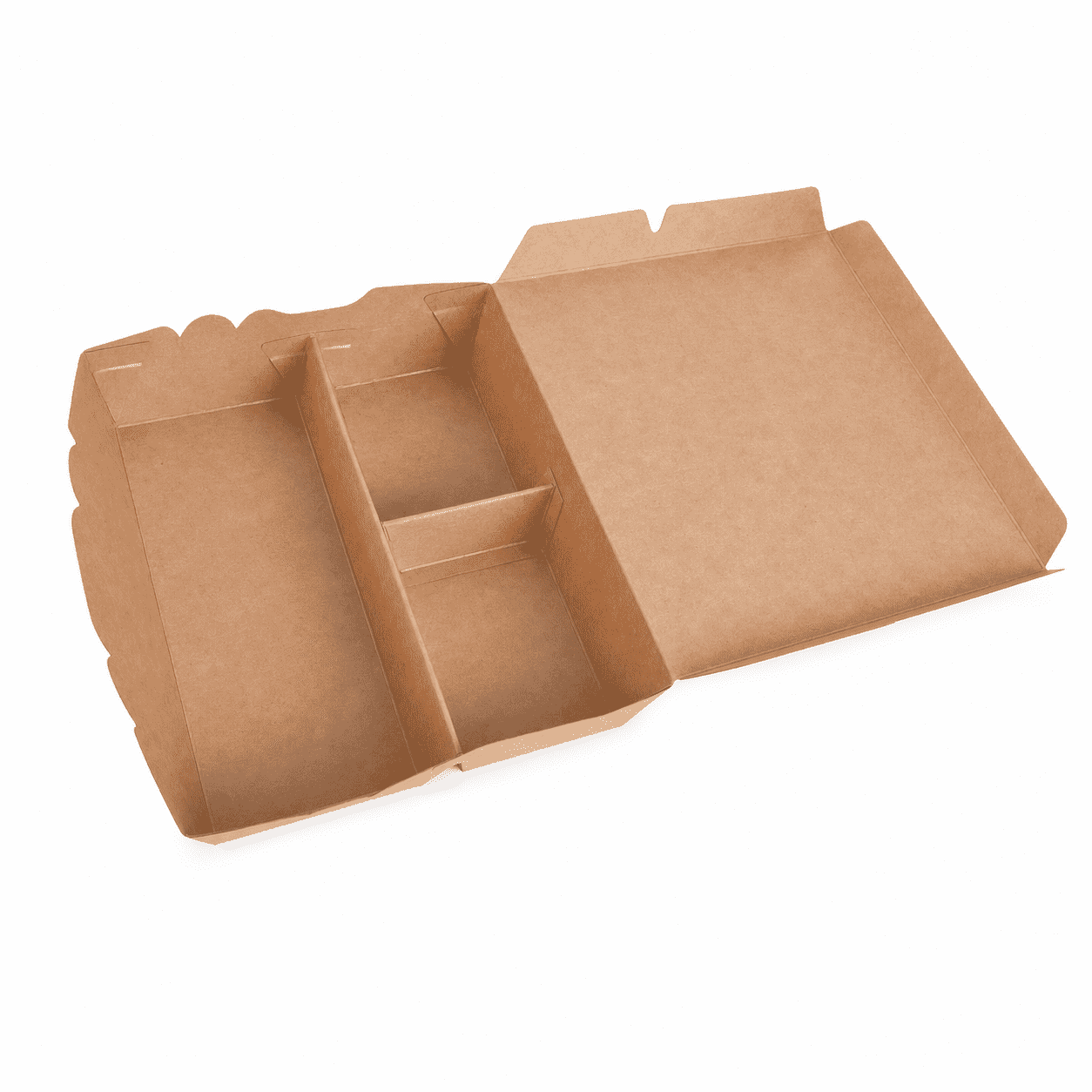
| 3-Compartment Lunch Box | 337g Kraft Paper | 30 × 18.5 × 5.5 | 200 | 50.5 × 45.5 × 46 | 50 pcs/bag |
| 2-Compartment 2000ml | 337g Kraft Paper | 21.2 × 16 × 6.2 | 200 | 55.5 × 34 × 47 | 50 pcs/bag |
| 2-Compartment 1400ml | 337g Kraft Paper | 17.2 × 13.8 × 6.5 | 300 | 59.5 × 39.5 × 46 | 50 pcs/bag |
| 2-Compartment 1080ml | 337g Kraft Paper | 17 × 13.5 × 4.8 | 300 | 50.5 × 36 × 44.5 | 50 pcs/bag |
Share:
Product Detail
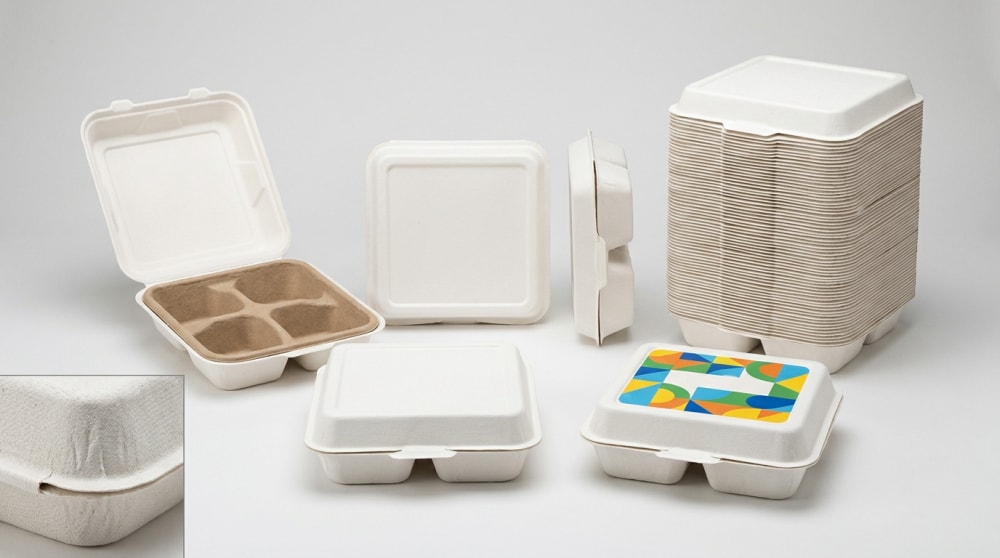
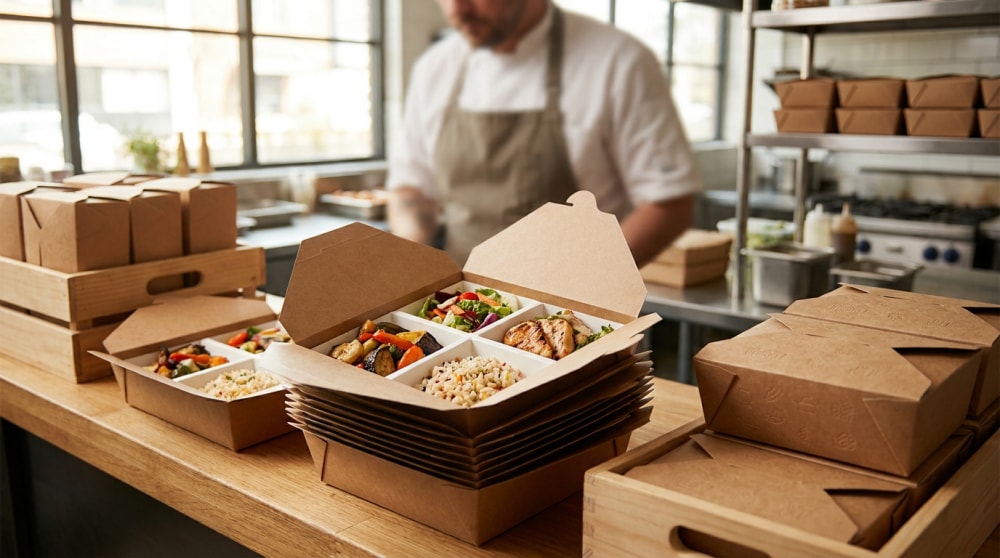
OEM 4-compartment bento lunch boxes in PE-coated white cardboard. Japanese and Korean bento standard. Microwave safe. Request OEM samples today!
Overview
Developed through years of close collaboration with Japanese and Korean convenience store chains, bento specialty brands, and Asian-cuisine restaurant operators, our 4-compartment bento-style lunch boxes replicate the balanced quadrant meal architecture that defines traditional East Asian packed-lunch culture — the harmonious arrangement of rice, protein, pickled or fermented side, and vegetable component within a structured grid layout that satisfies both nutritional balance and visual presentation standards rooted in centuries of bento tradition. Manufactured in our ISO 9001:2015-certified Shandong facility from thickened food-grade white cardboard with continuous PE interior coating across all four compartments, the three internal dividers, and the rim contact surface, these containers deliver the precise compartment proportioning, divider wall integrity, and microwave compatibility that the bento and packed-lunch market demands. The four-compartment configuration occupies the optimal balance point in the compartment spectrum — sufficient sections to construct a complete, nutritionally balanced meal with proper component isolation, without the assembly complexity and reduced per-section capacity that five-compartment layouts impose on kitchen operations.
Product Specifications
| Model | Material | Size (cm) | Packaging (pcs/ctn) | Case Size (cm) | Inner Packing |
|---|---|---|---|---|---|
| 3-Compartment Lunch Box | 337g Kraft Paper | 30 × 18.5 × 5.5 | 200 | 50.5 × 45.5 × 46 | 50 pcs/bag |
| 2-Compartment 2000ml | 337g Kraft Paper | 21.2 × 16 × 6.2 | 200 | 55.5 × 34 × 47 | 50 pcs/bag |
| 2-Compartment 1400ml | 337g Kraft Paper | 17.2 × 13.8 × 6.5 | 300 | 59.5 × 39.5 × 46 | 50 pcs/bag |
| 2-Compartment 1080ml | 337g Kraft Paper | 17 × 13.5 × 4.8 | 300 | 50.5 × 36 × 44.5 | 50 pcs/bag |
| Parameter | Details |
|---|---|
| Material | Thickened food-grade virgin white cardboard (350gsm standard / 400gsm premium) with food-grade PE interior coating on all surfaces including three internal divider walls |
| Available Sizes | Compact Bento (800ml total), Standard Bento (1000ml total), Large Bento (1200ml total), Premium Bento (1400ml total) — quadrant grid layout or one-dominant-plus-three-satellite configuration |
| Capacity Range | Equal quadrant: four sections of 200–350ml each; Dominant-plus-satellite: main section 350–600ml, three satellite sections 150–270ml each |
| Wall Thickness | 0.50–0.65mm (cardboard + PE coating); three internal dividers formed at full container height with identical wall specification for consistent isolation |
| Coating Type | Food-grade PE interior coating providing grease barrier, moisture resistance, and microwave compatibility on all four compartment surfaces, all three divider walls, and the rim |
| Temperature Resistance | -20°C to 120°C — compatible with make-ahead refrigerated bento preparation, ambient lunch service, and consumer microwave reheating |
| Color / Print Options | Interior: white PE-coated (standard); Exterior: white base with custom printing; traditional Japanese/Korean aesthetic printing options available; kraft exterior for artisanal positioning |
| Shelf Life | 24 months in dry, ventilated storage |
| Certifications | EU EC 1935/2004, US FDA 21 CFR, Japan Food Sanitation Act, Korea MFDS, FSC, SGS tested |
Key Features & Benefits
| Feature | Benefit for B2B Buyers |
|---|---|
| Four-compartment quadrant layout mirrors traditional bento architecture | The structured grid replicates the visual balance and nutritional harmony central to bento culture — one section for rice or grain, one for protein, one for vegetable, and one for pickled or fermented side dish — satisfying the cultural expectations of Japanese and Korean consumers and the visual standards of bento-literate international customers |
| Equal-quadrant and dominant-plus-satellite configurations available | Buyers choose between four equal sections for traditional balanced bento presentation or one larger main section with three smaller side compartments for entrée-focused meal formats — same exterior dimensions accommodate both layouts, simplifying inventory management for multi-format operators |
| PE-coated dividers prevent traditional bento cross-contamination | The three PE-coated full-height dividers prevent the specific flavor migrations that define bento quality failure — teriyaki sauce bleeding into rice, pickled ginger transferring flavor to vegetables, and braised protein liquid softening adjacent fried components — preserving each element’s intended taste and texture |
| Microwave compatibility preserves bento reheating convenience | Unlike traditional lacquerware and some plastic bento boxes, PE-coated cardboard safely enters standard and commercial microwaves for quick reheating — critical for the convenience store, office lunch, and campus dining contexts where bento consumers reheat packed lunches immediately before eating |
| Clean white interior creates optimal bento visual canvas | The bright white PE surface provides the neutral background against which the careful color composition of bento ingredients achieves maximum visual impact — the green of edamame, the orange of tamagoyaki, the red of pickled umeboshi, and the brown of teriyaki protein stand out with vivid contrast |
| Precision compartment proportioning supports nutritional balance standards | Compartment sizes can be calibrated to specific dietary guidelines — such as the Japanese dietary balance of 3:1:2 (grain:protein:vegetable) promoted by the Ministry of Health, Labour and Welfare — enabling institutional and retail bento programs to build nutrition compliance into the container itself |
Application Scenarios
| Scenario | Description | Recommended Size |
|---|---|---|
| Japanese convenience store (konbini) bento programs | Konbini chains packaging daily bento offerings — teriyaki chicken over rice, tonkatsu with shredded cabbage, grilled salmon with pickles and miso — for heated display and refrigerated sections where the 4-compartment layout communicates nutritional completeness and justifies premium bento pricing | Standard Bento (1000ml) for konbini standard; Large Bento (1200ml) for premium konbini bento |
| Korean dosirak (packed lunch) delivery and retail | Korean dosirak restaurants and prepared-food retailers packaging traditional Korean packed lunches — rice, main banchan protein, kimchi, and vegetable namul side — for office delivery, retail grab-and-go, and platform delivery where compartment separation preserves the distinct seasoning profiles of each banchan element | Standard Bento (1000ml) for daily dosirak; Large Bento (1200ml) for generous dosirak |
| Asian-fusion restaurant global takeaway | Pan-Asian and Asian-fusion restaurants in Western and international markets packaging complete Asian meal experiences — Thai basil chicken with jasmine rice, spring roll, and papaya salad — for customers who expect the authentic compartmented presentation of an Asian meal rather than everything mixed into one section | Large Bento (1200ml) for fusion meal standard; Premium Bento (1400ml) for deluxe Asian set |
| University and corporate campus Asian dining | Campus and corporate cafeterias offering Asian bento options alongside Western choices, packaging complete 4-component balanced meals that appeal to health-conscious students and professionals seeking structured portion control and nutritional variety in a single convenient container | Standard Bento (1000ml) for campus standard; Compact Bento (800ml) for light lunch option |
| Meal prep balanced-diet weekly portioning | Meal prep companies packaging nutritionally balanced weekly meals in 4-compartment containers — protein, complex carbohydrate, vegetable, and supplementary side — where the visible quadrant structure communicates dietary discipline and makes portion sizes immediately apparent for macro-tracking customers | Standard Bento (1000ml) for balanced meal prep; Large Bento (1200ml) for high-calorie athlete prep |
Target B2B Customers by Market
| Target Market | Customer Type | Key Application Areas / Products |
|---|---|---|
| Europe (Germany, UK, France, Netherlands) | Asian-fusion restaurant chains, Japanese restaurant procurement, healthy lunch delivery brands, corporate wellness dining programs | European Japanese restaurant bento takeaway, UK Asian-fusion balanced meal containers, German corporate wellness campus lunch packaging, Dutch healthy lunch delivery 4-section boxes |
| Southeast Asia (Singapore, Thailand, Vietnam) | Mixed-rice stall operators, Asian QSR chain procurement, school lunch program suppliers, hospital balanced-diet meal packaging | SEA mixed-rice meal containers, Singapore food court balanced-meal packaging, Thai school lunch quadrant trays, Vietnamese hospital patient meal compartment boxes |
| Japan & South Korea | Konbini bento divisions (Seven-Eleven, Lawson, FamilyMart), Korean dosirak chains (HansolDosirak tier), Japanese shokudo and bento specialty shops, Korean convenience chains (GS25, CU) | Japanese convenience store daily bento packaging, Korean dosirak chain containers, specialty bento shop premium packaging, Korean convenience store 4-section lunch boxes |
| Middle East (UAE, Saudi Arabia) | Asian restaurant procurement in Gulf cities, airline Asian-menu catering, hotel Japanese/Korean restaurant packaging, healthy balanced-meal delivery brands | Dubai Asian restaurant bento takeaway packaging, Gulf airline Asian menu section trays, Abu Dhabi hotel Japanese restaurant packaging, Saudi balanced-meal delivery containers |
| North America (USA, Canada) | Japanese and Korean restaurant chains, Asian grocery store prepared-food departments, university dining Asian-concept programs, meal prep companies targeting Asian-American consumers | North American Japanese restaurant bento boxes, Korean restaurant dosirak packaging, Asian grocery deli 4-compartment containers, university Asian-dining balanced meal trays |
Customization & OEM Options
| Customization Type | Options Available | Lead Time |
|---|---|---|
| Logo Printing | Flexographic 6-color or offset on exterior; Japanese brush-stroke typography, Korean hangul branding, traditional Asian pattern motifs, modern minimalist bento aesthetics, bilingual nutritional information panels | 15–20 days |
| Custom Sizes | Modified quadrant proportions for specific bento traditions (3:1:2 Japanese dietary ratio, Korean dosirak proportions), adjusted depth for rice-heavy vs. side-heavy menus, custom konbini shelf-fit dimensions | 20–25 days (includes mold development) |
| Material Upgrade | 400gsm premium for rigid bento structural feel; double-side PE for high-sauce Korean banchan applications; PLA bio-coating for eco-bento positioning; kraft exterior for artisanal handmade-bento aesthetic | 15–25 days |
| Surface Finish | Matte white for contemporary Japanese minimalism, wood-grain printed exterior for traditional bento warmth, gloss varnish for Korean premium dosirak, soft-touch coating for luxury bento experience, seasonal limited-edition finishes (cherry blossom, autumn leaves) | 15–22 days |
| Packaging Design | Bento-specific consultation: compartment ratio modeling for target cuisine, cultural aesthetic guidance for Japanese vs. Korean vs. fusion markets, nutritional balance compliance layout, bilingual labeling integration (English/Japanese, English/Korean), retail shelf presentation mockups | 5–8 days (design phase) |
Why Global B2B Buyers Choose Fude Packaging
Fude Packaging has served Japanese and Korean food service markets directly for over 15 years, developing manufacturing expertise specifically calibrated to the cultural expectations that bento and dosirak packaging must satisfy — understanding that for these markets, the compartment proportions, divider wall precision, interior surface cleanliness, and overall container geometry are not merely functional parameters but cultural signals that communicate respect for food, attention to balance, and commitment to the presentation standards that Japanese and Korean consumers evaluate instinctively. Our ISO 9001:2015-certified quality management system includes compartment proportion verification, divider height consistency measurement, and PE coating inspection protocols developed in collaboration with Japanese and Korean buyer specifications, ensuring each container meets the visual and functional standards of these exacting markets. All 4-compartment boxes carry independently SGS-verified compliance with the Japan Food Sanitation Act and Korea MFDS food-contact standards alongside EU EC 1935/2004 and US FDA 21 CFR certifications, with our Japanese- and Korean-speaking sales team members providing native-language communication, specification discussion, and cultural nuance understanding from initial inquiry through ongoing supply management, backed by our 500+ million-piece annual capacity.
Product Detail Overview
Product Category
Start Your Project With Fude Today
Related Product
-

Greaseproof Paper Fries Cups Oil-Resistant Kraft Chip Cups for Fast Food
Oil-resistant greaseproof kraft paper fries cups designed for French fries, chips, and fast food serving. As a professional food packaging manufacturer, we support OEM production, custom branding, and bulk wholesale supply for food trucks, restaurant chains, and global food service distributors.
-
Kraft Paper Fries Cup Eco-Friendly French Fries Paper Containers
Eco-friendly kraft paper fries cups designed for French fries, snacks, and street food packaging. As a professional food packaging manufacturer, we offer OEM production, custom printing, and bulk wholesale supply for food trucks, restaurant chains, and global distributors.
-
Sustainable Kraft Paper Takeout Containers Premium Recyclable Food Packaging
Premium sustainable kraft paper takeout containers designed for recyclable food packaging, ideal for salads, rice, noodles, and takeaway meals. As a professional food packaging manufacturer, we provide OEM production, custom printing, and bulk wholesale supply for eco-conscious brands, restaurant chains, and global distributors.