-
Square Salad Box Supply Guide for the United States
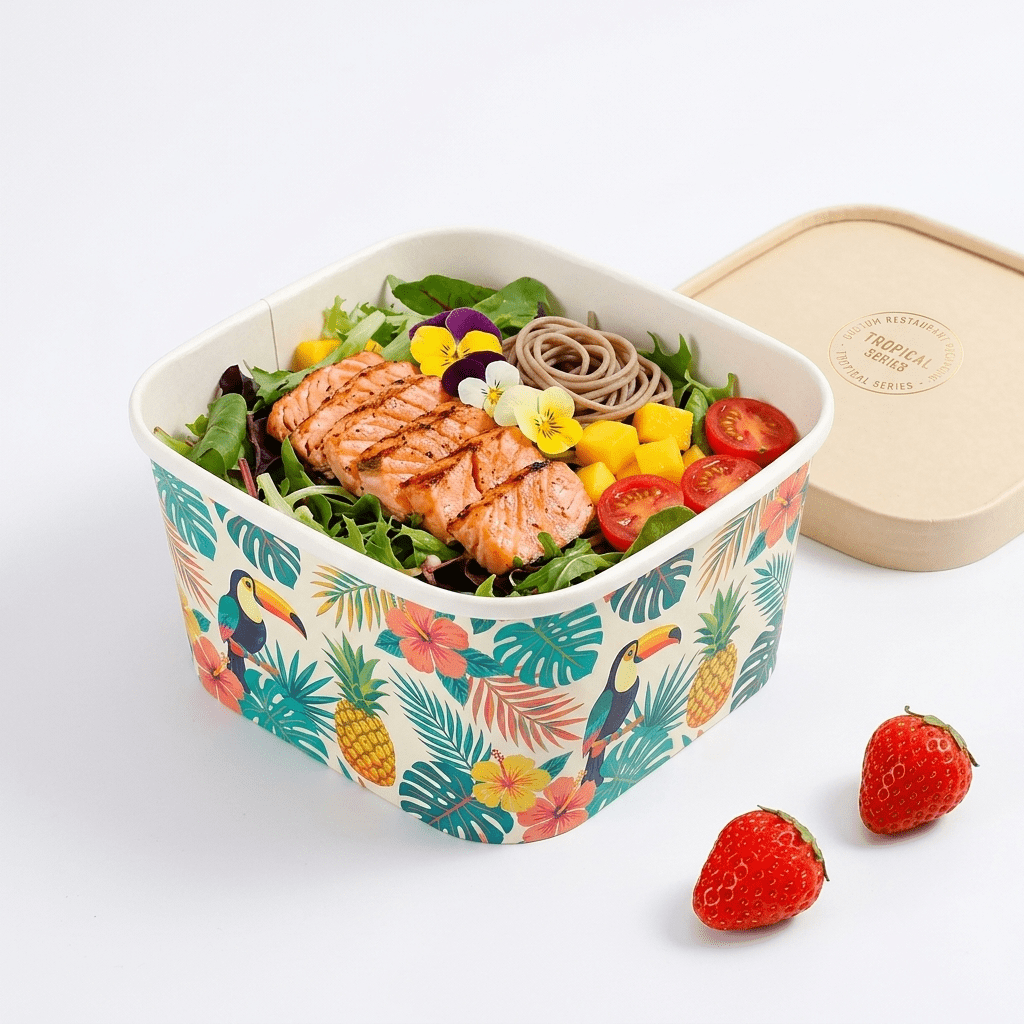
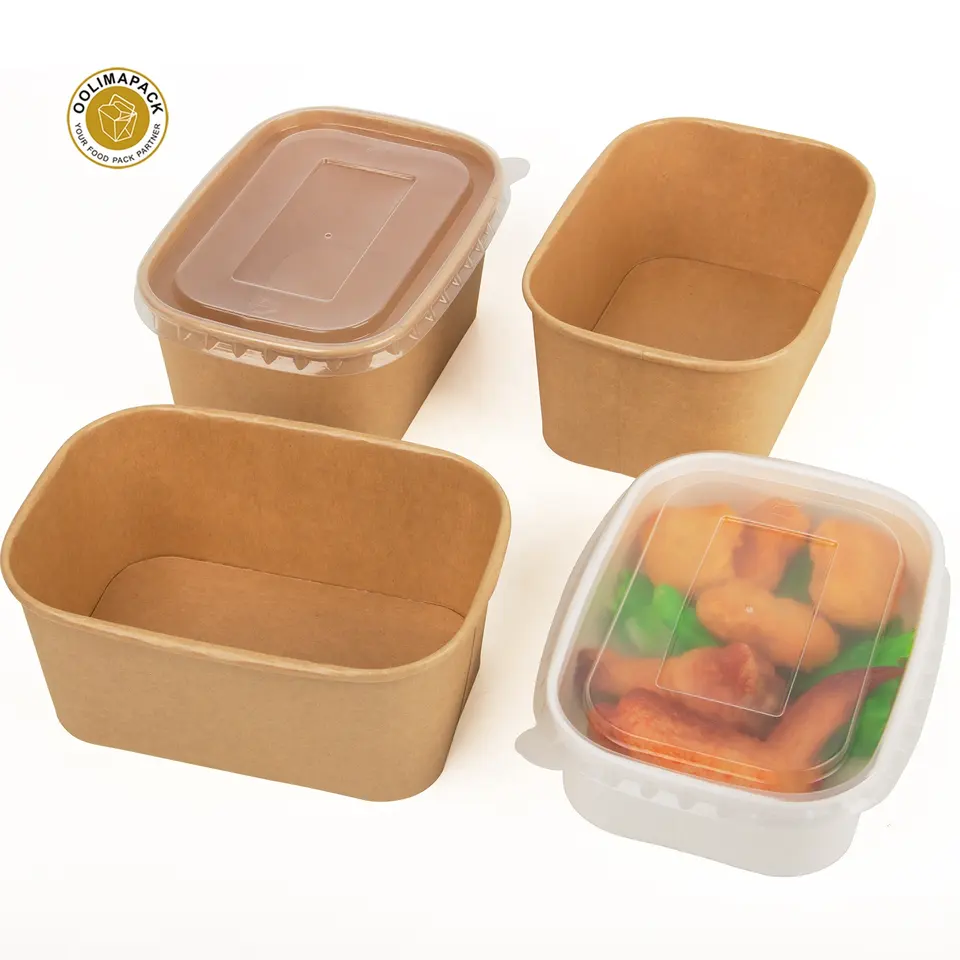
For restaurants, salad chains, meal prep brands, supermarket delis, campus dining teams, and food distributors across the United States, choosing the right square salad box supplier is no longer just about finding a container that holds greens. It now affects delivery performance, shelf appeal, food safety, freight efficiency, sustainability claims, and brand consistency. In major markets such as Los Angeles, Chicago, New York City, Houston, Atlanta, Seattle, Miami, and Dallas, operators need packaging that travels well, stacks efficiently in crowded kitchens, and looks clean on retail shelves and delivery apps.This guide explains what U.S. buyers should look for in a dependable square salad box supplier, how the 2026 market is evolving, what sizes are most common, how PE and PLA linings compare, how large-volume manufacturing works, what certifications matter, and what realistic MOQ and pricing structures look like. It also shows how an experienced factory partner such as Shandong Fude Packaging Co., Ltd. can support U.S. importers, private label brands, wholesalers, and food service operators with custom cold food packaging.If you need a short answer, the best square salad box supplier for the United States market is one that can consistently provide food-grade paper containers in the right sizes, with stable leak resistance, dependable lid fit, valid FDA-related compliance documentation, compostable or recyclable material options, custom printing capability, and shipping support into major U.S. logistics gateways such as the ports of Los Angeles/Long Beach, New York/New Jersey, Savannah, and Houston.For cold food packaging, square salad boxes are popular because they maximize shelf space, stack neatly, improve product presentation, and support portion control. A strong supplier should offer multiple capacities, usually from compact deli-style boxes to larger family salad formats, plus matching clear lids for high product visibility. Buyers in the United States should also check whether the supplier can support both PE-lined and PLA-lined structures, short trial runs, scalable OEM production, and clear lead times.In practical terms, U.S. buyers usually choose a square salad box supplier based on six factors: material safety, leak resistance, lid compatibility, print quality, landed cost, and supply reliability. If a supplier performs well across those six points, it is usually a better long-term packaging partner than one that competes only on unit price.Factory-direct sourcing is especially attractive for wholesalers, regional distributors, multi-unit restaurant groups, and emerging salad brands that want more flexibility in dimensions, paper weight, artwork, or carton labeling. Buyers who want to compare available container families can review the broader food packaging product range before requesting a tailored square salad box quotation.Buying FactorWhy It Matters in the United StatesWhat to Confirm with the SupplierFood safetyNeeded for restaurant, deli, retail, and chain procurement standardsFDA-related compliance documents, migration safety, food-grade materialsLeak resistanceImportant for dressings, cut fruit, grains, and layered saladsCoating type, paper GSM, seal integrity, real sample testingVisibilityRetail and delivery customers buy with their eyesWindow lid or PET lid options, anti-fog clarity, secure fitStackabilityImproves back-of-house efficiency and pallet densityNesting ratio, carton configuration, compression performanceCustomizationHelps brands stand out in stores and on appsPrinting colors, logo placement, size changes, private label serviceSupply continuityCritical for chains, distributors, and seasonal promotionsLead time, production capacity, warehouse planning, export experienceThe table above summarizes the practical checklist that most American buyers use during supplier screening. A supplier may have attractive photos online, but real success comes from verified compliance, repeatable quality, and on-time delivery.Demand for square salad box packaging in the United States is expected to remain strong through 2026, driven by three overlapping shifts: continued growth in grab-and-go food retail, stronger consumer demand for fresh and healthier meal formats, and tighter sustainability expectations from both customers and municipalities. Square salad boxes are now common not only in salad-focused restaurants, but also in supermarkets, airport kiosks, hotel F&B programs, convenience stores, university dining halls, office catering, and meal prep subscriptions.Unlike generic takeout cartons, square salad boxes serve a visually sensitive category. Fresh ingredients such as romaine, kale, quinoa, avocado, grilled chicken, berries, and prepared toppings need packaging that supports presentation while resisting moisture transfer. That is why suppliers with real expertise in cold food packaging are positioned better than general paper container producers.In the U.S. market, demand is particularly concentrated around urban and suburban trade corridors where cold chain retail, office lunch service, and delivery density are high. New York City, Boston, Washington DC, Philadelphia, Chicago, Dallas, Austin, Phoenix, San Francisco Bay Area, Los Angeles County, and South Florida all show sustained use of ready-to-eat salad packaging. Port-adjacent distribution networks also matter because imported paper packaging often enters through Long Beach, Newark, Savannah, or Houston before moving inland to regional warehouses.By 2026, buyers should expect purchasing decisions to be influenced not only by price but also by extended producer responsibility discussions, compostability claims scrutiny, PFAS-related policy awareness, freight optimization, and the need for packaging that photographs well for digital ordering platforms. The shift from plain utility packaging to branded, retail-ready packaging is continuing.U.S. Demand DriverImpact on Square Salad Boxes2026 OutlookHealthy grab-and-go mealsHigher use in delis, convenience retail, and office districtsStrong growth in urban retail and transit hubsMeal prep subscriptionsNeed for portioned, stackable, branded containersSteady expansion in metro fulfillment zonesDelivery and pickup orderingMore focus on lid security and visual presentationContinued growth, especially in suburbsSustainability pressureMore requests for PLA, FSC paper, and compostable claimsAccelerating, but documentation scrutiny will increaseRetail deli competitionGreater need for shelf-ready clarity and labeling spaceStrong in grocery-led channelsChain brand expansionStandardized sizes and print consistency become criticalHigher volume contracts and repeat reorder programsThe table shows that demand is not coming from one single channel. Instead, it is spread across multiple food service and retail formats, which is why square salad box packaging remains resilient even when one segment slows.var ctxLine = document.getElementById('lineChartMarket').getContext('2d');var lineChartMarket = new Chart(ctxLine, { type: 'line', data: { labels: ['2022', '2023', '2024', '2025', '2026'], datasets: [{ label: 'Estimated U.S. Demand Index for Square Salad Boxes', data: [78, 86, 95, 106, 118], borderColor: 'rgb(46, 125, 50)', backgroundColor: 'rgba(46, 125, 50, 0.12)', fill: false, tension: 0.3 }] }, options: { responsive: false, maintainAspectRatio: false }});The line chart illustrates a realistic demand index trend rather than an exact official market figure. It reflects consistent annual growth supported by better-for-you food formats, retail expansion, and more organized packaging procurement by chains and distributors.var ctxBar = document.getElementById('barChartIndustry').getContext('2d');var barChartIndustry = new Chart(ctxBar, { type: 'bar', data: { labels: ['Salad Chains', 'Supermarket Delis', 'Meal Prep Brands', 'Corporate Catering', 'Universities', 'Convenience Retail'], datasets: [{ label: 'Estimated 2026 U.S. Demand Share', data: [24, 22, 18, 12, 10, 14], backgroundColor: [ 'rgb(56, 142, 60)', 'rgb(102, 187, 106)', 'rgb(129, 199, 132)', 'rgb(165, 214, 167)', 'rgb(200, 230, 201)', 'rgb(76, 175, 80)' ] }] }, options: { responsive: false, maintainAspectRatio: false }});The industry demand comparison shows why square salad box suppliers should not focus only on restaurant chains. Grocery delis, meal prep businesses, and convenience-led fresh food formats are becoming equally important in the United States.A capable square salad box supplier should offer enough range to match different food programs instead of forcing every buyer into one standard mold. In the United States, the most requested formats generally cover side salads, entrée salads, fruit and yogurt bowls, poke-style cold meals, deli grain bowls, and family-size fresh food packs. The right size depends on fill weight, ingredient height, lid dome requirements, and whether the customer adds toppings cups or dressing containers separately.Square geometry helps operators use shelf space efficiently in refrigerated displays. Compared with some round formats, square boxes can improve facings per shelf and reduce wasted carton space during transport. This matters to supermarket chains, airport vendors, and distributors serving high-rent urban markets.Many U.S. buyers request kraft exterior styles because they visually communicate freshness and sustainability, while others prefer white paperboard for brighter custom printing and chain branding. Clear lids are common for merchandising. Some operations want low-profile lids for stacked display cases; others need a higher dome to protect greens, proteins, fruit, or garnish height.Common FormatApproximate CapacityTypical U.S. UseSmall square deli box500 mlSide salad, cut fruit, snack comboCompact square salad box650 mlLunch combo, yogurt parfait base, grain sideStandard square salad box750 mlSingle-serve fresh salad in cafés and delisLarge square salad box1000 mlEntrée salad with protein and toppingsDeep square meal box1200 mlPoke bowl, grain bowl, mixed cold mealFamily square fresh pack1300 to 1500 mlShared salad, prepared produce, retail family packThe sizing table above is useful because American buyers often think in menu applications rather than in milliliters. A reliable supplier should translate food programs into the correct volume, board thickness, and lid structure.Beyond capacity, the product range should include choices in paper color, paper weight, corner structure, coating type, and lid material. Some buyers prefer matching PET clear lids for strong product visibility, while others ask for bio-based or compostable alternatives depending on state-level sustainability positioning and local waste stream realities.Specification AreaTypical OptionsBuyer BenefitPaper appearanceNatural kraft, bleached whiteSupports either eco look or premium print lookLid styleFlat clear lid, dome lid, window topBetter stackability or more ingredient clearanceCoating choicePE, PLAFits conventional or compostable positioningPrintingPlain, 1-color, multi-color flexoPrivate label and brand consistencyStructureSingle compartment, partition-ready, reinforced wallsSupports varied menu architecturePacking methodBulk export carton, retail-ready master cartonBetter for distributors or direct end usersU.S. importers should ask a square salad box supplier whether custom dimensions are possible. This matters if the package must fit existing shelf trays, meal kit cartons, branded refrigeration bays, or automated labeling equipment. It is also smart to ask whether matching paper bowls, deli boxes, and cold food containers are available from the same supplier, as that can simplify sourcing. Buyers exploring a broader range can check the supplier’s full packaging portfolio to consolidate purchases.One of the most important technical choices in cold food packaging is the lining or barrier coating. In square salad boxes, the two most common options are PE and PLA. Both improve moisture resistance, but they serve different operational and sustainability priorities. U.S. buyers often ask which is better, but the more accurate answer is that each suits a different use case.PE, or polyethylene, remains the most common because it is cost-effective, dependable, and highly practical for moisture-rich salads, fruit, grains, and dressing contact. It provides strong resistance against soak-through and works well in distribution environments where temperature and handling conditions vary. For many wholesalers and restaurant chains, PE-lined paper is still the most economical option.PLA, or polylactic acid, is often selected by brands pursuing compostable positioning or seeking a bio-based material story. However, compostability claims in the United States should be made carefully and matched with actual certification and local disposal conditions. A PLA-lined square salad box may support sustainability goals, but buyers should verify whether the end customer has access to suitable composting systems.Comparison PointPE CoatingPLA CoatingBarrier performanceStrong moisture resistanceGood moisture resistance for cold food useCost levelUsually lowerUsually higherBest-fit applicationsHigh-volume retail, takeaway, distributor programsEco-positioned brands and compostable programsPrint compatibilityGoodGoodSupply availabilityWidely availableMay require more planningCompostable positioningNot typically marketed as compostableCan support compostable programs with proper certificationOperational familiarityVery high in U.S. marketGrowing but still more specializedIdeal buyer priorityPerformance and price balanceSustainability branding and policy alignmentThe comparison above shows why there is no universal winner. If your priority is broad operational practicality, PE often makes sense. If your priority is compostable certification and eco-positioned branding, PLA may be the better path, assuming you verify local waste handling realities and end-market communication.var ctxArea = document.getElementById('areaChartTrend').getContext('2d');var areaChartTrend = new Chart(ctxArea, { type: 'line', data: { labels: ['2022', '2023', '2024', '2025', '2026'], datasets: [{ label: 'Compostable/PLA-Oriented Share Trend', data: [18, 21, 25, 30, 36], borderColor: 'rgb(25, 118, 210)', backgroundColor: 'rgba(25, 118, 210, 0.22)', fill: true, tension: 0.3 }] }, options: { responsive: false, maintainAspectRatio: false }});The area chart reflects a realistic shift in buyer interest toward compostable and bio-based options through 2026. It does not suggest PE will disappear; instead, it indicates that more U.S. bids and RFPs will request PLA alternatives or sustainability documentation alongside conventional options.For American buyers, the best sourcing approach is often to ask the supplier for both PE and PLA quotations on the same box size. That allows a direct comparison of cost, lead time, compliance paperwork, and performance. It also helps procurement teams prepare for future policy changes in states and cities that are tightening packaging expectations.Large-scale production quality matters because cold food containers fail in small ways before they fail in dramatic ways. A slight inconsistency in board thickness, crease precision, edge sealing, or lid fit can cause stacking problems, visual defects, or moisture weakness during transport. That is why serious buyers should understand how square salad boxes are manufactured at industrial scale.The process usually starts with food-grade paperboard selection. Depending on the final application, the mill board is chosen for stiffness, surface quality, and compatibility with PE or PLA lining. After that, the material may be flexographically printed if the order includes custom branding. Printing must remain stable and food-safe, especially when buyers need consistent brand color across multiple reorders.Next comes die-cutting, where the flat blank is cut to exact dimensions and crease lines are formed. Precision here affects final box geometry, folding speed, corner stability, and lid compatibility. The blanks then move into automated forming lines that fold, seal, and shape the boxes. During this stage, temperature, pressure, and machine calibration matter greatly, especially for leak resistance and wall strength.Quality control continues throughout production. Dimensions, sealing performance, print registration, odor, cleanliness, and packing accuracy all need monitoring. Once approved, the finished boxes are counted, packed, cased, palletized, and prepared for export. For the United States market, carton marking, pallet stability, and moisture-managed warehousing are especially important because ocean transit and inland trucking can be long.Production StageWhat HappensWhy U.S. Buyers Should CarePaperboard sourcingFood-grade base paper is selectedImpacts strength, safety, and sustainability claimsCoating laminationPE or PLA barrier is appliedDetermines moisture performance and product positioningPrintingBrand artwork is addedCritical for private label quality and shelf appearanceDie-cuttingBlanks are cut and creasedAffects folding precision and lid fitForming and sealingBoxes are shaped on automated linesCore stage for leak resistance and structural reliabilityInspection and packingQC checks and export packing are completedReduces transit issues and customer complaintsThe table matters because each manufacturing step directly affects performance in real food service conditions. In U.S. distribution, boxes may travel from port warehouses to regional fulfillment centers and then onward to stores or kitchens, so weak manufacturing control often shows up only after shipment arrives.Shandong Fude Packaging’s manufacturing model is relevant here because it combines research and development, automated production, flexo printing, die-cutting, forming, and quality testing within one integrated system. That reduces the handoff risks common in fragmented supply chains. The company’s modern factory covers approximately 30,000 square meters and is set up for high-volume, repeatable production, which is important for distributors and restaurant groups that cannot afford shape drift or print inconsistency from batch to batch.Its manufacturing capability also includes organized warehousing and export readiness, which helps support delivery planning for clients shipping to North America. For buyers managing imports into Los Angeles, Newark, Savannah, or Houston, a supplier that understands carton loading efficiency and international documentation can save time and cost throughout the logistics cycle.A useful way to evaluate a square salad box supplier is to look at how that supplier solves real business problems. One representative case involved a growing fresh meal distributor serving the U.S. Midwest, with distribution points near Chicago and Columbus. The client was selling ready-to-eat salads and grain bowls through regional grocery chains, convenience outlets, and corporate lunch programs. Their previous packaging had three problems: inconsistent lid fit, frequent soak-through complaints on high-moisture recipes, and weak shelf appearance under refrigerated display lighting.The buyer wanted a cleaner kraft look, a square format that could use shelf space better, and stronger consistency for repeat orders. They also needed a supplier that could support moderate launch volumes first and then scale up once additional retail chains approved the product line.After reviewing fill weight, ingredient height, expected shelf life, and retail display needs, a customized square salad box program was developed. The solution used a sturdier food-grade paper structure with a clear lid format suited to high-visibility merchandising. Branding was simplified for stronger print contrast, and carton packing was adjusted to improve warehouse handling at the importer’s U.S. facility.Within the first reorder cycle, the client reported fewer lid complaints, improved display appeal, and better pallet organization in their distribution center. Most importantly, the packaging supported the brand’s effort to move from a generic deli look toward a more premium prepared-fresh identity. The buyer later expanded into an additional capacity size for larger protein salads.Client ChallengeOld Packaging IssueSupplier SolutionRetail shelf presentationDull appearance and weak product visibilityCleaner square format with clear-lid presentationMoisture controlSoak-through on wet ingredientsImproved barrier structure and stronger board selectionLid fitInconsistent closure during transportBetter matched box-and-lid specificationBrand imageGeneric unbranded lookCustom print layout and upgraded visual finishWarehouse handlingMessy carton flow and inefficient storageOptimized case packing and count configurationScale-up planningSupplier could not grow with demandProduction capacity aligned with future volumeThis kind of case is typical in the United States. Buyers may start by asking for a box, but what they really need is a packaging program that supports merchandising, operations, freight, and brand growth at the same time.Companies that want a similarly structured project can review the supplier’s custom packaging service process, which usually starts with application review, artwork preparation, sample confirmation, and then mass production planning.Documentation matters as much as the physical box. In the United States, buyers routinely ask suppliers for food-contact compliance evidence, material declarations, and sustainability certificates before approving a packaging order. For square salad boxes, the two most common certification conversations involve food safety compliance and compostable claims.On the food safety side, U.S. buyers typically request documentation demonstrating that the materials are suitable for food contact and produced under controlled quality conditions. For a professional supplier, this often includes FDA-related compliance support, quality management documentation such as ISO 9001, and paper sourcing certifications such as FSC where relevant.On the sustainability side, claims must be specific and documented. If a supplier offers PLA-lined or compostable square salad boxes, buyers should request recognized certifications such as BPI or OK Compost where applicable, along with clear guidance on proper claim language. This is especially important because sustainability marketing is facing more scrutiny, and vague eco claims can create legal or retail compliance issues.Shandong Fude Packaging serves global food service buyers with products aligned to commonly requested standards including FDA-related compliance support, EU food-contact standards, ISO 9001, FSC paper sourcing, and compostability certifications for applicable products. For U.S. procurement teams, this kind of documentation can speed onboarding and reduce risk in retail or chain approval processes.Certification or StandardWhy It MattersCommon U.S. Buyer UseFDA-related food contact complianceSupports safety review for direct food packagingRestaurant chains, importers, distributorsISO 9001Shows structured quality managementVendor qualification and repeat-order confidenceFSCSupports responsible paper sourcing claimsRetailers and brands with sustainability goalsBPI certificationRelevant for compostable claim support in North AmericaEco-positioned food service programsOK CompostUseful in broader compostability documentationExport-oriented brands and procurement auditsEU EC 1935/2004Shows broader food-contact quality disciplineMulti-market importers and premium sourcing teamsThe certification table above helps U.S. buyers separate essential documents from marketing language. If a supplier cannot provide clear paperwork for the material and claim being sold, that is usually a warning sign.By 2026, certification transparency will become even more important. Buyers should expect more requests for declaration sheets, test reports, and precise wording on recyclability or compostability. The best suppliers are already preparing for that shift by keeping their documentation organized and current.MOQ and pricing vary widely based on size, coating, print complexity, lid style, and whether the order is stock or custom. For U.S. buyers, the landed economics also depend on ocean freight cycles, port congestion, customs timing, and inland trucking from arrival ports to final warehouses. That means the cheapest ex-factory quote is not always the cheapest total-cost option.In general, stock sizes with simple printing or plain kraft construction usually offer the lowest MOQ. Fully customized square salad boxes with special dimensions, multi-color branding, or PLA lining usually require higher order quantities because of plate setup, material planning, and production scheduling. Buyers launching a new brand often start with one standard size and one artwork version before expanding into multiple capacities.For a factory with flexible service capability, trial-friendly quantities can often be discussed, especially when the buyer shows a clear reorder path. The most efficient commercial approach is usually to align MOQ with one or two container-load planning cycles so that freight cost per unit stays reasonable.Order TypeTypical MOQ RangeRelative Price LevelPlain stock box10,000 to 20,000 pcsLowestStock size with 1-color logo20,000 to 30,000 pcsLowCustom print standard size30,000 to 50,000 pcsModerateCustom size with standard lid40,000 to 60,000 pcsModerate to highPLA-lined custom box50,000 pcs and aboveHighMulti-SKU mixed programProject-basedDepends on volume and tooling efficiencyThe MOQ table offers realistic planning guidance for U.S. importers. Exact terms depend on the supplier, but buyers should use ranges like these to build initial budgets and inventory plans.Pricing also moves with material and print complexity. Larger capacities use more paperboard, PLA often costs more than PE, and detailed artwork increases setup considerations. Buyers should ask for a price matrix rather than a single quote so they can compare how cost changes by volume break, coating type, and packaging method.Pricing VariableEffect on CostHow to Control ItBox sizeLarger sizes cost more per pieceMatch capacity to actual fill weightCoating typePLA usually increases costUse PE where compostability is not essentialPrint coverageHeavy printing raises setup and production costSimplify artwork and limit color countLid specificationSpecial lid shapes may cost moreUse standard compatible lid families when possibleOrder volumeHigher volume often lowers unit costCombine SKUs and plan repeat ordersFreight efficiencyPoor carton density raises landed costOptimize case pack and container loadingFor U.S. buyers, one of the smartest questions is not “What is your lowest price?” but “What is the most efficient specification for my application and delivered cost?” That usually leads to better commercial outcomes. If you want a quote based on your target volume, size, and destination warehouse, you can contact the supplier directly for a tailored proposal.var ctxComp = document.getElementById('comparisonChartSupplier').getContext('2d');var comparisonChartSupplier = new Chart(ctxComp, { type: 'bar', data: { labels: ['Price Stability', 'Customization', 'Certifications', 'Lead Time Control', 'Print Quality', 'Export Experience'], datasets: [{ label: 'Factory-Direct Supplier Evaluation Score', data: [84, 92, 90, 87, 89, 94], backgroundColor: 'rgb(123, 31, 162)' }] }, options: { responsive: false, maintainAspectRatio: false }});This comparison chart highlights the criteria that often matter most when American buyers compare suppliers. A high-performing square salad box supplier is rarely the absolute cheapest one; instead, it delivers better total value through reliability, flexibility, and compliance readiness.Shandong Fude Packaging Co., Ltd. is positioned as a factory-direct packaging partner for food service and retail buyers who need reliable paper-based containers for cold and hot food applications. Since its founding in 2004, the company has built long-term export experience across North America, Europe, Southeast Asia, the Middle East, and other regions. That international operating background matters for U.S. customers because imported packaging projects require more than manufacturing alone; they require consistent quality language, documentation discipline, and delivery coordination.From a technological capability perspective, the company operates with integrated development and production systems that support product research, sample refinement, flexographic printing, die-cutting precision, forming control, and quality inspection. This technical base is useful for square salad box programs because cold food packaging needs stable barrier performance, clean creasing, good stackability, and accurate lid compatibility. Instead of treating every food box as the same, the production approach is designed around actual use conditions such as moisture exposure, display requirements, and brand presentation.From a manufacturing capability perspective, the company runs a modern production facility of approximately 30,000 square meters with automated lines and organized warehousing. Its capacity planning is suited to both recurring bulk orders and customized OEM production. The factory serves restaurants, chains, wholesalers, distributors, takeaway platforms, and emerging food brands, which means it is familiar with the difference between a plain wholesale item and a retail-facing private label item. This is especially valuable for U.S. buyers that may need square salad boxes alongside bowls, deli containers, lunch boxes, or matching takeaway lines from a single source.From a service capability perspective, the company provides a structured process that usually begins with requirement review, followed by artwork or specification confirmation, then sample approval, and finally mass production and delivery coordination. For American customers, this helps reduce errors before shipment. Support can include packaging selection advice, custom development, private label printing, and communication around typical lead times. Businesses that want to understand the company in more detail can visit the company overview page or explore its service capabilities for OEM and export support.Another reason this matters in the United States is that packaging expectations differ by channel. A food truck operator in Austin may prioritize low MOQs and speed. A regional deli distributor in New Jersey may focus on warehouse efficiency. A salad chain in California may push harder on sustainability documentation. A supplier with broad service and manufacturing depth is better able to adapt to those differences than a trader offering only generic catalog products.For importers comparing local U.S. distributors with overseas factory-direct supply, the trade-off is usually between convenience and customization. Local stock can be useful for urgent replenishment, but direct factory partnerships often provide better flexibility in size, material, print, and long-term cost structure. The best model for many buyers is a hybrid one: hold safety stock in the United States while developing custom production directly with the factory.What is the best size for a standard entrée salad in the United States?For many U.S. operators, 750 ml to 1000 ml is the most common range. The right size depends on greens volume, protein add-ons, and whether toppings are packed inside the main box or separately.Should I choose kraft or white paper for square salad boxes?Kraft is often preferred for a natural, eco-oriented look, while white paper is better when you need sharper brand colors and a more premium printed appearance. Both can work well if the board quality is strong.Are square salad boxes better than round bowls?They are often better for refrigerated shelf efficiency, carton packing, and visual organization. Round bowls may still be useful for certain menu concepts, but square boxes are especially effective in grab-and-go retail and deli programs.Can a supplier provide custom logo printing?Yes. Most established suppliers can support plain, one-color, or multi-color printing depending on the order volume and artwork complexity. Flexographic printing is commonly used for food packaging production.How do I decide between PE and PLA?Choose PE if your priority is dependable performance and lower cost. Choose PLA if compostable positioning is a key part of your brand or procurement requirement, and confirm the related certification documents.What certifications should I ask for?At minimum, ask for food-contact compliance documentation relevant to your market. If sustainability claims matter, also ask for FSC, BPI, or OK Compost documentation when applicable, plus clear material declarations.Can imported square salad boxes work for fast-moving U.S. programs?Yes, if inventory planning is done properly. Many U.S. buyers import successfully through ports such as Long Beach, Newark, Savannah, and Houston, then distribute domestically through regional warehouses.What lead time should I expect?For many projects, typical lead time can fall in the range of roughly 7 to 15 days after confirmation for production, though total delivery timing to the United States depends on shipping method, order complexity, and season.Are there local supplier alternatives in the United States?Yes, there are local distributors and converters, and they can be useful for emergency stock or smaller ongoing needs. However, for custom development, wider size flexibility, and direct manufacturing economics, a factory-direct overseas supplier may offer stronger value.What industries use square salad boxes besides salad shops?Supermarket delis, meal prep brands, convenience stores, corporate caterers, schools, universities, hospitals, airport food outlets, and fresh produce programs all use them for cold prepared foods.How should I compare suppliers?Compare on sample quality, compliance documents, print consistency, size range, MOQ flexibility, lead time reliability, and export experience. Total delivered performance matters more than a single low unit price.Where should I start if I want a quote?Start with your target size, monthly volume, preferred material, coating type, print requirement, and delivery destination in the United States. Then send those details through the supplier’s contact page for a more accurate recommendation and quotation.In summary, choosing the right square salad box supplier for the United States means balancing food safety, packaging performance, sustainability goals, brand presentation, and logistics practicality. As the 2026 market evolves, buyers who choose partners with strong technology, scalable manufacturing, and responsive service will be in the best position to reduce risk and grow efficiently. -

Kraft Takeout Container Suppliers in the United States
For restaurants, ghost kitchens, deli operators, wholesalers, importers, and food delivery brands in the United States, choosing the right kraft takeout container supplier is not just a packaging decision. It affects food safety, delivery performance, leakage complaints, stacking efficiency, brand presentation, inventory turns, and landed cost. Buyers in New York, Los Angeles, Chicago, Houston, Miami, Seattle, and Atlanta often compare suppliers based on three practical questions: will the box hold hot and saucy food without leaking, can the supplier deliver consistent quality at scale, and does the quote still make sense after freight, customs, and warehousing are included?A strong supplier should provide dependable stock items, custom printing options, multiple size formats, and clear compliance documentation for the U.S. market. The best partners also help buyers decide between PE, PLA, and aqueous barrier coatings; explain realistic minimum order quantities; and support long-term purchasing with reliable production schedules. For foodservice operators that need a factory-backed packaging partner, Fude Packaging offers an established export-focused model with experience serving international foodservice buyers across many markets, including North America.This guide explains what U.S. buyers should compare when sourcing kraft takeout containers, how to evaluate a supplier before placing an order, and what market shifts are likely to matter most through 2026.The short answer is simple: a reliable kraft takeout container supplier should offer leak-resistant stock products, practical custom options, stable quality control, transparent pricing, and documentation suitable for U.S. import and food-contact requirements. If any one of these is missing, the supplier may create more operational risk than savings.Foodservice buyers usually want a combination of ready-to-ship standard items and customizable programs. Stock products matter when a restaurant group needs fast replenishment. Custom products matter when a chain wants branded delivery packaging or a distributor wants a private label line. The supplier should also understand end-use differences. A salad bowl, a noodle box, a bento-style meal box, and a deli container all face different demands for grease resistance, ventilation, heat retention, and lid fit.In the United States, buyers increasingly ask for three things at once: performance, sustainability, and price discipline. That means the supplier must be able to explain not just what the container is made of, but why that material structure is suitable for hot food, cold applications, freezer storage, microwave use in some cases, and transport through delivery networks such as DoorDash, Uber Eats, and in-house fleet delivery. Core checklist for U.S. buyers evaluating a kraft takeout container supplier Requirement Why it matters What to request Leak resistance Reduces complaints and food loss during delivery Sauce test results, sample verification, coating details Food-contact compliance Supports legal and customer requirements in the U.S. FDA declarations, migration reports, material specs Size range Allows one supplier to cover multiple menu items Catalog with dimensions, volume, lid options Custom printing Improves brand recognition and private label potential Artwork template, color limits, print proof process MOQ flexibility Important for regional chains and pilot launches MOQ by stock item, custom item, and mixed order Production reliability Prevents out-of-stock issues Lead time range, capacity statement, inspection process Shipping support Affects landed cost and timeline planning Incoterms, packing list, carton loading data The checklist above shows why a good supplier relationship goes beyond a low unit price. A buyer that compares all seven points will usually make a more profitable long-term decision.U.S. buyers generally source kraft takeout containers through one of three supplier models: factory-direct manufacturers, domestic distributors, or OEM/private label partners. Each model works, but each suits a different purchasing strategy.Factory-direct sourcing often appeals to importers, wholesalers, regional chains, and restaurant groups with predictable volume. The advantage is cost control, broader customization, and closer communication on materials and structure. The tradeoff is that buyers must manage lead times, shipping, and import documentation more actively.Domestic distributors are often the fastest option for independent restaurants, multi-unit operators with urgent needs, or buyers that prioritize mixed pallets and local warehousing. The tradeoff is generally a higher unit price and fewer customization possibilities. However, for operators in dense markets like New Jersey, Southern California, or the Dallas–Fort Worth area, distributor availability can be a major convenience.OEM packaging partners are ideal for businesses building a branded product line. That includes distributors launching private label programs, supermarket prepared-food sections, and chain restaurants seeking consistent print quality across states. OEM supply works best when the manufacturer has material expertise, flexographic printing capability, and a clear sample-to-production approval process. Comparison of common kraft takeout container supplier types Supplier type Best for Advantages Limitations Factory-direct manufacturer Importers, chains, wholesalers Lower cost, more customization, direct quality control Requires shipping and import planning U.S. distributor Independent restaurants, urgent replenishment Fast delivery, domestic inventory, smaller buys Higher price, narrower spec options OEM partner Private label brands, retail food programs Branding support, custom structure, scalable supply Approval cycle may be longer Broker or trading company Buyers seeking sourcing convenience Multiple factory access, negotiation support Less direct factory visibility Local cash-and-carry packaging supplier Food trucks, start-ups, small restaurants Immediate availability Very limited customization and volume economics Hybrid importer-distributor Regional foodservice networks Blend of stock access and moderate branding options Depends on local warehouse network The table helps buyers match supplier type to business model. For example, a New York deli chain may prefer a hybrid model, while a West Coast wholesaler supplying multiple restaurant brands may benefit more from a factory-direct program.var ctx1 = document.getElementById('lineChartGrowth').getContext('2d');var chart1 = new Chart(ctx1, { type: 'line', data: { labels: ['2021', '2022', '2023', '2024', '2025', '2026'], datasets: [{ label: 'U.S. demand index for kraft takeout containers', data: [72, 79, 86, 94, 103, 112], borderColor: 'rgb(75, 192, 192)', backgroundColor: 'rgba(75, 192, 192, 0.15)', fill: false, tension: 0.25 }] }, options: { responsive: true, maintainAspectRatio: false }});The chart reflects a realistic direction of demand growth driven by delivery meals, grab-and-go formats, and continued movement away from less sustainable packaging options.Container selection often begins with volume, but successful buyers compare much more than milliliters or ounces. In practice, they review base dimensions, top opening, sidewall angle, lid fit, filling temperature, and menu application. A 500 ml deli box for cold pasta salad has a different performance profile than a 38 oz kraft meal box for hot rice bowls.In the U.S. market, common buying categories include small snack and side containers, medium deli formats, standard lunch boxes, larger family meal boxes, noodle or soup-capable bowls, compartment boxes, and containers with clear windows for premium presentation. Lid type is equally important. Paper lids, PET transparent lids, PP lids, and integrated fold-top designs each affect visibility, heat release, and stacking behavior differently. Popular kraft takeout container sizes and typical foodservice uses Capacity Approximate use Typical foods Common lid option 500 ml Compact deli box Salads, fruit, desserts, side dishes Window lid or PET lid 650 ml Single meal light portion Pasta, rice, chicken bites Fold-top kraft lid 750 ml Standard takeaway meal Noodles, fried rice, stir-fry Kraft integrated lid or plastic lid 1000 ml Large entrée box BBQ, burrito bowls, larger salads PET lid or lock-tab top 1200 ml Family or sharing item Combo meals, appetizers, platters Reinforced fold-top lid 3-compartment Portion control meals Protein, rice, vegetables Attached lid structure Window-lid premium box Retail display Bakery, sushi, deli meals Clear PET window top This size table helps buyers reduce overbuying and avoid menu mismatch. Choosing the right footprint improves shelf efficiency, delivery bag fit, and carton utilization.At Fude’s product range, buyers can review multiple food container styles such as kraft lunch boxes, trays, meal boxes, bowls, and window-lid formats. This matters for U.S. distributors and restaurant groups that prefer a one-stop source instead of spreading spend across several packaging vendors.One of the most important technical choices is the interior barrier. Kraft takeout containers often use PE coating, PLA coating, or an aqueous barrier system. The right choice depends on menu type, sustainability goals, local composting realities, and price sensitivity.PE, or polyethylene, remains common because it provides dependable moisture and grease resistance at a competitive cost. It is widely used for hot food, oily items, and containers requiring strong leak resistance. PLA is a plant-based coating option often selected for compostability-focused programs, especially when the buyer wants a renewable-material story. However, real composting outcomes depend on local infrastructure and certification acceptance. Aqueous barrier coatings are gaining attention because they can support fiber recovery goals and lighter sustainability positioning, though performance can vary by food type and hold time. PE vs PLA vs aqueous barrier for kraft takeout containers Coating type Performance profile Common use Cost level Key consideration PE Strong moisture and oil resistance Hot meals, saucy food, high-volume takeout Low to moderate Most practical for broad foodservice use PLA Good barrier with compostable positioning Eco-focused brands, select cold or warm foods Moderate to high Needs composting pathway and certification review Aqueous Improving barrier, lighter material approach Dry-to-medium moisture foods, sustainability programs Moderate Must be tested for grease and long hold times Double barrier PE Higher protection for heavy sauces Curries, braised dishes Moderate Useful where leakage risk is high PLA with clear lid system Presentation plus eco messaging Salads, deli, premium cold meals High Less ideal for very high heat conditions Specialized oil-resistant structure Designed for fried foods Fries, snacks, chicken Moderate Food-specific engineering matters more than label claims The table shows why coatings should be selected by application, not by marketing language alone. A U.S. burger chain may still need PE for performance, while a salad brand in Portland or San Francisco may prioritize PLA or aqueous systems for sustainability positioning.var ctx2 = document.getElementById('areaChartShift').getContext('2d');var chart2 = new Chart(ctx2, { type: 'line', data: { labels: ['2021', '2022', '2023', '2024', '2025', '2026'], datasets: [ { label: 'PE share', data: [68, 66, 63, 60, 57, 54], borderColor: 'rgb(54, 162, 235)', backgroundColor: 'rgba(54, 162, 235, 0.18)', fill: true, tension: 0.25 }, { label: 'PLA and aqueous share', data: [32, 34, 37, 40, 43, 46], borderColor: 'rgb(255, 159, 64)', backgroundColor: 'rgba(255, 159, 64, 0.18)', fill: true, tension: 0.25 } ] }, options: { responsive: true, maintainAspectRatio: false }});This trend shift suggests that U.S. buyers should ask suppliers about future-ready material options now, even if current purchases still lean toward PE-coated structures.Evaluating a kraft takeout container supplier should involve both commercial checks and technical checks. A low quote is not enough. Buyers should assess manufacturing consistency, test methods, communication quality, and after-order responsiveness.Start with samples. Test them with actual menu items, not just water. Fill them with hot noodles, saucy chicken, oil-heavy rice dishes, or chilled deli salads depending on your business. Stack filled containers. Leave them in a delivery bag for 30 to 60 minutes. If possible, test in a car or bike delivery scenario. Many packaging failures only appear during real transport conditions.Next, review documentation and process transparency. A reliable supplier should explain paper weight, barrier type, printing method, carton pack count, and quality inspection standards. It should also provide realistic lead times rather than overly aggressive promises. Supplier evaluation scorecard for kraft takeout containers Evaluation area What to check Strong signal Sample performance Leak, grease, lid fit, stackability Passes real menu testing Material transparency Paper gsm, coating type, certification Clear written specifications Production capacity Line capability and output stability Defined capacity and planning window Print quality control Color consistency and artwork approval Pre-production proof and sign-off process Export readiness Shipping terms, packing, documents Experience with U.S. trade requirements Communication speed Response time and detail level Fast, specific answers Problem handling Claim process and corrective action Clear after-sales support steps The scorecard above works well for both single-brand operators and import distributors. It also helps compare domestic and overseas options on equal terms.From a technology standpoint, buyers should favor suppliers with in-house printing, forming, die-cutting, and testing capabilities. Fude Packaging’s manufacturing system includes automated lines, flexographic printing, converting functions, and quality-lab support. That kind of integrated technical setup helps reduce color mismatch, dimension inconsistency, and lid-fit variation, which are common problems when too many processes are outsourced.MOQ is one of the first issues that separates a workable supplier from a theoretical one. In the U.S. market, buyers range from single-location restaurants to national distributors, so MOQ flexibility matters. Stock items usually carry lower MOQs, while custom sizes and printed items require higher quantities due to plate setup, material purchasing, and production efficiency.Custom printing is often worthwhile when the packaging serves as mobile advertising. For delivery-heavy restaurants in dense urban areas like Manhattan, Brooklyn, Chicago Loop, or downtown Los Angeles, logo visibility can improve repeat brand recognition. For distributors, private label programs can protect margin and reduce direct product comparison against competitors.However, buyers should ask several practical questions: how many print colors are included, whether inside and outside printing differ in cost, how artwork approval works, whether cartons can be mixed by SKU, and whether repeat orders can use saved plates to reduce setup expense.For buyers exploring private label or OEM development, Fude’s service process is relevant because it is built around requirement review, design and sample confirmation, and then production with delivery coordination. That structure is useful for U.S. importers that need a repeatable process rather than one-off quoting.Quotes vary widely because a kraft takeout container is not a commodity in the strict sense. Price depends on material grade, coating type, paper weight, size, structure complexity, printing, order quantity, packing format, and freight conditions. Two containers that appear similar can have meaningful cost differences if one uses thicker board, a stronger locking structure, or higher grease resistance.Freight also changes the economics. Buyers importing through Long Beach, Los Angeles, New York/New Jersey, Savannah, Houston, or Seattle-Tacoma need to calculate cost based on cubic utilization, not just item count. Lightweight paper packaging can become volume-limited before weight-limited, so carton dimensions and nesting efficiency matter. Main cost drivers in supplier quotations Cost factor Impact on price Buyer tip Paper weight and grade Higher gsm increases cost Match strength to menu needs, not assumptions Barrier coating PLA and specialty coatings cost more Use PE where performance and budget require it Container size Larger volumes use more material Standardize SKUs where possible Print complexity More colors and coverage raise setup and run cost Keep artwork efficient for volume items MOQ level Lower volumes carry higher unit cost Consolidate orders across locations Carton packing and nesting Affects freight utilization Ask for container load plan Incoterm choice FOB, CIF, and DDP change total exposure Compare landed cost, not ex-factory only The table highlights why buyers should request a quotation breakdown. Understanding these drivers helps purchasing teams negotiate better and compare offers more accurately.var ctx3 = document.getElementById('comparisonChartSupplier').getContext('2d');var chart3 = new Chart(ctx3, { type: 'bar', data: { labels: ['Unit Cost', 'Customization', 'Lead Time Speed', 'MOQ Flexibility', 'Technical Support', 'Branding Potential'], datasets: [ { label: 'Factory-direct', data: [90, 95, 70, 72, 88, 93], backgroundColor: 'rgba(153, 102, 255, 0.7)' }, { label: 'Distributor', data: [68, 52, 94, 90, 65, 50], backgroundColor: 'rgba(255, 99, 132, 0.7)' } ] }, options: { responsive: true, maintainAspectRatio: false }});This comparison chart shows why many higher-volume U.S. buyers choose factory-direct programs, especially when customization and long-term margin matter more than immediate local availability.Three functional traits determine whether a takeout container succeeds in real foodservice use: leak resistance, stackability, and heat retention. If the box leaks, the meal fails. If the box cannot stack, fulfillment becomes slow and storage becomes inefficient. If the food loses heat too quickly, customer satisfaction drops even if the packaging looks attractive.Leak resistance depends on several variables: board rigidity, fold design, seam compression, coating type, and lid integrity. Stackability depends on shape geometry and top-load strength. Heat retention depends on wall construction, venting strategy, and how the packaging interacts with the food. For example, fried foods may need some steam release, while rice bowls often benefit from stronger heat retention.U.S. operators handling delivery in winter climates such as Boston, Philadelphia, Minneapolis, or Denver tend to care more about thermal performance. Operators in hot, humid climates such as Miami or Houston may focus more on condensation management and structural stability.var ctx4 = document.getElementById('barChartIndustry').getContext('2d');var chart4 = new Chart(ctx4, { type: 'bar', data: { labels: ['QSR', 'Asian Takeout', 'Salad Chains', 'Deli & Prepared Foods', 'Catering', 'Food Trucks', 'Meal Prep Brands'], datasets: [{ label: 'Relative demand for kraft takeout containers in the U.S.', data: [88, 94, 73, 81, 69, 76, 84], backgroundColor: 'rgb(255, 159, 64)' }] }, options: { responsive: true, maintainAspectRatio: false }});This demand chart reflects the sectors where performance packaging matters most. Asian takeout, meal prep, deli prepared foods, and quick-service restaurants often generate the strongest repeat demand.For overseas sourcing, timing discipline matters as much as product quality. Typical lead times vary depending on whether the buyer is ordering stock items or customized products. A common planning window for custom kraft containers can range from roughly one to three weeks for production after approval, followed by ocean transit and customs clearance. U.S. buyers should always distinguish between production lead time and total delivered lead time.Shipping terms also affect risk allocation. FOB is common when the buyer controls freight forwarders. CIF may suit buyers wanting a simpler ocean-freight arrangement, though they should still confirm destination charges. DDP can look convenient but requires careful review of who is responsible for customs, duties, and domestic delivery.For imports into U.S. trade lanes, buyers should ask for a full document pack: commercial invoice, packing list, bill of lading details, product specifications, certificate or declaration related to FDA food-contact suitability, and any available certifications such as FSC, ISO 9001, or compostability documentation if relevant to the product type. If the product will support a sustainability claim, make sure the claim language matches the actual certification and the intended local disposal pathway.Manufacturing capability matters here. Fude Packaging operates a large modern production site with dedicated converting capacity, warehousing support, and export experience. That manufacturing foundation is useful for U.S. buyers who need volume consistency and order planning across multiple SKUs. Service capability matters too: buyers should be able to get sampling, artwork coordination, and delivery scheduling from one supplier rather than managing several disconnected vendors. For direct inquiries or project requests, buyers can contact the team here.When importing into ports such as Long Beach, Oakland, Savannah, Norfolk, or Newark, build in buffer time for seasonal congestion and customs variability. Restaurant groups should never let reorder timing run down to emergency levels if they are dependent on imported packaging.Looking ahead to 2026, the U.S. kraft takeout container market is likely to be shaped by three converging forces. First, material innovation will continue, especially around aqueous barriers, lighter-weight board structures, and improved leak-proof engineering. Second, state and municipal packaging rules will keep evolving, particularly in environmentally progressive markets such as California, Washington, Oregon, New York, and parts of the Northeast. Third, buyers will demand greater proof of sustainability claims instead of broad marketing statements.Technology trends are also changing what buyers expect from suppliers. Faster digital artwork handling, stronger print registration, better carton optimization, and more reliable testing data are becoming part of normal B2B packaging service. Manufacturers with integrated production and quality systems will have an advantage because they can control consistency better and react faster when buyers request a material shift or line extension.For chains and distributors, 2026 planning should include supplier diversification without excessive SKU complexity. The best strategy is often to build a core stock program with a few proven sizes, then add selective premium or eco-focused lines where customer perception and market regulations justify them.How do I know if a kraft takeout container is truly leak resistant?Ask for samples and test them with your actual menu, especially oily, saucy, or high-temperature foods. Real-use testing is more reliable than a verbal claim.Is PE coating still acceptable for the U.S. market?Yes, for many applications it remains the most practical option for leak and grease resistance. However, local sustainability expectations may push some brands toward PLA or aqueous alternatives.What MOQ is normal for custom printed containers?It varies by size, print complexity, and supplier setup. Stock items usually have lower MOQs, while custom programs require larger runs to justify tooling and print preparation.Should I buy from a U.S. distributor or import direct?If you need speed and lower inventory risk, a distributor may fit better. If you need better unit economics, private label potential, and stronger customization, factory-direct sourcing is often better.What compliance paperwork should I request?At minimum, request food-contact declarations, product specifications, and shipping documents. For environmental claims, request the exact certification relevant to the product.How long should I plan for imported custom orders?Plan from approval through delivery, not just production. Include production time, ocean transit, customs clearance, and domestic transportation. Build in buffer stock whenever possible.What are the biggest hidden costs?Freight inefficiency, print setup, low-order premiums, port delays, and product mismatch that leads to waste or customer complaints.Can one supplier support bowls, meal boxes, cups, and custom branding together?Yes, but not all suppliers can do it well. Buyers often benefit from working with a partner that has broad converting capability and experience across multiple paper foodservice lines.For U.S. foodservice buyers, the best kraft takeout container supplier is the one that balances performance, compliance, cost control, and service reliability. It should offer the right stock range for daily replenishment, enough technical depth to recommend the correct coating and structure, and enough manufacturing discipline to deliver repeatable quality. For businesses that want factory-backed support, broad product coverage, and OEM flexibility, Fude Packaging stands out as a practical one-stop option with strong technology, manufacturing depth, and service coordination for international buyers. -

Bulk Ice Cream Paper Bowls Buying Guide for United States
For dessert suppliers, frozen yogurt brands, gelato shops, restaurant groups, and foodservice distributors, bulk ice cream paper bowls are a practical packaging choice because they combine portion control, brand presentation, stackability, and food-safe performance. In the United States, demand is driven by takeaway desserts, delivery apps, stadium concessions, seasonal traffic, and the steady shift toward more sustainable food packaging. Buyers usually compare bowl size, paper weight, PE or PLA lining, lid fit, print quality, case pack, and landed cost before placing large orders. If you are sourcing for the U.S. market, the best approach is to match bowl capacity to menu items, verify food-contact compliance, review freight options through ports such as Los Angeles, Long Beach, New York/New Jersey, Savannah, and Houston, and negotiate volume pricing around annual usage rather than a single purchase.This guide explains market demand, common sizes, material options, production methods, savings opportunities, compliance requirements, and supplier selection criteria for buyers serving cities such as New York, Los Angeles, Chicago, Miami, Dallas, Seattle, Atlanta, and San Francisco. It also outlines what to expect from a factory-direct packaging partner when ordering private-label dessert bowls for the United States.Bulk ice cream paper bowls are used across ice cream parlors, quick-service restaurants, dessert kiosks, food trucks, catering companies, cinemas, and wholesale distribution. In the United States, the most commonly ordered sizes are 4 oz, 6 oz, 8 oz, 12 oz, 16 oz, and 26 oz, with PE-lined bowls still leading in mainstream commercial use because of cost efficiency and moisture resistance. PLA-lined bowls are gaining share where compostable positioning matters, especially in environmentally focused metro areas such as Portland, Seattle, San Francisco, and parts of the Northeast.For most buyers, the right selection depends on five points: portion size, cold-hold performance, leakage resistance, lid compatibility, and total landed cost. Small dessert chains often start with 10,000 to 30,000 pieces per design, while distributors and regional operators may order 100,000 pieces or more to lower per-unit pricing. Buyers should also confirm FDA food-contact suitability, FSC paper sourcing if sustainability is part of the brand story, and any compostability claims if using PLA-lined options. Custom printing is common for U.S. brands that want a stronger shelf presence on delivery platforms and social media.In short, if your priority is the lowest cost and broad usability, PE-lined ice cream paper bowls remain the standard. If your priority is a premium eco-positioning program and you have the correct waste-stream messaging, PLA-lined bowls can support your branding strategy. The best bulk purchase is rarely the cheapest bowl on paper; it is the bowl that performs well in transit, protects the product, fits your operation, and reduces reorder friction.The U.S. market for dessert packaging remains strong because frozen treats are consumed across all seasons, not only in summer. Ice cream shops, frozen yogurt chains, convenience stores, amusement parks, sports venues, and delivery-focused dessert brands all contribute to demand. Market growth is also supported by premiumization: consumers increasingly buy gelato, acai bowls, soft serve with toppings, and limited-edition desserts that require visually appealing and dependable packaging.Demand patterns vary by region. Coastal markets such as California, Florida, New York, and Washington tend to generate higher volumes of branded takeaway bowls, while Midwest and Sun Belt markets often prioritize value packs and high-throughput packaging. Large buying cycles frequently align with spring pre-season stocking, summer peak demand, and Q4 preparation for indoor dessert concepts and catering events.Distribution channels in the United States include broadline foodservice distributors, regional restaurant supply companies, cash-and-carry wholesalers, private-label importers, and direct factory buyers. Local distributors often offer speed and low inventory risk, while direct importing can lower total unit cost for brands with predictable demand. Buyers near major ports such as Long Beach, Oakland, Savannah, Norfolk, and Newark may find direct import especially attractive because inland freight can be planned more efficiently.End-Use SegmentTypical Bowl SizesDemand PatternKey Buying FactorCommon U.S. RegionsEstimated Growth OutlookIce cream shops4 oz, 6 oz, 8 oz, 12 ozHigh seasonal peaksPrint quality and portion rangeCalifornia, Florida, New YorkStrongFrozen yogurt and soft serve chains8 oz, 12 oz, 16 ozStable with promotionsLid fit and topping capacityTexas, Georgia, IllinoisModerate to strongDessert delivery brands6 oz, 8 oz, 12 ozYear-roundLeak resistance and stackabilityMajor metro areas nationwideStrongCinemas and entertainment venues8 oz, 12 oz, 16 ozEvent-drivenFast service and low costNationwide suburban marketsModerateCatering and events4 oz, 6 oz, 8 ozOccasion-basedPresentation and custom brandingLas Vegas, Miami, ChicagoModerateWholesale distributorsFull size rangeContract and stock drivenMOQ and margin structurePort and logistics hubsStrongThe table shows why there is no single “best” bowl for the U.S. market. Small-format bowls dominate tasting portions and premium dessert service, while 12 oz and 16 oz bowls are common in self-serve, combo dessert offers, and delivery. Distributors often carry multiple capacities because retail and foodservice accounts order across several usage scenarios.var ctx1 = document.getElementById('usMarketGrowthChart').getContext('2d');var usMarketGrowthChart = new Chart(ctx1, {type: 'line',data: {labels: ['2021', '2022', '2023', '2024', '2025', '2026'],datasets: [{label: 'Estimated U.S. Demand Index',data: [82, 88, 94, 101, 109, 118],borderColor: 'rgb(54, 162, 235)',backgroundColor: 'rgba(54, 162, 235, 0.15)',fill: false,tension: 0.3}]},options: {responsive: false,maintainAspectRatio: false,plugins: {legend: { display: true }},scales: {y: { beginAtZero: false }}}});The growth trend above reflects realistic U.S. demand expansion supported by convenience-led consumption, premium dessert categories, and broader use of paper-based packaging. By 2026, further market gains are expected from stadium modernization, ghost kitchens, hybrid dessert cafes, and policy pressure to move away from certain plastic formats.var ctx2 = document.getElementById('industryDemandBarChart').getContext('2d');var industryDemandBarChart = new Chart(ctx2, {type: 'bar',data: {labels: ['Ice Cream Shops', 'Frozen Yogurt', 'QSR Desserts', 'Delivery Brands', 'Catering', 'Distributors'],datasets: [{label: 'Average Annual Purchase Volume (x10,000 pcs)',data: [42, 35, 28, 31, 18, 55],backgroundColor: ['rgb(255, 99, 132)','rgb(255, 159, 64)','rgb(255, 205, 86)','rgb(75, 192, 192)','rgb(54, 162, 235)','rgb(153, 102, 255)']}]},options: {responsive: false,maintainAspectRatio: false,plugins: {legend: { display: true }},scales: {y: { beginAtZero: true }}}});Distributor volume is often the highest because wholesalers supply multiple customer groups and maintain inventory for seasonal replenishment. For independent brands, however, direct factory buying can still be attractive once monthly usage becomes consistent enough to support container planning or scheduled mixed-load shipments.Choosing the correct size is the first step in successful procurement. In the U.S. market, size selection is usually linked to menu engineering, topping strategy, and margin control. A 4 oz bowl works well for kids’ servings, tasting flights, and premium gelato scoops. A 6 oz bowl is a versatile option for one to two scoops. An 8 oz bowl is common for standard dessert portions. A 12 oz bowl supports loaded desserts, frozen yogurt, and fruit-plus-topping combinations. A 16 oz bowl is frequently used for generous self-serve formats, while larger bowls can support sharing portions or specialty concepts.Material decisions matter just as much as size. Paperboard thickness affects rigidity, stacking, insulation, and print finish. Heavier paper can improve premium feel and sidewall stability, while lighter paper can reduce cost when the product is consumed quickly and under controlled conditions. Buyers should also think about whether a matching lid is needed for display cases, delivery, or freezer transfer.Bowl SizeTypical Fill WeightBest UseCommon Paperboard RangeLid NeedU.S. Buyer Note4 ozSingle scoop or sampleTastings, kids, premium gelato230–260 gsmOptionalGood for high-margin sampling programs6 oz1–2 scoopsCore ice cream serving250–280 gsmOptionalOne of the most practical stock sizes8 oz2 scoops with light toppingStandard dessert menu280–300 gsmRecommendedPopular for takeaway and delivery12 ozFrozen yogurt or loaded dessertToppings and mix-ins300–320 gsmRecommendedStrong seller in self-serve concepts16 ozLarge portionSharing or premium bowls320–337 gsmRecommendedNeeds strong rim and sidewall support26 ozFamily or specialty servingAcai, fruit, combo dessert337 gsm and aboveUsually requiredUseful for delivery-first conceptsThe size guide above helps buyers match product architecture to the actual menu. Many U.S. operators carry two to four sizes rather than the full range. That simplifies inventory and reduces storage pressure in high-rent urban locations such as Manhattan, Boston, San Diego, or downtown Chicago. Multi-unit chains, on the other hand, often standardize one small and one large size to streamline purchasing and staff training.Material options also include bleached white paperboard for a clean and bright print surface, kraft paper for a more natural look, and double-sided printed variants for stronger brand impact. White bowls are common for ice cream because they make product colors stand out on social media photos. Kraft bowls are often favored by organic dessert brands or cafes with a natural positioning.If the bowl will be used for frozen desserts plus wet toppings like syrups, whipped cream, fruit, or condensed milk, buyers should avoid under-specifying the board or lining. Weak sidewalls can soften during service and create a poor customer experience. In a delivery environment, the bowl should also resist condensation and preserve rim shape so that lids stay secure.The lining is the invisible performance layer that determines moisture resistance, product protection, and end-of-life claims. PE, or polyethylene, is still the most widely used lining in commercial dessert bowls. It provides reliable water resistance, stable sealing performance, and competitive pricing. PLA, or polylactic acid, is a plant-based lining option often selected when a brand wants to support compostable packaging programs or strengthen its sustainability message.Neither option is universally better. The correct choice depends on your disposal environment, branding goals, cost targets, and the local regulations that affect your operating region. For example, some U.S. buyers in California, Washington, and parts of the Northeast are more likely to ask for compostability-related claims, while price-sensitive channels in broader national distribution often stay with PE-lined bowls.FactorPE LiningPLA LiningBest ForCost ImpactBuyer GuidanceMoisture resistanceExcellentVery goodBoth mainstream dessert usesPE lowerPE remains the cost benchmarkHeat sealing and formingVery stableStable with process controlHigh-volume productionPLA slightly higherAsk supplier about forming consistencyCompostable positioningLimitedStronger marketing valueEco-focused brandsPLA higherVerify claim language carefullyUnit priceLowerHigherLarge-volume buyersPE advantageUseful for national chain programsAvailabilityVery commonGrowingMost capacity rangesPE easier to sourcePLA lead times may varyPolicy alignmentStandard commercial useBetter for sustainability initiativesForward-looking programsDepends on marketMatch with local waste infrastructureThe table makes the trade-off clear. PE is usually the best fit when the goal is broad market usability, attractive pricing, and dependable scale. PLA is often better when a brand sells an eco-conscious story and can support that story with appropriate waste disposal communication. U.S. operators should be careful not to overstate compostability benefits in areas where industrial composting access is limited.var ctx3 = document.getElementById('trendShiftAreaChart').getContext('2d');var trendShiftAreaChart = new Chart(ctx3, {type: 'line',data: {labels: ['2021', '2022', '2023', '2024', '2025', '2026'],datasets: [{label: 'PE-Lined Share',data: [78, 75, 72, 68, 64, 60],borderColor: 'rgb(255, 99, 132)',backgroundColor: 'rgba(255, 99, 132, 0.20)',fill: true,tension: 0.3},{label: 'PLA-Lined Share',data: [22, 25, 28, 32, 36, 40],borderColor: 'rgb(75, 192, 192)',backgroundColor: 'rgba(75, 192, 192, 0.20)',fill: true,tension: 0.3}]},options: {responsive: false,maintainAspectRatio: false,plugins: {legend: { display: true }},scales: {y: { beginAtZero: true, max: 100 }}}});The area chart shows the likely shift through 2026. PE is expected to remain dominant in volume terms, but PLA will continue gaining ground as sustainability standards, consumer expectations, and procurement policies evolve. The speed of that shift will depend on resin cost, compostability infrastructure, and state-level packaging rules.Understanding production is useful because many bowl quality issues can be traced back to weak raw materials, poor forming control, or insufficient inspection. Large-scale manufacturing typically starts with food-grade paperboard selection, followed by coating or lined stock preparation, flexographic printing, die-cutting, sidewall forming, bottom sealing, rim curling, leak testing, counting, and carton packing. Every stage influences consistency.For custom-branded bowls, artwork preparation is especially important. Fine lines, dense color blocks, and metallic-style designs may require adjustments to maintain print sharpness on curved surfaces. U.S. buyers should approve both dielines and production samples before mass manufacture, particularly when the bowls are part of a national roll-out or a seasonal campaign.Production StageMain PurposeQuality RiskControl MethodImpact on BuyerWhat to Ask SupplierPaper selectionSets strength and finishLow rigidityGSM verificationBowl collapse riskWhat board grade is used?Lining applicationProvides barrier layerUneven coatingCoating thickness checksLeaks or delaminationHow is barrier consistency tested?PrintingApplies brandingColor driftPress calibrationWeak brand presentationCan PMS-style control be supported?Die-cuttingShapes blanksDimension varianceTooling inspectionLid fit issuesHow often are tools maintained?Forming and sealingCreates bowl structurePoor seam bondHeat and pressure controlLeakage in serviceIs there leak sampling per batch?Packing and warehousingProtects finished goodsCompression or moisture damageCarton QC and storage rulesTransit failuresHow are cartons stored before export?The table highlights the points that matter most to buyers. If a supplier cannot explain coating checks, sealing controls, or warehousing standards, the risk of inconsistency rises. This matters even more when bowls travel long distances by ocean freight to the United States and then move by truck or rail to distribution centers in places like Memphis, Kansas City, Columbus, or Inland Empire logistics corridors.In modern factories, automation helps maintain repeatability. High-output cup and bowl lines can produce large volumes while controlling forming temperature, pressure, and rim uniformity. Climate-controlled storage reduces carton softening and print degradation before shipment. Quality labs are also valuable because they allow checks for leakage resistance, rim integrity, odor, print rub, and dimension accuracy before export release.A real-world example: a Midwestern dessert distributor buying generic 8 oz bowls may focus mainly on seam strength and container count accuracy, because the product is resold under multiple customer accounts. A premium coastal gelato chain, by contrast, may care equally about matte finish, logo color fidelity, and sidewall stiffness because the bowl is part of the in-store brand experience. Production controls need to support both types of customers.Ordering in bulk can cut costs substantially, but only when the buying plan is structured correctly. The biggest savings usually come from consolidating annual usage, standardizing sizes across locations, minimizing artwork variations, choosing practical case packs, and balancing unit price against freight, duty, and storage. Many U.S. buyers focus only on ex-factory price and miss the broader landed-cost picture.For example, a chain with stores in Los Angeles, Phoenix, and Las Vegas may benefit from importing through Southern California and distributing regionally. A Northeast buyer serving New York, Philadelphia, and Boston may prefer East Coast port routing. When freight is optimized, the total cost per thousand bowls can fall even if the nominal unit price is not the absolute lowest.Another savings lever is usage discipline. If stores overfill bowls, use oversized containers, or maintain too many SKUs, packaging spend rises quickly. A smart bowl program is not just a sourcing decision; it is an operations decision. Portion standards, bowl-lid pairing, and demand forecasting all influence waste and reorder costs.Case studies show this clearly. A regional frozen dessert operator in Texas reduced annual packaging spend by standardizing from five bowl sizes to three, increasing order volume per SKU and lowering inventory fragmentation. A delivery-led dessert brand in New Jersey improved customer ratings after upgrading from thin generic bowls to sturdier 8 oz and 12 oz custom-printed bowls, reducing leakage complaints and repeat credits. In both cases, the better purchasing strategy improved margin beyond the invoice price alone.U.S. buyers deciding between domestic stock supply and direct importing should compare these points: inventory carrying cost, lead time, port-to-warehouse freight, print customization needs, reorder predictability, and margin expectations. Local stock can be ideal for urgent replenishment, pilot launches, or seasonal tests. Direct factory procurement makes more sense when demand is stable and the brand wants better cost control or custom identity.Certifications and compliance documents are not optional details; they are part of commercial risk management. For the United States, buyers should request food-contact suitability documents, raw material declarations, and manufacturing quality evidence before confirming a major order. If the product is marketed with environmental claims, those claims should be supported by the appropriate chain-of-custody or compostability documentation.Common requirements include FDA-related food-contact compliance, quality management certification, sustainable forestry verification, and in some cases EU food-contact references for multinational customers. Importers and distributors often build these files into vendor onboarding processes. National restaurant groups may also require migration-related statements, specification sheets, and production lot traceability.Certification or StandardWhy It MattersRelevant to U.S. BuyersTypical Use CaseDocument to RequestBuyer TipFDA food-contact complianceConfirms suitability for food packagingHighAll dessert bowl programsDeclaration or test supportCheck product-specific scopeISO 9001Shows quality system controlHighChain and distributor sourcingValid certificate copyReview expiration dateFSCSupports responsible paper sourcingGrowing importanceEco-positioned brandsChain-of-custody proofUse claim wording correctlyEU EC 1935/2004Additional food-contact confidenceMediumGlobal or premium buyersCompliance statementHelpful for multinational accountsBPICompostability-related credibilityImportant for PLA programsCompostable bowl linesCertification evidenceConfirm exact product coverageOK CompostSupports compostability positioningMedium to growingExport and eco brandingCertificate copyAlign with disposal messagingThe table helps buyers separate core compliance from optional value-added documentation. FDA-related suitability and a functioning quality system are baseline expectations. FSC, BPI, and compostability claims become more important when a brand is trying to win sustainability-minded consumers, retail partnerships, or municipal contracts.It is wise to keep these files organized for procurement teams, customs support, and customer audits. U.S. distributors serving schools, healthcare accounts, universities, or corporate dining often face more documentation requests than independent dessert stores. Having certificates, product specs, and lot traceability ready can shorten approval cycles and reduce onboarding friction.Volume pricing in the bowl market is shaped by size, board weight, printing complexity, lining type, lid inclusion, carton configuration, and shipping method. Minimum order quantity, or MOQ, also varies depending on whether the buyer wants stock designs, plain bowls, or fully customized printing. For standard export production, custom runs usually require a higher MOQ because the factory must prepare printing plates, production settings, and packing specifications.For many buyers, the best negotiation strategy is to discuss annual forecast volume, not just the first PO. A supplier can often offer better pricing when production is scheduled across several releases, because raw material purchasing and machine planning become more efficient. This is especially true when the same size range and artwork family are repeated over time.Order TypeTypical MOQPrice LevelLead TimeBest ForBuyer CommentPlain stock bowl10,000 pcsLowestFastWholesalers and urgent needsLimited brand impactSingle-color custom print20,000–30,000 pcsLow to moderate7–15 days productionSmall chainsGood balance of cost and brandingMulti-color flexo print30,000–50,000 pcsModerate7–15 days productionRegional brandsPopular for retail-ready appearancePremium eco PLA bowl30,000–50,000 pcsHigherDepends on material availabilityEco-focused operatorsConfirm compostability documentsMixed-size contract order50,000+ pcs totalBetter blended ratePlanned scheduleDistributorsForecasting improves savingsAnnual program order100,000+ pcsBest long-term valueScheduled releasesChains and importersStrongest basis for unit-cost reductionThis pricing structure shows why many U.S. buyers move from local spot buying to planned procurement as they scale. A new dessert concept in Austin or Denver may start with a modest plain-bowl order through a domestic supplier. Once monthly sales stabilize and brand recognition grows, the same business may shift to custom printing and scheduled imports to capture better margin and stronger presentation.var ctx4 = document.getElementById('comparisonSupplierChart').getContext('2d');var comparisonSupplierChart = new Chart(ctx4, {type: 'bar',data: {labels: ['Unit Cost', 'Customization', 'Lead Time Flexibility', 'MOQ Efficiency', 'Certification Support', 'Scalable Capacity'],datasets: [{label: 'Local Stock Supplier',data: [88, 55, 92, 48, 72, 60],backgroundColor: 'rgba(54, 162, 235, 0.75)'},{label: 'Factory-Direct Supply',data: [72, 90, 68, 85, 88, 94],backgroundColor: 'rgba(153, 102, 255, 0.75)'}]},options: {responsive: false,maintainAspectRatio: false,plugins: {legend: { display: true }},scales: {y: { beginAtZero: true, max: 100 }}}});The comparison chart summarizes the strategic choice. Local stock suppliers usually win on immediate availability and short lead-time flexibility. Factory-direct supply tends to win on customization, scalable cost structure, certification support, and long-run program value. Many mature U.S. buyers use both: domestic stock for emergency replenishment and direct sourcing for core annual demand.Before signing a bulk order, ask these questions: What is the effective cost per thousand including freight? How many weeks of stock should be held domestically? Can the supplier support staggered shipments? Are lids packed separately or bundled by ratio? Is the MOQ per size, per artwork, or per total order? Clear answers to these points prevent expensive surprises later.Shandong Fude Packaging Co., Ltd. serves international foodservice buyers looking for dependable paper-based packaging, including dessert bowls, cups, food containers, and custom takeaway solutions. For U.S. importers, restaurant groups, distributors, and private-label brands, the company’s value is not just price. It is the combination of process control, manufacturing scale, and practical service that supports repeat orders with lower operational risk.On the technology side, Fude operates with integrated printing, die-cutting, forming, and quality inspection capabilities designed for food-grade disposable packaging. Automated equipment supports consistent dimensions and stable output across repeated runs, which matters for bowl stacking, lid fit, and logo reproduction. The company also maintains quality-testing functions and controlled warehousing conditions that help protect finished goods prior to export. Buyers wanting to explore category options can review the broader product range here: food packaging products.On the manufacturing side, the company has more than two decades of experience and a large modern factory base in Shandong, serving customers across North America, Europe, Southeast Asia, the Middle East, and other regions. This manufacturing depth is useful for U.S. buyers who need both standard and customized bowl programs, especially when orders include multiple SKUs, branded printing, or matching lids. Production planning is built to support both trial orders and volume wholesale. More background on the company’s manufacturing profile is available on the company overview page.On the service side, Fude supports buyers from packaging selection through artwork review, sample confirmation, production scheduling, and delivery coordination. That matters when a U.S. customer is importing for the first time or managing packaging across multiple locations. Instead of treating bowls as a one-time commodity, the service model is structured around practical order execution, communication, and customization development. Buyers who want to understand the working process can visit the service page, and those ready to discuss specifications or quotes can use the contact page.For the United States market, this kind of partner is especially useful when demand is growing from test volume to regional scale. A dessert wholesaler in New Jersey may need mixed-size shipments for East Coast accounts. A chain in California may want stronger sustainability messaging and consistent custom graphics. A distributor in Texas may prioritize fast repeatability and cost efficiency across a wide geographic territory. In each case, the right supplier should be able to align bowl design, production planning, and shipping execution with the commercial realities of the account.Looking toward 2026, the market is expected to reward suppliers that combine three capabilities: better sustainability options, more precise customization, and more transparent compliance documentation. Digital workflow improvements, lighter but stronger board structures, improved barrier technologies, and policy-driven packaging shifts will all influence how dessert bowls are designed and procured. U.S. buyers should expect more attention to traceability, ESG reporting, and clear material communication in supplier relationships.What sizes are most popular in the United States?4 oz, 6 oz, 8 oz, and 12 oz are the most commonly used sizes. 16 oz and larger formats are growing in delivery, loaded dessert, and frozen yogurt programs.Are paper bowls strong enough for frozen desserts with toppings?Yes, if the paperboard weight and lining are correctly specified. For wetter applications, choose a suitable board grade and a reliable barrier layer, and test the bowl with real menu items before placing a large order.Should I choose PE or PLA lining?Choose PE when you need broad compatibility, lower cost, and dependable large-scale commercial use. Choose PLA when your brand strategy emphasizes compostable positioning and your compliance messaging is aligned with the market where you sell.What MOQ should I expect for custom printing?Many custom programs start around 20,000 to 50,000 pieces depending on size, print complexity, and whether lids are included. Larger annual programs usually receive better pricing.How long does production usually take?For many orders, production can fall within a roughly 7 to 15 day window after artwork and samples are confirmed, though material selection, seasonality, and shipping schedules can affect the total timeline.What certifications should U.S. buyers ask for?At minimum, ask for food-contact compliance support and quality management documentation. If you need sustainability or compostability claims, also request FSC, BPI, or related certification evidence where applicable.Is direct importing better than buying from a local U.S. distributor?It depends on your volume and urgency. Local distributors are useful for fast replenishment and low-risk testing. Direct importing is often better for stable demand, custom branding, and lower long-term unit costs.Which industries use bulk ice cream paper bowls besides ice cream shops?Frozen yogurt chains, cafes, quick-service restaurants, catering companies, event venues, cinemas, universities, food trucks, and delivery-only dessert brands all use them.What should I check in a sample before approval?Check print clarity, bowl rigidity, seam strength, rim finish, lid fit, leak resistance, carton labeling, and how the bowl performs after holding your actual dessert for the expected service period.What are the main 2026 trends to watch?Expect increased demand for clearer sustainability claims, rising interest in PLA and other eco-friendly barrier options, stronger state and municipal packaging rules, better lightweight engineering, and more data-driven procurement by restaurant groups and distributors.For U.S. buyers, the most successful bulk ice cream paper bowls program is one that treats packaging as part of the product experience, not just a disposable accessory. When size, lining, compliance, branding, logistics, and supplier capability all work together, dessert packaging becomes a tool for margin protection, smoother operations, and stronger customer perception. -

Paper Boat Tray Manufacturer Guide for United States
For buyers in the United States, a reliable paper boat tray manufacturer is more than a packaging vendor. It is a supply partner that affects food safety, freight timing, branding, sustainability claims, and unit cost. Paper boat trays are widely used for fries, tacos, hot dogs, popcorn chicken, bakery snacks, finger foods, and festival servings. In the U.S. market, demand is rising because restaurants, food trucks, concession stands, stadium operators, and delivery-focused brands want packaging that looks clean, stacks well, resists grease, and supports eco-friendly positioning.When evaluating suppliers, U.S. buyers usually compare domestic distributors, import traders, and direct factories. The best choice depends on volume, customization needs, lead-time tolerance, and whether the buyer needs stock items or private-label packaging. A true factory partner can usually offer better control over material consistency, printing quality, structural design, and scale planning. That matters for importers serving Los Angeles, Houston, New York, Savannah, Chicago, Miami, Seattle, and other trade and food-service hubs where speed and repeatability are critical.Below is a practical guide focused on the United States market, including 2026 demand data, manufacturing differences, production capacity, OEM options, compliance, industry applications, supplier comparison points, and a closer look at how a specialist producer like Fude Packaging supports food-service brands.A paper boat tray manufacturer for the United States should offer food-grade materials, stable grease resistance, strong forming quality, clear compliance documentation, and dependable export execution. For U.S. snack packaging buyers, the biggest advantages of buying factory-direct are lower landed cost at scale, tighter quality consistency, custom sizes and printing, and more control over long-term packaging strategy.The strongest manufacturers typically provide kraft and white paper boat trays in multiple sizes, optional PE or compostable PLA barriers, custom logo printing, and packaging formats tailored to quick-service restaurants, food trucks, cinemas, schools, stadiums, convenience food brands, and wholesalers. They should also be able to explain board weight, coating choice, stacking performance, packing method, and pallet planning for import into major U.S. ports.If your company buys in volume or wants a branded packaging line, working with a factory rather than a trader is usually the better fit. If you only need mixed small quantities from ready stock, a trader may be convenient but often at a higher cost and with less production transparency.Buyer NeedBest Supplier TypeWhy It FitsTypical RiskRecommended VolumeU.S. Use CaseReady-stock plain traysDistributorFast local deliveryLimited size rangeLow to mediumIndependent diner in DallasCustom logo traysFactoryBetter print and structure controlLonger initial setupMedium to highRegional chain in AtlantaMixed packaging portfolioFactoryOne-stop sourcingImport coordination neededMedium to highWholesaler in ChicagoTrial market launchFlexible factorySampling and lower MOQ optionsUnit cost may be higher on small runsLow to mediumSnack startup in AustinNational expansionFactoryCapacity planning and repeatabilityForecast accuracy requiredHighDelivery brand in New YorkEmergency replenishmentLocal distributorShort lead timeHigher priceAnyEvent caterer in Las VegasThis table shows why no single sourcing model fits every buyer. However, for sustained growth, custom branding, or large-volume snack service, a specialized paper boat tray manufacturer is usually the most scalable path.The U.S. market for paper snack trays is supported by several overlapping trends: takeout culture, stadium and entertainment food sales, food truck growth, convenience eating, and the shift away from foam or heavier plastic packaging in many buyer segments. By 2026, demand is expected to rise further as operators try to combine visual presentation with easier disposal and more credible sustainability messaging.Large metropolitan markets such as New York City, Los Angeles, Chicago, Houston, Phoenix, Philadelphia, San Diego, and Miami continue to generate strong demand. Secondary cities such as Nashville, Charlotte, Columbus, and Kansas City are also important because chain expansion, sports venues, and regional distributors are increasing their food packaging spend. Port-linked trade corridors through Long Beach, Los Angeles, Newark, Savannah, Houston, and Seattle-Tacoma make imported paper food packaging especially relevant for large-volume buyers.By 2026, the market is expected to shift in three major ways. First, more buyers will move from plain trays to branded trays to improve customer recall in crowded snack categories. Second, grease resistance and structural rigidity will become stronger buying criteria as menus include loaded fries, sauced chicken bites, fusion street food, and premium appetizers. Third, sustainability scrutiny will intensify, pushing buyers to ask for FSC-certified paper, compliant food-contact materials, and clearer end-of-life claims.Demand Segment2024 Share Estimate2026 Growth OutlookMain Purchase DriverPreferred Tray TypeTop U.S. RegionsQuick-service restaurants24%HighSpeed and brandingKraft medium traysCalifornia, Texas, FloridaFood trucks11%Very highPortable servingGrease-resistant small boatsTexas, Arizona, OregonStadiums and concessions16%HighVolume throughputLarge white or printed boatsNew York, Illinois, GeorgiaCinemas and event venues9%ModerateLight snacks and combo foodsStandard paper boatsNevada, California, FloridaCaterers and festivals14%HighConvenient disposable servingWide-mouth traysLouisiana, Tennessee, ColoradoWholesalers and distributors26%HighMulti-channel resaleMixed size assortmentsNew Jersey, Illinois, GeorgiaThe data above reflects realistic market behavior rather than a single narrow niche. Demand is diversified, which is good news for a manufacturer able to offer multiple paper grades, dimensions, and print options.var ctx1 = document.getElementById('lineChartMarket').getContext('2d');var chart1 = new Chart(ctx1, {type: 'line',data: {labels: ['2022', '2023', '2024', '2025', '2026'],datasets: [{label: 'U.S. Paper Boat Tray Demand Index',data: [78, 86, 95, 107, 121],borderColor: 'rgb(75, 192, 192)',backgroundColor: 'rgba(75, 192, 192, 0.15)',fill: false,tension: 0.3}]},options: {responsive: true,maintainAspectRatio: false}});This line chart illustrates a steady market expansion pattern. The growth is not only volume-driven. It also reflects movement toward better-quality trays, custom printing, and more consistent grease barrier performance.var ctx2 = document.getElementById('barChartDemand').getContext('2d');var chart2 = new Chart(ctx2, {type: 'bar',data: {labels: ['QSR', 'Food Trucks', 'Stadiums', 'Caterers', 'Distributors', 'Cinemas'],datasets: [{label: 'Estimated 2026 Demand Volume (Million Units)',data: [320, 145, 210, 165, 340, 120],backgroundColor: 'rgb(255, 99, 132)'}]},options: {responsive: true,maintainAspectRatio: false}});The bar chart highlights how wholesalers and quick-service operators lead in demand. That means a factory supplying the U.S. needs both mass-production capability and SKU flexibility.Many U.S. buyers use the term supplier loosely, but the gap between a trader and a manufacturer is significant. A trader may help consolidate products from multiple factories, which can be useful for mixed, low-volume purchases. However, traders often have limited control over the production floor, board sourcing, die accuracy, coating consistency, and quality inspection timing. For simple stock orders, that may be acceptable. For repeat branded packaging, it often is not.A real paper boat tray manufacturer owns or directly manages production processes such as material selection, printing, die-cutting, forming, inspection, and packing. That means the buyer can discuss practical details instead of sales-level promises. Questions about paper gsm, rim shape, adhesive use, stacking pressure, moisture behavior, master carton loading, and pallet optimization are easier to answer accurately when the supplier is the factory itself.In the United States, this distinction matters because import programs often need planning around port arrival windows, warehouse intake, and promotional campaigns. If a sports concession distributor in New Jersey has a launch tied to baseball season, or a fast-casual snack chain in California wants a custom print run before summer traffic, the supplier must control production milestones closely.Comparison PointManufacturerTraderImpact on U.S. BuyerBest ForWatch-OutProduction visibilityDirectIndirectBetter issue resolutionBranded ordersAsk for line photos and QC detailsCustomizationHighMediumMore control over size and printChains and importersConfirm tooling timelineCost at scaleUsually lowerUsually higherBetter margin protectionLarge volumesCheck landed costLead-time controlStrongerVariableMore predictable replenishmentForecast-based buyingVerify production calendarTechnical feedbackDetailedLimitedUseful for greasy foodsProduct developmentRequest sample testingMulti-factory sourcingLowerHigherConvenient for mixed itemsVery small buyersQuality may vary between batchesThe practical lesson is simple: if packaging affects your customer experience, work as close to the production source as possible. Buyers can review packaging service options with a factory partner that understands food-service requirements instead of treating paper boat trays as a generic commodity.Capacity matters because a supplier that can make a good sample but cannot scale on schedule will create supply risk. U.S. buyers should ask about daily output, number of forming lines, printing capacity, die availability, staffing structure, warehouse conditions, and quality checkpoints. Factory scale is especially important for seasonal business such as school events, fairs, sports concessions, and holiday catering.Shandong Fude Packaging Co., Ltd. is a relevant example of a factory-scale model. Founded in 2004, it operates a modern 30,000 square meter facility in Shandong and focuses on food-grade paper packaging for global food service. That scale supports a broader packaging ecosystem rather than a single narrow product line. For buyers in the United States, that is useful because a boat tray order may later expand into matching bowls, lunch boxes, fries cups, or beverage cups as the brand grows.The company’s manufacturing base supports automated production, printing, die-cutting, forming, quality testing, and organized warehousing. For U.S. importers, this matters because a bigger and more systemized factory can better handle forecast swings, artwork revisions, repeat orders, and mixed container planning. It also reduces the risk of inconsistent batches when the buyer expands from one state to multiple states.Factory MetricWhy It MattersStrong BenchmarkRisk if WeakQuestions to AskBenefit for U.S. BuyersFactory sizeShows operational depthLarge organized siteSpace bottlenecksHow many square meters?Better order stabilityProduction linesDetermines throughputAutomated multiple linesMissed delivery windowsHow many forming lines?Supports peak seasonsPrinting capabilityAffects branding qualityIn-house flexo printingColor inconsistencyWhat print methods are available?Reliable custom packagingQuality labSupports food-contact checksDedicated testing areaHigher complaint ratesWhat tests are done in-house?Better import confidenceWarehouse conditionProtects paper from moistureClimate-controlled storageWarping or odor riskHow are finished goods stored?More stable cartons on arrivalClient export experienceImproves shipment executionGlobal shipment track recordDocumentation delaysWhat markets do you serve?Smoother U.S. customs workflowScale alone is not enough, but scale combined with process discipline is what makes a dependable paper boat tray manufacturer. For food packaging buyers serving national or regional channels, this can be the difference between predictable growth and costly stock-outs.Understanding the production line helps buyers ask better questions and avoid vague promises. A quality paper boat tray is not just folded board. It results from controlled raw material selection, precise cutting, accurate forming, clean finishing, and careful packing.Most production lines begin with food-grade paperboard selection. The board may be natural kraft or bleached white, with weight adjusted according to the intended food load. Light snack use needs less rigidity than loaded fries, fried seafood, or sauced appetizers. The barrier layer can include PE for strong grease and moisture resistance, or PLA for buyers pursuing compostable positioning where suitable.After material preparation, artwork is processed for printing if a custom logo or color design is needed. Flexographic printing is common for high-volume food packaging because it balances speed and cost. The board then moves through die-cutting, where flat blanks are shaped according to tray design. Precision here matters because poor die cutting causes uneven folds and weak tray geometry.The next step is forming. Machines shape the blanks into the final boat structure. Parameters such as pressure, fold alignment, and forming consistency affect whether trays stand upright, stack evenly, and hold oily or hot foods without distortion. After forming, trays go through quality inspection, counting, bagging, carton packing, and warehousing before export.Production StageMain ObjectiveCritical Control PointCommon Defect if Poorly ManagedBuyer QuestionResult in UsePaperboard sourcingFood-safe base materialBoard weight and certificationWeak sidewallsWhat gsm options are offered?Better strengthCoating selectionGrease and moisture barrierUniform applicationSoak-throughPE or PLA options?Cleaner customer experiencePrintingBrand appearanceColor registrationBlurred graphicsCan you match brand colors?Stronger shelf and serving imageDie-cuttingShape accuracyEdge precisionMisaligned foldsHow often are dies checked?Consistent assemblyFormingCreate tray structurePressure and fold controlCollapsed cornersWhat is your forming rejection rate?Stable performance during servicePacking and storageProtect finished traysMoisture and count accuracyWarped or short-packed cartonsHow are cartons stored before shipping?Better receiving qualityThe explanation in this table shows that every production stage affects real-world use. A tray served in a food truck in Portland or at a baseball game in Boston must survive handling, toppings, sauces, and customer movement. That reliability starts at the line, not after arrival.var ctx3 = document.getElementById('areaChartTrend').getContext('2d');var chart3 = new Chart(ctx3, {type: 'line',data: {labels: ['2022', '2023', '2024', '2025', '2026'],datasets: [{label: 'Shift Toward Printed and Sustainable Trays (%)',data: [28, 34, 41, 49, 58],fill: true,backgroundColor: 'rgba(75, 192, 192, 0.25)',borderColor: 'rgb(75, 192, 192)',tension: 0.3}]},options: {responsive: true,maintainAspectRatio: false}});This area chart reflects a meaningful trend in the U.S. market: demand is shifting away from basic plain service packaging and toward packaging that combines brand value with sustainability messaging.Consider a realistic growth scenario. A regional snack brand based in Texas starts with two food trucks serving loaded fries, fried pickles, and chicken bites. At first, it buys plain paper trays from a local cash-and-carry distributor. The trays are easy to source, but the brand faces three problems: grease soak-through during peak service, no visual branding in social media photos, and inconsistent dimensions from one batch to another.The company then shifts to a direct paper boat tray manufacturer for a custom project. It selects a stronger kraft substrate, an improved grease barrier, and a custom one-color logo. The new trays stack more cleanly in the truck, hold up better under sauced foods, and become part of the brand image on Instagram and delivery photos. As the business expands into three cities, the supplier adjusts carton pack sizes and production scheduling for better warehouse flow.By the time the brand supplies small stadium events and local college games, it adds a larger tray format for combo snacks and a white tray option for higher-contrast branding. Instead of buying packaging reactively, the business now uses packaging strategically. The result is higher repeat recognition, fewer service complaints, and improved cost control through direct sourcing.This kind of development is common in the United States. Many food-service brands in Austin, Tampa, Denver, Charlotte, and San Diego move from generic packaging to tailored packaging once they understand how much packaging influences perception and operations.Growth StagePackaging SituationMain ProblemManufacturer SolutionOperational ResultBrand ResultStartup launchPlain stock traysNo identityCustom print introductionCleaner SKU planningBetter recognitionMenu expansionOne tray size onlyPoor fit for loaded itemsMultiple size optionsLess overflowImproved presentationHigher trafficWeak grease barrierLeak and soak complaintsBarrier upgradeFewer service issuesMore trustMulti-city operationUnstable purchasingShortagesProduction schedulingBetter stock continuityReliable customer experienceWholesale supplyNo compliance file readyRetailer hesitationDocument supportFaster onboardingProfessional imageRegional brand maturityPackaging seen as expenseLow strategic valuePortfolio packaging planBetter margin managementStronger market positionThe lesson from this case is not just that custom trays look better. It is that a manufacturer can help transform packaging from a basic supply item into a tool for growth, especially when the buyer expects to scale across multiple U.S. locations.Compliance is essential in the United States. A paper boat tray manufacturer should be ready to discuss food-contact material safety, source traceability, quality systems, and sustainability claims without exaggeration. Buyers increasingly ask for documents not only because of regulations, but also because chains, distributors, and procurement teams have become more formal in supplier approval.Important signals include ISO 9001 quality management, FSC-certified paper sourcing for responsible forestry, and food-contact compliance aligned with FDA expectations. For buyers serving cross-border or premium export-sensitive accounts, conformity with EU EC 1935/2004 can also be a positive sign of process discipline. If compostable claims are involved, certifications such as BPI or OK Compost should be discussed carefully and matched to the actual product structure and local waste realities.Food safety is not only about certificates. It also includes clean production areas, consistent raw material handling, in-process checks, and finished-goods storage that protects paper from contamination, odor, and humidity. For imported packaging arriving at warehouses in New Jersey, California, or Georgia, moisture control during storage before shipment is especially important.Shandong Fude Packaging emphasizes this standards-based approach through food-grade materials, FSC sourcing options, ISO quality systems, and export-oriented documentation support. U.S. buyers looking for food packaging products often prioritize suppliers that can combine compliance with practical manufacturing know-how.var ctx4 = document.getElementById('comparisonChartSupplier').getContext('2d');var chart4 = new Chart(ctx4, {type: 'bar',data: {labels: ['Food Safety Docs', 'Customization', 'Scale', 'Lead-Time Control', 'Sustainability Options', 'Technical Support'],datasets: [{label: 'Factory-Direct Advantage Score',data: [92, 95, 90, 88, 91, 94],backgroundColor: 'rgb(153, 102, 255)'},{label: 'Typical Trader Score',data: [70, 68, 60, 64, 66, 58],backgroundColor: 'rgb(201, 203, 207)'}]},options: {responsive: true,maintainAspectRatio: false}});This comparison chart makes a key point for U.S. procurement teams: factories often outperform traders in the exact areas that matter for repeat food-service packaging programs.OEM and private-label manufacturing are now central to the U.S. paper snack tray market. Many buyers no longer want plain unbranded packaging unless it is purely for spot purchasing. Restaurants, sports venues, ghost kitchens, gourmet snack concepts, and regional distributors increasingly want their packaging to carry a logo, color system, or unique structural feature.A good OEM project begins with clear requirements: tray dimensions, food type, board preference, barrier need, print coverage, carton count, and target order volume. Buyers should also confirm whether they need nested compatibility with existing dispensers or shelf dimensions, especially for high-speed service counters. For U.S. wholesalers, it is also wise to plan barcode, carton label, and pallet mark requirements before final production.Private label can take several forms. Some buyers simply add a logo to a standard kraft boat tray. Others create a more complete packaging identity with matching bowls, boxes, fries cups, and beverage cups for chain consistency. A factory with broad OEM experience can advise on what is practical and cost-effective instead of overcomplicating the project.Fude Packaging supports this type of development through requirement review, artwork preparation, sample confirmation, and coordinated production. Flexible MOQ planning and lead times commonly in the 7 to 15 day range for many projects can help both trial orders and larger wholesale programs. Buyers ready to discuss a custom tray line can contact the factory team for project evaluation.Customization AreaCommon OptionsBusiness BenefitCost ImpactBest ForKey Decision PointMaterial colorKraft or whiteFits brand toneLowMost buyersRustic vs clean premium lookSizeSmall, medium, large, customBetter food fitMediumOperators with varied menu itemsServing portion and stackabilityBarrier typePE or PLAPerformance or sustainability positioningMediumGreasy or eco-focused brandsEnd-use conditionsLogo printing1-color to multi-colorHigher recallMediumGrowth brandsArtwork simplicityStructureStandard or reinforcedBetter load supportMedium to highLoaded snacksFood weight and sauce levelCarton packingCustom count per caseEasier inventory handlingLowDistributors and chainsWarehouse workflowThis table shows that OEM is not only about printing. It is about aligning structure, food application, logistics, and branding so the tray performs in real service conditions.For U.S. buyers considering a long-term packaging partner, it helps to evaluate a manufacturer through three lenses: technological capabilities, manufacturing capabilities, and service capabilities. This is where Shandong Fude Packaging stands out as more than a basic export vendor.Fude Packaging has built its reputation on integrating product development with practical production knowledge. The company works with food-grade paper and barrier materials suited for takeaway, delivery, and snack service applications. In-house flexographic printing supports custom brand work, while die-cutting and forming systems help keep tray shapes consistent across repeat orders. This matters when buyers want stable tray geometry for fries, finger foods, desserts, or event concessions that must look the same from one shipment to the next.The company also benefits from technical familiarity across multiple food packaging formats, not just one tray category. That broader expertise helps when a U.S. brand eventually wants packaging harmonization across bowls, lunch boxes, deli boxes, or cups. A supplier with this technical range can recommend better material transitions and avoid mismatched packaging performance.From its 30,000 square meter modern factory in Shandong, Fude Packaging supports large-scale manufacturing with automated lines and organized quality checkpoints. The production system includes forming, printing, die-cutting, inspection, and warehousing functions designed for export supply. The business has worked with over 500 clients across six continents, which is an important sign of process maturity rather than simple capacity claims.Its broader output base, including paper cups and food containers, reflects a factory environment built for serious food-service packaging. Automated production and climate-conscious storage help protect finished goods before shipping. For U.S. buyers importing through ports such as Los Angeles, Newark, Savannah, or Houston, this kind of manufacturing discipline lowers the chance of receiving inconsistent cartons or moisture-affected paper stock.Service is often where a good factory becomes a great supply partner. Fude Packaging supports buyers with packaging selection advice, artwork review, sample development, and shipment coordination. Its process is straightforward: requirement review, design and sample confirmation, and then production with delivery planning. That approach is especially useful for U.S. restaurant groups, wholesalers, and brand owners that need quick decision cycles.Flexible MOQ policies and practical lead-time planning support both new product testing and mature volume orders. Instead of pushing a fixed catalog alone, the company works with custom structures, sizes, coatings, and print requirements. Buyers can also explore packaging development services or learn more about the factory background before starting a project.In short, the company’s value lies in combining technology, production scale, and service responsiveness in a way that fits modern U.S. food-service sourcing.Quick-service restaurants, food trucks, stadium concessions, cinemas, school food events, caterers, fairground vendors, amusement parks, and wholesalers are the main users. They are especially common for fries, tacos, hot dogs, fried seafood, nachos, chicken bites, pastries, and combo snacks.Not automatically. Buyers should check whether the paper is responsibly sourced, whether a PE or PLA barrier is used, and whether any compostability claim is actually supported by certification and local disposal infrastructure. FSC certification is a good sign for paper sourcing.MOQ varies by size, print complexity, and supplier setup. Factory-direct manufacturers often offer more flexible trial quantities than many buyers expect, but larger volumes usually provide better unit economics. It is best to confirm MOQ after artwork and structure are defined.For many standard custom projects, lead times can fall within about 7 to 15 days after sample and artwork approval, though timing changes with order size, season, and shipping schedule. U.S. buyers should add ocean transit, customs clearance, and inland trucking to the total planning timeline.Ask about board weight, grease resistance, food-contact compliance, printing method, quality checks, factory scale, export experience, packaging options, carton counts, lead times, and documentation support. Also ask whether the supplier is a direct factory or a trader.Yes. Common custom options include material color, dimensions, coating type, logo printing, carton labeling, and case pack size. Some buyers also coordinate matching items such as bowls, lunch boxes, cups, and fries containers for a complete branded range.Yes, especially for distributors and chains that buy in volume and need consistent repeat supply. Importing is most effective when forecasts are organized and the supplier has strong export documentation and stable production management.Expect more branded snack packaging, increased demand for verified sustainable materials, stronger scrutiny of food-contact claims, more digital coordination between buyer and factory, and growing interest in packaging that balances cost with visual appeal. Policy pressure around single-use plastics in some states and cities will also encourage more paper-based serving solutions.For imported packaging, major entry and distribution nodes include Los Angeles, Long Beach, New York/Newark, Savannah, Houston, Seattle-Tacoma, and Chicago inland hubs. Buyers should choose a supplier that understands how shipment timing affects these corridors.The best starting point is to prepare your tray size, food application, monthly volume estimate, preferred material, and any logo files. Then submit the project through the manufacturer’s inquiry channel. Buyers can reach out through the contact page to begin sample and quotation discussions.For the United States market, selecting the right paper boat tray manufacturer is not just a matter of price. It is about finding a partner that can support food safety, supply reliability, product performance, custom branding, and the sustainability expectations that will define snack packaging in 2026 and beyond. -

Ice Cream Bowl Wholesale Guide for United States Buyers
For dessert shops, frozen yogurt chains, ice cream trucks, gelato counters, and takeaway-focused cafés in the United States, buying ice cream paper bowls wholesale is no longer just a packaging decision. It directly affects food cost control, delivery performance, customer experience, and brand visibility. Whether you operate one store in Austin or a multi-location dessert concept across Los Angeles, Chicago, Miami, Seattle, and New York City, the right paper bowl program can reduce unit costs, improve speed of service, and support stronger presentation across dine-in, pickup, and delivery channels.In the United States market, buyers typically compare bowl size, paper weight, lining material, print quality, lid fit, leakage resistance, and shipping reliability before placing bulk orders. They also need to balance sustainability claims with practical performance in frozen and semi-melting dessert applications. A bowl that works for hard scoop ice cream may fail for soft serve, acai, frozen yogurt, or layered sundaes with syrups and fruit. That is why wholesale purchasing should be based on use-case testing, not price alone.This guide explains how dessert businesses and distributors can evaluate wholesale ice cream paper bowls, compare PE, PLA, and fiber-based options, understand minimum order quantities, plan imports from China, and request the right certifications. It also highlights how a factory-direct partner with strong production, quality control, and customization capabilities can support long-term growth. Buyers who want to review a broader product range can explore food packaging product options, while those assessing supplier background can learn more about the manufacturer and available packaging services.The quick answer is simple: wholesale ice cream paper bowls lower per-unit packaging costs, standardize operations, and give dessert businesses a larger branded surface for customer-facing presentation. For a typical United States dessert shop, moving from small retail pack purchases to wholesale cartons can significantly improve margin control, especially when bowls are used at high volume during summer peaks, weekend traffic, holiday events, and delivery promotions.Buying in bulk also helps with consistency. Teams do not need to manage multiple bowl designs or emergency local purchases that vary in size and quality. That matters when stores are trying to maintain scoop portion control, lid compatibility, and stable stacking at the counter. A consistent bowl format can reduce speed bottlenecks during rush periods, especially in high-traffic neighborhoods and tourism-heavy locations such as Orlando, Las Vegas, San Diego, and Honolulu.Branding is another major advantage. Custom-printed dessert bowls turn each order into a mobile advertisement. In dense city markets like Boston or San Francisco, branded bowls traveling through delivery apps, office catering, and walk-up foot traffic can increase recognition without additional ad spend. Custom bowls also support premium positioning, especially for artisanal gelato, organic frozen yogurt, and premium topping concepts.Wholesale sourcing can work through domestic inventory programs, direct import programs, or hybrid replenishment strategies. Buyers that forecast correctly usually gain the best balance of price and service. For small and midsize operators, the key is not merely buying more bowls, but buying the right bowl specification, in the right carton format, with the right lead time.Business TypeTypical Volume NeedWholesale BenefitMain Buying PriorityRecommended ApproachRisk if UnderspecifiedIndependent ice cream shop10,000-50,000 bowls per quarterBetter unit cost and brandingMOQ flexibilityShort-run custom print or mixed sizesStockouts during seasonal peaksFrozen yogurt chain50,000-300,000 per quarterConsistency across storesStackability and lidsMulti-size annual supply planOperational mismatch by locationDessert truck5,000-20,000 per quarterCompact inventory and low wasteSpace-saving cartonsStrong nesting bowlsStorage inefficiencyDelivery-first dessert brand20,000-100,000 per quarterLeak control and presentationLid seal performanceBowls tested with toppings and transportMelt leakage in transitDistributor or wholesaler100,000+ per quarterFactory-direct pricingStable production capacityPrivate label or stock SKUsSupply interruptionEvent and stadium vendorSeasonal high-volume demandFast replenishmentLead time reliabilityPre-booked seasonal contractsMissed event salesThe table above shows why buying strategy should match business model. Cost savings are real, but they only appear when the packaging specification aligns with actual service conditions.United States buyers usually start with size, but size alone is not enough. The top specifications compared in real procurement decisions include capacity, top diameter, bottom diameter, height, paper grammage, lining type, sidewall rigidity, print area, nesting depth, and compatible lid dimensions. When bowls are used for scoop service, the fill line and rim structure also matter because they affect how the product looks at handoff.Common ice cream paper bowl sizes include 3 oz, 4 oz, 5 oz, 6 oz, 8 oz, 12 oz, and 16 oz. Smaller bowls often serve samples, kid portions, or single-scoop gelato. Mid-range sizes support standard frozen yogurt and ice cream servings, while larger sizes suit acai bowls, mix-ins, layered desserts, or family-style takeaway orders. In the United States, many shops choose at least two or three bowl sizes to support upselling and combo offers.Paper weight influences stiffness. A lower-cost bowl may be acceptable for dry snacks but feel weak when holding frozen dessert with sauces. Rim roll quality is another overlooked factor. A well-formed rolled rim improves lid fit and drinking comfort for spoon use. Buyers also assess print precision because blurred logos or inconsistent color hurt brand perception.SizeCommon UseApprox. CapacityBuyer FocusTypical Lid NeedNotes3 ozSampling90 mlLow cost, high countUsually no lidPopular at events and tasting stations4 ozKids or single scoop120 mlPrint visibilityOptionalUseful for controlled portions5 ozGelato and frozen yogurt150 mlShape and rigidityOptionalBalanced size for premium desserts6 ozStandard dessert serving180 mlStacking and lidsCommonStrong all-purpose bowl size8 ozSundaes and mix-ins240 mlLeak resistanceCommonPopular in delivery and takeaway12 ozAcai or fruit bowls360 mlStrength and dome lid fitVery commonGood for layered products16 ozLarge sharing portion480 mlWall thicknessCommonNeeds strong base supportBeyond these basic specifications, buyers should request dimension drawings, sample packs, compression testing information, and actual lid pairing data. This is particularly important for distributors servicing multiple United States states, where local clients may request the same bowl for in-store consumption and delivery fulfillment.var ctxLine = document.getElementById('lineChartGrowth').getContext('2d');var lineChartGrowth = new Chart(ctxLine, { type: 'line', data: { labels: ['2021', '2022', '2023', '2024', '2025', '2026'], datasets: [{ label: 'Estimated U.S. wholesale dessert bowl demand index', data: [72, 79, 87, 96, 106, 118], borderColor: 'rgb(75, 192, 192)', backgroundColor: 'rgba(75, 192, 192, 0.15)', fill: false, tension: 0.25 }] }, options: { responsive: true, maintainAspectRatio: false }});The line chart above illustrates a realistic growth path in wholesale dessert bowl demand, supported by delivery usage, branded takeaway, and consumer preference for portable single-serve desserts.Lining choice is one of the most important technical decisions in wholesale ice cream paper bowls. In the United States market, the most common options are PE-lined paper bowls, PLA-lined paper bowls, and molded fiber or fiber-forward alternatives with specialty barrier treatments. Each has advantages and trade-offs related to cost, cold resistance, recyclability perception, compostability claims, and operational reliability.PE, or polyethylene lining, remains the mainstream choice for many dessert shops because it provides strong moisture resistance, stable leak performance, and competitive pricing. It is widely used for frozen desserts, fruit cups, and takeaway applications where exposure time is relatively short. PE-lined bowls often perform well in humid freezers and with melting toppings.PLA, or polylactic acid lining, is commonly selected by brands seeking a compostable-positioned solution, though buyers must verify how that claim applies under local United States composting infrastructure. PLA is often suitable for cold applications and can support sustainability messaging, but cost is usually higher than PE, and disposal outcomes vary by city and commercial composting access.Fiber-based bowls with advanced coatings may appeal to brands pursuing plastic reduction. However, buyers should test them thoroughly for frozen dessert contact, syrup migration, and lid compatibility. A sustainability claim has little value if the bowl softens or leaks before the customer finishes the product.Lining TypeCost LevelCold Dessert PerformanceSustainability PositioningCommon Buyer Use CaseMain WatchoutSingle PE liningLowVery goodConventionalHigh-volume scoop shopsLess preferred by plastic-reduction brandsDouble PE liningMediumExcellentConventionalLonger hold times and deliveryHigher material costPLA liningMedium to highGoodCompostable-orientedEco-positioned dessert brandsRequires disposal educationWater-based barrierMediumApplication dependentReduced plastic narrativeInnovation-focused retailersMust validate leak resultsMolded fiber with barrierHighModerate to goodStrong eco appearancePremium sustainability conceptsShape and lid limitsHybrid paper-fiber structureHighGood if engineered wellBalanced positioningPilot programs and chainsSupply consistencyThe practical rule for United States buyers is this: choose the bowl that survives your actual service conditions first, then optimize for sustainability claims. For many operators, PE remains the best functional solution today. For brands preparing for 2026 policy pressure and consumer expectations, PLA and lower-plastic barriers are increasingly worth testing, especially in markets like California, Washington, Oregon, New York, and parts of the Northeast where packaging scrutiny is higher.var ctxArea = document.getElementById('areaChartShift').getContext('2d');var areaChartShift = new Chart(ctxArea, { type: 'line', data: { labels: ['2021', '2022', '2023', '2024', '2025', '2026'], datasets: [{ label: 'Share of eco-leaning bowl inquiries (%)', data: [18, 23, 29, 36, 44, 53], borderColor: 'rgb(54, 162, 235)', backgroundColor: 'rgba(54, 162, 235, 0.25)', fill: true, tension: 0.3 }] }, options: { responsive: true, maintainAspectRatio: false }});The area chart shows a realistic trend shift: while functional PE demand remains strong, buyer interest in alternative linings continues to rise as sustainability commitments become more visible.Supplier evaluation should go beyond catalog appearance and quoted price. United States buyers should assess five core areas: product performance, production capacity, quality systems, communication speed, and logistics reliability. A supplier that offers attractive pricing but cannot hold size tolerances or maintain print consistency can create much larger downstream costs.Start by reviewing the supplier’s production capabilities. Reliable bowl manufacturing usually requires integrated printing, die-cutting, forming, inspection, and warehousing processes. A factory with established equipment and documented quality checks is generally better positioned to deliver repeatable output. It is also useful to ask if the supplier supports OEM and private label development, because that indicates experience with customization control.For example, a supplier with dedicated manufacturing lines, in-house printing, testing capability, and export experience can usually respond more effectively to large seasonal programs for United States buyers. When reviewing a potential partner, ask for documentation, production photos, quality reports, packaging details, and recent export destinations. If you are comparing multiple candidates, create a scorecard before samples arrive.Evaluation FactorWhat to AskWhy It MattersGood SignWarning SignBuyer ActionFactory capabilityWhat machines and lines do you operate?Shows real production controlIntegrated forming and printingOnly trading without technical answersRequest factory detailsSample qualityCan you send tested bowl and lid sets?Validates fit and feelConsistent samples across sizesUneven rims or weak wallsRun in-store testsCertificationsWhich food-contact documents are current?Supports import complianceClear FDA and related paperworkOutdated or vague filesVerify before orderLead timeWhat is your standard and peak-season lead time?Protects inventory planningTransparent schedulingUnrealistic promisesAdd buffer stockCustomization serviceDo you offer artwork support and proofs?Reduces print errorsPre-production confirmation stepsNo proofing processApprove samples onlyExport experienceHave you shipped to North America before?Improves documentation accuracyFamiliar with U.S. buyer needsNo port or paperwork knowledgeUse tighter contract termsIt is also wise to compare local United States distributors and direct overseas factories differently. Domestic suppliers may offer smaller MOQs and faster replenishment but often at higher cost. Direct import partners can provide stronger pricing and customization flexibility if you can manage longer lead times and forecast accurately. Many growing dessert brands eventually adopt a hybrid model: domestic stock for urgent replenishment, direct factory orders for planned seasonal demand.var ctxComp = document.getElementById('comparisonChartSupplier').getContext('2d');var comparisonChartSupplier = new Chart(ctxComp, { type: 'bar', data: { labels: ['Price competitiveness', 'Customization depth', 'Lead time speed', 'MOQ flexibility', 'Quality consistency', 'Export capability'], datasets: [{ label: 'Direct factory score', data: [92, 90, 68, 72, 88, 91], backgroundColor: 'rgba(153, 102, 255, 0.7)' },{ label: 'Domestic reseller score', data: [68, 62, 91, 88, 79, 60], backgroundColor: 'rgba(255, 159, 64, 0.7)' }] }, options: { responsive: true, maintainAspectRatio: false }});The comparison chart highlights a common sourcing reality: factories often win on price and customization, while domestic resellers usually win on speed and smaller order flexibility.Minimum order quantity, or MOQ, is often the first issue that determines whether a supplier fits a buyer’s scale. In the dessert packaging sector, MOQs vary according to bowl size, print color count, paper type, lining material, and whether the order is plain stock or custom branded. Plain white or kraft bowls generally have lower MOQs than custom flexo-printed bowls with unique artwork.United States buyers with one or two stores may prefer mixed-size trial orders or standard stock designs before investing in a large custom run. Chains and distributors usually move quickly into private label programs because the per-unit cost savings improve as volume rises. Buyers should ask whether the supplier can support phased ordering, sample confirmation, artwork review, and repeat production based on stored print files.A capable packaging partner should provide practical service support, not just manufacturing. That includes design checks for barcode placement, bleed area, color limitations, and logo readability on curved bowl surfaces. It should also include sample approval before mass production. Buyers interested in end-to-end help can review available custom service capabilities to understand how artwork, samples, and production coordination are typically handled.Private label programs are especially useful for foodservice distributors in the United States that want a house brand for restaurant supply customers. A private label bowl line can be positioned by size, coating, and sustainability level, giving distributors a way to protect margin and differentiate from commodity imports.Order TypeTypical MOQ LevelBest ForLead Time ImpactCost ProfileNotesPlain stock bowlLowSmall operatorsFastestHigher unit cost than large custom runsGood for urgent needsSingle-color custom printMediumEmerging brandsModerateEfficient branding entry pointSimpler artwork setupMulti-color flexo printMedium to highEstablished shops and chainsModerate to longerBetter unit economics at scaleStrong shelf and delivery presenceSeasonal promotional designMediumHoliday campaignsRequires planningHigher short-run costUseful for limited offersPrivate label distributor runHighWholesalersLonger setup, repeatable laterStrong margin potentialNeeds annual planningMixed-size annual contractHigh but efficientMulti-unit chainsBest with forecast schedulingStrongest long-term valueSupports stable supplyFor buyers working with a manufacturer such as Shandong Fude Packaging, the key advantage is that product development, printing, sample confirmation, and bulk production can be coordinated in one place. This is often more efficient than managing separate vendors for design, sourcing, and logistics.Wholesale pricing depends on more than quantity. Buyers should expect quotations to change based on paperboard grade, lining material, bowl size, print coverage, number of colors, lid inclusion, carton packing density, order timing, and shipping method. Seasonal buying also matters. Orders placed before summer demand spikes often secure better planning and smoother logistics.For United States buyers, freight and warehousing can materially change the landed cost. A bowl that looks cheaper ex-factory may become less attractive after ocean freight, customs clearance, tariffs, inland trucking, and domestic storage. That is why buyers should compare total landed cost per usable bowl, not just ex-works or FOB price.Carton efficiency is another overlooked factor. Better nested bowls can reduce cubic volume and lower freight cost per thousand units. This becomes important when shipping to inland markets such as Denver, Minneapolis, Phoenix, or Kansas City, where domestic transport from ports like Los Angeles, Long Beach, Houston, Savannah, or New York/New Jersey adds meaningful cost.Pricing FactorHow It Affects CostHigh Impact ScenarioLow Impact ScenarioBuyer TipOperational EffectOrder volumeLarger volume lowers unit priceAnnual contractSmall spot orderBundle seasonal demandImproves marginBowl sizeLarger bowls use more material12-16 oz bowls3-4 oz bowlsMatch sizes to menu mixAvoid overpackagingLining typeAlternative linings can raise costPLA or specialty barrierStandard PETest before upgradingBalances eco goals and budgetPrinting complexityMore colors and coverage raise setup costFull-wrap designOne-color logoSimplify artwork where possibleControls branding spendLids includedAdds item and packing costsPET dome lid programsNo-lid dine-in serviceOrder lids only where neededReduces unused inventoryShipping modeAirfreight is costly, ocean is economicalUrgent replenishmentPlanned ocean shipmentForecast earlyPrevents emergency margin lossThe main pricing lesson is to calculate packaging as a system. Bowl, lid, print, freight, storage, and waste rate all matter. In some cases, a slightly higher-quality bowl reduces breakage, leakage, and customer complaints enough to deliver lower effective cost.For dessert shop buyers, these are practical performance issues, not secondary details. Lid compatibility determines whether toppings stay visible, whether bowls survive delivery, and whether staff can close each order quickly. Stackability affects counter speed, storage density, and warehouse handling. Leak resistance protects the customer experience when ice cream softens and syrups move to the bottom edge.Most United States buyers compare three lid scenarios: no lid for dine-in, flat lid for takeaway and delivery, and clear dome lid for premium presentations with toppings or layered desserts. PET lids remain common because they showcase the product well, especially for fruit-topped frozen yogurt, gelato, and acai bowls. However, lid fit must be validated against each bowl rim profile. Never assume cross-compatibility based only on stated size.Stackability matters in both the back room and the front counter. Poorly nested bowls waste space and slow staff. Overly tight nesting can also cause bowls to stick together, especially in humid environments. Buyers should ask suppliers for nesting depth, stack height per sleeve, and carton dimensions.Leak testing should include real menu items. Fill bowls with hard scoop ice cream, soft serve, fruit syrup, chocolate sauce, whipped topping, and melting conditions over time. Then test delivery vibration and refrigeration. A bowl that passes a water test may still fail under sugar-heavy toppings.var ctxBar = document.getElementById('barChartDemand').getContext('2d');var barChartDemand = new Chart(ctxBar, { type: 'bar', data: { labels: ['Ice cream shops', 'Frozen yogurt', 'Acai brands', 'Cafes', 'Food trucks', 'Distributors'], datasets: [{ label: 'Estimated bulk demand intensity', data: [92, 78, 74, 58, 46, 88], backgroundColor: 'rgba(255, 99, 132, 0.7)' }] }, options: { responsive: true, maintainAspectRatio: false }});The bar chart reflects where demand is strongest today. Traditional ice cream shops and distributors remain the largest volume buyers, while acai and better-for-you dessert brands continue to gain share.Performance ItemWhy It MattersPreferred ResultTest MethodCommon FailureRecommended FixLid fitPrevents spillsSecure snap without warpingOpen-close repeat testLoose edge sealMatch lid and rim toolingStackabilitySpeeds service and storageEasy separation and stable stacksSleeve pull testBowls stick togetherAdjust nesting geometryLeak resistanceProtects takeaway ordersNo seepage during melt phase30-60 minute melt testBase softeningUpgrade barrier or paper weightSidewall rigidityImproves customer handlingNo crushing by one-hand gripCompression checkWall bucklingIncrease gsm or shape supportFreezer toleranceSupports cold storageNo deformationLow-temp hold testCondensation weakeningUse better liningPresentation claritySupports premium salesClean rim and print qualityVisual QC reviewSmudged print or uneven rimTighter production QCOperators with high delivery volume should make this section a purchase gate. A bowl that travels well can protect customer ratings on third-party apps and reduce remake costs.Importing ice cream paper bowls from China is standard practice for many United States distributors and foodservice brands, but success depends on planning. Typical production lead times for standard and customized orders can vary depending on volume and print complexity. For an experienced manufacturer with organized operations, trial orders and mainstream runs can often move within practical windows, while large seasonal programs require earlier booking.Shipping usually moves by ocean freight to ports such as Los Angeles, Long Beach, Oakland, Seattle, Houston, Savannah, Norfolk, or New York/New Jersey. Once landed, inland transport can go by truck or rail to regional distribution points in places like Chicago, Dallas, Atlanta, or Columbus. Buyers should always build a time cushion for customs clearance, port congestion, and seasonal demand.Trade terms matter. EXW may look cheaper but places more coordination responsibility on the buyer. FOB is common and gives buyers more control over freight selection from the port of origin. CIF can simplify quoting, though buyers should understand exactly what is covered. For newer importers, working with an experienced forwarder is strongly advised.Shandong Fude Packaging, for example, operates from a large modern factory base and serves export markets across multiple continents. For United States buyers, that matters because export familiarity helps with packaging documentation, production planning, and communication around lead times. Buyers who want to open a direct sourcing conversation can use the contact page to discuss specification, sampling, and shipment planning.Import StepTypical TimingMain DecisionU.S. Buyer ConcernBest PracticeCommon Delay CauseSpecification confirmation2-5 daysSize, print, liningMismatch with menu useApprove samples firstIncomplete artwork or dimensionsSample production3-10 daysPhysical validationNeed for real-use testingTest with toppings and lidsArtwork revisionsMass production7-15 days or more by volumeBooking factory slotPeak season timingReserve early for summerLate deposit or material queueOcean transit2-5 weeks route dependentPort selectionFreight budgetChoose nearest practical entry portCarrier rolloverCustoms clearanceSeveral days typicalBroker documentationEntry delaysPrepare paperwork in advanceMissing compliance filesDomestic delivery3-10 days typicalWarehouse destinationFinal landed costUse regional stock planningAppointment backlogFor 2026, buyers should expect more emphasis on supply chain visibility, carbon reporting, and packaging material disclosure. That will make disciplined sourcing and documented compliance even more valuable.United States buyers should request documentation before confirming large-volume purchases. At minimum, ask for food-contact compliance relevant to the destination market, plus quality management documents and sustainability certifications if they are being used in marketing claims. Good suppliers should be able to provide current files rather than vague statements.Typical requests include FDA-related food-contact documentation, ISO 9001 quality system information, FSC certification for responsible paper sourcing where applicable, and compostability certifications such as BPI or OK Compost for qualifying products. Buyers serving institutional accounts, chains, and distributors may also request migration test reports, declaration of conformity files, and material specifications.Do not treat certification as a box-checking exercise. Match the document to the exact product offered. A supplier may have a compostable certificate for one SKU and not another. Likewise, a food-contact declaration for cups may not automatically cover every bowl construction. This detail matters when selling to compliance-conscious accounts in California, Illinois, Massachusetts, and other regulated procurement environments.From a technological capability standpoint, strong suppliers usually maintain internal quality labs, process controls, and inspection routines that support these certifications. From a manufacturing capability standpoint, climate-controlled warehousing, batch traceability, and automated forming lines can help maintain consistent output. From a service capability standpoint, responsive documentation support is crucial when U.S. customs brokers, chain procurement teams, or distributor compliance departments need answers quickly.Document or StandardWhy Buyers Ask for ItBest Use CaseWho Needs It MostWhat to VerifyRisk if MissingFDA food-contact complianceSupports U.S. market suitabilityAll foodservice importsAll U.S. buyersProduct-specific coverageImport and customer approval issuesISO 9001Signals quality management disciplineRepeat wholesale supplyDistributors and chainsCurrent validityInconsistent production confidenceFSCSupports responsible paper sourcing claimsBrand sustainability programsEco-positioned businessesScope and chain of custody relevanceWeak sustainability claim supportBPI certificationBacks compostability claims in some marketsPLA or compostable itemsGreen procurement accountsExact SKU applicabilityMisleading product messagingOK CompostAdditional compostability assuranceExport and premium eco linesMulti-market brandsIndustrial vs home compost scopeCustomer confusionMigration or test reportsAdds technical assuranceLarge chain approvalsInstitutional and retail buyersDate and material matchQualification delaysFor buyers who are vetting a packaging partner in more detail, reviewing the company background can be useful. A manufacturer with long export history, integrated production equipment, and established global clients is generally better equipped to support compliance-heavy procurement programs. More background is available on the company overview page.What size bowls should a typical United States ice cream shop stock?Most shops start with 4 oz, 6 oz, and 8 oz. If you sell acai or premium fruit-topped products, add 12 oz. Sample-focused concepts may also use 3 oz.Are PE-lined bowls still acceptable for frozen desserts?Yes. PE-lined bowls remain one of the most practical options for frozen dessert performance, especially when leak resistance and low cost are priorities. The key is to match the bowl to your sustainability policy and local market expectations.When should I choose PLA-lined bowls?Choose PLA when your brand positioning, customer base, or account requirements favor compostable-oriented packaging and you understand the disposal realities in your operating region.Can I order custom-printed bowls with a low MOQ?Often yes, but the lowest MOQs are usually for simpler prints or selected standard sizes. Ask about trial runs, mixed-size programs, or phased custom orders.How do I know if a bowl and lid actually fit?Request matched samples from the same supplier and test them in store. Rim profile matters as much as nominal diameter.How far in advance should I import from China for summer demand?Ideally several months ahead, especially if you need custom printing. Build in time for proofing, production, ocean transit, customs, and domestic transport.Is a domestic supplier always better for U.S. buyers?Not always. Domestic suppliers offer speed and smaller orders, but factory-direct import programs often deliver better pricing and deeper customization. Many buyers use both.What are the biggest mistakes in buying wholesale dessert bowls?Choosing by price only, skipping lid tests, ignoring nesting efficiency, underestimating freight cost, and failing to confirm compliance documents before shipment.What trends should buyers watch for in 2026?Expect stronger demand for lower-plastic barriers, more customer scrutiny of environmental claims, increasing importance of documented chain-of-custody certifications, and continued growth in delivery-ready dessert packaging formats. Digital proofing, smarter inventory planning, and automation-supported production consistency will also matter more.What makes a supplier a good long-term partner?Reliable quality, realistic lead times, export experience, transparent communication, current certifications, customization support, and enough technical depth to help solve packaging problems rather than just sell cartons.In short, wholesale ice cream paper bowls are a high-impact purchasing category for dessert businesses in the United States. The right sourcing plan can improve brand image, reduce operating costs, support sustainability goals, and make takeaway service more reliable. Buyers who want a factory-direct partner with broad foodservice packaging experience, customization options, and export support can review available packaging lines, explore service support, or request samples and pricing for their next program. -
Paper Boat Tray Wholesale Guide for United States Buyers
For food vendors across the United States, paper boat trays wholesale is a practical sourcing solution when you need fast-serving, grease-resistant, brandable packaging in bulk. These trays are widely used by food trucks in Austin, concession stands in Chicago, street food vendors in Los Angeles, stadium operators in Dallas, and beachside snack sellers in Miami because they are lightweight, easy to stack, simple to serve, and cost-efficient at scale. When purchased wisely, paper food boats support portion control, cleaner presentation, smoother service, and stronger brand visibility.The best wholesale paper boat trays are not just about low price. Buyers should match tray size to menu items, confirm grease and moisture resistance, review load capacity, compare kraft and coated constructions, and verify food-contact compliance before placing a large order. For importers and distributors sourcing from China into the United States, details such as MOQ, lead time, printing method, pallet efficiency, Incoterms, and port routing through Long Beach, Los Angeles, Houston, Savannah, or New York/New Jersey can significantly affect total landed cost.In the U.S. market, demand is rising from casual dining, grab-and-go retail, college campuses, event catering, and delivery-focused brands that want packaging combining convenience and appearance. Vendors increasingly want trays that can handle fries, wings, tacos, sliders, corn dogs, funnel cake, churros, fried seafood, and saucy appetizers without leaking oil through the base or collapsing in the hand. Buyers also want packaging partners that can support custom printing, private label growth, and reliable repeat supply during seasonal peaks.If you are comparing suppliers, it helps to work with a factory that combines material expertise, consistent converting quality, and export experience. Shandong Fude Packaging Co., Ltd. has more than 20 years of experience in food-service packaging and serves buyers in North America and other global markets with paper trays, food containers, bowls, and cups designed for food-contact safety, branding, and operational durability. Its product development focus is especially relevant for buyers looking for eco-conscious packaging with practical performance.Paper boat trays wholesale is best suited to food vendors that need economical, disposable serveware for fast-moving menus. In the United States, common users include food trucks, fairground operators, cinema concessions, school cafeterias, baseball parks, casual restaurant chains, and independent takeaway counters. The format works because it balances speed, presentation, and low storage complexity.For buyers, the strongest use cases are menus with hand-held or shareable items: fries, onion rings, nachos, chicken tenders, mini donuts, hot dogs, fried pickles, seafood baskets, and sampler platters. The tray shape creates visible product appeal while keeping labor low at service counters. It is also easier for customers to hold than flat paper sheets and often more cost-effective than clamshell boxes for lighter portions.In practical terms, vendors should buy paper boats wholesale when they need:Buyer NeedWhy It MattersTypical U.S. Use CaseRecommended Tray FeatureGrease controlPrevents oil soak-through and messy handlingFries stands in New York and PhiladelphiaOil-resistant lining or coated interiorFast serviceReduces packing time during rush hoursFood trucks in Austin and PhoenixOpen-top nested traysBrandingImproves visibility for repeat business and social mediaFestival vendors in NashvilleCustom flexo printingPortion controlKeeps food cost and consistency under controlConcession operators in ChicagoStandardized size rangeCompact storageSaves back-of-house spaceKiosks and stadium standsStackable geometryBulk purchasingLowers unit cost on repeat supplyRegional distributors in California and TexasFactory-direct wholesale cartonsThis table shows that the right tray is not defined by price alone. It must match service speed, product weight, moisture level, and presentation goals. That is why many United States buyers now treat paper food boats as a sourcing category rather than a generic commodity.The U.S. food-service packaging market also shows continued demand growth, especially for disposable paper solutions with better sustainability positioning and custom branding potential.var ctx1 = document.getElementById('marketGrowthChart').getContext('2d');var marketGrowthChart = new Chart(ctx1, { type: 'line', data: { labels: ['2021', '2022', '2023', '2024', '2025', '2026'], datasets: [{ label: 'Estimated U.S. Demand Index for Paper Food Boats', data: [68, 74, 81, 89, 97, 106], borderColor: 'rgb(75, 192, 192)', backgroundColor: 'rgba(75, 192, 192, 0.15)', fill: false, tension: 0.3 }] }, options: { responsive: true, maintainAspectRatio: false }});Tray sizing should start with menu engineering. A vendor selling loaded fries in Seattle needs a different tray than a concession seller serving popcorn chicken in Orlando. Choosing the wrong footprint causes waste, poor presentation, and weak structural performance. The most common dimensions in the market range from small snack trays to larger meal or combo trays.When evaluating capacity, think in ounces, product weight, and food behavior. Dry snacks place mostly vertical load on the base, while saucy foods create sidewall stress and demand stronger rigidity. Fried seafood and nachos often require higher edge retention and better grease barriers than churros or pretzels.Tray Size CategoryTypical DimensionsApprox. Food CapacityBest Menu UsesRecommended Board StrengthMini snack boat3 lb style / compact4 to 6 ozCondiments, nuggets, mini donutsLight to mediumSmall snack boat4 lb style6 to 10 ozFries, onion rings, churrosMediumMedium serving boat1 lb style10 to 16 ozTenders, tacos, slidersMedium to strongLarge meal boat2 lb style16 to 24 ozLoaded fries, seafood basketsStrongCombo trayDeep large format24 to 32 ozNachos, sampler plattersStrong with grease barrierCustom oversized boatOEM dimensions32 oz and aboveSpecial events, premium shareablesReinforced structureThe table above is useful because it connects common wholesale sizing language with actual menu planning. Many buyers ask for tray dimensions first, but capacity and food type are the more important decision points. A tray that works for dry fries may fail with buffalo chicken, chili cheese toppings, or butter-heavy lobster rolls.By industry, demand differs sharply. Concessions and food trucks usually consume the largest volume, while cafes and bakeries use trays more selectively for snack programs and seasonal promotions.var ctx2 = document.getElementById('industryDemandChart').getContext('2d');var industryDemandChart = new Chart(ctx2, { type: 'bar', data: { labels: ['Food Trucks', 'Stadium Concessions', 'Fast Casual', 'Catering', 'Cinema', 'Campus Dining'], datasets: [{ label: 'Average Monthly Demand per Buyer Segment (thousand trays)', data: [42, 58, 36, 24, 31, 28], backgroundColor: 'rgb(255, 99, 132)' }] }, options: { responsive: true, maintainAspectRatio: false }});For distributors serving different regions of the United States, stocking a balanced size mix is often smarter than overcommitting to one format. In the Northeast, compact urban kitchens may prefer smaller, faster-moving SKUs. In the Sun Belt and fairground markets, larger boats for loaded, visual menu items are often more attractive. Buyers can also review the full packaging range at Fude’s product catalog when building a mixed portfolio around trays, bowls, and takeaway containers.One of the most important sourcing choices is whether to use plain kraft-style trays, coated paper trays, or a material with a specialized grease barrier. Kraft trays are popular because they project a natural, casual look and align with consumer expectations for more eco-conscious packaging. Coated trays, on the other hand, usually perform better with oily, wet, or heavily sauced foods.Neither option is universally better. The best choice depends on menu profile, service time, hold temperature, and customer handling. If food is eaten immediately at a fairground or food hall, moderate grease resistance may be enough. If the item sits under heat lamps, travels in delivery bags, or includes toppings and sauces, a stronger coating or lining may be necessary.Material TypeMain AdvantagesMain LimitationsBest Food TypesVisual StyleNatural kraft paperRustic appearance, broad acceptance, cost-efficientLower performance with heavy oil or sauceDry fries, pastries, snacksBrown naturalWhite paperboardClean presentation, strong print contrastCan show stains without barrier treatmentBakery, premium snacks, eventsBright whitePE-coated paperGood grease and moisture resistanceRecycling or composting path depends on local systemFried foods, wings, seafoodKraft or white surfacePLA-lined paperSupports compostable positioning in some programsRequires correct disposal system to realize benefitsEco-focused takeaway conceptsNatural or printedDouble-side barrier paperImproved rigidity and leak resistanceHigher costSaucy loaded fries, nachosFlexibleCustom specialty boardOptimized for unique menusLonger development cycleChains and branded distributorsFully customizableThis comparison makes clear that material selection should always follow product testing. Vendors should request samples and run hot-fill, hold-time, and transport trials using real menu items. A tray holding plain waffle fries for five minutes may perform very differently when filled with pulled pork, queso, and jalapeños for twenty minutes.The shift toward stronger barrier performance is becoming more visible in the U.S. market, especially as delivery, takeaway, and premium concession formats continue to grow.var ctx3 = document.getElementById('trendShiftChart').getContext('2d');var trendShiftChart = new Chart(ctx3, { type: 'line', data: { labels: ['2021', '2022', '2023', '2024', '2025', '2026'], datasets: [{ label: 'Share of Standard Kraft Orders (%)', data: [61, 58, 54, 49, 45, 41], borderColor: 'rgb(201, 156, 99)', backgroundColor: 'rgba(201, 156, 99, 0.20)', fill: true, tension: 0.3 },{ label: 'Share of Barrier-Coated Orders (%)', data: [39, 42, 46, 51, 55, 59], borderColor: 'rgb(54, 162, 235)', backgroundColor: 'rgba(54, 162, 235, 0.20)', fill: true, tension: 0.3 }] }, options: { responsive: true, maintainAspectRatio: false }});Evaluating a supplier requires more than checking quotation sheets. United States buyers should review manufacturing capability, export experience, quality control, material consistency, and communication discipline. A supplier that offers a low unit price but lacks stable production standards can create hidden costs through delays, misprints, warping, weak gluing, or uneven barrier performance.Start with factory transparency. Ask where the products are made, what forming and printing methods are used, whether samples come from actual production lines, and how quality is checked before packing and shipment. For import programs, request details on carton specifications, palletization, warehouse conditions, and defect handling.Evaluation PointWhat to AskWhy It MattersRisk if IgnoredMaterial sourceWhat paper grade and barrier system are used?Affects safety and performanceGrease failure or inconsistencyProduction equipmentAre forming and printing lines automated?Supports consistency and scaleHigher variance between batchesQuality controlWhat tests are done for dimensions and leakage?Reduces receiving claimsOperational disruptionExport experienceWhich markets are served regularly?Helps with packing, documents, and timelinesCustoms or shipping mistakesSampling processCan pre-production samples be approved?Prevents artwork and fit issuesLarge-scale mismatchCommunication speedWho manages artwork, schedule, and shipment updates?Improves planning reliabilityMissed launch windowsThe table above works as a practical audit checklist for importers, regional wholesalers, and restaurant groups. Instead of choosing suppliers on price alone, buyers can compare total reliability.From a technology standpoint, strong suppliers usually stand out through printing precision, die-cut consistency, and process control. Fude Packaging operates with flexo printing, die-cutting, forming systems, quality labs, and climate-managed warehousing, all of which matter for tray shape accuracy, print repeatability, and stable storage conditions before dispatch. Those technological capabilities are important when a United States buyer needs uniform branded trays across multiple reorders.Manufacturing scale also matters. A factory with dedicated food-service packaging experience is generally better suited to recurring volume than a trader with fragmented subcontracting. Fude’s modern production base in Shandong supports large-scale output and export coordination, which is valuable for buyers balancing trial orders with larger seasonal programs. This kind of manufacturing capability can help reduce supply interruption risks during fair season, sports events, or holiday demand spikes.To compare product and supplier priorities, many buyers score suppliers on multiple performance dimensions instead of using a single price metric.var ctx4 = document.getElementById('supplierCompareChart').getContext('2d');var supplierCompareChart = new Chart(ctx4, { type: 'bar', data: { labels: ['Price Competitiveness', 'Print Quality', 'Grease Resistance', 'Lead Time Stability', 'Documentation', 'MOQ Flexibility'], datasets: [{ label: 'Factory-Direct Supplier Score', data: [88, 92, 90, 86, 91, 84], backgroundColor: 'rgb(153, 102, 255)' },{ label: 'General Trading Supplier Score', data: [82, 75, 73, 69, 71, 78], backgroundColor: 'rgb(255, 206, 86)' }] }, options: { responsive: true, maintainAspectRatio: false }});MOQ is one of the first commercial filters in paper boat tray wholesale. Small buyers in the United States may need mixed cartons, unprinted stock, or trial runs, while larger distributors and chain operators often seek custom sizes, printed artwork, and private label packaging with consistent monthly replenishment. The right supplier should clarify what changes MOQ: tray size, print color count, coating type, carton packing, and whether custom dies are required.For many food vendors, custom printing is no longer optional. A simple logo, repeat pattern, or slogan can turn a low-cost serving tray into a brand touchpoint that appears in customer photos, online reviews, and delivery packaging. White board often provides the highest print contrast, while kraft backgrounds create a more artisanal look.Private label programs are especially relevant for U.S. distributors that serve regional restaurant groups, supply stores, or food-service dealers. Instead of selling generic boats, they can build a branded packaging line with their own carton marks, SKU system, and visual identity. This strengthens distributor margin and customer loyalty.Customization OptionTypical MOQ ImpactBest ForLead Time EffectCommercial BenefitUnprinted standard trayLowestSmall vendors, urgent restockShortestFast buying and low riskSingle-color logo printLow to mediumLocal food trucks and kiosksModerateBrand visibility at low costMulti-color flexo printMediumEstablished restaurant brandsModerateBetter shelf and service appealCustom size or shapeMedium to highUnique menu conceptsLongerMenu-specific fitPrivate label carton packagingMediumWholesalers and importersModerateDistributor brandingFull OEM developmentHighestChains and national programsLongestLong-term differentiationThis table helps buyers understand that MOQ is not a fixed number in all cases. It changes based on how much you customize. It also shows why many first-time importers start with stock items or simple logo printing before moving to full custom development.Service capability is especially important here. Good packaging partners support artwork preparation, specification review, sample confirmation, and delivery coordination rather than simply issuing quotations. Buyers looking for this kind of end-to-end assistance can review Fude’s service approach, which is designed to simplify custom packaging development from requirements through shipment.Bulk pricing is shaped by more than carton quantity. In the U.S. market, buyers often underestimate how material grade, coating type, print complexity, carton configuration, and freight conditions affect true cost. The cheapest quoted unit price may not be the cheapest landed price after accounting for freight utilization, customs handling, product waste, and service failures.Main cost drivers include paper weight, barrier treatment, tray size, print colors, tooling, labor, packing density, sampling, and shipping mode. Exchange rates, resin-related coating costs, and global freight swings can also move prices over time. This is why smart buyers ask for quotation validity periods and separate visibility into EXW, FOB, CIF, or DDP structures when available.Pricing DriverCost ImpactBuyer NoteOptimization StrategyPaper basis weightMedium to highHeavier board improves strength but raises costMatch strength to actual menu loadBarrier coatingMediumNeeded for greasy or wet foodsUse only where menu requires itTray dimensionsHighLarger footprint uses more materialReduce dead space in portioningPrinting complexityLow to mediumMore colors increase setup and control needsKeep branding clean and efficientOrder volumeHighBigger runs lower unit conversion costConsolidate seasonal demandShipping and port routingHighFreight varies by destination and seasonPlan around Long Beach, Houston, Savannah, or NY/NJ lanesThis pricing table shows where negotiation matters most. Often the biggest savings do not come from forcing the lowest possible board specification, but from consolidating volume, simplifying artwork, and improving container utilization.For example, a distributor shipping to the Port of Los Angeles may achieve different landed economics than one routing to Savannah for East Coast replenishment. Warehousing costs in New Jersey or Southern California should also be considered when deciding between more frequent smaller purchases and larger import cycles.In real operations, tray performance is defined at the service counter, not in a catalog. Grease resistance protects customer hands, POS counters, and carrying trays. Stackability speeds prep and restock. Rigidity prevents sidewall collapse during handoff. If one of these three fails, service quality drops quickly.Grease resistance is especially critical for fries, wings, hush puppies, mozzarella sticks, and buttered or fried seafood. In the United States, these high-turn menu items are common at arenas, county fairs, boardwalk stands, and food trucks. A tray that starts leaking within minutes damages both customer perception and operational cleanliness.Stackability affects labor efficiency. Nested trays that separate smoothly let staff serve more customers during rush periods. Poor nesting or sticking increases handling time and can slow throughput at concession windows or lunch rush counters. This becomes costly in high-volume venues like stadiums in Atlanta, college campuses in Ohio, or festivals in California.Rigidity supports better presentation and safer carrying. A sturdy tray helps preserve toppings and prevents corner sag when food is picked up with one hand. That is important for loaded fries, fish and chips, and combo snack baskets where the food is heavier or unevenly distributed.For this reason, buyers should ask suppliers for practical performance data, not just material descriptions. Ideally, sample tests should include:Hot and greasy hold for 10 to 20 minutes Moisture exposure from sauce or steam One-hand carrying test with full product weight Stack separation speed during service Carton compression during storage and transport Print rub resistance after handling Operators that run mobile businesses, such as food trucks and event stalls, should also check how trays behave under outdoor conditions. Humidity in Florida, summer heat in Arizona, and coastal moisture in California can all affect packaging performance if materials are poorly selected or stored.Many United States buyers source paper boat trays from China because of broad manufacturing capacity, customization options, and competitive pricing. However, import success depends on planning. The total timeline includes quotation, sample approval, production, export documentation, ocean transit, customs clearance, and domestic delivery.Typical production lead times for standard tray orders can be relatively short, while custom printing and new-tool orders take longer. Ocean transit to the U.S. West Coast is usually faster than to inland destinations or East Coast warehouses, but port congestion and seasonal demand can change schedules. Buyers importing into Long Beach or Los Angeles often prioritize speed, while those serving Atlanta, New Jersey, or the Midwest may compare routes through Savannah, Houston, or New York/New Jersey.Incoterms define who pays for which part of the journey and where risk transfers. FOB means the seller delivers goods onboard at the port of departure, while the buyer manages ocean freight and onward logistics. CIF includes freight and insurance to the destination port, but not always final delivery. EXW gives the buyer the most control but requires greater logistics capability. DDP can reduce complexity for some buyers, though terms should be reviewed carefully.For buyers new to international sourcing, it is smart to confirm:Production lead time after artwork approval Nearest export port in China Carton count per pallet and pallet dimensions Estimated loading quantity per 20GP and 40HQ HS code and customs paperwork support Incoterm basis on every quote Insurance responsibility Delivery plan from U.S. port to warehouse A dependable exporter should be able to explain these points clearly and help align packing plans with the buyer’s inventory flow. For buyers building repeat supply programs, direct communication early in the process can avoid stockouts during key selling periods. If you want to discuss shipping and project requirements directly, contact the Fude team.For the United States market, compliance is a non-negotiable part of packaging procurement. Buyers should request documentation showing that the materials are suitable for food contact and that production is controlled under recognized systems. This protects not only legal and safety requirements but also retailer and distributor relationships.At minimum, buyers should review food-contact declarations, test reports, and factory certifications relevant to the product type and destination market. For sustainability claims, they should also verify whether certifications relate to material sourcing, compostability, or management systems. Certification language should match the actual product construction being purchased.Document or CertificationWhat It IndicatesWhy U.S. Buyers Ask for ItKey Review PointFDA-related food-contact complianceMaterial suitability for food useSupports import and customer confidenceMust match the exact product structureEU EC 1935/2004Food-contact framework complianceShows broader export disciplineUseful for multinational buyersISO 9001Quality management systemIndicates process consistencyCheck certificate validity and scopeFSCResponsible paper sourcingSupports sustainability positioningConfirm certified claim where neededBPI or OK CompostCompostability under specified conditionsImportant for eco-focused programsVerify material and disposal contextMigration or product test reportsPerformance and safety dataReduces technical uncertaintyRequest recent and product-specific reportsThis table is important because many buyers confuse general factory certificates with product-specific compliance. A factory may hold a valid management certificate, but the tray you plan to buy still needs matching food-contact documentation and, where relevant, barrier-material verification.Buyers interested in future-ready sourcing should also watch 2026 trends. U.S. policy and procurement standards are likely to continue favoring more transparent material claims, lower-plastic packaging strategies, improved recyclability or compostability pathways where infrastructure exists, and traceable paper sourcing. On the technology side, better barrier chemistry, lightweight board optimization, digital workflow integration, and smarter carton coding for warehouse management are expected to become more common. Suppliers that invest in sustainability and process control now will be better positioned for future procurement requirements.What size paper boat tray is best for fries?Small to medium boats are usually best for standard fries portions, while loaded fries often need larger, stronger trays with better grease resistance.Are kraft paper boats good for greasy foods?They can be, but for heavy oil or sauce, buyers should usually choose a coated or barrier-treated version rather than plain kraft alone.What is a typical MOQ for wholesale paper boat trays?MOQ varies by supplier, size, printing, and customization level. Stock items and simple prints usually require lower MOQs than custom dies or full private label runs.Can I add my logo to paper food boats?Yes. Many factories offer flexo printing for logos, patterns, and private label packaging. Artwork setup, color count, and tray size can affect MOQ and lead time.How long does it take to import from China to the United States?Total time depends on production schedule, port routing, customs processing, and inland delivery. West Coast shipments may move faster than East Coast routes, but actual lead times vary by season.Which Incoterm is best for first-time buyers?FOB is often a practical balance for importers working with a freight forwarder, while DDP may suit buyers who want a simpler delivered arrangement. Terms should be reviewed carefully.What certifications should I request?Ask for food-contact compliance documentation, quality management certificates such as ISO 9001, and any sustainability certifications relevant to the product, such as FSC or compostability claims.Are paper boat trays suitable for delivery?They can work for short-distance delivery of lighter foods, but open-top trays are usually better for immediate service than for long delivery times. For delivery, some menus may need lidded or more protective formats.How do I compare U.S. local suppliers and overseas factories?Compare landed cost, lead time, customization options, inventory strategy, compliance support, and reorder consistency. Local supply may offer speed, while factory-direct import can offer better economics and OEM flexibility.What should a good supplier provide beyond product?They should support specification selection, sample development, artwork review, quality control, shipping coordination, and responsive after-sales communication.For United States food vendors, wholesalers, and importers, paper boat tray wholesale is ultimately about matching packaging performance with service reality. The right sourcing decision supports cleaner handling, better brand presentation, lower waste, and more reliable replenishment. If you are building a tray program for concessions, takeaway, food trucks, or distribution, a factory-direct partner with proven technology, manufacturing depth, and responsive service can make a measurable difference. You can explore more options through the product range, learn more about the company, review custom packaging support, or request a quotation for your next wholesale paper boat tray project. -
Disposable Paper Bowl Wholesale in the United States
For foodservice operators in the United States, disposable paper bowls wholesale is one of the most practical ways to secure scalable, food-safe, brand-ready packaging for dine-in, takeout, and delivery. Whether you run a restaurant group in Chicago, a commissary kitchen in Los Angeles, a salad concept in Austin, or a distributor serving New York and Miami, bulk paper bowl purchasing helps control packaging costs, standardize quality, and support menu expansion.Paper bowls are now widely used for soups, grain bowls, poke, salads, noodles, desserts, frozen treats, and hot sides. Buyers are no longer choosing bowls based on size alone. They compare lining materials, leak resistance, lid compatibility, rim strength, print quality, carton efficiency, and food-contact documentation. In the U.S. market, this is especially important because operators must balance sustainability expectations, delivery performance, and increasingly tight labor and storage constraints.Factory-direct sourcing can offer meaningful advantages when it is managed correctly. Buyers working with experienced manufacturers often gain better pricing visibility, more customization options, and stronger control over materials and production schedules. Companies looking for reliable packaging partners often review suppliers with established export experience, traceable compliance systems, and flexible customization support. For example, buyers exploring a broad packaging portfolio can review food packaging product options to compare bowl styles, coatings, and related takeaway formats.The short answer is yes: wholesale paper bowls are a strong fit for U.S. foodservice buyers that need dependable packaging at scale. They help restaurants, chains, delivery brands, caterers, wholesalers, and importers purchase standardized bowl formats in volume while keeping unit costs more predictable.The main wholesale advantages include:Consistent supply for multi-location operations Food-safe materials suitable for hot and cold menu items Access to matching lids for transport and delivery Custom printing and private label programs for branding Better cost efficiency than repeated small-lot purchases More flexibility in choosing kraft, white, compostable, or specialty lined bowls In the United States, demand is strongest in dense metro areas and logistics corridors such as New Jersey distribution hubs, the Port of Los Angeles and Long Beach, Houston, Savannah, and inland warehouse networks around Dallas and Atlanta. Buyers in these regions often prioritize fast replenishment, high pallet efficiency, and reliable import coordination.At a practical level, wholesale disposable paper bowls are not just packaging. They are part of operations planning. The right bowl affects food temperature retention, customer presentation, spill prevention, delivery ratings, and packing speed during rush periods.Size selection depends on menu type, portion strategy, and whether the bowl is used in-store or for off-premise service. U.S. buyers usually compare ounce capacity, top diameter, bottom diameter, nesting depth, and lid interchangeability. A bowl that looks similar on a sample table can perform very differently in stacking, transport, and sealing.Bowl SizeTypical U.S. UseBest ForCommon Lid TypeHot/Cold SuitabilityBuyer Notes8 ozSide dishesRice, sauces, samplesPaper lid or PP lidHot or coldCompact and cost-efficient12 ozSoup and dessertsChili, oatmeal, ice creamPET or PP lidHot or coldPopular for cafes16 ozGeneral takeawaySoup, salad, noodlesPET, PP, paper lidHot or coldOne of the most versatile sizes26 ozMeal bowlsPoke, pasta, grain bowlsClear PET dome lidMainly cold or warmGood for premium presentation32 ozLarge entreesSalads, ramen, family sidesPET or PP snap lidHot or coldOften used in delivery36 oz+Shared portionsCatering and combo mealsHeavy-duty lid systemsHot or coldStorage space should be checkedThis comparison matters because lid fit directly affects leakage risk and consumer experience. Salad concepts often prefer clear PET lids to show ingredients and toppings. Soup and noodle operators may need vented PP lids for heat. Some buyers request paper lids for a more fiber-forward appearance, especially in environmentally positioned brands.When comparing bowl systems, ask for production specs covering:Inner and outer diameter tolerances Lid sealing force Stack height per sleeve and per carton Microwave suitability where relevant Compression resistance during transport Compatibility across multiple bowl sizes var ctxBar = document.getElementById('barChartDemand').getContext('2d');var chartBar = new Chart(ctxBar, { type: 'bar', data: { labels: ['QSR', 'Salad Chains', 'Asian Takeout', 'Catering', 'Convenience Stores', 'Dessert Shops'], datasets: [{ label: 'Estimated U.S. bulk demand index', data: [88, 76, 91, 63, 57, 49], backgroundColor: ['#4e79a7','#59a14f','#f28e2b','#e15759','#76b7b2','#af7aa1'] }] }, options: { responsive: true, maintainAspectRatio: false }});The chart above reflects how bowl demand tends to concentrate in segments where takeaway, delivery, and one-bowl meals are central to the business model. Asian takeout, fast casual, and salad chains continue to drive volume in many U.S. metro markets.Material appearance plays a large role in product positioning. Kraft bowls are often chosen for organic, natural, or rustic branding. White bowls are common in polished chain environments where bright print colors and a clean look are important. Compostable options appeal to brands serving campuses, health-focused communities, and environmentally conscious urban markets.Material StyleAppearanceCommon Menu FitBrand PositioningStrength ProfileTypical Buyer ConcernKraftNatural brownSalads, grain bowls, deli itemsEco-oriented, artisanalStrong everyday usePrint color visibilityWhite paperClean bright finishSoups, noodles, premium takeawayMainstream, polishedHighly versatileMay look less “natural”Double-sided kraft lookRustic exterior/interiorCafe and bakery programsCraft-focusedGood visual consistencyCoating specs must be verifiedCompostable PLA-linedNatural or whiteCold foods, selected warm foodsSustainability-ledDepends on applicationHeat limitationsPlant-fiber enhancedNatural matte finishSpecialty foodserviceInnovative green packagingVaries by structurePricing and availabilityCustom printed bowlsBranded surfaceChains and promotional launchesHigh recognitionBased on base paper/liningMOQ and lead timeFor U.S. foodservice menus, kraft bowls often work best for salads, grain bowls, wraps cut into sections, and room-temperature prepared foods. White bowls are preferred for soup programs, noodle bars, and national chains that want crisp graphics. Compostable constructions are increasingly requested by university foodservice, natural grocers, and businesses operating in municipalities with stricter packaging policies.That said, the most suitable bowl is not always the “greenest-looking” one. It must match real menu conditions: heat, oil, moisture, delivery duration, and storage environment. A salad bowl in San Diego and a pho bowl in Seattle do not require the same barrier performance.One of the most important wholesale decisions is the bowl lining. The lining creates the moisture and grease barrier that helps prevent sogginess and leakage. In the U.S. market, the most commonly discussed options are PE, PLA, and newer plant-based barrier systems.Lining TypeBest UseHeat ToleranceCold UseCompostabilityBuyer TakeawayPE liningGeneral hot and cold foodsStrong for hot fillExcellentUsually not compostableMost widely used and cost-effectiveDouble PEHeavier soups and oily dishesVery goodExcellentUsually not compostableExtra barrier for demanding menusPLA liningCold foods and selected warm itemsModerateVery goodIndustrial composting potentialMust be matched carefully to use caseWater-based barrierEmerging applicationsVaries by formulaGoodOften improved sustainability profileNeeds thorough testingPlant-based coating blendsSpecialized eco programsVariesGoodDepends on certificationAsk for verified compliance dataCustom barrier structureHigh-performance OEM projectsDesigned to specDesigned to specDepends on designBest for large buyers with precise needsFor hot soups, stews, ramen, and greasy foods, PE remains a common choice because of reliable barrier performance and lower cost. For cold salads, fruit bowls, poke, and chilled desserts, PLA and other alternative linings may work well if buyers also confirm end-of-life claims and local disposal realities. Since composting infrastructure varies widely across the United States, especially outside major urban centers, buyers should avoid marketing assumptions and instead verify local waste-stream compatibility.A sensible sourcing approach is to test at least three conditions:Hot holding for 30 to 60 minutes Cold condensation after refrigeration Delivery vibration and tilt tests with lids attached By 2026, more U.S. buyers are expected to evaluate advanced barrier coatings that reduce conventional plastic content while preserving bowl performance. However, large-scale adoption will still depend on price stability, municipal policy, and whether the alternative barrier can maintain leak resistance at high production volume.Choosing the right supplier is about more than catalog variety. U.S. importers and foodservice buyers should review the factory’s quality systems, production control, export experience, and communication discipline. This is particularly important when shipping to major receiving points such as Los Angeles, Oakland, Seattle, New York/New Jersey, or Savannah.A practical supplier evaluation framework includes product, factory, documentation, and service checks. Ask suppliers for recent production photos, machine lists, quality-control steps, carton specs, and testing methods. Also ask how they manage raw material traceability and lot identification.Evaluation PointWhat to RequestWhy It MattersRisk if MissingBest for U.S. BuyersPriority LevelFood-contact complianceFDA and related reportsSupports legal and buyer reviewImport and customer issuesMandatoryHighFactory capabilityMachine and capacity detailsConfirms scaleLate or inconsistent supplyImportant for chainsHighQuality controlInspection SOPsReduces defect ratesLeaks, lid mismatch, print problemsCriticalHighCustomization supportArtwork and sample processEnsures brand accuracyDelayed launchUseful for private labelMediumExport experienceShipment history and marketsImproves communication and paperworkFreight and customs errorsVery helpfulHighWarehouse and storagePacking and storage conditionsProtects product qualityMoisture damage or deformationRecommendedMediumSuppliers with established technical and production systems are easier to assess. Buyers who want to learn more about manufacturer background and export orientation can review company information and factory experience before requesting samples or quotations.Technological capabilities are especially relevant in custom paper bowl projects. A capable producer should be able to explain coating options, forming tolerances, flexographic print controls, die-cutting precision, and lab-based quality checks. Manufacturing capabilities matter just as much: stable production lines, organized warehousing, clear carton labeling, and repeatable batch control all reduce risk. Service capabilities then tie the project together through responsive communication, sampling, artwork verification, and shipment coordination.var ctxComp = document.getElementById('comparisonChartSupplier').getContext('2d');var chartComp = new Chart(ctxComp, { type: 'bar', data: { labels: ['Compliance', 'Customization', 'Lead Time', 'Capacity', 'QC Systems', 'Export Support'], datasets: [ { label: 'Basic trader', data: [60, 45, 55, 40, 50, 58], backgroundColor: '#f28e2b' }, { label: 'Established factory partner', data: [90, 85, 78, 92, 88, 86], backgroundColor: '#4e79a7' } ] }, options: { responsive: true, maintainAspectRatio: false }});This comparison chart illustrates why many U.S. buyers prefer direct factory relationships when purchasing in volume. Not every project requires a factory-direct model, but it often provides stronger visibility into quality, materials, and production timing.MOQ, or minimum order quantity, often determines whether a packaging project is practical for a buyer’s current scale. Stock bowls typically have lower MOQs and shorter lead times. Custom printed and private label bowls usually require higher order quantities because of printing plate setup, raw material planning, and production scheduling.For independent operators in cities like Denver, Nashville, or Portland, a stock-size bowl with a standard lid may be the best starting point. For chain stores, distributors, and regional foodservice groups, custom print can justify itself through stronger brand recognition and consistent customer presentation.Typical wholesale custom options include:Exterior logo printing Custom sizes and capacities Kraft or white paper selection PE, PLA, or alternative lining choice Special rim structures for premium feel Private label carton and barcode labeling Buyers should also understand how artwork approval affects timing. A smooth project usually follows three stages: requirement review, sample and design confirmation, then mass production and delivery. Packaging suppliers with established support systems can guide customers through dielines, color review, and production-ready artwork files. Buyers needing assistance with order coordination or sampling can review packaging service support to understand how OEM and private label workflows are typically handled.Private label programs are especially relevant for U.S. distributors selling to regional restaurants or cash-and-carry customers. These programs can include neutral master cartons, distributor branding, barcode systems, or multi-SKU packaging families that create a more cohesive catalog.Wholesale pricing is shaped by several cost layers rather than one headline number. U.S. buyers comparing quotes should break down raw material, printing, coating type, size, wall thickness, carton quantity, shipping method, and destination port. A 16 oz white bowl with a simple PE lining is priced differently from a 32 oz kraft bowl with custom print and matching PET lid.Pricing DriverImpact on CostWhy It Changes PriceHigh-Cost ScenarioCost-Control TipBuyer RelevancePaper weightMedium to highMore material usedHeavy bowls for hot foodsMatch GSM to actual useVery highLining typeMediumBarrier material differsSpecial eco coatingsTest alternatives firstHighPrinting complexityMediumMore colors and setupFull-wrap custom graphicsSimplify artwork where possibleMediumSize and capacityHighLarger bowls use more material32 oz to 36 oz bowlsStandardize top-selling sizesHighLid systemMedium to highMaterial and fit varyCustom dome lidsUse shared lid diametersHighOrder volumeLower unit cost at scaleProduction efficiency improvesSmall trial ordersCombine SKUs when possibleVery highFreight is another major factor. Ocean shipping to West Coast ports may differ significantly from East Coast routing depending on season, container availability, and inland delivery. Buyers shipping to warehouses near Chicago, Memphis, or Pennsylvania should evaluate landed cost rather than just ex-factory pricing.var ctxLine = document.getElementById('lineChartGrowth').getContext('2d');var chartLine = new Chart(ctxLine, { type: 'line', data: { labels: ['2022', '2023', '2024', '2025', '2026'], datasets: [{ label: 'Estimated U.S. wholesale paper bowl market index', data: [100, 109, 118, 128, 141], borderColor: '#59a14f', backgroundColor: 'rgba(89,161,79,0.15)', fill: false, tension: 0.25 }] }, options: { responsive: true, maintainAspectRatio: false }});The line chart shows a realistic upward trend in U.S. demand, driven by continued growth in delivery, convenience dining, meal prep, and sustainability-oriented packaging transitions.Operational performance is where good packaging proves its value. Leak resistance protects food quality and customer satisfaction. Stackability improves storage, shelf use, and packing speed. Rim strength affects lid fit, structural stability, and the consumer’s hand feel when carrying hot food.For soup shops and noodle brands, leakage can damage not only the order but also the entire customer experience. For central kitchens and distributors, poor stackability can reduce warehouse efficiency and raise damage rates. For quick-service environments, weak rims can slow assembly lines because staff need extra time to secure lids properly.Ask suppliers about:Leak test methods using oil, broth, and acidic foods Drop or tilt testing with filled bowls and lids Compression performance in stacked cartons Rim curling consistency for smooth lid sealing Carton packing density and sleeve protection Performance after temperature cycling Manufacturing discipline strongly influences these results. Factories with automated forming lines, in-process inspections, and controlled storage conditions are generally better positioned to maintain shape consistency across large runs. This is where manufacturing capabilities matter beyond headline capacity. Large output alone is not enough; repeatability is what wholesale buyers actually need.Lead time planning is essential for U.S. importers and large-scale buyers. Stock products may move faster, while custom print and private label orders usually take longer. Buyers should confirm production time, port scheduling, and documentation readiness before issuing purchase orders.Common Incoterms include EXW, FOB, CIF, and DDP, though the best choice depends on the buyer’s logistics setup. Experienced importers often use FOB with their own freight forwarders. Smaller buyers may prefer broader shipping support if available.Document or TermWhat It CoversWhy U.S. Buyers Request ItWhen to AskTypical ImportanceNotesFDA-related food-contact reportsMaterial safetySupports compliance reviewBefore order confirmationCriticalMatch report to actual SKUEU EC 1935/2004 dataAdditional food-contact benchmarkUseful for broader assuranceEarly qualification stageHighCommon with export factoriesFSC certificateResponsible paper sourcingSupports sustainability claimsDuring supplier reviewMedium to highCheck validity datesISO 9001 evidenceQuality management systemIndicates process disciplineSupplier selection stageHighNot a substitute for product testingBPI or OK Compost documentationCompostability claimsImportant for eco linesBefore marketing approvalHighVerify market relevanceIncoterm confirmationDelivery responsibilityPrevents cost confusionAt quotation stageCriticalState port and destination clearlyTypical lead times for established factories may fall into the 7 to 15 day production range for certain standard or well-organized projects, though shipping time is additional and varies by destination and season. Buyers should also ask whether the supplier can support sample dispatch before mass production and whether climate-controlled storage is used for finished goods awaiting export.If you are building a U.S. sourcing plan and need direct communication on specifications, documentation, or shipment timing, it is useful to contact the packaging team before finalizing your purchasing calendar.var ctxArea = document.getElementById('areaChartTrend').getContext('2d');var chartArea = new Chart(ctxArea, { type: 'line', data: { labels: ['2022', '2023', '2024', '2025', '2026'], datasets: [{ label: 'Shift toward compostable and plant-based bowl demand', data: [22, 28, 35, 43, 52], borderColor: '#e15759', backgroundColor: 'rgba(225,87,89,0.25)', fill: true, tension: 0.25 }] }, options: { responsive: true, maintainAspectRatio: false }});The area chart reflects an ongoing trend: more U.S. buyers are adding compostable or lower-plastic-content options to their packaging mix. By 2026, this shift is likely to accelerate further in markets influenced by state policy, institutional procurement standards, and consumer pressure.What bowl size is most commonly used in U.S. foodservice?16 oz and 32 oz are among the most versatile sizes, but the right choice depends on your menu and portion size. Soup concepts may also rely heavily on 12 oz and 16 oz formats.Are kraft bowls always compostable?No. The outer paper appearance does not determine compostability. The lining and total structure matter. Always request certification for any compostability claim.Is PE or PLA better?PE is often better for hot, greasy, or high-moisture foods because of its dependable barrier performance. PLA is more often considered for cold applications or eco-focused programs, but it must be matched carefully to actual conditions.What MOQ should I expect?Stock products usually have lower MOQs. Custom printed and private label orders typically require higher MOQs due to production setup and material planning.What documents should I request first?Start with food-contact compliance reports, certification records, product specifications, and Incoterm-based quotation details. For eco claims, request FSC and compostability documentation where relevant.How do I compare wholesale quotes fairly?Compare the same bowl size, paper weight, lining type, print scope, lid type, carton quantity, Incoterm, and destination. Landed cost matters more than unit price alone.Can paper bowls be customized for my brand?Yes. Common customizations include logo printing, color designs, bowl size changes, paper finish options, lining selection, and private label cartons.What makes a supplier reliable for U.S. buyers?Clear compliance documents, repeatable quality control, stable capacity, export experience, responsive communication, and sample support are all important signals.The U.S. paper bowl market continues to benefit from broad foodservice shifts: more off-premise dining, expanded delivery platforms, higher demand for one-bowl meals, and rising pressure to improve sustainability performance. Demand is particularly strong across quick-service restaurants, Asian takeaway, salad chains, prepared meal retailers, stadium concessions, universities, and healthcare dining.Applications continue to diversify. What started as a soup-and-noodle format now includes protein bowls, burrito bowls, hot breakfast, fruit cups, frozen desserts, deli salads, meal prep kits, and premium takeaway sides. This diversity means buyers increasingly need a packaging partner that can support multiple bowl sizes, lid families, and material options instead of a one-SKU purchase.Local U.S. sourcing can work well for urgent replenishment or low-volume regional needs, but many large buyers still rely on overseas factory production for better scale, customization, and cost structure. The best approach is often hybrid: hold safety stock domestically while using factory-direct production for core volume planning.As for supplier strategy, U.S. buyers should segment vendors into three groups: emergency domestic backup suppliers, regional stocking partners, and primary manufacturing sources. This gives more resilience during freight disruptions, seasonal spikes, or product transitions.For businesses seeking a one-stop packaging partner, Shandong Fude Packaging Co., Ltd. brings a mix of technological capabilities, manufacturing capabilities, and service capabilities that align well with wholesale paper bowl sourcing. Rather than focusing only on volume, the company’s approach is centered on food-safe, brand-supportive, and operationally practical packaging for global foodservice buyers.Technological capabilities: Fude’s production system supports flexographic printing, die-cutting accuracy, bowl forming, and quality lab checks that help buyers evaluate barrier performance, print consistency, and structural fit. This is particularly relevant for custom bowl programs, matching lid systems, and multi-SKU packaging lines.Manufacturing capabilities: With a modern factory footprint in Shandong, automated lines, organized warehousing, and experience serving clients across multiple continents, the company is positioned to support both trial projects and recurring wholesale demand. Its packaging portfolio covers paper bowls, takeaway boxes, trays, cups, and related foodservice formats, making it easier for buyers to consolidate sourcing.Service capabilities: The company supports packaging selection, artwork preparation, sample confirmation, customization development, and delivery coordination. That matters for U.S. buyers who need clear communication on MOQ, production planning, private label details, and export timelines. This consultative service structure can be especially useful for distributors, restaurant groups, and emerging brands launching new menu concepts.For U.S. buyers comparing options for kraft bowls, white bowls, compostable programs, or custom printed takeaway packaging, a supplier’s ability to combine product engineering with responsive service is often what turns a quote into a long-term partnership.In 2026 and beyond, the strongest wholesale paper bowl suppliers will likely be those that can do four things well: document compliance clearly, support sustainable material transitions honestly, maintain repeatable quality at scale, and help customers simplify procurement across multiple packaging categories. -

United States Guide to Paper Food Container Makers
For takeaway brands in the United States, the right paper food container manufacturer should offer food-safe materials, stable bulk production, custom printing, OEM development, and reliable export support. The best partner is not simply the cheapest supplier. It is the factory that can match your menu, brand image, compliance needs, and delivery schedule while keeping leakage, grease migration, and stock risk under control. For restaurant groups, distributors, cloud kitchens, and fast-growing delivery brands, choosing the right packaging supplier has a direct impact on customer experience, repeat orders, and operating margins.The U.S. takeaway market continues to expand across cities such as New York, Los Angeles, Chicago, Houston, Miami, Seattle, and Atlanta, where food delivery, grab-and-go retail, and meal prep formats demand packaging that performs across long transport times and changing regulations. That makes paper food packaging manufacturers especially important for brands serving hot soups, cold salads, fried snacks, deli meals, noodles, desserts, and combo boxes. A dependable factory should understand not only production, but also the practical realities of Uber Eats, DoorDash, campus dining, convenience stores, stadium vendors, and chain restaurant operations.One example is Shandong Fude Packaging Co., Ltd., a factory-focused supplier with more than two decades of experience serving global food service customers. Rather than acting as a simple trading source, the company combines automated manufacturing, custom printing, and packaging development for importers, wholesalers, restaurant brands, and private label buyers. In the United States market, that kind of integrated supplier model matters because buyers usually need a mix of performance, compliance documentation, price visibility, and repeatable quality across multiple SKUs.Start by matching the manufacturer to your food application, not just to a catalog photo. A salad concept in California, a fried chicken chain in Texas, and a ramen delivery operator in New Jersey all need different barrier performance, lid fit, stackability, and print requirements. Ask five questions first: what foods will go inside, how long will they stay packed, what compliance standards are required, what level of customization is needed, and how fast do you need replenishment?A strong paper food container manufacturer should provide material options such as kraft board, white paperboard, PE lining, PLA coating, window films, and grease-resistant treatments. It should also explain which items are suitable for hot fill, cold fill, microwaving, short-term storage, and direct contact with oily foods. In the United States, buyers should request documentation for food-contact compliance, clarity on PFAS-related claims, and export-ready labeling support when needed.Another key factor is operational fit. If your purchasing team works on forecast-driven replenishment, look for a supplier with repeatable lead times and flexible MOQ structures. If you are launching a private label line, prioritize artwork support, dieline confirmation, and pre-production sampling. If you import through the Port of Los Angeles, Port of Long Beach, Port of New York and New Jersey, Savannah, or Houston, discuss carton loading plans, palletization, and Incoterms early to avoid expensive surprises after purchase order approval. Core Selection Criteria for a Paper Food Container Manufacturer Criterion Why It Matters Questions to Ask Risk if Ignored Food application match Ensures the container fits hot, cold, greasy, or wet foods Which items are tested for soups, fries, salads, or combo meals? Leaks, soggy walls, bad customer reviews Compliance and materials Supports U.S. food-contact and sustainability requirements Can you provide FDA, FSC, and related certificates? Import delays, legal risk, retailer rejection OEM capability Allows custom size, logo, and structure development Do you support custom molds, print proofs, and samples? Poor brand fit, limited differentiation Production capacity Reduces stockouts during seasonal spikes What is monthly output by SKU family? Missed promotions, emergency air freight Quality control Improves consistency across bulk orders How are leakage, compression, and print checks done? High defect rates and returns Logistics support Helps landed cost planning and import execution Which trade terms and ports do you work with most? Unexpected charges and late delivery The table above shows why supplier choice should be approached as a purchasing decision, not only a packaging design decision. Many U.S. buyers lose margin not on unit price, but on defects, reorders, delays, or container failure in delivery conditions.var ctxLine = document.getElementById('lineChartMarketGrowth').getContext('2d');var chartLine = new Chart(ctxLine, { type: 'line', data: { labels: ['2021', '2022', '2023', '2024', '2025', '2026'], datasets: [{ label: 'U.S. takeaway paper packaging demand index', data: [78, 84, 91, 99, 108, 118], borderColor: 'rgb(54, 162, 235)', backgroundColor: 'rgba(54, 162, 235, 0.15)', fill: false, tension: 0.3 }] }, options: { responsive: true, maintainAspectRatio: false }});Takeaway brands need more than a supplier that can make generic boxes. They need a manufacturer that understands service speed, food integrity, shelf appeal, and cost control. At minimum, the supplier should offer a broad item range: lunch boxes, noodle bowls, soup containers, fries cups, boat trays, deli boxes, fruit boxes, dessert bowls, and matching lids. Container geometry should support stacking, easy packing, tamper-evident presentation where possible, and smooth handling by kitchen staff.For U.S. operators, print capability is another major requirement. Custom logo packaging is no longer only for large chains. Regional concepts in Phoenix, Denver, Charlotte, Minneapolis, and Philadelphia increasingly use printed paper packaging as a low-cost branding tool. A reliable supplier should support flexographic printing, artwork adjustment, color review, and carton-level labeling so warehouse teams can identify SKUs quickly.Takeaway brands also need technical support. A useful manufacturer should recommend container styles based on menu items and provide realistic guidance on grease resistance, condensation, and lid fit. This is where a supplier with real factory experience stands out. Through its production and quality systems, Fude’s service approach includes packaging selection guidance, artwork preparation, sample review, and production coordination, which is especially helpful for importers managing multiple product lines at once.Finally, the supplier should offer stability. A modern factory with organized warehousing, clear process control, and repeat production standards is better positioned to support distributor programs and restaurant rollouts. When U.S. buyers are forecasting promotions around Super Bowl season, summer beverage peaks, or back-to-school lunch traffic, stable output matters as much as packaging appearance.Paper food containers are not one-size-fits-all. Hot foods need heat tolerance and condensation management. Cold foods need rigidity and presentation. Greasy foods need barrier performance that prevents oil bleed and weakened seams. The best manufacturers usually provide a clear matrix showing which products fit which use case.For hot foods, paper bowls and soup containers are common choices for ramen, chili, curry, rice bowls, and stews. These often use PE or PLA-lined interiors and tightly fitting lids. For cold foods, salad bowls, deli boxes, and window-lid containers work well for prepared meals, fruit, and desserts sold in urban retail and café settings. For greasy foods, kraft lunch boxes, fries cups, fried snack trays, and multi-compartment meal boxes help separate sauces and maintain structure during delivery. Best Paper Container Types by Food Category Container Type Best For Key Feature Typical U.S. Users Paper soup bowl Soups, noodles, hot rice dishes Leak-resistant lining and lid fit Asian takeout, meal prep brands Kraft lunch box Burgers, pasta, grilled items Grease resistance and stackability Fast casual chains, cafés Boat tray Fries, tacos, finger foods Easy serving and low material weight Food trucks, stadium vendors Multi-compartment meal box Combo meals and portion control Food separation and better presentation Caterers, school lunch providers Deli box with window lid Cold meals, bakery, grab-and-go Visibility for retail shelves Deli counters, convenience stores Fries cup Fries and fried snacks Oil resistance and easy handling QSRs, concession stands Dessert bowl Ice cream, yogurt, sweets Clean print surface and cold-food suitability Dessert shops, kiosks The main lesson from the table is simple: buying one container for all menu items usually raises failure rates. Specialized packaging often lowers total operating cost by reducing remakes, spills, and customer complaints.var ctxBar = document.getElementById('barChartIndustryDemand').getContext('2d');var chartBar = new Chart(ctxBar, { type: 'bar', data: { labels: ['QSR', 'Meal Prep', 'Cafés', 'Food Trucks', 'Catering', 'Grocery Deli', 'Delivery Kitchens'], datasets: [{ label: 'Estimated U.S. demand score for paper food containers', data: [92, 76, 69, 58, 63, 71, 88], backgroundColor: 'rgb(255, 159, 64)' }] }, options: { responsive: true, maintainAspectRatio: false }});OEM orders require a deeper supplier review than standard stock purchases. First, assess design flexibility. Can the manufacturer adapt size, wall height, folding structure, window shape, lid style, and board thickness? Can it recommend alternatives if your original specification causes sealing issues or excessive material use? Good OEM partners solve production problems before bulk production begins.Second, review technological capabilities. Fude, for example, operates with automated production lines, flexo printing, die-cutting, forming equipment, and quality testing systems that support repeatability across high-volume orders. For U.S. buyers, this matters because OEM success depends on the supplier’s ability to convert approved samples into stable mass production without visible drift in print registration, folding accuracy, or bonding quality.Third, ask about sample stages. Serious OEM manufacturers normally offer plain samples, digital mockups, pre-production samples, and sometimes shipping carton confirmation before full output. If you are a distributor serving multiple restaurant accounts in the Midwest or East Coast, sample approval helps prevent expensive misalignment between the purchasing office and end users. OEM Evaluation Checklist for U.S. Buyers Evaluation Point What Good Looks Like Warning Sign Impact on Order Custom size development Clear tolerance ranges and dieline support Only standard sizes available Limited menu fit Printing control Artwork proofing and color guidance No print review process Brand inconsistency Material recommendation Application-based suggestions Same material for all foods Performance failures Sampling workflow Fast sample cycle with feedback loop Slow or unclear sample approval Launch delays Documentation Certificates and specs ready on request Missing compliance records Import and retail risk Bulk consistency QC checkpoints and batch traceability No batch control Uneven quality across containers This checklist is useful because OEM orders fail most often at the transition point from concept to repetition. Buyers should investigate not only whether a supplier can make one good sample, but whether it can make thousands of cartons exactly the same.Pricing for paper food containers usually depends on size, paper weight, lining type, print coverage, lid inclusion, order quantity, packing method, and shipment terms. In most cases, custom printed orders are priced differently from plain stock items because they require plate preparation, setup time, and production planning. MOQ is especially important. Factories often keep lower MOQs for existing sizes and higher MOQs for fully custom structures.U.S. buyers should break pricing into four parts: unit cost, pre-production cost, freight-related cost, and inventory cost. A low ex-works price can still become expensive if the order quantity is too large for your turnover or if the carton dimensions waste container space. Printing complexity also matters. One-color and two-color flexo prints are usually more economical than full-surface high-coverage artwork.Tooling charges may apply when a custom size or structure needs a new die. This is not necessarily a negative if the volume justifies it. For chains, wholesalers, and retail packagers, custom tooling can improve cube efficiency, product fit, and brand recognition. Before confirming, ask whether tooling is one-time, reusable, or refundable against future volume. Main Cost Drivers in Paper Food Container Pricing Cost Factor Typical Effect on Price How to Control It Best For Order quantity Higher volumes usually reduce unit cost Consolidate SKUs where possible Distributors and chains Paper weight and structure Heavier board costs more Match strength to real use case Hot and heavy meals Lining type PE and PLA options vary in cost Select by compliance and disposal goals Sustainability-focused brands Printing colors More colors increase setup and run cost Simplify logo zones and coverage Private label programs Tooling Custom dies add upfront cost Use standard sizes when possible New container formats Lid inclusion Lids materially affect total landed cost Specify separate or bundled packing Bowls, deli, dessert packs Outer carton design Special cartons may raise packing cost Standardize master carton dimensions Warehouse-heavy buyers The pricing table highlights a basic sourcing truth: unit price alone does not reveal total value. A slightly higher container that prevents leakage and compresses better in ocean freight can be cheaper in real operating terms.Custom packaging is often the difference between a generic takeaway experience and a memorable brand interaction. U.S. food businesses increasingly use paper food containers as a visual extension of their menu concept, especially in markets with intense app-based competition. Custom sizes help improve portion control, reduce excess headspace, and create tighter food presentation. That matters for social media photos, customer satisfaction, and delivery consistency.Logo printing should be approached strategically. A good manufacturer will advise on printable areas, ink behavior on kraft versus white surfaces, and how different container folds can interrupt graphics. When private label buyers work with a supplier that has in-house print capability and experience across cups, bowls, and meal boxes, brand consistency is much easier to manage.Fude’s product range at its packaging catalog shows how one supplier can support multiple private label programs across paper bowls, lunch boxes, cups, deli containers, and compartment trays. For importers and distributors in the United States, this one-stop model can simplify vendor management, especially when launching coordinated packaging across beverage, hot food, and cold food categories. Customization Options and Their Business Benefits Customization Type What Can Be Changed Business Benefit Typical Users Custom dimensions Length, width, height, volume Better portion fit and reduced waste Meal prep and chain restaurants Logo printing Brand mark, slogan, color blocks Improved visibility and recall Cafés and delivery brands Material selection Kraft, white board, PLA, PE options Supports functional and sustainability goals Retail and eco-positioned brands Window design Shape and lid transparency Product visibility at point of sale Deli and bakery programs Compartment layout Single, double, triple compartment Better meal separation Catering and school foodservice Master carton labeling SKU code, barcode, shipping mark Faster warehouse handling Importers and distributors The table makes clear that customization is not only about appearance. It can improve operations, freight use, shelf performance, and customer convenience.In the United States, paper food packaging buyers must take compliance seriously. Food-grade materials should be documented, clearly specified, and suitable for the intended use. A manufacturer should be ready to discuss the paper source, coating type, temperature tolerance, and whether a product is intended for direct contact with oily, wet, or acidic foods. Claims around compostability or biodegradability should also be supported by appropriate certifications and by practical disposal pathways in the destination market.PFAS-related scrutiny continues to rise across state and local jurisdictions. Buyers should not rely on vague sustainability language. Ask for specific statements, test results where applicable, and clear definitions of what “PFAS-free” means in the supplier’s documentation. The same applies to claims around compostability, recyclable design, and responsibly sourced fiber. Standards and certifications commonly discussed in international sourcing include FDA food-contact suitability, EU EC 1935/2004, ISO 9001 quality systems, FSC paper sourcing, and selected compostability certifications.From a technological standpoint, supplier expertise matters here as much as documentation. A knowledgeable manufacturer should help you align material choices with performance goals. For example, some hot oily foods may require stronger barrier properties than cold salads, while retail display packaging may need better moisture resistance and visibility. This application-first approach is more useful than broad marketing language.var ctxArea = document.getElementById('areaChartTrendShift').getContext('2d');var chartArea = new Chart(ctxArea, { type: 'line', data: { labels: ['2021', '2022', '2023', '2024', '2025', '2026'], datasets: [{ label: 'Shift toward certified and PFAS-conscious packaging in U.S. sourcing', data: [34, 41, 49, 58, 68, 79], borderColor: 'rgb(75, 192, 192)', backgroundColor: 'rgba(75, 192, 192, 0.25)', fill: true, tension: 0.35 }] }, options: { responsive: true, maintainAspectRatio: false }});Production capacity is a practical issue, not a marketing phrase. A paper food container manufacturer serving the United States market should be able to explain daily or monthly output, peak season planning, and how it allocates production across standard and custom orders. For restaurant groups and distributors, sudden demand spikes happen around holiday catering, sports events, and promotional campaigns. If the factory cannot reserve capacity or schedule repeat production smoothly, stockouts can quickly erase any savings from the original quote.Fude’s manufacturing capabilities are relevant here. Its modern factory in Shandong operates on a large production footprint with automated lines, integrated printing and forming processes, quality labs, and warehousing support. That kind of manufacturing base is important for U.S. buyers because it can improve throughput, consistency, and shipment readiness for recurring orders.Sampling should also be structured. Buyers usually benefit from three checkpoints: initial sample to confirm form, revised sample to validate application performance, and pre-production sample to confirm the final print and structure. Lead times for bulk orders vary by complexity, but many professional suppliers can support typical production windows in the range of one to two weeks after final approval for standard programs, with longer schedules for heavily customized orders or busy seasons. Sampling and Lead Time Planning for Bulk Orders Stage Purpose Typical Buyer Action Common Delay Risk Requirement review Match packaging to food and market needs Share dimensions, food type, target quantity Incomplete brief Artwork and dieline confirmation Lock layout and print zones Approve files and colors Last-minute branding changes Plain sample Check structure and fit Run kitchen tests Skipping application trial Printed sample Validate branding and final appearance Approve for launch Color expectations not aligned Mass production Manufacture approved order Confirm deposit and shipping marks Capacity congestion Delivery coordination Arrange export and transit planning Book forwarder and destination timing Port congestion or missing documents This table shows why lead time management begins long before the cargo leaves the factory. Most delays come from approval and communication gaps, not from machine speed alone.Importing paper food containers into the United States requires attention to trade terms, freight mode, customs documentation, and inland delivery planning. Buyers commonly work under EXW, FOB, CIF, or DDP-style arrangements depending on sourcing experience and freight strategy. FOB is often a comfortable middle ground for experienced U.S. importers because it gives more control over ocean booking while keeping factory handoff clear.Ocean freight is generally the cost-effective choice for bulk paper packaging, especially when shipping full container loads to major gateways such as Los Angeles/Long Beach, Oakland, Seattle, Houston, Savannah, Norfolk, or New York/New Jersey. For companies distributing into Chicago, Dallas, Columbus, or Memphis, inland freight planning matters almost as much as ocean cost. Because paper containers are light but relatively bulky, carton dimensions and load efficiency directly affect landed cost.Service capability is another decisive factor in import projects. A supplier that supports export coordination, shipment timing, and packing communication can reduce stress for U.S. buyers. Fude’s end-to-end process, including requirement review, sample confirmation, production, and delivery support, is useful for importers who need visibility rather than only a factory invoice. If you are building a new sourcing program, it is smart to contact the supplier directly to discuss Incoterms, port routing, and reorder rhythm before placing the first large PO.var ctxCompare = document.getElementById('comparisonChartSupplierFit').getContext('2d');var chartCompare = new Chart(ctxCompare, { type: 'bar', data: { labels: ['OEM Flexibility', 'Compliance Support', 'Capacity Stability', 'Print Capability', 'Lead Time Visibility', 'Export Coordination'], datasets: [{ label: 'Factory-direct supplier fit score', data: [88, 91, 86, 89, 84, 87], backgroundColor: 'rgb(153, 102, 255)' }] }, options: { responsive: true, maintainAspectRatio: false }});What is the best paper food container manufacturer for a U.S. takeaway brand?The best manufacturer is the one that matches your menu, compliance requirements, branding needs, and shipping plan. For some buyers, that means a factory with low MOQ and fast sample support. For others, it means a large-scale manufacturer with stronger automation and export experience.How can I compare paper food container suppliers?Compare by material options, certification readiness, custom printing capability, production consistency, MOQ, lead time, and landed cost. Ask for samples and detailed specifications rather than choosing only by quote.What MOQs are common for custom paper food containers?MOQs vary by size, print design, and whether a standard mold is used. Plain stock-style products may allow smaller trial quantities, while fully custom OEM items usually require higher minimums.Are kraft paper containers better than white paper containers?Not always. Kraft offers a natural look many U.S. brands prefer, while white board can deliver brighter printing and a cleaner premium appearance. The better choice depends on branding and food application.Can paper food containers handle hot and greasy foods?Yes, if they are designed for that use. Look for suitable linings, grease resistance, and structural strength. Test with your actual menu before ordering in bulk.What certifications should I ask for?Request food-contact compliance documents, quality certifications, and sustainability certifications that match the claims being made. For sourcing programs with environmental positioning, ask detailed questions about PFAS, coatings, and fiber sourcing.How long does production usually take?Lead times depend on complexity, quantity, and season. Standard orders can often move quickly after approval, while custom printed or newly developed items take longer because they require sampling and setup.Should I import directly from a manufacturer or buy from a local distributor?Direct import can offer better cost control and more customization, especially for larger volumes. Local distributors may be better for smaller orders, urgent replenishment, or businesses that do not want to manage import logistics.How do I prepare for 2026 packaging trends?Expect stronger focus on sustainable material choices, traceable sourcing, PFAS scrutiny, efficient cube design, automation-friendly packaging formats, and smarter private label branding. U.S. buyers should also watch state-level packaging policy changes and the continued rise of delivery-first menu formats.Looking ahead to 2026, three trends will shape the market. First, policy pressure will continue pushing buyers toward clearer material disclosures, better fiber sourcing records, and safer chemistry claims. Second, technology will improve print precision, forming efficiency, and quality traceability, making factory-direct OEM projects more accessible even for mid-sized U.S. brands. Third, sustainability will move from a marketing message to a procurement requirement, especially for chains, institutional foodservice, and retail programs with ESG reporting expectations.In practical terms, that means takeaway brands in the United States should build long-term supplier relationships now rather than buying packaging transaction by transaction. A capable paper food container manufacturer can help reduce landed cost, strengthen your brand presentation, support compliance, and improve the customer experience from kitchen line to doorstep. For buyers seeking a supplier with manufacturing depth, custom packaging flexibility, and export support, learning more about the factory background and discussing project details early is the most efficient next step. -
Kraft Salad Bowls Wholesale Guide for United States
For takeout distributors, restaurant groups, deli operators, meal-prep brands, and foodservice importers in the United States, kraft salad bowls wholesale purchasing is no longer only about finding the lowest unit price. It is about selecting the right size, lining, lid, print program, compliance documents, and logistics plan for real operating conditions in cities such as New York, Los Angeles, Chicago, Dallas, Atlanta, Miami, Seattle, and Houston. Whether bowls are used for fresh salads, grain bowls, poke, fruit, pasta salads, or chilled deli meals, buyers need packaging that protects food quality, supports delivery, and fits sustainability expectations.This guide explains how U.S. takeout suppliers source kraft salad bowls in bulk, what volume and diameter combinations work best, how pricing is structured, what documents to verify, and what to expect when importing from China. It also shows how Shandong Fude Packaging Co., Ltd. supports private label and wholesale programs with factory-direct production, technical material options, and coordinated export service for the American market.The fastest answer is this: most takeout suppliers in the United States source kraft salad bowls wholesale through one of four paths—domestic master distributors, regional packaging wholesalers, direct factory import programs, or hybrid sourcing that combines local stock with overseas custom production. The best route depends on purchase frequency, customization needs, freight tolerance, and inventory strategy.Small independent buyers in markets like Denver, Phoenix, and Minneapolis often buy through domestic distributors because they need mixed SKUs, faster replenishment, and lower upfront commitments. Mid-sized restaurant groups and commissaries commonly work with importers or direct factories to secure better landed pricing on standard 500ml, 750ml, 1000ml, and 1300ml kraft bowls. Large wholesalers, e-commerce sellers, and food packaging brands usually use factory-direct procurement for custom printed bowls, matching lids, and tailored carton labels.For U.S. buyers, successful sourcing usually follows five steps: define the food application, lock the size and lid system, verify coating and compliance, compare total landed cost instead of unit cost only, and test performance with actual menu items. Buyers that skip testing often discover problems later, such as lid pop-off during delivery, panel softening from dressing, or poor fit in cold storage racks. Common Sourcing Channels for Kraft Salad Bowls in the United States Sourcing Channel Best For Typical MOQ Lead Time Customization Level Cost Position Domestic packaging distributor Urgent replenishment and mixed orders Low 2 to 7 days Very limited Highest unit cost Regional wholesale supplier Local chains and resellers Low to medium 3 to 10 days Limited Medium-high U.S.-based importer Stable volume buyers Medium 1 to 4 weeks Moderate Medium Direct factory in China Private label and high-volume programs Medium to high 25 to 55 days landed High Lowest landed at scale Hybrid sourcing Multi-location restaurant groups Flexible Varies High on core SKUs Balanced Online B2B marketplace Trial buyers and product discovery Low Varies widely Low to moderate Unstable The table above shows why there is no single “best” sourcing model. Buyers needing speed often pay more. Buyers planning quarterly imports often save more per thousand units, especially when they standardize bowl diameters across multiple menu lines.var ctxLine = document.getElementById('lineChartGrowth').getContext('2d');var lineChartGrowth = new Chart(ctxLine, { type: 'line', data: { labels: ['2021', '2022', '2023', '2024', '2025', '2026'], datasets: [{ label: 'Estimated U.S. Demand Index for Kraft Salad Bowls', data: [72, 79, 87, 96, 106, 118], borderColor: 'rgb(75, 192, 192)', backgroundColor: 'rgba(75, 192, 192, 0.15)', fill: false, tension: 0.3 }] }, options: { responsive: true, maintainAspectRatio: false }});The growth pattern shown above reflects continued expansion in delivery-friendly cold food packaging, especially in metro areas with high app-based ordering and grab-and-go retail. Demand is also being pushed by universities, airport concessions, office catering, and supermarket prepared foods.Size selection should start with actual fill weight, not with the label printed on the carton. In the U.S. market, salad bowl demand is concentrated in a few practical capacities: 500ml to 750ml for side salads and fruit, 750ml to 1000ml for standard entrée salads, and 1000ml to 1300ml for grain bowls, poke, family portions, and premium deli programs. Some operators also buy 1500ml bowls for large-format mixed salads or shareable cold dishes.Restaurants in dense urban areas such as Manhattan, San Francisco, and Boston often prefer compact 750ml and 1000ml options because shelf space and delivery bag fit matter. Suburban deli chains and grocery prepared-food departments in places like New Jersey, Ohio, and Texas often use 1000ml and 1300ml bowls for stronger visual merchandising and higher perceived value. Kraft Salad Bowl Size Guide for Takeout and Delivery Menus Nominal Size Common Use Recommended Fill Weight Typical User Delivery Suitability Notes 500ml Side salad, fruit cup, dessert bowl 180g to 280g Cafes, delis, schools Good Best for low-ticket add-ons 750ml Light lunch salad 250g to 380g Fast casual restaurants Very good Popular for lunch combos 850ml Chef salad, pasta salad 320g to 450g Meal prep brands Very good Balanced size for premium portions 1000ml Entrée salad, grain bowl 380g to 550g Restaurant chains, delivery kitchens Excellent Core wholesale SKU in the U.S. 1300ml Poke, rice bowl, large deli meal 500g to 700g Supermarkets, commissaries Excellent Strong visual presentation 1500ml Sharing salad, family meal 650g to 900g Catering, grocery, club stores Moderate Needs stronger lid retention The key lesson from this table is that the “best” bowl size is tied to your menu architecture. If your salads are topping-heavy with proteins, avocado, cheese, or grains, a wider and slightly larger bowl prevents compression and improves perceived freshness. If your operation depends on lunch rush speed, reducing the number of lid diameters across sizes can simplify packing and lower error rates.Industries using these bowls include quick-service restaurants, salad bars, poke brands, grocery prepared foods, university foodservice, airlines, hospitals, hotel grab-and-go outlets, and corporate catering. Applications range from cold noodles and fruit mixes to yogurt parfaits and Mediterranean bowls.U.S. buyers should evaluate wholesale price by landed cost per usable unit, not by ex-factory quote alone. A bowl with a lower base price may become more expensive if it requires special cartons, has poor nesting efficiency, suffers a higher lid mismatch rate, or arrives with documentation gaps that delay customs clearance.Pricing is influenced by bowl size, paper grammage, lining type, printing colors, lid material, nesting design, order volume, carton count, and shipping method. Volume tiers matter greatly. A 50,000-piece order may not achieve the same material efficiency or freight dilution as a 300,000-piece program. Custom print adds plate and setup cost, but at scale it can be cost-efficient compared with applying labels after purchase. Main Cost Drivers in Wholesale Kraft Salad Bowl Procurement Cost Driver Low Impact Scenario High Impact Scenario Effect on Price Buyer Tip Risk if Ignored Order volume Standard pallet quantities Short custom runs High Combine SKUs by diameter Poor cost efficiency Size capacity 500ml to 750ml 1300ml to 1500ml Medium Match size to actual menu weight Overpaying for unused volume Lining material Standard PE Compostable PLA or specialty barrier Medium to high Choose by use case and claims Misaligned sustainability message Printing No print or 1 color Multi-color custom branding Medium Use high-volume hero SKUs first Weak brand presentation Lid material Shared PET lid Unique lid per size Medium Standardize rim dimensions Inventory complexity Freight and port charges Full container, stable lane LCL, peak season shipment High Plan around Long Beach and Savannah congestion cycles Landed cost surprises As shown above, buyers often have more control over cost than they think. Standardizing lid diameters, reducing unnecessary print variations, and forecasting 90 days out can deliver meaningful savings. Buyers in Chicago or Dallas who receive inland by rail or truck should also compare West Coast and East Coast arrival options, since drayage and domestic distribution can shift the best port choice from one quarter to another.var ctxBar = document.getElementById('barChartDemand').getContext('2d');var barChartDemand = new Chart(ctxBar, { type: 'bar', data: { labels: ['QSR', 'Fast Casual', 'Grocery Deli', 'Meal Prep', 'Catering', 'Universities', 'Hospitals'], datasets: [{ label: 'Estimated U.S. Bulk Demand Share', data: [18, 26, 21, 12, 8, 9, 6], backgroundColor: 'rgb(255, 99, 132)' }] }, options: { responsive: true, maintainAspectRatio: false }});This demand comparison highlights why fast casual and grocery deli segments remain central to bowl sourcing decisions. Their volume and menu diversity drive demand for standardized sizes and secure transparent lids.Supplier evaluation should include commercial reliability, factory capability, documentation quality, consistency, and service response speed. U.S. buyers should ask for specification sheets, test samples, food-contact declarations, carton details, and defect handling procedures before discussing expansion quantities. A low quote from an unstructured supplier can become expensive if bowls warp, leak, or arrive without proper paperwork.Important checks include whether the supplier can control coating thickness, rim curling quality, sidewall compression strength, print accuracy, and lid fit tolerance across batches. Ask for photos or video of production, forming lines, warehouses, and quality checks. Review whether the supplier has experience shipping to the United States and whether they understand FDA-related documentation expectations.From a technology perspective, Fude Packaging offers integrated material and forming know-how that matters for bowl consistency. Its production system includes automated forming lines, flexographic printing, die-cutting, and in-house quality control, helping reduce fit and finish variation across large orders. For wholesalers comparing vendors, that technical control is often more valuable than a minor price advantage. Supplier Evaluation Checklist for U.S. Buyers Evaluation Point What to Ask Why It Matters Good Sign Warning Sign Priority Export experience How many U.S. shipments per year? Reduces paperwork and compliance errors Regular North America business No U.S. references High Material specs What paper weight and lining thickness? Directly affects rigidity and leak resistance Detailed spec sheets Vague answers High Lid fit control How are bowl-lid tolerances checked? Essential for delivery performance Documented QC points No formal testing High Printing capability Can they match brand colors consistently? Important for private label buyers Print proof workflow Color inconsistency complaints Medium Lead time reliability What is normal and peak season production time? Supports replenishment planning Clear timeline commitment Frequent revisions High Certifications Can they provide FDA, FSC, ISO, compostability documents? Needed for claims and due diligence Current certificates available Expired or incomplete files High Sample process How quickly can samples be made and shipped? Shows responsiveness and organization Structured sampling support Slow or unclear process Medium Claims handling What happens if defects are reported? Protects long-term supply continuity Written after-sales policy No defined resolution path High For service capability, wholesalers benefit from suppliers that can support artwork setup, sampling, shipping coordination, and replenishment planning in one process. That is especially useful for private label accounts and regional distributors selling into multiple states. Buyers can review service workflows on the packaging service page before moving into specification review.Neither option is universally better. PE-lined kraft salad bowls are usually the most practical choice for many U.S. takeout suppliers because they offer reliable moisture resistance, broad availability, and competitive pricing. PLA-lined bowls are often selected when a buyer wants a compostable-positioned solution and can support the documentation and end-of-life messaging needed for that claim.PE lining generally performs well for cold salads, grain bowls, fruit, pasta salads, and deli items. It is cost-efficient and familiar to most buyers. PLA lining may appeal to brands in environmentally conscious markets such as Seattle, Portland, San Francisco, and parts of the Northeast, but buyers should verify whether local composting infrastructure and labeling laws align with the marketing claim.As 2026 approaches, policy pressure around packaging language, recyclability disclosures, and compostability claims is expected to increase in several states. That means the right choice is not only about bowl performance; it is also about what a buyer can credibly communicate to consumers and regulators. PLA-Lined and PE-Lined Kraft Salad Bowls Compared Feature PE-Lined Bowl PLA-Lined Bowl Best For Main Advantage Main Caution Unit cost Lower Higher Cost-focused programs Budget efficiency Less eco-positioned Cold food resistance Strong Strong Salads and deli meals Reliable moisture barrier Need application testing Compostability positioning Limited Better with proper certification Sustainability-focused brands Supports greener messaging Claims must be verified Supply availability Very wide Moderate Fast replenishment buyers Easier sourcing Less differentiation Price stability Usually stable More variable Long-term contracts Forecast-friendly Material swings possible Compliance messaging Simpler Needs careful claim management Multi-state distribution Lower legal communication risk Marketing must be precise The practical takeaway is simple: choose PE when low cost, broad functionality, and straightforward procurement matter most; choose PLA when your brand strategy, customer base, and compliance readiness support certified compostable positioning.Custom printing is increasingly important in the United States because off-premise food is also a marketing channel. When a bowl appears in office lobbies, apartment buildings, college campuses, and rideshare deliveries, the packaging itself becomes visible media. For private label distributors and chain accounts, printed kraft salad bowls can improve brand recall, perceived professionalism, and premium positioning.Good custom programs balance design value with operational efficiency. A four-color print on every size may look attractive, but it can increase complexity. Many buyers start by printing only top-selling 750ml and 1000ml sizes and keeping niche sizes plain. That approach lowers inventory risk while building brand presence.From a manufacturing standpoint, Fude’s factory-direct model supports custom bowl sizes, coatings, structures, and branded print runs. Its forming and printing workflow is useful for U.S. distributors that need OEM or private label products with controlled color output and repeatable quality. Buyers looking to expand from stock bowls to branded programs can review broader options through the full product catalog.Typical applications for custom printed salad bowls include meal-prep subscriptions, franchise salad brands, supermarket ready-to-eat lines, premium fruit concepts, and event catering. In these segments, packaging appearance can influence repeat purchase rates nearly as much as bowl function.var ctxArea = document.getElementById('areaChartTrend').getContext('2d');var areaChartTrend = new Chart(ctxArea, { type: 'line', data: { labels: ['2021', '2022', '2023', '2024', '2025', '2026'], datasets: [{ label: 'Shift Toward Custom and Sustainable Bowl Programs', data: [22, 29, 37, 46, 58, 71], borderColor: 'rgb(54, 162, 235)', backgroundColor: 'rgba(54, 162, 235, 0.25)', fill: true, tension: 0.3 }] }, options: { responsive: true, maintainAspectRatio: false }});The area chart shows a realistic trend: U.S. buyers are moving away from generic stock packaging toward a mix of custom branding, sustainability signaling, and multi-channel presentation.The bowl alone does not determine performance. The lid system is equally important. For cold takeout, buyers typically choose PET clear lids for visibility, though PP or other options may be used for certain operational needs. Clear lids support merchandising and delivery checks because contents are visible without opening the package.Leak resistance depends on rim design, lid engagement strength, bowl wall rigidity, and the nature of the food. A dry chopped salad behaves differently from a bowl containing dressing, marinated vegetables, fruit juice, or oily protein toppings. That is why U.S. buyers should test with real menu items and with real hold times—30 minutes, 2 hours, and overnight refrigeration if applicable.For cold food performance, operators should assess condensation handling, anti-fog appearance where relevant, stackability in reach-in coolers, and bag stability for couriers. Delivery-heavy markets such as Los Angeles, Austin, and Philadelphia often prioritize secure snap-fit lids, while grocery merchandising programs care more about shelf display and visibility.Manufacturing capability matters here. Fude operates large-scale production with modern converting and forming capacity, enabling consistent bowl geometry and lid compatibility across wholesale runs. For U.S. importers, that repeatability helps reduce the hidden costs of pack-line jams, rework, and customer complaints.Before placing a wholesale order, U.S. buyers should verify food safety and claim-support documents. The most useful documents depend on the material and marketing claims, but common requests include FDA food-contact compliance information, ISO 9001 quality management evidence, FSC chain-of-custody or sourcing documentation for paper, and third-party compostability certificates for products marketed as compostable.Do not assume a supplier’s website claim is enough. Ask for current certificates, declaration letters, test reports where applicable, and sample artwork showing how compostable or eco claims are presented on the product or carton. This is increasingly important as American states and municipalities tighten scrutiny around green claims. Documents and Claims U.S. Buyers Should Verify Document or Claim Why It Matters Who Usually Needs It What to Check Common Mistake Priority FDA food-contact compliance Confirms suitability for food packaging All U.S. importers and distributors Current declaration and material scope Using outdated paperwork High ISO 9001 Shows process management discipline Chain buyers and wholesalers Valid certificate and issuing body Confusing factory and trading company documents Medium FSC paper sourcing Supports responsible sourcing messaging Eco-positioned brands Certificate status and claim scope Claiming FSC without chain confirmation Medium BPI or OK Compost Supports compostability positioning PLA-lined programs Exact product coverage Assuming all SKUs are covered High EU EC 1935/2004 Useful additional food-contact benchmark Multi-region distributors Material relevance Treating it as a U.S. replacement Low to medium Migration or material test reports Adds evidence for due diligence Private label and enterprise buyers Testing scope and date Reviewing only summary pages Medium The explanation from this table is practical: compliance is not a box-ticking exercise. It supports retailer approval, customer trust, and risk control. Fude’s product programs are aligned with common export expectations including FDA-related standards, ISO quality systems, FSC sourcing options, and compostability pathways where applicable, making documentation review easier for professional buyers.Importing from China remains attractive for U.S. buyers when the order volume is high enough to offset freight and planning complexity. For standard or custom kraft salad bowls, a realistic timeline includes sample confirmation, production scheduling, manufacturing, export booking, ocean transit, customs clearance, and domestic delivery.Typical lead times vary by season, order size, and print complexity. A plain stock-style order can move faster than a fully custom private label program. For many importers, the all-in landed time ranges from around 25 to 55 days, though peak season congestion can extend this. Port selection matters. Los Angeles and Long Beach are common gateways for West and Midwest distribution; Savannah, Houston, and Newark can be more efficient for East Coast and Southern coverage depending on freight conditions.Service capability becomes critical during import planning. Fude supports packaging consultation, artwork preparation, sample review, and delivery coordination in a structured process that helps U.S. buyers move from requirement definition to production and shipping with fewer surprises. For a direct project discussion, buyers can use the contact page. Typical Import Timeline for Kraft Salad Bowls From China to the United States Stage Typical Time What Happens Main Risk How to Reduce Risk Relevant U.S. Hubs Specification review 1 to 3 days Size, lining, lid, print, carton details confirmed Unclear specs Use signed drawings and samples All markets Sample preparation 3 to 7 days Physical validation before order Slow revision loop Test with real food immediately New York, Chicago, Dallas Production 7 to 15 days Manufacturing and packing Peak season delays Book early and forecast All markets Port booking and export 3 to 7 days Container scheduling and loading Space tightness Flexible sailing windows Shanghai, Qingdao lanes Ocean transit 14 to 30 days Sea freight to U.S. port Weather and congestion Choose lane strategically Long Beach, Savannah, Houston, Newark Customs and inland delivery 4 to 10 days Clearance, drayage, warehouse arrival Document mismatch Pre-check paperwork Atlanta, Memphis, Columbus, Kansas City The table shows why import success depends on planning beyond the factory gate. The best buyers create safety stock, align purchase orders to port seasonality, and monitor both ocean rates and domestic trucking capacity.var ctxComp = document.getElementById('comparisonChartSupplier').getContext('2d');var comparisonChartSupplier = new Chart(ctxComp, { type: 'bar', data: { labels: ['Unit Cost', 'Customization', 'Lead Time Speed', 'Compliance Support', 'Scalability', 'Branding Value'], datasets: [ { label: 'Domestic Stock Supplier', data: [88, 32, 92, 70, 58, 35], backgroundColor: 'rgb(153, 102, 255)' }, { label: 'Direct Factory Program', data: [72, 91, 55, 85, 94, 90], backgroundColor: 'rgb(255, 159, 64)' } ] }, options: { responsive: true, maintainAspectRatio: false }});This comparison illustrates a common reality in the U.S. market: domestic stock supply wins on speed, while direct factory programs usually win on customization, scalability, and long-run branding value.What is the most popular size for U.S. takeout salad programs?For many restaurant and deli operators, 1000ml is the core wholesale size because it balances portion value, presentation, and delivery practicality.Are kraft salad bowls suitable only for salads?No. They are widely used for grain bowls, fruit, poke, pasta salad, cold noodles, deli items, and some room-temperature prepared foods.Should I choose clear lids?Usually yes for cold food. Clear lids improve product visibility, merchandising, order checking, and customer presentation.What MOQ should I expect for custom printed bowls?It varies by size, print design, and supplier setup. Direct factory programs generally require a higher MOQ than domestic stock orders, but the unit economics improve significantly at scale.How can I reduce wholesale cost without lowering quality?Standardize diameters, consolidate sizes, forecast better, print only top-selling SKUs first, and compare total landed cost rather than ex-factory price.Are PLA-lined bowls always the best eco option?Not automatically. They can support compostable positioning, but claims must match certifications and local end-of-life realities in the United States.How long does importing from China take?Many orders land within roughly 25 to 55 days depending on production complexity, sailing schedules, destination port, and customs processing.What should I test before approving a supplier?Test lid fit, leak resistance, stackability, chill performance, print quality, carton durability, and actual performance with your menu items.What future trends matter most through 2026?Three trends stand out: more state scrutiny of sustainability claims, stronger demand for custom-branded takeout packaging, and continued movement toward material optimization and lighter-weight designs that maintain performance while reducing total packaging footprint.How should a U.S. buyer start?Begin with a defined menu list, target bowl capacities, preferred lid type, compliance requirements, and a rolling forecast. Then compare local stock supply against a factory-direct program to see which model best fits your volume and growth plan.For U.S. wholesalers, restaurant groups, and importers looking for a long-term supply partner, the most effective approach is to combine practical menu testing with disciplined supplier evaluation. A capable factory partner can help with technical material selection, stable manufacturing output, and responsive service coordination. That combination is what allows packaging programs to scale from trial runs to national distribution. Buyers exploring wholesale paper bowl solutions, custom development, or direct import support can learn more through Fude’s company overview, browse available packaging lines, review service support options, or request a quotation and samples.